Theology

We Need the Doctrine of Hell

Columnist; Contributor

The harsh reality shows us our depths of depravity and the depth of Christ’s redemption.

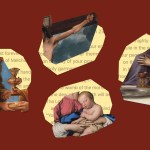
Kilauea Volcano by Jules Tavernier

Kilauea Volcano by Jules Tavernier

Christianity Today April 30, 2026
WikiMedia Commons

I accidentally read three books on hell last month. I hadn’t planned to read any of them. What I discovered from the novel, the biography, and the piece of literary criticism is that we still need the Christian doctrine of hell.

We need it for our own good and for the good of our neighbors—because it reveals the horror of sin, the ways in which we are deceived into thinking hell is smaller than it is, and the truth of what happens when it is left unchecked by divine grace. In a culture that treats sin flippantly at best and enthusiastically at worst, we need a scriptural vision of the self-absorbed, self-justifying, self-pitying, and self-destructive trajectory it sends us down and the terrifying destination it ultimately reaches. Undercooked doctrines of hell generate undercooked doctrines of sin, and vice versa.

Let’s start with the novel. R. F. Kuang’s Yellowface was one of my favorite reads in 2024, so I was eager to read Katabasis. The premise is bizarre: A young academic descends into the underworld to find and rescue her former supervisor. But it works, thanks to a combination of dark humor, nonlinear storytelling, interesting characters, clever plotting, and Kuang’s satirical observations on how the structures of academic institutions mirror the circles of hell. Her underworld draws on a variety of tales about the afterlife, from Greek mythology to Hindu religion, but her primary referent is Christianity, especially as it’s portrayed in Dante Alighieri’s Inferno.

Dante is also the dominant figure in The Way of Dante, a book of literary criticism where Richard Hughes Gibson travels through The Divine Comedy with three Christian writers (C. S. Lewis, Dorothy L. Sayers, and Charles Williams), exploring its portrayals of hell, purgatory, and heaven. These 20th-century friends and writers influenced each other in translating, debating, recreating, and spiritually relating to Dante’s work. While I expected to read much about hell in The Way of Dante, I was not expecting to learn so much about it from this 14th-century Italian poem, nor to find Dante so fresh in his insights.

The third book portrays a very different and much more tangible hellscape. Stephen Kotkin’s Stalin: Waiting for Hitler, 1929–1941 takes us into the grinding bureaucracy and dictatorial paranoia of the Soviet Union in the 1930s. It is a haunting tale of forced collectivization, mass starvation, military purges, Siberian labor camps, a pact with the Nazis, suicides, abduction, torture, and murder. This was where a sizable portion of humanity came about as close to hell as people on this planet ever have.

When we think about radical evil, we usually think first of Hitler, who was clearly evil from the moment he arrived on the political scene. Yet the frightening thing about Stalin is that in many ways, he grew into evil. That makes the hell he created seem more avoidable and therefore scarier—as readers realize we too could grow increasingly hellish.

Each of these three visions of hell—Kuang’s university underworld, Dante’s Inferno, and Stalinist Russia—is hellish in its own way, and each illuminates an aspect of how the Bible talks about hell. In Katabasis, what knits the narrative together is self-deception. The characters delude themselves that being exceptional requires—and even justifies—terrible acts of exploitation, manipulation, pettiness, and spite. (This provides the context for the novel’s best line: “Hell is a campus.”) The result in many cases is a self-justifying listlessness, a dusky torpor that blankets the landscape of hell and the individuals in it.


There is plenty of self-deception in Inferno too. But at the heart of Dante’s hell is its self-selected and poetic justice, whereby sinners are stuck for eternity in the houses they chose to build for themselves. The lustful are blown around by passions. The gluttonous wallow in filth. The violent are assaulted. Satan has moved so far from the light and warmth of God’s love that he is trapped in ice. “All get what they want” was how Lewis put it after working through Dante for himself. “They do not always like it.”

The most hellish thing about the Stalinist purges (and there are plenty of candidates) is the climate of accusation, suspicion, and guilt by association that took hold, particularly in the military and the security services. At the peak of the terror, these institutions resembled nothing so much as a circular firing squad, with everyone desperate to accuse someone else before they were found guilty themselves. Quotas existed for treason. Show trials were commonplace, due process disappeared, people were guilty until proven innocent, and a million people were executed or died in custody. It is often pointed out that the Hebrew word satan simply means “accuser.” When accusation takes over a society, it becomes satanic by definition.

In Scripture, hell is characterized by all three of these features. That is how evil works. We deceive and justify ourselves, which requires accusing others to excuse our own faults (a point central to the Fall story in Genesis 3:1–19, as well as in Paul’s summary of human sinfulness in Romans 1:18–3:20).

The devil is “the father of lies” (John 8:44) and deceiver of the whole world (Rev. 12:9), as well as the accuser of the brothers and sisters (v. 10), so his kingdom is full of guilt and delusion—in contrast to the kingdom of Christ, who is “full of grace and truth” (John 1:14). When we choose death rather than life and idols rather than God, we are then handed over to the consequences of our choices, reaping the fruit of what we have sown (Deut. 28:15–68; Rom. 1:18–32; Gal. 6:7–8).

On the face of it, there would not seem to be much in common between a 14,000-line medieval religious poem, an Asian American novel about contemporary academia, and a biographical history of the late 1930s. Yet each one sketches evil—and hell—in ways that bear witness to what happens when we turn our backs on what Dante called “the love which moves the sun and other stars.”  We exchange the truth about God for a lie, and light for darkness. Initially it may seem as if nothing much has changed. But a lie about God generates lies about ourselves—in self-justification or redefinition—which then involves accusing others. Eventually the lies become our truth, to the degree that we cannot remember they are lies at all. “Wretched man that I am! Who will deliver me from this body of death?” (Rom. 7:24, ESV).

The great difference between The Divine Comedy on the one hand and the worlds of Katabasis and Stalinist Russia on the other is that Dante goes on to show us what a world without sin looks like. There is no meaningful redemption in Katabasis, and the story of the Soviet Union turns still darker in the early 1940s, but Dante saw the love of God in Christ, and it changed everything. The Paradiso includes some of the most beautiful descriptions of joy that have ever been written.

For the Christian, Jesus has condemned condemnation and vanquished hell. Truth has come in person and has driven out the great liar. The “not your will, but mine” of the Garden of Eden has been overwritten by the “not my will, but yours” of the Garden of Gethsemane (Luke 22:42). The accuser of the brothers and sisters has been hurled down forever (Rev. 12:10). “Thanks be to God … through Jesus Christ our Lord!” (Rom. 7:25).


Andrew Wilson is teaching pastor at King’s Church London and author of Remaking the World: How 1776 Created the Post-Christian West. Follow him on Twitter @AJWTheology.

News

Extremist Attacks Leave Dozens of Christians Dead in Afghanistan

A Pakistani pastor who baptized several of the victims continues shepherding church members living under Taliban rule.

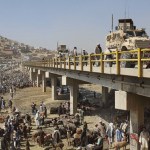
An Afghan Hazara woman carrying her child along a street in Dasht-e-Barchi in Kabul.

An Afghan Hazara woman carrying her child along a street in Dasht-e-Barchi in Kabul.

Christianity Today April 30, 2026
Wakil Kohsar / Contributor / Getty

On a Sunday in late January, pastor Irfan was preaching at a Bible seminar in Quetta, Pakistan, when he received panicked messages from members of an underground church in Afghanistan to which he is connected. Muslim extremists had discovered the location of the church near the city of Bamiyan and had killed around 24 Christian converts from the Hazara ethnic community.

Most died from bullet wounds, but the attackers slit the throat of one young man who was around 20 years old, Irfan said. Then they burned down the house church. 

The news broke Irfan, and he struggled to speak at the seminar the next day after weeping the entire night. For a week, he slept only two or three hours a night, he recalled. 

Irfan started traveling to Afghanistan in 2009 to build relationships and share the gospel. From his initial converts, the underground church has grown to hundreds of families. Although many have since immigrated to Europe, the United States, and Iran, Irfan now shepherds 85 families—60 Hazara and 25 Sunni Zadran families—who fled to Pakistan in 2021 before facing deportation back to Afghanistan years later. Due to the danger of Irfan’s work, CT is using only his first name.

Afghans are drawn to the Christian faith in part because they confront a religious system that often “blends faith with coercion, fear, and at times violence,” Irfan noted. Since the 2021 US military withdrawal from Afghanistan, the Taliban and other extremist groups have sought to punish those who leave Islam. 

“When they encounter the gospel, they encounter a radically different revelation: not a system of merit or religious performance but the proclamation of salvation accomplished through the finished work of Christ,” Irfan said.

He disciples the underground church by sending voice messages with sermons and discussion questions through virtual private networks. Video calls are unsafe and unreliable, Irfan noted, but voice messages are relatively secure and easy to delete. Occasionally he crosses the border to visit the underground church, although he hasn’t been able to enter the country since early 2025 due to increased fighting between Afghanistan and Pakistan along the border. 

“They are facing so many challenges, and there are so many hardships,” the pastor said of Afghan Christians. On April 16, he heard extremists had killed another 10 Hazara converts in a separate attack. “The families are trying to hide and are seeking support.” 

One Christian couple missed the January church service in Afghanistan because their young daughter was in the hospital. When they learned of the violent assault, they immediately fled the city and contacted Irfan, saying they feared the Taliban was looking for them. 

The attackers abducted two young women from the church, sisters who are about 18 and 21 years old, Irfan said. The women’s parents and three younger siblings—including a boy around age 4—all died in the attack. 

Irfan recalled baptizing the family nearly four years ago after they fled to Pakistan in the wake of the Taliban takeover. In a photograph of the baptism, Irfan is next to the girls’ father, who is standing in a small inflatable swimming pool. The family had since returned to Afghanistan after the Pakistani government began deporting undocumented foreigners. 

At least 600,000 Afghans have fled to Pakistan since 2021, and Irfan was part of the humanitarian efforts to resettle them. Many arrived with “no clothes, no resources, and no hope,” he noted, so his network in Pakistan sourced housing and helped them start small businesses. Many have hidden themselves among the Pakistani Hazara community—including 35 Christian families whom Irfan pastors.

Some were already Christians, and others converted after encountering Irfan’s preaching. Yet in November 2023, Pakistani authorities began a nationwide operation to deport undocumented Afghan refugees, a trend that has recently intensified due to the ongoing war between the two countries.

During the April 16 attack in the Afghan city of Herat, extremists killed 30 people from the Hazara community, including 10 converts to Christianity who were directly connected to Irfan’s underground ministry network. He said the extremists slit the throats of the Christians, who were in their early 30s, inside their homes. 

Irfan knew the men and said one of them had previously worked with local hospitals that operated under international organizations when American troops were in Afghanistan. “He had already been receiving threats, as the Taliban were actively searching for individuals associated with such work,” Irfan said. Another victim had gone back to Afghanistan in 2024—leaving his family behind in Pakistan—during one of the country’s deportation waves.

Hazara are a persecuted minority in Afghanistan, yet Irfan believes the men were likely identified as Christians and targeted because of their faith. The Hazara community makes up 10 to 20 percent of Afghanistan’s 45 million people. The ethnic and religious minority group is predominantly Shiite Muslim and is despised by radicals in a country where Sunni Muslims are the majority. 

The Taliban and extremists have persecuted Hazara for decades, said Joel Veldkamp, director of public advocacy for human rights group Christian Solidarity International (CSI). Yet in recent years the attacks have increased.

“Unfortunately, they have suffered a lot of violence,” Veldkamp said. He added that Hazara are easy to spot because “their facial features are very distinctive.” 

Those who convert to Christianity take on increased risk. 

Veldkamp said Christians in Afghanistan pretend to be Muslims unless they live in remote regions far from Taliban control: Men must attend prayers at local mosques and grow beards, and women can’t leave their homes unless they are completely covered and are with a male escort. Those who fail to comply risk questioning or various forms of punishment.

In January, the Taliban clarified sharia law codes to permit forms of slavery and to allow husbands to beat their wives, Veldkamp added. Another particularly chilling expansion, article 58, applies to apostates. “A woman who has left Islam for another religion—she is supposed to be imprisoned for life and given ten lashes every three days until she returns to Islam,” Veldkamp said. 

It’s difficult to know how many Christians remain in Afghanistan. According to CSI, some estimates suggest around 20,000 lived in Afghanistan at the time of the US troop withdrawal in August 2021. 

The withdrawal followed 20 years of bipartisan war fatigue, though critics blamed the Biden administration for its poor execution, which created the conditions for a quick Taliban takeover. Before that, the US-backed Islamic Republic of Afghanistan governed the country. Its collapse led to more than 1,000 civilian deaths, widespread displacement, and a decline in freedoms. 

Nina Shea, director of the Center for Religious Freedom at Hudson Institute, helped evacuate Christians after the Taliban takeover and said many were fearful of the growing Islamic extremism. 

“There are terror groups that are even more radical than the Taliban that are going through. And when they find out that there is a secret church … they’ll kill them,” Shea said. “I dealt with a number of Christians during that period in 2021, and they were just terrified.”

Shea said many Christians lived on the roofs of abandoned buildings and came down only for food and water. Even some of those who stayed inside safe houses grew paranoid as Shea—in connection with Glenn Beck’s Nazarene Fund—couldn’t reveal to them their evacuation plans due to security concerns. They feared they wouldn’t be able to leave the country.

Even before the Taliban takeover, Christians in Afghanistan faced persecution, Shea noted. In the years that followed, escape routes out of the country decreased as human rights violations increased. 

In 2024, the US Commission on International Freedom recommended the State Department designate Afghanistan as a “country of particular concern,” but US refusal to recognize the Taliban as a legitimate government has complicated the process. The World Watch List ranks Afghanistan as the 11th-most-dangerous country in the world for Christians, as discovered believers likely face beating, torture, and even death.

Irfan encourages Afghan Christians by preaching about the church in Smyrna—the persecuted but faithful believers in Revelation 2:8–11—and the life of Daniel. 

Veldkamp said Christians can support the underground church by advocating within their own countries’ legal systems for asylum pathways for persecuted believers and by supporting underground networks of support and aid. “It’s a very, very tall order, but there are lots of church workers in Pakistan who are willing to help with this, and I think we really need to take them up on that,” he said. 

Veldkamp urges Christians to pray for the Afghan church. “God has promised us that he will hear our prayers for our brothers and sisters,” he said. “Prayer…molds our hearts to be passionate about the things that the Lord is passionate about so that our hearts will break when his heart breaks.”

Ideas

Black Hope Faces a Crisis

An influential academic theory says anti-Black racism won’t change. As it trickles into popular culture, the church should be ready to respond.

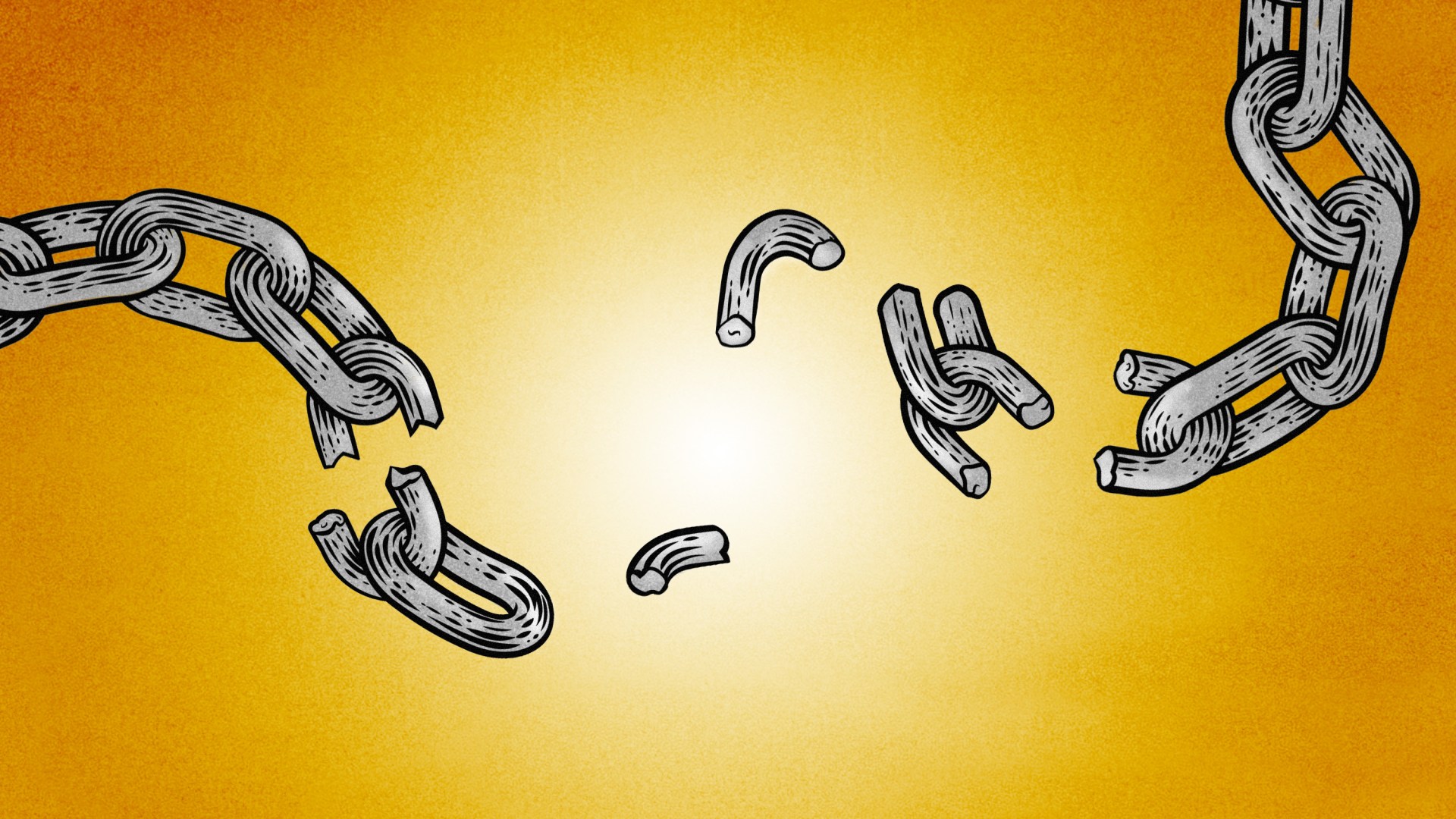
A chain broken by a glow of light.
Christianity Today April 30, 2026
Illustration by Elizabeth Kaye / Source Images: Getty

The Black church survived on a wager. The bet was that the God who raised Jesus from the dead would do something with all the suffering that African Americans have experienced throughout the country’s history. It was a bet that the lynching tree was not the last word. And that the God who brought Israel through the Red Sea would bring his people through whatever America had planned for them next.

That wager has held for more than two centuries, from the earliest slave congregations to the present. But a generation of young Black men and women who love Jesus are now wondering if it still holds. These are Christians who have looked at the distance between what the church proclaims and what their lives contain and have begun to question whether the whole apparatus of Christian hope is a mechanism for enduring what should be confronted. Some are angry. And I sense many Black Americans—Christian or not—are just tired.

That tiredness doesn’t always have a name, but it has created a climate in which an academic philosophy called Afropessimism has found oxygen. Frank Wilderson III, a professor at the University of California, Irvine, is the most prominent voice on the theory and has provided the movement’s clearest articulation in his 2020 book on the topic

The argument runs like this: The world is divided between Humans and Slaves. All Black people, regardless of class, station, or nationality, occupy the position of Slave, and that is unlikely to change.

Wilderson argues that abolition was not the end of Black people being treated as subhuman. On the contrary, he says, this abuse has persisted in every society that touches the African diaspora. Anti-Blackness, in this account, transcends every other form of oppression. It undergirds civilization. And because slavery is not just a historical event but a permanent condition, there is no narrative path available to Black suffering. No equilibrium to be restored. No arc bending toward justice.

I don’t agree with Wilderson’s conclusion. However, I do take his views seriously and believe Christian leaders need to formulate a fruitful response not just to his theory but also to the crisis of Black hope at large.

As a pastor, I see this despondency in my own ministry. Recently, a young couple visited my church and stayed after the service. They were both professionals. Both had been raised in the church. The husband told me they had been visiting churches for months, looking for one willing to speak honestly about race, about the world their future children would inherit, about why the headlines seemed trapped in the same terrible loop. But everywhere they went, the answer was essentially the same: Trust God. Stay faithful. Things will get better. “I believe in God,” he said. “I’m just not sure it will get better.”

They weren’t deconstructing. They were simply two people who had done everything the church asked of them and now, sitting in a lobby, were wondering why the spiritual answers they had carried since childhood no longer seemed strong enough for the world they inhabited. They were not self-proclaimed Afropessimists. But they were breathing the air that philosophy describes: that the system is working exactly as designed and that much of what the church has offered has been too thin to account for what Black people see in the news, in their neighborhoods, and in the weary inheritance many are asked to hand to their children.

Afropessimism itself protests false hope and the thin promise that time alone will heal the racial brokenness in our society. And what it gets right, it gets devastatingly right. It will not let America off the hook by treating racism as a problem mostly solved in 1964. It looks at the killing of some unarmed Black people in broad daylight, at the wealth gap, at the incarceration numbers, and it says: This is not a glitch.

Globally, Wilderson’s argument resonates wherever the legacy of the slave trade and colonialism has produced entrenched racial inequality, from Brazil to the United Kingdom to South Africa—where Wilderson spent years as an elected official in the African National Congress.

Outside the church, some critics of Afropessimism argue it gives away too much. Detractors see it as a death knell for Black freedom struggle, multiracial coalition-building in politics, and the moral energy needed to confront present evils. Adolph Reed Jr., a professor at the University of Pennsylvania, argues Afropessimism can treat anti-Blackness as a timeless phenomenon and drift away from addressing both concrete inequalities and political solidarity. Criticism from another academic, Cedric Johnson, runs nearby: When racial identity hardens into the whole story, it can make the broader coalitions required for change harder to build.

Wilderson is honest about the implications. He calls for “the end of the world” but does not define what he means. And without a definition, the logic leads where it leads: separatism or nihilism. The philosophy that begins by honoring Black suffering ends by taking the slaveholder’s definition of Blackness and etching it into the cosmos.

The church can offer something better. We need congregations where young Black men and women can bring their exhaustion, anger, and doubt and find a community that groans with them. We need churches where they can sit long enough for the pain to become prayer and pray long enough for the prayer to become praise. We need to be equipped to talk about the difference between birth and death pains. And to do it well, we will need to look back.

In Jesus and the Disinherited, the book Martin Luther King Jr. carried during the Montgomery bus boycott, Howard Thurman identified the three forces that destroy the oppressed from within: fear, deception, and hate.

Fear comes first. It arises from the violence to which people are exposed and teaches the oppressed to despise themselves. “There is but a step,” Thurman wrote, “from being despised to despising oneself.” Then the underprivileged might deceive themselves about their lives or their surroundings as a coping mechanism. But “if a man continues to call a good thing bad, he will eventually lose his sense of moral distinctions,” Thurman warned. The survival strategy eats the soul, and hate arrives last.

Against all three, Thurman, an unorthodox mystic, set Jesus as a disinherited person who walked through fear without being consumed, who refused deception when it would have saved his life, and who faced the hatred of the empire and loved.

The logic does not stop at Good Friday. Jesus did not come merely to model freedom from fear, deception, and hate. He came to die for sinners and rise again. Only from that finished work does he become the pattern of the redeemed life.

If the way of Jesus is the way of suffering that avoids fear, deception, and hate, then the resurrection is God’s vindication of that way. It is the public, historical, bodily declaration that the strategy of the Cross was not naive and that the disinherited one who refused to let empire set the terms of his inner life was right. And more than right. He defeated all that holds the world in bondage (Col. 2:15) and shares his risen life with his church as the living King and “the hope of glory” (Col. 1:27, ESV throughout).

The Black church carried this hope. Our ancestors believed the God who raised Jesus was present with them, making them spiritually free even when their circumstances were not. The spirituals gave that hope a voice: “Didn’t my Lord deliver Daniel? And why not every man?” That is a theological declaration that the lions do not get the last word.

While the Black church has historically been one of the most powerful forces for justice, many American Christians have acted in ways that silenced the cry of justice on earth. And Black churches, for all their prophetic power, have also had their own flaws and failures. 

The whole creation groans, Paul says. Believers groan. The Spirit groans. But God also subjected creation to futility “in hope” (Rom. 8:20). Our world is inching toward full liberation, which is the counterclaim to Afropessimism in its most precise form. Where Wilderson says anti-Blackness is ontological, Paul says the futility of creation itself is temporary. It is bounded by God and destined to give way to “the freedom of the glory of the children of God” (v. 21). “For in this hope we were saved.” (v. 24).

This kind of hope bypasses optimism, which can be destroyed by circumstances or data, and puts its anchor in the fact that God has acted and will act again. But we need more than hope that only points to the renewed world. After all, the Spirit who groans alongside me does not tell the suffering to wait quietly. He commissions all of us because the whole gospel—Christ crucified for sinners, Christ raised in triumph, Christ present by his Spirit, and Christ returning in glory—is a reality that demands something in the present.  

Because Christ is raised, we can confront racial injustice knowing the eternal outcome is already secured. Because Christ is present by his Spirit, we can build up the multiethnic church as a sign of the new creation breaking in and as citizens of a kingdom that has already arrived. Because Christ is returning, we can work for justice out of joy, confidence, and obedience, trusting him evermore with our anxieties.

We can recover the double register of the spirituals, singing toward heaven while working to repair the broken pieces of our societies. All of this is critical because the engine of Christian endurance is not only justice-hunger. It is delight in the one who conquered the grave and who promises to make all things new. “The joy of the Lord is your strength” (Neh. 8:10).

Black suffering is real enough to break optimism. The question we now face is whether it is real enough to break resurrection. The church, at its best, has always answered no.

Thomas Anderson is the pastor of disciple making at Grace Community Church in Fulton, Maryland.

Theology

8 Things I’ve Learned About How to Make a Major Life Decision

Russell Moore on the mid-level choices that perplex us.

A road sign pointing in two directions.
Christianity Today April 29, 2026
Kyle Glenn / Unsplash / Edits by CT

This piece was adapted from Russell Moore’s newsletter. Subscribe here.

Not long ago, someone came to me grappling with a life decision. It would affect where he lived and what he did for work, and he didn’t want to get it wrong. “I don’t want to make a mistake I’ll regret,” he said. “How do I know if I can trust myself to make the right decision?”

I said, “How do I know I can trust myself to give you advice about how to trust yourself to make the right decision?” I was only three-fourths of the way kidding. His question was a good one, and it’s one that at some point we all have to ask.

My conversation partner spoke of a “major life decision,” but those aren’t really the hard ones. Most of our important decisions aren’t the huge ones (“Will I deny Christ if I’m forced to fight lions in the Colosseum?”), nor are they the tiny ones (“Should I eat Chick-fil-A today or warm up leftovers at home?”). The most troubling are those middle-weight decisions: “Should I take that job?” or “Should I call that person?” or “Should I attend that church?” or “Should I go to that school?”

Part of the reason these decisions are so hard is because we are typically people who either prize the objective over the subjective or the other way around. I’ve known those who do SWOT exercises (strengths, weaknesses, opportunities, threats) to decide whether to go to Gatlinburg or to Panama City Beach for vacation. And I’ve known people who, when asked to give some money to help kids in their church go to youth camp, spend weeks trying to get “a peace about it.” If you rely on only the objective or only the subjective, you will never make a decision.

In his commentary on the Book of Numbers, Eastern Orthodox priest Patrick Henry Reardon noted that God provided guidance for his people out of Egypt with both the objective, fixed Word of the Torah and the unpredictable, mysterious leading of the pillar of fire and cloud.

“Israel recognized no possibility of conflict between God’s will fixed in the Torah and the more fluid guidance He provided in the cloud and pillar,” Reardon writes. “The divine guidance in the lives of the faithful is ever thus. At no point is God’s revealed will in conflict with the fixed and determined order by which men are ever to be governed, but also at no time is a man justified simply by observing those fixed and permanent norms of the Law. God always guides His people in these two ways.”

I agree, and here are some suggestions I had for the man who asked for my advice in grappling with these sorts of decisions.

1. Rule out first what’s objectively wrong.

You don’t have to pray about whether to train for a new career as a trafficker for a cocaine cartel. If you’re married, you don’t need to seek the Lord’s will about whether to create a Tinder profile for yourself. (The answer to both is no.)

Even with matters that are not straightforwardly moral, part of biblical wisdom is observing the typical outcome of people’s decisions. We ought to know, for example, that taking a dog by the ears is a bad idea (Prov. 26:17). We make many decisions by remembering others who made similar choices for similar reasons and noticing what they saw or missed.

2. Cultivate long-term biblical wisdom.

Most decisions are about choosing between what seem to be morally equivalent options. In those cases, you should be shaped by Scripture, but probably not in the way you think. A search of your Bible app is not going to tell you whether you should change your major to marine biology just because you happen to be reading Jonah. Most of your reading of Scripture is not going to seem relevant to the decisions you are making, because it’s not a set of tarot cards.

Like invisible yeast fermenting, the Word shapes you to have the kind of conscience and intuition to make decisions, and that happens over a long period of time. What you are reading and praying now is usually getting you ready for decisions you have not yet faced. 

3. Recognize the ways otherwise good decisions could be wrong for you.

Here’s where the objective and the subjective meet. You have to know not just what is right or wrong but what is right or wrong for you given your temperament, vulnerabilities, and experiences. The recovering alcoholic should probably say no to attending bartending school.

Years ago, I was asked to consider doing a talk-radio call-in program on a regular basis. I’d done it as a fill-in many times, enough to see I would be both personally miserable and professionally bad at doing what that format would require—surfing whatever was outraging the audience at the moment. Some people could do that—and have—without becoming audience-captured hacks. But I think I would have struggled. Saying yes to that opportunity wouldn’t be straightforwardly morally wrong, but it would have put me in a place of temptation I am now quite sure that I couldn’t have handled.

4. Subvert your quirks.

Look back on your decision-making and ask whether your temperament leans more toward impulsiveness or fearfulness. If you typically make rash decisions, tell yourself to slow down. Sometimes that kind of quickness is its own kind of indecisiveness: If I just jump and do it, I don’t have to spend time wondering about it. On the other hand, if you tend to ruminate endlessly on whether to do something, price that in too and realize that no matter when you make a decision, your psyche will scream at you, Why so fast? What if something goes wrong? Resolve not to let that rule you.

If you typically try to gain happiness with some change in venue, recognize that and slow down. If you typically try to find contentment by retreating to a rut, spur yourself into what will feel dangerous for you.

5. Don’t panic at perplexity.

With a lot of decisions, there is a long time of not knowing what to do. That can lead us to feel anxious, as though we will always be uncertain. But our perplexity is a crucial part of the decision-making. We don’t like that. This is one reason some people want a firm, unquestionable answer as to what they should do—whether that’s a set of data points (a personality or aptitude test, for example) or an indisputable, settled peace. We want a solid answer for the same reason people want to read horoscopes: We want the kind of control that removes the risk of making the wrong decision.

Most of the time, though, that sort of immediate clarity would destroy us later. Our Lord’s brother James told us, “If any of you lacks wisdom, let him ask God, who gives generously to all without reproach, and it will be given him” (1:5, ESV throughout). That’s not a one-time ask. We don’t ask for wisdom and then get a lifetime supply. Just as we keep asking for bread daily, we must keep seeking guidance from God.

An essential aspect of the feeding of the 5,000 was Jesus asking his disciple Philip, “Where are we to buy bread, so that these people may eat?” John reported this was not because Jesus did not know the answer, “for he himself knew what he would do” (John 6:5–6). Philip first had to come to the edge of what he could know and do in order to say, There is no way to do this. Your perplexity may well be shaping you into the kind of person you will need to be on the other side of it.

6. Expect a gradual realization more often than a sudden epiphany.

Once, when I was making a personally important decision that was taking a long time, I talked to the late Tim Keller about how to decide. He said, “You don’t need to. You’ve already made this decision. Your conscious mind just hasn’t caught up to the rest of you yet.” He was right. Looking back, I could see how, even in my fear, I was spending more and more time imagining the future that could be. I could see all the little providences that seemed to be getting me ready for it. Often, I’ve found that many decisions seem less like “Let there be light” and more like the sunrise that is so subtle we cannot really see when the night ended and the morning began except by looking back.

7. Seek out third-space advice.

The Book of Proverbs tells us that “in an abundance of counselors there is safety” (11:14), and most of us realize we need advice. But it’s also important that you see the different kinds of counsel you need. Sometimes you need advice from someone who knows you, loves you, and has your best interest in mind. But with some things, that person has too much of a stake in your decision. Sometimes you need advice from someone at a distance, someone who doesn’t know you and can tell you objectively what to choose.

But often you need a third kind of advice. You need counsel from someone who knows your strengths and weaknesses but is distant enough that he or she won’t be affected by what you decide.

8. Take responsibility but lose control.

One of the reasons decisions can provoke such anxiety is that we want to protect ourselves from future hurt or regret. To some degree, that’s healthy. Jesus affirmed that only a foolish king would go to war without first sitting down to “deliberate whether he is able with ten thousand to meet him who comes against him with twenty thousand” (Luke 14:31). But he said this in the context of taking up the cross and following him. That’s not a matter of calculation and control.

Jesus said to Peter, “What I am doing you do not understand now, but afterward you will understand” (John 13:7). In conforming us to himself, Christ does not give us what we want—an ahead-of-time overview of exactly the path he has planned for us.

“Little children, keep yourselves from idols,” the Bible tells us (1 John 5:21). Sometimes that idol can be a refusal to make a decision—expecting to be carried along without ever having to say yes or no. Sometimes that idol can be a refusal to wait for a decision to present itself—wanting some sort of sign to choose for us. For some, the idol can be a refusal to think. For some, the idol can be overthinking. For some, the idol can be trusting themselves too much. For others, it can be second-guessing themselves too much.

An idol is predictable. We make its mouth and give it the words we want to hear. The living God is different. We can ask for guidance, but we cannot peer into every counterfactual. We can take responsibility for our decisions while also trusting that God’s providence includes even all of that.

Russell Moore is editor at large and columnist at Christianity Today as well as host of the weekly podcast The Russell Moore Show from CT Media.

History

In ‘the Year of the Bible,’ Evangelicals Debate Politics, Civil Disobedience

CT emphasized diverse views in ongoing discussions in 1983.

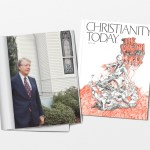
A magazine cover from the CT archives, and a photo from Russia in 1983.
Christianity Today April 29, 2026
Illustration by Christianity Today / Source Images: Getty, CT archives.

Ronald Reagan declared 1983 “the year of the Bible.” CT ran long excerpts of his speech and assessed his accomplishments in his first term.

It is time to ask what impact Reagan has had on the issues so important to evangelical Christians. On specifics, Reagan is likely to come up short, since many campaign promises that put him in office remain unfulfilled, including school prayer and antiabortion legislation, while concern over his handling of welfare issues and national defense has deepened. 

But in ways that cannot be precisely measured, Reagan’s presence in the White House may produce some long-term benefits for the nation. His rhetoric, with its God-centered world view, helps counteract the rampant secularism that would shove religion to the margins of life. In Washington, D.C., Christians in government are making decisions based on their faith. That development alone promises to reestablish moral perspectives in Washington’s policy-shaping networks. …

The legislative scorecard keepers are likely to remain disgruntled, but—win or lose on specifics—people with a Judeo-Christian outlook are involved for the long haul, and the environment in Washington is fertile soil in which to cultivate their growth.

CT reported that “Reagan made a forthright pitch for evangelical allegiance” at a National Association of Evangelicals (NAE) meeting, urging them “to speak out against those who would place the United States in a position of military and moral inferiority.” Evangelical leaders did not all agree.  

The nuclear issue … gave NAE officials a welcome chance to articulate their centrist position—not sold out to the profreeze Left nor aligned with the Religious Right, which backs administration defense policies. The 3.5 million-member group includes pacifist churches such as Mennonites and Brethren in its fold and remains committed to operating by consensus. …

Applause from the enthusiastic audience interrupted Reagan about 18 times during his 32-minute address, which touched on abortion, school prayer, tuition tax credits, and parental notifications for teen contraceptive users. NAE neutrality was clearly telegraphed by Gay. Seated onstage while Reagan spoke, Gay did not applaud the freeze remarks. He estimates that no less than one-quarter of NAE’s members are total pacifists or nuclear pacifists, and says “even if it were only 10 percent, we would have no right to quash that important corrective.”

In the pews, evangelicals were similarly divided on the issue of nuclear weapons

Most evangelicals approve of President Ronald Reagan’s promilitary policies on nuclear arms, yet they would support a nuclear freeze if the conditions were right. These somewhat contradictory results appear in a new Gallup poll commissioned by the National Association of Evangelicals (NAE).

Overall, evangelicals gave answers similar to those of the general public, with one notable exception: on several key questions, between one-fourth and one-third of the evangelicals registered “no opinion.” This is about 10 percentage points higher than the public at large.

As the president promoted conservative ideas of free market economics, evangelicals also debated. CT asked an evangelical in the US Justice department to weigh in with a review of political philosopher Michael Novak’s book, The Spirit of Democratic Capitalism

The views of evangelicals concerning the relationship between Christianity and capitalism could hardly be more diverse. On the Right are views such as those expressed by the Arthur S. DeMoss Foundation in a “Free Enterprise Seminar” that came very close to equating “our Christian heritage” and “our free enterprise system.” 

At the other end of the spectrum are outspoken evangelical academicians and church leaders who couch their anticapitalistic views in equally religious language. These Left-leaning evangelicals point to the materialism and neglect of the poor and disadvantaged as compelling indicators of the unchristian condition of our current economic order.

Clearly, both cannot be correct. … As a conservative, my own vision for the church and society necessarily is rooted in the Right, but I am uneasy when the Right seeks to baptize conservative politics (to which I subscribe) as “biblical.” Perhaps my position on the Right in a subtly defined niche that is “betwixt and between” is the reason I am so enthusiastic about Michael Novak’s new book. … He argues persuasively that democratic capitalism is the economic and political system most compatible with Christianity.

Evangelicals were not divided or ambivalent about abortion. But in 1983, some were wrestling with the best way to oppose abortion. In a three-part series on abortion’s impact on American life, a Baptist teacher argued that “prolife rhetoric is not enough.” 

I base my prolife views on the belief that that heartbeat belongs to a human being, with rights to birth and life. And I believe no one should be deprived of life without due process of law. So I hate what abortion-on-demand does to a helpless child, and to the mother and perhaps the father, too.

This raises a critical question, though. What, by contrast, will be the effects of a prolife alternative? Clearly it will affect the child by guaranteeing him birth. But what then? … We must prepare to deal with the consequences of our commitment.

If right-to-life legislation passes, thousands of babies will annually be born who otherwise would have been aborted. How many? The National Center for Health Statistics has estimated that there are about 1.25 million abortions in the U.S. annually.

Other pro-life Christians were wondering what they were supposed to do if politics was not enough. CT devoted many pages to discussions of civil disobedience, asking, “When should Christians stand against the law?” 

Judge Randall J. Heckman … is a highly regarded probate judge in Grand Rapids, Michigan. As befits his office, he has a solid reputation as a man of law and order. He is also a committed evangelical who not only loves his country, but also seeks to obey Christ and live by Scripture. Last November a 13-year-old girl five months pregnant came before his court, demanding her legal right to abort because she did not want her child. Judge Heckman refused her petition. … 

As a result Judge Heckman himself must now appear before the Michigan Judicial Tenure Commission because of a complaint filed by NOW (the National Organization for Women). The commission has the authority to relieve him of his duties as judge, and he awaits its decision.

He defends his disobedience to the law: “The idea of judges putting themselves above the law should be repugnant to all citizens. … [But what if] a judge is required by law to order Jewish people to concentration camps or gas chambers because the law says that Jews are nonpersons? What if a judge, sitting on a case involving a runaway slave, disagrees with the Supreme Court’s 1856 decision in which black slaves were ruled to be nothing more than chattels?

“Can the judges in these cases escape moral culpability either by obeying the law and saying they were ‘just following orders,’ or by disqualifying themselves so that other judges without their scruples can issue the unjust decrees?” Judge Heckman believes that, if a judge deliberately gives the case to another judge, he remains “a knowing and willing part of the ultimate injustice.”

Another test case arose in Nebraska, where a Baptist pastor refused to obtain a license legally required to run a private school. He went to jail, and his supporters protested. 

Protesting is new for twentieth-century fundamentalists. Blacks, feminists, and antiwar demonstrators all learned two decades ago the skills of protest—marches, sit-ins, boycotts. But most fundamentalists rallied for law and order when blacks took to the streets; they are still opposed to feminism; and they believe the Vietnam War was a mistake only in that it was not fought intensely enough to be won. These conservative Christians are learning about protest quickly … yet civil disobedience, however mild it may have been at Louisville, was no easy thing for the fundamentalists. …

Scripture would advise us … not to take civil disobedience lightly. It must be undertaken only with caution, prayer, and the counsel of the church. It is an act of gravity since it is, in a sense, law breaking. But it is law breaking of a unique kind, an activity that affirms law in general while violating law in the particular case.

CT regular Philip Yancey said evangelicals should learn from Mahatma Gandhi.

Much of Gandhi’s life seems baffling, alien, and incomprehensible to the average Westerner. And yet Gandhi insisted with his prescient voice that civilization must look to the East and not to the West for its ultimate solutions. The Christian church, birthed in the East but formulated and structured in the West, shares many of the crises of Western civilization as a whole.

For perspective, perhaps we need to step back and listen to this enigmatic figure who, although not a Christian, adapted many Christian principles to a modern context. Christian saints before him had followed these same beliefs, but we have grown so accustomed to our Christian saints that we no longer hear their message clearly. When a sound is too loud, sometimes we can discern it better in its echo.

A regional director of World Vision and former legislative assistant for an evangelical senator reminded CT readers that —and sometimes against them. 

Our prayers for and against governmental leaders are at the heart of our dual citizenship in the heavenly and earthly kingdoms. We frequently place too much emphasis on our earthly loyalties, especially as we read the numerous passages in the New Testament about submission to kings and rulers. We would do well to read these passages more carefully. For example, a phrase in one such passage speaks very emphatically about our prior obedience to God: “Live as free men, but do not use your freedom as a cover-up for evil; live as servants of God” (1 Peter 2:16, NIV). …

Our heavenly citizenship compels us to pray for those in authority—not just for their wisdom, prosperity, and longevity, but that they will practice justice and righteousness. Although our prayers begin in the positive, we may in some cases need to begin praying against the ruler, if God so directs. This is the ultimate act of patriotism: caring enough about the people whom God loves to be willing to pray for their deliverance from one so controlled by evil that submission to God is only a remote possibility.

Amid all the political struggles in 1983, CT reminded readers of the importance of evangelism and proclaiming the gospel through Christian life. The president of Multnomah School of the Bible wrote an article called “Lifestyle Evangelism: Winning through Winsomeness.” 

God’s evangelistic strategy is beauty. Evangelism starts with the beauty of God, and it also involves a beautiful bride, the church. God desires that through our lives the world will see his beauty. … 

When an individual, a family, or a corporate body of believers is moving together toward wholeness (holiness), a credible lifestyle emerges, and the potential for effective witness increases dramatically. Because this is true, evangelism is a way of living beautifully, and of opening one’s web of relationships to the nonbeliever.

American evangelicals were also reminded of the dire situation of Christians in other parts of the world. CT published an article on the struggles of Hebrew-speaking Christians in Israel and reported how American attention to believers suffering in Eastern Europe and the Soviet Union could make a difference. 

With his trial just four hours away, a young Romanian Baptist, loan Teodosiu, sat in his cell—waiting. A spokesman for the Committee for the Defense of Religious Freedom in Romania, Teodosiu had been arrested on December 16, 1981. His “crime”: disseminating information about state persecution of Romanian believers. Charged with treason, he waited, expecting a harsh sentence.

The seconds ticked by. Suddenly, the door to his cell swung open and several guards burst in. Thoughts of an eleventh-hour interrogation flashed through his mind. He braced himself for the ordeal. Instead, he heard one of the guards shout, “Come with us! You’ve been released!”

“Released?” Teodosiu asked incredulously. Indeed, he had been released, and all charges against him were dropped. What Teodosiu didn’t know was that halfway around the world, in the United States, action had been taken on his behalf. People aware of his situation had circulated petitions and written to their congressmen. They, in turn, had written to the Romanian Minister of Internal Affairs. It was this concerted pressure that resulted in Teodosiu’s eleventh-hour freedom. … 

Christians in the West do have the power to help suffering Christians in the Soviet Union and Eastern Europe. Using letters, petitions, mass media, and other methods at our disposal, we can protest peacefully on their behalf.

Church Life

Let the Little Children Hang with Church Grandmas

Contributor

In our age-segregated society, I’m grateful for the elder saints who counsel and invest in my children.

Two vintage Polaroid photos on a terracotta background showing an elderly person and child holding hands — one walking through a forest, the other a close-up of their joined hands — with an autumn leaf branch between them.
Christianity Today April 29, 2026
Illustration by Sara Tran / Source Images: Getty, Unsplash

“The U.S. Isn’t Just Getting Older,” argued an article at the Harvard Business Review. “It’s Getting More Segregated by Age,” and “the extreme degree to which we’ve shunted young people into educational institutions, middle-aged adults into workplaces, and older people into retirement communities, senior centers, and nursing homes has come with costs.”

This is sometimes true inside the church as much as out. Children spend much of their time with peers, whisked away from the worship service to kids’ church or sent off to youth group while their parents do a Bible study. And even when different generations are physically together, not all adults feel comfortable—or permitted—to meaningfully engage kids who aren’t their own. Communal discipline is no longer the norm.

But our children need intergenerational relationships, and not only for healthy growth in social skills. This kind of fellowship is a beautiful reminder, as pastor Cameron S. Shaffer notes in Keeping Kids Christian, that the church is a place for all generations, together. 

Shaffer writes of older men at his church who befriended his young son, regularly including him at their table at men’s Bible study gatherings. In my own family, child discipleship tends to happen in the church kitchen. 

On Sundays when I have to be at church early for worship team practice, my 10-year-old comes along to visit with his friend, a retired gentleman who’s there brewing industrial-sized pots of coffee to awaken the saints. The same man regularly teaches my son’s Sunday school class. He listens to my son, laughs at his jokes, and teaches him dad jokes of his own. 

Two grandmothers at our church put the kitchen to more formal use. They welcome the kids of the church for cooking lessons, sending out fancy paper invitations for “Cooking with Grammies,” always to be followed by a meal of whatever gets cooked. At the end of a recent lesson, a three-hour Mexican-food marathon with fried ice cream at the finish line, one child announced he did not want to be picked up.

These are practical occasions, of course. Coffee needs to be brewed, and it’s good for kids to learn the foundations of cooking, setting the table, and enjoying a meal rather than rushing through it. But more important is the genuine delight of being together among the children and elders alike. These church grandparents’ joy in my children is unrestrained and impossible to miss, and it is a true gift to have them discipling the younger generations to love God and the local church. 

This is a deeply biblical model of discipleship. “Older men are to be sober-minded, dignified, self-controlled, sound in faith, in love, and in steadfastness,” Paul advises in Titus 2. “Older women likewise are to be reverent in behavior, not slanderers or slaves to much wine. They are to teach what is good” and so contribute to discipleship of the whole community (vv. 2–3 ESV). 

This passage is most often applied to older men and women in the church mentoring the younger ones, people about the right age to be their children. That’s true, but our need for caring discipleship doesn’t begin in young adulthood. Already in childhood we need the wisdom and investment of our elders, those old enough to be our grandparents (or great-grandparents!) rather than our parents.

When I hear my daughter singing songs about Jesus that I never knew, I realize someone at church took the time to teach her. When my children hear stories from grandparents at church about their experiences of Christ over the course of many decades, I’m thankful they’re hearing the gospel in new ways. When my kids are welcomed to help steward our community by decorating the sanctuary for Christmas or cleaning up after an event, I see them take their place in the body of Christ alongside these older saints.

Paul’s description of good examples for the young is manifest in moments such as these. The older men show the young how to be thoughtful and self-controlled by modeling care of the church. The older women show my 7-year-old daughter how to worship God in song, deed, and delight for others all around. 

We are a family of readers: of the Bible, theology books (the denser the better, for my husband), and much more. But alongside such intellectual study of God’s Word and world are these lessons church grandparents teach our children. They make visible the biblical vision of the church as God’s family (1 Thess. 4:10) and knit us together in a society that would shunt us apart.

Nadya Williams is a homeschool mom, a writer, an editor, and the interim director of the MFA in creative writing at Ashland University. She is the author of Cultural Christians in the Early Church and Christians Reading Classics and is books editor at Mere Orthodoxy.

Ideas

Quashing Political Violence Requires We Tame Our Tongues

Staff Editor

The manifesto of the WHCD shooting suspect was biblically superficial and wrong. It was also unsettlingly familiar.

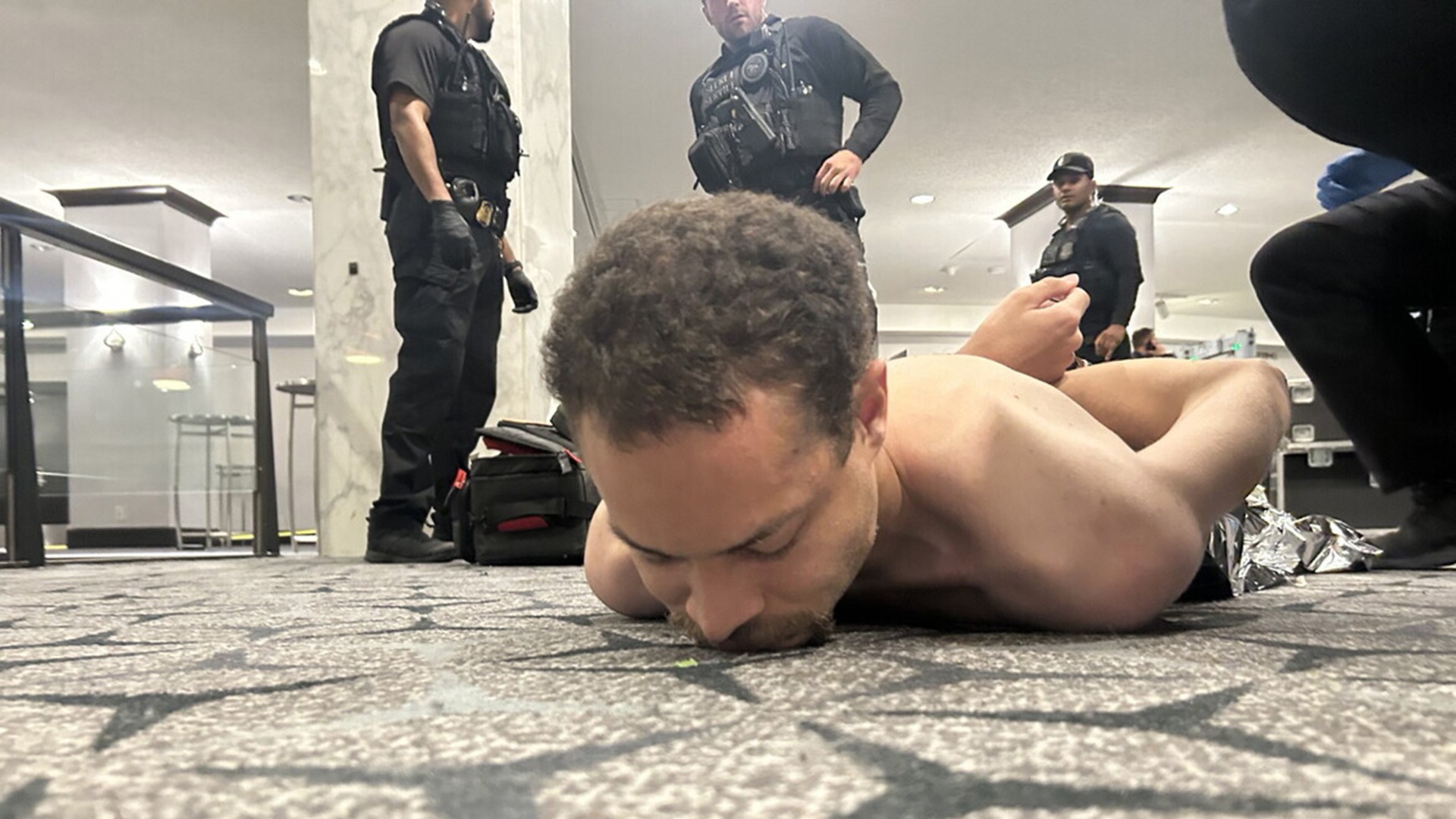
Law enforcement detaining a suspect following a shooting incident at the White House Correspondents' Dinner in Washington, D.C. on the night of April 25, 2026.

Law enforcement detaining a suspect following a shooting incident at the White House Correspondents' Dinner in Washington, D.C. on the night of April 25, 2026.

Christianity Today April 28, 2026
US President Donald Trump via Truth Social / Anadolu / Contributor / Getty

The first thing I noticed about the manifesto of Cole Tomas Allen, the suspect in the foiled assassination attempt on President Donald Trump at the White House correspondents’ dinner (WHCD), is how very online it sounds. And not just online in general, but online in a particular nice, nonthreatening, progressive, young man kind of way. 

The tells are subtle but unmistakable. There’s the way Allen uses exclamation points: “Hello everybody!” he begins, with a cheerful incongruity. Or the indirectness (“but can hardly call that not a self-inflicted status,” he writes instead of something straightforward, like but that’s my fault). Or the refusal to explicitly mention Trump, instead referring to him repeatedly as “a pedophile, rapist, and traitor,” as if the name itself held some mystic power. Or the apologies Allen gives but doesn’t actually owe, like his strange mea culpa to the people who handled his luggage as he traveled by train to DC.

Or notice how the first full sentence starts with “So,” which has a softening effect and presents the speaker as thoughtful, tentative, considered. This tic was first documented among programmers (which Allen is) and other very online types at the turn of the century and has since migrated to “members of the explaining classes—the analysts, scientists and policy wonks who populate the Rolodexes of CNBC and The PBS NewsHour,” and other, more contemporary outlets. Allen writes like the media he almost certainly consumes.

All of this is recognizable because it’s a very common way of talking online. I know people who speak just like this, people who probably share Allen’s policy preferences but would never condone assassination, as much as they oppose—maybe even hate—Donald Trump. As Reason magazine editor Katherine Mangu-Ward observed, “This is normie rhetoric and not normie behavior.”

That differentiation rings true to me, but it’s cold comfort. Allen didn’t come to talk and, more importantly, think this way all on his own. 

That context doesn’t negate a whit of his personal responsibility for what looks to be attempted mass murder, not only of Trump but also of many other administration officials. But surely it’s telling: Insofar as the manifesto is an honest account of his rationale for this attack, he appears to have been immersed in the popular progressive discussion of Trump and, crucially, to have drunk deeply of American incoherence around acceptable political violence.

Because we are incoherent. After every horrific incident like this, we all say there’s no place for political violence in America. But the fact is we do cheer political violence sometimes. We endorse the violent overthrow of oppressive governments abroad. Would you expect many American tears shed if the people of North Korea arose and forcibly established a constitutional democracy tomorrow? Or in Iran, our government is involved in a war of pseudo–regime change right now.

We cheer some political violence in our own history too. Why did we have a revolution against England? You know the slogans: “No taxation without representation.” “Don’t tread on me.” “Give me liberty or give me death.” “Sic semper tyrannis.” America’s founders had an undeniably political vision they ultimately accomplished by violent means.

That history is reflected in our language. Five years ago, soon after the January 6, 2021, storming of the US Capitol, I pointed out the common use of violent metaphors in politics (“fight” for your agenda, “take back our country,” and the like). Few object to this language until someone aligned with their political rivals makes the violence real. That inconsistent outrage has become par for the course: An attacker with a right-wing manifesto sparks left-wing castigation of Republicans’ reckless rhetoric. An assassin from the left prompts right-wing announcements that blood is on Democrats’ hands.

Setting aside our inconsistency, though, I think there’s something to take seriously here. People in my political corner like to quote the Founding Fathers saying things like “a little rebellion now and then is a good thing” or that the “tree of liberty must be refreshed from time to time with the blood of patriots and tyrants.” 

We quote this stuff metaphorically, as a harmless rah-rah for small government and the Constitution. But Thomas Jefferson, who wrote both of those lines, wasn’t speaking in metaphor. He was perfectly sincere. As the context of the “tree of liberty” quote makes undeniable, he thought that sometimes you needed to kill some people in the government to keep them in line. “What signify a few lives lost in a century or two?” Jefferson mused.

This is not how we think about political violence today, nor should it be. These assassination attempts are indefensible, frightening, chaotic—every bad thing. Allen tried to justify his choice in Christian terms, claiming on biblically superficial and ethically ignorant grounds that he had cause to set aside the command of Christ and instruction of Scripture. He was wrong.

Yet his self-justification did not emerge in a vacuum. With a moral imagination furnished by incoherence about political violence and a decade of constant, extravagantly pitched denunciations of Trump, he acted. In a sense, he called the bluff of everyone who speaks as if Trump (or any political figure they deplore) deserves death, despite not really believing it—the kind of fundamentally unserious people who cast, say, stealing four lemons from Whole Foods as a strike against tyranny.

That’s not what sic semper tyrannis means. As for what it does mean, well, most of us don’t have the stomach for it anymore.

I say that thankfully, as someone grateful to live with the constitutional rights and liberties the founding generation bequeathed but also happy to live in a society that usually doesn’t match our violent words with violent deeds, that often allows us to live the “quiet life” Paul advised for Christians in 1 Thessalonians 4:11—the “good lives” of proper respect and love that Peter said could introduce even hostile pagans to God (1 Pet. 2:11–12, 17). 

Our society is as calm, stable, humane, and free as it is precisely because of two millennia of the influence of Christianity, and I would strongly prefer it stay that way. But I worry it won’t if we cannot learn to tame our tongues.

Bonnie Kristian is deputy editor at Christianity Today.

Books
Review

God Didn’t Make a Zero-Sum World

Ian Shapiro argues that democracy depends on spreading the wealth. But Christians are equipped to live in love, not fear.

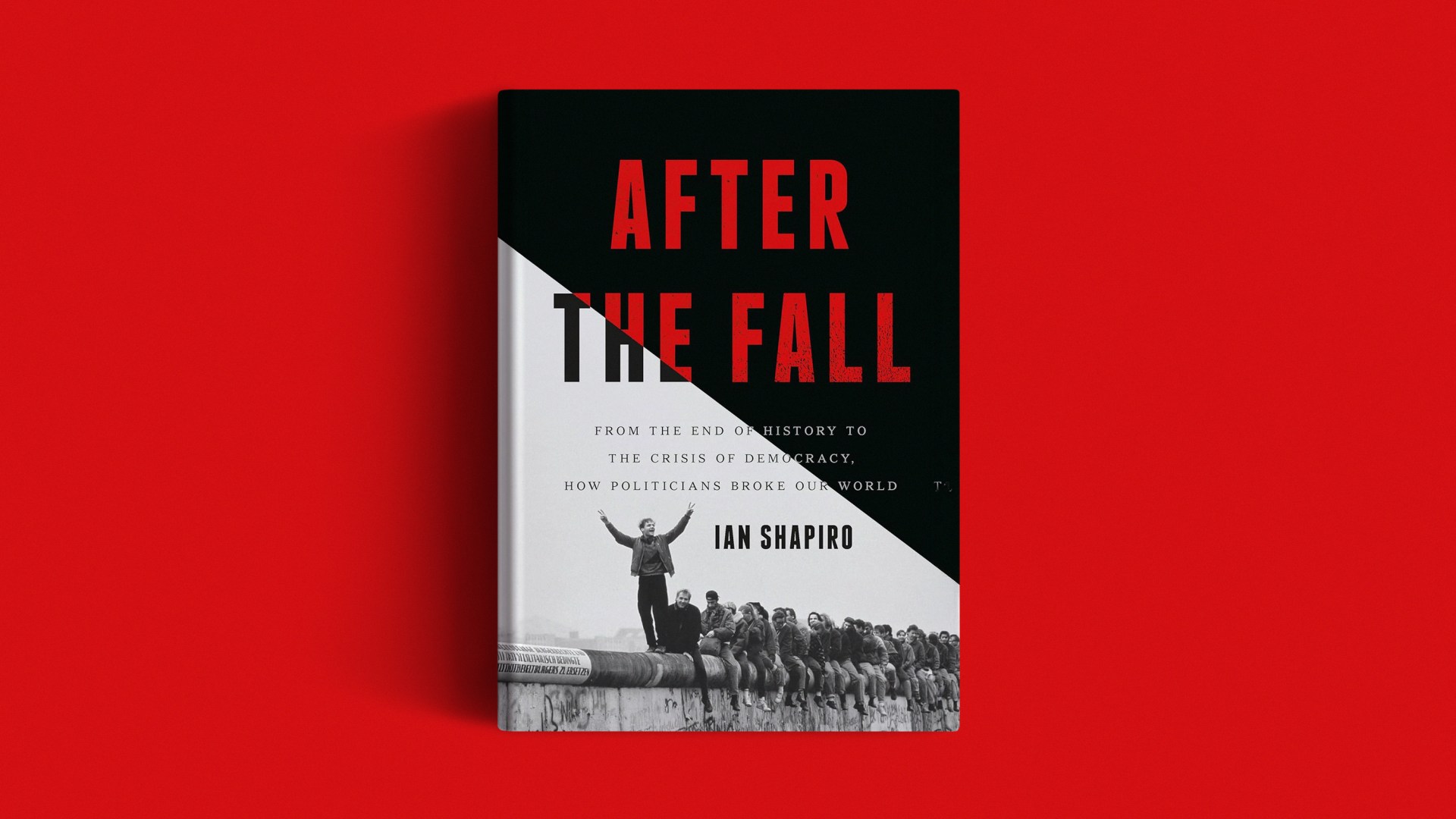
The book on a red background.
Christianity Today April 28, 2026
Illustration by Christianity Today / Source Images: Getty, Basic Books

The fall of the Berlin wall in November 1989 and the subsequent collapse of communism in Eastern Europe was a moment of jubilation for many Americans.

It might even mark the “end of history,” political scientist Francis Fukuyama famously said in 1989, because it potentially signified “the end point of mankind’s ideological evolution and the universalization of Western liberal democracy as the final form of human government.”

After a long global struggle between communism and Western liberal democracy, the forces of the free market, democracy, the rule of law, and global recognition of human rights triumphed. At least, they’d triumphed in “the realm of ideas or consciousness,” if not in the material world yet, Fukuyama wrote in his famous essay. “But there are powerful reasons for believing that it is the ideal that will govern the material world in the long run.”

We’re still waiting to see that victory in the long run. And in fact, liberal democracy is significantly more imperiled today than it was in 1989 or 1991.

In the early 1990s, Russia was a fledgling democracy, but today, it’s an authoritarian regime. In the early 1990s, China appeared to be opening itself up to free-market influences. Today it’s a more powerful, more oppressive totalitarian government than it ever has been. And in liberal democracies around the world, plenty of politicians and voters are outright skeptical of this form of government’s ability to deliver for them.

Ian Shapiro’s After the Fall, which traces international democracies from the “fall” of the Berlin wall to the present, analyzes why the expected global democratic triumph after the Cold War failed to materialize. 

Shapiro, a professor of political science and global affairs at Yale University, argues that the United States made at least five disastrous decisions between 1993 and 2020 that undermined the international liberal democratic order.

In the 1990s, under President Bill Clinton, the United States marginalized Russia by expanding the North Atlantic Treaty Organization (NATO) to include newly democratized East European states (a move that Russia considered threatening) while refusing Russian president Boris Yeltsin’s entreaties to send significant amounts of financial aid to Russia.

In the early 2000s, under President George W. Bush, the United States tried (and failed) to turn Afghanistan and Iraq into democracies, a disastrous venture that squandered the United States’ international standing, damaged America’s economy, and polarized US politics. Worse yet, Bush did this largely without the international coalition that his father, George H. W. Bush, had relied on when attacking Iraq in 1991. This unilateral action strained America’s alliance with countries such as France and Germany and weakened the liberal democratic international order.

Then, during President Barack Obama’s administration, the US government responded to the financial crisis of 2008 not with substantive aid to America’s working families but with bank bailouts that left the neoliberal economic regime intact—and thus failed to address the growing wealth divide that was polarizing American voters.

Also, during Obama’s administration, America used NATO troops to attack Muammar Gaddafi in Libya. This direct attack on a head of state was a violation of the purpose of NATO, Shapiro argues, and it undermined the liberal democratic order and set a dangerous precedent for American unilateral actions against other heads of state. Such actions should be taken only with the authority of the United Nations, Shapiro believes, or should not be done at all.

Finally, during President Donald Trump’s first term (and again in his second), the United States exchanged a free-trade policy for a new policy of high tariffs, a move that plunged the world into trade wars and destroyed the international free market that had sustained the liberal democratic order.

These five policies may seem on the surface to be completely unrelated, but Shapiro’s critique of them stems from the same premise: An international liberal democratic order depends on goodwill among nations, widespread prosperity, and an equitable distribution of wealth.

Because liberal democracy includes a respect for the rule of law and minority rights—and because a liberal democratic international order includes respect for international institutions and free trade between nations—it will not appeal to people who distrust others. And when people are starving, their distrust for others increases.

Working-class people in the United States now generally view both politics and international trade as a zero-sum game, Shapiro argues. Someone else’s gain is their loss. But the global free trade order that an American-led Western world implemented at the end of World War II, and that the United States then expanded to Eastern Europe after the end of the Cold War, was based on the assumption that free trade and international cooperation can be positive-sum games in which cooperation and free commerce benefit everyone.

Shapiro views the presidential election of 2024 as a contest between two competing visions of the world: a Democratic vision (championed by Kamala Harris) that saw international relations as a positive-sum game and a Republican vision (championed by Trump) that viewed everything as a zero-sum game.

From the 1940s until the early 21st century, presidents from both parties generally believed international trade would benefit everyone. But many younger voters and members of the working class are likely to believe intuitively in a zero-sum-game framework not only for trade but also for international relations in general, because in their own experience, they have had to struggle to make ends meet and they’re not very optimistic about the future.

Their only hope, they think, is to stop others from depriving them of their scarce, hard-earned economic opportunities—to hit China with heavy tariffs and build a wall to keep immigrants from Mexico from entering the country. Positive-sum-game thinkers, meanwhile, can easily imagine a world in which both China and the United States can benefit from free trade and in which both immigrants and native-born workers can benefit from more liberal immigration policies.

The way to keep people from drifting into zero-sum-game thinking is to make sure they have sufficient economic opportunities to believe in liberal democracy, Shapiro thinks.

Each of the allegedly disastrous presidential policies he criticizes suffered from the same ignorance of this basic issue. Clinton was very much a positive-sum-game thinker who believed in international liberal democracy, but in Shapiro’s view, he foolishly failed to realize that the Russians would never embrace this vision if they did not have a lot more economic resources, which the United States did not give them.

George W. Bush believed in international democracy, but he failed to realize that neither Afghanistan nor Iraq had anywhere close to the per capita income required to sustain a liberal democracy, and as a result, in both countries, a US-led attempt to establish democracy quickly broke down into tribal or ethnoreligious conflict. US policymakers may have been positive-sum-game thinkers, but most Afghans and Iraqis were not.

Obama was also a positive-sum-game thinker, but his failure to rehabilitate the American economy along lines that would benefit the working class meant that a new generation of working-class voters grew up deeply distrustful of existing American institutions. And when they voted in 2024, they voted for the champion of zero-sum thinking.

Trump, to a greater degree than any other modern American president, is a zero-sum-game thinker who appeals to voters who think the same way.

If we want to stop the sort of anti–free trade, anti-immigration policies that Trump and other far-right politicians in other countries want to implement, we have to give people enough economic hope to deter them from zero-sum-game thinking.

Shapiro is a liberal, not a Marxist. He’s not advocating forcible redistribution of wealth. But he is advocating political institutions that ensure everyone will have an equal opportunity to pursue their economic potential, on the grounds that when that doesn’t happen, liberal democracy breaks down and people embrace authoritarianism that appeals to those who believe that the world is a zero-sum game.

Shapiro believes we can actually quantify the minimum per capita GDP required to create a sustainable liberal democracy. It’s currently $18,200, he thinks, which is almost exactly where Turkey is right now, but above the per capita GDP of Russia, China, or Iran. (By comparison, the per capita GDP of the United States is currently approximately $90,000).

At first glance, this seems to make sense. Most of the countries that advocates of liberal democracy consider to be model nations, such as Canada, Sweden, Norway, Germany, the United Kingdom, Australia, and New Zealand, have high per capita GDP. And most of the countries that are authoritarian, with illiberal, regimes have much lower per capita GDP.

But there are some notable exceptions. Singapore, which is sometimes labeled an “illiberal democracy” because of its authoritarian policies, has a higher per capita GDP than the United States or most countries in Western Europe, including Denmark, Sweden, Germany, and the United Kingdom. Qatar, which does not even pretend to be a democracy, has a higher per capita GDP than Australia or Canada.

And India, which proudly asserts its status as a democracy even if it does engage in some repression of religious liberty, has a per capita GDP that is less than a third of the minimum level Shapiro thinks is necessary to sustain a liberal democracy. This means that, according to Shapiro’s reasoning, one might expect it to be as autocratic as Russia, China, or Iran, all of which have a higher per capita GDP than India’s.

While per capita GDP does correlate with a country’s likelihood of sustaining liberal democratic values to a certain extent, the anomalies suggest that perhaps something else is also at work.

Shapiro says almost nothing about religious values in his book. But Harvard history professor James T. Kloppenberg concluded from his comparative international study of global democracies that the preservation of democracy depends primarily on social values. For a democracy to sustain itself, voters have to be willing to accept outcomes that are not in their own short-term self-interests and to desire the legal protection of other groups. This happened in the United States and some other parts of the Atlantic world because of a culturally pervasive Judeo-Christian ethic of “selfless love for all humans because all are created in God’s image,” Kloppenberg argues, which means that liberal democracy in the United States might owe more to religion than to economics.

But even if Shapiro leaves religious and cultural values out of his analysis and focuses more narrowly on economics, a Christian can still apply his insights about zero-sum versus positive-sum thinking in ways that might be useful in the church. A lot of Christians (especially, but not exclusively, those from the working class) have absorbed the zero-sum thinking of the larger culture. They do so because they think it’s the only realistic description of the way life works. Supporters of liberal democracy are weak and unrealistic, they think; what we need is a “strong man” in the White House who can pressure other countries to give us what we deserve.

This sort of thinking was anathema to the liberal Protestants who created the American-led global democratic order in the 1940s, but it’s pervasive among working-class Americans today.

Pastors who understand the gospel can give their congregants a better story than this, and a better story than even Shapiro envisions. Shapiro, using a secular framework, thinks we can counter zero-sum thinking and save liberal democracy only by giving the economically marginalized greater economic opportunity.

But Christians are equipped with another tool: the promises of God. Regardless of what policies are adopted at the national or international level, and regardless of whether the world becomes more illiberal, pastors can counter zero-sum thinking in their own congregations with the truth that God’s promises can empower us to be radically generous and show love toward others without fear.

If we want to preserve democracy, we have to find ways to lift up our neighbors, whether by giving them greater economic opportunity (as Shapiro argues) or voting against our short-term self-interest to protect their rights (as Kloppenberg emphasizes). A Christian ethic of love for neighbors equips us to do this, even in an era in which liberal democracy is eroding.

Daniel K. Williams is an associate professor of history at Ashland University and the author of books including The Search for a Rational Faith, a history of apologetics in America.

Ideas

In College, AI Is a Friend and Foe

Students discuss how the technology can serve as a learning tool but can also lead to dishonesty and laziness.

An image of a person working on a computer.
Christianity Today April 28, 2026
Illustration by Christianity Today / Source Images: Getty, Unsplash

The Syllabus is a column that features student opinions on timely national and international topics. We aim to highlight how evangelical students in the US are thinking about important issues and how the Christian faith informs their worldview. Students should use this link to submit a response for May’s prompt: “More young men are saying religion is ‘very important’ to them. At the same time, religiosity is dropping among young women. What do you think is driving this trend?” Responses are due by May 18.

For this column, students were asked the following about generative artificial intelligence tools, “How do you think about AI use, and how are your peers using the technology? What, if anything, do you believe the Christian faith has to say about how we use AI?” Here is what they said:

Generative AI is Ruining School

I am a teaching assistant at school, and I’m passionately against the use of generative AI for a myriad of reasons. But the most prominent reason is that it is essentially ruining my peers.

ChatGPT and other AI platforms rose in popularity during my undergraduate career, and I have seen my classmates pay for an education only to outsource their thinking and problem-solving abilities to a regurgitation machine. AI is like an echo chamber for opinions and solutions, and after enough use, the shortcuts people take for the sake of ease create other problems.

As a teaching assistant, I think most students are far behind where they should be in regard to their critical thinking skills, work ethic, and creativity. Many also can’t recall information they recently learned, much of which I suspect is tied to AI use.

I believe the Christian faith should be against anything that harms us. AI promises simplicity, but in higher education, it is stripping us of our ability to learn and create without technological aids. Christians should be wary of anything that presents itself as a wolf in sheep’s clothing. If God created us with our own ability to think and create, why would we outsource that ability to a computer?

Paige Potts, senior at Pepperdine University, philosophy

AI Critics Need to Chill Out

When Steve Jobs introduced the iPhone, many people had a negative reaction to it. Some asked, among other things, “Why would a phone need a touchscreen?”

Today, the iPhone is the most-used and most-popular phone in the US. The kind of criticism the phone initially received, however, has continued. Whenever there’s cutting-edge technology, there is also a group of people who criticize the product. I believe this is partly because some people are afraid of the endless possibilities—and disruptions—that can come with new technologies.

In college, I’ve seen my peers use AI to answer random questions, help them understand their course material, and assist with school projects. AI is being used not just to “get answers” but to break down complex ideas into simpler terms. For example, instead of rereading a textbook multiple times, students will ask AI to explain a concept step by step or give real-world examples, which speeds up the learning process significantly.

AI is very similar to the introduction of the iPhone: It’s a powerful innovation that changes how we interact with information. The difference comes down to how individuals choose to use it. In my view, the best use of AI is as a support system that helps you learn faster, not as a replacement for your own effort.

Tyler McKinney, senior at Baylor University, supply chain management

Assistance or Substitution?

The workforce tells us proficiency with AI is the defining skill of our generation, but classrooms still treat it as a threat to formation. So, as college students, we live in that tension.

It’s challenging to remember academic world without AI. We use it to generate study guides, flashcards, and practice problems and to brainstorm when ideas feel just out of reach. It is instinctual to use AI. And when a deadline closes in or a question feels insurmountable, the line between assistance and substitution can blur. And that has become more than a problem of tool usage.

We are accountable not only to institutional rules but also to one another, to ourselves, and ultimately to God. To passively use a tool in a way that violates trust, even if normalized by the world, forms us away from truth and toward selfish convenience.

Discernment is more important than ever when using technological tools for school-related work. AI use in the Christian classroom is more than efficiency or prohibition, but, instead, about who we are becoming before God.  

Pauline Lu, junior at Calvin University, computer science

AI Use in Ministry

When I fear potential threats posed by AI, I recall the Teacher’s words in Ecclesiastes: “There is nothing new under the sun” (1:9). If Adam and Eve were made in the image of God at the beginning, did they truly seek godlikeness from the tree in Genesis, or were they looking for omniscience? If it was the latter, I imagine AI may be selling us the same lie packaged in a different fruit.

Personally, I have seen some colleagues use AI to generate ice breakers and PowerPoints and to summarize lectures. I’m certain there are positive contributions AI is offering to many fields, though I can’t help but wonder how little we’ll be inclined to rely on the Spirit’s inspiration as AI replaces our opportunities to think, listen, and create.

In every generation though, God is faithful to use creation to work within creation. The greatest demonstration of this was God taking on the flesh of creation to enter into it so he could reconcile everything back to himself. If approached with great discernment, AI could be a helpful instrument in new opportunities to serve both God and people.

Lauren Webber, graduate student at Fuller Seminary, theology

Future AI Use Might Not Be a Choice

My friends use AI for studying, my parents use AI to generate blueprints for their landscaping business, and my professors use AI to make graphs from complicated data sets.

As a college student at a liberal arts college, I am generally anti-AI. While calculators can do long division faster and with greater accuracy than any fourth grader, knowing how to do the math is as valuable as knowing the answer. Likewise, the same reasoning applies to my studies as a math and philosophy student.

However, I do suspect my position will shift once I enter the workforce. The steam engine, cotton gin, power loom, and assembly line all fueled economic growth and productivity while radically shifting the realities of everyday life. In the same way, AI has the potential to be a catalyst for another type of industrial revolution. And we might need to adapt.

The mission of the church doesn’t change with the advent of innovation. We are still called to love one another and use our resources, whether they be time, money, or technology, for God’s glory.

Tori Gomez, freshman at Wheaton College, math and philosophy

Go DuckDuckGo?

My default browser is DuckDuckGo, and not because I like the mascot. Before the widespread adoption of generative AI, looking up a question involved critical thinking, evaluating the credibility of sources, and finding multiple views. These days a simple search on Google returns paragraphs of an AI-generated summary and an overload of related topics in an instant. So, I decided to use a browser that was AI optional.

My peers and I have abandoned our thought-out and researched answers to questions about accounting audit standards because someone told us “chat says so.” News flash: we were right. AI takes the search out of research and worsens our already-maxed-out information consumption.

Simply put, we are weak. Using generative AI is easy, and our flesh loves acedia. Proverbs 20:4 warns us that “sluggards do not plow in season; so at harvest time they look but find nothing.”

I’ve watched peers use AI to generate flashcards rather than handwriting them. This seems harmless, but research continuously shows that engaging fine motor skills significantly improves our ability to remember something. Others use AI to take quizzes for them, which is a clear violation of university academic-integrity policies and Christian ethics.

The technology can be powerful if used correctly. But now it’s on the front of nearly every search engine and is replacing individual thought in the classroom.

Paige Demosthenes, junior at Baylor University, accounting and management

Books
Excerpt

Competence Is Deeper Than Confidence

An excerpt from Capable: How to Teach Your Kids the Strengths, Skills, and Strategies to Build Resilience.

The book on a blue background.
Christianity Today April 28, 2026
Illustration by Christianity Today / Source Images: Getty, Bethany House Publishers

Years ago, one of our summer college interns told a hilarious story about a highly embarrassing moment in her senior year of high school. Prior to prom each year, her high school hosted a fundraising event where seniors modeled dresses, suits, and tuxedos from local stores to get students excited about prom.

She was asked to model a floor-length dress, and each student was paired with a classmate who’d escort them up a set of stairs, across a stage, and back down. The objective was simple, except for the fact that nothing is really simple in a long dress and high heels, particularly stairs.

She successfully made it up the stairs and across the stage, but on the descent, she caught part of the dress in the back of her heel and tumbled her way down the last three stairs. Thankfully, nothing was broken. She reported only a bruised arm and a bruised ego. The guy escorting her did his best to catch her, but gravity had taken effect, and she tumbled forward at warp speed.

She remembers being face-down on the gym floor, with over a thousand people having witnessed the event. As she stood up, she had a hilarious thought to turn this tragedy into triumph. She jumped to her feet and hoisted her arms above her head like an Olympic gymnast who’d just nailed a dismount. Her classmates erupted into applause, and she took a bow.

I love the courage this young woman harnessed to turn what could have been something humiliating into something hilarious. Her pivot is the very definition of capable. She could have spiraled into shame. Instead, she decided to laugh at herself.

This young woman faced a great deal of anxiety growing up. At times, her anxiety was pretty debilitating. As my coauthor and counselor Sissy Goff wisely reminds us, anxious girls often bend toward perfectionism, performance, and pleasing. They can put an overwhelming amount of pressure on themselves, and they struggle in failing, falling, or even in laughing at themselves.

It takes work to get to a place where you can pivot from perfectionism to self-effacing humor. As we write in our new book, Capable, these are learned skills. “Capable” kids have practiced coping and learned competence for life’s challenges.

We’d argue that competence is deeper than confidence. This world is full of influencers on social media who are portraying a deep confidence that likely is masking a deeper insecurity.

I talk often about how a boy’s arrogance is almost always a cover for his insecurity. The bigger the bravado, the more likely the uncertainty. I’ve experienced this to be true with adult men as well. I’ve found myself in rooms full of fascinating and intelligent people where one man is consuming 90 percent of the conversation.

Similarly, some of the most controlling women I’ve encountered are also some of the most fearful. Anxious girls can be highly controlling in their academics and relationships, and they often develop rituals that they start to believe keep them safe in the world. If their siblings won’t agree to play the game they want to play (and in the way they want to play it), they sometimes lose it. If their parents accidentally reverse the order of nighttime routines, they start melting down. If they underperform on a test they prepared for, they can go off the deep end.

On the outside, these kids and adults look confident and capable. They are, in fact, very capable. They are trying hard, are smart and conscientious, and care and feel deeply. Sometimes all the caring, feeling, and trying just gets the best of them. They attempt to manage the internal storm with external control.

That equation always falls short. We want to chase something more substantial than false confidence or fear dressed up as control. Let’s consider the pursuit of competence. Competent people aren’t perfect; they are simply skilled and practiced.

Previously, Sissy has offered an ideal definition for anxiety—that it’s an overestimation of the problem and underestimation of myself. The problem is too big, and I’m too small. The situation is impossible, and I’m incapable. When kids embrace this definition, begin to recognize how the voice of worry is whispering it to them—and then learn to talk back to the worry—they feel competent. They begin to believe they have more control over their emotions than their emotions have over them.

They figure out that the worry lies and distorts and is working overtime to convince them they can’t manage. Seeing kids develop the competence to talk back to worry is one of the most rewarding parts of our work. Seeing parents learn to do the same is equally rewarding.

I’ve seen worry distort parents’ competence more times than I could describe. They start believing their child should have had a different parent. They become convinced their own past will define their child’s future. They trade hope for despair.

If you find yourself stopping off at any of those beliefs, may we remind you that you are exactly the parent your child needs? You care deeply. You are trying hard. You wouldn’t be reading this if that weren’t true. You want good things for your child. Your work right now is simply to identify what’s in the way and to practice the skills to become capable and competent in the face of fear.

Let’s look at five ingredients to consider as we work toward helping kids feel competent.

  • Timing is everything. Common wisdom has long told us it takes 21 days to form a new habit. But research from the University of South Australia reveals that “healthy habits can take two months to a year to form.” Ben Singh, one of the researchers, goes on to remind us that forming healthy habits and breaking unhealthy ones is necessary for long-term well­being.
  • Create incentives. When kids are struggling to build consistency in habit formation, it can be helpful to create incentives. Sissy often recommends “brave beads” that can be placed on a bracelet or necklace to serve as a reminder of the times kids have demonstrated courage in the face of fear. She talks about how anxiety has no memory. It will work to convince kids they’ve never tried scary things and have always failed in the face of fear. Brave beads help combat that distortion as a visual tool. Similarly, I often recommend “calming coins” as kids are practicing regulation. Create a space where kids can calm down, then place two jars in that space: one full of toy coins and one that is empty. Each time kids go to the calm-down corner and practice coping, have them drop a coin in the second jar to see the evidence that they’re practicing regulation with consistency.
  • Practice receiving feedback. Feedback is necessary for growth. Many coaches require athletes to watch videos of their performance to gain perspective, enhance performance, and build insight. In graduate school, we were required to record a counseling session during our internship to review with our supervisor and classmates to identify potential areas of growth. I’ll be the first to say it wasn’t pleasant sitting in a room watching myself on camera. It was even less enjoyable to have professors and fellow students pick apart the session. Regardless, it was a valuable exercise, and I still think back on what I learned. To prepare kids well for their vocational lives, it’s important to practice giving feedback for performance evaluations, team assessments, peer reviews, and even group projects throughout school, where kids often grade one another. When your child gets stuck in receiving feedback, ask questions like “What did you hear me saying?” or tell them to “Report back what you just heard,” to see what they’ve integrated.
  • Assess the Stress. Adolescents often report being stressed. Adults do as well. The assumption within the declaration is that something negative is in play. This certainly could be the case. But it’s possible something positive is taking place. There are three kinds of stress: positive, tolerable, and toxic. Positive stress is often described as normal stress or worry that may be intense but resolves itself quickly. Tolerable stress is longer lasting but can be mitigated with healthy relationships. Toxic stress is intense, prolonged adversity without support. Think about positive stress like opening night of the school play and tolerable stress like applying to college or navigating a sports injury. Toxic stress would be abuse, neglect, extreme poverty, or violence. It’s important to differentiate between the three and consider what it would look like to allow the kids and adolescents in our lives to experience positive and tolerable stress for the sake of building capability.

Begin by defining the different types and helping kids make connections, even giving concrete examples of each. Share about a time you experienced the first two and talk about what helped you navigate the stress and the competence you built in the process. Thinking in this way affords us the opportunity to build durability in kids. Working to only eliminate stress could serve to build fragility, which doesn’t lead to kids feeling competent or capable.

We all want to be able to rebound as quickly as that young woman did after falling down the stairs. She had learned competence through challenge. Learned competence is costly, but it’s lasting—and worth it.

David Thomas is the coexecutive directors of Daystar Counseling in Nashville, Tennessee. With Sissy Goff, he is the co-author of Capable, ©2026. Content published with permission from Bethany House Publishers.

addApple PodcastsDown ArrowDown ArrowDown Arrowarrow_left_altLeft ArrowLeft ArrowRight ArrowRight ArrowRight Arrowarrow_up_altUp ArrowUp ArrowAvailable at Amazoncaret-downCloseCloseellipseEmailEmailExpandExpandExternalExternalFacebookfacebook-squarefolderGiftGiftGooglegoogleGoogle KeephamburgerInstagraminstagram-squareLinkLinklinkedin-squareListenListenListenChristianity TodayCT Creative Studio Logologo_orgMegaphoneMenuMenupausePinterestPlayPlayPocketPodcastprintremoveRSSRSSSaveSavesaveSearchSearchsearchSpotifyStitcherTelegramTable of ContentsTable of Contentstwitter-squareWhatsAppXYouTubeYouTube