News

Crusaders No More: What Arab Christians and Muslims Think of Mascot Changes

(UPDATED) Evangel and Valparaiso are the latest university sports teams to replace a contested symbol of Christian history.

Christianity Today September 9, 2021
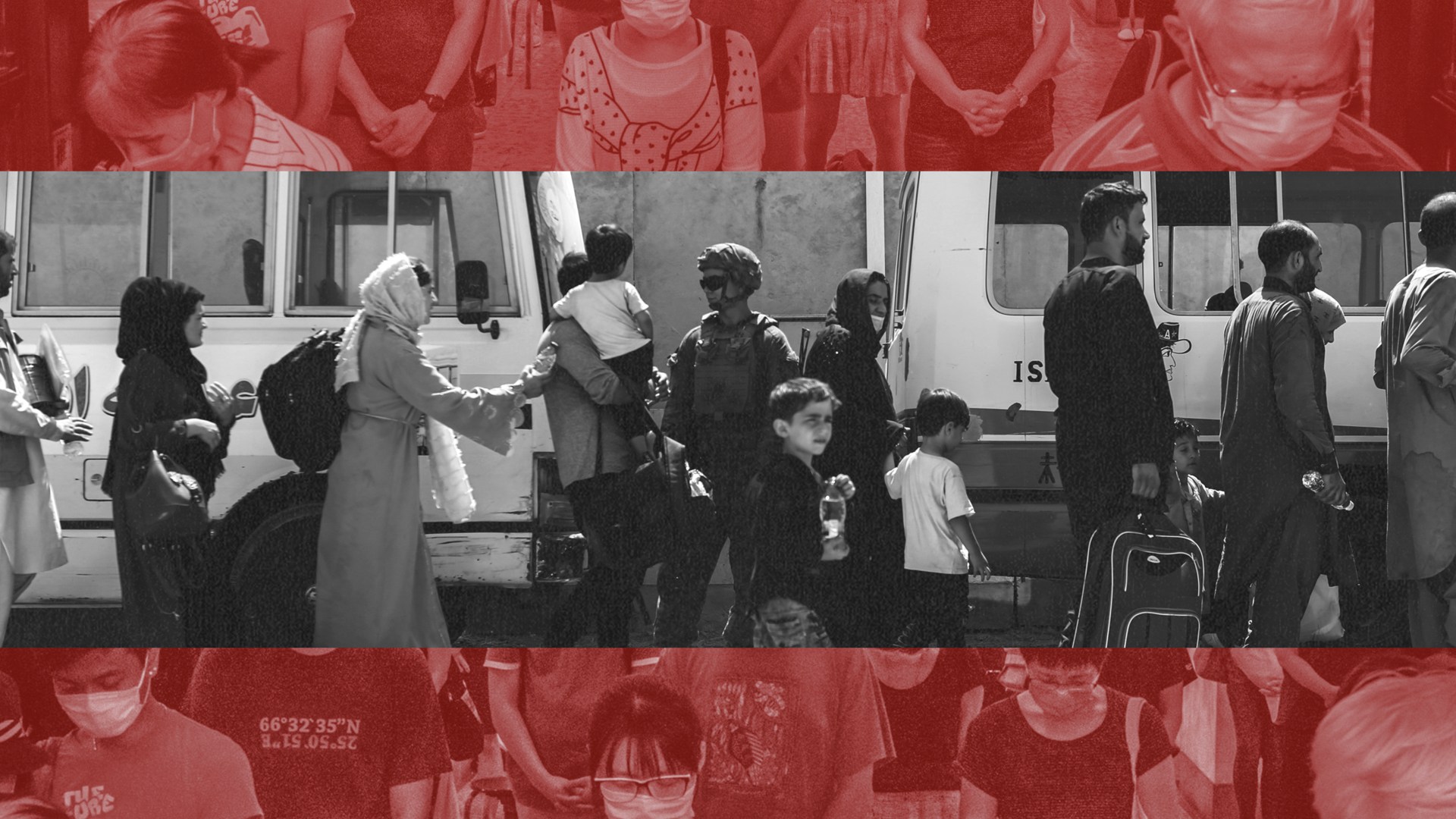
Illustration by Mallory Rentsch / Source Images: Courtesy of Valparaiso University / Subjug / Getty Images

Nestled in the Ozark Mountains of Missouri, Evangel University will no longer evoke the Middle East—or the Middle Ages.

Since 1955, the flagship Assemblies of God institution has cheered on its Crusaders, replete with helmeted knight and steed. Now the knight is gone, and Evangel will root for Valor, represented by a horse.

“The evolution from a Crusader riding a horse to the horse itself was an intentional shift,” the university announced September 22. “The horse is a vehicle used to share a message, just as God inspires Evangel students to share the good news of Christ.”

The university considered almost 300 submitted suggestions—including 77 animal names, 69 military names, and 38 biblical names. The change was made in light of the school’s 55,000 alumni serving internationally.

“The world has changed significantly since the 1950s, when the Evangel community, intending to depict strength, honor, and commitment to the faith, first identified a Crusader as the school’s mascot,” stated interim president George O. Wood in March, when the decision was made to drop the name.

“Today, we recognize that the Crusader often inhibits the ability of students and alumni to proudly represent the university in their areas of global work and ministry.”

For some alumni, the change is a long time coming. The review process first began in 2007.

“When you want to share the love of Christ, you don’t want to identify with something that shuts down conversation,” said Emily Greene, class of 2008. “It is the equivalent of saying ‘jihadist’ to a US Christian, evoking a cruel persona.”

Greene grew up as a history-loving missionary kid in Muslim-majority Kazakhstan. But her father sat her down when she first encountered the Crusades, and told her plainly: We don’t use that word here.

As she studied more deeply, Greene discovered that the Crusaders were not necessarily the good guys. But at Evangel, the imagery was everywhere. The campus newspaper was called The Lance. The cafeteria was “The Joust.”

In her senior year, Greene signed a petition against the Crusader name.

But the distaste came not only from her unique upbringing. Her American, non-Christian family members have also chafed at the university mascot.

Not as severely as many Muslims, of course.

“One thing about history here, they never forget,” said an American Christian worker with ties to Evangel, who requested anonymity for the sake of his ministry in Turkey.

“Many believe missionaries are the modern Crusaders.”

He described posters urging parents take caution against such foreigners throwing their babies off a cliff. Common is the sentiment that Christian workers are also spies.

“I believe Evangel is doing the right thing,” he said. “We are extremely careful to not bring up that [Crusaders] name in any sort of context.”

One month before Evangel, Valparaiso University, a Lutheran institution in Indiana, announced in February it was dropping its own Crusaders nickname. Last month, the school rechristened its sports teams the Beacons.

“We are beacons of knowledge for our students’ academic, social and spiritual growth,” said university president José Padilla, connecting the new name with a school motto: In Thy Light, We See Light.

“Above all, we are beacons of God’s light around the world. We light the way for our students, so that once they graduate, they shine their light for others.”

But contrary to Evangel, the school popularly known as “Valpo” enrolls a sizable Muslim community. While centering its Lutheran heritage and mandating the study of theology, the school does not require a statement of Christian faith for students.

“As a Muslim, I was embarrassed to come to Valpo because the school’s mascot was a Crusader, even though my mom and older siblings went here before me,” said Jenna Rifai, class of 2021.

“It’s like, in their minds do they accept me? Are they anti-Muslim? I know it seems like a small little image, but symbols hold power.”

But Rifai also became well known on campus for her TEDx talk at Valparaiso, where she described how winsome interactions with students during a feared class on “Trump’s America” helped her find peace.

The class was taught by Heath Carter, now associate professor of American Christianity at Princeton Theological Seminary.

“There has been a lot more scrutiny of names and mascots in recent years, and it represents a critical turn in how we view our history,” he said.

“As a Christian, I think it can be very faithful to reassess what we lift up as our examples and models. There is a reckoning happening, and it is possible to see Valpo as part of this movement.”

Evangel, however, was quick to distance itself from any wider societal movements. Its FAQ page emphasizes the mascot change is not a “cancel culture reaction,” but one required by the school’s “Christ-centered focus.”

It is somewhat of a trend among Christian institutions, however. Wheaton College dropped its Crusaders nickname in 2000, followed by the University of the Incarnate Word in 2004, Northwest Christian (now Bushnell) University in 2008, Eastern Nazarene College in 2009, and Alvernia University and Northwest Nazarene University in 2017.

But according to mascotdb.com, which lists hundreds of high schools and higher ed institutions that have held the moniker, about a dozen colleges still use it, including the College of the Holy Cross in Massachusetts.

“The literal definition of the word, ‘one who is marked by the cross of Christ,’ was appropriate for our institution’s Jesuit and Catholic intellectual and spiritual tradition,” stated president Philip Boroughs in 2018, when the college decided to keep the name.

“We are crusaders for human rights, social justice, and care for the environment; for respect for different perspectives, cultures, traditions, and identities; and for service in the world, especially to the underserved and vulnerable.”

But the image still caused consternation. One month later, Holy Cross dropped its knight as the university mascot, to be phased out entirely from the school’s symbolism and branding.

Will it make a difference?

From across the ocean, Middle East evangelicals demur. Whether the anti-Crusader spirit is a consequence of US domestic politics or concern for the gospel around the world, their issues are far greater than fluffy mascots.

“Americans are sensitive and try to accommodate everything and everyone,” said Wageeh Mikhail, the Egyptian engagement director for ScholarLeaders. “But I don’t think it makes any sense to Muslims or Christians in the Middle East.

“It is irrelevant.”

Instead, he focuses on the modern mistranslation of Crusades into Arabic. An expert in historical Muslim-Christian relations, he said that contemporaneous Muslims, Christians, and Jews all referred to the Middle Ages conflict as “the Wars of the Franks.”

It was not until about the 18th century, Mikhail said, that Muslim polemicists began translating the conflict as “the Wars of the Cross-bearers.” But today, this is the term that has universal usage in Arabic.

Imad Shehadeh, president of Jordan Evangelical Theological Seminary, made a similar point, emphasizing that most Middle Eastern Christians stood with the Muslims against the Crusaders.

But given the misuse of a perfectly good word—crusade—he resonated with the College of the Holy Cross.

“It would be better to give the true intention of the word rather than fall for the unfair and damaging way it has been portrayed,” he said. “We cannot keep changing our vocabulary just because some group uses it, not literally, but with a nuance intended to harm.”

Martin Accad, however, resonated with Jenna Rifai. Symbols do hold power.

“Christian students can sit in their dorm at Valparaiso and read about the fact that Jesus taught us to love and to be peacemakers all they want,” said the associate professor of Islamic studies at Arab Baptist Theological Seminary, in Beirut.

“But then they go out to watch a football game and to cheer for the team, and the Crusader mascot has more impact on their subconscious than all the books they’ve just read.”

Meanwhile, Muslims have their own issues, he said.

Mosque preachers are also adept at stirring up a crowd. Even when their complaint is political, theologically tinged rhetoric often predominates.

Accad highlighted the term kafir as especially problematic. Translated as “unbeliever” or “infidel,” moderate Muslim scholars often fail to admit the real harm such classical language causes for contemporary interfaith relations.

“Christians and Muslims both have a lot of work to do in terms of revising elements of their religious language that poison everyday relations,” Accad said.

“We have to create new symbols.”

Hussein Shahine, a Shiite Muslim, thinks Beacons works just fine.

“It will help Valpo’s identity of the school rest on something stronger: its academic reputation,” said the 2017–18 student body president. “Crusaders didn’t offend me, but I understand how the history might make people uncomfortable.”

It does for him—but with a twist.

Born in Dearborn, Michigan, Shahine spent time growing up in one of the Christian villages of the Shiite-majority Baalbek region in Lebanon. He heard church bells every Sunday and never considered that his religion made him different from other Lebanese.

Until studying the Crusades.

“Sunni Muslims destroyed the Shiite caliphate of Egypt, and the Syrian mujahideen treated us like scum,” he said of Saladin’s 1169 occupation, before the sultan launched his campaign against the Crusaders.

“There were massacres on all sides, and nothing good came of it.”

His older brother applied to Valparaiso on a football scholarship, and their father chuckled when learning of the then-mascot. But as student body president, Shahine never heard Muslims complain.

And years later, his family is still proud of their association with the school.

“Valpo really is a place of light, and made us good men of character,” Shahine said. “I am proud to call myself a Crusader.”

It is a fitting tribute to Christian education. But names still matter—deeply.

“Evangel was a very good school, and it shaped me,” said Greene.

“But I would never call myself a Crusader.”

Editor’s note: This article was updated September 22 to include the selection of Valor as Evangel’s new mascot.
News
Wire Story

Supreme Court Delays Execution of Inmate Over Pastoral Touch Request

The case, involving a Christian convert and his Southern Baptist minister, is the latest in ongoing First Amendment disputes over the role of clergy in the death chamber.

Christianity Today September 8, 2021
Geoff Livingston / Getty Images

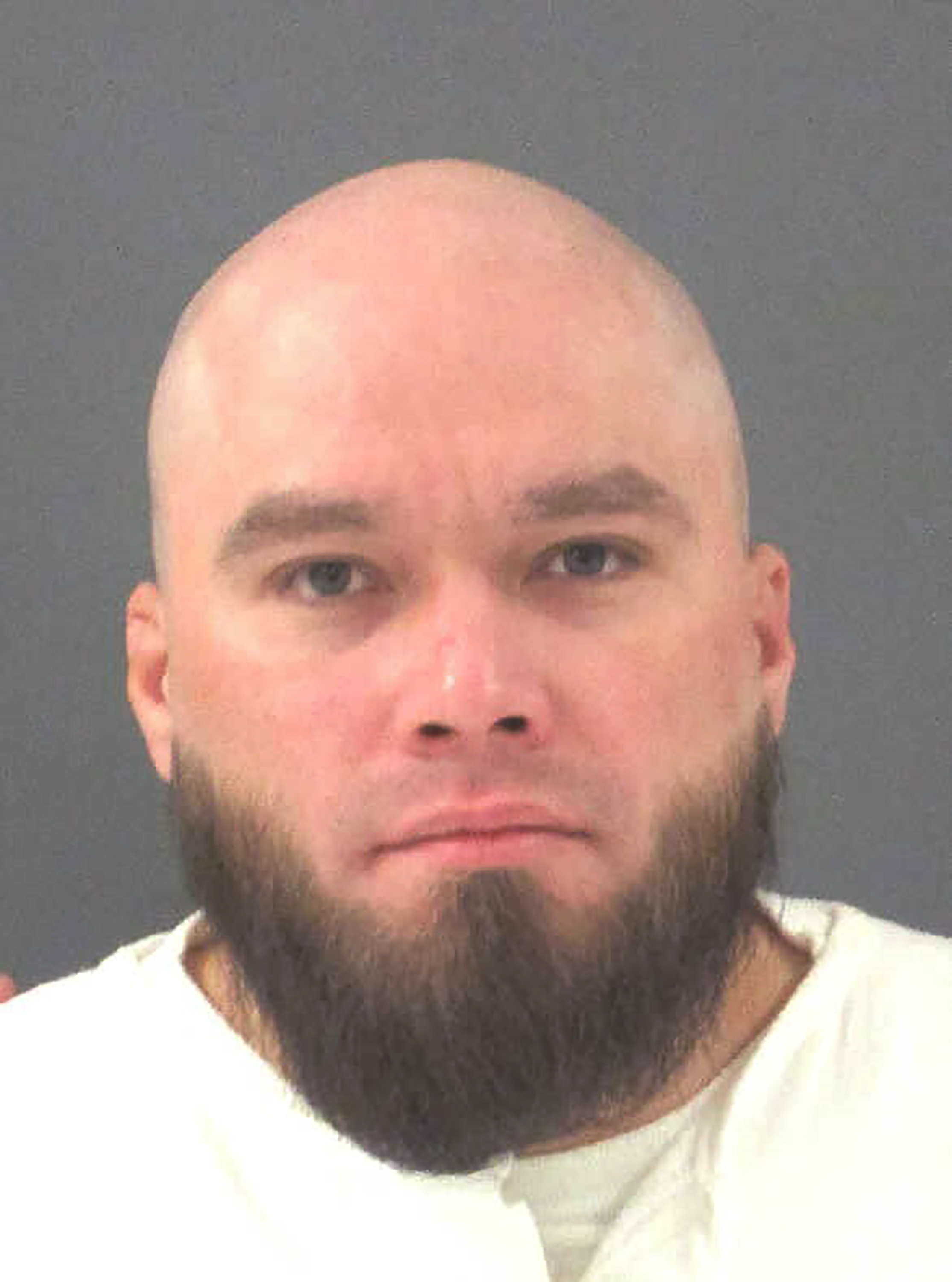
A Texas death row inmate won a reprieve Wednesday evening from execution for killing a convenience store worker during a 2004 robbery that garnered $1.25 after claiming the state was violating his religious freedom by not letting his pastor lay hands on him at the time of his lethal injection.

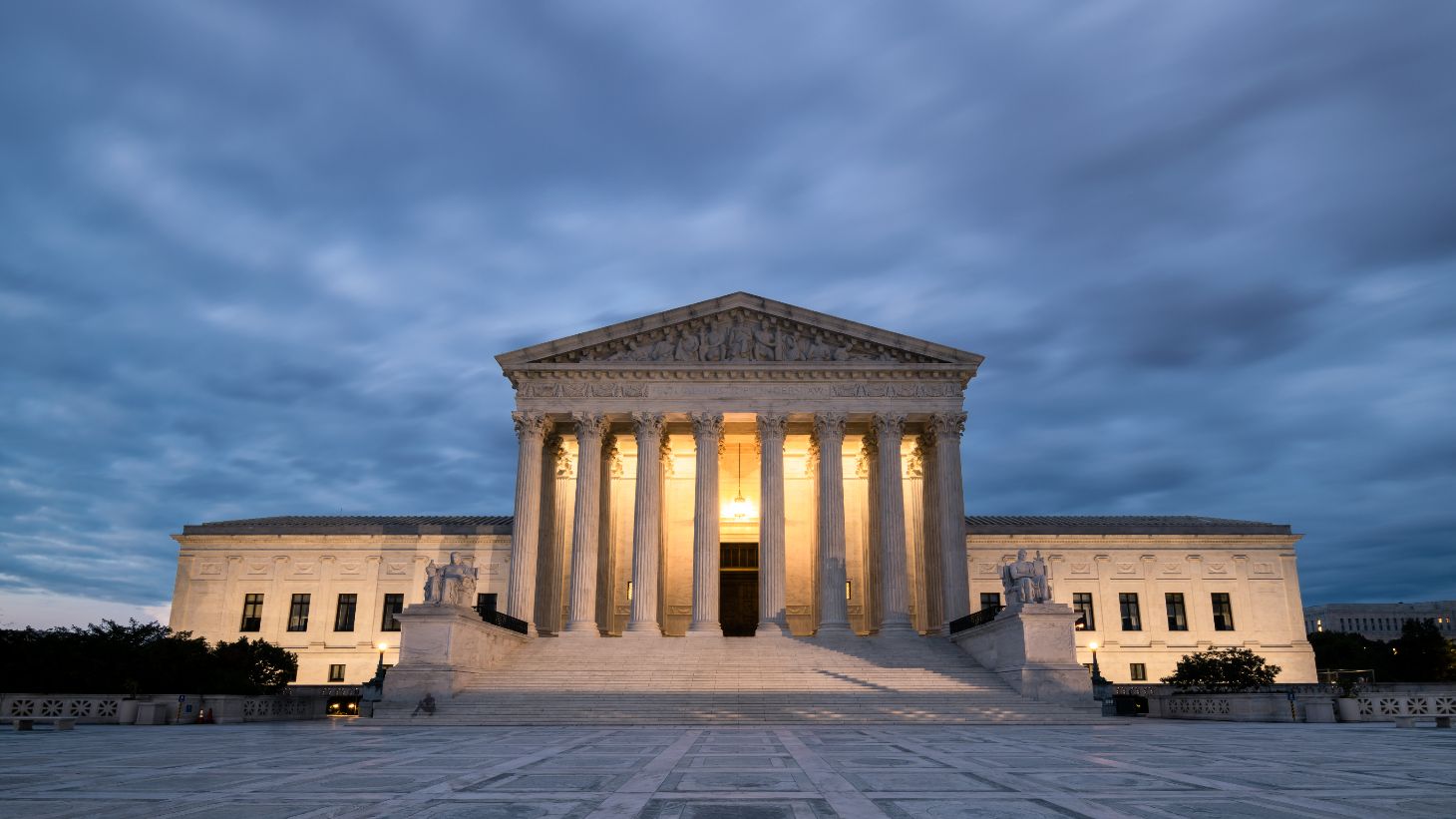
The US Supreme Court blocked John Henry Ramirez’s execution about three hours after he could have been executed. He is condemned for fatally stabbing 46-year-old Pablo Castro, who worked at a Corpus Christi convenience store.

Ramirez was in a small holding cell a few feet from the Texas death chamber at the Huntsville Unit prison when he was told of the reprieve by Texas Department of Criminal Justice spokesman Jason Clark.

“He was quiet when I let him know,” Clark said. “He shook his head and said: ‘Thank you very much. God bless you.’”

In its brief order, the court directed its clerk to establish a briefing schedule so Ramirez’s case could be argued in October or November.

Prosecutors say Ramirez stabbed Castro 29 times during a series of robberies in which the inmate and two women sought money following a three-day drug binge. Ramirez fled to Mexico but was arrested 3½ years later.

Seth Kretzer, Ramirez’s lawyer, had argued the Texas Department of Criminal Justice was violating the death row inmate’s First Amendment rights to practice his religion by denying his request to have his pastor touch him and vocalize prayers when he was executed. He called the ban on vocal prayer a spiritual “gag order.”

“It is hostile toward religion, denying religious exercise at the precise moment it is most needed: when someone is transitioning from this life to the next,” Kretzer said in court documents.

Lower appeals courts had rejected Ramirez’s argument.

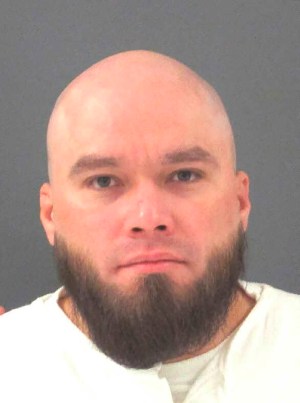
John Henry RamirezTexas Department of Criminal Justice via AP
John Henry Ramirez

The request by Ramirez, 37, is the latest clash between death row inmates and prison officials in Texas and other states over the presence of spiritual advisers in the death chamber.

In recent years, the Supreme Court has granted stays halting several executions in Texas and Alabama over the presence of clergy or spiritual advisers in the death chamber. The only execution stays the Supreme Court has granted in recent years have been related to issues of religious practice or discrimination.

In April, the Texas prison system reversed a two-year ban on allowing spiritual advisers in the death chamber. The ban came after the US Supreme Court in 2019 halted the execution of another Texas inmate who had argued his religious freedom was being violated because his Buddhist spiritual adviser wasn’t allowed to accompany him. That inmate, Patrick Murphy, remains on death row.

Texas previously allowed state-employed clergy to accompany inmates into the chamber, but its prison staff included only Christian and Muslim clerics. The new policy allows an inmate’s approved spiritual adviser to be in the chamber but the two cannot have any contact and vocal prayers during the execution are not allowed.

Texas prison officials say direct contact poses a security risk and the vocal prayer could be disruptive and would go against maintaining an orderly process. Aside from some prison officials, an inmate’s final statement and a doctor who announces the time of death, no one else usually formally speaks during an execution.

Dana Moore, a Southern Baptist pastor who served as Ramirez’s spiritual adviser the last four years, said the request to let him touch Ramirez was about letting the inmate practice his Christian faith and treating him “with a certain amount of dignity.”

Moore and Kretzer say the laying of hands is a symbolic act in which religious leaders put their hands on someone in order to offer comfort during prayer or confer a spiritual blessing at the moment of someone’s death.

“John’s sentence wasn’t death and you can’t have any meaningful contact,” said Moore, who is pastor at Second Baptist Church in Corpus Christi. “He is paying for his crime. I guess the question that would come up, is that not enough?”

But Mark Skurka, the lead prosecutor at Ramirez’s 2008 trial, said while he believes a death row inmate should have a spiritual adviser at the time of execution, there should be limitations based on security concerns.

“Pablo Castro didn’t get to have somebody praying over him as this guy stabbed him 29 times. Pablo Castro didn’t get afforded such niceties and things like to have a clergyman present,” said Skurka, now retired after later serving as Nueces County district attorney.

Castro, who had nine children, had worked at the convenience store for more than a decade when he was killed.

“He was a good guy. He would help people out in the neighborhood. Everybody liked him,” Skurka said.

Two women who took part in the robberies and were convicted on lesser charges remain in prison.

Six more executions are scheduled for later this year in Texas, the nation’s busiest capital punishment state.

News
Wire Story

Pro-Life Christians Pray, Rally Against Mexico Ruling Decriminalizing Abortion

The unanimous Supreme Court decision establishes historic precedent in the heavily Catholic country.

Christianity Today September 8, 2021
SOPA Images / Getty Images

Mexico’s Supreme Court ruled Tuesday that it is unconstitutional to punish abortion, unanimously annulling several provisions of a law from Coahuila—a state on the Texas border—that had made abortion a criminal act.

The decision will immediately affect only the northern border state, but it establishes a historic precedent and “obligatory criteria for all of the country’s judges,” compelling them to act the same way in similar cases, said court President Arturo Zaldívar. “From now on you will not be able to, without violating the court’s criteria and the constitution, charge any woman who aborts under the circumstances this court has ruled as valid.”

Those circumstances will be clarified when the decision is published, but everything points to that referring to abortions carried out within the first 12 weeks of a pregnancy, the period allowed in the four states where abortion is already legal.

The decision comes one week after a Texas law took effect prohibiting abortions once medical professionals can detect cardiac activity in the fetus. It allows any private citizen to sue Texas abortion providers who violate the law, as well as anyone who “aids or abets” a woman getting the procedure.

Only four Mexican states—Mexico City, Oaxaca, Veracruz, and Hidalgo—now allow abortion in most circumstances. The other 28 states penalize abortion with some exceptions.

Mexico is a heavily Roman Catholic country. The church was a powerful institution through colonial times and after Mexico’s independence, but a reform movement in the mid-19th century sharply limited the church’s role in daily life. Anticlerical efforts at times led to bloodshed, especially during the Cristero Rebellion from 1926 to 1929.

The topic of abortion still remains controversial in Mexico, however. The divide was on display Tuesday as groups from both sides demonstrated outside the court.

Dozens of people kneeled in prayer in front of the court. Christian pro-life demonstrators gripped rosaries, held blue balloons, and displayed signs with messages like, “Let’s Save Both Lives.”

The conservative National Action Party reiterated its opposition to abortion. “We are in favor of the defense of life from conception and until natural death,” the party said in a statement. It asked that conscientious objection be protected “for ethical, moral, or religious motives.”

President Andrés Manuel López Obrador of the Morena party declined Tuesday before the decision to comment on the topic, saying only that it was for the court to decide. López Obrador describes himself as “a Christian in the broadest sense of the word,” declining to offer more specific when asked about his Protestant or Catholic ties.

The Mexican Episcopal Conference sent a series of messages via Twitter citing previous comments by church leaders. One was from earlier this year before a vote decriminalizing abortion in the state of Hidalgo. “May your decision for life not be conditioned by an ideology, but rather motivated by faith, hope and love,” it read.

https://twitter.com/IglesiaMexico/status/1435351096155938817

“We’re seen as a Catholic people, as a Guadalupano people,” said law professor Leticia Bonifaz of the National Autonomous University of Mexico. “But if you notice today, the issue being discussed is legal, not religious, not moral.”

Bonifaz said this Supreme Court is more liberal than the one that decriminalized abortion in Mexico City in 2007. In the intervening years, there has been extensive education for not only the justices, but the lawyers who make up their teams from the perspectives of gender and human rights, she said.

Lawyer and activist Verónica Cruz, director of the collective “Las Libres,” or “The Free,” said the decision “tears down barriers” by sending the message that women cannot be charged for abortions.

There are currently no women imprisoned for abortions in Mexico, but there are some 4,600 open investigations for it, said Cruz, whose organization freed the last women who had been in prison for it.

For a long time, significant changes for Mexican society were ushered through the legislative branch, but more recently the “Mexican justice system has been a vanguard justice system on many issues,” Bonifaz said.

The historic case seemed to leap into the public’s consciousness overnight, but in reality it had been moving through the legal system for four years, said Bonifaz. Former Attorney General Raúl Cervantes had challenged its constitutionality before stepping down in 2017.

In previous decisions, the Supreme Court ruled in favor of women who had been imprisoned or had their rights violated for abortions. But Rebecca Ramos, director of the nongovernmental reproductive rights group GIRE, said the latest case was the first time the justices debated the fundamental question of whether abortion should be considered a crime or not.

The decision could potentially open another option for Texas women seeking legal abortions. For years, some women in south Texas have crossed the border to go to Mexican pharmacies to buy misoprostol, a pill that makes up half of the two-drug combination prescribed for medical abortions. Legal abortions could become accessible now along Mexico’s long shared border with Texas.

News

Max Lucado Diagnosed with an Aortic Aneurysm, Asks for Prayer

Update: Lucado shares the good news of his blood vessel bulge improving and no longer requiring surgery.

Christianity Today September 8, 2021
Screengrab / MaxLucado.com

Update (October 28): Max Lucado is praising God for the “surprising and unexpected news” that his heart condition has improved and he is no longer on track for surgery.

A month and a half after sharing with followers that he had been diagnosed with an ascending aortic aneurysm—a blood vessel bulge that could lead to life-threatening consequences—the Texas pastor offered an update, saying the measurement of the bulge had unexpectedly gotten smaller.

“The medical team credits a more precise test, and they very well may be correct, but I want to credit a good God who, in this case, is choosing to keep a hand of grace around the aneurysm,” he said in a video update.

Lucado said the aneurysm had reduced enough that he will not have to have it checked for a year.

——

Original post: San Antonio pastor and devotional author Max Lucado announced Monday that he has been diagnosed with a serious cardiovascular condition and asked for prayer.

The 66-year-old said his doctors found a bulge in the large blood vessel closest to his heart, called an ascending aortic aneurysm. According to the National Institutes of Health, if aortic aneurysm splits or ruptures, it can become life-threatening, but early diagnosis and treatment can prevent fatal complications.

Though his aortic aneurysm is “sizable” and “surgery is possible,” Lucado told followers he plans to continue his normal ministry routine and wait to see whether it grows before undergoing a procedure.

Back in 2007, Lucado stepped down from his position as senior minister at Oak Hills Church seven months after being diagnosed with atrial fibrillation. At the time he was 51 and said his health concerns were “severe enough that I think a change needs to be made.” He has continued to serve and preach at the church as its teaching minister.

Lucado shared a short video about his health this week and requested followers join him in “asking the Lord to let his perfect, perfect will be done.”

“Here’s the good news: I feel fine. I am under the care of an outstanding medical team, and most of all, I am in the hands of a good God,” he said. “For now, please know that I am fully trusting our heavenly Father. I am grateful for your prayers for me and for my family.”

Lucado, nicknamed “America’s pastor,” is the author of more than 40 books, which have sold over 120 million copies, including Anxious for Nothing, Unshakeable Hope, and You’ll Get Through This.

Over the summer, Lucado contracted a breakthrough case of COVID-19, testing positive in late July. “Though miserable, the misery would have been worse with no vaccination,” he tweeted at the time.

He said his ascending aortic aneurysm had been diagnosed “within the past few weeks.” Aortic aneurysms are most often found among people over 65, and men are more likely to suffer from the condition than women. Mennonite theologian John Howard Yoder died from an aortic aneurysm, and Grace Family of Churches founder Buddy Hoffman died of complications years after repairing an aortic aneurysm that had split.

Lucado said his ministry would continue to provide health updates on his condition.

News
Wire Story

Trump’s Faith Advisers Reconvene in New Initiative

Paula White leads the 70-member group, which includes evangelical leaders who backed the former president.

Paula White previously oversaw faith outreach during the Trump administration.

Paula White previously oversaw faith outreach during the Trump administration.

Christianity Today September 7, 2021
Al Drago / Getty Images

In another sign Donald Trump is eyeing a run to regain the White House, the former president and his religious advisers announced last week the launch of a national faith advisory board, apparently aimed at reinvigorating his conservative Christian base.

The new initiative, first reported by the Jewish news outlet The Forward, was formally unveiled on a conference call organized by Intercessors for America and led by longtime Trump adviser Paula White.

The Pentecostal megachurch pastor said the new effort, which includes participation from “70 executives,” is intended to continue the “great work that we have done,” referring to efforts she oversaw as head of the Trump White House’s faith-based office.

White drew parallels to the creation of a previous “faith advisory board,” a likely reference to a group of largely evangelical Christian leaders who advised the 2016 Trump presidential campaign and operated as an informal council on religion matters throughout his presidency.

“It grew to the most robust coalition in modern-day history,” White said of the board’s work. “Our unity brought unprecedented victories, influence and access.”

White was joined by Jennifer Korn, who previously served as a special assistant to then-President Trump through his White House Office of Public Liaison. Korn told listeners the new national faith advisory board would be “continuing the work of the White House Office of Public Liaison on the outside to make sure that we are one strong voice.”

Trump took up most of the rest of the call with lengthy remarks in which he oscillated between critiquing President Joe Biden’s record on faith-based issues — “a lot of things have happened with respect to faith and religion, and they’re not good things” — and praising his own tenure, saying, “One of my greatest honors was fighting for religious liberty and for defending the Judeo-Christian values and principles of our nation’s founding.”

He listed various Trump administration accomplishments popular with conservative Christians, such as designating Jerusalem the capital of Israel, founding a new White House faith office, declaring churches “essential” during the coronavirus pandemic and appointing conservative judges to the federal bench and the Supreme Court.

Trump alluded to last week’s decision by the Supreme Court not to block a controversial Texas abortion ban, saying, “Even last night, you’re getting some very powerful decisions, more powerful than anybody would have thought.”

He also reiterated the claim he “totally obliterated” the Johnson Amendment, a section of the U.S. tax code that bars religious groups and other nonprofits from endorsing candidates. (Trump’s 2017 executive order sought to hinder its enforcement but did not eliminate the statute.)

Trump then fielded questions from leaders of various faith organizations—most of which are focused on politics—including Jason Yates, CEO of My Faith Votes; Brian Burch, head of CatholicVote.org; Dave Kubal, head of Intercessors for America; Rabbi Yaakov Menken, managing director of the Coalition for Jewish Values; and Dave Donaldson, co-founder of CityServe.

In answering their questions, Trump criticized Biden’s withdrawal from Afghanistan, calling it “a mad rush” and bemoaning the Taliban’s seizure of US military equipment.

Trump referenced hypothetical future scenarios “if we’re able to get back in,” while repeating the widely discredited claim the 2020 election was “stolen” from him. In discussing the Catholic vote, he acknowledged he had lost ground with the bloc in his four years in office.

“I’m a little bit surprised that we didn’t do better with the Catholic vote,” Trump said. “I think now they would give us a vote. I think we got about 50 percent of the vote. And yet, we did a lot for the Catholic vote. So we’ll have to talk to them. We’re gonna have to meet with the Catholics.”

According to a recent election analysis published by Pew Research, Trump drew support from 50 percentof Catholics overall in 2020, a dip of 2 percentage points from 2016 (Biden took 49%, up from the 44% Democratic contender Hillary Clinton claimed in 2016).

The shift was more dramatic among white Catholics, a key constituency in battleground Rust Belt states: Trump’s share of that vote dropped from 64 percent to 57 percent between 2016 and 2020, whereas Biden won 42 percent— an 11-percentage-point improvement over Clinton in 2016.

The former president expressed frustration with the lack of support from Jewish voters, despite his administration’s support of Israel. “Look what I did with the embassy in Jerusalem and what I did with so many other things. … Israel has never had a better friend, and yet I got 25 percent of the vote,” Trump said. “I think they have to get together. There has to be a little bit more unity with the religious groups all represented on this call.”

Polls of Jewish voters during the 2020 election varied, with a Republican Jewish Coalition survey finding 30 percent support for Trump and a separate poll conducted by liberal group J Street reporting just 21 percent.

Trump made similar remarks while answering a question from Yates of My Faith Votes.

“All I can tell you is that I think we have to have a great election and we have to have a powerful vote,” Trump said. “If we don’t have a very powerful vote, then Jason, I’ll be talking to you in the future, but it won’t be very positively.”

Trump, a former Presbyterian who converted to nondenominational Christianity near the end of his time in office, was also asked directly about his belief in God.

“It’s all based around God—it’s so important,” he replied. “God is so important to the success of what we’re doing. Because without God, we have nothing.”

The call ended with a prayer from Robert Morris, pastor of Gateway Church near Dallas, which Trump visited during his 2020 campaign. Morris was among the religious leaders who gathered in the White House Rose Garden to celebrate Amy Coney Barrett’s nomination to the Supreme Court in September of that year, a maskless affair later called a COVID-19 spreader event.

Morris prayed for Trump and his family, saying they “have taken more of an attack from the enemy than any president we can ever remember.” He added: “And yet, Lord, he continues to stand strong for Jewish people, and for Christians, and Lord, for the Judeo-Christian foundation of our nation.”

Morris then closed by echoing Trump’s criticism of Biden and reiterating the debunked suggestion the election was “stolen.”

“I pray for those Americans that voted the wrong way,” he said. “I pray, God, that they would see what … poor administration, what that does to a great nation. I pray, Lord, that you will do something even, also, Lord, for our election system. That we will never have another election stolen from the American people — from the American people. We should be concerned about that. So Lord, whatever we need to do to fix the electoral process, I pray for that.”

As the session ended, White told listeners there would be monthly calls and to keep an eye out for “instruction.”

“Thank you for this unity coalition that has always had such influence and power to move things,” she said. “We are in a great battle, but I sense we have the ability to bring some great victories.”

Christianity Today Partners with Our Daily Bread to Present Dynamic New Podcast, ‘Where Ya From?’

FOR IMMEDIATE RELEASE

Contact: Ed Gilbreath
Phone: 630.384.7288
E-mail: egilbreath@christianitytoday.com

Carol Stream, IL – September 7, 2021 – Christianity Today is partnering with Our Daily Bread Ministries to produce Where Ya From?, a new weekly podcast that explores faith and culture with thought leaders from around the Christian community.

Created by Our Daily Bread Ministries (ODBM), Where Ya From? is hosted by Rasool Berry, teaching pastor at Bridge Church in Brooklyn, New York, and director of partnerships and content for ODBM. Christianity Today (CT) will feature the program as part of its rapidly growing podcast networkWhere Ya From? will join a lineup of critically acclaimed CT podcasts such as Quick to Listen and The Rise and Fall of Mars Hill.

“We are thrilled to feature Where Ya From? as part of the CT podcast network,” says Ed Gilbreath, vice president of strategic partnerships for Christianity Today. “Rasool’s dynamic voice and unique insight on themes of faith and society are a perfect fit for the kind of biblically and culturally relevant content we want to provide for our audience as we seek to represent the full diversity of God’s church. And it’s an honor to collaborate on this project with a ministry as impactful and respected as Our Daily Bread.”

According to Berry, the goal of Where Ya From? is to highlight the real-life journeys—”the origin stories”—of dynamic influencers at the intersection of faith and culture. He hopes the podcast will inspire listeners to faithfully engage in conversations across society’s divides. “The polarization in our current social climate has made conversation with those different from us something we need to rediscover,” says Berry. “This podcast models how to build a bridge of understanding at the cross-sections of race, ethnicity, and culture by demonstrating how a curious faith can create deeper compassion and conviction.”

Where Ya From? launches on September 3 and features a diverse array of guests, including Lecrae, Kierra Sheard Kelly, Andy Crouch, Dr. A.R. Bernard, Dr. Alma Zaragoza Petty, Ambassador Sujay Johnson Cook, Daniel Hill, Ekemini Uwan, and many more. The premiere episode highlights the origin story of Lisa Fields, founder of Jude 3 Project. Fields discusses Black apologetics and why it’s her mission to help the Black Christian community know what they believe, why they believe, and how to share their faith in everyday situations.

Following its debut episode, regular installments of Where Ya From? episodes will drop each Tuesday at MoreCT.com/WhereYaFromwhereyafrom.org, and at Apple Podcasts, Spotify, Google Podcasts, and other popular streaming platforms.

Our Daily Bread Ministriesis a non-denominational, non-profit organization whose focus for more than 80 years has been to make the Bible accessible and understandable to people around the world. The organization creates print and digital content and distributes more than 60 million resources annually in more than 150 countries.

Christianity Today is an acclaimed and award-winning media ministry that elevates the storytellers and sages of the global Church. Each month, across a variety of digital and print media, the ministry carries the most important stories and ideas of the kingdom of God to over 4.5 million people all around the planet.

To Pray for Afghan Christians, I Look to China’s Church

Lessons I’ve learned in praying for and working with the Chinese church.

Christianity Today September 7, 2021
Illustration by Mallory Rentsch / Source Images: Billy H.C. Kwok / Stringer / Handout / Getty Images

Last week, a friend asked me to meet for coffee. She is a young mother, and after seeing the now-world-famous image of a young Afghani mother handing away her baby over a barbed wire fence to an American soldier, my friend found herself struggling to emotionally grapple with what she had seen. Though she has been praying consistently for the situation in Afghanistan, as the image continued to loop through her mind. She wanted advice regarding how to be concerned for the suffering church without succumbing to the heavy emotional toll of it all.

While working with the Chinese church over the past 16 years, I have had to do some processing and learning after watching brothers and sisters in Christ in another cultural context suffer deeply. In December 2018, I watched as a group of Chinese men and women I have prayed and worshiped with were viciously attacked and jailed. Watching their suffering from a distance over the joviality of American Christmas deeply impacted my understanding of Christ’s calling.

Roughly 70 years ago, the global church witnessed what was thought to be the end of the church in China. Similar to what we are witnessing today in Afghanistan, citizens (and especially Christians) scrambled to leave China after the Chinese Community Party took over. The Chinese government persecuted the church in the immediate years following. Thousands abandoned Christ.

But there was a generation of men and women who laid down their lives as the seeds of the Chinese church today. They remained faithful as individuals and as the corporate church. And when the time was right, the gospel spread across their country in such a way that today the Chinese church is the largest numerical church in the world. Christians in China are estimated to be around 5–7 percent of the population, a crucial tipping point, according to missiologists.

Paying attention to the global church causes us to realize just what our brothers and sisters are sacrificing in their walk with Christ. Engaging with the suffering church—from Afghanistan to China—has discipled my own heart. We must not let our own fear of suffering dictate the narrative, but rather we must be discipled by those in Afghanistan and China and elsewhere.

First, my emotions surrounding the suffering church have pressed me to examine what I actually believe about prayer. I’ve noticed that for many Americans like me, prayer can feel trite during times of global suffering because we don’t believe that prayer is an actual contribution to the situation. I’ve found that I pray because I feel distressed at what I see and read, and not out of true conviction that my prayers are part of the objective work of the Holy Spirit in the life of the church. Since watching those I work with suffer in 2018, I have been learning to see my prayer not just as a tool to ease my discomfort but as my weapon against the forces of evil in this world.

One diagnostic question I’ve asked myself since 2018 is whether I am capable of praying for justice and judgment. God’s justice is a theological framework for understanding a force for good in this world and a promise to be fulfilled at the end of time. As our brothers and sisters in China and Afghanistan demonstrate, preaching the gospel is about believing in a God who destroys evil and having the compassion of Christ. If our prayers for the situation in Afghanistan feel empty, then we need to reexamine how we are praying.

Second, watching churches I know suffer has caused me to examine what I believe about the perseverance of the saints. What is happening today is not the end of the story. But do I believe that and am I praying accordingly? As I watch the last American soldier leave Afghanistan, do I believe that God’s best plan for his people did not leave along with that soldier? For God himself has not left. I do not want to be trite. This is not a flippant statement to say that who is in power doesn’t matter or that our physical realities in this life don’t matter.

But if our view of church history requires friendly rulers and personal freedom to believe the church can not only survive but grow, then we have a faulty view of God’s relationship to his church.

There are a lot of things I’m praying for Afghanistan—justice and protection for women of all ages, justice and restoration for the abuses of government, economic stability, etc. I’m praying for those Christians who are fearing for their lives and want out. I’m praying for miraculous rescue.

But I also pray for those who stay. I am praying their lives will be the seeds of a similar gospel movement to what we’ve seen in China. I’m praying for their empowerment to be a strong and bold church in the coming decades so that in 50 years, we might be amazed to discover the largest church in the Muslim world. I am praying that their love for Afghanistan and their people will compel them.

As we awaken to the suffering of brothers and sisters on the other side of the world, let it disciple us to better engage the suffering we see in Afghanistan and here at home. We still have neighbors whose children are dying from cancer. We still have isolated widows who sit alone at night. We still have financial, psychological, and racial oppression. We still have divided churches. We still have wounds that are in need of binding.

Suffering is not a phenomenon of the persecuted church; though we try to avoid it, it is present everywhere. Suffering is part of our identity as adopted heirs of the suffering Lord, an identity which many of us are trying to escape. Where are you avoiding suffering with Christ? Where might you be able to testify to his name by entering into that suffering? Go there when you are compelled by what you see of the courage of your brothers and sisters in Afghanistan.

Hannah Nation serves as managing director of the Center for House Church Theology and content director for China Partnership. She is a co-editor of Faith in the Wilderness: Words of Exhortation from the Chinese Church (Kirkdale Press, 2022).

Culture

‘Ted Lasso’ Won’t Settle for Shallow Optimism

The show’s second season challenges viewers to consider true joy over hyper-positivity.

Christianity Today September 3, 2021
Courtesy of Apple TV+

Apple TV’s hit sitcom Ted Lasso has roped viewers (and 20 Emmy nominations) in with an inexplicably sunny protagonist, top-shelf pop culture references, and characters who care about one another. Despite the show’s unabashed sweetness, it attracted few critics, much less haters, until the second season’s Christmas episode recently dropped.

For some, scenes of Rebecca and Ted delivering presents to London’s less fortunate and the Higgins’ family home transforming into a premier destination for foreign players felt like “a warm blanket of nice.”

Not for everyone.

“Can Ted Lasso Recover from That Unspeakably Bad Christmas Episode?” wrote Paste magazine. “When there are no counterbalancing new episodes to wash away the astringent peppermint flavor, though, of course it’s easy to wonder if the Christmas episode is a one-off or if it represents the dominant new direction of the show,” suggested Vulture, referring to the weekly episode drop. “Maybe it’ll all be this wash of sentimental squishiness now. Ugh!”

Released in 2020, Ted Lasso centers an out-of-his-depth American football coach who takes a job with an English soccer team. He bakes biscuits for his team’s owner, opens a suggestion box to scornful players, and builds relationships with chronically bullied and insecure coworkers.

Ted’s vulnerable moments—a divorce, a disdainful team captain, and a boss who’s set him up for failure—have balanced his seemingly unflappable optimism, preventing him from being reduced to a symbol and revealing him as a human who, like us, is sometimes neglected, anxious, and in need of love. Even in the first season, writers attempted to make Ted more than a mustachioed Pollyanna by showing his panic attack at a karaoke bar and his procrastination in signing his divorce papers.

After a dark year that made many of us face our greatest anxieties and our mortality, watching Ted build an unlikely community felt satisfying. “Being nice, in ‘Ted Lasso,’ is not a naïve denial of the darkness of life. It’s a cleareyed adaptation to it,” wrote James Poniewozik at The New York Times. “The series recognizes that nice guys do sometimes finish last. It just argues that other things are more important than finishing first.”

And yet, what has haunted Ted Lasso’s second season is the chance that a good show centered on positivity, kindness, and joy might turn maudlin and trite. It offers us a glimpse of integrity without consequences and mirth without stakes. As someone who aggressively evangelized about Season 1, I’ve felt that.

When the team’s star Sam Obisanya took a stand against the Greyhounds’ lead sponsor for ethical reasons, I admired the show for taking on athlete activism. But when neither he nor his fellow protesting players nor the team’s ownership appeared to take a hit for their stance, I winced. Ted Lasso’s magic comes from presenting a fantasy of people deeply listening to each other, taking responsibility for their actions, and apologizing when they wrong each other, even as the earth shakes beneath them. It doesn’t come from bold but controversial choices not having consequences, no matter how noble they might be.

Among the many social phenomena that the pandemic has forced us to contend with has been “toxic positivity,” or, as the Psychology Group puts it, “the excessive and ineffective overgeneralization of a happy, optimistic state across all situations.” (Much of the reason we dislike Christian movies, after all, is because their storylines feature unearned saccharine performances or righteous actions that read as corny or hollow.)

The enthusiasm and reception to Ted Lasso suggests that part of serving sad people during chaotic and unpredictable times rests in leaning into both joy and pain. Hyperpositivity and happiness are shallow; they are emotions characterized by their ephemeral state and the existence of external conditions. But Scripture teaches that joy is much deeper. It is an unflappable fruit of the Spirit, grounded in the truth of God’s everlasting and unconditional love for us (Ps. 16:8–11).

Ted Lasso doesn’t have much to say about religion, or where ultimate hope might be found. But his persistence in his joy makes him attractive, especially for those in his life who have given up. Throughout season 2, the show has begun to suggest that Ted’s optimism may actually be masking deep hurt and pain, rather than coming from his suffering (1 Thess. 1:6). Ted’s wounds stay out of sight of many of his friends and, if he has it his way, out of the psychologist’s office. His visible and visceral pain make it possible to love his impenetrable cheeriness and not reduce him to a positivity mascot.

Our love for the show perhaps exemplifies our hunger for a space where trauma, joy, forgiveness, and community can coexist. And during a time of death and division, the church has a unique chance to be the messenger of the most consequential good news. How do we avoid the pitfall of shallow optimism and offer a greater gospel?

In the aftermath of the US withdrawal from Afghanistan, Afghan refugee Mariya Dostzadah Goodbrake wrote:

We want to stay encouraged and to say the right Christian things: “God will prevail,” “This is a broken world,” “Justice is not on this side of life,” or “We already have victory.” Yes, these comments remind us that we have a God that has already prevailed, but can we just grieve for a moment and not say the right Christian thing to say? Can we stand in righteous anger? Can we say that for this moment, evil prevailed? Can we just sit in the hurt and injustice for a moment?

The call of the Christian life is a complex one. It calls us to both joy and sorrow, both hope and lament. It calls us to a posture of wisdom, one where we discern when to sit in solidarity with friends who mourn, when to speak truth, and when to call a brother or sister to hope (Ecc. 3:4). In the gospel, the contradictions Lasso’s creators attempt to portray meld harmoniously together. Maybe we can show our friends the real-life thing.

Morgan Lee is global media manager for Christianity Today and the cohost of Quick to Listen. She is on Twitter at @mepaynl.

News
Wire Story

Native Christians: Indigenous Bible Version Is ‘Made By Us For Us’

The recently released New Testament translation adopts Native American descriptors for God—the Creator and Great Spirit.

“First Nations Version: An Indigenous Translation of the New Testament” and Terry Wildman.

“First Nations Version: An Indigenous Translation of the New Testament” and Terry Wildman.

Christianity Today September 3, 2021
Courtesy of InterVarsity Press

It’s a Bible verse familiar to many Christians—and even to many non-Christians who have seen John 3:16 on billboards and T-shirts or scrawled across eye black under football players’ helmets.

But Terry Wildman hopes the new translation published Tuesday by InterVarsity Press, First Nations Version: An Indigenous Translation of the New Testament, will help Christians and Indigenous peoples read it again in a fresh way.

“The Great Spirit loves this world of human beings so deeply he gave us his Son—the only Son who fully represents him. All who trust in him and his way will not come to a bad end, but will have the life of the world to come that never fades away, full of beauty and harmony,” reads the First Nations Version of the verse.

In the First Nations Version, “eternal life,” a concept unfamiliar in Native American cultures, becomes “the life of the world to come that never fades away, full of beauty and harmony.” The Greek word “cosmos,” usually translated in English as “the world,” had to be reconsidered, too: It doesn’t mean the planet Earth but how the world works and how creation lives and functions together, said Wildman, the lead translator and project manager of the First Nations Version.

They’re phrases that resonated with Wildman, changing the way he read the Bible even as he translated it for Native American readers.

“We believe it’s a gift not only to our Native people, (but) from our Native people to the dominant culture. We believe that there’s a fresh way that people can experience the story again from a Native perspective,” he said.

The idea for an Indigenous Bible translation first came to Wildman nearly 20 years ago in the storeroom of the church he pastored on the Hopi Reservation in Arizona.

Wildman, who is Ojibwe and Yaqui, was excited to find a Hopi translation of the New Testament in storage. He wanted to hear how that beloved Scripture sounded in Hopi, how it translated back into English.

But, he said, while many Hopi elders still speak their native language and children now are learning it in schools, he couldn’t find anyone able to read it. That is true for many Native American nations, he added, noting that at the same time Christian missionaries were translating the Bible into Native languages, they were also working with the boarding schools in the United States and Canada that punished students for speaking those languages.

It occurred to the pastor that “since 90-plus percent of our Native people are not speaking their tribal language or reading their tribal language, we felt there needed to be a translation in English worded for Native people,” he said.

Wildman, a licensed local pastor in the United Methodist Church, has been working on translating the Bible into words and concepts familiar to many Native Americans ever since.

He first began experimenting by rewording Scripture passages he was using in a prison ministry, giving them more of a “Native traditional sound,” he said—a sound he’d learned by being around Native elders and reading books written in a more traditional style of English by Native Americans like Oglala Lakota spiritual leader Black Elk.

He and his wife, Darlene, who have a music ministry called RainSong, also recorded readings of those passages over music in an album called The Great Story from the Sacred Book. It won a Native American Music Award in 2008 for best spoken-word album.

Wildman was encouraged by the reactions he received as he shared his rewordings across the country at tribal centers, Native American-led churches and powwows.

“They just loved listening to it because it didn’t have the church language. It didn’t have the colonial language. It had more of a Native feel to it—as much as possible that you can put in English,” he said.

Many Native people asked what Bible he was reading from.

Young people have told him it sounds like one of their elders telling them a story. Elders have said it resonates with how they heard traditional stories from their parents and grandparents.

As others encouraged him to turn his rewordings into a full translation of the Bible, Wildman published a children’s book retelling the Christmas story, Birth of the Chosen One, and a harmonization of the four Gospels called When the Great Spirit Walked among Us.

Then, on April Fool’s Day 2015, he heard from the CEO of OneBook Canada, who suggested the Bible translation organization fund his work. The offer wasn’t a prank, he said, it was “confirmation from Creator that this was something he wanted.”

“Everybody hears English a little differently,” Wildman said.

“We have all of these translations for that purpose to reach another generation, to reach a particular people group. But we had never had one for our Native people that has actually been translated into English.”

Wildman began by forming a translation council to guide the process, gathering men and women, young and old, from different Native cultures and church backgrounds. They started with a list of nearly 200 keywords Wycliffe Bible Translators said must be translated properly to get a good translation of Scripture.

With that foundation, Wildman got to work, sending drafts to the council for feedback. He looked up the original Greek text of the New Testament. He checked to see how other English translations rendered tricky passages. He consulted Dave Ohlson, a former Wycliffe translator who helped found OneBook Canada, part of the Wycliffe Global Alliance.

The Indigenous translation uses names for God common in many Native cultures, including “Great Spirit” or “Creator.” Names of biblical figures echo their original meanings in Greek and Hebrew: Jesus becomes “Creator Sets Free” and Abraham, “Father of Many Nations.”

“We believe it’s very important that the Gospel be kind of decolonized and told in a Native way, but being accurate to the meaning of the original language and understanding that it’s a different culture,” Wildman said.

Over the years, he and his council have published editions of the Gospel of Luke and Ephesians and a book called Walking the Good Road that included the four Gospels alongside Acts and Ephesians.

A number of ministries already have started using those translations, including Foursquare Native Ministries, Lutheran Indian Ministries, Montana Indian Ministries, Cru Nations and Native InterVarsity, he said.

Native InterVarsity, where Wildman serves as director of spiritual growth and leadership, has distributed earlier editions of the First Nations Version at conferences and used the Indigenous translation in its Bible studies for Native college students for several years.

Megan Murdock Krischke, national director of Native InterVarsity, said students have been more engaged with the translation, hearing the Bible in a way they’re used to stories being told.

“Even though it’s still English, it feels like it’s made by us for us. This is a version of Scripture that is for Native people, and it’s indigenized. You’re not having to kind of sort through the ways other cultures talk about faith and spirituality,” said Krischke, who is Wyandotte and Cherokee.

“It’s one less barrier between Native people and being able to follow Jesus.”

Earlier this month, The Jesus Film Project also released a collection of short animated films called “Retelling the Good Story,” bringing to life the stories of Jesus, or Creator Sets Free, feeding the 5,000 and walking on water from the First Nations Version.

Wildman said the response from Native peoples and ministries to the First Nations Version has exceeded any expectations he had when he first began rewording Bible passages.

He hopes it can help break down barriers between Native and non-Native peoples, too. He pointed out the suspicion and misinformation many white Christians have passed down for generations, believing Native Americans worship the devil and their cultures are evil when they share a belief in a Creator, he said.

“We hope that this will help non-Native people be more interested in our Native people—maybe the history, understanding the need for further reconciliation and things like that,” Wildman said.

“We hope that this will be part of creating a conversation that will help that process.”

Books

‘The Chosen One Will Make His Home in Your Heart’

The First Nations Version of Ephesians 3-4:16.

Christianity Today September 3, 2021
Katherine Frey / The Washington Post via Getty Images

As he ministered among native tribes, pastor Terry Wildman would reword parts of Scripture to reflect the language and perspectives of his people. This year, his efforts to “indigenize” Bible translation turned into an official version of the New Testament published by InterVarsity Press.

The following is an excerpt from Ephesians in the First Nations Version, which released on Tuesday.

A Great Mystery Revealed

Because I, Small Man (Paul), follow the Chosen One and represent you Nations in this way, I have been arrested and put in chains. I am sure you have heard how the Great Spirit chose me, because of his great kindness, to be a wisdomkeeper to all Nations. Creator chose me, by a sacred vision, to make known this hidden wisdom that I have already spoken about.

When you hear this message, you will understand how I see the mystery of the Chosen One. This mystery was not made known to the generations of humankind that walked before us in the same way his Spirit has now told it to his holy message bearers and prophets.

This mystery is that the people of all Nations have equal share in the blessings promised to the tribes of Wrestles with Creator (Israel). They have full membership in the same body and are included in the promise through the Chosen One as told in the good story.

Chosen to Tell the Good Story

The gift of Creator’s great kindness came to me in a powerful way and created in me a desire to serve this good story. Even though I am small and weak among his holy people, he still chose me to tell all Nations about the mysterious treasures he has hidden in the Chosen One and about the unfolding of this ancient plan—a great mystery that was hidden away for many ages in Creator’s heart. So that now, through his sacred family, his great wisdom, which is like a rainbow with many colors, will be made known to the powers and rulers in the spirit-world above.

This good story gives full meaning to the ancient purpose he planned before he created all things. This purpose has now been made clear though the Chosen One, Creator Sets Free (Jesus). Our trust in him opens the way and gives us strong hearts to move close to the Great Spirit. So do not become weak of heart when you hear about how much I am suffering for you, which is proof of your great worth.

A Humble Prayer

This is the reason I bow down on my knees and humble myself before the Father above, from whom all families, clans, and tribes, in this world and in the spirit-world above, are named.

My prayer for you is that from the great treasures of his beauty, Creator will gift you with the Spirit’s mighty power and strengthen you in your inner being. In this way, the Chosen One will make his home in your heart.

I pray that as you trust in him, your roots will go deep into the soil of his great love, and that from these roots you will draw the strength and courage needed to walk this sacred path together with all his holy people. This path of love is higher than the stars, deeper than the great waters, wider than the sky. Yes, this love comes from and reaches to all directions.

I pray that you would feel how deep the Chosen One’s great love is. It is a love that goes beyond our small and weak ways of thinking. This love fills us with the Great Spirit, the one who fills all things. I am praying to the Maker of Life, who, by his great power working in us, can do far more than what we ask for, more than our small minds can imagine.

May his sacred family and the Chosen One bring honor to him across all generations, to the time beyond the end of all days. Aho! May it be so!

A Humble Path

Because I walk the road with our Honored Chief, I have been made a prisoner. I now call on you to join me in representing him in a good way as you follow the path he has chosen for you. Walk with a humble and gentle spirit, patiently showing love and respect to each other. Let his Spirit weave you together in peace as you dance in step with one another in the great circle of life.

In this circle we are joined together in one body, by one Spirit, chosen to follow one purpose. There is only one Honored Chief, one common faith, and one purification ceremony. There is one Great Spirit and Father of us all, who is above all, and who works in and through all.

The Headdress of the Chosen One

His great kindness has gifted each of us from the headdress of the Chosen One. That is why it is said, “When he was lifted up on high, he captured many warriors, took their spoils of war, and gave them back to the people.”

What does “he was lifted up” mean? It could only mean that he had to first come down, into the lowest parts of the earth, so he could be lifted up, to the highest place, and be the one who would restore all things.

Walking in Harmony

He gifted us with message bearers, prophets, tellers of the good story, and wisdomkeepers, who watch over us like a shepherd watches over his sheep. These gifts were given to prepare Creator’s holy people for the work of helping others and to make the body of the Chosen One strong until we all follow the good road in harmony with each other because we know and understand who Creator’s Son is.

We will then be like the Chosen One—mature human beings, living and walking in his ways, and fully reflecting who he is. No longer will we be like children who are tossed about by the waves and follow every voice they hear in the wind. We will no longer listen to the ones who behave like tricksters with their forked tongues.

Instead, as true human beings, we will walk out this truth on the path of love. When we become fully grown, we will be like the Chosen One, joined together with him in the same way a body is connected to its head. Every joint in this body is needed to hold it together and help it grow. When all the parts work together the way they should, then the body grows strong in the love of the Great Spirit.

From First Nations Version: An Indigenous Translation of the New Testament by Terry M. Wildman. Consulting editor: First Nations Version Translation Council. Copyright (c) 2021 by Rain Ministries, Inc. Published by InterVarsity Press, Downers Grove, IL.

Apple PodcastsDown ArrowDown ArrowDown Arrowarrow_left_altLeft ArrowLeft ArrowRight ArrowRight ArrowRight Arrowarrow_up_altUp ArrowUp ArrowAvailable at Amazoncaret-downCloseCloseEmailEmailExpandExpandExternalExternalFacebookfacebook-squareGiftGiftGooglegoogleGoogle KeephamburgerInstagraminstagram-squareLinkLinklinkedin-squareListenListenListenChristianity TodayCT Creative Studio Logologo_orgMegaphoneMenuMenupausePinterestPlayPlayPocketPodcastRSSRSSSaveSaveSaveSearchSearchsearchSpotifyStitcherTelegramTable of ContentsTable of Contentstwitter-squareWhatsAppXYouTubeYouTube