Books
Review

Who Is the Real Hero of ‘Paradise Lost?’

Alan Jacobs clarifies centuries of debate over John Milton’s epic retelling of the Fall.

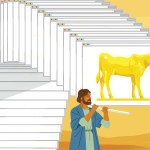
Images from scenes in Paradise Lost.
Christianity Today July 25, 2025
Illustration by Elizabeth Kaye / Source Images: WikiMedia Commons

Christian life is rooted in a story with a specific plot. It begins with God’s creation of the world, builds with humanity’s fall from grace, climaxes in God’s redemption of the world through Christ, and resolves with the establishment of God’s eternal kingdom.

The stickiest of these plot points is the fall from grace: Why would a good God allow sin to enter the world? Why wouldn’t a powerful God stop Adam and Eve from eating of the Tree of Knowledge of Good and Evil? Why would an omniscient God create the tree in the first place? These are all variations on a question most people have asked at some point: If God is good, then why is there such evil in the world?

The English poet John Milton grappled with this question in his famous epic, Paradise Lost, first published in 1667. And Alan Jacobs grapples with the meaning and legacy of Milton’s landmark poem in his latest book, Paradise Lost: A Biography.

Jacobs, now based at Baylor University after teaching for decades at Wheaton College, is among the most important Christian scholars at work today. He has written extensively on C. S. Lewis and the poet W. H. Auden, and his essays on issues as varied as technology, theology, and the art of reading provide a consistent model of academically informed but broadly accessible prose. Those traits are on impressive display as Jacobs guides readers through Milton’s masterwork.

For many contemporary readers, diving into a complex work like Paradise Lost can seem like a forbidding prospect. Even a few lines in, both the language and the form itself can feel intimidating. In fact, the very idea of reading a 17th-century poem seems daunting. Thankfully, faithful Christian scholars like Jacobs can help us close the gap between old writings and our modern world.

In his 2020 book Breaking Bread with the Dead, Jacobs argues there is great value in reading books from outside our own era. It is inevitable, he contends, that people become prisoners of their moment, nearly incapable of imagining alternative ways of thinking and acting. One solution to this problem is exposing ourselves to writers and thinkers whose older customs, rituals, and cultural assumptions gave them different perspectives on the questions we share in common.

Jacobs’s “biography” of Paradise Lost puts that philosophy into practice. It might seem strange to write about a book or poem in the same manner as one would chronicle an individual human life. But if we conceive of books like Paradise Lost as works of art that outlive their authors, then it makes sense to think of them as having lives of their own.

In the first two chapters, Jacobs briefly describes the life and times of Milton and provides an overview of his most famous poem. The final four chapters tell the story of the poem’s reception, covering everything from initial reactions to its influence on contemporary fiction, films, and even video games. The result is an accessible and insightful guide that ultimately tells us as much about how the world has changed over the last 400 years as it does about the 400-year-old poem itself.

In his own time and in the years soon after his death, Milton was known mainly as a political radical, but within a century he was rivaling—and by some measures eclipsing—Shakespeare as England’s bard. Jacobs notes that Milton was memorialized in Westminster Abbey alongside two other English literary greats, Geoffrey Chaucer and Edmund Spenser, “three years before Shakespeare was thus acknowledged.” This drastic change in reputation, from troublemaker to versifier, can be ascribed almost entirely to Paradise Lost, Milton’s epic rendition of Satan’s revolt and its aftershocks in the Garden of Eden, where he successfully tempted our first parents to rebel against God as well.

Jacobs helps readers understand why it’s important that Milton chose to retell the story of Genesis 3 as an epic: “Any epic poem tells only a part, if the crucial part, of a larger story.” The Greek poet Homer, for instance, doesn’t tell the entire story of the Trojan War in the Iliad but only the final year of the decade-long saga. His audience would know the rest of the story and enjoy the deep dive into the nuances of one of its greatest chapters. Likewise, when you pick up Paradise Lost and read of humanity’s fall from grace, you’re reading an important part of a larger story—a detailed exploration of the characters and events that unleashed sin into the world and forever changed our relationship with our Creator.

Another central feature of the epic genre is that it typically focuses on a hero. Readers who know anything about Milton’s retelling of the Fall may also recall the judgment of the poet William Blake, who infamously argued that Milton was “of the Devil’s party without knowing it.” Following Blake, many poets and scholars have interpreted Satan as the hero of Paradise Lost. This view is now commonplace.

But if Satan is the hero of the Fall, the whole Christian story must be rewritten. By emphasizing Milton’s choice of epic as a genre and thus insisting that the poem be read in light of the larger Christian narrative, Jacobs challenges this prevailing view and restores the poem’s theological and devotional significance for 21st-century readers.

One way Jacobs arrives at a more compelling interpretation of Paradise Lost is by weaving the story of Milton’s transformation from political radical to poetic sage throughout his biography. Milton achieved the reputation of political firebrand by defending the 1649 execution of Charles I, who aroused the ire of England’s Parliament by asserting a divine right to rule. Milton became an apologist for regicide because of his passionate commitment to the principle of liberty, whether artistic, personal, political, or religious.

Milton’s central preoccupation, Jacobs tells us, was the legitimacy of the ruler. He believed the king who infringes on the God-given liberty of his subjects is an illegitimate king. Unfortunately for Milton, the English monarchy was eventually restored, little more than a decade after Charles was put to death. As a result, Milton lived the rest of his life as a political outcast, even imprisoned for a time.

When we read Paradise Lost—and especially the central conflict between God and Satan—in light of Milton’s life, interpreting Satan as the hero can make sense on the surface. One might say that Milton, a vocal opponent of authoritarian overreach, rejected the legitimacy of Charles I much as Satan rejected God’s right to rule. We might even identify with Satan when we consider the problem of evil raised above: If God could have prevented sin from entering the world, does he really deserve to sit on the throne of heaven with earth as his footstool?

Guiding us through centuries of interpretation, Jacobs helps us read Paradise Lost as Milton clearly intended. As one chapter in a longer story, humanity’s fall from grace is not evidence of God’s illegitimacy as king. Rather, it is a powerful justification of God’s love for his creation. It sets the stage for the next chapter: God’s redemption of the world through Christ. Make no mistake, Jacobs insists, the hero of the Christian narrative is Christ, the Son and the incarnation of the rightful king.

This central argument gets lost in many later interpretations of the poem, like those that mistake Satan as its hero—or others that picture Adam or Eve as the true protagonists. Some, like the literary critic William Empson, even bestow this status on Milton himself. (As Jacobs sums up this line of thought: Milton is “less wicked than the religion he professes,” but he “strives, with astonishing intelligence and artistic power, to make that religion seem less wicked than it is.”) Jacobs does an excellent job explaining these multifaceted, often contradictory readings of Paradise Lost while keeping the poem’s central argument in view.

I commend Paradise Lost to readers, along with Jacobs’s biography of this great work of poetic theology. While I’m at it, I encourage Christians to read Jacobs’s other books—in particular, his unofficial trilogy on reading, thinking, and learning, comprised of Breaking Bread with the Dead and two earlier volumes: The Pleasures of Reading in an Age of Distraction and How to Think. Together, they demonstrate how deep commitments to Christian Scripture and tradition can help us wrestle with voices from the past, as well as the voices that dominate our own contentious age.

Matthew Mullins is associate professor of English at Oklahoma Baptist University. He is the author of Enjoying the Bible: Literary Approaches to Loving the Scriptures.

News

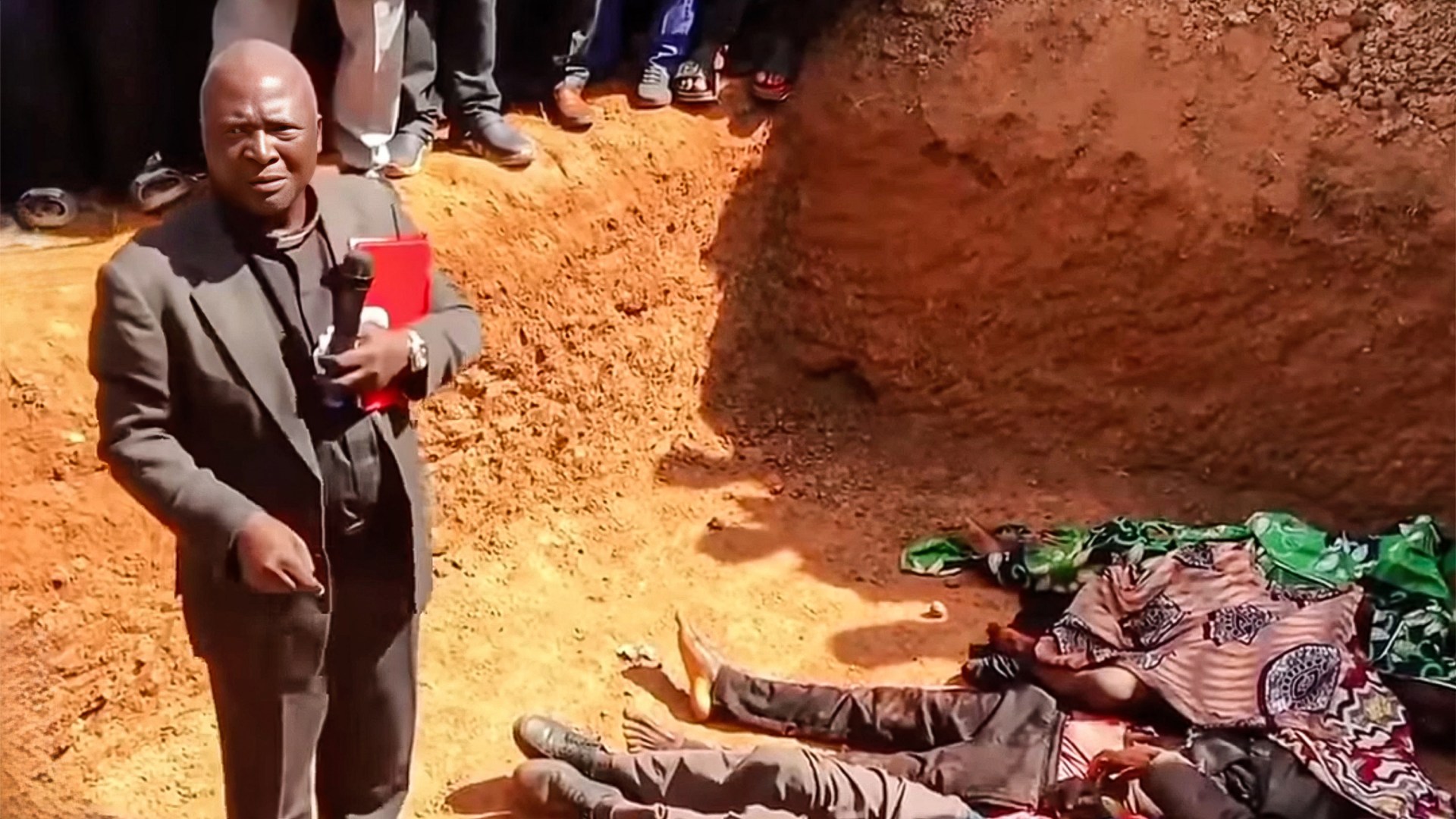
Israeli Strike on Gaza Church Leaves Three Dead

“Everyone I talk to in Gaza from the Christian community asked me to find a way for them to get out.”

Christian Palestinian mourners attend the funeral ceremony of victims killed in an Israeli strike that hit the Holy Family Church in Gaza.

Christian Palestinian mourners attend the funeral ceremony of victims killed in an Israeli strike that hit the Holy Family Church in Gaza.

Christianity Today July 25, 2025
Omar Al-Qattaa / Getty

Hundreds of people were sheltering in the Gaza Strip’s only Catholic church last week when an Israeli strike on the complex killed 3 people and injured 12. Among the injured was the parish priest. 

The Holy Family Catholic Church in Gaza City is one of three operational churches in the coastal enclave and currently shelters about 600 people. More than 21 months of war have crippled the region and led to mass starvation, according to aid groups, as Israel continues its operation to dismantle Hamas’s grip on Gaza. 

Two patriarchs from Jerusalem, representing both Catholic and Greek Orthodox churches, made a rare visit to Gaza on Friday to express a “shared pastoral solicitude of the Churches of the Holy Land.” They are also organizing convoys of hundreds of tons of food and medical supplies, which have not yet been delivered to the compound. 

Fabrid Jubran, a spokesman for the Latin Patriarchate of Jerusalem, told Christianity Today that one of the injured from the church attack is in critical condition but that the church’s priest is doing fine. Among those who died were a man in a wheelchair and an elderly woman who was a retired teacher, according to Khalil Sayegh, a Palestinian Christian and political analyst who lived in Gaza until 2009.

The attack brings the number of war-related deaths among Christians in Gaza to at least 33, Sayegh said. The Christian population has roughly halved since the beginning of the war, dropping to between 600 and 700 people. “Everyone is scared,” he said. 

Israel claims the incident at the church was a mistake. A government-issued statement said, “Israel deeply regrets that a stray ammunition hit Gaza’s Holy Family Church. Every innocent life lost is a tragedy. We share the grief of the families and the faithful.” 

US president Donald Trump has pushed for a 60-day cease-fire between Israel and Hamas. On Monday, White House Press Secretary Karoline Leavitt said Trump was “caught off guard” by the strike on the Gaza church and “wants the killing to end, to negotiate a ceasefire in this region, and he wants to see all of the hostages released from Gaza.” 

The attack on the church came as US ambassador to Israel Mike Huckabee, an evangelical Christian and longtime supporter of Israel, was in the country addressing his concerns about the government’s treatment of Christians. In a string of rare rebukes, Huckabee sent an angry letter to the Israeli government last week about its refusal to grant entry visas to American evangelical organizations, including the Baptist Convention of Israel, Christian Missionary Alliance, and Assemblies of God, and threatened to reciprocate by refusing visas to Israeli citizens. On Tuesday, he announced on X that the issue had been resolved after meeting with Prime Minister Benjamin Netanyahu and Israel’s interior minister. 

Huckabee also visited the West Bank city of Taybeh, where extremist Israeli settlers allegedly set fire to an archeological site next to an ancient church. He called the arson attack “an act of terror” that should result in “harsh consequences.” The ambassador also demanded an investigation into the death of a Palestinian American man whom extremist settlers allegedly beat to death earlier this month. Huckabee’s criticisms are atypical, as he supports Israeli settlements in the West Bank. 

Times of Israel correspondent Lazar Berman believes the recent events in the West Bank and Gaza jeopardize Israel’s long-standing ties with evangelical Christians and could have been prevented. 

“Netanyahu and his government are afraid to assert their authority, allowing extremists and those who have no understanding of the importance of Israel’s ties with Christians to set the agenda and inflict strategic damage on the Jewish state,” he wrote in an op-ed.

Meanwhile, the Gaza church strike was the fourth or fifth time the church complex has been hit, according to Sayegh, who stays in close contact with Christian friends and family in Gaza. His father died while taking refuge in the Holy Family Catholic Church in December 2023. He had a heart attack and was unable to seek medical attention because of Israeli tanks surrounding the church complex.  

That same month, a mother and daughter bled to death after getting caught in sniper fire at the church. Israel denied intentionally targeting the women or the church but acknowledged exchanging fire with Hamas operatives in the area. 

This week, Israeli troops launched a ground operation into an area in central Gaza they’ve previously avoided, calling for another round of civilian evacuations. Israel hopes to force Hamas into negotiations that will secure the release of the remaining 50 hostages, 20 of whom are believed to be alive. 

Cease-fire talks have hit roadblocks due in part to Hamas’s demands that Israel withdraw from most of Gaza and hand over aid distribution to the United Nations and the Palestinian Red Crescent. Israel and the US claim Hamas steals aid to help fund its war aims. 

The Gaza Humanitarian Foundation (GHF), which took over Gaza’s aid program in late May, says it has distributed 90 million meals in less than two months, but Sayegh said the Christians he’s in touch with don’t visit the aid hubs because they are too dangerous. Hamas-controlled Gaza authorities claim hundreds of people have died trying to get food from the four GHF sites. Although the Israeli military admits to opening fire on people who come too close to the troops, it counters that those numbers are inflated. 

“From my understanding, [the Christians] use the food that is stored at the church, or they buy from the market with very expensive prices,” Sayegh said. His sister lives in Gaza and struggles to find food for her two-year-old son. 

Amid criticism of the Israeli-backed GHF, Huckabee posted on X that the UN deserves some blame for the growing starvation in Gaza as it has “massive amounts [of food] sitting on pallets rotting.” 

Since last week’s strike, Christians sheltering in the church have felt that they have nowhere safe to flee. Due to the lack of food and the fear of increased attacks, Gaza’s Christian community could face another exodus.

“It’s a very harsh situation,” Sayegh said, “and one where literally everyone I talk to in Gaza from the Christian community asked me to find a way for them to get out.”

News

With Fewer Places to Go, Afghans Find Refuge in Brazil

Christian ministries partner with the government and the UN to lead the country’s resettlement efforts.

A father, mother, daughter, and baby sitting on bunk beds in a shelter in Praia Grande, Brazil.

Afghan refugee family stays in a shelter in Praia Grande, Brazil.

Christianity Today July 25, 2025
Andre Penner / AP

Within days of the US military withdrawal from Afghanistan, the Taliban showed up at Sahar’s door.

A university student and new mom, she worked for an American ministry in the city of Herat. (CT is not using her full name for the security of her family and the ministry.)  In August 2021, Taliban officials accused the 22-year-old of “corrupting women” and “straying from the Islamic faith.” They threatened to send her to prison.

Sahar knew she had to leave. She didn’t have a passport yet for her three-month-old son, and her husband— like Sahar, a convert to Christianity—had taken his mother to Pakistan for cancer treatment.

Sahar decided to cross the border illegally.

Later that month, she fled with her son and father-in-law. At the border town of Spin Boldak, they met thousands of fellow Afghans trying to escape in suffocating heat, women in their heavy, Taliban-sanctioned burqas. Sahar held her son tight as she tried to pass through the narrow border gate and crushing crowds. They ended up paying a local to drive them into Pakistan and take them the 600 miles to Islamabad.

The family reunited, but within months, Sahar’s mother-in-law died. They stayed for nearly two years, trying to rebuild their lives in a country that did not recognize them as refugees.

“We were always worried that we might be expelled at any moment,” said Sahar. “We didn’t know how we would survive if we had to return to Afghanistan.”

While Sahar prayed for safety, Christians thousands of miles away in Brazil were following the situation in Afghanistan and praying for a way to help.

A little over two years after fleeing the Taliban, Sahar’s family arrived in Curitiba, a city of 1.7 million in southern Brazil, where ministry volunteers met them at the airport. Sahar and her husband had considered the United States or Germany but went further south instead.

“We didn’t want to be judged because of our country’s past,” Sahar said. “Here in Brazil, people don’t care about that.”

During their first six months, the nonprofit Missão Mais provided everything: food, clothing, medicine, and assistance with legal documentation. The family lived at the ministry’s camp, which included 16 houses, all occupied by other Afghan families. And from the month they arrived, they had citizenship in their new country.

Since the Taliban takeover in August 2021, several Brazilian ministries stepped up to help Afghans, drawing from the generosity and welcome of local churches. With the US shutting down its refugee programs and the United Nations restricting resources for resettlement, these church-based networks serve as an even more crucial lifeline for refugees.

By the UN’s count, over half a million Afghans need resettlement this year, and the number of available spaces for refugees from all countries has dropped from 195,069 in 2024 to 31,281 in 2025.

Missão Mais is one of three organizations in Brazil currently authorized to vet Afghan refugees and help resettle new arrivals. 

Another is Panahgah, which is named after the Dari word for “refuge” and began coordinating refugee sponsors among local churches in November 2021. Since then, the organization has worked with Christians in over 35 Brazilian cities to provide housing, food, legal assistance, and integration support for nearly 1,000 Afghan refugees.

Government officials have praised Panahgah’s community-sponsorship model for its success. Civil society organizations facilitate humanitarian visas and integration but do not receive government funding.

“It’s the community itself that takes responsibility for supporting and walking alongside the refugee families,” said Sindy Nobre, Panahgah’s legal adviser.

In addition to connecting refugees with church networks, the ministries offer Portuguese classes, migration guidance, and workshops about everyday life in Brazil, from the banking system to public health care.

Vila Minha Pátria, a nonprofit established by the Brazilian Baptist Convention’s National Mission Board in April 2022, serves as a primary reception center for arrivals as they prepare to relocate to other cities, where they will receive a year of support. The Vila initially received 54 refugees, but demand quickly grew as airport staff and others referred families who didn’t have a place to go.

“Today, in addition to Afghans, we’ve welcomed refugees from nine other nationalities,” said Jennifer Soares, who coordinates the Vila with the backing of church leaders who visit, donate, and host families.

Last year, though, Brazil suspended the humanitarian visas that allowed Afghan families like Sahar’s to arrive, and it reformulated the process so that Afghan refugees must go through approved organizations, rather than the embassies, to resettle in Brazil.

While the Vila has room for more, families remain trapped in Afghanistan with no safe way out. Relatives of resettled families often reach out to share their situations and ask for help.

“We receive daily messages from people hiding in their homes, afraid of being found by radical groups,” Soares said.

When Sahar moved to Brazil in 2023, the Christian ministry where she and her husband worked—which moved operations from Afghanistan to Pakistan—arranged her family’s travel documents. “All we had to do was an interview,” Sahar said.

Once her family reached Brazil, Missão Mais supported them through the process of obtaining ID cards and tax registration numbers with the Federal Police, granting them citizenship within a month of arriving. Their current ID cards are still provisional, but this month—a year and half later—they expect to receive permanent documentation.

After the US stopped accepting refugees under the Trump administration in January, many who had arrived in Brazil with hopes to move to America are instead crossing the border to French Guiana—a French territory in South America—in hopes of getting status in the European Union.

The drop in US foreign-aid funding has also forced the UN Refugee Agency to scale back operations in Brazil, suspending approximately 40 percent of planned programs, UN staff told CT.

While the agency continues to provide some assistance—relying on a mix of funding from other governments and private partnerships—it now prioritizes lifesaving activities and preventive measures to avoid a budget deficit should US support not resume.

Refugees arriving in Brazil receive less material aid and financial support, and fewer workers are around to help them settle quickly.

While churchgoers may care about refugees, many don’t know how to help them obtain legal documentation, housing, or jobs, according to Karen Ramos with the grassroots network Como Nascido Entre Nós (“As If They Were Born Among Us”).

There’s also a gap in theological understanding. “Without a solid biblical foundation,” she warns, the church’s commitment to welcoming and supporting refugees in meaningful and sustained ways can be fragile.” Beyond these limitations, there are cultural and social hurdles—including prejudice and resistance within some local communities. 

After Sahar’s family stayed six months in Curitiba, Missão Mais connected them with a partner church in Ribeirão das Neves, Minas Gerais. The church provided housing, food, and a monthly stipend of 2,000 reais for one year (about $362). During that time, Sahar’s husband found work as a janitor washing buses. Later, he applied for a new role as a traffic controller and now works every other night.

Their son, now four, attends school in the afternoons while Sahar takes driving lessons. Once she has her license, she hopes to study sociology at a university.

Church members invite them to birthday parties and weddings, visit their home, and share meals. “We’ve introduced them to Afghan food—and they really liked it,” she said.We were welcomed and embraced. Today, we hardly even remember we’re foreigners—we feel like we were born here.”

Pastors

Let Your Church Feast on Scripture this Fall

For pastors used to more topical preaching, research confirms what you’re sensing—people crave biblical depth, and fall gives you the consistency to deliver it.

CT Pastors July 24, 2025
Alernon77 / Getty

Turns out, people want to hear what the Bible has to say.

I’ll admit I grew up in a church and denomination that emphasized the Bible—maybe too much. 

I’ll explain.

We loved the Bible. We sang songs about it. We memorized it. We treated it like the fourth member of the Trinity. In fact, one failure of the denomination in which I was raised was that we loved the Bible so much, we sometimes overlooked the God who breathed it. Written words over living Word, every time.

Still, I’m grateful for a heritage that gave me an appreciation for the Scriptures. Because my generation was so marinated in the text, when I entered pastoral ministry, teaching the Bible exegetically wasn’t the pressing need. What we needed was spiritual wisdom—to learn and discern how to apply the ancient Scriptures to our modern lives. So pastors like me threw ourselves into “practical teaching.” Preachers I loved and learned from said things like, Practical teaching that moves people to action is one of the primary things God uses to grow our faith. 

My teaching was still steeped in Scripture and theology, but I’ve done my best to be immensely practical, even when fellow staff members and congregants did not realize why a sermon on glorification might matter to their Monday morning. These sermons weren’t unbiblical sermons—they just started with life questions like finances, marriage, dating, healing, and the like, rather than a lectio continua approach to Romans. 

But here’s the issue: Our emphasis on practicality may have been an overcorrection. I fear many pastors in my generation have driven the church into the ditch on the other side of the road. We’ve focused so intently on practical relevance that too few Christians can tell you who Melchizedek was, why the Mosaic covenant mattered, or what a mustard seed represents. They don’t know the overarching story of the Bible, the historical and narrative natures of different genres of text, or how the Levitical sacrificial system helps us make sense of why Jesus came and what he accomplished.

As Russell Moore chronicles in Losing Our Religion, too many believers know neither the story of the Bible nor the stories in the Bible. This leaves spiritual formation at the mercy of online hate, political tyrants, and amorphous spiritualism.

Recently, a church member told her friend that she was thinking of leaving our church. The reason? Not enough Bible. This puzzled me. We offer small group Bible studies and run classes on how to read the Scriptures. But attendance to these is modest. 

Turns out, she did want more Bible, but she wasn’t looking for another commitment. She wanted deeper Bible teaching at the time and place she had already carved out: the weekend worship service. 

She is not alone. My preacher friends and I hear this request constantly—hunger for studying the Bible for itself, even though our churches might already provide that in midweek classes. 

Here’s a solution to consider: fall is the perfect time to integrate that study into Sunday. 

The season of stability

Between Labor Day and Thanksgiving, people travel less and are more settled. Summer scatters us; it’s filled with weddings, beach trips, family reunions, and weekend getaways. December gets swallowed up by holiday chaos. But fall? Fall is the season of routine. Kids are back on school schedule. Adults are back to full workweeks. Youth sports and community events follow a predictable weekly rhythm. Most families are home more weekends than not. 

That’s not just good for church attendance—it’s good for continuity in preaching. Long texts like Genesis take a while to work through. Meaty texts like Romans refuse to be rushed. Even if you break long texts into two series, there are few other stretches in the calendar year when you may get a relatively stable congregation for 8 or 12 weeks. This matters when having an active memory of what was preached last weekend informs understanding for this week. Memory builds on memory, insight on insight. And let’s be honest—fewer people catch up on our sermon podcast or YouTube feed than we might hope.

The “second new year”

Many people treat fall as a second new year. It is a time for reimagining our rhythms of life, which is particularly true for families readjusting to school rhythms and extracurricular commitments. Spiritually, they’re quietly wondering: How do I reconnect with God after the summer drift? Where did my sense of purpose go?

Textual preaching answers that hunger with groundedness. It says, Let’s walk together through something solid. It invites people into a rhythm of attentiveness. A well-structured series through Scripture doesn’t just teach content—it shapes lives. It offers people a chance to build (or rebuild) a spiritual habit. When church becomes a place where the Bible is opened, explored, and applied week by week, it anchors the larger reset people are craving.

The surprising appetite

Younger Christians in particular are craving more Bible teaching. This is the opposite of the problem we faced when I began ministry nearly three decades ago. David Kinnaman’s research confirms that younger generations are craving deeper biblical engagement. Barna’s recent studies show that in-depth Scripture teaching ranks among the top reasons for choosing and attending a church regularly. At the same time, young people don’t feel confident in their own knowledge of the Bible. This is where the fall series becomes more than a strategy; it’s a pastoral response.

In years past, during the waning days of Christendom, many of us labored to make the church and the Bible “relevant” and “engaging.” Now our task is to reveal how God’s story makes life meaningful. People want the Word—they just don’t always know how to access it. 

Preaching textually also models how to read Scripture well. It teaches not only what the Bible says, but how to live inside its story. Each fall we have an opportunity to demystify difficult passages and contextualize familiar ones. It builds biblical literacy without making people feel shamed or overwhelmed.

The gift of discomfort

Long teaching series also allow pastors to model humility before the Word. They make us step outside our wheelhouse. Rather than choosing topics that feel “on brand” or comfortable, preaching from the text means sometimes wrestling with difficult doctrines, complicated histories, or challenging commands. This, too, forms our people. It shows the congregation that Scripture is not a tool we wield—it’s a voice we sit under.

Don’t misunderstand; I do believe topical preaching has its place. All preaching should be relevant and practical—even engaging to some degree. But the Spirit seems to be prompting Christians to desire more textual focus. And the fall—more stable than summer’s travels, winter’s frenzy, and spring’s sprint—offers the best season to feed that desire. 

In a world of soundbites and infinite scrolling, preaching that lingers with the text is a countercultural witness. In a season when people form new patterns, it’s a time to root them in something eternal. And in a church that often struggles to hold attention, it’s a moment to recover the possibility of awe.

So this fall, open the Book. Stay with it. Let it speak at its own pace and in its own voice. Trust that in the Word, preached faithfully and patiently, God will meet his people.

After all, it turns out they’re hungrier than we thought.

Sean Palmer is the teaching pastor at Ecclesia Houston, a writer, a speaking coach, and the author of Speaking by the Numbers.

Pastors

The Letters That Shaped Me

Some ministry lessons come through seminary. Others come in envelopes.

CT Pastors July 24, 2025
Dusan Stankovic / Getty

Ministry forms you in ways seminary cannot. The real classroom isn’t the lecture hall—it’s a church hallway, a living-room visit, a late-night prayer, and sometimes a pointed letter from a longtime member. If you allow it, ministry will humble you, teach you, and even sanctify you. And much of that formation comes through the gift of correction—often unsolicited, sometimes uncomfortable, yet undeniably formative.

The first letters

Few things can humble a young pastor quite like a letter from a seasoned church member. I’ve received more than I can count. Some were tough to read, others less so. But every one of them shaped me more deeply than I anticipated. Initially, I thought pastoral leadership was mostly about vision and preaching. I soon discovered it also meant learning to listen carefully, even when the words sting.

At 26, single and fresh from seminary, I became senior pastor of First Baptist Church in Covington, Georgia. With three years of seminary behind me, I was convinced—maybe overly so—that I already knew what I needed to know. In my mind, I was ready. In reality, I still had much to learn.

The church, of course, knew this long before I did. Thankfully, congregants were both kind and courageous enough to help me see it. Letters arrived regularly in those early years. Some were gracious, others not so much. They identified ways I could grow, noted my failures, or expressed concern that the church had changed in directions they wished it hadn’t. Looking back, I’m genuinely grateful for every letter. Those letters were a kind of discipleship, reminding me that pastoral ministry requires more than conviction. It requires humility and a willingness to listen to the very sheep you’ve been entrusted to shepherd.

Freds letter

One of the most memorable letters I received came from a man named Fred. Fred was never shy about sharing his opinions. Usually he didn’t need a letter—a dinner-table or parking-lot conversation would do. But one day he handed me a long, typed letter. Clearly this one mattered deeply to him.

Fred had been reading through the newly published 2008 edition of the Baptist Hymnal we’d just placed in the sanctuary. And he was not pleased. His favorite hymn, “A Mighty Fortress Is Our God,” had moved from No. 8 in the 1991 hymnal to No. 656 in the new one.

“Six hundred fifty-six,” he wrote. To make the point, he repeated it: “Six hundred fifty-six.” He added, “I am sure in the next edition of the Baptist Hymnal the song will be purged altogether.”

I braced myself, expecting him to hold me personally responsible for the editorial decisions being made at Lifeway Worship. But the blame never came. Fred just wanted me to know.

More importantly, Fred wanted me to keep singing that hymn. Even more than singing, he wanted me to keep believing its truths: that our God is indeed a mighty fortress
 and that he will never fail us.

Why younger pastors need to listen

Fred’s letter wasn’t really about me. But many letters were—and those were much harder to read. Some were gentle; others were quite harsh. But one way or another, each was formative.

As pastors, we’re tempted to dismiss criticism, to filter out the voices we would rather not hear. Yet let me encourage you not to discard these hard letters too quickly.

Some letters carry critiques. Others carry cries for help.

Some express frustration. Others communicate grief.

And some—like Fred’s—reveal a deep love for the Lord and his church, rooted in a history that predates your tenure and possibly even your birth.

Listening doesn’t require you to agree with every word. But it does mean receiving each word with humility. It involves asking, What can I learn from this? It means choosing personal discipleship over defensiveness.

As Proverbs 9:9 says, “Instruct the wise and they will be wiser still.” James 1:19–21 calls us to be “quick to listen, slow to speak and slow to become angry,” recognizing that anger rarely produces righteousness. The pastoral life demands teachability, not just in theory but in everyday practice—email inboxes and church mail slots.

Similarly, 1 Peter 5:5 offers a word of wisdom to pastors: “All of you, clothe yourselves with humility toward one another, because, ‘God opposes the proud but shows favor to the humble.’” This humility extends to how we handle feedback—even when it’s clumsy, unsolicited, or a bit unfair.

Not-so-nice letters

In my early days at First Baptist, I received many letters critiquing the length of my sermons. The church had long been accustomed to a strict one-hour service. The service began at 11:00 a.m. with sermons typically lasting 25 to 30 minutes and a noon dismissal sharp enough for congregants to beat the Methodists to lunch at the local eateries.

Fresh out of seminary and full of zeal for expositional preaching, I believed the church needed longer preaching, not shorter. My sermons regularly clocked about 40–45 minutes. You can imagine how people reacted to this change and what type of feedback I received.

Initially I felt defensive. I would think to myself, Did they even listen to the sermon? Are they interested in worshiping and growing in Christ together—or just getting to lunch?

To be fair, my frustration may have been understandable. But over time I realized my own errors. I had led the church into this new norm without sufficient wisdom, grace, and tact.

Around this time, a friend drove Alistair Begg to the seminary chapel, where he had been invited to speak. Knowing Alistair was a hero of mine, my friend asked him to give me a call. To my surprise, he did.

I jumped at the opportunity to ask him a burning question: “How do I correct my congregation? How do I get them to embrace longer sermons?”

To my surprise, he replied, “This Sunday, give them a 25-minute sermon.”

He was right. What did it matter how long I preached if my congregation had stopped listening? They had to know I was willing to meet them where they were before I could lead them forward into greener pastures.

Alistair’s gentle rebuke reminded me again: Receiving correction is central to pastoral life. The challenge is learning to welcome it well.

Receiving the letters

So when the letters come—and they will—receive them as an invitation.

Sometimes they’re invitations to change.

Sometimes to be encouraged.

Always to listen carefully.

Even the harshest letters often echo Fred’s underlying message: The history of this church is important. The truth of God is important. And both can be hard to hold on to.

Over the years, I’ve found a few simple practices that help me receive these letters wisely. I offer them here in hope that they’ll help you too:

Dont respond right away. Sit with the letter. Pray. Quick responses rarely reflect careful thinking or spiritual maturity. Give the words time to settle, allowing God space to quiet your spirit and clarify your thoughts.

Ask whats true. Even if 90 percent feels off, dont miss the 10 percent thats right. Every piece of feedback may contain a kernel of truth worth hearing—even when it’s delivered poorly or laced with assumptions and misunderstandings. Your personal growth requires you to spot the small but valuable insights hidden beneath the critiques.

Talk to a trusted voice—not to vent but to discern. Choose someone mature enough to help you separate genuine correction from unfair criticism. A trusted friend, mentor, or elder can help you see clearly and respond wisely.

Say thank you. Even if you only acknowledge the letter in prayer, give thanks for the chance to grow. A heart of gratitude will often soften the heart, even toward difficult people and harsh words. It turns criticism into an opportunity for grace and growth.

Let the letters shape you

The most formative lessons I’ve learned in ministry didn’t come from books or conferences. They arrived in envelopes—sometimes written in a tone I didn’t enjoy, but still rich in wisdom. Those letters shaped me. They refined me. And in some cases, they reminded me of truths I needed to believe again.

Keep a file of meaningful letters. Read them slowly. Pray over them. Resist the urge to rush past discomfort. Let them sit with you longer than your instinct wants them to. And then keep singing the songs they remind you not to forget.

Especially the ones that declare,
 “A mighty fortress is our God.”

Not every letter will be accurate. Not every word will be fair. Yet received with humility, even the hardest ones can foster growth in us.

In a culture quick to defend, dismiss, and cancel, the church desperately needs pastors who listen humbly. Ministry isn’t about remaining unchanged. It’s about being reshaped.

So let the letters shape you. And keep singing.

Jason Edwin Dees is the senior pastor at Christ Covenant Church in Atlanta.

Ideas

Church in a Time of Brain Rot

Contributor

Technologies that promised mutual understanding have instead fomented confusion and fraud. Christians can model a better way.

Several diverse people tending a brain that is in the form of a tree.
Christianity Today July 24, 2025
Illustration by Lisk Feng

More of a good thing is not necessarily better. And what starts as a good thing may not stay that way.

This is a lesson we’ve had to learn and relearn in recent years while living through rapid shifts in digital communication technologies. It’s vertigo-inducing how a given tool or platform can have one effect in its infancy and an opposite one in its maturity. 

But perhaps it shouldn’t be surprising: Scale and proportion matter. Our bodies need some salt, for example, but too much salt will make us ill. Communication technologies have a similar effect on the body politic. The same tool that at a low dose can contribute to mutual understanding and consensus can, when adopted on a wider scale, foment confusion and antipathy.

If we want to keep our feet under us amid these disorienting shifts, Christians must learn how to recognize this paradoxical reality and work together to keep such potent technologies in their place. Yet we’ll only be able to do so if our sense of community and belonging flow from the rhythms of our churchly life together. In other words, it’s our very commitment to living as members of Christ’s body that will enable us to serve a techno-addled society and call it to a better way of life.

Nicholas Carr articulates these dynamics well in his latest book, Superbloom: How Technologies of Connection Tear Us Apart. It is a grave mistake, he warns, to assume “that the way a complex technological system works early in its development will be the way it works as it matures.” Yet because “the story we told ourselves about the net, from its earliest days, was a story of ‘democratization,’” many were slow to recognize how easily an abundance of information may foster enmity and mistrust.

Carr’s argument about the effects of too much content pouring through our screens corroborates the insights of the Catholic technology critic Ivan Illich, whom Carr—somewhat strangely—never mentions in Superbloom. In the 1970s, Illich proposed that the application of industrial-style technologies in any given field—education, medicine, transportation, communication, and so on—would be marked by two watersheds. 

“At first,” Illich explained, “new knowledge is applied to the solution of a clearly stated problem, and scientific measuring sticks are applied to account for the new efficiency.” Such success generates great optimism, and these early improvements are used to justify “the exploitation of society as a whole in the service of” some too-simple metric, like content produced and disseminated. After this second watershed has been crossed, chasing further technological efficiencies fails to improve the situation and often causes new problems instead.

An example from an earlier era—the era which coined terms such as consensusbrain rot, and even, as Carr notes, social media—can help us to see this progression. The printing press played a key role in unifying the American colonists and orchestrating their rebellion against Britain. As the early American historian David Ramsay famously put it in 1789, “In establishing American independence, the pen and the press had merit equal to that of the sword.” Hence, a few years later, the Philadelphia Typographical Society could declare the press “the tombstone of ignorance and superstition.” 

After such a positive experience with the hand-powered printing press, the industrialization of printing in the late 1820s and other new communication technologies, most notably the telegraph, were met with messianic fervor. The first message sent across the Atlantic Ocean in 1858 concluded with a nearly blasphemous connection between the advent of this technology and the advent of Christ: “‘Europe and America are united by telegraph. Glory to God in the highest, on earth peace, good will towards men.” 

Such sentiments were common. An earlier essay in Horace Greeley’s New-York Tribune is typical: “The Magnetic Telegraph, which is literally material thought, and flies as swift, absolutely annihilating space and running in advance of time, will be extended to all the great cities in the Union—so that a net-work of nerves of iron wire, strung with lightning, will ramify from the brain, New York, to the distant limbs and members—to the Atlantic seaboard towns, to Pittsburgh, Cincinnati, Louisville, Nashville, St. Louis and New Orleans.” 

The result, heralds of this new communication age were sure, would be the spread of truth and enlightenment. The Tribune story treated the telegraph as infallible, a tool to make journalistic “fraud and deception … next to impossible.” 

Today it’s hard to believe that anyone seriously thought misinformation and fake news, much less sensational trivia, would be eliminated by the telegraph—but then, it was less than 15 years ago that Twitter was going to spread democracy throughout the Middle East. As I said, rapid technological shifts can induce vertigo.

One of the most notable consequences of the new connections the telegraph and industrial printing wrought is what we’ve come to call consensus: that experience of a common feeling throughout society. Consensus, in fact, is a fairly novel concept. The word first entered the English language in the mid-1800s, referring to a nation or other group of people sharing the same sensations and opinions at the same time.

As consensus develops—as people come to think and feel in unison with a speed and totality only possible through mass communication—the dangers of groupthink become pronounced. Political slogans, memes, and sentimental appeals pulse through these networks and our minds. And when there is an exception to that unity, some dissent that is disagreeable or even disgusting to the majority, the experience feels more intimate and hence more disconcerting. 

The most obvious example of that disconcert from the 19th century is the question of slavery. When Northerners read proslavery essays or Southerners encountered abolitionist literature, their deeply divergent sentiments became unignorable. When, in the 1830s, Northern abolitionists blanketed the South with antislavery pamphlets, the result was not persuasion or mutual understanding but riots, bonfires, and calls to censor the mail. Proslavery sentiments only intensified. 

Today, when our digital feeds provide constant reminders of what our fellow citizens and even fellow Christians think about immigration or vaccines or gender, the result is usually not deeper understanding but visceral antipathy. The networking technologies that make public consensus possible also make the dissent that persists more apparent and galling. 

We tend to focus on the deleterious individual effects of digital communication technologies: Carr’s earlier book The Shallows: What the Internet Is Doing to Our Brains is a classic of this genre. And for individuals, it’s possible to make choices that counteract these effects. When Henry David Thoreau warned his readers that paying attention to sensational news would cause “brain-rot” (a term chosen as the Oxford Word of the Year in 2024), he could recommend changing their informational diet as a remedy. 

It’s harder to address the political or cultural problems of an overconnected society, because these require collective action. I may be able to improve my own news habits, but I can’t choose to live in a world without TikTok. 

So what is to be done about the studies Carr summarizes in Superbloom that show “false or otherwise misleading stories [are] 70 percent more likely to be retweeted than factual ones”? And that the most educated people, and the ones who follow the news most closely, also have the most distorted understanding of contemporary events? And that when most of us encounter “different points of view” online, we see these “not as opportunities to learn but as provocations to attack”?

As Carr concludes, “Flooding the public square with more information from more sources” does not “open people’s minds or engender more thoughtful discussions.” It doesn’t even “make people better informed.”

What makes the challenge of meaningful change even more difficult is that skepticism of our hyperconnected world is often corrupted or co-opted. Carr gives the particularly ironic example of Frank Walsh, who one night shot a bullet through his family’s TV—only to find himself an overnight news sensation. The next week, he won a new TV on a reality TV show. 

We have become accustomed to the phenomenon of “politicians [who] go on social media to express their disdain for social media, [and] then eye the like count.” At the societal scale, is that really the best we can do? 

Carr concludes Superbloom by proposing we look for ways to turn aside and form alternative communities on the edges of these digital networks. “Maybe salvation, if that’s not too strong a word, lies in personal, willful acts of excommunication,” he writes, in “the taking up of positions, first as individuals and then, perhaps, together, not outside of society but at society’s margin, not beyond the reach of the informational flow but beyond the reach of its liquefying force.” 

He’s right, but it’s the togetherness aspect of this response that is particularly vital, for communication technologies by their very nature pose challenges that demand cooperative responses. What Carr does not say is that communities and even institutions already exist, all over our country, that are uniquely equipped to rise to this challenge: Christian families, schools, and churches.

We should be taking the lead in embodying alternative ways of communicating and feeling together. We need to practice developing a different kind of consensus, the consensus of members of the church conforming to the mind of Christ (Rom. 12:2; 1 Cor. 2:16), not members of an increasingly secularized society oriented around New York and Silicon Valley. This type of consensus is the stability we need to avoid fresh waves of vertigo as dramatic technological development, particularly around artificial intelligence, continues apace.

Communal action at the scale of a church or Christian institution can take many forms. We might begin with something like screen-free church services. Families and small groups can host discussions of books like Andy Crouch’s Tech-Wise Family and create their versions of the Postman Pledge. Students can start Luddite clubs. Christian schools can take a cue from the Bruderhof communities and workshops that subordinate technologies to shared commitments.

We can both observe and offer examples that testify to the possibility of distinctly Christian consensus even in this digitally networked age. It is still possible for Christians to think and feel according to our membership in an alternative community. It is still possible for our consistently shared life of Scripture, communion, and prayer to form in us a consensus tied not to some mass public but to the body of Christ.

Jeffrey Bilbro is associate professor of English at Grove City College and editor in chief at the Front Porch Republic. His most recent book is Words for Conviviality: Media Technologies and Practices of Hope

Theology

Does the Quran Support Religious Pluralism?

Islamic scholars from Tunisia and Egypt challenge the historical record.

The Quran with a beam of light resting on it.
Christianity Today July 24, 2025
Eric Lafforgue / Art in All of Us / Contributor / Getty

This is part three of a three-part series about a network of interfaith centers in the Muslim world. Click here to read parts one and two.

Last month, an obscure jihadist group claimed responsibility for a suicide bombing at the Mar Elias Greek Orthodox Church in Damascus, Syria, that killed 25 people. The attack came as a response, it stated, to the government requiring prior approval of Islamic preaching in the Christian neighborhood. Three months earlier, at the site of the future bombing, austere Salafi Muslims called on residents to convert to Islam, a practice known in Arabic as da’wa. Later, a car drove up and its occupants loudly repeated the call until local Muslims sent them away.

Salafis are known for growing long beards and wearing traditional robes in imitation of the prophet Muhammad. Salafi practice is not inherently violent, and reporting does not draw a clear connection between the incident at the church and the later suicide bombing. But many jihadists emerge from or are drawn to Salafi communities, as both aim to follow the Quran literally in complete devotion to Allah.

The jihadists even adopted a particular verse from the Quran as their slogan: “Fight the polytheists together as they fight together against you.” To them, belief in the Trinity is an offense against Allah’s oneness. In preventing Muslims from proper da’wa, then, both state and church in Syria became worthy of war.

Some experts say Salafis and jihadists represent a reaction—peaceful or otherwise—to reclaim a lost idealized era when Islam governed much of the world. Yet most Muslims are neither Salafis nor jihadists; many have accepted democracy and the nation-state system that formally adopts principles of minority rights and common citizenship.

Still, according to a 2013 survey of Muslims in 38 nations, the sense of Islamic superiority lingers. Like many evangelicals, the most devout Muslims view their faith as the only way to heaven and consider converting others to be a religious duty.

In the West, belief that someone is going to hell has little civic impact, as religious faith tends to be an individual decision. But in the Muslim world, this belief has subjected Christians to a long heritage of second-class citizenship. And the survey reveals that substantial minorities of the most devout want sharia made the law of the land, applied also to non-Muslims.

The modern principle of pluralism holds two ideas in tension: Believers should be free to spread their faith, while minority religions and their beliefs should be respected. As Syria shows, this can be complicated in the Middle East, where the understanding of Islam is a crucial factor for interfaith peace.

One Tunisian Muslim academic, Adnane Mokrani, makes a bold assertion: Islam, when properly understood, is an ally of religious pluralism. Though he concedes this is a minority viewpoint among Muslims, Mokrani, who serves on the Network of Centers for Christian-Muslim Relations advisory board, said that a new generation of theologians are reevaluating the Quran’s understanding of diversity.

The new network, profiled previously this series, doesn’t comment on political events or policies. It recognizes the witness of one’s faith as an essential part of both Christianity and Islam. But it believes that interfaith peace may require setting aside evangelism and da’wa in certain ways and places, though not as an activity of individual believers.

In this case, Mokrani believes the diversity of religions flows intentionally from the divine will, expressing his argument in a recent webinar. He cited this verse from the Quran as evidence: “If Allah had willed, He would have made you one community.” This idea is similar to that of the academic sage in the first article in this series, who lamented the state of conflict and rancor that ensues from religious difference. Yet the passage continues optimistically: Multiple religious communities exist so that they may “compete with one another in doing good.”

Classical Muslim theology, however, divides the world into the “House of Islam” and the “House of War,” as multiple verses in the Quran encourage Muslims to fight unbelievers. Historically, the House of War was the realm of opposing empires, with the Christian Byzantines the most stubborn in resistance.

This theology recognized that Jews and Christians in conquered lands now resided within the House of Islam. The Quran refers to Jews and Christians, along with Muslims, as “People of the Book,” in recognition of a shared scriptural heritage, Mokrani said. Classical Muslim scholars rejected much of the Bible’s content as distorted. Yet the Quran honors its conception of the Torah, given to Moses, and the Gospel, given to Jesus, as “containing guidance and light”—the same terms it uses of itself.

On the ground, this meant that Muslims would not forcibly convert Jews and Christians. Instead, the two religious groups could continue practicing their faiths in exchange for payment of a tax called jizya. Through this, these communities received status as dhimmis, safe from war and given freedom of worship—though not to evangelize. Treatment varied over time, but their second-class status reinforced the Islamic sense of religious superiority.

The historical development of Muslim society led to a gap between the original conciliatory vision of Muhammad and the later, more rigid attitude of scholars, maintains Mokrani, who is also professor of Islamic studies at the Pontifical Gregorian University in Rome. Faced with a growing empire and Christian opposition in war and faith, Muslim scholars’ commentaries on the Quran polemically defined Islam as a religious community distinct from Jews and Christians rather than in continuity with them.

Their interpretive tool was the location of Muhammad’s prophecies.

In Mecca, the prophet preached on monotheism and morality, focusing on the Final Judgment. He spoke positively about Jews and Christians, calling his polytheistic tribesmen to repentance. Eventually, though, Muhammad fled north to nearby Medina, where the people accepted him as a political leader focused on governing. And here, his rupture with the Jews and armed skirmishes with Christians on the outskirts of the Byzantine Empire forced later scholars to interpret the differences between Mecca and Medina revelations.

From there, the principle of abrogation emerged, evident from passages eventually forbidding alcohol and shifting the direction of prayer from Jerusalem to Mecca. Since the Quran stated that Allah could “replace a verse with another,” scholars followed the pattern to prioritize latter revelation over earlier passages. And the commentaries they wrote increasingly limited the application of broadly worded verses.

An important example—crucial for religious pluralism—comes from a verse declaring, “Let there be no compulsion in religion.” Omaima Abou-Bakr, a professor at Cairo University in Egypt, examined centuries of commentaries for her chapter in Freedom of Expression in Islam: Challenging Apostasy and Blasphemy Laws. One early commentator qualified the plain meaning of “no compulsion” by linking it to another verse establishing the jizya tax. Later, another cited verses demonstrating the necessity of combat and related a traditional saying of Muhammad that praised the idea of captives of war entering paradise in chains—that is, accepting Islam after their military defeat.

Other early commentators linked instead to verses emphasizing, “Whoever wills let them believe [or] disbelieve.” But Abou-Bakr wrote that hundreds of years passed before another major commentary in the 19th century connected the “no compulsion” passage to tolerant verses about non-Muslims. By then, the world had changed, as European colonialism entered the House of Islam and shattered its civilizational sense of superiority. Muslims were now on the defensive, having to address accusations that their religion spread by the sword.

Mokrani highlighted other examples of tolerant verses. Not only does the Quran commend its conception of the Torah and the Gospel, but it also calls Jews and Christians to follow their own Scripture. If they do, Allah declared they will have “no fear” on the Day of Judgment, “nor will they grieve.”

“The only conversion required is to God,” Mokrani said.

This passage about the People of the Book also stresses the importance of the Quran to Jewish and Christian communities. But it comes, Mokrani emphasized, from the later Medina period of Muhammad’s ministry. So does the verse about the divine will for pluralism—that Allah could have formed “one community” if he had wanted to.

Mokrani’s argument that these passages are not abrogated runs into potential difficulty, however, considering what many scholars believe to be one of the final verses revealed in the Quran: “Certainly, Allah’s only Way [translated literally as “religion”] is Islam,” while a later verse in the passage says those who follow other ways “will be among the losers.” Still, rejection of this religion is met only with the promise of hellfire, and Muhammad is told “your duty is only to deliver the message.”

But Mokrani said the Quran’s emphasis on religious communities, not religions, yields a significant clue in how to understand what the “Islam” of this passage actually stands for.

The idea begins in recognizing that Arabic contains no system of uppercase and lowercase letters. Muslims have traditionally stated that the Quran can truly be understood only in its original language, compared to Christians who have eagerly translated the Bible. To that end, Muslims usually craft titles like The Meaning of the Glorious Quran, or something similar, when publishing translations of their holy text.

All translators must make choices. Mokrani highlighted the verse in which Jesus’ disciples confess their belief in Allah: “Bear witness that we have submitted.” This is the rendering at quran.com, and all quotations in this article are drawn from the popular internet site. In other translations, however, the disciples “testify that we are Muslims.”

To Christians, this is clearly an anachronism. Islam did not exist at the time of Jesus. Yet many Muslims maintain that Allah’s religion—as the verse above states—was always Islam. The Arabic word islam means “submission,” and this is what Allah requires. In the majority Muslim view, Jews were required to submit to the Torah and Christians to the Gospel, but now all people must submit to the Quran.

In English, “Islam” is capitalized as the name of a religion. This is a legitimate translation, as the Arabic islam is preceded by the definite article. But Mokrani said that the Quran never refers to Judaism, Christianity, or other faiths as religions; it therefore does not follow that “Islam” is a religion either. Instead, Allah addresses religious communities—Jews, Christians, and the people of Muhammad, muslimuun in Arabic, meaning “those who submit.” According to Mokrani’s exegesis, any within these communities who submit to Allah through their respective scriptures will be saved.

Does this pluralism only include the People of the Book? Not necessarily, he maintained. Another verse includes other regional religious communities present at the time of Muhammad’s preaching, and even polytheists, saying that “Allah will judge between them all on Judgment Day.” In this verse, Mokrani points out, salvation is promised to none, but neither is the possibility denied.

Scholars consider this chapter of the Quran as partially from Mecca, partially from Medina. A later verse puts polytheists clearly in hell. Muslims generally follow the principle of abrogation, and jihadists in Syria not only expand the meaning of polytheism but also apply it violently.

But why, Mokrani asks, should Muslims prioritize the later particular verses of the Quran over the earlier universal verses?  In his chapter of The Study Qurʾan, Walid Saleh wrote that much of what Muslims believe is more from the commentaries on the text and less from the text itself.

Sources referred to in this article are interpreting their faith in an era of widely esteemed religious diversity. Mokrani and Abou-Bakr admit theirs is a minority viewpoint—though their human task is the same as that of the commentators from an era of Muslim conquest.

“But now there are many voices,” Mokrani said, “taking the same direction of pluralism.”

Church Life

Singing Hymns to Warn the Bears

On the outskirts of Anchorage, a Southern Baptist retired science education professor captures creation on her cameras.

Donna Gail Shaw, a retired science education professor located in Anchorage, Alaska, climbs up a tree to check her game camera.

Donna Gail Shaw uses a tree ladder to swap out memory cards from one of her trail cameras on the outskirts of Anchorage.

Christianity Today July 24, 2025
Photography by Anna Broadway

Donna Gail Shaw is up a tree, her holstered .44 revolver sometimes grazing the bark as she adjusts a game camera and describes the time she almost got between a bear and its cub.

“It was the biggest brown bear I’d ever seen in my life. And she kept coming toward me. And I thought, ‘This is not good,’ because I’m yelling and talking to her and she’s … coming toward me. She keeps looking this way. And I look that way too, and then I look at her and I thought, ‘I’ve got to get out of here.’”

For the better part of ten years, Shaw, a retired science-education professor, has made weekly hikes near her home to check each of the game cameras she maintains on the outskirts of Anchorage, Alaska. During summer, they number half a dozen or more.

As the lifelong Southern Baptist tells it, the hikes to and from her trail cameras—and the footage of wildlife she retrieves from the memory cards, then shares online with a growing audience—all sprang from simple curiosity. One day, on a hike, she met a man who maintained some game cameras that caught interesting footage of animals. When she got tired of pestering him to share his latest videos, she set up her own.

Several years later, Shaw’s work has acquired a following that’s gained increasing media coverage. But though some of the articles note her habit of singing hymns as a way to alert bears to her presence, the pieces are mostly framed as nature stories. They don’t consider the spiritual implications—how Shaw’s work obeys Jesus’ call to consider creation or how it might entail a practice akin to prayer.

Each game camera is slightly larger than a standard copy of the Book of Common Prayer—or a Lunchables snack kit. Depending on the location, Shaw might use moss or other greenery to camouflage them—more to hide the equipment from people than to hide it from animals.

Due to an unusually dry winter, we contended with few mosquitos the day Shaw took me out. Much of her route goes over winter mushing trails for dog-sled teams—trails which become a swamp of boot-sucking mud in summer.

Donna Gail Shaw hikes toward the Chugach Mountain Range east of Anchorage during a trip to check her trail cameras. Much of the route covers marshy ground that becomes dog mushing trails in winter.Photography by Anna Broadway
Donna Gail Shaw hikes toward the Chugach Mountain Range near marshy ground that becomes dog mushing trails in winter.

This year, the swamp trail still had good visibility in early May, when Shaw set out to install more of her seasonal cameras. (She keeps only two, dubbed her “bunny cams,” up year-round. The name comes from the snowshoe hares whose pellets alerted her to the location’s filming potential.) Due to a few light snows in April, Shaw delayed our journey until the ground was fully thawed for Alaska’s short summer season. By the time she deemed the area ready to hike, the birch trees had sprouted a fresh coat of green, but little more than dead yellow grasses emerged from the mud, into which we sometimes sank ankle deep.

To check existing cameras and install new ones, Shaw wore a pair of gray Xtratuf shoes, the almost-knee-high boots many Alaskans favor. Later in the summer, Shaw said, the mosquitos get so thick she has to wear a head net. The swamp grasses grow high enough to conceal more wildlife—whether the spruce grouse she had us watch for in some sections or the bears for which she stayed constantly alert.

“Safe, to me, is when I can see around me and I can see in the creek and see if there’s a bear that’s going to kill me,” she explained. This rubric has determined the places where Shaw puts her cameras—particularly those that point at particular trees where bears love to rub.

Donna Gail Shaw points to strands of hair left on a bear rub tree on the outskirts of Anchorage.Photography by Anna Broadway
Shaw points to strands of hair left on a bear rub tree.

When I suggested an opening prayer for our hike and interview, Shaw asked me to cover several specific things she usually asks God for before each of her treks. We should ask for safety, she said, for us and the animals alike. On her own, she also usually prays that if she should fall, God would bring her down gently and she would be able to get up again.

Shaw, 70, suits her prayers to action. In addition to a summertime array of two bear sprays and two air horns, she carries a sleek .44 revolver holstered near her substantial hip pack. She also tells a friend when she goes out, and has her track the journey via Apple’s Find My app.

As Shaw talked, a “girls in science” baseball cap shielded her face from the midafternoon sun. By the summer solstice in June, Anchorage gets almost round-the-clock daylight, but Shaw keeps a pretty consistent schedule and avoids going out too late in the afternoon or too early in the morning. No matter the sun’s position, bear activity near the creek where she trains some cameras becomes increasingly likely around 4 or 5 p.m. During the month of July, Shaw never hikes alone, because too many salmon are in the creek, prompting “high bear activity.” She said, “I’ve just learned from experience that I have too many bear encounters in July.” Bearing out her caution, a 67-year-old woman hiking alone was mauled by a bear earlier this week, in a “heavily wooded” area just a few miles from where Shaw keeps her cameras.

As a child in rural East Texas, Shaw grew up in a family that regularly hunted. But an early misadventure shooting a bird with a BB gun “broke my heart,” she said. “Now I like to hunt the cameras.”

Earlier on, Shaw checked the cameras as often as three times a week. “That slowed down after I had too many bear encounters.” Now she goes closer to once a week, often hiking Sundays after church. Perhaps that has something to do with the hymns. She landed on those after pondering how to make noise on her usually solitary hikes.

Bear skat on the ground near one of Donna Gail Shaw's trail cameras on the outskirts of Anchorage.Photography by Anna Broadway
Bear skat on the ground near one of Shaw’s trail cameras.

Once she started, she said, “I enjoyed it so much that I would add a new hymn every year.” This year she’s learning “Because He Lives.”

“It was part of my upbringing … and I miss it,” Shaw said of the hymns. “I also like the message God gives me through the hymns, even though I might be singing the same hymns over and over. Maybe he speaks to me differently each time.” When Shaw runs out of verses, she prays out loud, including for some of the people in her hiking groups.

Before visiting the camera sites with her, I had wondered how Shaw’s video practice shapes how she relates with God. But she didn’t explicitly articulate those connections when I asked her about them. Some of the theologians I followed up with after our hike said she doesn’t need to.

“It’s part of our … Western Christianity to have to be able to put explanatory words” to what Shaw’s doing, said Danny Zacharias, an associate dean at Acadia Divinity College and adjunct professor for the North American Institute for Indigenous Theological Studies. The “natural integration of her life,” he observed, “sound[s] a lot like Indigenous ways of being and knowing.”

Randy Woodley, an emeritus professor at Portland Seminary and author of books including Becoming Rooted, agreed. “This is the most natural thing in the world for [Shaw] to be doing,” he said. “She’s … showing us the rivers and the salmon, the grasses and the wind. And this is the domain that we’re supposed to be taking care of.”

“When we say that, as Christians, God loves the world, we’re almost always thinking human beings,” Zacharias said. “Indigenous Christians, when we say, ‘God loves the world,’ we mean God literally loves the leaves and the trees and the weeds and the waters. And when we think of Jesus as being the Savior of the world, we think of that inclusive, all-encompassing way as well.”

Walking with Shaw, I was struck by how much of the earth remains uninhabited—a fact especially brought home by Alaska’s vast stretches of mountains and tundra. Thanks largely to fieldwork for my recent book, I’ve visited 50-some countries. But that focus on mostly urban centers leaves out how much of the earth is mainly traversed by air, sea, and land creatures like those Shaw trains her cameras on.

“The Bible gives us plenty of stories to show us that we not only can encounter God in creation; we encounter God through creation,” Zacharias said. He cited examples like the burning bush (Ex. 3), a rumbling mountain, wind, and “Jesus comparing himself to water.”

According to 1 Kings, attention to God’s work in creation strongly influenced none other than Solomon and his wisdom:

He spoke three thousand proverbs and his songs numbered a thousand and five. He spoke about plant life, from the cedar of Lebanon to the hyssop that grows out of walls. He also spoke about animals and birds, reptiles and fish. From all nations people came to listen to Solomon’s wisdom, sent by all the kings of the world, who had heard of his wisdom (4:32–34).

Perhaps the Bible includes Solomon’s proverbs but not his botanical or biological studies because we each need to consider creation anew, to study it for ourselves. “Wisdom, fear, awe, joy—all of these things we need in life—we learn those from creation,” Woodley said. “The wolves don’t kill more than what they need to eat. Bears don’t unless they’re rabid. … I’ve seen hawks in trees with songbirds because they’re not hungry; they’re fine.”

With her trail cameras, Shaw offers a glimpse of animal interactions—from the playfulness of young bears (caught on some of the cards we retrieved that day) to foxes making a meal of moose. “Life’s not all rainbows and butterflies, and nature’s not that, and those are some of the things we can learn,” Woodley said. But if, like Solomon, we would do better to emulate Shaw’s attention than to just watch her videos, Woodley and Zacharias offered some other ideas.

During his master’s program, Woodley said he used to walk around a cemetery near Valley Forge in Pennsylvania to “see nature, smell the leaves after rain. … If you don’t have a yard to do that in, drive ten miles,” he said. “There’s a lot going on.” Zacharias suggested both “intellectual research” like learning where your water and food come from and choices about your living space. “Even in really urban spaces, we can intentionally be growers,” he said. “It’s good to have greenery around you, something that you need to have responsibility for and that you receive something back from.”

In these weeks after my hike with Shaw, I’ve been struck by how often my view of God’s character hinges on his recent responses (or perceived lack thereof) to my prayers or the human affairs that worry me. I’ve wondered: Is my pessimism because I don’t spend enough time in those woods? Is it because I don’t sufficiently study all the ways God continues to faithfully sustain the lives of billions of creatures he knows so well that he notes even each bird that dies?

A pair of bald eagles circles the skies above east Anchorage, near the route Donna Gail Shaw hikes to check her trail cameras.Photography by Anna Broadway
A pair of bald eagles circles the skies above east Anchorage, near the route Shaw hikes to check her trail cameras.

Mortality came up frequently in my time with Shaw—whether the ever-present risk of a fatal bear encounter or the evidence of various tree and animal deaths. But even as Shaw faces some increased limits as she ages, she said the hikes continue to energize her. Recently, she’d been cleaning out a duplex she has decided to sell—a task that left her weary. “But when I finish there, I put on my hiking clothes and I come out here, and the exhaustion goes away,” she said.

Perhaps that rejuvenation owes itself to what one of the hymns she referenced that day describes.

And he walks with me,
And he talks with me,
And he tells me I am his own;
And the joy we share as we tarry there
None other has ever known.

Anna Broadway is the author of Solo Planet: How Singles Help the Church Recover Our Calling and Sexless in the City: A Memoir of Reluctant Chastity.

Inkwell

Elizabeth Bruenig’s Advice for Young Christian Writers

A chat with a Pulitzer Prize–nominated journalist.

A collage of newspaper pieces and postcards.
Inkwell July 24, 2025
Illustration by Elizabeth Kaye / Source Images: WikiMedia Commons, Pexels

This piece was adapted from a newsletter series for Inkwell and written by former CT NextGen fellow Chris Kuo. Subscribe to the Inkwell Substack here.

Storytelling calls to me because I love the craft of writing and revising, the deliberate, recursive process of tinkering with words, sentences, and story structure. But I also love telling stories because of their ability to transform us—the best ones re-enchant what has grown familiar and introduce us to new, surprising ways of inhabiting the world, altering our thoughts and forming our loves.

Elizabeth Bruenig, a staff writer at The Atlantic, has mastered this type of storytelling. I’ve admired Bruenig’s work for a while now, ever since I heard her speak at an event during college. Over the years, I’ve grown to recognize her distinctive style, the way her opinion pieces blend on-the-ground reporting, rich sensory detail, and reflections on weighty political or philosophical topics.

By many measures, Bruenig has reached the pinnacle of American journalism. She is a two-time finalist for the Pulitzer Prize and has worked in several of the most prestigious newsrooms.

In a phone call with Inkwell, Bruenig reflected on how her faith influences her work, offered candid observations about newsroom culture, and gave some advice to young journalists. The interview has been edited for length and clarity.

In your day-to-day work, do you consider yourself a Christian journalist? How do those identities intersect?

I consider myself a Christian and a journalist. The Christian prefix fits over everything I do. I’m a Christian mom, I’m a Christian wife and I’m a Christian journalist, a Christian writer. There’s a really long history of Christian writers. Starting in the early church, Augustine was a Christian writer, so I don’t think it’s hard at all to fit those identities together. The way it affects my work is in my choice of coverage, in my approach to interacting with people, and in my areas of interest. The death penalty is the most obvious because it’s a life issue. And that’s very important to me.

Some Christians who might consider journalism can be intimidated by the atmosphere they might perceive as hostile to faith in some of these elite newsrooms. Have you felt that way?

There are a lot of talented Christian journalists laboring away without making a big deal about it, which is something I didn’t recognize at first as a Christian myself who makes a big deal out of it, which is maybe not what I should be doing. But there are lots of people who are practicing their faith and doing their journalism work in these big institutions day in and day out.

But I don’t think people are mistaken when they detect a certain liberal bent in a lot of mainstream journalism, and I don’t think that’s necessarily the result of any wrongdoing. It’s just when you have people who have those politics, it affects their worldviews and their coverage. It happens to everyone.

There is some hostility. People obviously have a problem with some of the politics that seem to result from the Christian faith at times. There are people at work who won’t even speak to me, which is fine. I understand these are serious issues, and people have all kinds of different views on them that are very personal and closely held. I don’t want to force myself on anyone who doesn’t want to be my friend.

But I think the important thing is if you can go to work every day and do something that glorifies God, in some small way, even if it’s just having an interaction with a source where you’re empathetic and kind, or putting some stuff down on paper that really thinks through Christian virtues and Christian ideas like mercy and forgiveness. I think that’s all you really need.

My family is my rock, and the people who know me and are in my real daily life like me. So I can get by without being widely acclaimed or thought of as a cool journalist on the scene.

What is your relationship like with your editors?

I’ve always had a lot of editorial freedom, which is a gift and something that I appreciate quite a lot. I think generally the editors I’ve worked with have been fairly open-minded, and the country is 62 percent Christian, so there is a big audience out there for people who want to think through topics related to Christianity.

Do you ever think about an alternate career path?

I do think about going back and getting my PhD and finishing it, maybe once my kids are grown. They’re six and nine. I think if I go back and get my degree, it won’t be to have a career in academia. That was my dream for a long time. But you just have to listen to where life is leading you.

Is it important that there are journalists who are Christian in newsrooms like The New York Times or The Atlantic?

I do think it matters. In part, from a standpoint of a magazine trying to reach audiences, there are lots of people in the United States who take the principles of Christianity really seriously. And for people who don’t, Christianity still impacts their daily lives because Christian politics is a real active thing in the United States, as you pointed out.

Not every Christian journalist has to write about Christianity; that’s a weird quirk of my writing. But those ideas and those sensibilities matter. It helps that the journalist can understand where Christians and politics are coming from, and to distinguish the good from the bad in what they’re doing.

What advice would you give to young Christian journalists and writers?

I think the best way to develop your craft of writing is by reading. Every year, somebody puts out the 100 best American essays of the year, and I always buy them and read them because that’s how you learn: by seeing people demonstrate the craft. If you’re trying to do magazine journalism, read a lot of magazine journalism. If you’re trying to do straight news reporting, read a lot of straight news reporting.

Build relationships. Relationships are really key in this industry and probably every industry. If you’re concerned about newsrooms having certain antagonisms, I would just suggest building a lot of close relationships in your real daily life. Consider your profession as a public-facing thing that you do that’s important and meaningful, and it gives you an opportunity to worship God, but it can’t be your whole life.

You don’t go into your career and make it your whole life. I have relationships with lots of people in real life who don’t even know I’m a writer. It’s just not relevant to our conversations. My friends don’t read my writing. It’s just a separate part of my life. And that helps me stay a little sane. At the end of the day, you close your computer, and you have a household of people who love you, and that’s what really matters.

Check out more of Elizabeth’s work:

Behind the scenes with Bruenig

In her words, Bruenig’s foray into journalism happened largely by accident.

After graduating from Brandeis University in 2013 and earning an MPhil in Christian theology from Cambridge University, Bruenig began a doctoral program at Brown University in religion and philosophy, with the plan of becoming a Christian academic.

Around the same time, her husband Matt landed a job in DC. Tired of maintaining a long-distance relationship, Bruenig dropped out of her program and moved to be with her husband. To earn some income, she started writing for the magazine The New Republic, a move that quickly launched her career as a journalist.

In the decade since, Bruenig has established herself as a voice of moral clarity on a wide-ranging set of topics, from abortion and the death penalty to sexual abuse in the Catholic church and the politics of Bernie Sanders. Informed by her Catholicism and her political convictions—she is both pro-life and proudly socialist—her most distinctive work probes the many facets of human nature, wrestling with concepts of guilt and mercy, judgment and justice.

In the piece that made her a Pulitzer finalist for feature writing in 2019, she describes the ostracization of a teen sexual assault victim in Bruenig’s hometown in Texas. Over the course of 10,000 words, Bruenig grapples with what justice means for someone who has been lied to, mistreated, and discredited.

The art of storytelling, she concludes, can be an act of justice—an attempt, however halting, at seeking the truth and righting old wrongs: “This is my imperfect offering toward that end: a record of what happened, and the willingness to have been troubled by it all these years. It still troubles me now—it will always be unresolved—and I hope that it troubles you, because the moral conscience at ease accomplishes nothing.”

That sentiment is what animates Bruenig’s reporting: the wielding of words, details, and images to trouble her reader’s conscience, and her own, to shake us out of our ease and stir us to action.

Chris Kuo is a writer and reporter with bylines in The New York Times, The Los Angeles Times, Fare Forward, and Christianity Today.

Inkwell

The End of Personal Aesthetics

Fashion and clothes were my identity. Then Christ’s robe unraveled me.

Inkwell July 24, 2025
"El Jaleo" (1882) by John Singer Sargent

August in Manhattan is brutal, I think most would agree—it’s humid in a particular way that I’ve yet to experience elsewhere. The concrete bakes on all sides, turning the sidewalks into a large, hazy mirage. The city clings to exposed skin, and the long subway-platform wait times bring the dread of clean work clothes being sweated through. No matter how breezily or practically I dressed for the weather when I lived there, summer wrapped itself around me, its oppressive presence a constant companion on my daily commute. 

The experience of New York City is intermingled in my mind with the weather that each season brings and the clothing it necessitates. Despite the difficult reality of having lived year after year in the most populated city in the United States—scraping by with a full-time job and multiple adult roommates—the thought of summer in New York still brings a joyful tinge to my heart; it rests in my mind as an open door, a new chapter. 

In August of 2013, I moved from a small town in rural Ohio into the bustling uptown of Manhattan. I was 24 years old, and this was my first time living outside of my parents’ home. I had moved to the city to pursue a master’s degree in fashion and textile history with a focus in museum practice from a leading fashion school. This step felt validating on a professional level, but I also believed God had put me in the right place.

As one would imagine, New York was an eye-opening place for someone like me. I had been raised in the Midwest my entire life, cultivating a love for the fine arts and the experience of museums—but never venturing too far from my backyard. As I woke up in Manhattan, I found I had the center of arts and culture at my fingertips; famous artists and designers could realistically be sharing my sidewalk space. The visual stimuli alone were enough to excite and then exhaust me day in and day out.

I quickly declared my love for New York in my heart, vowing I would live there permanently after I was finished with school. My feelings were much like those of Joan Didion at the beginning of her essay “Goodbye to All That”: 

I can remember now, with a clarity that makes the nerves on the back of my neck constrict, when New York began for me, but I cannot lay a finger upon the moment it ended. … I was in love with New York. I do not mean “love” in any colloquial way, I mean that I was in love with the city, the way you love the first person who ever touches you and you never love anyone quite that way again.

In graduate school, I marveled at the writings of fashion and art scholars like Caroline Evans and Anne Hollander. They saw the worth of studying fashion in the same way that art has been studied for centuries, and each had a shrewd eye to the current cultural norms surrounding humanity’s deep inclination to get dressed. 

My eye took in the sartorial markers all around me and I began to experiment at a fast pace with my personal style. Prior to my move to New York, I had been cultivating a love of clothing and self-presentation. Some of my earliest childhood memories revolve around playing dress-up—as a ballerina, a waitress, a swimming athlete, or a performer. All of these roles required specific outfits, and I found clothing to be a way to express my different interests and to build upon my own personality. 

Clothing became an outlet to self-expression and identity, an outlet I carried with me through adolescence and into adulthood. But in New York, these youthful ambitions took on a more serious and encompassing role; clothing now communicated to my friends and peers my self-perceived importance.

Childhood traumas had left me struggling in adulthood to feel like I was enough—within my family structure, my friendships with other women, and in tumultuous romantic relationships with men. My shyness at times was overpowering, especially in group settings. It seemed there was always someone funnier or more interesting or more educated, and those whose attention I desired seemed to gravitate toward these people instead of toward me. 

Both consciously and subconsciously, the way I dressed helped me fit into situations I found uncomfortable. Fashion made me interesting and desirable. It started conversations between strangers, elicited compliments and niceties. It signaled aspects of my personality or knowledge and projected a false sense of confidence that carried me through exhibition openings and job interviews. 

My anxiety and self-hatred were perfectly masked behind things like a vintage Givenchy dress bought at the Manhattan Vintage Show the second year I lived in the city. Navy blue with white stripes, the dress was 1960s Audrey Hepburn–era Givenchy (the actress and the designer had a glamorous and legendary working relationship for several decades). I thought the dress was perfect; it signaled that I was aware of culture, modernism, and design history. 

But the fact is, I had used some of my loan money from school to pay for it. Using clothing to express status brought with it the cyclical desire for newness, consumption, and simply keeping up. The thing that I had idolized and followed to this new city was ultimately the thing that would buckle and crumble under my insecurities.

I saw my struggles reflected back to me through the eyes of literature. The character of Pauline in Toni Morrison’s The Bluest Eye pursues clothing and beauty as a way to be accepted by other women—to disastrous effect on her marriage and family. “Along with the idea of romantic love, she was introduced to another—physical beauty. Probably the most destructive ideas in the history of human thought. Both originated in envy, thrived in insecurity and ended in disillusion.”

All along, I neglected to consider the threads wrapped around me in light of the faith I claimed to hold deeply in my heart. Christ was Lord of all, I had always been taught, but when it came to how I identified, he played a miniscule role. The longer I lived in New York pursuing a career after graduate school, the more dysfunctional my social anxiety became and the more quickly I slipped into sadness or anger.

At the time, I was attending a Bible-teaching church in the Hell’s Kitchen neighborhood of Manhattan. I had visited within the first few weeks of living in the city, and when I met a mutual friend of a companion back in Ohio, I felt confident it was the place I was supposed to worship. 

Attending this church was my first time choosing a church outside of my family structure, and it was here that the Lord graciously began working in me to free me from legalistic ideas and extrabiblical strictures. It was here that the idea of Christ began to give me a heavy feeling in my chest and brought tears to my eyes. Jesus was so much bigger and more complex than I had ever realized.

When I finally looked to Scripture, I saw that the human experience of clothing when expressed by Jesus—or even individuals such as the Old Testament priests—stood in stark contrast to the way I experienced clothing and identity. For example, in John 19 it reads:

When the soldiers had crucified Jesus, they took his garments and divided them into four parts, one part for each soldier; also his tunic. But the tunic was seamless, woven in one piece from top to bottom, so they said to one another, “Let us not tear it, but cast lots for it to see whose it shall be.” This was to fulfill the Scripture which says, “They divided my garments among them, and for my clothing they cast lots.” (vv. 23–24)

During this period in history, clothing was an expensive necessity, and the average person did not own more than one or two garments for daily use. It’s no wonder Christ’s clothing was something the soldiers saw fit to divide amongst themselves, just as one would divvy up money or other valuables.

Jesus’ seamless robe has been regarded by the historic church as a symbol of his purity and perfect covering. Sometimes the tunic is equated with the priestly undergarments found in the Torah, connecting Christ to the practice of intercession for sins. 

A robe constructed without seams means the entire garment was woven in one piece, an extremely challenging and impressive feat for the production methods of the time. It’s speculated by historians that to make such a garment would require an incredibly skilled craftsperson capable of weaving in the round on a warp-weighted loom. Even by current weaving standards, this is a difficult and uncommon task. During Jesus’ time, a garment such as this would have been priceless. Christ’s tunic was the perfect covering, seeming to almost defy human creative ability.

Soon after this passage in John, Christ dies and makes a way of salvation possible for all people; I knew this story intimately. But it struck me anew that Christ, stripped of his own perfect garment, completely covers us—he himself is the seamless robe that gives us lasting identity. We could not make such a garment ourselves.

I came to find out that Christ does not merely hide one’s self-hatred but abolishes it—not to give us the air of intelligence or knowledge but to provide earth-shaking wisdom. His love is not fleeting, passing over that which is more interesting in one person for another. His love is all-encompassing and focused completely on each of those who have given their lives to him. 

He is capable of loving in a way that transcends human ability but fulfills our deepest desires. And those in Christ are able to feel fully covered in its glorious manifestation. With our spirits clothed in this righteousness, our outward presentation no longer holds the kind of weight or destruction of self that it previously did. We are free to present and use clothing to build up and honor Christ’s newness in us, not be torn down in ourselves and our identities.

What was murky started to become clear: There were multifaceted implications of clothing in my day-to-day life, both in the way God had designed them to function and the way in which I, in my humanity, had warped that design. 

Scripture is explicitly clear that craftsmanship and beauty matter to God, but not merely superficially. Beauty comes from and is offered for the one from which all beauty flows. When I warped things like clothing or fashion to function solely to glorify self instead of God, it became a means of destruction instead of real creation.

In the same way that Didion chronicles leaving New York upon her marriage to author John Dunne at the end of “Goodbye to All That,” I also eventually left New York to live in Philadelphia after getting married in 2018. Sometimes it’s best to let your first love fade into the hazy August mirage. 

Like Didion, I hold fond, almost mythic memories of my time in the city. But “at some time the golden rhythm was broken” and it was time to step into something new and lasting. In many ways, years later, I am still leaving New York in my mind, still unpacking my worldviews from that time and holding them up against the clear light of the Word. But that is the way Christ works; he is gentle and kind in freeing us from ourselves.

My loves continue to grow, reoriented and made new. I still enjoy fashion deeply, but its practical role has changed. To know that I am cared for beyond all measure as I am, clothed in Christ’s perfect garment, has freed me to enjoy beauty and abundance in my true identity.

This essay was originally published in Ekstasis magazine.

Sarah Finley Purdy is a graduate of the Fashion Institute of Technology and has worked for the Calvin Klein archives and the Costume Institute at the Metropolitan Museum of Art. She is now a grant writer for the Kent State University Museum, raising funds for their world-class fashion collection, while living with her husband and daughter in Cleveland.

Apple PodcastsDown ArrowDown ArrowDown Arrowarrow_left_altLeft ArrowLeft ArrowRight ArrowRight ArrowRight Arrowarrow_up_altUp ArrowUp ArrowAvailable at Amazoncaret-downCloseCloseEmailEmailExpandExpandExternalExternalFacebookfacebook-squareGiftGiftGooglegoogleGoogle KeephamburgerInstagraminstagram-squareLinkLinklinkedin-squareListenListenListenChristianity TodayCT Creative Studio Logologo_orgMegaphoneMenuMenupausePinterestPlayPlayPocketPodcastRSSRSSSaveSaveSaveSearchSearchsearchSpotifyStitcherTelegramTable of ContentsTable of Contentstwitter-squareWhatsAppXYouTubeYouTube