Books
Review

The Lies—and Truths—That Keep Some Black People Out of Church

A California pastor’s book confronts the painful parts of Christian history but points to the healing power of the gospel.

The book on a red background.
Christianity Today May 8, 2026
Illustration by Christianity Today / Source Images: Getty, Zondervan Academic

A few years ago, I became more bullish on evangelism and joined a church outreach group. I ministered in the two predominately Black neighborhoods where I lived. I had hundreds of conversations and heard many objections to the faith. But the most common pushback came from people who found it challenging to reconcile their Blackness with Christianity.

It is not an exaggeration to say that today, the legacy of colonialism, slavery, and Jim Crow stands as one of the biggest hindrances to furthering the gospel in the US. Calling Christianity “the white man’s religion” isn’t necessarily new. But it has grown more legs in recent years amid national polarization about race and politics, including in the American church. At the same time, young Black people have become more skeptical of Christianity and I’ve personally walked some friends through their own questions.

In response to the growing need, Black Christian leaders, including Eric Mason, Sarita Lyons, and Jerome Gay, have written books in recent years that offer a robust, contextual defense of the Christian faith. JP Foster, pastor of a predominately Black church in Inglewood, California, just added his name to that list with The Gospel and My Black Skin: Confronting the Past, Reclaiming the Future.

The book is Foster’s personal, historical, political, and theological reflection on the legitimate racial wounds that keep Black people from the Christian faith, the stories of faithful Black witnesses, and the question of whether we can embrace Christianity in an era of evangelical-backed Trumpian politics.

Foster empathetically takes his intended audience (ranging from unbelievers and deconstructionists to committed Christians) through each topic and offers a robust defense of the faith. He addresses how scripture was manipulated to further racism through the slave Bible, the religious justifications used to promote white supremacy, and by the resistance of Southern evangelicals to the Civil Rights Movement. He also calls for churches and Christians to pursue racial justice today.

The book is unsparing in its criticism of white evangelical politics, yet hopeful about pursuing biblical unity. It is a valuable tool for anyone interested in the field of urban apologetics, even though some of its arguments about justice are too abstract.

Throughout the book, Foster is rightly critical of the fusion between Christianity and nationalism and of a version of our faith that “sounds less like the teachings of Jesus … and more like a civil religion draped in red, white, and blue.” He writes that many American Christians need to abandon this distorted approach and affirm the image of God in each person by rooting out injustice wherever it resides. But aside from giving a few clues, such as citing issues like mass incarceration and redlining, he doesn’t spell out how exactly people can do that.

The lack of details was my biggest pain point with the book (on top of some repetitive sentence constructions), particularly because the most serious conversations about race ask not whether there are problems we need to fix but what justice should look like on the ground.

How do we solve racial disparities and repair what’s broken in our society? Should it include reparations? How can the church, in practice, be the hands and feet of Christ to predominantly Black communities that have suffered? And what does it look like for the church to encourage Christians to do it locally?

For a book that leaned heavily into racial justice and was written, at least partly, for Christians thinking about these issues, I would have loved to read more details.

That said, Foster’s primary aim is apologetics, which he tackles well. A large section of the book traces the long history of Christianity in Africa, a necessary pushback to the widespread belief that Black people first heard about the faith on slave ships and plantations. From my experience, I know that many people simply do not know the true history, and sharing it might move the needle in some conversations and relationships.

Foster notes there are also problems in this area. Western Christians and scholars, for example, need to stop sidelining the Africanness of prominent early theologians such as Tertullian, Athanasius, and Augustine (whose cultural origins in Roman Africa, as Catherine Conybeare wrote in a recent book, are important to truly understanding his life and career). Foster writes,

These leaders were shaped by African soil, African questions, and African communities—but Rome’s language became the medium of their message.

And that’s where the erasure began. Over time, as European scholars curated the story of the church, they centered Rome and sidelined Africa. They imagined the early church as a European story told in Latin rather than a global movement that included vibrant African voices from the very beginning. Figures such as Aurelius and Augustine were painted in European tones—literally and figuratively—until their African heritage faded from the page. And the African origins of their theology were all but forgotten.

The book then comes back to America to trace how Christianity inspired abolitionists and civil rights leaders to fight against slavery and segregation, and argues the true faith is liberatory. Foster cites notable names and makes good arguments throughout. However, I’m not sure how much this point will move people who have chosen to leave not just the church at large but also the Black church, which has always been intrinsically tied to civil rights.

Many Black congregations are also facing growing generational gaps. Congregants choose to disaffiliate for many reasons, and reaching people who have left the faith or are deconstructing—including young Black people—requires attending to the rampant moral relativism (“my truth”) in the culture, as well as other issues.

The book comes alive when Foster tells his own poignant personal stories, from his brother joining the Nation of Islam after having doubts about Christianity to a tense police stop in his wife’s new car.

In ministry, he watched his mentor (a Black bishop) connect with a predominately white church in Orange County for unity and reconciliation worship events. Hundreds of members from the predominately Black church worshiped in Orange County one night.

But when it was time for the predominately white church to drive to Inglewood, no one came. “That day, the truth hit hard: For some, reconciliation was fine as long as it didn’t require sacrifice,” Foster wrote. Still, that shouldn’t make us give up on the process of reconciliation or on Christ, he added.

“The danger of only seeing the bad news is this: If I let the distortion define my faith, I might miss the real Jesus,” he wrote. “I might miss the grace that’s been chasing me my whole life. And I refuse to give anybody that kind of power over my faith.” For those struggling to reconcile their Black skin with the Christian faith, Foster’s work is a reminder that God doesn’t call us to choose one over the other. We can be both Black and faithful Christians. 

Haleluya Hadero is Black church editor at Christianity Today.
Books
Review

Are Near-Death Experiences Evidence for Heaven?

Three theology books on the afterlife.

Three books on a blue background.
Christianity Today May 8, 2026
Illustration by Christianity Today

This piece was adapted from CT’s books newsletter. Subscribe here.

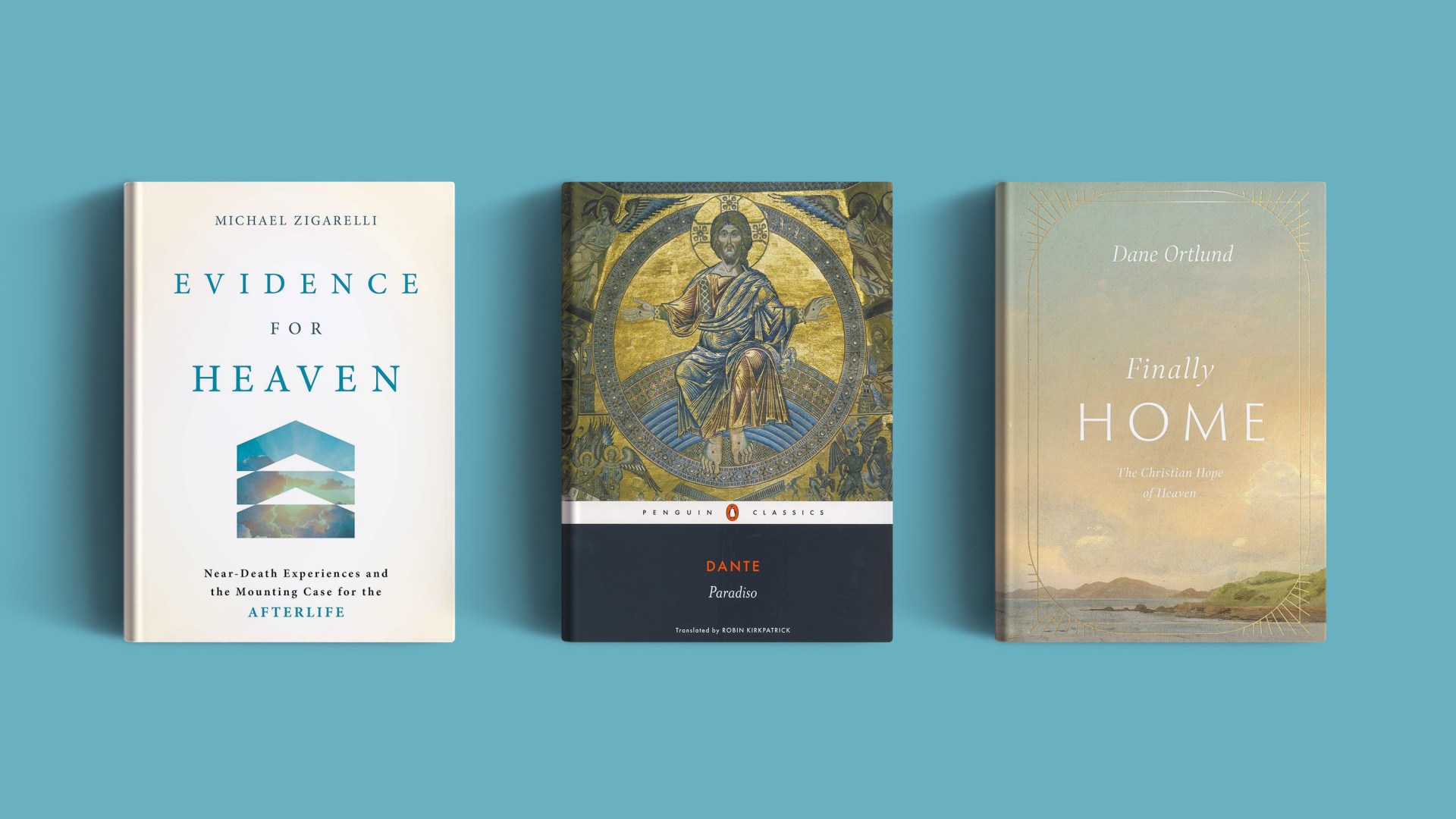
Dane Ortlund, Finally Home: The Christian Hope of Heaven (Crossway, October 2026)

Finally Home: The Christian Hope of Heaven

Finally Home: The Christian Hope of Heaven

Crossway

264 pages

Writing about heaven is different from writing about other Christian doctrines. Some books on the new heaven and new earth are so imaginative and speculative that they become untethered from biblical reality. Others are not imaginative enough; they make lots of accurate statements but lack the fusion of poetry, consolation, metaphor, wonder, and joy that characterize the apostles and prophets. Dane Ortlund’s new book, Finally Home, gets the balance just right more than any other modern book I have read on the topic. It is clear, solid, robust, and orthodox, but it is also soaring, evocative, comforting, and beautiful. It will be my go-to book to recommend on heaven from now on.

Much of the ground covered is what you would expect. Death, the intermediate state, the resurrection of the body, righting of wrongs, the renewal of creation, and the beatific vision are all here, described with clarity and presented with delight. Ortlund has not just read, but pondered and internalized, the great works of Augustine, Dante, Milton, the Puritans, and C. S. Lewis on this subject, and it shows. A pastoral care and an evangelistic warmth to his writing fire the heart, and he has an admirable simplicity to his overall framework.

There are some wonderful surprises as well. I did not expect the book to start with a chapter on how short our life is. Nor was I expecting a list of the careers that would (and would not) continue in the resurrection, or a chapter on how we will judge angels. I had never noticed the prominence of glory in Romans or thought about the new creation in terms of the calming of the wind and the waves. These are just some of the rich insights that are sprinkled throughout this marvelous book. Highly recommend.

Michael Zigarelli, Evidence for Heaven: Near-Death Experiences and the Mounting Case for the Afterlife (Baker Books, 2026)

Evidence for Heaven: Near-Death Experiences and the Mounting Case for the Afterlife (An Intro to NDE that's Perfect for Skeptics and Readers of Imagine Heaven)

This short book presents three claims of escalating significance. Each of them is reflected in the title and subtitle. The simplest and most defensible claim is that near-death experiences (NDEs) are much more common than many of us realize: They are experienced in all sorts of different cultures and are increasingly the subject of serious academic research.

The next claim is a bit stronger, namely that these experiences are so widely attested. Despite the wide range of cultures from which they come, NDEs have so many overlapping features—the departure of the soul from the body, heightened senses, overwhelming love, brilliant light, a journey through a tunnel, gaining special knowledge, a transformed life afterward—that they represent a growing body of evidence for the afterlife, in which the soul continues after the death of the body. The third claim, as per the title, is that they actually represent evidence for the Christian doctrine of heaven, on the basis that they witness to a place of perfect peace, light, love, and joy after death, and in some cases a being from whom these things emanate.

Readers may appraise these three arguments differently. The first is relatively uncontroversial, although the widespread reality of NDEs is worth noting in light of the famous examples of overhyped and even fraudulent testimony. The second is obviously more contentious. Some will prefer materialist, naturalist interpretations of these phenomena (REM intrusion, hallucinations, and such), while others will see them as more compatible with spiritual explanations and another reason to reject the idea that the mind and the brain are identical.

But what of the idea that NDEs are evidence for “heaven”? At this point, ironically, the universality of the experiences becomes a problem. Given that people from all kinds of cultures and religions have such similar encounters, it seems hard to conclude that there is anything specifically Christian about them. So I must admit that when Zigarelli claimed that “the NDE evidence invites a fresh conversation about God’s grace, the scope of salvation, and how to interpret Jesus’s teaching about the narrow gate,” he lost me.

Dante Alighieri, Paradiso (Penguin Classics, 2008)

The Divine Comedy: Volume 3: Paradiso

The Divine Comedy: Volume 3: Paradiso

Penguin

496 pages

Nobody has written about heaven like Dante. The Paradiso is the third and final part of his Divine Comedy (1308–1321), following the Inferno and the Purgatorio, and it describes Dante’s ascent through the heavens into the presence of God. For the most part, the Paradiso is not providing a factual description of heaven (like Ortlund), let alone an evidential defense of it (like Zigarelli); it is an allegorical poem, full of virtues and saints, contemplation and purification, planets and concentric circles.

But it culminates in an astonishing vision of light, love, joy, and God himself, which is surely the greatest description of these realities outside of Scripture. (I may just be saying this because I first read it while on holiday in Florence, but I suspect Dante’s influence speaks for itself.)

Paradoxically, the poetry is at its best when describing the indescribable: “So many streams of happiness flow down / Into my mind that it grows self-delighting / At being able to bear it and not drown.” Or, “I saw, above a thousand thousand lights / one Sun that lit them all, as our own sun / lights all the bodies we see in Heaven’s heights / And through that living light I saw revealed / the Radiant Substance, blazing forth so bright / my vision dazzled and my senses reeled.”

Or the famous conclusion: “Here my powers rest from their high fantasy / but already I could feel my being turned— / instinct and intellect balanced equally / as in a wheel whose motion nothing jars— / as by the Love that moves the Sun and the other stars.” Glorious.

Andrew Wilson is teaching pastor at King’s Church London and author of Remaking the World: How 1776 Created the Post-Christian West. Follow him on Twitter @AJWTheology.

Culture

Thrifting to the Glory of God

Shopping secondhand and donating our own items echoes Jesus’ renewal of discarded lives.

A pile of colorful clothes overlapping each other.
Christianity Today May 8, 2026
Illustration by Elizabeth Kaye / Source Images: Unsplash

A high schooler stood in the checkout line at my local thrift store. He wore dress pants, a tweed vest, collared dress shirt, and round wire glasses. His buddy wore typical high school gear: sweatpants, Crocs, and a ratty T-shirt.

“What do you like about shopping at thrift stores?” I asked.

While his friend grinned, the nattily dressed fellow answered, “Oh, I like to dress like a grandpa, so I need to shop here.” He was carrying a black wool overcoat he planned to purchase. 

I couldn’t help but smile, looking down at my outfit that was mostly thrifted. I carried several craft items I intended to buy. We understood each other perfectly.

The love of thrifting crosses all age, gender, and socioeconomic divides. High school kids defining their personal styles with limited funds, moms saving money on clothes their children will quickly outgrow, impoverished people looking for a nice warm sweater or winter coat, crafters funding their hobbies without ruining the budget, many hoping to help save the planet one pair of pants at a time.

Thrifting is a fast-growing industry and popular pastime, but it can also be a deeply spiritual exercise. The early church, according to Acts 4:32–34, “shared everything they had … that there were no needy persons among them.” Donating clothing and home goods that no longer serve you can help meet the needs of those in your community, thus serving them. It is a good way to practice stewardship, too, as we take care not to waste money acquiring more and more stuff.

Caring for the environment is another consideration, as thrifting (both donating and buying) keeps millions of pounds of textiles out of landfills annually. Plus, thrifting can help curb the fast-fashion industry that has been known to exploit workers across the world. Thrifting is one answer to these spiritual matters—serving others, protecting the environment, caring for the needy—but thrifting points to deeper spiritual matters, too. 

The US thrift and retail market reportedly grew from $20 billion in 2017 to $56 billion in 2025. Growth is expected to jump to $61 billion this year. That is a 305 percent growth over 9 years, nearly quadruple the rate of inflation (3.5%) over the same time span.

Resale shops can range from high-end consignment stores specializing in haute couture to mom-and-pop thrift shops like one I visited recently. The husband in the business, a long-time junk disposal expert, had access to enough stuff to start a thrift store run by his wife.

Goodwill Industries is well-known across the United States and abroad, as is the Salvation Army. Goodwill provides job training and other assistance for those in need, while the Salvation Army offers food pantries, shelter, summer camps, and financial assistance programs. These mega-organizations are augmented by local and regional thrift organizations, often run by churches, religious schools, and mission organizations.

Legacy Thrift, another outlet, began as Bibles for Missions in Holland, Michigan, in 1992. Planners modeled it after thrift stores in Canada that supported Bible League International. Rebranded Legacy Thrift in 2023, its 15 US locations—from West Michigan to Memphis to Houston—give over $4 million annually to six ministry partners, including Bible League Bulgaria, Living Water International, and Unknown Nations.

“Our guiding principle for how we operate our stores is to raise money for these ministries,” said Jessica Nolan-Bruinsma, vice president of operations for Legacy Thrift. “If we do what we do really well, this enables our ministry partners to do their jobs really well.”

She said thrifting is far different now than when Legacy began more than 30 years ago. “Back in the ’90s, thrift shopping was almost shameful. People expected stores to be dark, smelly, unorganized. But now thrifting has become recreational too. The customer base is different.”

Thrifting reminds me of stories of renewal in the Bible, taking what is unwanted and tossed away and remaking it into something new and treasured. Jesus does the same with us, taking our old lives and making them new. When we thrift discarded yarn and make an afghan (as my friend Rachel did recently), we warm ourselves or others with a new creation. The old has become new.

The olive-green sweater worn by someone new or a dusty candy dish just like the one that used to sit on a table at Grandma’s house point to the work of the Savior who finds value in what isn’t inherently valuable. The candy dish recalls fond memories, and the olive sweater looks perfect on its new owner. Each item has value to the right person.

My daughter discovered a mid-century modern dresser at Salvation Army late one Saturday afternoon. She took pictures and researched it over the weekend, discovering that this Drexel dresser with dovetail joints was selling used for nearly $1,000. I rushed back Monday morning, draping myself across the dresser while an employee set the price at $229. We loaded the very heavy dresser into the car and took it to my in-laws’ house. My woodworking father-in-law waxed, sanded, and shined the wood, added a few drawer inserts, and redid the brass hardware. It’s stunning, now ready to move with my daughter into the house she just bought.

Jesus, too, found value in what isn’t obvious. Zacchaeus was a tax collector, a reviled member of the Jewish community. Jesus called him down from a tree and invited himself to Zacchaeus’s house (Luke 19:1–10). The man of short stature came away from the encounter a changed man, repaying what he had swindled fourfold. Even a tax collector can be redeemed.

My church’s Easter Sunday service included a clip from The Chosen showing Jesus’ encounter with the bleeding woman who touched the hem of his garment with the faith that he would heal her. Jesus stopped, delaying his visit to a powerful synagogue leader with a sick daughter. When asked who had touched him, the woman came forward and told him the story of her illness and how she was healed just by touching his robe.

“Daughter, your faith has healed you. Go in peace and be freed from your suffering,” Jesus told her (Mark 5:34).

Jesus saw hidden value in this woman who had been ostracized and couldn’t work, marry, have children, or even be touched by anyone in her community or family. He saw her value hidden beneath an illness that kept her perpetually unclean.

Jesus could have ignored the tax collector and the sick woman.

We could have easily ignored the dresser because of its dingy, scratched surfaces and its dull hardware. But my daughter and my father-in-law revealed the value of the piece that will now have years of new life. Searching for ways to recognize the gifts around us, even those covered in a layer of dust, is one way to be like Jesus.

Thrifting also helps us value people. Goodwill of Greater Grand Rapids, with 18 retail locations, offers programs “to assist individuals who are facing barriers to employment,” said Erica Eash, its marketing manager. This can mean programs such as nursing training for those wanting to enter the health care field, struggling to find work during major life transitions, dealing with disabilities, plus professional growth for current employees.

“When you think about the fact that we’re serving 2,158 participants and providing 1,498 employment opportunities annually, that’s a big impact we’re making,” Eash said. “All of this speaks to our mission of changing lives and communities through the power of work.”

Nolan-Bruinsma points to the importance of donors. Without them, thrift stores wouldn’t exist. “We want to be good stewards of the things people donate,” she said. “We treat items well; we clean them, display them properly, and take good care of them.”

She says that time and again someone will stop by to drop off clothing on hangers or in boxes, saying, “‘My wife passed away and I’m finally giving away her things.’ Her clothes are lovingly cared for and carefully laundered. We want him to know that we really do care for the things he donates.”

My own volunteering at Legacy Thrift recently yielded three tins of vintage buttons. It would have been easy to toss them—we can just buy new buttons!—but instead I sorted them.

I thought about the woman who laboriously cut them off discarded clothing or replaced old buttons with new, who carefully saved every button during hard times. I wanted to honor her care and safekeeping of these small things.

The volunteer in charge of vintage items was thrilled about the buttons, putting a fair share of them in a special display case. Whoever donated them and whoever collected those buttons was honored in that care. What a gift to be able to pass them on to someone who will treasure them.

Ann Byle is a writer living in West Michigan. She is a diehard thrifter and author of Chicken Scratch: Lessons on Living Creatively from a Flock of Hens.

Ideas

‘No-Kids Zones’ Abound in South Korea. But Kids Aren’t Pests.

In a country with one of the lowest fertility rates in the world, children are seen as a nuisance. But they are a blessing that can pierce the idols of efficiency.

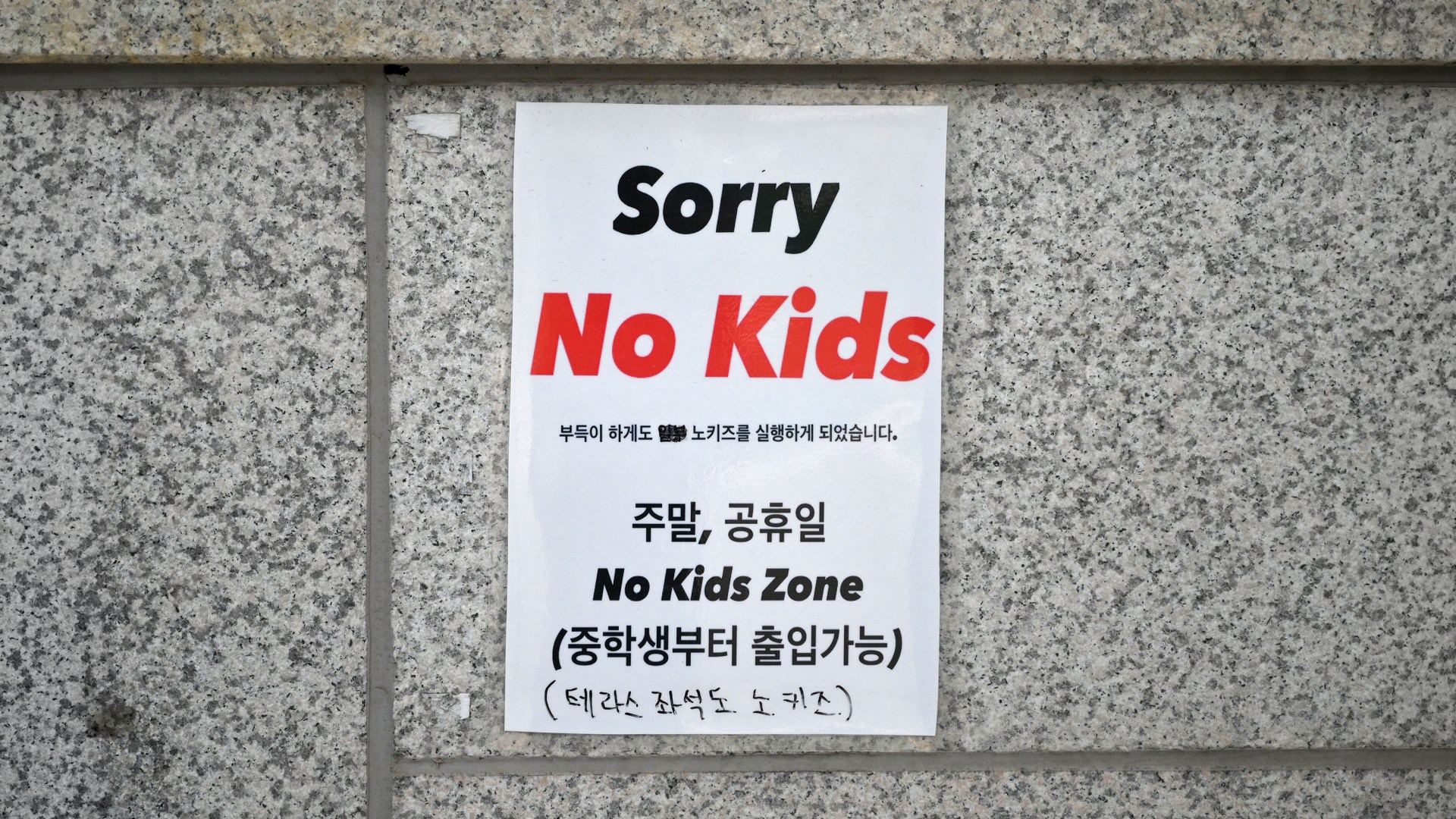
A 'No Kids Zone' sign at the entrance of a cafe in Seoul.

A 'No Kids Zone' sign at the entrance of a cafe in Seoul.

May 8, 2026
Yelim Lee / Getty / Edits by CT

While working at a large electronics conglomerate in Seoul in the early 2010s, none of my colleagues had more than two children. A supervisor explained to me that while he wanted a third child, he just couldn’t afford it. “My parents had to sell half of their business to pay for my education. I don’t think I can provide such opportunities to my own two children,” he told me.  

A female manager said she handed her two children to her parents to raise so that she could advance her career and earn more money for their education. She noted she was lucky her parents lived nearby so she could see her children every day. Meanwhile, another manager only saw her 1-year-old on the weekends, as her parents lived on the other side of the country.

This mindset of prioritizing one’s career over having children is common in South Korea, where the cost of raising children is the highest in the world and the fertility rate is one of the lowest at 0.8.

It was a mindset that I initially subscribed to as well.

At the beginning of my career, I often worked overtime and attended late-night company gatherings. Some nights I returned home as the sun was peeking above the horizon, only to go back to work after a few hours of sleep. Working hard at a prestigious company gave me a sense of prestige.

In 2011, I developed a head-shattering migraine that eventually forced me to take an extended sick leave from work. Despite a barrage of exams, doctors could not figure out the reason for my illness. After three months of leave, the company’s HR manager called me to discuss my options. Although my boss defended me, I feared losing the career I had worked so hard to obtain.  

Out of desperation, I remembered my mother’s words: “When we pour out our hearts to God, he surely listens.” So I started attending my church’s 6 a.m. service every morning and praying for God’s healing. Almost half a year after the onset of the illness, God answered my prayer in an unexpected way.

One day after my treatment with a pain specialist, I felt a strange urge to visit the women’s clinic in the same building. There in the darkened exam room, I saw on a screen the tiny life growing inside me. It felt like a miracle given the severe pain I was in.

Within a few weeks, I was overwhelmed with terrible morning sickness, but when the morning sickness receded, so did my migraine. I was able to return to work throughout the pregnancy. When my daughter was born, my husband and I chose a name based on the Hebrew phrase Eli-ana, meaning “My God has answered.”

During the first few months of my daughter’s life, God showed me a different mission for my life than the ambitious career goals my colleagues and Korean society had sold me. When my parental leave ended a year later, I didn’t return to work. Instead, my husband and I both resigned. In the summer of 2013, we left South Korea for the mission field with our 1-year-old daughter.

Today I am a mother of five children between the ages of 4 and 13 as I pursue a PhD at Dallas Theological Seminary. Despite living on a single income, God has steadily provided for us through my husband’s marketing job at the seminary, scholarships, and the sacrificial support from my mother and mother-in-law, who helped us raise our children.

To Koreans—both in Korea and in the US—I am a statistical anomaly. Whenever I share that I have five children, strangers and acquaintances are shocked and worried about how we can afford them all.

In the time I have lived outside of South Korea, Koreans have become increasingly intolerant of children. About a decade ago, a debate around “no-kids zones” in restaurants and other public places went viral. Business owners cite “privacy to adult customers” or “safety concerns” as the reasons to adopt these policies, yet the debate reveals a shift in how children are viewed. In internet communities, stay-at-home mothers are often derogatorily called “mom-insects” (mom-choong), women who spend husbands’ hard-earned money idling in coffee shops while allowing their children to disturb public spaces.

Korea’s birth crisis has a deeper root than economic concerns alone. As housing and educational costs skyrocket, a fatalistic sentiment has grown among the country’s highly educated but economically strained younger generation. In various online communities, they describe their despair with the phrase “Better never to have been born”—echoing the title of the book by South African philosopher David Benatar.

The efficiency-driven anti-natalist logic goes like this: Life is full of suffering. A child is a costly burden. Raising children requires economic sacrifice. If someone cannot afford to raise a child to be successful, it is better that the child never be born.

The Bible speaks truth to this kind of thinking. The beginning of Psalm 127 paints a picture of a seemingly active economy that is—apart from the Lord—nothing but vanity.

Unless the Lord builds the house,
   the builders labor in vain.
Unless the Lord watches over the city,
   the guards stand watch in vain.
In vain you rise early and stay up late
   toiling for food to eat—
   for he grants sleep to those he loves. (vv. 1–2)

The Hebrew term house in the first verse points to the family, household, or even a nation (as in the “House of Israel”). Like many other wisdom psalms that set two possible ways of life in contrast—for instance, the way of the wise versus the way of the wicked in Psalm 1—this psalm also paints two very different worlds: one marked by vanity and one marked by blessing.

In the world of vanity, people toil on a futile building project, like an economic system that lacks a future generation to inherit its outcome. However, in another possible world, a different kind of building project is underway.

Children are a heritage from the Lord,
   offspring a reward from him.
Like arrows in the hands of a warrior
   are children born in one’s youth.
Blessed is the man
   whose quiver is full of them.
They will not be put to shame
   when they contend with their opponents in court. (vv. 3–5)

Our economic calculations of the value of motherhood and child-rearing often overlook the long-term dimension of these projects. Maternity leave taken by new parents seems to incur significant economic loss, and the daily work of a stay-at-home mom seems to contribute little to Korea’s GDP.

However, the costly and seemingly inefficient work of raising children—even the ones shrieking in coffee shops, making a mess at a restaurant, or laughing too loudly on the subway—can rebuild our society from the bottom up when parents and community members raise them with godly love. Like arrows in a warrior’s quiver, these children can pierce the false idols of efficiency and success.

For a long time, the comparison of children to arrows puzzled me. But while studying ancient Hebrew inscriptions in seminary, I learned that some of the oldest Hebrew writings were names engraved on bronze arrowheads from the early periods of Israel’s history.

These arrowheads were reusable weapons that were retrieved and resharpened after each use. Furthermore, the names on the arrowheads displayed the owner’s allegiance—showing whether it was “the arrow of ben-Baal (Son of Baal)” or “the arrow of Eli-Am (My God of people).”

Our children are our arrows, with their parent’s names and allegiance to Christ engraved on their hearts. My quiver currently has five arrows, each one of them uniquely made in God’s image (Gen. 1:27). If God allows me to teach Old Testament after earning my degree, I will add my spiritual children—my students—into this quiver as well.

From this perspective, my job as a mother and educator is more important than the meetings I attended, the spreadsheets I filled out, or the employee award I received while working in corporate Korea. It’s a long-term project contributing to the formation of God-shaped souls in our world.

I pray that I will be able to resist the temptation to see my children as economic investments or to judge their success by worldly standards, forcing them to pursue careers as doctors, lawyers, or venture capitalists.

I pray that I will be able to encourage them to discover and follow their own unique, God-given talents and interests. My oldest daughter wants to become a cellist. My second would love to study insects and reptiles. My third child dreams of becoming an artist. My fourth might pursue an acting career. My 4-year-old—well, I am still figuring him out.

Oftentimes, we face verbal and logical assaults in the “court” of a God-defying society that constantly equates human value with economic productivity. Our children—both biological and spiritual—are not only gifts of God but also our effective weapons in our fight “against the rulers, against the authorities, against the powers of this dark world and against the spiritual forces of evil in the heavenly realms” (Eph. 6:12).

Each morning, I “shoot” my children into the world with the prayer that they will be enveloped and carried along by the divine ruach—the wind, the breath, and the Spirit of God (Gen. 1:2; John 3:8). In the evening, I gather them back and ask them to share their victories and struggles.

Through these moments of laughter and tears, we as parents participate in their sharpening, imparting in them the courage to go out and face the world yet again. Day by day, we trust in the power of the name that is above every name engraved into their hearts.

News

Sudan’s Civil War Destroyed Hospitals and Churches

Local doctors and Christians are trying to rebuild lives in the capital city.

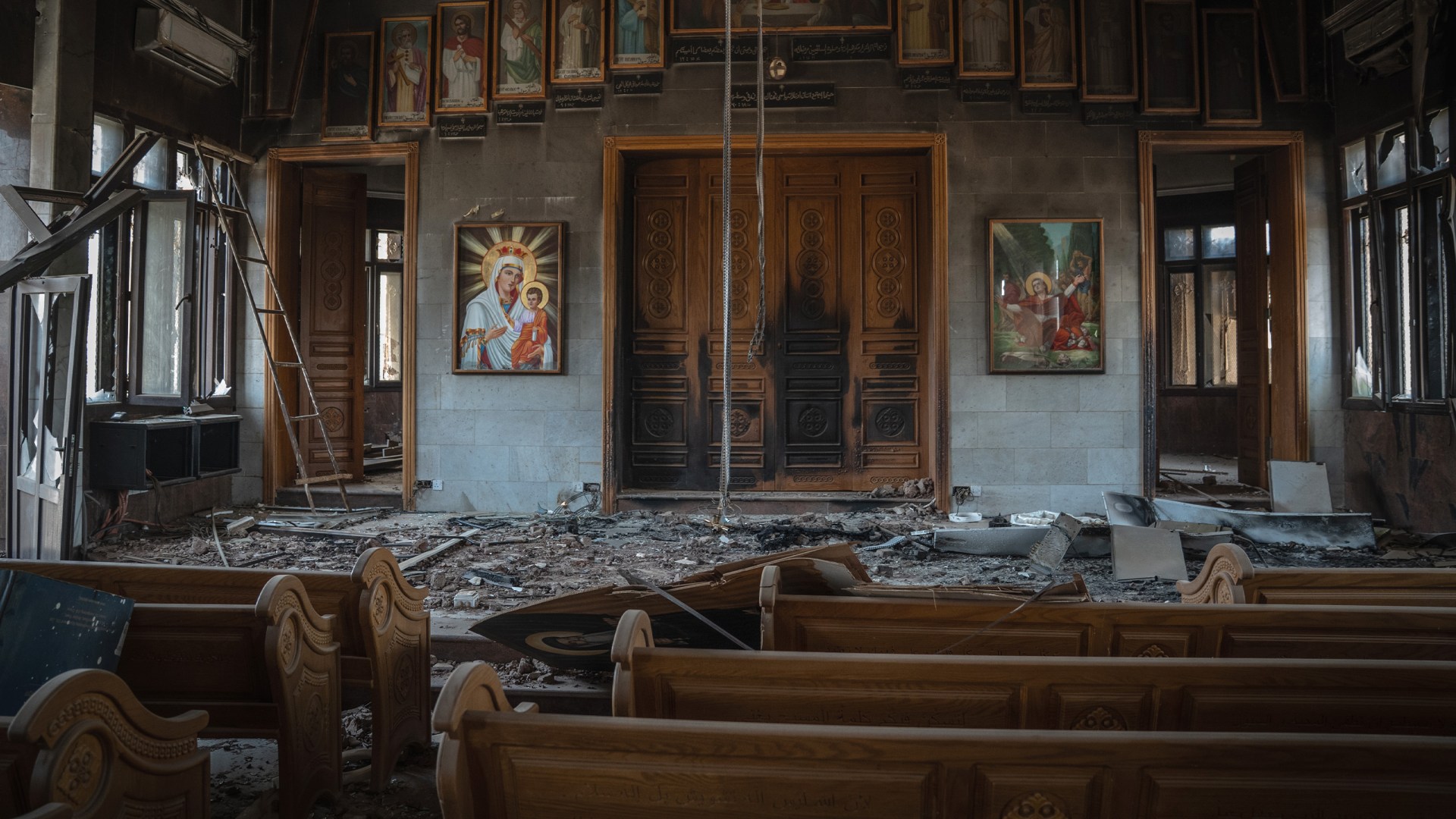
A damaged Christian church near the National Police Headquarters in downtown Khartoum.

A damaged Christian church near the National Police Headquarters in downtown Khartoum.

Christianity Today May 8, 2026
Giles Clarke / Contributor / Getty

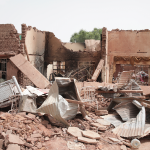
Nearly every building in Khartoum, Sudan, bears the marks of war—bullet holes, shattered glasses, empty windows, broken fences, shelled walls, and looted apartments. The presidential palace is in ruins. The Sudan National Museum now holds a collection of spent bullet casings piled next to broken equipment. An 80-year-old church remains in ashes.

Once-bustling streets are mostly deserted, a casualty of Sudan’s more than three years of brutal conflict between two main military factions—the officially recognized Sudanese Armed Forces (SAF) and the Rapid Support Forces (RSF), which originated as Janjaweed militia that sought to crush rebels in Darfur in the 2000s.

At Al-Saudi Maternity Hospital in the city of Omdurman, Safa Ali attends to women and girls, many of them victims of sexual assault. Girls as young as 13, some bleeding and traumatized, sometimes stop her on her way to the hospital and plead for help. She treats them, then offers counsel and emotional support. If they face at-risk pregnancies, she admits them and monitors them daily. Some nights she stays late performing cesarean sections.

She’s one of the few doctors still practicing in Khartoum. Many others have fled.

Ali said the fighting destroyed the hospital—beds flipped, walls poked with holes from bullets and shelling, medical wards emptied. The staff had to move 2.5 miles away into Al-Nao Hospital’s operating room and clinic for six months before the nonprofit Sudanese American Physicians Association restored and reopened Al-Saudi’s building last year.

The United Nations reported that fighting has killed or injured 4,300 children and displaced 14 million people. Many remain without adequate food, shelter, and health care. According to the International Committee of the Red Cross in Africa, the war has left 70–80 percent of conflict-area health care infrastructure “non-operational or critically under-resourced.”

The deadly fighting first broke out in Khartoum on April 15, 2023, as the SAF, led by the country’s de facto ruler, Abdel Fattah al-Burhan, and the RSF, led by militia leader Mohamed Hamdan Dagalo, or Hemedti, struggled over control of the government. Burhan and Dagalo had worked as allies in the October 2021 coup overthrowing a joint military-civilian government but couldn’t agree on how to share power.

The RSF captured much of Khartoum within hours, including the Khartoum International Airport, the presidential palace, and the Sudan National Museum, from which the RSF looted more than 4,000 artifacts, according to the government. The SAF later retook Khartoum in March 2025.

During the worst of the conflict in 2023, Ali said hospital workers helped pregnant mothers deliver their babies while bullets cracked and bombs roared by. As an ob-gyn, Ali doesn’t usually treat battle wounds but said she sometimes saw women come in with gunshot wounds.

“[These were] very difficult days, but we decided to continue,” she said. “I had to be strong and give support to the people.”

Ali said one day RSF fighters bombed her hospital, killing a colleague in front of her: “The bomb split his head,” she said. “[After this] we relocated to another hospital in a safer environment to continue providing care.”

The UN said both the SAF and RSF have committed war crimes, including coordinated attacks on civilians and the demolition of displacement camps, hospitals, and markets. The UN reported at least 100 attacks on health care facilities in the first year and five months of the war. Drones have made the situation worse, especially when they take aim at hospitals.

Meanwhile, the fighting has “damaged or destroyed” more than 100 churches, according to Open Doors.

In September, the RSF shot at church buildings in North Darfur and used drones to bomb Saudi Maternity Hospital in El Fasher—the only functional hospital in the city at the time. More than 460 patients and healthcare workers died in the attacks. In early April, two drone attacks—reportedly directed by the RSF—targeted Al‑Jabalain hospital in White Nile state. The strikes hit the operating rooms and maternity ward.

Interference from other African and Middle Eastern powers have fueled this domestic conflict. Colombian mercenaries backed by the United Arab Emirates helped operate drones during RSF’s seizure of El Fasher. Meanwhile, Egypt, Qatar, Saudi Arabia, and Turkey have partnered with the SAF. Iran also provided weapons to the SAF for a time.

Despite the ongoing violence, Sudan’s government claimed victory after the SAF recaptured Khartoum in March 2025.

“We can say with total confidence that we won this war,” Prime Minister Kamil Idris told a group of foreign journalists.

But the RSF still controls parts of Sudan, including Darfur, where it set up a parallel government in four of the region’s five states. Khartoum residents still live in fear of possible drone attacks.

Despite the dangers, Ali remains in Khartoum, alone. Her husband and four children fled to Cairo, Egypt, early in the war. She told CT it’s too dangerous for them to return to Sudan, but as a doctor she needs to stay.

“This is my choice,” she said. “I stayed here to care for these babies and women.”

Ali has treated at least 400 women who were sexually assaulted during the conflict. The UN has accused the RSF militia of tactically using sexual violence “to terrorize civilians.” Doctors Without Borders reported that nearly 3,400 survivors of sexual violence sought treatment in the organization’s Sudanese health facilities in North and South Darfur—only two of Sudan’s 18 states—between January 2024 and November 2025. The full scope of the abuse is unknown.

Because of abuse and displacement, Ali said, some mothers abandon their babies after giving birth in the hospital. In other cases, infants become orphans when their mothers die during childbirth from limited resources: “Each case was heartbreaking in its own way.”

For now, Ali works with the government to put the babies in the care of families. She said some families come from the minority-Christian population in Sudan. Though Ali is not a Christian, she said she felt encouraged to see Christian families taking some of the children into their homes.

For Christians in Sudan—who make up just over 5 percent of the population—the SAF’s declared victory hasn’t brought full relief. Rafat Samir, chairman of the Evangelical Community Council for Sudan, told Open Doors last year the Islamic government is actively preventing churches’ recovery: “They will not allow the reconstruction of churches that were bombed and burned during the war.”

Samir also said the SAF’s de facto government has demolished churches in Khartoum and outlying areas.

Still, Christians are rebuilding fellowship. On April 10, for the first time in years, Episcopal archbishop Ezekiel Kondo told Religion News Service he held an Easter service at the site of his bombed-out church—Episcopal Church of Our Savior in Omdurman. He expressed optimism for peace as church services resume and aid organizations return to the city.

Despite the lurking threat of drone attacks, Ali agreed. She hopes a rebuilt Khartoum will allow residents to live without fear and will enable hospitals to provide medical care safely. Meanwhile, Ali tries to process her own trauma while attending to the ongoing needs of her patients.

“Being constantly busy has helped me push through, and the support from colleagues makes a difference,” she said. “Still, the emotional impact of what we experienced doesn’t simply disappear.”

Next week, Emmanuel Nwachukwu will provide the second part in this series showing how internally displaced persons in Sudan fight for hope and survival entering the fourth year of war.

Books

Nominations Are Open for the Christianity Today Book Awards

Instructions for authors and publishers.

An open book on a table.
Christianity Today May 7, 2026
Jonas Jacobsson / Unsplash

Dear publishers and authors,

Each year, Christianity Today honors a set of outstanding books encompassing a variety of subjects and genres. The CT Book Awards will be announced online in December, featured in our January/February 2027 print issue, and promoted in CT newsletters and on our social media channels. In addition, publishers will have the opportunity to participate in a promotion organized by CT’s marketing team.

Award categories

1. Apologetics / Evangelism

2a. Biblical Studies

2b. Bible and Devotional

3a. Children

3b. Young Adults

4. Christian Living / Spiritual Formation

5. The Church / Pastoral Leadership

6. Culture, Poetry, and the Arts

7. Fiction

8. History / Biography

9. Marriage, Family, and Singleness

10. Missions / The Global Church

11. Politics and Public Life

12a. Theology (Popular)

12b. Theology (Academic)

In addition, CT will name a Book of the Year, and perhaps a runner-up (the Award of Merit), chosen from the entire pool of nominees by a panel of CT editors.

Nominations

To be eligible for nomination, a book must be published between November 1, 2025, and October 31, 2026. Nominations of books published outside this range will be disqualified without refunds of the entry fees.

We are looking for scholarly and popular-level works and everything in between. A diverse panel of scholars, pastors, and other informed readers will evaluate the books.

Authors and publishers can nominate as many books as they wish, and each nominee can be submitted in multiple categories. The entry fee is $35 per nomination.

To make your nomination(s), click here to access the submission form. You will be asked to include contact information, the title and categories for each nomination, PDF attachments, and your payment information. In a change from years past, you will pay at time of entry instead of receiving an invoice at a later date.

Finalist books

If your book is chosen as one of the finalists in any category, we will contact you and ask that you send a copy of the book directly to each judge assigned to that category. We will provide mailing addresses for each judge.

Deadline

The deadline for submitting nominations is Friday, July 10, 2026. No late nominations will be accepted.

Questions? Email us at bookawards@christianitytoday.com.

Thank you!

Christianity Today editors

Culture

Q&A: Douglas McKelvey on Gen Z’s Lack of Rites of Passage

Staff Editor

The Rabbit Room’s newest prayer book urges readers to join God’s mission in young adulthood.

A girl walking on floating stepping stones.
Christianity Today May 7, 2026
Illustration by Elizabeth Kaye / Source Images: Getty

Douglas McKelvey has been writing prayers in public for 20 years. This spring, his latest prayer book, Every Moment Holy: Rites of Passage, releases with Rabbit Room Press. The liturgies and prayers have an eager readership and are expanding to bring the show on the road for Every Moment Holy Live.

This fourth volume offers thoughtful prayers for individuals and communities at moments of transition, and it’s particularly suited to young adults. While this volume may be particularly suited for the graduate in your life, it’s also a helpful resource no matter your age.

In this conversation, Ashley Hales speaks with McKelvey about our lack of rites of passage in American culture and about how prayer can create meaning by orienting people to God’s larger story. This conversation has been edited for length and clarity.

Tell me just a little bit about the impetus for Rites of Passage.

Since Volume 1 of Every Moment Holy released, it’s been a bit of a journey. Rites of Passage is 150 prayers or so for young people in that transition stage of stepping into independence and adulthood. But it’s a little more of a hybrid book.

We’re not very good in America at creating rites of passages. Our culture has a kind of blank slate: You go through your years of schooling, and then you jump off a cliff into adulthood. We keep asking questions like “How do you know you’re a good man?” “How do you know you’re a good woman?” “How do you know you’ve really entered into the community of adulthood or are on a path toward maturity?” Rites of passage can help us understand how to do that. How might your book fit into that formationally in the church?

We are sorely lacking in those kind of unifying markers—ways to know that we are progressing into those new stages of life and responsibility. Part of that is that as a culture, we seem to have developed this aversion to anything that is actually costly.

Historically, cultures have had these kinds of rites, where young people were not just adrift in this nebulous space. I think that there is great opportunity for the church to begin to catch a vision for this, because I think we’re at a place as a culture where things are too easy. Gratification is too immediate.

Girls and boys as they’re growing up understand in an intuitive way that there needs to be meaning and that they suffer for the lack of that. The answers are there—Jesus says we are to pick up our cross and follow—but I think those dots need to be connected.

Kids growing up in our culture don’t have those things in front of them that they’re moving toward and consciously aware of. But I do think that this call is into this wild and perilous pursuit of this wild and beautiful shepherd.

For when you hear that call and you begin to heed it and follow, you are stepping into this path that does involve personal sacrifice. But it is the path to meaning and significance that you’re looking for—the limited significance of knowing your place in the community.

You can see the pull of the screen. We can push off suffering or boredom or unease with ourselves or with others by endless YouTube videos or Instagram reels that continually serve up content. I worry for a generation that has not had to sit in the awkward or hard spaces and has been anesthetized.

Is it possible for a large swath of the American population that, because of the formative years in which they have been anesthetized by technology, they simply won’t have the same sort of spiritual longings as generations before them?

Kind of the Brave New World. I think that is a real danger. But I don’t think the Spirit of God is ever going to cease beckoning people and drawing hearts. There are still going to be people who hear the call and respond. I’m more encouraged now than I would have been maybe three years ago.

In an interview, Martin Shaw made an argument that Britain wasn’t post-Christian but pagan, and pagans are much more ready to receive the gospel when they hear it than those atheists who have walked away from an institutionalized kind of religion that had ceased to have any real life in it.

The college-age generation—they’re awakening to a hunger. Aslan is on the move, perhaps. And I hope that the prayers in the Rites of Passage book land in a place where they might be of service in shepherding.

So there are prayers that begin at the place that I began when I was 16 years old—which was a place of suddenly realizing the Creator of the sun and moon and stars is beckoning me. Something in me longed for that, but I also realized there were other things I wanted more. Yet the hook of Christ was already set in my heart.

What’s one reminder you’d give to encourage young people on this precipice of becoming adults?

I think we have become a culture that has placed individualism, autonomy, self-expression on this pedestal, almost like virtues to be worshiped.

The necessary counter to that is to truly understand how short life is. It is a vapor. Scripture tells us that. But I think it begins with Lord, teach me to number my days aright, that I might gain a heart of wisdom. Start from that ending point. Who do you want to be when you are descending into the valley of the shadow? What do you want your life to have looked like? Cultivate that vision now. Start to make that plan: How do I get from here to there if that’s my endgame?

None of the prestige or accolades or likes on social media are going to matter at all. What is it that I want to lay at the feet of Jesus and say, I did this for you?

Celebrate the good things that he’s given that are part of your life, like good food, fellowship with friends, beauty, music. There’s so much that God has created in this world for us to enjoy and to be enthralled by.

All of these things are signposts pointing to the fulfillment of those things in him. Those are forward-rippling echoes of the fullness that is to come in the new creation and being in the unveiled presence of our Creator.

Douglas McKelvey is a writer of tales, a lyricist, a script writer, and the author of Every Moment Holy books.

News

Iran Tensions Threaten Kenya’s Largest Export Industry: Tea

Christian farmers struggle to avoid bankruptcy.

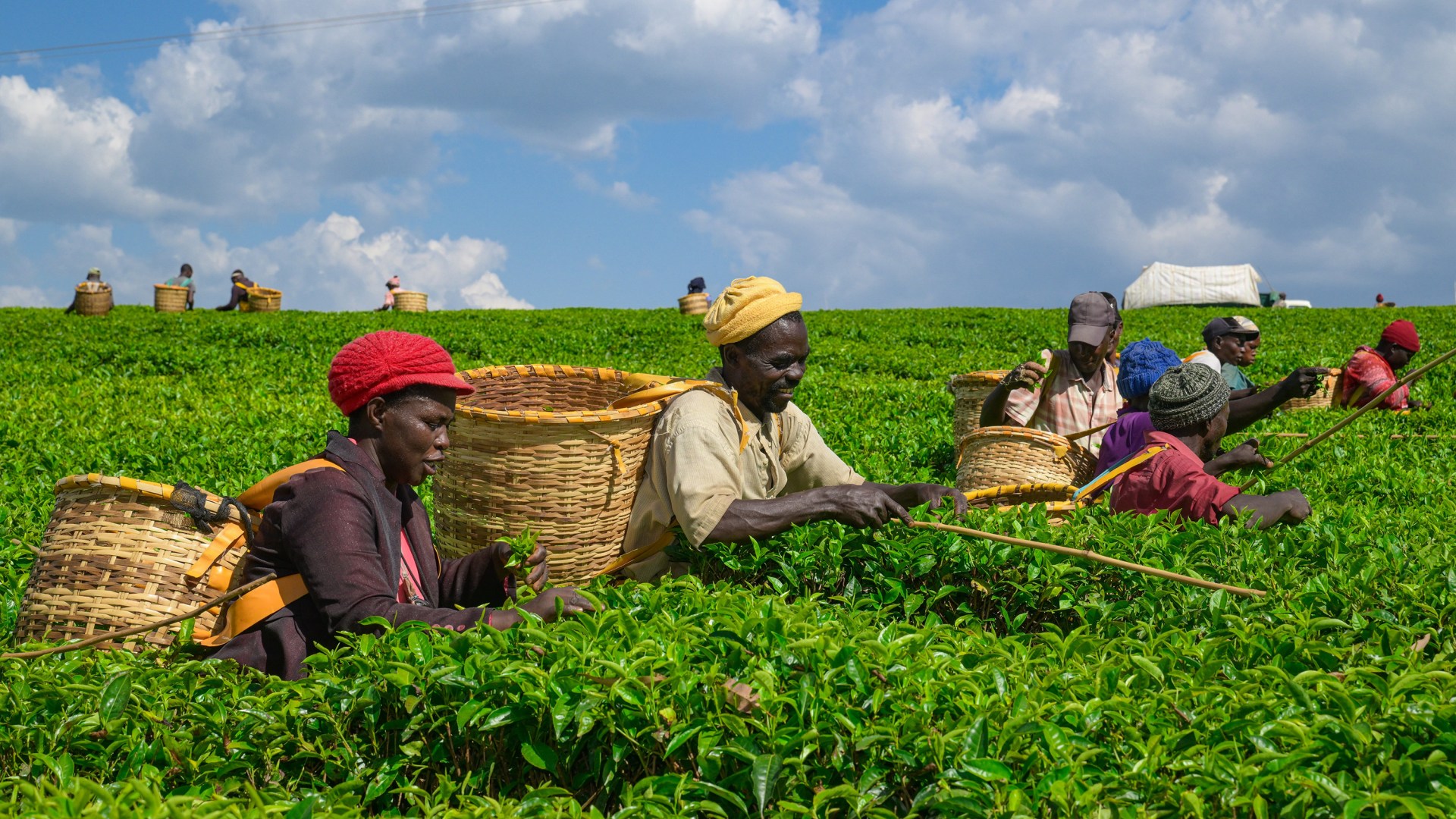
Farmers harvest tea leaves at a tea plantation in Bomet County, Kenya on February 4, 2026.

Farmers harvest tea leaves at a tea plantation in Bomet County, Kenya on February 4, 2026.

Christianity Today May 7, 2026
Xinhua News Agency / Contributor / Getty

On a cold, rainy April day, John Mwaura, 63, walked his two-acre farm in Gakoe, a small town in central Kenya’s Gatundu North Constituency, to inspect his dew-covered tea bushes while his workers plucked its leaves nearby.

Mwaura worries the tea leaves will overmature and become unusable if they aren’t picked on time. But shipping disruptions caused by the Iran war means he may have the hard decision of either letting the tea leaves go to waste on the bush or having them sit in storage indefinitely.

The spring harvest season lasts from March to May, and trucks normally come three to four times a day to pick up tea leaves from Mwaura’s farm and other surrounding farms and deliver them to a nearby factory for processing into black tea. Now, the trucks collect only twice a day.

Since the United States and Israel launched strikes against Iran on February 28, shipping disruptions have upended Kenya’s tea trade. With Iran’s closure of the Strait of Hormuz and the United States’ April 13 blockade, shipping goods to Iran or past it has become nearly impossible.

Kenya exported $32.8 million worth of tea to Iran in 2024, making the Middle Eastern country among the top ten buyers of Kenyan tea.

“At the moment the business is stagnating … prices are lowering,” Mwaura told CT. “In April, some factories were unable to pay mini-bonuses to farmers.” A mini-bonus is paid to farmers before the main bonus at the end of the year.

Like many of his neighbors, Mwaura worries the ongoing conflict and blockades will bankrupt small growers. If exporters have too much stock waiting to ship, factories can’t sell them more tea. Likewise, if the farmers can’t sell to the backlogged factories, cash shortages can force them to lay off workers or borrow money from loan sharks at high interest rates. So far, they’ve managed to keep going, but a spoiled or unsold harvest could devastate them.

“We are praying for an end to the war,” Mwaura said. “With war, the tea business is not sustainable.”

The eruption of hostilities between the United States, Israel, and Iran placed Kenya in an awkward position. Kenya has traditionally maintained warm diplomatic relationships with the US and Israel, yet Iran is a major trade partner—Kenya’s 10th largest export customer in 2024.

Kenya’s tea industry accounts for 16 percent of the nation’s exports and 10 percent of the country’s total income from foreign trade. It also employs—directly or indirectly—over 7 million Kenyans.

Joseph Mbugua, a factory worker and a farmer in Gachege, Gatundu North, said farmers were shocked when they could not get their expected bonuses and payments, which have been consistent for the last 20 years.

“We are demoralized and we have to get into debts we did not plan for,” Mbugua said.

Mwaura, a member of African Independent Pentecostal Churches of Africa (AIPCA), said the plight of farmers and laborers has become a constant prayer item in his church. He explained that Christians are stepping in to help the day laborers who can’t provide for their families right now.

“To cushion them against the harsh economic situation, they are given foodstuffs, and those who fall sick are supported with money for medication and other pressing needs,” Mwaura said.

Before the conflict erupted, Kenya and Iran had entered talks to expand trade in 2026, particularly for meat and flowers. Now exporters of these goods are reporting heavy losses. The unclear future of trade with Iran and disruptions to exports to the Middle East have shocked Kenya’s already struggling economy.

George Omuga, managing director of East African Tea Trade Association, told Kenyan newspaper The Standard that between 6 and 8 million kilograms (13.2–17.6 million pounds) of tea are just sitting in warehouses in the Kenyan coastal city of Mombasa. Tea exporters expect an 18 percent decline in business this year due to the war.

Mwaura fears fluctuating prices will create an imbalance in the supply and demand for Kenyan tea, lowering farmers’ earnings and ability to purchase needed equipment: “The farmers will produce a lot of tea while the buyers will be few.”

If this happens, many of his neighbors won’t be able to send their children back to school at the end of April as they won’t be able to pay the fees.

Mbugua expressed similar concerns: “To get children back to school, many (farmers) will have to sell their cows or lease a portion of their land to get money to fill the gap in their budgets.”

Mbugua said Kenya’s fuel costs—already higher than usual—have increased even more, raising the cost of tea production in factories, an expense many business owners haven’t budgeted for.

The bottleneck of cargo ships and oil tankers at the Strait of Hormuz—a key maritime corridor for roughly 20 percent of global oil and energy exports—has also impacted the cost of transporting tea within Kenya, not to mention international shipping. These additional costs, along with delivery delays that can erode the quality of teas, could undermine Kenya’s competitiveness against rival tea producers in Sri Lanka and India.

Kenyan principal secretary for industry Juma Mukhwana told news outlet NTV Kenya he hopes these losses will be offset by a possible deal to allow duty-free exports to China. “We have lost the Middle East market, but we have replaced it with an even bigger market of 1.4 billion people,” he said. “That is an area that we want our exporters to look at because it is a huge market.”

Other industry players recommend that Kenya diversify its markets by increasing trade with other African countries. Some hope the Kenyan government will take steps to ease the burden on tea farmers. Mwaura suggested the government cushion farmers by reducing some taxes.

Mwaura encourages other farmers to help themselves by adding value to their teas—such as developing flavored teas or instant teas that fetch more money in the market and exporting them to alternative markets in the US, Europe, or Australia. When farmers sell unprocessed tea, the market price stays much lower, he said.

Mwaura now advises other farmers about supply chains, pricing, and how to protect themselves from the impacts of foreign conflicts on their businesses. He told me that many small-scale farmers who usually sell their produce to the national tea agency, KTDA, are considering growing other high-value crops—including stevia, vegetables, and ingredients for essential oils—to supplement their tea harvests. But that could take years to bear fruit.

Still, Mwaura thinks a bigger solution needs to come from the US, Iran, and Israel.

“I would like them to make peace,” Mwaura said. “There should be respect between nations, because if they don’t agree, we may end up with another world war.”

Why We Retracted a Report About Violence in Afghanistan

A note from CT’s editorial director for news about our reporting on an attack on a house church.

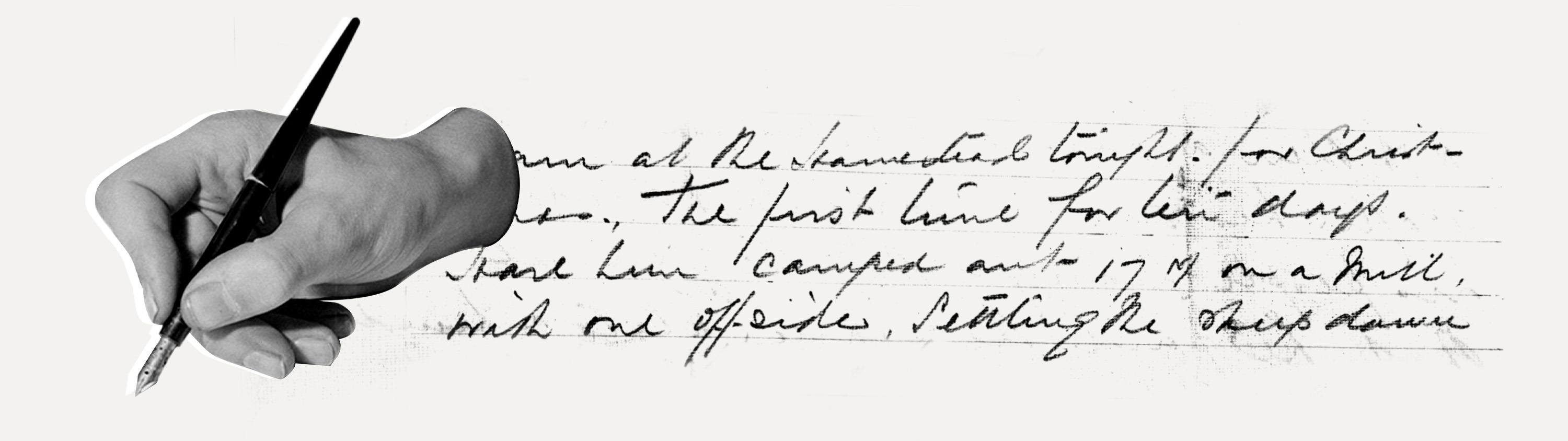
An illustration of a hand holding a calligraphy pen with a hand written letter in the background

Christianity Today May 6, 2026
Illustration by Christianity Today

On April 30, Christianity Today published a report about an attack by Muslim extremists on an underground church near Bamiyan, Afghanistan. It also mentioned a second attack that killed Hazara converts to Christianity. After becoming aware of credible doubts about the accuracy of claims made by sources, we have removed the story from our website.

CT’s journalists initially investigated the alleged attacks, one of which was first reported by an international human rights organization, by speaking with a source in Pakistan who works closely with Christians in Afghanistan. The source provided CT with photographs purporting to show the aftermath of the attacks and a family he claimed were victims of the Bamiyan attack. A spokesperson from the human rights group confirmed the Bamiyan incident, noting that violence against Christian converts from the Hazara ethnic community, in central Afghanistan, is common.

After publication, multiple groups working with Christians in Afghanistan contacted CT to express skepticism that the attacks ever took place.

Following up on the concerns, CT journalists made unsuccessful attempts to corroborate the account of the attacks through additional independent sources. They requested copies of text messages that were said to document the attacks, but the source said the messages had been lost. Finally, CT traced some of the photographs provided as evidence to incidents that in fact took place earlier than the date given for the attacks. In one case, a photograph had been taken from a video recorded four years before the alleged incident.

We take seriously our commitment to factual accuracy in reporting. In particular, when reporting on a subject as sensitive and consequential as alleged acts of deadly religious violence, we bear an obligation to publish only what can be independently verified and, when details cannot be readily confirmed, to clearly disclose as much.

CT has reported on the persecuted church from our earliest days and remains committed to covering stories of Christians around the world who worship at risk of their lives. We recognize that such contexts often entail severe restrictions on communications and information sharing, posing extra challenges for reporting. Nonetheless, we believe the impact of a story is only proportional to its verity.

Christianity Today strives to make right any error in fact that appears in our journalism, and we welcome any correction from our readers.

Andy Olsen is Christianity Today’s editorial director for news.

Theology

What Social Media Addiction Tells Us About Heaven and Hell

Columnist

The infinite scroll is a counterfeit paradise, a parody of the coming world beyond “all that we ask or think.”

An image of people scrolling on their phones.
Christianity Today May 6, 2026
Illustration by Christianity Today / Source Image: Unsplash

This piece was adapted from Russell Moore’s newsletter. Subscribe here.

In the past few weeks, lawyers have argued that social media companies knowingly addicted people to their platforms to keep them compulsively engaged. On the other side of the country, I discussed with some friends their misgivings about heaven and hell. A few days later, I realized both of these were, at the root, the same conversation. The question is what sort of life we are being trained to imagine.

The cases against social media companies such as Meta are about the harms minors can face on these platforms, but they’re also about what plaintiffs argue are features engineered to keep developing brains addicted to digital feeds through autoplay, push notifications, and engagement-maximizing algorithms.

One of the more dangerous aspects of the platforms’ design, some of these cases allege, is “infinite scroll.” That is, the app constantly presents viewers another option that merges frictionlessly with the one before. Over time, the brain is wired to think, One more video … One more reel … One more message … and on and on. The question is not whether this happens (who among us has not gotten stuck online?) but whose fault it is.

I had infinite scrolling on my mind when a group of my friends discussed eternity. An unbeliever in the group said his biggest objection to Christianity was the doctrine of hell, but a close second was the doctrine of heaven. He could not conceive of living forever in a world without grief, suffering, death, or struggle. That would evacuate life of its meaning and preciousness, he thought, and would reduce human lives to those of well-fed farm animals.

In one sense, my friend is right—and the Bible agrees with him. The Psalms tell us, “So teach us to number our days that we may get a heart of wisdom” (90:12, ESV throughout).

Thinking about eternity, though, requires a completely different framework from what we have, limited as we are in space and time but also in a fallen universe, which is all we’ve ever known. To talk in the terms we know—except by self-conscious analogy—is akin to what it might feel like to be a physicist answering the question “What was before the Big Bang?” One physicist I heard recently complained it’s hard to communicate that it’s impossible for him—and everybody—to get a picture of something without the sequence of “before” and “after,” because we are enveloped in this world of time and space. We cannot think our way outside it except in the most indirect ways.

The Christian vision of the new creation to come is beyond “all that we ask or think” (Eph. 3:20). And the apostle Paul described his vision of heaven as “things that cannot be told, which man may not utter” (2 Cor. 12:4). He said the differences between the bodily life we know now and the one in the new creation are akin to the differences of star systems from one another, of seeds from mature growth, or of dust from heaven (1 Cor. 15:35–49).

A 10th-century person peering into our era, upon learning it is almost impossible to find scribes in monasteries trained to copy manuscripts by hand, might well conclude with sadness that the 21st century is a time of universal illiteracy. Imagine, then, trying to explain Wi-Fi signals to that time traveler in a way that wouldn’t seem like sorcery. Even that analogy fails, because the distance in technology between the 10th century and today is nothing compared to our boundedness now in light of the world to come (Isa. 55:8–9).

The life to come is not a frictionless existence. It is creation freed from bondage to decay (Rom. 8:20–26). The Bible pictures the universe becoming more alive. Creation groans because it wants to be free. Scripture describes our momentary existence in terms of birth pangs—leading to something that is indescribably new yet is where our deepest longings have been pointing all along.

Part of our problem is the way we think about rest. We often think of it as inactivity and lack of struggle, and thus, while we see it’s necessary, we only find it meaningful because it gives us energy. This is not how the Bible describes rest. Israel receives rest on the other side of the Jordan, and it’s not sedation but triumph over those who would destroy them (Deut. 12:9–10). Rest is used in the same way for the high points of the reigns of David (2 Sam. 7:1) and Solomon (1 Kings 5:4). Rest is not when the story ends but—in the most important ways—when it begins.

And that brings us back to the infinite scroll. Those seeking damages from social media companies claim not that bad people use their products badly but that the algorithms work to trap us. The companies would say, We are just giving people what they want. Both are true. The algorithms figure out what we want and then give us more and more of it. If you like videos of raccoons washing grapes, you will get lots of them. If you like conspiracy theorists questioning the moon landing, you get more and more of that. Our feeds are initiated by human wanting, but they also form it.

In at least one important way, we could say hell is algorithmic. More and more, a person is narrowed away from connection to God and others and confined by what he or she wants until that’s all that’s left. Infinite scroll is what happens when our immediate desires, which we think we can curate and control, are cut off from transcendent longings. Yes, there’s struggle and friction, but it’s the wrong kind. It’s the kind that keeps us trapped in ourselves, not the kind that breaks us free. That’s why Jesus speaks of giving each person “a new name written on the stone that no one knows except the one who receives it” in his promised kingdom (Rev. 2:17).

The “infinite scroll” trap promises us freedom from boredom, with seemingly endless novelty, but leaves us bored. The algorithms of this world close us off to the kind of wonder we get from encountering desires we never even knew we had.

Transcendent longings, on the other hand, are harder to read. We know we are missing something, we know we want to give gratitude, we know we are in awe, but we cannot define all the ways that could be fulfilled—or figure out what comes next. Our deepest longings scare us sometimes, because they can point us somewhere off the map of what we know how to imagine.

The feed gives us more and more “me”—or really, more and more of the mask the machine has learned to recognize as me. Eternal life, by contrast, gives us the life we never knew we wanted. That is why Paul says our “light momentary affliction is preparing for us an eternal weight of glory beyond all comparison” (2 Cor. 4:17). Eternity is beyond comparison because the categories by which we compare anything will themselves be transfigured.

In some ways, our current way of living is “infinite scroll.” Sooner or later we realize that when we receive more and more of what we expect and think we want, we forget how to ask for something else. What then is tomorrow? Basically, even more of today. If someone spends enough time in a war zone, he or she might well start to think of constant alarm at stepping into minefields as the only way to live. For that person, the idea of falling in love or starting a career or listening to music could be unthinkably boring.
That person might say, “Who would want to live a life without drama and stuff happening?” You might respond, “You’re actually kept from the drama, from stuff happening—stuff you no longer no how to imagine.”

Perhaps we are all in the same place. Whether we are social media addicted or just living in a world where the algorithms go even deeper than digital settings, we get used to our low view of eternity. We start to think it’s normal. We hope for something better but don’t know what to hope for, because our appetites have been trained in this. But that’s the point, isn’t it? “Hope that is seen is not hope. For who hopes for what he sees?” (Rom. 8:24).


The infinite scroll is a counterfeit heaven. It offers endlessness without glory, desire without longing, novelty without newness, and rest without resurrection. Our feeds promise us a world without endings, but only what we cannot yet comprehend can give us a whole new world altogether.

Russell Moore is editor at large and columnist at Christianity Today as well as host of the weekly podcast The Russell Moore Show from CT Media.

addApple PodcastsDown ArrowDown ArrowDown Arrowarrow_left_altLeft ArrowLeft ArrowRight ArrowRight ArrowRight Arrowarrow_up_altUp ArrowUp ArrowAvailable at Amazoncaret-downCloseCloseellipseEmailEmailExpandExpandExternalExternalFacebookfacebook-squarefolderGiftGiftGooglegoogleGoogle KeephamburgerInstagraminstagram-squareLinkLinklinkedin-squareListenListenListenChristianity TodayCT Creative Studio Logologo_orgMegaphoneMenuMenupausePinterestPlayPlayPocketPodcastprintremoveRSSRSSSaveSavesaveSearchSearchsearchSpotifyStitcherTelegramTable of ContentsTable of Contentstwitter-squareWhatsAppXYouTubeYouTube