News

Court Will Weigh Christian Student’s $1 Case Against Georgia College

School now allows evangelism outside “speech zones,” but Nigerian convert wants lawsuit to continue.

Christianity Today March 8, 2021
Stefani Reynolds / Stringer / Getty Images

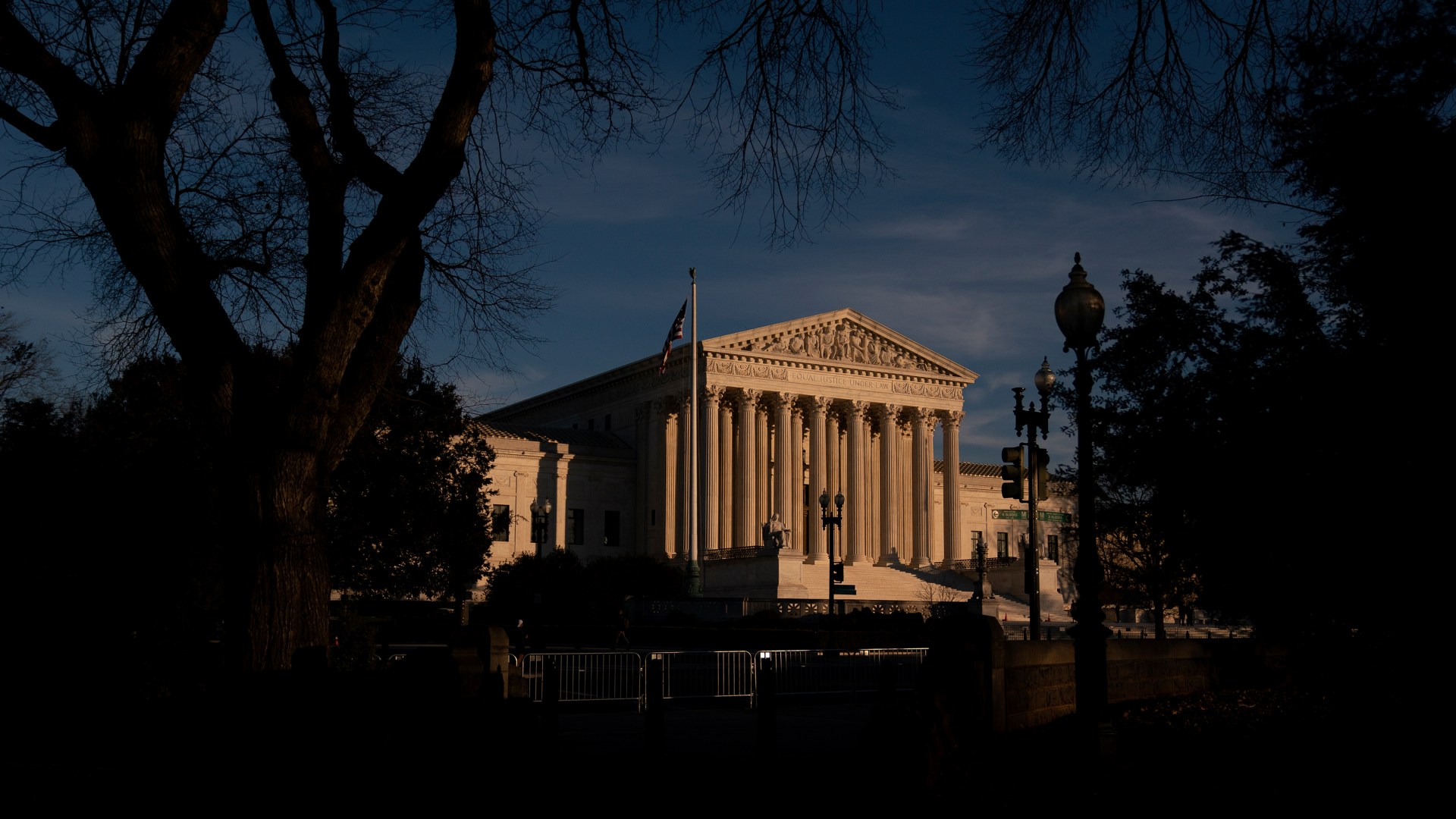
The Supreme Court is reviving a lawsuit brought by a Georgia college student who sued school officials after being prevented from distributing Christian literature on campus.

The high court sided 8–1 with the student, Chike Uzuegbunam, and against Georgia Gwinnett College. Uzuegbunam, a Nigerian who converted to Christianity in college, has since graduated. The public school in Lawrenceville, Georgia, has since changed its policies. Lower courts said the case was moot, but the Supreme Court disagreed.

Groups across the political spectrum—from the Becket Fund for Religious Liberty and the Foundation for Moral Law to the American Civil Liberties Union and the American Humanist Association—have said that the case is important to ensuring that people whose constitutional rights were violated can continue their cases even when governments reverse the policies they were challenging.

At issue was whether Uzuegbunam’s case could continue because he was only seeking so-called nominal damages of $1.

“This case asks whether an award of nominal damages by itself can redress a past injury. We hold that it can,” Justice Clarence Thomas wrote for a majority of the court.

Writing only for himself, Chief Justice John Roberts disagreed. Roberts argued that the case brought by Uzuegbunam and another student, Joseph Bradford, is moot since the two are no longer students at the college, the restrictions no longer exist and they “have not alleged actual damages.”

Writing about the symbolic dollar they are seeking, Roberts said that: “If nominal damages can preserve a live controversy, then federal courts will be required to give advisory opinions whenever a plaintiff tacks on a request for a dollar.” He accused his colleagues of “turning judges into advice columnists.”

It appears to be the first time in his more than 15 years on the court that the chief justice has filed a solo dissent in an argued case. That’s according to Adam Feldman, the creator of the Empirical SCOTUS blog, which tracks a variety of data about the court.

Uzuegbunam’s lawyer, Kristen Waggoner of Alliance Defending Freedom, cheered the ruling.

“The Supreme Court has rightly affirmed that government officials should be held accountable for the injuries they cause. When public officials violate constitutional rights, it causes serious harm to the victims,” she said in a statement. “We are pleased that the Supreme Court weighed in on the side of justice for those victims.”

Georgia Gwinnett College did not immediately respond to a request for comment Monday.

In January, during arguments in the case which the justices heard by phone because of the coronavirus pandemic, Justice Brett Kavanaugh said it was his “strong suspicion” that the dispute has continued because the issue of nominal damages is important to determining who pays Uzuegbunam’s attorneys fees.

Georgia Gwinnett College for years had a restrictive policy that limited where students could make speeches and distribute written materials to two “free speech expression areas.” Students had to get permission to demonstrate, march or pass out leaflets in other areas.

In 2016, Uzuegbunam was distributing Christian pamphlets and talking to students on campus when a security guard told him he’d need to make a reservation and distribute the literature in one of the college’s two speech zones. But when Uzuegbunam did, he was approached again and told that there had been complaints and that he’d need to stop.

Uzuegbunam sued and the college changed its policy in 2017. Students can now generally demonstrate or distribute literature anywhere and at any time on campus without having to first obtain a permit. The college has said it won’t go back to its old policy.
News

Growing Hair for Jesus, German Village Plans for 2022

World-famous Oberammergau Passion Play prepares for post-pandemic return.

Christianity Today March 8, 2021
Courtesy of Passionsspiele Oberammergau

Bavarians rushed to get their hair cut last week as Germany eased some of its toughest coronavirus restrictions and opened barbershops and salons for the first time since December. But Frederik Mayet didn’t join the newly shorn and shaven throngs.

In fact, Mayet plans to keep growing his hair and beard for another year, so he can be more like Jesus.

“With the hair growing,” he explained, “you start to grow into your role as well.”

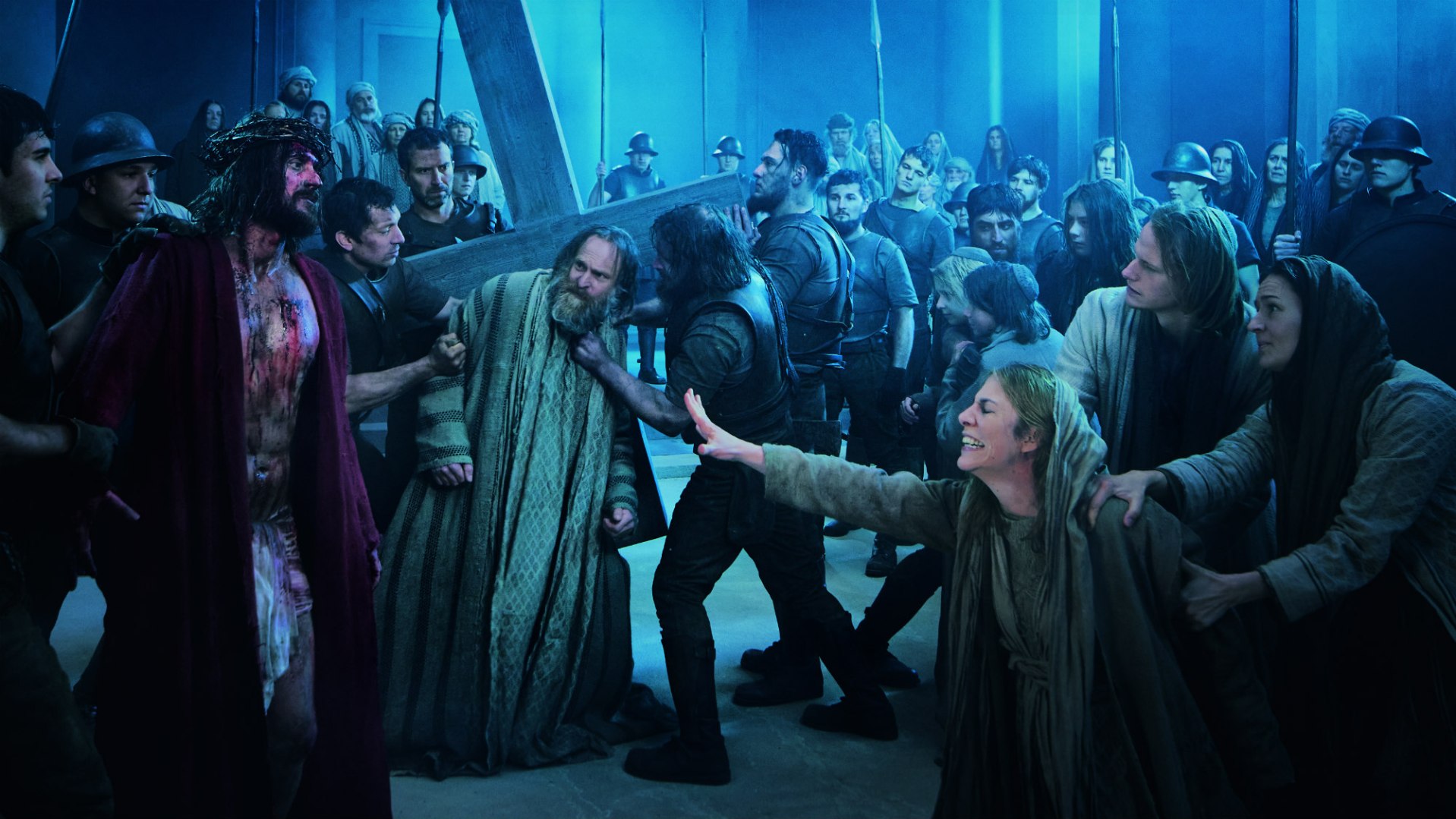
Mayet will play the starring role of the Savior in the 42nd Oberammergau Passion Play season in 2022, after a two-year pandemic postponement.

The village, about an hour south of Munich, has put on the theatrical reenactment of Christ’s suffering, death, and resurrection every 10 years since 1633, when the town was famously spared from the bubonic plague. In the intervening years, it’s only been canceled a few times: once for the Franco-Prussian War, once for each of the World Wars, and last year, because of COVID-19.

Mayet and more than 2,000 other locals spent months preparing for the 2020 performance, before it—like much of the rest of the world—was unceremoniously canceled by the pandemic.

“We worked really great together as a village being on stage for half a year before the lockdown, and then suddenly, from one day to the next, you don’t see anyone for weeks and months,” Mayet told Christianity Today. “I’m really looking forward to see people coming together again.”

The passion play is now set to run May 14 to October 2 next year. The actors of the village formally began to prepare last month on Ash Wednesday, when director Christian Stückl put out an official “hair and beard decree.”

The decree instructed all the local actors to “let their hair grow out, and the males to also grow a beard.”

Mayet, laughing, said the Bavarian government wanted the reformers to start a little earlier this year.

It’s difficult to say when the hairy tradition began, but “it is a very old tradition,” according to Stückl. He thinks its origins lay sometime in the 1800s. Photos from the Oberammergau archives show participants with robust beards and flowing locks at least as early as 1870.

Stückl said it feels a bit different this year, though, as Germans rush out to get their hair cut and Oberammergau starts to look like a “hippie village.”

Mayor Andreas Rödl, who has been part of the performance from an early age, doesn’t seem to mind. With his previous job as a police officer, Rödl was only eligible for “short-hair roles.” This year, his mane grown long, he’s enthusiastic about performing as part of the choir.

“This is the moment when you can feel the enthusiasm for the Passion Play in the town even more,” said Rödl. “We are definitely excited. And so are the visitors. … We are already 70 percent booked and have more tickets sold at this point in time than we did in 2019.”

That is good news for Oberammergau, where 2,400 of the village’s 5,400 residents either perform on stage or play a supporting role behind the scenes. It’s perhaps even better news for those whose shops, restaurants, hotels, and other tourist services depend on the plays for their bottom line.

The region was expecting between 500,000 and 750,000 visitors during the Passion Play’s five-month run.

Jake Krengel, who runs Bavaria and Beyond tours in Garmisch-Partenkirchen, 30 minutes south of Oberammergau, said the past year has been hard for local tour operators. The UN tourism organization reported a 74 percent decline in global tourism in 2020. The forecast for 2021 remains cautious given continued restrictions and uncertainty around vaccine rollout in Germany and elsewhere.

Nevertheless, Krengel remains optimistic—particularly when it comes to the Passion Play.

“For a lot of people, this is a once in a lifetime trip,” Krengel said, “so we tried to remain flexible and stay in touch as we adjusted to new realities.”

Krengel said that when they offered clients the opportunity to keep their deposits and apply them to a trip in 2022, half of them were immediately ready to recommit.

“There’s a lot of interest in coming back,” he said, “I think people just love to travel and want to get back out and see the world. For others, it’s a religious pilgrimage, so there’s another added significance for them.”

Cindy Friedrich of Apache Junction, Arizona, is one person who was willing to reschedule. A retired church secretary and pastor’s wife, she was part of a church group planning to attend in 2020. Canceling plans was hard, but she’s looking ahead to 2022 now, excited “for the play, the spiritual fellowship, and enjoying God’s creation,” she said.

Some of the original travelers in the group have opted out, though, due to age or health or finances.

“We continue to promote this excursion, but with COVID it is a challenge,” Friedrich said. “I hope the vaccine will make a huge difference. … God is in control of the future and this trip will happen in his time, not man’s.”

While some travelers like Friedrich are hoping to fulfill the plans they made to go in 2020, others see the postponement as an opportunity to make new plans.

Katherine Gross of Gainesville, Florida, did not plan on going to Oberammergau in 2020. But now, with a trip to Germany planned for 2022, she is excited to attend the Passion Play.

“For us the cancellation and postponement was a huge blessing. We feel God has a plan for us because it is working out so nicely with the timing,” said Gross, a financial advisor with Thrivent. “We could not afford to go in 2020, but I had a very good business year, which gave us the ability to go.”

Gross is especially excited to bring her children. She attended the play in 2000, during the 40th season. “I remember when I went 20 years ago,” she said, “it felt like you were there in Jerusalem.”

Things may look and feel a bit different compared to the last time she came. The Passion Play has changed with the times—the script updated to remove the implication that Jews killed Jesus and to add more female roles in the events leading up to Easter—and it may have to make more adjustments for the coronavirus.

Stückl, the play’s director, said they are going to have to wait and see how regulations might alter their plans for attendance or production. Regulations could limit the number of attendees the village welcomes to each of the 103 planned shows. If Germany is still requiring social distancing in 2022, Stückl isn’t sure what that will mean for the many crowd scenes involving the whole cast, including around 500 children.

“On the one hand, it has been difficult,” said Stückl, “but on the other hand with all the preparation we already had for 2020, it’s been easier in some ways.”

Whatever happens, he said, “we continue. We make our way forward.” And he can be sure that this season, Jesus’ beard has a few extra months to grow in.

News

Pope Francis Secures Favorable Fatwa for Iraq’s Christians

A short history of Shiite Islam explains why the pope made peace with Grand Ayatollah Sistani, yet Iranian rival and Sunni extremists don’t accept Muslim leader’s authority.

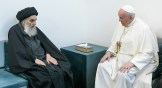
Pope Francis, right, meets with Iraq's leading Shiite cleric, Grand Ayatollah Ali al-Sistani in Najaf, Iraq, on Saturday, March 6.

Pope Francis, right, meets with Iraq's leading Shiite cleric, Grand Ayatollah Ali al-Sistani in Najaf, Iraq, on Saturday, March 6.

Christianity Today March 7, 2021
AP Photo / Vatican Media

Pope Francis, a “pilgrim of peace” to Iraq, has made history by becoming the first pontiff to meet a grand ayatollah: Ali al-Sistani, whose hawza (seminary) in Najaf, 100 miles south of Baghdad, is considered the foremost center of learning in Shiite Islam.

Two years ago, the pope met the grand imam of Egypt’s al-Azhar, considered the foremost center of learning in Sunni Islam. With Ahmed al-Tayyeb, Francis signed the “Declaration of Human Fraternity,” calling on both Christians and Muslims to embrace religious diversity with freedom and respect.

This weekend, Francis came to Iraq to support and encourage the nation’s beleaguered Christians, whose numbers have decreased from 1.4 million in 2003 to about 250,000 today.

But he also wished to sign a similar document with the reclusive leading figure in Shiite Islam, which represents 1 in 10 of the world’s Muslims—and 6 in 10 Iraqis.

The result with Sistani was more modest than with Tayyeb, but Francis did secure a very important fatwa (religious ruling).

“[Christians should] live like all Iraqis, in security and peace and with full constitutional rights,” said Sistani in an official statement. “The religious authority plays [a role] in protecting them, and others who have also suffered injustice and harm in the events of past years.”

Francis removed his shoes upon entering Sistani’s modest home. And while the ayatollah usually sits to receive visitors, he stood to welcome the pope.

Will the ruling make a difference? Will it have any impact in Iran, the neighboring theocratic Shiite state? And what really drives the regional conflict: religion or politics?

In Muslim history, the answer is both.

While differences exist in rituals and theology, Shiism emerged in a dispute over succession to Muhammad, in both his religious and political roles.

Sunnis believe that Muslims chose Abu Bakr to serve as the first caliph—which means successor in Arabic—after Muhammad’s death. This process continued for the three leaders who followed his rule, who were selected from among the pious in the community.

But Shiites believe that the fourth caliph, Ali, Muhammad’s cousin and son-in-law, was the prophet’s original choice, passed over by conspiring Muslims.

When Ali was assassinated in A.D. 661, a usurper took his role and established the family-based Umayyad dynasty. Ali’s two sons chose different paths of resistance, trying to reclaim their rightful place of leadership. Hassan, the older, was eventually poisoned. Hussein was killed in battle and heralded as a martyr.

Ali’s shrine is located in Najaf, the site of Sistani’s hawza.

Sunnis hold that the caliphs were simple political leaders. But Shiites hold that Ali was an imam, possessing spiritual authority that passed on to those who succeeded him. Shiites divided into many sects disputing this line of succession. But the majority hold that the 12th imam disappeared mysteriously in A.D. 874 and one day will reappear from occultation as a messiah figure alongside Jesus to establish the true Islamic state.

Yet ever since the death of Hussein, Shiites—which means “party of Ali” in Arabic—were on the losing side of Islam’s political struggles. And when the 12th imam vanished, they had no formal leader.

About 170 years later, clerics coalesced in Najaf to chart the course for the Shiite sect. Though not a formal institution like the Vatican, the office of the Grand Ayatollah emerges from the consensual esteem of Shiite colleagues acclaiming their top religious scholar.

Every scholar is known as a mujtahid (legist, or legal expert), who can risk declaring himself a marja’ (reference, or source to follow) in hope of attracting followers. Among their authority is collecting the khoms (fifth), and distributing this 20 percent tithe on profits for the good of the community.

But their main duty is to issue fatwas advising on right conduct in real-life circumstances, which Shiite Muslims who claim a given scholar as a reference are duty-bound to follow.

The political philosophy Shiites developed was to accommodate with the ruling power. Yet they never accepted the caliph’s legitimacy, believing only the hidden successor to Ali rightly bore the title of imam. But to keep the peace and protect the Shiite community, the grand ayatollah did not foment rebellion.

In 2004, after the fall of Saddam Hussein, Sistani’s fatwa legitimized democratic elections. And in 2019, he forbade violence against peaceful mass demonstrations, backing participants’ rights as citizens to protest government corruption.

But historically, accommodation did not spare the Shiites from persecution by Sunnis, as they failed to signal complete allegiance to the political inheritors of Muhammad. In response, they developed the practice of taqiya (dissimulation), in which hiding their religious identity and heterodox practices became a permissible response under duress.

Concentrated in Persia and Mesopotamia, Shiite communities emerged elsewhere in the Levant, Arabian Peninsula, Pakistan, Afghanistan, Indonesia, and for a while even held power in North Africa, where they founded Cairo’s al-Azhar. But it was not until the 16th-century Safavid Empire established by the Kurds that Shiites ruled over a majority Shiite population.

The ruling kings looked to emulate Sunni practice and establish a recognized religious authority. But the majority of Najaf clerics resisted, holding to the tenet that joining a regime would impinge upon the legitimacy due only to the hidden imam.

Yet a seed was planted, which eventually blossomed in the Ayatollah Khomeini.

While the Arab scholars in Najaf kept to their medieval traditions, the non-Arab Persian Shiites began to assert an independent path. With origins in the 10th century, the hawza of Qom, 90 miles south of Tehran, became favored by the Safavids. But it was not until 1922 that the seminary was re-established, to struggle with the modern world.

Clerics in Qom grew conversant with Marx. They sided with the people against the ruling shah. And when the Ayatollah Khomeini returned to Iran from exile in France in 1979, he brought with him a marginal Shiite theory called Wilayat al-Faqih.

Translated as “Guardianship of the Jurist,” it posited that the hidden 12th imam had delegated his full authority to the top cleric to rule in his stead. Mobilizing politically, Khomeini seized control of Iran’s revolution and marginalized all others to establish this theocratic legitimacy. And the clerics of Qom, willingly or otherwise, produced the scholarship necessary for the new regime.

So while marja’ exist throughout the Shiite world, only Najaf and Qom—now symbolized by Iran’s supreme leader Ali Khamenei—compete for community leadership. Some have interpreted the pope’s visit to Sistani as an implicit backing of the Najaf hawza. While possible, it is more likely Francis’ main concern was simply to honor his local religious equal, and to secure cooperation in defense of Iraqi Christians.

Do they need it from the Shiites? ISIS, the main persecutor of Christians, was a fanatical Sunni movement.

Throughout Middle East history, minority Christians and Shiites have often developed empathy as fellow victims of majority Sunni persecution. But it was Sistani’s fatwa in 2014 that legitimized the development of Shiite militias in defense against the ISIS threat. Today, some of these militias have encroached upon Christian territory, impeding the return home of displaced Christians.

Sistani’s fatwa during Francis’ visit will resonate broadly with the Shiite majority in Iraq. It is a high-profile endorsement that Christians share the nation, with equal rights and responsibilities. All who follow Sistani as marja’ must act accordingly.

Several militias within Iraq, however, are backed by Iran. Whether they follow Qom in religion, or Tehran in politics, these may well ignore Sistani. As a product of Najaf, Iraq’s grand ayatollah neither claims nor possesses political authority to enforce his ruling.

Yet the Chaldean Catholic patriarch in Iraq was satisfied.

It was “a turning point in Christian-Muslim relations,” said Cardinal Louis Sako of Sistani’s fatwa.

And while the visit did not result in a grand declaration like with al-Azhar’s Tayyeb, Francis made sure to lay his Christian intention before Sistani and the Shiites.

The pope “thanked the grand ayatollah for speaking up … in defense of those most vulnerable and persecuted,” stated the Vatican.

“He continues to pray that God, the Creator of all, will grant a future of peace and fraternity, for the beloved land of Iraq.”

Wajih Kanso, a Shiite professor of philosophy at the Lebanese University, and Salah Ali, a Sunni consultant at the Ministry of Religious Affairs in Iraqi Kurdistan, were consulted for this article.

Correction: The Najaf shrine cited belongs to Ali. Hussein’s shrine is in Karbala, not Najaf.

News

Iraq’s Evangelicals Use Pope Francis’s Visit to Press for Equality

Historic papal trip seeks peace between Christians and Muslims. Unregistered evangelicals say peace between Iraq’s Christians is needed first.

Christianity Today March 5, 2021
Hadi Mizban / AP

Pope Francis traveled to war-torn Iraq today “as a pilgrim of peace, seeking fraternity [and] reconciliation.”

The trip’s official logo, written in three languages, comes from Matthew 23: “You are all brothers.” Iraq’s evangelicals, therefore, have asked for the pope’s help.

“The other churches don’t want us, and accuse us of everything,” said Maher Dawoud, head of the General Society for Iraqi National Evangelical Churches (GSINEC).

“But we are churches present throughout the world. Why shouldn’t the government give us our rights?”

Dawoud sent a letter to the Vatican, asking Francis to intercede—on behalf of evangelical Christians—with the Catholic church in Iraq, and ultimately with the government in Baghdad.

The World Evangelical Alliance (WEA) had gone straight to the United Nations, long before.

One year ago, the WEA filed a report with the UN Human Rights Committee, protesting the denial of legal recognition for Iraqi evangelicals. Fourteen other denominations are currently counted within the Christian, Yazidi, and Sabaean-Mandaean Religions Diwan (Bureau).

Now estimated at less than 250,000 people, Christians are a small minority of Iraq’s 40 million population, 97 percent of which is Muslim. Evangelical numbers are even smaller.

The Chaldean Catholic Church represents 80 percent of the nation’s Christians, with 110 churches throughout the country. Syriacs, both Catholic and Orthodox, constitute another 10 percent, with 82 churches. Assyrians, primarily through the Church of the East, have a 5 percent share, and Armenians, 3 percent. (Other estimates count 67 percent for the Chaldeans, and 20 percent for the Assyrians. Their identity and history are disputed.)

Evangelicals have 7 churches, Dawoud said. Representing the Baptist, Pentecostal, Nazarene, Alliance, Assemblies of God, and Armenian Evangelical denominations, the GSINEC has petitioned Baghdad for recognition since 2003.

While their churches are open and able to conduct services, they lack the authority to perform marriages, conduct funerals, and interact with the government. This prevents them from owning property, opening bank accounts, and producing religious literature.

It also keeps Protestants from invitations to official events—like the visit of a pope.

But not all of them.

“I will ask Pope Francis to agree with me in prayer,” said Farouk Hammo, pastor of Baghdad Presbyterian Church, who will join other recognized denominations in a private meeting with the pontiff.

“That more people will come to know Jesus as Lord and Savior.”

The Presbyterian church was issued a decree of legal recognition long ago by the Ottoman Empire, honored by all subsequent Iraqi governments. Gospel work began in the early 1800s, and the church continued even after the expulsion of missionaries in 1969.

Today the denomination has congregations in Baghdad, Kirkuk, and Basra. While emigration closed an additional church in the capital, and ISIS shuttered its church in Mosul, it has intentions to open more soon.

The Presbyterians are not a member of the GSINEC, whose churches were only established after the fall of Saddam Hussein. But Hammo has been asked to intercede for them, Dawoud told CT.

Hammo just refuses, alleges Dawoud.

The main rejection comes from the traditional churches of Iraq. The Ministry of Religious Affairs, Dawoud said, defers to them in lieu of taking a decision. The primary accusation is over “stealing sheep.”

Evangelicals simply say their churches are open to anyone.

A spokesman for the Chaldean Catholic church told CT he did not have knowledge of this dispute, which could be followed up with after the pope’s visit.

Hammo told CT he is willing to bring the other evangelical churches under his administrative umbrella.

But Dawoud, who served 12 years as secretary on the Presbyterian council, does not find this acceptable. Now pastor of the New Testament Baptist Church of Baghdad, he insists on independence.

But Hammo told CT he has never been asked his opinion on the evangelicals, by either the government or the traditional church leaders. He prefers to stay out of it.

“I have no objection to their registration,” he said. “But if they are serving God, why do they need permission from others?

“This is their own headache.”

It is less of a headache in Iraq’s Kurdistan Regional Government (KRG).

Evangelical churches are recognized legally, said Ghassan Yalda, pastor of the Assemblies of God church in Erbil. He represents the evangelical churches before the regional government, and signs marriage papers with his official stamp.

But he was not invited to meet the pope.

In Baghdad, Hammo participates in the Council of Christian Church Leaders. But in Kurdistan, Yalda is shunned. In 2018, seven traditional church leaders wrote a letter to the regional government with the usual accusations, and requested the names of those involved with the evangelicals.

The Kurdish authorities let the complaint pass. Still, except from occasional communication from Christian members of parliament, he is frozen out of official communication with the government.

“The KRG wants to show Europe and the US it deals with everyone in freedom,” he said. “But I ask them: Why are you shy with us?”

The law in Kurdistan permits each citizen to follow his faith of choice. Yalda’s church numbers about 250 members of Christian background—but includes an additional 50 converts from Kurdish and Arab communities.

Following Baghdad’s lead, however, the KRG does not permit them to change their religious ID cards. Yet depending on their family and tribal situation, some are able to publicly identify with Christ.

And some of these are gaining respect for the traditional churches.

“The Church of the East and the Chaldeans are not producing new Christians,” said Ashur Eskrya, president of Assyrian Aid Society–Iraq.

“But some converts are starting to ask: How did you live like this for centuries?”

A member of the Church of the East, Eskyra hopes the visit of Pope Francis will serve to better unite all of Iraq’s Christians. For 1,500 years, Iraq’s Catholics and Orthodox were divided over the translation of ancient creeds. Today the situation is better, and in the two largest churches, priests can conduct mass in the others’ congregations.

But in modern history, Protestants emerged from their flocks. So despite the differences that still exist between their sects, the traditional churches seek to keep guardianship over the Christian population.

“The government should not defer to them,” Eskrya said. “And the Catholics should realize: The Vatican divided our church in the 16th century.”

March 20, 1552 is cited as the day the Chaldean Catholic Church separated from the Church of the East.

Iraq’s Christian history—and political orientations—are deeply contested.

But today there is a constitution, and Nadine Maenza of the US Commission on International Religious Freedom said Iraq should follow it.

“Evangelicals should be registered, as should Jehovah’s Witnesses and Baha’is,” she said. “Iraq’s religious freedom conditions remain poor.” She notes, however, that people are excited about Francis’ visit.

Evangelicals, perhaps, are cautiously optimistic. “Iraq was on the map in black and white. This visit will give it color,” said Hammo, alluding to the flag of ISIS. “Iraq is not a place of hate, but of heritage.”

But pressed further, he said there is only so much the pope can do.

“It means a lot for the pope to come, and not just for Christians,” Hammo continued. “This visit will improve things for the whole nation—but ask the president about that.”

Ara Badalian, pastor of National Evangelical Baptist Church in Baghdad, is fearful everything will end as soon as Francis leaves.

“But I hope for much more,” he wrote in the Ezidi newspaper. “I aspire for it to become a catalyst for peacemaking, and acceptance of the religious other.”

Yalda noted the jokes being told about papal preparations: “‘Can the pope come every couple months? They are only fixing the areas he is scheduled to visit.’”

Many people will be encouraged by the visit, he added, but it will take jobs and education to convince beleaguered Christians to stay in Iraq.

And while Francis is billing the visit as a pilgrimage of peace between Christians and Muslims, this does not resonate with many Iraqi evangelicals.

“What does this peace mean for us?” said Yalda. “We should have peace between the Christians first.”

Shortly after receiving the GSINEC letter, the Vatican wrote back with a note. The pope is very busy, it said. He will read your letter in one month.

“This trip is historic, and good,” Dawoud said. “It raises the morale. But we will see if there are any results.”

News

Prison Fellowship Sells Colson’s Campus to Alliance Defending Freedom

COVID-19 accelerates ministry moves and shifts work arrangements.

Christianity Today March 5, 2021
Courtesy of Prison Fellowship

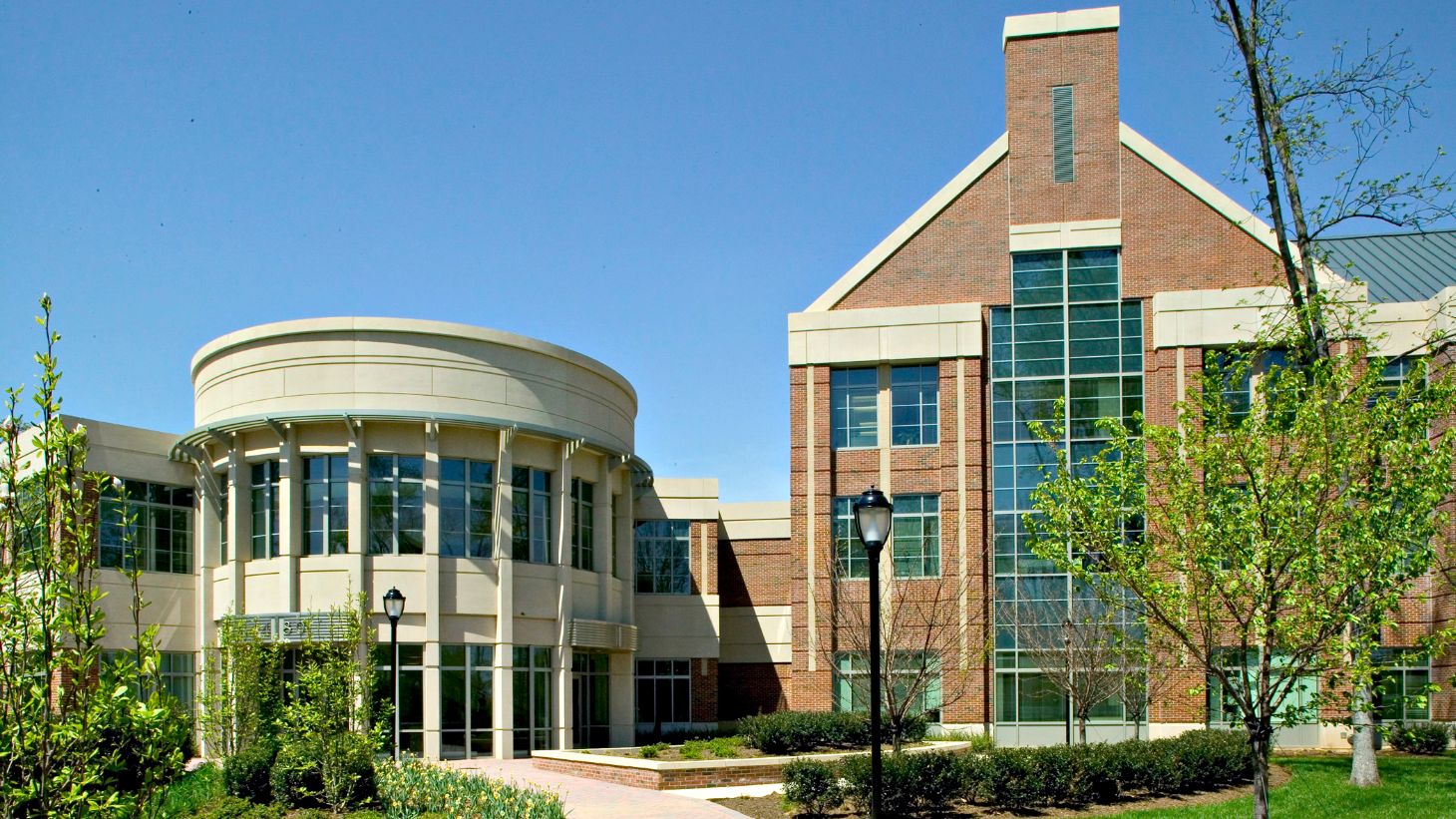
The sizable suburban Washington, DC, campus that headquartered Chuck Colson’s Prison Fellowship will soon belong to another evangelical nonprofit: the Alliance Defending Freedom (ADF). The ministries announced plans Friday to sell the 11.3-acre property in Lansdowne, Virginia.

Back in 2005, Colson’s ministry—which then included Prison Fellowship, BreakPoint, and the Colson Center—built the campus for around $19 million, including a three-story office building, a two-story hospitality center for conference guests, recording studios, and event space.

Of Prison Fellowship’s 245-person staff, 70 percent worked remotely before the pandemic, a part of an organizational strategy to move its workforce into the field. During COVID-19, the rest adjusted to work from home, with just around a dozen coming into the 90,000-square-foot office.

Meanwhile, the Arizona-based religious liberty advocacy group ADF has been expanding and praying for years about adding another office, wanting to prioritize in-person collaboration for the sake of fellowship and the physical proximity required for its legal work.

“When ADF came along, the heart of the board, if you will, leapt,” said Prison Fellowship president and CEO James J. Ackerman. “They thought, ‘This would be so awesome if God’s work could continue on the land dedicated to the Lord’s work by Chuck Colson himself.’”

Ackerman declined to share the terms of the sale, but said that ADF made an offer within the range of the property’s appraisal value. Demand for commercial space—particularly for medical facilities—is growing in the Lansdowne area, about an hour outside DC.

In advocating for conservative causes, ADF has achieved 11 Supreme Court victories and helped churches and ministries defend religious liberty claims during COVID-19. The organization will keep four other offices, including one on Capitol Hill, but move 50–60 of its 200 employees to the third floor of the Prison Fellowship office building as early as fall 2021, after closing on the property and doing renovations this summer.

The group will include leaders of its litigation team, its communications team, and its legal training program as well as ADF president and CEO Michael P. Farris, who has lived in the same county as Lansdowne for 30 years.

“Prison Fellowship is directly carrying on Chuck Colson’s ministry, but we like to think that we remain standing in Chuck Colson’s shadow,” said Farris, who has visited the Prison Fellowship under Colson’s leadership and since. “He cast a big shadow across a lot of big issues, and we’ve been the beneficiary of that work, and we’re just honored to have any connection to him.”

Ackerman said ADF will maintain elements of the campus that honor Colson, including a memorial plaque outside the hospitality center.

Prison Fellowship will lease a smaller space on the second floor of the office building after ADF moves in. Other tenants of the building—the pregnancy center network Care Net and the Loudon campus of McLean Bible Church—will also remain.

Building sales during pandemic

Prison Fellowship’s move to sell its building is the latest example of how ministries are rethinking their long-term organizational strategies during the crunch of the pandemic and rising costs of big cities. The past year has accelerated trends toward remote work as well as cost-cutting for nonprofits.

In January, Lifeway Christian Resources announced it was under contract to sell its Nashville headquarters just two years after downsizing to the new facility. During the early months of the pandemic, the Southern Baptist affiliate—still reeling from closing its brick-and-mortar stores—cut its budget by $25 million to $30 million to offset sales declines.

Even before COVID-19 hit, daily occupancy in Lifeway’s new 277,000-square-foot office was 60 percent of capacity.

“This has led us to think strategically about selling our large building downtown, fully embracing remote work as the norm, and moving into a new era of creative and collaborative work,” said Lifeway’s president and CEO Ben Mandrell. “We are moving away from the idea of a ‘headquarters’ to a fully mobile and agile workforce that intentionally gathers to build strong relationships, celebrate what God is doing and share ideas.”

The Best Christian Workplaces Institute said decentralized and hybrid workplaces “are here to stay” in its list of workplace trends for 2021, referencing estimates that the number of employees who work from home after the pandemic will be double from before COVID-19.

The Christian and Missionary Alliance listed its Colorado Springs headquarters for sale last year, citing affordability concerns as its reason for moving from its building of 31 years. The denomination plans to relocate to Columbus, Ohio, this summer.

“We are pursuing a different concept of officing, with shared workspace options and greater interaction with the local community than we’ve been able to pursue at our current location here in the Springs,” spokesman Peter Burgo told the Colorado Springs Gazette.

Ackerman at Prison Fellowship said the ministry has continued to add staff during the pandemic, praising God that its resources and prison access continued to grow. But over the past few years, the organization has found it could add better talent by a hiring remote staff, since fewer people were willing to make the move to Northern Virginia, where the cost of living keeps rising.

Financial stewardship

Despite uncertainty last spring, a majority of Christian organizations reported they did not see a significant decrease in income in 2020 and did not have to cut staff, according to a report out this week by the Evangelical Council for Financial Accountability. However, some churches and ministries that already suffered financially prior to pandemic opted to sell their buildings to help make ends meet or better steward resources for future ministry.

The Episcopal Diocese of Chicago announced plans to do so last fall, saying the $750,000 spent maintaining its building is “increasingly unsustainable” and “maintaining an underused diocesan headquarters in an expensive building on prime real estate is not good stewardship of diocesan assets.”

Also in Chicago, the Evangelical Covenant Church put its headquarters up for sale last summer.

“While there were many reasons for the decision, primarily it was due to the current COVID-19 situation, finances, structure, and a renewed focus on mission,” the denomination wrote. “Due to COVID-19, social distancing guidelines, and travel restrictions, Covenant Office staff have successfully been working virtually for most of the year. They will continue to do so while the sale of the Chicago facility is finalized.”

As they wait for the building to sell, leaders are weighing options for fully virtual work or a possible future building.

CT reported in 2018 about how international missions organizations have been moving away from a single headquarters to a more decentralized model with hubs overseas, as Frontier Ventures did with the sale of the former US Center for World Mission in Pasadena, California.

“It all revolves around ministry impact. If that parcel of land does not help us reach more people for the gospel, why do we own it? If it’s holding us back, why do we own it?” said Paul Martin, at the time the president of Advocace, which offers consulting for Christian ministries. “We should start treating real estate as something to support ministry, not as ministry.”

Ackerman said the Lansdowne property was originally envisioned as a center for the Christian worldview, but when Colson’s other ministries split off after his death in 2012, Prison Fellowship didn’t have the same need for the expansive facilities. But ADF will. “The thing that I’m most excited about for the Prison Fellowship building is the meeting space and hospitality space. The first name of our organization is Alliance. We do a whole lot of convening of other groups,” said Farris. “We have the capacity to convene people, and this just gives us a physical plant that is second to none.”

News

Died: Larry Crabb, Christian Counselor Who Kept Exploring

Author of ‘Effective Biblical Counseling,’ ‘Inside Out,’ ‘Shattered Dreams,’ and ‘SoulTalk’ taught that aching souls long for the Triune God.

Christianity Today March 5, 2021
Courtesy of Larger Story / Edits by Mallory Rentsch

Larry Crabb, a popular Christian counselor who went looking for a deeper approach to spiritual care, died on February 28 at the age of 77.

Crabb was a clinical psychologist who turned to biblical counseling and then to spiritual direction. He authored more than 25 books in the process, writing the popular textbook Effective Biblical Counseling and then more than a dozen titles, including Inside Out, Shattered Dreams, Pressure’s Off, and SoulTalk, teaching people to see their own brokenness as a longing for God and new creation.

“An aching soul is evidence not of neurosis or spiritual immaturity but of realism,” Crabb wrote. “Beneath the surface of everyone’s life, especially the more mature, is an ache that will not go away. It can be ignored, disguised, mislabeled, or submerged by a torrent of activity, but it will not disappear. And for good reason. We were designed to enjoy a better world than this.”

Crabb popularized biblical counseling and then introduced many evangelicals to spiritual direction through his organization NewWay Ministries, weeklong summer seminars, and his extensive tenure at Colorado Christian University (CCU).

“To know Larry Crabb was to know a man who wrestled honestly and often in messy ways with his interior world, and the world around him,” wrote Jim Cress, a Christian counselor mentored by Crabb. “He never knew what it meant to merely settle personally and professionally. … His calling, passion, integrity, and vision would not tolerate a shampoo bottle philosophy of ‘Wash. Rinse. Repeat.’”

https://twitter.com/budwahneck/status/1366216769921196034
https://twitter.com/Pastakeith/status/1366263685694562304
https://twitter.com/chuckdegroat/status/1364943198309789698

In the early 1970s, Crabb had a crisis of faith—spiritual and professional. He was an evangelical Presbyterian and a clinical psychologist with a private practice in Boca Raton, Florida, but he couldn’t see how his Christianity and counseling were compatible.

Biblical teaching seemed irrelevant to the real-world problems of his patients: sexual abuse, anxiety, dissociation, and depression. And psychology didn’t acknowledge anything about sin or the human need for salvation.

“The truths of Christianity seemed to have little bearing on my … professionally orthodox behavior. And that disturbed me,” Crabb wrote. “I could not make the psychological thinking in which I had been trained dovetail with biblical beliefs like the fall of man, his separation from God, his desperate need for divine assistance, [and] the promise of love, joy, and peace to those who accept the free gift of eternal life through Jesus’ substitutionary death.”

Crabb, born in Evanston, Illinois, in 1944, had wanted to be psychologist for a long time. Perhaps even since he was six years old, when he saw Larry Crabb Sr. tell a joke and wondered what made his father so insecure. But after the younger Crabb earned a BA in psychology from Ursinus College, an MA and PhD in clinical psychology from the University of Illinois, spent a few years teaching at Florida Atlantic University, and then opened his own counseling practices in Boca Raton, it all stopped making sense.

He found the answer at 2 a.m., while reading Francis Schaeffer’s He Is There and He Is Not Silent on his back porch. He woke up his wife exclaiming, as he later recounted to Christianity Today, “The deepest longings for significance and security going on inside my clients are needs that God actually intended to meet through the community of believers!”

Crabb discovered biblical counseling, though he wasn’t the first. The Christian Counseling and Education Center was founded in 1968, and Jay Adams published Competent to Counsel, promoting the “nouthetic” approach in 1970. But Crabb, moved by his revelation while reading Schaeffer and supported with a year’s stipend arranged by his pastor, soon became one of the most successful popularizers of the idea of “biblical counseling.”

He published Basic Principles of Biblical Counseling in 1975 and Effective Biblical Counseling in 1977. The latter, widely adopted as a textbook, sold more than 200,000 copies.

He argued that Christians could take their thoughts captive. People sought counseling because of bad feelings, he said, which were the result of sin in their lives. But where psychologists had previously told people to express all their bad feelings to get them out, and Christians had traditionally told people to stop doing bad things, the Christian counselor could help people get to the root of the issue: a lack of trust in God. The beginning of healing, according to Crabb, was learning to depend on God.

“Either God has failed me or he hasn’t,” Crabb wrote. “Either he is meeting my needs right now or he isn’t. Christianity demands that I trust God to be faithful.”

By faith and through the work the Holy Spirit, Crabb said, Christians are empowered to stop thinking the thoughts that were damaging their lives: “When I am faced with a sinful pattern of thinking, and I therefore am prompted to behave sinfully, I am to die to that sinful pattern experientially just as I already am dead to it positionally. I am to actualize in my immediate experience that which God says is true: I am dead to sin. In other words, I am to identify with Christ in his death by doing with sin exactly what he did with sin.”

In 1982, Crabb left his practice in Florida and went to Grace Theological Seminary in Winona Lake, Indiana, to teach biblical counseling. He was made the chair of the graduate department of biblical counseling, but he started to push his ideas further and come into conflict with the Grace administration.

Some felt that he wasn’t clear enough in condemning bad actions and pointing out behavior the Bible condemns. According to Crabb, Grace leadership decided that his version of biblical counseling wasn’t biblical enough, and he was forced to leave in 1988.

Crabb, for his part, was also starting to think biblical counseling wasn’t biblical enough. His first two books described “biblical” counseling as something pretty similar to cognitive behavioral therapy.

And where was the Trinity? He read Australian Anglican theologian David Broughton Knox’s work on the centrality of the Trinity to Christian doctrine and was convinced that had to be at the heart of any therapy that was really Christian.

“We were designed to exist in community, and there has to be a Trinitarian kind of relating possible,” he said.

Crabb started to think that when therapy worked—regardless of the psychological theories of the therapist—it was because of the relationship established in vulnerability. That, he decided, needed to be central.

He also increasingly thought that relationship should be grounded in the church, not professional clinical psychology. In 1989, Crabb started to receive spiritual direction from the laicized Catholic priest Brennan Manning, best known as the author of The Ragamuffin Gospel, and thinking that counseling should be like spiritual direction.

“There will always be a place for good therapists. But what they are doing is closer to what the Bible calls ‘shepherding’ than what our culture calls ‘therapy,’” Crabb said.

Spiritual direction is focused less on solving a problem and more on continual growth and formation. Crabb said it was a cycle, starting with recognition of hurt and brokenness, moving to repentance. Repentance leads people to abandon themselves to God and trust God, who is trustworthy, and instills confidence, which finally leads to the release of God’s new creation within the believer.

But that process can only begin with a trusting relationship between therapist and client or, better, between Christian mentor and mentee. Crabb sometimes told students about an early conversation with Manning, where Manning saw past the sin Crabb was describing, past the painful experience that occasioned the sin, deeper, to Crabb’s heart.

Crabb confessed feelings of deep bitterness, and Manning started to cry.

“Why are you crying?” Crabb said.

“Oh, Larry, every time I’m with you, I’m so drawn to Jesus.”

“Why?”

“You just hate everything that gets between you and your Lord.”

That experience helped Crabb, he would explain to students, recognize that beneath his own ugliness was the deeper truth of his love for Jesus. He described it as a process of learning to live in God’s “larger story,” recognizing that creation is broken but that the Christian can be connected to God in a way that energizes them to love.

Crabb took a position at Colorado Christian University in 1989 and remained at the school until his retirement. In 2018, the school established Larry J. Crabb Center for University Counseling, which provides counseling services to the university’s students. Crabb also started NewWay Ministries and a school of spiritual direction, equipping about 120 people a year to engage in “soul-shaping” conversations and help them listen to God.

“Our lives are small, human lives,” Crabb wrote. “But in the eyes of the one who calls us beloved, we are great—greater than the years we have.”

He is survived by his wife, Rachael, and two sons, Kep and Ken. Two memorial services are being planned. Both will be livestreamed at LargerStory.com.

News

Which Is Worse: the Guilty Freed or the Innocent Punished?

New study examines how your race and view of Scripture shape your answer.

Christianity Today March 5, 2021
Illustration by Mallory Rentsch / Source Images: Lucas Gouvêa / Drew Hays / Engin Akyurt / Unsplash

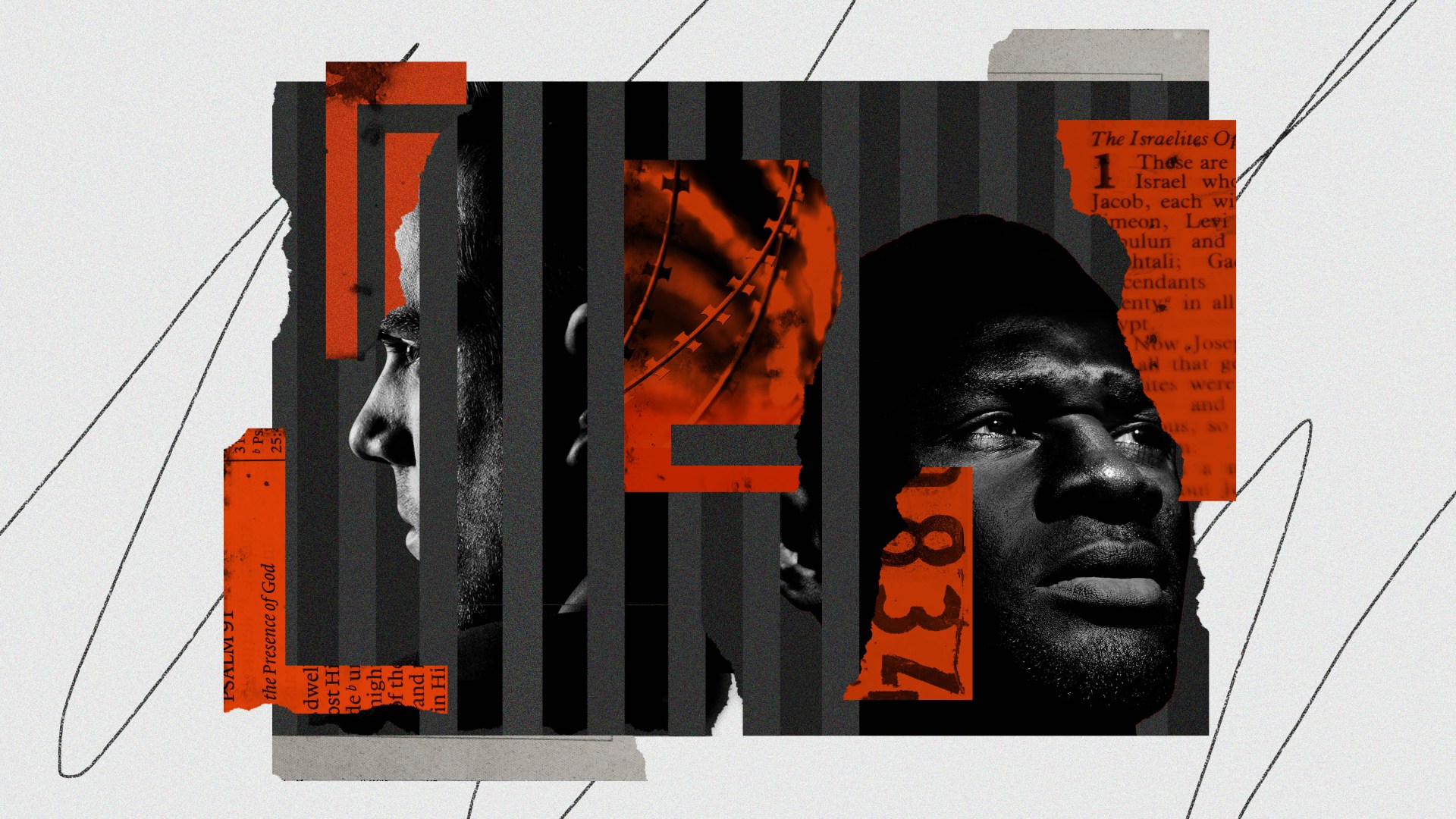
Speaking this week on behalf of an Oklahoma death row inmate who claims he did not commit the murder for which he’s served 20 years in prison, pastor T. D. Jakes said, “If Jesus acquitted the guilty, then surely he would advocate for the innocent.”

Jakes is among a group of Christian leaders, including Sojourners’ Jim Wallis, who are advocating for clemency for Julius Jones.

A December study found that both race and views of the Bible may impact how Christians approach mistakes made by the justice system.

White Americans who believe the Bible should be read literally are most likely to see acquitting guilty people as a greater injustice than convicting the innocent, according to sociologists Samuel Perry and Andrew Whitehead, the authors of the study published in the Journal for the Scientific Study of Religion.

Meanwhile, black Americans, regardless of their view of the Bible, agree that convicting innocent people is the worse of the two mistakes.

A majority of both white evangelicals (59%) and black Protestants (63%) in the General Social Survey—the basis for the recent analysis—were biblical literalists, but the white Americans who held that position were twice as likely as black Americans to prefer wrongful conviction over letting a criminal go free.

Of those surveyed, 21 percent said letting the guilty go free is worse, 64 percent said condemning the innocent, 13 percent couldn’t choose and almost 2 percent did not answer. The justice question, along with the one on biblical literalism, have been asked in four different years of the General Social Survey between 1985-2016. There is no difference over time.

“It was fascinating to us to see how punitive attitudes were so strongly and differently linked to identifying as a biblical literalist,” said Whitehead. “Saying the Bible is the Word of God means something completely different to white Americans than it does to black Americans concerning judicial injustice.”

The findings represent another example of how race influences the ways people apply and practice their faith.

“We can’t just assume that religion ‘works’ the same way for Americans of different racial and ethnic groups,” said Whitehead, explaining that both are closely connected to social boundaries and punitive measures. “Given the history of race and the criminal justice system in the US, it makes sense.”

White and black Americans have different experiences with the justice system. Black Americans represent the majority of the wrongfully convicted, according to the National Registry of Exonerations, which catalogs the cases of innocent defendants.

Other studies have found that those affirming biblical literalism, as well as those in fundamentalist denominations, Republicans, and frequent religious service attenders, would rather convict an innocent person than let a guilty party go unpunished.

New legal efforts attempt to rectify the cruel punishment of a wrongful conviction in a number of states. Last month, Idaho legislators unanimously passed a bill to compensate exonerees for every year spent in prison. The ministry Prison Fellowship advocates for such compensation packages to help the wrongfully convicted rebuild their lives after their release. The group also lays out actions states should take to prevent wrongful convictions, including improving police investigation practices and access to quality DNA testing.

Christian social reformers played a role in the modern prison system from its earliest days. In Colonial America, crimes were dealt with in more of an ad hoc manner—public whipping, hanging, or even the stocks. The Christian intention behind reform was to take a more humanitarian approach: the penitentiary, which was seen as a place where people could become penitent of their sin and learn how to better themselves.

“There are often noble ideas from Christians for dealing with crime … but those proposals—whether the penitentiary system, policing, capital punishment—they routinely cause pain, are difficult and hurt marginalized and disadvantaged communities the most,” said Aaron Griffith, a historian who said these ideas often put “hope in the reforming power of the state in dealing with sin.”

His book, God’s Law and Order, describes white evangelicals’ “predisposition to punitive thinking” and view of crime as a social threat requiring a proactive police response, such as patrolling neighborhoods.

Evangelicals often justify their views with biblical passages like Romans 13 on submitting to government authorities or Leviticus 24:17–21 on requiring “an eye for an eye” as support for a punitive approach to crime.

Referencing Esau McCaulley’s recent book Reading While Black, which addresses policing, Griffith said his reading of Romans 13 is now shaped by the chapter before it. “Paul says that we are to bless those that persecute us, and we are not to repay evil for evil and live at peace with everyone,” he said.

Dominique DuBois Gilliard, the director of racial righteousness and reconciliation for the Evangelical Covenant Church, wrote for CT how the Bible testifies to the evil in human systems, referencing Pharaoh (Exodus 1), Nebuchadnezzar (Daniel 3), and Herod (Matthew 2).

“White evangelicals frequently endorse a blind allegiance to law and order, citing Romans 13:1–7,” Gilliard wrote. “But legal power does not mean ethical power. As subscribers to an Augustinian logic profess, ‘an unjust law is no law at all.’”

The Leviticus passages in proper context aren’t punitive, added Griffith; they’re about trying to set an appropriate response. “It transforms the way we view crimes, like drug crimes,” he said. “What is truly proportional for drug crimes? Is it locking people up because they had weed in their car?”

Five years have passed since the General Social Survey last asked the question about criminal justice. Have views have shifted? Recent data described views of white Catholics and mainline Protestants as growing in awareness of racial injustice within the criminal system.

“White evangelicals have not tracked the same way,” Griffith said. “Overall, it seems to me even as the rest of the country is changing on this, evangelicals are still lagging behind.”

Ideas

Being Samaritans to Those Brutalized by Beijing

Staff Editor

The American church must not pass by the chance to welcome and help Hong Kongers and Uighurs.

Christianity Today March 5, 2021
Anthony Kwan / Stringer / Edits by Rick Szuecs

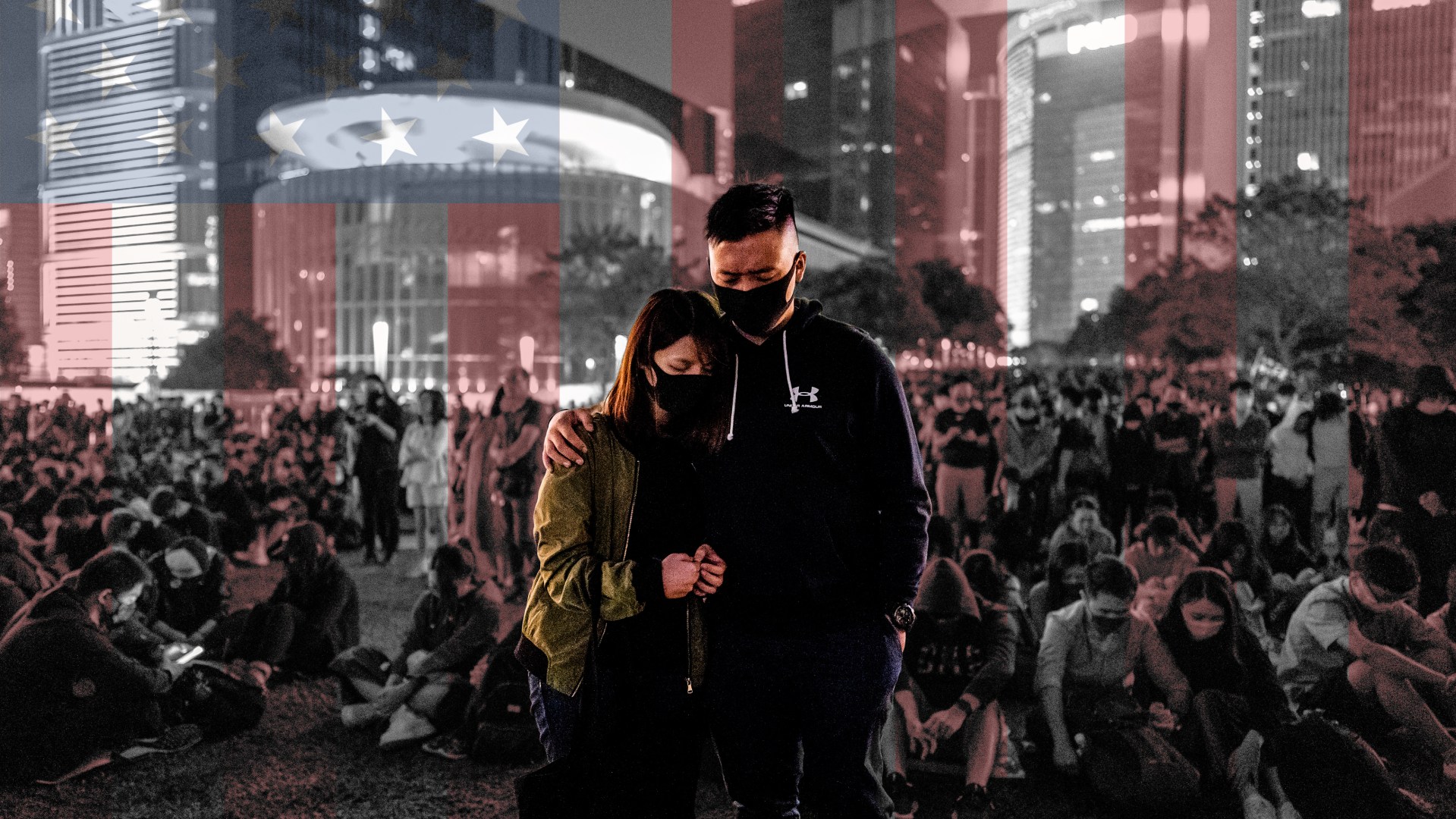
China will suffer “repercussions” for its human rights abuses, President Biden warned at a CNN town hall event last month. But beyond pledging public rebukes, he said little on what repercussions he means.

Biden’s reticence might be nothing more than the difficulty of “talk[ing] China policy in 10 minutes on television,” as he joked at the town hall. Or it might be the fact that the United States has very few realistic options here. Yet there is one option Biden can and should pursue immediately: welcoming the Uighurs, Hong Kongers, and others fleeing Beijing’s oppression to America as asylum seekers and refugees.

The president has undoubtedly considered this option. In a statement for World Refugee Day last summer, he promised to “work with our allies and partners to stand against China’s assault on Hong Kong’s freedoms and mass detention and repression of Uighurs and other ethnic minorities and support a pathway for those persecuted to find safe haven in the United States and other nations.” That sounds like openness to imitating the United Kingdom’s citizenship program for select Hong Kongers, which is expected to bring about 300,000 people from the former British colony to the UK in the next five years. Yet in the CNN town hall, Biden explicitly delineated the China conversation from an immediately preceding discussion of refugee admissions. He’d spoken with Chinese President Xi Jinping about the Uighurs, Biden said, which is “not so much [about] refugee[s].”

But it could be, and Christians should hope Biden will select safe haven as a unique tool for responding to Beijing’s abuses. It’s a wise choice in terms of practical politics and scriptural principles alike.

The political reality is this: It is easy to speak of “repercussions” for China’s general authoritarianism, its crackdowns in Hong Kong, and its genocidal treatment of the Uighur people, reportedly including forced abortions, rape, brainwashing, concentration camps, and more. It is far harder to devise US-imposed repercussions that meet three vital criteria: (1) not harming innocents; (2) not generating unacceptable risk of great power conflict extending, in the improbable but not impossible worst-case scenario, to nuclear war; and (3) actually changing the Chinese government’s behavior.

Offering refuge to people fleeing Beijing’s brutality is quite different. It’s a repercussion without confrontation.

Consider the usual options. Diplomatic pressure and the rebukes Biden mentioned are good, but they’ll probably change fairly little. That’s not because diplomacy is ineffective but because in Beijing’s perspective, authoritarianism is a core national interest. Sanctions usually meet criteria 2, but they often do great harm to civilians who can’t affect their government’s actions. Moreover, sanctions’ record of changing targets’ behavior is stunningly poor. (One significant study of 85 sanctions on regimes found just four successes and concluded they are “not likely to achieve major foreign policy goals.”) Escalate economic punishment enough or threaten military repercussions, and we’d court catastrophic war between the world’s two most powerful militaries. War would neither reduce suffering nor tone down Beijing.

Offering refuge to people fleeing Beijing’s brutality is quite different. It’s a repercussion without confrontation. It doesn’t harm innocents or threaten war. If the outflow of citizens were great enough, especially from Hong Kong’s finance community, it might eventually induce Beijing to reduce its subjects’ impetus to flee. The US almost certainly can’t coerce China’s domestic policy. But we can give Hong Kongers, Uighurs, and other victims of the Chinese government a haven here if they want it. (We may even be able to do it with comparative political ease. A bill for a small-scale version of this idea nearly passed last year with broad bipartisan support.)

There is a wealth of scriptural support for welcoming the oppressed and persecuted to come make a new life for themselves in peace, security, and freedom. Giving sanctuary to Uighurs and Hong Kongers is a way to “love those who are foreigners” (Deut. 10:19), invite in the stranger and care for the “least of these” (Matt. 25:35, 40), “look after orphans and widows in their distress” (James 1:27), and love our neighbors as ourselves. (If Washington governed like Beijing, we too might want someplace to run!)

For regular CT readers, these biblical arguments will be familiar. But there’s another scriptural congruity I see that comes less from commands of hospitality and more from our general call as Christians to follow Jesus in self-sacrificial love (Eph. 5:1–2).

There are good reasons to think welcoming Chinese refugees would benefit the United States, including economic ones. Yet settling refugees can be difficult and costly. It might seem like this proposal requires us to deal with something that’s “not our problem.” But to the extent it gives us an opportunity to imitate Christ by putting others’ interests ahead of our own, in making their problems ours (Phil. 2:3–4), we can exude the very characteristic of Christlike love. As we read in 1 John 3:16, “Jesus Christ laid down his life for us. And we ought to lay down our lives for our brothers and sisters.”

Then there’s the Good Samaritan. Our focus when reading this parable (Luke 10:30–37) tends toward crossing lines of national animosity, but the Samaritan also helped with a problem he’d neither caused nor suffered and couldn’t, in a larger sense, hope to solve. He had no way to make the dangerous road from Jerusalem to Jericho a safer place. He couldn’t ensure no one would be robbed and beaten there again. He did have a way to help the injured man he encountered, though, and he did so at cost to himself.

We can do the same here. There is no clear path to ending the Chinese government’s abuses, certainly not at US behest. But Washington can open US doors to Hong Kongers, Uighurs, and other persecuted people in China, and the American church can stand ready to welcome and serve them when they come.

Bonnie Kristian is a columnist at Christianity Today.

Church Life

Why It Feels So Disappointing to Sing to the Lord a Remote Song

Lessons from a year without corporate worship.

Christianity Today March 5, 2021

One year ago, my husband and I were still learning how to get out the door on Sunday morning for church with a two-year-old and a five-month-old during the coldest weeks of the Iowa winter. Now, like so many others, we enjoy slower Sunday mornings “attending” church over Zoom, usually sitting on the couch or floor with our restless toddlers.

I sometimes enjoy the conveniences of our new Sunday morning routine, but there are pangs of sadness every week when my daughter hears music, turns to the screen, and almost immediately loses interest. I recall how engaged she was in the sounds, sights, and vibrations of congregational worship during the “before times.” I recall how much more engaged I was, too.

“Worship isn’t about you” is a cliché that sums up the idea that we sing as an act of worship and sacrifice for God alone. I’ve seen this sentiment newly animated over the past year as worship leaders seek to help their congregations learn to worship as part of a body that they can’t hear or see.

Brooke Ligertwood writes in a blog post for Hillsong, “Who is worship for? Spoiler alert: worship is not for people. It’s for the Lord.” Similarly, Justin Rizzo of International House of Prayer tells worship leaders, “God alone will be present at your worship times. You will have no choice but to actually minister before an audience of one . That one alone is worthy of your worship. Worship has always been about Him.”

It’s understandable that worship leaders would encourage us to focus on God over gathering at a time when we cannot be together. The emphasis on a personal form of worship—one on one with God—is in some ways beneficial for those who continue to attend remote services.

It is certainly not a new way of thinking about music for Christians. Augustine wrote about the personal faith-building and emotional experience of singing hymns and psalms. Luther praised the power of music to deepen theological understanding. There is a rich history in the church of using music to deepen individual faith.

Instructing a congregation to focus your personal devotion to your “audience of one” isn’t wrong . Doing so at this unique moment, though, can minimize the loss many of us are feeling. It’s now—when many churches have moved services online or cut back on in-person singing—that we can see how much worshiping together has meant for our shared faith.

Worship is about us too

Yes, musical worship is first a spiritual practice. Christians believe that corporate worship matters to God and that raised voices should not glorify anyone but him. However, to say that musical worship is not for people, to my musicologist’s sensibilities, overlooks the reality that congregational worship does benefit people, and it should. Acknowledging this may help us understand why, at times like this, worship without the congregation feels empty, dry, or forced.

Many Christians understand corporate worship partly as an imperative, something we practice out of obedience to Scripture. But there are also practical, social benefits to being together as a community around music.

“I’ve learned so much about embodied worship,” said Hannah Busse, director of worship arts at Blackhawk Church in Madison, Wisconsin. Corporate singing “activates our brains differently than just speaking something or hearing something spoken to us … it has a unique function in our spiritual formation.”

Monique Ingalls, associate professor at Baylor University’s Center for Music Studies, notes that corporate worship is a central part of religious gathering in most Christian traditions “because participatory music-making powerfully imparts a sense of community” and helps foster social bonds.

Anyone who has led worship—and many of us who have experienced it and find ourselves longing for it during COVID times—know just what she’s talking about.

Socrates Perez, worship pastor at Saddleback Church, puts it this way: “When we’re singing these songs and these truths … it’s always an encouragement to me as a believer to hear my brother in Christ or my sister in Christ next to me declaring [those truths] at the top of their lungs.”

Congregational singing is immersive. Ethnomusicologist Nathan Myrick suggests that it represents a uniquely meaningful part of church gatherings because it engages three distinct realms of experience: the physical, the emotional, and the relational.

Corporate worship involves physical closeness and participation, whether through singing or some other movement. It often evokes emotion, whether in response to a lyric, series of sounds, memory, or association. It forms and reinforces relationships within the congregation and between leaders and the congregants. This relational dimension extends to our understanding of corporate singing as an act of communication with God.

Permission to be dissatisfied

The struggling worshiper at home may feel like something is spiritually or emotionally wrong when their hearts aren’t stirred by Zoom singalongs. Leaders are right to point out that our worship is no less valuable to God when we can’t gather as a congregation, but they can also give congregants permission to accept dissatisfaction with musical worship over a screen.

“We don’t fault anyone for that longing … we affirm that longing,” said John Cassetto, global worship director at Saddleback. “Next weekend is our 52nd week online … there’s a grief in that.”

Why does it matter so much that we acknowledge what we’ve lost? It doesn’t just feel different, it is different. No one should feel pressure to re-create the emotional and spiritual experience of corporate worship through an internal focus on the “audience of one.”

Freeing ourselves of unrealistic expectations may lead us to new worship practices and experiences that are wholly separate, even therapeutic, and unique to this difficult moment. Cassetto refers to these as “new streams in the desert” for worshipers and leaders, creative new ways to use music to facilitate worship.

It’s likely that many have discovered a new appreciation for meditative listening. Singing with the TV screen feels awkward, so I would expect that many of us have found solace and connection with God through listening, praying, and reflecting. If you feel free to enjoy that kind of musical worship without the guilt that comes with wondering if you should be singing, that could be your stream in this desert.

Holy days without hymns

Truthfully, I haven’t found many musical streams in this desert. It has been a year since I sang in a room filled with people who share my faith. Throughout that year, even though I was free to listen or sing with fellow worshipers online, I felt that I missed out on the contemplative hymns of Good Friday, the celebratory anthems of Easter, and (most difficult for me) the carols of the Advent season.

It was almost as if these holy days didn’t happen. If I didn’t sing “Silent Night” holding a candle on Christmas Eve and share cookies and hot cocoa in the atrium afterward, did I really observe Christmas? Of course, the answer is yes. My family did celebrate the important markers of the liturgical calendar. I don’t believe that our observances were less “real” or spiritual or sincere. They were more difficult. The did require more faith. They did, at times, feel more like a sacrifice of time and effort.

In the end, the losses we have experienced are our losses. Perhaps it’s worth reminding ourselves that this pandemic and its restrictions have not robbed God of the worship he is due. When we stop singing and making music together, we don’t lose the presence of God with us or our ability to worship in spirit and in truth. We lose the presence of each other.

I have never been more aware that my worship serves my community, and the worship of my community serves me. It’s one way that we strengthen our faith and move toward unity. In his sermon, “A Knock at Midnight,” Martin Luther King Jr. wrote of corporate worship, “Worship at its best is a social experience in which people from all levels of life come together to affirm their oneness and unity under God.”

For a year now, most of us have not been able to participate in worship “at its best.” We mourn that loss and look forward to hearing the voices of our neighbors around us again.

Kelsey Kramer McGinnis is a musicologist, educator, and writer. She holds a PhD from the University of Iowa and researches music in Christian communities and music as propaganda.

Culture

‘The Mandalorian’ Can Teach Us How to Navigate Crises of Faith

The Golden Globe nominee shows us what happens when “the Way” really isn’t.

Christianity Today March 4, 2021
© Disney, All Rights Reserved

The galaxy can be a complicated place.

Din Djarin, the title character of the Disney+ show The Mandalorian, learns this quickly. Played by Pedro Pascal, the stoic gunslinger has led Star Wars fans into unexplored corners of the much-loved franchise and become the world’s favorite foster dad.

As Din travels to various planets tracking down the mysterious alien child Grogu (better known as Baby Yoda) and eventually seeking a good home for him, he meets people whose beliefs severely challenge his own. Din’s soul-searching becomes the heart of the show, and his willingness to question his worldview makes a good example for us as well.

Trained as a bounty hunter by a secretive religious community of Mandalorians on a backwater planet, Din thinks he knows everything about his culture and his personal convictions. His people even have a mantra to remind them to hold fast to their beliefs: “This is the Way.”

But what, exactly, is the Way? Is it protecting the Mandalorians’ covert on the planet Nevarro at all costs? Is it keeping his face hidden from even his own people? Is it caring for foundlings, orphans who are rescued and reared to preserve Mandalorian culture? What if fulfilling one of these tenets jeopardizes another? Worse, what if some of them aren’t essential for a Mandalorian to follow?

Suddenly, Din feels pretty relatable. As Christians, we may be confident in our convictions until a leader we admire is exposed as not the role model we knew them to be. Or until we meet people who challenge our private stereotypes. Or until a community we belong to starts expressing values we don’t hold. We find ourselves feeling pulled in two directions, torn between beliefs that no longer agree or reconsidering our loyalties.

The name for this tumultuous feeling is cognitive dissonance. Psychologist Leon Festinger coined it in 1957 after observing firsthand a group of people have their greatest anticipation fail to materialize—he infiltrated a doomsday cult. Its leader said she had received messages from a higher being that a giant flood would destroy North America, and she convinced some people to come to her house to be picked up by a spaceship.

When the foretold day passed, the most ardent believers didn’t admit they were wrong. Instead, they believed that their devotion had prevented the disaster. Their conviction became stronger than ever.

Festinger replicated these types of responses in research, and he identified the ways we go about trying to reduce the dissonance. We can discard one of the conflicting beliefs, add new beliefs that tip the scale one way or the other, or tell ourselves that a certain belief is more or less important than its opposing cognition. We may even know we’re siding with a deception but do it anyway.

For example, former pastor Joshua Pease told CT that he sees cognitive dissonance at work when churchgoers learn about abuse that takes place in a church setting.

“Church members can’t reconcile their identity—my church is a good place with good people—with reality,” he said. “Far too often this leads to minimization (‘What happened wasn’t THAT big a deal’), victim blaming (‘Well, if you had done _____, maybe it wouldn't have happened’), and denial (‘I know that person; they would never do that’).” Younger Christians especially may simply leave the church if no one confronts an issue of abuse seriously.

Din’s instinct in situations loaded with cognitive dissonance is to cling to his original beliefs. But he later learns nuanced ways to reduce his internal conflict.

Sometimes his mental wrestling helps him cling to a cognition he already holds: When he suspects the Empire wants to harm Grogu, he reneges on his bounty hunting contract with them and rescues Grogu instead, risking his life, the secrecy of his covert, and his status in the bounty hunters’ guild.

Other times, Din warms up to the idea that he’s wrong. His parents were killed by battle droids when he was a boy, and now he wants nothing to do with droids, even bumbling repair models. But a reprogrammed bounty hunter droid rescues Grogu from stormtroopers and then sacrifices itself to save Din and his allies. On the next visit to the repair shop, he lets the droids work on his ship.

And then he faces the big one: Mandalorians must never remove their helmets. If one did, “You can’t ever put it back on again,” Din explains. His days as a Mandalorian would be over.

At least, so he thinks. In an early episode of season 2, he and Grogu are saved by freedom fighter Bo-Katan Kryze and her Mandalorian entourage. They promptly take off their helmets. Din doesn’t react well, initially. He demands to know how they stole their armor and insists, “You are not Mandalorian.” Bo-Katan—who is actually heiress to the Mandalorian throne—realizes that Din belongs to an extremist sect of Mandalorians, the Children of the Watch.

How does a person proceed after a revelation like that? As Christians, we affirm that each of us is flawed and sinful, knowing what’s good for us while resisting change (Rom. 7:15–25) and eager to point out others’ flaws before examining our own (Matt. 7:3). But admitting we’re wrong hurts, and research has shown that refusing to admit it can actually feel pretty good.

One way is to surround ourselves with friends with different perspectives. The droid that saved Grogu was reprogrammed by Din’s friend Kuiil, who insisted that it accompany Din and Grogu to a showdown with the Empire. Din relents because he trusts Kuiil, not because he’s changed his mind about droids.

This approach has been valuable in my own life. I’ve had professors I trust suggest new approaches to doctrine and politics that I would’ve rejected from a stranger. I can see humanity in controversial issues by spending time with people impacted by those issues. “As iron sharpens iron,” so these people have refined my beliefs (Prov. 27:17).

Another important habit is to examine our priorities and be conscious of which cognitions are essential, and which are not. Din Djarin may not have realized at first that he was doing this, but every risk he takes for Grogu points to it.

In the penultimate episode of season 2, Din is trying to locate the Imperial ship Grogu is on to stage a rescue. He’s undercover on an Imperial base—having traded his armor for trooper gear and helmet, already a small concession to his rule—and his computer terminal’s security system wants a facial scan. People are watching. This is his only chance.

He takes off the helmet.

It’s uncomfortable to watch, and even worse when an officer comes over to check on him. Din’s so nervous he can’t even think to talk himself out of the situation. But he got the coordinates he needed.

After he rescues Grogu and is about to entrust the child to a Jedi for training, he takes it off again to say goodbye. This time, he’s under no pressure. Tears form as Grogu gets to touch his face and look into his eyes.

The dissonance isn’t completely gone for Din. He still has to figure out what his Mandalorian creed will be in light of Bo-Katan’s revelation. But when he took his helmet off, he let one belief outweigh others: Be the family to the foundling in your care.

When our worldview is shaken by painful realities, we can find the way in the midst of cognitive dissonance by setting our priorities straight. Christ’s death and resurrection are “of first importance” (15:3); love is “the most excellent way” (1 Cor. 12:31); the Word of God is more trustworthy than human leaders (1 Thess. 2:13). These may not resolve the dissonance—they may make it worse—but prioritizing them will not lead us astray.

We’re called to the renewing of our minds (Rom. 12:1). Sometimes that won’t be comfortable. Jesus told his fellow Jews that they misinterpreted their own Law—six times in one sermon (Matt. 5). Where they rationalized, he refocused them on love. When we encounter a similarly jarring revision of what we think we know, it’s okay to dwell in that cognitive dissonance. We can take a cue from Din Djarin and pursue truth, following Christ, who is our Way.

Alexandra Mellen is copy editor at Christianity Today.

Apple PodcastsDown ArrowDown ArrowDown Arrowarrow_left_altLeft ArrowLeft ArrowRight ArrowRight ArrowRight Arrowarrow_up_altUp ArrowUp ArrowAvailable at Amazoncaret-downCloseCloseEmailEmailExpandExpandExternalExternalFacebookfacebook-squareGiftGiftGooglegoogleGoogle KeephamburgerInstagraminstagram-squareLinkLinklinkedin-squareListenListenListenChristianity TodayCT Creative Studio Logologo_orgMegaphoneMenuMenupausePinterestPlayPlayPocketPodcastRSSRSSSaveSaveSaveSearchSearchsearchSpotifyStitcherTelegramTable of ContentsTable of Contentstwitter-squareWhatsAppXYouTubeYouTube