News

Cru Divided Over Emphasis on Race

Within the parachurch ministry, critics allege its recent approach to diversity has relied on critical race theory and resulted in “mission drift.”

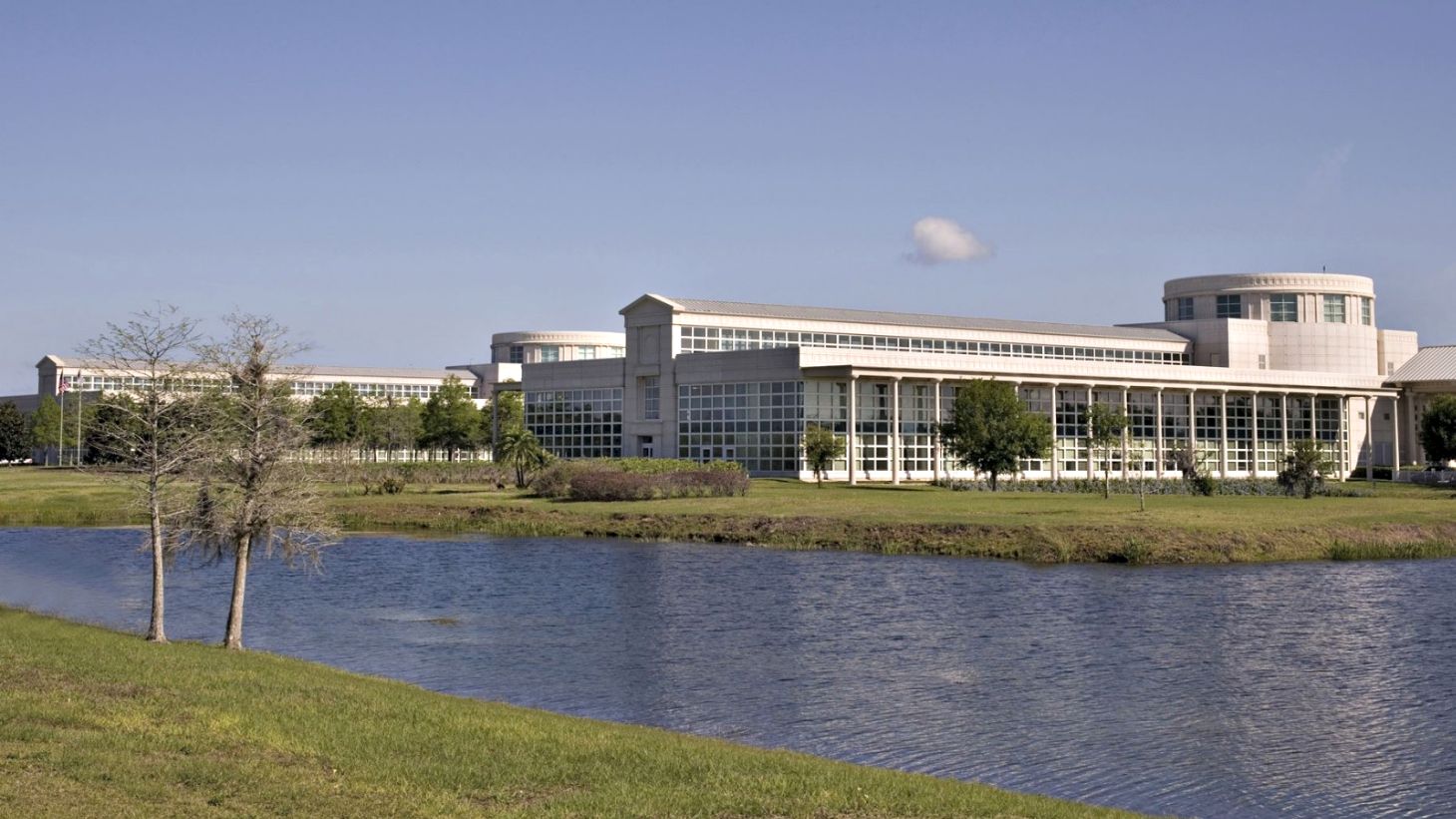
Founded in 1951 as Campus Crusade for Christ, Cru is headquartered in Orlando, Florida.

Founded in 1951 as Campus Crusade for Christ, Cru is headquartered in Orlando, Florida.

Christianity Today June 3, 2021
Photo courtesy of Guy Gerrard / Worldwide Challenge via Guardian PR

The debate over critical race theory has landed at Cru, one of the country’s most prominent parachurch ministries, where a 179-page letter alleging an overemphasis on racial justice has exacerbated tensions that have been quietly brewing within the organization for years.

Titled “Seeking Clarity and Unity,” the document was submitted to Cru president Steve Sellers in November 2020 and spread inside the organization before appearing online in May. Its authors, a grassroots group of Cru staff members, raise concerns that a “victim-oppressor worldview” has become embedded throughout the organization, dividing staff and detracting from the true gospel.

“In pursuing [diversity], we have inadvertently adopted a system of unbiblical ideas that have led us to disunity,” the document reads. “These concepts have created distrust, discouragement, and a host of other problems.”

Founded in 1951 as Campus Crusade for Christ, Cru’s mission statement is to “win, build and send Christ-centered multiplying disciples” through its well-known campus ministry programs and other evangelistic outreaches. The recent document suggests there’s a “gap” between this stated mission and its current ministry work, saying Cru’s approach to addressing issues of racism and oppression has led to “mission drift.”

The anti-CRT document says that “at least 1,000 staff” share the group’s concerns and features dozens of staff and donor testimonials, though a majority of them are anonymous. Only 11 contributors are cited by name, and there is no full list of signatories.

Cru remains a predominantly white organization. Out of roughly 8,000 American staff, 22 percent identify as Black, indigenous, or other people of color (BIPOC), according to the organization’s own tallies. Since 2015, the ministry has placed a growing emphasis on cultural competency and racial reconciliation.

Leaders have begun to speak about racism more overtly during staff conferences, and the ministry offers a training called “Lenses” on ethnic and cultural “oneness” for staff. Both efforts were singled out in the document as “social justice teachings.”

Various anonymous testimonials called the organization’s cultural competency training “political” and alleged “anti-white American rhetoric.” One anonymous staff (referenced as Minority Staff #30) said the trend within Cru and the church at large represents “a brand new religion of systemic racism, white privilege, and systems of power” that “labels all of Christian theology a racist oppressive ideology of whiteness.”

Throughout the document, contributors characterize the approach to race they see from leaders as a “false gospel,” “unbiblical,” and a threat to evangelism.

Disrupting unity

People throughout Cru, both the authors of the anti-CRT document and others, saw longstanding tensions over the ministry’s approach to race escalate last year. What began as a small, in-person meeting of five at Cru’s Orlando, Florida, headquarters to discuss the ministry’s racial justice emphasis in January 2020 quickly grew into a weekly Zoom meeting with over 350 mostly white staff at the onset of the COVID-19 pandemic.

From within that group, 60 people went on to write the anti-CRT document, against the backdrop of the nationwide calls for racial justice that shook across the country after the killings of George Floyd, Ahmaud Arbery and Breonna Taylor in 2020.

One of the group’s organizers is Scott Pendleton, chief of staff for Cru’s Jesus Film Project. He worries, as the document states, that the emphasis on racial justice detracts from the heart of Cru’s evangelism work.

“We can be united and show the world that we love each other through our identity in Christ,” he said. “Not because we’re trying to dismantle racist structures—though that has its place—but by focusing on who we are in Jesus.”

Pendleton and the authors of the anti-CRT document say they share concerns around the need for diversity and racial reconciliation but that efforts over the past five years have actually hurt Cru’s former “racial unity.” Pendleton said that some of the BIPOC staffers who joined in the criticism were particularly vocal with their concerns.

Others, though, believe that the organization’s push to highlight ethnic sensitivity and inclusivity has been instrumental in growing their faith, offering small but meaningful steps toward addressing what is seen as a broader issue within Cru.

Darryl Smith was one of many staff members who was caught off guard by the document. Smith has been on staff at Cru since 1996 and has served as director of oneness and diversity for the ministry for the past four years.

Smith said he guided several initiatives cited and critiqued in the document, yet the authors did not contact him with their concerns. As parts of the letter called out Cru’s cultural competency training and efforts to engage racial issues as “worldly,” “deceptive,” and “unbiblical,” he said he felt like “I was being told that my very presence as a Black man could cause Cru to mission drift.”

Cru’s national director Mark Gauthier acknowledged responses like Smith’s in a March 2021 video shared this week by blogger and scholar Valerie Hobbs.

“The distribution of the research caused a breach in trust among some of our staff and in particular our BIPOC staff. While their concerns of the group may have been well motivated, the manner in which the report was written and the distribution of the information was crushing to many of our BIPOC staff. The research effectively questioned all of the venues throughout Cru where we were talking about diversity,” he said.

“For our BIPOC staff in particular, it raised the question of whether we were backing away—whether or not we were backing away from our biblical pursuit of oneness and diversity,” he said. “Well, insofar as the research raised real issues, whether we like them or not, that is very helpful. However, the implications that are drawn from the research can lead one to believe that many of our diversity initiatives are unwelcome, ineffective, and constitute mission drift.”

Josh Chen, an area director in Portland, sees the document as an attempt to “narrow the scope of orthodoxy” by minimizing the importance of pursuing justice.

“I think the way that we’ve talked about the gospel for decades is a contextualization of the gospel to the baby boomer generation,” said Chen, who ministers primarily to young postgrads. “And for those who are trying to do the hard work of reimaging the good news for this generation we are being deemed as unbiblical.”

Pendleton told CT that he and his group, which skews older, are “grieved” over the tensions caused because of the letter. “We want to be diverse. We just want to be faithful to do it in a way that aligns with Scripture. And I know [those who disagree with us] do too. That makes it all the more complicated.”

Debating CRT

Critical race theory’s rise to the forefront of conservative public discourse, both inside and outside the church, has been recent and rapid. Originating as a relatively niche ’70s-era legal theory that suggests inequities of power are deeply embedded within society and coalesce along racial lines, it has become a frequent talking point among conservative and Republican pundits.

Last November, the Southern Baptist Convention’s six seminary presidents released a statement calling the theory “incompatible” with the denomination’s message, prompting at least four Black pastors to break with the denomination. Oklahoma, Idaho, and Tennessee, all states with Republican majority legislatures, recently banned public schools from teaching the theory, with nearly a dozen states having introduced similar legislation.

The anti-CRT document shared with Cru leadership draws its definition of the term from an article by megachurch pastor John MacArthur, along with resources by anti-critical race theory apologists like theoretical chemist Neil Shenvi and atheist James Lindsay. It makes no mention of prominent critical race theory scholars like late Harvard University professor Derrick Bell or UCLA law professor Kimberlé Crenshaw.

“It’s a piece of propaganda,” said Matt Mikalatos, a former program director who helped organize Cru’s staff conference. “It’s not reporting. It’s not designed to share two sides of a picture. It’s designed to push a very specific agenda.”

Many consider Cru’s 2015 staff conference a turning point, with speakers addressing the issue of justice and ethnic diversity more directly. Mikalatos said organizers wanted to ensure the conference would be “meaningful and transformative” for all attendees, rather than programming for the majority.

“That means the majority that’s used to having everything programmed for them would still have something that they would love, but someone else from a different spectrum of theology would also feel represented,” he said.

The conference, which the critical document alleged was “given over to the most radical social justice and CRT communicators,” featured speakers including Christena Cleveland—at the time a CT columnist and Duke Divinity School professor—as well as Andy Crouch, Francis Chan, and John Perkins.

Later conferences would include a group of Native American Christians welcoming the staff to their land, a message from pastor Joyce Emery (the first female pastor to be platformed by the biennial event), and a call for corporate repentance over racism from Christian cultural competency coach Latasha Morrison, author of Be the Bridge.

“I’ve learned a lot from hearing the experiences of my minority brothers and sisters in Christ and I grieved with them over their experiences,” said Pendleton. “It was a message that a lot of staff in the majority culture needed to hear, but after five years of [the same message] being repeated over and over again, there was no message of coming together to forgive each other.”

Top leaders at Cru said critical race theory has not been part of internal leadership discussions, with Gauthier noting that the organization does not “hold to or teach any worldly ideologies.”

Revisiting biblical frameworks

Gauthier says Cru is expected to release a robust document addressing Cru’s theological structure in the coming months.

“We didn’t have a clearly defined biblical framework for how we were approaching this,” said Gauthier. He stressed the importance of grounding the organization’s ministry in biblical ideology, an emphasis he acknowledges may have gotten lost in their attempt to combat racism.

While some topics are hard to discuss, particularly among a group that spans multiple generations, he hopes that a stronger emphasis on the Bible’s direct instructions regarding racism will help staff on both sides of the discussion to find common ground.

The anti-CRT document is not the only critical letter circulating within Cru’s online space over the past year. Following the appointment of three white individuals to high-ranking leadership positions (including Gauthier, who had previously served at Cru’s executive director), a public letter titled “A Humble Request for Leadership Process Transparency & Organizational Fidelity” was posted on a message board within the organization’s Facebook Workplace in October 2020. Calling the promotions a “missed opportunity” to elevate nonwhite leaders, the letter was drafted and edited by 14 staff members, all of whom are listed as signatures on the document.

The letter (referred to as a “staff uprising” in the anti-CRT document) asked for Cru leadership to show greater transparency in its hiring process as well as offer concrete steps for how the new appointees would “work to combat anti-blackness and anti-indigenousness and other forms of oppression.” In contrast to the mostly anonymous anti-CRT document, 574 staffers publicly cosigned the document.

“In a lot of ways, the [Seeking Clarity and Unity] document was hurtful because it was so secretive,” said Nich Beebee, a staff member who penned the initial draft of the “Humble Request” letter. “You had no idea who was a part of it other than the few people who were on the front.”

According to Pendleton, contributors to the anti-CRT document remained mostly unnamed because many within the group were “fearful” of being seen associated with the group, with some staff showing up to the Zoom meeting with fake names and their camera turned off.

Tensions on both sides

Gauthier said both documents “capture the tensions we have to embrace as we pursue our mission.”

Staff members told CT that posts on Cru’s Facebook Workplace highlight the organization’s sharp divisions. Following the killing of George Floyd, Cru president Steve Sellers openly wrestled on the forum about how to respond to the tragedy. “If I call this out specifically, why not every example of racism,” he wrote. “Why not publicly and vocally stand for the sin of abortion, the horrors of women being trafficked or for the assault on the biblical view of human sexuality?”

Some commented that the post felt tone deaf, eliciting the sentiment that “all sins matter.”

As those tensions have grown more evident, disagreements over Cru’s handling of justice and diversity issues have caused both seasoned and recently recruited leaders to resign from staff.

In a public letter, 19-year staff member Rasool Berry wrote that “an onslaught of resistance to the work of cultural competency, justice and faith integration” was one of the reasons for his departure earlier this year. He cited Pass the Mic’s #LeaveLoud movement, an initiative that encourages Black Christians to share their stories about leaving evangelical spaces, as inspiration for his public letter.

Longtime campus director Dan Flynn had been on staff with his wife, Paula, for over 30 years, but they opted to step down in 2019 due to concerns over the organization’s new “core value of wokeness.” In a personal testimonial written in the SCU document, Flynn cited recent female conference speakers and Cru’s failure to “educate” staff about traditional gender roles after a former staff member publicly came out as gay in 2019. (At the time, she said she was celibate “for the sake of her ministry” with Cru, but opted to leave the organization several months later.)

Two-year staffer Jocelyn Chung published her own resignation letter earlier this year, noting that she lost ministry supporters and was forced to shift to part-time after she began “embracing a more holistic gospel” that emphasized “the American Church’s dangerous complicity in White Supremacy, Christian Nationalism, and systemic inequality.”

Cru is not the only mission-focused parachurch group to face scrutiny over its response to recent social issues. InterVarsity received criticism in 2015 after inviting Faith for Justice’s Michelle Higgins to speak about Black Lives Matter at its Urbana conference. Higgins received death threats following her talk and InterVarsity was forced to clarify that it “does not endorse everything” about the Black Lives Matter movement.

The Navigators released a similar statement expressing its desire to “empower people of color” while also distancing itself from the BLM movement after it posted a black square online during a social media “black out” following the killing of George Floyd, prompting questions about the organization’s stance on racial justice.

Parachurch organizations have historically offered Christians across denominations a space to collaborate on issues deemed of primary concern. But as cultural tensions continue to rise, the viability of such collaborations will continue to be tested.

“Big tent ministry requires a generosity and a love and an ability to be uncomfortable that we in evangelicalism have not yet mastered,” said Mikalatos. “And, in a variety of ways, Cru is very much a reflection of evangelicalism.”

Curtis Yee is a faith and culture reporter in Sacramento, California.

News

Catholic Couple Acquitted of Blasphemy after 7 Years on Pakistan’s Death Row

Shaguftah Kausar replaced Asia Bibi in her prison cell. Now she and husband Shafqat Emmanuel are finally free.

Shafqat Emmanuel (top left) and Shagufta Kausar (bottom left) are the first Pakistani Christians on death row to be acquitted of blasphemy after Asia Bibi (right).

Shafqat Emmanuel (top left) and Shagufta Kausar (bottom left) are the first Pakistani Christians on death row to be acquitted of blasphemy after Asia Bibi (right).

Christianity Today June 3, 2021
Martin Bureau / AFP / Getty Images / World Watch Monitor

The Pakistani Christian woman who replaced Asia Bibi in her prison cell on death row, Shaguftah Kausar, has—after a dozen delays since April 2020 due to the COVID-19 pandemic—been acquitted from the death penalty by the Lahore high court.

The mother of four, along with her disabled husband, Shafqat Emmanuel, was arrested for blasphemy in 2013 and sentenced to death in 2014. Despite both being illiterate, the Catholic couple, surnamed Masih*, were convicted of sending blasphemous texts—in English—to Islamic clerics.

The couple appealed against their death penalty in 2016, but the appeal was continuously delayed—leaving them languishing in jail for years—because blasphemy cases are so controversial and sensitive in Pakistan.

When the then-EU Special Envoy on Freedom of Religion or Belief, Jan Figel, visited Pakistan to discuss Asia Bibi’s case in December 2017, he told officials that the renewal of the nation’s export privileges to Europe depended on her release.

It was only after Bibi’s acquittal in October 2018 (and final freedom in spring 2019), that her lawyer Saif ul Malook—in the glare of international media attention—said his next case would be that of Shaguftah. This was the first time many people heard of the married couple’s separate cases.

After Figel’s visit, an interfaith advisory council was started to look at the misuse of the blasphemy law—often used to “grab” disputed land or to settle personal grudges, business rivalries, and so on.

In April 2021, the European Parliament adopted a joint motion for a resolution calling for a review of the GSP+ trade status granted to Pakistan and seeking more comprehensive approaches to address such abuses of the law. The motion specifically referred to this couple’s case.

This apparent “planting” of fake texts or images on the mobile phones of sometimes-illiterate Pakistani Christians has been reported by World Watch Monitor over recent years.

What did the couple allegedly do to deserve the death penalty?

Their accuser, Muhammad Hussein, said he was praying after breaking Ramadan fast on July 18, 2013, in Gojrar’s Talabwali mosque at around 10 p.m. when his cellphone vibrated. He stated that after finishing prayer, he checked his cellphone and found blasphemous text messages insulting both the Prophet Muhammad and the Qur’an.

Gojra City Police station house officer Muhammad Nisar told World Watch Monitor in 2013 that Hussein’s call data revealed the messages were sent from Shaguftah’s cellphone number.

However, she told the police that the cellphone had been lost for a month, and she did not know who might have sent the alleged messages. Nevertheless, the Gojra City Police detained the couple, along with their four children, and pressured them to name someone who could have sent the messages.

Nisar told World Watch Monitor that a large number of Islamic clerics got angry when they heard of these text messages, and that they remained in the police station until the First Investigative Report (FIR) was lodged.

In what some said was an attempt to show that progress had been made, the police formally arrested the couple on July 20 and sent them to Toba Tek Singh District Jail the next day.

“Shafqat has admitted to the police he sent the blasphemous messages and gave this statement to the judicial magistrate,” Nisar said.

The lawyer for the couple at the time, Riaz Anjum, said the police lodged the case under Section 295-B and 295-C of the Pakistan Penal Code, which recommend life imprisonment and the death penalty, respectively, for blasphemy.

Anjum said the police had made stronger the case against the couple by recording Shafqat Masih’s judicial confession. “Investigation should have been done by the senior superintendent before lodging the case, but here the police have extracted a confession from Shafqat which is illegal,” he said.

He said the police also charged the couple under 25-D of The Telegraph Act of 1985 which recommends a maximum of three years for intentionally “causing annoyance.”

Islamists staged a sit-in on Mankanwala Crossing in Gojra on July 23, 2013, and demanded death for the couple.

Shafqat Masih’s backbone was fractured in an accident in 2004. Since then, he’d been in a wheelchair due to the paralysis of his lower body. He also has to use a catheter. In prison, he was confined to bed; visitors reported him “covered in bedsores” and thought he would die in prison.

After his accident, Shaguftah Masih was the breadwinner for the family’s four children, Ambrose (then 13), Danish (then 10), Sarah (then 7), and Amir (then 5), until their arrest.

She has found almost eight years in prison extremely hard and has had depression.

Her brother Joseph told World Watch Monitor in 2013 she is the eldest of six siblings.

Other cases had been registered against Christians, before Shafqat’s and Shaguftah’s, based on blasphemous text messages.

Only days before the Emmanuels were arrested in July 2013, a court had sentenced a Christian man, Sajjad Masih*, from their same city, to life imprisonment (25 years in Pakistan) for blasphemy. Masih too was convicted of sending blasphemous text messages in a case first lodged in December 2011, again despite an absence of evidence.

His alleged text messages were sent from a SIM card registered in the name of his ex-fiancée, Roma. Neither the cellphone nor the SIM was recovered from Masih during police investigation. Nor was there any eyewitness or forensic evidence available.

Nevertheless, there were banners in the Gojra streets at the time protesting that “life” was not sufficient for him, and that he should die.

However, the Lahore High Court threw out his case on October 14, 2013, ruling he could not be tried for the same offense twice.

In May 2006, Qamar David was accused of sending blasphemous text messages to various Islamic clerics in the city of Karachi. He was convicted in February 2010 and died in prison on March 15, 2011.

In January 2009, Hector Aleem and Basharat Khokhar were accused of sending text messages that hurt Muslims’ religious sentiment. They were acquitted of the charge on May 31, 2011.

Sixteen-year-old Ryan Stanton was charged with sending blasphemous text messages on October 10, 2012. He fled the country for refugee status in Sri Lanka.

Pastor Zafar Bhatti was accused of the same crime on November 11, 2012.

Several Muslims, such as Abdul Sattar and Irfan Rafique, have also been charged for sending text messages.

*Editor’s note: Masih, which derives from Messiah, is a common name among Christians in Pakistan.

News

Andrew Peterson’s Wingfeather Saga Raises $5M for TV Series

On a new platform called Angel Studios, the campaign broke crowdfunding records set by “The Chosen.”

Christianity Today June 3, 2021
Courtesy of Angel Studios

The crowdfunding platform behind the acclaimed TV drama The Chosen has raised $5 million to create an animated version of The Wingfeather Saga, the award-winning fantasy quadrilogy from Christian musician and author Andrew Peterson.

Last month, The Wingfeather Saga’s campaign drew $1 million from investors in its first 48 hours, breaking a crowdfunding record set by The Chosen. By Wednesday, investors had raised enough to fund season 1 of the new show, based on Peterson’s books. Like The Chosen, the series based on The Wingfeather Saga will be distributed by Angel Studios.

“It ’s terrifying every time in a way it wouldn’t have been if a big company had underwritten the whole thing. But it ’s more gratifying to experience it in real time with encouragers,” Peterson told CT days before the series met its goal. “To take a deep breath and launch a big campaign and see these are the same people coming alongside you is a beautiful thing.”

His books follow the adventures of siblings Janner, Kalmar, and Leeli Igiby as they seek to rid the land of Aerwiar from the oppression of evil Gnag the Nameless. With the help of their regal mother Nia, bombastic grandfather Podo, and others, the children discover their true identities, their responsibilities to each other, and their role in the Maker’s plan.

Originally released in 2008–2014, the books won several awards, including the Christy Award for Young Adult Fiction in 2010 for the second book North! Or Be Eaten, and the 2014 World Children’s Book of the Year for the final installment, The Warden and the Wolf King. In 2020, Penguin Random House re-released the books, and they have since sold over 250,000 copies.

Crowdfunding from devoted fans has sustained The Wingfeather Saga in the past. In 2016, Peterson hoped to raise $110,000 to publish The Warden and the Wolf King. Supporters contributed $150,000. In 2017, fans gave an additional $250,000 to create a short film based on the books.

Chris Wall, who worked on VeggieTales and The Slugs & Bugs Show, produced the short film, which he and Peterson shopped to major entertainment companies like Netflix, Amazon Prime, and Apple. But in order to move forward with a major production company, Peterson would have had to sell the rights to the companies.

Angel Studios—which began as a rebranding of the faith-friendly streaming service VidAngel—offered what they saw as a better way. Peterson and Wall could keep the rights to the story in exchange for finding investors willing to put in $5 million for the first season.

Despite past success drawing on their fan base, Peterson said he still finds the exercise terrifying. It ’s a trust fall, with 7,900 hands catching you. In the first two weeks since the campaign launched May 13, investors promised $3.7 million of the $5 million needed to make season 1.

Like much of the work birthed by Peterson and friends at the Rabbit Room—a creative community and publisher of works by authors such as Walter Wangerin, Helena Sorensen, Jonathan Rogers, and Douglas McKelvey—The Wingfeather Saga doesn ’t fit squarely into the sacred or the secular camp. Peterson describes the work as not overtly Christian yet deeply Christian, which is great for readers but confusing for marketers.

The investment pitch for the animated series says it combines the humor of The Princess Bride, the epic scale of The Lord of the Rings, and the deep truths of The Chronicles of Narnia . The books reiterate the message that adventure and growth are best experienced with family, not by leaving family behind and going it alone.

Without having to fit into traditional marketing categories, executive producers Peterson and Wall felt like they could create the series without compromising on the story.

“One of the huge pitfalls in adaptations is the work becoming derivative,” Wall said. But adaptations can pendulum to the other extreme and keep the same title, but tell a vastly different story. Wall said the goal with the animated series will be to use visual storytelling to give readers a new take.

They planned six episodes for season 1, which will take viewers roughly to the end of book 1, On the Edge of the Dark Sea of Darkness.

‘Community video on demand’

Pioneering this new model of content creation are Mormon brothers Neal and Jeffrey Harmon. Neal is the president and CEO of Angel Studios, and Jeffrey is chief content officer. Their former venture, VidAngel, settled a lawsuit in 2020 and saw revenues pass $47 million for the year as the views of its original content surpassed filtering content ten times over.

Their studio handles distribution and marketing but leaves content in the hands of the producers. Under the Angel Studios setup, investors—called “angels”—back a project in advance with the hope that it will get created and generate enough enthusiasm to continue creating more content.

Angels pay into the project, but viewers watch it for free on the Angel Studios app. After watching, viewers are invited to pay for what they ’ve seen and pay it forward so that others can watch, similar to how content creators earn income through Patreon. Angels can receive additional perks like a thank you note, a mention in the credits, or a video chat with the creators, plus a 120 percent financial return on their investments.

Producers for The Chosen fundraised to create the seven-season series, a historical drama about the life of Jesus. For each of the first two seasons, it drew $10 million in investments and is currently fundraising for season three. In 2020, the series brought in over $30 million.

The Harmon brothers call it “community video on demand.” When viewers are passionate about the content, they ’ll pay to view it or to purchase merchandise and spread the word about the projects they love. “Content with lots of passion behind it will survive, but content that ’s just mediocre will fail,” Jeffrey said.

The Harmons themselves have contributed to the campaign for The Wingfeather Saga. Over the next five years, the studio plans to distribute 300 projects at the same level .

News

Fortress Europe: As Islam Expands, Should the US Imitate the ‘Christian’ Continent?

As anti-Muslim sentiment grows in the West, European evangelical consultant urges a better response than burqa bans.

Christianity Today June 3, 2021
Ilustration by Rick Szuecs / Source Images: Monstera / Spencer Davis / Christopher Cintron / Lina Kivaka / Mhajr Invincible / Pexels

Within three decades, Muslims may comprise 14 percent of Europe.

The face of the historically Christian continent, tallied at 5 percent Muslim in 2016, may dramatically change by 2050 if high migration patterns hold.

And as Muslim families have a birth rate one child higher than the rest of the continent, the Pew Research Center projects nearly 1 in 5 people will be Muslim in the United Kingdom (17%), France (18%), and Germany (20%). Sweden is projected to become 30 percent Muslim.

And Austria, with its 20 percent projection, is on guard. The majority-Catholic nation recently published an online Islam Map, to identify mosques and other centers of politicized religion.

According to European religion experts, however, one-third of European Muslims do not practice their faith.

Conversely, this suggests that two-thirds of Muslims believe in and practice Islam. Contrast this with the median figure of 18 percent of Western Europeans (across 15 nations) who attend church at least monthly and the median figure of 27 percent who believe in God according to the Bible.

Could the fear of some European Christians be plausible: an eventual Eurabia?

Or is it Islamophobia to say so?

Or, to the contrary, should Americans look across the ocean and consider French separatism laws and Swiss burqa bans in pursuit of a shared secularism?

For concerned evangelicals, Bert de Ruiter has his own questions—about their own faith.

“If Islam is taking over Europe, is that a problem?” asked the European Evangelical Alliance’s consultant on Muslim-Christian relations. “Will God suddenly be in a panic?”

Muslims will not take over the continent, he believes, noting Pew’s other 2050 Muslim population estimates of 7 percent if “zero” migration and 11 percent if “medium” migration.

But more important is that under any scenario, God will be faithful to his church, says de Ruiter. Once chairman of a Dutch political party, he has a “passion for Muslims, to reach out with the love of Christ.”

Yet too many European Christians, he said, act instead like politicians. Worse, they betray the love of Christ for neighbor.

According to statistics collected in the 2019 European Islamophobia Report (EIR), 37 percent of Europeans have negative views of Muslims, while 29 percent would not feel comfortable working with Muslims. And in Denmark, 28 percent at least partially agreed with the idea that Muslims should be deported.

But again, flip the statistics, and substantial majorities treat Muslims just fine.

Farid Hafez, coeditor of the EIR report, said that among the main drivers of Islamophobia is propaganda pushed by far-right networks seeking to create a scapegoat. Amplified by politicians and aided by counterterrorism narratives, perception then creates the reality.

“The more hostility people go through, the more they feel attached to their religious community,” said Hafez, also a lecturer at the university of Salzburg in Austria. “But I don’t see the problem that others do; Muslims are a part of society.”

Labels like “no-go zones” and “parallel societies,” he said, reflect Europe’s inability to adopt an American mentality that accepts multiple identities. And the relationship with Muslims is not fixed but boils down to a collective choice.

“Austria once suffered the siege of Vienna, but it also allied with the Ottoman Empire,” said Hafez. “History provides many options for how to tell your story. So will we choose a narrative of cooperation or conflict?”

In his column for Evangelical Focus, an online news site focused on Europe, de Ruiter said there are many actors trying to shape the narrative.

Among them are majority-Muslim nations such as Turkey and Morocco that build mosques and supply imams. Transnational networks such as the Muslim Brotherhood and Sufi orders compete to gain adherents and to define Islam. Wahhabi preachers on the internet break down traditional lines of authority. And state-linked Muslim councils strive for integration within secular society.

Muslims came to Europe largely as invited migrant labor in the 1950s, following the destruction of World War II. Over time, they brought their families, married, and had children. Initially isolated because of language, increasingly they put their stamp on society, building mosques and opening schools.

A European society that once welcomed them began to grow uncomfortable.

“We invited guest workers,” said de Ruiter, quoting a frequent saying. “But it turned out they were actually people.”

People created in the image of God.

Therefore, the task for Christians, he recently wrote in an analysis for Evangelical Focus, is fourfold:

  • Research: Matthew 10 speaks of finding the worthy person in a village you come to. Likewise, Christians must learn the real situation of actual Muslims, not media-driven images.
  • Reflect: Psalm 139 invites God to search our hearts. Anti-Muslim prejudice is often unconsciously ingrained, and with humility Christians can repent and develop attitudes of compassion.
  • Relate: In 1 Thessalonians 2, Paul describes how he shared his life with those he was trying to reach. Christians must develop relationships with Muslims, in hope of also sharing the gospel.
  • Relax: In Psalm 46, the Lord reminds believers to “be still, and know that I am God.” Whatever changes happen in Europe are according to God’s sovereignty, and he will be exalted among the nations.

In America, Warren Larson adds a fifth R: represent.

“As Christians, we must speak up in defense of persecuted Muslims,” said the senior research fellow and professor at the Zwemer Center for Muslim Studies at Columbia International University.

“We must take the initiative through acts of kindness, warmth, and generosity to Muslims, in our midst and around the world.”

A former missionary to Pakistan, Larson said his life was spared when Muslims defended his family against a mob that believed America was conspiring to undermine Islam. Today, he highlights the genocide underway against the Uighur Muslims in China’s northwest Xinjiang province.

But Larson has noticed something curious in his mentorship of Chinese Christians. Many are unaware of the atrocities or, like their government, deny them altogether. Some of it may be fear, he said, as China uses sophisticated technology to surveil its diaspora around the world.

But there may also be a parallel to Islamophobia in Europe and the United States. Chinese Christians from the mainland, he has noticed, speak out in defense of Hong Kong but not Xinjiang.

“One missionary to the Uighurs even said China was only dealing with terrorism,” said Larson. “Is it possible that she, along with most Chinese, fears what the Uighurs might do?”

Citing ethnic violence and acts of terrorism in Xinjiang that began in 2009, the Chinese media campaign against the Uighurs has been relentless. The United Nations has recognized a similar, though not state-run, pattern against Muslims in Europe.

A European Commission Against Racism and Intolerance report found that in the Netherlands, media descriptions most frequently call Dutch people “average,” even “beautiful.” Muslims, however, are predominantly described as “radical” and “terrorist.”

And in Switzerland, a federal commission found that news reports on Muslims focused on their failure to integrate, while only 2 percent of media coverage was of their normal lives and successful examples of integration.

In a statement supporting the UN report on Islamophobia, issued in March, the World Evangelical Alliance praised its Swiss branch for condemning an arson attack on a mosque and contributing financially to its repair. Similar efforts at solidarity were praised in India, Sri Lanka, and the Central African Republic.

“We reaffirm the unique value of each and every member of the human family,” it stated. “We believe each one of us is created in the image of God.”

But of Muslims, said Asma Uddin, there is a different image.

“Many evangelicals view Islam as a satanic deception, fundamentally violent and evil,” said the Muslim author of The Politics of Vulnerability: How to Heal Muslim-Christian Relations in a Post-Christian America. “They then mistake standing up for Muslims as standing up for a religion they despise or distrust.”

Evangelical advocates she has worked with are devoted, she said, but “outliers.”

Nearly 2 in 3 white evangelicals (63%) said Islam encourages violence more than other faiths, according to a 2017 Pew survey. This was the highest level among religious groups.

But the issue is also partisan.

Over half (56%) of Republicans said there was at least a “fair” amount of extremism among US Muslims. Only 22 percent of Democrats said the same.

Since liberals are associated with defending the rights of Muslims, Uddin said, political tribalism leads many conservatives to dismiss the severity of discrimination.

The setting is different in Europe, according to Hafez.

While Muslims in the UK are well represented in academia and politics, they also represent a disproportionate 16 percent of the prison population. Germany continues to have issues integrating its large migrant community.

And France’s vision of secularism separates not just church and state but also religion and society. Combined with a lingering colonial superiority, Hafez ranks the nation as Europe’s worst for Muslim communities.

But Islamophobia, he emphasizes, is not about anti-Muslim cartoons. Neither is it the critique of Islam or the criticism of Muhammad. It is the construction of a scapegoat with a generalized identity, which is then excluded from the rights afforded to all.

Protestants in Europe, he said, often feel it also. In Austria, only since 1861 were they allowed to build a steeple. Today, many of them sympathize when Muslims want a minaret.

And similarly, many are troubled by the publication of the Islam Map.

Michael Chalupka, bishop of the Evangelical Lutheran Church of Austria, said he would not accept this for his own community, joining the calls to take it down.

“When you are weak, you stand by the weak,” said Hafez, a Muslim. “Jesus also stood with the weak, and in Europe, Muslims are among the weakest.”

De Ruiter finds greater solidarity with Muslims on moral issues than he does with the secular Dutch. And he too knows the pain of generalization. Preaching once in Russia, he was queried repeatedly not about his sermon but about Holland’s lax laws on drugs and prostitution.

The state, he told CT, has a biblical obligation to provide security, justice, and human rights. But the believer is to welcome the stranger and love the neighbor. If the Christian values that shaped Europe are taken advantage of, the Christian cannot retreat.

After all, Jesus was crucified.

For this message, de Ruiter is often accused angrily: “Don’t you care to preserve what your grandfathers built?”

But the values they cherish, he said, usually center around materialism, identity, and place in society. If they desire instead to reverse the losses suffered in a post-Christian society, there is a better way than fearmongering of Muslims.

That fight employs the weapons of the world, and must be rejected.

It will lose the gospel, for all.

“If we want things to change, Muslims will have to see something real in us,” said de Ruiter. “But they cannot if we shut the door.”

Editor’s note: This article has been updated to use Pew’s median findings on church attendance and belief in God across 15 Western Europe nations.

News
Wire Story

Washington State Debates What to Do With Missionary Statues

A monument to Marcus Whitman is being pulled from the US Capitol, and some students want a second removed from the college that bears his name.

A statue of Marcus Whitman stands on city property just outside the Whitman College campus in Walla Walla, Washington.

A statue of Marcus Whitman stands on city property just outside the Whitman College campus in Walla Walla, Washington.

Christianity Today June 3, 2021
Tom Skeen / Walla Walla Union-Bulletin via AP

For generations Marcus Whitman has been widely viewed as an iconic figure from early Pacific Northwest history, a venerated Protestant missionary who was among 13 people killed by the Cayuse tribe near modern-day Walla Walla, Washington, in 1847.

But this past year has seen a continued reappraisal of Whitman, whose actions have increasingly been viewed as imperialistic and destructive.

The Washington Legislature voted to strip his likeness from the US Capitol. Students at Whitman College in Walla Walla demonstrated recently to demand another Whitman statue be removed from campus. A new book says a well-known story about Whitman’s efforts to save the Northwest from British rule was fabricated.

The developments come amid a nationwide movement, following George Floyd’s death last year, to shed Confederate monuments and depictions of historical figures who mistreated Native Americans. Statues of colonizers have been targeted in several states.

Marcus Whitman is known for leading a small group of missionaries in 1836 into what was then Oregon Country, a region about the size of Alaska. He established the Whitman Mission at Waiilatpu, near the Walla Walla River.

The mission was in the territory of the Cayuse Tribe, which was wary of the white settlers.

Whitman and his wife, Narcissa, were strict Calvinists who preached a demanding version of Christianity that proved unpopular with the tribe. In more than a decade of effort, they managed to convert only two members of the tribe, said Blaine Harden, an author and former New York Times and Washington Post reporter who wrote the newly published Murder at the Mission about the massacre.

“Whitman was a mediocre missionary,” Harden told The Associated Press.

But the mission became an important stop along the Oregon Trail from 1843 to 1847, and the Cayuse became suspicious that the white settlers were coming to take the land.After a few years, the Whitmans lost interest in the Cayuse and spent their time trying to convert white settlers. Whitman eventually decided the Native Americans needed to give way to the settlers.

An 1847 measles outbreak killed half the local Cayuse. The illness also broke out in the mission, but more white settlers survived. Some of the Cayuse blamed the devastation on Whitman and his wife. The Cayuse had a tradition of killing failed medicine men, Harden said, and Whitman, a medical doctor, was warned to leave the area. The Cayuse attacked the mission and killed the Whitmans and 11 others.

The deaths shocked the nation.

After the massacre, the settlers of the region sent a delegation to Washington, DC, and used the massacre to motivate Congress to make the Oregon Country an official part of the United States, completing the continental nation, Harden said.

Prior to that, the region that became the states of Oregon, Washington, and Idaho had been jointly held with the British, Harden said.

“The killing of Whitman was the trigger that made Walla Walla part of the United States,” he said.

Twenty years after the massacre, fellow missionary Henry Spalding manufactured a false story about Whitman. Spalding contended Whitman had traveled to Washington, DC, and “persuaded President (John) Tyler to stop the British plot to steal the Oregon Territory from the United States,” Harden said.

There is no evidence Whitman actually did this, Harden said.

But Spalding relentlessly promoted that story, and it became the popularly accepted myth, Harden said, printed in history books for decades. The myth was debunked in 1900 by a Yale professor and dropped from wide use.

An engraving on the base of a statue of Marcus Whitman is shown in the Legislative Building at the Capitol in Olympia, Washington.Ted S. Warren / AP
An engraving on the base of a statue of Marcus Whitman is shown in the Legislative Building at the Capitol in Olympia, Washington.

Whitman’s name still adorns landmarks across the Pacific Northwest, including many schools, streets, a hotel in Walla Walla, a county in eastern Washington, a national forest in Oregon, and a glacier on Mount Rainier.

In 1953 a heroic statue to Whitman was placed in Statuary Hall in Washington, DC, as one of two representing Washington state. He is standing, wearing buckskin garments and holding a thick Bible and saddlebags. Some people grumbled about the false story of Whitman’s achievements even then, Harden said.

Harden noted that Whitman College has taken concrete steps for decades to distance itself from the Whitman myth. That includes moving a statue identical to the one in Statuary Hall to a remote corner of campus. Last year, a proposal suggested moving the statue to the Fort Walla Walla Museum, where it could be presented in context.

Whitman College’s Maxey Museum director Libby Miller told local news the statue appears more like a symbol of “frontier mythology” than a representation of the school’s namesake.

The college in 2016 voted to change its mascot from the Missionaries to the Blues, in honor of a nearby mountain range. There are no plans to change the name of the elite college.

Washington legislators had been working for several years to replace Whitman’s statue in Statuary Hall. This year they chose deceased Native American fishing and environmental activist Billy Frank Jr. for the honor.

The measure’s prime sponsor, Democratic state Rep. Debra Lekanoff, is the only Native American in the Washington Legislature. Her strategy was to praise Frank without criticizing Whitman, to avoid antagonizing supporters of the missionary.

Gov. Jay Inslee in April signed the bill, beginning the process of putting a statue of Frank in the US Capitol.

“We expect to send our best from the state of Washington to be memorialized in the United States Capitol in Statuary Hall,” Inslee said at the bill signing ceremony. “We can’t send the Nisqually River or Mount Rainier, but we can send Billy Frank Jr.”

Meanwhile, Whitman students have been working to remove a Whitman statue from campus, including at an April demonstration.

Sophomore Gillian Brown told the school newspaper she was uncomfortable with the way the statue glorified Whitman’s legacy.

“Even when I first came to Whitman and they took us to the monument, I thought, ‘This guy is a colonizer. He’s not someone to be celebrated,’” Brown told the Whitman Wire.

The issue is still up in the air.

The campus statue is owned by the city of Walla Walla, college spokeswoman Gina Ohnstad said. The city is working on a process to allow residents to submit formal requests for the removal of public art.

Books
Review

All Church Buildings Have a Story to Tell—Not Just the Tourist Magnets

An attempt to examine the church’s history through its architecture suffers from narrow understandings of “church” and “history” alike.

Christianity Today June 3, 2021
Gianluca Cescon

The church is not a building, but it certainly has buildings.

A History of the Church through its Buildings

A History of the Church through its Buildings

Oxford University Press, USA

392 pages

My own church has a stone structure by a creek in Johnson City, Tennessee. We know that the first Christians here baptized believers in that water and worshiped together on the banks, nearly 200 years ago, before building the fellowship hall and sanctuary with stone and stained glass.

Around town, I see churches that meet in storefronts, in renovated factories, and one above an upscale barbecue joint. There are big, towering church buildings on the main streets downtown and, further out, churches with wide, rolling, golf-course-worthy lawns. There’s a clapboard church tucked into a hill where they painted over the word Baptist, and now, in slightly unsteady freehand, the sign says Holiness. There ’s a church with a gazebo pulpit in an expansive parking lot, built for drive-in worship; another with space designated for a taco truck; another where the windows have been covered up; and another that looks like a giant Hershey’s kiss. At each of these places, Christians sing and socialize, pray and think about their lives—what they love and what they should love—and they listen to the Word of the Lord.

None of these places, unfortunately, appear in Allan Doig’s A History of the Church through Its Buildings. The “church” of the title turns out to be incredibly narrow, the “history” even narrower.

Size, shape, and composition

Charlemagne is crowned emperor six times in these pages, while Martin Luther shows up only once, critiquing the funding mechanism for the construction of St. Peter’s in Rome. There are no Puritans in the book, despite their intense opinions about church buildings. No Pentecostals, despite their radical reimagining of sacred space. There is only one mention of Baptists, and that is a passing reference in an extended quotation.

Nor does Doig’s scope extend to Africa, Latin America, North America, or Asia (with the exception of a brief mention of Jesuit missionaries to Japan). The book discusses 12 buildings: three in Rome, six elsewhere in Europe, two in Istanbul, and one in Jerusalem. These are all churches one might see on a humanities tour with a liberal arts college—tourist attractions and World Heritage sites.

In fact, A History of the Church through Its Buildings would be perfect for that kind of trip. Doig, a recently retired chaplain for a college at Oxford University, frequently describes the best way to approach these historic buildings. In Aachen, Germany, for example, he recommends “coming round the eastern end of the Rathaus … from the market square past the Granustrum,” a tower, for the best view of the Basilica of the Holy Mother of God. In Istanbul, Doig suggests taking the tram to the Hagia Sophia, since it “closely follows the ceremonial route of the emperor, from the former site of the Hebdomon military grounds near the airport, via the Golden Gate, past the fora and on to the milion, the marker from which all distances in the Byzantine empire were measured.”

The book also focuses its explanations on why each building exists, enlisting history as necessary to explicate a structure’s particular size, shape, and composition. Rather than using the churches to illuminate the history of the church, it’s the reverse.

For example, Doig doesn’t show how the Basilica of St. Vincent, in Cordoba, Spain, sheds light on Arianism, the Christological heresy that dominated in Spain at the time of its construction. Instead, he offers Arianism as the explanation for the location of the cathedral, as a sixth-century king of Hispania moved the bishop’s seat in an attempt to unite and reform Arian Christianity.

After Arianism was condemned at the Council of Toledo in 589, the Roman Catholic Pope Gregory attempted to secure the orthodoxy of the church with a series of gifts, including purported relics of Christ’s cross, Peter’s chains, and John the Baptist’s hair. But since the structure was built before the Roman influence was well established, the Cordoba church has “a four-bay nave with side-aisles, transepts, and chapels to either side of the sanctuary.”

As the narrative moves on, it becomes clear that for the author, “Why does this church have a four-bay nave with side-aisles, transepts, and chapels to either side of the sanctuary?” was the most interesting question to be asked.

The book’s deepest insight into church history is that the structures always reveal something about a church’s relationship to power. While churches are set apart as houses of God and places of prayer, they are never entirely apart. Each structure has a place in a legal regime, an economic order, and a political system.

Sometimes, in fact, the church is the symbolic foundation of state power. The Abbey of Saint-Denis, in Paris, for example, was rebuilt by King Pepin the Short and finished by his son Charlemagne to sanctify their replacement of the Merovingian royal line. Father and son were both buried in Saint-Denis, as were all but three of the subsequent kings of France and many other monarchs. The church—set apart—served a crucial function in the construction of the idea of the French state.

“As a space for the performance of the rituals of kingship,” Doig observes, “no other could compete with Saint-Denis.”

My church’s building in East Tennessee certainly doesn’t compete with Saint-Denis on this count, though it too reveals a relationship with power. The property lines have put limits on our expansion over the years. On Sundays, worshipers have to park in a neighbor’s lot, requiring us to take care to maintain that relationship. Last year, we used COVID-19 relief funds to pay the utilities for the building we mostly didn’t use during the pandemic.

Records of relationships

As I read A History of the Church through Its Buildings, though, my mind turned to the relationships that Doig does not explore. A church building arranges a congregation’s relationship to baptism, Communion, and preaching. It is in the design phase that a church decides whether the pulpit will be in the center or off to the side, whether or not there will be a fixed structure for serving the Lord’s Supper, and how new Christians will be buried with Christ and raised with him.

The building also structures the relationship between the church and its music. Sometimes worship leaders are literally spotlighted, but I’ve also prayed in a church, converted from a house, where the music came from another room. It felt like eavesdropping on the morning’s hymns.

The building can physically represent church hierarchy—saving a seat for a bishop, offering an exclusive entrance for the senior pastor, or setting up a greenroom for a guest speaker.

A church also organizes a congregation’s relationship to itself. In Doig’s own Church of England, there’s a huge difference between buildings with fixed pews and buildings with movable chairs. Some congregations sit in a circle while they worship. Here in Tennessee, it’s not uncommon to bury the deceased behind the church building, until the Resurrection. The building may be passed down to us through the generations—along with the faith itself—so that as we worship on a Sunday, we also realize we are taking care of something that we ourselves did not build and that we will one day leave to others.

The church, in the end, is not a building. But it does have them. And the history of the church happens, in part, through buildings. That history shouldn’t be limited to buildings that attract tourists and World Heritage designations. If we learn to look carefully at even the humblest churches, we can see a record of relationships and traces of the faithful witness of believers before us who used these buildings to sing and pray, live their faith, and receive and proclaim God’s good news.

Daniel Silliman is news editor for Christianity Today. He is the author of a forthcoming book, Reading Evangelicals: How Christian Fiction Shaped a Culture and a Faith.

God Was Faithful to These Chinese Families in the American South

A new documentary goes deep on a surprising history. Which happens to be mine too.

Baldwin Chiu, producer and lead subject, in Far East Deep South. Dir. Larissa Lam.

Baldwin Chiu, producer and lead subject, in Far East Deep South. Dir. Larissa Lam.

Christianity Today June 2, 2021
Copyright 2021 Giant Flashlight Media

What kind of accent is that?

People saw my Chinese face and heard my Texas drawl. And in their minds, it didn’t add up, even though my family had been in the United States for three generations. But I was proud of my Southern accent and my family’s story in America that it contained.

I saw strong echoes of my family’s history in Far East Deep South (available on PBS.org, WorldChannel.org or the PBS app through June 3), a documentary that follows the Chius, a Chinese American family exploring their ancestors’ history in the Mississippi Delta.

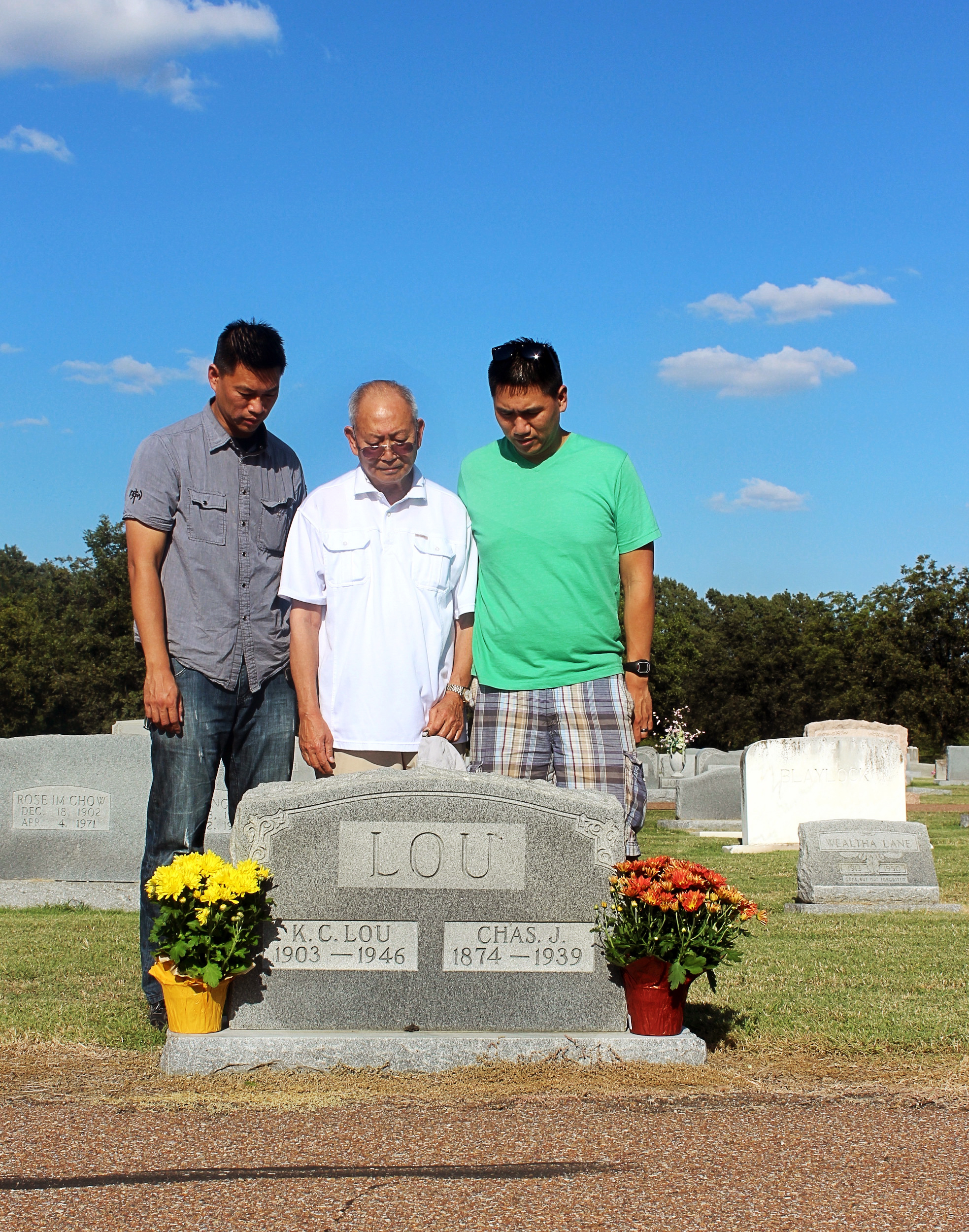
At the start of the film, Baldwin and Edwin Chiu have little knowledge of their Southern history and their grandfather’s relationship to the white and Black communities. They travel as adults to the Mississippi Delta with their father, Charles Chiu, after learning that their grandfather, K. C. Lou, was buried in a small town along the river. They connect with locals who share stories and pictures of K.C. and historians who help paint the broader context of their family’s story.

Many of us have learned key details of family history as adults. Some older generations purposely hold onto secrets, not eager to relive shame, agony, or violence. Others don’t take intentional time to share. And yet, as my family, the Chois, and the Bible remind us, practicing vulnerability with our children and grandchildren is what enables us to tell the story of how God has worked through our lives and what enables our communities to heal.

Sharing a family’s history often means educating about the larger historical context that your ancestors waded through. In the case of the Chius, their great-grandfather, Chas J. Lou, was born in the US in 1877, eight years after thousands of Chinese laborers finished the transcontinental railroad and five years before the Chinese Exclusion Act went into effect, which banned nearly all immigration from China.

These political realities had very personal consequences. Because Chas was an American citizen and considered a merchant rather than a laborer, he was able to bring in his son, K.C., in 1919. But K.C. couldn’t bring his wife or their son, Charles, who were in China. (Charles ultimately did not arrive until 1952.) Not knowing his father’s story, Charles believed K.C. never cared about him. But in a poignant moment in the film, he learns his father once wrote to his friend, “I would give up 20 years of my life to have my kids with me.”

(L-R) Baldwin Chiu, Charles Chiu and Edwin Chiu in Far East Deep South pay their respects to Charles’ father, KC Lou, and his grandfather, Chas J. Lou at the New Cleveland Cemetery in Cleveland, MS.Copyright 2021 Giant Flashlight Media
(L-R) Baldwin Chiu, Charles Chiu and Edwin Chiu in Far East Deep South pay their respects to Charles’ father, KC Lou, and his grandfather, Chas J. Lou at the New Cleveland Cemetery in Cleveland, MS.

While Americans are often surprised to find Chinese people in the South in the 19th century and early 20th century—the Chiu brothers themselves are astonished—many Chinese settled there after struggling to find work elsewhere. However, they quickly felt the scourge of Jim Crow laws. Southern states considered Chinese immigrants “colored” and subjected them to the same discriminatory practices that African Americans experienced. Rather than self-segregate, the Chinese, including K.C., opened grocery stores and businesses in Black communities.

In the film, Baldwin and Edwin discover their grandfather was known for his generosity and beloved by the Black community. A former customer comments that the Chinese businessman never looked down on the Black community or made them feel like second-class citizens. Instead, K.C. extended lines of credit to his customers, some of them sharecroppers who were paid only when the crops were brought in annually.

Unlike the Chius, I learned about my family’s Southern history from a young age, partially because I was born and raised in Houston. My grandfather, Jim Toy Lee, was also a grocery store owner in Mississippi, arriving in California about 100 years ago. My great-grandfather, Hoy Cal Jee, had emigrated from China to San Francisco in the early 1900s.

In 1906, the infamous San Francisco earthquake caused fires that destroyed more than 500 buildings, as well as all immigation and birth records. The disaster presented an opportunity for immigrants to claim citizenship by declaring they had been born in San Francisco. Hoy Cal took advantage of this and received US citizenship. Though the majority of Chinese people had been banned from immigrating to the US for nearly 30 years, there was one exception: US citizens could naturalize their children born in China. Although immigration officials vetted these claims, many “paper sons” also slipped through, which is how my grandfather, Jim Toy, and my “uncle” Yett Gee became US citizens upon entry in 1920.

Several years after arriving in the US, Jim Toy traveled back to China and returned with my grandmother, Bow Sim, and their son, Hugh. The family moved from San Francisco to Chicago, and finally to Ruleville, Mississippi, a small farming town established following the construction of the Yazoo and Mississippi Valley Railroad. Jim Toy was able to work in a grocery store with his “paper brother,” Yett Gee. Like K.C., Jim Toy was classified as “colored” and had limited job and education opportunities. Frustrated that his son, Hugh, would be forced to attend a segregated school and worried he would receive an inferior education, Jim Toy moved his growing family to Houston around 1937. Most Chinese became merchants in Black neighborhoods, but Jim Toy purposely chose to open a grocery store in a white neighborhood so his kids could have more opportunities.

Learning these stories as a child made me appreciate both the hard work of my family and the sacrifices one generation made for the next. But like Charles, Baldwin, and Edwin, as an adult, I am still discovering new things and asking more questions. (While writing this essay, I interviewed two of my aunts and another cousin who told me even more family stories.)

As the documentary suggests, when our parents are slow to reveal or are secretive about the details of their lives, we can end up believing that these histories don’t matter or the past is in the past. But through its numerous genealogies; frequent invocations to the God of Abraham, Isaac, and Jacob; and rituals specifically commemorating a particular triumph, Scripture strongly suggests that God wants us to remember where we come from. As the Bible makes clear, these aren’t just interactions of people in years past—they’re a testament to God’s work and blessings in the world.

At the beginning of the Book of Joshua, the successor to Moses has recently assumed leadership over the Israelites and leads the nation to cross the River Jordan after God miraculously stops the water from flowing. With the water held back, the Lord has Joshua direct 12 men to collect 12 stones in the river and build a monument: “In the future, when your descendants ask their parents, ‘What do these stones mean?’ tell them, ‘Israel crossed the Jordan on dry ground.’ For the Lord your God dried up the Jordan before you until you had crossed over. The Lord your God did to the Jordan what he had done to the Red Sea when he dried it up before us until we had crossed over. He did this so that all the peoples of the earth might know that the hand of the Lord is powerful and so that you might always fear the Lord your God” (Joshua 5:21–24).

Crossing the River Jordan means that after centuries of enslavement and decades wandering in the desert, the Israelites are finally in the Promised Land. God has made good on his promise to them. This monument becomes a means of helping them retain and care for their spiritual heritage.

In my parents’ stories, I’m grateful that they didn’t hide the hardships their family endured. Upon my grandparents and their children moving to Houston, they opened a grocery store in the Heights, a white, blue-collar neighborhood. Residents boycotted the Chinese-owned store until their World War II ration coupons compelled them to enter the establishment. My mother told me that for more than half a decade, their family was banned from owning a home in the neighborhood, forcing them to live in the back storeroom, eating dinner and doing homework on apple crates.

After six years, a white customer helped the family buy a home by first purchasing it himself and immediately selling it to my grandparents. Little did he know that he was helping the family that would raise the first Asian American on the Houston City Council and first Asian American woman in the Texas House of Representatives—otherwise known as my mom.

This past year has been a hard one for many Asian American communities. Each week seems to bring new stories of violence and assault, incidents that many of us will feel reluctant to remember and pass down to one another. And yet, our wounds and joy, our trauma and triumph all matter to God, as Psalm 107:2–3 underscores, “Let the redeemed of the Lord tell their story—those he redeemed from the hand of the foe, those he gathered from the lands, from east and west, from north and south.”

“Sometimes we think about testimony as being something purely personal,” Far East Deep South director Larissa Lam, who turned her husband Baldwin’s family story into the film, told CT. “However, if we take a step back, we may begin to recognize how God has been with one’s family for generations.

“If you think about it, the Bible is made up of family stories,” she said. “If we don’t tell our family stories, then no one will learn about the trials and triumphs, stories of transgression to redemption in our families. God gave us all unique stories, and it’s up to us to tell it.”

Kim Wong Chew is a California-based writer.

Church Life

After the Pandemic, Are Worship Leaders Gearing Up for Battle or Healing?

At this year’s summer conferences, worship pastors and musicians prepare for a range of emotions as churches sing together again.

Christianity Today June 2, 2021
Terry Wyatt / Getty Images

This spring and summer mark the return of a staple of worship culture: conferences. These large-scale events offer leaders and musicians training, teaching, new music, and the opportunity to participate in carefully planned and produced worship services led by nationally known figures.

In 2021, more than a year after COVID-19 quieted church services, the messaging for these conferences ranges from therapeutic to defiant.

“As we worship, the prophetic will come forth and marching orders for an arising army will be heard,” proclaims the conference home page for the Unveiled Worship Conference. “Reset. Restore. Reunite.” is the theme of Getty Music’s annual Sing! conference. The theme of this year’s National Worship Leader Conference (organized by Worship Leader magazine) is “rediscovering community.”

Conferences are temporary, but their influence extends across the worship music industry and to local churches themselves. The gatherings feature prominent artists—current lineups include Chris Tomlin, CeCe Winans, Bethel Music, Trip Lee, and Christy Nockels.

This year’s conferences take on particular significance in the wake of 2020. Throughout the pandemic, in-person worship services became politicized, with some vocal leaders advocating for physical gathering regardless of local restrictions and others advocating for caution and strict observance of ordinances and guidelines.

As churches resume prepandemic activities, the posture of our gatherings speaks to our communities. While there is no one correct posture or emotional tone for this moment, the organizers of such worship conferences are challenged to consider worship’s role in recovery. Are leaders shaping worship in a way that allows congregants to address God honestly, whether from a place of fear, celebration, mourning, or hope?

Battle, healing, and reunion

“We know the church needs this right now,” said Chris Clayton, a worship pastor at Gateway Church in Franklin, Tennessee, and one of the leaders for this year’s National Worship Leader Conference, scheduled to be held in Nashville in July. “I think the whole point of this conference is for it to be a place of healing.”

He added, “Everybody’s coming in with different viewpoints and battle wounds and scars.”

Battle metaphors seem to capture what some worshipers are feeling in this season: that the past year has been a constant fight, that the church is emerging and ready to “do battle,” or simply that God is fighting for us. Songs like “Battle Belongs” by Phil Wickham, “Surrounded (Fight My Battles)” by UPPERROOM, and Rend Collective’s “Marching On” were all written prepandemic but remain popular. Clayton notes that, at least among leaders and musicians he knows, this theme has been particularly powerful over the past year.

The Unveiled Worship Conference, which took place in Colorado Springs in May, prominently featured musician and influencer Sean Feucht, who raised his national profile throughout the pandemic through a series of “Let Us Worship” events, sometimes held in open defiance of local public health regulations. Feucht has decried gathering restrictions as censorship, insisting that “freedom to worship God and obey His Word has come under unprecedented attack,” and that “it’s time for the Church to rise up.”

The Unveiled Worship Conference adopted some of Feucht’s rhetoric. The event homepage describes the conference as having been conceptualized as “a life-threatening virus was being blasted throughout the media as ‘unsafe’ for gatherings.” The site promotes the conference as a mobilizing event. “We are prophesying the breath of God from the four winds will breathe life into an army of worshipers in this hour!”

What does it mean when worshipers imagine themselves rushing into battle, limping away from a battle, or watching with confidence as God fights their battles? It certainly conveys a widespread sense of conflict and division, in the church and otherwise.

“There’s been so much saddening division in the last year,” Keith Getty said as he discussed the planning for this year’s Sing! conference. The cowriter of “In Christ Alone,” he is hopeful that the “unifying force” of beloved songs in a corporate setting will help heal some of the rifts that have formed or deepened.

Language of war and battle may lose some of its appeal as congregations gather again and discover that communities need to be cultivated anew and relationships need to be restored. After a year of uncertainty and restriction, many of us find ourselves with heightened sensitivity to perceived warfare. Perhaps we are emerging in a state of spiritual fight or flight. The return to in-person worship will not be a quick fix, but it may help calm our anxieties and diminish our impulse to identify enemies within the church and without.

As local churches reunite and national events convene temporary congregations, the difficult work will be uniting in worship to respond to the Creator rather than mobilize or unify against a common threat, whether that’s perceptions of government overreach or of a deadly virus. We can unify in worship not to distract ourselves from division or paper over our conflicts but to restore and reestablish relationships, then embrace and affirm the diversity of experiences and emotions we bring as we return.

Praise in the shadow of death

“On any given Sunday, there’s someone in the room that’s having the worst time of their life,” said Tom Trenney, a music minister, professor, and instructor at this year’s conference for the Presbyterian Association of Musicians, which begins in late June at Montreat in North Carolina. The church, he added, “becomes the place that holds all of that and keeps the hope.”

Trenney was quick to point out that the tension we find ourselves in, between celebration and mourning, is not new. He has found himself drawn to hymns like “Great Is Thy Faithfulness” and “O God, Our Help in Ages Past” because “these hymns anchor us; they are hymns of joy and sorrow all at once.”

Reflecting on his own experience during the past year, Keith Getty said that he has found encouragement in a new hymn he cowrote and released in 2020, “Christ Our Hope in Life and Death.” The lyrics invite the singer or listener to reflect simultaneously on the temporal and eternal.

Getty also said that the hymn “How Can I Keep from Singing” will be featured in this year’s Sing! conference. The hymn’s refrain—“No storm can shake my inmost calm, / While to that rock I’m clinging. / Since Love is Lord of heaven and earth, / How can I keep from singing?”—speaks not only to the ability to persist in faith through trials but also to the need and impulse to worship in song in difficult circumstances.

The Rev. Anna Traynham, the liturgist for the Presbyterian Association of Musicians conference, has planned the worship services around observations of holy days that congregations missed during the pandemic. For All Saints Day, conference participants will be able to present names of individuals lost during the past year.

Traynham and the other conference organizers have intentionally made space for collective grief that couldn’t be shared in community, just as they are making space for celebration.

Large-scale worship conferences inevitably will feel celebratory and energetic, even in the uncertainty of an ongoing pandemic. Leaders like Getty, Traynham, and Trenney are not leaning into a one-note approach to worship, even as thousands of people travel to sing together and enjoy community again. Rather, they see this as an opportunity to remind ourselves that worship should always reflect the many facets of the faith journey and experience.

Popular worship songs do not generally avoid the subject of trial or death; several high-performing songs on the CCLI Top 100, such as Phil Wickham’s “Living Hope” and Matt Redman’s “10,000 Reasons (Bless the Lord)” address sin, death, and the vulnerability of humanity. But Getty argues that there is a dangerous lack of depth in much worship music. “The shallowness of what is being sung in churches is tragic,” he said, suggesting also that now is perhaps a time to “reset,” to reevaluate the content of our music.

Without wading into the ongoing debate about perceived shallowness and worship music, I can agree that now may be a good time to look with fresh eyes at our music and habits to see if they can bear the weight of our current circumstances. If they seem inadequate, trite, or hollow, perhaps they have needed to be deepened for a long time.

Recently, I had a conversation with my mom about her church’s return to in-person worship. A worship leader in a variety of official and unofficial capacities for as long as I can remember, she talked about one particular week in May when her church mourned the sudden loss of multiple congregants.

I thought immediately of Tom Trenney’s reminder: “Any given Sunday, there’s somebody in the room that’s having the worst time of their life, that has had the biggest loss of their life, or the biggest challenge with their faith.”

Local churches were making space for pain and joy of their congregations long before 2020. Perhaps one of the greatest services conferences and leaders with national profiles can provide is the modeling of practices and promotion of music that helps the church continue to make space for those in the valley and on the mountain as it learns to sing together again.

Kelsey Kramer McGinnis is a musicologist, educator, and writer. She holds a PhD from the University of Iowa and researches music in Christian communities.

News

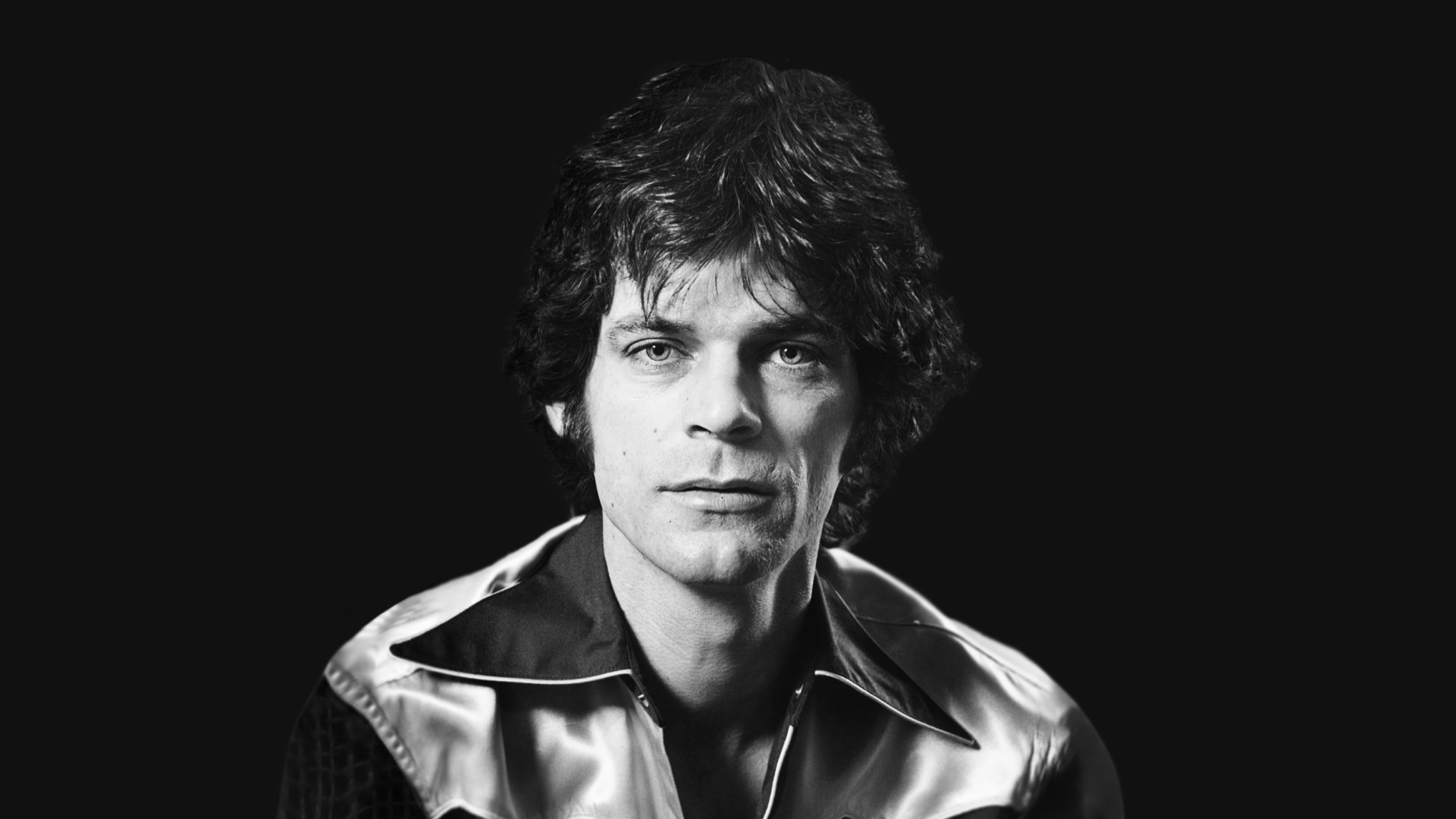
Died: B.J. Thomas, Born-Again Singer Who Clashed with Evangelical Fans

Popular artist professed Jesus and earned five gospel Grammys before turning back to secular music.

Christianity Today June 1, 2021
Michael Ochs Archives / Getty Images / edits by Rick Szuecs

Christian celebrity didn’t sit well with B. J. Thomas. The famous singer of “Raindrops Keep Fallin’ on My Head” and “(Hey Won’t You Play) Another Somebody Done Somebody Wrong Song,” personally loved Jesus. It was Christ’s followers that were the problem.

Thomas, who died May 29 at age 78, had a spiritual awakening in 1976. After his born-again experience, the pop and country singer with 15 singles in the Top 40 charts got off drugs and reunited with his wife, Gloria. He put out a massively successful album of Christian music. And he was confronted by an evangelical culture eager for stars but also instantly, angrily critical of them.

Thomas was hailed as a new evangelical icon and then heckled, booed, and berated by born-again fans who didn’t think he was performing his Christianity right. Other celebrities who have wanted to express their faith in pop music but struggled with the demands of believing fans—including Bob Dylan, Amy Grant, and Justin Bieber—would go through similar experiences in subsequent decades.

“I think it’s a really sad commentary when people who want to refer to themselves as quote-Christians-unquote would want to come out and hear someone just to boo them,” Thomas said in a 2019 interview. “That to me was always tough to deal with, and I just stopped making 100 percent gospel records.”

Thomas’s most public clash came in 1982, after he won his fifth gospel Grammy. He sang a string of his secular hits to an Oklahoma audience of more than 1,800, and a woman started shouting at him to talk about Jesus. He told her he wished Jesus would make her be quiet and then said, “I’m not going to put up with this” and walked off stage. Someone shouted, “You’re losing your witness, B. J.,” and there were scattered boos.

The singer returned to the stage and continued the show, but not before critiquing the fans.

“You people love to get together with your gospel singers and talk about how you lead all the pop singers to the Lord,” he said. “But when you get them in front of you, you can't love them, can you? I've got Jesus, but you can't love me.”

In CCM, Thomas complained that Christians “can’t seem to hear somebody sing. It’s always got to be some kind of Christian cliché or Bible song, or they feel it’s their right before God to reject and judge and scoff.”

Thomas continued to produce gospel records and Christian-themed music for the rest of his career, but he also recorded country and pop hits, including “Whatever Happened to Old Fashioned Love,” “New Looks from an Old Lover,” “Two Car Garage,” and “As Long as We Got Each Other,” the theme song for the sitcom Growing Pains. His shows were primarily secular, with a few religious songs mixed in.

He had, nevertheless, many committed Christian fans who mourned his passing over the Memorial Day weekend.

https://twitter.com/StevenCurtis/status/1399024715616997377
https://twitter.com/DUANEALLEN/status/1398781025971585024
https://twitter.com/thstovall/status/1399135023735914498

Thomas was born on August 7, 1942, in Hugo, Oklahoma. His parents, Vernon and Geneva Thomas, named him Billy Joe. He was raised in Houston, where his childhood was dominated by baseball, music, and his father’s alcoholism.

Thomas became the lead singer for a local band called The Triumphs at 15 and started drinking and doing drugs at the same time. The Triumphs had a hit in 1966 with Thomas’s cover of the Hank Williams’ song, “I’m So Lonesome I Could Cry.”

As a solo artist, Thomas cracked the top 10 charts with a love song in 1968, another love song in 1970, and the surprise hit “Raindrops Keep Falling on My Head,” which appeared during a musical bike-riding interlude in the genre-defying Western Butch Cassidy and the Sundance Kid, starring Paul Newman and Robert Redford. The song won Thomas an Academy Award and spent four weeks in 1970 as the No. 1 song in America.

He had another No. 1 hit in 1975, with the self-aware and self-commenting broken-heart country song, “(Hey Won’t You Play) Another Somebody Done Somebody Wrong Song.”

https://open.spotify.com/embed/track/0zRtBDhwtIFTfoK2HuURbM?si=ac45e4cba200464e
https://open.spotify.com/embed/track/0b7qiL1rLbUUpGXczt7p5T?si=773ecd10a45c4910

Success did not make him happy. In fact, it almost killed him.

As he later recounted in his memoir, cowritten with evangelical author Jerry B. Jenkins, he started doing more and more drugs until he was spending thousands of dollars every day on cocaine, which he supplemented with amphetamines and attempted to balance with Valium and marijuana. His personal relationships became rocky and his public performances irregular. Increasingly, he failed to even show up for concerts.

He overdosed in 1975, taking 80 pills at once. He was surprised when he woke up.

“I remember asking the nurse why I was still alive,” Thomas said. “She responded ‘God must want you to accomplish more here in this world.’”

When he got home on January 27, 1976, his wife, Gloria, told him she had accepted Jesus as her Lord and Savior and introduced him to an evangelical rodeo worker who explained to Thomas how he too could be saved. The man invited Thomas to pray with him, and Thomas poured out his heart to God.

“I began a 20-minute prayer that was the most sincere thing I had ever done in my life,” he later wrote. “I got straight with the Lord everything I could think of, and the bridge between 10 years of hell and a right relationship with God was just 20 minutes.”

According to historian David W. Stowe, Thomas’s conversion inaugurated the “Year of the Evangelical” and launched the phenomenon of “Jesus Rock” with his 1976 album Home Where I Belong, released by Myrrh. It was a No. 1 gospel album, won a Dove Award, won a Grammy, and earned Thomas a $1 million contract with MCA Records.

By the early 1980s, the Christian music circuit could boast a robust list of pop celebrities who confessed Christ, including Dylan, Donna Summer, Little Richard, Al Green, Arlo Guthrie, Noel Paul Stookey, Maria Muldaur, and Bonnie Bramlett. But if Thomas was the first on the scene, he was also the first to grow dissatisfied with the demands of Christian audiences.

“I’m not a Christian entertainer. I’m an entertainer who’s Christian,” he told a newspaper reporter in Wisconsin in 1982. “There is a large section of people who think a Christian singer has to sing Christian songs all the time. … This fall I’m working on getting my pop audiences back.”

In later years, he continued to include religious music in his performances, but he didn’t speak as much about Jesus.

“I might have been presented as a very religious entity in those days,” he told one interviewer, “but I'm not a religious person as we speak. And, I'm not sure that any one religion can serve all humanity.”

Thomas is survived by his wife, Gloria, and their three daughters, Paige Thomas, Nora Cloud, and Erin Moore.

https://open.spotify.com/embed/track/0Z93NOpZH50KIt6Au3fWyx?si=674a100832c449a6
https://open.spotify.com/embed/track/63UGaHEzYItnvWCuHn1LHr?si=5f4bd23801694644
News

Tulsa Church Ledger Preserves Stories of Faith After Historic Massacre

For 100th anniversary, the Museum of the Bible restored the “Book of Redemption.”

Christianity Today June 1, 2021
Courtesy of the Museum of the Bible

The book might look like it’s just a list of names and numbers, but Robert Richard Allen Turner, pastor of Vernon African Methodist Episcopal Church in Tulsa, Oklahoma, knows it’s more than that.

“It’s a ledger of our history that we still need to know today,” Turner said. “It’s a story of faith and folks who had faith in God.”

The city of Tulsa will pause on June 1 to remember the 100th anniversary of a racial massacre. In 1921, white Oklahomans killed hundreds of Black people and completely destroyed a prosperous Black community. When the violence ebbed, Greenwood Avenue—the heart of what was then called America’s Black Wall Street—was rubble. The mob had destroyed four hotels, two newspapers, eight doctor’s offices, seven barbershops, half a dozen real estate agencies, and half a dozen churches. One of the Black houses of worship that was damaged was the African Methodist Episcopal (AME) church, located then at 307 N. Greenwood.

The only thing left of the AME was the basement, and it too had been badly damaged. But the church decided to rebuild, and it kept a ledger of all the people who pledged to help and the money they contributed to the cause.

When Turner looks at that book, he thinks of the biblical genealogies and the Book of Numbers, where God told Moses to write down the names of the people who assisted him and to count and record the names of the people who had escaped bondage in Egypt and the descendants who went through the wilderness to the Promised Land.

“It’s not considered to be one of the sexier, more quoted [parts] of the Bible,” Turner said, “but the history of the genealogy in the Book of Numbers shows you the history of the people.”

The biblical doctrine of creation is foundational to our Christian faith. Questions about creation have an important bearing on our view of the Bible and, therefore, on our view of salvation and the reality of our personal salvation.Because our eternal destiny hinges on the truth of God’s Word, we become very agitated in discussions about the nature of creation, especially when views of origins that seem to undermine the Bible are advanced. For example, the assertion that the earth might be several billion years old commonly provokes a negative emotional reaction. To many Christians, that assertion seems flatly to contradict the Bible. Moreover, it is often claimed that scientists cannot really know the age of the earth anyway.Reconstructing The PastSuch skepticism raises an important question: How is it possible to know anything of the prehistoric past? Non-Christian geologists who have no interest in what the Bible says about the past seek to reconstruct the history of the earth by carefully examining evidence contained in rocks and other geological features. They interpret the evidence in terms of a principle of analogy with the present. They assume that the processes operative during the earth’s past were the same as, or closely analogous to, those operating at the present time, and were based on the same laws that govern the present behavior of nature. When we discover past effects that correspond exactly to effects we observe today, we conclude that the cause of the past effects is like the cause we now observe producing those same effects today.For example, a geologist discovers gravel deposits, layered mudstones containing isolated pebbles, and grooved, polished bedrock surfaces. He interprets this as the result of glacial erosion and deposition simply because such situations are characteristic only of modern-day glaciers.The Matter Of MiraclesGeologists seek to understand the past. Because the Christian geologist believes in the reliability of the Bible when it speaks about the past, he knows that miracles have occurred. Belief in miracles, however, presents him with a methodological problem in reconstructing history. Can the Christian geologist assume the analogy of the past with the present as the non-Christian does? If indeed God, in penetrating history, suspended the ordinary laws and processes of his creation, how then can one possibly distinguish a geological feature formed as a result of a miracle from one formed by ordinary, providentially controlled processes?For example, how can a Christian geologist studying salt deposits in the Dead Sea area ever hope to distinguish a mass of salt formed by the miraculous transformation of Lot’s wife from other salt masses formed by such ordinary processes as the evaporation of saline lakes?More important, suppose that God created the world by means of ordinary processes together with several miracles. The result would be that many geological features would have the appearance of age and development by natural process. How then could a Christian geologist distinguish glacier-produced gravels and polished bedrock surfaces from similar deposits that were created miraculously?Is the Christian geologist “fettered” by his belief in miracles so that he must forever remain skeptical about reconstructing the past from geological features observed today? Or are there biblical guidelines that will enable him to develop a viable method for reconstructing the past?Miracle, Providence, And The BibleScripture teaches that God is a God of order. He is not whimsical or arbitrary. The Bible constantly makes reference to the laws, decrees, and ordinances that he established in his creation (Ps. 104:5–9; Ps. 148:3–6; Job 28:25–27; Job 38:8–11, 33; Prov. 8:27–29; Jer. 5:22, 24; Jer. 31:35–36). God made a “covenant,” so to speak, with his creation so that the constituent elements of the created order—such as day and night, the sun, moon, and stars, seed time and harvest—behave in a regular, periodic manner (Gen. 8:22; Jer. 33:25–26).God appeals to his “covenantal” relationship regarding day and night and the laws of heaven and earth as evidence of his faithfulness to his people Israel (Jer. 33:25–26). This recurrent biblical theme of order and predictability in God’s creation lays the basis for scientific work, making it legitimate to assume the general continuity of law and natural processes throughout time. Like causes generally produce like effects, and so generally, like effects in rocks were produced by like causes.Scripture also plainly teaches that God has miraculously intervened in the ordinary course of events. He performed his miracles, however, for a definite purpose, not simply for man’s entertainment. These miracles occur at crucial junctures in redemptive history: the deliverance from Egypt; the entrance into the Promised Land; the earthly ministry of our Lord; the apostolic age. Miracles called attention to God’s mighty acts of deliverance and attested to the truthfulness of the message of the prophets and apostles. This sparing use of miracles implies that the Christian may interpret most past events in terms of ordinary historical and natural laws and processes. Even the definition of “miracle” demands assumption of a basic uniformity of the laws of nature, in contrast to which, from our human perspective, a miracle is seen as a miracle.I propose this as a proper Christian procedure: We assume we can explain any past event in terms of processes like those of the present operating on the basis of ordinary laws that God established. But we must make an exception to this if it can be demonstrated from Scripture that such an event was miraculous.For example, the Christian historian would not explain the birth of Christ in terms of natural processes because the Bible clearly indicates that a miracle occurred. On the other hand, the destruction of Sodom and Gomorrah, although unusual, could legitimately be explained in terms of natural processes providentially controlled by God. This is so because it cannot be shown that the Bible demands a miraculous event.In any case, the Bible clearly teaches that miracles are the rare exception rather than the rule. Therefore, we have solid biblical grounds for holding that any given geological process or event occurred in the ordinary course of nature unless there is some special reason for a divine miracle. It is also likely that a geological event must have some crucial significance in the history of redemption if we are to explain it as the result of a miracle.So the Christian geologist should attempt to reconstruct earth’s history by interpreting the evidence in rocks and geological features. But he must also assume that the past was fundamentally like the present, with the sparing occurrence of miracles, and with the biblical emphasis on the orderliness of nature as part of God’s providential upholding of his creation.Creation And GeologyHow then should a Christian geologist deal with those rocks and geological features that were formed during the six days of creation? Does he simply describe them, use their resources, and explain them as the product of God’s miraculous fiat? Or, may he legitimately interpret them in terms of present-day processes and laws?Many Christians claim the Bible demands belief in a creation that was studded continuously with miracles. Fiat creation is said to be identical to miraculous creation of various entities so that rocks, trees, lions, stars and the like were created only a few thousand years ago, virtually instantaneously, and in fully mature condition. Thus, lions, trees, and rocks created during the six days were supposedly created with only an appearance of age and historical development. Adherents of this viewpoint maintain that it is illegitimate to reconstruct the past from the evidence of ancient rocks by using any principle of analogy with present processes and laws. This is because miracles involving instantaneous creation are not analogous to what happens now.I agree that the initial creation (Gen. 1:1) was miraculous. And I insist on upholding the power of God in creation. But I maintain that the text does not insist either that the creation “week” was dominated by pure miracle or that natural processes were unimportant or nonexistent. Many Bible-believing theologians and commentators have noted that much of the language of Genesis 1 (for example, the development of vegetation on day three) strongly implies the processes of natural growth and development, initiated, nevertheless, by the fiat of God’s word (“Let the earth produce grass”). Others have argued that the days of Genesis 1 were long periods of time consistent with the discoveries of geology. Such theologians come from a variety of evangelical traditions and include such men as Charles Hodge, A. A. Hodge, B. B. Warfield, W. G. T. Shedd, J. Oliver Buswell, Jr., Alexander Maclaren, James Orr, Herman Bavinck, Tayler Lewis, Francis Hall, A. H. Strong, Bernard Ramm. Friedrich Bettex, Orton Wiley, John Miley, J. P. Lange, and Franz Delitzsch.Even older theologians like Saint Augustine and John Calvin held views of creation that anticipated these more recent scholars. The conservative Presbyterian scholar, B. B. Warfield, for example, points out that Calvin restricted the use of the great word “creation” to the initial act, and taught that in ordering the universe over the six days God used ordinary natural means. Amazingly, Warfield goes so far as to term Calvin’s view “pure evolutionism”!In any case, it certainly cannot be demonstrated conclusively from Scripture that the six days of Genesis 1:1–30 must be exactly 24 hours in length fitting into a single seven-day week. And the Christian geologist need not assume that all geological features were created with an appearance of age. He may assume that rocks, mountains, and other geological features of the six days of creation were formed through processes analogous with those of the present. And he has the right to use evidence contained in those rocks to reconstruct the past by analogy with the present. This also helps us avoid the problem of why God should have created a rock deposit that looked as if it had been formed by glacial action but really had not.Evidence For The Earth’S AntiquityIf we assume that the rocks of creation week were formed by processes we can know and interpret in terms of today’s laws, we find by analyzing the evidence in these rocks that Earth is extremely old and has a long, complex history. The geology of eastern Pennsylvania and New Jersey illustrates this. In general terms the area consists of a thick series of layers of sandstone, shale, limestone, and coal, which have buckled and in spots been penetrated by hot, molten silicate materials called magma.The following general history of the area is based on the work of hundreds of geologists during the past 150 years. First, an ancient rock surface was submerged in the sea and covered with beach sands, followed by fossil-bearing limestone deposits similar to those now accumulating on the shallow continental shelf off the southeast coast of the United States. Then deep-water and mud and sand were deposited on top of the earlier fossil-bearing limestone deposits. After these layers hardened into rock, they were folded, uplifted, eroded, and buried under another very thick accumulation of river, beach, and marine sediments. All this in turn was hardened into rock and again folded, uplifted, and eroded. On top of this erosion surface, river and lake sediments containing dinosaur fossils were deposited along with volcanic lava flows. After tilting, these layers eroded. Next, a thick sequence of sand and gravel was deposited along the east coast, and finally gravels left by vast glaciers in the northeast bring the story up to the present.This entire sequence of events for prehistoric Pennsylvania and New Jersey can be discovered by comparing these layered rocks with comparable deposits being formed today. Some creationists question the vast amount of time involved in such a sequence of events. But for the professional geologist, biblically oriented or not, the large amounts of time involved in the geological processes described are evident from several considerations.1. The varied characteristics of different rock formations suggest that sediment was deposited in a variety of environments. Now, great thicknesses of sediment generally accumulate slowly. For example, river deposits several hundred feet thick indicate the long-continued existence of that river. Transition from one environment to another is also very slow. Yet, in the eastern United States we see rock sequence reflecting numerous examples of radical changes in environment, each appearing to have existed a long time.2. The very distribution of fossils suggests that long stretches of time were involved in the development of the rocks in which they are found. Specific fossils are restricted to specific types of rock formations. This distribution suggests the periodic appearance of new forms and extinction of old forms. If all these sediments were deposited in a very brief time span, a given fossil animal would be distributed throughout the entire succession of sediments rather than in specific layers.3. The transformation of sediment into rock, the tilting and uplifting of that rock, and extensive erosion of solid bedrock are all processes that require much time. Rapid transformation into rock is very unusual and develops only under restricted circumstances. The present existence of thousands of feet of unconsolidated sediments off the Atlantic and Gulf coasts testifies that ordinarily such transformation does not occur quickly. Uplift of rock also occurs slowly. Although rock may be elevated several feet during a single earthquake, an uplift of thousands of feet would require a succession of events acting over a long time.4. In the light of what we know about the physical properties of rock layers, we can demonstrate mathematically that tens or hundreds of thousands of years would have been required to develop folds on the scale of those in the Appalachian mountain system.5. The sedimentary rocks have lava flows interlayered with them or igneous (magma-formed) rocks cutting across them. These rocks require time to solidify and cool to room temperature. Hawaiian lava lakes have taken as long as 16 years just to solidify to a depth of 50 yards. The time to cool to surface temperature was much longer. And in the rock record, there are lava flows thicker than the Hawaiian lakes. Successions of lava flows might thus require hundreds of years to form and cool. Moreover, many rocks then cooled from hot magma developed far underground where their heat would have been lost much more slowly than if they had cooled on the earth’s surface as lava does. The mathematical theory of heat conduction demonstrates that in some cases as much as a million years would have been necessary for the heat of the magma to be dissipated so that solidification could occur.Thus, the cumulative weight of several lines of evidence from the rock record, supplementing each other in every area of the globe, has persuaded most geologists, Christian and non-Christian, that the earth has experienced a long, dynamic history.Radiometric DatingBut none of the above lines of evidence provides us with dependable means for determining the exact age of a rock or geologic event. For that we appeal to radiometric dating.Radiometric dating concerns certain isotopes (varieties of atoms of given chemical elements like uranium, carbon, potassium, and rubidium). These isotopes disintegrate spontaneously at measurable, specific rates into other isotopes known as daughter products. To obtain the age of any material, geochronologists measure the quantities of radioactive isotopes and their daughter products in it, thereby obtaining an indication of the extent of disintegration. Corrections are made for the amounts of daughter isotopes in that material when it was formed. Through mathematical calculation, the age of the specimen can then be determined.Dozens of laboratories around the world are engaged in the radiometric dating of geological materials. Since the early part of the century, numerous techniques have been developed. Those with too many pitfalls have been discarded while sound methods have been refined. Consequently there are thousands of age determinations of rocks and minerals that have almost invariably yielded ages of millions to billions of years. Mathematical analysis of the distribution of uranium and lead isotopes suggests that Earth itself is on the order of 4.5 to 4.7 billion years old.Even outer space offers testimony to antiquities of this magnitude. Radiometric dating of many meteorites that have fallen to the earth indicates ages of between 4.5 and 4.6 billion years. And combined with the mathematical analysis of the distribution of radioactive elements on the moon, the radiometric dating of samples indicates it is about 4.6 billion years old. The very consistency of these results from separate bodies in the solar system reinforces the validity of radiometric methods.The geological evidence is utterly incompatible with the idea that the globe is only a few thousand years old. The only consistent way to maintain such an idea is to hold that virtually the entire rock record is the product of pure miracle. But Scripture certainly does not lend itself to such a conclusion.Many Christians are afraid to accept the conclusion of the earth’s antiquity because they think that this somehow establishes the validity of evolution. While significant biological evolution would not be possible in a recently created world, it is also true that significant biological evolution is not a logical necessity in an ancient world. The validity of biological evolution must be considered separately from the age of the earth.Fossils And Human EvolutionHuman evolution must also be considered separately from evolution in general. I personally believe evolution must be rejected as the mode of origin for the human race because the Bible demands a miracle for man’s origin. If the fossil evidence is evaluated on the assumption that the human body emerged through the agency of ordinary providentially controlled biological processes, then a significant transition from ancient types to modern man over the past four million years seems plausible.There are, for example, many humanlike fossil remains from eastern and southern Africa and from Asia. These remains suggest to many anthropologists a possible gradual transition of physical form from Australopithecus afarensis through Homo habilis and Homo erectus to Homo sapiens over the last four million years.Moreover, there are indications of human cultural development associated with the remains.The Christian paleontologist, however, must ask whether he can interpret the paleontological data solely in terms of natural processes or if he must assume that a miraculous act of God was the decisive factor. Is there any biblical evidence to indicate that the origin of man was something miraculous, or may we treat it in purely natural terms?Biblical Data On The Origin Of ManI believe Scripture compels us to accept a miraculous origin of man. In this conclusion I am supported by the overwhelming majority of evangelical commentators. Several lines of evidence support this conclusion.1. The human race is presented as made in the image of God. This biblical teaching would call in question a derivation of human beings from animals that are not created in the image of God.2. Genesis 2:7 says that when God breathed into man’s nostrils the breath of life man became a living creature. That which constituted man as a man also constituted him as a living creature. According to the Bible, man was not alive prior to his becoming man, so he is not a descendant of some other creature. Efforts to interpret this text in a purely figurative or allegorical manner are unsatisfactory because they ignore the structure of Gensis in which the book is divided into several historical narratives.3. Scripture indicates that Adam and Eve were separate creations and that the man appeared chronologically before the woman (Gen. 2; 1 Tim. 2:13). The temporal priority of the man before the woman is incompatible with an evolutionary view of the origin of man.4. Romans 5 and 1 Corinthians 15 teach that there was a distinct individual, Adam, who was the first man and by whose one sin plunged the human race into a state of condemnation. This individual is contrasted with the individual, Jesus Christ, by whose obedience God’s people were constituted as righteous. The individuality of Christ and the historical reality of his work demand, in terms of Paul’s analogy, that Adam, too, be a historical individual who committed a real act of disobedience in history.The individuality of Adam is difficult to reconcile with an evolutionary origin. But even more difficult to reconcile is the matter of death. Evolutionary theory would demand that biological death be a normal, natural part of existence of the ancestors of man as they gradually evolved toward humanness. Death is presented in both Genesis and Romans 5 as the penalty for sin. Even though this death may have as its major component the radical loss of blessed fellowship with God, nonetheless the physical aspect of death is not absent. Why do we repeatedly read the monotonous refrain “and he died” throughout the Genesis 5 genealogy if physical death as punishment for Adam’s sin is not in view?There is abundant evidence in Scripture to indicate that the origin of man in his totality was a miraculous event. The fossil remains, I think, may be interpreted to show an evolution of nonhuman animals, once created, and also of biological variation in man once created. But I do not think we can talk in terms of a biological transition from an animal to man.If someone can propose a view of evolution that would be consistent with the biblical demands that man is created in the image of God, that the sexes appeared separately, that man was in no way alive until he became a man, and that there was a unique first human individual, Adam, who was punished for his disobedience and who experienced physical death because of his sin, then we might calmly and dispassionately consider that idea in the light of God’s word. To date, however, I have not seen a satisfactory evolutionary view for the origin of man. The theological consequences of accepting currently existing ideas for human evolution are far too devastating, as we have pointed out.As shown by W. H. Green and B. B. Warfield, no serious theological problems are caused by accepting great antiquity for the human race. Exactly when a miraculous creation of Adam and Eve might have taken place, I do not know.Man’s creation probably goes back at least 50,000 years inasmuch as religious burial practices and highly developed art indicate that Neanderthal remains are genuinely human. Whether or not earlier remains like various species of Australopithecus, Homo habilis, or Homo erectus are genuinely human, and thus descendents of Adam, is a judgment that must be left to Christian anthropologists. They are in the best position to interpret existing fossils and to evaluate future discoveries.By contrast with human evolution, an ancient earth presents no serious negative theological consequence. Instead, the antiquity of the earth leads us to deeper wonder at the eternity of God just as the incredible vastness of the universe leads us to awesome wonder at his infinity.Davis A. Young is professor of geology at Calvin College, Grand Rapids, Michigan. He is the author of Creation and the Flood (Baker, 1977) and Christianity and the Age of the Earth (Zondervan, 1982).

What the Book of Numbers was to the Israelites, the Book of Redemption is to the congregation of Vernon AME Church.

When Turner took the position at Vernon, the book was old and decayed, though. He stuck it in a Tupperware container in an attempt to protect it from further damage. It might have stayed there if not for a special visit to the church on Juneteenth in 2020 by Oklahoma’s First Lady Sarah Stitt. During the tour, Turner showed Stitt the book and told her the story of the people whose names were written in it.

“She just immediately became overwhelmed by the story of faith of the individuals who had just lost their homes, just lost their businesses,” Turner said. “Some of them lost their loved ones and friends in the race massacre in 1921, but yet they came back to the church.”

The story stuck with Stitt, and she reached out to the Museum of the Bible to see if they could help Vernon restore the book.

The answer was yes. Anthony Schmidt, senior curator for the Museum of the Bible, said he and the staff at the Oklahoma City headquarters were instantly captivated by the story of the church and the Book of Redemption.

They met with Stitt and Turner in late July 2020 to discuss the project. In August, they began what would become an eight-month restoration project involving 15 people.

“It was in rough condition,” Schmidt said. “The cover was warped, and the leather that was originally on the cover had gone from a rich red to a brownish color, and it was flaking off and disintegrating.”

The binding for the book was torn in places, and some of the pages had tears and were falling out.

“When we first saw it, we knew this was going to take a little bit of time and a little bit of effort to restore it fully,” Schmidt said.

Conservator Francisco Rodriquez led the project: meticulously taking the book apart, repairing pages, cleaning mold, and stitching it back together again.

Turner had expressed his desire to see as much of the original preserved as possible, and Rodriguez did his best to honor that.

“What Francisco was able to do was save large portions of the original cover but also place them on top of a new leather cover that was close to the original color it would have looked like back in the 1930s,” Schmidt explained. “You get to see the cover that survived to today but also what it would have looked like back in the day.”

In addition to restoring the original, the Museum of the Bible made a replica so that people will be able to look at and study the book without handling the original and adding any more wear and tear.

“Generations to come will be able to look at this book and study it and learn about the history of this church,” Schmidt said.

Schmidt said he was personally touched when he read the donations listed in the book. Some donations are large for the time—$50 or $100. But other gifts are smaller—50 cents or a dollar. To him, those represent the biggest hearts.

“These were individuals who didn’t have a lot of money but they had a lot of faith and they had a lot of love for this community, and they wanted to see it rebuilt and wanted to see it thrive like it had,” he said. “That’s just inspiring.”

When Schmidt hears Turner speak of the work that the church is doing today, including raising money for feeding the hungry during the pandemic, he can’t help but think of the 360 names in the ledger and the families they represented.

“The hope and perseverance you see demonstrated in this ledger allowed the church to thrive and enabled it to serve the needs of the community for generations after,” he said.

Turner said he couldn’t be happier with the finished product and is grateful to be able to have it on display at the church for the 100th anniversary of the massacre on June 1 and for many years to come.

addApple PodcastsDown ArrowDown ArrowDown Arrowarrow_left_altLeft ArrowLeft ArrowRight ArrowRight ArrowRight Arrowarrow_up_altUp ArrowUp ArrowAvailable at Amazoncaret-downCloseCloseellipseEmailEmailExpandExpandExternalExternalFacebookfacebook-squarefolderGiftGiftGooglegoogleGoogle KeephamburgerInstagraminstagram-squareLinkLinklinkedin-squareListenListenListenChristianity TodayCT Creative Studio Logologo_orgMegaphoneMenuMenupausePinterestPlayPlayPocketPodcastprintremoveRSSRSSSaveSavesaveSearchSearchsearchSpotifyStitcherTelegramTable of ContentsTable of Contentstwitter-squareWhatsAppXYouTubeYouTube