Minding the Gap

We won’t solve our problems by retreating to the extremes.

MirageC / Getty

Of all the reader responses to former editor in chief Mark Galli’s editorial on President Donald Trump last year, the most encouraging of those disagreed graciously. “We feel differently,” they said. “But we have benefited from CT for decades. We can handle the occasional disagreement.”

Little did we know, in the waning days of December, what challenges the new year would bring. A contagion swept the planet and forced entire cities to a standstill. Then a series of events ripped open the wounds of our racial history and provoked months of civil unrest. Which is to say nothing of a string of historic natural disasters.

But what has made all these things more painful is the rift in our social fabric. Suffering is lighter when borne together, in a sense of neighborly love and common cause. Yet we cannot suffer together when we blame one another for the suffering. Everything from the fundamental science of the pandemic and the practice of wearing masks to the persistence of racial inequality and the need for law enforcement has become battlegrounds of partisan animosity.

The evolution of media has shaped those battlegrounds. The typical media consumer today has thousands of sources at her fingertips for news and opinion. In the democratized digital marketplace, anyone with a social media account can build a platform.

The positives in these developments are undeniable. Powerful stories that earlier might never have seen the light of day now can spread instantly to everyone. Important voices that might never have made it past the old media gatekeepers can now shape the world. The same digital networks that carry conspiracy theories and pornography also carry praise songs and sermons and Bible translations, expose dictators, educate pastors, and reach the lost in some of the most remote and repressive places on the planet.

Yet the negatives are significant, and they go beyond conspiracy theories and pornography. The competition for audience share is fierce, and the tides of human attention flow all too naturally toward that which offers instant and uncomplicated gratification. Content that is immediate, hyperbolic, and hyper-partisan carries the day. Thoughtful interpreters of culture are replaced by conspiracy-mongers, scorn merchants, and torchers of straw men. This impoverishes social discourse and leaves many isolated in separate media spheres that fail to challenge or broaden horizons.

Unfortunately, at precisely the moment we need media to model balance, nuance, and charitable disagreement, even some of the most venerable media institutions plunge in the opposite direction. Editors with the temerity to publish dissenting viewpoints are voted off the island, and the institutions that once employed them become smaller and more extreme. It’s easier to bear the torch for the tribe than it is to build a fire and invite the tribes together.

As a consequence, Americans today occupy dramatically different informational worlds. If you draw your news from one set of sources, then America is under threat from hordes of ignorant and hateful conservatives. If you draw your news from another set, then America is dissolving into chaos at the hands of Marxists, global elites, and the despisers of Christianity. We cannot come together on solutions if we cannot agree on the nature of the problems in the first place.

The solution is not to return to a pre-internet era, when a narrow set of people—who were often unfriendly toward Christian concerns—tell the stories of the world. The solution is to renew our commitment as a people to gracious and loving public engagement. CT will remain a magazine that affirms the essential convictions of the evangelical Christian faith but also stretches our thinking and challenges our complacency. We do not agree with every piece we publish. Listening and conversing well are dying arts, but they are essential to a life marked by the grace of Jesus Christ.

We can handle the occasional disagreement. In this season of division and rancor, we pray that Christians, followers of a Savior who engaged the faithful and the unfaithful, the insiders and the ostracized, the rabbis and the heretics, can model what it means to listen with love and disagree with grace.

Timothy Dalrymple is president and CEO of Christianity Today. Follow him on Twitter @TimDalrymple_.
Cover Story

Atlanta Beyond MLK: How Black Christians Continue a Civil Rights Legacy

Generations take up the gospel work of becoming a beloved community.

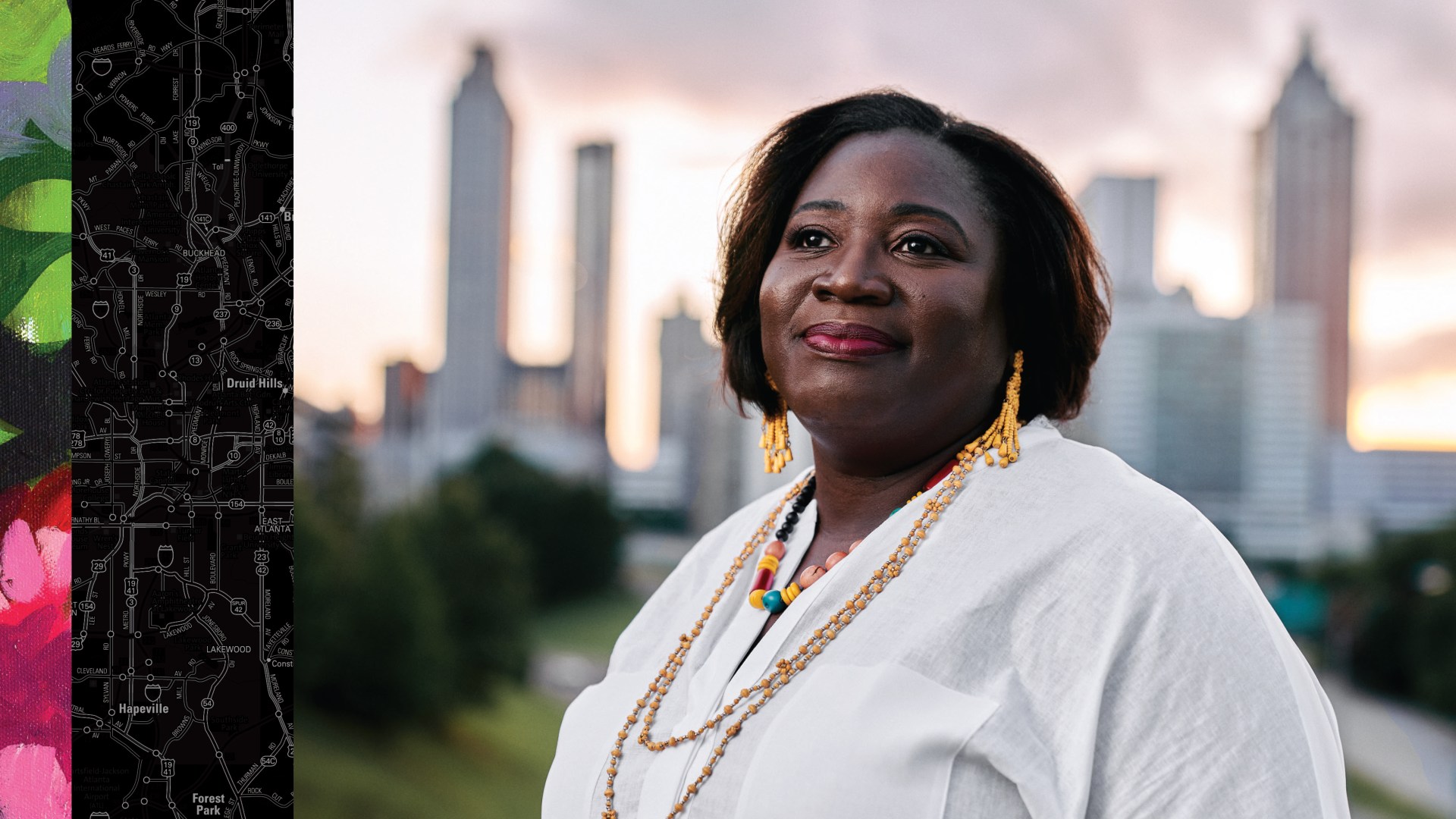
Bernice A. King

Bernice A. King

Painting by Charly Palmer / Photograph by Ben Rollins

From my apartment in Midtown Atlanta, I could hear the helicopters above the protesters after the murder of Rayshard Brooks in June. By then, demonstrators had been in the streets for weeks, incensed by the recent killings of George Floyd, Breonna Taylor, and Ahmaud Arbery.

In cities across the country, crowds were marching for black lives and praying for racial justice. Yet this national movement took on a different magnitude in Atlanta, a city shaped by the faith, activism, and political prowess of its African American forebears.

Much of the same could be said about black hubs like Detroit, Houston, Harlem, and Washington, DC. But there is a unique echo for justice in Atlanta, where leaders have walked the same streets and stood in the same pulpits as civil rights heroes who came before them. The Southern capital—a dreamed-of “black mecca” and the major metropolitan area with the highest concentration of black Christians in the US—has this history in its bedrock.

As Coretta Scott King, the civil rights leader and wife of Martin Luther King Jr., said, “Struggle is a never-ending process. Freedom is never really won; you earn it and win it in every generation.”

I think of the black men and women of my generation—recently called the Trayvon Generation by poet Elizabeth Alexander. We were raised to be aware of the ever-present threat to black lives because it was right in front of our faces, in headlines and on our Instagram feeds. Amid a very public conversation about racism and equity in America, we can see signs of progress. But as long as we find ourselves continually angry and mourning over another black death, we are far from being able to call these small iterations of progress freedom.

In Atlanta, it feels like we are living in between the current racial justice movement still unfolding and the civil rights movement that began in 1954. I simultaneously feel the urgency in the fight for my humanity now and the desire to acknowledge all of the contributions of the civil rights heroes of old.

Both are part of the spirit of the city today. To understand Atlanta, you must look to the deep history of black suffering and the indomitable will and gospel hope of its African American community.

Lee JenkinsPhotograph by Ben Rollins
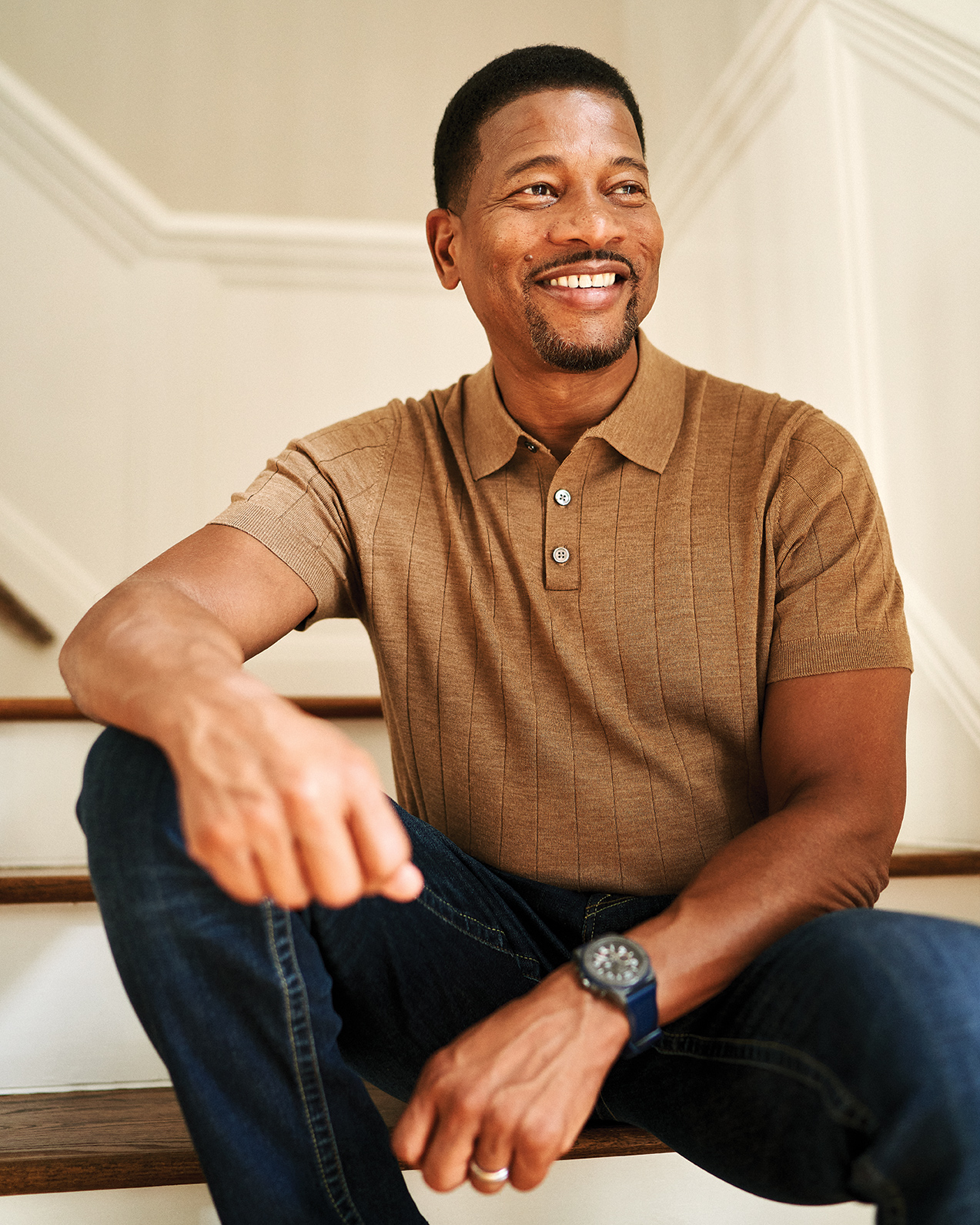
Lee Jenkins

Almost always, when you hear a prominent story of black success and progress in Atlanta, it connects somehow to the legacy of the black church. The beloved Atlanta businessman Herman J. Russell, whose construction empire built landmarks like Turner Field and the Hartsfield-Jackson Atlanta International Airport, cited his pastor as the greatest influence on his career.

“For most African Americans, church was the only place we could be somebody. It was there we did not have to prove our worth or our humanity. It was in church that we could act dignified without being chastised or threatened with harm for ‘acting uppity,’ ” wrote Russell, a friend of Martin Luther King Jr. who helped fund civil rights efforts and aided in the election of Atlanta’s first black mayor, Maynard Jackson, in 1973. “Church was the place all black folks, young and old, felt safe, loved, and affirmed.”

The black church has been a literal rallying point in Atlanta for more than 150 years. The fires of black justice and economic freedom were especially stoked in Atlanta during the washerwomen’s strike in July of 1881, when a handful of black laundresses met in a church in Summerhill, one of the city’s oldest black neighborhoods, to organize for fairer wages and treatment. Black preachers helped spread the domestic workers’ message, and soon more than 3,000 women went on strike. When a police captain was asked what the women did at their meetings, he said, “Make speeches and pray.”

Church basements housed the earliest classes for what have since become the city’s prestigious historically black colleges and universities: Clark Atlanta University, Morehouse College, and Spelman College. They started as ministry training programs and grew with the assistance of Protestant missionary societies that supported abolition and black education.

The legacy of faith and education in Atlanta provided one of the few groundswells for African American prosperity, even though seemingly every iteration of black progress was met with an increased amount of white violence. But even formerly enslaved men—such as Alonzo Herndon, the city’s first black millionaire—steadily developed economic capital and cultural credibility in the early part of the 20th century.

Auburn Avenue developed into a center for black business and community building. Its oldest church, Big Bethel African Methodist Episcopal, was known as “Sweet Auburn’s City Hall.” The growing Ebenezer Baptist Church also made its home on the street, its preachers encouraging congregants to become homeowners and “get a piece of the turf” in the bustling district. Martin Luther King Jr. saw his grandfather and father lead Ebenezer, and he co-pastored the church during the final years of his life.

Black Christians have long looked to God as a divine Deliverer, Redeemer, Healer, and Judge in the face of the absurd reality of racism. Martin Luther King Jr. built on those biblical teachings around deliverance by fusing them with the political promises of democracy, freedom, and equality—embracing the prophetic black church tradition alongside American civil religion.

At times unseen and at times marching front and center, the black church has been at the core of each iteration of America’s struggle for freedom, convicting America of its failure to hold to its foundational ideals. The American conscience was steeped in white supremacy and a form of capitalism that disregarded the life, liberty, and pursuit of happiness of the nation’s nonwhite citizens.

For Martin Luther King Jr., injustices against the economically disenfranchised and black people did not just violate the principles of the kingdom of God; they put America on a road to self-destruction. And so he rallied supporters, fellow black believers in particular, to boycott against segregation, register to vote, and proclaim a different vision for the country, a beloved community of justice and peace. His prophetic faith demanded social change, but also nonviolence.

Martin Luther King Jr.’s life is one reminder that the story of Atlanta is built upon the mountains of resilience and deep conviction. His death reminds us that the movement has come at the great cost of many lives and the emotional well-being of image-bearers seeking justice. That’s not specific to the city. America has long been a nation unwilling to receive its spiritual resuscitation without first being marred by tragedy and black death.

Though overcome with grief from her husband’s assassination and frustrated with the daunting fight that lay ahead for the movement he had begun, Coretta Scott King did not let her husband’s legacy die with him in 1968. She considered it her call from God to take the charge, even at a time when black women were not widely celebrated as leaders.

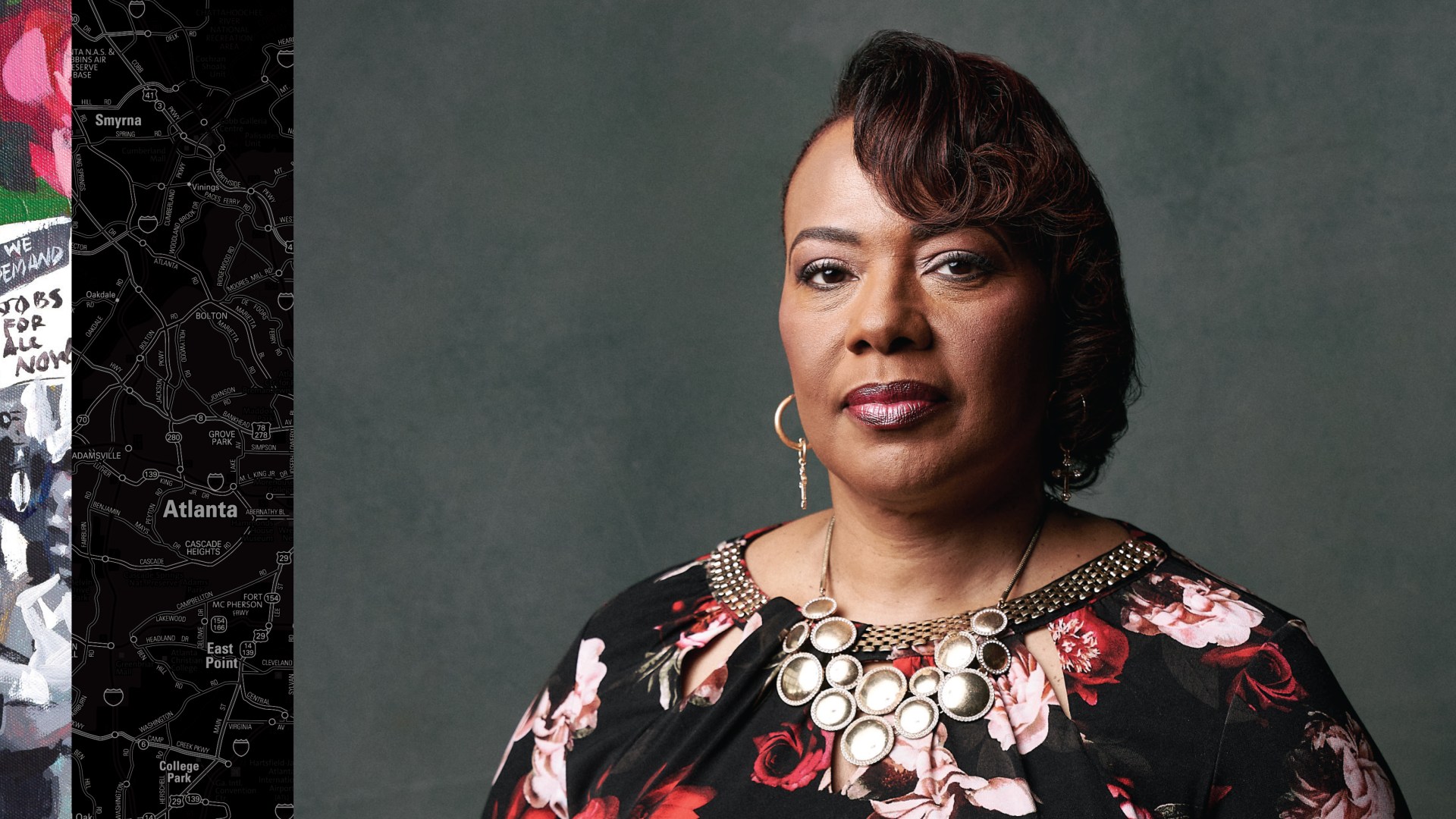
“She had a spiritual strength that gave her the ability to do what she did without hesitation,” said Bernice A. King, the CEO of The King Center, the organization founded by her mother and the place where I work today.

“Her confidence in her calling was undergirded by her prayer life,” she told me. “I recall a time in 1990 when I saw my mother seemingly wrestling with God. I walked into her room and heard her saying, ‘Whenever I pray, I am on the right path. Whenever I don’t, I get off.’ This served as a confirmation for me that everything my mother did was formed in prayer.”

On a national level, Coretta Scott King worked with legislators to establish the holiday in his honor. In Atlanta, she worked to preserve historic Auburn Avenue and founded the Historic District Development Corporation, which helps to provide affordable housing in the Old Fourth Ward community to this day. Her King Center houses millions of civil rights–era documents and draws in a million visitors a year. Coretta Scott King’s efforts are forever tied to the spiritual, social, and political fight for freedom in the city of Atlanta.

And the work continues. Bernice A. King echoes her mother’s words, saying now, “The freedom struggle connects us from generation to generation. There are things that we can extract from our elders. . . . There’s a strength and courage and tenacity in the younger generation that is so important to the movement for freedom.”

Through The King Center, kids as young as toddlers and teens participate in long-term training to develop philosophies around anti-racism and nonviolence. They too are caught between the very contemporary realities of the world, with smartphones in their pockets and increasingly diverse classrooms around them, and the still-relevant strategies in the fight for freedom.

For them, the place of the church in the racial justice movement may have shifted, according to my pastor, Lee Jenkins. The church still has the prophetic voice to lead on issues of righteousness and justice, he said, but it needs to speak up.

The Atlanta native—a former manager of Kirk Franklin who built a successful career as an investment adviser—sees the movement extending across all areas of life.

“In 2020, engagement looks different. We need activism from the street to the boardroom,” said Jenkins, who leads Eagles Nest Church in Alpharetta, Georgia. “The church needs to be leading the charge. It is just as important to build street prophets as boardroom prophets. That is how we are aiming to train people.”

In 2020, as black blood has been poured out yet again onto the streets of America, we are at a crossroads. In the words of Martin Luther King Jr., where do we go from here? Are our city and our country still on the journey away from the vestiges of white supremacy and toward the more hopeful claim of the beloved community?

The aim of this article—and the articles that follow it—is not merely to capture a historical backdrop of the legacy of faith and activism in Atlanta but to beckon everyone, everywhere, to participate in the story.

Countless people have sacrificed to make Atlanta what it is today. Just as we are required to be “doers” of the Word in the Book of James, the door has been flung open for all of us to join together in the work of the same God, the same Spirit, the same Word that inspired the civil rights leaders of past and present to see, hear, and act.

The task of dismantling racism and other forms of injustice is mighty, and it requires all of us to be actively engaged with the mission of justice. But the good news is that the kingdom of God is not a faraway existence available to us only upon death. Rather, it is here, active and present in our midst.

Cameron Friend is a minister, speaker, and writer in Atlanta, where he works for The King Center. He holds a bachelor’s degree in political science and philosophy from the University of Northern Colorado and a master’s of divinity from Baylor University’s Truett Theological Seminary. Read the the rest of the series here:

Cover Story

The Black Church Is Atlanta’s Original Community Organizer

Long before Raphael Warnock’s Senate run, the biblical call for freedom for the oppressed stirred Atlanta Christians to social action.

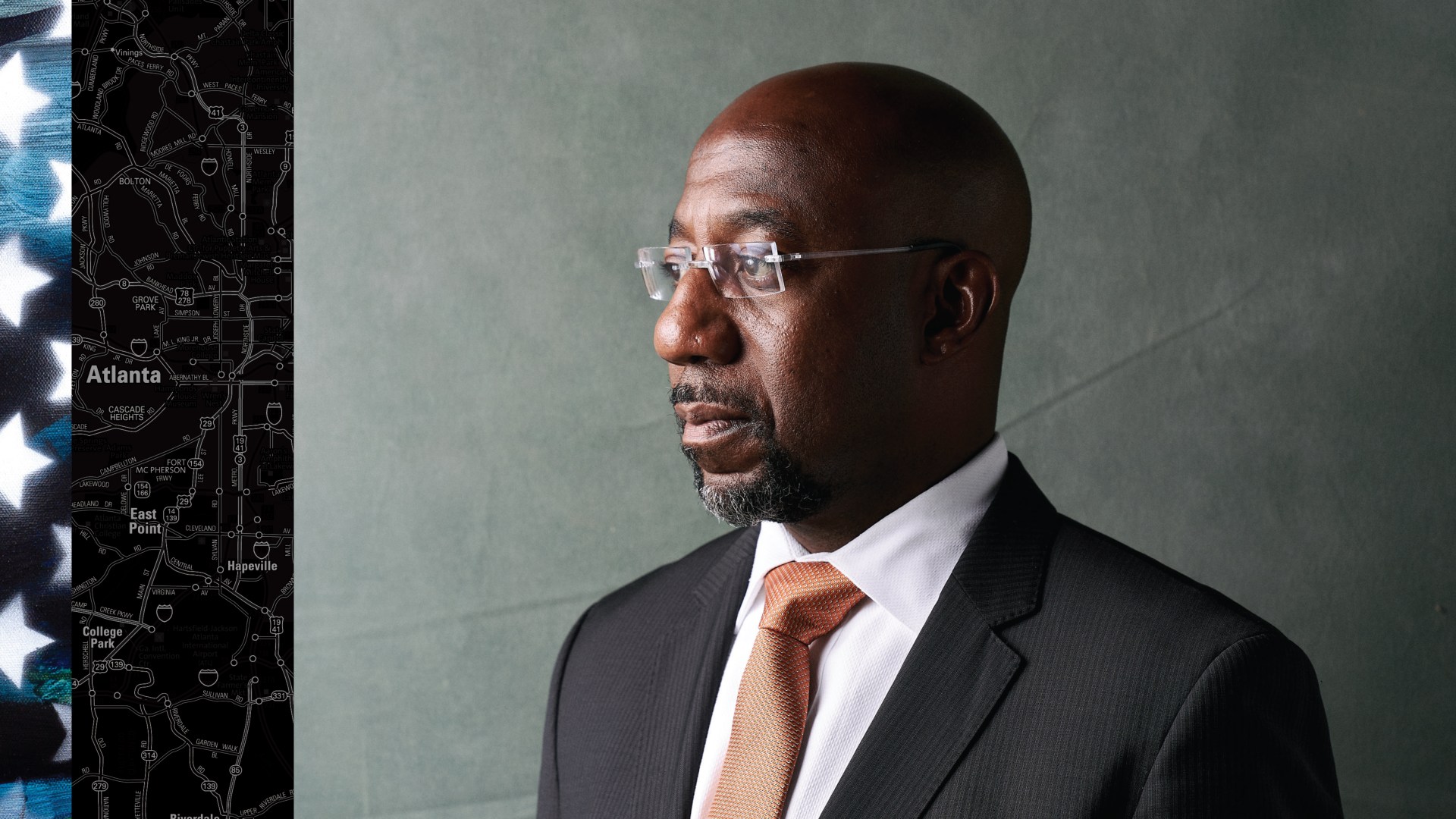
Raphael Warnok

Raphael Warnok

Painting by Charly Palmer / Photograph by Ben Rollins

As pastor of Atlanta’s historic Ebenezer Baptist Church, Raphael Warnock said he never felt the pressure to fill the shoes of his famous predecessor, Martin Luther King Jr. But he does “stand on his shoulders.”

Warnock is the fifth and youngest inhabitant of the pulpit of the 134-year-old church, both a National Historic Site and an active Progressive Baptist congregation. Ebenezer Baptist famously was co-pastored by King and his father, Martin Luther King Sr., or “Daddy King,” from 1960 until the civil rights leader’s assassination in 1968.

Though “times are different than they were then, there are many of the same challenges,” Warnock told Christianity Today in the midst of another wave of activism around policing, voting rights, housing, and health care for black Americans. “But we have to rise to [the next] one while finding inspiration in what they’ve done.”

After 15 years at Ebenezer Baptist, Warnock’s present challenge is running for US Senate in Georgia. The issues he hopes to address in office are many of the same ones that troubled an Ebenezer college student named Lonnie King Jr. in 1960. With fellow black student activists, Lonnie King decried racial discrimination in “An Appeal for Human Rights,” which ran in local papers as well as The New York Times and was a catalyst toward desegregation in Atlanta.

The contemporary civil rights movement is more diffuse and its leadership less religious than in the days of the marches led by ministers and Christian students in the 1960s. But today’s black church leaders are still building on the political legacies of their forerunners, and Atlanta showcases many of the historic parallels.

“This moment is foremost a moral crisis, but it is also political one,” Warnock said. “The nation could use a moral voice, and the Senate could certainly use a pastor.”

At Ebenezer, he led an interfaith coalition to offer free record expungement to people whose arrest records hurt their employment and housing prospects. As a senator, Warnock plans to prioritize bipartisan efforts to end mass incarceration. Campaigning for November’s special election, the Democratic candidate is the latest in a long line of black faith leaders and pastors in the state whose faith led them into politics. (Warnock served as pastor to another famous preaching politician, the late US Rep. John Lewis.)

“Atlanta’s long and courageous struggle for social justice has always and continues to this day to include faith and activism because of a tightly knitted web of relationships between black institutions,” said Walter Earl Fluker, professor at Emory University’s Candler School of Theology.

Political candidates and community organizers cite a sense of mission—their desire for the peace, justice, and neighborly love that define God’s kingdom—as they march and mobilize against the systems that threaten their communities. In the wake of the killings of George Floyd, Breonna Taylor, Ahmaud Arbery, and Rayshard Brooks, devout African Americans are responding not just in prayer and lament but also in the streets and the voting booths. They believe the God who values all people as made in his image, who champions the vulnerable, would have them speak up and act.

In Atlanta, that political conviction against racial injustice dates back to at least 1868, when African Methodist Episcopal (AME) Bishop Henry McNeal Turner was elected to the Georgia legislature as a Republican.

“Because God saw fit to make some red, and some white, and some black, and some brown, are we to sit here in judgment upon what God has seen fit to do?” he challenged lawmakers, arguing that it was only just for men to have a say in the laws that might take their lives or the lives of their families. “As well might one play with the thunderbolts of heaven as with that creature that bears God’s image.”

The former Civil War chaplain was one of 33 black legislators expelled from the statehouse by white politicians, and hope for full citizenship rights for black people in this country dwindled.

In the absence of political power, black Christians historically turned to the church. “In lieu of not being able to engage in traditional politics, black people used their faith to organize and force society to hold to its ideals of democracy and freedom,” said Candler student Darrin Sims, a fellow with the Georgia Justice Project.

Black washerwomen relied on the church as they rallied to strike for better wages in 1881. Black women working at the Scripto factory did the same more than a half century later. Many were members at Ebenezer and had the backing of Martin Luther King Sr. when they unionized in the 1940s. And they had the backing of Martin Luther King Jr. when Mary Gurley, a prominent member of the church, led another Scripto strike in 1964.

According to University of Texas political scientist Eric McDaniel, black pastors and churches across the country are politically engaged “on a variety of issues, like fair housing and anti-discrimination laws, because their members are calling upon them” to help. The church also serves as a place for voter outreach, registration, and education. Today’s black Protestants are three times more likely than their white counterparts to hear about political candidates at church, a Pew Research Center survey shows.

Justin GiboneyPhotograph by Ben Rollins
Justin Giboney

Historically, black pastors were middle class and well educated, so they were in a position to advocate for their community’s needs. Fluker noted that churches like Friendship Baptist, as well as Wheat Street Baptist, Ebenezer Baptist, and Big Bethel AME—all located on Auburn Avenue, the center of black life in Atlanta for generations—helped build the civic and social capital from which black Atlantans today still benefit.

The leaders of these historic churches were involved in landmark interracial cooperation efforts after a 1906 riot. But young student activists criticized the old guard, including Martin Luther King Sr., for accepting incremental changes. In the 1960s, the Atlanta Chamber of Commerce adopted the slogan “the city too busy to hate” in contrast to more brutish government responses in Memphis and Birmingham, though many white business leaders—more pragmatic than progressive—did not actually welcome integration.

Atlanta “has long celebrated itself as a city too busy to hate, but we must labor to make sure that it is not also a city too busy to love,” Warnock told CT. “We in the church work to make sure Georgians have access to jobs and address the inequities we see in Atlanta and across the country.”

Bobbi Simpson, a former candidate for the Georgia House of Representatives and political consultant, said she got into politics to “provide hope for the poor and call for repentance where governmental or ecclesial leadership has failed to live out biblical commands.”

“Luke 4:18–19 and Amos 2:6–7 speak of God’s love of the poor,” Simpson said. “The poor have been criminalized for far too long, and the church has been complicit either by apathy or by silence.”

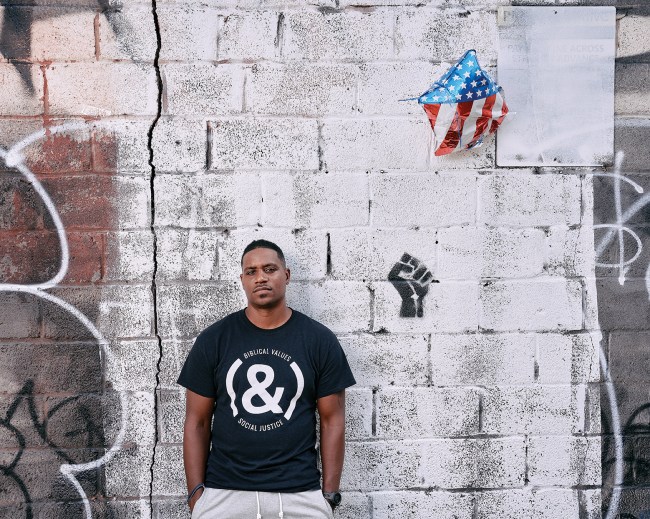
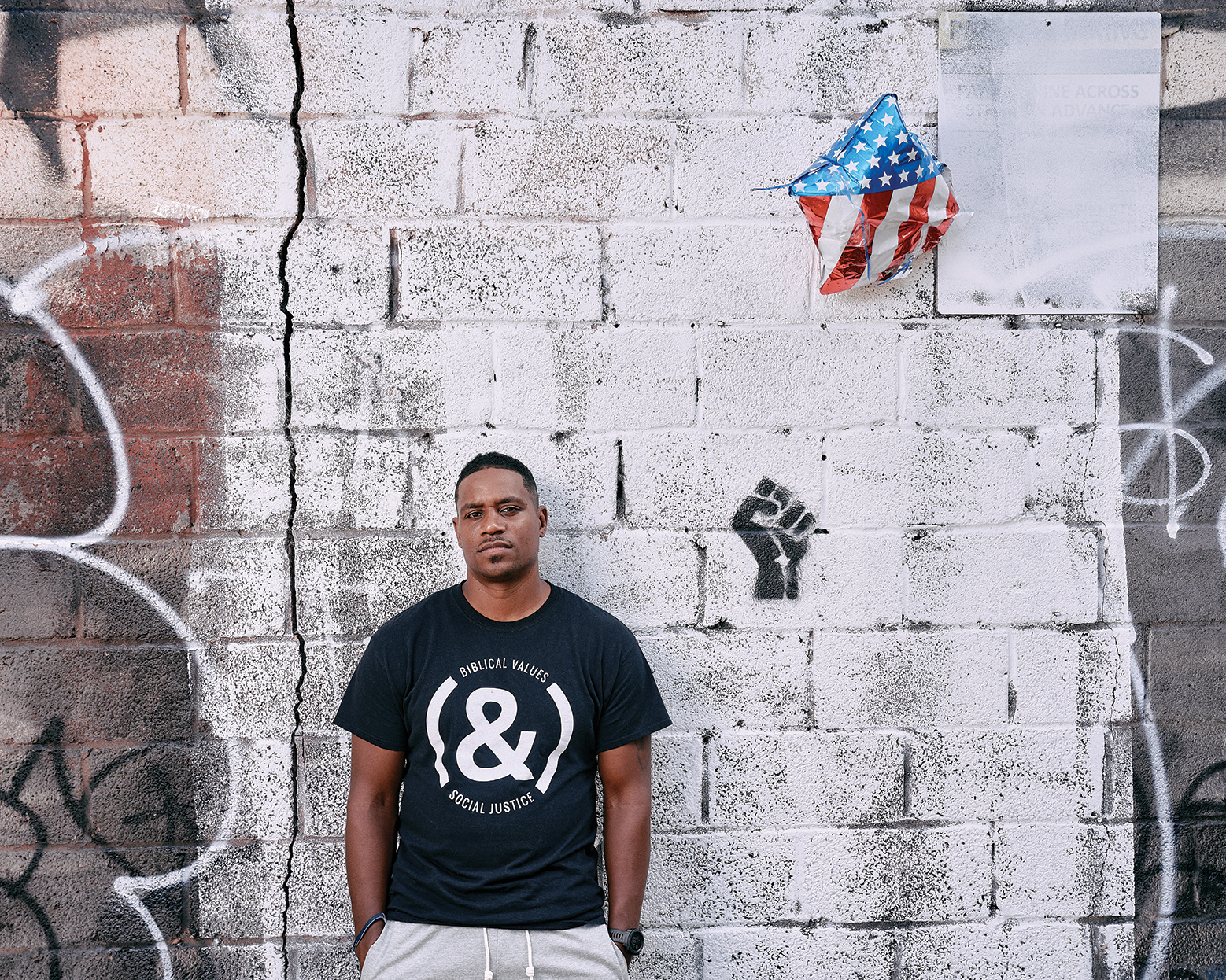
Attorney Justin Giboney sees the black church’s theology, particularly its focus on the Exodus narrative and the Great Commandment, as playing a crucial role in spurring political activism in his city. He leads the And Campaign, an Atlanta-based movement calling on Christians to stand for human dignity and justice in public policy. In many ways, the And Campaign reflects traditional black Protestant politics like those of Henry McNeal Turner—a commitment to both justice and morality.

The And Campaign’s positions span from assisting families to addressing poverty and reforming the prison system, and Giboney advises Christians to see political parties as tools, not as identities. Still, he believes all kinds of civic organizations can work toward gospel ends. “If there is something in my sphere of influence and my neighbor is hurting, and there is something I can do about it and I do not, that is unfaithful,” he said.

Martin Luther King Jr. encouraged Christians to not only “play a Good Samaritan along life’s roadside” but “to see that the whole Jericho road must be transformed.” Atlanta leaders told CT they see that philosophy reflected not only in King Jr. and Coretta Scott King’s legacy, but in a whole generation of civil rights leaders like Juanita Abernathy, Julian Bond, Maynard Jackson, John Lewis, C. T. Vivian, Joseph Lowery, and Ella Baker.

Area pastors make that kind of community and societal transformation a core part of their ministry, with politics being one major way to improve their Jericho roads. Sammie Dow, senior pastor of Pleasant Grove Missionary Baptist Church in Marietta, Georgia, organized a letter-writing campaign, trained members to offer public comments to local legislative bodies, and mobilized members for protests while encouraging them to be active voters.

“Activism is the responsibility of anyone, especially black people who profess to be followers of and in relationship with Jesus Christ,” said Dow, a former national director of the NAACP Youth and College division.

Black clergy in Atlanta are ramping up efforts to make sure their members vote and to protect the hard-won rights that leaders like Lewis fought for. The Skinner Leadership Institute and the National African American Clergy Network are sponsoring “Turnout Sunday” in several states, including Georgia, rallying church leaders to pray and share election information.

“We must use our position and influence to teach, motivate, empower, and challenge our members to care about the lives of others, to advocate for justice and equity, to be actively involved in the community and helping to shape its direction through our vote,” said Cynthia Hale, senior pastor of Ray of Hope Christian Church in Decatur, Georgia. Her church sent out cards with information about voting.

In his book Across That Bridge, Lewis wrote, “The power of faith is transformative. It can be utilized in your own personal life to change your individual condition, and it can be used as a lifeline of spiritual strength to change a nation.”

Serving the God of the Exodus and the Son whose anointing set the captives free, black Christians are working to change their neighborhoods, their cities, their states, and the nation—one vote, one protest, one march, one community meeting at a time.

Kathryn Freeman is an attorney and former director of public policy for the Texas Baptist Christian Life Commission. Currently, she is a Master of Divinity student at Baylor University’s Truett Seminary and one half of the podcast Melanated Faith.

Read the rest of the series here:

Cover Story

Racial Reconciliation Is Still a Dream for Atlanta Christians

But church leaders think it’s worth the work to address longstanding divides.

Latasha Morrison

Latasha Morrison

Painting by Charly Palmer / Photograph by Ben Rollins

Dhati Lewis set out to start a church that could be a blueprint for urban discipleship, a church “in the city, for the city, that looks like the city.” But first, he needed a city.

A decade ago, he left the college town of Denton, Texas, for Atlanta, an urban hub four times larger. With him came 25 longtime ministry partners, including rappers Lecrae and Sho Baraka and pastor John Onwuchekwa. Together they planted Blueprint Church in the Old Fourth Ward, a story chronicled in a recent documentary, Becoming Blueprint, released in honor of the church’s 10th anniversary.

Lewis’s approach to ministry grew out of the tension he felt between the white evangelical culture that fueled his faith in Denton and the familiar black culture of his upbringing. In Atlanta, though he was a black pastor leading a diverse congregation in a majority-black city, the work of urban church planting was complicated.

For one, the area around his church continued to gentrify. “In this neighborhood, what scares me is the fact that you have Section 8 housing on one end and like a million-dollar home on the other end,” he said in the documentary.

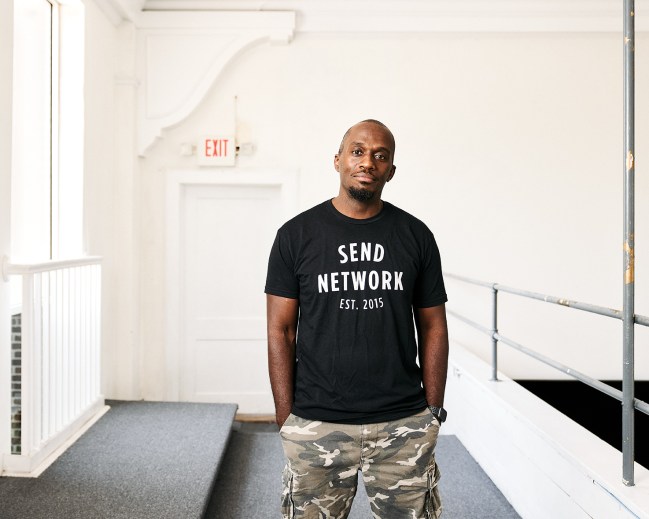
Lewis, vice president of the Southern Baptist Convention’s Send Network, advises fellow church planters that the urban mission field is no longer the “inner city” stereotype but is instead defined by density and both racial and economic diversity.

Urban churches straddle dividing lines, and the context challenges pastors to ask whether they are after superficial unity or are willing to do the difficult work of addressing their own assumptions, shallow theology, and cultural hang-ups to engage in reconciliation.

“Diversity is such a buzzword these days, and as pastors, we all seem to want it. It seems most Christians also want to be part of a diverse church,” Lewis wrote in his 2019 book, Advocates: The Narrow Path to Racial Reconciliation. “But I’ve found that once you are in one, you discover how much it challenges some of your most deeply embedded theological convictions.”

Dhati LewisPhotograph by Ben Rollins
Dhati Lewis

The biblical roots of reconciliation are preached from the pulpits and panels at Blueprint, drawing from the multicultural growth of the early church in the New Testament, and these teachings influence the way its members engage in ministry in their own neighborhoods. The pressures Lewis faces as a pastor in Atlanta are some of the same ones fellow black leaders in other parts of the city have confronted over the decades.

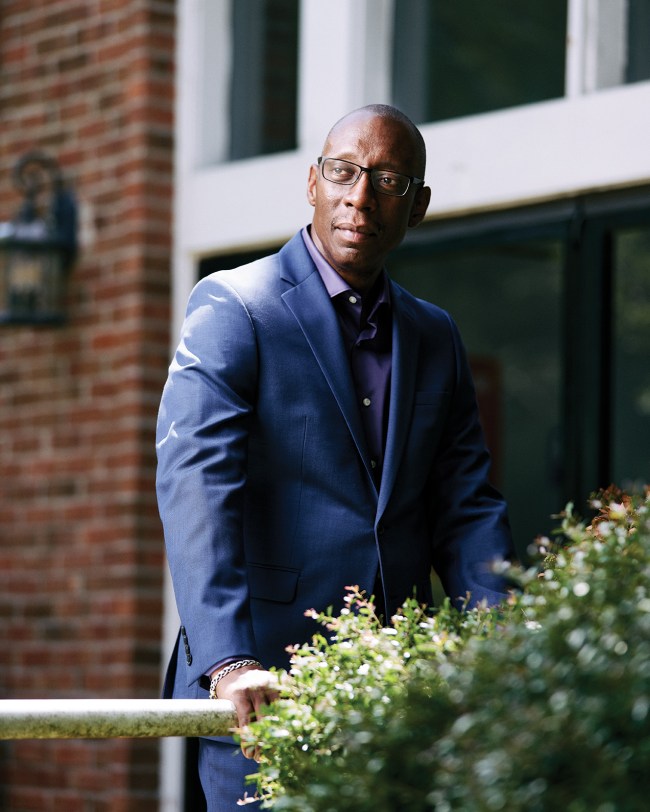
Bishop Garland Hunt—co-founder of the OneRace Movement and senior pastor of The Father’s House, a church in the northern suburbs—realized that before he could lead a church working toward unity, God had to change his own heart.

Born in the civil rights era, Hunt grew up in the black community in Atlanta. He belonged to a black Baptist church and attended all-black schools. He remembers watching Martin Luther King Jr.’s funeral procession winding through thronged streets of his hometown.

Garland Hunt Photograph by Ben Rollins
Garland Hunt

“I was about 10 years old, but I was really impacted by what Dr. King was doing and the impact of the movement in the black community fighting against racial injustice and for our civil rights,” he said.

Hunt moved from the city known as the civil rights capital of the nation to the nation’s actual capital for college and law school. “Even though I was accepted at other schools, I chose to go to Howard University because it was black and it was in Washington, DC,” he said. “So I was choosing a path promoting my cultural identity, and I carried what I experienced in Atlanta with me.”

King’s example inspired Hunt’s activism. He marched on the National Mall for King’s birthday to become a national holiday. And he gravitated to new black voices, introducing Nation of Islam leader Louis Farrakhan when he spoke on campus. But Hunt was still a churchgoer, and the Christian principles he was raised with convicted him.

“I realized that the road I was on wasn’t the right road, and I knew that the Lord was not pleased with me,” he said. His blackness was still the prism through which he practiced his faith, to the point that he mistrusted white people and “really did not want to hear any biblical truth from anybody white,” he said.

In law school, he began to see that the “church of Jesus Christ is not black nor white.”

After being baptized in the Holy Spirit during a campus ministry event, “God started dealing with all my racial hatred and prejudices, and I began to open up to true healing. I had to forgive. I had to release.” He took years to process what that meant for his approach to racial issues and political issues, going on to build a career in law and ministry.

Hunt, who was involved as a leader in the criminal justice system in Georgia and served as president of the ministry Prison Fellowship, drew from King’s legacy and his own convictions on race as he joined with a half dozen pastors to develop the OneRace Movement.

The racial reconciliation ministry held its first major public event in 2018 at Atlanta’s Stone Mountain, the largest Confederate monument in the country and a place King referenced in his famous “I Have a Dream” speech. Nearly 20,000 people and over 300 churches and ministries participated, encouraged to sign OneRace’s “Atlanta Covenant” pledging to “stand against racism” in any form.

Pastor Léonce Crump Jr. was one of the speakers at the event. He moved to Atlanta from Tennessee more than a decade earlier to start a church downtown. Hoping the city’s history would buoy his efforts, Crump scheduled the launch of Renovation Church to correspond with Martin Luther King Jr.’s birthday weekend.

Crump sought to plant a church that “reflected the full breadth of God’s creative genius,” and he has seen that prayer bear fruit: The 1,200-person congregation now represents 30 ethnicities. But growth hasn’t come without tension. “I’ve been told, ‘You’re not preaching the gospel when you’re speaking out about police brutality.’ Or, ‘That’s a political issue, not a gospel issue,’ or ‘I feel like you talk about race too much,’” said Crump, who has a criminal justice degree. “I had one white couple leave, and they called me racist.”

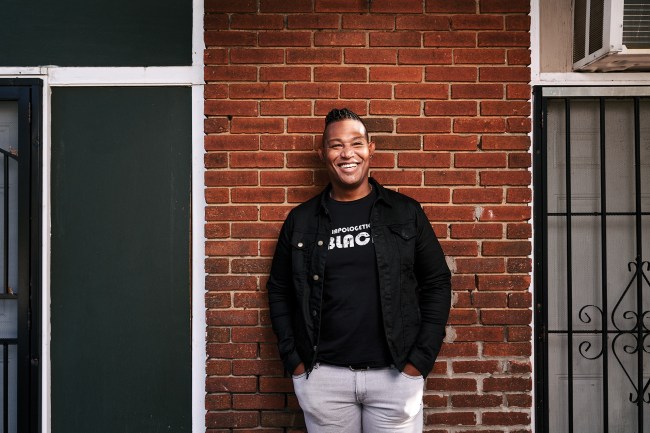
Crump wore a shirt that read “Unapologetically Black” as he spoke at a rally in Atlanta’s Liberty Plaza in June, joining fellow black Christians speaking out in the weeks following George Floyd’s death. He does not intend to stop addressing race, citing John 6:66. “Jesus lost many disciples when he told the truth,” he said. “People labeled Dr. King a Marxist and a communist when he was a just a Bible-believing radical Christian.”

Léonce Crump Jr.Photograph by Ben Rollins
Léonce Crump Jr.

Atlanta’s Latasha Morrison knows what it is like to work through conflict over racial issues on a congregational level. Her Be the Bridge ministry trains Christians to do the humbling work of learning from marginalized voices, developing empathy, and pushing for justice—all undergirded by a belief in the power of God’s reconciling work.

“The church has to talk through differences and talk through issues, and there will be pushback,” said Morrison, who cautions that people in multiethnic churches are not necessarily reconciled to one another. “People love the word reconciliation, but when it comes to the work, that’s hard for people. You may lose people along the way.”

Morrison began Be the Bridge in 2015 in Austin, Texas, where she was on staff at a white church. She was unable to find black friends, and her white friends didn’t share the same pop culture references common in black culture and didn’t immediately connect over broader concerns around racism in society and the church.

“It was just a burden in my heart to see the church, particularly, so racially segregated,” said Morrison. “Rather than complain about it, I started looking at the problem and thinking about why we are so segregated and what can we do to change it.” She started with a group of a dozen people, and Be the Bridge has spread to include more than 1,000 groups across five countries.

She has since returned to Atlanta, where she joined leaders like Crump and Hunt in promoting racial justice and racial healing at local events in June. As those conversations around race took off over the summer, Morrison’s book Be the Bridge: Pursuing God’s Heart for Racial Reconciliation became a New York Times bestseller.

The Juneteenth march organized by OneRace followed days of rioting and destruction in downtown Atlanta. “The night when Atlanta started to burn, it hurt me so bad,” Hunt said. “The violence was overshadowing what was being protested.”

Instead, at the OneRace march, more than 13,000 people representing 500 churches marched from Centennial Olympic Park to the state Capitol—evidence that a growing number of Christians in Atlanta see racial reconciliation as an essential part of their faith and church life and are willing to act.

And yet, even pastors who have long felt called to this work and who lead multiethnic congregations themselves testify that the process is challenging.

King’s hope was that “with this faith, we will be able to work together, to pray together, to struggle together … to stand up for freedom together, knowing that we will be free one day.”

Decades later, Atlanta pastors are still working toward this dream, taking hope in the fact that, as Blueprint’s Lewis writes in a new racial reconciliation curriculum, “the gospel message has never ignored racial issues,” and as Be the Bridge attests, God’s reconciling work “has the power to remove the enmity, alienation, prejudice, and self-interest.”

Leaders sense the Spirit at work in their city and beyond.

“I think we’re one generation away from a significant shift because I do think there has been a shift societally. It’s just not moving fast enough for the boomers, Gen Xers, and older millennials, the ones who are still caught up in that wicked mentality of racism and supremacy, to be swept away yet,” Crump said.

“My children and their children, if the Lord tarries, will have a very different world.”

Jacqueline J. Holness is an Atlanta-based journalist and author. She blogs at AftertheAltarCall.com.

Read the rest of the series here:

Ideas

Your Devotional Is Not a Bible

Columnist

Inspiration and comfort do not offer us the full weight and scope of God’s Word.

illustration by rick szuecs | Source images: Priscilla Du Preez / Unsplash

What do Bible teachers do for fun on a Friday night? They check the Amazon lists to see which Bible translation holds the top spot.

The last time I looked, it was the New International Version (NIV). The NIV has been the best-selling translation in the US for decades, but on Amazon’s rankings, the translation sat at No. 5, beat out by two children’s Bibles, an audio Bible, and at No. 1, a popular devotional guide that somehow made its way into the Bible category.

The devotional far outshone the Bibles on the list, boasting 5,800 five-star reviews in 18 months. Seeing it in the top spot was a reminder of how many Christians rely on daily devotions as a formative practice and how big a business devotional books have become.

But how are these resources forming us? Does a devotional yield devotion in the biblical sense?

Again, I scanned through the descriptions for other popular devotionals on Amazon. Among the 10 bestsellers, one offered 365 days of “inspiring, unexpected, humble teaching on grace and love that will prepare you for the day ahead.” Another provided “an inspiring Bible verse to reflect and meditate on throughout your week.” Still another promised that readers would “be inspired to activate living your life on mission.” The takeaway was clear: Daily devotion involves being inspired.

But another defining element also emerged consistently in the descriptions. One book was “designed to help alleviate your worries as you learn to live in the peace of the Almighty God.” Others promised “words of encouragement, comfort, and reassurance of God’s unending love,” the ability to tackle life “with the wisdom and comfort of the Bible.” Another takeaway: Daily devotion involves being comforted.

According to the bestseller list, to be devoted is to be inspired and comforted. But according to the Bible, it’s something much more.

Devotion is not mere feeling, but action.

The Bible uses the term “devoted” to mean consecrated, or set apart for special service. As a museum devotes a wing to displaying a particular art form, so God devotes us to display his image. Yet we sometimes mistakenly equate devotion with emotion. Devotion is not mere feeling, but action: It serves and it obeys. Jesus made this connection when he taught that “No one can serve two masters … you will be devoted to the one and despise the other” (Matt. 6:24).

Compare those bestseller descriptions from Amazon to Paul’s words: “All Scripture is inspired by God and is profitable for teaching, for rebuking, for correcting, for training in righteousness, so that the man of God may be complete, equipped for every good work” (2 Tim. 3:16–17, CSB).

While best-selling devotional books offer formation through inspirational words of comfort, true Christian devotion—the formative practice of being set apart to serve—is founded on inspired words that correct.

Are the words of devotional books profitable? Some, but not all. Emotion is certainly an expression of devotion but is not its sum total. Biblical words of comfort are profitable, but so are words of correction. Both are words of life. If devotional reading is our primary vehicle for formation, we run the risk of malformation and—worse still—of forming God himself into an idol, one who comforts without correcting, seeks relationship but not repentance, dotes but does not discipline, and is our companion but not our commander.

It is one thing for Amazon to confuse a devotional book with a Bible. But let it not be said of Christians that we have done the same.

The inspirational words of humans are a paltry substitute for the inspired words of God. Devotional writing, when done with excellence, may supplement our time in the Scriptures, but it must not subordinate or supplant it.

Peter captured the preciousness of divine speech in his pleading question to Jesus: “Lord, to whom shall we go? You have the words of eternal life” (John 6:68).

Christian, to whom shall you go for words of life? For formative words, daily applied, to devote you to sacred service and submission? Amazon is happy to provide you with authors. But forget not the author of all things. Like the flowers on a devotional’s dust jacket, human words fade. But the Word of the Lord—ever profitable for both comfort and correction—endures forever.

Testimony

I Took Drugs to a Church Conference. Then God Found Me.

My fierce resistance and indifference didn’t stop the Spirit.

Tony Luong

I was born to religious, hard-working parents in 1990 in Cairo. At 40 days old, I was baptized by triple immersion like every good Coptic Orthodox Christian.

Growing up in this kind of religious atmosphere leaves its mark on your soul forever. I can still recall the routine—but much-dreaded—confession times with the priest. Those experiences were especially deflating. Even well into my teens, I remember finishing confession, being instructed to do some penance so that God would like me again—at least that’s how it felt—and then inevitably returning to my same old sins. My attitude toward God was that he was mean, like my teachers from the Jesuit school I attended who would physically punish me (and other students) for falling short of their academic or behavioral standards.

In 2002, my family moved to America. The middle-school years were rough for me: Imagine trying to make friends in the aftermath of 9/11 as a chubby Middle Eastern kid who spoke no English. To add to my school woes, I was bullied at the one place no one ever should be: the church. Our family continued to attend Coptic Orthodox services, but my heart quickly soured on the church of my youth, which never appealed to me much to begin with. By the time I reached high school, I was so disillusioned with the faith that I swung from being a “good religious kid” to the opposite extreme.

A Different Breed of Christian

High school afforded opportunities to hang out with new friends, experiment with dating and drugs, and—after I got my driver’s license—go wherever I wanted. Before long, I had given myself over to a lifestyle of partying, fornication, and drug addiction. Things got so bad that I eventually found myself selling drugs. Perhaps saddest of all was the influence this had on my younger brother, Joe, who was only in middle school and who ended up venturing down similar paths.

I still recall arriving at home one night at around two in the morning as a high school senior. My mom was awake, crying to God and praying for Jesus to save me. Later on, I would discover that while I was running from God, he had been working on others close to me.

My best friend, George, who was something of a partner in crime, started going to a new church with his brother Mark. This church—Arabic Baptist Church, outside Boston—was not Coptic Orthodox, so naturally I was apprehensive about their sudden invitation to visit its youth group. But Mark was relentless. Every Friday night, without fail, he would pick up me and Joe in his cool, red Mitsubishi Eclipse for the hourlong drive to the church. Mark took me there for more than a year, at times against my will, until I was able to drive myself.

At Arabic Baptist, I found a very different breed of Christian. The people there sincerely loved God. They were kind and not hypocritical. They actually loved and welcomed me. Wow, I thought, these Christians are having fun and enjoying their relationship with God. God seems so real to them. Around the same time my brother and I got connected with the youth group, the woman who would become my mother-in-law was praying and reading the Bible with my mom over the phone. I began noticing a different, more peaceful environment at home.

By late 2008, my whole family was attending this church together, and my parents and brother were getting quite involved. My dad began hosting a Bible study in our house, and I saw God change him during a study of the Book of Hebrews. I was showing up to church meetings because I loved the people there and felt loved in return. But I was showing up under the influence of drugs. Even though I really needed Jesus, I was still looking for satisfaction in all the wrong places.

In July 2009, during the summer between my freshman and sophomore years in college, my dad forced me to attend the church’s annual Fourth of July conference. Dragging my feet, I went along, and I brought some drugs to help pass the time. I wasn’t open to hearing from God. But I discovered that weekend that even the fiercest resistance or the coldest indifference is irrelevant once God decides to act in your life. At the conference, I heard the gospel with new ears. I heard that God loves me so much that he sent Jesus to die for my sins. And I understood that by trusting in Jesus, all of my sins would be forgiven, and that I would be accepted by God and made right with him.

Surrendering to Jesus

I distinctly remember a feeling of internal struggle within my soul: How could God forgive all my sins? And how could he forgive me when I couldn’t even forgive myself? At the time, I lacked the capacity to fathom God’s lavish mercy and unmerited grace. And yet I couldn’t escape feeling like God had cornered me with his love and I had no choice but to lay down my resistance and surrender. I realized that what Jesus had done was sufficient to cleanse me from my sin and make me new.

I was born again in that moment when I finally saw and treasured Jesus by faith. Oh, what a glorious day it was! That Fourth of July conference changed my life forever. My joy was doubled, however, because my brother Joe, who is now a pastor at our church, was also saved that same weekend. We both had a one-night rehab with Jesus and were miraculously set free from addiction to drugs. In fact, when we returned to our car to leave the conference and realized we still had some weed left, we immediately tossed it out and said, We can’t go back. Our parents were delighted with the two new sons they got back after that weekend. We were completely transformed.

Other radical and immediate changes took place as well. For example, I began to serve at church almost immediately with the worship team and with the youth group. That was how I met my wife, who was the youth group and worship leader at the time. Our worship team traveled to different conferences and retreats, and during those trips, a sense of calling grew in my heart and I began pondering a future in ministry.

Meanwhile, I was devouring the Scriptures, Christian books, podcasts, sermons, and anything else I could get my hands on. I attended church services and midweek prayer meetings on a regular basis. And I was blessed to have a few mentors in the church who discipled me. All this encouraged my pursuit of ministry as a full-time vocation, a journey that brought me to Gordon-Conwell Theological Seminary and eventually saw me ordained at Arabic Baptist Church, where my whole family had come to faith.

My life today is a testimony to God’s goodness and grace. This past July, I celebrated another year of walking with and serving Jesus Christ at Arabic Baptist’s annual One Name Boston conference. I have been celebrating my spiritual birthday every Independence Day for the past 11 years, and the symbolic overlap isn’t lost on me. The very gathering where I once showed up under the influence, with the intention of keeping God at arm’s length, is now a tangible reminder of his miraculous work in my life. Thank you, Jesus, for putting nothing to waste.

Fady Ghobrial is a Christian Union ministry fellow at Harvard University.

News

Trump Can Afford to Slip Among White Evangelicals, But Not White Catholics

In the presidential race against Joe Biden, Catholics have emerged as a swing vote.

Christianity Today September 20, 2020
Spencer Platt / Getty Images

While white evangelicals remain a core voting bloc for President Donald Trump, in the 2020 race against Joe Biden white Catholics are expected to be a crucial demographic.

Data indicates that Biden—a lifelong member of the Catholic church—may shift the white Catholic vote away from the Republican leanings it held for the past four presidential elections and make it a true swing vote going forward.

Even small changes among Catholics could affect the electoral outcome, particularly in swing states. In 2016, Donald Trump won Wisconsin, Pennsylvania, and Florida by narrow margins of 1 percent to 1.2 percent of the votes cast.

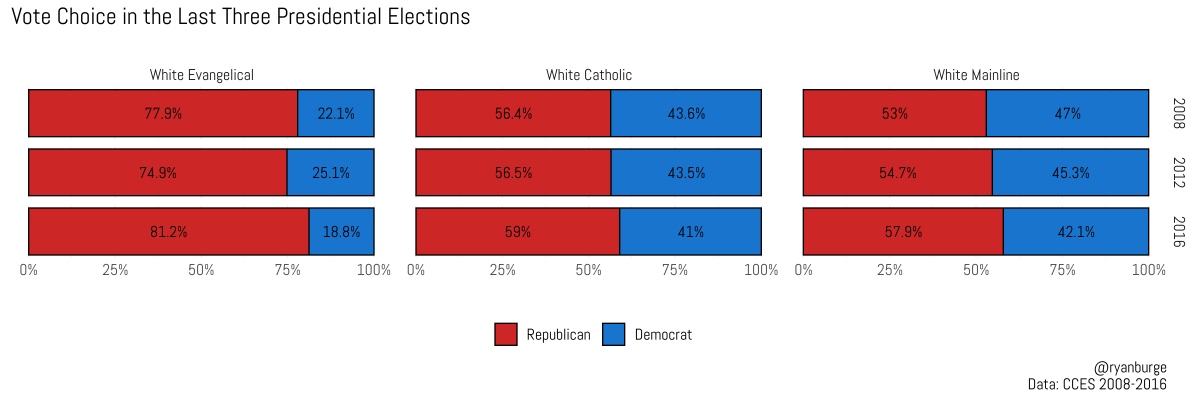
Despite all the chatter around the strong support that Trump received from white Christians and white evangelicals last election, their voting patterns in 2016 were relatively consistent with elections going back to 2008.

Across Christian traditions, white voters have been relatively stable but have slowly drifted toward the Republican Party by 3–4 percentage points in eight years. (Nonwhite Christians, particularly black Protestants, have historically favored the Democratic Party by strong margins and are expected to continue to do so this year.)

For instance, in the 2008 presidential matchup, 78 percent of white evangelicals cast their ballots for Barack Obama’s Republican challenger, John McCain. Trump did just a few points better in 2016, with 81 percent.

The partisan split among white Catholics and white mainline Protestants mostly held steady as well. In both 2008 and 2012, 56 percent of white Catholics voted for the GOP, and that nudged up just slightly to 59 percent in 2016.

For mainline Protestants, the vote in 2008 was nearly evenly split, with John McCain receiving a slim majority of votes (53%). Mitt Romney did slightly better four years later (55%). Trump enjoyed slightly more support from white mainline Protestants in 2016 (58%).

What do these patterns tell us about potential outcomes for 2020? Polling during the spring and summer of this year—during the uncertainty of the coronavirus pandemic—indicated that President Trump may be in a weaker electoral position this time.

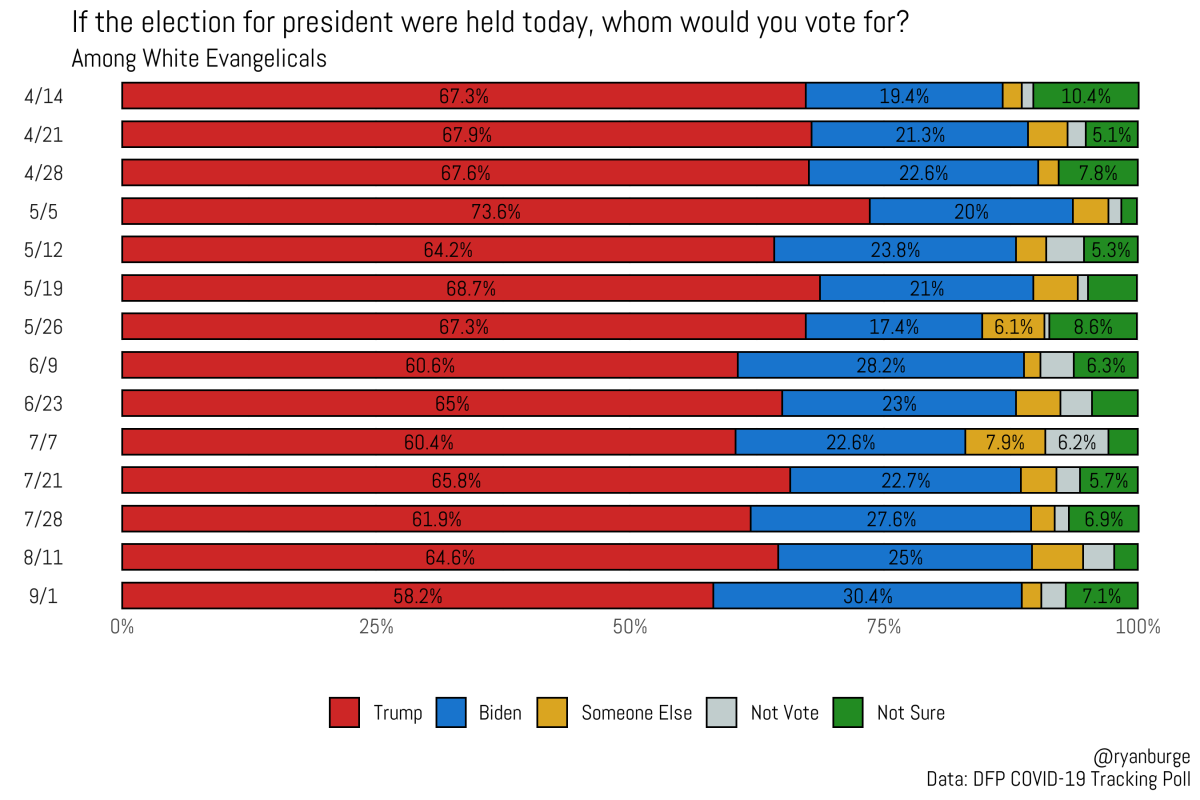
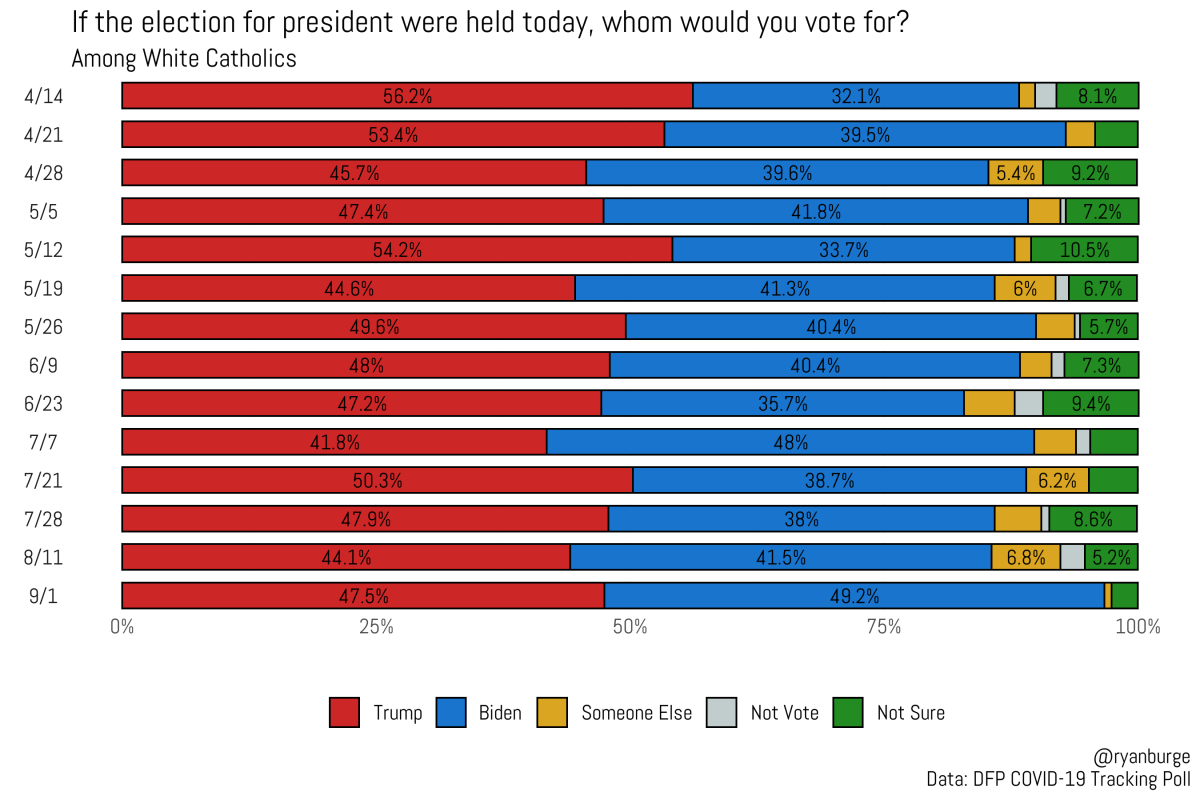
Based on weekly survey data collected by Data for Progress, then broken down by Christian traditions, we see white Christian support for the president slipping. Across traditions, slightly fewer Christians say they plan to vote for Trump and slightly more say they plan to vote for Biden than five months ago.

According to the Data for Progress survey, Biden’s share of the evangelical vote hovered around 20 percent in April and May, right in line with Clinton’s share four years ago. Trump’s support was around 70 percent, with about 15 percent of the sample saying that they were undecided or expressing the intention to vote for a third-party candidate.

However, support for Biden edged up during July and August to around a quarter of white evangelicals intending to vote for the Democratic challenger. The most recent data (collected on September 1) shows that Biden has as high as 30 percent of the white evangelical vote, a significant uptick from Clinton’s result in 2016 of just 19 percent.

If the trends hold, it appears likely that Trump may end up receiving 75 percent of the white evangelical vote, or possibly even less if those who are undecided break toward Biden in the last several weeks of the election cycle.

If the results for white evangelicals are slightly worrisome for the Trump campaign, the polling of white Catholics is a much louder alarm bell.

The president received 59 percent of this constituency in 2016, and in the spring it seemed likely that Trump would repeat that result in his matchup with Biden. In most waves of the survey, the president polled around 50 percent, while Joe Biden’s support was around 40 percent and another 10 percent were undecided or voting for a third party.

The poll conducted in September indicates a sharp shift among white Catholics: Biden and Trump are in a statistical dead heat, with just 3 percent now unsure. Of course, this could just be a statistical aberration, but this shift toward Biden in September appears for both white evangelicals and white Catholics. It’s more dramatic among the Catholics, a jump of nearly 8 percentage points.

With so few undecided voters in the sample, it seems very likely that the white Catholic vote may be closer to 50-50 in 2020, a huge shift from the 18-point margin Trump won in 2016.

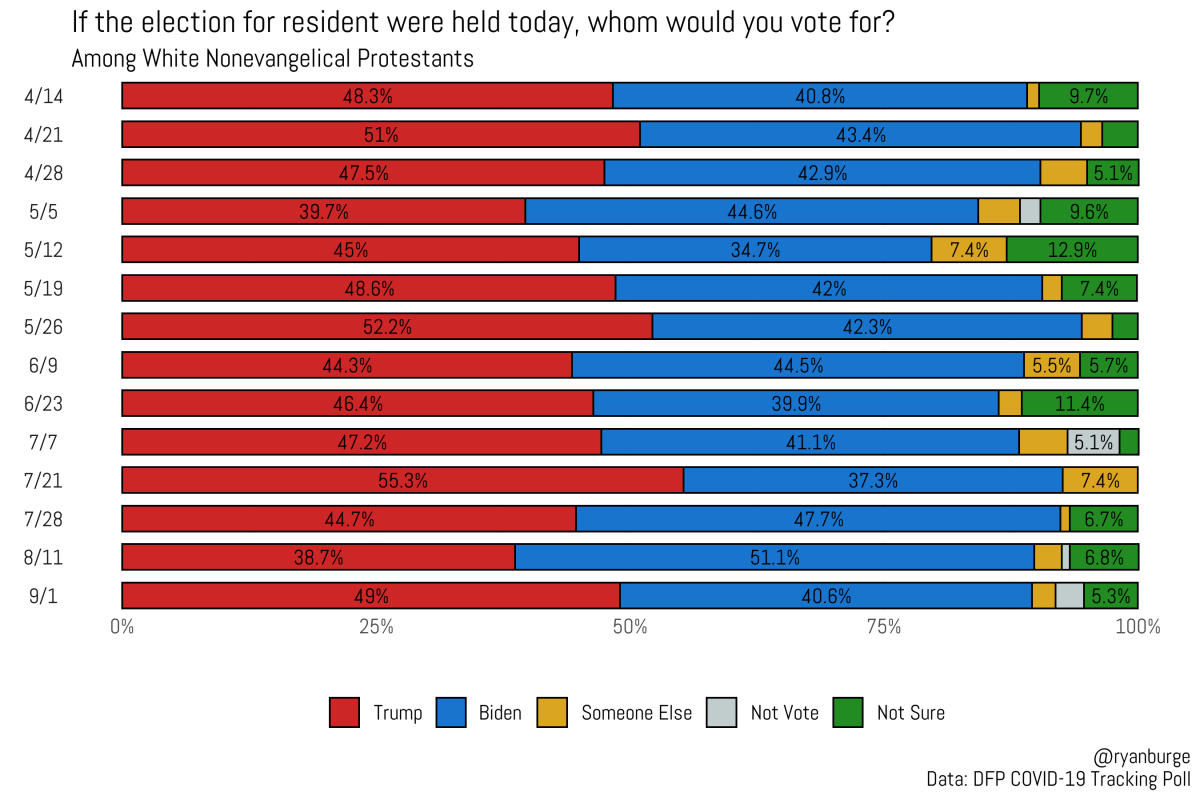
The results for white nonevangelical Protestants—comparable to the mainline Protestant data from the earlier elections—seems to show fairly similar results to the 2016 race. Clinton received 41 percent of this voting bloc, and Biden appears to be on track for around the same.

On average, Trump is hovering around 47 percent, while Biden is at 42 percent with another 10 percent undecided. It’s possible that the mainline vote will not deviate much from 2016.

Polling is an inexact science. It’s important to note that data from other polling firms shows that the votes of religious groups in 2020 look almost exactly like they did in 2016. But some state-level polls are reinforcing the trend that white Catholics are slipping away from Trump.

For instance, Marist found that among white Catholics in Pennsylvania, Trump was at 53 percent, while Biden was at 43 percent. In 2016, Trump beat Hillary Clinton among that group by 22 percentage points. In a state where white Catholics are a quarter of the vote, a 10-point swing among white Catholics should be enough to switch the state from red to blue.

For Trump to repeat his electoral victory in 2016, he is banking on holding together the coalition of voters that sent him to the White House four years ago. His opponent then did not engage in the level of faith outreach being conducted by the Biden campaign. But while Biden possibly picking up five points among white evangelicals would be noteworthy for observers of religion and politics, it wouldn’t be enough by itself to change the outcome of the election.

The Catholic vote, on the other hand, might. Biden, in part by virtue of his own religious background, may be well positioned to take nearly half of the white Catholic vote in 2020. If that pattern holds, the pathway to 270 electoral votes for the incumbent president becomes nearly impossible. The shift would also represent the most dramatic change in white Christian voting patterns in the last four election cycles.

Ryan P. Burge is an assistant professor of political science at Eastern Illinois University. His research appears on the site Religion in Public, and he tweets at @ryanburge.

Pastors

Research Roundup: Preaching Takeaways from the Latest in Social Science

Because, as Karl Barth never said, a pastor should read the Bible in one hand, the newspaper in the other, and a peer-reviewed social science journal in another.

Envato Elements

“Long-term Persuasive Effects in Narrative Communication Research: A Meta-Analysis”

Corinna Oschatz and Caroline Marker, Journal of Communication, August 2020

“A single narrative message has a stronger persuasive impact than a non-narrative message on attitudes and intentions at immediate [measurement] as well as on attitudes, intentions, and behaviors at delayed measurement. Both message types did not differently affect the participants’ beliefs.”

Our read: Narrative preaching is probably effective at helping put beliefs into action but may not be great at forming those beliefs in the first place.

“Do good causes leave bad impressions? Exploring the impact of photo frames and newsfeed updates on social impressions of Facebook users”

Kylie J. Wilson and Elizabeth L. Cohen, Communication Research Reports, September 2019

“Showing support for social causes on social network sites using photo frames or newsfeed posts could make users seem benevolent, but paradoxically, these displays could also make users seem inauthentic and self-involved. … Results show posting multiple expressions can make users seem less socially attractive. Some expressions of support can enhance users’ social attractiveness by making them seem more authentic and less self-involved, but only for female users.”

Our read: As you address social issues in your preaching, take care to avoid “cause of the week” syndrome. And if you’re addressing them to make yourself look good, people will sense it.

“The Best Laid Plans: Why New Parents Fail to Habituate Practices”

Tandy Chalmers Thomas and Amber M. Epp, Journal of Consumer Research, October 2019

“Consumers regularly fail to habituate newly adopted practices. In contrast to established practices, this often occurs because understanding a practice is different from actually doing it. … To facilitate habituation of newly adopted practices, how consumers make plans for these practices may ultimately matter more than what they actually plan to do. … Encouraging consumers to build capabilities, and providing them with the resources needed to do so, can help consumers overcome misalignments. Consumers, for example, could benefit from cultural templates that provide scripts for how they might respond to misalignments.”

Our read: Consider restructuring the application part of your sermon to include scripts for when people have tried—and failed—to do what you’re calling them to do.

“On My Own: The Aversion to Being Observed during the Preference-Construction Stage”

Yonat Zwebner and Rom Y. Schrift, Journal of Consumer Research, April 2020

“Being observed prior to reaching the decision threatens consumers’ sense of autonomy in making the decision, resulting in an aversion to being observed. Furthermore, we find that such threats lead consumers to terminate their decision by avoiding purchase or by choosing default options.”

Our read: “With every head bowed and every eye closed” may sound old-school, but it sure helps fight this effect. “I see that hand” is probably worth the aversion it may cause, but be sensitive to the effect.

“Candidates’ use of informal communication on social media reduces credibility and support: Examining the consequences of expectancy violations”

Olivia M. Bullock and Austin Y. Hubner, Communication Research Reports, July 2020

“Our results suggest that politicians’ use of informal communication on social media leads to expectancy violation, which decreases perceived credibility and lessens intention to support a candidate. This effect was not moderated by sex (male versus female) or age (young versus old) of the candidate, nor of participants being the same sex as the candidate.”

Our read: Brothers and sisters, we are expected to be professional.

“What Goes Down When Advice Goes Up: Younger Advisers Underestimate Their Impact”

Ting Zhang and Michael S. North, Personality and Social Psychology Bulletin, forthcoming

“Common wisdom suggests that older is wiser. Consequently, people rarely give advice to older individuals—even when they are relatively more expert—leading to missed learning opportunities. … When compared to advisees’ actual perceptions, … [younger advisers] underestimate their effectiveness when giving general life advice as well as tactical advice. This misperception is in part driven by advisers’ beliefs about their own competence and others’ receptivity.”

Our read: “Don’t let anyone look down on you because you are young, but set an example for the believers in speech, in conduct, in love, in faith and in purity” (1 Tim. 4:12).

“You Will Not Remember This: How Memory Efficacy Influences Virtuous Behavior”

Maferima Touré-Tillery and Maryam Kouchaki, Journal of Consumer Research, forthcoming

“Memory efficacy refers to people’s general belief that they will be able to remember in the future the things they are experiencing or doing in the present. We hypothesize and find across five studies that when consumers have low-memory efficacy (vs. control), they are less likely to behave virtuously because their actions seem less consequential for their self-concept (i.e., less self-diagnostic).”

Our read: There’s something to all those biblical commands to remember who we are, who God is, and what he has done (Is. 46:9, Deut. 8:2, etc.). Don’t leave them out of your sermon or assume you’ve already done it implicitly.

“Advisors want their advice to be used—but not too much: An interpersonal perspective on advice taking”

Fabian Ache, Christina Rader, and Mandy Hütter, Journal of Experimental Social Psychology, July 2020

“In four experiments, we found that advisors do not always want their advice to be adopted fully. Instead, they often give advice about which they are uncertain and therefore want their advice to be averaged with judges’ initial opinions or not used at all. … When tasks were difficult, judges put more weight on the advice than advisors desired, because increasing the difficulty of the task led advisors to want their advice weighted less, whereas judges placed more weight on the advice. The reverse was true for easy tasks. Importantly, both weighting more and less than advisors desired caused advisors to evaluate judges more negatively, which resulted in reduced willingness to give advice again in the future, indicating that advisors want their advice used, but not too much.”

Our read: If you’re uncertain about an application (or even exegesis), be aware that you’re likely to overcompensate and assume that your congregation will take what you’re saying with a grain of salt. They might not.

Compiled by Ted Olsen, editorial director of Christianity Today.

Pastors

Are All Pastors Televangelists Now?

What Billy Graham, Fred Rogers, Mother Angelica, and others can teach us about delivering sermons to a camera.

illustration by rick szuecs | Source images: Envato Elements / Wikimedia Commons

Is every preacher a televangelist now? The coronavirus has dispersed congregations and sent churches scrambling to air services online. Preachers—regardless of how they previously felt about their co-laborers on the small screen—have found themselves delivering sermons to cameras.

As today’s pastors adapt and experiment, there might be some things to learn from the experience of the first TV preachers. The history of televised sermons, after all, encompasses more than the scandals of the 1980s and more than the latest lineup on TBN.

While we may not think of them all as “televangelists,” a wide range of Christians have found ways to use the medium. Here are seven things today’s pandemic-era pastor can learn from early experiments with preaching through screens.

1. Adapt.

When Percy Crawford started filming the first nationally broadcast religious television show in 1949, he would frequently walk out of frame. “You’d see the cameraman trying to chase him down,” one staffer recalled. “You couldn’t keep him behind a pulpit.” New mediums come with new restraints, and new restraints require adjustments.

2. Know your audience.

The leaders of the Lutheran Church–Missouri Synod did not own a single TV set among them when Walter Maier approached them about funding a television ministry. Maier said he wouldn’t use TV if he was just trying to reach Missouri Synod Lutheran leaders; his aim was to reach a broader audience. Maier knew that new technology would reach new people. He received $750,000. Seize the opportunity to do something different.

3. Try something.

Mother Angelica, the Catholic nun who founded Eternal Word Television Network, started her TV station in 1978 with $200 and 12 cloistered nuns who had no broadcast experience. She didn’t know if it would work, she later recalled, but she had to start somewhere. “The grace comes with that one step,” she said, “and you get the grace as you step.”

4. Know your technology.

Billy Graham ended his short-lived television program in 1951. Viewers weren’t a problem and funding wasn’t a problem, but technical expertise was. Graham had the best possible people to organize crusades, but that didn’t mean they could produce high-quality TV programing. Skills in one area may not translate to skills in another.

5. Create a community.

Early televangelists struggled to preach without an in-person audience. Charles Fuller quit. Oral Roberts said it was like trying to preach without oxygen.Pat Robertson, founder of the Christian Broadcasting Network, wondered what kind of new interaction was possible with the new technology. He started asking viewers to call in with prayer requests. Successful communication goes in two directions.

6. Think about access.

Fred Rogers, a Presbyterian ordained to minister through children’s television, didn’t always explain what he was doing as he fed his goldfish on his show. Then a girl wrote to him, concerned he had forgotten them. She was blind and depended on his descriptions to know what was happening. After that, Rogers narrated his actions. There are always ways to include more people.

7. Be grateful for what you don’t know.

Lester Sumrall thought failing was tough when his first Christian TV show was canceled by a local Indiana station in the 1960s. Then he tried again in the ’70s and succeeded—and that was even harder. “Had I known the complexity of this medium, I might not have had the faith to tackle it,” he said. Success may, at times, depend on your ignorance.

Daniel Silliman is news editor for Christianity Today.

Pastors

Your Preaching Is Not God’s Work. You Are God’s Work.

How inner transformation shapes outward proclamation.

Giacomo Flisi / Unsplash

Your preaching is not God’s work. You are God’s work. I received this vision in a peculiar way.

As I was minding my own business leading a foundation that helped denominations start new churches, unexpectedly a headhunter came my way seeking my interest in leading Alpha USA. I have always loved the intersection of evangelism, church, and culture. I had great respect for international Alpha leaders, so I sincerely sought discernment before taking on this new role.

As a part of that seeking, I phoned my friend Dallas Willard. Dallas could sense in me an overemphasis on choosing a job. He said: “Todd, your work is not God’s work. You are God’s work. Your work is simply one context in which you apprentice yourself to Jesus.” I’ve come to know that what I learned about a job that day also applies to preaching: Todd, your preaching is not God’s work. You are God’s work. Preaching flows from God’s work within.

Before Proclamation

To proclaim is to shout something out in public. We preachers love proclamation—it is active and energetic. We also tend to be energized by the idea of what God is doing through us. There’s a buzz that comes from being used by God. It’s exciting! This is not in and of itself a problem, as long as we recognize that proclamation requires “preclamation”—the quiet, hidden claiming of our hearts for God so that our core motivation, no matter the size of the crowd, is to preach for an audience of one.

Such preaching is the outward expression of a journey inward. Preaching is unavoidably connected to the preacher’s inner life. One’s interior reality is the headwater from which preaching flows. What God is doing in me pours out through my preaching.

There is a tight connection between inner transformation and outward proclamation. The former unavoidably and inevitably colors the latter. We can try to pretend, but a flat heart is sure to produce flat teaching. A prickly heart will overflow into a prickly and unkind sermon. An anxious heart radiates an anxiety-producing message. A heart full of judgment poisons a homily. And a “God, speak through me” desire in preaching will have serious pitfalls if we aren’t first praying, “God, speak in me.” We must pay attention to a crucial question: “What is God doing in me?”

The Treasures of Your Heart

Solid exegetical and hermeneutical work is crucial. An effective homiletic shape is nice too. But we preachers cry for something deeper. We long for special power to flow in us and to flood through us.

What makes for great preaching? The treasures of one’s heart. I have found that practicing Jesus’ wisdom about the heart renovates preaching: “For where your treasure is, there your heart will be also”; “The mouth speaks what the heart is full of”; “Love the Lord your God with all your heart” (Matt. 6:21; 12:34; 22:37, emphasis added).

The affections of our heart are on display in preaching just as much as (or perhaps even more than) our intellect. Rightly ordered affection is what my friend Dallas was nudging me toward. Applying this to preaching, he wrote:

Men and women in ministry who are not finding satisfaction in Christ are likely to demonstrate that with overexertion and overpreparation for speaking, and with no peace about what they do after they do it. If we have not come to the place of resting in God, we will go back and think, Oh, if I’d done this, or Oh, I didn’t do that. When you come to the place where you are drinking deeply from God and trusting him to act with you, there is peace about what you have communicated.

Preaching without contentment in Jesus runs the risk of turning a congregation of the body of Christ into an audience from which we derive fleshly energy and short-lived pseudosatisfaction. The temptation goes like this: I am not feeling particularly content in Christ, so when my sermon is a 6.5 rather than a 10, I feel insecure and need something from the crowd to assure me that I am a valuable person. But preachers who are deeply satisfied in Jesus are not typically tempted to use crowds to make themselves safe or secure.

Developing this form of contentment is easier said than done. We may do well in some seasons of life and poorly in others. But consistent attitudes and a stable emotional state will come as we cultivate the heart described above by Jesus. My paraphrase of Proverbs 4:23 helps me to align with what Jesus envisioned: “Put everything you have into the care of your heart—the hidden, causative, motivational you—for everything you do flows from it. It is the real source of your outward life. It determines what your life amounts to.”

Sundays Are a Grind

Sundays and their preaching demands come around and around like a relentless, grinding wheel. And that grinding, over time, can deform our spirits, which then wrecks our preaching. Paul was aware of the connection between his spirit and preaching. In fact, he said, “I serve [God] in my spirit in preaching” (Rom. 1:9). In my spirit essentially means “in a spiritual manner.” It refers to preaching that comes from somewhere deep within. It’s preaching that is not just a mental or bodily activity but that emerges from one’s whole heart and soul.

In the midst of the weekly grind of developing sermons, how do we protect our hearts and souls? What can keep our preaching fresh, liberated, and fruitful? It’s difficult, but I am discovering that I don’t have to be a victim of the grind. Several principles help me.

Eugene Peterson, in describing the soil from which the best preaching grows, quoted from Herman Melville’s Moby-Dick: “To insure the greatest efficiency in the dart, the harpooners of this world must start to their feet from out of idleness, and not out of toil.” Rather than always resting from preaching, I’m learning to preach from an essential rest. I also spend time in the contemplation and reception of grace and peace. This delivers me from striving to control outcomes. It gives me an ease of heart from which to preach, knowing that God does for us preachers what we cannot do on our own.

The grind has less bite when we cultivate an ever-growing reliance on the Holy Spirit. For me, the act of public speaking is increasingly the overflow of private listening. A quieted and listening heart attuned to the Holy Spirit, the text, and my context seems to be the key ingredient for effective preaching.

Gracious, Generous, and Generative Preaching

As a young preacher, I tended to pray for various kinds of success: to speak well, to get other invitations to speak, or to have lots of people want a recording of my talk. But the prayers of my latter years align much better with the ideas we have been discussing.

https://www.instagram.com/p/CNu7v57h_-2/

Now, just before rising to speak, I put my hand on the place from which Jesus said words come: my heart. I pray, God, help me to be truly present to this moment and this group of people. Radiate in and through me a gracious, generous, generative presence. Psalm 23 comes in handy in those moments too. I picture in my mind the bodily elements implicit in the psalm’s words: “You anoint my head with oil; my cup overflows” (v. 5).

With the knowledge that I am God’s work and that he has been at work in me, I then ask for that which God has made real in me to be for the good of others. Remembering the Master’s insight, “The mouth speaks what the heart is full of,” I ascend to the pulpit, seeking to preach from the inside out.

Todd Hunter is bishop of Churches for the Sake of Others in the Anglican Church in North America. An author and professor, he is the past president of Vineyard USA and Alpha USA.

Apple PodcastsDown ArrowDown ArrowDown Arrowarrow_left_altLeft ArrowLeft ArrowRight ArrowRight ArrowRight Arrowarrow_up_altUp ArrowUp ArrowAvailable at Amazoncaret-downCloseCloseEmailEmailExpandExpandExternalExternalFacebookfacebook-squareGiftGiftGooglegoogleGoogle KeephamburgerInstagraminstagram-squareLinkLinklinkedin-squareListenListenListenChristianity TodayCT Creative Studio Logologo_orgMegaphoneMenuMenupausePinterestPlayPlayPocketPodcastRSSRSSSaveSaveSaveSearchSearchsearchSpotifyStitcherTelegramTable of ContentsTable of Contentstwitter-squareWhatsAppXYouTubeYouTube