Ideas

A Time to Refrain from Embracing

President & CEO

We cannot be ourselves apart from those we love.

Christianity Today April 17, 2020
Illustration by Mallory Rentsch / Source Images: saemilee / Getty Images

The following is the latest in a series of daily meditations amid the pandemic. For today’s musical pairing, try the theme from The Mission by Ennio Morricone. All songs for this series have been gathered into a Spotify playlist.

“There is a time for everything, and a season for every activity under the heavens:a time to be born and a time to die,a time to plant and a time to uproot,a time to kill and a time to heal,a time to tear down and a time to build,a time to weep and a time to laugh,a time to mourn and a time to dance,a time to scatter stones and a time to gather them,a time to embrace and a time to refrain from embracing,a time to search and a time to give up,a time to keep and a time to throw away,a time to tear and a time to mend,a time to be silent and a time to speak,a time to love and a time to hate,a time for war and a time for peace.”Ecclesiastes 3:1–8

Meditation 19. 2,224,426 confirmed cases, 153,177 deaths globally.

Even those among us whose souls breathe in solitude find ourselves pining in this season of pandemic for the simple graces of human connection. We live in “a time to refrain from embracing.” When will it be “a time to embrace” again?

Some of us are sick and quarantined from the rest of the world. The air around us grows heavy with silence, and the door to our room or apartment or home has become the horizon of the world we inhabit. Others of us are enclosed with family or friends but cut off from our communities. It is painful. We ache to be together.

One of the more profound truths of the Christian theological tradition is that community is intrinsic to the God in whose image we are created. The doctrine of the Trinity is not an accommodation to our lesser intelligence. It is essential to the nature of God from all eternity. God in his fullness is irreducibly relational, and we image him together more fully than apart.

We experience the truth of our theology in moments such as these. When we laugh, we yearn to laugh together. When we weep, we yearn to weep together. We are made for one another. In the words of Khalil Gibran, “a single leaf turns not yellow but with the silent knowledge of the whole tree.” Our lives are intertwined, folded together, each of us delicately implicated in one another. We cannot be ourselves apart from those we love.

The Teacher in Ecclesiastes goes on to say, “He has made everything beautiful in its time” (v. 11).

This solitude is beautiful in its time. It invites us to hear the echoes of the eternity he set in our hearts (v. 11). The time for embracing will also be beautiful, and the hour is coming soon.

Until then, O Lord, may our season of solitude bear fruit in the lives of those we love, even those we cannot be with.

Sign up for CT Direct and receive these daily meditations—written specifically for those struggling through the coronavirus pandemic—delivered to your inbox daily.

Ideas

Religious Liberty as Bondage

Staff Editor

Freedom can be another word for everything to lose.

Christianity Today April 17, 2020
Illustration by Rick Szuecs / Source images: Serbogachuk / PixelSquid / Envato / Michael Amadeus / L Link / Unsplash

This was a strange Easter of isolation and lament. Our country’s response to the novel coronavirus shut most church doors. My church, like many, moved to online Easter services, which I found both uncanny and comforting. “Christ is risen!” our pastor declared. “He is risen indeed,” we mumbled at the laptop while wrangling cranky twins.

But some churches did meet in person, defying public health recommendations and even the threat of arrest. Most prominent among them is Tony Spell of Baton Rouge, Louisiana, a Oneness Pentecostal who for weeks insisted that keeping his church open demonstrates faithfulness and the closure order tramples his religious liberty. If one of his congregants dies of COVID-19 contracted at church, Spell told TMZ, “they died like free people, fighting for their convictions.”

This rationale isn’t without its appeal. Christians should “not [neglect] to meet together, as is the habit of some,” Hebrews 10:25 (ESV) instructs; and, as the apostle Peter thundered, we “must obey God rather than any human authority” (Acts 5:29, NLT). There’s something deeply unsettling about empty pews on Easter Sunday. Yet refraining from physically gathering for worship is still the right decision. “Meeting together” and “obeying God” never equate with doing harm to your neighbor.

The legal question is fairly straightforward. The stay-at-home orders shuttering churches depend on “police power,” which in our constitutional system is primarily held by state governments, not Washington. Police power is a broad concept that American legal theorists often connect to “two great common law maxims,” explains Brandeis University historian Michael Willrich in Pox: An American History. The two maxims are sic utere tuo ut alienum non laedas (“use your own so as not to injure another”), and salus populi suprema lex esto (“the welfare of the people is the supreme law”). US jurists have long agreed that quarantine regulations can be a legitimate use of police power to prevent injury and protect public welfare.

That’s not to say a quarantine rule could never violate religious freedom. Police powers aren’t unlimited, and the gathering bans would be indisputably unacceptable if they targeted religious groups. For example, President Trump has said he hopes to have sports fans back in stadiums by the end of the summer. Come August, if tailgating were permitted and Sunday services weren’t, that would be a breach of religious liberty, and I’d be quoting Peter.

More important than court cases, though, is what refusal to suspend in-person services will do for Christians’ reputation—our witness in a frightening time.

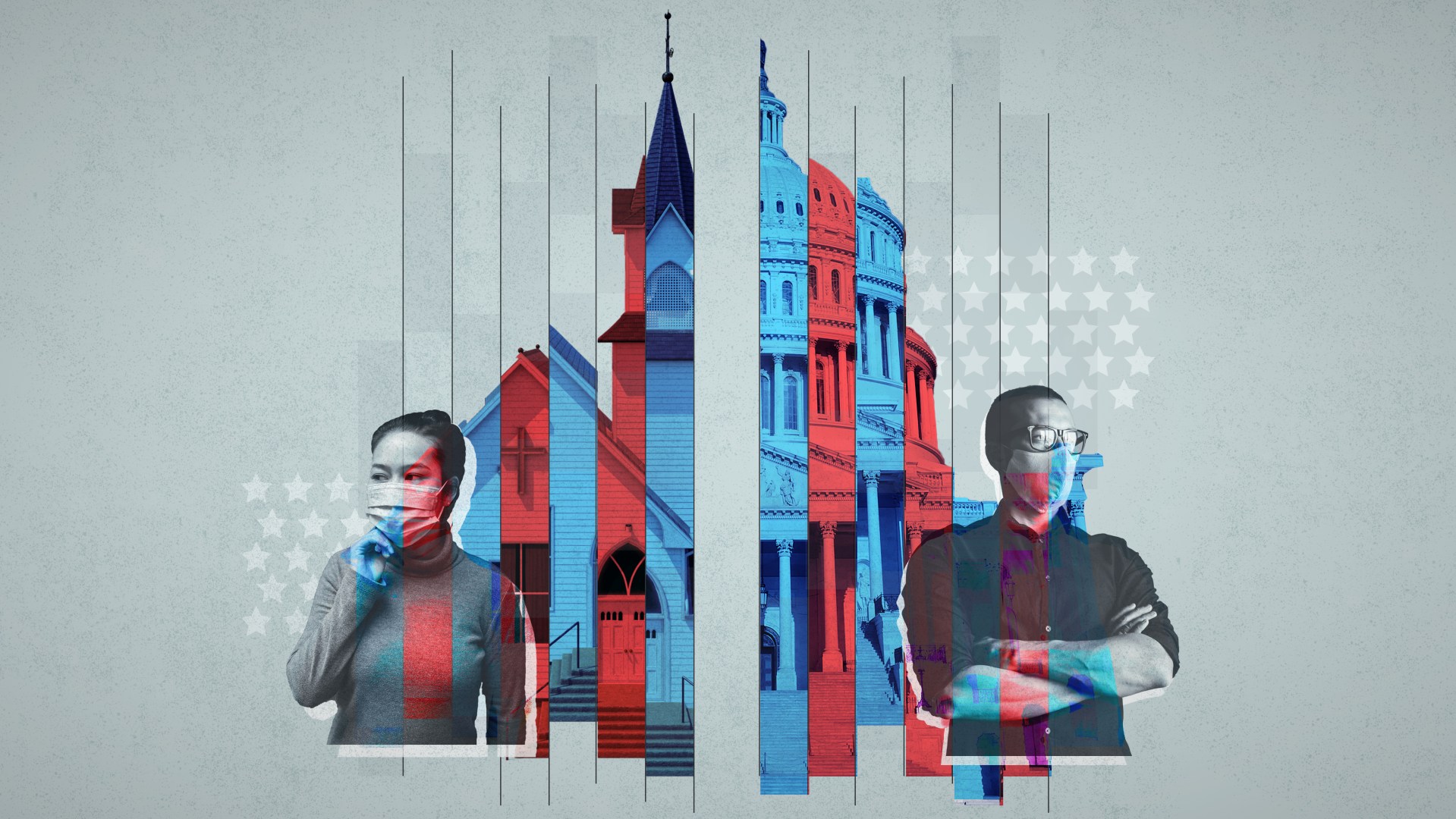
More important than court cases, though, is what refusal to suspend in-person services will do for Christians’ reputation—our witness in a frightening time. Refusal to stop meeting physically will all too easily suggest to those outside the church, particularly on the political Left, that the cause of religious liberty was always the selfish ploy they suspected.

Accusations that religious liberty claims are cover for legal oppression of others are a common feature of the culture war. Critics of the Trump administration have argued that its religious liberty agenda is actually intended to give Christians “more rights … while the rest of us have less.”

A church that refuses to stop holding large-scale gatherings while the rest of its community practices social distancing provides apparent confirmation of every one of those bitter assumptions. There’s “no greater gift to the enemies of religious liberty,” The Benedict Option author Rod Dreher recently argued, than Christians who “demand their rights and spit on their duties of charity.” Gathering in person to worship while others put their lives on hold for the sake of strangers smacks of selfishness, not conviction. However faithful the intent, the effect is far afield from winsome witness.

The default Scripture passage for Christians who find themselves at odds with the government is Romans 13:1–10. Although its injunction to live by the law of love, which won’t conflict with any righteous authority, is surely relevant here, it can’t be read apart from Romans 12:9–21.

“Let love be genuine,” Paul begins his exhortation there. “Rejoice in hope, be patient in tribulation, persevere in prayer” (ESV). Though much of this rapid-fire list of instructions for the Christian life concerns our care for each other within the church, Paul also addresses our interactions with non-Christians, “strangers,” and even “those who persecute” us.

“Repay no one evil for evil,” he writes, “but give thought to do what is honorable in the sight of all. If possible, so far as it depends on you, live peaceably with all” (ESV). Whatever we make of social distancing rules, it’s clear that “what is noble in the sight of all” right now is complying with public health directives to stop the spread of this virus. Meeting for in-person church services amid a pandemic, even on Easter, is not.

Celebrating Easter at home, in isolation from each other, felt wrong and disconcerting. Zoom is not the proper venue to hail the climax of history, God’s redemption of creation and triumph over sin, death, the Devil, and every evil that besets us. I hope never to mark another Easter like this one again. But I joined most Christians in America in worshipping from home on Easter because that’s what “not neglecting to meet together” looks like for now. It may not have the lonely thrill of contrarianism, but it’s what it means to “live peaceably with all” during pandemic.

Bonnie Kristian is a columnist at Christianity Today, a contributing editor at The Week, a fellow at Defense Priorities, and the author of A Flexible Faith: Rethinking What It Means to Follow Jesus Today (Hachette).

Church Life

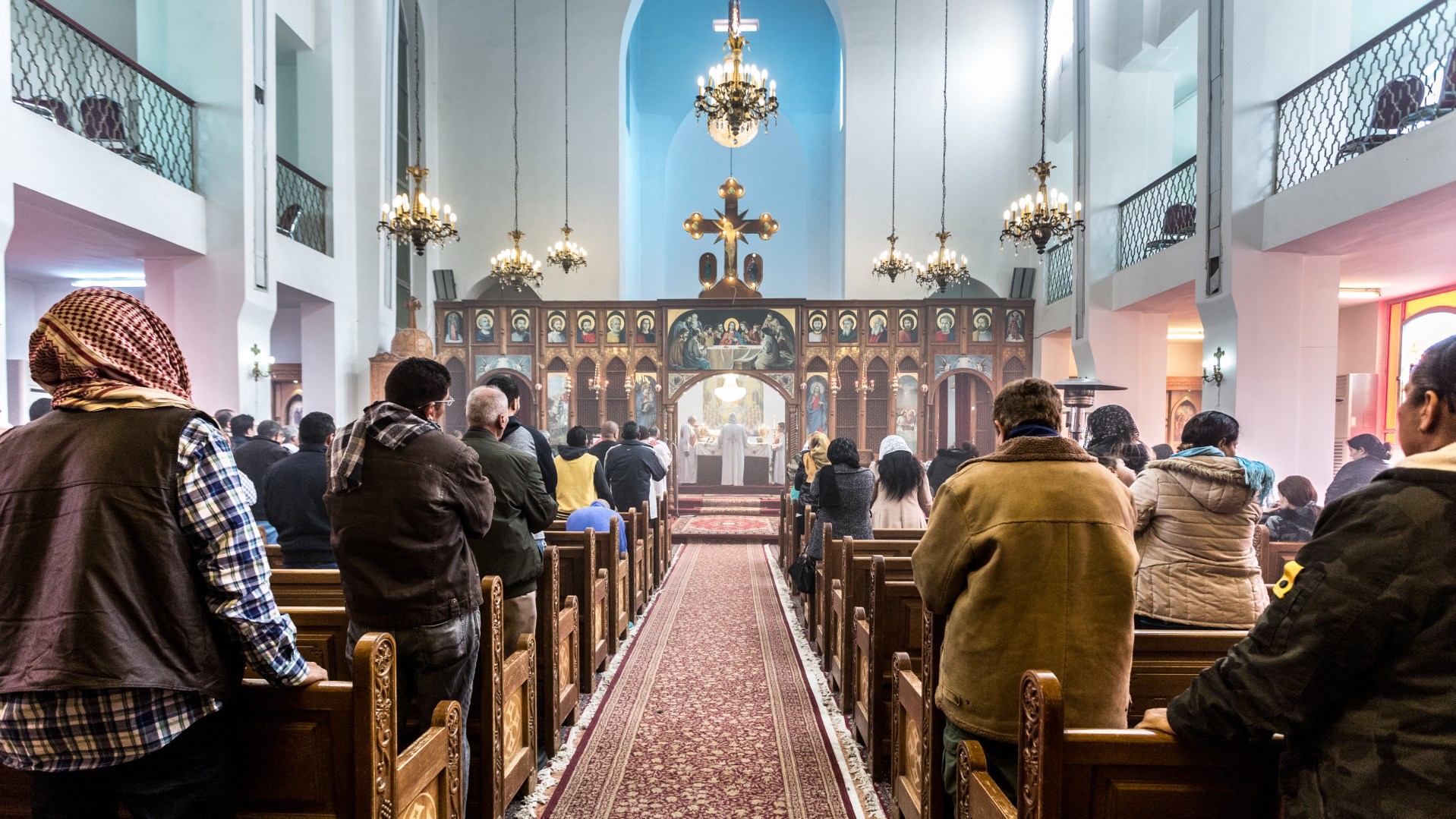
For Church Unity, These Evangelicals ‘Gave Up’ Their Easter

For decades, Christians in Jordan have celebrated what Pope Francis pines for.

Christianity Today April 17, 2020
NurPhoto / Contributor / Getty Images

Last Sunday, after weeks of living in pajamas while confined to our homes in coronavirus quarantine, my family attended the Palm Sunday services at the Amman Baptist Church in Jordan.

We woke up early, showered, shaved, fixed our hair, put on our Sunday best, and then traveled the long distance from the bedroom to the living room to watch the livestreamed songs and sermon celebrating the triumphal entry of Jesus into Jerusalem.

The timetable above is not an error. While evangelicals around the world joined Catholics in commemorating Easter on April 12, in Jordan our Passion week was only just beginning.

The reason for this anomaly stems from a decision made 45 years earlier by the Middle Eastern nation’s officially recognized Christian denominations.

Christmas, they agreed, would be celebrated jointly on December 25 according to the Western Gregorian calendar. And in exchange, all Catholics, Orthodox, and Protestants would mark Palm Sunday and Easter according to the Eastern Julian calendar.

In the West, many Orthodox communities already observe Christmas in line with the local culture. In the Middle East, the bigger problem is Easter.

The vast majority of Egypt’s 10 million Christians celebrate both Christmas and Easter according to the Coptic Orthodox calendar.

The majority of Lebanon’s Christians—one-third of the population—are Maronite Catholic, who determine the religion of the president and the cultural celebration of Christmas and Easter. The government also observes the religious calendar of its sizable Orthodox community.

But in Jordan and Palestine, where the percentage of Christians in the popluation is dwindling to single digits, the duplication of holidays became a social problem—for Muslims. The 95 percent-plus majority would often congratulate friends and neighbors, only to be rebuffed by remarks that the day was not the correct denominational holiday.

The unity agreement reached in Jordan would incorporate Palestine also, except for the thorny issues of Jerusalem and Bethlehem. Because of the intense and often violent conflicts over the centuries contesting usage rights in Bethlehem’s Church of the Nativity and Jerusalem’s Church of the Holy Sepulchre, in 1757 the heads of denominations agreed to follow what is now called the “Status Quo.”

The Status Quo regulates the usage of chapels and other spaces in the two churches to preserve the peace between Christian sects. The agreement is very specific about times and dates—including years when Easter falls on the same day—to ensure all are able to carry out their prayers at their most holy sites.

So even as public pressure mounted to unify the holidays, it was impossible to adjust the Status Quo and apply it in Jerusalem and Bethlehem.

Nevertheless, in 1975, church leaders in Jordan agreed to the unification. In Palestine (with the exception of Jerusalem and Bethlehem), a similar unity agreement was adopted 10 years ago.

The governments of Jordan and Palestine rewarded this step by declaring December 25 as a national holiday.

Easter was more complicated, especially in Jordan, where the king is a direct descendent of the Prophet Muhammad. While Islam recognizes the virgin birth of Jesus, Muslims deny the crucifixion and resurrection of Jesus. As a compromise, the government granted public- and private-sector Christian employees three days off for Palm Sunday, Easter, and the following Monday. (Jordan’s official weekend is Friday and Saturday.)

But in Palestine, two years ago President Mahmoud Abbas took a major decision and agreed to recognize Orthodox Easter as a national holiday. (Christmas was declared an official holiday in 1996.)

Culturally, Christians in the region light up their Christmas tree, and celebrate Easter with an assortment of sweets that reference Christ’s passion. Kaak is a date-filled cookie that resembles the crown of thorns, while the pistachio-stuffed ma’moul is shaped like the sponge given to Jesus on the cross.

Even so, while the vast majority of Christians in Jordan and Palestine celebrate Christmas, Palm Sunday, and Easter as one community, the churches are not yet fully united.

Rifat Bader, a Roman Catholic priest, said that in Jordan, his denomination has merged the religious and cultural ceremonies, while Ibrahim Dabour, a priest in the Orthodox Church, told me that they hold two services for each holiday—one on the unified celebration for the general public, and another in accordance with the Orthodox calendar, as stipulated by their Jerusalem Patriarchate.

In 2015, Pope Francis expressed his wish and the great readiness of the Catholic Church to endorse any calendar change decided in unity by the Christian churches. The original agreement on Easter dates all the way back to the Council of Nicaea in A.D. 325.

But regardless of when we celebrate Easter, it is reassuring to know that 2,000 years ago, the world witnessed the victorious resurrection, giving hope for humanity.

And in the lands where Jesus died and rose again, Arab Christians greet each other with the eternally powerful greeting: Al-Maseeh Qam! (Christ is risen!) We then reply: Haqan Qam! (He is risen indeed!)

Happy Easter to all, both this Sunday and last.

Daoud Kuttab is an award-winning Palestinian journalist living in Amman and is the secretary of the Jordan Evangelical Council.

News
Wire Story

Federal Government Backs Churches in Drive-In Worship Fight

Attorney general speaks out against coronavirus restrictions that apply to worship but not other similar activities—like fast-food parking lots.

Christianity Today April 17, 2020
Mario Tama / Getty Images

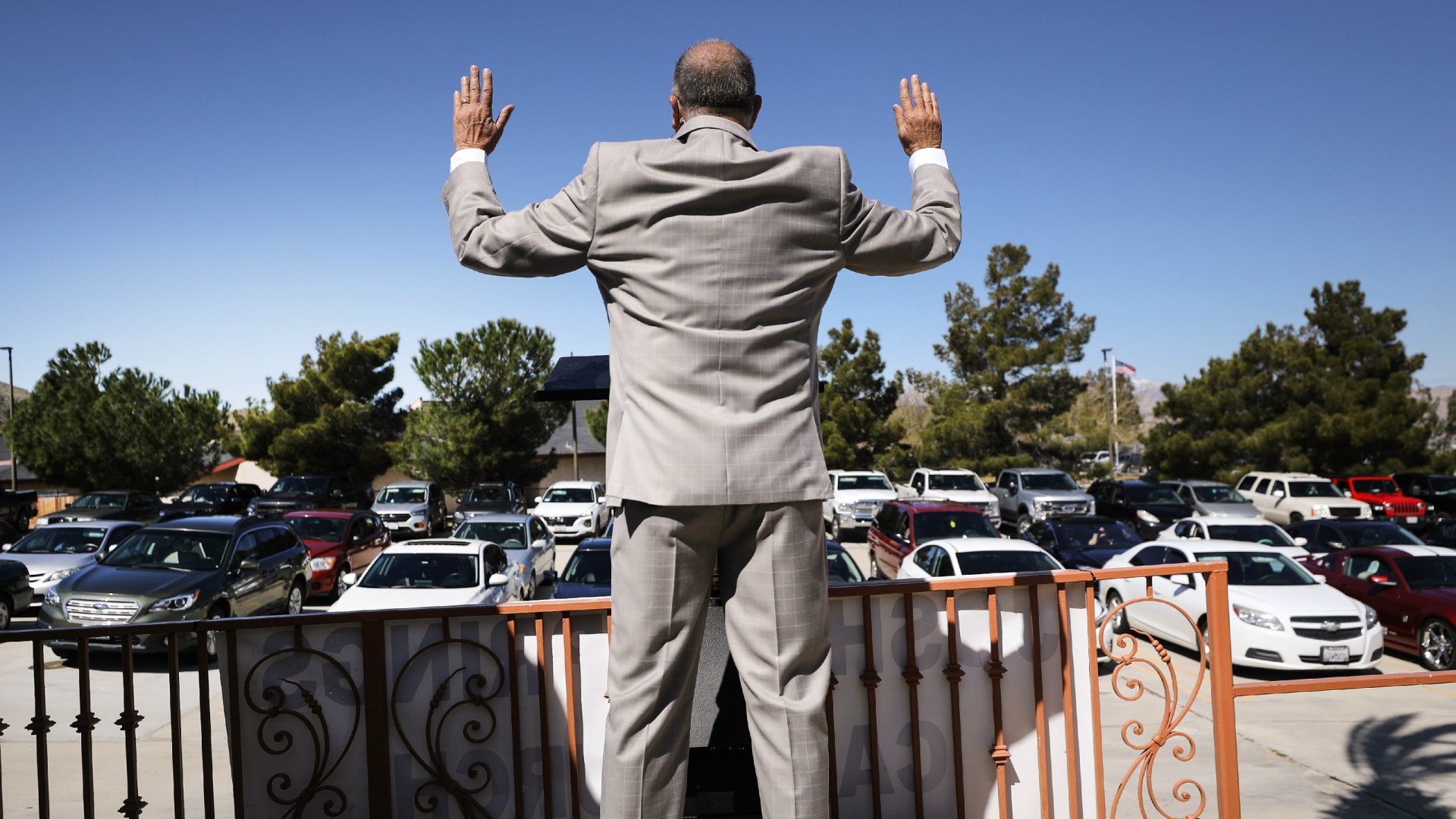
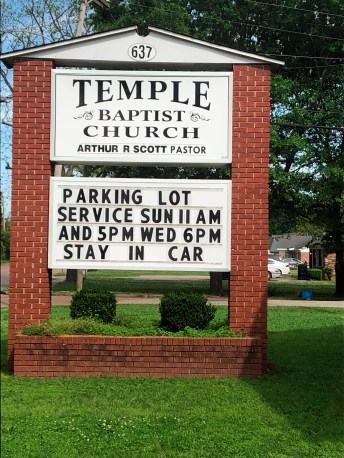
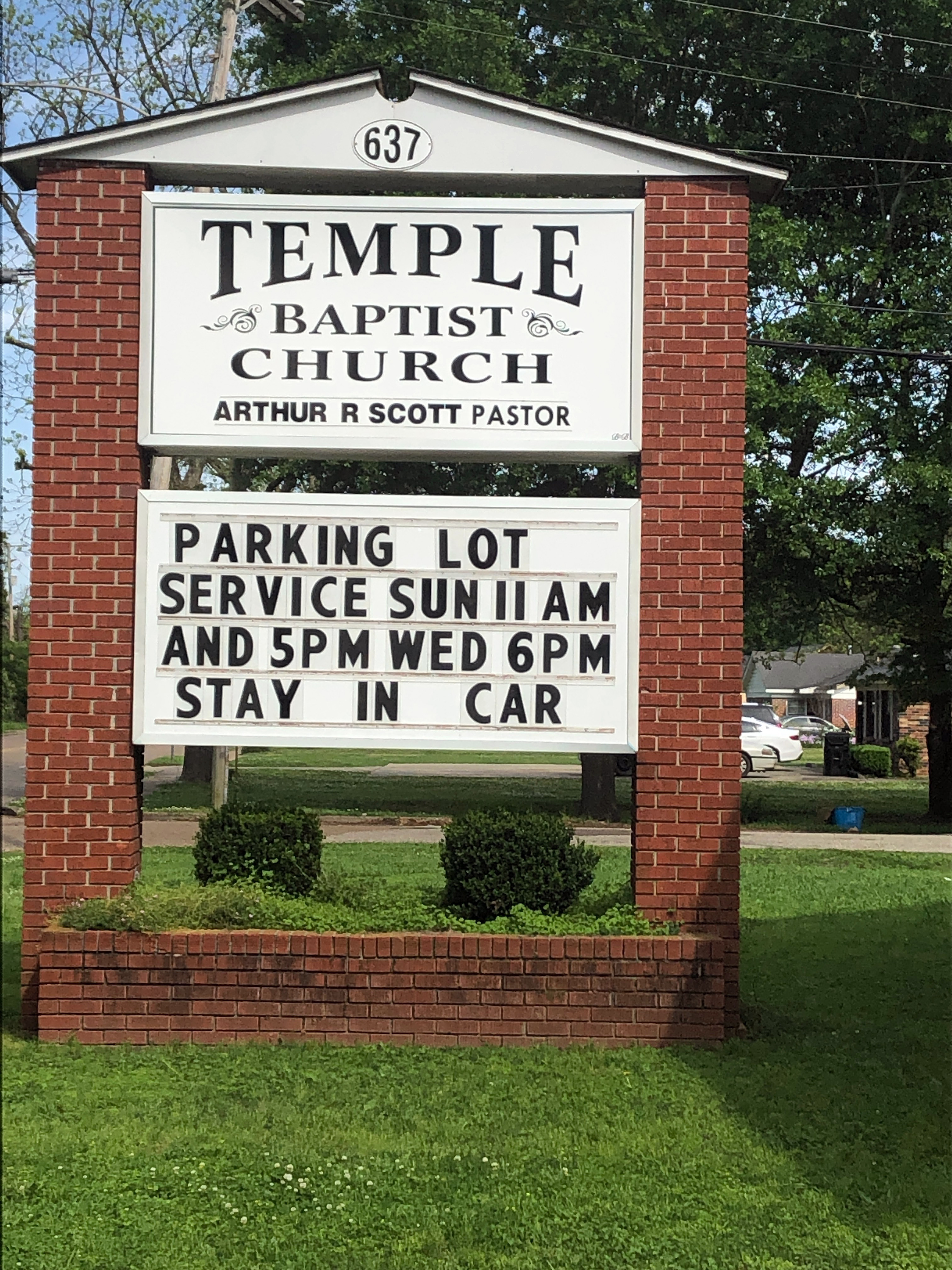
This week, the Justice Department took the rare step of weighing in on the side of a Mississippi Christian church where local officials had tried to stop Holy Week services being broadcast to congregants sitting in their cars in the parking lot.

As the coronavirus pandemic spread, leaders at Temple Baptist Church in Greenville began holding drive-in services for their congregation on a short-wave radio frequency from inside an empty church save for the preacher.

Arthur Scott, the 82-year-old pastor, said Tuesday that it was a good compromise for his group, a “wonderful way to preach the gospel and still it’s like they are there, but you can’t go out and see them, but you know they’re there.”

The federal involvement adds to the rising tension over reconciling religious freedom with public health restrictions designed to fight the pandemic, disputes that are playing out along the same partisan lines that mark the nation’s overall divide.

Greenville city leaders argue the services violate stay-at-home orders and could have put people’s lives in jeopardy. Church officials believe they have been singled out for their religion, especially after eight police officers were sent last week to ticket the faithful, $500 apiece, for attending services, including the pastor’s wife.

“We haven’t missed one Sunday in 45 years,” Scott said. “We love our people. This is a way we can preach to them. We’re afraid of the coronavirus as much as anybody else. And if we thought we were putting our people in danger at all, we wouldn’t do this.”

Even after the mayor said Monday they would not have to pay the fines, the church is pursuing a lawsuit saying their First Amendment religious freedoms were violated. The Justice Department sided with the church.

With federal prosecutors now weighing in, the national debate over how far coronavirus gathering limits can go to restrict religion could get even louder. President Donald Trump’s reelection appeal to devout conservative voters rests in part on his vocal advocacy for religious freedom, making the issue a politically potent one for his administration to take up.

The Kansas Supreme Court upheld Democratic Gov. Laura Kelly’s move to limit faith gatherings to 10 people, while a federal judge in Kentucky sided with a church that challenged the Louisville mayor’s restrictions on drive-in Easter services.

The church has been in Greenville for more than 65 years. Scott said his congregants, about 125 in all, are mostly older and on fixed incomes, and aren’t tech savvy, so the radio broadcast was a way to keep them connected.

Greenville Mayor Errick D. Simmons, a Democrat, said Tuesday that city officials had received calls about people at drive-in church services getting out of their cars.

Simmons said the ban on such gatherings remains in place to try to save lives as the highly contagious virus continues to spread. He has also called on Republican Gov. Tate Reeves to issue clear statewide guidance on whether people are allowed to congregate for worship during the governor’s statewide stay-at-home order that remains in effect until April 20.

(Alliance Defending Freedom via AP

The governor’s order tells people not to gather in groups of 10 or more. Reeves has said he would prefer that churches not hold services in sanctuaries or parking lots. But he has also said the government does not have the right to ban worship.

On Tuesday, Reeves tweeted a thanks to Attorney General William Barr “for this strong stand in support of religious liberty. The government cannot shut down churches.”

Attorney Ryan Tucker of the Alliance Defending Freedom, which represents the church, says there’s a Sonic Drive-In restaurant about 200 yards (180 meters) from the church where patrons are still allowed to roll down their windows and talk.

He said they will continue the lawsuit seeking a restraining order because the mayor’s order remains in place.

“The threat is still present,” he said. “They mayor did not say he’s rescinding the order.”

There are at least 3,000 cases of coronavirus in Mississippi and more than 100 deaths for the state’s 3 million people. The US has more than 590,000 cases and more than 27,000 deaths.

The Justice Department argued in the filing that the city appeared to be targeting religious conduct by singling churches out as the only essential service (as designated by the state of Mississippi) that may not operate despite following all Centers for Disease Control and Prevention and state recommendations regarding social distancing.

“The facts alleged in the complaint strongly suggest that the city’s actions target religious conduct,” the filing says. “If proven, these facts establish a free exercise violation unless the city demonstrates that its actions are neutral and apply generally to nonreligious and religious institutions or satisfies the demanding strict scrutiny standard.”

Barr said that he believes there is a sufficient basis for social distancing rules that have been put in place, but that the restrictions must be applied evenly and not single out religious institutions.

“But even in times of emergency, when reasonable and temporary restrictions are placed on rights, the First Amendment and federal statutory law prohibit discrimination against religious institutions and religious believers,” Barr said in a statement. “Thus, government may not impose special restrictions on religious activity that do not also apply to similar nonreligious activity.”

The Justice Department has made similar filings in other religious liberty cases, including one in February in support of a Kentucky wedding photographer who is challenging a city ordinance banning businesses from discriminating against gay customers by arguing it would violate her religious beliefs. In June 2019, the department filed a statement of interest in a case in Maine, arguing that a law that banned religious schools from the state’s tuition program was unconstitutional.

In previous administrations, such involvement was highly unusual.

“A free society depends on a vibrant religious life by the people,” Barr said in an interview with Fox News last week. He said he would “hate to see restrictions on religion continue longer than they are strictly necessary.”

Wagster Pettus reported from Jackson, Mississippi. Associated Press writer Elana Schor contributed to this report from New York.

News

Cleared of Landmines for Easter, Jesus’ Baptism Site Now Closed by COVID-19

Chain reaction explosions clear path to the churches on Israel’s side of John the Baptist’s Jordan River ministry.

Christianity Today April 17, 2020
Ilia Yefimovich / AP Images

For over 50 years, Jesus’ baptismal site was a casualty of war.

Now, it is a casualty of the new coronavirus.

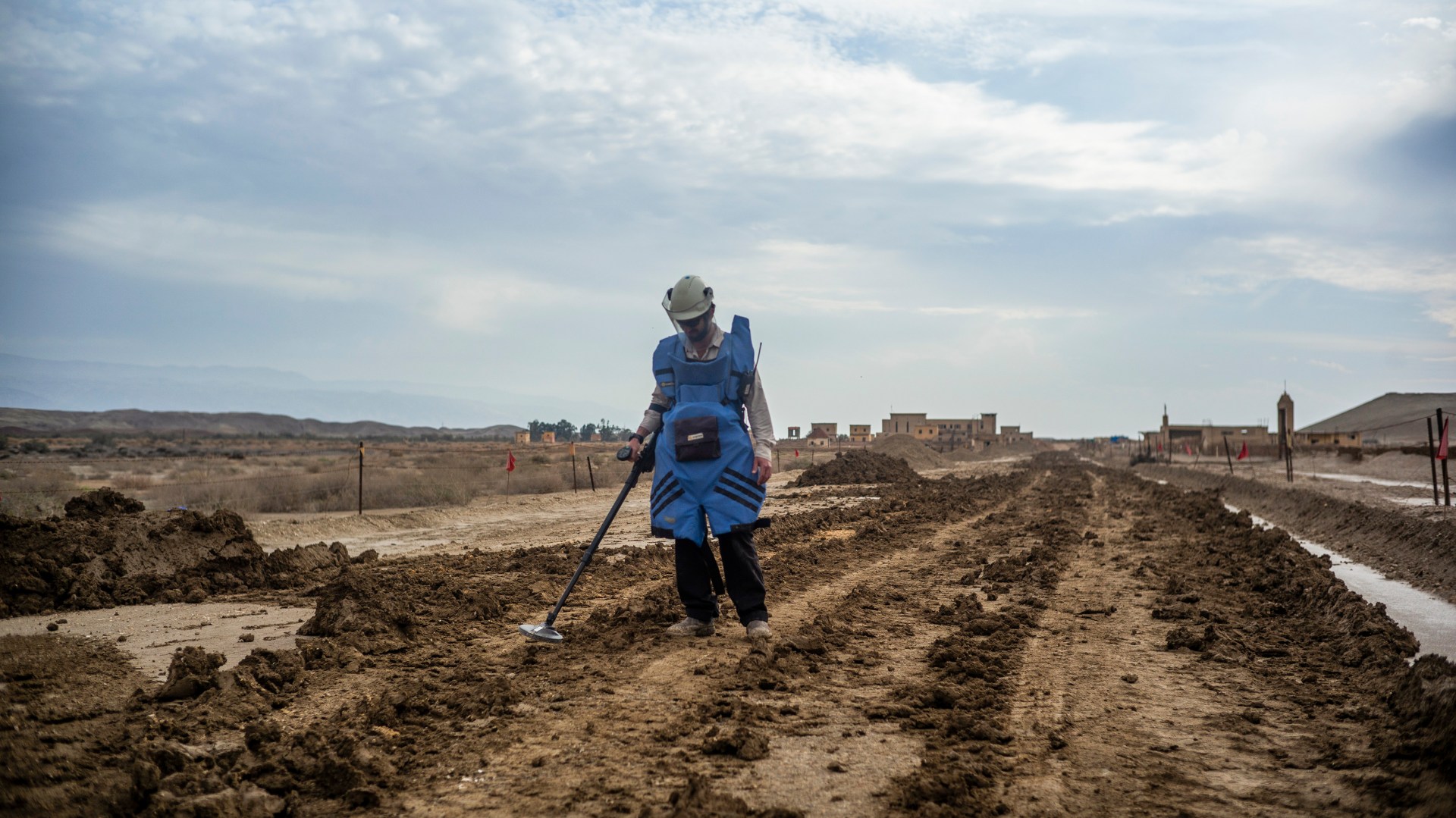
Last week in time for Easter, the UK-based demining specialist HALO Trust group exploded in chain reaction the final 500 landmines at Israel’s Qasr al-Yahud monastery complex.

“We got the churches together, all eight different denominations, and then we got the Israelis and the Palestinians,” HALO Trust CEO James Cowan told the BBC.

“So all three major faiths, and we looked at how we could do this.”

Located six miles east of Jericho on the Jordan River, “Bethany beyond the Jordan” in 1968 was placed by Israel under military jurisdiction following the Six Day War. Fearing terrorist infiltration across the shallow riverbed, the army laid over 6,000 landmines and booby-trapped the churches.

Israel declared peace with Jordan in 1995, but the area remained closed.

In 2011, it was partially reopened, allowing access along one narrow path between the Jordan River and the Greek Orthodox St. John the Baptist Monastery.

And in 2016, HALO Trust, which works in 27 nations around the world, announced it would begin demining efforts. Funding issues caused a two-year delay.

Significant progress began in March 2018, after securing the necessary $4.6 million ($2 million of which was provided by the Israeli government).

By year’s end, CT reported that 800,000 pilgrims visited the not-yet-fully-demined complex. In 2019, CT reported how Christian rapper Lecrae was one of them and provided information on the ecological concerns surrounding the Jordan River.

Qasr al-Yahud—“the Castle of the Jews” in Arabic—is located at the traditional location of the Jews crossing into the Promised Land. It is also associated with the ascent of Elijah into heaven on a chariot of fire.

A competing baptismal site lies on the Jordanian side of the river. In 2000, Pope John Paul II paid his respects; in 2014, Pope Francis did the same.

The Greek Orthodox church, which dates back to the fourth century, was partially destroyed by an earthquake in A.D. 1024 and was rebuilt in the 12th century. Other buildings belonging to the Franciscan, Ethiopian, Russian, Syrian, Romanian, and Coptic churches were built in the 1930s.

Restoration work is now ready to begin.

Bullet holes line the walls of chapels, winepresses lie fallow, and bird droppings collect on sanctuary floors.

“It was like walking into a time capsule,” said Cowan, “with beer still on the shelf, the tables still laid for dinner.”

A representative of each church accompanied the minesweepers upon entry, to ensure nothing was stolen or damaged. Palestinian staff provided logistical support, helping to earn local trust.

For the past nine years, HALO has cleared other sites in the West Bank, coordinating between Palestinians and Israelis. But there are still approximately 35 square miles of landmines in the West Bank, according to The Wall Street Journal.

These have not deterred a historic number of tourists, however. Last year, Israel received a record-high 4.55 million visitors, up 10 percent from 2018, when 61 percent of visitors were Christians. The sector contributed $6.3 billion to the national economy.

As demining progressed at Qasr al-Yahud, Israeli officials expressed optimism that pilgrims to the baptismal site would triple, as each church gained full access to its facilities.

Now, COVID-19 is devastating the industry. Closing the borders to tourism may cost $1.7 billion, the Israel Hotel Association stated.

This may be particularly painful to Palestinians in Bethlehem, where 70 percent of the economy is derived from tourism and 9 out of 10 industry workers are Christians.

Qasr al-Yahud concentrates its traffic around the January celebration of Epiphany, predating the new coronavirus outbreak.

But just as the sacrament symbolizes death and rebirth, perhaps the traditional site of Jesus’ baptism can foreshadow a brighter future.

“In the time of COVID, these grim times, it’s really nice to have a story like this,” said Cowen. “There’s actually a bit of hope.”

Books
Review

A Christian Case for Reading Godless Books

Novels like “Girl, Woman, Other” offer something precious: passports to the worlds of unbelievers.

Christianity Today April 17, 2020
Illustration by Rick Szuecs / Source images: Envato / Photo by Jayson Hinrichsen / Unsplash

We read to know we’re not alone.” These words, taken from William Nicholson’s play Shadowlands, capture our deep motivation to read. When we read, we see life through another’s eyes, sometimes recognizing our own desires, dreams, and disappointments. It’s like the feeling of a friend’s arm, silently extended around your shoulders. You’re not alone.

Girl, Woman, Other: A Novel (Booker Prize Winner)

Girl, Woman, Other: A Novel (Booker Prize Winner)

Grove Press

464 pages

$16.96

But as Christians, we are called to more than this. We’re called not to comfort ourselves but to discomfort ourselves. We’re called—like the Good Samaritan—to stop in the wayside world of the other, especially others who are least like ourselves. And sometimes, the passport to that world is a book.

Playful Complexities

Girl, Woman, Other is a 2019 Booker Prize–winning novel by Bernardine Evaristo, whose works experiment with prose and verse and explore the African diaspora. The book is set in London, my hometown. I recognize its places, streets, and turns of phrase. But its 12 protagonists could hardly be more different from me. Most were born in poverty. Most experiment sexually. All live as black or brown women in majority-white contexts. One whose faith had carried her through trials felt that faith die along with her beloved husband. (It was buried when her prosperity-gospel pastor traded sex for a small business loan.) But even across these differences, Evaristo conjures empathy with a magician’s flare. Indeed, the book is structured around empathy.

Chapters 1 to 4 narrate 12 women’s tales, in clusters of three. For example, chapter 1 gives us the keys first to Amma’s inner thoughts, then to those of her daughter, Yazz, and finally to those of her best friend, Dominique. We learn each woman from the inside out, but we also see them from the outside in. The effect is a sustained soliloquy, as actor after actor takes the stage. Time and again, the other becomes the self.

As a white, British woman, I emerged from this book with a richer understanding of the range of experiences of black and brown women in my country—not least the hurt and the heartbreak. Despite addressing issues as serious as rape and emotional abuse, and topics as fraught as gender, cultural origin, immigrant status, and sexual experience, Evaristo is never monochrome or preachy. She highlights the complexities at play while being playful with complexity.

One example of this playfulness is Evaristo’s portrayal of Nzinga, an African-American “builder of timber houses on ‘wimmin’s lands’ in the ‘Dis-United States of America,’” with whom Dominique falls deeply in love. When Dominique first brings Nzinga to meet her best friend Amma, Nzinga opines on what black women should and shouldn’t do, including not wearing black socks or underpants or using black garbage bags. As Evaristo tells it, “Amma kept flashing Dominique looks, is she serious? are you serious?” But Dominique is lapping it up.

We’ve all seen friends imbibe nonsense from those they adore. If we’re honest, we’ve probably done that ourselves. But the comedy of this moment becomes poignant as we witness Nzinga shrinking Dominique’s world down, inch by inch, to an abusive cage, from which Amma ultimately helps her escape. Evaristo’s characters have flaws and foibles, and intermural fights, and we see how love and politics get tangled up. But even as we are struck by difference, we’re also invited to identify.

Some of Evaristo’s most powerful moments knock at generational walls. Amma is not the conventional sort. An iconoclastic black, lesbian, feminist playwright, she is also deliberately promiscuous. Yet the Amma with whom Evaristo leaves us when she quietly passes the mic to Amma’s daughter, Yazz, is filled with conventional feelings. She’s realized her dead father, whose traditional thinking she despised, was “a good man.” She’s started trying to police her daughter’s clothes. And she has suffered that same daughter’s rejection of her most deeply held beliefs:

[F]eminism is so herd-like, Yazz told her, to be honest, even being a woman is passé these days, we had a non-binary activist at uni[versity] called Morgan Melenga who opened my eyes, I reckon we’re all going to be non-binary in the future, neither male nor female, which are gendered performances anyway, which means your women’s politics, Mumsy, will become redundant.

Amma won’t miss “the spiteful snake that slithers out of [Yazz’s] tongue to hurt her mother, because”— and here comes the punch—“in Yazz’s world, young people are the only ones with feelings.” But she will miss Yazz, so painfully. Amma’s monologue ends like this:

the house breathes differently when Yazz isn’t there

waiting for her to return and create some noise and chaos

she hopes she comes home after university

most of them do these days, don’t they?

they can’t afford otherwise

Yazz can stay forever

really.

In these moments, the most conventional, conservative, lifelong Christian parents among us will feel an unexpected arm across the shoulder. We feel it again when we hear from Yazz’s father. Roland is a gay academic with whom Amma chose to have a child. He has risen to celebrity heights. But when we hear snatches of his inner monologue, we find that the validation he desperately craves is from Yazz, from whom he longs to hear, just once, “You done good, Dad.” And we hear how he feels about the hollow in his side left by the long-gone little girl who used to curl up under his arm.

Purity and Compassion

Common bonds of parenting aside, should we even read about lives like Amma’s? The poet and Paradise Lost author John Milton urged that books should be “promiscuously read.” But should we Christians read books that feature promiscuity?

Girl, Woman, Other is not explicit in its depictions of sex. Nor is it evasive. When Carole is gang-raped at age 14, we feel its force. When Amma conquers woman after woman, we see her mental scorecard. When Dominique enters what becomes an emotionally abusive relationship with Nzinga, we’re not left wondering if they’re just close friends. Some of us will find even relatively delicate portrayals of sex to be deeply unhelpful. If that’s where you are, don’t read this book. But sometimes I wonder if we are so concerned with our purity that we sacrifice empathy on its altar—like the priest and the Levite, crossing to the other side.

Jesus set a standard of sexual purity before which all of us must quake. We must not look at women (or men) lustfully, and we must gouge out the things that take us there (Matt. 5:28–29). As Christians, we must surely guard our minds and hearts. But, sexual sinners that we are, must we not also open ourselves up to those whose sexual experiences (chosen and unchosen) are very different from our own? Jesus—whose mind was absolutely pure—turned his eyes of love to prostitutes and welcomed women known for sexual sin (Luke 7:36–50).

Don’t get me wrong: We don’t need gratuitous details. Books like 50 Shades of Grey are written to arouse, and we must flee pornography in all its forms. There are many books and films I’d scrupulously avoid. But Scripture itself sometimes narrates illicit sex scenes (Tamar’s rape by Amnon in 2 Samuel 13, for instance). And in many of the narratives from Girl, Woman, Other, we only understand the character—her fears, hopes, and disappointments—because we know the life she’s lived. LaTisha, the loud-mouthed grocery store manager, parenting three kids from different men, is sculpted by painful encounters with sex. So is Carole, the successful, faithfully married businesswoman, who was gang-raped outside LaTisha’s party when they were kids. Sometimes people’s sexual pasts are visible. Sometimes they are hidden. But they are always important.

Listen and Love

Knowing the story of a fictional character will not give us access to any real life. But fiction can expand our moral space, preparing us to empathize with those whose lives diverge from ours.

Some differences of experience are morally neutral. I can read and learn what it’s like to grow up in a different time, or place, or as a boy rather than a girl, or with a different racial or cultural heritage. Some lives call for moral sympathy, as with Evaristo’s Carole, a gang-rape victim whose endurance of horrific sin shaped her irrevocably. And some are culpably immoral, as with the heartless promiscuity of Amma, who never sleeps with the same woman more than twice to avoid entanglement. But all these categories of experience matter to a person’s life.

We all long to be known and loved. But if others won’t look at the parts of us most mired in sin, then they’ll never really know us in full. This applies to friendships with other Christians. It’s vital to me that my close friends listen when I confess my sin. I don’t need them to enable me, or to affirm what God does not. But I do need them to listen and to try to understand. Then they can truly help.

This same principle applies all the more to friendships with non-Christians, whose ethics may diverge from ours. To listen and understand is not to endorse. And while we must fight our own sinful tendencies, neglecting to understand the sins of others leaves us vulnerable to that most dangerous of all besetting sins: pride. The Pharisees judged the tax collectors and prostitutes. Jesus ate with them.

But what if the book we are reading has explicit anti-Christian bias? While Girl, Woman, Other is careful to poke fun at every ideological viewpoint—including those evidently embraced by its author—there’s no way to spin it as pro-Christian. But this is no reason to remove it (or books like it) from our shelves. I frequently read books by strident atheists—Richard Dawkins, Steven Pinker, and the like—to understand the arguments they make. And books like Girl, Woman, Other give us access to something more precious: the internal worlds of non-believers, not just their arguments. Like inviting us into someone’s house, books can help us see the landscape in which our unbelieving friends might live. And when we see life through their eyes, we’re moved to greater tenderness as we point them to the Light of the World.

Girl, Woman, Other may not be for you. You may have other mission fields, and its themes might hit you in unhelpful ways. But it is excellently written and offers us the keys to houses that may (or of course may not) be quite unlike our own.

We read to know we’re not alone. But as Christians, we can also read to ensure we’re not leaving others alone. The hand across their shoulder could be ours. And reading might just help us stretch it out.

Rebecca McLaughlin is the author of Confronting Christianity: 12 Hard Questions for the World’s Largest Religion (Crossway). You can follow her on Twitter @RebeccMcLaugh.

To Debunk Viral Conspiracies, First Build Trust

In video, Francis Collins addresses skepticism of the coronavirus’s natural origins, which is higher among Christians.

Christianity Today April 17, 2020
Illustration by Rick Szuecs / Source image: Courtesy of Biologos

In Christian communities, science news on COVID-19 arrives in a landscape already shaped by tricky contours, including not only broader societal skepticism toward science but also unique concerns about whether science conflicts with faith. Within that context, the science and faith engagement organization BioLogos, in conjunction with Christianity Today, hosted a livestream event aimed at providing Christians with a trustworthy source on the coronavirus pandemic: Francis Collins, the director of the National Institutes of Health and an outspoken Christian. Collins addressed several questions on Monday, ranging from research on potential treatments and vaccines to ethics around triage and the origins of this new virus.

Since information proliferates through varying mediums and newsgathering methods can create conflicting narratives, the event centered on common questions arising among the general public. Though scientists have refuted it, many still question whether the new coronavirus could have originated in a lab. After all, there is a virology lab in Wuhan, China, where the virus first emerged. It turns out this idea holds more plausibility with Christians than with the general US population, according to a recent Pew Research poll.

About 36 percent of both white evangelicals and black Protestants believe that the new coronavirus that causes COVID-19 was made in a lab, either intentionally or accidentally, according to the March poll. Only 29 percent of all US adults surveyed agreed. Atheists are least likely to think the current strain was manufactured. Further, younger respondents believed this at higher rates than older respondents, as did Republicans or those more conservative politically.

Collins, who founded BioLogos in 2009, addressed this theory during the livestream event. “If you were trying to make a virus, you wouldn’t make this one,” he said. As scientists have studied the genetic sequence of the virus, they’ve noticed some properties that computer models wouldn’t assume could make it contagious. And yet it is. Therefore, it’s very unlikely a bioengineer would have chosen this route to make a virus. Instead, the virus resembles coronaviruses found in both bats and pangolins. “In this case, the bioterrorist was nature,” said Collins, adding that viruses have been mutating this way for centuries. He explains on his blog that scientists are still searching for how it began infecting people.

The story is an anecdote in a bigger landscape of how best to care for the sick, practice social distancing, and support a lagging economy. Yet it also illuminates how information is perceived, challenging us to think about how we evaluate truth.

Jim Stump, vice president of BioLogos, said that their staff considers how some in their audience may perceive science as something clouded with ideology. Some scientists have used public platforms to express disdain for religion.

He pointed out that science works independent of ideology. However, every area of knowledge is influenced by ideology. It’s not that people consciously evaluate information based on “ideas and values they are committed to,” said Stump, referencing Jonathan Haidt’s, The Righteous Mind: Why Good People are Divided by Politics and Religion. “That might happen sometimes, but far more often it happens in the background of our thinking.”

However, human reasoning is “most often driven by the values of our group,” said Stump. “We cannot just plop the cold, hard facts down in front of people and expect them to accept those.”

BioLogos staff consider how to communicate science to Christians, some of whom may be skeptical about science. “Particularly in our age of social media, there is so much information available—and much of it conflicting—you must first establish trust with your audience. For us, that includes using scientists who share our values and faith in Christ,” Stump said.

“We are so grateful to have sincere believers like Francis Collins in influential positions where the science does not become mixed with an anti-Christian ideology.”

Meanwhile, as scientists continue to fight the coronavirus pandemic, communicating findings on where the virus came from is only the beginning of public engagement. Social distancing appears to be working in parts of the US as lower numbers of cases and deaths are predicted now than were originally feared, yet Collins cautioned viewers that this moment is far from over. Though there may be some relief this summer, most scientists assume the virus may thrive again in the fall. Thus, the primary hope in ending the pandemic is seen to be a vaccine.

Yet the public’s skepticism toward vaccines has grown, even among Christians. Last fall, a Pew survey found that 12 percent of US adults do not feel the benefits of the childhood vaccines for measles, mumps, and rubella outweigh the risks—the number goes up for blacks (26 percent) and Hispanics (22 percent). A majority of white evangelicals (87 percent) see the benefit of the measles vaccine, but that percentage is lower on average than among all white Americans (92 percent).

https://datawrapper.dwcdn.net

Though science communication during the pandemic has more challenges ahead, Pew found that 79 percent of US adults surveyed say the Centers for Disease Control and Prevention is doing a good job—more than approve of other institutions, with the lowest approval given to the media and President Donald Trump.

In this moment, as Americans seem to value science institutions, Stump holds out hope that “people (will see) the importance of scientific research and results on things like vaccinations.” This trust will be needed when a coronavirus vaccine becomes available in the future.

Rebecca Randall is the science editor at Christianity Today.

Pastors

Grieving Is Leading

I’d done everything I could think of to keep the church running. But I’d forgotten to mourn.

CT Pastors April 17, 2020
Illustration by Rick Szuecs / Source images: Envato / Corey David Robinson / Lightstock

The numbers of infected pile up. Death counts are rising. Shelter-in-place restrictions are taking a toll. You’ve moved your office to your home, turned on a dime to livestream or record services, and lined up a series of webinars. You’ve managed to adapt, to keep serving people. Yet as the workday wraps up, a gnawing restlessness eats at you. You see another depressing headline. Your heart sinks.

What is this feeling?

In an interview with Harvard Business Review, David Kessler, an expert on death and loss, says the discomfort we’re feeling is grief. The world has changed. City streets are barren. Businesses have shut down and investments are plummeting. Church members have lost their jobs and watched the falling Dow drain their savings. Loss is upon us—not simply the loss of things, but the loss of embodied joys.

We can’t pop into our favorite coffee shop for a cappuccino and an encouraging conversation with a friend. Our children are denied the thrill of chasing one another around bark-carpeted playgrounds. Post-church-service fellowship is reduced to “gallery view” online chats. Everything is once removed, a click away from flesh and blood, face-to-face, wholesome, everyday interaction. Even a hug feels wrong.

As we adjust to working from home, lead organizational change, and implement new technologies, we must not forget to lead our churches to mourn. While the restlessness we feel may be the result of a more sedentary life, it is mingled with the grief of isolation.

Stages of Grief

Kessler and his co-author, Elisabeth Kübler-Ross, wrote the well-known book, On Grief and Grieving: Finding the Meaning of Grief through the Five Stages of Loss. Many of us have guided church members through their sorrows using these five stages. While the stages are not prescriptive steps for mourning, they do provide a map for sorting through our sorrows. Kessler applies them to our uncharted times:

  • Denial: This virus won’t affect us.
  • Anger: You’re making me stay home and taking away my activities.
  • Sadness: I don’t know when this will end.
  • Acceptance. This is happening; I have to figure out how to proceed.
  • Bargaining: Okay, if I social distance for two weeks everything will be better, right?

These stages filter through our headlines and across our lips: “Can you believe the government is shutting things down? We cannot let the cure be worse than the problem! When will life go back to normal? We’ll get through this together. One more week and I’m getting back out!”

I contacted the at-risk, wrote encouraging articles, recorded Psalm-based devotionals, and prayed for the anxious and disheartened. But I had not grieved myself. I began to realize that grieving is also leading.

When we read or hear these statements, it can be tempting to argue the particulars, giving our takes on the best response to the pandemic. But these sentiments often represent responses of grief to the swift losses we’ve seen over the past few weeks. We need to give ourselves, our families, and our churches space to grieve the loss of old securities and dearly held joys. This started for me when I chose to be honest with myself, and God, about what was going on inside of me: “Lord, I’m restless. I don’t know what to do. Show me what’s underneath my restlessness.”

I’d leapt over anger, denial, and sadness to acceptance. I had to get on with leading the church. I contacted the at-risk, wrote encouraging articles, recorded Psalm-based devotionals, and prayed for the anxious and disheartened. But I had not grieved myself. As I sorted through things, I began to realize that grieving is also leading.

During our next staff meeting, I confessed I’d gone to bed troubled each night. I told our team that I’d been feeling a deep restlessness and that I’d sought to shoo off the discomfort with family board games, Netflix, and sleep. But it wasn’t working. I confessed I needed to get beneath the restlessness, to discover what is there, to name it, and to hand it to God. I cried out to God: “I’m not enough for these people! I’m not enough for my wife and kids, for my church. I’m not enough, Lord. I miss my old life, my friends.” I grieved and he cradled each grief with care.

Do you need to do something similar for yourself, your family, your staff, or your church? Grieving isn’t unspiritual. Some of the greatest figures in the Bible made time to weep: Joseph, Hannah, David, Nehemiah, Esther, Peter, Mary, Jesus.

The Sixth Stage

But how do we get through grief?

Kessler recently wrote a new book exploring a sixth stage of grief—meaning. He comments, “I did not want to stop at acceptance when I experienced some personal grief. I wanted meaning in those darkest hours. And I do believe we find light in those times.”

Meaning can be quite helpful in sorrow. Confined to Auschwitz, Austrian neurologist Viktor Frankl witnessed the slow, steady, dehumanizing effects of the Nazi concentration camps. He recalls watching a patient who, upon his last breath, was immediately ransacked by prisoners for shoes, clothes, and string. Many of his fellow prisoners committed suicide.

Then Frankl stumbled upon something.

He noticed he was able to coax prisoners out of suicide by imploring them to discover meaning. One laborer expressed a longing to be reunited with a child (love). Another aspired to finish a series of scientific books (vocation). By embracing the meanings of love and vocation, these prisoners learned to persevere under the harshest of circumstances and survived.

More than Stages

There is no more profound meaning than the gospel of Jesus Christ. It extends to us the sturdy handholds of truth and grace. Truth: Our restless souls are made to rest in Jesus Christ. Grace: God patiently and generously coaxes us toward him us as we fumble about for him. We do well to heed Frankl’s hard-won wisdom and search for meaning. The saints need pastors who will guide them to the handholds of truth and grace, whereby they may pull themselves up through sorrow into abiding meaning.

However, perhaps more profound than the meaning coaxed from his fellow sufferers was the fact that Frankl gave himself to them. It wasn’t just a cogent raison d’être that got them through their sorrows; it was a person. It was Frankl’s presence.

While we are secluded from one another, we are not isolated from the Father, Son, and Holy Spirit. God is present with us in our grief and in our sorrow. Prayer and meditation put us in touch with his comforting presence. Unlike a good friend, Jesus is always available. Unlike our go-to distractions, the Father is never distracted from our needs. And unlike meaning, the God of all comfort consoles us with custom-cut mercies for every sorrow (2 Cor. 1:3–4). God is present. The Spirit follows us even to the grave; there he will take us by the hand and lead us (Ps. 139:8, 10). We are held by the hands of a suffering Savior.

Let’s tell the Lord our sorrows and name our griefs. Let’s seek a cure, but not more than we search for Jesus. And let’s bring others along in our grief and in our comfort. Pastors, we need not comfort our church’s every sorrow. The Father, Son, and Holy Spirit have that covered. But we can show them the way God has comforted us.

As the effects of the pandemic continue to wash over us, may we grieve with hope—in the presence of the ever-present Comforter who will one day restore all our joys.

Jonathan K. Dodson is the founding pastor of City Life Church and the author of Our Good Crisis: Overcoming Moral Chaos with the Beatitudes.

Ideas

The First Gift Ever Given

President & CEO

What do we learn when we are forced to confront our own mortality?

Christianity Today April 16, 2020
Illustration by Mallory Rentsch / Source Images: saemilee / Getty Images

The following is the latest in a series of daily meditations amid the pandemic. For today’s musical pairing, listen to Peter Gregson’s recomposition of the prelude to Bach’s Cello Suite No. 1. All songs for this series have been gathered into a Spotify playlist.

“In the beginning God created the heavens and the earth.”Genesis 1:1

“Every good and perfect gift is from above, coming down from the Father of the heavenly lights, who does not change like shifting shadows.”James 1:17

Meditation 18. 2,127,873 confirmed cases, 141,454 deaths globally.

Christian doctrine refers to the creative activity out of which God brought forth the cosmos as creatio ex nihilo. The universe we inhabit has not existed forever, in other words, nor was it refashioned from preexisting matter. It was created “out of nothing” (ex nihilo) through the intention and the will, the intelligence and the love of God.

One cannot be a Christian very long without hearing the classic Latin phrase. A lesser-known phrase from the theological canon is preservatio ex nihilo. God’s will is not only creative but preservative. He both brings and sustains all things in being. The moment God no longer wills for all things to exist, they will not.

The insight is fundamentally the same, and the logic is compelling. God is the only necessary being, the only one who contains the principle of his existence within himself. All other things are contingent upon his will.

The biblical narrative begins with the beginning of the temporal order we inhabit. It does not fold back the curtain of time and show us any deliberation within the community of the Trinity or within the throne room of heaven before God chose to create the universe. What it does make evident is that God is perfect and sufficient unto himself. He was not compelled to create by any imperfection or need. It also makes clear that we serve a God who is defined by love and grace. It is “from him and through him and for him” that all things were made (Rom. 11:36).

When I was a gymnast, I built up enormous callouses on my hands until I could scarcely feel the high bar in my grip. When those callouses were ripped away, suddenly the raw skin felt every grain of the bar. Many of us feel that way now. The layers of distraction and numb routine have been ripped away, and the raw skin of our souls feels the nearness of death more keenly than ever.

Confronting the possibility of our death, however, brings a startling appreciation for the fact of our life. That we need not exist illuminates the wonder we do exist.

It is a part of God’s unchanging nature since before the beginning of time that he is a giver of good and perfect gifts. And if our existence is neither necessary nor earned, then it is a gift. The God who is love creates in love. Although he did not need to create us, evidently he desired to do so. God willed for us to be so we could be in relation to him.

Creatio ex nihilo and preservatio ex nihilo may sound like the kind of dusty Latin phrases that echoed in stone churches centuries ago. Yet they actually tell us something incredibly vital and relevant in this season. They tell us that everything is a gift. Every day and every hour and every moment we exist is because God generously wills it so. All of creation, all throughout time, is the overflow of the love of God.

We may feel vulnerable to know that our very existence is contingent in every moment upon the will of God. But God’s being and character are changeless. With him there is no shadow of variation. Is there anything more reliable to stand upon?

If these things are true, then the first gift ever given is the simple grace that anything exists in the first place. Creation itself is the original witness to the generosity of God. The world only is because grace is.

Help us, O Lord, even in the midst of this time of anxiety and mortality, to remember that every moment we are is a moment when you will us to be. We thank you for the gift of this life, this day, and this hour. May we never take for granted the good and perfect gifts you give.

Sign up for CT Direct and receive these daily meditations—written specifically for those struggling through the coronavirus pandemic—delivered to your inbox daily.
News
Wire Story

Christian Apps Are Moving from ‘Pray More’ to ‘Calm Down’

New mindfulness resources help users find rest in God.

Christianity Today April 16, 2020
Tony Anderson / Getty Images

Rachael Reynolds is a busy wife and mom of three who, like many parents, suddenly has been tasked with home-schooling her children and managing the anxiety of a pandemic.

Reynolds, 34, also is a registered nurse and works three or four night shifts a week in the labor and delivery department at a Texas hospital. That adds the stress of keeping her patients and herself safe from the spread of the novel coronavirus.

In those times when she has a few moments to herself while her kids are napping, or when she’s trying to drift off to sleep as everyone else is beginning a new day, Reynolds finds herself tapping on one of the meditation apps on her phone—like Abide, which calls itself the No. 1 Christian meditation app to “stress less and sleep better.”

“Grounding myself with the Word of God, and the truth and the promises he offers me there, I find to be much more effective for grounding myself mentally and spiritually,” she said.

Meditation and mindfulness apps have boomed in the last decade, part of the trend of the year that Apple’s App Store noted in 2018: self-care apps, particularly those focused on mental health.

The App Store deemed Calm, which describes itself as the No. 1 app for sleep, meditation and relaxation, its 2017 app of the year.

Christian meditation apps—with names like Abide, Pray, One Minute Pause, Soultime, Soulspace, and, for Catholics, Hallow—have entered the scene more recently, adding prayer and Scripture to the digital landscape of soft voices and nature sounds.

Several of those Christian apps have reported spikes in searches for meditations on topics like anxiety since the pandemic started.

“It’s sort of really exploding right now,” said Bobby Gruenewald, pastor and innovation leader at Life.Church, one of the largest megachurches in the country.

“We definitely know that people turn to Scripture when they’re in different times of need. … I think they see the Bible as a point of stability, truth, and substance that helps them kind of center.”

Life.Church’s YouVersion Bible app added a YouVersion Rest skill for smart speakers on its Bible app last month, after noticing users were listening to Scripture late at night, Gruenewald said. The skill recites comforting passages from the Psalms in male or female voices over sounds like waves and raindrops.

Author and therapist John Eldredge launched a meditation and mindfulness app, One Minute Pause, late last year to accompany his latest book, Get Your Life Back: Everyday Practices for a World Gone Mad.

As a therapist, Eldredge said, he was troubled by the rise in anxiety and depression he saw even before the pandemic struck.

People were on “empathy overload” amid news of disasters around the world. Christians—including Eldredge himself—weren’t having the experience of deep rootedness expressed in the Psalms, he said.

“I got caught up in it—just the pace of life, the insanity of the hour, too much media, too much technology, too much plugged in—and I’d come home in the evenings and just find myself completely fried,” he said. “And I am a fairly monastic person, actually.”

Eldredge said he began practicing a one-minute pause in his car at the end of each workday, taking a moment to calm down, center himself and release everything he was feeling to God.

He started looking into building a meditation and mindfulness app years ago, he said. Secular apps like Calm were anything but, with too many options when, he said, “what people need is a very simply grounding experience in Christ” like he had in his car.

One Minute Pause offers a single, one-minute meditation, or “pause,” twice a day read by Eldredge over a photo of nature and soothing music. After completing a number of short pauses, users can move on to longer three-, five- or 10-minute options.

Eldredge doesn’t like the word “mindfulness,” he said.

He prefers to talk about giving one’s attention to God—something he said contemplative Christians like the ancient desert fathers or Julian of Norwich (she of the popular mantra, “All shall be well and all shall be well and all manner of things shall be well”) have practiced for centuries.

“It’s an ancient Christian practice, but we need help back to it because our attention has been shattered,” he said.

Abide has been around about five years, since two former Google employees who were Christians decided to leave the tech giant and use their skills instead “for the kingdom,” according to Russ Jones, its executive producer of content.

The app started out more like Instagram, Jones said, inviting users to create and share their own prayers. But it really took off once it started providing those prayers. Now, an average 100,000 people download Abide for the first time each month from Apple and Android stores, he said.

Abide offers users a daily meditation and a library of prayers on different topics—most popularly, worry and anxiety. Users can choose the length of each meditation and the images and sounds that accompany it.

In recent weeks, the app has added a number of healing prayers, too, including a 12-minute coronavirus healing prayer asking God “that those who have the virus will be healed and that its spread would slow and that it would soon be eradicated.”

But an app is no replacement for a church, Jones said.

“People need to be in a local body,” even if that’s meeting from a safe distance through the current pandemic, he said.

“We are that place that people can go in the dark night of the soul at 2 o’clock in the morning when the pastor is not available in churches, open. We’re that place where people can go on the run in their busy lives and still be in Scripture.”

Another app, Pray, launched in 2017 with a vision to become “the digital destination for faith,” according to creator Steve Gatena.

Since adding subscription content to the app last year—like bedtime stories scripted from Scripture and biblical meditations—it’s become the fastest growing religious subscription service in the world, he said.

Amid the pandemic, Pray is offering those meditations for free, as well as content for kids who now are home from school and other services for churches that suddenly find themselves meeting online. And it’s seeing a rise in the minutes users spend listening to the app and in new subscribers, according to Gatena.

“With stress levels climbing by the day, we believe everyone deserves access to programs that help reduce anxiety levels,” he said.

That’s one of the benefits of meditation, he said. It can help users think more clearly, better handle stressful situations and—in the case of Christian meditation—reflect on the word of God.

Pray’s meditations always start with Scripture, Gatena said. Then they move through the popular framework for prayer that follows the acrostic “ACTS”: Adoration, Confession, Thanksgiving and Supplication.

But, he said, he knows the word “meditation” can raise eyebrows for Christians.

Some evangelical Christians have fretted that practices like meditation and mindfulness aren’t Christian, but rather New Age or Buddhist.

Some Buddhists have been critical of the app craze, too, noted Sarah Shaw, an Oxford lecturer and expert on Buddhist history who traces the history of mindfulness in her upcoming book Mindfulness: Where It Comes From and What It Means.

The “new wave” of mindfulness and meditation does come from Buddhism, according to Shaw.

Jon Kabat-Zinn, who introduced the idea of mindfulness as therapy, had prior experience with Buddhism, she said. And Andy Puddicombe, co-founder of Headspace and an ordained Buddhist monk, launched the app on a mission to bring the training he’d received to the masses.

But, she said of mindfulness, “I don’t think anybody owns this word.”

Many religions have different aspects of meditation and mindfulness—even if it doesn’t look the same across traditions or if they don’t use the same words for it, according to Shaw.

In Christianity, she said, St. Augustine wrote about “recollection in everyday life and being aware of God in every moment.” And there’s biblical precedent, too: The scholar pointed to Psalm 8:4, which asks, “What is man, that thou art mindful of him?”

In fact, the term “mindfulness” was first introduced to the English language in the 14th century Wycliffe Bible, she said.

It’s something Shaw believes can deepen the practice of anyone’s religion.

“If you’re mindful of your body and breath, you can’t be worried at the same time. … You become more alert to yourself, and you will then inevitably become more mindful and aware of other people, and, of course, we’re all having to be mindful of everybody at the moment,” she said.

“I think it’s going to be interesting that people will learn how to find peace and happiness in their own company. And I hope it might actually bring about a spiritual revival.”

Reynolds, the nurse, has heard the arguments from other evangelical Christians that meditation is too secular or taken from Eastern religions—certainly not something a “Bible-believing Christian” should do.

“I think it’s interesting that there’s still pushback from people who know Scripture because you see it all throughout the Psalms. David talks about, ‘I meditate on your word day and night,’” she said.

Compared to previous generations, millennials like herself seem “more open and willing to see how mental health and emotional health really ties into us as beings holistically,” she said.

“I really love that people are now learning that the God who created us physically also created the spiritual and emotional and mental sides of us, and those deserve to be fed and treated well, just like we would with eating right and exercising our physical bodies.”

Reynolds downloaded the Abide app about a year ago after she experienced meditation and guided Scripture readings at a retreat she attended with her husband. She has used it several times a week—even more since the coronavirus began its march across the US.

She especially likes the meditations on the app that are pulled from Scripture, she said.

To her, they bring together physical, mental, and spiritual health. Like other meditation apps, she said, they decrease the stress she feels, slow her thoughts and help her sleep better. They also keep her centered and grounded in Scripture and in what she believes to be true about God.

“For me, it was something that was important to keep myself grounded in the truth of God’s word and an easy way to do that. And I have found it to be really, really beneficial.”

Apple PodcastsDown ArrowDown ArrowDown Arrowarrow_left_altLeft ArrowLeft ArrowRight ArrowRight ArrowRight Arrowarrow_up_altUp ArrowUp ArrowAvailable at Amazoncaret-downCloseCloseEmailEmailExpandExpandExternalExternalFacebookfacebook-squareGiftGiftGooglegoogleGoogle KeephamburgerInstagraminstagram-squareLinkLinklinkedin-squareListenListenListenChristianity TodayCT Creative Studio Logologo_orgMegaphoneMenuMenupausePinterestPlayPlayPocketPodcastRSSRSSSaveSaveSaveSearchSearchsearchSpotifyStitcherTelegramTable of ContentsTable of Contentstwitter-squareWhatsAppXYouTubeYouTube