

History

Our November Issue: Worship With Benefits

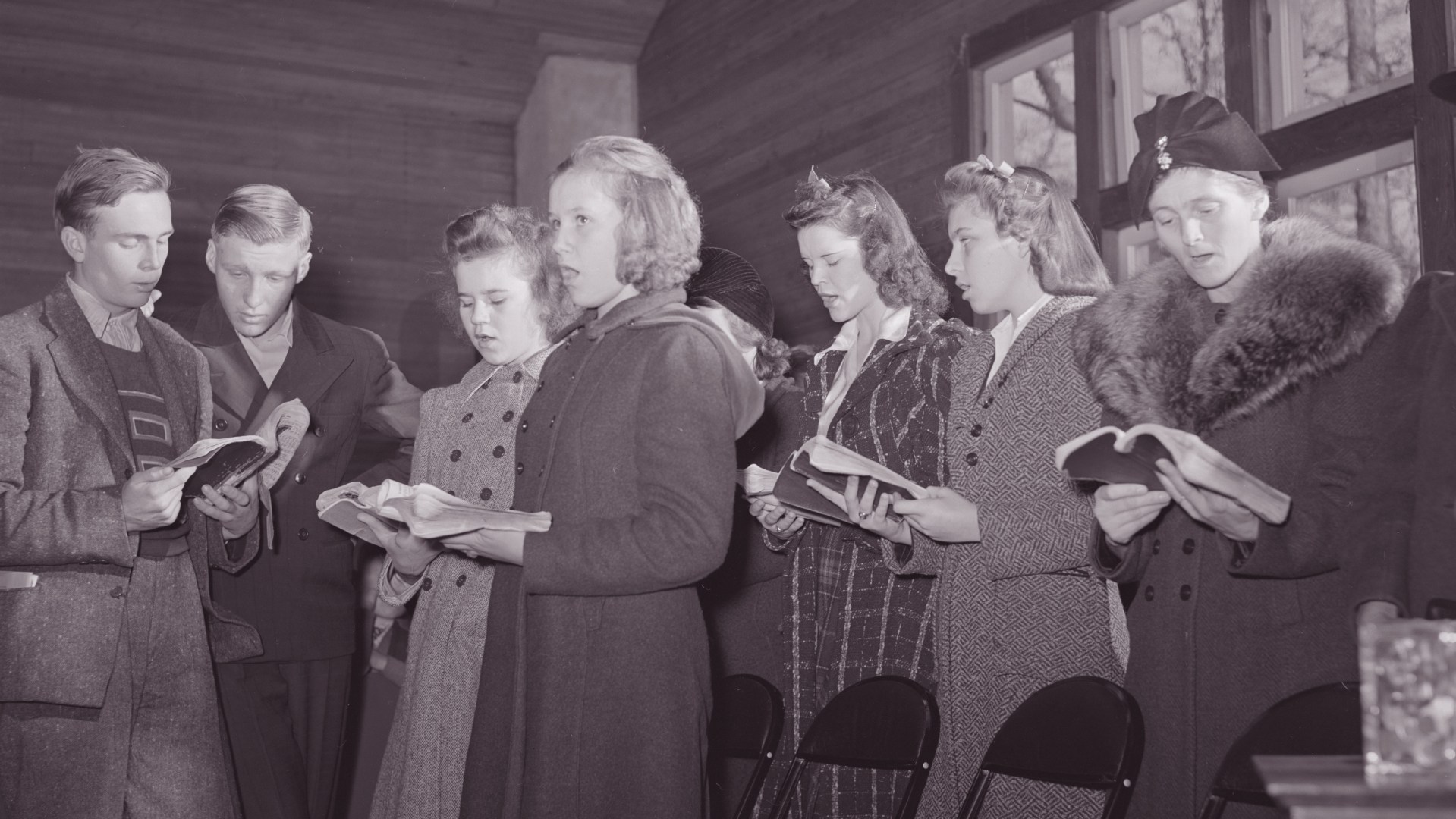
Historically, Americans really liked church.

Library of Congress

It is a founding myth­—tinged perhaps with either wishful nostalgia or unsentimental relief­—that the church was always at the center of American community life. For much of the country’s colonial period, much of the country avoided Sunday worship, reveling instead in the distractions, demands, and seductions of the New World. The British sent missionaries before they sent boatloads of redcoats.

The Great Awakenings changed that, of course, and congregations began to hold more sway in the later 18th and early 19th centuries. Yet even at the dawn of the Civil War, fewer than half of Americans were formally members of a church. (That figure likely excludes the historical Black church, with its own still-emerging history and a vibrancy that may well have eclipsed that of the white church.)

Almost everyone, however, came to see church as part of the marrow of community life. In the worldliest sense, regular worship and prayer meetings had obvious pull in a time before inexhaustible electricity and Netflix: They were something to do a few nights a week, an excuse to gather and socialize. That appeal endures in many power-starved corners of the world, where gas generators, amplified Casio keyboards, and extension cords for charging cellphones still draw crowds after sundown.

But there was another significant benefit of church: Sunday school. An endangered practice in American churches today, Sunday school was the only avenue for education open to many families during the Industrial Revolution, when men, women, and children were tied up in production six days a week. “By the mid-19th century,” historian Timothy Larsen wrote in CT, “Sunday school attendance was a near universal aspect of childhood. Even parents who did not regularly attend church themselves generally insisted that their children go to Sunday school.”

Compulsory public schooling ended the church’s leading role in education, but not the priority parents gave to shipping their kids to church. (The moral formation of children is still one of the top reasons Americans say they attend church, just above “to make me a better person.”)

Americans undeniably believed church nurtured the community’s ongoing health. That sentiment began fading quickly in the 1970s, but our cover story this month suggests that our forebears were right. A growing body of research argues that church is good for more than just our souls. That is, granted, a utilitarian and very unspiritual way to view gathered worship. But it was just such ancillary benefits that drew many to church in the first place two centuries ago.

Andy Olsen is CT’s print managing editor.

Also in this issue

Historically, Americans almost universally believed churches were good for communities. Even families that were not particularly devout leaned heavily on congregations in the 19th century to educate their children both in letters and in moral foundations. That amity has faded, of course, with declining church attendance. But a growing body of social science and medical research suggests corporate worship is not merely good for our souls but also for our bodies and minds. Our cover story this month explores why the abandonment of church could constitute a silent public health crisis.

Cover Story

The Riddle of Church Loneliness

Susan Mettes

Cover Story

Empty Pews Are an American Public Health Crisis

Tyler J. VanderWeele and Brendan Case

The New Head of the World Evangelical Alliance Wants to Talk

Actually, God Is Doing an Old Thing

John Koessler

How Scripture Keeps Surprising Me

News

Duke University Study Finds More Sin in the Rain

We Need a Savior More Than a State

Editorial

The Antidote to Celebrity Church Is Mere Church

Mike Cosper

The Church Needs Reformation, Not Deconstruction

The New Prison Ministry Lies in Bible Education

Michael Hallett and Byron R. Johnson

Reply All

Testimony

My Body Is a Temple, Not a Fighting Machine

Héctor Colón

Excerpt

You Can’t Slay the Giant Anxiety with Mere Willpower

Ben Palpant

News

A Court Win for One Pro-Life Med Student Raises Concerns for Others

News

The New President of an Evangelical University Has a Question: ‘What Would Booker T. Washington Do?’

Liam Adams

News

Jesus Loves the Brown Pop-Eyed Atewa Slippery Frog

Ryan Truscott

News

Gleanings: November 2021

Churchgoers May Remember Song Lyrics Over Sermon Quotes

The Great Commission’s Greatest Hits

Interview by Jay Riley Case

Review

God Loves a Persistent Pray-er

Sam Crabtree

Review

The Inhuman Consequences of Satan’s Oldest Lie

Timothy Kleiser

New & Noteworthy Books

Matt Reynolds

View issue

Our Latest

Threatening Profound Evil Trivializes That Evil

Justin R. Hawkins

President Donald Trump and Pete Hegseth speak often of Christianity—but they seem to have no interest in its vision for just warfare.

The Iranian Church Persists

David Yeghnazar

Amid war, some Christians are evangelizing, preparing food for neighbors, and displaying other acts of generosity.

The Bulletin

Trump Threatens Iran, Artemis II Returns, and Anthropic’s AI Triggers Fear

Clarissa Moll, Russell Moore

Trump kills conservatism, astronauts head home, and Claude Mythos Preview deemed too dangerous for public consumption.

Review

Are Christians Rude Dinner Guests?

Three books on politics and public life about the common good, ISIS brides, and Ronald Reagan.

News

The Mississippi Farmer Who Helped Resettle 150 Ukrainian Families

Hannah Herrera

As the US makes it more difficult for refugees to stay, Rodney Mast and his church community are rallying around their new friends.

Analysis

Two States Test a New Pro-Life Law

Pro-lifers have just won legislative victories to restrict abortion pills in South Dakota and Mississippi. But will the laws work?

The Just Life with Benjamin Watson

Dr. Bernice King: The Truth About Nonviolence

Calling the Church to lead with clarity anchored in love.

News

Nigeria Prosecutes Suspects of 2025 Christian Massacre

Emiene Erameh

Survivors hope for justice in the trial of nine men accused of the slaughter of about 150 Christians in Benue state.

addApple PodcastsDown ArrowDown ArrowDown Arrowarrow_left_altLeft ArrowLeft ArrowRight ArrowRight ArrowRight Arrowarrow_up_altUp ArrowUp ArrowAvailable at Amazoncaret-downCloseCloseellipseEmailEmailExpandExpandExternalExternalFacebookfacebook-squarefolderGiftGiftGooglegoogleGoogle KeephamburgerInstagraminstagram-squareLinkLinklinkedin-squareListenListenListenChristianity TodayCT Creative Studio Logologo_orgMegaphoneMenuMenupausePinterestPlayPlayPocketPodcastprintremoveRSSRSSSaveSavesaveSearchSearchsearchSpotifyStitcherTelegramTable of ContentsTable of Contentstwitter-squareWhatsAppXYouTubeYouTube






