News

Migrants Pushed Chicago to the Brink. They Also Brought a Revival.

Some pastors say God used busloads of migrants to grow city churches. Mass deportation is reversing that.

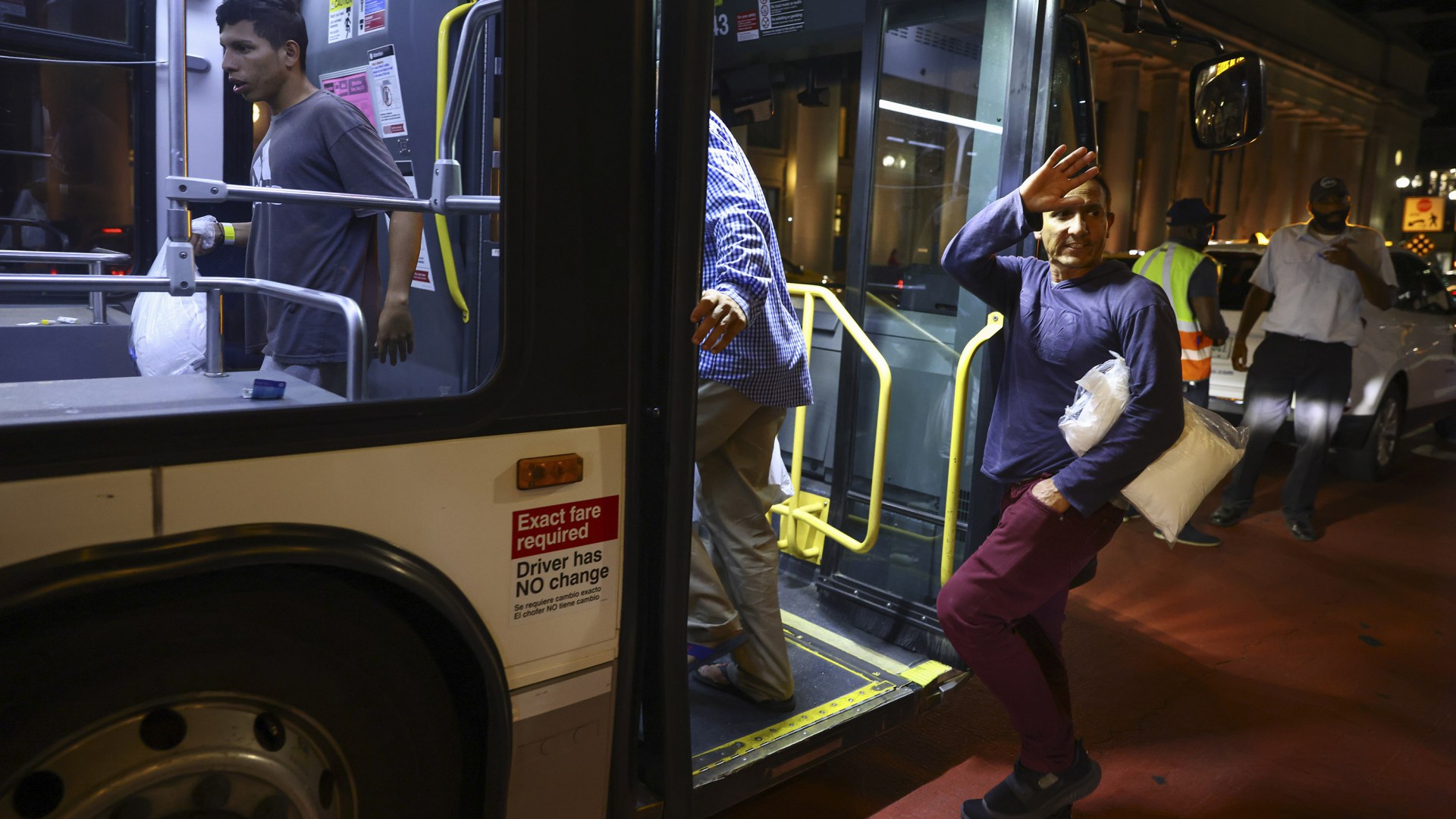
Migrants in Chicago board a bus to a downtown welcome center in August, 2022.

Migrants in Chicago board a bus to a downtown welcome center in August, 2022.

Christianity Today June 26, 2025
Anthony Vazquez /Chicago Sun-Times via AP

On a September morning in 2022, Jay Kim pulled into the parking lot of the Chicago-area church where he works and spotted a huddle of unfamiliar people standing near the edge of the property. When he climbed out of his car, two women from the group approached him, speaking in Spanish.

Kim, the outreach pastor at CityLine Bible Church in Niles, Illinois, understood only a little of what they were saying. They were new to Chicago. They were living temporarily at a Holiday Inn a couple miles down the road. Kim invited them inside the church to talk with another pastor, Eddie Rivera, who spoke Spanish and could help figure out what they wanted.

What the group wanted, it turned out, was work. They had come from Venezuela, they explained to Kim and Rivera. They had traveled through Central America and Mexico and into Texas, stripped by thieves and trials of everything but their clothes. They had arrived in Chicago on a bus the day before. They understood that the government—who exactly that meant, they could not be sure—was putting them up in a hotel. Maybe for days or maybe for weeks. After that, for all they knew, they could be on the street.

“They had been out about an hour, walking around, looking for work,” Kim said. “They were desperate.”

Kim and Rivera did what many pastors would: They gathered groceries from CityLine’s food pantry and clothing from a stockpile of donations. They packed them into a van, and Kim ferried the families back to the Holiday Inn.

A couple of days later, on a Friday morning, five more men appeared at the church. They, too, were staying at the hotel. When Kim drove them back, he learned that the hotel was housing perhaps a hundred migrants, mostly Venezuelan. Before he drove away, Kim told the men to invite their friends to church. He said the church could pick up anyone who needed a ride.

It was the kind of semi-impulsive act that CityLine’s lead pastor, Mohan Zachariah, encouraged: Take meaningful risks and see what happens. “We’re going to take a step out if the Lord brings something to us,” Zachariah had told them. Sometimes, for a church to grow, you have to welcome a stranger in a parking lot.

CityLine pastors and other ministry leaders in Chicago say that when they opened their doors to migrants who surged into the city during that time, something like revival came.

But nearly three years later, another stranger in another church parking lot cast those early days of outreach in a different light. In June of this year, CityLine’s leaders were scrolling through news of protests in Los Angeles against the Trump administration’s deportation efforts when they saw stories about masked federal agents arresting a man in an apparent immigration raid outside a Los Angeles–area church. Pastors there asked the agents to leave the church property, and one of the agents allegedly drew a gun. One shouted, “The whole country is our property.”

Now, two weeks after President Donald Trump ordered immigration agents to step up deportation efforts in Chicago and other major cities, pastors like Kim wonder: Can a revival survive what else is coming?

“They believe they can go anywhere and take any person,” Kim said. “No one can stop them.”

If the Lord flooded Chicago with migrants, he did so at the hands of both Republicans and Democrats.

Early in 2022, migrants—largely from Venezuela—were crossing the border into Texas by the tens of thousands, turning themselves in to authorities and beginning the long process of applying for asylum. With federal detention facilities overwhelmed, Customs and Border Protection released most of the migrants onto the street.

Texas governor Greg Abbott, a Republican, directed state employees to usher migrants in border towns onto chartered buses and flights, dispatching them to a handful of cities led by Democrats. Over the next two years, more than 2,600 buses carried almost 120,000 migrants out of the state. At least 41,000 went to New York. More than 17,000 went to Denver.

Progressive critics pounced, but they tended to overlook a similar—if smaller—program created by El Paso, Texas, mayor Oscar Leeser, a Democrat, which also bused thousands of Venezuelans north.

In Chicago, the buses delivered more than 33,000 migrants. (The city’s official count includes arrivals by airplane and is over 50,000.) The influx strained resources and tested compassion, which Abbott has boasted were explicit aims of his relocation program. Migrants slept in tents, on police station floors, in empty corridors of O’Hare International Airport, and on city buses. The city’s efforts to help them provoked outcries from some longtime residents.

But when CityLine’s pastors stumbled upon the migrants at the hotel, they took it as an answer to prayer.

In the summer of 2022, Kim began hearing stories about ministries and social-services agencies scrambling to help the waves of arrivals. He prayed for the migrants and asked around about how CityLine could get involved. “Nobody really had answers,” Kim said. “At that point, it was chaos.”

So he waited. And then, in September, the migrants came to him.

Chicago housed single men and women at various migrant shelters. But like other destinations for the Texas exodus, Chicago, together with the state of Illinois, contracted with hotels across the region to house migrant families. One of those hotels was the Holiday Inn in Skokie, near CityLine Church.

Early on the Sunday morning after Kim and Rivera first visited the hotel, they found about 30 migrants waiting outside before the 9 a.m. worship service. Men, women, and children had made the 40-minute walk. The church sent vans to the hotel to pick up more, and by the start of the church’s 11:15 service, the crowd had grown to around 50.

No one knew quite what to do. The church arranged chairs in a room separate from the main sanctuary and streamed the worship service to a screen while Rivera tried to interpret. But translating worship music was awkward. So the pastors fetched a bilingual guitarist from among the congregation. Could he lead a few songs in Spanish on the spot?

By the second service, the room was overcrowded. Rivera improvised a sermonette—his first time preaching in Spanish.

Over the following month, the number of migrants showing up for church nearly doubled by the week. More than 100 came for Rivera’s second Sunday preaching. Around 220 came the third Sunday. Soon attendance at the church’s impromptu Spanish-language worship hit 300. Dozens of migrants came to faith, according to the church.

“From zero Spanish to 300. That’s a lot,” Rivera said.

CityLine is not small; it averages 1,400 attendees a week. Even so, the birth of a new congregation virtually overnight sent the church scrambling. It launched a full-fledged afternoon service in Spanish, turning through a roster of guest preachers. Many weeks, it provided lunch  after the service—sometimes catered, sometimes prepared by church members. It bought two more vans for the shuttle service it was now running between the church and the Holiday Inn.

Pastors put out a church-wide call for volunteers: “We were like, ‘You don’t have to speak Spanish,’” Rivera said. More than a hundred people stepped up. They tended migrant toddlers in the children’s ministry. They chauffeured migrants in their own cars, communicating with Google Translate. They helped open CityLine Closet, sorting donated clothing, and they gave to the church food pantry.

Kim knew that people bring mixed motives to worship; much of the explosive growth came from migrants’ basic need to survive. “A lot of it’s out of desperation from a lot of the families that had heard what we were doing—this food, this clothing—and so they’re trying to make their way over,” he said.

All the same, Kim said, “I strongly believe God sent them.” If that was true, what choice did he have but to receive them?

“This just fell in our lap,” Rivera said. “It was the Holy Spirit who said, ‘Here you go: Spanish ministry. Figure it out.’”

Photo by Scott Olson/Getty Images
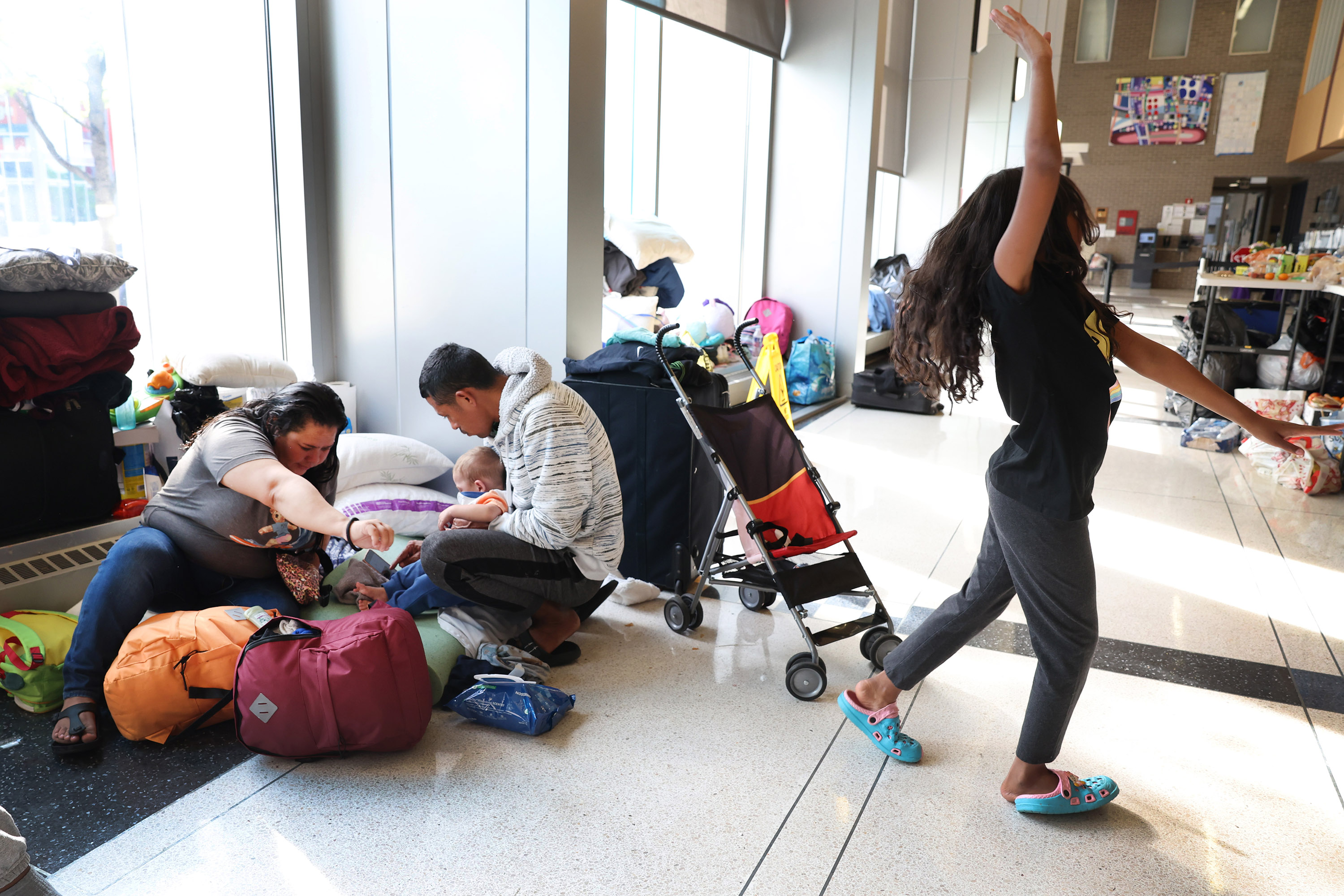
Migrants from Venezuela stayed in the lobby of a Chicago police station after arriving by bus in May, 2023.

Lely might never have come to CityLine, because she was planning to get on a bus to New York.

In the early fall of 2022, Lely walked across the dry Rio Grande riverbed and entered El Paso with her husband and their three young children. It was the culmination of a yearslong flight from Venezuela, in which they fled privation in their homeland, paused for a while in Ecuador, then followed a well-worn path that began on foot in sweltering jungle and terminated, eventually, in a cold holding cell in a Border Patrol facility.

After their release from detention, a local pastor told the family about buses that offered free rides to New York and Chicago. They immediately set their sights on New York, but other migrants warned against it. The city is immense. Prices are insane. Too many people had already gone there. Better to go to Chicago.

Lely, a pastor’s daughter who asked to be identified by a nickname, knew almost nothing about Chicago. She’d seen in movies that it had dangerous parts. But as the family lined up in a building where migrants were sorting themselves by their destinations, Lely found herself standing at a table to register for a Chicago-bound bus. Her family took snacks and waited in a cavernous auditorium among tired people arrayed in endless rows of chairs. Then someone shouted out that the next bus was leaving for Chicago. “We got on that bus to the unknown,” Lely said in Spanish.

To board a bus to Chicago was to roll the dice. Some days, buses departed Texas every few hours, scattering migrants like seeds in any suburb with a train station: Hinsdale. Woodstock. Joliet. City councils passed ordinances forbidding unauthorized buses from unloading within their borders, laws that bus companies sometimes ignored.

The ride took 18 hours. Lely and her husband had no money even to buy crackers for their children. But at rest stops along the way, strangers appeared and asked if they were hungry and handed them pizza and candy.

When the bus stopped for good, it deposited the family in front of a hotel in downtown Chicago at the bottom of a canyon of glass and concrete. They were instructed to wait outside, and all Lely could think about was how cold it was. “Horrible,” she said. “I had no idea where we were.” Someone pulled up in another vehicle and escorted them to a clinic so a doctor could examine the children. Then the family was driven to a Salvation Army shelter on the south side, where they would sleep until their strange new city provided another set of instructions.

To reduce confusing arrivals like these, Chicago officials designated a migrant landing zone, a cluster of tents in a parking lot nestled beside Interstate 90, where bus doors opened to the buzz of the freeway. The site became ground zero for Chicago’s migrant crisis, and Andre Gordillo was soon at the center of it.

Gordillo leads outreach to migrants at New Life Centers, a social-services ministry affiliated with New Life Church. He and his staff, along with hundreds of volunteers, memorized talking points in English and Spanish and greeted passengers as they spilled from buses. Migrants would get pulled into a tent, Gordillo said. “Let’s get you fed and a coat. And in the second tent, while you eat a banana and put on socks, here’s the reality in Chicago: We can help you this way, but we can’t help you that way.”

New Life Centers quickly became one of Chicago’s leading partners in processing migrants. The organization has housed many of them in its two shelters, with combined capacity for 1,700 people. Gordillo’s team has helped move more than 5,000 families from shelters, to hotels, and into apartments, and they’ve warehoused and delivered donated furniture across the city. “We’re almost like Amazon,” Gordillo said. At one point in late 2023, “we were doing 75 moves a day.”

Gordillo has seen over and over how migrant families finally reach their destination in Chicago only to realize their struggle is just beginning. The trauma hits after they’ve thanked someone for the furniture and bolted the door.

“They’re hungry—not just physically but spiritually,” he said. They want to “get settled in, to start anew, to lay down roots, to come into community.”

Lely and her family spent two nights at the Salvation Army center. Then someone told them they were being assigned to a hotel in a place called Skokie. A Holiday Inn. Lely was stunned by all of it: a free cross-country trip on an air-conditioned bus, strangers buying meals, a complimentary hotel that even had a pool. She had heard of Venezuelans going hungry on American streets or living in shelters for a month, and she had braced for as much. “I never imagined that so many good things would happen,” she said.

But Lely felt that at any moment the world could crumble around them. They still had no money or food. None of the other Venezuelans at the hotel knew how long they would be allowed to stay there. Almost as soon as Lely’s family arrived, her husband began walking the neighborhood and knocking on restaurant doors, asking about work. The Holiday Inn provided some meals—cereal, eggs, breakfast sausage, microwaveable vegetables—but they soon made Lely feel sick. She lost weight.

The family was also lonely. They were constantly being watched, and tensions rose between the Venezuelans and other hotel customers. In online reviews, guests complained that “illegal immigrants were openly being vaccinated in the main sitting area outside Bar Louie’s,” referring to the hotel restaurant. Another guest wrote on TripAdvisor, “My family felt extremely uncomfortable.”

Lely’s husband was unusually fortunate: He managed to find work within days, cleaning a few hours a week at a restaurant across the street from the hotel. With their first income in months, Lely bought a griddle so she could cook arepas—finally, something homemade.

After they’d been at the hotel nearly a month, one of the other Venezuelans came back from walking the neighborhood and shared news: There was an evangelical church nearby. They were offering rides to worship on Sunday. And they were offering food.
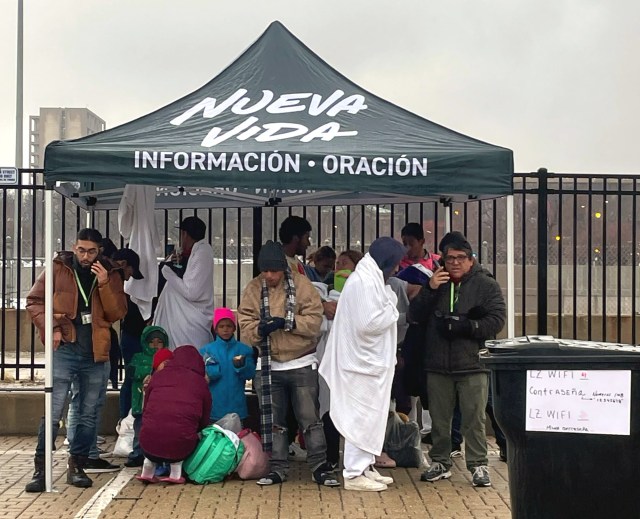
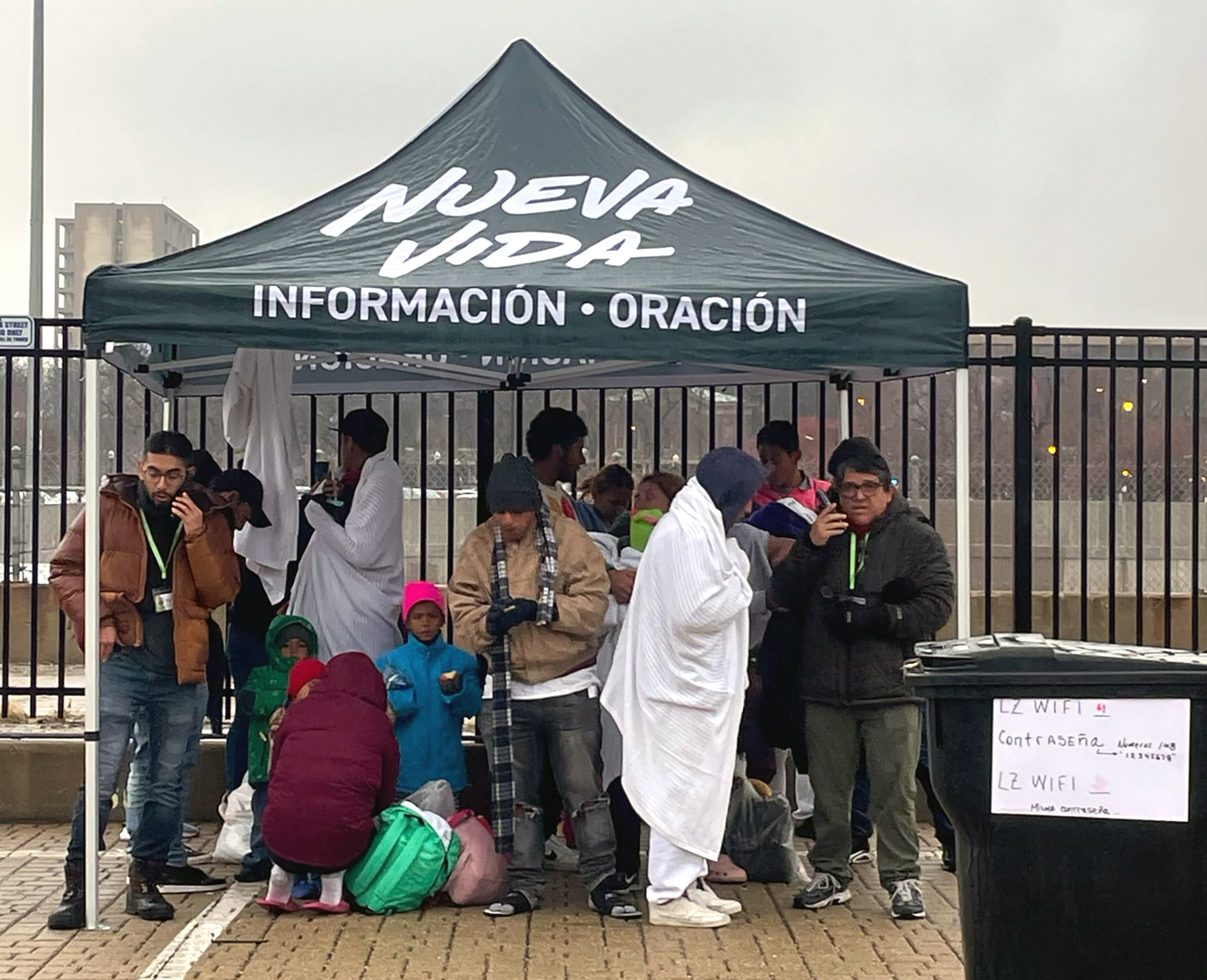
New Life Centers, a ministry associated with New Life Church, partnered with the city of Chicago to process migrants arriving on buses from Texas.New Life Church
New Life Centers, a ministry associated with New Life Church, partnered with the city of Chicago to process migrants arriving on buses from Texas.

When Lely and her family first visited CityLine Church in the fall of 2022, the Spanish-language ministry was barely two weeks old. It was already buzzing. The family was among more than a hundred migrants from the Holiday Inn who crowded into a room separate from the church’s main sanctuary as pastors cobbled together music and a sermon delivered by an inexperienced preacher.

After worship, the group shared a meal. Lely’s family returned the following week and the week after, and the congregation swelled. As Venezuelans at the hotel began finding work and expanding their range, they met other migrants around the city and invited them to the church.

CityLine leaders moved the Spanish-language service into ever-larger spaces in the building and eventually into the main sanctuary. By the spring of 2023, the church had hired a dedicated pastor for the immigrant congregation. Lely and her husband joined the worship ministry. It felt familiar; Lely had sung at her church back in Venezuela.

CityLine ran headlong into Chicago’s migrant surge. Volunteers delivered meals to migrants sleeping in police stations. Pastors connected with area shelters. The church’s clothing ministry loaned suits to men for immigration court hearings and job interviews. Trained counselors from the church visited the Holiday Inn, providing therapy for migrants who had been sexually assaulted and for couples struggling in their marriages. 

“The church grew exponentially because it started to be not just about us,” Lely said. “They started to look for people around the city.”

By early 2023, the state of Illinois was offering stipends to help migrants get out of hotels and into apartments. As families at the Holiday Inn began moving out, CityLine launched another ministry. Much like New Life Centers downtown, the church recruited volunteers to pick up furniture from a local nonprofit to outfit migrants’ apartments.

Friends at CityLine helped Lely’s family rent a place near the church and move in. They helped navigate paperwork. Everything in America is red tape, Lely said. “So many legal things, papers—over there, another there, this one here. Rules, rules, rules,” she said. “It can overwhelm you.”

The biggest “legal thing” CityLine made possible: Lely and her husband were married there last year. They had lived together for years as they sojourned across South and Central America, married in the eyes of God but not the law. It is a common predicament for migrants: No government will grant them legal status, so no government will allow them a marriage license. But in the United States, after applying for asylum, Lely and her man could finally produce enough identification to tie the knot.

In an outdoor ceremony last September, before more than 100 people seated on the church’s lawn, Lely wore a borrowed dress—another gift from the church. She kissed the father of her children for the first time as his lawful wife. “The most anticipated wedding,” she said.

The church, Lely said, became their extended family, their connection to virtually everything else beyond the tiny world of their apartment, communication barriers notwithstanding. “There are a lot of people who speak only English, but I know that they care deeply for me, that their love for me is real,” Lely said. “They won our heart. They helped us in absolutely everything.”

For all the vitality CityLine’s migrant ministry infused into the church—“It has changed us,” said Zachariah, the senior pastor—it also took a toll. At times it all felt like too much, and staff members wanted to quit. The project rubbed some the wrong way in the conservative church, an independent congregation that was once part of Harvest Bible Chapel.

One church member, whose family has since left the church, wrote emails to Zachariah criticizing the ministry as a “social justice experiment.” In his response, Zachariah wrote, “By ‘social justice’ or ‘social gospel’ experiment, do you mean us caring for people who are in need who’ve come to our doorstep asking for help? Because we’ll do that all day long.”

Zachariah has said from the pulpit that America is a land of laws, you should follow the law, and immigration laws exist for a reason. At the same time, Zachariah said, migrants have watched people die along their journey here. Some were robbed and raped. “You could say, ‘Well, they should have never come. They should have stayed home,’” he said. “You could say all those things. But when they’re here, that’s a very mean thing to say to somebody who’s struggling.”
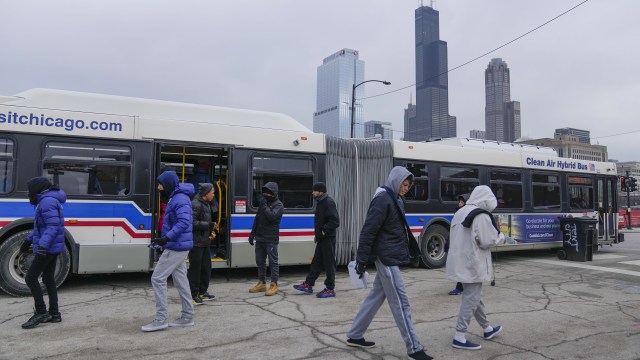
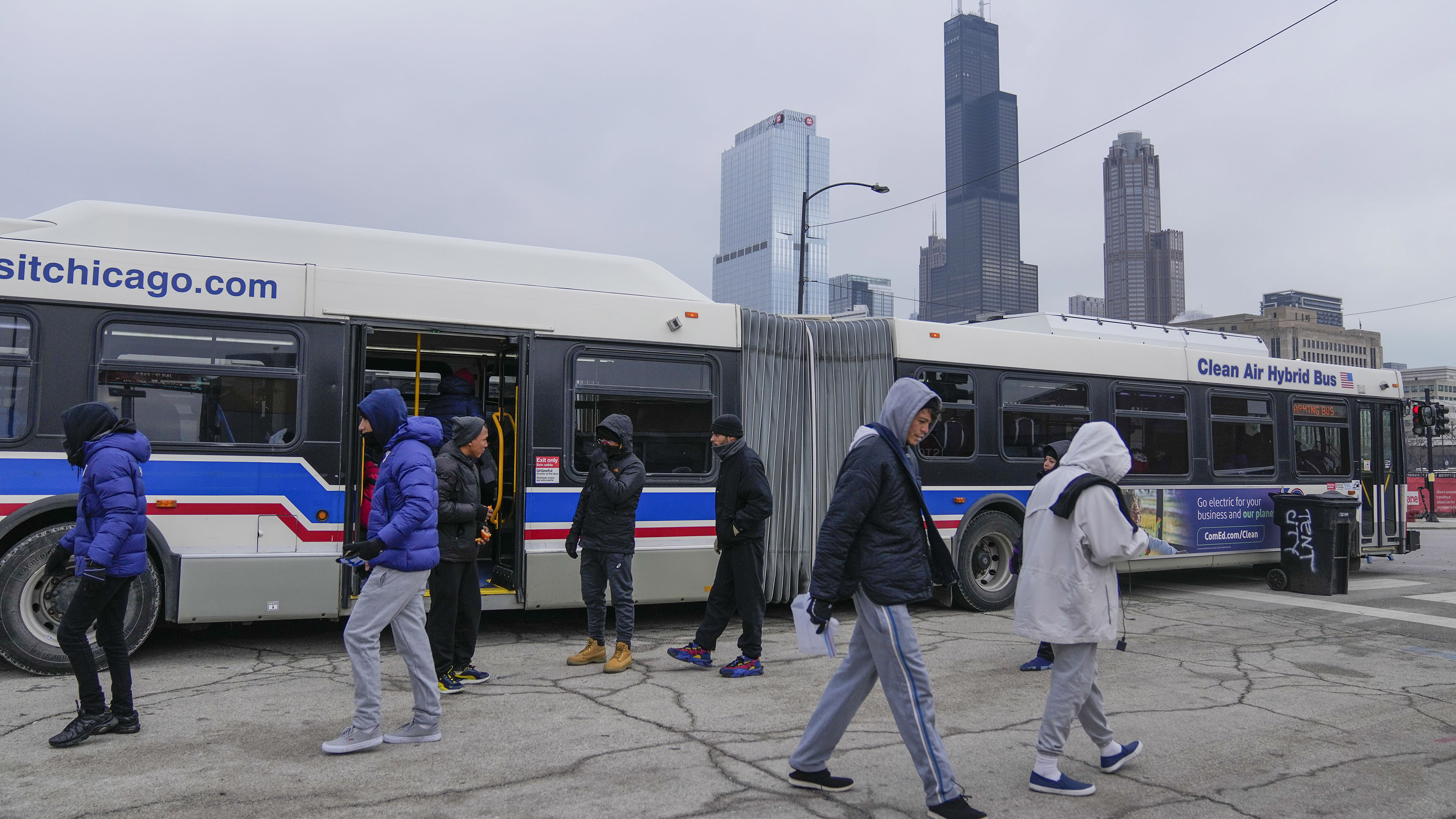
Migrants used city warming buses in downtown Chicago to escape the cold in January, 2024.AP Photo/Erin Hooley
Migrants used city warming buses in downtown Chicago to escape the cold in January, 2024.

Lely’s struggles did not end when the family finally settled into an apartment. Even after they bought a car and her husband tried his hand at various lines of work, including delivery driving, they passed through what she called desert moments. “You say, ‘And now who’s going to protect me? This is where only you, God, can help.’”

There was the time in 2023 when they had a car accident and lost their insurance. Lely’s husband could not work. They were evicted from their apartment for missing their rent, and they struggled to find another landlord willing to take them, given their lack of credit. Then Lely discovered she was pregnant with their fourth child.

Were it not for the church, she said, that stretch might have finished her.

“There is something ingrained in this country,” Lely said. She sees people who seem to possess every worldly good but have still fallen into depression and emptiness. “I mean, if you’re here and you don’t seek God in a serious way, if you don’t submit yourself to God, it’s like a wave that is going to swallow you.”

This year, as the Trump administration targets Venezuelans for deportation and has renewed its vow to tighten the screws on Chicago’s immigrant community, Lely has at times felt that wave swelling closer to her. On one hand, she has undeniably passed through intense joys, has seen how America was obviously a blessing: a place where her husband could work legally while they are being considered for asylum. A place that would allow them to finally marry. A place, after so many years of wandering, where she could finally belong.

“Then this government comes and makes you see everything the other way around,” Lely said. “You don’t belong here. We don’t want you.”

She has seen restaurants emptied and families stay home from church. She has heard her pastor say they lock the doors during the worship service. Attendance at the Spanish-language service is not what it used to be, hovering now somewhere north of 50. Lely’s family is virtually the only one from the original Holiday Inn group that still attends. People come and go for various reasons, Lely said, and they don’t always tell you whether fear has driven them away. But the energy is not what it once was.

Now, Lely thinks more about previously unimaginable hypotheticals—about how her family would afford to live if they had to return to Venezuela with its wrecked economy. Her husband works two different shifts as a janitor, leaving home most mornings at 5:30 and returning around 11:30 at night. “We’re in saving mode. Alert mode. Quiet mode,” she said. “It’s better to have no free time but to have money.”

Recently Lely was talking with a friend who quoted from 2 Timothy, reminding her that God did not give them a spirit of fear but of power, love, and self-discipline. Lely has tried to hold on to that. To block out images that bubble up in which her husband is arrested and she is left alone with four children, in which a voice on a government commercial is telling her to leave the country now or be hunted down.

“It’s what they want,” she said. “To terrorize you.”

Closer to downtown Chicago, Andre Gordillo’s church is also trying to hold back the fear. Gordillo worships at the New Life Church campus in Chicago’s Little Village neighborhood, or “La Villita.” Like CityLine, the congregation saw lives changed as it welcomed migrants from the Texas buses.

“In the last 2 years, we have baptized more people than in the last 20 years,” said Paco Amador, who pastors the Little Village church. He has prayed with people who decided to believe in Jesus. He has officiated a flurry of weddings. His church has planted Bible studies and small congregations in several communities that previously had few Latinos. “I would say that is a revival, or at least the spark of revival.”

As the president has repeatedly promised the largest mass deportation in history, Amador has sometimes laid awake at night, wondering if this will be the end of a miracle God has been doing in his community. “If these mass deportations happen, they would almost end up decimating a revival,” he said.

In early February, for the first time in 15 years, the church locked its doors during worship and posted ushers at the entrance who looked “less Latino and more white,” Amador said. In the past two weeks, even before President Trump vowed anew to target Chicago for immigration enforcement, stories swirled of a growing crackdown in the city. Agents have increasingly detained individuals at routine check-ins with Immigration and Customs Enforcement (ICE) and at court hearings. 

Amador said his pastoral team goes back and forth over whether to cancel church activities or to act as if nothing has changed. “There is a sense of constant fear,” Amador said. “Many people have definitely decided to stay home.”

Claudia Vázquez is one of them. Vázquez, who has lived in Chicago for 30 years, runs a cleaning-and-catering business that employs six women and provides tacos for New Life’s summer events. This year, she canceled all 11 of her contracts for outdoor gatherings. Parks and public spaces are too risky. She told her employees, “It’s more important that you be safe. Stay home with your family.”

Vázquez and her elderly mother did not attend the church’s outdoor Father’s Day service, which it traditionally holds at a park on the edge of the neighborhood. Looking at photos of the event, she noticed several other families missing from the undersized crowd.

The morning of the service, at a federal office seven miles west from where the church was worshiping, at least two fathers were detained by ICE after receiving text messages telling them to come to the office for a check-in.

“I fail to see how this makes anything great,” Amador said.

Andy Olsen is senior features writer at Christianity Today.

With additional reporting from Laura Finch in Chicago.

The Global Initiative

Connecting believers worldwide through beautiful storytelling.

The Global Initiative

The kingdom of God knows no borders. It’s growing in underground churches and thriving amidst persecution. It spans continents, cultures, and languages—uniting believers across the globe under one confession: Jesus Christ is King.

Yet, for many of us, the powerful ways God is moving around the world remain unseen. 

That’s why Christianity Today launched the Global Initiative, part of the One Kingdom Campaign—to shine a light on the stories, struggles, and triumphs of the global Church.

Will you help tell the story of the global Church? Donate.

Come and see what God is doing. Download the Global Initiative brochure to learn more.

Books
Review

Evangelicals Live in the Suburbs. Do the Suburbs Live in Us?

A new book explores how culture and geography shape faith and practice.

Collage of a white family in the suburbs and a 1950s black and white photo of cookie cutter suburbs
Christianity Today June 26, 2025
Illustration by Abigail Erickson / Source Images: Getty

My children were exposed as preschoolers to things I was shielded from into adulthood. My oldest, for example, was already familiar with the smell of marijuana by age 5. On one family vacation, after passing a teenager smoking a joint, our son took a deep breath and said, “Ah, smells like home.”

During my own upbringing, parents, pastors, and even professors warned me to avoid all manner of corrupting influences: substances, media, certain kinds of people, dangerous ideas (and their authors). Avoidance wasn’t an option for my children because we lived in Manhattan. They were going to have unsettling encounters with people on the streets or subway. They were going to encounter diverse languages, religions, and alternative lifestyles. Parenting required processing these experiences rather than warding them off.

What began as an inability to shield my children developed into a positive preference for exposing them to the world and its complexity. Necessity begat morality. If we can’t avoid the Wiccan priestess down the hall, then we shouldn’t avoid the Wiccan priestess down the hall. Eventually I became smugly judgmental about people who sheltered their children from, you know, reality.

Imagine my surprise, then, when we moved from Manhattan to Phoenix. Within the first few days, I took my kids to a grocery store in the suburbs, where someone was soliciting money outside. Without thinking, I shepherded us toward a different entrance. I avoided an interaction I wouldn’t have avoided in New York. Now that I could, I instinctively did. New possibility begat a new morality. If we can avoid the panhandler outside Target, we should avoid the panhandler outside Target.

While reading Brian Miller’s Sanctifying Suburbia: How the Suburbs Became the Promised Land for American Evangelicals, I began to wonder whether the tendency to avoid things that appear physically, psychologically, or spiritually compromising is a suburban impulse or a Christian one. Miller, a Wheaton College sociologist, frames this instinct as a tool from the suburban cultural toolkit that evangelicals have baptized into our own cultural toolkit. His book makes a plausible argument that many commitments we consider distinctly evangelical have their origins in suburbia.

As America grew more religious in the second half of the 20th century, it also grew more suburban. Estimates based on 45 years of data from The General Social Survey suggest evangelicals are more likely to live in suburbs than anywhere else. In fact, evangelicals populate suburbia at a higher rate than the general population. The key institutions that shape evangelicals’ social, political, and theological engagement—including the school where Miller teaches—are located overwhelmingly in suburbs.

In light of all this, it would be surprising if suburban sensibilities have not shaped evangelical faith and practice. As Miller argues, “It is not enough for researchers and pundits to consider the theological positions and political behavior of evangelicals; accounting for their spatial context is part and parcel to understanding the whole package of white evangelicalism” (italics mine).

After tracing the origins and history of American suburbs, Miller marshals fascinating qualitative data to support his thesis. Tracking religious migration from Chicago to its suburbs in the 20th century, he finds that “congregations in nine of the 10 Protestant denominations studied became more suburban” between 1925 and 1990. Mapping the addresses of key leaders of the National Association of Evangelicals, he finds a significant jump, over decades, in suburban representation. At the organization’s first board meeting in 1942, only 15 percent of the delegates hailed from suburbs. By the end of the century, that figure had grown to one half.

Synthesizing data from several sources, Miller demonstrates that over a period when American cities became less religious in general, “the percentage of adherents in more rural areas and the smallest communities [likewise] decreased, particularly among evangelicals and mainline Protestants.” Evangelicalism is becoming less urban, less rural, and more suburban all the time.

Miller profiles three suburbs and one smaller city where evangelicals and evangelical institutions are unusually prominent. These communities suburbanized in different decades and under different conditions. Two had strong evangelical identities from the beginning, while the others became evangelical hot spots more recently. Taken together, the four locations host several thousand evangelical nonprofit organizations. Consequently, they are positioned to exert an outsized influence on evangelicalism everywhere.

The implications of the data become all the more fascinating when Miller discusses “evangelical cultural toolkits.” In sociology, the toolkit concept is one way to describe how culture affects human behavior. Rather than supply a set of values, culture provides a repertoire of behaviors (or tools) from which individuals choose different courses of action.

People who want to see changes in society have different cultural tools at their disposal. They might seek to persuade others in the context of interpersonal relationships, or they might organize to reform laws and public policies. Culture affects when each tool is considered appropriate. Historically, evangelicals have reached for interpersonal relationships to address racial injustice while favoring legislative action to resist same-sex marriage. (These are my examples, not Miller’s.)

Miller’s point is that the evangelical cultural toolkit appears to have been calibrated by patterns, experiences, and commitments common to suburban life. He’s careful to avoid claiming a direct, causal relationship between suburban norms and prevailing traits among evangelicals. But he makes a compelling case for drawing arrows of motive, means, and opportunity.

It should be easy enough to accept a narrower version of Miller’s thesis that suburban evangelicalism is “formed in regular moments in daily life and in interaction with the social and physical realities of the American suburbs.” It will be harder for many to accept that American evangelicalism in general is essentially suburban in its values and sensibilities.

That’s where Miller’s treatment of evangelical hot spots strikes me as particularly relevant. If most evangelical institutions—colleges, seminaries, denominational headquarters, publishing houses, church planting and missions agencies, curriculum companies, and more—are located in suburbs, then most of their employees likely reside in or near suburbs.

This means curriculum decisions, research questions, and syllabi may be shaped by the felt needs and interests of suburban faculties and students. Publishers, who keep their fingers on the pulse of evangelical readers, might default to the suburban experience as they discern what’s desirable in the market. Large suburban churches often set the model for church curricula, methods of discipleship, and best practices for ministers. Advice about topics like parenting and personal finances may assume suburban social realities as the norm.

In the aggregate, as Miller sees it, these institutions take a fundamentally suburban vision and prescribe it as an objectively Christian vision that can guide evangelical faith and practice in any environment. This doesn’t feel like a stretch to me. My own ministry experience and professional work has primarily involved churches in rural and urban environments. Pastors in both places frequently lament that the resources they rely on are clearly tuned to social realities outside their own. It’s fair to say, at minimum, that suburban sensibilities dominate American ministry materials.

Sanctifying Suburbia is a work of careful scholarship. It avoids stereotypes about suburbs, acknowledging their diverse histories, populations, and religious identities. It also raises some questions that clearly fall beyond the scope of the book and await others to answer. 

One of those questions involves race. Miller uses “evangelical Protestant” and “white evangelicalism” as synonyms. Distinguishing “[white] evangelical Protestant” from “Black Protestant” enables him to compare both religious and demographic data. This is helpful when it allows him to specify that the first group fled Chicago for its suburbs in greater numbers than the second, which suggests that white flight contributed to making suburbia more evangelical.

Conflating “white” and “evangelical” is less helpful, however, for explaining how Asian and Latino evangelicals factor into this story, in both the historical context and future projections. Non-white evangelicals are growing in number, and suburbs are becoming more diverse. I’m curious how race, in this broader sense, will affect both suburban and evangelical cultural toolkits.

I have a similar question about class. Our experience in Manhattan suggests that, with enough money, you can shelter your children anywhere. How might economic difference within suburbs affect the prevailing cultural toolkits?

Another question revolves around the full scope of evangelical suburbanization. A deeper historical look might reveal that suburban sensibilities have shaped evangelical commitments even beyond suburbia. For example, Miller’s historical survey hearkens back to 18th-century London to illustrate “the growing interest in suburbs and religious motivations for settling in them.”

Clapham, a southwest suburb of London, was home to the Clapham Sect in the 18th and 19th centuries This group of evangelical Anglicans included William Wilberforce and other social reformers who were politically active (one tool in the toolkit) and moved their families to suburbia to avoid the oxidizing effects of industrialized urban life (another tool in the toolkit). Karen Swallow Prior has argued persuasively in The Evangelical Imagination that contemporary American evangelical values represent the long shadow of Victorian English values. Those values appear to have originated in suburban London before being exported all over the world.

American evangelicalism is a diverse movement and always has been. Whether we attempt to articulate what we all have in common (as in David Bebbington’s famous “quadrilateral”) or what divides us (as in Michael Graham’s “The Six Way Fracturing of Evangelicalism”), evangelicals tend to fixate on explicit beliefs and values. Miller’s sociological approach adds much-needed depth and dimension to those taxonomies. I suspect, for example, that evangelicals who view social justice as a threat to the gospel live in different types of communities than evangelicals who view social justice as a gospel imperative. To understand why evangelicals divide over fundamental social and theological issues, future studies should follow Miller’s lead, asking where they live and what difference that might make.  

When it was time to rebuild the Commons Chamber of England’s parliament after German airstrikes destroyed the original building, Winston Churchill insisted that the new structure retain its original layout. He reasoned that the configuration of the space would determine the kind of governing that happened in it. “We shape our buildings,” he said, “and afterward they shape us.”

American evangelicals have been vocally committed to shaping the environments we live in for many generations. It may be time to give more critical thought to how those environments have shaped us. 

Brandon J. O’Brien is senior director for global thought leadership at Redeemer City to City. He is coauthor with Randy Richards of Misreading Scripture with Western Eyes. His family lives in Chicago.

Church Life

Ntalami Burned Bridges. Now She Builds Faith.

A famous Kenyan entrepreneur sacrificed fame, business, and the sexual revolution to follow Christ.

Portrait of Michelle Ntalami
Christianity Today June 26, 2025
Courtesy of Michelle Ntalami

Michelle Ntalami is a household name in Kenya. The award-winning entrepreneur founded Africa’s fastest-growing haircare line, Marini Naturals, in 2015. Her products reach 12 countries, including several in Europe. OkayAfrica named her among Africa’s top 100 women in 2018. Some called her a “beacon of woman empowerment.”

Before encountering God, Ntalami lived as a lesbian and championed LGBTQ causes.

As one of Kenya’s youngest entrepreneurs, Top 40 Under 40 Women, and popular social media personalities, the then-39-year-old businesswoman had it all—fame, money, influence. But in August 2023, her life took a different direction. Ntalami decided to follow Jesus.

Christian users on social media expressed skepticism, some saying her conversion was a gimmick. Others said she was just trying to get a husband. Ntalami said one ministry openly doubted her salvation. Some people wished her well.

“It has not been a bed of roses,” Ntalami said. “I have faced a lot of online bullying. Whereas there has been a lot of support, there was a lot of mockery, teasing, insults. It hurt a lot.”

About 85 percent of Kenyans identify themselves as Christian. Kenya prides itself in being a majority-Christian nation, and Kenyan culture doesn’t favor LGBTQ relationships. Still, becoming a follower of Jesus in Kenya cost Ntalami social media followers, many close friends, business opportunities, and possessions.

“I lost many parts of me not aligned to the kingdom of God … clothes, luxury items, even my house. … I had to move out of it,” she said. “The Lord wanted me to start afresh. … That was an expensive affair.”

Ntalami quit using alcohol and drinking games, horoscopes and astrology. She threw out or burned explicit novels and other belongings she felt dishonored God. She even deleted all her earlier Instagram posts, choosing to start afresh with her new identity in Christ.

In a December 2024 Instagram post she said, “God led me to burn and tear down altars of things and items that were either displeasing to Him, or I had unknowingly made idols in my life.”

The popular influencer shifted her posts to draw attention to her faith rather than thirst-trap photos, and she even sought to dissuade a friend from abandoning Christianity.

Ntalami said she is determined to run her life and her business in a way that reflects her Christian values. She carefully chooses whom she hires and with whom she does business. She’s selective about what brands or items she promotes on her YouTube and Instagram channels.

In one case, honoring Christ meant losing business. Marini Naturals had made a deal to start exporting products to the US, but a large US-based distributor canceled it after Ntalami announced her conversion—the distributer didn’t agree with her Christian values. Ntalami said she looks to God for new business opportunities.

“For now, I am waiting on the Lord for his leading in business,” she said.

Though Ntalami identified herself as androsexual before becoming a Christian, her lesbian relationship with BBC presenter Makena Njeri was well-known in Kenya. To some, the couple represented sexual freedom for Kenyan women and those who identified as LGBTQ.

Galck+ (formerly the Gay and Lesbian Coalition of Kenya) estimates Kenya’s LGBTQ population totals 1.3 million people, about 2 percent of the country’s population. Kenyan law has long criminalized same-sex acts. Still, the country has also given asylum to LGBTQ-identifying people leaving nearby countries such as Uganda over discrimination claims.

In 2016, LGBTQ activist Eric Gitari—backed by several LGBTQ organizations—petitioned courts to repeal section 162 of Kenya’s Penal Code, which criminalizes sexual acts that deviate from what is traditional or natural. Section 165 also criminalizes acts of “gross indecency” between males. Both sections have been a subject of debate in Kenya, though the Human Rights Watch reported it knows of only two prosecutions against four people in the last decade.

In May 2019, the High Court ruled both sections were constitutional and rejected claims that they violated human rights. Despite the loss, the case propelled LGBTQ activism into the public eye. Activist organizations such as Galck+ and National Gay and Lesbian Human Rights Commission have used the case to build a more vocal movement in Kenya.

Ntalami said she turned to lesbian relationships during a vulnerable time of life. Later, she began to question those relationships when she didn’t find the healing and truth she had hoped to find.

Painful experiences, such as the death of her father, caused her to despair and question the existence of God. She had left the Roman Catholic faith of her childhood and stopped going to church.

Then everything changed.

Ntalami said that on the evening of her conversion she felt a sense of heaviness and foreboding, as if something bad might happen to her. She said she sensed an oppressive spirit all around her, pushing against her, trying to choke life out of her.

Alone and desperate, Ntalami cried out to God. She said a light then shone around her and she heard God call her name, Michelle, three times.

“The Lord began healing me. I could feel my heart becoming new,” Ntalami told CT. For a year she lived in isolation, slowing down on work and staying away from social media. Ntalami spent this time reading the Bible, praying, and worshiping God. For the first time in her life, she read the whole Bible, from Genesis to Revelation.

Eventually, Ntalami joined a Pentecostal church, but her Roman Catholic background, long church absence, and lack of Christian friends left her feeling lost. Her public past life affected how some Christians saw her. “The church looks at you skeptically,” she said. “It was not an easy journey. It was a lonely journey. Sometimes you get some judgmental stares.”

Her mother and siblings stood by her. A few loyal friends accepted her decision without judging her. Ntalami and her mother—whom she led to faith in Christ—got baptized together on June 23, 2024, at Nairobi Baptist Church.

Ntalami continues to run Marini Naturals and now leads the media, marketing, and publicity team at her local church. In 2024, the United Nations Economic Commission for Africa invited her to represent Africa at its annual Entrepreneurial Conference.

Ntalami is also helping organize a global business forum—this year’s theme is called The Eden Mandate—that aims to bring together 6,000 business leaders from around the world and teach them how to build businesses that glorify God.

“I want the world to remember me for the impact I will create in the marketplace,” Ntalami said, “and that I brought God’s glory to the business world.”

Inkwell

The Intrigue of Human Error

Our very ability to choose—and be fallible—is what keeps grace in the equation.

Inkwell June 26, 2025
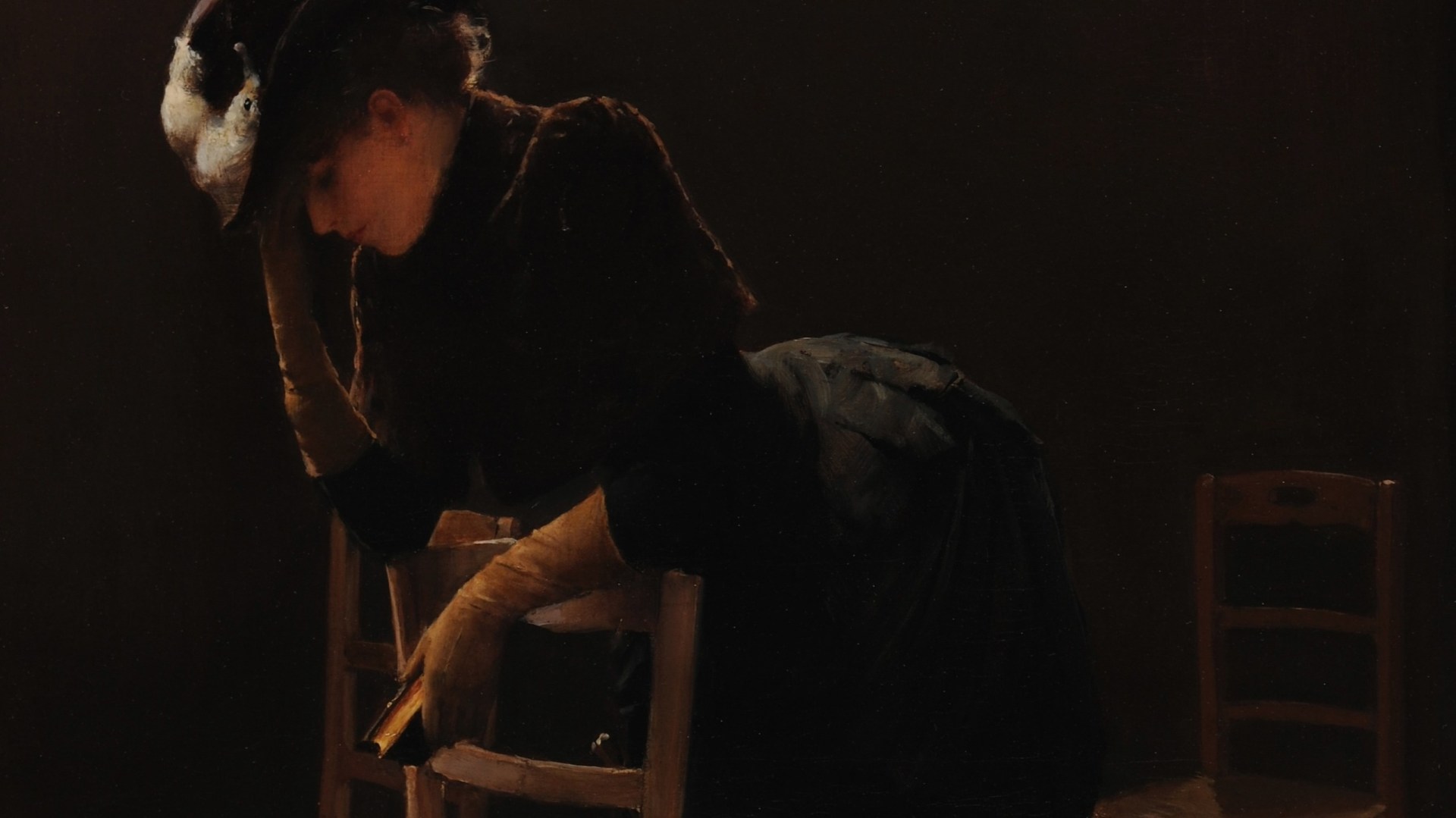
"The Prayer" by Jean Béraud

For as long as I can remember, people have stopped me in public to tell me things. I have had strangers confess affairs, crimes, and secrets to me, on airplanes and at farmers’ markets and in cell phone stores. But there’s one revelation that I think of most, uttered by a retired woman blazing through the Oak Park Public Library one sizzling July afternoon.

She was talking to herself, surely in an attempt to hear her own thoughts better over the general buzz that filled the library, which was always popping. Freelancers, unhoused people, teenagers who had nowhere else to meet up, mothers with an hour to themselves, veterans, and me—all clamoring together to escape the heat under those high ceilings with gorgeous natural light.

This woman was storming down the midline of the common space, deep in her inner monologue, muttering about a miscommunication with one such library vagabond, someone who had stolen her seat or grabbed a book from her pile. 

“I don’t know how they could have possibly misunderstood me,” I heard her say to herself. And then, quite suddenly, she grabbed me by the shoulders as I passed her, looked me dead in the eye, and said, “I used to be an English teacher, so I get incredibly frustrated when people don’t express themselves more perfectly!” I looked right back at her, years of acting training preparing me with an instant reply.

“I know exactly what you mean.”

Of the many insidious consequences that accompany the use of artificial intelligence via ChatGPT (environmental impact, job reduction, general end-of-the-world vibes), there is one aspect of it that alarms me the most: It creates the illusion that in crowdsourcing innumerable opinions from an amalgamation of strangers across time, human beings will be able to express themselves perfectly.

I recognize the benefits it has created for a lot of people; my best friend, a worship leader, recently told me ChatGPT created a devotional for her team so theologically rich it moved her to tears. The consulting group I work with regularly uses the same feature to translate important concepts across industries for people who have to work together but have no idea how to talk to each other.

But by and large, the use of ChatGPT is cloaked in the dark undercurrent of what I would argue are two downright dangerous moral problems: (1) The underlying assumption of AI perfecting human expression is that humans are no longer up to the job of speaking for themselves, and (2) in bypassing the time, effort, and experience it takes to arrive at what you personally think about a given topic (and therefore how you would say it), it not so slowly erodes character, integrity, and original thought in the process.

Admittedly, I am on the opposite end of the ChatGPT spectrum. Were I still in school, I would not be tempted to let AI write my essay, because I simply love the work. I have no desire to let someone else determine what I think, or to let them say it for me—I would rather be wrong in my own voice. But I do know what it’s like to need help, to feel like I don’t know how to say what I mean.

And that’s when I turn to the place where wisdom, character, and belief are forged: community, or those relationships in my life that have been slowly cultivated through navigating disappointment, grief, and life’s endless slings and arrows. 

A machine will not be able to give me advice that considers the context of my life; a machine does not understand my specific weaknesses, proclivities, or excesses. But my friends do. These are the people with whom I have made “more tracks than necessary, some in the wrong direction,” as Wendell Berry would put it. 

In community, you are forced to reckon with what you actually think by knocking heads against each other and disagreeing, by having long conversations about the same thing over and over again, by failing, by thinking you think one thing only to have life teach you another.

When you take into account that we are in a global loneliness crisis, the temptation of befriending AI or having it help you determine what you think comes into stark relief. What’s more, for better or worse, our character is increasingly becoming shaped by a different type of relational substitute, the art that many of us interact with most—film and television.

I’ve written about this for Inkwell before, but the shortchanging of original thought brought on by AI is readily on display in all kinds of entertainment. In the last several years, particularly in blockbusters, this same prevailing ethos of attempting to amalgamate mass human experience into something that resembles mass entertainment is resulting in some really bad movies: constant IP repeat, amorphous villains where you honestly don’t know who’s good or evil, shallow relationships with baffling stakes. It’s like they are showing you the idea of something, as opposed to the thing itself, like a proxy of how a human being might behave and speak.

As a result, box office attendance continues to plummet because people just don’t respond to these nonspecific stories where no real question of character is raised. You might feel a wave of emotion in watching a group of ragtag underdogs succeed against a seemingly impossible mission, but you will not think about it beyond your car ride home. It does not require anything of you to watch it. There’s no skin in the game, no real reflection of the complexity of the human experience.

In contrast is one of my all-time favorite movies: Broadcast News. Jane, one of the main characters (played to perfection by Holly Hunter), reminds me of the woman who grabbed me in the library. 

Jane becomes a celebrated news producer in DC, where she is constantly choosing the path of greatest resistance in her professional life to arrive at the best result. Her character is cut against the grindstone of her own standards within her trusted news station cohort, repeatedly making her work stand out to her higher-ups.

And then she falls in love—with someone whose values are totally opposite from hers, and who lives in a way she reviles: Tom, the station’s new anchor and a symbol of the future of broadcast television (flash over substance). Jane’s integrity—the core of her identity—is put to the test with major professional and personal cache on the line. She believes in uncompromising journalism and the truth at all costs; Tom thinks truth is relative and bendable when necessary. She takes the long way; he takes shortcuts. She’s writing handwritten notecards; he’s asking ChatGPT how to write his headlines.

The movie deals with the everyday moral decisions we all have to navigate. How do we actually live in line with what we think? How do we behave in line with our beliefs, when life is random and confusing, and since we are bodies and hearts as well as brains?

The difference we’re seeing in large-scale art from then versus now is a direct response to the ways we are letting technology run our lives instead of our communities. The small scale matters because it informs the big scale. It’s the opposite of a virtuous circle. When the way we live our lives keeps negatively impacting the way we tell stories about them, we continue to do what we see reflected back to us.

When we outsource thought, it becomes a quick jump to outsourcing (and therefore abandoning) integrity. When we do not know what we think, we do not know how to act. Moral conviction is forged through knowing what you believe, and then behaving as best as you can in line with that morality.

Spoiler alert: Jane and Tom don’t end up together. Tom makes a professional decision that offends the very core of Jane’s ethics—to him, it’s just business, but to her, it’s personal. She sacrifices a chance at love for the reality of integrity. Every time I watch it, my choice about what I would do if I were in her shoes changes. 

I’d choose love, but would I live to regret it? I’d leave too; partnership doesn’t work if you can’t agree on what’s right and wrong. I’ve had to make my own version of this choice before, just like Jane. Sometimes I’ve been right, sometimes wrong. Life will make fools of us all. Even saints behave in ways that mystify them; to err is human. But we learn what we think is right by being wrong. Mistakes and errors lead us to what we know to be true.

It cannot be overstated how important it is, then, for your community—the people you sharpen your thoughts and decisions against—to be walking that same long, slow road. Few of us will ever be put in a situation where we have to save the world, but most of us will be faced with an ethical quandary, be it personal, professional, or a mix of the two, that forces us to choose what is right over what is easy. The ripples will only be felt in our tiny ponds, but depending on what we choose, they will have the impact of a tidal wave on those we love. 

If you don’t know what to think, ask your friend, your neighbor, your teacher, or your parents (if you dare). But don’t ask a machine who doesn’t care about you, who can only ever approximate human behavior, not share in it with you. 

When you ask a person for advice instead of a computer, there’s a second, underlying question, if you’re willing to ask it: “How do you know what you know?” Answers from human beings come with stories, context. A machine doesn’t know what it’s like to fail. A machine doesn’t know what it takes to pick up the broken pieces of disappointment and loss and ask for more life. A machine doesn’t know why you would bother taking the long way home to pass your favorite field. Speed is part and parcel with progress, but time is required to cultivate a soul.

We will never be able to express ourselves perfectly; it doesn’t take very much being alive to know that. Human error is what makes reality interesting. Life itself happens in the moment where we linger a little longer—romance, connection, delight. Ultimately, even in a fallen world, anything can happen, good or bad. 

Human beings are illogical! Crazy! Selfish! Deranged! AI models are built on the logic of humanity, but the pattern they follow is missing the key ingredient: When have we ever been anything but gorgeously, infinitely fallible? But to purposefully misquote East of Eden, we need never try to be perfect; only good. Our very ability to choose—Thou mayest—is what keeps grace in the equation.

The flipside of that, of course, is that everyone else can choose too. Someone can choose to betray you. Someone can choose not to love you back. Someone can choose to hurt, ignore, dismiss, deceive you. AI is attractive because it tells you what you want to hear. It is a companion with no skin in the game, literal or figurative. Love requires pushing back, telling you what you don’t want to hear sometimes. A machine will never do that.

Souls do not move at the speed of machines; they were never meant to. I don’t want to know what a machine claims to think. I want to know what think, what you think, what the woman pacing through the library thinks, so much that she will burst into flames if she doesn’t grab someone and tell them. 

To arrive at a thought individually rendered and expressed takes quite a bit of time. Even if you are arriving at a conclusion someone else arrived at ages ago (which, of course, they did), you are arriving at it for yourself. And the distinct way you would express it will differ from that person, which will land differently for someone than how they said it. In the words of one of my favorite songwriters, David Ramirez, “The one thing I know that’ll seal you in stone is what you have to say.”

All you have is what you have to say. You—a singular and unique soul, crafted with utmost care. So take the time to make sure it’s something good. Not perfect—just good.

Jessie Epstein is a writer and actor based between Los Angeles and the Midwest. Her work can be read or is forthcoming in Identity Theory, orangepeel, Anti-Heroin Chic, and Heartland Society of Women Writers, among others. Her debut chapbook of poetry, Francesca Dons Beatrice’s Cloak: A Lovergirl’s Guide Through Dante’s Inferno, is available through Bottlecap Press. Find more on her Substack and website.

Theology

It’s Okay Not to Know What to Think About Iran

Columnist

Sometimes “I don’t know” is the best answer, even as we pray for wisdom to do the next right thing.

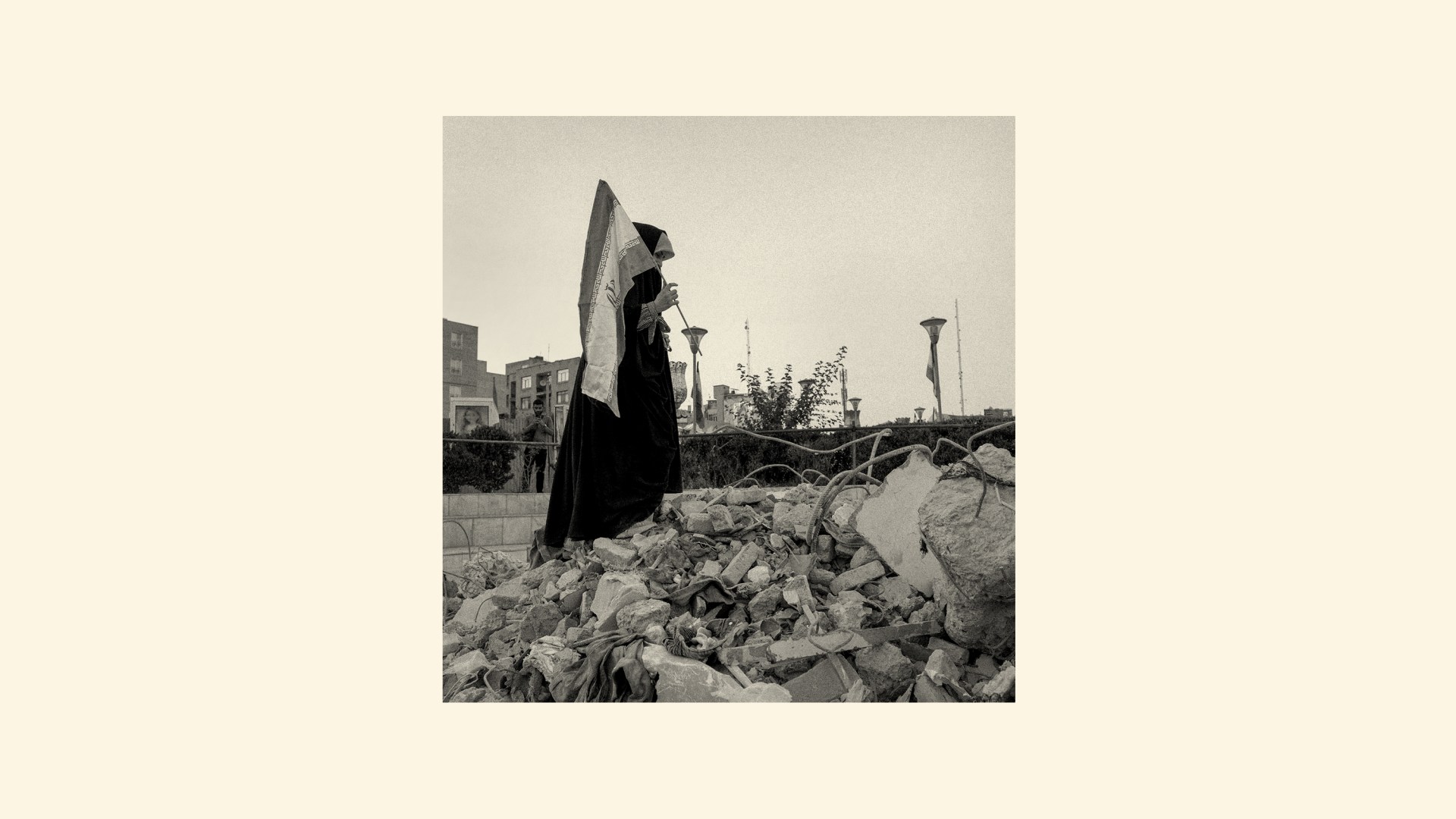
A woman standing in rubble with an Iranian flag.
Christianity Today June 25, 2025
Illustration by Christianity Today / Source Images: Getty

This piece was adapted from Russell Moore’s newsletter. Subscribe here.

We are just a few days out from the United States’ bombing of nuclear facilities in Iran. My actual job is to have opinions on things, and yet I don’t know exactly what to think of this.

The US action happened on a Saturday night, and so a world full of pastors and lay leaders had to think of what to say the next morning. Add to that the reality that the situation seems to be changing minute by minute—“There’s a cease-fire,” “No, there’s not,” “Iran’s nuclear program is over,” “No, it’s not.”

So what do you do if you’re not sure what to say when someone asks you, “What do you think about Iran?”

When I say I don’t know what to think, that’s only partly true. I know that I don’t want Iran to have nuclear weapons. I know that the regime there is authoritarian and cruel to their own people, including my fellow Christians.

I know that I don’t want another regional war in the Middle East. And yet I know—even with my well-known thoughts about President Donald Trump—that none of us have access to the intelligence reports that he and the Pentagon have.

Maybe you are in a similar place.

“The fog of war” is a well-worn reminder that things often aren’t immediately clear in a time of military combat. But what about “the fog of peace” or, more precisely, “the fog of not knowing if we are at peace or at war”?

You might not know what to think, much less what to say. And I think that’s okay.

It doesn’t feel okay to many people right now because, in a social media age, we are expected to all have immediate opinions on everything right away. But on some things, what seems to be an instant reaction actually isn’t instant.

An attorney I was just talking to said that the least accurate courtroom movie he’s ever seen is the old 1992 classic, My Cousin Vinny. He probably thought this about the movie immediately, maybe even groaned out loud, the first time he saw it.

That wasn’t a “hot take.” He had years of experience practicing law. When he was staying up all night taking his LSATs, he wasn’t doing so to do film criticism. And when he was honing his craft year after year, it wasn’t so he could analyze Joe Pesci’s dialogue.

And yet all that study and all that experience created the kind of expertise where he can recognize what’s true to life and what’s not, much more than those of us who have never argued a case.

The stakes of war and peace are, of course, monumentally higher than a take on a movie, but the analogy is closer than we think. For many people, events around the world assume an unreal movie-like character. And for almost all of us, what we think about the Middle East will change the situation as much as that attorney’s opinion could retroactively rewrite the script of My Cousin Vinny.

But just because our views can’t change a dangerous world situation one way or the other doesn’t mean that we can be indifferent. After all, our views change us.

For President Trump or Secretary of State Rubio or an Air Force pilot over Iranian airspace, what’s most important for the country are their actual decisions, not so much the motives behind them. But what’s important for us on such things is the reverse. The motives for our viewpoints are more important than where we end up.

I don’t agree with strict pacifists on biblical interpretation grounds, but I respect their view. My Anabaptist ancestors consistently held the conviction that violence is always wrong, and I don’t think they were stupid.

For most Christian pacifists, the motive for opposing a war is not moral cowardice or conflict avoidance but a reasoned and reasonable reading of what Jesus demands of us. Likewise, most Christians who hold that war is sometimes necessary (as I do) generally do so for the same reasons, though with a different conclusion.

The convictional pacifist is much closer to the just-war proponent than he is to the one arguing that the ayatollah is really a good guy. Likewise, the convictional just-war proponent is much closer to the Christian pacifist than she is to a militarist who gets an adrenaline jolt from war and treats it all like a video game.

Our motives matter. If the Christian who sometimes thinks war is the right thing to do cannot pray for peace the way the Bible demands, something is wrong. Likewise, if the pacifist cannot pray for justice, something is wrong.

Even that conversation is misleading, though, because very few people make decisions based on prior convictions.

The pull right now is to make those decisions entirely tribally. I am not a Trump supporter, so I ought, this view goes, to conclude immediately that the bombings were reckless and wrong. Or you might be a Trump supporter, and the pressure is for you to conclude that his action was wise and decisive, full stop. The cultural pressure is against anyone saying, “I don’t know whether this was the right thing or not; we will see.”

Christians, however, are called to wisdom. Our Lord’s brother, James, told us that “the wisdom from above is first pure, then peaceable, gentle, open to reason, full of mercy and good fruits, impartial and sincere” (James 3:17, ESV throughout).

Wisdom means knowing the limits of what we can know and being open to altering our viewpoints when new factors become clear—even if that doesn’t fit with what is tribally demanded.

The “shock and awe” on Saddam Hussein’s Iraq over 20 years ago seemed to be a rout; now, looking back, we know better. Many people wanted our country out of Afghanistan, and celebrated that decision, until they saw the chaos and bloodshed of the way the US exited.

As with many other things, there are (at least) two ways to fall short on what’s right and true. James warned of a “double-minded man, unstable in all his ways” (1:8). But Jesus also told of two sons whose father asked them to work in the vineyard. One said no, “but afterward he changed his mind and went,” while the other said he would go but didn’t. Jesus then asked, “Which of the two did the will of his father?” (Matt. 21:31).

He then said of the religious leaders around him: “For John came to you in the way of righteousness, and you did not believe him, but the tax collectors and the prostitutes believed him. And even when you saw it, you did not afterward change your minds and believe him” (v. 32).

Our opinions on what’s the best way forward on a news item are not nearly as important as the questions about which Jesus was asking, of course. But sometimes, our reaction to such things can give us a little test of our bent.

Sometimes “I don’t know” is a lazy refusal to think, or, worse, a fearful refusal to do what’s right. But sometimes “I don’t know” is the best answer, even as we pray for wisdom to do the next right thing.

Russell Moore is the editor in chief at Christianity Today and leads its Public Theology Project.

Theology

One Muslim Sect Confesses a Trinity. It Includes Simon Peter.

Syrian Alawites, linked by religion with deposed president Assad, make surprising use of biblical characters.

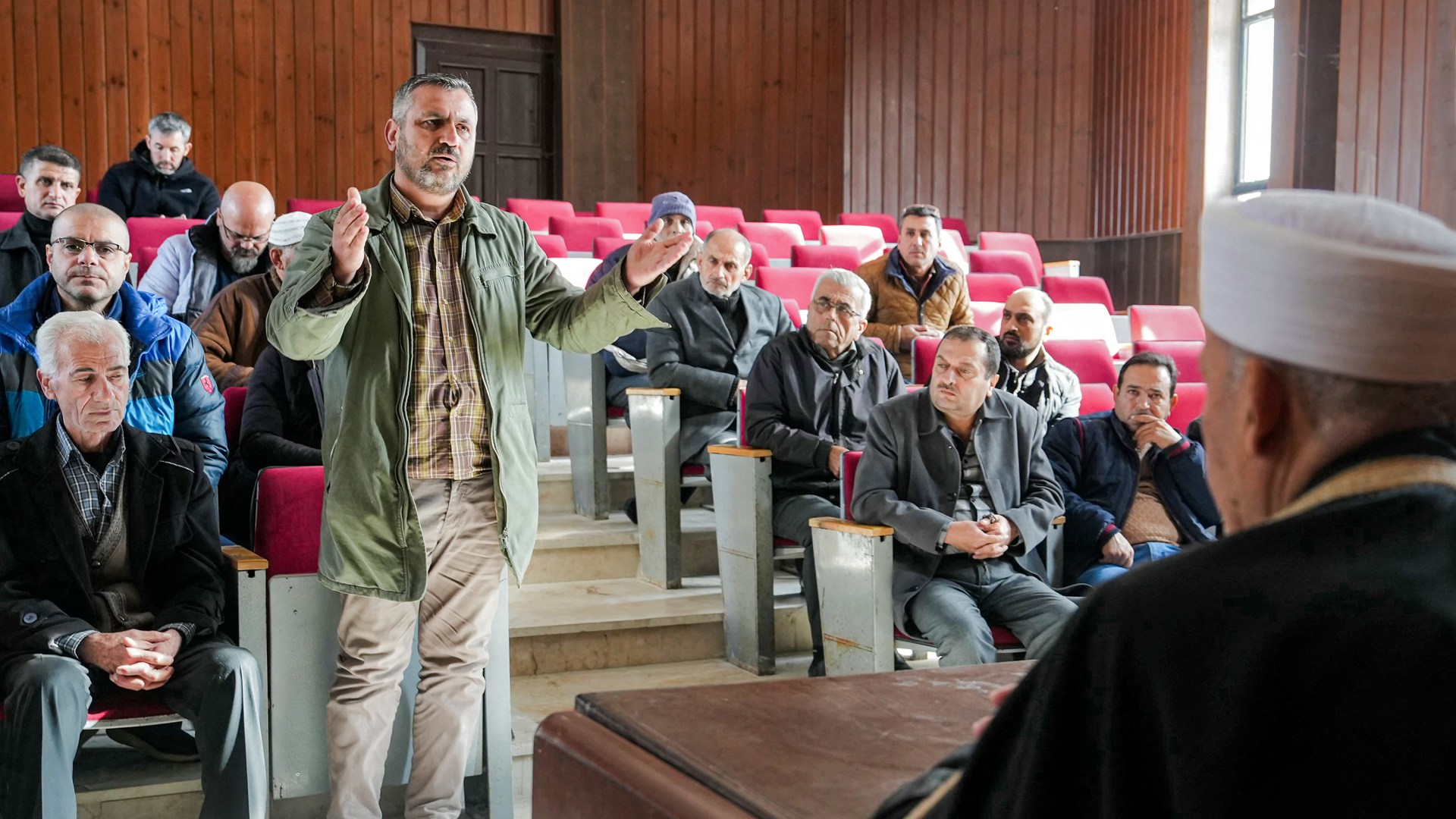
Clerics and members of the Alawite minority gather for a meeting in Syria.

Clerics and members of the Alawite minority gather for a meeting in Syria.

Christianity Today June 25, 2025
Muhammad Haj Kadour / Contributor / Getty

This is a three-part series about the Alawite sect in Syria and the March massacre in its community. To read the previous story on how Ziad and his relatives survived an event that claimed the lives of many in his extended family, click here.

As an Alawite, Ziad identifies with the main markers of Islam.

“Our book is the Quran, our prophet is Muhammad, and our direction of prayer is the Kaaba in Mecca,” he said.

Ziad, a pseudonym granted because of the still-unstable situation in Syria, believes in God and called out to him during the Sunni militant attack on Alawite cities and villages in the coastal northwest. However, he does not perform the prescribed ritual prayers, fast for Ramadan, or consider a pilgrimage to Mecca necessary. And he drinks alcohol, which is forbidden for other Muslims.

Yet mainstream rejection of his sect goes far beyond these offenses. To understand why most Muslims consider Alawite beliefs heretical, we must first know a little about the religion’s main sects—Sunni and Shiite.

When Muhammad died in AD 632, disputes arose within the community over who would assume leadership. Sunnis, who today represent 85 percent of Muslims, hold that the prophet left this choice open for believers to decide. They chose Abu Bakr, an early convert and respected tribal leader, as the first caliph.

Shiites, on the other hand, hold that Muhammad designated his cousin Ali as his successor and that the tribal confederation bypassed his will. Ali was eventually chosen as the fourth caliph but assassinated within an Islamic civil war. The caliphate thereafter passed into hereditary rule. This political history matters practically little to Alawites, but they share with Shiites the belief that Ali was the first imam.

Most Shiites count a succession of 12 imams from the bloodline of Ali, whom they say God endowed with supernatural insight to interpret the Quran and Muslim religious traditions. The 12th imam is believed to have concealed himself—entering a period of what is called “occultation”—and will reappear at the end of the age.

However, Alawites follow Muhammad Ibn Nusayr, who was a 10th-century disciple of the 11th imam and declared himself to be the “gate” of divine inspiration. As a result, Alawites have been called Nusayris, often in derision.

Christians once called Muslims “Muhammadans” after their prophet. But Islam teaches that only God is to be revered. (Muslim in Arabic refers to “one who submits [to God].”) In alignment with this belief, the Shiite name refers in Arabic to the political “party” of Ali, not to Ali himself. In contrast, the term Alawite focuses on the person of Ali, causing the community to face accusations of elevating—even deifying—the role of the first imam.

The notion of deification—which Ziad rejects completely—comes from the ideas introduced by Ibn Nusayr and his later disciples. They taught that God sent his message to humanity through seven cycles of three linked individuals: a gate, a name, and a meaning. (Ibn Nusayr, the founder of the sect, is not counted among these triads, though he is believed to be the one through whom this knowledge came.)

The first cycle began with Adam, who represented God’s name, while Abel revealed God’s meaning through the instructive gate of the angel Gabriel. In the subsequent cycles, the figures associated with most gates come from outside the scriptural canon, but the name–meaning combinations fit within the biblical cast of characters, including Jacob-Joseph, Moses-Joshua, and Jesus-Peter.

Experts link this cosmological scheme to ancient Neoplatonism, which influenced the Gnostic tendency in early Christianity. History notes many other heterodox Shiite sects that held similar hidden, esoteric understandings of the faith available only to a limited number of faithful disciples. Such deeper knowledge of God makes ritual obedience unnecessary.

Alawites uninitiated in this deeper knowledge emphasize right behavior consistent with a generally moral life: Help others, be loyal, do not steal, do not kill. In this spirit, Ziad considers himself “secular” and is not privy to the secrets of his sect. He labeled “God, Muhammad, and Ali” as the final Alawite trinity. Yet scholars of the sect maintain that while Muhammad revealed the name of God and Ali provided the meaning, the gate of the seventh and concluding cycle is Salman al-Farisi, a freed slave and companion of Muhammad and Ali.

Islam’s conception of God is unitary—absolute monotheism.

Muslims reject the Christian Trinity of Father, Son, and Holy Spirit. Although Alawites see their seven-cycle figures as emanations of a single God, Islamic jurists have issued fatwas declaring the sect as deviant and subject to jihad. In the 13th century, Alawites relocated from Iraq to the Syrian coast for safety in relative isolation but still suffered massacres in the thousands in both 1317 and 1516.

Beyond these divergent conceptions of God, Alawites also believe in reincarnation. Again, this contrasts with other Muslims, who reject the idea of multiple lives—to them, after death comes judgment.

According to Ziad’s sister, when her brother was 18 months old, he began speaking with an imaginary conversation partner, describing in detail a prior existence in a lakefront home, a military insignia that outranked his colleague, and the gunshot wound in his leg. The sister, who was nine at the time, wasn’t surprised. Memories of past lives are common in the community.

Alawites believe that the transmigration of souls traces back to before creation, when they originally existed with God as “light beings.” But after they asserted equality with their Creator, God condemned them to human form on earth. Still, God extended his mercy through his trinitarian messengers. In obeying the revelations received, Alawites can return to their essence and each appear as a star in the sky.

Reincarnation is necessary because it accords with the justice of God, says Ziad. He feels it would not be fair for God to judge rich and poor alike or for a person’s eternity to rest on a single life. Instead, with each life lived, individuals purify their transgressions until the experience of heaven reestablishes their nearness to the love of God.

After centuries of proximity to Christians, Alawites have adopted several similar practices. They celebrate Christmas, honor Mary Magdalene, and seek the intercession of saints like Simeon Stylites, the fourth-century Syrian ascetic who meditated 36 years atop a pillar. Ziad’s sister keeps a small, transparent box of dried flowers with an image of the Virgin Mary in her purse. She never removes it—and lent the brown leather handbag to her daughter during her school exams.

T. E. Lawrence, known as Lawrence of Arabia, described Alawites and Christians as drawn together by shared persecution. Other scholars have referred to the practice of taqiyya—misrepresenting one’s beliefs to ensure survival—as a crucial element of Alawite identity. Shiites have historically adopted this controversial concept during times of Sunni persecution, and perhaps the Alawites have followed.

The latest massacre in Syria reverses the modern trend that accorded Alawites their status as Muslims. While political factors contributed, in 1936 the Grand Mufti of Jerusalem, a Sunni, declared they were not apostates. In 1972 an Iranian Shiite cleric close to Syria’s then-president Assad issued a similar fatwa. And Lebanon grants Alawites two seats within the Muslim share of its parliament. (The larger and differently heterodox Druze sect receives eight.)

Unlike Muslims and Christians, Alawites do not propagate their faith. But it is not unusual for religion and politics to mix, as Islam witnessed with Abu Bakr and Ali from the very beginning. So it was in the Syrian civil war.

“After the revolution, we want to kill them,” asserted a 13-year-old boy in 2012, at the onset of the conflict. Perhaps he grew up to be one of the Islamist militants who declared, “Every Alawite killed is one Alawite killed because of Assad.” But for Ziad, whatever political mistakes Alawites may have made, Syria should honor all its religions.

“I don’t care about your sect or what you believe,” said Ziad. “We just want to be in good relations with everyone.”

Headshot of Adira Polite on blue background with light obscuring her face
Testimony

Coming Out Christian

I was an outspoken queer leader on my college campus who wanted nothing to do with Christianity. Then God moved.

Christianity Today June 25, 2025
Photography by Ben Rollins for Christianity Today

For most of my adolescence in Tennessee, I dodged God because of my pain.

I attended Sunday services at my mother’s insistence and similarly dragged myself to daily chapel services at my Christian school. I sang old hymns and recited wordy prayers, without ears to hear the truth behind the liturgy.

My truth, at the time, was that I knew no loving father, earthly or otherwise—and I told myself I was okay with that. At age 12, I saw this repressed longing permanently denied by my father’s sudden death. Somewhere in my grief, I made a subconscious vow to require no affection from any man, ever.

My early conceptions of gender were also twisted by a same-sex molestation. We were both ten years old. My molester had no inkling of the devastating trauma she was inflicting; on the contrary, she gleefully whispered that she had learned “this” from her best friend. Ignorant to the legitimacy of child-on-child sexual abuse, I spent years joking and even bragging about it, costuming my brokenness as edginess.

When I first “came out” to a few friends in sixth grade, I expressed being sexually attracted to boys but emotionally attracted to girls. Translation: I desired boys but felt safe with girls. While my male crushes included strangers and celebrities, each female crush began with a close friendship. And interestingly, all of the girls were white. After a decade of therapy, I now see that what passed for sexual attraction was actually a desperate hunt for affirmation.

In seventh grade, one of these wound-fueled crushes led me to voluntarily attend a weekend youth conference in the Georgia mountains. There, during solo prayer time, I perceived the presence of God for the first time. I was moved by the encounter, but I also knew that I liked girls. Lacking any holistic understanding of temptation, sin, or sanctification, I simply decided that I would be straight.

Of course, this white-knuckle attempt failed miserably, and its failure fueled the misshapen identity I soon embraced. With the aid of the internet, increasingly progressive television, and other “out” peers, I concluded that my desires were immutable, central to my being, and most definitely everyone else’s business. Armed with the truth of my failed repression, I loudly and angrily dismissed anyone who challenged my newfound beliefs, including my mother.

Sadly, my worst encounters were with my Christian peers. The whispers and snide comments haunted me, and I eventually concluded that the Christian God was not for me. I graduated high school as an indifferent agnostic and fled to Bowdoin College, a small liberal arts school in Maine.

Within a couple weeks, I had exchanged the role of a pariah for that of a luminary. I was hired as student director of the Sexuality, Women, and Gender Center and became responsible for planning community-building events. In addition to taking on this paid job, I became president of the school’s queer-straight alliance. I moderated group discussions, planned “quarties” (queer parties), and dictated invites. I also defended my various ideologies in a biweekly newspaper column.

By the spring semester of my sophomore year, I was thriving. I was popular, getting straight A’s, and generally happy. When I secured a summer internship at the Innocence Project, a national nonprofit that works to free the wrongfully convicted, I was thrilled. Little did I know that this grand summer plan had been orchestrated by God.

I spent the first half of summer at Bowdoin, researching racial injustice by day and partying at night. But one night, after years of same-sex intimacy, I had a puzzling mid-hookup realization: I did not want to be doing this. As the days and weeks passed, the disdain remained. This shift was not so much a sudden transformation as a revelation: Perhaps I was not who I said I was.

God made his next move through my research. On one of many nights spent scouring academic journals, I encountered a reference to Revelation. My academic training trumped my religious biases, and I turned by way of Google to the original source. That night, for the first time in my life, I read the Bible on my own.

In the text’s description of cosmic war, I saw our earthly conflict. This was the summer of 2016, of the back-to-back televised police killings of Alton Sterling and Philando Castile. Each slaughter was shockingly brutal, as was the political aftermath. With this heavy on my mind, I was moved by Revelation 19’s vision of a supernatural rider removing peace from the earth.

For days afterward, I hunched over my laptop, hungrily consuming Scripture. Despite my many doubts about the text, I was fascinated by its claims.

Then God began gently and lovingly chipping away at my doubts.

While walking to lunch after a rough research morning, I turned to my friend and said, “Hopefully lunch will at least be good.”

Bowdoin dining is continually ranked among the best dining halls in the States and is known for its organic garden, whole foods, and commitment to sustainability. That afternoon, they served my three favorites: chicken wings, macaroni and cheese, and Caesar salad. Bear with me—chicken wings were served maybe once per semester and certainly never in the summer. I also never saw the three featured together, not before that lunch or ever again.

A second inexplicable moment came later that day. As soon as I entered my dorm room that evening, the palpable presence of God engulfed me. My lunch of favorites immediately came to mind, and in that holy moment, the Lord proved that he knew me, loved me, and desired the same from me in return. He was not a distant, disgusted naysayer like some of my Christian peers. On the contrary, the distance had been my choice, and God was declaring war upon it.

Midway through the summer, I moved to New York to begin my work at the Innocence Project’s headquarters. By way of God’s sovereignty, I stayed in the home of a family friend who happened to be a minister. When I mentioned I had been reading Scripture online, she brought me multiple print translations.

Each week, she invited me to her church, and each week, I declined. I knew God was real, but I was still bound to my anti-Christian biases. But as I made my way through the Book of Matthew, my excuses began to falter. I began to see the difference between the rotten fruit of gossiping Christians and the patient loving-kindness of the biblical God.

On my last Sunday in New York, I finally agreed to attend church.

The sermon centered on Jesus’ parable of the lost sheep—the shepherd leaving the ninety-nine of his flock to pursue the wayward one. At the end of the pastor’s sermon, he made an announcement that changed my life: “God is telling me that there is a lost sheep in this room.”

I immediately grew hot from head to toe. I sat as still as possible, willing my body to remain calm. “I know you’re here,” the pastor continued. “Please come to the front.”

I sat. We all sat. I expected the moment to pass, but the pastor pressed on: “We’ll wait.”

As the silence dragged on, a sense of impending exposure came over me. It was not fear so much as an awareness that God was running this show and that this was my scripted turning point. Like a new kid at school introduced against her will, I had been called by name.

Some might say that what happened next was a result of the Spirit falling upon me. Others would say I surrendered. But by what I can only describe as a mysterious disconnect between my head, heart, and legs, I stood up.

With tears welling in my eyes, I walked out of the aisle and toward the front of the room. Before I knew it, I was standing below the pulpit, sobbing and shaking, overcome with the weight of the truth: The Savior I had been evading was the one who loved me most. My spiritual jig was up, and my old life was over.

With the same logic-defying dedication with which the shepherd pursues the single, irreplaceable sheep, the Lord grasped my rebellious hand and led me back to the flock. And this wayward sheep, now found, was boldly celebrated by the Shepherd for all to see.

Although I was eager to share the story of my conversion, I spent months avoiding questions about whether and how my sexual ethics had changed. I downplayed the obvious shifts in my late-night activities and made vague statements when I resigned from both the center for sexual diversity and the queer-straight alliance.

I joined the Christian club and began attending an off-campus Baptist church, but I tried my best to retain all my friendships. I was fully honest with some and indirect with others, and I gradually drifted apart from most.

Though the truth of God’s Word surprised me, my new convictions were unshakeable. The pre-conversion collapse of my bisexual identity had freed me to behold the beauty of God’s design for sexuality without itching ears. But I knew how conservative I sounded, and I was terrified.

When I addressed my conversion in my newspaper column, I forwent a detailed narrative in favor of a poetic essay filled with cryptic references to sin and darkness. Soon after, I felt the Holy Spirit whisper to me, You know you’ll eventually have to tell this story. It was not a question or a command; it was just plain truth that came in peace.

As the months and years passed, my awareness of this truth only grew. I graduated, left for a new job in a new city, and continually encountered people (gay, straight, and otherwise) who needed a story like mine.

God has used this story to encourage some and challenge others. Each time I share it, especially amid pushback, the Lord exorcises my heart of its fear and pride.

In reference to Satan the accuser, the Word tells us that the people of God “triumphed over him by the blood of the Lamb and by the word of their testimony; they did not love their lives so much as to shrink from death” (Rev. 12:11). Testimonies like mine are evidence of God’s limitless power to liberate. They are also a warning against the futile, poisoned offers of this dying world.

To be clear, the crux of my story is not a shift from bisexual to straight. What God has done is much more wondrous: He has replaced my confused and grasping blindness with sight and given me the unmoving conviction of who he says I am.

This is the sort of story I wish my younger self had heard: a tale of freedom found not through human effort and resistance, but by the gracious Shepherd’s relentless pursuit.

Adira Polite is producer and host of the Then God Moved podcast, which spotlights Christian stories from around the world.

Books
Review

Don’t Toss Orthodoxy in the Campfire

Cara Meredith wants Christian summer camps to quit evangelism. But her research and theology leave much to be desired.

Christianity Today June 25, 2025
Animation by Mallory Rentsch Tlapek / Source Images: Getty

As I write these words, I’m on hallowed ground: I’m at Seneca Hills Bible Camp and Retreat Center, the summer camp where my husband is executive director, and our first campers of the season have just arrived. 

This year marks Seneca Hills’ 90th year and my family’s 10th at this interdenominational camp in rural Pennsylvania. Each summer, we move onsite for ten weeks, weaving our family life into the rhythm of camp. And while we’re here, I get to watch the Lord at work: bringing campers to saving faith, stretching the counselors, forging lifelong friendships, and calling campers and staff alike to consider serving in ministry or the mission field. 

Seneca Hills is special to me, but it’s not unique. Over the past century, Christian summer camps—or “church camps”—have figured into the lives of millions of children and teens in the US every year. And as is inevitable with something on this scale, some of those campers have bad experiences.

Cara Meredith explores that kind of experience in Church Camp: Bad Skits, Cry Night, and How White Evangelicalism Betrayed a Generation. The book examines ways some church camps have missed the mark over the years, particularly in the last couple decades. Because of my connection to Seneca Hills, this is an account I want to hear, a conversation I want to join—but I’m not sure Meredith would be interested in a perspective like mine.

Church Camp draws on Meredith’s own experience working in camp settings and on interviews with nearly 50 former church-camp staffers and campers. She seeks to build the case that these camps harm campers, even inflicting spiritual trauma, by creating a culture where belonging is contingent on believing a certain way. Spiritual instruction too often comes through emotional manipulation, she alleges, and teaches kids about an angry and violent Father God and a reduction of biblical sexual ethics to the crude, purity-culture idea that “girls are pink and boys are blue—and camp isn’t the place to make purple, campers!” 

As a counselor and later a chapel speaker at camps that seem to have all been in California, Meredith was probably a fantastic communicator. She’s a great storyteller, and it’s easy to imagine her capturing campers’ attention with her humor and antics, only to spin around to demonstrate how her silliness made a serious point, urging campers to commit or recommit their lives to Christ by the end of the week.

That call to conversion or rededication is Meredith’s main objection to the camps she enjoyed for years before deconstructing her faith and rebuilding it around more progressive ideas of God. “I think if we could rid camps of the need of conversion, that would be enough,” she said in an interview with Religion News Service, arguing that church camps should promote a message of love and acceptance rather than salvation:

What if it was just simply kids being out in nature with other grownups who love them, where creation and creator can meet, where God could just show up on God’s own time? 

If I were to speak as a camp speaker now in one of those environments, I think the message I would give over and over again would simply be a message of love. God loves you for exactly who you are, as you are. God is love, and who you are as a young person is exactly who God celebrates.

The problem with Meredith’s revised message—and one of the problems with Church Camp—is that her model is not what we see in Scripture. Yes, God loves people and is calling us to himself. Yes, Jesus sees people as we are and is willing to enter our messiness. But his message is still “repent.”  

Meredith’s use of the story of Zacchaeus is telling. “When the Great Teacher peered through a thick covering of leaves, he saw [Zacchaeus] for who he actually was—a man he wanted to share a meal with, a man who was worthy of belonging,” she writes … and stops there. She doesn’t continue with the rest of the story, the part where Zacchaeus repents and vows to repay everyone he has cheated. She doesn’t mention that it is only after Zacchaeus renounces his former ways that Jesus declares that salvation has come to his house (Luke 19:8–10).

In this engagement with Scripture and in her interviews, Meredith finds what she’s looking for. She doesn’t keep her cards close to the chest when crafting questions like this one, which she said she asked dozens of interviewees: “True or false: Church camp was made for white, straight, evangelical kids.” Some interviewees objected to the question:

Some waffled in their response, earnest for a third option that didn’t throw those camps that did primarily serve white, straight, and evangelical campers under the bus. Others called me out on the pointedness of my statement: “Your position is clear when you ask us to make a choice here,” one interviewee said. He believed I wouldn’t voice such a strong opinion unless I believed it was true. “That could very well be the case,” I replied. “So is the statement true? Is it false? Can you choose a side, even if you don’t want to or don’t agree with my position?” His lack of response became his answer.

Even when camp staff members believed they had worked in diverse contexts, Meredith had the final say. She determined that a camp serving mostly white, evangelical kids over the summer and groups that don’t identify as white or evangelical during retreat season represented a “modicum of diversity.”

But some former campers who identify as LGBTQ agreed wholeheartedly with her statement, and Meredith tells their stories at length: campers who weren’t allowed to return to camp after coming out, staffers who were pushed out after their sexuality became known, and staff who look back with regret on decisions not to include gay volunteers in these ministries.

Reading stories of people who feel rejected by their church camps saddened me. But the stories also left me with questions: Did Meredith try to verify their accounts? Did she reach out to the camps for comment? (I found just one indication of this in an endnote about one camp.) Would it even be feasible to get to the truth about these situations, many of them years or decades in the past? These accounts may be true—or they may be just one side of a difficult and complicated situation, perhaps even a side remembered from a child’s limited vantage. In Church Camp, readers are simply asked to trust the storytellers’ memories.

This gets to a structural flaw in the book: There are a lot of Christian summer camps. Christian camp researcher Jake Sorenson has estimated that by the early 21st century, there were 2,000 such camps in the US serving 1.5 million overnight youth campers each summer and employing 75,000 seasonal staff. Some camps are under denominational supervision, others independent. Some serve families. Some provide support staff and expect churches to supply the chapel speakers and volunteer counselors.

Meredith is a Christian writer but not a journalist or researcher. She’s not trying to paint a comprehensive picture of the experiences of church campers or present a thorough analysis of what camps teach. She is sketching a picture. It’s a picture many may recognize, but there’s no way to know how well it represents reality across those 2,000 camps.

In this sense, Meredith does a disservice to readers and to those whose stories she stewards. She argues that church camps manipulate children into asking Jesus into their hearts and reject those campers and staffers who don’t fit a white evangelical mold. She has nearly 50 interviews to back up her assertions, which might sound like a lot—but it can’t be a representative sample of 1.5 million campers and 75,000 staffers per year.

For readers who don’t recognize their camp summers in Church Camp, then, the book offers little opportunity to interrogate an experience that may well deserve scrutiny. And for readers who either recognize Meredith’s sketch or, lacking any personal church-camp experience, are willing to simply accept it as the norm, there is no prompt to think more deeply about how camps vary or why they might be so eager to invite campers to accept Jesus into their hearts.

In her chapter on the night campers were urged to make a decision for Christ—sometimes known among camp veterans as “Cry Night”—Meredith takes camps to task for playing to campers’ emotions, then counting the number of campers who raised their hands to accept Jesus into their hearts.“When prompted with the questions What do you see as problematic or manipulative that you wish you could take back now? What does this make you think about your camp experience in general? nearly every interviewee responded with similar sentiments,” she writes, “and nearly every sentiment involved a memory of this particular night at camp.” 

Is it possible that a wider range of interviewees—including current camp staff who design these evenings—and more neutral or open-ended questions could have produced a less uniform response? Could there be some innocent explanation for staffers counting how many kids want to know Jesus? Church Camp doesn’t dwell on that idea for long.

“Although part of me wonders if subsequent answers came with the territory of asking such a biased (objection, Your Honor, leading) question in the first place,” Meredith muses, “when the experiences of dozens of individuals echo a kindred refrain, you wonder if you’re on to something.”

That’s not to say Meredith has no valid critiques. More than once, I found myself in hearty agreement with her descriptions of some of the problems with camp culture. Given the sheer numbers of campers and staff alike, I have no doubt that sad, difficult, and even evil things happen to them at some church camps. 

Thinking back to the early-2000s period on which Church Camp is focused, I have no trouble believing that some camps perpetuated unhelpful purity-culture talking points or did not know what to do with gay campers or staff members. And to this day, there are camps that run kids ragged with nonstop craziness and fun, camps that inappropriately incentivize professions of faith with public praise or gifts, camps that charge parents a fortune yet don’t pay their summer staff.

All of this deserves critique, and camp staffers must understand that what you win people with is what you win people to—that is, if summer camps use delirious exhaustion and emotional messages to win kids to Christ, what will those campers do when they return to ordinary life and all its challenges? If camps never connect kids to local congregations, they’re perpetuating an anemic ecclesiology that benefits the organizations at the expense of the children. 

Meredith is right to critique such missteps, excesses, and theological confusion. But camps can do better than her proposed fix of dropping evangelism to teach love without repentance. Church camps can present a bigger vision of the gospel and human flourishing—one that begins with Creation and goes through the Fall, Redemption, and Consummation. Camps can introduce students to the Bible, get them reading it, and help them get plugged into local churches. 

We can dial down the artificial adrenaline without losing sight of the real stakes of salvation. We can better equip children for a “long obedience in the same direction” after their week at camp ends. We can talk about how all of life—even our sense of identity—is impacted by the Fall. We can give them a bigger vision of God, Jesus, and themselves.

My friend (and Seneca Hills staff alumna) Marlene taught me to think about camp the way C. S. Lewis described Narnia at the end of The Voyage of the Dawn Treader. Aslan, the Christ figure, tells Lucy and Edmund that he resides in England too, though there he goes by another name. “This was the very reason why you were brought to Narnia,” he explains, “that by knowing me here for a little, you may know me better there.”

Church camp is not an end unto itself. It’s not about getting campers to sign on the spiritual dotted line by Friday, but neither is it about welcoming them without asking anything of them. 

At camp, we take away the distractions of technology, provide a beautiful setting and supportive friends, and tell the truth about God and what he requires of us. And we pray that by knowing him here for a little, our campers will know him better when they go home.

Megan Fowler is a religion reporter and contributing writer for CT. She spends her summers at Seneca Hills Bible Camp and Retreat Center in Pennsylvania, where her husband serves as executive director.

News

NIH Director: Image Bearers Are Not Biohazards

Christian physician Jay Bhattacharya wants to use repentance and research to rebuild trust in public health.

National Institutes of Health director Jay Bhattacharya speaks at a HHS podium with a blue curtain behind.

National Institutes of Health director Jay Bhattacharya

Christianity Today June 25, 2025
Andrew Harnik / Getty Images

Before becoming director of the National Institutes of Health (NIH) earlier this year, Stanford physician and economist Dr. Jay Bhattacharya was an outspoken critic of the country’s COVID-19 lockdowns under longtime NIH head Dr. Francis Collins.

A researcher focused on aging and chronic disease, Bhattacharya is known for coauthoring the Great Barrington Declaration in 2020, using scientific modeling to argue for focused protection of the vulnerable rather than sweeping restrictions. But few realized that Bhattacharya—a churchgoing Presbyterian—also drew from his faith to advocate for a more relational response, including preaching on the topic.

As Bhattacharya comes into his new role, fellow scientist and Christian Dr. S. Joshua Swamidass interviewed the NIH director about his convictions and his plans to lead the medical-research agency while controversy and questions swirl around the current administration’s approach to science and medicine.

Bhattacharya spoke to CT about his faith and the challenge of rebuilding trust in public health while addressing the crisis of chronic disease.

This interview has been edited for length and clarity.

You were raised Hindu and became a Christian in high school. Can you tell us more about how that happened and how your family responded? That’s not always an easy conversation.

Actually, it was the other way around. My family was Hindu, Brahmin Bengalis, but we came to the US when I was 4. When I was 13, my dad had a heart attack. There was a local church with someone who had a heart for immigrant communities—a woman named Maureen Bryan who reached out to my mom, offered to help. That was a big help when my dad was in the hospital. After he got out, my parents started going to church. They dragged me and my brother along. I was mystified—math and science felt closer to my faith than Hinduism did, and I didn’t understand Christianity. It didn’t make sense to me.

At some point, my parents and brother accepted Christ, but I couldn’t. I didn’t see how faith was compatible with science. Then, when I was 18, I had this experience—a sense that I had made an idol out of science. It was poisoning the way I thought and interacted with people. I was judging people based on how smart they were; how good they were at math, science, and other things.

It was this sense, and it came out of nowhere—actually, I know where it came from; it came from God—it was a great evil. It was really pride. And that is the day I accepted Christ.

I thought, What have I done? What is this faith I’ve stepped into? It was easy to talk to my parents about it—they were happy since they had accepted Christ earlier. I went to college, joined some Bible studies, trying to understand what the Christian faith was all about. Spent a lot of time in grad school in these Bible studies with some close friends of mine, where we had argued about every single page of the Bible together over the course of years.

I’ve been learning about, doing a lot of reading—basically now for most of my life—about what it means to be a Christian; the Bible, of course; but also how other people who’ve had that same struggle between faith and science, how they’ve thought about things.

In your thinking, who have been the most helpful people?

As for helpful people, ironically, Francis Collins was helpful. His book The Language of God and his example of balancing faith and science were important to me when I was younger. There are also countless quiet examples, people who have given up their lives in response to the call of faith. They’re not necessarily famous, but they’ve been significant.

John Lennox, the Oxford mathematician, also comes to mind. I’ve read a lot about Aquinas too. Modern interpretations of his work have helped me see that scientists often have a cramped metaphysics. There are other ways of thinking that are worth considering.

Some of the old too, like Aquinas and the more modern interpretations of Aquinas, have helped. There’s a metaphysics to thinking about science, and the metaphysics that scientists have is cramped. The idea that there are other metaphysics available that are worth thinking about. For example, can you use scientific evidence to prove that science itself is true? The answer is no, you cannot.

Ultimately, you must make decisions about what is the ground truth of reality, on which base—how do you decide what is the ground truth of reality? And if the idea is that the material world is all there is, I don’t know, it leaves me with all kinds of holes, fundamental things about how I ought to live my life.

The Christian story answers those holes. It tells me why that sacrifice of myself for others is good, good for not just for me but in line with how the universe is really structured—and also that it’s just a good thing. Why love is necessary? Why love is the center of the universe? That’s something that a worldview that says that the material world is all there is, well, it doesn’t help you answer any of those questions.

You alluded that “ironically” Collins’s work has been helpful to you, but you’ve also been a public critic of his. Can you explain briefly what your main disagreements with him have been and what you would have done differently in his position—the position you now hold?

The primary disagreement was how to manage the pandemic. In October 2020, I wrote the Great Barrington Declaration arguing we should account for the collateral harms of lockdown policy: the harm that the school closures were doing to children, the harm that the economic dislocation caused by the lockdowns were doing to the world’s poor. The UN estimated that about 100 million people would face starvation due to lockdown-induced economic dislocations caused by the lockdown in April 2020.

We recommended protecting elderly people who were really at high risk from the disease much better than we had been while not disrupting so much the lives of the less vulnerable populations. Because those disruptions were going to cause more harm to them than COVID. This, by the way, has come to be true.

You preached a sermon in 2022 at your church in Northern California about how Christians should respond to one another during the pandemic.

The ideology of the lockdowns was that we are all merely biohazards and we should treat each other as such. That is fundamentally at odds with how Christians view our fellow human beings. For Christians, we view each other as the focus of the love of God, each of us made in the image of God—that we’re not mere biohazards. We may be biohazards, but not mere biohazards, and we should treat each other in self-sacrificial ways, even our enemies. We should forgive.

In your sermon, you contrasted Jesus’ response to lepers with Elisha’s response.

He [Elisha] is visited by the Syrian general Naaman, who has leprosy or some disease like leprosy. Elisha won’t physically see him. Instead, Elisha sends out a messenger: “Go jump in the Jordan. Jump in the Jordan. You’ll be cleansed.” Naaman responded, “Wait, what is this? Why can’t I go jump into [the] Syrian river? Syrian rivers are better than rivers in Israel. What is this guy telling me?” One of his slaves, this girl who’s a Jew, tells him, “Well, look, you came all this way to get his advice. You may as well just do it.” So he says, “Okay, I’ll do it.” He jumps in the river, then he’s healed. And he’s really grateful.

There’s lots to that story, but the element of the story I picked up was that Elisha, the prophet, does not actually physically touch Naaman when he cures him.

It is in contrast with Matthew. In Matthew, Jesus encounters a leper, and he physically touches him. If you believe Jesus is God, well, he didn’t need to [touch the leper]. He’s more powerful than Elisha. He didn’t need to physically touch him. In fact, we see Jesus healing at a distance in other stories in the Bible. So why did he physically touch him?

One lesson I draw is that he meant to send a message that there is no one unclean in the kingdom of heaven. There’s no one unclean. We may be biological hazards, but we don’t treat each other as mere biological hazards. It’s not that we don’t take precautions, but at the fundamental core of what we do is we treat each other as human beings, not as mere biohazards.

Many evangelical Christians have a great deal of respect for Collins. What would you want them to understand about your disagreements with him?

I still have a deep respect for him. After I wrote the Great Barrington Declaration with Martin Kulldorff and Sunetra Gupta, he wrote an email to Tony Fauci four days later calling for a “devastating takedown” of the premises of the declaration. They called me, Martin, and Sunetra “fringe epidemiologists,” essentially trying to marginalize us. That was an irresponsible use of his power. He’s since apologized to me for the use of the word fringe epidemiologists.

Now that I’ve been in his office a couple of months, I understand. He must have been under tremendous pressure, and he had his view about how the pandemic ought to be managed. I believe that view was very shortsighted—focused on infection control—but he forgot that most people on Earth do not have the capacity to lock themselves away. The poor do not have that capacity. The kind of policies he was pushing could only be followed by the laptop class. The world’s poor do not have that capacity.

There was a seroprevalence study in July 2020 in Mumbai, where 70 percent of people living in the slums had already had COVID and recovered, while in the richer parts of Mumbai, it was 20 percent. That class divide shows up in the data everywhere in 2020 and beyond. The world’s poor were asked to lock down, but they still got infected and still suffered from the harms of the lockdowns.

It is fair to say that trust in public health and scientists, more broadly, has eroded substantially. This has been a big part of the loss of trust, hasn’t it? How can that trust be rebuilt?

Trust in public health is at an all-time low, at least in my adult life, maybe in a century. In previous decades, we saw so many successes in public health—addressing the polio epidemic, advances in sanitation and nutrition worldwide, increases in life expectancy—huge successes. But during the pandemic, the public health establishment embraced ideas that were not actually supported by scientific evidence and ignored basic facts about the consequences of the policies they recommended. So yes, it’s true: The public has lost trust in public health.

First, we have to acknowledge that the public has good reasons for that loss of trust. Pretending that the public somehow got things wrong and that the public health establishment got it right and the only problem was that the public didn’t obey blindly—that attitude guarantees the trust will never come back. We in public health have to acknowledge the errors we made.

Second, we have to get back to fundamental scientific ideas and processes that underlie public health. The kinds of ideas I have for what I’d like to accomplish as NIH director are designed around that. For example, I want to make sure we fund research that actually addresses the problems people face. The pandemic is a great opportunity for that. We have a chronic-disease crisis that is catastrophic.

You often emphasize clinical research and its impact on medical practice, and that’s a big part of NIH’s mission. But what about research that advances our understanding of the world but has long-term and uncertain impacts on patient care? Does that kind of science still have a future at NIH?

Yeah, definitely. Basic research is fundamental to the next generation of advances. It’s an essential part of the NIH portfolio. I have no intention of changing that. In fact, I want to make sure we do that—especially the kind that translates into advances in health. There are parts of the NIH portfolio—though we can debate the exact amount—that were focused on ideological goals. For example, the elimination of racism.

The NIH has the capacity to do research that makes people healthier and helps people live longer. But it doesn’t have the capacity to address historic wrongs or solve divisions caused by unethical or evil behavior that has lasted centuries. That’s not within our capacity. We can’t achieve cosmic social justice using the tools of the NIH. We should focus on the things we can actually accomplish.

You’ve described this as a “tough period” for the NIH, with canceled grants and looming budget cuts. What’s your assessment of all these shifts, and do you think we’ll be able to continue to invest in science at the same level?

The president wrote a letter to his science adviser, Michael Kratsios, committing the United States to being the world leader in biomedicine in the 21st century. That’s my task, right? Because the NIH is the primary agency of the federal government that will make that happen. The NIH funds biomedical research at levels that are like an order of magnitude greater than the rest of the world combined. And that will remain true even under the worst projections about the budget.

The budget is a negotiation between the administration and Congress. The key thing for me is to make sure that whatever the budget ends up being, we spend the money in a way that maintains American leadership in biomedicine in the 21st century. As best as I can tell, there’s widespread support for the actual scientific mission of the NIH both inside the administration, in Congress, and elsewhere.

In May, you gave a talk at the NIH where several NIH scientists walked out. Can you explain what happened?

I gave a town hall to introduce my vision for changes to the NIH—like reproducibility; a focus on chronic disease; support for high-risk, high-reward research; support for early-career investigators; things like that. One of the items I talked about is making sure that the NIH does not support work that puts the world in danger—that has the possibility of causing a pandemic, for instance.

While I was making that point, I think a few researchers—maybe part of the postdoc union—got up and walked out in a silent protest. I got an email from them later, complaining that they had not gotten to meet with me and ask questions. There was some irony in that, because during the town hall, I took lots of questions from the audience. We got about 1,200 questions NIH-wide before the town hall, and I answered some of those during the event, just like you’re asking me questions now. Then I opened the floor for more questions from the audience. If that postdoc group had stayed, they could have asked their questions. I very, very strongly believe in free speech, in academic freedom, and in engagement with folks.

Robert F. Kennedy Jr. has a big initiative that’s supposed to be testing a hypothesis about vaccines, and we’re supposed to find out the root causes of autism by September, I think. Is this under the NIH?

It’s my job, yeah.

I really worry about that. As a medical doctor who has studied some of this too, we do know a lot of the contributing factors and even causes of autism.

If you know the answer, tell me, because I also read this literature, and I’m frankly mystified about the cause of the rise in autism. What I’ve seen in my career is that a lot of scientists are afraid to address the question because they’re afraid they’ll get called anti-vax. Now, I don’t believe that it’s likely that vaccines are the cause of the rise in autism, as a matter of science. I’d like to have an assessment of the various hypotheses and how promising they actually are.

The thing that I’ve launched is an NIH-focused project to elucidate the etiology of autism. By September, we’ll have a dozen or more research groups funded. We cut a lot of red tape to make this happen pretty fast. We’ll have a scientific competition to identify those groups, just like the NIH always does. We’ll have basic science as well as more applied epidemiological approaches.

We’ve created this large data platform, which doesn’t exist now, so that you can deploy datasets that include genetic information, longitudinal health care data—including electronic-health-record data—environmental-exposure data, information about parents, tracking that allows scientists, in ways that protect confidentiality, to track the experience of autistic kids. We’re going to work with groups that represent autistic families or autistic kids to advise us on how to do this. That’s the standard way the NIH deals with problems like this.

Christians are a diverse group. Some of them are excited about the next four years. There are also a lot of Christians who are uncertain about the next four years and what it will mean for science, public health, and religious freedom. For those who are really skeptical, what would your final message to them be right now?

I mean, we’re called to be the salt of the earth, the light of the world, right? As Christians, that doesn’t have a political slant. It may have political implications, but there’s no political slant. Christians have many different kinds of political opinions. What I’d ask is that we treat each other with good faith—that we actually listen to each other, try to understand from each other, learn from each other. I think that will eventually pay off much better than assumptions of bad faith and evil intent when there are none.

Dr. S. Joshua Swamidass is a physician, scientist, and professor at Washington University in St. Louis, where he works at the intersection of artificial intelligence, medicine, and chemistry. He is the author of The Genealogical Adam and Eve.

addApple PodcastsDown ArrowDown ArrowDown Arrowarrow_left_altLeft ArrowLeft ArrowRight ArrowRight ArrowRight Arrowarrow_up_altUp ArrowUp ArrowAvailable at Amazoncaret-downCloseCloseellipseEmailEmailExpandExpandExternalExternalFacebookfacebook-squarefolderGiftGiftGooglegoogleGoogle KeephamburgerInstagraminstagram-squareLinkLinklinkedin-squareListenListenListenChristianity TodayCT Creative Studio Logologo_orgMegaphoneMenuMenupausePinterestPlayPlayPocketPodcastprintremoveRSSRSSSaveSavesaveSearchSearchsearchSpotifyStitcherTelegramTable of ContentsTable of Contentstwitter-squareWhatsAppXYouTubeYouTube