Books
Excerpt

In the Beginning Was the Word, Not the State

An excerpt from Christ and Covenant in Global Politics: A Christian Introduction to International Relations.

The book on a green background.
Christianity Today May 12, 2026
Illustration by Christianity Today / Source Images: Getty, IVP Academic

“Politics,” argues theologian William T. Cavanaugh, “is a practice of the imagination.”
“How does a provincial farm boy become persuaded that he must travel as a soldier to another part of the world and kill people he knows nothing about?” Cavanaugh wrote in his 2002 book, Theopolitical Imagination. “He must be convinced of the reality of borders, and imagine himself deeply, mystically, united to a wider national community that stops abruptly at those borders.”

According to Cavanaugh, the modern political imagination—to be clear, he really means the state—is a violent corruption of orthodox Christian theology. The time is now urgent, he says, to question the “theological legitimacy” of the state and to expose the “supposedly ‘secular’ political theory” that is in fact “theology in disguise.”

Whether or not we agree with Cavanaugh’s arguments about the corruption and heresy latent in the modern state, his overall claim that the modern state is not neutral but has a kind of theological history, a sacred foundation, is one that is increasingly shared by sharp-eyed scholars of international relations.

But does that history actually matter? I believe this is of significant practical importance today. The so-called secularization of theological concepts yields foundational Christian insight—in particular—into the main character of international relations, the state, and its relationships that constitute so much of the system.

Before we examine Cavanaugh’s argument, I’ll share a story.

Once upon a time, there were no states. There were empires, and city-states, and confederacies, and all manner of political and tribal arrangements, but they weren’t what we today technically call states.

Some of the reasons are somewhat philosophical; these politics were almost always mixed up in something we call religion: cults of empire or emperor such as Rome, established sects such as Zoroastrian Persia, polytheistic hierarchies such as ancient Egypt, mandates of heaven such as dynastic China, cosmic duties such as Vedic India, and so on.

But this mingling of governance and religion created a lot of conflict. It became especially bad in what we would come to call Europe after the Reformation. Schismatic religious sects fractured the catholic (and Catholic) unity of the respublica Christiana and set off a chain of devastating religious wars.

Those wars were eventually resolved in the Treaty of Westphalia, in which two enduring and fundamental elements of modern states came into being:

  • 1. Secularity: The ruler determines the religion of the realm, meaning religion is no longer a pretext for international conflict. Nor are kings or princes required—per the respublica Christiana—to recognize the sovereignty of some greater power (religious ones fore among them). The goal is a harmony of domestic power, religious and political. Religion is not expunged but is made political, subject to the prior authoritative claims of the state.
  • 2. Sovereignty: The king is sovereign in his domain; there are clear, territorial demarcations in which the ruler (the sovereign) had exclusive jurisdiction, including over any religious matters.

This new settlement resolved religious wars, separating religion from politics, putting religions under the sovereignty of the princes, and in that act making the modern state and producing a stable, enlightened, international system of peace.

This is a great story. It’s how most students are taught the beginning of international relations. It’s also largely false.

Political scientist Daniel Philpott argues it would be more correct to talk about Westphalia as a “revolution in sovereignty,” one that resulted “from prior revolutions in ideas about justice and political authority.” In this view, it is not the Westphalian state that solved wars of religion but the Reformation and wars of religion that made possible the Westphalian state.

“The rise of the modern state,” Cavanaugh argues, “did not usher in a more peaceful Europe, but the rise of the state did accompany a shift in what people were willing to kill and die for.” Westphalia, he says, marks a pivot point where it became honorable and praiseworthy to kill and die for the state but cowardly and pathological to kill and die for God.

The modern state’s astonishing centralization of power, combined—eventually—with industrial scale and legibility, would go on to enable the state to express its power in a historically unprecedented fashion. Its powers of legible imperialism would fuel not only its global export—colonialism—but also an organized violence and destruction in the 20th century the world had never before seen.

We would go from what I would call small-s states—cities, confederacies, empires—to capital-S States—the modern Westphalian organization.

Having, by its own Westphalian definition, cut itself off from its theological root, critics like Cavanaugh believe the state can only be blind to justice beyond its own national interest. The state, argue these critics, is little different from the cronyistic and corrupt corporation out to make a buck, only without the practical limitations or oversight of an ethics commissioner.

In this arrangement religion serves the state; it exists under and for it, if only in a material or political way. What it may or may not do in the interior life or for the eternal prospects of its citizens is mostly beyond the national interest of the modern state.

This is what is meant by secularity in the modern state. Religion is not expunged, far from it. But insofar as it exists discretely and apart from state power, it does so at the sufferance of and in support of the material sovereignty of the state. For religion to do otherwise would immediately raise it as a threat.

Only religion—apart from the state—has any meaningful institutional claim to the powers of life and death, to command violence and commerce. So even if the state does not dictate religious doctrine, as in what we would call pluralist democracies, it will still very much dictate limits to those doctrines and practices.

As Cavanaugh argues, most states may not claim religious doctrines of heavenly afterlives, but despite this, states have proved remarkably capable of centralizing economic, cultural, and political power; of monopolizing the powers of life and death; and of leaving to religion whatever otherworldly meaning it wants to supply to the aftereffects of its carnage.

These complaints may be somewhat overwrought. The state, after all, is a system; it is a political structure that human beings created, very much imperfectly, as all our systems are. It is a system that is good at some things, and it is bad at others.

It is, in other words, not so different from other tools of human design.

Please don’t hear what I’m not saying: The state is definitely not neutral. Its Westphalian structure and presumptions have very definite interests, fore among them the sovereign centralization of power and the monopolization of coercive force. This includes, it needs repeating, the moral justification for such centralization and monopolization. The state will not be indifferent to anything that threatens these.

But I am saying states are good at certain things, some of them advancing human flourishing. The modern Westphalian state system has capacity for tremendous good, tremendous social and political progress, on the one hand, and a monstrous capacity for terrible evil, on the other.

How do we approach this modern Leviathan of the state? There is probably no caging the Leviathan, but there are some structural hints that lend to its tendency for justice over injustice. Political scientist James C. Scott recommends four rules to follow:

  • 1. Take small steps: “In an experimental approach to social change [using state power], presume that we cannot know the consequences of our interventions in advance. Given this postulate of ignorance, prefer wherever possible to take a small step, stand back, observe, and then plan the next small move.”
  • 2. Favor reversibility: “Prefer interventions that can easily be undone if they turn out to be mistakes. Irreversible interventions have irreversible consequences. Interventions into ecosystems require particular care in this respect, given our great ignorance about how they interact.”
  • 3. Plan on surprises: “Choose plans that allow the largest accommodation to the unforeseen.”

  • 4. Plan on human inventiveness: “Always plan under the assumption that those who become involved in the project later will have or will develop the experience and insight to improve on the design.”

These rules for taming Leviathans offer us a very modest foray into domestic political philosophy. Although Scott hedges before committing this far, I would say these rules show that the kind of state matters.

Democracies, especially constitutional ones, tend to control the modern state in very important ways. First, they take all that sovereign Westphalian power and separate it.

This is the genius of what Americans call checks and balances. The power of the sovereign state is separated by design into parts, which operate as balancing oversight against each other.

Second, the democratic component of this means that power cycles regularly among individuals. This also usually tempers hubris. It is hardly a foolproof imposition of the above admonitions but puts in place structural boundaries that create the best chances of following these rules.

The state is neither all-powerful nor all-encompassing. Even politics, precious and profound as it may be, is hardly the full picture of human life. In the beginning was the Word, not the state.

A beginning of a Christian engagement with international relations must therefore disagree, quite fundamentally, with both basic premises of the Westphalia international state system as we have discussed them: sovereignty and secularity.

First, we must reject sovereignty and instead embrace responsibility as the characteristic feature of the main actor of international relations.

The state is relative; it is a kind of polity, and it is not universal in time or space. We therefore need applied, comparative political history to both relativize and contextualize the state in international relations. The state as a political organization responds to Scripture’s commands of justice by ordering and structuring the loves of a polity, but its ways and means of doing so are neither inevitable nor neutral. It is, indeed, good at some things. But it is also very, very bad at others. It should never be blindly entrusted with the work of justice.

And finally, secularity is a bust. We need more curiosity and more sophistication in learning about other states and other societies. Love, not fear, is the fundamental driver of international relations.

Fear is real, and fear is present, but it is a theological and therefore also empirical error to describe it as the main or fundamental feature of anarchy. International relations is better conceived as competing commonwealths of love, rather than a clash of self-obvious material self-interest. World politics for the Christian is a clash not of civilizations but of idols, of competing, rival orders of love.

Robert J. Joustra is Professor of Politics and Spoelhof Chair at Calvin University. Adapted from Christ and Covenant in Global Politics by Robert J. Joustra. Copyright (c) 2026 by Robert J. Joustra. Used by permission of InterVarsity Press. www.ivpress.com.

Books
Review

The Apostle Paul Was Not an Escapist

Theologian Nijay Gupta’s new book argues that the goal of the Christian life is not to “go up.”

A book on an orange background.
Christianity Today May 12, 2026
Illustration by Christianity Today / Source Images: Getty, Brazos Press

As an evangelical teenager in the late ’90s, the “end times” were a source of hope, fear, and confusion. I hoped to join my fellow believers on the flight to heaven. I feared getting “left behind.” And I was confused about whether the “blessed hope” (Titus 2:13) of believers had any bearing on my life in the world. If we were just waiting for such an imminent end, why was I studying for tests, playing sports, and making friends? How could these things matter, in light of eternity?

It was not until seminary that I found more satisfying answers, along with a more robust theology of creation. Thinkers like Abraham Kuyper, Dietrich Bonhoeffer, and Richard Mouw gave me reasons to believe that life in this world matters. But I could have also found that in a more obvious place.

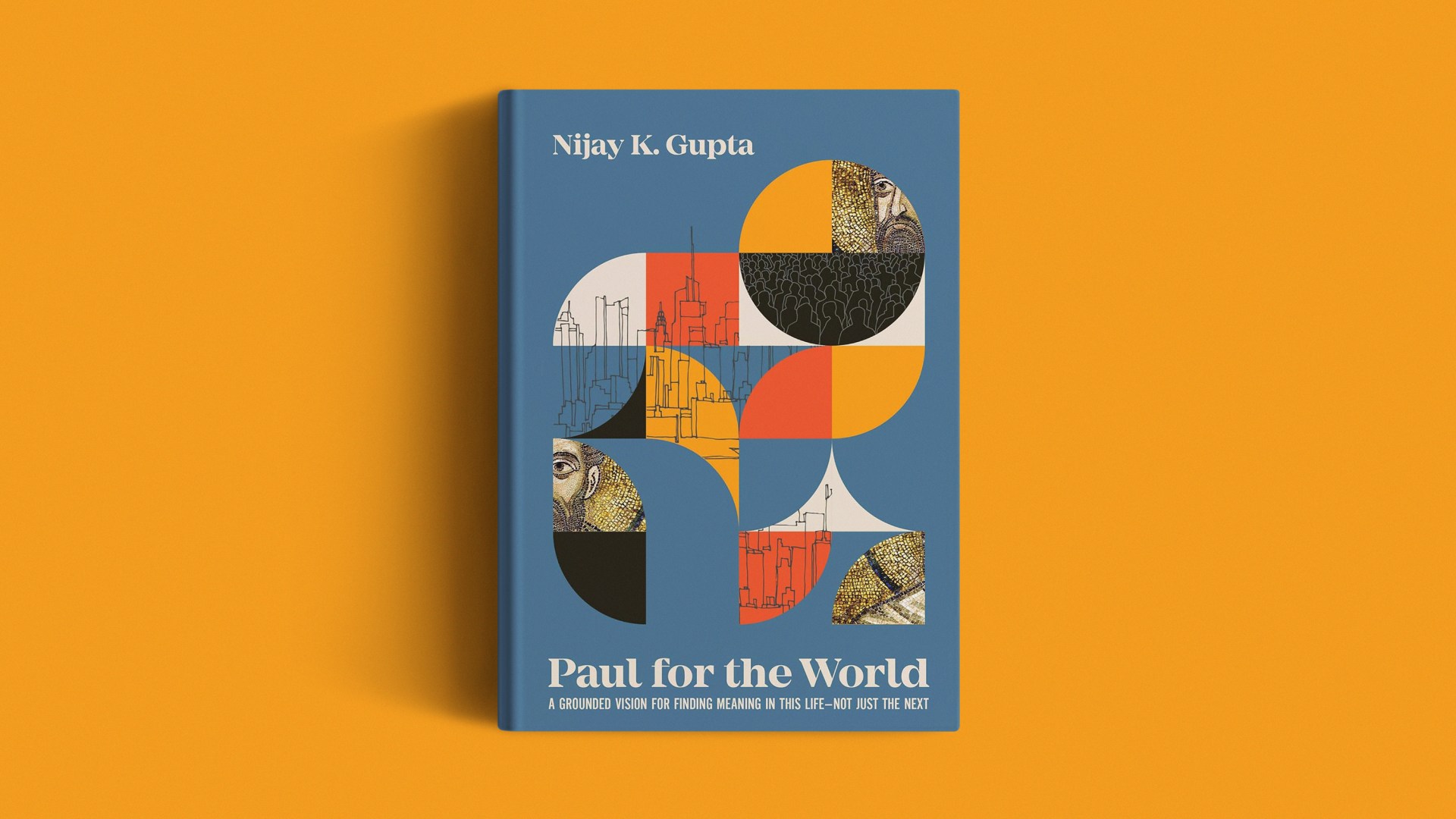
“Paul rejected any form of escapist theology,” New Testament scholar Nijay K. Gupta writes in his book Paul for the World: A Grounded Vision for Finding Meaning in this Life—Not Just the Next. Gupta’s vision challenges readings that cast the apostle as more otherworldly, like the Paul I envisioned as a teenager, whose greatest contribution was the “Romans road” showing the way to eternal life.

Gupta’s reading also brings balance to scholarly accounts that privilege Paul’s eschatological teaching over his ethical outlook. More recently, “apocalyptic” readings of Paul have emphasized the way that the gospel brings an end to the old order of things. And yet, whether believers are looking for the rapture or reckoning with the rupture of the age, the question remains: How shall we live here and now?

This question is a throughline from Gupta’s earlier book, Strange Religion, which highlights the subversive shape of early Christian belief and practice. If that book aimed at an immersive investigation of “how the first Christians were weird, dangerous, and compelling,” Paul for the World meets us where we are with more contemporary themes and topics. Gupta wants to show Paul speaks to the “things that make up our concerns and preoccupations in this life.”

Gupta’s reading of Paul is capacious, encompassing the concern for evangelism, provided that it is clear that “God doesn’t want Christians to escape the earth to make it to heaven. He wants to bring heaven to earth.” Similarly, Gupta points out that the rupture that Jesus brings is one that renews the world, rather than replacing it. It is the “evil age” (Greek aiōn) that is coming to an end (Gal. 1:4), not the “world” (kosmos) that God is reconciling to himself (2 Cor. 5:19).

Taking a page from Bonhoeffer, Gupta argues that the Incarnation means Christ has chosen to belong to the world in order to heal. And Christians should be a contagious force of good wherever they are, seeking “to be not less worldly, but more worldly.” Our hope is not to become angels, but to become more fully human, like Jesus.

This part of the book reminds me of an insight I once heard from New Testament scholar Scot McKnight. The difference between Jesus and the religious teachers, McKnight said, was that they saw holiness as something fragile to be protected, while Jesus saw holiness as something powerful to be unleashed. Similarly, Gupta writes that the gospel is God’s “plan for making good what has been corrupted, making beautiful what has become ugly, and making holy what has been made ungodly by sin and death.”

But how does this happen? Rather than expounding a grand project of systematic renewal, Gupta shows what it looks like when Paul’s vision of cosmic salvation gets pressed into the corners of ordinary life into “justice, equality, money, work, friendship, athletics, wellness, and creativity.”

Short and accessible chapters on each of these subjects make up the second half of the book, where Gupta manages to do multiple things at the same time.

First, he offers a crash course on the social and cultural context of Paul’s writings on these subjects. What did Paul’s contemporaries take for granted? What did the Stoics or Epicureans think about work or friendship? Are there parallels to our contemporary preoccupations with fitness and wellness?

Second, Gupta shows how Paul’s lived theology models a posture that is conversant with but often radically distinct from his world. The cumulative case results in the third thing: a demonstration of Gupta’s thesis that life in this world matters, and that our goal is not to “go up” but to “grow up in all things” (Eph. 4:15, NKJV) into Christlike life in this world.

As a recovering escapist, I was struck by the force of Gupta’s larger project to inspire Christians to live together in a way that is constructive and compelling. I also found myself wondering what other topics could be brought into the orbit of Paul’s theology, where we might feel Paul’s sharper edges. What does Paul have to say to us about our obsession with efficiency, self-optimization, or performative virtue? How would he evaluate our dating lives or political identities? What would he say about youth sports?

Grappling with these questions requires imagination. But as Gupta points out, it also requires a theology marked by hope. This “blessed hope” is not that we will get to go someplace else, but that this world, this fallen world, is still deeply loved by the triune God. And that means that we can engage every part of it with curiosity and courage.

As Paul wrote to Titus, Christ “gave himself for us to redeem us from all wickedness and to purify for himself a people that are his very own, eager to do what is good” (2:14). Until the Lord returns, there is so much good to do. For it is in our eagerness to do good that we testify to character and scope of Christ’s redemption, on earth as it is in heaven.

Justin Ariel Bailey is a professor of theology at Dordt University. He is the author of Interpreting Your World: Five Lenses for Engaging Theology and Culture.

Church Life

At 90, My Grandma Is Leading Worship at Her Retirement Home

Her decades of service to her community inspire me to be like her.

An image of an elderly lady playing the piano.
Christianity Today May 11, 2026
Illustration by Elizabeth Kaye / Source Images: Getty, Unsplash

 At five minutes before nine, nurses gently push in and arrange the wheelchairs. The window-walled multipurpose room at Deerfield Retirement Community in Urbandale, Iowa, has rows of chairs, a glossy grand piano up front, and a projector screen. My grandmother, 90 years old, sits at the piano, playing a prelude. It’s a Sunday morning. 

Since she moved in eight years ago, my grandmother, Mary, has become the go-to accompanist for this community’s church services. On Easter Sunday, she (a lifelong Protestant) played for four services, including the Catholic mass. Last summer, she accompanied and taught for an ecumenical service, leading favorite hymns interspersed with stories and thoughts about faith. 

I attended that service. We sang “Amazing Grace,” “Sweet Hour of Prayer,” “God of Grace and God of Glory,” and “Jesus Loves Me.” Many of the congregants in that room would have preferred to be holding hymnals, but age has made it harder to hold thick volumes and read small text. The projector is both a welcome and somewhat reviled accommodation. My grandmother remarked on the inferiority of singing from screens to affirmative chuckles and mhms

My grandmother knows how to work a room. She has been many things throughout her long life, and even though she’s been a musician since she could sit on a piano bench and reach the keys, she’s most widely known as a politician. She served as a state senator in Iowa for ten years, six of those as president. Between 2003 and 2006, she served as US ambassador to the Eastern Caribbean. My family has pictures of me and my sisters sitting with her at the front of the senate chamber, gavel in hand. I have memories of riding in parades on the back of a convertible during election years, throwing handfuls of bubblegum and Jolly Ranchers. 

I was 4 years old when my grandmother was elected to the state senate. I don’t remember a time before she was in public service. Long after she retired in 2006, she remained a go-to strategist and resource for Republican politicians trying to navigate the retail politics of the state of Iowa. She was instrumental in helping George W. Bush win the 2000 Iowa Caucuses. Even then, she could tell that something was shifting in our country’s politics and that it didn’t bode well for anyone committed to bipartisanship and constituent advocacy. 

In 2001, it looked like there could be an opening for her to run for governor. For a few months, she considered it. But by that time, she didn’t seem to have the kind of profile that would rally the Republican base. Of her changes in the gubernatorial race, an Associated Press reporter wrote, “Kramer occasionally says things that could be interpreted as being moderate and moderates have a poor future in Republican primaries, something she fully understands.”

After her diplomat years, my grandmother started writing and speaking about civility. I always heard her talk about the importance of being “endlessly pleasant,” which I sometimes interpreted as strategic fawning, a response to the complicated nature of being a woman in a position of power. She had, after all, managed to work her way up corporate ladders and institutions in the 1970s and ’80s, when being pleasant was necessary for women with ambition. 

Over the past ten years, though, I’ve come to see her commitment to civility as wise, maybe even a little prophetic. She’s been practicing a posture of radical commitment to relationships for decades.

She always had a gift for memorization—she plays the piano almost completely by ear, which drove her teachers to scold and rap at the printed sheet music propped up in front of her. In politics, her memory was a campaign asset. She filed away names, favorite foods, jobs, and pet partisan issues. Now, she commits to memory the favorite hymns of her wheelchair-using neighbors in assisted living, so that when they attend services, she can play songs for them, even though all they can do in response is raise their heads in quiet acknowledgement. 

Politics was not part of the plan for my grandmother until her late 50s. She was a virtuoso organist and pianist who deeply disappointed her professors at the University of Iowa when she decided to pursue a career in education rather than performance. She was a church organist, but that didn’t always pay the bills (some churches didn’t pay at all). Her first real “job” was playing the piano at local bars as an undergrad, accompanying pop sing-alongs, which were all the rage in the 1950s. She could take requests and transpose to fit the voice of any slightly inebriated townie. 

My grandmother was an only child; sometimes I wonder if the discovery that playing the piano could gather people and make them laugh, sing, or dance was like unlocking a path out of isolation. She told me once that she didn’t want to “spend her life in a practice room,” which was a relief to hear as a 19-year-old clarinet performance major who felt like she was missing out on so many things in order to perfect scales and breathing exercises. I felt like a failure, but she told me that I might be made for something else. 

Watching her lead a room in hymns and deliver a few remarks in between, at age 90, I wonder if she’s rediscovered the social power of music—for others and herself. Her husband, my grandfather, died in 2018. They were married for 60 years. 

After her ambassadorship ended, Mary was a sought-after political speaker and consultant, but age and shifting political currents have changed that. She’s not as mobile anymore; walking long distances is painful. Furthermore, her “moderate” profile and lack of enthusiasm for the current administration have made her a relic of politics past. 

Politically powerful people in the state don’t need her anymore. Her community needs her, though. They don’t need talking points or connections. They need a pianist.

At times, I’ve wondered to myself if my grandmother’s commitment to civility and pleasantness is simply a form of tone-policing. As someone who supports public protest and nonviolent civil disobedience in the pursuit of justice, I find it hard to defend the belief in civility as a first principle. 

My grandmother’s civility isn’t saccharine or prim, though. It’s not a form of stonewalling; it’s deeply grounded in the belief that love of neighbor and mutual respect will make it possible to disagree and solve real problems. 

She’s a fan of good satire. Even before her political career began, she recognized that some equally distributed ribbing is good for all of us.

In 1974, she and her friend wrote a musical revue for the Iowa City University Club titled “Good Night, Ladies.” The opening number is a satirical song called “Objects of Reverence,” a corny and rather on-the-nose send-up of romanticized domesticity that could easily have been written today as a spoof of tradwife content: “We’re frosted with deference, so courteous and kind. Submissive, dependent, we’re quietly resigned. And God help the woman who tries to use her mind.” 

A selection called “Rosie the Riveter” featured women on ladders with tools and hard hats singing, “We think that marriage is nifty when it’s really fifty-fifty,” and “I’ll be your friend and lover but no slave.” The song “I Need All the Support I Can Get” is a dig at second-wave feminism: “Tell Gloria Steinem, I’m not quite ready yet. Don’t ask me to burn my bra—I need all the support I can get.” 

I’m 37 years old; my grandmother was 39 when she cowrote and put on this farcical production for an assembly of University of Iowa faculty members and their wives. In the preface, the two composers insisted, “Our show doesn’t expound a philosophy, it doesn’t take a position on issues—it is meant to entertain and amuse you—and maybe give you an idea or two to ponder.” A civil and “endlessly pleasant” way to introduce a show that probably poked a little at each attendee’s worldview. 

It’s too reductive to say that there is a bright and clear through line in my grandmother’s life or career, and I’m not going to try to impose one. She says that she’s “come full circle,” returning to her first job as a pianist for hire. There’s no pay and no acclaim or external reward for her playing. Church services at Deerfield aren’t taproom sing-alongs, but they are social, spiritual, and deeply needed. Her neighbors want to gather and worship together, so she helps them do it.   

The tone of our national politics is such that we are all susceptible to the lie that everyone who aspires to public service is either conniving and power-hungry or self-deluded. My grandmother keeps me from getting cynical. I know she is committed to public service because she is still serving when no one cares to notice. She’s not the only one. 

Praising the value of civility verges on sentimental and naive, I know. So does the song “Jesus Loves Me.” But that was one of the songs Mary chose to close the service I attended last summer. In her remarks before it, she sat at the piano and talked about why she picked it for us to sing together. She paused for a moment, then described having a moment of clarity about what the song meant as a child, “Jesus loves me. Me!” she said, and put her hand on her chest. “What a thought.” Then the whole room sang the song together—the strong voices, the weak ones, and the barely audible groans. 

Kelsey Kramer McGinnis is the worship correspondent for Christianity Today. She is coauthor of The Myth of Good Christian Parenting and writes broadly on Christian music and the intersection of American Christianity and popular culture.

News

Supreme Court Rules on Gerrymandering

Q&A with Warren Cole Smith about how Christians should think the decision that struck down part of the Voting Rights Act of 1965.

An activist holds a U.S. flag during a rally in front of the U.S. Supreme Court as it prepares to hear oral arguments in Louisiana v. Callais on October 15, 2025.

An activist holds a U.S. flag during a rally in front of the U.S. Supreme Court as it prepares to hear oral arguments in Louisiana v. Callais on October 15, 2025.

Christianity Today May 11, 2026
Alex Wong / Staff / Getty

Late last month, the Supreme Court ruled that Louisiana’s congressional map was unconstitutional because, according to The New York Times, it “improperly considered race to create a majority Black district.” The court ruled in a 6–3 decision, one that some say is a major blow to the Voting Rights Act and others say preserves the integrity of a level playing field for elections.

The Bulletin’s producer and moderator Clarissa Moll sat down with Warren Cole Smith, veteran journalist and editor in chief at Ministry Watch, to understand this decision from a Christian perspective. Here are edited excerpts of the conversation from episode 276.

What did the Supreme Court decide last week? 

The court’s decision makes it less likely that states will be able to create majority-minority districts. Some of those majority-minority districts, for example in North Carolina, have created very strangely shaped districts. It’s the classic example of gerrymandering. A lot of folks think that this decision will be an improvement, that it takes radical gerrymandered districts out or makes them less likely.

The Constitution says that you can’t consider race, but you can consider politics. In our current era, politics and race are often proxies for the other. You can say, “Well, we’re not considering race, we’re only considering politics,” but it’s kind of disingenuous to say that. The Supreme Court decision does seem to be more in line with the Constitution, which says that you cannot consider race. 

In 1960, about 35 percent of Blacks voted for the Republican Party and about 65 percent voted for the Democrats. Today, about 90 percent of Blacks vote for the Democratic Party. This era, post Civil Rights Act of 1964 and post Voting Rights Act of 1965, is much more polarized and much more likely to gerrymander. 

I think those that are concerned about this ruling really have to ask the question, How could it get any worse? There are, by some estimates, only about 15 competitive House races out of 435 in this country. Even generous assessments say that no more than 35 of them are competitive. It’s hard to figure out how this could be any worse in terms of the polarization of our country. 

It’s also not clear yet whether this is going to have any negative impact on minority representation in Congress. It could possibly improve it. We just don’t know yet. 

Is there a fairer way to draw out districting boundaries that we need to consider?

The districting or redistricting process is inherently a political process. It was designed by the federal Constitution and most state constitutions to be that way. So you’re never going to take the politics out of it, and probably shouldn’t. The voice of the people, the voice of the political process, should probably carry a lot of weight. 

On the other hand, there have been some attempts, at least at the academic level, to use statistics, to let a computer draw the map, and then present a rough draft to the legislature and let them make the final decision. Would that be fairer? I’m not sure. We might have to get comfortable with this inherently political, and therefore inherently messy, process and learn to play with our friends in the sandbox a little bit better than we have been for the last 30 years.

Is there a Christian “via media” here, based on biblical principles? 

As far as a via media goes—a middle way—I’m not sure. A higher way, perhaps. 

There are some biblical principles at work here. Every single person is created in the image of God. In our political process, that means, among other things, that everybody gets a voice. And that idea, which is a fundamentally democratic ideal, is rooted in the biblical principle of the imago dei.

The Bible talks about justice and impartiality, that unjust weights are an abomination to the Lord (Prov. 20:23). That is an important principle as well for the protection of the vulnerable. Civil rights don’t exist to protect the rights of the majority. They exist to keep the majority from trampling on the rights of the minority, the poor, the vulnerable. 

I would also argue that, especially for Christians who don’t want to get involved in politics, politics can be a wonderful tool that allows Christians to love their neighbor. All of these biblical principles, fundamentally Christian in their origin, should be informing this conversation. 

What that doesn’t mean, though, is that because of these biblical principles the 6–3 ruling of the Supreme Court was right or was wrong. We have to wrestle with these questions with goodwill and consider those that have a different perspective. In this polarized environment, it can be really difficult to do that. 

News

The Megachurch Caught in Brazil’s Largest Bank Fraud

Lagoinha Global is the fourth-largest megachurch in the country. One of its pastors is involved in a multibillion-dollar scheme.

People attend an evangelical event at the Baptist Church of Lagoinha with Brazil's President Jair Bolsonaro in Belo Horizonte, Brazil, on August 7, 2022.

People attend an evangelical event at the Baptist Church of Lagoinha with Brazil's President Jair Bolsonaro in Belo Horizonte, Brazil, on August 7, 2022.

Christianity Today May 11, 2026
Douglas Magno / Contributor / Getty

In March, police arrested banker Daniel Vorcaro and his brother-in-law, businessman and pastor Fabiano Campos Zettel, for their roles in what Brazil’s finance minister said could be “the largest banking fraud in the country’s history,” with losses totaling $9.7 billion.

Central Bank of Brazil ordered the liquidation of Banco Master, a bank owned by Vorcaro, in November due to a “severe liquidity crisis” and investigated suspected crimes of criminal organization, fraud, market manipulation, and money laundering. The bank issued securities at above-market rates, which it backed with fictitious credits. 

Authorities also accuse Vorcaro, who built a wide network of influence among politicians and judges, of bribing Central Bank officials and paying internet influencers to attack officials and intimidate journalists who were covering the case.

The scandal has also drawn attention to Lagoinha Belvedere, a local church Zettel founded and pastored, and the larger Lagoinha Global denomination to which it belongs. Before working in finance, Vorcaro briefly hosted a music program on Rede Super, a radio and television network owned by Lagoinha’s mother church, Lagoinha Matriz.  

Police identified Zettel, who is married to Vorcaro’s sister Daniela, as the main financial operator of the fraud, as he owned several companies that did business with the bank. Between October 2024 and January 2026, Zettel made money transfers totaling $8.35 million from his own accounts to those of Lagoinha Belvedere, transactions investigators suspect to be money laundering. 

Lagoinha Global has distanced itself from Zettel and Vorcaro, and Brazilian Christians feel surprised and suspicious. The church is also known for its close ties to former president Jair Bolsonaro, who is currently serving a 27-year prison sentence for leading a coup attempt. Lagoinha Global did not respond to CT’s request for comment.

“The image of Lagoinha has become tainted,” said Ricardo Bitun, sociologist and pastor of Igreja Manaim, a Pentecostal congregation in São Paulo.

Lagoinha, officially called Igreja Batista da Lagoinha, has often courted controversy. Four years after its founding in 1957, the Baptist Convention of the State of Minas Gerais kicked out the church as it grew increasingly charismatic. Today, more than a quarter of Brazilians identify as evangelical, and among that category, about 60 percent are Pentecostal

In the 1990s, Lagoinha gained prominence as its worship group, Diante do Trono (Before the Throne), grew into a phenomenon in Brazilian Christian music. Led by Ana Paula Valadão—daughter of then-senior pastor Márcio Valadão—the group sold millions of albums. Congregants filled the church’s pews, causing it to grow into the fourth-largest megachurch in Latin America in 2022. Today, the denomination has more than 650 churches in Brazil and more than a dozen other countries.

In December 2022, Valadão, who had led the church for 50 years, handed off leadership to his son, André. The rocky transition led to 70 churches leaving the denomination, as many felt André lacked his father’s charisma. 

André has been politically outspoken about his support of Bolsonaro. During the 2022 presidential election, he allowed Bolsonaro, who was running for reelection, to speak at the pulpit of Lagoinha Orlando, the Florida church André leads. Bolsonaro then claimed the election was a “fight of good against evil.” A few months later, he spoke at another Lagoinha church. 

Zettel, who was Bolsonaro’s largest donor during his campaign, founded Lagoinha Belvedere in 2024. A year later, during its inauguration ceremony for a new building—a former car dealership renovated to an auditorium with 2,000-person capacity—André preached the sermon. In that service, Valadão praised Vorcaro’s parents, Henrique and Aline. “We’ve been friends since my single days, lifelong friends, friends for years, for decades,” he said. He said he and Zettel have been friends for 20 years.

Then came scandal. 

Police first arrested Vorcaro on November 17, 2025, releasing him 12 days later with an electronic ankle monitor. Four months later, authorities rearrested him and sent him to a prison in Brasília as a judge cited a “strong indication” Vorcaro attempted to bribe a former central bank director with gifts. Police also discovered text messages exchanged between him and a group of aides (including Zettel), in which they discussed plans to beat up journalists and former bank employees.  

Lagoinha Global removed Zettel from pastoral duties in November after his name was mentioned in the Banco Master investigations. Yet Zettel continued to serve as the president and legal representative of Lagoinha Belvedere. 

Police also arrested Zettel twice, first on January 14. Authorities took his passport and cell phone before releasing him. The following day, Lagoinha Global issued a statement emphasizing that “there is no indication, evidence, or proof that the Igreja Batista da Lagoinha has been used, directly or indirectly, in any irregular scheme or practice.”

On March 4, police again detained Zettel and placed him in a prison in Potim, a city 100 miles northeast of São Paulo, alleging that he could hinder the investigations. A week and a half later, Lagoinha Global closed Lagoinha Belvedere, deleted its social media accounts, and sealed off its building.  

On March 22, Lagoinha Matriz played a video of André saying that Lagoinha Global “has no connection whatsoever to this scandal.”

“I found myself lost,” he said in the video. “I ask for your forgiveness for trusting people, for opening my heart to some people without truly knowing that there were situations in their lives that did not align with what I believe.”

A committee of Brazilian congressmen has requested information about the church and its financial arm, Clava Forte Bank, which it suspects was used in transactions with Banco Master. The denomination created Clava Forte Bank in March 2024 to serve as a payment method for its churches’ transactions. Church leaders shut it down on November 21, which André attributed to the high cost of software to prevent hacking and fraud.

André maintains that any mention of Lagoinha Global’s dealings with Banco Master are “unfounded accusations from the left.”

Among Brazilian Christians, the reaction toward the involvement of a pastor and a church in financial scandals was mixed. 

“There is a group [of Christians] that says it is necessary to denounce the problems in the church,” Bitun said, referring to Lagoinha’s ties to Banco Master. “And it has a biblical basis in an eschatology that reminds us that in the last days scandals and false prophets would be revealed.” He notes that another group “is more cautious against rash judgment and asserts that we should not judge.”

Sen. Damares Alves, a former pastor at Lagoinha, noted that as her congressional committee investigates pension fraud—which Banco Master is also involved in—it has seen the names of many “big churches and pastors” come up. 

“When a prominent pastor is mentioned, the community says, ‘Don’t talk about it, don’t say anything, don’t investigate, because the faithful will be very sad,’” she said. While it caused her “deep discomfort and sadness” to see Christians named, she believes the committee has the duty of verifying the facts.

Pentecostal pastor Silas Malafaia, leader of the Vitória em Cristo branch of the Assemblies of God, responded by calling Alves a “loudmouth.” “Your accusation was frivolous and generally denigrates the evangelical church!” he wrote on his X account.

In early April, Luis Fernando Souza, pastor of a Lagoinha church in São Leopoldo, cut his church’s ties with the denomination, citing difficulties with Lagoinha Global. In a video that went viral, he pointed out inequalities in the church, including high salaries among some leaders.

Souza told CT that although he didn’t want to antagonize the denomination, administrative policies that “have nothing to do with the purity of the church” adopted after André became the head of the church forced his departure. He mentioned high costs for adopting aesthetic standards in churches, mandatory remittances of money to the denomination, adoption of specific software, and use of accounting systems. 

“Most churches are neighborhood congregations; placing these obligations on pastors is inhumane,” he said.

Furthermore, Souza pointed to research he conducted last year: Within Lagoinha Global, 37 percent of pastors were considering leaving the ministry, 44 percent reported having suffered emotional problems (including depression, burnout, and suicidal thoughts), and 84 percent said they had never received emotional support from the denomination. Souza noted that before his departure from Lagoinha, two families from his church (which gathers around 200 people each Sunday) had said they planned to leave due to the scandal. While he believes Zettel could have laundered money, he doubts André or the larger denomination would have known about it.

“I am very saddened because, in general, it’s a church that preaches the Word of God,” Souza said. “But all of this has a lot of potential to harm the church.”

News

Christian Colleges Call New Federal Regulation an ‘Existential Threat’

A proposed policy would label college programs “failing”—and block federal student loans—if graduates don’t out-earn peers without the degree.

Covenant College 2015

A Christian college in Georgia and member of the Council for Christian Colleges & Universities, one group concerned about the new federal regulation.

Christianity Today May 11, 2026
Dan Henry / Chattanooga Times Free Press via Associated Press

Though college presidents are in the middle of graduation season, Philip Dearborn, the head of the Association for Biblical Higher Education, found 21 of them willing to make a last-minute trip to Washington, DC, at the end of April.

In dozens of meetings with lawmakers, they pleaded their case against a new Department of Education regulation they say could crater their programs. The regulation would label a bachelor’s or master’s program a “failure” if its graduates don’t earn more than their peers without the degree.

Students in these “failing” programs would be ineligible for federal financial aid.

The new rule portends a problem in particular for seminaries, theological schools, and Bible colleges at a time when clergy are aging and sometimes in short supply.

By the government’s own estimate, 53 percent of bachelor’s degrees for religion and religious studies would be considered “failing” under this new metric. Those programs, which would not qualify for federal loans, are projected to have the highest failure rate of any undergraduate program.

For master’s degrees, the outlook is especially bleak: The government estimates that 89 percent of religion or religious studies degrees would be considered failing.

“It’s an existential threat to the future of religious higher education in the US—I don’t think that’s an overstatement,” Dearborn told CT. “It came out of left field.”

The Council for Christian Colleges & Universities, representing 170 schools, and The Association of Theological Schools, representing 270 graduate theology schools, are also voicing serious concerns about the regulation. 

Dearborn thinks religious education became the unintended target of a regulation designed to rein in certain for-profit programs accused of saddling students with high debt and low-value degrees.

The One Big Beautiful Bill that Congress passed last year included a requirement for an earnings test on undergraduate and graduate programs to determine their eligibility for federal loans. Even as it was being drafted, leaders of Christian colleges voiced concerns.

“An accountability framework that reduces a faith-based school’s value to the future earning potential of graduates will minimize or alter its self-understanding and effectively punish those institutions for advancing a service ethos driven by their religious convictions,” wrote Asbury University president Kevin Brown in a Deseret op-ed in June 2025, before the bill was signed into law.

On April 20, the Education Department released details of the regulation, and the public has a month to comment before the regulation becomes final. As of May 8, the regulation had drawn more than 2,700 comments, a much higher number than other regulations that are in a similar comment period.

One commenter, Linda Adler-Kassner, noted that comparing the median income of an entire demographic to a small college program that may have only a few students didn’t make any sense mathematically. One graduate with low earnings could drag down the whole program.

“It seems to disproportionately impact programs in religious institutions, as well as majors like theater, dance, and music. This reality, as well as the mathematical calculations underscoring the requirement, suggest that smaller programs and programs designed to foster faith-based engagement need different measurement metrics,” Adler-Kassner wrote.

The regulation states that if the program has fewer than 30 graduates, the government will add more graduates’ earnings from other years until it reaches 30 graduates as the minimum.

To evaluate earnings, the federal government would use US Census and International Revenue Service data to compare the median salary of those with undergraduate degrees four years after their graduation to the median salary of those with high school degrees ages 25 to 34. (University administrators contend this comparison is also unfair: A high school graduate who has potentially been in the workforce for 16 years may reasonably be earning more than a college graduate with only four years of experience.)

A program’s graduates who are mostly from the college’s state have to beat the state median, but if they’re from around the country, as is the case with many religious schools, they would have to beat the national median.

For graduate programs, the government would compare the median salaries of master’s degree holders with median salaries of undergraduate degree holders.

If a college program, such as a biblical studies major, flunks the earnings test two years in a row, the government would label it as failing. Biblical studies majors at that school would no longer be eligible for Title IV federal loans, and the college would have to disclose that the program was considered “failing.”

The Education Department did not return a request for comment on the concerns of religious colleges.

“Financial outcomes matter, but they don’t totally measure whether an education is worthwhile,” said David Hoag, president of the Council for Christian Colleges & Universities (CCCU).

Frank Yamada, head of the Association of Theological Schools, recently held a webinar informing its members of the regulation.

“If folks want to get their degrees in these areas, but they’re not eligible for financial aid, it’s going to significantly impact the religious workforce,” Yamada said. “In many Christian traditions now, there are often more job openings or calls available than there are candidates to fill those calls.”

Hoag said the regulation is part of the Trump administration’s reaction to Biden-era student loan forgiveness programs that did little to restrict how loans are distributed in the first place. The CCCU leader is glad that schools now can advise students against borrowing more than they need to, for example. He also thinks schools should be transparent with students about what they are likely to earn in the job market. Some of those numbers are already available on the Obama-era “college scorecard” that shows median earnings for particular schools.  

But Hoag added: “One of the other areas that’s targeted is culinary arts. We’re going to have lousy food in the future and fewer people in ministry. Those are not good combinations.”

Music training will be hit hard, too.

Kyle Werner is a faculty member at Manhattan School of Music, which had a series of meetings recently with faculty and staff to warn them about the new policy’s fallout. The school doesn’t have lucrative degrees to balance out its lower-earning arts degrees, he said.

“By five years from now, when all students have come in under the new policies, our school could be facing penalties that amount to about 10 percent of our annual budget, which would be untenable for us,” Werner said in an email.

In the meeting, attendees asked whether the government could measure graduates’ income eight years after graduation instead of four, because musicians often have a longer runway to success. Werner said that was true for him as a composer: He worked for about seven years before securing regular commissions. Before that, he pieced together jobs as a teacher, administrator, and church music director.

“If you looked at my life four years after graduation, the current policies would not deem me a ‘success,’ but if you looked eight years after graduation, things were looking much better,” Werner said.

Pastoral work is not lucrative, either.

 Joshua Christy earned a bachelor’s in biblical studies from Anderson University in 2005. When he became the senior pastor of a small church in Missouri in 2011, a part-time job, he earned $225 a week. Under the proposed federal regulation, his post-graduation income would not pass the earnings test. He did not choose his major based on future compensation.

“Learning to study the Bible and minister to a congregation was something I found, and still find, deeply fulfilling and meaningful,” he wrote in an email. “It was never about money, and money has never really interested me as a goal worthy of pursuit.”

Jon-Michael Shelley graduated from Covenant College in 2019 and picked up a ministry internship at a Southern Baptist church in Tennessee where he made $8.50 an hour. He worked as a barista to make ends meet.

“For the first two years out of college, being a barista was more lucrative than my ministry job,” Shelley said. He’s now a youth pastor at an Anglican church in Atlanta.

An earnings test also can’t capture nonmonetary ways churches take care of their workers, such as by offering a parsonage. The Southern Baptist church Shelley interned for after graduation found him a host home where he could live for free.

He graduated with significantly less debt than his friends who attended state schools, he said, which also doesn’t factor into the proposed earnings test of college programs.

Dearborn, who now represents roughly 200 postsecondary schools, is not sure he would have passed the earnings test when he graduated from Lancaster Bible College in 1994 and became an admissions counselor.

Though Dearborn began his career with a humble salary, money was not the reason he earned a Bible degree. He later became the college’s provost.

“God has always provided and been so, so generous,” he said. “And I’m thankful for my college degree.”

It taught him intangible skills like how to relate to people, how to see the world in context of a greater narrative, and how to fulfill commands from the Bible for ministry, he said.

“Churches are going to need leaders and leaders are going to have to be trained,” Dearborn said. “Whether we do it through our current understanding of how it goes, or a new way of thinking, I’m confident the church will rise up and figure it out. It sure would be nice if our government allowed our students to use loan dollars as well as grant dollars.”

– Aaron Morrison contributed data reporting to this piece.

Books
Review

The Lies—and Truths—That Keep Some Black People Out of Church

A California pastor’s book confronts the painful parts of Christian history but points to the healing power of the gospel.

The book on a red background.
Christianity Today May 8, 2026
Illustration by Christianity Today / Source Images: Getty, Zondervan Academic

A few years ago, I became more bullish on evangelism and joined a church outreach group. I ministered in the two predominately Black neighborhoods where I lived. I had hundreds of conversations and heard many objections to the faith. But the most common pushback came from people who found it challenging to reconcile their Blackness with Christianity.

It is not an exaggeration to say that today, the legacy of colonialism, slavery, and Jim Crow stands as one of the biggest hindrances to furthering the gospel in the US. Calling Christianity “the white man’s religion” isn’t necessarily new. But it has grown more legs in recent years amid national polarization about race and politics, including in the American church. At the same time, young Black people have become more skeptical of Christianity and I’ve personally walked some friends through their own questions.

In response to the growing need, Black Christian leaders, including Eric Mason, Sarita Lyons, and Jerome Gay, have written books in recent years that offer a robust, contextual defense of the Christian faith. JP Foster, pastor of a predominately Black church in Inglewood, California, just added his name to that list with The Gospel and My Black Skin: Confronting the Past, Reclaiming the Future.

The book is Foster’s personal, historical, political, and theological reflection on the legitimate racial wounds that keep Black people from the Christian faith, the stories of faithful Black witnesses, and the question of whether we can embrace Christianity in an era of evangelical-backed Trumpian politics.

Foster empathetically takes his intended audience (ranging from unbelievers and deconstructionists to committed Christians) through each topic and offers a robust defense of the faith. He addresses how scripture was manipulated to further racism through the slave Bible, the religious justifications used to promote white supremacy, and by the resistance of Southern evangelicals to the Civil Rights Movement. He also calls for churches and Christians to pursue racial justice today.

The book is unsparing in its criticism of white evangelical politics, yet hopeful about pursuing biblical unity. It is a valuable tool for anyone interested in the field of urban apologetics, even though some of its arguments about justice are too abstract.

Throughout the book, Foster is rightly critical of the fusion between Christianity and nationalism and of a version of our faith that “sounds less like the teachings of Jesus … and more like a civil religion draped in red, white, and blue.” He writes that many American Christians need to abandon this distorted approach and affirm the image of God in each person by rooting out injustice wherever it resides. But aside from giving a few clues, such as citing issues like mass incarceration and redlining, he doesn’t spell out how exactly people can do that.

The lack of details was my biggest pain point with the book (on top of some repetitive sentence constructions), particularly because the most serious conversations about race ask not whether there are problems we need to fix but what justice should look like on the ground.

How do we solve racial disparities and repair what’s broken in our society? Should it include reparations? How can the church, in practice, be the hands and feet of Christ to predominantly Black communities that have suffered? And what does it look like for the church to encourage Christians to do it locally?

For a book that leaned heavily into racial justice and was written, at least partly, for Christians thinking about these issues, I would have loved to read more details.

That said, Foster’s primary aim is apologetics, which he tackles well. A large section of the book traces the long history of Christianity in Africa, a necessary pushback to the widespread belief that Black people first heard about the faith on slave ships and plantations. From my experience, I know that many people simply do not know the true history, and sharing it might move the needle in some conversations and relationships.

Foster notes there are also problems in this area. Western Christians and scholars, for example, need to stop sidelining the Africanness of prominent early theologians such as Tertullian, Athanasius, and Augustine (whose cultural origins in Roman Africa, as Catherine Conybeare wrote in a recent book, are important to truly understanding his life and career). Foster writes,

These leaders were shaped by African soil, African questions, and African communities—but Rome’s language became the medium of their message.

And that’s where the erasure began. Over time, as European scholars curated the story of the church, they centered Rome and sidelined Africa. They imagined the early church as a European story told in Latin rather than a global movement that included vibrant African voices from the very beginning. Figures such as Aurelius and Augustine were painted in European tones—literally and figuratively—until their African heritage faded from the page. And the African origins of their theology were all but forgotten.

The book then comes back to America to trace how Christianity inspired abolitionists and civil rights leaders to fight against slavery and segregation, and argues the true faith is liberatory. Foster cites notable names and makes good arguments throughout. However, I’m not sure how much this point will move people who have chosen to leave not just the church at large but also the Black church, which has always been intrinsically tied to civil rights.

Many Black congregations are also facing growing generational gaps. Congregants choose to disaffiliate for many reasons, and reaching people who have left the faith or are deconstructing—including young Black people—requires attending to the rampant moral relativism (“my truth”) in the culture, as well as other issues.

The book comes alive when Foster tells his own poignant personal stories, from his brother joining the Nation of Islam after having doubts about Christianity to a tense police stop in his wife’s new car.

In ministry, he watched his mentor (a Black bishop) connect with a predominately white church in Orange County for unity and reconciliation worship events. Hundreds of members from the predominately Black church worshiped in Orange County one night.

But when it was time for the predominately white church to drive to Inglewood, no one came. “That day, the truth hit hard: For some, reconciliation was fine as long as it didn’t require sacrifice,” Foster wrote. Still, that shouldn’t make us give up on the process of reconciliation or on Christ, he added.

“The danger of only seeing the bad news is this: If I let the distortion define my faith, I might miss the real Jesus,” he wrote. “I might miss the grace that’s been chasing me my whole life. And I refuse to give anybody that kind of power over my faith.” For those struggling to reconcile their Black skin with the Christian faith, Foster’s work is a reminder that God doesn’t call us to choose one over the other. We can be both Black and faithful Christians. 

Haleluya Hadero is Black church editor at Christianity Today.

Books
Review

Are Near-Death Experiences Evidence for Heaven?

Three theology books on the afterlife.

Three books on a blue background.
Christianity Today May 8, 2026
Illustration by Christianity Today

This piece was adapted from CT’s books newsletter. Subscribe here.

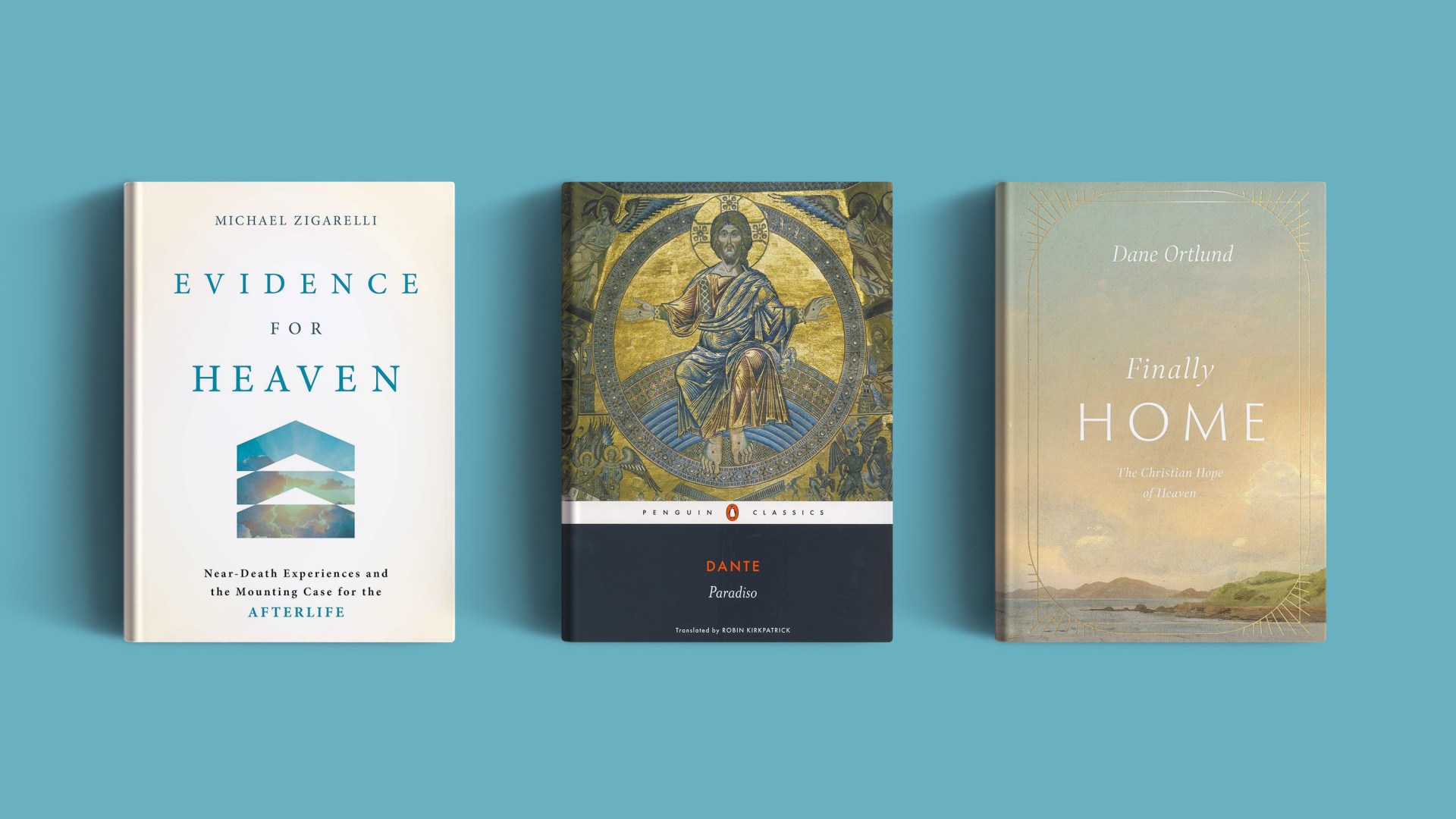
Dane Ortlund, Finally Home: The Christian Hope of Heaven (Crossway, October 2026)

Finally Home: The Christian Hope of Heaven

Finally Home: The Christian Hope of Heaven

Crossway

264 pages

Writing about heaven is different from writing about other Christian doctrines. Some books on the new heaven and new earth are so imaginative and speculative that they become untethered from biblical reality. Others are not imaginative enough; they make lots of accurate statements but lack the fusion of poetry, consolation, metaphor, wonder, and joy that characterize the apostles and prophets. Dane Ortlund’s new book, Finally Home, gets the balance just right more than any other modern book I have read on the topic. It is clear, solid, robust, and orthodox, but it is also soaring, evocative, comforting, and beautiful. It will be my go-to book to recommend on heaven from now on.

Much of the ground covered is what you would expect. Death, the intermediate state, the resurrection of the body, righting of wrongs, the renewal of creation, and the beatific vision are all here, described with clarity and presented with delight. Ortlund has not just read, but pondered and internalized, the great works of Augustine, Dante, Milton, the Puritans, and C. S. Lewis on this subject, and it shows. A pastoral care and an evangelistic warmth to his writing fire the heart, and he has an admirable simplicity to his overall framework.

There are some wonderful surprises as well. I did not expect the book to start with a chapter on how short our life is. Nor was I expecting a list of the careers that would (and would not) continue in the resurrection, or a chapter on how we will judge angels. I had never noticed the prominence of glory in Romans or thought about the new creation in terms of the calming of the wind and the waves. These are just some of the rich insights that are sprinkled throughout this marvelous book. Highly recommend.

Michael Zigarelli, Evidence for Heaven: Near-Death Experiences and the Mounting Case for the Afterlife (Baker Books, 2026)

Evidence for Heaven: Near-Death Experiences and the Mounting Case for the Afterlife (An Intro to NDE that's Perfect for Skeptics and Readers of Imagine Heaven)

This short book presents three claims of escalating significance. Each of them is reflected in the title and subtitle. The simplest and most defensible claim is that near-death experiences (NDEs) are much more common than many of us realize: They are experienced in all sorts of different cultures and are increasingly the subject of serious academic research.

The next claim is a bit stronger, namely that these experiences are so widely attested. Despite the wide range of cultures from which they come, NDEs have so many overlapping features—the departure of the soul from the body, heightened senses, overwhelming love, brilliant light, a journey through a tunnel, gaining special knowledge, a transformed life afterward—that they represent a growing body of evidence for the afterlife, in which the soul continues after the death of the body. The third claim, as per the title, is that they actually represent evidence for the Christian doctrine of heaven, on the basis that they witness to a place of perfect peace, light, love, and joy after death, and in some cases a being from whom these things emanate.

Readers may appraise these three arguments differently. The first is relatively uncontroversial, although the widespread reality of NDEs is worth noting in light of the famous examples of overhyped and even fraudulent testimony. The second is obviously more contentious. Some will prefer materialist, naturalist interpretations of these phenomena (REM intrusion, hallucinations, and such), while others will see them as more compatible with spiritual explanations and another reason to reject the idea that the mind and the brain are identical.

But what of the idea that NDEs are evidence for “heaven”? At this point, ironically, the universality of the experiences becomes a problem. Given that people from all kinds of cultures and religions have such similar encounters, it seems hard to conclude that there is anything specifically Christian about them. So I must admit that when Zigarelli claimed that “the NDE evidence invites a fresh conversation about God’s grace, the scope of salvation, and how to interpret Jesus’s teaching about the narrow gate,” he lost me.

Dante Alighieri, Paradiso (Penguin Classics, 2008)

The Divine Comedy: Volume 3: Paradiso

The Divine Comedy: Volume 3: Paradiso

Penguin

496 pages

Nobody has written about heaven like Dante. The Paradiso is the third and final part of his Divine Comedy (1308–1321), following the Inferno and the Purgatorio, and it describes Dante’s ascent through the heavens into the presence of God. For the most part, the Paradiso is not providing a factual description of heaven (like Ortlund), let alone an evidential defense of it (like Zigarelli); it is an allegorical poem, full of virtues and saints, contemplation and purification, planets and concentric circles.

But it culminates in an astonishing vision of light, love, joy, and God himself, which is surely the greatest description of these realities outside of Scripture. (I may just be saying this because I first read it while on holiday in Florence, but I suspect Dante’s influence speaks for itself.)

Paradoxically, the poetry is at its best when describing the indescribable: “So many streams of happiness flow down / Into my mind that it grows self-delighting / At being able to bear it and not drown.” Or, “I saw, above a thousand thousand lights / one Sun that lit them all, as our own sun / lights all the bodies we see in Heaven’s heights / And through that living light I saw revealed / the Radiant Substance, blazing forth so bright / my vision dazzled and my senses reeled.”

Or the famous conclusion: “Here my powers rest from their high fantasy / but already I could feel my being turned— / instinct and intellect balanced equally / as in a wheel whose motion nothing jars— / as by the Love that moves the Sun and the other stars.” Glorious.

Andrew Wilson is teaching pastor at King’s Church London and author of Remaking the World: How 1776 Created the Post-Christian West. Follow him on Twitter @AJWTheology.

Culture

Thrifting to the Glory of God

Shopping secondhand and donating our own items echoes Jesus’ renewal of discarded lives.

A pile of colorful clothes overlapping each other.
Christianity Today May 8, 2026
Illustration by Elizabeth Kaye / Source Images: Unsplash

A high schooler stood in the checkout line at my local thrift store. He wore dress pants, a tweed vest, collared dress shirt, and round wire glasses. His buddy wore typical high school gear: sweatpants, Crocs, and a ratty T-shirt.

“What do you like about shopping at thrift stores?” I asked.

While his friend grinned, the nattily dressed fellow answered, “Oh, I like to dress like a grandpa, so I need to shop here.” He was carrying a black wool overcoat he planned to purchase. 

I couldn’t help but smile, looking down at my outfit that was mostly thrifted. I carried several craft items I intended to buy. We understood each other perfectly.

The love of thrifting crosses all age, gender, and socioeconomic divides. High school kids defining their personal styles with limited funds, moms saving money on clothes their children will quickly outgrow, impoverished people looking for a nice warm sweater or winter coat, crafters funding their hobbies without ruining the budget, many hoping to help save the planet one pair of pants at a time.

Thrifting is a fast-growing industry and popular pastime, but it can also be a deeply spiritual exercise. The early church, according to Acts 4:32–34, “shared everything they had … that there were no needy persons among them.” Donating clothing and home goods that no longer serve you can help meet the needs of those in your community, thus serving them. It is a good way to practice stewardship, too, as we take care not to waste money acquiring more and more stuff.

Caring for the environment is another consideration, as thrifting (both donating and buying) keeps millions of pounds of textiles out of landfills annually. Plus, thrifting can help curb the fast-fashion industry that has been known to exploit workers across the world. Thrifting is one answer to these spiritual matters—serving others, protecting the environment, caring for the needy—but thrifting points to deeper spiritual matters, too. 

The US thrift and retail market reportedly grew from $20 billion in 2017 to $56 billion in 2025. Growth is expected to jump to $61 billion this year. That is a 305 percent growth over 9 years, nearly quadruple the rate of inflation (3.5%) over the same time span.

Resale shops can range from high-end consignment stores specializing in haute couture to mom-and-pop thrift shops like one I visited recently. The husband in the business, a long-time junk disposal expert, had access to enough stuff to start a thrift store run by his wife.

Goodwill Industries is well-known across the United States and abroad, as is the Salvation Army. Goodwill provides job training and other assistance for those in need, while the Salvation Army offers food pantries, shelter, summer camps, and financial assistance programs. These mega-organizations are augmented by local and regional thrift organizations, often run by churches, religious schools, and mission organizations.

Legacy Thrift, another outlet, began as Bibles for Missions in Holland, Michigan, in 1992. Planners modeled it after thrift stores in Canada that supported Bible League International. Rebranded Legacy Thrift in 2023, its 15 US locations—from West Michigan to Memphis to Houston—give over $4 million annually to six ministry partners, including Bible League Bulgaria, Living Water International, and Unknown Nations.

“Our guiding principle for how we operate our stores is to raise money for these ministries,” said Jessica Nolan-Bruinsma, vice president of operations for Legacy Thrift. “If we do what we do really well, this enables our ministry partners to do their jobs really well.”

She said thrifting is far different now than when Legacy began more than 30 years ago. “Back in the ’90s, thrift shopping was almost shameful. People expected stores to be dark, smelly, unorganized. But now thrifting has become recreational too. The customer base is different.”

Thrifting reminds me of stories of renewal in the Bible, taking what is unwanted and tossed away and remaking it into something new and treasured. Jesus does the same with us, taking our old lives and making them new. When we thrift discarded yarn and make an afghan (as my friend Rachel did recently), we warm ourselves or others with a new creation. The old has become new.

The olive-green sweater worn by someone new or a dusty candy dish just like the one that used to sit on a table at Grandma’s house point to the work of the Savior who finds value in what isn’t inherently valuable. The candy dish recalls fond memories, and the olive sweater looks perfect on its new owner. Each item has value to the right person.

My daughter discovered a mid-century modern dresser at Salvation Army late one Saturday afternoon. She took pictures and researched it over the weekend, discovering that this Drexel dresser with dovetail joints was selling used for nearly $1,000. I rushed back Monday morning, draping myself across the dresser while an employee set the price at $229. We loaded the very heavy dresser into the car and took it to my in-laws’ house. My woodworking father-in-law waxed, sanded, and shined the wood, added a few drawer inserts, and redid the brass hardware. It’s stunning, now ready to move with my daughter into the house she just bought.

Jesus, too, found value in what isn’t obvious. Zacchaeus was a tax collector, a reviled member of the Jewish community. Jesus called him down from a tree and invited himself to Zacchaeus’s house (Luke 19:1–10). The man of short stature came away from the encounter a changed man, repaying what he had swindled fourfold. Even a tax collector can be redeemed.

My church’s Easter Sunday service included a clip from The Chosen showing Jesus’ encounter with the bleeding woman who touched the hem of his garment with the faith that he would heal her. Jesus stopped, delaying his visit to a powerful synagogue leader with a sick daughter. When asked who had touched him, the woman came forward and told him the story of her illness and how she was healed just by touching his robe.

“Daughter, your faith has healed you. Go in peace and be freed from your suffering,” Jesus told her (Mark 5:34).

Jesus saw hidden value in this woman who had been ostracized and couldn’t work, marry, have children, or even be touched by anyone in her community or family. He saw her value hidden beneath an illness that kept her perpetually unclean.

Jesus could have ignored the tax collector and the sick woman.

We could have easily ignored the dresser because of its dingy, scratched surfaces and its dull hardware. But my daughter and my father-in-law revealed the value of the piece that will now have years of new life. Searching for ways to recognize the gifts around us, even those covered in a layer of dust, is one way to be like Jesus.

Thrifting also helps us value people. Goodwill of Greater Grand Rapids, with 18 retail locations, offers programs “to assist individuals who are facing barriers to employment,” said Erica Eash, its marketing manager. This can mean programs such as nursing training for those wanting to enter the health care field, struggling to find work during major life transitions, dealing with disabilities, plus professional growth for current employees.

“When you think about the fact that we’re serving 2,158 participants and providing 1,498 employment opportunities annually, that’s a big impact we’re making,” Eash said. “All of this speaks to our mission of changing lives and communities through the power of work.”

Nolan-Bruinsma points to the importance of donors. Without them, thrift stores wouldn’t exist. “We want to be good stewards of the things people donate,” she said. “We treat items well; we clean them, display them properly, and take good care of them.”

She says that time and again someone will stop by to drop off clothing on hangers or in boxes, saying, “‘My wife passed away and I’m finally giving away her things.’ Her clothes are lovingly cared for and carefully laundered. We want him to know that we really do care for the things he donates.”

My own volunteering at Legacy Thrift recently yielded three tins of vintage buttons. It would have been easy to toss them—we can just buy new buttons!—but instead I sorted them.

I thought about the woman who laboriously cut them off discarded clothing or replaced old buttons with new, who carefully saved every button during hard times. I wanted to honor her care and safekeeping of these small things.

The volunteer in charge of vintage items was thrilled about the buttons, putting a fair share of them in a special display case. Whoever donated them and whoever collected those buttons was honored in that care. What a gift to be able to pass them on to someone who will treasure them.

Ann Byle is a writer living in West Michigan. She is a diehard thrifter and author of Chicken Scratch: Lessons on Living Creatively from a Flock of Hens.

addApple PodcastsDown ArrowDown ArrowDown Arrowarrow_left_altLeft ArrowLeft ArrowRight ArrowRight ArrowRight Arrowarrow_up_altUp ArrowUp ArrowAvailable at Amazoncaret-downCloseCloseellipseEmailEmailExpandExpandExternalExternalFacebookfacebook-squarefolderGiftGiftGooglegoogleGoogle KeephamburgerInstagraminstagram-squareLinkLinklinkedin-squareListenListenListenChristianity TodayCT Creative Studio Logologo_orgMegaphoneMenuMenupausePinterestPlayPlayPocketPodcastprintremoveRSSRSSSaveSavesaveSearchSearchsearchSpotifyStitcherTelegramTable of ContentsTable of Contentstwitter-squareWhatsAppXYouTubeYouTube