Culture

Q&A: Douglas McKelvey on Gen Z’s Lack of Rites of Passage

Staff Editor

The Rabbit Room’s newest prayer book urges readers to join God’s mission in young adulthood.

A girl walking on floating stepping stones.
Christianity Today May 7, 2026
Illustration by Elizabeth Kaye / Source Images: Getty

Douglas McKelvey has been writing prayers in public for 20 years. This spring, his latest prayer book, Every Moment Holy: Rites of Passage, releases with Rabbit Room Press. The liturgies and prayers have an eager readership and are expanding to bring the show on the road for Every Moment Holy Live.

This fourth volume offers thoughtful prayers for individuals and communities at moments of transition, and it’s particularly suited to young adults. While this volume may be particularly suited for the graduate in your life, it’s also a helpful resource no matter your age.

In this conversation, Ashley Hales speaks with McKelvey about our lack of rites of passage in American culture and about how prayer can create meaning by orienting people to God’s larger story. This conversation has been edited for length and clarity.

Tell me just a little bit about the impetus for Rites of Passage.

Since Volume 1 of Every Moment Holy released, it’s been a bit of a journey. Rites of Passage is 150 prayers or so for young people in that transition stage of stepping into independence and adulthood. But it’s a little more of a hybrid book.

We’re not very good in America at creating rites of passages. Our culture has a kind of blank slate: You go through your years of schooling, and then you jump off a cliff into adulthood. We keep asking questions like “How do you know you’re a good man?” “How do you know you’re a good woman?” “How do you know you’ve really entered into the community of adulthood or are on a path toward maturity?” Rites of passage can help us understand how to do that. How might your book fit into that formationally in the church?

We are sorely lacking in those kind of unifying markers—ways to know that we are progressing into those new stages of life and responsibility. Part of that is that as a culture, we seem to have developed this aversion to anything that is actually costly.

Historically, cultures have had these kinds of rites, where young people were not just adrift in this nebulous space. I think that there is great opportunity for the church to begin to catch a vision for this, because I think we’re at a place as a culture where things are too easy. Gratification is too immediate.

Girls and boys as they’re growing up understand in an intuitive way that there needs to be meaning and that they suffer for the lack of that. The answers are there—Jesus says we are to pick up our cross and follow—but I think those dots need to be connected.


Kids growing up in our culture don’t have those things in front of them that they’re moving toward and consciously aware of. But I do think that this call is into this wild and perilous pursuit of this wild and beautiful shepherd.

For when you hear that call and you begin to heed it and follow, you are stepping into this path that does involve personal sacrifice. But it is the path to meaning and significance that you’re looking for—the limited significance of knowing your place in the community.

You can see the pull of the screen. We can push off suffering or boredom or unease with ourselves or with others by endless YouTube videos or Instagram reels that continually serve up content. I worry for a generation that has not had to sit in the awkward or hard spaces and has been anesthetized.

Is it possible for a large swath of the American population that, because of the formative years in which they have been anesthetized by technology, they simply won’t have the same sort of spiritual longings as generations before them?

Kind of the Brave New World. I think that is a real danger. But I don’t think the Spirit of God is ever going to cease beckoning people and drawing hearts. There are still going to be people who hear the call and respond. I’m more encouraged now than I would have been maybe three years ago.

In an interview, Martin Shaw made an argument that Britain wasn’t post-Christian but pagan, and pagans are much more ready to receive the gospel when they hear it than those atheists who have walked away from an institutionalized kind of religion that had ceased to have any real life in it.

The college-age generation—they’re awakening to a hunger. Aslan is on the move, perhaps. And I hope that the prayers in the Rites of Passage book land in a place where they might be of service in shepherding.


So there are prayers that begin at the place that I began when I was 16 years old—which was a place of suddenly realizing the Creator of the sun and moon and stars is beckoning me. Something in me longed for that, but I also realized there were other things I wanted more. Yet the hook of Christ was already set in my heart.

What’s one reminder you’d give to encourage young people on this precipice of becoming adults?

I think we have become a culture that has placed individualism, autonomy, self-expression on this pedestal, almost like virtues to be worshiped.

The necessary counter to that is to truly understand how short life is. It is a vapor. Scripture tells us that. But I think it begins with Lord, teach me to number my days aright, that I might gain a heart of wisdom. Start from that ending point. Who do you want to be when you are descending into the valley of the shadow? What do you want your life to have looked like? Cultivate that vision now. Start to make that plan: How do I get from here to there if that’s my endgame?

None of the prestige or accolades or likes on social media are going to matter at all. What is it that I want to lay at the feet of Jesus and say, I did this for you?

Celebrate the good things that he’s given that are part of your life, like good food, fellowship with friends, beauty, music. There’s so much that God has created in this world for us to enjoy and to be enthralled by.

All of these things are signposts pointing to the fulfillment of those things in him. Those are forward-rippling echoes of the fullness that is to come in the new creation and being in the unveiled presence of our Creator.

Douglas McKelvey is a writer of tales, a lyricist, a script writer, and the author of Every Moment Holy books.
News

Iran Tensions Threaten Kenya’s Largest Export Industry: Tea

Christian farmers struggle to avoid bankruptcy.

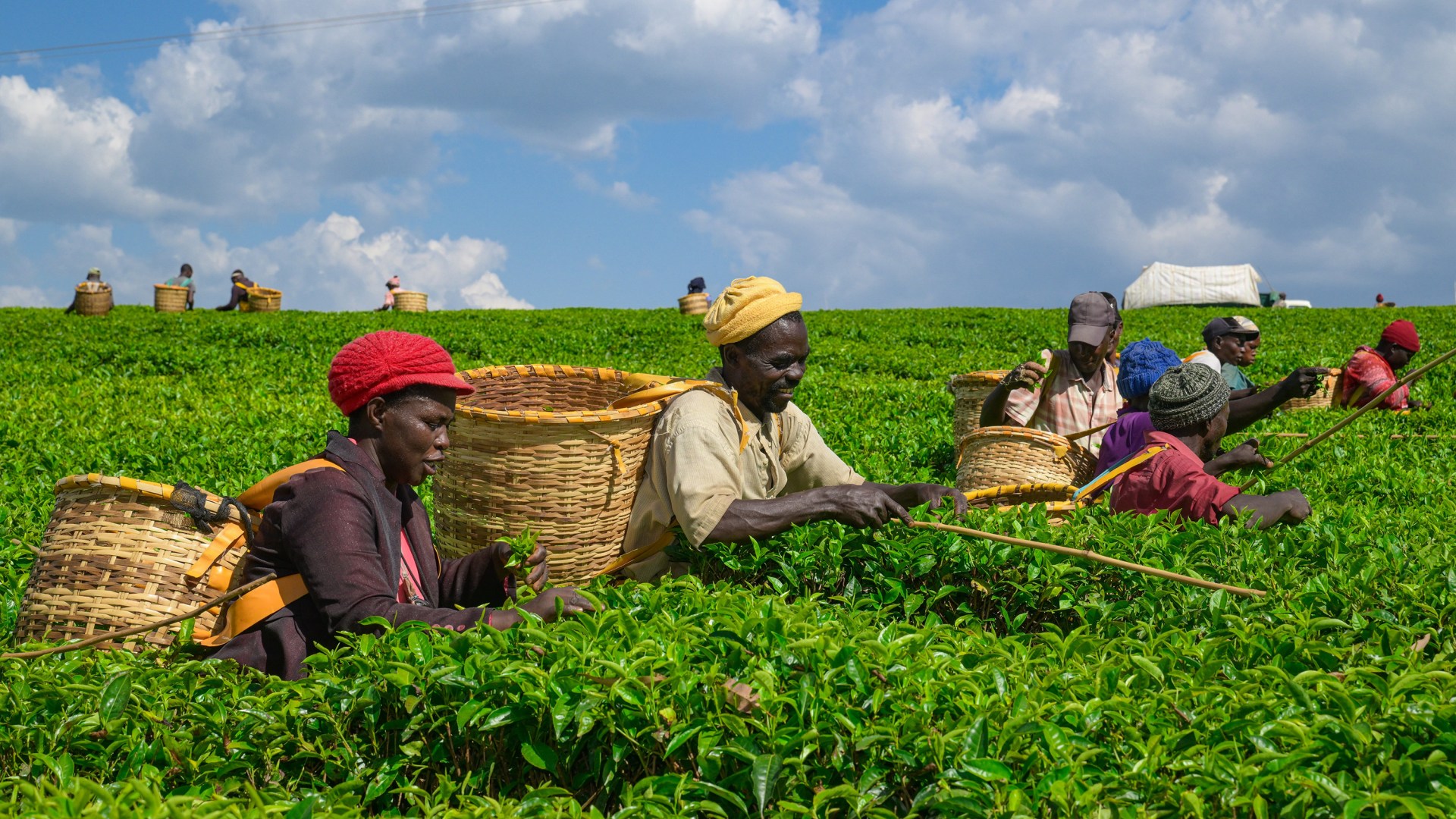
Farmers harvest tea leaves at a tea plantation in Bomet County, Kenya on February 4, 2026.

Farmers harvest tea leaves at a tea plantation in Bomet County, Kenya on February 4, 2026.

Christianity Today May 7, 2026
Xinhua News Agency / Contributor / Getty

On a cold, rainy April day, John Mwaura, 63, walked his two-acre farm in Gakoe, a small town in central Kenya’s Gatundu North Constituency, to inspect his dew-covered tea bushes while his workers plucked its leaves nearby.

Mwaura worries the tea leaves will overmature and become unusable if they aren’t picked on time. But shipping disruptions caused by the Iran war means he may have the hard decision of either letting the tea leaves go to waste on the bush or having them sit in storage indefinitely.

The spring harvest season lasts from March to May, and trucks normally come three to four times a day to pick up tea leaves from Mwaura’s farm and other surrounding farms and deliver them to a nearby factory for processing into black tea. Now, the trucks collect only twice a day.

Since the United States and Israel launched strikes against Iran on February 28, shipping disruptions have upended Kenya’s tea trade. With Iran’s closure of the Strait of Hormuz and the United States’ April 13 blockade, shipping goods to Iran or past it has become nearly impossible.

Kenya exported $32.8 million worth of tea to Iran in 2024, making the Middle Eastern country among the top ten buyers of Kenyan tea.

“At the moment the business is stagnating … prices are lowering,” Mwaura told CT. “In April, some factories were unable to pay mini-bonuses to farmers.” A mini-bonus is paid to farmers before the main bonus at the end of the year.

Like many of his neighbors, Mwaura worries the ongoing conflict and blockades will bankrupt small growers. If exporters have too much stock waiting to ship, factories can’t sell them more tea. Likewise, if the farmers can’t sell to the backlogged factories, cash shortages can force them to lay off workers or borrow money from loan sharks at high interest rates. So far, they’ve managed to keep going, but a spoiled or unsold harvest could devastate them.

“We are praying for an end to the war,” Mwaura said. “With war, the tea business is not sustainable.”

The eruption of hostilities between the United States, Israel, and Iran placed Kenya in an awkward position. Kenya has traditionally maintained warm diplomatic relationships with the US and Israel, yet Iran is a major trade partner—Kenya’s 10th largest export customer in 2024.

Kenya’s tea industry accounts for 16 percent of the nation’s exports and 10 percent of the country’s total income from foreign trade. It also employs—directly or indirectly—over 7 million Kenyans.

Joseph Mbugua, a factory worker and a farmer in Gachege, Gatundu North, said farmers were shocked when they could not get their expected bonuses and payments, which have been consistent for the last 20 years.

“We are demoralized and we have to get into debts we did not plan for,” Mbugua said.

Mwaura, a member of African Independent Pentecostal Churches of Africa (AIPCA), said the plight of farmers and laborers has become a constant prayer item in his church. He explained that Christians are stepping in to help the day laborers who can’t provide for their families right now.

“To cushion them against the harsh economic situation, they are given foodstuffs, and those who fall sick are supported with money for medication and other pressing needs,” Mwaura said.

Before the conflict erupted, Kenya and Iran had entered talks to expand trade in 2026, particularly for meat and flowers. Now exporters of these goods are reporting heavy losses. The unclear future of trade with Iran and disruptions to exports to the Middle East have shocked Kenya’s already struggling economy.

George Omuga, managing director of East African Tea Trade Association, told Kenyan newspaper The Standard that between 6 and 8 million kilograms (13.2–17.6 million pounds) of tea are just sitting in warehouses in the Kenyan coastal city of Mombasa. Tea exporters expect an 18 percent decline in business this year due to the war.

Mwaura fears fluctuating prices will create an imbalance in the supply and demand for Kenyan tea, lowering farmers’ earnings and ability to purchase needed equipment: “The farmers will produce a lot of tea while the buyers will be few.”

If this happens, many of his neighbors won’t be able to send their children back to school at the end of April as they won’t be able to pay the fees.

Mbugua expressed similar concerns: “To get children back to school, many (farmers) will have to sell their cows or lease a portion of their land to get money to fill the gap in their budgets.”

Mbugua said Kenya’s fuel costs—already higher than usual—have increased even more, raising the cost of tea production in factories, an expense many business owners haven’t budgeted for.

The bottleneck of cargo ships and oil tankers at the Strait of Hormuz—a key maritime corridor for roughly 20 percent of global oil and energy exports—has also impacted the cost of transporting tea within Kenya, not to mention international shipping. These additional costs, along with delivery delays that can erode the quality of teas, could undermine Kenya’s competitiveness against rival tea producers in Sri Lanka and India.

Kenyan principal secretary for industry Juma Mukhwana told news outlet NTV Kenya he hopes these losses will be offset by a possible deal to allow duty-free exports to China. “We have lost the Middle East market, but we have replaced it with an even bigger market of 1.4 billion people,” he said. “That is an area that we want our exporters to look at because it is a huge market.”

Other industry players recommend that Kenya diversify its markets by increasing trade with other African countries. Some hope the Kenyan government will take steps to ease the burden on tea farmers. Mwaura suggested the government cushion farmers by reducing some taxes.

Mwaura encourages other farmers to help themselves by adding value to their teas—such as developing flavored teas or instant teas that fetch more money in the market and exporting them to alternative markets in the US, Europe, or Australia. When farmers sell unprocessed tea, the market price stays much lower, he said.

Mwaura now advises other farmers about supply chains, pricing, and how to protect themselves from the impacts of foreign conflicts on their businesses. He told me that many small-scale farmers who usually sell their produce to the national tea agency, KTDA, are considering growing other high-value crops—including stevia, vegetables, and ingredients for essential oils—to supplement their tea harvests. But that could take years to bear fruit.

Still, Mwaura thinks a bigger solution needs to come from the US, Iran, and Israel.

“I would like them to make peace,” Mwaura said. “There should be respect between nations, because if they don’t agree, we may end up with another world war.”

Why We Retracted a Report About Violence in Afghanistan

A note from CT’s editorial director for news about our reporting on an attack on a house church.

An illustration of a hand holding a calligraphy pen with a hand written letter in the background

Christianity Today May 6, 2026
Illustration by Christianity Today

On April 30, Christianity Today published a report about an attack by Muslim extremists on an underground church near Bamiyan, Afghanistan. It also mentioned a second attack that killed Hazara converts to Christianity. After becoming aware of credible doubts about the accuracy of claims made by sources, we have removed the story from our website.

CT’s journalists initially investigated the alleged attacks, one of which was first reported by an international human rights organization, by speaking with a source in Pakistan who works closely with Christians in Afghanistan. The source provided CT with photographs purporting to show the aftermath of the attacks and a family he claimed were victims of the Bamiyan attack. A spokesperson from the human rights group confirmed the Bamiyan incident, noting that violence against Christian converts from the Hazara ethnic community, in central Afghanistan, is common.

After publication, multiple groups working with Christians in Afghanistan contacted CT to express skepticism that the attacks ever took place.

Following up on the concerns, CT journalists made unsuccessful attempts to corroborate the account of the attacks through additional independent sources. They requested copies of text messages that were said to document the attacks, but the source said the messages had been lost. Finally, CT traced some of the photographs provided as evidence to incidents that in fact took place earlier than the date given for the attacks. In one case, a photograph had been taken from a video recorded four years before the alleged incident.

We take seriously our commitment to factual accuracy in reporting. In particular, when reporting on a subject as sensitive and consequential as alleged acts of deadly religious violence, we bear an obligation to publish only what can be independently verified and, when details cannot be readily confirmed, to clearly disclose as much.

CT has reported on the persecuted church from our earliest days and remains committed to covering stories of Christians around the world who worship at risk of their lives. We recognize that such contexts often entail severe restrictions on communications and information sharing, posing extra challenges for reporting. Nonetheless, we believe the impact of a story is only proportional to its verity.


Christianity Today strives to make right any error in fact that appears in our journalism, and we welcome any correction from our readers.

Andy Olsen is Christianity Today’s editorial director for news.

Theology

What Social Media Addiction Tells Us About Heaven and Hell

Columnist

The infinite scroll is a counterfeit paradise, a parody of the coming world beyond “all that we ask or think.”

An image of people scrolling on their phones.
Christianity Today May 6, 2026
Illustration by Christianity Today / Source Image: Unsplash

This piece was adapted from Russell Moore’s newsletter. Subscribe here.

In the past few weeks, lawyers have argued that social media companies knowingly addicted people to their platforms to keep them compulsively engaged. On the other side of the country, I discussed with some friends their misgivings about heaven and hell. A few days later, I realized both of these were, at the root, the same conversation. The question is what sort of life we are being trained to imagine.

The cases against social media companies such as Meta are about the harms minors can face on these platforms, but they’re also about what plaintiffs argue are features engineered to keep developing brains addicted to digital feeds through autoplay, push notifications, and engagement-maximizing algorithms.

One of the more dangerous aspects of the platforms’ design, some of these cases allege, is “infinite scroll.” That is, the app constantly presents viewers another option that merges frictionlessly with the one before. Over time, the brain is wired to think, One more video … One more reel … One more message … and on and on. The question is not whether this happens (who among us has not gotten stuck online?) but whose fault it is.

I had infinite scrolling on my mind when a group of my friends discussed eternity. An unbeliever in the group said his biggest objection to Christianity was the doctrine of hell, but a close second was the doctrine of heaven. He could not conceive of living forever in a world without grief, suffering, death, or struggle. That would evacuate life of its meaning and preciousness, he thought, and would reduce human lives to those of well-fed farm animals.

In one sense, my friend is right—and the Bible agrees with him. The Psalms tell us, “So teach us to number our days that we may get a heart of wisdom” (90:12, ESV throughout).

Thinking about eternity, though, requires a completely different framework from what we have, limited as we are in space and time but also in a fallen universe, which is all we’ve ever known. To talk in the terms we know—except by self-conscious analogy—is akin to what it might feel like to be a physicist answering the question “What was before the Big Bang?” One physicist I heard recently complained it’s hard to communicate that it’s impossible for him—and everybody—to get a picture of something without the sequence of “before” and “after,” because we are enveloped in this world of time and space. We cannot think our way outside it except in the most indirect ways.

The Christian vision of the new creation to come is beyond “all that we ask or think” (Eph. 3:20). And the apostle Paul described his vision of heaven as “things that cannot be told, which man may not utter” (2 Cor. 12:4). He said the differences between the bodily life we know now and the one in the new creation are akin to the differences of star systems from one another, of seeds from mature growth, or of dust from heaven (1 Cor. 15:35–49).

A 10th-century person peering into our era, upon learning it is almost impossible to find scribes in monasteries trained to copy manuscripts by hand, might well conclude with sadness that the 21st century is a time of universal illiteracy. Imagine, then, trying to explain Wi-Fi signals to that time traveler in a way that wouldn’t seem like sorcery. Even that analogy fails, because the distance in technology between the 10th century and today is nothing compared to our boundedness now in light of the world to come (Isa. 55:8–9).

The life to come is not a frictionless existence. It is creation freed from bondage to decay (Rom. 8:20–26). The Bible pictures the universe becoming more alive. Creation groans because it wants to be free. Scripture describes our momentary existence in terms of birth pangs—leading to something that is indescribably new yet is where our deepest longings have been pointing all along.

Part of our problem is the way we think about rest. We often think of it as inactivity and lack of struggle, and thus, while we see it’s necessary, we only find it meaningful because it gives us energy. This is not how the Bible describes rest. Israel receives rest on the other side of the Jordan, and it’s not sedation but triumph over those who would destroy them (Deut. 12:9–10). Rest is used in the same way for the high points of the reigns of David (2 Sam. 7:1) and Solomon (1 Kings 5:4). Rest is not when the story ends but—in the most important ways—when it begins.

And that brings us back to the infinite scroll. Those seeking damages from social media companies claim not that bad people use their products badly but that the algorithms work to trap us. The companies would say, We are just giving people what they want. Both are true. The algorithms figure out what we want and then give us more and more of it. If you like videos of raccoons washing grapes, you will get lots of them. If you like conspiracy theorists questioning the moon landing, you get more and more of that. Our feeds are initiated by human wanting, but they also form it.

In at least one important way, we could say hell is algorithmic. More and more, a person is narrowed away from connection to God and others and confined by what he or she wants until that’s all that’s left. Infinite scroll is what happens when our immediate desires, which we think we can curate and control, are cut off from transcendent longings. Yes, there’s struggle and friction, but it’s the wrong kind. It’s the kind that keeps us trapped in ourselves, not the kind that breaks us free. That’s why Jesus speaks of giving each person “a new name written on the stone that no one knows except the one who receives it” in his promised kingdom (Rev. 2:17).

The “infinite scroll” trap promises us freedom from boredom, with seemingly endless novelty, but leaves us bored. The algorithms of this world close us off to the kind of wonder we get from encountering desires we never even knew we had.

Transcendent longings, on the other hand, are harder to read. We know we are missing something, we know we want to give gratitude, we know we are in awe, but we cannot define all the ways that could be fulfilled—or figure out what comes next. Our deepest longings scare us sometimes, because they can point us somewhere off the map of what we know how to imagine.

The feed gives us more and more “me”—or really, more and more of the mask the machine has learned to recognize as me. Eternal life, by contrast, gives us the life we never knew we wanted. That is why Paul says our “light momentary affliction is preparing for us an eternal weight of glory beyond all comparison” (2 Cor. 4:17). Eternity is beyond comparison because the categories by which we compare anything will themselves be transfigured.

In some ways, our current way of living is “infinite scroll.” Sooner or later we realize that when we receive more and more of what we expect and think we want, we forget how to ask for something else. What then is tomorrow? Basically, even more of today. If someone spends enough time in a war zone, he or she might well start to think of constant alarm at stepping into minefields as the only way to live. For that person, the idea of falling in love or starting a career or listening to music could be unthinkably boring.

That person might say, “Who would want to live a life without drama and stuff happening?” You might respond, “You’re actually kept from the drama, from stuff happening—stuff you no longer no how to imagine.”

Perhaps we are all in the same place. Whether we are social media addicted or just living in a world where the algorithms go even deeper than digital settings, we get used to our low view of eternity. We start to think it’s normal. We hope for something better but don’t know what to hope for, because our appetites have been trained in this. But that’s the point, isn’t it? “Hope that is seen is not hope. For who hopes for what he sees?” (Rom. 8:24).

The infinite scroll is a counterfeit heaven. It offers endlessness without glory, desire without longing, novelty without newness, and rest without resurrection. Our feeds promise us a world without endings, but only what we cannot yet comprehend can give us a whole new world altogether.

Russell Moore is editor at large and columnist at Christianity Today as well as host of the weekly podcast The Russell Moore Show from CT Media.

News

Anxious Chinese Young People are Turning to Fortunetelling

Even in churches, youth group members are asking about star signs. Pastors are pushing back and seeking openings.

Silhouettes of people looking up at stars.
Christianity Today May 6, 2026
Illustration by Elizabeth Kaye / Source Images: Unsplash

Growing up in southeastern China, Gigi Y. remembers paying close attention to her horoscope forecasts while growing up in southeastern China. She found them “very accurate” in describing her thoughts and feelings.

“Star signs helped me understand others better, which is something I appreciate as someone with a sensitive personality,” said Gigi. CT agreed to only use her nickname and initial of her last name due to the sensitivities around discussing the topic in the church.

Her parents brought her to fortunetellers several times—her mother, especially, wanted to better chart out her future.

“You [will] move somewhere far away in the south,” she remembers one of the fortunetellers saying. The man you will marry will die in middle age, another said.

In 2014, she and her husband emigrated from China to Australia so their two daughters could attend school there. It was in Melbourne that Gigi started attending church and became a Christian. 

In 2021, her husband died suddenly at the age of 48. Amid her grief, she felt perplexed. “Till this day, I can’t quite explain why those fortunetellers’ words appeared to have come true,” she said.

The predictions she received about her husband all those years ago made her question God. But as she wrestled with losing her spouse, she found herself talking to God about her struggles more honestly.

“God opened my eyes to see how he’s been using all that has happened to draw [me] closer to him … to trust that he is the one in control,” she said.

Gigi no longer believes in seeking out fortunetellers or putting stock in their pronouncements. Paraphrasing Deuteronomy 18:9–11, she said, “God says when we come into his land, there should not be any among us who practices divination or tells fortunes or interprets omens. God does not delight in these things.”

Still, she recognizes the allure these practices offer and the reasons Chinese people have long had a fascination with them. Astrology, for instance, was used in ancient China as a forecast for harvest, war, and other significant events. People still turn to fortunetellers for guidance, comfort, and control over their lives today, especially when confronted with challenges such as economic downturns or personal uncertainty.

Several Chinese Christians with whom Christianity Today spoke noted that they and their peers frequently discuss topics like horoscopes and palm reading. They often do so purely out of curiosity, stressing that they do not attach any religious significance to these practices.

But Christian leaders in and from China warn Christians against seeking fortunetellers or dabbling in other mystical experiences to gain control over their destiny. At the same time, leaders are optimistic that this search for transcendence and meaning may lead more Chinese people to encounter Jesus.

Despite the Communist Party’s tight control on all forms of religion, a sluggish economy and stubbornly high unemployment in China have spurred a revival of Chinese divination practices in recent years.

Astrology and geomancy (also known as feng shui) are becoming increasingly influential over many aspects of individual and communal life in China, whether in making personal decisions about one’s career and marriage or designing a building to encourage prosperity and harmony.

Fortunetelling bars where the clinking of glasses can be heard alongside the shaking of bamboo fortunetelling sticks known as qiuqian, have popped up across the country. The querent shakes the sticks, which are inscribed with text or numbers, in a cylinder until a single stick falls out. The number on that stick will correspond to one of the written “oracles” pasted around the room.

The rise of artificial intelligence has also spurred renewed fascination in the spiritual world. Today, apps offer horoscopes, tarot cards, and palm readings so people can get their fortunes told almost instantly on their phones.

Cece, a Chinese astrology app, had more than 15 million downloads on the Apple app store as of early 2025, according to research firm Sensor Tower. People have also used DeepSeek, the Chinese counterpart to ChatGPT, to analyze their fates, and they share the chatbot’s readings on social media.

The COVID-19 pandemic drove many young Chinese locals to abandon the government’s atheist doctrine and seek out spiritual experiences, said a Beijing-based pastor who asked not to be named as he leads a house church unauthorized by the Chinese authorities.

The pandemic exposed the limitations of science as researchers scrambled to identify the causes and remedies of the coronavirus, he said. China’s stringent “zero-COVID” policies also resulted in economic and social pain, while prolonged lockdowns often led to emotional stress. All these triggered a rare public outpouring of anger.

Post-pandemic, China’s youth unemployment rate hit a record 21 percent in 2023 and dipped to 17 percent at the end of last year, according to the National Bureau of Statistics.

“People feel helpless and stuck,” the pastor said. “What they’d put their hopes on have failed to bring them where they desire to be in life.”

Within the Chinese diaspora, however, seeking out fortunetellers may stem from curiosity rather than anger and frustration. Some consider such practices a fun or harmless way to look into the future.

Horoscopes are a frequent topic of discussion during youth fellowship sessions at his Mandarin-speaking Baptist church in Los Angeles, pastor Daode Chen said.

“When someone mentions [a person’s] birth month, another will instantly interpret their star sign. … It has become a big part of contemporary youth culture,” said Chen, who grew up in China’s southeast.

While people traditionally sought out fortunetellers in person, technology has made these services readily available online. Apart from astrology apps, horoscope influencers who offer advice according to one’s star sign have also attracted millions of followers on Chinese social media.

The young Chinese people whom Chen has encountered in recent years, whether Christian or not, generally “accept the existence of a transcendent deity” despite growing up in a deeply atheist society. Surveys have found that adults in China hold similar views: About a quarter burn incense to worship deities at least a few times a year, and nearly half believe in feng shui. 

The Beijing house church pastor urges Chinese Christians to turn away from false gods. Citing Ephesians 2:2–5, he encourages believers to stop “following the prince of the air [and] trust and obey the omnipotent God who has made us alive together with Christ.”

Yet he also hopes an increased enthusiasm toward discovering one’s fortunes will spur greater interest in Christianity in China. “I have observed more young people, especially undergraduates, visiting our church since 2023 after the dust had somewhat settled from the pandemic,” he said.

Chen, who has interacted with many international students from mainland China, observed that most of them no longer tend to dismiss Christian beliefs as “superstition, ignorance, or unscientific.”

“As they are increasingly exposed to cultures different to their own both at home and abroad, young people today have grown to embrace diverse perspectives,” Chen said. “They are less likely to view the church as taboo and may visit for various reasons. Some young people are particularly eager to make friends.”

In Chen’s view, a growing openness toward faith may mean people in or from China will be less likely to reject Christianity outright. “I won’t be blindly optimistic that a growing number of people coming through church doors will drive a Christian revival, but I do see it as an opportunity for the church,” he said.

Church Life

Join a Church Before It’s an Emergency

With health care, we understand the need to plan for pain, even while we’re well. Spiritual care requires planning too.

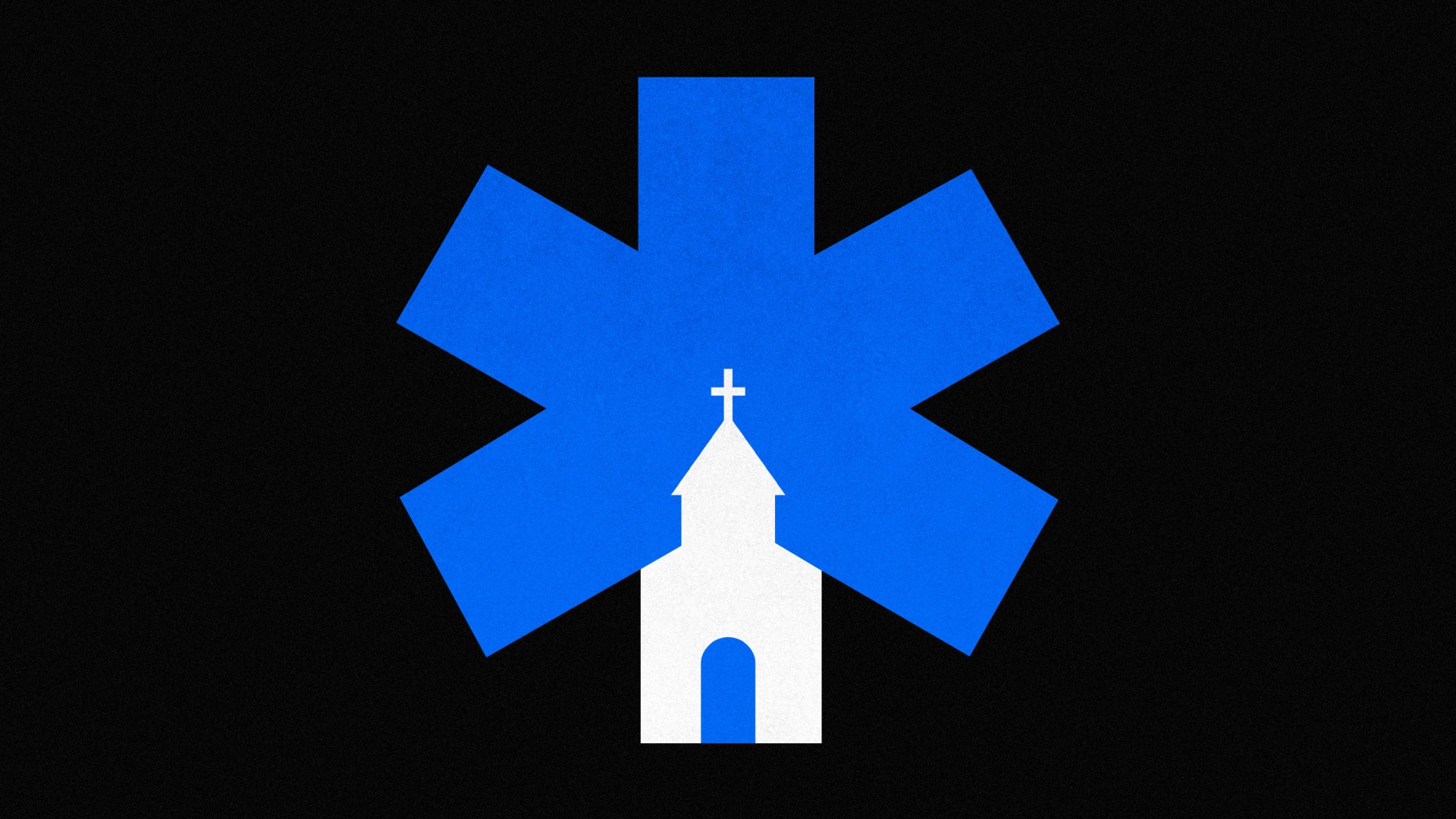
A hospital sign with a church on it.
Christianity Today May 6, 2026
Illustration by Elizabeth Kaye / Source Images: Getty

Last summer, I called a few dozen people who attend my church to ask whether they would consider becoming members in the fall. A surprisingly large number of new attendees had showed up over the past year, and we wanted them to consider joining.

Many said yes right away, but others had natural questions about whether church membership is biblical, about abuses of power and church hurt, and about why membership even matters. I offered them the same biblical answers I’ve noticed have helped others.

When I have these conversations, I begin by conceding that I don’t think that, back in Ephesus, even if they had a clear plan for discipleship, ol’ pastor Timothy led a six-week membership class. The modern experience of membership classes, interviews, names in bulletins, and a congregation’s recognition on a Sunday morning are all, admittedly, made up. That doesn’t make it bad or wrong. Persecution in the early church had a way of clarifying what now takes most of us a few extra steps. The concept of meaningfully belonging to a local church, however, does have roots in both the Bible and wisdom.

I go on to explain to potential members that the “majority” discussed in 2 Corinthians 2:6 implies the concept of membership. I mention that church discipline in Matthew 18 and 1 Corinthians 5, which discuss the possibility of excommunication, require something like membership: We can’t put outside those who didn’t first inhabit the inside.

I also share that even though Paul had not yet visited the church in Rome, in the final chapter of Romans, he could mention dozens of people by name, indicating an awareness of who belonged. I tell people that Hebrews 13 commands Christians to have people they can call their leaders, just as shepherds should have people they can call their sheep.

When people ask about abuse, I mention our accountability structures, plurality, and other policies to curb misconduct as best we can. I explain how healthy, engaged membership has prevented abuses throughout church history—and has even sustained our own church in harder years. Finally, I encourage Christians who have been hurt in churches to consider that God, in the long run, desires healing in the church, even if it’s in a different congregation from the one that inflicted the pain and even if those outside the church help too.

All these points have been helpful enough. They have given attendees ideas they’ve often not considered before. But none has been as helpful as a new metaphor I’ve started using to capture part of what it means to belong to a local church. To borrow from the medical world, I ask believers to consider this: church membership as an advance directive.

An advance directive, which is similar to a living will, is a formal, legal statement made by a healthy person who tells others how to intervene when he or she becomes less healthy, perhaps critically so. The moments after a serious car accident and in the later stages of Alzheimer’s often create complicated medical decisions not only for the patient but also for the closest friends and family. These decisions get less complex when people have made their wishes clear beforehand.

Formal church membership functions in a similar way. Within a spiritually healthy mindset, membership asks others to move toward you lovingly on some future day when you’re less spiritually healthy, rather than letting you slip away. When a member drifts from regularly gathering in worship, when a marriage becomes icy for months at a time, when service in ministries that once brought joy seem to bring only crabbiness, these become opportunities to engage more deeply.

But opportunities is not the right word. When a person is a member of a local church, these signals of unhealth become more than opportunities. They become obligations—not to meddle in unwanted ways but to provide the kind of needed and invasive shepherding that’s not always possible with those who merely attend.

Surely, no church has perfectly executed faithful, biblical shepherding. Every church has members who will go spiritually misdiagnosed or undiagnosed and will miss the care they so need. But meaningful membership gives churches a better chance to be the healthy body God desires his church to be, helping us not to neglect to meet together but to encourage one another, and all the more as we see the Day drawing near (Heb. 10:25).

When potential members ask more, I tell them that perhaps the most compelling aspect of considering membership as an advance directive is how it’s helped me in the past. Two different seasons of ministry, long hours, heavy conflict, and weighty decisions left me more frazzled than I would like to admit. And that downward spiral of walking 50 miles barefoot on the smoldering edge of burnout, while not itself sinful, could have led to dark places if not interrupted.

Rather than letting my heart drift away, our church leadership tossed me on a proverbial gurney, got out the defibrillators, and yelled “Clear!” And God shocked me back to life. The experiences were nothing I’d call fun. But my church’s assertive care might just be what saved my life as a pastor, a church member, and more importantly, a Christian. Let the redeemed of the Lord say so.

Benjamin Vrbicek is the lead pastor at Community Evangelical Free Church in Harrisburg, Pennsylvania. He is the author of several books, including The Restoration of All Things. You can follow his writing at benjaminvrbicek.com.

News

Good Lungs and Lung Cancer

A tribute to Karl Zinsmeister, a Bush administration adviser who was a faithful Christian and the most interesting man I knew.

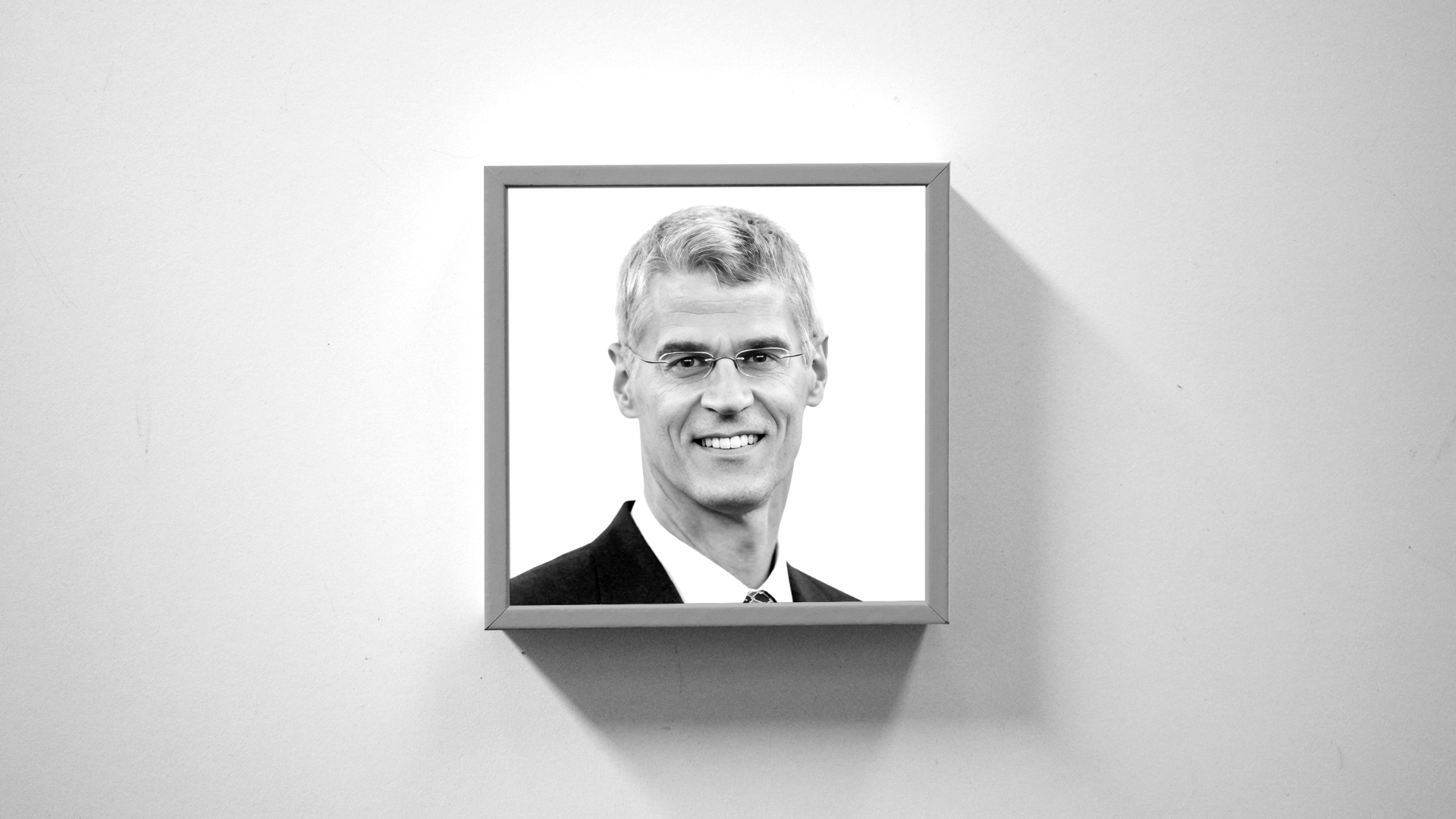
Photograph of Karl Zinsmeister
Christianity Today May 6, 2026
Wikimedia Commons / Edits by CT

Karl Zinsmeister, a Christian who was President George W. Bush’s chief domestic policy advisor from 2006 to 2009, died of lung cancer last Thursday at age 67. Neither his compassionate conservatism nor our friendship for 30 years was what made him the most interesting man I knew.

Here are a few of the biographical points that did: Karl became a national champion rower only a year after taking up the sport. He renovated—carpentry, plastering, electrical wiring—nine or ten century-old houses and then lived in them. With a tolerant wife, he became a middle-aged embedded reporter during the Iraq War, not sitting in headquarters briefings but huddling with solders during battles. He was editor in chief of two national magazines and bicycled to his White House job.

Zinsmeister graduated from Yale University and wrote hundreds of articles along with 21 books: political analysis, war reporting, memoirs, reference books, cultural histories, children’s works, a storytelling cookbook, and one historical novel, plus a nonfiction graphic novel. He was vice president of the Philanthropy Roundtable and worked on charitable projects dealing with education and poverty.

When I interviewed Karl ten years ago in front of Patrick Henry College students, he spoke of how he started to row at Yale: “We didn’t go to Saint Paul’s or Choate or Andover or any the schools most people learned to row in. I was just a public school kid from a rural part of New York State,” he said. “I had a very charismatic coach who had decided that he could teach wide-bodied people how to row. I have the size to make it possible, and apparently I have a good heart and lungs. … I got into it, and it was just a delight.”

“One of the things I loved about it was what I’ve loved about my entire career: the discovery process,” he explained. “I love discovering new things and figuring out something that’s completely mysterious to me and unwrapping it and mastering it, if possible, and then moving on. It’s a lovely sport: You’re on the water. You usually race early in the mornings when the sun is just coming up. It’s outdoors. It’s no motors. It’s very fast. … It’s a bit like flying.”

A memorial service for Zinsmeister is scheduled for Friday, May 15, at Essex Community Church in upstate New York. His wife, Ann, wrote that his life and personal development “were much enriched by several fine Methodist pastors and congregations.”

“I hope you will wake with a smile and think of Karl for a moment on Friday,” she said. “I am certain he will be looking down warmly on us.”

More of our interview, including his thoughts on journalism, war, and politics, is published on my Substack. Ann, three children, and six grandchildren survive him. Once their three children were grown, Karl and Ann lived on a small boat for more than a decade.

His comment from that conversation sticks with me whenever I edit or feel pessimistic after reading news headlines: “You get people who have some germ of talent and then a lot of enthusiasm, and then you get a good mentor, and you have a level playing field, and really remarkable things can happen. I’ve seen that so many times. It’s not a fairy tale to me. It’s real life.”

Marvin Olasky is editor in chief of Christianity Today.

News

Floods Scatter Christian Communities in Africa

A pastor in Kenya struggles to rebuild a church destroyed by erratic weather.

A resident carries her child through a flooded area in West Nyakach, Kisumu County, on March 22, 2026.

A resident carries her child through a flooded area in West Nyakach, Kisumu County, on March 22, 2026.

Christianity Today May 6, 2026
Brian Ongoro / Contributor / Getty

On March 3, Kenyan Assemblies of God pastor Benjamin Kogo woke up early to open his church, located 100 meters from his house in Emng’wen village on the slopes of Mount Elgon in Trans-Nzoia County, for morning prayers after a night of heavy rain. When he arrived, he found the building had collapsed during the night, the iron roof flat on the ground.

“We thought it was just normal rain,” Kogo said. “We did not know that it will cause such a damage.”

Kogo prayed with a few church members who had gathered, then called other members to inform them about the damage. They canceled the following Sunday service to allow church leaders time to look for an alternative venue. Kogo learned that Kitum Primary School, where another branch of the church often met, had also collapsed and flooded.

That Sunday, more than seven hours away in Nairobi, floods caused by heavy rains swept through the capitol, swamping several churches in the Mukuru area with several feet of water, disrupting Sunday services, and displacing 300 families from nearby homes.

Kenya’s National Police Service blamed flooding for 110 deaths across 30 of the nation’s 47 counties and the displacement of 35,000 people. The spring torrents followed a period of extreme drought in northern Kenya along the Somali border, which put 2 million people at risk of starvation.

Weather pattern changes, faulty early warning systems, and poor disaster response plans and infrastructure have left Kenyans—and other Africans—particularly vulnerable to natural disasters and made recovery slow. Some researchers attributed the record floods to wetter conditions caused by climate change and have reported that the March-to-May rainy season in East Africa has become intense and unpredictable.

Though the number of people worldwide dying from climate-related disasters has fallen, Africans are heavily impacted by these events.

In many cases, public weather forecasts remain inaccurate, leaving Kenyans distrustful of their usefulness. Some Kenyans may prefer to rely on traditional rhythms for planting crops rather than national weather forecasts or not find forecasts in their local language. Some Kenyans, especially from herding communities, prefer the advice and predictions of traditional “rain makers”—Indigenous people who claim to have the power to predict rains and droughts—over meteorologists. Kogo said he had heard predictions of heavy rain and floods on KBC, the national broadcast service, but he never took it seriously.

Failure or distrust of early warning systems leave Kenyans vulnerable. The floods and resulting landslides don’t just damage buildings; they separate communities.

“The floods scattered us,” Kogo said. “We have to walk about two kilometers to a school where we hold our prayers on Sundays.” He’s trying to keep his 80-member congregation together, but right now they can’t meet for weekday prayers—all the school classrooms are occupied.

Severe flooding has slammed other communities in eastern and southern Africa this year. In late January, Mozambique suffered the worst floods seen in decades—with at least 100 people dead and 80,000 homes destroyed. The World Health Organization (WHO) reported that several weeks of intense flooding affected more than 1.3 million people in six southern African nations, including South Africa, Tanzania, and Zimbabwe.

In early March, Ugandan authorities warned of flash floods, landslides, and related disease outbreaks that could occur due to heavy rains in counties along its western border, near Kenya. Days later, a prayer center in Kampala posted a video showed church members sweeping flood waters out of Christ the Rock Church and requesting funds to help rebuild.

In Kenya, pastor Sammy Logiron of the Anglican Church of Kenya in Kitale said his congregation and surrounding churches are rallying around rebuilding Kogo’s church. They schedule fundraisers after Sunday services, inviting wealthy community members such as politicians and businessmen who aren’t members. Attendees drop money or other items into a large basket placed in the center of the church. Then a guest pastor gives a speech and announces his contributions while presenting cash or a check.

“We are donating food, clothes, and money to help,” Logiron told CT. “We are all affected. When your brother is in trouble, you have to give a hand.”

So far, Kogo’s church has received 10,000 Kenyan shillings (about $77 USD)—enough to by wooden poles and nails for a makeshift structure. Kogo is planning another fundraiser in his church to buy plastic chairs for church members to use during services.

Alphonse Kanga, chairman of the National Council of Churches, Nairobi region, said that when floods displace people, churches often provide shelter, food, and blankets. But when church buildings collapse, this can leave a gap for residents in need.

Kanga blamed the disasters on both climate change and the failure of government systems that focus more on politicking and raising taxes instead of environmental stewardship: “If you mismanage the earth, you have destroyed it. You have gone against the will of God.”

Churches have long championed sustainable farming practices and protection of forests from too much mining or logging. Recently, they’ve also asked the Kenyan government to invest in green energy to reduce dependency on fossil fuels.

Some Kenyan church leaders have blamed corruption and land grabs for the deadly floods in the country. During a March 8 press conference in Nairobi, bishop David Munyiri of the Glory Outreach Assembly church said corrupt and influential people have grabbed land meant for water drainage to build their own homes and businesses. He called on the Kenyan government to strengthen its disaster management by recovering public property and rooting out corruption.

According to a 2023 study, corruption in disaster preparedness is an international concern, often causing or worsening natural disasters worldwide. Corruption can lead to sloppy infrastructure, poor zoning enforcement, and misuse of funds intended for disaster relief. Jackson Ole Sapit, archbishop of the Anglican Church of Kenya, called on the government to better enforce laws regulating construction around drainage systems.

The Resilience Action Network Africa (RANA), an advocacy organization that addresses health and climate issues in Africa, recommended the government take control of early alert systems while also encouraging communities to focus on local risk assessment and solutions to better protect their residents.

Churches are taking action to do just that. Pastors in neighboring South Sudan have tried to bring practical solutions to communities affected by flooding. Pastor James Deng, a local evangelist in the Bentiu region, told National Catholic Reporter, “People are not living in their homes, their crops are destroyed, and there is looming starvation.”

Deng said local churches are constructing dikes to safeguard residents whose lives might be endangered by flooding.  

On the slopes of Mount Elgon in Kenya, Kogo and his members now meet in a semipermanent building made of wooden poles and clay. Kogo said they are recycling iron sheets from the collapsed church and hope eventually to buy land on a site with higher terrain for a more permanent church home.

Members of the church are now digging terraces to collect and redirect future rainwaters that rush down from the hills. They are also planting indigenous trees along riverbanks to protect the soil from erosion. Kogo said environmental experts have advised them not to graze their animals near the water sources, because they destroy the soil. Meanwhile, the county government has provided seeds and fertilizer to those whose fields were washed out by the floods.

“It is sad [that we lost the church], but again we thank God that none of our members lost a life,” Kogo said.

Church Life

Faith Is Not a Sprint

President & CEO

A letter from CT’s president & CEO in our May/June issue.

A lone silhouetted figure walks down an empty corridor flanked by two converging rows of tall streetlights against a hazy pink sky.

David Mceachan / Pexels / Edits by CT

I grew up on stories of resilience. I heard my parents’ stories, how they walked miles to get to school each morning up and down the steep hills of Pittsburgh through snow and rain and blistering conditions. They recounted my maternal great-grandmother’s perseverance as she worked to integrate the local school system. They shared stories of the patriotism of my grandfathers who served in World War II and returned home to fight national wars against inequality. These were the legends of my ancestors who pressed through the difficulties for the sake of a better life for themselves and subsequent generations. While they battled larger systemic challenges like Jim Crow and economic barriers on the outside, some stories were as small as overcoming self-doubt on the inside.

The climax of these stories was never a point of pain or oppression, but the deep resolve and transformative resilience that kept them going when others quit. I learned that tenacity is a product of steeled, stubborn, seed-like faith that blossoms over time. These stories were more than personal narratives passed down to my generation. Their inner resolve was a family heritage meant to teach, but it was more than that: Resilience was a central part of our shared Christian faith.

This perseverance is available to every believer. The writer of Hebrews likens the life of faith to a race, reminding us that we are to “run with perseverance the race marked out for us, fixing our eyes on Jesus, the pioneer and perfecter of faith” (12:1–2). With our gaze on God’s glory and our faces focused on the Savior, we can have faith to envision what the world cannot see, so that we may travel farther than others could ever imagine.

This kind of faith is far from a sprint. The tenacity to keep going grows resilience, but never resilience for its own sake. It is only when we fix our eyes on Jesus that we’ll have the resolve to keep placing one foot in front of the other. No matter the cost. No matter the systemic or individual challenges. No matter how often the gates of hell try to overcome the Christian or the church (Matt. 16:18). Jesus has defeated even death! His resurrection testifies that death does not have the final say. In his resurrection power, the order of things has changed. Now that sin and death have lost their sting, restoration and revival might speak words of fortitude and triumph.

The magazine you hold bears witness to this divine reality. Over Christianity Today’s seven decades, our leaders wanted to quit at times. There were seasons of challenge and negative opinion. There were countless days where the solutions to problems were not easy to find. The cultural headwinds were sometimes against them, and yet, through Christ, they survived. So it is for all of us: Our individual and corporate lives testify to God’s faithfulness.

I invite you to reflect on your own stories as you lean into the ones we share in these pages. Remember the resilience of generations past and find hope in the grace that is accessible to all through Jesus. When you do, I believe you’ll find that God is stronger in you than you could ever be on your own.

Nicole Massie Martin is president & CEO of Christianity Today.

Theology

Why I Don’t Debate Atheists

Columnist

We need apologetics, but what we need more is genuine confidence in the Word we carry.

Cartoon illustration of two political candidates sitting knee-to-knee on stools in front of empty podiums, engaged in friendly conversation.
Illustration by James Yates

As a former seminary dean, I’ve interviewed lots of people for jobs teaching Christian apologetics, to equip future pastors and missionaries to defend the faith against unbelief. Almost all of them were brilliant—skilled not only in philosophy and science but also in rhetoric and logic. Many of them were quick on their feet and could demolish any atheist who dared debate them. After a while, though, I noticed something all these interviews had in common. When I would ask, “How did you come to Christ?” not a single one, to my memory, ever pointed to an apologetic argument.

Often these apologists would talk about finding faith the same way I did: growing up in a good church or having parents who shared and demonstrated their faith. One candidate, a towering intellect who had been a graduate student at an Ivy League university, happened to stumble into a tiny congregation to hear a preacher with a fifth-grade-level education talking about what grace means. Another candidate blushed as he told me he became a Christian while watching disgraced televangelist Jimmy Swaggart quote John 3:16.

But these scholars had nothing about which to be embarrassed. I walked away from those stories even more amazed by grace than I would have been had they told me they were convinced by the cosmological argument for the existence of God. And sometimes I wished these apologists who became Christians through seemingly unsophisticated ways would say that more often, more loudly, more publicly. In fact, as the years have gone by, I’m even more convinced that the parts of their lives they mentioned quietly are far more important to defending the faith in the 21st century than the carefully crafted onstage takedown of a professional atheist.

We are well past the heyday of traveling road-show debates, which were at their height when the New Atheists at the end of the last century levied Bertrand Russell–like breadth of knowledge with Oscar Wilde–level wit and sarcasm against the Christians across from them. In other debates, apologists seemed to get bored with talking about, well, God as they moved more and more into political polemics or attention-economy YouTube theatrics.

Today’s apologetics debates are quite different from those of eras past; sometimes both sides seem to doubt that there’s a God and that he raised Jesus from the dead. Some of those most eager to defend the faith want to talk instead about civilization, discussing how socially “useful” Christianity is rather than whether it’s true. Some of them speak definitively about gender pronouns or Islamic jihadism or vaccine mandates, but when asked whether the Resurrection happened, they’ll say, Well, what do you mean by “happened”?

All that seems exhausted now. Yet something is stirring, and I think it could take us where we should have been all along.

In the case of apologetics debaters, the exceptions prove the rule: What makes the best apologists stand out is precisely the ways they are not a mirror image of their interlocutors. Think of the most compelling defenders of actual historic Christianity, even in “Christian versus unbeliever” open debate. William Lane Craig comes to mind, as do John Lennox and many others. Yes, their gifting is in rhetorical firepower and philosophical argumentation, but those traits seem embedded in something else. When these forums seem to burn with life-changing fervor, it is not when the Christians applaud loudly and the skeptics slink away, having been “owned.” It’s not just about their arguments—these apologists could not be replaced by artificially intelligent debate bots. Something else is there.

Most of us, when thinking about apologetics, turn to Acts 17, the account of the apostle Paul at the Areopagus, and rightly so. Paul squared off against the Athenian Stoics and Epicureans, skillfully demonstrating—from their own architecture and poetry and philosophers—that they didn’t have the certainty they pretended to possess. But what we often forget is that Paul, though ready to debate that way, didn’t start there.

What provoked the session at Mars Hill was not what made the gospel intelligible to Athens but what made it strange. He was, Luke records, “preaching Jesus and the resurrection” (Acts 17:18, ESV throughout). Paul went from the Resurrection to disputes over the “unknown God” to right back where he started:

The times of ignorance God overlooked, but now he commands all people everywhere to repent, because he has fixed a day on which he will judge the world in righteousness by a man whom he has appointed; and of this he has given assurance to all by raising him from the dead. (vv. 30–31)

At its best, our emphasis on apologetics has served God’s kingdom well when it is enfolded in a much bigger project of carrying, bearing witness to, and demonstrating the gospel that reconciles people to a God who loves them and forgives their sins. But the debate culture of our time can sometimes impede that end. Christians sometimes think the way to share the gospel is to have a ready answer for every possible objection to belief—from archaeology to quantum theory.

The church needs people who can do all that—and that’s why we ought to thank God for and support the training and participation of physicists and archaeologists and philosophers and, yes, YouTubers and TikTokers who know how to have a virtual cage fight.

But we also need to emphasize that not every individual needs to be equipped to do all that in order to share the gospel and bear witness to the life-changing reality of Jesus Christ. Some are intimidated because they feel inadequate to “always [be] prepared to make a defense to anyone who asks you for a reason for the hope that is in you” (1 Pet. 3:15). But the apostle is not calling for omnicompetent debaters.

The “defense” here is in the context of people who are free from fear of what others can do to them, who seek holiness, who are gentle and respectful, who have good consciences. It’s not primarily about how Christians articulate the hope that is within them but about how they cultivate it.

Apologetics is not about building the household of God; it’s about clearing the brush around it. When someone says, “We can’t trust the Gospels because they were written hundreds of years after Jesus lived,” we should show them why that’s not true. When someone says everything is material, we ought to show them how they don’t really act as though love and courage and music and beauty are just chemical secretions. We might set up a ride to church for a friend who can’t get there or note where the wheelchair ramp is for a neighbor who’s had surgery, but the point is not the ride or the ramp—it’s what happens once that person gets there.

Apologetics is not the mastery of information for the sake of getting people to master Jesus as another, greater piece of information. God is not an algebra equation. Faith is “the evidence of things not seen”(Heb. 11:1, KJV). Evidence may lead people to a moment when, in seeing Jesus, they have faith. But faith is not the endpoint of an accumulation of evidence. Faith is the evidence. People must experience it from the inside to really know it.

The great Mississippian novelist Eudora Welty once explained why she didn’t “crusade” more in her writing. She said in an Atlantic essay, “A plot is a thousand times more unsettling than an argument.” She was right. We need the arguments, but none of them matter if we’ve lost the plot.

We need debaters, yes, and we need experts. But more than that, we face an opportunity when people all around us are exhausted by living like machines. Many of them will keep their guard up and argue confidently, but deep down they wonder, What if there is more than this? What if, behind all this, there really is someone who knows and loves me? Apologetics is a step toward showing people Jesus, but winning arguments alone is not the kingdom of God.

What we need now is genuine confidence. The Word we carry is resilient and can handle whatever the next decade throws at it. That’s not because our opponents are stupid but because the gospel is true.

Russell Moore is editor at large and a columnist at Christianity Today.

addApple PodcastsDown ArrowDown ArrowDown Arrowarrow_left_altLeft ArrowLeft ArrowRight ArrowRight ArrowRight Arrowarrow_up_altUp ArrowUp ArrowAvailable at Amazoncaret-downCloseCloseellipseEmailEmailExpandExpandExternalExternalFacebookfacebook-squarefolderGiftGiftGooglegoogleGoogle KeephamburgerInstagraminstagram-squareLinkLinklinkedin-squareListenListenListenChristianity TodayCT Creative Studio Logologo_orgMegaphoneMenuMenupausePinterestPlayPlayPocketPodcastprintremoveRSSRSSSaveSavesaveSearchSearchsearchSpotifyStitcherTelegramTable of ContentsTable of Contentstwitter-squareWhatsAppXYouTubeYouTube