Ideas

Christian Education Can Survive ChatGPT

As an early-career educator, I was growing discouraged in the classroom. Then a small Christian college showed me a new way to teach.

A school desk on top of computer keys from a keyboard
Christianity Today August 25, 2025
Illustration by Mallory Rentsch Tlapek / Source Images: Getty

If you’d asked me a year ago why so many American college students are struggling, I’d have told you a familiar story: Rising tuition rates fund bloated administrations and build bougier freshman dorms. Broken teaching styles don’t give students the knowledge or skills they need. And then there are the students themselves, widely reputed to be lazy, “functionally illiterate,” ChatGPT-addicted phone zombies

There is truth to these charges, and growing up in Kalamazoo, Michigan, primed me to believe the accusations against students in particular. When Brookings Institution scholar Richard Reeves wanted to show just how much the modern male is struggling, he used my hometown as a case study. “Thanks to an anonymous benefactor, students educated in the city’s K–12 school system get all their tuition paid at almost any college in the state,” he wrote. But though the “program put rocket boosters on female college completion rates,” the “men’s rates didn’t budge.” Literally no change.

After a few years of teaching in Kalamazoo high school and college settings, I wasn’t surprised by those findings. It’s not uncommon for new educators to be crestfallen when their expectations meet the reality of classrooms in an age of smartphones and artificial intelligence. But as a Christian educator who connects education to knowing and imitating Christ, I was slowly growing a unique sense of discouragement. Many students are more interested in doing as little work as possible to get as high a grade as possible than in anything to do with Jesus.

But then I showed up to teach at Northpoint College, a Christian school nearby. I expected more of the same: doomscrolling during lectures and using chatbots with excessive force. Instead, by a few weeks in, I was texting every professor I know to enthuse that I’d never seen a group of students so devoted to education. 

AI-use detection was zero on all assignments. The average paper looked better than my own submissions to academic journals. By the end of the semester, the biggest complaint I got in course evaluations was that I wasn’t challenging the students enough.

All my students were impressive, but having read Reeves’s work, I was especially struck by the men. Of the ten guys in my class, six were planning to get PhDs, and the rest had lined up impressive careers or made concrete plans to work at local churches after graduation. In between classes, I started interrogating other professors to see if their experiences lined up with mine. They did, unanimously. 

I had to understand what was going on, so I reached out to Trent Roberts, Northpoint’s president. His account of his school’s success was in many ways what you’d expect from the leader of an Assemblies of God-affiliated college. The Holy Spirit figured prominently. But Roberts also highlighted Northpoint’s unusual pairing of very high expectations with abundant validation and resources for students. 

Northpoint offers bachelor’s degrees but mostly uses master’s-level textbooks, and anything below a C is a failing grade. But the college introduces these expectations by explaining to students that high standards match high hopes. 

In practice, this is a system built around relationships. When the academic dean reviewed my syllabus, his most notable change was adding my personal phone number and email. And where in previous roles I could count on one hand the number of times students reached out for help, at Northpoint my inbox is avalanched by student emails every week. That’s the kind of culture the school has cultivated, asking a lot from students but never leaving them to flounder. 

Roberts’s account of the college’s approach reminded me of the work of psychologist David Yeager, who’s known for his research on motivating young people. In one of his studies, scholars had a teacher correct one group of students’ essays while leaving no additional comments. For another group, the teacher corrected just as rigorously but also left a “wise feedback” comment that said, “I’m giving you these comments because I have very high expectations and I know that you can reach them.” The wise-feedback group made twice as many revisions to their essays as the group with no encouragement.

Yeager argues that young people want and need this kind of affirmation. That’s not because they’re vain, selfish, or obsessed with status, he says, but because recognition and respect are to young people what food and sleep are to infants: “core needs that, when satisfied, can unlock better motivation and behavior.” As Roberts and I talked, his philosophy of education at Northpoint struck me as a Spirit-driven version of this idea. “Our job is to make students feel capable,” he told me, “and to provide them whatever they need to reach our standards.”

In an increasingly postliterate age, faculty may be tempted to lower their standards, boosting students’ immediate performance but undermining long-term growth. But Northpoint is flourishing by raising expectations, asking students to grapple with “desirable difficulties” that build character alongside knowledge—while providing students with the relational and academic support to grapple well.

And generally, young people take that opportunity when offered. “It drives me nuts when older generations complain about Gen Z like they’re incompetent,” Roberts said. “It makes the next generation more likely to live out those critiques like a self-fulfilling prophecy.” Stories of generational decline don’t have to come true.

Nor does the golden age of the university have to be in the past, and Christian colleges like Northpoint are perfectly positioned to train the next generation well. As Oklahoma Baptist University professor Alan Noble has noted, many problems present in secular universities aren’t occurring in Christian higher education to the same degree. With Noble, I’d argue this is because Christian institutions are grounded in a moral and theological understanding of education that their counterparts lack. 

Christian schools should consciously train students to see the prestige, wealth, or opportunities their educations provide as secondary goals. “The end then of learning,” as John Milton put it in Of Education, “is to repair the ruins of our first parents by regaining to know God aright, and out of that knowledge to love Him, to imitate Him, to be like Him.”

Our calling as Christian educators is not only to share knowledge but also to challenge our students to live into their status as “heirs with Christ” (Rom. 8:12–17)—the utmost honor imaginable. It’s easy to blame the downfall of higher ed on 18-year-olds, but if we want students who don’t cheat with ChatGPT, then we need to teach students that getting a good grade is less important than imitating Christ.

Griffin Gooch is a writer, speaker, and professor currently working on his doctorate at University of Aberdeen. He writes most frequently on Substack.

Theology

What Christians Should Know About Shinto

Evangelical scholar Yoichi Yamaguchi on the indigenous religion’s key teachings, its historical development, and ways to evangelize effectively in Japan.

A Shinto Torii gate and paper lanterns.

People holding lanterns at an Obon festival.

Christianity Today August 25, 2025
Illustration by Elizabeth Kaye / Source Images: Getty, WikiMedia Commons

In this series

Every August, Japan celebrates Obon, one of the country’s biggest Shinto-Buddhist festivals. Vibrant dances set to the beat of taiko drums take place in temples or parks as a form of welcoming the spirits. Families visit their ancestors’ graves to pay their respects and light paper lanterns to guide the spirits back to the afterlife when the festival ends.

The Shinto belief that pervades this festival is the notion that the spirits of dead ancestors have become deities who watch over their living relatives. During Obon, it is customary to welcome these ancestral spirits into peoples’ homes. 

Shinto, or Shintoism as it is known in the West, has profoundly shaped the history, culture, and worldview of the Japanese people. Yet literature in the English-speaking world—particularly addressing the relationship between Shinto and Christianity—remains limited.

To explore the nature of Shinto, its development in the country, its interactions with Christianity, and its implications for evangelism in Japan, Christianity Today interviewed Yoichi Yamaguchi, director of the International Mission Center at Tokyo Christian University.

“At Shinto’s foundation lies a mythological worldview: that Japan was established by the sun god Amaterasu, a chief deity,” Yamaguchi said. “The emperor is regarded as Amaterasu’s descendant.”

Between 2022 and 2025, Yamaguchi published a series of articles introducing key texts associated with Japanese Christianity (nihon-teki-kirisuto-kyo), a movement popular before and during World War II that attempted to wed Shinto and nationalism with Christian faith.

After the war ended, Japanese churches recognized the militant nationalism they had held on to and moved toward adopting a critical stance against syncretistic Christianity. They repented of practices like emperor worship, vowing to serve only God as their master.

More recently, however, Yamaguchi has sensed a growing openness among Japanese evangelicals to positively reengage Shinto because of the rise of contextual missiology and the diminishing of negative sentiments toward syncretistic Christianity 80 years after the war. Some Japanese Christians are also working to counter unfavorable portrayals of Shinto because they think it hinders evangelism, Yamaguchi added.

While Yamaguchi is encouraged by this openness to engage with Shinto and Japanese culture, he believes Christians should also be aware of “the ways in which the Japanese church has historically been compromised by them.”

“Respect and critique must walk together,” he said. “Only then can real understanding begin.”

This interview has been edited and condensed for clarity. Read each section below:

Theology

Shinto’s Key Teachings

Evangelical scholar Yoichi Yamaguchi explains why Japan’s indigenous religion lacks a transcendent notion of God.

A Shinto Torii gate and a forest path.

Illustration by Elizabeth Kaye / Source Images: Unsplash, WikiMedia Commons

Christianity Today August 25, 2025

In this series

Christianity Today speaks with Yoichi Yamaguchi, director of the International Mission Center at Tokyo Christian University, on what Shinto beliefs look like and how the indigenous religion flourished in Japan.


What is Shinto?

As the earliest religion in Japan, Shinto could have been practiced as far back as the Jomon period (10,500 to 300 BC). It developed over time by absorbing influences from other traditions and religions, such as Buddhism and Confucianism.

Shinto is the indigenous religion of Japan, which emphasizes the nature and worship of various deities (kami). The deities reside in various natural phenomena and objects, and Japanese people believe that all things possess a divine spirit.

Shinto emphasizes ancestral veneration and ritual purity, but there are no unified doctrines or rituals. Hence, Shinto is a very ambiguous phenomenon, and Japanese scholars of religion continue to debate whether it should be classified as a religion.

This flexibility is one of the most important characteristics of Shinto. “First, Shinto arose in tandem with Japanese ethnic culture and has never once been practiced outside of Japanese society,” Shinto scholar Minoru Sonoda writes in Encyclopedia of Japanese Religions. “Second, by modern standards, it is too vague to be classified as a religion, and most Japanese people who have encountered Shinto in some forms do not consciously recognize it as religious.”

What are Shinto’s key teachings?

Strictly speaking, Shinto does not possess formal doctrines. If anything, it is founded upon an intuitive reverence for the Japanese land, deities, and ancestors.

One defining characteristic of Shinto is its emphasis on ritual purity and harmony with nature. But this notion of purification differs considerably from the Christian concept of holiness before God.

Rather than seeking holiness in relation to a transcendent being, Shinto emphasizes subjective inner purity. For instance, walking quietly on gravel paths in a serene shrine forest is itself an act of spiritual cultivation in Shinto. Such practices foster emotional tranquility, but they do not arise from doctrinal imperatives.

Shinto’s focus is not on divine-human communion but on an individual’s harmonious integration with nature. This marks a fundamental contrast with Christian spirituality.

From a Western perspective, this is similar to the postmodern trend of religionless spirituality. But Japan has never fully undergone the modernization that preceded the postmodern turn in Europe. Japan has long inhabited a framework in which the transcendence is not external (extra nos) but internal (intra nos). Shinto lacks a transcendent notion of God, which is characteristic of Christianity.

How did Shinto grow and flourish in Japan?

Although Shinto was central to Japanese identity, Confucian and Buddhist values also coexisted with it. Historically, many Japanese people held the popular view, known as honji-suijaku, that Shinto deities were manifestations of various Buddhas. This perspective was influential in the development of Buddhist-Shinto syncretism in the country.

In the latter Edo period (1603–1868), the nativist (Kokugaku) movement emerged to clarify and purify Japan’s native traditions. Kokugaku scholars such as Motoori Norinaga and Hirata Atsutane sought to strip away “impure” elements, such as Buddhism and Confucianism, and rediscover “authentic” Japanese values like Shinto.

This intellectual movement provided the philosophical impetus for the Meiji Restoration, a political revolution in 1868 that led to the Meiji government’s institutionalization of an emperor-centered worldview, a concept we call kokutai.

Learn more about what Shinto’s historical and contemporary influences are in Japan, how Christianity and Shinto interacted in the country, and what evangelism looks like in a Shinto-influenced culture.

Correction: An earlier version of the story misstated what the honji-suijaku view entailed.

Theology

Shinto’s Historical and Contemporary Influences on Japanese Society

Evangelical scholar Yoichi Yamaguchi shares how Shinto influenced the development of emperor worship and the ways Christians responded.

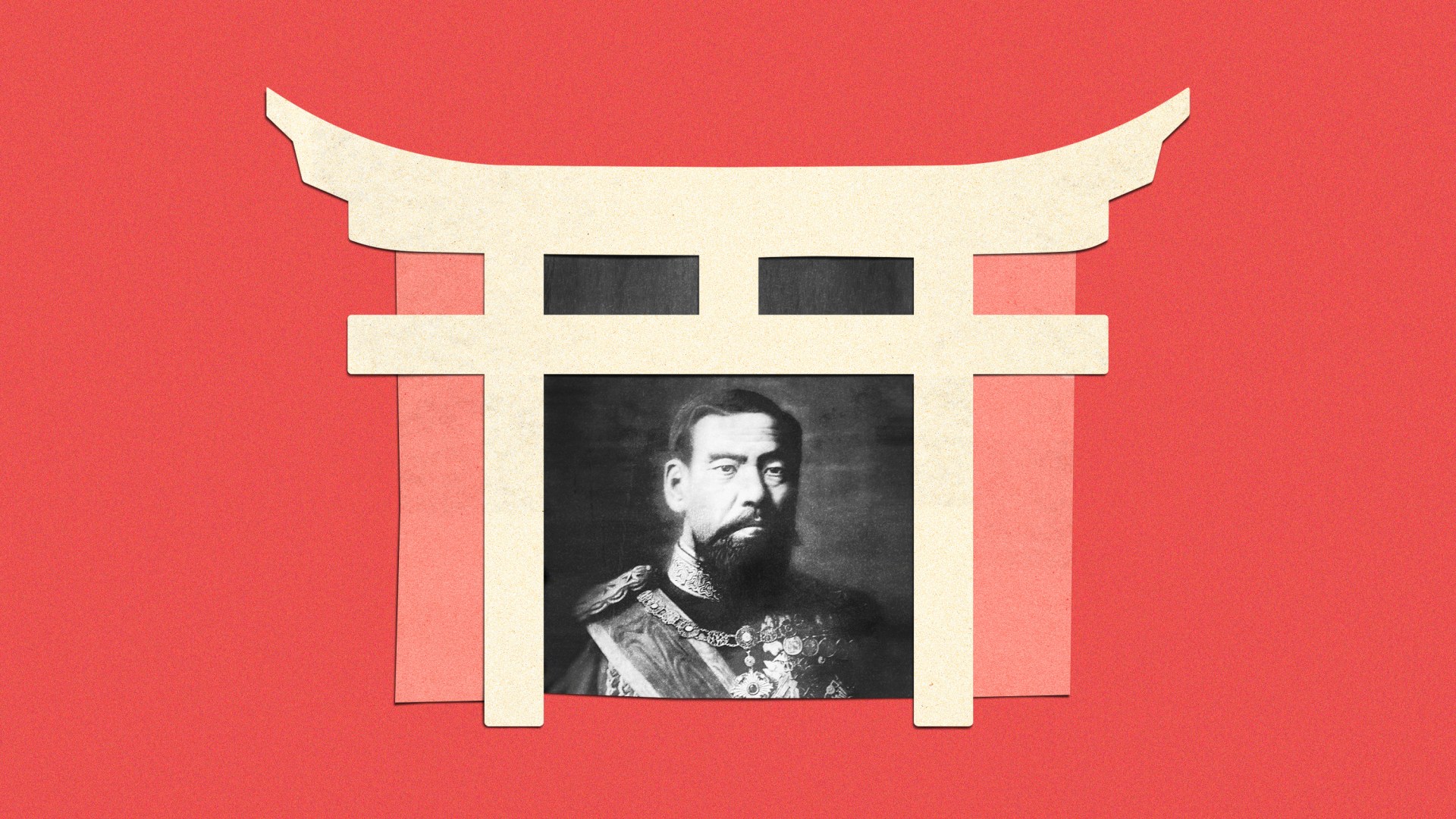
A Shinto Torii gate and a portrait of Emperor Meiji.

A portrait of Emperor Meiji.

Christianity Today August 25, 2025
Illustration by Elizabeth Kaye / Source Images: WikiMedia Commons

In this series

Christianity Today interviews Yoichi Yamaguchi, director of the International Mission Center at Tokyo Christian University, about Shinto’s long-lasting significance in Japan and how early believers responded to the imposition of emperor worship.


Can Shinto be considered Japan’s national religion?

While the Japanese imperial household conducts official Shinto rituals using the state budget today, Shinto was never officially declared the national religion in the country.

During the Meiji era (1868–1912), Japanese officials wrestled with whether Shinto could be declared a religion. Progressive bureaucrats who sought globalization firmly opposed using the term state religion, unlike conservative court officials seeking to preserve Japanese traditions.

During the drafting of Article 28—the clause on religious freedom—in the Meiji Constitution established in 1889, Japanese conservatives proposed to qualify religious liberty with the condition that it would not contravene the national religion. Their proposals were ultimately rejected, and the final constitution did not contain the term national religion at all.

Nevertheless, Shinto operated as a de facto national religion to strengthen national unity.

What about State Shinto? How and why was that established in Japan? How did Christians at the time respond to it?

While the Meiji government upheld a façade of religious neutrality, it established a system in which State Shinto, where people revered the emperor as a supreme being in Japan, occupied a central role in civic life.

The emperor was perceived as a semidivine figure who was a descendant of the sun god Amaterasu, and people believed he could be a mediator between deities (kami) and humans.

The Imperial Rescript on Education, a key ideological document of the Meiji state published in 1890, reflected how influential and pervasive Shinto was in society. Written by government officials and issued by the emperor, the rescript embodied the values of an emperor-centered state cult as a guiding principle for all spheres of education. Japanese people at the time treated the rescript as a sacred text because they thought the emperor, as a supreme being, had absolute authority.

In 1891, one notable conflict between Christianity and state ideology emerged in what is known as the “disrespect incident.” Kanzo Uchimura, a prominent Christian leader and public school teacher, was censured for refusing to bow to the document containing the rescript.

Over time, however, both state and church leaders came to insist that Christianity and State Shinto were not in conflict and could coexist. From 1930, the Japanese government began asserting that Shinto and imperial worship were only expressions of Japanese culture and identity rather than religious acts that conflicted with Christian beliefs.

This view slowly gained traction among the majority of Christian leaders, who thought it would make evangelism easier.

What elements of Shinto exist in contemporary Japan?

Until recently, Japan’s national broadcasting station, NHK, aired a Saturday-morning radio program called Good Luck Shrine Walks (Ayakari Jinja Sanpo), which featured shrines that are reputed to bestow good fortune.

In many Japanese companies, employees are often expected to visit a shrine together on New Year’s Day to pray for the organization’s prosperity. Companies also often maintain a household shrine (kamidana) in their offices for good luck. These practices are considered not religious but merely cultural by most Japanese.
Traditional Japanese festivals such as children’s fairs (omatsuri) are also held in shrines, although these practices have been decreasing in recent years.

Learn more about Shinto’s key teachings, the ways Christianity and Shinto interacted in Japan, and missions and evangelism in a Shinto-influenced culture.

Theology

Christianity and Shinto

Japanese believers must be wary of falling into syncretism again, evangelical scholar Yoichi Yamaguchi warns.

A Shinto Torii gate with Shimenawa prayers.

Shinto Shimenawa prayer ties.

Christianity Today August 25, 2025
Illustration by Elizabeth Kaye / Source Images: WikiMedia Commons

In this series

Christianity Today interviews Yoichi Yamaguchi, director of the International Mission Center at Tokyo Christian University, on the beginnings of a Christian movement that sought to meld the faith with Shinto and Japanese nationalism and the struggles present-day Japanese evangelicals face when it comes to Shinto practices.


How did Japanese Christians and churches historically engage with Shinto?

When the first Protestant missionaries came to Japan in the mid-19th century, they taught that Shinto shrines are idolatrous. Early Japanese Christians accepted this posture, and they refused to participate in Shinto practices like worshiping at a local shrine.

But through these repeated conflicts with Shinto beliefs, Japanese Christians began to rethink whether traditional Shinto values, such as ancestral worship and emperor veneration, were truly incompatible with the Christian faith.

The Japanese Christianity (nihon-teki-kirisuto-kyo) movement, which started in the early Meiji period and lasted until the end of World War II, sought to meld Shinto and nationalism with Christian faith. Proponents of this movement believed that God had chosen Japan as the protector of Asia against Western invasion, and some even went so far as to say that Shinto values could be fully realized through Christianity or that the Japanese god Amaterasu was Jesus and therefore the emperor was a descendant of Christ.

The earliest Protestant communities in Japan, such as the Yokohama Band (the word band describes a small group of Christians) and its Yokohama church, comprised individuals who were deeply informed by nativist (Kokugaku) scholarship. Their embrace of Christianity was not a conversion out of a heritage that cherished the Japanese ethos, including Shinto, but rather a reinterpretation of it.

Can you share examples of some Japanese Christians’ reinterpretations of Shinto beliefs?

Japanese Christian leaders from the late 19th century, like Uemura Masahisa and Kanzo Uchimura, proposed viewing Christianity as a faith that was grafted onto “the way of the samurai” (Bushido). They argued that key Bushido virtues, such as honor and loyalty, paved the way for Christianity in the country.

Other Christian leaders, like Ebina Danjo and Watase Tsuneyoshi, were more explicit in attempting to wed Shinto with Christianity. Ebina supported modern values like gender equality but also held a deep conviction of Japanese superiority because of the Shinto belief that Japan was a divinely appointed country.

I once considered Christian thinkers like Ebina and Watase as extremists, but after reading the literature of the Japanese Christianity movement in their time period, I came to realize that their views were not outliers at the time. These attitudes were shaped in an environment where East Asia, including Japan, faced the threat of Western colonization.

This conviction that Japan must not fall victim to imperial powers helped to produce a generation of Christians who fused their faith with Shinto beliefs and nationalist ideals. 

What kinds of tensions or conflicts do Japanese evangelicals face regarding Shinto today?

Our historical memory of State Shinto—and how it suffocated religious freedom during World War II—has fostered a sense of caution and discomfort among Japanese Christians when it comes to emperor veneration, shrine visits, and participation in neighborhood associations that engage in Shinto customs.

However, this reluctance toward engaging with Shinto has dulled in recent years, particularly among younger generations of evangelicals. There is an intensified conformity and tendency to go along with prevailing norms. Even as shrine institutions weaken, the ethos of mutual nondisruption—“Let’s live freely, help each other, and not cause trouble”—continues to exert a strong influence in Japanese society.

Today, institutionalized Shinto is declining. Yet Japanese people still highly prize Shinto ideals such as mutual respect, harmony, and restraint. This worldview encourages cultural homogeneity, making it difficult for people to ascribe to Christianity’s exclusive claims. In this sense, the ethos of Shinto may persist in a noninstitutionalized way.

The emperor, too, has undergone a symbolic refresh. He is now widely perceived as Japan’s moral exemplar instead of a divine being. Hence there is a growing sense of appreciation toward the emperor among younger evangelicals. Many feel less animosity toward the emperor and the role he plays in state-led Shinto rituals.

With this increasingly positive appreciation of the emperor and a Shinto worldview, perhaps Japanese Christians need to be alert and not fall into the slippery slope of syncretism again.

Learn more about Shinto’s key teachings, its historical and contemporary influences on Japanese society, and conversations about Christ in a Shinto-influenced culture. 

Theology

Missions and Evangelism in a Shinto-influenced Culture

“We must avoid both excessive fear and uncritical sentimentalism of Shinto,” evangelical scholar Yoichi Yamaguchi argues.

A Shinto Torii gate and a Japanese Christian church.

The interior of a Christian church in Japan.

Christianity Today August 25, 2025
Illustration by Elizabeth Kaye / Source Images: Ben Weller, WikiMedia Commons

In this series

Christianity Today speaks with Yoichi Yamaguchi, director of the International Mission Center at Tokyo Christian University, on how Shinto poses a barrier to the Christian faith and what believers can do to evangelize more effectively in Japan.


Christians make up less than 1 percent of the Japanese population despite missions to the country since 1549. Do you think the presence of Shinto is one reason Christianity has struggled to spread in Japan?

Yes, Shinto contributes significantly to that difficulty. Shinto lacks dogma or a prescriptive moral code. If something feels right to a person’s heart, it is accepted as good.

This intuitive approach to religion permeates Japanese cultural consciousness. Japanese people are not naturally inclined to think about religion in doctrinal terms. The idea of consciously worshiping God, hearing God’s Word, and entering into a covenantal relationship with God is foreign to many.

There are also emotional and communal attachments that people may find hard to eradicate. In Japan, family members are expected to participate in Shinto rituals like funeral rites, visits to shrines, and care for their ancestors’ graves in Shinto graveyards. If people are asked to convert to Christianity, they might say, “I can’t cut off my connection to my ancestors” or “I can’t leave my family grave unattended.”

Ultimately, the largest obstacle to evangelism in Japan may be a deeply internalized identity of “Japaneseness,” which is inevitably entangled with a Shinto worldview. To become Christian would be to step outside of that cultural and familial framework. Becoming a Christian in Japan involves a level of personal commitment. It means going against familial and local expectations, as well as tradition. It is never a casual decision.

How should evangelicals approach people with a Shinto worldview when doing missions or evangelism in Japan?

Missionaries have tried to implement models of Christian discipleship from places like South Korea, but they often fail to gain traction in Japan. That’s not to say such models are wrong, but Japan is a culture where religion functions primarily as a matter of conscience. Nothing takes root unless it resonates deeply with an individual’s inner “heart.”

Of course, conscience can become distorted and is not sufficient on its own. But without it, I believe one cannot encounter God, pray, worship, or form a true relationship with the divine. Authentic conscience is not autonomy—it is conscience under God’s grace.

Because Japanese people consider religion in terms of the heart and not in terms of doctrine, a theological reflection on conscience may provide a bridge between the heart and the mind. This would be helpful for evangelism and discipleship.

What assumptions or misunderstandings about Shinto should evangelicals in Japan and abroad be more aware of?

Some devout evangelicals in Japan fear that simply passing through a torii gate, situated at the entrance to a shrine, is spiritually defiling. At the other extreme are those who become emotionally drawn to Shinto aesthetics.

In my Reading Japanese Christianity article series, I observed that a believer’s shift toward Shinto syncretism often begins with affective experiences. For instance, a person may look up at the morning sun and be moved to tears, and from that moment on, that person may turn toward a Shinto worldview, which equates nature with the gods, rather than seeing nature as God’s creation.

The traditional Japanese emotion aroused in such an encounter is called mono no aware, a bittersweet awareness of the impermanence of life—and not a reverence for the creator God.

The key is balance. We must avoid both excessive fear and uncritical sentimentalism of Shinto. It’s vital to understand what historical functions Shinto shrines have served in Japan.

Personally, I enjoy visiting shrines. I ask, “What are the people who come here seeking?” When I see someone praying earnestly at a shrine, I wonder, “What prevents them from coming to church and praying there?” This kind of inquiry is important. Christians should regard Shinto with respect and caution. 

Read about how Christianity and Shinto interacted in Japan, what historical and contemporary influences Shinto had on Japanese society, and what Shinto’s key teachings are.

Ideas

Black History at the Smithsonian Can’t Be Told with Half-Truths

Staff Editor

No institution is above scrutiny, but the Trump administration’s planned overhaul could obscure the work of God in American history.

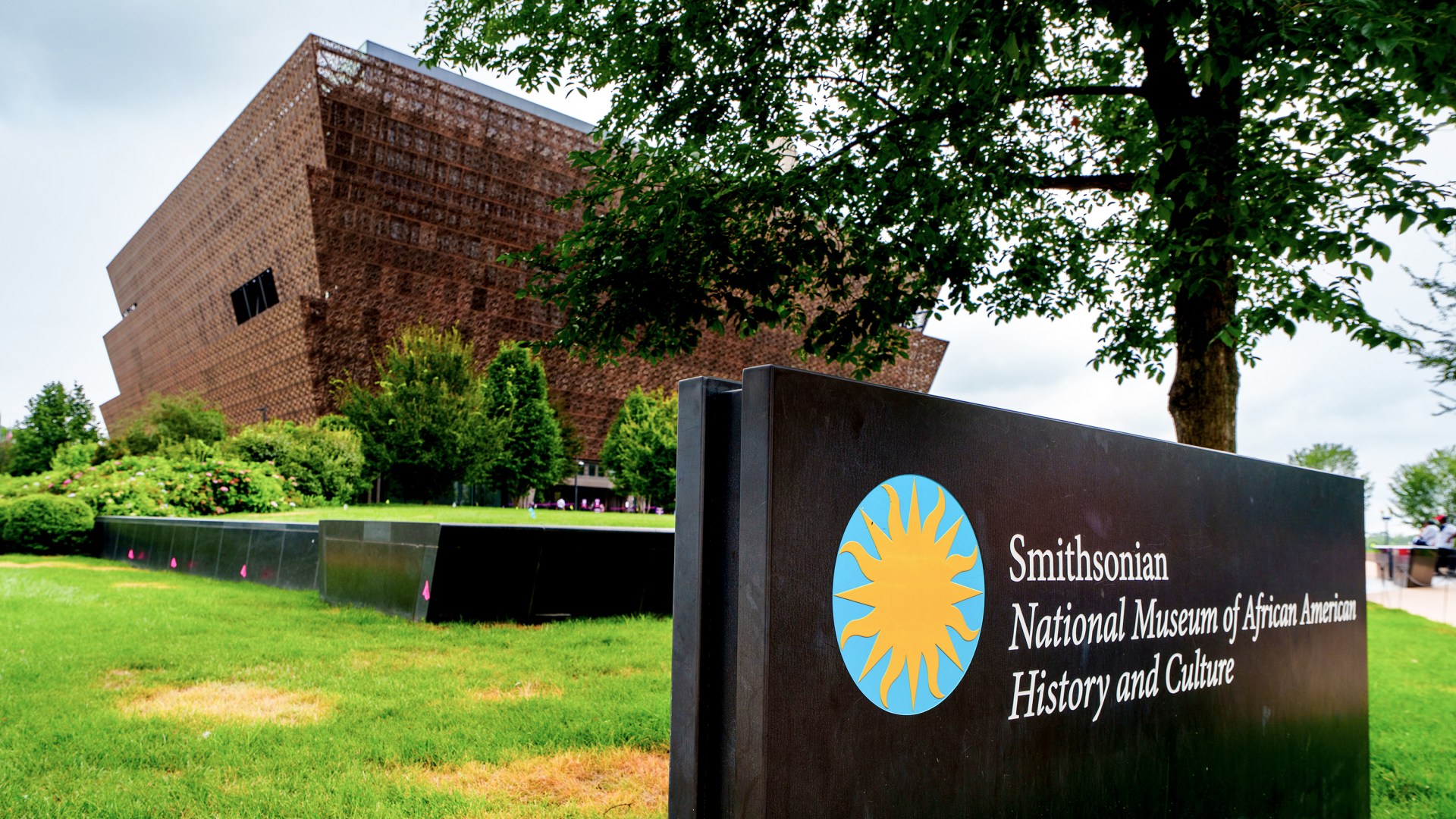
The Smithsonian National Museum of African American History and Culture in Washington, DC.

The Smithsonian National Museum of African American History and Culture in Washington, DC.

Christianity Today August 22, 2025
J. David Ake / Contributor / Getty

When the National Museum of African American History & Culture opened in Washington, DC, in 2016, a friend and I received coveted tickets to be among the first visitors. The collection is large, and the tour was emotionally grueling, much of it concerning the horrors of the transatlantic slave trade, chattel slavery, and the Civil War fought to rid the country of that peculiar institution. 

The first Smithsonian museum dedicated to Black history, it does not shy away from depicting America’s racial past, from its earliest years through the aftermath of the Civil War—including Jim Crow, race massacres, and public lynchings—through the heroism of the Civil Rights Movement, in which brave men and women were beaten, tear-gassed, and even killed as they advocated for Black Americans. The museum also highlighted positive achievements: As a country, we have made significant progress on race. Still, it’s evident in the headlines and an endless array of stats that we carry the legacy of the past with us into the present.

How Americans communicate Black history to ourselves, our children, and the world is now under intense scrutiny in Washington, where the Trump administration has announced plans to root out what it’s called a “divisive, race-centered ideology” within the Smithsonian Institution. White House aides have been tasked with a “comprehensive internal review” of several museums, including the one dedicated to Black history, with an aim of realignment with President Donald Trump’s “directive to celebrate American exceptionalism.”

What that means in practice is yet to be seen. But Trump has already said he wants Smithsonian exhibits to be less “woke,” which in his mind translates to discussions, in part, about “how bad Slavery was.” “We have the ‘HOTTEST’ Country in the World, and we want people to talk about it, including in our Museums,” he posted this week on Truth Social. 

It’s not wrong to want to honor the good. But Trump’s sentiment misses the point. Whether told in a book or a museum exhibit, truthful history cannot merely valorize goodness. It must tell the whole truth, preserving a clear and honest account of past events that can be passed down through the generations. If the Smithsonian museums are to be truthful, they will not deemphasize or obscure the hypocrisy exhibited by our founders and governing documents, nor the evil perpetrated against slaves, countless of whom prayed and petitioned God for deliverance. To celebrate the exceptionalism of the American Civil Rights Movement, a predominantly Christian and clergy-led project, requires telling the full story of the oppressive system these activists fought.

Sanitizing these displays will do more than distort the truth about America. It will also diminish the work of God in our history and discount the resilience of the people who put their hope in him. Theirs are examples we need in the work of justice still left for us to do. 

The necessity of remembering history is clear throughout Scripture. After God delivers the Israelites from bondage in Egypt, he commands them to remember it weekly when they observe the Sabbath (Deut. 5:15). God does the same after the people cross the Jordan River, this time instructing Joshua to set up a memorial with stones that can serve as a reminder for future generations (Josh. 4). And in the New Testament, Paul tells Christians to remember the death of Christ until he comes (1 Cor. 11:23–26). 

And it’s not only the good and encouraging history we’re to keep in mind. The Bible consistently records the sins of Israel and the early church, giving us an honest—and therefore often unflattering—record of human failures. Joshua recounts the sin of Peor while directing the Israelites to faithfulness (Josh. 22:17–18). Scripture tells us that Abaraham deceived (Gen. 20:2), Jacob and Esau had a bitter rivalry (27:41), the nation of Israel fell into idolatry (Isa. 2:8), and David committed murder (2 Sam. 11). Examples continue to stack up in the New Testament, which records the disciples deserting Jesus at his moment of need (Mark 14:50), Ananias and Sapphira lying to the Holy Spirit (Acts 5:3), and both Paul and Jesus rebuking a fractious church (1 Cor. 3; Rev. 2–3). 

Given the facts of our country’s history, it’s impossible to have a truthful African American museum that tells a purely positive story. Any effort to remake the Smithsonian in that direction would reveal a level of pride and nationalistic idolatry that’s resistant to the truth, Justin Giboney, the president of the Christian civic organization the And Campaign, told me in an interview. 

This kind of falsehood will have real consequences: To refuse to look “at the flaws of our history separates us from one another,” said theologian Darrell Bock. “It prolongs our conflict” and “says you and your story do not matter to me simply because it comes from a different place than my story and challenges me to see the world differently. This erasure is not only of an account of history but of a people. It makes our neighbor invisible.”

But while Christians should be wary of efforts to diminish or sanitize history, that does not mean blind loyalty to the Smithsonian (or any other imperfect human institution). As remarkable as the African American history museum is, it has not been above reproach.  

In an online portal intended to serve as an educational guide for conversations about race, the museum in 2020 posted a chart explaining what it called the different “aspects & assumptions of whiteness & white culture in the United States.” Bizarrely, the chart cited “polite” communication, “hard work” and “objective, rational linear thinking” as aspects of white culture. It alienated Black Americans from biblical principles and the Christian tradition—wrongly saying, for example, that the nuclear family and Christianity (which arrived in Africa long before European colonists did) were merely aspects of the dominant US culture that ethnic minorities had “internalized.” After backlash, the museum apologized

Situations like that “show how the left kind of launders its agenda into what is considered ‘Black history’ and what are ‘Black issues,’” Giboney told me. “So I think there’s something there” to be critiqued, he added, “but not in any way that justifies what Trump seems to be trying to do.” 

Daniel K. Williams, a Christian historian who teaches at Ashland University, said the move to inspect the Smithsonian—which comes in the aftermath of national debates about racial justice and things like critical race theory—is the first time a president has been directly involved in the communication of American history. However, there are some similarities between this moment and debates in the 1990s over national education standards. At the time, Williams said, many conservatives were unhappy that a number of universities dropped courses on Western civilization and replaced them with ones on world civilization. There was also some pushback when history courses gave more attention to marginalized groups, including African Americans. 

“What conservatives said at the time was that they wanted to preserve a place for celebrating the achievements they thought had made America unique,” Williams told me. “The question was ‘Is there something exceptional about America? If so, what is it? And how do we teach it?’” 

Three decades later, these debates have returned, this time pushed by a ham-fisted administration fixated on what it calls “Americanism.” And so far, the results have been disturbing. Two weeks before Trump complained about the Smithsonian’s focus on slavery, his administration said it would restore two statues commemorating Confederate figures. Earlier this summer, Trump said he wants Army bases to bring back Confederate names ditched in recent years. On Juneteenth, which marks the end of slavery in the US, his only comment about the holiday came in a Truth Social post, where he complained that there were too many “non-working holidays” in America. Taken together, these comments suggest an understanding of race in America as one-sided and ill-informed. 

Passing on stories about our country’s sins and failures doesn’t mean we treat America as an eternally unsalvageable mess. Truthful accounts of the past not only demonstrate the resilience of African Americans but also speak to the strength of the American people and what the country can be.

“We want America to be great,” said Quonekuia Day, a professor of Old Testament at Gordon-Conwell Theological Seminary. “But we want it to be great for all people.”

Haleluya Hadero is the Black church editor at Christianity Today.

Ideas

A Path To a Healthy Black Evangelicalism

Being a minority in white institutions can feel frustrating. But it’s possible to navigate it without assimilation or bitterness.

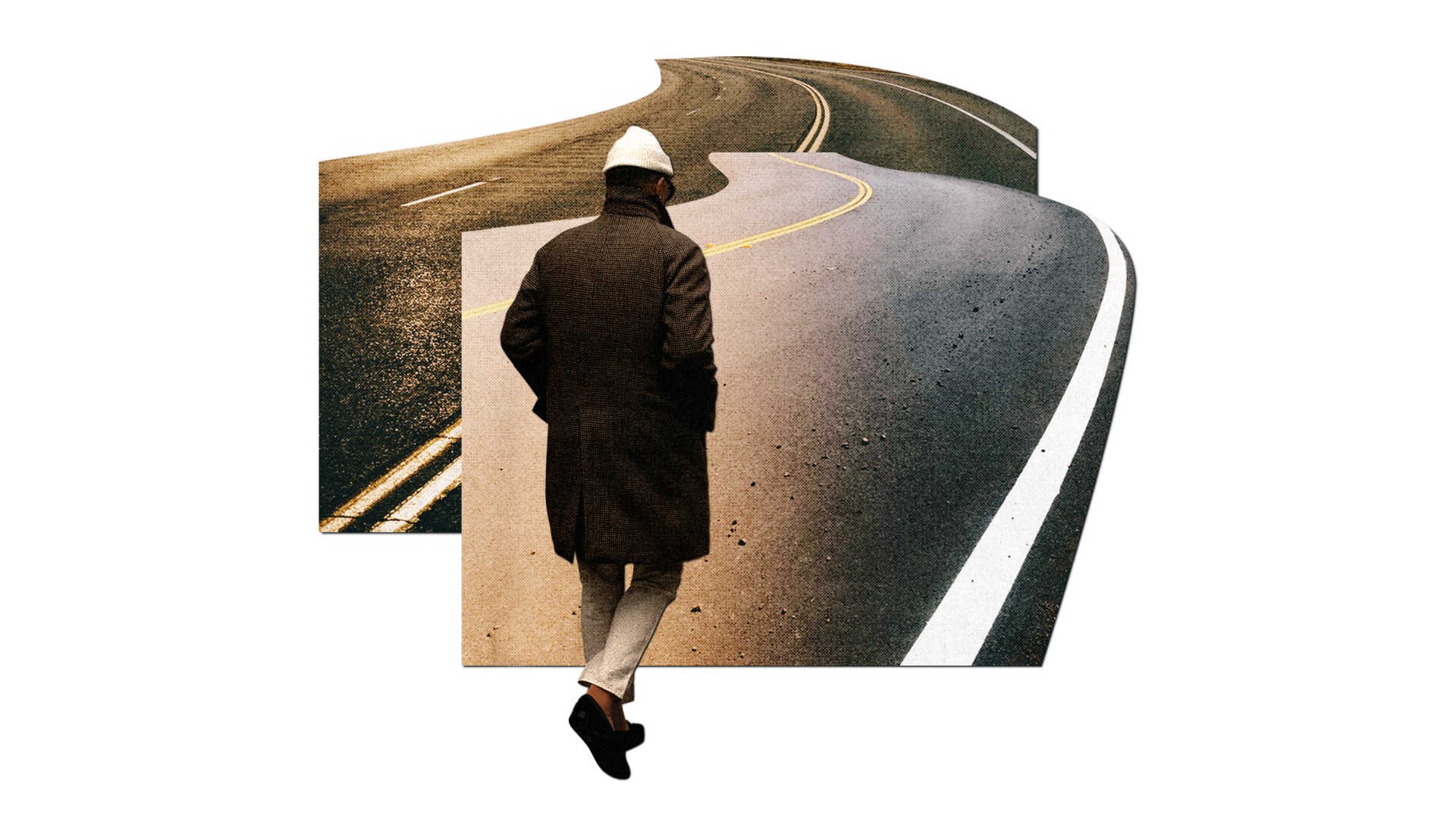
A Black man walking down a path
Christianity Today August 22, 2025
Illustration by Christianity Today / Source Images: Unsplash

A few years ago, our son Jaden called my wife and me and said he wanted to be a pastor. When we got off the phone, I was excited and fearful. It warmed my heart to hear that my 20-year-old Black son could be a third-generation preacher in our family. But I also knew the road ahead would be tough—especially if it included stops in the land of white evangelicalism.

When my wife asked what we should do, I told her it was important to me that he spend his early years of ministry in Black institutions. The Black church had buttressed my own father and me when we felt lonely and frustrated in our ministry to white evangelicals. And if Jaden were to spend formative years among other Black believers, I knew it would provide the type of affirmation and foundation needed to withstand some expected turbulence.

As a pastor and the son of a prominent Black evangelical, I have spent decades immersed in predominantly white churches and organizations. My father, Crawford Loritts Jr., was heavily influenced by the evangelist Tom Skinner, cofounded a church with Tony Evans, and was mentored by the famed evangelical civil rights hero John Perkins. But even with these connections, I am hesitant with the phrase Black evangelical.

I’ve been thinking more about this lately after watching Black + Evangelical, a new documentary by Christianity Today and Wheaton College that highlights the history and challenges faced by African Americans who identify with the label. Recently, a longtime friend also asked me if I was comfortable with the phrase. He knew about my experiences and that I held to the core tenets of evangelicalism laid out by British scholar David Bebbington. But even though I check off each box, the last one—reform-minded activism—often gives me pause.

The dividing line between white and Black evangelicals in America, after all, is their activism—or lack thereof—on racial justice issues. Historically, white British evangelicals led by William Wilberforce took down slavery in the 19th century. In the early 20th century, it was also British evangelicals who worked to transform the prison system and push for legislation for just child-labor laws and relief to the poor. But across the pond in America, the fundamentalist-modernist controversy caused white Christians to split into two camps, resulting in a self-sorting of impulses. The modernists (the predecessors of white mainline Protestants) cared about their neighbors. But because they did not hold to biblical truths, they fell into heresy. Meanwhile, the fundamentalists (the predecessors of white evangelicals) held fast to the authority of the Bible but did not advocate for the racially oppressed.

This type of split never occurred in the Black church, which held on to the basic tenets of the faith without rejecting social action. Over time, some Black believers began worshiping in predominantly white or multicultural churches, creating a new category of Black evangelicals, many of whom have consistently spoken out about racial issues.

But what makes many Black evangelicals different is not just their activism; it’s also their distance from historically Black institutions. In the documentary, for example, almost everyone profiled or interviewed—from Carl Ellis to Tom Skinner and Jemar Tisby—spent significant time serving in spaces dominated by white evangelicals. Like many in the Black church, they spoken out against racial injustice. However, they had a remarkably different experience from others in American history who protested the white power structure and then went home to minister and serve in Black congregations.

I have often seen that when a Black person leaves a traditional Black church and is dropped into a sea of white evangelicals, the person becomes lonely and frustrated. It’s something I’ve experienced in my own life. I grew up in the Black church and then attended a predominantly white evangelical Bible college, where for the first time in my life I felt disregarded and on edge. In 1992, I remember attending chapel right after a California state court acquitted four white officers involved in the police beating of Rodney King, sparking riots across the city of Los Angeles. Not a single thing was said, nor a prayer offered for King, his family, or the city at large. I was irate and called my father to tell him, only to discover the same thing had happened at a similar type of Bible college he attended in the weeks following Martin Luther King Jr.’s assassination.

I’d like to say things have gotten much better in the 30 years since I’ve graduated from college, but they have not. In fact, there’s a strong case that things have gotten worse. When my father retired from his church 4 years ago, he told me he had never seen our nation so badly divided. It pierced my heart to hear that from a Black man who spent his early years navigating Jim Crow. It seemed as if my hero, who had spent his life immersed in white evangelical institutions, was saying, “I wonder if I’ve wasted my time serving in these spaces.” Now, if you ask him whether he felt that way, he will emphatically say no. But it’s hard not to think it was a waste when the evangelical world has taken serious steps back in the fight for ethnic unity.

Being a minority Christian immersed in a majority-white culture is akin to being an “estranged pioneer,” Christian sociologists Korie Edwards and Rebecca Kim say in their book by the same name. But while the two may have coined the phrase, the concept is as old as the story of Jonah. God invites Jonah, a Jew, to engage in the missionary task of preaching the message of repentance and God’s forgiveness to the very ones who were abusing his people. One commentator I read says Jonah walking into the city of Nineveh and calling people to repent is the equivalent of a Jewish rabbi standing on a street corner in 1941 Berlin and begging Nazi Germany to turn to God. Nobody is clamoring for that job.  

But the beauty of Jonah shows God using a member of a minority group as his vessel to bring the majority culture to himself. When Jonah finally walks into Nineveh and preaches a message of God’s mercy, the people repent. Instead of rejoicing, Jonah expresses his frustration to the Lord and sets out to leave the city (Jonah 4:5). In many ways, the story is a cautionary message to Black evangelicals that it’s possible to minister to people you don’t like. Like me, minorities who minister cross-culturally in traditionally evangelical environments often set themselves up for lives marked by loneliness and frustration. And if we don’t deal with those emotions appropriately, they will manifest in unhealthy ways, like bitterness, hatred, and sometimes even abandoning the faith altogether.

So what are Black evangelicals to do?

First, I advise them to seek out institutions that welcome their full selves. I remember a time in my ministry when some of our white evangelical siblings courageously expressed biblical issues of diversity and ethnic unity. But they soon encountered pushback from some who accused them of becoming too “woke” or embracing “critical race theory.” As a result, Black evangelicals who worked with them also became victims of the fallout.

Anyone can stand on a stage and proclaim a vision, but if the culture of the place cannot house the vision, catastrophe will come. You cannot put new wine in old wineskins (Luke 5:37–39). Any Black evangelical who chooses to push for racial justice in an environment where so many are against it needs to be secure in Christ. Like Olaudah Equiano, a Black evangelical who advocated for the dismantling of slavery in England, we can’t be intimidated or fearful. A great crowd—including some of the men I’ve mentioned earlier—has taught us how to work with our white spiritual siblings without leaving our Blackness at the door. They have spoken prophetically against racism and injustice, showing they love white evangelicals enough to speak truth to them. If we are too enamored with white evangelicals, we will hesitate to do this. But if we’re bitter or harbor unforgiveness, we will wield the truth like a knife to kill instead of a scalpel to heal. And at this point, the last thing we need is Jonahs who end up burned-out and bitter.

Second, Black evangelicals must unashamedly embrace the ministries to which God has called them. To be a Black evangelical means you not only live under the white evangelical gaze but also have your Blackness questioned by other African Americans who do not share the same ministry calling. As church leaders, we tend to moralize what we do. And when there are racial implications attached, I often see the temptation to judge the authenticity of one’s ethnicity based on how and where they serve—a sad truth as old as the Book of Acts. When God called Peter, a Jew, to take the gospel to the Gentiles, his fellow Jews immediately condemned him (Acts 11). Instead of rejoicing in the work of the Spirit to bring about conversions among the Gentiles, the Jews criticized Peter (vv. 1–2). And truthfully, not much has changed.

Recent calls from fellow Black Christians to leave evangelicalism “loud” reveals this same spirit. There should be a cease-fire among Black believers. Those of us called to labor in white evangelical environments must not grant anyone the power to pressure us out of what God has told us to do. I don’t allow anyone the right to question my Blackness or ministry, and neither should you. Not every Black Christian in ministry is called to minister to white evangelicals. But in this season of my life, I know God has called me to do that. And that knowledge has kept me sane over the years.

Third, we need to include people who look like us in the discipleship process. Too often, we think about discipleship only in terms of what’s being transferred spiritually. But it’s impossible to be molded without carrying some cultural fingerprints of the one who is forming you.

I’ve seen the tragedy of what sometimes happens when Black people come to faith in a white environment and are subsequently discipled there. They become captivated by white evangelicals and begin to critique—and even look down on—the Black church. I’ve heard complaints that Black preachers are not “gospel centered” or expository. Sometimes, they’re even ridiculed as entertainers because they “whoop.” But when these same critics eventually encounter an inevitable racial slight or incident in the evangelical world, disappointment and disillusionment seep in, giving way for the Enemy to plant seeds of doubt about the faith. One way to avoid this is by having Black Christians mentor, coach, and disciple us—not exclusively but as part of our overall process. Personally, I’ve been sustained in ministry because of my father, my Black godfather and pastor Bishop Kenneth Ulmer, and many others to whom I often turn for counsel.

Fourth, Black evangelicals need regular furloughs. Like missionaries whom God sends overseas to engage other cultures, we need to “come home” periodically to recharge in our own culture and community. Many of us know it can be exhausting to be the only Black person—or one of few—in a room. It’s tiring when people constantly examine your social media posts about race or can relate only with the version of you that operates in white spaces. Some of the loneliest days of my life were when I led a predominantly white church plant in Memphis for 12 years. My all-Black golf group, which met once a week for four hours, sustained me. With them, I didn’t have to filter my words or code-switch. And the time we spent together allowed me to recharge and engage my white kingdom siblings from a full and healthy heart.

Finally, Black evangelicals need a specific kind of economic empowerment. After the police killing of George Floyd, a lot of Christian colleges and universities took giant leaps forward in race relations. But since then, some institutions have backtracked. The Trump administration has made clear that it is opposed to diversity initiatives. And because predominantly white Christian organizations tend to have politically conservative donors who side with the current administration, these entities typically follow the money.

The older I get, the more I’m convinced we need to cast a vision for minorities to give generously to Christian organizations so we can be truly free in our activism. But what’s true for us as a group should also be true for the individual. If you are a Black evangelical working these institutions for the check and not the calling, I believe compromise will surely follow.

If you ask me how I think about my place in evangelicalism today, I will tell you I’m comfortable seeing myself as a missionary to white evangelicals who need the whole gospel. And maybe that’s what we need. We probably won’t make many converts, and I’m okay with that. God has called us to faithfulness more than fruitfulness.

Bryan Loritts is the Teaching Pastor at The Summit Church. He is an award-winning author of ten books, including Grace to Overcome: 31 Devotions on God’s Work Through Black History.

Church Life

What It Takes to Prosecute a Child Rapist in Uganda

Assertive parents and a Christian ministry take on the country’s hamstrung criminal justice system.

Christianity Today August 22, 2025

On her way back from school each afternoon, six-year-old N. K. walked past acres of leafy cassava plants, corn stalks, and bushels of bananas dangling over lily-white coffee blossoms. The sun shone brightly on the fertile volcano-soil fields in Bukumbula, a village outside the southwestern Ugandan city of Masaka.

Before entering her courtyard, N. K. walked past Maalo Mohammed’s food stall selling rolexes, a popular Ugandan street food made of fried egg and a flatbread known as chapati. The 70-year-old man, better known as Jajja (grandfather) Roma, often kept an eye on the kids living in the block behind his business for a few hours until their parents came home.

N. K.’s parents were close with Maalo and trusted him. Yet unbeknownst to them, Maalo was following their daughter home, cornering her in the house or latrine, and forcing her to undress. Then he would rape N. K. Before he left, he would point a knife at her, warning her he would kill her if she reported him.

On July 17, 2023, N. K.’s mother, Namatovu Joyce, noticed discharge on her daughter’s underwear while doing laundry. N. K. had been feeling sick, and her mother was suspicious. (Because of the nature of the crimes done against the children in this story, CT is using their initials.)

Namatovu sobbed as N. K. told her that Maalo had been assaulting her. Namatovu and her husband, Sserwanja Dick, contacted the authorities. When the police arrived later that day, they asked Sserwanja for more than a month’s wages to transfer Maalo to jail and treat N. K. at the hospital. Sserwanja begrudgingly paid, and the police arrested Maalo on charges of defilement (how Uganda refers to sexual assault) and took him into custody.

Corruption is just one of numerous challenges that Uganda’s citizens face when navigating the criminal justice system. Lack of funding and personnel regularly impedes arrests, trials, and defendants’ bail and speedy-trial rights, according to interviews with ten professionals connected to Masaka’s criminal justice system.

N. K.’s family faced many of these obstacles: After the arrest, they didn’t receive any updates on a possible trial for two years. Sserwanja visited the district jail every three months to confirm authorities hadn’t released Maalo. (Desperate families may try to bribe officials.) But their determination, in tandem with the efforts of a local ministry, helped secure justice that eludes many sex abuse survivors.

In 2020, Okoa Refuge opened the first of six centers across the Masaka area to help sex abuse survivors file police reports and send their cases to the prosecutors, and to support law enforcement by offering transportation and arrest support. The day after Maalo’s arrest, a social worker from the ministry came to help fill out a police form that documented the crimes to send to the state. By then, three additional families, who all shared a courtyard with Namatovu and Sserwanja, had reported that Maalo had assaulted their daughters, whose ages ranged from five to eight.

The social worker took all five girls to a clinic to see if they had Maalo’s DNA inside them and to test them for sexually transmitted diseases. Tests confirmed that the DNA was a match and that the girls had syphilis.

As the parents tended to their daughters’ health concerns, they could do little to move the case along. The High Court, which had jurisdiction over capital punishment and life imprisonment cases, had a backlog of 1,114 cases. (Ostensibly, each of Uganda’s 135 districts should have their own court, but here 6 districts fell under the Masaka High Court.) It did not hear a single case in 2024. The regional jail held defendants who had been arrested in 2018 and had never had the opportunity to make bail.

Okoa Refuge CenterPhotography by Troy McGee
Okoa Refuge Center

In February of this year, Tyler Workman, Okoa’s CEO, ran into the outgoing High Court judge, who asked Workman if the ministry would consider underwriting a court session later that year. After deliberating with his board, Workman agreed but wanted the funding to be strategic. He and his colleagues decided the session would include cases from only a single district. The ministry also reached out to the (overcrowded) prison to ensure it would have space for up to 40 new prisoners. The ministry requested that the court hear a portion of the cases where staff at one of their centers had counseled or supported the victims.

For its part, the court decided to focus on more recent cases where it believed the victims (many of whom were children) would be more likely to remember incriminating facts and where witnesses were less likely to have moved away.

In April, a police officer came personally to the village to inform N. K., her parents, and the other three families that their case would be heard the first Wednesday of June of this year. On June 4, the families left the village at six in the morning and arrived at court at seven.

The trial commenced at two o’clock. As the families entered, an official escorted the girls away from their parents to a space with balls, puzzles, dolls, and toy cars, which the court hoped would distract the girls and calm their nerves as they prepared to testify. Still, they shook when Maalo walked in, stared at them, and waved. 

“I didn’t want to see him,” said N. K. “I refused to make eye contact.”

As the trial opened, Judge Bwanika Fatuma read out the charges against Maalo. But before she could call anyone to the stand, Maalo pleaded guilty to everything.

What It Takes to Prosecute a Child Rapist in Uganda

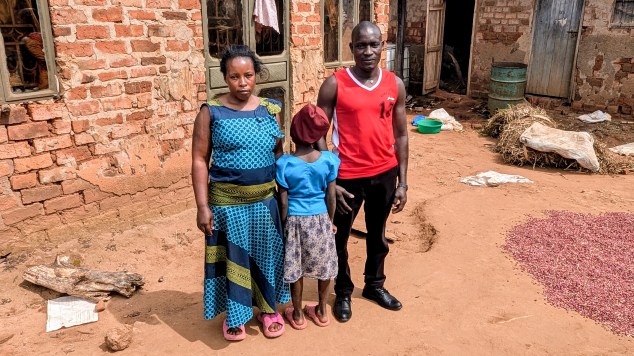
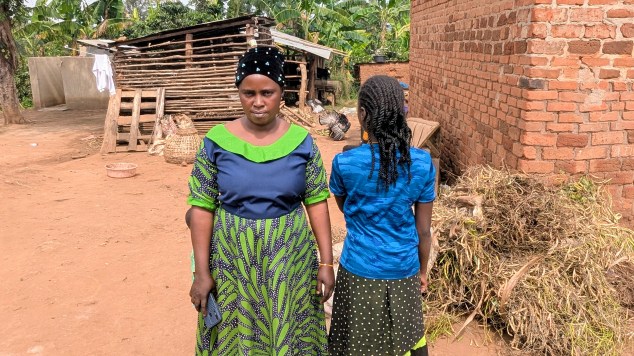
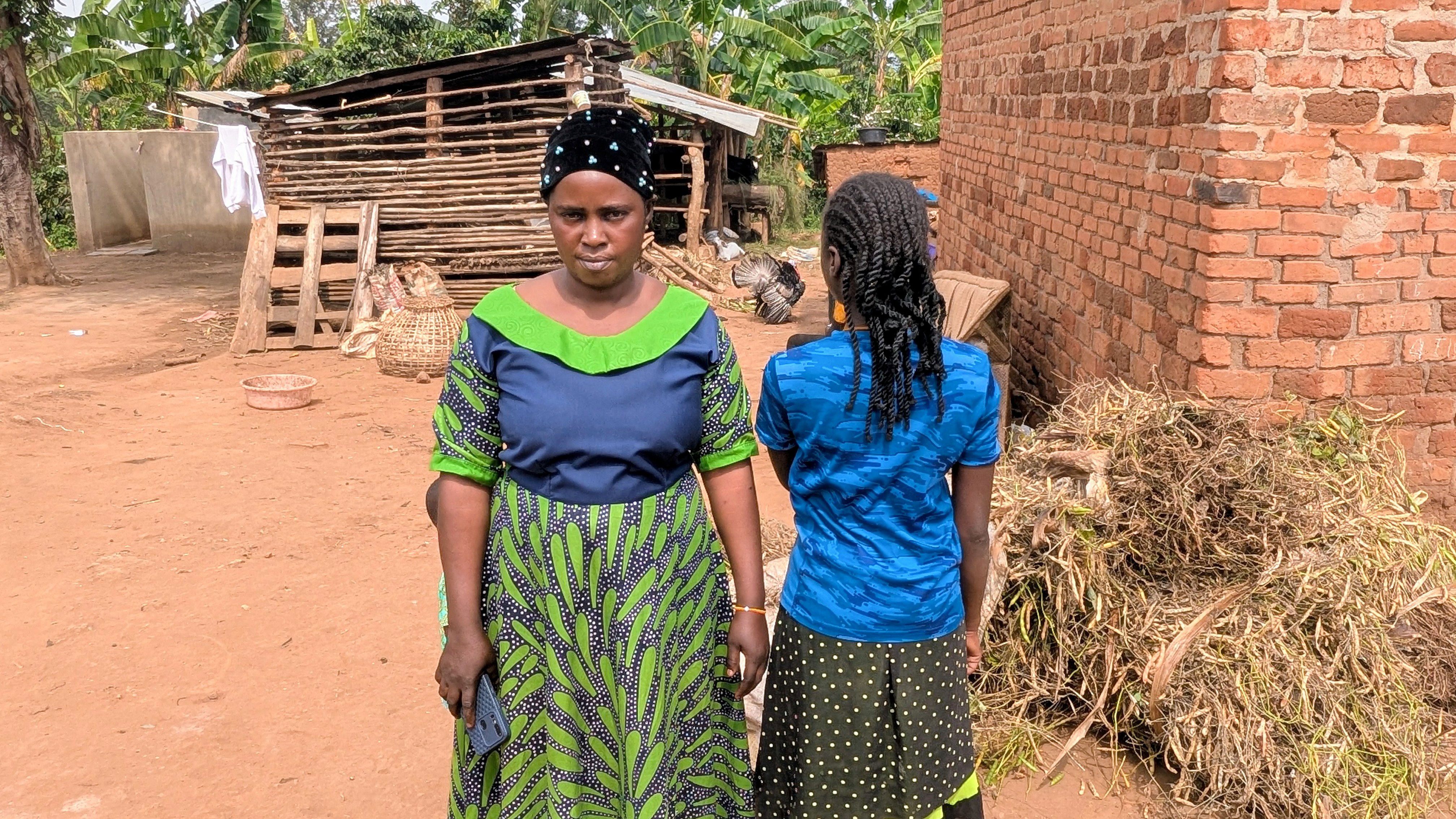
N.K., age 9, stands between her parents Namatovu Joyce and Sserwanja Dick.

1 of 4

N.K., age 9, stands between her parents Namatovu Joyce and Sserwanja Dick.

Photography by Troy McGee

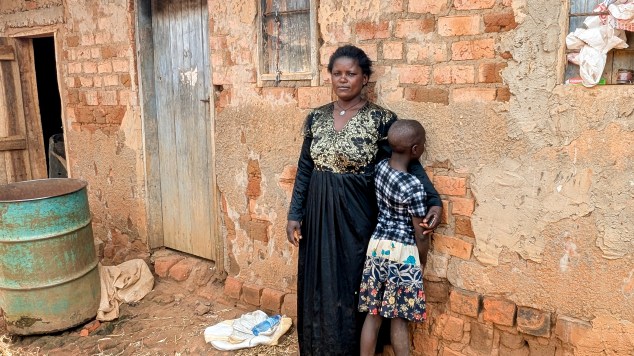
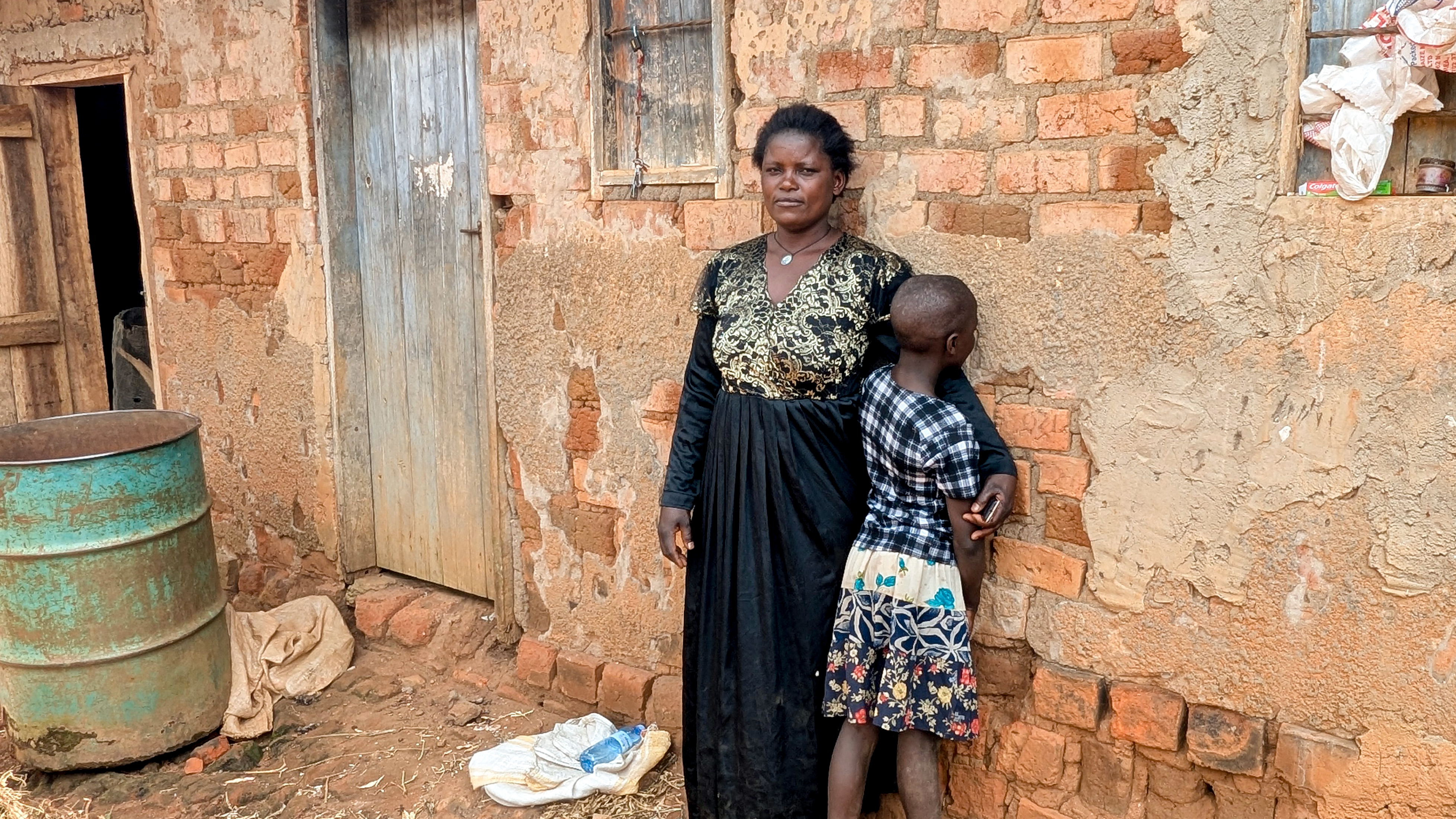
Nante Sulinah stands next to her daughter, N. S., age 12.

2 of 4

Nante Sulinah stands next to her daughter, N. S., age 12.

Photography by Troy McGee

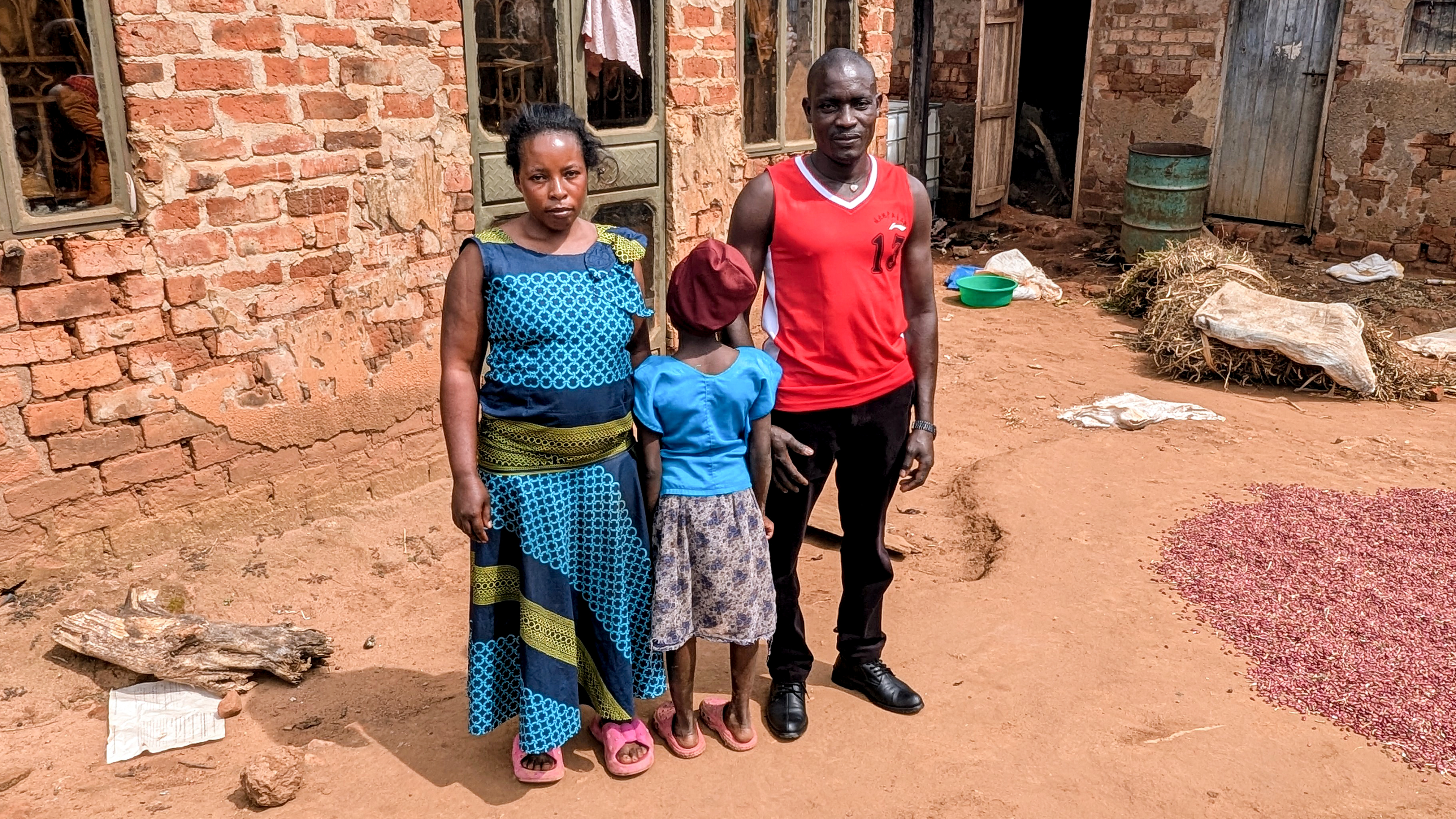
Nantumbwe Rose stands next to her daughter, N. T., age 11.

3 of 4

Nantumbwe Rose stands next to her daughter, N. T., age 11.

Photography by Troy McGee

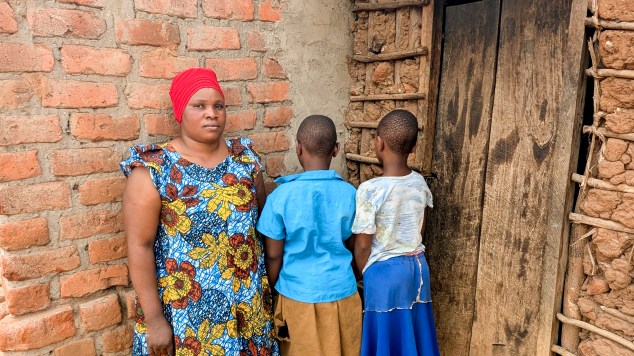
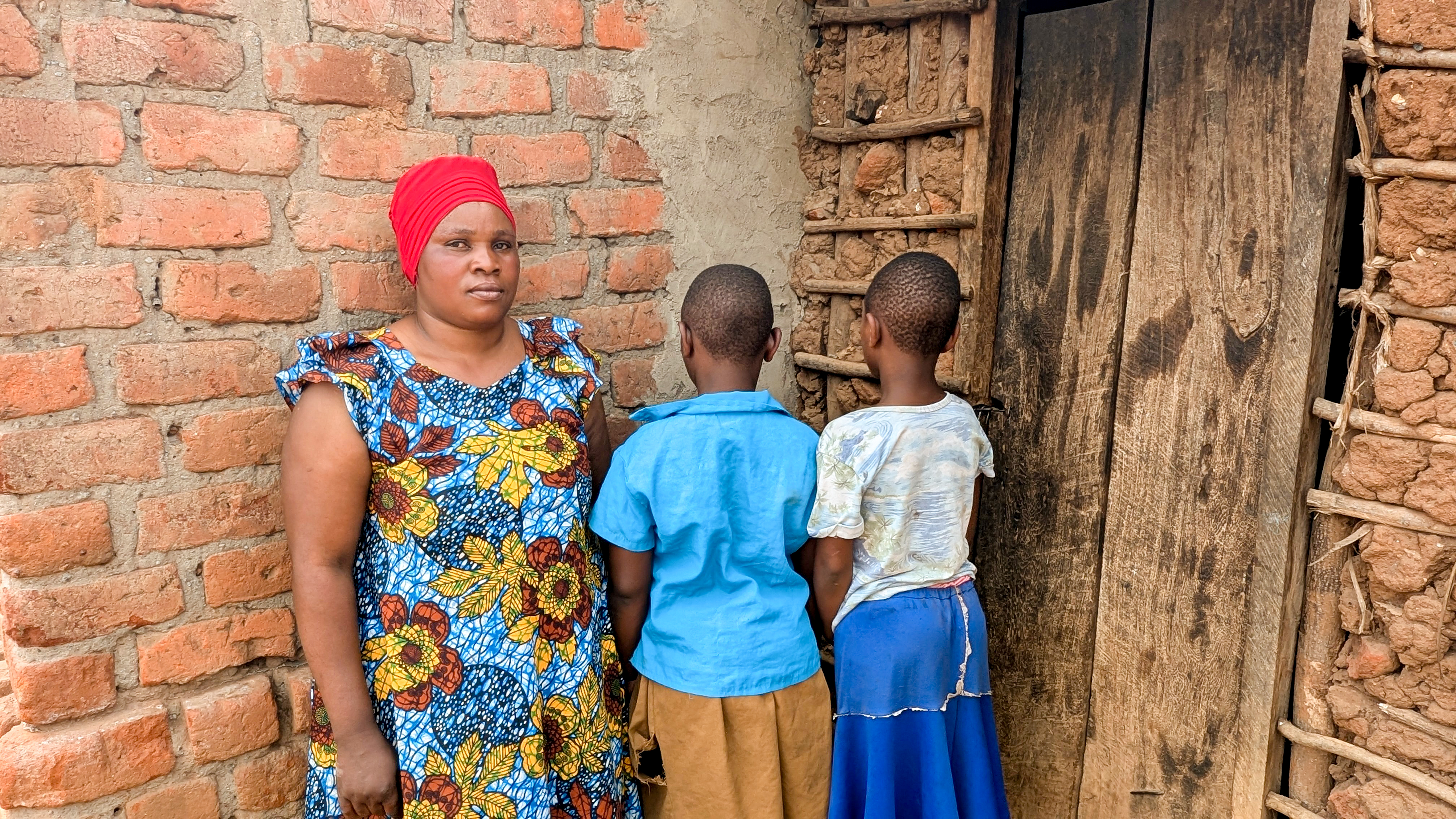
Namuyiga Asfah stands next to her two daughters N. A., age 8, and N. A., age 9.

4 of 4

Namuyiga Asfah stands next to her two daughters N. A., age 8, and N. A., age 9.

Photography by Troy McGee

Log in or subscribe to view the slideshow.

The girls and their parents were furious. “We were ready to give him hell,” said Namatovu. When a parent in the room started crying, an official reprimanded her.

The lead investigator, the prosecutor, and the judge all later identified the case as the most emotionally disturbing of the session. At court, Nassuna Rehema, the lead investigator, cried. (“He wasn’t remorseful.”) So did the judge. Then Bwanika sentenced Maalo to 10 years, 1 month, and 23 days in prison for each girl he raped.

Maalo is now incarcerated in a prison holding more than five times its intended population.

The criminal justice system put the perpetrator away, but recovery has been tougher at the personal level. In the beginning, classmates bullied the girls for being Maalo’s “wife.” Others accused them of having HIV. (They do not.) All but one family transferred their daughters to other schools.

Still, Maalo’s family’s house sits along their school route. The empty rolex kiosk stands just steps from their home.

After Maalo’s arrest, Namatovu began coming home earlier from work. “Children are more important than money,” she said. At one point, she got so sick thinking about her daughter’s trauma she nearly went to the hospital. She has turned to prayer, asking God to give her strength and courage, and confides in her neighbors, some Muslim, some Christian, about their daughters’ challenges.

All the girls still deal with stomachaches, headaches, and leg pain. The girls need monthly treatments, which include IV injections (“They are so painful,” said N. K.), and often must stay at the clinic for three to five days at a time. The price of the treatments and the transportation to these sessions can overwhelm their families.

“Whenever I feel sick, I remember what happened, and I feel worse,” said N. R., who was five when Maalo raped her.

The girls have also realized how few victims can seek justice. Maalo’s stepson committed a sex crime against a girl around their age, but no one spoke up for her because she was related to him, the girls say.

“I want her parents to encourage her to speak up,” said N. R., “and not block her from saying what happened.”

Ideas

I Lost Three Babies in a Year. No One Knew What to Say.

Christian misconceptions around miscarriage are not new, but need to change.

A woman with a rose and petals
Christianity Today August 22, 2025
Illustration by Mallory Rentsch Tlapek / Source Images: Unsplash, Pexels

On a mild spring day, I paced back and forth in the newly green grass while on a phone call. A friend’s words stopped me in my tracks. She spoke of a mutual friend: “She’s been trying for a baby for ten years. At least you can get pregnant.”

I had lost three babies in a year, with none in my arms, and these words, though spoken to encourage, sent a shock wave of pain to my heart. I was weary of these kinds of statements from fellow believers: “At least it was early” or “You’ll have another baby.” For those of us who have miscarried, these comments feel as if someone has crumpled up the lives of our babies like a piece of paper and thrown them in the trash. Their words diminish the value of our unborn children and invalidate our grief.

But how did we get here? How did we as evangelical Christians, with our predominantly pro-life stance, overlook the way our words undervalue babies lost through miscarriage? We can begin to answer these questions by looking to history.

We often forget that for many centuries, people were left to guess about the happenings in the secret place of a mother’s womb. As far back as the time of Aristotle (384–322 BC), it was widely believed that a baby gained a soul at the quickening—the moment a woman felt the baby’s movement (typically between 16 and 24 weeks’ gestation). Augustine and Thomas Aquinas believed this was also the time of “ensoulment.”

A baby lost earlier in pregnancy was considered a false conception or a “potential” child. Some still held to this belief even into the 19th century, as we see in one woman’s letter to her husband after her miscarriage: “The imaginary Number 10, whom I had already begun to love, is not a real entity as yet.” But at that time, Western culture had a sharp turn toward another belief.

Around the late 17th century through the late 18th century, many people believed in preformationism—the belief that a miniature, preformed human was in either the woman’s egg or the man’s sperm. Because they thought a fully adult person resided like a Russian nest doll inside one of the sex cells, many began to believe the soul existed at conception. German biologist Oscar Hertwig disproved preformationism when he discovered the process of fertilization somewhere around 1875–1878. This new discovery caused renewed confusion among scholars about when life truly began.

Today’s scientific and technological developments have led nearly all biologists, including those who consider themselves to be pro-choice, to agree that life begins at conception. Fetal doppler monitors detect a heartbeat as early as 8–10 weeks’ gestation, and the ultrasound allows us to capture the heartbeat of a preborn child as early as 5 weeks: a heartbeat that thumps with the truth of life, its rhythm an anthem of praise to the Creator.

Many of us have heard our babies’ heartbeats or witnessed their wiggling on screens. But the fetal doppler monitor was created only in 1964. The ultrasound wasn’t routinely used in American hospitals until the late 1970s. Many women, including my mother, didn’t receive this care even in the late ’80s.

Still, even with all the knowledge we have today, many choose to ignore—and even attack—the personhood of the unborn. We would be amiss to deny the impact this has had on our language around children in the womb, including inside the church.

I shudder to remember my own mistakes in this area when a friend of mine experienced a miscarriage. My thoughts then revealed a wrong view of children in the womb. It seemed to me as if she had lost a dream. But my friend didn’t lose a dream; she was grieving a life, a relationship, the severed connection to her baby. It wasn’t until my own losses that I recognized my ignorance.

When a woman receives comments from fellow believers about her miscarriage, like “You’ll have another baby,” “At least you have other children,” or “It’s so common,” what she hears is “Your baby doesn’t matter,” “Your baby wasn’t real,” and “Your baby isn’t worth grieving.”

Though most Christians uphold the sanctity of life, many of us still speak of babies lost to miscarriage as if they were almost babies. Women are grieving real children whom they carried in their bodies, and we address them as if they have merely lost an aspiration. But God does not view preborn babies this way.

In scientific terms, the loss of a preborn child before 20 weeks is considered a miscarriage, whereas a loss after 20 weeks is classified as stillbirth. When we read about stillbirth in Scripture, however, the Hebrew word nephel includes both stillbirth and miscarriage. The word shakol, often translated to “miscarriage,” means “to be bereaved, to miscarry, to lose children.”

It appears God does not differentiate between types of infant loss. To say to a woman, “At least it was early,” is to align ourselves more with the world’s understanding of personhood than with God’s.

Scripture affirms both the humanity and the personhood of every baby conceived in a mother’s womb, regardless of how long the baby is there. Psalm 139 declares that God forms babies’ “inward parts” and that even before they were ova, zygotes, embryos, or fetuses, they were known by our Creator—their days numbered by him (vv. 13–16, ESV). Ensoulment as Augustine and Aquinas considered it is false; babies have souls from the moment they are conceived. Not only that, but they are also created in his image (Gen. 9:6, ESV). They have intrinsic value that can never be stripped away.

Views about life in the womb and personhood in the culture and past centuries have influenced the way many Christians speak of babies in the womb today. But we of all people should refine our speech surrounding miscarriage to align with the view we find in Scripture.

When our gut reaction is “You’ll have another baby,” we can instead say, “I’m so sorry for the loss of your baby.” Rather than dismissing the pain of this great loss with “At least it was early,” we can say, “Every life lost—no matter how young—is valuable and worthy of grief.”

By my first Mother’s Day post-miscarriage, I had lost two babies. A friend walked up to me at church bearing flowers and said, “You are a mother. Happy Mother’s Day.” She exemplifies how we might acknowledge infant loss.

Instead of treating women as if they’ve merely lost pregnancies, we can comfort them in the grief of whom they really lost—their babies. After all, women are not only grieving their babies; they are also grieving the loss of getting to kiss them or look into their eyes. These women carry the grief of never seeing who their children would have become. They’re grieving an entire future they had already planned.

In past centuries, even before technology could prove it, some Christians understood that every life conceived was a person with a soul. There’s a poem by Mary Carey, written in 1657, where she shares about her own early miscarriage.

“What birth is this; a poor despised creature? / A little embryo; void of life, and feature,” she begins. She had lost a baby early enough that the baby’s features were indiscernible. Yet she also says,

I also joy, that God hath gain’d one more;

To praise him in the heavens; then was before:

And that this babe (as well as all the rest,)

since ’t had a soul, shall be forever blest.

Carey knew her baby, though “void of life, and feature,” had an eternal soul and was a child. And she grieved her child. She wasn’t the only one. Sir William Masham wrote to his mother-in-law in 1631 that his wife was “young with child and hath miscarried this day.” He continued: “It is the greater grief to us, having been thus long without; I pray God sanctify this affliction to us.”

May we, too, learn to uphold these young lives who are tragically lost as the image bearers they are, through our words and actions. And in doing so, may we allow women in our church pews to grieve their babies.

Brittany Lee Allen is the author of Lost Gifts: Miscarriage, Grief, and the God of All Comfort.

addApple PodcastsDown ArrowDown ArrowDown Arrowarrow_left_altLeft ArrowLeft ArrowRight ArrowRight ArrowRight Arrowarrow_up_altUp ArrowUp ArrowAvailable at Amazoncaret-downCloseCloseellipseEmailEmailExpandExpandExternalExternalFacebookfacebook-squarefolderGiftGiftGooglegoogleGoogle KeephamburgerInstagraminstagram-squareLinkLinklinkedin-squareListenListenListenChristianity TodayCT Creative Studio Logologo_orgMegaphoneMenuMenupausePinterestPlayPlayPocketPodcastprintremoveRSSRSSSaveSavesaveSearchSearchsearchSpotifyStitcherTelegramTable of ContentsTable of Contentstwitter-squareWhatsAppXYouTubeYouTube