Ideas

Friendship Doesn’t Just Happen to You

A “friendship recession” is no time to wait for friendships to develop from hobbies or happenstance. The Bible assumes more intentionality.

A photo of people sitting far apart on a bench.
Christianity Today March 31, 2025
Traveler Stories Photos / Pexels / Edits by CT

What does it mean to be a friend? Any kid on the playground could give you some idea: A friend plays with you, shares Rice Krispies Treats when your mom keeps sending apples, keeps your secrets, and joins your projects. And, Rice Krispies Treats aside, that idea of friendship would be profoundly similar to the scriptural framing of this relationship as a source of good counsel, companionship, and unselfish aid.

I was eight years old when I first bestowed the honorable title of “best friend” on a new neighbor. My family had moved to his block from across town, and I’d started biking my new neighborhood daily, exploring and looking for other kids my age. I wanted a friend.

Finally, I met Earl. He lived a few doors down, and we had so much in common: Earl had an older sister who bossed him around. I had the same. He liked to go outside, ride his bike, and play two-hand touch football. So did I. And though he was slightly shorter than me, we were both in the third grade. Best friend boxes: officially checked. 

In a matter of weeks, these superficial similarities coupled with a rapidly growing trust between us. We proved ourselves to each other, even when our interests diverged. Earl was happy for me if my team won its peewee football games, and I was equally excited for him when he got a new Nintendo cartridge. Maybe we couldn’t have articulated it, but we wanted the best for each other, and we understood that each friend’s victories were somehow sharedThese days, three decades into friendship with Earl, I’d call it a desire for collective righteousness and well-being.

But these days, I don’t see that kind of friendship so often. As I’ve grown older, I’ve noticed a dearth of such relationships—and particularly newer friendships—in the lives of my peers, including fellow Christians. And I’m not the only one to notice; research shows our society is in a long-term “friendship recession.” We’re losing touch with old friends and failing to make new ones. 

I don’t want to minimize the gravity of this shift. Yet thinking back to the start of my friendship with Earl, I’ve wondered: Are adult friendships really that much more difficult to establish? Or are we making it artificially difficult by having the wrong expectations of friendship itself? Perhaps our criteria have moved too far from what we would’ve said as kids and not close enough to what God tells us about friendship. 

For a better and more biblical model of finding and becoming good friends, we could start with a story about King Solomon that offers a stark contrast to our supposedly sophisticated methods of forming friendships.

Just after an encounter in which the Lord endowed Solomon with unparalleled wisdom and discernment to rule (1 Kings 3:3–14), Solomon made several delegations of authority within his kingdom. He designated priests, secretaries, generals, governors of provinces, and household managers. He also appointed a man named Zabud, a priest, to an official governmental position that many translations simply title “friend” (1 Kings 4:1–5).

In this decision, Solomon gave the same weighty consideration to choosing a friend that he gave to selecting those to carry out important government business. He chose as his friend a man who could be expected to provide wise counsel and an understanding of righteousness, of what it means to live a godly life. 

This is not the only biblical passage on friendship involving Solomon. In the Book of Proverbs, he speaks of friendship as a relationship of intentionality and even authority. Friendship in Proverbs doesn’t seem to happen by chance, like the organic childhood connection Earl and I had just from being the same age and in the same place. 

Instead, Proverbs describes what a good friend does and advises deliberately choosing those with whom we keep company (12:26; 22:24). We are to make sure they are wise so as to eventually find ourselves wise (13:20). They are to offer earnest and pleasant counsel (27:9), as well as faithful wounds of correction (27:6). Good friends will stick with us even in hardship (18:24), and we must not forsake them in turn (27:10).

We no longer talk about choosing friends this way—but perhaps we should. Perhaps the days of relying on chance and surface-level commonalities to discover new friendships should be left to the playground. Perhaps we must be as diligent as Solomon in appointing friends and unselfishly becoming good friends ourselves. We can seek out friends rather than waiting for them to manifest through chance encounters.

That doesn’t mean we should reject the chance encounters or the way we built friendships as youth, founding them on some shared interest like Nintendo games or sports. But for Christians, our deepest adult friendships should have a stronger foundation than hobbies and happenstance. That foundation should be a shared commitment to Christ and the expanding influence of the kingdom of God and his righteousness in us.

God gives us grace to be sacrificially loving friends (John 15:12–13), to view others as beloved (1 John 4:7), to encourage others in love and good works (Heb. 10:24–25), to apply Jesus’s teaching that “it is more blessed to give than to receive” (Acts 20:35).

A friendship like this will need to be cultivated. We cannot rely on chance to produce needle-in-the-haystack encounters with people who share all our peripheral interests, then sulk because we don’t have enough deep friendships. Failing to deliberately seek out friendship with fellow Christians is an abdication of our responsibility to potential friends—and we simultaneously miss our own opportunities to be blessed by intentional friendship.  

In my experience, the most transformative friendships are those in which my friends’ peripheral interests are dissimilar to mine yet we share committed faith in Jesus. Choosing friendship with people who are ethnically, economically, and/or culturally different from myself has been one of the greatest blessings in my Christian life. Forcing me into the discomfort of unfamiliarity, these friendships confront me with the handiwork of God in all his people. They remind me that biblical friendship is sometimes difficult, but that difficulty teaches me to love and be more like Christ.

Jesus sought us out and sacrificially befriended us (John 15:15). Undeterred by our differences, he chose us—and then he commanded us to “go and bear fruit” by “lov[ing] each other” (John 15:16–17). He compels us to imitate his choice to make friends and to make them on purpose, to ride around our neighborhoods looking for Earls with whom we have Christ in common.

Justin Hampton is the author of I’m Hungry and a graduate of Tuskegee University and Harvard Kennedy School. He has a background in real estate redevelopment, youth services, and education reform and currently operates as a business management consultant.


News

The Yo-Yo Between Life and Death in Global Health

Funding canceled. Funding renewed. New documents show the extent of the Trump administration’s historic aid cuts, and the few programs saved.

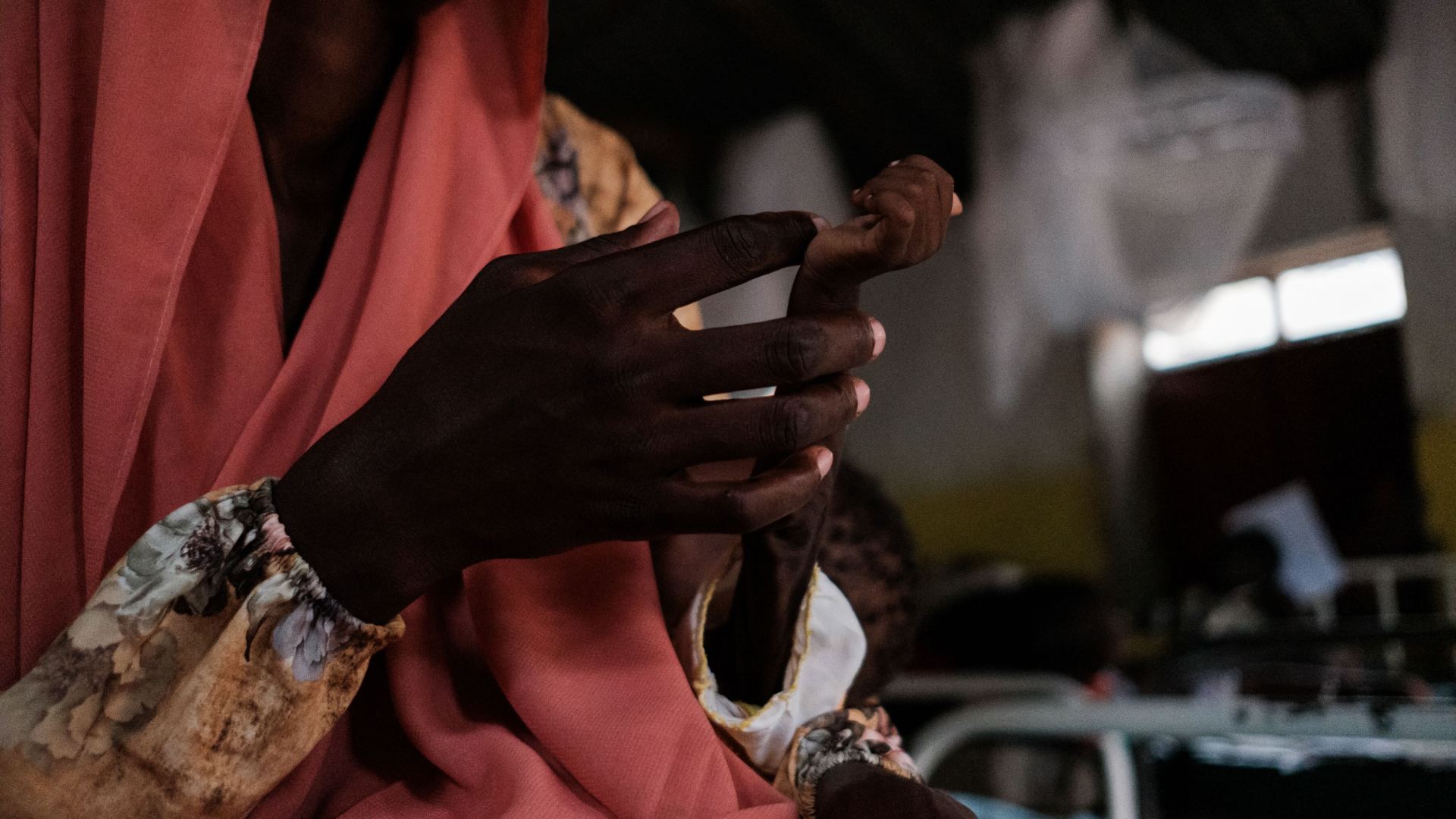
A mother holds the severely malnourished arm of her one-year-old in a hospital in Sudan.

Rem Abduli holds the wrist of her one-year-old daughter suffering from severe malnutrition in a hospital in Sudan in 2024.

Christianity Today March 28, 2025
Guy Peterson / AFP

After years as a missionary and then a pastor, Mark Moore started a peanut butter factory in Fitzgerald, a small city in Georgia.

His nonprofit Mana Nutrition makes ready-to-use therapeutic food (RUTF), a peanut butter–based paste for severely malnourished children around the world. A formulation of peanuts, milk, vitamins, and powdered sugar, it is shelf-stable and comes in a hand-size packet that is easy to distribute.

Malnutrition causes almost half of preventable deaths for children under five. On RUTF, 90 percent of malnourished children recover within weeks.

USAID had contracts with Mana to produce thousands of metric tons of the paste for food crises in places like South Sudan and the Democratic Republic of the Congo. After President Donald Trump came into office, Mana’s contract halted under the 90-day review of all foreign aid, then restarted as exempted “lifesaving aid.”

Then it was fully terminated.

Then restored again.

The dramatic dismantling of US humanitarian aid over the past several weeks has sent organizations on a life-and-death roller coaster. Most did not have their funding restored.

For Christian nonprofits doing lifesaving work, the decisions around what aid programs remain and what programs were cut feel inexplicable.

Nonprofits have had to fire and rehire staff, plead for help from donors for emergency funding, and try to retain trust with local partners who feel betrayed.

“There was no need for the dynamite fishing that we’ve seen over the last six weeks,” said Randy Tift, a USAID veteran who led a series of internal reforms of the agency in the first Trump administration. “This was not well understood by the new team.”

At a recent prayer vigil on Capitol Hill about the aid cuts, Tift—now a senior adviser at the Accord Network, a coalition of Christian relief and development organizations—said bad actors in USAID could have “been easily spearfished” instead.

He lamented “the destruction of effective, irreplaceable American development collaboration, for example, infectious disease monitoring … famine early-warning systems … programs championed by faith leaders that we support to change practices like child forced labor and other kinds of everyday violence against the poor that we know by evidence can be solved.”

After the freeze and review of almost all USAID contracts, Secretary of State Marco Rubio recently announced the termination of about 80 percent of those contracts, including those for many faith-based groups providing lifesaving aid.

Late this week, faith-based organizations were still receiving notices of termination for their contracts.

“It’s hard to quantify the impact of lost trust with local partners,” said Michael Cerna, CEO of the Accord Network.

A handful of organizations have seen their contracts restored, but even in those cases, the sudden disruption has blown aid infrastructure apart.

Some data systems tracking health aren’t funded anymore, for example. HIV drugs might be funded, but the staff with specialized training to treat HIV complications may be gone. An untrained staff member could do a simple refill of an antiretroviral (ARV) medication but wouldn’t know what to do for an HIV patient coming in with a liver problem.

This week the Trump administration sent a 281-page spreadsheet to Congress detailing active and terminated USAID contracts, as first reported by The New York Times. Overall, 5,341 USAID contracts have been canceled and 898 retained, according to the agency’s memo to Congress, which CT reviewed.

In late February, Mana’s contracts were among the thousands at USAID that received termination notices. That meant Mana couldn’t even deliver the food it had already produced. (Mana is not officially faith based, but Moore describes it as “faith laced,” with ties to the Church of Christ.)

Media attention on Mana’s contract termination led to podcaster Jon Favreau posting on X that Department of Government Efficiency head Elon Musk was starving children. Musk responded by calling Favreau a name and then said he would look into it.

Shortly after, Mana learned its contracts had been restored, at least through the next few months. 

“I felt a sense of survivor’s guilt for us,” Moore said. “The earthquake hit, and we are still standing.”

But even for an organization that got its contract back, turning everything off and on was not easy. Mana works at a large scale, signing contracts with peanut growers and milk suppliers months in advance for shipments to Congo this summer. 

The nonprofit is trying to fulfill these renewed contracts while awaiting $20 million from the federal government for work already completed, going back to December.

Though its contract has been restored, payments remain frozen. The skeletal USAID staff that remains is overloaded managing projects, Moore said.

Mana spends $200,000 a day on ingredients for impending shipments, Moore said. He knows he has the less-than-ideal option of getting a line of credit from the bank against the federal contract. The nonprofit’s current contracts run through May.

If the malnutrition contracts go away again, Moore said, “we have a big, amazing facility to make peanut butter—we can pivot and make peanut butter for pets or something not as noble.”

Meanwhile, he’s not sure how all the RUTF (popularly known as plumpy’nut) it’s making will be shipped with supply chain holdups.

He’s had calls with World Vision and Samaritan’s Purse, trying to find ways to stabilize the supply chains in countries where Mana is working.

Other cuts will disrupt Mana’s work in the months ahead. Clinics where doctors would prescribe Mana-produced RUTF are shuttered. USAID funded a famine early-warning system around the world so groups would know where to direct the shipments; it’s unclear if that remains.

Talking about it, Moore couldn’t help but leave his peanut-butter-factory persona behind and resume his pastor’s role.

“The disciples said to Jesus, ‘Send these people away, Lord. They’re hungry—let them buy something in the marketplace,’” he said. “Jesus says, ‘We should feed them.’ … We believe in the marketplace more than our faith, I think.”

Based on CT’s review of the spreadsheet USAID sent to Congress, the many faith-based organizations that saw contracts terminated included groups providing HIV/AIDS treatment through the President’s Emergency Plan for AIDS Relief (PEPFAR), tuberculosis treatment, malaria treatment, and other general health care.

All of USAID’s grants for American Schools and Hospitals Abroad were canceled, some of which went to Christian hospitals like Cure International.

Tuberculosis funding was cut by 56 percent, and malaria by 36 percent, according to analysis by the Center for Global Development (CGD). Sectors like family planning, higher education, infrastructure, water supply and sanitation, and maternal and child health were almost entirely zeroed out, according to CGD’s analysis.

Among the contracts terminated was a large tranche of funding for the Uganda Protestant Medical Bureau’s HIV care and treatment. One African source told CT some mission clinics in Uganda have closed as a result.

Ukraine, Ethiopia, and the Democratic Republic of the Congo experienced the largest cuts in aid, according to CGD. Liberia had the largest cut as a percentage of its economy.

Experts CT interviewed could not discern a rationale for which programs the administration cut or preserved.

In Nigeria, a large tuberculosis treatment program was saved. In the Philippines, where tuberculosis is a serious problem, its treatment program was zeroed out.

The administration sent a memo in late February asking for explanation from grant recipients about how their US-funded programs meet three criteria: making America “safer, stronger, and more prosperous.” The memo says the goal is to enhance “sovereignty over globalism” and prevent “a global welfare mentality.”

Grant recipients have to affirm certain protocols, like that they are following the Mexico City Policy, that they have anti-trafficking policies, and that there are no “DEI elements” or “environmental justice” elements in a project. They also must state whether their projects include plans to transition away from foreign assistance in the next five years.

Organizations didn’t know if their answers to those questions played any role in grants being renewed.

It remains an open legal question whether the executive branch can unilaterally terminate funds, but a Republican-controlled Congress has so far not challenged Trump’s decisions to stop funds. The issue of the Trump administration’s shuttering of USAID is still working its way through the courts.

A smaller group of faith-based organizations had USAID funding restored. The roller coaster has been exhausting even for them.

Partners in Hope, a vital Christian medical center that reports it oversees HIV treatment for 207,000 patients in Malawi, lost its PEPFAR funding in the administration’s across-the-board pause in USAID funding when Trump took office. 

A month ago, Partners in Hope received notice that after the review, its contracts had been terminated. The hospital had to lay off 1,100 members of its staff, a devastating blow.

African Mission Healthcare, a foundation with deep ties to the hospital, stepped in with cash support to keep the main hospital’s HIV clinic for 5,700 patients open. 

Then, this week, Partners in Hope’s contracts for care and treatment of HIV patients were restored. The medical center will try to start the complicated process of rehiring staff when the funding starts again.

“We’re gratified by the fact that the US government sees the value of Partners in Hope and this type of care. It has been a roller coaster up and down, and now we hope the funds flow quickly,” said Jon Fielder, a longtime HIV doctor who leads African Mission Healthcare (AMH). “We hope all these care and treatment grants get activated. AMH had to step in to keep the clinic open, but other clinics did not have partners.” 

Other organization staff noted to CT that firing and rehiring staff is complicated country to country—navigating taxes, severance, and local laws. In some countries the laws require a full year of severance, meaning the nonprofit might have to pay one salary and hire another worker to do the same job if its contract is restored.

PIM, a Christian maternity clinic in Côte d’Ivoire treating thousands of mothers and children with HIV, is another organization that received a full termination notice in late February.

Kip Lines, head of Christian Ministry Fellowship (CMF) International, the US missions organization that supports PIM, said his heart sank when he saw the termination. The contract was supposed to go through September 2028.

Like many other groups, after the pause and then termination, the Ivoirian organization was scrambling to find ARVs to continue HIV treatment. CMF International started fundraising from US donors for ARVs but didn’t know how long emergency donations would last.

Then this week, PIM’s PEPFAR funding was restored through September of this year. Lines thanked individuals and churches in a Facebook post for helping them continue care for the two months when funding was cut off.

“Please continue to pray for those in our government who are evaluating and making decisions about which programs are being funded,” Lines wrote on Facebook. “I know that many programs will not receive this good news that we have received.”

Two months into the aid freeze, with ongoing uncertainty, clinicians told CT they see this month as critical for global health nonprofits whose funding has been cut. Staffs are gone, supplies are dwindling, and money from emergency fundraising appeals might be fading.

Mana, meanwhile, isn’t sure when it will be paid and whether its RUTF will reach the intended mouths. But it now has peanut butter paste for malnourished children heading to South Sudan.

“We’re determined to weather the storm,” said Moore. “But it is a big storm.”

Additional reporting from Harvest Prude.

News

US Refugee Ban Halts a Pakistani Christian Family’s Resettlement

A Texas church has funds and furniture ready for the family members, who had been stuck in Thailand for more than a decade.

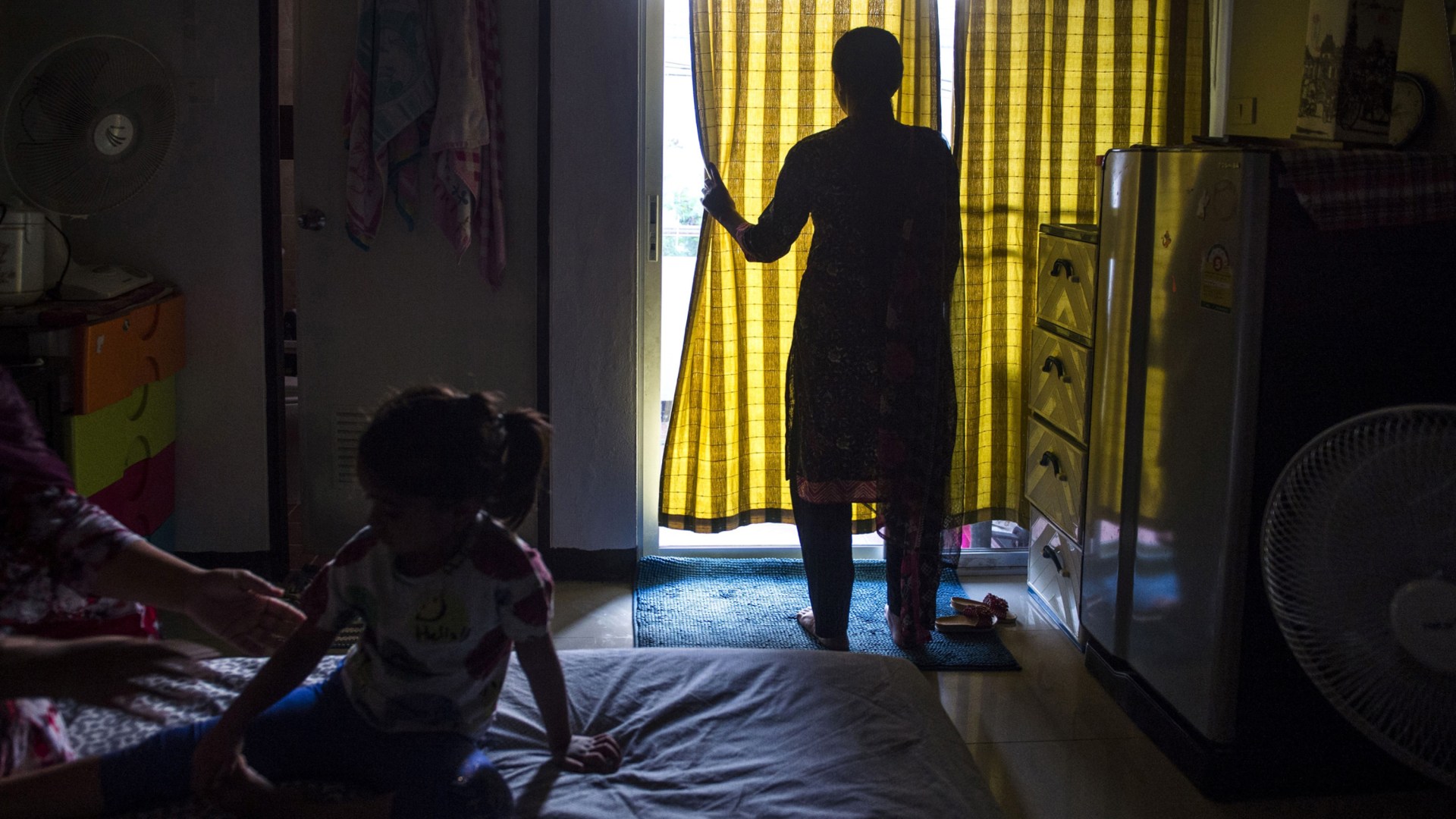
A Pakistani Christian asylum seeker and her family staying at an apartment in Bangkok, Thailand.

A Pakistani Christian asylum seeker and her family staying at an apartment in Thailand.

Christianity Today March 28, 2025
Romeo Gacad / Getty

Omar, a Pakistani asylum seeker in Bangkok, remembers the moment he fully understood the precarious nature of his situation. He was 16 and riding his bike home from church when Thai police officers picked him up, stuffed him in a taxi, and brought him to a detention center. For seven hours, Thai officers interrogated, slapped, and humiliated him.

Omar had escaped Pakistan, where his family was persecuted for associating with Christians, at the age of nine. His family went to Thailand, the closest country where they could easily get visas, but overstayed their visas as they sought refugee status at Bangkok’s office of the United Nations High Commissioner for Refugees (UNHCR). They hoped for a chance to one day resettle in a different country. As they received help from Christians, the family converted from Islam to Christianity.

Pakistan is the eighth most dangerous country for Christians, according to the 2025 World Watch List. Violating the blasphemy law could lead to a death sentence. In 2023, thousands of Muslims set fire to four churches and vandalized the homes of Christians over claims that two Christians had desecrated the Quran.

For the next 13 years, Omar’s family shared a 15-by-17-foot room, navigating the challenge of being unwanted guests in the Southeast Asian country. Thailand is not a signatory of the 1951 UN Refugee Convention, meaning refugees and asylum seekers are treated as illegal immigrants until their resettlement. As a result, Omar’s father spent years in the city’s notorious Immigration Detention Center for holding an expired visa. Christianity Today agreed not to use Omar’s real name or details about his family due to fears of detainment and questioning by police.

Police eventually let Omar go, yet the subsequent COVID-19 lockdowns and the terror of being caught by police kept him from stepping out of his home for the next three years. “I got PTSD. … I was so afraid,” Omar said. “What if they come? What if they see me? What if they’re downstairs?”

He contemplated ways to end his life and prayed that he wouldn’t wake up the next morning. As he had stopped going to school, he idled away his time playing video games and contemplating his life. He had nearly lost all hope when an American woman from his church came to his family’s home to pick up some sewing from his mother. With her help, he began to step back outside—working out at the gym, finishing his GED, and returning to church.

Across the world in a small town near Amarillo, Texas, Mike and Kathie Jackson had spent the past 11 years financially and emotionally supporting Omar’s family and seeking ways to help them get to a safe country. Since befriending Omar’s father while visiting their daughter’s family in Bangkok, they have partnered with Freedom Seekers International (FSI), an organization that seeks to rescue persecuted Christians. They’ve written to senators and the US State Department, contacted agencies, and even helped Omar’s family apply to resettle in Canada.

Yet none of these avenues have worked. Omar’s family faces an additional challenge: While they initially received UNHCR refugee status, several years later the organization revoked it after disputing the details of the family’s claim.

Last year, when the State Department began allowing US citizens to form local sponsorship groups to help specific immigrants resettle in the US through the Welcome Corp, the Jacksons immediately applied. With the help of their church, First Baptist Church Canyon, they raised $2,500 per member of Omar’s family, filled a garage with donated furniture, and talked to community members about hiring Omar’s father and sending Omar and his siblings to West Texas A&M University. FSI would help fund an additional three months of the family’s resettlement after they arrived. In June, their application was approved, and all that was left was for the family to wait for an interview in Bangkok before they could arrange a flight to the US.

But in January, the Trump administration suspended the US Refugee Admissions Program and, a month later, terminated the Welcome Corp program.

“Our hopes got shattered again,” Omar said.

For other persecuted Christians FSI is trying to help, Trump’s pause on refugee resettlement has had even more dire consequences, including for 50 Afghan Christians whom the group is moving from safehouse to safehouse in Pakistan to elude authorities who would deport them back to Afghanistan.

At the same time, FSI has also been working to help 100 Christians from Central Vietnam who have escaped to Bangkok get resettled in the US. Five of these families from the Montagnard ethnic minority had sponsors and, like Omar’s family, were going through the Welcome Corp process to be resettled in East Texas.

“We’ve already submitted [applications],” said Deana Brown, founder and CEO of FSI. “We have funding. We have places for them to live. We have vehicles. … Everything’s ready. We’re just waiting for the program to run.”

But then on February 23, Thai officials arrested a group of Montagnard Christian refugees in Bangkok as they attended a memorial service organized by the wife of Y Quynh Bdap, Montagnard activist and founder of Montagnards Stand for Justice (MSJ). His extradition case is going through the Thai court system. The Vietnamese government labels MSJ a terrorist group.

In the group of arrested Christians, three families—a total of 16 people—were part of FSI’s cases.

Currently, the Thai government is holding 48 Vietnamese Christians in Bangkok’s Immigration Detention Center, according to Tim Conkling, an American missionary who partners with FSI.

The center suffers from “severe overcrowding,” a 2024 report found, while former detainees report abuse, lack of hygiene, and limited health care. Among the Vietnamese detainees are four children, an elderly couple, and three pregnant women—including one who gave birth in the detention center on March 22.

Since these Christians’ detention, a local church agreed to raise bail money, which costs about $1,500 per adult, for 23 of them. FSI worked to raise bail for the rest of the group, and the Center for Asylum Protection, which provides legal support for UNHCR refugees, is facilitating the applications of the guarantors for the refugees and the payment of the bail money.

Beyond bail money, the groups also need to provide money to support the refugees since they won’t be able to work—if they are caught working illegally, they will be thrown back into the detention center, and the bail money won’t be returned.

This week, FSI and the other groups were able to raise the bail money for all 48 individuals. Now the groups are waiting for their guarantors’ paperwork to be accepted and the refugees to be released.

Brown, who voted for Trump, said she believes the administration is making these changes to the government “to get a better hold of what [the US is] doing as to be the most productive and the best for all around.” But at the same time, she’s disappointed in the ending of the refugee program and believes the government is “doing stupid.”

Some believe the Trump administration’s apparent lack of concern for international human rights and refugees has led Thailand to give in to the demands of neighboring countries like China. In late February, Thailand deported 40 Uyghurs back to China, where the ethnic minority is severely persecuted, despite protests from the US, including Secretary of State Marco Rubio.

Conkling believes the Vietnamese Christians’ arrests may be the result of current geopolitical conditions and the potential for a windfall for local authorities from the bail money.

“It looks to me like a financially motivated raid …[that] was furthered by the fact that the Thai government knows now that the US ain’t going to be there to help refugees,” he said.

Since Welcome Corp ended, the Jacksons and members of their church have sent letters and petitions to their senators, their congressmen, and Rubio to get Welcome Corp started again so they can bring Omar’s family to the US..

“We have seen the harm and what’s happened with all the illegal immigration,” Kathie Jackson said. “But the more you disapprove of illegal immigration, the more you should push and approve legal immigration.”

The Jacksons believe Welcome Corp was the best program available to refugees and asylum seekers. It’s cheaper than Canada’s resettlement program, the refugees go through vetting, US citizens sponsor the refugees and raise their own funds—at no cost to the government—and communities come alongside the newcomers. “People [have] invested and have raised funds, and they’ve prayed over it [and] provided furnishing,” Mike Jackson said. “There’s a lot going on in the community to try to make this happen.”

Recently, Omar said his friend’s dad, another Pakistani asylum seeker, died from a heart attack on the way to the market. It made Omar realize the futility of his life in Bangkok. “There’s just no life for us here,” he said.

Omar said he is hanging on to Isaiah 60:22, which says, “At the right time, I, the Lord, will make it happen” (NLT). He adds, “I hope it happens fast.”

“I can’t give up,” Omar said. “I’ve come a long way. I’ve been through a lot of suffering [and] hardship in my family. But I’ll try my best to do the best with my life.”

Correction: An earlier version of this article had the wrong last name for the Jacksons.

Books
Review

Religious Violence Has Nothing on Secular Violence

People have killed in the name of faith. But the bloodier record belongs to regimes that tried blotting it out.

A sickle and hammer splatter with blood
Christianity Today March 28, 2025
Illustration by Christianity Today / Source Images: WikiMedia Commons

Among proponents of a more secular society, it is often taken for granted that religion makes people worse. Not for nothing could Christopher Hitchens subtitle God Is Not Great, his diatribe against organized faith, with the phrase How Religion Poisons Everything. While we may, with good reason, push back against many of Hitchens’s assumptions, he was tapping into a popular cultural framework that blames religious belief for a host of ills and injustices. Within certain circles, religion’s supposed poisonousness amounts to an article of faith.

Therefore, it was a pleasant surprise to find a scholar willing to challenge this presumption, as Thomas Albert Howard does in his recent book Broken Altars: Secularist Violence in Modern History. Howard, a professor of humanities and history at Valparaiso University, undermines the common argument that the further from faith society moves, the less violent it will become.

Pointing to the practices of self-consciously secular regimes in the last few centuries, Howard posits that, far from being less prone to persecution, those movements and governments are, if anything, more likely to employ oppression and lethal force against ideological enemies. This is an unpopular claim. Many in the West today, Howard says, prefer to see the ideologies behind secular violence as wrongly implemented rather than inherently wrong.

In a sense, this book is a useful counterpart to several recent works challenging the secular paradigm that religion begets harm and destruction. Authors as varied as sociologist Rodney Stark, historian Tom Holland, and apologist Glen Scrivener  have highlighted the positive role of religion in building society. Howard, for his part, looks at the opposite side of the coin. Broken Altars investigates 18th- and 19th-century movements to build a literally godless utopia, showing what really happened when their architects came to power and put their ideas into practice in the 20th century.

Simply put, once leaders compelled cultures to abandon God, the result was anything but a heaven on earth. Often enough, the reality was closer to hell.


Now, to be clear, Howard is not suggesting that religious people have always been saints. The Crusades, jihads, and other wars of religion were real. “By no means,” Howard writes, “do I deny that religious energies—particularly when tied up with ethnic identities and economic scarcity—can be turned toward destructive ends, especially by unscrupulous politicians in times of crisis and uncertainty.”

This is sadly true. After all, as I write this, stories are coming in from Syria about massacres by Islamists against rival Muslim groups, ethnic minorities, and Christians. Still, in that same paragraph, Howard remains clearheaded about the bloodshed resulting from antireligious energies:

In terms of sheer numbers, the misery, deaths, and destruction visited on religious communities by secularist regimes in the twentieth century vastly exceed the violence committed during early modern European wars of religion, which are routinely invoked to legitimize the necessity of the modern secular nation-state.

Or, put another way, the claim that secular regimes are intrinsically more peaceful and tolerant has no basis in historical reality.

The structure of this book is quite straightforward. There is a lengthy introduction, which should by no means be skipped. That chapter, even simply the latter section entitled “Difficult Words, Complex Realities,” may be worth the purchase price on its own. It has one of the finest and richest explanations I have encountered of secularism and its ongoing hostility toward religion.

Eventually, the book proceeds into four chapters that detail how secularists in the 20th century (and to a lesser degree the 19th) inflicted their ideologies on religious groups of all sorts. While Howard makes passing reference to the predations of right-wing dictatorships and conservative monarchies during this period, he mainly focuses on left-leaning and overtly Marxist movements in places like France and Spain, the Soviet Union, Cold War–era Eastern Europe, and Asia’s Communist nations.

But these case studies rest atop an earlier chapter where Howard advances one of his key insights: that not all secularists are cut from the same cloth. He does not view all forms of secularism as equally dangerous. Specifically, he lays out three types flowing from a common source. His introduction, rather than beginning with the Enlightenment, looks to the early 19th-century world of post-Napoleonic Europe as the cradle of secularism in its contemporary sense. “Confronted by a Restorationist order after 1815 intent to reassert the time-honored relationship between throne and altar … leading proponents of modernity offered three principal ways of making sense of and indeed solving the religiopolitical dilemma.”

Howard classifies these varieties of secularism as passive, combative, and eliminationist. The first is what you might see in the United States, the broader English-speaking world, and a few European nations. In this passive secularism, there may be a formal separation of church and state (as in America) or a functional one (as in Britain), but governments are likely to see religion as a partner rather than an opponent. Since there is little to no violence in such contexts, Howard spends almost no time on them.

Under combative secularism, religion is neither friend nor partner, but it doesn’t rise to the status of mortal enemy. This is what you might call the French model, implemented most notably in the French Revolution and in the secularizing movements of the early 20th century in France, Mexico, and Turkey. As the name suggests, combative secularism could be and often was violent, but its motive was removing or evading obstacles to state goals rather than destroying them outright.

Eliminationist secularism is exactly what it sounds like. Here, religion is not an ally or even just something to be avoided. It is a deadly enemy, even a rival faith, which threatens the people’s loyalty to the state and the grand cause of human improvement. This means that those who refuse to join the revolution and abandon their faith are not simply tolerated dissenters but enemies of common sense, justice, and even humanity itself.

Within regimes that embraced such thinking, Howard writes, the endurance of religion was “a major embarrassment, a worrisome sign of the failure of theory, not to mention a rival source of moral judgment and a breeding ground for political dissent.” Surely this goes some way toward explaining why 20th-century Communist regimes persecuted believers with such intensity.

In Howard’s second chapter, “Secularist Onslaughts,” we get perhaps the most unexpected part of the book. We are used to hearing stories about Marxist oppression of Christians in Russia and China. It is not so common, however, to hear accounts of official antireligious overreach in places like France—the land of “liberty, equality, fraternity,” as the 18th-century revolutionary slogan had it. Yet France has a rightful place in the history of combative secularism. In the late 19th and early 20th centuries, French authorities harshly curtailed the role of religion in public life, employing legal harassment and propaganda campaigns. Such practices endure, to some extent, under the principle of Laïcité, the idea that people are free to be religious but faith should be private and not public.

Following in France’s footsteps, Spain, Turkey, and Mexico went several steps further, imprisoning and executing religious leaders. The overriding motivation for these regimes was less a purely ideological hatred of religion than an impulse to assert the supremacy of secular state plans over the prerogatives of religious institutions.

The following three chapters, which chronicle Marxist efforts to stamp out religion from Lenin’s rise to the Berlin Wall’s fall, form the core of the book. Here, Howard covers somewhat familiar territory. Nonetheless, even for those who grew up with stories of Communist atrocities, it is important to hear them again. After all, it can be easy, from our vantage point, to dismiss these horrifying anecdotes as relics of Cold War propaganda.

But Howard does a great service by pushing readers to see clearly what actually happened under regimes animated by eliminationist secularism. Citing examples from different nations and time periods, he shows conclusively that Leninist and Maoist governments bore an implacable hatred for religion. They were not content merely to limit religion to “freedom of worship,” where people were free to practice their preferred rites in the privacy of their homes and congregations, so long as their faith didn’t intrude on state sovereignty. The point was to eliminate that faith entirely.

Howard’s account of Marxist persecution helpfully stretches beyond Christians to include other religious groups. Muslims, Buddhists, and Jews may have faced less wrath than Protestant, Catholic, and Orthodox believers, but this probably owes to their smaller number more than any special tolerance by rulers in Moscow, Beijing, and elsewhere. Most intriguingly, Howard suggests that the rise of Islamism across Central Asia can be explained, in part, as a reaction against the eliminationist secularism practiced in the Soviet Union—along with an imitation of its most brutal methods.

In his conclusion, Howard reemphasizes that combative and eliminationist secularisms are not the same thing. Nonetheless, he notes some telling commonalities. “In addition to authoritarian tendencies, exponents of both often possessed an unflappable certainty about being on the ‘right side of history’ and confidence in the tutelary capacity of the modern state, exorcized of obscurantism, to subdue and/or manage dissenters.” The often-violent hostility of secular states was not fundamentally a reaction against abuses and corruptions among religious leaders or ordinary people of faith. It flowed, instead, from an objection to religion in and of itself.


There is little I can criticize in Howard’s work. While a basic knowledge of the historical landscape is helpful in following his narrative, he writes in an accessible manner that won’t plunge ordinary readers in over their heads. At the same time, Broken Altars contains much to interest scholars of politics, history, and religion. The book is rich in illuminating factoids that pair nicely with its larger perspectives on secularism past and present.

Hypothetically, it would be interesting to have Howard explore possible parallels between Marxist tyrannies and the other totalitarianisms of the 20th century. After all, many observers contend that Nazis and Fascists had more in common with Leninists and Maoists than either side would like to accept. But a reviewer shouldn’t complain when an author writes the book he or she wants to write rather than the book the reviewer might have preferred. And in Howard’s defense, one of his concluding points is that many American and European academics have avoided looking too closely at the way their fellow secularists committed atrocities.

Howard is a careful scholar who neither overhypes nor undersells his project. Broken Altars is an important addition to conversation on a vital issue. It should benefit anyone—religious or secular—looking to better understand the bloody 20th century and the shadow it casts on our world today.

Timothy D. Padgett is theologian in residence at the Colson Center. He is the author of Swords and Plowshares: American Evangelicals on War, 1937–1973.

News

Most Who Switch Religions End Up with None

Global study finds Christian decline, especially in high-income countries.

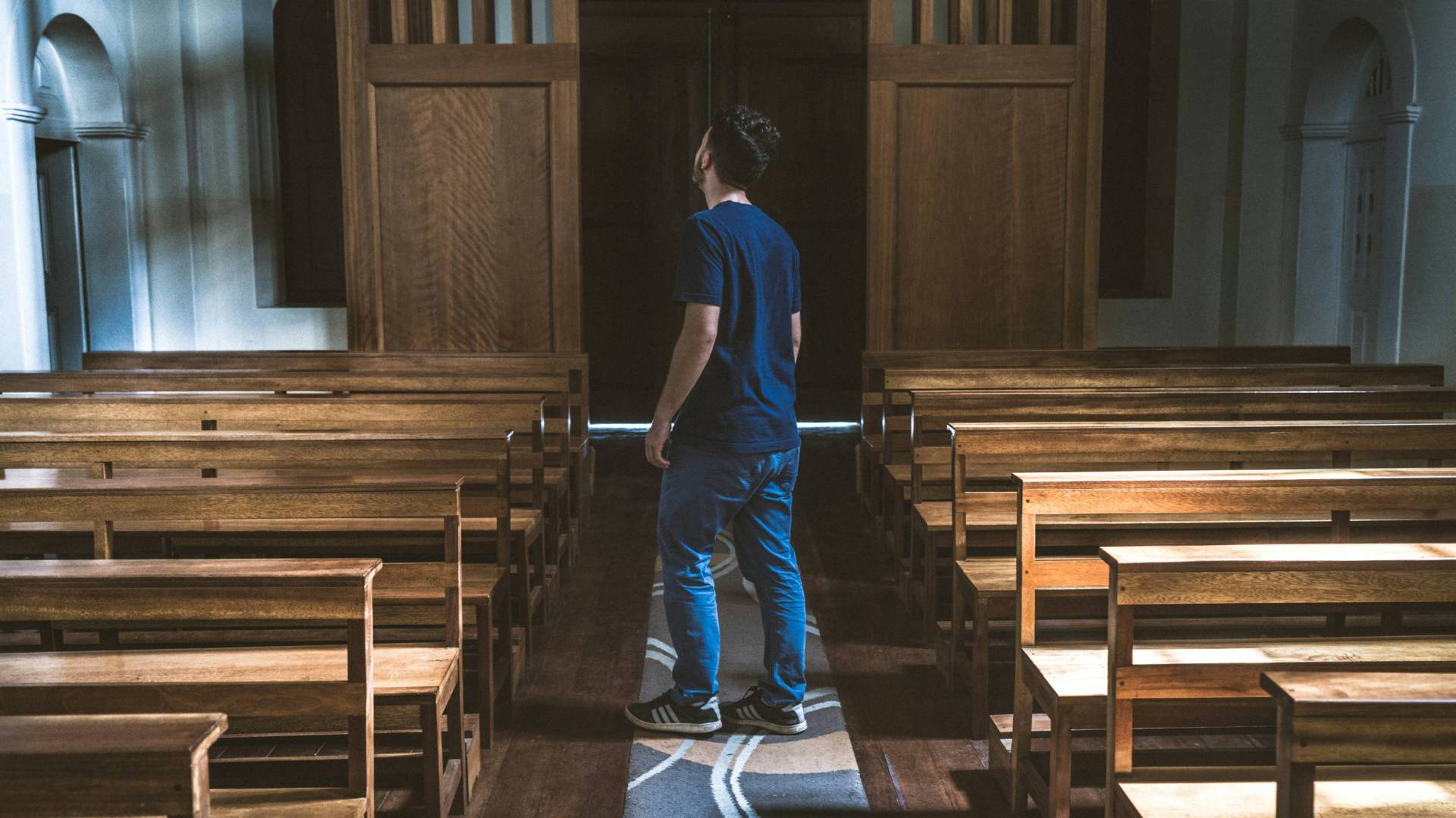
man standing in empty church
Christianity Today March 28, 2025
Danique Godwin / Unsplash

Around the world, millions of people have traded the religious traditions of their upbringing for no religion at all.

In countries across Europe, the Americas, and East Asia, between 20 percent and 50 percent of the population has switched religions, according to a report out this week from the Pew Research Center. In most cases, they are now unaffiliated.

Over a third of adults in Spain and more than a quarter of those in Sweden, Germany, Canada, the Netherlands, the UK, and Australia are former Christians who are no longer religious. The US is not far behind at 19 percent.

While the survey doesn’t indicate when people left—whether they dropped the Christian label recently or long ago—Americans recognize the trajectory. US churchgoers have seen friends and family leave over disillusionment, deconstruction, and hurt, with some speaking out as part of the exvangelical movement. 

But other places have their own contexts for religious switching.

Among the 36 countries in the Pew survey, Christians in Sweden and fellow European countries had some of the lowest retention rates. In Sweden, 4 in 10 adults who once identified with the faith—often due to membership in the national church—now consider themselves atheists, agnostics, or nothing in particular.

Scandinavia ranks among the most secular regions in the world, where “religion was something simply left behind in the process of becoming an adult. The leaving of religion was something hardly memorable and of little personal significance,” Swedish scholars wrote in a paper out this month on religious deconstruction.

Yet a small network has emerged among Christians who had a different experience leaving Sweden’s minority churches, including charismatic, Pentecostal, and Evangelical Free.

“The stories told in the podcast Exvangeliet (and other similar podcasts) give a radically different picture of what it might mean to leave a Christian community in Sweden. The stories narrated are full of anger, bitterness, anxiety, loneliness, and grief,” scholars wrote. “Podcasted stories highlight that it is also the case that the ‘secular Swedes’ have little understanding of religion and the struggle of leaving a religious community.”

In Sweden and in the Netherlands, 30 percent of the population was raised Christian but left the faith, far exceeding the small percentage of non-Christians who joined.

“In many countries surveyed, more people were raised as Christians and have left Christianity than have become Christians after being raised in some other tradition or without a religious affiliation,” according to the report. “In other words, Christianity has experienced an overall or ‘net’ loss in adherents due to religious switching in many places.”

Pew researchers wrote that the trend around net losses for Christianity “is especially strong in many high-income countries.”

Singapore is one exception. Church growth in Singapore is outpacing the departures, with three Singaporeans becoming Christians for each one who leaves the church.

Pew found that in most places, people across generations were about as likely to report religious switching, although younger adults were more likely to disaffiliate from faith in several countries, including a handful in Latin America.

Leaders with the Lausanne Movement have cited previous Pew projects on the global rise of the religious “nones,” writing that new evangelistic approaches are needed “to address the issues related to religious disaffiliation and secularization behind it.”

In countries where Christian identity has fallen, church leaders face the challenge of convincing their secular neighbors to return to the fold. Niklas Piensoho, a Pentecostal megachurch pastor in Stockholm, sees the lingering cultural Christianity among the disaffiliated as a potential point of connection.

“My first step in talking with people here in one of the most secularized countries on earth is not what most might expect,” he told Outreach Magazine last year. “Among average people in Sweden, we still have strong connections to Christian ethics and values—such as providing for the poor, helping those in need and supporting people who are vulnerable. My first step is to look for what I can affirm.”

Correction: The figures in the chart of unaffiliated former Christians by country have been updated.

Theology

Paula White Gets Passover Wrong

Contributor

The televangelist misappropriates God’s promises to ancient Israel in Exodus as a prosperity gospel for today.

Paula White speaking in front of a pink screen
Christianity Today March 28, 2025
Edits by CT / Gage Skidmore, WikiMedia Commons

Paula White is a pastor, the television host of Paula Today, the president of Paula White Ministries and the National Faith Advisory Board, and the leader of the White House Faith Office. This week White released a video encouraging Christians to celebrate Passover in order to unlock seven supernatural blessings. Calling the Passover season “one of the most exciting, life-changing, miracle-working seasons of the whole year,” White identifies seven blessings from Exodus 23:14–30 for those who align themselves with God’s desires.

According to White, God will (1) “assign an angel to you,” (2) “be an enemy to your enemies,” (3) “give you prosperity,” (4) “take sickness away from you,” (5) “give you a long life,” (6) “bring increase and inheritance,” and (7) “give a special year of blessing.”

Before I weigh in on this list, I must say I agree that the Old Testament Scriptures are relevant for the church. Passover holds huge significance for our faith, marking the time when God delivered the people of Israel from their oppression in Egypt. Christians are invited (though not commanded) to observe this feast and the others listed in Exodus 23. But to suggest that keeping the Passover automatically unlocks supernatural blessings is deeply problematic.

First of all, God does not promise to send an angel to those who keep the Passover in any age. The first verse in question is God’s message through Moses addressed to the Israelite community as they prepared to leave Mount Sinai and travel to Canaan. In fact, of all the instructional material in Exodus, the section on angels (23:20–33) has a clear expiration date.

Following chapters of laws that would govern God’s people for centuries to come, verses 20–33 address the more immediate question of how the Israelites would complete their journey to the land of Canaan and what they should do when they arrive. God promises to send an angel to guide that particular generation through the wilderness to the Promised Land. In no sense is this a personal promise of protection to individuals—either then or now. Its central concern is to prepare the Israelites to smash the idols of false worship that pollute the land of Canaan.

Ironically, one of the central questions of Exodus 33–34 is whether Yahweh will accompany the people from Mount Sinai. Moses persistently intercedes for God’s forgiveness after the people’s sin with the golden calf. His deepest desire is for God himself to accompany them (33:15–16).

When God announces that he will send an angel instead of accompanying the people himself, it is a concession—not as good as his actual presence, but a bit safer since they were so rebellious and might incur God’s judgment along the way (33:1–3). Moses is determined not to rest until God agrees to accompany them directly, so for an angel to lead them instead would have actually been a grave disappointment.

By promising an angel of protection to her viewers, White misses something even more important. As members of the new covenant, believers in Jesus have the treasure of God’s presence daily in the person of the Holy Spirit, who provides us with guidance, accountability, and protection. Because of Christ’s sacrificial death, we have already been rescued from sin and death, and we now have God’s own presence with us. Nothing more is needed, either to protect our present or to secure our future.

Second, White promises that God will “be an enemy to your enemies” (Ex. 23:22). Again, God is speaking directly to the ancient Israelites and using language typical of ancient treaties to signal his promise of loyalty in battle. Even then, God qualifies this promise later on. When Joshua encounters the angel of the Lord, the captain of heaven’s armies, on his way to Jericho, the angel makes clear that God is not ultimately beholden to anyone (Josh. 5:13–15).

As always, the right biblical question is not whether God is on our side but whether we’ve aligned ourselves with his purposes. Celebrating the Passover didn’t automatically mean Israel would win every battle. Their military victories depended entirely on their paying close attention to God’s instructions and demonstrating absolute obedience (see Ex. 23:21–22). In fact, shortly after celebrating the Passover in Joshua 5:10–11, Israel loses the battle against Ai (7:3–5).

Third, White says God will bring people prosperity. Exodus 23:25 reads, “his blessing will be on your food and water.” But let’s think about this: Bread (or some other staple) and water are the bare minimum a person needs to stay alive. The way White talks about God’s blessing, one would think God had promised a grande iced coconut latte with extra whip or a fine steak dinner with roasted asparagus and a premium bottle of wine.

In other words, God didn’t promise his people an elite lifestyle. He ensured them the basics—bread and water.

White goes on to list other blessings as well: God will “take sickness away” (see 23:25) and “provide an increase” (see 23:30). She says God will “give you a long life” (see 23:26), which is not what the text says at all. To say God will “fulfill the number of your days” (v. 26, author’s translation) implies that God will ensure that your life is not cut shorter than he planned. Your life is in his hands.

Perhaps the most baffling of the blessings that will supposedly be unlocked by celebrating the Passover is the “special year of blessing” (see 23:29). Here, God explains that the people will not have immediate victory over their enemies in the land. Instead, he says he will drive out the other nations “little by little” (v. 30) so that the wild animals don’t overtake the areas of land that the Israelites are not yet ready to occupy.

This suggests the Israelites need to be ready for a long, hard slog during which they will continue to live in tents and forage for food and fight battles and wait for the ultimate fulfillment of God’s promises. I doubt many of them would look back on that first year in the Promised Land as “a special year of blessing.” In fact, that was the year they would learn how to wait and trust. They learned the hard way how essential it was to obey God’s commands. They wondered if this new place would ever really feel like home.

In short, Exodus 23 is not a timeless set of universal principles available to any individual in any age who wants to access God’s blessings. It is a specific set of instructions for the Exodus generation, preparing them for the unique and unrepeatable event that involved coming into the land. And although we can learn about God and his purposes from reading Exodus 23, we are not the audience of this message. We cannot simply retrofit it to access supernatural blessing today.

The blessings White rattles off in the video are problematic in many ways, but her website takes it to the next level. There, White identifies the two keys that will unlock these blessings: (1) placing the blood of Jesus over your household and (2) giving to her ministry.

The first is by analogy with the blood of the Passover lamb, described in Exodus 12—where those who painted lamb’s blood on their doorposts came under the Lord’s protection when the destroying angel came through Egypt on the night of the Passover.

By trusting in Jesus for salvation, believers and their households are under the protection of his blood. I have no quibble with this particular analogy. The New Testament authors make the same parallel (1 Cor. 5:7–8).

But White subsequently co-opts another verse from this chapter to raise money for her own ministry. In Exodus 23:15 (and Deut. 16:16), God warns the ancient Israelites not to appear at the tabernacle at festival time without an offering. White must have seen an opportunity here.

She has already appealed to people’s desire for health and prosperity. In a classic televangelist move, White suggests that those who want to experience God’s seven supernatural blessings today in this special Passover season should give to Paula White Ministries. She writes, “Honor God during Passover with your best offering, I believe He will release His blessings over your life.” This is a bridge too far.

Her message is a familiar one: Prosperity is yours for the taking. All you must do is write a check, and you’ll have heaven’s armies backing you up. The self-absorption of White’s vision for the Christian life fits hand in glove with the rampant individualism that fuels our consumer society. It’s the American dream with biblical background music.

But that vision is frighteningly selective. Where is the surrender? The commitment to faithfulness? The keeping of promises? The willingness to die to ourselves? The radical hospitality? The giving to others who cannot repay? Where is the intolerance for idolatry? The deep solidarity with the most vulnerable members of society, including immigrants, widows, and the fatherless?

White’s vision appeals to the self-centeredness in each one of us, offering self-actualization and self-fulfillment in the name of spirituality. In her way of seeing the world, God is at our beck and call to carry out our purposes.

For example, White held a prayer vigil during the 2020 election in which she dispatched angels of Africa and South America to come swiftly to Washington to prevent the election from being stolen from Donald Trump. She prophesied victory for him then, although Joseph Biden went on to win the election.

The version of Christianity White has on offer is little more than a narcissistic form of consumer capitalism under a thin guise of religion. Don’t like the hand you’ve been dealt? Declare and decree a brighter future! Claim that promotion! Cancel that diagnosis! Step into your destiny! Self-denial and service are only attractive options if they can become a photo op to inspire more donations.

White’s website is soaked in Western consumerism, offering Paula-themed gifts in return for donations to her ministry. The longer version of the Passover video, available on her website, has White sitting at a bistro table on the church stage with two “Paula” mugs on the table next to her Bible. In other words, Paula White Ministries is what happens when a lifestyle influencer becomes a national church leader.

By contrast, the way of the Cross doesn’t sell or promise us earthly blessings—yet it’s the way into which we have all been called, come what may.

Carmen Joy Imes is associate professor of Old Testament at Biola University and author of Bearing God’s Name, Being God’s Image, and a forthcoming book, Becoming God’s Family: Why the Church Still Matters.

News

The 700 Water Filters Caught in a US–Honduras Immigration Fight

A Christian ministry can’t access supplies following a spat over the future of deported immigrants and a military base in the Central American nation.

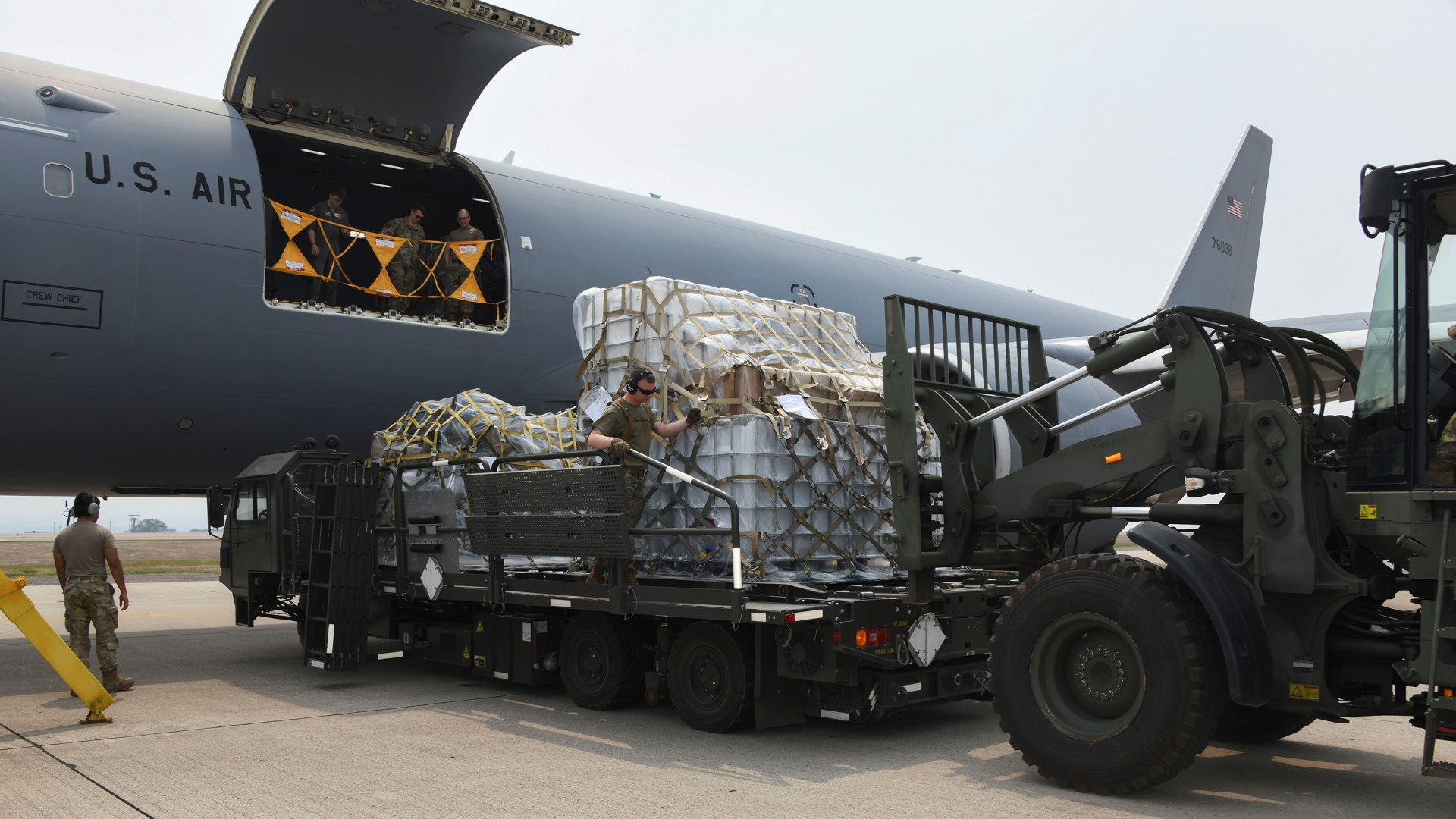
Airmen offload almost 26,000 pounds of cargo at Soto Cano Air Base in Honduras.

Airmen offload almost 26,000 pounds of cargo at Soto Cano Air Base in Honduras.

Christianity Today March 27, 2025
Martin Chahin / Air Force

A Christian ministry in Honduras has waited nearly two months to receive 700 water filters, 300 desks, and school supplies for 200 students. But the goods aren’t stuck on the side of the road or lost at sea. 

Instead, they’re sitting 10 miles away in the city of Palmerola, at a storage facility in the largest US military base in Central America. It is this site, Soto Cano Air Base, that the Honduran government threatened to close in January after hearing that the US might begin deporting undocumented immigrants back to the country.

In February, just days after the shipment arrived, the Honduran government informed El Ayudante, the Christian ministry, that it would not allow the cargo to be cleared even though staff could easily make the drive. 

“It’s frustrating to be so near and not be able to collect the cargo,” said executive director Tristan Mohagen. 

Honduran president Xiomara Castro said on January 1—before President Donald Trump took office—that the country would have to “reconsider our cooperation policies with the United States, especially in the military sector” while “facing a hostile policy of mass expulsions of our brothers.”

“For decades, they have maintained military bases on our territory without paying a single cent,” she said. “In this case, those bases would lose all reason to exist in Honduras.”

These statements were a response to the plan of mass deportation of undocumented immigrants mentioned by President Trump in speeches during last year’s electoral campaign.

Honduras’s ambassadors to Mexico, Guatemala, and the US met with Castro following Trump’s inauguration, but the government has yet to announce a new strategy. After weeks of silence, on March 20, Foreign Affairs Minister Eduardo Enrique Reina said that both countries have “started a process of very frank and direct conversations” about migration issues.

Honduran immigrants in the United States play a crucial role in Honduras’s economy. Remittances sent by Hondurans abroad to their families account for 25 percent of the nation’s GDP. A mass deportation of Hondurans living abroad would lead to widespread economic hardship for the local population, where 60 percent of the 10 million inhabitants already live in poverty.

El Ayudante, which started its ministry in 2004, has been working to address these  socioeconomic challenges in Comayagua, a city in central Honduras about 60 miles west of the capital.   

Its church and ministry partners in the United States regularly rounded up materials and resources and transported them to Honduras through the Denton Program, which allows nonprofit organizations to use empty spaces on military aircraft to ship humanitarian aid at no cost. The program is operated by the US Air Force and managed by USAID.  

Beyond the supplies in Soto Cano, additional goods remain in the United States while the ministry figures out a logistics plan. These supplies include a panoramic x-ray machine for dental care, wheelchairs, crutches, and medical equipment, which are currently stored in partner-organization warehouses in Illinois and Connecticut. 

In February, however, the ministry told its partners to pause collecting donations. Even if the issues related to the Honduran government are resolved, the USAID cuts, which suspended 1,600 of USAID’s public-service staffers and froze humanitarian aid programs, may end the Denton Program. 

Christianity Today reached out to the Department of State and the Department of Defense about the status of the program but did not receive a response.

Over the years, El Ayudante has received at least eight supply shipments through the Denton Program, said Mohagen. The initiative addresses one of the biggest challenges faced by US compassion ministries operating in Honduras: accessing equipment and materials larger than a suitcase. 

Since registering for the program, the ministry has received solar panels, which have reduced energy costs; computers, which El Ayudante donated to local public schools; and appliances, which are used in ministry facilities.

While ending Denton would not make El Ayudante’s work impossible, it would significantly increase operational costs, said Mohagen. 

El Ayudante had been counting on this equipment for its Comayagua clinic, whose staff of three doctors, three dentists, and a team of nurses treats around 15,000 patients annually. The desks are for local public schools, which El Ayudante had said it would deliver for the start of the school year at the beginning of February. “We promised, but we were not able to deliver,” said Mohagen. 

His biggest concern, however, is the missing water filters, which harness gravity rather than electricity to purify water. Given the region’s irregular water supply, many families rely on these filters for drinking and cooking.

Every year, El Ayudante hosts 28 short-term teams from the US that build churches and homes, install concrete floors in makeshift houses, set up latrines, and distribute water filters while supporting other ministry activities. The mission also runs a tutoring center that supports 180 high school students and offers scholarships to 20 college students. 

Combating poverty in Honduras is a core goal of El Ayudante, which operates under the vision “Changing Lives, Transforming Communities.” With this mission in mind, Mohagen remains optimistic that the humanitarian aid—especially the supplies already stored at the air base—will soon be cleared for delivery.

“The military doesn’t need that cargo taking up space,” he said. “We can certainly make good use of it.”

Culture

Yesterday, Today, and Forever 21

Contributor

Even the yellow plastic bags will someday fade. But the verse they shared is eternal.

A yellow Forever 21 bag fading away.
Christianity Today March 27, 2025
Illustration by Elizabeth Kaye / Source Images: Getty, Wikimedia Commons

As an adult, I’ve watched plenty of brands slowly sputter and die: the Toys“R”Us of my childhood, the Bed Bath & Beyond of my wedding registry, the Jo-Ann Fabrics where I purchased my daughter’s first sewing kit. Last week, Forever 21—site of many adolescent shopping trips, purveyor of iconic yellow plastic bags—announced it would be shuttering all US stores, citing online competition from brands like Shein and weak traffic at American malls.

This one hit different. The story of Forever 21 is also my story: a story of Korean immigrants, like my parents, succeeding in America. It’s a story of Christians making a mark on the world, imperfectly and sometimes even harmfully, and of God’s unlikely redemption.

Between 2005 and 2008, the number of Forever 21 locations doubled to about 400 worldwide, including the one at Bridgewater mall in New Jersey, where my friends and I hung out on weekends. Inevitably, we’d end up inside the sprawling, chaotic store, hugging armloads of low-waisted skinny jeans in the fitting-room line or clawing through unsorted boxes to score a deeply discounted, deeply wrinkled shirt.

My Korean American friends and I would ask each other proudly, “Did you know the owners are Korean?” And as one of the only Christians at our school, I felt an additional covert victory in knowing that the bottom of every bag was stamped with “John 3:16.”

The Fashion District of Los Angeles, where Forever 21 had its beginnings, is responsible for more than 80 percent of all made-in-the-USA clothing. Up to half of that industry, at least as of a decade ago, was Korean immigrant businesses. One anthropologist called it “the most important sector of the Korean American economy.”

Forever 21’s Do Won and Jin Sook Chang were the district’s reigning king and queen. Do Won Chang was just 18 years old when he arrived in the US from South Korea with empty pockets and a lick of English, working a cleaning job at a gas station.

“Whenever drivers drove nice cars, I’d ask them what job they had,” he said in a CNN interview via a translator. “They all said it was in the garment business. At the time, I didn’t even know what garment meant. I later learned that it was the clothing business. And that is how I went on to start my clothing store.”

His wife’s account of Forever 21’s beginnings is more spiritual; she was praying on a mountaintop, Jin Sook Chang said, when God told her to open a store. With just $11,000 in savings, the Changs did just that in 1984 on North Figueroa Street, closing out the year with $700,000 in sales. They eventually adopted a fast-fashion model and renamed their brand Forever 21—because, as Do Won Chang told CNN, “old people wanted to be 21 again, and young people wanted to be 21 forever.” Business was so good that a new store opened every six months, and the Changs cemented their status as the envy of the district.

The Changs could have been any of the hardworking, devout, success-driven Korean adults of my youth. When I lived in Los Angeles for a few years in my 20s, I met fellow churchgoers who also worked in fashion. They aspired to be like the Changs, savvy businesspeople and serious Christians.

Like my parents, the Changs arrived in America with almost nothing. They went to church every morning at 5 a.m. to pray. Do Won Chang kept a Bible open on his office desk. Their daughter Linda has said that, instead of taking vacations, the family goes on mission trips to Afghanistan, India, and Pakistan. They achieved an American dream infused with prosperity-gospel promise: Dream big, work hard, and God will bless you to be a blessing.

But you know what happens next. The prosperity gospel isn’t actually gospel. The same adults in my life who bought into the promises of a transactional faith—pray every day, and God will reward you with success—also seeded disunity in the church, pushed their children to the brink of burnout, and were largely absent from the lives of their families. I learned that an outward show of faith sometimes does not translate into a life of love and integrity. And good endeavors championed by influential believers get mixed up with newsworthy failures.

Investment mogul Bill Hwang, for example, another Korean Christian immigrant and once one of the wealthiest evangelicals in the US, supported Christian ministries around the world with about $600 million of his own wealth. He was also sentenced to 18 years in prison last November for mass market manipulation.

Likewise, Do Won Chang has been generous. In an interview, he said he brought corn into North Korea and personally handed out cobs to villagers. Asked why he was still working so hard even after becoming a billionaire, he replied, “I have never once thought of myself as a billionaire. Even today, I got here on a bus.”

But how well his faith overflowed into his company is another question.

As my high school self watched various local Korean pastors and church leaders get caught in adultery and embezzlement, the headlines documented a steady stream of lawsuits against Forever 21 for copyright infringement and underpayment of workers. In 2001, the company was accused of violating labor-practice laws and allowing some employees to toil in sweatshop-like conditions. The 2007 documentary film Made in L.A. highlighted the protests that happened as a result.

At least today, Forever 21’s website claims it is committed to ethical sourcing, worker rights, protecting the environment, and giving to charity programs like Boys & Girls Clubs. But such statements are no different from the ones from companies without Christian origins, like H&M and Old Navy and even Shein. In a culture that’s well aware of the detrimental impacts of fast fashion, it’s profitable (and trendy) to declare good intentions.

Of course, a statement is just a statement; it is easier to love with empty words than with costly actions. When asked in 2011 if the Changs’ Christian faith might conflict with the dubious ethics of fast fashion—ravaging the environment and adding to the sufferings of the world’s poorest people—Linda Chang responded curtly, “The faith of the founders is separate to the brand.” The John 3:16 stamp was “simply a statement of faith.”

As a teenager, I didn’t need Linda’s words to tell me that the verse on the bag was mere faith signaling. I had only to look at the skimpy tube top hanging on the rack to know it wasn’t biblical values that were first and foremost on Forever 21’s mind, or mine, when I purchased it. The company’s name elevated youthfulness and beauty, contrary to the wisdom that comes from numbering our days. Paired with that famous verse on its yellow bags, “Forever 21” implied that the eternal life proclaimed in John’s gospel was more like discovering the mythical fountain of youth than following in the steps of Christ. 

Many of my Christian friends from those adolescent days, fed up with the lack of integrity in professing believers and unable to live up to the standards themselves, left the church as they went off to college and entered the workplace. The polyester tops that went out of fashion almost as soon as we bought them were metaphors for the unending cycle of belief and betrayal in which we were trapped. In a consumerist culture, faith was one more worn-out garment that felt dispensable, stuffed into the bin like a discarded Forever 21 bag, gospel promise and all.

Somehow, my own faith persisted. Really, it was bits of trash—imbued with grace—that did it. At a youth group retreat one night, crouched on the floor, I asked God to give me some small proof that he really loved me. When I opened my eyes, there was a paper clip only a few inches from my face, sparkling in the dimly lit room, and I clutched it as a sign. Jesus said we needed faith as small as a mustard seed—for several years after that, I had my little paper clip, a reminder that God hears.

On another day, I listened, breath held, as a short-term missionary to Israel told us of standing on the very hill where Jesus once said, “Jerusalem, Jerusalem, how often I have longed.” A sudden gust of wind neatly tore a single page of Isaiah from the missionary’s Bible, sending it tumbling down into the streets below. I wondered. Did that page flutter to the feet of the one who needed it—and would we someday hear the complete story? A piece of air-bound litter helped me begin to see faith as something eschatological, something that reached into a new world I yearned for.

One evening, caught in a spiral of teenage angst and woe, I looked down through a haze of tears at the rumpled Forever 21 bag lying on the floor and caught sight of the words John 3:16. The Bible verse I’d read, memorized, and seen a thousand times since childhood opened in that moment like a door ajar. In the light that streamed from it, the words were no longer a badge of belonging or a tract to throw at unbelievers but a lifeline cast out to me as I floundered, drowning. This message is for you too. Here is the love you crave.

When asked why he put John 3:16 on his company’s shopping bags, Do Won Chang responded, “The love [God] gave us, by giving us his only Son, Jesus, was so unbelievable to me. I hoped others would learn of God’s love.” He could not have known how, years later in an attic room in New Jersey, God would answer that prayer for a distraught high school girl.

The theologian John Calvin tells us that our feeble attempts at prayer are perfected by the Holy Spirit. Our stuttering, childlike confessions and petitions are transfigured into fragrant incense before the throne of God. If that is so, can we say the same for our efforts at witness? Maybe heaven will tell of how other feeble, trashy attempts at the life of faith bore eternal fruit.

The end of Forever 21 means there will be no more yellow bags in America—and in many ways, that is probably a good thing. But I still hope that every morning at 5 a.m., the Changs will be at early morning prayer and that God will hear their cries. Long after the last Forever 21 bag has disappeared, the truth of John 3:16 will remain forever.

Sara Kyoungah White is an editor at Christianity Today.

News

Donated Clothes Still Being Sorted in Appalachia

Six months after Hurricane Helene, the flood of fast fashion has yet to recede.

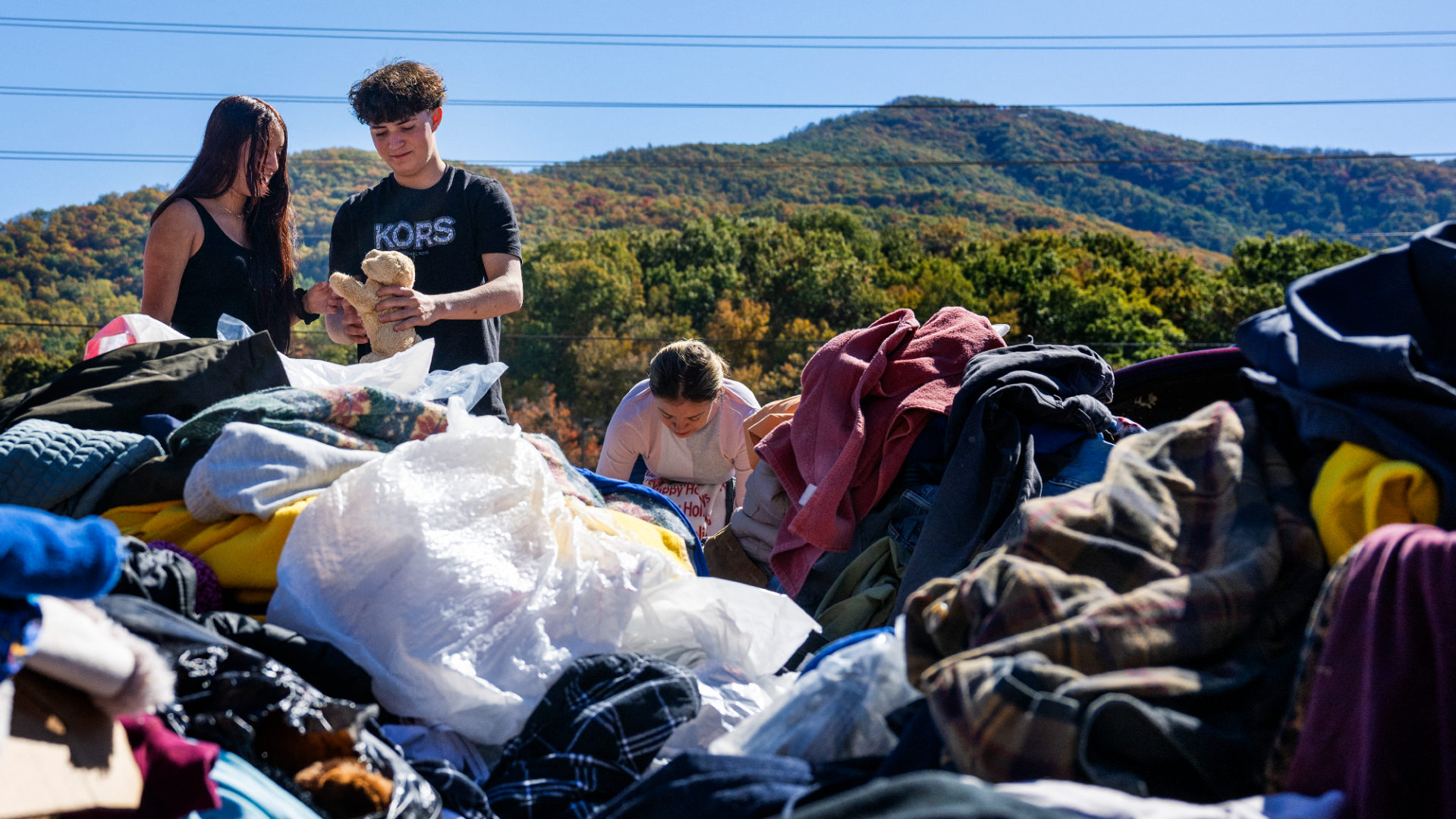
People in North Carolina sort through clothes after Hurricane Helene
Christianity Today March 27, 2025
Jim Watson/AFP via Getty Images

The water that flooded the Doe River when Hurricane Helene swept through East Tennessee has long since receded. The National Guard’s helicopters have come and gone. Cars full of eager volunteers no longer clog the roads. 

But six months after the disaster, First Baptist Church of Roan Mountain is still swimming in donations. 

“We’ve still got probably 10,000 toothbrushes,” pastor Geren Street told Christianity Today. “We’ve still got 20-something pallets of water bottles. I can’t tell you how much water we’ve given away, and to look out there and still see 20-something pallets? It’s crazy.”

Then there’s the flood of clothes. First Baptist had installed storage racks along the walls of a Sunday school classroom, and early on the church set up a semitruck trailer to take in all the donations. It’s not as full as it used to be, but it still holds bags and bags of clothes. 

“We’ve put a dent in it,” he said, “but we’ve still got work to do.”

Donations follow every natural disaster. People give, and give a lot. They are especially generous with old clothes. So generous, in fact, that the volume of donations can be overwhelming and create what experts call the “second disaster.”

Free clothes create complicated logistical problems. Where a toothbrush or a bottle of water can be given to anybody, a shirt or pair of pants has to fit. Sorting clothes and getting each item to someone who can wear it is much more more difficult.

Just storing the clothes until they are sorted can be challenging. At Unicoi County Care and Share, in Tennessee, donations quickly overran the small operation, so Care and Share asked nearby churches to take some bags. Soon the Unicoi Christian Church fellowship hall was full. The nursery was next. Volunteers piled bags into the space until it was stuffed floor to ceiling, wall to wall. 

“You physically could not enter the room,” said Ben Booher, executive director of Unicoi County Care and Share. 

The Christian benevolence ministry received donations from 25 different states—literally half the country. Booher posted lists of urgent needs online and got loads of cleaning supplies, hygiene products, and portable heaters that helped the ministry assist more than 1,000 households in 2024. 

The overflowing generosity meant volunteers worked nonstop. The organization saw a 371 percent increase in volunteer hours from 2023 to 2024.

“We kind of threw our normal hours out the window with Helene,” Booher said. “We were open 12 hours a day, many days in a row, just to respond to the need.”

But even with an experienced crew working extended hours, the onslaught of clothes was impossible to keep up with. It was more clothes than they could handle and more than people needed.

Booher recalled a box truck from Alabama, for example, arriving unannounced. It was full of winter coats.

“We don’t have that many people in the county,” Booher said. “Everyone would have four or five coats.” 

Another time, a woman drove all the way from Illinois in a Chevy Tahoe packed with used clothes. He couldn’t put them anywhere and had to turn the woman away. 

“There have been some people very mad at me,” Booher said. “I don’t want to say no, but at the same time … there have been points where we had so many clothes we couldn’t function as a ministry.”

An academic study of emergency management in America found a consistent “misalignment” between would-be donors and people in need. Donors told researchers they had seen the devastation on the news and wanted to help, wanted to feel they were doing something, but also saw giving as “purging with a purpose,” according to the study. 

Americans seem to give a lot of clothes because they have a lot of clothes. People buy an average of 53 new items of clothing every year, according to industry experts, and get rid of about 65 percent of them within one year. 

“Clothing has become so cheap in comparison to previous decades that we can afford to buy it unthinkingly,” said Dion Terrelonge, a psychologist who researches fast fashion and clothing consumption. “We have online shopping, next-day deliveries, free returns, pay later providers—everything is perfectly set up for us to meet and encourage our want for instant gratification.”

Between 1960 and 2018, US textile generation increased from 1.76 million tons to 17 million tons. A percentage of the excess clothing gets recycled. A lot—more than 10 million tons per year—gets thrown away. 

Trashing clothes can feel wasteful. Donating, in contrast, feels pretty good. People like to purge with a purpose—and they have a lot of clothes to purge.

Anthony Mullins, senior pastor at County Line Community Church in Chavies, Kentucky, said people have good intentions when they donate clothes but just haven’t thought through the whole process of dealing with them and considered whether their donations really meet people’s needs.

County Line Community Church became a main distribution site for donations after the flooding in Eastern Kentucky in 2022. Volunteers went through bags and bags of clothes. Mullins said some of the bags smelled bad from years of sitting in storage. 

“We would just have to throw those away,” he said. “I felt like if [the people hit by floods] had already lost everything, we didn’t need to give them something that wasn’t up to par. And we wanted to make sure they got good items and clean items.” 

According to Samantha Penta, professor of emergency management at the University at Albany in New York, most people who want to help after disasters would do more good if they gave money. Financial gifts can be redirected to the greatest needs or saved up to help people months and years after national attention has moved on. 

Donors often hesitate to give money, Penta said, for fear it will be wasted, misused, or even misappropriated. But money is used more effectively and efficiently than clothes or other goods.

“Find an organization with values that align to your own. Find an organization you can trust,” she said. “Do a little bit of that research now … and that way you can really have the biggest impact with your donation.”

In Western North Carolina, Asheville Buncombe Community Christian Ministry was able to use financial gifts that came in after Helene to buy heaters to distribute.

The ministry, which began as a collaboration between churches and today has the support of more than 300 congregations, was storing so many clothes at its four crisis centers that people had to turn sideways to walk through the buildings, said director of church engagement Chandler Carriker. Clothes pretty much filled up the ministry’s warehouse, too. But the money that people gave helped the most. It allowed the ministry to “act quickly and act directly,” Carriker said, and meet needs as they arose.

“Never think that a financial gift doesn’t come with the same sense of generosity, abundance, and faithfulness,” Carriker said. “It really does.”

In Unicoi County, Booher said Care and Share is transparent about its finances to reassure donors that every dollar is being used efficiently.

“We’ll gladly share our budget,” he said. “I’m happy to give everybody as much detail as they want—here’s what we bring in, here’s how it’s used, here are our plans, here’s our strategic plan.”

Care and Share redistributed donated funds to people who needed help with home repairs. Less than 1 percent of the 250,000 homes affected by the storm in East Tennessee carried flood insurance, according to state estimates, and an inch of water inside costs about $25,000 to fix. People who came to Unicoi Christian Church or Care and Share often didn’t need blouses, belts, or more T-shirts but money for drywall, plywood, or shingles.

Months later, Care and Share is still not accepting clothing donations. Booher hopes the remaining piles will be sorted and dealt with, one way or another, in the next month.

Up on Roan Mountain, First Baptist is still tidying up its grounds from the “second disaster.” The congregation recently turned a midweek Bible study into a church cleanup party. Volunteers took a bunch of the donations and donated them to Goodwill. One Sunday school room will continue to store clothes for the foreseeable future. 

Besides that, the Baptist pastor said, they hope to have the flood of donations cleaned up by Easter.

Theology

Don’t Deport the Constitution

Columnist

Criminals who are in America illegally should be sent away. But the rule of law, though fallible, must be preserved.

Hands in handcuffs
Christianity Today March 26, 2025
Illustration by Christianity Today / Source Images: Getty

This piece was adapted from Russell Moore’s newsletter. Subscribe here.

We should deport Venezuelan gang members and any other criminals who are illegally in this country. American Christians should not, and probably do not, object to that policy.

As Christians, we recognize that the most basic biblical justification for the existence of a state includes that state’s responsibility to uphold the law and protect its citizenry (Rom. 13:1–5).

And as Americans, we can see that our founders built into the constitutional republic of which we are a part the means for our government to do just that, to make sure the laws are faithfully executed. That means prosecuting dangerous criminals and sending those who are here illegally out of the country.

The what of that kind of deportation shouldn’t be in question, nor should the why. We ought, though, as both Christians and Americans, to recognize that we should also care about the how.

What alarmed me about the recent reports of the sweeping deportations of alleged members of the infamous Tren de Aragua was not that they were arrested or deported, nor was it, at first, about the questions of due process for these alleged criminals. Law enforcement is often charged with violating due process in some way or another, and usually these charges are met with government agents arguing why, on the basis of the law, they have the right to act as they did.

To some extent, that’s what White House border czar Tom Homan did when pressed by reporters as to whether the executive branch has the powers it is claiming under the Alien Enemies Act to deport these alleged offenders to an El Salvadorian prison. He said they do, and would fight for that right in court. That’s perfectly appropriate, and that kind of question is what courts were meant to discern.

What concerned me was what Homan said next.

To ABC News’ This Week, Homan responded to a question about due process with, “Where was Laken Riley’s due process? Where were all these young women that were killed and raped by members of TDA—where was their due process? … How about the young lady burned in that subway—where was her due process?”

Laken Riley, of course, was the nursing student murdered by an illegal immigrant. The cases Homan mentioned are all criminal and should be morally outrageous to any functioning conscience. The rhetoric here, however, confuses categories in ways that could have implications for much bigger questions of the size and scope of the state.

If your neighbor is apprehended by the police for running a meth lab in her basement, that arrest is a good thing. You don’t want to live in a society where laws against drug running are ignored by the authorities. Unless you are watching a Breaking Bad rerun, you probably won’t have any sympathy for meth dealers, nor should you.

But what if your neighbor’s meth lab is found not by suspicion of criminal activity, followed by a legal investigation of it, but by the fact that the government has installed secret surveillance cameras in every house?

If you object to this kind of unlawful spying without a warrant, someone might say, “What about the meth dealers we arrested? Are you pro-meth?”

Of course you’re not pro-meth or pro-murder. Your objection to a police state would be an objection to the government not following the law, even if the government’s lawbreaking led to some good results. In that, you would be recognizing one of the best aspects of liberal democracy: the idea that a people must give attention not just to lawful ends but also to lawful means, that what matters is not just what results we get but how we get them.  

Most of us take for granted that this system is just the way things have always worked. Some, such as journalist Jonah Goldberg, have argued for years that we ought to recognize what a miracle this kind of project is—a nation that operates not out of bonds of tribal loyalty but according to a system of laws accountable to the people, one that even protects the rights of the minority when the democratic majority wants to oppress them.

One very secular proponent of liberal democracy and constitutional republicanism argues that this “miracle” can be traced to at least one very unlikely source: Calvinism.

Francis Fukuyama wrote in 2017 that most of his fellow secularists discount the importance of the Protestant Reformation in the emergence of the modern state and that the Lutheran and Calvinist wings of the Reformation both contributed to the order we now take for granted.

Lutheranism added fire to the drive for mass literacy by encouraging the reading of the Bible by the laity. And in a later interview, Fukuyama said it was Calvinism’s “austere personal morality” that was crucial for eliminating corruption, especially “in the founding of modern bureaucracies in the Netherlands, in Prussia, in England, and in the United States.”

Fukuyama was not suggesting that Calvinism itself was (small l) liberal or (small d) democratic. Anabaptists—as they were fleeing Switzerland under threat of drowning by Calvinist magistrates for refusing to baptize their babies—would know that, as would Michael Servetus as he was led to the pyre for heresy.

Instead, Fukuyama argued that the kind of personal morality Calvinism emphasized ultimately led to something unnatural: an impersonal state. He continued:

I think in the end that corruption is a very natural thing. You want to help your friends, and you want to help your family. This idea that you should be impersonal and not steal on behalf of your friends or your family doesn’t occur to anyone unless they’re forced to do it. Calvinism imposed a kind of morality on its believers that was conducive to a strict order, in which you could tell bureaucrats that this is really wrong. Unless you internalize those rules, no amount of external surveillance is going to make people really honest.


Fukuyama is partially right. The “friend-enemy distinction” is indeed natural in this fallen universe east of Eden. That’s why, if we base our ethics, politics, or culture on nature, we will end up with something akin to the law of the jungle: those with the most guns or tanks win, and everyone else is subjugated.

That leads, by definition, to an unlimited and unrestricted state. It leads, and usually quickly, to a rule by bribery and intimidation in which criminality is defined not by what one does but by who one knows.

Only if one thinks there is something to which even the state is ultimately accountable—to a moral order that is about more than just who has the most votes—can one have a state that is in any way limited.

As Americans, we ought to care about the how and not just the what of any government action because we believe there’s a Constitution by which even the most popular notion must be constrained. As Christians, we ought to care about the means as well as the ends because we believe that rendering unto Caesar does not include recognizing Caesar as a god.

Venezuelan gangsters, Danish money launderers, Romanian human traffickers—we should prosecute them all, and remove from the country those who are here illegally.

But we ought to care how we do it. A liberal democracy slows down a lot of things we might like to do, but we will miss it when it’s gone. The rule of law is fallible, but it’s a good idea—one we can’t afford to deport.

Russell Moore is the editor in chief at Christianity Today and leads its Public Theology Project.

addApple PodcastsDown ArrowDown ArrowDown Arrowarrow_left_altLeft ArrowLeft ArrowRight ArrowRight ArrowRight Arrowarrow_up_altUp ArrowUp ArrowAvailable at Amazoncaret-downCloseCloseellipseEmailEmailExpandExpandExternalExternalFacebookfacebook-squarefolderGiftGiftGooglegoogleGoogle KeephamburgerInstagraminstagram-squareLinkLinklinkedin-squareListenListenListenChristianity TodayCT Creative Studio Logologo_orgMegaphoneMenuMenupausePinterestPlayPlayPocketPodcastprintremoveRSSRSSSaveSavesaveSearchSearchsearchSpotifyStitcherTelegramTable of ContentsTable of Contentstwitter-squareWhatsAppXYouTubeYouTube