Portrait of Antoine Davis
Testimony

I Went to Prison for Murder. God’s Word Brought Freedom.

After enduring brutality as a child and inflicting it as a gang member, I sought healing and wholeness at the cross.

Christianity Today March 18, 2025
Courtesy of Britteni Davis and Robert W Jensen / Edits by CT

My mother’s screams pierced my ears as I sat at the top of the stairs, holding my siblings for comfort.

My stepfather repeatedly slapped, slammed, and choked her until she was nearly unconscious. Between her cries and the shattering of broken picture frames, I struggled to keep my violently pounding heart from breaking through my eight-year-old rib cage.

Many of these fights resulted from my stepfather’s infidelity and blatant disrespect of my mother. Whenever she confronted him about coming home at three in the morning or sleeping with other women, he would respond with anger and aggression. On many occasions, she would apply makeup in the morning to cover the scratches and bruises on her face.

For years, my mother worked tirelessly at multiple jobs to provide for her family, giving everything she had to take care of her children. Unfortunately, she went months without knowing about the frequent beatings I was receiving in her absence.

Whenever she would leave for work, my stepfather would accuse my mother of sleeping with other men—an obvious projection of his own wrongdoing. Because I was a child from my mother’s previous relationship, he began accusing me of covering up her alleged affairs, despite the fact that I was too young to process the concept of adultery.

Ideally, home should have been a refuge from the harsh realities of life in the outside world. Instead, it became the source of my trauma. Beatings and brutal words were the norm. When my mother finally noticed the black-and-blue marks that decorated my body, she confronted my stepfather, only to be met with more of his brutish attacks, the consequence of his toxic masculinity.

Believing I had nowhere to turn, I suffered in silence, stuffing my hurts, pains, fears, and anxieties deep inside, trying to make sure my mother wouldn’t get punished for trying to protect me. I had no idea these traumatizing experiences would crack my internal mirror, distorting my view of reality and fueling a twisted sense of self.

Somewhere deep within me, I believed that God was real, but he didn’t seem relevant in my struggle to survive. I endured the feelings of emptiness alone, which set me searching for anything that would fill the hole in my heart.

Hanging with the ‘big boys’

The ceiling fan did nothing to clear the cigarette smoke that filled the air. Beer cans and alcohol bottles covered the countertops, and no one seemed concerned about the three-year-old toddler wandering in the living room. I had just sat down at the black wooden table in the kitchen after being invited to play dominoes with my older cousins and their friends. Most of them wore blue bandanas around their heads and necks, indicating their affiliation with the Crips, a neighborhood gang based in South Seattle.

While Dr. Dre’s “The Next Episode” blared over the sound system, a spark from a clear blue lighter illuminated the tip of a brown cigar filled with marijuana. My cousin took a pull, holding the smoke in before passing the blunt around the table. When it finally reached me, I leaned back, expecting to be excluded from their smoke session.

When my older cousin, whom we called E-Tray, noticed my hesitation, he began calling me “Lil’ Chow Chow,” a knockoff of the kid rapper Lil’ Bow Wow, and everyone at the table burst into laughter. “What, you can’t hang with the big boys?” he asked, adopting a high-pitched voice meant to sound unmasculine.

On the surface, it was fun and games, but he didn’t know about my unhealed wounds of rejection, the deeply rooted insecurities I had developed after years of being abused by my stepfather. Although my 13-year-old conscience told me not to give in, my hunger for acceptance won out.

I took the blunt and placed it to my lips. Within seconds, I began coughing uncontrollably, as if someone had vacuum-sealed the air from my lungs. Nothing was enjoyable about that experience. But the unpleasant feeling of getting high was overshadowed by the cheers, fist bumps, and pats on the back I received from those around the table. When they passed me the alcohol, I took that too.

Gradually, the intoxication settled in, not merely from the drugs, but from feeling validated. For that reason alone, I kept smoking, determined to show the fellas that I belonged. In retrospect, I realize the insight of Proverbs 27:7, “To the hungry even what is bitter tastes sweet.” I was starving for love and acceptance, and this bitter introduction to drugs, alcohol, and gang association appeared to provide both.

Weary and unfulfilled

It was a little after 2 a.m. when I made it back to my duplex. Opening the bedroom door, I found my two-year-old son and his mother sound asleep. Before getting undressed, I emptied my pockets, pulling out a gun, some drugs, and money I had collected from the women I prostituted. Together, the items gave a snapshot of my life as my 21st birthday approached.

Sitting on the edge of the bed—still high from the pills I took earlier—I contemplated the road I was traveling. A lot had transpired in the previous four years. I had been shot at, held at gunpoint, and assaulted multiple times and had lost close friends to senseless violence during my high-school years.

I had gone from smoking and drinking to womanizing, pulling off bank scams, dealing drugs, and popping ecstasy pills—all intended to numb the pain of the lingering void I felt inside. I had the money and street cred I longed for as a 13-year-old, but none of these things provided fulfillment.

Compelled by my weary soul, I slid from the edge of my bed and onto my knees. While resting my head in my hands, I began praying to a God I had never met, speaking with an unexplainable confidence that he could fill the emptiness within me. After praying, I wiped the tears from my eyes, returned to bed, and fell asleep. But less than three weeks later, I would be caught in a situation that would alter my life forever.

It began with a devastating phone call from my son’s mother, who delivered the news that my best friend had been shot multiple times at an auto parts store. I squeezed the phone in tears as she related the details, exclaiming, “He might not make it!” The shooter had fired on my friends and me numerous times before, leaving 25 empty shell casings at one of the crime scenes. Despite our attempts to defuse the ongoing tension, which sprang from a senseless argument, he was bent on establishing his street credibility, even at the cost of trying to murder someone I loved.

Hours later, my friends and I prepared to take our revenge. We climbed into our Ford Taurus, one of us armed with an assault rifle and the other two (including me) carrying handguns. As the car stopped at a red light, pulling close to our target, we jumped out. Filled with grief and anger, one of my friends approached the other vehicle, firing multiple rounds in its direction.

When I lifted my handgun to join in, I thought about how often this man we were attacking had threatened my life. I thought about the friend I loved lying in a hospital bed after this man had shot him seven times just hours before. My 21-year-old mind was consumed by fear, pain, sadness, anger, and frustration. Mindlessly, I chose to squeeze the trigger. By the grace of God, my gun jammed. I didn’t realize that on the other side of those tinted windows was a two-year-old child.

Healing behind bars

Within a few days, I found myself lying on a concrete floor of an overcrowded county jail cell, watching the headlines flash across the screen of an old television hanging from the ceiling. Above the “Breaking News” of my capture was a mug shot, showing an intoxicated 21-year-old whose fuzzy French braids and glossy eyes fit the media’s image of a criminal.

I closed my eyes in disbelief, wondering how my life had been reduced to the label of murderer. As I contemplated my reality, a waterfall of depression poured from my chest into the depths of my bowels, and I felt overwhelmed by fear as I envisioned life in prison.

Getting up from my cot, I asked the young man in the cell for the Bible that he had offered and I had rejected, just hours earlier. I had always believed in God, but I had never considered what he required of my life. I was too angry and bitter, never realizing that my pain had become my prison, first figuratively and then literally.

This Hispanic kid handed me the blue book, with a warped partial cover. Beneath the title, The Message, were broken handcuffs torn from a man’s wrists, symbolizing the freedom I desperately wanted. For the following week, I lay on the floor, reading the Bible for hours. Its truths cut me like a surgeon’s knife, removing the moral cancer that nearly consumed my heart through years of trauma.

I felt exposed before God’s Word. It penetrated through everything I had used to hide my childhood scars. I saw the truth of my brokenness, pointing me toward the cross where God promised wholeness through faith in Jesus.

The night before I was extradited back to Seattle, I sat up wrestling with a series of questions. How can God love a murderer? How can he accept this flawed and fragmented person I’ve become? Can I come before him utterly broken and empty-handed? My heart ached for mercy and grace. Before long, I had dropped my head in prayer:

God, if you’re real, I want this new life you’re offering through your Son. Please forgive me for the things I’ve done, and give me the heart to be the person you created me to be.

In that dark jail cell, I wept until my eyes were swollen. This time, a sense of peace flooded my heart like water bursting through a broken pipe. I knew I was accepted—not by the men whose affirmation I once sought but by the God who held my life in his hands. From that day forward, I studied the Word of God like my life depended on it, and through my relationship with Christ, the holes in my heart began to heal.

‘Walk with me, Son’

On September 24, 2011, I was found guilty of all charges and sentenced to 63 years in prison. Before I was transferred from King County Jail to Washington State Penitentiary, I poured myself out before God yet again, praying that he would give me the grace to endure what he had in store for me.

I’ll never forget the words the Lord placed on my heart in that jail cell: “Walk with me, Son, and I promise to work it out for your good.” I didn’t fully understand the details of that promise, but I clung to him without compromise.

It’s been 16 years, and my imprisonment hasn’t been easy. But God has been faithful. After receiving my Certificate in Christian Leadership from The Urban Ministry Institute, I became a licensed pastor, working under the leadership of my senior pastor, Zachary Bruce Sr. of Freedom Church of Seattle. I’ve been privileged to minister to countless folks who have been hurt, broken, and overwhelmed by their traumatizing experiences. And I’ve watched the gospel message radically change the lives of fellow prisoners who, like me, were dismissed as irredeemable.

As a child, I never imagined that God would use someone as broken and messed up as I was. But I have found that even in the messiest lives, God can produce a message—if only we have the audacity to trust him. 

Antoine Davis is an incarcerated writer and journalist serving a 63-year sentence in Washington state. He is the author of Building Blocks: Curriculum for Creating Wholeness.

Culture

‘Severance’ Makes a Case for Suffering

The hit Apple TV series shows the limits of escapism.

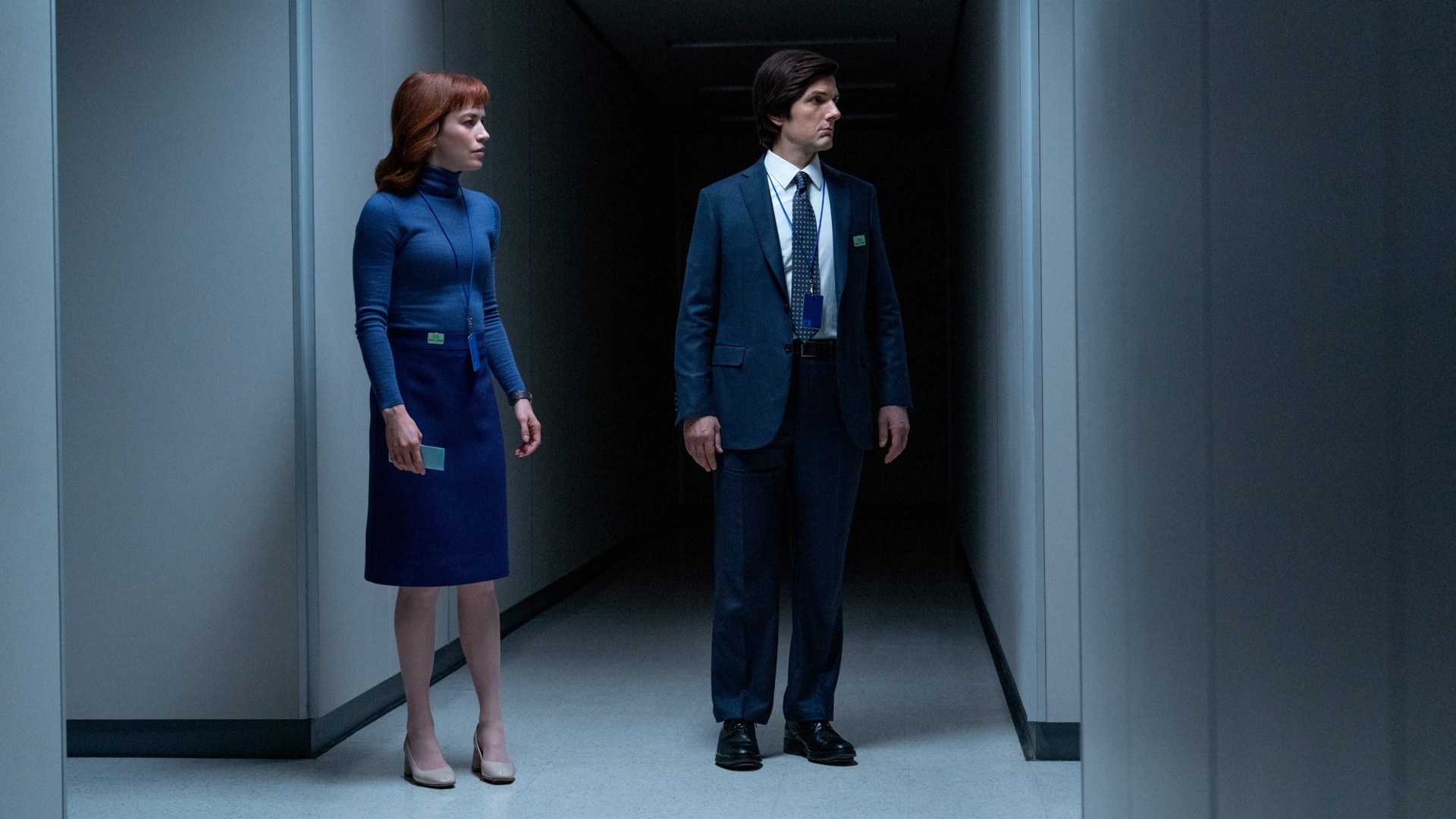
Britt Lower and Adam Scott in "Severance," now streaming on Apple TV+.

Britt Lower as Helly and Adam Scott as Mark in Severance, on Apple TV+.

Christianity Today March 18, 2025
Apple TV+

Mark Scout cannot bear the reality of his wife’s death.

When he’s alone with his thoughts, he ambles over to the fridge, cracks open a beer, and dozes off with the TV on. When he heads to the office, he sticks his phone in a locker, lets a security officer wave him down with a wand, and enters an elevator that activates a chip in his brain, cutting off his access to any memories outside his workplace’s basement.

This is the premise of Apple TV’s hit Severance, a mash-up of The Office and Lost, complete with a quirky cast, rich character development, and mysterious details that lend themselves to Reddit theories. (Warning: spoilers ahead.)

Few of us would trust a corporation to insert allegedly irremovable hardware into our skulls, bifurcating our beings into “innies” (work selves) and “outies” (life selves). But many of us have experienced heartbreak so profound it tempts us to drastic measures in pursuit of relief. “Do you ever think that maybe the best way to deal with a f—ed-up situation in your life isn’t to just shut your brain off half the time?” a minor character asks Mark in season 1. It takes most of the first season for him to really consider the question.

Mark’s reason for electing to undergo the severance procedure is sympathetic. But the show immediately disabuses its viewers of any naiveté; this technology isn’t just an innocuous reprieve for depression. Midway through season 1, we learn that severance has also been extended to those undergoing excruciating physical pain, like a woman who wants to avoid experiencing labor. In season 2, Lumon, the corporation behind the technology, is testing it as a means to avoid the uncomfortable (going to the dentist) and the inconvenient (writing thank-you cards). In a recent episode, we visit the hometown of the technology’s creator, a desolate village where Lumon once manufactured ether, the medical anesthetic and dissociative drug.

Severance fans have speculated for years about the nature of Lumon’s business. (Among the popular ideas: cloning and conscience transference.) But recent episodes suggest the corporation has a far more relatable objective: a distress-free world.

“We don’t want to experience anything unpleasant,” said Dichen Lachman, the actress who plays Mark’s late wife (and Lumon’s test subject) in a recent interview. “We kind of want to get on a prescription of not having to suffer.”

The Christian life both acknowledges the inevitability of suffering and offers consolation. “Do not fear, for I am with you; do not be dismayed, for I am your God,” says the Lord through the prophet Isaiah (Isa. 41:10). “I will strengthen you and help you; I will uphold you with my righteous right hand.” Of course, the presence of God does not mean a pain-free life—nor is pain always to be avoided. “We also glory in our sufferings, because we know that suffering produces perseverance; perseverance, character; and character, hope,” writes Paul (Rom. 5:3–4). 

Paul’s words emphasize just how long these excruciating seasons can endure. It’s no wonder that Christians too find escapist “fixes” appealing. I’m reminded of this quote from priest Henri Nouwen in his 1975 book Reaching Out: The Three Movements of the Spiritual Life:

Our culture has become most sophisticated in the avoidance of pain, not only our physical pain but our emotional and mental pain as well. We not only bury our dead as if they were still alive, but we also bury our pains as if they were not really there. We have become so used to this state of anesthesia, that we panic when there is nothing or nobody left to distract us. When we have no project to finish, no friend to visit, no book to read, no television to watch or no record to play, and when we are left all alone by ourselves we are brought so close to the revelation of our basic human aloneness and are so afraid of experiencing an all-pervasive sense of loneliness that we will do anything to get busy again and continue the game which makes us believe that everything is fine after all.

Nouwen lists prosaic coping mechanisms like hanging out with friends and reading and watching TV. Some of us have also turned to sex, alcohol, or drugs. As Christians, we might be prone to judge each distraction on its own merits, labeling some healthy, like in-person connection, and others unhealthy, like sleeping around or smoking pot. But harmful escapism can happen anytime we pursue solutions to suffering beyond what Scripture preaches as the path to peace. 

That journey always starts with drawing closer to God, as the psalmist reminds us: “Pour out your hearts to him, for God is our refuge” (Ps. 62:8). Over and over, Scripture insists we must turn to God when we are anxious, weary, and debilitated (Phil. 4:6­–7; 1 Pet. 5:7; Matt. 11:28).

It’s this kind of dependence that allows us to see deeper aspects of God’s character, as Paul famously reminds us in 2 Corinthians 12:9: “But he said to me, ‘My grace is sufficient for you, for my power is made perfect in weakness.’” For Christians, maturing in our faith and working through our pain often look like two sides of the same coin. “I want to know Christ—yes, to know the power of his resurrection and participation in his sufferings,” writes Paul in Philippians 3:10.

When we escape sufferings instead of participating in them, we pursue a kind of false relief—relief that neither positively forms our character nor helps us work through our underlying needs.

As we wrap up Severance’s second season, it’s clear that whatever “solution” Lumon has created for outies isn’t a solution after all. Debates about the personhood of innies run through the show; though a combination of outie self-interest and corporate objectives brought them into the world, innies emerged with their own thoughts, feelings, and desires. At times, their lack of agency triggers despair and even spurs one innie to try to end her own life. In episode 9, one innie who had briefly met his outie’s child and spent several hours with his outie’s wife as a reward for his work spirals after she ends things with him, enraged to the point that he decides to quit his job.

If philosophers and theologians posit that the human experience demands suffering, Severance both underscores and inverts this truth: Suffering demands a human experience. At Lumon, every attempt to rid one’s life of pain merely begets another human whose existence will be defined by that pain.

It’s like the billions of pounds of plastic waste that we’ve created and thrown away, ending up “everywhere from the Mariana Trench to the top of Mount Everest and from human breast milk to human blood,” said archaeologist Sarah Newman in a discussion of her book about the history of waste.

“The biggest myth about trash is simply that we talk about throwing things ‘away,’” she explains. “There is not, nor has there ever been, an ‘away’ for things to go.”

We know this, and yet we continue to produce and consume plastic even as it poisons us and our world. We understand this about hardship and pain, and yet, overwhelmed or devastated, we distract ourselves—and many of us would get severed if we could.

Henri Nouwen offers a different vision, one that goes beyond commanding us to avoid escapism, buckle down, and heal ourselves.           

“Nobody escapes being wounded. We all are wounded people, whether physically, emotionally, mentally, or spiritually,” he writes in a quote attributed to The Wounded Healer. “The main question is not ‘How can we hide our wounds?’ so we don’t have to be embarrassed, but ‘How can we put our woundedness in the service of others?’”

In the bleak world of Severance, this vulnerability remains elusive. In episode 8, Mark’s former boss and neighbor returns to her hometown and asks someone she used to know for a favor. In their first conversation in years, they hint at a traumatic relationship forged while working at Lumon as young children. But most of this reminiscence manifests as anger before the boss draws a line. “I’ll not be your punching dummy for your resentments,” she tells her old colleague.

He comes around to helping her out. But he doesn’t elaborate on the ways that the company has battered him emotionally. She doesn’t bare her soul about her grief over her mother’s death. Instead, he inhales ether. And then he hands it to her.

Morgan Lee is the global managing editor at Christianity Today.

Theology

Get Behind Me, Self

Columnist

Satan isn’t our only enemy.

A mirror with devil horns on it.
Christianity Today March 17, 2025
Illustration by Elizabeth Kaye / Source Images: Getty

It was one of those days where I needed every minute to go as planned. So, of course, the dog escaped from the yard and went missing. Two frantic hours later, she was safely behind the fence. I, on the other hand, was nursing a wrenched shoulder and a broken phone screen from the fall I took while trying to track her down.

In my head, I replayed the kind words of a woman who had emailed me earlier that week: “How can I pray for you? I’m sure someone like you is a target of the Enemy on a regular basis.”

Someone like me. I admit that as I lay on the sidewalk, clutching my smashed phone and staring up at the tree branches, the phrase “not today, Satan” had drifted through my mind. Was this an attack of the Enemy?

In recent years, I’ve noticed more Christians bringing up the work of the Enemy in conversation. Usually, it goes something like this:

The Enemy wants to keep you from doing the will of God.

The Enemy doesn’t want you to walk in abundance.

The Enemy wants to take you down. Stand firm!

When we instinctually evoke the Enemy, we convey that each moment and momentary struggle falls within a great cosmic battle against an unseen adversary in the spiritual realm.

Such battles sound stirring and epic. They sound far more exciting than the daily slog to subdue my need for approval or deny my own evil desires. Because of this, we may be too eager to attribute to Satan what might be more accurately attributable to our sinful nature or our broken world. 

To be sure, the Bible tells us that the spiritual realm is real and that our adversary the Devil prowls around seeking someone to devour (1 Pet. 5:8). But Scripture doesn’t name just one enemy but three: the Devil, the world, and the flesh (1 John 2:15–16, Eph. 2:1–3).

In the battle for holiness, all three members of this unholy trinity deserve our attention. If we devote our focus to only one, we will almost certainly unwittingly succumb to the others.

And emphasis matters. Christians always want to read and apply Scripture preserving the emphases it establishes. Which of these three combatants does the Bible mention most often?

The New Testament Epistles mention attacks of “Satan,” “the devil,” “the evil one,” and “the enemy” several times, but worldliness, fleshly desires, and sins of the flesh show up everywhere—expounded in lists, contrasted to godliness, warned against constantly.

Scripture positions the world as our enemy when we desire to make this world our home—when we long to store up treasures here, indulge in pleasure here, seek human approval here—instead of embracing the delayed gratification of a heavenly reward. It is the temptation to blend in or to shine gloriously here on earth.

The idea of the flesh as our enemy includes any desire to simply indulge what feels good to us, with no reference to how that indulgence might impact our neighbors or subvert our worship of God. Some of its most common expressions in the Bible are sexual immorality, greed, envy, jealousy, gluttony, malice, gossip, and slander.

In one sense, these three enemies are interrelated. All temptation finds its origin story in the first lie of the Serpent in the Garden. The Bible does say that Satan can tempt us to sin and persecute the church. Yet prayer requests around being “under attack” often involve normal frustrations, rather than temptations or true persecution like the kind depicted in Acts or Revelation.

Nearly any inconvenient circumstance—a flat tire, canceled flight, strained muscle, fraud alert from the bank—can send us into speculation that Satan himself is trying to derail our day. Insofar as these occurrences can tempt us to sin, perhaps he is.

Interestingly, when life moves smoothly without disruption, we do not perceive ourselves to be under attack. We tend to think (despite Scripture clearly indicating otherwise) that a life without frustration indicates being in God’s will. But perhaps nothing poses a greater temptation to self-reliance and self-righteousness than a life free of challenge and filled with markers of success. Such a life is its own potent form of seduction.
There is a saying: “Never attribute to malice what can be attributed to incompetence.” It means that we have a tendency to assume far more organization underlies any given threat or danger than is actually the case.

Given the New Testament’s relative emphasis on fleshly and worldly sources of temptation rather than supernatural ones, we might do well to embrace the wisdom of never attributing to Satan what can be attributed to our own fears, sins of omission, or just normal symptoms of life in a broken world.

Is Satan keeping me from getting my work done, or is it my lack of self-control? Is Satan sabotaging my marriage, or is it my selfishness? Is Satan stirring dissent in my church, or is Larry just kind of a jerk in member meetings? Am I under spiritual attack, or is this just the normal frustrations of life pressing on my own sinful tendencies?

It’s possible that a demonic presence is following me around, tempting me to worldliness or fleshly indulgence, or it may simply be, as James notes, that I am “dragged away by [my] own evil desire and enticed” (1:14).

Be careful not to bear false witness against the Devil. Because he would love that. He loves misattribution. He would love to hear us remember to pray against his schemes and forget to renounce worldliness or confess our sins. He would love to hear us pray a formula to bind the Enemy in Jesus’ name and dismiss the matter at hand with no thought for pursuing personal holiness.

Be careful to remember that the Devil is only one of three enemies to keep in view and that he’s not even close to being the headliner in the New Testament. Based on the relatively small emphasis he receives, it seems fair to conclude that the cross of Christ has, in fact, delivered on its promise to neutralize much of the spiritual threat he poses to the believer in everyday life.

For centuries, Christians recognized the power of the Cross and the impotence of Satan in their catechesis. In its very first question, the Heidelberg Catechism of 1563 taught the Christian to recite, “He has fully paid for all my sins with his precious blood, and has set me free from the tyranny of the devil. He also watches over me in such a way that not a hair can fall from my head without the will of my Father in heaven; in fact, all things must work together for my salvation.”

Do I believe today, as my spiritual forebears did, that I have been set free from the tyranny of the Devil? Because if I do, I will pull myself up off the pavement, dust the shards of glass off my phone screen, confess that bad word I said, acknowledge that I could have managed my schedule less tightly, and ask for patience to move through the rest of my day. I will take responsibility for my own role in a day gone sideways.

The daily slog toward holiness may not be as cinematic as an epic spiritual battle, but it is undeniably effective at its slow, transforming work.

I responded to that woman’s kind email with all the honesty I could muster: My enemy is me right now. And yes, I would covet your prayers. Next week, my enemy may be worldly approval or even spiritual attack. But more often than not, it’s just me getting in my own way, needing afresh the daily bread of God’s grace.

The world is our enemy because it offers us a false promise of the good life. The flesh is our enemy because we still succumb to its sinful habits, even as we are growing in our sanctification. The Devil is our enemy because the lie of self-rule is still as appealing as it was in the Garden. But we are those who have received Good News.

The Good News is that this world is passing away and Christ has overcome it. The good news is that our sinful desires can be put to death daily by the power of the Spirit (Col. 3:5). And the good news is that the Devil, already defeated at the Cross, flees when we simply resist. No epic battle required. Never underestimate daily faithfulness in small things.

Culture

Anchor Hymns Makes Old Things New

Drawing on centuries of hymnody, the songwriting collective asks the question “What else could we be singing about?”

Anchor Hymns
Christianity Today March 17, 2025
Photography by Olivia Buchanan

On a January morning in 2022, the basement of Church of the Redeemer, an Anglican church in a quiet Nashville neighborhood, smelled like food for the first time in months. Someone was preparing a meal in the kitchen. The church had been virtually empty since a funeral for the church’s pastor, who passed away in a car accident in August 2021. In-person services hadn’t resumed yet; everyone was tiring of virtual gatherings.

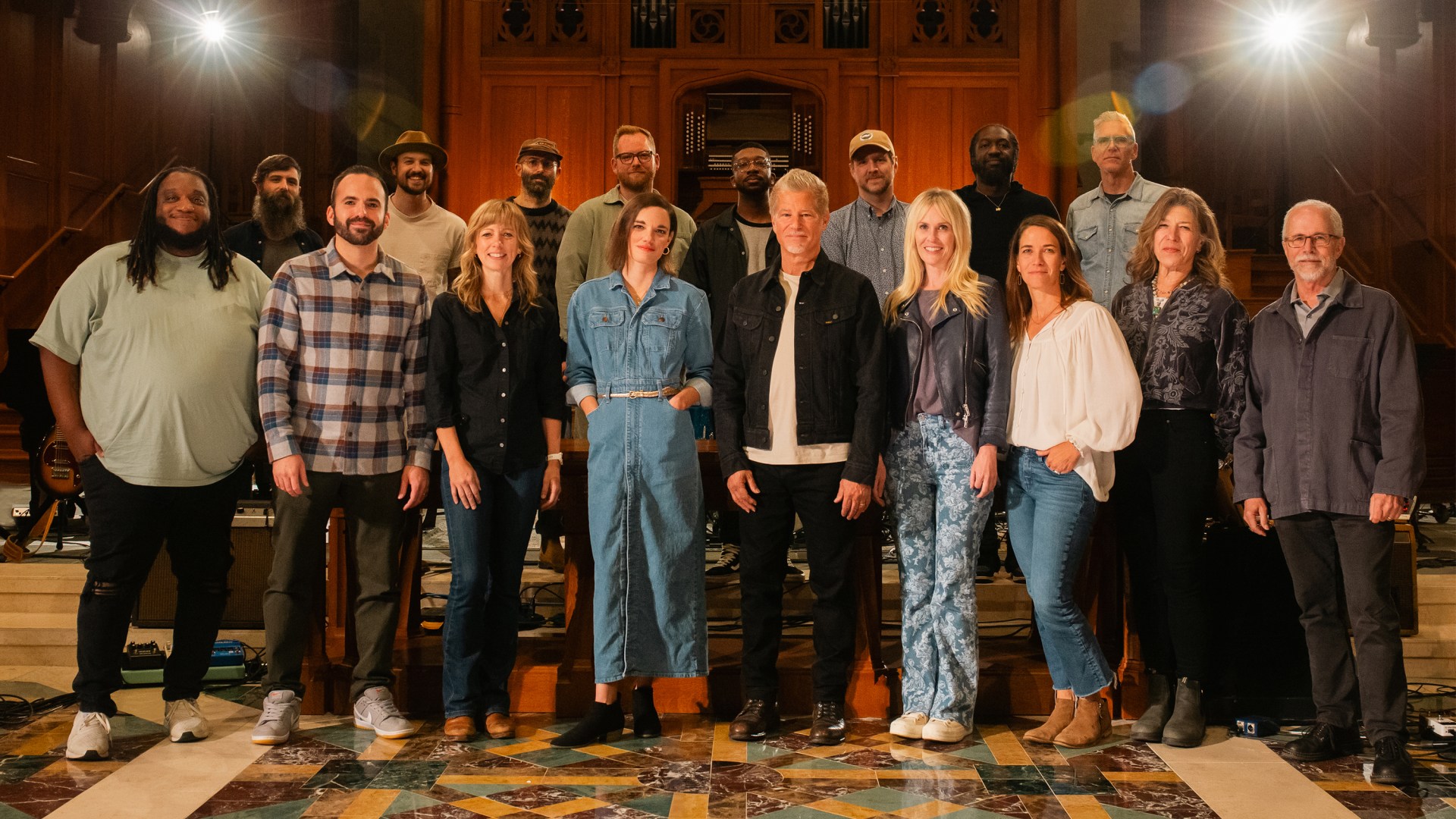
But now, songwriters were assembling in the basement, greeting friends they hadn’t seen much since before the 2020 pandemic. This intimate gathering was the first writing meetup of Anchor Hymns, a collective formed by singer-songwriter and producer Andrew Osenga, formerly of the Christian band Caedmon’s Call.

Anchor Hymns brought together a community of musicians that was still reeling from the isolation and uncertainty of the pandemic. Some were mourning the deaths of friends and loved ones. Others were coming to terms with lost friendships.

“We started talking about how a lot of our contemporary worship songs feel like pop songs, and you don’t sing pop songs at a funeral,” Osenga said. “So our prompt that afternoon was to write songs that could be sung at funerals.”

It sounds like a bleak beginning for a creative endeavor. But the tension of hope in the midst of pain has been a source of inspiration for Anchor Hymns. The group’s newest album, The Garden (Live) (releasing March 28), was recorded live at the Covenant School in Nashville at one of the first events at the school since the mass shooting that took place there in March 2023.

The group’s tagline, “songs that will outlast us,” nods to its mission to offer the church newly composed songs and newly arranged hymns that feel both historically rooted and forward-looking. Over the past three years, Anchor Hymns has released music featuring artists such as Sandra McCracken, Sarah Kroger, Paul Baloche, Melanie Penn, Mitch Wong, Citizens, Dee Wilson, Matt Maher, and Leslie Jordan.

CT spoke with Andrew Osenga, Sandra McCracken, and Sarah Kroger about what it looks like to write music for disorienting times and how hymns can help the family of God bear one another’s burdens. This conversation has been edited for clarity and length.

Andrew, you led the formation of Anchor Hymns in 2022. What was the animating idea behind the project?

Osenga: When I look at older hymns, I see a wide variety of songs on different subjects and in a lot of different musical styles. When I think about a lot of the songs that we sing today, I think we tend to sing about three or four subjects. We have a very narrow vocabulary in the church.

We’ve been able to look at what churches have been singing for centuries and ask, “What else could we be singing about?” What about songs about grief or different kinds of joy? Songs about sacrificial love, loving your enemy, death, giving, or missions?

McCracken: Early on, in a meeting before we even had a name for the project, we talked about how a lot of people we knew were leaving the church. We were drawn to the idea of having songs that would not just outlast us but that would reach out and welcome people who may not want to be there now but might find themselves wanting to be there again. That was the hope.

This group of musicians is pretty ecumenical. We come from different backgrounds, and we’re not all going to vote the same way or agree on one set of theological statements, but there are things we can sing together, and we’re trying to find those.

Kroger: As one of the few Catholics in the group, I felt connected to this idea of new hymns because Catholics have a rich history of hymns in our own church. There are a lot of hymns that are specifically Catholic and others that fall into the Protestant category, and there’s not a lot of cross-pollinating. There are a few hymns that have crossed the barrier— “Be Thou My Vision,” “Come Thou Fount”—but I didn’t know “Great Is Thy Faithfulness” until I was an adult. And that is sad to me because it’s such a stunning song. 

So for me, this project was an opportunity to cross-pollinate a little bit, to use these beautiful texts as inspiration and make something new that includes all of our voices and perspectives.

Sarah, what do you think the Catholic tradition of hymnody and liturgy offers that could enrich some of the worship practices of American evangelical or nondenominational churches?

Kroger: As I’ve become friends and collaborators with people in Protestant spaces, it’s been awesome to have conversations about what unites us. I also recognize that Catholics have valuable traditions. For example, every Catholic church has a crucifix. Christ’s death is right in front of you. We have whole seasons centered on death. Right now, we’re in Lent, where we’re reminded that “you are ashes and to ashes you shall return.” We’re not afraid of thinking about suffering.

There’s also a rich history and tradition of silence in Catholicism. We’re not afraid of silence in our liturgies either. Which is not to say that all Protestants are—but I do think in the American church there’s a lot of filling every moment with something.

The past few years have brought what appears to be a surge in interest in hymns and hymnals. It seems there is a cycle in American evangelical culture of periodic returns to hymnody or more historically rooted worship practices. Why do you think hymnody—new or old—might be capturing the interest of some American Christians right now?

Kroger: I think the reason why I have been drawn to hymns more recently is because they connect me to this rich history of believers. I think about all the people who have sung these songs for centuries, some melodies literally since the beginning of the church.

To think about all of the people who have had joyful moments with these songs, wrestled with faith through these songs, and lifted these songs up in their own journeys—it is grounding and edifying for me to recognize that I’m a part of something bigger. And to add my voice to that history is really special.

McCracken: I think the disorientation of our time causes us to reach for things that are either nostalgic or connected to the past. And I think people want the sung theology of hymns; they are like sung gospel.

Hymns have a way of bringing us back to truth beyond just our own emotions. I think hymns do that more than some of the contemporary worship music that is more singularly emotive. Hymns tend to tell a wider story as you move through different verses that each have their own inflection.

Osenga: I don’t mean this in a cynical way, but I think that in a world where so many things feel like products, where we get our new songs from the radio or from a marketing email, there’s something about a song that we know existed before a marketing machine or a record company. There’s an inherent trust. We trust its motive in a different way.

I also think there’s a way that God speaks through melody and memory together, even beyond a lyric. These melodies have been passed down through generations. My grandfather had a very different theology than I do, but we believed in the same Jesus and are loved by the same Jesus. And I have these memories of him singing. There’s power in that.

The new Anchor Hymns album, The Garden (Live), was recorded at the Covenant School, where a shooting took place the year before. How did that impact the recording and the content of the album?

Osenga: Sandra’s husband was working at the school at the time and was hosting a conference for worship leaders, pastors, and theologians. We were invited to participate and [we] asked if we could record. The conference wasn’t a Covenant event, but we were trying to be really conscientious and bring songs about God’s hope and faithfulness. You couldn’t shake the fact that we were in the space where it happened.

McCracken: Everyone was certainly still reeling from the event. On the recording, you’ll hear “Great Is Thy Faithfulness,” and we had planned to sing it but didn’t have time to rehearse. Now when I hear that recording, I can hear strength, and I can hear God’s faithfulness in a moment in a room with bullet holes in the glass that a lot of people didn’t want to talk about and maybe still don’t want to talk about. And that’s okay.

What does it mean to sing in these holy, sacred moments when there is disorientation? When I hear that recording, I can hear all these layers, the way the voices are reverberating in that room with that community. It’s a confession, and a communal one. I’m so grateful for it.

Kroger: Thinking about that moment, singing “Great Is Thy Faithfulness” in that beautiful church, and about what everyone was carrying, I remember that there are times when I’m participating in the hymn, physically singing it. And then there are times when the weight of what I’m carrying is just too much and I need other people to sing it for me. That’s what hymns offer us: this experience of community. Sometimes you’re participating, and sometimes you’re being carried. That’s the beauty of hymns.

Osenga: I think everyone has their own idea of what a hymn is. For most laypeople, a hymn is an old-fashioned church song, and their idea of a hymn is different from the next person’s idea of a hymn because their “old-fashioned church” is different from the next person’s.

So I think some of what we really mean when we talk about singing hymns is standing together and hearing each other sing about God. It’s not like being at a concert; it’s hearing from our neighbors. It’s hearing from my dad, and my kid, and my third-grade teacher over there, and my neighbor, and the guy I don’t like, and the person I don’t know.

Sometimes they need to hear me, and sometimes I need to hear them. Sometimes I’m fully believing it, and sometimes I’m coming in asking them, “Please help me believe it.” Sometimes as I hear my friends sing it, I realize I needed to know that they believe it, because that helps me know that I believe it.

That’s what we’re talking about: carrying each other. It’s not necessarily even that we’re wanting an old-fashioned song. I think it’s that we’re wanting the experience of just being together and hearing one another, walking side by side. In our culture, there’s so much noise. We don’t hear each other anymore.

Church Life

Can an E-Book App Address a Theological Resources Gap?

Churches, ministries, seminaries, and universities around the world struggle to access Christian material. BiblioTech wants to help.

Christianity Today March 17, 2025

Since Amazon released the Kindle e-reader in 2007, e-books have surged in popularity. But the features that make the technology convenient also hinder its appeal.

Much of the world still has slow or spotty internet service, like the rural Philippines, where American missionary and avid reader Nikki DeMarco Esquivel lives and runs her nonprofit, Mercy House. There, an e-book typically takes more than five hours to download, if it doesn’t fail altogether.

Logistical challenges are also common in Africa, said Philip Hunt, president of Central Africa Baptist University in Zambia. While urban areas may have internet access, many people lack smartphones to connect to it. With more than 60 percent of Zambians making less than $2.15 a day, buying iPads or dedicated e-readers is both difficult and costly. Additionally, many Zambians don’t have bank accounts, making e-payments impossible.

South African pastor Samuel Ndima recalled his seminary days when popular library books were often unavailable, forcing up to six students to share a single book for assignments. He noted that a new, high-quality laptop from brands like Dell or HP can cost around 8,000 rand (roughly $440 USD)—nearly twice the average monthly income in his community, where few can afford broadband internet.

E-books could alleviate these situations, including Ndima’s current need for Bible study material for small groups at his Baptist church in the Western Cape.

Scholar Leaders, an organization that invests in theological leaders across the globe, works to overcome the obstacles that hinder widespread e-book access, especially to Christian publications.

Last year, the ministry launched BiblioTech, an initiative it hopes will allow more Majority World Christians to access publications and journals that would otherwise be too costly or hard to access. The partnership with US Christian publishers such as Baker, Eerdmans, Langham, Fortress, Crossway, WJK, Regnum, and InterVarsity gives seminaries in poorer countries access to commentaries and pastoral training resources via a mobile app.

As it embarked on the project, Scholar Leaders first had to address publishers’ concerns over digital piracy. This often occurs when readers legally buy e-books but then pass them along to others for free. Many of the protections that publishers try to install, such as digital rights management (DRM) software, can be overridden or removed within minutes with instructions that can easily be found online.

“The ease of digital file sharing in Eastern Europe, combined with less established intellectual property norms, leads to widespread unauthorized distribution,” said Polish publisher Aleksander Saško Nezamutdinov. “When one customer shares an e-book, we permanently lose multiple potential sales.”

Alfonso Triviño, CEO of Spain’s largest Protestant publishing house, said he has been dismayed to find full PDF versions of books from Christian publishers circulated widely on digital apps and even loaded into the portals of some churches.

BiblioTech uses advanced encryption technology in its DRM software to curb piracy. That level of protection has increased publishers’ confidence in BiblioTech, said Scott Watson, director of acquisitions at Scholar Leaders’ Theological Book Network.

Programmers also had to create a “lite” tool that would work on lower-end devices in places without reliable internet connections. BiblioTech has an app for Android phones and tablets and Windows and Mac computers. Its iPhone app is still in development.

“If it were easy, someone would have done it already,” said Watson.

BiblioTech incorporates machine translation on the platform for Spanish and Portuguese readers and is working on integrating French. Other languages, including Arabic, Hindi, Chinese, Russian, German, and Korean, may be added in the future. To build out these language features, Watson said, designers had to incorporate “user-friendly machine translation into the app” while protecting the translated literature from becoming fodder for large language models, a type of artificial intelligence, which would violate the authors’ intellectual property rights.

Using machine translation—rather than professional human translation—required the BiblioTech team to weigh its commitment to literary excellence in relation to the needs of the Majority World church. Professional human translation provides advantages, especially in the nuanced and specialized contexts of theological literature. But because of the high cost of professional human translation and the need to apply those high costs across each work that is being translated, machine translation will still have a tremendous impact with regard to accessibility for BiblioTech’s partners.

Despite the hurdles, Watson has been encouraged by the positive reactions from publishers and partners in software development.

“It’s obvious that all these friends really do share a fundamental missional commitment: They want to get good Christian literature into the hands of under-resourced pastors worldwide,” he said. “I feel like we’re all in this together … which is how kingdom work should be.”

BiblioTech is being tested with Scholar Leaders’ partner schools in Sri Lanka, Guatemala, Philippines, Lebanon, Nigeria, Palestine, Ethiopia, Ivory Coast, Ukraine, India, Egypt, and Brazil and will be available to additional schools later this year.

The program’s success with supplying e-books to theological education centers gives Esquivel much hope. A large part of her nonprofit focuses on education and illiteracy. She believes that accessing these materials would help students break out of generational poverty—and also encourage her team.

“[My] staff would learn to better understand God’s Word,” she said, “and live it out more effectively in our roles as ministry leaders.”

Inkwell

How Friendship Is the Lifeblood of Art

Culture as the byproduct of communion

Inkwell March 16, 2025
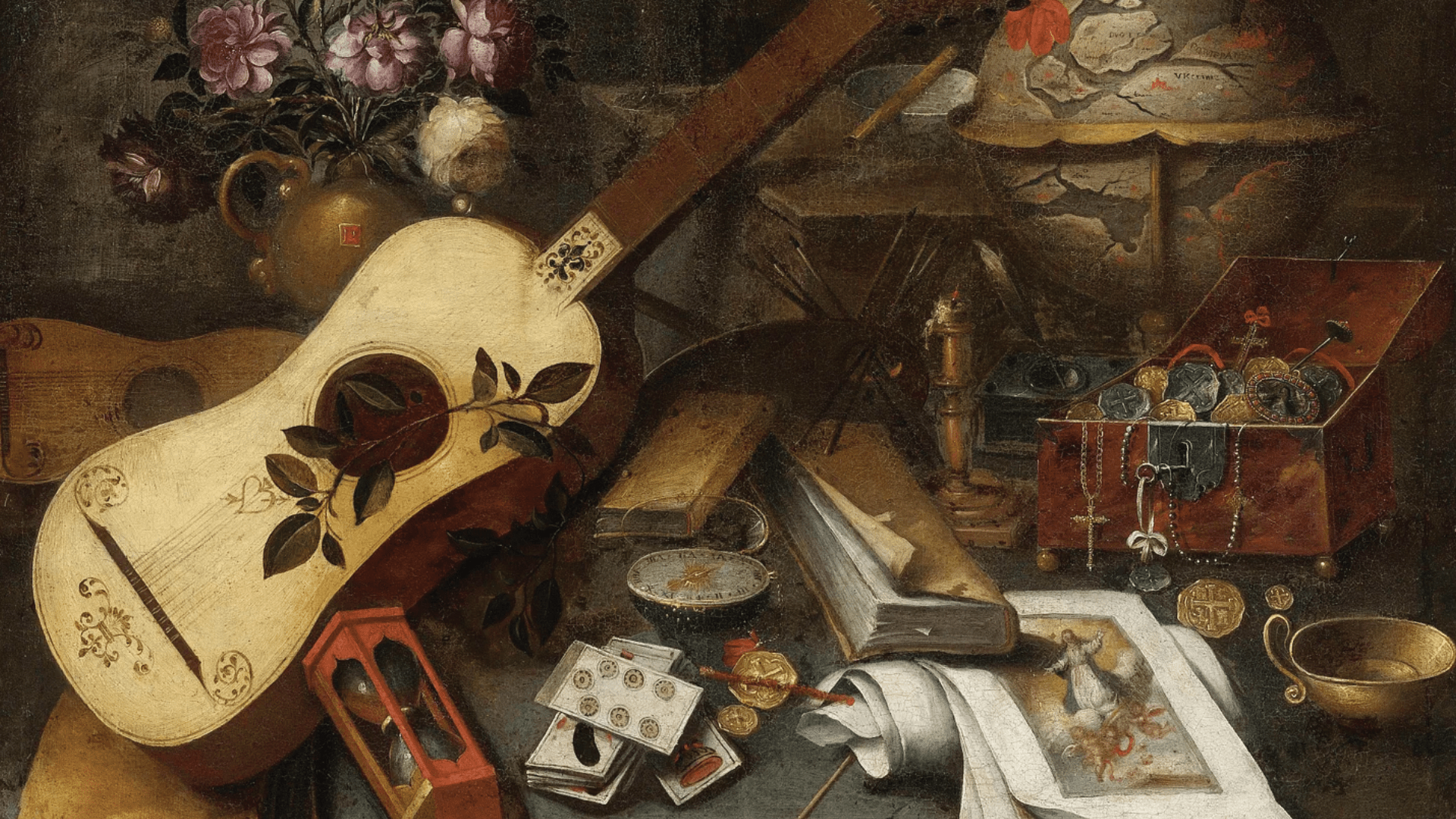
Still Life With A Guitar by Tomás Hiepes

OUR HISTORIES of cultural development are often presented as a series of ideas flowering into great movements: Antiquity, Renaissance, Romanticism. Other times, they are depicted as the appearance of great works of art that represent a generation: The Sistine Chapel, Hamlet, Paradise Lost, The Wasteland. Sometimes, we look at the past through figures who have done something we deem worthy to remember and make note of: Byron, Van Gogh, Steven Spielberg, Taylor Swift.

Perhaps, we can go even further and trace the massive shifts in culture to the creative collisions of personal relationships, too. John Keats meeting Fanny Brawne; Wordsworth, wandering not as a lonely cloud, but with his sister Dorothy and friend Coleridge; of gatherings around a fire to hear some tale of old—for the story, yes, but just as much for the one whose hand is squeezed as Beowulf approaches the dragon.


I GREW UP as one of six siblings in the suburbia of south-east Essex in England, and we had a whole lot of fun. My elder sister and I were very much the ringleaders, quickly roping our younger siblings into our exciting new adventures. We were quite ambitious when it came to our weekends: for a number of summers, this meant making our own films. Sometimes it was an original screenplay, but most of the time, it was adaptations of our favorite stories: Little House on the PrairieSwallows and Amazons, and even an episode of the Canadian drama Heartland animated with Playmobil.

Together with our family friends, we would turn the garden into a film studio, creating full costumes and sets. After the whole process, though, the thing we were most excited for was not the premiere of the film itself, but instead watching back our even longer “behind the scenes” documentary. Over the years, these have been what we go back to watch: a window into our process filled with laughter, larking about, and little eccentricities while exploring the stories fundamental to our growing lives.

It wasn’t the films we made that mattered so much—we were proud of them then, more embarrassed now—these bouts of creativity and storytelling were all about the time spent with each other. Those behind-the-scenes videos remind me that our art is, and has always been, a practice of relationship, a shared currency of love. Creativity is often the loom that weaves the threads of our lives into a beautiful tapestry. Shared ideas. Shared experiences. Shared feelings. A shared culture.


IN A CHARITY SHOP a few years ago, wandering the Isle of Mull, I found a book, Essays Presented to Charles Williams. Williams was one of the core members of the literary group known as the Inklings, which famously included C.S. Lewis, J.R.R. Tolkien, and a shifting cast of creators and characters. When Williams moved from Oxford to London, this collection of essays was originally collated by the other Inklings as a “greeting” to give Williams when he next visited. Tragically, Williams passed away before they had the chance, and so the essays were published instead as a “memorial”.

The cover reads, “Charles Williams, poet, novelist, critic, and incomparable talker, died in 1945. During the years of his intellectual maturity, there gathered ‘round him a group of admirers who found in contact with his darting, fantastic and challenging intellect a rare source of stimulus. Some of these have thought that the best memorial of friendship would be a collection of essays on subjects he most liked to discuss.”

Whenever I hold this book and flick through its pages, I’m immediately struck not by the groundbreaking ideas—some still read in universities today—but by the pure expression and seriousness of friendship. These essays were written, edited and published out of respect, love, and mourning for a friend. For here was a group of people where art was simply a product of creativity forged for and through the deepening of relationship.


OVER IN FRANCE, there’s the Academie Suisse, the informal art school where Claude Monet studied upon arriving in Paris. A city that was a borderland, a grey zone at the time. “The great tradition has been lost…” wrote Baudelaire, “the new one is not yet established.” That “new one” would become Impressionism, a movement that we still feel the effects of today. A movement born out of the relationships that began at that informal art school. Here, Monet met Renoir and Sisley, and most importantly, Bazille—who would be a lifelong friend. They painted together and shared a studio. It was Bazille who took Monet to parties and introduced him to his first Paris buyer. Art historian Jackie Wulleschläger writes that “Monet woke Bazille up every morning, got him to an easel and advised on his compositions, while Bazille served as an echo chamber for Monet’s developing sense of himself and his painting.”

The interweaving of lives in Monet’s story tends to be analyzed by their influence on his artistic practice. These names have indeed greatly impacted his work and vice versa. However, we can also see this as flowing the other way. The lifelong friendship with Bazille, the connections forged with Renoir, the competitive mentorship of Manet are relationships actually born out of Monet’s practicing of creativity, just as much as his art grew from them.


I’VE EXPERIENCED the profundity of a friendship formed through the arts myself as well. I first came into contact with Jacob years ago through his poetry that he shared online. He was in the US then, and I in Cumbria, UK. We only spoke a couple of years after this, again through poetry and publishing it in our community magazine. When both of us finally ended up in London, we met in person and became immediate friends. Our friendship has continued to thrive and deepen through poems and words shared, hours writing together, and reading each other’s work in raw form. This has led to a sense of security that allows us to remain honest, open, and vulnerable with each other.

When we create, we are always opening up a part of ourselves. To create with words or images or music, or in any other form, is to translate part of the inner life into the communal. This is why creativity takes such courage. And to share what we create, even more. It is to be vulnerable that, at its best, leads to the formation of friendship. Sometimes, through one of those “What, you too?” moments that C.S. Lewis talks about. Other times, understanding and empathy. Our creativity is the fertile ground for deep and lifelong relationships.

Art helps us reach out to another because, in the words of Christian Wiman, when we create, “we cease to be ourselves and become, paradoxically, more ourselves. Our souls.” To create is a spiritual act—one where we tap into something of the essence of what it means to be human. And where we reveal something of who we are. This is less of an exploration of our interiority, but a tearing of the curtain that hid us from joining the dance.


THE ULTIMATE CREATIVE ACT was only possible through relationship. In the beginning, God created out of a place of trinitarian relationship. Father, Son and Spirit crafting as one a masterful work; life itself. My aunt says that it is a bit like a film. A director, actor, and writer, all simultaneously present in a scene. And God created people in his image, that he might have a relationship with them.

To live out of this identity, the imago dei, this essence of who we are, is to represent the attributes of God, no matter how pale the imitation, within this world. Creativity is something we can practice because of this. And to create as God did, is to create out of relationship, for relationship.

Throughout the Bible, this is how creativity manifests. From the Tabernacle bringing people together into God’s presence, to the rawness of the Psalms, honest poems shared in community and offered to God. As we read in John’s Gospel: “All things were made through him, and without him was not any thing made that was made.” Christ is present in all that we make. He is present in the process if we might but look closely to see.


“TRUE CREATIVITY,” writes Trevor Hart, “is always a pursuit of the good which renders the self adjacent; it is an act of love.” To be caught by beauty or tragedy, truth or goodness, is to be brought closer to someone. A feeling—bitter or ecstatic—that I am not just myself. Creation is more a poetic utterance of love than an industrial efficiency, to paraphrase Makoto Fujimura. Something made faithfully speaks of love and opens us up to be loved. It is an opportunity to be like Christ, to see a soul, know one and love one.

In the transitory and lonely city of London, it is as true as ever that to shape culture is to commit to relationship. A courageous act of love, a radical step. As I look back at my creative journey to date, I can see the paintings and unfinished drafts; the milestones of awards won and words published. All good things. All important. But there, between each of these, I look back and see the friendships found along the way. The loves blossoming and loves lost. A life held together by others in the sharing of poems and hand-painted cards, the mutual tears in front of cinema screens, and shared silences before paintings. The conversations about daily struggles; the grappling of ideas; the light bulbs of collaboration, and the overflow into words on the page, paint on the canvas, potted seeds on a window sill.


AS A TEENAGER, on a cold winter’s night when the sun had already set, I walked up the long road as I did every Thursday. I would normally have a bag of books with me. Often a notepad of scribblings. My head whirling with ideas and topics to discuss. I would turn into the driveway and ring the bell of the bungalow with the fairy castle turret. My Grandpa would open the door and invite me in. With tea and a cherry bakewell, we would sit by the open fire. We would almost always start with some lines by William Cowper, Grandpa’s favourite poet. The rest of the evening would be filled with other writings, newspaper cuttings, ideas and editing the drafts of my poems.

“Inklings” we called these evenings, and I never wanted them to end. In those often lonely school years, struggling to fit in and praying for close friendship, these nights were the highlight of my week and a balm to my soul. It was where I wrestled with words and seriously thought about the stories I wanted to tell for the first time. Now though, I can say that the greatest thing to be created in this reading, writing and editing of poems has been an enduring relationship over many years between a grandfather and his grandson.

Samuel Christian is a writer and the founder of The Pursuit of Good Stuff, a spiritual habitat for creators that features collectives, exhibitions and resources. 

Theology

C.S. Lewis on the Psalms’ ‘Ferocious Parts’

Our beloved apologist wrestled with the Psalms’ hardest words in his season of suffering.

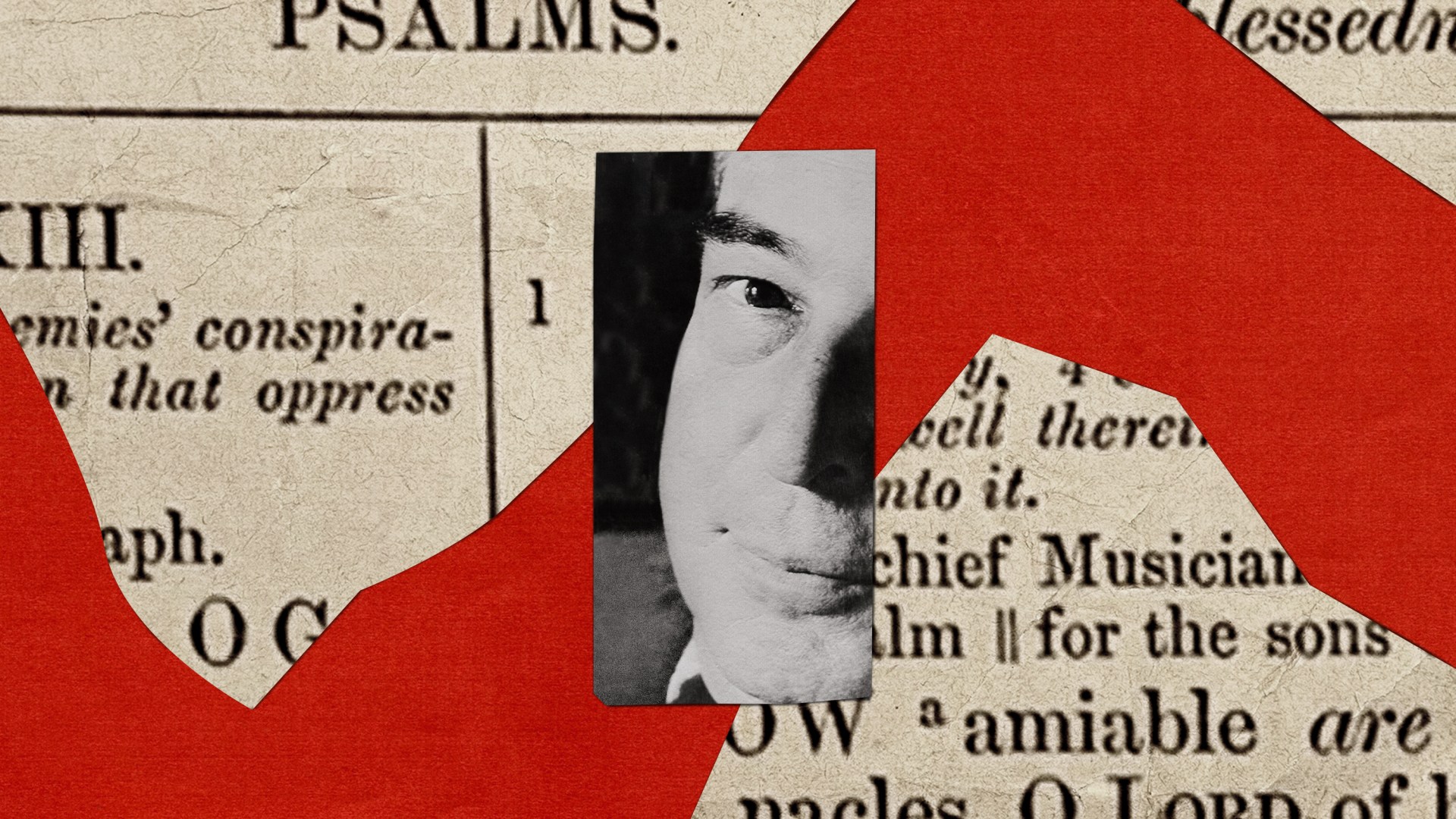
C. S. Lewis over red paper and a book of Psalms page
Christianity Today March 14, 2025
Illustration by Mallory Rentsch Tlapek / Source Images: Getty, WikiMedia Commons

In trying times, we often turn to the familiar: a lifelong friend, a staple recipe, an album that has worn deep grooves in our mind. When the world outside is worrisome and strange, we seek the proven solace of the known.

Perhaps that’s why more Christians are turning to the Psalms these days. The lived-in nature of this ancient text makes it suitable for the extremities of our lives. Picture Augustine of Hippo meditating on four Psalms in the waning days of his life or Christ himself quoting the Psalter as he hung from a Roman cross.

Yet the comfort of the Psalms is not always apparent. What are we to make of, for instance, Psalm 69’s vengeance, the violence in Psalm 137, or the tone of hatred at the end of Psalm 139? How can we see through the shadowy valleys—in this sacred book and in our lives—to arrive at God’s goodness and rest?

It was this kind of questioning of the Psalter, amid the present sorrows of his life, that drew the famous and beloved C. S. Lewis deeper into its pages.

In 1950, Lewis got a fan letter from an American woman named Joy Gresham. Having been a bachelor for more than half a century, he eventually fell for Joy, and the two were married in April 1956. Just six months later, Joy took a nasty spill and broke her left femur. After she received X-rays in Oxfordshire, they found out she had bone cancer.

In this season—living in the high of newfound love and the hardship of disease—Lewis had an idea for a book. He began writing it in June 1957 and finished it that October, and it was published the following September. The book was Reflections on the Psalms.

Though Lewis called it “a very unambitious little work,” it was his only monograph focused entirely on a single book of the Bible. In that regard, it paints a vivid and vital picture of how Lewis approached the Scriptures—even the more stomach-turning texts.

This is precisely where Lewis begins the book: the unsavory elements of the Psalter. Following what he calls “nursery gastronomy”—eating the least appetizing items on the plate first—Lewis frontloads Reflections with the most unpalatable passages.

He tackles three topics right out of the gate: judgment, cursings, and death. It is in the chapter on cursings that he states plainly what many Christians may be embarrassed to admit: “In some of the Psalms the spirit of hatred which strikes us in the face is like the heat from a furnace mouth.” These are not words written by a man with contempt for God’s Word. Rather, Lewis’s deep reverence for the Bible compels him to face it with honesty and charity—even when he feels the fire of its offense.

I was a wide-eyed pastor laboring to preach the Psalms when I learned of Lewis’s Reflections. The more insightful I found it, the more confounded I was that no one had mentioned it to me before. In retrospect, this should have been unsurprising, since it is a humble book—both in reception and in design.

It was humbly received in that it remains something of a deep cut in the C. S. Lewis canon. (If Goodreads stats are any indication, The Lion, the Witch and the Wardrobe has just shy of 3 million ratings, while as of writing this, Reflections has garnered only a little more than 8,700—quite modest for a work by Lewis.)

The book was humbly designed in that Lewis did not intend it as a full-fledged biblical commentary—to its credit. He doesn’t plod through chapter by chapter; he skates deftly over the Psalter as a whole, hitting some of the thorniest questions facing faithful readers of Scripture. It is, above all, an approach to Psalms gestated in worship, born through years of praying these passages over and over—“sometimes by my enjoyment of them,” Lewis writes, “sometimes by meeting with what at first I could not enjoy.”

One of the most potent texts he tackles in the cursings chapter is Psalm 137. This nine-verse lament over the destruction of Jerusalem composes some of the loveliest poetry in the Bible. “By the rivers of Babylon,” it begins, “there we sat down, and there we wept when we remembered Zion” (v. 1, NRSVue).

The horror and heartbreak of Israel’s exile form the backdrop as agony, longing, and defiance seem to spill from every line. “How could we sing the Lord’s song in a foreign land?” the poet asks, until finally his anger crescendos to a repulsive finish: “Happy shall they be who take your little ones and dash them against the rock!” (Or in Eugene Peterson’s stark paraphrase: “Yes, a reward to the one who grabs your babies and smashes their heads on the rocks!”)

How is one to read such blood-soaked poetry? How is one to read it as God’s Word? In many ways, C. S. Lewis is precisely the man to teach us.

Not only did Lewis live through World War II in England, but also he was a veteran of World War I. His first published work (under the pseudonym Clive Hamilton) was a cycle of poems called Spirits in Bondage—most of which he wrote as a young atheist in the trenches of the Great War.

The second poem in the cycle, “French Nocturne,” ends in grim misanthropy: “I am a wolf. Back to the world again, / And speech of fellow-brutes that once were men / Our throats can bark for slaughter: cannot sing.” (We can even hear echoes of the psalmist’s lack of singing in Babylon.) Spirits in Bondage is not a great work of art, but its lyrics gurgle up from the same miry pit that fed the darkest parts of the Psalter.

When Lewis comes to Psalm 137 as a mature Christian writing Reflections, he comes with an entire life’s worth of suffering, poetry, violence, and death. He comes as a man who knows the fittingness of anger in the face of colossal atrocities—yet one who recognizes the need to filter such anger through the prism of Christ’s teachings.

“The ferocious parts of the Psalms,” Lewis writes, “serve as a reminder that there is in the world such a thing as wickedness and that it (if not its perpetrators) is hateful to God. In that way, however dangerous the human distortion may be, His word sounds through these passages too.”

For Lewis, the purpose of a verse like Psalm 137:9 is revelation: It raises the curtain on unvarnished human emotion. It unveils the natural outgrowth of oppression and amplifies our longing for justice to the highest amperage. It holds a shattered mirror to the ugliness of our own hatreds.

In his own way and time, Lewis anticipates another perspective from our era. In his book Reading While Black, Esau McCaulley also addresses Psalm 137 in a chapter on “The Bible and Black Anger.” In it, he finds a kinship between Israel’s exilic tragedies and the brutalization of Black people in the antebellum South:

What kind of prayer would you expect Israel to pray after watching the murder of their children and the destruction of their families? What kinds of words of vengeance lingered in the hearts of the Black slave women and men when they found themselves at the mercy of their enslavers’ passions?

The apostle Paul writes that all Scripture is inspired by God (2 Tim. 3:16). Perhaps the primary purpose of a text like Psalm 137 is “rebuking” and “correcting.”

“God wanted Israel and us to know what human sin had done to the powerless,” McCaulley continues. “By recording this in Israel’s sacred texts, God made their problems our problems. Psalm 137 calls on the gathered community to make sure that this type of trauma is never repeated.”

Less than two years after Reflections was published, Lewis’s wife, Joy, succumbed to cancer. After a season of improvement, a flickering of life and hope, the disease came sweeping back. During the aftermath of losing his wife, Lewis kept a journal that would eventually become A Grief Observed (originally published under a pseudonym).

In raw, even chilling candor, Lewis documents his experience of mourning the woman who had become his world. To read C. S. Lewis—famed defender of the Christian faith—questioning the goodness of God is akin to finding fury in the Psalms. More than once, Lewis references Christ’s dying quotation of Psalm 22, and then he shouts out of his own godforsakenness: “Time after time, when [God] seemed most gracious He was really preparing the next torture.”

Later in the book, Lewis reflects on his outbursts with the same wisdom he applied in his book on the Psalms. Just as he once wrestled with the “cursings” in the psalms of lament, he now reexamines the raw anger he unleashed in his own grief journal.

Looking back, he acknowledges the deeper impulse behind his words: “All that stuff about the Cosmic Sadist was not so much the expression of thought as of hatred,” he writes later on in A Grief Observed. “I was getting from it the only pleasure a man in anguish can get; the pleasure of hitting back.”

In other words, Lewis recognizes a kind of Psalm 137 pattern playing out in his own suffering psyche; his former ranting said less about God and more about the universal human experience of grief in the presence of God.

Just as he brought his life’s tragedies to bear in reading the Psalms, Lewis brought the Psalms to bear in his reading of life’s tragedies. In a kind of cross-shaped irony, the most barbaric parts of the Psalter can be used by God to free us, to lift us up from the abyss, “out of the mud and mire” (Ps. 40:2).

In Reflections on the Psalms, Lewis gives us a wise and humane framework for understanding Scripture’s more scandalous parts. But that is just the beginning of what he offers in this humble work. Ranging over a wide array of topics, Lewis not only stokes our desire to pray the Psalms; he also helps us to see Christ in them.

He celebrates that the God who became flesh in Jesus also humbled himself to the lines of the Psalter. As Lewis writes in the book’s opening pages: “Poetry too is a little incarnation, giving body to what had been before invisible and inaudible.”

My wife is a photographer, and I have been awed by the images she captured in places like Yosemite and the Rockies. In these settings, wide-angle lenses allow her to be close to the subjects while including a vast expanse of background material. This is the kind of work C. S. Lewis does in Reflections on the Psalms.

Though starting with little light on the dark side of the Psalms, Lewis includes an astoundingly diverse array of insights and metaphors from otherwise distant regions. He guides the reader’s eye by drawing near to the Psalter while situating it in the broad sweep of human culture, nature, and history.

Most of all, he does this in a way that helps Christians see the enduring beauty of the Psalms—even and especially the gruesome ones. He helps us to sing, to read, and to pray them.

Lewis proves himself to be, in the words of Stanley Hauerwas, “a trusted friend in Christ”; a man who has seen wars, joys, and sorrows up close; a man of deep learning, who wears that learning lightly enough to walk us through the valley to new vistas of faith.

Brett Vanderzee is music and preaching minister at The Springs Church of Christ in Edmond, Oklahoma.

Church Life

The Dean of American Church Historians

Memories and reflections on Martin E. Marty, a scholar of remarkable influence, kindness, and wit, from a friend and colleague of 50 years.

An image of Martin Marty speaking.
Christianity Today March 14, 2025
Wikimedia Commons / Edits by CT

Martin E. Marty, the “dean of American church historians,” died on February 25 at age 97. Born and reared in the village of West Point, Nebraska—Willa Cather country, he said—he would go on to serve Lutheran churches in the Chicago area for ten years before studying and then teaching at the University of Chicago from 1963 until he retired in 1998.

In 1986, an essay in Time magazine called Marty—who like Elvis typically went by a single name—“the most influential living interpreter of American religion.” And with good reason. I was honored to meet him at a gathering of the American Society of Church History in 1975.

Marty’s impact fell into four related spheres. The first was the sheer magnitude of his presence. The numbers piled up like snow drifts: in my estimation, 60-plus authored or edited books; more than 6,500 published articles, reviews, columns, essays, and sermons; oversight of 115 doctoral dissertations; 50 years as an editor of The Christian Century; more than 3,500 lectures around the world; speaking engagements at nearly 700 colleges, universities, seminaries, and church groups; 80 honorary degrees; recognition as the winner of the National Book Award (1972), the Medal of the American Academy of Arts and Sciences (1995), and the National Medal for the Humanities (1997). 

The second sphere was Marty’s scholarship. Though he paid his dues in the bowels of archives, primary excavations of that sort were not his gift. Rather, he flexed his intellectual muscles by ranging over the whole of Christian history, writing with particular depth and precision about modern Catholic history, Reformation history, biography, 19th- and 20th-century American religious history, and grief.

Within that framework, Marty focused on how Protestant dominance yielded to religious pluralism, how pluralism enriched the nation’s common life, and how to preserve it. These concerns emerged most clearly in his signature volume, Righteous Empire: The Protestant Experience in America. His message was perennial and clear: All were welcome at the table as long as they played by the rules, let others talk, and promised to listen. 

For Marty, pluralism was not just an academic subject but a principle by which he lived. He answered his phone, returned unsolicited emails, and freely talked to reporters with no evident qualms about the risk of being misquoted. Journalists sought Marty’s wisdom not only because of his staggering erudition but also because he knew how to put them at ease, how to speak concisely, and how to put current events in in-depth historical perspective.

Respect for Marty came from all quarters. “He was always wonderfully encouraging to me,” David Hollinger, a distinguished secular historian at the University of California, Berkeley, told me by email. “The numbers … do not convey the man I knew and loved for nearly six decades,” remembered Kenneth Woodward, for decades religion editor at Newsweek.  

Once, a naive assistant professor in North Carolina even asked Marty if he would read his dissertation. Of course, Marty agreed. (I was elated.)

Marty was a convinced churchman, too, and that was a third sphere of influence. He told the truth with his life. In many ways he seemed to be a clergyman first and an academic second. Sometimes, he affirmed, “it’s great to be in a situation where being in the presence of God stuns you a little bit.”

Marty was theologically educated in Lutheran schools—preparatory school, college, and seminary. An ordained minister in the Evangelical Lutheran Church in America, his mainline sympathies showed up clearly outside the pulpit. In 1964, he spent six weeks as an invited Protestant observer at Vatican II in Rome. The following year, he marched with Martin Luther King Jr. in Selma, Alabama. He forthrightly cast his lot with the mainline’s concern for civil rights, internationalism, ecumenism, gender equality, and openness to science. 

Even so, Marty’s theological views did not easily fit onto a conventional conservative/liberal spectrum. Creeds counted, and so did sacraments, liturgy, sacred music, and the church as the visible body of Christ. “His anticipated appointment with the Lord of eternity was something he embraced all his life,” wrote Peter Marty, his son and the current editor of The Christian Century, just after his father’s death. “He approached every morning as if it were a fresh splash of grace, a clean slate.”

The fourth sphere of Marty’s influence was the personal. The incandescent power of his personality cast a glow around his publications. They stood on their own, of course, but for folks who knew him personally, the books came with a special luster.

Daily habits spelled a distinctive character: up at 4:44 each morning, busy writing before breakfast, taking a 10-minute power nap each afternoon. Then, too, Marty was invariably the most dapper man in the room, outfitted in an uptown suit, vest, and colorful bow tie. Somehow it all worked.

His wit was legendary. Once, he asked a graduate student to name three good things the Lord had done for him that day. The student responded, “Father, Son, and Holy Spirit.” Marty shot back, “That’s one.” It was the kind of wit that revealed, as historian Mark Noll put it in another context, a “really big motor up there.”

Marty never forgot a name—including the names of friends’ and acquaintances’ spouses, children, grandchildren, even pets. If you lost a parent, you received a handwritten sympathy note. His humanity was the real deal.

An ivory-tower intellectual Marty was not. He was the father of four sons and two permanent foster children. After his first wife, Elsa, died of cancer, he married Harriet Meyer, a musician, who survives him. A plaque at the door of Marty and Harriet’s retirement condo high up the Hancock tower in Chicago bore these words from the Puritan leader John Winthrop from about 1630:

When God intends a man to a work he sets a Bias on his heart so as tho’ he be tumbled this way and that yet his Bias still draws him to that side, and there he rests at last.

Winthrop’s vision seemed to anticipate Marty’s.

Marty’s relationship with evangelicals followed a definable trajectory. Many mainliners, including other authors at the Century, viewed the early- and mid-career Billy Graham with disdain. Marty rarely, if ever, explicitly criticized anyone, including Graham. But in those days, he did view Graham warily—as well he might, for Graham often seemed to love America a bit too much.

But Graham changed, and so did Marty. On the occasion of Graham’s 70th birthday, Marty joined Christianity Today in a celebratory issue. In an article titled, “Reflections on Graham by a Former Grump,” Marty explained that the true divide in American religion was not liberal/conservative but “mean and nonmean.” Graham fell into the latter camp for many reasons, including his willingness to work with anyone who would work with him. 

Some years ago, I embarked on a biography of Graham, whom I visited several times in his 90s in his remote mountaintop home in Montreat, North Carolina. Marty asked if he could join me, for they had never met, but Graham’s family declined the offer because of the evangelist’s failing health. When I conveyed that news to Marty, his response was as simple and sweet and honest as his life had been: “Then Billy and I will just have to have that conversation together when we get to heaven.”

Grant Wacker is the Gilbert T. Rowe distinguished professor of Christian history, emeritus, at Duke Divinity School. He is the author of One Soul at a Time: The Story of Billy Graham.

Church Life

Building the Habit of Family Worship

Growing up in the Asian church, I thought worship belonged in the church. Now I’m bringing it into our home.

Korean family reading a book together
Christianity Today March 14, 2025
Illustration by Mallory Rentsch Tlapek / Source Images: Getty

Growing up as a pastor’s kid in Chuncheon, South Korea, I rarely prayed with my family at home outside of mealtimes. It became even more difficult to pray together when my family lived separately from one another. I was 12 years old when my whole family moved to the US for my music education, but a year later, my dad returned to Korea to continue his work in ministry.

When my mom, my brother, and I visited my dad during our long summer breaks, we would occasionally join him for daily 5 a.m. prayer services at church. Even as I rubbed sleep from my eyes and stifled yawns, seeing my parents earnestly praying and worshiping God before the sun rose left a strong impression on me.

I learned to pray at church, and I learned to worship God at church. At home, my dad would lay his hands on me and pray if I had a fever or pray for me over the phone when I faced conflicts with my friends. We did devotions individually, but my family rarely gathered together to worship God outside of church.

I didn’t learn about family worship until I was pursuing a doctorate of worship studies in my late 20s. By then, I was married and planning to start a family, so the topic caught my eye. Donald S. Whitney’s book Family Worship listed Scripture passages such as Deuteronomy 6:7, which called on God’s people to impress his commandments on their children: “Talk about them when you sit at home and when you walk along the road, when you lie down and when you get up.” Whitney made it clear that God’s intention was for families to worship together in the home.

“It is unlikely that exposure to the church once or twice a week will impress your children enough with the greatness and glory of God that they will want to pursue him once they leave your home,” he wrote. “That is why family worship is so important.”

Family worship hadn’t been prioritized in the Asian churches I’d attended or visited, as ministry often takes precedence over the family. Churches are busy with activities and services that pull parents away from their families rather than bringing them together. Parents also often work long hours in Asia, leaving them with little time to spend with their kids.

Yet some Asian church leaders are awakening to the importance of families taking the proactive step of discipling their kids. The Asia Evangelical Alliance (AEA) named its 2024 General Assembly “Disciple or Die,” sending the message that if believers don’t concentrate on discipling their children, their churches will disappear.

In the Philippines, pastors are often seen as the sole spiritual leaders of the flocks, so Christians often don’t see the need for further discipleship in the home, Peter Tan-Chi, pastor of the megachurch Christ’s Commission Fellowship, told CT in an email.

“Many parents rely on church programs or Sunday school for their children’s spiritual growth, but this overlooks the importance of family-led discipleship as described in the Old Testament,” Tan-Chi said.

He tells his parishioners that “every family is a discipleship group” where parents can model their faith through praying, having honest discussions, and serving together.

Other churches in the region have also started to step up, said Gwen de Rozario, director of AEA’s Children Commission. At Pungsunghan Church in Suwon, a city south of Seoul, families discuss the coming Sunday’s Bible passage before hearing it preached from the pulpit. Then the church meets in age-specific groups to study the passage, and families gather throughout the week for devotions. “Parents who were authoritative have begun to talk with their children and understand them better,” de Rozario said. 

My husband and I created our own traditions when our first child was born. While rocking our newborn baby, we would sing “Jesus Loves Me,” read a short passage in the Bible, and pray together. Sometimes our family worship was interspersed with my daughter’s piercing cries, yet it became her sweet bedtime routine. When our daughter became a toddler, we started reading a children’s Bible to her and singing worship songs with body motions. She would giggle and laugh with joy during our family worship.

But when our family of three became four, making time for this spiritual discipline became a struggle as we juggled the needs of a toddler and a newborn. Some days, we would run out of time trying to get the kids to bed. When guests came over, we would forget to do our worship time. When we moved to Malaysia, where my husband’s demanding job would keep him as late as 9 p.m., the regular routine of daily family worship seemed impossible. Before I realized it, we had stopped doing family worship for three years.

In 2024, I attended a bimonthly prayer meeting for moms at my children’s school in Penang, Malaysia. That day, fellow mom Margaret Emis brought laminated Scripture cards praising God for the work he had done. She said that these cards, which helped her kids memorize Bible verses and guided their prayer time, had been part of her family’s worship sessions for 15 years.

Fifteen years? I was amazed. I sat down with Margaret later to learn more about how she managed to keep up the practice amid the busyness of life. She said it started when she read John MacArthur’s What the Bible Says about Parenting. One quote stood out to her.

“Whenever outside influences shape a child’s character more than the parents, the parents have failed in their duties,” he wrote. “God has placed in our hands the responsibility of bringing our children up in the nurture and admonition of the Lord, and we will give account to God for our stewardship of this great gift.”

The words pierced Margaret’s heart. Her kids were still young, but she wanted to pass down her Christian faith to them. Realizing that she needed to actively disciple her kids, Margaret decided that she would do family worship every day.

Margaret prepares breakfast by 6 a.m. so that her husband and her three daughters can do family worship at the table. She chose breakfast time because it was the only meal that the whole family ate together every day. For an hour, the whole family reads the Bible, learns about God, sings worship songs, and prays.

Over the years, Margaret and her husband taught their children the attributes of God, read through the Puritan prayers in The Valley of Vision, prayed for unreached people groups, and recited the questions and answers of the Westminster catechism. Margaret creates the Bible reading plans and finds material as her husband leads the worship time.

Still, some challenges remain: It’s difficult to have the discipline to do it daily. She must make sure her children, who are now in high school, go to bed early. She wakes up around 5 a.m. not only to have breakfast ready but also to spend alone time with God to set the right attitude going into the day. “Am I going to be grumpy?” she mused. “Or am I going to be thankful that God saved me and let the joy of the Lord be my strength and serve my family?”

Another friend, Leon Lim, a pastor in Kuala Lumpur, Malaysia, leads his own version of family worship in his home. Whenever we stayed at his house or his family visited us, they invited us to join in their family worship.

At Leon’s home, his whole family, including his elderly mother, brother, wife, and two kids—ages 4 and 8—gather every night at 9 p.m. For 15 minutes or so, they sing a worship song, read Scripture, pray, sing “Kyrie Eleison” (a liturgy asking God for mercy), pray the Lord’s Prayer, and end with a blessing: “Almighty God, Creator Christ, and Holy Spirit bless and preserve you. Amen.”

“We go book by book in the Bible, and the kids really want to read the Bible,” Leon said. “It was exciting to see their love of reading Scripture.” They have not missed a single day of doing family worship since starting in 2019. Sometimes they would do it in the car, sometimes through Zoom if one family member was away.

Although Leon’s parents are both pastors, he had never seen family worship modeled in the home. He noted that “the call towards the father being the spiritual leader of the home and to lead the spiritual lives of their families [in Malaysia] is still rather weak,” with believers instead relying on the church to spiritually form their children.

Initially, he struggled to know how to do family worship. But now it’s a time his family looks forward to “as we always find refuge in God no matter what the circumstances of our day or season may be.”

These two families motivated me to ask once again how my own family could worship God at home.

Whitney, the author of Family Worship, suggests having a regular time each day for the practice and choosing a time when the family is already accustomed to gathering. For us, that meant around the kids’ bedtimes. We sit on our bed and take turns reflecting on the day and how we have seen God at work.

Recently, my seven-year-old daughter said she saw God at work when my husband prayed for a family member’s salvation. My four-year-old chimed in: “God is my healer. His name is Rapha!” Their answers surprised us and made us smile. We would then read the children’s Bible, thank God for how he has worked in the day, and sing a song of blessing.

Family worship can still be a challenge for my family. Our four-year-old son will often run away in the middle of the worship time. When we come home late and are rushed for bedtime, we skip the song and just pray. But my husband and I are striving to regularly worship God with our children because, as Whitney wrote, “God deserves to be worshiped daily in our homes by our families.”

Additional reporting by Bruce Barron

Esther Shin Chuang, who holds a doctorate in worship studies, is an award-winning concert pianist, worship leader, and faculty at six seminaries throughout Southeast Asia. She and her husband are pastors at Georgetown Baptist Church in Penang, Malaysia.

News

Syria Massacre Leaves Christians Asking If They’re Next

Islamists didn’t target the church in the violence that killed more than 1,000, but the community is on edge.

A woman reacts next to one of the pictures of victims of a recent wave of sectarian violence targeting Syria's Alawite minority.

A woman grieving for a victim of the a recent wave of sectarian violence targeting Syria's Alawite minority.

Christianity Today March 13, 2025
Delil Souleiman / Getty

Adi Oweis was lounging with his kids in his Maryland home last week when his phone lit up with alerts from friends in Syria. Islamists connected to the new government were on their way to the country’s coastal Alawite region. 

Graphic videos soon arrived in his group chats: entire families slaughtered and row after row of dead Syrians lining the streets. Some of the victims were his Alawite friends. 

Now he fears for the future of the Syrian church.

Oweis, who works for an international nonprofit focused on interfaith dialogue, is a member of the Syrian Greek Orthodox community and lived in Damascus, Syria’s capital, until 2009. He was shocked by the violent campaign against people he once lived among. Christianity Today agreed not to use his real name to protect his Syrian family members. 

Islamists killed more than 1,300 people, according to the UK-based Syrian Observatory for Human Rights. Most of the victims were civilians from the Alawite community, the minority Shia sect to which former president Bashar al-Assad belongs. Clashes between government forces and an armed remnant of Assad’s regime in the provinces of Latakia and Tartus last week led to sectarian violence as Sunni militia descended on the region. Alawites, who held prominent positions under Assad’s rule, have a history of living side by side with Christians.

“It freaked us out,” Oweis said. “We couldn’t sleep. It was a very painful few days.” Oweis confirmed the deaths of ten Christians through his channels in Syria, but he doesn’t believe the government forces and rogue militia are intentionally targeting the Christian community. 

“They see us as infidels, as people who don’t believe in what they believe in,” Oweis said. “At the same time, they don’t see us as people who persecuted them in the past.” 

Still, Syrian Christians are worried, wondering if the new government will target them next.

The revenge killings mark the worst violence since the December ouster of Assad. Ahmed al-Sharaa, also known as al-Golani, led the Sunni movement to overthrow Assad and now serves as Syria’s interim president. 

Many Syrians welcomed the end of Assad’s 24-year grip on power. His Ba’ath party ruled for more than five decades and was guilty of numerous atrocities against Syrians. Yet Sharaa’s former ties to al-Qaeda have raised concerns that Syrians may have exchanged one violent regime for another. Christians and other minorities, including Alawites, Kurds, and Druze, could face increasing threats, said Nina Shea, director of the Center for Religious Freedom at the Hudson Institute.

“There are no restraints for the protection of religious minorities,” said Shea, who served on the US Commission on International Religious Freedom seven times. “It’s open season on them.”

Some reports characterized Syria’s conflict as ethnic in nature, but Shea believes religion is a primary driver. She tracks Islamist regimes and has observed patterns of religious oppression in Iraq, Nigeria, and Syria.

“[The killings] may not be done on orders, but I’d be surprised if the government protects Christians or anyone else,” she said. According to Shea, Sharaa has a tenuous hold on power and directs a coalition of radicals that includes “hardened jihadist fighters” from Chechnya, Uzbekistan, and other countries. 

She believes Syria’s interim president is a radical Islamist who projects a moderate image to the West to secure sanctions relief and aid. 

“The United States condemns the radical Islamist terrorists, including foreign jihadis, that murdered people in western Syria in recent days,” US Secretary of State Marco Rubio said in a statement Sunday. He called on the Syrian government to pursue justice. 

Sharaa’s office has said it would create an independent committee to investigate the killings by both sides. “No one will be above the law, and all those whose hands are stained with Syrian blood will face justice—fairly and without delay,” Sharaa said in a speech Sunday.

Oweis questions widely circulated social media posts describing a Christian slaughter, and he said reports claiming a priest died during the attacks are false. But he is still concerned about the future of Syria’s Christian community since Islamists view Christians as “low-hanging fruit.”

“It’s a house you can go to without any resistance because they know that Christians don’t have arms,” Oweis said. “And they are not clustered in one place like the Alawites where they can … resist for a long time.” 

Oweis said Syrian forces looted hundreds of Christian homes during the assault on Alawite communities between the coastal towns of Tartus and Latakia. Jihadis stormed the home of Oweis’s friend and spared his life after discovering his Christian identity. But they stole his car.  

Theft is so prevalent in Christian communities that churches typically hide their icons during the week and display them on Sundays only, Oweis said. Some icons are more than 400 years old and very valuable. 

Shea said the Syrian Christian population has dwindled significantly in the past few decades and now numbers around 300,000. While no surveys have been conducted, Oweis said Catholic and Greek Orthodox estimates are more optimistic and range from 600,000 to 1 million. 

Despite the indiscriminate killings and targeted theft, many Christians are choosing to stay in Syria and maintain a low profile, according to Christians with connections in the country. At the same time, some reports suggest that thousands of Syrians are crossing the border into Lebanon.

Those who stay face threats on multiple fronts. 

A group of around 500 Kurdish Christians from the northern town of Afrin has been displaced multiple times due to fighting between Turkish militias and the Kurdish-led Syrian Democratic Forces (SDF), said Majeed Kurdi, a US-based Iraqi Kurdish pastor working with Freedom Seekers International to provide aid to that group. Tensions increased when the new government pressured armed groups to merge with the national military. 

The Kurdish Christians, who are currently living in Aleppo, Syria, are part of the nondenominational Good Shepherd Church but currently have no place to safely meet. The church has added more Kurds to its group each time it has evacuated a town or refugee camp, and the group has now swelled to around 1,200, including many nonbelievers who are interested in Christianity, according to Kurdi. 

But their situation is precarious. 

“[The militias] are, from time to time, trying to attack the Christians,” Kurdi said. “And especially they are looking for the converted Muslims to Christianity.”

Kurdi said Turkish-backed mercenaries who oppose the Kurdish presence in the border region have kidnapped Kurds, including women on their way to the market, as far south as Aleppo.

“All these powers are clashing in the area,” said Kurdi. “That’s why it’s impossible to have unity. Nobody listens to the others.”

On Monday, the SDF agreed to merge with the new Syrian government. Kurdi called the arrangement a “good beginning between both sides,” but he doesn’t think it will curtail Turkish assaults on Kurds. Another looming question is whether the 9,000 ISIS prisoners the SDF currently guards will be transferred to the new Syrian government. 

Oweis said the broader Christian community is the least-armed group in Syria. Now Christians fear mobs connected to Sharaa’s ruling Islamist group, Hayat Tahrir al-Sham, could turn against them in an instant.

Yet Christians maintain a measure of hope. “We are not good in the art of war at all, but we are good in the art of peace,” Oweis said. 

Throughout Syria’s decades of turmoil, Christians have developed relationships with Alawites, Druze, and Sunni Muslims, Oweis said. Some Christian communities have sponsored dinners that bring various factions together. 

On Monday, Sharaa claimed the revenge killings were contained and vowed to bring those responsible to justice, but the Syrian Observatory for Human Rights claimed the targeted killings have since continued. Some Syrians question Sharaa’s intentions, and Oweis knows the road ahead will be difficult and complex. 

But any pause could be an opportunity for progress. 

“The militias left the Alawite region, so we hope for reconciliation,” Oweis said. “For Christians, fighting in an armed manner or resisting them is almost impossible, and it could result in a genocide for the Christian population.”

addApple PodcastsDown ArrowDown ArrowDown Arrowarrow_left_altLeft ArrowLeft ArrowRight ArrowRight ArrowRight Arrowarrow_up_altUp ArrowUp ArrowAvailable at Amazoncaret-downCloseCloseellipseEmailEmailExpandExpandExternalExternalFacebookfacebook-squarefolderGiftGiftGooglegoogleGoogle KeephamburgerInstagraminstagram-squareLinkLinklinkedin-squareListenListenListenChristianity TodayCT Creative Studio Logologo_orgMegaphoneMenuMenupausePinterestPlayPlayPocketPodcastprintremoveRSSRSSSaveSavesaveSearchSearchsearchSpotifyStitcherTelegramTable of ContentsTable of Contentstwitter-squareWhatsAppXYouTubeYouTube