News

Liberty University Fined $14M Over Campus Safety

Focused on the evangelical school’s handling of sexual violence, the federal penalty is by far the largest in the Department of Education’s history.

Liberty University in Lynchburg, Virginia

Liberty University in Lynchburg, Virginia

Christianity Today March 6, 2024
Lukas Souza via Unsplash

The US Department of Education (DOE) announced on Tuesday that it has fined Liberty University $14 million for its failures to report campus crimes and its treatment of sexual assault survivors. The culmination of a long-running federal investigation, it is by far the largest fine for such a campus safety violation, according to the department.

Liberty is the largest evangelical college in the country, with the school reporting in 2022 about 16,000 students on campus and 130,000 students enrolled overall. The school has $4 billion in assets. It is among the colleges awarded the most federal aid in the country, with students receiving $772 million in 2017 according to ProPublica.

Colleges receiving federal aid are required by the Clery Act to report crime statistics and campus threats. After a complaint in 2021, the DOE reviewed Liberty’s handling of campus safety from 2017 to 2023.

The federal government found the failures at Liberty centered on its handling of sexual crimes. The department’s final review concluded that Liberty had failed in 11 areas, from timely responses to sexual violence to reporting crimes either to the department or the wider community.

“Students, faculty, and staff deserve to know that they can be safe and secure in their school communities. We respond aggressively to complaints about campus safety and security,” said Richard Cordray, who oversees federal student aid for the DOE, in a statement.

In response, Liberty acknowledged that “there were numerous deficiencies that existed in the past. We acknowledge and regret these past failures and have taken these necessary improvements seriously.” It did not name sexual assault survivors in its statement, as the federal report did, but said its failures were focused on “incorrect statistical reports as well as required timely warnings and emergency notifications that were not sent.”

“It is a new day at Liberty University,” the statement concluded, adding that it had invested an additional $10 million in campus safety infrastructure.

The previous record Clery Act fine was $4.5 million for Michigan State University over its failures responding to sexual assault complaints against doctor Larry Nassar, according to AP.

Former gymnast Rachael Denhollander, a survivor of Nassar’s abuse, was also involved in recent years in pushing Liberty to address its handling of sexual assaults. A lawyer and a Christian, she had taught classes at Liberty’s law school, but then in 2021 was initially barred from speaking at a prayer rally about the issue on campus. The school later allowed her to speak at the rally.

Liberty had previously described the government’s preliminary findings as full of “significant errors” and “unsupported conclusions.”

But the final federal report found that Liberty had made severe errors, including an incident where a woman reported being raped by a man she thought was armed, and whom she also reported beat her physically. The university’s investigator declared the case “unfounded,” stating that the “victim indicates that she consented to the sexual act.”

The department’s final report found a general attitude conflating assault with violations of the school’s honor code, known as “The Liberty Way.” It found from interviews that the honor code deterred reporting of crimes.

“Under The Liberty Way, acts of sexual misconduct, consensual sex, and alcohol policy violations are all top-line offenses,” the final report reads. “As a result, the conduct monitoring and enforcement system established by The Liberty Way created an environment where people experiencing violence at the hands of an intimate partner or persons who were incapacitated by alcohol or drugs could be subject to disciplinary action if they reported the offense.”

It stated that the department “does not, in any regard, dictate or question the doctrinal views, missions, visions, or values of any institution,” but that it was investigating anything that might have “contributed to violations.”

As part of the settlement with the federal government, Liberty agreed to spend an additional $2 million on safety monitoring over the next two years, during which time it will be under heightened federal monitoring. Liberty will have to implement “new policies, procedures, training programs, and systems” to address deficiencies found in the investigation, or face review of its federal aid.

A consultant will oversee these federally mandated remediation efforts at Liberty, and the university will have to implement federally approved training for anyone involved in handling cases of sexual violence. Liberty must notify the Department of Education within seven business days of any disciplinary action against a staff member related to a crime or a violation of the university’s sexual misconduct policy.

In the statement responding to the fine, Liberty maintained that the DOE has treated the university unfairly. It called the investigation “unprecedented and arduous” and said the review of seven years of data was “the most extensive review period of any higher education institution in the department’s history.”

“Many of the department’s methodologies, findings, and calculations in the report were drastically different from their historic treatment of other universities,” it said in its statement. “Liberty disagrees with this unfair treatment.”

Author Karen Swallow Prior, a longtime professor at the school who left in 2020, said on X that the school’s response was “grievous.”

“Rather than demonstrate genuine repentance and lament, @LibertyU whines that it was treated unfairly,” she wrote. “This fine is pocket change for the school.”

Some students have filed lawsuits against Liberty over its handling of sexual assault, and the school settled a case with 12 women in 2022.

Students and alumni have repeatedly spoken out about Liberty’s shortcomings on campus safety, with prayer rallies and protestors outside football games. Groups of students and alumni like Justice for Janes and Save 71 are pushing for changes on how the school handles sexual violence and other abuse.

“Liberty should be apologizing to the students who have been harmed over the years and demonstrating a commitment to change,” Dustin Wahl, cofounder of Save 71, told the Associated Press. “Not because they are being dragged along by the government, but because they genuinely want to be transparent and fix the problems.”

The severity of the fine and remedial requirements “reflect the serious and longstanding nature of Liberty’s violations,” the Department of Education said in a press release.


Ideas

How Evangelicals Became a Voting Bloc

Contributor

Evangelical voters’ focus on policy over character came much earlier than you think.

Christianity Today March 6, 2024

The stakes in the presidential election could not have been higher.

The American economy was stagnant. Several years of the worst inflation in decades made each trip to the grocery store a painful experience. Federal spending was out of control. Drug use was on the rise. The country was in a tense standoff with both Iran and Russia, with no resolution to either conflict in sight.

But Christians were especially worried about the nation’s morals. Abortion and divorce rates were on the rise. Views of sexuality and gender were changing rapidly, and pornography use was rampant.

The incumbent president was no help. The White House was occupied by a churchgoing Democrat who was seen by many politically conservative evangelicals as weak and ineffective. He was more influenced, they thought, by secular liberals in his administration than by anyone with a biblical worldview. He wouldn’t stand up to forces of evil in the world, evangelicals decided. In fact, he was letting secular humanists persecute American churches and jeopardize Christians’ First Amendment rights.

It was time to stand up for freedom. It was time to stand up for God. And it was time to “make America great again,” in the words of the campaign slogan of the Republican candidate most of them came to support.

This Republican challenger also professed Christianity. But he went to church a lot less than the Democratic incumbent, and he’d been divorced. He “was not the best Christian who ever walked the face of the earth,” one of his supporters conceded, “but we really didn’t have a choice.” When it came to choosing candidates, evangelical Christians had once cared about character first and foremost, but now they couldn’t afford to be choosy. In a crisis, issues mattered more than religious devotion. They didn’t want a Sunday school teacher in the White House; they wanted someone who could deliver results.

And so, they voted for … Ronald Reagan.

Despite eerie parallels to the present, the year I’ve described is 1980, not 2024. But the moral calculations evangelical voters made as they chose Reagan over the Democratic incumbent, Jimmy Carter, set the stage for the political dilemmas Christians are wrestling with today.

At the heart of those questions is whether evangelicals should vote as a bloc, uniting behind whichever candidate is likely to deliver our legislative or judicial agenda. Does advancing that agenda justify voting for a morally compromised candidate? Are evangelicals obligated to vote for the candidate who shares our views on abortion, religious liberty, and LGBTQ issues?

In 1980, leaders of the Christian Right said yes. Issues mattered more than candidates’ personal characters, they believed. Christians had not just the option but the duty, they said, to vote for the candidate who would deliver the best results, not the one who would make the best pastor.

This argument may seem very familiar today, but it was novel among evangelicals in 1980. Only four years earlier, nearly all evangelicals who had commented on the 1976 election—regardless of whether they supported Carter or the Republican, Gerald Ford—had said that what mattered far more than any position was a candidate’s personal faith and moral character. And they hadn’t necessarily thought Christians would or even should vote as a bloc for one party or contender.

“Christians in particular ought to be concerned about the ethical and religious convictions of those who aspire to the presidency,” Christianity Today declared in April 1976 in a statement typical of the time. “The basis upon which a leader makes his decisions is more important than what side he takes in current transient controversies.”

CT cared about political issues, to be sure. In 1976, the magazine published several editorials expressing great concern about abortion and other moral issues. In Eternity magazine, the theologian Carl Henry wrote a list of signs of national moral decay that he hoped the next president would address. But ultimately, the editors of Christianity Today and several other evangelical magazines (including Moody Monthly, Christian Life, and Eternity) concluded that character and faith mattered more than discrete issues.

Evangelicals in 1976 were especially concerned about “ethical and religious convictions” because they felt they’d been duped in 1972. That year, more than 80 percent of white evangelical voters had supported Richard Nixon, only to learn that his talk of “law and order” and the need for public morality weren’t accompanied by personal moral integrity or respect for the law. Four years later, they most wanted a candidate with a clear moral compass and accordingly sought to avoid policy litmus tests.

Thus, there was no united evangelical voting bloc in 1976. The evangelical vote was evenly divided between Ford and Carter, with northern evangelicals more likely to pick Ford and those in the South more inclined to support their fellow southerner. Both men, after all, could make a plausible claim to personal faith and moral integrity.

To some politically minded evangelicals, however, this division felt like a wasted opportunity. The evangelical vote was a “sleeping giant,” one analyst wrote; if evangelicals would only unite behind a single candidate, they could swing the election.

The dream of a political takeover was hard to resist, especially with the country experiencing a seemingly inexorable moral decline. “We have together, with the Protestants and the Catholics, enough votes to run the country,” Christian broadcaster Pat Robertson declared of evangelicals in 1979. “And when the people say, ‘We’ve had enough,’ we are going to take over.”

To “take over,” Christians needed to be able to dictate a legislative agenda in Congress, which meant they couldn’t rely on “nice guys” who maintained a squeaky-clean lifestyle but voted the wrong way. They had to behave like any other political interest group.

When their newly formed political action committees (like the Moral Majority PAC) donated to campaigns, they wanted some assurance that their contributions would buy the right votes. They wanted something more than good people in Washington; they wanted results. “Christians must keep America great by … getting laws passed that will protect the freedom and liberty of her citizens,” Jerry Falwell Sr. declared in 1980.

In the short term, the strategy seemed to work. Evangelical votes helped put Reagan in the White House and gave control of the Senate to Republicans for the first time in a quarter century. Over the next 40 years, Republicans won more presidential elections than Democrats did and controlled both houses of Congress more often than they had since the early 1930s.

But most of the Christian Right’s agenda remained unfulfilled. And even when conservative evangelicals did get laws or court decisions they wanted, they felt frustrated in their inability to change the cultural direction of the country. Even the reversal of Roe v. Wade (1973) in 2022 appears not to have lowered abortion rates in most states.

Politically, with several decades of hindsight, evangelicals’ decision to prioritize policy over character has produced mixed results. But it has had a profound effect on the church, because it turned evangelicals into a voting bloc. That’s how evangelicals are increasingly perceived outside the church, and it’s often how we perceive ourselves as well.

The only way Christian Right leaders could marshal millions of votes from 1980 onward was to treat the church as a political machine. With that model in place, it was inevitable that politicians—even fellow Christians—would begin treating evangelicals not as citizens of a heavenly kingdom or as members of a church purchased by the blood of Christ but as a political interest group whose votes would be delivered to whichever candidate checked the right boxes on a policy questionnaire.

This dynamic has also exacerbated racial divisions among American Christians. It quickly became apparent that the vast majority of Black Christians wouldn’t make the same partisan voting choices as white evangelicals. Today, in any political conversation, evangelical typically means “white,” though many evangelicals are not white.

It’s not too late to revisit the choice that Christian Right leaders made in 1980. We can still choose a different path this year. Whatever politicians or the media may say about the “evangelical vote,” we don’t have to treat the church as a voting bloc. We don’t have to boil our concerns about our nation’s spiritual and moral health down to a small handful of policies that might not pass even if our candidates win.

After all, the policy goals that prompted many evangelicals to support Reagan in 1980 were elusive after his election and indeed remain so to this day. Evangelicals began to operate as a voting bloc, but America’s moral crisis couldn’t be solved by a political platform. The same will prove true this year, however the election turns out.

The more we reflect on the gospel, the more we’ll realize that for citizens of a higher kingdom, no approach to voting can produce the moral renewal that can only come from Christ and his church. That doesn’t mean we shouldn’t vote. But it does mean it’s okay if we make different choices on Election Day. Many important things are at stake in this election, but the survival of the kingdom of God most assuredly is not.

Daniel K. Williams teaches American history at Ashland University and is the author of The Politics of the Cross: A Christian Alternative to Partisanship.

News

Global Methodists Run Toward Renewal

On the other side of disaffiliation, traditionalist congregations pursue prayer, revival, and revitalization.

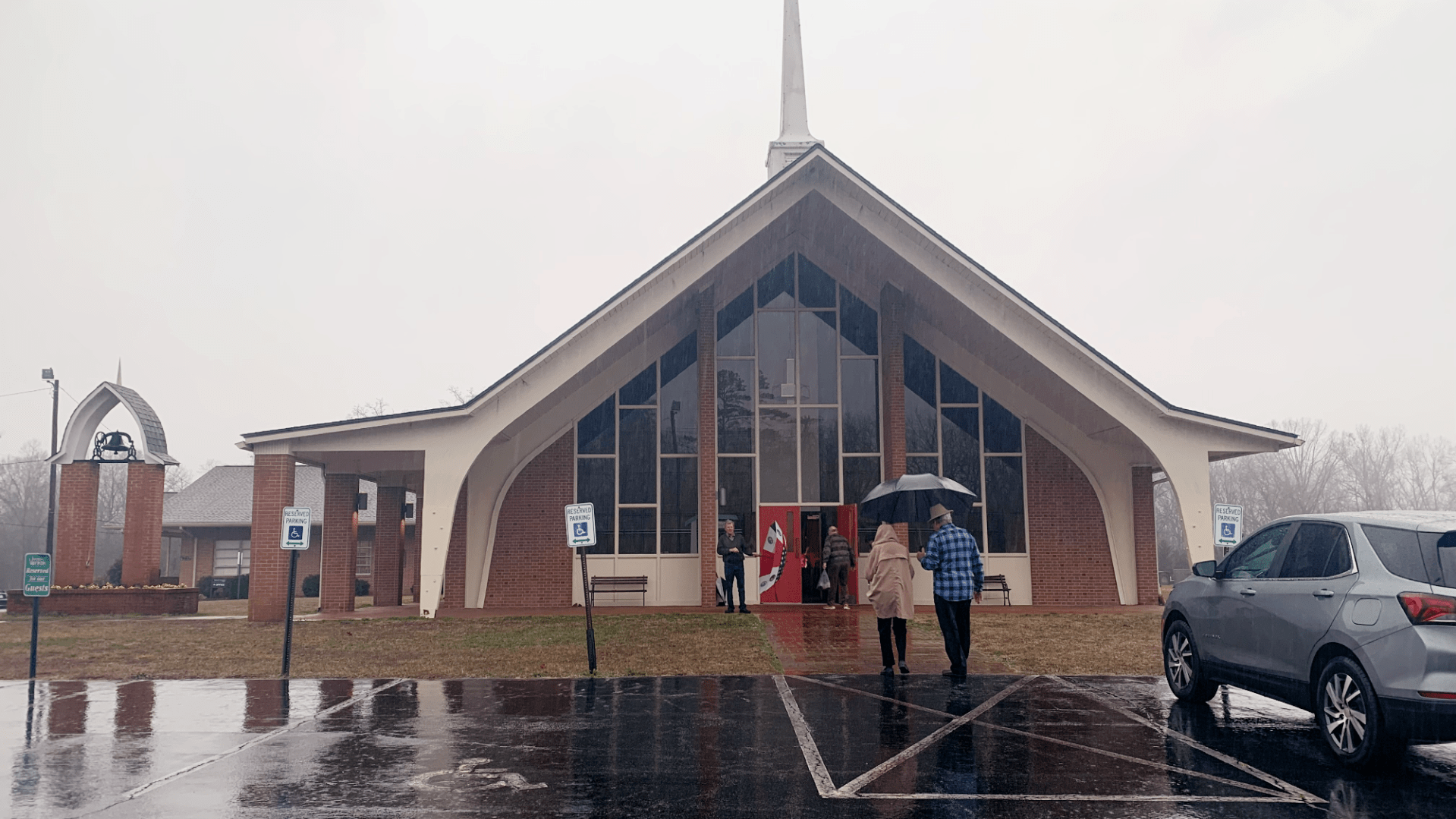
Global Methodists arrive for an early church service in Trinity, North Carolina.

Global Methodists arrive for an early church service in Trinity, North Carolina.

Christianity Today March 6, 2024
Daniel Silliman

June Fulton felt weird sitting in the third pew.

At every service since she joined the choir when she was 12 years old—her whole life, basically—she has sat with them on the stage behind the pulpit at Mt. Vernon United Methodist Church (UMC), in Trinity, North Carolina.

But there was no singing at the disaffiliation vote. So Fulton, now one of the matriarchs at Mt. Vernon, took a spot in the pew next to a friend.

“Everybody filled out their piece of paper, a ballot, and they had to sign it,” Fulton told CT. “Every person went up and put their paper in the basket and then we sat there quietly. So quietly. It was so strange to sit there so quietly as we waited.”

Representatives from the denomination collected the ballots. They went into a back room and counted the votes to see whether the small rural church would be one of the thousands to exit the UMC over LGBTQ affirmation, fidelity to traditional Christian teachings on sexuality, the authority of the Book of Discipline, and years of bruising ecclesial conflict.

Fulton leaned over to her friend and said how sad it all was. She said this was not something you ever wanted to do.

Her friend said, “I just wonder what it’s going to be like. I think we’ve made the right decision. But I just wonder what it’s going to be like,” Fulton recalled.

Fulton wondered that too. She hoped the congregation would soon put it all behind them—the debates; the acrimony and the weight of it; the sorrow; and the endless, complex process of disaffiliation.

“We can go forward,” she said, “and go back to doing the things we always did do: caring for people, looking after people, and being the church.”

Mt. Vernon did vote to leave. Today, almost a year later, there are only a few remaining indications that this congregation used to be part of the mainline church that was one of the largest, most powerful, and most influential Protestant groups in the US. A beat-up road sign about a mile down the rural highway has the denomination’s name and logo and directions to the church. The hymnals in the pew still say United Methodist.

But Mt. Vernon, like 7,630 other churches, is free of the UMC. Thirty-three percent of the denomination’s congregations in Western North Carolina have left, along with more than half of those in Texas, 38 percent in Pennsylvania, 35 percent in Ohio, and nearly a third in Indiana.

Across the country, the newly separated Methodists are hoping for, praying for, and pursuing renewal. They are, as Fulton hoped, moving forward and going back.

Ten miles away from Trinity, at Wesley Memorial Methodist Church in High Point, North Carolina, Brenda Radner was one of about 300 people who attended a two-day seminar on Methodist identity in February, with lectures on Wesleyan history, theology, ethics, and hermeneutics. She started attending Wesley Memorial 56 years ago, when she was just 19. But the congregation’s recent exit from the UMC has made her want to dig deeper into Wesleyanism and learn more about the distinctives of her faith tradition.

It’s exciting, Radner told CT, to think about what might happen next.

“I would love to see revival. And I think it might come. I would love to see it start right here in High Point,” she said.

Revival is one of the explicit goals of the School of Methodism, put on by The John Wesley Institute. The first two-day event was held at Wesley Memorial, and there are half a dozen more being planned at other churches this spring and summer, according to director Ryan Danker.

The first one began with a call to worship. Hundreds of Methodists stood in the neo-gothic church to sing the great Charles Wesley hymn, “O for a Thousand Tongues.”

Before Communion, the assembled believers lifted their voices again with another classic from the cofounder of Methodism, singing out an invitation to new life.

“Come all the world! Come, sinner, thou! All things in Christ are ready now,” they sang. “Come all ye souls by sin oppressed, ye restless wanderers after rest.”

The event was attended by many North Carolinian members of the new Global Methodist Church, which is in the process of forming out of a split with the UMC. But it was also attended by members of UMC congregations, as well as people from the Anglican Church in North America, some as-yet-unaffiliated congregations, and perhaps a few people from the Church of the Nazarene, the Wesleyan Church, and the Free Methodist Church.

Danker talked about their common history in his opening lecture in the High Point sanctuary. He pointed them back to their original ethos, formed in the 18th-century Methodist revival fires that swept through Great Britain, the US, and the world.

“I’ve noticed recently, wherever I go—I speak to all kinds of Methodists—there’s a desire for the vibrancy of early Methodism,” he said. “What I want to do with my time here is provide something of a blueprint for Methodist revival.”

Danker urged all Methodists to look to that history for the fire pit, dry wood, and kindling that the Holy Spirit can set aflame.

The next day, Asbury University professor Suzanne Nicholson talked about recovering John Wesley’s approach to reading Scripture. Too many people, she told the gathered Methodists, have been led astray and distracted by debates about technical terms in hermeneutics, forgetting what the Bible is actually for.

“John Wesley was saying that God wants to transform us, and Scripture will transform us,” Nicholson said. “Scripture is the trustworthy revelation of the mind of God.”

The traditional Methodist approach to the Bible is literalist, according to Nicholson, but that doesn’t mean Wesley or other early Methodists like Peter Cartwright and Francis Asbury read everything literally. Instead, they accepted the plain meaning of the text, which involves an assessment of the genre of writing, the literary and historical contexts, and the larger story of Scripture, moving from original sin to justification by faith, new birth, and inward and outward holiness.

Methodists should read commentaries alongside Scripture, Nicholson said, and pray and ask for illumination from the Spirit. They should also look back to Wesley’s historic Bible-reading practices.

“One of the things we find with Wesley’s sermons is they’re just dripping with Scripture,” she said.

Several women attending the School of Methodism said they thought the greatest hope for Wesleyan renewal and revitalization would come from the deep commitment to the Bible that Nicholson talked about.

“We’ve kind of got to immerse ourselves and be in the Word,” said Catherine Fulcher, who attends Wesley Memorial.

Her friend Angie Fary agrees. As someone who grew up Baptist before joining the UMC 20 years ago, Fary appreciates learning more about the history and tradition of John Wesley and early Methodism. But she said she was especially encouraged, in this time of transition, to hear the speakers pointing Methodists back to the Bible.

“We’re going to stay the course in God’s Word,” Fary told CT.

Some Global Methodist leaders have also been directing a lot of energy toward prayer. They say they want the new denomination to be bound together less by bureaucracy and legal arrangements and more by intercession.

Laura Ballinger, an Indiana pastor on the Global Methodist’s prayer steering committee, said representatives from the new denomination’s different regions gather every month to pray. There are also groups in each region that are praying, and more on the local level. The church encourages each congregation to appoint a “prayer point person.”

The people in the pews of Global Methodist churches are urged to remember that they are dependent on God and that this new, fresh expression of Methodism will need his enabling, empowering, and sustaining grace.

“We want Jesus to be Lord, so we have to listen to him, and pray to him, and ask for empowerment,” Ballinger told CT. “We want to be a church—truly be a church—that is connected to each other and the Lord through prayer.”

Many people fasted and prayed for weeks prior to the convening conferences that formalized the regional organization of the Global Methodists. According to Ballinger, the meetings have been marked by extended times of prayer and an overflow of the fruit of the Spirit, especially love and joy.

“I saw people weeping with intense joy,” Ballinger said. “At a business meeting.”

The prayer requests ahead of the convening conference of the Great Lakes region focused mainly on practical concerns. Methodists were asked to pray that the conference would go smoothly, that registration would be orderly and efficient, and that everything spoken onstage would edify the church.

But the people on the prayer list were also asked to ask God for an outpouring of the Spirit and for each person present to be “alert to the Lord.”

Carol Perry, a member of Grace Methodist Church in Decatur, Illinois, said that as she drove home, she thought about how every face seemed filled with joy and how there was so much love, even from people she didn’t know. It was a powerful religious experience.

“I think part of the joy came from the freedom we have … because we are truly following Jesus and the church he is building,” Perry wrote. “I have only been following Jesus for about nine years. Freedom in Christ is a phrase I’ve heard a lot but really haven’t experience in such a profound way.”

The regional conference kind of seemed, in the words of another Methodist hymn writer, like “a foretaste of glory divine.”

Back in Trinity, North Carolina, the new Global Methodist pastor was preaching on that theme on a rainy February morning. Caroline Franks told the Mt. Vernon congregation about a recent meeting she’d had with people interested in being ordained in the Global Methodist Church.

“They’ve heard what God is doing among us, this remnant movement,” she said.

The denomination is still being formed, according to Franks, and the renewal of Methodism is just starting to take hold. But if they look now, the Mt. Vernon congregation can just catch sight of the great work God is doing. Franks compared it to the experience of the disciples who saw Jesus transfigured on a mountaintop.

“This is a preview, a sneak peak, a glimmer of what God is going to fulfill,” she said. “It’s a glimpse of God’s glory. A glimpse of what grace really is.”

Back in the choir on the piano side of the stage, June Fulton believed this. She thought it felt right. So this is what it is like, she thought. She couldn’t wait to see more of the new life this renewal would bring to the Methodist congregation she has belonged to since she was born.

“We really don’t know all the ins and outs of what will happen,” Fulton told CT. “But we’re united again, and I hope we will grow. We are wanting to build a new fellowship hall and of course we’re wanting to reach out into the community. We’ll have to see what will happen—but it’s exciting.”

Theology

Studying Scripture Isn’t Safe, But It Is Good

As a Bible professor in an evangelical institution, I feel the tension of teaching truths that might offend.

Christianity Today March 6, 2024
Illustration by Elizabeth Kaye / Source Images: Lightstock

When I began my studies at Wesley Theological Seminary, several upperclassmen warned me about taking courses offered by George Wesley Buchanan, a no-nonsense professor who demanded excellence from his students and graded them accordingly. One faculty member derisively charged Buchanan with interpreting Scripture according to Judaism rather than Christianity. Since I was young, impressionable, and desired to succeed in my first year of studies, I avoided Dr. B. like the plague.

Forty-five years later, I stumbled upon George Buchanan’s autobiography, which recounts his difficult years at Wesley and how his colleagues often misunderstood his research and, at times, maligned him. His book is titled An Academic Hound Dog Off the Leash, and Buchanan—now in his 90s—wanted to set the record straight before heading off to glory.

His memoir captured my imagination, and I eventually came to respect the man I once shunned. I discovered Buchanan earned a reputation in wider academic circles as a first-rate scholar, especially among elected members of the Studiorum Novi Testamenti Societas, a prestigious biblical society whose past presidents included venerated figures like C. H. Dodd, Rudolf Bultmann, Joachim Jeremias, C. K. Barrett, Oscar Cullmann, and John Barclay.

Using metaphorical language, Buchanan likened his fellow faculty members to “collie dogs” who spent their time keeping the sheep within the fold and rounding them up whenever they strayed. Their main job was to protect the theological borders of their institutional pasture. By comparison, Buchanan identified himself as a “hound dog” who followed the scent of biblical truth wherever its trail might lead.

After reading Buchanan’s story, I realized at the time that I was a border collie. As a pastor, professor, apologist, and cult-buster, I drew thick lines around conventional interpretations of biblical theology and warned people of the dangers lurking beyond those acceptable boundaries. The problem is that, in Protestantism especially, there are more borders than there are even denominations—and each border acts as an enclosure to enfold its sheep, and requires collies to protect it.

On one occasion, the conservative Christian college where I taught invited Richard Bauckham, a prominent British biblical scholar, to give a lecture for the student body. During the Q&A session, a colleague of mine asked him a question about his views on eschatology, and Bauckham’s response did not fully align with the institution’s position. Afterward, there was an unspoken expectation of us professors to address this issue when the students returned to class. This is what border collies do!

In 2005, I was granted a sabbatical and began working on a second PhD. My first doctorate was from a school that majored in training border collies, so to speak, but the University of Wales (UK) was different. Bill Campbell, my supervisor, had the patience of a saint. Having worked with other American evangelical students, he suggested I expand my academic horizons, read outside my comfort zone, and enter conversations with other scholars in my field.

With anxiety and trepidation, I took the first steps beyond my comfortable ecclesiastical borders to discover a vast new world. It was frightening, exciting, and enlightening. I began reading Second Temple literature and ancient primary sources dealing with the Roman world. Before long, I met gracious academics who took interest in my studies and offered me constructive criticism. And by the time I completed my PhD thesis, I was a full-fledged hound dog!

I was eager to bring my newfound knowledge into the classroom and teach my students how to similarly think outside the box. And yet, like George Wesley Buchanan, I soon found this raised eyebrows among some of my colleagues.

For instance, there was concern when I taught that Jesus spoke in Aramaic and that the gospel authors translated Jesus’ sayings into Greek. Some thought I was arguing that there was a “text behind the Greek text,” although I assured them that this was not the case. I explained that there are some Aramaic sayings which the gospel writers had to translate and spell out for audiences who did not know Aramaic. Yet the academic dean of the school still called me into his office to question me, and I had to reassure him that I held true to the historical creeds of the church. All this controversy began because I was simply trying to use all resources at my disposal to help students interpret the Scriptures more correctly.

As a biblical theologian, I am trained to study each book of the Bible on its own—to examine it in its unique literary, historical, and social contexts. Bible scholars do not try to harmonize the Gospels, for example, because we know that each book is unique. Their authors wrote at different times to different audiences located in different parts of the empire, lived under different leaders, and experienced different levels of persecution. The authors wrote for distinct reasons and had distinct goals in mind, selecting only the stories about Jesus and his teachings that were helpful and pertinent to their respective audiences.

Biblical theologians also utilize supplementary materials such as ancient Roman and Jewish literature, epigrams, and cultural practices. And contrary to what some might think, this “outside” information is not considered a source of “extra-biblical revelation,” but it helps us to interpret the Scriptures with greater accuracy. The more familiar we are with ancient customs, the better our understanding of the biblical text.

For example, in my book Subversive Meals, I explain that Roman banquets in the first century included the meal proper as well as symposium activities (after-meal entertainment, discussion, music, speeches, etc.), which were linked by a drink offering (pouring a cup of wine out to the emperor and the gods as a sign of loyalty to the empire). The Lord’s Supper followed the same pattern—meal and symposium—but believers raised a cup in honor of Christ and his kingdom. Hence, back then, the Christian Communion meal was seen as an anti-imperial act of subversion.

Knowing this helps us better understand the historical context of the Christian meal and the cost some first-century believers paid to participate. Each bit of new data helps us to get closer to a text’s original meaning in its first-century setting—and since getting the text right is the name of the game, we must use every tool at our disposal.

Occasionally, a single new historical insight can lead us to rethink long-held interpretations of certain biblical concepts and passages, which can ultimately shift our established theological understanding of a given doctrine.

We saw this process in action when E. P. Sanders, after studying the Dead Sea Scrolls, discovered that most first-century Jews did not, in fact, believe in a works-based salvation, as many scholars had previously thought. Rather, most Jews understood salvation to be the result of divine election—that God chose them and established a covenant with them, and keeping the Law was merely seen as evidence that they were God’s covenant people.

This groundbreaking biblical insight changed the way many interpreted Paul’s relation to Judaism—as well as his letter to Galatians and his theological arguments on the doctrine of salvation. Scholars like N. T. Wright, James D. G. Dunn, and Scot McKnight, among others, gravitated toward this new perspective, which led to a controversy over the nature of justification that continues even now. As a result of this discovery, some systematic theologians and others are raising issues about abandoning traditional reformation theology altogether.

That is not to say traditional understandings of certain doctrines should be set aside on a whim. But neither should we hesitate, based on solid research, to seek further light on any given subject. After all, it was the re-examining of Scripture—in comparison with established Catholic creeds—that ultimately led to the Protestant Reformation and its widespread distribution of the Bible to the common believer.

Some systematic theologians focus on church councils and the historical development of creeds, many of which were formulated in response to specific heresies (such as Docetism and adoptionism) and have been upheld and defended for centuries. And while biblical scholars can repeat and affirm the Nicene and Apostles’ Creeds without reservation—standing in unity with the church universal—our task is different from systematic theologians.

The main question we are concerned with is, What did the text mean to the original audience? We focus on the first-century text and seek to acquire more historical and cultural insights. Otherwise, the entire field of biblical studies would remain static, and no fresh readings or analyses would emerge. In other words, our primary job as biblical scholars is to interpret the text rightly; and we are often happy to leave the doctrinal implications in the hands of systematic theologians.

That said, even the best hound dogs can occasionally find themselves barking up a wrong tree. But we must not allow that possibility to hinder us from our overall task. So, I urge my fellow hound dogs to keep their noses to the ground and follow the trail of biblical truth. Amazing and exciting discoveries—leading to a better understanding of Scripture—are just beyond the horizon.

R. Alan Streett is the senior professor emeritus of biblical theology at Criswell College in Dallas.

News

Evangelical Trump Supporters and Critics on Repeat for 2024

With Nikki Haley out after Super Tuesday, “Never Trumpers” are once again disappointed with the choices for president.

Trump supporters waited outside Mar-A-Lago on Super Tuesday.

Trump supporters waited outside Mar-A-Lago on Super Tuesday.

Christianity Today March 6, 2024
Arturo Jimenez/Anadolu via Getty Images

Neither Donald Trump nor Joe Biden have won their parties’ respective nominations yet. But Super Tuesday, the most delegate-rich day of the primary, put both within closing distance of a rematch as Trump’s only remaining competitor, Nikki Haley, dropped out of the race.

The same crowd of white evangelical voters who supported Trump in 2016 and 2020 seems set to support him in 2024; Trump took 8 in 10 white evangelical voters in Super Tuesday states like California and North Carolina and more than three-quarters in states like Virginia.

For the minority of “Never Trump” evangelicals, his ascendency further cements their alienation from the Republican Party and, at times, the evangelical Christian circles they’ve spent their lives in.

“The era of ‘Trump is our last choice’ for evangelicals is over. It is now the era of ‘Trump is our first choice,’” David French, a New York Times columnist, told CT.

The last time there was a competitive GOP primary, he remembers evangelicals making a binary argument: It’s either Trump or a Democrat. The thrust of the argument was to “hold your nose” and vote for the lesser of two evils.

https://datawrapper.dwcdn.net/5gmnU

French, who has spent the majority of his career as a lawyer working on religious liberty issues, said the idea that evangelicals only reluctantly support Trump is now unpersuasive. Voters have rejected multiple other GOP options as the primary season has worn on, from former vice president Mike Pence, South Carolina Sen. Tim Scott, and Florida Gov. Ron DeSantis to former New Jersey Gov. Chris Christie, among others.

Many Republicans who backed Haley on Super Tuesday still said in exit polls that they saw their vote as “against Trump.” But evangelical Trump supporters, on the other hand, were motivated by the candidate himself, saying the former president fights for people like them and shares their values.

“A lot of evangelicals see Donald Trump as fighting for their issues, and are able to disentangle Donald Trump the person from Donald Trump the president,” said Daniel Bennett, a political science professor at John Brown University.

But another segment of those in the church, he said, “might find they aren’t as welcome in evangelical circles anymore because of their dissatisfaction with Donald Trump.”

French is a vocal member of a segment of conservative evangelicals who find Trump even more unpalatable than he was seven years ago.

“In 2024, you have Donald Trump having lost, having lied about the election, having triggered a violent uprising at the Capitol, then running again against numerous Republicans, including rising star Republicans,” he said. “And he’s not just the choice of the overwhelming majority of Republicans, he’s the choice of the overwhelming majority of evangelicals.”

Half or more of Republican Super Tuesday voters in North Carolina and Virginia said Biden didn’t win legitimately in 2020, according to CBS News exit polls.

Trump’s legal troubles haven’t seemed to hurt him: He’s been indicted in four criminal cases at both state and federal levels. So far, he faces 91 criminal charges that relate to his attempt to maintain power after the 2020 election, efforts to interfere in the 2020 election in Georgia, his handling of classified government documents after leaving office, and falsifying business records to conceal a sex scandal in 2016.

An analysis by the Times found that after Trump’s first indictment in March, he went from raising an average of $129,000 per day to raising over $778,000 per day. After the first indictment, Trump’s national polling average jumped. (Subsequent indictments did not seem to have had the same positive impact on his polling.)

John Fea, professor of American history at Messiah University and executive editor of Current, believes the loyalty to Trump underscores a shift that became obvious in 2016, that evangelicals will prioritize policy wins over character.

“What the primary so far has shown me is consistent with the argument I’ve been making since 2016 that, you know, the age of character in evangelical politics is over,” Fea said. “What white evangelicals are seeing is a guy who is going to fight for them—even if you don’t go to a MAGA rally or wear a red hat.”

Even with some shifts in what it means to be evangelical—political scientist Ryan Burge notes that now more than a quarter of people who choose the label rarely go to church—Trump still has a solid hold on many Sunday morning regulars too.

Trump critics get accused of sounding like a broken record. And at times, Fea feels like he’s said it all before. His 2018 book Believe Me: The Evangelical Road to Donald Trump explored the reasons a majority of white evangelicals hitched their wagon to Trump, motivated, Fea posited, by a mix of fear, power, and nostalgia, and primed to do so by “court evangelicals” who gained proximity to the halls of power by supporting Trump.

Fea plans to cast his ballot for Biden. Until then, he’s trying to do what he can “to get people to see this guy’s bad for the country, but also really is damaging the witness of the church.”

After 2020, 43 percent of evangelicals expressed concerns that the embrace of Trump by Christians had hurt the credibility of the church. Over a third of evangelicals said that the support of Trump by Christian leaders made sharing the gospel with others more difficult.

Fea said he—and other Never Trumpers—are “hoping and putting their faith in the American people, especially independent voters who make up the majority of voters, to defeat him in November.”

Both Trump and Biden have some challenges when it comes to independent voters, who have shown significant disapproval for their White House track records.

Napp Nazworth, director of the American Values Coalition and former politics editor for The Christian Post, estimates most Never Trumpers will opt to write in a candidate or vote for Biden.

“My views haven’t changed since 2016. It’s been interesting to see how others have changed,” Nazworth said. “[Trump] has even stronger support now than he did.”

French also has no plans of toning down criticism. “My job is not to shrug my shoulders and go along,” he said. “The job is to tell the truth, as best as you can discern the truth.”

Many of his critics on the Right complain when fire is directed within the party rather than at Democrats. French says the criticism is often that “if there’s some person of far lesser power and influence on the Left who might be misbehaving, they say, ‘Why don’t you talk about that person instead of Trump?’”

French isn’t persuaded: “If Trump is the standard-bearer of the Republican Party, one of the most politically and culturally influential people in the United States, not talking about it is malpractice.”

Trump’s role as standard-bearer is increasingly clear after Tuesday’s elections, where 31 states held primaries and caucuses. Republicans allocated 365 delegates for their convention in 15 GOP presidential nominating contests. Democrats allocated 1,420.

Haley, the South Carolina Methodist who lasted the longest as a Republican alternative to Trump, won only Vermont on Super Tuesday. Rather than endorsing her opponent, she challenged Trump to earn her supporters’ trust.

“It’s like a sequel nobody wants,” said Dan Darling, director of the Southwestern Baptist Theological Seminary’s Land Center for Cultural Engagement.

But he sees a silver lining in the continued division. He hopes it may lead to reckonings within and around the church on their political engagement. Most of his speaking engagements for the year revolve around the topic of how to navigate the election season well.

Darling believes Christian leaders are being proactive: “They want to equip their people on how to navigate this season, how to exercise their citizenship well, how to stay unified as a people. That’s a key thing.”

Meanwhile, both Trump and Biden sounded like they had already turned the page to the general election, with each pointing fingers at the other.

Trump’s victory speech in Mar-a-Lago painted a portrait of an America in dire straits under Biden’s presidency, calling out the twin disasters of immigration and inflation.

“Our cities are choking to death. Our states are dying. And frankly, our country is dying,” he said. “In some ways we’re a Third-World country.”

Biden, meanwhile, said in a written campaign statement that Tuesday’s results leave Americans with a “clear choice” between him and the former GOP president: “Are we going to keep moving forward or will we allow Donald Trump to drag us backwards into the chaos, division, and darkness that defined his term in office?”

History

Conversations on Faith, Mission, and Black Leadership

A special Black History Month roundtable from CT and Seminary Now.

Christianity Today March 6, 2024

Black History Month honors the faithful leaders who came before, but it also reminds us that contemporary generations of Black leaders are still blazing trails, breaking ground, and scaling mountains through their creativity, scholarship, and service.

On February 28, CT and Seminary Now joined together to host a roundtable discussion featuring Black evangelical leaders from a variety of vocational ministry settings. Their conversation explored the blessings and challenges of being a Black leader in today’s divided and often volatile ministry environment. Their journeys in the church, academia, and the arts offered practical lessons for creating, serving, and leading in a variety of contexts. Featured panelists for the online conversation included Chicago-based pastor Marshall Hatch Sr. on church leadership, author and poet Rachel Marie Kang on creativity and the arts, Baylor University seminary professor Daniel Lee Hill on theology and higher education, and CT’s own chief impact officer Nicole Martin on women and ministry leadership.

Inspired in part by a June 2020 blog post from webinar moderator Carmen Joy Imes, the discussion featured multiple entry points, ranging from historical to sociological to devotional. Imes, an Old Testament scholar at Biola University, spoke frankly about her relatively recent awakening to the importance of seeing the world—and reading the Bible—through cultural lenses that are different from her own.

“I’m honored to have the opportunity to help the Christian community experience Black History Month in a fresh way by interviewing these four outstanding leaders,” she said prior to the event. “Over the past decade it’s become increasingly apparent to me how important it is for me to learn from those who come from different social locations and how much I’m missing out on when I don’t. It’s been a wonderful journey meeting Christian leaders from a variety of backgrounds and hearing their perspectives on the world.”

Imes has been energized by new friendships and connections across cultural lines. That 2020 blog post, a review of Esau McCaulley’s Reading While Black written at the height of the COVID-19 pandemic, was indicative of the trajectory of change in her relationships, ministry, and even her reading diet.

“My childhood was very monochromatic, and I’m so thankful to be in a different space now, with a wide and growing set of friendships and teachers from around the world,” she said. “I believe we’re stronger together, working side by side for human flourishing.”

Imes and the webinar panelists presented an hour of insight, testimony, and practical wisdom for addressing the challenges facing today’s Christian leaders. Watch the full-length replay of the webinar in the video above.

About the Panelists

Rachel Marie Kang is a New York native, born and raised just outside New York City. A mixed woman of African American, Native American (Ramapough Lenape Nation), Irish, and Dutch descent, she holds a degree in English with creative writing. She is the founder of The Fallow House and author of Let There Be Art and The Matter of Little Losses: Finding Grace to Grieve the Big (and Small) Things.

Rev. Dr. Nicole Massie Martin is the chief impact officer at Christianity Today. She is the founder of Soulfire International Ministries and author of Made to Lead: Empowering Women for Ministry and Leaning In, Letting Go: A Lenten Devotional . She and her husband reside in Maryland with their two daughters.

Rev. Dr. Marshall Elijah Hatch, Sr. has been the senior pastor of New Mount Pilgrim Missionary Baptist Church of West Garfield since 1993. Born in Chicago, his spiritual development began at Shiloh Baptist Church under the pastorate of his father, the late Reverend Elijah J. Hatch. In 1985 he was ordained and appointed as the pastor of Commonwealth Baptist Church of North Lawndale. In the summer of 1998, he was awarded the Charles E. Merrill Fellowship of Harvard Divinity School. He is professor of ministry at Northern Seminary.

Dr. Daniel Lee Hill (PhD, Wheaton College) is an assistant professor of Christian theology at George W. Truett Theological Seminary at Baylor University. He is the author of Gathered on the Road to Zion and is currently working on a manuscript, Gospel Freedom , that retrieves the insights of 19th-century abolitionists in order to construct an evangelical account of public life.

Moderator: Dr. Carmen Joy Imes is associate professor of Old Testament at Talbot School of Theology at Biola University in Southern California. A graduate of Gordon-Conwell Theological Seminary and Wheaton College Graduate School, her books include Bearing God’s Name: Why Sinai Still Matters and Being God’s Image: Why Creation Still Matters.

Books
Review

Your Politics May Be Less Bible-Based than You Think

Preston Sprinkle’s Exiles is a bracing call to return to Scripture, but some of his specific political applications are dubious.

Christianity Today March 5, 2024
Illustration by Mallory Rentsch Tlapek / Source Images: Unsplash / Getty

It’s not news that modern American Christians are deeply divided over politics—to the point that it may seem we have more in common with people who share our political beliefs than with our siblings in the faith. That division raises the question: If we’re all reading the same Bible, how do we end up with such conflicting and conflict-prone politics? Is our political engagement actually shaped by Scripture?

Exiles: The Church in the Shadow of Empire

Exiles: The Church in the Shadow of Empire

David C Cook

224 pages

Preston Sprinkle’s new book, Exiles: The Church in the Shadow of Empire, challenges American Christians to recenter our politics on the Bible rather than on American culture and to found our political identities on our faith rather than on our partisanship. Some of his applications of Scripture are questionable, but his altar call is welcome and necessary for the American church.

A longtime Christian writer and public intellectual, Sprinkle has made a name for himself as an orthodox evangelical with some uncommon positions, including his commitment to Christian nonviolence, his annihilationist view of Hell, and his approach to issues of sexuality and gender identity. In Exiles, Sprinkle first uses his training as a biblical scholar to take readers through what Scripture says about how God’s people should live politically, then considers how Christians should apply these lessons in modern-day America.

The strongest feature of Exiles is its call for Christians to challenge our own political views with a careful reading of the Bible. Sprinkle is exactly right on this: It’s far too easy to assume our politics are an outgrowth of our faith without ever giving them serious scrutiny. Sprinkle challenges Christians on the left and right alike to see how Scripture both affirms and runs against parts of their politics:

Social justice. Concern for the poor. Economic checks on the rich. Redistribution of wealth. Forgiveness of debt. These aren’t liberal or Marxist or “woke” ideals. They’re straight out of the Bible. So are other values like small governments, limits on centralized power, and able-bodied people working hard and saving for the future. When Christians think about money and economics, we need to stop letting the rhetoric and categories of Babylon’s culture wars shape our values. The Bible provides us with some rich categories for thinking about these things.

Christians can disagree with his interpretation here and elsewhere. But the bigger and more important point Exiles makes is that our disagreement should be grounded in careful exegesis, not partisan instinct.

Biblical guidance may not always seem practical, efficient, or shrewd, yet as Sprinkle reminds us, the Bible teaches that “things are not always as they seem.” He quotes 1 Corinthians 1:27: “God chose the foolish things of the world to shame the wise; God chose the weak things of the world to shame the strong.”

Sprinkle’s willingness to think in scriptural rather than partisan terms is evident when he turns to applying his exegesis to recent political situations and controversies. There’s a lot of good here, especially in his advice for the church to bypass seeking government solutions to problems that communities can solve on their own. His example of local churches using their own money to cancel medical debt is deeply inspiring and something more congregations should do regardless of the future of health-care policy and insurance.

Unfortunately, this application portion is also the weakest part of Exiles. Sprinkle’s message is particularly confused on whether and how Christians can wield state power.

He says that whenever the church has gained power from the state, it “has never ended well”: “It’s almost always the case that when the church becomes too enmeshed with the power of the state, the upside-down kingdom of God is turned right side up. Christianity is simply not designed to occupy positions of worldly power without betraying its mission and witness.”

But that comes just a few pages after he praises Martin Luther King Jr. for using state power to end segregation—not only state-enforced inequality like segregated public schools or buses but private segregation in restaurants and other public accommodations. Similarly, Sprinkle is skeptical of “working in and through the demonically empowered authorities of earth to bring justice to the world,” likening it to “working with a dragon-empowered beast to defeat … the dragon.” Yet he supports passing laws to ban slavery and segregation and approvingly quotes King’s observation that “the law can’t make a man love me, but it can restrain him from lynching me.”

To be clear, I support those laws too and am also wary of Christian hunger for power. But his condemnations of state power are so sweeping and absolute and his criteria for exceptions so vague that he comes across as saying, When I don’t like the results, state power is bad, and when I like the results, state power is good. This is not a helpful framework for Christians trying to determine how we should engage with politics. I believe it’s possible to distinguish between different Christian uses of state power. But it requires a coherent theory of the proper scope of government authority alongside a theology of Christian engagement with politics and the state. Sprinkle may have such a theory, but he doesn’t spell it out here.

Sprinkle’s account of American Christians’ political tribalism is also dubious. He lays considerable blame on the “God and country” mindset, which endorses a split allegiance between Jesus and America so long as Jesus comes first. Sprinkle argues that, in practice, we don’t put Jesus first, and accordingly advises eliminating a strong sense of national identity, replacing it with a Christian identity. We can be patriotic, Sprinkle says, but only insofar as it’s a soft patriotism that doesn’t command allegiance.

This explanation doesn’t hold up. Sprinkle admits that both left- and right-wing Christians are politically tribal, but polling consistently shows left-leaning Americans are less likely to claim high levels of patriotism and national pride. If Sprinkle’s analysis is correct, you’d expect that politically progressive Christians would be less politically tribal—but, in fact, the opposite is true.

As sociologist George Yancey demonstrates in his book One Faith No Longer, liberal Christians are more likely than conservative Christians to put their politics above their faith, use their politics to determine their theology, determine their friend group based on their political tribes, and use “us” and “them” language based on politics rather than theology. As Yancey summarizes in an article about his book for The Gospel Coalition, “political conformity is more important for progressive Christians than for conservative Christians,” and “progressive Christians have an underlying value system that leads them to a stronger political loyalty than the value system of conservative Christians does.”

A better explanation than Sprinkle’s—which works across the political spectrum—is that Christians give more time and attention to our political (and cultural) identities than to our identity in Christ. This is the case made in books including James K. A. Smith’s Desiring the Kingdom;Handing Down the Faithby Amy Adamczyk and Christian Smith;The Great Dechurching by Jim Davis, Michael Graham, and Ryan P. Burge; and Aaron Renn’s Life in the Negative World. We spend one day a week at church and six at school, at work, with friends, and online. Sprinkle hints at this reality with his advice to Christians to spend less time taking in political talk shows. But he’s more interested in telling American Christians to love America less than to seek Christ more.

On abortion, Sprinkle’s charge for churches to become more “hospitable and forgiving places for women with unwanted pregnancies” is disappointing as well. It’s right, so far as it goes. But it misses the work Christians are already doing to welcome and care for mothers who might otherwise seek abortions due to practical and financial hardship. It neglects the difficulty of balancing welcome with accountability in a culture that increasingly treats the two as mutually exclusive.

And it ignores complicating facts, like how higher-income women are more likely to have abortions, which suggests lack of financial support from Christians is not the only reason American women choose to abort. All this means that sincere Christians looking for a practical, nonpartisan path forward on abortion will find little actionable guidance in Exiles.

For all that, Sprinkle’s call for Christians to firmly ground our political beliefs in the Bible is a worthy one and one our country desperately needs. He doesn’t have to get every application right for the bigger principle to be vital. In fact, I hope this book sets off a flurry of exegetical debate over Sprinkle’s ideas. If it sends Christians back to Scripture, Exiles couldn’t ask for a more worthwhile legacy.

Joseph Holmes is a Christian culture critic and podcast host living and working out of New York City. He has written at outlets including Forbes, The New York Times, Religion Unplugged, Relevant, and An Unexpected Journal. He cohosts a weekly podcast called The Overthinkers.

Church Life

Brazilian Evangelicals Bring Their Political Playbook to Portugal

Immigrants from South America are a growing force in churches on the other side of the Atlantic. But their electoral initiative is viewed with reservations.

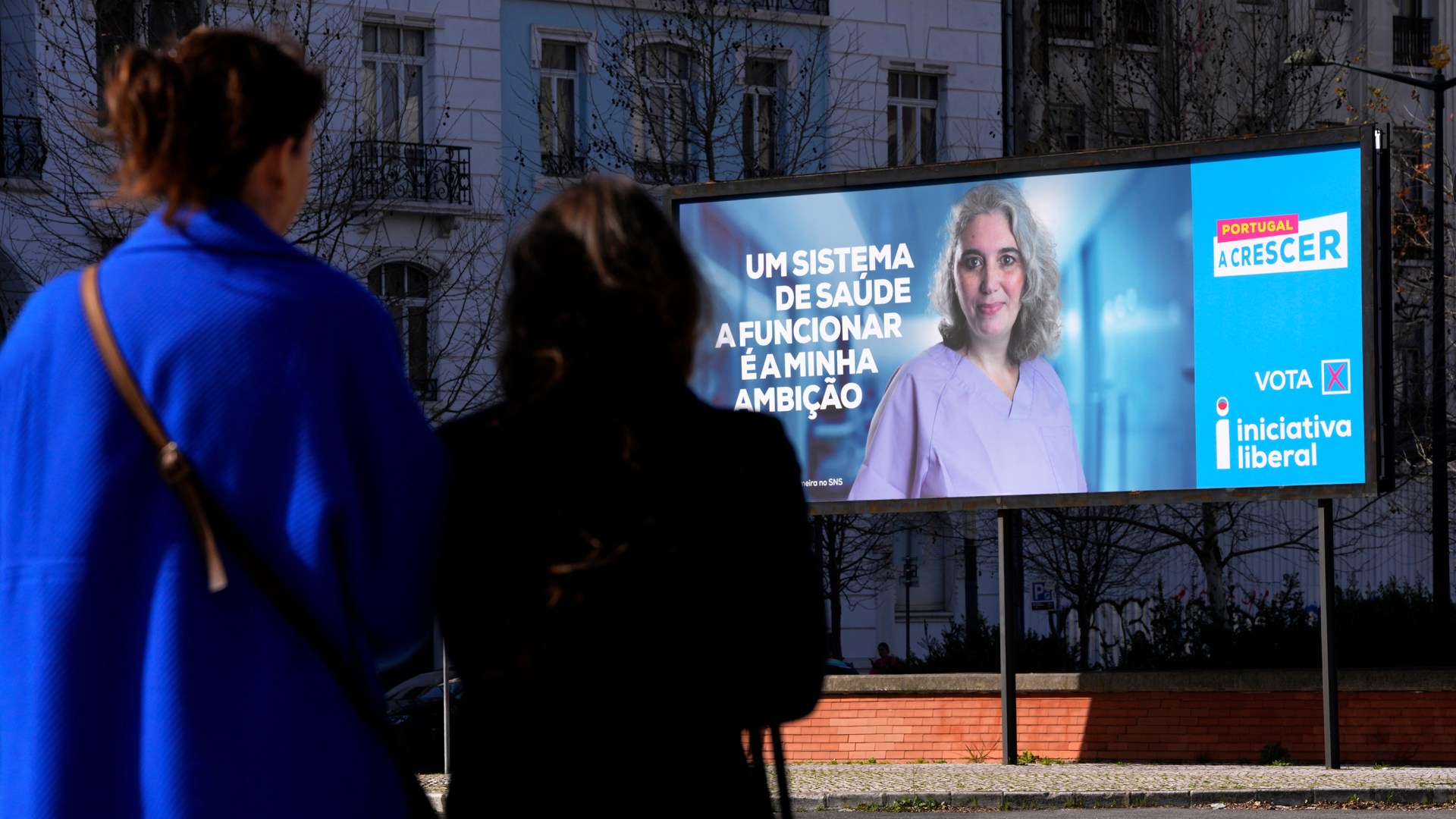
People walk by an election campaign billboard in Lisbon.

People walk by an election campaign billboard in Lisbon.

Christianity Today March 5, 2024
Armando Franca / AP Images

Update (March 21, 2024): The party backed by Brazilian evangelicals, Alternativa Democrática Nacional (ADN), once again failed to earn its first seat in Portugal’s parliament.

The center-right coalition Aliança Democrática (AD) has won this month’s elections, and after vote counts concluded on Wednesday, the party nominated Social Democratic representative Luís Montenegro as prime minister.

With endorsements from pastors on both sides of the Atlantic, ADN garnered 102,132 votes, 10 times more than in the previous election, but fell short of the required vote count for each chair in the Assembleia da República. The last party to secure a seat was the People-Animals-Nature (PAN) party, with 126,085 votes (1.95%). ADN ended up with 1.58 percent of the electorate.

The increase in support was attributed to voter inattention, as some allegedly marked the name of ADN on the ballots when they intended to choose AD.

—-

As Portugal goes to the polls this Sunday, a transatlantic group of Christian leaders has come together to campaign for the National Democratic Alternative (ADN).

Founded in 2014, the small party has never held a seat in the Assembleia da República, Portugal’s parliament, and has drawn national attention for downplaying COVID-19 and blaming the US for the war in Ukraine. But its pro-life, religious liberty, and anti-drug legalization stances have drawn significant evangelical support, much of it coming from Brazilian immigrants and nationals who are eager to bring their political playbook against their former colonizer.

“I want to call on all evangelical leaders in Portugal, as well as all Christians, to support and vote for the ADN in the elections on March 10,” said Brazilian representative and Pentecostal pastor Marco Feliciano in a YouTube video by ADN adherents several weeks ago. “It’s time for people who love the Holy Bible to arise and to make a decision for a better country, a country that protects and promotes Jewish-Christian values.”

Feliciano is one of numerous Brazilian lawmakers who have made their evangelical identity integral to their politics. The founder of Catedral do Avivamento, a neo-charismatic church loosely affiliated with the Assemblies of God, he makes up one of 204 deputies (out of the 513 in the lower house of the Brazilian parliament) in the evangelical caucus Evangelical Parliamentary Front.

This coalition supports keeping abortion and drugs illegal and backs other issues that are important to the evangelical public. Not all in the group profess the evangelical faith; about half are there to signal these stances to their constituents. Though the bloc has been criticized for giving unconditional support to former president Jair Bolsonaro and does not have unanimous support even among evangelicals, its members largely continue to win their elections and pick up new supporters.

“On the subjects that are more valuable to Christians, our group has done a very precise job,” Feliciano told CT in a written statement. This success has encouraged many to set their sights on places where the diaspora might have political influence.

Under a 1971 agreement, Brazilian and Portuguese immigrants to either country can receive nearly all of the same political rights as nationals, including voting in national elections. In particular, many evangelicals in both countries now want to start their own evangelical parliamentary coalition. For them, the first step is voting for the ADN.

Valdinei Ferreira, sociologist and professor at the College of Theology of the Independent Presbyterian Church of São Paulo, sees this phenomenon as a “natural development” of the Brazilian presence in Portugal.

“Brazil has created its own infrastructure of evangelical institutions. As a result, if you have an intense presence of Brazilians, it is natural that they will try to reproduce their systems,” he says. “This political ramification ends up being a side effect.”

A scholar of the transnationalization of Brazilian churches, Ferreira observes that “this conversion of religious identity into a political identity is relatively new in the Brazilian context.”

“One of the first evangelical deputies elected in Brazil was Lauro Monteiro da Cruz in the 1950s,” Ferreira recalls. “He was elected based on his career as a doctor. His religious identity was not taken as something that could benefit his credentials. Today, however, people present themselves as ‘evangelicals,’ and that’s enough to run in the elections.”

As Brazilians move abroad, they take these practices with them. “This model of the evangelical bloc makes alliances with other faces of political conservatism, which has become a transnational issue,” says Ferreira.

One percent

Portuguese generally hold parliamentary elections every four years, but this year’s snap elections follow the abrupt departure of Prime Minister António Costa, who resigned over corruption allegations against two of his ministers.

If the ADN receives 1 percent of the vote, it will probably be represented by a member of parliament (MP) for the first time. In the 2022 parliamentary election, the party garnered 10,911 votes, or 0.2 percent of the country’s total voters. (The party would have needed 70,000 votes to earn a representative then.)

This year a slightly different scenario may be shaping up. A voter panel conducted by CNN Portugal suggested that the ADN would earn 1 percent of the vote, a swing possibly explained by the efforts of nearly two dozen local pastors, all either Brazilian or with close connections to Brazil.

Paulo Nunes, who pastors Assembleia de Deus Missão Lusitana, coordinates the group. Born in Torres Novas, a town 70 miles north of Lisbon, he moved back to Portugal in 2021 after 30 years in Switzerland.

Nunes became a Christian in Zurich and started attending a Portuguese-speaking Assembly of God church, which was led by Brazilians and affiliated with one of the main branches of the Assemblies of God in Brazil, the Ministério Belém (based in São Paulo). He became ordained in 1996.

Nunes admits that, until recently, he knew very little about Portuguese politics.

“I was familiar with and in touch with Brazilian politics. I heard about what was happening in Portugal, but I was more informed about the Brazilian reality,” he says. “Brazilians have the determination to fight for their principles, for what they believe in.”

But other Portuguese evangelicals don’t find this model of political engagement as compelling.

On February 20, the Aliança Evangélica Portuguesa (AEP) issued a statement advising Christians to exercise their right to vote but also warning them to avoid turning churches into a stage for electoral campaigns.

“Genuine participation should not be used to manipulate religious and spiritual communities and organizations,” the evangelical group stated, “nor should the pulpit be utilized to rally support for the specific political agendas of a party.”

The AEP sent another document to member churches, addressing a video that brought up the alliance in the context of a meeting between religious leaders and officials of the ADN.

“On this matter, I must clarify that, having been invited to attend the aforementioned event as president of the AEP, my absence was not due to any unavailability or scheduling conflict,” wrote Timóteo Cavaco, “but rather to the clear and resolute conviction and understanding that the AEP cannot be associated with this action or any other of a political-party nature.”

Cavaco was approached by CT to comment on both documents, but he declined and stated that the organization would only address the issue after the March 10 vote.

But Nunes—who is on the ADN’s party list and can become an MP if the group achieves a place in parliament—says that the vote of Brazilian evangelical immigrants can help change the country for good.

“The evangelical parliamentary bloc will be a driving force,” he says.

Feliciano sent a written statement to CT saying that he recorded the video to address issues such as religious freedom, the decriminalization of drugs, and abortion. “In the absence of legislators that act as opposition to these matters, they have been approved in disregard of what the conservative part of society thinks. Portugal needs conservative representatives in the legislature.”

Egypt and the people of Israel?

Demographic changes may ultimately limit the AEP’s influence on Portugal’s evangelical church. According to Portugal’s 2021 census, there are 187,000 evangelicals in the country, or 2.1 percent of the population above 15 years old (the total population is 10.3 million). This is more than twice as much as 2011, when the evangelical population was 75,000, or 0.8 percent of the population.

This growth is largely attributed to immigration—a report from last year reveals that there are 781,000 foreigners living in Portugal, a contingent that has been steadily increasing over the past seven years. Of these, nearly 30 percent are Brazilians. To put it another way, nearly 4 in 10 Brazilians living in the country are now evangelicals.

In a predominantly Catholic country, however, the very presence of foreigners in evangelical churches may seem suspicious. In recent years, there have been scandals involving church leaders in illegal adoptions of babies and immigration issues.

Antonio Rodolpho moved to Portugal from Brazil as a missionary nearly 30 years ago. He has held workshops in several churches across the country to help leaders deal with an increasingly multicultural environment, including Brazilians as well as citizens from Portuguese-speaking countries in Africa (Cabo Verde, São Tomé and Príncipe, Guinea-Bissau, Angola, and Mozambique).

“Some churches were about to die but were revived with the arrival of immigrants,” he said.

But sometimes it doesn’t go so smoothly. Rodolpho compares the relationship of Brazilian churchgoers and their Portuguese counterparts to Egypt and the rapidly growing people of Israel in Exodus 1—the community grew so quickly that their hosts began to worry there might be a takeover of power.

“When there are one or two Brazilian families, it’s beautiful, exotic,” he said. “When this group grows, however, then comes the fear—what if they take over the church?”

This is not a concern for many church leaders. Joel Resende, a Portuguese pastor in the Wesleyan Methodist Church at Gafanha de Nazaré, a fishing community 160 miles north of Lisbon, says that in his community, there is an average attendance of 100 people per service—40 Portuguese, 30 Brazilians, and 30 Bissau-Guineans. It’s better this way, he says, “than to have a Portuguese-only church with barely 40 people.”

For now, even with the support of Brazilian immigrants, the chances of an evangelical bloc taking hold of the Portuguese political space are very slim. However, professor Ferreira warns that the mobilization factor within churches could give greater weight to the evangelical vote.

Since voting is not mandatory in Portugal, a surge of support called for by religious leaders could lead to higher voter turnout and favor a group presenting itself as an outsider in politics.

“Even if they are not numerically strong, they can still cause a lot of fuss.”

News

As France Makes Abortion a Constitutional Right, Evangelicals Seek to Promote Culture of Life

Despite disappointment over the vote, churches see opportunities to love and serve.

Protestors taking part in a silent pro-life demonstration in Paris as the Senate begins debates on the inclusion of abortion in the constitution.

Protestors taking part in a silent pro-life demonstration in Paris as the Senate begins debates on the inclusion of abortion in the constitution.

Christianity Today March 5, 2024
NurPhoto / Contributor / Getty

In a rare joint session at the Palace of Versailles on Monday, lawmakers voted 780 to 72 to enshrine abortion access in the constitution, making France the first country in the world to do so.

While abortion is already legal in France, the parliament acted in response to the US Supreme Court’s overturning of Roe v. Wade in 2022 as well as the rightward political swing in countries around the world. The French government wanted to shore up its existing laws ahead of any potential gains by the political right in France’s next presidential election in 2027, even though none of the political parties are advocating an end to abortion.

The vote easily exceeded the threshold of three-fifths of the senators and deputies needed to amend the constitution, which now states there is a “guaranteed freedom” to abortion in France. While many people cheered the decision, pro-life voices within the country’s small evangelical population (making up about 1 percent of the population) expressed concern. A group of around 2,500 demonstrators, rallied by the organizers of the annual Marche pour la Vie (March for Life), gathered in Versailles on Monday as members of parliament arrived for the vote.

“I think it is really important to witness that many French do not agree with the inscription of abortion in the constitution,” said Nicolas Tardy-Joubert, president of Marche pour la Vie. “This [demonstration] is key to showing that there is an alternative mindset to public life in our country. … We should protect life, and we cannot add a guaranteed liberty in our constitution to kill somebody.”

Tardy-Joubert noted that while it was a day of sorrow, “it should also be a day for hope, because we need to wake up the concerns and tend the hurts. … It is a long-term process.”

In his speech before the historic vote, Prime Minister Gabriel Attal hailed the addition to the constitution as a second victory for Simone Veil, a Holocaust survivor and French health minister who championed the 1975 law that legalized abortion in France, known as the Veil Act.

Yet a statement by the National Council of Evangelicals in France (CNEF) noted that the Veil Act viewed abortion as a last resort: “Exception was to be the foundational principle. Distress was to be the criterion.” It pointed out that Veil warned abortion should be of an “exceptional nature” so that society wouldn’t appear to encourage it, but rather dissuade it.

But now, the statement noted, “Guaranteed freedom has become the foundational principle. The criterion of distress has been removed from the law.”

The Evangelical Protestant Committee for Human Dignity (CPDH) similarly believes that the move makes abortion seem like the government’s de facto solution for women facing unplanned pregnancies.

“This isolation in the face of the abortion decision is a form of abandonment by the public authorities, in the face of the distress a woman may experience at a delicate moment in her life, without providing her with any alternative other than to put an end to the life she carries within her,” the group said in a statement. “The freedom we offer is also the support we deprive her of.”

CPDH further noted that Monday’s vote, in which voluntary termination of life became one of the values of the Republic, will be viewed as “a political step forward for President [Emmanuel] Macron—one he naturally welcomes—but also a real ethical setback.”

Marjorie Legendre, a pastor, seminary professor of ethics and spirituality, and member of the Commission d’Éthique Protestante Évangelique (CEPE), senses that the inclusion of abortion in the constitution is a wake-up call for French evangelicals. Rather than simply opposing abortion privately, now they are speaking about it more openly in the church and in society.

Normally, the government holds listening tours and invites input and public debate when it comes to big issues, but that didn’t happen with the decision to constitutionalize abortion. Erwan Cloarec, president of CNEF, said that though the government holds meetings with his organization and other religious groups on other topics, it did not invite input on this one. He said that, to his knowledge, the government didn’t even give a hearing for the Catholic church, which still holds historical sway in France. Despite this, “it’s still our job to explain what we believe.”

Legendre—speaking from her personal opinion rather than as an institutional representative—called attention to the way the government is prioritizing a woman’s right to choose over the rights of children.

“I have the impression that we’re putting so much emphasis on women’s rights that we’re forgetting the right of the unborn child,” Legendre said. “But who is the weakest in the story? Christians are called to defend the weakest. I’m not saying that the rights of women—who may also be in a fragile situation—and the rights of the unborn child should be pitted against each other, but there is a disproportion in favor of women’s rights alone.”

While enshrining abortion rights in the constitution doesn’t bring any immediate changes in practice, as laws protecting abortion are already in place, some evangelicals are concerned that it may impact other forms of liberty. For example, CNEF said in its statement, “Evangelical Protestants of France call on the government to ensure that women who so wish are offered the freedom and means to keep their child or to entrust their child to someone else.”

Some also worry that the constitutional change could impinge on medical professionals’ right to choose not to perform procedures that go against their conscience. Legendre said she doesn’t think the conscience clause is legally under threat since it is part of the French human rights declaration. But she’s concerned that, in practice, doctors or nurses could face pressure to perform abortions, which ultimately weaken the freedom of conscience clause.

While Christians in the West may view what is happening in France as a cautionary tale, Cloarec noted that it is essential to consider the distinct cultural and historical contexts within each country.

“Our posture is to try to be constructive and credible, to dialogue with the country’s authorities without being confrontational, aware of living in a secularized context but without giving up on saying what we believe,” Cloarec said. Ultimately, “we wish to be the church of Jesus Christ. That is to say, loving and welcoming to all.”

As for what’s next, Luc Olekhnovitch, president of the CEPE and a pastor for 30 years, said he’s glad CNEF published a press release so that there’s a public-facing statement. Beyond that, churches have work to do. “The cultural battle is lost on this issue,” he said. “On the other hand, we mustn’t cut off the cultural battle in the churches—the battle to respect life itself, from conception to death.”

According to Marche pour la Vie’s Tardy-Joubert, there are still opportunities to prevent abortions from happening. He noted that, according to a 2020 study by the pro-life group Alliance Vita, 88 percent of French people want to understand the causes and consequences of abortion, which number about 200,000 a year in the country.

“So we think the [members of parliament] and senators should involve themselves in making inquiries to better understand why we have so many abortions and what the consequences are in terms of public health, in terms of demography, in terms of economics,” he said. “The target to reduce abortion by half in France, for example, is possible if we want to have the politics put in place.”

This might be welcomed even by those without ethical reasons to wish for a drop in abortion numbers. Like in many parts of the world, France is facing a rapidly decreasing birthrate that will impact the country’s workforce and tax its social welfare system: 2023 saw the lowest number of births in the country since 1946.

Legendre sees a role for churches in combating a “culture of death” with a prophetic voice for a “culture of life.” She said this will happen “through the teaching of young people, through teaching adults with aging parents, and so on. There is room to maneuver in our communities in this area. And, in this sense, we can be models and witnesses within society of the culture of life.”

She added: “We have every reason to have a culture of life: We worship the living God, the God of life, the risen Christ! We have every reason to celebrate life, to savor life, to respect life: It’s up to us to be models and witnesses of life, from its beginning to its end.”

Church Life

How a Chinese Church in America Surmounts Racism and Ethnocentrism

Their Chinese pastor prayed and shared pulpits with Black and white pastors and volunteered to deliver packages to know the multicultural surroundings better.

Kindred pastors washing each others’ feet during a joint worship service.

Kindred pastors washing each others’ feet during a joint worship service.

Christianity Today March 5, 2024
Courtesy of Qian Bin

Chinese churches scattered across the globe hold immense potential within the universal Christian mission, but that potential often remains untapped. One persistent challenge is the deep-seated racial discrimination prevalent among Chinese people, as well as their indifference to, or even their tendency to avoid, the diverse races, cultures, and language groups that surround them.

In May 2023, pastor David Doong, general director of the Chinese Coordination Center of World Evangelism (CCCOWE) and host of the Missional Discipleship podcast, conducted an interview in Mandarin with pastor Qian Bin of the Evangelical Chinese Church of Seattle (ECCS). What follows is a translated and edited excerpt from that conversation.

David Doong: In the United States, racial issues are a sensitive topic. It’s no longer just a Black-and-white issue; all ethnic groups seem to be drawn into the fray. As a Chinese church pastor in Seattle, when did you begin to take notice of racial issues?

Qian Bin: When our church was established in 1960, the congregation consisted primarily of ethnically Chinese individuals from Hong Kong and Taiwan. However, with shifts in immigration patterns, immigrant families from China, Southeast Asia, North America, and even Europe gradually became part of our congregation. Consequently, our church has become a melting pot of multiple languages, multicultural backgrounds, and diverse traditions. We even have multiple congregations, all shepherded by the same group of pastors and elders.

Our church comprises Mandarin-, English-, and Cantonese-speaking congregations, each with significant cultural and background differences (they are from different places geographically). Everyone within the same church must confront the disparities and tensions between different cultures, languages, and modes of thought. Of course, many blessings come from cultural diversity. How God’s people, regardless of their cultural backgrounds and traditions, can worship and serve God together in one church and one body is the issue on which I have focused.

And because our surrounding community is composed predominantly of white, Black, Indian, Mexican, Middle Eastern, Muslim, and other non-Chinese groups, we must address racial issues while understanding the concept of a missional church and missional discipleship in such a context.

Doong: How has your church made progress in this area?

Qian: In 2016, another pastor from our church invited me to dinner with a few other pastors. Upon arriving at the restaurant, I discovered that one of the guests was the pastor of our English congregation, and another was the pastor of a historic Black church in Seattle, where Martin Luther King Jr. once preached. The final guest was the white pastor of a large white Presbyterian church.

Over the next two years, we united in prayer, affirming that God had brought us together like a large family. We began to refer to this gathering as “kindred,” which we translated as zhu li yi jia qin (“one friendly family in the Lord”) in Chinese. We also started inviting fellow believers from our church to join the network.

During these two years of shared prayer, we realized that, as a Chinese church that wanted to become a missional church, we seldom acknowledged the needs of the city surrounding us. Particularly as immigrants, we tend to concentrate on improving our own lives. We can uphold our own faith and spiritual life well, but we often fall short in our missional life. In those prayer gatherings, all the pastors recognized that we must engage with the multiracial community.

Doong: Given that racial issues are so prevalent in society, it must have been challenging for you to initiate regular meals and prayers with Black and white church leaders.

Qian: For our church, the motivation to confront racial issues does not necessarily stem from observing the problem of racial division but from an internal recognition of the need for a life of missional discipleship.

Thus, after two years of prayer, we took the next step: Starting in 2018, in addition to the quarterly joint prayer time, we decided to “do church together” for six to seven weeks each year. This meant that three churches would exchange pulpits, establish joint groups and Sunday schools, and start holding various meetings and services together in the city, with the aim of becoming a beacon in this divided world.

We encountered many complex situations. For example, May 31, 2020—the Pentecost Sunday following the onset of the pandemic—was our joint-worship Sunday. We selected a park as the outdoor gathering place, and I was the speaker that day. However, on May 26, George Floyd was killed. The social atmosphere in the US was extremely tense that week, with severe racial conflicts erupting in many places, including protests near our church. So I wondered, how should we conduct this meeting? What message should I preach? How will the congregation react? Everything was uncertain.

As the speaker, I was truly anxious and could only pray throughout the night, and the pastoral staff of our church also prayed for me. I will never forget how on Sunday morning, before the meeting began, several of us pastors stood on the stage in a circle and prayed together. We confessed before God our sins against each other, and we prayed for the tumultuous situation in American society, our city, our congregations, and our meeting that day.

The sermon I wrote for that day commenced with the apostles preaching in diverse tongues and to various tribes at Pentecost. It looked back to the Israelites receiving God’s law on Mount Sinai 50 days after their exodus from Egypt, and even further back to the incident at the Tower of Babel. I explored how the myriad languages of humanity were born out of pride, which led God to sow confusion among people. This gave rise to interpersonal conflicts, a world steeped in discord, wars between nations, cultural incompatibility, and discrimination across various societal layers. All these issues can be traced back to the pervasive influence of sin.

Yet we can also discern God’s intention, which is unified worship from brothers and sisters of all tribes and nations. Christ has redeemed every culture, race, and identity. In light of this, despite our many differences, our identity as Christians should transcend our individual cultures. The various divisions within our races and cultures have been redeemed and healed by the blood of Christ, becoming transformed into scars that reflect God’s glory and grace. When we congregate, we present to the world a new race, one redeemed by the blood of Jesus Christ.

In the social climate of the time, I believe this message resonated profoundly. Even though the pandemic lasted longer than we anticipated, and even though the US subsequently underwent a polarizing presidential election and racial divisions, inflicting significant trauma on the church, our message of kinship at that time, coupled with our commitment to listening to each other and praying together among different ethnicities and ideologies, allowed us to dwell in hope and grace.

Doong: Even within the Chinese community, there can be significant differences in political and historical narratives. When you engage with Black and white churches and encounter differing opinions, how do you typically navigate these differences or tensions?

Qian: For sure, there can be disparate views among pastors. When we exchange pulpits, we discover that the same sermon provokes different reactions in different congregations. For instance, when a Black pastor preached in our Mandarin congregation, some of the first-generation Chinese immigrants quickly labeled him as a political “liberal,” and division ensued.

There are many different perspectives in this world, whether on political or racial issues. However, the truth that we as God’s people need to uphold is that we receive his Word and become one body under his guidance. So we insist on humbly submitting to God’s Word, listening to his Word collectively, and seeking how to respond. Therefore, we do not focus on debating issues—rather, we return to the Bible to see how God guides us.

In the face of tension and political conflict at various levels, the church consistently embodies a role of compassion and service, rooted in love. The church recognizes that human brokenness serves as fertile ground for the gospel and is thus the place where God calls us.

We also underscore to our congregation that if we are continually embroiled in the debate of choosing one over the other, it signifies that our church is not truly living out our faith with courage. Throughout history, the global church has not championed individual freedom, but rather voluntary servitude to Jesus Christ; not the equality of power, but submission to God’s sovereignty; not the pursuit of personal happiness, but willingness to take risks and endure suffering; not aiding caesar in ruling the world, but surrendering to God’s authority, transcending caesar’s limitations and the divisions of racial segregation.

For Chinese churches in North America, racial, political, and cultural issues are the circumstances of our mission. If we aspire to faithfully manifest God’s glory and propagate the gospel, we must engage with this situation and cannot remain aloof. Concerning the pervasive racial conflict in the US, particularly the discord between whites and African Americans, Chinese Christians can actually play a buffering role as we share numerous concerns with both sides, and we can redirect the focus back to God when dealing with historical wounds and entanglements. We perceive this as a unique role that God permits us to play.

Doong: Since God has dispersed Chinese people globally, we possess immense potential to become a strategic group in worldwide missions. However, if we fail to overcome Chinese ethnocentrism and racial discrimination against others, we will not bestow blessings upon all nations and peoples but will merely be ensnared in a sense of superiority or inferiority. How do we overcome this mindset?

Qian: I have a few suggestions. First, when we are willing to delve into the histories of different ethnic groups, such as the theological evolution and history of the Black church, that can assist us in broadening our perspectives. Consequently, when we converse with Black pastors, we will not always feel alienated, but instead we will comprehend the reasons behind their beliefs.

Second, we need to foster friendships with more pastors and church workers from diverse ethnic groups—having coffee, praying and dining together, sharing experiences, and traveling together. Upon establishing friendships, we will discover that God has indeed placed numerous mission elements in his kingdom. We can meet and chat for an hour today primarily because we are willing to sit together, sharing food and drink, which leads to many ideas about ministry directions.

Third, we need to immerse ourselves in the community and the wider world. As a pastor, I often grapple with a dilemma: The numerous internal issues within my church and the needs of my congregation frequently make it challenging to devote adequate attention to diverse ethnic groups, individuals, and the needs of people outside our church. Besides forming friendships with other pastors, I’ve come to realize that I need to delve deeper into this broader community.

Here’s one unconventional way I experience diversity. Amazon’s headquarters is in Seattle. I volunteer to deliver packages for Amazon on my day off. I pledge to spend five hours delivering packages, and in return, Amazon gives me about 40 packages that can be delivered within that time frame and assists me in planning the route on GPS. I have no idea where I’ll be directed to go, including places I’d never ordinarily visit.

At each destination, whether it’s a multi-million-dollar mansion or a low-cost rental community, I get a glimpse of different lifestyles. This feels like a spiritual practice for me, as if I’m viewing the world through the eyes of Jesus. I can see more deeply into communities I wouldn’t have access to if not for my delivery duties.

This process enables me to view my city and community from a different perspective, and in doing so, my spirit is rejuvenated and restored. As I immerse myself in different communities and witness the varying circumstances within each one, I develop an interest in the community’s people and gain a deeper understanding of its history and current situation. For me, it’s a process of spiritual formation.

The principle I want to stress here is that as pastors, besides tending to our congregations, we also need to take the time to immerse ourselves in the communities we’re part of.

This article has been translated from Chinese into English from an episode transcript excerpt of the Missional Discipleship podcast, based on an agreement between CT and CCCOWE.

addApple PodcastsDown ArrowDown ArrowDown Arrowarrow_left_altLeft ArrowLeft ArrowRight ArrowRight ArrowRight Arrowarrow_up_altUp ArrowUp ArrowAvailable at Amazoncaret-downCloseCloseellipseEmailEmailExpandExpandExternalExternalFacebookfacebook-squarefolderGiftGiftGooglegoogleGoogle KeephamburgerInstagraminstagram-squareLinkLinklinkedin-squareListenListenListenChristianity TodayCT Creative Studio Logologo_orgMegaphoneMenuMenupausePinterestPlayPlayPocketPodcastprintremoveRSSRSSSaveSavesaveSearchSearchsearchSpotifyStitcherTelegramTable of ContentsTable of Contentstwitter-squareWhatsAppXYouTubeYouTube