Ideas

American Democracy Is in Trouble. No, Not Like That.

Ill-defined talk about Christian nationalism misses a more serious threat: Christian leaders neglecting the real concerns of the laity.

Christianity Today March 4, 2024
Illustration by Mallory Rentsch Tlapek / Source Images: Getty

The GOP’s presidential primary is functionally finished, even before Super Tuesday arrives this week, and the 2024 general election is all but underway. Christian voters are once again faced with a pressing question of how to “vote our values” in an increasingly secular and hostile public square.

Unfortunately, many prominent Christian voices offer little help. Their focus tends to be an ill-defined Christian nationalism and/or narrow policy issues. They sound uncertain, if not obtuse, about what Christian political action in America should look like. Sometimes they even seem to suggest—maybe inadvertently—that Christian political engagement itself, not just Christian nationalism, is a threat to our country, or that there’s no necessary relationship between Christianity and democracy.

These pundits and public intellectuals may have good intentions. But their advice doesn’t answer the questions of people in the pews who are viscerally experiencing a decline of Christian influence in America. Rather, the overarching message to evangelical voters is that they’re wrong about their political theology and there’s little to nothing to worry about in American democracy—or, at least, nothing Christian engagement with politics could improve.

We are evangelical political scientists at Biola University, and we believe such misguided thinking insults lay evangelicals’ intelligence and fails to address their real and important concerns. In fact, the average evangelical voter’s intuition is correct: American democracy is in trouble; it does need an engaged Christian church to correct course; and there is ample evidence to support that claim.

To be clear: We are not advocating for an established church, a government directed by the institutional church, or any encroachment on non-Christians’ religious liberty. But we do believe, consonant with the best episodes in American history, that a vibrant and culturally influential Christianity is vital to preserving the United States as a free and democratic society.

Our constitutional system and political culture would not exist without Christian ideas, nor will they be intelligible or sustainable in the long run if meaningful, orthodox Christian influence disappears. Christianity provided the vision of creation, knowledge, and humanity that made liberal democracy possible. Indeed, any society in which democracy flourishes is drawing water from wells that Christianity dug.

Our history tells us as much. There were many profound disagreements among the Founding Fathers, but they nearly all agreed that a virtuous citizenry was essential to a well-functioning democracy—and that a virtuous citizenry required religion, which in that context meant Christianity. “Our Constitution was made only for a moral and religious People,” wrote John Adams in perhaps the best-known quote to this effect. “It is wholly inadequate to the government of any other.”

Mere procedural democracy is certainly attainable without such a religious grounding, as demonstrated by European countries that have maintained democratic processes even as they secularized, or through constitutional design influenced by other, more Christian societies (e.g., Japan).

But at its best, America has boasted more than procedural democracy. Indeed, mere proceduralism—as Abraham Lincoln argued in his debates with Stephen Douglas over slavery and the nature of human rights—saps the moral legitimacy of a true democracy. That is, a society that votes for a representative government but has no deeper grounding in Christianity-derived ideas about liberty and individual rights may technically be democratic, but it will not have the culture of freedom, congeniality, and open debate to which we’ve historically aspired in America.

It is Christianity that provided a secure moral foundation for these cultural elements of American democracy, and our polity continues to need Christianity to secure these principles, constitutional structures, and social norms. So well understood was the Christianity-democracy connection in the founding era that French sociologist Alexis de Tocqueville called religion America’s first political institution because “it does not give [Americans] a taste for freedom [but] singularly facilitates their use of it.”

As our culture secularizes, then, the vitality and viability of American democracy are anything but guaranteed. Plenty of secular scholars affirm human dignity and rights, but when they do so from premises inconsistent with Christianity or the transcendent moral grounds it provides, the logic becomes shaky and often incoherent. Beyond that bellwether in academia, it is by no means a settled question whether a society charging toward secular horizons can maintain a healthy democratic order long-term.

Evangelical voters may not be precisely articulating this question as the source of their concern. But we believe this is the uncertainty in the minds and hearts of our brothers and sisters that too much writing on Christian political action fails to address—and that it is a legitimate concern. We believe a good or true democracy needs Christianity, and that a strong symbiotic relationship between the two is beneficial to the common good.

There is ample evidence for this belief. Empirically, the widely used Freedom House rankings of governments worldwide show democracy and Christianity are not always found together. But the rankings also suggest that democracy is most robust, classically liberal, and durable in predominantly Christian societies. The non-Christian democracies of today too often become the authoritarian dictatorships and illiberal democracies of tomorrow. India and Turkey are excellent current examples of such “democratic backsliding.”

The historical record is more complicated: Democracy originated in pre-Christian Greece; Christianity predated the post-Enlightenment era in which democratic governance became the Western norm; and many pre-Reformation Christians were skeptical of democracy as a valid form of government. In a strictly chronological sense, then, it’s true that at least procedural democracy can exist without a Christian context—though it’s also true that modern democracy grew out of the uniquely Christian culture of Western Europe, and that Protestant missionary efforts greatly, if indirectly, contributed to democracy’s spread across the globe.

But the theological case for Christianity’s unique value to democracy is ancient and compelling. Great minds of Christianity from Peter and Augustine to Aquinas, Luther, and Calvin all believed that a people faithful to the revealed will of God were critical to the peaceful stability and flourishing of any society. This should not be controversial for Christians: If we believe that God created and ordered the morality of our world, then we should understand that following God’s commands will generally foster domestic tranquility and peaceful relations between neighbors and nations.

While many civic virtues conducive to a free society are also discussed in Islamic, Chinese, and classical Western philosophy, as Christians, we of course believe God’s moral law is found in its fullest sense in the Christian tradition. (Even many skeptics and atheists will concede Christianity literally remade the world, and in its flowering seeded modern democracy.) Here in the States, the “Laws of Nature and of Nature’s God,” as the Declaration of Independence so eloquently says, fundamentally inform the American political order. Respecting them will be essential to sustaining that order in years to come.

A Christian foundation for democracy is never more vital than in moments, like ours, of enormous societal upheaval and intense political animosity. Christianity provides a transcendent moral framework. It makes claims—about the nature of humanity, our world, and our responsibilities to God and neighbor—that supersede the authority of the state and so limit it to certain legitimate ends. It is this moral transcendence that establishes a critical foundation for a healthy democracy that effectively limits the totalitarian impulses of factions of which James Madison famously warned.

Without anything like a state church, Christianity’s influence can shape a government’s institutions and practices. It can provide an enduring basis for human rights, dignity, and freedom that does not rely on the mercurial and capricious dictates of human rule. In this sense, Christianity serves as a critical check on the ever-present tendency of the state to expand its power at the expense of human liberty.

This is not only true on the grand scale—in academic philosophy or in some abstract sense. It is the institution of the local church, animated by an ethos of servant leadership and brotherly love, that lays this critical foundation. The local church is (or should be) the cornerstone of civil society, publicly and vocally holding citizens and state alike to a transcendent moral standard.

For American evangelicals who feel the risk to democracy that our post-Christian culture entails, this role of the local church is good news. If you intuit, rightly, that the soul of America is not well because its moral foundation is dangerously eroded and that this poses a significant threat to American democracy, the local church is where the work of rebuilding that foundation starts.

And it must be rebuilt, if the broader structure of democracy is to endure in the United States. A substantive Christian presence is necessary for a democracy worthy of the name—a society free in practice, not only on paper. Society is more than the state, and it is churches that can hold the polity together by providing transcendent support and limits for democracy itself.

As it is, we are not sanguine about our democracy’s future if churches and Christian leaders neglect (or undermine) their civic role, and that future is not abstract for us. It is the future into which we send our students. It is the future we are raising our children to inherit. It is the future that, should the Lord tarry, it is our Christian duty to steward well—one in which “we may live peaceful and quiet lives in all godliness and holiness” (2 Tim. 2:2).

Now and in that future, Christianity doesn’t need democracy, but a good and just democracy most certainly needs Christianity.

Scott Waller, Darren Patrick Guerra, and Tim Milosch all teach in the political science department at Biola University.


News

He Who Has Earbuds, Let Him Hear: Audio Bibles on the Rise

New listening options allow Christians to maximize their time in the Word.

Christianity Today March 4, 2024
Andrew Holzschuh / Lightstock

The Word of God never returns void—even if you listen to it in traffic, at the gym, or while folding laundry.

A growing number of Bible resources give listeners the chance to engage with Scripture through their headphones, with new platforms and audio versions making it easier to access Bible reading throughout the day.

Creators and fans say that even without putting eyes to the page, they’re able to read more Scripture and be spurred to deeper study.

“What’s special about [listening] is it makes it easier to just marinate on those big themes of Scripture,” said Jonathan Bailey, cofounder of Dwell, an app for listening to the Bible. “It makes it easier to have the Scriptures wash over you and just be in a posture of soaking or dwelling.”

Dwell launched in 2018, back when Bailey said most Scripture resources were still focused on reading. The app, funded through Kickstarter, now has 2 million downloads.

The YouVersion Bible app added 43 new Bible audio versions in 2023 alone and reported that audio chapter plays were up by 47 percent over the past year. The English Standard Version (ESV) has recently released several new audio versions as well, featuring a range of different voices and accents, including Irish singer Kristyn Getty and Bible teacher Jackie Hill Perry.

The rise of audio Bible resources corresponds with a broader listening trend as people increasingly rely on their smartphones for information and entertainment. Americans are three to four times more likely to listen to podcasts than they were a decade ago, according to Pew Research Center.

While listening to Scripture can maximize time in the Word since it can be done while multitasking, people may question whether it’s as beneficial as traditional study with the text.

Theologian Michael Reeves narrates one of the new ESV audio Bibles, slated to release this week. President of the Union School of Theology in the UK, Reeves himself listens to the Bible, saying it helps him get through larger chunks of Scripture at a time and be more immersed in the Word in his day-to-day than if he were only reading it on the page.

He thinks the new audio options can have a positive effect by encouraging even more scriptural engagement.

“My sense is that the ability to simply consume more Scripture actually creates an appetite for more Scripture,” said Reeves, author of books such as Rejoice and Tremble and Delighting in the Trinity. “When I consume audio, I’m thinking about the scriptural things and it makes me want to check some things out later. By having listened, it’s not making me think I’ve had my fill for today; it’s actually pushing me to want to read more as well.”

This is especially important for younger Bible readers who are used to consuming information and media in smaller chunks and formats besides print. Over half of Bible readers access Scripture on their phones at least some of the time, and Gen Z is the first cohort to prefer digital over print, the American Bible Society’s State of the Bible survey found.

Jenny Steinbach, one of the people behind the all-female voiced her.BIBLE, has also found that younger generations are more likely to engage with Scripture when offered an audio option.

One of Steinbach’s colleagues at Cru was leading a women’s Bible study on a college campus and was struggling to get the participants to do the reading. That changed after showing them the her.BIBLE app.

“They came excited for Bible study and excited about God’s Word because they were listening as they were walking to class or in between things in their normal daily life,” Steinbach said.

Don Jones, Bible publisher at Crossway, which releases the ESV, also noted that audio is an important option for those who struggle with reading because of learning disabilities or physical challenges, as well as those who are simply too tired to open their Bibles and read after a long day.

As physical media like cassette tapes then as digital recordings, audio Bibles have a long history on the mission field, with ministries such as Faith Comes by Hearing using “listening groups” as a way to distribute the Bible more broadly and efficiently.

Though audio has many advantages, most people don’t view it as a replacement for reading Scripture but rather as a complement. Reeves notes that reading in print is better for in-depth study, since it allows the reader to make cross-references and to stop and reflect on what they’re reading.

Comprehension of the text overall isn’t necessarily impacted by the format. While some studies have found that reading has a slight edge over audio, most experts agree that any comprehension gap that might exist is minimal.

“I wouldn’t want people to feel that reading is good and audio is a poor substitute. I think audio adds something, which is really beneficial,” Reeves said. “But I’d equally want to say that audio alone won’t give you what you can get if you’re also able to read and study and push deeper. A combination of the two is a wonderful opportunity. Let’s realize both offer something. Let’s try to get the best of both worlds.”

https://www.instagram.com/p/C3eNtDaOaIC/

Audio Bibles also have the opportunity to connect with readers by putting God’s Word in different voices.

For the Dwell app, Bailey said he and his brother found narrators through an ad on Craigslist. They were able to find a diverse group of Christian narrators, including a female voice and a Kenyan voice. Since then, Dwell has continued to expand its voice offerings and consequently the diversity among them, which Bailey believes is important for their users.

“It was important to make sure that we were trying to give the Bible a full breadth of the Christian expression and not just a kind of white, middle America, evangelical kind of expression,” Bailey explained.

It can be meaningful or just easier for listeners to hear the Bible read by a voice that sounds like them; accents that sound different can put distance between a person and the text.

“I found by having an American reading the Bible tome, just in a different accent, meant that there was a little bit of distance created,” Reeves, who is British, said. “Some words are said differently, which means that there’s almost like a bit of buffering going on between the reading and taking it in.”

https://twitter.com/crossway/status/1747964643077718475

Steinbach has heard a similar sentiment related to gender when gathering feedback from users of her.BIBLE. Many spent years only hearing the Bible read in a man’s voice and appreciate the opportunity to hear a woman’s voice.

On the other hand, some people pick up on different wording and details when they hear a new voice reading. Offering a range of narrators allows readers to choose which version they find most impactful and to switch to another version if they tire of one voice and want to hear another.

Beyond the sound of the voices, Jones also said Crossway looked for ESV narrators who have spent their lives immersed in Scripture.

Both Jones and Reeves noted that how a person reads a passage is, in a way, an interpretation of that passage—to an extent, the narrator chooses how to convey the sense of the verse by what words they emphasize, the tone they use, and more.

“That intimate knowledge of the Word comes through in how they narrate,” Jones said. “For example, listening to Ray Ortlund’s narration, his cadence, where he places his emphasis, his emotional tone, where he chooses to pause or slow down or speed up … that’s flowing out of his deep familiarity with Scripture, [which] comes through in a way that I hope blesses listeners.”

Books
Review

Don’t Overexpose Kids to Mental Health Experts. Or Rule Them Out Completely.

Abigail Shrier’s critique of childhood therapy mixes a needful corrective with ideological hyperbole.

Christianity Today March 1, 2024
Illustration by Elizabeth Kaye / Source Images: Wikimedia Commons

One of my four-year-old twins has a thing where he pretends he can’t do something he’s done many times before. “I can’t find my sweater,” he says of the sweater on the floor in front of him—the sweater he does not want to wear. “I have no sweater. I don’t know how to put it on. My arms don’t work. Ugh! Ugh! I can’t pick it up with my arms!”

Bad Therapy: Why the Kids Aren't Growing Up

Bad Therapy: Why the Kids Aren't Growing Up

Sentinel

320 pages

The other twin is in a whiny era. He responds to minor setbacks—difficulty snapping his jeans, getting the wrong jam on his toast, inability to find his water bottle after approximately 1.25 seconds of looking—with loud, tearful cry-whines. His life is over, you understand. The bottle is gone forever.

There is nothing wrong with either twin, and I wouldn’t share these stories if I thought there were (or if there weren’t two of them, giving both plausible deniability). This phase they’re in is deeply annoying, but it’s not diagnosable. It’s nothing that won’t go away with a little discipline and time. They will mature. They will learn to like sweaters and find bottles. They will grow up.

But too many American children “aren’t growing up,” as journalist Abigail Shrier says in the subtitle of her new book. Bad Therapy argues that several factors have combined to ruin American childhood: overhasty diagnosis and medicalization of normal growing pains, the decline and abdication of parental authority, expert and institutional overreach, and—of course—smartphones.

As has become widely recognized in the last half decade or so, children, teenagers, and young adults are growing more anxious, unhappy, lonely, and afraid to pursue what were once commonplace marks of rising independence, like getting a job, learning to drive, or finding a romantic mate. That is, they are afraid to grow up.

Shrier’s version of the story is a mixed bag. She is undoubtedly onto a real problem—and you don’t need to share her politics or skepticism of the mental health care industry to admit it, as a recent Atlantic interview with a longtime psychiatrist indicates.

She offers some sound advice for families that need a bit of gumption. Her reporting on the state of in-school therapy will be valuable to parents who don’t yet realize how drastically the situation has changed since their own time in class.

But in several cases, I found Shrier using data in ways that were confused if not outright misleading, and in multiple spots her claims were contradictory or her arguments otherwise wanting.

Why the kids aren’t growing up

The problem Shrier tackles is, in one sense, a kind of buyer’s remorse. For several decades, American parents have been “buying in” to the notion that what our children need is more adult protection, organized activities, and therapy. This would “cultivate the happiest, most well-adjusted kids,” we thought. “Instead, with unprecedented help from mental health experts, we have raised the loneliest, most anxious, depressed, pessimistic, helpless, and fearful generation on record. Why?”

Shrier’s answer is that therapy for children—enabled by new parenting assumptions and changes to broader cultural norms and practices—is the problem posing as the solution.

In other fields of medicine, she writes, advancements and expansion of access to care have reduced rates of disease and improved patient outcomes. But “as treatments for anxiety and depression have become more sophisticated and more readily available, adolescent anxiety and depression have ballooned.”

Shrier’s recommendations get a lot right. We shouldn’t be overhasty to diagnose children with mental illness, and the decision to introduce our children to therapy—even (or especially) if it’s “just” the therapist at school—must not be undertaken casually. “Any intervention potent enough to cure is also powerful enough to hurt,” Shrier advises. “Therapy is no benign folk remedy. It can provide relief. It can also deliver unintended harm.”

I share much of her skepticism of psychiatric medications for kids, which seem to be inadequately researched (compared to use in adults) and too widely dispensed to dull elementary-aged boys’ high energy and high school girls’ high emotions. “If you can relieve your child’s anxiety, depression, or hyperactivity without starting her on meds, it’s worth turning your life upside down to do so,” Shrier says, and I find it hard to argue with that.

That said, Shrier’s opposition to therapy for children is more sweeping than even the book’s title suggests, and it likely goes beyond where most people, myself included, are willing to follow. She endorses cognitive behavioral therapy for adults and, in an introductory note, says she’s not opposed to psychiatric care for young people suffering from “profound mental illness.” But the rest of the book is so vehemently anti-therapy that I finished it unsure when, if ever, Shrier would deem therapy for a child worth the risk.

Public schools, increasingly rife with staff therapists and mental health assessments, are a major culprit in Shrier’s account. She contends that assessments are made too carelessly and that treatment is dispensed too freely, sometimes without parental knowledge and often in defiance of best therapeutic practice.

For instance, routine in-school assessments used in many states—Shrier shares excerpts of these surveys—discuss suicide at length and in detail, despite known contagion effects. And in-school therapists will almost unavoidably blur relational lines with their patients in a manner that would be deemed unethical in other contexts.

Shrier is at her best when she argues that parents must be more authoritative (not authoritarian) and more hands off. Chill out and read fewer parenting books. Let your kids go free-range. Dispense real punishments when they do real wrong, and don’t be a pushover on the rules that really matter. You will like your kids more if they are well-behaved, and so will everyone else. Be strict about smartphones and wary of rushing too quickly to get a diagnosis of mental ill health.

As my husband more succinctly puts it: Few rules, consistently enforced.

The devil in the details

Unfortunately, when read closely, Bad Therapy gets a bit sketchy. One issue is Shrier’s use of data, which is sometimes presented without important context.

For example, Shrier writes that “one in six US children aged two to eight years old has a diagnosed mental, behavioral, or developmental disorder.” Her footnote points to a page on children’s mental health from the Centers for Disease Control and Prevention. For this specific claim, that page in turn cites another report, also posted on the CDC site, on “Health Care, Family, and Community Factors Associated with Mental, Behavioral, and Developmental Disorders and Poverty Among Children Aged 2–8 Years.”

Unlike Shrier’s line, this report makes four things clear: One, this is an undifferentiated number that also includes many diagnoses quite distinct from Shrier’s subject, like intellectual disabilities or language delays. Two, these are parent-reported diagnoses from a Census question that asked if a “a doctor or other health care provider [has] ever told you that this child has [one of these conditions].” But a parent might misremember or may have mistaken a nurse’s passing speculation for a formal diagnosis.

Three, income data indicates in “line with previous research, [that] compared with children in higher-income households, those in lower-income households” receive these kinds of diagnoses more often. And four, these lower-income, more-diagnosed children are less likely than higher-income kids to have “seen a health care provider in the previous year.”

Shrier is writing about middle- and upper-class kids whose parents shop for diagnoses, seeing doctor after doctor until they find someone willing to hand out a script. But her source is focused on low-income children who go to the doctor less often and whose diagnoses are, in some unknown proportion of cases, outside the category of things like anxiety and depression that we generally associate with the language of “mental illness.” So how many US kids, aged two to eight years old, have a diagnosis in the sense Bad Therapy cares about? No idea.

One more example. In the course of arguing that smartphones alone cannot explain the decline in kids’ mental health, Shrier cites page 8 of Anatomy of an Epidemic: Magic Bullets, Psychiatric Drugs and the Astonishing Rise of Mental Illness by Robert Whitaker. “Between 1990 and 2007 (before any teens had smartphones), the number of mentally ill children rose thirty-five-fold,” Shrier writes.

But this is not precisely what Whitaker says. He reports that from 1987 to 2007, the number of children “who received an SSI [Supplemental Security Income] payment because they were disabled by a serious mental illness” increased “thirty-five fold.” This statistic does not actually tell us that the number of mentally ill children increased, let alone their percentage of the population, which is the most important measure. Instead, it tells us that the federal government started paying SSI to 35 times as many children it deemed seriously mentally ill.

Is there a plausible explanation for that increase that doesn’t totally rely on a sudden spike in childhood mental illness? Did something else change between 1987 and 2007?

In fact, yes: A major 1990 Supreme Court ruling, Sullivan v. Zebley, relaxed the rules under which children could qualify for SSI. “Following the Supreme Court’s ruling,” reports the National Center for Youth Law, “the Social Security Administration … expanded the list of mental impairments that would qualify a child for SSI.” Congress passed other eligibility expansions into law between 1987 and 2007 too. No doubt, childhood mental illness did increase in those two decades, but Shrier’s “thirty-five fold” jump compares apples to oranges.

Bad Therapy also makes some contradictory arguments. For instance, just 20 pages after the one-in-six line, Shrier criticizes children’s mental health apps—which do sound awful—for citing what appears to be the exact same figure.

“The decks of promotional materials mental health start-ups show potential investors are unflinching: The poor mental health of the rising generation spells unimaginable business opportunity,” she writes. “They claim that one out of six children in the United States ‘has an impairing mental health disorder.’” It doesn’t have the same age range, but otherwise, this is basically Shrier’s own claim.

Or later in the book, she claims that “restorative justice” models of school discipline led to “no fewer suspensions for male students” and that schools “stopped suspending or expelling” violent students. The only way both can be true is if all the violent kids were girls.

And Shrier approvingly quotes Jordan Peterson (yes, that Jordan Peterson), arguing that there’s “no difference between thinking about yourself and being depressed and anxious. They are the same thing.” This can’t really mesh with her argument, 50 pages on, that anxiety and depression as a short-term response to real stress, grief, or failure may be a good thing—a healthy, protective way for the brain to process loss—distinct from long-term, diagnosable anxiety and depression in adults.

A big grain of salt

These and other questionable details—not to mention my inability to evaluate the many medical and psychological experts Shrier cites while constantly decrying medical and psychological experts—leave me wary of Bad Therapy. My sense is that it contains both needful correctives and ideologically motivated hyperboles, and that many readers will struggle to parse the difference. Read it, if you do, with a big grain of salt.

I’ll end with one critique of Shrier’s ideas on parenting that is particularly relevant to Christian readers. “I don’t know how to raise your kid,” she writes toward the end of the book. “I don’t know your values. And I distrust, instinctively, most who would claim to know these things. I certainly don’t believe that any mental health expert does,” she continues, ticking off ways the industry has failed, before reiterating, “I don’t know how to raise your kid. But you do.”

Do you, though? I don’t always feel as if I do. On a very practical level, I take advice from my husband, elder family members, friends whose children are older than mine, and (inevitably) the internet. Bigger picture, my goal is not simply to follow my instincts and communicate my values, as Shrier prescribes, but to induct our children into communities of faith, family, and friendship.

This reliance on others’ wisdom and communal help strikes me as especially important in an era when phone-addled children struggle to grow up. As I’ve written before at CT, I don’t think the smartphone battle is one parents can win alone. This is a collective action problem, and we need communal reinforcements, ideally via our local congregations.

Shrier’s individualist model—you alone know what’s right for your kids, and, if need be, you must fight the whole world to do it—doesn’t seem to allow for my real need for help from fellow followers of Jesus who sometimes do know better than me. I don’t want to abdicate parental responsibility to misguided experts who know their field but not my child. But neither do I want Shrier’s valorization of go-it-alone parenting that seems to leave no room for the church.

Bonnie Kristian is the editorial director of ideas and books at Christianity Today.

Culture

The Meek Inherit Nothing in ‘Dune: Part Two’

What happens when a savior chooses not a cross but a sword?

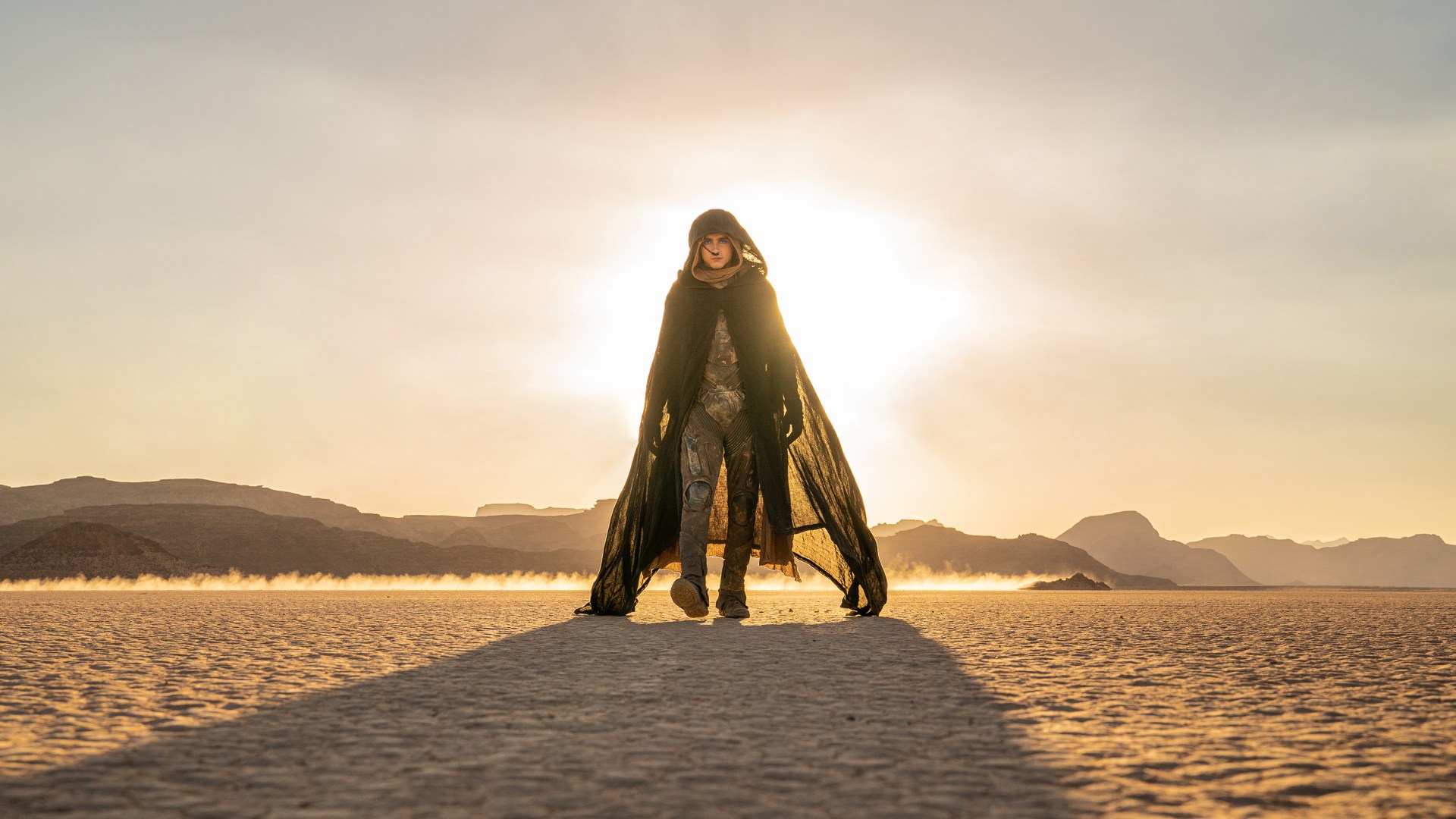
Timothée Chalamet as Paul Atreides in Dune: Part Two.

Timothée Chalamet as Paul Atreides in Dune: Part Two.

Christianity Today March 1, 2024
© 2024 Warner Bros. Entertainment Inc. All Rights Reserved.

Faith and power clash at the core of Dune: Part Two. The film is the second of a trilogy adaptation of the beloved novels by Frank Herbert, a mystical tale of wars between noble families in the vastness of space and the rise of a messianic figure named Paul Atreides (Timothée Chalamet).

This middle film picks up the story after a brutal massacre of Paul’s family line. Heir of a noble house and the subject of prophecies, Paul wrestles with his apparent destiny as savior and leader. His mother, Lady Jessica (Rebecca Ferguson), a clairvoyant priestess of the matriarchal religious order Bene Gesserit, tries to maneuver him toward that destiny. But his love, Chani (Zendaya), wants only a simple life together. Amid this relational drama, Paul leads a desert tribe in guerrilla warfare against brutal imperial forces who want to hoard his planet’s precious element called spice.

Dune: Part Two is a lush adaptation of dense source material. It’s a busy 2 hours and 46 minutes, packed with plot and subplots and the constant threat of ravenous, man-eating sandworms. The space battles are an impressive mix of tension and spectacle, and the desert sand is almost its own character, functioning as both shield and weapon for the warriors Paul leads. Though combatants are armed with spacecraft and atomic weapons, many fights come down to hand-to-hand combat with swords, choreographed to be quick, powerful, and exciting.

These elements make for a fun and engaging adaptation, with solid performances and beautiful cinematography. But Dune: Part Two owes its intellectual interest to Herbert’s books. Is faith merely another resource to be exploited in the quest for power? Is it another drug, like spice, that the powerful can claim, use, and abuse? Or is it real, tapping into a true well of knowledge and sustenance? The Dune series asks but doesn’t try to answer.

A product of the early 1960s, Herbert’s work is deeply interested in the effects of psychedelic drugs. Spice is mildly psychedelic, opening minds to see visions and nightmares. Another substance, called the “Water of Life,” is deeply psychedelic, frequently fatal, and life-altering in its effects.

The Dune stories treat these drugs as both beneficial and dangerous, a gift for those few strong enough to absorb and survive the visions they induce. That perspective feels like the product of a bygone era, strange to consider after six decades of change in our norms and laws around drug use. The book series’ take on drugs might have been provocative in 1965, but it feels dated and shallow in light of present conversations and concerns around drugs.

Taking another cue from Herbert’s books, the movie’s universe is vaguely Islamic. The sand, the clothing, and even the language give it a Lawrence-of-Arabia-in-space feel. This is a Western interpretation, of course, not one originating from the Muslim world itself, and some elements, like the Bene Gesserit, are drawn more from Catholicism than anything in Islam.

That kind of storytelling syncretism can be risky, but by taking elements of known faiths and throwing them into another world, Dune: Part Two raises sharp questions about religion and power.

Just as in our world, there are many factions vying for control—even the factions have factions. Some are true believers, convinced that Paul Atreides is a messianic figure who will lead his people to paradise. Others, like Chani, believe in nothing but their own strength and swords. And while the believers are mocked for their ability to contort any event to become a “fulfillment” of prophecy, no one can deny the strength of their faith or the strength it gives them. Like the psychedelic spice, faith is powerful and difficult to control. The faithful become a force in themselves.

That’s not to say faith always coincides with purity of heart. The Bene Gesserit priestesses, including Paul’s mother, both shape and exploit the faith of the masses. This second Dune film leaves open to interpretation whether the priestesses themselves believe what they teach or simply use it to gain power. They are both benevolent and sinister, unpredictable and ineffable. In some ways, they echo pagan gods in their selfishness and inscrutability: Their ends are their own, and the mere humans who cross them are easily sacrificed.

Paul is different. He cares for the people. He eschews power—at least at first. Indeed, he fears his own power and its place in a faith he isn’t sure he shares, dreading his fundamentalist followers and the horrors they may embrace because of their belief in him. He can see the future, perhaps multiple possible futures, and his visions involve a devastating holy war waged in his name. This is repugnant to him—yet he is drawn inexorably into the fray.

The parallels to Jesus are obvious and fascinating. Paul Atreides begins his journey seeming a lot like Christ: He is foretold, anticipated, believed in even before he is born. He cares for justice and peace. He is humble, loving, given to service. Like Jesus on the road to Calvary, Paul longs to avoid the dark future ahead of him.

But their paths diverge. Paul travels toward more earthly power, more control, more bloodshed. Jesus, of course, rejected that path, though his followers expected and encouraged it (Acts 1:6). He chose the cross. Paul Atreides does not. In some ways, Dune feels like an exploration of what might have been had Jesus told Peter to sharpen his sword instead of to sheathe it (Matt. 26:52–53).

The lessons of Christianity are upside down in this universe: To gain your life, you do not lay it down—you take another’s life. The last do not become first. The least do not become greatest. In the end, the least are sacrificed. The meek inherit nothing. And yet here too, to gain the world, Paul Atreides must lose his soul.

Rebecca Cusey is a lawyer and movie critic in Washington, DC.

News

YWAM Rallies After 11 Missionaries Killed, 8 Wounded in Tanzania Bus Accident

Darlene Cunningham: “We have not seen a tragedy of this magnitude in all of [our] history … [leaders’] deaths create a massive vacuum” for Youth With a Mission.”

An accident involving four vehicles occurred in the Ngaramtoni suburb of Arusha, northern Tanzania, on Feb. 24, 2024.

An accident involving four vehicles occurred in the Ngaramtoni suburb of Arusha, northern Tanzania, on Feb. 24, 2024.

Christianity Today February 29, 2024
Video screen grab / Wasafi Media / YouTube / RNS

Days after a bus accident claimed 11 of its missionaries in Tanzania, leaders of Youth With a Mission (YWAM) are “devastated” but rallying prayer and support to aid medical evacuations, repatriations, and funeral arrangements expected to total hundreds of thousands of dollars.

The Christian missionaries, seven of whom were from other countries, including one from the United States, died in the Ngaramtoni area near the city of Arusha in the eastern African country’s north.

Authorities say a construction truck hit one of two mini-buses carrying the missionaries. The participants in an “Executive Masters in Leadership” course were returning from a field trip in Maasai land when the truck lost its brakes, smashing into the bus.

“We have not seen a tragedy of this magnitude in all of YWAM’s history and we are all devastated,” stated YWAM cofounder Darlene Cunningham in a letter dated February 26. She explained:

The individuals involved in running the Executive Masters were key YWAM leaders in the region—some leading flourishing YWAM bases; others giving leadership in the field of education and other spheres; others ministering in restricted-access locations where no one else would dare to go—and seeing the hand of God upon their ministries in amazing ways. The students attracted to the Executive Masters were the same caliber of people—life-long committed YWAM missionary pioneers. So their deaths create a massive vacuum in this part of the world for YWAM as a missionary movement.

On Wednesday (Feb. 28), members of YWAM in the region held prayers and send-off services for their departed colleagues.

“The mood is very sad,” Bernard Ojiwa, an official of YWAM in Tanzania, told Religion News Service in a phone call from Arusha. “We started the journey for burials of the local members.”

“We are also planning how the bodies of the foreign members could be sent home. For now, the bodies remain in the morgue,” he added.

Police sources in Arusha said the seven foreign nationals were from Kenya, Togo, Madagascar, Burkina Faso, South Africa, Nigeria, and the US.

YWAM has withheld the full names of its lost missionaries because many worked in non-Christian nations with security risks. “All of those that died were leaders of projects, training centers and ministries,” the ministry noted in an update on its website. “It is a major hit for our mission, especially the continent of Africa and the Middle East and Europe.”

The accident, which involved four motor vehicles in all, killed 25 people, 11 of them members of YWAM, and injured 21, eight of them with the mission group. John Mukolwe, a Kenyan and the base leader of the Arusha station, was among the dead.

“Mukolwe was a friend for more than 30 years. His death makes me very sad,” said Karin Kea, the administrator for YWAM’s base in the Athi River area in Kenya.

Abel Sibo, a Burundian member of the mission, posted a video on Facebook of YWAM missionaries singing the hymn “This Is the Day the Lord Has Made,” saying the group was singing before the accident occurred.

According to officials, members of the mission from around the globe have gone to the region to offer moral, pastoral, and counseling support.

“Our brothers and sisters in Tanzania are carrying so much at this time,” wrote Cunningham in her letter to the YWAM family. “Those who survived the accident and were first on the scene to render aid are suffering a trauma that will be deep and long lasting. The practical tasks that need to be done by survivors at the base after a tragedy like this are enormous, all the while trying to walk through their own grief.”

YWAM was founded by Loren and Darlene Cunningham in 1960 with an emphasis on sending young volunteers of different denominations to serve on short-term evangelization missions. The group now has some 2,000 offices worldwide and involves missionaries from 200 countries.

YWAM established its presence in Arusha in 2000 and has since established three fully staffed offices in the region. The center’s education programs include classes in discipleship ministry, tailoring, computer skills, and English language, among others.

“In these days, tears are being poured out across the world by individuals, families and YWAMers worldwide. I am personally reeling from the weight of this news, as I knew and loved many of these individuals personally,” wrote Cunningham. She encouraged the use of three Bible verses:

  • Hang on to the fact that, no matter what, we know that God is just and kind in all his ways (Ps. 145:17).
  • Remind yourself of Job 42:2. Job had lost everything and his response to God was I know that you can do all things and that no purpose of yours can be thwarted. Let’s hang on to that word!
  • Remind yourself of Isaiah 41:10: Do not fear, for I am with you; do not be dismayed, for I am your God. I will strengthen you and uphold you with my righteous right hand.

Tanzanian president Samia Suluhu Hassan sent a message of condolence and urged increased vehicle inspection and traffic law enforcement to prevent further loss of lives.

“These accidents take the lives of our loved ones, national workforce and family members. I continue to call upon everyone to follow traffic laws in the use of vehicles,” Suluhu wrote on X (formerly Twitter). “I send my condolences to family and friends who lost their loved ones. May the Almighty God rest them in peace! Ameen!”

“I like to think of Loren being there at the gates of heaven to greet and welcome these eleven beloved YWAMers!” wrote Darlene Cunnigham. “Our hearts rejoice knowing that they are rejoicing to be with Jesus, while at the same time, we weep for the loss of their presence among us.”

Additional reporting by CT staff.

Books

‘Dune’ Centers Islamic Imagery. These Muslim-World Novels Center Christ.

Drawing from their long experience in the Islamic world, evangelical novelists pen fiction to help Muslims and Americans better see Jesus.

Christianity Today February 29, 2024
Illustration by Mallory Rentsch Tlapek / Source Images: Unsplash / WikiMedia Commons

Can you imagine if Dune took place in the ocean instead of the desert? One Christian novel does.

With Dune: Part Two now in theaters, moviegoers are once again treated to the cinematic spectacle of Frank Herbert’s popular sci-fi epic. Less known is how his 1965 novel bears witness to the influence of Muhammad.

And even less known are the efforts of Christians to translate their Muslim world experience into novels that communicate the gospel.

“We tend … not to recognize how much Islam has contributed to our culture,” stated Herbert in a 1976 radio interview. “But we owe Islam enormous debts of gratitude.”

The American author blended many religious themes into his six-volume series but deliberately filled his sand-infused apocalyptic landscape with tribal conflicts, Shiite concepts, and Bedouin-inspired characters. Hero Paul Atreides becomes the Mahdi, mirroring the Muslim messiah-like figure anticipated at the end of the world. And as he wins acceptance among the nomadic Fremen people, he takes the name Muad’Dib, adapted from an Arabic word for “teacher.”

Their desert religion is called Zensunni , mixing Islam with the Buddhism Herbert eventually adopted.

Dune is often credited as an inspiration for Star Wars and its Eastern cosmology. But there’s similar world-creating literature by three Muslim-world Christian workers writing in the genres of sci-fi, contemporary thriller, and young adult fiction.

Each bears witness to the love of Jesus.

“As far as I am aware, this is the first time that violent Islamists, followers of Jesus from Muslim backgrounds, and science fiction have been combined,” said Steve Holloway, author of Pelagia. “Conveying an Islamic story arc is one of the key motivations for writing the book.”

Set 40 years in the future, Pelagia tells the story of Ben Holden, a special forces agent turned professor of particle physics, and Suliman Battuta, a medical doctor and leader of a clan of nomadic “seasteaders” who herd tuna in the South Pacific Gyre, stretching from the coastlines of Chile to the Micronesian islands.

Holden’s scientist wife is murdered by the New Caliphate, a coalition of land-based Middle Eastern nations who want her project data for their jihadist aims. After surviving a later attack, Holden takes refuge with Battuta’s floating community of third-generation Yemeni followers of Isa al Masih, the Quranic name for Jesus the Messiah. Their status as apostates sets them in search of freedom of belief on the high seas.

Imagine the Wild West in submarines, with the fate of the world at stake.

The science of the novel is within humanity’s grasp today, said Holloway, whose book won the endorsement of Fish Farmer magazine, which called it a combination of films Captain Phillips and Minority Report. Currently overseeing a sea cucumber project in Indonesia, Holloway, senior strategy associate for Frontiers, served 12 years in a Southeast Asian nation where his team nurtured a small underground church as they researched ocean farming for the government, before expulsion from the country in 1998. A marine biologist, he read sci-fi as a kid and loved the world of Dune.

Motivated to show how followers of Jesus from Islamic communities flourish best in their original environment, he wrote Pelagia for a general global audience—including Muslims—and depicts austere jihadis with sympathy. There are no “cartoon bad guys” in his novel.

“It is more Tolkien than Lewis,” Holloway said. “Secular reviewers say it has a spiritual theme that doesn’t get in the way of a good story—I take this as a compliment.”

Yet it does have a conversion story, something missing from Someone Has to Die, book one in a trilogy written by Jim Baton, the pen name of a veteran Christian teacher serving in Indonesia. But whereas the futuristic setting of Pelagia is a step removed from Holloway’s ministry, Baton is still involved in the nitty-gritty of peacemaking.

His nom de plume means “bridge” in Indonesian.

“A thriller novel is perfect for our modern world of terrorism,” Baton said. “But I describe jihadists as human beings who have suffered, long for justice, and want the world to be a better place—and, that God loves them.”

In Someone Has to Die, Abdullah is a former terrorist seeking to atone for his past deeds by defending the Christians who live in his neighborhood. During an arson attack on their church, he saves Kris, mother to Sari, which bonds their families together. But contra his father, Abdullah’s son is increasingly drawn toward extremism, later storming an interfaith peacemaking conference in Jakarta as a suicide bomber.

Just before the explosion, Kris runs toward the son and embraces him, pleading that he rethink and relent. Though failing, her sacrifice absorbs the blast and spares the lives of all others present. Abdullah, who remains a faithful Muslim, feels tremendous debt and takes in Sari as his daughter.

The gospel is woven throughout the story, as characters contemplate God’s compassion—a central theme for Muslims—and true peace, which, per the novel’s title, somehow requires the shedding of blood.

Baton did not originally intend to write a trilogy. But Abdullah and Sari’s story continued as current events drove him onward. In A Way Out of Hell, written after ISIS established itself in Indonesia, Abdullah searches for the terrorist cell targeting Sari and tries to nonviolently turn its members by sharing his own testimony. A Violent Light then follows Sari to the US, where she comes face to face with a version of Christian extremism set on eye-for-eye terrorism in response to a truncated understanding of Islam.

Someone Has to Die has been translated into Indonesian and has received the endorsement of several top Muslim leaders. Baton’s local reputation has been bolstered through his partnership with interfaith educators in teaching a peace curriculum to over 10,000 students.

“God’s desire is to heal Abraham’s broken family,” Baton said. “It is subtle in my writing, but I try to give Muslims a spiritual map to follow.”

But if Holloway channels Tolkien and Baton resembles Ted Dekker, Melinda Lewis was inspired by her namesake author of The Chronicles of Narnia, in hope that readers will find God in her writings. Her trilogy is an analogy of Jesus first in his pre-incarnate form, then in his death and resurrection, and concluded by his return at the end of the world.

All three volumes are set in Muslim-inspired landscapes.

Beginning her ministry at a Christian hospital in Bahrain, Lewis and her husband served in Afghanistan for ten years, interrupted by an expulsion by the Taliban in 2001. Her husband directed the nation’s eye hospitals, while she raised their four children and befriended local Muslim women. They now reside in Tucson, Arizona.

“When you live in the world of a desert, you long to see it revived and flourishing,” said Lewis. “Driven by the vision of Isaiah with the wilderness in bloom, my novels present the question, Who is God?

Written for older youth, The Queen of Bustaan tells how 17-year-old crown princess Yasneen fears the loss of her throne and is kidnapped while crossing the desert seeking an alliance from a neighboring kingdom. Through messages sent to her by ambassadors of a distant “Overking,” she finds her way only after an encounter with a mysterious gardener at an oasis, and eventually falls in love with the prince and unites their two lands.

The subsequent book Darzarada deals with racial tension amid palace intrigue, while The Book of the King witnesses the desire for love supplanted by royal restoration in an apocalyptic transformation, in which faithful communities revive by taking refuge in the desert.

Lewis’s main goal is to counter the themes of American culture. Each book, in turn, subverts the ideas of redemptive rebellion, assumed superiority, and romantic engagement. Jesus, in her allegory, forces no one to believe and stands ready to rescue all who call for his help.

But while Islam is absent from her trilogy, its ethos permeates the literary reflection of her positive cultural experience abroad. Lewis returned to America to find that Christians were slipping toward the same ideological tensions she and her husband faced among Muslims, yet without the redeeming social values that bind people together.

Her novels blend Christ with Afghanistan and Arabia.

“There are challenges in the Muslim world, but there is much good,” said Lewis. “We can learn a lot from them; I hope this carries through.”

Each author, in their unique way, is living out the advice offered by a grandfather of the genre. Born a Muslim in 1935, Mazhar Mallouhi believed in Jesus in 1959 as an accomplished Syrian poet and short story novelist. His reading of Tolstoy and Dostoevsky primed him for the message of the gospel, and, already adept at writing of human suffering, he thereafter found Christ present in the ordinary people he continued to chronicle.

Art must imitate life, he believes.

“Live with the people, learn their lives, and write what you feel,” said Mallouhi. “Then people will grasp the value of your book.”

Mallouhi eventually became a controversial figure for efforts to make the gospel culturally sensible for Muslims. Having once been counseled by missionaries to adopt a Christian name, he credited Frontiers founder Greg Livingstone with helping him discover winsome ways to honor both Christ and his inherited religious culture.

Mallouhi now counsels Muslim-background believers to remain in their sectarian community as they live wisely and witness to their orthodox theology. His Arabic books An Eastern Reading of the Gospel of Luke and A Sufi Reading of the Gospel of John represent an example, presented in classic calligraphy to draw in curious Muslims through familiar norms.

But earlier, his literary output included the Arabic titles The Traveller, weaving a fictional story to tell his own journey to God; Lost in the City, recasting the sinful woman saved by Jesus in John 8; and The Long Night, of freedom fighters during the Syrian struggle against colonialism to reflect the difference between an inherited and personal faith.

Published in Lebanon, his books are popular especially in Syria and Tunisia.

“Arabs tell stories to convey a point,” Mallouhi said. “My characters are Muslims, and some follow Christ.”

But in Dune, Herbert’s message presents religion largely as a dangerous sham. The Bene Gesserit are a female order of Jesuit-like spiritists who implant messianic myths among the peoples of the empire. Atreides plays into their prophetic expectations of the Mahdi to strengthen his position against his foes. And once he assumes the position of emperor, sequels reveal his struggle against the religious fervency he once cultivated now that he has become an autocratic king.

Lewis instead gives readers a “Gardener King”; Baton, a sacrificial peacemaker. And the hero of Holloway’s novel is less the swashbuckling American soldier and more the persecuted sea farmer whose only ambition, per 1 Thessalonians 4:11, is to lead a quiet life.

And these are lessons that speak to all.

“My book addresses the question of identity,” said Holloway. “That everyone needs Jesus—Muslims, Buddhists, and especially Christians.”

Culture

‘Hell Is a World Without You’ Revisits Early 2000s Youth Group

Journalist Jason Kirk discusses his new novel, turn-of-the-century evangelicalism, and deconstruction.

Christianity Today February 29, 2024
Illustration by Mallory Rentsch Tlapek / Source Images: WikiMedia Commons / Getty

Jason Kirk’s newly released novel Hell Is a World Without You is not my usual reading fare. Nor is his book CT’s usual coverage fare. As you’ll gather from our conversation below, Kirk has left evangelicalism behind and is reflecting on the church of his youth with a critical, if somewhat sympathetic, eye.

Hell Is a World Without You

Hell Is a World Without You

Shutdown Fullbooks

314 pages

I was too shy a teenager to really embrace early 2000s youth group life, but Kirk’s childhood church setting—which serves as the backdrop of his book—was basically the setting of my childhood too. Many evangelical-exvangelical conversations of today, which can be charged, if they happen at all, also arise from this setting; so I was intrigued at the prospect of a writer not only willing but eager to talk about that divide. I reached out to Kirk, a sports journalist at The Athletic, to discuss his experience and depiction of evangelicalism, exvangelicalism, deconstruction, and more.

This interview has been edited and condensed.

Let’s start with the basics: Tell me a bit about yourself, the book, and how you came to write it.

I was raised Southern Baptist in Atlanta and grew up attending church Sunday morning, Sunday night, Wednesday night—the whole thing, all the way until early college. I had the entire evangelical kid career.

As a teenager, I started having the vague, gnawing, constant sense that I didn’t fit in with high-control, conservative religion, even though it’s where all my friends were and where we experienced all the fun and joy and music and hugs and laughs and pizza. That disconnect involved a mix of emotions, politics, social stuff, philosophies, events I witnessed, and more—as is the case for just about any major shift in anybody’s life.

In my 20s, I ignored religion as hard as I could, though I felt only a mild bitterness. But after college, I started working in sports media, and it was there I started meeting a lot of people from around the country, some of whom had a similar upbringing. Through that, I started realizing that all the things I thought I’d left behind when I left church during college were still with me, and that other people had had similar experiences: Oh yeah, that was kind of weird that Wednesday night in church when someone did a hell performance, and someone made a kid read a pretend note from someone who was in hell asking why no one had shared the gospel with him.

In conversations comparing those memories, it started to emerge for me that there’s a story here that feels so underrepresented in fiction. Obviously, there are a lot of great nonfiction books [about evangelicalism and deconstruction], and a lot of people know the “lapsed Catholic” version. But there’s so little fiction that tells the story of someone who left this very specific kind of church—this turn-of-the-century evangelical church. I decided, That book should exist. I guess I should get started on it.

I’ve seen some of the reception for the book, but I’m curious who you’d say is your typical reader. Is it mostly people who recognize themselves in the story—millennial-ish exvangelicals? Have you heard from readers who still consider themselves evangelicals?

It’s been a mix between people who grew up evangelical and left that space but also people who knew nothing about evangelicalism. And I’m sort of taking them on a tour. I’ve had a lot of people reach out to me to say, either, Thank you for showing me myself in the story, or, Thank you for explaining why my neighbors are the way they are.

As far as people who are still within conservative evangelicalism, I haven’t heard from a ton of those folks yet. I’m very interested to hear what they have to say as the book makes its way to them.

You’ve told a story that in many ways is so evocative—the AOL Instant Messenger transcripts were frankly too recognizable—but of course, it’s also just one story. Did you feel a tension, given how many people who grew up in that turn-of-the-century evangelical church didn’t feel mistreated and didn’t leave?

I tried to represent a variety of characters, to have a range of religious perspectives among the characters who—hopefully—readers like even if they don’t share their exact experiences. Many of them continue to be various kinds of Christians. My wife has been basically a mainline Protestant her entire life. A lot of my best friends I met in church, and they’re still Christians.

And I’m still a kind of Christian. In my 30s, I finally started going back, examining things I’d never realized were deep traumas, learning to forgive myself and many others, and then finding theological and political answers that reframed everything going forward. It turns out the Christians who’d molded me were wrong to claim that unless I agree with them on everything, I can’t keep any of it.

So I have come all the way back around to a version of Christianity—partly due to the process of writing this book, finding so many things about the Bible, about Jesus, about kinds of Christian theology and Christian politics that I love. I’ve come back around to a place where I love the mystery of God. I love the idea that the universe is progressing toward all things being made new. I love the politics of Mary in Luke chapter 1. I love the anti-imperialism that we see from Exodus through Revelation.

There are so many things about Christianity that I love, and it has always been the framework of my head. It’s just, I’ve managed to change the scaffolding a bit, I guess.

Hell comes up in the title, so it’s hardly a spoiler that this is a major theological issue in the book, and specifically for the protagonist, Isaac. It’s a topic I’ve wrestled with as well, moving toward what C. S. Lewis wrote in The Great Divorce, and I understand how discovering different theological perspectives within the bounds of little-O orthodoxy can be a kind of lifeline.

But I have a thesis about deconstruction of which I’m increasingly convinced: It’s that few people deconstruct or deconvert primarily because of theology. A lot of the reasons people drop out of faith—and there’s research on this—are more mundane and much less about principle, like the difficulty of finding a new church after moving or being required to do things as a Christian that you don’t want to do. Am I too cynical?

I think you’re right. I think it is a mix. For me, the questions started with, I don’t like this thing an adult told me. Right? I'll admit that, absolutely. It started with, What this adult just told me doesn't make sense. This adult just told me I have to believe this thing, but the Bible says this other thing, and this other adult says this other thing.

For me, theology was sort of a final blow, but having a head full of shame and guilt and anger was far more driving for me than any theological discovery. But once I started to view God not as a thing we can’t even escape from even if we die but rather as someone who loves us no matter who we are when we die, that was a turning point. It was a reclamation to go from This thing made me feel terrible for my entire adolescence to Wait a minute, there were parts of it I loved, and those are still mine, and no one can take them from me just because a pastor said insane things to everyone in the entire room for a couple of decades.

I’d like to get your take on evangelical-exvangelical relations. That point of contact often seems very fraught, certainly within families, but also on the internet. Sometimes it’s people acting in bad faith, but it’s also people talking past one another to the point that neither side can imagine that the other could possibly be sincere or sincerely seeking a good end. Do you think that relationship can—at whatever scale—be good or better than it is?

Obviously I’m very biased. But to me, the thing that will remain a gigantic sticking point is the complete and total adoption of right-wing politics by so much of evangelicalism. I don’t mean every evangelical or every evangelical church, of course, but it’s coming to a point where that word, evangelical, will become for all intents and purposes synonymous with right-wing.

And to me, a biased person, I don’t see right-wing politics in the words of Jesus preaching unity and forgiveness and wealth redistribution. The gospel is political, and it always has been, and I don’t think there’s wiggle room on whether [Christians] should love our enemies or not. Jesus said we should love our enemies. There’s not much wiggle room on whether we should love our neighbors.

So when I hear prominent evangelical leaders saying, essentially, that we should not love our neighbors, it’s difficult to find the common ground there. It feels [kind of unfair] to say, Well, those people should change, and then we will stop arguing. But to me it’s a choice: Is Jesus Lord or is America Lord? Because they can’t both be Lord.

You raise the command of loving our enemies, and I’m fully on board there. I’ve spent a lot of time in the Mennonite tradition. But aren’t right-wingers, then, your enemies to be loved? Even if it’s their very failure to love their enemies that puts them in that category?

Sure, absolutely. I mean, look at the gospel and see which enemies Jesus loves most: the tax collectors. Who would be a tax collector right now? A cop, right? And for a leftist, who would be more offensive to embrace than a cop?

If Jesus was here right now, yes, he would hang out with people whom the right wing despises, and he would hang out with people whom the left-wing despises at the same time. He would have a point of view—he would have a worldview—and when it came to deciding who’s correct, I do not see him siding with people who favor what I view as oppression.

And when it comes to loving—I mean, I don’t view disagreement as hate. Not to turn everything back to the book—

No, no. That’s why we’re here.

One character is a pastor who embraces right-wing politics because he’s driven by the fear that his church isn’t leading enough people to what he believes the gospel to be. His church is veering toward Christian nationalism, but it’s because this man wants to keep people from going to hell. He’s embracing this kind of politics because it’s getting them in the door where they can then meet him at the altar.

I tried to write a story in which if the villains are correct, then they are doing the right thing. Ultimately it comes down to: If that’s how God works, how do we respond to God? If God designed an afterlife that works like that, do we go along with that or not? And for me, that’s the fundamental question of the book.

News

UK Churches’ Outreach to Muslim Migrants Scrutinized After Clapham Attack

Evangelical leader: Ministers’ testimonies were never intended to be the “make-or-break” factor in judging asylum applications.

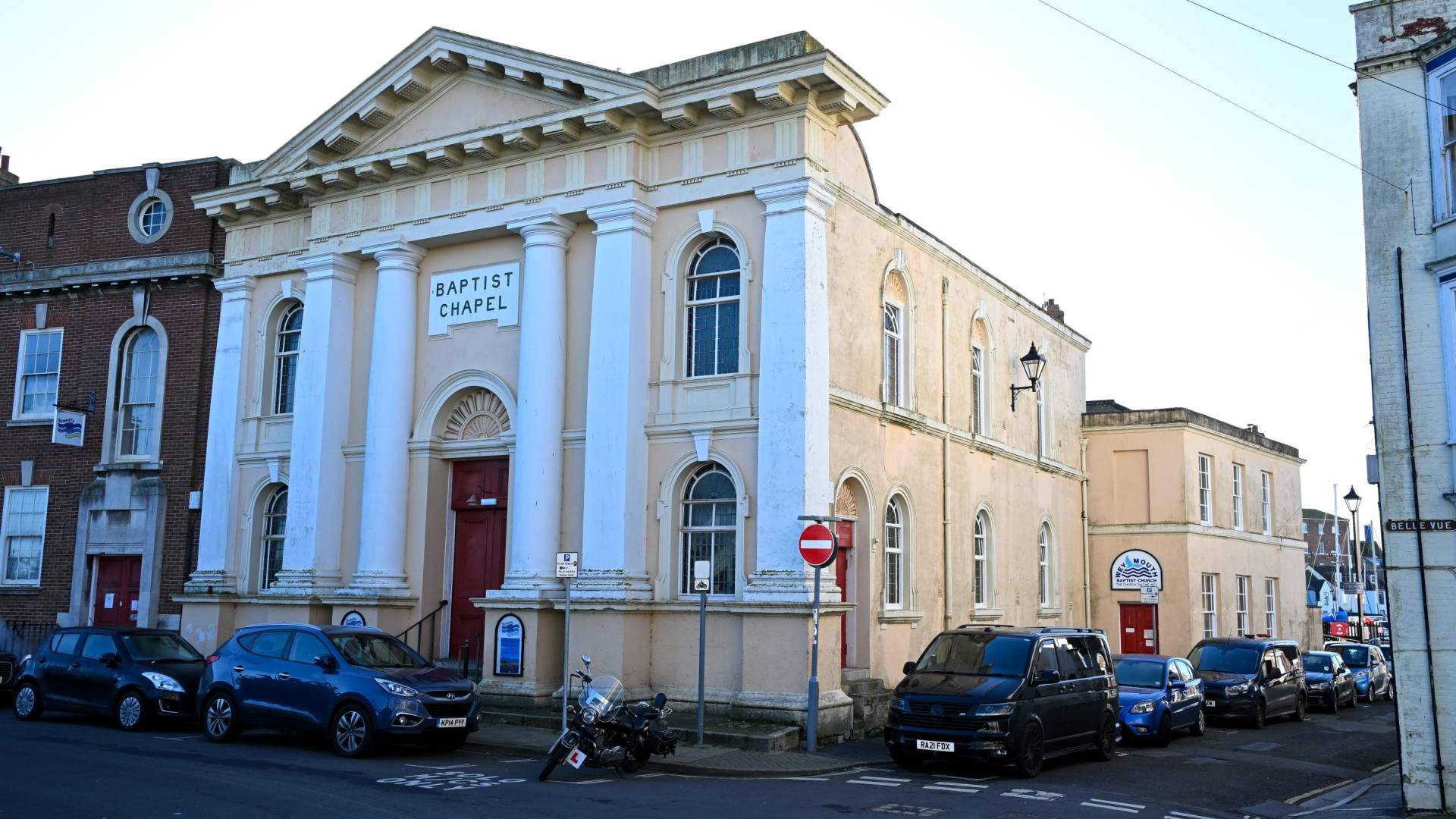
Weymouth Baptist Church has taken in 40 asylum seekers from the immigration barge Bibby Stockholm.

Weymouth Baptist Church has taken in 40 asylum seekers from the immigration barge Bibby Stockholm.

Christianity Today February 29, 2024
Finnbarr Webster / Getty Images

A chemical attack that injured a dozen people in the South London suburb of Clapham a month ago has sparked the resurgence of a national debate over the UK’s asylum system and the church’s involvement with migrant converts.

The suspected perpetrator, Abdul Ezedi, was an Afghan refugee who came to Britain illegally in 2016 and was granted asylum in 2020 on appeal after his two previous applications had been denied. He won his appeal even though he had been convicted of a sex offense in 2018.

At his tribunal, he claimed he had converted from Islam to Christianity and would face persecution from the Taliban if he was returned to Afghanistan. A member of the clergy vouched for the sincerity of Ezedi’s religious belief. A tribunal judge was convinced by the plea and granted Ezedi asylum status.

The uproar grew as the details of Ezedi’s case became clearer and doubt was cast on the sincerity of his conversion. (Metropolitan Police confirmed last week that they found his body in the River Thames, where he had likely drowned.)

Suella Braverman, a member of the UK Parliament who has formerly served as Home Secretary (a top cabinet position in the British government with responsibilities including immigration issues), wrote in The Telegraph that “churches around the country [are] facilitating industrial-scale bogus asylum claims.”

Braverman charged that, at some churches, migrants can simply “attend Mass once a week for a few months, befriend the vicar, get your baptism date in the diary and, bingo, you’ll be signed off by a member of the clergy that you’re now a God-fearing Christian who will face certain persecution if removed to your Islamic country of origin.”

While Ezedi’s asylum appeal was supported by a Baptist congregation according to media reports, much of the subsequent criticism has been focused on England’s established church. Matthew Firth, a former Church of England priest, told The Telegraph that while the Church of England had not engaged in “direct wrongdoing,” it had nonetheless been “naive” and often turned “a blind eye” to questionable claims of conversion by asylum seekers.

Church of England leaders have disputed these accusations and contend that it isn’t the responsibility of local congregations to determine who is eligible for asylum. Archbishop of Canterbury Justin Welby said in a statement in early February that “it is the job of the Government to protect our borders and of the courts to judge asylum cases. The Church is called to love mercy and do justice.”

Many of the statements from church leaders reflect how clergy have responded to similar controversies in the past. However, there are indications that the church may soon adjust how it supports asylum seekers.

Some ministers, while maintaining that their main responsibility is to help the vulnerable, have admitted the difficulty in discerning whether converts preparing for baptism are genuine believers. The Guardian reported that the Church of England is reviewing its guidance for clergy on engaging with asylum seekers. It was not immediately clear what specific changes to the Church of England’s current guidelines were being considered.

Some congregations outside the Church of England have also found themselves the subject of intense media coverage after the Clapham attack.

Several media outlets reported on Weymouth Baptist Church’s ministry to Muslim migrants who were living on the Bibby Stockholm barge. The barge has been chartered by the UK government to serve as a living space for about 500 asylum seekers while their claims are processed.

A BBC report in early February said that the church was working with 40 men, 6 of whom they had already baptized. Dave Rees, an elder at the church, told BBC Radio 4 that their engagement with the migrants was enhanced through a connection with a Farsi-speaking minister.

Weymouth Baptist is part of the Evangelical Alliance, a network of evangelical churches and believers in the UK and the founding member of the World Evangelical Alliance. Danny Webster, the organization’s director of advocacy, believes that the role of churches in helping win asylum cases has been overstated in public discourse.

He contends that church leaders’ testimonies were never intended to be the “make-or-break” factor in judging asylum applications. Rather, they were seen as providing better evidence of genuine faith than asylum seekers’ responses to the religiously illiterate or trivial questions often asked by Home Office caseworkers. (CT has previously reported on questions used to evaluate the faith of asylum-seeking Christian converts’ faith in the UK.) However, he says the Clapham attack may still lead to some adjustments.

“I suspect church leaders will need to act with even greater discretion in the future,” Webster said. “I think there is some wisdom in having a level of almost baseline standards in terms of how long has this person been attending church, what has their commitment been—so it’s almost a more factual questionnaire rather than [a personal opinion].”

Even with the high level of scrutiny, Webster says believers should continue engaging with asylum seekers: “We want churches to be sharing their faith, we want people to be getting baptized, and at the end of the day, it’s not our job to really decide how sincere someone is.”

Sara Afshari, a research tutor at the Oxford Centre for Mission Studies, also encourages churches to continue supporting asylum seekers and other migrants. She converted to Christianity in 1989 while still living in her native Iran. After she was baptized, she was imprisoned several times because of her faith.

She later came to the UK to study theology and found a supportive community in Church of England congregations. Her doctoral research at the University of Edinburgh focused on the conversions of Muslim-background Iranians to Christianity. She maintains that “only God knows the heart of a convert.”

“Sadly, we hear only about those who betray the church, not those who really support the growth of the church and enrich the church, which are the majority,” Afshari said. “Even in Iran, we have examples of those who betray the church, and their betrayals cost people’s lives. But again, it didn’t mean that the Iranian church leaders refused to accept [new converts].”

News

Confusion, Strategy Shifts, Layoffs: What’s Happening at the American Bible Society?

The historic and well-funded organization has seen two years of turmoil: five CEOs, money fumbles, and a pullback from global work. It is searching for a fresh start.

The American Bible Society’s New York building in 1893, left, and current Philadelphia headquarters, right.

The American Bible Society’s New York building in 1893, left, and current Philadelphia headquarters, right.

Christianity Today February 29, 2024
Wikimedia Commons, Google Street View / Edits by CT

The 208-year-old American Bible Society (ABS) used to have a simple mission: print and distribute Bibles in the US. At its peak in 1979, it was giving away 108 million a year.

Once Americans had access to Bibles, ABS’s challenge became getting people to read them. In the early 2000s, the organization shifted to a mission of “Scripture engagement.” That is not as clear-cut as the number of Bibles printed, and in the years since, people in ABS circles have disagreed on what to do with a large legacy organization’s resources. A new Bible museum? A Bible app for military members? Curriculum on trauma healing through Scripture?

And how much should an organization that partners with Bible societies around the globe focus on the “American” part of its mission?

This 21st-century identity crisis has sharpened in the last two years with the quick turnover of five executives in a row, tens of millions of dollars in financial shortfalls, and the loss of a major donor. Sources said that about 30 staff were laid off late last year, which amounts to about 20 percent of employees.

Amid all the issues, ABS is changing its priorities. But it’s not clear whether the organizational messes are driving those decisions or if the messes are part of the pains of changing strategy. CT heard from ABS staff, former staff, donors, and other stakeholders, all with different ideas of what is causing the problems at ABS.

The stakes are high because ABS has a roughly $100 million-a-year budget and a $600 million endowment, which puts it in the top 1 percent of Christian organizations in Ministry Watch’s database by assets. Bible societies around the world rely on its support. Over the last two years of turmoil, staff and other ABS supporters say they haven’t had a clear sense of who is running the organization.

Of the five CEOs who have led ABS since 2022, two were board members serving as interim leaders, an unusual practice. One of them, Jeff Brown, lasted just a month. Neither board member turned CEO remains on the board.

ABS “didn’t want to deal with the issues,” said Ellen Strohm, an ABS director who left in January 2023 after 18 years there. Over her career there, she oversaw fundraising and project management.

Strohm said there was a culture of “magical thinking” that everything would get better without addressing systemic problems.

ABS has been moving to operate more like a foundation, overseeing more grants over the years instead of direct ministry. But the organization hasn’t had the systems in place to make that work, according to Strohm and other former employees, which has created cascading problems.

In the US, the organization focuses on various “Scripture engagement” projects as well as annually reaching hundreds of thousands in the military through its armed services ministry; promoting its State of the Bible research; and operating a new museum in Philadelphia on the Bible in American life called the Faith and Liberty Discovery Center.

Historically the organization has funded Bible translations around the world with a goal of translating the Bible into every living language by 2033. In recent years it has focused resources on its Bible-based trauma healing initiative to help faith communities address community trauma.

Starting in February, the new CEO of the American Bible Society Jennifer Holloran—its first female CEO and a former executive at Wycliffe Bible Translators USA—was walking into several layers of challenges, despite ABS having a comfortable endowment and historic reputation. The executive search firm seeking a CEO for ABS back in August noted that it was seeking someone who could “lead an organizational transformation.”

“While the specific challenges ABS has faced in recent years happened before I assumed the role of president and CEO, I know that the board and senior leaders have made great progress in refocusing the organization around its historic vision and mission,” Holloran said in a statement to CT. She said ABS would “develop new ways to support churches and partner organizations in creating opportunities for all people to experience Scripture’s life-changing message.”

After the layoffs late last year, the board sent an email to staff stating that ABS’s operating model required “fundamental change” and that the organization would be operating “fewer distinct, individual ministry programs—especially on its own. Instead we will focus on programs that … build on our strengths in partnership, convening, and thought leadership.”

It appears ABS will move more to grantmaking, like awarding funds for scholarly work on the Bible to groups like Scriptura.

In a statement responding to a number of questions from CT, board chair Katherine Barnhart reiterated that shift in strategy.

“For approximately two years, the board of directors of American Bible Society has been strategically aligning its planning and work in a way that is focusing ABS on finding, fostering, and furthering innovations in Bible access and engagement,” she wrote.

“As we move forward, ABS is leveraging its core strengths—including convening partners, provisioning resources, and developing and sharing insights—to play a significant role in creating and scaling programs that can broadly engage US culture and the world in the Scriptures. This refocusing means, in part, that ABS now operates fewer distinct, individual ministry programs—especially on its own.”

The organization’s tax filings show how it has been shifting to operate more like a foundation: Its head count has been shrinking over the years as it has moved from direct ministry to providing grants to partners doing projects on Bible engagement. The largest slice of its budget (roughly $40 million of its $103 million in expenses in the 2022 fiscal year) goes to grants to US and international organizations, according to its latest public tax filings. In 2013, it was only giving $11 million in grants of its $92 million budget.

Board chair Barnhart has a background in foundation work, having served on the board of the National Christian Foundation (NCF), to which she and her husband donated their family’s business more than a decade ago. The vice chair of ABS, David Wills, was the longtime president of NCF.

Despite that move toward more grantmaking, ABS was still spending a sizable portion of its budget on salaries and benefits—$28.8 million in fiscal year 2022.

The board has also experienced a turnover since 2022. Only 10 of the 19 board members from 2022 remain on the board, though the two most recent board chairs remain.

The organization had intentionally shrunk an unwieldy board in the last two decades: In the early 1990s it had 72 board members, then 30 in 2013, when the bylaws were changed to limit the board to 18–24 members. It now has 13 members, according to the ABS website.

The way the organization has handled these changes has hurt morale, according to multiple current and former staff.

Over the years, other Christian nonprofits have shifted direction and suffered “death by minnow nibbles” due to lack of mission clarity, board members not fulfilling their proper role, bad company culture, lack of good metrics, and donors pulling the organization away from its mission, Peter Greer and Chris Horst write in Mission Drift.

Financial and operational problems

In 2019, Strohm was working on major gifts at ABS. She remembered feeling like she was having a heart attack from all the pressure at work, and she drove herself to the hospital where she discovered her lung had collapsed.

That year the organization discovered it unexpectedly went over budget by $17 million. The overspend has not been previously reported. That spurred a number of changes: the departure of the CEO at the time, Roy Peterson; layoffs; and a reevaluation of partner programs the organization was funding. The organization was able to cover the deficit partly by drawing from ABS’s roughly $600 million endowment. There is no evidence of malfeasance on ABS’s part, and it had recently gone through multiple audits.

Strohm said the organizational response to audits showing inadequate systems “was healing the organization lightly.”

The $17 million shortfall appears to be related to confusion between partner organizations overseas and ABS, sources say. Partners were spending project budgets that ABS hadn’t yet raised.

ABS had been a rock-solid financial partner for so many decades that program leads reportedly assumed the pledged budgets would come through. Bible society partners having fiscal years falling at different times than ABS also contributed to the confusion.

Even with these systemic failures, the organization was shrinking its division-monitoring programs, according to current and former staff. In 2020, ABS disbanded Global Scripture Impact, the in-house accountability unit evaluating programs that ABS was funding. Then it created a new team called Reporting and Metrics, which also dwindled in the years following. Now it has a new team, called Ministry Insights, for independent monitoring of the programs it is supporting.

Deficits have been a regular feature: ABS tax filings show it has operated with a total deficit of $56 million from fiscal year 2016 to 2022. ABS had an additional $11 million deficit in fiscal year 2023, according to its stewardship report.

Despite the deficits, ABS had financial cushion. It had boosted its endowment in 2015 when it sold its Manhattan headquarters for $300 million and moved to Philadelphia.

Losing a translation partner

Another set of problems emerged with project reporting, as the organization shifted from a large base of small donors to major donors. In general, small gifts typically go to unrestricted revenue. Major donors typically want their money spent in certain ways and want more detailed reporting, which Strohm said ABS was unable to deliver.

The shift from small donors to major donors “broke the systems,” Strohm told CT. Sources said that American donors also tend to want more “impact” metrics, which the organization’s partners overseas might not historically emphasize. Overseas translation partners might send a quarterly report that consisted of saying they had finished translating the Book of Mark, for example, which is not “industry standard” reporting in the US, according to sources.

There was no “enterprise system that can follow a dollar in to a dollar out,” Strohm said. “When you have to connect a donor dollar to a project, that’s where the complication comes in, and you have to have really good systems. … ABS had very little idea of how the money they were receiving or giving was spent.”

As a result, she said the organization would create strategies that were “so broad that no matter what a donor wanted to do you could fit it in.”

One of those major donors was Every Tribe Every Nation (ETEN), which multiple sources said was contributing millions to ABS primarily for Bible translation work. In 2018 the organization—whose major backers include Mart Green of the Hobby Lobby family—began demanding more reporting, according to Strohm and other sources, or it would reduce funding.

ETEN was giving ABS around $11 million in 2019 and began decreasing its giving in 2020 as reporting did not improve. According to Strohm, an audit of the ETEN funds showed ABS was below 40 percent compliance, meaning less than 40 percent of funds were complying with donor intent.

By 2022, ETEN had completely withdrawn its funding for translations and then later that year withdrew all its funding to ABS, which sources said was at least in part based on ABS’s inability to provide sufficient reporting. ETEN redirected some funding through the United Bible Societies Association (UBS-A), according to ABS sources. United Bible Societies is the consortium of global Bible societies, many of which oversee translation projects.

According to a 2021 year-end report from UBS-A, “the association has obtained increasing levels of funding from organizations with similar objectives such as ETEN (Every Tribe Every Nation) and YouVersion.”

That withdrawal contributed to more problems with budgeting and was a major factor in the fiscal year 2021 shortfall, Strohm said. ABS’s tax filings show a $16 million deficit in fiscal year 2021. But fiscal year 2022 bounced back with a $9 million surplus.

“In the UBS fellowship, when you start a Bible translation project, you’re in it for the duration,” she said. “It’s the assumption that you’ll fund the whole project. ABS was between a rock and a hard place. There was no money to continue these commitments, and the donor was committed to more accurate reporting.”

Global cuts

In the past about half of ABS’s grant money has gone overseas and half has gone to domestic organizations. Now ABS has been making cuts to its global funding, according to several sources, and shifting its focus to be more domestic. ABS used to contribute about 40 percent of a fund that supplements the budgets of global Bible societies, and reportedly has reduced that to 25 percent.

Meanwhile, it has invested tens of millions in the Faith and Liberty Discovery Center in Philadelphia, which “explores the relationship between faith and liberty in America from its founding to today.” One source noted that ABS is reflecting a trend in the US church broadly, where money is focusing more on domestic ministry than global missions work.

Bible Society Lebanon has a five-year trauma healing program it launched with ABS support in 2021. Last year ABS pulled out of the program, according to the longtime head of the Bible Society of Lebanon, Mike Bassous.

Bassous said Bible Society Lebanon was about halfway through the program, having trained about 300 Bible teachers. He said ABS would still allow them to raise money for the program from major US donors through ABS, but with a 28.5 percent “administrative fee” that applies to all major donor gifts for trauma healing programs.

“I speak American English. I can understand corporate America,” Bassous said. “But you didn’t know who you could talk to at ABS. … Something is wrong.”

And on global Bible translations, one ABS donor received contradictory messages on ABS plans. An email he received from an ABS staffer late last year said that the organization would “divest translation work by December 1, 2023.” Then, in a January press release about the new CEO, board chair Katherine Barnhart said, “While we are continuing to support the essential work of Scripture translation, ABS must also develop new ways to make the Bible available.”

“I’m a longtime supporter, but I as a donor am confused,” said Nick Athens, a former ABS board member and donor.

Barnhart, in her statement to CT, did not directly respond to questions about the translation shift but said, “Where the refocusing is affecting our partnerships with other organizations, we’re working with those partners to explore alternative sources of funding and leadership. We are continuing to support Scripture translation in partnership with UBS as we recommit to developing new ways to make God’s Word accessible to all.”

Inside ABS, staff remain confused about whether or how the organization plans to address the recent turmoil. ABS had commissioned an internal investigation, conducted by the law firm Simms Showers and shared with the board last year, but the staff still doesn’t know what the focus of the investigation was or what recommendations came from it.

Even basic communication, they say, has dwindled; the organization’s annual stewardship report for 2023 was nine pages, when in past years it was quadruple that size.

Hopes for change

From Strohm’s perspective, the problems are systemic and cultural. They can’t be blamed on a single leader at any point.

“ABS has a way of breaking your heart,” Strohm said. “The staff generally work in good faith. … They’ve gotten rid of almost all of the leadership since I was a part of the organization, and the same things continued.”

Several sources said that greater openness from the organization to discuss problems—instead of a culture of “success theater,” as one stated—would help lead the organization to health.

Multiple people did express optimism about the choice of new CEO, Holloran.

“The hiring of Jennifer Holloran is, in my opinion, a much-needed down payment by the current ABS board on the debt it owes the organization’s legacy mission, donors, recent and current staff, and concerned friends of ABS,” J. David Schmidt, who consulted with ABS senior leaders on strategy between 2012 and 2022, told CT. “Her experience at Wycliffe and willingness to serve in this critical season is a much-needed, hope-filled balm, especially given the recent years of governance struggles.”

At the very least, Holloran is tasked with overseeing a major shift in ABS’s identity. In John Fea’s history of ABS, The Bible Cause, he notes that the organization for most of its history considered itself a “service organization” that published Bibles and produced Bible translations. Now ABS will see if it can find a clear path in more grantmaking than direct service.

Eugene Habecker, who was the CEO of ABS from 1991 to 2005, said, “The world needs a healthy and functioning ABS.”

Editor’s note: CT’s chief impact officer Nicole Massie Martin, who was recently among leadership at ABS, was not a source for the reporting of this story.

News
Wire Story

More Evangelicals See Immigrants as a Threat and Economic Drain

Survey: Even with growing concerns over the past two years, most still favor immigration reform and say the church has a responsibility to help.

Christianity Today February 28, 2024
John Moore / Getty Images

American evangelicals have complex perspectives on immigration and want a nuanced political response, but most want Congress to act soon.

A Lifeway Research study sponsored by the Evangelical Immigration Table found evangelicals are increasingly concerned about the number of recent immigrants to the US but still believe Christians have a responsibility to care for those who are in the country illegally. While most want to secure the border to prevent additional illegal immigration, evangelicals also advocate for a path to citizenship for those already in the country.

“While many evangelicals fear that our nation is harmed by the volume of recent immigrants, more feel responsible to show compassion,” said Scott McConnell, executive director of Lifeway Research. “The urgency continues to grow among evangelicals for Congress to act this year to improve laws around immigration.”

Many evangelicals have a negative perception of the recent number of immigrants to the United States. Half (50%) say they are a drain on economic resources. More than a third see the number as a threat to the safety of citizens (37%) and a threat to law and order (37%), while 28 percent say they are a threat to traditional American customs and culture.

Yet, a large percentage of evangelicals see the number coming to the country as an opportunity or even an improvement. Two in 5 evangelicals say the number of immigrants presents an opportunity to introduce them to Jesus Christ (40%) and to show them love (39%). Around a quarter (26%) believe immigrants represent an improvement to America’s cultural diversity, and 14 percent say they’re a boost to entrepreneurial activity.

https://datawrapper.dwcdn.net/Qb1BP

“It is not surprising that the share of evangelicals who believe that the arrival of immigrants presents an economic challenge or a threat to safety or order has increased, given both very real issues at the US-Mexico border in recent years and the large number of migrants reaching American cities where they are legally barred from working, providing for themselves and contributing economically,” said Matthew Soerens, national coordinator of the Evangelical Immigration Table.

“But it’s also important to note that ‘threat’ and ‘opportunity’ responses are not mutually exclusive. There are many evangelicals who both believe there are economic challenges related to immigration and see the arrival of immigrants as an evangelistic opportunity.”

The study surveyed both self-identified evangelicals and those who qualify as an evangelical based on key theological beliefs. Self-identified evangelicals are increasingly concerned about the number of recent immigrants.

While 33 percent saw them as an economic drain in a 2022 Lifeway Research study, 49 percent feel that way now. The percentage who sees the recent number as threatening is also on the rise, with the percentage of those saying immigrants are a threat to safety climbing from 32 percent to 38 percent and those saying immigrants are a threat to law and order growing from 30 percent to 37%.

Additionally, fewer see the number as an opportunity to show love (down from 46 percent to 38%), an improvement to cultural diversity (33 percent to 26%) or a boost to entrepreneurship (18 percent to 14%).

Still, when asked about legal immigration, 80 percent of evangelicals believe it is helpful, and around 3 in 5 say we should at least keep the current number of approved legal immigrants. Specifically, 23 percent say legal immigration is helpful to the US and we should increase the number of legal immigrants approved in a year.

More than a third (36%) believe it is helpful and we should maintain the current number approved. Another 21 percent say it is helpful but we should decrease those approved. Meanwhile, around 1 in 5 believe legal immigration is harmful, including 13 percent who say we should decrease the number approved and 7 percent who believe we should completely stop approving legal immigrants.

“Few evangelicals are interested in closing the door to immigrants. Rather a large majority support legal immigration,” said McConnell. “Growing fears about the recent volume of immigrants were voiced the month after media reports of extremely high immigration numbers in December.”

Personal and political response

Evangelicals believe both they and the US as a whole have responsibilities regarding immigrants entering our country. More than half (55%) say Christians have a responsibility to assist immigrants even if they are here illegally, while 70 percent say followers of Jesus have a responsibility to care sacrificially for refugees and other foreigners. Additionally, evangelicals believe the US has a moral responsibility to accept refugees (71%) and specifically refugees fleeing persecution (72%). A similar number support legislation that would allow Afghan allies evacuated by the US military to apply for permanent status after vetting (75%).

“Large numbers of evangelicals accept responsibility within the Christian community to care for refugees, and a majority feel the same about caring for immigrants here illegally,” said McConnell. “Many evangelicals don’t believe our nation has the option of turning our back on those fleeing persecution.”

Thinking about national responsibilities, more than 3 in 4 evangelicals (77%) say it is important that Congress passes significant new immigration legislation in 2024. Among self-identified evangelicals, the percentage of those who view passing new legislation to address immigration this year is higher now (78%) than those who said the same in 2022 (71%) and 2015 (68%).

Within that legislation, evangelicals have priorities they believe should be reflected. Around 9 in 10 say they support potential immigration legislation that respects the rule of law (93%), ensures fairness to taxpayers (93%), respects the God-given dignity of every person (91%), protects the unity of the immediate family (91%) and guarantees secure national borders (91%).

Additionally, 3 in 4 (75%) support legislation that establishes a path toward citizenship for those who are here illegally, are interested and meet certain qualifications for citizenship. Each of those has similar levels of support among self-identified evangelicals compared to 2022 but higher levels than in a 2015 Lifeway Research study.

https://datawrapper.dwcdn.net/DI3zZ

When asked about changes to current immigration law, 78 percent of evangelicals say they would support changes to immigration laws that would both increase border security and establish a process for those who are currently in the US illegally to earn legal status and apply for citizenship if they pay a fine, pass a criminal background check and complete other requirements during a probationary period. Around 2 in 3 (65%) say they would be more likely to vote for a candidate who supported an immigration law that did both.

Additionally, 80 percent would specifically support bipartisan immigration reform that strengthens border security, establishes a pathway to citizenship for undocumented immigrants who came to the US as children (commonly referred to as “Dreamers”) and provides a reliable number of screened, legal farmworkers.

“Evangelicals’ approach to public policy solutions has not changed significantly,” said Soerens, who also serves as the vice president for advocacy and policy at World Relief. “The vast majority want policies that ensure secure borders, treat all people with dignity, protect family unity, allow immigrants who are unlawfully present to earn permanent legal status and eventual citizenship and ensure the US remains a refuge for those fleeing persecution.”

Immigration influence

Two in 3 US evangelicals (66%) say they are familiar with what the Bible teaches about how immigrants should be treated. They also point to the Bible as one of the top influences for their thinking on immigration.

A quarter of evangelicals (26%) say the Bible has influenced their perspective on the topic more than any other source. Fewer point to the media (15%), immigrants they have observed (13%), friends and family (12%) and immigrants they have interacted with (11%). Even fewer say they’re most influenced on immigration by the positions of elected officials (6%), their local church (4%), national Christian leaders (2%) and teachers or professors (2%).

When asked to identify their top three influences, friends and family (45%) moves to the top. Slightly fewer point to the Bible (43%) and immigrants they have observed (40%). Around a third place the media (36%) and immigrants they have interacted with (32%) in their top three influencers. Fewer say the positions of elected officials (28%), their local church (22%), national Christian leaders (14%) and teachers or professors (10%).

There has been a lot of movement among who has influence on evangelical views on immigration. The largest growth among self-identified evangelicals has been the number indicating the Bible has been most influential. It has grown from 12 percent in 2015 to 21 percent in 2022 and 26 percent in 2024.

Half of evangelicals have had the opportunity to interact with and observe immigrants within their congregation, as 51 percent say their church has at least some first-generation immigrants. Additionally, some evangelicals are immigrants themselves. One in 5 are either first- or second-generation immigrants. Almost 1 in 10 US evangelicals (8%) was born outside of the United States, and 12 percent are the children of at least one parent born outside of the country.

Church involvement

For some evangelicals, the church provided them with personal experience meeting and serving immigrants. Three in 10 (31%) say they have heard immigration discussed at their local church in a way that encouraged outreach to immigrants in their community. Twice as many (60%) say that was not the case.

Around 1 in 3 (32%) say their church currently has a ministry or outreach that serves refugees or other immigrants, while 39 percent say no and 29 percent aren’t sure. Additionally, 34 percent say they have been involved in such a ministry, 13 percent currently and 21 percent in the past. Two in 3 (66%) have not participated.

Whether or not they are actively involved in ministry to immigrants, evangelicals would like to hear more about it from their churches. More than 4 in 5 (82%) say they would value hearing a sermon that teaches how biblical principles and examples can be applied to immigration in the US Among self-identified evangelicals, 81 percent would value hearing such a sermon. That’s higher than in 2022 (77%) and 2015 (68%).

“While less than one-third of evangelicals say they have heard immigration discussed in their church context, 82 percent say they would like to hear a biblically-focused sermon on this timely topic,” said Soerens. “Pastors who may fear that a biblical message on the theme of immigration may be divisive in an election year should know that their people are hungry for discipleship. In the absence of pastoral leadership, however, most are still primarily influenced by extra-biblical sources.”

addApple PodcastsDown ArrowDown ArrowDown Arrowarrow_left_altLeft ArrowLeft ArrowRight ArrowRight ArrowRight Arrowarrow_up_altUp ArrowUp ArrowAvailable at Amazoncaret-downCloseCloseellipseEmailEmailExpandExpandExternalExternalFacebookfacebook-squarefolderGiftGiftGooglegoogleGoogle KeephamburgerInstagraminstagram-squareLinkLinklinkedin-squareListenListenListenChristianity TodayCT Creative Studio Logologo_orgMegaphoneMenuMenupausePinterestPlayPlayPocketPodcastprintremoveRSSRSSSaveSavesaveSearchSearchsearchSpotifyStitcherTelegramTable of ContentsTable of Contentstwitter-squareWhatsAppXYouTubeYouTube