Does Naming and Shaming Help the Cause of Indian Christians?

Local and international activists discuss Voice of the Martyrs escalating the country’s religious freedom status to “restricted nation.”

Christianity Today February 28, 2024
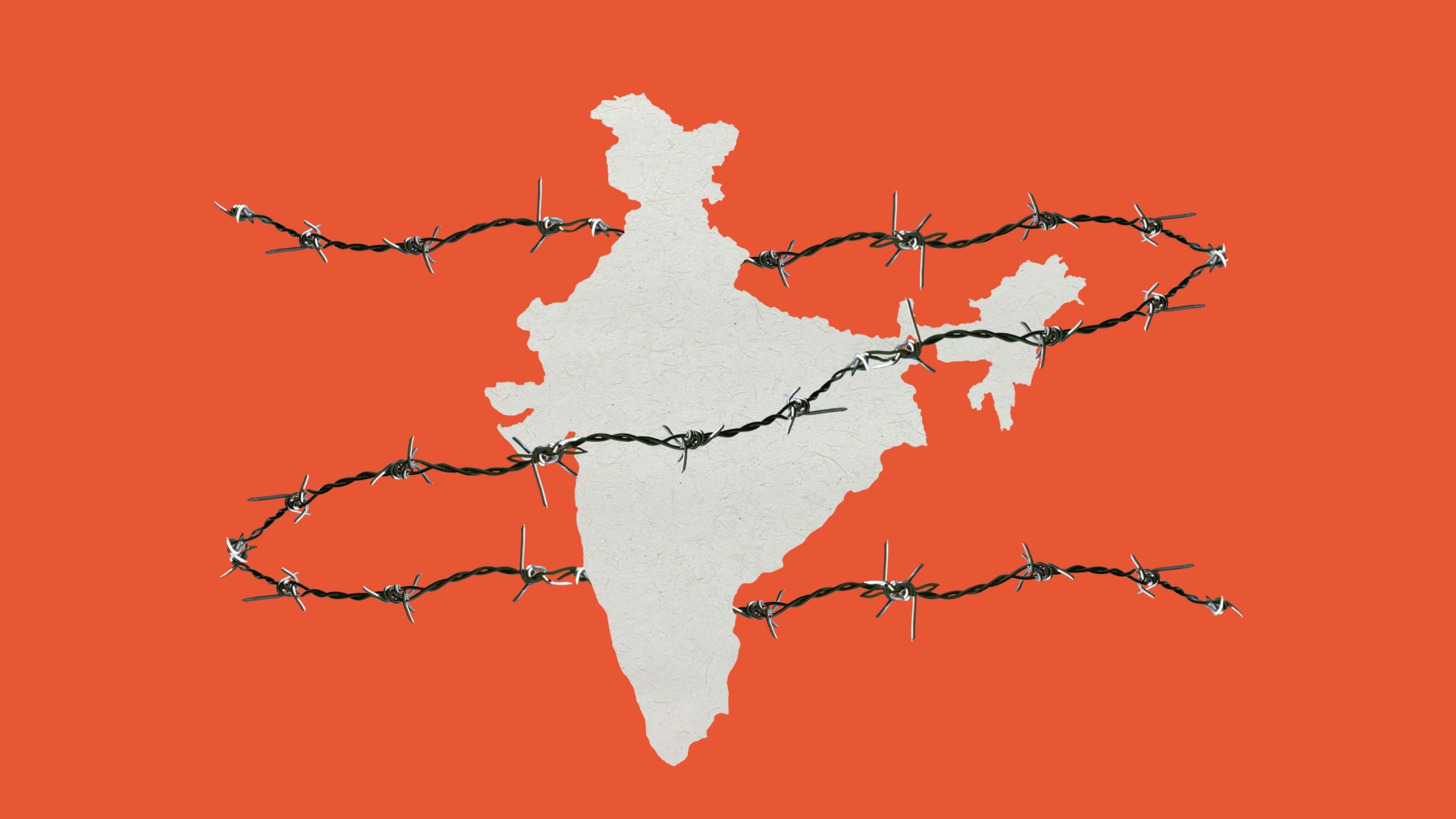
Illustration by Elizabeth Kaye / Source Images: Unsplash

The Voice of the Martyrs (VOM) has newly classified India as a “restricted nation” in its latest global prayer guide—a change from its earlier “hostile area” categorization—as persecution against Christians is “now driven by India’s national government,” says VOM.

VOM’s “hostile area” category identifies nations or large areas of nations where the government may attempt to provide protection, but the Christian population remains persecuted by family, friends, neighbors, or political groups because of their witness. Indian believers have largely faced this type of violence, including last year’s Manipur attacks, which killed more than 100.

In contrast, “restricted nation” describes countries where government-sanctioned circumstances or anti-Christian laws lead to the harassment of Christians or the loss of their civil liberties. It can also include government policies or practices preventing Christians from obtaining Bibles or other Christian literature. (Christians in restricted nations often also experience persecution from family, community members, and/or political groups.)

Although Indian Christians largely face persecution that reflects VOM’s “hostile area” categorization, the government under Prime Minister Narendra Modi has been a key player in recent years in driving public opinion against non-Hindu Indians.

“The rise of Hindutva ideology—and the open and enthusiastic embrace of this ideology by Modi and other government leaders—has had the effect of making India’s national government an overt persecutor of the church rather than a protector of religious minorities and religious freedom,” said VOM spokesperson Todd Nettleton.

“This emphasis—backed by the power of the federal government as well as multiple BJP-controlled state governments—has had a chilling effect on religious freedom, even without a formal change in the laws of the nation.”

CT reached out to six religious freedom advocates, two international and four Indian, to learn if this label helps or hinders outsiders in their understanding of the situation in India. Does the new classification bring any changes for the church in India, either good or bad? Does naming and shaming help the cause of Indian Christians?

Answers are arranged from those skeptical of the efficacy of the new designation to those who believe it is constructive. Additionally, CT asked VOM what they hoped would be achieved by recategorizing India.

John Dayal, veteran human rights activist in India

The situation of Christians in India should shock everyone in the world, especially in the West, as also in South Korea and the Philippines, which have sizable Christian populations and are political and business partners of India.

The new “restricted nation” status assigned by VOM does not fully capture the complexity and severity of the situation in India. The unique nature of the threat faced by Christians in India from Hindutva ideology is distinct from threats faced in other parts of the world, such as Islamist elements, dictatorships, communism, or political movements associated with Buddhism.

The fact is that the highest political officers in the country are leading the marginalization of religious minorities. Laws are being enacted every day to harass the population, restrict religious practices, and shut down all evangelization. This is a very serious matter and mitigates not just against the Indian constitution but also the UN Charter.

Nothing really changes [with this new VOM designation] for the common Christian in the village or the small town. The Hindutva elements are not fazed. The international rebuke is faint and weak and is immediately muffled by their accolades for the Indian ruling group and especially for its leader.

A. C. Michael, national coordinator, United Christian Forum (UCF), India

Such labels are nothing new for our country. Whether we as a country are labeled a “restricted nation” or not, it is a well-known fact that our country is becoming a challenging place for Christians to practice their faith.

According to our reporting at UCF, incidents of violence against Christians in India have drastically increased since 2014, from 147 incidents to 720 incidents in 2023, which amounts to two Christians attacked every day for practicing their faith somewhere in the country.

Having said the above, one cannot deny that such labels do help in letting other nations know of the status of religious freedom of a country. I am of the view, however, that just stopping with these labels wouldn’t help much in improving religious freedom. More needs to be done, like sanctions against countries that curtail freedom of religion and imposing restrictions on business dealings with such countries.

Vijayesh Lal, general secretary, Evangelical Fellowship of India

While such designations may initially draw attention to the challenges faced by Christian minorities in India, we must recognize the complexity of our situation. India is a vast and diverse country, where the experiences of Christians vary greatly depending on geographic location, socioeconomic status, and other factors. A blanket label risks oversimplifying our reality and overlooking the unique contexts in which we live and worship.

Moreover, we must consider the response of the Indian government to such designations. Historically, these labels have not led to meaningful changes in government policies or actions toward religious minorities. Instead, they often serve as diplomatic points of contention rather than catalysts for positive reform.

In older days, this designation might have nudged the government to revisit certain policies and prompt India’s international partners to speak up more forcefully in defense of religious liberty. That heightened visibility could conceivably have led to positive reforms.

But we are living in a different context now, where the ruling dispensation continues to deny what is alleged about religious minorities in India. And the international community is too busy wooing India, so that human rights or religious freedoms are mentioned in passing, if they are even mentioned at all.

And while international attention is important, true change must come from within our communities. Indian churches and faith-based groups are not merely victims; we are actively working to protect our religious freedoms guaranteed by India’s constitution. Focusing solely on narratives of persecution overlooks the resilience and advocacy efforts of Indian Christians and the broader civil society.

Rather than relying solely on rhetoric, we need in-depth analysis rooted in local realities. This means amplifying the voices of Indian Christians and engaging in dialogue with our government and civil society to find solutions tailored to our specific contexts.

Shibu Thomas, founder, Persecution Relief, India

Categorizing India or any nation under a certain label based on the verified data of the challenges faced by the Christian community creates an awareness of the ground reality. This is useful in upholding each other in prayer, since we are all members of the same body, sharing each other’s suffering and pain.

But will the Indian church benefit in any way if the label is altered? No! Rather, we must acquire the maturity to accommodate it, while on the other hand, making all efforts to live in peace and harmony with all people. Jesus taught us to give to Caesar what belongs to him and give God what belongs to him.

We ought to rather pray for our authorities so that we can live peacefully.

Instead of seeking help from outside, which will in no way be helpful but cause greater harm, we need to understand that persecution is a sign of the Lord’s Second Coming. Instead of looking for ways to combat it, we need to embrace it gracefully, forgiving, loving, and praying for our persecutors. Who knows, God has put them here to refine the church! Foreign organizations have their own agendas, which is not always beneficial to the church in India.

So, I appeal to all Indian Christians to come back to the biblical foundation to endure and to stay faithful till the end, following the example of Christ in suffering.

Wissam al-Saliby, director of the Geneva office of the World Evangelical Alliance

Labels and rankings are helpful for building general awareness, for mobilizing public opinion, and for inviting India’s government to change course and India’s allies to speak up in support of religious freedom.

But they cannot, and are not meant to, provide Christians with an accurate and nuanced picture of how the churches and Christian ministries are steadfast and faithful in the face of persecution, of the growth and impact of the church in society, of significant differences in freedom and persecution from one Indian state to another, and of indigenous advocacy for greater religious freedom. We should be wary of discourses that inadvertently portray churches as helpless victims in the face of persecution.

In addition, these categorizations do not help those who want to advocate on behalf of their Christian brothers and sisters, because advocacy requires factual reporting, legal analysis, and focused recommendations for legal and policy change.

In recent years, we have seen that regardless of who sits in the White House, the US’s relationship with India comes first. The theory of change that supposes that awareness and public opinion in Western nations will lead the governments of those nations to prioritize religious freedom in their foreign policy is not working.

I believe we need to prioritize support for Indian Christian voices speaking prophetically to Indian authorities in India and [to rally behind] churches in India building national multi-faith and multi-stakeholder movements in support of greater freedom for all. The indigenous voices must grow louder in parallel to international voices advocating for religious freedom.

Knox Thames, former US state department official

While I’m unfamiliar with VOM’s labels, the trendline for religious freedom in India has been worrisome for years. I have argued for the US State Department to use its designation power to add India to the Special Watch List because of the consistent and growing number of religious freedom violations against Christians and also Muslims. Such a step by the United States could encourage the Modi government to pursue a different path, one that supports religious freedom and minority rights.

Designations such as these create advocacy opportunities. They force policymakers to consider inconvenient facts about India, allowing advocates to press for better policies that encourage Delhi to reform.

Todd Nettleton, VOM spokesperson, United States

VOM’s aim, with this change in status, is to accurately reflect the nature of persecution our Christian brothers and sisters in India are facing and to enable Christians in the free world to better understand and more knowledgeably pray for them.

It’s important to understand that this change in classification is not an effort toward change. Rather, it is a reflection of change that has already taken place in the persecution Indian Christians face. There may be those in government or leadership who see or reference this information, but VOM is not an advocacy organization and influencing governments or other leaders has never been our goal.

Rather, VOM’s goal is fellowship between members of the global body of Christ. VOM’s primary audience is followers of Jesus in free nations, and our goal is to enable them to better understand and more knowledgeably pray for persecuted Christians in more than 70 nations around the world—including India—where Christians regularly face persecution for the activity of their faith.

Church Life

Wang Zhiming: Miao Martyr Memorialized in Westminster Abbey

He was tortured for his faith but remained steadfast through the Cultural Revolution.

Executioners (left) and a Chinese prisoner (right)

Executioners (left) and a Chinese prisoner (right)

Christianity Today February 28, 2024
Illustration by Christianity Today / Source Images: WikiMedia Commons

Westminster Abbey in London, the exclusive chapel of the British royal family, has served as the site for the coronation of generations of kings, royal weddings, funerals, and other significant events. Today it functions as the final resting place for many renowned British nobles, poets, generals, scientists, and writers, such as Isaac Newton, Charles Darwin, and Charles Dickens.

Since 1998, ten statues of 20th-century Christian martyrs from around the globe have graced the Great West Door of the abbey, including Maximilian Kolbe, Martin Luther King Jr., and Dietrich Bonhoeffer.

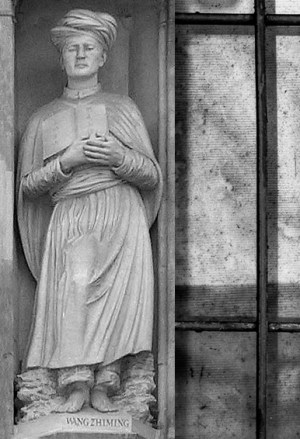
Also among these revered figures, however, is a less widely known martyr from China: Wang Zhiming (王志明, 1907–1973), a Miao pastor from Wuding County, Yunnan Province, who was persecuted during the Chinese Cultural Revolution and executed after a violent denunciation rally in 1973.

The Miao people of China first encountered the gospel when Catholicism was introduced to the Guizhou and Sichuan provinces around 1798. One hundred years later (in 1906), Protestant missionaries Arthur Nicholls (葛秀峰) and William Theophilus Simpkin (师明庆) of the China Inland Mission (CIM) journeyed for several days from Kunming to reach the Miao tribes, who were still practicing slash-and-burn agriculture and hunting.

The foreign Protestant missionaries brought not only the Bible and the gospel but also health education measures, transforming the Miao people’s old customs of ghost worship and cohabitation with animals and treating epidemics such as plague and typhoid. Samuel Pollard (伯格里), a British Methodist missionary who had come to this area before Nicholls and Simpkin, created the Miao script, translated the Bible into the Miao language, and implemented social reforms in medicine, education, charity, and infrastructure among the Miao in Guizhou.

Wang Zhiming was born in 1907 in a Miao family. From 1913 to 1924, he attended a Christian school run by CIM in Dajing and Shapushan for the local Miao people. After graduation, he accepted a teaching position at the church school. In 1940, Wang became a preacher at the Shapushan General Assembly of CIM in northern Yunnan, and in 1944, he was promoted to the position of president of the General Assembly, overseeing Miao churches in Wuding, Luquan, Fumin, Lufeng, and Yuanmou counties.

In 1945, Wang traveled to Kunming to translate and compile the Miao version of Hymns of Praise to the Lord, which may have been the first Miao hymnbook in China. By the time of the Communist takeover in 1949, there were more than 5,500 Miao, Yi, and Lisu people who believed in Christ in Wuding County alone.

In 1951, Wang was ordained by CIM in Kunming and promoted to pastor. By this time, the Communist Party had targeted Christianity as the vanguard of imperialism invading China, and foreign missionaries were rushing out of the country. Wang was accused of being a “time bomb left by imperialism in the local area,” and his ordination as a pastor became one of his crimes. In 1954, he was arrested on the charge of “not repenting and continuing to engage in religious espionage activities.”

Two years later, in an attempt at international propaganda, the Communist Party released Wang and appointed him as deputy leader of a delegation that attended the National Day ceremony in Beijing, where he was received by Mao Zedong. However, this was merely an attempt to make Wang a tool for the Three-Self Patriotic Movement. Wang’s faith in Christ did not waver.

At this time, the Miao church had entered the stage of self-governance, self-support, and self-propagation. With the deepening land reform efforts and the political campaigns of the Great Leap Forward and the Socialist Education Movement, the church faced increasing persecution. Church properties were seized, and pastors were arrested, tortured, and imprisoned.

By the time of the Cultural Revolution, the movement emphasizing the personal worship of Mao Zedong and loyalty to his ideology had reached its peak. Public church activities were completely banned, and the church went underground. Wang was constantly a target for refusing to let the Communist Party mold him into a “new socialist person.” Instead, he led his followers in clandestine Christian gatherings in nearby caves.

On May 11, 1969, Wang, along with 20 other church leaders, was arrested for opposing believers’ participation in the “Three Loyalties” (to Mao) campaign. Wang was accused of five “crimes.” First, he was called an imperialist lackey and an unrepentant spy, disseminating a spiritual opium (religion) that dulled the masses. Second, he was labeled a counterrevolutionary. Third, he was said to have consistently resisted the state’s religious policy. Fourth, he was a landlord, one of the “Five Black Categories”; and fifth, during the Long March, when the Red Army passed through Lufeng County, he had led a group of landlords who obstructed the Red Army’s passage, even personally killing Red Army soldiers (this last claim of murder was a false accusation).

During his incarceration in the Wuding County Detention Center from 1969 to 1973, Wang endured extreme mental and physical tribulations. When confronted with the question, “Do you trust Mao Zedong or Jesus?” his unequivocal response was “I believe in Jesus.” Wang’s refusal to recant exposed him to horrific torture.

In 1973, Wang sensed that his day of martyrdom for the Lord was imminent. Shackled in handcuffs and leg irons, he finally saw his son and wife, who had come to visit him. The Han guards, however, strictly forbade them to use the Miao language to communicate. Wang uttered a few words in Mandarin with coded spiritual meanings:

I have failed to reform, and my current predicament is self-inflicted. You should not emulate me but should obey the arrangements from above. You should work hard to ensure that you have food to eat and clothes to wear. You should maintain hygiene in all aspects to keep your body healthy and avoid diseases.

Wang’s wife presented him with six boiled eggs. With his bleeding palms, Wang patted his wife’s shoulders and back from left to right and then from top to bottom, making the sign of the cross in blood. He kept three of the eggs and returned three to his wife. The eggs symbolized resurrection to eternal life, and the two sets of three symbolized the Trinity.

On December 28, 1973, 66-year-old Wang was sentenced to death. The following day, after a public trial attended by tens of thousands of people at a middle school playground in Wuding County, he was paraded through the streets. His five crimes were inscribed into the death mark hat on the back of his neck, and the three Chinese characters for Wang Zhiming were crossed out in red signifying that the criminal deserved death. Wang faced the congregation with a smile on his face, showing not fear but joy.

After Wang was executed by firing squad, the local government announced that “at the request of the revolutionary masses, the criminal’s body should be completely destroyed with explosives.” Wang’s family quickly pleaded with the government for mercy, promising not to erect a tombstone or any other conspicuous marker. The government agreed to let the family “drag the body of the counterrevolutionary back home.” Villagers drove a horse-drawn cart to the execution ground to collect the body, and along the way, the Miao villagers halted the cart to bid farewell to Wang.

In 1976, Wang’s son, Wang Zisheng, was also arrested for assembling an underground church. Overall, seven members of Wang’s family suffered for their faith during the Cultural Revolution. Not until after the revolution had ended did Wang’s family receive a “rehabilitation” notice restoring his public respectability.

Wang Zhiming statue (left) at the Westminster Abbey in London.Illustration by CT / Source Image: WikiMedia Commons
Wang Zhiming statue (left) at the Westminster Abbey in London.

When Westminster Abbey decided to commemorate Wang with a statue, his descendants learned about it very late. The British had sent all the materials in English, and Wang Zisheng, the son of a “Five Black Categories” father who had never attended middle school, could not decipher the English text. But through other people’s translations and explanations, the family eventually learned that Wang had been selected as one of the most significant martyrs of the 20th century.

Around 2002, Wang’s descendants visited Westminster Abbey and took photos to bring back home. When they showed the photos in their home village, the Miao people were moved to tears and the Christians gave glory to the Lord.

In 2011, Chinese dissident writer Liao Yiwu, living in exile in Germany, published a book titled God Is Red (the English translation was published in 2012), which included Liao’s interview with Wang Zisheng and recounted some of Wang Zhiming’s stories. In 2014, independent documentary filmmaker Hu Jie released Songs from Maidichong (video in Chinese); the film recreated the heavenly praise songs echoing in the mountains of central Yunnan and described the impact of increased materialism, which had accompanied China’s “reform and opening up” period, on the Miao church. It also included interviews with Wang’s relatives.

Despite brutal persecution, Miao believers clung firmly to their faith, and their pastor, Wang Zhiming, left a poignant testimony of martyrdom. May their testimony continue to inspire the Chinese churches currently enduring persecution, and may it encourage the Miao church to take up its cross, follow the Lord, and spread the gospel faithfully in the new era.

Liu Yanzi is a Chinese scholar and teacher in Japan. She holds a PhD in international cultural studies from Kobe University.

Inkwell

The Scars of the Crocodile Spirit

On Life that Doesn’t Take an Eye for an Eye

Inkwell February 28, 2024
Photography by Shafi Marshall

FOLLOWING AN ACCIDENT in which an Amtrak train hit a small car at noon on a summer day, paramedics recovered two living bodies from the wreckage and transported them to Rockford Memorial Hospital, where one went into surgery for a splenectomy. That body, one of a 10-year-old girl, emerged breathing, with a line of staples down her belly.

I was that girl. I remember absently running my fingers over the bumps of steel as I fell asleep at night. It’s strange to think that I know what it’s like to be stapled, the ends of steel slivers curled beneath my skin. Months later, when they removed the staples, the holes bled, sixteen of them, and left a scarry constellation on my belly. I felt unsafe, like I had been unbuckled from a car seat, missing the familiar tug of the staples on each side of my midsagittal plane. The metal strips were quite literally holding me together, and when they disappeared, I thought I would fall apart. But over the course of the months, my body had quietly grown its own adhesive.

Over time, scar tissue bloomed where the staples had once been. The pink line faded to white against my natural tan. My mom gave me a round-capped tube of Mederma and said to give myself a belly rub each night to fade the scars. I never used it. I didn’t think my scars were ugly. They were a glimmering cloud in the desert sky, a stretch of the Milky Way. They were vast and terrible and irrefutable. They were nature. And they were beautiful.

My scars set the scene for a larger story that the world has tried many times to tell but only God can finish. Though just a child, I bore upon my belly a glyph that told humanity’s story: We will be broken. We can heal. But the mark of pain remains. My scars, like all of our scars, remind me of past pain and that future pain will come, and more pain, and eventually death. I cannot control that.


THE CROCODILE PEOPLE of Papua New Guinea have practiced ritual scarification for thousands of years. Still today, there are men who submit their bodies to be slashed hundreds of times by razor blades in a rite of passage so brutal that some die in the process. But when the initiate emerges from the spirit house, he has taken on his god’s form. His back, like the crocodile’s, bears a gnarled pattern of scales.

In an interview with the BBC, the chief-councilor of New Guinea’s Parambei village declared of the crocodiles what pagans have always known about their gods: “We fear them but draw energy from that power.”

The scars serve as the initiates’ reminder that they have undergone intense physical pain and are now capable of anything. By being figuratively eaten by the crocodile and taking on its appearance and ferocity, the initiate becomes the power he feared. Upon his back, he wears the crocodile’s hide. When he looks at himself in the river, a crocodile stares back.

But the tribesmen can never feel secure in their scars. Faced with the vast indifference of bloody Nature, they choose to meet it on their own terms, exerting what little control they possess in order to escape with their lives. They feed the gods some bloody flesh, and, in doing so, spare the village. It is a fear-based business. If they fail to placate the gods, the gods will have no use for them but to devour. At their most basic level, the scars remind the Parambei tribesman to beware the crocodile, or suffer once again.

The Parambei aim to complete the story of suffering by deriving power from pain, but ultimately, it’s still just suffering, more suffering, and then death. The pagan story of scars may be rich with symbolic meaning, but the ending ruins everything. Embracing scars is not the answer to life’s suffering.


FOR THE CHRISTIAN, the most important scars are not our own. We look upward, to a God who bears his own marks upon his body. Instead of looking at the world around us to find meaning for our scars like the pagan, we look to the scars of Jesus.

In the spirit houses, the crocodile stamps the bodies of his worshippers with his image. In the Garden of Eden, the Christian God stamped mankind with his image. The crocodile spirit and the Christian God don’t sound so different, although God’s tender forming from clay is less violent than the crocodile’s slashing knife. Where the two stories really diverge is when the Christian God stamped his very self with the image of man.

In the Old Testament, God’s people complain he has forgotten them. He responds through the prophet Isaiah: “Behold, I have engraved you on the palms of my hands.” (Isaiah 49:16 ESV). In “The Glorious Deeds of Men,” writer and podcaster Spencer Klavan explains how this verse metaphorically describes how creators are changed by creation. God, who shaped Adam from the dirt, has been indelibly altered by that act. He can never forget his creation because when he made it, it became etched into his very being. According to Strong’s Concordance, the primary meaning of the Hebrew word translated “engraved” is “to cut.” It is likely the same word the crocodile men would use for their ceremony—but in this case, it is not the man who cuts his body to bind himself to god. Instead, God cuts his body to bind himself to man.

It sounds like sacrilege to say that the eternal God would allow himself to be changed by the temporal. It is most definitely sacrilege to suppose that he would ever sculpt himself into the shape of a man. But why stop there? If he wanted to engineer the ultimate obscenity, God would cause his man-self to be born in a stable, whipped, beaten, nailed to a cross, severed from his own goodness, and killed. I should shut my mouth now, lest a lightning bolt destroy me. The Almighty would never allow himself to be pierced in such a way.

Yet, that’s exactly what he did.


IN THE YEARS following my own scarification, I came to adopt the mindset of a crocodile man. It is, I believe, the one that comes most naturally to us. As I ran my fingers over the ripple of white on my belly, I convinced myself that because I had been spared death, I must pay the god who scarred me. I must pay him not for power, but for the privilege of living. God became to me a stern face and a wagging finger, like those teachers who say, “Playground time is a privilege, not a right. You must be a good girl, or I will take it away.” Like the crocodile men, I lived in fear that if I did not appease the god, he would take away the life he had given me.

That, in our world, is how power operates. Might makes right. Eye for an eye. Tit for tat.

Though the crocodile men of Papua New Guinea at first seem strange and foreign to Western ways of thinking, their rationale for scarification is as common as mud. Scars remind us that we dodged death, but next time, if we aren’t careful, we might not be so lucky. God’s scars remind us that he did not escape death. His own broken body is proof. When the whips bit into his back, piercing the skin with the stripes of a crocodile’s back, he did not become like the crocodile, powerful and cruel, but instead went straight into its jaws.

It just doesn’t make sense. Why would The All-Powerful subject himself to this humiliation?

The textbook answer is that God sacrificed himself to fulfill the demands of justice, once and for all. Read the theologians for a deeper analysis of the finer mechanisms of substitutionary atonement. But that does not get to the emotional heart of the question. When people ask why Jesus died on the cross, they are not wondering about metaphysics but why he would do it this way. In the moment that God created man, surely he would have seen the future stretched out before him like a map—Cain striking Abel, the Canaanites burning their children for Moloch, all suffering reaching a climax in the moment on the cross when God abandoned himself and experienced the purest form of Hell. Surely, an all-powerful God could have written the story so it did not involve any scars at all? Wasn’t there another way?

This is the problem of evil. I’ve thought hard about this question, like most of us have, only to come to the conclusion that the scars of God are themselves the only sufficient answer.

When I first read Isaiah’s words about God’s engraved palms, I imagined an angel scribe using some sort of spiritual laser to paint God’s hands with our names in glowing henna. But that’s not what happened. Instead, God recruited Roman soldiers in a godforsaken hinterland of a world empire to shatter the bones of his hand with iron nails. The soldiers treated God, whom they viewed as an ethnic, social, and political inferior, with less dignity than they would have treated a stray dog. The fists that held cyclones and galaxies—the entire universe—chose to suffer wounds inflicted with injustice, racism, and cruelty. His choice to engrave that moment forever in his eternal body silences all accusations.

If he was willing to suffer for this world as it is, in all its exquisite pain, then who am I to say he should have made it differently? But even the most humble of us can wonder, and ask what we are being taught.

What the story of God’s scars tells me, first and foremost, is that he takes delight in alchemizing the filthiest evil into good, even if it costs him everything. Because he suffered willingly, because he bears scars on his body, my own scars are symbols neither of power nor survival but of hope. We will be broken. We can heal. But God, unlike the crocodile spirit, has sealed our temporary, fleeting, healing into eternal scars. Those scars will last.


DESPITE THE CONVICTION I feel when I meditate upon this story, it is difficult to live in its truth. It is not just keeping one’s thoughts kind and pure, remembering to pray, and following one’s vocation with energy and faithfulness that makes the Christian life a daily battle. It is resisting the urge to make a deal with the crocodile spirit.

We all accumulate mental and physical scars as we go through life, even amidst our materially easy and modern life. We are tempted to glorify our scars, to say that what does not kill us makes us stronger, and even to deliberately scar ourselves to show our power. But whatever we may pretend, the only scars that can save us are those of the Crucifixion, accepted not as a deal, but as a gift. If we are to cling to Christ’s scarred hands, we must drop the blood sacrifices, stop the incantations, and burn the spirit houses. If we let them go, we will find that what has held us all this time was nothing more or less than God’s grace.

Amelia Rasmusen Buzzard has written for The American Spectator, Evie Magazine, Medicinal Media, and Perishable Goods. Find her on Instagram @ameliajane_writes or read her blog at writersblogck.substack.com.

Books
Excerpt

God Whispers to a Restless and Grief-Stricken Heart

An excerpt on doubt, despair, and restoration from Land of My Sojourn: The Landscape of a Faith Lost and Found.

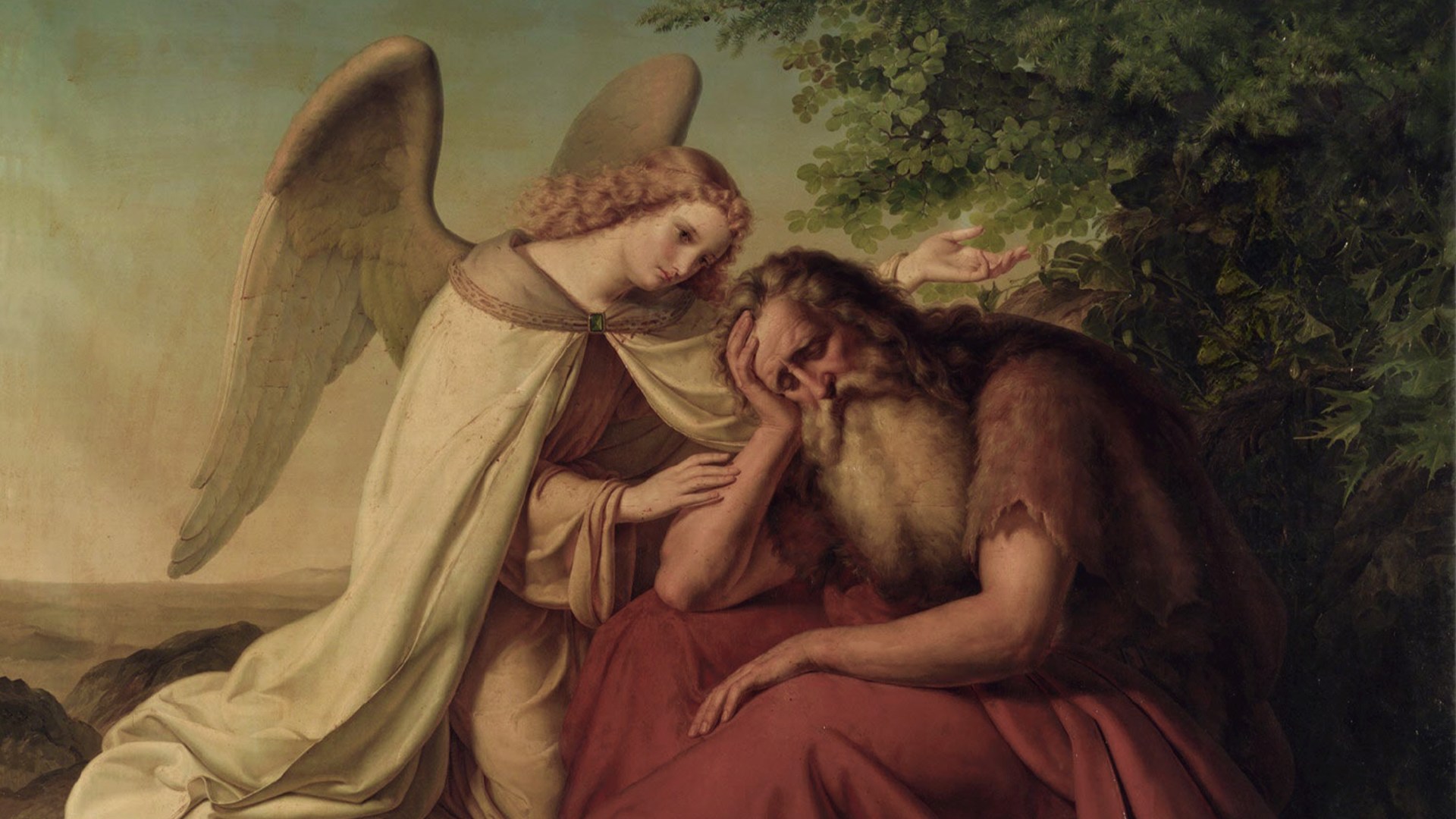
Elijah in the Desert by Moritz Berendt

Elijah in the Desert by Moritz Berendt

Christianity Today February 27, 2024
Wikimedia Commons / Edits by CT

Think about Mount Tabor for a moment. Remember the blinding light of Jesus’ glory and the stunning presence of Elijah and Moses, the weight of that moment and what it meant in the mind and heart of Peter, and what it confirmed about the dream that had taken up residence in his heart and his spiritual imagination. The brilliance of this dream—how incredibly close it felt on Mount Tabor—creates the unbearable cognitive dissonance with the reality of Jesus, arrested, mocked, beaten, scorned, flayed, and executed. Dead in a tomb.

Land of My Sojourn: The Landscape of a Faith Lost and Found

These visions didn’t fit together: the bleach-white light of the Transfiguration, the ashen linen that now wrapped Jesus’ dead body, and the stony blackness of the tomb as the stone rolled shut against it. Peter had expected Elijah: fire from heaven, a land cleansed of evil. What he’d gotten instead—I don’t think he had a name for it. I don’t know him.

But maybe Peter didn’t know Elijah either.

Sometimes our expectations are the source of our pain.

Peter looked at Elijah and saw a conquering hero. But he was only paying attention to part of the story.

When Elijah humiliated the prophets of Baal, the crowd of onlookers fell to the ground and cried out, “The Lord—he is God!” (1 Kings 18:39). They then slaughtered the prophets, cleansing the land of their oppression. Elijah then prayed for rain, and it came. Ahab fled to Jezreel, unable to deny what he’d seen with his own eyes. Mission accomplished.

And yet it wasn’t. Jezebel responded to all Ahab told her by promising to kill Elijah, and the menace of humiliation and death overwhelmed him. He fled to the desert, collapsed under a broom tree, and prayed for death. “I’ve had enough,” he said. “Take my life; I am no better than my ancestors” (1 Kings 19:4). I give up. I turned and ran. I failed. And I wish I were dead. It’s the cry of disillusionment and despair.

God gave Elijah the gift of sleep under the broom tree, woke him to feed him, and let him sleep again. When Elijah woke the second time, God fed him again to strengthen him for the long journey ahead to Mount Sinai.

Elijah’s journey from the broom tree to Sinai took 40 days and 40 nights—the same length of time Goliath taunted the armies of Israel, the great flood covered every living thing on earth, and, later, Jesus fasted in the wilderness. Elijah’s long-suffering wasn’t without purpose. There’s an intersection with God at the other end of 40 days and 40 nights, and Elijah would soon have his.

The question God asks Elijah in the cave at Mount Sinai is one he asks all of us who find ourselves disillusioned and disoriented. “What are you doing here, Elijah?” (v. 9).

It’s not unlike the question Jesus asks almost everyone he encounters in the Gospels: “What do you want?”

The answer isn’t easily found. It’s hard to say “I want to go back” because you know that the homeland you miss was built, to some degree, on illusions. Disillusionment, in this way, is a gift, albeit an unpleasant one. But naming something better is difficult too.

Elijah’s answer is illuminating, not because he provides us with the right response (as if there were one) but because he shows a way forward: he complains. Loudly. Unapologetically. “I’ve given everything to you, God. But now I’m alone. I have no place to belong. No sacred spaces. Every memory is haunted. Everyone I loved and trusted has either turned on me or been crushed just like me.”

I was raised not to complain, to see it as unvirtuous. I was also taught much about the holiness of God and what we were and weren’t allowed to say or do before him. But there’s a funny tension between my modern ideas and the attitudes of many of the fathers and mothers of our faith in the Hebrew Bible. They have an audacity, a willingness to argue, complain, or speak out of naked self-interest. Maybe that’s one aspect of what it means to have a childlike faith: having the audacity to speak your mind in a relationship where the asymmetry of authority and control couldn’t be starker.

God tells Elijah to walk out onto the mountain. It appears, from the text, that he doesn’t, instead watching from within the cave as a violent wind kicks up enough to tear the mountain apart and shatter rocks. But God isn’t in the wind. Then comes an earthquake, and still no God. Then comes fire, but again, God isn’t in the fire (1 Kings 19:11–12).

The account of God’s absence in the wind, quake, and fire is less about God and more about Elijah. He’s a veteran of God’s glory at Mount Carmel. He stands on what is maybe the holiest ground outside of Jerusalem, a mountain where God once before appeared spectacularly and renewed his covenant with Abraham’s children. But Elijah can’t see God in the spectacular anymore. The wind doesn’t move him. The earthquake doesn’t make him shiver. The fire leaves him cold.

As the final traces of wind quiet and the last of the flames turn to embers, a deep silence settles over the mountain. There, like a whisper, Elijah hears the voice of God. There’s something different here, though, than the voice of God Elijah has been wrestling with up until now. He’s aware of the divine presence in a new way and is at last drawn to it, walking to the mouth of the cave as if to get a better listen.

I read this story as descriptive of a journey of the heart. It’s a picture of the transformation that happens on the other side of grief. Perhaps it’s not simply that God wasn’t in the wind. (What would it mean that he was “in the wind” anyway?) Rather, it’s that Elijah had lost the ability to find him in the wind. The spectacles had grown too complicated, too haunted with loss. Elijah’s restless and grief-stricken heart needed silence on the other side of the storms of wind and fire to hear and recognize the voice of God.

Elijah came to Sinai despairing that his life and his dreams had come to an end. He left aware that the best parts of that dream—the hope of a renewed and restored Israel—were in God’s hands and always had been. Seven thousand people Elijah had no idea existed remained faithful. The deeper awareness was that he needn’t cling to the outcomes of whatever followed. The old cliché “God is in control” turns out to be true, but it may be something we only truly learn and that only liberates us after things fall apart.

Like disillusionment, despair is a disease only for true believers—dreamers and lovers. It hits when life falls apart, our sense of meaning and purpose fades when the people closest to us become incomprehensible or those we love disappear because of lies, brokenness, or death. Despair afflicts the lonely and forgotten, those whose prayers echo against a sky of concrete gray.

Those who’ve never known it themselves often encounter this deep darkness in others and are often mystified by it. The temptation to moralize it is powerful. “Put your hope in God,” the cry of the psalmist, can quickly become, “Cheer up already,” a sentiment likely to only deepen despair by intensifying a person’s sense that something is wrong with them, their pain is invisible, and they are ultimately alone.

What we see at Sinai is both sobering and hopeful for both those who have suffered in spiritual darkness and those who love and want to support those suffering now. It simultaneously reveals that there is something solitary about that darkness and that, like Elijah’s journey first into the wilderness and ultimately to the cave on Sinai, the journey is taken alone.

Dante’s Inferno has long been understood as the greatest literary expression of this kind of encounter with disillusionment and despair. No one chooses exile and no one chooses spiritual disillusionment. You simply awaken to find yourself there, wondering where the light has gone and where to turn next. In Inferno, Dante finds himself trapped between ravenous creatures and the gates of hell, discovering that the only way out of darkness is through it.

So it is with disillusionment. As much as we might run from it or distract ourselves, it lurks like the she-wolf and the leopard that hunted that great Italian poet. Our way out is into a place we fear, a journey that for Dante meant bearing witness to the great evils of the world on his way to redemption in paradise.

For Elijah it meant finding solitude under the broom tree and on the fiery face of Mount Sinai. There he found out what we all can discover on the other side of grief—that he wasn’t alone. That under the noise of storms and the heat of fires was the whisper of God, and that in the distance beyond us is always a remnant. We are never truly alone.

Mike Cosper is the director of CT Media.

Adapted from Land of My Sojourn by Mike Cosper. ©2024 by Michael D. Cosper. Used by permission of InterVarsity Press. www.ivpress.com.

News
Wire Story

Calvin President Resigns Over Inappropriate Messages

Trustees found Wiebe Boer’s alleged conduct “concerning” and “inconsistent with the high standard and character” the college expects of its leadership.

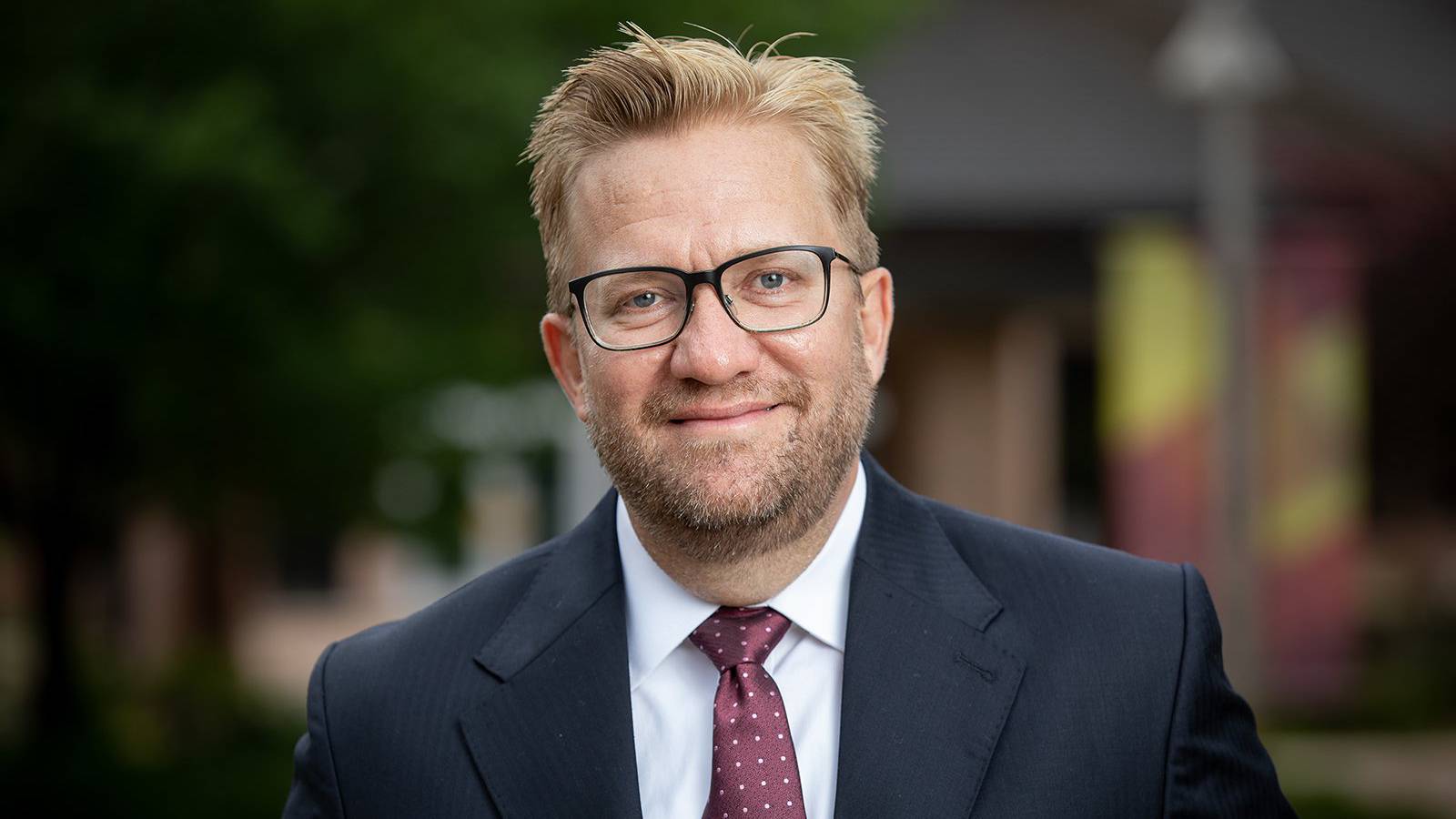
Wiebe Boer had been president of Calvin since 2022.

Wiebe Boer had been president of Calvin since 2022.

Christianity Today February 26, 2024
Calvin University / RNS

The president of Calvin University has resigned after admitting he engaged in inappropriate communication with a member of the campus community.

In a statement Monday, the Calvin Board of Trustees said it had received a report alleging President Wiebe Boer “engaged in unwelcome and inappropriate communication and attention toward a non-student member of the campus community.”

“The report did not include allegations of sexually explicit communication or physical contact, but the alleged conduct is concerning and inappropriate,” the trustees said in their statement.

University officials said they then hired an outside expert to review the allegations. That review included speaking with Boer, a former oil executive and son of Christian Reformed Church missionaries who became Calvin’s president in 2022.

“After being notified of the report, Dr. Boer denied some of the allegations but did admit to sending communications that were inappropriate and inconsistent with the high standard of conduct and character expected of the President of Calvin University,” the board said in its statement. “Dr. Boer subsequently offered his resignation, which the Board accepted.”

No further details about Boer’s conduct or the complaint were given.

Gregory Elzinga, Calvin’s vice president of advancement, has been named interim president. The board’s statement described him as already being involved in the day-to-day management of the school and “well situated to provide effective continuity of leadership while the Board conducts a thorough search for the University’s next permanent President.”

School officials plan to hold a campus meeting for students with Elzinga on Thursday.

Boer became president of Calvin at a time when the school had been under pressure to abide by the rules of the Christian Reformed Church in North America, in particular the church’s teaching about sexuality. In 2022, the denomination ruled that congregations and church members must abide by church teaching on marriage and sex—which state that only heterosexual sex within marriage is allowed.

That teaching is now considered a part of the church’s core confession—and applies to Calvin, which allows openly LGBTQ students to attend but requires faculty and staff to support the church’s confessions.

Some faculty have asked for a “gravamen,” which would allow them to officially state their concerns about a church doctrine.

A Calvin professor said his contract was not renewed after he officiated a same-sex wedding for a staffer at a research center that had been affiliated with the school. That center and the school also have cut ties.

In the fall of 2022, Boer told Religion News Service that Calvin will continue to be hospitable to its LGBTQ students. “I don’t want to be the president of an institution that isn’t welcoming to everybody,” Boer said.

Boer did not immediately respond to a request for comment.

In its announcement of Boer’s resignation, the trustees said they “take our responsibility to provide an environment free from discrimination, harassment, and retaliation very seriously and continually strive to promptly and thoroughly respond to allegations of misconduct.”

“We ask for prayers for the entire Calvin community, trusting that the Holy Spirit will comfort all of us in the sustaining grace of God, now and always,” they said in their statement.

News

In Six-Hour Meeting, Park Street Votes to Affirm Current Leadership

Senior minister Mark Booker asks the historic evangelical congregation to commit to work of repair after “break of trust.”

Park Street Church in Boston

Park Street Church in Boston

Christianity Today February 26, 2024
tupungato / Getty

Park Street Church voted to affirm senior minister Mark Booker on Sunday by a vote of 350 to 173, with 20 abstaining.

The prominent evangelical church in Boston has been roiled by controversy as ministers, elders, staff, and lay leaders disagreed over a series of decisions—as well as the process of making decisions—at the 220-year-old congregationalist church. Ultimately the entire congregation was thrown into the dispute. The conflict became public when a group of more than 75 members petitioned for a special meeting to review the firing of an associate minister who said he had “serious concerns” about Booker’s spiritual leadership, citing “patterns at variance with the biblical qualifications.”

The conflict raised questions about checks and balances and the durability of congregationalism amid escalating disagreements about leadership. Congregationalism is the preferred polity of many evangelicals, including those in Baptist, nondenominational, and Stone-Campbell churches.

Park Street’s regularly scheduled congregational meeting on Sunday was cast as a referendum on the leadership of the church. Critics proposed a set of amendments to the bylaws that they said would add much-needed limits on church leaders’ power and nominated an alternative slate of elder candidates.

Booker, who was called to lead the church in 2020, proposed a nonbinding vote to affirm his continued leadership at Park Street. The elders approved the ballot measure, adding it to the agenda, as CT reported last week.

“It is clear there has been a break of trust at the elder, minister, and staff level,” Booker told the congregation during the fractious six-hour meeting on Sunday. “This break of trust among the leaders of this church has spilled over into the congregation as well, causing deep pain for all of us, and all of us bear it in one way or another. The Christianity Today article revealed these breaks to a wider audience. And I understand that this is and has been unsettling for our community.”

Booker characterized CT’s reporting on the division at the church as an “oversimplified binary picture” and called it disappointing.

Twenty-one staff members also wrote an email saying they were frustrated with CT’s reporting and “upset with the way it characterizes our church.”

In his annual meeting speech, Booker said he and many others bore responsibility for the “fences” that had broken down in his community. But he asked the congregation to affirm his calling as senior minister despite his mistakes.

“The question I believe will be before you in a few minutes is whether you would like for me to grow as I shepherd among you,” Booker said.

Booker’s wife, Mandy Booker, was given a few minutes to speak in defense of her husband’s character. She said the allegations against him “paint an impressionistic picture” of “an insensitive and power-hungry man” but are based “almost entirely on imputations of motives and disagreements about leadership decisions.”

Those who know Booker best, she said, know this depiction is wrong.

“Mark is a pastor, through and through,” she told the congregation. “He lives and breathes Jesus.”

Other Park Street leaders also spoke up at the meeting to take responsibility for the division that has threatened to split the church. Elder Leslie Liu said that a few weeks ago she read Amos 6:12, which says “you have turned justice into poison and the fruit of righteousness into bitterness,” and wept for Park Street.

“This is what I see in our church, bitterness and poison, where there should have been righteousness and justice,” Liu said. “Our congregation is divided. Small groups are divided. Committees are divided. Staff are divided. And I don’t think I need to tell you the board has been divided for some time now. You can tell by what you’re seeing here. When you see signs of sickness on the outside of the fruit, you know something’s not good on the inside.”

Liu said that after three or four other complaints about Booker, the elders should have asked for an independent investigation into whether he had misused his spiritual authority. She asked the congregation, however, to turn to God in this time of crisis.

“Have you ever been sick but you didn’t actually know what was making you sick?” Liu said. “We know that we are sinners, but now we are seeing it out in the open. Let’s go to the master physician for the surgery that we need.”

The extended meeting was contentious and occasionally chaotic. People shouted at the moderator to allow members more or less time and leeway to speak. There were conflicts over parliamentary procedure and the proper way to count standing votes.

One member objected to the nonbinding vote, calling it “meaningless,” citing a guide to parliamentary procedure.

“If we want to take a vote, we can take a vote,” Karolyn Park said, “but let it be binding, because we are the congregation with final human authority. We deserve our voices to be heard.”

The congregation voted by paper ballot, passing their votes down the rows to place in a collection basket.

When the ballots were counted and the results announced—67 percent for Booker, 33 percent opposed—the church was silent, except for the shifting of a few bodies and the shuffling of a few feet.

The affirmed senior minister said that no one took joy in the result and that moving forward would require “a lot of grace.” He asked the congregation to commit themselves, in the coming months and years, to the work of repair. He promised he would be a shepherd to the whole church, even those who voted against him.

“I’ve had the sense for some time that we—the staff, the elders, and the congregation—are on the cusp of God’s deeper work,” Booker said. “We cannot do this as we fight each other. We can do this as we heal together.”

Not everyone was satisfied with the result. Michael Balboni, the former associate minister who brought charges against Booker, accused the leadership of choosing power over love.

“The 60 or 65 percent who have won today, you haven’t won. You haven’t won. Because love has not won, and when love is overcome by power, we all lose and Jesus is defamed and our church has reproach upon us,” Balboni said at the meeting. “We’re all going home having been proven broken.”

Some in the congregation complained that Balboni was off topic and asked the moderator to stop him, while others shouted, “Let him speak!”

The former minister said the glory of God was not present in the congregation, “unless we choose the path of love” instead of power.

“This is my last word. I will not give up. And I will not give in. Until there is a fair process that hears what has happened to me, what has happened to other ministers, I will not stop,” Balboni said.

The Park Street clerk has approved a petition to call a special meeting in April to review the elder’s decisions to dismiss the charges Balboni brought against Booker.

On Sunday, however, the congregation affirmed Booker and elected the five officers and six elders chosen by the nominating committee. The alternative slate of candidates put up by petition all lost. The congregation also rejected all five proposed amendments to the bylaws.

Some Park Street members who spoke to CT after the meeting said the meeting was disheartening and they wished there had never been a vote on Booker’s leadership.

“I personally feel it was unfortunate that that vote took place. It drew a line in the sand,” said Victor Sheen, who has been a member for more than 20 years. “He does not have the mandate, even though he has the majority. But I am hopeful there can be healing.”

Others said they were glad the congregation got the chance to vote and Booker was affirmed. They believe it will help the congregation be able to put all of this controversy behind them soon.

“The congregation affirmed their belief that Mark will continue the work of reconciliation and repair,” said Elizabeth Lohnes, the church’s former director of communications, in an email to CT. “I am eager to see a move towards a thriving work environment for everyone.”

One member who joined in 2022 said he was impressed by Booker’s leadership during the sometimes painful meeting.

Booker “did his part in leading the whole congregation in a posture of love and grace,” Hanno van der Bijl said in an email. “He listened well as he sought to bring everyone together. He is a broken and sinful person like the rest of us, and he acknowledged and apologized for his mistakes.”

Members hope the affirmation vote can mark the beginning of a new chapter for the historic evangelical church.

“While really difficult, allowing space in the meeting for both sides to be heard was an important step in resolving conflict and moving forward as a congregation united in our love for Jesus,” wrote Laurel Sweeney, who also joined the church in 2022. “I’ve greatly appreciated and benefited from Mark’s gifted preaching. I’m thankful that the majority of the congregation affirmed his leadership and that we can begin a process of healing.”

Correction: In a previous version of this article, a paraphrase of a statement from former associate minister Michael Balboni mischaracterized his remarks. He did not say that the glory of God had “departed” from Park Street Church, but that it is not there “unless we choose the path of love.” According to Balboni, he was not referencing 1 Samuel 4:21.

News

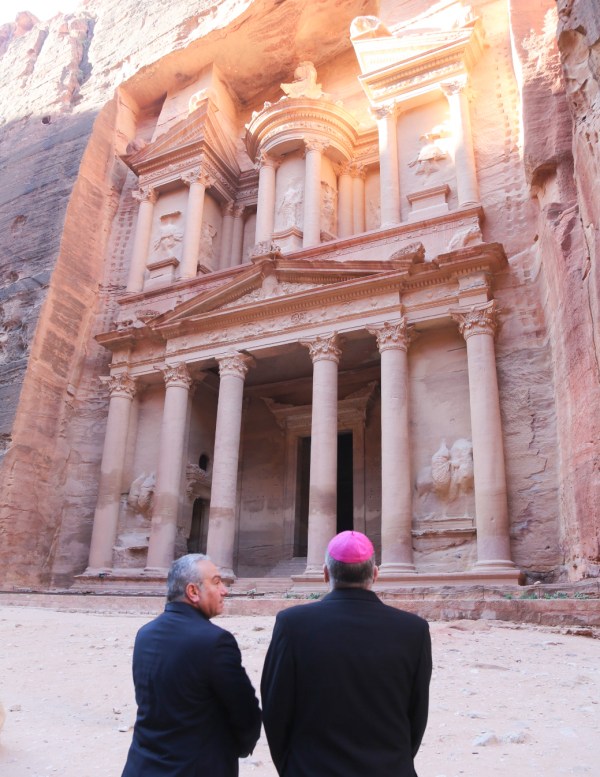
Petra Means Rock Churches: Jordan Permits Site’s First Prayers in 1,400 Years

Religious tourism initiative at ancient city recalls Moab, Byzantium, and Arab tribal Christianity, amid speculation on Paul’s possible first missionary journey.

Archbishop Christoforus in the Byzantine church of Petra.

Archbishop Christoforus in the Byzantine church of Petra.

Christianity Today February 26, 2024
Courtesy of Board of Commissioners of the Petra Regional Authority

[This article is also available in Dutch.]

Imagine yourself as Indiana Jones, traversing the narrow, nearly mile-long Siq gorge, with mountain cliffs towering on either side. Turning a corner then reveals the vast expanse of the ancient city of Petra and its majestic Treasury, the first-century rock-carved tomb of an ancient Nabatean king. You pass by the 121-foot-tall structure and its statues of Roman and Egyptian gods, making your way up a steep 800-step ascent to the equally impressive Monastery.

But before reaching Petra’s largest monument, you turn off the path into a different sort of ruin, mosaics lining the floor around half-sized recycled columns as incense wafts through the air. But unlike in the Harrison Ford movie, you do not meet an 11th-century knight preserved by the Holy Grail. Instead, the Greek Orthodox metropolitan of Jordan passes you a cup of Holy Communion.

In January, he offered the first Christian prayers in Petra in 1,400 years.

Other generations of film aficionados may prefer The Mummy Returns, Transformers: Revenge of the Fallen, or even Mortal Kombat: Annihilation. While onsite Hollywood productions provide revenue for Jordan, this is dwarfed by the $5.3 billion the country earns from its tourism industry. In 2022, Petra received 900,000 visitors, nearly one-quarter of the national total.

But now, the Hashemite kingdom is adding a religious component.

“It is a great blessing to be in this holy place in Petra,” said Archbishop Christoforus, before proceeding to offer the bread and wine. “We are not thinking of what surrounds us in stone, but of the saints and spiritual identity in its heritage, history, and civilization—and our great and blessed [Jordanian] homeland.”

In 2021, Jordan launched a five-year national tourism strategy with an emphasis on religious sites, including the Vatican-endorsed pilgrimage locations of Jesus’ baptism at Bethany-beyond-the-Jordan; Mount Nebo, from which Moses viewed the Promised Land; and Mukawir, home to a Herodian palace where John the Baptist may have been beheaded at the biblical Machaerus. Approximately 85 percent of tourists come for cultural and heritage purposes, and one-quarter of baptism site visitors travel from the United States.

With such tourists likely to visit Petra already, Jordan would like to extend their stay.

“Unfortunately, Petra is known mostly for its Treasury and Siq,” said Fares al-Braizat, chief of the Board of Commissioners of the Petra Regional Authority. “There is plenty more it can offer, and the churches are an additional discovery.”

Ten have been discovered so far, with excavations ongoing. But the fifth-century Byzantine cathedral was only discovered in 1990 and fully unearthed eight years later. Restoration has proceeded sufficiently not only to inspire Braizat to add Petra to Jordan’s list of Christian historical sites but also to revive the ancient city’s religious heritage. It only adds to the nation’s reputation as an open-air museum, he said.

Jordan’s evangelical community is appreciative.

“How can you have a historic church site and not bless it with prayer?” said David Rihani, president of the Jordanian Assemblies of God. “Petra shows that the government cares about the history of Christianity in this land.”

The biblical history is even longer. Petra may have been inhabited as early as 7000 B.C. and became the capital of the Nabatean Kingdom around the fourth century B.C. The Jewish historian Josephus and the Septuagint translators connected the Arab tribe to Ishmael’s firstborn son Nebaioth, and some identify Petra as the biblical Kadesh where Moses struck the rock that gushed water in Numbers 20.

The Iron Age Edomites then refused the Hebrews passage along the King’s Highway—located in Jordan—and Aaron thereafter died and was buried at Mount Hor. Local tradition, Josephus, and the Christian historian Eusebius place this in Petra, where a mountaintop shrine is said to cover his tomb.

Herod the Great, supported by Cleopatra, plundered Nabataea in 32 B.C., but his son Herod Antipas married the daughter of the Nabatean king Aretas IV, whom he divorced in A.D. 27 in favor of Herodias, his brother’s wife, causing the controversy with John the Baptist.

Petra’s initial Christian history is quite contested. After conversion, Paul says in Galatians 1 that he immediately went to “Arabia,” which scholars identify with the Nabatean Kingdom, which included Syria. Many believe this three-year sojourn was a time of contemplation. But noting that Paul’s Damascus Road experience was accompanied by his call to apostleship, Martin Hengel argues that this was actually Paul’s first missionary journey.

Braizat and Giovanni Pietro Dal Toso, the Vatican ambassador to Jordan, at Petra’s Treasury monument.

Jewish Targums relate that Abraham’s wife Hagar settled in the area, and Paul speaks of her in Galatians 4. A Jewish community is known to have existed in Hegra, the second most important city of the Nabatean Kingdom, located not far from Petra. Isaiah 60 mentions the “rams of Nebaioth” offered on Jerusalem’s altar, and Hengel speculates Paul may have been motivated by this vision of the messianic kingdom.

Such explanation provides context to the 2 Corinthians 11 account of Paul’s escape from Damascus, lowered in a basket from the city wall. Acts 9 attributes the trouble to Jewish leaders, but Paul specifically names the governor of Aretas, the only mention of a contemporary ruler in his epistles. It would not be hard to imagine that the apostle’s preaching disturbed his Hellenistic brethren and that the local leader stepped in to calm the scene.

But there is no archaeological evidence that Paul visited Petra, or that the apostle otherwise features in the conversion of the Nabatean people, said Pearce Paul Creasman, executive director of the American Center of Research (ACOR), recognized as a “genius” by National Geographic. Based in Amman, ACOR was founded in 1968 and excavated the Byzantine Church in Petra in 1992. Over the next several years, three other ecclesial sites were unearthed, chronologically descending the mountain.

The late fourth-century Ridge Church is understood to be the oldest, with the Blue Church—named after its colored Egyptian granite construction—likely slightly preceding the originally named “Petra Church,” to which the fourth structure, a baptistry, was later attached. All are easily accessible to tourists today.

The church father Athanasius mentioned a Bishop Asterius of Petra, who denounced Arianism as a heresy and was sent into exile before being restored to his position by Emperor Julian in A.D. 362. Archbishop Christoforus stated there were seven dioceses in Petra, jurisdictionally under the church of Jerusalem. And a set of about 140 papyruses discovered in the Byzantine Church in 1993 show a flourishing community as late as the sixth century. The Greek script depicts a type of proto-Arabic and describes how Emperor Justinian’s edicts were applied locally within only one year of issuance.

But current research, Creasman said, cannot determine how Christianity came to the city. Tombs marked the deification of Nabatean kings, while temples facilitated the worship of the local god Dushara and his three female cohorts al-Uzza, Allat, and Manat. Petra lost its independence to the Romans in A.D. 106, and an earthquake in 363 sealed a decline from its golden era as a regional caravan hub, displaced by Syria’s Palmyra and emerging sea routes.

Yet history is replete with examples of how new religious ideas took hold in trading cities, and Petra was then a lush green center in a regional desert that at one time attracted a population of over 20,000 people. All currently discovered Christian sites, however, date after the earthquake, as the new landscape afforded the opportunity to recast the city in its Christian identity.

Some scholars believe that Petra continued as majority pagan, and while some temples were repurposed—or at least marked with crosses—others maintained their original function. The famous Monastery, originally dedicated to King Obodas I, was transformed into a church at an unknown date, while the Treasury also features later Christian carvings.

“Views and beliefs change,” Creasman said, “even as populations stay the same.”

Petra thereafter fades from history, with little known about the region’s Islamic transformation. There is a 12th-century Crusader castle, and evidence of Muslim curiosity when the Egyptian Mameluke sultan visited a century later. Petra was not rediscovered by Western exploration until 1812, receiving UNESCO World Heritage Site designation in 1985. In 2007, it was voted one of the new seven wonders of the world.

But it is Petra’s status as an “icon of the Arabs” that gives it special significance to Jordanian Christians, said Chris Dawson, a British assistant professor of historical theology at Jordan Evangelical Theological Seminary (JETS). Author of Travel Through Jordan, which he calls a brief guide for Bible students, he has led tour groups to Christian sites for decades and describes 60 locations that shed light on the Scriptures.

“There is an idea that to be authentically Arab you have to be Muslim,” Dawson said. “Putting Petra on the map as an authentically Arab Christian city—however pluralistic it was—is an opportunity to show otherwise.”

But there are other locations as well. Pella is the Decapolis city to which Christians fled after the destruction of Jerusalem in A.D. 70. Madaba, in addition to its famous mosaic map of the Holy Land, has a nearby church clearly depicting an Arab identity. And Jerash, one of the world’s best-preserved Greco-Roman cities, allows modern-day believers to imagine a civic life permeated by paganism.

With a previous temple to Zeus built by a surely unrelated “son of Zebedee,” Jerash hosted incense altars to gods, along with what archaeologists have identified as an oracle, an idol-making factory, and a meat market once stocked with the remains of sacrifices. Considering Paul’s teaching in 1 Corinthians 8, how might Christians have navigated their diet and otherwise culturally related to their surroundings?

“Go not so much for pilgrimage,” Dawson said, “but to put yourself in the shoes of the early believers. It helps us understand their pressures.”

But while Christianity faded from Petra and other Jordanian cities with the advent of Islam, there is an enduring link between them and the followers of Jesus today. Dawson cited how early Arab Christians took the third-century Roman persecuted Cosmas and Damian as patron saints and named churches after them throughout the region—including in later day Jerash. And the Arab Ghassanid tribe adopted same-era Sergius, a Syrian soldier decapitated for his faith.

Dawson’s colleague at JETS is a Ghassanid descendant.

Haidar Hallasa, a 76-year-old faculty member and pastor in the church of the Nazarene, has dedicated the latter half of his life to studying Arab Christian history. Author of Arabic titles translated Jordan’s Biblical Geography and Our Forgotten History, he said many modern Christians throughout the Levant descend from the ancient tribe—which originated in fourth-century Yemen.

His great-grandfather, a Bedouin Muslim, came to the Transjordan region in 1735, fleeing from his crimes in the Bethlehem area. Describing himself as an Egyptian Copt, he took a job as a shepherd, developing a reputation for honesty that eventually led to a marriage with the one-eyed daughter of a tribal leader.

Hallasa’s resulting subtribe, he said, boasts 10,000 people today.

But the Ghassanids were not the only Christian tribe with influence. During the early Islamic era, the first Umayyad caliph, ruling from Damascus, married a daughter of the Benu Kalb tribe and appointed her Christian relative as the ruling prince of Tiberias. Many members eventually converted to Islam and others fled to Constantinople, so Hallasa sometimes tells open-minded Muslims that their personal religious identity may stem not from faith but from poverty. While intermarriage is a sign of fluctuating good relations, Arab Christians were assessed sometimes exorbitant jizya taxes that designated them as second-class citizens.

In hope that greater knowledge of history might encourage some to ponder the gospel, Hallasa has chronicled an additional 52 tribes from the Arabian Peninsula with Christian origins. But his primary message is for social tolerance.

Though it has been challenging, he has won such acceptance in his native Karak, 75 miles south of Amman—a city once belonging to Moabites, Nabateans, and Christians but that is overwhelmingly Muslim today.

“Radical Islamists want to divide us,” said Hallasa. “I say the opposite: You were Christians, we stayed Christians, but we are all one people.”

Also a Ghassanid, Rihani believes that evangelicals have a special role to play in relating Jordan to global Christianity. Tourists not only bring economic benefit for a struggling economy but interaction with their faith. And those who come to the Holy Land and extend their stay in Jordan further promote an exchange of peace.

Christian prayers in Petra can only help.

Vaguely aware of this history before the announcement, Rihani said it highlights how Jordan had a role in spreading the Bible throughout the region. But mostly, Petra’s Christian prayer is a form of divine encouragement.

“God is telling us, I’ve been here before, and I will continue with you,” Rihani said. “We should not have stones without spirituality, as the message of the gospel is alive in Jordan.”

News

Amid Catholic Crackdown, Nicaragua Closes 250 Evangelical Ministries

Mountain Gateway became the latest Christian ministry to run afoul of the Ortega regime.

Crosses on top of a Nicaraguan flag.

Crosses on top of a Nicaraguan flag.

Christianity Today February 26, 2024
Jose Cordero / Contributor / Getty

When Hurricanes Hilary and Idalia flooded Nicaragua’s coast last August and September, evangelical ministries in the country stepped up and served.

President Daniel Ortega and his wife, vice president Rosario Murillo, had expelled the Red Cross from their country last July after the organization had criticized the country for its inhuman treatment of prisoners. The departure had left a gap in humanitarian aid for the country.

One of these Christians organizations that came through was Mountain Gateway. The American missions and development agency was one of many that helped organize a major event that started out by providing emergency aid like food, clothing, and medicines, and continued as a major evangelistic campaign where thousands heard the proclamation of the gospel.

The event, called Buenas Nuevas Nicaragua (Good News Nicaragua), united more than 1,300 evangelical churches from 13 of Nicaragua’s 15 departments in a massive two-day evangelistic event in the capital, Managua, last November. Local news estimated that up to 300,000 people attended the gathering, and despite ongoing tensions between the Ortega administration and churches, a pro-government publication even highlighted the event.

But the gathering’s success in sharing spiritual encouragement and provisions ultimately had little effect on softening the government’s latest crusade against Christian ministries.

Since 2018, the Ortega administration has imprisoned and exiled Catholic priests who have criticized the regime. But as the population of Nicaraguan evangelicals has grown, so has persecution of the evangelical church. A report recently published by Christian Solidarity Worldwide (CSW) registered 310 severe violations of freedom of religion or belief between November 2022 and January 2024, and according to Nicaragua Nunca Más, since 2018, the government has closed a total of 256 evangelical organizations, with the majority shutting down in 2022.

Weeks after Buenas Nuevas Nicaragua, the government ordered the closure of Mountain Gateway’s 10 churches and arrested 11 of their pastors, accusing them of money laundering.

Nicaraguan authorities have cited this reason numerous times in the past. Since 2018, it has closed 3,390 non-governmental organizations (10% of them foreign) for “money laundering,” according to the Inter-American Commission on Human Rights. And in 2022, the government shut down 20 evangelical churches on similar grounds.

Even with increased persecution and false accusations, however, many local Protestant pastors and foreign ministry leaders have largely chosen to keep quiet.

But for Britt Hancock, who founded Mountain Gateway in 2009, these accusations don’t make sense.

“We have not been given any charging documents to know what our US pastors and our Nicaraguan pastors are being charged with, so we have no explanation for what is happening,” Hancock told CT. “We don’t understand the complexity of it all, especially since we have worked to maintain a respectful relationship and abide by their policies and laws.”

“Last year, as we worked with our pastors, I don’t think any of those we interacted with expressed any idea that we needed to demonstrate extreme caution when preaching the gospel.”

Different pages

The Mountain Gateway case is just one of the most recent examples of government repression of evangelicals, who now make up 38 percent of Nicaragua’s population of 6.4 million. One of the earliest examples was that of Rudy Palacios, whose church in La Roca had 1,500 members and six different sites. But after accompanying his children at a 2018 march, the government accused him of terrorism and forced him into exile.

In 2023, Open Doors ranked Nicaragua No. 50 on its annual list of the most dangerous countries in which to be a Christian. In 2024, the Central American country had jumped to No. 30.

Despite these reports, evangelicals aren’t all on the same page about the government’s actions.

“There is no persecution against evangelicals in my Nicaragua,” Douglas Valerio, a pastor who leads a small Pentecostal church in the Iglesias Care network in Jinotepe, 45 kilometers (about 28 miles) from Managua, told CT. “After the marches and road blockades that destabilized the country in 2018, Commander Ortega’s government took measures to reduce foreign interference in politics.”

One of these measures was a law passed in 2022 that seeks to prevent organizations from being used for “money laundering and terrorist financing.” Mountain Gateway violated this, says Valerio.

“It has been proven that in 2018, a lot of money came in through various NGOs to finance those who were protesting and blocking the roads,” he said. “When Mountain Gateway could not explain the origin of so much money used in the Buenas Nuevas Nicaragua campaign, the authorities enforced the law.”

Isaías Martínez, a Presbyterian pastor and Central America coordinator of the Seminario Reformado Latinoamericano (SRL), agrees with Valerio.

“We have freedom of belief and religion in Nicaragua,” he said. “But since 2018, if a pastor speaks against the government, especially on social media, there could be consequences. It is better that we dedicate ourselves to preaching the Word of God and not get involved in politics.”

Pastors who do believe that the government is unfairly treating Christian organizations may be afraid to speak up or may prefer to maintain a distance between their congregation and the political situation in the country.

One pastor of a small congregation in Managua has had his church’s bank account frozen and received violent threats for not promoting pro-government events.

“Those who say there is no persecution do not understand what persecution is,” he said. “We pastors avoid talking about politics in our sermons because we know that among the people who listen to us there may be state agents who accuse us of violating the law.”

For the Managua pastor, the Mountain Gateway situation shows the government’s fear of losing power in the next elections. Regional elections will be held on March 3 and presidential elections will be held at the end of 2026.

“The government is afraid that the church will unify and produce a candidate who will win the elections,” he said. “That is why they were afraid when Mountain Gateway gathered hundreds of thousands of people in a single event.”

Before 2018, some evangelical pastors campaigned for Ortega, who considered them allies, offering those that might have spoken out against his administration’s treatment of Catholics with preferred bureaucratic treatment.

This change in attitude of the Ortega and Murillo regime toward Catholics and evangelicals has been studied by Teresa Flores, director of the Observatory of Religious Freedom in Latin America.

“As the evangelical church does not have a unified leadership, the persecution is different and more difficult to perceive than that of the Catholic church. It is a more diverse community,” she explained to CT from Peru.

“As for evangelicals, we also know that there is an underreporting of persecution. Many pastors who have been threatened or attacked prefer not to report, because they know that if they do, the consequences could be worse,” she said, adding that “this doesn’t mean they’re free. They just don’t want to get involved for fear of government hostility.”

“The regime has treated the Catholic hierarchy and evangelical hierarchy differently,” Nicaraguan activist and award-winning cartoonist Pedro Molina told CT. “The evangelical political leaders had been pacified by having privileges granted, such as permits to hold events and open schools, in addition to obtaining licenses for television channels and radio stations.”

Molina, who now lives in New York and has been in exile since 2018, accused the pastors in his cartoons of receiving a “bloody tithe.”

One of the likely subjects of his cartoons is pastor Guillermo Osorno Molina (no relation), who at one time had his own radio stations, a TV channel, and even a political party called Camino Cristiano Nicaragüense (Nicaraguan Christian Road; CCN).

But in 2022 Osorno decided to challenge Ortega and ran as his party’s presidential candidate. In response, the government shut down his channel, Enlace Canal 21, on financial charges, after a broadcast claimed there had been electoral fraud in the 2022 presidential elections. In addition, Osorno was prohibited from leaving the country, and the government outlawed his political party.

Repression increases

Nicaragua has a long history of repressive governments. The Somoza family ran the country under a military dictatorship from 1947 to 1979, until the communist guerrilla group Frente Sandinista de Liberación Nacional (Sandinista National Liberation Front; FSLN), where Daniel Ortega served as one of the main commanders, successfully staged a coup d’état.

Ortega is currently ruling his fifth term as president. He first served between 1985 and 1990, then returned to power in 2007. Since then, he has been reelected three more times, though some have claimed election fraud.

The Catholic church has a long history of involvement in Nicaraguan politics, including supporting the Sandinistas when they first took power in the 1980s. In this current term, Ortega enjoyed relative popularity and a more or less cordial relationship with both Catholics and evangelicals until 2018.

Things changed in April that year, when the government announced unwelcome changes in the public pension system. Police and paramilitary groups met many of the tens of thousands who took to the streets with tear gas and rubber bullets and worse, with at least 350 people killed. Religious leaders went from being mediators of the conflict to becoming protectors of young people fleeing violent repressions and finding refuge in church buildings, as Flores described in an article for the International Journal of Religious Freedom.

But these actions were seen by the government as treason, thus giving them grounds to arrest priests and pastors. When some Catholic clergy became vocal against the government, Ortega began to close organizations and to arrest or exile priests.

This growing wave of religious persecution has been well documented since 2018 by Nicaraguan lawyer Martha Patricia Molina Montenegro, a 2024 winner of the International Religious Freedom Award granted by the United States Department of State.

“In Nicaragua, there is hatred on the part of the Ortega-Murillo dictatorship toward the pastoral work carried out by both Catholic priests and evangelical pastors,” Molina, the Nicaraguan activist, told CT. “The regime needs a church that kneels before them. Since they have not achieved this, they persecute Christians.”

Molina, who has been in exile since 2021 and now lives in Texas, has documented 667 attacks on Catholic churches and 70 on evangelical ones between 2018 and 2023. These attacks are not limited to physical attacks on church infrastructure, including also graffiti theft, and vandalism; prohibitions on some religious activities, like processions and Masses; and death threats, forced exile, and expulsion of religious nationals and foreign workers.

Though Ortega is technically president and his wife is technically vice president, they are essentially co-dictators, says Molina, the cartoonist.

He says that the couple aspires to another level of authority over the population. “[She and her husband] want people to listen to them not only as political leaders but also as divine leaders,” he added. “They want people to not only obey them but also worship them.”

Though Ortega and Murillo’s cult of personality has attracted few evangelicals, their government’s actions have increasingly made it hard for the growing community to find unity.

“The government’s aim is not simply to silence the voice of Christians but, given their influence in the country, to hinder their credibility and to stop their message from spreading,” stated an Open Doors 2024 report. “It should be noted that while many Christians are in the firing line, there are a minority of believers who either out of fear or conviction are choosing to keep quiet. Among some church communities, this is causing division.”

Despite the attacks against the church in Nicaragua, the population of that country continues to be receptive to the message of Jesus.

“The spiritual climate in Nicaragua during the mass evangelism campaigns was one of the most extraordinary examples of John 17 unity between all denominations and movements I have ever seen,” said Hancock, Mountain Gateway’s founder.

“Every pastor we engaged with was infused with excitement over the fact that so many new believers were in their churches. Their church members were motivated in ways to share their faith as they never had been, and their buildings were out of space to hold all the new people directly following each campaign.”

Hernán Restrepo is a Colombian journalist who lives in Bogotá. As of 2021, he manages the social media accounts for in Spanish.

News

Was Carnival Rapture Warning Courageous or Inappropriate? Brazil Debates Eschatology

After pop star’s surprise witness ends with a bang, evangelical leaders discuss whether to axe apocalypse talk as ineffective evangelism.

A crowd celebrating during a Carnival street party in Brazil.

A crowd celebrating during a Carnival street party in Brazil.

Christianity Today February 23, 2024
Edits by CT / AP Images

When two Brazilian pop stars began chatting on live TV two weeks ago, few likely thought their conversation would start a debate about the end times.

On February 11, in the midst of Carnival, Baby do Brasil joined fellow veteran Ivete Sangalo in a trio elétrico, a truck equipped with a powerful sound system that drives through the streets as partygoers follow. The two greeted each other in Salvador, a city of nearly three million in northeastern Brazil, and quickly exchanged compliments about their careers.

Then Baby do Brasil took the mic.

“Everyone, pay attention, because we have entered the apocalypse,” she said. “The Rapture is expected to happen in the next five to ten years. Seek the Lord while you can find him.”

Sangalo, who seemingly had not anticipated her cohost venturing into eschatology, made a crude joke.

“I won’t let it happen because we will bang the apocalypse,” she said, referencing her new song “Macetando,” which roughly translates to “smashing” or “banging.”

Baby do Brasil followed up by asking Sangalo to sing “Minha Pequena Eva,” her hit from the ’90s, which tells of a couple isolated in a spaceship when an atomic war takes place on Earth.

“I’m going to sing ‘Macetando’ because God is telling me to,” Sangalo replied.

As Baby do Basil shouted, “Oh, glory,” Sangalo began to sing.

The awkward exchange soon went viral, generating plentiful commentary, numerous memes, and one TV show anchor even signing off, “Let’s be happy before the apocalypse.” Scorned by many Brazilians (one tweet described the exchange as “clowneries of a believer”), the Rapture reference also divided evangelicals, who alternately found Baby’s words courageous and inappropriate.

“Maybe you think that Carnival is not a place for Christian believers, and I agree. But she is a music professional, and in the midst of her work, her profession, she obeys Jesus and is the salt of the earth and the light of the world,” Pedro Barreto, senior pastor of Comunidade Batista do Rio, a Baptist church in Rio de Janeiro, wrote on Instagram.

In just a few minutes, he said, this type of communication could reach “more people than I touched in my 20 years of ministry.”

On the other hand, Christian YouTuber Zé Bruno wrote on X that “Baby from Brazil was unfortunate in what she said and when she said it. This episode is an example of a lack of wisdom and common sense.”

Probably, he added, Sangalo didn’t understand the whole speech as theological, but as “something bad, scary. This is how it is in the popular imagination.”

As their surging number of churches indicates, evangelicals overall have been successful at sharing the gospel in Brazil. But as Barreto’s commentary suggests, some believe the church too often preaches to the choir, rarely venturing to reach those beyond.

For instance, evangelicals generally eschew Carnival. While the streets are crowded with people dancing and playing, churches organize retreats and special services designed to keep their members away from scenes they largely regard as immoral. As a result, even as the evangelical movement has grown significantly in recent decades, its influence on the country’s most well-known time of year has stayed negligible.

But is there an appropriate time to address difficult theological questions in the public square?

“It largely depends on the hermeneutical lenses we use to interpret what the Lord expects from us,” said Marcos Amado, founder of the Martureo Centro de Reflexão Missiológica, a ministry center that trains missionaries. “We should preach in season and out of season, as 2 Timothy 4:2 tells us. But what does it mean today?”

Some will say that the duty is to preach, so consequences and fruits are up to God, says Amado. Others would balance this position with 1 Peter 3:15–16, which urges Christians to speak with gentleness and respect.

“In my opinion, there is, biblically speaking, no inappropriate time to testify about Jesus,” he said. “But there are inappropriate forms and subjects depending on the moment and the circumstances.”

The widespread mockery and derision of Baby do Brasil’s comments suggests that Brazilian society—long the world’s largest population of Catholics—is still trying to understand evangelicals, a group that registered as low as 6.5 percent of Brazilians as recently as 1980. Brazilian evangelicals can’t act like public officials in the United States, who can assume a level of public knowledge about the Bible and Christian theology because of the American people’s long Protestant history.

Today about one-third of Brazil’s population of 203 million is evangelical, and this numerical shift should prompt reflection on the increased public scrutiny they are receiving, says Pentecostal theologian Gutierres Fernandes Siqueira. For instance, though the idea of the Rapture is likely widely accepted by most Brazilian evangelicals, 60 percent of whom are Pentecostals, premillennial theology is far from mainstream.

“One of the problems with growth is that some people feel comfortable discussing topics in public that until recently were restricted to Bible study groups,” said Fernandes.

This does not mean that God is not present in these initiatives. “In my faith journey, I have seen God using the most unusual situations to touch someone’s heart,” said Amado. “But under normal circumstances, issues of this kind should be addressed after other basic Christian concepts have already been presented, and at a time when one can interact, ask questions, and obtain responses.”

“There would be more appropriate biblical forms and themes for the moment [of Carnival] than the Rapture, which easily ends up being a laughingstock when it’s not the right conditions to explain the subject appropriately,” he said.

Churches should be better prepared and readier to seize these opportunities, says Fernandes. He urges churches to train specialists on hot-button issues like the end times or evolution. Once Christians are equipped, they can not only take advantage of opportunities but pursue spaces to share their convictions.

“Take, for example, the debate about sexuality,” said Fernandes. “Brazilian evangelicals are willing to talk about this on social media, but you don’t see many of us at public health meetings where we could make a difference.”

Instead of experts more frequently presenting their thoughtful opinions to the general public, Fernandes finds too many uninformed Christians sharing their hot takes on social media.

“The problem is that we currently just have these activists,” he said.

News

​​Trump on Track to Sweep South Carolina

Despite some tension within churches over the candidates, evangelicals mostly side with the former president’s track record over their former governor Nikki Haley.

Trump rally in Conway, South Carolina

Trump rally in Conway, South Carolina

Christianity Today February 23, 2024
Win McNamee / Getty Images

In the lead-up to South Carolina’s primary contest on Saturday, former South Carolina governor Nikki Haley held a news conference to tell supporters that she’s “not going anywhere” and is committed to offering voters an alternative to former president Donald Trump.

Meanwhile, her presidential rival—who has a 2–1 lead in her home state—spoke at an evangelical conference in Nashville, touting his record on issues important to conservative Christians during his first term and pledging to continue in his second term.

Trump pledged to 1,500 attendees at the National Religious Broadcasters (NRB) convention that despite threats from the Left, “no one will be touching the cross of Christ under the Trump administration, I swear to you.”

“Christian voters had a good relationship with Nikki and they liked Nikki, but they do love Trump,” said Chad Connelly, who was at the NRB gathering.

The South Carolina native and former two-term chairman of the South Carolina Republican Party is the founder of the conservative Christian organization Faith Wins, which involves 16,000 pastors in evangelical voter registration.

Connelly said the thing he hears most from faith leaders is that Trump “did what he said he was going to do … that’s a rare politician. That’s the number one comment.”

Specific policies come up more than others: Trump’s releasing a list of potential Supreme Court nominees in 2016 and then nominating three conservative judges to the court, as well as his move of the US embassy in Israel to Jerusalem.

But more than any particular list of issues motivating this election, multiple sources described a deep sense of personal loyalty that GOP primary voters feel for Trump, something that has intensified along with his legal troubles.

“People felt like these are political hit jobs,” Connelly said. “Those things are helping him in the weirdest way. I wouldn’t have predicted it. But they are absolutely helping him. It has brought out a fervor and an excitement. … I’ve never seen [this] depth of support and enthusiasm.”

In 2016, white evangelicals dispersed their votes in South Carolina’s GOP primary: Trump gained 34 percent of the vote, Sen. Ted Cruz gained 26 percent, and Marco Rubio gained 21 percent. Political watchers don’t expect much of a divide this time around.

“There are evangelicals in South Carolina that are somewhat suspicious of Trump and are probably supporting Nikki Haley, or are going to reluctantly support Trump,” Tony Beam, director of church engagement at North Greenville University and policy director for the South Carolina Baptist Convention, told CT. “But I would say the largest group are those who are probably going to be pretty solidly behind Trump for the primary and for president.”

The state has plenty of “evangelicals in name only” who are fervent Trump supporters, Beam said. But others are “in church every Sunday, I serve on committees, I’m serious about my faith–type believers that believe Trump is the answer.”

Danielle Vinson, a politics and international affairs professor at Furman University in Greenville, South Carolina, has noticed tension within churches, though she believes the excitement for Trump is more uniform in rural churches compared to their urban and suburban counterparts.

In her evangelical church, she’s at times been “very mystified by little old ladies completely rationalizing Trump, but they do,” she said. “But I have noticed a small smattering of very vocal opponents to Trump in those very same congregations. So it’s not a universal love, but I also think there’s more enthusiasm than you might find in other parts of the country.”

More notable divides may fall along socioeconomic lines.

“I do think South Carolina has more of what we would traditionally view evangelical voters to be,” Nicholas Higgins, chair of the political science department at North Greenville University, told CT. “I just think that the information is going to be less useful because it’s getting mixed with other types of groups.”

Higgins has observed that in his conversations with students or professors, there’s a marked preference for Haley over Trump at times. But when he speaks with blue-collar workers at his church or elsewhere, he’s noticed more support for Trump.

It’s not ubiquitous, he said, but it’s more marked than divisions along faith: “I find Christians of higher education tend to support Haley, Christians with lower education tend to support Trump. Seculars of higher education tend to support Haley, seculars of lower education tend to support Trump. I think that’s where you’re finding greater variation.”

There are some rumblings that Haley’s reason for powering through, despite the losses, is the possibility of a shakeup in the race due to her rival’s outstanding issues in state and federal courts. Trump faces 91 felony counts in two state courts and two federal districts, as well as a civil suit in New York.

There are also states that have filed cases using an obscure provision in the 14th Amendment to argue a legal theory that Trump is ineligible for appearing on the 2024 ballot due to his role in the January 6, 2021, US Capitol insurrection. It’s not clear how they will rule, though justices seemed skeptical during oral arguments earlier this month that the state could exclude Trump from the ballot in Colorado.

“It’s going to be nigh impossible for Haley to pull up enough to prevent Trump from getting the majority of delegates,” Higgins said. But he said her strategy may still be to be the next highest delegate holder to show viability, in the event that Trump’s legal issues take him out of the running.

She may be hoping, Higgins said, that “the other side is going to have to forfeit. And so coming in second, getting the silver medal, then finding out the gold medal winner took a pile of performance-enhancing drugs—you get the gold medal.”

Former state representative Garry Smith told CT he hears from Christian friends who are opting out of engaging politically at the moment. “There’s lots of confusion in the church,” he said. But as November draws closer, he believes tension will dissipate between the various wings of the Republican party for “more focus on the objective—which is to elect candidates of the party.”

Chip Felkel, a South Carolina native who grew up in what he described as a “deep water” Southern Baptist church and now attends a Methodist church, said he finds it hard to recognize the evangelical and Republican circles he grew up in.

“I will never completely understand the connection from the evangelical community with Donald Trump,” Felkel told CT. “The evangelical community—he’s their champion.”

“Within the ‘Trump party,’ they liken him to King David. Some even go so far as a Second Coming, and I know that’s extreme, but I have heard and I’ve read where people think he’s anointed by God to lead their effort,” Felkel said.

He’s worked for multiple Republican campaigns in South Carolina and is a longtime conservative GOP consultant. He’s not associated with a campaign this cycle.

But Felkel—as well as other white Christian voters who are skeptical of former president Donald Trump—are set to be the minority in this weekend’s South Carolina GOP primary.

“Look, I mean, Trump will win big here. There’s no question about that,” Felkel said.

After South Carolina, Michigan holds its contest on February 27.

The next landmark in the election is Super Tuesday, which falls on March 5. Fifteen states will vote, and the result will account for 874 of the necessary 2,429 Republican delegates. While it won’t be enough for Trump to sweep the nomination, Super Tuesday is likely Haley’s last shot at proving her viability.

addApple PodcastsDown ArrowDown ArrowDown Arrowarrow_left_altLeft ArrowLeft ArrowRight ArrowRight ArrowRight Arrowarrow_up_altUp ArrowUp ArrowAvailable at Amazoncaret-downCloseCloseellipseEmailEmailExpandExpandExternalExternalFacebookfacebook-squarefolderGiftGiftGooglegoogleGoogle KeephamburgerInstagraminstagram-squareLinkLinklinkedin-squareListenListenListenChristianity TodayCT Creative Studio Logologo_orgMegaphoneMenuMenupausePinterestPlayPlayPocketPodcastprintremoveRSSRSSSaveSavesaveSearchSearchsearchSpotifyStitcherTelegramTable of ContentsTable of Contentstwitter-squareWhatsAppXYouTubeYouTube