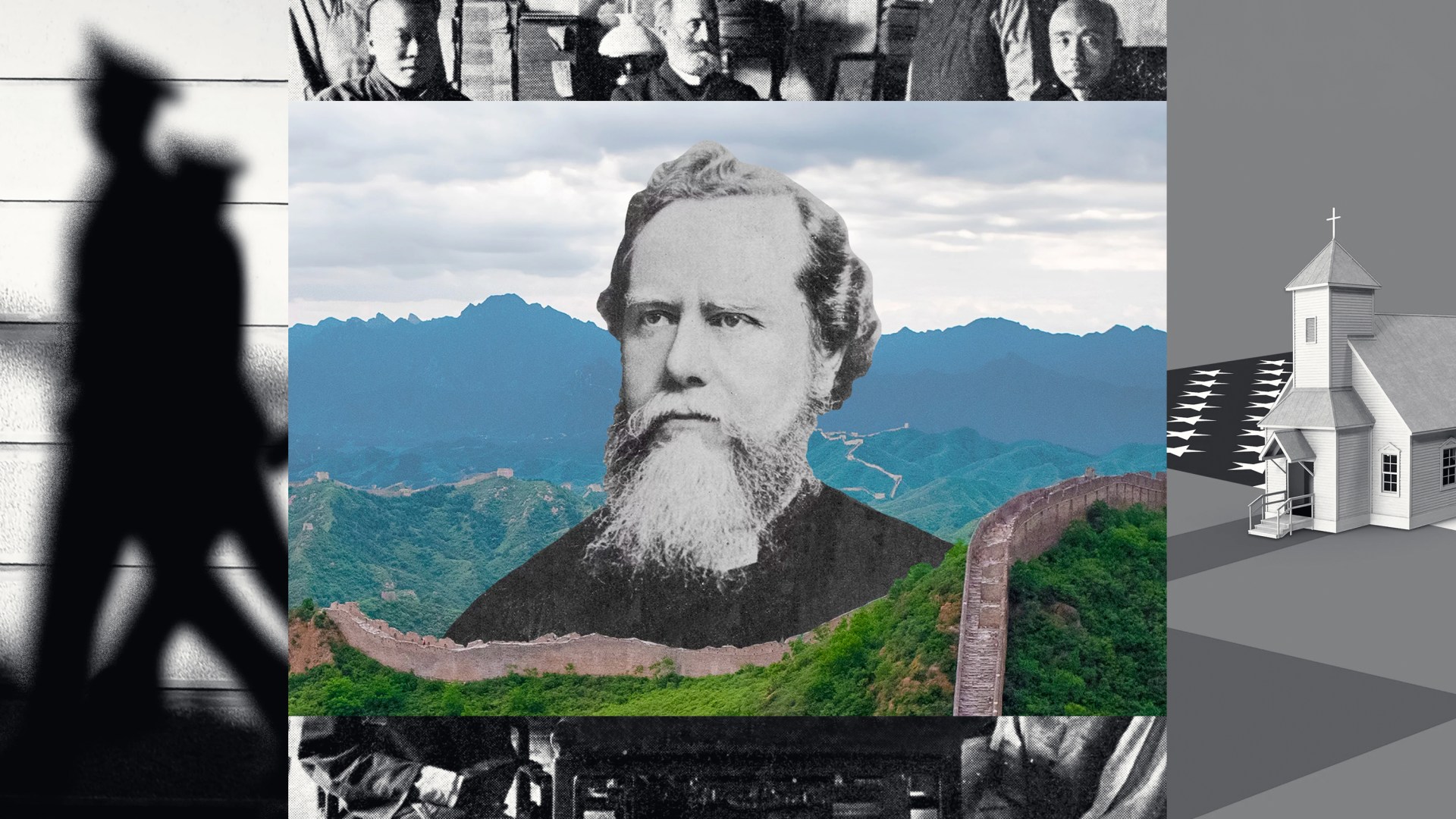



Top 10 Chinese Articles Translated into English in 2023

The Chinese originals cover themes in history, current state, and trends of the church in China and overseas, as well as reflections on Chinese culture.

Christianity Today December 20, 2023

Since CT began its global ministry in 2020, we have had hundreds of English articles translated into more than 10 non-English languages. In early 2022, Chinese (both Simplified and Traditional) became the first—and so far the only—language in which CT has had original articles. Most articles originally written in Chinese have English translations, and a few of them have translations in other languages. Here at the end of 2023, there are now more than 50 articles originally written in Chinese on the CT website (Simplified Chinese, Traditional Chinese, and foreign language translations of the same article are counted as one).

Below are the English translations of the 10 best articles originally written in Chinese in the past year, as recommended by the CT Chinese managing editor. These 10 articles are quite representative of CT Chinese’s content themes. There are reports and commentaries on the current situation and trends of Chinese churches in China and overseas, as well as reviews and reflections on missions history; there is illumination of Chinese culture from biblical perspectives as well as reflections on science, technology, and pop culture based on Christian values. Authors include pastors, church leaders, and scholars of the Bible, theology, and church history from Chinese churches in mainland China, Taiwan, Hong Kong, and North America.

In 2024, we will continue to publish and translate articles originally written in Chinese. If you have any suggestions or comments on our articles, please feel free to email us (ChristianityTodayZH@christianitytoday.com) to provide feedback.

10.
9.

8.

7.

6.

5.

4.
3.

2.

1.
Check out the rest of our 2023 year-end lists here.

10 Evangelical Leaders Who Died in 2023

Remembering Tim Keller, Charles Stanley, Elizabeth Sherrill, and others.

Christianity Today December 20, 2023

When professional soccer player Christian Atsu looked back at his life, he saw a lot of years of hard work. But also evidence of something greater.

“I am working hard, but it is the will of God, the grace of God, that has brought me this far,” he said.

Atsu died at 31 in a devastating earthquake in Turkey in February. His words may, in a sense, speak for all the evangelical leaders we lost in 2023. These were men and women who had a significant impact—planting churches, starting mission organizations, telling stories of faith, helping people pray, and encouraging our faith in a myriad of ways.

And yet perhaps their greatest gift to us is not the things they did, but the times that they pointed us back to what God has done, is doing, and will continue to do. We are grateful for their ministries and labor. But even more for their testimonies to the greater work of divine grace.

Check out the rest of our 2023 year-end lists here.

The Global Church in 2023: CT’s Top 20 International Stories

Our most-read stories from around the world, from Brazil to Cambodia to Germany.

Christianity Today December 20, 2023

Read 20 of Christianity Today’s most popular international stories of 2023. For regions where the church suffered significant disaster or violence, we’ve added additional context from our wider coverage:

20.

19.

18.

17.

16.

As the war in Ukraine hit the one-year mark, only a tiny minority of Russian Christian leaders had voiced complaint publicly. The response from authorities has been uneven: Minor church figures were fined or jailed, while others continue to use their names on social media.

Others decided to flee after denouncing the conflict. In August, authorities filed charges against Yuri Sipko for publicly disseminating “knowingly false information” against the Russian military. They raided his home and temporarily detained his son. The 71-year-old former president of the Russian Union of Evangelical Christians-Baptists escaped to Germany the week after.

Above, read the story of Mikhail Manzurin, a mid-20-something pastor who broke from his longtime spiritual mentor over the war.

15.

14.

More than five dozen members of Shenzhen Holy Reformed Church made a permanent move to America earlier this year after failing to find long-term asylum in South Korea and Thailand, having collectively escaped from China in 2019. These “Mayflower” Christians arrived as thousands of migrants from the mainland are trying to enter the United States through various countries in Latin America, deeply disillusioned and dissatisfied with the political and economic realities of today’s China.

13.

12.

Nearly 500 people died in a series of attacks on Christian villages in three north-central Nigerian states in the beginning of 2023. In June, many Christians steamed when a Muslim-Muslim president–vice president ticket won the election and Bola Ahmed Tinubu ascended into presidency. His wife, Oluremi Tinubu, served as a senator until earlier this year and is also an ordained pastor in the Redeemed Christian Church of God, one of the nation’s largest homegrown denominations with affiliated churches worldwide.

11.

“Ukraine’s Christians no longer see ‘the last days’ as some far-off, eschatological era sketched in Revelation,” wrote Sophia Lee from Ukraine as part of CT’s March cover story. “ ‘We live as though today is our last day,’ one of them told me, echoing a sentiment I heard from so many Ukrainians. And should they ever forget that life is a vapor, explosions and frequent blackouts return them quickly to the truth: We’re here a little while, and gone tomorrow.”

This year’s coverage of the war included the establishment of the Ukrainian Chaplaincy Service, a look at the dozens of religious buildings destroyed in Ukraine, and the country’s burgeoning Ukrainian Christian school movement, now seen as more necessary than ever by an increasing number of families.

10.

9.

In April, Myanmar’s military junta sentenced the former head of the Kachin Baptist Convention to six years in prison on charges of terrorism, unlawful association, and inciting opposition. Hkalam Samson denies the charges, which international rights groups and the Kachin diaspora believe to be politically motivated.

8.

7.

6.

5.

4.

In August, a pastor and his congregation fought back against one of the many deadly gangs that has terrorized Haiti for the past several years. Evangelical leaders said the syncretistic pastor’s faith-driven counterattack was unwise but also empathized with the circumstances. This chronic violence in combination with the Biden administration’s shift in policy that eases immigration to the US has made it an even harder decision for those who have decided to stay.

“[This policy change] reinforces the escapism mindset that enslaves so many Haitians and kills our desire to fight for sustainable change in our country,” wrote Guenson Charlot, president of Emmaus University in Acul-du-Nord, Haiti. “It represents a golden calf alluring our most faithful believers to trust man, rather than God, to supply their needs.”

3.

Local Christians were among the first responders to the massive earthquake in February in Turkey and Syria that left more than 20,000 people dead and tens of thousands injured. Among the areas leveled by the disaster was Antakya, or Antioch, a place that the apostle Paul held close to his heart and whose name many churches and ministries have taken as their own. One of the highest-profile earthquake deaths was Ghana soccer player Christian Atsu, who previously played in the Premier League, scored the winning goal the night before his death, and who praised God in everything.

2.

After Hamas’s October 7 terrorist attacks against Israeli civilians, Palestinian evangelicals and Messianic Jews shared astonishment, grief, and prayer for peace and justice. Days into the war, a fatal explosion hit a well-known hospital run by Anglicans—and formerly by Southern Baptists—“in the middle of one of the world’s most troubled places.” Several weeks ago, Christian leaders and municipal authorities in Bethlehem, in the West Bank, canceled all public festivities in solidarity with the suffering in Gaza due to the Israel-Hamas war.

1.

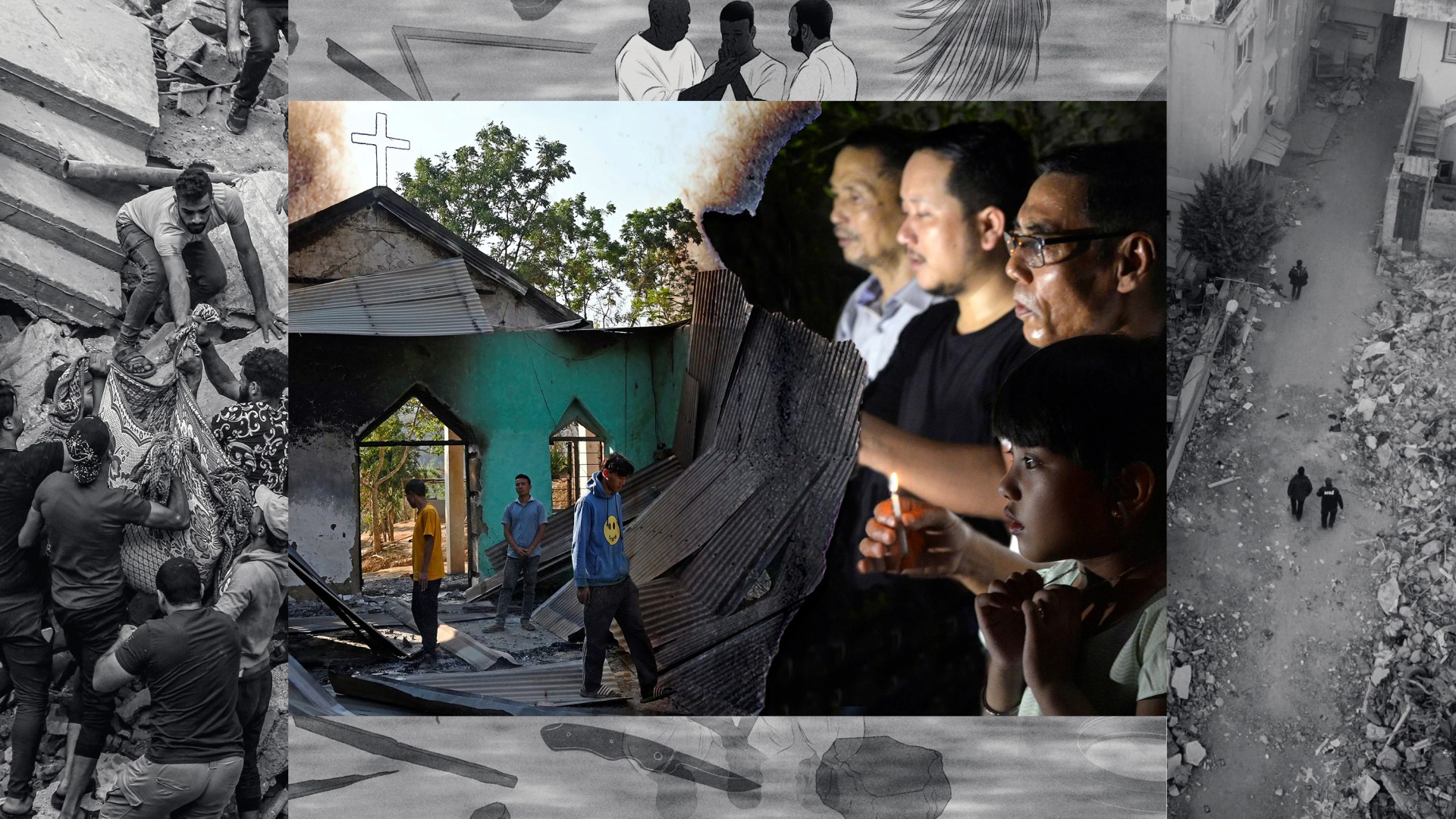
Thousands of Christians fled their homes in India’s eastern state of Manipur after mobs from the Meitei majority murdered dozens of the Kuki-Zo minority, many of whom are Christians. Some have attempted to build new lives in Delhi or elsewhere in the country, while others are stuck in camps. Meanwhile, Meitei Christians, many of whom also lost homes and churches, feel “overlooked and despised” by both sides.

Referencing violence in Kandhamal, Odisha, that claimed the lives of around 100 Christians in 2007 and 2008, Vijayesh Lal, general secretary of the Evangelical Fellowship of India, told CT:

“Then Manipur may be forgotten, like Kandhamal has been. But the broken lives of the victims take a long time to mend and heal. The church and NGOs have limited resources and they can only do so much. The government must compensate the victims whose homes have been lost and lives shattered. Churches must be rebuilt by the government, but will they? Many victims of Kandhamal are still waiting for their just compensation even after nearly 15 years.”

CT’s Top Philippines Stories of 2023

The publication of a Taglish Bible, colonial ties to evangelicalism, and the hit ‘Lovestruck’ series. Plus: Tell us what we missed.

Christianity Today December 20, 2023

In 2023, CT worked to publish more stories on the Philippines and platform more Filipino writers. Here are seven articles on topics ranging from a new Bible translation to the growth of house churches to a reflection on Tim Keller’s influence.

In 2024, we want to do more. If you have suggestions for story ideas or new writers who should write for us, please fill out this form.

Check out the rest of our 2023 year-end lists here.

Christianity Today’s 10 Most-Read Stories of 2023

Here is the content readers were most engaged with this year.

Christianity Today December 20, 2023

Amid wars, political chaos, and church controversies, Christianity Today’s readers came to our site in 2023 for faithful reflections and trustworthy reporting.

In both its topic and reception, our most-read article of the year is a reminder of how God is still at work: Tom McCall’s report from the revival at Asbury University was translated into six additional languages and read by over 470,000 people. And beyond revival coverage, CT readers were particularly interested in church splits, Tim Keller’s legacy, and war in the Holy Land.

Our 10 most-read stories of the year are listed below in descending order. You can find these and other top CT stories of the year here, many of which are also offered in CT Global translations.

10.

9.

8.

7.

6.

5.

4.

3.

2.

1.

Check out the rest of our 2023 year-end lists here.

History

Biblical Archaeology’s Top 10 Discoveries of 2023

From ancient Israelite DNA to a moat around Jerusalem, these are the discoveries that made scholars of the biblical world say “wow” this year.

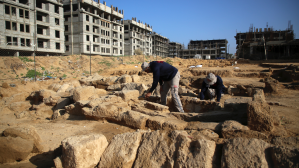
Palestinian men work excavating a Roman cemetery in Gaza City.

Palestinian men work excavating a Roman cemetery in Gaza City.

Christianity Today December 20, 2023
Majdi Fathi/NurPhoto via AP

The major biblical archaeology stories of 2023 contain a lot of doom, destruction, and disappointment. They also contain mysteries that may be resolved by future excavations—and perhaps, in one case, the resolution of an ongoing controversy that has dogged New Testament scholars for the past decade.

The truly important discoveries of 2023, of course, may not be known for years, as it takes time for archaeologists to carefully study the results of their research and then publish their findings in scientific journals. But these are some of the stories that generated headlines for biblical archaeology in 2023.

10. Lost graves in Gaza

Near the end of September, archaeologists in Gaza announced the discovery of graves in a Roman-era cemetery. Crews working under French archaeologist René Elter uncovered important information about the lives of inhabitants along this coastal trade route 2,000 years ago. They found two extremely rare lead coffins—one decorated with ornate grape leaves, the other with images of dolphins—suggesting social elites had been buried there.

“An inconspicuous construction lot—surrounded by a grove of nondescript apartment buildings—has become a gold mine for archaeologists,” the Associated Press reported.

Two weeks later, Hamas militants from Gaza attacked Israel, precipitating a costly war that has probably leveled those nondescript apartment buildings, displacing and perhaps killing their inhabitants. The fate of those working on the site and the site itself is currently unknown. Elter responded to a query about his safety but did not elaborate on the excavation.

The war, of course, disrupted the work of the Israel Antiquities Authority (IAA) across Israel. Some IAA archaeologists with expertise acquired studying ancient disasters found their skills needed for a different kind of work. They were called in to Jewish communities attacked by Hamas to help discover and identify the human remains.

“It is one thing to expose 2,000-year-old destruction remains, and quite another thing—heart-rending and unfathomable—to carry out the present task searching for evidence of our sisters and brothers in the settlements,” the IAA said.

They discovered evidence that helped identify at least 10 dead people previously considered missing.

9. Ancient Israelite DNA

Almost lost in news of war was the early October announcement of the recovery of ancient Israelite DNA from the First Temple period. Genetic material was extracted from two individuals whose remains were found in a family tomb west of Jerusalem, dating to around 750–650 B.C.

The achievement was described as “a Holy Grail in the study of lost civilization” that “promises to pave the way for further research on longstanding questions about the origins of the ancient Israelites.”

The preliminary results were to be discussed at a conference on new archaeological discoveries, but the gathering was postponed due to the conflict between Israel and Hamas.

8. Earliest evidence of ancient warfare

The Bible describes wars going back to the time of Abraham in Genesis 14. Now archaeologists have uncovered evidence of armed conflict from several thousand years earlier, in the Early Chalcolithic period, about 5800–4500 B.C.

Hundreds of sling stones—smoothed into a uniform, aerodynamic shape—were uncovered at two different sites in Israel. This indicates organized preparation for battle. The size of the two prehistoric sites in Lower Galilee and the northern Sharon plain show that many people were required for war preparation.

7. The leveling of Antioch

In 2022, Turkish archaeologists began work for the first time in the residential areas of Antakya, the site of the ancient city of Antioch, where followers of Jesus were first called Christians. The excavation raised hopes about the possibility of many new discoveries about life in Antioch. But then an earthquake struck Turkey and Syria on February 6.

Antakya was one of the most devastated cities, with more than 35,000 dead. The old part of the city, including monuments to its diverse history going back to the first century and earlier, was left in rubble. Plans for excavation are permanently on hold.

6. The disappointment of Siloam

For almost two decades, visitors to Jerusalem have been shown the steps that lined one side of the Pool of Siloam in New Testament times. The pool was a place for ritual cleansing for Jewish pilgrims before they ascended to the temple. In John 9, Jesus heals a blind man and tells him to go wash in the Pool of Siloam.

The steps were accidentally uncovered during a 2004 sewer repair. But the excavation was limited to preserve an orchard. Archaeologists and local authorities were tantalized by the possibility of finding more, though, and decided to raze the orchard for a fuller dig. Nothing was found. The steps were apparently preserved when a road was built over them, but the rest of the stones of the pool are not there. They were likely taken in ancient times for other building projects.

5. Psalm 86 found atop a desert mountain

Archaeologists hiked to Hyrcania, a fortress atop a desert mountain overlooking the Dead Sea, for a first season of excavations. The fortress was built by the Hasmoneans, then used as a prison by Herod the Great, and then as a Byzantine monastery. Amid a layer of collapsed building stones, archaeologists discovered, painted in red, a simple graffiti cross with an inscription underneath. It was a prayer quoting, in part, Psalm 86: “Jesus Christ, guard me, for I am poor and needy.”

The inscription has been dated to the sixth century A.D., judging by the epigraphic style.

4. David and Solomon regain stature

Dismissed as minor chieftains by biblical minimalists for several decades, the Israelite kings of 3,000 years ago showed remarkable resilience in 2023. A mid-year article by Hebrew University archaeologist Yosef Garfinkel reviewed excavations at five sites surrounding Jerusalem and concluded that their similar fortifications and other urban features matched the biblical description of a centralized kingdom in that timeframe.

“These cities aren’t located in the middle of nowhere,” he wrote. “It’s a pattern of urbanism with the same urban concept.”

The archaeologists, who had excavated Tel Gezer for a decade, published radiocarbon test results in November that located the construction of Gezer’s famous six-chambered gateway in the first half of the 10th century B.C. This seems to lend support to 1 Kings 9:15, which describes Solomon conscripting labor to work on Jerusalem, Hazor, Megiddo, and Gezer.

“This puts David and Solomon back on the table for being involved in at least some of the monumental architecture in the area,” said Lyndelle Webster of the Austrian Archaeological Institute, the lead author of the study.

3. Mud brick arch mystery at Tel Shimron

An extraordinarily well-preserved mud brick arch has been carefully uncovered at the acropolis of a Canaanite city overlooking the Jezreel Valley in northern Israel. The arch leads from a vaulted corridor deep into the tel, a layered archaeological mound. Its end has not yet been uncovered.

The purpose of the arch is not yet known, though some have speculated it has cultic significance. The arch appears to have been preserved by being re-buried shortly after construction.

Shimron, little mentioned in the Bible, was largely overlooked by archaeologists until the current dig started in 2017. The city covered 48 acres at its height in the Middle Bronze period, 4,000 years ago.

2. Identifying Bethsaida on the Galilee shore

Archaeologists have been carefully digging into the remains of a Byzantine basilica near the Sea of Galilee, convinced that they are uncovering the true site of Bethsaida. Last year, they found a mosaic inscription referencing “the chief and commander of the heavenly apostles,” which suggests this ancient church may have been built to commemorate Peter. According to tradition, the Church of the Apostles was built over the house of the apostles Peter and Andrew. That find was number 6 on our list of 2022 archaeology stories.

This year the excavation receives top billing for the discovery, deep under the apse, of the remains of a first-century wall. The find adds more weight to the argument that this is the historic Bethsaida and not et-Tel, a site several miles inland.

Continued excavation could tell us more about the lives of the early apostles. John calls Bethsaida the city of Andrew and Peter. Mark, however, suggests he lived in Capernaum. Did Peter live in two different fishing villages? An excavation in the mid-20th century claimed to have unearthed Peter’s home. The site is now occupied by an ultra-modern, flying-saucer–shaped church. Perhaps clarity will come with more archaeology.

1. Jerusalem’s mysterious moat

Archaeologists were mystified by channels dug into the bedrock in the oldest part of Jerusalem. Could they have been designed for some kind of industrial liquid production? Experts ventured various guesses and even called in a CSI team from the Jerusalem Police Department to try to solve the mystery.

Then they figured out it was part of a moat dating to the ninth century. According to a report, published this fall, the moat separated the Temple Mount from the older, lower City of David area when Jerusalem was the capital of Judah, and possibly hundreds of years earlier.

"In all our reconstructions of what Jerusalem looked like back then, we just have a continuous urban landscape from the Temple Mount down to bottom of the City of David,” excavation co-director Yiftah Shalev said. “This discovery completely changes that picture."

The moat, almost 100 feet wide and at least 20 feet deep, had been seen in Kathleen Kenyon’s earlier excavations further to the east, but experts thought it was a natural feature of the landscape, not part of the architecture of the city. But Shalev and his team have concluded that the moat created a barrier between the temple, the palace, and the area where the rest of the people lived. In an earlier era, before the temple and palace were built, it may have protected the city from a northern attack.

This particular excavation, known as the Givati Parking Lot excavation, has produced many amazing discoveries since it began in 2007, including a hoard of gold coins from the Byzantine era and ceramic roof tiles dating to the Hellenistic period. Dig co-director Yiftah Shalev estimates another year of work is still to be done.

Bonus: One of the most exciting finds announced in Israel this year was not technically from the biblical period. Archaeologists entered a cave near the Dead Sea to get a better look at a previously spotted stalactite inscription. In the upper part of the cave, they spotted a shafted pilum, a spear-like weapon. On further inspection, they found a cache of well-preserved Roman swords, apparently taken from soldiers during the Bar Kokhba revolt, A.D. 130–135. The swords were still in their wooden and leather scabbards.

Gordon Govier writes about biblical archaeology for Christianity Today, hosts the radio program The Book & The Spade, and is the editor of the biblical archaeology newsmagazine ARTIFAX.

CT Editors’ Top Print Features of 2023

This year’s favorite print articles chosen by the editorial team.

Christianity Today December 20, 2023

In 2023, we published nearly 100 articles in our nine print issues, including 51 feature-length essays. It’s hard to choose, since they’re all of our favorites, but we attempted to narrow down 10 pieces that we felt everyone should read. Here are our print editors’ feature picks for 2023:

Check out the rest of our 2023 year-end lists here.

Christianity Today’s Most-Read Testimonies of 2023

The conversion stories that CT readers shared most.

Christianity Today December 20, 2023

In each print issue, Christianity Today devotes the back page to stories of Christian conversion—from the quiet to the highly dramatic. If you missed any, here are CT’s top testimonies of 2023, including some online exclusives, ranked in reverse order of what people read most.

10.

9.

8.

7.

6.

5.

4.

3.

2.

1.

Check out the rest of our 2023 year-end lists here.

Theology

Christianity Today in 2023: Our Top News, Reviews, Podcasts, and More

A year in review of our most read articles and favorite stories.

Christianity Today December 20, 2023

Browse our lists of 2023’s most-read articles, book reviews, podcasts, obituaries, testimonies, and more via the collections at right [on desktop] or below [on mobile]. You can also read this year’s Top 10 discoveries in biblical archaeology, along with our most-read stories of the global church.

For our bilingual readers: This year, CT Global produced more than 50 articles originally written in Chinese as well as more than 1,150 translations—including these most-read articles in Spanish, Portuguese, French, Chinese (Simplified and Traditional), Indonesian, Russian, Ukrainian, Korean, and Japanese. (We also expanded our Arabic and began translating into Turkish.)

Books

My Top 5 Books for Christians on Sikhism

Must-reads for those eager to learn the origins, development, and tensions within a faith common to many Punjabis.

Christianity Today December 19, 2023
WikiMedia Commons

Manvir Vohra teaches world religions at seminaries in northern India and trains pastors and leaders in Punjab and other areas of North India. He also led the team that authored the first New Testament dictionary in the Punjabi language.

A History of the Sikhs, Vol. 1 (1469–1839), by Khushwant Singh

In A History of the Sikhs, Vol. 1, the firebrand writer, lawyer, diplomat, journalist, and politician Khushwant Singh presents a well-researched work about the origins and early history of the faith. Written in easy-to-understand language, this book is of immense value for its non-hagiographic and pragmatic approach.

The book’s early chapters address the religious, cultural, and political environment of India and include a discussion of the ten gurus who founded and developed the faith. Then Singh recounts the main developments of the religion, dedicating chapters to important characters in Sikh history like the warrior Banda Bahadur. The book investigates the early organization of the Sikhs into loosely organized armed units, their skirmishes with political powers and invaders of Punjab and North India, and the formation of the first Sikh empire under the leadership of Ranjit Singh.

This particular volume serves as a great introduction for readers who want to learn about the Sikh religion and its development. It recounts the initial period of the origins of the faith, its transformation from a purely devotional religion to one that also bears arms, and its ascendancy into a kingdom under an able leader.

A History of the Sikhs, Vol. 2 (1839–2004), by Khushwant Singh

Singh’s second volume opens with the death of Ranjit Singh and the beginning of the Anglo-Sikh wars. It goes on to discuss the struggles faced by the community in preserving its identity in the colonial period. The author offers a Sikh perspective of World Wars I and II, India’s independence from the British, and the country's partition.

Overall, this volume presents an account of the development of Sikh ideas up to recent times. It is a great resource for anyone interested in the historical development of the Sikh faith and the many contemporary issues that the Sikh diaspora faces.

Exploring Sikhism: Aspects of Sikh Identity, Culture and Thought, by W. H. McLeod

Exploring Sikhism is just one of the many significant contributions made by W. H. McLeod toward understanding the historical, religious, cultural, and political influences that gave birth to Sikhism and helped shape it into what it is today. His work ought to be studied beyond just the current volume.

McLeod’s overall contributions in bringing Sikhism to a Western audience have not only inspired other scholars to attempt to explain the origins of this unique religion but unfortunately also have generated criticism and opposition from within the Sikh community.

McLeod asks pertinent questions about the inspirations of Sikhism’s founder, Guru Nanak, while attempting to provide reasonable answers for those questions as well. He dismantles the common thought of seeing Sikhism as a mixture of Hinduism and Islam and instead proposes that Nanak’s mission is an offshoot of the Sant tradition of North India. (The Sant tradition was an ongoing widespread revivalist and reformist religious movement that included important members like poet Sant Kabir.)

McLeod convincingly defends Sikhism from the assumption of willful syncretism between Hinduism and Islam and tries to establish its foundations inside the Sant tradition. To someone interested in the origins and claims of Sikhism, these observations enrich one’s understanding of the faith, although a section of Sikh scholarship has met McLeod with a trenchant response.

The Christian Witness of Sadhu Sundar Singh: A Collection of His Writings, edited by T. Dayanandan Francis

When it comes to Christian outreach to the Sikhs, the great Indian saint Sadhu Sundar Singh should to be mentioned. Known as “the apostle with the bleeding feet,” Singh’s life and missionary expeditions have had a great impact on those who have either heard him preach or read his writing.

Born in a Sikh family in Punjab during the late 19th century, Singh was raised by a religious mother in an Indian context. He encountered Jesus at the age of 15 and grew up to become a Christian sadhu (an ascetic holy man) who went around preaching Christ. His life, teachings, and ministry are still an inspiration for many. Instead of falling into the mold of Western Christianity, Sundar adopted a very traditional Indian approach to the gospel.

This book is a collection of his writings. It starts with an introduction about the life and conversion of the sadhu. The first section contains short devotional books that were written by by him in English and Urdu. These books were translated into 40 languages and have had a wide impact around the world. There is also a chapter on his sermons and sayings, which he delivered during his various travels around the world.

It is a must-read for those who are ministering amongst the Sikhs.

The Pastors of Punjab,” article by Sunil Menon and Anilesh S. Mahajan

In November 2022, India Today published a cover story on the surge of Pentecostal preachers in the state of Punjab. The majority of these pastors come from Sikh backgrounds and started an indigenous movement.

Not only do these pastors hail from a variety of caste backgrounds in Punjab, they also include many high-caste Sikhs and Hindus. This counters the idea that Christian evangelism in India is a surreptitious agenda of the West to interfere in India’s affairs by influencing the underprivileged low castes. While it is undeniable that some of the more well-known Punjab pastors take on the style of Western evangelists, it’s also true that many of the pastors with smaller profiles are developing an indigenous expression of their newfound Christian faith.

Because of the lack of well-researched material about the recent “Christ-ward” movements among Sikhs, this article stands out. The highlight of the article is the statement of a preacher who said that Sikhism taught him about the existence of God, but the Bible showed him how to find God.

Editor’s note: Curated lists in this religious literacy series for Christians include the best books for better understanding Islam (in five regions), Hinduism, Buddhism, Sikhism, the Druze, Daoism, Confucianism, and the sinicization of Christianity in China.

CT also offers a top 5 books list on Orthodox Christianity, among scores of subjects.

Apple PodcastsDown ArrowDown ArrowDown Arrowarrow_left_altLeft ArrowLeft ArrowRight ArrowRight ArrowRight Arrowarrow_up_altUp ArrowUp ArrowAvailable at Amazoncaret-downCloseCloseEmailEmailExpandExpandExternalExternalFacebookfacebook-squareGiftGiftGooglegoogleGoogle KeephamburgerInstagraminstagram-squareLinkLinklinkedin-squareListenListenListenChristianity TodayCT Creative Studio Logologo_orgMegaphoneMenuMenupausePinterestPlayPlayPocketPodcastRSSRSSSaveSaveSaveSearchSearchsearchSpotifyStitcherTelegramTable of ContentsTable of Contentstwitter-squareWhatsAppXYouTubeYouTube