
Books

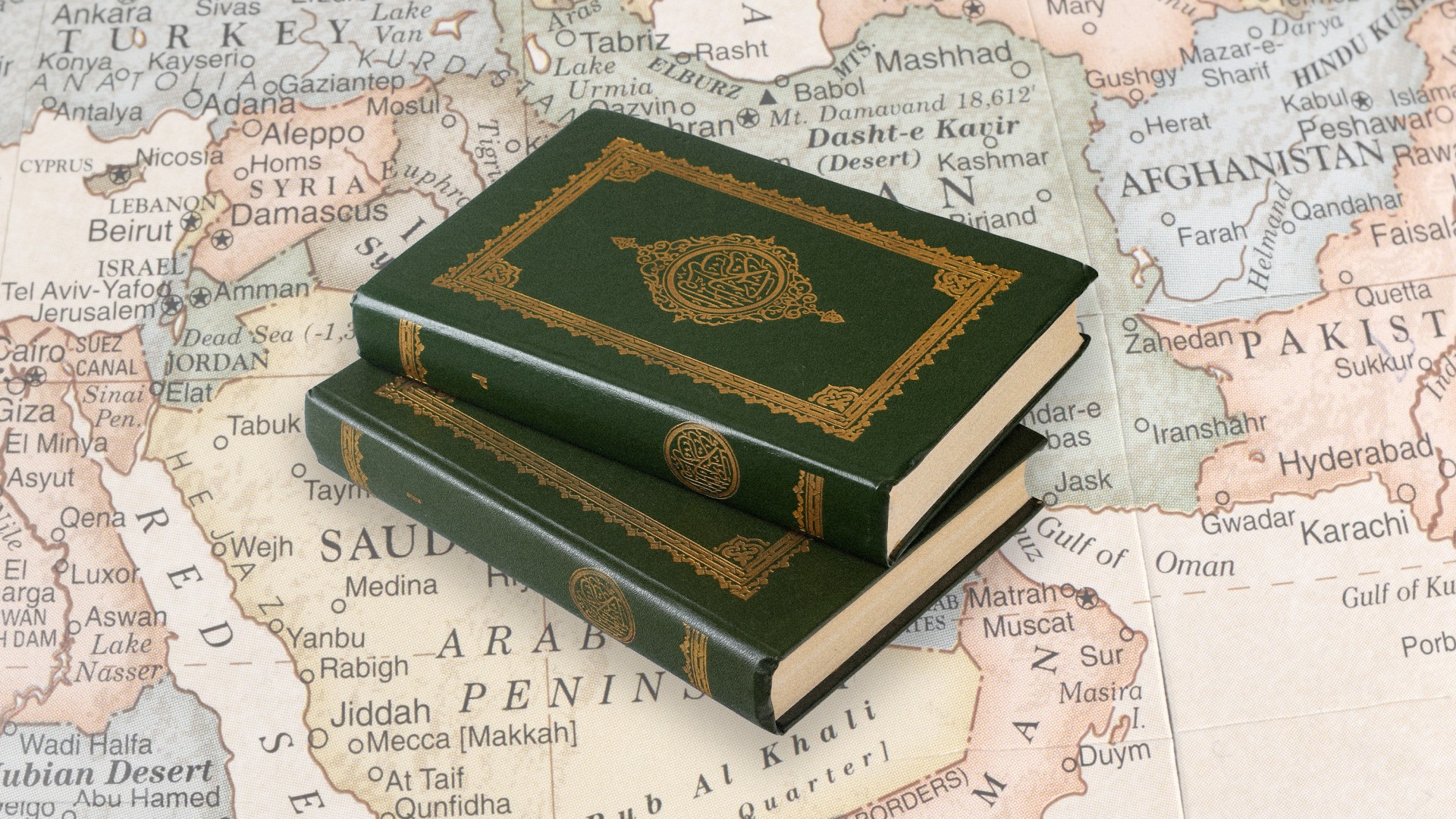
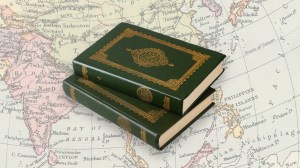
My Top 5 Books for Christians on Islam in the Middle East

A Lebanese academic gives his recommendations for reading up on the world’s second largest religion.

Christianity Today December 18, 2023
Illustration by Christianity Today / Source Images: Wikimedia Commons / Getty

In this series

A New Introduction to Islam, by Daniel W. Brown

Dan Brown’s New Introduction is the ideal textbook for the study of Islam at the higher-educational level. Unlike its peers that tend to adopt either a classical or a critical approach, this book combines a sympathetic understanding of the believing Muslim tradition with a survey of the latest in the scholarly revisionist field like few other introductory works do.

That the author is of personal Protestant conviction is a great bonus, as throughout the text he introduces the central ideas in Islamic studies with reference to the Christian intellectual milieu. Brown is not only an outstanding Islamicist who brings the world of Islam close to the Muslim and non-Muslim alike, but he is also a sharp theologian fully conversant in both the academic and seminary settings.

The Emergence of Islam: Classical Traditions in Contemporary Perspective, by Gabriel S. Reynolds

Reynolds’s book offers an advanced, cutting edge, yet highly readable introduction to the study of Islam. The author is a believing Catholic, and like with Brown, you can sense his Christian commitment through his respectful yet critical approach to his subject. The great benefit of this work lies in his side-by-side comparison of the classical traditionist and the critical revisionist approaches. As an academic work, it fully embraces revisionist theory while also introducing the reader to the latest scholarship in Islamic studies.

His approach presents a serious challenge to the traditional Muslim vision of Islam’s emergence, with the Quran interpreted through the lens of Muslim traditions and sayings attributed to Muhammad, its founding prophet. Reynolds suggests—without being polemical—that Islam’s holy text is best understood when the biblical tradition is considered as the cradle from which it emerged. This underlying attitude is what makes his book most valuable, over and above its commendable content.

What Is Islam?: The Importance of Being Islamic, by Shahab Ahmed

No Christian should be introduced to Islam without being exposed to a Muslim perspective. Shahab Ahmed’s What Is Islam? does so in a unique way. Unlike the classical traditionalist approach of most Muslim scholars, Ahmed considers the diverse manifestations of Islam throughout history as “legitimate” expressions of the religion—whether militant jihadism or the liberal consumption of wine.

When presenting their respective religions, Christians and Muslims alike tend to paint the best of their tradition as its authentic expression and the less flattering aspects as a distortion. But Ahmed’s social and anthropological study of his own faith allows the diversity to speak freely, helping the reader become less judgmental. A practice recommended for all faith traditions, his approach demonstrates how Muslim adherents have supported their often vastly different beliefs and practices from the same holy scriptures.

A Muslim and a Christian in Dialogue, by Badru D. Kateregga and David W. Shenk

Shenk’s classic is among the most gracious and authentic accounts of a Christian and a Muslim scholar entering each other’s worlds. Engaging the theological and practical dimensions of both religions, each author offers an authentic presentation of his faith. Together, the also offer us great insights into the questions that Christians and Muslims ask of each other.

In each of the two halves of the book, first Kateregga and then Shenk present the main tenets of their religions, beginning with God, creation, Adam and Eve, Satan, sin and evil, Scripture, prophets, the believing community, Jesus, divine guidance, salvation, worship, ethics, and mission. Each section’s presentation is followed by a response from the “religious other,” always with great sympathy and respect.

Kateregga and Shenk offer us a model for the sort of conversation that our pluralist world needs today more than ever, whether in the context of two neighbors visiting over coffee or of theologians and scholars dialoguing in official capacity.

Cross and Crescent: Responding to the Challenges of Islam, by Colin Chapman

Chapman’s book is a classic in British evangelical engagement with Islam, past and present. Following its readable introduction, he presents several dialectic question-and-answer sections, inviting his Christian readers to embrace the apologetic genre in its gentlest form.

Subjects include the place of women, the veil, honor killings, democracy, Islamic law, apostasy, and terrorism, but the book also prepares the reader for the many topics that Muslims are likely to ask Christians in return. Chapman’s winsome style draws readers into the world of their Muslim neighbors, preparing them to engage in polite conversation, visit a mosque, and participate in Muslim festivals. Inviting the examination of our own attitudes and motivations, Chapman encourages us not only to share Jesus but also to work for societies that are attentive to the construction of a common good.

Read our authors’ bio in the series’ lead article, The Best Books for Understanding Islam and Connecting with Your Muslim Neighbors. (Other articles in this special series are listed to the right on desktop or below on mobile.)
Editor’s note: Curated lists in this religious literacy series for Christians include the best books for better understanding Islam (in five regions), Hinduism, Buddhism, Sikhism, the Druze, Daoism, Confucianism, and the sinicization of Christianity in China.

CT also offers a top 5 books list on Orthodox Christianity, among scores of subjects.

Books

My Top 5 Books for Christians on Islam in Southeast Asia

An Australian academic gives his recommendations for reading up on the world’s second largest religion.

Christianity Today December 18, 2023
Illustration by Christianity Today / Source Images: Wikimedia Commons / Getty

In this series

The vast scale of the Southeast Asian region and its great diversity in ethnicity, culture, and religion mean that some of the most useful insights into Islam in Southeast Asia are gained from multi-authored works that present diverse perspectives and experiences. Such works are enhanced by several excellent studies of specific aspects of Southeast Asian Islam by individual authors.

Malay Muslims: The History and Challenge of Resurgent Islam in Southeast Asia, by Robert Day McAmis

Robert McAmis spent several decades serving as a Lutheran missionary among Malay Muslims in the Philippines. This fact alone makes his study valuable, as Philippine Muslim communities represent some of the most inaccessible—and at times volatile—targets for mission work. McAmis lived and breathed his Muslim context, and this is reflected in his book, which surveys the history, culture, Islamic practices, and connections within and without the Philippines.

McAmis wrote his book in the wake of the 9/11 attacks when so much discussion in the West revolved around trying to understand the mindset that produced the phenomenon of resurgent Islam. McAmis’s study seeks to answer those questions in the context of his particular Southeast Asian context in the Philippines. Yet his interest is not just Islam but also the dynamics of Christian-Muslim relations. He stresses the diversity of the Philippine Muslims whom he got to know and eschews any attempt to essentialize them. The reader gains a sense of the many dimensions of Muslim diversity.

Routledge Handbook of Islam in Southeast Asia, edited by Syed Muhammad Khairudin Aljunied

Syed Muhammad Khairudin Aljunied is a prominent specialist in the historical and contemporary manifestations of Islam in Southeast Asia. In this multi-author volume, Aljunied has gathered a veritable Who’s Who of scholars in the field of Southeast Asian Islam—both Muslim and non-Muslim—and the result is a volume with rich perspectives into diverse questions about Islam in the region.

The volume is arranged in three parts: Muslim Global Circulations, Marginal Narratives, and Refashioning Pieties. This allows for a genuinely multidisciplinary approach, addressing matters of history, politics, society, interreligious relations, gender, colonialism, Islamic resurgence, and much more.

Furthermore, this volume moves beyond the usual focus on the “Islamic heartlands” of Southeast Asia—namely, Indonesia and Malaysia—to also consider Islamic minorities in diverse settings such as Vietnam, Cambodia, Myanmar, Thailand, Singapore, and the Philippines. Another strength of the volume is the extent to which it includes Southeast Asian scholarly contributors, reflecting the fact that the center of gravity of expertise on Southeast Asian Islam has gradually moved from the West to Southeast Asia since the turn of the century.

Islamic Thought in Southeast Asia: New Interpretations and Movements, edited by Kamaruzzaman Bustamam-Ahmad and Patrick Jory

This volume also reveals the shift toward Southeast Asian expertise on Islam in the region. Edited by prominent Indonesian and Australian specialists, the book can be traced back to a workshop in 2007 that was designed to provide a platform for young researchers from Southeast Asia to explore key themes relating to Islam in the region. The volume therefore draws heavily on Southeast Asian contributors and was published at the University of Malaya, Malaysia’s oldest university.

The subjects covered include various currents within contemporary Islamic thought, the intersection of Islam and human rights, Islamic education, the dynamics between Islam and ethnic identity, the interplay between Islam and democratic politics, emerging “neo-Sufi” movements, the increasing impact of Islamic law, and Islam and liberalism. These are the themes that preoccupy political and social leaders in countries across the Southeast Asian region in the age of globalization.

Papers address the transmission of ideas from outside the region into Southeast Asia, considering prominent scholars in other regions such as Seyyed Hossein Nasr and Abdul Karim Souroush. While rich in scholarly detail, the volume is eminently readable, with a writing style that is very accessible to educated nonspecialists.

Islam in Southeast Asia: Negotiating Modernity, edited by Norshahril Saat

This is another multi-authored volume that focuses on Indonesia, Malaysia, and Singapore. It also traces its roots to a conference—in this case, one held in Singapore in 2015 to evaluate how Islamic ideas from other regions, especially the Middle East, impact the three countries. While Islam in Southeast Asia has traditionally been seen as moderate and Sufi-inclined, this volume puts that perception to the test.

Southeast Asian Islamic history contained periods of great tension between traditionalist and reformist groups, and this is no less the case today. This volume explores these tensions as increasing calls for Islamic law in some parts of Malaysia and Indonesia face resistance from Muslims who are not attracted by the more assertive, activist expressions of Islam. Again, the prevalence of Southeast Asian authors in this volume adds credibility to the book.

Beyond Our Walls: Finding Jesus in the Slums of Jakarta, by Anita Rahma

After the largely academic discussions of the previous recommendations, this final work addresses the “so what” for Christians. Anita Rahma and her husband have served in the slums of Jakarta for more than a decade, where they display incarnational mission at its best. The Rahmas live among the largely Muslim poor in one of Southeast Asia’s most challenging urban environments—so challenging that the Indonesian government is moving the capital to another island as rising sea levels submerge large parts of Jakarta (where the poor live).

But the Rahma family has stayed the course, sharing the love and compassion of Jesus among Indonesia’s poorest Muslim families and providing a message of hope as they struggle to eke out the most basic of livings. With its 20 short chapters, the book is hard to put down. Readers are taken on a memorable journey that is unimaginable for most in the West. It would be difficult to finish the book without feeling a compelling urge to participate in some way.

Read our authors’ bio in the series’ lead article, The Best Books for Understanding Islam and Connecting with Your Muslim Neighbors. (Other articles in this special series are listed to the right on desktop or below on mobile.)

Editor’s note: Curated lists in this religious literacy series for Christians include the best books for better understanding Islam (in five regions), Hinduism, Buddhism, Sikhism, the Druze, Daoism, Confucianism, and the sinicization of Christianity in China.

CT also offers a top 5 books list on Orthodox Christianity, among scores of subjects.

Books

My Top 5 Books for Christians on Islam in South Asia

An Indian scholar gives his recommendations for reading up on the world’s second largest religion

Christianity Today December 18, 2023
Illustration by Christianity Today / Source Images: Wikimedia Commons / Getty

In this series

Books selected by Biswajit Patra, a scholar with the South Asia Institute of Advanced Christian Studies, who has lived and served the Muslim community for over 25 years in West Bengal, India. (Blurbs written by Surinder Kaur.) One of the predominant religions in South Asia, Islam shapes the beliefs and practices of nearly a third of the population in the region. As someone who is passionate about understanding Islam and developing good relationships with Muslims, I recommend the following works.

These books explore various aspects, including Islam in South Asia, Muslim-Christian relationships, historical contexts, conversion narratives, theological dimensions, innovative evangelism strategies, and global church planting movements. I hope these selections will provide an insightful exploration of Islam’s impact on the South Asian religious landscape and of ways Christians can engage with our Muslim neighbors.

Muslims in India: Attitudes, Adjustments, and Reactions, by Qamar Hasan

The advent of British colonial control marked a significant decrease in the influence and authority of Islam. Furthermore, when British colonial rule concluded, India became two distinct nations (India and Pakistan), primarily delineated by religious affiliation.

According to Hasan, Islam’s contextualization in India appears to be more pronounced compared to numerous other regions within the Muslim world. Throughout their existence, Indian Muslims have consistently upheld and preserved their distinct cultural identity. At times, this has been negative: Islam fundamentally opposes the structuring of society based on caste hierarchies, but the Indian Muslim community has embraced the caste system.

On the other hand, the Sufi movement, often known as folk Islam, has facilitated the coexistence of significant religious traditions. The Indian Sufis from the Bairagi tradition have incorporated dance and song to express devotion, particularly in performing before deities.

This 1987 work is distinctive in that it explores both the historical origins of young Indian Muslims’ attitudes and their responses to the expectations imposed on them by a segment of the majority population.

Including studies on minority-majority interactions in other contexts, the author informs the reader about the attitudes and evaluations of Muslims and Hindus toward one another, from both an internal perspective and external perceptions.

Transformative Religious Experience: A Phenomenological Understanding of Religious Conversion, by Joshua Iyadurai

Joshua Iyadurai, an expert on religious conversion, has collected more than 130 surprising and deeply transformative narratives of people adopting a new faith. Using these accounts, he has constructed a compelling theoretical framework that enhances our understanding of this phenomenon.

Through real-life stories, Iyadurai explores how people’s lives can radically change after encountering the divine and categorizes their encounters into visions, dreams, voices of God, miracles, prayers, and mild experiences.

Iyadurai uses psychology, sociology, anthropology, and theology to understand the conversion process, highlighting the importance of religious experiences as opposed to faith changes motivated by mere intellectualism. The book’s stories reveal that these transformations involve a reshaping of thoughts and values, replacing previous faith or nonfaith practices. The narratives also address the opposition the converts face from those close to them after their transformative experiences and spotlight their social lives post-conversion, often especially tough in India’s religious context.

Conviction and Conflict: Islam, Christianity, and World Order, by Michael Nazir-Ali

Michael Nazir-Ali provides a comparative analysis of Islam and Christianity, focusing on theology, missiology, and interfaith dialogue. He emphasizes the importance of understanding the genesis and evolution of the Muslim concept of God, tracing it back to the pre-Islamic period in Arabia when an awareness of a supreme deity called Allah existed. Nazir-Ali also explores the contrasting perspectives on God within Islam and Christianity, acknowledging doctrinal disparities while identifying specific fundamental attributes of God that both religions share.

He emphasizes that effective engagement in interfaith dialogue requires thoughtful consideration of interconnected sociopolitical and economic factors. For Muslims and Christians in India to engage in meaningful discourse, both must consider their distinct worldviews, perspectives on the essence of revelation, convictions about the divine organization of society, and other fundamental aspects inherent to these religious traditions.

Muslim Evangelism: Contemporary Approaches to Contextualization, by Phil Parshall

The church has grown accustomed to modest success in its attempts to evangelize Muslims. Phil Parshall, an American missionary whose ministry has focused on reaching Muslims with the gospel, argues that it’s imperative to investigate and rectify the reasons behind this limited progress.

In his 2003 book, Parshall calls on the missions community to present the fundamental principles of faith in an appealing manner within the cultural context of each specific people group.

Parshall addresses concerns about contextualization among Muslim-background believers, including questions about whether new converts should remain in the mosque, continue to affirm the shahada, or alter the term Son of God in the Bible to Isa-Al-Masi.

Despite his enthusiasm for the transformative impact of sharing Christianity tailored to the recipient’s context, Parshall expresses reservations about syncretism. He cautions that the dynamic process of sharing the gospel and transforming lives may inadvertently result in the loss of crucial gospel elements.

But Parshall also clarifies that adopting new ways of worshiping Jesus in diverse cultures should not automatically be labeled as syncretism. He advises new missionaries to deeply understand the form and meaning of Islam, emphasizing that such knowledge is crucial for comprehending the mental processes involved when Muslims encounter the faith and practices of Christianity.

I recommend this book because amid confusion about the various degrees of contextualization experts suggest, Phil Parshall’s work stands out.

Church Planting Movements: How God Is Redeeming a Lost World, by David Garrison

Since the 2004 release of this work by American missiologist David Garrison, church planting movements have been a large part of any discussion on missions.

An expert on church planting among unreached people groups, Garrison examines how God has used this model to accelerate evangelism around the world, pointing to examples in Southeast Asia, North Africa, China, Latin America, Central Asia, Western Europe, and Ethiopia in Muslim, Hindu, animist, and post-Christian secularist communities. It is a must-read, extremely practical book in which Garrison employs an evidence-based approach relevant to all—from church leaders to common believers seeking to engage with cross-cultural missions.

Despite acknowledging the potential emergence of heresy within these models (mostly because of their bottom-up nature where local leaders and traditions inform much of how these communities practice their Christianity), Garrison argues that these movements hold the “greatest potential for the largest number of lost individuals glorifying God.”

Highlighting that church planting movements are synonymous with church multiplying movements, Garrison also emphasizes that the church planting movement should be seen not as an end but as a means to an end: maturity and sanctification in Christ.

Read our authors’ bio in the series’ lead article, The Best Books for Understanding Islam and Connecting with Your Muslim Neighbors. (Other articles in this special series are listed to the right on desktop or below on mobile.)

Editor’s note: Curated lists in this religious literacy series for Christians include the best books for better understanding Islam (in five regions), Hinduism, Buddhism, Sikhism, the Druze, Daoism, Confucianism, and the sinicization of Christianity in China.

CT also offers a top 5 books list on Orthodox Christianity, among scores of subjects.

Books

My Top 5 Books for Christians on Islam in Africa

A Nigerian academic gives his recommendations for reading up on the world’s second largest religion.

Christianity Today December 18, 2023
Illustration by Christianity Today / Source Images: Wikimedia Commons / Getty

In this series

Scholarship on Christian engagement of Islam in Africa is expanding, and many Africans, especially Christian theologians, are taking interest. The growth in scholarship on Islam and its varied expressions in Africa has moved from being focused only on Islam as a religion practiced by Muslims to now including Islam’s relations with human rights, gender, mission, dialogue, and politics.

This list includes books written by scholars and practitioners that are set in different historical contexts. While one book reviewed was written in 1907, the others have been written in a far more recent context. Further, although only one book by a Muslim scholar is listed among these works, Christians hoping to fully understand the state of Islam should also engage in the work of practicing Muslims. Combined, these diverse perspectives can provide an appetite for more studies on the present expression of Islam in Africa, how the past affects or differs from the present, and how the church can develop a relevant understanding.

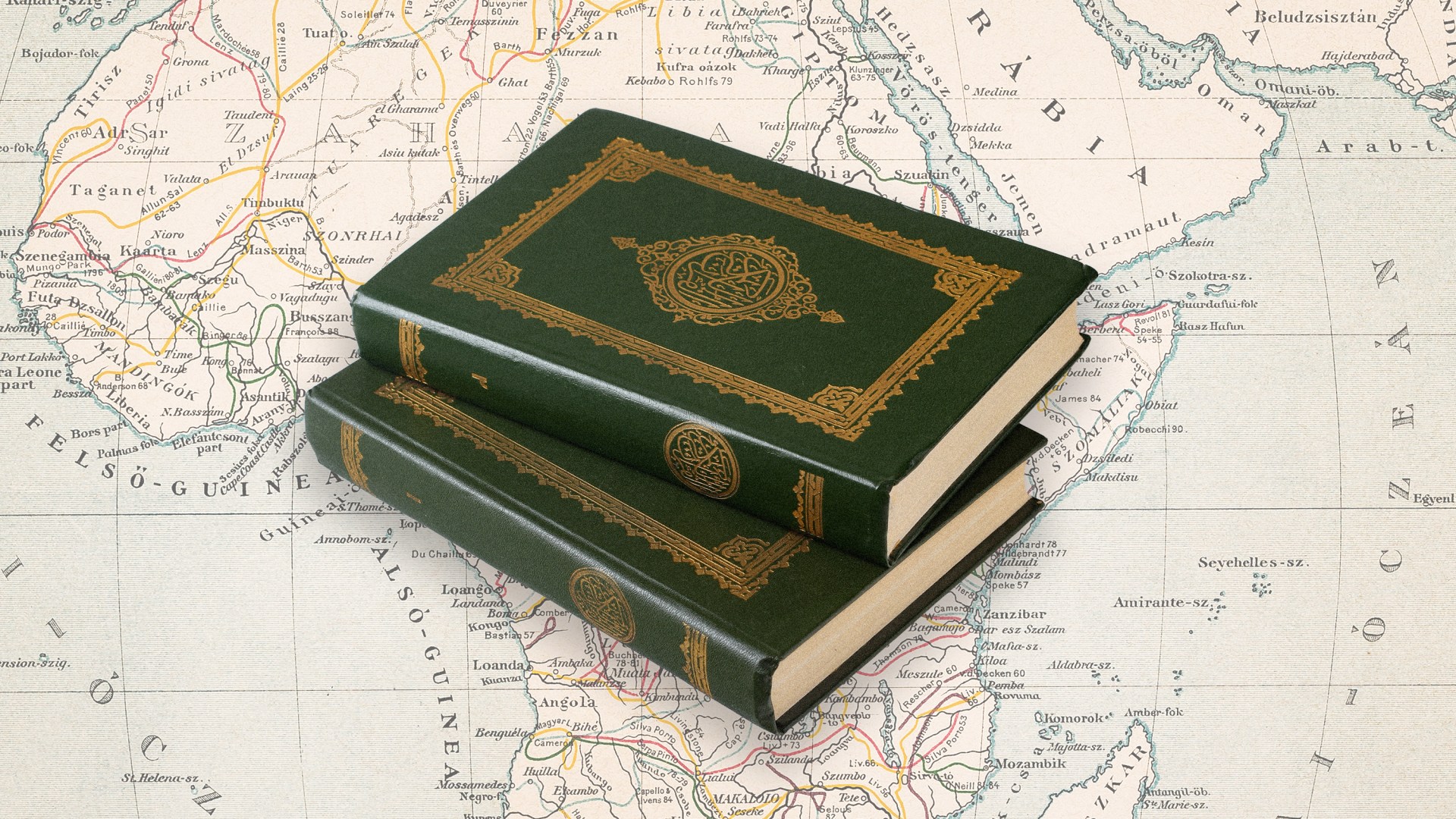
The Sudan: A Short Compendium of Facts and Figures about the Land of Darkness, by Karl Kumm

This 1907 work delves into the historical dynamics of Islam, traditional African religions, and Christianity in precolonial and colonial northern Nigeria, with broader applicability to African contexts. Authored by Karl Kumm, a European missionary and founder of two mission organizations with a specific focus on Islam in Africa, the work aims to persuade European Christian counterparts of the importance and effectiveness of evangelizing traditional religious communities in Africa.

Kumm counters prevailing perspectives among some European thinkers who considered Islamic civilization as best suited for Africa by drawing on his empirical experiences with radical Islam in Northern Nigeria in the early 20th century. With a compelling case against pro-Islamic viewpoints, Kumm highlights the intense interreligious tensions between radical Islam and traditional religious communities in Africa, dating back to the emergence of revival Islamic movements. He illustrates the historical clash between Islam and traditional religions, citing instances such as Islamic slavery in precolonial Africa and the maltreatment of individuals like Neali, a young girl captured and mistreated by Muslim slave raiders in 1798.

Kumm argues that Islam’s interpretation of Quranic verses and the expansionist example of Muhammad oppose the rights of women and non-Muslims and predicts that these would make Islam hostile to other religions in Nigeria. Significantly, Kumm advocates for Christianity as a more suitable alternative for Africans, emphasizing the need to protect traditional communities from the slavery and maltreatment associated with Islamic radicals. Beyond its historical context, Kumm’s work holds relevance for contemporary discussions on interreligious crises in Northern Nigeria and Africa at large, emphasizing the nuanced understanding of pre-Christian-era scenarios. Additionally, his historical references shed light on the persistent gender-based, social, and economic factors underlying present religious radicalism in Northern Nigeria.

Islamism, Statehood and Human Right: A World of Difference, by Olufemi O. Ilesanmi

The author, a Nigerian theologian and legal expert, delves into the compatibility of Islamic theocratic regimes with human rights, offering a fresh perspective on the impact of sharia law in Northern Nigeria. Focused on the rights of women and religious minorities, Ilesanmi’s research is primarily motivated by his encounters and the experiences of fellow Nigerians with radical Islam in Northern Nigeria, especially following the introduction of sharia in the multireligious context of Nigeria in the 1990s.

Olufemi helpfully expands the scope of his analysis to include Malaysia, Sudan, and Turkey, posing a fundamental question about the compatibility of contemporary Islamic regimes’ theological and political understanding with human rights, as defined in secular (Western) perspectives. Through extensive historical and contemporary references, the author explores instances of Islamist agitation against democratic definitions of human rights, looking closely at Islamic theocracy and sharia and emphasizing the difficulties and implications that the application of sharia’s stipulation on punishment may have in a multireligious context. The book also highlights the clash between Islamic theocracy and the rights of women and religious minorities around the world, showcasing the challenges in applying Islamic law in modern, multicultural contexts and international jurisprudence.

While the research is a valuable resource for readers seeking interdisciplinary insights into law, theology, and human rights, one critique is the strong academic tone, resembling a dissertation, which might limit accessibility for a general audience, including lay practitioners and grassroots religious leaders. Nevertheless, Ilesanmi provides a profound understanding of how to navigate present interreligious tensions, emphasizing the essential need for a genuine desire to understand the “other” for meaningful engagement.

The African Christian and Islam, edited by John Azumah and Lamin Sanneh

This multi-authored, Africa-centric book features 22 academic writers aiming to present an African perspective on Islam and guide theological students and pastors by balancing academic insights with on-the-ground realities.

The book critically examines various facets of Islam in Africa, distinguishing between its radical, political, missionary, lived, and mystic faces and providing a nuanced understanding often overlooked in previous research. It addresses questions arising as Christians navigate their witness in an Islamic context, offering theological and scriptural perspectives.

Specifically, the late Gambian-born scholar Lamin Sanneh delves into the theme of revival and reform in Islam and Christianity in Africa, showing the significance of religious experiences as the main factor behind revival movements both in African Christianity and Islam. To Sanneh, religious experience is therefore an important point to consider regarding Muslim-Christian relations in Africa. Similarly, Ghanaian scholars John Azumah and Abraham Akrong’s paper highlights the importance of certain values in traditional religions and cultures for fostering peace between Islam and Christianity in Africa. Notably, Azumah contends that African existential realities like economic, political, spiritual, and social factors should be considered when understanding Muslim-Christian relational tension in Africa.

Other entries examine the colonial context of African Christian encounters with Islam; the impact of Pentecostalism; country-specific studies on Egypt, Ethiopia, Ghana, Kenya, Senegal, South Africa, Sudan, Tanzania, and Nigeria; and how the Bible should be interpreted and applied in the African Islamic context. Recognizing the misguided attitudes of some African Christians toward Islam, the text advocates for a balanced response, cautioning against extreme anti-Islamic sentiments and naively romanticizing Islam. The authors attribute the growth of jihadism in Africa to a lack of clear understanding in responding to Islam. They argue for informed engagement rather than confrontational polemics.

My Neighbour’s Faith: Islam Explained for African Christians, by John Azumah

Azumah, the founding executive director of The Sanneh Institute, an organization that studies religion in Africa, adopts an approach that seeks to comprehend and engage with Islam not merely as a distant entity but as a religion embraced by his friends and neighbors. His primary goal is to furnish Christians with a valuable resource, facilitating their understanding of Islam and effective interactions with Muslims in their proximity, steering clear of both romanticization and demonization.

Highlighting the historical harmony between Islam and Christianity in various African contexts, Azumah observes a contemporary threat to this harmony, marked by bloodshed, especially in Sudan, Nigeria, and Ivory Coast. Investigating the root causes of these changes, Azumah identifies theological disparities as a significant barrier to harmonious Christian-Muslim relations in Africa. He argues that despite shared similarities, differences in theological matters—particularly the application of sharia—have led to conflicts, notably in Northern Nigeria. Delving into the pro-sharia and anti-sharia perspectives in Nigeria, Azumah advocates for reasoned debate over inflammatory rhetoric as a means to engage and integrate these arguments effectively.

One interesting note is that in this book, Azumah delves into theological factors as the main cause of interreligious tension between Muslims and Christians in Africa. However, in his chapter in The African Christian and Islam (mentioned above), released five years later, he focuses on existential realities as the main cause. Students of Islam and research on interreligious relations may be able to track this evolution and changing dynamics in Azumah’s thoughts. What we can say at this point is that the causes of interreligious crises between Islam and Christianity in Africa cannot be traced to one constant issue, as contexts have significant impact.

The Qur’an: A User’s Guide, by Farid Esack

Farid Esack, a South African progressive and critically reflective Muslim, introduces a six-level taxonomy, categorizing engagement with Islam from devout adherents to those seeking to deconvert Muslims.

The first category in Esack’s taxonomy is the “uncritical lover,” representing ordinary Muslims who wholeheartedly practice Islam without entertaining critical engagement or questioning its tenets. The second, the “scholarly lover,” comprises Muslims who actively formulate evidence and arguments to support their religious convictions. The third, the “critical lover,” demonstrates an affection for Islam while questioning specific aspects without fundamentally doubting its authenticity. The fourth category, the “friend of the lover,” accepts the historical and doctrinal aspects of Islam but doesn’t actively practice the faith. These individuals reside within the sphere of Islam without being full participants. The fifth, the “voyeur,” exhibits a disinterest in Islam but seeks a sympathetic understanding. People in this category lack personal affection for Islam but pursue unbiased scholarship on the religion. The final category, the “polemicist,” describes those who engage with Islam from the perspective of their passion for the Bible or secularism.

The work is valuable in understanding various perspectives that non-Muslim and Muslim scholars have toward Islam and how these views impact the nature of engagement. Esack’s analysis, if widely disseminated, could establish a theoretical foundation for successful interreligious engagement between Muslims and Christians both at scholarly levels and in practice-oriented spaces.

Read our authors’ bio in the series’ lead article, The Best Books for Understanding Islam and Connecting with Your Muslim Neighbors. (Other articles in this special series are listed to the right on desktop or below on mobile.)

Editor’s note: Curated lists in this religious literacy series for Christians include the best books for better understanding Islam (in five regions), Hinduism, Buddhism, Sikhism, the Druze, Daoism, Confucianism, and the sinicization of Christianity in China.

CT also offers a top 5 books list on Orthodox Christianity, among scores of subjects.

Books

The Best Books for Understanding Islam and Connecting with Muslim Neighbors

Five regional scholars offer their recommendations for Christians.

Christianity Today December 18, 2023
Illustration by Christianity Today / Source Images: Wikimedia Commons / Getty

In this series

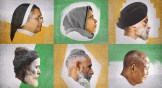
The world’s second-largest religion, Islam has long exercised the minds of Christians. Dating to A.D. 610, when Muhammad is said to have received his first revelations from God, the faith quickly conquered Christian lands in the Middle East, North Africa, and Europe, establishing the two faiths on an adversarial basis that has continued through eras of caliphates, crusades, and colonization.

Muhammad originally viewed his communications with God as a continuation of the message received through the biblical tradition, calling Jews and Christians “People of the Book.” But though the treatment of non-Muslims cycled through periods of peace and persecution, the teaching of the Quran ensured theological distinction. Islam esteems Jesus only as a human prophet and denies his crucifixion.

Yet there is much that unites Christians and Muslims. The five pillars of Islam espouse monotheism, prayer, fasting, almsgiving, and pilgrimage. Certain expressions desire mystical communion with God, while others pursue pietistic fidelity to his law. Both religions seek to spread the faith and care for society, anticipating the judgment to come. And while adherents to each faith debate the place of militancy, history clearly testifies to the blood shed in the name of God.

While Islam has not experienced the same levels of schism as Christianity, Muslims debate within—and divide asunder—what they call the umma, the worldwide community of Islam.

Muslim diversity is also cultural. Though Islam was birthed in present-day Saudi Arabia and is generally associated with the Arab Middle East, the most populous Muslim nation is Indonesia, and its greatest rate of growth is in Africa. Nearly 50 nations boast Muslim majorities, while large minorities exist in India and China, with Islam established through migrating communities and individual conversion in Europe and the Americas. Each region has put its unique imprint on the religion, and Muslims encounter the same popular tendencies toward syncretism and secularism as experienced by Christians.

In the series of book lists that follows, CT has asked regional experts to select the best resources for evangelical Christians to understand and learn about Islam, both from Muslims themselves and from Christians who have devoted years to building relationships with the community.

The selected books not only offer paths of evangelism but also encourage cooperation for the common good. They reflect the diversity of Islam and, to some degree, the diversity of evangelical approaches toward Islam. While none bear the stamp of our full endorsement, we offer them—to Muslim and Christian alike—in the hope of better understanding, peace, and love between our two communities. Read well, pray, and discern.

Expert bios:

Peter Riddell (Southeast Asia) is professor emeritus of the London School of Theology, senior research fellow of the Australian College of Theology, and editor and author of 17 books, including Islam and the Malay-Indonesian World and Islam in Context. Peter is currently preparing a history of Christian-Muslim Relations in Southeast Asia for Oxford University Press.

Godwin O. Adeboye (Africa) currently serves as the African regional coordinator at the Oxford Centre for Religion and Public Life’s undergraduate department, where he is also conducting his doctoral work, researching a theological model for the survival of Christian missions in Islamic political contexts.

Martin Accad (Middle East) is associate professor of Islamic studies at Arab Baptist Theological Seminary in Lebanon. He is the author of Sacred Misinterpretation: Reaching across the Christian-Muslim Divide and coeditor of The Religious Other: A Biblical Understanding of Islam, the Qur’an and Muhammad.

Biswajit Patra (South Asia), a scholar with the South Asia Institute of Advanced Christian Studies, has lived and served the Muslim community for over 25 years in West Bengal, India.

Colin Edwards (Europe) is a lecturer in missions in the UK whose dissertation and ministry focus on Muslim/Christian relations, with special attention to sociocultural aspects, interfaith dialogue, and mission.

Editor’s note: Curated lists in this religious literacy series for Christians include the best books for better understanding Islam (in five regions), Hinduism, Buddhism, Sikhism, the Druze, Daoism, Confucianism, and the sinicization of Christianity in China.

CT also offers a top 5 books list on Orthodox Christianity, among scores of subjects.

Theology

The Suspense of Mary’s Yes

How a courageous response echoes through eternity

Phil Schorr

“How will this be,” Mary asked the angel, “since I am a virgin?”

The angel answered, “The Holy Spirit will come on you, and the power of the Most High will overshadow you. So the holy one to be born will be called the Son of God. Even Elizabeth your relative is going to have a child in her old age, and she who was said to be unable to conceive is in her sixth month. For no word from God will ever fail.”

“I am the Lord’s servant,” Mary answered. “May your word to me be fulfilled.” Then the angel left her. — Luke 1:34-38

In Luke chapter 1, we are presented with a beautiful account of how the angel came to Mary, how she heard him, and how she responded in courage: “I am the Lord’s servant. May your word to me be fulfilled.” The words contained here should fill every faithful reader with awe and wonder, but above all with gratitude. These few verses in Luke are one of the great hinges—or momentous turning points—of the whole Bible. They are an answer to that early tragic turning point in Genesis: the moment of Eve’s disobedience.

Eve’s choice had terrible consequences for all of us. Her yes to the serpent foreclosed and diminished our true humanity—though of course, the serpent had promised just the opposite! But if Eve turned her back on God, and turned all of us with her, then Mary turns to face him willingly, and her courageous yes to God welcomes Jesus into the world. In Jesus every person may now choose, if they wish, to receive God’s welcome. His welcome extends both to the fullness of life here on earth, even with all its limitations, and into eternal life with him.

Our God is the God of freedom and love, and he will not force himself on anyone. Instead, he waits courteously for our assent, for our yes to his love. As we read these verses, we almost hold our breaths and reenter the drama of that moment: God offers to come into the world as our savior, and Mary, at this moment, speaks for all of us. What will she say? Will she offer her whole life to be made new, to be changed forever? Or will she shy away from the burden?

We should sense an awesome hush, an agony of suspense, between verses 37 and 38, and then as we hear Mary’s response, we should feel great relief and rejoicing. Mary’s yes not only changes everything forever but also models for us our own Christian life. Now we too are called not to be afraid but to be open, to say to God, I too am your servant. Let your word to me be fulfilled. In the sonnet below, I have tried to evoke a little of the suspense and importance of this moment.

We see so little, stayed on surfaces, We calculate the outsides of all things, Preoccupied with our own purposes We miss the shimmer of the angels’ wings, They coruscate around us in their joy A swirl of wheels and eyes and wings unfurled, They guard the good we purpose to destroy, A hidden blaze of glory in God’s world. But on this day a young girl stopped to see With open eyes and heart. She heard the voice; The promise of His glory yet to be, As time stood still for her to make a choice; Gabriel knelt and not a feather stirred, The Word himself was waiting on her word.

This sonnet, "Annunciation," is from Sounding the Seasons (Canterbury Press, 2012) and is used with the author's permission.

Reflection Questions:


1. Reflecting on Mary's response to the angel's message, how does her courageous yes to God's plan inspire and challenge you in your own journey of faith?

2.In what ways, like Mary, can you cultivate a spirit of openness and surrender?

Malcolm Guite is a former chaplain and Life Fellow at Girton College, Cambridge. He teaches and lectures widely on theology and literature.

This article is part of The Eternal King Arrives, a 4-week devotional to help individuals, small groups, and families journey through the 2023 Advent season . Learn more about this special issue that can be used Advent, or any time of year at http://orderct.com/advent.

Theology

Flutters of the Firstborn of Creation

How we love even what we don’t yet see

Phil Schorr

The Son is the image of the invisible God, the firstborn over all creation. For in him all things were created: things in heaven and on earth, visible and invisible, whether thrones or powers or rulers or authorities; all things have been created through him and for him. He is before all things, and in him all things hold together. — Colossians 1:15-17

At this time of year, we are bombarded with images that nag at our attention, presenting us with the idea of the perfectly peaceful holiday and all the gifts that will truly satisfy us. Imagine, for a minute, loving something you’ve never seen. Even without fully understanding what you are loving, there is an ache and a hope for fulfillment, for completion, for wholeness. But what about loving someone you’ve never seen?

This is a concept mothers know well, feeling their babies move in the womb before ever seeing their faces. Perhaps this is what Mary felt for nine long months as her stomach grew, trying to make sense of the fact that the little flutters and punches were the first movements of the Son of the Most High.

For 2,000 years, God had revealed his presence in the various forms of smoke, fire, manna-giver, and cloud on a mountaintop. It was impossible—and forbidden—to attempt any picture or representation of him. He was invisible, unable to be whittled down to an image and unable to be comprehended by our human eyes.

True worship always holds God’s immanence and his transcendence in tension. Where can we conceive of that worship more than in his enfleshing, his incarnation? God in his grace made the invisible visible and chose to dwell among his people as one of us. But not only did the firstborn of the dead come in our fragile human form; he came as the weakest of us all—a newborn. God became a helpless creature in need of the most basic human requirements: being fed, clothed, and kept clean. It’s difficult to even imagine the fullness of God somehow fitting into a six-pound newborn. This infant was the mover at the beginning of creation, present before time began and preeminent in all things. In him—the babe who couldn’t hold his own head up—all things hold together. Jesus in the manger is an image we may not expect, but the God of humility, servanthood, and reconciliation is the one that we need.

But the story unfolds further; the image becomes clearer. In a feeble, tiny body, God was pleased to dwell. It was not his obligation or an inconvenience to reveal himself to us this way, but his pure pleasure. And even now, it continues to be God’s pure pleasure—his joy—to reveal himself, to give of himself even when he doesn't need to, to rule as a humble King, for our good and our joy. It is his delight to bring reconciliation, to restore the very creation he made in its edenic beginning and, yes, to lift the veil and make a way for us to see him face to face.

He is the image of the God we need—a God who exemplifies humility, servanthood, and pleasure in reconciliation. He holds all things together, from creation to the manger to the cross to the new creation.

Reflection Questions:


1. Considering the analogy of a mother feeling her baby's movements in the womb, how does it deepen your understanding of Mary's experience and the significance of Jesus' incarnation

2. Contemplating the tension between God's immanence and transcendence, as exemplified in Jesus' incarnation, how does the image of a helpless newborn challenge our notions of power and greatness?

Caroline Greb is a wife, mother, homemaker, fine artist and the Assistant Editor at Ekstasis Magazine.

This article is part of The Eternal King Arrives, a 4-week devotional to help individuals, small groups, and families journey through the 2023 Advent season . Learn more about this special issue that can be used Advent, or any time of year at http://orderct.com/advent.

News

For Messianic Jews, Debate Over Hamas Gets Biblical

Netanyahu’s allusion to the Amalekites sparks discussion of how to responsibly apply Scripture stories to current events like Israel’s war in Gaza.

Christianity Today December 15, 2023
Illustration by Christianity Today / Source Images: WikiMedia Commons / Getty

When Benjamin Netanyahu announced the launch of ground operations in Gaza on October 28, weeks after Hamas terrorists murdered 1,200 civilians and abducted 240 hostages on October 7, he summoned the memory of an ancient foe.

“Remember what Amalek did to you,” the Israeli prime minister stated. “We remember and we fight.”

It was a reference his audience would understand.

In the Exodus narrative, the Amalekites attack the Hebrew people in the wilderness and are defeated in a dramatic conflict where Moses raises his arms over the battlefield. Later, in Deuteronomy 25:17–19, Moses exhorts the Israelites to “remember what the Amalekites did to you” and, after they have come into possession of the Promised Land, to “blot out the name of Amalek under heaven.” Finally, in 1 Samuel 15, God ordered King Saul to “totally destroy” the Amalekites, including women, children, and infants. Saul defeats the enemy, but is condemned for sparing their king and cattle.

Rabbinic commentary came to identify Amalek as a kind of paradigm for any enemy of the Jews that seeks their total destruction. Netanyahu had previously hinted the “new Amalek” could be a nuclear-armed Iran, and one of his advisors explained the word is used as a stand-in for “existential threat.” It has been invoked in reference to the Romans, the Nazis, and the Soviets.

Christians made the biblical comparison with Hamas even before Netanyahu, however, prompting discussion of responsible biblical interpretation in the midst of war.

Shortly after October 7, the International Christian Embassy Jerusalem (ICEJ) said the Hamas attack was “rooted in the demonic realm as a manifestation of the Spirit of Amalek.” The ICEJ invited Christians around the world to “ascend to our spiritual vantage point and join in this battle, just as Moses prayed while Joshua was fighting Amalek on the ground.”

Some Messianic Jewish leaders have agreed.

“In every generation the hatred of Amalek rises up in an attempt to annihilate the Israelites,” said Ariel Rudolph, director of operations for Jerusalem Seminary, citing Exodus 17:16. “Once one understands the spirit of hatred for God’s chosen, that originates from Satan, one understands that evil of hatred must be eradicated.”

Rudolph criticized Christians who call for mercy on Hamas and the salvation of terrorists as failing to recognize the biblical principle to eliminate any threat that would wipe out the people of Israel.

Other Messianic Jewish leaders are more conflicted.

“On the one hand, something must be done to prevent Hamas from repeating anything like what happened on October 7,” said Ray Pritz, a retired pastor of a Messianic Jewish congregation between Tel Aviv and Jerusalem. “But on the other hand, the great loss of life in Gaza is sad beyond words.”

With a PhD in early Jewish Christianity from Hebrew University, Pritz clearly critiqued Hamas’s equation with Amalek. “Anyone making the connection must rely heavily on interpretation,” he said. “With a preconception and a concordance, it is possible to prove almost anything you want from the Bible.”

The text does not say that Amalek sought to “wipe out” Israel, he said. But even if this is assumed, the conditions of the Book of Exodus are not applicable today. By “God’s promise or otherwise,” the people are in the land. And despite Hamas’s intentions, Pritz said, there is “no likelihood” that the Jewish nation—much less the Jewish people as a whole—will be eliminated.

Noam Hendren, however, said the Bible presents Amalek as an “archetypal enemy,” representing all who seek the destruction of God’s people.

Leader of a Messianic Jewish congregation in north central Israel, Hendren has a ThM in Old Testament and Semitics from Dallas Theological Seminary. The “from generation to generation” language of Exodus 17, he said, implies a continuing threat even though the Amalekites have disappeared. He connects God’s oath to destroy Amalek with the Genesis 12:3 promise to “curse those who curse” Israel, which applies to all who oppose God’s plan for world redemption through the Jews.

It cannot be applied, he said, to the residents of Gaza collectively.

“The genocidal atrocities committed by Hamas certainly qualify them to be considered Amalek in its reincarnation,” said Hendren. “But any attempt to identify an entire people group with Amalek—such as Palestinians—is false.”

A few have tried.

In 1980, rabbi Israel Hess wrote an article entitled “Genocide: A Commandment of the Torah,” using Amalek as an example of Palestinian displacement. Hess was dismissed from his position at Bar Ilan University as a result.

In 1994, extremist Baruch Goldstein massacred 29 Muslims praying in Hebron, believing they represented the Deuteronomic enemy. The government of Israel condemned the movement he represented as terrorists and banned them from government; however, Goldstein became a kind of folk hero in some far-right circles, especially among the settler movement.

One admirer, Itamar Ben-Gvir, has become Israel’s minister of national security.

According to Jill Jacobs, head of T’ruah, a rabbinical human rights organization, the “overwhelming history” of Jewish interpretation sees Amalek as metaphorical, with the most common application being the encouragement to eliminate evil within oneself.

“The biblical text has been employed to justify wars for far too long, and no one should tolerate such use anymore,” agreed Myrto Theocharous. “Any interpretation that encourages self-examination and repentance would be preferred.”

Theocharous, professor of Hebrew and Old Testament at the Athens-based Greek Bible College in Athens, recalls hearing the metaphorical interpretation of Amalek at a synagogue last year during Purim, when Jews traditionally read the Deuteronomy passage.

The holiday, described in the Old Testament Book of Esther, commemorates when the Jews in Persia faced an existential threat at the hands of Haman, described as an “Agagite,” presumably a descendent of the last Amalekite king. But the biblical queen’s courage reversed the heart of the king, and with his authorization, the Jews killed over 75,000 people who had plotted to kill them (Esther 9:16).

Hormoz Shariat, founder of Iran Alive Ministries, called it clear self-defense.

Noting that God is not mentioned in the Book of Esther, he said that God was at work behind the scenes. Israel had a spiritual calling to produce the Messiah, and Satan—then as now—has a “supernatural and demonic” hatred against the Jews.

“Whenever there is a big mission,” Shariat said, “there is an escalated level of spiritual warfare.” And whether against Amalek, Haman, or modern Arab nation-states, he said, God has protected Israel.

Hendren cited Psalm 83, where the Amalekites are listed with the Edomites, Ishmaelites, Philistines, and others plotting against God’s people to “destroy them as a nation, so that Israel’s name is remembered no more.”

The proper response, Hendren said, is the “absolute necessity” of alignment with God and his people. To spiritualize the conflict between Israel and Amalek—into an allegory of the believer’s struggle against sin, or the church’s struggle against evil in society—effectively does what Amalek intended: denying Israel the fulfillment of God’s promises.

“Israel’s role in God’s plan,” he said, “did not end with the birth of the Messiah.”

Editor’s note: A selection of CT’s Israel-Hamas war coverage is now available in Arabic, among eight other languages.

Culture

‘Wonka’ Is Sweet on Capitalism

Timothée Chalamet’s update to Roald Dahl’s Willy Wonka gives a cheery lesson in hard work, kindness, and the benefits of the free market.

Christianity Today December 15, 2023
© Warner Bros. Entertainment Inc. All Rights Reserved.

The new take on Roald Dahl’s Willy Wonka is unabashedly an old-fashioned musical, devoid of cynicism, and unfailingly optimistic. Timothée Chalamet headlines Wonka, in theaters Friday, with magic, whimsy, and—surprisingly, given the present political mood—a healthy enthusiasm for capitalism.

The film is a prequel to the 1971 classic starring Gene Wilder as an older (and more menacing) version of Willy Wonka. (Johnny Depp also took up the role in 2005, but Wonka’s Oompa Loompa design alone makes clear that this is not part of that story.) Chalamet’s Willy has just sailed the world collecting recipes and ingredients and arrives in the big city with—as he sings—a hatful of dreams. Those dreams involve chocolate and magic, the more chocolate and magic the better.

The action takes place against a vaguely Elizabethan backdrop. There are urchins, scoundrels, sailors, and plenty of ratty top hats. When Willy runs afoul of a particularly odious couple (the always fantastic Olivia Colman and funny Tom Davis), he finds himself trapped in a workhouse rivaling that of Oliver Twist. He knows his way out is chocolate—if only he can overcome the dastardly plot of the chocolate cartel that runs the town.

Along the way, Willy takes his friends on flights of fancy that are the true heart of the film. Who cares about drudgery when you can ride a bundle of balloons above the city or befriend a giraffe in the zoo? These musical set pieces make Wonka a delight.

The supporting cast is delicious, too, including Hugh Grant’s turn as an Oompa Loompa, Keegan-Michael Key as a corpulently corrupt police officer, and Rowan Atkinson as a hilariously chocolate-addled priest. Along with a host of monks, the priest is a villain—but in a silly way. He’s one of many corrupt figures in the city, yet the writing doesn’t attribute corruption to his faith. This handling of Christianity is characteristically negative, but only incidentally so, and Atkinson (a skilled slapstick actor of Mr. Bean fame) may be the funniest part of the movie.

That silliness is part of a broader tone of optimism that makes Wonka refreshing. Willy’s dream is to sell chocolate to the masses. The film doesn’t shame him for wanting to make money and a living for his workers. The bad guys are corporate goons, to be sure, but the source of their villainy is not business itself. Willy is eager to compete in the marketplace, and the story never questions whether his work is benevolent, providing joy alongside a profit. Where 1971’s Willy Wonka and the Chocolate Factory was a meditation on greed and its dangers, Wonka captures the beauty of hard work and entrepreneurship.

That turn is surprising not only because of the older film’s message. It’s also unexpected given the present dissatisfaction with the free market, expressed in talk of “late capitalism” on the Left and protectionist policies on the Right. Titans of industry are not our uncomplicated cultural heroes. Increasingly, the assumption is that capitalism has failed and that building a large company is at best a self-serving necessity or at worst an evil.

Wonka goes back to market basics: Create something, believe in it, work toward it, and the company you build will bless not only you but your whole community. Willy’s work is a labor of love, and while cynicism whispers that business is never that simple, Wonka successfully makes founding a company look aspirational.

Of course, Willy’s diligence is helped along by magic, though not as much as there could be in a kids’ flick. Magic is the shorthand explanation for many of Willy’s inventions, but fundamentally Willy’s work is his vision—his imagination. It’s a vision we know is ultimately successful, building the fantastic factory of Wilder’s iconic Wonka (even if it’s not clear how the character himself would evolve from Chalamet’s version to Wilder’s take).

Magical assistance aside, Wonka models kindness without reserve and teaches persistence in the face of difficulties. It feels like a throwback to children’s musicals of the 1960s and ’70s: giddy, innocent of sexual content, and never more offensive than a few mildly crude jokes. It’s a spectacle of sugar, a confection for families, and a sweet antidote to our cynical times.

Rebecca Cusey is a lawyer and movie critic in Washington, DC.

Books
Review

One Year, Seven Transformations, and the Emergence of a ‘WEIRDER’ World

American independence was one of many revolutions sparked in 1776. How can we live faithfully in the new order they created?

An Experiment on a Bird in the Air Pump painted by Joseph Wright of Derby

An Experiment on a Bird in the Air Pump painted by Joseph Wright of Derby

Christianity Today December 15, 2023
WikiMedia Commons

If you’re reading this, you’re weird.

Remaking the World: How 1776 Created the Post-Christian West

Remaking the World: How 1776 Created the Post-Christian West

Crossway

384 pages

$22.31

More precisely, you’re historically weird—much of what you take for granted about life is unusual, if not unprecedented.

To name just a few examples: This morning, you enjoyed access to indoor plumbing. You (most likely) didn’t grow any of the food you’ll eat today. You expect your society to include people of different religious beliefs. You think people should choose for themselves whom to marry. And you’re literate, unlike most people throughout time; even more surprising, this language you’re reading is presently used by over 2 billion people around the world.

In each of these ways you and I are weird—or, more precisely, WEIRD, to cite scholar Joseph Henrich’s acronym for modern societies that one could describe, by and large, as Western, Educated, Industrialized, Rich, and Democratic. In his new book, Remaking the World: How 1776 Created the Post-Christian West, Andrew Wilson argues that the modern age is WEIRDER still, adding two adjectives to Henrich’s formula: Ex-Christian and Romantic.

Wilson, a UK pastor and author (and columnist for CT) does a brilliant job of showing us our strangeness. Much of what we experience as normal, in historical perspective, is quite odd. These “quirks” arise from relatively recent developments, and Wilson sets out to explain where they came from and what they mean for being Christian today.

An era of revolutions

How did we become WEIRDER? The answer, for Wilson, is found in the year 1776. This year saw seven different transformations—political, philosophical, cultural, technological, and economic—which produced the post-Christian West.

One of these is particularly famous: Independence Day, which kicked off an “era of revolutions” that has culminated in most of the world’s population living in a democratic republic. But this was only one of the dramas underway.

In 1776, the HMS Resolution, captained by James Cook, began an epic voyage around the globe, blown, in Wilson’s words, by “the winds of curiosity and commerce.” Understanding how and why this trip was undertaken helps us understand the beginnings of globalization—how the world became Westernized.

In 1776, James Watt’s steam engine, a massive cotton mill, and a canal connecting Manchester and Liverpool all opened for commercial use. The Industrial Revolution that kicked off in northern England would change virtually everything about how we work, marry, consume, wage war, and more.

In 1776, Adam Smith published The Wealth of Nations, just as living standards around the world began a spectacular rise. The following “great enrichment” means that the average person in 2023 “has a standard of living around ten times higher than in 1776.”

In 1776, the seeds of Romanticism were sown: The philosopher Rousseau celebrated “authenticity” and self-discovery; German literati experimented with emotionally intense styles; celebrity sex scandals in London undermined traditional sexual norms. The Romantic movement that emerged in following decades produced an understanding of the self we now take for granted.

In 1776, important works were written by Kant, Gibbon, Hume, and Diderot, “enlightened” philosophers who changed how we think and how we educate. Long-standing Protestant iconoclasm combined with a new appreciation of pagan antiquity. The result? A corrosive skepticism that eventually made the West post-Christian.

Wilson explains each of these massive developments (the American Revolution, the beginnings of globalization, the Industrial Revolution, the Great Enrichment, Romanticism, the Enlightenment, and the rejection of Christianity) with remarkable nuance and brevity. The result is a gripping narrative in which worldwide transformations and fascinating characters both come through.

Tracing global revolutions to a single year might sound like a stretch, but such focus proves helpful. By peering through a narrow frame, chronologically speaking, Wilson can portray a wide range of developments side by side. This history resembles life itself, in which national elections don’t take place in a different world from industrial engineering, family dinners, or best-selling celebrity memoirs.

Examples of fidelity

Wilson’s historical narrative is interesting in its own right, but he wants us to learn it for a particular reason: living faithfully in the post-1776 West.

Thankfully, the book doesn’t offer a silver-bullet solution. For those wanting a key that will magically unlock every problem faced by the church, Wilson won’t satisfy. Instead, his concluding interpretations are just as thoughtful and measured as his historical research is well supported.

Wilson draws our attention to examples of Christian fidelity from 1776: those who spoke eloquently about God’s grace, such as John Newton and Olaudah Equiano; those like Lemuel Haynes and Granville Sharp who advocated for physical and religious freedoms; and a brilliant philosopher, Johann Georg Hamann, who robustly critiqued the skeptical Enlightenment’s reductive understanding of truth.

These “prophets” are worth hearing, as each of them “cultivated Christian ways of thinking, acting, and feeling that were extremely well suited to the WEIRDER world that was dawning around them.”

What about today? Christianity is by no means dying, but the Western church is witnessing decline in both numbers and influence. Little wonder that some (on both the Left and the Right) insist that the church must radically revise its approach.

Not so Wilson. Instead, he argues, we must embrace repentance, prayer, and renewal. In particular, we should follow in the footsteps of the “prophets” of 1776, speaking about grace, freedom, and truth in ways that powerfully address the challenges of our WEIRDER world.

In a world burdened by privilege, fixated on identity, and anxious about status, the church celebrates God’s grace, which flips each of those obsessions on their head.

In a world that prizes external freedom—but fails to recognize our inner enslavement to sin—the church advocates for the holistic spiritual and physical liberation promised by Jesus.

And, in a post-truth world, the church offers an account of reality, grounded in Creation and God’s revelation, that is both meaningful and hopeful.

More to explore

Grace, freedom, and truth—to each of these exhortations, I say a hearty “Amen!” If I have a quibble, it’s that I’d like even more. I’m left wondering what else this history suggests about the challenges and opportunities faced in the post-Christian West.

For example, how has becoming WEIRDER changed our commitment to the church? Our religious lives are less and less defined by belonging to a local congregation. Even among those who identify as evangelical, church participation is often sporadic, if not optional. This neglect can be traced to the ways evangelicalism and its institutions grew in the world made by 1776, producing what the late J. I. Packer called “a stunted ecclesiology.”

How might faithfulness require a renewed doctrine of the church?

How, in turn, might spiritual disciplines matter in a WEIRDER world? One could narrate the post-1776 world as a story of eroding Christian practices. For example, one of the most alarming, if underrated, developments in the American church has been the conversion of Sunday from a day of worship to a day of work, consumption, and entertainment (especially involving youth sports). Increasingly, the ways that we spend our days and weeks look no different than any other American consumer.

How might we resist this corrosive effect by returning to classic spiritual disciplines—Sabbath practice, hospitality, and fasting, to name a few? How might these time-tested ways of being Christian deepen our faith and strengthen our witness?

Finally, what might we learn from the rest of the church catholic? As the West marches further toward post-Christianity, how might we find our identity in belonging to the “communion of saints” that stretches throughout time and around the world today? Perhaps more than ever, we need to recover the catholicity of the faith.

Part of this recovery involves greater attention to the other half of Western Christianity. Wilson’s cast of characters is diverse in many respects, but Roman Catholics hardly appear. To be fair, the countries that led the way in becoming WEIRDER were majority Protestant, and Wilson points out that Protestantism, more than Catholicism, seemed to encourage these seven developments.

Nonetheless, in 1776, 2023, and every year in between, Roman Catholics have outnumbered all Protestants combined. Over the last 250 years, Catholics have adapted to these global developments, provided their own examples of missional engagement, and bore witness to Christ, including through martyrdom on a vast scale. Incisive critiques of the post-Christian West have come from Catholic intellectuals, including Brad Gregory and Charles Taylor, whose own “grand narratives” Wilson acknowledges.

And, speaking of dramatic transformations, one of the most noteworthy developments in Christian history has taken place in the last half century: Catholic and evangelical believers and leaders alike have left behind centuries of mutual recrimination for increasingly charitable dialogue and cooperation.

What might we learn from our Catholic brothers and sisters about being faithful in a WEIRDER world? How might the post-1776 story change—or not—by including the other half of the Western church?

To ask more of a work that already covers so much ground risks sounding ungrateful. It’s a testimony to Wilson’s accomplishment that I’d be glad to read even more from him on the topic. Maybe that makes me weird. After this remarkable book, I’m not afraid to admit it.

Paul Gutacker is executive director of Brazos Fellows, a post-college fellowship in Waco, Texas. He is the author of The Old Faith in a New Nation: American Protestants and the Christian Past.

Apple PodcastsDown ArrowDown ArrowDown Arrowarrow_left_altLeft ArrowLeft ArrowRight ArrowRight ArrowRight Arrowarrow_up_altUp ArrowUp ArrowAvailable at Amazoncaret-downCloseCloseEmailEmailExpandExpandExternalExternalFacebookfacebook-squareGiftGiftGooglegoogleGoogle KeephamburgerInstagraminstagram-squareLinkLinklinkedin-squareListenListenListenChristianity TodayCT Creative Studio Logologo_orgMegaphoneMenuMenupausePinterestPlayPlayPocketPodcastRSSRSSSaveSaveSaveSearchSearchsearchSpotifyStitcherTelegramTable of ContentsTable of Contentstwitter-squareWhatsAppXYouTubeYouTube