Theology

Can You Truly Be Indonesian Without Being Muslim?

Question 3 of 6 in Christianity Today’s roundtable on religious harmony in Indonesia.

Christianity Today December 8, 2023
Illustration by Mallory Rentsch / Source Images: Getty

In this series

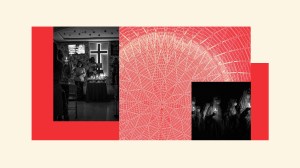
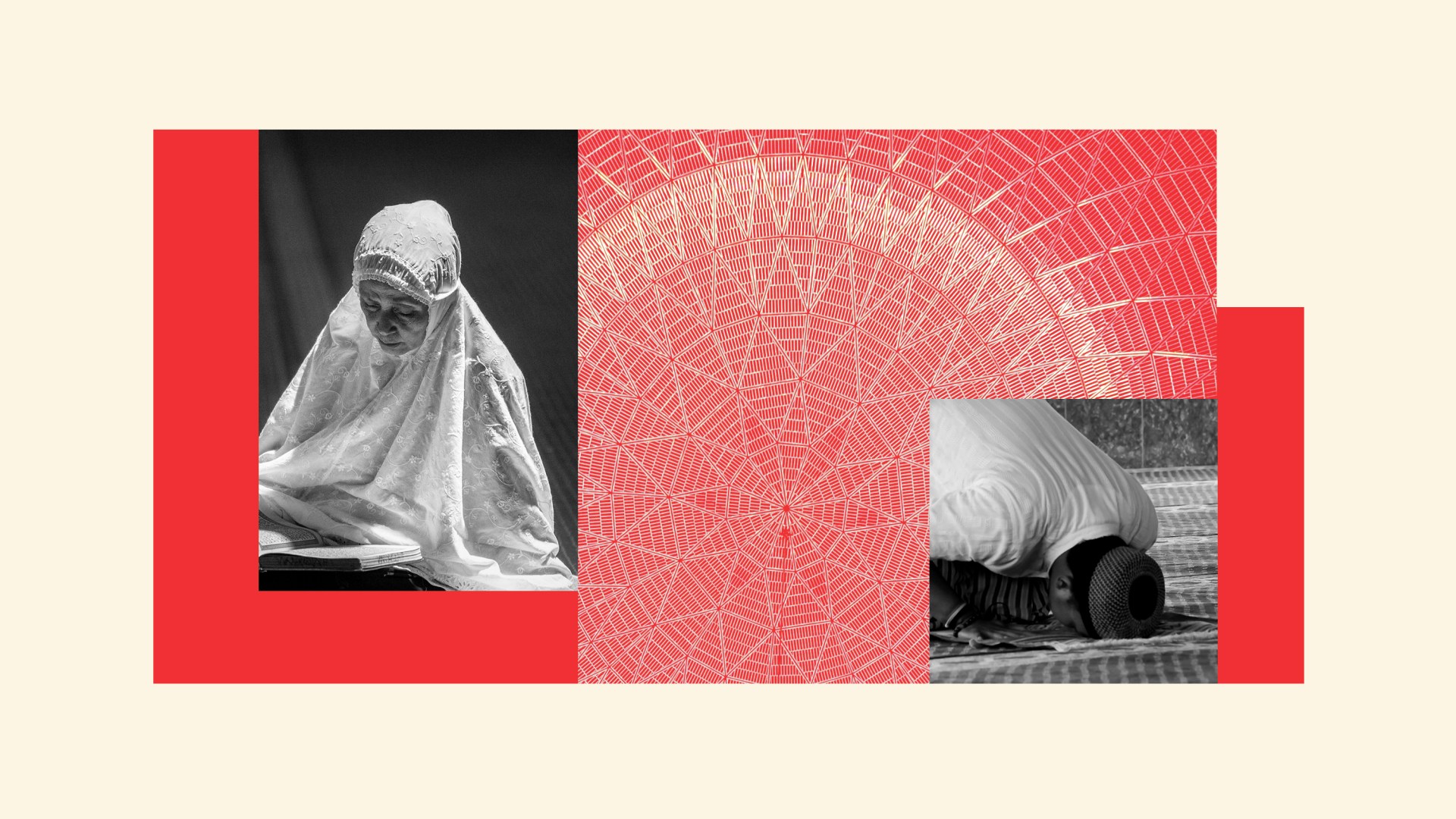
About 80 percent of Muslims believe that being Muslim is essential to being truly Indonesian, according to a special report by the Pew Research Center. We asked a panel of six Indonesian leaders—three Muslims and three Christians—their thoughts on how their religion plays into what it means to them to be Indonesian.

Muslim respondents:

Halim Mahfudz: From an Islamic perspective, your religion colors all your actions, including your behavior, ethics, and relationships with other human beings. So, religion and state are not separate. If governance is colored by religious values—not limited to Islam but the six recognized religions in Indonesia—there will be no conflict.

In Islam, there is no verse that compels others to worship in the same way Muslims do, and the Quran does not allow the government to impose Islamic values on all religions. The Quran says that Prophet Muhammad was sent to this earth for no other purpose than to be a mercy to all creatures and that we are to show compassion to all beings.

In the years leading up to his death, Muhammad sent his companions to migrate to Ethiopia, which was ruled by a Christian, King Najash. The king said that he would not hand over the Muslim migrants to the Quraysh Arabs, and then he passed away. Muhammad performed a funeral prayer (salat al-gha'ib) for the king. This demonstrates the respect of Muhammad to fellow humans, even though they were not Muslims.

Inayah Rohmaniyah: The strength of the tie between one’s Islamic identity and Indonesian identity does not imply that non-Muslims are not Indonesians.

What needs to be reinforced, especially among the younger generation, is the historical awareness of the relationship between the state and one’s religion to continue the spirit of the nation’s founders. But young people are losing this connection and nationalism is eroding. History is often considered unimportant, though it serves as a guiding light showing us the path forward.

Indonesia’s struggle for independence is not solely about majority and minority issues. It’s the result of the work and struggle of all citizens, a boundless struggle that is not limited by ethnicity, religion, or race. Once we have achieved independence, we have to protect our country. We must do so together by embracing all religions, races, and intergroup relations, just as we fought for independence together in the past. This way, the threat of division can be minimized.

Amin Abdullah: I distinguish between a nation-state and a religious state. In India, some Hindus claim that if you’re not Hindu, you’re not Indian (the Hindutva movement), even though India is a nation-state. In Indonesia, it’s not like that. There’s still a constitution that needs to be observed. A nation-state is based on its constitution, which involves a state apparatus and civil society with various components sharing responsibility and safeguarding the nation and the state.

That's why the historical milestones of the nation become essential. First, the Youth Pledge in 1928 promoted the idea of a united Indonesia, as it doesn’t mention religion, just one homeland, one language, and one nation. Second, in 1945, the constitution and Pancasila emerged, making it clear that we believe in God in a way that provides space for different religions. These are the values that need to be nurtured and propagated.

Thus, members of other religions can confidently say, “I am a Buddhist or Christian, and I am Indonesian.”

Christian respondents:

Tantono Subagyo: Being a Christian in Indonesia means being part of a community that believes in Jesus Christ as their Lord and Savior and strives to follow his teachings and example in everyday life. We are also asked to love and serve our fellow human beings, especially those different from us. We must respect and appreciate the religious, cultural, and ethnic diversity in Indonesia and contribute to building peace, justice, and progress together.

However, we must also remember that we are citizens of the kingdom of God who are temporarily residing in this world. We should not prioritize the interests of the nation over Christ. At the same time, we should not be involved in conflicts, violence, or discrimination contrary to the values of the gospel.

Ferry Mamahit: Many Christians in Indonesia, driven by a strong sense of nationalism, have sacrificed their lives for the cause of independence and democracy for Indonesia. This is not just a form of loyalty and dedication to the nation and state, but also to Christian values such as justice, truth, love, and peace.

Although the Bible does not explicitly use the term nationalism, principles such as protecting national sovereignty, the right to self-determination, and promoting the welfare of the nation align with biblical teachings (Rom. 13:1–7; Jer. 29:7). In practical terms, living according to the truth of the Bible makes a Christian a true “Indonesian Christian” (100 percent Indonesian, 100 percent Christian).

Farsijana Adeney Risakotta: When a Muslim considers that being a Muslim also means being truly an Indonesian, it implies an acceptance that their Islamic identity is shaped within the context of being Indonesian. Indonesia is not an Islamic state but a pious one where its citizens can coexist with people of various religions and backgrounds.

During Dutch colonialism, the Netherlands sent missionaries to open schools for the common people. The message of Christ’s liberation was a blessing to Indonesia.

Yet the independence of Indonesia was not a gift from Dutch Christians but the result of the sacrifice and struggle of Christians and people of various other religions in Indonesia. Therefore, Pancasila, as the foundation of the state, is the result of an agreement that involves Christians negotiating their citizenship rights—equal to those of Muslims.

Read our panelists’ bios in the series’ lead article, Parsing Pancasila: How Indonesia’s Muslims and Christians Seek Unity. (Other articles in this special series are listed to the right on desktop or below on mobile.)

Theology

What Role Should Sharia Law Play in Indonesia?

Question 1 of 6 in Christianity Today’s roundtable on religious harmony in Indonesia.

Christianity Today December 8, 2023
Illustration by Mallory Rentsch / Source Images: Getty

In this series

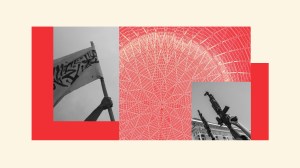
Sixty-four percent of Indonesian Muslims believe that sharia should be implemented as the national law, according to a special report by the Pew Research Center. We asked a panel of six Indonesian leaders—three Muslims and three Christians—their thoughts on this finding.

Muslim respondents:

Amin Abdullah: Sharia is a way of life; it is how people live guided by religious values. In Islam, it is not monolithic but consists of various interpretations.

Sharia in a religious state will undoubtedly differ from sharia in a nation-state. For instance, sharia in Saudi Arabia, Egypt, and Iran will be different, particularly concerning civil and criminal law, from sharia in Indonesia. Sharia in our country is in line with its culture and history.

In the private domain, religious matters such as rituals, prayers, almsgiving, and pilgrimage can be practiced fully. But in the context of Indonesia as a nation-state, sharia cannot be fully applied at the national level. When it comes to public or national matters, there are certain procedures to follow because Indonesia has a democratic state system that must be adhered to by all citizens.

The encouraging thing is that when the state was being formed, Muslims, Christians, Hindus, and Buddhists sat at the same table. At that time, the Muslims accepted Pancasila, making Indonesia a nation-state instead of a religious state. In Pancasila, there is no religious egotism; rather there is religious freedom.

Halim Mahfudz: In the rural area where I live among the Muslim communities and more tolerant groups, Muslims are not interested in implementing sharia as the basis for national law. This is because in Indonesia, we have a long shared history of struggling for independence against colonial powers since the arrival of the Dutch in the 1500s.

In the formulation of the Pancasila and the 1945 constitution, there was a debate about whether or not to remove the “seven words” in the Jakarta Charter that would have made it an obligation for Muslims to abide by sharia law. The words were deleted immediately after independence.

This indicates that from the beginning, we never aimed to establish Indonesia as a theocracy. Islamic values are present in the constitution, further strengthened by the Pancasila ideology, particularly the first principle of the belief in the one almighty God. All the principles of Pancasila are rooted in religious and divine values, and these are the values of Islam.

Inayah Rohmaniyah: The Pew survey seems to link sharia with hudud (restrictions) and qanun (laws made by Muslim rulers). It implies the formalization of hudud, suggesting that Islam should be the law that governs all of society.

Problems arise when the survey’s questions generalize the term sharia itself. In the Muslim community, sharia is essentially synonymous with Islam. If you ask if a Muslim should be governed by sharia, the answer is usually yes, because sharia represents the Islamic law that should be followed by all Muslims.

It’s important to note that sharia applies only to Muslims; people of other religions do not need to follow Islamic sharia law. Therefore, Indonesian Muslims must maintain internal and external balance, which is represented by Pancasila. Pancasila is the contextualized Islamic sharia in Indonesia.

Christian respondents:

Tantono Subagyo: The definition of sharia itself varies among Muslims. Some desire the strict implementation of sharia, while others prefer a more flexible application that adapts to the changing times. Two factors underlie why some Muslims in Indonesia believe that sharia should be used as national law: low political literacy and the tendency for Indonesian politicians to use religion as a tool for seeking power.

In Indonesia, hardline Islamic parties often use religion [for instance, urging Muslims to only vote for Muslim candidates] to gain votes. One example was the 2017 Jakarta gubernatorial election, which was rife with identity politics and threats against those who did not vote for a certain candidate. Christians need to be cautious because if the Indonesian public is not educated and is misled by individuals seeking power, chaos can occur.

Ferry Mamahit: As a Christian who interacts with diverse communities in Indonesia, I am not overly concerned about this finding. First, the Indonesian government is responsible for upholding and implementing national laws based on Pancasila and the 1945 constitution, which protects our religious freedoms.

Second, major Islamic organizations such as NU, Muhammadiyah, and others agree that Pancasila and the 1945 constitution are the legal foundation that unites the Indonesian nation. They are committed to preventing Islamic sharia from becoming the basis of the state. As part of civil society, they work to raise awareness and counter groups that seek to change the foundation of the state, considering it antidemocratic and deviating from the principles of Islam as a religion of rahmatan lil-alamin (mercy to all).

Third, I believe that Christians should support the commitment of the government (Rom. 13:1–4) and moderate Muslims (Mark 9:40) to build a democratic society that prioritizes religious and humanitarian values for a better future for Indonesia.

Farsijana Adeney Risakotta: Sharia helps Muslims become integrated individuals in practicing their worship in line with the five pillars of Islam and implementing Islamic principles in economic activities. I support Indonesian Muslims earnestly applying sharia in their daily lives.

Recently I attended a leadership training led by a practitioner from an Islamic sharia savings and loan cooperative. When I heard his explanation about why he believes that cooperatives are suitable for building justice and distributing prosperity to the entire nation, I was reminded of my own motivation to work with the poor in applying social justice.

His words reminded me to delve deeper into the teachings of Christ that empower me to continue working alongside Muslim brothers and sisters in building our nation.

Read our panelists’ bios in the series’ lead article, Parsing Pancasila: How Indonesia’s Muslims and Christians Seek Unity. (Other articles in this special series are listed to the right on desktop or below on mobile.)
Theology

How Can Christian and Muslim Indonesians Work Together?

Question 5 of 6 in Christianity Today’s roundtable on religious harmony in Indonesia.

Christianity Today December 8, 2023
Illustration by Mallory Rentsch / Source Images: Getty

In this series

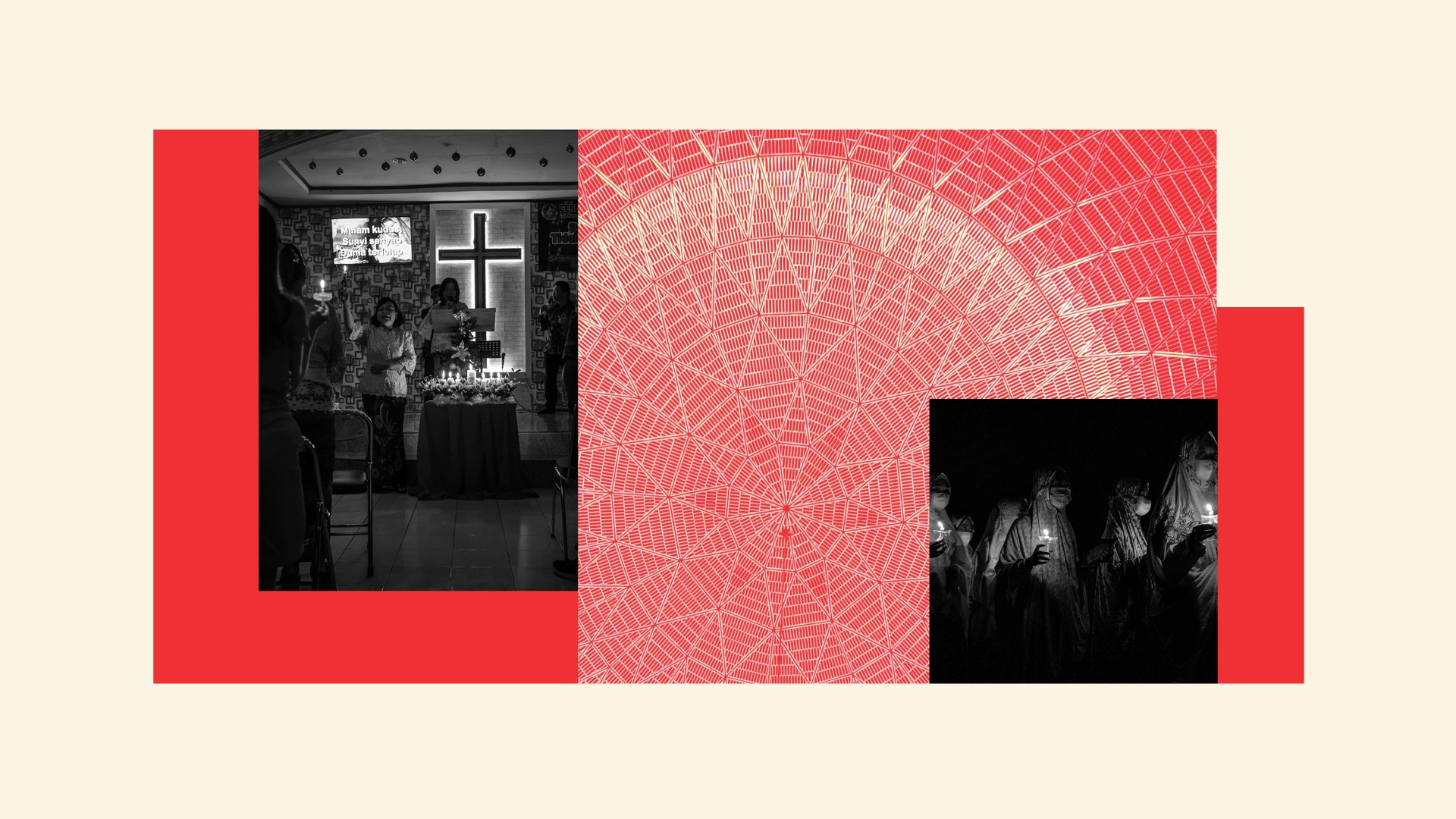
The relationship between “religious nationalism” and xenophobia in Indonesia has garnered attention in recent years. We asked a panel of six Indonesian leaders—three Muslims and three Christians—what can Muslim and Christian communities do to overcome these differences and seek the flourishing of Indonesia?

Muslim respondents:

Halim Mahfudz: In Indonesia, xenophobia is less related to religious or ethnic issues and more tied to economic concerns. It is primarily driven by economic jealousy toward other groups due to governance models during the previous presidents, which exacerbated economic disparities. [Discrimination against Chinese ethnic communities by pribumi, or indigenous communities, has long existed, especially as Chinese Indonesians own most of the large conglomerates in the country.]

This is what we are trying to address. In Islamic boarding schools, we attempt to foster relationships with different people groups, including Chinese Indonesians, and bridge communication gaps.

In Jombang where I live, I have many friends from various religious backgrounds, and interfaith relations run smoother. Our schools are also actively engaged in interfaith dialogue activities, not only within the country but also with schools in other countries such as India and Malaysia. I speak extensively about enhancing interfaith dialogue without asking, “What religion do you belong to?” It’s not about that anymore, but it’s about how we can build world peace and improve the well-being of all humanity.

Inayah Rohmaniyah: Through education and increased historical awareness, critical thinking and embracing differences, there is no need to fear the presence of foreign nations or other religions.

At the Islamic university where I teach, I am an advocate for interfaith dialogue. Nuns often come to our campus, and I also welcome lecturers from Protestant and Catholic groups to teach at our campus. I also travel to various regions in Indonesia, meeting with schoolteachers who are agents of change by instilling traditions and knowledge in students. We do not encounter this phenomenon of fear.

Although they may be suspicious of other religions, when they communicate and interact with followers of different faiths, the fear dissipates and the walls of separation crumble. They can even collaborate to create joint programs between Muslims and non-Muslims.

Fear always exists due to hoaxes and social media. There’s a debate in the Islamic academic world where some believe that the Western world is constantly assessing us, looking down upon us, and even wishing to destroy us. However, in a world of advancing technology, we must connect with many people and foster interreligious engagement. Otherwise, we will be left behind.

Amin Abdullah: In Islam, one of the ultimate goals is to protect the world’s religions, not only Islam. This is a message that needs to be emphasized and reinforced. Another primary goal is to protect human dignity, which can be developed into human rights, including the freedom of religion.

This is a collective task that requires more than just strengthening religious ideologies, but also reinforcing Pancasila. After the Reform era, when there was unrestrained freedom of expression that led to an increase in radical ideas, Pancasila was temporarily removed from the school curriculum. It was only in 2003–2004 that it was reintroduced with a more effective approach, particularly addressing issues of religious tolerance and discrimination.

Within the government, it’s important to implement religious moderation, emphasizing the concept of “The Middle Path of Islam.” However, the religious moderation program seems to still focus on teaching Muslims about their own religion to prevent violent acts, extremism, and fundamentalism. These efforts have not significantly progressed toward religious freedom and belief.

To maintain a harmonious religious life, in the last three years our government agency [Pancasila Ideology Development Agency] has collaborated with various civil societies to train 6,000 Islamic and Christian religious teachers in the literacy of cross-religious cultural life.

Christian respondents:

Tantono Subagyo: We have interfaith dialogues, but their impact is limited as they mainly involve academia. Education is the key. For instance, citizenship education starting from childhood and visits to various places of worship to foster tolerance are some ways to prevent xenophobia. The Christian community must strive to be inclusive and participate in the nation’s education by establishing schools open to children of all religions, fostering tolerance from an early age.

Christians can also adopt local culture, as exemplified by the Catholic Church in Yogyakarta, which incorporates gamelan [traditional percussion instruments] into the Mass, organizes macapatan [singing Javanese traditional poetry], and translates the Bible into local languages.

Christians can also love their neighbors by following God’s call to be an agent of social change by advocating for human rights, helping the poor and oppressed, and caring for the environment (Mic. 6:8; James 1:27; 2:14–17).

Ferry Mamahit: Christians can use media and digital platforms to disseminate positive narratives about diversity and educate the public about religious freedom. It is necessary to integrate Christian values with patriotism and emphasize the harmony between the two. Encouraging active participation in national activities, involvement in humanitarian projects, and the preservation of local culture can also enrich the experiences of young people and cultivate a love for their homeland.

Farsijana Adeney Risakotta: Tensions between Muslims and Christians have existed since the colonial era. However, the founding fathers of the nation collaborated to build Indonesia within the context of the diverse cultural, ethnic, and religious realities that have become strengths for this archipelagic nation.

With a prominent female Muslim leader, I coauthored a chapter in a book titled Shared Words between Muslims and Christians that advocates for women to interpret religious teachings.

The book underscores the belief that the two major world religions, Islam and Christianity, should collaborate to bring about peace and social justice. Indonesia is a country that holds great promise for grassroots efforts and religious organizations to engage in positioning religion as a path to peace, goodness, and progress for civilization and the sustainability of the Earth.

Read our panelists’ bios in the series’ lead article, Parsing Pancasila: How Indonesia’s Muslims and Christians Seek Unity. (Other articles in this special series are listed to the right on desktop or below on mobile.)
Theology

How Has Radical Islam Impacted Indonesia?

Question 2 of 6 in Christianity Today’s roundtable on religious harmony in Indonesia.

Christianity Today December 8, 2023
Illustration by Mallory Rentsch / Source Images: Getty

In this series

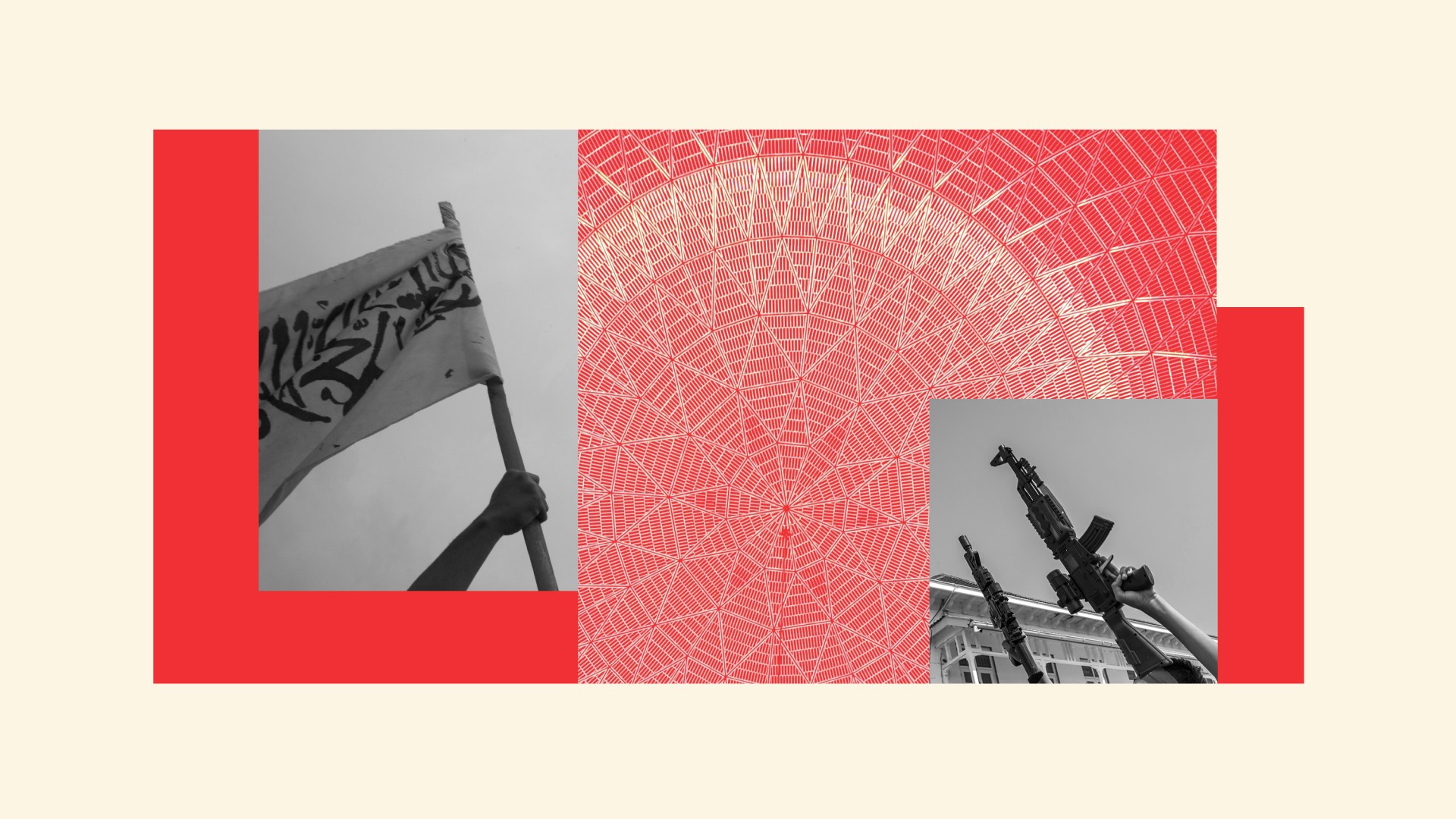
More than half of Indonesian Muslims are concerned with the growth of Muslim extremism in their nation, according to a special report by the Pew Research Center. The Muslim leaders on CT’s panel were asked about the history of conservative Islam and extremism in Indonesia and how the government is countering it.

Halim Mahfudz: I believe that very few Muslims think sharia should be applied on a national level. There have been individuals or groups that wanted to make Indonesia an Islamic state, such as the Darul Islam Movement and a separatist movement in the 1950s, but the Indonesian government suppressed them. A minority of Muslims supported it or agitated for it, as the groups were only confined to certain areas in West Java.

Acts of terror still occur on a case-by-case basis because these groups still consider terrorism their means to achieve objectives. They do not find any other way to attract attention and unleash their destructive impulses.

However, institutionally, organized terrorist movements are decreasing as these movements are increasingly constrained by the government and the participation of the citizens. We have also observed that in the past, terrorism in Indonesia was often associated with hardline groups, such as the Wahhabi in Saudi Arabia. But now there is no official connection between the groups.

Inayah Rohmaniyah: Research by Dutch anthropologist Martin van Bruinessen mentions a “conservative turn” in Indonesia in the past two decades, indicating that conservative, exclusive, and militant groups are resurging because of the opening of democratic channels during the Reform era [following the fall of the authoritarian President Suharto in 1998]. Previously they operated underground, but now everyone can freely express their views in the public sphere, so it’s natural for such groups to reemerge.

As long as Indonesia remains a democratic nation, conservative groups will continue to exist, as it’s part of their freedom of speech. There is a fear that these groups might destabilize the state or attempt to transform it into an Islamic state. However, this is merely friction in a democracy. They do not represent the majority.

Extremism is also a threat to Muslims because it damages the image of Islam. It hinders Islam from being rahmatan lil-alamin (mercy to all). The threat of extremism, which represents a minority group, is like a drop of poison in a whole pot of milk for Islam in this country.

There has been significant progress in efforts to counter extremist groups. The government has boldly disbanded HTI, a group that aimed to establish an Islamic state as it declared itself “at war against” efforts to preserve Pancasila and Indonesia. Besides the government, religious institutions and other civil society organizations also act as guardians.

Amin Abdullah: The growing conservatism trend depends on the social and political climate. In the 1990s, the Soviet-Afghan War and the Gulf War sowed the seeds of radical and extremist transnationalism movements that eventually made their way into Indonesia.

However, extremist and radical groups caused social disorder in places like in Afghanistan and Syria. If this happened in Indonesia, the image of Islam would be tarnished and human life and the nation would be in chaos.

But we don’t live in a vacuum. While things are fine within the country, there are issues outside that can affect us. Extremist or radical ideologies cannot be entirely eradicated. Yet we are thankful that there are regulations banning radical organizations. In October alone, the national counterterrorism agency arrested 18 terrorist suspects. The government must remain vigilant because when the government is active, acts of terrorism do not escalate.

Read our panelists’ bios in the series’ lead article, Parsing Pancasila: How Indonesia’s Muslims and Christians Seek Unity. (Other articles in this special series are listed to the right on desktop or below on mobile.)
Theology

Parsing Pancasila: How Indonesia’s Muslims and Christians Seek Unity

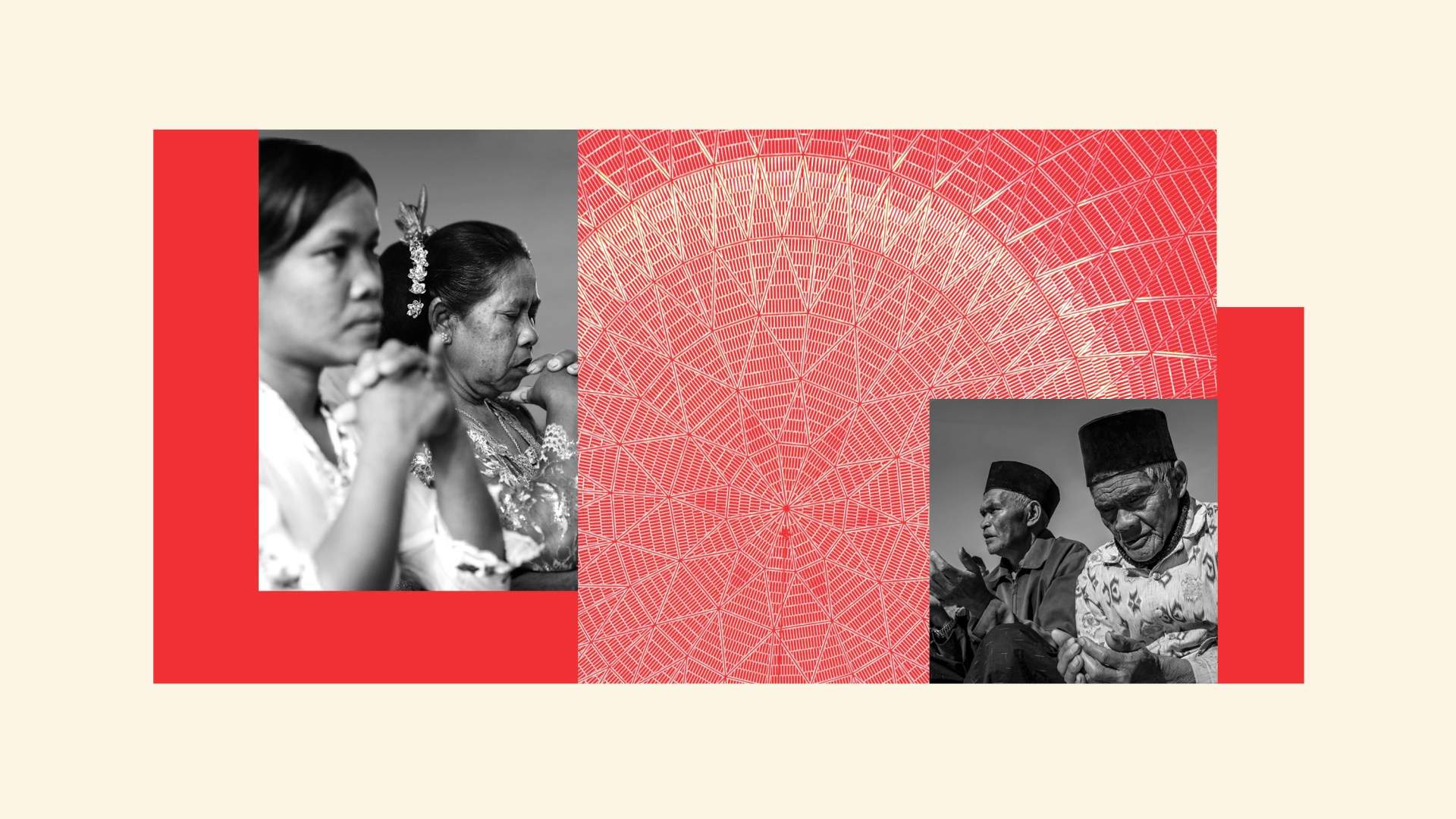
Three Muslim and three Christian leaders candidly discuss sharia, extremism, and national identity in the world’s most populous Muslim country.

Christianity Today December 8, 2023
Illustration by Mallory Rentsch / Source Images: Getty

In this series

Indonesia boasts the largest Muslim population in the world. Yet Islam is not the state religion.

Instead, the archipelago that’s home to more than 273 million people is based on the foundation of Pancasila, an Indonesian philosophical theory composed of five principles: monotheism, civilized humanity, national unity, deliberative democracy, and social justice.

With Sunni Muslims making up 87 percent of the population and Christians making up 10 percent, Indonesia has sometimes struggled with exactly how religious harmony plays out.

In recent years, Christians have been targeted in scattered terrorist attacks, restricted from building churches, and charged under blasphemy laws. Open Doors ranked Indonesia as the 33rd most dangerous country in which to be a Christian last year.

At the same time, President Joko Widodo has worked to promote religious tolerance and called on heads of provinces and districts to ensure all religions can worship freely. This coming year, the government will change the name of Jesus from Arabic to Bahasa in observed Christian holidays.

For many, Islam and national identity are tightly intertwined: A recent Pew Research Center survey found that 81 percent of Indonesians say being Muslim is very important to being truly Indonesian. Another 64 percent believe that sharia, or Islamic law, should be implemented as national law.

On the other hand, Pew researchers also found that 60 percent of Indonesians consider Christianity to be compatible with local culture and values. Muslim Indonesians were also more concerned about the growth of Muslim extremism (54%) than the growth of Christianity (35%).

Do these nuances point to an open-minded view of religious pluralism among Indonesian Muslims? And despite the archipelago’s complexities and mounting challenges, how much can interfaith dialogue and genuine cooperation promote and preserve understanding among Christians and Muslims?

CT interviewed three moderate Muslims and three Christians (bios listed below) on a range of topics including sharia’s role in society, the connection between religion and national identity, and how Christians and Muslims can work together for the good of Indonesia.

Their responses, edited and shortened for clarity, can be found in this special series’ six articles, listed to the right on desktop and below on mobile.

The Muslim leaders included in this series have participated in interfaith dialogues held by the Leimena Institute, a Christian think tank in Jakarta.

In Indonesia, moderate Islam differentiates itself from conservative Islam in that it focuses on compassion for all (rahamatan lil ‘alamin) while rejecting ideas such as the caliphate (an authority over all Muslims worldwide) and kafir (infidel). It is also differs from liberal Islam, which goes further to prioritize reasoning over revelation and the spirit of Islam’s religious ethics over its literal meaning.

Two of Indonesia’s largest Muslim organizations, Nahdlatul Ulama (NU) and Muhammadiyah, follow moderate Islam.

Muslim respondents:

K. H. Halim Mahfudz Leader of Seblak Jombang Islamic Boarding School and chairman of the endowment board at Tebuireng Islamic Boarding School in Jombang, East Java.

Inayah Rohmaniyah Dean of the faculty of Islamic Studies and Islamic Thought at Universitas Islam Negeri Sunan Kalijaga in Yogyakarta, Central Java.

Amin Abdullah Advisory council member of the Pancasila Ideology Development Agency in Yogyakarta.

Christian respondents:

Tantono Subagyo Pastor and chairman of the Suluh Insan Lestari Foundation (mother-tongue literacy program) and Wijaya Kusuma Pratama Foundation (which oversees private schools) in South Tangerang, Banten.

Ferry Mamahit Lecturer at Southeast Asia Bible Seminary in Malang, East Java, and executive director at the Center for Interdisciplinary Studies of Religion and Culture in Semarang, Central Java.

Farsijana Adeney-Risakotta Presbyterian Church (USA) missionary, lecturer at Duta Wacana Christian University, and founder of the Griya Jati Rasa Foundation (a commerce cooperative) in Yogyakarta.

With reporting assistance by Maria Fennita

Culture

Don’t Miss These African Christmas Hits

Jam out this season to highlife, Afrobeats, jazz, a cappella, R & B, rap, dance, and hip-hop artists from Nigeria, South Africa, and more.

Christianity Today December 8, 2023
Illustration by Abigail Erickson / Source Images: Getty

Having listened to hours of African Christmas music, I can safely say that these albums and songs will put your heart in a worshipful mood and set your feet tapping and your body grooving. While globally, African music may be best known for the highlife and Afrobeat genres, artists across the continent incorporate jazz, a cappella, R & B, rap, dance, and hip-hop into their music.

As a British Ghanaian now living in the United States who has sung in choirs and led worship, I count these among my favorite African Christmas gospel songs, largely from the Anglophone world, representing these wide-ranging music styles and showcasing collaborations with other world-class artists.

If we missed any of your favorites, send us an email at ctafrica@christianitytoday.com!

Florocka is a Nigerian gospel artist and producer who has been in the music and production industry for over 27 years and is a multiple award–winning singer and producer. He has collaborated with other well-known Nigerian artists, including Helen Yawson and Sammie Okposo.

Florocka’s 2021 album, Another Christmas According to Florocka, is a dance album (think J Moss–type songs, especially “Keresimesi”) featuring pop and hip-hop tracks alongside songs like “God Rest Ye Merry Gentlemen,” which somehow mashes up Middle Eastern music with rock and a rap bridge.

Jehovah Shalom Acapella is a six-member Ugandan band that released the five-track EP Joy to the World in 2020. The title track, an adaptation of Isaac Watts’s classic, begins in English before transitioning to Luganda, and the song “Enkya Ennungi Esembedde” (“I’m Telling the World about His Love”) is entirely in the Bantu language.

Last year, the Seventh-day Adventist ensemble released another Christmas EP, The Manger and the Cross, which includes versions of standard Christmas hymns like “Angels We Have Heard on High” and “Hark the Herald Angels Singing.” The final song on the EP is the title track, which moves the listener’s attention from the nativity to the crucifixion: “He was born to save a wretch like me / Amazing love, how could it be / That thou, my Lord, should die for me.”

Jonathan Butler, a widely admired singer, songwriter, and Grammy nominee raised in apartheid South Africa, was the first Black South African whose music appeared on white radio and national television in the segregated country. Nelson Mandela once credited Butler’s music as inspiring him during his imprisonment.

In Christmas Together, released in 2019, Butler features several holiday classic collaborations with world-class American artists like R & B singer Sheléa and saxophonists Dave Koz, Kirk Whalum, and Gerald Albright, the latter performing a groovy “Deck the Halls” rendition.

Christmas Together is Butler’s second Christmas album, following Merry Christmas to You (2013). Butler is currently on tour and will perform with Koz and others throughout the Christmas season in the United States this month.

Joyous Celebration is a South African choir founded in 1994, just as apartheid was ending and launched the careers of former lead singers turned solo artists Ntokozo Mbambo, Nqubeko Mbatha, and Mahalia Buchanan.

A Joyous Christmas (Live) released in 2018, offers an African sound with an R & B twist. The album opens with the choir singing “Jesus, Lover of My Soul” over J. S. Bach’s “Jesu, Joy of Man’s Desiring,” an unexpected but festive combination of the contemporary and traditional. The album features favorites like “Your Grace,” “Give You All the Glory,” and “Who Am I,” as well as songs in Zulu, one of South Africa’s main languages, like “Uyangihola” (“He Leads Me”), “Bhekani UJehova” (“Give Praise to the Lord”), and “Hallelujah Nkateko (Lihle’s Version)” (“Hallelujah Blessing”).

KODA is a Ghanaian artist famous for his highlife music, which mixes jazz, rock, hip-hop, and Afrobeat sounds. In KODA’s song “Christmas in Tadi,” he creates a medley of “Silent Night” and “O Holy Night” with guitars, pianos, and traditional Ghanaian drums. (“Tadi” is an affectionate term for Takoradi, a city in Ghana, where KODA is from.)

KODA released his first album in 2017, which poked at the challenges of the Ghanaian church and pastors overly focused on making money on tracks like “Nsem Pii” (“Lots of Problems”), making him famous with many Ghanaian Christians. While KODA is known for up-tempo highlife dance tunes like “Nsem Pii,” “Christmas in Tadi” is a mid-tempo reflective ballad comprised of familiar Christmas tunes.

Niiella is a UK-based Ghanaian singer, songwriter, and vocal coach who appeared on season 10 of BET’s Sunday Best. After her success on the show, Niiella continued to release music and collaborated with African and Western Christian artists like Joe Mettle and The Spirituals.

Last month, Niiella released her single, “Christmas Night,” a melodic, soulful choral song where she reminds us:

A child was born
To save all of man
And gave, gave eternal life
A child was born
To bring salvation to the earth
It was Christmas night.

Ntokozo Mbambo, who started her career with the vocal group Joyous Celebration, has found success as a solo artist, songwriter, and dynamic performer. Her 2020 live Christmas album The First Noël features a rendition of “Hark the Herald Angels Sing” in which she sings in English and Zulu, and later sings in English and Twi on “Yinaye” (“Praise God”).

The South African singer’s record also includes covers of classic Christmas songs like “O Holy Night,” “O Come Let Us Adore Him,” and “O Come, O Come, Emmanuel,” and the CeCe Winans hit “Jesus, You’re Beautiful.”

Emerging from the Egyptian Christian music group Praise Team Egypt, Praise Team Youth is a non-denominational choir that includes singers and band members from Orthodox, Catholic, and evangelical backgrounds. The team has recorded 40 albums and sings in both Arabic and English on their albums.

The group began after its founder, Boules Boushra, visited a number of European countries and realized that most of the songs in Egypt were more about petition and lament and less about praise and worship. After translating some of the songs into Arabic, he began writing his own music and organizing a group to perform this work with the goal of encouraging “Christians in the whole Arabic world to praise God the way He wants them to. ”In their song, “In the Christmas Night,” they sing in Arabic:

In the Christmas night, The bright star of the sky, Shine the light of God, Then, the Lord will be lifted high.

Prinx Emmanuel is a Nigerian gospel singer-songwriter, producer, and recording and performing artist who has previously collaborated with well-known Nigerian artists, such as Limoblaze and Moses Bliss.

On his 2022 Christmas single “Afrobeat Christmas,” he mixes “Hark the Herald” with “Little Drummer Boy” in a result that could play on any Top 40 station immediately. You may end up dancing!

Sinach is among the most well-known Nigerian Christian singers, best known for her global hit “Way Maker.” American artists like Leeland, Michael W. Smith, and Bethel Music, and Dante Bowe have released their versions of the widely used worship song. Sinach has been leading worship and recording music for over 25 years. “Way Maker” won Song of the Year at both the GMA Dove Awards and the BMI Christian Awards, and in 2016 Sinach became the first winner of the LIMA Songwriter of the Decade Award.

Sinach’s 2013 R&B Christmas album, Sinach at Christmas, features classic Christmas songs alongside originals, including her hit song, “I Know Who I Am.”

The Spirituals is an African British gospel choir whose 2020 version of “Wade in the Water” went viral and earned them a performance at St. Paul’s Cathedral. The group, which reimagines and adapts traditional Black spirituals, produced a four-track Christmas EP, Christmas Project, which fuses modern gospel with favorite Christmas carols and anthems. The album features Niiella, who is one of the choir’s directors, as well as Christian R & B and neo-soul singer Kaye-Marie.

The group’s rendition of “O Holy Night (Beautiful Savior)” begins with an energetic instrumental interlude featuring the melody of “O Come, O Come, Emmanuel,” which builds into a choral swell, leading into a soulful, sparsely accompanied solo performance of the first verse. A spirited “Hark the Herald (Sing Out Loud)” enlivens the traditional Christmas hymn with claps, syncopation, choral harmonies, refrains, and vocal interludes. It’s a modern, joyful arrangement of a favorite that truly captures the spirit of a choir of angels singing in exultation.

Watoto Children’s Choir from Uganda began in 1994 via Watoto Church, a Kampala congregation formed in the 1980s when civil war broke out. According to its website, the church was launched to bring healing to the nation and help rebuild the country.

The choir’s 2021 album, What Child Is This (Emirembe), features a mix of Afrobeat and R & B sensibilities alongside the choir’s signature claps and joyful shouts of call-and-response. The lullaby-like “We Three Kings” plays with the structure and melody of the traditional carol, interspersing solo verses with interjections from the choir. Listeners will be struck by the musicality and skill of the young vocalists, who have performed around the world for huge audiences and heads of state.

https://open.spotify.com/embed/playlist/4hfHi2Sh43QQV4VwiAw8uy?si=94828f02cab1423b

Akosua Frempong, Ph.D., is a freelance journalist with the Evangelical Press Association, adjunct professor at Regent University, Virginia, and founder of Listening Ear Communications. She loves music and has sung in churches in Europe and Africa for several years, including leading worship at local churches.

News

How 1 in 4 Countries Restrict Religious Conversion

New report by international religious freedom advocates compiles the text of 73 laws in 46 nations.

United Hindu Front activists stage a protest in New Delhi, India.

United Hindu Front activists stage a protest in New Delhi, India.

Christianity Today December 8, 2023
Pradeep Gaur / AP Images

To share your faith—or change it to another—first check your citizenship.

The US Commission on International Religious Freedom (USCIRF) has released a new report on anti-conversion laws around the world. Providing the legal text for 73 separate laws, the compendium notes that 1 in 4 nations (46 total) restrict the right of its people to either adopt or propagate a religion.

“The right to convert from one religion or belief to another, or to no religion or belief at all, is central to [the] protection for religious freedom,” said Susie Gelman, a USCIRF commissioner. “And in countries with anti-conversion laws, religious minorities tend to be broadly targeted for harassment, assault, arrest, and imprisonment.”

Gelman, a three-term president of the Jewish Federation of Greater Washington, cited the example of pastor Keshav Acharya, sentenced by Nepal to one year in prison for allegedly attempting to convert Hindus to Christianity. But he is not the only example.

Last week in India, 9 Christians were arrested for allegedly evangelizing the poor.

Last summer in Iran, 106 Christians were arrested for their religious beliefs.

Last spring in Libya, an American Christian was arrested for alleged missionary activity.

The USCIRF report grouped the laws into four categories. First, anti-proselytizing laws restrict witnessing of one’s faith in 29 nations, including in Indonesia, Israel, and Russia. In Morocco, for example, it is illegal to cause a Muslim to question his or her religion.

The second category of interfaith marriage is restricted in 25 nations, including in Jordan, the Philippines, and Singapore. In Qatar, for example, if a wife converts to Islam but the husband does not, a judge may annul their marriage.

Identification document laws—the third category—in 7 nations restrict the right of an individual to formally convert to another religion, including in Iraq, Malaysia, and Turkey. Myanmar, for example, requires converts to submit an application and be subject to questioning about the genuineness of the conversion.

And finally, apostasy laws in 7 nations make conversion illegal, including in Brunei, Mauritania, and Saudi Arabia. In Yemen, for example, the punishment is death.

But any such punishments contradict prevailing human rights standards, said USCIRF. In terms of personal faith, Article 18 of both the Universal Declaration of Human Rights and the International Covenant on Civil and Political Rights guarantees the ability to have, adopt, or change religious belief.

Article 19 of both charters guarantees the right to propagate belief.

Evangelism is a particularly important part of the Christian religion, said McKenna Wendt, advocacy manager for International Christian Concern (ICC), contracted by USCIRF to produce the compendium. But her concern is cross-religious. If any faith-based conversation might land a person in prison, anti-conversion laws significantly dampen the religious practice of all.

Given the demographics in offending nations, however, Wendt said that Christians “bear the brunt” of discriminatory practice. She urged believers to find creative ways to share their faith, to boldly support gospel preaching in restrictive nations, and to pray for those imprisoned for converting to Christianity.

USCIRF maintains a non-comprehensive list of 2,174 individual victims from all religions who are persecuted for their faith in nations it designates as “countries of particular concern” (17) or it places on a “special watch list” (11).

To qualify, nations must engage in or tolerate “severe” violations of religious freedom, offending at least two of three “systematic, ongoing, and egregious” descriptions. Many of the 46 nations with anti-conversion laws do not warrant inclusion, in part because they are not actively prosecuting.

But this does not eliminate the problem.

“The very existence of these laws in the legal code sets a precedent that minority religious communities are inferior to the country’s majority religion,” said Wendt. “And even if nations refrain from acting upon them, it inspires vigilantes to carry out justice on their own accord.”

Gelman agrees.

“The mere existence of an anti-conversion law in some countries emboldens individuals, non-state actors, and mobs to discriminate against and violently attack religious minorities,” she said. “They create a culture of animosity toward religious minorities that can lead to violence, even when governments are not actively enforcing them.”

One illustrative example from Nigeria encompasses both factors. Rhoda Jatau is listed for her imprisonment on blasphemy charges, having criticized the mob murder of a college student who asked her colleague to remove Islamic material from their online study group.

Both alleged offenses sparked rioting against the local Christian community.

The USCIRF victims’ list also includes violations committed by terrorist groups designated as “entities of particular concern” (7). It includes Nigeria’s Boko Haram, regional provinces of the Islamic State, and other groups in Somalia, Syria, and Yemen.

To compile the compendium, USCIRF and ICC relied exclusively on primary source documentation from legal databases, whether published by government or civil society organizations. The report stated that many anti-conversion laws are not published officially. Credible secondary source reporting, however, would add a further 13 nations to the list, including Afghanistan, Iceland, and Tanzania.

Bangladesh, for example, is already included for its restriction of interfaith marriage. But last week, a Christian convert from Islam was arrested on trumped up charges related to anti-government activity and blasphemy of Muhammad, filed when he reported a physical assault on his wife and children.

And a separate USCIRF compendium counted 95 nations with blasphemy laws, including Bangladesh. The death penalty is applicable in Brunei, Iran, Mauritania, Pakistan, and Saudi Arabia.

And technically, India is not among the new report’s listed nations, as it lacks a national anti-conversion law. The report instead notes that 12 of 28 Indian states have such restrictions in their local legal codes. Wendt said that the laws play well with the ruling party’s rhetoric that Christians and Muslims are forcibly converting Hindus.

India’s south and central Asian neighbors represent 9 of the offending 46 nations, while East Asia and the Pacific region add another 10. The Middle East and North Africa have 16. Europe and Eurasia include 7 nations, while sub-Saharan Africa tallies 4.

None are found in the Western hemisphere.

“Our research aimed to identify every law around the world that restricts or regulates conversion,” said Wendt, “and these laws affect people of all faiths.”

Theology

‘The Poor Will Always Be Among You’ Is a Call to Obedience

This verse can be misconstrued as a justification for systemic poverty. But what does it really mean?

Christianity Today December 8, 2023
Illustration by Elizabeth Kaye / Source Images: Getty and Lightstock

In some Christian circles, whenever an argument is made in favor of eliminating poverty, someone is bound to retort, “Have you never read Matthew 26:11? The poor will always be among us!”

Thus saith the Lord—case closed.

When read in a certain light, this verse can be misinterpreted and even weaponized as a justification of wealth accumulation or apathy toward the plight of the poor. So, what did Jesus really mean when he said the poor would always be among us?

First, let’s consider the structure of the statement. Jewish teachers in first-century Judea would often quote just the first line of a text, and their studious disciples would immediately understand the reference.

Take, for instance, Jesus’ words on the cross: “My God, my God, why have you forsaken me?” This is decidedly not a desperate cry of despair. Jesus is not saying that God has abandoned him, nor is he questioning his faith. In fact, he is doing the exact opposite. Jesus is quoting verbatim the first line of Psalm 22—a beautiful declaration of surrender, trust, and faith that God wins in the end. To the Roman guards, Christ’s words would have sounded like defeat. For the disciples, however, it was a cry of victory.

When Jesus says, “Go and learn what this means: ‘I desire mercy, not sacrifice’” in Matthew 9:13, he’s telling the Pharisees they’ve neglected the Old Testament teaching found in Hosea 6:6. When Jesus says, “From the blood of righteous Abel to the blood of Zechariah” in Matthew 23:35, he’s referring to the entire Old Testament canon from start to finish.

Likewise, for Deuteronomy 6:4–5—one of the most famous and frequently recited Jewish prayers—rabbis would only need to say the first word, shema (the Hebrew word for “hear”), for people to know what came after: “Hear, O Israel: The Lord our God, the Lord is one. Love the Lord your God with all your heart and with all your soul and with all your strength.”

So, what did rabbi Jesus mean when he said the poor would always be among them?

As it turns out, Matthew 26:11 is a rabbinical head nod to an Old Testament passage that starts with, “There will always be poor people in the land” (Deut. 15:11a)—but that is not where the thought begins or ends.

What precedes and follows this Deuteronomic text is a veritable barrage of economic policy aimed at obliterating poverty within the Israelite faith family—along with a warning that systemic poverty is a direct result of their disobedience to God. And so, by invoking this phrase, Jesus is scolding his disciples for thinking and perhaps even acting like the world when it comes to caring for the poor and needy among them (Matt. 26:10–11).

Now, let’s consider the audience on the other end of Jesus’ statement.

When Jesus said these words, he was in Bethany, and a woman had just anointed him with some extremely expensive oil. Some of his disciples gripe about the waste of money. Jesus’ retort starts with Leave her alone—and as John 12:1–8 makes very clear, it’s Judas Iscariot who elicits this response from Jesus.

Scripture must be read contextually—and this applies to every single verse in the Bible.

No one is arguing that “Build an ark” applies to everyone. No one defends “Come down immediately, I must stay at your house today” as a universally applicable lunch statement for short people. No one believes “Pick up your mat and walk” applies to all non-ambulatory folk. So why does this statement about poverty get a universal application?

When Jesus says the poor will always be among you, he is not speaking to us but to them. And who are they? An audience of peasant disciples stuck under corrupt Roman and Jewish temple rule.

Lastly, let’s consider the setting of the story.

This takes place in a destitute village named Bethany, which means “house of the poor,” “house of affliction,” or “house of misery.” It lies directly in the shadow of Jerusalem, the national headquarters for exploitative Romans and the unfathomably greedy high priestly House of Annas. And where exactly does Jesus say these words? In the house of Simon the Leper (Matt. 26:6), one of the poorest of the poor in a village full of poor people.

Given the specific audience to whom Jesus addresses this statement, the meaning is obvious: The poor will always be among them because the rich will always be above them.

Now, let’s return to read the rest of the verse, which people often neglect: “You will always have the poor among you, but you will not always have me” (Matt. 26:11, NLT; emphasis added).

If we’re to believe this verse is a universal statement for all people at all times, then it means we’re forever surrounded by poor people and we no longer have God. We don’t get to keep the first half of the verse and discard the rest. Is not God still with us? Clearly, then, Jesus is speaking about his physical presence with this specific group of people.

Now, let’s turn to the parallel story in Mark 14:7 (emphasis added): “The poor you will always have with you, and you can help them any time you want.

If churchgoers think “the poor will always be among you” is a universal statement that somehow lets them off the hook from trying to eliminate poverty, Mark 14:7 would obliterate that interpretation.

Not only that, but early on in Israel’s formation, God explicitly promises that “there need be no poor people among you” (Deut. 15:4). Yes, there will always be poor in the land, but there should be no poor among the house of Israel—that is, if the Israelites “fully obey” God’s commandments (Deut. 15:5), which included numerous economic stipulations.

Likewise, Micah 4:4 envisions a day when “everyone will sit under their own vine and under their own fig tree,” and God promises that economic obedience will pour down blessing “until there is no more need” (Mal. 3:10, ESV).

Now let’s flip forward to the Book of Acts, where there are around five thousand Christians in the Jerusalem faith community—probably well over ten thousand including women and children. In the early Christian church, we are told that “there were no needy persons among them” because everyone shared their resources with “anyone who had need” (Acts 4:34–35).

“The poor will always be among you” is not a universal proclamation, as faithful followers of God in both the Old and New Testament prove.

Yes, poverty will always exist in groups that suffer economic injustice from the tyrannical caesars and the corrupt high priests of this world—and among individuals and communities who make foolish decisions, disobey God’s teachings, or contain thieves like Judas Iscariot—but perpetual poverty is decidedly not one of Jesus’ promises to his church.

What if Matthew 26:11 is not a fatalistic statement but a challenge to all of us as Christ’s disciples? Really put into practice biblical economics and see how quickly poverty can evaporate. Perhaps there are still poor people in our churches only because our interpretation of this verse is so intolerably poor, and our financial faithfulness even more so.

Jared Brock is the director of several films including PBS’s Redeeming Uncle Tom featuring Danny Glover, and the author of A God Named Josh: Uncovering the Human Life of Jesus Christ.

Books

Russell Moore’s Favorite Books of 2023

From rabbits and Inklings to Kardashians and King, here are the year’s best reads according to CT’s editor in chief.

Christianity Today December 8, 2023
Pontus Wellgraf / Unsplash

This piece was adapted from Russell Moore’s newsletter. Subscribe here.

Every year I cobble together a list of my favorite books of the year. For many years, I had a rule that I would never include books written by friends. As you can see, I’ve tossed that rule aside—largely because I kept breaking it. The list usually skews more to the non-fiction side, even though at least half my reading is probably fiction and poetry. That’s because I limit the scope to those books published in the last calendar year, and I usually find that the fiction or poetry I like has been published before that.

The list is in alphabetical order by author’s last name—not a ranking of first to tenth. I tell you why I like the book and then give you a quote from it to give you a sense of the vibe.

Richard Adams, adapted and illustrated by James Sturm and Joe Sutphin, Watership Down: The Graphic Novel (Ten Speed Graphic)

Once, I mentioned the novel Watership Down and a young man said, “Yeah, I read that when I was a kid. It was really sweet.” After a couple of minutes of confusion, we realized he was thinking of The Velveteen Rabbit. The rabbits in Watership Down are anything but velveteen. The book deals with the darkest aspects of human existence projected onto the lives of warrens of rabbits—murder, envy, rivalry, exile, and scapegoating.

That’s why I loved this graphic novel. The artwork captures what the book is attempting: to give the reader the vertigo of seeing animals we are acculturated to view as harmless while at the same time seeing the tension, peril, and depravity that we pretend we don’t see in ourselves. The last page, particularly, is astoundingly beautiful.

“All the world will be your enemy, Prince with a Thousand Enemies, and whenever they catch you, they will kill you. But first they must catch you—digger, listener, runner, Prince with the Swift Warning. Be cunning and full of tricks, and your people shall never be destroyed.”

Tim Alberta, The Kingdom, the Power, and the Glory: American Evangelicals in an Age of Extremism (Harper)

This one was hard to read because I am a “character” in a lot of the story. And in this story, American evangelicals make the Watership Down rabbits look like the Easter Bunny. Alberta examines what happened to American evangelicalism in the Trump era, in venues ranging from Liberty University to the Southern Baptist Convention to a prosperity gospel preacher’s revival tent.

Meticulous in research and gripping in storytelling, the most powerful aspects of this book are rooted in the personal backdrop. At the start of the book, Alberta—a pastor’s son—recounts being handed a note at his father’s funeral from one of his father’s congregants, rebuking him for reporting critically of Donald Trump. When he showed it to his wife, she “flung the piece of paper into the air and with a shriek that made the church ladies jump out of their cardigans, cried out: ‘What the hell is wrong with these people?’”

This book asks and answers that question.

“Instead of testifying confidently to the presence of a supreme and sovereign God—a celestial chess master rolling his eyes at our earthly checkerboard—Christian conservatives have acted like toddlers lost at the shopping mall, panicked and petrified, shouting the name of their father with such hysteria that his reputation is diminished in the eyes of every onlooker.”

David Brooks, How to Know a Person: The Art of Seeing Others Deeply and Being Deeply Seen (Random House)

When former Secretary of State Henry Kissinger died, someone posted a piece from The Weekly Standard that David Brooks wrote well over 20 years ago—a satirical piece on how to become the next Henry Kissinger. The piece was funny and insightful and skewered a certain kind of Washington pretension. The piece said to the real and would-be Kissinger-types: I see you. I know what you’re doing, and it’s ridiculous.

I cannot imagine David Brooks writing that article today. That’s not because he is any less provocative or alert to hypocrisies and foibles. His writing has changed, it seems, because his definition of the sentence I see you has deepened and widened. He is—like one of his most-quoted public intellectuals, Reinhold Niebuhr—a “tamed cynic.” This book is about not just taming but transforming.

The book, in typical Brooks fashion, examines the issues from a wide range of vantage points: brain science, psychology, ancient philosophy, world history, popular culture. In addressing the question of empathy, Brooks deals with practical wisdom as well as theoretical insight: how to have a conversation, how to ask questions, how to wrangle one’s personality in ways that expand rather than diminish others. “Empathy” in this book is not a vague emotional setting or a polite set of social skills but a way of moving through a broken world with one’s soul intact. This book changed the way I see “seeing.”

“Paradigmatic thinking is great for understanding data, making the case for a proposition, and analyzing trends across populations. It is not great for seeing an individual person.

“Narrative thinking, on the other hand, is necessary for understanding the unique individual in front of you. Stories capture the unique presence of a person’s character and how he or she changes over time. Stories capture how a thousand little influences come together to shape a life, how people struggle and strive, how their lives are knocked about by lucky and unlucky breaks. When someone is telling you their story, you get a much more personal, complicated, and attractive image of the person. You get to experience their experience.”

Tara Isabella Burton, Self-Made: Creating Our Identities from Da Vinci to the Kardashians (PublicAffairs)

Sometime in mid-2016, I heard myself say with sarcasm to a friend, “I, for one, welcome our new Kardashian overlords.” What I was lampooning was a world in which really serious areas of responsibility—from leading a congregation to holding the nuclear codes—seemed trivialized to the point of a badly scripted reality television series. Bless my heart: I thought it was temporary.

Tara Isabella Burton wrote Strange Rites, what I believe to be the best work of our time on emerging spiritualities. In this new book, she interacts with Charles Taylor’s claim that the secular age is one of “expressive individualism.” Where Burton disagrees with Taylor is his point that this shift is a “move from a religious worldview to a secular one.”

Instead, Burton argues that “we have not so much done away with a belief in the divine as we have relocated it. We have turned our backs on the idea of a creator-God, out there, and instead placed God within us—more specifically, within the numinous force of our own desires.”

In a tale as old as Eden, the attempt at self-creation doesn’t lead to deification but to dehumanization. This book shows us how we arrived here—how this moment affects every single one of us in all kinds of ways invisible to us—and how we could start to think of a way to something other than the Kardashian way.

“The story of self-creation, at its core, is not only a story about capitalism or secularism or the rise of the middle class or industrialization or political liberalism, although it touches upon all these phenomena and more. It is, rather, a story about people figuring out, together, what it means to be human. It is a story about trying to work out which parts of our lives—both those parts chosen and those parts we did not choose—are really, authentically us, and which parts are mere accidents of history, custom, or circumstance. It is, in other words, a story about people asking, and answering, and asking once again the most fundamental question human beings can ask: Who am I, really?

“And it is the story of how one answer—in my view, the wrong one—became dominant: I am whoever I want to be.”

Tobias Cremer, Godless Crusade: Religion, Populism, and Right-Wing Identity Politics in the West (Cambridge University Press)

With all the Old Testament warnings about idols, we sometimes imagine that these idolatries started with religious exploration—the way a “searching” modern might seek out a new spirituality. In reality, most idol worship started with much more mundane ends in mind: political alliances, military coalitions, marriage compacts. The graven images have changed over the millennia, but this part of it is still true.

This book is about how this dynamic plays itself out right now in the ways that Christian symbols, images, and concepts are co-opted by ethno-nationalist right-wing movements all over the world. For example, Cremer shows how it’s no accident that January 6 insurrectionists saw no contradiction between a “Jericho March” and the “QAnon shaman,” storming the Capitol in the garb of literal paganism. In short, Cremer explores with data how these movements use “Christianity” in order to give transcendent authority to blood-and-soil ideologies about race and nationalism before, ultimately, secularizing or paganizing the supporting religions themselves.

The thinking here is clear, and the warnings are dire. Perhaps most importantly, Cremer does not adopt the sort of fatalistic cynicism that many white American evangelicals display. He shows how some (small “o”) orthodox European Christian leaders and communities actually have succeeded in keeping their religions from being co-opted in this way.

Additionally, I find Cremer’s personal background relevant and motivating: He is the grandson of a Confessing Church pastor who almost lost his life opposing the conscription of the Nazi-era German church into a gospel-less Führer cult.

“Yet, they all saw such Christian symbols as remnants of an identity, community, and home that they had lost through the processes of secularization, globalization, and individualization. Worse still, in the eyes of these protesters, the ‘liberal elite’ (who are in many ways the winners of these processes) were perceived to delegitimize and ridicule their very yearning for community and group identity. National populists have recognized this problem and offered their own remedy: a godless crusade in which Christianity is largely turned into a secularized ‘Christianism’ and a symbol of whiteness that is interchangeable with the Viking veneer, the Confederate flag, neo-pagan symbols or even secularism.”

Jonathan Eig, King: A Life (Farrar, Straus and Giroux)

I’ve found that I am reluctant to even look at a biography of a handful of figures whose lives seem so well-known that one wonders what else there is to be said. Abraham Lincoln would fit in that category, as would Martin Luther King Jr. This biography is effective precisely because it steals past that sense of familiarity with the kaleidoscopic complexity of an actual person, the story of one who was more than an abstraction of ideals and speeches and movements.

Drawing on interviews and records that were previously unavailable, this biography contributes to the history and the sociology but does not bypass the psychology. In reading this, one can actually start to imagine the sheer exhaustion King faced as he headed into Memphis for those last few days. In fact, by this point in the story, one wonders how a human being could endure that level of exhaustion. The described humanity of the subject—along with the sharp analysis of the context of mid-20th-century America and what led up to it—makes this a biography that will influence the way the next generation sees one of the most important figures in American history.

“Where do we go from here? In spite of the way America treated him, King still had faith when he asked that question. Today, his words might help us make our way through these troubled times, but only if we actually read them; only if we embrace the complicated King, the flawed King, the human King, the radical King; only if we see and hear him clearly again, as America saw and heard him once before.”

Esau McCaulley, How Far to the Promised Land: One Black Family’s Story of Hope and Survival in the American South (Convergent)

In a culture like ours, it’s hard to feel the force of what God revealed at Sinai, that we should honor our father and mother. That command forces us to confront our creatureliness. No matter what the ambient culture tells us, we actually are not self-created. We came from somewhere; we are part of someone else’s story. Part of what it means to show honor to those who came before us—as well as to show gratitude to the providential God behind all of it—is to conserve and to re-tell those stories.

This book does just that—with beauty and with force. In the blurb for this book, I wrote that I believe it to be Esau McCaulley’s best writing yet. Given what he’s written before, that is really saying something.

McCaulley traces the stories of impoverished tenant farmers in Jim Crow Alabama all the way to his own story in the present day in a way that hits with the force of a great novel. He describes viscerally not just circumstances but emotions and motivations.

Like all good writing, the particularity of this story is what makes it universal. McCaulley describes the human condition when it comes to such matters as mourning the death of a father with whom there was a complicated relationship. I laughed with recognition at his descriptions of learning how to preach—and wondered if he could ever live up to what was expected of him. This book combines gratitude and humility with wisdom in a way that shatters the self-creation myth and drives us to mourning and to celebration, all at the same time.

“I once feared that running was a genetic trait, and that I, too, would leave when my family needed me. So I built a life as the antithesis of my father’s. We were to be two different people, as far apart as the East is from the West. But lives that are connected are not so easily separated. Every hug I give to my children and each sporting event I attend brings with it memories of my own youth. Am I doing these things because I care about my children, or am I trying to prove something to myself? Is it love or some mad experiment?”

Beth Moore, All My Knotted-Up Life: A Memoir (Tyndale House)

Sometimes over the past several years, I have felt as though I have a hyphenated name—with the last part being “(not related).” That’s because Beth Moore and I lived through an awful experience together—a sliver of it in public view—and any story that referenced both of us would have to make clear that these Moores weren’t related. The problem is that, precisely because of those shared experiences, I feel like we are related.

As grateful as I always am for Beth, this book made me even more so. From the very first chapter, it is clear that she had no time for public relations or image-building. She writes from the vulnerability of one who has lived through the “knotted-up” realities of such darkness as child sexual abuse, families under stress, and trying to follow God’s call as a woman in some really misogynistic contexts. And yet, with all of that honesty about hard truths, this is a book about joy. Not only does Beth not yield to cynicism—or even almost yield to cynicism—she shows the rest of us how we can do the same.

From the Access Hollywood controversy on, I would often think, “If Beth can get through this, so can I.” I thought the same thing—about a whole range of dangers, toils, and snares—as I read this book. And, though the book is about much more than marriage, I will give this out to engaged couples from now on because of the wisdom here that being “one flesh” doesn’t always mean being “one mind,” and how to love through all of that.

My wife Maria (related) wants me to make the point that, from her point of view, this is one of those books where the audio version is much more than just a way to “consume the content.” I read the book the old-fashioned way, while Maria listened to it too, and she said there’s something especially powerful about hearing not just the story, but the voice telling the story.

“I’m not very sure of myself anymore, if I ever truly was. But I am utterly sure of one thing about my turn on this whirling earth. A thing I’ve never seen. A thing I cannot prove. A thing I cannot always sense. Every inch of this harrowing journey, in all the bruising and bleeding and sobbing and pleading, my hand has been tightly knotted, safe and warm, with the hand of Jesus. In all the letting go, he has held me fast. He will hold me still. And he will lead me home. Blest be the tie that binds.”

Mark A. Noll, C. S. Lewis in America: Readings and Reception, 1935–1947 (InterVarsity Academic)

Behind me on my wall right now as I write is a portrait of C. S. Lewis lighting his pipe. For the Christmas season, I’ve added a Santa hat to the top of his head. He would loathe this and would no doubt dismiss it as very American of me—and not meaning that as a compliment.

This book examines the question of why so many Americans were (and continue to be) influenced so deeply by this utterly British man. The book speaks with authority, as it is written by one of the truly preeminent historians of our time.

Noll examines how Lewis was received by three American audiences: Roman Catholics, mainline Protestants, and evangelicals. Perhaps surprising to some, for the duration of Lewis’s life, the evangelical audience was the least enthusiastic about him of the three. Noll demonstrates why this was and how it changed. For my fellow evangelicals, many familiar places and names play key roles—Wheaton College, Southern Seminary, Cornelius Van Til, and Elisabeth Elliot.

“An apostle to the skeptics is bound to offend some of the skeptics, which did not seem to bother Lewis in the slightest. (Lewis did, however, take seriously criticism from his own small circle of friends). He thus shows that trying to express what we know to be true, hopefully while enjoying a small circle of sympathetic friends whose critiques we trust, is more important than trying to impress whatever gatekeepers police the higher reaches of our particular fields.”

Perhaps somewhere in the great cloud of witnesses, J. R. R. Tolkien will note that it was not an American who put Father Christmas in the mythos of Narnia, so maybe the Santa hat won’t get me kicked out of the wardrobe.

Eugene H. Peterson, Lights a Lovely Mile: Collected Sermons of the Church Year (Waterbrook)

We lost Eugene Peterson, translator of The Message and author of countless books (my favorite of which is As Kingfishers Catch Fire), in 2018, and many of us assumed that we had read our last book from this sage. Long before Peterson was an author, though, he was a pastor and a preacher. The books we read were fermented in the soil of preaching and discipling a specific group of people, Christ Our King Presbyterian Church in Bel Air, Maryland.

This book assembles a series of these sermons, arranged around the church calendar. These messages carry with them what we loved about Peterson: biblical saturation, poetic insight, and the authority that comes with the integrity of a life lived before God. I never expected to be moved and energized by a sermon about Simon Magus, but I was. Included are all those small sentences that stay embedded in my mind because they make the truth resonate in new ways. An example: “To skip reading the Old Testament would be to skip the first thirty-nine chapters of a forty-chapter book.”

“And there are a number of things you can sell in church. You can sell the need of adding an extra dimension to a person’s life. You can sell the importance of Christian education in the lives of children. You can sell the personal benefits of religion. You can sell the need for a new church in this community. But when you get to the center of the church’s life, you can sell nothing, for there it is all given. ‘God so loved the world that he gave his only Son’ (John 3:16). If we persist in our salesmanship at that point, we will participate in the sin of all those priests who have separated people from God and have acted as such miserable substitute gods in individuals’ lives.

“Both buying and selling in the church exist on the periphery. In the center it is all grace, God’s giving himself freely to us and our responding in our poverty to him. And that is not for sale in this church.”

Russell Moore is the editor in chief at Christianity Today and leads its Public Theology Project.

Theology

Comfort, Comfort My People

Israel under attack needs Christian empathy, not judgment or presumptuous theological speculation.

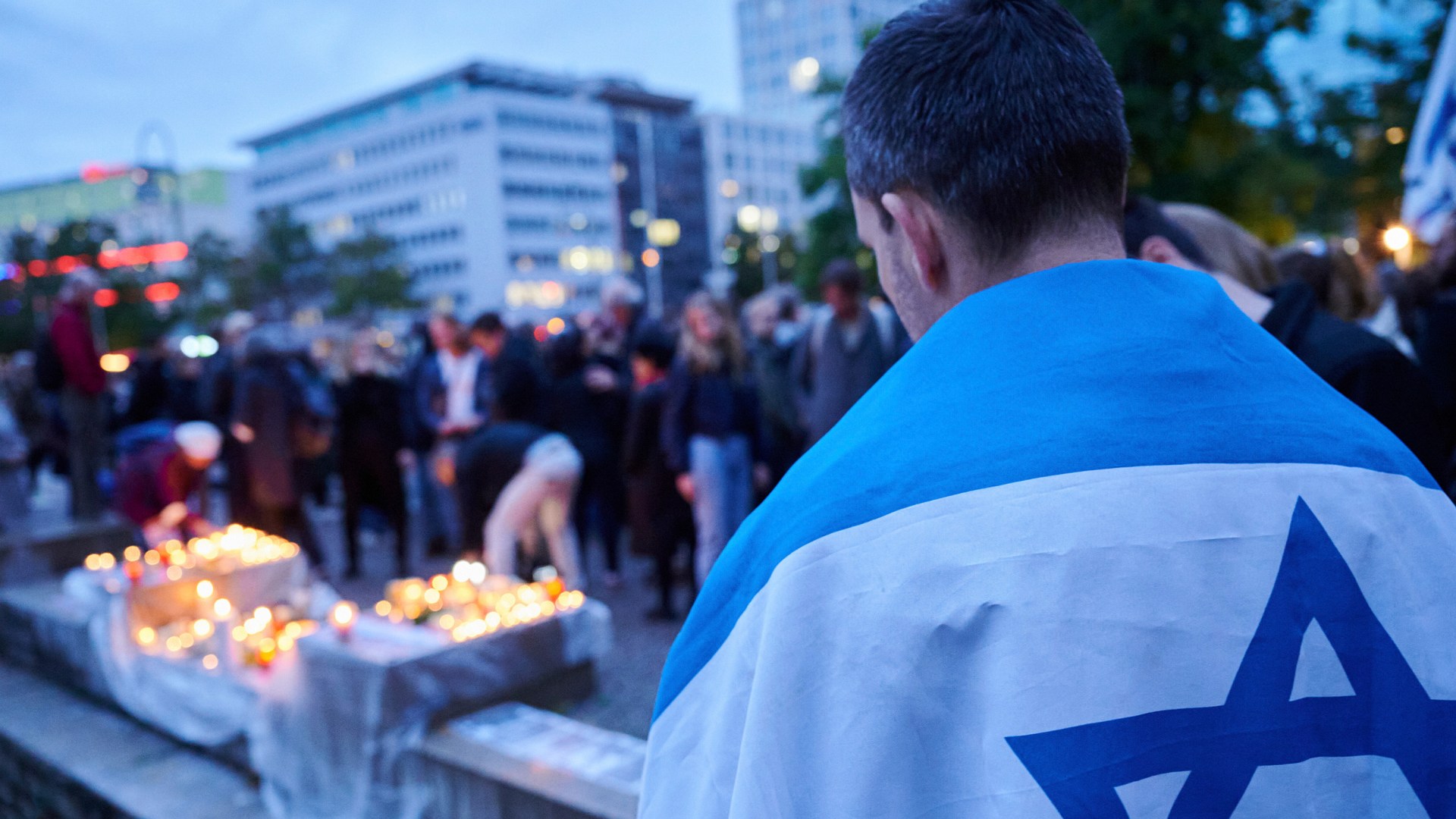
People in Berlin attend an event to commemorate victims of Hamas terror.

People in Berlin attend an event to commemorate victims of Hamas terror.

Christianity Today December 8, 2023
Annette Riedl / AP Images

A Christian friend checked in with me recently, knowing that I am a Messianic Jew. But part of her email dampened my hope for any comfort her note might bring. Her spiritual mentors, she wrote, have said the Israel-Hamas war is God’s judgment for Israel’s waywardness.

I responded heatedly, “If Christians don’t support Israel, well, they can just give back the Jewish Messiah who is mourning for his people right now.”

Had I taken a moment to calm down, I would have said that Christians should refrain from claiming to know the theological meaning behind the brutal massacre of Israelis by Hamas on October 7. “None of us has a full view of the heavenly realm,” I should have said, “or perfect discernment about the spiritual nature of the attacks or the ensuing conflict.” I might have also added that we all need to recall that Yeshua (Jesus) came to save, not to judge: “For God did not send his Son into the world to condemn the world, but to save the world through him” (John 3:17).

My friend’s mentors aren’t the only Christians to suggest that tragedies in Israel are the result of divine judgment. There are many Christians who believe this type of attack is following a biblical pattern of Israel sinning followed by God’s punishment for that disobedience. And they often forget what completes that model: Israel’s repentance and God’s restoration.

Some Christians look beyond current events to proclaim the whole modern State of Israel is unrighteous, and they deny any future biblical relevance to the land. “God’s project in Christ is not the restoration of a kingdom in the Middle East, a political nation,” said Gary M. Burge, New Testament professor, author, and Christian anti-Zionist, in a recent interview. “God’s project in the New Testament is the restoration of all his creation.” Burge’s theology ultimately erases the original land promise to the Jewish people by universalizing it.

Burge is not alone in arguing that the Abrahamic covenant—which includes God granting the land to the Jewish people (Gen. 12:1–3)—is conditional and requires Jewish faithfulness to God. “Fidelity to the covenant is an essential component of receiving the gift of the land,” he said. And for Burge, the Jews in modern-day Israel, whom he sees as mostly non-religious, are not faithful to that covenant. “A secular state is making religious claims on an Old Testament promise,” Burge adds, “and that Old Testament promise requires a religious life.” Burge claims “75 percent” of Israelis are nonreligious. He contends this version of Israel can’t possibly be committed to the covenant of Abraham.

But Burge’s Christian categories of “faithful” and “unfaithful” don’t map onto categories of secular and religious in Israel. In reality, there’s a spectrum of belief in God and religious tradition within “secular” Israeli society that may not be evident by what people wear or whether they attend synagogue—and that’s not to mention the presumptuousness of Burge’s judging the character of an entire people’s spirituality. Moreover, recent statistics in the Jewish Virtual Library indicate that only 44 percent of adult Israelis identify as secular.

While Messianic Jews do believe in an ultimate restoration of all creation, that doesn’t negate God’s promises to Abraham, Isaac, and Jacob, including that of the land of Israel, which we see as unconditional (Gen. 12, 15; Acts 7:4–5; Hebrews 11:9) and eternal (Ps. 105). The Jewish people are exiled numerous times, as described in the Hebrew Scriptures, due to various sins against God. But God always returns them to that same land because, as the apostle Paul states, “God’s gifts and his call are irrevocable” (Rom. 11:29).

I am deeply moved—and I hope Christians like Burge might be as well—by the biblical scene where God ratified his covenant with Abraham regarding the land that he would give him and his descendants: “When the sun had set and darkness had fallen, a smoking firepot with a blazing torch appeared and passed between the pieces” (Gen. 15:17–21).

God alone walked through the pieces of animals to confirm the covenant. And God remains committed throughout history to the promises in that Abrahamic covenant, and layers other covenants such as the Mosaic and Davidic covenants upon that first one. Israel’s failure to meet obligations within the Mosaic covenant does not annul God’s faithfulness in his first contract to Israel through Abraham. Grace and repentance are built into all of God’s covenants with Israel.

For me, like for most Messianic Jews, the Jewish people continue to be God’s chosen people bound by eternal covenant promises. The call to the Gentile nations to join Jews in worshipping the God of Israel does not undo those promises to the Jewish people (Rom. 11:11–12, 25–26), nor does it give non-Jews the right to assess Israel’s relationship with God. The Jewish apostle Paul actually condemns any Gentile Christian pride toward the Jewish people in his letter to the Romans (11:18–20). It is acceptable for Jews, however, to have in-house arguments, as we did in the times of Yeshua; and Christians should leave it to us to evaluate Jewish behavior and our own fidelity to our covenants.

Christians are drawn into the commonwealth of Israel. That gift should lead to gratitude and love for the Jewish people—not criticism in our times of distress. Paul reminds non-Jews of that shared citizenship: “Remember that at that time you were separate from Messiah, excluded from citizenship in Israel and foreigners to the covenants of the promise, without hope and without God in the world” (Eph. 2:12). Recalling this should shape how Christians speak about Israel now.

Gentile Christians should also remember that God works through them to elicit jealousy among Jewish people who have not yet recognized Yeshua as Messiah (Rom. 11:11), so that they too may be drawn to him. Christian judgment of Israelis’ present suffering is not only presumptuous, it will also repel Jewish people from their own Messiah.

So how can Gentile Christians truly comfort Israel now? Messianic Jews hope Christian churches and leaders are fervently praying for Israel, talking about Israel from their pulpits, and learning the history of that holy piece of geography where the Jewish Messiah lived, died, arose, ascended, and will eventually return in the end of days (Zech. 14:4).

As Messianic Jewish theologian Mark Kinzer argues in his book Jerusalem Crucified, Jerusalem Risen—and in a debate in 2020 with theologian N. T. Wright—there’s an enduring significance of this land as the center of a redeemed world. Paul’s ministry strategy was one of continuous return to Jerusalem, Kinzer argues, so the Book of Acts ending in Rome is a cliffhanger that still awaits resolution—a final return to Jerusalem, the future city of the Messiah’s second coming.

For me, the entire context of Christian faith flows from the Jewish world in the Israel of the first century. Israel maintains importance in the present, even with its imperfect politics, and Christian hope will culminate in Israel with Messiah’s return. Jesus can never be severed from the Jewish community he continues to love in the land (and in diaspora).

It is crucial for Christians to vocally confirm the history of the ancient Israelites’ possession of that land and to understand that the promises to the Jewish patriarchs and matriarchs have not been superseded. It’s also incumbent upon Jesus’ followers to uphold that bond between Israel and her God by condemning brutal crimes committed against Israelis and rising global antisemitism.

Messianic Jews also hope that Christians can recognize that all Jews (including Messianic ones) are currently in mourning. The vicious murders of 1,200 Israelis—together with thousands injured and 240 people taken hostage from the south of Israel on that Sabbath almost two months ago—still feel like fresh wounds to our hearts. It is as if each innocent baby, sister, brother, mother, father, and grandparent were part of our immediate family. We are still experiencing a combination of shock, deep sadness, anger, desire for revenge, horror, and helplessness, all molded into one compressed emotion.

In Jewish tradition, we mourn for seven days when someone in our family passes away. It’s called Shiva, which means “seven” in Hebrew—the period of time after the burial when Jewish people sit on unconventionally low chairs as we weep for our deceased loved ones. As Messianic Jews, we aren’t yet ready to rise from those chairs, and we don’t know when our mourning will end, partly because those attacked are still being identified and buried.

There is a time for mourning, as the Book of Ecclesiastes notes wisely (3:4), so please don’t ask us to move on or judge us for being unspiritual because of our ongoing tears. As we continue our lament, we will find moments to pray to God and to praise God for all his promises to Israel and for drawing the nations to himself through the Jewish Messiah.

As a Messianic Jew, I am grateful for Gentile Christians who take courageous stands on behalf of Israel. On one of my regular walks in my neighborhood, I saw a front yard sign in the blue and white Israeli flag colors that read, I Stand with Israel. The people who live there are not Jewish, and this symbol helped to momentarily dispel my fears that have been growing about antisemitism.

My neighbor’s action contrasted with my own thoughts of whether I should remove my mezuzah from my home’s doorpost. The next day, I left a note of thanks in their mailbox.

Right after the initial attacks on Israel, I was invited to attend an evening prayer meeting for Israel at a local church. I jumped at the opportunity to share my thoughts and to engage in prayer with Christians. Some of the Christians at that meeting had decided they were going to bring white roses, a symbol of resistance to Nazis during World War II, to the local Jewish community center to show their support. Among other plans, they would also continue to pray for the hostages taken by Hamas and for the safety of Jews worldwide.

That night, I witnessed and treasured this small group of Christians. They had offered comfort, not judgment.

Deborah Pardo-Kaplan is a religion reporter living in Austin, Texas.

Apple PodcastsDown ArrowDown ArrowDown Arrowarrow_left_altLeft ArrowLeft ArrowRight ArrowRight ArrowRight Arrowarrow_up_altUp ArrowUp ArrowAvailable at Amazoncaret-downCloseCloseEmailEmailExpandExpandExternalExternalFacebookfacebook-squareGiftGiftGooglegoogleGoogle KeephamburgerInstagraminstagram-squareLinkLinklinkedin-squareListenListenListenChristianity TodayCT Creative Studio Logologo_orgMegaphoneMenuMenupausePinterestPlayPlayPocketPodcastRSSRSSSaveSaveSaveSearchSearchsearchSpotifyStitcherTelegramTable of ContentsTable of Contentstwitter-squareWhatsAppXYouTubeYouTube