Ideas

The Orthodox Church Is More Evangelical Than You Think

Correspondent

Interview with Lausanne-affiliated expert discusses who is in the church, the propriety of proselytism, and the example given by Billy Graham in Russia and Romania.

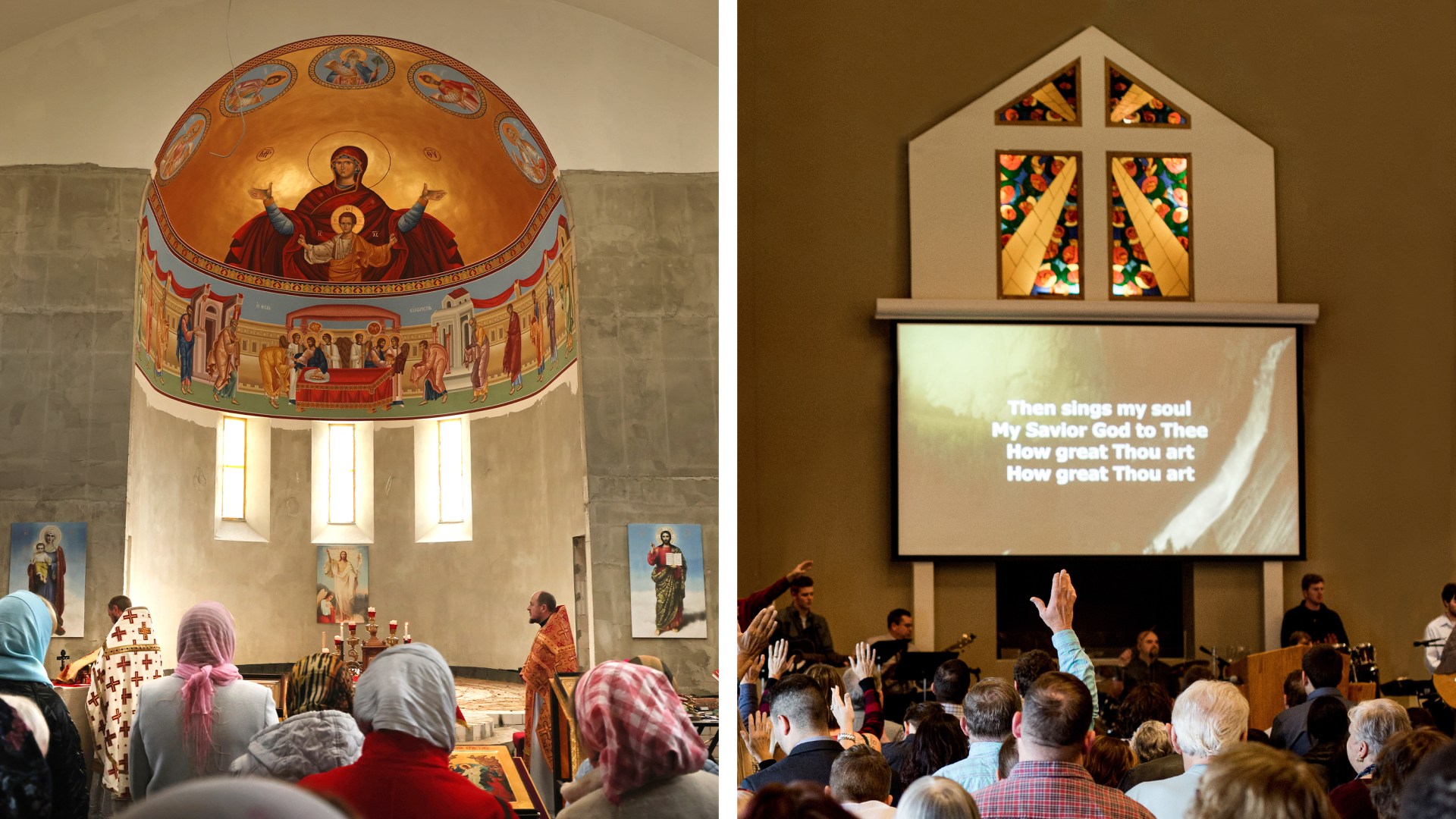
Orthodox Church (left) Evangelical Church (right)

Orthodox Church (left) Evangelical Church (right)

Christianity Today December 1, 2023
Illustration by Christianity Today / Source Images: Getty / Lightstock

Are evangelicals and Orthodox allies in the faith?

While both confess the Nicene Creed, Orthodoxy’s smaller population in the United States remains obscure to most American believers, especially when compared with Catholics. Many think of Orthodoxy as a nominal religion with empty cathedrals in Eastern Europe and Russia.

Yet there is also an awareness of not-insignificant numbers of evangelical converts to Orthodoxy, drawn by its ancient roots and sacramental practice.

Bradley Nassif knows both worlds. Raised in Kansas, where his Lebanese immigrant grandparents helped establish St. Mary’s Antiochian Orthodox Church, his spiritual transformation came through his local congregation, a Billy Graham sermon, and participation in a high school Bible study. But though he remained in his church of origin, he became an academic director at Fuller Seminary and is now professor of New Testament and Orthodox-Protestant dialogue at the California-based Antiochian House of Studies.

Oxford University professor John McGuckin said that Nassif, a leader in the Lausanne-Orthodox Initiative (LOI), is “the leading world expert” on Orthodox-Evangelical dialogue. CT talked with Nassif about his 2021 book, The Evangelical Theology of the Orthodox Church:

You have said, “I am Orthodox, and therefore evangelical.” How does Orthodoxy address the general markers of evangelical faith?

Eastern Orthodoxy embraces the classic Bebbington quadrilateral of biblicism, crucicentrism, conversionism, and activism, but transcends it through a maximalist vision of the Incarnation in its liturgical, sacramental, and spiritual life. The gospel permeates the church—not only about Jesus dying for our sins and the need for personal faith but including the whole story of Jesus from creation to consummation. This implies that the fullness, the catholicity, of the faith is formally present in the Orthodox church. So, yes, I am Orthodox, and therefore evangelical, in an incarnational, Trinitarian, wholistic sense of the word gospel.

What are the most significant theological differences between us?

Many are found in the way we appropriate the past and in our understanding of the nature of the church. Evangelicals and Orthodox share a common interest in Christian history, but the Orthodox are more organically linked to the past than our evangelical brothers and sisters, whose communities are only loosely connected to the fullness of the faith and polity of historic Christianity.

Evangelicals seem unaware that the early church is the Orthodox church. The congregations they meet in the pages of antiquity are treated as if they were an invisible body of believers, instead of a visible community of local Orthodox churches. Those churches shared the same faith and sacraments, led by bishops in communion with each other in apostolic succession, continuing to the present day.

In contrast, evangelicals stress the invisible body of Christ as the basis of unity and seem content to permit the visible disunity that exists in Christianity today. The Orthodox, however, maintain that this is a detrimental counter-witness to the truth of the gospel.

Another critical difference in mindset lies in the hermeneutics of biblical interpretation. We agree on the Bible as the source of divine revelation and the standard by which all claimed Christian belief must be evaluated. But we disagree on the role of the Christian community in testing our exegetical conclusions, in light of the apostolic tradition that has been handed down in the life of the church. The Holy Spirit inspired not only the writing of the Scriptures but also their interpretation.

That difference helps to account for why Orthodox churches have escaped the destructive aspects of liberal Protestant theology that permeate mainline denominations and progressive circles today. A reliance on Holy Tradition keeps biblical interpreters from an idolatrous confidence in their own exegetical conclusions, by testing them against the common faith of the wider Christian community.

Can there yet be an ancient and preserved consensus of error?

Not everything received from the past is of equal value or necessarily true. The Orthodox mind “follows the holy Fathers,” as stated in the preamble of the Chalcedonian Definition (A.D. 451), but it does not merely appeal to the past as if that alone is the source of truth. Antiquity itself is no proof of truth; it may simply be old error! To “follow the holy Fathers” is to embrace not only their witness to the faith, but also their method of theological reasoning.

For example, in the eighth century, the Orthodox world lived over 30 years with the understanding that icons were idolatrous. This decision was passed by bishops at the Council of Hieria but overturned in A.D. 787 by the Seventh Ecumenical Council in Nicaea. In both cases, the theological sources were the same: Scripture, previous councils, and tradition. The difference in outcome is attributed to the guidance of the Holy Spirit, bearing witness over time through reception in the church.

Here we touch upon the mystery of the Orthodox doctrine of the church, which Protestants and Catholics often find hard to understand. Neither Scripture nor pope is the sole criterion of truth. There is an inseparable link between the Holy Spirit living mysteriously in the church and its dogmas, worship, and spiritual life.

A beautiful flower might illustrate the point. Let’s say the roots of the flower represent the church. The church, in turn, connects to a stem, which represents doctrine, and from that doctrinal stem comes a beautiful flower, which is the church’s spiritual and liturgical life. The roots, stem, and flower all belong together.

But to embrace the doctrinal stem of the Nicene or Chalcedonian councils, as evangelicals do, while rejecting the root that produced it and the spiritual flower that blossoms forth from it, does violence to the organic integrity of the flower. It cuts off the stem from both its life-giving roots and spiritual flower. The Orthodox believe the Holy Spirit keeps the whole flower intact, for the life of one part belongs to the life of all.

Evangelicals and Orthodox gather at the June 2023 meeting of the Lausanne-Orthodox Initiative, in Derbyshire, England.Courtesy of Lausanne-Orthodox Initiative
Evangelicals and Orthodox gather at the June 2023 meeting of the Lausanne-Orthodox Initiative, in Derbyshire, England.

Are evangelicals in need of conversion to Orthodoxy?

Conversion is a word that properly refers to the new life given by God when one first becomes a Christian. In this sense, most evangelicals I know are already converted. But the question of changing one’s church affiliation is very personal, and each individual must answer for himself.

Orthodoxy believes that the church on earth must remain visibly united. So where does this leave evangelicals and other Christians who are not visibly united with it? Different Orthodox would answer in different ways.

A more rigorous group says that anyone who is not Orthodox does not belong to the church. Grace may be active in non-Orthodox churches, but they cannot be regarded as members of the church. Therefore, evangelicals, like everyone else, must convert and become Orthodox or risk losing out on salvation.

A more moderate group, however, believes that while there is only one church, there are many ways of being related to it. In this spirit I have no doubt that believing evangelicals are already in the Orthodox church, the body of Christ, even if they are visibly separated. This is not the witness God wants, but if anyone is “in Christ,” they must in some sense be “in the church.” A much fuller spiritual experience, however, can be found in the liturgical and sacramental life of the Orthodox church, for anyone who desires it.

Around the world, how many Orthodox are “therefore evangelical”?

All Orthodox are evangelical in doctrine but not always in practice. Too often, we live in a golden ghetto, surrounded by theological treasures but living in spiritual poverty. That’s the elephant in the room that goes back to at least the fourth century, when Christianity became the official religion of Rome. I’m not saying the union of church and state was inherently wrong, but it had liabilities, which include dead formalism and nominal faith.

The sermons of St. John Chrysostom offer eloquent testimony to the carnal state of the average Christian. Little has changed over the centuries since then. Fortunately, the rise of monasticism in the fourth century saved the integrity of Christianity by preserving the church’s evangelical spirit.

Nonetheless, we must honor the Orthodox for preserving the faith during the harsh persecution and social humiliation suffered under Islamic and Communist rule. But like a spring flower budding after the winter thaw, Orthodox Christianity is undergoing a renaissance in the 21st century.

And spiritually, although Orthodoxy in America shares the same challenge of nominalism that exists in traditional Orthodox lands, it appears more alive due largely to the renewing influence of evangelical converts. In many ways, the Orthodox church in America is in the best spiritual condition it has ever been.

Once it reawakens to the centrality of the gospel, what must the Orthodox church do differently to evangelize its own people?

Orthodoxy cannot nurture its people simply by offering more liturgies, lectures, and “try harder” sermons. Rather, a robust emphasis on the gospel must be made central in every life-giving action of the church—its preaching, liturgical rites, sacraments, missionary outreach, and educational curricula.

This isn’t rocket science; it’s an emphasis on the ABCs of the faith. Spiritual transformation starts at the beginning by renewing our baptismal vows through repentance and faith in Christ as Lord and Savior, relying on the empowerment of the Holy Spirit for Christian living.

Renewal comes to a parish one person at a time, so we begin with ourselves. Leaders and laity alike must ask if we have consciously embraced Jesus’ call to “take up the cross and follow” him (Mark 8:34).

The gift of salvation requires a response. People sometimes need a gentle question about where they stand in relation to Christ. That can happen throughout the liturgical year in sermons, counseling, Bible studies, home visits, or simply over a cup of coffee. Regardless of how it happens, internal evangelism and the call to discipleship are the prescriptions for a vibrant parish.

Is this necessary for their salvation from hell, or only for living the fullness of Christian life?

Only God knows! It depends on where each individual stands in relationship with God. Some think they are Christians just because they are from an Orthodox country; others are religious but lost. Many have been spiritually neglected and need pastoral care. Overall, Orthodox people are quite receptive to the gospel when it is presented clearly by a loving and trusted member of the church.

Just because the gospel is in the church doesn’t mean that our people have understood and appropriated its message. Our mystical teachers, such as St. Symeon (tenth century) and St. Makarios of Egypt (fourth century), remind us of the need for a conscious experience of God in the heart.

While repentance leads to this consciousness, for some the awareness of God’s life in the soul may come suddenly, while for others only gradually as they obey the commandments.

Especially in the Orthodox world, how can evangelicals assist this gospel message?

Evangelicals must first examine their own attitudes and goals. Do they believe Orthodoxy is not true Christianity? Do Orthodox need an evangelical conversion?

Missionaries can further their work in Orthodox lands by first learning as much as they can about the faith and its influence on the cultural heritage.

Monasticism, for example, is at its core the embodiment of Jesus’ call to “take up your cross and follow me” (Luke 9:23). Study the icons and the saints. Read Dostoevsky and listen to Tchaikovsky. Conversations around these topics are also a good way to build bridges with clergy.

Greater success among the Orthodox might come through a reminder of the gospel witness already present within the writings of their own cherished leaders.

Your book notes that evangelicals are sometimes discriminated against in the Orthodox world.

Recognizing the major concern over proselytism by evangelical missionaries in Orthodox lands, the Orthodox also need to understand who evangelicals are. Too often, they are lumped together indiscriminately with sects and cults who reject the divinity of Christ and the Holy Trinity.

I think the Lord would be pleased if more Orthodox leaders could understand the difference between the popular, sometimes less sophisticated forms of evangelicalism that appear on TV or the internet, and the respectable theological heritage of evangelical scholarship—such as that present in LOI.

But with or without an improved mutual understanding in Orthodox countries, faith is best served by protecting the rights of all people to exist without discrimination. Human and religious freedom lie at the heart of the biblical and patristic understanding of the image of God, because the only love worth receiving is a love that is freely given.

What is your hope for the unity of the church?

We are already united in Christ but that unity is imperfect—anything more requires full agreement in faith. But we cannot take Communion together, for example, since we believe so differently about the real presence of Christ in the Eucharist.

I do not believe Orthodox and evangelical Christians will ever become visibly united, and I am fine with that. There are too many differences that must not be minimized for the sake of superficial unity. Our imperfect unity, however, can have a more perfect witness by supporting our mutual proclamation of Christ as Lord and Savior.

We can do this through social action to help the poor, defense of the unborn child and monogamous heterosexual marriage, and the “cooperative evangelism” advocated by Billy Graham. Years ago, high-ranking Orthodox bishops publicly supported his campaigns in Russia and Romania, on the condition that all Orthodox people who came forward to dedicate their lives to Christ would be directed back to an Orthodox church for follow-up.

Together, may God give us such mutual humility and love, for the sake of Christ and his worldwide church.

Amy Julia Becker and Penny going for a walk.

Amy Julia Becker and Penny going for a walk.

Testimony

God Teaches Me Through My Daughter with Down Syndrome

Adults with intellectual disabilities can have robust spiritual lives. Are we learning from them?

Christianity Today November 30, 2023
Photo by Phil Dutton / Courtesy of Amy Julia Becker

Every Sunday afternoon, my daughter and I join a Zoom call with her friend and her friend’s mom, who live a few hours away—for a special time we’ve come to call “God Talk.”

My 17-year-old daughter, Penny, and her 18-year-old friend, Rachel, both have Down syndrome. A while back, Rachel noticed us praying before meals and asked if she could join us. This led to a few conversations about what it looks like to follow Jesus. And eventually, as Rachel’s mother, Ginny, told me a few weeks later, every night Rachel extended her hands and said, “Thank you, God, for having us.”

That’s when the four of us decided to start reading The Jesus Storybook Bible together over Zoom. In our first chat ever, I asked the girls how God sees us—and without hesitation, Rachel said, “God just loves us to pieces.” The truth of God’s love and welcome seemed to sink into her being, as if we had simply given words to something she had subconsciously known all along.

I’m a 46-year-old woman with a master of divinity and credentials as a pastor—and I learn something new every week from reading and praying with Penny and Rachel. They have taught me a more expansive way to encounter God through the Bible.

I think about the time Penny hid her face when we moved from the story of the Crucifixion to the Resurrection because, in her words, she didn’t want to give away “the best part.” Or when we were reading about Jesus asleep in the boat during the storm, Rachel linked the chaos of the sea’s raging waters with Pharaoh in Egypt and the snake in the garden.

At the time, I happened to be listening to a podcast with Tim Mackie, from the BibleProject, who underscored Rachel’s spiritual insight in seeing the snake, Pharoah, and the sea as symbols of chaos.

Mackie mentioned that most westerners do not have highly developed symbolic imaginations. Having grown up and trained in an analytical exegetical framework, I’m familiar with the Bible’s historical context and its hermeneutical and theological truths. Rationalistic thinking both helps and hinders our reading of Scripture. But this approach can miss some of the more intuitive ways to approach Scripture and keep me from making these kinds of connections.

I’m grateful to Penny and Rachel for growing my ability to understand the emotional and symbolic power behind the words on the page.

In the early days of Penny’s life, I remember a friend saying to me, “I can’t wait to see the ministry that Penny will have.” It had not occurred to me that Penny would have a ministry of her own. His words helped me look for her gifts and not just her needs as she grew up.

But “God Talk” with Penny and Rachel has helped me recognize that their spiritual lives in and of themselves are a gift. While I can identify ways and places where these two young women might minister to others, I can also simply receive grace, truth, and wisdom from who they are.

My experience with Penny and Rachel made me wonder about the spiritual lives of other people with intellectual or developmental disabilities. So, I set out to interview several others with Down syndrome, autism, and similar conditions.

Rachel and PennyCourtesy of Amy Julia Becker
Rachel and Penny

I had a brief conversation over the phone with Marcy Lesesne, a 54-year-old woman who lives in Durham, North Carolina. Marcy has ataxia—which, in her case, includes intellectual disability. I had heard that Marcy loves to pray and read the Bible, and I wanted to ask her about it. While I did not receive a coherent story or a portrait of her spiritual experience, Marcy told me pieces of her life: that she had an accident and uses a walker, that she needs to wait on the Lord, that she has not experienced answers to prayer, that she feels anxious, and that she wants healing.

I also met by Zoom with Josh Catlin, a 42-year-old man with a dual diagnosis of Down syndrome and autism. He told me that he feels good when he reads the Bible, and as we talked, Josh read to me from Isaiah and Psalms and the Gospel of Matthew.

That was about the extent of Josh’s description of his own spiritual life, and then his family members helped fill out the rest of the picture. According to his dad, Pete, the only book Josh reads is the Bible, and he reads it daily with devotion and passion. He described walking into Josh’s room and finding him with his hands raised in a posture of worship.

At the end of our call, his brother Scott said, “Josh is the most spiritual person. Not in a pat-the-special-person-on-the-head way.” Scott asked me if I knew the passage from Proverbs 3:5–6 about the one who trusts in the Lord with everything. He continued, “Josh is the personification of that. His paths are straight.”

I began to recognize how tricky it is for me to articulate something true about the spiritual lives of people with intellectual disabilities—and to capture these truths in their own words. Many express themselves with minimal, if any, spoken words. And even among those who could verbally communicate, asking them to reflect and put into words their lived experience over Zoom was nearly impossible. Online interviews were not going to offer me quotable sentences or concise explanations.

I called John Swinton, author of Becoming Friends of Time and theology professor at the University of Aberdeen, who helped me consider the root of this problem. He explained that the difficulty with trying to collect stories like these is that we run the risk of imposing or projecting meaning on the experiences of others. And yet we also run the risk of negating or ignoring those experiences if we do not try to convey them at all.

Swinton suggested that the best way to learn about the spiritual lives of others—especially when they cannot use words to convey their experiences—is to form what he calls “narrative communities.” We may impose or project meaning incorrectly, but we can bear witness together to the life of the Spirit among us when we tell the story of God’s activity in community.

Swinton and other leaders in disability theology also point out that spoken language is not the only way we can communicate our spiritual lives. Paul even writes that the Spirit of God groans without words on our behalf (Rom. 8:26). In what ways might we receive the wordless groans of our fellow humans as an expression of a deep knowledge of God’s Spirit?

I realized that I cannot convey very much about the spiritual lives of Marcy and Josh at least in part because I do not live in community with them. The truth I can offer comes not only from them but also from the people around them who can speak to their lived experience together.

Most of us live in spaces (and worship in churches) sequestered from people with intellectual disabilities. Even within churches who intentionally include people with IDD, they are often placed in special programs rather than welcomed as full participants within the church.

In other words, most of us do not form narrative communities that receive and reflect the gifts and capacities offered by people who are neurodivergent or nonverbal. The problem is not with the limitations of verbal or intellectual expression but with the restriction of our relationships.

I receive the gift of being in community with Penny and Rachel as well as other people with intellectual disabilities who are members of our own local church. Knowing them, as well as watching them grow spiritually, has expanded my awareness of God’s tender care and loving-kindness.

They have offered me simple expressions of faith. They have challenged me to live in love. And they have helped me see that I cannot write about the gift of their spiritual lives unless I know them intimately—a knowledge far deeper than a 30-minute phone or Zoom call can afford.

These types of relationships will happen only as local churches seek out families and individuals affected by disability and “compel them to come in” (Luke 14:23)—with a posture of receptivity and trust that they are equal and crucial members of the body of Christ.

In her sermon on 1 Corinthians 12—the passage where Paul says God has bestowed more honor to the parts of the body that we see as weaker—disability theologian Jill Harshaw speaks to our need to recognize the significance of all members of the body of Christ: “What if we’ve excluded ourselves from a kingdom way of doing church? What if we need [people with disabilities] to include us?”

Jesus anticipates Harshaw’s questions when he is invited to dinner at the home of a “prominent Pharisee” (Luke 14) for what is supposed to be a celebratory meal. As soon as Jesus is seated—among a group of other religious men—he begins to critique everyone present. He tells the other guests that they chose the wrong seats, and he tells the host that he invited the wrong people.

Jesus exhorts the host to invite “the poor, the crippled, the lame, the blind.” He goes on to portray the kingdom of God as a meal in which those who are most likely to be excluded from our religious communities are instead offered an intentional invitation to take a seat at the center of those communities.

The religious elite in Jesus’ day failed to recognize the importance of sharing a Sabbath meal with those who were on the margins of their social groups. Likewise, many believers today fail to recognize the beauty, love, and witness of people with intellectual disabilities in their local churches.

We need these very people at our table. With them and through them, we can all better grasp the expansive welcome of God’s love.

Amy Julia Becker is the author of four books, including her most recent, To Be Made Well: An Invitation to Wholeness, Healing, and Hope.

Church Life

At McLean Bible, Mike Kelsey Is Reimagining the Multiethnic Church

After trials and turmoil, the first Black lead pastor at the DC-area megachurch will be commissioned with a nod to his heritage.

Christianity Today November 30, 2023
Courtesy of McLean Bible Church / Edits by CT

Weeks before his installation as the first Black lead pastor at one of the most influential churches in the Washington, DC, area, Mike Kelsey came across a dissertation written by a distant relative, theologian and social ethicist George D. Kelsey.

His great-great-great-uncle detailed the clashes around race and integration among Southern Baptists half a century ago. A professor at Morehouse College, he wrote about how racism was especially problematic within Christian communities, disrupting the neighborly love that was supposed to draw together the body of Christ.

As the younger Kelsey steps up to lead McLean Bible Church, he represents an exceptional case in today’s US evangelical landscape—perhaps the most prominent example of a Black minister rising to the top position at a historically white megachurch. But he’s also lived through a contemporary version of the faith and justice fights chronicled by his forebear.
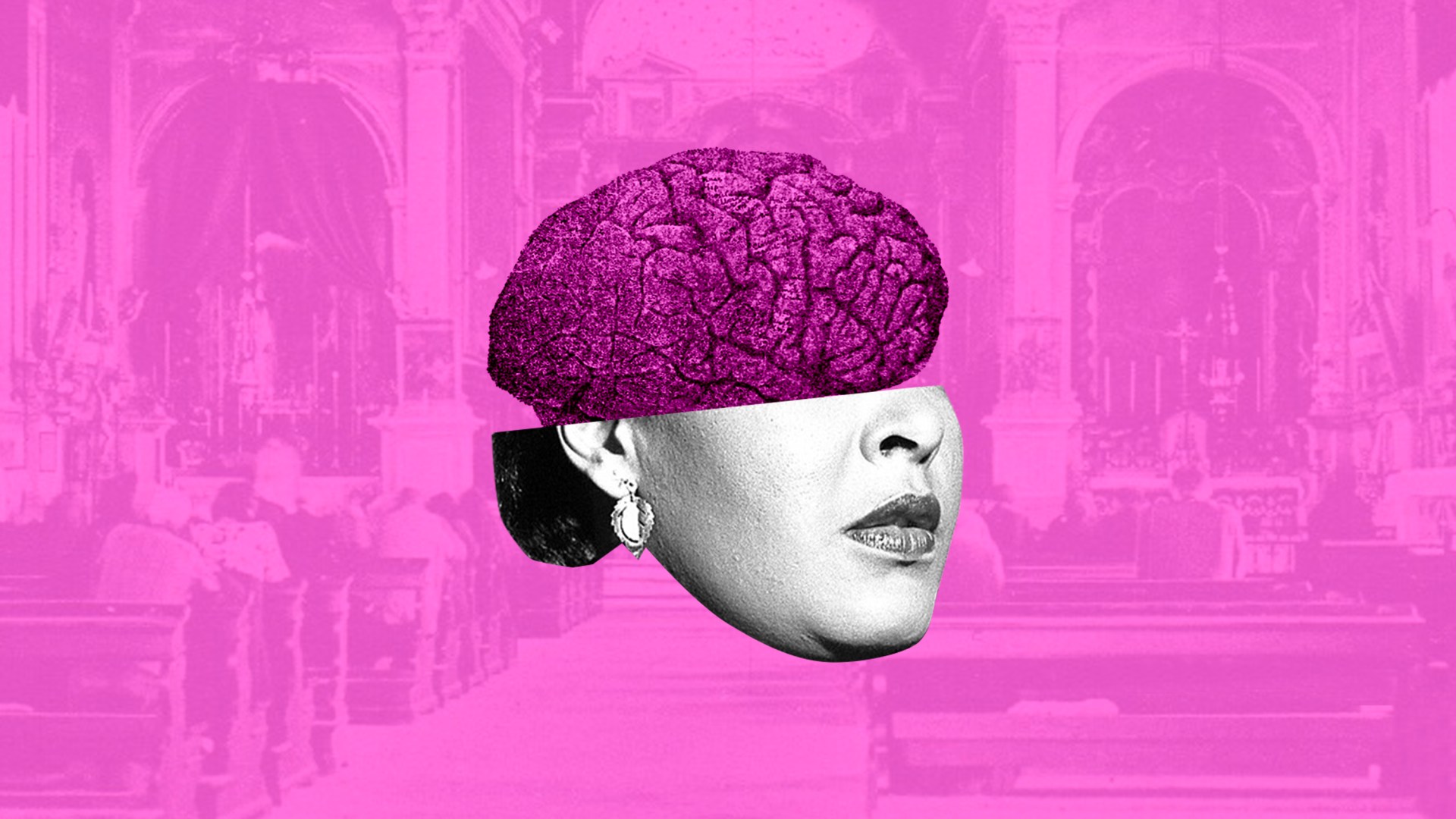
Over Kelsey’s 16 years preaching and pastoring at McLean, he watched the nondenominational congregation and its leadership grow more diverse as DC did. Across five locations, McLean counts members from over a hundred countries now. There were answered prayers, lessons learned, and moments of unity along the way, but it didn’t come easy. His wife remembers that even just a handful of years ago, people were saying Kelsey could never lead the church.
From the start, Kelsey experienced the culture shock of the megachurch setting. He felt the sting of congregants who dismissed Barack Obama’s election to the White House, the pressure of preaching boldly amid a string of high-profile Black deaths and the Black Lives Matter movement, and the tension from internal church conflict spurred on by debates over race and politics during the pandemic.

“I didn’t know any of that coming in. All I saw was the lights and relevance and shorter services, and I didn’t know any of the more substantive benefits and beauties, or challenges and difficulties, and the disconnect” that came with multiethnic ministry, said Kelsey, recalling how he received an email complaint comparing him to Al Sharpton the first time he preached on race at McLean.

“That was my journey of, Oh, there’s something deeper going on here. I’m stepping into a legacy of the Tom Skinners and the Crawford Lorittses and the Tony Evanses and the African American pastors from the Black church who have stepped into predominantly white spaces to be bridge builders.”

At McLean, Kelsey, 41, now shares leadership of the multisite church with pastor David Platt. While both carry the title of lead pastor, Kelsey serves as the primary leader of the team, focusing on reaching the next generation in a secularizing, diversifying context.

Platt—the former president of the Southern Baptist Convention’s International Mission Board who joined McLean as teaching pastor in 2017—will continue to preach and serve, with a particular emphasis on reaching the nations.

In a statement to CT, Platt praised Kelsey’s leadership, preaching, and passion for “spreading the gospel from the next generation to all nations.” He said, “I am a better person and pastor as a result of serving alongside Mike.” The Radical author said McLean is “affirming a new level of plurality of leadership” as it enters a “new chapter.”

The shift in leadership follows a tumultuous few years at McLean, when a faction of the church mounted a lawsuit over a 2021 elder vote, claiming the church was veering from its mission and attempting to “purge conservative members.”

The disagreements at McLean also played out on social media amid the evangelical debates around critical race theory and liberal drift. Critics circulated a clip of Kelsey referring to the impulse to “torch” white people during a podcast discussion about experiencing anger in the aftermath of George Floyd’s killing.

“It was intensely cut out of context, but I wish people could see the whole thing. I use slang in a way that could be easily misunderstood or intensely distorted, but the point I was making is, when it comes to racial issues, a lot of Black people have to fight the urge to be controlled by anger instead of being controlled by the Holy Spirit,” he said. “I know what that feels like, but as a follower of Jesus, Jesus doesn’t give us permission to hold anybody in contempt.”

Kelsey said he learned a lot from that situation, and the church learned a lot from the debates and discussions that came up over the past three and a half years.

“I’m actually very glad that we went through what we went through. It helped us clarify who we are as a church, and we have so much more unity now in a lot of ways because of that,” said Kelsey. “That turbulence actually ended up accelerating what I think God was doing and wanted to do.”

Founded in 1961, McLean Bible Church grew throughout the 1980s, 1990s, and 2000s under the leadership of pastor Lon Solomon. The megachurch added services and moved into larger buildings to accommodate the thousands who showed up on Sundays, including big names from Capitol Hill. The church—at the time, the second-biggest in the state—eventually settled into a complex in Tysons Corner, Virginia.

Back then, Kelsey was sitting in services on the other side of the District, at a Black Baptist church pastored by his father. He grew up knowing a DC that earned its nickname of “Chocolate City.” The Kelseys lived in Prince George’s (“PG”) County, once the richest majority-Black county in the US. He descended from Black ministers on both sides of his family; his father, bishop Michael V. Kelsey Sr., has led New Samaritan Baptist Church in northeast DC for 30 years. His mom’s father had led another local church for 40.

At the University of Maryland, College Park, Kelsey slacked a bit in class as a rhetoric and political culture major but started to follow Jesus during his sophomore year. He joined Alpha Nu Omega, a campus ministry organized in the tradition of Black sororities and fraternities. He had dreamed of being a club owner and concert promoter but instead put on praise productions that packed auditoriums and led dozens of students to profess faith.

“He was attractive. He was popular. He could have been doing a lot of other stuff, honestly, but he was known as the Christian guy on campus,” said Mike Kelsey’s wife, Ashley. They began dating in college.

Mike Kelsey led young adult ministry at his father’s church. Then, his first exposure to Christian life beyond the Black church came when Bishop Kelsey helped organize the 2005 DC Festival put on by the Luis Palau Association. The younger Kelsey ended up working for the international evangelistic ministry for a few years and, through it, connected with McLean, one of the supporting congregations.

In 2005, Ashley Kelsey took a worship and creative arts position with McLean’s young adult ministry, then called Frontline. At the time, she was one of the only women of color working there, yet she wore her hair in an Afro and boldly brought in books on Black history to share with the staff. Two years later, Mike Kelsey joined Frontline, which had 2,500 attendees and 27 staff members.

Within a couple years, McLean launched a campus focused on young adults with Kelsey as its pastor. He went on to serve as campus pastor for its Montgomery County, Maryland, location and as a teaching pastor.

On Sundays these days, Ashley Kelsey leaves for church at 6:30 a.m. to prepare to lead worship at the Maryland location while Mike Kelsey—often donning a hip oversized T-shirt, black-framed glasses, and a megawatt smile—preaches about twice a month from Tysons in Virginia.

Platt and others also preach in rotation. The shared leadership model makes sense for Kelsey, whose ministry colleagues describe him as a humble listener and learner.

“He’s a real peacemaker, someone who loves Christ’s people, and someone who does not seek or need applause,” said Thabiti Anyabwile, who said Kelsey was among the first to welcome him when he moved to DC to pastor Anacostia River Church.
During an interview with CT, Kelsey kept bringing up names of fellow pastors as examples of people he had learned from or went to with questions.

Early on at McLean, he said, a friend of his dad’s connected him with Bryan Loritts, who also had experienced being the first or only Black pastor on staff at a majority white church. Loritts advised him to examine his calling, love his flock, and be willing to see his assumptions about white evangelicals challenged.

Kelsey credits McLean pastor emeritus Solomon and former associate senior pastor Dale Sutherland with letting him be himself and find his voice and the current leadership team with helping him grow more thoughtful and slower to speak. He says he wishes that he had been more explicit in 2020 and 2021 to call out not just the lingering impact of white supremacy but the legacy of a white Christian tradition committed to faithful sacrifice and justice.

“Even when it comes to a multiethnic church,” he said, “I want our white brothers and sisters to [know] your whiteness is not something you have to apologize for. It is something that you bring to the table in all kinds of ways.”

Kelsey also looked to others to help fill in his own blind spots as a leader. He became friends with Maryland pastor Mitchel Lee through a local preaching cohort and turned to Lee to learn about cultural and theological distinctives among Asian American Christians, particularly as anti-Asian sentiment swelled over the pandemic.

They swap stories about their experiences leading megachurches that are growing in diversity. Lee has been lead pastor of Grace Community Church, a congregation of about 3,000, for the past seven years. He talked about the “parallel pruning” he saw at Grace and McLean due to the tensions that arose in 2020. Lee even led his church in prayer for McLean as it went through the process of affirming leadership amid vocal critique.

But Lee also recognized the cultural differences in their experiences in multiethnic ministry.

“Out of a Korean American background, when I became the lead pastor, it was like the evangelical Linsanity. Like, One of our guys made it! Look at this! When Mike got some of his role at McLean, the Black church didn’t receive it that way. It wasn’t like, One of ours made it—it was, Why are you leaving us?” Lee said. “Those were really sacred moments to share. Your experience is very different than mine, but God has called us to such similar spaces.”

Kelsey told CT his involvement at McLean felt like a sore spot at times with his family. He referenced the concept popularized by W. E. B. Du Bois of the “talented tenth,” the idea that college-educated African Americans should dedicate their careers to bettering the Black community.

“A lot of African American pastors and African American people in general have been really taken advantage of,” Kelsey said. “McLean can be seen as Walmart—just takes all the jobs and swoops in.”

Bishop Kelsey said when his son joined the staff at the megachurch, he and his wife talked about it and prayed about it, but their thinking came down to what they saw as the will of God.

“We found a bottom line, and that bottom line was the leading of the Lord,” he said. “It became clear that it was God, that it was not Mike. He did not pursue it. It was God who was opening doors.”

Some Black Christians returned to the Black church as a refuge in 2020, so they wouldn’t have to be in the position of wondering whether their predominantly white congregations would address issues of racial justice or acknowledge their suffering. Ashley Kelsey said she could see why. In pain and frustration, she brought her questions to God in prayer.

While sitting around the kitchen table discussing their future at McLean, her father-in-law asked, “Do you think that the Lord brought you to this place?” Looking back on the trajectory she and her husband had taken, she thought it had to be God.

“Even the way David [Platt] came in and said, ‘I feel like we need to kind of switch roles.’ That was very unexpected,” Ashley Kelsey said. “So I’m like, Okay, Lord … You’ve kept us here. We’ve had a lot of highs and we’ve had some low lows. When I look back on it, I’m thinking, Well, was this what you were doing?

When Bishop Kelsey posted a family photo from his grandkids’ baptism on Instagram a few weeks ago, he tagged both New Samaritan and McLean, a sign of the dual church heritage in his family. When he occasionally drops in on a service to hear his oldest preach, Bishop Kelsey feels like a coach or a proud father sitting on the sidelines—on the edge of his seat, ready to help somehow. But that changed the last time he visited.

“At one point in his message, I remember sitting back as I heard the Lord say, Relax. He’s got this. Enjoy what I am doing through your son,” he said. “You don’t know how good that feels.”

https://www.instagram.com/p/CwdXDP6Kz0X/

And the senior Kelsey will preach at McLean for the first time on Sunday, offering the main charge at his son’s installation service. Kelsey was affirmed by a congregational vote in September (he had been named a lead pastor in 2020 but had to be voted in by the congregation this year after McLean adopted new constitutional requirements). This event represents his commissioning into the new role leading the lead pastor team and is inspired by Black church tradition.

“That’s a really significant moment for our family,” said the younger Kelsey. “But more broadly than that, I think it’s a significant illustration of who we’re trying to become [at McLean]—allowing a prominent DC pastor, an inner city, Black church pastor, to speak authoritatively into our church.”

Bishop Kelsey remembers the pastoral charge given to him three decades ago during a “next-level” weekend of celebration. He plans to offer a similar message to Mike, urging him to be consistent, committed, and consecrated. He said it’s the same charge he would have given his son if he were leading a Black church.
“I know some of the realities of being a Black lead pastor in a context where there hasn’t been one before,” he said, “but those do not exceed the fact that the kingdom is the kingdom.”

Lifeway Research statistics show that about 15 percent of lead pastors will step away over the next decade, the top reasons being a change in calling, church conflict, and burnout. The pressures can be even more acute in multiethnic fellowships like McLean. Though multiethnic ministry has long been a buzzword and aim among church planters, the reality has proven much harder, as scholar Korie Little Edwards wrote.

“Diversity is becoming more of a pronounced and felt need. I am constantly inundated with requests from well-intentioned white leaders to help them find ‘Mike Kelsey.’ On the other hand, things feel far worse. My own father, when he retired from his church in 2021, said things were as bad now racially within the church as they had ever been in his lifetime,” said Bryan Loritts, teaching pastor at The Summit Church in North Carolina.

“The pandemic, 2020 election, Donald Trump, Ahmaud Arbery / Breonna Taylor / George Floyd, outcries of CRT/woke, etc.—if they have not widened the divide, certainly it has made it feel as if the divide has widened.”

The significance of Kelsey’s leadership in the long term may depend on the authority and voice he’s given to lead.

“In the long history of the American church, there are not many examples of African American men taking the helm of predominantly white churches. Mike joins a handful of such servants working across ethnic lines for the greater unity of the body of Christ,” said Anyabwile. “The most optimistic take is that his assuming the role at MBC signals an opportunity for more churches to benefit from team leadership structures and increased practice of shared authority. If it becomes a genuine trend, it could be healing in a thousand ways.”

Even with the stress and nerves of taking on the organizational leadership of a church that draws 5,500 in person and around 30,000 online each week, Kelsey says he’s excited for the opportunity. And he’s praying for deeper unity and discipleship at McLean.

“I would love to have all kinds of Republican and Democrat movers and shakers in our church and have them all feel the equal weight of the call to discipleship. I would love for all kinds of different ethnic groups and racial groups in our church to bring their full selves into our church,” he told CT. “When it comes to politics and race and all those things, we still want to lean into that. We still believe in a diverse, multiethnic church, just not at the expense of truth, justice, and holistic discipleship.”

Correction: Wade Burnett had been named a lead pastor along with Kelsey in 2020 but currently holds the title of executive pastor.

Theology

Long a Tribal Lifeline, Borneo Mission Hospital Now Needs Its Own

As foreign doctors left, funding dropped, and local healthcare improved, Bethesda weighs its future.

Bethesda Health Ministries

Bethesda Health Ministries

Christianity Today November 30, 2023
Courtesy of Paul Geary / Edits by CT

Growing up in the coastal city of Singkawang in Indonesia’s West Kalimantan province, Samuel Junaedi remembers that whenever he got sick, his parents would drive him to Bethesda Health Ministries, a missionary hospital in the remote village of Serukam. The 30-mile journey could take more than two hours due to the rough and bumpy road.

“But when we met with Dr. [Wendell] Geary and his team … we felt as if half of our illnesses were already cured,” the 61-year-old recalls. In a region on the island of Borneo where witch doctors have long required payments in animal sacrifices to heal the sick, the practice of Western medicine was similarly seen as transactional. Those with money, connections, and prestige would get help, while the poor and lowly were out of luck.

Yet Bethesda was different. No matter a patient’s class, ethnicity, or ability to pay, the doctors would see them. “They serve us not only with their expertise but also with their hearts. This has differentiated Bethesda from other health centers,” Junaedi said.

Today, although he has much closer options, Junaedi still drives more than an hour to get to Bethesda when he or his family members suffer from serious illnesses. “I prefer to come to Bethesda because of the professionalism, good communication, and loving care offered by the staff here,” he said.

Despite support from locals like Junaedi, the hospital may need a miracle to continue operating. Founded by the Conservative Baptist Foreign Mission Society (CBFMS) about six decades ago, Bethesda was once a lifeline for members of the indigenous Dayak people as well as residents of major cities in West Kalimantan seeking high-quality care.

Yet things have since changed. The last missionaries left in 2016, and with them much of the donations. Bethesda has also struggled to transition from foreign to completely local management, especially as its remote location has made it difficult to recruit qualified administrators. The construction of new hospitals and government-funded clinics in the region has also led to fewer patients coming through Bethesda’s doors. Today, the hospital’s funds are running out.

Like mission hospitals in many parts of the world, Bethesda is at a crossroads as the world around it changes. The board, staff, and the local community believe there is a continued need for Bethesda in West Kalimantan: A hospital run on Christian principles that treats patients equally and shines as a light in a profession often associated with greed, said Geary’s son Paul, now a doctor and organizational consultant for Bethesda.

“Whether we’re going to survive, I don’t know,” he said. “We might have to close or wind down into something really small. Or the crucible of pressure and debate … might squeeze us out of this fire into something better.”

A legacy in the rainforests of Borneo

In 1964, American missionaries Wendell Geary, his wife Marjorie, and their two young sons (including Paul) first arrived in the remote hamlet of Sungai Betung, home to a few hundred animist Dayaks living in simple wooden homes surrounded by the lush rainforest. Their job: revive a wooden makeshift clinic without electricity that was built in the late ’50s by missionary John Bremen.

CBFMS, now known as WorldVenture, took over the ministry when Bremen left and assigned two American nurses to work there in 1962. Geary’s arrival allowed the clinic to treat patients suffering from more serious illnesses, including those needing surgery. Most of the patients were Dayaks living in scattered hamlets and villages in the Kalimantan hinterlands and nearby towns. Malays and Chinese Indonesians in the area also started to come to the clinic.

Wendell and Margie Geary with their sons, Wendell Jr. and Paul.Courtesy of Paul Geary
Wendell and Margie Geary with their sons, Wendell Jr. and Paul.

With no other medical clinic in a 25-mile radius, patients quickly flooded to the clinic. Some suffered mild illnesses such as skin irritations or fevers, while others came for treatment of more serious problems: malaria, pneumonia, TB, or injuries like those caused by animal attacks. About 50 to 100 patients arrived each day.

To meet the rising demand, the clinic expanded and CBFMS sent more foreign doctors and nurses to help, including American doctors Bert and Beth Ferrell. Marjorie, a nurse, recruited 15 local young adults and taught them the basics of nursing, including how to use medical equipment, care for patients, keep the 20 beds clean, and ensure the kerosene lamps were lit in the evenings.

This training in nursing later grew into a nursing academy at Bethesda, which provided skilled nurses and medical professionals for the clinic and for other health centers in Indonesia.

In the late ’60s, the Gearys and the hospital staff protected 300 Chinese Indonesians in their hospital and nearby church during a Communist guerrilla uprising and a spurt of attacks between the Dayaks and the Chinese, according to Geary’s letters.

In 1974, Bethesda moved to Serukam, a neighboring village not much larger than Sungai Betung. CBFMS built a full hospital with 100 beds and its own electricity and water supply. The facilities included several simple houses for doctors and staff and dormitories for paramedics. They also built an airstrip next to the hospital where light planes operated by Mission Aviation Fellowship could transport patients for emergency treatment.

‘Not even mentioned on the map’

Since the 1980s, Indonesian doctors have joined the mission and have gradually replaced foreign doctors who have been increasingly barred from working in the health sector by the Indonesian government. At the same time, Bethesda started to handover ownership from foreigners to a board made up of Christian Indonesians.

Sri Sjamsudewi, from Sumatra, was the first Indonesian doctor to join the hospital in 1982. “My friends scolded me as crazy when I decided to join Bethesda,” she recalled. “They could not understand why I wanted to work in a place that was not even mentioned on the map.”

Sjamsudewi ended up working at Bethesda for 31 years until she moved to Singkawang in 2013. During her time at Bethesda, her faith in Christ grew as she saw God miraculously provide for both her big and small needs. There was the time Geary was unavailable and she had to operate on a man whose liver and lung tissue had been punctured by a buck’s antler, a procedure she had never done before. With a prayer on her lips, she swiftly cleaned and treated the injuries and the man recovered.

Another time, while assisting Geary in an extremely high-risk emergency operation, they miraculously found a tube that exactly matched the severely damaged abdominal aorta they needed to replace.

Yet God also answered much smaller prayers. She remembers how, shortly after joining Bethesda, she prayed to God for some practical needs: a thermos and an alarm clock. A few days later, the wife of one of her patients dropped off a gift. Inside was a thermos and an alarm clock.

Many Indonesian doctors have since followed Sjamsudewi’s path, joining Bethesda and working under the mentorship of Geary. They have gone on to specialize in fields such as surgery, obstetrics and gynecology, radiology, and oncology, and now serve in hospitals across the country. Geary also inspired Willy Ken from the Dayak Iban subtribe to pursue medicine. He became the first doctor from his community and served as Bethesda’s director in the ’90s.

Beyond medical care, Geary also shared the gospel with patients and preached at the hospital’s church. In 2012, Geary and Marjorie moved back to the United States after nearly five decades in West Kalimantan. Geary passed away in 2019 and Marjorie earlier this year.

Bethesda’s financial woes

Due to the hospital’s remote location, Paul thought that the most difficult part of the transition would be finding doctors and nurses. But instead, they found it even harder to staff the hospital’s administrators, accountants, managers, and IT department. The lack of good governance at Bethesda meant that it was unprepared to handle the government health policy changes, the steep drop in donations, and the dwindling of patients.

When the Gearys left, foreign donations to the hospital left with them, Paul said. Today it makes up less than 10 percent of Bethesda’s revenue. About three-quarters of the revenue comes from patients with Indonesian health insurance, but the number of patients coming to Bethesda has also decreased. This is because of the wider implementation of the country’s health insurance system that requires patients to get a referral from community-level clinics before they can see specialists at Bethesda. At the same time, some of the bigger cities have opened their own new hospitals.

Dewi Citra Puspita, the director of Bethesda, noted that Bethesda has faced serious financial problems for years and the COVID-19 pandemic has exacerbated the problem.

Paul and his family visiting local friendsCourtesy of Paul Geary
Paul and his family visiting local friends

“When COVID-19 hit this province, we decided to open isolation wards to treat patients suffering from the virus,” said Puspita. “The 20-bed ward was almost always full during the peak of the pandemic as there were no other isolation centers near here.”

The virus spread to the hospital’s doctors and paramedics, nearly paralyzing the hospital’s services. Yet even with limited staff, “we were able to substantially contribute to the treatment and curing of the COVID patients,” she noted.

Because the hospital received very few non-COVID-19 patients during the pandemic, their revenue dropped even further. Yet the hospital was able to keep its doors open thanks to special funding allocated by the government for health centers treating COVID-19 patients. Paul estimated that the funding would only last until the end of this year.

In addition, Bethesda has struggled to find a full-time internal medicine physician. Currently Bethesda only has a part-time internist practicing only once or twice a week. This limits its service and decreases the number of patients it can see. The average bed occupancy at Bethesda hovers at less than 20 percent.

Bethesda’s Uncertain Future

Today, Bethesda is at a crossroads. Paul took an extended leave from his practice in Minnesota to spend more time in Serukam during this transitional period. He held discussions and informal surveys with members of Bethesda’s board, doctors, paramedics, managers, and local community representatives to figure out what to do next. He also reached out to a consulting firm in West Java with experience in hospital development and management.

Nearly everyone believes Bethesda should continue serving the community, Paul said. Yet they acknowledge that it would require significant reforms, including a shift to a missional hospital model that serves a mix of middle-class and poor patients so that it can increase salary levels and stay sustainable. Bethesda board member Francisca Badudu, an oncologist in Bandung, West Java, noted that the hospital may need to relocate to a more populated city.

“But the hospital should firmly continue upholding its vision and mission to witness the love of Christ,” said Badudu, who served in Serukam in the 1980s and held the position of chairperson of its board until recently.

To resolve some of Bethesda’s governance issues, Paul is hoping that Bethesda can open an office in a larger city to recruit highly skilled people to manage the hospital remotely. He’s also looking to find more qualified people to join the hospital’s board—initially, the board was made up of rural farmers or pastors with no experience running a large hospital. Today about half of the board has the professional qualifications for their position.

The hospital has also found potential financial supporters in the people it has served. One businessman in Jakarta, who was born in West Kalimantan, told Paul that he was keen to support the hospital if it has any major plans in the future. The man had often heard his parents speak fondly about Bethesda’s ministry.

Junaedi and his family are deeply grateful that God brought Geary and Marjorie to the jungles of West Kalimantan.

“I just could not fathom why they agreed to come to such a remote place like this,” he said. “The only answer behind it must be their genuine and unreserved love for God.”

“And the fruits of their obedience are just amazing,” he said. “The Lord has marvelously blessed their ministries through Bethesda.”

Additional reporting by Angela Lu Fulton.

Church Life

Netflix’s ‘Leo’ Is About a Talking Lizard—and Learning from Your Elders

Adam Sandler’s new kids’ movie is an entertaining musical with an unlikely lesson in intergenerational discipleship.

Christianity Today November 30, 2023
Courtesy of Netflix / © 2023 Netflix, Inc.

A recent conversation in my Bible study turned to how we interact with people who are different from us. I assumed we’d talk about differences of ethnicity or religion, but the discussion focused on generational differences instead. The group is all recent college graduates, and we considered how we talk about boomers and millennials—but also how they talk about us as members of Gen Z.

There are tensions in those differences, but believers of older generations have also discipled and prayed for us. And soon after that conversation, I was reminded again of the deep value of those relationships in a place I least expected: Adam Sandler’s new Netflix kids’ movie, Leo.

Leo centers on a class pet lizard (voiced by Sandler) who suddenly learns he has just one year left to live. The realization forces him to consider what he wants to do with his remaining time, and his initial idea is to escape the classroom and explore the world. His bucket list includes hunting a fly, seeing the Everglades, and showing his moves to a lady lizard.

Leo’s escape plans are thwarted when the teacher decides he’ll be sent home with a different student each weekend. Soon, he finds himself less focused on flies and ladies and more interested in counseling the kids in his class, talking them through social dynamics, grief, and even early puberty.

Some of this happens in song—Leo is an entertaining musical with songs both satirical and thoughtful. The animation style varies throughout the film, distinguishing flashbacks and hypotheticals from the primary narrative. (A family member of mine was an artist on the film, but that relationship did not influence this review.) For younger viewers, the plot is easy to follow—a more straightforward storyline than many children’s films released in the past few years.

What’s also unusual is the decision to not make the main character a child or young adult. There are exceptions—most notably Pixar’s Up—but children’s films often allow kids to see themselves in the protagonist. Children may identify with one or more of the students Leo gets to know (so may adults, for that matter). But centering the film on the aging Leo pushes even young children to consider a fresh perspective: How are we spending our limited time? And how are we relating across generational lines in our own lives?

Leo eventually makes the decision to invest in the younger generation instead of chasing adventure. He spends time listening, consoling, and loving the students. Were Leo not a talking lizard and Leo not an Adam Sandler movie, we might even say he disciples them.

In the process, Leo models not only the importance of intergenerational friendships in a historically lonely time but also the importance of their mutuality. Younger people owe respect to elders (1 Pet. 5:5) and should heed their wisdom (Titus 2:4–8), but we also need space to dialogue and ask questions without fear of judgment or rejection. Young and old alike need real friendship in which each side can graciously help and learn from the other, like Naomi and Ruth, Moses and Joshua, Paul and Timothy.

At one point, Leo sings one student, Mia, a lullaby about how pathetic it is to cry. At first the scene rubbed me the wrong way, but Mia politely chuckles, pulls out a science book, and explains that crying releases endorphins and can help you feel better. Later in the film, when Leo is moved to tears, he turns to Mia and acknowledges that she has helped him just as he helped her. “You’re right about the endorphins,” he says. “It really feels awesome.”

The writer of Ecclesiastes understood how this works long before Leo did: “Two are better than one, because they have a good return for their labor: If either of them falls down, one can help the other up” (4:9–10). In friendship, we are uniquely able to “consider how we may spur one another on toward love and good deeds, not giving up meeting together, as some are in the habit of doing, but encouraging one another—and all the more as you see the Day approaching” (Heb. 10:24–25).

This kind of intimate counsel and mutual support can be difficult across generational lines. But that difficulty shouldn’t discourage us. Like every generation of young people before us, Gen Z needs and wants to hear our elders’ stories. We want to be discipled by you, to “come alongside and participate in a thousand situations,” as David Brooks puts it in The Second Mountain. We want to learn from you, and maybe, sometimes, teach you something too.

Leo’s bond with his fifth-grade class is transformational for lizard and students alike. He gains companionship, purpose, and new energy for life. And they learn to love him, ultimately giving up a long-expected treat to instead rescue their friend.

At the end of the film, Leo breaks the fourth wall, telling viewers to find a “Leo,” an older mentor, of their own. “They are ready to listen,” he says. “I promise they will make you feel better.” So they will. But among Christians, we are promised something deeper and longer-lasting than an improved mood: Our friendships across generations can help us in our journeys as followers of Christ.

Mia Staub is the content manager at Christianity Today.

Church Life

Chinese Christians Use Zoom for Church. Their Government Is Making That Harder.

Pastors are looking to new options as technical difficulties plague their go-to video conferencing platform.

Christianity Today November 30, 2023
Illustration by Christianity Today / Source Images: Getty / Unsplash

On a hot night in August, Yong Shao, a small group leader of a house church in a major city in northern China, was about to start the weekly Zoom Bible study when he started receiving a barrage of messages from his small group members with an unexpected problem: Zoom wasn’t working for them.

An IT professional, Yong went into troubleshooting mode. He suggested they update the Zoom app and switch to using cellphone data instead of Wi-Fi. In the past, these tricks worked when Zoom was down—but this time, nothing. As a backup, they decided to switch to an audio-only group call on WeChat, which Yong’s church typically avoided due to government surveillance and censorship on the app. (CT has changed all names of people in China in this article due to security concerns).

Thankfully, the group didn’t face any interruption or abrupt termination even as they mentioned sensitive religious words like Christ and eternal life. Yet the app limited the number of participants to 15 people, so some were unable to join, and the group’s worship leader was unable to share the audio of the worship songs they planned to sing.

Since that night, Yong and the small group have continued to face problems with Zoom and have no choice but to continue to use WeChat.

Other Christian ministries in China have faced similar issues using Zoom in the past three months, according to interviews CT conducted with nine Chinese church leaders and ministry workers. While the company has not made any official announcement of being kicked out of China (Zoom’s service status website states it is operational in China), users on Reddit and Zoom’s website have also complained about the outage as well. Zoom did not respond to CT’s request to comment.

With a number of tech companies banned in China—including Meta, X (formerly Twitter), and Google—Zoom had become a lifeline for house churches turning to online gatherings during the pandemic and beyond. Not only is the app user-friendly, it is considered relatively safe for unregistered churches who want to keep their communications free from government monitoring (although the company agreed to suppress sensitive speech in order to remain in China). While WeChat has been known to cut off conversations or delete messages with sensitive terms, Christians haven’t faced these problems with Zoom.

The full scope of the issue is still unknown. Some have said they found that Zoom accounts set up outside of China within the last year now no longer work in China. Some found that free accounts were unable to join Zoom meetings. Others wonder if the technical difficulties could be the result of the app complying with regional regulations.

Still, amid an ever-changing climate for Christians, house churches have learned to be flexible in adjusting to new modes of worship. If Zoom no longer works, they’ll find other ways to gather and worship God, whether that’s using a different video conferencing platform, downloading virtual private networks (VPNs) to circumvent China’s “Great Firewall,” or only meeting in person.

Zoom’s Challenges in China

Zoom, an American company with a sizable development team in China, is not without concern for Chinese Christians. After Chinese authorities blocked Zoom in 2019 claiming the company wasn’t doing enough to suppress anti-government speech, CEO Eric Yuan visited China and agreed to monitor conversations on topics the Chinese Communist Party found sensitive, according to court documents uncovered by CyberScoop. After that, Zoom’s service resumed in China.

Evidence of that monitoring came in 2020, when the company shut down Zoom vigils on the anniversary of the Tiananmen Square massacre—one of the most sensitive historical events in China—and suspended the accounts of overseas dissidents at the request of Chinese authorities.

Zoom’s annual report filed with the US Securities and Exchange Commission expressed the risk of working in China: “The Chinese government has at times turned off our service in China without warning and requested that we take certain steps prior to restoring our service, such as designating an in-house contact for law enforcement requests and transferring China-based user data housed in the United States to a data center in China.”

Since August 2020, users in China have been unable to buy products directly from Zoom. Instead they need to purchase services through local third-party partners. Some Christians concerned about government surveillance responded by purchasing Zoom licenses in the US to use in China.

Still, Zoom has become an important tool for churches. Jeremy Liu, a minister in a small city in northern China, said that besides Bible study, his church uses Zoom for livestreaming Sunday worship, online devotionals, and discipleship training on topics like marriage, parenting, and mental health. When the COVID-19 lockdown began, his congregation divided into smaller groups and started using Zoom for all of its meetings. One benefit of the online meetings was that it widened the reach of Liu’s church: “It allowed some of the Christians who live in the countryside surrounding the city and some who are elderly or sick to participate.”

Yet last month, Liu’s church was also unable to log into Zoom. Liu, who also has some background in IT, was eventually able to get Zoom to work but only after spending a large sum of the church’s modest budget to purchase a specific software. (Liu did not share the specifics for fear that it might “give the Chinese government ideas and help their censorship.”)

Solomon Li, an overseas ministry leader to urban house churches, has heard widespread complaints about Zoom in the past few months. “I think it’s part of the Great Firewall in China, and also China is forcing Zoom to comply with some local laws,” he said. “Zoom is becoming more and more difficult for local churches and organizations to use, no doubt about it.”

That’s been the experience of Sarah Cheng, who works at a seminary in eastern China. She said that since August, 18 of the 20 Zoom licenses her team had purchased for the seminary and the house church associated with it had been inactivated. (By October, the remaining two also stopped working.)

Cheng said they had spent $2,000 buying the one-year licenses in the US in May. When she called Zoom, the company said their activity had violated local laws and the American version of Zoom was not allowed in China. Zoom also refused to refund the nine remaining months left on the license.

Recently, Cheng noted that Chinese users of the free version of Zoom have received error messages when they try to join Zoom meetings set up by foreign accounts. She believes that the Chinese government is trying to force locals to use third-party partners, which comes with greater risks. “The tradeoff is everything you record, who joins the meeting, that data will be stored in China,” Cheng said. “To us, that’s very dangerous.”

Only Zoom’s business accounts (which require users to buy at least 10 licenses) work in China. Now, the seminary largely uses Webex, a conference platform that is not as user-friendly as Zoom, especially for recording or setting up meetings.

In-person-only churches

Not all house churches use Zoom or other online conferencing apps. Some even intentionally avoid meeting online. Pastor Shi Ming in Shanghai said his church used Zoom during the COVID-19 lockdown, but they have stopped since February when they resumed in-person meetings. Their reasoning was more practical than security-driven: “As long as Zoom is permitted, people would find excuses not to come to the in-person church meetings,” Shi said.

To prepare for future tech bans, Yong, the small group leader, also believes churches need to rely less on technology. Instead, pastors and church leaders should “carry out offline pastoral care as much as possible, even if the number of people who can gather together is small,” Yong said. “Pastors should put more time and energy into visiting church members in person as much as possible to take care of every believer.”

Aaron Zhao, the pastor of a house church in a big city in central China, agrees and noted that his church does not livestream their Sunday worship on Zoom. However, his congregation still uses the video conferencing app for online prayer meetings. When they do, “more and more people have told us that it has become impossible to join the online meeting. Sometimes they cannot enter the Zoom meeting, sometimes there is no sound or video.” Because they do not use Zoom often, this has made only a small impact on their church life.

“If one day Zoom is eventually banned completely, we will switch to other online conference tools,” Zhao said. Yet he noted that they would not use Chinese apps like Tencent’s VooV or Alibaba’s DingTalk, as those are known to be tightly monitored by the government. Instead, they would need to use foreign apps that may need a VPN to access.

Debate over VPNs

House churches have different stances on whether or not they encourage their congregants to use VPNs, which are illegal in China. In some rare cases, the government has fined and arrested VPN users.

On one hand, churches like Zhao’s encourage the use of VPNs. He said it helped the church “communicate without barriers and avoid censorship.” In addition, it allows “believers to have more sources of information and listen to both sides of the news story so that they will not be brainwashed by the Communist Party–controlled domestic media.”

On the other hand, Liu’s church does not encourage its members to use VPNs, even if he uses one personally. That’s because most of his church members are “older and less educated people for whom the technique is too difficult … and VPN tools that normally can only be purchased from the black market have their own safety risks,” including malware, he said.

Sayah Tu, a church leader on the east coast of China, has similar reservations about using VPNs. But he believes that it may become inevitable for house churches and fellowships to use VPNs to access needed Christian resources.

In the past few years, the government has blocked online Christian websites and WeChat accounts while shutting down independent Christian publishers.

“I hope that Christians in China … would not always be limited by the Great Firewall for knowledge and education, but will learn more about the outside world and continue to have a forward-looking vision,” Tu said. He believes that being aware of the true situation in China through foreign sources helps Christians prepare for future challenges their ministry faces.

Yet as the government severs Chinese people’s access to the outside world, the church needs to focus not only on day-to-day operations but also on how China’s current situation presents “an opportunity for better discipleship of the congregation.”

“There may be a day when no tool can climb over the Great Firewall and the Chinese network will become a closed intranet,” Tu said. “When that happens, it seems to me that the help that Christians outside the Great Firewall can provide is limited. So, it is more important that Christians in China can experience spiritual renewal under the current circumstances of persecution.”

Ideas

The Pink Scandal of the Evangelical Mind

Contributor

The Evangelical Theological Society has its first female president. But what about intellectual life for women in the pews?

Christianity Today November 29, 2023
Illustration by Mallory Rentsch / Source Images: WikiMedia Commons

The scandal of the evangelical mind is pink.

Or to put it less dramatically, there’s another scandal of the evangelical mind—beyond the widely recognized one, introduced by Mark Noll’s landmark book and rightly the topic of conversation for 30 years since—that has yet to receive the attention it requires. This is the scandal of the intellectual life of Christian women, and it is only becoming more acute, even alongside milestones like the election of the first female president of the Evangelical Theological Society (ETS).

After all, the conversation about women in the ETS, while significant, pertains to very few women—those in academia and, therefore, in attendance at this kind of conference. But what about the vast majority of Christian women, those whose primary calling is outside the ivory tower?

It would be easy to turn this conversation into a lament over the doors closed to talented women scholars who would have made excellent academics, had that path been open for them. We can consider Dorothy Sayers as a particularly famous example. She solved her own scandal of the evangelical mind with a brilliant intellectual career outside of academia. She also found herself in a lamentable situation where she felt forced to choose this career over motherhood.

Still, her story reminds us that at any point in world history, only the tiniest fraction of Christian women could be academics. The average woman had to figure out a different way of loving God with all her mind.

What I have not seen acknowledged sufficiently to date is this important reality: Women, whether married or not, mothers or not, face a different intellectual scandal than men. Yes, God commands all of us to love him with our minds as well as our hearts, souls, and strengths (Luke 10:27). But this can mean something different for women than it does for men.

The reasons for these differences are particularly obvious and embodied for mothers, who can spend approximately 1,800 hours breastfeeding a baby in the first year of life—a schedule with enormous ramifications on one’s intellectual and other pursuits. But breastfeeding mothers aren’t the only women whose Christian intellectual life will almost certainly look different from that of men in otherwise similar circumstances. Yet discussions of the “scandal of the evangelical mind” have been decidedly masculine, as have the suggested solutions.

Intellectual labor has traditionally relied on ample support staff, which historically was heavily gendered. The one doing the intellectual labor was the man, while those providing the necessary support—housework and childcare, but also secretarial work and research assistance—were women. Theologian Karl Barth, who had a wife and a live-in secretary (and likely mistress), is an extreme example of this phenomenon at work. He is, nevertheless, a reminder of the human costs of impressive intellectual output.

This raises the following question: How might evangelical women today, those who are not ETS card–carrying academics, pursue a fruitful and satisfying life of the mind that brings us to know God more deeply? I have three recommendations to make in brief, each for a different audience and moving in order of concentric circles, from the personal level to the local church to evangelical culture at large.

First, for women like me, who hunger for intellectual community but are not part of traditional academia, perhaps the most important advice I can give is this: Find a network of like-minded Christian women whose cultivation of the life of the mind will have practical similarities to your own.

There’s good reason the Inklings, that famous group of writers that included C. S. Lewis and J. R. R. Tolkien, continue to fascinate so many of us: It allowed literary giants to influence each other’s writing, read works in progress to each other, and generally cheer each other on. (Well, the last part was true most of the time, at least—except when Tolkien hated Lewis’s Narnia books.)

Of course, the Inklings were a group of male academics who met in a local pub. (Sayers, notably, wasn’t included, though she was a contemporary, a writer, and a friend of Lewis.) But their success shows how dearly those of us pursuing creative intellectual endeavors need community to flourish. For most women, especially for mothers, such community will probably not look like the gatherings of the Inklings. I can’t even manage a coffee shop meeting with anyone for longer than 20 minutes. (Writing at Burger King, however, is a different story—highly recommend.)

In my case, I haven’t found this intellectual network locally, but it organically found me, just as much as I found it, through what was then called Twitter. It’s there that I have connected with several other Christian homeschooling moms who are readers and writers in the margins of their days.

This informal community has allowed us to celebrate every achievement with full knowledge of what it takes to usher an essay or a book to completion with little to no childcare. There is something uniquely encouraging, it turns out, in knowing that you are not alone in your intellectual pursuits.

If you are a poet or writer, find Christian women who write on similar topics. If you are an artist, find other female Christian artists. If you are a musician, find other Christian women who are musicians as well. We can bemoan the disconnected nature of our lives in this digital age, but even tinned fruit is better than nothing.

However, women should not be solely responsible for cultivating these networks and structures necessary for pursuing a theologically robust life of the mind. And so my second piece of advice here is an exhortation to pastors: Encourage the flourishing of women’s life of the mind in your church.

This could look like making sure there are Bible studies or other book studies for women during regular class time slots. Schedule them with your specific congregants in mind: Is there a time when homeschooling moms can attend? What about women working nine to five—or the less predictable hours of service or medical work? What about single mothers? Prioritize offering childcare.

These classes could also be less study-focused and open to women outside of the congregation. In her memoir, All My Knotted-Up Life, the famed women’s Bible teacher Beth Moore describes using her aerobics classes at church as a ministry in the early 1980s. We can rejoice that the aerobics trend is safely dead and buried in all its Lycra-clad ignominy, but we shouldn’t overlook this important point: Moore ultimately saw all classes she taught as a way to teach about Jesus, advancing women’s life of the mind alongside the health of the body.

One caveat must be noted: There’s a danger such gatherings will become primarily social occasions. Half a dozen years ago, when my second child was a baby, I wanted to join a local Mothers of Preschoolers (MOPS) chapter. I dropped out upon learning that a significant portion of the time at each meeting would be devoted to a craft. I hate crafts with every fiber of my non-crafty being, and I was disappointed that this set-aside time each week, which could have been devoted to something intellectual, was being spent on something decidedly not of the mind.

In retrospect, I should have had a better attitude, and of course socializing has its place. Still, I’ve heard plenty of complaints from other women over the years about the intellectually anemic fare that is too often offered in women’s groups—even women’s Bible studies. I suspect Christian women want to engage in intellectually rigorous study and discussion far more than churchy stereotypes suggest.

This observation connects to my third and final point, which is an exhortation to a more serious change of culture: Evangelicals, just like the rest of Americans today, must recognize that motherhood itself is an intellectually rigorous activity that benefits from—and, really, requires—a robust life of the mind.

Perhaps evangelical culture is suffering from the residual weight of disgraced minister Bill Gothard’s reported advice that college is wasted on women, or maybe, with Americans more broadly, we’re under the influence of the modern professionalization of every aspect of life, including children’s education. Whatever the cause, it seems that too many Americans today find traditional women’s activities, like motherhood and homemaking, to be intellectually worthless.

In a recent panel discussion on motherhood and creative activity, Catholic writer and editor Haley Stewart recalls being told—by a female academic, no less—that motherhood was nothing short of intellectual drudgery, and that “a dog could take care” of Stewart’s 18-month-old.

As a homeschooling mom with a PhD, I beg to differ. And I’m not alone among mothers with advanced degrees who see parenting and, in some cases, homeschooling as beautifully intellectual pursuits. We not only get to teach our children what we know, we also get to cultivate daily curiosity through learning together.

Nor am I alone among Christian women—whether mothers and not, working both in and out of those traditionally female activities—who hunger for more intellectual conversations and more theological instruction than is readily available. Ultimately, we are all theologians, still called to do what the women at the tomb were called to do in Mark 16: Go forth and proclaim the risen Messiah to all who have ears to hear.

Nadya Williams is the author of Cultural Christians in the Early Church. Her next book, Priceless, is under contract with IVP Academic. She is book review editor for Current, where she also edits The Arena blog.

Culture

Have Yourself a Bluesy/Lo-Fi/Choral/Global Little Christmas

CT picks 7 new holiday albums to add to your favorites.

Christianity Today November 29, 2023
Illustration by Elizabeth Kaye / Source Images: Unsplash, Getty Images

The biggest holiday music release of the season has been Cher’s new album, Christmas, featuring guests like Stevie Wonder (whose charming rendition of “What Christmas Means to Me” deserves a place on your Christmas playlist).

But this year’s crop of new Christmas music from Christian artists offers more than covers of the old standards. There are thoughtful folk ballads, carols sung over lo-fi beats, and choral arrangements with vibrant brass accompaniment. As you celebrate, prepare, wait, and pray this season, the latest songs from musicians on this list might make apt additions to your seasonal soundtrack.

As usual, I’m having a hard time getting my family to listen to new Christmas music. My four-year-old is only interested in Relient K’s 2007 Christmas album, Let It Snow Baby … Let It Reindeer, which I don’t mind. A pop-punk arrangement of Handel’s “Hallelujah” chorus is always a spirit-lifter.

Every Christmas, Michael W. Smith

If your yearly Christmas playlist still includes tracks from Michael W. Smith’s almost-cinematic 1989 album, Christmas, you’ll be glad to know that his latest album, Every Christmas, features new music that encompasses an array of choral arrangements (“Caroling, Caroling” and “How Great Our Joy”), fully orchestrated anthems (“Here with Us,” “God with God”), and contemporary ballads (“Freeze the Frame”).

Smith has a knack for incorporating dramatic orchestral arrangements into contemporary songs, and a Christmas album is the perfect place to flex that ability. “Here with Us” begins with a brass fanfare and swelling strings that fall away as Smith sings:

Rejoice, don’t be afraid
For it is written
A world of darkness waits
To be forgiven
A merry song we sing
For Heaven’s answer
To send an infant king
Our swaddled savior

Nothing on the album quite matches the energy of “Gloria” from 1989, but we can’t blame Smith for the fact that it’s not the ’80s anymore.

Like a Child, Blessing Offor

Blessing Offor, a Nigerian-born American singer who caught the public’s attention during his run on NBC’s The Voice in 2014, has worked with some of the most prominent names in the Christian music industry, including Chris Tomlin, TobyMac, and Ed Cash.

The three tracks on Offor’s Christmas EP pack a punch, showcasing his expressive, mellow vocal style and agility. The selections blend pop, R&B, and gospel characteristics, making standards like “Wonderful Christmastime” sound and feel brand new.

The second track on the EP, “Like a Child,” is a warm, cozy ballad that invites listeners to imagine scenes from Offor’s childhood Christmas memories—not knowing the words to Christmas carols, looking up at a tree that felt impossibly tall—with the perfect balance of poetry and sentimentality:

My heart is tender like a child
I will surrender like a child
For born to us both meek and mild was a child

A Mercyland Christmas, Phil Madeira & Friends

A Mercyland Christmas contains an eclectic collection of tracks featuring a surprising roster of artists including Sandra McCracken, Jars of Clay, Sixpence None the Richer, Buddy Miller, and The McCrary Sisters. Producer and singer/songwriter Phil Madeira’s originals are blues-inflected, earthy songs that reflect on the details and grand narratives of Advent and Christmas. Tracks like “Leaving the Lights Up” (Jars of Clay) and “Old Man Winter” (The Choir) are folk/Americana-flavored originals, perfectly suited for a laid-back holiday party or a quiet night in.

In 2014 Madeira released the Kickstarter-funded Mercyland: Hymns for the Rest of Us, a compilation featuring a list of impressive collaborators like The Civil Wars, The Carolina Chocolate Drops, John Scofield, and Emmylou Harris. Madeira told Paste magazine he set out to make “a record of mostly original stuff that said ‘What if God is love?’”

The final track on A Mercyland Christmas, “Some Kind of Love,” reflects that same animating purpose:

You treat me like I bear some royal name
You treat me like I’m family just the same
When one gives love without seduction
To those hell-bent on self-destruction
This must be some kind of love

A Merry Lofi Christmas, Forrest Frank

Forrest Frank, half of the Texas-based duo Surfaces and a rising figure in the Christian music industry, brings his pop and hip-hop sensibilities to a series of Christmas standards and carols like “Jingle Bells,” “Away in a Manger,” and “Joy to the World.”

Those familiar with Frank’s music will find the laid-back, lo-fi beats they expect, embellished with bells, jazz saxophone, and brass. Despite its overall chilled-out tone, the album manages to feel festive, especially on tracks like “Deck the Halls,” with its punchy piano accompaniment and saxophone interjections.

The whole album is a refreshing departure from traditional albums of covers of recognizable songs with big-band-oriented accompaniment and nostalgic, loungy vibes. Frank gives listeners the recognizable selections with none of the worn-out Christmas radio-hit tropes. This feels modern, merry, and perfectly suited for Christmas get-togethers.

Christmas Around the World, Knabenchor Hannover and London Brass

Christmas Around the World is a musical tour of Christmas carols and traditional songs, newly arranged for choir and brass. Listeners will recognize familiar standards like “Joy to the World” and “Jingle Bells” as they are introduced to some less widely known selections representing various centuries and regions.

There is a peaceful, contemplative arrangement of “Maria durch ein Dornwald ging” (“Mary walked through a wood of thorns”), a traditional German song (dated to the mid-19th century) that tells of Mary passing through a forest, bearing Christ in her womb, as the thorns around them begin to produce roses.

Mary walks amid the thorns,
Kyrie eleison
Mary walks amid the thorns,
Which seven years no leaf have borne
Jesus and Mary

The choral tour of European Christmas and Advent music includes “Ríu, Ríu, Chíu,” a Spanish villancico (a devotional genre that grew from a popular secular song form during the 16th century), and “Huron Carol,” believed to be Canada’s oldest Christmas song, written by a Jesuit missionary in the 17th century.

Come Behold the Wondrous Mystery, The Gray Havens

Sometimes, encountering a hymn on a Christmas album that isn’t usually associated with Advent can recontextualize the song and make it newly meaningful. “Be Thou My Vision” and “In Christ Alone” don’t traditionally appear in worship services leading up to Christmas, but on this album from The Gray Havens, they fit in as natural supplements that turn attention to the expansive meaning of the Incarnation.

The simply and sparsely accompanied “Be Thou My Vision” moves the listener toward a singular focus on Christ at his Nativity, all at once a baby, “Lord of my heart,” “high King of heaven,” and “Ruler of all.” For those who have sung the familiar hymn countless times, it will be illuminating to meditate on the text with an image in mind of Christ as an infant lowly and miraculous.

The opening song is the modern hymn “Come Behold the Wondrous Mystery” by Matt Boswell, Matt Papa, and Michael Bleeker (2013). It’s a thoughtful call to worship at the beginning of a Christmas album of worship:

Come, behold the wondrous mystery
In the dawning of the King
He the theme of heaven’s praises
Robed in frail humanity

In our longing, in our darkness
Now the light of life has come
Look to Christ who condescended
Took on flesh to ransom us

Most of the tracks are quiet and meditative, featuring primarily voice and acoustic guitar. The final selection, “Joy to the World,” closes the album on a celebratory, triumphant note with bells and brass.

Go Tell It (Gloria), Matt Maher and The Choir Room

This single is the latest release from Matt Maher and The Choir Room, a nonprofit organization based in Nashville. The group, founded by singer/songwriter Dwan Hill, hosts monthly community singing events that have grown to include 1,000 singers.

The song blends gospel and modern worship anthem styles and organically incorporates the choir as more than a background ensemble. Maher, Hill, and cowriter John Work have adapted the lyrics from the traditional “Go Tell It on the Mountain,” using the phrase in a call-and-response chorus between Maher and the choir:

Over the hills and everywhere
(Go tell it on the mountain)
The heart of the Father has heard our prayer
(Go tell it on the mountain)
Joy to the world, raise to the Lord
The Savior is born
Over the hills and everywhere
Go tell it on the mountain

It seems fitting to listen to and think about the proclamatory power of choirs of voices raised at Christmastime. Choirs of humans and angels have celebrated the arrival of Christ for millennia, a tradition we get to help continue each year.

News

Should Gaza’s Christians Flee South, Evacuate East, or Stay in Church Shelters?

Sick, hungry, and weary, Palestinian Christians are urged by IDF to leave the northern strip, while outside advocates debate a West Bank escape. Temporary cease-fire offers window of opportunity to decide.

People search buildings destroyed during airstrikes in Gaza.

People search buildings destroyed during airstrikes in Gaza.

Christianity Today November 29, 2023
Ahmad Hasaballah / Getty Images

Two weeks ago, two Christian women sheltering at the Catholic church in Gaza received phone calls from the Israeli Defense Forces (IDF). The soldiers told them—and by extension the rest of their Christian community—to flee their places of shelter within five days. They must go south, like the rest of Gaza’s civilian population.

Today is Day 15, and a four-day temporary cease-fire has now been extended.

An IDF official told CT there was no specific directive given to Gazan Christians. Those who remain will not be targeted, but their safety cannot be guaranteed.

But despite the calm of the last six days, most are choosing to remain in the two largest churches that shelter Gaza’s roughly 1,000 Christians. Some believers briefly returned to their homes to gather supplies and warmer clothes, according to CT sources. Several found their homes destroyed.

Both Saint Porphyrius Greek Orthodox Church and Holy Family Catholic Church are located in the north end of the strip, in its capital of Gaza City.

Under original terms of the truce, 50 Israeli hostages will be traded for 150 Palestinian prisoners. Israel stated a one-day extension is possible for every additional 10 hostages released—but that it will continue its military pursuit of Hamas once the truce expires.

Despite the danger—in fact, because of it—one Christian leader in regular contact with Christians in Gaza wants them to stay put.

“The body of Christ all over the world should work hard on maintaining, providing for, protecting, and helping the Christians inside the Gaza Strip,” Nashat Falamon, director of the Palestinian Bible Society, told CT prior to the truce. “I don’t think they should be encouraged to leave, because leaving is extremely scary and dangerous. There are no guarantees they will make it. Their protection should be our top priority.”

For Gaza’s Christian community, fleeing south had been a near-impossible demand. War is raging, fuel is scarce, and transportation networks are disabled. Sources said about 75 people have managed to evacuate on foreign passports, including the wife, children, and parents of the former pastor of Gaza Baptist Church. Others have relocated to functioning hospitals, while about 20 have died—either from an October 19 airstrike or from disease and illness.

“Our hearts are broken, and we are full of fear and sadness,” said a Palestinian Christian mother of two whose testimony was circulated by a US-based Gaza ministry. “We are peaceful Christians and reject violence from both sides. Love, as Christ taught us, is the most effective weapon for peace."

The woman, who requested anonymity in order to protect her family, lost her best friend, cousins, nieces, and nephews when an Israeli missile struck near Saint Porphyrius. She bemoaned the psychological state of her children, impacted especially by the lack of sufficient food. Sources said much of the reserve stock was damaged in the blast.

“We see death everywhere. We smell death everywhere,” she said. “[But] in the midst of sadness, pain, and heartbreak, we look at the face of Jesus Christ.”

The Palestinian Bible Society has been able to help supply the sheltering church community with food, blankets, and medication. The society has a long history in the coastal strip, and the memory of earlier tragedy worries Christians today as well.

Back in 2006, shortly after Hamas took control of Gaza, the Bible Society’s headquarters was bombed. Months later, its manager Rami Ayyad was murdered. While the Islamist movement condemned these incidents, no one was brought to justice.

The October 7 terrorist attack, Falamon noted, was 16 years to the day when Ayyad was killed.

The Bible Society has not escaped this current war either. Israeli missile fire “completely demolished” its office in early November, while two staff members have been injured. They went to the nearest hospital but were sent away because their injuries were not immediately life threatening. Currently, al-Ahli Arab hospital, which is run by the Anglican church and houses Gaza Baptist Church, is also overstrained and undersupplied.

And as the weather gets colder, the suffering increases. Sources said that when families fled their apartments six weeks ago, they came to the church in summer clothing. The need for more clothes cost one elderly woman her life.

On November 12, the church’s 84-year-old pianist Elham Farah was shot in the leg by a sniper on her roof, according to multiple sources including Hanna Massad, the former pastor of Gaza Baptist Church, who circulated a tribute to Farah via the November 20 newsletter of his Christian Mission to Gaza ministry. She had left the Holy Family Catholic church to return to her apartment to get a jacket, but bled to death as troubled neighbors were unable to reach her. As she called her niece for help, her last words were a request for prayer, according to relatives.

“In Gaza you were born,” wrote the niece, Rand Markopoulos, in tribute to Farah, “and in Gaza may you eternally be laid to rest.”

Sources report that the Latin Church has made appeals to the Patriarchate in Jerusalem, calling for Pope Francis to intervene to help make a way for Gazan Christians to reach safety. But so far, no concrete plans have been shared.

Last week, Pope Francis hosted separate delegations of Gaza Christians and the families of Jewish hostages. Mindful of their common suffering, he prayed for peace but stated—to much criticism—that “this is no longer war, this is terrorism.”

Among the delegates who met the pope was one Palestinian evangelical: Yousef Khouri, a Bethlehem Bible College (BethBC) lecturer of biblical studies and missions. He grew up in Gaza and still has his family there, though he has not been able to contact them for days. He told CT he knows of dozens of Gazan Christian families who have lost their homes as collateral damage from the war. He is also concerned that Palestinian Christians are now facing “ethnic cleansing” from the strip.

“Gazan Christians should have the freedom to choose for themselves,” said Khouri. “We cannot put ourselves in their shoes. It’s up to the people and their personal decision.”

Some say Christians will face terrorism if they go south.

“Hamas and the other terrorists will do to the Christians exactly what they did to Israeli Jews on Oct. 7,” warned Israeli-American Joel Rosenberg on November 17, citing local sources. He appealed to the IDF to grant Gaza’s Christians safe passage to the West Bank.

John Carlock, founder of Gaza Lighthouse School who lived in and traveled to the enclave for two decades, countered in an open letter at Come and See, a Nazareth-based blog for Palestinian Christians, that such alarmist rhetoric is not only inaccurate but dangerous. Gazan Christians, he said, took an informed decision to remain sheltered in the church the first day Israel issued its evacuation order. This was not from fear of Hamas, but the widespread war.

“The church is their refuge, Christ is their salvation, and they are not calling on the IDF to come to their rescue to protect them from Hamas,” Carlock wrote. “They are calling on the IDF to leave Gaza and return across their border.”

Prior to the start of the cease-fire, Rosenberg acknowledged his critics in a detailed November 19 post, as well as the conflicting viewpoints among Gazan Christians in need of “urgent prayers, aid, and a safe haven.” But he defended his proposal that the IDF evacuate Gaza Christians to the West Bank and claimed that Israeli officials were discussing it.

“I remain determined to mobilize more global prayer for my brothers and sisters in Christ in Gaza,” wrote Rosenberg. “I also remain determined to do everything I possibly can to get the Israeli government and military to focus on how best to protect Christians in Gaza.”

While sources told CT a few Gazan Christians may be open to this on a case-by-case basis—especially for family reunification or receiving medical treatment—this solution would inevitably create new complications and challenges.

For one, the West Bank has experienced a surge in violence. Since October 7, extremist Jewish settlers have killed nine Palestinians, destroyed thousands of olive trees, and forced over 900 villagers to vacate 15 communities. The area is under an almost complete lockdown, while Israeli security forces have killed over 200 Palestinians in raids seeking militant cells. And in some locations, posters with a Talmudic justification for killing Palestinians adorn road blocks: “Rise and kill first.”

It is not a safe place for anyone, Christian or Muslim, to flee to.

“Christians are part and parcel of the Palestinian people,” said Jack Sara, president of BethBC. “I doubt they want to receive special treatment. This will breach the trust, the witness, and the peace of the community, both in Gaza and the West Bank.”

That is, the peace between Muslims and Christians. Settlers cleared a protest at the historic Armenian patriarchate that challenged a contested land deal. At risk is 25 percent of their Old Jerusalem quarter, including the community hall, a garden, and five family homes.

Mitri Raheb, an Evangelical Lutheran pastor and founder of Dar al-Kalima University in Bethlehem, said that Jewish attacks on clergy and churches have quadrupled compared to 2022. He believes the Christian presence in Gaza will not survive this generation.

Munther Isaac is equally pessimistic—and angry.

“The tragedy is that this war, which was supported by many evangelicals, will almost certainly bring an end to the Christian presence in Gaza,” said the BethBC academic dean, an Evangelical Lutheran pastor in Bethlehem.

“As Palestinian Christians, we have always lamented the total disregard from Western Christians to our plight and challenges, often dismissing them in their support of Israel,” said Isaac. “We are now wondering if Western Christians actually prefer that the Holy Land will no longer have a Christian presence.”

This week, BethBC leaders Sara and Isaac traveled to Washington DC to plead their case to American lawmakers, asking for a ceasefire. They and other Palestinian Christian leaders ask fellow believers to be equally concerned for innocent Muslim lives.

Meanwhile, sources told CT that several Christian families in Gaza have applied and been approved for visas offered by Australia to escape the war. Yet they are still trying to arrange safe travel plans before they leave the church shelters.

While any scenario of moving Gazan Christians—be that to Southern Gaza, the West Bank, or their historic homes in modern Israel today—would likely be framed as temporary, each outcome would likely become permanent. Palestinians remember the wars of 1948 and 1967 too clearly be convinced otherwise.

No matter what happens, the coming days will be decisive for Gazan Christians.

Falamon said that Israeli policy toward Gaza has done little to make the nation safer, and the blockade on the strip—implemented since 2007—did not prevent the entry of weapons and rockets. The only solution, he believes, is to give the Palestinian people hope and dignity.

In the meantime, he prays for a spiritual “Iron Dome” to cover the remaining Christians of Gaza. For if they can remain, God has a special purpose for them.

“They are the salt and the small light in this dark place,” Falamon said. “We need to make every effort to help them stay there, to change the taste of this very dark place.”

Additional reporting by Jayson Casper.

Editor’s note: A selection of CT’s Israel-Hamas war coverage is now available in Arabic, among eight other languages.

This article is also available in Turkish.

Ideas

How Can Older Believers Better Support Gen Z?

The next generation values open-mindedness and is highly skeptical of religious institutions. But they haven’t given up on God.

Christianity Today November 28, 2023
Illustration by Elizabeth Kaye / Source Images: Getty Images

In 2021, Springtide Research Institute put out a report on the “State of Religion and Young People.” From the data, the institute identified a trend they called “faith unbundled.”

  • 53% of young people said, “I agree with some, but not all, of the things my religion teaches.”
  • 55% of young people said, “I don’t feel like I need to be connected to a specific religion.”
  • 47% of young people said, “I feel like I could fit in with many different religions.”

These figures weren’t a surprise to me. Gen Z is at once the most racially and ethnically diverse and the least religious age cohort in American history. In 2019, the polling firm Barna Group found that, among practicing Christians, millennials “report an average (median) of four close friends or family members who practice a faith other than Christianity; most of their Boomer parents and grandparents, by comparison, have just one.” I’d presume this figure is even higher among my Christians peers, as we find ourselves in community with those of other faiths and with “nones.”

Data also shows that members of Gen Z are wary of traditional religious spaces. From the Springtide report:

  • 55% of young people said, “I don’t feel like I can be my full self in a religious congregation.”
  • 45% of young people said, “I don’t feel safe within religious or faith institutions.”
  • 47% of young people said, “I don’t trust religion, faith, or religious leaders in those kinds of organizations.”
  • Almost 50% of young people told Springtide they don’t turn to faith communities due to a lack of trust in the people, beliefs, and systems of organized religion.

When older Christians hear about the ways that Gen Z is “unbundling” or “deconstructing” their faith, they can become fearful. Perhaps open-mindedness equates to moral relativism. Perhaps lost trust can’t be regained.

As a member of Gen Z myself, I don’t share this concern. Oftentimes, being in dialogue with people of other perspectives leads us back to—not away from—objective, capital-T “Truth.” As we come of age in the faith, we need older believers to support us in our reckoning, rather than shying away from our questions and concerns.

This fall, as part of our NextGen Initiative and in partnership with TENx10, CT hosted a series of writing workshops for Christians in their late teens and early twenties. Our hope: to see more young people appear in our pages, reflecting the generational diversity of the church, and allowing older believers to better understand the strengths and challenges of their younger brothers and sisters in the faith.

As a start, we’ve selected a handful of responses, submitted by workshop participants, to the following prompt.

—Claire Nelson, Impact Project Coordinator, CT

How can older believers better support Gen Z Christians?

Older believers can better support Gen Z Christiansby letting go of the “don’t ask, don’t tell” mentality around sex and intimacy that has pervaded Christian circles in recent decades.

During my middle school and high school years in the 2010s, I endured many of the repercussions of purity culture—body-shaming, the sexualization of young women, and the use of fear tactics to ward teens off from premarital sex. My experience in youth group was a bizarre fusion of a hyper-fixation on women’s bodies and the “threat” we posed to our male counterparts, combined with an aversion (and often fear) of topics like intimacy and sexuality.

The narratives I was taught in church led me to believe that my body was dangerous, that men were lustful monsters who couldn’t be trusted, and that as long as I waited until marriage, my sex life would be blessed and fulfilling. I stumbled into my twenties without any practical knowledge on how to approach healthy relationships or sexual brokenness. The only thing I knew for certain was that the women in my church didn’t feel comfortable discussing the things I needed to talk about.

Recently, as I have begun to shyly approach topics around sexuality with women my own age, I have found that we are all desperate for wise counsel on our bodies, on marriage, and on godly womanhood. I have also discovered that most of us don’t feel there are many women in the church who are safe to discuss these topics with.

As I began to date, I realized that men my own age are searching for help too. The men of Gen Z are searching for help with sexual brokenness, yearning for male mentorship as they consider marriage and fatherhood.

As Christ said, “The harvest is plentiful but the laborers are few” (Matt. 9:37). The older generation can better support Gen Z by caring enough to overcome their own embarrassment on these topics and to foster vulnerable conversations with the younger generation. The secular world has plenty to say about what it means to be a man or woman in the modern world. Popular culture is not shy when it comes to sex, and the church shouldn’t be either.

Gen Z Christians want and need older Christians to get honest about what it means to be a woman of God. What it takes to overcome sexual addiction. What it means to have a Christ-centered marriage. It’s not a question of whether or not the younger generation will get taught about marriage or sex or pleasure. It’s a question of who’s doing the teaching. My plea to the Christians who come before me is: Please, let the teacher be you.

Olivia Voegtle is a writer, musician, and freelance editor living in New York City. She received her BA in English from The King’s College.

We can’t let generational gaps impede our “spiritual siblinghood.”

Older believers attempting to support Gen Z shouldn’t be thinking about how they can better cater their discipleship methods and ministry strategies to youth culture. That too quickly feels artificial and pandering. Instead, how can older believers be constructive to Gen Z culture?

So much of the conversation around generational differences is about how the divide is irreparable. What if Christians were a demographic that countered that trend? What so many Gen Z believers are looking for is to no longer be viewed as children but to be given a measure of respect. Not the honor earned by professionals, professors, or politicians—but the respect naturally allocated to adults.

An effective but often overlooked way to respect someone is to consider them worthy of friendship. Often, older Christians want to “disciple” younger believers without any kind of preexisting relationship. Young Christians don’t want to be discipled by just any older Christian but by someone they want to emulate. How can they know they want to emulate someone without knowing them?

If we are mindful of the fact that we are all brothers and sisters in Christ, there is room for those who are one, two, even three generations apart to be genuine friends. When older generations approach a connection with someone in Gen Z as an opportunity for service or outreach, that often leaves the younger generation feeling pitied, demeaned, even likened to a project (1 Tim. 4:12). What would be far better is if an older generation of Christians could look to Gen Z as their brothers and sisters in Christ; their very own family (1 Tim. 5:1–2; Eph. 3:19–22; Gal. 6:10; Titus 2:1–8).

It wouldn’t be unreasonable or unimaginable, but in today’s culture, this cross-generational friendship would certainly be unconventional. Practically, sharing coffee, meals, and authentic conversation are ways to foster this “spiritual siblinghood” (1 Pet. 4:9). Imagine the influence that would emanate from a church that could successfully foster these kinds of relationships. Life not just as peers or equals but as spiritual siblings, parents, cousins, aunts, uncles—spiritual family reflective of the kingdom.

Elijah O’Dell is an associate preacher and worship leader based in the Midwest.

In Titus 2, Paul presses godly men and women to not only live in accordance with God’s Word but to also teach, train, and encourage younger believers to live the life to which God has called them.

When Gen Z believers flourish spiritually, that flourishing doesn’t stay in their churches or campus ministries. It extends beyond their Christian circles, implanting seeds of God’s Word among the people around them. Not only does spiritual mentorship strengthen a young Christian, it also equips a young believer to share love and wisdom with the nonbelievers around them, allowing them to be beacons of light and truth for the gospel.

In Matthew 5:16, Jesus says, “In the same way, let your light shine before others, that they may see your good deeds and glorify your Father in heaven.” By living in Christlike love, holiness, and righteousness, believers reach the world.

If there isn’t fellowship and genuine friendship between older believers and Gen Z, young believers lose encouraging examples of God’s power.

Hannah Davis is a college senior studying English. She spent last summer in South Africa on a Christian journalism internship.

Apple PodcastsDown ArrowDown ArrowDown Arrowarrow_left_altLeft ArrowLeft ArrowRight ArrowRight ArrowRight Arrowarrow_up_altUp ArrowUp ArrowAvailable at Amazoncaret-downCloseCloseEmailEmailExpandExpandExternalExternalFacebookfacebook-squareGiftGiftGooglegoogleGoogle KeephamburgerInstagraminstagram-squareLinkLinklinkedin-squareListenListenListenChristianity TodayCT Creative Studio Logologo_orgMegaphoneMenuMenupausePinterestPlayPlayPocketPodcastRSSRSSSaveSaveSaveSearchSearchsearchSpotifyStitcherTelegramTable of ContentsTable of Contentstwitter-squareWhatsAppXYouTubeYouTube