‘Pray for the End of the Dictatorship’: The Cries of Myanmar’s Christians

Pleas to God for unity, justice, and the strength to survive.

A protester makes a three-finger salute in front of a row of riot police, who are holding roses given to them by protesters.

A protester makes a three-finger salute in front of a row of riot police, who are holding roses given to them by protesters.

Christianity Today February 17, 2023
Getty Images / Stringer

In the two years since the military coup in Myanmar began, the junta has killed nearly 3,000 of its own people and burned more than 100 villages. Fighting between the civilian People ’s Defense Forces and Myanmar ’s powerful army has intensified. The nationwide Civil Disobedience Movement and protests shuttered hospitals, schools, universities, and companies. Thousands of people lost their jobs as foreign companies left amid the turmoil. Food and medicine shortages have become part of everyday life.

“We have been facing financial, physical, spiritual, mental, and political struggles each day in Myanmar,” said KH, a pastor in Yangon. Many in Mynamar, also known as Burma, feel forgotten as the world ’s attention has moved on.

CT asked four Christians in Myanmar and in the Burmese diaspora to share both a Bible verse that has helped them persevere and their prayer requests. Two chose not to provide their names due to security concerns.

An exiled Christian scholar from Myanmar

The Bible verse helping him persevere:

Romans 5:1–11—Therefore, since we have been justified through faith, we have peace with God through our Lord Jesus Christ, through whom we have gained access by faith into this grace in which we now stand. And we boast in the hope of the glory of God. Not only so, but we also glory in our sufferings, because we know that suffering produces perseverance; perseverance, character; and character, hope.

Paul walked through many difficult things in his life, but in whatever condition he was in, he never lost hope. Even during the challenges he had in prison or during his missionary journey, he never lost hope in an unfailing God. Since I started facing government persecution, this text has helped me when I have faced suffering.

Paul’s words have also helped me to reflect on the experiences of Christians in our country. The Japanese came during World War II and persecuted ethnic Karen Christians, but those early Christians survived. Our country has been under military rule since 1962 and Christians faced many challenges, but they overcame them. When I read this passage and remember our past history, that helps me remain hopeful despite everything. We will overcome with the help of God.

What this Christian scholar is praying for:

• Two pastors I know who are in prison. One is sentenced to 23 years in prison, and the other is in custody and will be sentenced very soon.

Thantlang, a town in Chin State in northwestern Myanmar where many Christians lived. It has been reduced to rubble after the military attacked the town multiple times, as it was a symbol of resistance. About 15 churches have been burned to the ground. The 10,000 residents now live in makeshift camps in the border region by India. Many people have died from depression and trauma. Pray for God to give them the strength to survive.

• My country, which has been under brutal military rule for half a century. This time people from all backgrounds want to end the horror of military rule. Please pray for people who lost their loved ones and those who live in internally displaced persons (IDP) camps. Pray for the end of the dictatorship.

KH, a pastor, seminary professor, and church planter in Yangon

The Bible verse helping him persevere:

Psalm 121—I lift up my eyes up to the mountains—where does my help come from? My help comes from the Lord, the Maker of heaven and earth. The Lord will keep you from all harm—he will watch over your life; the Lord will watch over your coming and going both now and forevermore.

This verse has blessed me and my church in the midst of suffering. Our help comes from God who created the heavens and the earth. We ask him for help whenever we are in need. As he has promised us, he always answers our prayers. He is our God, our shelter, our protector, and our provider. He is with us in our sickness, suffering, and shortages. He knows our needs and hears our prayers.

Psalm 121 has been helping me face this depressing situation and struggles. It gives me comfort and joy even in the valley of death, knowing that God will surely bless us and deliver us from our suffering.

What hes praying for:

• Continued opportunities to share the gospel among Buddhist communities. Due to the chaos and suffering in Myanmar, Buddhists are more receptive to the gospel of Jesus Christ because the military did not respect the teaching of Buddhism in their brutality toward the people. We conducted four gospel seminars last December among Buddhist communities. We shared with them the hope and peace we have in Christ Jesus who came to suffer for us and with us and who has delivered us from the suffering caused by sin in the world.

• God ’s provision for our financial needs to buy groceries and medicine. Inflation in the country is so high that we are always struggling to meet our daily needs. Pray also for the education fees of my children. Many government schools are partially closed, so we are praying for God to provide the means to send our children to private schools.

• Families in our church who are struggling to provide and lacking food as they have lost their jobs due to the COVID-19 pandemic and the coup.

David Moe, expert on Buddhist nationalism, ethnic conflict, and reconciliation at Yale University, originally from Chin State

The Bible verse helping him persevere:

Psalm 23—The Lord is my shepherd, I lack nothing. … Even though I walk through the darkest valley, I will fear no evil, for you are with me; your rod and your staff, they comfort me.

As a Christian, I always believe that in the midst of troubles and challenges, Jesus Christ is with me. I always see Jesus Christ as the Shepherd who is beside us, before us, behind us, within us. It strengthens my life in the midst of these troubles and challenges.

We are his sheep; he knows what we need. As a shepherd, he is our protector and provider. He gives us strength and shows us the way, even though we can ’t see the future. Passing through this valley of darkness and troubles, Jesus Christ is with me and I am with him.

What hes praying for:

• Give thanks to God for protecting and strengthening those who are fighting the coup on the ground. Two years of fighting is never easy. It ’s not just protesting an unjust government, but they are protesting against the military who have weapons and are killing them and burning their houses. But they ’re still strong and they ’re still brave to resist them. God is with them, and that is a good thing.

• The families of those fighting. Although they are not fighting on the front lines, they are also not safe. Pray that God will provide what they need since the situation is now entering civil war. These people are not coming back [home]; they will fight until they die.

• Unity among Christian ethnic minorities and people who resist the military regime

• God ’s justice, peace, and reconciliation will prevail in Myanmar.

Dave Eubank, director of Free Burma Rangers, currently in Karenni State

The Bible verse helping him persevere:

Romans 8:31—If God is for us, who can be against us?

This verse is so important anywhere in life, but it meant a lot to me in Burma because the Burma military is coming in with a speed and force we’ve never seen before. They are executing children and bombing churches—just this month a church very close to us here was bombed in Shan State.

In spite of the evil we see happening in Burma, we also see good. In our ministry of helping people with humanitarian assistance, we also have the opportunity to share about Jesus. We baptized 11 of our new Rangers this last training.

We start and end every program with prayer and an encouragement for people to follow Jesus. This has been a great opportunity to share this with people in need. There’s over 300,000 displaced people in Karenni State alone and currently more than 3 million newly displaced people since the coup.

What hes praying for:

• Unity in Burma. Not just the current unity that cuts across religious, social, spiritual, racial, and economic lines and is united against the regime. That’s good, but the second step of unity is being for each other and for a new democratic Burma where every ethnic group is respected and has rights.

• The resources to help people. We’ve spent hundreds of thousands of dollars just in the last month trying to feed and shelter these people in Karenni State. The numbers are immense. And as opposed to the outpouring and helping Ukraine and recently in Turkey for the earthquake, very little help comes in here.

• The dictators’ hearts would change or they would fall.

Below is a video of ethnic Chin and Mizo Christians singing “We Are the World” to bring awareness to the situation in Myanmar.

News
Wire Story

Latino Evangelicals Ask DeSantis to Spare the Life of a Man on Death Row

“We believe in life at all levels and in all circumstances.”

The Florida State Prison in Raiford, Florida, where Dillbeck is on death row and scheduled to be executed.

The Florida State Prison in Raiford, Florida, where Dillbeck is on death row and scheduled to be executed.

Christianity Today February 17, 2023
Matt McClain / The Washington Post via Getty Images)

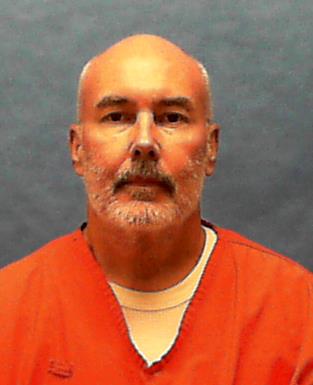
Latino evangelical leaders are calling on Florida Gov. Ron DeSantis to stay the execution of Donald David Dillbeck, who was convicted of fatally stabbing a woman after escaping from custody while serving a life sentence for killing a Lee County deputy.

Dillbeck’s attorneys have argued that his neurobehavioral disorder—which they say is similar to an intellectual disability and related to alcohol exposure before birth—should exempt him from execution under constitutional law, according to news reports.

Latino Christian leaders, as part of their faith-led effort dubbed “Evangélicos for Justice,” are urging the governor—who signed Dillbeck’s death warrant on January 23—to consider his disability and to offer him clemency. By enacting the death penalty on Dillbeck, they say, the state is undermining “our values and respect for all life.”

Dillbeck, who was convicted in the 1990 murder of Faye Vann in Tallahassee, is scheduled to die February 23 by lethal injection.

“As pastors and Christian leaders, we do believe all life is sacred, the life of victims and their oppressors. We want justice for everyone, which is why we believe that Donald Dillbeck should spend the remainder of his days in prison. We also believe that his life should be spared,” according to a letter on the “Evangélicos for Justice” website addressed to DeSantis.

Among those who signed the letter are Bishop Angel Marcial, president of the Florida Fellowship of Hispanic Councils and Evangelical Institutions; the Rev. Irene Familia, president of the Pastors Association of Volusia County; and the Rev. Ivan García, president of the Fellowship of Evangelical Ministers of Tampa. Signers also included Black clergy leaders, such as Bishop Derrick L. McRae, president of the African American Council of Christian Clergy, and the Rev. Frank Madison Reid III, with the African Methodist Episcopal Church.

Agustin Quiles, with the Florida Fellowship of Hispanic Bishops and Evangelical Institutions, is part of the campaign and said Latino evangelicals are denouncing the execution because “we value life, from the womb to the tomb.”

Donald David DillbeckFlorida Department of Corrections
Donald David Dillbeck

Marcial noted the importance of their Latino evangelical effort advocating for Dillbeck, who is white. Latino evangelicals should use their “prophetic voice” for Dillbeck because “we are committed to life,” Marcial told Religion News Service.

Dillbeck is “in need of an act of mercy” considering his upbringing and diagnosis, Marcial said.

“We believe in life at all levels and in all circumstances,” he added.

To Celeste Fitzgerald, who for years has advocated against the death penalty, seeing Latino and Black leaders rallying behind Dillbeck speaks “to the history of the death penalty.”

The death penalty is not a “punishment of the wealthy,” or the “worst of the worst,” said Fitzgerald, of Florida. It’s a punishment, she said, “we reserve for the poor, for people who are marginalized … for the most broken and traumatized.”

In 2016, 78.5 percent of Americans serving life sentences in federal prison were people of color, according to a 2019 report from the Center for American Progress.

“I think people in the Black and brown communities, they feel that and they’re speaking up more and more,” said Fitzgerald, who served as director of New Jerseyans for Alternatives to the Death Penalty. “You can’t really take the death penalty out of the context of the criminal justice system.”

Evangélicos for Justice also stands in opposition to a pair of bills in the Florida Legislature that aim to strip away the requirement of unanimous jury recommendations before death sentences can be imposed.

Marcial said that, if passed, this legislation would set the state back. “It will hurt a lot of people, especially the humble and the poor” who do not have means to defend themselves, he said.

Evangélicos for Justice joins organizations such as Floridians for Alternatives to the Death Penalty, Amnesty International, and the Florida Conference of Catholic Bishops in calling for Dillbeck’s stay of execution.

The Associated Press contributed to this report.

Books
Review

Beware Drawing Bright Lines Between Evangelical and Ecumenical Protestants

The divisions between these “parties” are important. So are the divisions within them.

Christianity Today February 17, 2023
Illustration by Mallory Rentsch / Source Images: Unsplash / Lightstock

Jesus’ caution in Luke 12:2, “There is nothing concealed that will not be disclosed, or hidden that will not be made known,” certainly proved prescient in the case of white evangelicals. Oceans of ink have been spilled on nearly every facet of their existence, while recitations of their sins have become a daily ritual on social media. The scrutiny is so intense that it is easy to forget it is a relatively new phenomenon, especially among scholars.

Christianity's American Fate: How Religion Became More Conservative and Society More Secular

There was rising interest in evangelicalism in the 1980s and 1990s, amid the heyday of the Moral Majority and the Christian Coalition. Over the course of those decades, a cohort of evangelical historians, led by the likes of George Marsden and Mark Noll, salvaged their tradition from the academic dustheap. Having set out with the relatively modest goal of identifying “gold among the dross,” in Marsden’s choice turn of phrase, they ended up rewriting the history of Christianity in the United States, with evangelicalism as the throughline.

This entailed rehabilitating the fundamentalists, whose pugnaciousness was excessive, to be sure, but also understandable given the extent of early-20th-century liberal Protestants’ assault on Christian orthodoxy. The neo-evangelicals fared better in this revised story too. While the worlds that developed around Billy Graham exhibited serious flaws—with anti-intellectualism and jingoistic nationalism at the top of the list—they at least resisted the temptation to bend Christian doctrine to fit contemporary whims. With the mainline on a long and well-intentioned slide into de facto apostasy, evangelicals were the truest heirs of a Protestant lineage stretching back through Jonathan Edwards and the Puritans to the Reformation itself.

These revisions were dramatic and yet escaped the notice of many in the wider historical guild, which tended to view religious history as a strange niche and largely irrelevant to the main plotlines. The election and reelection of President George W. Bush underscored just how wrong that presumption was. To their credit, if United States historians were initially baffled by the “values voters” powering the Right’s resurgence, they did not sit idly by. Evangelicals soon began appearing as key actors in wider political and economic and cultural histories.

Scholars who did not hop on this bandwagon in the early going could hardly resist after the 2016 election, when Donald Trump prevailed by a razor-thin margin, and thanks in no small part to 81 percent of white evangelical voters. The deluge of scholarship on evangelicalism in the past two decades has been much more critical than the smaller vein that came before, and yet has only amplified the sense that this particular Christian tradition stands at the center of the American story.

A salvage operation

Enter David Hollinger, an eminent intellectual historian, who throughout our evangelical-obsessed age has written voluminously and brilliantly on “the other Protestants,” by which he means especially, though not exclusively, “Methodists, Congregationalists, Presbyterians, Episcopalians, Northern Baptists, Disciples of Christ, several Lutheran bodies, and a handful of smaller Calvinist and Anabaptist confessions.”

These folks have often been called “mainline,” but as Hollinger relates in his latest book, Christianity’s American Fate: How Religion Became More Conservative and Society More Secular, he prefers the adjective “ecumenical.” In his view, this term better captures “a religious quality that is essential to their distinctive character: a willingness to cooperate in ecclesiastical, civic, and global affairs with a great variety of groups that professed to be Christian, and many that did not.” In his younger days Hollinger was an ecumenical Protestant himself, who enjoyed tangling with Southern Baptists in theological debate. “I later drifted away from the faith,” he relates in the preface, “but retained a feel for it that I hope informs this book.”

Christianity’s American Fate is at once accessible and erudite, weighing in at a lean 199 pages and yet packing a formidable analytical punch. Hollinger touches on a wide range of issues, from how the country became so Protestant in the first place to the underappreciated impact of Jewish immigrants on life in the modern United States. At the heart of the book is an argument that the vast literature on white evangelicals is necessary but nowhere near sufficient to explain why Christianity is now so closely identified with Trumpian politics.

To be clear, Hollinger is not looking for more complexity in discussions of evangelicalism itself, which he paints, without a hint of irony, as a convenient refuge for racist white rubes. The problem, as he sees it, is that we have lost sight of how this supposedly retrograde faith developed in “dialectical relationship with another Protestantism whose adherents had more respect for modern science and were more willing to accept ethnoracial diversity.”

Hollinger proceeds with a salvage operation of his own, recounting a story of how, in the mid-20th century, ecumenical Protestants, drawing on the very best of the Enlightenment, forged a cosmopolitan, anti-racist faith that decisively changed the nation for the better. As he has also argued elsewhere, oft-maligned missionaries were in the vanguard. “The experience of living with peoples really different from themselves, much to their surprise, changed their understandings of themselves, of their country, and of humanity,” Hollinger writes.

Such voices carried into the boardrooms of ecumenical institutions like the Federal Council of Churches (FCC), which fought against draconian immigration restrictions and, in 1946, became the first large predominantly white organization to condemn Jim Crow. In the 1950s and 1960s, many ecumenical Protestants celebrated as the movement coalescing around Martin Luther King Jr.—“literally one of their own,” Hollinger asserts—won historic civil rights breakthroughs.

Far from indulging in self-congratulation, leading ecumenical figures such as John Bennett, Harvey Cox, and William Stringfellow urged their fellow churchgoers to reckon with their complicity in a variety of social evils. These calls for self-interrogation rang out even as the National Council of Churches (successor to the FCC) pressed onward in pursuit of social justice, championing everything from Palestinian liberation to grape boycotts in support of the United Farm Workers.

So how on earth did we get from there to here? Anyone who wants to show how American Christianity became so (in)famously right-wing must account, Hollinger rightly contends, for the precipitous decline of this erstwhile ecumenical juggernaut. Faulty explanations abound. Some evangelical triumphalists continue to confuse correlation and causation, citing ecumenical churches’ shrinking rolls as clear evidence of the defectiveness of their theology.

(This argument has been harder to make ever since Southern Baptists started hemorrhaging members; but the notion that popularity is a reliable barometer of faithfulness had always seemed hard to square, in any case, with the gospel injunction in Matthew 7:13, “Enter through the narrow gate. For wide is the gate and broad is the road that leads to destruction, and many enter through it.”)

Here and elsewhere, Hollinger advances a more nuanced case. The evangelical eclipse of ecumenical Protestantism sprung, in part, from brass-tacks matters such as divergent birth rates. Whereas evangelical women had 2.4 children on average, their ecumenical counterparts—who were more likely to embrace the new professional opportunities on offer—averaged only 1.6.

But no single factor looms as large in Hollinger’s story as the way that the “ecumenical elite” navigated the social and cultural tumult of the 1960s. He likens their prophetic leadership to Lyndon B. Johnson’s decision to sign the Civil Rights Act of 1964, one which LBJ made knowing, as he ruefully declared, “We have lost the South for a generation.”

In the case of ecumenical Protestantism, too, courage and wisdom came at great cost. “Liberalizing church leaders were pushing their campaign too far and too fast for some of their older members,” Hollinger writes, “but not far and fast enough for many young people who were attentive to the cultural and political movements around them.”

Some disgruntled laypeople joined evangelical congregations, while many more drifted away altogether, becoming, like Hollinger himself, post-Protestants who cherished the humanitarian ideals they once learned at church but who no longer saw a need to show up on Sunday mornings. Ecumenical shepherds had arrived at the proverbial mountaintop but failed to bring their flocks with them.

Capacious and unwieldy

The fissures and fractures that Hollinger highlights help to make sense of ecumenical decline, though they also raise significant questions about the major frame of both his book and American Protestant history writ large. For more than 50 years now scholars have run with Martin Marty’s notion of a “two-party system” in American Protestantism. Marty’s particular vision of the parties—a “private” one emphasizing matters of personal sin and salvation, versus a “public” one more committed to social engagement—has not stuck.

But the basic narrative device has, whether it is a “churchly orientation” versus an “evangelical orientation”; “wildcat Christianity” versus “the civil religion of crude”; or, most commonly, evangelicals versus mainliners. Hollinger and the aforementioned evangelical historians may have decisively different senses of who counts as the sheep and who the goats in American Protestant history. But one thing all these scholars agree about is that the sheep and the goats can readily be separated.

The two-party paradigm is not without some merit, of course. There has in fact been much conflict between fundamentalists and modernists, between evangelicals and ecumenicals. And yet this framework glosses over the fact that the divides within the ecumenical camp, in particular, often ran just as deep. We see glimpses of this in Hollinger’s account, when he discusses the relative conservativism of Southern Protestants throughout the Civil Rights era; the devastating collapse of a proposed merger of ecumenical denominations in the early 1970s; and the bitter ecumenical fights over LGBTQ rights.

Yet the so-called mainline was even more ecumenical than Hollinger lets on. Theologically, politically, and otherwise, it was a remarkably capacious and therefore unwieldy tent. Ecumenicals disagreed over everything from the New Deal to women’s ordination, and from how to read the Bible to even very recent presidential politics.

Hollinger is so enamored with the progressive leaders that oversaw institutions such as Union Theological Seminary and The Christian Century that he underplays just how deeply conservative the ecumenical grassroots have sometimes been. One would never guess from his narrative that Ronald Reagan, George H. W. Bush, and George W. Bush all belonged to ecumenical congregations, let alone that a majority of white ecumenicals voted for Donald Trump in both 2016 and 2020. The truth is that the line between the Protestant party that Hollinger loves and the one he loathes has never been as bright in real life as it is in the pages of so many academic books.

And yet, anyone who cares about the past, present, and future of American Christianity will be challenged by this book, which like the entirety of Hollinger’s corpus is provocative in the best of ways. One can only hope that it provokes redoubled attention to an ecumenical Protestant tradition that is so much deeper and wider than popular caricatures have allowed. It has much to offer still today.

Heath W. Carter is an associate professor of American Christianity at Princeton Theological Seminary and the author of Union Made: Working People and the Rise of Social Christianity in Chicago.

News

Buffalo Survivors to Shooter: ‘You Will Not Escape the Fury of the Almighty’

At Wednesday’s sentencing hearing, family members quote Scripture and evoke God’s vengeance and mercy.

Wayne Jones, the son of Tops grocery store shooting victim Celestine Chaney, pauses to collect himself as he makes a statement to the court during the sentencing of shooter Payton Gendron.

Wayne Jones, the son of Tops grocery store shooting victim Celestine Chaney, pauses to collect himself as he makes a statement to the court during the sentencing of shooter Payton Gendron.

Christianity Today February 15, 2023
Derek Gee/The Buffalo News via AP, Pool

Kimberly Salter stood in court to face her husband’s killer for the first time on Wednesday. With a hand on her heart and wearing red that she said represented her husband’s shed blood, she simply read three passages from the Bible on God’s love and his vengeance.

“You will reap what you sow,” she said, quoting Galatians 6:7.

Salter was among a string of family members who shared Scripture in statements to Payton Gendron, the 19-year-old who killed 10 Black people and wounded three others at Tops grocery story in Buffalo last May. Police detained him before he could kill more.

Gendron made his racist motivations clear. He had posted a manifesto saying he wanted to preserve white power in the US, and he drove three hours to Buffalo to target a majority Black neighborhood. During the shooting, which he live-streamed, he apologized to one white person whom he shot and wounded by accident.

He pleaded guilty to murder and hate-motivated terrorism state charges in November last year.

The East Buffalo neighborhood where the mass shooting took place has exponentially more churches than grocery stores and a thick Christian community. Many of the victims, like security guard Aaron Salter, were believers and active in their churches.

At the sentencing hearing in New York state court, Kimberly Salter stated that “God is love, and he offers love to each and every one of us.” The widow recited John 3:16, but then she read the entirety of Psalm 35, an imprecatory prayer:

“Let those be put to shame and brought to dishonor who seek after my life. Let those be turned back and brought to confusion who plot my hurt. Let them be like chaff before the wind and let the angel of the Lord chase them. Let their way be dark and slippery. … All my bones shall say, “Lord who is like you? Delivering the poor from him to who is too strong for him. Yes, the poor and the needy from him who plunders them?”

As she finished the psalm, she said, “And so it is. This is the reading from God’s word. Thank you.” She sat.

The hearing was full of raw grief. One man lunged at Gendron during a family member’s statement, causing a brief scuffle where police escorted Gendron out of the courtroom. Police returned with Gendron after a few minutes and the hearing resumed.

The statements from victims’ family members drew from a gospel of justice, vengeance, and forgiveness.

Simone Crawley, the granddaughter of victim Ruth Whitfield, told the shooter, “We had a praying grandmother, who taught us that the battle is not yours, it is the Lord’s.”

Michelle Spight, who lost an aunt and a cousin in the shooting, read a statement from Pamela Young Pritchett, the daughter of victim Pearl Young. She mentioned that Young had been shot several times so that the family could not have an open casket at her funeral. Pritchett said she had to decide whether that last image of her mother’s disfigured face would “take up residency in my mind.”

“Fix your thoughts on what is true and honorable and right and pure and lovely and admirable. Think about things that are excellent and worthy of praise,” she read from Philippians. “This will take up residency in my mind.”

Then Spight read a statement from Fred Morrison, whose brother Margus Morrison was killed. Morrison shared that his mother, since her son’s death, had a stroke and can’t speak.

Spight turned to face Gendron and read from Morrison’s statement: “There is One, Payton, that sees all, and you will not escape the fury of the Almighty. One Scripture is true in the Bible: ‘Vengeance is mine,’ says the Lord. And he will repay.’” People clapped in the courtroom.

“I pray he is merciful, because I, too, need mercy,” she read on. “I pray he is merciful to let you live so you can be reminded of the innocent blood … behind your calculated, sinister, and demonic act, that caused my beloved brother to be snatched from our family. If you do not know God, Payton, I invite you to find him. Because you are going to need him. With deep sorrow, Fred Morrison, brother of Margus Morrison.”

Others also quoted the “vengeance is mine” Bible verse. Wayne Jones, the son of victim Celestine Chaney, said he had come across the footage of the shooting: “I watched you shoot her once, reload, and shoot her again.”

“You have to live with this one, bro, just as I have to live with this every day,” said Jones, who was wearing a cross necklace. “One day I hope you find it in your heart to apologize to those ten families … You don’t even know Black people that much to hate them. You learned this on the internet.”

Some spoke about forgiveness but in measured terms.

“I hope you do pray for forgiveness,” said Tamika Harper, the niece of victim Geraldine Talley. “You know, not forgiving, I’d be blocking my own blessing. Do I hate you? No. Do I want you to die? No, I want you stay alive, and think about this every day of your life. Think about my family and the other nine families that you have destroyed forever. I’m going to pray for you, and I want everyone to pray for all the families, that we can get through this. Right now, I feel like my life will never be the same.”

Another Talley family member said he forgave the gunman “not for your sake, but for mine.”

Zeneta Everhart’s son Zaire Goodman was shot in the neck but survived. He continues to face ongoing medical issues as well as trauma. Everhart said she won’t forgive because that “puts this tragedy in the laps of the victims and neither I nor my son will accept the responsibility for this terroristic act.” She said the shooter is the one who will “need to ask for forgiveness.”

And some just offered anger.

“I’m not going to be nice,” said Barbara Massey Mapps, the sister of victim Katherine Massey. “You killed my sister … I want to personally choke you.”

“I’m sad and I hate you,” said Deja Brown, the daughter of Andre Mackneil, who was buying a birthday cake for his 3-year-old son when he was killed. “I will never forgive you. It wasn’t my dad’s time to go. Who are you to think you control that?”

Gendron, who cried at one point in the hearing, did stand and give a statement apologizing: “I cannot express how much I regret all the decisions I made leading up to my actions on May 14. I did a terrible thing that day. I shot and killed people because they were Black. Looking back now I can’t believe I actually did it. I believed what I read online and acted out of hate … I do not want anyone to be inspired by me and what I did.”

Someone in the courtroom began screaming, wailing, and crying during his statement, yelling that he didn’t mean what he was saying.

Judge Susan Eagan sentenced Gendron to life in prison without the possibility of parole. New York does not have the death penalty.

“There are no mitigating factors to be considered,” said Eagan.

He faces additional federal charges including the possibility of the death penalty.

Theology

‘Honoring’ Your Father and Mother Isn’t Always Biblical

Filial piety has damaged many parent-child relationships. But Christian families can learn where Confucian culture ends and Paul’s parenting practices begin.

Scene from "Illustrations of the Classic of Filial Piety", depicting a son kneeling before his parents.

Scene from "Illustrations of the Classic of Filial Piety", depicting a son kneeling before his parents.

Christianity Today February 15, 2023
Edits by Christianity Today / Source Image: WikiMedia Commons

Recently, a primary school in Hong Kong asked its students to kneel and serve tea to their mothers and fathers as a gesture of filial piety, a Confucian-inspired attitude of respect and service toward parents. While tea ceremonies are often performed by Chinese brides for their future in-laws, the school’s instructions suggested this might also be a worthy practice for children to direct toward their own parents.

The school’s decision drew significant attention and pushback from Hong Kongers, many of whom perceived the exercise as a way to compel their children to unconditionally follow authority. Since Hong Kong was returned to China in 1997, numerous parents have consciously tried to avoid raising their children to blindly follow authority—something they believe the Chinese government would desire. Others argued that forcing students into a subservient position was a sign that the administration was trying to encourage unconditional obedience from its students.

The school’s principal defended her public institution’s instruction apologetically, claiming that the practice was in line with the fifth commandment to “Honor your father and mother.”

Many Christian schools and churches in Hong Kong, where I was born and raised, have long used Scripture to justify Confucian teaching—even when these teachings have led to heretical conclusions. Few examine the difference between Christian instruction to honor parents and traditional Chinese filial piety.

But does the Chinese understanding of filial piety really mean exactly the same as the biblical description of honoring parents? And can an emphasis on obeying the fifth commandment overlook or even rationalize parent-child relationships characterized by contention, pain, disrespect, and suffering?

What’s more, Hong Kong leaders increasingly invoke filial piety as an argument for offering them our unquestioning support. Figuring out where Chinese culture ends and the Bible’s directions begin when it comes to supporting those in authority not only will affect our parent-child relationships—it will also help us know how to live as godly citizens in an imperfect world.

‘Reflexively obedient’

In a traditional Chinese family, filial piety dictates that parents have complete authority over their children. Mothers and fathers raise their sons and daughters to respect them and devote themselves to them unquestioningly. This arrangement continues even after parents die, as children are still expected to honor their elders.

This teaching has guided and maintained the structure of Chinese families, workplaces, nations, and culture for hundreds of years. In Christianity, the Bible says that “love covers over a multitude of sins” (1 Pet. 4:8). For those living within a Confucian worldview, filial piety could almost cover all the bad deeds a person does.

In my experience, a killer could almost win the public’s sympathy if he was “filial” enough toward his parents. People might say that deep down, he isn’t a bad person but instead was lost and made some wrong life choices.

As recently as 2019, one journal article argued that “filial piety supports warmth, love, harmony, and close family ties, and thus has a beneficial effect on personal growth and interpersonal relationships.” This may be true for some, but I have observed filial piety bury many people’s dreams and cause much harm to children whose parents may cross boundaries in their marriages or parenting choices.

“Many adults, even middle-aged people, are reflexively obedient to their parents’ unreasonable demands. They are powerless to resist such demands,” wrote Hong Kong journalist Vivian Tam on Facebook after the tea ceremony incident. “They would never say no to the older generation, even if it affects the relationship between husband and wife. They would never say that kneeling to pour tea to parents is a step backward. Even if we don’t kneel to our parents physically, we are psychologically kneeling many times.”

To oblige the wishes of their parents, some children end up making extreme sacrifices. I have seen children end their own marriages because their parents disliked the spouses and they found it easier to placate their parents than to stop them from abusing their households.

Sadly, even though we Chinese thirst for family harmony, we often know only how to use parental authority to compel our children to obey us.

As Tam noted, parents rarely examine their own authority and have no concept of emotional boundaries between family members. Consequently, children cannot grow up independently, and the family as a whole cannot fulfill the role God gave it at creation.

Paul’s words for parents

While Confucius sees the parents as the head of the family, the Bible teaches us that this position of responsibility is the Lord’s. When Paul discusses the order of the family in Ephesians 6, he says to the children, “Obey your parents in the Lord” (v. 1), and to the parents, “Bring them up in the training and instruction of the Lord” (v. 4). Scripture instructs both the children and the parents to obey the Lord. But nowhere does the Bible teach that parents’ requirements are equal to the Lord’s commands. Parents, after all, are humans who make mistakes.

Unlike filial piety’s child-subordinate-to-parent relationship, Paul envisions a mutual relationship here. Younger children may need to listen to their parents at home, but parents should know that their authority over their children is God-given. Their power does not reign supreme; they are ultimately accountable to God.

In Colossians 3:20–21, Paul writes, “Children, obey your parents in everything, for this pleases the Lord. Fathers, do not embitter your children, or they will become discouraged.” The first part of Paul’s commands may almost sound like traditional Chinese parental advice. But his subsequent words check the idea of parents being the absolute authority on what might be best for their children.

Parental authority may be for a child’s protection and best interest, but parents should be careful not to justify every act of authority without considering the boundaries and feelings of their children. If believers today emphasize only their children’s obedience without reflecting on parental authority and responsibility, they are actually reading Confucian concepts into the Bible.

“Parent officials”

So how again did a traditional activity spark such a public outcry?

Beginning with Confucius, filial piety has always extended beyond the family out to people’s relationship to the ruling officials. For hundreds of years, Chinese people have accorded respect to local magistrates in a manner reminiscent of children obeying their parents, even calling them “parent officials.” Until several years ago, Hong Kongers referred to the Beijing government as “grandpa.”

However, social and political incidents in Hong Kong in recent years have changed the public’s feelings toward the mainland regime. Authoritarian rule continues to grow in Hong Kong. Voices critical of the government have grown weaker in recent years. The middle school gen ed curriculum for independent (critical) thinking has been cut in half.

Is the primary school’s insistence on filial piety and obedience actually one small step toward encouraging the next generation to unquestioningly submit to those in power?

Some scholars of Chinese literature have pointed out that Confucius did not advocate unconditional obedience. Instead, he taught that when children saw their parents making mistakes, they should try their best to persuade them—and that courtiers should treat kings in the same way.

However, the social view of Confucianism has long been used by successive Chinese regimes as an instrument for the rulers. Our culture has long framed our unconditional obedience to authorities as a virtue, one that has deeply penetrated the marrow of the Chinese people. But as Chinese believers who recognize that our values come from God, not from the nation or cultural tradition, we ought to examine our tradition and its influence in the light of God’s Word.

Neither practicing blind obedience nor demanding the same from others in our lives is godly. Instead, as the Bible reveals to us, it is only by submitting to one another in the Lord, thinking and acting from one another’s perspectives, and being wise to the roles and boundaries in our relationships that we can build and deepen those relationships and—whether related by blood or not—become a real family to each other.

Karen Wong lives in Hong Kong and loves to write. She is a believer who struggles with parenthood, thinks theologically, and constantly hopes in the gospel.

TGC’s Keller Center Is for Apologists Without All the Answers

Executive director Collin Hansen: In a post-Christian context, the church is challenged to collaborate—and humbly pray—for new strategies in its witness.

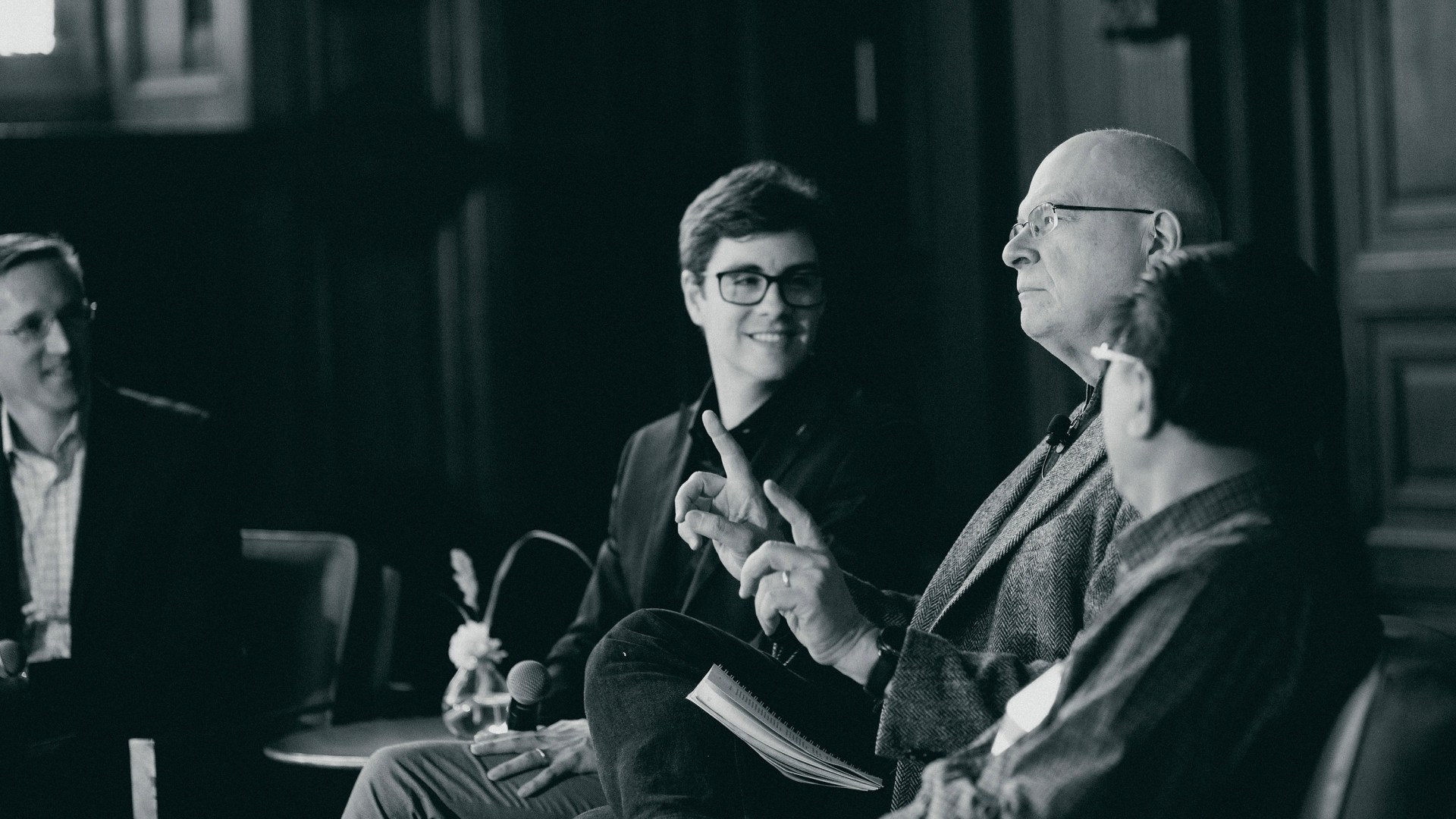
Tim Keller

Tim Keller

Christianity Today February 15, 2023
Rachel Martin / Courtesy of Redeemer City to City

When Tim Keller arrived in New York City in 1989 to plant Redeemer Presbyterian Church, about 30 percent of Manhattan residents claimed no religion.

In 2023, about 26 percent of people in Indiana identify with no particular religion. The numbers are around the same or higher in states across the US—Nevada and New York, Colorado and Wisconsin.

The country’s disaffiliation and apathy to faith underscores the urgent need for cultural apologetics, according to Collin Hansen, editor in chief of The Gospel Coalition (TGC) and executive director of its new initiative named for TGC cofounder Tim Keller.

The Keller Center for Cultural Apologetics, which launched last week, isn’t out to replicate the 72-year-old pastor but to equip leaders to also think deeply about how to present the gospel to the post-Christian context they find themselves in.

“This is not about teaching everyone to think what Tim Keller thinks, but this is about helping people to think the way he learned to think about his culture and applying that to our own day,” said Hansen.

This next generation of ministers and apologists have a big challenge before them. The Keller Center has gathered 26 fellows to collaborate and generate resources for the church. Among the first is Hansen’s spiritual biography on Keller—Timothy Keller: His Spiritual and Intellectual Formation—which released last week.

TGC says it has also commissioned “the largest-ever survey of people who have left the church” and plans to share the results through its forthcoming book The Great Dechurching: Who’s Leaving, Why Are They Going, and What Will It Take to Bring Them Back? The book is written by Jim Davis, Michael Graham, and Ryan Burge.

In addition to books , the center will offer podcasts, online cohorts, long-form essays, and social media content. The resources are geared toward keeping Christians from leaving the church; helping the church be a welcoming place for secular, skeptical neighbors; and preparing Christians to offer a winsome witness to the world.

Keller, who has battled pancreatic cancer since 2020 and is still undergoing treatment, will work behind the scenes, continuing to mentor and encourage some of the fellows involved—as he has done with those serving at TGC over the years.

Hansen talked with Christianity Today about the importance of establishing moral credibility in apologetics and how The Keller Center can strengthen the witness of the church. The interview has been edited for length and clarity.

Where did this idea for a center for cultural apologetics come from?

The original idea goes all the way back to 2019. It came from The Gospel Coalition’s president Julius Kim. Julius is the first transition of leadership at The Gospel Coalition, and one of the things that he discussed was honoring our cofounders with institutions that would explicitly carry on their legacy.

What Tim Keller is so widely known for and what he has really imprinted on The Gospel Coalition has been his efforts to do cultural apologetics, to apply the gospel to all of life. That idea started in 2019. We’ve been working on it with the board at The Gospel Coalition, and of course now we’re seeing it in 2023.

Tim Keller writes and preaches, but he is famously uninterested in building his own brand. How did The Gospel Coalition get him to attach his name to this endeavor?

It’s not something that he responded to favorably when Julius Kim first reached out to ask about that. But the plain fact is when you try to explain cultural apologetics to somebody, it’s pretty complicated. When you say, “We’re trying to help a new generation do in our day what Tim Keller had done in his day,” that makes sense. It’s a much more straightforward way of being able to identify the kind of work that we’re trying to do and the kind of work we think is urgently necessary for all of the church to do today.

How do you describe cultural apologetics beyond saying “doing what Tim Keller did”?

We’re not trying to go back and do what Tim Keller did but to learn the same sort of perspectives that we can apply to this day. Here’s one of the principal ways to put it: In 1989 when Tim started Redeemer Presbyterian Church in New York, about 30 percent or so of Manhattan was “no religion.” I’m here in Indianapolis today, and Indiana today is about 26 percent no religion. More or less the same dynamics that were true of secular Manhattan at the time are true of almost the entire country today.

Manhattan is also quite different than it was at that time. It is going to be up to a new generation in Manhattan not to go back and do what Tim Keller did in 1989 but to figure things out for themselves at a time when hostility toward the gospel and toward Christians has substantially increased across sectors and the bigger problem is actually apathy toward the gospel.

One of the biggest problems we face across the landscape in the West today is simply not caring at all about the things of God. That is a problem that no one has solved that we need to engage the church in working on solving together before the Lord. It’s going to be a practical exercise, an academic exercise, a theological exercise, an integration of faith and work exercise. It’s going to require all of us.

How do you hope the church will be strengthened by The Keller Center?

I went to seminary. Seminaries are wonderful. I cochair the advisory board of a seminary, and I teach a seminary class on cultural apologetics. If I am teaching the same class on cultural apologetics in 20 years, something will have gone horribly wrong. The issues change so much.

What does that say for somebody who 20 years from now will only be in the middle way of his or her ministry but took a class in seminary? The point is we can’t rely simply on even the best institutions to do this work because the culture changes too quickly.

We need to be able to use the tools available to us for ongoing education, and it’s going to happen at multiple levels. It has to happen at the level of those who are teaching the teachers, our fellows, people who are engaged primarily in teaching and training others. It’s going to happen at the level of pastors and other church leaders—elders, deacons, small group leaders. That’s where our online, interactive cohorts come in. It’s also going to have to happen at the level of parents; that’s where a lot of our podcasts and essays are going to help them.

But then it’s going to have to happen at the level of our kids, and that’s where things like new catechisms and responses, Instagram reels—that’s where those are going to have to come into play. At all those different levels we’re looking to come behind the church or alongside church leaders and strengthen them in the callings they already exercise, by God’s grace.

https://twitter.com/TGC/status/1622943273252974592

How do you envision Keller being involved in the center in its early stages?

With [Keller’s] pancreatic cancer, who knows what tomorrow will bring? My attitude as the executive director, and working closely with Tim on this, has always been, as much as Tim is able to and wants to help in terms of words of encouragement or suggestions or whatever he wants, that’s fine. But it was designed to be something that would carry on after him. I hope he’s able to give us encouragement, but Tim is a pretty hands-off leader in general. When he finds people he trusts, he pretty much lets them go.

This is not a ministry to perpetuate Tim’s specific works. This is a ministry to help perpetuate the ideas and strategies for the next generation in ways that he’s helped us to think over the years. This is not about teaching everyone to think what Tim Keller thinks, but this is about helping people to think the way he learned to think about his culture and now applying that to our own day all over different places around the West.

How do you envision The Keller Center being different from other training out there in the world of apologetics?

I think that the major shift that we are undergoing in apologetics is twofold. Number one is that the moral credibility of the church, of apologists themselves, has to be foregrounded. There’s been a lot of breach of trust of the church, breach of trust in high-profile apologists themselves. There has to be a level of collaboration and encouragement and accountability that happens among these leaders and institutions that will encourage them in godly patterns.

One of the things that we made a nonnegotiable about the character of The Keller Center [fellows and staff] has been attitudes of humility, which are what any teacher of the gospel is called to by Jesus himself but has not always been characteristic of leading defenders of the faith. It is essential that we be bearing witness to Christ not only in what we say but in what we do and in who we are. One of our fellows is Michael Kruger. His work Bully Pulpit might not be what a lot of people think of as cultural apologetics, but insofar as it affects the moral witness of the church, it absolutely is.

Number two is that a lot of apologetics operates within a basic Enlightenment framework of certain expected patterns of intellectual argumentation and rational discourse. The challenge is we’re seeing a lot of fraying at the edges of the Enlightenment. We’ve seen a lot of major, high-level social criticism of the Enlightenment not being able to hold together in a post-Christendom environment. A lot of the inspiration for the work that we’re doing comes from the social criticism of Alasdair MacIntyre, Robert Bellah, Philip Rieff, Charles Taylor.

Our goal is through cultural apologetics to get underneath the surface-level conversations that so many people are having right now about faith to get down to the deeper social structures, or what Tim and others would call a “thick” view of sin rather than a thin one. We’re hoping to help inspire the church to think deeper.

Now that the announcement is out there, have you seen misunderstandings or misinterpretations of The Keller Center that you’d like to clear up?

There’s always going to be assumptions, confusion, jaundiced views of things. It’s part of the way our internet culture operates, so it’s not anything that’s new or different. Bottom line: The proof is in the pudding with these kinds of things. If you do good and godly work before the face of Christ, then hopefully people will enjoy it, benefit from it, and want to join up. If we don’t do good and godly work, if we’re doing things with the wrong motives, with a sinful heart, then what we do shouldn’t last. The Lord should judge, and the Lord should destroy the work. So we will see.

Our biggest attitude is that this has to be an effort of prayer. If we’re not coming together before one another and praying for each other and the church, praying desperately for God’s help, then we shouldn’t succeed. One of the first things our fellows did is come together online to begin to confess to one another, to ask for prayer, to hold online prayer meetings for one another. That wasn’t orchestrated by me or Tim Keller or our program director, Michael Graham. That was just a spontaneous response of the need that these fellows were identifying. I trust that’s the most we can do: Come before the Lord and pray and try to be humble before the Lord and others.

I think one of the biggest problems that apologists have made is they have acted like they have all the answers. For this situation today, we don’t have the answers. That’s why we’re doing this: because we need help. We need help from the past, ultimately from God and his Scriptures, and other people in the church. This is a collaborative effort.

If apologetics is going to be useful in this generation, it’s going to have to be led through humility and through prayer. And if I might be so bold as to say, having written the book about Tim Keller, that’s really what has characterized his life. Tim Keller is not someone who thinks he always got things right. I think that’s one of the things that stands out about the book and one reason it’s easy to work with him on a project like this.

Theology

Write a New Hymn unto the Lord

Hymn writing should be a spiritual practice for everyday saints, not just for worship professionals.

Christianity Today February 14, 2023
Illustration by Mallory Rentsch / Source Images: Unsplash

Anyone who has grown up in or around the church is likely familiar with “hymn stories”—the stories that surround the composition of some of our favorite songs of worship.

How many times have you heard the life of Horatio Spafford recounted before singing “It Is Well with My Soul”? How often has the slave-trading past of John Newton been told to give rich reality to the sweet strains of “Amazing Grace” (which is just over 250 years old!)?

The same can be said for number of other famous hymn writers throughout Christian history. We love to tell hymn stories because they remind us that every hymn is a prayer and that every prayer begins from the real faith of a real man or woman seeking God.

For the same reason, there has been a resurgence of interest in seeking God through various spiritual practices, especially in recent decades.

Popular books like Richard Foster’s Celebration of Discipline and James K. A. Smith’s You Are What You Love have challenged believers to consider the role of disciplined, habit-forming practices in spiritual growth and development. As a young Christian myself, I have watched my peers pick up practices like journaling, lectio divina, and prayers of examen as they seek to consistently practice the presence of God.

In the same way, I believe writing hymns should play a role in spiritual formation. And as I reflect on the role that hymn writing has played in my own life, I find that it has become a kind of spiritual practice—not merely an artistic enterprise but a simple and consistent way of responding to God.

I suspect that this was the case for many renowned hymn writers. Fanny Crosby wrote more than 9,000 hymns over the course of her life, and Charles Wesley wrote nearly as many. In Wesley’s own words (in a hymn, no less), he wrote, “My heart is full of Christ, and longs this glorious matter to declare!”

It seems to me that this kind of output must be the result of hymn writing as a habit of spiritual life rather than an occasional creative project. The best and truest hymns arise from a sincere relationship with Jesus—or, as Fr. George Rutler puts it in his book of hymn stories, “Christ makes the soul sing in the brightest and best way.”

I wrote my first hymn at an evangelistic youth camp, where I was preparing to give a sermon on the Resurrection. That’s when I got the news: Halfway around the world, a truck lost control at high speed and struck a car carrying a 19-year-old girl and her father. Both were killed. That girl was my friend and a remarkable example of Christian faith and character.

It’s hard to describe the feelings caused by such a jarring juxtaposition. As I sat preparing to encourage young people with the undying hope found in Jesus, a dear Christian friend was torn away by death.

I put my preparation aside, wandered by the lake, and wept. Disoriented and frustrated with the world and even with God, I pulled out my phone, opened a new note, and began to write.

I wouldn’t consider myself an artist or a poet, though I had a basic familiarity with meter and rhyme schemes. More importantly, I had spent my life hearing and singing hymns. It was primarily the influence of those sweet old songs that shaped my writing. After half an hour of crying, praying, and writing, I put my phone away. It felt as though a kind of partial closure had been reached in a conversation with God.

Now, I am under no illusions that my little hymn was a masterpiece. Strictly speaking, I’m not even sure it could be called a hymn, since it did not yet have any music. But I know that my hymn was one of the sincerest prayers I have ever prayed. I know that, in writing it, I was truly sitting in the presence of God—or, perhaps more accurately, wrestling with him.

From then on, I became convinced that the writing of hymns deserves a place among the primary spiritual practices in the life of a believer, alongside other forms of prayer and meditation on Scripture.

Like any other spiritual practice, this kind of hymn writing requires discipline and growth but is richly rewarding in return. Whenever I take the time to turn my confused feelings into a hymn, I feel doubly blessed by the immediate fruit of that time of creative prayer and by the tangible reminder provided by the finished hymn. It is rather like building an altar in the wilderness, both as a place of present worship and later as a reminder of God’s past provision.

So how do you go about writing a hymn?

First, I should clarify that I am not using the word hymn in a musically technical sense. There are, of course, certain characteristics that have historically set hymns apart from other music. Hymns are often firmly rooted in the words of Scripture. They frequently build around a repeating melody joined to numerous verses. Hymns may lack a repeating chorus or refrain, choosing instead to lean on the repetition of the melody to provide an anchor for the song.

But your hymn doesn’t need to include all those standard characteristics. My own hymns often diverge from some of these hymnal hallmarks, though they can be helpful as a guideline or starting point. My goal in hymn writing is not to follow a particular poetic convention, though I may stumble across one as I write.

Even still, the idea of writing a hymn can be daunting. Where would you even begin? You may not even like poetry at all! The good news is that you do not need to be a great poet to write a hymn—first, because your hymn does not need to be “great,” and second, because many of the sweetest hymns are the simplest.

When I say that you should write a hymn, I am not asking you to craft the next “Amazing Grace.” Yes, Crosby wrote over 9,000 hymns—but how many have you heard? How many do you regularly sing? “Blessed Assurance” is beautiful and timeless, but it is only one of thousands of lesser-known hymns. I would hazard a guess that most of the hymns of history have been known only to their authors. Some may be shared with a few close friends. Very few ever need to become hymnal “chart toppers.”

Furthermore, many of the sweetest and most beloved hymns of the church are exceptionally simple poetry. It would be hard to call “What a Friend We Have in Jesus” a groundbreaking piece of English literature, but it would be equally hard to deny the spiritual nourishment it has provided to countless believers! When you sit down to write a hymn, you are simply sitting down to write out a prayer, rooted in the junction between biblical truth and daily life.

To quote Fanny Crosby on her hymn writing, “I should sit alone … praying God to give me the thoughts and the feelings wherewith to compose my hymn. … It may seem a little old-fashioned, always to begin one’s work with prayer; but I never undertake a hymn without first asking the good Lord to be my inspiration.”

Ultimately, hymn writing forces you to speak slowly and methodically to God as you frame your prayer in rhyme and meter. It has often been said that the beauty of poetry comes from its self-imposed limits. Every word must be selected carefully, weighed, and contemplated before being placed gently into the larger tapestry of the hymn. In my experience, this produces a particularly thoughtful kind of prayer.

Of course, a natural question could be posed here: Doesn’t a hymn require music? All I’ve really described so far is the composition of spiritual poetry! Fair enough. I must admit that I completely lack the skills necessary to write stirring melodies for my own hymns.

That problem can be addressed in a few ways. For one thing, many of my hymns simply lack music. Yet I do not think of them as poems—I think of them as hymns that await a melody. Perhaps, one day, I or someone else will add one. For others, I set my words to folk tunes that suit my meter. One of my favorite personal hymns is written to fit the melody of the old Scottish tune “Loch Lomond.”

Finally, I have sent some hymns to friends with a talent for composition and asked them to adapt my lyrics to a melody. I consider this to be a beautiful example of the body of Christ at work in worship. And many of history’s most beloved hymns came to life in this way, from “Great Is Thy Faithfulness” to “Silent Night.”

My point is simply that you do not need to be a proficient poet or a capable composer to begin hymn writing as a spiritual discipline. You simply need to pray, slowly and methodically, adding a little rhyme and rhythm as you go. Of course, it might be worth your time to read a simple book on poetry—I still remember being helped by Suzanne Rhodes’s The Roar on the Other Side during my years as a student.

But if you’ve ever read the Bible and you’ve ever sung a hymn, you have the tools you need to shape your prayers with some rhyming and timing. Before dismissing it as something you can’t do, I would urge you to try it. Pick a piece of Scripture, receive from it the comfort and promises of God, and turn them back into a simple poem. Such an exercise can be far easier and sweeter than you might expect.

I stand in firm agreement with the words of Vatican II: “The musical tradition of the universal Church is a treasure of inestimable value, greater even than that of any other art.” It is fitting that hymnals have so often sat alongside Bibles in the backs of pews: In one we find of the Word of God for his people, and in the other we find the words of people responding to God.

Each generation of the church can add to this ever-growing record of prayers, praises, and pleas. Regardless of whether my contributions or yours are ever sung by a congregation, it is a tremendous blessing to join one’s voice to the ancient choir of prayerful praise.

In a sermon entitled “The Memorable Hymn,” Charles Spurgeon urges believers to sing many hymns of different sorts, noting that “perhaps no one hymn will quite meet the sentiments of all; and while we would not write a hymn for you, we would pray the Holy Spirit to write now the spirit of praise upon your hearts.”

And that, dear Christian, is why you really should consider writing a hymn.

Benjamin Vincent is a pastor to youth and young adults at Journey of Faith Bellflower in Bellflower, California, and a teacher of history and theology at Pacifica Christian High School in Newport Beach, California.

News

What Would Jesus Do in North Minneapolis? Buy a Gas Station.

Facing poverty, crime, and closing businesses, Christians look to transform their corners.

Christianity Today February 14, 2023
Courtesy of Sanctuary Covenant Church

Most people don’t take real estate advice from a drug dealer behind a gas station in North Minneapolis. But Larry Cook, bishop of Real Believers Faith Center, is not most people.

About a year ago he confronted some young men selling narcotics in the alley between his church and the corner store that seemed to do more business in illegal goods than snacks or fuel. Things got heated pretty quickly. Voices were raised.

“The owner don’t care about it,” one of the young man yelled, as Cook and his wife, Sharon, recall the confrontation. “If you want to do something about it, you need to buy the gas station.”

“I will,” Cook responded. “I absolutely will.”

What the man selling drugs didn’t know is that Cook had actually been thinking about buying the store for the past 25 years. He believed he was being called and when the time was right, God would expand his ministry to include this sore spot in the neighborhood, the store at the corner of a busy intersection.

This fall, the store came up for sale, and Cook and his wife put everything they had toward the purchase of the $3 million property. They’ve now reopened it under the name the Lion’s Den, a testament to faith surrounded by danger and their belief that even urban blight can be redeemed.

“This is what Jesus would do,” Sharon Cook told CT. “If he was walking in 2023, he would buy this gas station. He would feed the hungry. He would lend a helping hand to the elderly the same way we’re doing.”

North Minneapolis has struggled for a long time. In the 1950s, there was a thriving African American community, with lots of families, churches, and Black-owned businesses. Then there was a wave of white flight, followed by racial unrest that scared away financial investors, and the construction of an interstate that cut Near North off from downtown. Today, the area is marked by instability and poverty.

“There have been chronic patterns of violence over many years, but in the last three years … it’s been exacerbated by the fallout effect after the murder of George Floyd and everything that cascaded down from that,” said Carl Nelson, president of Transform Minnesota, an evangelical organization that brings churches together to wrestle with social issues.

Crime has increased as policing has declined in the area, resulting in a lawsuit over “minimum force levels.” Last year, the Minnesota Supreme Court sided with eight northside residents and ordered the city to hire more police officers.

Several key businesses that serve the area have also decided to leave. Aldi, one of the few grocery stores that is easily accessible to people without cars, closed last weekend. Walgreens is closing too, citing “the dynamics of the local market.”

Nelson, who has lived in the area for 25 years and drives past Real Believers Faith Center almost every day, said some of the remaining corner stores and gas stations have become magnets for crime. When they’re run by people who are not personally invested in the community, nothing is done about the drugs, robbery, and shootings outside.

“You look at the city and the landscape—the social fabric of the city—and it’s just dismaying,” he said. “In some cases, the business owners are making a lot of money. They put up bulletproof glass for their registers to sit behind, and they just put up with the danger and continue making their money.”

One force that’s been able to stand against the violence has been local churches. Last May, a group of ministers led by New Missionary Baptist pastor Jerry McAfee occupied street corners as part of a project McAfee called 21 Days of Peace.

“In those places where they were able to be, they disrupted and changed the cycle of violence,” Nelson said.

Buying a corner store could have the same effect, according to Nelson.

“It’s a creative and direct way for a church to say we’re going to do something very tangible in our community,” he said, “try and affect the safety and livability of the streets right outside our parking lot.”

A few blocks away from the Lion’s Den, another church is working to transform another corner of North Minneapolis. At the intersection of West Broadway and Lyndale Avenue is a gas station known locally as “murder station.” Leaders at Sanctuary Covenant Church, located at that same intersection, have petitioned the city to take action to reduce crime in the area. Last summer, the front door of the church was hit by bullets 14 times.

“We knew as we built our church that we were planting in a place that has seen decades of trauma and violence,” said Andrea Lee, church director of operations. “It is our calling to be right where we are.”

Since Sanctuary was planted 20 years ago, the church has launched a resource center that houses a food pantry and two nonprofits helping young people and people with addictions. Recently, the congregation decided it would try to tackle the ugliness in the corner parking lot.

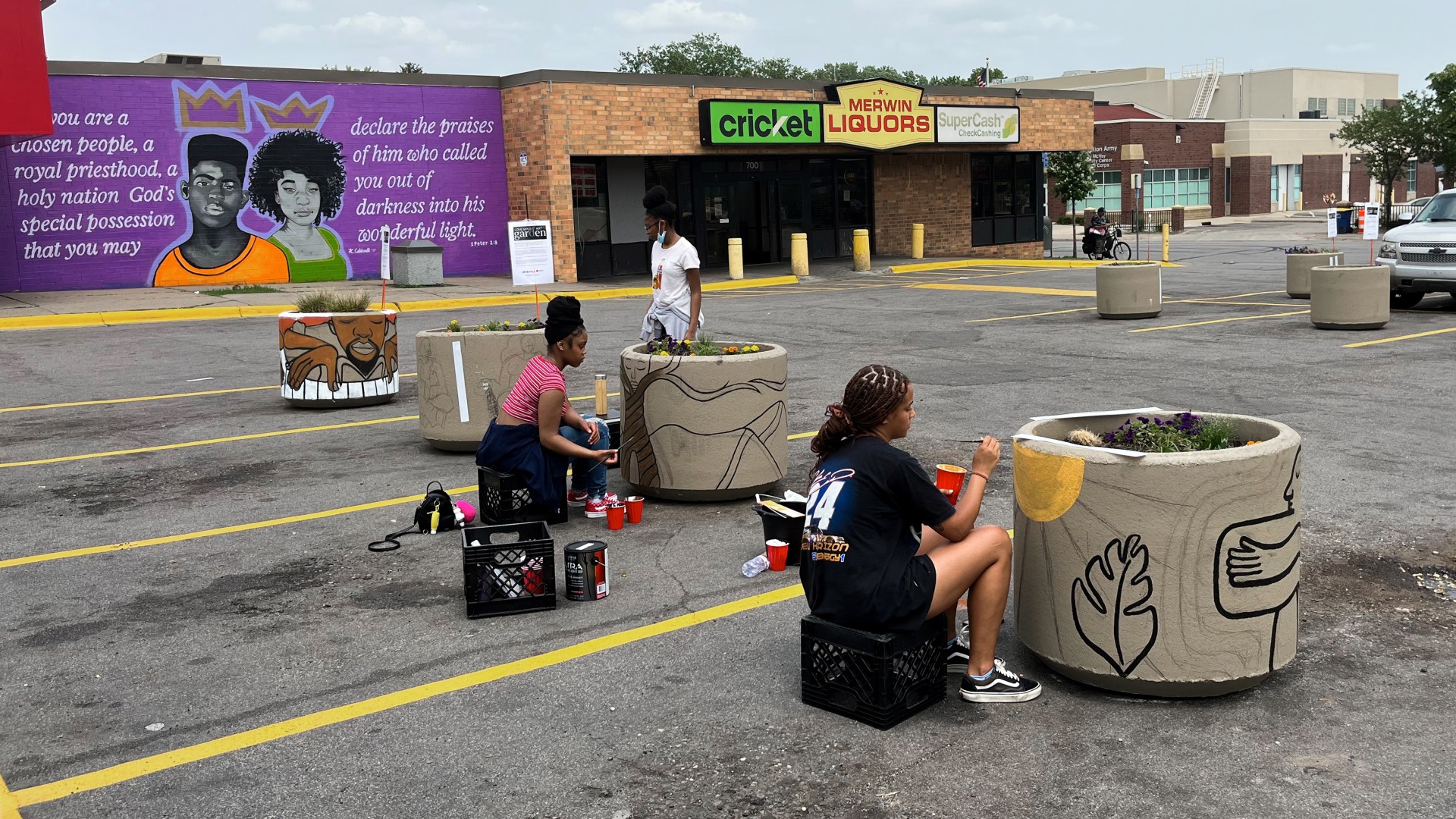
They added speed bumps and concrete planters as well as more than 100 feet of raised garden beds. Sanctuary hired young artists from the neighborhood to paint the planters and care for the gardens. The cumulative effect is an area less conducive to crime and a message to the neighborhood that someone cares about that parking lot and that the church believes in the possibility of transformation.

“The image of these youth working in the lot, making it beautiful was so healing for our northside community,” Lee said. “We tried to stand against what happens in that lot every year during warmer weather by encouraging art, gardens, and positive interactions with people.”

All those working to make the city better, know that change takes time, however.

If there was any idea that transforming the property and the neighborhood around Real Believers Faith Center (RBFC) would be completed with the purchase, Sharon Cook said that ended the first day, when she witnessed another drug deal taking place in broad daylight.

The church took heart by recalling God’s long faithfulness. When Larry Cook planted RBFC in 1998, there were just eight people in the pews some Sundays. There was no financial backing from a denomination or church-planting network, so the congregation had to operate without a safety net.

“There was no savings and no money and no credit,” Cook said. “It was a dog fight every single day.”

Amid the struggles, the church saw new life and real transformation. People who were once addicted found freedom. People who were violent found another way to live. The church now averages around 200 people on Sundays and has a membership of more than 500.

“More than half of the congregation of my church was unchurched and comes from selling drugs and being on the streets and using drugs,” he said. “There’s no way I can look at people who haven’t made that transition yet and say there is no value.”

Cook reminds people, too, that even buying the corner store once seemed impossible. He remembers walking out of church one Wednesday night with his congregation and telling them of his vision that one day he would buy that property.

“I told the people that we were going to lay hands on this property around us because God is going to give us the land,” he said.

“Bishop, it’s going to be expensive,” people told him.

But he just said, “God’s got a way of making it happen for us.”

On November 1, Cook signed the papers, and then he went and laid hands on the property again, giving thanks to God. The corner store is set up as an independent entity, but the church sees it as a place for ministry.

As Larry Cook goes from the church to the store and the store to the church, he proclaims with his life that change is possible. He knows it is, because it’s already happening.

“It’s like we’re having an evangelism day every day now,” Larry said. “Ministry just walks up to me. I’m able to minister to people, lay hands on people, pray for the sick, feed the hungry. It’s a nonstop effort.”

Sometimes Cook even sees the young man who told him to buy the store. He stopped in to buy snacks shortly after the purchase.

“You all really bought it,” he said. “You know what, I can’t even be mad. Respect.”

Larry and Sharon Cook at the front counter of The Lion's Den.
Larry and Sharon Cook at the front counter of The Lion’s Den.
Theology

Bee My Valentine: A Saint’s Guide to Creation Care

Like Valentine, patron saint of beekeeping, Christians have a duty to love and learn from the earth God made.

"Saint Valentine" by Tyrolean in the 16th Century

"Saint Valentine" by Tyrolean in the 16th Century

Christianity Today February 13, 2023
Illustration by Mallory Rentsch / Source Images: WikiMedia Commons / Unsplash

As a lifelong Protestant, only recently have I begun to discover the delightful array of patron saints within the Catholic and Orthodox traditions. (And as my Episcopal friends would remind me, they have them too.)

There’s one for angina sufferers (Swithbert), flight attendants (Bona of Pisa), and embroiderers (Clare). There is a patron saint for those who survive an earthquake (Gregory the Wonderworker) and one for those who’ve misplaced items (Anthony). When I lost my voice for weeks on end last summer, I didn’t pray to Bernardine of Siena, but I did feel a real kinship with him—and a comfort in knowing that the church considered, named, and prayed for my plight.

My evangelical upbringing taught me a thorough knowledge of the Bible, but it was weak on Christian history and tradition. It was rare we spoke of anyone from the 2,000 or so years between the apostle Paul and Billy Graham.

At Wheaton College, I was introduced to Augustine, Thomas Aquinas, and Hildegard of Bingen—saints of the Catholic church, all. When I expressed concern, wondering why we were studying their teachings at an evangelical institution, a kindly professor quipped, “Courtney, before the Protestant Reformation, basically all Christians were Catholic or Orthodox.” Mic drop.

And so, on the cusp of Valentine’s Day, let us turn our attention to the spiritual wisdom to be gleaned from the saint whose name carries the day. A clergyman and physician in the third-century Roman empire, Valentine is the patron saint of courtly love, epilepsy sufferers—and beekeepers.

No one is certain when humans first decided to keep bees, cultivating hives rather than simply harvesting wild honey, but art depicting beekeeping has been found dating as far back as 2400 B.C. in Egypt. “It’s the second oldest profession,” joked Wayne Hughes, founder of Sweet Harmony Apiaries in Marietta, Georgia.

It is not uncommon for modern-day monasteries, convents, and Catholic missions to have apiaries. The Monastery of Christ in the Desert, a Benedictine community in Abiquiu, New Mexico, features beehives. St. Ignace de Loyola, a Jesuit school in Bedou, Haiti, includes beekeeping as part of its educational curriculum.

The Prince of Peace Abbey in Oceanside, California, hosted 50 hives under the supervision of Brother Blaise Heuke, a monk who invited children from the community to come harvest and sample honey for over four decades, until his death at the age of 80 in 2018.

The practice of apiculture is unique, requiring slow, careful movements, attention to detail, and a working knowledge of apiology, or the study of bees. “The keeping of bees is very tied to the contemplative,” said Christopher Russo, a high school English teacher, Baptist, and apiarist in Long Island, New York. “It’s quiet, slow work.”

Russo’s hobby has deepened his belief in the human responsibility to steward creation. “There’s this verse in Proverbs about a righteous person regarding the life of his animal,” he said, referencing Proverbs 12:10. “It’s my responsibility to take care of [the bees] well.”

He described the delight he experiences in witnessing his insects’ instinct and skill. “You talk about God’s design!” he said. “They have a language. A dance. They kind of wiggle to tell each other where the other flowers are. It’s just amazing to see how they operate.”

Hobby apiarist Anne Ferris serves as the director of short-term small groups at Ada Bible Church in Grand Rapids, Michigan. She finds inspiration in her bees’ collectivity. “[In winter] they stay in this cluster and beat their little wings to stay warm,” she said. “They rotate through so no one is on the outside for long. It’s absolutely fascinating how they work together as this unit.”

She drew a parallel to human communities: “[What] if humans could learn to work together like this?” she asked. “[What] if the church could learn to work together like this?”

For many an apiarist, beekeeping leads to a renewed interest in larger themes of creation care. Bees are both resilient—surviving brutally cold winters even though they do not hibernate—and fragile. Pesticides, severe weather, and diseases like colony collapse disorder threaten their longtime survival. Beyond the obvious tragedy of losing any animal to extinction, beekeepers say we should all have a vested interest in maintaining healthy bee populations. And as Ferris put it, “If we don’t have bees, we don’t have food.”

Robert Brown, a Presbyterian, lives in Oklahoma where he watches over his hives with help from a neighbor. “I don’t sell honey,” he said. “I give it away. I just tell everybody that I equate it with grace. It’s nothing I did to deserve it, and so I just give it to other people because … it’s not deserved. And it’s sweet.”

Brown, an agricultural economist by trade, marvels at the complexities within his hives as well as within each individual bee itself. “God’s created these little tiny creatures that [themselves] create complex carbohydrates. They create hydrocarbons—which just blows my mind. Beeswax is a hydrocarbon. It actually burns!”

Wayne Hughes began beekeeping on his family farm just over a decade ago. He is in the process of joining the Greek Orthodox church and, as part of his conversion, was invited to choose a patron saint.

His choice? Modomnoc, an ancient beekeeping monk who followed his bishop’s order to sail from Wales back to Ireland. Tradition says Modmonoc said goodbye to the bees he’d tended at his Welsh monastery, but they then followed him across the sea. “I thought about choosing Saint Valentine,” Hughes admitted, “but it was Saint Modomnoc who actually kept bees.”

Hughes says beekeeping has deepened his appreciation for the interconnectedness of all living things.

“Just seeing a beehive at work—it fills you with awe and wonder about the complexities of God’s creation,” said Hughes. “You could argue that it’s the body of Christ on full display because as a bee develops, they do different jobs. There are nurse bees, … housecleaning bees, … guard bees, … foragers. It’s everybody doing their part and everybody working together in complete harmony.”

Eighteenth- and 19th-century English folklore taught that bees belonged to the families of their keepers not simply as possessions, pets, or farm animals but as valued members of the family. When a major life event such as a birth, marriage, or death occurred, the beekeeper would make sure to inform the bees. This tradition was in full display in 2022. When Queen Elizabeth II died, Buckingham Palace’s beekeeper, John Chapple, was required by tradition to inform the bees.

This tender—albeit perhaps a touch superstitious—custom of paying attention and respect to these small, winged insects offers us an insight into creation care. Stewardship over the earth and its creatures is commanded by God. This biblical imperative reminds us of the interconnectedness of the created world and the loving Creator who spun it all into being. Creation care can be an exercise in joyful communal purpose as we, like the bees, each take up the unique task before us.

Look at the birds, Jesus tells the gathered crowd during his Sermon on the Mount. Consider the lilies. He used examples from the flora and fauna around him to draw larger lessons of God’s provision and care. But his first command was simple: Pay attention to creation. Lift your eyes and tilt your ears to notice nature—to appreciate the beauty, intricacy, fragility, and wonder of all that God has made.

Let this Valentine’s Day be an invitation for each of us to extend the deep love of God to one another—and the chance for us to enjoy and steward the earth God created.

Courtney Ellis is a pastor, birder, host of The Thing with Feathers podcast, and author of Present: The Gift of Being All In, Right Where You Are (Tyndale House).

Theology

Arranged or Not, Indian Christians Praise God for Their Marriages

What husbands and wives think of others’ unions and what they’d recommend for their children.

Christianity Today February 13, 2023
Rupinder Singh / Unsplash

India’s arranged marriage culture became the source of international attention thanks to Netflix’s controversial hit Indian Matchmaking. But while the rest of the world may have been fascinated by the “foreign” phenomena, the majority of Indian married couples are the result of unions facilitated by their families.

While Indian culture can be heavily stratified by religion, caste, and ethnicity, arranged marriages—at least those that take place within these divisions—are favored by nearly every group. An overwhelming 93 percent of couples said that their marriage was an arranged marriage, according to a 2018 survey of 160,000 households.

Arranged marriages broadly encompass situations where the parents only introduce the bride and groom to each other and either person can decline the match to situations, more common in rural contexts, where neither party can opt out.

Christianity Today spoke to eight Indian Christian married couples: four in love marriages and four in arranged marriages. Husbands and wives weighed in on the following questions:

· What do you envy most about the other kind of marriage?

· What role has your faith played in sustaining your marriage?

· What type of marriage do you want for your children?

Love Marriages

Monica and Amit Chand, married 19 years Lucknow, Uttar Pradesh

Monica: I envy the element of surprise and excitement that is missing in a love marriage.

The more I invite God into my life and marriage, the more he takes control of my life. There have been difficult times and trials in our marriage, and I see that God was there all along. The more I seek him, I see him more clearly.

I advocate that my children go for love marriage and have a developed understanding of each other before they enter into marriage. I do insist that they marry according to God’s will.

Amit: I envy that couples in arranged marriages get to know each other after marriage, thus the novelty of their relationship would be longer.

Christianity is a unique and beautiful faith, and the attraction and adoption of it have been a core part of our marriage since Monica coming in from a non-Christian background.

No, I don’t insist on anything for the kids, because I don’t know what God’s plan is for them. I can only pray that they be led by God into whatever he finds perfect for them.

Koki and Johnny Desai, married 42 years Marriage counselors, Ahmedabad, Gujarat

Koki: I am very happy with my love-cum-arranged marriage [where the couple choose each other and reveal their liking for each other to their parents/elders and the family gets them married]. Seeking God's will was my priority before I said yes to Johnny.

With Jesus Christ as the active partner and a close friend in our marriage, we have thoroughly enjoyed our marriage. He has been a solution, solace, comfort, counselor, guide, and guardian to us. I wonder how people manage without God.

We gave our three daughters the freedom of choice and decision for their own marriages. We taught them that most importantly they needed to be born again and please God in every decision of their life, may it be career, marriage, or whatsoever. We are happy they chose to bring God in their lives

Johnny: Even though I proposed [to my parents that I marry] Koki, we fasted for 75 days (only taking a single meal) and prayed to get confirmation from God. I believe marriage must have both love and arrangement of honoring healthy culture.

Marriage does not just involve biological, physical, social issues; it has a spiritual component as well. Jesus makes all the difference. He teaches and enables us [to have] love and forgiveness and grace.

Whether arranged or love, unless a person knows Jesus, he or she is not ready for marriage.

Angela and Rohit Mathew, married 21 years St. John the Baptist Church, Meerut, Uttar Pradesh

Angela: I don’t envy as such, but the one difference is that one enters an arranged marriage without too many expectations. One learns about the other gradually, and people tend to be more accommodating and cooperative. Getting to know each other and growing together in love slowly would be a great experience too.

Our faith is the center of our marriage. We both always turn to God—in good times and bad times. When we are faced with questions or decisions, we seek God’s guidance.

I really do not advocate a particular kind of marriage, either love or arranged. For my own child I pray that God’s will be done in her life and that he reveals to her the life partner he has chosen for her. I always remember my parents covering me in their prayers for this, and I do the same for her. I pray for God’s will, God’s way, and God’s timing for my child’s marriage.

Rohit: I do not envy anything, to be honest. I don’t think I am missing anything in my love marriage.

My faith has cultivated in me patience and understanding in my marriage. I understood that every relationship needs time and when you give it the necessary time, things fall in place.

As parents we have told our child to see the good in a person. We have tried to explain that in relationships there are some adjustments that need to be made. So whosoever the child chooses as a partner—all we have asked for is that they be of the faith and a good human being.

Salome and Philip Yalla, married 9 years Bengaluru, Karnataka

Salome: Christ is the core of our marriage. He holds us when we feel limited to hold on to each other. He helps us think of the other’s best, sacrificially serve the other. Marriage is God’s means to sanctify us, and it has deepened our bond and our love for each other. We love being partners in ministry and working with people together as a couple. Our faith touches almost every realm in our marriage.

As marriage counselors, we encourage couples who are considering marriage (love or arranged) to walk through premarital counseling where they have the opportunity to get to know each other and develop a common understanding of each other. It isn’t possible to fully know who you’re marrying and have a full understanding of what marriage means before getting married. But having that initial time to begin the process is helpful. We encourage them to see the larger purpose of marriage—as being a process through Christ’s sanctifying means for us—and to stay turned to each other and constantly walk in repentance and forgiveness.

Philip: I don’t necessarily envy arranged marriage. Though most of the getting to know each other and growing in love has happened after marriage, however, I do feel that love marriages with a significant courtship period can have a slight advantage over arranged marriages.

I would encourage other Christians and my children to take a similar route like mine and to use courtship less for “checking compatibility” and more for cultivating a deep friendship and choosing to love the other person well. I see an extra bit of beauty in starting this journey before the relationship is formalized, however, not to discount the unique beauty of beginning this journey with “I do.”

In our case, the journey of fostering a beautiful marriage came with its own joys and challenges, given our unique set of strengths and brokenness. If not for trusting in the redemptive power of the gospel, I can’t imagine growing and thriving in our marriage, particularly when we pass through dark times.

Arranged Marriages

Sara Chonghoikim and Lalditsak Inbuon, married 26 years Churachandpur, Manipur

Sara: My marriage was arranged by my church leaders. I did not want to pursue relationships outside of God’s Word and will. However, like everybody else there were many challenges in my marriage too. Sometimes I feel [that] being in a relationship before marriage, getting to know each other well, and then entering a marriage would have been much better.

I married by faith; I move forward by faith; I take my vows very seriously. Whatever challenges there are, I look to God and his Word for a solution. Amazingly, God is more than enough for all the challenges. When we honor God, when we honor our marriage, God has many ways to solve our problems.

I am not sure what I would advocate. … It depends on their spiritual maturity. The decision I made may not apply to them. But whatever the case, a believer must know and follow what God says a believer must do. Whether arranged or love marriage, they must honor God and include God in their marriage.

Lalditsak: I do not envy love marriages, because arranged marriages are the kind of marriages where you seek God’s will first and decide. In a love marriage, you fall in love first and then start to seek God’s will, and once you have already made your choice, your mind is in no way to receive “no” as an answer from the Lord.

I truly believe that it is God who gave me a suitable coworker. But more than my faith, it is God’s grace and his loving care, his faithfulness [that have] sustained my married life.

Anujit Kaur and Vijay Paul Emerson, married 17 years Patiala, Punjab

Anujit: I envy love marriages as couples get to know each other and each other’s weaknesses and strengths before they decide to get married. One has a choice to say no to a person who has vices that you actually cannot live with, like smoking and alcoholism. These vices might stay hidden in an arranged marriage and later result in a shock, thus affecting a marriage.

My Christian faith plays a major role in my marriage. I firmly believe that God has arranged this marriage for us just as God had arranged Eve for Adam, and in low times I remind myself of this.

I am open to either type of marriage for my children. I just want my children to go for a person that God has chosen for them, be it arranged or love.

Vijay: A person who goes for a love marriage gets to choose a partner according to his/her desire. One has the liberty to choose what he really wants in his partner.

My faith in God has always helped me to go through the hard and tough times in my marriage. My faith helps me to stay in the fear of God and carry out my responsibilities with fear. The Holy Spirit compels me to obey the Word of God and to be faithful to the vows I have made.

I will never force my children for arrange marriage. My only desire is that, that person should be a believer – who loves God and that they should be compatible.

Priya and Jude Prabhu, married 17 years Dubai, United Arab Emirates (originally from Mangaluru, Karnataka)

Priya: What did I envy from not having a love marriage? I did not get to go on dates like people in love do. I missed the pampering, the gifts, the chocolate, and flowers which girls during courtship get.

Being in an arranged marriage, we had our own struggles, difference of opinions. We are going strong because Christ is the center of our marriage and family. The church we attend and the Word which is preached in the church have strengthened our relationship.

I would suggest my daughters ask for God’s wisdom when choosing their partners. Whether love or arranged, the foremost thing is that their spouse should be a believer and Christ should be the center of their home.

Jude: I envy the feeling of love at first sight, the sleepless nights, the anxiousness to meet your lover the next day. Forgetting everything, you only focus on your beloved. The romance on special days—birthdays or Valentine’s Day.

There are things that you might discover about your partner that you might not like. But when you are embedded in Christ and you consider him the center of your married life, you try to change yourself. Faith teaches us to adjust ourselves and to take care of one another.

Both love and arranged marriages have their pros and cons. It does not matter which one you choose. What is important is that your partner should be rooted in Christ and the parents of the bride and the groom should also be rooted in Christ to have a healthy marriage.

Shilpa and Mohit Singh, married 19 years Noida, National Capital Region

Shilpa: Arranged marriages are great! I love the surprise element in an arranged marriage. I think one is more patient and less expectant. We give more time to each other, getting to know each other. It is like opening a gift box. With every layer, you discover something new. The only thing I envy about love marriage is the before-marriage romance, meeting in secret, revealing it to families, and the family opposition drama. In my case everything happened in perfect harmony.

Undoubtedly, our Christian faith is the pillar that has kept us together in times of major disagreements, and we tried to follow the biblical rules, which were a guiding force in our marriage. They have helped us to forgive, forget, and love each other.

I would not give preference to arranged marriage over love marriage or vice versa as every single case of marriage is unique depending upon many factors, like family support or opposition, partners’ compatibility, their willingness to adjust and make sacrifices, etc.

Love or arranged, I believe if the rock of marriage is Jesus it will work out. He can mend everything and make it work.

Mohit: The courtship period is something that clearly stands out in a love marriage. Couples know each other, meet each other, and cherish those memories for a lifetime.

God’s faithfulness and his guidance help us to stay united in our thoughts despite the challenges we face. He helps us to make our marriage work and accept with humbleness and thanksgiving that it is his doing. Faith in God and his teaching has helped me to accept the decisions of my better half, and they have helped our marriage incredibly.

I strongly believe that our kids should trust in the counsel of their parents and God to find their life partners and seek his counsel in their married lives.

Apple PodcastsDown ArrowDown ArrowDown Arrowarrow_left_altLeft ArrowLeft ArrowRight ArrowRight ArrowRight Arrowarrow_up_altUp ArrowUp ArrowAvailable at Amazoncaret-downCloseCloseEmailEmailExpandExpandExternalExternalFacebookfacebook-squareGiftGiftGooglegoogleGoogle KeephamburgerInstagraminstagram-squareLinkLinklinkedin-squareListenListenListenChristianity TodayCT Creative Studio Logologo_orgMegaphoneMenuMenupausePinterestPlayPlayPocketPodcastRSSRSSSaveSaveSaveSearchSearchsearchSpotifyStitcherTelegramTable of ContentsTable of Contentstwitter-squareWhatsAppXYouTubeYouTube