Church Life

Jesus Is Calling … on Netflix’s ‘Beef’

The tearful worship prompted good and bad memories from growing up in Korean American Christianity—and a needed discussion on church hurt.

Steven Yeun as Danny in Beef.

Steven Yeun as Danny in Beef.

Christianity Today April 27, 2023
Andrew Cooper / Netflix © 2023

Are you hurting and broken within? Overwhelmed by the weight of your sin? Jesus is calling…”

I’ve sung these lyrics from “O Come to the Altar” countless times. I’ve heard the song at church, at conferences, in my car … but never did I expect to hear it on a hit Netflix show.

It wasn’t just the song. The entire church scene from Beef felt pulled from my life. As the worship band sang, the camera panned through the room to reveal congregants with their eyes closed and hands raised, a sea of black hair swaying in a rhythm that I knew all too well.

The sanctuary was well worn and outdated, the kind of space that could easily be converted into a multipurpose room. Mismatched chairs in rows served as pews, and the tilted commercial vertical blinds didn’t really block out the light. The doughnuts after the service were all too familiar. The only way it could’ve been better is if they had eaten rice, kimchi, and bean sprout or radish soup.

In the Netflix dark comedy Beef—currently the most popular show on the platform—actor Steven Yeun costars as Danny Cho, a struggling contractor who gets involved in a road rage incident. He’s had a hard life, and in a rock-bottom moment, he walks into a church sanctuary. Danny feels out of place in a room that aesthetically is anything but conducive to worship, yet he gets immersed in the communal praise around him. He cries, and a pastor comes to pray over him.

The worship hit especially close to home for me; not only did it remind me of nearly every Korean American immigrant church I attended growing up, but I also used to serve at the Los Angeles church whose band appears in the show. Hearing lyrics about God’s grace extended to us in our brokenness was so familiar that it felt exposing, nostalgic, and even embarrassing at the same time. The experience was so authentic, it almost felt contrived.

For many who grew up in the Korean American church—or in Asian American Christian communities whose church experiences were shaped by Korean American Protestantism—the worship scenes from Beef were instantly recognizable and generated a visceral response. And the reactions proved to be a bit of a Rorschach test.

For some, the scene evoked fond memories of growing up in the church in the 1970s, ’80s, ’90s, or 2000s. It brought to mind those powerful spiritual moments at church that marked their weeks, months, or even years. It brought them back to a time and space where they felt like they truly belonged—a place of shared culture and shared faith.

Viewers who knew these kinds of churches may have longed for the communities they had growing up, imperfect but loving in their fellowship. One Korean American pastor friend shared that it reminded him of the moment he said yes to Jesus in college, even though he grew up as a pastor’s kid.

Others saw Danny’s tearful visit to the church more negatively. They remembered the ways they were manipulated by church leaders, disillusioned by a performative spirituality, and hurt by the people they were told to trust. The church sanctuary in Beef took them back to spaces where they were ostracized, exploited, and even abused—toxic and traumatizing places that they have worked hard to escape.

One reason the worship scenes felt real to us and could immediately trigger our memories may be that the worship was real. That’s what Citizens LA pastor Jason Min, whose praise band played for the church scenes, shared with me.

By Min’s account, they were actually leading worship before the cameras, not performing or pretending to do so. Many of the extras in the congregation came from Citizens LA church, and they worshiped like they do each Sunday morning. I know because they were my worship band when I lived in LA.

Their worship in Beef resonated before it even aired. The show has an all-Asian cast, and many of those who were working on the set or in the background commented that the worship set scenes impacted them.

Min told me that people at the filming commented on the peace they felt or said that singing the lyrics to “O Come to the Altar” a hundred times did something to them. They shared that they didn’t know whether it meant they would go to church or go back to church but that they would be sitting with what they experienced for some time.

How could the same scene lead to such different conclusions? The different responses to the worship in Beef reflect the complexity and complications of the church that we often fail to hold in tension. The same community can embody both faithfulness and failure. Good and evil can coexist among us and within us, and there can be holes in our holiness.

Despite our best intentions and efforts, the expressions of church that have blessed so many people have also left many others broken. This is something that we are challenged to reckon with, both for the sake of those whom the church has harmed and neglected to heal and for the church’s witness going forward.

The people who cringe at the portrayal of worship in the show are not just critics on the internet. They are people we once sung and served beside, who are brokenhearted to leave behind a faith that once meant so much; they are the youth in our community who have little patience for performance, edifice, or cover-up.

I serve as the executive director of TENx10, an initiative at Fuller to make faith matter more for 10 million young people over the next 10 years. Research by the Pinetops Foundation projects that a million young people will walk away from Christianity every year, putting the faith in a minority within the next 30 years.

I also serve as the president of the Asian American Christian Collaborative, and while Asian Americans are the fastest-growing racial demographic in the United States, our Christian affiliation has already dropped around 8 percent within the past decade.

Korean Americans—who make up about a third of the Asian American evangelical population, despite being just a tenth of the Asian American population more broadly—are seeing some of the most significant decline. I’m still surprised and saddened when someone I never thought would walk away from the church tells me that they just don’t believe and don’t know if they’ve ever believed. Much of the time, they’ve seen hypocrisy and failure to self-reflect within the church—and found more meaningful community outside it.

Faced with growing numbers leaving the faith, our options aren’t just to build a fortress or to burn everything down. We know that with enough humility, repentance, faith, courage, and conviction, we can make space to cultivate more of the blessed and address the broken.

Instead of villainizing those who are questioning, doubting, or “deconstructing” their faith (or even walking away), the church should be a place that embraces them. We can create ample space for concerns—after all, Jesus never turned someone away for asking an earnest question, though he did confound the religious leaders who tried to box him in.

We must work together to discern and address the things that have left so many devastated and wounded: hypocrisy from leaders and legalistic theology. This means making appropriate adjustments while remaining faithful to what is true, pressing into the pain instead of moving away from it.

There are pastors, elders, deacons, and entire church communities who are seeking to find ways to “do church” in a way that accounts for the hurting, wounded, skeptical, and cynical because they understand that God is big enough for it all.

Leaders have become more aware of the language and terminology they use around those navigating church hurt. Rather than expecting or forcing participation, we can set up gatherings to explain the purpose of what we do and invite people to participate if they are ready. Leaders in these setups can preserve gospel truths in their teachings while letting people choose how to engage and making room to hear out their pain and wariness.

The church needs to find better ways to address its failures and brokenness while maintaining its commitment to what is good, true, and beautiful. We need to press into all that makes faith true to Christ and what God calls Christians to be. We need to develop a place that can truly care for those who are “hurting and broken within.”

Part of that means creating more avenues to explore and interrogate the factors that have shaped us and our communities. In a small way, by creating a realistic window into the Korean American church experience, Beef has placed a mirror before the church and sparked a much-needed discussion that I hope we continue.

Raymond Chang is the president of the Asian American Christian Collaborative and the executive director for the TENx10 Collaboration, an initiative of the Fuller Youth Institute at Fuller Seminary. He lives in the Chicagoland area with his wife, Jessica, and daughter and speaks throughout the country on issues pertaining to Christianity and culture and to race and faith.

Theology

Gratitude Changes Our Desires

Christians worship a strange Giver who gives strange gifts in strange ways.

Christianity Today April 26, 2023
Illustration by Mallory Rentsch / Source Images: Pexels

Gratitude is all the rage these days.

Since the mid-2000s, when the writings of positive psychologist Robert Emmons got the train rolling, a veritable industry has sprung up around the study of gratitude. A number of research projects, special academic journal issues, reference books, and entire scholarly monographs are devoted to the topic. There are also hundreds of journals, phone apps, and podcasts offering practical advice on how one can lead a grateful life.

Christians should welcome all of this. We are, after all, supposed to be a grateful people, perhaps the most grateful of everyone. And considering the malaise of post-pandemic life, our embittered political polarization, and the vitriolic cancel culture today—it’s hard to imagine a better time for us to double down on the value of gratitude.

For Christians, of course, gratitude should begin and end with our thankfulness to God. And yet many of us do not experience this with the kind of frequency, intensity, and durability that seem appropriate given how extraordinary God’s benefits are.

Why do we struggle to be consistently grateful to God, even when we believe—or at least say we believe—that God is our ultimate and incomparable benefactor?

One problem is inattention. We may know in an abstract sense that God is the greatest Giver, but until we start paying attention to where God’s gifts show up, we’re not likely to experience gratitude. Another issue is resentment. We know God is often good to us, but we’re also mad when God doesn’t give us what we want, so we withhold our gratitude.

Paying more attention and dealing with our resentment are crucial if we are to grow in our gratitude toward God. But even when we are trying to be attentive and even when we are not angry at God, it can still be difficult to live in a posture of consistent gratitude.

The positive psychology movement often presupposes that we already know what to be grateful for; all that is lacking is our attention and effort. But gratitude to God is not the sort of thing that springs naturally from the human heart.

Think about the features that really trigger your spontaneous gratitude response. We experience thankfulness most spontaneously and intensely when a giver unpredictably and at great personal cost bestows us with a benefit that quenches some desire we had.

Yet God’s benevolence to us stretches every part of this common context for gratitude to the breaking point. For while the form of God’s kindness to us can be unexpected, he is bound to be omnibenevolent by his very nature—unlike our friends and spouses. In other words, why should we be surprised when God blesses us?

Not only that, but unlike our human loved ones, God is not limited by time, energy, money, or knowledge—and so in what sense does it really cost God to be generous toward us?

We can also be critical of the fact that God can give us a gift but still maintain a claim over it. For instance, God may cure our cancer tomorrow only to permit it to return in six months.

As the life of Job attests, even God’s blessings may at any moment turn to tragedies. “The Lord gives and the Lord takes away,” as Job puts it (1:21 NET). This means that if our gratitude is only of the “count your blessings” variety, we are sure to end up cursing God, just like Job’s wife urged.

But most confusing of all is that God can sometimes give us what we do not desire: “gifts” that no one longs for—like trials and tribulations, which Paul says God uses to grow our faith.

When we consider thankfulness to God only in the context of stereotypical interpersonal gratitude experiences, we end up focusing on his “daily blessings”—like good health, good job, beautiful family. But this mindset risks turning God into a cosmic vending machine whose primary role is to give us what we want.

Instead, Paul says he has learned to be grateful and content “whatever the circumstances” (Phil. 4:11)—speaking of his suffering for Christ (1:29–30; 3:10) in the same breath. This reveals a striking difference between the goods of God’s kingdom and those of this world.

Paul further encourages the Christians in Philippi to think of these qualities as gifts: “Whatever is true, whatever is noble, whatever is right, whatever is pure, whatever is lovely, whatever is admirable—if anything is excellent or praiseworthy—think about such things” (4:8).

Therefore, biblical gratitude is shaped by what God considers to be lovely, true, honorable, just, and worthy of praise. As John Chrysostom explains in his sermon on Philippians, “What means, ‘whatsoever things are lovely’? Lovely to the faithful, lovely to God.”

Such gifts of the kingdom give us everything we need to be God’s friends forever—but they are often very different from the kinds of blessings the world values. Jesus speaks of this when he praises God the Father for hiding the kingdom of heaven from “the wise and learned” and revealing it to “little children” (Matt. 11:25).

Often, the gifts of God are neither simple nor straightforward. In fact, they can destabilize us and reveal our basic fragility, emptiness, neediness, and waywardness. Because of this, it takes work to cultivate gratitude toward God. As Jen Pollock Michel argues in Teach Us to Want, this is part of a larger process by which we learn to develop “holy desire” in alignment with Christ.

In a Christmas sermon, theologian Samuel Wells once preached that God was the ultimate materialist because he reverses our petty desires for toys and trinkets into a sacred longing for God-with-us in the embodied, material Jesus.

When Paul says, “Whatever you do, … do it all in the name of the Lord Jesus, giving thanks” (Col. 3:17), he is grounding gratitude beyond the gift of creation and in the gift of our new life in Jesus Christ. As Michael Gorman notes, Paul taught that the whole of the Christian life must be renewed “in the image of Christ,” including our gratitude for God’s unconventional gifts.

Only a transformed life—one that Paul describes as being “in Christ” (2 Cor. 5:17)—can create in us a new set of eternal desires and a different disposition of gratitude.

So, it is not that Christians are supposed to be more grateful than the average person but that following Jesus allows us to be grateful for the unexpected gifts of God—which may surprise, upset, and confound the gratitude of an unbelieving world and even baffle us in our flesh.

Thus, Christian gratitude is the mark of a new life empowered by the Spirit as we are trained and transformed–sometimes painfully–into people with strange desires who can receive and delight in strange gifts offered in strange ways by a strange God.

This is a whole new way of being in the world. As Barth says, “Gratitude is to be understood not only as a quality and an activity but as the very being and essence” of the Christian.

At its heart, Christian gratitude is first and foremost learning to receive ourselves from God. And Christianity itself is extended training in how to be grateful for who we are at our core: needy creatures who live by grace. This is a gift—but a difficult one to receive with gratitude.

When we learn to receive our lives as gifts from God, we begin to see more clearly what God finds commendable. This, in turn, allows us to appreciate a new way of being pleased and to identify and enjoy what is excellent and praiseworthy in a whole new light.

Kent Dunnington is professor of philosophy at Biola University in La Mirada, California. Benjamin Wayman is the James F. and Leona N. Andrews Chair in Christian Unity at Greenville University in Greenville, Illinois.

News

18 Christian Colleges Closed Since the Start of COVID-19

Enrollment numbers, financial challenges, and the pandemic spelled the end.

Christianity Today April 26, 2023
Matthew Hatcher/Getty Images

Iowa Wesleyan University freshman Emma Soukup started crying when she heard the news that her school, a 181-year-old United Methodist institution, would close at the end of this semester.

She told the Des Moines Register it felt like a tornado devastated her home. She called her dad. “I don’t know what to do,” she told him.

She is not the only one.

A new study from Higher Ed Dive found three dozen colleges and universities have closed or merged since the start of the COVID-19 pandemic. Eighteen of them are Christian, including Methodist, Lutheran, Roman Catholic, Baptist, Church of Christ, and Independent Christian Church institutions. One minute they were there—seemingly as solid as the buildings, invested with the mission of integrating faith and learning, full of students’ hopes and ambitions—and then they were gone.

The schools were all small and struggling before COVID-19. They faced devastating demographic shifts, declining enrollment, internal conflict exacerbated by ongoing crises, and, most of all, unrelenting financial challenges. Some would have certainly closed even without a global health crisis. For others, the coronavirus was the last stiff breeze that blew them over the edge.

“Small institutions are resilient or they wouldn’t still be in existence,” said David Fincher, head of Central Christian College of the Bible, which absorbed St. Louis Christian College in 2022. “At the end of the day, though, there’s only so much resiliency gets you when there’s a perfect storm.”

In Michigan’s Upper Peninsula, a mainline Lutheran university saw the storm rising in high school statistics. Fewer and fewer students attended the region’s schools, reflecting broader Michigan trends, and fewer and fewer graduated. Among those who did remain in the region and did graduate high school, only a shrinking number expressed interest in going to college.

Finlandia University, founded in 1896 by Lutheran loggers and copper miners, announced last month that it would close in 2023.

The Christian schools that have closed since the start of the pandemic were all small—some very small. Many people on those campuses appreciated the size and the intimacy it created for their communities. But it also made them vulnerable to any enrollment decline.

MacMurray College, a Methodist-affiliated school in Illinois, had 736 students in 1980. One of the people who attended back then told the Detroit Free Press that he loved that.

“You could know almost everyone on campus,” he said. “It was nice to go to someplace small and really find myself.”

MacMurray’s enrollment numbers dropped to around 630 in the 2010s, putting the school’s finances in a perilous position. In 2015, with 570 students, the school brought in just a little bit more than it cost to operate. The following year, with 552 students, MacMurray ended up in the red, with a $1.7 million shortfall.

Things got only worse after that.

“You have to have a clear long-term strategy,” said David Fitz, a former MacMurray political science professor who took a position in the administration in the early 2000s. “I’m not sure the college ever did that well. We moved from crisis to crisis and managed well, until we couldn’t and then it had to close.”

A last-minute effort to reimagine the school, overhauling MacMurray’s curriculum to focus more on career training and striking a deal with a developer to buy the property and lease it back to the university, ended when the crisis of COVID-19 overwhelmed everything.

“Shortly after we announced we were closing, I remember walking across campus and seeing a woman sitting on the chapel steps crying,” president Beverly Rodgers said. “She told me she had been married there. There’s an emotional attachment to the buildings, to the campus. It’s very sad we had to close it.”

A lot of schools found the pandemic “made an already tough situation unsustainable,” as Robert Callahan, president of Holy Family College in Wisconsin, put it. The Catholic school had seen a slight uptick in enrollment. The administration was hoping they had turned a corner. But the COVID-19 crisis was too much.

Presentation College, a Catholic school in South Dakota, met a similar end. The administration had sharply discounted tuition to try to increase enrollment. The school ended up losing about 35 cents for every dollar of tuition money that came in, while drastically cutting spending. The painful efforts seemed, in a few hopeful moments, like they might work.

“We streamlined leadership, renegotiated vendor contracts, reduced operating budgets, really brought down our budgets to about two and a half million dollars—and things were starting to look better. … Things were turning around,” president Paula Langteau told South Dakota Public Broadcasting. “At that time, as you know, COVID hit.”

For some schools, however, COVID-19 seemed like it could be a blessing in disguise, an odd but very welcome answer to prayer. Across the country, higher education institutions received about $40 billion from the federal government. Many received additional money from state and local governments.

The administration at Iowa Wesleyan asked the governor for $12 million in federal relief funds. When the request was turned down, though, their hopes were dashed for the last time. The governor didn’t want to spend the one-time funding on ongoing operational expenses, and an independent accounting firm determined the relief money would not fix the school’s financial problems, which included a $26.1 million debt owed to the U.S. Department of Agriculture.

The trustees said they had done “considerable exploration of all feasible strategic alternatives” but not come up with a workable plan. They voted to close the school in May 2023.

Financial problems have a way of getting worse at small Christian colleges. Ohio Valley University, a Church of Christ school in West Virginia, had long carried heavy debt and became dependent on debt to finance basic operations. Even more troubling, $6 million was borrowed from individuals connected to the institutions. Some of those loans came with high interest rates and terms that allowed creditors to call for repayment at any time.

Over the years, financial panics became commonplace.

“Don’t you dare borrow any money from individuals,’” a board member on the finance committee said in the 2010s. “You must live within your debts. You must address all of your employees, faculty, and whatnot so that you have a balanced budget. I do not want to see any more private debt.”

The practice continued, though. And plans to mine the West Virginia property for coal that was theoretically worth $10 million never quite came to fruition.

Eventually, the school couldn’t pay for basic operations. In 2020, a judge ordered Ohio Valley to pay $1.2 million it owed to a former food vendor. When a software system used to store student data and records broke, it became public that the school had not paid for authorized use. In 2021, it stopped paying faculty and staff until an anonymous donor committed $900,000 to take care of the salaries around Christmas.

The school shuttered at the end of the year.

However inevitable the end of a Christian college appears, at the end, the loss is still immense and devastating to those who gave their hearts and lives to the school.

“We know this was the right decision,” said W. Mark Tew, president of Judson College, when the Baptist school decided to shut down for good in 2021. “But there is not a person here whose heart isn’t broken over this.”

After the final crisis comes, nothing remains of the once-solid institution but the transcripts of graduates now bereft of their alma mater, the debts still owed, and the odds and ends that go for sale at auction.

Judson, a 183-year-old women’s college, was reduced to 1,300 lots listed on High As the Sky Auction Company’s website.

“Rare books,” an advertisement said, “artwork, furniture, … collectibles and much more.”

News

Alliance University’s Financial Woes Threaten Accreditation

The school formerly known as Nyack College has had money troubles for years. But school leadership is optimistic with rising enrollment.

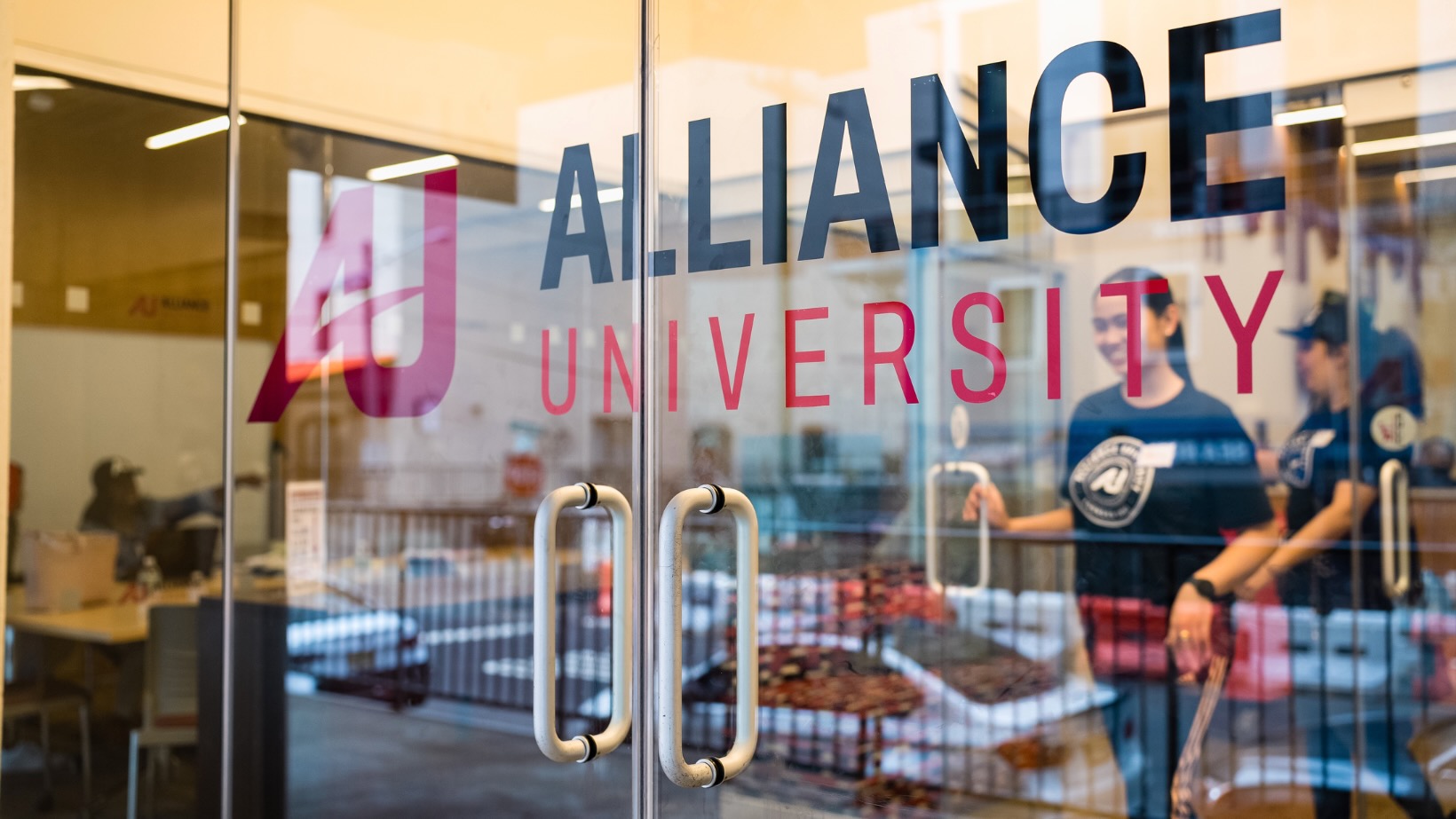
Alliance University's campus in lower Manhattan.

Alliance University's campus in lower Manhattan.

Christianity Today April 26, 2023
Courtesy of Alliance University

Update (July 1): After losing its accreditation, Alliance University (Nyack College) announced it will close on August 31 after 140 years of serving the Christian & Missionary Alliance and New York City.

Alliance University, known until a name change in 2022 as Nyack College, faces the loss of its accreditation due to financial troubles, after a 2022 audit cast doubt on the school as a “going concern.” Accreditors visited the Manhattan campus on Monday, and a June hearing will determine the school’s accreditation status.

The Middle States Commission on Higher Education (MSCHE) recently placed Alliance on “show cause” status, meaning the school must show why its accreditation should not be revoked. MSCHE also placed The King’s College in this status last month, threatening the only two historically evangelical colleges in Manhattan—and the only two Council for Christian Colleges & Universities (CCCU) members in New York City—with removal of accreditation at the same time. The schools’ troubles are part of a larger crisis in Christian higher education.

Alliance’s auditors in 2022 noted “recurring losses in net assets” and “recurring negative cash flows from operations” that caused them to doubt its ability to continue. MSCHE put Alliance on probation in June 2022 just before the school’s audit was released.

But an audit of the school in 2017 also warned of a failing institution, and Alliance has survived the years since of declining enrollment and a pandemic. It has been coming out of its financial free fall, especially with support from its parent denomination, the Christian and Missionary Alliance (C&MA).

Enrollment last year was up 12 percent, and the school expects to have a positive cash flow for the first time in a decade next year, Alliance’s president Rajan Mathews told CT. Applications for next year are up significantly, and the school cut $4 million from its budget, Mathews added. The school has about $33 million in operating expenses.

The escalation from the accreditor was a “surprise,” Mathews said, since retention is improving, fundraising is up, and the school has financial backing from its denomination.

“We have a cautiously optimistic forecast for next year,” Mathews said. “We felt that Middle States should have given us a little more time to prove the pudding. … We thought we had about two years. We were putting in place all the improvements.”

A historic C&MA school founded in 1882 to train missionaries, Alliance is one of the most ethnically diverse Christian colleges in the United States, with a student population that this year is 34 percent Latino, 30 percent Black, 11 percent international, and 9 percent Asian.

Most Alliance students come from New York City’s five boroughs, and 45 percent receive Pell grants, which means they have exceptional financial need. Almost half of the students are the first in their families to attend college.

Many churches in the New York area are led by Alliance graduates, including Pastor A. R. Bernard (an Alliance Theological Seminary alumnus) at the largest evangelical church in the city. Another alum, Pastor Gil Monrose, is the head of the New York mayor’s faith-based office.

Pastor A. B. Simpson started the C&MA denomination in New York in the 1880s after leaving his Presbyterian church that would not accept Italian immigrants. A century later, members of the denomination started a refugee resettlement effort that later fueled the launch of World Relief’s resettlement program. Afghan refugees now are students at Alliance University.

Alliance has had significant annual deficits for about a decade, at one point operating as much as $12 million in the red.

In 2019 tax filings, the school was creaking under $85 million in debt, mostly mortgages. It was trying to sell its historic Rockland County, New York, campus while moving classes to a new property in lower Manhattan. The school had decided a few years before that a campus based in Rockland was not “financially viable.”

Enrollment and retention were patchy in 2019 because the school went back and forth about when all classes would move to Manhattan instead of Rockland. Classes began in full in Manhattan in spring 2020, just when the pandemic hit.

The pandemic brought a significant drop in enrollment, which put the school in a “downward spiral,” said Mathews. Enrollment in undergraduate and graduate programs has fallen from a peak in 2010–2011 of 3,369 to 1,944 currently.

“The student population we focus on suffered the most during COVID[-19],” he said, because they are often economically disadvantaged.

In 2020, the school finally sold the Rockland campus, bringing $28 million in gains on the sale, which was used to pay down debt, the 2022 audit shows. That left the school with $51 million in debts, according to the audit, bringing it much closer to balancing with its assets.

The full mortgage on the school’s Manhattan property is due in 2026, but the property is appraised at $85 million now, according to the 2022 audit.

Mathews—a telecom executive who worked in India, Afghanistan, and the US—was named president in May 2021. Coming from a business background, he’s learned that with the “six-month sale cycle” in academia, he has to wait longer to see what works than he did in business.

“The lead time to correct everything is much longer in academia,” he said.

The King’s College, just around the corner from Alliance, faces threat of closure at the end of this school year. Alliance has a very different set of circumstances, and its leadership expects that the school will continue.

Alliance (1,944 students) is larger than King’s (384 students) and has a denomination backing it. King’s has instead had the backing of a for-profit online education company, Primacorp, as well as a board with four Primacorp appointees. But King’s recently announced it was cutting ties with Primacorp, removing the Primacorp board members, and bringing in eight new board members.

Both schools received federal Paycheck Protection Program loans that were forgiven—King’s received $1.8 million, and Alliance received $2.8 million.

Alliance has had a more stable board and has avoided the dramatic presidential turnovers that have characterized King’s, where one former president, Dinesh D’Souza, was convicted of federal corruption charges.

Alliance is discussing whether it could sell two floors of its lower Manhattan building, because it doesn’t need them all. Last year Alliance offered a floor and a half to King’s “on very attractive terms,” said Mathews, “and they refused.”

“It would have made all the sense in the world for us and King’s to play well together,” he said. “For some reason we did not get a lot of cooperation from King’s. … But their board makes their own decisions.”

King’s said in a statement that it was open to collaborations with other schools, “especially with good schools like Alliance University. In this case, it was not a fiscally prudent decision for the college to pursue at the time.”

King’s describes itself on its website as “the only Christian liberal arts college in New York City.”

King’s has been working to secure transfer agreements for students in the event of closure. As part of this “show cause” status with accreditors, Alliance is also required to have a “teach out” plan for students, in case they need to finish their education elsewhere. But the school does not think that will happen, projecting another increase in enrollment next year.

Mathews attributed the rise in enrollment to the school investing in a database to target its audience more effectively instead of relying on churches and word of mouth. The school offers online education, but it requires undergraduates to do most work in person.

The accrediting agency will have a hearing concerning Alliance on June 21, and Alliance leadership expects a decision soon after that.

News

What Are Evangelical Voters in Iowa Focusing On: Everything

The world feels out of control. They want someone who will fix it.

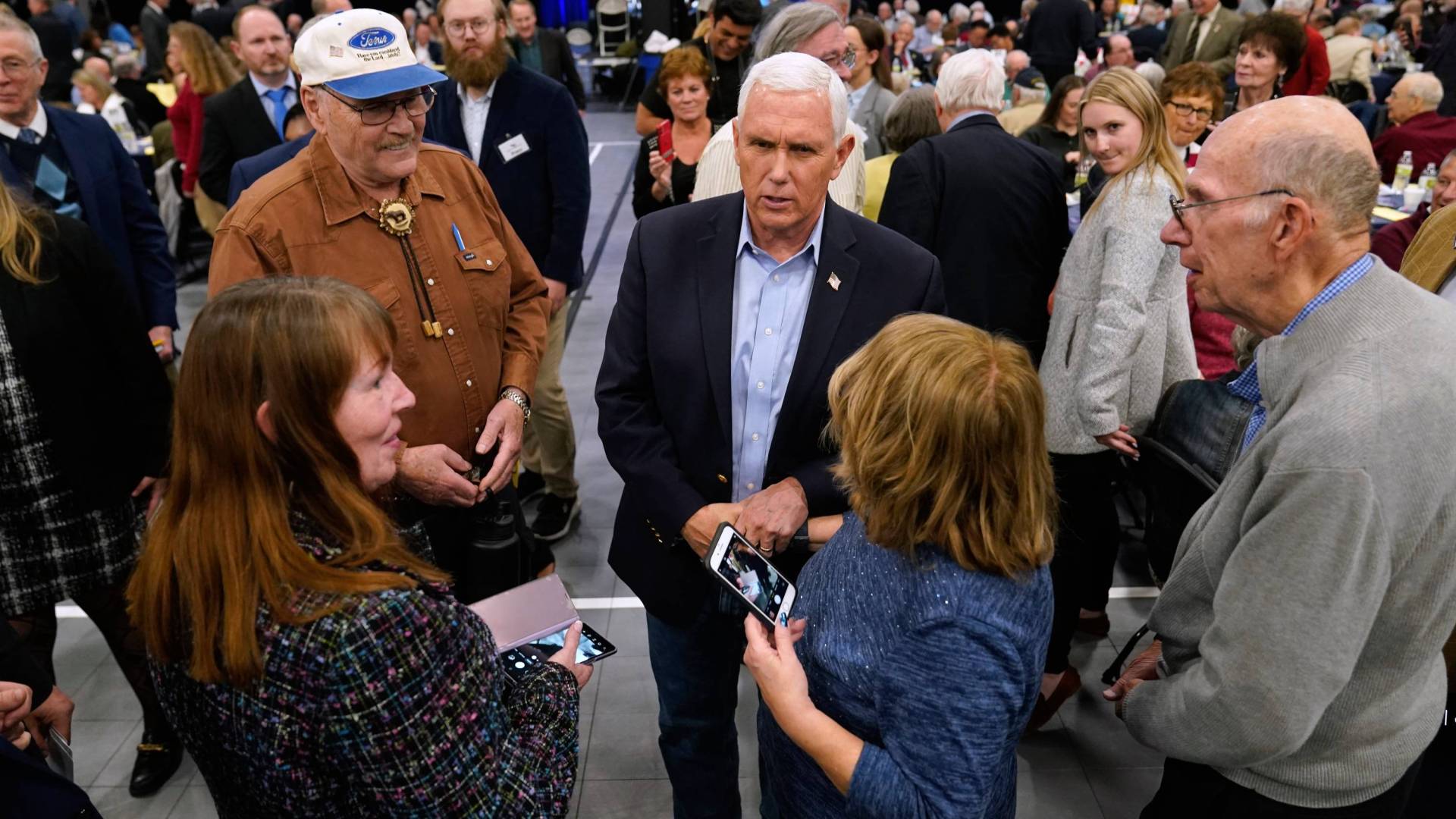
Former Vice President Mike Pence at the Iowa Faith and Freedom Coalition Spring Kick-Off.

Former Vice President Mike Pence at the Iowa Faith and Freedom Coalition Spring Kick-Off.

Christianity Today April 25, 2023
Charlie Neibergall / AP Photo

Sitting in rows of rectangular tables and eating boxed dinners from Chick-fil-A, over a thousand evangelicals in Iowa got their first look at 2024 Republican presidential hopefuls.

The Iowa Faith and Freedom Coalition’s Spring Kick-off event on Saturday represented the first cattle call of the year, a forum for GOP candidates to court an indispensable voting bloc.

From the podium, candidates celebrated recent anti-abortion victories in the states and in the legal system. Former vice president Mike Pence, Sen. Tim Scott of South Carolina, and former Arkansas governor Asa Hutchinson spoke of the importance of religious liberty, decried “wokeness,” and expressed concern over the southern border and the threat of China’s economic ascendance.

The audience paid attention as the politicians recounted their faith experiences and emphasized their commitments to conservative values, but many voters had no top-of-mind policy issue they wanted the candidates to address. A small exhibition gallery off the main event hall housed display booths for candidates, local businesses, and advocacy groups focusing on issues like abortion and parental rights.

“I’ll be honest; it’s hard to pick one,” said Kevin Branstetter, a 56-year-old project manager from Waukee. “I just want somebody who is going to tell me the truth.”

When asked what she is most concerned about this election cycle, Jolene Rosebeck, a former teacher from Waukee, said, “Everything.”

Other Iowans at the event echoed the view that there are too many important issues and crises; they just want someone who can fix things. For many evangelicals, the ideal person for that job is still former president Donald Trump, who offered a message over video. (Florida Gov. Ron DeSantis did not attend.)

Jacob Taylor, a 24-year-old lighting tech from Oskaloosa, is hopeful for a strong leader who will address top issues like gender, inflation, trade, energy independence, foreign policy, and abortion.

“Christians always think that you should have a nice person that you’re voting for, that plays nice with everyone,” Taylor said. “I had friends that didn’t like Trump because of the things he would say. He was putting America first. He didn’t put up with any … I guess ‘BS’ is what I’ll say.”

Although there was no singular policy concern on the minds of the state’s evangelicals, the themes of fear and uncertainty permeated remarks from the microphone and comments by those in the audience.

Some attendees didn’t mention favoring any particular candidate but expressed worries about the threats facing the country and the perceived failures of the current administration. Speakers framed appeals to Christian faith and the example of Christ with embattled rhetoric about the Left or the media.

Cris Christenson, treasurer of the Iowa Faith and Freedom Coalition (IFFC), encouraged the audience to look to Jesus as a guide for how to act during the event and to “not let the press divide us.”

“Our motto is ‘What would Jesus say and do in this room tonight?’ What would he do if he was sitting in a chair next to you? Don’t give in to the media,” Christenson said.

In his remarks at the beginning of the event, David Barker, a member of the Iowa Board of Regents and of the Iowa GOP’s central committee, speculated about a frightening future under “leftist” control, in which “you tell your electric car to take you to church, [and] it might say, ‘I’m afraid I can’t do that,’ if your church is on the wrong list.”

Although the IFFC event is billed as one of the largest gathering of conservative evangelicals in the state, spiritual language throughout the event, from attendees and speakers, was broad. References to “conservative values” were more frequent than references to Christian values or beliefs.

When asked how faith informs their approach to political engagement, some were most comfortable speaking broadly about morals and principles.

“If you have faith, moral issues are going to be important to you as a politician,” said Elizabeth Horn, a 24-year-old from Newton. “My faith says that there are some things we should not do. You have to be principled and stand for certain things.”

“I’m a born-again Christian,” said Jacob Taylor, who attends a small nondenominational church. “If you can choose someone who is a believer in office, that’s really important. But if you don’t get that choice, even someone who has a respect for God—that can be a unifying thing, an anchor.”

The most explicitly “evangelical” message of the evening came from Pence, who quoted John 3:16 and briefly shared his testimony—the story of his conversion to Christ at a Christian music festival at Asbury University in Wilmore, Kentucky. Hutchinson name-dropped evangelical mainstays John MacArthur and Chuck Swindoll.

The chaotic Iowa caucuses of 2020 contributed to the Democratic Party’s decision to reconfigure its primary schedule for the 2024 presidential contest. But the GOP appears committed to maintaining Iowa’s “first in the nation” status as the field grows crowded.

Iowa’s evangelical voters have not chosen the eventual GOP nominee in the last few election cycles, but they do usually determine which Republican candidate wins the Iowa caucus. Caucusing Republicans delivered Mike Huckabee’s victory in 2008, Rick Santorum’s in 2012, and Ted Cruz’s in 2016.

Iowa serves as an early testing ground for the messaging to GOP voters. As issues prove to have mobilizing power among the state’s Republican voters (especially among its evangelical bloc), they will shape how candidates position themselves and refine their stump speeches in coming months.

Steve Scheffler, IFFC’s president, said in his opening remarks, “Today’s society is crazy versus normal.” Conversations with event attendees reflected the same alarm conveyed by the speakers.

George Kurtinitis, a retired IT project manager, is preoccupied by the specter of global conflict. “We’re escalating toward nuclear war. I grew up during the Cold War. I used to think, That will never happen. Now here we are again.”

Kurtinitis, seated next to his 13-year-old grandson, listed concerns about border security, public health, government overreach, education, and foreign policy. “It’s all spiraling out of control,” he said.

Even though attendees most readily discussed their personal anxieties, they did articulate concerns in a few recurrent areas: foreign policy and gender.

During the Q&A, Mike Pence voiced his unequivocal support for continued US aid to Ukraine in its conflict with Russia, quickly pivoting to insist that a strong leader would be able to support Ukraine, rebuild the economy, and secure the borders simultaneously.

Pence’s remarks about Ukraine were met with a lukewarm response from the room. Many in the audience said they hoped the US would soon end its financial and material assistance to Ukraine.

“They’re using our resources,” said Keven Arrowsmith of Waukee, who would like to see the US decisively end its involvement in the conflict.

Some argued that Ukraine is hopelessly corrupt and authoritarian, saying that Ukrainian president Volodymyr Zelenskyy routinely arrests clerics and raids churches. (Such claims have been platformed in outlets like Fox News.)

“I think it’s a huge scam,” said George Kurtinitis. “They keep saying, ‘We’re trying to save this democracy,’ but he [Zelenskyy] is a dictator.”

Madonna Johnson also wants to see the US withdraw its support of Ukraine, saying that the money is being pocketed by the wealthy and powerful in the country.

“They’re eating oysters and caviar over there,” said Johnson, an insurance broker from West Des Moines.

While Pence’s commitment to the fight in Ukraine didn’t receive warm applause, his position on gender issues seemed to draw attention and support.

“The battle over gender ideology is a battle for religious freedom,” Pence said.

Iowa governor Kim Reynolds also raised the issue of transgender rights in her opening speech, delivered via video, celebrating recent legislation in Iowa that bans gender-affirming medical care for minors and requires students to use school bathrooms that align with their biological sex.

Multiple attendees mentioned their concern about schools helping students transition from one gender to another without parental consent.

“It’s incomprehensible to me that we would let anyone outside the family be involved in such personal things,” Kevin Branstetter said.

Pence was recently in eastern Iowa in support of a lawsuit against the Linn-Mar school district in the Cedar Rapids area. The suit addresses a policy that allows students to adopt new pronouns and new names without involving their parents.

Pence and other speakers at the event placed parental rights and transgender rights under the umbrella of “religious liberty,” making the case that these issues are part of a bigger battle to make sure that Christians can live according to their beliefs without constraint or interference.

Trump, Pence, Hutchinson, and others touted their pro-life positions, with Hutchinson claiming that he helped make Arkansas “the most pro-life state.”

Although candidates made sure to foreground their pro-life bona fides, abortion seemed to be a peripheral issue for some attendees in light of the Supreme Court’s decision to overturn Roe v. Wade.

“The pro-life issue is a big deal,” said Jacob Taylor. “But that’s pretty much back with the states now.”

Abortion is currently legal in Iowa up to 20 weeks. Earlier in April, the Iowa Supreme Court heard arguments concerning Governor Reynolds’s request to reinstate a fetal heartbeat law. The court is expected to issue its decision in June.

For many of the likely voters at the IFFC’s Spring Kick-off, issues were less important than posture. Those feeling fearful and distrustful seem to want a leader who will speak to that anxiety and reassure them that the country’s direction can be changed.

News

Barely Anyone Reads the Bible in Germany. So Why Are Luther Bibles Selling So Well?

A revised edition of Reformer’s translation ranked among 2022 bestsellers.

A woman walks past The painting "Luther Preaching from the Pulpit" by Alexandre Struys on exhibition in Eisenach to celebrate the 500th anniversary of Luther's translation of the Bible.

A woman walks past The painting "Luther Preaching from the Pulpit" by Alexandre Struys on exhibition in Eisenach to celebrate the 500th anniversary of Luther's translation of the Bible.

Christianity Today April 25, 2023
Sean Gallup/Getty Images

Only 4 percent of Germans say they read the Bible every day, according to a poll conducted by Insa-Consulere and the German Christian news agency IDEA. A full 70 percent say they never read it at all.

And yet in 2022—500 years after its initial publication—Martin Luther’s German translation of the Scripture was a bestseller once again. The German Bible Society (Deutsche Bibelgesellschaft), based in Stuttgart, sold 130,000 copies last year.

This could, perhaps, presage a resurgence of Bible reading, but Christoph Rösel, the Bible society’s general secretary, would be surprised if that’s the case. It’s more likely, he said, that people care about the historic importance of the Bible for German language and literature. They buy it out of curiosity and respect.

“It is and will remain a classic,” he said. “Our understanding of the world and nature, our art, literature and music, our annual holidays have all been shaped by Luther’s Bible and the religious practice derived from it over the centuries.”

Just don’t ask too many questions about what that Bible says.

“People may not know it much,” Rösel explains, “beyond the parts they already have in their head.”

The German language is peppered with idioms from Luther’s translation, like better an end with horror than a horror without end” (Ps. 73:18–19) and “growing with his pounds” (Luke 19:11–27). Every day, people use words developed by the 16th-century Reformer to express the holy text in workable, common language—vocabulary like bloodhound, baptism of fire, and heart’s content.

And the language itself owes a debt to Luther.

“Luther’s translation of the Bible contributed to the development of a common German written, literary, and stage language,” Jochen Birkenmeier, director and curator at the Lutherhaus (Luther House) museum in Eisenach, told the Central German Broadcasting network.

The Reformer drafted his New Testament translation over the course of 11 weeks in the winter of 1521–1522, while hiding from authorities in a castle in Eisenach. After he was declared a heretic and a criminal, he decided to translate the Scripture, going back to the Greek source material, which was older than the Latin translation the Catholic church used.

Luther published his translation in September 1522, earning the book the nickname “September Testament.” Experts say the striking style and wide availability (thanks to the cutting-edge technology of the printing press) kindled the flames of the Protestant Reformation—and transformed the German language.

Luther often complained that even people who lived only a few miles apart had difficulty understanding each other because there was no general, or official, German language. He developed a “Bible German,” which could be understood across dialects and served as the basis for Hochdeutsch, or “high German."

“His great achievement was to infuse his Bible language with an extraordinary poetic power and beauty that later translations of the Bible have never equaled,” Birkenmeier said.

The Lutherhaus curator points to the translation of the Christmas story in the Gospel of Luke as an example of Luther’s literary skill. He used catchy rhythms and some alliteration to “make the birth of Christ ring out and help to remember what is heard—like in a song,” Birkenmeier said.

Despite those strengths and its immediate popularity, Luther himself never regarded his translation as "finished.” He released his first version in September 1522 and issued the first revision three months later. He published the full Bible, including the Old and New Testaments and the Apocrypha, in 1534. As his understanding of the Bible evolved, Luther continued to adjust his translation for the rest of his life. His final authorized version appeared in 1545, just months before his death in 1546.

The German Bible Society has continued to rework the text in recent years.

“Although the text we have today goes back to Luther’s translation work, our knowledge of biblical studies has grown, as has the German language,” Rösel said. “So time and again it became necessary to carefully adapt the wording of the Luther Bible to these changes.”

The Luther Bible has been officially revised four times in partnership with the German Protestant Church: in 1892, 1912, 1984, and 2017. Each time, the translation was thoroughly reviewed by scholars and church officials, making sure it was accurate and could connect with German-speaking people.

The German Bible Society also released another version recently. It’s called the Basic Bible and is billed as a translation for the 21st century, with clearer language, shorter sentences, and a more contemporary structure and flow. It is designed to be a “Bible for all generations,” Rösel explained.

When the complete version came out in 2021, people bought 215,000 copies. It sold an additional 100,000 the following year, which is considered quite good, though it was surpassed by the 2017 edition of the Luther Bible.

The Bible Society and the state-privileged German Protestant Church have also been trying novel ways to connect with a German public that is increasingly disinterested in Scripture’s religious relevance.

Last year, the Bible Society partnered with the International Martin Luther Foundation and others to invite three prize-winning authors to the castle where Luther worked in Eisenach. Iris Wolff, Uwe Kolbe, and Senthuran Varatharajah each spent four weeks in “inner dialogue with Luther’s Bible,” producing diary-like texts engaging with the Reformer, his translation, and their shared language.

The Bible Society also partnered with designer Manfred Rieker to reproduce “the longest Bible in the world” in Eisenach. The Wiedmann Bible is made up of 3,333 pictures painted by Willy Wiedmann, a multidisciplinary postwar artist. The display stretched over 131 separate panels for more than a mile.

Kathi Blumenthal, a local resident, was one of many who walked that path up to the castle to look at the scriptural artwork. She told CT that she is not religious but “you don't have to be a Christian to benefit from reading the Bible.”

She reads the Bible occasionally, she said, for inspiration.

“It’s a treasury of human experiences and insights that remain relevant today,” she said.

Blumenthal actually bought a Bible recently: the new, revised edition of the translation that Luther first published 501 years ago.

News

After Fasting Deaths, Kenyan Police Find Dozens Buried on Preacher’s Property

Christians and politicians are once again calling for authorities to protect citizens from dangerous faith leaders.

Police search the property near the coastal city of Malindi in southern Kenya where dozens of bodies have been found in shallow graves.

Police search the property near the coastal city of Malindi in southern Kenya where dozens of bodies have been found in shallow graves.

Christianity Today April 24, 2023
AP Photo

In the forest compound owned by the founder of Good News International Church, Kenyan police have discovered dozens of starving people and 65 bodies buried in unmarked graves. They arrested two people who weren’t starving: the church’s leader, Paul Mackenzie, and Mackenzie’s ministry partner, pastor Zablon Wa Yesu.

Since Friday, authorities searching Mackenzie’s land outside the coastal town of Malindi have exhumed bodies in shallow graves, including mass burials with as many as seven people—men, women, and children.

The investigation follows the police rescue of 15 members of Mackenzie’s congregation from the property earlier this month. Their fasting was so severe that four died before they reached the hospital. Others continued to refuse food despite being emaciated.

Police believe the victims are acting at the direction of Mackenzie, an end times preacher who promised them heaven if they starved to death.

Christians in Kenya have longed for a solution to regulate the spate of fraudulent preachers in their country. Mackenzie’s high-profile case has once again alarmed them, their politicians, and their neighbors, upset at the fatal consequences to manipulative, cultish practices by leaders who claim to be pastors.

Police found nine more starving people on Monday, when they arrested Yesu, who was reading a Bible on the property. Yesu said he wasn’t fasting but had a planned to in June. Authorities have not yet released details on the condition of the bodies or how long they have been buried.

The horrific discoveries at Mackenzie’s property have reignited the call for the government to ensure illegal and dangerous activity cannot use religious freedom as a cover.

Kenyan president William Ruto, the country’s first evangelical head of state, likened Mackenzie’s use of religion to terrorism and condemned “people who want to use religion to advance a shady and unacceptable ideology.”

Interior minister Kithure Kindiki responded, “This horrendous blight on our conscience must lead not only to the most severe punishment of the perpetrator(s) of the atrocity on so many innocent souls, but tighter regulation (including self-regulation) of every church, mosque, temple or synagogue going forward.”

Mackenzie was arrested on April 15 and began his own hunger strike then. It is the third time he has faced charges around the deaths of children. The most recent was in March, after two children starved.

“It is alleged that the children starved under his instructions,” said Japhet Koome, inspector general of police. “He told them to fast to the point of death to meet their maker.”

Mackenzie, who was released on bond for the previous arrests, denies wrongdoing and claims his church shut down four years ago.

He founded Good News International in 2003 and claimed a congregation of a thousand in Malindi around a decade ago. “The mission of this ministry is to nurture the faithful holistically in all matters of Christian spirituality as we prepare for the second coming of Jesus Christ through teaching and evangelism,” according to the church’s old website.

The pastor grew his ministry with a daily TV show called End Times Messages. His program was pulled around 2018, when Mackenzie was accused of “radicalizing school children” by teaching them that education is evil.

The church reportedly moved to the Shakahola Forest last year, where Mackenzie had amassed 800 acres of land.

Critics speculate that the pastor had encouraged his dying members to deed their land to him. Prosecutor Vivian Kambaga said the police is also investigating allegations of money laundering around the acquisition of the forest property.

Evangelicals in Kenya have been eager to partner with the government to address preachers who peddle dangerous theology and engage in fraud.

“People are selling their property, taking money to the pastor. It looks like it was a church but a program this pastor was using to steal from his followers,” said Chris Kinyanjui, secretary general of Kenya’s National Council of Churches. “And he is not alone. There are many others.”

Leaders of the group condemned Mackenzie, though his congregation was not a member.

The council called on citizens to avoid churches that do not have a proper governance structure, refuse to meet in the open, or rely on a pastor to pray for members instead of being encouraged to pray to God themselves.

Ideas

Our Civic Leaders Are Not Above the Law

Contributor

Trump’s arrest is another reminder that presidents don’t have political immunity in a democracy

Christianity Today April 21, 2023

In the past couple weeks since Trump’s arrest, I’ve seen some reactions from his conservative supporters along these lines: “If they can go after Trump, they can also go after you”—which is the whole point of the rule of law.

Donald Trump was indicted on 34 counts of falsifying business records. He and his defenders claim the indictment is a “witch hunt” and is evidence that the justice system has become politicized.

Politicized justice is a real problem. In many countries, the courts are not independent and there are few checks and balances protecting their integrity. In such cases, courts become little more than rubber stamps for executive rule or, on the other end of the spectrum, for the tyranny of the majority.

Judicial independence is a cornerstone of the rule of law for a free society. Without it, newly empowered parties have a habit of prosecuting, imprisoning, and even executing former presidents and prime ministers on flimsy charges as political revenge. Officeholders will seek to stay in power by any means necessary to escape prosecution. Political life deteriorates into a soap opera of charismatic criminals rotating between prison and the presidency.

But that should not lead us to make the opposite mistake and grant all former presidents and officeholders immunity from any legal prosecution. Officeholders are human, like the rest of us, and just as prone to sin, corruption, and criminality. As Christians, we should know this better than anyone.

In fact, it is precisely because of their access to power and wealth that officeholders are likely to face even greater temptation and have more opportunity to commit crime. Unless we think they are somehow immune to such temptation, we should assume that some of our public officials are going to give in.

And they have often given in. Four recent governors of Illinois served time in prison for corruption—a small sample of at least 28 governors convicted of various crimes in American history. Hundreds—yes, hundreds—of senators and representatives have been accused of misconduct, and dozens have been convicted of criminal acts.

Presidents and their appointees are not immune. In the Ulysses Grant administration, the interior secretary, attorney general, secretary of the navy, and secretary of war—among many, many others—were all widely reported to have been corrupt. Over 100 lower officials in the Treasury Department were convicted of bribery in a massive conspiracy to help people avoid whiskey taxes. And that was only one of several scandals that plagued the Grant presidency.

In the Warren Harding administration, the interior secretary (again) was convicted of accepting a bribe to give an investor control of oil reserves in Wyoming. It was one of the biggest and most blatant corruption scandals in American history.

And, of course, president Richard Nixon obstructed justice and abused power in the Watergate scandal, crimes for which he would have been impeached and prosecuted had he not resigned and been pardoned.

Charles Colson, former chief counsel for Nixon, was also arrested for the part he played in the scandal. He later told a federal judge he had been “an arrogant, self-assured man in the ruthless exercise of power,” before coming to faith as an evangelical Christian. He learned how easy it is to rationalize illegal behavior when you’re in a position of power—and that even when civic leaders act with the best of intentions, “your means are as important as your ends.”

By contrast, Nixon still tried to justify his behavior after he left office: “When the president does it, that means it is not illegal.” In his view, presidents are, by definition, incapable of committing a crime when they claim their action is in defense of national security.

Nixon’s claim calls to mind Louis XIV, the absolutist king of France in the 17th century, who claimed “L’Etat, c’est moi,” or “I am the state”—a claim so famously villainous that George Lucas put a version of it into the mouth of soon-to-be Emperor Palpatine in Star Wars. Nixon, Louis, and Palpatine believed that the king was the law, such that whatever the king did was legal by virtue of the king being the one who did it.

At the same time as Louis, but across the English Channel, Scottish jurist and Presbyterian pastor Samuel Rutherford wrote a book with the title Lex Rex­ (“Law is King”), which countered the “divine right of kings” and became the bedrock for constitutionalism, the rule of law, and self-government.

Holding public officials accountable when they give in to the temptation to sin is essential. If we do not, we’ve sent a clear message that presidents and their appointees are above the law. Future presidents and presidential candidates will take note and act with impunity. That is why democracies around the world have indicted, prosecuted, and imprisoned heads of government for corruption.

That is why we have checks and balances, judicial independence, and, above all, the rule of law. Holding former presidents to the same standard as the rest of us is an important test of self-government.

I do not know if Trump is guilty of the crimes for which he was indicted last week—and neither do you. A grand jury of Manhattan citizens judged there was sufficient evidence to try the case in court, and Trump is entitled to due process before we rush to judge him in the court of public opinion. And as Christians, we should all hope for the truth to be revealed, for the truth always sets free (John 8:32).

The point is that investigating, indicting, and prosecuting a former president is not, on its face, proof of politicized justice. In fact, a willingness to hold former officeholders accountable is vital to sustaining our democracy.

It is reasonable to ask if the prosecution of Donald Trump is politically motivated. We can’t know for sure, but we can note that Trump is also under investigation in three other cases: for allegedly violating the Presidential Records Act by taking and storing classified records that belonged to the National Archives; for allegedly interfering in Georgia’s 2020 presidential election; and for his role in the events of January 6, 2021.

It is also relevant that the Trump Organization was convicted of criminal tax fraud and falsifying business records in December. And there is a growing list of Trump’s advisors, colleagues, and appointees charged or convicted of various crimes, including his personal lawyer and several top campaign officials.

Trump’s defenders may look at this list as proof that he is a victim of politicized justice. But the very breadth and diversity of legal challenges that Trump faces by several juries in different jurisdictions led by multiple prosecutors suggests that there is no overarching conspiracy.

The United States ranks 26th in the world for upholding in the rule of law and judicial independence, according to the World Justice Project, making it among the best. America’s justice system is so diffuse it would be extremely difficult to organize a conspiracy among the many different juries, prosecutors, and judges involved in all the legal cases against Trump and his associates.

The only common factor in these cases is Trump himself.

Paul D. Miller is a professor of the practice of international affairs at Georgetown University, a research fellow with the Ethics and Religious Liberty Commission, and a veteran of the war in Afghanistan. His most recent book is The Religion of American Greatness: What’s Wrong with Christian Nationalism.

Theology

‘Suzume’ Opens a Door to the Spiritual Discipline of Delight

To journey out of nostalgia and amnesia, we need to pay attention to God’s presence in our present.

Suzume Iwato

Suzume Iwato

Christianity Today April 21, 2023
Courtesy of Crunchyroll

There’s something irresistible about viewing an empty, abandoned building on the big screen. The camera often pans slowly from left to right or zooms in menacingly while we watch with bated breath, unable to tear our eyes away as a sense of impending doom grows.

I felt this visual tension viscerally while watching Suzume no Tojimari (literally “Suzume’s Locking Up”), the fourth-highest-grossing anime film of all time, even before its North American release on April 14. Written and directed by Japanese auteur Makoto Shinkai (of the award-winning 2016 film Your Name), Suzume is a coming-of-age movie where deserted places like a hot spring, an amusement park, and a school become breeding grounds for end-of-the-world-type … stuff (spoilers ahead).

In some ways, the apocalypse has already arrived for the film’s protagonist, 17-year-old high-schooler Suzume (voiced by Nichole Sakura in English). She lost her mother in the 2011 Tōhoku earthquake and tsunami, which killed 20,000 people and activated the Fukushima nuclear reactor meltdown.

On her way to school one day, she encounters Souta (Josh Keaton), a traveler on a mission who is mysteriously turned into a three-legged chair. The duo traipse across Japan locking otherworldly doors popping up in various abandoned places in a bid to prevent a ghastly wormlike creature from wreaking destruction.

Reviewers have praised Suzume as a unique story of hope amid grief and loss. While I agree with their assessment, what enthralls me most about the film is in how it probes Japan’s collective experience of nostalgia and amnesia—a desire for what once was and could have been, alongside a creeping erosion of treasured memories tied to people and place.

Our faith may oscillate between a spiritual nostalgia and a spiritual amnesia as well. But God calls us out of these unfruitful, desolate places in the Christian journey as we travel onward and upward. How? By recovering the spiritual discipline of delight.

Wistful longing

Suzume is replete with breathtaking animated effects, from the way sunlight glints off ripples in a bright blue sea to how the characters’ hair ruffles gently in the wind. The empty, abandoned places in the film are not bereft of such lovingly detailed treatment either. Tangible mementos of a once-vibrant place remain, whether in the form of broken vending machines or a creaky, dilapidated Ferris wheel.

These scenes come tinged with a nostalgic atmosphere that longs for the glory of what once was. As Souta puts it, “Deserted places have lost their anchor.” Souta tells Suzume that she needs to “listen to the past [and] hear their voices” to lock the doors successfully. In doing so, Suzume hears a rushing cacophony of voices from people who once lived, worked, and played in these now-bleak locations.

There is a poignancy to how the film depicts these abandoned spaces and how the means of bringing order out of chaos is to “hear” the past and remember all who once called them home. It strikes me, too, that I find myself lingering comfortably in such nostalgic ruminations of my faith.

As a Christian for over two decades now, I regularly reminisce about times I had experienced God or saw God’s promises come to pass, like in the three-hour-long worship nights at youth camp or the Christmas musical I wrote and directed with church friends in the span of six weeks. I think back to other Asbury revival–like moments in my faith and wonder when, or if, I will experience the divine sweetness of God’s presence again.

This is not to say that nostalgia is bad. Nostalgia is only and essentially human, writes my colleague Kate Lucky: “In a world that rushes us forward to the impending deadline, the growth goal, or the five-year plan, a moment of bittersweet recognition reminds us of what we’ve already had.”

Nevertheless, God calls us out of overindulging in spiritual nostalgia as it all too often descends into a sour bitterness that dismisses his promises and his presence in our lives in the present. In Scripture, we see God telling Israel—and us—not to fear because he has redeemed them, called them by name, and considers them his (Isa. 43:1). This beautiful, weighty assurance that we belong to God and are known and loved by him may be evident when we look back at God’s sovereign providence, but it can also be woven into the minutiae of our present lives.

Rather than retreating into the past, God calls us to be present to him in the day-to-day, growing ever more spiritually awake and aware as his precious, beloved children. “Forget the former things; do not dwell on the past. See, I am doing a new thing! Now it springs up; do you not perceive it?” (Isa. 43:18–19).

Forget me not

This bittersweet yearning for the past isn’t the only theme that the film explores in its artful weaving together of fantasy and history. The other key narrative thread unfolds through the exploration of Suzume’s experience of amnesia.

Suzume has recurring dreams of her four-year-old self crying and searching for her mother in the aftermath of the 2011 earthquake. In these dreams, young Suzume roams a grassy field under a starry night sky. Later, she realizes that these dreams are actually her forays into the Ever After: the world beyond the mystical doors that she and Souta have been locking up. Although the Ever After is regarded as a place where souls go to rest and the living cannot enter, Suzume once again ventures in when she visits the ruins of her old home and finds (no surprise) a door to this ethereal, liminal space.

In one emotional scene, present-day Suzume meets the younger version of herself in the Ever After. “The night might seem endless … but the light will come once again,” says the older Suzume to her younger, grief-stricken self. “Who am I? You could say I’m your tomorrow.”

The circularity of this moment is heart-wrenching, and it reveals how alienating the experience of amnesia is. In forgetting moments as priceless as those of her mother crafting and giving her the three-legged chair, Suzume has also forgotten who she is. The dialogue between older and younger Suzume becomes a powerful turning point in the film as it ushers in healing and hope for the future.

Suzume’s gradual remembering—of herself, her mother, and her past—as well as her renewed appreciation of her present existence provides some insights for how we approach the Christian life as well. Spiritual amnesia arises when we forget what God has done in our lives and how he has shaped us into who we are today. I have a hunch I’m not alone in struggling to answer questions like “Who has had the biggest impact on your life as a Christian?” Remembering and recounting people who have been our mothers and fathers in the faith aren’t merely fun icebreaker activities. Doing so recognizes that God has been holding all our tomorrows in his hand and will continue to do so.

Still, it’s easy to make our faith painfully routine and forget God in the process. “When it comes to God, I too forget the familiar all over again,” writes the self-professed “spiritual amnesiac” Philip Yancey for CT. “For example, wrenched from my normal routine on a trip somewhere, it will suddenly occur to me that, except for a cursory blessing before meals, I have not given God a single thought all day. Forget the essence of the universe and the central focus of my life? Yes, I do.”

Habits like setting an hourly alarm to pause and reflect jostle Yancey out of his spiritual amnesia. For me, journaling and counseling have been productive avenues to remember and recount God’s faithfulness and presence, particularly in seasons of despair and distress.

Yet, Suzume reminds me that developing another spiritual practice—that of delight—is essential in our ongoing oscillation between spiritual amnesia and nostalgia.

The discipline of delight

Suzume may be an animated film, but its portrayal of the world’s beauty and the goodness inherent in almost every character is so masterful that I cannot help but marvel and, yes, delight in it.

After being immersed in a dark movie theater for two hours, I emerged into a sunlit afternoon. The world post-Suzume seemed more substantial. Where I would typically plunge into an e-book or scroll through my social media feeds after walking out of a film, I chose instead to notice the sights and sounds around me. The colors of the sky appeared brighter. I felt the breeze on my skin and heard the chirps of the birds. My soul felt quiet within me, like the film’s troublemaking cat, Daijin (Lena Josephine Marano), nestling himself quietly in the back seat of an open convertible. A sense of hope and peace enveloped me, and I felt grounded and settled (instead of impatient and frustrated) as I waited for the bus to arrive.

I worry that we have neglected to delight in God in our incessant toggling between spiritual nostalgia and amnesia. Nostalgia hinders us from being present to God in this very moment, whereas amnesia may lead to a willful forgetting of God and a constant striving for bigger and better spiritual experiences instead of what Dallas Willard calls a “transformation into Christlikeness.”

These rhythms can be interrupted by cultivating delight as a spiritual discipline, in which we pay closer attention to all that is around and within us and form a deeper, joy-filled awareness of God’s presence.

As Tish Harrison Warren writes, “The more I have tried to seek God—the more I reach for truth, beauty and mystery that I know exceeds my grasp—the more bright, vivid and vital the things of earth become.”

The spiritual practice of delight does not produce any discernible outcomes, which makes it even more valuable and necessary since our faith ought not be held hostage by achievements and goals. Spiritual delight involves cultivating a holy kind of listening, which creates space for hospitality toward God and others, according to spiritual director Margaret Guenther. Spiritual delight invites us to ponder all that is true, noble, right, pure, lovely, and admirable (Phil. 4:8) rather than wallow in fear or be consumed by distraction.

Suzume is not a Christian film. In fact, much of its mythology is based on Shintoistic ideas of how divine gods and humanity relate to one another. But Suzume has led me to experience delight again, even if it seems inconceivable in a world constantly bombarded by terrible, deadly news. The spiritual discipline of delight requires us to live open-heartedly in the present, deepening our relationship with Jesus without leaving one foot stuck in the past and the other in an imagined, ideal future.

“Life is a fleeting, fragile thing, but we fight and hope to live one moment more,” says Souta in a pivotal scene. His words echo that of the author of Ecclesiastes: “For who knows what is good for a person in life, during the few and meaningless days they pass through like a shadow? Who can tell them what will happen under the sun after they are gone?” (Ecc. 6:12).

Delighting in God opens a doorway that leads us out of bitter regret and blissful forgetfulness. This door is always and already open, and God invites us all to enter amid the ordinariness of our present realities. Won’t you step in?

News

Died: Ron Hamilton, Better Known as Patch the Pirate

When cancer took his left eye, he saw a God-given opportunity for children’s ministry.

Christianity Today April 21, 2023
Courtesy of Majesty Music / edits by Rick Szuecs

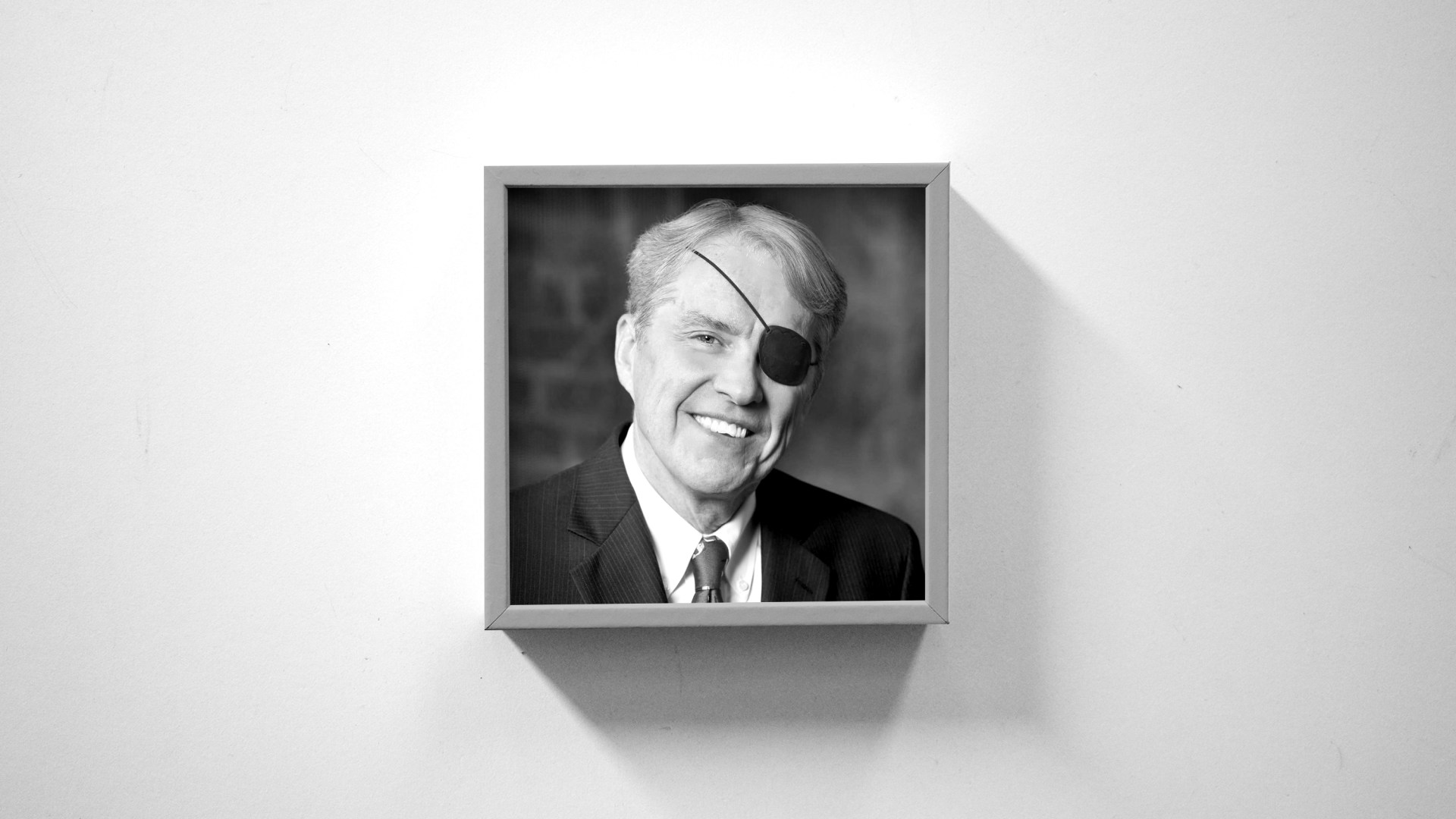
Ron Hamilton wrote hundreds of hymns and worship songs, including “Rejoice in the Lord,” “Here Am I, Lord,” and “I Saw Jesus in You.” He was also a composer and published 20 Christmas cantatas.

But he is known most for his sillier work: 41 kids albums, written by and starring him as the one-eyed “Patch the Pirate.” Alongside his wife as “Sissy the Seagull” and their kids playing assorted sea creatures and crew, he went on adventures and sang lessons about life, the Bible, and God.

“Not a lot of Christian pirates around,” Hamilton told a church in 2014. “I’m about the only one. It’s a lot of fun.”

Hamilton lost his left eye to cancer when he was 26. He started wearing an eye patch, and as he recounted many times over the years, children began to recognize him as a pirate, pointing him out to their parents, asking if they could be pirates too, and greeting him in his home church with a hearty “Ahoy!”

The Hamiltons put out the first Patch the Pirate album in 1981, a second in 1982, and released them annually after that. More than two million copies have been sold, and the songs are broadcast on more than 450 radio stations, making Patch the Pirate one of the largest children’s outreach programs on the radio.

In 2018, as dementia was rapidly shrinking his world, Hamilton’s wife, Shelly Garlock Hamilton, tried to encourage him by reminding him of that success. “Do you realize how many people you have blessed with your music, Ron?” she said.

Hamilton replied: “I’d like to think God did it.”

He died on Wednesday, surrounded by family, at the age of 72.

Tributes and remembrances poured in on social media. One young woman in Minnesota called Hamilton her “cassette-tape dad.”

“I remember time and time again, being curled up around the radio listening to the stories with such anticipation and singing along with the songs we learned to love so much,” she wrote. “Patch, you were a rock to a wondering and searching soul.”

A man in Oklahoma recalled a similar experience.

“I remember sitting on the couch as a young child, listening to all the adventures, over and over again, with my imagination running wide open!” he wrote. “I cherish those memories oh so much, and wouldn’t trade them for the world. Ron, thank you for the work you so willingly did for the Lord.”

https://twitter.com/pastorhuston/status/1648910477085360128
https://twitter.com/TheWanderLyz/status/1648867250924052480

Hamilton was born in South Bend, Indiana, on November 9, 1950. His father, Melvin, was an electrician. His mother, Leota Marie, was a homemaker with a passion for music and a commitment that her three children would be musically trained. She hired a piano teacher to teach them trio arrangements and personally directed them singing gospel in three-part harmony whenever they were in the car.

The family belonged to an Independent Fundamentalist Baptist church, and Hamilton kneeled beside his bed as a child to confess that God sent his only Son to die on the cross for his sins. He accepted Jesus into his heart and trusted him for salvation.

“Salvation and a personal relationship with Jesus Christ are the means by which one can live a life in heaven forever,” his family wrote in the death notice posted by a Greenville, South Carolina, funeral home. “This is the gospel in full, the gospel to which Ron dedicated his life.”

Hamilton was also an adventurer as a young man and spent one summer of his teenage years riding his bicycle across the United States. He spent another cycling around the Great Lakes.

At 18, he went to Bob Jones University to study music. He auditioned for the vesper choir, led by renowned fundamentalist Baptist composer Frank Garlock, and was accepted. That same year, Hamilton spied Garlock’s daughter Shelly running across campus in her cheerleading uniform and was smitten. She saw him in her dad’s choir and felt the same.

The two dated for six years and got married in 1975. Hamilton went to work writing music for his father-in-law’s new production company, Majesty Music. At the same time he completed a master’s degree at Bob Jones, writing a trilogy of songs about the Cross: “It Is Finished,” “Come to the Cross,” and “The Blood of Jesus.”

In 1978, Hamilton had trouble seeing out of his left eye. He was sent to doctors in Atlanta who told him they could see a spot. It could be cancer, but they would have to operate to know for sure.

“It was kind of suspenseful,” Hamilton said.

They were, in fact, really concerned. There was a chance, according to the doctors, that the cancer was inoperable.

“We didn’t know if it had gone to his brain,” Shelly Hamilton said. “If it had gone to his brain, the doctors couldn’t have done anything for him.”

The couple went to Atlanta for an operation and were relieved to learn the cancer had not spread beyond his eye. However, the doctors couldn’t save his eye and had to remove it. They gave him an eye patch, sparking the reaction that inspired a new line of children’s music and Hamilton’s greatest ministry.

“Many people would see the loss of my eye and the need for wearing a patch as a great trial,” Hamilton said. “But I see it as one of the greatest blessings of my life. It reminds me that God teaches us the greatest lessons in the deepest valleys.”

In 1981, Majesty Music put out Sing Along with Patch the Pirate. It had 16 disconnected songs about Jonah, David, Daniel, and Jesus, as well as “I Love America,” and one about how “nobody likes a person who will grumble and complain.”

The follow-up album was written to tell a story, sending Patch the Pirate on an adventure full of opportunities to spread the gospel.

“It’s yo, heave ho, a’sailing we go,” Hamilton sang on one track, “telling the story of Jesus.”

After that, Patch the Pirate went on a new adventure with new music, every year. Sometimes the crew retold a biblical story, as with 1996’s Giant Killer. But more often they sailed on simple adventures, encountering situations they could learn from, new friends to tell about Jesus, and reminders to praise God.

“We’re making car rides more enjoyable, more bearable,” Shelly Hamilton said. “But when you’re actually teaching them someone loves them and there’s a Savior, it’s really making a difference.”

Majesty Music also established Patch the Pirate clubs for churches. By the mid-1990s, there were more than 900 clubs across the United States, attended by about 16,000 kids. Hamilton remained connected to Bob Jones throughout his life and was well regarded by Independent Fundamentalist Baptists. His music reached far beyond that network, though, and was widely used by evangelicals across denominations.

Hamilton continued to write adult music as well. Most of his songs were big, majestic pieces, best sung by choir and a full congregation backed by a church orchestra.

https://open.spotify.com/embed/track/3zWOTg9Qy14jkmb8ulJVcK?si=601d3a7591194cdf
https://open.spotify.com/embed/track/3f2EUE4EwykTu0Fd9Ij5bx?si=cf14ae2bce324aba
https://open.spotify.com/embed/track/2AV9JUxx3CeAAKS0HBUAGY?si=c6234032bc95405a

Hamilton’s most beloved hymn was perhaps “Rejoice in the Lord,” a song about trusting God:

Now I can see testing comes from above;

God strengthens His children and purges in love.

My Father knows best, and I trust in His care;

Through purging more fruit I will bear.

In 2013, the Hamiltons suffered the tragedy of the death of their eldest son by suicide. Jonathan, 34, had long struggled with clinical depression and schizophrenia.

“Losing our son has been the hardest thing we’ve had to deal with,” Shelly Hamilton said. “But we know he’s well and he’s with God, so that’s a comfort that we’ll see him again in heaven.”

Two years later, Hamilton was diagnosed with frontotemporal dementia, which impacts the part of the brain that controls language and behavior. His ministry ended in 2017 after wrote his last song for children. It was about the silliness of selfishness, called “It’s All About Me.”

Majesty Music was turned over to a third generation of the family and is now run by Megan Hamilton Morgan—known on some Patch the Pirate albums as “Princess Pirate”—and her husband, Adam, who is also a state representative in South Carolina. Megan and Adam Morgan have written the most recent Patch the Pirate albums, Mystery Island and A Whale of a Tale, a pirate-themed retelling of the Jonah story.

Majesty Music has also made Patch the Pirate more available, releasing a smartphone app, Patch Plus, with all 42 years of Patch the Pirate music included.

In July 2022, Hamilton, his wife, and his daughter Alyssa moved to Navarre, Florida, to live with Shelly’s sister Gina and brother-in-law David Greene, so they could all care for and support Hamilton in his final days, allowing him to live at home.

One of his final conversations was with his friend Tom Williams, an evangelist, who prayed a nautical prayer for the that man so many knew as Patch the Pirate.

“Dear Lord,” Williams said, “this old ship is about ready to dock.”

Hamilton is survived by his wife, Shelly, and their children Tara, Alyssa, Megan, and Jason. A funeral is being planned at Bob Jones University.

addApple PodcastsDown ArrowDown ArrowDown Arrowarrow_left_altLeft ArrowLeft ArrowRight ArrowRight ArrowRight Arrowarrow_up_altUp ArrowUp ArrowAvailable at Amazoncaret-downCloseCloseellipseEmailEmailExpandExpandExternalExternalFacebookfacebook-squarefolderGiftGiftGooglegoogleGoogle KeephamburgerInstagraminstagram-squareLinkLinklinkedin-squareListenListenListenChristianity TodayCT Creative Studio Logologo_orgMegaphoneMenuMenupausePinterestPlayPlayPocketPodcastprintremoveRSSRSSSaveSavesaveSearchSearchsearchSpotifyStitcherTelegramTable of ContentsTable of Contentstwitter-squareWhatsAppXYouTubeYouTube