Testimony

New Age Thinking Lured Me into Danger. Jesus Brought Relief.

He made himself real at a moment of intense spiritual fear.

Alex Boerner

As a child, I was fascinated by the unknown. Staring up at the stars, I would think about everything beyond our ordinary perceptions: space travel, alternate realities, aliens, astrology, Egyptology, and all things science fiction. I was drawn to anything esoteric. These interests planted a deception and led me down a path to a life without Jesus.

I was never an atheist, which made no sense logically or when observing the beauty of the world. I believed in some kind of divine creator, but despite being exposed to Christianity as a child, I did not heed its message.

My biggest roadblock was intellectualism. I was a seeker with an insatiable hunger for wisdom. I tried to absorb and decipher countless books, articles, and websites. In my mind, being well-educated meant you could not resort to trivial faith. Yet I was drawn to other world faiths, never questioning them as harshly as I questioned Christianity.

In the mid-2000s, my obsession with science fiction and aliens led me to metaphysics and then eventually to New Age spirituality, including Eastern mysticism, enlightenment, and reincarnation. (Only later would I discover that the New Age is essentially ancient paganism in repackaged form.) The lure of the esoteric world was too powerful to resist.

My first transformative experience with the New Age happened around 2008. A woman I knew had been reading something that piqued my curiosity. When I asked about it, she glanced at me, clearly scrutinizing my intent. I sensed her hesitation to reveal her secret, almost as if she were pondering whether I was worthy of hearing it.

Finally, with a sly smile, she told me what she was reading—a book about a purported “ascended master.” I ordered the book soon after, and its antibiblical teachings hooked me immediately. I believed I had finally discovered the real path of esoteric knowledge. Unaware of the Bible’s warnings against interpreting signs and omens, I later convinced myself I was experiencing supernatural congruences, with every number, word, or coincidence representing some kind of message from beyond.

In 2011, I bought my first deck of oracle cards, which are divination tools forbidden by God. I relied on them for answers, entertainment, and comfort, mistakenly believing that the universe was guiding me. Meanwhile, I began attending spiritualist events, services, and conventions. These take different forms, but they often incorporate spiritual readings, talks about metaphysical topics, sales of New Age goods and paraphernalia, and experiential workshops like nature hikes in search of spirits.

I became progressively immersed in the New Age, engaging in practices like divination, meditation, affirmations, visualization, crystal and energy healing, and chakra clearing. I saw these practices as the best route to self-improvement and enlightenment. All the while, I told myself that nothing I was learning and doing could be evil because it was all about “love and light.” I knew nothing of the Bible’s teaching that your heart can deceive you (Jer. 17:9), and I failed to appreciate how Satan, the father of lies, can further that deception.

New Age spirituality feeds your ego by teaching that there is no right, no wrong, no objective truth—just a landscape of experiences that your soul goes through. It gives you false idols to worship, starting with yourself, teaching that you are always perfect where you are. It also teaches you to rely on spiritual experiences rather than rationality.

In 2013, as New Age thinking had me firmly in its grip, tragedy struck when my twin daughters died after I went into preterm labor. I delivered them on two separate days, holding each daughter in my arms as they took their final breaths. I had always been obstinate and resilient, but this experience broke me. I sought relief in New Age practices, never stopping to ask what I needed relief from. But I also began praying and calling out to God for help.

Things began to shift in late 2016. I attended a spirituality event and saw a presentation from a world-renowned New Age leader. She was engaging and endearing as she preached immense love and forgiveness in front of the lights, cameras, and audience.

Later, standing in her book-signing line, I could hardly wait to express gratitude for her teachings. I figured she would revel in my praise, but her reaction was sobering in its coldness. She barely made eye contact. Her body language was dismissive. She uttered not a single word of compassion but just nodded robotically. It seemed she could hardly wait to leave.

Feeling embarrassed and confused, I left the room wondering what I had done. I wondered why I was even there. I was convicted by God. In the following weeks, he showed me I was worshiping idols. He allowed me to see that the teachers I had been following were ordinary people with ordinary problems, not enlightened masters. They presumed to teach others how to overcome the limitations of human nature, but deep down they were all basic people—just like me—full of errors, weaknesses, and sin, and in desperate need of Jesus.

A few weeks after that event, I had an episode of sleep paralysis. At some point in the night, I awoke with a sudden awareness that I could neither move nor speak. Waves of fear pressed down—a palpably spiritual fear. I knew in those moments that I had walked a dangerous path, putting my soul at risk. I tried casting the fear aside with my “positive thinking” techniques, but nothing changed. In my mind, I called out to my husband who was fast asleep inches away. Then my mind called out to my mother, pleading in childlike desperation, even though I knew she was not there. But the feelings of fear and suffocation only intensified. I should have been visibly hyperventilating, but my body was motionless and the room silent.
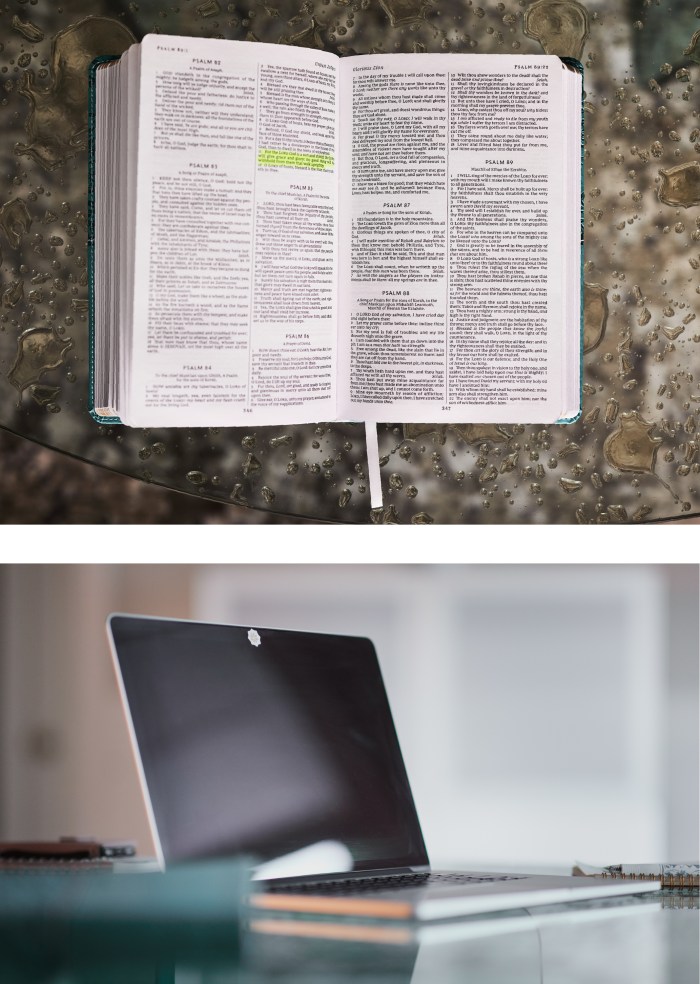
Top: Tina Kolniak's personal Bible. Bottom: Kolniak attends church online.Alex Boerner
Top: Tina Kolniak’s personal Bible. Bottom: Kolniak attends church online.

Then I called out to Jesus, and everything stopped. I could move again. I breathed in and out heavily. I was safe. As the agony dissipated, I knew Jesus was real. I knew the Bible was real. And I knew that Jesus had rescued me from spiritual warfare. The relief was indescribable. I felt gratitude and awe for Jesus. That night changed me forever.

But over the next three years, I went through turmoil as God worked on my heart. I craved humility, peace, and refuge from my sins of divination and idolatry, among many others. It took me a long time to truly understand the gospel. I made many mistakes during that time, mostly by mixing New Age ideas with biblical truth. My intention to walk with God was unshakeable, but I had much to learn, specifically that humanity has a sinful nature and that redemption comes through Jesus alone. Through this new lens, I had to reassess core beliefs about my behavior, my relationships with others, the reality of objective truth, and solving emotional problems.

I yearned for God’s Word, for repentance, for his forgiveness—and for a new life. I discarded thousands of dollars’ worth of New Age materials. I prayed daily. I began watching online church services and Bible studies. I read the Bible online and bought several Bible translations. And I studied works of Christian apologetics, discovering abundant rational evidence for the authority and truthfulness of Scripture.

Since coming to Jesus, I have shared the gospel despite ridicule or dismissal by self-professed “free thinkers” and educated intellectuals who believe they are beyond faith. I was once there, and my empathy runs deep for those who are lost in the same worldly delusions. My prayer is that the Holy Spirit would help them realize that New Age spirituality, with its egoistic focus and false promises of peace, is a dangerous replacement for our true savior, Jesus Christ.

Tina Kolniak is an attorney and a writer currently working on a Christian-themed novel for young adults.


Ideas

Christianity Is a Birth Story

Columnist; Contributor

From the Exodus to the Gospels, Scripture is shot through with images of labor pains leading to joy.

Illustration by Christianity Today / Source Images: Unsplash / Pexels

We all know what it feels like to walk into a room while someone is midway through a story, then spend the next few minutes trying to work out what kind of story it is. For the sake of argument, imagine the story goes like this:

A long period of waiting is building to a climax. Groans of agony are clearly heard. Midwives appear, commending suffering women for their fortitude in labor. There are ten waves of pain, gradually increasing in intensity and culminating in the threatened loss of life.

Finally the moment arrives; the delivery comes at night, marked by blood, water, more cries of anguish, and a dangerous journey—followed by a great celebration. Soon our nascent protagonist is crying out for food and drink, which he quickly receives. Yet he will continue fussing and whining for the rest of the story, even as his father instructs him, teaches him to walk, corrects him, shows him how to make things, and eventually gives him his own room.

This, of course, is the story of the Exodus. Israel is God’s child; the dramatic narrative of slavery, plagues, Passover, Red Sea–crossing, and wilderness-wandering is a tale of labor, birth, and infancy. We often talk about nations being “born”—mine in 1066, and yours, perhaps, in 1776—but in Israel’s case, this is more than a metaphor. God’s nation-child is born in the Book of Exodus and spends the rest of the Torah being trained and growing up.

By itself, these connections may not seem to matter much. Hopefully they illuminate the story of Exodus while bringing aspects of Leviticus, Numbers, and Deuteronomy into sharper relief. But the practical application for Christians in the 21st-century West might appear minimal. If so, then it is worth pondering another biblical book where childbirth—albeit childbirth of a different sort—serves as a dominant metaphor.

John’s gospel, famously, omits a nativity story. But its opening verses are filled with birth imagery: coming into the world (1:9); becoming children (v. 12); being born of God as opposed to blood, flesh, or human will (v. 13); and becoming flesh to dwell among us (v. 14). The main drama begins at a wedding and moves quickly to a detailed conversation about birth, in which entrance to the kingdom involves being “born again” or “born from above,” not by climbing back into the womb but by being “born of water and the Spirit” (3:3–5, NIV and NRSV).

The image of impending labor pains haunts John’s gospel. Consider a woman in childbirth, Jesus says. She “has pain because her time has come” (16:21). In one short phrase, Jesus reframes all those times in John where we hear that his hour “is coming” or “had not yet come” (2:4; 5:28; 8:20)—to say nothing of the time when he acknowledges being troubled because his own hour has come (12:23, 27).

Although childbirth is painful and often perilous, there is great rejoicing once the child is born. As Jesus explains, the mother “forgets the anguish because of her joy” (16:21). Likewise, he assures his disciples, their grief will eventually turn into rejoicing (v. 22).

Even John’s account of the crucifixion reads like a birth story. Jesus has his clothes removed (19:23) and asks for pain relief. Surrounded by women, he exclaims, “Woman, here is your son” and “Here is your mother” (vv. 26–27), at which point his mother takes the young man he addressed home. After Jesus’ triumphant cry of “It is finished,” blood and water come gushing from his side (vv. 30, 34), a detail only John records. (Along with Luke, he also records the scars and marks that remain on Jesus’ body even after the Resurrection.) John persists with the theme in his letters, repeatedly describing salvation as being “born of God” and famously insisting on the witness of Spirit, water, and blood (1 John 5:1–8).

Christianity is a birth story. Life comes as we are born from above, aided and sustained by sacraments that evoke spilt blood and the breaking of waters. We grow as we move from milk to solid food (Heb. 5:11–14). Sufferings are labor pains we’ll forget one day in the joy of new life (Rom. 8:22–25). In all this, God’s love is like that of a breastfeeding mother (Isa. 49:15) or a father teaching his children to walk (Hos. 11:3). And we are safe in his arms.

Andrew Wilson is teaching pastor at King’s Church London and the author of Remaking the World.

May We Never Lose Sight

Unlike Hezekiah, let’s embrace our impact on future generations.

UnSplash / Chris Curry / Joseph Chan

God’s Word is full of nuances and moments that catch us by surprise. From the nuances of creation to the spectacular moments of redemption, the entirety of Scripture has the potential to captivate and transform us with each divine twist and turn. While listening to Scripture one morning, one such nuance made me stop in my tracks.

It was the last verse of Isaiah 39, which marked the end of King Hezekiah’s reign and the beginning of Babylonian captivity. It was the note that sealed a prophetic word of destruction and confirmed the generational consequences of sin. Upon hearing Isaiah say that everything he owned would be carried off to Babylon and his descendants would soon be taken away, Hezekiah replied, “The word of the Lord you have spoken is good” while thinking, “There will be peace and security in my lifetime.”

As I listened to this Scripture, my heart sank and I began to weep. I was overcome with grief, realizing how easy it is for one generation to forget its impact upon another and for one person’s blessing to cause them to forget about another’s plight. To be fair, Hezekiah was not the sole reason for the captivity of Israel. But Isaiah intentionally highlighted this moment as one of the nuances in the story that sealed the destiny of a people for a significant time.

If we are not careful, we can fall into the same trap as Hezekiah. Enamored with our own successes and captivated by our own blessings, we can lose sight of the larger picture of God’s kingdom and our footprint upon it. We can become so caught up in the American story that we can neglect to see the significance of what God is doing in the global church. We can become so engrossed in our own cultural and denominational narratives that we ignore or even demonize the grand diversity that makes up the body of Christ. And, if we’re not careful, we can become so distracted by our sense of security in our lifetime that we minimize our impact on the generations that follow.

Though Hezekiah turned his back on the world around him, the redemptive power of the gospel invites us to lean in. At CT, we are leaning in to the richness of Christ at work in the world through our global initiatives. We are embracing the multi-dimensionality of the kingdom through our Big Tent Initiative. And when the world declares exile for the next generation, we are telling the story of God—who reminds us that it is not good for any of us until it is good for all of us.

We invite you to join us as we tell the story of God’s work throughout the world, with all its nuances and redemptive movements. With God’s help, every gift you give will be a seed sown for today and for future generations, until Christ comes for us again.

Nicole Massie Martin is chief impact officer at Christianity Today.

Cover Story

Our Worship Is Turning Praise into Secular Profit

With corporate consolidation in worship music, more entities are invested in the songs sung on Sunday mornings. How will their financial incentives shape the church?

Illustration by Matt Chinworth

When worship leader Jonathan Anderson selects the song “Lion and the Lamb” for a service, he thinks about what it means for his multigenerational Assemblies of God church to sing about the return of Christ and his final victory: Every knee will bow before the Lion and the Lamb.

“We have older people who love to imagine seeing God’s face, who look forward to that, to seeing pure beauty,” said Anderson, who serves at Bethel Church in Tallmadge, Ohio.

Songwriter and recording artist Leeland Mooring (who performs with the band “Leeland”) started composing the song at a worship event. He found himself and those with him profoundly moved by the words and music as they took shape.

Mooring told NewRelease Today, “We were just weeping, and there wasn’t a dry eye in the room …. God dropped the whole chorus of the song on me right there.”

Eight years after its release, “Lion and the Lamb” remains among the top 30 contemporary worship songs sung in churches on Sunday, with recordings by popular bands including Leeland, Shane & Shane, and Big Daddy Weave.

The song’s continued popularity means congregations lift those powerful words in praise each week, as Mooring and his cowriters (industry veterans Brenton Brown and Bethel Music’s Brian Johnson) hoped. And each time churches like Anderson’s sing “Lion and the Lamb,” it adds up—especially if the service is livestreamed—for Christian music licensing companies, corporate labels, and private investors who have come to see the Christian corner of the industry as a previously untapped income stream.

A portion of the rights and royalties for Mooring’s song, which would have once been continuously paid out to the song’s creators and label, were sold at auction in 2020 as part of a $900,000 package to a private investor. The bundle of songs had made $156,393 the year before, more than three-quarters from the use of “Lion and the Lamb.” The investor who made the winning bid was quoted an industry-projected return of nearly 15 percent.

The words and melodies that stir hearts to worship each Sunday are also intellectual property (IP) on the market, caught up in a recent surge of acquisitions across the music industry. The investment activity has become a “feeding frenzy,” according to industry executive Hartwig Masuch, with worship hits a small part of the billions invested in IP and royalty streams.

As churches worldwide sing, play, and live-stream songs like “Lion and the Lamb,” “How Great Is Our God,” and “10,000 Reasons (Bless the Lord),” the popularity of these songs has ushered Christian music further into the mainstream music industry and the vast economic ecosystem adjusting to make a profit in a new era.

Trends toward IP acquisition, lucrative arena tours, and corporate consolidation have helped drive record-setting revenues over the past two years—the touring industry saw $6.28 billion in 2022, and recording revenues in the US reached an all-time high of $15.9 billion, growing for the seventh consecutive year.

Many Christian artists, including those whose careers and brands are built on worship music, are benefiting from this growth.

Making money from the genre is nothing new. Christian music has turned a profit for American investors for centuries, ever since bookseller Hezekiah Usher distributed the Bay Psalm Book in 1640, the first book printed in the colonies. What’s new is the complicated web of demand, creation, and moneymaking in today’s version of the industry. The more corporate entities stand to profit from worship hits, the more they are positioned to introduce incentives and exert pressure along the way.

In the worship music landscape, each participant has its priorities: Churches seek out songs to serve their congregations, artists create music to minister to the church, the industry provides a platform and finds ways to profit from popular media, and investors look for promising assets.

Among writers, performers, agents, publicists, tour organizers, record labels, publishers, and investors, all are looking for new worship songs to become hits and for hit worship songs to stay popular and profitable. But not all of these people have equal sway in a song’s trajectory, and not every push toward success is morally or theologically neutral.

As worship music is further integrated into the economic landscape of the mainstream music industry, can it retain its distinct spiritual purpose? Will the powerful incentives of the business—fame and celebrity and financial success—influence the way worship songs are produced and promoted?

Contemporary worship music has gained the intensifying interest of the mainstream entertainment industry over the past two decades. Worship artists fill the country’s largest arenas. Instead of Christian artists crossing over with secular hits, worship songs make their way into the mainstream: Justin Bieber performs “Jireh” and “How He Loves” with Chandler Moore; contestants on The Voice sing “Oceans”; the Today show and Fox and Friends feature sets by Taya, Maverick City Music, and Hillsong United.

Songwriters and worship artists “love the church and want to provide songs that serve the church,” said Shannan Baker, a postdoctoral fellow in digital humanities at Baylor University’s Center for Christian Music Studies. But today’s top worship artists and songwriters face these intensified market pressures.

“I’m hesitant about the role money can play in elevating certain worship songs,” Baker said, sharing one concern about the industry. “It’s a music business. Money drives decision-making at the upper levels.”

Financial gain—especially financial excess—is not a neutral incentive and can narrow the kinds of artists who make it to the top.

“For evangelicals, the market has always been a way of proving God’s blessing,” said Adam Perez, assistant professor of worship studies at Belmont University in Nashville—the hub and headquarters for the Christian music industry. “Investment is a lagging indicator of success.”

“Any time someone increases their access to capital, it increases their access to power,” he said. “Now, how will that power be exercised?”

More mainstream companies and investors have recognized opportunities for profit in hit Christian artists and songs, particularly as major corporations consolidate ownership. This interest has led to major arena tours once reserved for rock stars and royalty auctions to get a cut of worship hits.

Capitol Christian Music Group (CCMG), for example, has acquired major Christian labels Sparrow Records, Hillsong Music, and sixstepsrecords. CCMG is part of Universal Music Group, which held a market share of just over 37 percent in the music industry at the end of 2022. Its artists now include Chris Tomlin, Hillsong United, Brooke Ligertwood, Crowder, Cody Carnes, Jesus Culture, and the Newsboys. Last year, it claimed to have 60 percent market share of the top 10 worship songs used in churches.

These songs get licensed for services and events through Christian Copyright Licensing International (CCLI). The organization began as a resource to keep churches from violating copyright when using lyrics and music from worship artists.

Now the music industry has begun to see popularity on CCLI as an indicator of a song’s ongoing profitability, since over a quarter million churches worldwide license their worship music through the ministry. A listing selling royalties for the “Lion and the Lamb” package noted that two-thirds of the annual profits could come from CCLI—$100,000—and that the earnings were stable.

CCLI also ranks songs based on weekly usage as reported by churches its licensing protection covers. According to CCLI, “Lion and the Lamb” landed among the top 30 songs sung at churches as of spring 2023, eight years after its release.

“A Christian radio hit makes a little money for a little while,” said Andrew Osenga, director of artists and repertoire (A&R) for Integrity Music. “Evergreen [worship] songs bring in a lot of income.”

The “song-centric” nature of the worship music market works to its advantage. In a rapidly changing industry (How often do you pay to listen to music?), revenue from songwriting and publishing royalties in the niche have remained reliable sources of income.

Osenga noted that since the beginning of the pandemic, royalty revenues for worship music have increased substantially because of the sudden rise in churches livestreaming and posting service recordings to YouTube. Before 2020, most churches covered by CCLI for the use of contemporary worship songs were paying $170–$215 per year for licensing. The right to legally stream performances of those songs required churches to add a new streaming license, which can cost another $110 a year based on church attendance of 400 people per week (the cost increases with church size).

“Think about the number of church services that are streamed,” said Osenga. “If ‘Good Good Father’ is sung in thousands of churches, many of which are livestreamed, the revenue of that copyright is huge.”

Illustration by Matt Chinworth

Worship songs typically don’t have a very long lifespan, but a few favorites like “How Great Is Our God” and “In Christ Alone” make it to the CCLI top 100 and stay there. A recent study found that between 2015 and 2019, the average lifespan of a worship song was four years. Between 1995 and 1999, it was 11 years.

The most successful recording artists have still been able to achieve longstanding hits on the CCLI charts; their songs now appear on sites like Royalty Exchange, where investors can evaluate them as financial assets.

Historically, there has been very little interest in back catalogs of Christian artists.

“In contrast to the general market,” ethnomusicologist Andrew Mall said in his 2021 book God Rock, Inc.: The Business of Niche Music, “in the Christian market there is comparatively little demand for (or even awareness of) older music and artists.”

But Hipgnosis Songs Fund, a Blackstone-backed music rights investment company, recently acquired a stake in the back catalogs of Third Day and Jason Ingram, a producer and songwriter who has worked with Chris Tomlin, Matt Maher, Kari Jobe, Lauren Daigle, David Crowder, and Christy Nockels. Hipgnosis is the same entity that acquired the rights to Justin Bieber’s catalog in January 2023 in a high-profile $200 million deal.

Hipgnosis’s website touts Ingram as a force in the Christian music industry who “has helped shape the genre in a modern distribution world.” Ingram cowrote “Goodness of God” by Bethel Music, No. 1 on the CCLI Top 100 in 2023, as well as two others in the top 10: “Great Are You Lord” by All Sons & Daughters and “King of Kings” by Hillsong Worship.

In January 2022, the privately funded publishing and talent management company Primary Wave Music acquired a stake in worship artist Matt Redman’s entire publishing catalog. His song “Blessed Be Your Name” has spent 20 years in the CCLI top 100.

“It’s a good deal on both sides,” said Andrew Osenga. (Redman is currently signed with Integrity Music, Osenga’s employer.) An artist like Redman or Ingram can take a buyout, a lump sum from a company willing to bet that their songs will bring in additional earnings. It’s a smart way for a musician to pay off a home or send kids to college. Earnings on future songs they write will still be theirs.

The language used by entities like Primary Wave, Hipgnosis, and Royalty Exchange lays bare the purely financial motivation behind their investment in worship music. In a press release, Primary Wave described the move to acquire Redman’s catalog as one that would continue to “strengthen its position in the faith-based market.”

The Royalty Exchange listing for the 2020 auction of the asset package with “Lion and the Lamb” even named CCLI as a “notably unique and lucrative income source,” whose “earnings are quite stable year-over-year.” The listing also clarified that 78 percent of the catalog’s income came from “Lion and the Lamb,” referring to the song as “the star of this collection.”

Investors may or may not have any interest in the spiritual aspect of the music, but since their profits rely on songs’ continued use by church congregations, they have a financial interest in what churches sing on Sunday mornings.

It’s too soon to say how the relationships between investors and worship artists’ back catalogs will influence the future use or trajectory of hit worship songs. However, with financial backers poised to profit from the continued use of some songs and not others, those with a stake in a particular hit could look for ways to reintroduce it and keep it fresh in the minds of worshipers, through covers, new recordings by popular artists, or novel arrangements.

The royalties marketplace is just one example of how the revenue streams in the worship music industry—and the music industry more broadly—have introduced new stakeholders, incentives, and pressures to the process. For artists who are popular enough to draw huge crowds, touring presents the opportunity to generate revenue with less interference from labels and publishers, who take cuts of recorded work.

The Christian industry mirrors the financial incentives and structures of the mainstream music industry, so it makes sense that Christian artists would rely on touring for income. Over the past three decades, as worship artists make their way onto arena stages, the bigger venues add to the public’s awareness of monetization in the industry. “Christian listeners are increasingly encountering worship music in entertainment contexts that used to be the domain of pop/rock,” wrote Mall.

The line between entertainment and worship in these contexts has grown blurrier, even as touring artists explicitly frame performances as worship services or experiences. Chris Tomlin toured in 2022 with Hillsong United, telling the Gospel Music Association, “I always say, there’s nothing like the sound of the people of God, singing the praises of God, in the presence of God and to be able to experience that night after night is truly a gift.”

Big names like Hillsong and Bethel hold arena tours, sometimes with VIP packages and experiences like early entry, custom merchandise, premium seating, and staged photo ops. And, like Coldplay, Taylor Swift, or others performing in stadiums, they’re subject to ticket scalping.

Last year, Elevation Worship had to clarify that a $1,000-plus front-row ticket listed for their show wasn’t the sticker price but an inflated resale value.

The 2022 Chris Tomlin–Hillsong United tour—playing Target Center in Minneapolis, the United Center in Chicago, and the Banc of California Stadium in LA—initially offered a VIP ticket option for purchase, but in response to online backlash from fans, the tour removed the VIP option and replaced it with two tiers of “experience packages.”

Chris Tomlin performs on stage at the Tomlin United Tour that included Hillsong United on April 11, 2022.AP
Chris Tomlin performs on stage at the Tomlin United Tour that included Hillsong United on April 11, 2022.

The “Tomlin-United Experience” included a close-up seat, early access to the venue, a photo opportunity on the catwalk, a “pre-show merchandise shopping opportunity,” an “intimate on-stage experience with Chris Tomlin and United,” and “limited gift items specifically designed for VIPs by the artists.”

Christian artists often promote worship concerts or “worship experiences” as more than just performances, and the delivery of a sermon or short message can make the event feel like a heavily produced church service. And some are troubled by the prospect of paying to attend—or get VIP access to—something billed as a worship service.

“Should we ever pay to attend a worship event?” wrote UK-based worship leader and songwriter Tom Read in a column for Premier Christianity about the Tomlin-United Tour in October 2021. “Let’s be honest, there is a significant difference between paying an artist for their work and buying VIP tickets so you can have a photo on a catwalk at a worship event. What is so problematic here is the leveraging of the worship of God for the creation of personal fame and fortune.”

Winter Jam often lands among the music industry’s highest-ranking tours for the first quarter of the year. Organizers have kept ticket prices low—just $15 at the door—hoping to make each stop an accessible evangelistic event. But those looking for a more exclusive experience can still purchase additional access by joining Jam Nation, a tiered fan club with options for groups and individuals.

Attendees who join Jam Nation Max for $149.99, the highest-tier option, will get a meet-and-greet and photo with We The Kingdom and recording artist Jeremy Camp, seating in an “exclusive reserved section,” merchandise discounts, a T-shirt, and early admission.

The highly successful tour illustrates the increased blurring of the distinction between performative Christian music (like radio hits) and worship music. Winter Jam isn’t billed explicitly as a worship concert or experience, but worship and a gospel presentation are part of the event. The 2023 tour included popular worship bands Thrive Worship and We The Kingdom.

The increased consolidation of popular contemporary worship music under fewer companies—entities like CCMG—means the industry has a bigger incentive to promote worship music and bigger artists have a better chance at making solid revenue.

It also means that CCMG has an incentive to gain greater access to the Christian music market, especially anyone looking for worship music.

CCMG owns Worship Together, an online resource for worship leaders that promotes new music, puts out blogs and podcasts, and hosts an annual conference. The featured performers at its 2023 conference will be Hillsong United and Cody Carnes, both CCMG artists.

Despite the involvement of players like CCMG in the promotion and marketing of worship music, Andrew Osenga has faith in songwriters’ commitment to serving the church and in worshipers’ sense of what music belongs in their sanctuaries.

“We don’t want to sing a product,” said Osenga, a former member of the band Caedmon’s Call. “We want to sing a song that is genuine.”

He isn’t worried about increased corporate investment in worship music because he and the artists he works with still approach writing worship music as a calling and spiritual practice.

“You can see short-term attempts to monetize [worship], but they feel outside of the community,” Osenga reflected. “It’s hard to fake it.”

Earlier this year, worship artist Dante Bowe told CT, “If someone’s getting into writing Christian music for the money, they’re in the wrong genre,” given the risk and sacrifice involved.

“A lot of these guys could write anything or do anything. But they haven’t,” said Bowe, who previously sang with Maverick City Music and is launching his own label. “They’ve made a choice to serve the church locally and worldwide.”

Consolidation under major conglomerates offers new access to the marketing and promotional machinery of the music industry, access that many in the industry have welcomed.

Nearly a decade ago, the Gospel Music Association’s review of the industry touted partnerships between Christian artists and NASCAR, McDonald’s, and Coca-Cola. GMA executive director Jackie Patillo expressed optimism that the report would attract new commercial partners by providing strong evidence that Christian music could be an effective marketing tool. It’s only become more lucrative since.

But the boost from corporate partnerships and music conglomerates has also widened the gap between hitmakers on the worship charts and the vast majority of songwriters.

Most people making worship music see their royalties quickly dwindle as their songs fall lower on the CCLI lists and out of use among churches—if they ever become that popular in the first place. CCLI licenses over 450,000 songs; most of them have never been performed in a stadium or streamed hundreds of thousands of times.

“You’ll get your first royalty check, and maybe you’ll be able to take your wife out for coffee,’” said Chris Juby, a songwriter with Resound Worship. “You know you’ve made it when the check covers a nice dinner.”

Juby, manager of UK-based Jubilate Hymns Ltd. and director of worship, media, and arts at King’s Church Durham, expects that corporate consolidation in Christian music will also affect the range of theological themes present in the worship of the church.

“Worship songs bear so much liturgical burden in the content of the service,” he said. “The range of [music] that could ever be successful via those channels is so much narrower than the range of what the church should be singing.”

Jonathan Powers, assistant professor of worship and associate dean of the school of mission and ministry at Asbury Theological Seminary, shares Juby’s concern.

“A lot of people are getting their theology from music,” said Powers, who recently edited the Wesleyan Our Great Redeemer’s Praise hymnal. “There is a piety being formed by music in the church—ideas of who God is, what God does.”

When left up to industry promotion and market forces, Christian worshipers often don’t get as broad of a range of expressions, themes, and doctrines as in the curation of a hymnal.

“How many songs of lament appear on the CCLI Top 100?” Powers said, remarking that it’s easy to find songs of adoration or joy but much more difficult to find songs that reflect true lament and sorrow. CCLI’s SongSelect service can sort selections by theme, with 8,658 songs assigned to “adoration” and another 19,914 to “praise.” There aren’t categories for lament or mourning; “sorrow” has 336 songs, “weeping” 35.

“With a hymnal, we’re very intentional. We want to make sure these themes are covered. We want to teach our doctrine. We want to use this to say, ‘This is who God is,’” Powers said. “Our relationship with God, God’s character, all of these ideas are being formed in worship, but I think it’s in very limited ways when the market is driving it.”

A significant portion of worshipers now attend churches where lyrics on screens have replaced hymnals, and song selection is influenced by what leaders hear on the radio, stream online, and see on the CCLI charts.

Worship songs don’t make money and climb the charts unless leaders at churches see them as theologically sound and valuable resources. As the industry seeks stable revenue, experts expect it will keep looking to the songwriters, recording artists, and worship brands that have already proven themselves profitable.

So even with more money to be made in worship songs, this inclination to stick to what works narrows the model for new artists and songs.

“Think about the limited canon of songs. A limited witness to the diversity of God’s kingdom. Limited expressions of beauty, because of a ‘market-shaped’ sound,” said Nelson Cowan, director of the Center for Worship and the Arts at Samford University. Worshipers recognize—and leaders try to recreate—the guitar-hook-with-delay Hillsong United perfected in the early ’00s in songs like “The Stand” and “Mighty to Save,” and the distinct vocal styles of singers like Kari Jobe and Jenn Johnson.

“This self-replicating process is extremely disheartening for me, as a worship leader, a pastor, and a theologian,” Cowan said.

Songwriter Krissy Nordhoff, who wrote the 2010 hit song “Your Great Name,” told CT last year that it’s harder than ever for a song to get in front of anyone in the business unless you’re a recognizable figure or have some powerful connections.

The model set by celebrity worship leaders trickles down to the local level, where worship leaders are expected to emulate everything from guitar effects and vocal styles to physical attractiveness and fashion taste.

“There’s such a real sense that, ‘Well, I could never be a good worship leader because I can’t carry the image,’” Powers said.

At the Asbury University revival in February, he saw Gen Z students reject celebrity performers for “nameless” worship leaders. That commitment to obscurity and humility is difficult to maintain when faced with a powerful industry with even greater interest in elevating an artist’s creative work, even if that work was created for God’s glory and not their own.

As worship songs become assets in the marketplace and the names associated with them draw crowds to arenas, local congregations continue to faithfully worship using songs that speak to their members as tools to corporately sing praise to God.

“Lion and the Lamb” still ministers to congregations like Jonathan Anderson’s every week. The song has special meaning for Anderson; it was one of the first songs he learned as a new worship leader years ago. It has become part of his church’s regular music rotation.

As he works on his first album, he hopes to record a cover of “Lion and the Lamb.” The song has transcended its connection to any particular artist or recording; in a way, it belongs to him and his church.

And yet, with every use in worship, and every stream on Spotify and YouTube, the song continues to generate revenue. It proves itself to be a smart investment. The profound impact of the song on its creators and those who use it for worship is exactly what has made it profitable. Industry and investors are taking notice.

Kelsey Kramer McGinnis covers worship music for CT. She is a musicologist with a PhD from the University of Iowa, specializing in music in Christian communities.

Ideas

The Authority of Scripture Is Not the Problem

Columnist

Though authoritarians misuse it, the truth of God’s Word remains.

Illustration by Jack Richardson

Every once in a while, I will hear someone who is otherwise accurately describing the current plight of the church suggest the problem is that we’ve “replaced Jesus with the Bible” or that we’ve emphasized biblical authority to the point that we’ve tipped over into authoritarianism.

Is Jesus too much eclipsed in evangelical America? Undoubtedly. Do we see authoritarians—from strongmen dictators to exploitative pastors—doing cataclysmic damage? Yes. Does this happen because we know and revere the Bible too much? No, not one bit.

Some would have us oppose authoritarianism with suspicion of authority itself. In the end, they would tell us, everything is just about power and domination, so our choice is, essentially, to whom we will yield power or over whom we will exercise it. But authoritarianism is not an intensification of authority any more than polyamory is an intensification of love or polytheism is an intensification of God. These are altogether different things.

As the sociologist Robert Nisbet demonstrated in the last century, authoritarians of all sorts thrive on an absence of legitimate authority. In so doing, they replace authority—which is grounded in persuasion and allegiance—with power—which Nisbet defined as rooted in coercion.

The Gospel of Mark introduces Jesus at the beginning of his ministry as one who startled the crowds because he was teaching “as one who had authority, not as the teachers of the law” (Mark 1:22). This is the sort of authority that, yes, could dispel unclean spirits and calm storms, but it was also an authority that spoke to human hearts, saying, Come and see and Come follow me.

If the Bible is the Word of God breathed out by the Holy Spirit, as we believe it to be, then that Spirit is the Spirit of Christ (1 Pet. 1:11). When we hear the Bible, we hear Jesus. This is how the Good Shepherd leads his sheep: We follow his voice (John 10:3, 14, 27).

When we do not heed that voice, we start listening for other voices, for calls to other pastures. Sometimes these other voices are happy to let us think their voices are that of our Lord. Sometimes they are glad for us to believe that their voices are those of our own independent thinking. In either case, that path leads to tears.

We see the Bible used by many different people today, including would-be authoritarians. Sometimes the Bible is used to make a tradition’s theological interpretation unquestionable; other times it’s used to render a guru’s practical life-tips unquestionable; and sometimes it’s leveraged to make loyalty due to a leader or an ideology unquestionable.

The antidote to this, though, is what it has always been: consciences that know the Word of God well enough that, like Jesus in the wilderness, they can recognize when it is being twisted into something else.

An evangelical emphasis on biblical authority rooted in the Reformation principle of sola Scriptura is easily caricatured. But sola Scriptura was never intended to mean that the Bible is the only authority, rather that the Word of God is the only authority that cannot be judged or usurped by some other authority.

As long as there is a Word from God, no human being or institution can claim to be unquestionable. That’s not because there’s nothing knowable out there, but because there is one true God—and he has spoken.

Today, we have more Bible resources than ever. We have more people who know how to argue from abstractions drawn from Scripture for whatever point of controversy they want to use to devastate their opponents.

What we don’t have is a church made up of people who deeply know the contents of Scripture—who know the story well enough to recognize a Bethel or a Meribah or an Egypt or a Babylon when they find themselves there.

How do we ensure that our children know how to resist those who falsely claim the authority of Christ? We familiarize them with the voice of the real one (Mark 13:14–23). In an era that can’t tell authority from authoritarianism, our most important contribution is to conserve the kind of church that can say, “Thus saith the Lord”—a church for whom that really means something.

Russell Moore is editor in chief of CT.

News

Debate Flares Over the Meaning of ‘Indian Child Welfare’

As an evangelical couple fights adoption law, Native American Christians point to holistic answers.‌

Associated Press

Carol Bremer-Bennett loved her adoptive parents. And the Dutch Reformed family in Michigan was intentional about studying and celebrating her Navajo culture and history from the time they welcomed her into their family in 1969.

But when Bremer-Bennett grew up and moved to New Mexico and went to work at a school near the Navajo Nation, she learned she couldn’t become a Navajo citizen because of the adoption. She found relatives through genealogy websites and DNA tests and got a little documentation from the facilitation agency, Bethany Christian Services. But she wasn’t able to find her father to establish what clan she was from to complete her tribal enrollment.

“Then the loss really sinks in,” she told CT. “I didn’t have the language. I didn’t have the culture. I did not know my Navajo clans. I had no relatives. I just wept.”

In 1978—nine years after Bremer-Bennett’s adoption—Congress passed a law sharply restricting the separation of Native children from their families. The Indian Child Welfare Act (ICWA) sought to address the long history of Native American children who were separated from their families and sent to boarding schools or to white Christian families, obliterating tribal cultures and connections. The ICWA prioritized placement with extended families, then with families in the Native child’s tribe, and then with a family in another tribe. Adoption by outsiders became a last resort.

The United States Supreme Court is currently weighing whether that law is constitutional. The court heard arguments in Brackeen v. Haaland in November and is expected to rule this summer.

The Brackeens are a white evangelical family who adopted a Navajo boy. They have been trying to adopt his half sister, who was removed from her mother at birth after testing positive for methamphetamine. But priority goes to extended family, and a great-aunt on the Navajo reservation wanted custody of the child.

The Brackeens and their fellow plaintiffs say the law should consider the best interests of the child and not make the decision on the basis of race. They argue the ICWA is discriminatory, since it disfavors non–American Indian adoptive couples and denies children “the best-interests determination they otherwise would receive.”

Native children might be shuttled around the system for longer periods of time because of the requirements of ICWA, they argue, or they might be placed in worse situations just to maintain tribal connections.

Christian adoption agencies largely did not weigh in on the case.

The National Council For Adoption, which is not a Christian organization, supported the challenge to the law, arguing that it is not in the best interest of children, and puts “tribal security” over parental decisions.

But in practice, an adoption of a Native child might not be so different from other adoptions with their own hurdles. Gladney Center for Adoption general counsel Heidi Cox, whose organization has facilitated Native American adoptions, told CT that any child custody case is complicated when there are multiple jurisdictions. Even working out an adoption where a child moves between states is complicated. Adoption facilitators need experience with the different placement rules in different jurisdictions, whether state or tribal.

There are also 497 tribes that support the law, along with the American Medical Association, the American Academy of Pediatrics, and others. They have told the court that prioritizing family and tribal connections is in the best interest of the children.

The case hits many raw nerves in American culture, from tribal sovereignty to child abuse to historic Christian racism. The Supreme Court justices hearing the case seemed, based on the questions they asked, most concerned with what “welfare of the child” means. Is keeping a child in a tribal community important for that child’s welfare, or should finding a stable home be the priority over any cultural connections?

Answers to those questions can be quite complicated.

Charles Robinson, who is Choctaw, and Siouxsan Robinson, who is Lakota and Blackfoot, care for 11 Native children—some biological, some adopted, some under guardianship. Both have parents who were forced into boarding schools, so the couple felt called by God to create an alternative for children in need. They lead a Christian ministry to Native communities called The Red Road. But they’ve also helped non-Native families adopt Native children in a way that preserves cultural ties.

Different parts of society have different ideas of what is best for a child, Charles Robinson said. Children that go to a non-Native family may get more opportunities for education. But they will lose their tribal connections.

“That’s the rub,” Robinson told CT. “There are values that are more important than being a scholar. There’s tribal values and culture.”

ICWA, Robinson said, has good and bad aspects, but “I’m weighing it more on the side of good.”

For some white Christians, adoption has seemed like a quick fix for the systemic, generational problems in Native American communities, providing children with an exit from cycles of poverty, addiction, and violence. But some evangelicals are pushing for more believers to get involved in the hard work of helping whole communities.

Mary Granberry and her husband, for example, have lived on the Yakama Indian Reservation in Washington State for 20 years while leading a church and community development program called Sacred Road Ministries. They have been around long enough that children from their kids club in the early days are now working for the ministry.

The Granberrys became enmeshed in the reservation community and let neighbors know their door was open to people in need. Their home became a refuge. Mothers fleeing domestic violence would come stay for a few days or drop their children off. Those emergency stays sometimes extended months or years.

“They get reminded that they’re loved and the Lord loves them, and they go back in where they’re from and they can make it a little longer,” Granberry told CT.

Eventually the Yakama Nation officially approved the Granberrys to house the tribe’s foster children. The couple currently has one Yakama foster daughter, and they still get emergency placements and help children who would otherwise be lost between jurisdictions. When local and tribal law enforcement disagree about responsibility, the Granberrys’ door is open.

The open-door approach also had problems, according to Morgan Johnson, the Granberrys’ biological daughter who grew up on the reservation and is now a social worker. Some of the informality was unsafe, she said. The couple got stricter with more experience.

But people dropping kids off at the Granberrys’ home always knew the couple would keep the children connected to family and the tribe, Johnson said. That made them a better option than the alternatives. However long children ended up at the Granberrys’, Yakama families could count on the children making it to tribal gatherings where they would learn about ceremonial rules and preparing traditional foods.

“[Parents] seek kinship care, community care, and then go outside,” Johnson said, which is similar to a lot of other placement systems. The ICWA reflects those priorities and doesn’t prevent white Christians from coming alongside Native communities.

A Yakama family working with the ministry recently brought a bag of wild celery they harvested to share with the Granberrys and some staff from Sacred Road Ministries. It’s a “first food,” with a long Yakama tradition. They cleaned, prepared, and ate it together.

“To share that food is to treat someone as if they are your blood relatives. That food was shared by your peoples, put there by God,” Granberry said. “I want the kids in my house to crave that taste and see the love in that community. It overrides the dysfunction and abandonment they have experienced.”

Emily Belz is a CT news writer.

Ideas

God Didn’t Have to Do Anything for Us

Columnist

It’s easy to forget that even the smallest gifts point to incredible divine abundance.

Illustration by Abigail Erickson / Source Images: Getty, Pexels, Unsplash

It is difficult to remember just how much we have been given.

It would have been enough if God had given us three square meals and a map for the journey. It would have been enough to have the promise of heaven. It would have been enough to have just a little air to breathe, like an emergency oxygen mask.

But instead, abundance was always God’s design. He gave us songs and ocean waves lapping on the beach. He fed 5,000 and ensured there were 12 basketfuls left over. With a word, he helped some fishermen who had caught nothing all night and provided a haul so heavy it broke their nets (Luke 5:1–11).

God’s abundance calls us to gratitude. But in the lean moments, when our world feels like the wilderness, when we wander in the weeds of discontentment and complain about what we lack, God’s love can seem limited to the essentials. We can feel trapped in a famine of faith.

If you have walked through a long-suffering season or are in one right now, hold on. The Shepherd will call you back into his satisfying presence and will set out a table for a feast (Ps. 23:1, 5). When your voice echoes in the silo where your faith was once stored, keep looking for God’s provision.

Though our awareness of God’s supply may come at intervals, his generosity toward us is steady. Grace is given in measure to his riches, not to our fluctuating feelings of gratitude or our view of current circumstances. “For you know the grace of our Lord Jesus Christ, that though he was rich, yet for your sake he became poor, so that you through his poverty might become rich” (2 Cor. 8:9).

It is only human to want more. God made our hearts for abundance. We desire to know more of the goodness of God personally and particularly. But we also stray, chasing after substitutes. This is why advertising is so effective: It offers us counterfeit versions of what God created us to crave, keeping us busy and distracted.

Grace does not always come in the way or the timing we expect. But its arrival is always lavish. We may have to look for evidence to remind ourselves of this fact when God’s providence does not meet our expectations. “Trust in the Lord with all your heart and lean not on your own understanding” (Prov. 3:5).

God, however, does not only want us to feel satisfied that he supplies all our needs. He wants us to share.

It would have been enough for Jesus to just deliver us from our sins. He could have saved our souls but left us in an impoverished existence. We take for granted how potent, how vivid, salvation really is: Jesus sent his Spirit to animate all people toward a generous life, no matter their situation. In Jesus’ parable of two sons, a father throws a party for a son who squandered his inheritance (Luke 15). God the Father receives all his rebellious sons and daughters with welcome.

God, the host of another party in Luke 14:15–23, earnestly reminds us that he wants his house full. He pours his extravagance upon us and wants it to overflow to others. “Because we loved you so much, we were delighted to share with you not only the gospel of God but our lives as well” (1 Thess. 2:8).

Salvation is personal, but not private. God sees and seeks after the ones the rest of us have overlooked—to the ends of the earth. He lifts the poor, shelters the vulnerable, and calls us to be like him in this. After meeting their great need, Jesus called his friends on the beach to leave their overflowing nets and follow him, to be conduits of his overflowing mercy.

It can be easy to remember our losses, to forget the grace. Yet it is in Christ’s nature to remember both. He set down his riches to take on our poverty. He put himself aside, that we would remember and be remembered.

We are made to give generously and to give thanks. So we lay down the nets—our sorrows and whatever we have held—to take up the thing that cannot be lost. It would have been enough just to save our souls—but God also offers us so much more. He calls us to contentment and gives us songs and ocean air and breakfast on the beach (John 21). He who was rich became poor, so that we could have all this.

Sandra McCracken is a singer-songwriter and author in Nashville. She is also the host of The Slow Work podcast produced by CT.

When Politics Saved 25 Million Lives

Twenty years ago, Republicans, Democrats, evangelicals, gay activists, and African leaders joined forces to combat AIDS. Will their legacy survive today’s partisanship?

Illustration by Jared Boggess

In Malawi, medical records look a bit like passports: little blue books emblazoned with scribbles and ink stamps. When Agnes Moses was starting out as a doctor at a Christian hospital there more than 20 years ago, one stamp would bring her spirits low.

In those days, no treatment was available for patients diagnosed with HIV. So doctors would write an order in patients’ books for spiritual counseling. After a visit, the counselor would stamp the page by the doctor’s notes.

“To me that was a death sentence, every time I saw the stamp,” Moses said. At the time, about a third of the patients in her ward had HIV. She lost medical colleagues and members of her church to the virus, too. In southern Africa especially, hospitals were overwhelmed with dying patients.

A United Nations report in 2000 was grim, predicting that as many as half of teenagers in southern Africa would die early due to AIDS. In 1998, 30 percent of pregnant women in Blantyre, Malawi, were testing positive for HIV. Life expectancy in Malawi that year was 43 years. In sub-Saharan Africa, the epidemic was hitting women much harder than men.

In Botswana and South Africa, life expectancy dove by about a decade as HIV took over in the 1990s. “We are threatened with extinction,” Botswana president Festus Mogae said in 2002, when 39 percent of adults in his country were infected with HIV.

There was a way to make HIV a survivable condition: Effective antiretroviral therapy (ART) had been developed in 1996, but few had access to it.

In 2003, president George W. Bush convinced Congress to pass the President’s Emergency Plan for AIDS Relief, or PEPFAR. It was an unprecedented global health program, appropriating about $5 billion a year to fight AIDS. With a laser focus on clinical treatment, PEPFAR distributed money to many existing African programs and clinics. It created a separate infrastructure out from under other federal agencies and stricter-than-normal reporting requirements on distribution of funds. The number of people on ART in Africa scaled up from 50,000 in 2003 to 20 million in 2022.

Instead of facing extinction, Africans have seen their life expectancy shoot up by 10 years since 2000—a greater increase than any other region in the world experienced over the same period. Today, 91 percent of adults and children with HIV in Malawi are on treatment. (Most ART funding in Malawi comes from the Global Fund, a multinational program largely financed by the United States, as well as from PEPFAR, which is entirely US-funded). Prevention campaigns are working, too: From 2010 to 2021, new HIV infections in Malawi decreased by 61 percent.

“It was the closest I’ve ever come to seeing the miracles of the New Testament … to see people near death come back to life,” said Bush speechwriter and PEPFAR advocate Michael Gerson in a 2019 video.

The US government estimates that PEPFAR has saved 25 million lives. The program currently supports 20.1 million people on treatment—mostly in Africa, but also in places like the Dominican Republic, Haiti, Ukraine, and Vietnam. Most Americans don’t know the program exists. Bush joked at an event last year that when a Texan hears about PEPFAR, they’ll ask, “Is that a toothpaste?”

But the little-recognized program is evidence that people of widely differing viewpoints—African leaders, LGBT activists, American evangelicals, Republicans, Democrats—can do something big together and do it well, something that saves lives and that endures. “It is in our human nature to better respond to emergencies than to sustain efforts over time,” said an Institute of Medicine report evaluating PEPFAR in 2007. “The energy, empathy, perseverance, and technical competence of those implementing PEPFAR will be needed for many years into the future.”

Somehow, PEPFAR has been repeatedly reauthorized by Congress for over two decades. But funding for the millions who depend on ART treatment is a question mark every year. Absent some new scientific breakthrough, HIV patients have to remain on those drugs for the rest of their lives. The program is fragile because people do not remember what a big thing many nations did, and are doing, together.

“We worry all the time” about funding stopping, Agnes Moses said. “By the grace of God, we have been able to survive and be a little bit sustainable.”

The worry is not unwarranted. Funding for PEPFAR decreased slightly under president Barack Obama, even as the program’s advocates were pushing to scale it up. President Donald Trump repeatedly attempted to slash the program by more than 20 percent, including eliminating funding to seven countries entirely. Congress rejected those proposals, but legislators have put up their own obstacles over the years—such as when, in 2008, Senate Republicans placed a three-month hold on PEPFAR’s reauthorization, accusing the program of “irresponsible spending.”

This year, Congress will need to reauthorize PEPFAR as a program for another five years (a separate process from annual appropriations). Reauthorization always revives tussles about PEPFAR’s place among federal agencies and how much independence it has. Bush structured the leadership to have a direct line to the president as a way to ensure the program remained a priority.

Will the United States continue to support the millions of people it has put on lifesaving treatment? And was the success of PEPFAR a one-time stroke of grace, or could a sustained bipartisan project like it happen again?

Africans who had seen many foreign aid programs come and go initially met the program with skepticism. “I didn’t know how this was going to change things on the ground,” Moses said. Even if the US money came through, Moses knew in Malawi she would have to contend with the stigma of submitting to testing for HIV as well as Malawian beliefs in traditional remedies over pharmaceutical drugs.

Policy wonks, international aid workers, and HIV doctors shared Moses’ skepticism that PEPFAR could work.

“This was not a foregone conclusion,” recalled Mark Dybul, one of the architects of the program who later became the head of PEPFAR under Bush. “Everyone who looks back on it now is like, ‘Oh, of course, PEPFAR.’ … It could have fallen off the rails a thousand times, especially in the early years, for implementation and political reasons.”

In the United States in the 1980s and 1990s, Christian compassion toward HIV/AIDS victims emerged, in some cases, from grief like what Moses felt in Malawi. Gerson’s close friend and suitemate at Wheaton College died from AIDS a few years after they graduated in 1986. The death “was devastating to him,” Gerson’s brother, Chris, remembered. “At a very early age, he put a face to that epidemic.” Gerson became Bush’s speechwriter and was a key advocate in the administration for a global AIDS program, along with then–national security advisor Condoleezza Rice. (Gerson died in 2022 from cancer.)

In the 1980s, American churches—like much of America—were still overcoming misinformation and stigma about AIDS.

In 1985, Baptist pastor Scott Allen learned his wife and children were infected with HIV that his wife had acquired in a blood transfusion. Upon learning the news, his church asked him to resign. His baby son, wife, and eventually his other son died from AIDS.

Around that same time, Shepherd and Anita Smith—evangelicals who felt prompted to be involved in HIV policy because of Shepherd Smith’s physician father—received a CDC grant to do outreach to churches about HIV/AIDS. So little was known about the virus that they spent most of their time debunking rumors.

At one event in Colorado in the late ’80s, Anita Smith remembered meeting a woman whose five-year-old son had HIV. With no treatment available and facing her son’s escalating illnesses, the woman asked for help to pay for rent and groceries. Anita Smith suggested asking a local church. The woman told her that the church had agreed to meet with her but asked her not to bring her son.

“It was just like a knife in the heart,” Smith said. She and her husband started an emergency assistance program—partly using their own money—to help people travel to see family members dying of AIDS or to pay for burials. They paid for rent, groceries, and car repairs. They did a holiday gift program for children who had HIV or were affected by HIV.

Michael Gerson (left) working on a speech with president George W. Bush (center)Getty / The White House
Michael Gerson (left) working on a speech with president George W. Bush (center)

Those were lonely years to be evangelical AIDS activists. “There weren’t many people in the evangelical community who saw this as an issue that involved them,” Shepherd Smith said. “It involved things that the church wasn’t really capable of dealing with, like homosexuality, like drug abuse.”

Meanwhile, a more activist public-health contingent ridiculed the Smiths because of their support for abstinence education as a part of HIV prevention and because of their position that HIV-infected individuals should notify partners of their condition. Gay activists would come to their talks at churches and record them. Shepherd Smith said he and his wife were threatened once over an amicus brief they were planning to write on HIV prevention; they decided not to write the brief.

“Being gay was not an issue with us” when it came to public health, he said. “Where we differed was on values.” Some activists opposed pushing monogamy as part of the solution. But the Smiths believed that, to slow the spread of the virus, “faithfulness was an important element in adult relationships. Having one lifetime partner should be everyone’s goal—it didn’t matter to us whether it was gay or straight.”

As time passed, the Smiths set up a global AIDS nonprofit that supported local organizations in Africa doing AIDS care, and politically they were the early and essential evangelical advocates pushing for PEPFAR.

By 2003, the HIV virus was busy killing off a generation of Africans. Tensions were high about how—or even whether—to provide antiretroviral treatment globally. A Washington Post investigation in 2000 uncovered internal memos from USAID, the development arm of the State Department, in which one AIDS official said “overpopulation” was Africa’s biggest problem. Another memo argued that treatment in Africa would “siphon off resources” with “limited or no impact on the course of the epidemic.” A World Bank study noted that the reduction of Africa’s population through AIDS “would increase the growth rate of per capita income in any plausible economic model.”

Mark Dybul, who went on to run PEPFAR and later the Global Fund, remembered Bush being “infuriated” about the implication in public health circles that Africans couldn’t handle antiretroviral therapy. One USAID administrator had said Africans wouldn’t be able to adhere to the timing of the drugs because they didn’t use clocks. Dybul recalled a meeting at the World Bank two years into PEPFAR where someone said they should halt ART in Africa because, if patients didn’t follow the regimen, a drug-resistant HIV would hurt the US. (That didn’t happen.)

Bush was walking into all of this when he announced the massive HIV/AIDS program in his 2003 State of the Union address. A few top HIV experts, including Dybul, and White House aides had been meeting secretly to plot out PEPFAR. They didn’t want Washington’s entire bureaucracy to find out about the plan, for fear the proposal would be torn apart by competing interests. Dybul remembered Anthony Fauci, then an AIDS adviser to the White House and a legendary HIV researcher, calling him repeatedly on the day of the address to double check the language Gerson had written announcing the plan.

“The politics of it got very intense very quickly. Everyone hated it. The Left, the Right—everyone hated it,” Dybul remembered. There was “enormous resistance” to funding faith-based organizations in Africa. But they were a key part of the plan, because although PEPFAR did have a goal of building local governments’ capacity, faith-based health facilities and NGOs were the only viable medical providers in some places, especially rural areas. “They were the ones running hospices,” Dybul said. A conscience clause in the legislation—which included allowing Catholic providers receiving funds not to provide abortions or birth control—was key for getting faith-based health care providers to participate.

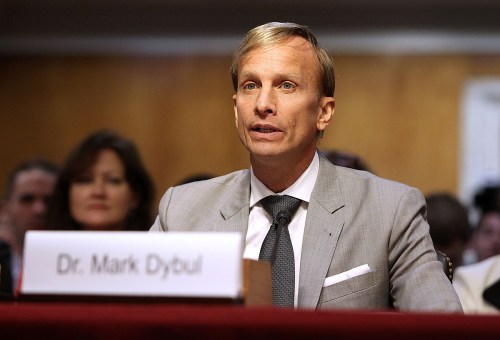
Mark Dybul testifying before Congress, advocating support for the global fight against HIV/AIDS Getty / Paul Morigi
Mark Dybul testifying before Congress, advocating support for the global fight against HIV/AIDS

The political battle made for strange alliances. Dybul, one of the key architects of the program, is gay. He admitted that, at the time, he hated Bush and thought he had stolen the 2000 presidential election. Dybul was skeptical about PEPFAR, thinking it would be merely symbolic or maybe worse. “[I] assumed everyone around [Bush] was evil and up to no good,” Dybul said in an oral history of the program. “Then I got to meet them. They really are some of the most remarkable—They’re still all good friends.”

Senator Jesse Helms, who along with his caustic remarks about homosexuality had also previously referred to development aid as going down “foreign ratholes,” came around to be a major supporter of PEPFAR after lobbying by senator Bill Frist, a doctor who had gone on mission trips to Africa; Bono; and Franklin Graham. Frist’s office arranged for Helms to meet an African woman with HIV and her baby, according to To End a Plague, a history of PEPFAR by AIDS activist Emily Bass. Helms began to cry and pledged his support.

The legislation passed in May 2003 after much wrangling over funding, abstinence (it was allowed as a prevention measure), and abortion (Bush exempted PEPFAR from the Mexico City Policy, a Reagan-era rule that barred groups that received certain types of US health funding from performing or encouraging abortions).

US leaders modeled the program after a local treatment strategy pioneered by a Ugandan doctor, Peter Mugyenyi. Dybul had spent time watching Mugyenyi’s work in Uganda and was amazed to see community health workers motorbike out to villages to do tests and provide drugs. People in villages knew their CD4 cell count, their viral loads, the names of the drugs, and when to take them. “The community health care workers were like these little angels,” Dybul said. Dybul got all of Mugyenyi’s data about costs, then used the numbers to build out goals for a bigger program. He engineered it around a “wheel-and-spoke” health delivery system similar to one used by the Indian Health Service in Alaska.

“One of President Bush’s unconditional aspects of PEPFAR was that it not be top-down. That we’d be supportive and servants, and that we’d be respectful and humble,” Dybul said. “It’s the only way for a sustainable, long-term approach.”

Within six months of PEPFAR’s launch in Uganda in 2004, the number of Ugandans on ART doubled. In Rwanda, after PEPFAR sites were operational for two months, hospitalizations fell by 21 percent, according to officials’ 2007 testimony in Congress.

Sustaining PEPFAR requires an interest from the American people in the lives of people who are thousands of miles away.

“Politicians need permission from constituents to do the right thing,” said Tom Walsh, who was a top PEPFAR official for years and is a Christian. Walsh underlined that funding PEPFAR every year is a battle. “It’s important for politicians to get that permission, to counterbalance the voices telling them, ‘We have problems at home, and our money needs to stay here.’ … In America, many Christians are influential. Their voices are listened to.”

Christians who were involved in HIV advocacy for decades think that if the church is going to be involved in something big like PEPFAR in the future, it needs leadership and education.

Saddleback Church’s Kay Warren was an early evangelical booster for HIV/AIDS treatment in the United States and abroad. She had been heartbroken by stories of Africans with HIV. But she said everything she thought she knew about HIV “was wrong … and full of stigma and judgment.” She received a detailed education about the virus from HIV doctors she got to know. “God got my attention,” she said.

In 2004, Warren was just coming back to ministry after breast cancer treatment when she asked the congregation if they would be willing to work on some kind of HIV response. She said she got 3,000 responses from people wanting to help. She and her husband, Rick, held HIV summits at Saddleback and staffed an HIV ministry for domestic and international care. At the summits, attendees met people who had HIV. “We humanized it,” Warren said.

The Warrens became key backers of PEPFAR alongside the Smiths, rallying evangelicals over the years to support the program and prodding politicians on Capitol Hill when the program’s budget came under repeated threats. After their son’s death by suicide in 2013, the Warrens shifted their personal focus to mental health and Saddleback’s AIDS program diminished—illustrating the importance of sustained leadership on an issue.

Walsh, who went from working for PEPFAR to working for the Bill & Melinda Gates Foundation, said PEPFAR helped the wider development world see what faith-based organizations could contribute. “The view of the faith sector in the development and health world is much more collaborative or welcoming now than it was almost 20 years ago,” he said. “It’s much more established that faith organizations have a lot to contribute.”

In Lilongwe, Moses now leads a major Christian medical center for HIV patients called Partners in Hope (PIH), which administers PEPFAR funds. An American missionary, together with Malawians, established the treatment facility in 2001—before PEPFAR. It was one of the earliest such facilities to scale up to a national level. PIH now administers a network of 123 facilities that together provide antiretroviral therapy for 20 percent of Malawians who are receiving treatment, according to Moses.

It’s not unusual for a faith-based health center to oversee so much HIV treatment. In Malawi, 70 percent of rural health care comes from church clinics and hospitals, and most of the population is rural. Faith is “in every thread of our treatment,” Moses said. PIH provides spiritual support for those with HIV—and “elimination of prejudice against HIV.”

Agnes MosesMaria Thundu for Christianity Today
Agnes Moses

Malawi is one of the poorest countries in the world; physicians are overloaded, and brain drain is a problem. Moses could have left but didn’t: “I like to help people come out of their hopeless situations.” She came from a village; her father died when she was a child and her mother was illiterate. She and her siblings went to school and taught their mom how to read.

As a doctor, Moses contributed to pioneering research and treatment for HIV/AIDS patients in Malawi, especially in preventing mother-to-child transmission. Such Africa-based research is important: Moses’ work demonstrated, for example, that Malawians had better outcomes if they started antiretroviral therapy with a higher white blood cell count than doctors had previously recommended.

On a sunny afternoon at PIH last year, a waiting room television played a local gospel music video to rows of empty benches. Nurse Loveness Mang’ando, working that day, remembered 20 years earlier when the medical center was full of “very sick patients with HIV.” Now patients just come to refill their medications: “They are stable.”

The medical center exemplifies how HIV treatment helped build the nation’s health infrastructure. Because people are living longer, the clinic has turned its attention to treating diabetes, hypertension, and other noncommunicable diseases. In 2020, PIH launched a surgery department, and its lab is the envy of many less-resourced hospitals—with diagnostics on everything from liver function to tumor markers to HIV viral load. When the coronavirus broke out, the clinic turned some of its unused HIV beds into a COVID-19 ward. “We have space to think about other conditions now that HIV is under control,” Mang’ando said.

Malawi still has problems. So does PEPFAR more broadly. People with HIV still wait too long to come to PIH for help, which means they are more seriously ill when they arrive. And there are stubborn pockets of new HIV transmissions. But compared to two decades ago, “It is not the same world,” Moses said.

“It’s unbelievable,” she added. “It feels very satisfying that, as a country, we have moved. We cannot eliminate HIV, but at least it has been contained. At the same time, I feel sad. I wish this happened earlier—that we were not going to be seeing so many deaths.”

In 2003, when PEPFAR launched, Malawi’s average life expectancy was 49 years. Now it is 65. Moses, age 50, jokes that she is in her second life.

Emily Belz is a news writer for CT.

Theology

I Find Comfort in the Divine Warrior

A surprising psalm changed my view on God’s presence during seasons of trial.

Illustration by Scott Aasman

In this Close Reading series, biblical scholars reflect on a passage in their area of expertise that has been formational in their own discipleship and continues to speak to them today.

I’ve sung the Psalms for as long as I can remember, first as a kid in church, then as a worship leader from my college days until now. When I was younger, I remember singing at the top of my lungs to worship songs like Martin Nystrom’s “As the Deer” (Ps. 42) and Matt Redman’s “Let Everything that Has Breath” (Ps. 150).

When I became a biblical scholar, I encountered the Psalms in a new way, reading them historically and culturally. Meanwhile, as a worship leader, I help lead people into God’s presence through the singing of the Psalms. At times, reading the Psalms has felt like a conversation with a dear friend who knows me well.

In March 2020, when the world changed all around us due to the pandemic, Psalm 68 redefined the idea of presence for me, just as I was experiencing absence in new ways.

Many of us wrestled with new absences then. I realized how much I took embodied presence for granted, whether in the form of conversations with colleagues and students in my university’s hallways, a hug from a friend, or congregational singing.

At the end of March 2020, I experienced a strange pain in my chest, sending spasms throughout my ribcage and back. This pain continued for almost two months. At first, we thought this might be connected to COVID-19, so I was quarantined for two weeks. After I tested negative, I was able to be with my family again. But though I was in the same room with them, for weeks I couldn’t even handle a small hug; the pain was too intense. Until my pain subsided two months later, I felt that lack of closeness, the inability to be near others.

In this struggle, the Spirit reminded me that when I can’t be physically present with others, I can still experience God’s presence with me. Even when I can’t sing at the top of my lungs to God, he can still be near to me in worship. The Holy Spirit revealed this to me through Psalm 68.

The 68th Psalm has many things to say about God’s presence, especially when we feel alone and isolated or when we are starkly aware of our own need. It sits in the second of five books gathered to form the Book of Psalms. Book 2 contains many Davidic psalms—either by or about David—including Psalm 68. It continues the theme of praise found in Psalm 67 and is followed by another picture of God’s presence in Psalm 69, where God saves David from the “miry depths” (v. 2).

Scholars debate how Psalm 68 was used in the past: perhaps as a communal lament the people sang together, a hymn sung when the people entered the temple, or a victory psalm celebrating Israel’s defeat of its enemies. Whatever the case, Psalm 68 shares with us aspects of David’s life, focusing on how God’s people sing about his divine presence.

Psalm 68 is a theophany psalm. The idea of a theophany comes from two Greek words: Theo, meaning “God,” and phainein, meaning “to show.” A theophany is an experience of God’s presence—the moment when God shows up! Scholars point to how Psalm 68’s theophany relates to other theophanies in the Old Testament. God appears in times of need to Jacob (Gen. 28:10–22), to Moses (Ex. 3), and to prophets like Isaiah and Ezekiel (Isa. 6; Ezek. 1). When God shows up, he reveals who he is and transforms difficult situations. This helped me see God’s presence in Psalm 68 differently.

First, God shows up in Psalm 68 as a divine warrior. While it may seem odd today to think of God as waging war, it might be helpful to remember how much we appreciate God’s power in times when we feel powerless. God’s power is able to send any of his enemies running (v. 1) and make evil melt away (v. 2).

When I think of these enemies as the forces of darkness around us, I find this encouraging. God is more powerful than the thing I fear the most. He is more powerful than death or disease or loneliness or pain.

Scholars point to images of divine warriors in the ancient Near East and how they relate to Psalm 68’s picture of God. As a divine warrior, God rides on the clouds (v. 4), reflecting a common picture of storm gods as divine warriors in the ancient world.

Yet in Psalm 68, God is the divine warrior who is also the Creator of the world and has power over everything he created (v. 8, 14). No other ancient god could claim this. Also, in ancient times, chariots (v. 17) were the best technological advances for war. So, in this sense, God is the high-tech divine warrior, using his created world to show his power.

In the Old Testament, we also see God, the divine warrior, set his people free from slavery in Egypt, part the waters, and destroy their enemies. Joel 2 pictures the Day of the Lord with God as the divine warrior who has power over creation (here a locust swarm; see verse 25).

The power of God’s name travels from the Old Testament to the New when “at the name of Jesus every knee should bow, in heaven and on earth and under the earth” (Phil. 2:10). John 12 quotes Zechariah 9 and pictures Jesus as the divine warrior when he enters Jerusalem. In each case, the message is clear: “Do not be afraid of [your enemies]; the Lord your God himself will fight for you” (Deut. 3:22).

Illustration by Scott Aasman

Despite his power, God is not like the leaders of ancient Israel’s time or today’s leaders who might value or care for only the powerful and elite.

Instead, the psalmist points out that God sees those others might overlook. He acts as a father to the fatherless (Ps. 68:5). He defends the widow. For those who have experienced loss, he longs to care in the midst of that loss.

When my husband, Jon, and I were doing our PhDs simultaneously, I remember treasuring these words. At the start of my program, one of my close friends unexpectedly died of leukemia. Meanwhile, Jon and I were struggling to pay our bills. I remember feeling like the bottom was pulled out from under my life and wondering what to do.

One night, I didn’t know where our food was coming from for the next day. We were between paychecks and didn’t have enough to buy groceries for another few days. I remember praying late into the night for enough to feed our young daughter Elena. I cried out, “God, we just need some fruit and veggies, maybe some milk. That would be enough.”

The next morning at 7 a.m., I heard a knock at my door. It was a woman from our church. She said that God woke her up and told her to bring us some of the fresh fruits and vegetables from her weekly delivery. The delivery service had accidentally given her extra; she had asked God who needed them. She threw in some milk because she sensed God wanted her to add to the bundle.

As she spoke, tears filled my eyes. God cared about my little practical prayer. God showed me that even when I felt like my pain wasn’t being seen or heard, God saw me. It was an important lesson to learn: When you feel powerless, God sees you. God sees the fatherless and fathers them. God defends the widow who might fall prey to those looking for vulnerable ones to attack.

God also sees our loneliness; he “sets the lonely in families” (v. 6). In my early 20s, I moved from the US to Canada to start seminary. Though I knew no one, God showed me that he saw my loneliness by creating a new family for me in Canada of friends and surrogate parents and grandparents. He even introduced me to my husband at seminary. Years later, during the pandemic, God reminded me of each of these times when he was present. He reminded me that he is always the God who sets the lonely in families.

But Psalm 68 doesn’t stop there. This personal God who knows the most fragile places in us is also the God who is able to free his people from slavery and sustain them in the wilderness through his miraculous provision.

He led the Israelites out of Egypt with singing (Ex. 15). He poured rain down on them when they needed water (Ps. 68:8). He sent them manna when they needed food; he “provided for the poor” (v. 10). Through these signs, God refreshed his people, his “weary inheritance,” when they were wandering in the desert (v. 9).

This is the Lord Almighty, whose power far exceeds that of any other king or any other nation (vv. 11–18). This is the God who saves his people,“who daily bears our burdens. Our God is a God who saves” (vv. 19–20).

When I have surveyed my life and the burdens around me, God has reminded me that he is powerful enough to hold them. Whenever I have looked at sickness, death, and destruction around me, God has reminded me that he has the power to destroy all of these enemies, smashing them into bits and allowing us to escape from death (vv. 21–23).

Psalm 68:24–26, then, does what I have done throughout my life as a worship leader: guide people into a procession of worship. When God as divine warrior destroys the enemies who plot against his peace and wholeness, we respond with praise.

Back in 2020, when I could barely breathe through my pain, I remember longing to be part of my congregation again, singing with all of my might the praises of God. Responding with praise is our good and natural instinct.

Psalm 68:32–35 continues this praise by referring to what we see about God in the first 10 verses: They encourage the whole world to sing praise to the Lord, who is powerful and majestic. God’s power is not just over Israel, but over all of creation. This God of power and majesty—who is awesome in the original sense of the word—is also the God who gives strength to his people and who knows our deepest needs.

Reading Psalm 68 not only encourages us to praise the God who is present when we experience loss and absence; it also reminds us of those who are often overlooked in our society: the marginalized, the fatherless, the widowed, the lonely, the poor.

We might not immediately realize who those people are around us. But do we know a single mom who might be trying to balance work and kids? Do we have a friend who lost their job and is worried about what they will do next? Do we know someone who is living on their own and feeling lonely?

Churches are finding ways to reach out to these people in need following COVID-19. Part of my work since 2020 has been with the Canadian Poverty Institute as we study how churches have responded to the pandemic, echoing God’s presence as they are present to those struggling. Continuing to care for those suffering from the pandemic is only one of many ways we can share Christ’s presence with the hurting around us.

Psalm 68 reminds me that God sees my pain and the pain of those around me, and can heal them. This is the God who is present with us right now—who sees us in our physical afflictions, loneliness, confusion, and grief. This is the God who will be present with us when we can’t be physically present with others and the God who will be present with us when we can. And this is the God who has power over all creation, who can use the clouds as his chariot across the skies and can give us the provision we need.

Beth M. Stovell is professor of Old Testament at Ambrose University and author of several books including The Book of the Twelve, coauthored with David J. Fuller.

Ideas

The Danger of Forcing Forgiveness

We must be wary of wrongly using the biblical command in order to silence victims of abuse.

Illustration by Nate Sweitzer

Forgiveness is the heartbeat of salvation history and the virtue that should mark the followers of Jesus. But those who seek to control and manipulate others can twist even the very heart of the gospel for their perverted ends.

A friend of mine experienced this. She endured a hellish childhood and abuse by several family members, including her father. No one in her life intervened or spoke up. As an adult, she finally gathered the courage to confront her abusers, who misused Scripture and twisted theology to excuse their actions and demand her silence.

Citing Ephesians 4:32 and Colossians 3:13, my friend’s abusers pressed her to forgive “as God forgives.” God forgives us by taking on our punishment, they argued, so she should likewise “forgive and forget” and forgo reporting their crimes to the police. After initially “forgiving” her offenders, my friend distanced herself from her family. When she did so, they interpreted her actions as unforgiveness and bitterness, adding to her moral conflict.

She is not alone. Again and again, across denominations, we hear stories about how “forgiveness” has been used to vindicate abusers and silence the abused. Once this coerced forgiveness is offered, it seems impossible to retract, which is often why abusers use forgiveness as a silencing technique.

How, then, can we de-weaponize forgiveness? I see at least four ways for the church to help dismantle faux forgiveness that’s wielded as a weapon by offenders while preserving the central place authentic forgiveness has in the Christian faith.

First, churches can help survivors strengthen their sense of agency and self-worth. Since the 1980s, researchers like Judith Herman and Bessel van der Kolk have shown how child sexual abuse severely damages survivors’ self-esteem and sense of independence. Without substantial recovery of one’s sense of agency and self-worth—which often requires years, if not decades, of loving support, counseling, and inner work—the act of forgiveness will often be involuntary and a continuation of the abuse.

Only when significant healing has taken place and a sense of self-worth and independence from the offender has been regained can forgiveness become what God intended. As philosopher Nicholas Wolterstorff points out, the expression of forgiveness communicates to the offender that you have wronged me and unjustly violated my rights. Proper anger against wrongdoers and their crimes, which presupposes a sense of self-worth, is therefore not incompatible with forgiveness but part of it.

Second, we must understand that forgiveness does not mean a lack of accountability or punishment for the evildoer. The act of justice actually demonstrates the biblical love of neighbor. Forgiveness is part of the virtue of love, the fulfillment of the law, and what God gives us through Christ and the power of the Spirit (Rom. 13:8, Matt. 22:34–40).

At the start of his discourse on love in his letter to the Romans, Paul famously urges his readers to overcome evil with good (12:21), to not avenge themselves, and to leave room for the wrath of God (v. 19). For Paul, to love one’s enemy involves letting go of personal revenge. Yet, importantly, it does not mean letting go of accountability for another’s actions.

In Romans 13:4, Paul describes the government as God’s servant to execute wrath on the wrongdoer. Child abuse is a sin and a crime, and as a crime, it is a societal problem. Crimes require the government—the embodiment of the people and the servant of God—to call the offender to account. In other words, leaving room for God’s wrath and asking the government as God’s servant to execute wrath are fully compatible with one another.

In fact, reporting sexual abuse is an act of love. For survivors, reporting the crime underscores that they have worth in God’s eyes and that the abuse is unjust. It redresses the power imbalance in the dynamics of the abuse. A just sentence defeats what Daniel Philpott calls “the standing victory of the wrongdoer’s injustice.” In condemning an abuser’s actions, society vindicates survivors as being wronged by their offenders.

Reporting a crime can also be an act of love for the broader community because it prevents the abuser from harming others. And it can be an act of love toward the abuser, as it holds him or her accountable and invites repentance.

Third, we can disarm a misuse of forgiveness by properly understanding reconciliation. An emphasis on reconciliation is often used by an offender to sear the victim’s conscience and silence him or her. The proper response to such injustice is not reconciliation but repentance.

True reconciliation, when it is possible, requires fully acknowledging the evil of the abuse and the harm it causes, displaying active repentance of the evil done, and offering restitution to the victim. These actions do not impede reconciliation; they are prerequisites for it. If offenders refuse to be confronted with their abuse, it suggests they have not fully come to terms with their victims’ dignity, the evil they have done, and the pain they have caused.

It is similar in our relationship with God. We all flourish as human beings only when we acknowledge the evil we have done toward God, actively repent of it, and offer restitution by surrendering our lives to the Lord (Prov. 28:13).

Only through repentance do we experience God’s forgiveness and prepare ourselves for the day when our sins—past, present, and future—will not hinder in any way our relationship with the Lord. Those who try to force their victims to forgive not only reabuse their victims but also manipulate Scripture, violate Christian practice, and avoid their real good: accountability, repentance, and restitution.

Finally, a truly repentant offender recognizes that forgiveness is an undeserved gift that must be offered freely by the injured party. The one who has committed a sin cannot demand forgiveness from God or from a fellow image-bearer. Otherwise, it would still be coercion.

And God does not coerce the vulnerable. Instead, he promises to defend them, heal them, and invite them into the fullness of his kingdom (Ps. 37:27–29). The church must bear witness to that good news, so that forgiveness will not be used to cover up sin and silence the abused.

Wilco de Vries is an assistant professor at Theological University of Utrecht|Kampen in the Netherlands and a research fellow at Duke Divinity School. This essay is adapted from a presentation for a Harvard “Symposium on Faith and Flourishing: Preventing and Healing Child Abuse.” Speaking Out is Christianity Today’s guest column.

addApple PodcastsDown ArrowDown ArrowDown Arrowarrow_left_altLeft ArrowLeft ArrowRight ArrowRight ArrowRight Arrowarrow_up_altUp ArrowUp ArrowAvailable at Amazoncaret-downCloseCloseellipseEmailEmailExpandExpandExternalExternalFacebookfacebook-squarefolderGiftGiftGooglegoogleGoogle KeephamburgerInstagraminstagram-squareLinkLinklinkedin-squareListenListenListenChristianity TodayCT Creative Studio Logologo_orgMegaphoneMenuMenupausePinterestPlayPlayPocketPodcastprintremoveRSSRSSSaveSavesaveSearchSearchsearchSpotifyStitcherTelegramTable of ContentsTable of Contentstwitter-squareWhatsAppXYouTubeYouTube