News
Wire Story

Will Elon Musk Welcome The Babylon Bee Back to Twitter?

The increasingly political Christian satire site hasn’t been able to tweet since March, but the platform’s new owner is a fan of the Bee and free speech.

Christianity Today November 9, 2022
Illustration by Mallory Rentsch / Source Images: WikiMedia Commons

There may be a lesson in the recent troubles of the social giant Twitter.

Don’t mess with The Babylon Bee.

Started as a site to poke fun at Christian subculture, the Bee’s political satire has come to overshadow its more kindhearted Christian humor in recent years, landing the site in hot water with fact-checkers and social media gatekeepers—including Twitter.

Twitter suspended The Babylon Bee’s account on March 22, after labeling a post about transgender Biden administration official Rachel Levine as hateful content. Not long afterward, billionaire Elon Musk, a fan of the site, got a text from his former wife, Talulah Jane Riley.

“The Babylon Bee got suspension is crazy!” read the text, which was made public earlier this year. “Why has everyone become so puritanical?” Then Riley suggested Musk buy Twitter and either delete it or “make it radically free-speech.”

Musk, who recently bought Twitter for $44 billion and instituted mass layoffs, was a critic of censorship on social media long before the Bee’s troubles. But the satire site’s connection to one of the most powerful men in the world is the latest example of the Bee’s rise from a would-be pastor’s side project to a conservative powerhouse.

The Bee, modeled similarly to secular satire site The Onion, began as the brainchild of Adam Ford, who quit his day job in the mid-2010s to start creating web content. Ford’s dreams of becoming a pastor had been derailed by panic and depression, he told The Washington Post in 2016.

With the help of medication, Ford got better and began writing about faith, first for a webcomic and then in 2016 for the Bee. From the beginning, the site was a hit, especially with evangelical Christians who appreciated the good-natured jokes about the foibles of church life, which at the time caught on more than political jokes.

Among the more memorable of the site’s early jokes was headlined, “Holy Spirit Unable To Move Through Congregation As Fog Machine Breaks.”

“We barely got through our new song. It was a real train wreck,” a fictional Nashville worship leader is quoted as saying.

Other early jokes poked fun at church committees and prosperity gospel pastors like Joel Osteen, including this headline: “Joel Osteen Sails Luxury Yacht Through Flooded Houston To Pass Out Copies Of ‘Your Best Life Now.’”

Jon Glass, pastor of Cropwell Baptist Church in Pell City, Alabama, appreciated the church humor at the Bee in its early days, calling it “the kind of sarcasm that hits home and makes you think, ‘Is that what we look like?’”

Writer and former pastor Jelani Greenidge was also an early fan of the Bee’s attempts to poke fun at the weird side of evangelical culture. Those early posts, he said, helped Christians laugh at themselves.

“The best satire comes from a place of love,” said Greenidge. That love, he said, seems in short supply these days at the Bee, which Greenidge said seems too focused on skewering the politicians and progressive figures conservatives hate.

Babylon Bee’s current CEO, Seth Dillon, a pastor’s son and former internet marketer who bought a majority stake in the Babylon Bee in 2018, said the site still publishes plenty of church jokes. But fewer people share them.

“We still do lots of church jokes—they just don’t go as viral as the other stuff,” he said, while the opportunities for satire in the daily news cycle are endless. He pointed to the site’s repeated satire of Donald Trump—a Trump joke tops the Bee’s “greatest hits” list of pages that have drawn the most traffic—whom Dillon called an “outrageous figure” who deserved to be mocked.

Today, though, the site is known most for its critique of liberal politicians and what Dillon called the “woke mind virus.” He describes the Bee as a satire site with a Christian worldview that is devoted to mocking bad ideas in popular culture.

“We don’t want our audience to feel bad about themselves like we’re bullying them,” he said. “We want our audience to take bad ideas less seriously.”

Ford remains a part owner of the Bee and also runs “Not the Bee,” which aggregates weird headlines, often about progressives.

While the Bee’s website still offers a mix of jokes—twin headlines “Churchgoer Turned Into Pillar Of Salt After Turning To Glare At Sound Guy” and “Satan Leads Prayer At Trump Rally” topped the site on Monday—the political jokes and jabs at progressive culture attract the most attention, dominating both the site’s “buzzing” list, which tracks trending stories on the site, as well as the Bee’s greatest hits.

“They do a great job at bringing awareness to the absurdity that drives much of our culture,” said Alex MacArthur, a software engineer and Bee fan from Nashville, Tennessee.

The site’s writers seem particularly obsessed with U.S. Rep. Alexandria Ocasio-Cortez, running two dozen stories about the New York Democrat in 2022 alone. For subscribers, who pay between $4.17 and $15 a month for ad-free content and other premiums, the site offers a top 10 list of Ocasio-Cortez jokes (“AOC Engaged, Registers For $10,000 ‘Tax The Rich’ Toaster,” “AOC Cries Outside Disney World In Dress Reading ‘Groom The Kids’”).

The site has run a number of anti-trans jokes—mocking both particular transgender people like Levine as well as fictional trans people. One of the site’s greatest hits is about a motorcycle rider who wins races by “identifying as a bicyclist.”

The Bee’s satirical forays into culture war issues have earned a loyal following—the site draws about 20 million page views a month, said Dillon—and the ire of many.

Along with having its Twitter account suspended, The Babylon Bee has been dinged by fact-checkers and social media sites for sharing disinformation. That has cost the site traffic and money, said Dillon. Even so, the Bee tries to capitalize on what Dillon called big-tech censorship of conservative viewpoints by running ads highlighting its clashes with social media gatekeepers to attract subscribers.

“It helps expose them for being not just humorless scolds but big-tech tyrants,” he said.

Matt Sienkiewicz, chair of the communication department at Boston College and co-author of That’s Not Funny: How the Right Makes Comedy Work for Them, said The Babylon Bee is part of a larger, highly successful conservative comedy ecosystem.

But the Bee’s success in promoting “anti-liberal comedy” has come at the cost of drowning out the Christian satire, in Sienkiewicz’s opinion. Fans who came to the site for church humor likely no longer see those jokes because they don’t feed the outrage algorithm or because they are turned off by the politics.

“The stuff that no one else can do has been lost,” he said.

Much of today’s humor, he said, is shaped by what he called “clapter”—where people applaud because they agree with the person making the joke, rather than laughing at themselves.

“It might be funny but it loses some of the joy,” he said.

Sienkiewicz said attempts to label the Bee as misinformation are silly, as the site is clearly satire. But, he said, the Bee risks falling into a “risk-averse strategy” when it comes to comedy by only telling the jokes its audience will agree with.

“One of the saddest things about the state of American politics is that it makes comedy harder and less interesting,” he said.

Ethan Nicolle, a conservative writer from California and a Babylon Bee staffer from 2018 to 2022, agrees.

Nicolle, who was creative director of the Bee in the early days of working out of editor in chief Kyle Mann’s garage, said he loved working for the Bee and having the chance to poke fun at the state of American culture—some of which he believes is very unhealthy.

“They tell the jokes you aren’t supposed to tell,” he said.

Still, he suspects the country’s polarization makes satire more difficult. People are afraid to critique their own side—and unwilling to be friends with anyone on the other side.

“All of the joy of life comes from your relationships with other people,” said Nicolle. “And to cancel another human being because of something political they said makes no sense. And we’re doing that with half the country.”

So far, Musk’s takeover of Twitter hasn’t paid off for the Bee—the site’s Twitter account remained suspended as of early November. But the Bee’s staff did score a long, in-person interview with Musk, in which he discussed censorship, sustainable energy and his own religious background, which included attending both Hebrew school and Sunday school at an Anglican church and believing in “the God of Spinoza.”

Musk also said he’s a fan of the teachings of Jesus.

“Things like turn the other cheek are very important, as opposed to an eye for an eye,” he said. “An eye for an eye leaves everyone blind.”
Theology

If You See Something Unjust, Say Something

The new Emmett Till film tells a story of racial apathy that still haunts the church today.

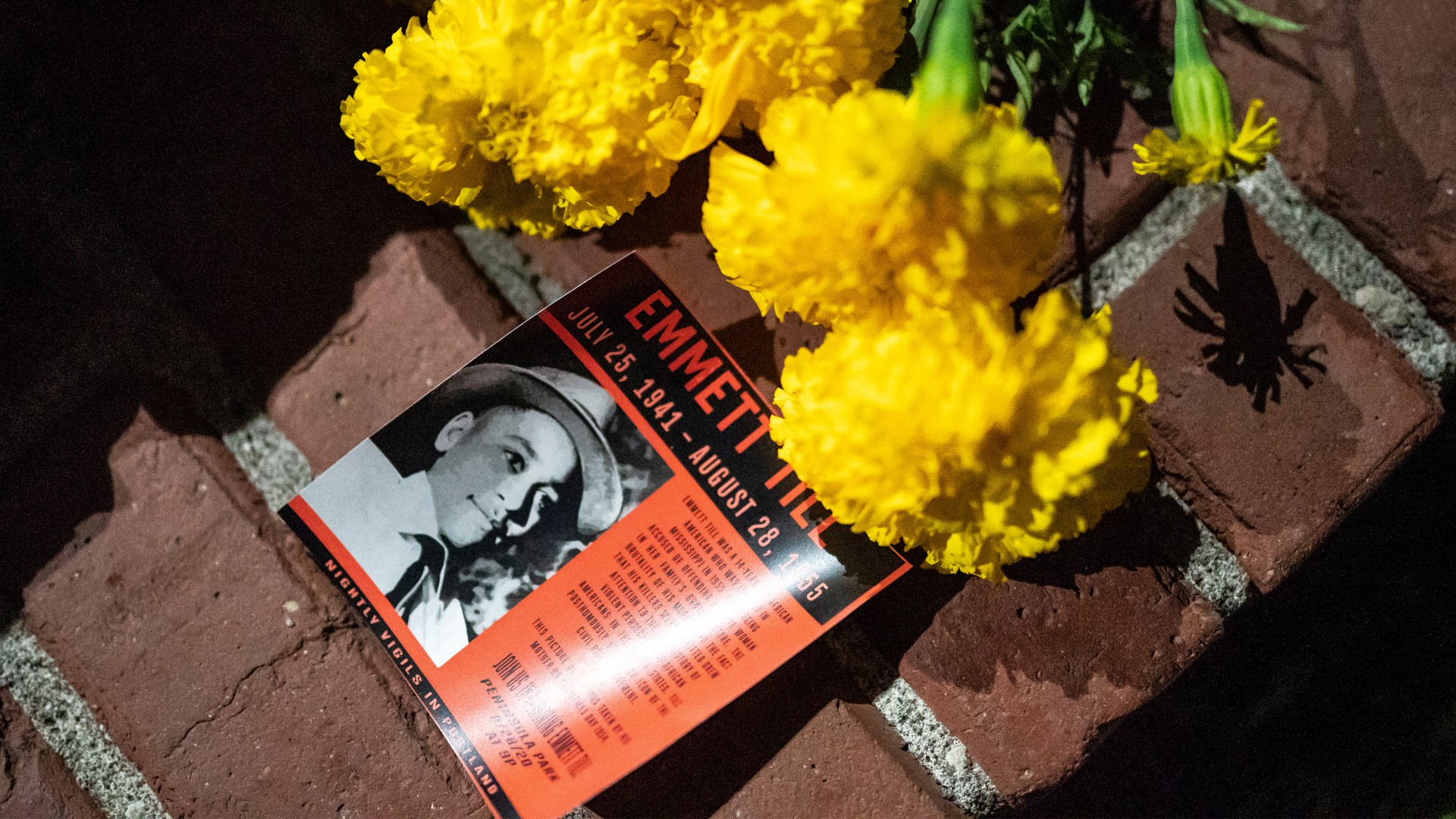
A flyer detailing the lynching of Emmett Till is seen here during a protest against police brutality and racial injustice.

A flyer detailing the lynching of Emmett Till is seen here during a protest against police brutality and racial injustice.

Christianity Today November 9, 2022
Nathan Howard / Stringer / Getty

I remember watching with great interest as President Biden signed the Emmett Till Antilynching Act into law on March 29, 2022. After 200 failed attempts over a 100-year span, legislators finally succeeded in outlawing lynching as a federal crime.

My interest in the bill centered on legislators’ decision to name it in honor of Emmett Till, the 14-year-old Black youth from Chicago’s South Side. His 1955 lynching inspired a generation of activists for racial justice. Till ran afoul of revered Southern traditions when he whistled at a white woman, Carolyn Bryant, while visiting family in Mississippi. In response, Bryant’s husband, Roy, and his half-brother John William Milam abducted Emmett from his family’s home, tortured him, cut his life tragically short by a single gunshot to the head, and then discarded his lifeless body in a nearby river.

He was so disfigured after their vicious assault that his family was able to identify him only by the ring he wore on his hand. Despite overwhelming evidence and even confessions, Bryant and Milam were never held accountable for Till’s lynching.

His mother, Mamie Till-Mobley, brought his mutilated body back to Chicago. Against the wishes of local city officials, she made the courageous choice to hold an open-casket funeral for her son, deciding to “let the world see what they did to my boy.”

The outcry following his death provided a catalyst for the civil rights movement. Rosa Parks would later explain, “I thought about Emmett Till, and I couldn't go back [to the rear of the bus].”

Almost 70 years later, we continue to retell Till’s story in the face of racial controversy.

The recent feature-length film Till, starring Danielle Deadwyler, introduces a new generation to these events and their impact on our nation. Dave Tell, author of Remembering Emmett Till and lead investigator on the Emmett Till Memory Project, told me recently that the story has become more than a tragic moment in an anguished racial past. It provides a vital lens for us to understand our troubled racial present.

Several years ago, as the nation wrestled to make sense of the racist murder of George Floyd, historians and activists turned to the story of Till. Similarly, we in the church need to consider what Till’s death teaches us as we seek to empower God’s people to reflect God’s kingdom. The specter of white supremacy and anti-Black racism still divides the church. And Christians still face constant temptation to dismiss racist violence as the actions of “a few bad apples.”

Till’s death teaches us that racist violence doesn’t happen in a vacuum. It’s the product of a people who have grown apathetic to the plight of fellow citizens on the margins. Fourteen-year-old Emmett wasn’t killed because he whistled at a white woman. He died because he lived in a society that relegated Black people to the status of second-class citizens and justified anti-Black violence as a way to maintain the existing social order.

The apathy of the nation and the church to the plight of oppressed Black people fostered a racial climate in which two white men could lynch a 14-year-old Black child with impunity. It normalized this behavior.

Unfortunately, the logic that informed these actions hasn’t been eradicated; it’s only evolved.

We’ve lived through a season of racial reckoning tied to the racially motivated killings of Breonna Taylor, Ahmaud Arbery, and Floyd. Parishioners and church leaders around the nation watched the video of Floyd’s lynching with shock and horror. We decried his death. We rushed to purchase books on race and host “diverse” conferences on racial reconciliation that often amounted to little more than racial capitalism on the conference circuit.

Even though we’re only two years removed from that time of public outcry, the church is already at risk of embracing a similar apathy. When it’s time to engage the everyday forms of racism that fuel disparities in health care, education, and employment, some Christians duck behind phrases like “Just preach the gospel.”

In that context, Till’s death summons us to courageously expose and testify to the extreme daily realities facing those on the margins. Doing so involves interrogating the cultural and ecclesiastical investments in racism and white supremacy that lurk in the shadows of “Just preach the gospel” and other similar phrases.

Trying to preach the good news apart from the pursuit of justice is like trying to preach Christianity without Christ. It sounds nice but lacks the essence of the gospel we claim to represent. It normalizes racism.

This tendency toward apathy is not new but recursive. During the latter half of the civil rights movement, Dr. King grew increasingly distressed as he recognized the nation’s racial indifference.

He wrote,

For the vast majority of white Americans, the past decade—the first phase—had been a struggle to treat the Negro with a degree of decency, not of equality. White America was ready to demand that the Negro should be spared the lash of brutality and coarse degradation, but it had never been truly committed to helping him out of poverty, exploitation or all forms of discrimination.

Just as the nation’s appetite for racial justice diminished during the latter stages of the 1960s, our enthusiasm wanes today.

But Till’s lynching provides us with a grammar to engage injustice. Our words in the pulpit and the community should testify powerfully against the sinful legacy of racism and white supremacy.

Emmett’s death occurred in part because Sunday after Sunday, his murderers sat under Bible Belt preachers who failed to disrupt the white supremacist, colonialist attitudes shaping their congregants’ view of Black people.

Our Christian witness doesn’t allow for this kind of indifference. We cannot stand silently in the face of sin and at the same time pretend to be in solidarity with our Savior. Every day, we wake up to a world on fire. Geopolitical conflict, devastating poverty, colonial legacies, and racist violence threaten the tattered remains of our world and the divided mind of the church.

Along with many other stories, Till’s death reminds us that if we want to embrace our Christian calling as salt and light, we simply can’t afford to avoid social decay or darkness.

Theon Hill serves as an associate professor of communication at Wheaton College, where he researches and teaches on the intersections race, politics, and popular culture.

News

With a Small Shift in Evangelical Votes, Brazil Elects Lula

Left-wing challenger directly addressed Christian concerns in final days of runoff.

Luiz Inácio Lula Da Silva celebrates a narrow victory in the presidential election.

Luiz Inácio Lula Da Silva celebrates a narrow victory in the presidential election.

Christianity Today November 8, 2022
Alexandre Schneider/Getty Images

Brazil president Jair Bolsonaro and his surrogates worked to win evangelical voters up to the final hour of the runoff election on October 30.

Christian influencers posted pictures with him on Instagram, proudly announcing they would be supporting Bolsonaro’s bid for a second term. And First Lady Michelle Bolsonaro rallied women at Rio de Janeiro’s Assembleia de Deus Vitória em Cristo (Assembly of God Victory in Christ), one of the largest churches in the country.

“Beloved, it would have been nice if we had won in the first round,” she said. “But we needed this second round for the awakening of the church.”

To Christian voters not persuaded by the president’s own faith—though the Catholic former military officer was rebaptized six years ago in the Jordan River—Michelle offered her own evangelical bona fides.

“Don’t look at my husband, look at me,” she said. “I’m a servant of God.”

But these efforts ultimately proved insufficient. One trusted poll released days before the election showed evangelical support shifting slightly—just four points—from Bolsonaro to his Workers’ Party challenger Luiz Inácio Lula da Silva. But when the votes were counted, “Lula,” as he is universally known, won the election by less than 2 percent.

Some observers credit the swing to Lula’s decision to directly appeal to some of evangelicals’ core concerns.

Lula, a former president, became eligible to run for office in March 2021 when the corruption convictions that had sentenced him to 12 years in jail were annulled. Running for president, though, his primary outreach came through biblical references in campaign speeches. Evangelicals make up about 30 percent of the electorate.

That subtle approach changed in a meeting with church representatives in São Paulo on October 19. Lula released a letter stating his positions on a number of core concerns. On abortion, for example, he wrote that “life is sacred, the work of the Creator’s hands” and that decisions on the issue would rest with the National Congress.

On education and ongoing debates about what schools should teach children about gender, he said public schools should work with parents, not against them.

“The home and the guidance of parents are fundamental in the education of their children, and it is up to the school to support them by dialoguing and respecting the values of families, without interference from the State,” Lula wrote.

The letter also addressed false rumors that he would persecute Christians. In May, one member of the legislature was ordered to delete social media posts making untrue claims that Lula and his party supported the invasion of churches and the persecution of Christians. Another Assembly of God pastor admitted this year that he had been telling his congregation without evidence that their church might be closed if the Left returned to power.

Lula rebutted these and similar unfounded allegations.

“I know people are saying that I’m going to close the churches. In fact, I’m the guy who created the religious liberty law,” he wrote. “For someone to say that I’m going to close churches is so evil and ignorant, it’s hard to believe it. I would never close a church because I think if there’s one good thing people do in life, it’s them strengthening their faith and looking after their spirituality.”

Last election, Bolsonaro received 70 percent of evangelical support. Over the course of his presidency, Bolsonaro seemed to cultivate only a closer relationship with evangelicals, as CT previously reported, appearing alongside well-known televangelists and Pentecostals, including Silas Malafaia, Marco Feliciano, and Edir Macedo, the bishop in the largest prosperity-preaching denomination in the country. The president also participated in the March for Jesus.

Some of his critics saw Bolsonaro’s actions as highly transactional.

“Bolsonaro has manipulated and co-opted Christians, offering himself as the only salvation against the Left, against the Workers’ Party. He presented himself as a messiah. He took important issues for Christians, like abortion and the family, and made them the basis of his campaign,” author and seminary grad student Jacira Monteiro told CT earlier this year. “He also played (and continues to play) a two-sided game: ‘Either I am the president and I will free you from evil, from Satan—namely, from the PT and the Left—or Brazil returns to darkness.’ All the while, his campaign employs aggressive and polarizing language.”

Despite providing a significant boost to Bolsonaro in the last election, however, evangelicals are not all the same.

The Frente Parlamentar Evangélica (Evangelical Parliamentary Front), a group that identifies itself as the official evangelical voice of the country’s legislature, said that its members include 196 deputies and seven senators across 19 different political parties. Only 42 were part of Bolsonaro’s right-wing Liberal Party.

Bolsonaro lost some evangelical support due to his handling of COVID-19 and economic issues. But heading into the general election and then the runoff, he appeared to be building back support. In the final days, however, enough evangelicals changed their minds to make a difference.

Bolonsaro’s decision to “minimize the pandemic, disregard important scientific information,” hurt him with many voters, said Guilherme de Carvalho, the director of L’Abri Brasil.

“We saw an attitude of contempt, confrontation, and avoiding dialogue. Not only that, a spirit of irresponsibility with people’s health with jokes about people who were in danger of dying,” he said. “The president’s supporters did coffin dances.”

Another important issue for some evangelicals was the environment, said de Carvalho, pointing to increased deforestation and forest fires under Bolsonaro.

“Who defeated Bolsonaro was Bolsonaro himself,” he said.

Given Lula’s narrow margin for victory and Bolsonaro’s reticence to concede, some evangelical leaders are now worried about church unity in coming months.

“Lula’s victory prolongs another 4 years of even more polarization, and the dream of more political options is left for 8 years from now,” tweeted Filipe Duque Estrada, the pastor of Onda Dura Global. “Because in 4 years the only options will be Bolsonaro and Lula again. If Bolsonaro had won, this cycle would have ended.”

Some called for peace.

“I know that in these elections many bonds were broken, people hurt, offenses said, but for every mistake made there is the goodness of God to lead us to repentance and reconciliation,” wrote Christian influencer Zé Bruno on Instagram. “See where you went wrong and repent. Seek to see where they went wrong with you and forgive. Do not carry on evil, but put an end to it through good, love and mercy, for it will triumph over judgment.”

Theology

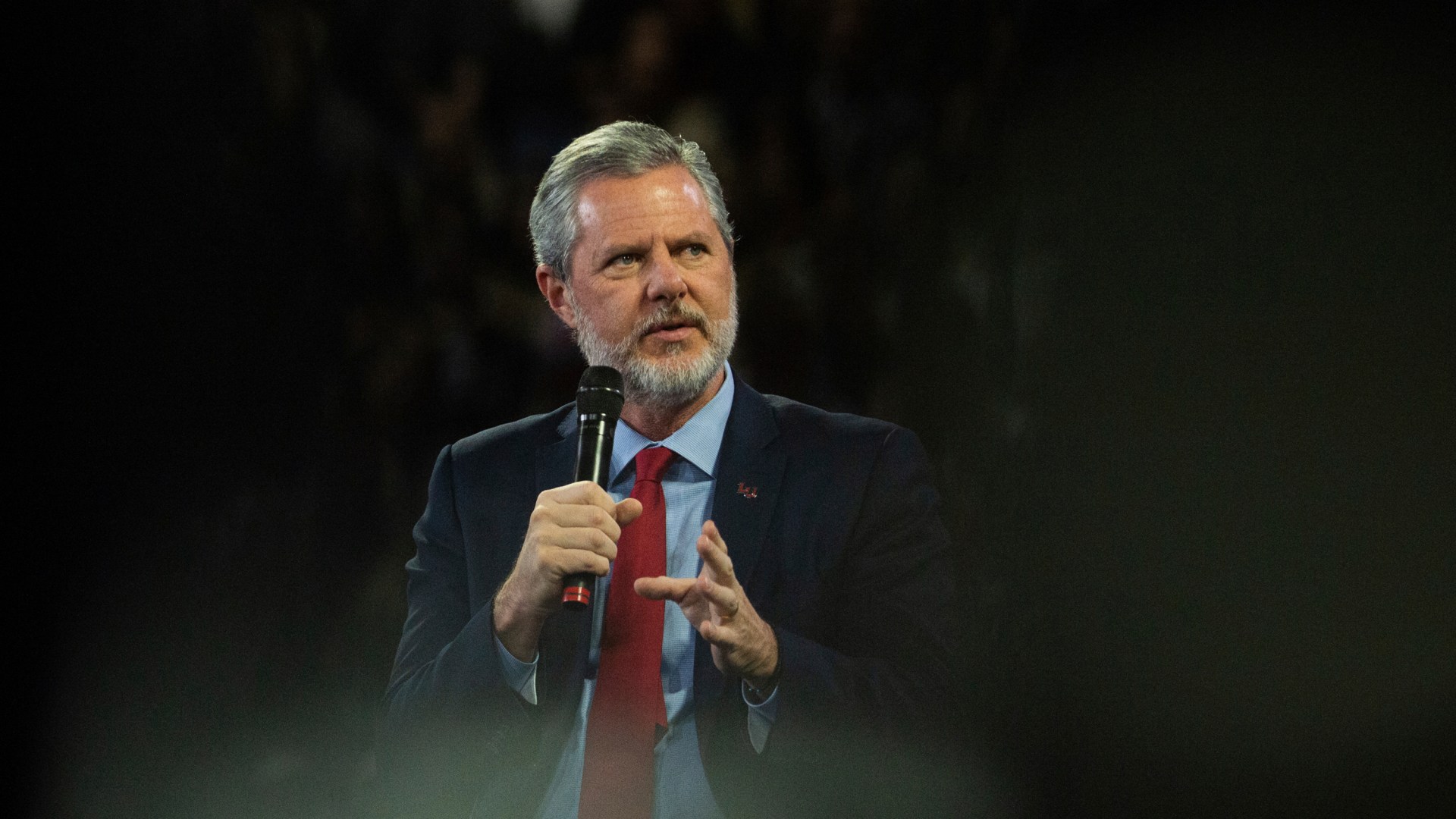
The Demise of Jerry Falwell Jr. Makes for Great Media Fodder

But how should Christians be engaging it?

Christianity Today November 8, 2022
Emily Elconin / AP Images

There’s no sanitary way to recount the downfall of Jerry Falwell Jr. How could there be? The saga hinges on an illicit relationship between the former president of Liberty University; his wife, Becki; and a young pool attendant at Miami’s Fontainebleau hotel. Not a great start, and it gets worse.

In 2012 Jerry and Becki seduced the 20-year-old Giancarlo Granda and, over the next seven years, kept him in their thrall with promises of financial success, implicit threats of exposure, and assistance from a well-placed fixer. All this while Falwell presided over one of the largest Christian universities in the world.

It’s no surprise the story would spark all manner of exposés. Rolling Stone, Vanity Fair, The New Yorker, and others have all covered it. More recently, Granda himself has published his side in Off the Deep End. Granda also speaks out in Hulu’s new documentary God Forbid.

Predictably, other sordid tales have surfaced as well, of Becki aggressively pursuing a Liberty student and Jerry regularly showing up to work drunk. The more we learn, the more we cringe. And the hits keep coming.

Pulling back the curtain yet more, the Gangster Capitalism podcast uncovered even deeper levels of corruption at Liberty. That series in turn paved the way for a ProPublica investigation into the school’s mishandling of Title IX complaints, where numerous Liberty students and staff charged the school with indifference and bullying after they reported being sexually assaulted. This alleged institutional misconduct spurred a lawsuit against Liberty that was settled this May.

But that’s far from the last we’ll hear of this tragedy. At least two other television productions about Liberty are underway: one on the Title IX Jane Does’ fight for justice, and another more sympathetic to the Falwells.

Of negative coverage on Liberty, there seems to be no end. Which brings us to the pressing question: How should Christians respond? For the sake of the victims, we cannot ignore the coverage. But for the sake of our souls, neither can we revel in it. So what’s the solution?

In this situation, as always, we must be wise as serpents and innocent as doves. Our Christian obligations demand that we engage these scandalous revelations with discernment, motivated by an unwavering commitment to truth, grace, and justice.

Practically, how that plays out may look different for each of us.

Some among us may simply be unable to follow along. Perhaps personal histories make the reporting too triggering. The details may be too tawdry or the framing too salacious. Each of us knows best our own emotional bandwidth, and we are wise to protect it, especially in the face of such ugliness.

What we cannot do, however, is dismiss the coverage out of reflexive tribal loyalty, imagining these stories as merely devilish attacks on a righteous school. Some evangelicals may have good reason to believe the journalistic spotlight shines unfairly bright on Liberty and suspect that some reporters are gleeful to magnify any minor missteps. But it’s hard to dispute that the spotlight has exposed much that demands our attention.

Yes, the bulk of recent reporting on Liberty has come from outside evangelicalism, and some of the attempted analyses miss the mark by far and betray the producers’ political and ideological agendas. The Hulu show God Forbid, for example, leaves Granda’s story far behind as it closes with the January 6 insurrection and intimates that the political violence there stemmed entirely from evangelicalism.

Better to follow the lead of someone like Daniel D’Addario, whose review of the documentary deftly separates out the objective details from the framing. Specifically, he finds the project’s aims too ambitious and the evidence too thin: “Director Billy Corben’s attempts to connect [Granda’s] collision with the boomer-generation Falwells to the broader story of evangelicals in the United States seems at times like a stretch.”

For Christians especially, concerns about the storytellers’ motivations and shortcomings pale in comparison to the heartbreaking stories of abuse and corruption brought to light by these reports. In each project, producers have given a platform to those silenced by Falwell or Liberty—members of the school community who can finally reclaim their narrative and talk about the harm they experienced.

These are the people we have an obligation to listen to, no matter the medium. And I daresay that for every victim whose voice has been amplified by the current reporting, there are numerous others who still need to be heard. Ignoring this reporting effectively continues to silence them.

Some might suggest that we should disregard these stories because they’re unpleasant. Isn’t it better to focus on the good done by Liberty and the evangelical movement overall? To be sure, there’s a danger in fixating on depravity, cataloging the sins of others, and detailing offenses. Galatians 6:1 cautions believers against these dangers, admonishing them to restore sinners in a spirit of humility and gentleness lest they themselves fall. But Scripture’s charge to expose deeds of darkness (Eph. 5:11) is just as strong.

Both stances, then—either blithely ignoring the coverage or indulging our morbid curiosity—fail to take seriously our responsibility as Christians.

Instead, we should approach the situation with grief, lament, and prayer and with demands for an independent investigation into the culture at Liberty. Falwell’s behavior was shameful, and much of that corruption is coming to light through the projects named above. But what about the system that he led? What about the leaders at Liberty who failed to hold him accountable? What other damaging consequences need exposure and correction?

Ravi Zacharias International Ministries (RZIM) is a cautionary tale of what happens when leaders ignore red flags and resist accountability. The devastating consequences of RZIM’s fall have rippled out well beyond the ministry itself, compromising evangelical apologetic witness more broadly. We run the same risk in Christian higher education and beyond if we settle for scapegoating Falwell. Liberty, too, must be held accountable.

Where there’s smoke, there may not be fire. But the unrelenting smoke swirling around Liberty cannot be ignored. If the fire is left unacknowledged, it will consume anyone and anything in its path.

True, the onslaught of recent Liberty coverage doesn’t always hit the mark, but it does offer us an opportunity. Rather than ignore the reports or take delight in the downfall of others, and rather than further silence victims by dismissing the messengers, Christians must trust the power of the gospel story and demonstrate its relevance to this tragedy.

The truth will set us all free (John 8:32). We shouldn’t be afraid to learn what lies behind the Falwell scandal and to expose the school conditions that permitted such perversity.

To this point, Liberty has avoided a reckoning. Instead, it has promised investigations that two years on seem little more than appeasement and impression management. As more Falwell and Liberty coverage mounts, we have a responsibility to no longer accept those fig leaves.

There is a better way. For the sake of all involved, we must encourage the school to change course. If Liberty submits to a thorough independent investigation, if current and former leaders own their wrongdoing and are willing to set things right despite personal or institutional cost, and if they trust the provision of God’s grace through it all, then this shameful episode can yet be a powerful witness to the gospel’s glorious good news.

Marybeth Baggett is a former English professor at Liberty University and two-time alumna of the school. Her most recent book is Telling Tales: Intimations of the Sacred in Popular Culture.

Culture

150 Weeks of Composing Psalms Reaches Its Finale

After nearly three years, Poor Bishop Hooper’s accidental pandemic project concludes with a new psalter for the church.

Christianity Today November 8, 2022
Courtesy of Jesse Roberts

The singing of psalms spans thousands of years of church tradition. Today’s songwriters and worship leaders mine these texts for words and inspiration as they craft new songs for the church.

For the past three years, Jesse and Leah Roberts—who perform as the duo Poor Bishop Hooper—have sung every word of every psalm and are hoping to help revive widespread interest in the singing of Scripture.

Their project joins a history of singing psalms that spans centuries, from monastic recitation to contemporary songwriters and worship leaders who mine these texts for words and inspiration.

“We should have songs that are not only upright but holy, that will spur us to pray to God and praise Him, to meditate on His works so as to love Him, to fear Him, to honor Him, and glorify Him,” wrote John Calvin in his preface to the 1543 Geneva Psalter, which guided Reformed churches in the practice of singing unaccompanied metrical psalms.

“Though we look far and wide we will find no better songs nor songs more suitable to that purpose than the Psalms of David.”

For the monk in the medieval monastery, chanting all 150 psalms each week, the psalms “were his daily bread, words always on his lips, the foundation of his life of prayer,” wrote musicologist James Dyer.

Chanting the entire Book of Psalms each week required total devotion, a rhythm of life built for prayer. Releasing an original song based on a chapter in Psalms each week—as Jesse and Leah Roberts have done with their recent EveryPsalm project—required its own kind of creative focus and commitment.

For the past three years, the Psalms have been musical and spiritual sustenance for the Robertses. Since January 2020, they have written an original song every week, releasing the new recordings Wednesdays on YouTube and music streaming sites.

They finish their collection of musical settings for the psalms with Psalm 150, which releases on November 9. The modern-day psalter is meant as a resource for Christians and churches.

The process of creating the songs has reminded them that there is a psalm for every moment, affect, and impulse to call out to God.

“There’s so much permission in the Psalms to approach the Lord in so many different ways,” said Jesse Roberts. “If you look at the top [worship] charts, how many songs ask a question and don’t answer it? That has been so influential for me as I go to the Lord in prayer. To be able to ask those questions, to ask them and sit in the mystery.”

The musical settings by Poor Bishop Hooper include meditative ballads, exuberant praise choruses, and blues-inflected songs. The uplifting arrangement of Psalm 5 features sparkling instrumentals and layered vocals in close harmony. Psalm 11 is treated as a quiet, peaceful ballad with unexpected chromaticism.

https://open.spotify.com/embed/playlist/4MUmKmfeLmfdGwO3j1eoYI?si=45086b40e5ea42ea

Some arrangements, like Psalm 23 and Psalm 148, are simple and tuneful, suited for congregational singing. Others are more complex and vocally demanding, inviting engagement through meditation and listening. The duo has also recorded and released instrumental versions of some of the more intricate arrangements.

The EveryPsalm project did not start as a pandemic project, but it did end up spanning those unexpectedly difficult, chaotic years. Sustaining creative energy and commitment week after week was not easy.

“Our twins went to kindergarten, but everything went online, so we homeschooled,” said Leah Roberts. “Particularly in that season, we would put the kids to bed, and then every night Jesse and I would go to the studio and it’s like, ‘All right, put your game face on! It’s 8:30, and we’ve gotta record a couple of psalms.’”

“I definitely had fleshly moments where I thought, ‘This is going to be a waste of time,” Jesse Roberts said. “‘No one’s going to listen, we’re going to do it for three years and they’re all going to sound the same.’”

People did listen: Psalm 1 has over 700,000 plays on Spotify, and the video for Psalm 1 has 69,000 views on YouTube.

Even through the difficulties of finding time, space, and energy to carry on with the project, Jesse and Leah remained resolute in their commitment to covering a psalm every week. And the weeks that were most difficult were often the most rewarding.

“Those were the ones that it was such a privilege to, in the shallowness of my offering, say, ‘Take this offering unto you and let it be pleasing … because I just want to go to sleep right now! But let my worship be a pleasing offering, a pleasing sacrifice,” said Leah Roberts.

“Even if it didn’t make sense to me or look like it was going to be a real ministry to anyone,” added Jesse Roberts.

Many Christians can likely relate to the experience of coming to worship in the midst of mental or physical exhaustion, especially over the past three years. Some found it difficult to offer praise while streaming a virtual service, feeling detached and lonely. Others are still struggling to feel comfortable in a congregation again.

Even though EveryPsalm didn’t begin in response to the pandemic, it became clear to Leah and Jesse that it was a timely undertaking that could lead to the creation of a valuable resource. In a time of uncertainty, loss, and longing, it seemed right to rely on the Psalms as sustenance, words of prayer, and praise when they are hard to generate.

Eugene Peterson wrote of the Psalms, “They are not provided to teach us about God but to train us in responding to him.”

The practice of chanting the Psalms, over and over, week after week, is training in lament, thanksgiving, praise, questioning, and even anguish before God. “We will expect,” Peterson wrote, “to find the experience of being human before God, exposed and sharpened.”

As with monks who recite every psalm, regardless of the circumstances that come with any particular day or week, honoring their commitment to the weekly psalm allowed Jesse and Leah to approach God for a kind of dialogue as they listened and responded to every unique text.

Singing a psalm of lament when one has no person to mourn, for example, can be an exercise in openness and sensitivity to the suffering of others.

“When I sing the laments, even when everything in my life is great, it opens my eyes to intercessory prayer. To see that the world is a broken world,” Jesse Roberts said. “There will always be something that I can lament over.”

Millions of Christians in the global church sing and recite psalms every week as part of corporate liturgy and in personal devotional worship. For those in traditions or denominations in which psalm-singing or recitation is not a weekly practice, Jesse and Leah hope that EveryPsalm might spark new interest. They are already receiving requests for resources from worship leaders and church musicians.

“We get requests nearly every day for chords,” Jesse Roberts said, noting that they are working on making chord charts for each song freely available.

The EveryPsalm music and other resources like Golgotha, an album that reflects on the stations of the cross, can be accessed on the Poor Bishop Hooper website for free. Eventually, the Robertses hope to release a bound version of some of the songs from EveryPsalm.

“Our hope is to continually bless the church, to continue to resource the church to use God’s Word and love it, and long for it,” Jesse Roberts said.

News

Christians Meeting in Nairobi Call for Climate Change Promises to be Fulfilled

Unmet financial commitments expected to be hot topic at COP27 gathering in Egypt.

Attendees photograph one another outside the main entrance on the first day of the COP27 climate conference in Sharm El Sheikh, Egypt.

Attendees photograph one another outside the main entrance on the first day of the COP27 climate conference in Sharm El Sheikh, Egypt.

Christianity Today November 7, 2022
Sean Gallup/Getty Images

Busiswa Dlamini is frustrated at the slow pace as her country confronts the effects of climate change. The Christian activist from Eswatini, the semi-arid southern African kingdom previously known as Swaziland, says as a young person, it is difficult to come up with solutions in the face of a system designed to continue the status quo.

“Yes, we do come up with solutions, but where there are no policies, it’s very hard for us to implement the ideas and innovations that we have,” she told CT. “There’s a gap in my country between what the youth are trying to do and what the government is doing.”

She and representatives from dozens of other Christian churches and church-related groups in Africa, the United States, and Europe gathered in Nairobi, Kenya, last month for a two-day convocation about climate and its impact on hunger. The meeting was organized by Bread for the World and hosted by the All Africa Conference of Churches (AACC), which represents half a million Christians.

The convocation produced a statement ahead of the 27th annual Conference of the Parties to the United Nations Framework Convention on Climate Change (COP27), which began in Egypt on Sunday. The meeting led to the signing of a faith leaders’ statement—A Faithful Voice on Hunger and Climate Justice—that organizers call “bold and prophetic.”

The statement urges governments around the world to pursue “meaningful change for those disproportionately affected by hunger and climate change.” It says that leaders in the Southern hemisphere should develop and implement policies that will address ecological injustice, while governments in the Northern hemisphere should “fulfill all milestone commitments” made at previous UN Climate Change Conferences.

That includes delivering on promises of $100 billion every year to fight the effects of burning fossil fuels.

“The extreme patterns of living and livelihoods of some of us cause the extreme suffering of our brothers and sisters: 10 percent of the world’s wealthiest individuals are responsible for around half of global greenhouse gas emissions,” it says. “As Christians from Africa, Europe, and North America, we share a fierce resolve to stand and work together to end the hunger crisis made worse by climate instability, to renew God’s creation, and to bring our planet into balance.”

US participants included representatives from the Evangelical Environmental Network, the Faith and Justice Network, A Rocha USA, the United Methodist Church, the African Methodist Episcopal Zion Church, and Eugene Cho with Bread for the World.

“We were trying to model how the Western world could essentially come alongside those in Africa who are most impacted and are already doing a lot of the work,” said Jordan Teague, Bread for the World’s director for policy analysis and coalition building.

“One of the things that we heard the most from the [African] faith leaders that we talked with, and who eventually attended the convocation, was the promise unfulfilled,” Teague said. “All people should keep their word, but I feel especially for Christians, or people with a Christian identity, that it’s extremely important to keep the word that we say.”

In 2009, developed nations committed to give $100 billion per year to developing countries to fight climate change, and to reach that goal by 2020. The target has been missed. Combined, adaptation and mitigation finance funding fell at least $17 billion short in 2020.

There will likely be a push for the fulfillment of those promises at COP27, analysts say, despite the fact that many rich countries and their citizens are facing a cost-of-living crisis on the back of rising energy and food prices.

Teague said the convocation in Nairobi recognized the position the world was in. The $100 billion figure may seem like an unattainable goal, but the gathered Christians wanted to add their voices to those calling for it to be fulfilled.

“This is where our Christian identity of lament and also hope comes in, and being bold and prophetic as well, in calling on people to fulfill that promise even if it might seem impossible given world economics and geopolitical situations,” she said. “I think this is a time when we can really lean on our Christian identity in calling for such action.”

For Arnold Temple, bishop emeritus of the Methodist church of Sierra Leone and president of the AACC, the faith leaders’ statement amplified the voice of the African church on issues of hunger and climate change at a critical moment.

“We pray together as resurrection people for God to empower us to step out of fear, despair, and inertia,” he said.

Climate change is causing extreme weather conditions across the continent. Heavy rains and floods have left millions homeless in a number of countries this year, including Cameroon, the Democratic Republic of Congo, Mozambique, Nigeria, and Sierra Leone, according to Temple. The situation is worsened by biodiversity loss and pollution on the back of deforestation and harmful mining practices.

“We are faced with degradation of our rich biodiversity. We are losing our animals and plants. Some species are now totally extinct,” he told CT.

As world leaders gather in the Egyptian resort city of Sharm El-Sheik, several nations to the south are in the grips of a devastating drought. More than 36 million people have been affected in Ethiopia, Somalia, and Kenya. Parts of Somalia are on the brink of famine. Aid agencies are struggling to keep up: Less than half of an appeal by the UN for $5.6 billion to help those in need has been met by donors.

Computer models of climate change show the Horn of Africa drought—like the recent floods in Pakistan—is inextricably linked to the rise in mean atmospheric temperatures linked to the burning of fossil fuels.

As climate change continues, the financial costs of adaptation will rise, creating real and perhaps intractable problems in the most vulnerable parts of the world. Last week, UN secretary general António Guterres said the adaptation bill is set to skyrocket to $340 billion per year by 2030. Current funds dedicated to adaptation do not amount to a tenth of that, he said.

That worries people like Dlamini, who saw the impact of a harsh drought in Eswatini in 2015 and 2016. To her eye, the country’s rural areas are woefully ill equipped to adapt. And they cannot adapt without help. That’s why it’s so important for activists and religious leaders to join together to call for government action.

“The most important call to action is the call to governments,” she said. “We expect them to change policies and adopt policies that address climate injustice, and also support smallholder farmers.”

This week’s COP27 has been dubbed the “African COP.” But it can only earn that title if its outcomes prove beneficial to the whole world, starting with the urgent needs in Africa in particular, said Temple, the AACC president, who is attending the summit in Egypt.

“We need to work together towards effective mitigation and adaptation,” he said. “We either act together now, or perish together in the near future.”

Ideas

3 Principles for Settling Political Spats in the Church

Contributor

When we see civic engagement as a limited strategy rather than a source of moral identity, we’re better equipped to reach across the partisan aisle.

Christianity Today November 7, 2022
Illustration by Mallory Rentsch / Source Images: WikiMedia Commons / Unsplash

Every election season, some Christians remind us that “Jesus is not a Republican or a Democrat.” But every election season, other Christians tell us that it’s wrong to vote for a candidate who supports abortion, or that Christians should vote only for candidates who will fight racial injustice.

With issues of grave moral import on the ballot—human life, religious liberty, marriage, economic and racial justice, and health care for the vulnerable—surely God must care how we vote. Yet it’s also clear that Christians can’t agree on how to vote, even when issues related to biblical teachings are at stake.

Some Christians proudly wear MAGA hats, fly large Trump flags, and cheer Republican politicians when they visit their churches, partly because they believe the GOP is the only party that will stop abortion or defend the right of conservative Christians to act on their convictions regarding sexual ethics.

Other Christians write editorials arguing that support for Trump is a surrender of evangelical values, because they believe his actions and rhetoric (echoed by other Republican politicians) cannot be squared with the Bible’s injunctions to love the stranger, care for the poor, or treat other people as divine image-bearers.

How, then, should Christians relate to other Christians with whom they disagree politically? Is there a way for us to find common ground in the gospel, even while being open with each other about our political differences?

There is, but doing so will require us to move beyond an idea that has become pervasive in the United States: the assumption that our morality is defined by our political choices.

One 2020 poll showed that 38 percent of Americans would be “upset” if their child married a member of the opposing political party. “It’s not ‘just politics’ anymore. It’s a serious moral divide,” one person explained. And that was before the January 6 attack on the US Capitol, the second impeachment of Donald Trump, and the Supreme Court decision overturning Roe v. Wade, which all made the partisan division over moral questions seem even sharper.

Followers of Jesus care deeply about opposing sin and seeking justice, and as a result, it may seem counterintuitive to suggest that we should be cautious about making our political choices a moral cause. But it’s precisely because of our Christianity that we recognize the moral limitations of politics.

We can and should use politics to pursue justice. There’s no question about that. But we also need to recognize our own fallibility in doing so. And we have to be extremely cautious about making our political choices a moral litmus test when dealing with other Christians who’ve made the opposite calculation. In other words, as Michael Wear argued in a recent CT article, we must avoid “political sectarianism.”

In theory, at least, we’ll be able to maintain good relationships with Christians of opposing political viewpoints when we recognize three key points:

1. Both of our major political parties reflect some Christian principles but also mix those with heretical distortions of biblical truth.

Because the United States has been heavily influenced by Christianity, both the Republican and Democratic parties have been influenced by plenty of Bible-believing Christians. Currently, there are ordained Christian ministers from each of these political parties sitting in Congress. The platforms of each side reflect decades of Christian lobbying.

The Democratic Party’s concerns about poverty, racial justice, health care, and environmental stewardship have received support not only from mainline Protestants and Catholics but also from many Black and Hispanic Protestant Christians and some evangelicals of all races.

The Democratic Party has been deeply shaped by people of Christian faith. President Franklin Roosevelt’s New Deal social programs of the 1930s were created by believers in the Social Gospel. The party’s embrace of civil rights advocacy was never far removed from the concerns of the Black church.

Although Democrats’ positions on some issues—especially sexuality and abortion—do not accord very well with those of theologically orthodox Christians, the party’s championship of equality and diversity is rooted in an ecumenical Christian vision that was popular with late 20th-century liberal Protestants.

Likewise, the Republican Party has been deeply shaped by the language of Christian faith. The 2016 Republican Party platform mentions God 15 times and affirms the principles of religious liberty, protection for the unborn, and the importance of marriage.

Since its founding just before the Civil War, the Republican Party has been a bastion of mainline Protestant morality. But in the late 20th century, it also became the party of many white conservative Catholics and evangelical Protestants who were attracted by the group’s conservative stances on abortion, sex, and religion in public life.

As a result, some of the party’s platform statements appear to be taken directly from the work of thoughtful conservative Christian academics. The platform, for instance, declares that “children raised in a two-parent household tend to be physically and emotionally healthier, more likely to do well in school, less likely to use drugs and alcohol, engage in crime or become pregnant outside of marriage.”

But if both the Democratic and Republican parties have been shaped by Christian principles, they’ve also both distorted Christian truths, which means that believers who become avid partisans are in danger of confusing heresy with Christian doctrine.

The Democratic Party’s strong endorsement of pluralism and equality, for example, has led the party to adopt strong affirmations of abortion rights, same-sex marriage, and other LGBTQ rights that cannot be squared with historic Christian orthodoxy.

And the Republican Party’s invocations of God are coupled with numerous claims about American military power, American exceptionalism, gun rights, and the moral imperative of a pro-growth (less progressive) tax code that some Christians have taken issue with.

The realization that each major party affirms both Christian principles and heretical beliefs should give Christians the freedom to embrace other Christians who support an opposing political party.

As an American Christian, I know the political party that I support is deeply flawed, and I also know the other one contains some elements of Christian truth. I’m therefore heartened to see other Christians engaging with another political party or, perhaps even better, challenging both political parties to more fully reflect principles of justice.

2. Christians’ political disagreements are often about strategy rather than moral principles.

Even when we argue over a political matter that relates to a clear moral principle, the commitments themselves might be clear, but the political strategies are not.

For instance, Christians may agree that abortion is wrong but disagree about which policies are most likely to save unborn lives. Some believe that saving the unborn means electing politicians who will make abortion illegal. Others believe that saving the unborn means voting for politicians who will create expanded maternal health care policies and better family leave policies.

When we recognize that many disagreements are about policy rather than moral principles, we’ll be better positioned to listen to Christians who’ve chosen a different political strategy and better aware that they may be just as orthodox and just as concerned about the underlying moral issues.

If this is true about some aspects of the abortion debate, it’s equally true about any other morally based political debate. The imperatives to treat immigrants with dignity, pursue racial justice, care for God’s creation, support marriage, alleviate poverty, and seek peace are all undeniable aspects of Christian ethics. But believers can legitimately disagree about how to translate each of those mandates into specific policies.

While Christian theology can tell us the goals to strive for as we bring God’s kingdom into contemporary society, we may have to turn to history, economics, political science, sociology, and other related fields to find out how to get there. And even then, the answers we arrive at will probably depend more on our presuppositions than we want to admit.

3. Any attempt to make society more moral through legislation will inevitably be selective and incomplete and may offer mixed results.

Which major political party in the United States is committed to addressing the problems of divorce, gambling addictions, marital infidelity, and alcohol abuse? Which party will do the most to protect the poor from being exploited through payday loans? Which party will fight against the pornography industry?

If you haven’t seen any political ads this election season that address any of these issues, perhaps that’s a sign of the moral selectivity in our current partisan politics. It may also be a sign of the limits of politics altogether. American Christians of previous generations created political campaigns to address nearly all of these issues, but without much lasting success.

As a result, politicians don’t talk much about these issues anymore—but, of course, Christians should care about fighting these evils and a host of others besides. The more we broaden our vision of how to pursue God’s justice in the world, the less likely we are to set our moral compass by the very limited and imperfect measure of a political party’s platform.

The task of bringing the light of God’s kingdom to our society is so much larger than a partisan agenda—which is why we should never confuse God’s kingdom with party politics. Political choices matter, of course—but in most cases, for the faithful Christian, their significance is more a matter of wisdom and strategy rather than morality.

Political parties work well as highly imperfect tools for accomplishing particular aims, but they become horrific idols when we treat them as sources of our moral identity.

This election season, let’s use the electoral tools God has given us but then embrace without hesitation a Christian sister or brother who happens to make a different political choice—secure in the knowledge that the other Christian likely shares our moral concerns but takes a different view on how to best apply them.

Daniel K. Williams is a professor of history at the University of West Georgia and the author of Defenders of the Unborn: The Pro-Life Movement Before Roe v. Wade.

Speaking Out is Christianity Today’s guest opinion column and (unlike an editorial) does not necessarily represent the opinion of the publication.

Culture

Why Do Chinese People See Christianity as a Cultural Invasion?

“Buddha rode into China on a white elephant, while Jesus rode in on a cannonball.”

Propaganda poster showing early Cultural Revolution Red Guard art and illustrates the anti-traditional, anti-imperialist iconoclasm that persisted into the 1960s.

Propaganda poster showing early Cultural Revolution Red Guard art and illustrates the anti-traditional, anti-imperialist iconoclasm that persisted into the 1960s.

Christianity Today November 7, 2022
Courtesy of University of Westminster Archives / Edits by Christianity Today

Since Christianity (or at least some form of it, the Nestorian Church) arrived on the shores of China in A.D. 635, it has been perceived as a foreign religion and hence irrelevant for the culturally Chinese. The “One more Christian, one fewer Chinese” chant in the 1919 May Fourth Movement further reinforced and perpetuated the misconception that when one chooses to follow Jesus, one has denounced one’s Chinese identity to go after a foreign or Western god and ideology. A Chinese commits a great offense against his ancestor and nation when he pledges allegiance to Jesus.

Jesus: The Path to Human Flourishing: The Gospel for the Cultural Chinese

Jesus: The Path to Human Flourishing: The Gospel for the Cultural Chinese

Graceworks

142 pages

$11.84

According to historian Wu Xiaoxin, the propaganda that impacted the Chinese the most is the claim that “religion is the opium of the people.” One of the main contributing factors to the hostile reaction to Christianity is nationalism. Anyone familiar with the events in this part of the world during the mid-1800s would realize the baggage this statement bears.

Connection to Western imperialism

Since the 19th century, Christianity has been associated with Western imperialism in the minds of Chinese people. Both Catholics and Protestants came to China together with Western imperialists.

In fact, many of the Western missionaries of that generation rode on the coattails of the European opium traders to bring the gospel to the Chinese.

For example, Karl Gützlaff, an early Protestant missionary to China, joined the Jardine Matheson opium fleet as an interpreter in order to reach more Chinese with the gospel. Former Peking University president Jiang Menglin aptly described this historical baggage when he compared the arrivals of Buddhism and Christianity in China: “Buddha rode into China on a white elephant, while Jesus rode in on a cannonball.”

The antimissionary feeling was understandable in view of the circumstances under which the modern missionary movement in China began: The same door that was forced open by military and naval power to expand trade was the door through which missionaries entered China. This compromised the gospel in Chinese eyes for the next century.

Although Christianity is not identical to Western imperialism, they were synonymous in the perception and memories of the Chinese. As a result, the encounter between Christianity and Chinese culture in the modern missionary era came with struggle between nationalism (and patriotism) and imperialism.

Even though personal relationships extended to deep friendships between Chinese and missionaries, in the background there always lingered the fact of missionaries being representatives of the foreign powers whose assault on China was all too obvious. As the Chinese saw their land endure one humiliation after another at the hands of foreigners in the 19th and early 20th centuries, they came to regard Christianity as the representative of Western cultural imperialism.

Positive contribution of Western missionaries

While it is undeniable that at some point in Chinese history Westerners who called themselves Christians were involved in oppressing and exploiting the Chinese, we need to differentiate Western imperialism and colonialism from Christianity. These Westerners did much harm to the Chinese, but many Western Christian missionaries also contributed greatly to the communities where they worked.

Many sacrificed their lives to serve the Chinese people and built institutions like schools, hospitals, and orphanages. For example, during the tumultuous years of the Second World War, many Western missionaries (such as Minnie Vautrin) and doctors stayed behind when most Westerners evacuated, risking their lives to tend to the injured and dying.

And prior to the war, many Christian missionaries were instrumental in setting up schools and universities throughout Asia in the 1800s. Ubiquitous schools like the Anglo Chinese schools and Methodist colleges were all established by missionaries like James Legge, Robert Morrison, and others. Tu Weiming, the renowned modern-day Confucianist and Sinologist, points out that graduates from the Christian universities provided important human resources for virtually all professions, and by emphasizing a liberal arts education, the schools trained several generations of modern scholars in the humanities and social sciences.

The belief that Christianity is a Western or Westerners’ religion is also far from being true, as Christianity is a divine plan of salvation for all humanity regardless of heritage or ethnicity. In fact, to be historically accurate, the Christian faith’s early setting was the East rather than the West. Neither Jesus nor the apostles were Westerners. Though as a result of historical development Christianity did come to us from the West, it actually originated in Asia.

Conflict with cultural Chinese worldview

In addition to the sentiment against imperialism, there is conflict between Christian belief and traditional Chinese culture. The gospel along with the beliefs it represents are entirely foreign to the cultural Chinese worldview, and consequently some have considered the spread of Christianity as a kind of cultural invasion.

Chinese Christian scholar Xie Fuya, who spent most of his life analyzing the relationship between Christianity and Chinese culture, believes the reason for the many misunderstandings and conflicts between the two is that Christianity has not yet comprehended Chinese culture. Consequently, Chinese culture does not fully fathom the essence of the faith, while Christianity has not been able to impress and influence the Chinese culture.

Perhaps this is oversimplifying an issue that is much more complex, but I think in doing so, Xie has stumbled upon something that is unique about the Christian faith. Unlike the other dominant foreign religion in China (Buddhism), Christianity is a canonical and exclusive religion. It makes exclusive truth claims about God and reality. Buddhism is much more inclusive doctrinally. As such, it was able to assimilate congenially into the cultural Chinese spirituality—accommodating and conforming to local philosophies, which resulted in various indigenous permutations of the religion, affording it a homegrown status.

The cultural Chinese emphasis on maintaining peace in relationships also further obscures the objectivity of truth. As the telling of truth may involve the unpleasantness of upsetting the other person, a genuine discussion of truth is hard to achieve. It is more virtuous to impress and remain pleasant than to discuss truthful matters and offend. Hence there is a general reluctance to deal with the truth of matters directly and openly.

Being a Paul to cultural Chinese

What then is the most effective apologetics strategy that we should employ with a culturally Chinese person? Perhaps there is no need for one. After all, the Great Commission is not about finding an apologetic against all non-Christian worldviews but to witness about Jesus Christ to the world and make disciples in his name. Apologetics is just an approach where there is a need for us to clear away intellectual or cultural obstacles that may stand in the way of someone’s understanding and acceptance of the gospel.

The Book of Acts records Paul’s famous sermon in Athens. However, what preceded this event in Acts 17 was the claim that Paul was preaching a foreign god to the Athenians (Acts 17:16–20). The Athenians called Paul a babbler who was presenting some weird ideas and they wanted to learn more. Of course, our audience may not be as interested in our message as the Athenians, for, after all, the pragmatism of the culturally Chinese would have no time for such endeavors. Instead, like Paul, we need to figure out if there is a way to locate some of their values within the Christian worldview.

If we are to relevantly share the Christian faith with the over 1.3 billion culturally Chinese in the world, we need to understand their worldview. The onus is on us to learn and study the cultural Chinese worldview and cultural expressions. We need to consider how to ask probing questions tactfully and learn to listen attentively as we seek the help of the Holy Spirit to discern the core issues at hand. We must learn how to articulate the gospel in terms that are attractive and significant to this quarter of the world’s population.

I-ching Thomas is a writer and speaker in Christian apologetics specializing in the relevance of the Christian faith in the Eastern cultural contexts.

This is an excerpt from Chapter 1 of Jesus: The Path to Human Flourishing by I’ching Thomas, ©2018. Used by permission of Graceworks Private Limited, www.graceworks.com.sg

Books
Review

Loving God Means More Than Knowing about Him, but Not Less

Our hearts and souls can’t fulfill the Great Commandment without our minds.

Christianity Today November 7, 2022
Illustration by Mallory Rentsch / Source Images: Getty / Unsplash

Jesus was once asked to identify the greatest and most important thing for followers of God to do (Matt. 22:36–37). His answer—“Love the Lord your God with all your heart and with all your soul and with all your mind”—is quite famous.

Knowledge for the Love of God: Why Your Heart Needs Your Mind

Knowledge for the Love of God: Why Your Heart Needs Your Mind

Wm. B. Eerdmans

179 pages

$18.99

Had others been asked this question, I suspect we might have seen a variety of answers. Perhaps someone would identify one of the Ten Commandments, such as having no other gods before God or keeping the Sabbath holy.

But not Jesus. Jesus told us that the greatest command is to love God. He says this is first among all the commands. Out of all we are to do, the primary thing is standing in a relation of loving intimacy toward God.

Now, it may strike us as a bit odd to be commanded to love. If so, it’s likely because we have in mind a thin view of love so dominant in our culture today, one that sees it as a matter of mere feelings. It’s odd to be commanded to feel a certain way since we can’t always cajole ourselves into those feelings.

Clearly Jesus has a richer, more multidimensional view of love in mind. It encompasses the entirely of our hearts, souls, and minds. This may involve feelings, but it engages all of who we are. I suggest love, in this thick sense, is about the pursuit more than the feelings we may experience. We seek and pursue our beloved in the context of the kind of relationship it is.

Obsessed with knowledge

According to Timothy Pickavance, professor of philosophy at Biola University’s Talbot School of Theology, our pursuit of God is deeply connected to knowledge. Knowledge is crucial for the love and pursuit of God. In a world that prioritizes mere feelings of love over the knowledge of truth, Pickavance’s Knowledge for the Love of God: Why Your Heart Needs Your Mind is a welcome antidote.

Among several life and family experiences that Pickavance recounts in the book, he begins with a kind of existential crisis that occurred while, during his doctoral studies, he became unsure how to connect his knowledge pursuits and his faith pursuits. This crisis shapes our journey through the book as he attempts to articulate what knowledge has to do with loving God and following Jesus.

To get to this destination, Pickavance looks at the idea of knowledge and its importance in the Bible, especially in the life and ministry of Jesus. As he points out, “the Scriptures are rather obsessed with knowledge.” The faithfulness of God’s people throughout their biblical history is rooted in the knowledge of God and his ways. By contrast, unfaithfulness and rebellion stem from forgetting God’s ways. It’s a lack of knowledge that leads to sin. Seen in this light, Jesus’ ministry might be summarized as a matter of teaching us, like no one else before, who God is and how to know him.

Now, Pickavance is a philosopher, and a good one at that. No philosopher worth his salt is going to write a book about something like knowledge without making some distinctions and taking a moment to say what knowledge is. He makes an important distinction between knowing about someone and really knowing someone that serves him well throughout the book.

We can know facts about someone without actually knowing that person. I know some facts about U2’s frontman Bono, but alas I’m not acquainted with him personally. I know about him, but I don’t know him. But this doesn’t work in the reverse. We don’t know someone if we don’t know anything at all about that person. A big part of getting to know someone is learning some relevant facts. The more facts we know, the better we know that person. Knowing someone is surely more than merely knowing facts. But the facts are still vitally important for any relationship.

Understanding this is a game-changer for why knowledge matters. Without knowing about God, we can’t be said to know God, much less love and pursue God with all of who we are. Knowledge matters precisely because without it we can’t love; at least not properly and fully.

Knowledge, in this way, begets worship and devotion. The more we know about God, the more we fall deeper in love. Our worship and devotion flow from knowing who he is and what he’s done.

The upshot here is that our pursuit of God should be rooted in the knowledge of reality, and this makes subjective feelings quite beside the point. One must discover truth about objective reality, and discovery is an inherently rational pursuit.

In making this connection, Pickavance highlights the story in the Gospels of the father who brings his demon-possessed son to Jesus for deliverance (Mark 9:14–29). The father betrays a lack of faith by conditioning his request for help with a proviso: “if you can.” Jesus tells the father that “everything is possible for one who believes.” The father’s very honest response is “I do believe; help me overcome my unbelief!” And Jesus indeed obliges and helps his unbelief. But he doesn’t snap his fingers and magically whisk his unbelief away. Instead, Jesus provides reasons for this desperate father to believe.

Pickavance argues that knowledge requires reason and evidence, even when it comes to the knowledge of God. This is what Jesus provides his would-be followers throughout his ministry. Why else would he perform so many signs and wonders other than to give reasons and evidence for people to believe? As Pickavance observes, “This is an important aspect of how God deals with our unbelief. He doesn’t manipulate us into a change of view. Rather, he educates.”

Now, God doesn’t always accomplish this through signs and wonders, but the prescription remains the same. We should address our honest struggle of unbelief with reason and evidence so that we might believe rationally and know the truth.

Never stop learning

It should be clear that Pickavance’s book is set against the all-too-common atheist trope that faith is necessarily blind and irrational. He (along with sensible believers everywhere) argues that faith—real and robust faith—is best understood as trust rooted in knowledge, which requires reason. After all, how can one face down the brutalities of life, sometimes including brutality at the hands of an oppressor, on a blind wish? Pickavance suggests the martyrs of old exemplified trust rooted in knowledge. When we place faith in what we know is trustworthy, our faith is well placed.

Pickavance goes on to address a variety of possible concerns about this approach. He looks at the consistency of Christian faith with science, the legitimacy of believing something on the basis of Scripture alone, and the reasons for maintaining belief in Christianity despite massive disagreement among peers. These are real dilemmas, Pickavance acknowledges, but he offers thoughtful reasons to think none of them defeats the idea that we can have knowledge of Christian truths.

Pickavance then ponders a final question. Factual knowledge about God leads us to the relational knowledge of God. Okay, but once we know God, why should we continue pursuing this knowledge? Why not rest content? The answer is that the fullness of God and fullness of the gospel are great goods worth knowing. Why should we never stop pursuing knowledge? Because we won’t exhaust the depth who God is. As Pickavance declares in a summarizing statement:

The answer is simple really: extending our knowledge about God is essential for deepening our knowledge of God. The gospel, in the end, is an offer of relationship with God, of acquaintance with him. In the gospel, we are offered the chance to be with God forever, to be present and laid bare before him without any shame, to experience the abundant life that comes with intimacy with him. We are beckoned back to Eden, where God dwells.

The theology classroom is seen by many as a stuffy affair only for the academically minded Christian, and even sometimes as a distraction from the real work of practical ministry. However, Pickavance argues persuasively that learning about God, in any context, should be an important devotional affair for all believers.

Travis Dickinson is professor of philosophy at Dallas Baptist University. He is the author of Wandering Toward God: Finding Faith amid Doubts and Big Questions.

Ideas

Stop Praying for Persecuted Christians Only

We don’t demonstrate such exclusionary self-focus in other ministry spheres. Opening our aperture is biblical and aids our advocacy.

Flags at a 2020 rally outside the White House in support of the persecuted Uyghurs.

Flags at a 2020 rally outside the White House in support of the persecuted Uyghurs.

Christianity Today November 4, 2022
Chip Somodevilla / Getty Images

It rankles me when Christians pray only for persecuted Christians.

I don’t disagree with praying for persecuted Christians, to be clear. I pray for them. They need help, as a global pandemic of persecution confronts believers daily with violence on account of their faith.

However, to truly follow the Bible’s teachings I believe we shouldn’t exclusively pray for our fellow Christians. Rather we are called to pray for all who suffer violent persecution, Christian and non-Christian alike.

When the International Day of Prayer for the Persecuted Church (IDOP) arrives on November 6, many activists will pen articles about Christians being the “most persecuted” faith in the world. And certainly, persecuted Christians face severe problems worldwide.

From my 20 years of international work on religious freedom, I know Christians suffer violent persecution from governments like China or terrorists like Boko Haram. I’ve personally met such believers, advocated for them, and prayed for them.

Yet, while such “most persecuted” claims may be true, definitional problems with what constitutes persecution make such assertions hard to assess.

But more importantly, we are not in a competition. Christians are part of a fellowship of suffering, sharing in persecution with other faith groups. Many overlook or forget how in every context where Christians suffer, others also hurt. In fact, the severity experienced by other minority groups often surpasses Christian persecution.

Followers of Jesus certainly suffer in China and Burma (Myanmar), but Uyghur and Rohingya Muslims are victims of outright genocide by those nations’ regimes. While ISIS indeed targeted Iraqi Christians, thousands of Yazidis were murdered, sold into sex slavery, or disappeared.

Scores of Afghan Christians were forced to flee the Taliban’s return. Yet the 5 million Hazara Shia that remain face continued terrorist attacks, with a recent suicide blast murdering 50 children at school. Boko Haram has devastated churches in Nigeria’s north, while the majority Muslims that resist the jihadists’ theocracy risk death or jail for blasphemy.

Christians need not feel insecure if our suffering is less than others. However, some advocates draw false equivalencies with religious liberty limitations in North America and Europe to actual persecution abroad. Conflating violence with pandemic restrictions or other domestic debates reduces the veracity of the word persecution and kills its credibility.

Some governments act similarly. For example, Hungary’s Viktor Orbán often boasts about defending persecuted Christians and traditional Christian values. His diplomats speak about the twin threats to Christians of “persecution and aggressive secularism,” conflating a supposedly “dangerous” liberal elite with ISIS atrocities. Orbán’s government has indeed provided helpful money to churches in Iraq, Nigeria, and elsewhere, yet while ignoring other suffering groups next door.

Christians only helping Christians is not “Christian.” Troublingly, this exclusive Christians-first approach seems unique to the international religious freedom sphere.

In other contexts, believers have heroically demonstrated Christ’s love to a hurting world by feeding the hungry and assisting those in need, regardless of faith. Their generous approach reflects the best of Jesus’ message. If Christian aid groups acted otherwise, we would recoil in horror.

Imagine World Vision only providing food to starving Christians, World Relief only assisting Christian refugees, Samaritan’s Purse only helping evangelicals, or Catholic charities only assisting those looking to Rome for guidance.

The narrow focus on Christian persecution is a jarringly contorted approach to Christian charity. And practically, our exclusionary self-focus creates distance between Christ and nonbelievers.

From my time working in multifaith environments, I can attest to how outsiders find Christians’ self-promotion of Christian persecution puzzling, if not outright off-putting. They know enough about Jesus’ compassionate message that this doesn’t seem to fit. They wonder how Christians—supposed followers of a movement whose founder stressed the love of everyone, enemies included—can seemingly ignore the persecution of their non-Christian neighbors.

There should be no spiritual litmus test for helping those suffering violent persecution because of their beliefs. I’ve appreciated how David Curry of Open Doors USA and Merv Thomas of CSW have spoken out for groups as distinct as Muslims and atheists. The Southern Baptist Convention has also led, last summer becoming the first denomination to condemn the Uyghur genocide. Following these examples, Christians should lead the charge in helping everyone. Any individual persecuted on account of their beliefs is a tragedy worthy of prayer and advocacy.

The Bible is replete with calls to help regardless of race or creed. For example, the prophet Micah called God’s followers to “seek justice, love mercy, and walk humbly”—without caveats or exclusions. During Jesus’ earthly ministry, he explained how we should love God and our neighbors through the example of the Good Samaritan, a hero who crossed religious and ethnic lines to help a stranger. In Paul’s letter to the Galatians, he gives this dual charge: “Therefore, as we have opportunity, let us do good to all people, especially to those who belong to the family of believers” (Gal. 6:10). As Paul instructs, we must do better at helping our own, but we must also improve how we do good to all.

In response, IDOP presents an opportunity to live out Christ's commands to pray for our own and for others. Let’s remember our persecuted brethren, but let's not only pray for persecuted Christians but for everyone suffering for their beliefs. We can shift to an International Day of Prayer for All the Persecuted, making it a second Holy Week of sorts.

Loving God and others summarized Jesus’ message during his earthly ministry. The body of Christ should be known for our concern for all, both Christian and not. Christ-followers beseeching God to assist anyone victimized for their faith (or non-belief) would be a powerful testimony. Doing so would improve our witness and build bridges between religions, helping minority Christians secure a brighter future in their communities.

In The Weight of Glory, C. S. Lewis wrote, “There are no ordinary people. You have never spoken to a mere mortal.” Our global neighbors, all bearing the image of God, suffer in a hurting world that needs our help.

If we truly believe God loves everyone and made everyone in his image, we must pray and advocate for all who suffer. Yes, we should pray for persecuted Christians, but also for the persecuted from other beliefs.

Knox Thames served as the State Department’s Special Adviser for Religious Minorities during the Obama and Trump administrations, and is writing a book on ending religious persecution. Follow him on Twitter @KnoxThames.

Speaking Out is Christianity Today’s guest opinion column and (unlike an editorial) does not necessarily represent the opinion of the publication.

Apple PodcastsDown ArrowDown ArrowDown Arrowarrow_left_altLeft ArrowLeft ArrowRight ArrowRight ArrowRight Arrowarrow_up_altUp ArrowUp ArrowAvailable at Amazoncaret-downCloseCloseEmailEmailExpandExpandExternalExternalFacebookfacebook-squareGiftGiftGooglegoogleGoogle KeephamburgerInstagraminstagram-squareLinkLinklinkedin-squareListenListenListenChristianity TodayCT Creative Studio Logologo_orgMegaphoneMenuMenupausePinterestPlayPlayPocketPodcastRSSRSSSaveSaveSaveSearchSearchsearchSpotifyStitcherTelegramTable of ContentsTable of Contentstwitter-squareWhatsAppXYouTubeYouTube