News

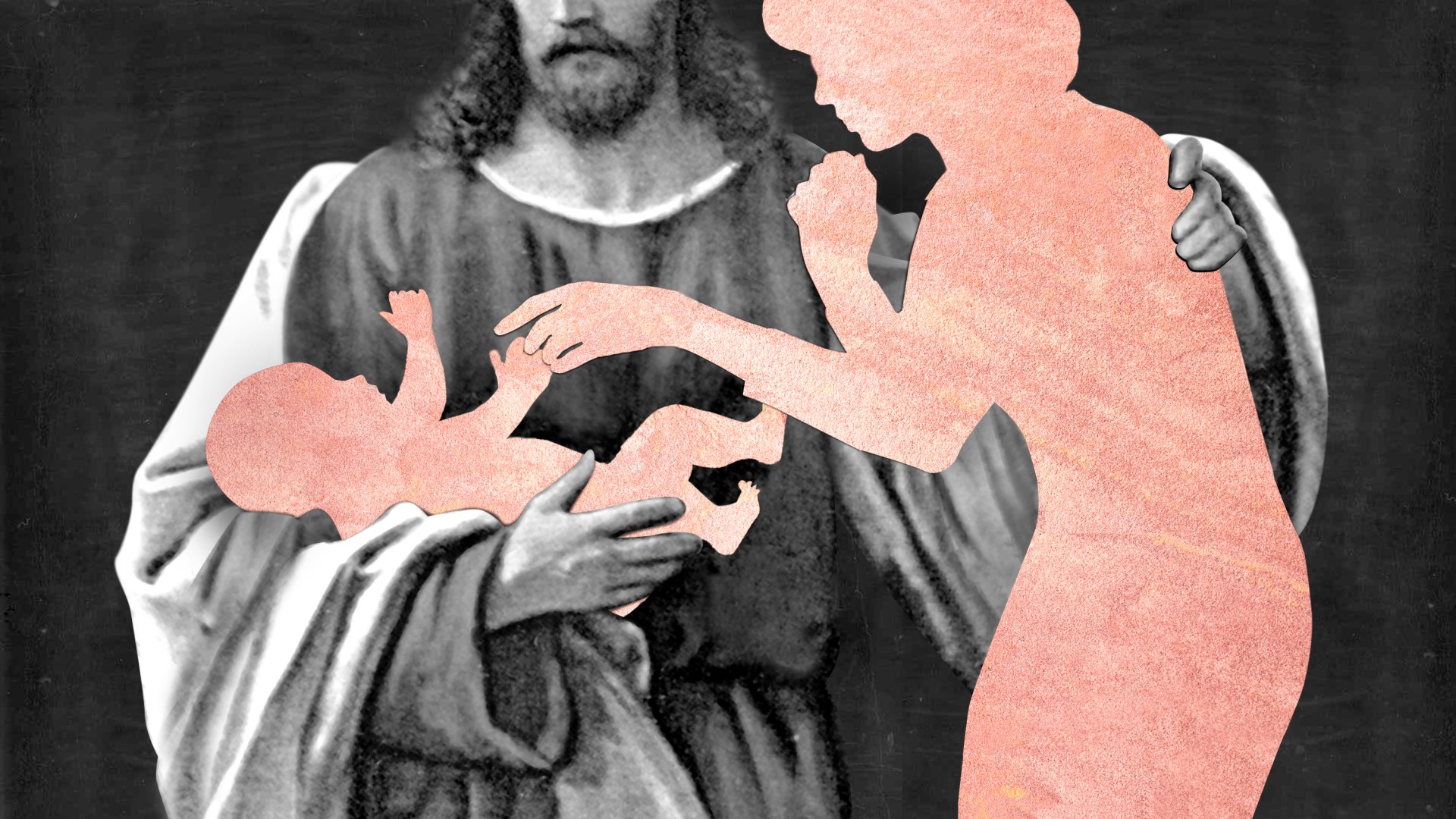
Liberty University Students Lead 50th March for Life

Evangelical and Catholic pro-life groups come together for the first post-Roe march.

March for Life 2020

March for Life 2020

Christianity Today January 20, 2023
Tessa Rampersad / Unsplash

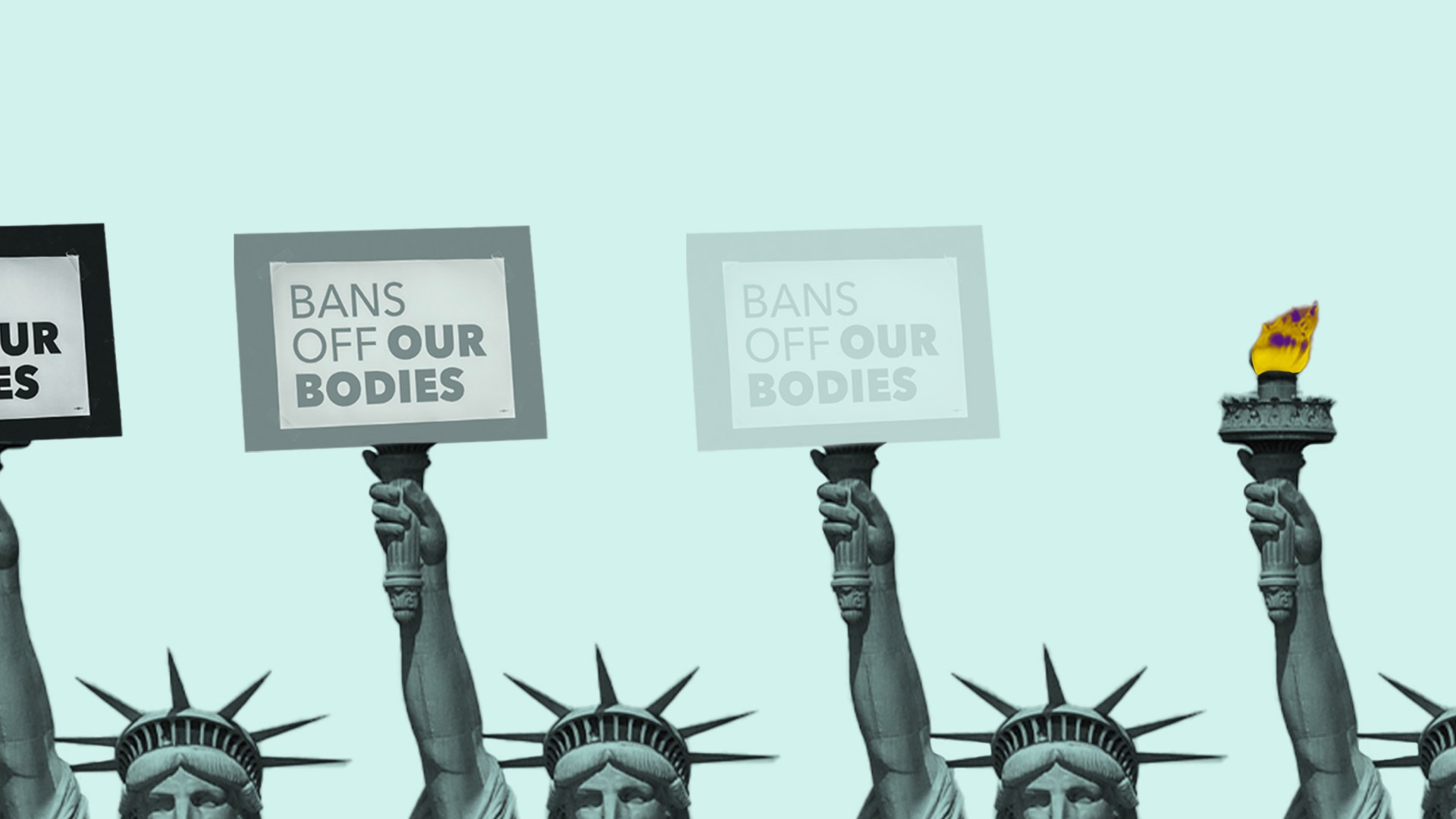
At the 50th annual March for Life—the first national march since Roe v. Wade’s reversal last June—the next generation of pro-life advocates will lead the walk to the US Capitol.

Students from Liberty University will hold the March for Life banner at the front of the procession on Friday. Liberty said more than 500 of its students will attend the event.

Though founded and supported by Catholics, evangelicals have become more involved as March for Life participants and speakers over the years, with Protestant groups adding events to correspond with the annual pro-life demonstrations in Washington.

This year, evangelical leaders like Franklin Graham of Samaritan’s Purse and retired NFL coach Tony Dungy will speak at the March for Life rally alongside Catholic advocates like bishop Michael Burbidge of the Diocese of Arlington and actor Jonathan Roumie, who portrays Jesus in the streaming series The Chosen.

Morse Tan, dean of the Liberty University School of Law, will march with the Liberty students as they carry the banner before tens of thousands of participants.

“I think it’s unusual for an evangelical institution to be asked to carry the banner and lead [the march], but it’s an honor to have been asked,” he said. Liberty is located about three hours from DC, in Lynchburg, Virginia.

Liberty student Summer Smith, president of the school’s Students for Life chapter, will address the premarch rally at the National Mall. A music major from Rincon, Georgia, she wants her generation to embrace this pivotal moment in the pro-life movement.

“This is such an important time, especially after the reversal of Roe v. Wade, for telling women they have other options and are loved,” she said. “That’s the message: Children are loved, women are loved, and the fathers are loved.”

While evangelicals are the religious group with the strongest stance against abortion, CT reported last year that statistics are beginning to show an age gap between young and older generations. A majority oppose abortion rights across age groups, but those under 35 are growing more open to pro-choice policies while older groups are becoming more opposed.

That was based on research before the Dobbs ruling, though. With Roe v. Wade overturned, there’s new momentum on both sides animating new political and social strategies around abortion.

Young Christians opposed to abortion, like the Students for Life chapters at Liberty and other college campuses, tend to see the cause as an issue of human rights and justice, positioning their stance within a broader life ethic.

The sold-out National Pro-Life Summit scheduled for Saturday, January 21, also brings together Catholic and evangelical pro-lifers.

Organizers including Students for Life and the Alliance Defending Freedom say the sold-out summit “represents a historic move of unity in the pro-life movement, bringing national pro-life organizations together to harness the passion of the most dedicated among those who pilgrimage to Washington D.C. for the National Pro-Life March.”

About 2,000 are expected to attend in person. Sponsors include evangelical groups such as Focus on the Family, Samaritan’s Purse, The Freedom Center at Liberty University, and Heartbeat International alongside Catholic ministries like Sisters for Life, Catholic Answers, and Priests for Life.

Seth Dillon, CEO of The Babylon Bee, and Relatable podcast host Allie Beth Stuckey will be the summit’s keynote speakers alongside Catholic pro-lifers like Trent Horn of Catholic Answers and Abby Johnson, the former Planned Parenthood employee who now helps abortion workers leave the industry.

The 2023 March for Life theme, “Next Steps: Marching into a Post-Roe America,” hints at the tone and tactics of the pro-life movement in this new era.

March organizers hope not only to celebrate the first March for Life after the Dobbs v. Jackson decision overturning Roe v. Wade and ruling that abortion can be regulated, but to mobilize pro-life advocates to join the fight for state-level restrictions on abortion.

“With Roe now behind us, we are empowered to save countless innocent American lives by continuing to advocate for commonsense protections at the state and federal level, educating Americans on the intrinsic dignity of all human life,” said Jeanne Mancini, president of March for Life Education and Defense Fund.

This year, Students for Life printed signs with the words “Let Their Hearts Beat” over a US map, a reference to state “heartbeat bills” that restrict abortion around six weeks. The group also has red signs and hoodies with the slogan “Protection at Conception.”

Smith, who has attended two previous March for Life events, is excited to spend the weekend with others who share her passion for ending abortion.

After speaking at the rally and leading the march to the Capitol, Smith will attend the National Pro-Life Summit on Saturday. She is looking forward to “letting people know they have other options, and being a loving voice.”
Church Life

Rinse, Repeat: Should Believers Be Dunked Again?

Just like being “born again,” the symbol of baptism is a way of life, not a repetitive ritual.

Christianity Today January 19, 2023
Illustration by Mallory Rentsch / Source Images: Unsplash / Pexels

Since I was baptized at the age of eight by my pastor father, I haven’t really lingered on the meaning of baptism as part of my devotional life.

It was a one-time event that marked a spiritual milestone in my life, and over time, I’ve lost some connection to that moment. I considered the significance of baptism as a church ordinance or sacrament only much later when watching other people get baptized.

As a pastor in a faith tradition that practices baptism for believers, I am having an increased number of conversations with people who wonder about their baptisms. I am not alone. The uncertainty of COVID-19 seems to have only multiplied these questions. In their confusion, many sincere believers feel the need to get baptized again to recapture the feeling of being cleansed through the work of Christ.

If we couple the cultural moment with the beginning of a new year when people are considering a deeper commitment to God, this longing increases.

I have talked with many who share this angst. It can lead to some real confusion. Many wonder whether these feelings undermine the legitimacy of their baptism experiences or even their salvation.

In reality, the amount of time since you were baptized doesn’t diminish its significance, and there is no biblical evidence that any genuine believer needs to get baptized more than once. In my own Southern Baptist tradition, a “rededication” of faith does not warrant rebaptism.

However, as a symbol of new birth into eternal life with Christ, I believe the significance of baptism should play a more prominent role in our devotional lives. We can recall the feeling of being baptized without returning to the water by embracing the spiritual exercise of ongoing submersion.

I wear my wedding ring as a daily reminder of my love and commitment for my wife, but I rarely pull out the marriage license. For most of us, our experiences of baptism are more akin to the license. Baptism has become a relic of the past rather than a ring of daily remembrance.

In our stubborn efforts to die daily, we should seek to rise out of the symbolic burial waters of baptism and emerge clean every morning. After all, being “raised to new life in him” means today, not just in the “now and not yet” kingdom of God after we die. If we build our lives on steady diets of prayer and confession, we will find that we need to be refreshed again and again.

This need is not a bad thing—nor does it negate the staying power of God’s salvation. Rather, it is a commentary on our human frailty that we need to be repeatedly reminded of the gospel. Like an infant comes to know its mother while still in the womb, Christians need the embryotic warmth of these same waters to hear the heartbeat of God. This is the image Jesus used to describe the new spiritual life to Nicodemus in the third chapter of John.

After all, it was never about the water. Our tendency is to imagine the baptismal waters grimy after we get out—as if there might be a black sin ring around the top when it is drained. Like escaped convict Delmar in O Brother, Where Art Thou?, the hillbilly retelling of Homer’s Odyssey, we might cry out, “Well, that’s it, boys. I’ve been redeemed. The preacher’s done washed away all my sins and transgressions.”

But Jesus tells a different story when he talks to Nicodemus: “Truly I tell you, unless someone is born of water and the Spirit, he cannot enter the kingdom of God. Whatever is born of the flesh is flesh, and whatever is born of the Spirit is spirit” (John 3:5–6, CSB).

Being born again in Christ is a spiritual event. As German theologian Otto Michel (1903–1993) wrote in a book chapter entitled “Regeneration”:

Here … is a vivid picture which had its setting in Christian baptism and depicts the salvation which, granted to the Church by the Word, can set the individual and the Church in a new existence. … Easter is now presupposed. The Church is sheltered by its steadfast faith in the Resurrection of Jesus Christ.

This means I don’t have to keep reentering the water repeatedly to be reborn. I have been ushered into a new existence already. After all, how could a person enter again into an old citizenship with death?

Writer Frederick Buechner reflects on how the trip through the water can change a life when his title character Godric has a similar experience:

Many’s the dark and savage night of doubt. Many’s the prayer I haven’t prayed, the friend I’ve hurt, the kindness left undone. But this I know. The Godric that waded out of Jordan soaked and dripping wet that day was not the Godric that went wading in.

Yet the nagging question remains: How do I recapture that freshly baptized fire without returning to the water? Revelation would call it a return to “the love you had at first” (2:4). It is remembering what brought me together with God in the first place. It is an attitude of ongoing submission and submersion.

A life of ongoing submersion means I wake up with the realization and appreciation that without Christ, I would be living in darkness. As I sit up in my bed, I rise to new life in him again. Each moment is a blessing with a purpose.

To appreciate baptism as part of our spiritual formation, we can look back on how it was fought over during the height of the Reformation. Catholics and many of the largest Protestant groups held to a sacramental view that baptism unites the infant or adult in deeper communion with God. Anabaptists, known as part of the Radical Reformers, considered the practice immensely important but noted that water baptism was only nestled between the baptism of the Spirit and the blood—that is, the physical working out of one’s salvation after conversion.

Mennonite and Anabaptist historian Alan Kreider called it a “boundary ritual”—a line that each of us crossed in our spiritual formation on our way toward Christ. For Kreider’s tradition, then, baptism was more than a symbol, but even other viewpoints can appreciate this infusion of meaning.

When we question the legitimacy of our baptism experiences, we are essentially wondering whether we have crossed this boundary. Do we belong to the family of God? In early English Baptist traditions, this question was so important that people were willing to die for the right to belong in this way.

The modern deemphasis on belonging has helped feed this spiritual crisis. Many converts never seek baptism, and others participate in a baptism outside the umbrella of a local church. Consequently, no physical belonging is tied to the event. Without this tangible anchor, the spiritual meaning also erodes.

Did the act mean anything if there wasn’t a physical family of God waiting to embrace me on the other side? Can I even practice the ordinances if my primary spiritual community is online? These are both very present questions.

Pastor and author Aaron Damiani returned to church father Augustine’s insight defining a sacrament or ordinance as “an outward sign of an inward grace.” Damiani describes living a “sacramental life” by comparing it to a person seeing a train-crossing sign. “You can’t see the train now, but it does exist. And you need to be aware of it.” Even if the action has already passed by, the track is still there.

Looking at the path of baptism through your own life will help you not only recapture its original value but also prevent losing that value in the first place.

If you are personally struggling with this issue or are a faith leader having these same discussions, there are some practical steps you can take.

First, discuss the definition of baptism. What does it mean in your faith tradition? What does the Bible say? It is vital to establish this baseline. An unclear understanding leads to confusion.

Second, consider spiritual goals. In reality, a desire to be rebaptized is only a small part of someone’s larger desire to get closer to God. Remember to emphasize that baptism will not make up for a life devoid of genuine devotion fueled by spiritual disciplines.

Finally, reflect on the person’s spiritual condition during the first baptism. What did the individual (or you) think was happening in that moment? Does it match the earlier definition? Were there unfulfilled expectations because the person believed baptism was all someone needed to do to be a devoted disciple?

In a world marked by uncertainty and constantly moving boundaries, more and more people will wonder about the ritual and symbol of baptism. Even if you were baptized as an infant, you can still reflect on the meaning of this covenant and how your current life as a believer should be marked by the tracks of this past event.

For those struggling to feel closer to God, another baptism may not be the solution you are searching for. But it is good that you are searching. God promises that he is not hard to find for those willing to look.

When I watch others enter the baptistry, I can appreciate that I am already on the other side. Much like the Lord’s Supper, the corporate ordinance of baptism is another act done in remembrance of Christ.

Mark Fugitt holds a PhD in historical theology and is a pastor and adjunct professor of religion, ethics, and history for Missouri State University and Midwestern Baptist Theological Seminary.

Why the Pro-Life Movement (Still) Needs Jesus

At their biblical best, American evangelical Christians affirm the intrinsic value of all human life.

Christianity Today January 19, 2023
Illustration by Mallory Rentsch / Source Images: WikiMedia Commons

This piece was adapted from Russell Moore’s newsletter. Subscribe here.

This Sunday marks 50 years since the Supreme Court’s Roe v. Wade decision legalized abortion in the United States.

It’s also the first year in which that date—marked every year by a March for Life in the nation’s capital—falls after Roe was repudiated by the Supreme Court in last summer’s Dobbs v. Jackson Women’s Health Organization decision.

That means the focus this year—for those of us with pro-life commitments—will be invariably fixed on the next 50 years. This may be especially true for those of us who are also evangelical Christians.

And it’s true not just with what we say and do but also with how we say it.

In letters to his son, who is also a pastor, the late Eugene Peterson noticed that our evangelical movements and ministries are often missing “ways and means.” We must be attentive, he argued, to the how as well as to the what.

“When the missional ‘how’ is severed from the worship ‘who and what,’ the missional life no longer is controlled and shaped by Scripture and the Spirit,” he wrote. “And so mission becomes shrill, dependent on constant ‘strategies’ and promotional schemes.”

This is difficult, he wrote, in an American context in which “doing the right thing in the wrong way” is seen as less important than the “success” of whatever project is undertaken.

“But if we are going to live the Jesus life,” he argued, “we simply have to do it the Jesus way—he is, after all, the Way as well as the Truth and Life.”
Peterson was addressing local church ministry, but for those of us who are born-again Christians, the same principles ought to apply in any social reform or human rights movement.

What the world needs from believers is not just effective strategies in ending abortion or even in addressing the underlying causes of an abortion (or euthanasia) culture. The world also needs Christians to embody the Way, the Truth, and the Life—both in where we stand and in how we get there.

The passage Peterson referenced, of course, comes from an interaction between Jesus and his disciples. After reassuring them that he was going away to prepare a place for them and that his Father’s house has many rooms, Jesus said, “You know the way to the place where I am going” (John 14:4).

Jesus’ follower Thomas was immediately perplexed, no doubt thinking that Jesus had given a set of directions, some oracles to be pronounced, or a ritual to be enacted to get them to where he was going. “Lord, we don’t know where you are going,” he said, “so how can we know the way?”

Jesus’ answer here encapsulates, I suppose, all the rest of the Bible. He said, “I am the way and the truth and the life. No one comes to the Father except through me” (v. 6).

Any commitment to protecting innocent human life must tell the truth. We must pay attention to every time the value of human life is eclipsed with distancing language—a way to see at least one of the vulnerable parties involved as an “it” rather than a “you.”

This happens when the woman in desperation becomes a problem to be solved rather than a person with all the mystery that comes with that. Or when her child becomes a “pregnancy” or an “embryo”—an abstraction—rather than a neighbor whose value isn’t dependent on his or her “wantedness” or usefulness to society.
The disintegration of persons and of communities, Wendell Berry wrote, usually starts with a disintegration of words. Telling the truth about the mystery of human life, the image of God, and God’s care for the vulnerable will require a people free from the fear of tribal slogans. Such slogans try to define for us which of our neighbors we should talk about and which ones should go unmentioned.

This also means we recognize the truth that no pro-life vision of any sort can coexist with the sort of sexual anarchy that—intentionally or unintentionally—assigns value to women based on their sexual attractiveness or availability to men. The consumption of pornography is not a separate issue from the sanctity of human life.

That means telling the truth that men and women, mothers and fathers are not just interchangeable and socially constructed fictions. Women are uniquely vulnerable, both in the nurturing of children within the womb and the care of those children afterward.

Likewise, we must tell the truth that a pro-life vision cannot coexist with any kind of racial supremacy, nationalistic idolatry, “bro-culture” misogyny, or culture of cruelty.

As Christians, we stand for life not just in the abstract but, as the apostle John put it, “with actions and in truth” (1 John 3:18). Right now, there are women in our communities who do not know how they will pay rent or even how they can take off enough time from work to give birth, much less to support a child. Right now, within our communities, there are children in poverty who can’t imagine how the future could bring anything other than suffering. We must care not only about life in general but also about each of those individual lives.

Despite all the corruptions and disgraces of American Christianity, evangelicalism, at its best, carries the promise of newness of life.

Wherever a pro-life movement has worked with consistency and sustainability, the message is not just about the injustice and violence of abortion or euthanasia but also the marvel of grace—that Jesus is not shocked or repulsed by people who sin but loves them. So much so that, in him, they can receive cleansed consciences and everlasting life.

Behind all this truth and life is what Eugene Peterson called “the Jesus Way.” It involves refusing to use not only human lives themselves but also our value of human lives as a means to an end—or to use our value of human life to justify acting in ways that degrade human dignity.

When “winning” is the primary objective, one can justify any allegiance, immorality, or idolatry as “necessary” to achieve the goal. Can that sometimes produce political or social “wins”? Yes—in the same way that an embezzling banker can get rich or an adulterous spouse can have sexual pleasure. But what is at the end of all that? What happens to you?

If a person’s character is expendable for “the cause,” whatever the cause is—is that not the very mindset the pro-life movement means to contradict? The life of any person, no matter how addicted or impoverished or elderly or new, is never the price of exchange for anything else, whatever the consequences. The same holds true with a human soul. A Machiavellian pro-life movement would be a victory for a culture of death, no matter how much “winning” it does along the way.

All this matters because we are talking not about a set of issues but about a Person. He does not just point toward the Way; he is the Way. He does not just tell the truth; he is the Truth. He does not just offer life; he is the Life.

For the next 50 years, we need a pro-life commitment to human dignity in vulnerability. Who knows what challenges to such dignity will come next—whether through gene editing, “compassionate” suicide, or maybe even the trans-humanist abandonment of the limits of human nature itself.

We will need to pursue the pro-life cause with consistency—even when that puts us out of whatever tribes to which we think we belong. And we will need to do so with persuasion, recognizing that no legislation or court decision can protect human life if the people themselves do not value it.

But, along with and above all that, we need Jesus.

Russell Moore is editor in chief of Christianity Today and leads its Public Theology Project.

Ideas

Roe Is Over. But Its Libertarian Spirit Lives On.

Misguided views of freedom plague America’s pro-abortion culture and the pro-life church.

Christianity Today January 19, 2023
Illustration by Mallory Rentsch / Source Images: Unsplash

This week marks the 50th anniversary of Roe v. Wade. In the wake of the Supreme Court’s Dobbs ruling overturning Roe, a lot of Christian commentators will be discussing the morality, legality, and availability of abortion in this new abortion era. Those questions matter, of course, and Christians should be concerned with them. The sacredness of human life, born and unborn, is an imperative that emerges from the heart of the Christian story and the incarnation of Christ in particular.

What weighs on me at this moment, however, is the sorrowful reality that the church has largely lost its moral standing to persuade the American public of its unique vision of the sanctity of life. Public trust in the church and in pastors is at an all-time low. This mistrust is warranted because of high-profile, catastrophic moral failures in the church around money, power, and (most relevant to abortion) sex.

Extramarital affairs, sexual abuse, and cover-ups of abuse have all been on prominent display in the church, and as CT online managing editor Andrea Palpant Dilley has pointed out, it is men by and large who have been unworthy of the trust given to them.

We live in an age when the church in America needs to relinquish its anxiety about public influence so that it can be rebuilt as a moral community. The theologian Stanley Hauerwas’s quip that the first responsibility of the church is to be the church has always made intuitive sense to me. The church’s authority in the public sphere has always been indirect. Even when Christianity was an established religion, the church could only Christianize a society to the degree that it could show the power of Christ to make holy lives.

In every age, the church’s influence is fully contingent on the congruence between the gospel it proclaims and the ethic of radical self-sacrifice and self-giving that it embodies. As theologian and historian Tim Stafford has pointed out, it wasn’t primarily the church’s cogent reasoning against abortion that made early Western societies pro-life. Rather, the church’s way of life made it attractive—and that included its commitment to the sacredness of human life in utero.

There has never been a pure age where the church has been perfectly “in the world but not of it,” but the cascading series of moral crises in the past three decades has been uniquely devastating to the church’s credibility. As David French writes, religious liberty has never been stronger, but it is not at all clear that we have been as assiduous in “securing the integrity of our institutions” as we have been in “protecting their liberty.”

I share French’s concern that churches have been more concerned about securing their liberty from external threats than using that liberty to shape communities conformed to the gospel. There is a startling parallel between the secular vision of freedom that drove the Roe decision and the kind of freedom that the American church has been pursuing. No one can doubt that the Scriptures are intimately concerned with freedom and liberty. But the church for the past half century has been shaped more by a secular American framing of these terms than by a biblical one.

The differences between the biblical and secular understandings of liberty are subtle but momentous. As scholar Vincent Miller says about consumerism and Christianity, the dissonance between the scriptural and secular definitions of freedom “lacks the definitiveness of a head-on collision” but rather has “about as much drama as a train switching tracks and going in a slightly different direction.”

The Court’s reasoning in Roe hinged on a domain of personal liberty established by the right to privacy in the 14th amendment’s due process clause. Although it’s not expressly detailed in Roe, personal liberty is understood as autonomy or self-determination. Planned Parenthood v. Casey, which reaffirmed the fundamental right to abortion, made this point explicit. That decision defined liberty as “the right to define one’s own concept of existence, of meaning, of the universe, and of the mystery of human life.”

The philosopher Isaiah Berlin distinguished between “positive” and “negative” accounts of liberty or, as we might more simply describe them, “freedom for” and “freedom from.” Negative liberty is freedom from coercion or malign influence. Negative liberty opposes external threats, like tyranny and oppression. It can also be opposed to internal threats, like the self’s “cravings,” to use Paul’s and James’s language (Gal. 5:16; James 1:14), or involuntary phenomena like addiction. Or it can involve influences both external and internal, like demonic possession.

In ancient philosophies and religions, negative liberty was important, but it was desirable only to the degree that it liberated people to pursue a vision of the good. This positive liberty, or freedom for, is what Catholic theologian Servais Pinckaers calls a “freedom for excellence.” It constitutes the meaning and purpose of human life. Becoming a mature person means becoming progressively clearer about the nature of the ultimate good, and learning to be morally capable of suspending our lesser desires to pursue that ultimate good.

By contrast, and as Casey makes clear, most modern Western societies are premised on a vision of liberty that’s purely negative—what many have called a libertarian vision of freedom. The historian and political scientist Mark Lilla argues that this view is characterized by moral illegibility, or an inability to organize a society around a compelling, ultimate good. Instead, Western societies are arranged around autonomous personal choice and self-expression.

In the Scriptures, this vision of purely negative liberty would be called “slavery to sin,” (John 8:33–38; Rom. 6:6) or, as David Bentley Hart writes, a slavery “to untutored impulses, to empty caprice, to triviality, to dehumanizing values.”

The New Testament is concerned with this internal kind of slavery primarily because it’s only intermittently (if ever) felt as slavery. Indeed, most of our non-Christian fellow citizens experience it as liberation. However, the Marxist literature scholar Terry Eagleton has perceived what many have not: the hollowness of pure negative liberty.

“Any practice of political emancipation,” he writes, “involves that most difficult of all forms of liberation, freeing ourselves from ourselves.”

As Stanley Hauerwas has said time and again, Christians who awaken to the differences between our understanding of liberty and the broader American understanding of it find ourselves in the position of having to more carefully and clearly distinguish between the “American ‘we’” and the “Christian ‘we.’”

In Christian terms, true liberty comes in the form of positive liberty: the capacity to experience communion with God, even “friendship with God” (Gen. 18:1–8; John 15:15; James 2:23; 4:4), in the fellowship of the church.

American Christians could, I think, by and large agree on this point. However, the thinness in our discipleship of the church comes largely from the fact that we’ve become terrified of providing any shape or contour to this ultimate good. As a result, we’ve allowed freedom to be determined by each individual, so much so that it’s indistinguishable from the self-defining libertarian freedom behind Roe and Casey.

Our conundrum is that we desperately need to be guided by capable and godly pastors and lay leaders who can show us how to submit to others in relationship; how to pray and fast and submit ourselves to God; how not to domineer or seek the high place; how not to manipulate; how not to take advantage or abuse or seduce others; and how to “seek and serve Christ in all persons,” loving our neighbors as ourselves, as the Book of Common Prayer says.

In short, we need leaders who can help us know God in such a way that we’re freed from ourselves and able to put into practice not the works of the flesh but the fruit of the Spirit (Gal. 5:13–26).

And yet, so many Christians struggle to trust our leaders because so many of them have failed us.

Most Christian leaders I know (both men and women) feel genuine anxiety about continuing to teach basic Christian sexual ethics. They’re not hesitant because they doubt the veracity and authority of the Scriptures. It’s rather because so much damage has been done by a censorious and judgmental spirit in the church. They see the incalculable damage done by the moral failings of Christian leaders. They are despondent about the bad fruit of a cheapened discipleship that ticks the right boxes at the polls but fails to offer hospitality, forgiveness, love, and reintegration into the life of the church.

The recovery of genuine Christian liberty requires that we rebuild the local church as a site of a fully orbed discipleship, where truth can be spoken and where people can find belonging, love, and forgiveness.

In the absence of this very local, quiet, and low-profile expression of positive Christian liberty, our understanding of freedom has and will continue to collapse into libertarian moral illegibility. That’s especially true if we fail to recognize the subtle dissonance between a secular and Christian understanding of freedom.

As theologian Ron Highfield has written, when no specificity is given to the meaning of liberty, God will be nothing more than a mere ally in our individual projects of self-creation. This is a calamity for Christian discipleship—an utter reversal of the gospel’s sharp command to “consider everything a loss because of the surpassing worth of knowing Christ Jesus my Lord” (Phil. 3:8).

Our most pressing vocation in this cultural moment is rebuilding the institution of the local church around a freedom worthy of the name of Jesus—the freedom to serve others and, as the apostle Paul says, to offer our lives as living sacrifices.

It’s a lonely and largely invisible task. We’ll get no plaudits from politicians or pundits. But a church purified in this way will experience communion with the risen Lord and the power of his divine life in a way we can only imagine. And having experienced that, it won’t be difficult to share that faith with others.

Jonathan Warren Pagán is an Anglican priest living and serving in Austin, Texas.

Speaking Out is Christianity Today’s guest opinion column and (unlike an editorial) does not necessarily represent the opinion of the publication.

Theology

Seek Prosperity Properly During Lunar New Year

It’s not wrong to celebrate our blessings. But Asian theologians and pastors advise how to do so in biblical, godly ways amid the festival’s red envelopes and best wishes.

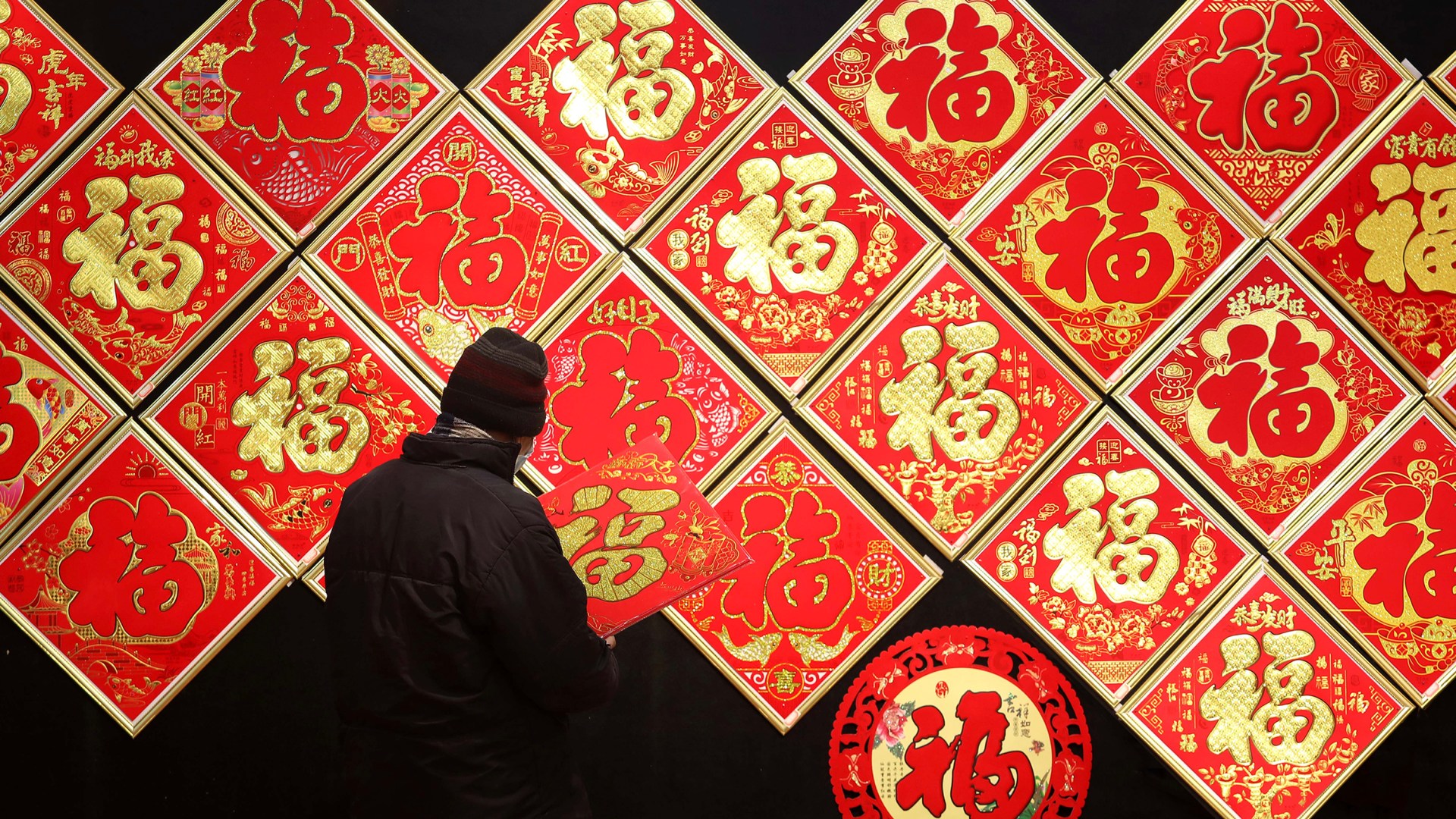
People purchase Fu character ornaments, which is the Mandarin character for "prosperity", for the upcoming Chinese New Year at a wholesale market.

People purchase Fu character ornaments, which is the Mandarin character for "prosperity", for the upcoming Chinese New Year at a wholesale market.

Christianity Today January 19, 2023
VCG / Getty / Edits by Christianity Today

Every Lunar New Year, Calvin Qin’s children receive hongbaos, or red envelopes, at church. In Chinese culture, hongbaos symbolize good luck and blessings. But the Qin family’s don’t hold crisp new banknotes, which most children typically receive. Instead, the red packets hold Bible verses printed on slips of paper.

“If they memorize the Bible verses correctly, they get prizes like candy or chocolate coins from their Sunday school teacher,” said Qin, who moved from China to the United States eight years ago and currently pastors the Chinese Community Church of Indianapolis Northwest in Indiana.

Until now, Qin’s children have been (blissfully) unaware that the kind of red envelopes they receive are the exception, not the norm. But their ignorance has an expiration date.

The Lunar New Year, which begins on January 22 this year, comes with many traditions and customs that articulate a desire for prosperity in the form of greater affluence and material abundance. (Different versions of the holiday are celebrated across Asia: It is known as chun jie or Spring Festival among the Chinese diaspora, Tết in Vietnam, and Seollal in South Korea.)

But to equate prosperity with monetary gain or to regard it solely in terms of increasing one’s material possessions both diminishes and corrupts its full meaning as revealed in Scripture, Asian theologians and pastors told CT. They believe that this festive period offers a propitious time for deeper theological reflection on what the Bible says about true prosperity.

Semantic linkages in Scripture

The Chinese character for prosperity, pronounced in Mandarin as fu (福), abounds in Chinese translations of Scripture, including the popular Chinese Union Version (CUV).

A BibleGateway search shows that fu occurs 593 times in the CUV’s simplified Chinese translation. (In comparison, a search for prosperity in the NIV yields only 33 results.)

Fu recurs throughout the Old Testament, such as when God blesses humankind in Genesis 1:28. It shows up in the rest of the Pentateuch, the Wisdom Literature, and the Prophets. In the New Testament, fu is in well-known passages like the Beatitudes (Matt. 5) and is also present in the Gospels, the Epistles, and Revelation.

Professional Bible translator Jost Zetzsche, however, cautions against the assumption that fu simply means “prosperity.” Other expressions, such as “have more” (有 馀) or “all things prosper” (诸 事 亨 通 ), also connote the idea of fu.

“Aside from that, the [Chinese] Union Version was translated between 1890 and 1919, at a time when the prosperity gospel was not in existence,” Zetzsche said.

Still, the strong linguistic connection between fu and prosperity in Mandarin facilitates a “prosperity-oriented understanding” of the Word, said Jerry Hwang, Singapore Bible College’s academic dean and associate professor of Old Testament.

In fact, the characters for gospel (福音) incorporate the character fu, and this resonates with ethnic Chinese people in a way that the English word does not.

Seeing fu in Scripture helps to create a built-in contextualization for the gospel in Mandarin. Psalm 1, for example, describes the person who is blessed as “having prosperity” (有福). “When someone has fu, it’s prosperity and fullness of life,” Hwang said.

“The notion of ‘blessing’ is always a religious category in English, but in Chinese it’s an everyday category.”

Accordingly, fu is used to translate English words like bless or blessed (蒙 福, 赐 福, or 祝 福), said Zetzsche.

At the same time, in the Chinese psyche, the proliferation of fu in Scripture may also generate a tendency to unconsciously associate the gaining of wealth with a reflection of God’s blessings.

This causality between wealth and divine blessing is also present in how certain auxiliary words in biblical Hebrew, such as will and shall, are translated in English, Hwang said.

“These words in the Hebrew language denote prediction and promise, but because their meanings have shifted and the word shall has become archaic, predictions have now come to sound like promises,” he said.

Certain passages in the Old Testament consequently “suffer from the dual linguistic problems of archaism and language shift,” where what God will do in response to human obedience sounds like a promise.

For instance, the phrase “he will make your paths straight” in Proverbs 3:5–6 may be interpreted as a promise when reading it in Mandarin because of the usage of the word bi (必), which conveys a stronger sense of certainty akin to the English word must.

Such a reading gives rise to the notion that piety leads to prosperity, and Chinese Christians may find “pseudo-biblical warrant” for the latter as a result, said Hwang.

This perceived equation between acquiring wealth and receiving God’s blessings often leads Chinese people to draw conclusions about what blessings must indicate about God’s favor.

“That, coupled with the upper mobility of the diaspora, who are disproportionately wealthy, [means that] people begin to associate wealth with God’s blessing, whether that gain is righteously accomplished or not,” said Hwang.

The Chinese diaspora comprise a significant portion of the ultra-rich in countries like Singapore, the Philippines, Indonesia, and Malaysia.

Christianity is “disproportionately a religion of the upper class” in Singapore, Malaysia, and Hong Kong, because missionaries from the West played an “important role in creating a middle-class and English-speaking elite [to serve as] a group of loyal locals,” said Hwang.

Believers are wrestling with this so-called privilege in a few ways, says Hwang. In Singapore’s case, it arises through a missional impulse in which Singaporeans view their country as the Antioch of Asia. Such a Christian understanding of “chosenness,” however, also engenders a “Singaporean exceptionalism” in which the country sees itself as better than surrounding nations.

A cultural preoccupation

Apart from its frequent occurrences in Chinese translations of Scripture, fu also appears everywhere during the Lunar New Year. Signs or paper cuttings emblazoned with the Chinese character are often placed on doors, windows, or furniture in homes and displayed upside down to signify that good fortune has arrived.

Other Lunar New Year practices also reference fu. People often exchange greetings such as gong xi fa cai in Mandarin or gong hey fatt choy in Cantonese to wish each other good luck and more wealth in the year ahead.

Special dishes that people whip up or partake of also allude to prosperity. Those of Chinese descent in Singapore and Malaysia have a popular tradition called lo hei. This is often a raucous affair where families toss the ingredients for yusheng, a raw fish salad, high in the air while shouting Mandarin idioms for blessing and success over all areas of life.

For James Hwang (no relation to Jerry), former executive director of Chinese ministries at Far East Broadcasting Corporation (FEBC), the Shanghainese fried egg rolls he prepared with his grandmother as a child were a fond festive treat. Made to resemble “gold nuggets,” these egg rolls were often shared with neighbors as a symbolic gesture of sharing their “wealth.”

The festival also includes less lighthearted nods to prosperity.

This may manifest as superstitious behavior, such as not wearing inauspicious colors like black and not cleaning the home for fear of “sweeping” wealth away.

In the Philippines, where up to 25 percent of the population is Chinese, many ethnic Filipinos assume that the Chinese are rich, said Juliet Lee Uytanlet, author of The Hybrid Tsinoys: Challenges of Hybridity and Homogeneity as Sociocultural Constructs among the Chinese in the Philippines.

Some Filipino Catholics want to emulate the Chinese in reaping wealth and success to the point that they will visit Binondo, Manila’s Chinatown district, to buy lucky trinkets and amulets to ward off evil spirits.

Desiring prosperity may also become problematic when it provokes relational conflict—a phenomenon that transcends geographical and cultural lines in Asia.

Lunar New Year is typically a time when families gather to have reunion dinners and visit relatives’ homes, but too often loved ones end up fighting over money during the festive period, says Clive Lim, the Singaporean coauthor of Money Matters: Faith, Life, and Wealth.

Lim attributes prevailing cultural perceptions of prosperity to a “pragmatic reciprocity” in Chinese culture that likely arose out of the Buddhist notion of karma.

The Chinese will often view a very prosperous person as someone with good karma who has done a lot of good deeds in his or her previous life, says Lim. “Therefore, in order to get good things, I must do good things. Then it will amplify and magnify into [receiving] a lot of good things in my life.”

Being a recipient of “good karma” makes flaunting one’s wealth a permissible act in the East, while doing so is perceived as socially unacceptable in the West, Lim added.

This disparate approach in displaying one’s riches also arises because hierarchy is acceptable in Chinese contexts. “The day you are born, there is a pecking order,” Lim said. “Wealth shows your social standing.”

The hierarchical mindset that many Chinese people adhere to results in the festival becoming a time where people show off how prosperous they are, such as counting the amount of money in one’s red envelopes (traditionally given to children and single adults) and comparing it with others.

This invisible drive or burden to accumulate money and improve one’s social stature stood out starkly to Qin when he served as a pastor in China.

“A lot of young people, including Christians, do not want to go home during Chinese New Year because their families and communities would ask them how much money they earned this year,” he shared.

People in China—even one’s own family members—will treat you differently if you are rich, and less respect is afforded to people who are not as wealthy, said Qin.

Reimagining rituals

In a holiday so overtly predicated on hungering for and glorifying material gain, it may seem difficult for Christians to celebrate prosperity in godly ways during the Lunar New Year.

A valuable starting point is recognizing that prosperity is not confined to the material sphere but is defined biblically as shalom, Asian theologians and pastors say.

Shalom is communal, relational, and creational, said Jerry Hwang, the academic dean. It is “life with God and harmony with the land and people, which challenges consumeristic understandings of prosperity and psychological understandings of prosperity as inner peace.

“It also challenges both the individualistic West and the pragmatic East. You need God in the picture for there to be real shalom.”

Apart from Old Testament exemplars Abraham, Job, and Joseph, who were wealthy and prosperous because they were right with God and obedient to him, we can look to New Testament figures like Lydia and Joseph, who used their wealth to help others, said Uytanlet.

Cultivating an awareness of the spiritual dangers of wealth is also important, Lim warned.

“Jesus calls money ‘mammon’ in the New Testament. Proverbs 30:8 (‘Keep falsehood and lies far from me; give me neither poverty nor riches, but give me only my daily bread’) also tells us to be very careful not to occupy either extreme and forget about God.”

Daewon Moon, who serves as senior pastor of Daegu Dongshin Church in South Korea, preaches regularly against the love of money (1 Tim. 6:10) in his church. He is acutely aware that he is in an increasingly secularized and individualistic society where half of the population are nonreligious.

While some preachers deliver sermons against gaining any kind of wealth and some pursue poverty as championed by minjung theology (a liberation theology of the poor), Moon says that most Korean pastors occupy a middle ground between these extreme positions. In his Presbyterian church, he often emphasizes stewardship, where everything one has is God’s gift to be used to serve the world.

Reconceptualizing certain customs during Lunar New Year may also help others understand that true abundance is found only in a life with Christ.

Instead of placing traditional “spring couplets” or red banners emblazoned with conventional Lunar New Year blessings over one’s door, Christians can write poetry couplets that reflect their faith, such as “God is the source of all blessings,” says James Hwang, the FEBC executive director. In Singapore, several stores have created Christian versions of Lunar New Year décor, ranging from cross-shaped paper cuttings to red-envelope designs drawn from Scripture.

Rather than reciting slogans about luck and wealth during lo hei, Christians can choose to proclaim statements about receiving God’s blessings or trusting in God to construct a broader view of what prosperity entails, says Jerry Hwang.

“In theological terms, we can replace the liturgy of prosperity with the liturgy of what real blessing is from God’s point of view, which includes suffering, if needed.”

For other Christians, breaking away from cultural traditions is necessary.

Qin does not say gong xi fa cai during Lunar New Year because he does not want to relate the celebration of the festival with money too closely. And when intrusive questions about income arise during family reunions in China, he exhorts Christians there to respond by sharing about lessons they’ve learned in their spiritual or professional growth.

Uttering pronouncements of good health is commonplace during this time as well. But believers who want to foster a sense of biblical shalom in the world can recognize that wishing for physical well-being alone is insufficient.

“The greatest spiritual health [to seek during Lunar New Year] is forgiveness,” said Lim. “Are we willing to make a pledge to love our enemies, forgive one another, and meet with our elders to show them love and respect?”

Isabel Ong is CT's associate Asia editor. She is from Singapore and currently lives in Canada.

News

Terrorist Attack on Congolese Church Prompts Plea for Christian Advocacy

ISIS affiliate strikes Pentecostal baptismal service amid longstanding conflict in Central African region rich in natural resources.

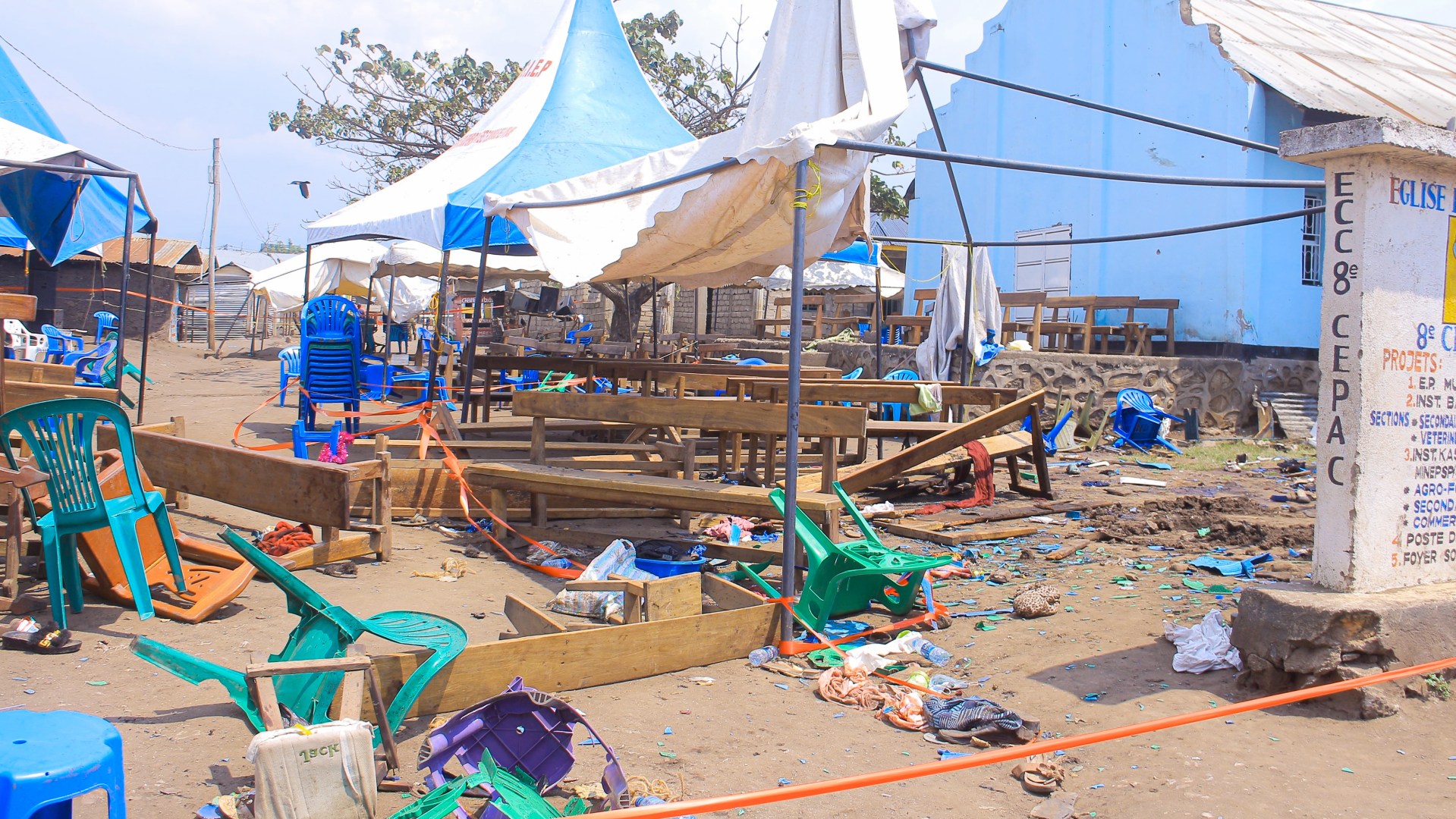
The aftermath of an ADF terrorist attack at a Pentecostal church in Kasindi, in the Democratic Republic of Congo (DRC) North Kivu province, on January 16, 2023.

The aftermath of an ADF terrorist attack at a Pentecostal church in Kasindi, in the Democratic Republic of Congo (DRC) North Kivu province, on January 16, 2023.

Christianity Today January 18, 2023
Zanem Nety Zaidi / Xinhua / Getty Images

Congolese Christians are calling out for help.

In the latest attack on civilians in the Democratic Republic of Congo (DRC), a terrorist bombing killed 14 people and wounded 63 others during a baptism service at a Pentecostal church in Kasindi. Located in the mountainous North Kivu province bordering Uganda, the northeast region has already been under an official “state of siege,” similar to a state of emergency, since 2021.

“The Eastern Congo has become a theater of violent extremism,” said Eale Bosela, regional director for the Association for Christian Theological Education in Africa. “People are being massacred like animals.”

The bomb attack was blamed on the Allied Democratic Forces (ADF), an affiliate of the Islamic State Central African Province, which claimed responsibility. Originally formed in 1995 as a mix of jihadist and insurgent rebels, it is one of over 120 armed groups in North Kivu.

Many Congolese were confused—and troubled.

“How can such a situation happen,” stated Kiza Kivua, a 50-year-old farmer who lost his brother in the attack, “when Kasindi is full of soldiers?”

With an estimated 500 or more fighters, the ADF was once motivated primarily by its opposition to Yoweri Museveni, president of Uganda since 1986. Pushed across the border, the militant group now has a majority Congolese membership with many foreign recruits.

A Kenyan national was arrested by the DRC for the church bombing.

“Like so many other groups, the ADF has found refuge in the region,” said Scott Morgan, chair of the Africa Working Group of the International Religious Freedom Roundtable. “But now they have taken on the mantra of attacking Christians.”

They are not the only ones.

Other militant groups such as M23 and CODECO have attacked churches, said Morgan, also an analyst for Militant Wire. But the ADF has been among the most belligerent. The National Episcopal Conference of the Congo tallied 6,000 civilians killed, 7,500 kidnapped, and 3 million displaced since 2013. A United Nations report counted 370 civilians killed since last April.

The violence is curbing Christian witness. One Congolese denomination once had 54 churches in the area, now reduced to 11. Another had 25 churches, now reduced to 8.

The US State Department labeled the ADF a foreign terrorist organization in 2021. But Morgan has called for its further designation as an “entity of particular concern,” a label applied under the International Religious Freedom Act against groups engaging in religious persecution.

The Church of Christ in Congo (ECC) called out to God.

“Lord, how long will you forget us?” began its statement, quoting Psalm 13. The umbrella group includes the Community of Pentecostal Churches in Central Africa (CEPAC), and unites more than 60 Protestant denominations. It denounced the “cowardly and despicable” act, asking the government to “redouble” its efforts in the area already declared under a state of siege.

Congo has been known as as a mineral conflict zone since at least 2003.

A UN mapping report described the nation’s rich natural resources, which produce 10 percent of the world’s copper and 17 percent of diamonds. But the electronics industry relies even more heavily on Congo. Computers and mobile phones rely on cobalt, of which 34 percent of world production is mined locally. And an astounding 60–80 percent of coltan reserves are located in North and South Kivu.

The report also listed 125 companies and individuals connected to the conflict.

“May the Lord help us to reflect deeply on the conspiracy that weighs on our nation,” concluded the ECC statement.

Many local Christians judge similarly—and further.

“This is too much,” said Fohle Lygunda, Tearfund's theology and network engagement manager for Africa. “The international community should break its guilty silence and cease to support an evil plan for balkanizing the DRC.”

As Protestant missionaries once led the English and Americans to speak out against the colonizing King Leopold II of Belgium in the early 20th century, Lygunda asks that Christians do the same today.

Some are drawing attention to the ongoing tragedy.

Voice of the Martyrs newly labeled the DRC as a “hostile” nation in its 2023 prayer guide, released last week. Last month, Aid to the Church in Need highlighted the killing of Congolese priests and nuns in its 2022 year-in-review report. And this week, Open Doors ranked the nation No. 37 on its 2023 World Watch List of the top 50 countries where Christians experience the most persecution.

Pope Francis, who will visit the DRC beginning January 31, gave his condolences.

“Christ, the Lord of life,” he prayed, “[may] those affected find consolation and trust in God.”

In preparation for his visit, Francis met in December with Denis Mukwege, the Congolese Nobel Peace Prize winner, a gynecologist celebrated for his medical service to victims of rape and advocacy against sexual violence.

A Pentecostal, his hospital in South Kivu is affiliated with CEPAC.

“[This attack] can in no way be treated as a simple news item,” stated Mukwege, “and must lead to a strong reaction from the state so that everyone can exercise their faith in peace.”

Congo’s population of 105 million is roughly 48 percent Protestant, 47 percent Catholic, and 5 percent Muslim. Thus, sources told CT they hope the body of Christ will resonate with the call to help.

“Start lobbying the international community to eradicate armed groups in Eastern Congo,” said Eale. “ADF terrorists slaughter people like they slaughter goats.”

News
Wire Story

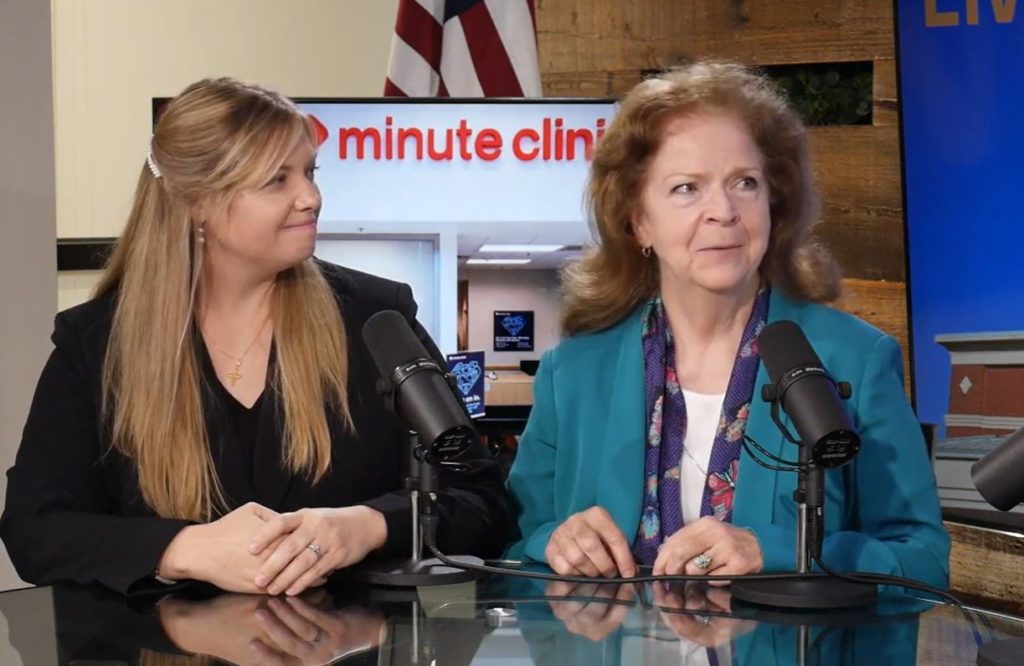
Fired Baptist Nurse Sues CVS After Refusing to Prescribe Birth Control, Abortion Drugs

The pharmacy chain, featuring in-store MinuteClinics, dropped its religious accommodation in 2021.

CVS Pharmacy

CVS Pharmacy

Christianity Today January 18, 2023
Bruce Bennett/Getty Images

A Christian nurse practitioner is accusing CVS pharmacy of firing her for refusing to prescribe birth control pills and abortifacients, drugs aimed at ending the embryonic development of unborn children.

CVS Health Corporation ended a six-year religious accommodation for nurse practitioner Robyn Strader in August 2021 and fired her October 31, 2021, for refusing to comply with the change, alleges the lawsuit filed January 11 in the Texas Northern District Court.

“After accommodating Robyn for six and a half years without a single complaint, CVS fired her because it simply did not like her pro-life religious beliefs,” First Liberty Institute counsel Christine Pratt, one of Strader’s attorneys, said in a press release announcing the case. “It is illegal to issue a blanket revocation of all religious accommodations when it is so easy for CVS to accommodate its employees. CVS is sending a message that religious health care workers are not welcome and need not apply.”

The lawsuit comes days after the Southern Baptist Ethics and Religious Liberty Commission (ERLC) urged CVS and Walgreens to accommodate workers who object to filling prescriptions for mifepristone, a drug used in achieving chemical abortions, or to reverse the companies’ decisions to fill such prescriptions in the first place.

A clear policy that “respects deeply held beliefs about the preciousness of life and honors individual consciences that believe abortion is a moral evil,” ERLC President Brent Leatherwood wrote in a January 6 letter to the companies, would be welcomed “in a corporate world often solely driven by maximizing profits, with little regard for the personal views of employees.

“It has long been the view that pharmacies exist to provide medication that improves health and extends life. Dispensing these pills does the exact opposite.”

Nurse practitioner Robyn Strader (right) and First Liberty Institute counsel Christine Pratt.First Liberty Institute / Baptist Press
Nurse practitioner Robyn Strader (right) and First Liberty Institute counsel Christine Pratt.

According to the lawsuit, CVS accommodated Strader’s religious practice against prescribing such pills for six and a half years, allowing her to transfer such prescriptions to associates for compliance. The exemption was rarely necessary, as most of the care Strader provided was related to respiratory viruses, urinary tract infections, acute illnesses, and vaccines for schoolchildren. In the years the accommodation was allowed, the lawsuit claims, about five individuals per year requested hormonal birth control pills or the Depo-Provera injection.

“On those rare occasions,” the lawsuit reads, “Ms. Strader referred the client to the other nurse practitioner with whom she alternated shifts at the same CVS MinuteClinic, or to a nearby CVS MinuteClinic, one of which is approximately 1.7 miles away.”

CVS is accused of discontinuing the accommodation for all employees and pressuring Strader to comply. Strader, who worked at the CVS Minute Clinic in Keller, Texas, accuses CVS and its subsidiaries of firing at least three other CVS Minute Clinic nurse practitioners in Florida, Kansas, and Virginia because of their religious beliefs, but the individuals are not named in the lawsuit.

“In addition to prospectively preempting all requests for religious accommodations, CVS unlawfully derided Ms. Strader’s religious beliefs, pressured her to change her beliefs, refused to consider her multiple requests for a religious accommodation (and) failed to engage with her about possible accommodations,” the lawsuit alleges.

Strader is seeking reemployment, accommodation of religious beliefs for herself and all CVS employees, and financial compensation.

Boyden Cray & Associates of Washington is also providing counsel for Strader.

“Our employment laws protect religious freedom in the workplace,” Boyden Gray & Associates partner Jonathan Berry said in the press release. “No one should have to choose between her faith and her job, especially where it would be easy to continue a longstanding religious accommodation. Boyden Gray & Associates looks forward to vigorously defending Robyn’s rights in court.”

CVS had not filed a response to the lawsuit as of last week.

Theology

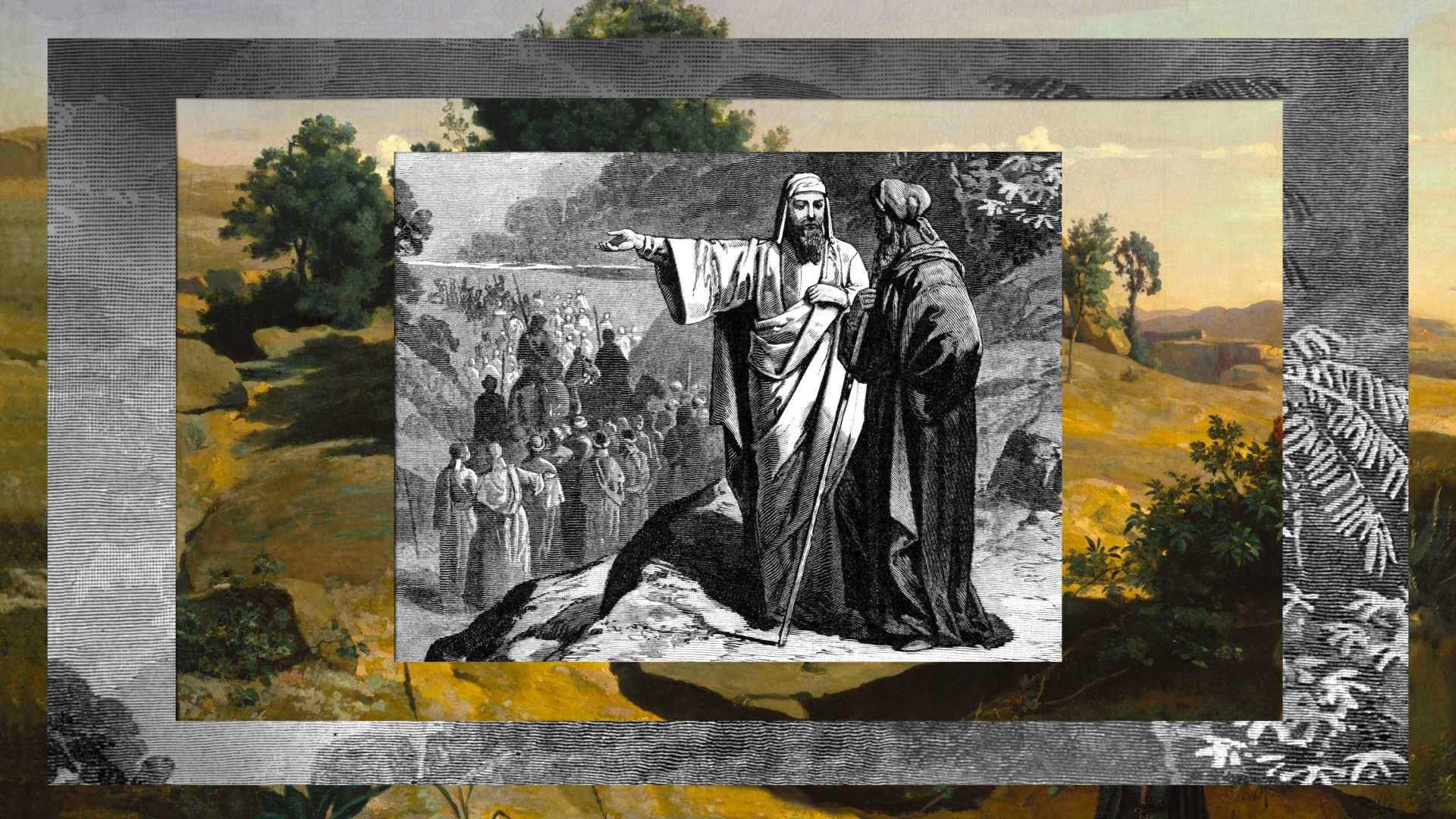
This Ancient Land Is Not Your Land

Why did Abraham’s family move so often?

Christianity Today January 18, 2023
Edits by Christianity Today / Source Image: WikiMedia Commons

This is the third article in a short “Genesis January” series to help people explore the complexity of the Bible at the start of a new year.

We live in a restless generation. My husband and I have moved 15 times in 24 years of marriage. And while that number is higher than average, we’re not alone. It’s somewhat unusual to stay put in the same community and the same line of work for more than 10 years.

People these days move for job or school opportunities, marriage, or proximity to family. Some of us relocate simply to find a community that better fits our budgets or ideals. Sometimes our migrations are precipitated by conflict or concern—divorce, a health crisis, an age-related decline, or an escape from violence.

We find similar relocation themes in the Old Testament. Abraham, Isaac, and Jacob moved their families a lot. If you’re reading through Genesis this month, you’ve probably noticed. Their reasons for moving are different than ours, but they can still teach us something about how to live well.

Unless you’ve fled with your belongings from a war-torn area, it will be difficult to imagine the arduous journey Abraham’s family faced as they traversed ancient Mesopotamia. They couldn’t rent a U-Haul truck. They traveled in tents, carrying everything they owned and leading flocks of sheep and goats. These herds were their key to survival, providing milk to drink, meat to eat, and animal skins to make water-resistant tents. Keeping these flocks alive was a perpetual challenge in a region with little vegetation and few bodies of fresh water—almost entirely dependent on rainfall. I’m already tired just thinking about it.

They couldn’t pop in to Walmart for supplies. Everything they needed had to be made from scratch or bartered from those they met. Living off the land is one thing when you can fence off your acreage and cultivate fields of your own. It’s quite another when you live as a guest on lands belonging to others. For Abraham and his family, getting along with neighboring groups was essential.

I just returned from a trip to Israel, where we traveled the land in a temperature-controlled tour bus with cushioned seats and (most importantly) Wi-Fi. Bottled water was readily available whenever we were thirsty. As someone who teaches and writes about the Torah—the first five books of the Bible—I was reminded again how few of these narratives take place in the land now known as Israel. With one exception in Numbers 13, all of Exodus, Leviticus, Numbers, and Deuteronomy take place outside the Promised Land.

That leaves Genesis, for which the land of Canaan seems hardly more than a waystation. Abraham arrives there and leaves again in Genesis 12. He returns in chapter 13, negotiating with his nephew about where they should both live because “their possessions were so great that they were not able to stay together. And quarreling arose between Abram’s herders and Lot’s” (vv. 6–7). This is the first of many quarrels we read about overgrazing and water rights.

In Genesis 14:14, we learn that Abraham has 318 fighting men in his household, so if you’ve pictured Abraham and Sarah alone with a few sheep in the desert, you’ll need to recalibrate your imagination. Including women and children, Abraham presides over a camp of at least a thousand people. No doubt he possesses many thousands of animals to provide for their needs.

By chapter 20, Abraham and his entourage have moved again for reasons we’re not told. We can only guess he’s searching for enough land and water for his herds and tents. Despite his great wealth, Abraham is still a visitor in Canaan. When Sarah dies in chapter 23, Abraham buys a cave in which to bury her, and by the end of his life, her grave is still the only land he owns.

Isaac’s troubles are similar to his father’s. His increasing wealth creates conflict with the Philistines he lives among. Envious of his success, they clog his wells (Gen. 26:14–15). Whoever controls the water controls the land. Isaac moves and repeatedly finds water, but the locals keep claiming it for themselves (vv. 17–22). Finding a peaceful place to live is a perpetual challenge.

Isaac’s son Jacob leaves Canaan to find a wife and stays for many years in Mesopotamia. He returns in Genesis 32 with an entourage of his own: two wives, two concubines, 11 sons, numerous servants, and sizable herds of cattle, donkeys, sheep, and goats (vv. 4–5). He declines an invitation to live near his brother Esau, which seems wise enough, given what we know about the difficulty of living side by side in a land of limited resources.

Jacob’s sons experience sibling rivalry of their own, although this time the trouble is not water but rather favoritism, as the story of Joseph reveals. After Joseph goes to Egypt as a victim of human trafficking, the rest of the family follows due to famine in Canaan (again, water issues). The Book of Genesis ends here: in Egypt.

Surprisingly, all these moves are a feature, not a bug for Abraham’s family. It makes them who they are. Abraham’s transience becomes part of his legacy.

Toward the end of Deuteronomy, in Moses’ last speech to the Israelites before their entry into Canaan, he instructs them to bring God the first of their crops as a thank offering (Deut. 26). As they do, they’re supposed to recite their history, beginning with this statement: “My father was a wandering Aramean” (v. 5).

Abraham’s moves are such an important part of the Israelites’ story that they are commanded to recount them every year. Having been nomads, they’re to cherish the land with gratitude but not keep it to themselves. Moses instructs them to designate a tithe of their produce every third year for those without land: “the Levite, the foreigner, the fatherless and the widow, so that they may eat in your towns and be satisfied” (v. 12).

Israel’s law is filled with reminders of their immigrant status. “Do not oppress a foreigner; you yourselves know how it feels to be foreigners, because you were foreigners in Egypt” (Ex. 23:9).

Their experience as outsiders living on the edge of survival is meant to shape their ethics by fostering empathy.

Those of us who’ve moved know how much work it takes to start over in a new community. Moving carries a litany of losses and a significant expenditure of energy, but the gains can be even greater. Our reasons for relocating are different than Abraham’s, but those experiences can still shape our compassionate responses to newcomers in our neighborhoods, workplaces, schools, and churches. And like the Israelites, we’re called to show gracious hospitality to others on the move.

Carmen Joy Imes is an associate professor of Old Testament at Biola University’s Talbot School of Theology and the author of Bearing God’s Name: Why Sinai Still Matters.

Read the other pieces in the series:

News

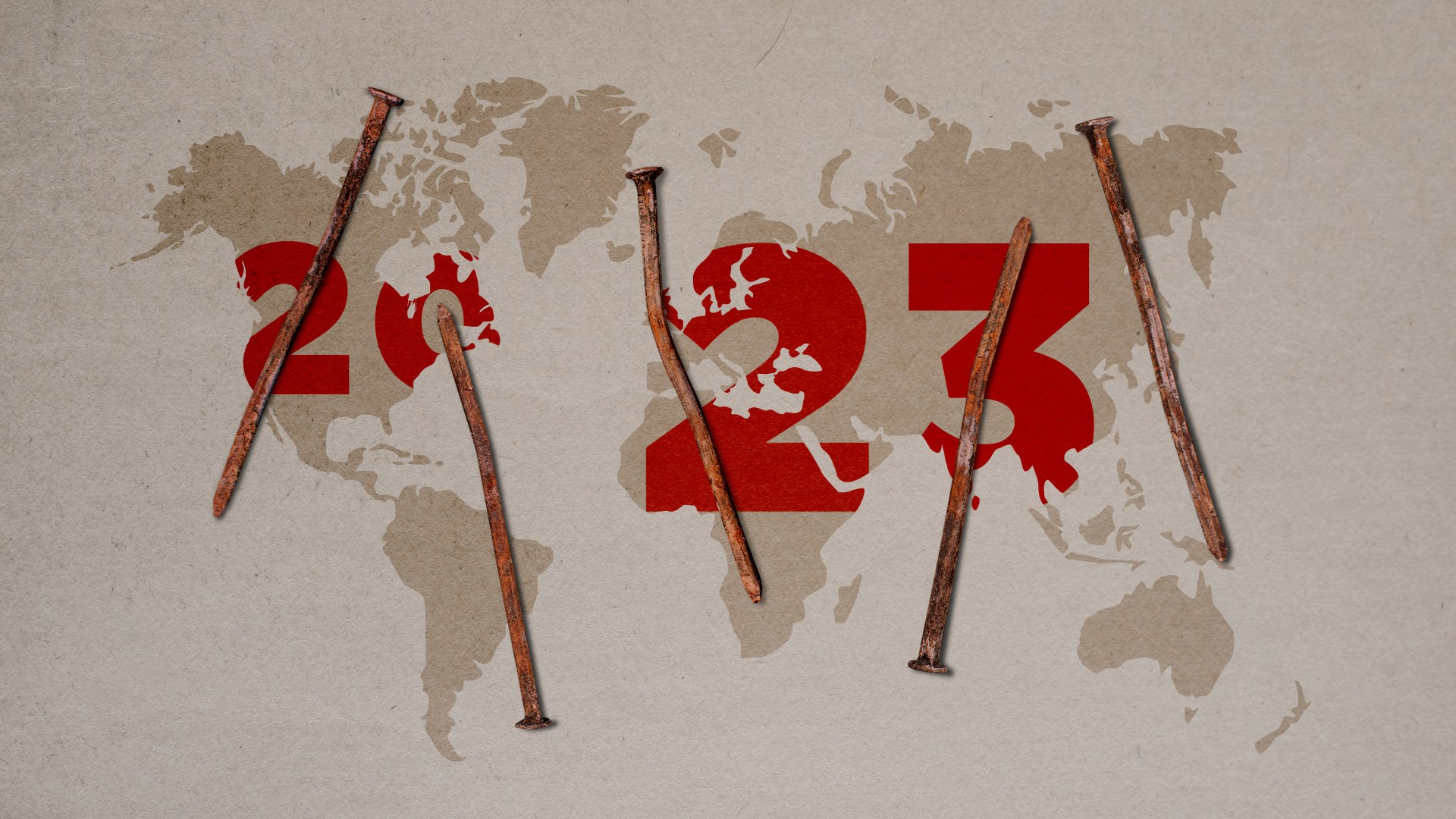
The 50 Countries Where It’s Hardest to Follow Jesus in 2023

Latest report on Christian persecution finds Nigeria and Sub-Saharan Africa the epicenter of jihadist violence, while China leads effort to redefine religious rights.

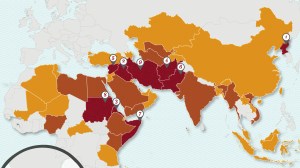
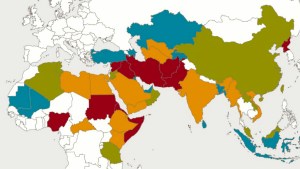
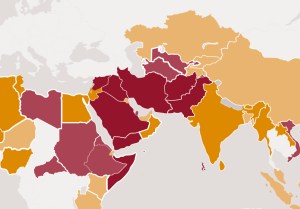
Christian persecution is worst in these 50 countries, according to the Open Doors 2023 World Watch List, now in its 30th year.

Christian persecution is worst in these 50 countries, according to the Open Doors 2023 World Watch List, now in its 30th year.

Christianity Today January 17, 2023
Illustration by Mallory Rentsch / Source Image: Benne Ochs / Getty Images

More than 5,600 Christians were killed for their faith last year. More than 2,100 churches were attacked or closed.

More than 124,000 Christians were forcibly displaced from their homes because of their faith, and almost 15,000 became refugees.

Sub-Saharan Africa—the epicenter of global Christianity—is now also the epicenter of violence against Christians, as Islamist extremism has spread well beyond Nigeria.

And North Korea is back at No. 1, according to the 2023 World Watch List (WWL), the latest annual accounting from Open Doors of the top 50 countries where it is most dangerous and difficult to be a Christian.

The concerning tallies of martyrdoms and church attacks are actually lower than in last year’s report. But Open Doors emphasizes they are “an absolute minimum figure,” and is quick to note the data decline does not suggest real improvements in religious freedom.

For example, the reduction in church closures was “due in large part” to Chinese officials having closed almost 7,000 churches over the prior two years. And the drop of Afghanistan from No. 1 last year to No. 9 this year “offers little cheer” because it’s driven by how most Afghan Christians “went deep into hiding or fled overseas” after the Taliban’s takeover.

Overall, and same as last year, 360 million Christians live in nations with high levels of persecution or discrimination. That’s 1 in 7 Christians worldwide, including 1 in 5 believers in Africa, 2 in 5 in Asia, and 1 in 15 in Latin America.

And for only the third time in three decades of tracking, all 50 nations scored high enough to register “very high” persecution levels on Open Doors’ matrix of more than 80 questions. So did 5 more nations that fell just outside the cutoff.

Islamic extremism continues to cause the most persecution (31 nations), especially in sub-Saharan Africa where Open Doors fears Nigeria will soon trigger “a vast humanitarian catastrophe” across the continent. Researchers also noted how China has increased digital restrictions and surveillance and is “forging a network of nations seeking to redefine human rights—away from universal standards and religious freedoms.” And a fourth Latin American country, Nicaragua, entered the list as authoritarian governments increasingly view Christians as voices of opposition.

The purpose of the annual WWL rankings—which have chronicled how North Korea has competition as persecution gets worse and worse—is to guide prayers and to aim for more effective anger while showing persecuted believers that they are not forgotten.

The 2023 version tracks the time period from October 1, 2021, to September 30, 2022, and is compiled from grassroots reports by more than 4,000 Open Doors workers across more than 60 countries.

Today’s report also marks 30 years of the list, first created in 1993 after the Iron Curtain fell. What has Open Doors learned?

First, it’s clear that persecution continues to worsen. The number of countries hitting the WWL threshold to be tracked has risen from 40 in 1993 to 76 today, and the average country score has gone up 25 percent.

Yet the biggest threat to the church is not external but internal, concludes Frans Veerman, Open Doors managing director of research. And 1 Corinthians 12 means no believer should suffer alone.

“The biggest threat to Christianity,” he said, “is that persecution brings isolation, and when it keeps going on incessantly it may cause loss of hope.”

While violence and pressure lead to significant trauma and loss, Veerman noted how “remarkably many respondents to our questionnaires keep on saying that the biggest threat does not come from the outside but from within the church: ‘Will the next generation be prepared for the kind of persecution we are witnessing? Are they strong in their faith and in knowing Christ and the gospel?’”

“This shows that the level of resilience of the church is as defining for the future of the church in a country as is the level of persecution,” he said. “So the biggest threat to the church in countries with persecution is decrease of resilience caused by incessant persecution and the feeling of being forsaken by the rest of the body of Christ.”

After three decades of research, Open Doors has learned that such needed resilience is found by being “anchored in the Word of God and in prayer,” said Veerman. Also by being “courageous,” as the persecuted church is most often “active in spreading the gospel” and “vital and growing against the odds.”

In short, the persecuted church has taught Open Doors the truth of 1 Corinthians 12:26: “If one part suffers, every part suffers with it; if one part is honored, every part rejoices with it.”

Where are Christians most persecuted today?

Afghanistan does not represent the only substantial change in this year’s rankings. Cuba moved to No. 27, up from No. 37, due to the intensification of repressive tactics against Christian leaders and activists opposing Communist principles. Prior to widespread demonstrations in 2021, it didn’t even rank. Burkina Faso moved to No. 23, up from No. 32, due to increased jihadist activity, exacerbated by similar instability in neighboring Sahel nations. Mozambique moved to No. 32, up from No. 41, due to Islamic militancy in its northern region. And Colombia moved to No. 22, up from No. 30, due to targeted violence against Christians by criminal gangs.

Comoros joined the list at No. 42, rising 11 spots due to increased government paranoia (only foreigners there are allowed religious freedom). And Nicaragua joined the list for the first time, rising 11 spots to No. 50 due to growing dictatorial repression, especially against the Roman Catholic Church.


1. North Korea
2. Somalia
3. Yemen
4. Eritrea
5. Libya
6. Nigeria
7. Pakistan
8. Iran
9. Afghanistan
10. Sudan
11. India

Overall, other than Afghanistan dropping eight slots, the top 10 nations mostly shuffled positions from last year [see sidebar]. Sudan rejoined the group at No. 10, bumping India which at No. 11 still scores within Open Doors’ “most extreme” level of persecution.

Surprisingly removed in 2021 from the US State Department’s annual listing of Countries of Particular Concern after finally being added in 2020, Nigeria was again given special attention in the Open Doors report, which noted:

Violence against Christians … is most extreme in Nigeria where militants from the Fulani, Boko Haram, Islamic State West Africa Province (ISWAP) and others conduct raids on Christian communities, killing, maiming, raping and kidnapping for ransom or sexual slavery.

This year has also seen this violence spill over into the Christian-majority south of the nation. … Nigeria’s government continues to deny this is religious persecution, so violations of Christians' rights are carried out with impunity.

Repeating last year’s performance, Africa’s most populous nation ranked No. 1 in the WWL subcategories of Christians killed, abducted, sexually assaulted or harassed, forcibly married, or physically or mentally abused, as well as ranked No. 1 in homes and businesses attacked for faith-based reasons. It again ranked No. 2 in the subcategories of church attacks and internal displacement.

Violations of religious freedom in Nigeria are emblematic of a rapidly growing Islamist presence in Sub-Saharan Africa. Mali rose to No. 17 from No. 24. Burkina Faso rose to No. 23 from No. 32, and Niger rose to No. 28 from No. 33. Farther south, the Central African Republic (CAR) rose to No. 24 from No. 31; Mozambique rose to No. 32 from No. 41; and DRC rose to No. 37 from No. 40.

Countries with Christian majorities rank relatively low in the top 50, and include Colombia (No. 22), Central African Republic (No. 24), Cuba (No. 27), Ethiopia (No. 39), the Democratic Republic of the Congo or DRC (No. 37), Mozambique (No. 32), Mexico (No. 38), and Cameroon (No. 45), and Nicaragua (No. 50). (Kenya and Tanzania fall just short of making the 2023 list.)

Regarding Latin America, Open Doors noted:

Direct government oppression against Christians seen as voices of opposition is rife in Nicaragua (No. 50), Venezuela (No. 64), and Cuba (No. 27), where Christian leaders were imprisoned without trial for their part in last year’s demonstrations. In many countries in Latin America, organized crime has taken hold, especially in rural areas for Christians who speak out against the cartels’ activities.

Of the top 50 nations:

  • 11 have “extreme” levels of persecution and 39 have “very high” levels. Another five nations outside the top 50 also qualify as “very high”: Kenya, Kuwait, Tanzania, United Arab Emirates, and Nepal. (Then OD tracks another 21 with “high” levels. The only nations to rise in level were Nicaragua and Sudan, while Saudi Arabia and Sri Lanka were the only nations to drop in level.)
  • 19 are in Africa, 27 are in Asia, and 4 are in Latin America.
  • 34 have Islam as a main religion, 4 have Buddhism, 1 has Hinduism, 1 has atheism, 1 has agnosticism—and 10 have Christianity. (Nigeria is 50/50 Muslim-Christian.)

The 2023 list included two new countries: Comoros and Nicaragua. Two countries dropped off the list: Kuwait and Nepal.


1. Nigeria
2. Pakistan
3. Cameroon
4. India
5. Burkina Faso
6. Central African Republic
7. Mozambique
8. Democratic Republic of Congo
9. Tanzania
10. Myanmar
11. Colombia
12. Niger

Open Doors reporting period: Oct. 2021 to Sept. 2022

Other noteworthy increases include Mali at No. 17, up from No. 24, due to threats from jihadist and mercenary fighters in the context of a weak government that links some Christians to Western interests. Similarly, fellow Sahel nation Niger rose to No. 28 from No. 33, due to ongoing attacks by Islamist militants. And in North America, Mexico rose to No. 38 from No. 43, due to criminal violence against Christians perceived to be a threat to illegal activity, as well as social pressures faced by indigenous believers who refuse to follow ancestral customs.

Not all noteworthy movement was negative. Open Doors noted the “promotion of greater tolerance” in a number of Middle Eastern countries, including Bahrain and the UAE. Qatar dropped 16 spots from No. 18 to No. 34, due to no churches being closed last year. (However, many previously closed house churches remained shut.) Egypt dropped 15 spots from No. 20 to No. 35, due to fewer reported attacks on Christian properties. Oman dropped for similar reasons from No. 36 to No. 47, and Jordan dropped from No. 39 to No. 49 due to no reports of Christians forced from their homes.

How are Christians persecuted in these countries?

Open Doors tracks persecution across six categories—including both social and governmental pressure on individuals, families, and congregations—and has a special focus on women. Many categories saw decreases this year, though some hit record highs.

When violence is isolated as a category, the top 10 persecutors shift dramatically—only Nigeria, Pakistan, and India remain [see sidebar]. In fact, 15 nations are deadlier for Christians than North Korea. (Uganda saw the highest increase in violence scored, up 3.1 points alongside Honduras, but both were not in top 50. After Afghanistan’s 10 point drop, Qatar saw the biggest decrease in violence, followed by Sri Lanka and Egypt. Among the total nations tracked, 12 saw no change in violence score, 27 lowered, and 37 increased.)

Martyrdoms dropped by more than 275 from the prior year, as Open Doors tallied 5,621 Christians killed for their faith during the reporting period. Representing a decrease of 5 percent, the toll remains the second highest since the 2016 record of 7,106 deaths. Nigeria accounted for 89 percent of the total.


1. Nigeria: 5,014
2. Name withheld: 100*
3. Mozambique: 100*
4. Democratic Republic of Congo 100*
5. Central African Republic: 61
6. Myanmar: 42
7. Colombia: 21
8. India: 17
9. Mexico: 14
10. Honduras: 14
11. Pakistan: 12

*Estimate | Open Doors reporting period: Oct. 2021 to Sept. 2022

Open Doors is known for favoring a more conservative estimate than other advocacy groups, which often tally martyrdoms at 100,000 a year.

Where numbers cannot be verified, estimates are given in round numbers of 10, 100, 1,000, or 10,000, assumed to be higher in reality. And some national tabulations may not be provided due to security reasons, resulting in an “NN” designation for Afghanistan, Maldives, North Korea, Somalia, and Yemen.

Under this rubric, an unnamed nation, Mozambique, and the DRC all follow Nigeria with a symbolic tally of 100 martyrs. Then the CAR with 61 recorded killings, Myanmar with 42, Colombia with 21, and India with 17.

A second category tracks attacks on churches and other Christian buildings such as hospitals, schools, and cemeteries, whether destroyed, shut down, or confiscated. The tally of 2,110 represents a 59 percent decrease from last year, and is only about a fifth of the 2020 report’s high of 9,488.

China (No. 16), which rejoined the top 20 in 2021 for the first time in a decade, led the way with half of reported church attacks—though given a symbolic tally of 1,000. Then Nigeria, Myanmar, Mozambique, DRC, Rwanda, and Angola all were assigned a symbolic 100 attacks. Then India recorded 67 specific incidents, followed by Mexico with 42, Colombia with 37, and Nicaragua with 31.


1. China: 1,000*
2. Nigeria: 100*
3. Myanmar: 100*
4. Mozambique: 100*
5. Democratic Republic of Congo: 100*
6. Rwanda: 100*
7. Angola: 100*
8. India: 67
9. Mexico: 42
10. Colombia: 37
11. Nicaragua: 31

*Estimate | Open Doors reporting period: Oct. 2021 to Sept. 2022

The category of Christians detained without trial, arrested, sentenced, and imprisoned decreased to 4,542, down a quarter from a record high of 6,175 in last year’s report but still the second-highest total since the category has been tracked.

Open Doors divides this into two subcategories, with 3,154 detained believers representing an decrease of 34 percent. India led with 1,711 cases and accounted for 54 percent of the total. It was followed by Eritrea with 244 cases and Russia with 200; then an unnamed nation, Myanmar, China, and Rwanda with a symbolic 100 each; then Cuba with 80, El Salvador with 63, and Nigeria with 54.

The tally of 1,388 believers imprisoned, however, held steady from the 1,410 reported in the prior period. An unnamed nation, Eritrea, China, and India comprised almost 90 percent of the total.

Another new high was registered in the number of Christians abducted, with the total of 5,259 representing an increase of 37 percent over the prior period. Nigeria accounted for 90 percent of the total, or 4,726 abductions, followed by Mozambique and DRC with a symbolic 100 incidents each, then Iraq with 63, CAR with 35, and Cameroon with 25.

By far the largest category total was displacement, with 124,310 Christians forced to leave their homes or go into hiding for faith-related reasons, down 43 percent from 218,709 last year. An additional 14,997 Christians were forced to leave their countries, down from 25,038 last year. Myanmar comprised 4 out of 5 internal displacements (followed by Nigeria and Burkina Faso) and 2 out of 3 refugees tallied (followed by Iran).

Open Doors stated that several categories were particularly difficult to count accurately, highest of which were the 29,411 cases of physical and mental abuse, including beatings and death threats. (Last year’s tally was 24,678 incidents.) Of the 72 nations assessed, 45 were assigned symbolic numbers. Nigeria and India were the highest (comprising two-thirds of the tally), followed by an unnamed nation, Myanmar, Mozambique, Indonesia, DRC, and Rwanda.

An estimated total of 4,547 Christian homes and properties were attacked in 2022, along with 2,210 shops and businesses. Of the latter, 27 of 42 countries were given symbolic numbers, with Nigeria’s tally of 1,000 exceeding the next nine nations combined (given their tallies of 100 each). Nigeria, Myanmar, and CAR had the highest tallies in the former category (a symbolic 1,000 each), with only Indonesia and India able to record actual cases (211 vs. 180). Eritrea, Syria, Iraq, Burkina Faso, Niger, Mozambique, DRC, and Cameroon rounded out the top 10 and beyond, each with a symbolic tally of 100 attacks.

Categories specific to women were also difficult for Open Doors researchers to count accurately. Cases of rape and sexual harassment decreased from 3,147 to 2,126 tallied, led by Nigeria with almost half the total, with 34 of 47 countries scored symbolically. Forced marriages to non-Christians decreased from 1,588 to 717 tallied, led again by Nigeria, with 22 out of 34 countries scored symbolically.

Why are Christians persecuted in these countries?

The main motivation varies by country, and better understanding the differences can help Christians in other nations pray and advocate more effectively for their beleaguered brothers and sisters in Christ.

Open Doors categorizes the primary sources of Christian persecution into eight groups:

Islamic oppression (31 countries): This is the main source of persecution that Christians face in more than half of the watch list countries, including 8 of the top 10 overall. Most of the 31 are officially Muslim nations or have Muslim majorities; however, 5 actually have Christian majorities: Nigeria, CAR (No. 24), DRC (No. 37), Mozambique (No. 32), and Cameroon (No. 45). (Additionally this is the main driver in 15 nations with enough persecution to be tracked by Open Doors but ranking below the watchlist’s cutoff, including Christian-majority Kenya and Tanzania.)

Dictatorial paranoia (9 countries): This is the main source of persecution that Christians face in nine countries, mostly in nations with Muslim majorities—Syria (No. 12), Uzbekistan (No. 21), Turkmenistan (No. 26), Bangladesh (No. 30), Tajikistan (No. 44), and Kazakhstan (No. 48)—but also in Eritrea (No. 4), Cuba (No. 27), and Nicaragua (No. 50). (Also in six nations being tracked: Angola, Azerbaijan, Belarus, Burundi, Rwanda, and Venezuela.)

Communist and post-communist oppression (4 countries): This is the main source of persecution that Christians face in four countries, all in Asia: North Korea (No. 1), China (No. 16), Vietnam (No. 25), and Laos (No. 31).

Religious nationalism (3 countries): This is the main source of persecution that Christians face in three nations, all in Asia. Christians are primarily targeted by Hindu nationalists in India (No. 11) and by Buddhist nationalists in Myanmar (No. 14) and Bhutan (No. 40). (Also in three nations being tracked: Israel, Nepal, and Sri Lanka.)

Organized crime and corruption (2 countries): This is the main source of persecution that Christians face in Colombia (No. 22) and Mexico (No. 38). (Also in three nations being tracked: El Salvador, Honduras, and South Sudan.)

Christian denominational protectionism (1 country): This is the main source of persecution that Christians face in Ethiopia (No. 39).

Secular intolerance (0 countries) and clan oppression (0 countries): Open Doors tracks these sources of persecution, but neither is the main source in any of the 50 countries on the 2023 list.

How does the World Watch List compare to other reports on religious persecution?

Open Doors believes it is reasonable to call Christianity the world’s most severely persecuted religion. At the same time, it notes there is no comparable documentation for the world’s Muslim population.

Other assessments of religious freedom worldwide corroborate many of Open Doors’ findings. For example, the latest Pew Research Center analysis of governmental and societal hostilities toward religion found that Christians were harassed in 155 countries in 2020, more than any other religious group. Muslims were harassed in 145 countries, followed by Jews in 94 countries.

The breakdown corresponds to Open Doors’ data. China, Eritrea, and Iran ranked in Pew’s top 10 nations implementing government harassment, while India, Nigeria, and Pakistan rank in the top 10 experiencing social hostility. Afghanistan and Egypt ranked in both.

Most of the nations on Open Doors’ list also appear on the US State Department’s annual list that names and shames governments that have “engaged in or tolerated systematic, ongoing, and egregious violations of religious freedom.”

Its top-tier Countries of Particular Concern (CPC) list includes Myanmar (No. 14 on the 2023 WWL), China (No. 16), Cuba (No. 27), Eritrea (No. 4), Iran (No. 8), North Korea (No. 1), Nicaragua (No. 50), Pakistan (No. 7), Russia (which exited the WWL last year), Saudi Arabia (No. 13), Tajikistan (No. 44), and Turkmenistan (No. 26). Its second-tier Special Watch List includes Algeria (No. 19), the Central African Republic (No. 24), Comoros (No. 42), and Vietnam (No. 25).

The State Department also lists Entities of Particular Concern, or nongovernmental actors producing persecution, which are all active in countries on Open Doors’ list. These include Boko Haram and ISWAP in Nigeria (No. 6 on the WWL), the Taliban in Afghanistan (No. 9), Al-Shabaab in Somalia (No. 2), Hayat Tahrir al-Sham in Syria (No. 12), the Houthis in Yemen (No. 3), the Wagner Group for its activities in the Central Africa Republic (No. 24), and ISIS-Greater Sahara and Jamaat Nasr al-Islam wal Muslimin in the Sahel.

Meanwhile, the US Commission on International Religious Freedom (USCIRF) in its 2022 report recommended the same nations for the CPC list, with the addition of Nigeria (No. 6), India (No. 11), Syria (No. 12), and Vietnam (No. 25). For the State Department’s watch list, USCIRF recommended the same nations except for Comoros, with the addition of Azerbaijan (unranked but monitored by Open Doors), Egypt (No. 35), Indonesia (No. 33), Iraq (No. 18), Kazakhstan (No. 48), Malaysia (No. 43), Turkey (No. 41), and Uzbekistan (No. 21).

All nations of the world are monitored by Open Doors researchers and field staff, but in-depth attention is given to 100 nations and special focus on the 76 which record “high” levels of persecution (scores of more than 40 on Open Doors’ 100-point scale).

CT previously reported the WWL rankings for 2022, 2021, 2020, 2019, 2018, 2017, 2016, 2015, 2014, 2013, and 2012, including a spotlight on where it's hardest to believe. CT also asked experts whether the United States belongs on persecution lists, and compiled the most-read stories of the persecuted church in 2019, 2018, 2017, 2016, and 2015.

Read Open Doors’ full report on the 2023 World Watch List here.

Editor’s note: CT offers this 2023 report in Spanish, Portuguese, French, Korean, Indonesian, Arabic, and Russian, with more languages coming soon, as part of CT Global’s 2,500 translations.

The 2022 report is available in Spanish, Portuguese, French, Chinese (Simplified and Traditional), Korean, Indonesian, Italian, Russian, Arabic, and Catalan.

We welcome your feedback here. Get involved here.

News

Southern Baptist Church Planter Killed in Plane Crash

Clint Clifton coached Christians to multiply and fulfill the Great Commission.

Clint Clifton

Clint Clifton

Christianity Today January 17, 2023
North American Mission Board / edits by Rick Szuecs

Church planter Clint Clifton died in a plane crash in North Georgia on January 12. He was 43.

Clifton trained, coached, and encouraged an untold number of church planters and was considered “a genius, with an encyclopedic knowledge of church dynamics,” according to Trevin Wax, vice president of research and resource development for the Southern Baptist North American Mission Board (NAMB). Clifton specialized in the pragmatic aspects of church planting as NAMB’s senior director of research, he wrote three widely used handbooks, and he hosted the podcast New Churches.

He described himself as a practical person who was motivated by the gospel to do impractical things. He said when he felt beaten down by the “hard truth” of how difficult it is to start healthy churches, he would return to Jesus’ command in Matthew 28:19 to go and make disciples.

“What I couldn’t get away from was the stark reality of the Great Commission,” Clifton said in 2021. “No matter your size or your budget or your power, every church has a responsibility to enact and take action on the Great Commission.”

He planted his first church in northern Virginia at age 26. Nine months later—before the congregation was considered stable—the church planted another church. Pillar Church went on to start another and another, every year for the next 15 years.

Clifton was at the NAMB headquarters in Alpharetta, Georgia, last week to talk about training, equipping, and sending out more church planters around the United States. His private plane crashed on the way home.

Flight records show he took off from the Cherokee County Airport in Canton, Georgia, and planned to fly his 1971 Piper PA-28-180 Cherokee about 300 miles to Concord, North Carolina. The red-and-white single-engine plane only made it about 40 miles into the trip before encountering problems. The plane did an unexpected circle over Dawson Forest, south of Dawsonville, Georgia, before looping again and then spiraling three times and crashing between the woods and the Etowah River a little after 8 p.m.

The local sheriff received a 911 call about an hour and a half after sunrise the next morning. The cause of the accident has not been made public. The plane was completely destroyed in the crash. Clifton was the only person on board.

“We are shocked and heartbroken by this news,” NAMB president Kevin Ezell said in an official statement. “Nothing can prepare you for news like this, but we have a Savior who will carry us and sustain us in the days ahead.”

Clifton was born in Palatka, Florida, in 1979 and raised in a non-Christian family that struggled with addiction, divorce, and disabilities. When he was a boy, however, a Southern Baptist pastor happened to move in next door and started sharing the gospel with his parents. As Clifton later recalled, Jesus started to “infiltrate” his home. But he resisted attending church until he got a little older and realized there were girls there.

“I had less than pure motives,” he said.

While pursuing a girl, however, he fell in love with Jesus. He started attending Peniel Baptist Church—where Billy Graham was ordained in 1938. The pastor, Dannie Williams, took Clifton under his wing, discipled and encouraged him, and taught him about the Christian call to evangelism. Peniel was planting multiple churches in Northeastern Florida, and Clifton became a worship leader, serving at several sites.

The feel and excitement of starting something new made a deep impact.

“I just saw this really zealous work going on in and around our community, and it really got into my skin,” Clifton said.

In retrospect, Clifton said, some ministry opportunities probably came before he was ready. His first few experiences preaching did not go so well.

“I was preaching to people much older, wiser, and more educated than myself,” he wrote in Church Planting Thresholds, “and I felt the constant strain of inferiority and self-consciousness in my preaching and preparation. I attempted to compensate by being louder and employing vocabulary I thought would impress those who were listening to me.”

Clifton attended the Baptist College of Florida and earned a bachelor’s degree and then went to seminary at the John W. Rawlings School of Divinity at Liberty University.

While studying in Lynchburg, Virginia, Clifton got a job at a music minister at a large Southern Baptist church that did not place an emphasis on church planting. At first he thought the church would be more “legit,” he recalled, because it wasn’t a startup.

“They had like a choir and an ensemble and the whole nine yards,” he said. “I was there for all of six weeks when I realized I had made a grave mistake.”

The pastor asked Clifton to stay for three years in exchange for a promise to support him when he planted a church. Almost exactly three years later, according to Clifton, he left to plant Pillar Church in Northern Virginia, a few miles from the Marine Corps base in Quantico.

Clifton was committed to starting something new and building a church that would plant more churches. Though he personally had no military connections, Clifton liked the idea of reaching men and women in the Marines, since they are trained to be leaders and move around the world frequently.

He underestimated how hard it would be.

“The problem was, I’m an overweight musician who doesn’t know anything about military life. With facial hair. I only run if someone is chasing me. I’ve never shot a gun!” Clifton said. “The first couple years was really, really hard.”

Pillar soon faced a choice about whether it was going to send people and dedicate resources to start a new congregation or focus on its own sustainability. Church attendance numbers and the budget seemed like priorities. But Clifton told the congregation he thought the church needed to do the less safe, less practical thing and plant another church, because that’s what they were called to do by the Great Commission.

Christians need to trust that they are doing God’s work, Clifton said, not their own. There’s a temptation to think you can control the Spirit, or at least hang on, but that’s not how God moves in the world.

“I want the wind of the Spirit to blow where it blows and trust God and his providence,” he said in 2019. “Every day I feel like, ‘Oh man, this is vapor; it’s going to stop.’ You know, like the wind is going to stop blowing at some point.”

Pillar supported its first plant before it turned one. That churches also planted churches, and Clifton went to work helping others train and send church planters too.

“My prayer is that you would plant a church that is committed to vigorously planting other churches,” he wrote in his first book. “I pray that you will stretch the faith of your people, not so that they may have a larger building to worship in, but so Christ may have a larger kingdom of worshippers.”

Pillar has started a memorial fund to go to church planting. Clifton is survived by his wife, Jennifer, and the couple’s five children, Noah, Ruthe, Isaiah, Betchina, and Moses.

addApple PodcastsDown ArrowDown ArrowDown Arrowarrow_left_altLeft ArrowLeft ArrowRight ArrowRight ArrowRight Arrowarrow_up_altUp ArrowUp ArrowAvailable at Amazoncaret-downCloseCloseellipseEmailEmailExpandExpandExternalExternalFacebookfacebook-squarefolderGiftGiftGooglegoogleGoogle KeephamburgerInstagraminstagram-squareLinkLinklinkedin-squareListenListenListenChristianity TodayCT Creative Studio Logologo_orgMegaphoneMenuMenupausePinterestPlayPlayPocketPodcastprintremoveRSSRSSSaveSavesaveSearchSearchsearchSpotifyStitcherTelegramTable of ContentsTable of Contentstwitter-squareWhatsAppXYouTubeYouTube