Peter’s Words for the Christians Who Stormed Brazil’s Capital

The passionate apostle understood religious zeal. But his change of heart on how to channel it changed the world.

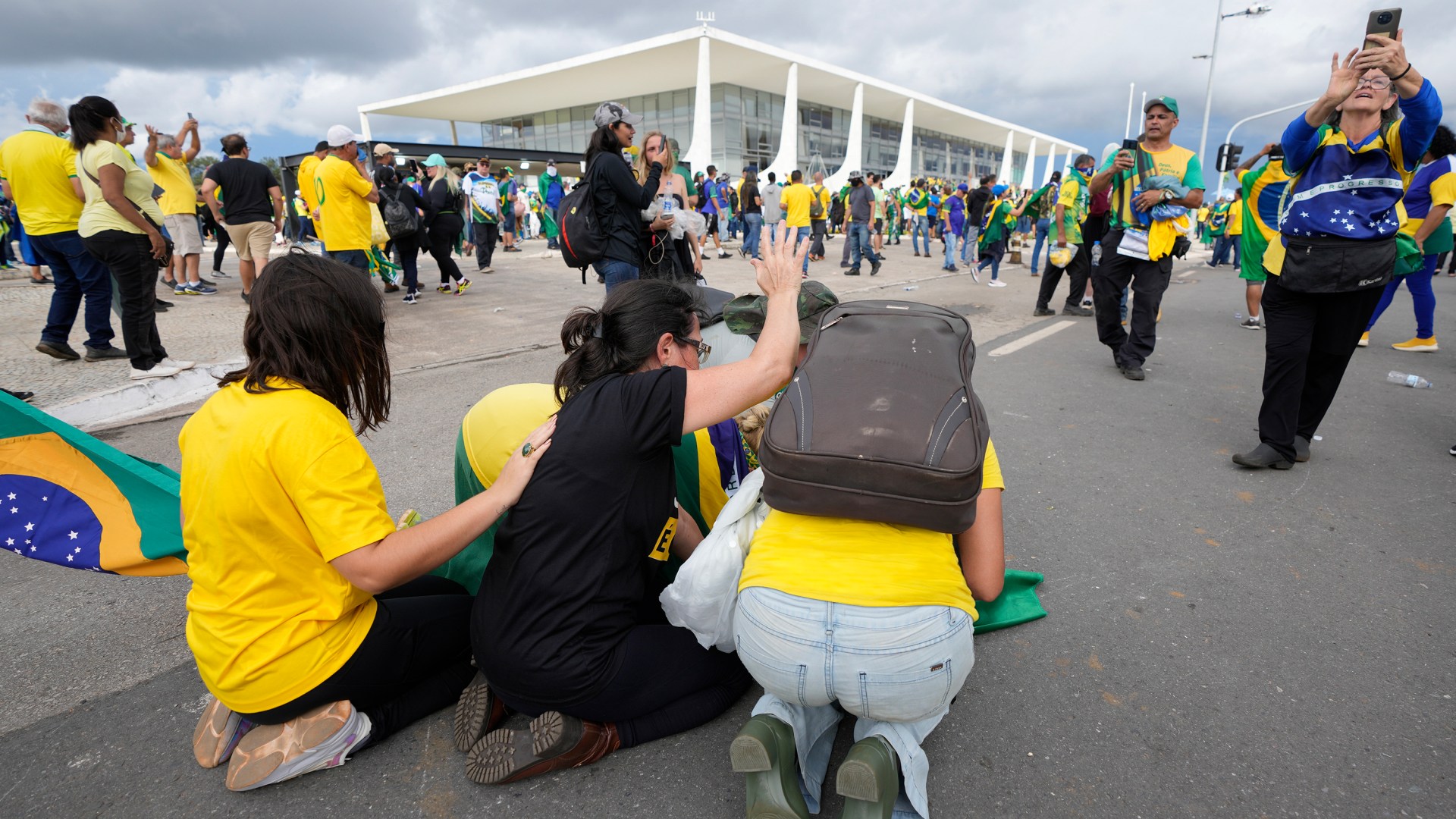
Protesters, supporters of Brazil's former President Jair Bolsonaro, kneel to pray as they storm the Planalto Palace in Brasilia, Brazil.

Protesters, supporters of Brazil's former President Jair Bolsonaro, kneel to pray as they storm the Planalto Palace in Brasilia, Brazil.

Christianity Today January 10, 2023
Edits by Christianity Today / Source Image: Eraldo Peres / AP Images

As a Brazilian, I will remember January 8, 2023, as one of the worst days for my country’s democracy. As an evangelical, I will remember it as one of the darkest days for my country’s church.

This Sunday, dozens of angry citizens arrived in Brasilia and stormed the National Congress, the Supreme Court, and the Planalto Palace, ripping apart furniture, damaging paintings, smashing windows, and beating up journalists. The extremists are supporters of former president Jair Bolsonaro and erroneously believe that the 2022 election was rigged.

Video footage of Sunday’s attack shows the violence of these vandals. But it also reveals some protesters carrying Bibles, praying before they entered Congress, and singing hymns while being detained by federal police—actions that suggest many were evangelicals, an important electoral base for the former president.

https://twitter.com/alexfajardo_/status/1612800012102123520

“Brazil belongs to the Lord Jesus. The Congress is our church. The Congress is the church of God's people. If you are a Christian, come to the Congress. The Congress is ours, the people of God, until military intervention.” From a video filmed in the National Congress originally uploaded by Clayton Nunes.

Unfortunately, the seed of this extremism that reached its peak Sunday was planted and cultivated, in part, by evangelical churches that supported and campaigned for Bolsonaro in the last elections, amplifying polarization, hate speech, and radicalization. In their extravagant stumping for Bolsonaro, some evangelical leaders christened a rude, violent, and greedy politician into a “man of God.”

Beyond the ways in which many in the evangelical church cultivated an inappropriately intimate relationship with Bolsonaro throughout his presidency and reelection campaign, many Christian leaders have struggled to demonstrate significant fruit of the Spirit when engaging in politics. While publicly calling the church to defend family values, too many pastors themselves struggle with hatred, rancor, violence, division, and pride toward political opponents—works of the flesh that Paul suggests deny entry to the kingdom of God (Gal. 5:19–21).

https://twitter.com/ofuxicogospel/status/1612464335560876032

In recent years, churches have had a loose relationship with the truth and have too often irresponsibly shared conspiracy theories. This past year, some Christians claimed that leftist groups were fighting for the legalization of pedophilia. Since Lula claimed victory in October’s runoff, Christians have joined many of their fellow countrypeople in suggesting that the election’s runoff was the result of voter fraud.

In the aftermath of Sundays’s attack, a January 10 poll from Instituto Atlas found that 67.9 percent of evangelicals in Brazil believe that Lula did not actually win the election, 64.4 percent believe the attack was justified, and 73.8 percent think Bolsonaro is not responsible for it.

Following the elections, Bolsonaristas set up camps in front of barracks around the country, asking for the military to intervene and remove Lula from power. A few days ago, as the Belo Horizonte police dismantled one camp, a man prayed to God in bad Hebrew, “Yauh, Yauh, please don't allow it, Yauh.”

https://twitter.com/DudaSalabert/status/1611412447008538624

The prayer was fervent and desperate. It also sounded sincere and revealed a theology that had fostered despair, fanaticism, and a revolutionary posture—perhaps acquired encouragement from someone in a pulpit. The ingredients for demolishing a democracy and tarnishing Christian witness on display. A harbinger of the tragedy to come.

I fear we saw the fruits of the church’s worst tendencies on display this Sunday, including resentment toward the president and fellow Brazilians, an aversion to the truth, and a willingness to embrace violence rather than nonviolent protest when things did not go the desired way. But avoiding this outcome in future fraught elections won’t be achieved by swinging the results to a different party. Instead, for Christians of all political persuasions, it will start by seeing ourselves in the life and example of the apostle Peter—and then embracing his advice for us as we navigate living out our faith in adverse circumstances or in contexts in which we do not always agree.

Peter, passion, and a change of heart

The Bible holds the stories of humans who make mistakes, sin, and yet are called by God to repentance and conversion. The apostle Peter is one such person. Peter shows up in the Gospels as someone who fiercely loves Jesus but is prone to making rash announcements, selfish statements, and sometimes violent decisions. Peter frequently and passionately misses the point, he fights with James about who will sit at the right hand of Jesus one day, he tells Jesus he will never deny him, and he cuts off a man’s ear when Jesus is arrested. Even after Jesus forgives him for his denial and Peter spreads the gospel during the first Pentecost, he subsequently struggles to overcome his xenophobia about sharing Jesus with Gentiles.

Never shy about wearing his emotions on his sleeve, some years removed from his emotional and misguided outbursts, Peter later writes to Christians his advice for those who seek to boldly live out their faith.

In your hearts revere Christ as Lord. Always be prepared to give an answer to everyone who asks you to give the reason for the hope that you have. But do this with gentleness and respect, keeping a clear conscience, so that those who speak maliciously against your good behavior in Christ may be ashamed of their slander. (1 Pet. 3:15–16)

The exhortation to “in your hearts revere Christ as Lord” immediately orders our priorities and asks us to check ourselves for idolatry. Notably Peter is writing to people who believe in Jesus, and yet he is still asking Christians to make sure that they have centered the Lord. This includes not only believing in Jesus but also following his word and example in our actions. Relevant to our current situation, Jesus did not condone nationalism or sedition—two political trends expected in part of the messianism of the time. On the contrary, Jesus not only praised Samaritans but also added Zealots and tax collectors among his disciples: anti-colonials and colonialists.

Speaking to Christians living in a hostile world, the apostle Peter—the same Peter who earlier, believing in an aggressive and cowardly faith, had cut off Malchus's ear and denied Jesus three times—explains how we ought to answer the person who asks the reason for our hope. Peter uses two nouns: gentleness (πραότητα), which means “humility” and “meekness,” and respect (φόβου), which means “reverence” or “fear.” When used to refer to people, gentleness conveys an attitude of humility or submission. Likewise, respect refers to a feeling of deep consideration for another.

Having a clear conscience is a common theme in 1 Peter; the word “conscience” appears in some versions of 1 Peter 2:19 and again in 3:21. In both cases, the context is the attitude of submission and respect that Christians should have, even when they are mistreated or persecuted.

When we feel wronged, we can often feel justified in bending the rules, distorting the truth, or adopting an “ends justify the means” mantra. But if we take a moment to reflect, we can quickly see that these are the very actions that discredit Christians to the rest of the world. In fact, Peter wants our character to be so sterling that—it’s worth repeating these words again—“those who speak maliciously against your good behavior in Christ may be ashamed of their slander.”

So what is the relationship between Peter and Christians who either ransacked the capital on Sunday or bear some responsibility for the attack because of their influence? The lives of both reveal that religious zeal can assume exaggerated proportions and become idolatry, taking the place that belongs only to the Lord. As Peter teaches us, living according to the teachings of Jesus means placing him as the supreme Lord in our lives. Even those of us Christians who may (naively) believe we would never take part in something like last Sunday’s attack can acknowledge that we regularly fall short in this area.

Evangelicals need to experience the same metanoia, or spiritual conversion, that the apostle Peter went through. Perhaps this transformation happened when he started to follow two instructions from his Master: instead of cutting off ears, “put your sword away” (John 18.11), and instead of denying Jesus out of fear or cowardice, “take care of my sheep” (John 21:16).

Guiterres Fernandes Siqueira is a journalist and theologian. He is the author of five books, including Quem tem medo dos evangélicos? (Who’s Afraid of Evangelicals?) (Editora Mundo Cristão.) He lives in São Paulo and is a member of the Assembly of God (Ministério do Belém) in the same city.

With additional reporting by Marisa Lopes and Mariana Albuquerque

News

Wheel and Heal: Medical Bus Wins Award for Church Innovation

After hospitals closed in rural Tennessee, church volunteers stepped in to provide basic care, cut hair, and pull teeth.

A volunteer cuts hair on one of DUO's outreaches.

A volunteer cuts hair on one of DUO's outreaches.

Christianity Today January 10, 2023
Courtesy of DUO Mobile Mission

With six trucks and some volunteers, a church in Tennessee is helping to fill a gap in rural health care. The ministry, Doing Unto Others Mobile Mission, or DUO, thinks other churches can do the same.

DUO is one of four newly announced winners of grants from church insurer Brotherhood Mutual Insurance, which wants to reward innovative church programs that could be replicated across the country. Other winners include a mentoring program with local business leaders and teens, an afterschool tutoring program, and a homeless ministry.

In about two hours with DUO’s fleet, a person in rural Tennessee can see a doctor, pharmacist, optometrist, and dentist, and even get a haircut. The ministry started in 2021 and only operates monthly a few months a year, but it has saved the US health system $3.8 million dollars and 42 emergency room visits, according DUO’s estimates using the Mobile Health Map evaluation from Harvard Medical School.

Jamestown, Tennessee—a city of 1,900 located in Upper Cumberland—needed DUO’s support after losing its only hospital in 2019 due to financial constraints. Emergency services had to take local patients to another hospital nearly an hour away. Another hospital in Cumberland closed in 2020.

Tennessee has the highest closure rate of rural hospitals per capita of any state.

Samuel LeFave, a Christian and recent Tennessee Tech biochemistry graduate, was interested in medical school when he got to know a family in Jamestown and heard about the desperate state of rural health care. His pastor at Life Church in Cookeville, Tennessee, an hour from Jamestown, asked him about setting up a medical program, since LeFave had worked with a free clinic as an undergraduate. LeFave, then 21 years old, dropped his medical school plans in favor of meeting the immediate local problem. DUO launched in 2021.

“I lead Sunday School, youth group; that’s fulfilling, but when you’ve gone to school, worked hard for a degree to serve a need, you want to use that in connection with your faith,” he told CT. It’s been fulfilling for the volunteer medical providers too, he said: “When you can use your talent above your tithe each week, that’s buy-in.”

The new ministry under LeFave bought and outfitted six buses: dental, hair, wellness, eye care, food, and a stage for any kind of church outreach events. The buses are staffed with volunteer medical providers from churches in the region. They see many patients that are homeless or have chronic, unmanaged illnesses.

“I think any congregation of any size could do this to fit their budget,” LeFave said. “It may not be dental and vision for a while—but anyone who wanted to offer wellness services through their church can do it on a very low budget.”

DUO’s dental services are its biggest demand—but a bus with dentists and dental chairs is not the easiest for small churches in rural areas to replicate. Still, studies have shown that in rural areas with few health care resources, churches can be key in communicating the specific medical needs of a community—like substance abuse in Appalachia—to those with outside resources. Churches are also important in convincing community members to get treatment.

Haircuts, though?

“Not everyone has a good background with a health care provider,” said LeFave. “Sometimes the best way to establish trust is a fresh haircut.” The DUO team found that a person hesitant about getting their A1C or lipids checked would be more open to stepping over to the medical bus after a trim.

DUO organizers try to be careful about when and where they offer haircuts, because they don’t want to take business away from locals in barber shops and salons who rely on that for a living.

One key to the mobile medical clinic is that Tennessee allows volunteer medical services without much liability. In states that don’t have that liability protection, churches can apply to be a federally deemed free clinic to be released from significant liability.

DUO has been working on a new need in its region: The remaining local emergency rooms have long waits for psychiatric help. A nurse practitioner from a local church already had a free mental health clinic going, so DUO helped the nurse set up a mobile mental health unit.

The project is still in development but that newly mobile clinic will be able to dispatch a retired ambulance equipped with two mental health nurse practitioners and telehealth access to a psychiatrist to help people in psychological crisis. The organizers recently met with local law enforcement, so the truck will be dispatched to nonemergency cases.

Patients with psychosis going to the ER sit in a hall wearing a special color, LeFave said, which is “traumatic for that patient who is already going through a crisis.” With a mobile mental health unit, “You’re going into the patient’s comfort zone.”

Through the Brotherhood grant, LeFave has four mentors for his program, three in Tennessee and one in Kentucky that runs a clinic. The grant to DUO was a one-time award, but the mentorship relationships continue.

“I have access to them whenever I have a question,” he said. Some are leaders at large churches. “They understand funding and some of the liability.”

Chip Freeman, the business administrator at Bellevue Baptist Church in Memphis, was one of LeFave’s mentors and said he and the other mentors would be available to LeFave as long as needed.

“DUO has experienced great success in a short time period, and they’ve shown how replicable this project is,” Freeman wrote CT in an email.

Brotherhood Mutual started the grant program after CEO Mark Robison noticed that churches had gone through dramatic changes during the pandemic, with declining attendance but increased demand for ministries like food pantries. He wanted to help churches “take risk,” knowing that tithes and offerings and some churches “were going to be a challenge.”

A certified accountant, Robison noted that most businesses fail in the first five years of operating, so he thought his team could help individual churches avoid that. Churches often set up outreach programs without much long-term business strategy, which was evident in the first round of 400 applications for grants Brotherhood received.

“I don’t know that any of them had a real business plan to them,” Robison said. That’s why the program includes mentorship and connections to bigger churches. “One thing we learned about churches is they are horrible at raising money. Most of them have never done a grant application.”

By partnering a smaller operation with large churches with significant budgets, like Memphis’s Bellevue Baptist, Robison hoped that bigger churches could step in as needs arise down the road. And Robison believes these programs might appeal to younger churchgoers, who often give to a specific project rather than a regular tithe.

As the program matures, Brotherhood plans to publish white papers later based on research on the programs they award, to lay out models for other churches.

This first round of Brotherhood winners, awarded last year but not publicized, received grants between $25,000 and $50,000, and Brotherhood has now opened the next year’s round of applications for what they call the Kingdom Advancing Grant. Any church can apply for the grants, not just those connected to Brotherhood. The deadline for new applications is March 31.

“I’m experiencing how sharing the gospel of Christ is a global, team effort,” said Freeman about mentoring LeFave and his team at DUO. “What a personal blessing it has been to me to see there are Christ centered ministries all over this country that want to make a difference for the kingdom of God! All they need is some funding and mentoring to get started.”

This article was updated with information about the grant amounts to winners.

Theology

What’s Up with Weird Bible Sex?

Why you shouldn’t skip over the R-rated parts of Genesis.

Christianity Today January 10, 2023
Illustration by Mallory Rentsch / Source Images: WikiMedia Commons

This is the second article in a short “Genesis January” series to help people explore the complexity of the Bible at the start of a new year.

So you’re starting a Bible reading plan in Genesis? Well, buckle up, because Genesis might be the most sexually wild book in the Old Testament. Of course, that’s not how we tend to think of Genesis, but the sex scenes are there. From the slightly cringey to the extremely upsetting, sex appears with and without euphemism in these origin stories of Israel.

I still remember the first few times that I read the book of Genesis as a new Christian. I didn’t know much about it beyond some vague notions of a flood and a guy named Abraham. I was a blank-slate reader. I never expected to find scenes that couldn’t have been shown on broadcast television—as salacious as the first few episodes of an HBO series. But of course these are not scenes of erotic titillation designed to hook the audience. Something much stranger is happening. Sex, we learn from the first book of our Scripture, is central to our participation in God’s work.

The topic arises ordinarily and early in the book of Genesis. Both creation accounts end with sexualized humans. In Genesis 1, we read, “In the image of God he created them, male and female he created them” (v. 27, NRSVue throughout). The male-female image of God already contains the potential for sex. And the two sexes have at least one purpose: procreation. The second creation account ends with man and woman becoming “one flesh” (2:24).

After their exile from the garden of Eden, the couple produces three sons. But the narrator does not merely tell us that they had three sons. Instead, Genesis 4 is punctuated with a formulaic description of sex: The man knew his wife and she conceived and bore a son. Then, the man knew his wife and she conceived and bore a son. Then, it happens again, ending with Eve’s bitter celebration of Seth’s birth, “God has appointed for me another child instead of Abel, because Cain killed him” (4:25).

That’s more than the necessary attention to sex and Genesis is, of course, just getting started. Much of the plot of the book revolves around implied sexuality activity, obscured by the fact we just don’t think about what is being presumed. But the narrator tells us of a barren woman named Sarai (16:1), and then a barren woman named Rebekah (25:21), a barren women named Rachel (30:1–2), and a barren woman named Leah (30:9). There are more besides those, less central to the main narrative. The women of Shechem, for example, have their wombs closed by God (20:18).

We might miss that, until very recently, there has been only one way to know that a woman is infertile: regular participation in procreative sex with a man. Of course, it might be the man who is infertile, but Genesis is clear in at least some instances that it is God who causes infertility. And this is only known by the women and their husbands in one way. The implicit sex is important to the story that Genesis wants to tell.

Anyone who reads the Bible today may be tempted to skip over the sex. It can seem too crude, too impolite, or at least not spiritually edifying for our morning devotions. But I want to argue that we should read the Bible that we have and take it seriously. Even the R-rated bits. When you read Genesis, pay attention to the details of the sex. They are trying to teach us about the nature of our bodies and communities before God.

When sex unravels us

Consider the ways sex in Genesis unravels people and institutions. Even today, people who have survived in lawless lands and war zones know that sexual violence degrades the person, the family, and the broader society. As Jacob Onyumbe Wenyi writes in Piles of Slain, Heaps of Corpses, “traumatic events do not only break individuals; they also break social beliefs and customs and alter the collective memories and identities of communities.”

This is what we see in Genesis. When foreigners enter the town of Sodom, “the men of Sodom, both young and old, all the people to the last man,” descended upon Lot’s house to commit sexual violence upon the foreigners and scar the collective memories and identities of communities (19:4). Such violence traumatizes everyone involved, including the ones inflicting violence. Lot pleads with all the men in the town not to violate the sanctity of the shelter of his roof. In a bizarre turn, Lot attempts to extend his protection over the vulnerable foreigners by offering his two daughters to be sexually violated by the mob. When Genesis descends into the genre of horror, it entangles the atrocities of weaponized sex with the plight of the vulnerable—as it does in Sodom.

We read another case of weaponized sex unraveling a community when it’s used against Jacob’s child as a tool for political negotiation. The prince of Shechem rapes Dinah, which causes the prince’s father to negotiate a political treaty with Jacob and his sons. The asking price here is Dinah’s body. The narrator never voices Dinah’s concerns, but her brothers are indignant at the actions of the prince, and they note that his actions break apart their custom, collective memory, and the identity of the community (34:1–31). In retribution for their sister’s body, some of Dinah’s siblings attempt to redeem her, as they see it, with a massacre.

Even when the sex isn’t violent, Genesis shows us the way it can destabilize societies and harm people for generations. As a general rule in Scripture, when a man carries out sexual relationships with multiple women who are alive at the same time, the children of those liaisons exhibit the signs of fractured communities and identities. The narrator doesn’t comment on the morality of the sex, but we see God intervening to care for the children harmed by the fractured family relationships, from Ishmael to Joseph.

Sometimes the consequences are subtle, but they’re there if you pay attention. Consider the single sentence that notes Reuben had sex with his stepmother Bilhah (35:22). That detail comes and goes, but Jacob notices the betrayal and recalls it on his deathbed. “Unstable as water,” he says to his son, “you shall no longer excel because you went up onto your father’s bed” (49:4).

Sex, it seems, can unhinge a community. There are many more examples, from the Nephilim to Onan, demonstrating a wild array of ways that weaponized sex shatters more than individuals.

Taking and giving in sex

But there is another whole category of weird sex in Genesis that a careful reader should note. The text also depicts women sexually directing men’s bodies, and sometimes the bodies of women under their power, for seemingly noble purposes. Their efforts are portrayed sympathetically, even if their actions cross all kinds of moral boundaries later laid down in the Torah.

Sarai swings a plan into motion with her husband, Abram. She pleads with her husband: “You see that the Lord has prevented me from bearing children; go in to my slave; it may be that I shall obtain children by her” (Gen. 16:2). The enslaved woman’s feelings about this proposal are left in the space between the words. Sarai has the power to do what she wants, so she takes Hagar and gives her to Abram, who, we are told, “listened to the voice of Sarai.” This notably isn’t the first time in the text that a wife has taken and given something to her husband who listened to his wife. There’s a distinct echo of Eve here (Gen. 3:6, 17).

Nor is that the end of the sexual taking and giving. Two generations later, Rachel and Leah employ their servants as sexual surrogates when they believe that God has closed their wombs. It’s a baby-making competition between one man, Jacob, and four women: Rachel, her servant Bilhah, Leah, and her servant Zilpah. It’s difficult not to see this whole mess as the single driving factor behind this later sexual prohibition in Leviticus: “And you shall not take a woman as a rival to her sister, uncovering her nakedness while her sister is still alive” (18:18). But if the law is read as an explicit answer to the rotating sexual relationships of Jacob and these four women, note that Leviticus does not condemn the enslaved sex surrogates, nor even the competitive sisters. It’s the man who is commanded not to take his wife’s sister’s.

For me, mandrakes highlight the most bizarre story in this ménage à cinq that creates the 12 tribes of Israel. Leah’s son Reuben, the one who later has sex with his stepmom, grows mandrakes—a plant in the nightshade family. Rachel wants some mandrakes. Ever the entrepreneur, Leah cuts a deal: sex with Jacob for some of Reuben’s mandrakes. Rachel agrees. “When Jacob came from the field in the evening, Leah went out to meet him and said, ‘You must come in to me, for I have hired you with my son’s mandrakes’” (30:16). Jacob agrees. Together, they produce Issachar, whose name could be translated in context as “a whore’s wages.” In this case, Genesis unsubtly suggests who is the “whore.” (It’s Jacob.)

Finally, we come to a mixed story of arranged and coerced sex for noble causes. God kills Er, Judah’s son, because of his untold wickedness. But Er’s divine execution leaves Tamar as a marooned widow desiring to propagate Judah’s tribe through her children (Gen. 38:6). Judah sends his next son, Onan, to have surrogate sex with Tamar, perhaps following a protocol later codified as Levirate marriage in Deuteronomy 25:5–10. Onan has sex with Tamar, but ejaculates on the ground. God considers this crime against Tamar and the line of Judah so egregious that God kills Onan (Gen. 38:10). Judah understandably hedges on sending his next young son in to give Tamar children. Now, Judah is complicit in the crime against his own generations to come.

Tamar gets creative. She dresses as a cult prostitute and waits for Judah, her father-in-law, presuming he will arrive and want to have sex with her. He does. Genesis almost casually describes Judah’s sexual encounter with a (presumed) prostitute and seems to take delight in playing out the scene where his own sin is revealed to him in peeled back layers (much like Nathan’s revelation to David about a baby produced in casually described sex that ends in murder and calamity, per 2 Samuel 12:1–15).

The importance of sex talk

All of this sex is a little baffling, even bizarre at points. But as Christians, we ought not be too delicate for Scripture. So let’s ask, what’s going on? In some cases, as with Sodom, Onan, and Reuben, there are explicit condemnations in the text. But more often, the morality is unremarked about, suggesting that while other biblical texts will make that their central aim, the book of Genesis is up to something else.

From the stories of straightforward procreation to the accounts of infertility, multiple varieties of violence, sexual surrogacy, and even sexual denial, Genesis is a narrative developing ideas about the body, exploitation, procreation, and sex’s inextricable role in families and empires alike.

As you read Genesis, you’ll notice many intertwined story lines, cameos, and curious descriptions of God’s actions and knowledge. Don’t be afraid to think about those scenes. It may be strange, but that doesn’t mean it’s not important. God is working. And Genesis is laying down fundamental and coherent theology on the body, the family, and the narrative of redemption and restoration. The rest of Scripture, including Jesus’s teachings about bodies and human relationships, depends on this sex talk.

Dru Johnson is a professor of biblical and theological studies at The King’s College in New York City, director of the Center for Hebraic Thought, editor at The Biblical Mind, and host of The Biblical Mind podcast.

Ideas

After Answered Prayers for Damar Hamlin, What’s Next?

Contributor

The faith intertwined with American football may also call us to care better for the players whose bodies bear the brunt of the sport.

The Buffalo Bills play the New England Patriots on January 9.

The Buffalo Bills play the New England Patriots on January 9.

Christianity Today January 10, 2023
Bryan M. Bennett / Getty Images

Football is filled with moments of prayer. As a historian who studies sports and Christianity, I’ve written before about the ways the practice in enmeshed in the sport; it’s so common that it can be rightly understood as part of the fabric of the game.

Still, last week’s public outpouring of prayer in support of Buffalo Bills safety Damar Hamlin stands out for its scale and scope. With Hamlin’s life hanging in the balance, people throughout the NFL community and across social media turned to a higher power, desperately seeking comfort and hope. The intensity was so great that The New York Times and the Associated Press ran stories seeking to explain what was going on.

It was a remarkable moment for those of us who believe in a God who hears our prayers, and it was even more remarkable to learn that God seemed to be granting our requests. Reports last week told of recovery and healing for Hamlin, detailing notes that he wrote to a nurse (“Did we win?”) a video chat with his team (“Love you boys”), and social media posts thanking his supporters (“The Love has been overwhelming.”).

When former NFL player Sam Acho responded with a tweet—“God is so good. Prayer works.”—the appropriate response for us should be “Amen.”

At the same time, before the heightened emotion of the moment recedes and the NFL playoffs begin, it’s worth pausing to reflect on what transpired. What lessons can we learn, what next steps should we take? As Christians, how do we make sense of all that has happened?

With a nod to Damar Hamlin’s jersey number, three key points and possibilities stand out to me.

First, the prayers that seemed to blanket social media and the football world did not emerge from nowhere. They were not just a random and spontaneous reaction. Instead, the NFL’s response was nurtured and shaped by decades of behind-the-scenes work from Christians who have built a community of support within the league. It’s a story that goes back to the 1950s with the founding of the Fellowship of Christian Athletes, and then expanded in the 1960s and 1970s with new evangelical sports ministries Athletes in Action and Pro Athletes Outreach. Thanks to their efforts, by the end of the 1970s, every NFL team had pregame chapel services and team chaplains, as well as cohorts of Christian players who participated in Bible studies and attended off-season Christian retreats together.

Of course, Christians were not alone in turning to God. People of all faiths offered prayers. “No matter race or religion everybody coming together in prayer!” Damar Hamlin tweeted.

https://twitter.com/HamlinIsland/status/1612546415787384837

For many in the NFL, however, the prayers came from Christian convictions. “The National Football League has a strong—and in a good way—evangelical culture,” pastor and retired NFL player Derwin Gray told CT’s The Bulletin podcast. “I don’t mean all the political nonsense. I’m talking about the Good News that makes sense.”

When ESPN analyst and former NFL quarterback Dan Orlovsky paused to pray during an NFL Live broadcast—“God, we come to you in these moments that we don’t understand, that are hard because we believe that you’re God and coming to you and praying to you has impact”—he was revealing a faith that had been nurtured during his time in the NFL.

If we view the prayers for Hamlin as nothing more than a sudden reaction to a crisis moment, we lose sight of the work that came before, the people and institutions who tended to the soil of the NFL for decades, building a culture of prayer that could be mobilized in a moment of need.

A second point to emphasize: God often answers our prayers through the work and actions of human beings.

In Hamlin’s case, it was through the athletic trainer, Denny Kellington, who administered CPR, and the rest of the team’s medical and athletic training staff, who mobilized to rush Hamlin to the hospital. Once there, it was through the doctors and nurses who drew on the latest health care advances to keep him safe and slowly guide his recovery.

Hearing reports of those heroic efforts, I couldn’t help but think of a passage in Tish Harrison Warren’s book Prayer in the Night: For Those Who Work or Watch or Weep. Warren describes her husband weeping as he read about modern advances in medicine and science that have saved millions of lives.

“He saw the work of God in and through people’s work,” Warren writes. “The Christian story dares us to believe that the work of prayer is not so far away from the gift of sewers, that hands lifted in prayer and the scientific commendation of hand-washing flow from a shared source.”

Prayer does not stand in opposition to human effort, but it does orient us to another world. While it invites God to intervene in miraculous ways, it beckons us to see with the eyes of faith, to become attuned to the ways God is at work through the ordinary—yet extraordinary—human actions and activities that we often take for granted.

This notion of human work and participation leads us to a final point. While we rejoice in Hamlin’s ongoing recovery, we should heed the words of Scripture that remind us that faith without works is dead (James 2:17). Immediately following the Lord’s Prayer in Matthew 6, too, we are called to do something—to forgive other people—a reminder that our prayers and actions are bound together.

What if our prayers for Hamlin lead us to work for better long-term care for athletes?

Theologian and civil rights leader Howard Thurman makes a similar point. “The efficacy of the prayer,” he wrote, “is often measured by the degree to which the individual is willing to become involved in actually working in the world to meet these needs.”

Thurman had in mind the disconnect between a Christian who “may share in his prayer his concern for peace in the world” and yet be “unwilling to change his private attitude of antagonism or prejudice toward his fellows.” He had in mind, in other words, the connection between individual formation and social transformation, between prayer and action.

For those of us who have prayed for Hamlin’s recovery and healing, we ought to consider what work or change in perspective our prayers might call us to. In particular, we should sit in the tension of praying for a body to be healed while at the same time cheering on a violent sport that so often breaks bodies down.

It’s true that Hamlin’s particular injury was a rare occurrence. It was not the result of an especially hard hit, and it was not connected to the damaging effects of CTE (chronic traumatic encephalopathy), which receive most of the public attention and controversy. Yet the challenges in the road to recovery for Hamlin are faced by far too many players.

In the NFL, you must put in three years of service to receive a pension and five years to become eligible for the league’s post-career health care plan. Hamlin is in his second year. So too, Hamlin’s contract, like those of many players in the NFL, is not guaranteed. If he never plays a down again, Hamlin won’t receive post-career financial support from a league that generates billions of dollars from the bodies of young men like him.

It is not just NFL league officials who tend to treat football players like they are expendable. Fans constantly face the temptation to view athletes as commodities to be consumed rather than human beings made in the image of God. It’s an attitude that trickles down to the lower levels as well, reaching from college to high school and even into the youth football ranks.

For Christians who love football and the players who make the game happen, what if our prayers for Hamlin lead us to work for better long-term care for athletes? Perhaps this means lobbying the NFL for guaranteed player contracts, more generous pension benefits and health care coverage, and other measures to protect players’ futures and care for their whole bodies. Perhaps this means advocating in our spheres of influence for rule and culture changes that make the sport safer without eliminating the physicality and risk that make football what it is. A key place to start would be at the youth level, where there’s already growing interest in eliminating or drastically reducing tackling in football until the age of 13.

While we continue to pray for a full recovery, let’s also pray that in the years to come, when people look back at this historic intersection of football and prayer, they’ll be able to see not just a feel-good gesture of symbolic unity but also a movement of people bearing witness to a God who saves, heals, and restores.

The prayers that flowed after Damar Hamlin collapsed on a football field do not need to stop. And the work is just beginning.

Paul Emory Putz is assistant director of the Faith & Sports Institute at Baylor University.

Speaking Out is Christianity Today’s guest opinion column and (unlike an editorial) does not necessarily represent the opinion of the publication.

News

Died: Jack Hayford, Pentecostal Pastor Who Wrote ‘Majesty’

Foursquare leader put emphasis on praise and penned the most popular church song of the 1990s.

Jack Hayford

Jack Hayford

Christianity Today January 9, 2023
Jack Hayford Ministries / edits by Rick Szuecs

Jack Hayford, the Foursquare Church leader who taught evangelicals that God is enthroned in the praises of his people, died on Sunday at the age of 88.

Hayford was the longtime pastor of the Church on the Way in Van Nuys, California; the author of “Majesty” and more than 500 other praise and worship songs; and the fourth president of the International Church of the Foursquare Gospel. He regularly led weeklong seminars for pastors that expanded and shaped evangelicals’ view of worship. He convinced a wide range of people not only to occasionally raise their hands while praying and accept glossolalia as a special prayer language but also, more importantly, to see worship as central to the work of the church.

“Worship has often been misunderstood as the musical prelude,” Hayford wrote, “rather than the means by which we, as the people of God, invite the dominion of his kingdom to be established on earth. Psalm 22:3 says that the king of kings is literally ‘enthroned’ in our praises. Wherever God’s people come together to worship, we become a habitation for his presence.”

Hayford was a Pentecostal bridge-builder and a pastor to pastors who did much to promote charismatic renewal practices. Even people who had historically been skeptical of Pentecostalism were drawn to Hayford.

“I think pastors sense in him what they are longing to be,” Lloyd Ogilvie, a Presbyterian minister who worked closely with Hayford, said in 1989. “He is rooted in historic Christianity, has the fire and dynamism of a charismatic, understands the relevance of social responsibility, and can mobilize individuals. … You don’t usually find those qualities combined in one person.”

CT once billed him the “Pentecostal gold standard,” citing Charisma Media founder Stephen Strang, who said, “Pastor Jack would fall into a category of statesman almost without peer.”

Hayford was born in Los Angeles in 1934, the eldest child of Jack Hayford Sr. and Dolores Farnsworth Hayford.

His parents were not Christians and didn’t turn to prayer when infant Jack developed a condition in the tendons of his neck that could have been fatal. A Farnsworth cousin, however, walked into a Foursquare church in Long Beach, California, knowing the Pentecostal denomination founded by Aimee Semple McPherson believed in miracles and that one of the four “squares” of the gospel that the church taught was healing. The cousin gave the church a note with Hayford’s name and diagnosis and asked the people there to pray.

They said they would.

“The next day, my parents began to notice that things had changed,” Hayford said, sharing his testimony 80 years later. “Within the next few days, the doctor said, ‘This baby is well. There is nothing wrong with him.’ And not only did the doctor declare me well, he refused to take the money from my parents for the few payments he was going to charge, because, he said, ‘I had nothing to do with the healing of this baby. This has to have been something God did.’”

Hayford’s parents praised God for the healing. A year later, they went to the same church and went forward to accept Jesus as the congregation sang, “Whoever Will May Come.”

Jack Hayford Sr. quit church a short time later, however, when he overheard two women commenting on his smoking habit. He stayed away from church for a decade. Dolores Hayford would not go to church without her husband, but she did attend Bible studies (eventually becoming a Bible teacher herself) and insisted her children attend Sunday school. As the family moved around, young Jack was sent to Quaker, Methodist, Presbyterian, Christian and Missionary Alliance, and Foursquare churches.

Hayford personally accepted Jesus at age 10. He discerned a call to ministry in high school but doubted his call as his teachers pushed him to go to a state school to study science or journalism or both. At the last moment, with the encouragement of a Lutheran teacher, Hayford decided to go to Bible school instead of a state college. He returned to Southern California and enrolled at the Foursquare Church’s L.I.F.E. Bible College.

He met and married Anna Smith at college. Both became ministers in the Foursquare Church and worked with the national denomination’s youth department until 1969, when the Hayfords became pastors of a congregation in Van Nuys.

The church had been one of the first Foursquare churches, but by the late ’60s it was dwindling and could only claim regular attendance of about 25. The place felt suffocating, and Hayford wondered, for a while, if he had made a terrible mistake.

Then he was moved to cleanse the church with praise.

“As I walked through the sanctuary,” he later recalled, “I would be saying, ‘Praise Your Name, Jesus, Hallelujah, Lord!’ and I would clap my hands—‘Praise Your Name, oh Jesus, Hallelujah’—I would literally sing the words, clapping my hands. I was conscious of challenging something in the atmosphere of that place.”

Hayford did that for more than a year until, one Sunday, the church started to change and the spirit of the place felt different, like there was air to breathe again. After that it started to grow. Hayford became convinced of the centrality of worship in the life of the church.

He also had a change of heart toward non-Pentecostals, which would prove critical throughout the rest of his ministry. Hayford described it as a revelation. He was sitting at a stoplight near the Church on the Way and saw a Baptist church on the corner. He felt God tell him to pray for the church and felt an overwhelming love for the Baptists.

Then a few days later, he saw a thriving Catholic congregation and felt himself get jealous of the church. He asked God why he would allow a church that was wrong about important things to flourish. He felt God respond, “Why would I not be happy with a place where every morning the testimony of the blood of my Son is raised from the altar?” Hayford committed to building bridges from the Pentecostal church to other Christians, and connecting with them whenever possible to praise God.

Hayford’s church grew to about 10,000 in weekly attendance by the end of the 1980s. His influenced reached beyond Van Nuys with his books, involvement in Promise Keepers and other parachurch organizations, and speaking engagements at worship conferences.

In A History of Contemporary Praise & Worship, scholars Lester Ruth and Lim Swee Hong say Hayford became the most well-known teacher of praise and worship theology and practice, introducing many to the Pentecostal “liturgy” that flowed from congregational singing to spoken praise, prayer in spontaneously created small groups, and biblical instruction, all aimed at the adoration of God.

Hayford’s ideas about worship may have spread furthest, however, with his most popular song, “Majesty.” From 1989 to 1994, the song was sung more in American churches than any other, according to Christian Copyright Licensing International data. It remained in the top 10 into the early 2000s. “Majesty” has also been published in 34 hymnals, including Baptist, Anglican, and African Methodist Episcopal publications.

“So exalt, lift up on high the Name of Jesus,” the song says. “Magnify, come glorify, Christ Jesus the King. / Majesty, worship His Majesty. / Jesus who died, now glorified, King of all kings!”

Hayford wrote the song while vacationing in England. He and his wife, Anna, visited Blenheim Palace, the birthplace of Winston Churchill. That inspired Hayford to think about the “kingdom authority” of Christians. He thought about how Jesus came not only to forgive sins but also to help humanity reestablish its “royal relationship” with the King of Kings.

“‘Majesty’ is also a statement of the fact that our worship, when begotten in spirit and in truth, can align us with His Throne in such a way that His Kingdom authority flows to us—to overflow us, free us, and channel through us,” Hayford wrote.

Hayford also exercised a growing earthly authority among Pentecostals and evangelicals. In 1997, he launched a TV series on Trinity Broadcasting Network called Teach Us to Pray, and a few years later started a radio series. In 1996, he started The King’s College and Seminary in Los Angeles, which included the School of Pastoral Nurture, offering popular intensive courses to pastors once a month for more than a decade.

Hayford twice declined nomination to be president of the Foursquare Church but was finally persuaded to accept the position in 2004 when the previous president, Paul Risser, was forced to resign after losing $15 million in two fraudulent investment schemes. Risser had been brought in to replace John Holland, who also lost money in what the church deemed a “severe failure at managing according to policies.” Hayford led the denomination out of scandal, restructured leadership, and established a financial foundation for the denomination.

As a pastor to pastors beyond the Foursquare Church, Hayford also agreed to help restore a number of disgraced men to ministry. He was part of the team who agreed in 2007 to work with Ted Haggard, the National Association of Evangelicals president who confessed to buying methamphetamine from a male prostitute.

“He has an ability to take pastors who are burned out or frustrated or whatever,” said one of the board members at Haggard’s church, “to take someone going through something as difficult as Ted Haggard’s situation, and deal with what needs to be done.”

Haggard abandoned the restoration process after a year. He was accused of sexually abusing several young men at his new church in 2022.

Hayford, for his part, cautioned church leaders not to rely too much on formal accountability structures. A fruitful ministry had to be grounded in prayer and fellowship with Jesus, regular Bible study, personal purity, and self-discipline. A minister’s relationship to God, he said, was the only sure safeguard.

“Ultimately,” he told CT, “it’s the only thing that will make me accountable to anyone else—my wife, my congregation, even myself.”

Randy Remington, the current president of the Foursquare Church, said Hayford was one of the great leaders in the history of the denomination.

“In our Foursquare family, we ‘retired his jersey,’ so to speak. There will never be another Jack Hayford,” Remington told Charisma. “Pastor Jack was a Kingdom ambassador whose influence transcended denominational, generational and global boundaries.”

Hayford was predeceased by his wife, Anna, who died in 2017. He is survived by his second wife, Valarie, and four children: Rebecca, Jack III, Mark, and Christa. The Foursquare Church is planning an online memorial service.

News

Recant or Leave: Mobs Expel Christians in Central India

Hindu extremists in Chhattisgarh destroy churches and homes and attack tribal believers.

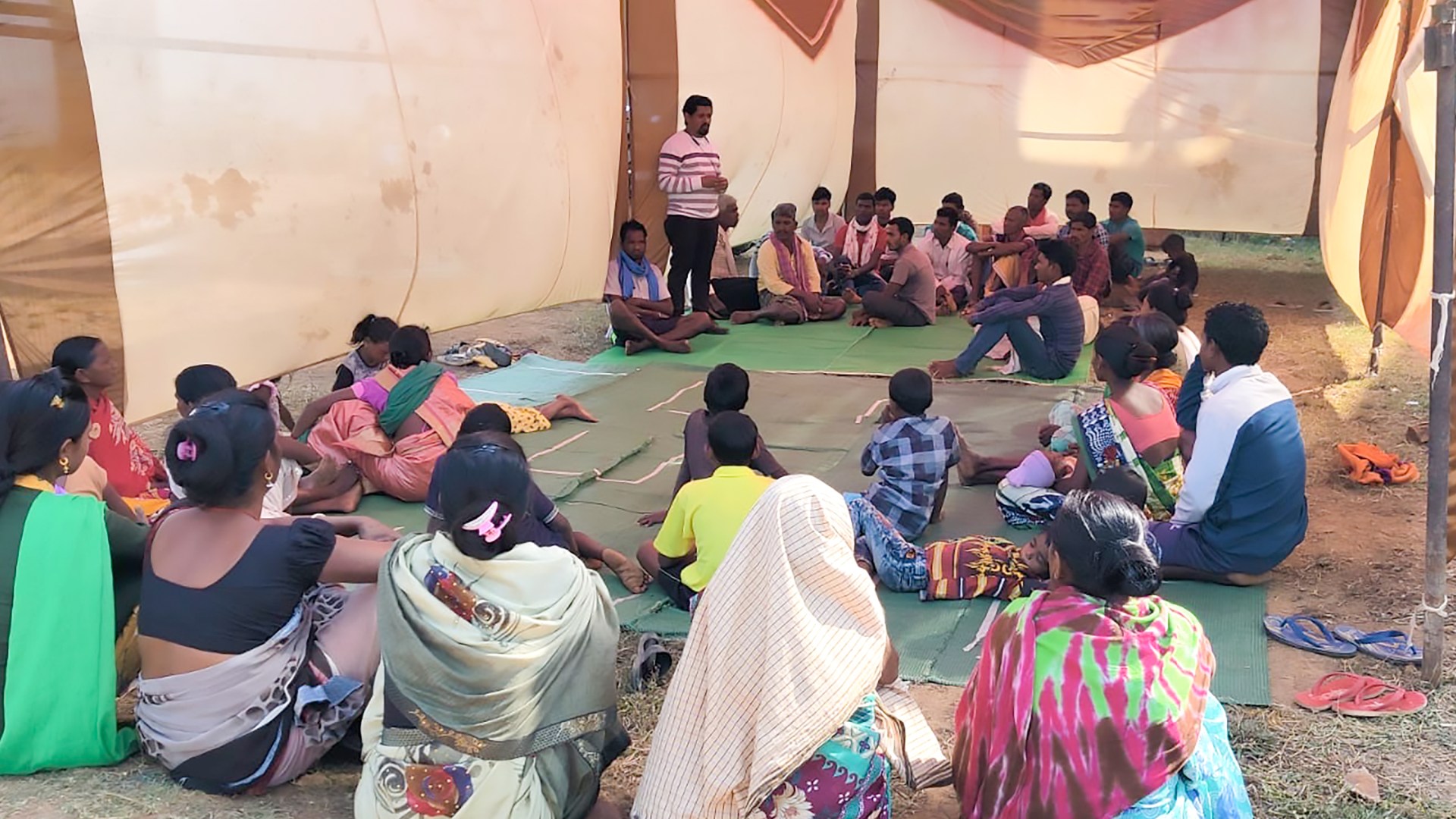
Tribal Christians from three villages shelter in the Chhattisgarh town of Kondagaon on December 21, 2022 after they were forced to leave their villages.

Tribal Christians from three villages shelter in the Chhattisgarh town of Kondagaon on December 21, 2022 after they were forced to leave their villages.

Christianity Today January 9, 2023
Courtesy of Salim Hakku

On New Year’s Day, a 500-person mob assembled in the village of Gorra, a small community in the central Indian state of Chhattisgarh, and summoned the town’s Christians. After about 15 people arrived, the Hindu extremist crowd attacked.

Aytu Ram Dhruw, a local Christian in his late 20s, heard the news from an injured friend who told him they needed immediate medical attention.

“About 20 of us quickly rushed to the village to carry them to the hospital and met the mob on our way while entering the village. The mob caught us and began to assault us,” Dhruw said.

While most of the young people outran the mob, Dhruw’s father Bahadur, along with three others, were tracked down.

“They beat my father and three others with sticks, legs, fists, bricks, and stones until they all fell unconscious,” Dhruw said.

While Dhruw and his friends managed to take the victims to the hospital, Dhruw had to release his father from the hospital the same night when two of the assailants identified him in the hospital and threatened to call the mob on them again.

“We did not return to our village since that day,” Dhurw said.

The attack on Gorra’s Christians is far from an isolated incident.

Weeks of coordinated attacks on tribal Christians in the central Indian state of Chhattisgarh have left nearly 1,500 people homeless and traumatized. Right-wing Hindu residents in the Bastar division of the state have chased Christians from their homes and vandalized and demolished their houses and churches, enraged that their neighbors have refused to reject their faith.

Thirty-four tribal Christians take refuge in a church in Kondagaon, Chhattisgarh on December 26, 2022.

“Accusing us of following a foreign religion, and leaving the tribal culture, they gave us a choice either to recant our faith or leave our homes and our village, never to return,” said Dhruw.

While India’s tribal communities have already faced centuries of discrimination and marginalization, Christian tribals suffer additional ostracization.

Nearly 400 incidents of violence against Christians have been documented by the Chhattisgarh Christian Forum (CCF) in the past three years. Even before the violence began to escalate in earnest starting, a 2021 report from the Religious Liberty Commission of Evangelical Fellowship of India (EFI) documented that Chhattisgarh already had the second highest number of persecution incidents of Christians after Uttar Pradesh, the country’s most populous state.

In Bastar, this aggression came to a head in November, when Hindu right-wing groups organized mahapanchayats (regional council meetings) and began ruling and passing measures designed to evict Christians from their communities. The councils banned Christians from worshiping within their own homes, prevented pastors from visiting Christian families in the village, and forbade local believers from carrying out their rituals like weddings or burying their dead in the village. They also restricted Christians from buying or selling goods and from working.

“These meetings were held in all the villages from time to time, and we [tribal Christians] were pressured to recant our faith,” said Dhruw. “We told them that we are on the ‘Correct Way,’ and we cannot leave this Way; our lives have changed. But they refused to listen, and then by November they began to assault Christians in various villages.”

In recent weeks, Christians have been called before their respective village councils and given the option of either recanting their faith or leaving the village.

“Some gave in to the pressure and renounced their Christian faith, while those who did not were assaulted and forced to leave the village immediately,” said Salim Hakku, who pastors in the Bastar district.

The timing of these expulsions has meant that those fleeing have had to contend with harsh cold weather. At times, they’ve had to beg the government for shelter, and Christian organizations have been the only parties to provide food, clothing, and basic necessities. And at the advice of the police, the Christian tribals also had to forgo Christmas and New Year’s gatherings.

“Several matters were reported to the police time and again. No action was taken by them, which has resulted in the series of attacks against the Christian community,” said CCF chairman Arun Pannalal in a press conference on January 4. “The police have not only neglected our complaints, but they have also encouraged the attackers and we have evidence of this.”

Though the anti-Christian violence is by and large projected as a reaction of non-Christian tribals against their Christian tribal neighbors, the authorities admit that the attacks seem to be orchestrated by outsiders. Locals blame prime minister Narendra Modi’s Bharatiya Janata Party (BJP) and the Rashtriya Swayamsevak Sangh (RSS), the Hindu extremist organization, for inciting the attacks. Two local BJP leaders have been arrested in connection with various incidents of violence against the Christian community.

“Although such acts are interpreted as isolated attacks, in reality they are orchestrated attempts to malign the Christian community. It is understood to be the continuation of a series of attacks against Christians in Chhattisgarh state in recent years,” said Asir Ebenezer, the general secretary of the National Council of Churches in India, in a statement. “The increase in violence against Christians all over India especially among the economically weaker sections of the society exposes the persecution meant to cleanse a particular religious community from all spaces.”

EFI hand delivered a letter to Bhupesh Baghel, the chief minister of Chhattisgarh, right before Christmas. After the meeting, Baghel tweeted that the government had taken action and that nobody was above the law.

But Christian leaders say that because the attacks continue, much more help is still desired.

“The government must demonstrate the political will to protect the state’s social fabric and intervene to end violence against Christian tribals in Bastar,” said Pannalal.

Throughout this wave of violence, Christians have reported several incidents of forcible conversions in Chhattisgarh. In December, for instance, Hindu extremists threw the Bibles of nearly two dozen Christians in the village of Madamnar down the drain and performed Hindu purification rituals on community members, one Christian leader reported.

The Hindu right describes this process of mass conversions by Hindu right-wing nationalists of Muslims, Christians, Buddhists, or other faiths to Hinduism as “homecoming,” or

ghar wapsi

in Hindi. Hindutva (right-wing Hindu political ideology) maintains that Indians or their ancestors were all originally Hindus, hence, coming back to the fold of Hinduism is not conversion but a “homecoming” or returning back to their ancestral faith.

The community known as the Tribals or Adivasi [literally, first inhabitants] are not Hindu. But over the years, right-wing nationalists have been strategically infiltrating the tribal communities with two broad goals. First, they are attempting to Hinduize the tribals through a syncretic approach to tribal religious practices and convincing them that they are Hindus to begin with. Second, they are seeking to work against Christian tribals and Christian missions in tribal communities by provoking non-Christian tribals against them.

Right-wing Hindu nationalists have told tribals that if they wish to save their tribal culture from Christian and foreign influence, they must not allow Chrisitanity in their communities and must convert Christian converts to Hinduism.

Last week, Kalepal villagers disrupted the funeral ceremony of a tribal Christian woman and refused to let the family perform her last rites until they recanted their Christian faith and performed the rituals according to Hindu traditions. Despite the support of the entire tribal Christian community, the family recanted.

Their Hindu neighbors subsequently performed purification rituals on the family and the dead woman’s corpse and were proceeding with its cremation. (Hindus traditionally cremate their dead.)

Local pastor Samson Baghel has watched nine families in his community fall victim to

ghar wapsi

following physical, mental, and social torture and seen up close how radical Hindus implement their conversion strategy.

“They initially target the Christian family who has large extended or joint non-Christian family members. Then they begin to exert organized pressure from all the family members on one side and local villagers from the other,” he said. “If the Christian family still does not give in, they use techniques like physical assault, ostracization, infringe their property, house or land and if that too does not work; they use opportunities like death of a loved one to leave the family with no option but to give in.”

News

Church Attendance Dropped Among Young People, Singles, Liberals

Overall, most churchgoers—including most white evangelicals—returned to the pews after the pandemic, survey finds.

Christianity Today January 9, 2023
Haley Rivera / Unsplash

Despite the short-term upheaval COVID-19 caused among American churches, the pandemic’s long-term effect on worship attendance patterns was minimal, according to a study released Thursday by researchers at the American Enterprise Institute (AEI) and the University of Chicago. The biggest exception to that trend occurred among young adults, whose church attendance took a major hit.

“Rather than completely upending established patterns, the pandemic accelerated ongoing trends in religious change,” wrote study authors Lindsay Witt-Swanson, Jennifer Benz, and Daniel Cox.

“Young people, those who are single, and self-identified liberals ceased attending religious services at all at much higher rates than other Americans did. Even before the pandemic, these groups were experiencing the most dramatic declines in religious membership, practice, and identity.”

Two-thirds (68%) of Americans reported the same level of church attendance both before and after the COVID-19 pandemic. Yet pandemic-accelerated declines among some groups left US church attendance down overall.

Before the pandemic, 75 percent of Americans reported attending religious services at least monthly. By spring 2022, that figure dropped to 68 percent attending at least monthly.

Those findings were drawn from the 2022 American Religious Benchmark Survey, which polled 9,425 Americans by phone and online between February and April 2022. To help researchers focus on pandemic-driven changes, the study included only individuals who had registered their religious affiliations and church attendance patterns in a previous survey between 2018 and March 2020.

Young adults (ages 18–29) reported the greatest change in religious attendance following the pandemic. Forty-two percent registered different levels of church attendance than they had previously. Just 35 percent of Americans ages 30–49 reported changed attendance, as did 28 percent among those ages 50–64 and 25 percent among those 65 and older.

Over the pandemic, Americans across all age groups were more apt to attend less frequently than to attend more frequently. Thirty percent of young adults dropped attendance after the pandemic, compared with 12 percent who upped it.

Twenty-four percent of Americans 30–49 decreased their attendance, while 11 percent increased it. Among adults 50–64, 19 percent decreased while 9 percent increased. The decrease and increase among Americans 65 and older were 16 percent and 9 percent, respectively.

COVID-19 may not have been the only factor driving young adults away from church. According to a Gallup poll released in December, American religion already was trending in that direction. More than a third of Americans surveyed said they have stopped attending religious services regularly in their lifetimes.

Thirty-one percent said they attend services weekly or nearly weekly now, but 67 percent reported attending with that frequency when there were growing up. Those findings are consistent with prior Gallup research “documenting steep declines in US religiosity in recent decades,” the polling organization stated.

The latest American Religious Benchmark Survey dovetailed with previous research at many points, but the pandemic’s unique impact on the young appeared to be a departure from some previous findings. CT reported in January 2022 that older and younger Americans both were more likely than middle-aged Americans to have experienced attendance drops during the pandemic.

Now senior adults apparently have come back to church even though their younger counterparts have not. According to the new survey, fewer Americans ages 65 and older changed their pre-COVID-19 church attendance patterns than any other group.

Single adults and self-identified liberals decreased their church attendance significantly as well. Before the pandemic, 30 percent of adults who had never married said they never attended religious services. That jumped to 44 percent by spring 2022. Among married adults, the percentage jumped from 22 percent to 28 percent.

While 31 percent of liberals never attended church before the pandemic, 46 percent said they didn’t attend in spring 2022. That compares with 14 percent of conservatives before the pandemic and 20 percent after.

Attendance declines following COVID-19 affected some religious groups more than others. Mormons, white evangelicals, and white Catholics experienced relatively stable worship attendance, with more than 70 percent of each group (including 80 percent of Mormons) reporting no change in their frequency of worship attendance following the pandemic.

The rate was lower among Black Protestants and Hispanic Catholics. Just 61 percent from each of those groups reported the same level of religious attendance before and after the pandemic.

Across all groups, nominal religious adherents were more affected by the pandemic than their highly committed counterparts. Before COVID-19, 26 percent of Americans said they attended religious services at least once per week. That figure dropped just two percentage points to 24 percent by spring 2022. In contrast, the number of Americans who reported never attending religious services increased eight percentage points over the same time period (25% to 33%).

“At least in terms of religious attendance, the pandemic appears to have pushed out those who had maintained the weakest commitments to regular attendance,” the study’s authors wrote.

While church attendance patterns changed over the course of the pandemic, religious affiliations remained stable. The percentage of Americans identifying as religiously unaffiliated (25%) was identical before and after the pandemic, as were the percentages identifying as white evangelical Christians (14%), white Catholics (10%), Black Protestants (9%), and Jewish (1%). A few affiliations declined by one percentage point during the pandemic: white mainline Christians (17% vs. 16%), Hispanic Catholics (6% vs. 5%), and Mormons (2% vs. 1%).

That’s hopeful news, says Cox, AEI’s senior fellow in polling and public opinion. It means religious groups have an opportunity to reconnect with people who continue to identify with a religious tradition despite their lack of participation. “These are the people who haven’t completely separated,” Cox told Religion News Service.

But reaching them will require being “hyper-intentional” about inviting the uninvolved to attend and serve, said Scott Thumma, director of the Hartford Institute for Religion Research at Hartford International University.

“What happened in the pandemic is that all of us were huddling in the basement, while a tornado was going over our heads,” he told RNS. “Now everyone has come out of the basement and everything is completely different. Now we have to be intentionally creative.”

David Roach is a freelance reporter for CT and pastor of Shiloh Baptist Church in Saraland, Alabama.

News

Christmas Epiphanies from the Ruins of Ukraine

As Putin professes a ceasefire over the Orthodox holiday and a famous Kyiv monastery cathedral changes hands, evangelical seminarians relate the toll of ten months of war.

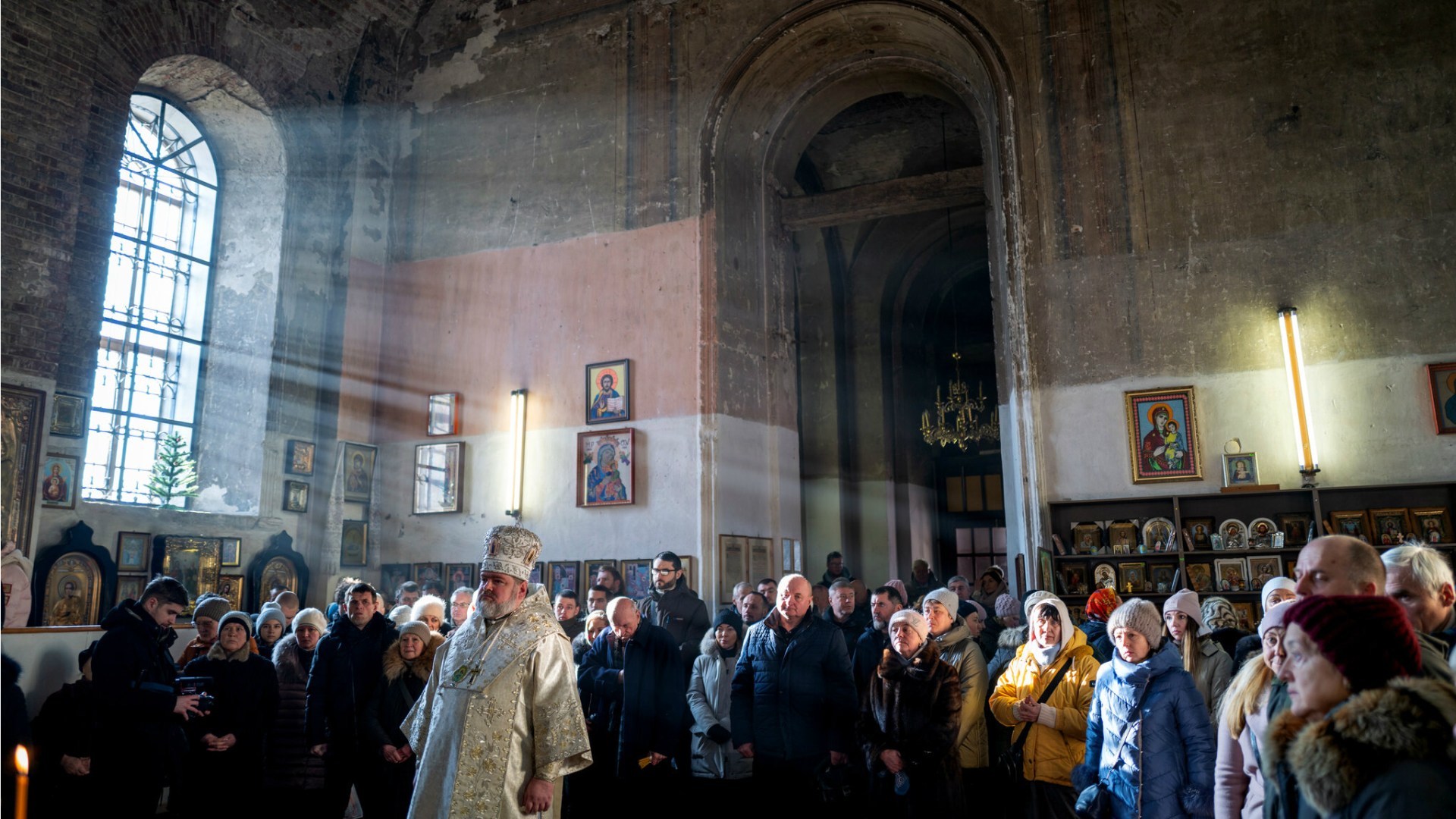
Worshipers attend a Christmas service at John the Theologian Orthodox Church on January 7, 2023 in Kharkiv, Ukraine.

Worshipers attend a Christmas service at John the Theologian Orthodox Church on January 7, 2023 in Kharkiv, Ukraine.

Christianity Today January 7, 2023
Spencer Platt / Getty Images

In advance of Putin’s unilateral declaration of a 36-hour truce over Orthodox Christmas today, Ukrainian seminary leaders shared their reflections on the impact of ten months of unabated conflict.

“War is exhausting—but this exhaustion does not happen overnight,” wrote Roman Soloviy, director of the Eastern European Institute of Theology. “Nevertheless, our mission continues.”

Reviewing his own emotional response since Russia invaded Ukraine on February 24, Soloviy cited the impossible choices forced upon his nation: Save your family or your neighbors? Flee the country or stay and help?

He could not read, listen to music, or watch movies for many months.

The stress only surged as reports proliferated about atrocities, complicated by the frustration that Ukrainian churches could not help everyone. Decisions needed to be made in darkness, while seeking to balance one’s own psychological health.

A Kherson seminary, Tavriski Christian Institute (TCI), was occupied by Russian forces in March and liberated in November. President Valentin Siniy recounted the grim chronology:

January: Talks about the war. Doubts about invasion.
February: Team. Responsibility. Daily Zoom calls to pray.
March: Massacre. Inhumanity. Generosity: flour, sugar, potatoes, seeds.
April–May: Russians want to reconcile, without repentance. Families separated.
June–July: Marriages. Fragility of life. Losses. Divorces.
August: TCI shelled. Books trashed. Valuables looted. Vandalism.
September: New location. Big enrollment.
October: Infrastructure destroyed. Nation freezing. Unity. Mutual assistance.
November: Liberation. Joy. First trip home. Ruined city.

For his December entry, Siniy wrote: “Christmas is the coming of God into a mean world to mean people. We pray that the Lord will show us how and where to serve.”

Oleksandr Geychenko, meanwhile, chose a different theme for the holiday. Yet it fit perfectly with Siniy’s October observations.

“This year’s Christmas for me is closely associated with the metaphor of light,” wrote the president of Odessa Theological Seminary. “Perhaps, this is my reaction to the uncertain power supply.”

Patriarch Kirill of the Russian Orthodox Church (ROC) first suggested the holiday truce, while 1,000 US-based faith leaders called for Ukraine to honor it. Nonetheless there has been exchange of shelling along the front lines, and many Ukrainians dismissed Putin’s initiative as a cynical ploy to buy time for his retreating troops. (Foreign analysts instead saw a PR bid for Russian Christian backing.)

But despite the battlefield losses, last month Russia specifically targeted Ukraine’s electrical grid, repeatedly plunging cities and civilians into darkness and cold.

Geychenko had taken his electricity for granted. Now, he sees a spiritual connection.

“The light that comes from Jesus not only shines into human darkness,” he wrote, “it also illuminates our hearts and faces, making us the bearers of light in the deep and darkest abyss of human suffering and tragedy.”

Their statements were released by Voices from the Ukrainian Ruins, representing a collaborative network of 17 evangelical institutions. Leaders stated that in the past year their 200 volunteers provided long-term accommodation for over 4,000 internally displaced people, evacuated over 10,000 others, ministered to over 40,000 in transit, and distributed food to over 300,000.

Helga Dyatlik expressed her appreciation for support from the global body of Christ.

“You helped us endure because you were in constant conversation with us,” wrote the associate regional director for Eastern Europe and Central Asia for Overseas Council. “You helped us see God because you were praying instead of us. Thank you for standing with us. We know that it also costs you.”

Meanwhile, Ukraine as a nation sought God through the scriptures. According to YouVersion, Bible engagement rose by 55 percent since the beginning of the war. And queries by refugees spiked Ukrainian-language searches in Europe by 76 percent.

Their chief Bible verse of refuge was Isaiah 41:10: So do not fear, for I am with you; do not be dismayed, for I am your God. I will strengthen you and help you; I will uphold you with my righteous right hand.

The word fear was among the top search terms on the popular Bible app in 2022. Eventually, it was replaced by love.

Remarkably, in their journey of reflection, not one contributor among the Ukrainian theological educators spoke of being afraid. On the contrary, their reliance on God’s strength helped uphold others.

“Working in a complex region torn by politics and warfare and trying hard to be faithful to the Mission of God, you become a bridge person,” wrote Taras Dyatlik, regional director for Overseas Council and Helga’s brother. “These are the bridges of trust, care, understanding, and love, despite the heavy traffic.”

Nonetheless, the weight is heavy.

“People-bridges are usually very vulnerable,” he continued, mixing metaphors in reference to a play by Spanish poet Alejandro Casona that he once witnessed in Donetsk. “They are the trees that die while standing.”

The work of supporting others and connecting worlds arouses jealousy, suffers criticism, and often carries on in neglected anonymity. A bridge is easily destroyed, he noted, while a tree—though outwardly strong—cannot share its burden.

“It is not about being burned out,” Dyatlik wrote, before turning to a different passage from Isaiah. “But Christ will not break a broken reed.”

Rightly or wrongly, one bridge—one tree of former strength—is being broken.

Amid accusations of collaboration with Russia, the Ukrainian Orthodox Church (UOC) lost possession of the main cathedral in the historic 1,000-year-old Kyiv-Pechersk Lavra, known as the Monastery of the Caves. Though the UOC has denounced the war and stopped honoring ROC leadership in its liturgy, the church remains in canonical affiliation with the Moscow Patriarchate.

Its lease of the Lavra complex expired on December 31. The breakaway and rival Orthodox Church of Ukraine (OCU), granted autocephaly (independence) by Ecumenical Patriarch Bartholomew I of Constantinople two years ago on Orthodox Christmas Eve, was granted authority by Ukraine’s ministry of culture to conduct Christmas services at the Dormition Cathedral.

The decision appears to be popular.

According to a recent survey, 78 percent of Ukrainians at least somewhat favor President Volodymyr Zelensky’s decision to impose sanctions on the UOC, with 54 percent agreeing the church should be banned entirely. Only 12 percent said that only individual cases of collaboration should be investigated.

Yet other studies have found that the UOC remains larger than the OCU in terms of monks, priests, and parishes, while its members are more faithful in attending service and church activity.

A UOC statement revealed that seven of its clergy have been killed in the war, 75 churches have been destroyed, and a further 300 have been damaged by shelling. Another statement tallied the UOC’s contribution of 180 tons of aid given to the Ukrainian armed forces, 3,500 tons given to the victims of military operations, and over 50,000 people who received church assistance in housing and evacuation.

Meanwhile, an anonymous group of Russian Christians is seeking to be a bridge in the other direction. Issuing a “Christmas Declaration of Russian Peacemakers,” they claim to represent leaders and laypeople in the Orthodox, Protestant, and Catholic denominations, though Russian sources queried by CT did not know of the statement or its authors.

“Taking into consideration all the risks involved,” read the statement, addressing Russian Christians, “we urge you to condemn this evil and call for the immediate withdrawal of Russia’s troops from Ukraine and for the end to this war.”

For the first time in late December, Putin invoked the term war in reference to the conflict. He had previously called it a “special military operation” instead, and in March the Russian parliament imposed fines and prison terms for using alternate language.

“We know how it hurts when Russian missiles hit your campus, your apartment is destroyed or looted, or when you must lead a funeral for your graduates,” wrote Ivan Rusyn, president of Ukrainian Evangelical Theological Seminary. “Russian rockets fly over our heads during this Christmas season, but we have no fear because we know [God] is with us.”

Located in Bucha, a suburb of Kyiv, Rusyn witnessed the worst of these atrocities. Russian soldiers looted homes and executed civilians, piling them in mass graves. Once liberated, the seminary continued its role of helping and healing its community.

His message reflected lessons learned from the miracle of Christmas.

“Mission is only possible with the incarnation, with honest and involved presence with people,” wrote Rusyn. “Compassion for us is to suffer together, having the same tears and scars our society has.”

And amid a war that many Ukrainians interpret as Russia’s effort to cancel their whole nation, strength ultimately comes from the incarnation of Jesus. So surmise the seminary voices “from the ruins.”

“He did not cancel suffering; he came to suffer with us,” Rusyn wrote. “He did not cancel death; he defied it.”

Theology

How to Read Yourself Into Genesis

You’re part of the story of this dysfunctional family. And that’s a good thing!

Christianity Today January 6, 2023
Illustration by Mallory Rentsch / Source Images: WikiMedia Commons / Unsplash

This is the first of a short “Genesis January” series helping people explore the complexity of the Bible at the start of a new year.

My wife’s college roommate would sometimes tell people, “I’m a descendant of George Washington!” It was an interesting way to start a conversation at a party, but more than that, I think, she was claiming a connection to the founding father as a way of writing herself into the history of America. Her story was America’s story, through this somewhat dubious lineage.

We do something similar when we read Genesis. The best way to read the first book of the Bible, with its sprawling story of a dysfunctional family, is to read ourselves into the text. We need to find ways to find ourselves as part of the narrative.

It is natural for most of us to feel a strangeness, reading Genesis, because we come to this story as outsiders who have been invited in. We are, as the apostle Paul said, grafted in through Jesus (Rom. 11:17–24). We have been adopted into this narrative about God’s family, and become children of Abraham, so that “in you all the families of the earth shall be blessed” (Gen. 12:3, ESV).

If you’re reading it for the first time, or the first time in a while, you’ll see pretty quickly that the story of Abraham is a story of profound family dysfunction. We find our place in the narrative easily, because that family is so fractured. But then it is also the story about a promise of restoration—a story where we can be re-storied, re-narrated, restored. That’s the power and promise of Genesis.

But as we read, we really have to prepare for the dysfunction. Consider perhaps the most upsetting bit of parenting in Genesis: when Abraham attempts to sacrifice his son Isaac. If the parent of one of your child ’s friends confided in you, “God is telling me to kill my child,” you would hopefully dial 911. So what then are we to make of God ’s command that Abraham sacrifice his son? What kind of God would make this request? What kind of parent would agree? The text offers only a meager explanation: “After these things God tested Abraham” (Gen. 22:1, ESV, emphasis added). What things?

Decades earlier, immediately following the Lord’s calling, Abraham had found himself sojourning in Egypt. Fearing that the Egyptians would kill him to take his beautiful wife, Abraham passes off Sarah as his sister.

Pharaoh, who is known for taking what he likes, predictably takes Sarah into his house. Abraham is showered with gifts, but then Pharaoh is afflicted with plagues. So much for God ’s promise to make Abraham a blessing to all the families of the earth.

We might hope this early episode is a teachable moment for Abraham. He could learn to trust God and not make up weird lies about his wife being his sister. But then, several chapters later, he’s just as fecklessly trying to deceive another authority in the same way. He tells King Abimelech of Gerar that Sarah is his sister.

And lest we think this is just an Abraham problem, Genesis informs us that Abraham ’s son Isaac does the same thing. This weird bit of familial dysfunction happens three times in two marriages in the first book of the Bible!

This threefold repetition is an invitation to pause and ponder. Can we find ourselves in this odd repetition in the text? How do we repeatedly take matters into our own hands when fear leads us to doubt God ’s promise?

The whole she’s my sister business isn’t the only thing that might prompt God to test Abraham. Another one of “these things” may have been the episode when Abraham consented to Sarah’s plan to speed the promise along and get a child by impregnating a woman they have enslaved, Hagar. The text leaves little room to doubt that this was a terrible idea that leads to conflict and turmoil instead of the promised blessing.

Eventually, God must spell things out, informing the elderly couple that the promise will be fulfilled by the child they will have together. Both respond with incredulous laughter. They are now in their 90s! It’s one thing to believe God’s promises when they lie within the realm of possibility. But it’s another when the promises are simply ridiculous. And in this family, whether the promises are believable or not, they like to have a plan B ready just in case, an alternative way to take things into their own hands.

The question for us, reading this story, is whether we can relate. Disbelief. Cowardice. Plotting. Does this sound like us? Does this dysfunction sound familiar?

If it does, then we are prepared to see that God’s redemption of Abraham and Sarah can be our redemption too. Like them, we can see that we’ve had some “these things,” where we turned to our plan B instead of trusting God.

But the God of Genesis, importantly, is the kind of God who doesn’t just give up on the dysfunctional human family. Instead, there is this test of Abraham’s loyalty on Mount Moriah. Will Abraham trust in God’s promise even if the only tangible proof of its fulfillment—his only son Isaac—should die? Or will he resort once again to plan B?

The story of Abraham and Sarah invites us to see ourselves and connect ourselves to the hope of a promise beyond the wreckage of our bad decisions, our failures to trust God, and the families that we’ve messed up. We get to be children of Abraham.

Of course, the story of the immediate children of Abraham, and those children’s children, alerts us to the fact that our dysfunction is still an issue. By the time Abraham ’s great-grandson Joseph is a teenager, the relational dynamic within this family has—if possible—gotten worse.

Joseph’s older brothers conspire to murder him but settle instead upon a hasty plan to sell him into slavery in Egypt. The fallout from this betrayal shapes the final narrative arc of Genesis. After nearly 15 years, Joseph and his brothers are reunited. By this point, Joseph has risen to prominence as Pharaoh’s viceroy, before whom his brothers appear in a desperate attempt to buy grain during a famine. Joseph recognizes his brothers instantly, but plays the stranger. For the next several chapters, Joseph engineers an elaborate game of cat-and-mouse, accusing his brothers of spying, twice planting stolen goods in their packs, imprisoning his brother Simeon, and threatening to imprison his younger brother Benjamin.

In the end, Joseph reveals himself, embracing his traitorous brothers in tears. Why all this subterfuge? Did Joseph intend to confront his brothers with their guilt to prepare the way for reconciliation? Or was the goal of his drama all along simply revenge? When reconciliation bounds onto the stage at the climax of the narrative, is Joseph just as surprised as his brothers?

We are not told, but one thing is clear: Forgiveness in the face of such crushing betrayal does not come easily. Joseph has been betrayed by those who should have loved and protected him. But we as readers can see that the crippling reality of this betrayal takes its place within the more capacious reality of God ’s gracious provision.

As Joseph explains to his brothers in the final pages: “Even though you intended to do harm to me, God intended it for good, in order to preserve a numerous people, as he is doing today” (50:20). Joseph’s individual story, in this way, is renarrated as the larger story of God’s good work.

The question for us, then, is how to invite God to renarrate the stories of our own family dysfunction. The beginning chapters of Genesis offer us two practical truths to assist us in this task.

While we may feel, as Leo Tolstoy once observed, that our family dysfunction makes us unique, Genesis invites us to see how the pain and brokenness of the story we ’ve been born into can be part of a larger narrative of fulfilled promises.

We may be convinced that we are damaged goods, part of a damaged family, broken beyond restoration, but Genesis 1 reminds us that our story does not begin with our birth. Rather, we have been written into a story that begins this way: “God saw all that he had made, and it was very good” (1:31, NIV) God speaks goodness into being, and you and I are part of that goodness.

The first practical truth is this: We are not defined by our dysfunction. We bear the image of the God of boundless power and love. Our story begins not in sin but in goodness. It is not enough simply to know this truth; we must daily remember it. This daily act of remembering will be helped if we begin our day in stillness and quiet, in prayer and worship, and in gratitude.

When we turn to Genesis 2, we see that the God who speaks creation into being is also the God who kneels down and gets his hands dirty. We are creatures fashioned by God’s own hands, humans made from humus (in Hebrew, adam from adamah). Having breathed his own breath into this mud creature, God proceeds to work with the human to solve—together—one of the most basic of human problems: loneliness.

We observe that the first try doesn’t quite get it right: Having named all the animals as God has instructed, the man still has not found a partner. No matter; God tries a new strategy, bringing forth from the man himself a “corresponding strength” (in Hebrew, ezer kenegdo). “At last,” the man cries, “bone of my bones and flesh of my flesh … Woman” (2:23).

The second practical truth, then, is this: No matter the problem we find ourselves in, God is prepared to get down on his knees beside us. No matter how messy our families are (or how profoundly they have messed us up), God is prepared to get his hands dirty in the mess and muck of our lives. We must hold these truths together. God is the one who speaks goodness into being. And God is the one, when we fail or when life fails us, who is right there beside us, working with us to make us whole.

And God’s way of making us whole, of restoring us, is to re-story us, to renarrate our stories by enfolding them in his own story, a strange and wonderful story stretching from the goodness of creation to the resplendent glory of the new creation.

Strange as it is, Genesis is our story, for it addresses questions of fundamental human importance. In it we learn that we are creatures made in God ’s image, filled with God’s breath, called to faithfully represent God’s loving rule on earth. We learn of our fateful choice to listen to the cunning serpent, becoming cunning as a result and hiding from God in our shame. We learn of the disastrous results of our choice that persist even still: death, chaos, and confusion. But above all we learn of God’s plan to set things right, a plan to turn curse into blessing, a plan that we also have been called to join.

Julien C. H. Smith is an associate professor of humanities and theology at Valparaiso University. He has authored Christ the Ideal King: Cultural Context, Rhetorical Strategy and Paul and The Good Life: Transformation and Citizenship in the Commonwealth of God.

News

For Norwegians So Loved the Bible, a New Translation Made Many Mad

Revision of John 3:16, John 1:14, Romans 1:1, and other texts prompt controversy in the largely secular Scandinavian country.

Christianity Today January 5, 2023
Chris Jackson / Getty Images

In a country where only 2 percent of the population regularly attend church, one doesn’t expect to find a national debate about the correct translation of John 3:16. And yet, across Norway, news that a forthcoming Bible translation will replace gå fortapt (get lost) with gå til grunne (perish) has roused strong feelings.

“Why change something that is completely understandable?” said one woman in Alta, a town on a fjord on the northern coast.

“Such judgment day and sulphur speeches do not belong in a modern, inclusive church—at least not during funerals,” said an Oslo woman on Facebook. “It adds stones to the burden for relatives.”

But the editors of the forthcoming Bible—commissioned by the Norwegian Bible Society and scheduled for publication in 2024—say they are not surprised. Receiving criticism is part of the process.

“It’s always a controversial thing to translate the Bible,” said Jorunn Økland, a biblical and gender studies scholar on the editorial team. “Whatever you do, it’s going to be controversial.”

The Bible was first translated into Norwegian in the 13th century, when it was published in parallel editions with the then-more-dominant Danish. The first full translation was not released until 1858. And yet, just as with English and German Bibles, the words of Scripture became part of the poetry of the language, a storehouse of images, widely seen as a cultural inheritance. Even those who identify as secular can feel protective of the words of the Bible.

“It still provides many of the symbols and metaphors that create meaning,” said Jenna Coughlin, a professor of Norwegian at St. Olaf College in Minnesota. “When new translations are published, the changes can feel disorienting … even if the theological dimensions aren’t so important.”

According to Coughlin, the Bible is, in some ways, “a public book” in Norway. Christianity, after all, is enshrined in the constitution. An amendment separated church and state in 2012, but the governing document stipulates that Christianity, along with humanism, is the foundation upon which the country is built.

And membership in the Church of Norway remains high. Roughly three out of four people are on the membership rolls, even though the majority are atheist or agnostic. The Bible remains an important “cultural touchstone,” Coughlin said.

Many Norwegians also really like the translation the Bible Society published in 2011. For that edition, biblical scholars and language experts teamed up with renowned authors, who are considered the finest “stylists of modern Norwegian,” including Karl Ove Knausgård, Hanne Ørstavik, and Jon Fosse. The translation became a bestseller the year after publication.

“Its stroke of genius was how it underscored that in a time of increasing secularization, the Bible isn’t out of touch with society,” Økland said. “People may not go to church, but they still consider the Bible their own.”

Despite its popularity, the translation also received criticism, especially from church leaders and scholars. In the past 10 years, editors have collected more than 800 critical comments to consider in a revision.

In 2021, the Norwegian Bible Society tasked a committee to start working on an updated edition. As they started to lay the groundwork for revisions, the editors calculated they would need six or seven years. The Bible Society said they had one.

One way to deal with the compressed timeline, according to Økland, was to forgo a formal consultation process. Instead, the editors published drafts of their work in the fall of 2022 and waited for people to react.

“We invite the reactions as part of the democratic process. It’s a wonderful thing about how we work in Norway,” Økland said.

They got the feedback they were looking for. Responses were swift and vociferous. While some of the readers of Norway’s two Christian newspapers—Dagen and Vårt Land—praised the revisions, many objected to specific choices in very strong terms.

Lutheran Church of Norway bishop Halvor Nordhaug, for example, said he did not like the new edition’s use of the word slave, as in Romans 1:1, which reads, “Paul, a slave of Christ.” That would be hard, he said, to read aloud in a church setting. The majority of Norwegians would recoil from the casual analogy between faith and the horrors of slavery.

Theologian Glenn Øystein Wehus, professor of New Testament at the MF Norwegian School of Theology, Religion and Society in Oslo, wrote about the translation of John 3:13 in Vårt Land. The get lost wording, he wrote, is clearer and more theologically appropriate. Perish on the other hand, “can lead the mind for many in a completely different direction, namely annihilation (that is, an extinction after death).”

Others objected to the gender-neutral address in some of the epistles, with “brothers and sisters” replacing “brothers.” There was also controversy over the word kjøtt (flesh) replacing menneske (human) in John 1:14.

Perhaps more seriously, some raised questions about the translation process, its transparency, and whether the editors and the Bible Society should have the authority that they claimed for themselves.

Torkild Masvie, bishop of the Lutheran Church in Norway, said the revisions would not be suitable for his small, confessional denomination. The traditionalist Lutherans currently use the 2011 Bible and a conservative 1988 translation known as the Norsk Bibel.

“The Bible Society does important work,” he said, “but if the end result is something that is not helpful for the congregations, then we have a problem.”

Masvie said church leaders should have been involved in the revision. He accused the Bible Society of keeping Norwegians in the dark.

“We should not give our allegiance to the Bible Society when it comes to our liturgy,” Masvie said. “We let them by default decide the language of our liturgy through the translations.”

Masvie’s relatively marginal voice is joined in this critique by some prominent religious leaders. Under the leadership of bishop Erik Varden, the Roman Catholic Church in Norway has grown from 95,000 people to more than 160,000 in just a few years. Vanden has also expressed frustration that neither he nor other Catholic leaders were consulted by the Bible Society.

“You have to listen to those who will use the Bible,” he said. “You can’t just go to the professional circles.”

Øyvind Haraldseid, general secretary of the Bible Society, said in a statement that the editors are listening and all the criticism is being taken into consideration. They will keep flesh in John 1:14, but are still discussing whether or not to use slave instead of servant and have decided to go back to the 2011 translation of John 3:16. The revision will retain the familiar language, that those who believe in God’s only Son will not “get lost.”

Haraldseid also conceded the Bible Society was not as transparent as it could have been in the process, and should have sought out input from more interested parties.

“We will … continue to provide information about the audit through various channels in the future,” he said. “Bible translation is often a struggle with the text to find the right words that communicate the content of the text in our time.”

addApple PodcastsDown ArrowDown ArrowDown Arrowarrow_left_altLeft ArrowLeft ArrowRight ArrowRight ArrowRight Arrowarrow_up_altUp ArrowUp ArrowAvailable at Amazoncaret-downCloseCloseellipseEmailEmailExpandExpandExternalExternalFacebookfacebook-squarefolderGiftGiftGooglegoogleGoogle KeephamburgerInstagraminstagram-squareLinkLinklinkedin-squareListenListenListenChristianity TodayCT Creative Studio Logologo_orgMegaphoneMenuMenupausePinterestPlayPlayPocketPodcastprintremoveRSSRSSSaveSavesaveSearchSearchsearchSpotifyStitcherTelegramTable of ContentsTable of Contentstwitter-squareWhatsAppXYouTubeYouTube