News

Matt Chandler Steps Aside After Inappropriate Online Relationship

Elders at The Village Church said Instagram direct messages “revealed something unhealthy.”

Christianity Today August 28, 2022
The Village Church / YouTube screengrab

The Village Church pastor Matt Chandler announced on Sunday that he had an inappropriate online relationship with a woman and is taking an indefinite leave of absence from preaching and teaching.

The relationship was not sexual or romantic, Chandler told his church, but the elders believed the frequent and familiar direct messages exchanged over Instagram were “unguarded and unwise” and “revealed something unhealthy in me.” Chandler said he agreed with their assessment and was grateful for the spiritual oversight.

“We cannot be a church where anyone is above the Scriptures and above the high heavenly call into Christ Jesus,” Chandler said. “The Word of God holds me to a certain standard. And I fell short.”

The Village Church is a large and influential Southern Baptist congregation in the Dallas-Fort Worth area. Chandler, 48, has been pastor since 2002 and president of the church-planting network Acts 29 since 2012, when he replaced Mark Driscoll, who was later deemed to be disqualified from leadership because of his personal character.

Chandler has said he and Acts 29 have learned over the years to better guard against narcissistic leaders, both by increased vetting before the pastors sent out to plant a church and by increasing accountability in ministry. In January, he told CT that pastors need to be “in the kind of community [where] they might be encouraged or challenged if you start getting red flags.”

For Chandler, the red flag came “several months ago” when a woman approached him in the foyer of The Village Church with concerns about how he was communicating with a friend of hers, Chandler said. He told the congregation he didn’t think he’d done anything wrong, and the DMing was not a secret. His wife knew. The woman’s husband knew. And yet the woman who approached Chandler did not think the online exchanges were appropriate.

Chandler, who has been critical of social media’s impact on pastors, has 134,000 followers on Instagram and posts a few times a month. His last post was a week ago. Chandler hasn’t posted on Twitter in over a year.

According to Chandler, he found the confrontation “disorienting” and immediately informed another senior pastor and an elder at the church. They reviewed the DMs and decided they were concerning.

The church said in an online statement that it also hired a law firm to review Chandler’s use of social media, including direct messages, as well as his phone texts and emails. The firm, which has not been named, concluded that Chandler violated the church’s social media use policy.

“It was that our conversations were unguarded and unwise. And because I don’t ever want there to be any secrets between us, the concerns were really about frequency and familiarity,” Chandler said. “We believe in brother-sister relationships here. And yet there was a frequency that moved past that and there was a familiarity that played itself out in coarse and foolish joking. It’s unbefitting to someone in my position.”

According to Acts 29, Chandler was also asked to step aside from his responsibilities for the church-planting network. Day-to-day operations will be run by the executive director, Brian Howard.

Chandler grew emotional as he addressed the church on Sunday and paused to fight back tears. At one point someone in the congregation shouted, “We love you.”

“If I’m honest I’m just really embarrassed,” Chandler said. “Feel stupid. Feel dumb. Feel like I’m embarrassing my wife and kids. Putting a ton of pressure on our staff.”

He reiterated his agreement with the decision to place him on leave and thanked the elders for taking the allegations seriously. It would have been very easy for them to look the other way, Chandler said, and that would have been a betrayal of the core commitments of The Village Church.

Lead pastor Josh Patterson stood behind Chandler as he spoke and preached the morning’s sermon after Chandler left the stage. He told the congregation that “this has been a weighty thing.” He also said the public discipline of a lead pastor is an example of the mission of The Village Church.

“This has been and will remain a place where it is okay to not be okay,” Patterson said. “And the follow up to that is, we just don’t want to stay there. It is okay to not be okay. We just don’t want to stay there.”

Patterson thanked the woman who confronted Chandler for her courage and conviction.

This story has been updated with information about an independent investigation and Chandler’s leave from Acts 29.
Ideas

Christians Shouldn’t Kill Christians—Even on Death Row

There are lots of reasons to oppose capital punishment. Among them: When a prisoner is a fellow believer.

Christianity Today August 26, 2022
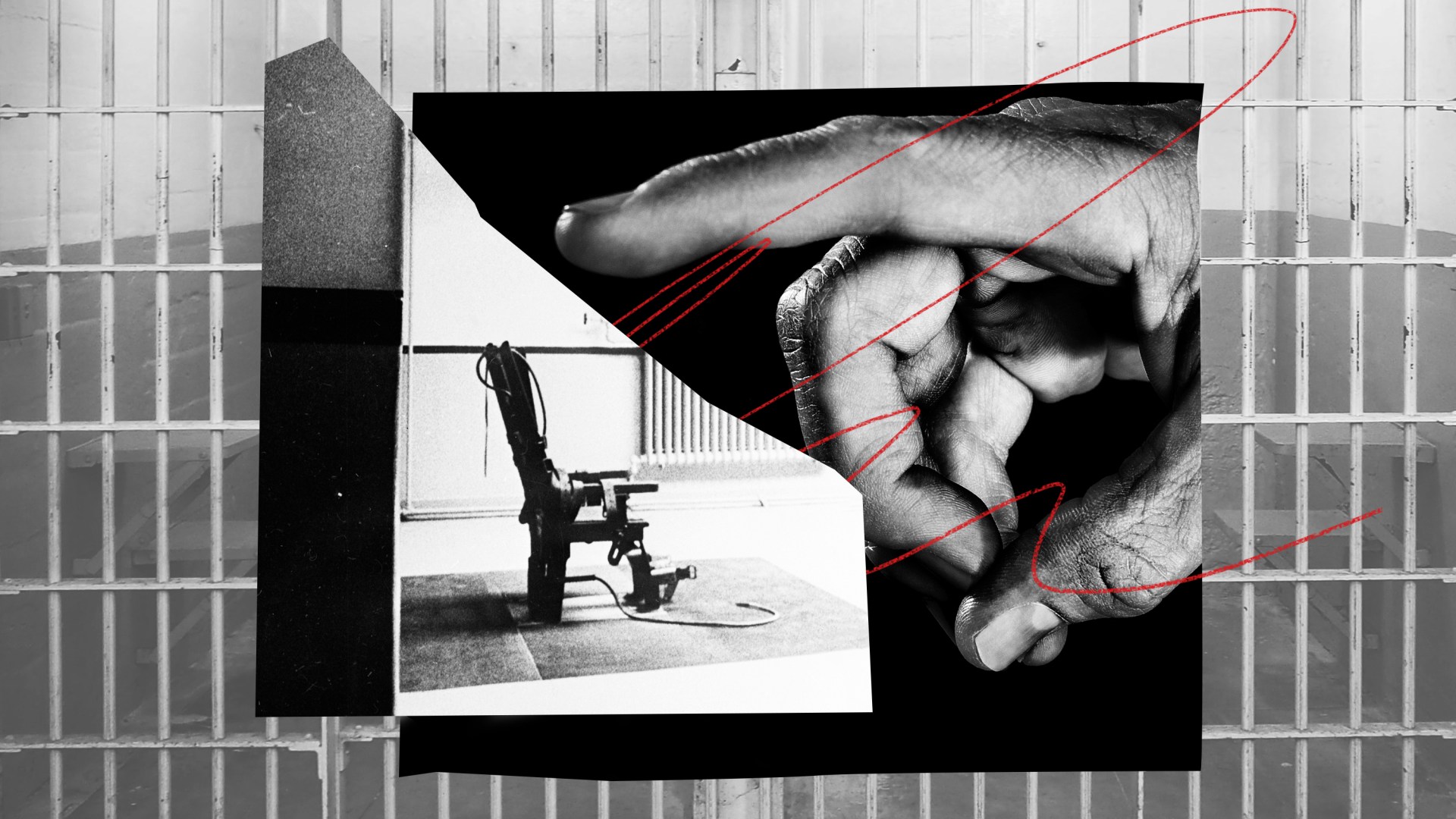
Illustration by Mallory Rentsch / Source Images: Getty / Unsplash

[This article was updated on May 14 2024 to reflect the rescheduled date of Gonzales’ execution (June 26, 2024).]

Recent statistics show that the vast majority of 2023’s executions have or will take place in the Bible Belt, a fact in keeping with broader historical trends. White evangelicals are the strongest supporters of capital punishment in the United States, often drawing on biblical concepts like “an eye for an eye” to justify their position.

In fact, those carrying out the executions sometimes understand themselves as doing God’s work and draw on Christian ideas accordingly. One former prison warden (now the head of Mississippi’s’ corrections system) has regularly spoken of his ministry in offering to pray with prisoners while overseeing their lethal injections.

But as the recent death penalty case of Ramiro Gonzales reminds us, some men and women on death row embrace faith in Christ during their time in prison. More broadly, there are thousands of Christian believers behind bars—many of whom bear the brunt of punitive policies and sentiments that are promoted, in no small part, by some of their fellow American Christians.

And so, while some Christians may see prison primarily as a place where unregenerate souls need saving alongside their harsh punishment, my encounters with incarcerated people have ultimately challenged that perception.

A few years ago, I began volunteering for a North Carolina prison ministry and saw firsthand how God is at work in our nation’s prisons. In fact, the longer I served, the more I realized how much of the incarcerated population already includes our fellow brothers and sisters in Christ.

Such men and women should be seen not solely as those in need of our ministry focus but as ministers themselves—doing gospel work and offering examples of faithfulness that Christians on the outside can learn from. Their presence is, to use theologian Jason Sexton’s phrase, the ecclesia incarcerate—the church’s tangible existence in a space of confinement.

My work in prison ministry has forced me to acknowledge the theological implications of Christian fellowship across the bars—especially when it comes to the issue of capital punishment.

To put it bluntly, I believe we should oppose the death penalty because it involves the retributive killing of our siblings in Christ. This argument, while not new, is often overlooked.

When I was in divinity school, my ethics professor Stanley Hauerwas had a poster on his door that read, in bold letters, A modest proposal for peace: Let the Christians of the world agree that they will not kill each other.

I soon came to realize that this poster’s modest proposal for peace rings true—not only for situations of war and international conflict but also when it comes to the death penalty. To crib the poster’s phrasing, I believe we the Christians of America should agree not to kill each other, even in the context of our criminal justice system.

There are many other worthy reasons to oppose capital punishment, and Christians should certainly be concerned about the inherent racial and socioeconomic disparities and the problem of wrongful convictions. But there is also a long tradition of Christian thinking about criminal justice that is grounded in the recognition of God’s redemptive work of grace in the lives of all people—even those who have committed violent crimes.

As theologian Roger Olson puts it, to take a life unnecessarily through capital punishment is to “usurp God’s prerogative,” for “every individual human being might be someone chosen by God for his salvation and for his service.”

Take, for example, the case of Kelly Gissendaner, who was convicted of helping plan the murder of her husband and was sentenced to death in Georgia in 1997.

There was no doubt that she was guilty. And yet, during her time in prison, Gissendaner showcased responsibility for her actions and embraced the vocation of Christian ministry. She earned a theology degree and became both a trusted resource for those incarcerated with her and an inspiration to numerous Christians on the outside (including theologian Jürgen Moltmann, with whom she regularly corresponded).

Christians inside and outside the prison testified of the power of her ministry and the work of the Holy Spirit in her life. And yet she was still executed in 2015, after her petition for mercy was rejected by a Board of Pardons and Paroles—all self-identified Christians—who insisted in explicitly biblical terms that her life deserved to end.

As theologian Jennifer McBride has written, “Kelly’s story illustrates that the death penalty amounts to a wastefulness of life, a mechanism through which society discards the good creation God made and continues to remake.”

More recently, I was struck by the case of Gonzales, on death row for kidnapping, rape, and murder in Texas. Gonzales has taken responsibility for his crimes, embraced a life of faith and prayer, earned a Bible college degree, and been widely praised for his generous spirit.

Gonzales’ 2022 execution date was halted at the 11th hour, amid calls from a diverse group—including correctional officers, Christian leaders, and the State’s own psychological expert—that Gonzales’s life should be spared.

Since then, Gonzales has lived even more fully into his Christian vocation, including being chosen as a coordinator of the prison’s new faith-based program. In this role, he ministers to others, and his sermons are read aloud on the prison radio. As Gonzales’ spiritual adviser put it, “Ramiro makes peoples’ lives better.” Yet the state of Texas rescheduled his execution date for June 26, 2024, and his life of prison ministry and service may soon be cut short.

I expect that this “modest proposal” will frustrate at least two camps of believers.

First, pro–death penalty Christians will contend this perspective confuses Jerusalem with Athens, overlooking God’s ordination of the governing authorities and the punishing sword itself in Romans 13 (although other faithful readings of this and other texts come to different conclusions on capital punishment). This is an important objection, one that should push Christians to think about our obligations to the earthly cities beyond our own churchyards.

And yet, as Christians, our identity is fundamentally grounded in the person of Jesus Christ. We learn how to work out the political implications of this identity in fellowship with other Christians in the church. Politics or “real life” is not somewhere beyond the church. Instead, the church offers a vision of what common life can truly be. To allow our brothers and sisters to be killed by the state is to cut off the possibility of this life together.

A focus on life together also foregrounds the church’s obligations to victims and their families who, despite continual calls for “victim’s rights,” are often forgotten or neglected.

Rev. Stacy Rector, the executive director of Tennesseans for Alternatives to the Death Penalty, told me, “As Christians, we should be more attentive to the emotional, financial, mental, spiritual needs of these families in the wake of the murder and not so focused on how we were going to punish the perpetrator. If we were, then we would see less desire for the death penalty.”

In this sense, death-penalty abolition is not simply about the loss of a particular form of state violence. It is fundamentally about a different kind of presence, as well as the creative ways beyond a simple retributive calculus in which Christians can minister to those who have been harmed.

Second, many anti–death penalty advocates may be sympathetic with my abolitionist aims but frustrated by my parochialism. Shouldn’t we be against all uses of the death penalty, not just instances of Christians executing Christians?

To be sure, we should hope for the day when no one is executed. And Christians might oppose capital punishment for incarcerated individuals—even in cases where spiritual transformation or a reckoning for horrific crimes is lacking—by simply considering the possibility of their redemption and future fellowship as believers.

In his book exploring Christian opposition to capital punishment, Shane Claiborne writes that “Death closes the door to any possibility for redemption. Grace opens up that door.” We can indeed have faith in God’s work in lives and spaces that seem beyond hope.

But ultimately in reply, I simply offer Hauerwas’s own words when faced with this complaint about his poster: This is a modest proposal—we’ve got to begin somewhere.

Finally, in making this claim, I also want to resist the temptation to see capital punishment as a redemptive blessing in its motivating of Christian conversion. This notion—that capital punishment is valid because it induces rehabilitation and spiritual change—has a long history, from colonial era sermons at hangings to more recent evangelical justifications for executions.

As one evangelical leader put it in 1976, “A man is much more apt to think seriously if he knows he’s going to die next Tuesday than if he merely expects to die sometime in the future.”

This may be compelling as a description of human psychology, but it is a poor rendering of the Christian mission. We should not threaten and institute death to encourage conversion—for we place our faith not in death but in the living God. We hope for spiritual transformation because it is God’s command and we long for communion with our fellow image bearers.

A recurring theme in conversations I’ve had on criminal justice is the heightened sensitivity to problems in our justice system that emerge once a person has an incarcerated family member. When this happens, prisons and punishment are no longer abstract issues, and the person often comes to understand how our nation’s justice systems can be ineffective, cruel, and harmful. Such individuals know that their loved ones should be held accountable for their actions, but they also can see firsthand how our penal institutions prevent true accountability, transformation, and restoration.

I hope Christians can cultivate this same recognition—one that is borne not out of a blood relation to prisoners but out of a spiritual connection with incarcerated people as fellow members of God’s family. Knowing people as brothers or sisters in Christ helps us see beyond the worst things they have ever done, as Bryan Stevenson puts it.

Life in the family of God means justice, but it also means restoration and hope. A healthy family can hold one another accountable for wrongs committed and seek one another’s well-being.

It’s my own modest hope that evangelicals can support the abolitionist cause because we are willing to embrace every brother and sister who end up on the other side of the prison bars—to see the gift of their lives and the potential of their futures.

Aaron Griffith is an assistant professor of history at Whitworth University and the author of God’s Law and Order: The Politics of Punishment in Evangelical America.

Speaking Out is Christianity Today’s guest opinion column and (unlike an editorial) does not necessarily represent the opinion of the publication.

News

Prison Ministries Try to Break Back in After COVID-19

Staffing shortages and ongoing pandemic restrictions have kept volunteers out—and left the incarcerated craving the kind of spiritual support they had before.

Jumpstart ministry managed to meet in person at a South Carolina prison this summer.

Jumpstart ministry managed to meet in person at a South Carolina prison this summer.

Christianity Today August 26, 2022
Courtesy of Jumpstart

James Hyson hasn’t had access to ministries, classes, or mentoring groups since before the pandemic.

That’s because the ministry staff who volunteer at the New Jersey prison where he is incarcerated haven’t been able to return.

Though pandemic restrictions have loosened in most parts of American life, many state prisons and jails still limit outside volunteers. Ministries reported to CT that states have either not lifted their 2020 ban on volunteers, blocked volunteers whenever there is a COVID-19 outbreak, or cut the number of volunteers allowed in.

Some states and individual facilities have restored full access to volunteers—ministry leaders reported Michigan, Florida, Texas, and Oklahoma were very open—but many across the country still cannot get through prison doors.

Jumpstart, a ministry that works in 17 prisons in South Carolina, has seen temporary shutdowns at 75 percent of the facilities it serves over the summer because of COVID outbreaks. Kairos Prison Ministry, which operates in 37 states, said it still can’t send volunteers into Connecticut facilities.

State prisons and local jails—which house the vast majority of the 1.9 million people incarcerated in the US—have been slower to open up than federal prisons, which have been letting volunteers back in since November 2020.

“There are certain things out of our control, and we have to trust God to provide. We would love to be in there and be ministering and providing tools,” said Evelyn Lemly, the CEO of Kairos Prison Ministry. “But we honor and recognize that it’s [the state’s] house. And we serve at their pleasure.”

Prison ministries, motivated by the scriptural call to “remember those in prison,” can offer anything from an accountability group to a class to a Bible study. Their involvement has been shown to reduce recidivism and post-traumatic stress disorder, according to various studies. While facilities permit personal visits now, most prisoners do not receive any in a given month, so ministry volunteers represent important relationships and sources of connection.

“For two and a half years we’ve been absolutely wrecked,” said Kent Whitaker, who leads the Celebrate Recovery Inside team for six states in the Northwest. “Family members have passed away, and they can’t have someone come talk to them. It’s been really awful.”

Whitaker used to go to Washington County Jail in Oregon every week for years, but that was closed down in March 2020 and hasn’t reopened to volunteers since.

At South Woods State Prison in Bridgeton, New Jersey, Hyson said only state employees (including chaplains) were allowed in. There are no Alcoholics Anonymous or Narcotics Anonymous meetings, but “the chaplains are trying to do as much as they can,” he said. The New Jersey Department of Corrections did not respond to a request for comment.

The prison population at South Woods is tested for COVID-19 weekly. There is an “air of tenseness” on test day, Hyson said in an email interview with CT, because a positive test means quarantine. In some states, a certain level of outbreak within a facility or in the surrounding area means the facility shuts down to outsiders.

Charles Johnson, also serving a prison sentence in New Jersey, said his facility recently began allowing volunteers for classes and worship services. But in short order a COVID-19 outbreak occurred, and everything shut down again.

Bill Antinore, who leads a prison ministry called South Jersey Aftercare serving a handful of prisons in the state, said he and his volunteers were finally allowed back at the start of August.

He remembered the last time they’d ministered inside a state correctional facility: March 6, 2020. “We didn’t know it would be our last day,” he said.

Before the pandemic, Antinore had a regular roster of ten volunteers, but under the new restrictions, his ministry can send two. They have to be the same two people for each visit; he can’t have a bench of volunteers to rotate out. Two volunteers can lead a Bible study and mentoring group inside, but the rule prevents him from adding another team to facilitate another group. He has a good relationship with prison staff, and he is hopeful that restrictions will ease more as the months go by.

In Illinois, Les Alderson with Celebrate Recovery Inside said his group is also limited to two volunteers during visits.

Ministry staff don’t see a clear correlation between states’ strict responses to the pandemic and restrictions on volunteers. That’s what surprised the heads of both Jumpstart and Kairos about South Carolina, which had a very lax approach to COVID-19 but kept tight rules for volunteers in prisons.

Prisons have released less and less public information about COVID-19 cases and deaths inside as the pandemic has worn on, but the Marshall Project documented 2,715 coronavirus deaths among US prisoners through June 2021.

Often the volunteer restrictions aren’t just because of the infection risk. Many ministries reported that their state prisons were so short-staffed that the facilities couldn’t safely host volunteers. Correctional staff have to be on hand to provide security for volunteers during programs.

Cary Sanders, who leads Jumpstart, said the South Carolina Department of Corrections encouraged his ministry to develop a digital curriculum for a tablet, but Jumpstart declined.

Jumpstart has a 40-week discipleship curriculum that more than 100 volunteers teach, and graduates are eligible for Jumpstart’s reentry services. Annually, about 1,000 inmates participate in the program, and usually about 400 graduate. Of the thousands who have graduated from Jumpstart over the last 10 years, the ministry says only 4 percent have reoffended, compared to the national rate of 75 percent.

“We believe in relational discipleship,” Sanders said. “We believe that the volunteers are the face of Christ to the incarcerated. It’s their love and support week in and week out, whenever everyone else has given up on them.”

Sanders thinks that with ongoing COVID-19 cases, an aging prison population, and a lack of medical care in a communal environment, extra precautions for inmates are understandable. But he said face-to-face ministry is irreplaceable.

“I think it’s in states’ best interest … to find innovative ways to let volunteers serve in the prisons,” he said, whether that means requiring vaccines, having volunteers do rapid tests at their own cost, or having them sign an additional liability release since correctional staffing is an issue.

Correctional facilities post visitation policies but usually don’t publicly share their volunteer rules. Those restrictions vary state by state and sometimes facility to facility, depending on the warden. Some have required volunteers to have a complete COVID-19 vaccine series and a rapid test before a visit.

Meanwhile, personal visits are happening at all prisons at some level, according to an informal survey by Prison Policy Initiative staff. Prison Policy Initiative’s Wanda Bertram said she has heard from families anecdotally that visiting hours have been reduced, likely because of staff shortages. Jails, she added, have been moving more and more toward replacing in-person visits with video chats.

“It’s putting a lot of stress on people,” said Bertram.

Whitaker with Celebrate Recovery Inside (CRI) has seen slow progress in facilities across the Northwest. CRI’s Alaska leader recently received permission to go into a few prisons around Wasilla. In Oregon, most facilities he knows of are closed to volunteers, but Coffee Creek Correctional Facility has allowed a few CRI meetings per week. It’s still fewer meetings than before the pandemic.

We’ve certainly been hampered,” said Lemly from Kairos Prison Ministry. “It’s been a slow but somewhat steady trickling of reopening. We’re nowhere near 100 percent of our norm.”

The lack of programs means ministries have also lost volunteers. And volunteers’ passes have expired, which means volunteers have to clear bureaucratic hurdles again to go back in.

When Prison Fellowship was locked out of prisons, the organization turned to a virtual teaching option it calls Floodlight. Though in-person visits are better, those live video classes with volunteers were a lifeline for some prisoners.

Ryan Frey was incarcerated in South Carolina when COVID-19 hit, but he was eligible for parole and let out early. He was supposed to go into a state addiction recovery program upon release, but it was closed because of the pandemic. He said he “made mistakes” and ended up at Trenton State Prison a few months later.

That facility had virtual classes from Prison Fellowship, and Frey attended every day of the week. The facility let the participants do a Bible study on the weekend.

“Those were the kind of things that kept me in step with the Spirit,” he said. In the dorms, “you’re not necessarily surrounded by Christians or likeminded people. … [The classes] allowed us to fellowship and meet as a community.”

The classes were also a bright spot after repeated quarantines in his dorm whenever someone tested positive for COVID-19. At one point his dorm was quarantined for a month and a half, he said.
Over the summer, the South Carolina facility started letting Jumpstart in again, and Frey signed up. Even as outbreaks interrupted its access on the inside, the ministry was ready when people like Frey were released.

When Frey got out on August 1, he applied for Jumpstart’s transitional housing and moved in upon his release. The first week, ministry volunteers took him to get important documents, visit an eye doctor, and get new clothes.

“These people really care about us,” he said. “It’s a support team and a family of believers.”

Theology

Filled with the Spirit amid the Hungry Ghosts

As the Chinese festival ends, theologians explain why pneumatology matters more in Asia.

Christianity Today August 25, 2022
Vincent Thian / AP Images

On the 15th day of the seventh month in the lunar calendar, the gates of hell fling open and ghosts roam the earth freely to visit their living relatives.

Or so goes the origin story of the Hungry Ghost Festival, a day celebrated predominantly by the Chinese diaspora across East and Southeast Asia. It occurs during Ghost Month, which began on July 26 and concludes on August 26 this year, with the festival observed August 12.

While the Hungry Ghost Festival is often said to have Buddhist roots, it is more accurately described as a Chinese folk religion arising from Taoism, says Justin Tan, coeditor of Spirit Wind: The Doctrine of the Holy Spirit in Global Theology—A Chinese Perspective.

“In folk religions, good and evil is always around you,” he explained. “There [is a sense that] demons and angels are everywhere.”

Many Asian Christian leaders would agree with that sentiment. But most believe celebrating the holiday seems to raise ghosts to the level of God. Instead, this month serves as an important time for the church to reflect on its own convictions about spirits and the Holy Ghost himself.

This starts with Chinese Christians openly acknowledging the existence of the spirit world, says Tan.

“This is an active power in Asia, so we have to tackle it,” he said. “In the West, you can say that you don’t need to care about this. You have to in Asia. We reject it to our own disadvantage.”

Defending and honoring

An all-pervading awareness of the spirit world often leads people to feel afraid that evil spirits—“hungry ghosts” that experienced unfortunate or violent deaths or committed bad deeds in their lives—may attack them during Ghost Month. Countless websites in Asia have published listicles highlighting activities that one should avoid, such as not kicking food offerings to these ghosts, not hanging clothes outside to dry, not going swimming, and not holding weddings.

“People are very cautious of their actions during this month. They will work to appease the evil spirits,” said Tan.

Appeasing these spirits often includes activities like praying to them and sacrificing food or paper money to “feed” them. To that end, in Singapore, it is common to see food offerings placed along sidewalks or at the void decks or communal spaces of HDB flats (i.e., public housing apartments), people burning incense paper in large metal bins, and getai or Chinese opera performances taking place to “entertain” wandering ghosts.

In Hong Kong and Taiwan, individuals, companies, schools, and nonprofits may serve rice, soup, cookies, or soft drinks to ancestors.

Christians across the region largely eschew these rituals as well as those focused on ghost interaction and ancestral worship, where food or paper items—often in the shapes of luxury goods like fancy cars or designer bags—are offered to one’s ancestors to ease their suffering and help them “enjoy” the afterlife.

Respect for one’s elders is biblical, and expressing filial piety is a strong component of Chinese culture. So Chinese Christians may experience fear and guilt for not paying their respects to their ancestors in these traditional ways.

“Ancestor worship is a complex, elaborate system,” said Khiok-Khng Yeo, a New Testament professor at Garrett Evangelical Theological Seminary. “The fear that younger generations may experience in [trying to appease and honor] older generations—that’s what the gospel message can overcome. The gospel teaches us that love is not [given] out of compulsion, fear, or terror. It gives us freedom and helps us know that we are created and loved by God.”

Encountering evil spirits

One thing is clear: In the region, spirits—holy or otherwise—are not an abstract notion but an ever-present reality.

“Augustine said that evil is the absence of good. In Asia, however, evil is not just philosophical or conceptual but realized,” said Tan. “We often experience evil spirits before we experience the Holy Spirit.”

For Tan, Christianity obviously stands in opposition to folk religious beliefs as it declares that God created a good world, not a dualistic world. Yet even Christians can find it hard to rid themselves of a dualistic worldview.

“Christians reject the idea that ghosts are released from hell because God reigns over the whole world. But out of that, they still have a fear of the supernatural,” Tan said.

“When Christianity came over to Asia, Western missionaries tried to say these [beliefs] were superstitious. But it’s difficult for Chinese people to get rid of them as they see evil manifestations everywhere and in their daily lives. I’ve experienced them myself.”

Growing up in Malaysia, Yeo saw people who were possessed and shared that both Catholic and Protestant churches carry out exorcisms in the country.

In Taiwan, Christians use their own theological convictions to make sense of wandering ghosts.

“Theologically conservative Christians consider them untrustworthy mythic figures passed down from one generation to the other. Charismatic Christians are more animist, believing that these wandering ghosts are biblical ‘devils’ that can cause harm to people,” said missiologist Paulus Pan. “Therefore, they will perform counteractivities, such as prayer walks, to expel them.”

The Chinese government has used the idea of being possessed by evil spirits to crack down on religion.

“This arouses fear from Chinese people” because they connect the idea of demon possession with Christianity, said Chengwei Feng, who is researching eschatology and Chinese religion and science at Fuller Seminary. (Despite originating in China, the festival is not as visible compared to Lunar New Year and the Mooncake Festival. Feng attributes this to China’s hostility to any form of religious activity over the past decade.)

For Feng, having a keen awareness of the spirit world is not restricted only to the duration of the Hungry Ghost Festival. Rather, it is what defines the Chinese worldview.

“It is deeply embedded in our cultural upbringing. It does not mean I have to be Buddhist or Taoist to believe it,” he said.

However, having such a worldview does not imply that the Holy Spirit and other spirits are on equal footing.

“The Holy Spirit’s work is always holistic,” said Yeo. “He may nudge or persuade but will not force anyone to make confessions of faith.

“An evil spirit does not promote wholeness. Its violence is self-disintegrating.”

For Chinese Christians in Asia, being filled with the Holy Spirit is an assurance of God’s presence and a safeguard against any attacks by evil spirits during the Hungry Ghost Festival—and beyond.

“Being aware not only of the world as it appears but also of the spiritual world is a more honest way of looking at the reality of the world we live in,” said Yeo. “That’s New Testament language and [reflects] a New Testament world. If we want to understand what is going on today, simply using the language of modern science will probably not be adequate. An understanding of Christian faith in our world today transcends the sciences.”

“Filled with the Holy Spirit”

“Asia, and particularly China, was a favorite destination for early Pentecostal missionaries,” wrote Allan Anderson in To the Ends of the Earth: Pentecostalism and the Transformation of World Christianity.

Recent data on the number of Christian Pentecostals in Asia is lacking, but a 2006 Pew Research Center study noted that Pentecostals represent 3.5 percent of Asia’s population. While the Philippines and South Korea have the largest percentages of Pentecostals represented in their populations, the movement continues to be popular among the Chinese, especially among the diaspora.

“The majority of Pentecostals in urban centers like Kuala Lumpur, Singapore, Surabaya, Jakarta and Manila are, with some notable exceptions, upwardly mobile, middle-class ethnic Chinese,” wrote Singaporean sociologist Terence Chong in a 2015 paper.

In general, Asian Pentecostals and evangelicals’ differences in experiences with the Holy Spirit mirror global divides. But semantic slippage can lead to varying approaches to the doctrine of the Holy Spirit in Asia.

“Hong Kong evangelicals tend to avoid the Holy Spirit, as the term [in Cantonese] is confused with gui (鬼), the Mandarin word for ‘ghost,’” said Calida Chu, teaching fellow at the University of Edinburgh’s School of Divinity. “Evangelicals may also criticize Pentecostals for mingling with ghosts because of this confusion, but it is a misunderstanding.”

Because of this, the phrase filled with the Holy Spirit is not actively used among Hong Kong evangelicals, Chu explained.

Its theological equivalent? “God is guiding me.”

Chu also described a theological imbalance in Hong Kong evangelicals’ approach to worship music and sermons.

“Outside of Pentecostal traditions, mentions of the Holy Spirit are minimal. In the Chinese context, people are so cautious that no one has composed any hymns [on the Holy Spirit]. If you find something about the Holy Spirit, it is likely from a hymn composed by missionaries.”

Feng cited the Mandarin word qi (氣) or “life force” as a word that helps Chinese Christians in mainland China relate to conceptualizations of the Holy Spirit in the Bible and in Christian theology. He says being filled with the Holy Spirit is very popular in mainland Chinese churches—a phenomenon he attributes to the Pentecostal movement’s spread in the 1930s and ’40s and to leaders like Watchman Nee.

While the West seems preoccupied with discussing the manifestation of charismatic gifts like speaking in tongues through the baptism of the Holy Spirit, Chinese Christians are “less bogged down by this debate as they focus on the liberating power of the Holy Spirit,” said Feng.

The Holy Spirit’s liberating work is particularly evident in the country’s “996” work culture, where many young Chinese professionals work from 9 a.m. to 9 p.m. six days a week.

“In their daily work, people often find that their [physical] bodies are fully occupied and their souls are ‘squeezed’ to work or care for family,” said Feng. “With the Holy Spirit, there has been a revival of interest in taking care of one’s spiritual well-being on top of psychological well-being.”

Opening doors for the gospel

Chinese Christians in Asia often experience a mixture of fear and fascination about the spirit world, says Tan. For him, this is a starting point for evangelism.

“If there is a Holy Spirit, there must be evil spirits. Chinese people will understand this in reverse,” Tan said. “If we acknowledge the fact that there are evil spirits in the world, we can say that our God is in control of the world. He is a God of love and truth.”

Chinese Christians in Asia cannot ignore the Bible’s reference to believers not wrestling “against flesh and blood” (Eph. 6:12) or the devil as a prowling lion (1 Pet. 5:8), said Tan.

“In the West, there is a move towards getting rid of superstition and sensationalism. This is not happening in Asia, where people are face-to-face with the spirit world,” he said.

That may or may not make this time of year an opportune moment to reach those outside the church.

“Some Christian pastors have tried to evangelize during Ghost Month by redefining it as ‘Peace Month,’ but the Taiwanese people have not accepted this idea yet,” said Pan.

In general, Pan has observed Chinese Christians sharing their faith when visiting and spending time with those in need. More charismatic churches perform miracles and prophetic healings, “demonstrating the power of the Holy Spirit to attract people to join.”

“More than a thousand young professionals have been baptized in China,” said Feng. “The gospel movement there is very much attributed to the move of the Holy Spirit.”

When Tan speaks with people living with mental health challenges, he talks about their psychological states but also factors in the spirit world and its impact on their lives. He looks to the desert fathers for wisdom on reckoning with otherworldly spirits and illuminating hope into peoples’ lives in Asia.

As Tan put it: “The desert fathers knew what it meant to be attacked by the devil. They were alert towards the spirit world but not afraid of it. Their struggles were spiritual and psychological. In Asia, we have to combine them as well.”

AI Can Preach and Sing. So Why Can’t It Worship God?

Why praising the Most High requires a physical body.

Christianity Today August 25, 2022
Illustration by Mallory Rentsch / Source Images: WikiMedia Commons / Unsplash

Visit the Kodaiji Temple in Tokyo, Japan, and a six-feet-four, 132-pound robot priest named Mindar will give you a 25-minute sermon on Heart Sutra. Mindar’s ability to preach suggests a near future where artificial intelligence (AI) robots broadly replace human religious leaders.

Christian churches may soon be considering how AI and smart machines can shape their liturgies. One case in point is a Christian AI musician created by Marquis Boone Enterprises. Based on software algorithms, this AI musician recognizes different patterns of songs and composes new ones through replication of the patterns.

But does AI’s ability to replicate religious service elements mean that it is capable of worship or leading religious gatherings? Or does the relationship between our bodies and our consciousness give us a unique capability to praise the God who made us in psychosomatic unity?

Never independent

The hope for human-level AI and the concern about AI robot ministers are both largely rooted in the conviction that human consciousness can be reproduced through emulating the human brain. In the past several decades, AI researchers have developed artificial neural networks (ANNs), also known as simulated neural networks. These neural networks are silicon-based systems—contra the carbon-based human brain—and comprised of many interconnected nodes. The nodes mimic biological neurons and work together to perform functions of the human brain in AI systems.

Those endorsing conscious AI see ANNs and the human brain as computers. They more often than not blur the distinction between human consciousness and artificial consciousness. For example, some advocates of the computational model of the brain even argue that consciousness refers primarily to information processing in humans. Hence, if AI can have sufficient computational power to process information, the essential features of human consciousness can be actualized in silicon-based systems.

Indeed, ANNs present to us a simple simulated structure of the human neural networks, and advocates of the computational model rightly point us to the close connection between the brain and consciousness. Yet simulation in no way amounts to reproduction—that is, AI’s simulation of the human neural networks is not exactly the same as human neural networks, and the functions of the human brain are not completely repeated through ANNs.

Many aspects of human neurons remain to be explored, like multilevel interaction between neurons and the exact number of neural networks in the brain. Of course, one may hold fast to the conviction that the exponential advances in science and technology will ultimately help humans gain full-scale knowledge of the operation and system of biological neurons. Nonetheless, the proponents of the computational model of the human brain still need to address a fundamental question: Are silicon-based artificial neural nodes the same as human biological neurons?

Many scholars who develop interdisciplinary approaches to AI have suggested distinguishing between artificial neural nodes and biological neurons. For instance, AI can model but not instantiate metabolism in a silicon-based system because it lacks the “biochemical substances and energy exchanges” that maintain a living organism, argues cognitive science researcher Margaret A. Boden in AI: Its Nature and Future. Despite the energy storage in robots, she holds that such a use of energy is utterly different from “interlocking biochemical cycles” of metabolism that require biological bodies of carbon-based life. Inasmuch as consciousness and the mind need life—which, in turn, necessitates metabolism—human-level artificial consciousness or conscious AI is impossible.

A challenge to the distinction between the artificial and the natural is posed by Yuval Noah Harari’s Homo Deus: A Brief History of Tomorrow. Harari identifies organisms—including humans—as algorithms and defines algorithm as “a methodical set of steps that can be used to make calculations, resolve problems and reach decisions.” Harari’s argument for an algorithmic account of humanity suggests that what happens in human biological algorithms can be replicated in silicon-based algorithms (e.g., in AI systems).

Not everyone believes Harari is on the right track. In his work The Strange Order of Things, Antonio Damasio, a leading expert in neuroscience, contends that the algorithmic account of humanity is misleading and even false.

“Algorithms are formulas, recipes, enumerations of steps in the construction of a particular result,” he says. “Living organisms, including human organisms, are constructed according to algorithms and use algorithms to operate their genetic machinery.” But, Damasio argues, living organisms “are not algorithms themselves.” Tissues, organs, cells, and other biological and physical elements, which cannot be reduced to mere algorithmic codes, are necessary and crucial for organisms.

Both Boden and Damasio emphasize the importance of human carbon-based physicality for human consciousness. Human conscious life is never independent of human biological conditions and physical bodies—this is the difference between human consciousness and artificial consciousness. Furthermore, their emphasis on human physicality resonates with the accent on the human body’s role in Christian worship found in many theological writings.

Body and spirit

Consider how human beings interact with the world that exists outside themselves. The human spirit cannot be divorced from the human body and interact directly with the physical world on its own. The human spirit is always in touch with the surrounding reality through the human body. In this way, the human being as a whole—including both the spiritual and the physical dimensions—interacts with the world.

As such, the human body should be considered “the real symbol of the human spirit” and the human being as an embodied spirit, suggests Roman Catholic liturgical theologian Edward Kilmartin in volume 1 of Christian Liturgy: Theology and Practice. As Kilmartin reminds us, this symbolism of human bodies is of importance to the church insofar as God is present in the liturgical assembly and the church’s communal response to God is made in a bodily manner.

Kilmartin’s Catholic account of the bodily symbolism in the Christian liturgy resonates with Dutch neo-Calvinist theologian Abraham Kuyper’s emphasis on human bodily actions in worship in Our Worship (Onze Eeredienst):

Kneeling as such is nothing more than having your body assume a posture that symbolizes the soul bowing before the majesty of God. And this is not in the first place to make the body convey what lives in the soul, but rather to deepen and strengthen the action of the soul through the harmonious cooperation of body and soul.

It is apparent that we must keep an image of the holistic human being in mind while speaking of human action in the liturgy. The symbolism of the human body reflects how the human being as a united whole adores and honors God in worship. That is, human consciousness of liturgical actions rests in the unity of the nonphysical soul and its embodiment.

These conscious liturgical actions signify the reorientation of the whole human being to God himself. Nicholas Wolterstorff puts it well:

In worship we are face to face with God. When we worship God, our acknowledgment of God’s unsurpassable greatness is Godward in its orientation. We position our bodies accordingly: we kneel, we bow, we stand with face and hands upraised. There is no creature before whom we are kneeling or bowing; we are kneeling or bowing before God.

In worship, we consciously reorient ourselves to God both spiritually and bodily. Every liturgical action, which represents the harmony between our spirits and bodies, counts in our worship of God.

So what does Boden and Damasio’s emphasis on human carbon-based physicality mean for understanding the significance of the whole human being in worship? Worship becomes a context where the distinction between AI robots and humans comes to the fore.

An AI robot like Mindar can, of course, preach a beautiful sermon and sing a heartwarming hymn in the enactment of the liturgy. But what we should note here is not the AI robot. We need instead to focus our attention on churchly public worship itself.

Above all, every agent in worship should be a worshiper who keeps reorienting to God by singing hymns, praying, or listening to God’s Word. An AI robot that claims to have consciousness, then, should be able to reorient to God in worship in the same sense that the whole human being can.

This is where carbon-based human bodies matter.

In worship, human neurons and bodily elements cooperate with the human spirit so that the whole human person consciously praises and adores God. The fundamental differences between carbon-based humans and silicon-based AI, as Boden and Damasio describe, suggest that AI robots cannot respond consciously to God’s grace and glory in the same way that humans do, nor can AI robots guide humans to worship God in the manner that humans should.

It should be noted here that we need to refrain from reducing nonphysical properties of human consciousness to physical particulars and properties in worship. The difference between human worshipers and AI worshipers does not rest merely with human carbon-based biological conditions. Rather, both the body and the spirit play their roles in worshiping God.

Underlying our consciousness of worship are not only bodily actions, including neurobiological processes in our brains, but also our spirits inspired by the Holy Spirit’s work. We are conscious, for example, of singing “Amazing Grace” because our mouths are singing the song, our brains are generating and controlling relevant neural activities, and our spirits are being ignited by the Spirit. All these together underpin conscious worshipers.

Are we on the verge of creating conscious AI robots now? Yes. AI technology produces robots that are capable of performing some functions of human consciousness in a simulated way. In many instances, AI can even perform more powerful functions than humans.

However, we will perpetually be “on the verge,” never wholly substituting artificial consciousness for human consciousness. Christian worship is a good context for illustrating this, bringing to light how our carbon-based bodies, together with our human nonphysical particulars, distinguish humans worshipers from silicon-based AI “worshipers.”

It is in this sense that AI “teaches” us how and why we should be attentive to our bodily actions in worship, offering our carbon-based bodies in truth and spirit to our God.

Simeon Ximian Xu is the Kenneth and Isabel Morrison Post-doctoral Research Fellow in theology and ethics of artificial intelligence at the University of Edinburgh.

News

Christian Colleges Look for ‘Missing Men’

Faced with overall enrollment declines, schools are working to close higher education’s gender gap.

Christianity Today August 25, 2022
Nik Shuliahin / Unsplash

Indiana Wesleyan University didn’t start a football team just to boost male enrollment, but it was a factor.

The evangelical college is also starting an engineering program with the same issue in mind.

“Not that engineering is only for male students, but we know historically schools that have engineering draw a higher percentage of male students,” said Chad Peters, the vice president of enrollment management and marketing at IWU.

As evangelical colleges and universities across the country worry about overall enrollment declines, many schools are especially worried about “missing men.” Women in the US currently earn six out of every 10 degrees, and the gender gap has widened with the pandemic. Male undergraduate enrollment dropped by 5 percent in fall of 2020, compared to a less than 1 percent decrease among women.

And for men who do enroll in college, only about 40 percent earn a bachelor’s degree in four years, according to the National Center for Education Statistics, compared to half of women.

The Council for Christian Colleges & Universities (CCCU) has formed a Commission for Innovative Enrollment and Marketing in part to brainstorm ways to increase the number of men in higher education. Indiana Wesleyan’s Peters is one of 10 commissioners in the CCCU enrollment group.

“We’ve really tried to stabilize our recruitment processes and systems to make sure that we looked at any gaps or internal processes keeping us from serving students and families,” he said.

Evangelical colleges face the same challenges as secular schools in enrolling men, school officials told CT. CCCU schools frequently adopt or adapt the strategies piloted at secular institutions to enroll more men. One strategy to attract and retain more male students, for example, has been to introduce new sports teams. Another is adding degrees or certification programs that are traditionally more popular with male students.

But most evangelical colleges say the real challenge is explaining to prospective students and their parents how a Christian education will shape and develop men. They have to explain how a male student’s education will meet future financial needs and also ground him spiritually.

Peters said IWU’s enrollment and marketing teams hear this all the time, from parents especially.

“‘Are your academic programs preparing students or graduates to be successful in the marketplace?’ That’s still the main question they’re asking,” Peters said. “But the second question they're asking is ‘If we send our son or daughter to your institution, what types of systems or which individuals on campus are going to be there to help continue to build upon the foundations that we’ve built in our [children’s] lives?’”

At Roberts Wesleyan College, an evangelical college in New York, vice president for enrollment management Kimberly Wiedefeld said the concern for missing men has pushed the school to do more social media marketing to explain its mission. The Roberts Wesleyan staff ask themselves, “What do people think or know about Christian higher ed?” she said. “How do we tell our story?”

Once men are attending Christian colleges, the schools have to figure out how to get them to plug in—to engage with each other and the big ideas that can make college a transformative experience.

Dordt University dean of students Robert Taylor saw the need for this in 2019. He hosted a presentation on a Reformed view of gaming and esports. When 48 students showed up to listen to a Dordt graduate with a PhD in theology and culture, Taylor judged it a success. Even more when he realized the event attracted people who were struggling with school.

“What he realized at that meeting was, first of all, these were all the students that he did not know and no one on his team knew—often students that had academic alerts,” said Brandon Huisman, the vice president of enrollment and marketing at Dordt and a member of the CCCU enrollment commission. “The more interesting thing is they didn’t know each other. So they were engaging with their devices and gaming with people from throughout the world, but they didn't know that they could have community and healthy limits and disciplines with people like that on campus.”

That first meeting led to the launch of a gaming guild at Dordt last fall, led by a recent graduate with a doctorate. It currently has 80 members—most of them men, though women are allowed to join.

Dordt actually has slightly more male than female students, bucking the national trend. Huisman said that can be attributed in part to Dordt’s mix of educational offerings, including two-year associate of science degrees, as well as additional efforts to encourage men to engage through athletics, music, and student employment.

Huisman said the college is also always working on creating compelling narratives around the value of Christian higher education. One of those narratives is highlighting the college’s programs targeting men: the gaming guild, junior varsity sports teams, and other mentoring and social opportunities. A campus-wide initiative, The Defender Way, for example, focuses on how Christians can compete athletically in a Christlike way.

Christian schools, Huisman said, aren’t just looking to graduate men but also to disciple and grow them spiritually. That’s a key selling point as they work to recruit more men.

“We believe that as Christian colleges and universities, we are called to serve young men but also to equip them for who it is that Christ is calling them to be in the world,” Huisman said. “I think there’s a unique thing that happens on Christian college campuses where we’re able to ask students pretty straightforward questions, like ‘Who owns your heart?’ And we hope the answer to that is Jesus Christ.”

News

Prayer in Ukraine After Six Months of War

On national independence day, evangelical leaders reflect upon their answered and unanswered petitions to God.

Sukovska Baptist Church was heavily damaged by a nearby missile strike in June in Druzhkivka, Ukraine, and has since conducted its Sunday services in a tent.

Sukovska Baptist Church was heavily damaged by a nearby missile strike in June in Druzhkivka, Ukraine, and has since conducted its Sunday services in a tent.

Christianity Today August 24, 2022
Scott Olson / Getty Images

On the six-month anniversary of Russia’s invasion, today Ukraine marked a somber national holiday. Last year on August 24, large crowds flooded Kyiv to celebrate 30 years of independence from the Soviet Union.

For year 31, Ukrainians were ordered indoors—yet remain defiant.

“On Feb. 24, we were told: You have no chance,” said President Volodymyr Zelensky, encouraging the nation. “On Aug. 24, we say: Happy Independence Day, Ukraine!”

President Joe Biden also bolstered Ukrainian spirits with an announcement of $3 billion in new military aid. The American leader noted the “bittersweet” holiday as he praised the nation’s resiliency and pride in the face of Russia’s “relentless attacks.”

The World Evangelical Alliance (WEA) called for prayer.

“On this day of independence, we want to declare our dependence on God,” it stated on behalf of Ukraine, “the One who can bring true peace to the hearts of each individual person, each family, and even entire peoples.”

Joined by the affiliated European Evangelical Alliance, the WEA petition specified prayers to end the suffering, to spare the world from further repercussions, to strengthen the church’s response, and to marshal peace not through weapons, but through prayer.

Ukraine must defend itself, the WEA clarified; but Christians have a deeper hope.

“Throughout history, God has changed hopeless and dire situations in surprising ways,” stated the petition. “Let us also pray for healing and for reconciliation, and that Russia and Ukraine could live in peace as independent, sovereign nations.”

An accompanying guide for parents offers similar prayers for children.

It will not be easy. An Orthodox priest who performed last rites for the 116 people found in a mass grave in Bucha reflected on his spiritual calling.

“Saying the word forgive isn’t difficult,” Father Andriy told The Associated Press. “But to say it from your heart—for now, that’s not possible.”

As a followup to its March survey of the wartime prayers of Ukraine’s evangelicals, Christianity Today asked a sampling of Christian leaders to explain how the ongoing war has changed how they pray and what they pray for, how they understand unanswered prayers in difficult times, and how fellow Christians around the world can best pray for them now:

Denys Kondyuk, head of the missiology department at Ukrainian Evangelical Theological Seminary, Kyiv:

My prayers were more scheduled and structured before the invasion. Now they are dominated by requests for health and life, for obvious reasons. And I have seen God answer through many stories of deliverance from very dangerous situations; but of course, there are still many that suffer and die.

The prayer for the war to end is still unanswered.

Ukrainians have focused on verses that emphasize God’s justice, especially those which emphasize there is not much we can expect from people. Others, meanwhile, have found hope in the scriptures that promise our suffering is temporal, awaiting the kingdom of God.

Please pray that God guides us to serve where it is needed, and to be bold in what we do. And ultimately, for the victory of Ukraine—bringing justice to those who suffered and died.

Yuriy Kulakevych, foreign affairs director of the Ukrainian Pentecostal Church, Kyiv:

We are all called to grow in Christ, which includes our prayer life. As pastor of God’s Peace Pentecostal Church in Kyiv, I am encouraging our people to write down their prayers, and how they have been answered. They are too many to remember!

I also proposed the idea that we pray every time we hear an air raid siren. So we are praying much more than ever before. Most commonly, the prayers are for protection

I try not to think too much about unanswered prayers—I just keep praying! The Psalms have been a useful companion, as the word of God encourages, guides, and heals our spirits.

These last six months have been brutal. Please pray for God’s supernatural restoration, and that we don’t lose our focus on saving souls and we work to save the lives of our fellow citizens. If God’s power is manifested, Ukraine will see God’s glory!

Maxym Oliferovski, project leader for Multiply Ukraine, Zaporizhzhia:

Since the beginning of the war, my prayer life has become more intensive—asking for miracles, and expecting them to happen.

I’ve seen so many already.

My confidence in God’s ultimate victory over the evil forces in Ukraine has been strengthened by knowing that so many fellow Christians are supporting us in prayer, all around the globe. Please pray that our churches will continue to minister to our nation, and that God will cause suffering to cease and begin the process of restoration.

Taras Dyatlik, regional director for Overseas Council, and engagement director for Eastern Europe and Central Asia for ScholarLeaders International:

Please pray for silent nights and peaceful skies as we celebrate our independence. God may respond, or he may not. But we still approach him with requests to show mercy to our nation and the church.

But please, share time with those you love. If war ever comes to you, it breaks the windows of your soul, turning it gray and sucking the color from your eyes. Those killed can never again kiss the hand of a wife, the head of a child, or the cheek of a parent.

Every day, 30–50 soldiers are killed, and we cannot count the number of civilians. Every single day within my circle of relationships, I have heard of someone killed by the Russians. My only questions now are these: How long, Lord? Why, Lord?

Follow CT’s Russia-Ukraine war coverage on Telegram: @ctmagazine (also available in Chinese and Russian).

Select articles are offered in Russian and Ukrainian.

Theology

Kallistos Ware: Theologian Who Explained the Orthodox Way to Other Christians

English bishop and Oxford scholar cultivated unity, dialogue, and respect between the ancient faith and evangelicals.

Kallistos Ware

Kallistos Ware

Christianity Today August 24, 2022
Courtesy of Bradley Nassif

As Orthodox Christians commemorate Metropolitan Archbishop Kallistos Ware, who fell asleep in the Lord early Wednesday morning in England at age 88, evangelicals also have a loss to mourn and reason to pray—as Orthodox funerals do—“May his memory be eternal.”

Born Timothy Ware in 1934 and raised in an Anglican family, he converted at age 24 and became one of the most influential Eastern Orthodox theologians in the English-speaking world in the 20th and early 21st centuries.

Bishop Kallistos’ most famous books were The Orthodox Church, the standard introductory textbook for nearly 60 years; The Orthodox Way; and The Philokalia, a classic text of Orthodox spirituality which he co-translated. He served as the Spalding Lecturer in Eastern Orthodox Studies at Oxford University for 35 years until his retirement in 2001, and many of his doctoral students acquired influential posts.

After Oxford, he continued to publish but focused the remaining years of his life on strengthening the internal life of the Orthodox Church and on building bridges with non-Orthodox Christians, including Catholics, Anglicans, and evangelicals. A person like him only comes around once in a century.

Bishop Kallistos’ work changed the landscape between Orthodoxy and evangelicalism, and his contributions can best be understood by situating them at a time when evangelicals first developed interest in the ancient faith.

This interest began indirectly in the 1970s with Robert Webber, a theology professor at Wheaton College. His writings made the early church attractive to evangelicals by stressing the positive role of church tradition and liturgical forms of worship. He also documented a sizable movement of evangelicals into Anglicanism in his book, Evangelicals on the Canterbury Trail: Why Evangelicals are Attracted to the Liturgical Church. From there, it was a small step for some evangelicals to move from Anglicanism to Orthodoxy.

Near that time, Billy Graham held evangelistic campaigns in communist Orthodox lands such as Russia and Romania. The Orthodox patriarchs welcomed Graham because his policy of “cooperative evangelism” allowed those who came forward in his meetings to be given over to their own clergy for discipleship. Then in 1988, a former Campus Crusade for Christ leader, Peter Gillquist, led his 1,800-member denomination into the Antiochian Orthodox Church. Over the next 15 years, entire evangelical and charismatic churches joined local Orthodox parishes throughout America.

Methodist theologian Thomas Oden began writing earnestly on classical Christianity in the faith’s first thousand years. His monumental series, Ancient Christian Commentary on Scripture, cultivated in evangelicals a theological passion for the early Church Fathers that has grown over the years. In 2005, the Wheaton Center for Early Christian Studies was inaugurated with funding from an Orthodox donor. And in 2013, the Lausanne-Orthodox Initiative (LOI) launched the most ambitious international conference ever between Orthodox and evangelical leaders. Its first conference, entitled “On the Mission of God,” brought together in Albania over 60 Orthodox and evangelical leaders from across the world. LOI has since held regular international conferences and remains the epicenter of Orthodox-evangelical dialogue today.

It was in the context of this flowering interest in early Christianity that Bishop Kallistos impacted Orthodox-evangelical relations, more powerfully than almost anyone else could. The weight of his influence came not only from his renowned reputation as a teacher and scholar at Oxford University, nor only from his official position as a bishop in the Orthodox Church. These, no doubt, played a significant role; however, place those attributes in a scholar whose spiritual life was so stunningly integrated with theology and the results were nothing short of transformational for Orthodox and evangelicals alike.

A short tribute like this cannot possibly communicate in words what could only be experienced in person. Bishop Kallistos was much like the great monk, St. Anthony of Egypt (AD 251–356). A famous story was told about three brothers who came to Anthony every year to discuss the state of their souls. One, however, never asked him anything. Anthony finally spoke up: “You come to see me every year here in the desert, but you ask me nothing. Why is that?” The brother answered, “It is enough for me to see you, Abba (father).” Words were not needed. The sheer force of Anthony’s presence was enough to bring about a spiritual transformation in the brother.

The same was true for those of us who spent time with Bishop Kallistos. His holy life gave his words a transforming power that could change the hearts of those with whom he talked, whether Orthodox or evangelical. His very presence reshaped the relationship.

His first written support of Orthodox-evangelical dialogue came in 1991 when he endorsed the work of the newly formed Society for the Study of Eastern Orthodoxy and Evangelicalism . This was a groundbreaking organization of Orthodox and evangelical theologians which met annually at the Billy Graham Center with the support of James Stamoolis, dean of the Wheaton College Graduate School. Bishop Kallistos expanded his involvement with evangelicalism in 1997 when he gave a keynote address at the European Pentecostal/Charismatic Research Center in Prague on the “Personal Experience of the Holy Spirit in the Greek Fathers.”

I had the good fortune of hosting Bishop Kallistos in our home on two occasions before his death. In 2011, I arranged for the metropolitan to give a lecture at Wheaton College and at North Park University entitled “Orthodox and Evangelical Dialogue: What Have We To Learn From Each Other?” In that lecture, he stressed the need to love one another; but before that, we first need to understand each other. He believed in a dialogue of truth, not a dialogue of evasion or compromise. To be human, we need each other because humans are, by nature, dialogical just as the Trinity is dialogical.

Bishop Kallistos believed Orthodox and evangelicals seem on the surface to be widely different, but in fact we share far more in common than most realize. Our differences are not as great as we might suppose. He believed Orthodox and evangelicals share a common faith in the holy Scriptures as entirely truthful, in the Trinity, in Jesus Christ as fully human and fully divine, and in the virgin birth, miracles, Christ’s sacrificial death on the cross, his bodily resurrection, and his second coming. The bishop believed we also share a common faith in the divine ordering of marriage and a common approach to the problems of homosexuality, bioethics, and euthanasia.

On that 2011 trip, Bishop Kallistos also conducted one of the best interviews on Orthodoxy and evangelicalism with the editor in chief of Christianity Today (CT) magazine. Entitled “The Fullness and the Center,” the topics centered on the gospel, evangelism, social justice, and tradition.

He told CT:

“We Orthodox are still certainly too inward looking; we should realize that we have a message that many people will listen to gladly. … To me, the most important missionary witness that we have is the Divine Liturgy, the Eucharistic worship of the Orthodox Church. This is the life-giving source from which everything else proceeds. And therefore, to those who show an interest in Orthodoxy, I say, ‘Come and see. Come to the liturgy.’ The first thing is that they should have an experience of Orthodoxy—or for that matter, of Christianity—as a worshiping community. We start from prayer, not from an abstract ideology, not from moral rules, but from a living link with Christ expressed through prayer.”

The sum of Bishop Kallistos’ impact on both Orthodox and evangelical Christians was game-changing. He built a bridge for a united Christian witness, to the extent possible on each side; his Orthodox engagement with the evangelical community legitimized a dialogue that was previously absent; and he encouraged the Orthodox community to view evangelicals as genuine brothers and sisters in Christ. Even though our unity is imperfect, we still need and belong to each other as members of the body of Christ. His respect for the intellectual heritage of evangelicalism gave the movement a credibility that was not always evident among the Orthodox.

He also introduced evangelicals to a generous Orthodoxy that was time-tested and rooted in centuries of apostolic tradition. When asked by CT what keeps the Orthodox Church from going off the rails, Bishop Kallistos answered: “Holy Scripture as it has been understood in the church and by the church through the centuries. … But tradition lives on. The age of the fathers didn’t stop in the fifth century or the seventh century. We could have holy fathers now in the 21st century equal to the ancient fathers.”

To me, Kallistos Ware was a living Church Father in the 21st century. May his memory be eternal.

Bradley Nassif is author of The Evangelical Theology of the Orthodox Church (St. Vladimir’s Seminary Press, 2021).

Books
Excerpt

Shame Off You: How God’s Love Lifts the Guilt of Trauma

The gospel message redeemed my childhood pain.

Christianity Today August 24, 2022
Illustration by Mallory Rentsch / Source Images: WikiMedia Commons / Unsplash

Over the last several years, the abuse crisis has brought the phrase trauma informed into our sanctuaries and homes. Pastors and layleaders are learning to understand trauma alongside the victims in their midst. Families and friends are doing it too. But what does awareness actually mean, and where does it start?

Good and Beautiful and Kind: Becoming Whole in a Fractured World

Good and Beautiful and Kind: Becoming Whole in a Fractured World

Waterbrook

240 pages

$25.00

In my experience, those who’ve experienced injury often struggle with realizing something simple: It’s not my fault.

As a pastor, I’ve had many conversations with congregants who’ve been subjected to various kinds of serious abuse. Somehow in the process, they’ve internalized responsibility for the mistreatment. Women who’ve been exploited by powerful men feel they’re somehow to blame and are often too afraid to speak up due to fear and shame. Young adults reeling from years of sexual exploitation turn in on themselves, only deepening their wounds.

That’s the agonizing truth about suffering: Not only do we carry the pain of being hurt, but we often bear the internal condemnation as well.

In a broken world, trauma—and the attending shame—will continue to be with us. But, by the grace of God, it doesn’t have to consume us. It can be redeemed. For all its strangeness, that is the good news of the gospel.

I’ve discovered that good news in my own life journey.

When I was growing up, my family was very wealthy. Our wealth, however, was not measured in padded bank accounts, large homes, or expensive cars. In fact, we were quite poor as far as money was concerned. Our wealth was measured in joy, love, and warmth.

For several years, our family was on public assistance to help make ends meet. Back then, government funds were not put on a debit card. Instead, we had to purchase groceries with food stamps.

One day—I must have been about 12—I went to the bodega on the corner for eggs and bread. When it was time to pay, I took out our stamps and placed them on the counter. For whatever reason, the cashier looked at me and began to loudly point out to the handful of other people in the store that I wasn’t paying with cash. He made fun of my payment, and I heard snickers behind me. I was embarrassed. Ashamed.

From that point on, whenever I had to pay with food stamps, I’d walk around the corner until the store emptied. I couldn’t bear further ridicule.

The messages I received from that one experience made me believe something was deeply wrong with me for being poor and that receiving assistance was something to be ashamed of, something even worthy of being mocked.

Three decades later, I was still carrying that burden.

During the pandemic, the city of New York made a provision for all parents to receive $400 for groceries. The money came in the form of a debit card. Our family didn’t need the extra funds, but we were grateful to have them.

Soon after the card came, I went to the supermarket. When the cashier rang up my total, I took out the government-issued card. But as soon as I did, I noticed my hands shaking and my eyes averting the cashier’s gaze. I swiped as fast as I could, grabbed my groceries, and walked out of the supermarket.

When I got into my car, I paused and realized that something deep within me had been touched. The dormant shame I felt in that bodega so many years ago had boiled to the surface again.

As I sat in my dining room later that night, I named those feelings. I tried to reach for the deep, subterranean messages stored away in me. I lifted my heart to God in prayer. And I filled pages in my journal with words of grace, trying to name the various “shame scripts” that had informed my relationship to money.

In the silence, I sensed God saying, Rich, you are not your bank account. You are not your poverty or your financial wealth. You are beloved. You are treasured. You are mine.

In the act of naming that shame, I experienced a moment of breakthrough that continues to mark me.

The same opportunity awaits all of us. In response to suffering, we’re faced with two options: We can be wounded wounders or become wounded healers. Those in Christ can join him in demonstrating the wholeness that love brings not only to individuals and relationships but also to institutions.

In a traumatized world, loving well starts with confronting or facing ourselves, which in turn enables us to relate differently toward others. In short, the person we must learn to love is ourselves, primarily. It’s very easy to focus on the traumas of others—and there’s a place for that too—but first we’re called to open our own hearts to the personal healing available in God’s love.

That process requires naming our shame, making sense of our stories, attending to our whole person (particularly our bodies), and beholding Jesus—our wounded, resurrected Lord.

Rich Villodas is the author of Good and Beautiful and Kind: Becoming Whole in a Fractured World and the lead pastor of New Life Fellowship, a large, multiracial church in Elmhurst, Queens.

This essay was adapted from Good and Beautiful and Kind. Copyright © 2022 by Richard A. Villodas, Jr. All rights reserved. No part of this excerpt may be reproduced or reprinted without permission in writing from the publisher.

News

New Zealand Authorities Investigating Nation’s Largest Megachurch

Arise Church leadership said it was going to “listen and learn,” but its senior pastors tried to stop publication of a report on allegations of intern abuse.

Pastor John Cameron promised change before resigning in May.

Pastor John Cameron promised change before resigning in May.

Christianity Today August 24, 2022
Courtesy of Arise Church

New Zealand’s largest megachurch is being investigated by the country’s Department of Internal Affairs following a damning report that the church commissioned but then refused to release. According to the 49-page report, there were “egregious and systemic” failures in the leadership of Arise Church. The independent review, conducted by Pathfinding, a Christian critical response management company, called for board resignations and new leadership to address widespread problems, including the ill-treatment of volunteers and interns enrolled in the Arise Ministry School.

Interns were reportedly asked to work excessively long hours and do cleaning, driving, babysitting, and gardening for pastors. There were also allegations of sexual harassment, bullying, and manipulation. Pathfinding surveyed 545 current and former members of Arise, a 10,000-member, 13-campus Pentecostal church.

Senior pastor John Cameron, who was also chair of the board and had sole authority to approve new board members, has previously admitted the church “allowed a culture of performance … and this negatively affected Arise Ministry School students.”

When he announced in April that he was “stepping aside from his pastoral duties” and Pathfinding was opening the independent review, he promised that things would change.

“We are going to listen and learn,” Cameron said. “We are open for dialogue, and will be making the organizational changes recommended.”

The following month, Cameron resigned as senior pastor. In July, Pathfinding made 92 recommendations. They ranged from the formation of a Māori group to encourage diversity to an independent review of the church’s finances and pastors’ discretionary spending. Pathfinding also called for resignations, saying the church board “has lost its moral mandate to govern.”

In the future, Pathfinding said, board members should not include Arise pastors so the governing body can more effectively provide oversight.

In the month following the report, however, the board did not resign. It appointed Ben Kendrew, a campus pastor from one of New Zealand’s biggest cities, Christchurch, to take a spot on the governing body. Kendrew is expected to replace Cameron as interim senior pastor later this month.

The board also declined to release the report—despite previous commitments—or publicly say what recommendations had been made.

Before they left, Cameron and his wife, Gillian, placed a legal non-publication order on the report through the Employment Relations Authority. But when the document was leaked to and published by the media last week, the Employment Relations Authority overturned the non-publication order. The report caused an uproar in New Zealand, inside and outside the church.

Former staff member Ivan Wong Kee said on social media it was heartbreaking to know what he and others had dedicated so much of their lives to building.

“Jesus, we repent of our idolatry,” he said. “As a church, we had spiritual pride and put the brand of Arise above the name of Jesus. Not sure if God will allow us to survive this. If he does, then my prayer is that we will do better.

Religious commentator Peter Lineham, an emeritus history professor at Massey University, told Radio New Zealand that senior leadership clearly had to go.

“The survival of Arise would depend on its willingness to change,” he said. “There is, as far as I can see, no room for John Cameron and the board members after their massive level of failures.”

Natasha Weight, general manager of Charities Services, a division of Internal Affairs, announced an investigation into the megachurch on August 18, “in light of recent developments.”

Church leadership did not respond to CT’s requests for comment.

National attention turned to the church earlier this year because of the work of independent journalist and documentarian David Farrier, who, in April, started reporting on the church in his email newsletter Webworm.

“Meet Arise church,” Farrier wrote in the first installment. “They’re rich, they’re powerful—and you’ve never heard of them.”

Arise is a massive church by New Zealand standards. Founded in 2002 with seven people in a dance and drama studio in Wellington, New Zealand’s capital city, it now employs around 70 staff full-time and 1,470 volunteers. The church is modeled after Hillsong—which has had its own scandals in Australia and the US—and has 13 locations across the country, with an income of $15 million (the equivalent of about $10.4 million USD).

Farrier, 39, has previously reported on online sexual predators, a sports murder scandal, and conspiracy theorists. He has occasionally expressed interest in conservative Christianity in New Zealand, though, recounting his own childhood in a Baptist church and his struggle with his Christian college’s condemnation of his bisexuality.

Today he is an agnostic, but Farrier is quick to point out he’s no stranger to Christianity.

“I was born on Christmas Day and lived in a town called Bethlehem—attending a Christian school. … By the time I was 17, I was made Head Boy,” he said. “I felt proud of the role, and I’d open school assemblies by praying to God.”

Farrier’s reporting on Arise explored allegations of homophobia, sexual assault, and bullying, in addition to practices such as “uplining,” or sharing private information with senior leaders. Farrier relayed large excerpts of former members’ stories of abuse and manipulation.

The reporting was picked up by New Zealand TV, and the church announced in April it was hiring Pathfinding to conduct an independent review.

Frank Ritchie, a Wesleyan Methodist minister and media chaplain, joined Pathfinding’s three-person review team to peer-review the report before publication. This month, he published an extensive reflection on what he thought was theologically and culturally wrong at Arise. Areas of concern, he said, included centralized power, an honor culture, performance culture, and toxic positivity.

“Arise can be a community where all are honoured and their gifts contribute to helping one another grow in Christlikeness as a deep internal journey of formation in Christ through all the ups and downs of life—in the ordinary, everyday journey of living in 21st century Aotearoa New Zealand,” he wrote. “To get there Arise will need to put discipleship and formation in the way of Jesus at the heart of the community. It needs to take precedence over increasing budgets, buildings, attendance or ever more spectacular events.”

Two board members read an apology to the church on August 21, five days after the report was leaked. The statement was silent on the Pathfinding recommendations, however, and rather than speaking to specific actions of church leadership, it focused on how people felt.

“We want to apologize to those who have experienced hurt. We know change needs to happen in many areas. This is our priority for this next season,” said Kylie Fletcher, the current board chair.

Ben Kendrew added, “We have fallen well short, and we apologize for the impact this had on every member of our church.”

There is no set timeline for the Internal Affairs investigation.

Apple PodcastsDown ArrowDown ArrowDown Arrowarrow_left_altLeft ArrowLeft ArrowRight ArrowRight ArrowRight Arrowarrow_up_altUp ArrowUp ArrowAvailable at Amazoncaret-downCloseCloseEmailEmailExpandExpandExternalExternalFacebookfacebook-squareGiftGiftGooglegoogleGoogle KeephamburgerInstagraminstagram-squareLinkLinklinkedin-squareListenListenListenChristianity TodayCT Creative Studio Logologo_orgMegaphoneMenuMenupausePinterestPlayPlayPocketPodcastRSSRSSSaveSaveSaveSearchSearchsearchSpotifyStitcherTelegramTable of ContentsTable of Contentstwitter-squareWhatsAppXYouTubeYouTube