Church Life

The Bible Keeps Record of Trauma. But Is It Trauma Informed?

A Christian counselor on how Scripture keeps score—and the help we find beyond its pages.

Christianity Today November 4, 2022
Illustration by Mallory Rentsch / Source Images: Unsplash

People used to avoid discussing their trauma, eager not to reopen old wounds or expose their vulnerabilities. Not so anymore. Survivors recount horrific experiences and bring up trauma language in everyday conversations—even with strangers on Twitter.

This shift in how we talk about the painful things we’ve been through may be uncomfortable for some, especially those not used to considering the pervasive nature of trauma. But psychologist Diane Langberg captures well what we perceive as Christians: “Trauma is the mission field of our time.”

As a counselor and seminary professor, I get asked about what it means to be “trauma-informed” as society increasingly recognizes the enduring impact that traumatic situations can have upon people. Survivors are interested in “trauma-informed” therapists, counselors, and materials because such a term offers hope that there may be something that was missing from other forms of care. Other well-meaning individuals find the term puzzling, wondering if it is simply a buzzword of the day. For Christians, another question quickly spirals out from there: Is the Bible trauma informed?

I’m grateful the men and women of the church are asking these kinds of questions. As Christians, we want first and foremost to be biblical, and asking some variant of “What hath the Bible to do with trauma?” safeguards us from over-spiritualizing or under-spiritualizing trauma.

The Bible as a record of trauma

Let’s start by defining trauma. Broader and narrower definitions exist, each with their own merit, but trauma generally constitutes a reaction to the extreme stress caused by the threat of severe harm. If someone asks whether the Bible recognizes and records these kinds of traumatic events, we quickly see that the pages of Scripture are weighed down by all kinds of them.

Who can forget the brutal sexual violence suffered by women like Dinah (Gen. 34) or Tamar (2 Sam. 13)? Who cannot feel parental horror as infants and toddlers are killed by power-hungry, paranoid rulers (Ex. 1–2, Matt. 2)?

David’s intense rage radiates from Psalm 52 as he stares into Doeg’s extermination of the priests and their families at Nob (1 Sam. 22). Perhaps most strikingly, the prophet’s deep grief pours out from Lamentations as he looks at the mangled bodies of children—dead from starvation, the swords of the enemy, and the unimaginable hunger of their parents.

Our holy book is full of terribly unholy things. It is no stranger to the deep depths of human suffering, and this is a good thing. If the Bible did not capture the deepest, blackest, vilest sorrows that can befall people, we could not be certain that its true and precious promises apply to such situations. It’s one thing to affirm, “The Lord is my shepherd” when the sky is bright and you sit in a church composed of firm stone and majestic beauty. It’s another to affirm it when you’re tending to a nation full of women who have suffered from the rape-as-weapon assaults of a cruel army (Lam. 5:11).

But promises like “I will not leave you as orphans” (John 14:18) and “Even though I walk through the darkest valley … you are with me” (Ps. 23:4) stand alongside the most grim and awful human situations. Trauma is not a category of human experience that places someone outside of God’s vision, God’s care, and God’s promises. There is nothing we can do or nothing that can happen to us that places us beyond the horizon of God’s help.

Other times, however, when someone’s asking if the Bible is trauma informed, they are wondering if the Bible speaks everything we need to know to offer the best care available. It’s as though they’re saying, “We use the Bible, so we are automatically trauma informed.”

Although the Bible speaks of and into traumatic situations—showing us how our bodies and souls are impacted by extreme stress (Ps. 88) and offering us the beautiful truths detailed above—it does not tell us everything about trauma care. This isn’t a knock against the sufficiency of Scripture. There are many things that are true and important and helpful—the sky is blue, we smile when we’re happy—that don’t come up in its pages.

The Bible was not written to be a comprehensive guide to all of human functioning. Like parallel tracks, these two truths exist in harmony with one another, recognizing the essential help God gives through the Scriptures that is available nowhere else and that Scripture is not the only resource God desires us to consult to understand our hurts and how we may heal.

There are helpful trauma-informed practices that don’t appear in Scripture, yet we know to be true and effective from practice and research. The Bible doesn’t explain how rhythmic breathing calms us during spikes of anxiety. It doesn’t address grounding exercises, like holding an ice cube, to engage our senses rather than disassociate from our emotion. And there’s no chapter and verse telling us how exercise can curb depression and lethargy.

Trauma-informed discipleship

But the Bible’s silence on such specific trauma-care processes is not a bad thing. The Bible speaks to the core of the person, the heart. It offers us critical things that we cannot find anywhere else—the naming of evil as evil, the comfort of God Almighty, regeneration, the power to fight sin, the presence of the Holy Spirit, and a thousand others. And the Bible validates and gives us lenses to see how breathing techniques and all the rest can help people made of body and soul.

Being a Christian who is trauma informed requires a deep and thorough knowledge of the Scriptures. It also requires other knowledge that God has given us through the observation of ourselves and the world he has made. Being trauma-informed isn’t a hat tip to a “snowflake” generation’s oversensitivity. Rather, it’s based on the recognition that wounds cut deeply, and some wounds are more injurious than others. Put yourself in the shoes of someone whose youth pastor groomed them, exploited them, blamed them, and threatened them. What is it like for them to put their own children in youth group? Or imagine a veteran who tends to feel strong sense of threat when surrounded by loud noises. What’s it like for them when the congregation belts out the chorus of a hymn with gusto?

God has much to say into both situations through his Word. And his Word could also be used in a way that bypasses the actual struggle within each person’s experience. Words like “Love believes all things” or “Don’t forsake the gathering together” are certainly true; yet the damage done by past trauma creates a wake that makes these straightforward principles much choppier in application. Being trauma informed doesn’t mean that God’s Word is somehow superseded by life’s struggles; instead, it means that those life struggles are deeply relevant to the process of discipleship.

As Christians, we have something that no one else does as we offer trauma-informed care. We have a God who can bring life where there is none. We have a God who offers meaning and hope where there is none. We have a God who makes beauty from ashes. He has given us his Word and his tools to engage this vast mission field. And we, his ambassadors, show his excellence and goodness as we offer the best form of trauma care possible.

Nate Brooks serves as an assistant professor of Christian counseling at Reformed Theological Seminary, Charlotte, and counsels at Courage Christian Counseling. He lives with his wife and three children in the Charlotte Metro.

Cover Story

Bono’s Punk-Rock Rebellion Was a Cry of Hopeful Lament

Grief and God have been part of U2’s story from the start.

Photograph by Ross Stewart

We got this invitation once,” Bono tells me. He speaks the next sentence with a tone of reverence: “The Reverend Billy Graham would love to meet the band and offer a blessing.”

We’re on a video call, and the frontman for U2 is sitting on the floor in front of a green couch, his computer on the coffee table in front of him. It’s golden hour in Dublin, and the just-setting sun makes the room glow. It’s almost theatrical. There’s a twinkle in his eye, too. He knows he has a good story.

“He’s the founder of Christianity Today,” he reminds me, grinning. “I didn’t know that then, but I still wanted the blessing. And I was trying to convince the band into coming with me, but for various reasons they couldn’t. It was difficult with the schedule, but I just found a way.”

This was in March 2002, just a few weeks after U2 played their legendary Super Bowl halftime show and days after their single “Walk On” won the Grammy for Record of the Year.

“His son Franklin picked me up at the airport,” Bono says, “and Franklin was doing very effective work with Samaritan’s Purse. But he wasn’t sure about his cargo.” He laughs. “On the way to meet his father, he kept asking me questions.”

Bono reenacts the conversation for me:

“You … you really love the Lord?”
“Yep.”
“Okay, you do. Are you saved?”
“Yep, and saving.”
He doesn’t laugh. No laugh.
“Have you given your life? Do you know Jesus Christ as your personal Savior?”
“Oh, I know Jesus Christ, and I try not to use him just as my personal Savior. But, you know, yes.”
“Why aren’t your songs, um, Christian songs?”
“They are!”
“Oh, well, some of them are.”
“What do you mean?”
“Well, why don’t they … Why don’t we know they’re Christian songs?”
I said, “They’re all coming from a place, Franklin. Look around you. Look at the creation, look at the trees, look at the sky, look at these kinds of verdant hills. They don’t have a sign up that says, ‘Praise the Lord’ or ‘I belong to Jesus.’ They just give glory to Jesus.”

For four decades, Bono has found himself in conversations like this one, responding to Christians who aren’t quite sure what to make of him or U2.

The band’s rise to fame coincided with the emergence of contemporary Christian music (CCM), which by 1980—when U2 released their first album, Boy—had gone mainstream. Young artists with sincere faith and fresh (often beautiful) faces were being marketed to parents and kids who were looking for music that was “safe for the whole family.”

Success in the new industry was a double-edged sword. Record labels needed bands that could play a church service and sell albums in Christian bookstores, so along with having talent and charisma, CCM artists were expected to maintain a squeaky-clean image and load their songs with overtly Christian lyrics. Some musicians jokingly refer to this as CCM’s “JPM” quotient—the “Jesus Per Minute” count in a song.

U2 evolved outside this ecosystem, and by the 1990s had become one of the biggest bands in the world. Their lyrics were often saturated with Christian imagery, biblical language, and spiritual longing, but they were just as often about sex, power, and politics.

“They formed five years before the debut of MTV and were true to their post-punk leanings,” musician Steve Taylor tells me. “They avoided letting their music be overshadowed by any overly refined band image or marketing gimmicks.”

Taylor was an “outsider’s insider” in CCM through the 1980s and ’90s, skirting the edges of acceptability with satirical and edgy post-punk and alternative music. He often skewered the hypocrisies of evangelical fellow travelers.

“CCM chose image and marketing over substance, eventually becoming a straightjacket that rewarded lowest-common-denominator thought and craft. So if the CCM industrial complex was suspicious of U2, I’m sure the feeling was mutual,” Taylor says. “That wasn’t true of the artists I knew,” he added. “U2 were our Beatles.”

Bono performing with U2 in 2011.AP
Bono performing with U2 in 2011.

Your origin story,” I say to Bono, “there’s a sense that you’re haunted by ghosts.”

He laughs. “Was it T. S. Eliot … Four Quartets?” he asks, “‘The end is where we start’?”

We were talking about Surrender: 40 Songs, One Story, Bono’s nearly 600-page memoir that was just a few weeks away from its November release.

“Nineteen seventy-four took my mother away from me, but it gave me so much in return,” Bono tells me.

“My mother collapsed as her own father was being lowered into the ground, and I never spoke with her again,” he adds. “I saw her a few days later in her hospital bed as she took her last breaths. It was … I mean, people have gone through a lot worse,” he says, describing a few of the horrors he’s witnessed in his work with some of the poorest and most vulnerable people on earth.

“But yeah,” Bono continues, “death is ice-cold water on a boy entering puberty. T. S. Eliot is right, the end is where we start. You begin your meditation on life often in that kind of moment. I mean, we’re all really in denial most of our life.”

Surrender is an extended confrontation with the denial of death, beginning with a heart scare in 2016 that almost killed him. But his mother’s death looms largest in the story—her absence from their home and her presence in his heart and imagination for five decades since.

Before he was Bono, he was Paul Hewson, son of Bob and Iris Hewson. Bob was Catholic, an opera fanatic, and a man whose angular face hinted at the sharp edges of his demeanor. Iris was Protestant, mischievous, warm, and prone to uncontrollable laughter at inappropriate moments—like during an opera performance or when Bob ran a drill into his crotch and thought he’d done irreparable damage. (He was fine.)

Bono’s parents, Bob and Iris Hewson.Courtesy of Hewson Family Archive
Bono’s parents, Bob and Iris Hewson.

Bono was 14 when she died. Her absence filled the Hewson home, intensifying the distance that he’d already felt between him and his father.

“There are only a few routes to making a grandstanding stadium singer out of a small child. You can tell them they’re amazing … or you can just plain ignore them. That might be more effective,” he writes in Surrender.

“The wounds that loss opened up in my life became this kind of void that I filled with music and friendship,” Bono tells me. “And really, an ‘ever increasing faith,’” he adds with a big grin, “as the Welsh evangelist Smith Wigglesworth would tell you.”

The friend that renamed him “Bono” introduced him to the kind of Christianity that has shaped his life. Derek Rowen, aka “Guggi,” was a serial nicknamer, and most of the kids who passed through their gang of friends got a new name at some point or another. (One of them, David Evans, got the moniker “the Edge” because of his sharp Welsh features. That one stuck too.)

Bono writes, “Guggi introduced me to the idea that God might be interested in the details of our lives, a concept that was going to get me through my boyhood. And my manhood.”

At the churches and prayer gatherings they attended, Bono found a direction and a name to attach to what he called an innate but “inchoate and formless” sense of the divine. It struck him to the core, and it still does. He writes,

The Bible held me rapt. The words stepped off the page and followed me home. I found more than poetry in that Gothic King James script. … I’d always be first up when there was an altar call, the “come to Jesus” moment. I still am. If I was in a café right now and someone said, “Stand up if you’re ready to give your life to Jesus,” I’d be the first to my feet. I took Jesus with me everywhere and I still do.

Iris Hewson’s death wasn’t the only earth-shattering event in 1974. Four months before she collapsed, three car bombs exploded in Dublin and a fourth in Monaghan, killing 33 and wounding more than 300.

One exploded near Dolphin Discs, the record shop that was Bono’s regular afterschool hangout, but he wasn’t there. A bus strike that same day meant he’d ridden a bike to school and back, and he was home when the bombs went off. He writes, “I didn’t dodge a bullet that day; I dodged carnage.”

The bombing in Dublin in 1974.Getty
The bombing in Dublin in 1974.

Two years passed. For Bono, they were two years of internalizing trauma, terror, and grief. Then, in 1976, Larry Mullen Jr. posted a sign on the wall at his school: “Drummer seeks musicians to form band.” Among those who answered the call were Bono, the Edge, and Adam Clayton.

U2 is part of the post-punk musical era and emerged alongside bands like The Clash, Stiff Little Fingers, and the Sex Pistols. Post-punk evolved from the blunt force of predecessors like the Ramones, but the sound was more dynamic, the songs more composed. It was an era when rock-and-roll’s rebellious spirit became more political, more disgusted by the hypocrisy of elites and the abuses of the powerful.

But while their contemporaries indulged cynicism, singing about having “no reason” or “no future,” U2 sang laments, crying out, “How long?” and a mournful “We could be as one.” The band was more prophet than dissident, aware that underneath a sense of injustice was a hope for restoration.

I asked Bono about that contrast. “Even in the darker threads in your lyrics,” I say, “they don’t read like despair. They read like lament. And underneath lament, there’s always a certain kind of hope. Punk music is the sound of rebellion. You have all this trauma in your background, this sense of loss. It seems like hope itself was a rebellious act in your world at that time.”

He thinks about it for a moment, repeating a phrase. “Behind lament lurks hope. Yeah, grief becomes a kind of invocation, doesn’t it? A prayer to be filled?” He laughs. “Yeah. Punk rock prayers. That’s probably what they were.”

“It was an amazing time, punk rock,” he says. “They really inspired me. I suppose what we rebelled against in U2 was something a little more elliptical, maybe harder to follow for some, but we were rebelling against ourselves.

“I had a Bible, and I remember highlighting Ephesians 6: For our battle is not against flesh and blood, but against spiritual powers and principalities, therefore take up the full armor of God, the breastplate of righteousness, the shield of faith, the helmet of salvation, the shoes of the gospel of peace. … It made a huge impression on me. And, as an 18-, 19-year-old, I thought, That’s the real fight that’s going on. The rest is an expression of that. And, by the way, I didn’t think religious people understood their own Scripture because they were often using their religion—certainly in Ireland—as a club to beat the others down. I mean, the Catholics and Protestants … it’s kind of ridiculous, if you think about it. Yeah, we picked a more interesting fight.”

He sits up and laughs. “If you’ll spare an earnest Irish rock singer quoting their own lyrics, there’s a song on No Line on the Horizon called ‘Cedars of Lebanon,’ and I think it’s ‘Choose your enemies carefully because they will define you. Make them something interesting because in some ways, they will mind you.’ And then it goes, ‘They’re not there in the beginning, but when your story ends. Gonna last with you longer than your friends.’ I think what U2 probably got right was we just … we picked a fight with a much more interesting enemy than the more obvious for punk rock.”

It reminded me of something Bono once said in an interview with David Fricke in Rolling Stone. Fricke was covering U2’s 1992 tour for their album Achtung Baby, in which the band was indulging in wild, absurdist, self-parodying glam. Commenting on the contradiction between critiquing the excesses of rock-and-roll while also indulging them, Bono said, “Mock the devil and he will flee from thee.”

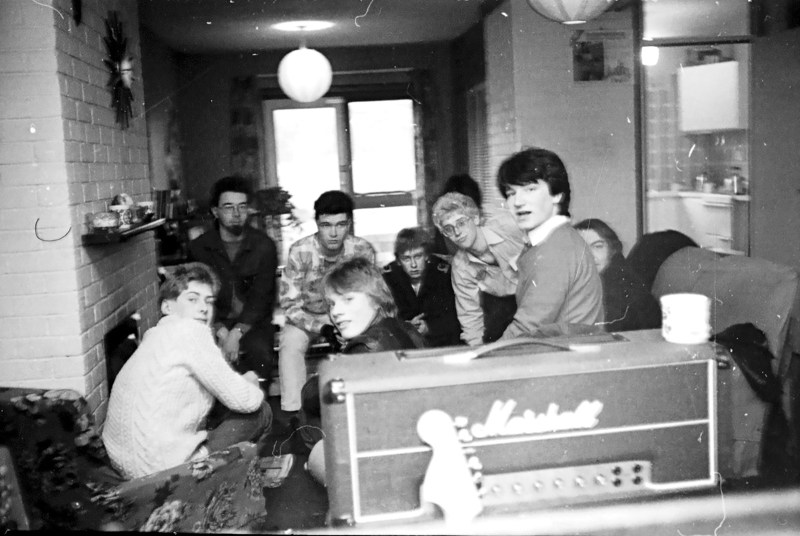
Bono, far right, with band  members and friends in 1979. Photograph by Patrick Brocklebank
Bono, far right, with band members and friends in 1979.

After the release of their first record, U2 came to a crossroads. “They were seriously convicted that we were seriously on the wrong path,” Bono says, describing the leaders of the tight-knit Christian community they were a part of in Dublin. They put a lot of pressure on the band, convinced that following God’s call meant leaving the road and focusing on evangelism and church life in Dublin.

The Edge quit. Bono couldn’t imagine U2 without him, so he quit too. Larry understood. Adam did not but wasn’t going to put up a fight. They drove to the home of their manager, Paul McGuinness, and told him U2 was at the end of the road. Bono describes the scene in Surrender:

“Am I to gather from this that you have been talking with God?” he asked.
“We think it’s God’s will,” we earnestly replied.
“So you can just call God up?”
“Yes,” we intoned.
“Well, maybe next time you might ask God if it’s okay for your representative on earth to break a legal contract?”
“Beg your pardon?”
“Do you think God would have you break a legal contract? … How could it be possible for this God of yours to want you to break the law and not fulfill your responsibilities to do this tour? What sort of God is this?”
Good point. God is unlikely to have us break the law.

That conversation was pivotal. Without realizing it, McGuinness had given them the permission they needed to live in the tension of being in the world but not of it. Bono writes, “As artists, we were slowly uncovering paradox and the idea that we are not compelled to resolve every contradictory impulse.”

“His work is always ‘yes, and,’” Sandra McCracken tells me. An artist herself, McCracken takes music into church sanctuaries and smelly bars—something that would have been unimaginable for many Christian musicians a generation before her. Bono demonstrated what it could look like for Christian artists to live in those liminal spaces, letting love and imagination lead them to make music they believe in, first and foremost.

“It’s like he bled the newspapers and Scripture equally. There’s no distinction, he lives with both in front of him,” McCracken says. “And that was so compelling to me. It reminds me of the best kinds of conversations you try to have with your kids. You notice what’s captured their attention and ask, ‘What do you love about that?’ There’s a kind of generosity to it.”

It’s February 2002. The first Super Bowl after 9/11 has been a nonstop display of American flags, anthems, and former presidents. But it’s the four Irishmen of U2 who take the stage at halftime.

It’s hard to imagine another band or artist as capable of speaking to the anxieties that simmered in the American psyche after 9/11. In the two decades since the release of their first record, their punk rock prayers had made them credible witnesses for the presence of God and the hope for justice in a dark world.

When the music began, the Edge was playing the Gibson Explorer he’d bought in New York City as a kid. Bono appeared in the middle of the crowd, singing,

The heart is a bloom,
Shoots up from the stony ground.

Makoto Fujimura, the painter and author of Art and Faith: A Theology of Making, has described “culture war” as a polarized mindset, viewing culture as territory to dominate rather than a common space Christians share with their neighbors. Rather than a zero-sum game, he invites us to a posture of “culture care” and “generative creativity”—creating and collaborating to bring beauty and healing to a broken world.

“It takes a certain kind of courage to stand in the middle of devastation and not become cynical,” he tells me. “Given Bono’s story, it makes sense that he would want to speak ‘Shalom’ over the suffering in the world.”

During the halftime show, “Shalom” sounded an awful lot like “It’s a beautiful day.”

Bono performing with U2 during the  Super Bowl XXXVI halftime show in 2002.Getty / Michael Caulfield
Bono performing with U2 during the Super Bowl XXXVI halftime show in 2002.

It’s easy to forget the shock of 9/11 and the anxiety it left throughout the Western world. When we experience that kind of violence, we need prophetic witnesses who can not only reignite our courage and hope but also teach us to lament.

As U2 began their second song, a black scrim rose high behind them, with the projected names of 9/11 victims scrolling skyward. The Edge began the familiar percussive chimes of “Where the Streets Have No Name,” and Bono prayed from Psalm 51:15: “Oh Lord, open my lips so my mouth shall show forth thy praise.” The band crashed into the song together, Bono shouting, “America!” and offering an open-mouthed cry somewhere between a primal scream and a hallelujah.

“Artists have to learn to stand on the ashes of ground zero and believe they’ll have a new mission and a new song,” Fujimura tells me. “That means paying attention to all of it—the good and the bad. … For someone like Bono and U2, their experiences of trauma enabled them to hear a call. To pay attention to burning bushes—these places where God is speaking—and to share what they see and hear with the world.”

“Where the Streets Have No Name” is a lament, a prayer for a unity that transcends the divisions of race, class, and nation. As the song ended, Bono opened his jacket and revealed the stars and stripes stitched into its lining—one more symbol of solidarity.

Bono later described it as a night of “defiant joy.” It’s a description that suits not only that night, but all of his unique witness.

Too often, Christian artists are confronted with unwritten codes— subjects to avoid, self-images to project, messages to cram into their projects, people not to offend, and politics to endorse or avoid. Few things are more poisonous to creativity than that kind of dogmatism.

U2’s response to these confrontations has been to accept the paradox and contradiction of living in an in-between space. It’s led some to suggest they’re too Christian for the mainstream and too mainstream for Christians. It strikes me that this framework gets it exactly wrong. Living in that liminal space has made them more able to speak to both communities. It afforded them the opportunity on that night in 2002 to give the gift of grief and hope to a watching world.

Bono also found himself confronting these divisions in a new way. Near the turn of the century, he got involved with a campaign to end developing-world debt called Jubilee 2000. The success of that campaign and the exposure it gave him to the HIV/AIDS epidemic in Africa inspired a much deeper level of commitment to activist work, eventually leading to founding the ONE campaign—including a massive effort to provide antiviral drugs to the continent.

For that campaign to succeed, he needed buy-in from conservative politicians and evangelical leaders, but polling data at the time suggested that evangelical Christians had very little interest in helping AIDS victims, including orphans. Bono took the initiative to build bridges with politicians he’d never imagined sharing a table with. He writes, “I was coming to see that the Bible was a door through which I could move with people who might otherwise stay put.”

“These are not partisan issues,” Michael Gerson tells me. He was a speechwriter and policy aide in the George W. Bush administration and has worked with the ONE campaign in the years since. “Bono found common ground with other people because of his own sense of human dignity, which is rooted in the Bible.”

That’s how Bono found himself being prayed over in the office of senator Jesse Helms (who was one of the inspirations—and not in a good way—for U2’s anti-war song “Bullet the Blue Sky”). It’s hard to imagine a politician with views more diametrically opposed to Bono’s. Helms had called AIDS “the gay disease” and had been an opponent of civil rights legislation for decades. “And here he is,” Bono writes, “putting his hand on my head.”

Helms was praying for him.

“He has tears in his eyes and later he will publicly repent of the way he has spoken in the past about AIDS. As big a shock to the left as to the right. It was the leprosy analogy from the scriptures that moved him. He had to follow his Jesus there.”

Throughout the Bush administration, Bono and others in the ONE campaign built bridge after bridge, resulting in more than $100 billion of taxpayer money being allocated toward efforts to prevent HIV transmission and provide treatment.

“The thing that turned America around,” Bono tells me, “that helped inspire a conservative president of the United States to take up the fight against HIV/AIDS and lead the world in what was the greatest, largest intervention in the history of medicine, were conservative Christians.”

I tell him I’m fascinated by these stories, especially in our current polarized times.

“I will define myself as the radical center,” he says. “Having your faith hijacked by politics is something we all need to be really careful of.”

If hopeful lament was an act of rebellion in 1981, when Boy was released, maybe being in the radical center is punk rock in 2022.

“I don’t think we should allow ourselves into this binary view of the world between progressive and conservative. I think that’s very divisive,” he says. “We’ll find common ground by reaching for higher ground.”

“We need to get through it to a place of wisdom,” Bono continues. “And I predict revival.” In fact, he predicts that churches, of various denominations, “could be filled instead of emptied. But it depends on how they’re used. We have to hope that people will live their faith, rather than just preach it. We have to preach it. If you’re a preacher, preach it. But if you can’t live it, stop.”

When I first envisioned interviewing Bono, I found the scale and scope of his life kind of overwhelming. He’s not just one of the world’s biggest rock stars— he’s one of its most visible and effective activists. And of course, in reading Surrender, I was struck by how his extraordinary life is also full of the ordinary complexity of our human experience—love, loss, grief, grace, wounds, redemption.

“I wanted to explain what I’ve been doing with my life to my family and friends and fans,” Bono says of Surrender. “I also wanted to explain to my family what I’ve done with their life. It was they that permissioned me to be away, whether it was the traveling circus that was U2 or my activism. I just wanted them …” He pauses for a long beat. “I wanted them to understand what I was doing with my life.”

As someone who’s spent most of my life identifying with the spiritual ethos of Bono’s lyrics, I think it makes perfect sense that Bono would write a spiritual memoir. It’s a genre that Augustine probably didn’t invent but certainly set the standard for in Confessions. Augustine’s expressions of desire, regret, and hope resonate to this day because they reflect the experience of every soul that allows itself to feel its longing for God. Augustine’s most famous prayer, “Our heart is restless until it rests in you,” sounds an awful lot like U2’s “I still haven’t found what I’m looking for.”

Even in Surrender’s final pages, Bono identifies himself as a pilgrim, not a sage—someone still on the search. He tells a story about seeing his son play with his band, Inhaler, and the conversation they had afterward. Bono tells him, “To be yourself is the hardest thing, and it’s easy for you. I’ve never once been myself.”

I tell Bono that line really surprised me.

“The word surrender still seems out of reach for me. The integratedness you expect from a person who’s been made whole by their faith, I’m probably missing. I have the joy, I have some insights, I have a lot. But being comfortable in my skin is what I was talking about,” he says.

“You know, the U2 thing on stages … a lot goes in,” he says. “We really have to prepare ourselves before we walk out on stage. We have to pray for each other. And it’s like, ‘Come on, lads. It’s just a rock-and-roll show. Get over yourself.’ But we can’t do it without that. I was just speaking to my high school yesterday, to the sixth-year students. I was reading them the book; I was so nervous.”

He takes a slow breath. “But I will tell you, deep down, there is an anchor,” he says. “I’m fixed to a rock, and that rock is Jesus.”

Mike Cosper is director of CT Media.

Videos

Reconciliation or Antiracism?

Helping churches answer the biblical call to racial justice and unity. A virtual roundtable presented by CT and Seminary Now.

Christianity Today November 3, 2022

Racism, antiracism, critical race theory, color-blindness, diversity, reconciliation. Discussion and debate on these issues abound in the church today. Regardless of what language or labels we use, a crucial question looms: What is the biblical call to racial unity and justice?

Recently, CT and Seminary Now convened a virtual roundtable featuring a dynamic panel of Christian thought leaders on matters of race, justice, and discipleship. Pastor Derwin Gray, author of How to Heal Our Racial Divide, and educators Christina Barland Edmondson and Chad Brennan, authors of Faithful Antiracism, were joined by New Testament theologian Darrell Bock, who moderated the webinar.

“Controversies surrounding discussions of race and justice are a part of our culture,” said Bock in his introductory remarks. “This is about more than being for or against an idea or debates about the nature of justice and its relationship to the gospel. People and major societal groups are impacted by this discussion and have been for centuries, leaving a residue of effects that involve all of us.”

Bock goes on to queue up a series of questions. How should Christians respond to the ethical call growing out of the gospel to love our neighbor? Can the race discussion be seen as an extension of our mission to show what God is like in the world? Should the church’s emphasis look more like reconciliation or antiracism?

Using their books as thematic springboards, the panel addressed these and other questions related to the biblical, historical, and contemporary challenges of racial division in America. View the recording of the event above. The roundtable begins in earnest at about the ten-minute mark.

Ideas

It’s Okay to Cram Before Election Day

Staff Editor

Our vote is not the reason for the hope we have.

Christianity Today November 3, 2022
Illustration by Mallory Rentsch / Source Images: Getty

In an earlier internet age, I remember hoping that the internet would make us all so well informed. We could keep tabs on everything, from local news to the chaos of Washington and happenings of the wider world.

Indeed, the mere act of being aware of newsy content seemed like a virtue—why else had “raising awareness” about this cause or that campaign become a national preoccupation? We’d become better citizens, the thinking went, because we’d be better-informed citizens. We could vote with more care and nuance because it’d be easier to research candidates and interact with them online. A constant, unlimited flow of information would be good for America.

Or not. That simple optimism is impossible to summon now, and though being politically well informed is a good thing, the prospect can sound more exhausting than enticing. Now we know that consuming political media can distort our perception of our political opponents, that airing our opinions online makes it harder to admit when we’re wrong, and that on platforms like TikTok and Twitter “falsehood diffuses significantly farther, faster, deeper, and more broadly than the truth,” as MIT researcher Sinan Aral put it.

The knowledge of the good and evil of our media landscape has left many torn, I think, between competing impulses: an uneasiness with the habits involved in being politically informed and a sense that it’s a civic duty.

But this week before the midterms, I’d suggest a third way: It’s okay to cram before you vote. We don’t have to stay at Election Day–levels of political competence all the time. We can study up this weekend, vote if that’s where research leads, and go back to other, better things until the next election rolls around.

The time we spend on politics is not an unlimited resource. “Be very careful, then, how you live—not as unwise but as wise,” Paul advised the church at Ephesus, “making the most of every opportunity, because the days are evil” (Eph. 5:15–16).

Is it a wise use of time to always be up on the latest headlines, to track every twist and turn of this congressional investigation or that court case? For many of us, much of the time, the answer is no. Many news cycles are dominated by soon-irrelevant matters, and we can always catch up on the substantive stuff after a few days or weeks have shown it’s worth our while.

The minutes (or hours!) we frantically devote to distant political controversies over which we have no influence and which may well come to nothing is time taken from somewhere and perhaps someone else. It’s time we could have spent with Scripture or a good book; with our families, friends, or church; or tangibly serving the needs of our local communities. To tweak the words of James, political awareness without deeds is useless (2:20). What better and wiser use of our lives are we sacrificing to be perpetually “aware”?

In a 1946 letter, C. S. Lewis warned that giving our limited attention to problems far from our grasp is not simply going outside our call to love our neighbors but can actually interfere with it:

I think each village was meant to feel pity for its own sick and poor whom it can help and I doubt if it is the duty of any private person to fix his mind on ills which he cannot help. (This may even become an escape from the works of charity we really can do to those we know.) A great many people (not you) do now seem to think that the mere state of being worried is in itself meritorious. I don’t think it is. We must, if it so happens, give our lives for others; but even while we’re doing it, I think we’re meant to enjoy Our Lord and, in Him, our friends, our food, our sleep, our jokes, and the birds song and the frosty sunrise.

What Lewis called “being worried” we’ve dubbed “raising awareness” or “staying well informed.” The new names don’t change the merit of his critique.

“Always be prepared to give an answer to everyone who asks you to give the reason for the hope that you have,” writes the apostle Peter (1 Pet. 3:15). His advice points us to a better model for the average Christian in a country where the government solicits our opinion at predictable intervals: We should be conversant in accordance with our priorities—or in proportion to our allegiances.

If our commitment to Christ and his church is preeminent, the time, attention, and knowledgeability we give them should scale to fit. A difference in how conversant we typically are about faith and politics makes sense if they occupy appropriately different places in our hearts and minds.

Finally, cramming for an election is a perfect fit for the American system of government. It has democratic elements, but it’s not a direct democracy. It’s representational, which means most of us delegate our political responsibilities to others. At the official level, that means elected politicians and unelected bureaucrats and staff. Unofficially, it includes journalists like me and political lobbyists, activists, and hobbyists—people who truly enjoy politics as a pastime.

For everyone else, however, politics was never meant to be a daily preoccupation. Representation frees us to spend our time on better and more needful pursuits, like caring for those in our own villages. And if the representatives are performing poorly, our daily worrying won’t change that. Our votes sometimes can—but we can cram for that.

Theology

What the Pelosi Attack Says About a Post-Truth Church

Some evangelicals are endorsing political violence. It needs to stop.

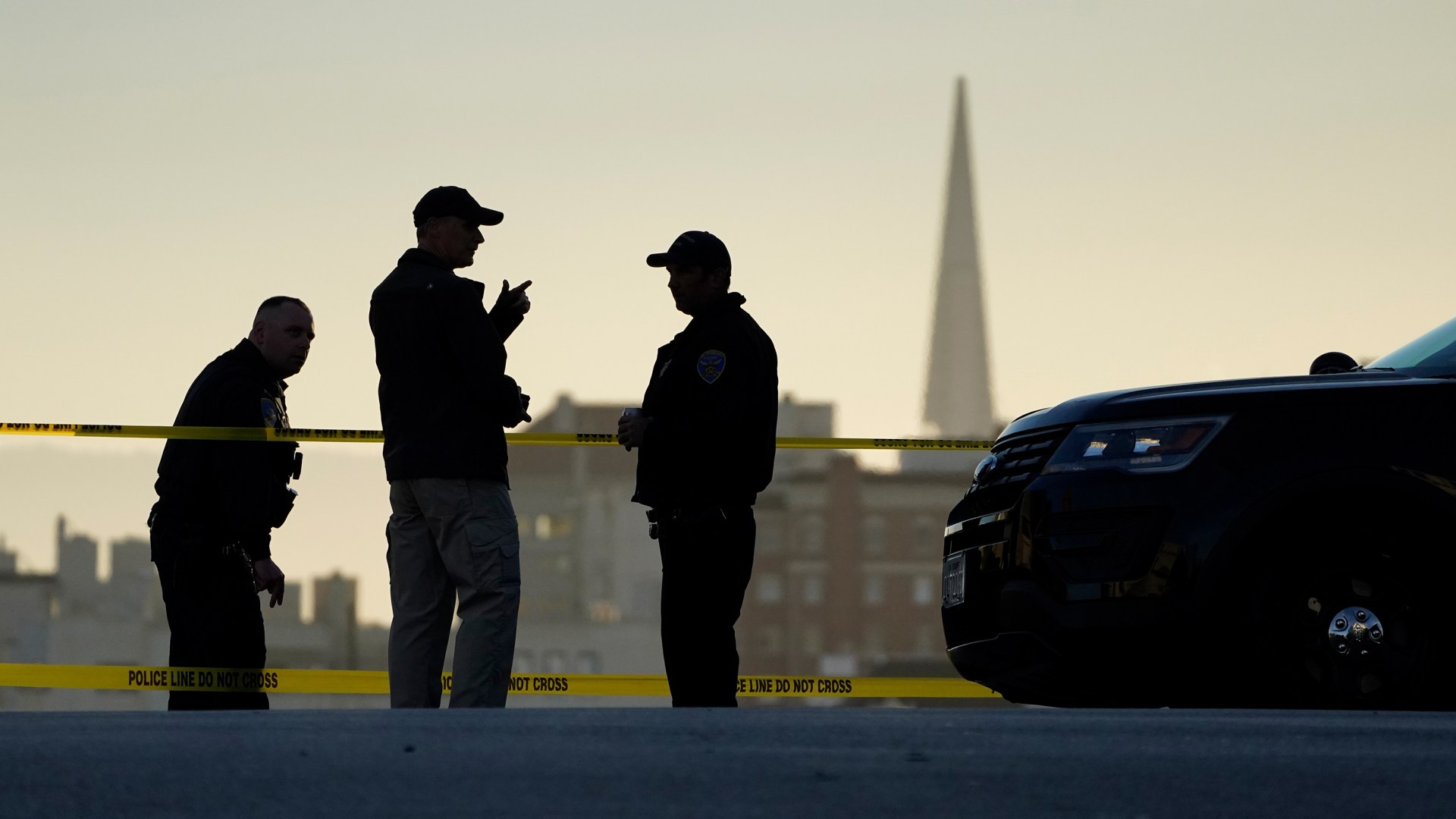
Police stand at the top of the closed street outside the home of House Speaker Nancy Pelosi and her husband Paul Pelosi in San Francisco.

Police stand at the top of the closed street outside the home of House Speaker Nancy Pelosi and her husband Paul Pelosi in San Francisco.

Christianity Today November 3, 2022
Eric Risberg / AP Images

The image was of a pair of underwear with a hammer, and the caption said, “Get it now: Paul Pelosi Halloween costume.” After a friend sent me the link, I was almost shaking with rage. Within an hour or so, Donald Trump Jr. would post the same image with a similar message, but it was the first one that left me angry—because it was posted by someone who claims to be a follower of Jesus Christ.

Keep in mind what we have witnessed this week: A man with a history of following conspiracy theories—including 2020 election denial—broke into the San Francisco home of Speaker of the House Nancy Pelosi, took a hammer, and beat the Speaker’s husband until he needed critical surgery.

Police report that the man went through the house, yelling “Where’s Nancy?” The language is a direct echo of screams from insurrectionists on January 6, who swarmed outside the Speaker’s office after attacking and ransacking the Capitol.

Within hours of the Pelosi attack, the typical internet mobs spread lies and conspiracy theories about the event, some of them too vile and obviously fabricated to even mention here.

A friend asked why I was so upset about the allegedly evangelical man who posted the “joke” about Pelosi’s attempted murder. After all, we’ve seen for years his troll-like behavior on and off social media. “Why are you surprised?” my friend said. “That guy has shown who he is for years. I feel sorry for him.”

But that’s the point. This is not an isolated incident from one sad, angry, and “extremely online” guy. It reflects an increasing trend among some Christians.

Take for example Charlie Kirk, who responded to the Pelosi attack by saying, “If some amazing patriot out there in San Francisco or the Bay Area wants to really be a midterm hero, someone should go and bail this guy out. … Bail him out and then ask him some questions.” That’s the same Kirk who claims to be a born-again Christian and whose name was merged with that of Jerry Falwell Jr. into the “Falkirk Center” at the nation’s largest Christian university (until Falwell’s departure).

While all of this is going on, hordes of online commenters and conspiracy theory websites either deny the attack happened at all—as a “false flag” by the Deep State—or positively delight in the humor of it all. Many of them have “Christian. Husband. Father” or some similar designation in their social media bios.

All of this would be bad enough if it were simply happening in the “fog of disinformation.” But even after the official Department of Justice affidavit was released with details from the police officers’ interview with the alleged assailant—who admits to breaking into the Pelosi home to harm the Speaker—where are the apologies for spreading the lies? Where is the shame at delighting in what could easily have turned into murder?

When looking at some of the responses to the Pelosi beating, Mona Charen asked, “What the hell is wrong with these people?” The answer, of course, is hell.

James, the brother of Jesus, tells us that “the tongue also is a fire, a world of evil among the parts of the body. It corrupts the whole body, sets the whole course of one’s life on fire, and is itself set on fire by hell” (James 3:6). He goes on to say to the churches that “bitter envy and selfish ambition” lead to “deny[ing] the truth,” and that leads to “disorder and every evil practice” (vv. 14–16).

This imagery of fires from hell shows just how much damage can be done by lies and how easily they can burn out of control. The threat of political violence hangs over our country in ways perhaps not seen since the fiery days of the 1960s.

Indeed, the situation could easily become even more intense. After all, people back then didn’t have social media incentives for getting attention through character degradation—the kind that could lead large numbers of people to communicate sympathy with Lee Harvey Oswald, James Earl Ray, or Sirhan Sirhan.

Where does much of this violence or the threat of it come from? Lies. The idea that the election was stolen by a vast conspiracy of liberals is a lie. That elected officials are part of a secret cabal to drink the blood of babies is a lie. That Jews are pulling the strings of the “globalist” order is a lie. That the federal government designed COVID-19 as a hoax is a lie. That your pastor is a “cultural Marxist” for preaching what the Bible teaches on race and justice is a lie.

What’s worse, many of the people spreading such lies know them to be lies.

God is a God of truth, and he commands against both the bearing of false witness and the taking of human life. Jesus himself said the devil “was a murderer from the beginning, not holding to the truth, for there is no truth in him. When he lies, he speaks his native language, for he is a liar and the father of lies” (John 8:44).

The apostle Paul, too, points to the connection between lies and murder when he speaks of people under the power of sin as those whose “tongues practice deceit” and whose “feet are swift to shed blood” (Rom. 3:13–15).

We are in a precarious and dangerous time, and what’s worse, we’ve become more accustomed to all of it. In early December 2020, when a Republican election official from Georgia called for an end to lies about a stolen election, he warned, “Someone’s going to get shot; someone’s going to get killed.” A little over a month later, police officers were beaten at the United States Capitol. People were chanting “Hang Mike Pence!” And, yes, people were yelling out, “Where’s Nancy?”

Is this really the sort of society in which we want to live? Is this really the United States of America we want to leave to our children? And, more importantly, is this the witness of the church we want to display?

People will rightly note that the figures spreading conspiracies or joking about this recent assassination attempt are fringe and hyperpoliticized figures, not respected spiritual leaders. They will rightly observe that most evangelical Christians support neither the lies nor the political violence. That is all correct. And that’s why we must say so.

That’s why we must say to those who spread lies and who fuel violence, “You will not do this in our name, and you will definitely not do this in the name of Jesus Christ.”

What’s more, we’re ethically obligated to tell these bad actors the warning of Jesus—that the path of lies leads not just to violence toward the innocent but also to the damnation of the liars themselves (Rev. 21:8).

We should be people of the truth. And at the judgment seat of Christ, when every lie is uncovered, don’t be the person who must say, “I left my soul in San Francisco.”

Russell Moore is editor in chief at Christianity Today.

News

Some American Protestants Aren’t Letting Go of Revolution

As partisan fighting turns into physical attacks against public figures, evangelicals lack consensus on when political violence is justified.

San Francisco police officers and F.B.I. agents gather in front of the home of U.S. Speaker of the House Nancy Pelosi after an attack on her husband Paul Pelosi.

San Francisco police officers and F.B.I. agents gather in front of the home of U.S. Speaker of the House Nancy Pelosi after an attack on her husband Paul Pelosi.

Christianity Today November 2, 2022
Justin Sullivan/Getty Images

This past summer, two weeks after a man allegedly attempted an assassination of US Supreme Court justice Brett Kavanaugh over abortion and gun control, the Presbyterian Church in America (PCA) at its general assembly debated a statement condemning political violence.

The statement noted, in part, a “a growing number of personal threats to public officials” and condemned “the destruction of property and the infliction of bodily violence against political opponents.”

Elders on the debate floor objected to the resolution. One elder speaking against the statement said that without political violence, the Protestant Reformation and American Revolution wouldn’t have happened. “We’d all still be genuflecting and using holy water,” he said.

A pastor in Florida went to the microphone and noted his Cuban roots, saying that sometimes it’s right to “pick up the sword.”

“This statement would condemn the very existence of this country,” said Aldo Leon. “It’s important to be very, very clear about this in the kind of country we live right now, with a … growing tendency for an overextended federal power.”

The denomination voted down the statement, with 75 percent opposing it.

“A resolution to condemn political violence in a functioning democracy? That would be pretty easy!” political philosopher Michael Walzer told CT. “You wouldn’t be opposing the American Revolution; you wouldn’t be opposing any of the Reformation activists.”

American Christians don’t have clear thinking about when political violence is justified, according to historians, theologians, and pastors who have studied the subject and followed these debates. That matters as a hotly contested midterm election approaches and political opponents become targets.

On Monday, the US Justice Department charged a man with assaulting House speaker Nancy Pelosi’s husband Paul Pelosi and attempting to “detain and injure” Nancy Pelosi. In addition, David Wayne DePape faces state charges for attempted murder of the 82-year-old Paul Pelosi, whom he allegedly attacked with a hammer in front of police in the early morning hours of October 28.

DePape arrived at the Pelosi residence with zip ties, rope, tape, and a hammer, intent on holding the House speaker hostage, according to charging documents. He told police he wanted “the truth” and would break Nancy Pelosi’s kneecaps if she lied to him.

Per the charging documents, DePape told police that “much like the American Founding Fathers with the British, he was fighting against tyranny without the option of surrender.”

The attack was the latest in a string of political disputes turned into physical threats, from last year’s Jan. 6 siege on the US Capitol to the vandalism and violence against Christian pregnancy centers after Roe v. Wade was overturned this summer.

For evangelicals, the political stakes are high: A majority of evangelicals said in a 2019 Lifeway research survey that if those they disagree with implement their policies, “our democracy will be in danger.”

But theologians say Christians aren’t clear on when political protest can turn to physical resistance. Christians generally see Romans 13:1 as directing them to submit to the government, but they have also engaged in civil disobedience. That was evident most recently in churches refusing to obey government orders related to the COVID-19 pandemic. Many American Protestants reject violence as a political response, but some are confused about the ethical line between refusing to obey and violently resisting.

Looking back at Protestant doctrines of political resistance

Walzer, an 87-year-old political philosopher whose first book was about the Protestant doctrine of resistance, said that doctrine “in its most developed form” was “never an argument about popular resistance”—that is, individuals rising up and committing violence.

The Protestant Reformation “was the work of princes in Germany,” he said, and Martin Luther condemned the German peasant uprising. In the American Revolution, the colonies created a congress—a “lesser magistrate” to resist that fit in John Calvin’s framework of violent resistance, rather than individuals taking violent action, which Calvin condemned.

“Militant Protestants were prepared to fight but looking to authority to endorse the fight,” Walzer said. A few outliers like Scottish Presbyterian John Knox supported individual violent uprisings. But other traditions like the Mennonites opposed violence entirely.

In the 1980s, Presbyterian theologian and pastor David Coffin debated when Christians could use political violence with a Lutheran pastor, Michael Bray, who later bombed multiple abortion clinics. Bray based his justification for violence toward abortion providers on verses from Proverbs to “rescue the perishing,” according to Coffin. Bray was convicted in 1985.

Bray had no theory for what he was doing “beyond a thoughtless proof-texting, having that Proverbs text in his pocket,” Coffin told CT. “It’s not uncommon for evangelicals to not be too concerned whether there is historical pedigree to something they think is biblical.”

That approach stood in contrast with the civil rights movement’s thoughtfulness about political resistance, he said.

“[Martin Luther King, Jr.] had a theory of what he was doing and why and how it could be justified,” Coffin said.

Coffin, who before his theologian days worked as an elevator operator in Congress, supported the PCA statement against political violence. As a theologian, he found the PCA debate about political violence the most embarrassing debate he has sat through because Presbyterians have such a rich intellectual tradition of political resistance.

“That is one of the great contributions of Reformed theology to the modern age: a doctrine of revolution that makes possible the correction of tyranny without falling into anarchism,” he said. “I had an elder say, ‘If the government comes after me and my house, I have a .38 ready.’ Well, no. If a policeman comes to your house and has a warrant for your arrest, even if you know you’re innocent, you don’t have a right to shoot him! The idea that you might is what our Founding Fathers absolutely feared—it was the kind of anarchism that marred the French Revolution.”

Reactions to political violence

Other parts of Protestantism have been discussing political violence too. A group of 65 Pentecostal and charismatic leaders issued a statement last month rejecting a Christianity that “hints at the use of force to advance God’s kingdom.”

The leader of a charismatic ministry, Jennifer LeClaire of Awakening Prayer Hubs, posted at the beginning of October that she had “several prophetic words on political violence in recent months.” Among other prayers, she prayed for repentance of “any rebellion, political violence, and anarchy.”

Many conservative Christians condemned last week’s hammer attack on Pelosi, including the president of the Southern Baptist Convention, Bart Barber.

“I'm praying tonight for Paul Pelosi, and I invite Southern Baptists to join me in doing so,” he tweeted. “What happened to him is reprehensible.”

But some made jokes about the incident, and repeated conspiracy theories. A leader in the Conservative Baptist Network and former member of the Southern Baptist Convention executive committee, Rod Martin, tweeted a picture of underwear and a hammer and wrote, “Get it now, the Paul Pelosi Halloween costume!”

Arizona Republican gubernatorial candidate Kari Lake, whom some evangelical leaders had recently anointed with oil, also mocked Pelosi. At a campaign stop she was talking about protecting children in schools and then joked that “apparently [Nancy Pelosi’s] house doesn’t have a lot of protection,” drawing big laughs from the crowd.

“It’s horrifying,” said Coffin, the Presbyterian pastor and theologian. “Creaturely empathy … that used to be seen as profoundly virtuous.”

He said empathy doesn’t mean people don’t have vigorous political fights, especially over rights and freedoms, but he compared an outbreak of violence to when someone is injured in a sports game. Whatever team they are on, you don’t want it to happen and you should help them off the field: “To not have that is a profound sense of your own inhumanity.”

Overusing the word ‘tyranny’

Pelosi’s alleged attacker described his intentions as a fight against “tyranny,” a word that has come up in politics a lot recently.

People have regularly used the word in regard to Nancy Pelosi. One Presbyterian elder in the debate this summer said sometimes people need to “fight against tyrants.” Pastor John MacArthur used it to describe pandemic restrictions on his church meeting in California.

Tyranny in the American Revolution had a specific target, according to Samford University historian Jonathan Den Hartog: the king of England. Elsewhere in American history, abolitionists spoke of the tyranny of slaveholders, and American pastors used it in spiritual ways, to talk about the tyranny of sin. But tyranny should not be a “vague catchall for political disgruntlement,” Den Hartog said in an email.

That American Revolution history means “Americans could be tempted to overly justify violent resistance,” Den Hartog added.

In the PCA debate about political violence this summer, one pastor went to a microphone on the debate floor and said he had served in the military and as a police officer.

“I’m not a pacifist,” he said. But he supported the statement condemning political violence because he wanted the denomination to remember “that our highest allegiance is to Jesus Christ.”

Books
Excerpt

The Evangelical Bubble Needs a Doorway

We can protect our deepest convictions without closing ourselves off.

Christianity Today November 2, 2022
Illustration by Mallory Rentsch / Source Images: Getty

I teach at a Christian university located in a rural community in the midwestern United States. Our student body is more diverse than you might imagine, and yet many of my students testify to the experience of living in what they call a “Christian bubble.” They’re aware that their life experiences have been uniquely “local”—insulated from the larger world.

Sometimes, students lament what they perceive as a narrowness of vision within the bubble. Other times, they express gratitude that they have solid ground on which to stand. But the admission of a bubble includes the recognition that there are other ways of being in the world that are not only possible but often desirable.

For many of us, contact with other webs of meaning can make our own web feel much more fragile, endangered, and exposed.

In his three-part magnum opus, Spheres, German philosopher Peter Sloterdijk tells a story of humans in search of “immune system bubbles” that allow them to feel stable and safe in an inhospitable world. He sees the story of modernity as the effort to create new, industrial-grade immune systems to replace the (theologically inspired) spheres of meaning that we’ve lost. Displaced from the insulating safety that theology once provided, we now find ourselves exposed to the elements, without a shell.

In other words, what makes us feel secure? It’s no longer religious stories of our place in a meaning-filled cosmos but rather what Sloterdijk calls “industrial-scale civilization.” This civilization is a globalizing force, but paradoxically, our overextended connectedness makes us feel less safe.

Mimicking Marx, then, Sloterdijk re-narrates the human story not as a series of class struggles but as “the history of immune system bubbles.” Either the bubbles collapse, causing crisis, or the bubbles coalesce into a more poetic “foam.” That’s his image for the possibility of life in a pluralistic society.

We don’t need to agree with Sloterdijk’s grand story to appreciate the explanatory force of his metaphor. The idea of immune system bubbles captures the way we feel compromised, threatened, and fragilized—not so much by the viral bits of culture we instinctively resist but by the rival immune systems that represent wholly different ways of being in the world.

What do we do when it dawns on us that other people are allergic to the very things we hold most dear? The collision of rival worlds of meaning doesn’t need to be violent, but violence is always a possibility. In a pluralistic world, it’s incumbent on all of us to mine our traditions in search of resources that will push us toward healthy pluralism and peace.

Christians believe that peace is possible for one reason: God has not abandoned creation to corruption.

As Paul preached to the Lycaonians who mistook him for a god, the real God has never been “without witness,” providing “rain from heaven, and fruitful seasons, filling our hearts with food and gladness” (Acts 14:17, KJV). Applied to our contemporary world, that means our technological bubbles provide temporary shelter, but when it comes to meaning, they’re a poor substitute for the metaphysical thickness of theology.

Indeed, the revelation of God in Jesus compels us to claim that we are also caught up in threads of meaning not made by human hands (Heb. 9:11). There are creational structures that we live in, a creaturely vocation that we cannot help but fulfill, and a Creator who pursues us with redeeming love. Grounding human culture in these divine gifts doesn’t rob culture of its human element. Rather, it roots our cultural life in a better soil, securing us to something more solid than ourselves.

Here we can say that, in addition to the infectious strains of meaning provided by culture and the church, there’s an additional infusion of meaning: divine action. In Mere Christianity, C. S. Lewis uses this immunity metaphor to describe the work of Christ—as a force that operates like a “good infection.”

“He came to this world and became a man in order to spread to other men the kind of life He has,” he writes. “If we get close to Him we shall catch it from Him.”

Every human culture can serve as a “host” for the good infection of the gospel. But the gospel also calls every human culture to repentance and the obedience of faith (Acts 17:30; Rom. 1:5). It confronts every culture with the revelation of God in Jesus Christ, arriving from the outside, even as it makes itself intelligible to those on the inside.

For Jesus, this confrontation only rarely meant flipping the table. More often it meant sitting at the table, sharing a meal, and asking questions. That’s yet another way to think of “hosting” and another way to conceive of the relationship between faith and culture: Jesus in table fellowship.

There was almost no one that Jesus failed to welcome or join at the table. No matter who you were, he would eat with you. He embodied a beautiful paradox. On the one hand, he gave the highest call to discipleship: Die to yourself, take up your cross, and follow me. On the other, he attracted the most ordinary and imperfect people imaginable.

Rather than being put off by Jesus’ high standards, sinners and outsiders seemed to be particularly drawn to him. The result was a thick community that wrestled with the cost of discipleship while also remaining hospitable to outsiders. If that was a bubble, it was a bubble that made space for misfits, dealt graciously with failure, and was patient with how slowly the good infection sometimes seemed to spread.

I’m glad that my students are aware of the bubble, even as I hope their education will give them a larger, more capacious vision of God’s world. But most of all, I hope I can help them catch the good infection of the gospel. Whether they remain in Christian bubbles or venture far afield, what Jesus offers is not something fragile to be protected but something powerful to be unleashed.

That good news doesn’t exempt us from the essential work of cultural discernment. Rather, it gives us hope for the task.

Justin Ariel Bailey is associate professor of theology at Dordt University and author of Interpreting Your World (Baker Academic, 2022). He is also an ordained minister in the Christian Reformed Church and has served as a pastor in Filipino American, Korean American, and Caucasian American settings.

This essay was adapted from Interpreting Your World by Justin Bailey, ©2022. Used by permission of Baker Publishing www.bakerpublishinggroup.com.

News
Wire Story

More Americans Want Their Church to Share Their Politics

Over half say they believe their congregation is politically unified already.

Christianity Today November 1, 2022
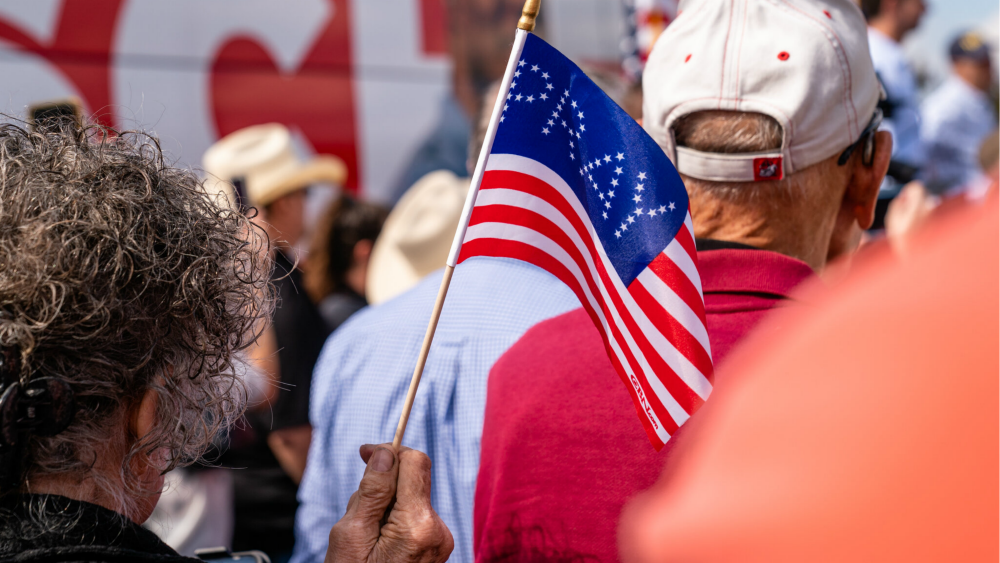
Kaleb Nimz / Unsplash

As churchgoers head to the ballot box for midterm elections, most expect the rest of their congregation to be voting the same way they do.

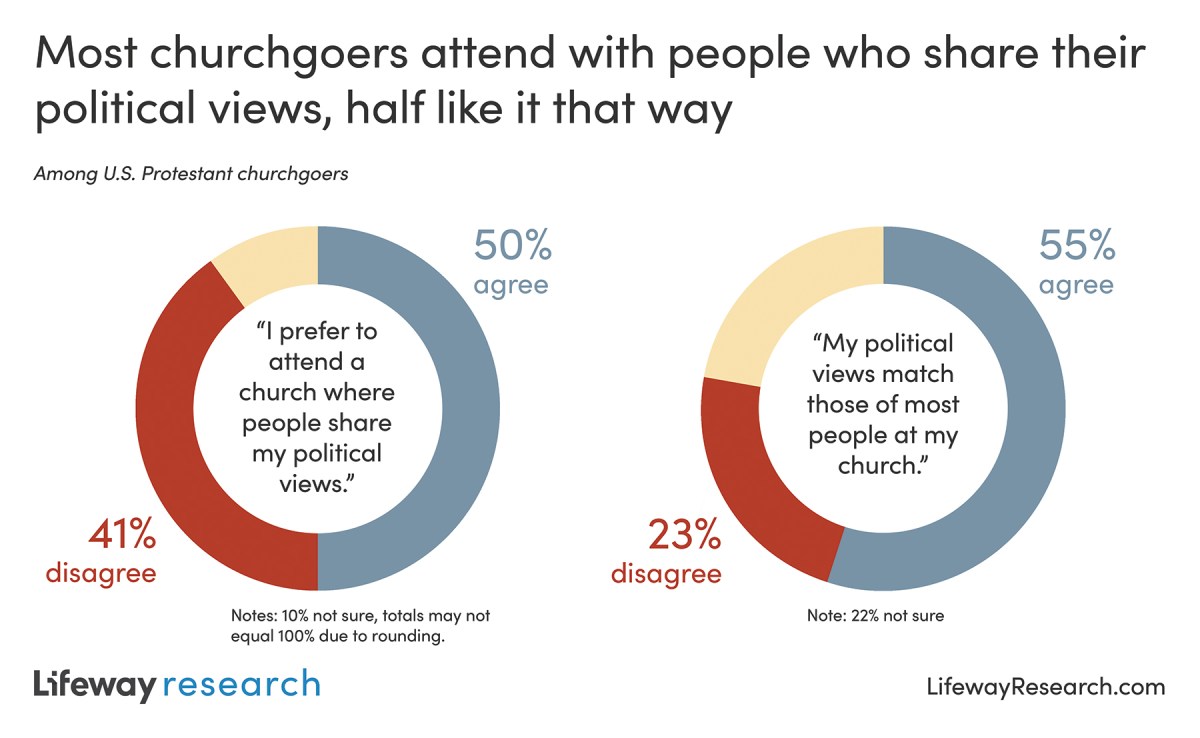
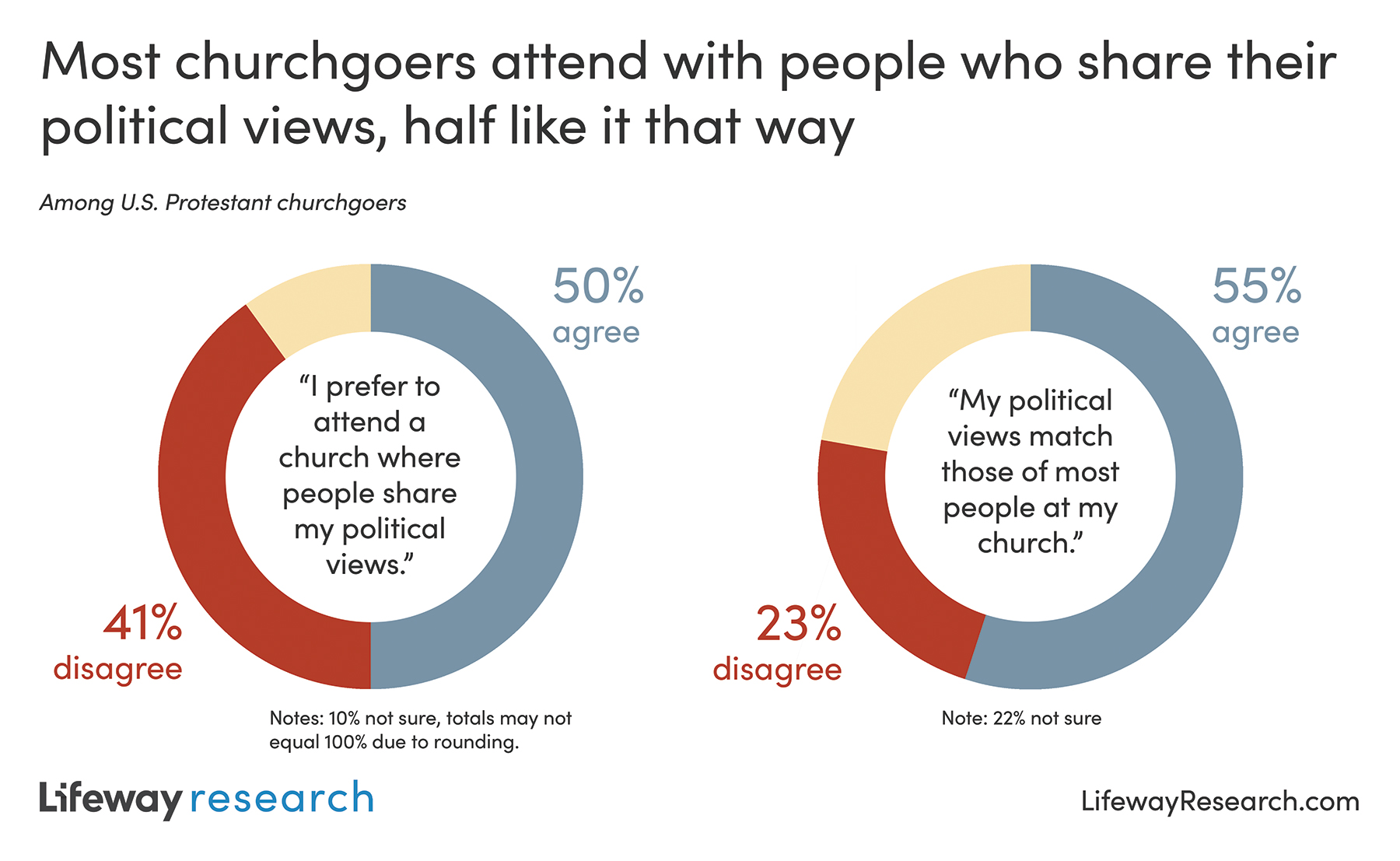
Half of US Protestant churchgoers say they’d prefer to attend a church where people share their political views, and 55 percent believe that to be the case at their congregation already, according to a study from Lifeway Research.

“Studies have shown that voting patterns and political affiliation correlate with the type of church and amount of church involvement someone has,” said Scott McConnell, executive director of Lifeway Research. “But when asked if churchgoers want political similarity to flow back into their church relationships, this is desirable for only half of churchgoers.”

Political preference

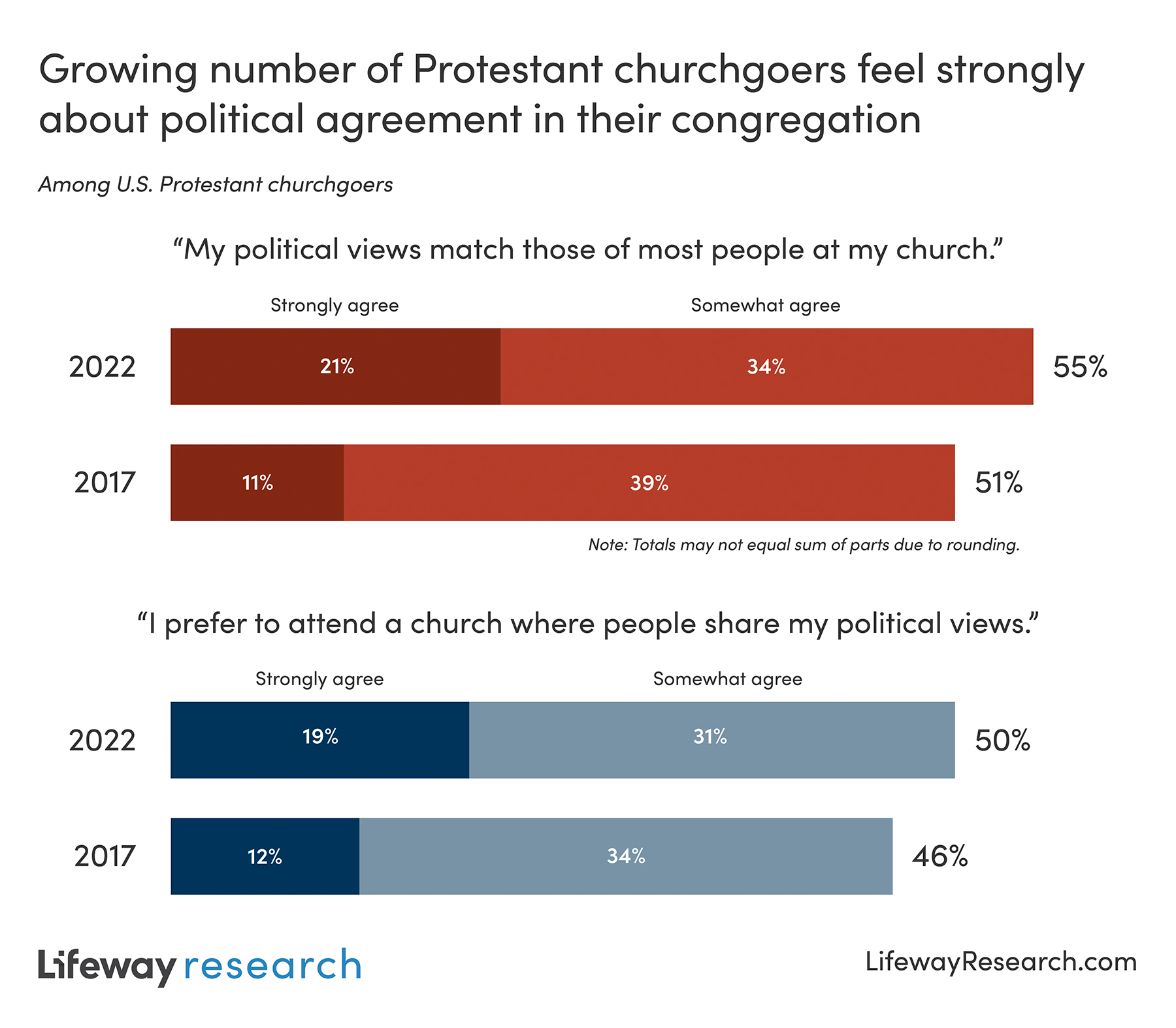
While 50 percent of churchgoers prefer a politically homogenous congregation, 41 percent disagree, and 10 percent aren’t sure. Overall, the percentage of those looking to attend a church where people share their voting preferences is similar to a 2017 Lifeway Research study, when 46 percent said the same. However, more churchgoers are adamant about worshipping alongside their political peers. Around 1 in 5 (19%) now strongly agree they prefer to attend a church where people share their political views, up from 12 percent in 2017.

“While almost 1 in 5 churchgoers is adamant that they want to attend church with those who share their political views, there are just as many who strongly disagree with that perspective,” said McConnell. “The 23 percent who strongly disagree are clearly saying the source of unity they have with others in their church has nothing to do with partisanship.”

Younger churchgoers are more likely than older ones to prefer sharing a pew with someone of the same politics. Almost 3 in 5 of those under 50 (57%) want a congregation with people who share their political views, compared to 47 percent of those 50 to 65 and 41 percent of those 65 and older.

Ethnicity and education also play a role. White (54%) and African American (53%) churchgoers are more likely to want a church with shared politics than Hispanic churchgoers (25%). Those who are high school graduates or less (44%) are among the least likely.

Denominationally, Methodist (88%) and Restorationist movement (80%) churchgoers are more likely to say they want their congregations to have a common political perspective than Baptists (47%), Presbyterian/Reformed (47%), Lutherans (38%) and those who attend a non-denominational church (38%).

Churchgoers with evangelical beliefs (44%) are less likely than churchgoers who don’t strongly agree with the four core evangelical theology statements (54%) to say they prefer a church where people share their political opinions.

Despite their preferences, churchgoers may stick around even if the rest of the congregation doesn’t share their views. Another 2017 Lifeway Research study found only 9 percent of Protestant churchgoers said they would consider changing churches over political views.

Political perception

Regardless of their preferences, most churchgoers believe they’re among their political tribe when at church. More than half (55%) of US Protestant churchgoers say their political views match those of most people at their church. Fewer than a quarter disagree (23%) or aren’t sure (22%).

Just as more churchgoers strongly prefer a congregation of similar politics today, more churchgoers also strongly believe they are a part of such a congregation. In 2017, 51 percent felt their church was politically homogenous, with 11 percent strongly agreeing. Today, 21 percent strongly agree.

Additionally, fewer churchgoers are seemingly unsure about the political opinions of their fellow congregation members. In 2017, 30 percent said they weren’t sure if their political views matched those of most others at the church. That dropped to 22 percent in 2022.

“If one looks at the culture today, you might assume that most churches have been arguing over politics as well. While it appears more churchgoers notice the political views of other attendees, only 28 percent of pastors agree (14 percent strongly) that their church has experienced significant conflict in the last year,” said McConnell. “Those who want political continuity may simply want a respite from political strife at church, and others may want to move together in political action.”

For many groups, their perception of their church matches their preferences. Older churchgoers, those 65 and older, are the least likely to think most people in their church share their politics (46%) and the most likely to say they aren’t sure (32%). African American (60%) and white (58%) churchgoers are also among the most likely to agree. Denominationally, Methodists (89%) and those a part of a Restorationist movement church (76%) believe most of the fellow churchgoers share their political views.

Churchgoers who don’t qualify as evangelical by belief are just as likely to say they prefer to worship in a church that shared their politics (54%) as they are to believe that is the case (53%). Churchgoers with evangelical beliefs, however, are different. They’re more likely to believe they belong to a congregation that predominantly agrees with them politically (59%) than they are to say that’s what they’d prefer (44%).

Based on an online survey of 1,002 Americans was conducted September 19-29, 2022. For more information, view the complete report and visit LifewayResearch.com.

Theology

Go Ahead. Indulge Your Nostalgia.

But use it to praise God’s goodness, not a romanticized past.

Christianity Today November 1, 2022
Illustration by Mallory Rentsch / Source Images: Unsplash

This time of year, I’m seeing double. I view things as they are and as they used to be. The school bus up ahead flicks out its stop sign, and there I am, disembarking as a child. But really, I’m driving an SUV, impatiently waiting for it to move. The apple crisp I eat for breakfast tastes like it did last year, and five years ago, and 20 years ago. There is again that familiar desire to institute routines, buy clothes, and cut my hair.

But something about that desire is different. I’m not a kid or a student anymore, embarking on a new curriculum or moving into a new dorm room. I know more about what to expect. And I understand how unexpected—sometimes terribly unexpected—this life can be.

Times were simpler then, when I didn’t know what was coming and didn’t believe it could possibly be difficult. I just knew sheets washed by someone else. After-school celery spread with peanut butter. The happy uncertainty of what to be for Halloween.

Beware, believer, of becoming nostalgic.

Our faith is about the future. We look to the Resurrection and the life of the world to come. We remember, yes, but largely because remembering is essential to testimony. Our story doesn’t stall out in the past but takes us right up to the present. What God has done becomes what God will do, and that promise provides evidence of impending blessing . We are located in the “already but not yet,” and the “not yet” is somewhere up ahead. The best is yet to come.

Yes, I want that newness. I want the “not yet” right now. But I also want the old: scratching a pencil down a column of algebra or folding the corner of a chapter book. A roommate making brisket the last fall before either of us are married, the smell of brine so strong that it might have reached the barges on the Hudson River we glimpsed through our narrow windows. Now I’m older, with other obligations, living alongside other people in another place.

Some of the people have left altogether. As my friends and I get acquainted with death—grandparents, great-aunts, neighbors, even parents—our memories become impossibilities, in part because they’re shared with people we have lost. The person who brought the marshmallow-orange salad to the fall feast, or the person who came to the concerts and even those tedious cross-country meets, braving the drizzle and the mud. They were glimpsed and appreciated as I rounded the corner to the finish.

Now, I look ahead and they’re not there. At least not yet.

Yes, not everything back then was good. I know that. Nostalgia has its dangers, and I’m prone to fall into them: failure to see what God is doing today, failure to hope for what he’ll do tomorrow. Cynicism. Regret. My belief in what God will do should rid the past of its sting. Why waste time being sad?

But I also don’t think nostalgia is “spiritually dangerous” or an “enemy of the faith.” At least, not entirely. Not any more than other postures of the heart. Really, nostalgia is only human. It’s essentially human. When practiced rightly, it’s not just a temptation but a gift.

What kinds of blessings would they have been, after all, if they weren’t missed? Nostalgia makes us grateful for what God has done, even aside from what he’ll do in the future. In a world that rushes us forward to the impending deadline, the growth goal, or the five-year plan, a moment of bittersweet recognition reminds us of what we’ve already had.

Autumn came, all those years, and I did nothing to earn it.

“Remember the former things, those of long ago; I am God, and there is no other,” the Lord commands (Isa. 46:9). Be in awe of what’s occurred; remember his “miracles” and “judgments” (1 Chron. 16:12). Scripture itself dwells on past marvels, treasuring the past for just a moment before anticipating God’s future provision.

Look back. But also, nostalgia tells us: Look closely.

I’m rarely wistful about “achievements.” I don’t remember the grades I got on the algebra homework, or my race time at that cross-country meet. Instead, I think about rituals and routines. Everyday graces—tastes and scents and temperatures, conversations and patterns of community—are what I long for, not past triumphs. This indicates what I should notice now, how I might be discipled and cared for in the mundane and particular.

It’s undeniable: In this world, much has been lost. In this world, much is yet to come—not better or worse, just different. A new child doesn’t replace a lost father. A friend’s joyful wedding doesn’t replace the hours spent whispering together as teenagers under a chilly set of stars. Things change.

And that change points us toward the kind of prayer that feels not sinful but essential, unavoidable, and even good. Those prayers say, Thank you, God and I miss it, God, all at once. They say, Life is short, God, a withering of grass, and I need you, God, in my grief.

How else do we cope with the brevity? This kind of prayer precedes anything like hope and makes that hope more honest.

I’m thankful this season that the promise of our God isn’t a wholesale rejection of what came before. In Jesus there is rejuvenation, a great recovering. The old things are made new. Childlike faith is restored. Lost people are found. Sickness and death will be no more. Indeed, they might even be forgotten.

Kate Lucky is senior editor of audience engagement at Christianity Today.

News

Christian Nationalism Debates Expose Clashing Views of Power

As American evangelicals head to the polls, they disagree about the meaning of the contested phrase.

A woman in Georgia waves a flag that says “pray” at a rally for US Senate candidate Herschel Walker.

A woman in Georgia waves a flag that says “pray” at a rally for US Senate candidate Herschel Walker.

Christianity Today October 31, 2022
Elijah Nouvelage/Getty Images

Caleb Campbell didn’t know he needed the term Christian nationalism.

He’d heard it, here and there, but it hadn’t really registered. It was at the edge of his awareness and his vocabulary as he tried to understand the disputes over racism, the pandemic, and the election that rocked his evangelical church in suburban Phoenix throughout 2020.

Then the new year started, a mock gallows was erected at the Capitol, and his social media showed some in the mob carried signs that said, “JESUS SAVES.” His mind strained to make sense of the two things together, and he remembered from somewhere that there was a term.

Christian nationalism.

“I needed that phrase to name it,” said Campbell, pastor of Desert Springs Bible Church. “This is a heresy. It’s a complete distortion of Jesus’ doctrine of power. I think Christian nationalism started in the Garden of Gethsemane when Jesus was reaching for the Cross, and Peter, who loves Jesus, thought he should protect him with a sword.”

As the political campaigns ahead of the midterm election have heated up, so has debate about the new political phrase. For evangelicals, the 2022 election has become, in part, a contest over what Christian nationalism is—whether just a slur used against conservative Christians voting their values or something new and malevolent.

Some Republican candidates are claiming the name, a best-selling book on Amazon argues that all real Christians are Christian nationalists, and a growing number of professional and amateur political commentators are using it to explain American politics right now. But there’s still a dispute about who counts as a Christian nationalist and what the term really means.

“I would say there are nine different definitions, from the people I’ve talked to,” Campbell told CT.

A Pew Research Center poll released last week confirms that the term is slippery. Not everyone is using it the same way.

Pew found that 45 percent of Americans think that that US should be a Christian nation. This includes 81 percent of self-identified white evangelicals, the same percentage that reported they voted for Donald Trump in 2016.

But only about 6 percent of those who want the US to be a Christian nation think that the government should be run exclusively by believers. Less than 1 percent say they want the state to give special privileges to Christians.

It’s more common for people to explain they want Americans to be guided by Christian beliefs and values (48%) or generally be moral (21%). One out of every three people who want America to be a Christian nation will clarify, when asked, that that isn’t a statement about the government at all. They want Americans—individuals—to have faith in God.

That broader version that Pew calls “Christian nationalism” is embraced by 65 percent of Black Protestants, more than half of white nonevangelical Protestants, and about a third of Hispanic Catholics.

But to some academics researching Christian nationalism, that broader idea is way too broad. Saying aspirationally that America should be a Christian nation is not the same as saying it nostalgically, sociologist Samuel Perry told Sojourners magazine. The term, Perry argues, should only be applied to those calling for a return to a time when “people like us” held cultural and political power.

In the book that Perry cowrote with sociologist Andrew Whitehead, Christian nationalism is defined as “an ideology that idealizes and advocates a fusion of American civic life with a particular type of Christian identity and culture.”

And for them, that “particular type” is very particular.

“It is as ethnic and political as it is religious,” they write. “Christian nationalism contends that America has been and should always be distinctively ‘Christian’ … from top to bottom.”

There’s a strong link between the historical and political views, according to evangelical historian John Fea. They’re not identical, though. Pew backs this up: Sixty percent of Americans say the founders intended to start a Christian nation, but more than a quarter of those say America has changed and shouldn’t be a Christian nation now.

Christian nationalism, however, appeals to that often-accepted narrative of the founding to legitimize its political goals.

“It always uses the past to advance a right-wing agenda,” Fea wrote in an email to CT. “I see Christian nationalism as a contemporary political movement, but it ALWAYS draws upon the view that the founders created a Christian nation and we thus need to reclaim, renew, and maybe even restore that Christian founding.”

For evangelical pastors who reject Christian nationalism, though, the debate is not really about history. They remember people arguing about the founding as far back as the 1980s, when evangelical historians Mark Noll, George Marsden, and Nathan Hatch clashed with worldview apologist Francis Schaeffer. And people were still arguing about it in 2010s, when Grove City College professors Warren Throckmorton and Michael Coulter pointed out the many factual errors in popular historian David Barton’s book on Thomas Jefferson.

Christian nationalism seems like the next step in an evolution.

“I’ve heard, ‘We need a Christian nation’ and ‘America was founded as a Christian nation’ for a long time,” said Jeff Hutchinson, an ECO Presbyterian church planter in Connecticut. “But Christian nationalism—I can’t recall anyone using the term positively until this current election cycle.”

Hutchinson said he’s most concerned about the idea that Christians should control the government, barring non-Christians from civic life or even denying them civil rights.

According to Pew’s survey, 42 percent of white evangelicals think that religious diversity is bad for America.

“There’s a more innocent use of the term Christian nationalism,” Hutchinson said. “But when I heard it, I thought, ‘Oh. Okay. That encapsulates a thing I’m terrified of.’”

Other evangelicals opposed to Christian nationalism want to focus specifically on the use of power. Campbell, in Arizona, thinks the argument is not really about political ends, but rather means. Christian nationalism is distinct from other kinds of Christian involvement in politics, he says, because of how it justifies the pursuit of power.

This is how Christian activist Shane Claiborne talks about it. The author of Jesus for President, which was rereleased this year, says Christianity is always political. “Jesus is Lord” is a political declaration. But Jesus’ followers are called to recognize and reject the soul-warping temptation of power.

Christian nationalism, according to Claiborne, is a kind of “delta variant” of this age-old temptation that Jesus’ followers always face and that Jesus himself faced when the Devil offered him all the kingdoms of the world (Matt. 4:8–9).

“Jesus has a different way of approaching worldly power,” Claiborne told CT. “So the way that Christians navigate worldly power should be creative, imaginative, and suspicious of what it can to do to us.”

At least some of those who embrace the term Christian nationalism agree that it’s about power. Andrew Isker, pastor of a Reformed church in Waseca, Minnesota, and Andrew Torba, founder of Gab, an alternative to Twitter that doesn’t ban far-right extremist speech, released a 78-page booklet making an argument for Christian nationalism.

They say the US was Christian from the very beginning—even before the US Constitution and the Bill of Rights. But the historical argument isn’t the most important one for them.

They point back to the Great Commission. Jesus told his followers to “make disciples of all nations” (Matt. 28:19). They say that means Christians should “take dominion” over every sphere of life.

“We need Christian men who will embrace their God-given masculine energy to conquer and lead,” Isker and Torba write. “We are done being footstools. We are done being pushovers. Now we want to win. Win souls for Christ. Win elections. Win in the culture. Win in the education system. Win with our own technology. Our own media. Our own entertainment. Win for the glory of God.”

In the suburbs of Phoenix, Campbell said the people in his congregation are hearing this call to arms. This call to win. They’re hearing it from politicians, some evangelical leaders, and most frequently their Christian friends and family.

Increasingly, it feels to them like it’s not just about metaphorical fighting.

But they don’t always have a name for what they’re hearing.

“They have a guttural feeling, like in their stomach, that this feels wrong,” Campbell said. “But they don’t know what it is. ‘What is this beast?’”

The pastor tells them it has a name, Christian nationalism. And it’s no different than the choice Peter faced the night that Jesus was betrayed.

“I think we should be involved in politics, but there’s the way of the cross and the way of the sword,” he said. “We’re supposed to be a cross people.”

addApple PodcastsDown ArrowDown ArrowDown Arrowarrow_left_altLeft ArrowLeft ArrowRight ArrowRight ArrowRight Arrowarrow_up_altUp ArrowUp ArrowAvailable at Amazoncaret-downCloseCloseellipseEmailEmailExpandExpandExternalExternalFacebookfacebook-squarefolderGiftGiftGooglegoogleGoogle KeephamburgerInstagraminstagram-squareLinkLinklinkedin-squareListenListenListenChristianity TodayCT Creative Studio Logologo_orgMegaphoneMenuMenupausePinterestPlayPlayPocketPodcastprintremoveRSSRSSSaveSavesaveSearchSearchsearchSpotifyStitcherTelegramTable of ContentsTable of Contentstwitter-squareWhatsAppXYouTubeYouTube