Why We Put Christ Above Clicks

The marketplace rewards scorn. CT has always sought a better way.

Illustration by Rick Szuecs / Source image: Envato

The final year of my doctoral program was a blur of libraries and reading rooms. I lived immersed in books written centuries earlier, but for an hour each morning, I sorted through a religious discussion of much more recent vintage. This was 2008–2009. Blogs and social networks were colonizing the internet. Every day, on the screen in front of me, new and exciting voices addressed life’s most important questions for large and growing audiences.

I joined a startup venture to recreate the marketplace of religious ideas online and hopefully make it more informed and more charitable. Our project exploded, and I left academia to grow the evangelical and conservative portions of the site. We curated hundreds of blogs and social media channels. They served as a remarkable sort of research garden. We could see the kinds of posts and people that prevailed in the contest for online attention, and what we saw was disturbing.

The exceptions to the rule were beautiful: deep thinkers who earned an audience over time through their faithfulness and biblical insight. Yet the rule was nonetheless clear: When something transpired in the news, responses that were instantaneous, hyperbolic, and filled with contempt for some disfavored group attracted millions of views. Responses that took the time to reflect and respond in a measured, nuanced, humble manner were lost in the digital cacophony. The incentive structures of digital content rewarded provocateurs, scorn merchants, and sudden celebrities whose charisma translated well into new media.

Some things have changed since that time. Human nature is not one of them. Countless millions of readers have gravitated toward media properties and personalities that are all too happy to affirm that the angels are all on their side and the devils on the other.

This is why I am such a passionate believer in Christianity Today. You will not find many celebrities on our covers or contempt within our pages. Our call is to pursue the example of Christ, not the incentives of a fallen culture. In the words of Billy Graham, our founder, in the very first issue 65 years ago: “Evangelical Christianity needs a clear voice, to speak with conviction and love, and to state its true position and its relevance to the world crisis.” We believe this is more important than ever.

Our subscribers help us to be this countercultural force, but subscriptions alone are not enough. It’s the growing number of donors who have funded the new and surprising directions you have seen from CT of late. We hope and pray in this holiday season that you might consider joining us as we strive anew to be a beautifully orthodox voice for the people of God.

Timothy Dalrymple is president, CEO, and editor in chief of Christianity Today.
News

Gleanings: December 2021

News of Christians around the world.

Bas Masseus / Pexels / Edits by Rick Szuecs

NRSV update will be more egalitarian

The mainline Protestant National Council of Churches (NCC) announced that an updated edition of the New Revised Standard Version of the Bible will be released in May 2022. It is the first update since 1989. A team of about 50 scholars has spent four years incorporating advances in textual scholarship and reviewing the rendering of the translation. The new version will be “as free as possible from the gender bias inherent in the English language,” according to the NCC, with changes made “on the basis of accuracy, clarity, euphony, and current English usage.”

Minister replaces Confederate leader on street sign

Montgomery, Alabama, the first capital of the Confederacy during the Civil War, has renamed a street to honor civil rights lawyer and Church of Christ preacher Fred D. Gray. The street was previously named for rebellion leader Jefferson Davis. Gray, who grew up on that street, was baptized at age eight and started preaching at 12. He became a lawyer to combat segregation and represented Claudette Colvin and Rosa Parks when they refused to change seats on a city bus to comply with the law separating races. Gray was one of a small group of Black Christians who organized a boycott and picked a young minister named Martin Luther King Jr. to serve as spokesman, launching the modern civil rights movement.

Network will promote Christian women

Evi Rodemann, a German theologian with the Lausanne Movement and the European Youth Ministry Network, launched an organization to promote women as Christian conference and event speakers. Speakerinnen Platform started in September with 100 women and 60 organizations in German-speaking countries. Rodemann also began a mentorship program in cooperation with Campus for Christ Germany. Rodemann said too many conference organizers complained they couldn’t find female speakers, and many gifted women struggled to find speaking opportunities. The British have a similar group called Project 3:28, named for Galatians 3:28.

Artist defends right to paint Jesus

An artist who paints pictures of Jesus was subject to a parliamentary inquiry and faced the possible loss of his job as a high school headmaster after complaints from the Greek Orthodox church. George Gavriel’s work contrasts the humility of Jesus, often shown riding a donkey or standing with the poor and oppressed, with the wealth and power of political and religious leaders. In a written complaint, Orthodox officials said his depictions of Christ as a soccer fan, in a refugee camp, and receiving a vaccine were “obscene.” After a public outcry over freedom of expression, the inquiry was dropped and Gavriel was allowed to keep his job.

Evangelicals now largest religious group

Evangelicals have bypassed Catholics as the largest religious group in Honduras. According to a new survey, evangelicals now make up 43 percent of the population. The Roman Catholic Church is officially recognized by the Honduran government, but the Catholic share of the population has dropped from about 97 percent in 1970 to about 38 percent today. It is one of only two countries in Latin America where Catholics are less than half the population. The other is Uruguay, where more than a third of people claim no religious affiliation.

Church leaders deny fraud

Twelve former leaders of the Association of Pentecostal Churches of Rwanda claim an audit that found they misused five billion Rwandan francs (the equivalent of about $5 million) is illegitimate because the investigator did not meet with them in person. They say they did not misappropriate church funds, but prosecutors claim they embezzled money meant to buy cows for the poor, among other things. Jean Sibomana, the bishop accused of spearheading the fraud, said, “It is just laughable how someone can file a case against you because you didn’t walk the cows to the church headquarters.” The association, which had more than two million members, has struggled with successive allegations of serious mismangagement since a change of leadership in 2013.

Bible removed from app store

People with iPhones in China can no longer download the Olive Tree Bible app after Apple removed it from the Chinese app store at the request of authorities. The Bible software maker in the US was told it would have to file special permits to comply with rules regarding “book or magazine content,” which seem to specifically target religious literature. A Qur’an app was also removed, as was Amazon’s audiobook service Audible. Those who have already downloaded the programs can continue to use them but cannot get updates. According to the human rights group Amnesty International, Apple has consistently consented to China’s censorship demands.

Pastor killed by junta soldiers

Myanmar soldiers shot and killed a Baptist pastor and then cut off one of his fingers, apparently to remove his wedding ring, during attacks on Thantlang, a town in the northwestern Chin State. Cung Biak Hum, 31, was trying to put out a fire at a church member’s home when he was killed. The regional Baptist association condemned the military, which took power in a coup in February, for the “barbarous” attack. Human rights groups and media have documented 20 instances of junta fighters targeting Christians.

Idol destruction prompts police investigation

A Pentecostal pastor was investigated for sacrilege after neighbors reported he demolished the statue of the Hindu god Hanuman. Footage circulated on social media showing Rajesh Goundar, pastor of El-Shaddai Assemblies of God Church, destroying the idol. In Fiji, the crime of sacrilege carries a maximum penalty of 14 years in prison. Goundar told police that he did not break the law, however, because he had permission from the homeowner. The owner told local media she requested the pastor remove the god.

News

D Is for Discipleship. E Is for Eschaton.

It’s a new golden age of children’s books filled to the brim with theology—and imagination.

Illustration by Jarred Briggs

When InterVarsity Press released Saint Nicholas the Giftgiver, The Celebration Place, and The O in Hope this fall, it became the latest Christian publisher to launch a children’s line.

New offerings from IVP Kids and Good & True Media in 2021, and Lexham Press in 2022, join the movement to introduce children to hefty theological concepts and the depths of Christian history—even in board book format.

Christian children’s books are moving beyond teaching Bible basics and morality to introducing children to theological concepts from the purpose of church to the power of the Holy Spirit. And some of these new releases come from authors who might already be on Mom and Dad’s bookshelves.

“Children’s books are new to us, but talking about issues of biblical justice, spiritual formation, discipleship—that’s not,” said Elissa Schauer, acquiring editor for IVP Kids, whose first titles come from illustrator Ned Bustard, poet Luci Shaw, and children’s authors Ruth Goring and Dorena Williamson.

Faith-based children’s books are on the rise. Kid-oriented Christian titles sold 6.8 million copies in 2019, up from 4 million five years before, according to NPD BookScan. In the past decade, more board books and Bible storybooks have made their way onto the religious bestseller lists. In response, major publishers like David C. Cook, Westminster John Knox, Tyndale, and Harvest House have either started or added to their children’s lines.

Bible stories and morality tales are consistently popular. But Christian publishing houses are expanding the kinds of resources they create for young readers. A new generation of editors and publishers has moved away from stories that tell children to imitate Bible characters and toward a fuller vision of the Bible as God’s story of his work in the world.

“We’re seeing language of redemption of the cosmos—God’s involvement in history and the wonder of it—in a way you didn’t see a couple years ago,” said Byron Borger, of Hearts & Minds Bookstore in Dallastown, Pennsylvania. “This makes [children’s books] better than they’ve ever been.”

Lexham Press’s new line for children, FatCat books, focuses on Christian doctrine. The “cat” in FatCat refers to the catechism, a method of learning theology that is both rich and comprehensive (hence the “fat”).

“There are lots of things we could go after, but we are tightly focused on this idea of family discipleship,” said Lexham Press editor Todd Hains.

The first book, The Apostles’ Creed: For All God’s Children, is written by theologian Ben Myers, who adapted the text for his children from the grownup book he wrote on the topic. Illustrator Natasha Kennedy put a gray tabby cat on each page who learns along with readers.

After The Apostles’ Creed, FatCat books will cover baptism, the Lord’s Prayer, the Ten Commandments, the Lord’s Supper, and forgiveness of sins.

Hains said that for centuries, Christians have believed these doctrines are important to teach the Christian faith to children. But as the Christian faith declines in the US and churches place less emphasis on doctrine, parents are less likely than previous generations to know the concepts themselves and might be more reluctant to try passing on what previous generations of Christians considered essentials.

At Hearts & Minds, Borger sees customers from mainline Protestant traditions looking for children’s books about liturgy and the significance of church.

Evangelical customers, he says, are more curious about practical books for teaching the essentials of the Christian faith—topics like the Trinity, imago Dei, heaven, worship, and the nature of Jesus—in board book format.

Some of the new children’s books also address topics that are common in contemporary children’s literature, such as bodies, ethnic differences, and child safety. The Christian books do it in a way that brings God into the narrative.

According to Janie B. Cheaney, who reads three picture books a week as a reviewer for Redeemed Reader and World magazine, there’s a big push for biblical views of diversity. Trillia Newbell’s children’s book with Moody Publishers, Creative God, Colorful Us, is one example.

“Mostly what I see is an effort to answer secular trends that are damaging,” Cheaney said, “encouraging children to be happy in who they are as God made them.”

One factor contributing to the broader scope and theological heft of today’s kids’ books is the wider array of “grownup” authors trying their hands at books for the younger set. Publishers increasingly rely on established names to draw an audience, especially as more Christian bookstores that helped prospective readers find new and unknown gems are closing across the country.

Schauer said IVP leadership saw the growth in the children’s market for years, but it wasn’t until Ruth Goring showed IVP associate editor Cindy Bunch her manuscript for Isaiah and the Worry Pack that IVP began to connect with authors to fill out the line.

Esau McCaulley, whose Reading While Black was Christianity Today’s 2021 Beautiful Orthodoxy Book of the Year, has a kids book with IVP coming next year. Tish Harrison Warren, who earned the same award in 2018 for Liturgy of the Ordinary, is working on a prayer book for kids in the IVP line with two songwriters in Rain for Roots, a collective group of musicians who write singable Scripture songs.

Parents, it seems, trust the Christian teachers they learn from to teach their children as well. Publishers also know that those names will attract the attention of adult book buyers.

Of the 25 titles on the Evangelical Christian Publishers Association’s juvenile bestseller list for 2020, nine were penned by authors who first gained an adult audience: pastors Louie Giglio and Max Lucado, musicians Andrew Peterson and Ellie Holcomb, fiction author Karen Kingsbury, and, topping the list, Fixer Upper’s Joanna Gaines. On Amazon’s list of best-selling Christian books for children is What is God Like? by Matthew Paul Turner and the late Rachel Held Evans.

The authors say they aren’t just dumbing theology down for children, though. They’re attempting to convey deep truths in a way that connects.

“The challenge is to give them something even remotely worthy of their own imaginative power,” Ben Myers said. “I just had to explain Christian belief in a way that was clear and faithful while also holding open a sense of mystery and imagination.”

Megan Fowler is a contributing writer for Christianity Today.

Theology

No One Took Christ Out of Christmas

Let’s dispense with our worries that Christmas as we know it isn’t Christian.

Illustration by Mallory Rentsch / Source Images: WikiMedia Commons

Sometimes it’s hard to be a Christian at Christmas. Okay, it’s not that hard. After all, we do it every year. Still, it seems harder than it ought to be. Why does a holiday that is supposed to put the focus on faith often seem tinged with doubt? Why does a celebration of peace on earth seem to bring with it so much anxiety and fear? How can we somehow simultaneously worry both that Christmas has become overblown and that it is being canceled? Where are you, Christmas? Why can’t I find you?

I once heard a psychologist lecture on how avoidance increases anxiety. This happened to a friend. She began to refuse to go on trips that involved an expressway. The more she avoided getting out and about, the more restrictions accumulated. Eventually, she did not want to leave the house at all. Avoidance doesn’t work; it is time to face our ambient anxieties about Christmas. When we look them straight in the eye, they turn out not to be as frightening as we thought. There is a kind twinkle in that eye.

Let’s begin with doubt. There are a lot of improbable things in the Nativity story: the star, the angels, the Magi, and of course, the Virgin Birth. If you have never doubted the Virgin Birth, then you have probably never really thought about it.

And it’s not a bad thing to really think about it. The Virgin Birth is meant to make you wonder. It is a deliberate, divine provocation. Like the burning bush, it is intended to draw you in because you cannot resist engaging with it, even if your first response is doubt.

There’s a scriptural parallel to Mary’s conception of Jesus in Hannah’s conception of Samuel (1 Sam. 1). The high priest Eli is a busy man who is not easily distracted from his daily routine. Yet God gets him to turn aside to pay attention to Hannah as she prays fervently. He thinks she’s drunk. It’s the obvious explanation for her erratic behavior.

Eli’s starting point is mistaking saintliness for sinfulness. But God is attracting his attention so he can come to believe that a miraculous conception will happen and a leader of God’s people will be born.

Many of us make a similar mistake with Mary. When we hear about Mary’s pregnancy, our first thought is likely that Mary must have been having premarital sex. It is the obvious explanation. But in proclaiming a virgin pregnancy, God gets your attention. He’s got you thinking about the story he wants you to think about, and that was his goal all along.

To doubt something is to think about it. Mary’s own reaction—“How can this be?”—was right and holy because she was not scoffing; she was thinking.

The pioneer of the scientific method, Francis Bacon, once observed: “If a man will begin with certainties, he shall end in doubts; but if he will be content to begin with doubts he shall end in certainties.”

Our faith often works in that way, even with miracles. We don’t have to start with full belief and acceptance. We have to start with interest.

Some of us, however, are more worried about others experiencing doubts: children, siblings, friends, or maybe even spouses or valued members of our churches. Perhaps we are even worried that our entire culture is losing its faith. If so, I have good news for you: Christmas is your ally in the tussle between faith and unbelief.

As a scholar of the subject, I can tell you with confidence that, by and large, atheists love Christmas. They see it as Christianity at its most inviting. Unbelievers often feel closest to the faith at Christmastime.

I have a friend who was once a zealous Christian. He went through a process of deconstructing his faith, left the church, and became quite comfortable saying he no longer believed in God.

Yet a few years ago, he told me rather sheepishly that he had gone back to his old church for its Christmas Eve service. Since then, the way he talks about Christianity has noticeably softened. I would not be surprised to hear someday that he had returned to Christ.

George MacDonald had a shrewd insight in writing “A Scot’s Christmas Story” (1865) as a modern retelling of the parables of the Prodigal Son and the lost sheep, where a shepherd’s daughter rescues her lost brother at Christmas. Christmas draws even skeptics toward the faith rather than pushing them away.

If you’re skeptical about the draw of Christmas for unbelievers, it may be because you associate Christmas with dismaying revelations about others’ doubts. Christmas is often a time when, after a year of being somewhat out of touch, we get close to people we love and find out what is really going on in their lives.

If someone is no longer a believer, Christmas is often when we find out, since church services, prayer, and faith are central in a devoutly Christian family’s celebration of the holiday. Lack of participation stands out. Christmas is not causing unbelief; it is just a time when we discover what someone’s life is now like.

And it is better to know than not to know. Your task is to continue to accompany loved ones on their journey through life. There might be Christmas joy that awaits you in the future when you cherish their faith all the more because it has come to life again after years of unbelief. Again, genuine faith usually comes after doubt.

There is a persistent urban legend that Christmas is actually pagan. Unbelievers sometimes like to tweak Christians with this assertion. Too often Christians respond with avoidance, not looking into the matter for fear that it might be true.

Well, I have looked into the matter, and I can tell you that it is not true. In order to edit The Oxford Handbook of Christmas, I spent over three years systematically reading the scholarship about Christmas, as well as innumerable historical documents. You can be sure Christmas is Christian.

One primary reason for the accusation of paganism is because the date of Christmas seems to have been chosen to align with the winter solstice, a time of pagan holidays. A solstice, however, is a natural, not a religious, phenomenon.

It was standard practice for ancient societies, including Israel, to set their sacred days by the courses of the sun and the moon; it was the most practical way to mark time. The Bible even teaches that one of the reasons God created the sun and the moon was so that people could mark out the sacred seasons (Gen. 1:14). It is absurd to assert that a part of creation has inherently pagan overtones.

Given that Scripture doesn’t give us a date for Christ’s birth, the church likely chose December 25 for the celebration because it was an easy way for ordinary people to know when Christmastime was each year and because it was a fitting time for symbolic reasons.

The winter solstice is the moment at which the days of maximum darkness end and the light becomes stronger and stronger: “The true light that gives light to everyone was coming into the world” (John 1:9).

Nor are plant decorations or evergreens pagan. We know this first because nothing that God created is pagan. The Israelites were commanded to celebrate the Festival of Ingathering by going into the countryside to gather evergreens (Lev. 23:40; Neh. 8:15).

Second, we can trace the origin of some claims that traditional evergreen decorations are pagan to 19th-century fiction—and propaganda. The writer Washington Irving added color to one of his novels by inventing the notion that the church believed mistletoe was tainted by paganism.

German nationalists made up the idea that Christmas trees were derived from a Saxon pagan practice because they wanted to turn Christmas into a celebration of German identity.

The real origin of the Christmas tree was medieval European sacred plays performed at Christmastime. Those plays told the biblical story of redemption and included a decorated evergreen tree, which represented the Tree of Life. It became a symbol of the season.

It makes sense that some European pagan traditions overlap with Christian traditions from the same region. People always express themselves through the cultural resources that are available to them, and in the same place, people often have the same resources.

You can see a parallel in America’s celebration of the Fourth of July. The national colors, the flag, the music, the fireworks, the food—aspects of all these features are clearly borrowed from British culture. Yet it would be ridiculous to claim that America’s Independence Day is really a celebration of Britain.

In the same way, Christmas is not pagan; it is really, truly a celebration of Jesus Christ. Indeed, the theological message of Christmas—the doctrine of the Incarnation—sanctifies this truth that God comes to work in, with, and through our cultures. For unto us a child is born.

Devout believers in wealthy nations are expected to lament how Christmas has become less than Christian because it is marked by self-indulgence and consumerism, rather than self-denial. Can we really be thinking of God amid the preparations and parties? Shouldn’t our money be spent on holier things?

But why should Christmas mean self-denial? There is a time and a season for everything. There is a time to fast and a time to feast.

As part of his life of worship, Jesus himself would have observed the sacred days of Purim. The Scriptures gave clear instructions on how this was to be done: “to observe the days as days of feasting and joy and giving presents of food to one another and gifts to the poor” (Esther 9:22).

The biblical way to celebrate some sacred times is with feasting, joy, and presents. We are to give gifts to “one another”—that is, our own social circle—and to “the poor,” that is, to charities or finding other ways to help those in greater need than ourselves. These are both Christmas traditions and they are both recommended in Scripture. That’s right: Those presents aren’t just a ploy to get the economy going. They’re biblical, and they’re a universal way to celebrate.

But did feasting really mean in the Bible what we mean today? A biblical definition of feasting is enjoying food and drink of greater quantity and higher quality than usual. Of course, even at Christmas it is still wrong to eat too much, to drink too much, or to spend too much.

But there is a time to celebrate with more than usual. A wedding should be celebrated through gift-giving and feasting, as Jesus himself bore witness to in his first miracle. As with Purim and weddings, Christmas is a fitting time to feast and to give gifts. Good Christian men and women, rejoice!

Finally, many Christians are worried that Christmas is becoming secular. I think this concern is looking at the holiday backwards. In our culture, Christmas is the least secular time of the entire year—and the Christmas season takes up 10 percent of the year! Our entire culture is geared up during the holiday season to make it easier to talk about Jesus. Even the Salvation Army suddenly somehow becomes part of mainstream culture.

We can’t force our secular culture to celebrate Christmas in a Christian manner any more than we can make Americans spend Good Friday reflecting on the meaning of Christ’s death. And yet, our culture is amazingly interested in the Christian aspects of Christmas. A Christian sacred day is also a federal holiday. Many churches gather their largest congregation of the entire year at Christmas.

A study of the streaming service Spotify showed that the most-covered holiday songs include “Silent Night” and “O Holy Night.” The most-played songs in December include “Mary, Did You Know?”

I live in the Chicago area, and there is a radio station here that uses the standard rock format for most of the year. But for about the last ten percent of the year, you can tune in and hear, “Joy to the world! The Savior reigns,” or be invited to “cast out our sin” and let Jesus enter in, or be offered “tidings of comfort and joy” because “Christ our Savior was born on Christmas Day.” We should be grateful that for six weeks during every year, even pop stations sometimes play songs that proclaim salvation through Jesus Christ.

Worries about secularism are worries about what is happening in our culture in spite of—not because of—Christmas. As with relatives we catch up with at Christmas, the holiday season might be a time to notice that our culture is becoming less Christian. If that is the case, this is information that we should want rather than try to avoid.

We are totally free to celebrate Christmas in a Christian manner ourselves. But maybe that’s the real issue: We worry we have become too secular at Christmas. Some of our ambient anxiety is because we feel guilty for not living up to our own ideals. The solution is to face up to the issue, look it in the eye, and figure out what we need to change to make our own Christmas celebrations more Christ-centered. No one is stopping us from emphasizing worship, prayer, and Scripture as part of our celebrations.

It is time to be released from all these holiday worries. The message of Christmas includes these words of comfort: “Do not be afraid” (Luke 2:10). This is not a time to put a lid on our joy. Take a tip from an angel, and let go of your ambient anxieties.

Timothy Larsen teaches at Wheaton College and is the editor of The Oxford Handbook of Christmas.

Ideas

Old Testament Israel Can Do No Wrong. Except When It Can’t Do Anything Right.

Columnist; Contributor

What a pair of seemingly contradictory psalms teaches us about telling the church’s story.

Source images: Wikimedia Commons

Every Christian storyteller has a dilemma. When you want to communicate the history of your people—your church, your denomination, or the church as a whole—how do you frame it? As an encouraging story of corporate faith, courage, obedience, and success? Or a chastening story of God’s faithfulness and mercy despite corporate sin, confusion, and stubbornness?

If you’re casting vision or fundraising, you’ll want the former. Everybody likes hearing their victories celebrated and their sacrifices noted. But if you’ve read the Old Testament recently, you’ll notice how often the latter approach prevails. If anything, the Hebrew prophets and poets go out of their way to replace cheery pep talks with cold, hard looks at human intransigence and divine grace.

The storyteller’s dilemma is how to do justice to both. Simply repeating the encouraging version on loop (or whenever you need money) risks blowing smoke, and Pelagian smoke at that; people will assume their good works have merited God’s blessing. But hammering home the chastening version risks despair and apathy. If we’re all such miserable failures, riddled with incompetence and sin, then why bother?

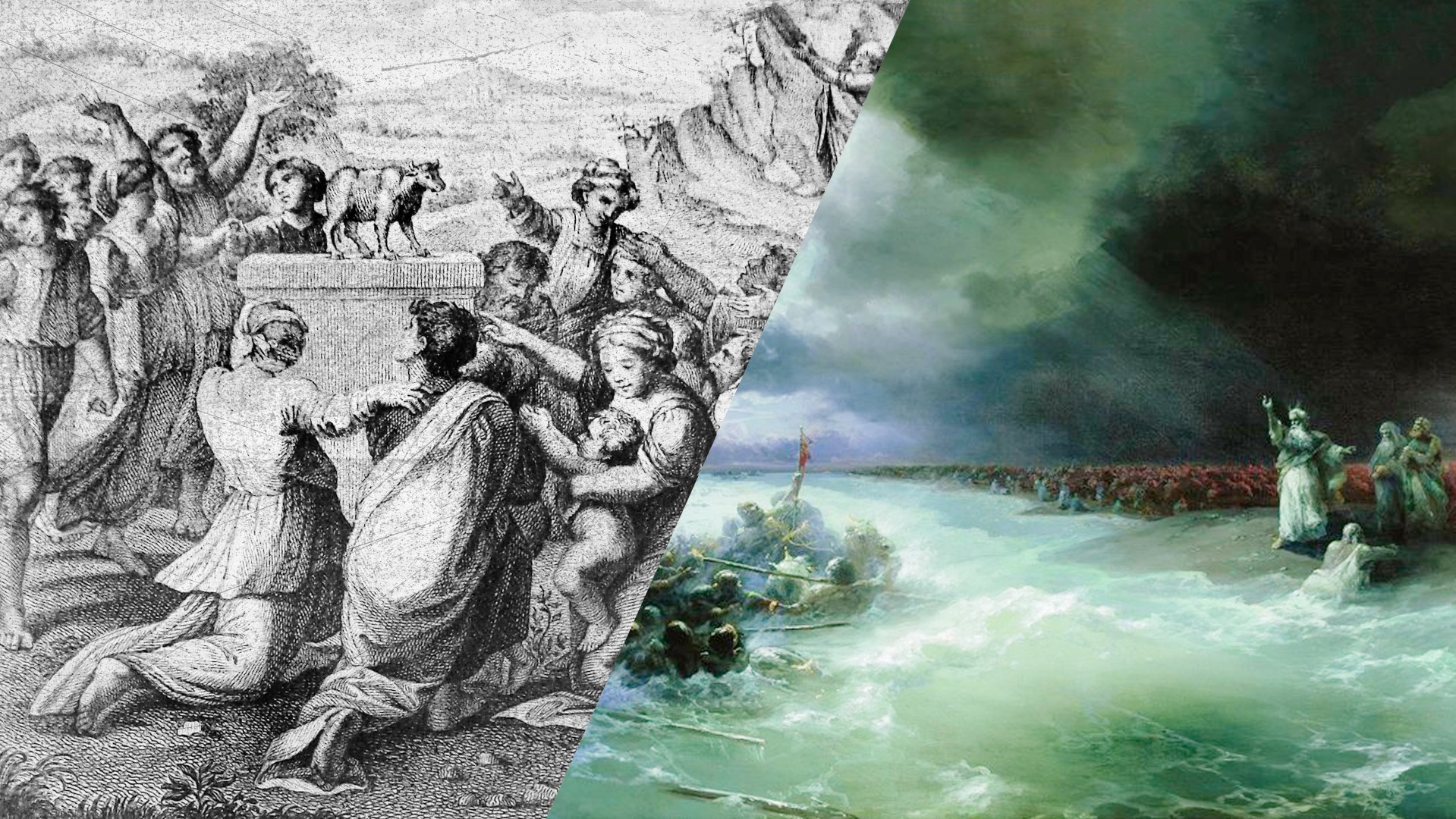
Scripture provides a fascinating way through. Hidden in the Psalter at the end of book 4 lie two adjacent songs that tell Israel’s story in opposite ways. Psalm 105 gives encouragement, depicting an Israel that never puts a foot wrong. Then Psalm 106 chastens, with Israel getting hardly anything right. If we didn’t know the full Old Testament background, it would be hard to credit both portrayals as true.

In Psalm 105, the successes of the patriarchs (vv. 7–25), and especially of Israel during the Exodus and Conquest (vv. 26–45), provide reasons to praise God and remember his wondrous works (vv. 1–6). There is no mention of Israel’s failures, of grumbling in the wilderness, unbelief, or worshiping of the golden calf. “They asked, and he brought them quail” (v. 40) is a remarkably generous account of a fairly colorful incident. So is the psalm’s conclusion (vv. 44–45): “They fell heir to what others had toiled for—that they might keep his precepts and observe his laws. Praise the Lord.” It almost reads like a whitewash.

Then we turn the page and encounter a very different version of the story. Psalm 106 is a litany of disasters. “We have sinned, even as our ancestors did; we have done wrong and acted wickedly” (v. 6). Our fathers rebelled by the Red Sea (v. 7). You rescued them, but they quickly forgot about it (vv. 13–15), craving meat and putting you to the test (a rather different spin on the quail story). Our ancestors were jealous (vv. 16–18), idolatrous (vv. 19–20), forgetful (vv. 21–23), unbelieving (vv. 24–27), immoral (vv. 28–31), and disobedient (vv. 32–35)—to the point of sacrificing their children (vv. 36–39). The only reason we have not been destroyed is that God “remembered his covenant and out of his great love he relented” (v. 45).

Reading the two psalms in sequence is discombobulating. It prompts the disturbing question: Which version is true? The answer, of course, is both. Each focuses on some things and omits others, as all stories do. But both are faithful accounts of what happened, and both ultimately have the same objective, with their opening and closing lines calling Israel to praise the Lord. Did Israel trust God for deliverance from Egypt and the provision of land? Yes. Was Israel guilty of all sorts of evils along the way? Yes.

Here lies the solution to the storyteller’s dilemma. There is a place for honoring heroes of the faith and celebrating the courage and generosity that brought us this far. There is also a place for looking our sin and idolatry squarely in the face, acknowledging that God would have destroyed us long ago were it not for his gracious mercy.

We need both stories. When either is neglected, we can slide into a triumphalist hubris or a self-loathing torpor. But when both are told together, with successes appropriately celebrated and failures duly acknowledged—which is roughly what we see in Psalm 107—we are chastened and encouraged as we remember how God’s grace carries us across mountaintop and valley alike.

Andrew Wilson is teaching pastor at King’s Church London and the author of God of All Things. Follow him on Twitter @AJWTheology.

Testimony

I Used to Run with Drug Addicts and Prostitutes. Now I Share the Gospel with Them.

My journey from life on the streets to life in Christ.

Photo by Mikaela Hamilton

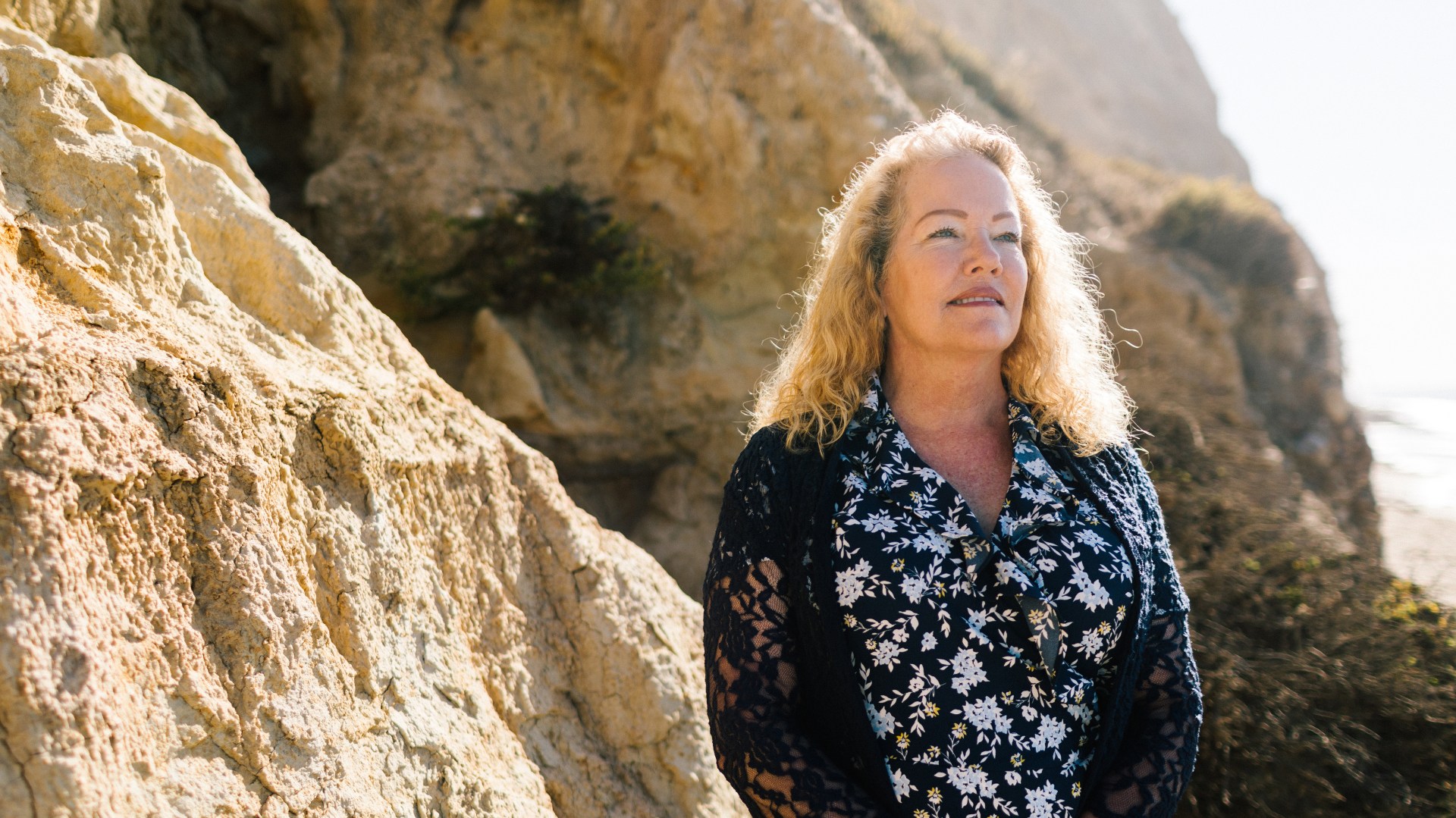
I was born in Los Angeles to a family in turmoil. My father was an alcoholic and a womanizer, and he was married four times by the time I was 17. My mother left when I was about 5 years old, and I never saw her again.

Throughout my childhood, I was moved from foster home to foster home. I started using drugs when I was 13. I believe that’s when I finally realized that I hated myself. Up until then, I had been able to ignore my feelings of worthlessness and the ongoing sting of rejection and abandonment.

At 15, I ran away from home, living on the streets until I was arrested. Thus began my life with the law.

On the run

At first, I ended up at Eastlake Juvenile Hall in Central Los Angeles (a facility to which I would return several times). Murderers, thieves, and gang members were lumped together with those who had only run away from home. As a white girl with long, blond hair, I immediately felt out of place.

Eventually, I was transferred to Florence Crittenton, an open-placement girls’ home in East Los Angeles. Leaving the grounds was against the rules, but there were no bars or walls to prevent it. During that time, I would ride buses across Los Angeles at night, unaware of the potential danger. Pimps, predators, and gangsters abounded in many neighborhoods.

But I was too restless to stay anywhere for long. After running away from the girls’ home for the third time, I was arrested again and sent back to juvenile hall. At this point I was a ward of the court, since my father and stepmother had divorced, neither wanting to take me in.

The court placed me in a closed facility in Central Los Angeles called the Convent of the Good Shepherd. The neighborhood was so unsafe we had to move our beds away from the windows on holidays, because gang members had shot through them in the past. The convent walls were 12 feet high. But I even ran away from there, climbing onto the roof of the laundry building and crawling up the ivy to escape.

With each getaway, my self-hatred escalated, along with contempt for authority figures and mistrust of people in general. I was headed down a path of destruction.

At age 19, I started working for the California Conservation Corps. One of our responsibilities was to serve meals to firefighters and prisoners as they fought major fires. This is where I met a man I’ll call Bill, who was serving a prison sentence in Yreka, California. We wrote letters back and forth for months, and when he was released, we moved in together. Later, we married and had two children.

At the time, I was drinking heavily and smoking pot. For years, I had used every drug I could get my hands on. But little did I know that Bill was using cocaine and speed intravenously. And it didn’t take much to get me doing likewise. I would spend the next six and a half years with a needle in my arm, racking up four near-death experiences when I overdosed.

Needless to say, I lost all interest in working and taking care of my kids, my husband, or my apartment. Over time, my veins were so scarred from injecting myself that I started shooting in my hands and feet. On several occasions, I even had another stoned addict shoot drugs into my neck veins, which risked sudden death. Of course, none of this was remotely fun—I was just trying to deaden my pain.

Bill and I divorced less than a decade later. We had tried getting sober, but we didn’t know who the other person was without the drugs. After a six-month attempt at sobriety, I abandoned my family and headed straight for the streets so I could continue feeding my addiction. I never imagined that I would end up homeless for two years, looking every bit like the proverbial bag lady. During this period, I hung around a dangerous neighborhood, venturing into the projects at night looking for drugs. I occasionally scoured garbage cans for food, but usually I just sold my body so I could survive and maintain my drug habit.

I certainly had a death wish. Twice, guns were pulled on me, and once I told the attacker, “Shoot me and put me out of my misery.” I even attempted suicide on several occasions. But miraculously, I survived every close call.

Photo by Mikaela Hamilton

Water in the desert

By age 29, I had been arrested 13 times. One morning, when I was trespassing on Fort Ord, then an Army base near Seaside, California, six military police cars arrived, and a Seaside Police sergeant came busting through the door. Because of my lengthy criminal record, I was sent to a women’s prison in Southern California, where I already knew some of the inmates from my time on the street.

Crowded by pairs into tiny cells in the receiving unit, we were on lockdown 23 hours a day, 7 days a week, so there was no privacy. Very few inmates were allowed out of their cells to work.

But God was preparing another miracle. My cellmate worked in the kitchen, which gave me significant alone time. While she was away, I started reading Al Capone’s Devil Driver, a book about the mob boss’s chauffeur. This man had killed many people and landed in prison, where he ultimately became a born-again Christian.

At the time, I wasn’t even looking for God. All I knew was that I wanted to die. My whole life had been an unbroken stretch of misery, and the pain was unbearable. After finishing the book, I realized that God was exactly who I needed. I got on my knees and cried out to him for over an hour, weeping for all the wrongs I had done. When I got up off the cell floor, I was a brand-new person.

After being placed in the general prison population a few weeks later, I immediately went to church. The chaplain befriended me and bought me an expensive Bible. I read it for hours every day. After a lifetime derailed by destructive lies, finding God’s truth felt like discovering a cool stream in the desert.

The Scriptures spoke wholeness and hope to my heart. At first, I could hardly fathom that Jesus would love a sinner like me, much less that my sins were totally forgiven. But the more I read, the more the Holy Spirit confirmed the shocking reality of the gospel. I drew special encouragement from Joel 2:25, which speaks of God “repay[ing] you for the years the locusts have eaten.”

Soon enough, I found myself wanting to share Christ with others in prison. So I began leading worship songs and eventually teaching Bible studies.

After my release, I had to go back to my hometown of Santa Cruz, California. But the only people I knew there were drug addicts and prostitutes. I wondered why God had returned me to this kind of environment. How would I overcome my reputation there? But God graciously gave me many opportunities to witness to those I had run with.

Eventually, I returned to school and received my registered nursing degree. I also married the son of a California Highway Patrol captain, and together we started a ministry that helps people come to know Jesus and disciples them in the Christian faith. For decades now, I have written Bible studies and taught them to diverse groups of women—some lifelong Christians, others fresh off the streets or recovering from addictions.

After so many years on the run—from home, from authority, from life itself—I praise God for giving rest to my weary soul. No life is too broken for God to heal. I am living proof.

Sharon Dutra is the cofounder of Be Transformed Ministries. Connect with her at betransformedministries.com.

Ideas

This Christmas, Hold on to the Right Things

Columnist

Keeping a loose grip on people and possessions makes us more hopeful.

CottonBro / Pexels

Most Christmas seasons feature a few must-have toys or accessories of the year, reliably featured on network morning news shows and paid social media promotions. But this year’s big holiday shopping story has been anxiety about supply chains and prices and whether we’ll get all the things we want in time to unwrap them on December 25.

As Christians, we know we shouldn’t let our desires hold us so tightly. I regularly drop things my family has outgrown into the drive-up collection bins at Goodwill, pulling away each time with the words I shall not want echoing in my head. And yet as soon as the donation center sign is in my rearview mirror, I resume this habit of buying stuff I don’t really need.

My head gets clear again in the moments when I focus more on the first part of that line from Psalm 23:1: “The Lord is my Shepherd.” This clear-headedness is like the first day home after a camping trip or after a visit to a far-away place.

I have all I need. And it’s with me wherever I go.

I think of what Wendell Berry describes as the “joy of sales resistance” every time I close an online shopping tab, deciding I will do without the things I’ve placed in my cart. When the season of sales and stress presses upon us, resistance takes effort. But the substance of our true hope endures and helps us through.

Hope, though, takes practice. I keep on forgetting to let go of all manner of things. I am sentimental about old baby shoes, jeans I keep pretending I will wear someday, and time-saving kitchen gadgets that actually just take up space and time. How can we free ourselves from the things that possess us and instead strengthen our ability to hope?

We can practice contentedness and thankfulness, of course. If everything we have belongs to God, then it calls for an honest inventory of what we’ve already been given. And if we already belong to God, then we don’t have to acquire things to find our significance or security.

Learning to let go of things is hard enough. It’s even harder to learn that “I shall not want” often also means letting go of people we love.

Our family is spread out from Oregon to California, from Colorado to Missouri to Florida. I wish we lived closer. And when my older kids are away at summer camp and their rooms are quiet, their absence brings to my attention the artifacts of who they are: their favorite ice cream, a certain song on the radio, the baseball hat squished under the couch, the muddy shoes beside the back door.

I pray for my children and relatives when I miss them. But I also celebrate the ways these people I love are out living the lives God has given them to live, right where they’re called. When I open up my heart to his big plans, I gain a fuller picture of the ways God is at work in this world. Letting go is part of what makes this possible.

In marriage, friendship, and family life, love is built on a springboard trajectory. To love is to receive, to let go, to launch and to send out. The whole of the gift that children receive from their parents, though imperfect, is rooted in the primal courage to love and to let go, in a trust that, whatever space is rent open, God will fill it with his presence.

When Jesus was lifted up into the clouds after his time on earth, his friends were confused by his departure. But in his ascension, Jesus said, “Do not hold on to me” (John 20:17). Jesus had to leave, making room to send an even closer companion. He sent the Holy Spirit to be not just beside us but within us. The new gift was one that we could not have known to ask for.

Change is a constant. Toddlers don’t stay small. Favorite sweaters wear out. Even the skies will wear out. Which is why we keep working to not place our hope in anything that will return to dust or to Goodwill donation bins. We can let go of them, because each time we do, we make space for the God who remains the same to offer us more of himself.

And the more of him we receive, the greater our capacity becomes to love without sticky, grasping attachments to one another or to the stuff we keep.

Ideas

Visitors to Those in Prison Are Getting Screened Out

Columnist

Video calls can supplement but should never supplant visits with incarcerated people.

Illustration by Jarred Briggs

COVID-19 might have further ruptured Christian unity as we debated mandatory vaccines and masking, but there’s one thing we can all agree on based on our experiences over Covidtide: Video calls are a bad substitute for human presence.

True, a video call is better than being out of contact altogether. But there’s a reason that our antipathy to the technology grew over the past two years even as video resolution improved and “You’re muted” reminders became less frequent. God made us as bodies, created to be among and loved by other bodies. It is not good for man to be alone, or remote.

One group has been struggling with this reality longer than most of us: the incarcerated.

Long before the coronavirus, it was already hard for most incarcerated people to receive visitors. In 2015, the Prison Policy Initiative (PPI) found that only 31 percent of people in state prisons had received a visitor other than a lawyer in a typical month. The main reason is distance, as prisons continue to be built in remote areas. In state prisons, nearly two-thirds of the population is incarcerated more than 100 miles from home. In federal prisons, the average distance is 500 miles.

If families and friends can make the drive, there’s some good news: State prisons generally don’t ban human contact, even if many have limited hours or days that they allow visits. Jails have been another matter. PPI found that 74 percent of jails banned in-person visits when they implemented video visitation. One of the leading companies in the $1.4 billion-a-year prison telecommunication industry even required facilities to “eliminate all face to face visitation.” They dropped the requirement when PPI exposed it, but their contracts still incentivize restrictions by raising costs significantly if the number of video visits falls below a certain threshold.

Requiring the worst of both worlds, many facilities with video-only visits still make family members drive to the facility. “It’s just too much frustration to come down here, wait for an hour and then only get 25 minutes for a not-so-good call,” Ashika Coleman, who is incarcerated in Texas, told Prison Fellowship. “I think the hassle is why people don’t visit me as much anymore.”

Research has repeatedly demonstrated that in-person visits matter. One notable study from the Minnesota Department of Corrections found that visitation—even just receiving one visit—reduced recidivism by 13 percent for felony reconvictions and 25 percent for technical violations. There’s little research on video visits so far, but one recent study suggests they may not have much effect on recidivism.

Advocacy for in-person visits is working. Increased attention to restrictions has caused some jails to rethink their policies, and many made calls free during the pandemic. Some elected sheriffs have made restoring in-person visitation a winning campaign issue. The FCC is becoming more involved in reducing the cost of prison telecommunications. In October, California governor Gavin Newsom vetoed a bill that would establish in-person visits as a civil right but increased prison visitation from two days a week to three and said he’d welcome other efforts to expand in-person visits.

Visiting the incarcerated has long been a passion for those who take Jesus’ words in Matthew 25 seriously and for those who know that men and women in prisons and jails are just as human and beloved by Jesus as the children in our Sunday schools. Likewise, Christians have been passionate about policies that promote healthy families and that transform healthy communities through transformed lives. Making sure that jails replace video with visits should be a unifying political priority for us.

Still, inhumane policies and our new awareness of the dangers of isolation are more than an opportunity to advocate for personal visits. They can also be an opportunity to seriously consider being those personal visits.

This isn’t a call to drop in to a prison once or twice for a Sunday service to check off a Matthew 25 box. As Charles Colson told this magazine after his brief incarceration, “That’s the worst thing Christians can do.” Offering spiritual niceties without commitment, without sacrifice, without mutuality is a poor simulacrum, as distant from embodied relationship as a low-quality video visit.

Not every Christian is called to long-term relationships with prisoners, just as not every Christian is called to marriage or parenthood. But more of us are called than have answered. COVID-19’s exasperating loneliness and frustration don’t have to be wasted. We now see our need to visit. There are prisoners who need visiting.

Ted Olsen is executive editor of Christianity Today.

Ideas

Why I’m Losing My Millennium

Columnist

Whether or not this is the apocalypse, there are more important things afoot.

Illustration by Rick Szuecs / Source Images: Mesut Kaya / Unsplash / Wikimedia Commons

Years ago, an academic colleague of mine was asked by his tenure committee about his views of the Millennium—the thousand-year reign of Christ described in Revelation 20. Was he a premillennialist, meaning that he thought that Jesus would return before this literally understood thousand-year period, or was he an amillennialist, believing the thousand-year reign refers symbolically to Christ’s rule from heaven now? My friend gave his view—I don’t remember what it was—then said, “But I’m not sure I would hold onto that under persecution.” The committee erupted in laughter.

The Millennium is not a primary or secondary or maybe even tertiary doctrine of the Christian faith. Those committed to the same robust orthodoxy have held varying views—and maybe have all the way back to the days of Origen and Irenaeus. I was always on the side of the premillennialists. I even wrote a chapter in a book defending the view and taught it to my students every semester for 20 years.

Many have referred to the past couple of years as an “apocalypse.” Some use the word just to mean “akin to a dystopian movie.” But others, mostly Christians, have pointed to the word’s actual meaning—an unveiling. We have seen awful things uncovered. People we thought were prophets and pastors turned out to be predators. Thousands of our neighbors died gasping for air, while others screamed at one another about whether to wear masks or get vaccines. Churches and denominations and even families split in a way we never would have imagined a decade ago—not over modernism versus fundamentalism, but over our differing views about a minor character in the movie Home Alone 2.

But that’s not all that was revealed. We’ve seen our brothers and sisters in Christ overcoming, as Jesus said, even under the seemingly existential threat of Chinese Communists or European authoritarians or Latin American despots or Iranian ayatollahs. We’ve seen those with the most plausible case for leaving the church altogether—those who experienced abuse within it—rising up to hold institutions accountable in order to make church a place where no one goes through what they did.

And we have watched up close as, every week, those with terminal cancer or deserting spouses or disappearing paychecks lined up to hear, “This is my body, which is broken for you.” Sunday by Sunday, all over the world, we’ve seen sinners like us baptized into the old-time newness of life.

In these apocalyptic times, I find myself spending more time with the Apocalypse. And what I see Jesus showing the apostle John from “behind the veil” looks strangely familiar. For a church seemingly under the heel of an imperial Rome, Jesus contrasts the power of a self-exalting humanity, “the Beast,” against the way of the Cross. The coercive, animal strength of humanity is there in the open. But we also see a different power: Beheaded saints sit on thrones, the ones who “loved not their lives even unto death” (Rev. 12:11).

The Devil is, in a sense, the “god of this age” (2 Cor. 4:4), but in another sense he’s a strong man bound while the gospel plunders his house (Mark 3:27). And this is written to a people who face, as the hymn puts it, “fightings within and fears without”—all the church rot we contend with, plus the very government that crucified their Lord.

It would be too much to say that the pandemic killed my premillennialism. But I can say that I found myself turning more and more to Revelation 20, not just for reassurance of future hope, but for a picture of the way things are right now in ways hidden to our perception.

The old Augustinian view of Revelation 20 makes more sense to me now as an answer to the question of whether the times we live in are light or darkness, whether grace is everywhere or everything is falling apart. Both are true.

That reality is more important than how we line up our prophecy charts. After we argue over Revelation 20, we can turn the page and see how everything sad will come untrue, as Tolkien wrote. I’m willing to be corrected as my mind mulls the Millennium. The future is bright, transfiguration-level bright. But the present is too, if we just know where to look. Because Jesus reigns.

And that’s worth holding onto, even under persecution.

Russell Moore is Christianity Today’s chair of theology.

News

All I Want for Christmas Is a Song that Mentions Jesus

Most-played hits around the world celebrate love, snow, and chestnuts before getting around to Christ.

Illustration by Rick Szuecs / Source images: Handout / Getty / Envato / Wikimedia Commons

Jesus is the reason for the season. But he doesn’t show up much in the top Christmas songs played on Spotify.

According to October 2021 data from the streaming service collected by Every Noise, the most-played Christmas song around the world is Mariah Carey’s “All I Want for Christmas,” followed by Wham!’s “Last Christmas,” and Ariana Grande’s “Santa Tell Me.” Some top songs make oblique references to the religious aspect of Christmas, but most stick to love, the weather, and an occasional chestnut.

Globally, the most popular Christmas song to mention Jesus is Boney M.’s “Mary’s Boy Child/Oh My Lord,” which comes in at No. 71. It is followed by Nina Nesbitt singing “O Holy Night” at 79 and Josh Groban and Faith Hill performing “The First Nöel” at 90.

The presence of Jesus in popular Christmas music varies widely by country, however, revealing differences in musical taste, holiday traditions, and the spread of Christianity by missionaries, militaries, markets, and immigration.

In Greenland, the top Christmas song to mention Jesus is in Danish, while in Vietnam, it’s an English rendition of “God Rest Ye Merry Gentlemen.” In Russia, the true meaning of the day is heralded by Diana Ross, who sings that “On Christmas morn new hope is born,” while in Qatar, the most popular Christian Christmas song is a hit from the Philippines that places Jesus at the center of the celebration:

Kikislap ang pag-asa
Kahit kanino man

Dahil ikaw Bro, dahil ikaw Bro
Ang star ng pasko

Hope will shine once again
Within everyone
Because of you, bro. Because of you, bro.
The star of Christmas.

https://open.spotify.com/embed/playlist/5ib9W3p3XLRih7gWDXOuSr?si=363e0a2ffe29492f
Apple PodcastsDown ArrowDown ArrowDown Arrowarrow_left_altLeft ArrowLeft ArrowRight ArrowRight ArrowRight Arrowarrow_up_altUp ArrowUp ArrowAvailable at Amazoncaret-downCloseCloseEmailEmailExpandExpandExternalExternalFacebookfacebook-squareGiftGiftGooglegoogleGoogle KeephamburgerInstagraminstagram-squareLinkLinklinkedin-squareListenListenListenChristianity TodayCT Creative Studio Logologo_orgMegaphoneMenuMenupausePinterestPlayPlayPocketPodcastRSSRSSSaveSaveSaveSearchSearchsearchSpotifyStitcherTelegramTable of ContentsTable of Contentstwitter-squareWhatsAppXYouTubeYouTube