Can a Christian Flag Fly Outside Boston’s City Hall?

The free speech question considered by the Supreme Court this week may hinge on whether the pole counts as a public forum.

Christianity Today January 18, 2022
gregobagel / iStock / Getty Images Plus

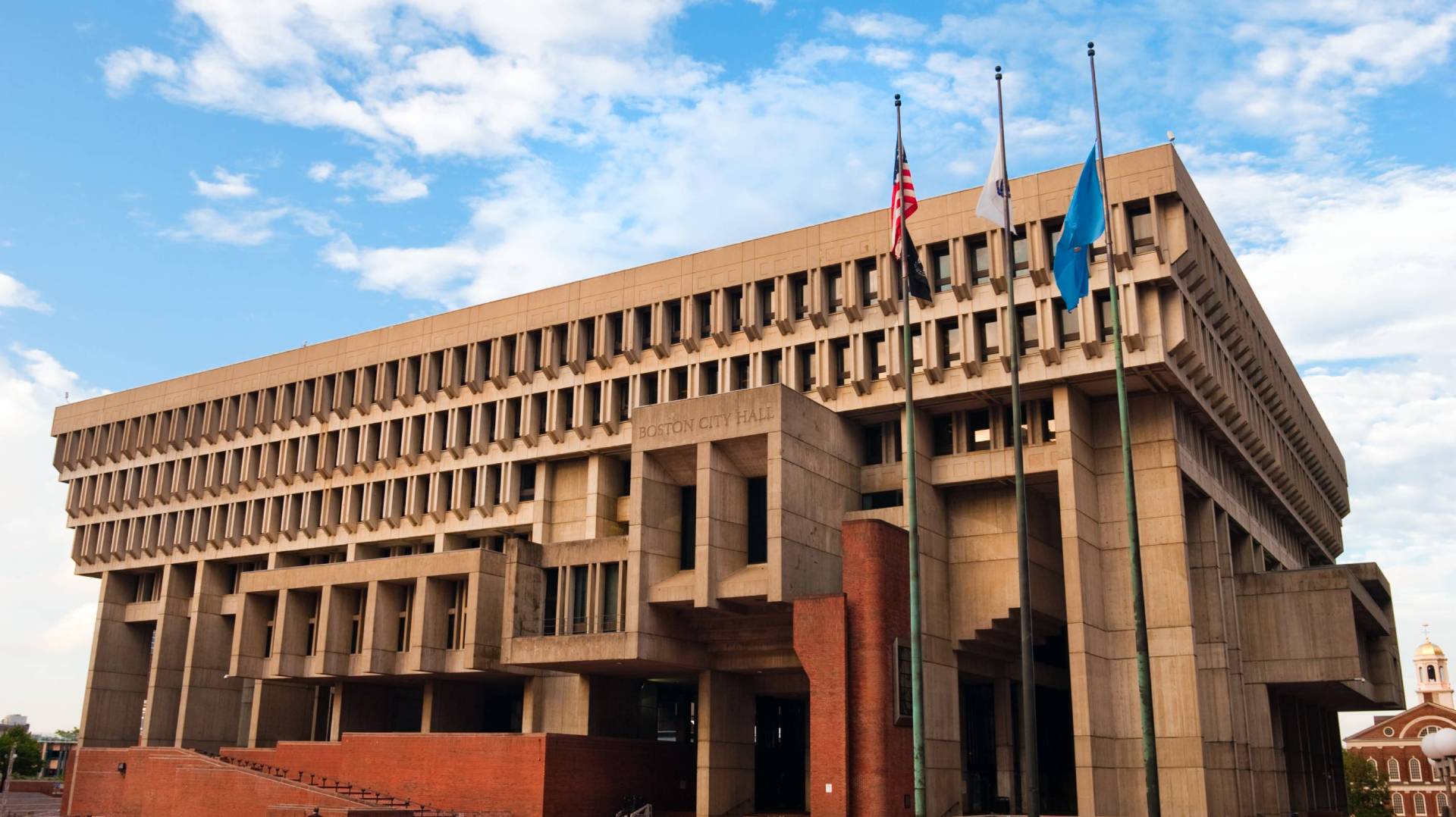
There are three flagpoles outside Boston City Hall. One flies the United States flag. Another flies the Massachusetts state flag. What can – and can’t – fly from the third is an issue that the Supreme Court considered during oral arguments on Jan 18.

The case, Shurtleff v. Boston, addresses whether the city violated the First Amendment by denying a request to temporarily raise the Christian flag on a flagpole outside City Hall, where Boston has temporarily displayed many secular organizations’ flags.

During oral arguments, the justices and the parties agreed that if the flagpole is a public forum open to all comers, then the city of Boston would be unable to deny a request to temporarily raise a religious flag, like the Christian flag.

The key question in the case then is this: is the third flagpole a public forum open to all comers or is it government speech?

To answer this question, the court’s decision, which will be handed down later this term, will likely clarify one or more free speech doctrines that I study in my work on free speech and the First Amendment. Such clarification of the court’s free speech doctrine would likely impact how courts nationwide interpret the First Amendment’s guarantees.

Case background

Boston permits groups to request that a flag temporarily fly alongside the American and Massachusetts flags at City Hall to mark special occasions, replacing the city flag that usually occupies the third post. Past examples include flag requests from the Chinese Progressive Association and the National Juneteenth Observance Foundation.

In 2017, Camp Constitution, a New Hampshire-based organization, requested to fly the Christian flag, which has a cross in the upper left corner and was designed by a Sunday school teacher and a missionary executive in the late 1800s. Today, some Protestant denominations display the flag inside their churches.

Camp Constitution asked to fly the flag as part of a planned event “to celebrate the civic contributions of Boston’s Christian community.” The organization says its mission is “to enhance understanding of our Judeo-Christian moral heritage, our American heritage of courage and ingenuity, including the genius of our United States Constitution, and the application of free enterprise.”

Boston denied the request. The city cited concerns that raising the Christian flag at Boston City Hall would violate the First Amendment’s establishment clause, which bars the government from promoting particular religions over others. After making a second request, which Boston also denied, Camp Constitution sued.

A federal district court and the First Circuit Court of Appeals sided with Boston on the grounds that flying a flag on the third flagpole was government speech, not private speech – and therefore the city was entitled to refuse to fly the Christian flag on its flagpole.

Camp Constitution appealed to the Supreme Court, which granted review.

The case’s outcome will likely hinge on the Supreme Court’s determination of whose views are represented by the flagpole outside City Hall: the private organization whose flag is temporarily flying, or the government. In other words, this case is about who is “speaking” when that flag goes up, and whose free speech rights are protected.

If the court determines that Camp Constitution is speaking, then a framework the court has developed, known as the “public forum doctrine,” will apply. This would likely result in a ruling favoring Camp Constitution.

If the court determines that the city of Boston is speaking, then the court’s government speech doctrine will apply. This would likely result in a ruling favoring Boston.

Public forum doctrine

Federal, state and local governments oversee a wide variety of public spaces, such as parks, universities and courthouses, just to name a few. These areas serve different functions, some of which require more regulation of speech than others.

The Supreme Court has organized government spaces into several categories, each of which permits different types of restrictions on free speech. This set of categories and permitted restrictions is referred to as the public forum doctrine.

Spaces like public parks and sidewalks are considered public forums, the category that permits the fewest restrictions on speech. In a public forum, a government can never restrict speech based on viewpoint – specific positions on a topic – and is severely limited as to when it can restrict speech based on content – a given topic.

Normally, a flagpole outside a city hall would not be considered a public forum. However, the Supreme Court also recognizes a separate category, “designated public forums,” which are spaces the government converts into public forums. In a designated public forum, free speech regulation is limited in the same way it would be in a public forum.

In Shurtleff v. Boston, both parties agree that the area surrounding the flagpole is a public forum. But they disagree over whether the flagpole itself is a designated public forum. Camp Constitution argues that Boston has turned the flagpole into a designated public forum by allowing other groups to fly their flags there. Meanwhile, Boston argues that it has not, because the city retained control by permitting limited types of groups to raise their flags.

Camp Constitution notes that Boston previously approved 284 requests to raise other flags, and that there is no record of a prior request being denied.

But Boston counters that none of those previous requests were for religious flags. The city argues that only two types of flags have been permitted: flags representing territories, nations and ethnicities, and flags associated with publicly recognized days of observance, such as Veterans Day and LGBTQ Pride Month. Boston argues that such limited categories of approval are not what one would expect in a designated public forum, and that this is evidence that Boston has not turned its flagpole into a designated public forum.

Government speech doctrine

Over 30 years ago, in Rust v. Sullivan, the Supreme Court recognized that the government itself is a speaker with First Amendment rights – an idea known as the government speech doctrine. Government speech is not subject to the public forum doctrine. Instead, the government has much greater discretion in deciding which messages it endorses.

Boston argues that raising a flag on the third flagpole at City Hall is government speech and therefore the city has the right to determine what views it wants to express on its flagpole. Camp Constitution disagrees, maintaining that the flagpole is a designated public forum and therefore few restraints on private groups’ free speech are allowed on the flagpole.

Both parties’ arguments rely on competing interpretations of the government speech doctrine put forward by the Supreme Court in two cases, Pleasant Grove v. Summum and Walker v. Texas Division, Sons of Confederate Veterans.

In 2009, the Supreme Court held in Pleasant Grove v. Summum that the permanent monuments in a park owned and operated by the town were government speech. The Supreme Court’s unanimous decision allowed the town to deny a request from a small religious group, Summum, to install a permanent monument expressing its beliefs, even though the park had previously accepted a monument of the Ten Commandments.

In 2015, the Supreme Court held in Walker v. Texas Division, Sons of Confederate Veterans that license plates were government speech. This permitted Texas to deny a request for a specialty license plate featuring the Confederate flag, even though Texas offered a wide range of other specialty plates. Unlike Pleasant Grove v. Summum, this case was decided by a slim 5-4 majority.

Shurtleff v. Boston will likely require the court to further clarify the government speech doctrine. The central issue is this: When another flag temporarily replaces Boston’s own, who is speaking?

Mark Satta is assistant professor of philosophy at Wayne State University.

This article is republished from The Conversation under a Creative Commons license. Read the original article, which was first published on January 6 and updated on January 18.

News

Supreme Court to Debate Football Coach’s Prayers

Did kneeling at the 50-yard line violate the First Amendment? Or did a school’s attempt to stop it violate the First Amendment?

Christianity Today January 18, 2022
Meegan M. Reid / AP Images

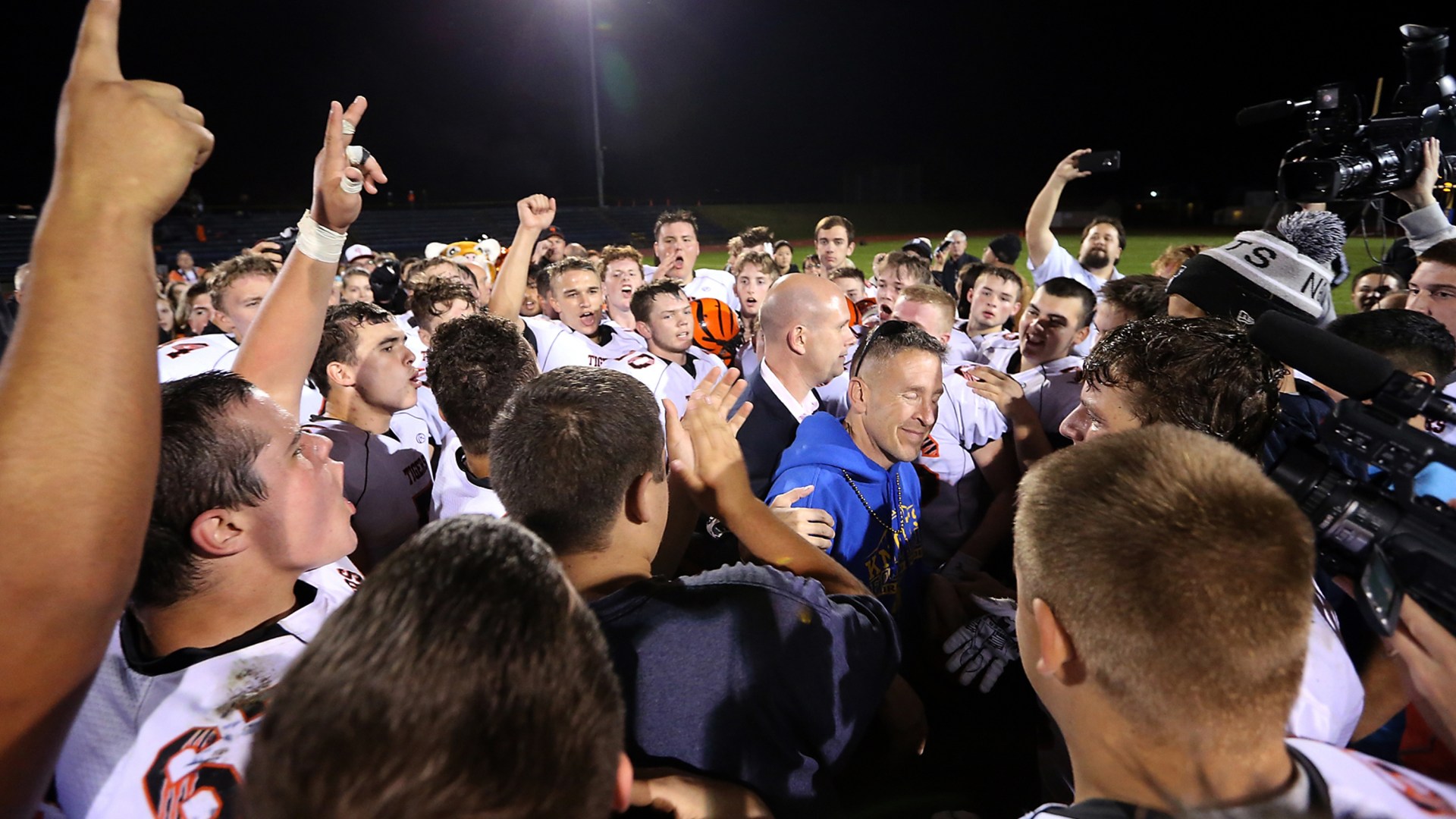
It is a fact that Joseph A. Kennedy, a former coach of the Bremerton Knights in the suburbs of Seattle, prayed on the 50-yard line after high school football games in the fall of 2015. But everything about those prayers is up for debate.

Were they public or private?

Was Kennedy praying just for himself, as an exercise of his faith, or as an official representative of the school district?

Did players join of their own accord, or were they pressured to participate?

Kennedy and the Washington state school district do not even agree on whether he was fired or failed to apply to extend his contract, or whether he ended his prayers with “amen.”

Those disagreements—big and small—are now going to the highest court in the land.

The US Supreme Court decided on Friday that it will consider the disputed facts and, more importantly, whether or not they add up to a violation of the First Amendment—and if so, by whom.

Kennedy’s attorneys argue that he was forced out of his coaching position in violation of his First Amendment–protected right to exercise his faith. The school district argues, on the other hand, that the coach’s prayers violated the same amendment’s prohibition against respecting an establishment of religion, since the coach was acting as a representative of the public school.

The court declined to hear the case in 2019. Justice Samuel Alito wrote at the time that “important unresolved factual questions would make it very difficult if not impossible” to consider the constitutional questions raised by the coach’s prayers.

He also argued, though, in a statement joined by justices Clarence Thomas, Neil Gorsuch, and Brett Kavanaugh, that the lower court’s rulings in favor of the school district were “troubling,” and “may justify review in the future.”

The case went back to the Ninth Circuit of the federal court, which ruled against Kennedy again. Kennedy appealed the case back to the Supreme Court, and the nine justices, now with the addition of Amy Coney Barrett, decided to consider it.

Kennedy was a varsity and junior varsity assistant coach for seven years, according to court records. Then an opposing coach complained to the school district that what had appeared to be a motivational postgame speech, with students gathered around Kennedy and Kennedy raising a team helmet in his right hand, was actually a prayer. The other coach felt that Kennedy was praying at the students more than with them.

The school also heard from one player’s father that his son was concerned he wouldn’t get to play much unless he joined in the prayer.

“No child attending public school should have to pray to play school sports,” said Rachel Laser, the president of Americans United for Separation of Church and State, which represents the school district. “No student should ever be made to feel excluded—whether it’s in the classroom or on the football field—because they don’t share the religious beliefs of their coaches, teachers or fellow students.”

Kennedy’s attorneys, on the other hand, say there’s no evidence that the coach put pressure on anyone. They say it was students’ idea to join him.

“Initially, Kennedy prayed quietly and alone. After several games, some [Bremerton High School] players asked him what he was doing and whether they could join him,” the lawyers wrote. “Kennedy told them ‘This is a free country.’”

From the coach’s perspective, the post-game prayers became a tradition and continued for seven years—sometimes with many students joining him, sometimes with only a few—until the school district decided the prayers were a legal problem.

Kennedy was ordered to stop, and he did for one game in September 2015. But then he felt so convicted that he’d betrayed his faith that he turned around before he got home, returned to the empty field, and prayed.

He informed the district school board that he had a “sincerely held religious belief that he is compelled to pray following each football game,” and at after the next game, he prayed at the 50-yard line again. He was joined by a crush of students, supporters, and media.

Kennedy was subsequently suspended and sued for his right to pray on the field. According to his attorneys, it became clear that he was going to have to fight for his right to exercise his religion while employed by a school.

“Whatever is true for the kingdom of heaven,” they wrote, “the First Amendment is not reserved for the meek.”

A number of religious liberty advocates have filed friend-of-the-court briefs, urging the Supreme Court to consider Kennedy’s case and take his side. The Ethics and Religious Liberty Commission of the Southern Baptist Convention, joined by the National Association of Evangelicals, the Billy Graham Evangelistic Association, and 11 other Christian groups, filed a brief saying the case “dramatizes a wrongheaded view” of the First Amendment “that this court should take the opportunity to correct.”

The two parts of the First Amendment’s guarantee of the freedom of religion shouldn’t be pitted against each other, they argue, and a praying coach doesn’t represent a government preference for a particular faith, even when kneeling on a football field.

“Obviously, a public school teacher wears two hats—that of a private citizen and that of a government worker,” the brief says. “No one is confused by that.”

The court case suggests, however, that that too is up for debate.

News

Christians Are Going Back to Church—But Maybe Not the Same One

Amid all the moves and changes of the past two years, many congregations saw turnover accelerate.

Christianity Today January 18, 2022
Cavan Images / Getty / Edits by Christianity Today

Houston Northwest Church suffered heavy damage from Hurricane Harvey in 2017. By the time its flooded facilities were finally rebuilt a couple years ago, the congregation was only back at full capacity for six weeks before services were shut down by the pandemic.

As the church endured one setback after another, senior pastor Steve Bezner has seen the flock ebb and flow.

“About a third of our congregation worshiping in person are new faces,” he said.

His church currently draws 1,600 attendees each week, including several hundred viewing online—not far from its pre-pandemic weekly average of 1,700. Bezner marvels at the number of members who left during the pandemic and the number of new people who have showed up to take their place.

“It will make you believe in the preservation of the Holy Spirit,” the Houston pastor said.

Member turnover is as common to the life cycle of a church as baptisms, weddings, and funerals. But the pandemic has accelerated people’s comings and goings and has required new strategies to welcome and assimilate new members into the church community. These tasks have been complicated by evolving COVID-19 precautions and the challenge of identifying who still belongs to the church, when many continue to worship online.

“Not gathering stirred up these questions,” said Steve Smith, executive pastor of Highpoint Church in Naperville, Illinois. “The gospel hasn’t changed, and we will always be Bible-centric, but how we engage people is changing.”

COVID-19 has propelled people toward life change of all kinds over the past two years, including career shifts, new relationships, and relocation. Some changes have been out of necessity and some out of new priorities; Pew found three-quarters of have seen some positive impact from the pandemic.

This has played out with church choices as well. For those who were already struggling with their church, the pandemic served as a catalyst to begin exploring other congregations. One Atlanta churchgoer said the pandemic pushed her toward change after navigating difficult social dynamics within her young adult group.

“I decided to start fresh somewhere else,” said Elisa Hoover, 27. “It was easier to visit other churches during the pandemic, and my absence was less noted in my church’s tight-knit community.”

For many people, the sustained isolation of the pandemic heightened their desire for connection and spiritual community.

Many new attendees to Houston Northwest Church came from a large apartment complex across the street that houses mostly single adults. “They felt the psychological pressure of loneliness and wanted to check it out,” Bezner said. “They wanted to discover who God is.”

This desire for connection and spiritual grounding transcended demographics, affecting everyone from singles living alone to parents with young children to parishioners who lived too far from their church to be deeply engaged.

When the pandemic hit in 2020, Dylan Parker and his wife realized they lived too far from their Arkansas church to be as invested as they would like.

“Until the pandemic slowed us down, we didn’t realize the toll it took on us to live life across multiple cities,” he said. They began looking for a church closer to home, but soon learned that he was accepted into a PhD program at Fuller Theological Seminary and would be moving to California. Parker and his wife now live within walking distance of their church and many of its members.

“We already feel like we have closer and stronger community here than in Arkansas,” said Parker.

The father of two also values his new church’s approach to handling challenging issues that emerged during the pandemic, including social justice. Though he says he would not have changed churches for this reason alone, he acknowledges his California church is a better fit.

“My previous church was not allowing space to have conversations I wanted to have on social justice,” he said. “I have reached a place in my life where I needed space to answer those questions.”

Navigating a challenging landscape

It is impossible to analyze the topic of church switching during the pandemic without acknowledging the backdrop of national polarization on issues ranging from masking and vaccination to racial tension to politics. Frequently, pastors have felt ill-equipped to address these issues in ways that satisfy members representing a wide spectrum of viewpoints.

Bezner describes the turbulence of the last two years as “compounded national trauma that has caused decision fatigue in pastors.”

Controversial decisions, made under heightened scrutiny, could be what prompts certain attendees to reevaluate church fit.

“It used to be a quieter thing, but now groups leave together and it’s louder than it used to be,” said Smith at Highpoint in Illinois.

Churches are often losing the “back row,” with those who were highly involved becoming even more involved during the course of the pandemic, those who were moderately involved holding steady, and many of the less engaged attendees falling away.

“We’re seeing that the people who came 8 or 12 times a year have stopped attending,” said Smith. “Their spiritual muscle atrophied.”

Across Highpoint’s seven locations, the nondenominational church saw few of these people re-engage despite a robust communication campaign led by church leaders and volunteers.

Offering virtual services is helpful during the pandemic, but makes it harder to account for members. The mix of people switching churches and worshiping online has created mystery around the true number of members who have exited church permanently.

Nearly all churches had reopened by last summer, with only three quarters of once-regular attendees back in the pews, Lifeway Research found.

Building deeper community

“Anonymity is a big part of the American church landscape,” said Len Tang, director of the Church Planting Initiative at Fuller Theological Seminary. “But in smaller churches, you can’t be anonymous.”

In some ways, small churches and church plants have been better positioned to retain members during the pandemic. Tang’s congregation, Missio Church in Pasadena, California, did not see much church switching during the pandemic.

“People are usually loyal to the vision of a church plant and less likely to switch churches,” he said. Lifeway also found that smaller churches rebounded more quickly than large ones.

“Most small churches are still not back to pre-pandemic levels, but far more of them are reaching this point than larger churches,” said Scott McConnell, executive director of Lifeway Research. “It’s possible small churches are aided by perceived safety of a naturally smaller gathering, differences in technology options for gathering online, or the strength of relational connections.”

Churches big and small focused on small-group discipleship when in-person services were paused.

“Churches that understood discipleship at their core could continue that mission,” said Tang.

At Highpoint, pastors could no longer use Sunday attendance as a measure of church discipleship, so they adjusted their approach to leadership training. Instead of simply sharing discipleship methods, they focused on teaching leaders why discipleship is essential and how to engage people meaningfully.

“We are trying to help them understand, ‘How do you pull out of people their deeper struggles and longings as a part of spiritual formation?’” Smith said.

Down in Houston, Bezner’s church started hosting vision dinners in order to accommodate more people than their traditional new member classes.

Matt and Dara Osborn of Spring, Texas, recently attended one of these vision dinners to learn more about the church’s past and its hoped-for future.

“Some churches are focused on rebuilding and others are sprinting forward,” said Matt Osborn. “Houston Northwest Church is sprinting forward. In this new era, reopening is like starting over.”

Osborn believes this time of transition during the pandemic could be preparing the church for a new phase of growth ahead.He said, “Maybe God is placing people where they need to be for his kingdom to grow in post-pandemic times.”

News

9 in 10 Evangelicals Don’t Think Sermons Are Too Long

Even with recent divides in congregations, survey finds high levels of satisfaction among churchgoers.

Christianity Today January 17, 2022
Calebe / Lightstock

At a time when pastors feel particularly under pressure, here’s some good news from the pews: Evangelical churchgoers are pretty happy with how things are going at their churches.

Most don’t think the sermons are too long; if anything, they’d like to see more in-depth teaching from leaders. They aren’t bothered by too many messages about giving. They don’t think social issues and politics play an outsized role in the teaching.

That’s according to a new survey of evangelical churchgoers in the US, the Congregational Scorecard conducted by Grey Matter Research and Consulting and Infinity Concepts.

Around three-quarters are satisfied with their congregation approach to various areas of church life and wouldn’t want it to change, the survey found.

Among the findings:

  • 85 percent are satisfied with the length of their sermons and how long the service runs.
  • 88 percent are happy with how often the church asks for tithes and donations.
  • 74 percent like the style of the service, while the remainder are split between some preferring more traditional and some preferring more contemporary.

“By and large, churches are doing a pretty good job of giving evangelicals what they want to experience,” the researchers concluded. The survey focused on evangelicals by belief who attend worship services at least occasionally.

Those who don’t think sermons are the right length are just as likely to say they want them longer as they are to want them shorter.

A 2019 Pew Research Center analysis found that average evangelical sermon is 39 minutes long, while sermons in historically Black churches tend to be longer, around 54 minutes. There’s no single answer for the ideal sermon length, but Mark Dever told 9Marks last year, “A sermon should be as long as a preacher can well preach and a congregation can well listen.”

https://datawrapper.dwcdn.net/1w2IE

Grey Matter reported that few young churchgoers are bored with preaching; just 10 percent of those under 40 want shorter sermons. Of those 70 and older, 11 percent would like the pastor to preach shorter.

And younger evangelicals are the ones most likely to want more in-depth teaching from their churches. Evangelicals under 40 are twice as likely as their seniors (39% to 20%) to want more substance from the pulpit.

“Virtually no evangelical churchgoers wish their church would lighten up a little on [in-depth teaching], but three out of ten would like more of it,” according to the Grey Matter report. “So maybe it is time some church leaders push just a little bit more in terms of the depth of teaching they are providing.”

Even after a year when some congregants criticized COVID-19 responses and churches saw deepening fissures over how leaders engaged political and social issues, most churchgoers still gave their churches high marks in these areas.

Two-thirds said their church had the right amount of political engagement. Those who weren’t satisfied were twice as likely to say they wanted less politics in church (22%) than to wish for more (11%).

For people who don’t attend as regularly (once a month or less), political messaging was the top thing they’d want to change about church; 35 percent said they wanted less politics.

Evangelicals were twice as likely to say they want more engagement with social issues from their church than less (19% versus 9%); 72 percent were happy with how their church addressed such issues. Younger evangelicals (25%) and African American evangelicals (34%) were particularly likely to want social issues to come up more.

Ideas

Gender Questions Should Send Us to Scripture

When it comes to the topic of gender roles, it all comes down to biblical interpretation.

Christianity Today January 14, 2022
Illustration by Mallory Rentsch / Source Images: Daniel Lundgren / photo5963 / Getty / Tim Wildsmith / Unsplash

Many questions have recently been raised about complementarianism. We are keenly aware of the many stories of pastoral and spousal abuse—some of whom are noted complementarians. Such stories make many people wonder if complementarianism is simply a form of power grab, an attempt to hold onto male authority in order to exercise their selfish will.

Cultural questions have been raised as well. Is the complementarian vision merely a product of white western culture—deriving from a patriarchal ethos and an American vision of the good life, entirely sundered from biblical witness?

Or others have suggested the complementarian view solely represents the worldview of the Republican party, constituting a backlash to societal changes in the 1960’s. Or as one historian initially proposed, perhaps we have been more influenced by John Wayne than Jesus of Nazareth?

All of the questions posed above are excellent, and we need to be open to critique and revision. I hope none of us would claim that we are perfect in our interpretation or implementation of what the scriptures teach on the relationship between men and women.

There is always a danger that we have reacted to or imitated the society around us. We are all influenced by culture and should receive any critique that returns us to scriptural witness in good faith. We should listen charitably to brothers and sisters who view things differently—and none of us should be above reforming and nuancing our views.

The matter is complex, however, and egalitarians must also be able to answer the questions that are posed to them. They are not immune to cultural forces either.

The feminism of the 1960’s has shaped society in profound and enduring ways—both for good and for ill. The sexual revolution has transformed our culture’s conception of what it means to be a man and a woman. This shows up in the acceptance of same-sex marriage and transgender identity, among other things.

Nor can we discount the influence of the mainstream media and major universities, many of which are guided chiefly by leftist ideology. Those who relax the complementarian norm are often celebrated in these spaces as open-minded by a social elite.

In other words, there are social and cultural forces operating on both sides. No one is exempt, and no one inhabits a neutral space when it comes to gender dynamics.

Every argument for every perspective should send us back to the biblical witness. The word of God still pierces our darkness and can reshape how we think and live. The Bible can and should still be heard, believed, and followed—even though we are all fallible and culturally situated.

Of course, every reading of the biblical text on male-female issues represents an interpretation and is subject to critique. But since there are cultural arguments, forces and pressures on every side, we must always return to the scriptures to decipher their meaning—and I believe that meaning can be retrieved.

At the end of the day, it should come down to whoever offers the most plausible and persuasive reading of the biblical texts in question. The complementarian view isn’t nullified by saying Trump and Republicanism and the egalitarian reading isn’t contradicted by crying out feminism and liberalism.

Yet I worry that in some circles, cultural arguments receive precedence over scriptural ones—as if they alone have the final say on the truth or falsity of a particular biblical interpretation.

Thomas Schreiner is the James Buchanan Harrison Professor of New Testament Interpretation at the Southern Baptist Theological Seminary. Speaking Out is Christianity Today’s guest opinion column and (unlike an editorial) does not necessarily represent the opinion of the publication.

News

Church Leaders Are Still Waiting for Volunteers to Come Back

Gallup survey found involvement in religious service dropped again in 2021.

Christianity Today January 14, 2022
Zayne Grantham Design / Lightstock

The COVID-19 pandemic is forcing many churches and ministries to rethink how they recruit, train, and maintain the fleet of volunteers they need.

Volunteering for religious organizations dropped during the first year of the pandemic, when in-person services were canceled and outreach events were put on hold, and has continued to decline.

According to Gallup, 35 percent of Americans reported volunteering for a religious organization last year, down from 38 percent in 2020 and 44 percent in 2017.

“A recovery in volunteering may be more elusive as concerns about COVID-19 exposure and public health safety measures limit Americans’ willingness and ability to perform volunteer work,” the researchers wrote.

A lot of churches saw their longtime, reliable volunteers back away from their roles because their age put them at risk, said Chuck Peters, director of the kids ministry team at Lifeway Christian Resources.

Even those who remain willing to serve can be unpredictable; the likelihood of illness or exposure at home, especially during COVID-19 surges, has meant more volunteers are calling out sick when leaders are strapped for help. Plus, church attendance is down overall, though nearly all churches have reopened.

In a Lifeway survey last spring, pastors listed committed volunteers among the biggest needs for their churches. Over three quarters of US pastors said they were concerned about developing leaders and volunteers, as well as people’s apathy and lack of commitment. Over two-thirds said training current leaders and volunteers was a concern.

“A lot of churches lost their long-term, reliable, go-to people and were left with no one. That’s been the challenge. Where do you look now to find a new base of volunteers?” said Peters. “The tendency becomes ask everyone and take anyone. Really, that’s not the best approach … it’s a new opportunity to revisit what kind of volunteers we’re looking for.”

That may mean it’s time to conduct new training, new resources, to rally and prepare volunteers. In children’s ministry, which requires volunteers to serve in roles like teachers, classroom assistants, and security, Peters recommends focusing on the mission of the ministry and the giftedness of the potential volunteers, rather than the desperation for help or obligation to the church.

“Recruit with the why of the ministry, not the need of the ministry,” he said. “In a season where the world is crazy, kids need Jesus more than ever to speak to their fears, and people are experiencing real losses. We have to be faithful to the mission.”

Over in the United Kingdom, a survey by the Evangelical Alliance last fall found 59 percent of church leaders saw volunteering decrease, and 31 percent of church members said they were volunteering less during the pandemic.

Some churches that reopened had not resumed activities in youth ministry (25%) or children’s ministry (17%). Leaders suggested that former volunteers were attending church less and enjoyed having fewer commitments.

Virginia pastor Tom Pounder recommended pastors individually reconnect with volunteers who dropped off the schedule during the pandemic to ask about their concerns and level of interest going forward.

“If we, as ministry leaders, are not connecting with people and letting them know of the variety of different options out there, then we will continue to have a lack of lay/volunteer leaders,” wrote Pounder, student minister and online campus pastor at New Life Christian Church. His church also offers online volunteer opportunities, including chatting with attendees during virtual services.

At the Salvation Army, which runs programs in 7,000 locations in the US, “volunteers have an impact on every aspect of our work,” said Dale Bannon, national community relations and development director.

Some volunteer programs through the evangelical charity were on hold during the beginning of the pandemic, but many have been re-instated with new protocols such as using personal protective equipment and doing contactless delivery to distribute food and supplies.

Christian refugee resettlement agency World Relief moved its volunteer application process and orientation online during start of the pandemic and began offering virtual opportunities, such as English tutoring, youth mentoring, and youth homework help. While in-person volunteering has resumed, the ministry will likely keep some virtual options in the long-term.

“We have found that online tutoring, for example, creates flexibility both for some immigrants and for some volunteers (who in both cases are also balancing job schedules and childcare responsibilities),” said Matthew Soerens, World Relief’s US director for church mobilization and advocacy.

After seeing a drop in volunteers in 2020 due to pandemic shutdowns, World Relief saw unprecedented interest in volunteering last summer, as Americans anticipated Afghan evacuees coming to the US after Kabul fell to the Taliban.

The ministry was able to process the uptick thanks to moving its process online due to COVID-19, as well as more staff dedicated to training volunteers.

“As a result, we had more than 11,000 active volunteers in 2021, far more than in any year in the recent past,” even though the ministry has fewer office locations than it did five years ago, said Soerens. The number of volunteers was twice as many as were involved with World Relief in 2020.

Other ministries have also been able to recruit to meet urgent needs. Last month, Samaritan’s Purse sent 2,000 volunteers to Arkansas and Kentucky after the tornadoes.

But for many nonprofits—from mentoring organizations to food banks—demand is up, and they haven’t been able to find enough volunteers to help.

Volunteering doesn’t just benefit the organizations and their constituents. It’s good for volunteers, too. Returning to serve in person can be a refreshing and much-needed step back into the routines they enjoyed before COVID-19.

Jamie Ivey, author and host of The Happy Hour podcast, recently discussed her involvement with Sunrise Homeless Navigation Center in Austin, Texas.

“Hands down one of the best decisions I made this year was to start volunteering again,” she shared with her social media followers. “In early 2021 I kept feeling like something was off. I know 2020 & 2021 have both been off (understatement of the century) but it was more than the pandemic. Something was off in me.

“If you are feeling off, maybe you need to give some of yourself away each week,” she wrote. “It’s been super healing for me this year!”

News

Faith Leads Doctor Back to Zimbabwe

Amid ongoing turmoil in national health system, orthopedic surgeon practices “practical Christianity.”

Christianity Today January 14, 2022
CURE International

Tongai Chitsamatanga just finished treating an 8-year-old with dislocated hips, two children with bone infections, and another two with clubfoot.

It’s hard work, requiring great patience and greater skill. The 41-year-old doctor could be earning a lot more for his expertise at his old hospitals in Oxford and Derby, United Kingdom. But instead he is here, in Bulawayo, Zimbabwe, in a 13-bed children’s hospital that opened in April 2021.

He personally doesn’t think the decision is that hard to explain, though.

“To me that is practical Christianity,” Chitsamatanga told CT. “Rather than saying you’re Christian and having nothing to show for it.”

Chitsamatanga is one of just two pediatric orthopedic surgeons in a country of more than 15 million. The other, his colleague Rick Gardner, is an expatriate.

The two work at CURE Zimbabwe, the only place in the country offering care for children with complicated conditions such as clubfoot, knock knees, and bowed legs. The newly opened children’s hospital, which has three operating theaters and an outpatient clinic, is one of eight that the Christian nonprofit CURE International operates around the world.

Poor pay and working conditions have triggered an exodus of qualified health workers from Zimbabwe. More than 2,200, including doctors, nurses and pharmacists, left government service last year, according to the government's Health Services Board. The figure is more than double that of 2020, and nearly triple that of 2019.

Last July, the city of Harare announced that 240 nurses had left its service and in October local reports said nine clinics had closed due to staff shortages.

The situation is likely to worsen in the wake of the COVID-19 pandemic, medical professionals warn. Health care workers are also drawn to the better working conditions and superior pay in the developed world. Some industrialized countries such as the UK and Germany have eased immigration requirements for health workers in recent years to attract more trained medical staff to care for their aging populations.

“Brain drain” is a real challenge for Zimbabwe health care. But the country is also struggling with conflicts over the state-run system.

“Sometimes it’s not even brain drain, but skilled workers resigning from government service and going and sitting at home,” said Shingai Nyaguse-Chiurunge, president of the Zimbabwe Senior Hospital Doctors’ Association.

In late 2019 and early 2020, doctors at state hospitals went on strike for months over poor pay and working conditions, as well as lack of PPE to fight COVID-19. Junior doctors have been earning around $200 per month.

The government has proposed amendments to the Health Services Act that would prevent prolonged strike action and impose jail terms or fines on those who incite protests.

These conditions are hardly conducive to luring workers back home.

According to Chitsamatanga, returning to Zimbabwe is a real commitment.

“It has to be your calling,” he said. “People will say, ‘Come, come, come,’ but they might not be able to get the same kind of blessing as you.”

And even when you feel like it is your calling, it can take a long time. For Chitsamatanga, the journey began 15 years ago, when he was assigned to the Mutambara Mission Hospital, in the remote mountains of the Chimanimani district, near Zimbabwe’s eastern border with Mozambique.

He had studied for five years at the University of Zimbabwe’s medical school and then spent two interning at Harare’s main Parirenyatwa Hospital.

In 2006, when he got to the mission hospital run by the United Methodist Church, he saw dire need. The hospital hadn’t had a doctor in four years.

At the time, the late Robert Mugabe was in power, political tensions were high, and the economy was in freefall, worsened by foreign currency shortages and record-high inflation. Due to poverty, poor health care and high rates of HIV, the average Zimbabwean could not expect to reach their 40th birthday, according to the World Health Organization.

The hospital was one of just five in the country that could distribute antiretroviral drugs to prevent AIDS-related deaths, thanks to assistance from the Geneva-based Global Fund to Fight AIDS, Tuberculosis, and Malaria. But patients often couldn’t reach the hospital, and Chitsamatanga and his team would travel around Manicaland—the second most populous province in the country—to administer the lifesaving medication at small rural clinics.

Chitsmatanga will never forget one patient who was trying to reach a clinic in a wheelbarrow.

He and his team had been conducting an outreach clinic at Rusitu, a banana-, pineapple-, and avocado-growing district around an hour’s drive from the mission. As they drove home in the dark, their headlights caught a woman in her 40s being pushed in a wheelbarrow up the dirt road by a family member. They stopped the car. The HIV-positive patient wasn’t able to walk and hadn’t been able to make it to the clinic while they were there.

Chitsamatanga’s team did a clinical assessment right there on the road and started the woman on a course of antiretrovirals.

Chitsamatanga saw the woman again three months later, at another clinic. She was well enough to walk up to him and ask, “Doctor, do you remember me? I’m that lady who was in the wheelbarrow.”

“It was amazing,” he told CT. “Sometimes you never get such feedback. But to me that was a testimony, to say, ‘This is exactly what the Lord wants at this moment in time. This is why I’m here.”

His posting to the mission only happened, however, because the government reinstated a controversial rule that required newly trained doctors to do one year in a district hospital to receive certification.

Like many of his friends and colleagues, Chitsamatanga opposed the rule.

“We were young, we all wanted the streetlights of Harare,” he said. “At that time some of my colleagues left the country, but I decided to do the year, and the year turned into six years."

Mercy Gaza, the woman who was to become his wife, was also posted to the mission hospital. She too was a doctor, and after a year at the mission, they got married. Their first child was born three years later.

“That was an amazing time for us as a couple,” he said. “We had a very good time getting to know each other.”

Chitsamatanga had to return to Harare, though, to begin his specialization in orthopedics. He followed that up with a year spent training in general orthopedics at the College of Surgeons of East, Central, and Southern Africa, and fellowships at hospitals in the UK.

But then, when the choice came, he decided to return and work at the new hospital in Bulawayo, the second largest city in Zimbabwe.

CURE International, based in Grand Rapids, Michigan, worked with the government to launch the hospital and committed to treating children under the age of 18 for free.

“Our organization is here because of Jesus’ calling to ‘heal the sick and proclaim the kingdom of God,’” CURE Zimbabwe’s Executive Director Jonathan Simpson said. “Our hospital is a safe place for children, where we hope they will experience the love of Christ.”

Chitsamatanga knew the work would have its challenges. He would be treating children who should have been taken care of much earlier, in difficult medical conditions worsened by poverty. Economic struggles continue in Zimbabwe, and the ongoing conflict between the government and health care workers seems intractable. Financially, for a doctor who could work in the UK, maybe the decision didn’t make a lot of sense.

But Chitsamatanga is a man of faith. He calculates these decisions differently than other people.

“If I think or pray about something and realize this is the direction God wants me to take, then I just take it,” he told CT. “I need to go the way the Lord is pointing.”

No, Religious Freedom Doesn’t Send People to Hell

Why Christians should support our government staying out of religious affairs.

Christianity Today January 13, 2022
Illustration by Rick Szuecs / Source images: Lenny Acompanado / Chris Nguyen / NeonBrand / Unsplash / Michael Judkins / Pexels

This piece was adapted from Russell Moore’s newsletter. Subscribe here.

Last week an old video resurfaced on Twitter in which John MacArthur, pastor of Los Angeles’s Grace Community Church, announced he did not support religious freedom. In the clip, MacArthur argued that supporting religious freedom promotes idolatry and enables the kingdom of darkness—that “religious freedom is what sends people to hell.”

Some reports contend that quote is out of context, fitting as it does in a larger argument. Even so, this kind of argument against religious freedom is a familiar one—usually in reference to somebody else’s religion.

Years ago, a pastor told me that religious freedom is essentially the affirmation of the words of the Serpent, “Ye shall not surely die” (Gen. 3:4). To grant religious freedom for false religions, this person contended, is the equivalent of allowing the prophets of Baal have a place of their own on Mount Carmel.

These are certainly statements of strong conviction—like propositions of biblical truth to which the only appropriate response should be a loud “Amen!” That is, until one actually listens to what is being said and hears it for what it is: theological liberalism.

Religious freedom, after all—whether as articulated by the early British Baptists, the persecuted Anabaptists of the Reformation era, or the colonial American evangelists and their allies—has never been a “You believe in Baal; I believe in God; what difference does it make?” kind of pluralism.

The question of religious freedom is who should have regulatory power over religion. If you believe religion shouldn’t be regulated by the state, then you believe in religious freedom.

That’s why denominations with “free” in their name (like the Free Methodists, for instance)—along with those who believe in the necessity of personal repentance and faith—have been the most dogged supporters of religious freedom for all.

These groups of people understand that the gospel according to Jesus is not an external affirmation of generic belief, from a heart still untransformed. It is not accepting Christianity as a ticket of admission into society.

Rather, the gospel according to Jesus means that there is one God and one Mediator between God and men, the man Christ Jesus (1 Tim. 2:5). One can stand before God at judgment only by union with the crucified and resurrected Jesus Christ. And one can only come into union with Christ by grace through faith (Rom. 3:21–31).

That faith—as defined by Jesus and his apostles—does not come through the proxy of a nation or a ruler, or even a religious structure. If that were the case, John the Baptist would not have needed to preach repentance to the descendants of Abraham (Matt. 3:10). Moreover, the apostle Paul could have found no fault in those who served the false gods chosen for them by their national or family traditions (Acts 17:22–31).

Instead, the gospel addresses each person—one by one—as an individual who will stand before the judgment seat of Christ, who will give an account, and who is commanded to personally believe the gospel and repent of their sin (Rom. 10:9–17).

As Jesus said to Nicodemus by night: “Truly truly, I say to you, unless one is born again he cannot see the kingdom of God” (John 3:3, ESV).

And how does this new birth, this personal receiving of Christ by faith, occur? It does not happen by the changing of a family crest or by a vote of the city council, but through the Spirit opening the heart—through an “open statement of the truth” commending itself to each conscience (2 Cor. 4:2).

Some of the old liberalisms and social gospels of various sorts preferred a different message—a gospel that changed externals and did not demand personal repentance and faith. Under such a gospel, if a country was “Christian,” then its citizens were Christian too. As long as one’s ruler was “Christian,” then one could count themselves a part of the church. If one’s morality was adequately regulated, whether by law or by social custom, then one was a good Christian.

That’s all well and good—unless there’s a hell. If Jesus is telling the truth that there is a judgment to come, and that no one comes to the Father except through him (John 14:6)—that “coming to him” means not just external behavior but faith in him (6:40)—then no legal edict or social pressure could regenerate a human heart. Such things cannot make a person into a real Christian. That is not the gospel of Jesus Christ.

Religious freedom is a restriction on the power of the state to set itself up as a mediator between God and humanity. It is not an affirmation of idolatry, just as saying, “The government shouldn’t take your baby away and raise your children” is not an affirmation of bad parenting. Saying parents should raise their children, instead of the government, does not mean everyone’s parenting is good. It just means that—except in very dire and unique situations—parents should raise their children, rather than the state.

Religious freedom does not mean that everyone’s religion is true. All it means is that God judges the heart and that people must really believe in their heart that Jesus is Lord, instead of saying, “Lord, Lord” merely because they are required to do so by law.

If there is no religious freedom, then ultimate matters aren’t up for consideration by persons—only by majorities. If you’re in 19th-century Denmark, it’s already decided for you that you are Lutheran. If you’re in the 20th-century Soviet Union, it’s already decided that you’re a Marxist atheist. If you’re in 21st-century Saudi Arabia, you’re a Muslim—no questions asked. That might be a way for the state to indoctrinate its citizens, but it is not the gospel of Jesus Christ.

If religious freedom is wrong, not only do majorities decide religious affiliation, but they also dictate the scope of what’s permitted in deviating from that religious affiliation.

Does anyone really believe that Los Angeles would adopt Calvinistic dispensationalist Christianity? No one believes that, including, or maybe especially, John MacArthur—who just spent almost two years going back and forth in court with the state of California about the freedom of his church to meet in spite of COVID-19 regulations, arguments he made on the grounds of religious liberty.

If California were to decide that the official state religion is Zen Buddhism, I would be willing to wager that Grace Community Church would not stop preaching the gospel. Nor should they. That’s religious freedom. And I would further wager that if the state of California were to vote in its legislature that every citizen of the state is a good Christian, Grace Community Church would not stop calling their neighbors to repent and believe, personally, in Christ. That’s religious freedom.

We believe in religious freedom not because we believe in freedom on its own terms, but because we believe in the exclusivity of Christ and in the power of the gospel. We believe there is one name under heaven whereby we must be saved—and that name is not “Caesar” or “Ayatollah” or “assistant secretary for civic affairs.”

We believe in religious freedom because we know what Jesus has given us to fight against the kingdom of darkness—the sword of the Spirit, which is the Word of God. We believe in religious freedom because there’s no civil substitute for the gospel of Christ.

We believe in religious freedom because we want to persuade our neighbors to be reconciled to God—not so they won’t be fined by the earthly government, but so they will find eternal life in the heavenly kingdom. So that they won’t end up in hell.

Russell Moore leads the Public Theology Project at Christianity Today.

News
Wire Story

Your Pastor Cares When You Don’t Care

Apathy ranked as the single biggest pastoral concern in 2022.

Christianity Today January 13, 2022

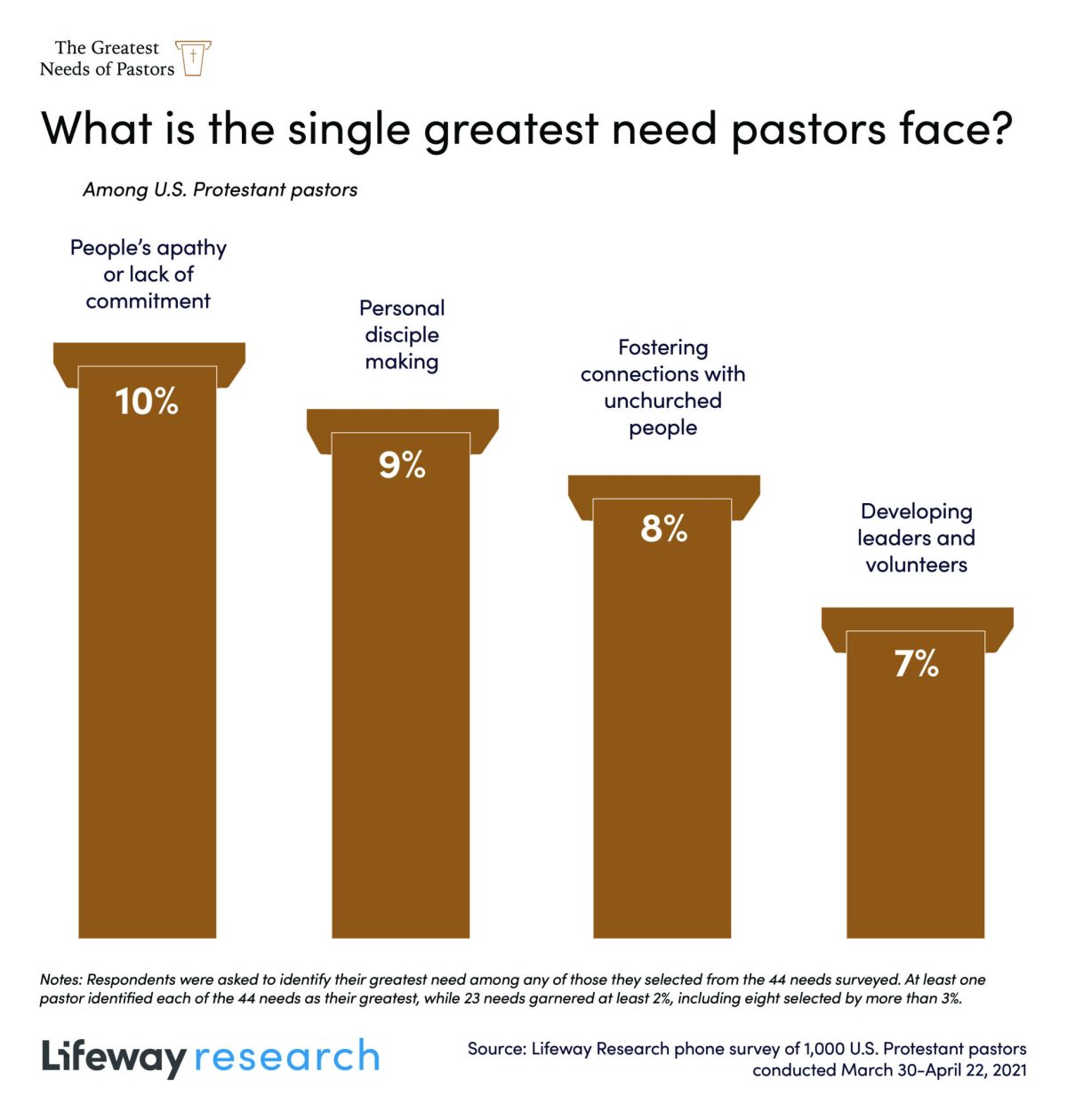
Pastors face unique difficulties inherent in their career, but what are their greatest needs? Pastors themselves say they’re most concerned about seeing their churchgoers grow spiritually and making connections with those outside of their churches.

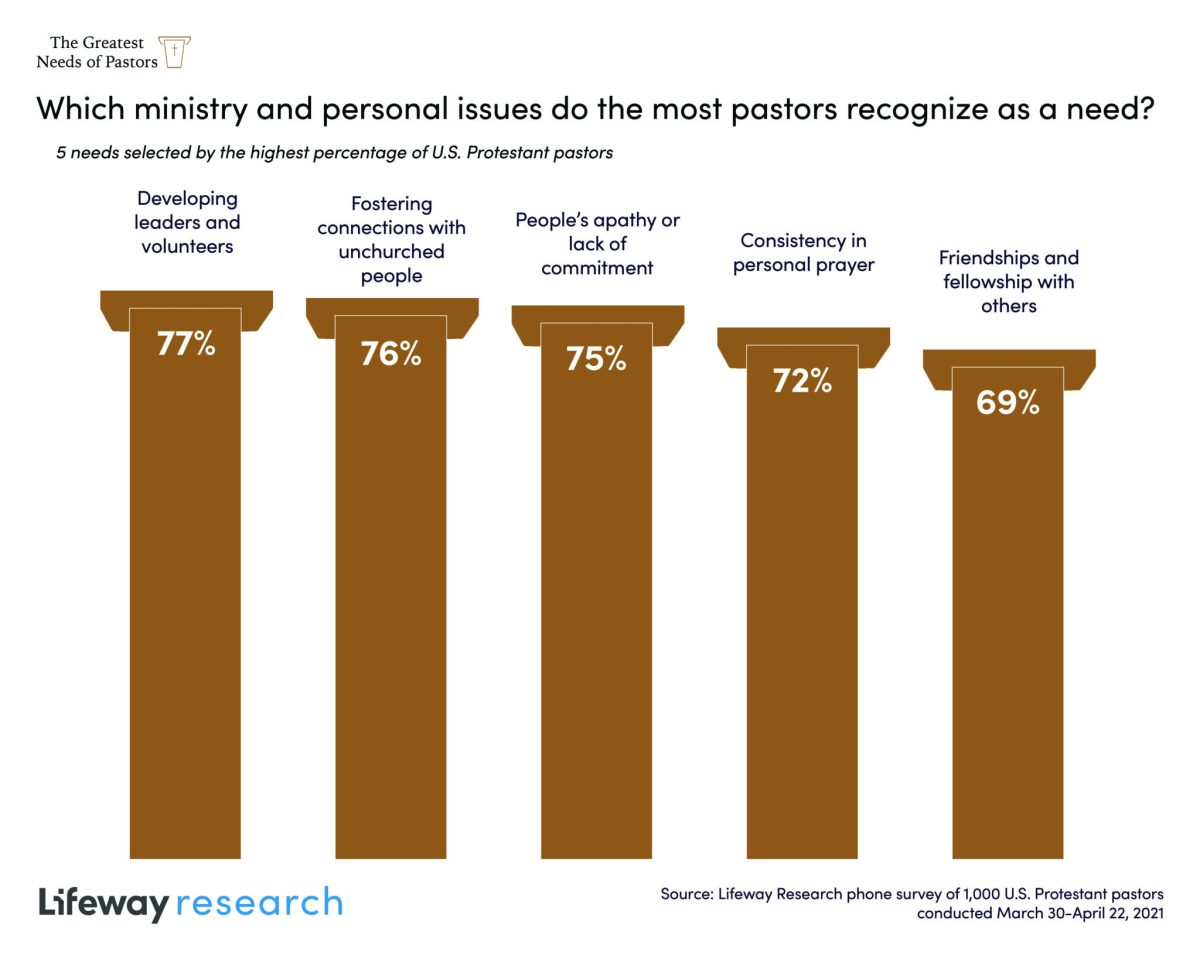
After speaking directly with pastors to gather their perspectives on their ministry and personal challenges, Lifeway Research surveyed 1,000 US pastors for the 2022 Greatest Needs of Pastors study to discover what they see as their most pressing issues.

“The pre-existing challenges of ministry were amplified by COVID, and it’s important we lean in and listen closely to pastors,” said Ben Mandrell, president of Lifeway Christian Resources. “This project has shed light on critical needs they have and will point the way forward in how we partner with them to fuel their ministries and improve their health in multiple areas.”

Scott McConnell, executive director of Lifeway Research, said his team began the study by speaking with more than 200 pastors, asking them to think beyond the current pandemic-related struggles and share some of the enduring needs of pastors and their churches today.

“Their responses to the challenges they face and the areas that are most important for them were then presented to more than 200 additional pastors,” explained McConnell. “Based on those responses, 1,000 pastors were asked about almost four dozen needs to measure the extent to which each is something they need to address today.”

Of the 44 needs identified by pastors and included in the study, 17 were selected by a majority as an issue they need to address.

  • Developing leaders and volunteers: 77%
  • Fostering connections with unchurched people: 76%
  • People’s apathy or lack of commitment: 75%
  • Consistency in personal prayer: 72%
  • Friendships and fellowship with others: 69%
  • Training current leaders and volunteers: 68%
  • Consistency of Bible reading not related to sermon or teaching preparation: 68%
  • Trusting God: 66%
  • Relationships with other pastors: 64%
  • Consistency in taking a Sabbath: 64%
  • Stress: 63%
  • Personal disciple making: 63%
  • Confessing and repenting from personal sin: 61%
  • Consistency exercising: 59%
  • Avoiding overcommitment and over-work: 55%
  • Challenging people where they lack obedience: 55%
  • Time management: 51%

“The number and breadth of needs pastors are currently facing is staggering,” said McConnell. “All seven spiritual needs asked about on the survey are a current concern for most pastors, as well as practical, mental, self-care, skill-development, and needs around ministry difficulties. Clearly pastors are not looking for shortcuts and are taking their roles as spiritual leaders in their church seriously.”

The 44 identified needs fall into seven broader categories. Subsequent releases in Lifeway Research’s 2022 Greatest Needs of Pastors study will explore each of the categories and the related needs specifically.

Single greatest need

When asked to narrow down their list to the single greatest need requiring their attention, pastors’ responses varied.

At least one pastor surveyed picked each of the 44 possible needs, while 23 needs garnered at least 2 percent of pastors. Eight needs were chosen by more than 3 percent of pastors, and one reached double digits.

  • People’s apathy or lack of commitment: 10%
  • Personal disciple making: 9%
  • Fostering connections with unchurched people: 8%
  • Developing leaders and volunteers: 7%
  • Establishing a compelling vision: 5%
  • Technology: 4%
  • Consistency in personal prayer: 4%
  • Consistency exercising: 4%

“When asked to prioritize their own greatest need, pastors tend to put the needs of their church’s ministry ahead of personal needs,” said McConnell.

“Personally making disciples, developing leaders, connecting with those outside the church and mobilizing the people in their church are the most common ‘greatest needs’ and are among the most common needs pastors want to make a priority.”

Pastoral help

When thinking about getting help with their needs, pastors want to hear from their fellow clergy who have been through the same struggles.

Three in four US pastors (75%) say they would be interested in getting advice or guidance on the issues they are facing from other pastors who have already been through those problems. Similar numbers (74%) would like to hear from those who understand churches like theirs.

Another 70 percent would listen to other pastors who are currently facing the same needs. Slightly fewer (57%) want to hear from experts on those types of needs. Older pastors are the least likely to say they’d like advice from any of those sources.

“The most monumental needs of pastors are not new to this generation of pastors,” said McConnell. “They know other pastors and pastors who have gone before them are best positioned to understand and help them with the wide variety of ministry and personal needs a pastor faces.”

Still, previous Lifeway Research shows not all pastors are actively seeking out advice from their fellow clergy. More than 8 in 10 US Protestant pastors say they feel supported by other pastors in their area. Fewer than half (46%), however, know and spend time with 10 or more other local pastors, according to a 2020 Lifeway Research survey.

Most pastors (54%) have those relationships with fewer than 10 other area clergy, including 1 in 20 (5%) who aren’t connected with any area pastors and 8% who have relationships with only one or two other ministers.

Pastors may also look to retired pastors for advice and wisdom for navigating common challenges. A 2019 Lifeway Research study of retired Protestant pastors, ministers, and missionaries found some have struggled with the transition into retirement and are looking for ways to serve and connect with others.

More than 4 in 5 retired ministry workers (86%) say they have continued to make new friends in recent years, but 29 percent admit they feel lonely or isolated.

When asked what resources would most help them with their relationships today, most say they want to make additional ministry connections: 25 percent say making friends who have similar experience in ministry, 23 percent making friends who live near me, 20 percent relating to a church in which I am not in leadership, and 17 percent making friends who have had similar experience in leadership.

“Retired pastors and other ministry workers still want to serve the church,” said McConnell. “When Lifeway Research asked them how ministries could best serve those like them who are retired from full-time ministry, the most common response was to provide them with opportunities to serve or minister (16%). Current pastors looking for guidance may find retired pastors ready and willing to help.”

The phone survey of 1,000 Protestant pastors was conducted March 30 – April 22, 2021. The sample provides 95 percent confidence that the sampling error does not exceed plus or minus 3.1 percent.

News

Died: George O. Wood, Who Led the Assemblies of God into Growth

As general superintendent, he brought women and minorities into leadership, added “compassion” to the denomination’s constitution, and set ambitious goals for church planting.

Christianity Today January 12, 2022
Portrait Courtesy of Assemblies of God / Edits by Christianity Today

Assemblies of God leader George O. Wood, who encouraged expansive growth in the Pentecostal denomination through a commitment to diversity, conservative doctrine, and church planting, has died at the age of 80.

Wood served as general superintendent of the General Council of Assemblies of God from 2007 to 2017. In that decade, the denomination grew to a record 3.24 million members, and cumulatively added more than 660 congregations, according AG News. And the Assemblies grew more diverse—both in the pews and at the leadership level, as Wood worked to make sure more women, minorities, and people under 40 had prominent roles in directing the denomination’s future.

When he began as general superintendent, the executive presbytery was made up of 14 white men. When he left, it had expanded to 21 seats, with seven occupied by racial minorities and two by women. The denomination itself—historically white—was about 42 percent minority when Wood retired.

“He had a unique ability to open doors for young people, women, and ethnic minorities by providing them a meaningful seat at the table,” Doug Clay, Wood’s successor as general superintendent, told AG News. “That has been a major force behind our growth in each of those areas.”

Wood, for his part, attributed his vision to the Pentecostal tradition of being flexible when it is important to be flexible and firm when it is important to be firm.

“We have been flexible when it comes to culture—music, dress, pulpit attire,” he told Religion News Service in 2013. “While remaining consistent on that which has not changed, which is doctrine.”

George Oliver Wood was born to missionaries George Roy Wood and Elizabeth Weidman in China on September 1, 1941.

He learned early of the transformative power of the Holy Spirit and the importance of hard work and education. George O. Wood’s father—who had been pulled out of school after the fifth grade and put to work in a glass factory by his stepfather—always spoke of what he missed, with his lack of education, and what he had gained, with conversion, baptism in the Holy Spirit, and a call to ministry.

The Wood family moved back to the US in 1949, after the Chinese Communist Revolution, and served in a variety of small Assemblies churches, never staying in one community for more than a few years. The younger Wood described himself at that time as an awkward missionary kid who worried too often about whether he was really saved or if he could have possibly blasphemed the Holy Spirit.

He liked school, though, and was encouraged to pursue an education. Wood earned a BA from Evangel College (now University), and then followed it up with a master’s degree, a doctorate, and a law degree. Despite historic Pentecostal skepticism of education, Wood was not drawn away from the church. Instead, he threw himself into ministry, first as director of spiritual life and student life at Evangel, and then as pastor of Newport-Mesa Christian Center in Costa Mesa, California.

What it means to be a leader

He was a faithful pastor and a humble servant of the church, his son George Paul Wood recalled in a 2014 interview with the Springfield (Missouri) News-Leader. Every Sunday morning, father and son would go get doughnuts and take them to the church, unlocking the doors before anyone else arrived.

George Paul admired his father’s preaching, but when he said he was also interested in becoming a minister, his father didn’t teach him about homiletics. He hired him as the church janitor.

“I learned what it means to be a pastor,” said George Paul Wood, who is now executive editor of Assemblies of God Publications. “That’s training you can’t pay for. That’s life training.”

George O. Wood rose to national leadership in the Assemblies of God in the 1990s, taking the role of second position of general secretary. He was promoted by the denomination to the top spot in 2007. That same year, the general council voted to expand the national presbytery to include a female minister and a minister under the age of 40.

As Wood pointed out, about a quarter of all Assemblies of God ministers were women in 2007. More than a third were under 40. And yet no women or ministers under 40 had a position in national leadership.

Some in the Assemblies—with an eye on Southern Baptist debates over women in ministry—questioned whether the Pentecostal church was “going liberal” because of its stance on women. Wood argued the Assemblies of God wasn’t adapting to changing cultural norms, but staying true to the Pentecostal understanding of Scripture.

“I grew up listening to my mother and other women preaching the gospel,” he wrote. “What was their basis for so doing? The Holy Spirit had called them in light of the prophetic promise of Joel 2:28–30 fulfilled in Acts 2:17–18—in the last days God would pour out His Spirit on all flesh, including daughters as well as sons who would prophesy, including women as well as men servants.”

Pushing for ‘compassion’

Perhaps the most controversial moment in Wood’s tenure as general secretary, however, came in 2009—when he temporarily stepped down from leadership.

Wood wanted the Assemblies of God to add a fourth fundamental purpose to the denominational constitution. In addition to seeking to save the lost, worshiping God, and building up the body of believers, Wood wanted to add “compassion” as one of the church’s “reasons for being.”

The resolution was defeated. As the general superintendent, Wood was chair of the council meeting and not allowed to make an argument from the floor. So he decided to step down from leadership to make the argument that compassion ministries were “an important growing edge of ministry.”

“We live in a culture in which the church has to earn credibility, and without acts of compassion I believe the church loses its credibility in the world,” Wood said at the time.

In a second voice vote, it wasn’t clear whether Wood’s argument had carried the day or not. A third vote was taken, and the compassion resolution won by a vote of 585 to 242.

Before the council left Orlando, it also reappointed Wood as general superintendent.

In subsequent years, Wood pushed the Assemblies to focus on church planting. He even challenged the denomination in 2011 to plant one church per day. That year, 368 new Assemblies of God congregations were started. He set a similar vision for the World Assemblies of God congress, telling those gathered in 2017 that the Holy Spirit was telling him the Assemblies should aim for one million churches worldwide by the year 2033.

‘I’m really loved by God’

Wood spoke out more about politics in later years—expressing special concern about the legalization of same-sex marriage and threats to religious liberty. He made headlines in 2019 warning that “a day of persecution” was coming for Christians in the US.

Wood also worked, however, to keep his distance from partisan politics, and encouraged leaders in the Assemblies not to identify too closely with a party or a candidate.

“Our focus should be on the gospel,” he said in 2017. “If we begin to endorse candidates, then we are politicizing the church, diluting our message, and bringing unnecessary division among our people. It is sufficient that we can speak on issues without endorsing specific candidates for office.”

Wood was diagnosed with stage IV cancer on August 31, two days before his 80th birthday. It was a surprise, but he later said he also felt instant peace.

“As a follower of Jesus, I have two great options,” he said. “I can go to my home in Springfield or I can go to my home in heaven. I like both.”

In the last four months of his life, he said he was more convinced than ever of the personal love of God.

“As I’ve been reading Scripture lately, I just keep focusing upon the fact that God deeply loves us,” he said in a 2021 interview. “And that’s part of the, ‘I can do all things through Him who strengthens me.’ He strengthened me by giving me this great emotional assurance to this still-insecure missionary kid that I’m really loved of God.”

Wood is survived by Jewel, his wife of 56 years, and their children George Paul Wood and Evangeline Hope Zorehkey.

addApple PodcastsDown ArrowDown ArrowDown Arrowarrow_left_altLeft ArrowLeft ArrowRight ArrowRight ArrowRight Arrowarrow_up_altUp ArrowUp ArrowAvailable at Amazoncaret-downCloseCloseellipseEmailEmailExpandExpandExternalExternalFacebookfacebook-squarefolderGiftGiftGooglegoogleGoogle KeephamburgerInstagraminstagram-squareLinkLinklinkedin-squareListenListenListenChristianity TodayCT Creative Studio Logologo_orgMegaphoneMenuMenupausePinterestPlayPlayPocketPodcastprintremoveRSSRSSSaveSavesaveSearchSearchsearchSpotifyStitcherTelegramTable of ContentsTable of Contentstwitter-squareWhatsAppXYouTubeYouTube