Books
Review

Denmark Vesey’s Challenge to a Biblically Literate Nation

The architect of a foiled 19th-century slave revolt justified violence in terms he hoped Americans would understand.

Illustration by Rick Szuecs / Source Images: Wikimedia Commons

As Christians in America seek to think carefully and faithfully about racial issues in the culture and in their churches, good historical understanding must be a part of that process. Such understanding should include the reality of slavery, not just as a hypothetical institution but as a lived experience of image-bearers of God.

Denmark Vesey's Bible: The Thwarted Revolt That Put Slavery and Scripture on Trial

Denmark Vesey's Bible: The Thwarted Revolt That Put Slavery and Scripture on Trial

Princeton University Press

216 pages

When I teach classes about slavery, I emphasize the existence of several large conspiracies against slavery, plots that give the lie to the myth of happy and contented slaves. The largest uprising, carried out in Virginia, was led by Nat Turner in 1831.

A decade prior, Denmark Vesey, a free African American in Charleston, South Carolina, laid the groundwork for his own slave revolt. This year marks the bicentennial of his eventual execution. Vesey first appears in the historical record as an enslaved teenager in Bermuda, although it’s possible he was born in West Africa, kidnapped, and brought to the Caribbean. A failed sale led the ship’s captain, Joseph Vesey, to bring the young man to Charleston. Vesey developed a trade in carpentry, and in 1799 he won a major lottery, allowing him to purchase his freedom.

Vesey could have continued plying his profession peacefully, but he rankled under the injustice of slavery, a burden he still felt as several of his children remained enslaved. He was also inspired by the American Revolution’s promise of equality, rooted in a divine creation of all. So he began plotting an uprising, enacted mostly by enslaved men, to set fire to Charleston, kill as many whites as resisted, and escape to Haiti.

When recruitment reached too far, however, the conspiracy was discovered. Vesey and the other plotters were arrested. After trials, they were executed in the summer of 1822. Then retribution expanded to others with any connection to the leaders. In all, 35 African Americans were executed, with one group of 22 hanged at the same time.

Through the drama of that year, the Bible loomed large. The place of the Bible for Vesey, for opponents of slavery, and for white Southerners who developed a proslavery Christianity is the central concern of Denmark Vesey’s Bible, a new book from religion professor Jeremy Schipper.

We know Vesey read from the Bible—by himself, in large groups, and when recruiting for the uprising. He was a class (small group) leader at the African Church, a congregation associated with what would become the African Methodist Episcopal Church. Vesey knew both the political and biblical arguments against slavery. He was particularly moved by the condemnation of “man stealing” in Exodus 21:16. Not only those who kidnapped slaves but those who purchased them came under God’s judgment.

Vesey thus believed and taught that violent uprising was a righteous cause. He and his followers would be reenacting the path of ancient Israel, both in desiring release from Egyptian bondage and in waging war against the Canaanites to gain a promised land.

In the wake of Vesey’s conspiracy, three prominent Christian leaders in Charleston published works advancing a proslavery biblical interpretation. Benjamin Morgan Palmer, a pastor and vice president of the Charleston Bible Society, drafted a public statement claiming Paul’s letter to Philemon endorsed slavery as part of the natural order. Richard Furman, a prominent Baptist pastor, portrayed slavery as a justifiable domestic institution. Emphasizing the positives of paternalism, he pictured slave owners as patriarchs with obligations to their slaves. Finally, Frederick Dalcho of St. Michael’s Episcopal Church advanced a contorted argument that the “curse of Ham” justified slavery. Meanwhile, he defended teaching religion to enslaved people but suggested they not have direct access to the Bible.

In tracing these arguments, Schipper tracks down the references, quotations, and biblical allusions that make sense of the internal logic of both antislavery and proslavery arguments. I was struck by how biblically literate the culture was—many writers assumed their readers or hearers would automatically understand references to Scripture.

At the same time, the book misses a real opportunity to speak to broader developments in American Christianity. Schipper provides close readings of the main documents growing out of the conspiracy, but these largely focus on a mere handful of interesting works. As a result, the book doesn’t give any sense of the larger impact these debates had on the country or its churches.

Fortunately, another work focused on the Bible and American culture has just come out: Every Leaf, Line, and Letter, an outstanding essay collection edited by Wheaton College professor Timothy Larsen. In this book—I’ve been reading it alongside Denmark Vesey’s Bible—Mark Noll traverses some of the same ground as Schipper, but he provides additional insights to understand Vesey, his use of the Bible, the context of the debates, and their larger impact.

Noll points to the window of 1820–1821 as a defining moment, when the controversy over Missouri statehood and Vesey’s revolt crystallized proslavery and antislavery logic for the next four decades. Noll shows how Vesey’s biblical interpretation drew on a broader antislavery argument, concluding that the biblical debate over slavery formed a crisis for the popular understanding of “sola scriptura.” How were Bible-believing Americans to react if Scripture was sufficient yet interpreters came up with diametrically opposed understandings of what it demanded? And if the appeal to Scripture was insufficient to resolve the nation’s knottiest issue, where did that leave the country?

Schipper and Noll, then, both place the problem of biblical interpretation—and its ties to race and slavery—front and center. Those who love the Bible should acknowledge the problem. There are, however, several correctives to a narrow, “my Bible and me” mentality.

First, let’s ensure we’re wrestling with Scripture as a whole, rather than cherry-picking passages to support a personal or cultural agenda. Second, our readings should happen in conversation with the Great Tradition of Christian interpretation, which means listening to voices from all periods and places to avoid getting trapped in our own interpretive bubbles. Finally, we need to emphasize letting Scripture read us, transforming our thoughts and behaviors.

These approaches can help us all better read the God’s Word without bias or distortion.

Jonathan Den Hartog is professor of history at Samford University in Birmingham. He is the author of Patriotism and Piety: Federalist Politics and Religious Struggle in the New American Nation.

Books

Religious Experiences Are Common. Which Ones Should We Trust?

Reports of divine encounters aren’t always legitimate, but they shouldn’t be lightly dismissed.

Illustration by Rick Szuecs / Source Images: Ali Arapoglu / Pexels / Alexander / Alexander Nachev /Unsplash

Many religious people report vivid or otherwise memorable religious experiences, which they regard as compelling reasons to believe. But why assume God is actually at the other end of the experience? Harold A. Netland, a professor of philosophy of religion and intercultural studies at Trinity Evangelical Divinity School, explores this question in his new book Religious Experience and the Knowledge of God: The Evidential Force of Divine Encounters. Travis Dickinson, professor of philosophy at Dallas Baptist University, spoke with Netland about religious experience and how divine encounters may justify our Christian beliefs.

Religious Experience and the Knowledge of God: The Evidential Force of Divine Encounters

You are a unique scholar because of your work in both philosophy and intercultural and religious studies. You also have a unique background. How do these things motivate and inform the book?

I grew up in Japan, where my parents were missionaries. So I had that cross-cultural experience early on. I eventually ended up doing doctoral studies at Claremont Graduate University with a scholar named John Hick, who by that time had completely rejected historic orthodox Christianity for pluralism. For Hick, justification of our religious convictions is based upon our experiences.

Then I spent 10 years as a missionary in Japan and became increasingly interested in Buddhism and its experiential component. And finally, as I spoke with fellow Christians, I came to see the significant role that personal experience plays in their commitments. There are important philosophical issues involved in basing our commitments on religious experiences, although not many evangelicals have been addressing these issues.

What makes an experience a religious experience?

My first two chapters try to unpack that question, because the concept of a religious experience is ambiguous. As I define it, a religious experience is an experience that someone takes to be religious or to have religious significance. But this of course pushes the question back, because we have to ask, “What is religion?”

The concepts of both religion and religious experience are modern concepts. People were religious prior to the modern era, but these concepts were shaped during the transformations of the past several centuries. In any case, we can understand a religious experience as an experience which is taken to be of powers, beings, spirits, or forces that transcend the space-time world. Or an experience that provokes someone to interpret things religiously or discern some form of spiritual significance. Some experiences are clearly religious, while others are more ambiguous. For example, at the birth of one’s first child, even very secular people can suddenly sound very spiritual. This can be understood as a religious experience.

Since religious experiences involve interpretation, many people caution against using them to confirm and support our religious beliefs. What do you say in response?

It’s clear to me that interpretation figures into our religious experiences, but there are degrees of interpretation. It’s important to understand that even with ordinary nonreligious experience, we interpret things in light of a wide array of prior beliefs, assumptions, values, and experiences. Determining whether a given experience is trustworthy will depend in part on the background beliefs one brings to it.

In the case of a more ambiguous experience, there is a weaker sense of rationality, such that one can reasonably believe it to be a genuine experience of God even though someone else, with different background beliefs, might reasonably conclude otherwise. So we cannot really address the authenticity of a particular experience without also examining the background beliefs that shape one’s judgment.

One important concept in your book is the critical-trust approach. Can you explain this concept?

On this approach, it’s reasonable to accept what appears to be the case unless there are compelling reasons not to do so. This is how we normally live. We take what appears to be the case as actually being the case unless there is reason not to. I’m arguing that we can adopt this general approach, which is widely used in ordinary life, and apply it to religious experience. I’m suggesting that it’s rational to accept what seems to be the case unless there is reason to think something else is going on.

Is it possible to arrive at Christian belief through religious experience alone?

Ultimately, of course, it is the Holy Spirit who brings about Christian commitments. Experience, all by itself, will not produce Christian belief. But I think there are cases in which a person who has a particular experience can be justified in believing certain things even without being able to provide compelling reasons.

I come back to the blind man healed by Jesus (John 9). It’s a beautiful story. The Pharisees are after him, saying, This man Jesus is a sinner. And the blind man comes back and says, Hey, whether he’s a sinner or not, I don’t know. All I know is that once I was blind, and now I see. And so, in certain circumstances it’s entirely appropriate for someone to say, “I don’t know about all of these philosophical issues. All I know is that I was a sinner. I was forgiven by Jesus, and he has given me peace. And I’m happy.”

Such a person may not lack adequate reasons for belief—only the ability to articulate them. But for most people, since experiences are often misleading, it is important to place the experience within a broader context, which provides reasons for accepting it as valid.

How common are religious experiences? Would you say that every Christian has them?

Not everyone has dramatic religious experiences. But if we understand the term more broadly, I think that many people—including those who are not explicitly religious—have experiences that can be seen as religious. And there are a surprising number of people, including the nonreligious, who report having experiences in which Jesus appears to them.

There are many objections raised about religious claims based on the vast disagreements among religious traditions. But you tend to place more weight on what those beliefs have in common. Why is this?

My argument here draws from the work of a philosopher named Linda Zagzebski, especially her discussion of what is called the consensus gentium argument for God’s existence. Briefly, this argument treats the fact that many people throughout history and in many cultures have had what they take to be experiences of God as providing some modest support for God’s existence. This is best seen not as a standalone argument but rather as a significant fact requiring explanation, which makes it an important part of a broader case for Christian theism. It’s not, by itself, decisive, but this consensus lends some positive evidential force to a given claim that God is really being experienced.

What is the value of religious experience for the church?

Experience of God is of course vital for spiritual growth and maturity. But that is not the focus of this book, which is mainly concerned with the evidential value of religious experiences. Even so, our experience of God can also have great value in our Christian witness. The realities of religious experience, and especially Christian theistic experience, are rich and provide fruitful potential for the broader justification of Christian beliefs and commitments. They are not the main thing, but they play an important role. Especially in today’s cultural climate, which places such high value on personal experience, we should take the claims of experience seriously.

News

Gleanings: March 2022

News from Christians around the world.

Jonas Ferlin / Pexels / Edits by Rick Szuecs

Evangelicals petition constitution committee

Evangelicals joined Catholics, Jews, and Muslims petitioning legislators to include the protection of the free exercise of religion in Chile’s new constitution, which will replace the constitution established under the dictatorship of Augusto Pinochet. In the fall presidential election, evangelicals mostly supported conservative José Antonio Kast, an opponent of the proposed constitution. The winner of the election, former student protest leader Gabriel Boric, reached out to evangelicals during the campaign—but not always successfully. He was widely mocked for telling one interviewer he had been turning to the Bible for wisdom, reading “the Gospel of St. Paul.”

Evangelical appointed to Supreme Court

Brazilian President Jair Bolsonaro delivered on a promise to appoint a “terribly evangelical” justice to the Supreme Court. André Mendonça, formerly an attorney general, was approved by a 47–32 senate vote after testifying for nine hours. Describing himself as “genuinely evangelical,” Mendonça assured legislators he would follow the constitution. “The constitution is and must be the foundation to any decision by a supreme court justice,” he said. “As to myself, I say: in my life, the Bible, and at the supreme court, the constitution.” Mendonça can sit on the court for 33 years.

Missionary hostages free

Seventeen Anabaptist missionaries returned safely to the US after months of prayer and international negotiation with Haitian kidnappers. The group, which included five children, was taken hostage in October. The gang demanded $1 million each in ransom. Two were released in November and three more in December, after they became ill. The remaining 12 escaped, sneaking out a back door and fleeing through a thicket of briars until they found a Christian who loaned them a cellphone to call for help. One of the missionaries, testifying in an Anabaptist church the Sunday after the escape, said there were times the captives wished someone would pay the money for their release, but they recognized that as a Satanic temptation.

Birthday outreach effort aims for 8 million

Nigerian evangelicals launched an effort to win eight million souls for Christ in 80 days in honor of the 80th birthday of the General Overseer of the Redeemed Christian Church of God (RCCG), Enoch Adeboye. They hope to get 100,000 people to commit to evangelizing one person per day. The evangelists will track their progress on a new smartphone app called iReach and direct converts to an internet chatbot to learn more about their newfound faith. Under Adeboye, a former math professor, the RCCG has grown to about five million members in Nigeria and has planted about 14,000 churches globally.

Churches celebrate post-communist growth

Thirty years after the end of communist rule, Albanian evangelicals celebrated the reevangelization of the country. In 1991, there were fewer than 20 evangelicals in Albania. Today, there are about 200 evangelical churches. The Evangelical Alliance has been recognized as an official organization and will take a leadership role in the Inter-Religious Council of Albania in 2022.

Court rules for house churches

An unprecedented ruling from the Iranian Supreme Court said Christian house churches are not a threat to national security. “Merely practicing Christianity … is not criminalized in law,” the court said. More than 100 Iranian believers have been imprisoned since 2012. The ruling comes in the case of nine ethnic Persian men in the northern city of Rasht who belong to the Church of Iran, a non-Trinitarian church. The men were facing five-year prison sentences. In another court, a prosecutor declined to bring charges against eight converts, rejecting the evidence brought by intelligence officials.

Last Christian prays alone in Idlib

Only one Christian remains in the Syrian city of Idlib. In 2012, the official government count included 10,000 Christians in the city of 165,000. Most fled by 2015, when Salafi jihadist militants took over the city and made it the de facto alternative capital of Syria. Michel Boutros chose to stay. He has no wife or children but raises pigeons he sometimes talks to. He prays at home surrounded by crosses and icons. “The Lord is our father and our brother,” he said, “and he is managing everyone’s affairs in this war.” Boutros will turn 92 this year.

Pastor convicted for rebuking COVID-19

A Christian was convicted and sentenced to two years in prison after he prayed against COVID-19 on a YouTube video that went viral in Nepal. “Hey corona, you go and die,” prayed pastor Keshav Raj Acharya of the Abundant Harvest Church in Pokhara, Nepal. “I rebuke you, corona, in the name of Lord Jesus Christ.” A criminal court deemed this a violation of the 2015 constitution, which prohibits proselytization and any religious actions that “disturb public law and order.”

Christian media restricted

New regulation will sharply restrict Chinese Christian content on social media. According to the new rules, put in place by the Ministries of Public and National Security and four other government bodies, even linking or forwarding religious content is forbidden without approval. Authorities have long restricted traditional Christian media but have ignored Christian channels on the messaging app WeChat for about 10 years. Most major channels were deleted without warning in 2021, followed by the new regulation. “These are the darkest days for China in decades in terms of freedom of religious expression,” Jerry An, a Chinese mission pastor in the US, told CT. The new measures take effect in March.

News

100 Women Consider Ending Their Pregnancies. How Many Get an Abortion?

The answer may depend on crisis pregnancy centers.

Illustration by Rick Szuecs / Source Image: Negative Space / Pexels

The impact of America’s more than 2,500 crisis pregnancy centers is difficult to measure. What role do they play in the steady national decline in abortion rates from 24 per 1,000 women in 1992 to 13.5 and falling in the most recent data?

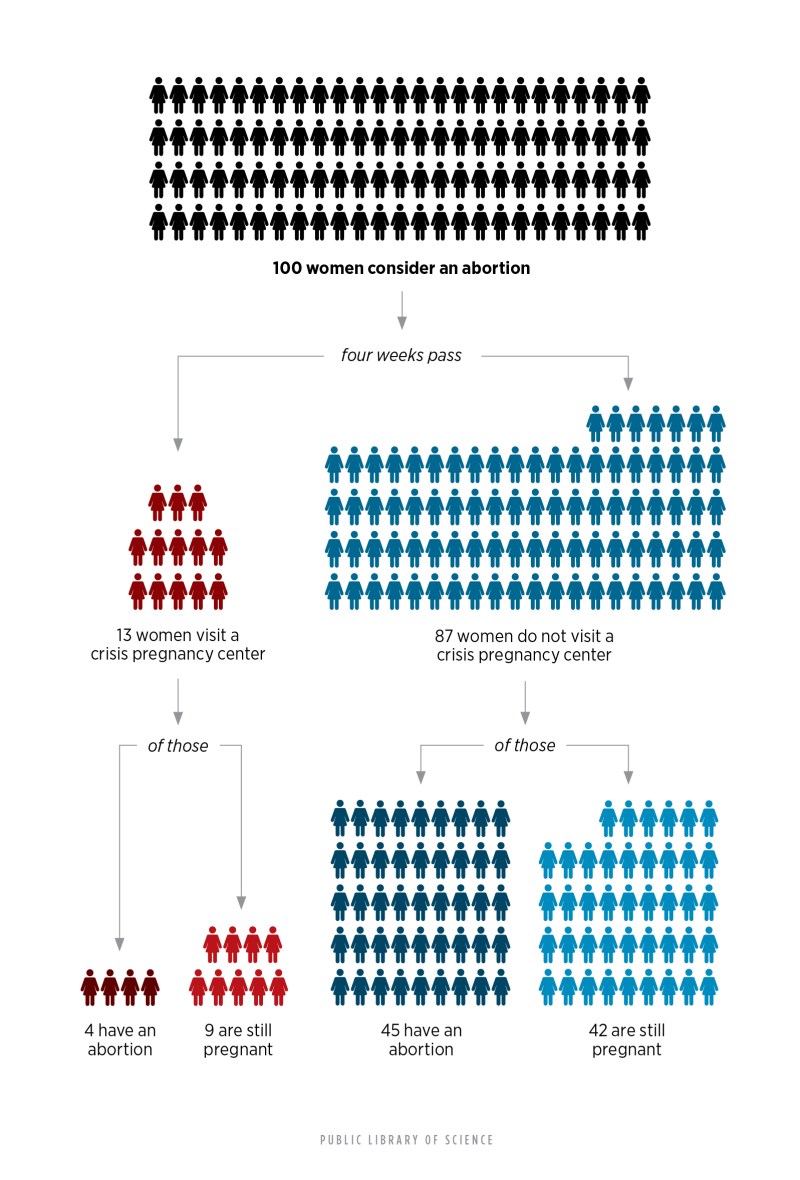
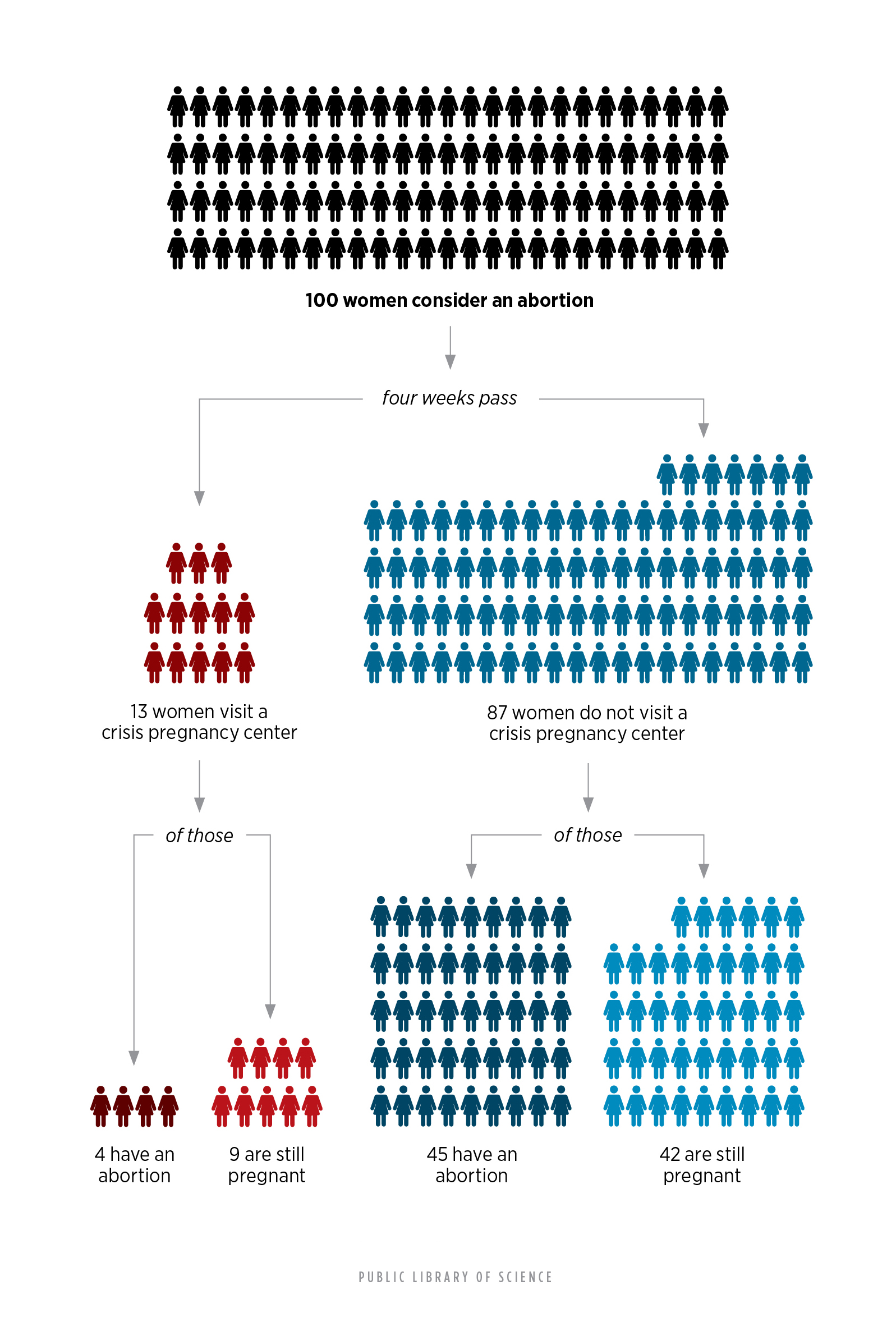
A new study published by the Public Library of Science found a correlation. About half of women who consider an abortion get one within four weeks. Among those who encounter a crisis pregnancy center, however, the study found that about 30 percent have an abortion.

Whether or not crisis pregnancy centers cause women to change their mind about terminating a pregnancy, it’s clear the centers offer some an alternative.

News

An AI Aims to be First Christian Celebrity of the Metaverse

But for now, the gospel music algorithm still needs human help.

When Marquis Boone got a Dropbox file with the gospel song “Biblical Love” by J. C., he listened to it five times in a row.

This is crazy, he said to himself.

What amazed him was not the song, but the artist. The person singing “Biblical Love” was not a person at all.

J. C. is an artificial intelligence (AI) that Boone and his team created with computer algorithms. Boone’s company Marquis Boone Enterprises broke the news in November that, after working on the problem for more than a year, they had successfully created the first virtual, AI gospel artist.

The exact details of how the AI music is created is proprietary information, but Boone said the basic premise is to use software algorithms to recognize patterns, replicate them, and ultimately create new ones.

J. C., he and his team have boasted, will be a front-runner for top entertainer in the metaverse—a hypothesized future online experience where virtual reality and augmented reality are used to create an “embodied internet.” Facebook founder Mark Zuckerberg touted the idea that “the metaverse is the next chapter” of social media last fall, when he announced his company was changing its name to Meta.

Boone said his interest in creating a Christian AI musician began about two years before, when he started hearing about AI artists in the pop music genre.

“I really just started thinking this is where the world is going and I’m pretty sure that the gospel/Christian genre is going to be behind,” Boone told CT.

Christians, he said, are too slow to adopt new styles, new technologies, and new forms of entertainment—always looking like late imitators. For him, it would be an evangelistic failure not to create Christian AI music.

“If we don’t want to grow with technology or we don’t want to grow with this,” Boone said, “I think we’re going to miss a whole generation.”

Not everyone agrees.

Matt Brouwer, a Canadian Christian singer-songwriter with four original top-20 hits, said that when he first heard about it, the AI gospel singer sounded like a gimmick. Then, the more he thought about it, the more strongly he disliked the idea.

“If ever there was a desperate need for a human connection and a moment when the world is longing to unplug from technology, social media and Zoom calls, it’s now,” Brouwer said.

He has no doubt the technology exists to create catchy pop songs, but he believes Christian music is supposed to be something more than that.

“Christian music should be an invitation to join a faith journey, and that invitation means more when it comes from someone who’s already on that road,” he said. “The idea of record, radio, and retail executives spending time and money opting for a nonhuman machine to produce pop Christian hits instead of engaging with true worshiping hearts and young people who need support and encouragement to pursue what God is leading them to, well, the thought is pretty grim.”

Tyler Huckabee, senior editor for Relevant magazine, had a similar reaction. The AI seemed to him to be the digital manifestation of the worst impulses of an industry that too often misses the point of Christian music.

“So much of the modern Christian worship industrial complex is already fueled by market tested formulas that it’s probably no enormous loss to cut out the middle man and just let a slightly modified calculator do the work,” Huckabee wrote.

“All you’ve got is all the modern worshiptainment biz really needs: a pretty chorus, a few Bible-y buzzwords and a passably diverting emotional high.”

Boone has heard the criticisms, but he doesn’t take them too seriously. That’s just how Christians respond sometimes to things that are new, he said.

According to Leah Payne, evangelical historian and author of the forthcoming book The Rise and Fall of Contemporary Christian Music, he has a point: “Church people can definitely be leery of new trends,” she said. “In any institution, change often takes a while—and some attribute the newness to the influence of Satan. … That’s almost to be expected of a new invention in Christian worship.”

Christians may be more open to this kind of technological advancement than they have been in the past, though. COVID-19 pushed many to adapt to online platforms, such as Zoom, YouTube, and Facebook Live. It’s only one more step to having church in virtual, augmented reality, and a step beyond that to worshiping along with AI.

“It’s one thing to watch other flesh-and-bone worshipers on YouTube, though, and another thing to be led by AI,” Payne said. “I will be watching to see if J. C. can overcome the so-called ‘uncanny valley,’ wherein humans feel revulsion when artificial intelligence or other forms of technology are too similar to human beings.”

Boone says that’s something he and his team are working on. They want the sound to be as organic as possible. But ultimately, they don’t think it will matter whether the music algorithm sounds like a human artist.

“We really want people to get beyond ‘This is not a real person,’ to ‘This is a movement, this is where the world is going,’” he said.

Right now, though, AI gospel music is not a movement, and it’s not even 100 percent AI. There is still significant human involvement in the production of J. C., which is necessary to determine the quality of what the algorithms produce and decide what is worth keeping. The lyrics, for instance, were selected by a person.

Boone admits that approximately 65 percent of the final product is human, and only 35 percent the product of computer learning.

“We mixed the human knowledge with the computer process,” he explains. “It’s not something we can just do overnight. It took us some time to really feed the data and get the algorithm and all the information in the system.”

The virtual persona is also largely a human product based on data about common consumer preferences. Boone and his team looked at what artists tend to be most successful. Male artists do better in gospel, so they decided the AI would be male. Acoustic styles communicate authenticity, so the team decided J. C. would produce acoustic-style music. The name, hinting at a possible reference to Jesus Christ, was picked to get people talking.

The popular response has been decidedly mixed, according to Boone. But he’s undeterred. The metaverse is coming, he said, and J. C. will be a witness for God’s glory when it does.

“Even in this space, there is still a need to worship the ultimate Creator who is God,” he said. “God has given people who have created this space the ability to be innovative, the vision, and the purpose.”

Adam MacInnis is a reporter in Canada.

Ideas

Of Orphanages and Armies

Columnist

My Russian-born son enlisting reminded me of my identity in Christ.

Illustration by Rick Szuecs / Source images: Eduard Delputte / Yanapi Senaud / Unsplash

“He’s like a little soldier!”

Those were among the first words my wife, Maria, and I spoke when meeting a little baby in a Russian orphanage almost 20 years ago. As we walked into the room, this tiny-but-scrappy fellow climbed up against the slats in his crib, straight-backed as though standing at attention. Every day we would visit the room there, and Maxim—soon to be renamed Ben—was always silent and dignified, even as he clung to the back of my hair while I held him. He wasn’t alone in his silence.

As I wrote at Christianity Today shortly afterward, the entire place was that way. Though filled with babies, the orphanage was utterly soundless. Over time, we learned that this was not uncommon in such settings. Infants cry, after all, to communicate: “I’m hungry!” “I’m scared!” “I’m wet!” After enough time with no response, they will eventually stop crying.

As we left the room, knowing it would be several months before we were allowed to return, I could only say, “I will not leave you as orphans; I will come to you” (John 14:18). And then we walked out and shut the door. We could hear little Maxim falling down in his crib, screaming. Between my own sobs, I said, “That’s the most beautiful sound I’ve ever heard. He’s crying because he knows we will hear him. He knows he has parents now. He knows he is loved.”

Ben doesn’t remember the orphanage. But I couldn’t help but think of it late last year as I watched him stand at attention before the American flag while being sworn in to the United States Air Force. When the officer asked the new recruits why they had joined, several of them said, “To better myself” or “To learn skills.” Our son said, “To serve my country, sir.”

To serve my country.

I’ve spoken and written countless times about what adopting our sons taught me about the gospel I believe: what it means to be adopted by God, to have a Father, to have brothers and sisters, to understand that “adopted” is not an adjective (designating something less than full-blood belonging) but a past-tense verb (telling how one came into the family to which one fully and permanently belongs). But the process also taught me what it means to be an American.

When I was the age of my son, we watched the Soviet flag come down the Kremlin flagpole, a totalitarian powerhouse dissolving on live television. This was the “evil empire” whose accent showed up in the voices of every cartoon bad guy, every James Bond villain, every invading army in TV movies. This was the military superpower my classmates and I practiced crouching under our desks to protect ourselves from attack.

Now here was this young man—with a Southern accent and a Bible in his tote bag—swearing to defend his country from all enemies, with no confusion at all about what country that is. And standing behind him was a family—a family to which he belongs for life.

Those of us who rightly decry “Christian nationalism” sometimes fail to communicate that whatever Christian nationalism is, it’s not an overzealous patriotism any more than polygamy is overzealous monogamy. It is entirely different from love of country, which is why so much of it retreats to a “blood and soil” mentality. It rejects “a nation of immigrants” as Statue of Liberty sentimentality, out of step with the “America first” times.

Christian nationalism is not an overzealous patriotism any more than polygamy is overzealous monogamy.

By dawn’s early light, I saw something different. I saw an American patriot. No one cared where he was born. Instead, people prayed for us. And through those prayers I was reminded of a church that will outlast that country—a church made up of adoptees and immigrants and refugees, like you and me.

Ben was never a little soldier. He was always meant to be an airman. He was never really an orphan. He was meant to be a son. And as he bounded onto the bus for basic training, my wife and I stood, just as we had in that orphanage hallway, shaking with tears. Yet the sound of that bus engine growing fainter and fainter in the distance was one of the most beautiful sounds in the world. He knows he has a family; he knows he has a country.

He’s inducted for now, but as always, he’s adopted for life.

Russell Moore is Christianity Today’s chair of theology.

Theology

Christian Witness After War: A Firsthand Assessment of Armenia and Azerbaijan

After churches change hands in Nagorno-Karabakh, can Armenian and Azeri Christians reconcile faster than their governments?

A soldier looks at the damage done to Ghazanchetsots (Holy Savior) Cathedral in Nagorno-Karabakh in October 2020.

A soldier looks at the damage done to Ghazanchetsots (Holy Savior) Cathedral in Nagorno-Karabakh in October 2020.

Alex McBride / Getty Images News

Ibrahim Baghirov died as an infant. His mother, Mary, had read in the Gospels about Jesus and Lazarus, so she prayed for God to raise her child from the dead. He did, she says. Doctors in Baku, the capital of Azerbaijan, confirmed the miracle to her, which also confirmed her fledgling faith as a Muslim-background Christian.

Two decades later, Baghirov is an emerging preacher in the church that meets in the family’s home.

But in September 2020, as Azerbaijan launched what would become a 44-day war against neighboring Armenia, Mary’s faith faltered. Having once trusted God where medicine failed, she hastily made her son an appointment for an unnecessary surgery in hopes of keeping him from conscription. He gently rebuked her.

“I will go wherever God takes me,” said Baghirov, now 26 years old. “There are ways to keep me here, but there will be no blessing in that.”

He deployed within weeks to the front lines in the snowcapped peaks of Nagorno-Karabakh, a swath of land about the size of Delaware that is encircled by present-day Azerbaijan and has been contested for centuries.

Along the way, Baghirov said he received a word from God: None of his fellow soldiers would die, and he would be their minister. His country is predominantly Muslim, and several of his comrades shunned him after his pocket New Testament fell from his backpack. Others asked questions, though, and became friends.

Azerbaijan, with a reputation as one of the most secular countries in the Muslim world, is tolerant of its long-established Christian minority community. But its long-standing animosities toward Christian Armenia are a different story.

The two countries’ generations-old dispute over Nagorno-Karabakh—a majority-Armenian territory whose modern borders were established in 1923 when Joseph Stalin made it part of Azerbaijan—has been fierce. The worst atrocities of the early 20th century killed thousands, leveling villages and leaving blood on both Armenian and Azeri hands. Relations were more neighborly for several decades, until the Soviet Union disintegrated and triggered a new round of massacres beginning in the late 1980s. Thousands were displaced from their homes as each nation purged its opposing ethnic minority, while Armenia depopulated a buffer zone around the territory to protect it from attacks.

In 1991, Nagorno-Karabakh voted for independence, and Armenia-backed forces eventually secured control of the region, dubbing it the Republic of Artsakh. (Neither Azerbaijan nor the international community has recognized Artsakh’s sovereignty.) Skirmishes between the countries smoldered for decades during a languishing peace process led by the US, France, and Russia.

But in 2020, Azerbaijan conscripted soldiers and advanced on the territory in yet another conflict. Baghirov was assigned to an artillery unit, a post that spared his tender pastoral heart from one adversity, at least: He would not engage in direct combat against the fellow Christians he and his military were slowly overtaking.

But Baghirov said he heard another word from God, another promise: Not one Armenian would die from his hand.

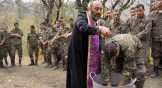
On the other side of the lines, shivering in the snow, fighters in an Armenian unit were also talking to God. An embedded priest from the Apostolic Church, the national church of Armenians, carried a relic of the holy cross and encouraged them as they knelt. They beseeched God for their fellow soldiers, surrounded by Azerbaijani forces and pounded by missiles and suicide drones.

“Don’t lose hope,” said Menuk Zeynalyan. “Our struggle is for our holy church and holy land.”

A married father of four, Zeynalyan left a comfortable parish among the Armenian minority in the neighboring nation of Georgia and signed up for military chaplaincy in 2019. Before the war, he led soldiers in three weekly Bible lessons. Many came from irreligious homes, raised by parents under the banner of Soviet atheism. But within two months, he said, everyone knew the catechism.

His highlight was the prayer of dedication prior to the soldier’s oath. Before swearing the secular pledge to defend the nation, Zeynalyan tied their patriotism to the Lord. After all, tradition had it that Thaddeus and Bartholomew preached the gospel in Armenia. And their country had become the world’s first officially Christian nation in the year 301, long before the Roman Empire followed suit.

Miraculously, Zeynalyan’s prayers were answered, and his beleaguered colleagues emerged from the battle unscathed. Zeynalyan said he witnessed many examples of divine intervention in 2020. He was at the Ghazanchetsots Cathedral in the city of Shusha—known to Armenians as Shushi—on October 8, when two missiles struck within five hours in an attack Human Rights Watch deemed a possible war crime.

In early December 2020—with the Armenian lines broken and at least 6,000 soldiers confirmed killed—a Russia-brokered ceasefire ended hostilities. Shusha, the crown jewel of Nagorno-Karabakh, was back under Azerbaijani control, and their military was poised to seize the regional capital of Khankendi, known to Armenians as Stepanakert.

“It was pure joy to recapture our land,” Baghirov said. “For three decades, it was a heavy burden in our hearts, and finally our people can return to their homes.”

Officially, however, it is a ceasefire and not a capitulation. Armenia maintains control over Stepanakert and about a third of the disputed territory, protected by Russian peacekeepers. And while the mood is somber in the Armenian capital of Yerevan, about five hours away, Zeynalyan keeps his faith.

“No matter how much land we lose,” the chaplain said, “we are God’s people and will remain here until the second coming of Christ.”

Christianity Today spoke with more than two dozen sources during a visit to both nations one year after the war. It’s an open question how, if at all, they will reconcile their intense differences.

But for a few Christians in Armenia and Azerbaijan, a more personal question nags. Isn’t there a unity in Christ that transcends geopolitical grievances?

And if there is, should Christians wait for their governments to make peace? Or should they start themselves, by making peace with fellow believers behind enemy lines?

For hundreds of years, the Caucasus region has been pressed between the ambitions of Russia to the north, Persia to the south, and Turkey to the west. The Armenian and Azerbaijani national identities were molded in that friction, to very different ends.

After the fall of the Soviet Union and the shuttering of Russian factories in Armenia, the majority Oriental Orthodox country struggled to develop a democracy. It slowly grew its economy and largely rid itself of Russian-era corruption during its famously peaceful Velvet Revolution in 2018.

Oil-rich Azerbaijan, on the other hand, boomed: It built pipelines to Europe, strengthened relations with the West, and secured military-grade drones from Turkey and Israel, despite being panned by international watchdogs as a human rights–violating autocracy.

All the while, Armenians and Azeris kept a wary eye on one another.

Consider Nune Balayan, an Armenian speech therapist and mother of three. Her family was displaced from Shushi after more than 10 generations in the area. She once lived in a three-story home. Now her family huddles around a stove furnace in a lower-class neighborhood of Yerevan.

“Azerbaijanis have good masks and show themselves very nice, but they are vandals from the day of their birth,” she said. “I don’t believe the words about coexistence and peace—they have so many lies.”

Azerbaijan’s president, Ilham Aliyev, has consistently spoken of his desire to integrate Nagorno-Karabakh and its Armenian citizens into his nation’s economy and society. His administration says Armenia should return the part of the territory it’s still holding onto, then prosper in good relations.

But Balayan is not buying it. For one, she worries about Aliyev’s close alliance with Turkey, the Muslim powerhouse on Armenia’s other border that perpetuated a genocide against her people a century ago. Turkey’s president, Recep Tayyip Erdoğan, disputes this event as civil conflict and “reasonable” deportations.

Then there is the rhetoric closer to home. During Azerbaijan’s campaign against COVID-19, it issued a postage stamp in which a HAZMAT-suited figure resembling an exterminator sprayed the region of Nagorno-Karabakh, paired with a soldier. And until it was removed last October following Armenia’s lodging of a lawsuit at the International Court of Justice, a “war trophies” park in Baku displayed the helmets of dead soldiers and caricatured mannequins of captured Armenians.

For people like Balayan, it echoes horrific childhood memories from when Soviet Azerbaijan controlled Shushi. She says her math teacher was decapitated by Azeris when he went into the forest to retrieve his goat. She says an Azeri godfather to an Armenian child later murdered the boy. And after Azeris were driven from her family’s village, she says Armenian residents discovered a kill list in the cabinet of the local Azeri doctor.

As for Armenia’s recent loss, Balayan believes it is ultimately due to the nation’s present-day aping of Western culture. “God is disciplining us for going away from him,” she said. “Armenia doesn’t have friends, so our strength has to come from him.”

Balayan’s people weren’t the only ones driven from their homes, though. So was Salman Babayev. Two decades ago, he and his Azeri family fled the town of Agdam near Nagorno-Karabakh. Now they live in one of the “little Karabakh” refugee ghettos in Baku, which lies on the Black Sea coast. His country is back in control of his village, laboring to remove land mines and rebuild infrastructure, and Babayev is one of tens of thousands of people planning to return to the region.

He recalls things differently from when he lived in the contested region.

“Our Armenian neighbors cried when we parted,” he said. “‘Why did they destroy our land?’ they lamented. ‘We were living here together, peacefully.’”

He pointed to the injustices his own people have suffered, injustices others have documented in photographs. Faig Hajiyev, a tour guide in Agdam, shows visitors the local mosque. Unlike the surrounding city, it is still standing, but sullied: He points out bullet holes in its prayer niche and shows pictures of cows roaming inside.

“As a person, not even as a Muslim, this is offensive,” he said. “But Azerbaijan is a very tolerant country. We are ready to open a new page in the book.

Emil Panahov is the kind of man who might be able to help open that new page. The founder of the Vineyard Church in Azerbaijan, he’s seen the best and the worst of what people will do in the name of faith.

He became a Christian in 1989 at the age of 12, thanks to the influence of a small Baptist church in Baku. His communist father slapped him for it, but he kept going to church every week.

Then came the first war in Nagorno-Karabakh, in the 1990s. In and around the region, an estimated 30,000 people were killed in interethnic fighting, and 1 million people were displaced—700,000 of them Azerbaijanis.

The displaced who arrived in Baku spoke of Armenian soldiers with crosses on their uniforms who carved the crucifix into the bodies of the dead.

“Back in those days, the accent was on the religiosity of the war, fighting against the Christian states,” he said. “It was political baloney, but my family didn’t want people to think I had become an Armenian.”

Panahov’s parents locked him in his room on Sundays. But he climbed down a vine from his third-story window and made it to church anyway.

He never forgot what his people suffered. Panahov’s church, which includes 16 cell groups and 350 total members, stepped up when the second war came in 2020. With permission from the government, his congregation distributed care packages—and Bibles—to deployed soldiers. Later, they visited bereaved families and those whose homes were destroyed by Armenian missile fire.

On the Armenian side of the conflict, firsthand exposure to suffering in the war zone also changed a leader in Armenia’s charismatic movement. The pastor, who requested anonymity, visited Agdam years ago when his son was stationed there as a soldier. He recalled good relations with his Azeri neighbors in Yerevan, and his understanding back then was that the ring of buffer zones around Nagorno-Karabakh, like the one his son was guarding, would eventually be handed back to Azerbaijan in negotiations for the independence of Artsakh.

But the sight of Agdam, a ghost town turned to rubble, unnerved him.

“I realized something was wrong, that we have to admit our wrongdoing,” he said. “But it’s kind of fair, isn’t it? We feel now what they felt then.”

“If we hate, hurt, and demonize each other at the personal level, nations will do it also.” —Harout Nercessian

Leading a church network that claims hundreds of members in four locations, with another four in development (including Artsakh), he said he is “planting seeds of peace and reconciliation” among his people quietly, warning of nationalism and preparing them to give back what isn’t theirs. But he doesn’t often say so in public; it’s very sensitive.

Vazgen Zohrabyan, pastor of Abovyan City Church northeast of Yerevan, also harbors concerns about his people’s attitudes toward Azerbaijan. His congregation of 300 fed 12,000 displaced families during the most recent war.

“I cannot say sorry on behalf of my nation, but we have to face the reality that we made much harm to Azerbaijani civilians,” he said. “Extremists on both sides convinced us that we cannot live together.”

Zohrabyan, who has a master’s degree in political science from Yerevan State University, has plenty of criticisms for the other side. He wishes that Azerbaijan’s president Aliyev would speak to Armenians the way he speaks to the Western press. Instead, the propaganda they hear calls Armenians “dogs” and “rats” and undoes the tolerant perception Azerbaijan likes to maintain internationally.

But Zohrabyan feels there is reason to hope. Azerbaijan’s cozy relationship with Turkey, for instance, may not be as menacing as Armenians fear. Turkey is more than the genocide, Zohrabyan reminds his congregation—carefully. He says they don’t have to be enemies: For centuries Armenians lived peacefully with Turks, until World War I–era political meddling by Russia sparked accusations of betrayal.

Abovyan City Church, in fact, has played a role in a quiet but burgeoning movement of reconciliation, bringing Turkish believers into fellowship with Armenian evangelicals.

And the two nations exchanged envoys in December to explore a path toward normalized relations. Negotiations have so far led to the February resumption of charter flights between Yerevan and Istanbul for the first time in two years.

“We will be in heaven one day, and I will sit next to my brothers from Armenia.” —Emil Panahov

But can the spiritual bridge-building with Turks be replicated to unite Armenians and Azerbaijanis? Some pastors are trying. One told CT about holding Zoom meetings between Armenian and Azerbaijani believers during the war. Others mentioned interactions at international evangelical conferences prior to the 2020 war, with mixed emotions.

During a time of sharing at the podium, Zohrabyan recalled that at a meeting in Georgia, a group of Azerbaijani pastors delivered an accusatory statement about Nagorno-Karabakh.

“Their behavior was awful,” Zohrabyan said. “When they heard I was Armenian, they changed the table where they were eating and moved away.”

Armenian church leaders have engaged in their own political theater, said Panahov, the Vineyard pastor in Azerbaijan. He remembers a conference he was attending in South Korea, where he says an Armenian pastor stepped to the podium, misrepresented photos of modern Armenian atrocities as the genocide, and asked Turkish believers to stand and apologize.

Panahov was aghast. He had hoped at this conference to extend his hand to fellow pastors across the border, and he felt rejected.

“It has become hard to preach the gospel in Azerbaijan,” he told the assembly after asking those from Armenia to stand. “Because the policy of your country is unchristian.”

His words made a difference. Three pastors came up to him afterward and apologized, offering to wash his feet as they cried together.

Panahov says he longs for this kind of restoration. “I don’t want people to fight over land; I want them to fight spiritual battles,” he said. “In any case, we will be in heaven one day, and I will sit next to my brothers from Armenia.”

While Panahov backs the justness of the Azerbaijani cause, he regrets his government used “the violence of the weapon” to take back the land. Ultimately, he said, it belongs to neither nation, but to God.

But the 2020 conflict did have one very positive consequence in his eyes: “It was open season for the gospel.”

To counter Armenian appeals that the conflict was a religious war, Azerbaijan sought to leverage its small Christian population. Early on, the government engaged the Bible Society of Azerbaijan to gather Christian leaders to write an open letter in support of the cause. It included signatures from 22 evangelical pastors. Panahov was one of them.

Historically, Christianity was restricted mostly to the country’s ethnic Russian and Russian Orthodox communities. But now, according to Samir Sadigov, general secretary of the Baptist Union, the Azerbaijani government mostly leaves evangelical converts alone. Today his denomination counts about 2,000 believers meeting in three buildings and 22 house churches.

Sadigov also supported the open letter when the government contacted him, since Armenia was making Azerbaijan out to be “a wild Muslim country.” The truth couldn’t be more different, he said, and it demanded his signature. Sadigov noted, for instance, that following the death of a Baptist pastor from COVID-19, authorities are now working with him to establish Azerbaijan’s first Protestant cemetery.

“Once, there was some sort of spiritual power behind the government that didn’t want Christianity to spread in Azerbaijan,” said Rasim Khalilov, director of the Bible Society. “Now they understand that Christians are not bad, and appeal to them.”

The Soviets branded evangelicals as sectarian, but local authorities began to warm to such believers in 2005, Khalilov noted. And for the past few years, the society has distributed 5,500 scriptures among the approximately 150,000 Christians in Azerbaijan, including citizens of Russian ethnicity. He estimates 20,000 of these are evangelicals. All materials except the full Bible are printed locally, with translations in Azerbaijani, Russian, Hebrew, Udi—a minority Christian group tracing back to the ancient Caucasian Albanian people—and two other local languages.

“The most important thing is that both government and people understand that Azeris can be Christians,” he said, “and the state has played a very positive role.”

This includes Muslim authorities, who engage the Bible society in dialogue.

“Maybe you internally think about why he or she became a Christian,” said Salman Musayev, vice chairman of the Board of Caucasus Muslims, the official Islamic entity in Azerbaijan. “But no one can influence or punish [a person] for choosing a different belief.”

Last October, Musayev participated in an 18th round of negotiations with Armenia’s Apostolic Church that were aimed at settling some of the two nation’s differences. Much of the discussion centered on the preservation of religious heritage sites now under Azerbaijani control, such as the fifth-century Dadivank Monastery.

Other sites have changed hands also, and the Azerbaijani government has since formed a committee to document alleged inscriptions of what it calls “Armenian forgeries.” (Musayev and other Azerbaijani historians claim many of these structures predate the Apostolic Church in this area and are therefore not Armenian at all, a position rejected by mainstream scholarship.)

But if reconciliation depends on each side confessing its role in the conflict, true peace may take long to arrive.

“What should we apologize for? What wrong have we done?” Musayev asked. “They occupied our land for 30 years and kept pigs in our mosque.”

Vahram Melikyan, director of the Apostolic pontifical office, was slightly more inclined. It is “painful” to consider what happened to buffer zone refugees, he said, but the reason for the conflict was the slaughter of Armenians in their historic enclave, the rootedness of which Azerbaijan continues to deny. And last April, Aliyev’s irredentist rhetoric spread further, calling Yerevan and Armenia’s southern provinces “historic Azerbaijani land.”

“They are trying to take our identity from us,” Melikyan said. “But if we fail to preserve our land, history will erase us as it has done to other peoples.”

Christian leaders on both sides of the conflict believe God supports the justness of their cause. Harout Nercessian, who works with the Armenian Missionary Association of America and is based in Yerevan, says some Armenian evangelical pastors went for military training but were never deployed. But spiritual work must also be part of the resolution.

“We have to come to grips with Jesus’ command to love your enemies,” Nercessian said. “And the best way of loving our enemy is to work towards a negotiated peace, based on justice.”

But it also means identifying the right enemy—Aliyev and his corrupt regime, and not the Azerbaijanis.

Christians should pray for Armenian and Azeri mothers who lost their sons, and for all the orphans who lost their fathers. War, Nercessian said—before shifting his language to “sin”—does this to people.

“If we hate, hurt, and demonize each other at the personal level,” he said, “nations will do it also.”

Love, however, does not give away rights. While he can envision a future where Armenians and Azeris live again as neighbors, in the meantime he’s wary of Armenia trading Nagorno-Karabakh’s sovereignty in exchange for peace. From the genocide to the recent war, there is too much history of mistrust.

Peace could come through conversion to Christianity, Nercessian said, which evangelicals have prayed for. (Some say, tongue in cheek, that it would be the best revenge.) Armenians have been slow to act on this mandate, but Nercessian thinks it is why God placed them in the Caucasus. Surrounded by Muslim nations, they must be the gospel light.

But with or without them, God is working.

Across the border in Baku, Baghirov returned from the war a shell of his former self. Traumatized, he shut down completely. For two months, his sister said, he wasn’t able to share in the church that gathered in his home. He had witnessed death all around him. And despite the promise he heard from God about protecting his Armenian enemies from his weaponry, Baghirov couldn’t stomach the fear that he might have killed a human being.

With time and prayer, however, God revived his soul. A year later, on a Sunday when CT visited the fellowship, it had grown to about 50 members. The family marveled at how powerfully their miracle baby was now preaching. One visitor to the home group gave his life to Jesus.

And on this day, a third generation of believers was present: Baghirov participated in a baby dedication. The infant’s father was a former Muslim radical—drawn, they said, to the love he witnessed in their fellowship.

Jayson Casper is Middle East correspondent for Christianity Today.

Cover Story

Wait, You’re Not Deconstructing?

What’s behind the exvangelical trend isn’t new. But it sheds new light on theology.

Illustration by Sarah Gordon

Thomas Aquinas was a theologian’s theologian. His writings comprise more than ten million words, which he wrote at a feverish pace, standing at a desk. He synthesized not only Christian teaching on doctrine but also the broader questions regarding how Christians ought to think about God. Aquinas was also the first theologian I studied.

Until I started graduate school in theology, my faith was simply part of the furniture of my world. It was familiar and somewhat ordinary, its ability to hold me when I put my weight upon it largely unquestioned. It wasn’t that I was afraid to ask difficult questions. God had been the one I went to with my concerns, my loneliness, my existential need. To treat God as the object of study, entirely separate from this kind of piety, did not come naturally to me.

So I found myself quite unprepared to actually study theology once I embarked upon it formally. Truth be told, systematic theology felt too abstract and unemotional when I first encountered it. The earnest love that motivated my study needed to be bracketed for a time—but that earnest love was nearly all I had!

Systematic theology is a world of precision and definitions. But it can feel at first that the discourse betrays much of what motivates the practice of faith.

My desire to study was led by a kind of earnest commitment that, in my experience, was rare in graduate schools, which often seemed given to rancorous turf wars. Of course I believed in God, and in Jesus Christ his only Son. It was not the articles of the faith that I needed to question at the time; it was what it meant to say, “I believe.”

I had a conversion of sorts, both to theology and to its method, when I read Aquinas’s Summa Theologica. I had never had to read anything so slowly.

The Summa Theologica employs dialectical reasoning, which uses the rules of logic to compare competing positions and clarify which position is true. This form of scholastic theology can read like a game. The structure of each argument offers an assertion that seems at first glance credible. Aquinas then reverses course and offers an “on the contrary.”

I would often swallow Aquinas’s initial statement, assuming he’d told me the truth since he tended to give a Bible verse alongside, and his reversals would humble me. I used to wish for easier answers.

Truth about God isn’t always easy, however. Faith that begins in earnest commitment sometimes must advance through a period of slow questioning, of confusion, of switchbacks and labored ascent.

For Aquinas, the claim that God, unlike us, exists without any contingencies, has massive ramifications, especially for how we learn about God. Because God is infinite, what could be known about God also is infinite. But there is also much that we can never learn. Finite creatures cannot have infinite knowledge—this is a logical claim. This is not to say our knowledge of God is deficient; it is simply incomplete.

Take the example of a lizard. A scientist could, given enough time and resources, study this lizard so that she learns all about its biology, systems, history, and habitat. Eventually, this scientist could reasonably say that she knows all there is to know about lizards.

Now some things she may never know. It is difficult, for instance, to judge lizard cognition. But we can know a lizard, or any other creature, as far as it can be known. God cannot be known nearly as well as a lizard can. This is because of what kind of being God is.

Jesus was clear that “this is eternal life: that they know you, the only true God, and Jesus Christ” (John 17:3). So I wasn’t thrilled when I first learned that my knowledge of God would always be incomplete.

I felt, for a time, unmoored. Like many seminary students, I had been praying for years to a God who I had pictured as being just like me, only larger, through difficult days of uncertainty and loneliness. I loved that God and know that he loves me.

Rather than only feeling closer to the God I loved, I learned that there was a clear limit to what I could know. I would need to learn to love God in the dark.

What happened during those early years of my academic study of theology was a kind of deconstruction. More properly, it was a correction. To be disabused of my sense of having comprehended God, initially a worry, has over time become a kind of balm.

That’s because I now better understand what it is to understand. There is a difference between what we do not know, due to our earthly limitations or lack of intellect or experience, and what we cannot know, due to the constraints of human knowledge. Many of our theological problems arise from our inability to tell the difference.

Of course, there is much that grants us certainty while remaining beyond our understanding. (It is precisely because God is “beyond” the natural world and its limitations that makes God able to achieve supernatural ends!). Hebrews 11:1 lays this out when it defines faith as being “confidence in what we hope for and assurance about what we do not see.”

A certain faith does not allow us to hold the incommensurable in the palm of our hand. It is the space between who God is and what we can know of God where faith resides.

I’ve often wished I could communicate this distinction to the unruly apologists who seek first of all to “prove” the Christian faith in order to move others to belief. Such enterprises often speak of God as if God were a lizard, as if we could trace the outlines of God’s existence and predict his behavior.

But to treat God as only an object of study is to make a fatal error. We have to temper our expectations about what it is we can know about God.

The apostle Paul tells us this in 1 Corinthians 13:12: “For now we see through a glass, darkly; but then face to face: now I know in part; but then shall I know even as also I am known” (KJV). So complete comprehension must wait. But we must still deal with our inaccurate pictures of God. The way I dealt with mine might be called deconstruction.

There is much concern as of late about those who are “deconstructing” their faith. The language of deconstruction borrows from literary theorists, especially Michel Foucault and Jacques Derrida, whose insights, though sometimes illuminating, are in rather frequent tension with the Christian faith.

The language of “deconstructing one’s faith” shares the idea that true knowledge delves beneath simple affirmations, asking what social commitments, political assumptions, and gender politics might reinforce what appear to be otherwise straightforward assertions.

It is, judging by my Instagram feed, quite popular to identify as “deconstructing” one’s faith. Individuals note that they are deconstructing as if they were heading out to get a haircut or waiting for a load of laundry to dry.

Some equate deconstruction with a “falling away,” either in search of a faith other than Christianity or simply to try to live as if God weren’t there. In this way, deconstruction can be seen as a very real threat to Christian belief.

It is tempting to treat deconstruction as only an arrogant endeavor, but there are many and varied reasons individuals might want to revisit their Christian practice and belief. Most have to do with doubt about the trustworthiness of former beliefs—and that’s not always bad, nor is it always leaving a good faith for a worse one.

Some might find their trust undermined after they experience abusive leadership or mishandled issues of personal integrity. When an organization fails to wisely shepherd and protect those in its care, doubt about the church’s trustworthiness can bleed over into doubt about the church’s teaching.

Some Christians undergo a period of deconstruction when they hold church teaching up against the lived experience of friends and loved ones and see that it will make them odd. They won’t fit in politically or socially. A form of deconstruction can show whether our peculiarities flow from what God has asked of us or whether they’re an attempt to maintain an image—for example, an old-timey agrarian identity.

In other cases of deconstruction, a person might come to doubt the trustworthiness of the mental picture they once held of God. One might, for instance, reconsider the assumption that God is a grandfatherly Santa Claus type who grants our requests in the form of good outcomes.

Some things about this picture are indeed true: God is a Father who is a giver of good gifts (Matt. 7:11) to whom we should bring our requests (Phil. 4:6). And yet other aspects—the idea that giving things (or refusing to give them) is our chief engagement with God, the assumption that God responds in time in the way a human would—could benefit from reconsideration.

Such reconsideration often does cause pain. I have many times sat with students who needed to process the loss of the picture of God they’ve been praying to for years.

One, for instance, always imagined God looking like her grandfather. Though he was a lovely guy, a rather jolly sort, this student realized that she had projected her grandfather’s weaknesses—his short temper and biting wit—onto God as well. She needed to chip away at her mental picture, to see what was true that remained. A false picture can be replaced with a true picture, but the goal here is to move beyond pictures. A human picture of God can never be more than an idol.

Though language of deconstruction is thrown around somewhat sloppily and encompasses the many experiences above (or just serves as a kind of brand identity), it does have a connection with the work of theology.

The earliest Christian theologians spoke of our knowledge of God as only partial. The early philosopher Pseudo-Dionysius urges those who seek knowledge of God to

leave behind everything perceived and understood, all that is not and all that is, and, with your understanding laid aside, to strive upward as much as you can toward union with him who is beyond all being and knowledge.

Individuals who do so, Dionysius wrote, possess a modesty that puts them in opposition to “the uninformed,” those “who think that by their own intellectual resources they can have a direct knowledge of him who has made the shadows his hiding place.”

To recognize that our knowledge is only human, and that God dwells beyond it, might be to glimpse God for the very first time.

It is, after all, love of God that is the goal of all Christian study of theology. This might mean that some do not reach certainty but actually leave it behind. In learning about God, we often recognize that God is, as Aquinas also wrote, incomprehensible because he is far, far greater than we could ever know completely. But this recognition leads the mind to a kind of darkness, what Pseudo-Dionysius described as a “darkness of unknowing” that is greater than light.

To move from knowing God with simplistic certainty in the light to knowing God in the darkness beyond my comprehension required a major shift in my faith, even in my prayer life. Instead of resting on knowledge, I had to trust that God is good, even when I could not make much sense of that statement. I had to love God beyond what I could know of him. I was able to move from simple faith to trusting God in the dark to loving God as he dwells in inaccessible light.

Deconstruction should be the task of articulating this difference between what we can know and where we must simply trust. There is a distinction that must be made between what we do not know due to a lack of study or training and what we cannot know due to the categorical difference between what God is and what we are.

The process should dismantle certainty where it is not proper. But that does not mean faith will be dismantled; Christian belief is not vested in the intellectual ability of the Christian but in the steadfastness of God.

Deconstruction can fail. One reason it fails is because well-trained guides aren’t included in the process. Many assume they are discovering new problems with the Christian faith. (If I had a dollar for every young “deconstructor” who discovered the problem of evil for the first time, I could fill a library on the topic.)

Without a guide who knows something about the terrain of the Christian tradition, about its tensions and perennial questions and the places where good answers are hard to come by, a naive questioner may feel that they have exhausted the Christian faith, that its tradition cannot hold their questions, that they have moved beyond it.

A good guide also knows when to say, “We cannot fully know”—that is, when to remind her students that God is not like a lizard. Doing so avoids another error of deconstruction: demanding certainty at the expense of trust. Even our very best theological lectures will remain human, and therefore finite, incomplete, and prone to error. At the end of one’s learning about God comes a point where trust is required.

The goal of theological training is to trust in the dark what you have learned in the light, to come to know in part the God who will only be fully known in the life to come.

Many Christians have learned to put knowledge before love, along with the idea that we must understand God before we can love him. But putting love before certainty allows us to know that we are loving God and not simply our own intellectual efforts.

If there is a biblical guide for such efforts, I like to think it is Jacob wrestling at the Jabbok. This story is baffling. For one, it is not clear who exactly Jacob was wrestling with. We are told it was “a man” (Gen. 32:24), but before the night was over, Jacob came to understand his opponent was God. We are also not told why they were wrestling.

But Jacob was blessed for his struggle and given a new name as a sign of this blessing. God changed his name to Israel, “because you have struggled with God and with humans and have overcome” (v. 28). It is notable, however, that though Jacob’s struggle that night was rewarded, no one must struggle with God and deconstruct their beliefs in order to reach a true relationship with God.

Revelation of the truth about God is not merit-based. It is scattered liberally on those who do not seek it out or even want it particularly much. For example, the Samaritan woman at the well in John 4 just happens upon the Christ, the Son of the living God. We are told that God reveals himself to children but not to the learned (Matt. 11:25).

On the other hand, those who were closest to Jesus sometimes did not see his divine identity.

We theologians—perhaps by temperament, perhaps for job security—tend to overvalue our profession. Many Christians have little need of us, able to believe in God and trust his goodness without our assistance.

There are moments, however, where we, like firefighters or rescue divers, have skills that are valuable. During this time, theologians can be especially helpful in disentangling the accretions of culture, history, and personality on our beliefs about God.

Deconstruction, by which I mean the struggle to correct or deepen naive belief, is a significant part of learning theology. Christians should engage in the task to move beyond simplistic conceptions to belief in a God who is vaster than they can comprehend.

Much of the evangelical movement has capitalized on a theological simplicity that has not always served Christians well. Evangelicalism could use the work of theologians to remove some of the obstacles and clear away cultural concepts that mask God’s holiness.

If we saw Elijah, Moses, and Christ as Peter, James, and John saw them during the Transfiguration in Mark 9—as they are now instead of how they’d appeared to people previously—we would travel through sight to that cloud of unknowing. Our pens would still, our questions silenced, our mouths agape. We would see at once what had always been but had only been hidden: God the Word.

Deconstruction can be this stammering, this open-mouthed wonder, when you realize that God is far greater than you’d known. It can be as simple as another scene in Mark 9, where a man cries out, “I do believe; help me overcome my unbelief!” (v. 24).

Aquinas said he encountered a vision of this kind near the end of his life. “All my work is like straw,” he responded. He put down his pen. He had reached that place where silence trumps speech, where millions of words are silenced in the presence of the one who is God the Word.

After such an encounter, Aquinas stopped writing. After his encounter, Jacob walked with a limp. In a way, I have walked with my own limp ever since I learned that God differs differently. I have learned to trust where I cannot see, to hope beyond what I can know for sure. I have learned to love God in the dark.

Kirsten Sanders is founder of the Kinisi Theology Collective, a public theology project that seeks to bring trained theologians to people who want to grow in their knowledge and love of God. She has degrees from Duke Divinity School and Emory University.

Church Life

The Church Is Losing Its Gray Heads

Why are boomers and Gen X dropping out of church at higher rates than younger Christians?

Illustration by Jared Boggess

Robrenna Redl isn’t the kind of person many pastors would expect to stop attending church. The Lincoln, Nebraska, resident still wants to be a faithful Christian. She has a long history of involvement with church ministries. And she’s older than 40.

Redl came to know Jesus in her 30s, and for the years that followed, she was a model member of a conservative nondenominational church.

“I was very involved as a Sunday school teacher for elementary for seven years and for middle school for six or seven years,” she said. She served on the women’s ministry leadership team and worked for the church for five years. She was, by every description, a faithful member.

But in 2018, after 17 years of service, she walked away.

Redl is not alone. Patterns in church attendance show that people over 40—that is, Gen X and baby boomers—are at least as likely to stop attending church as millennials and Gen Z.

There was a time when pastors would look down from the pulpit at the gray-haired congregants sitting in the pews and consider them safe bets. These were the people whose faithfulness they didn’t worry about.

“People took it for granted,” said Ryan Burge, a pastor and researcher, that “the Golden Girls are not leaving. They’re going to be there every Sunday no matter what.”

But according to Barna, some of the biggest declines in church attendance over the past three decades have been among adults 55 and older. “We can’t just blame the young people for the drop in church attendance,” said Savannah Kimberlin, Barna’s director of research solutions.

People are leaving church from all age groups, and older generations are no exception. According to Burge, “There is no birth cohort that is more religious today than it was 12 years ago.”

Barna found that the percentage of people reporting weekly church attendance in America between 1993 and prepandemic 2020 reached a high of 48 percent in 2009 then plummeted to 29 percent in 2020.

That’s partly because an increasing number of Americans never attend church as adults. Millennials and Gen Z, who are 38 or younger in 2022, are statistically less religious than their parents and grandparents were at the same ages.

But that’s a different issue than church dropout, in which people who had been part of a church stop participating.

In 2009, 46 percent of boomers and 44 percent of Gen X said they went to church every week. Before the COVID-19 outbreak in 2020, those rates had dropped by nearly a third to 32 percent and 29 percent. (By comparison, millennial church participation dropped by roughly 22 percent during the same period, with roughly a quarter attending weekly in 2020.)

Lifeway Research reports that as the coronavirus pandemic continues, almost all churches have been meeting in person since August 2021, and most prepandemic churchgoers have returned.

However, Burge finds in US government data that in the past few years, adults between 55 and 64 are reporting significantly reduced church attendance, lowering their attendance by 10 percentage points. These older adults are not fitting the pattern of other generations, who report similar rates of church attendance in 2018 and 2021. This may mean that churches will soon notice the drop in their older attendees, even if the pattern isn’t clear yet.

The data challenge some long-held beliefs about older church attendees, Burge writes in a new book, 20 Myths about Religion and Politics in America. One of them is what he calls the “life cycle effect,” the idea that people raised in the church might drift away when they get their independence after high school but will return to the church to raise their children. When their children leave the nest, some of these parents make their exit from the church, but most will stay.

As logical as this theory may sound, it hasn’t described Americans’ behavior since the baby boomers were emerging adults, Burge argues. “The data is pretty clear,” he said. “The life cycle effect doesn’t really work anymore.” When people stop attending church these days, their pastors can’t expect them to return.

In December 2017, Pew Research Center surveyed Americans about their reasons for not going to religious services. The responses from Christians showed a clear generation gap.

Among those over 65 who didn’t attend church, 45 percent said they don’t go to church because “I practice my faith in other ways.” About the same proportion of people between 50 and 64 said the same. In other words, just under half of Christians over 40 who stop attending church feel they’re still practicing their faith.

It was a different story among younger adults. Only about a quarter of 18- to 29-year-olds said they don’t go to church because they practice their faith in other ways.

David Landow pastors Emmanuel Presbyterian Church in Wilmington, Delaware. He has found that those who leave tend to fall into two groups: those who “fade away” and those who “break away.”

The “fade away” group includes people he knows who have entered retirement communities and drifted out of regular attendance. “They’re not apostatizing,” Landow said. “Church just doesn’t seem to hold a priority.” He believes that’s true of a lot of older adults who are leaving the church.

Nate Phillips pastors Kirk in the Hills, a Presbyterian (USA) church in Michigan, and has witnessed the trend of older adults leaving church. He says when congregants aren’t satisfied, they look for better uses of their time than serving on church committees.

Phillips had a conversation recently with one of his middle-aged members who had left. “I love you. I love the people there,” the man explained. “But quite frankly, I’m getting everything I get at church in my soccer club.”

In the Pew survey about quitting church, less than a third (28%) of Christians over 65 who don’t attend church said they stopped because of dislike for the church. This group selected statements such as “I haven’t found a church I like,” “I don’t like the sermons,” and “I don’t feel welcome.”

Most boomers “are not getting hung up on the negative reputation of the church,” Kimberlin said. But younger Christians are more critical.

Roughly 38 percent of 50- to 64-year-olds and of 18- to 29-year-olds said they didn’t attend church because of some form of dislike. Landow calls this the “break away group.” “It’s a midlife crisis of sorts,” he says.

The Pew survey results fit with other research findings. Kimberlin says Gen Z and millennials are more likely than older Christians to view the church as judgmental and have a less overall positive view of its role in a community.

Josh Laxton, assistant director of the Billy Graham Center at Wheaton College, believes the exodus from church pews has been fueled by a variety of factors. Some are leaving because the church’s views don’t line up with their personal ones. Others find that amplified tensions over issues such as politics and social justice have made church uncomfortable for them.

Josh Baker is a professor at East Tennesee State University and editor of Sociology of Religion. Baker has found that the main difference between those leaving and staying in churches is political affiliation. Those who identify as Independent or Democrat politically are most likely to stop attending church and pursue their faith privately, he says.

However, Burge said, people rarely quit church for dramatic reasons like scandal or abuse. “The reality is that most people leave for very practical reasons,” he said. They could move, or life becomes busy and church is not as convenient as it once was.“Some people can’t even articulate why they left in a coherent way. They just did.”

Of course, some people can point to a specific reason for leaving. For Redl, it was a shift she saw in the church she had been attending. “The church became increasingly antagonistic towards ‘others,’ not attuned to the fact that I am the other,” said Redl, who is Black and has two biracial children.

She said the church also began to display an alignment with extreme-right politics and handled addressing sexual abuse in the church poorly.

While she didn’t feel comfortable in the church she left, Redl hasn’t been able to find the right fit anywhere else, either. “Since leaving, I’ve struggled with returning to church,” she said. “I tried to go to the church my young adult children attended, but it’s a bit too young and hipster for me.”

She’s tried a few informal gatherings and worshiped at a church on Zoom, but she hasn’t formally joined any. “I’m struggling to find my footing due to my mistrust of Christians in groups,” she said. “I’m able to sit in one-on-one conversations, but groups are complicated for me.”

Phillips worries about the spiritual impact that exits like Redl’s have on not only those leaving but also on those caught up in the ripples of their departures.

“Right now the world is just all twisted, and we’ve lost our moment,” Phillips said. “At the very minimum, we used to offer a moral compass,” but now he says Americans no longer look to the church for that.

“I think people are looking for meaning and the infinite and a connection with the great story,” he said. In church services and activities, “sometimes we catch them up in a lot of the finite.”

Still, people who perceive church as a place to hear uplifting sermons or to get moral calibration might point out the convenience of listening to recorded messages and songs. Such activities might be why many older church dropouts believe they are still practicing their faith, still learning, still worshiping.

However, the idea that the church “box” can be checked without meeting with other believers is contradicted in the Bible. Hebrews 10:24–25 tells Christians to meet as a part of a deliberate effort to encourage each other. People do not stop needing church once they become mature believers.

Laxton knows the Bible is full of injunctions to meet with other believers. People don’t stop needing each other, needing a place to belong, just because they can download podcasts. He points out that if people don’t make church a priority, life offers no shortage of activities to lure them away.

While commitments such as childcare (for children or grandchildren), work, and life’s other demands can keep some people over 40 away, Laxton notes that weekends spent traveling in retirement also disrupt regular church attendance.

The reasons for US church dropout are unlikely to lie in changes to what churches say about their own value, Baker says, since his research hasn’t turned up alterations in church teachings on the importance of meeting in person. He points instead to the emergence of other ways to hear sermons or worship music.

Scott McConnell, executive director of Lifeway Research, says life events can often trigger a change in church attendance. In younger adults, it may be going to college, but in later years, moving to a new city or reaching the empty nest stage can be equally disruptive. Even if the life cycle theory doesn’t apply, life events are still transition points, and they can make church participation feel like more of a hassle or less worthwhile.

Landow believes many of those who become disenchanted with Christianity do so when their lives don’t live up to their expectations. “Maybe their marriage is not what they thought it would be, or raising kids is not as fulfilling as they thought it would be,” he said.

It can seem in those times that their faith was founded on a false bill of goods. Landow has worked with numerous people who viewed their Christian walk as a list of milestones: graduate, get married, have children. But once those are checked off—or if the possibility of such a sequence of events expires—they’re left at a crossroads. They don’t see what discipleship means beyond those milestones.

In recent years, Landow has also seen the spiritual turmoil that parents experience when their kids walk away from the faith. If parents aren’t firmly grounded themselves, the struggle can pull them away, too. Some feel like they are choosing between faith and family.

“If your faith is running on self-produced fumes, you kind of run out of gas,” Landow said.

“If they’re not seeing the value themselves in their own faith, that becomes a decision point for them,” McConnell said. He believes that’s why it’s important for churches to consider all age groups as at risk of leaving.

“As people age, they tend to become more spiritually mature, but that doesn’t remove the risk or likelihood that they could go astray or no longer want to be practicing with other believers.”

If church leadership and members keep that in mind and reach out to those who haven’t been at church in a while to see what they’re struggling with and let them know they’re valued, McConnell said it can help push back against the trends.

Landow believes it’s important that churches be careful not to offer a false sense that the Christian life will be a smooth series of accomplishments.

“The Christian life is not easy, and it’s not a promise that if you go through these steps, you’ll be fulfilled,” Landow said. “Christianity is about longing for the kingdom to come. We’ve made it too much about what we long for now.”

Pastor Kate Murphy of The Grove in Charlotte, North Carolina, has pastored a church that was dying. She’s seen people leave and, more often than not, it was over personal preferences. But God used other people in her life to cause her to think more deeply.

“It was so easy to sit inside the sanctuary and think about the people who were choosing to go to brunch or choosing to mow their lawns on Sunday morning or choosing to sign their kids up for a sports league that played on Sunday morning,” Murphy said. “It was so easy to look at those choices and think, ‘Well, those people don’t think as deeply as we do. They don’t care as deeply as we do. They don’t take God as seriously as we do.’ ”

But in the end, she realized that her church wasn’t meeting people’s spiritual needs.

“When people come looking for spiritual transformation and looking for tools that make life in this broken world bearable, we don’t have them. And so people walk away,” Murphy said.

She believes the solution is for leaders and congregants to repent, acknowledge there is something wrong, and admit that those within the church have contributed to the problem. The Holy Spirit is still drawing, and people still have spiritual needs that they long to have filled.

“I think some of us inside the church have forgotten how transformative and life-changing and how inherently and intrinsically good the gospel is,” Murphy said. “If we get back to that, I think we’ll see that God is faithful.”

Kimberlin, for her part, hopes Barna’s research can help church leaders think about how to strengthen their congregations and minister to older generations.

“Are you making sure that your older generations have a place in your church? I think the fact that they have been faithful church attenders their whole life and now they’re walking away from church in their 50s and 60s really says something that they’re feeling very deeply about belonging or value.”

Burge believes churches have a great opportunity and a great risk before them. “To ignore the older people is to ignore them at your peril,” he said.

But it’s not just about churches’ ability to keep running as before. As Lifeway’s McConnell says, “Every generation matters to God and should matter to the church.”

Adam MacInnis is a reporter in Canada and a regular CT contributor.

Testimony

I Left the New Age Behind When I Read the Old Testament

My books and courses brought fame and fortune. Now I’m begging people to ignore what I taught.

Mike Kane

As recently as five years ago, I was the world’s top-selling New Age author. At the time, I enjoyed a phenomenally lucrative lifestyle. I lived on a 50-acre ranch in Hawaii. My publisher treated me like a rock star, flying me and my husband first class to give sold-out workshops across the globe. We would stay in penthouse suites at swanky hotels and rub elbows with celebrities.

Yet despite this worldly success, I was hardly at peace. For all my New Age seeking, there were answers I could never find.

The Devil’s deception

I grew up in the false church of Christian Science, although my mom always said that we were Christians. I was taught to ignore the “negative” parts of the Bible, such as the fall of humanity and the crucifixion of Jesus. To the extent that we studied Scripture, we only cherry-picked verses or read them out of context. So I was ripe for the Devil’s deception.

I went to Chapman University in California, where I earned degrees in psychology and became a professional therapist. From there, I found a literary agent and started writing self-help books for major publishers. This brought invitations to speak at conferences and appear on radio and television, where I preached the gospel of self-help.

When a New Age publisher offered to turn my psychology dissertation into a self-help book, I agreed. With this publisher, I began writing other psychology books that incorporated my Christian Science beliefs. Their popularity landed me a gig as a speaker with a group of New Age teachers and vendors who traveled to convention centers around North America.

During breaks from speaking, I would walk around the convention floors and visit the various New Age booths. I was intrigued by the healing crystals and other exotic wares they displayed, as well as the healing techniques they promoted, which involved sound, energy, massage, and yoga. From these vendors, I learned more about New Age beliefs and practices.

Soon enough, I was teaching these New Age methods at my workshops and incorporating them in my books. Meanwhile, I immersed myself in yoga, Eastern meditation, chakra cleansing, astrology, divination, and other New Age practices. New Agers often view Christianity as having dogmatic rules, but they have their own rigid standards about what an “enlightened person” must and mustn’t do.

During my 20 years as a New Age teacher, I toured with other best-selling authors. We would promote techniques like “vision boards” and “positive affirmations,” believing and teaching that “your words create your reality.” Many of us twisted Jesus’ words to suggest that God would give you whatever you asked for. And all the while, we held up our wealth and fame as evidence that our principles were true and effective.

Yet despite this worldly success, we were unrepentant sinners with lives marred by divorces and addictions. Having sold-out workshops, standing ovations, adoring fans, and celebrity friends gave us swollen egos. I remember believing my every thought was a message or a sign from God or his angels.

All the while, I convinced myself I was actually a Christian, albeit an “open-minded” Christian who was superior to all those narrow-minded followers who only believed in Jesus. For me, Jesus functioned as a “spirit guide” who, like a magic genie, helped me make my wishes come true. I was a student of world religions, and I even had a necklace with symbols of all the major faiths. I believed all paths led to heaven and all religions were worshiping the same God.

Of course, neither I nor any of the other New Age teachers ever pointed to the real Jesus Christ. We certainly never told anyone to read their Bibles. Instead, we encouraged people to pursue their selfish desires, making them more covetous and materialistic.

Godly sorrow

As someone with an intense curiosity about world religions, I frequently listened to Christian radio, as well as stations specializing in Buddhism, Hinduism, shamanism, Celtic goddess worship, and several other types of spirituality. Hungry for answers, I searched far and wide.

In January 2015, I was driving along a Hawaiian road while listening to the Scottish-born pastor Alistair Begg on the Christian Satellite Network. Begg was giving an expository sermon called “Itching Ears.” It was about 2 Timothy 4, where the apostle Paul writes that in the end times, people will want their itching ears tickled by false teachers who offer false hope (v. 3). I could tell he was describing people just like me.

God used Begg’s sermon to convict me for the first time in my life. His words pierced my stony heart, and I felt ashamed of my false teachings. When I got home, I told my husband, Michael, that I wanted to start attending a real Christian church. He readily agreed.

After a lifetime of involvement in Christian Science and New Age practices, it took time to clear away the cobwebs of false belief. I realized that I did not trust God to provide for my needs. So instead of prayer and trust in the Lord, I continued relying on divination cards, astrology, psychic readings, horoscopes, and crystals.

Reading the entire Bible changed everything. When I got to Deuteronomy 18:10–12, I encountered a list of sinful activities that included several I was practicing, such as divination, interpreting signs and omens, and mediumship. This passage says that people using these methods are “detestable,” an abomination to God.

I was broken, deeply shamed, and humbled by these words. I dropped to my knees in shame and sorrow. “I’m so sorry, God!” I kept wailing in repentance. “I didn’t know!” On that very day I gave my life to Jesus as Lord and Savior.

The decision had far-reaching consequences. My husband and I left our fancy Hawaii home. My New Age publisher ended our professional partnership. And New Agers treated me as an object of scorn and scandal after I began publicly renouncing my old beliefs. They sent me hate mail daily, accusing me of betrayal. I also experienced spiritual warfare for the first time, which drew me even closer to God.

To better learn how to rightly divide God’s Word, I completed a master’s degree in biblical and theological studies at Western Seminary in Portland, Oregon. It was amazing to see how God gave me the ability to understand the gospel after a lifetime of believing in a twisted, contorted view of Scripture.

Having to admit that I was wrong to the entire world—my books were published in 38 languages—has been deeply humbling. Even so, I needed that humility to better learn how to lean upon God. I still feel guilty knowing that people continue to use and sell my old products, even though I have begged them to stop. But these situations offer opportunities to share the gospel. I pray continually that God will use my witness to point New Agers to Jesus.

After seeking but never finding peace in New Age, I have finally found it in Christ. Despite the storms in my life, my hope and trust in the Lord holds me steady.

Doreen Virtue is the author of Deceived No More: How Jesus Led Me out of the New Age and into His Word.

addApple PodcastsDown ArrowDown ArrowDown Arrowarrow_left_altLeft ArrowLeft ArrowRight ArrowRight ArrowRight Arrowarrow_up_altUp ArrowUp ArrowAvailable at Amazoncaret-downCloseCloseellipseEmailEmailExpandExpandExternalExternalFacebookfacebook-squarefolderGiftGiftGooglegoogleGoogle KeephamburgerInstagraminstagram-squareLinkLinklinkedin-squareListenListenListenChristianity TodayCT Creative Studio Logologo_orgMegaphoneMenuMenupausePinterestPlayPlayPocketPodcastprintremoveRSSRSSSaveSavesaveSearchSearchsearchSpotifyStitcherTelegramTable of ContentsTable of Contentstwitter-squareWhatsAppXYouTubeYouTube