Theology

When You Feel Small, Look to the Cosmos and the Cross

In times of doubt, I return to a Hubble telescope view of God.

Background: Hubble Extreme Deep Field

Background: Hubble Extreme Deep Field

Christianity Today February 8, 2022
Illustration by Mallory Rentsch / Source Images: WikiMedia Commons

Where I live in the Rocky Mountains, you can see several thousand stars with the naked eye on a clear night. All of them belong to the Milky Way galaxy, which contains more than 100 billion stars, including an average-sized one that our planet Earth orbits around—the Sun.

Our galaxy has plenty of room: 26 trillion miles separate the Sun from the star nearest to it. And traveling at the speed of light, it would take you 25,000 years to reach the center of the Milky Way from our home planet, which lies out in the galaxy’s margins.

Until a century ago, astronomers believed the universe consisted of our galaxy alone. Then, in the 1920’s, Edwin Hubble proved that one apparent cloud of dust and gas in the night sky, named Andromeda, was actually a separate galaxy. Now there were two. When NASA launched a large telescope into space for a clearer view, they appropriately named it after Hubble.

In 1995, a scientist proposed pointing the Hubble Space Telescope at one dark spot, the size of a grain of sand, to see what lay beyond the darkness. For ten days, the telescope orbited Earth and took long-exposure images of that spot. The result, which has been called “the most important image ever taken,” would astonish everyone. It turns out that tiny spot alone contained almost 3,000 galaxies!

In later years, Hubble revisited the same spot with more refined equipment, identifying many more galaxies with each improvement. Astronomers mapped the Deep Field, the Ultra Deep Field, the eXtreme Deep Field, and the Frontiers Field. Reaching the limits of visible light—and perhaps running out of titles for Hubble’s exploits—they recently turned the task over to a new, stronger telescope. The James Webb Space Telescope, which launched last Christmas Day, will be able to detect even more galaxies using infrared cameras.

Scientists now believe that if you had unlimited vision, you could hold a sewing needle at arm’s length toward the night sky and see 10,000 galaxies in the eye of the needle. Move it an inch to the left and you’d find 10,000 more. Same to the right, or no matter where else you moved it. There are approximately a trillion galaxies out there, each encompassing an average of 100 to 200 billion stars.

In the years since, our home—this pale blue dot called Earth—has not stopped shrinking in comparative stature. Now it is found to be a mid-sized planet orbiting a mid-rank star in one galaxy out of a trillion.

How should we adapt to this humbling new reality?

Back when people assumed the universe comprised a few thousand stars, a psalmist marveled in prayer,

When I consider your heavens,
the work of your fingers,
the moon and the stars,
which you have set in place,
what is mankind that you are mindful of them,
human beings that you care for them? (Ps. 8:3–4)

The question has expanded exponentially since David’s day. I try to wrap my mind around what I call “the Hubble telescope view of God.” How could the one who spun off a trillion galaxies possibly care about what happens on our infinitesimal planet?

Then I turn to the Book of Job, where a poor, beleaguered Job flips the psalmist’s question on its head:

What is mankind that you make so much of them,
that you give them so much attention,
that you examine them every morning
and test them every moment?
Will you never look away from me,
or let me alone even for an instant? (7:17–19)

Job gets a direct answer from God, who speaks to him out of a whirlwind. Job had saved up a long list of questions—but it is God who begins the interrogation, not Job. “Brace yourself like a man,” God begins. “I will question you, and you shall answer me” (38:3).

Reading this, the longest speech by God in the Bible, I can hear God saying , Let’s compare résumés, you and me, and I’ll go first. Frederick Buechner sums up what follows: “God doesn’t explain. He explodes. He asks Job who he thinks he is anyway. He says that to try to explain the kind of things Job wants explained would be like trying to explain Einstein to a little-neck clam.” God does not need Job’s or anyone else’s advice on how to run the universe.

Brushing aside 35 chapters’ worth of debates on the problem of pain, God plunges instead into a dazzling poem on the many wonders of the natural world. God points out, one by one, the works of creation that give the greatest satisfaction.

In effect, God asks Job, Would you like to run the universe for a while? Go ahead, try designing an ostrich, or a mountain goat, or even a snowflake. God even references astronomy: “Can you bind the chains of the Pleiades? Can you loosen Orion’s belt? Can you bring forth the constellations in their seasons?” (38:31–32).

Job got a closeup lesson on how puny we humans are compared to the God of the universe, and it silenced all his doubts and complaints. I’ve never experienced anything like the travails Job endured, but whenever I have my own doubts, I try to remember that perspective—the Hubble telescope view of God. In the words of a Broadway musical echoing God’s speech to Job, “Your Arms Too Short to Box with God.”

In my less self-absorbed moments, however, I turn to a very different passage from the Bible.

In his letter to the Philippians, the apostle Paul quotes what many believe to be a hymn from the early church. In a stately, lyrical paragraph, Paul marvels that Jesus gave up all the glory of heaven to take on the form of a man—and not just a man, but a servant—one who voluntarily subjected himself to an ignominious death on a cross. (Phil 2:6-7)

I pause and wonder at the mystery of Incarnation. In an act of humility beyond comprehension, the God of a trillion galaxies chose to “con-descend”—to descend to be with—the benighted humans on this one rebellious planet, out of billions in the universe. I falter at analogies, but it is akin to a human becoming an ant, perhaps, or an amoeba, or even a bacterium.

Yet according to Paul, that act of condescension proved to be a rescue mission that led to the healing of something broken in the universe. As the passage goes:

Therefore God exalted him to the highest place
and gave him the name that is above every name,
that at the name of Jesus every knee should bow,
in heaven and on earth and under the earth,
and every tongue acknowledge that Jesus Christ is Lord,
to the glory of God the Father. (vv. 9–11)

We hear the roar of God at the end of the Book of Job, a voice that evokes awe and wonder more than intimacy and love. Yet Philippians 2 gives a different slant on the Hubble telescope view of God. A God beyond the limits of space and time has a boundless capacity of love for his creations, no matter how small or rebellious they might be.

As it happens, that message is best expressed not from a whirlwind, or burning bush, or smoking mountain—but rather person to person, through Jesus and his followers.

Philip Yancey is the author of many books including, most recently, the memoir Where the Light Fell.

News

Boycott China’s Winter Olympics? Many American Christians Agree

Pew survey finds majority of evangelicals and Catholics support US diplomatic boycott. Religious freedom advocates want ordinary believers to abstain also.

China Winter Olympics 2022 opening ceremony

China Winter Olympics 2022 opening ceremony

Christianity Today February 8, 2022
Matthias Hangst / Staff / Getty Images

The 2022 Winter Olympics in China have started off with comparatively poor TV ratings in the US, including a record low for the Opening Ceremony.

While an audience of 16 million is no small figure for NBC, the previous low was 20.1 million for the opening of the 1988 games in Canada.

Such news will likely please religious freedom advocacy groups, such as Open Doors USA, which have called for Christians to follow the US government’s lead—as Canada, the UK, and Australia have done—and to boycott Beijing’s Olympics in response to reported human rights violations against Uyghurs, Christians, and other religious and ethnic minorities in China.

Among Americans who have heard about the Biden administration’s diplomatic boycott of the 2022 Olympics, approximately two-thirds agree with it, according to the Pew Research Center.

This includes at least 6 in 10 white evangelicals, white mainline Protestants, black Protestants, Catholics, and religiously unaffilated Americans who know about the boycott. White evangelicals are the most likely to strongly approve (34%), while white mainliners are the most likely to approve overall (68%). But overall, the US religious groups hold similar stances, with no statistically significant differences.

The Pew survey, conducted last month from January 10 to 17, also found that roughly half of Americans have heard “nothing at all” about the US diplomatic boycott. Of this group, 26 percent approved and 21 percent disapproved. American Christians were similarly split, with pluralities stating they were “not sure” about the boycott.

https://datawrapper.dwcdn.net/jFhgH

Pew also asked Americans whether they saw China as primarily a partner, a competitor, or an enemy of the United States. Half labeled China as a competitor, while one-third labeled it as an enemy.

Among American Christians, 56 percent of white evangelicals labeled China as an enemy, making it the only religious demographic to have a majority choose that option. By comparison, 46 percent of white mainliners, 27 percent of Black Protestants, and 37 percent of Catholics also labeled China as an enemy.

https://datawrapper.dwcdn.net/1ZSA7

In January 2021, the US State Department declared that China’s mass detention and forced labor and reeducation of Uyghur Muslims in the northwest region of Xinjiang qualified as genocide. The decision was applauded by the US Commission on International Religious Freedom. In June 2021, the Southern Baptist Convention became the first American denomination to officially condemn the Uyghur genocide.

Last month, the Southern Baptist Ethics and Religious Liberty Commission (ERLC) sent a letter to NBC Universal urging “accurate coverage during the Beijing Olympics of the Chinese Communist Party’s gross and ongoing human rights violations, particularly the genocide of the Uyghur people.”

CSW signed a January 28 letter along with 240 NGOs—including ChinaAid, the Family Research Council, and the Religious Freedom Institute—supporting a diplomatic boycott and urging athletes and sponsors to call out the human rights abuses documented since China was awarded the 2022 Games in 2015.

Open Doors ranks China at No. 17 on its 2022 World Watch List of the 50 countries where it is hardest to be a Christian. Its researchers tallied 3,000 attacks or forced closures of churches and other Christian buildings in China, representing 3 in 5 of such recorded incidents worldwide last year.

In a December op-ed for The Hill, Open Doors USA president and CEO David Curry and former US international religious freedom ambassador Sam Brownback wrote:

In the United States … most people of faith appear to be woefully ignorant of the plight of their fellow believers in China. The persecution of Chinese Christians is rarely if ever mentioned on Sunday mornings in American megachurches. Raising awareness has been a long, slow struggle for the handful of organizations dedicated to the effort of exposing religious persecution in China and elsewhere.

President Biden’s diplomatic boycott is a chance for Americans to act. Martin Luther King Jr. once famously said, “In the end, we will remember not the words of our enemies, but the silence of our friends.” It’s time for American Christians to break their silence and stand up for their persecuted brothers and sisters in China.

Specifically, American Christians and others need to look at the more than 80 major brands with links to the forced labor of Uyghur Muslims. Some are also major sponsors of the 2022 Winter Olympics, including Panasonic and Samsung. China Aid, a Christian group led by former house church pastor Bob Fu, has already called for a boycott of Olympic advertisers until China “announces a date they will close Uyghur concentration camps and releases a list of religious prisoners.”

Meanwhile, The Voice of the Martyrs (VOM) has urged supporters to commit to a “prayer boycott” of China’s Olympics.

“The Olympics are always filled with wonderful pageantry and inspiring athletic accomplishments. But let’s not forget what the host government doesn’t want us to see: imprisoned pastors, destroyed church buildings, and a complete lack of religious freedom,” said spokesperson Todd Nettleton in a press release. “I hope every Christian will use each event and every Olympic update as a reminder to pray for our persecuted family members in China as the Scriptures instruct us to do.”

To date, VOM tallies more than 20,300 prayer commitments from 136 countries.

Last week, the ERLC assessed how Christians should approach boycotts, drawing from just war theory, and offered this example:

1) We can refuse to watch the Olympics on NBC since ​​viewership increases their advertising revenues. We can also refuse to buy any products made by slaves—which might include Olympic souvenirs—since this is the best way for me to apply proximate justice.

2) However, we may decide we will not refuse to buy products merely because they are made in China since an individual boycott is almost assuredly going to be ineffective, and the most likely outcome would be that the only people hurt would not be the Chinese government but the poorest of Chinese workers (some of whom are our brothers and sisters in Christ).

3) We can use what power we have to take other steps that are most likely to affect the Chinese government and minimize the harm to innocent Chinese people. For example, we can use social media to raise awareness about Chinese atrocities and the treatment of the Uyghurs while the Olympics is ongoing.

While it’s still early in the Games, several vocal Christian athletes have found success.

Over the weekend, Paul Schommer helped the US finish seventh in the biathlon mixed relay, the nation’s best-ever performance. On Monday, American figure skater Alexa Knierim, alongside her pairs partner Brandon Frazier and their teammates, won a silver medal in team figure skating. Meanwhile, American bobsledder Elana Meyers Taylor tested positive for COVID-19 after arriving in China but now hopes to medal next week after leaving quarantine following two negative test results.

This post will be updated.

News

Black Baptists Discover Lost Cemetery in Virginia

African American church graveyards are disappearing. Can they be saved before it’s too late?

Christianity Today February 8, 2022
Matthew S. Gunby / AP Images

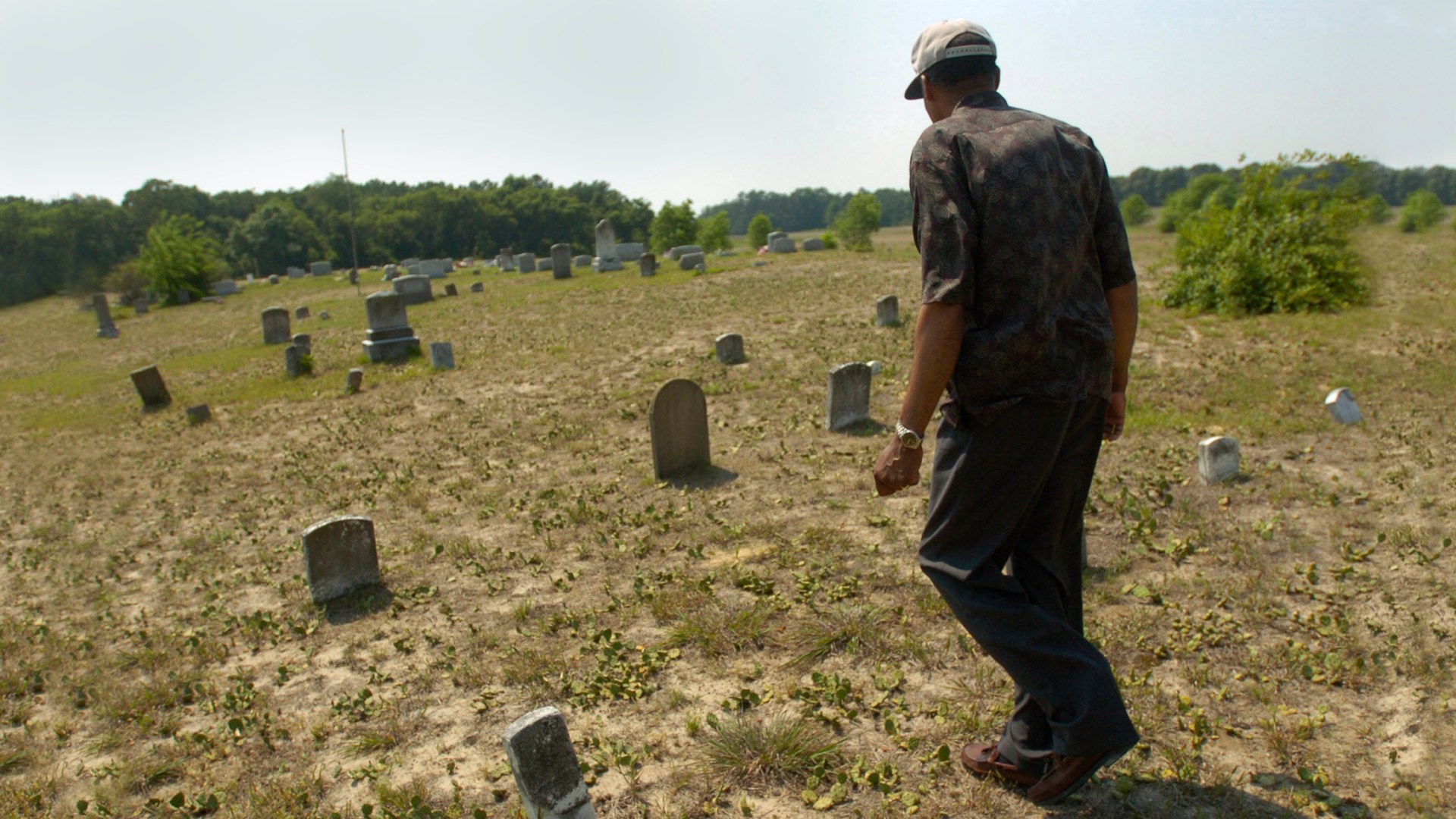
They needed a John Deere Gator to reach the perimeter. Then, in the forested area behind a power plant in Williamsburg, Virginia, Colette Roots and her small expedition had to jump over ditches full of rainwater, where they could see tadpoles and mosquito eggs. They went in.

The plot of land belonged to a Black congregation in the 1940s. The historic church, Oak Grove Baptist, is still active. Roots grew up in the congregation, and as a child, she helped her mother maintain the graves at the church’s main cemetery—a much larger plot roughly a mile from this one, with about 150 graves.

The church lost access to this smaller graveyard decades ago, thanks in part to a massive land seizure by the federal government. By the summer of 2021, most everyone who knew the exact whereabouts of the Christians buried back here had died themselves.

Hidden away like this, in the trees and brush, the graves remind Roots of the Sunday school song about hiding your light under a bushel. When she saw them that day, she had the same reaction: No.

There were a dozen markers, some lying flat and others standing upright. The inscriptions showed that most of the deceased were children, and at least three were related to Roots by marriage. For a moment she was overcome with grief.

The dead needed to be taken care of. They belonged with the other deceased saints at the main burial grounds.

Everyone at Oak Grove agreed with her. But this left them with a conundrum. With an aging congregation, just a fraction of its former size, Oak Grove Baptist has struggled just to pay its utility bills. Relocating a cemetery is not in its budget.

The congregation’s dilemma is not unusual for Black churches. Recently, 26 potential graves were identified beneath a paved road near a Baptist church cemetery in Georgia. In the Tampa area, multiple Black cemeteries have been discovered since 2019, including one beneath a high school and another below an Air Force base.

Across the country, hundreds or thousands of Black cemeteries are in severe enough disrepair that they could be erased altogether. History is being lost. A record of the spiritual heritage of the men and women who persevered by faith through incredible hardship is disappearing. It’s not clear that anything can be done in time to save them.

The dispossession of Oak Grove

Dispossession has been a theme in the history of Oak Grove Baptist.

The church has its origins in Magruder, a cluster of smaller neighborhoods that no longer exists. Brian Palmer, a veteran journalist who has family ties to the area, and his wife, journalist Erin Hollaway Palmer, have done extensive research on the neighborhood’s history. Brian Palmer says that before the Civil War, the area consisted mostly of large plantations but also included small tracts of land owned by free Black families.

During and after Reconstruction, freed people who had lived on the plantations stayed in the region, and more Black families settled there and bought land. In the Jim Crow era, Magruder was a place where African Americans could retain some degree of economic independence. Many made their living by farming and oystering.

Oak Grove Baptist was founded by former parishioners of First Baptist Church, Williamsburg’s original Black house of worship, which had been established before the American revolution. The Magruder residents couldn’t walk the three miles downtown every week for services. They began holding services independently around 1887.

A half century later, Magruder was destroyed by the federal government. When the US entered World War II, in 1941, the military rapidly built training camps for its new recruits. One of the locations it zeroed in on was the Virginia Peninsula, where it planned to build the Navy post that became Camp Peary (which is now a CIA training facility known as “The Farm”).

Magruder was appealing, the Associated Press reported at the time, because of “the wild nature of the country. Officials “thought the “rough terrain of hills, fields, woods, dense brush, swamp and beach” would be ideal for training activities. Government officials also cited Magruder’s railroad access, its water supply, and its flat ground among its assets. Property owners, both Black and white, fought the land seizures but couldn’t stop them.

In the end, several hundred families were displaced by Camp Peary. The residents scattered in all directions, with some exiles settling locally and others leaving the state. Oak Grove Baptist was forced to vacate its building on East Rochambeau Drive, leaving behind a large cemetery.

The church trustees took the matter to court, demanding a higher payment for the church property. According to documents Palmer obtained, they ultimately received $1,150 (the equivalent of $10,700 now). While this lawsuit was going on, Roots says, they bought a new plot of land for burials. This was when the little cemetery with the children’s graves was established.

The church leaders erected a new building on Waller Mill Road, in the neighborhood known as Cooketown. Then that land was seized for a highway and a new water plant and the congregation was forced to relocate again.

Roots was born in 1959. Despite the disruptions, the church thrived while she was growing up. At its peak, Roots estimates, the church had 300–400 people attending regularly. The children of the generation that had been displaced from Magruder were becoming teachers and doctors and lawyers. Many of them lived in other parts of the county, but they still came back to Oak Grove, and many weekends they had cookouts in the area.

Four times each year, Roots and her mother went to the main cemetery to pay respects and help with maintenance.

In 1981, Roots married her high school sweetheart, whose grandparents had also lived in Magruder. Her husband enlisted in the Army, and the young couple left for Fort Bragg, in North Carolina, where they lived for a dozen years. As the ’80s gave way to the ’90s, she watched Oak Grove’s congregation start to dwindle. Elderly parishioners were dying, and younger families were moving farther away. The church cycled through a number of pastors who were only in Williamsburg temporarily and didn’t have strong ties.

As Sunday attendance went down, so did the condition of the main cemetery. Trees toppled, headstones started cracking, and some of the graves sank due to erosion.

Roots and her husband moved back to Williamsburg in 1994, after spending time in Alaska and Tennessee. At first Roots was reluctant to take on much responsibility at Oak Grove Baptist. She worked as a shop steward at the College of William & Mary, leading the union of housekeepers and other wage workers. But after her mother’s death, she felt compelled to get Oak Grove’s main cemetery fixed up.

Colonial Williamsburg, the foundation that runs a living history museum downtown, offered to help. It paid for a new fence and parking lot and used radar technology to check for unmarked graves. Roots described it to the Virginia Gazette as a “miracle.”

Small cemetery rediscovered

Amid this restoration project, one of Roots’s cousins reminded her that Oak Grove had another cemetery as well. “She said, ‘Don’t know where it’s at, but there’s one out there,’” Roots recalls. Over the years, as property around the second cemetery had been sold and developed, the congregation had lost its access route. Then in 2021, Roots received a call from a municipal worker who knew about the restoration work she’d been doing. He said a logger had felled some trees in the old Magruder area, and a set of gravestones was now visible in the woods.

Since the day of the expedition, the congregation has made big strides in repairing and restoring the church building in the last year. But the cemetery project has been more difficult. Much of the surrounding land, where the grandparents and great-grandparents of church members once lived, is now being developed into an upscale subdivision. Moving the graves is a priority. But a local funeral home estimates it will cost around $3,300 per grave (or nearly $40,000 altogether), and the community is still searching for a source of funding. Let Freedom Ring, a foundation associated with First Baptist (Oak Grove’s old parent church), has also been looking for a solution, and Monty Mason, a state senator representing Williamsburg, has offered to help.

From Roots’s perspective, the most just outcome would be for the federal government to pay a substantial portion of the cost. After all, the US military created the problem in the first place, when it broke up Magruder and seized the church’s main cemetery.

There is a bill pending in the legislature, the African American Burial Grounds Network Study Act, that would take up this call. Senator Sherrod Brown (D-Ohio) introduced the bill in 2019, and in December 2020, it was passed unanimously by the US Senate. (A companion bill was introduced in the House by Representatives Donald McEachin, D-Va., and Alma Adams, D-N.C., also in 2019.)

If the legislation passes, the National Park Service will be tasked with putting together a database of every historic Black cemetery in the country, or at least as many as can be identified. The Park Service would then establish grants for local organizations—likely including churches, preservation groups, and other nonprofits—to help them research and restore these sites.

Brown’s office says about $3 million would be allocated to create the network, but other funding sources would be needed for restoration work, which is expensive—often running to tens of thousands of dollars at even a small cemetery.

In the case of Oak Grove, it’s easy to picture how a program like this could help. If it were already in place, perhaps the little cemetery near the power plant would have been identified earlier. And the community wouldn’t have to scrounge for funds to move the graves.

‘Another and another and another and another’

On a national scale, the project’s potential impact would be enormous. Since there’s no comprehensive database of these cemeteries right now, there’s no way to estimate how many are in danger. Hannah Rosen, a historian at the College of William & Mary, who has done extensive research on Black burial grounds, thinks the figure has to be over 1,000 and is likely much higher.

“I don’t think there’s a Southern community that doesn’t have multiple struggling Black burial grounds—and the North is probably full of them too,” Rosen said. “Everywhere you turn, there’s another and another and another and another.”

On one level, the significance of these sites is obvious: Like all cemeteries, they hold the remains of the deceased, so it’s natural to think of them as a kind of sacred ground. Connie Harshaw, the director of the Let Freedom Ring Foundation, who has been working closely with Roots, argues that cemeteries have a particular importance in Black church culture, where respect for ancestors is paramount.

“We stand on their shoulders, and we pay homage as often as we can,” Harshaw said. “We know that if not for them, we could not be where we are now.”

There is another way to think about their significance, too. Monuments from African American history are relatively scarce. In the Jim Crow era, Southern cities rarely put up statues of Black leaders. At the same time, rural Black communities were often forced to use cheap materials to build houses, schools, and churches, because these were all they could afford—and as a result, many of those buildings have not withstood the elements.

To some extent, cemeteries have been an exception to this trend. By their nature, they’re more durable than wood-frame buildings. In some cases, they are the only sites left of abandoned Black towns. In this way, they’re testaments to the history of American racism, as Rosen points out. But they can also be taken as symbols of the resiliency of communities like Oak Grove Baptist.

This is the part that resonates most for Roots. The hymn “This Little Light of Mine” has become her anthem as she works to preserve the church’s landmarks.

“No matter where this church has been—displaced, relocated, relocated, displaced again—and still struggling—the light is gonna shine,” she said. “It represents what Oak Grove stands for; it represents the gospel. That song represents everything. And it’s telling us history will be told.”

Theology

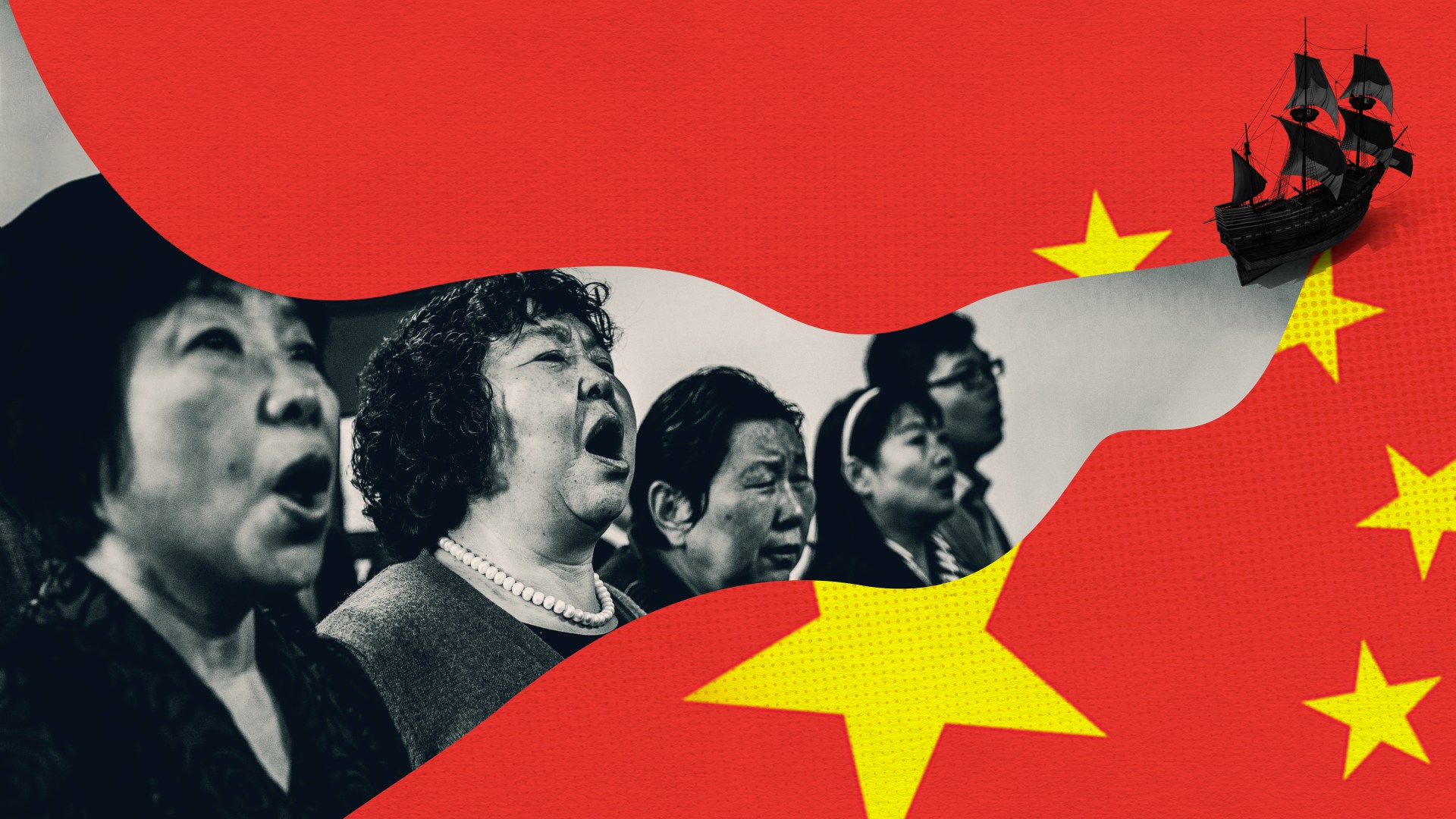
As Korea Moves to Deport ‘Mayflower’ Church, Chinese Christians Debate Dodging the Cross

Mainland believers sympathize with congregation’s concerns but disagree theologically over decision to flee China for Jeju Island.

Christianity Today February 8, 2022
Illustration by Rick Szuecs / Source images: Kevin Frayer / Stringer / Getty / Envato

In late 2019 and early 2020, 60 Chinese Christians left their homes in the southern Chinese city of Shenzhen, seeking religious asylum on Jeju Island, a popular tourist spot in South Korea.

The group of 28 adults and 32 children hailed from Shenzhen Holy Reformed Church (SHRC), following the lead of their pastor Pan Yongguang who went to Korea before them. At the end of January, the Gwangju High Court denied the church’s final asylum appeal. They now face imminent deportation to China unless another country grants them refuge.

Pan’s church began considering emigration after the 2018 persecution of Early Rain Covenant Church in Chengdu, whose head pastor, Wang Yi, knew Pan. Wang was arrested in December of that year and sentenced the following year to nine years in prison. Wang, Pan, and several of Pan’s church elders were represented among the more than 400 house church congregations whose leaders signed a statement criticizing the tightening religious regulations that went into effect in 2018.

After Wang’s arrest, Pan believed that house churches could no longer exist openly in Chinese society. “The church had to leave, unless we scattered or renounced our faith,” he later said.

In mid-October 2019, SHRC held a congregational meeting and voted to move to Jeju. If the church (at that time a group of about 120) remained in Shenzhen, they believed they had only two options: to disperse or to “bend the knee” to the government-sanctioned Chinese Three-Self church.

Additionally, many church members’ children had been attending the congregation’s school, which authorities later shut down. Concerned that their children would be taught material that violated their faith, SHRC parents believed they must move.

Around that time, Pan left his home on what he believed was an exploratory trip to scout out Jeju—he only brought two sets of clothes. But he never returned. Within a few months, his family and a significant portion of his congregation joined him.

But only after the church arrived and applied for asylum did they begin to understand South Korea’s highly restricted asylum policy, Pan said. (In a letter to his church near the beginning of the process, Pan told congregants that an attorney had advised him their planned actions were “perfectly legal.”) A former doctor, he and his church members have worked menial jobs since leaving China, and none speak Korean.

SHRC is now known by some as the “Mayflower Church,” a name coined by Pan’s friends after the pastor noted the similarities between the religious-liberty inspired migrations of the Pilgrims and the SHRC congregation.

“Even the children were familiar with the history of the Mayflower,” Pan said, noting that his church spent the year before leaving China studying Pilgrim leader William Bradford’s firsthand account of the Pilgrim experience, Of Plymouth Plantation. “Our faith is the same as the Mayflower’s; our experience is also similar to theirs.”

A divergent decision

Since new laws governing religious affairs in China went into effect in 2018, life for Christians has grown increasingly difficult. Churches like SHRC that continue to refuse to register with local governing authorities and come under government oversight have found it difficult to meet openly and operate as they once did. This situation is particularly acute for members of urban Reformed house churches whose leaders openly signed the joint declaration.

However, the SHRC’s response to persecution has raised questions among other house churches in China that have remained and continue to endure the new difficult reality that comes with being an unregistered church in today’s China. While many are sympathetic to the congregation’s desire for freedom to worship, others are critical of their corporate decision to flee.

The persecution Pan chronicles is not unusual, but is in many ways a typical experience for Chinese believers in the unregistered church. Many other Chinese house churches share the same experiences, yet others have not responded by corporate fleeing. The incident has sparked discussions among house church leaders regarding what God’s call to his church is, and over the role of pastoral leadership in politically sensitive situations involving not just one household, but an entire flock.

One house church pastor said, “I’m not willing to judge them for their response, seeing as their motives and underlying situation isn’t clear to everyone. Only they know their motives. In a situation like this, it is best not to pass judgment. Take, for example, the Mayflower. They left, and we don’t pass judgment on them.” (Interestingly, the pastor who instinctively made the Mayflower comparison was not aware that some now refer to SHRC as “Mayflower Church.”)

Another house church pastor shared why he returned to China to lead a house church after studying overseas, forgoing his security abroad: “I cannot say the current situation is my personal choice. I am inclined to see it as the circumstance God has prepared and put me in. Growing [up] in the traditional house church in China, ever since the first day of my conversion, persecution is not a strange concept for me.”

As this pastor packed his things to return home, he meditated on the words of Dietrich Bonhoeffer, the German theologian who explained his return to Nazi Germany as a decision to share in the trials of the age with his people. He also mentioned the sacrifices of missionaries such as Wiliam Borden, who died in order to share the gospel with the Chinese.

Although he and his family could, like Bonhoeffer, have avoided the turmoil of pastoring in China, he said: “As a called minister of the gospel, it would be hard for me to preach the hope of a heavenly kingdom to my brothers and sisters in China, while [I] had a plan of retreat. … The shepherd should be with his flock and stay in the field … I will stay, to be faithful.”

Stay or go?

Historically, there are examples of emigration and asylum-seeking for those under the threat of religious persecution in China. However, those cases concerned individuals and families. To our knowledge, an entire church seeking asylum in another country is highly uncommon, if not unprecedented, for China.

House churches tend to identify with those forefathers who stayed and endured persecution such as Watchman Nee and Wang Ming-Dao, both of whom were imprisoned for refusing to join a church under government oversight. Nee in particular had an opportunity to avoid persecution in Hong Kong but chose to return to Shanghai. Thus, the standard historical position of these churches has been to stay and endure.

Because of this historical legacy, many churches view endurance under persecution as an appropriate application of a “theology of the cross.” If SHRC’s reasons for fleeing are historically grounded in the English Puritans who fled on the Mayflower, they may be viewed by other Chinese churches as turning their backs on the historical legacy of the Chinese house church.

Within the larger Chinese diaspora community, there is also a history of many who have fraudulently claimed “persecution” in order to grant credence to their cases.

Pan anticipated that his actions would spark controversy but believed his pastoral responsibility was to keep his congregation together. To members who remain in China, he wrote to his church: “I also knew that if I did [leave], I would surely be criticized by other churches and would have to bear this bad reputation for the rest of my life.”

Unintended consequences

The church around the world has wrestled with whether to remain or flee when confronted with persecution. In the Middle East, Christian communities have been decimated in recent decades as believers faced stark choices between tortured endurance or fleeing and starting a new life elsewhere.

Scripture offers examples of followers of God both remaining and fleeing persecution, and God using both decisions to further his purposes. In the Old Testament, the Lord keeps Obadiah in Ahab’s court while sending Elijah into Gentile territory to escape persecution (1 Kings 18:1–16). In the New Testament, Stephen’s stoning in Jerusalem leads to a mass exodus of Christians out of Jerusalem into other lands (Acts 8:1). What each biblical example shares, whether remaining and enduring or fleeing, is that the decision was made under the guidance of the Lord and never under cowardice.

The story continues in modern times, where the faithfulness of Chinese Christians following the 1949 Communist takeover planted the seeds for the robust faith of many believers today. On the other hand, those who left mainland China after Mao came to power developed many of the resources that helped strengthen young house churches in recent decades.

While critics of Pan and SHRC may have valid points, in the end, it is difficult for someone outside of the congregation to determine SHRC’s motives for leaving for Jeju Island.

Christof Sauer, a missiologist who has written extensively on persecution, tackled this issue for the African Missiological journal Missionalia. In his article titled “To Flee or Not to Flee,” Sauer concludes that people should not flee in situations where “obedience to God’s commandments and Christ’s commission and love for others would be jeopardized.” Only Pan and those seeking asylum in Korea know whether their motives avoid these pitfalls and whether their position is Spirit-guided.

However, the issue goes both ways. Often forgotten in the legacy of Watchman Nee and Wang Ming-Dao, who were marked by boldness and following Christ’s cross, is that each initially capitulated and under pressure cooperated in some way with the government church before later recanting and facing the ensuing suffering that came. The desire to attach oneself to a historical legacy can be fraught with dangers if detached from a Spirit-led, biblical framework for making decisions about responding to persecution.

One danger for churches who emigrate is that of forming a closed community in their new location. Sauer warns of the threat of a “ghetto mentality and a lifestyle that is marked by a high degree of legalism and insulation.” This is certainly more of a threat for groups who emigrate together, like SHRC. Biblically, the scattering of Christians from Jerusalem led to the planting of churches through “Judea, Samaria, and to the end of the earth” (Acts 1:8). Pan should be aware of this threat and seek to lead his people to “seek the welfare of the city” in which they seek to stay (Jer. 29:7, ESV).

What’s next?

Following the denial of SHRC’s final appeal, the group now must leave South Korea within a few weeks. Prior to the final ruling, Pan said his church “very much hoped” another country outside of Korea would grant them asylum, but that he was unsure of the technicalities of the process. Although it is not certain the community will return to China, it is not legal for them to remain in Korea beyond mid-February.

If SHRC is forced to return to China, they will likely face severe persecution. Back in Shenzhen, some members of SHRC who were unable to join the church in Korea have already faced interrogation and even been placed under surveillance or house arrest.

If he repatriates to China, Pan himself will face serious charges: subversion of state power, colluding with foreign forces, and human trafficking. Pan’s friend Wang Yi was sentenced on the charge of subversion of state power, a catchall charge that is often used against political activists. The trafficking charge is due to Pan’s leadership of his church as they crossed national borders to seek refuge overseas. Life will likely also be difficult for the other members of his church, who in all likelihood would also face interrogation, surveillance, harassment, and, in some cases, imprisonment.

These larger warnings and considerations are not limited to SHRC or the Chinese house church world. The Pew Research Center has found that Christianity remains the most persecuted religion in the world, and this persecution has continued to increase in the past decade. Churches from China to Iran, from Ethiopia to India, will face many of the same types of struggles as Pan and SHRC and will have critical decisions to make as to how to respond.

For many, the opportunity to flee may arise. It is critical to pay attention to those like SHRC who have chosen to flee and to learn and assess the response of one’s own church. At the same time, any decision must be made with Spirit-guided motives that are steeped in Scripture more than in history, whether that be the history of a 21st-century Chinese house church or the English Puritans.

Jarred Jung is a professor of theology in Asia and is a fellow for the Center for House Church Theology. He spent a number of years in China serving in various ministry roles.

E. F. Gregory is the blog editor for China Partnership, which strives to tell the modern-day story of the Chinese house church.

News
Wire Story

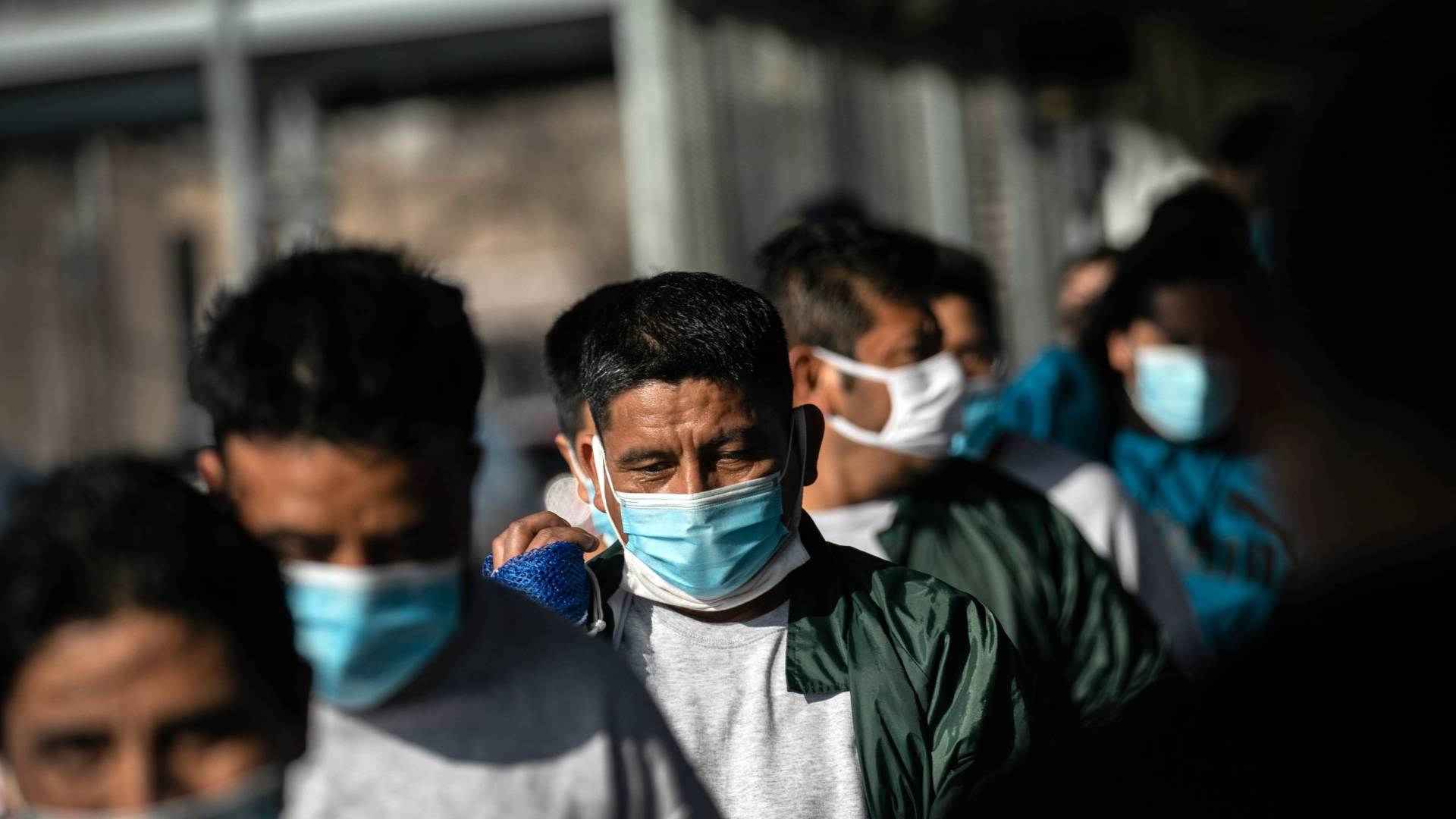
Fewer White Evangelicals Want a Pathway to Citizenship for the Undocumented

Meanwhile, support for immigrants is up among Black Protestants.

Christianity Today February 7, 2022
John Moore / Getty Images

Back in 2013, creating a pathway to citizenship for millions of undocumented immigrants in the US was the rare issue that virtually all major American religious groups could agree on. The cause was so unifying that conservative evangelicals joined liberal leaders from other faiths that year to muster an unsuccessful but vibrant faith-based campaign to push Congress to pass immigration reform.

But according to a new poll from the Public Religion Research Institute, that united religious front on the issue may be a thing of the past.

In a survey released on Thursday, PRRI found that, while overall support for a pathway to citizenship has remained virtually unchanged between 2013 and 2021 (63% to 62%), some faith groups have undergone notable shifts.

Support among white Catholics dropped from 62 percent to 54 percent, for example, and those who claim a non-Christian religion dipped from 68 percent to 55 percent.

The most notable shift occurred among white evangelicals: In 2013, most of them (56%) backed a pathway to citizenship in 2013, but now only 47 percent say they support it today.

That makes white evangelicals the only religious group without a majority who support a pathway to citizenship, a difference that widens when limited to those who attend religious services weekly or more (58% to 45%).

https://datawrapper.dwcdn.net/1jReX

But while small downward shifts also occurred among white mainline Protestants (61% to 59%) and Hispanic Catholics (74% to 70%), some faith communities trended in the opposite direction.

Black Protestants are now the most supportive religious group regarding a pathway to citizenship, rising from 70 percent in 2013 to 75 percent in 2021. Support among religiously unaffiliated Americans also increased to 69 percent from 64 percent.

Meanwhile, several major groups are now more likely to describe immigration as a “critical issue.” In 2013, it was a minority position among white evangelicals (38%), white Catholics (36%) and white mainline Protestants (32%). But last year, majorities of all three said they see the issue as critical, with white Catholics topping the list (57%).

Religiously unaffiliated groups barely changed how they gauge the importance of the issue in that same period, rising only two percentage points to 32 percent.

Among white evangelicals who do view immigration as a critical issue, only 34 percent expressed support for allowing undocumented immigrants to become citizens provided they meet certain requirements.

They were more receptive (41%) to allowing immigrants brought illegally to the US as children to gain legal status, a policy known as Deferred Action for Childhood Arrivals, or DACA.

Former President Donald Trump’s rhetoric and hardline policies regarding immigrants were widely decried by religious liberals but often embraced by evangelical Protestants, who were some of his most stalwart supporters.

Trump’s attempt to “wind down” DACA, for instance, was condemned by myriad faith groups in 2017 but drew praise from some of his evangelical advisers.

In some ways, white evangelicals have remained the same, such as whether those surveyed agreed that “the growing number of newcomers from other countries strengthens American society.”

White evangelicals remain the group least likely to say yes, barely shifting from 38 percent to 35 percent from 2011 to 2021.

The religiously unaffiliated, meanwhile, saw a marked shift and are now the group most likely to say immigrants strengthen society: Support shot up from 65 percent to 74 percent.

An even more dramatic change took place among Black Protestants: While only 48 percent agreed in 2011, 69 percent do now.

News

Tongan Christians Felt the Force of the Volcano. And the World’s Prayers.

The kingdom and its diaspora credit their Christian faith for the low number of casualties.

Christianity Today February 7, 2022
NurPhoto / Contributor / Getty

When he heard the first boom, Feʻilaokitau Kaho Tevi was in line to get his car washed in Tonga’s capital city of Nukuʻalofa. He returned home quickly. Others sat in traffic as over the course of January 15 a volcano erupted in the island kingdom—one that NASA scientists later claimed was hundreds of times more powerful than the Hiroshima atomic bomb.

The blast dumped a layer of ash several inches thick onto buildings, cars, plants, and trees and generated waves that reached estimated heights of 50 feet, sweeping away coastline villages and resorts. Rushing water pushed boulders and debris onto roads. The undersea telecommunications cable connecting the South Pacific nation of 105,000 residents with the rest of the world snapped.

And yet, “We feel that we have been the subject of the prayers of the worldwide Christian community,” said Tevi, the former general secretary of the Pacific Conference of Churches who has previously helped lead Tearfund natural disaster relief efforts in the region.

He’s right.

Anxious about the fate of their loved ones, many in Tonga’s 150,000-person diaspora have held all-night prayer marathons, organized vigils, and used social media to implore fellow believers to plead to God for the safety and protection of their loved ones.

“These were sleepless nights for me and many Tongans around the globe,” said Sela Finau, pastor of First United Methodist Church of Taylor, near Austin, Texas. “We were desperately waiting to hear any word of life from the kingdom. While our communication line was down with family and the people of Tonga, we leaned onto our faith. We knew that our communication line with God was always open and that we could petition for God’s mercy and protection.”

Many Tongans who have left the islands now live in Australia, New Zealand, or the United States, locations which gave them an opportunity to put the tiny community’s plight on the world’s radar.

“Some people have never been to Tonga, some people have never heard of Tonga, but when the call to prayer was made from one believer to another, people prayed,” said Rachel Afeaki-Taumoepeau, regional secretary for the World Evangelical Alliance’s South Pacific Evangelical Region. Her family hails from Tonga.

Many see the hand of God looking out for the kingdom of some 170 islands, given the disparity between the intensity of the disaster and the low number of casualties (three).

“For the last two weeks, I have been in prayer day and night, thanking God that he spared Tonga,” said Siesia “Sia” Puloka, pastor of Seaview United Methodist Church in Seattle. “When you try to see Tonga, you almost have to kiss the map; it’s just a little dot. The tsunami and the eruption could have wiped Tonga out in a second. It’s flat like a pancake.”

Tongan Christians aren’t just crediting the prayers that began after the volcano went off. They point to King Tupou, who dedicated the islands to God and in 1839 adopted a new motto for his kingdom: Ko e ʻOtua mo Tonga Ko Hoku Tofiʻa (“God and Tonga are my inheritance”). Tupou was among the first generation of Tongans to become Christians after Western missionaries arrived at the end of the 1700s.

Today, the only remaining monarchy in the Pacific is overwhelmingly Christian. Protestants make up nearly two-thirds of the population (64.9%), with the majority—including the royal family—belonging to the Free Wesleyan Church. Mormonism arrived in the 1890s, and today 16.8 percent of the population belongs to The Church of Jesus Christ of Latter-day Saints, making Tonga the most Mormon nation on earth. About an equal share of Tongans are Roman Catholic.

As thousands of Tongans have emigrated, churches in their new locations have served as centers of cultural connection. Leading one of two Tongan congregations in Seattle, Puloka preaches in both Tongan and English in her services as part of an effort to keep the younger generation engaged.

“When there are holidays, we celebrate in the church and in the community. We do our island dances, we sing the songs from home,” said Puloka. “We wear our Tongan attire to church. I tell our young people they are beautiful, loved, and adored. Especially for kids that were born here, they wanted to be in the group, they want to belong. I also want them know that they are Tongan because their parents and grandparents are Tongan.”

This close sense of camaraderie is even reflected linguistically—the Tongan language has no word for cousin and so first and second cousins are considered as siblings, explained Finau.

“The nuclear family in the context of the West does not define nor exist in the Pasifika Island family structure,” she said. “Similarly, Jesus viewed others as his brothers and sisters, particularly those who followed God’s way, as told in Matthew 12. We all belong to God’s family. We all belong to the body, as the apostle Paul would describe in 1 Corinthians 12.

“Tongans, like all Pasifika people, see themselves connected and are a part of the moana (ocean). For this reason, when Tongans are in diaspora all over the globe, we still feel connected through the moana. After all, there is only one moana,” said the Texas pastor.

“A hymn, called ʻEiki Ko e ʻOfa ʻA ʻAu (‘Lord, How Great Is Your Love’), all Tongans learn growing up. The hymn is immensely heartfelt and meaningful for Tongans; many know it from memory,” she said. “I shared this song on my social media page a few times soon after the volcano and tsunami. The lyrics bring a sense of peace and remind us to lean and trust in God alone. The song uses the ocean as a metaphor, and it is an accurate account of Tongans expressing their love for God and vice versa. For Tongans, the ocean is not only a symbol of life; it is their lifeline, a way of life, an eternal inspiration.”

In recent days, relief has been traveling across the ocean, with New Zealand, Australia, the US, and the UK sending ships. Tonga is a COVID-free country, so the challenge now is ensuring that the virus doesn’t tag along with the supplies. With over 70 percent of the country having received at least one dose of the vaccine, Tonga was close to reopening its borders after nearly two years. It’s unclear how much longer those desperate to see their loved ones or to return will have to wait.

Despite the destruction, life has been returning to normal (at least for the pandemic). Last week, children returned to school and churches opened their doors. Even as ash still covers large parts of the islands, some entrepreneurially minded citizens have begun selling bags of it to reuse as plastering material.

“Tonga was to a large extent saved by forces that are beyond us. It was almost like a miracle,” said Tevi. “If we’re estimating the explosion to have been [many] times the explosion in Hiroshima, it’s just a surprise and wonder that we’re still here. We are in God’s hands. He has brought us through a number of disasters and we’ve come out safe and sound.”

Ideas

Remembering Abouna Makary, Coptic Priest Loved by Egypt’s Evangelicals

Favorite Orthodox figure on Arabic Christian TV eulogized by fellow evangelist Sameh Maurice after COVID-19 death.

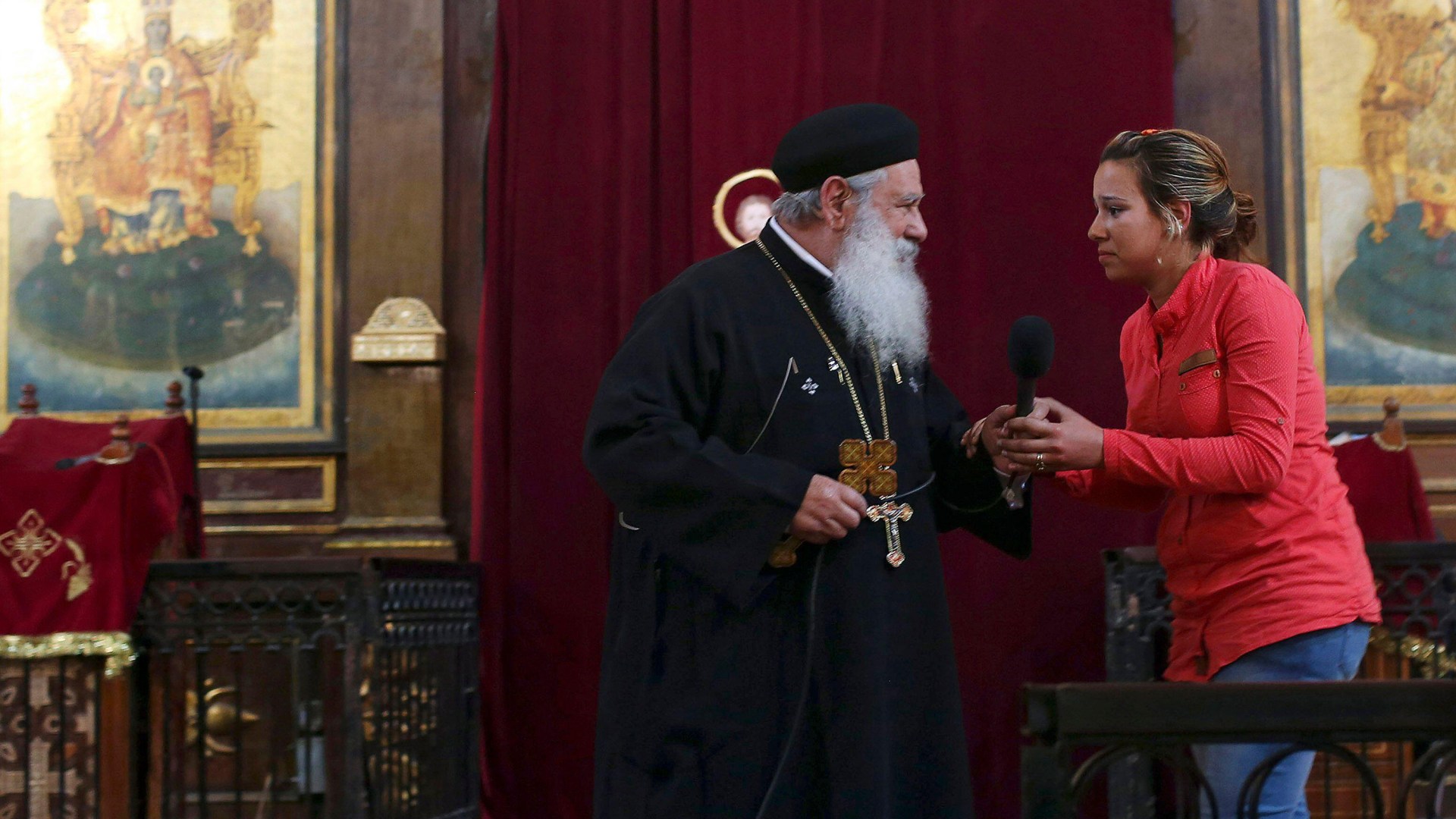
Abouna Makary talks with a visitor, believed to be possessed, during the Coptic Orthodox priest's prayers at St. Mark's Cathedral in Cairo, Egypt.

Abouna Makary talks with a visitor, believed to be possessed, during the Coptic Orthodox priest's prayers at St. Mark's Cathedral in Cairo, Egypt.

Christianity Today February 4, 2022
Reuters / Alamy Stock Photo

Last month, Egypt’s Coptic Orthodox Church lost one of its most recognized and charismatic priests. Abouna (“Father”) Makary Younan (1934–2022), a well-known figure on Arabic Christian satellite television, died on January 11 of complications from COVID-19.

Just a few miles from where his funeral services were held at the historic St. Mark’s Cathedral, Abouna Makary’s good friend and Christian television megastar Sameh Maurice convened a heartfelt commemoration at downtown Cairo’s Kasr el-Dobara Church, where he pastors the Arab world’s largest evangelical congregation. Together, these two ceremonies affirmed that the late priest’s legacy of praise, miracles, and ecumenism will endure among Egypt’s Orthodox and Protestant Christians alike.

“Abouna Makary influenced the lives of millions in this generation,” said Maurice. “I know of no other person who touched so many people.”

For nearly two decades, Arabic Christian television introduced both Abouna Makary and “Pastor Sameh” to wider audiences, educating viewers in novel ways about Coptic Orthodoxy and Protestantism. At times both sides have been wary of the medium, especially the Orthodox hierarchy.

Representing the overwhelming majority of Christians in Egypt, in recent years Coptic Orthodox leaders have taken contradictory positions on evangelicals. Some are open to dialogue and friendship, while others lead campaigns not only against popular evangelical leaders like Pastor Sameh but also charismatic priests like Abouna Makary. Stylizing themselves as protectors of indigenous church heritage and of the Copts’ place as the Middle East’s largest Christian sect, they doled out their polemics in newspapers, social media, and on satellite channels.

In this unpredictable environment, Abouna Makary stood firm, insisting on developing a Cairo-based ministry rich in traditional dogmas and teachings but also focused on commonalities, bridge-building, and the power of the Holy Spirit to unify Egypt’s Christian believers.

Sabry Younan Abd al-Malik was born in the Upper Egyptian town of El Maragha, about 300 miles south of Cairo. After completing his studies and working as a government civil servant, he turned to devote his life to the church.

In the 1970s, he served with Zakaria Botros, priest at St. Mark’s Coptic Orthodox Church in Heliopolis, Cairo. Zakaria—a towering if controversial persona in his own right—organized weekly meetings marked by exorcisms and exuberant singing, attended by hundreds. It is said that Sabry honed his talents for leading praise and worship during these sessions.

In 1977, Sabry was ordained a priest, taking the name Makary from the fourth-century Egyptian saint and hermit. From his earliest years of service, he was accused by Orthodox leadership of “Protestant-inflected” teachings. Interpretations of Orthodox doctrines narrowed during the first decade of Pope Shenouda III’s patriarchy (1971–2012), with less tolerance shown toward seemingly wayward practices.

Still, Abouna Makary kept promoting a diverse Orthodoxy that embraced miraculous signs and joyous worship. Across Egypt’s Christian denominations—and religions—he gained fame for offering hope and health to the disabled, blind, deaf, and wheelchair-using. These rituals have long been embedded within his church’s teachings, but Orthodox leaders grew concerned with the spectacle as popular attention grew to what appeared to be a mimicry of Western charismatic Christianity.

His ministry received further notoriety with the proliferation of Arabic Christian satellite television, which launched in the mid 1990s but flourished in the early 2000s. On Al-Shifaa (The Healing Channel), a now-defunct subsidiary of Paul Crouch’s Southern California-based Trinity Broadcasting Network, his program was shown alongside Arabic-dubbed American fare like that of faith healer Benny Hinn and several charismatic Orthodox, Catholic, and evangelical programs. He also regularly appeared on Cyprus-based SAT-7 Arabic and on Al-Karma, up till his recent illness and passing.

Television as a vessel for performing miracles was perfected by the likes of Oral Roberts (1918–2009) and by his Middle Eastern correlate, the Lebanese-American Pentecostal preacher Elias Malki (1931–2015), both of whom had invited audiences to play an active role in their own healing by touching their television screens. Like Roberts and Malki, Abouna Makary fully harnessed this medium, at times instructing viewers to place a container of water close to their television sets during live airings of his programs. That container, he told them, would become blessed, holy, and capable of the miraculous.

But whatever one believes about the Western and Arab forerunners, the evangelical funeral service honored the priest’s humility.

“Abouna Makary never cared much for titles, nor status, nor popularity,” said Pastor Sameh during his eulogy. “He lived only to glorify God.”

Socially, Arabic Christian satellite television created a space for both new traditions and the expression of practices long concealed behind church walls. While Christian programming on Arab state channels had been limited to a few hours each year, satellite television generated opportunities for indigenous Christian voices.

Inside the privacy of their homes, Arabic-speaking Protestants, Catholics, and Orthodox now learned of each other’s creeds. Some found more commonalities than they had imagined. Others became more entrenched in their traditional ways. Pastors and non-clergy alike expanded their influence, their message reaching viewers across denominations and geographic boundaries.

And while it often heightened tensions between Egypt’s Christian sects, television also facilitated profound moments of collaboration, such as between Abouna Makary and Pastor Sameh. With their common aspirations of Christian unity and revivalism, the two men became quick friends. In recent years, they often appeared together at televised major gatherings not just in Egypt but also in Iraq, Lebanon, and Jordan, the latter airing on the Maronite Catholic channel Noursat. Their joint, genuine belief in the power of collective worship, mass prayer, and public miracles won the admiration of millions.

At his funeral service in Cairo’s Azbakiyya district, mourners honored Abouna Makary at the parish he served for 44 years. With live cameras rolling, Orthodox Bishop Raphael spoke somewhat impersonally about Coptic priesthood and its obligations. But at Kasr el-Dobara, just off Cairo’s iconic Tahrir Square, with the deceased’s family sitting in the front row, Pastor Sameh captivated the audience with touching stories delivered in his dynamic style.

Drawing from Hebrews 13:7 to encourage and console the mourners, he affirmed Abouna Makary’s remarkable legacy—one that succeeded in inspiring faithfulness within two very diverse traditions.

“Remember your leaders, who spoke the word of God to you,” Pastor Sameh quoted. “Consider the outcome of their way of life, and imitate their faith.”

Febe Armanios is a professor of history at Middlebury College and a distinguished visiting professor at Williams College. She is currently completing a book titled Satellite Ministries: The Rise of Christian Television in the Middle East.

Ideas

Meditations on WeChat’s Top Christian Blessings for Chinese New Year

As Chinese Christians circulate images of Psalm 65 and Numbers 6, here are three more Bible verses worth sharing.

Chinese New Year bible verses and blessing words

Chinese New Year bible verses and blessing words

Christianity Today February 4, 2022
Exxorian / Getty Images / Edits by Rick Szuecs

Lunar New Year is not only a festival of reunion, joy, blessing, and warmth for the Chinese people, but also a great time for Chinese Christians in China and overseas to actively share their faith with their fellow countrymen.

Every year when the holiday comes, many Chinese Christians send images containing words of blessing and a Bible verse or two on WeChat and other social media to wish their friends and relatives a happy new year, and also to give a positive testimony for Christian faith.

I paid special attention to which Bible verses appear most often in these memes, and found that in 2022 the most frequently used are the blessing verses of Psalm 65:11 and Numbers 6:24-26.

Yet there are many other Bible verses that can be connected to Chinese New Year celebrations. In addition to using these Bible verses in images of blessing, Christians can also meditate on these verses during the new year to reflect on the meaning of God’s grace, peace, and reunion.

I also cannot help thinking about our global Christian brothers and sisters; perhaps the Chinese enthusiasm for sharing the gospel and Bible verses for Lunar New Year can also be applied to their celebrations of January 1 on the Western calendar.

Below are my meditations upon select Bible verses for Chinese New Year. I hope that they can serve as examples for non-Chinese Christians to see how Bible verses can be used for evangelism and devotionals during new year holidays:

1) Psalm 65:11

“You crown the year with your bounty, and your carts overflow with abundance.”

The word bounty in this verse means “good things” in the original Hebrew, which directly refers to the yield of the earth. “Carts overflowing with abundance” is a symbolic picture that refers to the fullness of the harvest of the land. Agricultural work was a very important part of the life of the people of Israel, and God’s blessing of the land meant that God was closely related to their lives and work.

For the Chinese people, the Chinese New Year’s Eve dinner is a symbol of the year’s abundance: It is not only a table full of food, but also the reunion of family; not only the abundance of materials, but also the emotional satisfaction of relationships. That is the Chinese understanding of abundance that is deeply planted in Chinese people’s hearts. Going home for the Chinese New Year is the true expression of this longing. As Christians, we are also eager to go home during the Chinese New Year holiday to reunite with our families and to enjoy a table full of food. We believe that God is as real as sunshine and air, and that he cares for our life and work throughout the year, bringing us satisfaction and joy with various benefits.

But God’s blessings are not only in material things and human relationships. They are also in a real relationship with God, which is what the first few verses in Psalm 65 talk about: the prayers from the depth of our hearts are always heard by God, our sins are forgiven, and our souls have a place to return to (Ps. 65:1-5).

For the Chinese, the new year celebration feasts always include fish, because fish in Chinese (yu) shares the same pronunciation as surplus (so “nian nian you yu,” or “having fish every year,” means having extra abundance every year). It reflects a deep desire to be blessed. But in Christ we receive more blessings and grace from God than the visible material things and relationship with other people. We should be more thankful for the joy of the holiday because of Christ.

2) Numbers 6:22-27

The Lord said to Moses, “Tell Aaron and his sons, ‘This is how you are to bless the Israelites. Say to them: ‘The Lord bless you and keep you; the Lord make his face shine on you and be gracious to you; the Lord turn his face toward you and give you peace.’ So they will put my name on the Israelites, and I will bless them.’”

The most important part of Chinese New Year celebrations is undoubtedly going home. Home is the place for us to return and take rest. During the Spring Festival (i.e., Chinese New Year), home is associated with happiness, celebration, and peace. It can be said that the Chinese New Year holds the ideals and expectations of the Chinese people for life. In biblical language, all of this is expressed as shalom (peace). Shalom is the deepest longing and pursuit of the traditional Israelites’ lives, as well as their greeting when they met each other.

The Numbers 6 passage is the blessing of the high priest of the Old Testament to the Israelites. It is the most beautiful blessing that the chosen people of the Old Testament could receive. This blessing begins with God’s blessing and ends with God’s peace. It is filled with the abundance of God’s presence and caring.

The Hebrew word shalom is rich in connotation and means completion, harmony and peace, health and strength, and blessings and benefits. These are also the deepest longings of the Chinese people during the Spring Festival holiday.

This passage is also a familiar blessing to us New Testament Christians. We know that this peace ordained by God was fulfilled in Christ Jesus. Paul says: “Praise be to the God and Father of our Lord Jesus Christ, who has blessed us in the heavenly realms with every spiritual blessing in Christ…; he made known to us the mystery of his will according to his good pleasure, which he purposed in Christ” (Ephesians 1:3, 9).

The Chinese people have a wonderful vision of the Chinese New Year: home, blessings, joy, and peace. But the real shalom, the blessing that represents the ultimate fullness of our existence, can only be obtained by connecting to the One who is the Creator of life. The good news is that this shalom has been given in Christ and will be complete in the future in Christ.

3) Exodus 12:1-2,11

The Lord said to Moses and Aaron in Egypt, “This month is to be for you the first month, the first month of your year…. This is how you are to eat it: with your cloak tucked into your belt, your sandals on your feet and your staff in your hand. Eat it in haste; it is the Lord’s Passover….”

For the Chinese people, the Chinese New Year marks the beginning of the year. As the old Chinese saying goes, “The year’s plan lies in spring.” In natural terms, spring is the season when everything revives and grows, when people sow their seeds in anticipation of future harvests.

Spring Festival is a time with warmth for people to reunite with their families, celebrate the harvest, and wish each other a happy new year. People sowed seeds of hope and blessings in the Spring Festival. That was a simple sentiment of the common people in ancient agrarian societies, but it helped raise a hard-working nation.

In the Old Testament, however, God wanted his redeemed people of Israel to mark the beginning of the year with Passover. The Passover was a reminder of God’s power to lead the people of Israel out of slavery in Egypt. Since then, the Israelites organized their lives no longer according to the natural time, but according to the revealed Word of God. This change shaped a grateful and trusting people.

In the history of the church, Christians used to mark the beginning of the year not with the first month on the Gregorian calendar, but with the season of Advent. Advent begins four Sundays before the birth of Jesus Christ on Christmas Day, and the church has about four weeks to prepare for the birth of the Lord Jesus. During Advent, we contemplate the brokenness and hopelessness of our lives and surroundings, and we wait patiently for the fulfillment of God’s promises in His beloved Son as the hope of the world. This gesture shows that the church of the Lord Jesus remains a waiting community.

4) Deut. 31:7-8

Then Moses summoned Joshua and said to him in the presence of all Israel, “Be strong and courageous, for you must go with this people into the land that the Lord swore to their ancestors to give them, and you must divide it among them as their inheritance. The Lord himself goes before you and will be with you; he will never leave you nor forsake you. Do not be afraid; do not be discouraged.”

It is really exciting to think about going home for the New Year. But for many people it can also be nerve-wracking. When you are past the presumptive age of marriage and still single (especially if you were a female Christian), going back home will be met with all kinds of inquiries and even disguised condemnations, as well as many invitations to blind dates. Or perhaps the year has not been a good year at work for you and your performance has been mediocre, so it would be stressful to attend class reunions. Or your marriage may be facing a crisis, and it would be hard to face parents and relatives and friends.

You may feel that the wounds from going home for Spring Festival in the past have not yet healed, and you still have a lot of fear: There is always a generation gap in communication with parents, and the conversation may not be on good terms; the mother-in-law and daughter-in-law relationship may be on thin ice; siblings may quarrel, and have grudges against each other, etc. It usually appears to be okay when we are far away from each other, but the Spring Festival gathering is likely to uncover the hurt.

Looking at these stresses and wounds alone can make people choose to escape and simply not want to go home for the Chinese New Year. We may go home with reluctance in our hearts. But we need a shift in our perspective, and we need encouragement and strength from God. This passage is Moses’ exhortation to Joshua, who succeeded him, before he died. It was a great and difficult task to continue the work of Moses and lead God’s people. Joshua’s heart was filled with fear. Moses had only one encouragement: Do not be afraid!

Moses gave Joshua three tips to overcome his fear: God had given the promise of the land; God went before him; God would be with him.

Christians need to go home with the assurance that God has gone to our homes ahead of us, that he is already at work in our homes. Therefore, when we go home, we may be surprised to find the marks of God’s grace. Even if not, we know that he will be with us in all our difficulties. We can overcome our fears and return home with love and courage.

5) Hebrews 12:14

Make every effort to live in peace with everyone and to be holy; without holiness no one will see the Lord.

The Chinese people have always valued the wisdom of “harmony is the most precious,” especially during Spring Festival, the most festive and auspicious time of the year. When I was a child, in our small village during the Chinese New Year holiday even those who had grudges against each other and did not speak to each other would greet and wish each other a happy new year politely with a smile on their faces.

Jesus is called the “Prince of Peace” (Isa. 9:6), and he came to this world to reconcile people to God. He said, “Blessed are the peacemakers, for they will be called children of God” (Matt. 5:9). Paul says that God has entrusted to us the ministry of reconciling people (2 Cor. 5:18). Christians are called to be peacemakers.

But for many Christians, going home for the Chinese New Year is a time of experiencing conflict and fighting for the truth. Sometimes it is old classmates who judge us; sometimes it is friends who ridicule us for holding on to our inner conscience; sometimes it is family members who do not understand our faith and oppose our choices; sometimes it is even the powerful traditional customs of local idolatry that challenge our courage to hold on to our faith.

In the midst of conflict and warfare, we may be motivated to fight the good fight for the truth, but sometimes we can become belligerent and insensitive towards our friends and relatives. The writer of Hebrews exhorts Christians to “make every effort to live in peace with everyone and to be holy” (Heb. 12:14). We generally emphasize holiness in the latter part of the verse, but harmony is also important to God. The book of Hebrews was written at a time of great persecution for the church, and the pursuit of harmony is even more difficult in such a situation.

“Make every effort” is translated as “strive” in The New Chinese Translation. God wants us to do everything in our power and wisdom to seek harmony with all people, even when facing an unfriendly situation.

This Spring Festival, let’s do our best to be God’s children of peace.

Pastor Jeshurun Lin graduated from Calvin Theological Seminary (CTS) with Master's degrees in divinity and theology. He is a columnist for Reframe Ministries and is engaged in media mission and theological education in Beijing.

Part of this article is excerpted from A Better Home: Chinese Holidays Devotional, published by Reframe Ministries.

Translation by Sean Cheng

News

Amazon Primes a Sunday Work Dilemma

With two delivery drivers suing over schedules, Sabbatarian Christians find their observance increasingly countercultural in a 24/7 economy.

Christianity Today February 4, 2022
Maja Hitij / Getty Images

Mailboxes used to go empty on Sundays.

Not anymore. America’s biggest retailer, Amazon, ships seven days a week, and as the site expands Sunday delivery across the country, more drivers are losing what would have been a steady day off.

For many, the shift just means their break will fall during the week. But for some Christians on the job, the new delivery option conflicts with Sunday church services and their conviction not to work on the Sabbath.

Amazon’s seven-days-a-week schedule has already led to two lawsuits from drivers who were fired for not working on Sundays. Both claimed religious discrimination under Title VII, alleging their employer had not provided “reasonable accommodation” for them to work other days.

In a case in Florida, a Sabbatarian Christian lost his job working for a delivery service contracted by Amazon, and the Equal Employment Opportunity Commission (EEOC) launched a lawsuit on his behalf. Last week he secured a $50,000 settlement, and his former company, Tampa Bay Delivery Services, will undergo religious sensitivity training.

For a postal worker in Pennsylvania, though, the case is making its way through the Third Circuit Court of Appeals after a district court ruled last year in favor of the US Postal Service.

Gerald Groff is an evangelical Christian who began working as a rural mail carrier in 2012, a part-time role rotating through holiday and weekend routes based on demand.

After the station he was working for began contracting with Amazon for Sunday delivery, he transferred to another rural station. When that one also started Sunday routes, he tried to adjust his schedule and swap days but ended up missing 24 Sundays of work in 2017 and 2018, before being let go in 2019.

Last week, Groff’s legal team issued oral arguments on his behalf, saying the postal service discriminated against him because of his faith.

Howard Friedman, University of Toledo law professor emeritus, has seen reasonable-accommodation cases continue to rise on his blog Religion Clause. Seventh-day Adventists and Orthodox Jews had often come up in religious accommodation cases because their conviction to rest and worship on Saturdays put them in conflict with typical work schedules.

“Historically, work schedules and holidays tended to be in line with Christian (or at least mainline Protestant) religious and holiday schedules and practices,” he said. “More recently, as we have moved to a 24/7 economy, Sunday work schedules have become more common and pose conflicts for Christians that previously were felt mainly by minority religions.”

Christians have lamented the shift away from businesses observing Sunday sabbath for decades. In CT’s early days, evangelical leaders complained about the uptick in “Open on Sunday” signs in grocery stores, theaters, and other businesses.

“Too largely the Sabbath day has been reduced from a holy day of spiritual replenishment, instruction, and correction, to a mere holiday for pleasure seeking or to just another day of merchandising,” Charles W. Koller, president emeritus of Northern Baptist Theological Seminary, wrote in 1963, two years after the US Supreme Court ruled that “blue laws” restricting Sunday commerce were constitutional. “Christ made allowance, within the spirit of the law, for works of mercy and of necessity, and for taking care of the occasional ‘ox in the ditch,’” Koller said. “But the moral responsibility of unnecessary Sabbath violation is not to be lightly regarded. Immeasurably greater is the moral responsibility of coaxing others away from Sabbath observance to the marts of trade. Still more serious is the policy of denying to employees the possibility of observing the Sabbath.”

In the late 20th century, states repealed blue laws with the backing of Christian and non-Christians. Up until the last several years, mail delivery remained one of the final holdouts of services that paused on Sundays.

“It grieves me that as a society, things just happen on Sunday as a matter of course, almost automatically. The mail comes on Sunday, the stores are open on Sunday, and everything happens like it does on Saturday,” said David Strain, senior minister of First Presbyterian Church in Jackson, Mississippi.

“I’m not offended by that. I’m not angry at anyone about that. I’m certainly saddened by it because I see how challenging that makes things for those Christians who are trying to be faithful in this area, but I also see the great loss for all people, the loss of that rest and the loss of a spiritual benefit.”

Sabbatarian Christians like Strain see the patterns of work and rest established in Creation as God-given and good for all. While there will always be professions that need to work on Sundays for the common good, like doctors and farmers, they believe most should reserve it as a day for worship and rest.

After the Resurrection, Christians began adopting the first day of the week as the Lord’s Day, but it took hundreds of years to develop the kinds of formal church services we come to associate with weekly worship, historian Craig Harline wrote in his book Sunday. And it wasn’t until the fourth century that Christians began calling it Sunday rather than the Lord’s Day. Before that, too many worried about the pagan connotations around the sun.

Even among evangelicals, there are a range of views on whether Christians are commanded to spend the Lord’s Day in observance of the Sabbath, with some believing that rhythms of rest and worship can take place on other days of the week.

But for Sabbatarians, Sundays are uniquely meant for worship, rest, and fellowship; they happily set aside job obligations as well as most housework, yardwork, and schoolwork. And it’s significant that all share the Sabbath on the same day.

“This notion that regular patterns common to society as a whole facilitate us not just having individual rest—most employers still provide days off—but doing that on the same broad schedule so that everybody has the same days off so we could be together as a society, that is being eroded, I think,” said Strain.

Such Sabbath observance is becoming more countercultural in the busy, hyperproductive 21st century. Believers who avoid shopping or eating out on Sundays as a part of their Sabbath observance do so in the midst of an always-on economy where an Amazon package could land at their door while they’re at church.

“When Amazon started kind of out of the blue doing Sunday delivery, we got burned a couple of times, so Christians need to be very careful if they want to be serious about this and protect people like these [drivers],” said Joseph A. Pipa Jr., president emeritus of Greenville Presbyterian Theological Seminary. “We’re very careful to delay our order a day if it means they are going to deliver it on the Lord’s Day or pay attention to when it’s going to be delivered.”

Sabbatarian Protestants—which fall in traditions ranging from Presbyterians to Pentecostals—schedule work, travel, and other activities around being at church on Sundays, avoiding what the Westminster Shorter Catechism calls “recreations as are lawful on other days.” While some fellow believers see such commitments as legalistic, Sabbatarians see it as a joyful chance to take advantage of a day set aside to draw near to God.

In his book The Lord’s Day, Pipa cites Isaiah 58:13–14, where “if you call the Sabbath a delight and the Lord’s holy day honorable, and if you honor it by not going your own way, and not doing as you please or speaking idle words, then you will find your joy in the Lord.”

As a pastor, Pipa has counseled Christians facing work conflicts around Sunday schedules, first asking them to consider whether their work is out of necessity or mercy and therefore permissible.

In instances where employers cannot accommodate Sabbath observance, they might be advised to quit their jobs to look for other employment, with the support of the church in the meantime. He noted that with restaurants reducing hours due to pandemic staffing issues, servers who otherwise would have to work on Sundays are grateful for the day off.

At his church, Strain said he sees some congregants with “very limited economic choices” in secular society. “You should, as far as you are able, ask for and seek to order your week and your work life to give you freedom to be in church on the Lord’s Day and rest on the Lord’s Day,” he said, “but I recognize that they might not have that luxury.”

In the exceptional cases where conflicts with employers lead to legal action, it’s rarely the sincerity of the Sabbatarian employee’s belief at stake. Instead, courts consider whether a company could have easily accommodated the request or if doing so would represent an “undue hardship” and more than trivial cost.

In Groff’s lawsuit, currently before the Third Circuit Court of Appeals, counsel for the Postal Service brought up that his job was to be a relief carrier in these rural areas, and unlike career mail carriers, Saturday and Sunday shifts are part of the gig.

“There are also questions in Title VII cases of what constitutes a ‘reasonable accommodation,’” Friedman of Religion Clause told CT. “Does it have to be one that completely removes the conflict between religion and work? That is the main issue in the 3rd Circuit case.”

Groff is being represented by a team of lawyers from First Liberty, Baker Botts, the Church State Council, the Independence Law Center, and Cornerstone Law Firm.

“It is unlawful for employers to discriminate against employees on the basis of religion,” said Hiram Sasser, executive general counsel at First Liberty, which specializes in First Amendment cases.

“The USPS should have recognized Gerald’s sincerely held belief that he must observe the Sunday Sabbath and granted him a religious exemption. We must protect the right of every American to engage in religious exercise without fear of getting fired from their jobs.”

News

Can Lebanon’s Baptists and Maronites Cooperate Amid Crisis?

Despite history of mutual wariness, rapidly deteriorating economy may finally bring together evangelicals and Catholics in service of society.

Maronite Catholic Patriarch Bechara al-Rai leads a Mass at the port of Lebanon’s capital Beirut on August 4, 2021, on the first anniversary of the blast that ravaged the port and the city.

Maronite Catholic Patriarch Bechara al-Rai leads a Mass at the port of Lebanon’s capital Beirut on August 4, 2021, on the first anniversary of the blast that ravaged the port and the city.

Christianity Today February 4, 2022
Anwar Amro / AFP / Getty Images

The value of Lebanon’s largest denomination of lira is now worth $4. It used to be able to purchase a ticket to a Broadway show. Today, amid a currency crisis that has pushed poverty rates to 82 percent, it can buy a gallon of milk.

The minimum wage—pummeled by the world’s third-worst inflation rate—is now barely $20 a month. And the worst suffering is in the nation’s north, where 6 in 10 children are regularly skipping meals.

Lebanon’s Baptists called for help.

“We came to express our deep concern for the suffering of Christians, and everyone,” said Elijah Brown, the US-based general secretary for the Baptist World Alliance (BWA), who visited mid-January.

“You are in our prayers.”

His words were directed to Bechara Boutros al-Rai, patriarch of the Maronite Church, an Eastern Rite Catholic community. Expressing solidarity with the 81-year-old cardinal and leader of Lebanon’s largest Christian denomination was a priority to the local Baptist convention, and Brown came with an invitation.

The BWA will call America’s 40 Baptist colleges to a conference in the US focused on supporting Lebanese education. Cohost with us, Brown asked, in partnership with US Catholic universities.

“It is a way to strengthen one another,” he said, “sending a message of unity and nonsectarianism.”

Lebanon is divided roughly in thirds: Sunni Muslim, Shiite Muslim, and Christian. Evangelicals represent about 1 percent of the 6 million population, far behind Maronites, Greek Orthodox, and other sects.

But Protestant-heritage schools like American University of Beirut and Lebanese American University stand alongside the Catholic St. Joseph’s University and the Orthodox Balamand University, akin to the Ivy League elite. All have been suffering, as few students can afford tuition.

And it is similar for Lebanon’s children. Over 700,000 of 1.2 million students attend the Christian-dominated private school system—including 20,000 within 35 evangelical schools. But the economic situation has pulled 3 in 10 students out of school altogether, and 13 percent of families sent their children to work.

Lebanon’s Notre Dame University (NDU) is eager for partnership.

“We want to help develop the Baptist mission in Lebanon,” said Bechara Khoury, president of NDU. “Struggling with a very crucial situation, bridges with others will give us the oxygen we need.”

Fully accredited by the New England Commission of Higher Education, in 2020 NDU began a partnership with the Baptist SKILD program for students with special needs. It is an “added value” for the inclusive university, said Khoury, as 46 students receive support in their college studies.

The BWA provided $35,000 last year to SKILD, Beirut Baptist School, and other aid programs to support struggling Lebanese and Syrian refugees. While Brown promised to continue to raise the issues of Lebanon among Baptist donors worldwide, he assured the patriarch with a message of advocacy.

He will press US lawmakers to support a bipartisan resolution on Lebanon to support good governance, protect peaceful protesters, and ensure continued protection for all minority sects.

“I see it differently,” said al-Rai. “We live in peace as people, but the problem is with the politicians.”

The “deliberate depression” is orchestrated by Lebanon’s leaders, stated the World Bank. As advised by local Baptists, Brown did not meet any government officials. (This week, the Vatican’s envoy chose to engage with them.)

The patriarch asked instead for the BWA to support his long-standing call to convene an international conference to support Lebanese neutrality. Iranian interference, he said, has jeopardized the investigation into the Beirut explosion in August 2020, and froze the government entirely for three months—as the currency collapsed further.

“We love our brothers in Hezbollah as Shiite citizens,” al-Rai said. “But they are very well armed, and you cannot negotiate with someone who has a gun.”

At stake, said Nabil Costa, head of the Baptist-run Lebanese Society for Educational and Social Development (LSESD), is the continued Christian presence.

“Not that they will harm us,” he said, “but that we will leave.”

Emigration has tempted all Lebanese, and Baptists are doing all they can to stem the tide. But their institutions are under threat. International support used to provide about 15 percent of LSESD revenues, he said. With the depreciating lira, it is now 70 percent. About $2,000 per month is distributed in the form of food vouchers through network churches.

“Everything we did with Syrians, we do it now with Lebanese,” said Michel Sawan, a Lebanese missionary in the north, planting a church through a community support center. “Our hands are always open to help anyone, but now there is a storm.”

Five Baptist churches in northern Lebanon came together in 2013 to form the Bread of Life Society to serve the Syrian poor. Providing food, medicine, and education for 55 students and an additional 30 refugee families, each congregation contributed a minimum of $50 per month to supplement international aid.

No longer. Today, each of the approximately 100 Baptist families is on the voucher list.

But not only them. About 25 percent of LSESD aid supports neighboring Christian and Muslim communities. Other donors keep the refugee programs going—but not all. The Baptist church in Kafr Habou, eight miles east of Tripoli, had to shut down its ministry to Syrian Kurds when it could no longer afford to pay the Muslim-background pastor his regular weekly wage.

Other denominations are struggling also.

“We are doing development and charity work because we have to,” said Cindy Hakme, of the 25-member Maronite-led Missionary Group of Akkar, serving Lebanon’s northernmost province. “Usually we focus on spirituality, helping people become more active in their parish.”

Last year, they appealed to the United Nations and won funding for an agricultural training project. But there has been no followup sponsorship, so they are raising money on their own.

The Presbyterian church in Minyara continues to run its 65-student refugee school out of three converted garages. But they had to shut down their local medical clinic until they can find additional support.

A Carmelite-run school in nearby Kobayat, meanwhile, has only received enough tuition to pay its teachers through April.

“After that, I don’t know what will happen,” said Hayef Fakhry, the presiding monk. “But we have God to provide.”

His providence may come through France. On Wednesday, Lebanon’s former colonial patron announced it would double its outlay for Christian schools in the Middle East.

Within God’s provision, however, evangelicals must often deftly maneuver. Hadi Ghantous, the Presbyterian minister, distributed aid through Muslim contacts when the Syrian sheikh insisted no credit go to the church. And when the Orthodox bishop denounced “evangelicals” in criticism of proselytizing Baptists, he visited to set the record straight.

“I am not with you, against them; nor with them, against you,” Ghantous protested. “But stop using us as your negative example, or you will be the one dividing Christians.”

Evangelicals often face accusations of “sheep stealing” from Lebanon’s traditional churches. Ghantous’s Presbyterians are more deliberate in preserving ecumenical relations, but 25 Akkar residents have officially joined his church, including three former Muslims. Many others have been drawn into regular fellowship over the course of his steady ministry.

“We focus on sowing and watering, never on harvesting—it will skew and ruin results,” he said. “It is not about changing denomination, but being in a relationship with God.”

Lebanese Baptists believe the same, even as they share the gospel more purposefully. Saved since 1989, the Orthodox-background Sawan only changed his official sectarian designation last year, in order to get married. But as they rebaptize believers—unlike the Presbyterians—their witness causes greater offense.

Sawan, from the Orthodox-majority hamlet of Kafr Habou, is planting his church in the neighboring Maronite village of Ardeh. In 2011, he relocated his ministry from Sunni-majority Tripoli due to threats from ISIS, seeking to serve Syrian refugees under the protection of a Christian locale. But the Maronite church squeezed three different landlords to reject him, he said, despite original verbal agreements.

The fourth landlord stemmed from a seed planted 30 years earlier.

A drunk driver killed a Baptist mechanic working on the side of the road. His wife, a member in the Kafr Habou church, treated him with mercy. A generation later his son, a prominent businessman in Ardeh, resisted Maronite pressure and granted the lease.

“Like Muslims, Maronites want to control their community and protect their traditions,” Sawan said. “But now they cannot, because we are helping many.”

Various Baptist donors enable him to distribute an additional 300 quarterly vouchers: 100 to Muslims, 60 to church families, and the rest to local Maronite and Orthodox neighbors. He would love to open a school.

In the dead of winter, Sawan’s team of six huddles around a portable gas furnace in prayer and worship each morning. About 20 join in the weekly service. The center is in the process of refitting an old warehouse, and Lebanon is only able to supply a few hours of electricity each day.

In changing location, Sawan is stepping out from the protection of his former patron.

He appreciates the BWA initiative, and will say “Hallelujah” if the patriarch accepts the invite. Yet not all local interactions are negative. In 1970, the Kafr Habou church received the blessing of a Maronite priest following long discussions with the pastor, when the village’s Orthodox cleric called him in for assistance.

“We should extend our hands to evangelicals in social service,” said Kalim Tawny, father superior of St. George School in the neighboring Maronite village of Ashashe. “If your goal is to serve Jesus, I am with you.”

St. George draws a student body of 1,700; 60 percent are Christians, including 10 evangelical youth. A member of the Baptist church is part of the teaching staff. And the Gideons were permitted to distribute a Bible to every school family. Educating students in active citizenship, Tawny seeks to prepare them to solve any future sectarian crisis.

Fortunately, local businessmen have made up some of the tuition shortfall, sponsoring the now-only $100 needed to cover a single student. Honoring its Christian mission, St. George has been one of the few schools not to raise fees. Prior to the crisis, yearly tuition equaled $1,700.

Any church is welcome to establish itself in a mixed area, Tawny said. But not in a village where everyone is Maronite. It is needless, where Jesus is already being preached.

“I am a Christian like you,” he said. “Let us not criticize each other’s traditions, but unite to serve our communities.”

Especially earlier in their mission history, evangelical Lebanese preached against popular conceptions about Mary and the saints, said Tony Frangieh, a lay Maronite preacher and revivalist from Zgharta, the local Catholic stronghold. Teaching directly from the Bible to address this deficiency in the church, he leads a community of about 5,000 people called “Day of Pentecost.” Emphasizing the need to be “born again,” he also presents a weekly program on the evangelical satellite TV station SAT-7, as well as a local Lebanese channel.

Frangieh turned down an offer from a Pentecostal church in the US to open a church in his city so that he could better reach those within the Maronite tradition. Popular with the youth, his local Catholic leadership has warned them against him.

But to evangelicals, he suggests his insider approach will draw more people to Jesus than their efforts at church planting and local ministry. Whether or not they try to cooperate with the Maronite clergy, they will be rejected.

He doubts the BWA initiative will work.

“They are friendly with the Baptists, but under the table say, ‘Beware, don’t build friendships,’” Frangieh said. “The leaders have two faces.”

But it takes more than conviction to say so. Frangieh comes from a prominent political family in Zgharta, affording him protection. Much like the businessman in Ardeh, the evangelical message can appear to depend on the goodwill of a strong figure.

It is a game some Baptists do not want to play.

“The Bible is our authority, and the gospel is our only message,” said Raymond Abou Mekhael, pastor of Christ Bible Baptist Church in the mountains of Maronite-dominated Keserwan, 15 miles east of Beirut. “We have to separate for the purpose of truth.”

Recognizing that Maronites and evangelicals all share in the sufferings of Lebanon, Abou Mekhael said this cannot be a reason for ministry cooperation. His church is outside the main Baptist convention, part of a smaller network that fully forswears ecumenical relationships.

His church also had to relocate when Maronites threw stones at its original storefront location. Even where there is kindness, he said, evangelicals must beware of the very Lebanese urge to build relationships for the sake of acceptance and access to power.

Brown sees it differently. Recognizing the Baptists as a “new church,” he told Patriarch al-Rai and officials at NDU about the ongoing BWA dialogue with the Vatican.

“We are focused on how to witness within a non-Christian majority population, that includes proclamation and acts of service,” Brown said. “So in the spirit of John 17, let us strengthen unity among one another.”

His visit, he said, fell within the BWA week of global prayer for Lebanon.

Coincidentally or not, it was followed by the Week of Prayer for Christian Unity, sponsored jointly by the World Council of Churches and the Roman Catholic Church. This year, it was crafted by the Middle East Council of Churches, currently chaired by a Greek Orthodox.

“More than ever, in these difficult times, we need a light that shines in the darkness,” stated the joint announcement. “And that light, Christians proclaim, has been manifested in Jesus Christ.”

At the time of publication, al-Rai had not yet announced if he will accept the BWA invitation. Brown is hopeful, though he will proceed with the educational conference in the US no matter the patriarch’s decision.

But disregarding controversies on either side, LSESD’s Costa maintains his holistic appeal.

“Our agenda is clear: We help and share the gospel with everyone,” he said. “But now our crisis is existential. Help us remain in Lebanon.”

addApple PodcastsDown ArrowDown ArrowDown Arrowarrow_left_altLeft ArrowLeft ArrowRight ArrowRight ArrowRight Arrowarrow_up_altUp ArrowUp ArrowAvailable at Amazoncaret-downCloseCloseellipseEmailEmailExpandExpandExternalExternalFacebookfacebook-squarefolderGiftGiftGooglegoogleGoogle KeephamburgerInstagraminstagram-squareLinkLinklinkedin-squareListenListenListenChristianity TodayCT Creative Studio Logologo_orgMegaphoneMenuMenupausePinterestPlayPlayPocketPodcastprintremoveRSSRSSSaveSavesaveSearchSearchsearchSpotifyStitcherTelegramTable of ContentsTable of Contentstwitter-squareWhatsAppXYouTubeYouTube