Ideas

Act as if You Are Staying in a Community Forever—Even When You’re Not

Staff Editor

In “Uprooted,” Grace Olmstead makes the argument that we should stick around.

Christianity Today June 21, 2021
Illustration by Mallory Rentsch / Source Images: Terrah Holly / Rishi / Unsplash

As I write this, I am one month and two days from moving halfway across the country. After nearly eight years in Minnesota—by far the longest I’ve ever lived anywhere—we’re moving to Pennsylvania. We’ve already started packing, and soon we’ll list for sale a house I once believed I’d stay in for the rest of my life, a house I’ve tiled and gardened and loved.

It is perhaps appropriate, then, that I read Grace Olmstead’s new book Uprooted (Sentinel, 2021) while I was uprooting myself. But, as its subtitle reveals, Uprooted isn’t about leaving so much as staying and “recovering the legacy of the places we’ve left behind.” Using her own roots in a small agricultural town in Idaho as a case study—one that may not be widely familiar in its specifics but offers ample connections to more universal themes—Olmstead explores community and belonging, farming practices and food sources, land policy and evolving mores, and whether it’s possible to remain or return home in a culture that often equates transience (“You’ll go far!”) with success.

Olmstead is an Anglican-curious Christian (and sometime CT contributor) who presently attends a Baptist church in part for its proximity to her house, and her book offers many glimpses of her faith. But I was surprised to find its discussion wasn’t more explicit, and I wanted—with some self-interest, I’ll admit, as I prepare to leave my Minnesota home and friends and church—to pick her brain about the connection between rootedness, discipleship, and life in Christian community.

“This is a book about fidelity, interdependence, and place, and so it’s deeply influenced by my Christian faith,” she told me in an interview over email, pointing to scriptural inspiration in the Psalms (“the thanksgiving, wonder, and views of ‘creatureliness’”), Acts (“in which the early church practiced radical forms of communal commitment”), Proverbs and the prophets (in their emphasis of “humble service, generosity, and love”), and the life of Jesus, who traveled in his three years of ministry but spent most of his life as a peasant carpenter in a backwater town.

“I also think it’s about trying to find examples, in everyday life, of the living out of Apostle Paul’s urging” in 1 Thessalonians 4:11–12, Olmstead explained. We are exhorted to “make it your ambition to lead a quiet life … mind your own business and work with your hands, just as we told you, so that your daily life may win the respect of outsiders and so that you will not be dependent on anybody.”

The quiet permanence Olmstead has in mind seems an increasingly tall order in the 21st-century United States, where transience is high by some standards even while it’s on a three-decade downward trend. My own life is far more a story of movement than stability: I lived in nine places before I graduated from high school, and before Minnesota had never lived anywhere longer than five years. For me and many Americans, rootedness is not the norm—and hasn’t been for several generations. It’s something that must be deliberately chosen and learned anew, often without the benefit of example from our immediate families as Olmstead has in Idaho.

That project, Olmstead told me, is at once helpful to and helped by the rhythms and commitments of church. “I believe building habits of faith requires constancy, the adoption of liturgies (consistent practices) that encourage the truths of our faith to seep into our bones,” she said. “The faith practices and rituals we build in our homes, day in and day out, create the permanent fabric or ‘hum’ in the background of our lived existence that teach us, and our children, what we believe.” That remains a constant and commonality wherever we go, allowing us to join in Christian community wherever we may be.

Olmstead’s ideal for the average Christian is to commit to a single place insofar as we can. “This is not to say we can never move, but that deep embeddedness in a specific church and geographic community serves as the space in which most Christians, I would argue, engage in discipleship and service,” she wrote to me. “It emphasizes Christian fidelity—the fact that I am called to love my neighbors, my family, my home, and my town, even if and when I don’t want to—and makes it difficult for us to just abandon places or people when that love gets hard.”

And it is often hard. It can be hard even in beautiful, booming, convenient places. But it is particularly hard in communities that are small, isolated, economically declining, or as in the case of Olmstead’s hometown, all three. To stay there will often mean real sacrifice, perhaps poverty, boredom, options sharply limited—all anathema to stereotypical American values of bigger, better, richer, faster, more. Choosing to stay in a struggling community when you have the ability and resources to leave may for some be a calling in Christ, and one almost monastic in its demands.

That choice may, with time, lessen the hardship, too. Determining to stay and “invest your social and financial capital in [that community’s] businesses, philanthropic organizations, churches, and neighborhoods, you then offer hope for all those … who feel stuck, yet don’t have the opportunity (or inclination) to leave it behind,” Olmstead said. “It’s not a vocation for everyone, but it’s an important one,” and one, I’d add, Christian parents might do well to deliberately discuss with their children. Our kids should know that sticker, to use Uprooted’s term for those who put down roots, is a worthy answer to “What do you want to be when you grow up?”

Still, some of us will by necessity be more a mobile “Paul” than a rooted “Lydia.” Olmstead says people with lives more like Paul’s must take care to differentiate between calling and restlessness. “I think the challenge is twofold,” she said: “to ask ourselves whether we’re moving for the right reasons, and to commit ourselves to loving deeply and faithfully even if and when moving is the right choice.” However short our sojourn, Olmstead said, we should live “in a place as if we’ll die there: seeking to invest as much as we can, for as long as we can.”

In my case, I think the move to Pennsylvania has good reason: We’re going to be closer to my husband’s family and mine. Our new house is just two blocks from my brother-in-law, in fact, and we’re looking forward to long summer evenings of little cousins playing in the yard. But our current house is just a few blocks from so many dear friends, and more than any other move in my life, leaving Minnesota truly does feel like tearing up roots, a shock to the system no matter how carefully I attempt the transplant. Right now, there are a thousand tiny breaks. Yet with time and church and new friendships, “being rooted and established in love” (Eph. 3:17), we’ll grow and flourish again.

News
Wire Story

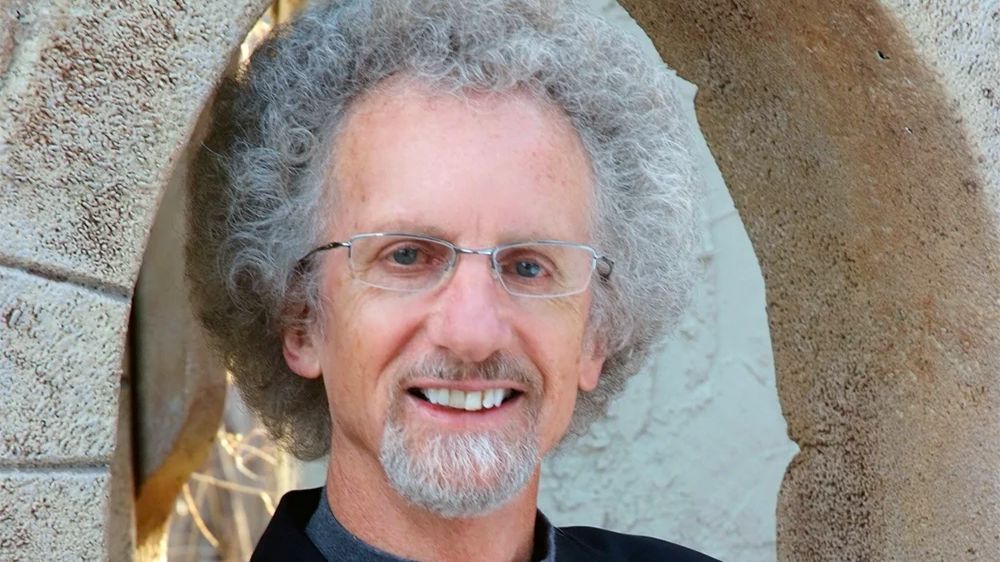
Philip Yancey: We’re Still Living in Fear, Still Need Amazing Grace

During a time of political divisions, the popular author urges fellow believers to “remember why we are here.”

Christianity Today June 21, 2021
Randal Olsson / via Religion News Service

When he first moved to the Rocky Mountains in the early 1990s, bestselling author and speaker Philip Yancey set a goal of climbing all the 58 peaks in Colorado that are over 14,000 feet tall.

Now 71, Yancey has accomplished that goal. He and his wife, Janet, still enjoy hiking and mountain climbing. But their focus has changed.

“We’ve gone from trying to check off the peaks to enjoying the wildflowers along the way,” said Yancey. “Maybe that is part of the maturing process.”

Yancey is perhaps best known for his 1997 book, What’s So Amazing About Grace?, a look at Christian teachings on forgiveness and how grace plays out in people’s lives. A new video curriculum of the book has just been released, with updated stories and a series of talks from Yancey. A new memoir from Yancey, called Where the Light Fell, is due this fall.

Yancey’s books—including Where Is God When It Hurts?, The Jesus I Never Knew, Church: Why Bother?, and Finding God in Unexpected Places—have sold millions of copies since the 1970s, drawing readers to his thoughtful take on the Christian life. That take is a far cry from his youth, where he grew up in a fundamentalist, King James-only church near Atlanta that often viewed the outside world with fear.

Nearly 25 years after What’s So Amazing About Grace? was first published, its message remains relevant, said Yancey.

“We all felt if there’s ever a time for the message of grace, now is the time,” he said. “It’s such a divided country, and the church has not been a helpful part of that. “

Religion News Service national writer Bob Smietana spoke to Yancey recently by Zoom. This interview has been edited for length and clarity.

What do you think people are missing about grace right now?

You know, I coined the word “ungrace” in the book. And it seems to me “ungrace” is always present, it just takes different forms. When I was growing up in a very fundamentalist, rigid, legalistic, hellfire brimstone church, the ungrace was mostly about behavior. There were all these rules—don’t go mixed swimming, don’t go bowling, don’t go dancing, don’t go to movies, you know, all that. That was a form of ungrace that I encountered in adolescence and childhood.

And then it changed. It took a political cast, where the ungrace was more directed toward how you handle people who disagree with you. Because politics is an adversary sport. And as soon as you jump in, the temptation is to play the power games.

What do you think keeps people from believing in grace and extending it to others?

I keep coming back to the word “fear.” In the evangelical movement where I grew up, it was the fear of hell, for sure. And fear of the world. And then fear of electing a Catholic president and John Kennedy and fear of the Left Behind series, fear of homosexuals, fear of secular humanism, fear of communism.

But we’re still living in that kind of fear-based environment. It seems to me that’s kind of a fatal flaw of our movement.

What surprises you these days?

I’m reminded regularly of God’s sense of humor. We had a bird feeder outside our house and an entire ecosystem developed around that bird feeder. You know, the laws of nature are pretty tough. They boil down to this: Big animals eat little animals. But in our bird feeder, there were two exceptions: a skunk and a porcupine.

When you look at these animals, I mean they’re actually beautiful, amazing works of art. But they’re just comical. And I love that aspect of God. I had never thought of God having a sense of humor, a sense of whimsy, but the animal world surely shows that.

If you could talk to evangelical leaders right now or to people in the pew, what would you tell them?

I go back to that beautiful discourse in John Chapters 13 to 17, which is Jesus’ last time with his disciples. He’s turning over the whole thing to them. And they haven’t really proven themselves. In fact, they’ve proven themselves unreliable. So, what did he do? He washed their feet. And he said to them, this is your stance in the world. You’re a servant, you’re not the leaders. Then he said, you should be known by your love. And you should be known by your unity. Those three things.

Yet so often the church seems more interested in cleaning up society, you know, returning America to its pristine 1950s. That’s the myth we have—we are making America pure again, cleaning it up.

Jesus lived under the Roman Empire, Paul lived under the Roman Empire, which was much worse morally than anything going on in the United States. They didn’t say a word about how to clean up the Roman Empire, not a word. They just kind of dismissed it.

So, why are we here? Well, we’re here to form the kind of community that makes people say, “Oh, that’s what God had in mind.” We’re here to form pioneer settlements of the kingdom of God, as N. T. Wright puts it. It’s about demonstrating to the world what the whole human experiment is about.

Let’s remember why we are here. We love people, we serve, and we show them why God’s way is better. Let’s concentrate on that rather than tearing people down or rejecting them or denigrating them in some way. We’re here to bring pleasure to God. I believe we do that by living in the way God’s son taught us to live when he was on earth.

Books

5 Books to Awaken Interest in Christian History

Chosen by Jennifer Woodruff Tait, editor of “Christian History” magazine and author of “Christian History in Seven Sentences.”

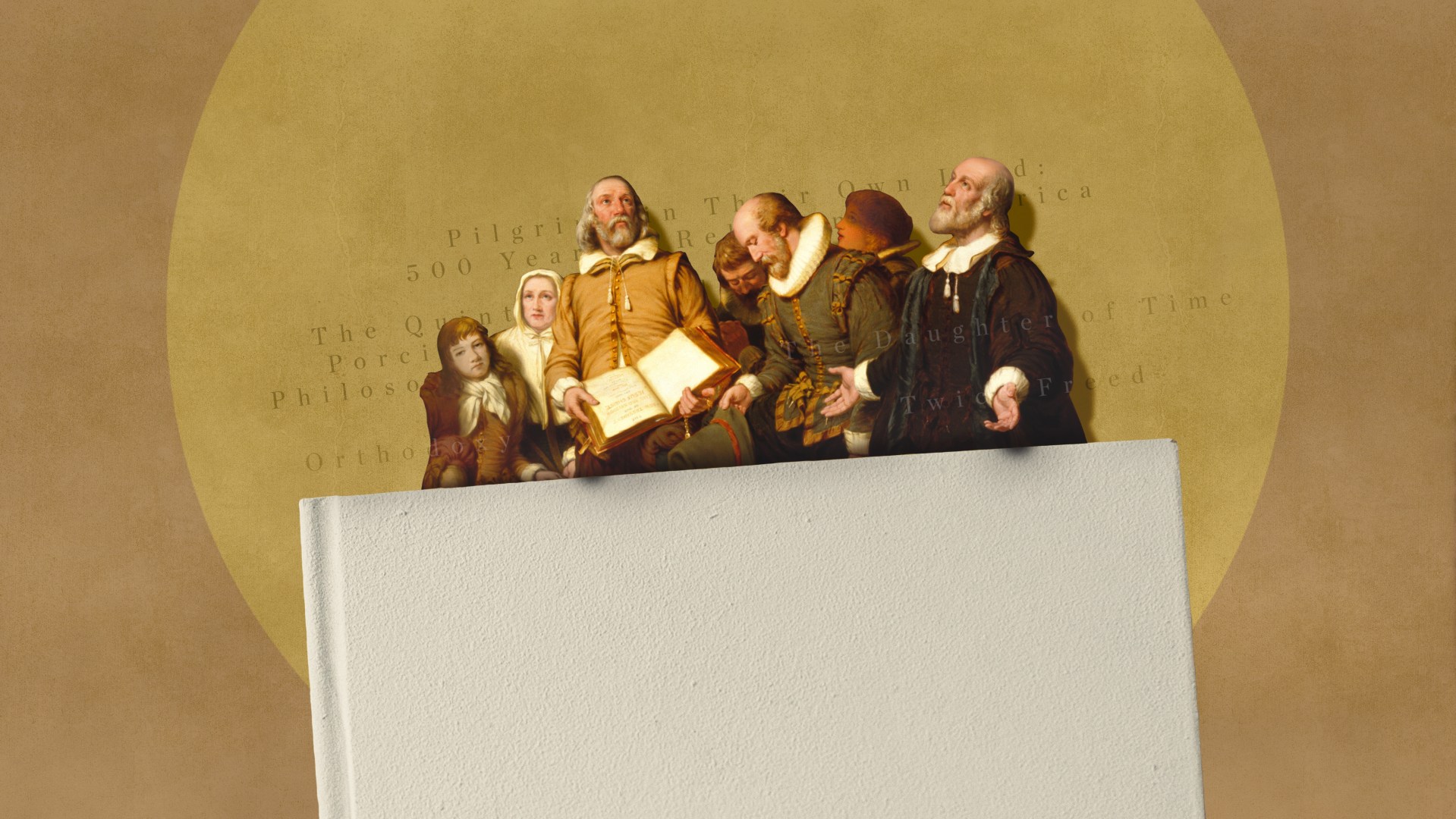
Illustration by Rick Szuecs / Source Images: Monstera / Pexels / Wikimedia Commons

Orthodoxy

G. K. Chesterton

This is Chesterton’s story of setting out to believe something new and different and instead falling in love with the old, old story of Christianity. It awakened my interest in church history, with its marvelous picture of the church journeying through the ages, leaving “the dull heresies sprawling and prostrate, the wild truth reeling but erect.” If you’ve ever thought history or theology was boring, Chesterton will change your mind.

Twice Freed

Patricia St. John

We know there was a story behind the Book of Philemon. Novelist St. John imagines it here—and, having read this book, you will have trouble believing it could have happened any other way. All the names from the epistle live and breathe on the page as real people with plausible stories and motivations, set against a well-sketched backdrop of pagan society and early Christian community. This is historical fiction at its finest, and I cry every time I get to the last three pages.

The Daughter of Time

Josephine Tey

In this mystery novel, a Scotland Yard detective decides to investigate what really happened to the Princes in the Tower—believed for centuries to have been murdered by King Richard III. What follows is a master class in learning and writing history and an important caution against thinking that any particular historical approach or perspective is without bias—especially our own.

Pilgrims in Their Own Land: 500 Years of Religion in America

Martin E. Marty

As an in-over-my-head freshman, I read this book in my very first college history class. It was the first book that made me realize American religion could be studied; that I could hold my Christian belief while stepping back and examining it. Although Marty’s “modern” section is now nearly a half century old, he remains a brilliant, detailed writer with salient insights into American Christianity today.

The Quintessential Porcine History of Philosophy and Religion

James Taylor

In the early 1970s, a religion professor sat down and drew a few pigs to illustrate the history of Western philosophy and religion. His book is laugh-out-loud funny—I would say it punctures a number of Christian sacred cows, except they’re, well, pigs. My favorites are probably the Boethian Pig being consoled by philosophy and the Spiritual-but-Not-Religious Pig, shown going to church online with a coffee cup.

Books

New & Noteworthy Fiction

Chosen by Davis Bunn, bestselling author and writer in residence at Regent’s Park College, Oxford University.

The Chosen: I Have Called You by Name

Jerry B. Jenkins (BroadStreet Publishing)

Jerry B. Jenkins (of Left Behind fame) has penned more global bestsellers than any living Christian Booksellers Association author. This latest effort is based upon the phenomenally successful streaming project produced and directed by Jerry’s son, Dallas. Since its April 2019 release, The Chosen’s first season has enjoyed over 90 million viewings in over 100 countries and been translated into more than 50 languages. The goal of both series and book is to authentically show Jesus through the eyes of those who actually met him. Jenkins’s novel brings the season-one story line to vivid life on the page, showcasing his direct, accessible, and vibrant prose.

The Letter Keeper

Charles Martin (Thomas Nelson)

Very few contemporary novelists have found acclaim within both mainstream and evangelical markets, but Charles Martin is among them. His latest novel functions as both a standalone story and a sequel to his highly praised The Water Keeper. The novel hinges on the scriptural message of forsaking the found in order to seek the lost, a theme Martin brings to poetic and brilliant life. A man broken by events beyond his control accepts the challenge to walk dark ways in order to bring the lost and helpless home, but he comes close to losing himself in the process. Despite the hardship and heartache, Martin’s story shines with the light of eternal hope.

On the Cliffs of Foxglove Manor

Jaime Jo Wright (Bethany House)

Wright has developed a unique literary style, whereby she weaves two stories separated by more than a century into a mesmerizing tale. In this latest work, a young woman is sent to a Lake Superior estate in the late 19th century to recover treasures her father had pirated during the Civil War. Interlaced with this is a second story set in the present, where a nurse in the same manor—now a senior home—confronts shadows from her own past. Wright skillfully links her characters’ internal quests, revealing how so many of the struggles we face are indeed timeless.

Books
Review

Even When Money Is Tight, Churches Have More Resources Than They Realize

How “redemptive entrepreneurship” can multiply the impact of cash-strapped ministries.

Illustration by Rick Szuecs / Source Images: Porcorex / Getty / Envato

For good reason, we tend not to picture Jesus as a redemptive entrepreneur or a venture philanthropist. But perhaps we shouldn’t be so averse to thinking this way.

We Aren't Broke: Uncovering Hidden Resources for Mission and Ministry

We Aren't Broke: Uncovering Hidden Resources for Mission and Ministry

Wm. B. Eerdmans

239 pages

$18.99

He did, after all, multiply loaves and fishes in a way that would impress VC firms like Sequoia Capital. He one-upped Silicon Valley happiness theorists by turning water into wine at a wedding. More visionary than Steve Jobs in a black turtleneck, Jesus told the parable of the talents (Matt. 25:14–30), challenging his followers to see resources as tools for good, not just gold.

It’s this portrait of Jesus, as redemptive entrepreneur, that pastor and financial consultant Mark Elsdon presents in We Aren’t Broke: Uncovering Hidden Resources for Mission and Ministry. Elsdon’s thesis is that the church shouldn’t wallow in self-pity over its declining membership figures and shrinking pool of financial resources. Rather, he proposes creative ways to use property, endowment coffers, and other assets as vehicles for multiplying impact.

Elsdon critiques the church’s historic “two-pocket” approach, which involves receiving money in one pocket via business, investing, tithes, and other sources and then giving money away from a second pocket in the form of philanthropy, donations, or almsgiving. “The real question we should be considering in the church,” he writes, “is this: What is the purpose of our capital? What is the purpose of the money and property that the church owns? Is it to make more money? Is it something else?”

Elsdon is motivated by a mixture of MBA studies in social enterprise, theological education at Princeton Theological Seminary, and his work for the University of Wisconsin campus ministry run by his denomination, the Presbyterian Church (USA). In this latter role, he pioneered a $17 million project to rescue and expand Pres House, a hybrid student apartment building and worship center located on the massive state university campus. He makes a case that the church should practice this kind of entrepreneurship more often.

“Where some saw an aging building with a leaky roof,” writes Elsdon, “the inspired folks who resisted the sale of Pres House saw a beautiful building that had been a spiritual and physical home to tens of thousands of college students for more than ninety years. Where some saw an underutilized parking lot behind the old chapel that could easily be sold, others saw property located in the very heart of a world-class university that could become something much more than a patch of asphalt and parking meters.”

Elsdon turns to the Pres House example repeatedly (perhaps too often) to illustrate why more Christians should practice redemptive entrepreneurship. He riffs on iterations of that idea, such as socially responsible investing (SRI), and environmental, social, and governance standards (ESG), touting these as better approaches for Christian believers.

Perhaps unsurprisingly, given his mainline Protestant background, Elsdon shows great enthusiasm for the way younger generations have pushed major corporations and society at large toward certain progressive causes, such as promoting local and organic food, investing in renewable energy, and taking action to forestall climate change. He also cheers efforts to divest resources from the manufacture of cigarettes, alcohol, weapons, fossil fuels, and pornography.

Some of Elsdon’s other stances seem likely to alienate conservative evangelicals, even as they appeal to progressive mainliners. He wonders aloud if churches should reconsider hosting Bible studies. He proposes that Christians take a more activist role on topics like LGBT inclusion, income inequality, and racial injustice (at one point he calls for Christian institutions to invest in reparations programs).

All this points to a persistent tension at the heart of Elsdon’s project. Those who are more receptive to faith seem less aligned with his political and social values. Meanwhile, those who share his political and social values seem less receptive to faith. Look no further than the precarious position of the “seven sisters” of mainline Protestantism. These denominations are facing steep declines in membership and resources, with many considering what to do with empty buildings.

Meanwhile, today’s evangelical churches and institutions often possess an entrepreneurial, risk-taking mindset. Evangelicalism is one of the few sectors of American religious life that continues to grow, with vibrant churches popping up in warehouses, shopping malls, and local YMCA branches. Many evangelical churches have pursued socially redemptive entrepreneurship for decades. And they tend to focus on kingdom impact rather than building an endowment or a property portfolio for its own sake.

In sum, Elsdon seems to be arguing for mainline churches, with their decades (centuries, really) of property and investment wealth, to emulate evangelicals in their approach to business, finance, and risk-taking—just without the socially conservative morals or the gospel-spreading zeal that make some mainliners uneasy. This means that even if evangelicals can consult this book for some thought-provoking insights and examples, it’s doubtful they’ll consider it the definitive work on stewarding the institutional “talents” God has provided.

Paul Glader is executive editor of Religion Unplugged, a professor of journalism at The King’s College in New York City, and a former reporter at The Wall Street Journal.

Books
Review

The Bible Doesn’t Come with Instructions. But We Still Need Guidance to Handle It Well.

Michael Bird offers a trusty primer on reading and understanding God’s Word.

Illustration by Eugenia Mello

At my seminary, I regularly teach a course on biblical interpretation, and I always begin in the same way: by showing students a picture of the “Bible Bar.” This was a real product (no longer available, I believe) that claimed to offer a truly “biblical” snacking experience.

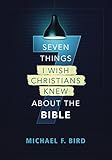
Seven Things I Wish Christians Knew about the Bible

Seven Things I Wish Christians Knew about the Bible

HarperCollins Children's Books

240 pages

$6.92

Each Bible Bar contained only seven ingredients, the seven foods mentioned in Deuteronomy 8:8, which were thought to be plentiful in the Promised Land: wheat, barley, vines (raisins), figs, pomegranates, olive oil, and honey. (Personally, I’m glad they didn’t add any milk from the land flowing with milk and honey, since I’m lactose intolerant, but having sampled the bar once, I can only conclude that it’s a shame Deuteronomy 8:8 doesn’t mention salt.)

Every semester, after introducing the Bible Bar, I ask my students a series of questions: Is this what we are meant to glean (pun intended!) from Deuteronomy? Is the inspired text of Deuteronomy 8:8 a recipe book for the best on-the-go energy boost? Were these foods the only things growing in Canaan? Do these foods alone have “spiritual” significance?

Because our Bibles don’t come with an instruction booklet, readers sometimes come up with unusual uses and applications. When I was in high school, the latest craze was a book called The Bible Code. In it, Michael Drosnin argued that the Hebrew Bible contained crossword puzzle–like codes that supposedly embedded terms like “Hitler” and “Pearl Harbor.”

For a brief time, The Bible Code was a sensation, but it was quickly forgotten for obvious reasons. God doesn’t want us to read behind the text for hidden codes. He wants us to read the Bible carefully and faithfully as a testimony to what God has done in the world and what role we play in his work of redemption. Few of us buy into outlandish code theories, but we often remain susceptible to smaller misunderstandings and interpretive misfires. Consider some of the more common mistakes, like thinking “I can do all things” (Phil. 4:13, ESV) is about winning the big football game or treating “judge not” (Matt. 7:1, ESV) as a restriction on questioning other people’s behavior.

In my home, we have lots of Ikea furniture products. I’ve tried building some of them without using the instructions, but it never goes well. The same goes for reading the Bible—even if it doesn’t come with a manual, we still need guidance to avoid mishandling it. We can be grateful, then, that New Testament scholar Michael F. Bird has written Seven Things I Wish Christians Knew about the Bible, a trusty primer on understanding God’s Word.

Fruitful and faithful reading

Bird, who teaches at Ridley College in his native Australia, covers a spectrum of key topics such as biblical authority, biblical inspiration, interpretation dos and don’ts, and reflections on the Bible’s essential role in shaping the church and the Christian life. He makes seven statements that constitute the book’s main chapters: The Bible didn’t fall out of the sky. The Bible is divinely given and humanly composed. Scripture is normative, not negotiable. The Bible is for our time, but not about our time. We should take the Bible seriously, but not always literally. The purpose of Scripture is knowledge, faith, love, and hope. And Christ is the center of the Christian Bible.

All of Bird’s topics and discussions are insightful and well-suited to lead Christians toward fruitful and faithful engagement with Scripture. However, I found his early chapters, which orient readers to what Scripture is and how it works, especially helpful.

Bird’s opening chapter discusses the library of biblical books—where they came from and how they came together into one Bible. It wasn’t until college that I realized my Catholic friends had books in their Bibles that weren’t in mine, books like Sirach and Tobit. And their Bibles, in turn, were a bit different than Bibles used in the Greek Orthodox tradition. All these Bibles have slight variations not because God got confused, but because the biblical books were not hand-delivered by God to the church. A process of canonization took place in the period after the apostolic age; this involved discussion and discernment among early church leaders over what should count as Holy Scripture.

It is crucial for Christians to think through the Bible’s inspiration and authority, which Bird considers in consecutive chapters. Inspiration doesn’t mean that God deposited divine words into the brains of Matthew or Paul. As Bird helpfully argues, it probably involved “God’s guiding and leading human minds at the conceptual level.” In other words, while God influenced the biblical writers’ direction of thought, they expressed those thoughts in their own ways, yielding God’s Word in human words. This helps explain why the Bible includes so many genres: narrative, poetry, letters, apocalyptic literature. God did not invent these genres. Instead, he chose to reveal himself through written forms that already existed, though some of these undoubtedly took on new features.

Bird defends biblical authority by talking about how Scripture ought to shape what we think is important and how we establish the direction of our lives. Addressing Christians who might treat the Bible as “holy opinion,” he challenges them to see Scripture’s authority as grounded in the supremacy of God himself. We are his creatures, not his religious customers. The Bible is not simply another book, something to read alongside other “important” books. It is uniquely inspired.

Of course, there are many Christians who take the Bible seriously but make the error of reading and applying everything literally. It is dangerous to equate seriousness only with literal interpretation. When Jesus speaks of turning the other cheek (Matt. 5:39), he isn’t teaching us, in some narrow way, how to handle slaps to the face. The larger question concerns how we should love our enemies. An overly literal interpretation can sometimes blind us to the point the Bible is actually making.

One of my favorite illustrations along these lines comes from the Christian satire magazine The Wittenburg Door. A 1978 issue included a “literal” drawing of Solomon’s lover as depicted in Song of Solomon. The bizarre figure has doves for eyes (1:15), a mesh of goats for hair (4:1), pomegranates on her temples (6:7), and a neck resembling a stone tower (4:4), among other oddities. If the resulting sketch is absurd, this is because Solomon’s imaginative description has other goals in mind. He wants us to see his lover as remarkable, just as all these other objects and creatures have certain remarkable features. To interpret the metaphors literally robs Solomon’s portrait of its literary artistry.

How can we tell when and when not to stick with a literal reading of particular phrases and passages? Careful discernment is essential. Bird encourages all believers to better understand the ancient world in which the words of Jesus and the apostles came into being. Slavery then was different than slavery now. Political systems were different. And so were cultural conventions and expectations, like how to behave at a dinner party or be a good friend. If we neglect these basic distinctions, we are bound to misread and sometimes misapply Scripture.

Thankfully, lots of great resources on the Bible’s historical background are readily available (including The New Testament in Its World, a textbook Bird cowrote with N. T. Wright). We should build them into our devotional habits, not to rob Scripture of its theological power but because knowing its original context helps it come alive. Then we can determine more thoughtfully what it means for our lives today.

Deeper love of God and neighbor

In seminary, I learned most of the lessons Bird offers in his book. I studied interpretive methods, the genres of the Bible, and various views on biblical inerrancy and trustworthiness. But Bird underscores something that wasn’t drilled into me back then: The purpose of reading Scripture is not (merely) to gain information, but to be conformed to the image of Jesus and spurred to deeper love of God and neighbor.

Bird rightly warns us against viewing the Bible like a rolled-up newspaper that’s used to whack you over the head for being naughty. It is not a book of religious rules, either. As Bird puts it, “The goal of our instruction in the Scriptures is to know God better so that we may grow in our love for God.” Well said. Scripture forms and shapes us into the people God has destined us to be, a people of faithful and generous love.

Witty and winsome, Seven Things I Wish Christians Knew about the Bible covers plenty of ground in a short space. It comes beautifully illustrated with charts and loaded with memorable anecdotes. If I am being picky, I would have preferred to see Bird include a major section or chapter sorting through the dozens of available English Bible translations. Many of them are good, but truth be told, some are quite bad. How are Christians outside the seminary world supposed to choose from them? For that matter, if there is only one Word of God, why are there so many translations anyway? These are common questions that swirl around the many topics Bird covers, and I am sure he has insights to offer. (He does talk briefly about translations in his opening chapter.)

When I was a young Christian, I remember reading John Stott’s book Understanding the Bible. It helped me gain a basic grasp of the who, what, when, where, why, and how of God’s Word. Bird has offered a similar gift for a new generation, and for that we can be thankful.

Nijay K. Gupta is professor of New Testament at Northern Seminary in Lisle, Illinois. He is the author of Paul and the Language of Faith.

Church Life

Church History Is a Beautiful Melody Imperfectly Performed

How the message of Christ resonated through the centuries, even at moments when his followers failed to keep the tune.

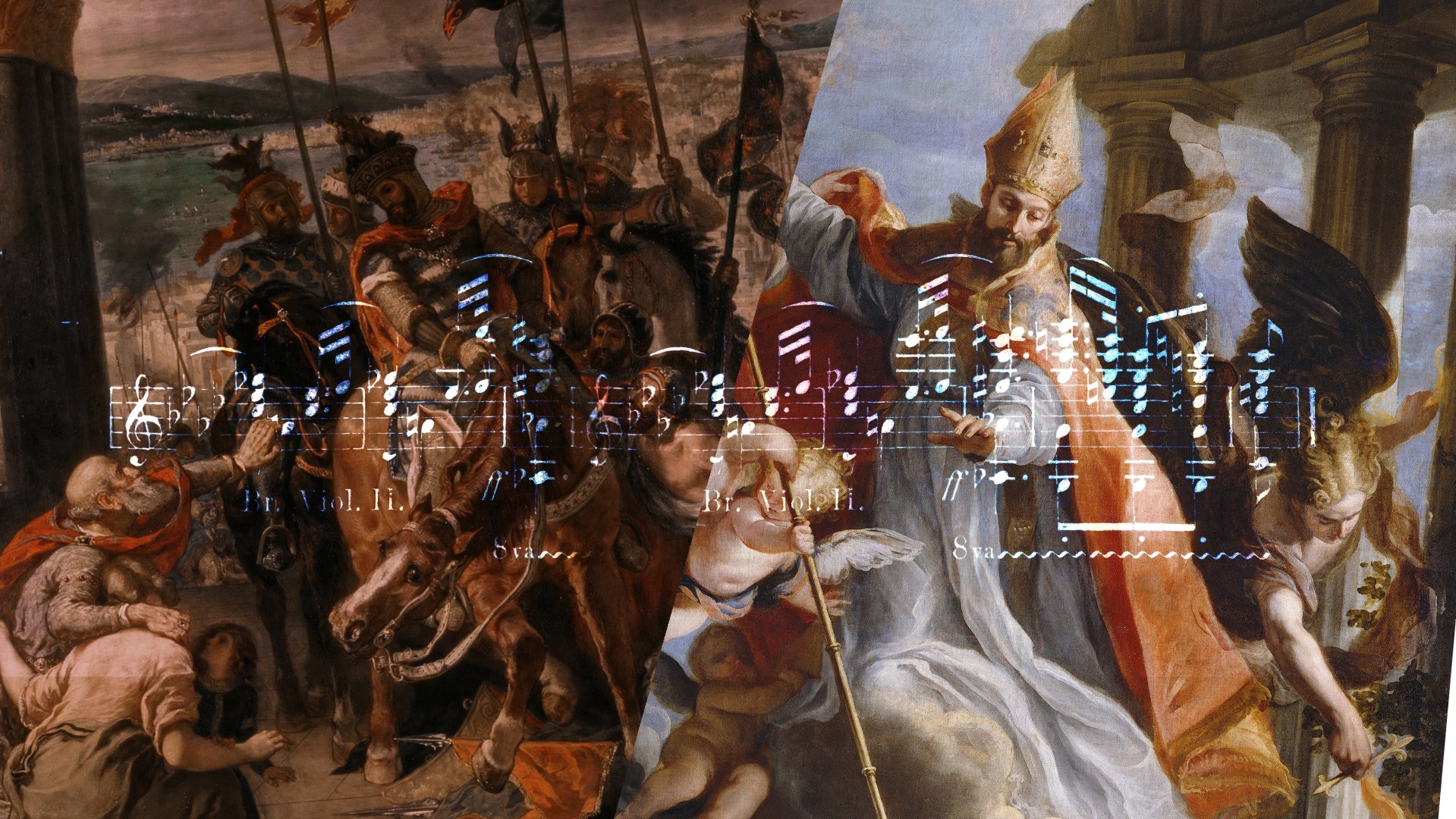
Wikimedia Commons / Edits by Rick Szuecs

When it comes to church history, there are two common but misguided approaches: Some celebrate an unbroken series of triumphs by God’s people, while others decry a record of immoral acts carried out by hypocrites. The true story, however, is much more complex, with Christians sometimes conforming to Christ’s teachings and sometimes falling far short, as historian John Dickson documents in Bullies and Saints: An Honest Look at the Good and Evil of Christian History. Christopher Reese, freelance writer and editor of The Worldview Bulletin, spoke with Dickson about coming to terms with the wrongs of church history while also answering skeptics who deny the church’s many accomplishments over the past two millennia.

Bullies and Saints: An Honest Look at the Good and Evil of Christian History

Bullies and Saints: An Honest Look at the Good and Evil of Christian History

HarperCollins Children's Books

352 pages

$29.49

How do Christians today benefit from learning about church history?

Learning about any kind of history has multiple benefits. For one thing, it can lead to humility. Knowing more about epoch-changing figures of the past puts our own achievements and self-importance into perspective. And the shameful deeds of the past, especially the Christian past, should cause us to wonder what blind spots future generations will see in us. The more I study history, the less judgmental I am about our forebears—not because the wrongs they committed were not wrong, but because I fear I cannot see my own evil.

The other great thing about learning history is that it invites us to draw from a much deeper well of human experience and wisdom. It’s like taking the ultimate democratic opinion poll. We hear the best ideas not just of our moment but of ages past. And we see how the whole Christian family wrestled with God’s wisdom in very different contexts.

Which popular myths about Christian history would you most like to correct?

Where to begin! One popular myth is that the very first Christians adopted an ethic of love and humility only because they were society’s “losers”—peasants, paupers, the persecuted. Nothing could be further from the truth. The more I read primary documents from those founding Christian centuries, the more convinced I am that these Christians felt they could afford to be good losers because they had already won! This conviction freed them to sit loosely beside politics and power, knowing that the glorification of Christ and the vindication of his suffering people are assured.

Plenty of other myths deserve a bit of clarity: for example, the popular notion that the West entered a “Dark Ages” following the fall of Rome and the ascendancy of the church. True, many important structures were lost. Yet the church continued its work establishing communities of care, building hospitals and schools, and inspiring a huge industry of classical study and copying. Many don’t realize that the vast majority of classical Latin texts—pagan as well as Christian—were preserved by diligent monks in the so-called Dark Ages.

Of course, Christians can have their own myths about the near-complete rosiness of the Christian story. I see no value in whitewashing the awful things done in Jesus’ name: the burning of synagogues in the fourth century, the closing of pagan temples in the sixth century, or the 12th-century reinterpretation of Paul’s metaphorical “armor of God” to justify using real swords against unbelievers.

Is there a historical figure in the book that Christians should know more about?

If I have to choose just one, it’s Alcuin of York, perhaps the greatest European we never hear about. He was a devout church deacon and was known as the world’s most learned man in the eighth century. He introduced a broad education program throughout Europe under the patronage of Charlemagne. Students—girls and boys, rich and poor—would learn grammar, logic, rhetoric, geometry, arithmetic, basic astronomy, and what you might call the philosophy of music, which prepared them to study advanced subjects like history, theology, and law.

This transformed Europe in a way the Romans never could have done—and never would have attempted. Eventually, it gave us the grand cathedral schools and major universities of the late Middle Ages. But Alcuin’s contribution was not merely academic. As one of Charlemagne’s most beloved advisers, he somehow convinced the great king to shun his brutal policy of “conversion or the sword.” Alcuin wanted to convert pagan Europe through sweet persuasion, not violence and taxation.

How do you respond to skeptics who list events like the Inquisition or the Crusades as reasons to reject Christianity?

Rejecting Christianity based on the terrible performance of some Christians is like dismissing Bach after hearing my feeble attempts to play his Cello Suites. We all know to distinguish between the composition and the performance. And the same applies to church history. The original message of Christ resounded through the centuries like a beautiful melody, even as many Christians failed to play in tune.

In any case, no honest appraisal of world history can treat the bigotry and violence of the church as unique. Savagery appears to be universal. What’s not universal are things like free schooling, hospitals, and charity for all. These were the special contributions of Christianity.

What do you think the world might look like today if the church had never existed?

We can only wildly speculate, of course—so let me do that! The fact is: Greeks and Romans did not believe in what we call charity. Since they didn’t regard humility as a virtue, they never dreamt of providing hospitals for the public. And they had a profoundly demeaning view of women and sex. Despite many tragic failures, the church redressed these wrongs.

One striking thing about Christian history is this built-in corrective at the heart of the faith. When the church was at its worst, some prophet figure would emerge, point out how far from the gospel everyone had strayed, and inspire a reform movement that brought people back on track—until the next period of systemic failure.

As much as our world sees the church as merely traditional and even antiprogressive, the opposite is really the case. That might be a good description of republican and imperial Rome, but it doesn’t describe the dominant trajectory of church history, which was characterized by repentance, improvement, and straining toward a greater embodiment of Christ’s perfection. In some ways, the modern secular passions for exposing hypocrisy and demanding progress are pieces of the Christian legacy that have become dislodged from their spiritual source.

What message do you hope readers will take away from this survey of Christian history?

My hope for skeptics is that, despite having their worst fears about the church confirmed at points, they will also find themselves surprised at the extent to which Christians at their best gave us some of the things secular humanists love today.

I would love to think, too, that Christians will simultaneously feel humbled and inspired by the church’s performance through its 20 centuries. The potential to go astray from the way of Christ is ever present. It happened in the past, and it will happen again. This should cause us grief and fear, keeping us alert to our own blind spots. But I trust that the stories of heroic faith in every century will keep us believing that, despite our failures, Christ can work his wonderful purposes through frail flesh like ours.

The Challenge of Being a Faithful Boss When a Pandemic Nearly Kills Your Industry

A Christian restauranteur relies on God while navigating his first major layoffs, angry customers, closures, and the continued challenges brought on by COVID-19.

Christianity Today June 21, 2021
Jose Sarmento Matos / Bloomberg Creative / Getty Images

When COVID-19 started to spread last year, none of us knew how dramatically or how long this virus would affect our lives.

As a restaurant owner, I was forced to make critical decisions during the early weeks of lockdown, when people were confused, scared, and trying to make sense of conflicting information about the threat of the virus.

I watched sales drop at each of our locations anywhere from 60 percent to 90 percent as we shifted from dine-in services to carry-out and delivery only. As a result, I had to lay off employees, something I had never been forced to do apart from closing a location.

As a Christian, I’ve always been open about how my faith drives everything I do and shapes how I run my business. The decision to dismiss employees was agonizing, but I wanted to come up with the most ethical and moral way to care for those who worked for us. My commitment to leading and caring for people biblically didn’t let up just because times got tough—in fact, I had to lean on God for guidance and hope more than ever.

What’s the most gracious way to cut employees in the middle of an economic crisis and a pandemic? None of us had been through this before, and there were no easy answers. We made sure to keep on the payroll a few individuals who needed to maintain health insurance to care for serious medical issues. We created a three-tier list of employees, ranked by skill level and attitude. We ended up having to lay off those on the bottom tier; thankfully we never had to move to the second tier.

But I wanted to help those I had to let go. I looked for ways to offer support even after they were no longer on my payroll. I emailed them on a regular basis with information about ways to file for unemployment and other available benefits. But people were still angry even after we reached out to try to help. Some didn’t believe the layoffs were necessary and disputed our motives, even going as far as calling us “fake Christians.”

We are grateful that as stay-at-home orders began to lift, we were able to hire people back, but that didn’t mean our problems went away. We encountered new issues.

Among the employees who did return, several were battling drug and alcohol problems. Then, theft became an issue. Thousands of company dollars went missing; certain employees were so desperate that they would pocket cash and steal manager cards to void items and pocket the money they voided.

Other employees returned only to quit once stimulus checks were received. Much like nearly every restaurant in America, we became and continue to be short-staffed. We are now encountering a staffing crisis of such proportions that we have been forced to re-close some locations or reduce hours at others. While we have hundreds of individuals apply to each job posting, despite offering pay 50 percent higher than minimum wage and exclusive sign-on bonuses, they simply do not show up to interview.

The lack of willing workers has strained the entire industry and is now impacting our manufacturers and supply chains. Everything from aluminum lids for our to-go pans to chicken and ketchup packaging are running low. We have over 40 items currently on a watch list that may run out this week. We are talking daily and sometimes more with our distributors to stay on top of it and try to find substitutions, which is simply not always possible.

But the challenges didn’t end with my employees. As a service provider, we found ourselves working to straddle the cultural polarization that accompanied COVID-19. Every decision made garnered scrutiny.

There were individuals on every side of the issue. Some felt it was morally wrong for us to remain open and expose our workers and customers to any danger, or wanted to support us but went to extreme measures to ensure there was no contact with our staff. Others called the virus “fake” and yelled at us for not remaining open as usual.

Once our dining rooms reopened with restrictions, the issues continued. Our teenage servers had to handle more than their job described as they became de facto mediators. Some customers would argue with them about the constitutionality of masks and storm out if told they were required, while others would yell at those same servers if they touched their mask, or if it fell down below their nose.

Faith played a huge part in getting me through.

As leaders, we had the responsibility to communicate and listen well amid all the complications. I heard regular feedback from our employee council, a group that meets with me to discuss employee concerns and suggestions. Even employees were split over mask wearing, so I’d recognize both sides of the debate and focus on our obligation to follow the laws regulating food service.

Thankfully, there were also plenty of customers who showed extreme kindness and understanding, following required mandates, tipping extra, and even buying large quantities of food to support nurses, doctors, police officers and, firefighters.

According to the National Restaurant Association, more than 110,000 places to eat and drink in the United States closed, either temporarily or permanently, last year. It is likely this number may climb as owners continue to struggle without the pre-pandemic crowds. Our team even made the tough decision to close a location in downtown Nashville. While there were a number of factors involved, the pandemic was a catalyst.

Throughout the past year, I worked hand in hand with several restaurant owners through C12, a group of Christian business owners across the country. From the beginning, we all worried. It was stressful to navigate the necessary decisions just to keep our restaurants in operation during this time.

I found that these owners tended to have more positive outlooks and recognized this was a season that God would see them through. This outlook was in complete contrast to the perspective of restaurant owners who didn’t share my faith. Faced with the looming predictions of the demise of the industry and their own challenges, many either complained about how unfair the circumstances were or just kept their heads down to work harder through this season.

Faith played a huge part in getting me through. From the beginning, I was honest with my wife and kids that our business may not survive. Still, I can truthfully say that at no time during the past year did I question my faith.

In the midst of their own plagues, wars, famines, and conflicts, the Old Testament prophets are an example that there is a season for everything and that even in uncertain times God has a plan that is much bigger than any of us can imagine. When worry would rear its ugly head during the worst of the pandemic, I reminded myself that I trust a God who is in control, I would ask his forgiveness for my unbelief, and I would start being thankful for what he provided.

Things have settled into a weird normal knowing that the pandemic’s not over, but we are closer to the end than we were yesterday. The bumps in the road are like occasional potholes and creases on a long interstate highway rather than the constant bouncing and crashing of an old country road.

As we look ahead to the future, and a slow return to a new normal, I can see how my walk with God is more intimate—I could not face the challenges of 2020 alone. I now invite him more readily into each situation and into the details of my professional and personal life.

And despite all the challenges, I also have a new appreciation for our restaurants. Though we missed all of our 2020 goals, surviving the year and staying open is enough of a milestone to celebrate; too many restaurants in this nation did not get that fortune.

I can see how our staff developed closer relationships as we weathered the storms of 2020 together, adapting and even expanding our business to shipping food nationwide. And I can see signs of spiritual growth. A year like last year reminds us of our real bottom line: We believe it is our job to share the gospel through the business God gave us. It is his business, not ours.

As I write this, I thank God that my company has a positive outlook, but I also recognize that could change tomorrow. Whether open or closed, indoors or outdoors, at limited capacity or bustling with customers, we show up to make the best decisions we can, care for each other, and share his gospel. And that is success.

Peter Demos is the author of Afraid to Trust. He’s a restaurateur, president, and CEO of Demos Brands and Demos Family Kitchen, and a leadership source expert.

Ideas

Interview: Reopening Muslim Minds to Freedom and Tolerance

Mustafa Akyol explains why his new book explores the history of apostasy laws, the sayings of Muhammad, and the prospects for greater pluralism in the Islamic world.

Christianity Today June 21, 2021
Illustration by Mallory Rentsch / Source Images: Akhmad Syarif Wirawan / Pexels

In 1900, 7 million Christians lived in countries that were majority Muslim; in 2020, 84 million Christians did.

Also in 1900, 9 million Muslims lived in countries that were majority Christian; in 2020, 154 million Muslims did.

Meanwhile, Christians and Muslims have grown from comprising a third of the world’s population in 1800 to more than half today and are projected to comprise two-thirds by 2100.

These statistics from the Center for the Study of Global Christianity (CSGC) at Gordon-Conwell Theological Seminary underscore the need for Christian and Muslim minorities to better flourish in each other’s contexts.

CSGC codirector Todd Johnson interviewed Turkish journalist Mustafa Akyol about his new book, Reopening Muslim Minds, and about how an honest examination of the best and worst of Islamic history offers lessons for improving religious freedom and pluralism today:

What was your main motivation for writing this book? Did current events give an urgency to the project?

I have been thinking about the state of affairs in the Muslim world for about almost three decades now. I call myself a “born-again” Muslim, [having rediscovered my faith] in my college years. In my late twenties, I became a public writer in Turkey, and I’ve traveled around the Muslim world. I’m a Muslim, proud of my faith, and I see the deep problems in the contemporary Muslim world.

I rely on the Islamic modernism tradition that began in the 19th century, but I wanted to explore these issues in accessible language. There’s a world out there that our traditional scholars couldn’t imagine, where Muslims are more free in their worship than they are in Muslim-majority countries. There is liberal democracy and a universal declaration of human rights. These didn’t exist back then, so how should we respond?

Can Muslims be Muslims and participate in the modern world without abandoning who we are?

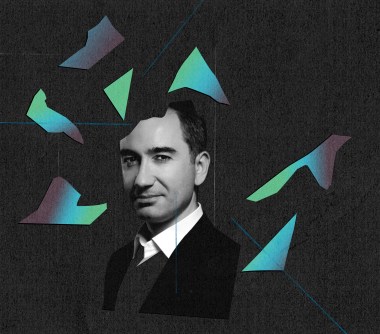
Mustafa AkyolIllustration by Mallory Rentsch / Portrait by Murat Sariaslan
Mustafa Akyol

You differentiate, however, between Islamic enlightenment and Western enlightenment. What is their relationship?

Enlightenment involves understanding that there is wisdom, ethics, and humanity beyond your religious tradition. You’re a Muslim, but a Christian, Jew, atheist, or pagan can be a good person as well, on an equal basis. This sort of recognition, historically, helps humanity to move forward.

This was true of the early Islamic civilization, where Arabs were the forerunners, but Turks, Persians, and Christians joined in. Muslims didn’t shy away from learning and engaging with Christian theology and Greek philosophy, and for its time, their empires were a tolerant and open society with a cosmopolitan understanding of a human wisdom.

But today there are pockets of illiberal, coercive, authoritarian interpretations of Islam. I was arrested in Malaysia for preaching religious freedom, so I’ve personally experienced that we have issues to figure out.

What happened over the centuries?

Early on there was no solidified Sunni orthodoxy but instead a diverse group of different traditions, including Shiite beliefs. A trend that cut across these engaged with Greek philosophy, known as the Mu’tazila. But over time this diversity narrowed, and the Asharite perspective came to dominate the Sunni world.

A key dispute was how to understand the origin of “good” and “bad.” We all accept that there are commandments that come from God, such as “Thou shall not kill.” But is God saying this because killing is bad in itself, objectively? Or does it become bad because God said so?

The Asharite school believed the latter. The sharia constitutes ethical values; it doesn’t indicate them. But as a consequence, if all ethical values come from the divine commandments, people who don’t have them are immoral by definition. Maybe you can learn physics or mathematics from Aristotle, but certainly not any ethical wisdom from a non-Muslim tradition.

The Mu’tazilites would say that if a person is dying of thirst in the desert, you give him some water from your moral intuition, your conscience. And from a conscience, all humanity can figure out morality. And then religion is necessary because we have temptations and need motivation to keep us on the right track. But as this perspective was sidelined, minds narrowed and outside wisdom was rejected.

Today this is reflected in hardcore Islamic circles. When you consider the Universal Declaration of Human Rights, almost all humanity signs up for it. But these Muslims will say, “What nonsense. Who cares what the infidels are saying?” They reject the moral progress of humanity. And it becomes the infidels who abolish slavery.

You were detained in Malaysia over your use of the Qur’anic phrase la ikraha fiddin, which is often translated as “there is no compulsion in religion.” What is the brief history and use of this phrase? Is it a silver bullet that religious-freedom advocates should focus their rhetoric on? Or is there a reason it has not prevented widespread apostasy laws?

There are passages in the Qur’an like la ikraha fiddin, “there is no compulsion in religion.” It’s a very short statement, but it became a motto of liberal and tolerant Muslims.

But there are other passages. One verse says, “The truth is from your Lord. Let anyone who wants to believe it, believe it. Let anyone who wants to disbelieve it, disbelieve it.” Another says, “To me my religion, and to you your religion.”

However, the mainstream Sunni orthodoxy that I am respectfully criticizing in this book minimized [these passages’] influence, and sometimes even totally disregarded them.

How did that happen?

Through two things. First, the doctrine of abrogation. There are verses in the Qur’an about toleration, about noncoercion, about the prophet being just a preacher and not a compeller. But there are also verses about fighting the infidels “until they are subdued.”

There are two ways to understand this. My understanding is that Muslims first wanted the freedom to preach their faith in Mecca but were persecuted and had to flee. And after they fled, their properties were confiscated, so they had to fight. It was a war for survival. The scholars that I follow say the fighting was contextual. It was not the goal; it was an accident of history.

But our mainstream Sunni tradition didn’t understand it this way. They said fighting was the zenith, the epitome of the prophet’s life. It was an example, and after him the idea that you should fight to spread and establish Islam became the norm. The verses about war abrogate the ones that are about toleration and plurality.

This abrogation of doctrine is not a natural outcome of the Qur’an itself, however. It is just how early Muslims put things. In my view, it was an age of empires. They thought, “Now [that] we have the sword, let’s spread Islam as the Byzantine Christians are doing, and the Sassanids with their Zoroastrian faith.”

So I see the early Islamic caliphate, the empires of the Umayyads and the Abbasids, as Christians see the Byzantine Empire or the Holy Roman Empire today—a marriage of religion and power. It was historically understandable, but not an integral part of faith. And I would say that some of the interpretations at the time reflected imperial politics rather than the universal norms of Islam.

Many orthodox authorities, however, believe that those orthodox interpretations are still valid. When they write la ikraha fiddin, “no compulsion in religion,” they add parentheses to clarify this is only while entering Islam—because they believe in apostasy laws. Abrogation became one method to put down the peaceful and tolerant teachings in the Qur’an.

The second way this happened was hadiths—the sayings attributed to the prophet Muhammad—and they are an integral part of Islam, its second source. But I’m skeptical of the authenticity of many hadiths considered authentic in the mainstream Sunni collections. Such skepticism is part of the 19th-century Islamic modernist tradition. But it has roots in the first centuries of Islam, because hadiths have always been a matter of dispute.

They were canonized two centuries after the prophet’s death, and everyone accepted that there were forgeries. Scholars like al-Bukhari and [his student] Muslim chose the right ones among hundreds of thousands, and I respect their effort. But we can question the authenticity again today, as I do especially with this particular hadith: “Whomever leaves his religion, kill him.” I don’t think the prophet said that. I think it’s a myth created later and projected back to him.

The point you’re making is that these types of laws have no place in the modern world?

Yes. You can have a modern secular state, say these laws are gone, and bring modern secular laws. Ataturk did that in Turkey. But if people still believe in the validity of those religious injunctions, they will want to implement them. This is the history of Islamism—the 20th-century reestablishing of sharia. The forms and shades are different, but they emerged in the Muslim world’s modern secular states such as Turkey, Iran, Egypt, and Pakistan.

In Iran, it came with full force—with revenge—giving us the Islamic Republic. In Pakistan, Islamists gradually made peace with the establishment and sought to establish their views through the Islamization of laws. In Turkey, the comeback is milder and more democratic but still troubling. Of course, these secular states were not very liberal, which is the other side of the problem in the Muslim world.

The important thing is to dissociate and disentangle Islam from the state—to separate church and state, as the Americans like to call it. But this works if it’s a state like the American government or Norway. But a separation under [Syria’s] Bashar al-Assad is not ideal. We need liberal states to protect religious freedom and bring justice to all.

The Islamic world failed here as well. Our secularity has not been very inspiring.

In 1800, 33 percent of the world was either Christian or Muslim. Their share is 57 percent today and very likely to reach two-thirds by 2100. What do you see as hopeful signs in the relationship between Christians and Muslims?

We have had some terrible episodes, right? ISIS killed and tortured everyone who didn’t agree with it—Christians and fellow Muslims as well. But I believe that the past two decades of terrorism, violence, and attacks on churches and mosques of heretical sects has resulted in a growing yearning for freedom and toleration. It’s like 17th-century Europe after the Thirty Years’ War, when people said there must be a better way. I wrote this book to support that sentiment and offer one way of looking to the future.

Muslim minorities in the West are becoming a visible and important part of the Islamic world. I welcome this, because if we succeed to have peaceful, integrated Muslim minorities in the West—which we broadly have—it will show Muslims in other parts of the world that they don’t need an Islamic state to be good Muslims. They just need a decent state—a liberal, democratic state. Bosnia is a good example, as a secular state for 130 years. But it is also important for American, British, and European Muslims to establish themselves and remain who they are but also become visible believers in the idea of human rights and equal justice for all.

But there are two problems. One is the nativist far right in Western societies that can derail this process through Islamophobia, terrorist attacks, and hate crimes. The other is the double standard I see in some conservative Muslim thinkers in the West who say, “We like liberal democracy because we’re a minority here, but we’re not going to preach it at home because we believe in Muslim supremacy.” I’m paraphrasing, but this is real, and I’m criticizing that also and pushing those conversations.

In the Muslim mind, Christianity has long been associated with colonial Europe. But the Christian minorities suffering in Iraq, Syria, Pakistan, and Malaysia need to be better recognized. Christianity is not an extension of colonial Western powers, and missionaries are not a fifth column of a coming colonial army. Will South Koreans occupy Turkey? Christianity is a sister Abrahamic faith with legitimate, equal rights—the rights we deserve in the West. Christians in the East should have them too.

One of our professors opened an eye hospital in Kabul, Afghanistan, back in the 1960s. There was a church and Christian community there for a long time, but the government said we’re going to shut this down because it doesn’t belong here. The Christians then submitted a document with a picture of the large mosque in London to compare it with this tiny little church in Kabul. They razed it [anyway].

People’s rights don’t depend on what’s happening in other parts of the world, but Muslims need to understand the Golden Rule. What if Christians executed their apostates to Islam? Muslims would be enraged. Then we shouldn’t do it to them. They argue that our religion is the true religion. But if I impose it, the other guy will say and do the exact same thing. That gives you crusades and jihads for centuries.

To live together, we need to accept a neutral, secular political order built upon liberalism, human rights, and the separation of church and state. In my book, I address the theological, jurisprudential, and epistemological dimensions of this within Islam.

Reason, freedom, and tolerance once flourished in Baghdad, Cordoba, and other parts of the Muslim world. Could it happen again?

There are many such episodes. Jews migrated from Spain to the Ottoman Empire because the Inquisition forced them to convert to Catholicism or be heavily persecuted. But Muslims should also realize that though the Islamic toleration of non-Muslims was quite enlightened for its age, it was hierarchical tolerance.

Muslims were the ruling class, while Christians and Jews were tolerated as quasi-legitimate, flawed religious traditions. They didn’t have the same rights. And then consider the Armenians, who lived under hierarchical toleration for six centuries. Though it was more a representation of nationalism, they were wiped out in the Armenian genocide [1915–17].

The Islamic world fell behind its medieval standards, whereas the Western world went forward with an egalitarian system of coexistence as the legal norm. But I remind Muslims that in 1876, the liberal constitution of the Ottoman Empire tried to establish equal citizenship for Muslims and Jews. There have been efforts, and that’s how we have to go forward.

News

After Angela Merkel, German Evangelicals Weigh Political Values

Voting guides have been replaced by discussion questions as Christians consider the future.

Illustration by Eugenia Mello

Anna Klein is excited to vote for change. The 27-year-old evangelical German schoolteacher supported Angela Merkel for chancellor in the last two national elections, but this year, as the long-serving Merkel steps off the political stage, Klein is going to support the Green Party’s Annalena Baerbock.

Klein, who lives in the central state of Thuringia, says the September 26 election is historic. And she likes the idea of supporting a woman who could in some ways build on Merkel’s legacy of responsible leadership and in other ways “move in an even more transformational direction.”

Her vote, at its base, is informed by her faith.

“I’m not a conservative person politically, because I am not a conservative person when it comes to religion and its role in my life,” Klein said. “My understanding of faith is always one of a welcoming, yes-saying approach to change.”

Baerbock is seen as an advocate for more dialogue and someone who will provide leadership on environmental issues, refugees, women’s rights, and education. Klein resonates with these priorities because of evangelical teachings about loving your neighbor and welcoming the stranger, Jesus’ respect for women, and the biblical mandates to care for creation.

With the support of younger evangelicals like Klein, the Green Party seems to be pulling ahead in polls. It may garner enough votes to form a coalition government with the conservative bloc, the Christian Democratic Union (CDU) and the Christian Social Union (CSU).

The idea of progressive Greens and center-right CDU-CSU governing together, hand in hand, might sound strange. But the environmental protest party has shifted to the mainstream, with a focus on being problem solvers, and many Germans like the idea of leaders working together to find practical solutions.

This was, in fact, part of Merkel’s broad appeal through four terms in office. When she was first elected as the CDU candidate in 2005, she formed a coalition government with the Social Democratic Party, bringing together the major parties of the left and the right in a “grand coalition.” In the three elections since then, she has often co-opted her rivals’ most popular ideas, avoided extremes, and personified a politics of reasonableness.

Many German evangelicals supported Merkel, who is the daughter of a Lutheran pastor and a defender of Christian humanism. But then, most people in Germany did.

When Merkel was elected the second time in 2009, 56 percent of the country said they trusted her to solve the nation’s problems. When she announced her retirement in 2019, 67 percent said they wanted her to stay until the end of her term in 2021.

There isn’t an evangelical voting bloc in Germany, according to Uwe Heimowski, a Baptist pastor and policy director for the German Evangelical Alliance.

“We represent a range of positions and political perspectives,” Heimowski said. “We do not have a single voice.”

The Alliance is a “big tent” organization—pulling in evangelicals from the state-privileged German Protestant Church and the many independent “free churches,” including Baptist, Methodist, and Pentecostal and charismatic denominations. The diverse group of Christians are unified on some issues but don’t align with any one party. Heimowski lobbies the government on religious freedom, protection of life, human trafficking, hate speech, and environmental issues.

At the heart of German political compromise, one can find evangelicals. They will work across lines, according to Heimowski, if the Greens and CDU form a coalition.

“On the one hand, on issues like migration politics, that’s good news. On other issues, like marriage, less so,” he said. “We can work with the Greens on climate issues, but not so much on life issues.”

In the past, the Alliance has published voting guides for evangelicals, but recently it has shifted strategies. Now, it puts out a brochure with a series of questions to prompt discussion.

Harald Sommerfeld, an evangelical pastor and the chair of the ecumenical initiative Together for Berlin, said the point of political discussions isn’t to tell Christians who to vote for, but to help people search out common ground and constructive paths forward. Instead of control, he wants Christians to look to be part of the conversation.

“In my own congregation, I do not know whether people are part of a party or what they are voting for,” he said. “In the elections, there is hardly any possibility for evangelical Christians to help special Christian concerns gain a political majority.”

German evangelicals tended to align with Merkel’s center-right politics, but that’s changing a bit now, said Rainer Schacke, who teaches theology at the Rhineland Theological Seminary and the Berlin Institute for Urban Transformation.

Some have shifted to the far right, supporting what Schacke describes as the conspiracy theory–apocalyptic positions of Alternative for Germany. This party is critical of multiculturalism and immigration and wants to reclaim what it describes as Germany’s essential national identity, flirting with Nazi-era rhetoric about the volk and Vaterland.

While a few evangelicals have moved rightward, more younger evangelicals have shifted to the left, said Schacke, and like Klein are supporting the Greens. They “focus on issues of climate, social justice, and inclusion,” he said, and want to “exercise their cultural mandate in a constructive way and in dialogue with politicians and other Christians.”

Julia Kopp, a 32-year-old campus minister at the University of Tübingen, said many younger Christians feel a sense of social responsibility. They don’t want to vote for their own interests or be part of a special interest group.

“They are interested in issues with worldwide impact, like refugees and the environment,” Kopp said. “They feel a sense of responsibility to change the world for good.”

That motivates some people to support change and back Baerbock and the Green Party. But on other hand, Kopp said, it reminds some of the value of stability. For people born after the fall of the Berlin Wall and the reunification of Germany, Merkel has been a consistent presence, a steady hand, and a reassuring figure.

“With Merkel, there was a sense of normalcy,” she said, “and with the change, there’s always the danger or risk of more populist, or far-right, sentiment emerging, which is something I am worried about.”

One thing evangelicals know they can do, as they discuss the upcoming election, consider their choices, and talk about how to apply their faith to the ballot, is pray. Heimowski said German evangelicals know that prayer does not just provide peace and comfort, but can also ignite political renewal.

“We saw it before with the Friedensgebete (peace prayer) movement in Leipzig that helped spark the fall of the Berlin Wall,” he said. “We know God has the situation in his hands.”

Ken Chitwood is a writer and scholar of global religion living in Germany.

Apple PodcastsDown ArrowDown ArrowDown Arrowarrow_left_altLeft ArrowLeft ArrowRight ArrowRight ArrowRight Arrowarrow_up_altUp ArrowUp ArrowAvailable at Amazoncaret-downCloseCloseEmailEmailExpandExpandExternalExternalFacebookfacebook-squareGiftGiftGooglegoogleGoogle KeephamburgerInstagraminstagram-squareLinkLinklinkedin-squareListenListenListenChristianity TodayCT Creative Studio Logologo_orgMegaphoneMenuMenupausePinterestPlayPlayPocketPodcastRSSRSSSaveSaveSaveSearchSearchsearchSpotifyStitcherTelegramTable of ContentsTable of Contentstwitter-squareWhatsAppXYouTubeYouTube