Ideas

We Really Are on the Same Team

Columnist

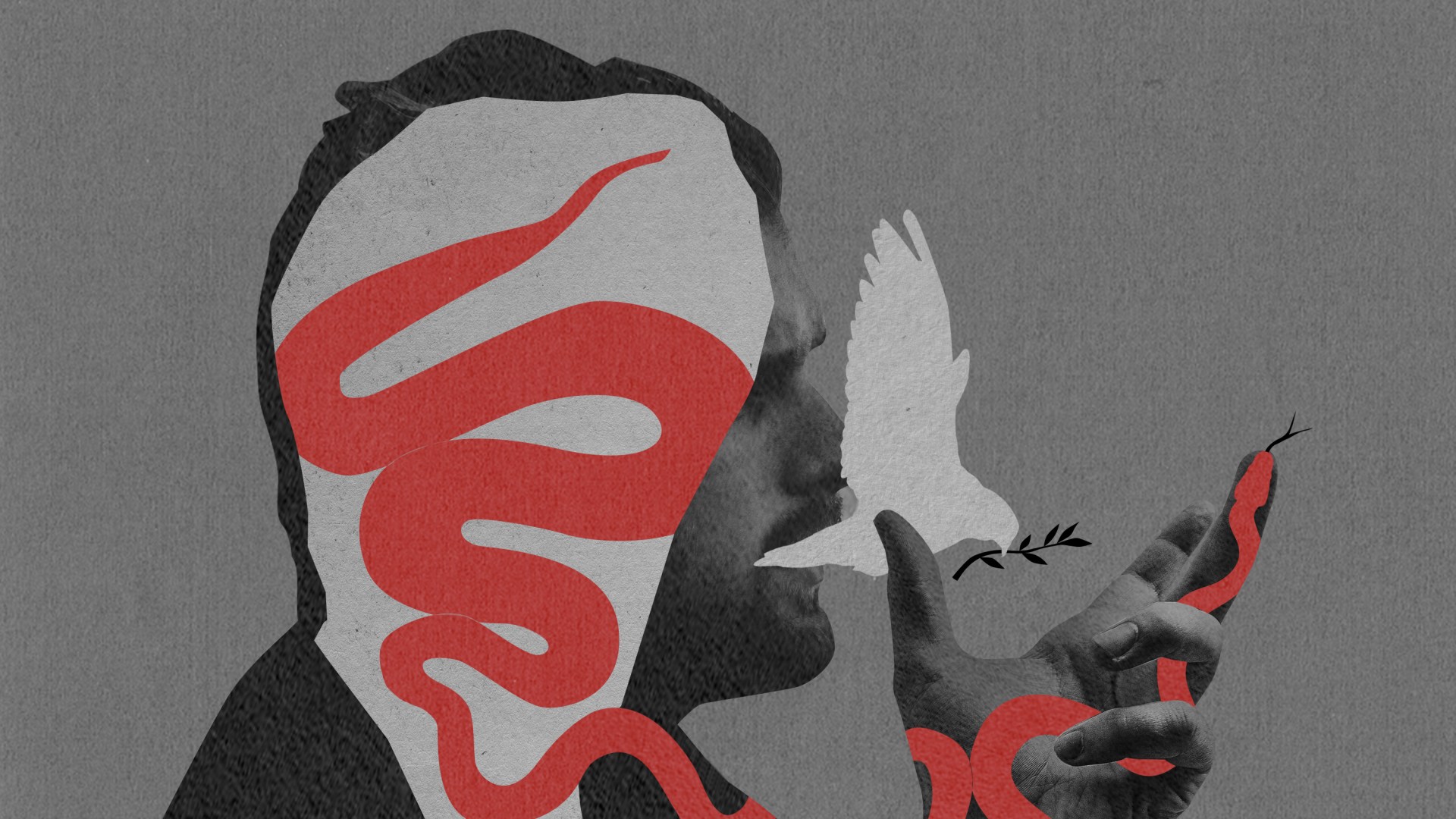
Hard as it is to believe, Christians have everything they need to “be one.”

Illustration by Rick Szuecs / Source Images: Vince Fleming / Jeffrey F Lin / Nathan Mullet / Unsplash

I played softball in a community league when I was a teenager. A few of us went to the same school, but we didn’t know each other the first time we stepped out under the lights together. We were strangers in gray polyester uniforms and orange baseball caps. From a distance, you couldn’t tell one girl from another.

At the start of our opening game, there was a palpable feeling of possibility. My teammates were talented, and the coach was tough. As he invested time watching us throughout the season, he positioned and repositioned us in different roles, playing to our individual strengths. As each player lived into her giftedness, there was more synergy and success. We even won a few games.

Today, instead of feeling like a single team with diversely gifted players, we find ourselves in a cultural moment where it often feels we’re on different teams altogether. This is true in society at large, and sadly, it seems just as true inside the church.

There are justifiable reasons for division. We have defensible attachments tied to our beliefs. We’ve developed hard-earned and sophisticated ways of managing our fears and preferences, and we want to protect them.

But there was a time when the church was like a brand-new softball team, stepping out onto fresh-cut grass in late summer, individual differences obscured by what they were as a whole: “All of them were filled with the Holy Spirit. … They devoted themselves to the apostles’ teaching and to fellowship, to the breaking of bread and to prayer. … All the believers were together and had everything in common” (Acts 2:4, 42, 44).

Those early believers did not wear gray and orange polyester, but they were nonetheless marked by distinct characteristics. Among them: humility and patience, a desire to reconcile their individual differences into a seamless community.

If anyone has said “yes” to God’s call on their life, then they are called to be ambassadors of the same kind of reconciliation. We are to lead lives worthy of that calling, “bearing with one another in love” and maintaining the unity of the Spirit (Eph. 4:1–3).

God is so committed to this unity that Jesus prayed specifically for us, “that all of them may be one, Father, just as you are in me and I am in you … so that the world may believe that you have sent me” (John 17:21).

Jesus was not naive. He knew that finding unity is patient, slow work. He sent the Holy Spirit to be attentive to his prayer for us.

Jesus knew that bearing with one another is not the same as endorsing someone else’s beliefs against your own conscience. He knew that bearing with one another is neither avoiding conflict nor seeking approval (Gal. 1:10). He knew that bearing with someone who wields an angry agenda requires near impossible strength.

Do we have what it takes to love in hard times? Not on our own! But by grace, we are given impossible strength from God, because we are drawing on the strength of God’s riches, our shared supply (Phil. 4:19; 2 Cor. 9:8).

Do not be surprised if living this common life is painful. It is simply beyond our own efforts. It requires ongoing prayers for wisdom and forgiveness.

But it is painful not only for us. Isaiah 63:9 tells us that God himself is distressed when we are distressed, and he gave his life to do something about it. Jesus’ prayer was clear about the connection between his suffering and our unity: This common ground is our witness to the world.

So let’s lament our losses, confess our failings, and celebrate with sincerity and specificity the ways that we have seen God’s mercy in our midst.

Let’s open up our echo chambers and build bridges instead of moats. Let’s listen for the still, small voice of the Spirit and attend to what he may ask of us.

These are heavy times, but there is kingdom work to be done. Christ bolsters our hope. In Christ, we’ve made the team, been chosen to participate in this reconciling work. We can leave our habits of cynicism and self-protection behind. In Christ, our work is to not give up on one another, on our one faith (2 Cor. 5:19). Because this game is still in full swing.

Sandra McCracken is a singer-songwriter in Nashville and author of the forthcoming Send Out Your Light: The Illuminating Power of Scripture and Song (B&H).


Church Life

Hard-Copy Bibles Aren’t Just Nostalgic

As a seminary professor, I’m requiring the physical book in class. Church should do the same.

Christianity Today September 20, 2021
Illustration by Mallory Rentsch / Source Images: Mche Lee / Channel 82 / Unsplash

As I prepare to begin my tenth year as a seminary professor, I’m going to begin the biblical capstone class I’ll be teaching by recommending that my students consider taking up a habit they’re likely unfamiliar with: bringing an actual, physical, printed-and-bound Bible to class.

My reason for the recommendation isn’t just about nostalgia, though I did grow up carrying a Bible to church each Sunday. The first Bible I recall as being “my Bible” (the possessive pronoun being a piece of Christian-speak that seems to have burrowed its way into the instinctive vocabulary of the faithful) was the Youthwalk edition of the New International Version, given to me by my parents while I was still in middle school.

I liked the swath of deep purple that stood out on the cover, but I don’t recall reading it much, aside from thumbing through it to find isolated verses, old favorites that I had already memorized or gathered that I ought to have memorized.

It wasn’t until I was in high school, when I acquired a faux-leather-bound study edition of the New King James Version, that I started reading larger chunks of Scripture, often while sitting at church when I grew bored with the sermon. That’s how I learned my way around the Bible, stringing the verse-pearls I already knew onto a more extensive narrative, historical, and theological thread.

It was while reading that study edition—which featured those little half-moon indentations at the start of each biblical book, facilitating the easy flipping back and forth between books for cross-referencing—that I first began to get an inkling of why Alan Jacobs has called the codex—the form of a published Bible that the early church of the second, third, and fourth centuries quickly came to prefer over scrolls—“the technology of typology.”

I wouldn’t have been able to put it that way at the time, but I was learning by experience what early biblical interpreters apparently understood and prized: Having a Bible with stacked pages bound together on one side, rather than one long sheet wrapped up to look like a piece of piping, made it possible to examine a section of the Old Testament in its context on the entire page and compare it simultaneously with a section of the New, also in its wider setting.

Handling a physical Bible taught me, at a subconscious level, to read Scripture as a canon, a library of books whose disparate voices could be heard as if they were speaking with and alongside one another about the same subject matter.

So I won’t just be recommending hard copies of the Bible because I want to relive my youth: I want my students to become better readers of the whole Bible, letting its words ricochet off one another and lead them, ping by contrapuntal ping, through a canon-wide romp (which is why I’ll also be recommending a bound paper copy with a good cross-reference system in its footnotes or center column, such as this NRSV or the ESV personal reference Bible).

There are many wonderful electronic Bibles to choose from these days (I use the ESV’s beautiful app on a daily basis). But in 2021 I’m still wary, as Jacobs said he was in 2001, “of making use of an electronic version of the scroll cabinets firmly rejected by the early church.” I wouldn’t want to be without my Accordance software and other apps, but it’s worth recognizing that when we use tools like these, we are in certain respects returning to the scrolls that the first Christian theologians, for reasons properly theological and hermeneutical, displaced with the codex.

But there’s one more reason I’ll be recommending hard-copy Bible toting to my students, and that’s because I want them to think about what practices they’d like to commend to those under their care once they’ve graduated and become pastors and preachers themselves. Choosing a medium for our Bible reading isn’t only about us; it’s about what sorts of attitudes and postures we’d like to encourage in our churches.

The technological critic L. M. Sacasas (who recently had a stimulating conversation with Ezra Klein) has assembled a set of questions each of us might ask ourselves when we consider our relationship to various technologies and devices. The questions range from fairly straightforward (How will the use of this technology affect how I relate to other people?) to more philosophically complex (Does this technology automate or outsource labor or responsibilities that are morally essential?).

At least one of the questions strikes me as especially pertinent to our encounter with the Bible: “What practices will the use of this technology displace?” In other words, what might we lose—and what might we (tacitly) encourage others to lose, forget, or marginalize—if we give up the habit of reading paper-and-binding Bibles? Those of us charged with the care of souls might meditate for a long time on the question.

Ten years ago, the Episcopal priest Fleming Rutledge, not thinking primarily of the classroom but of the gathered congregation on Sunday mornings, wrote about her frustration with the fashion in many Episcopal churches of printing each Sunday’s lectionary readings in the bulletin. Such a practice ensures that churchgoers won’t feel the need to bring along their Bibles or reach for the ones (sometimes) available in the pew racks in front of them. (It might also be that it discourages them—helpfully—from reaching for their smartphones, but that’ll be for another piece.)

“When everyone is reading from a printed sheet,” Rutledge says in her book And God Spoke to Abraham, “no one is learning where in the Bible the passage is located, or how it is linked to what comes before it and after it.” She continues in this vein for a while, with her characteristically delightful pugnacity:

A whole generation of churchgoers is being raised with no sense of actually handling the Bible, of finding the passage and reading it in its sequence. The large Bibles on the lecterns are sitting unused, their pages gathering dust; some have been removed altogether. The wonderful sight of the reader mounting up to the lectern and turning the pages to find the place is seldom seen today in Episcopal churches; the readers come up with flimsy little pieces of paper which for the most part will be left in the pew or thrown away.

If you go on and read the subsequent sermons, you’ll find asides such as, “Now notice v. 4 … But that’s also what we see in the next chapter …” and so on. The gospel that she finds in the Bible’s textual details was enough enticement for this reader, at least, to keep an open Bible on my lap as I read the sermons, my eye toggling between her words and the pages of Scripture.

I hope what I offer my students in class provides the same enticement. And I hope they’ll pass it along to the Bible-reading Christians whom they’ll nurture in turn.

Wesley Hill is associate professor of New Testament at Western Theological Seminary. His most recent book is The Lord’s Prayer: A Guide to Praying to Our Father.

This article originally appeared at LivingChurch.org.

Books

What Comes After the Ex-Gay Movement? The Same Thing That Came Before.

Old-school evangelical leaders once knew the value of “care” over “cure.”

“You know, Mike, I used to be gay,” I said.

Still Time to Care: What We Can Learn from the Church’s Failed Attempt to Cure Homosexuality

Mike stopped moving his paintbrush as the words fell clumsily from my mouth. He was painting the St. Louis apartment I called home in the summer of 1997 as I began working toward my PhD in historical theology.

He’d asked me about my schooling, and we got to talking about faith. Mike had explained to me how he felt he could never go to church because he was gay.

“I know they say that’s not supposed to happen,” I went on, after dropping the bombshell. “But that’s my story.” Mike stared at me with interest as he set the paint can down, gently balancing his brush on its edge.

Looking back on this encounter, I can see that it had all the trappings of what became known as the ex-gay movement, of which I was once an eager proponent. Most notable is my use of the ex-gay script: “I used to be gay.” The phrase implied that I wasn’t gay anymore. I had a testimony, a story to tell about leaving homosexuality behind.

To be clear, my sexual attractions at that moment were drawn as exclusively to other men as ever. I was still at the top of the Kinsey scale that researchers since the 1940s have used to classify sexual orientation. What made me ex-gay was that I used the ex-gay script. I was trying to convince myself that I was a straight man with a disease—a curable one—called homosexuality. A condition that was being healed.

My terminological maneuver was an integral component of conversion therapy. Alan Medinger, the first executive director of Exodus International, described it as “a change in self-perception in which the individual no longer identifies him- or herself as homosexual.” It was all about identity. The testimony made the man. And, within my ex-gay framework, I wasn’t lying; I was claiming my new reality.

I was an ex-gay.

The emergence of Exodus International in 1976 had set evangelicals on a hopeful path toward curing homosexuality. Founder Frank Worthen explained, “When we started Exodus, the premise was that God could change you from gay to straight.” What followed was a decades-long experiment on hundreds of thousands of human test subjects. The movement collapsed after Exodus president Alan Chambers’s 2012 statement that more than 99 percent of Exodus clients had not experienced a change in their sexual orientation.

Although the paradigm of cure failed, it still walks undead among us, as some within major denominations try to institutionalize its approach. Recent debates among conservative Anglicans and Presbyterians over whether someone can claim a “gay identity” are only the latest round of similar disputes that have echoed in church corridors for years. After all, renouncing a homosexual self-perception was an essential first step in conversion therapy.

One effect of this approach was that it mandated that non-straight believers hide behind a mask, pretending to be anything but gay. It was part of the reparative process.

But this theological innovation was a relatively recent development. Before there was an ex-gay paradigm of cure, there was an older orthodoxy that included a Christian paradigm of caring for believers who aren’t straight.

I’ve wondered whether Henri Nouwen had his own homosexuality in mind when he wrote of the difference between care and cure. In the biography Wounded Prophet, Michael Ford documents how Nouwen discussed his experience as a celibate gay man with his close circle of friends. Nouwen had tried psychological and religious methods of orientation change, but to no avail. He knew that out of obedience to God, he couldn’t let himself engage in sexual relationships. But his path was filled with loneliness and unfulfilled longings and many tears.

In Bread for the Journey, he wrote, “Care is being with, crying out with, suffering with, feeling with. Care is compassion. It is claiming the truth that the other person is my brother or sister, human, mortal, vulnerable, like I am.”

“Often we are not able to cure,” he insisted, “but we are always able to care.”

Evangelical leaders, including John Stott, helped lay a foundation for a pastoral paradigm of care. Stott—the theologian and writer labeled the “Protestant Pope” by the BBC—argued that sexual orientation remains a part of one’s constitution. As Stott wrote in Issues Facing Christians Today back in 1982, “In every discussion about homosexuality we must be rigorous in differentiating between this ‘being’ and ‘doing,’ that is, between a person’s identity and activity, sexual preference and sexual practice, constitution and conduct.”

For Stott, a homosexual orientation was part of the believer’s identity—a fallen part, but one that the gospel doesn’t erase so much as it humbles.

This posture runs even further back than Stott. C. S. Lewis spoke in a 1954 letter to Sheldon Vanauken of a “pious male homosexual” with no apparent contradiction. Lewis’s lifelong best friend Arthur Greeves was gay. Lewis called him his “first friend” and made it clear to him that his sexual orientation never would be an issue in their friendship. They vacationed together. The compilation of letters Lewis sent to Greeves, collected under the title They Stand Together, reaches 592 pages.

In the United States, as the 1969 Stonewall riots in New York announced the birth of the gay rights movement, orthodox Protestants were already asking what positive vision Scripture gives for people who are gay. The 1970 pseudonymous InterVarsity Press book The Returns of Love: Letters of a Christian Homosexual mapped out a path of care and was promoted by Stott. The book’s celibate gay Anglican author explained that he was still a virgin at the time he wrote it.

Evangelicalism’s leaders knew there was a history of abuse with which to reckon. In a 1968 letter to an European pastor, Francis Schaeffer lamented the church’s complicity in marginalizing gay people. The pastor had seen no fewer than six gay people commit suicide, and he sought Schaeffer’s counsel. “The homophile tends to be pushed out of human life (and especially orthodox church life) even if he does not practice homosexuality,” lamented Schaeffer. “This, I believe, is both cruel and wrong.” Indeed, Schaeffer’s ministry became a magnet for gay people wrestling with Christianity.

Such leaders saved their disgust for abusive religious leaders. When Jerry Falwell Sr. brought up the challenge of gay people with Schaeffer in private, Schaeffer commented that the issue was complicated. As Schaeffer’s son, Frank, recounted in an interview with NPR and also in his book Crazy for God, Falwell then shot back a rejoinder: “If I had a dog that did what they do, I’d shoot it.” There was no humor in Falwell’s voice.

Afterward, Francis Schaeffer said to his son, “That man is really disgusting.”

“Sexual sins are not the only sins,” Stott wrote in Issues, “nor even necessarily the most sinful; pride and hypocrisy are surely worse.”

In 1980, Stott convened a gathering of Anglican evangelicals to map out a pastoral approach to homosexuality. They led with public repentance for their own sins against gay people. In a statement, these leaders declared, “We repent of the crippling ‘homophobia’ … which has coloured the attitudes toward homosexual people of all too many of us, and call our fellow Christians to similar repentance.”

It was a staggering confession at a time when popular opinion was still biased strongly against gay people. This was not the 21st century, when many Christian leaders repent in order to look relevant and inclusive in a culture that celebrates all things fabulous. Stott and these evangelical leaders must have been truly grieved for the ways they had injured their neighbors and siblings in Christ. The statement called specifically for qualified nonpracticing gay people to be received as candidates for ordination to ministry.

Five years earlier, many were shocked by Billy Graham’s similar comments in a news conference, some of which were reported in 1975 in the Atlanta Journal-Constitution. Graham had been asked whether he would support the ordination of gay men to the Christian ministry. Graham had replied that they “should be considered on individual merit” based on certain qualifications. Specifically, the article mentioned “turning away from their sins, receiving Christ, offering themselves to Christ and the ministry after repentance, and obtaining the proper training for the job.”

The gospel of Jesus Christ offers a positive vision for gay people. “In homosexuality,” Lewis explained to Vanauken, “as in every other tribulation, [the works of God] can be made manifest.” He continued: “Every disability conceals a vocation, if only we can find it, which will ‘turn the necessity to glorious gain.’ ”

Lewis asked, “What should the positive life of the homosexual be?” That’s the question any gay person who comes to faith in Jesus will ask.

Too often the answer we hear is simply “No.”

No sex. No dating. No relationships. Often, no leadership roles.

That leaves people like me hearing that we have, as Eve Tushnet explained in a 2012 piece in The American Conservative, a “vocation of No.”

What is a calling of “Yes”? What is the positive Christian vision the gospel gives for gay people?

When I look at the lives and ministries of Lewis, Schaeffer, Graham, and Stott, what stands out most clearly is that they bring a vision of Jesus: Jesus, in his saving power. Jesus, who washes us and makes us clean. Jesus, who brings us into God’s family. Jesus, who covers shame and forgives sin. Jesus, who calls us by name. Jesus, who sees us all the way down and still wants to be in relationship with us. Jesus, who suffers with and for us. Jesus, who challenges us to live for his kingdom. Jesus, who gives new life with all its joy. Jesus, who is that treasure in a field for which we sold everything. Jesus, who is that treasure that can never be taken from us.

This is Jesus, whose inbreaking kingdom sweeps us up into something he is doing in the cosmos, something larger than ourselves. In Christ, we find ourselves in a larger narrative.

This is not Jesus as a means to an end of heterosexual functioning and comfortable family life. This is God himself as the end for which we were made. With this real God, the locus of hope is found not in this life with heterosexuality, but in the coming age, when we shall stand before our Savior.

Without that relationship with a Savior, there is no point in speaking of a biblical sexual ethic, either to straight or gay people. No gay people are going to embrace such an ethic unless they fall in love with Jesus. A heart smitten by grace is not only willing but also eager to follow the one who died for us.

Schaeffer, Stott, and Graham all stated on occasion their shared belief that some people are born gay. All of these Christian leaders also held to the historical understanding of the biblical sexual ethic. This certainly meant committing to a life in line with God’s creational pattern—his design. Not one of them supported sexual unions for believers outside of a monogamous marriage between two people of different sexes. But they approached gay people from a posture of humility.

Their vision did not flatten people into our unwanted sexual urges. Instead, they recognized that a same-sex-oriented believer’s biggest struggle may be not with sexual sin but with the ability to give and receive love. So they emphasized the need for the community of the church; for deep, long-term friendships; for brotherhood, to be known even in celibacy.

Stott, himself celibate, explained: “At the heart of the homosexual condition is a deep and natural hunger for mutual love, a search for identity and a longing for completeness. If gay people cannot find these things in the local ‘church family,’ we have no business to go on using that expression.”

Lewis, Schaeffer, Graham, and Stott also viewed the homosexual condition as an unchosen orientation with no reliable expectation of a change in this life. They showed great concern for the emotional and relational needs of gay people. Schaeffer insisted in his 1968 letter that the church needed to be the church and help “the individual in every way possible.”

In his NPR interview, Frank Schaeffer described his father’s Swiss ministry, L’Abri, as a place “where homosexuals—both lesbians and gay men—are welcomed.” He added: “No one’s telling them they’ve got to change or that they’re horrible people. And they go away, you know, having found my father wonderfully compassionate and Christlike to them.”

Schaeffer foresaw significant cultural changes when, in 1978, an Orthodox Presbyterian Church congregation in San Francisco found itself sued for releasing a gay employee who had violated the church’s code of conduct. In The Great Evangelical Disaster, Schaeffer said it would be silly for other churches to think they might not face the same challenge.

Still, Schaeffer and Graham didn’t recommend us-verses-them approaches. Just weeks before the 1964 presidential election, a gay sex scandal rocked the nation. President Lyndon Johnson’s top adviser, Walter Jenkins, was arrested a second time for having gay sex in a YMCA restroom. Graham called the White House to intercede for Jenkins.

In the recorded phone call, Graham charged Johnson to show compassion to Jenkins.

Asked about homosexuality at a 1997 San Francisco crusade, Graham remarked to reporters, “There are other sins. Why do we jump on that sin as though it’s the greatest sin?” He added, “I have so many gay friends, and we remain friends.” Speaking to a crowd of 10,000 that night in the Cow Palace, Graham declared, “Whatever your background, whatever your sexual orientation, we welcome you tonight.”

As Stott emphasized so passionately in Issues, the gay person who follows Jesus must live by faith, hope, and love: Faith in both God’s grace and in his standards. Hope to look beyond this present life of struggle to our future glory. But the love by which we must live, he explained, is the love we must receive from Christ’s spiritual family, the church. We must depend upon love from the very churches that have historically failed to give it to people like us.

Church historian Richard Lovelace’s 1978 book Homosexuality and the Church garnered hearty endorsements from evangelical luminaries Ken Kantzer (a former CT editor), Elisabeth Elliot, Chuck Colson, Harold Ockenga, and Carl F. H. Henry. The book might seem radical in today’s climate, but in the 1970s it represented a transatlantic neoevangelical vision. In contrast to homophobia on the right and sexual compromise on the left, Lovelace laid out the gospel challenge:

There is another approach to homosexuality which would be healthier both for the church and for gay believers, and which could be a very significant witness to the world. This approach requires a double repentance, a repentance both for the church and for its gay membership. First, it would require professing Christians who are gay to have the courage both to avow [acknowledge] their orientation openly and to obey the Bible’s clear injunction to turn away from the active homosexual life-style. … Second, it would require the church to accept, honor, and nurture nonpracticing gay believers in its membership, and ordain these to positions of leadership for ministry.

The church’s sponsorship of openly avowed but repentant homosexuals in leadership positions would be a profound witness to the world concerning the power of the Gospel to free the church from homophobia and the homosexual from guilt and bondage.

Only the gospel can open up the humility for such a dual repentance. Yet this was the Christian vision of Lovelace and Henry, Ockenga and Elliot, Kantzer and Colson, Lewis and Graham, Schaeffer and Stott, and a young gay evangelical Anglican who felt too afraid to use his own name, even though he was still a virgin.

Christian fathers and mothers like these had it right. Tragically, I write this as a lament for a road not traveled on this side of the Atlantic.

Already by the late 1970s, a hard shift had begun. As ex-gay ministries in North America multiplied with their expectation of orientation change, they shifted the locus of hope to this life. As the AIDS crisis devastated gay communities in the 1980s, evangelicals embraced the promise of heterosexuality. The secular reparative therapists added a semblance of clinical respectability. The new path to cure pushed out the older path to care.

And then the conservative side in a culture war discovered that we ex-gays were useful. We were proof that gay people could choose to become straight if they really wanted to. And if we could become straight, then there really wasn’t so much need for the church to repent of its homophobia. It just required people like me to maintain the illusion that we had changed.

In the aftermath of that lost culture war that radically transformed the sexual mores of the West, there is much for Christians to grieve. Transactional relationships. Disposable marriages. Vastly changed assumptions about sexuality and gender.

But the conservative church’s hesitancy to repent has not dissipated. As I watch evangelical churches and denominations fumble their way through discussions of sexual orientation and identity, often enforcing the language and categories of a failed ex-gay movement, we’re missing the real battle: The surrounding culture has convinced the world that Christians hate gay people.

Our calling is to prove them wrong.

The world is watching. Our children and grandchildren are watching. They are already second-guessing their faith because they hear all around them that Christians hate gay people, and they can’t point to anyone in their congregation who is gay, is faithful, and is loved and accepted as such. Maybe they can point to someone who uses the language of same-sex attraction. But even that is rare. It’s still not safe to do so.

I am not saying we are at risk of losing Christians who are attracted to members of the same sex; that’s a given.

I am saying we are at risk of losing the next generation.

For those who are listening, an older generation of Christians is still willing and able to help us understand.

Greg Johnson is lead pastor of Memorial Presbyterian Church in St. Louis and author of Still Time to Care: What We Can Learn from the Church’s Failed Attempt to Cure Homosexuality.

Theology

Martha: Busy Hostess or Dragon Slayer?

The Gospel of John and medieval legend show Mary’s sister to value theology and hospitality.

Illustration by Marcus C. Thomas

The summer before my senior year of high school, a new book came out called Having a Mary Heart in a Martha World. This book articulated what I had heard around the halls of my church growing up. I remember women vocally identifying as either a “Martha” or a “Mary” with the ultimate goal of becoming more like the disciple Mary who sat at Jesus’ feet, while bemoaning our Martha-like overworking tendencies. (Ironically, the “Marthas” were the ones responsible for running most of the church programs.)

As medieval historian Beth Allison Barr points out in The Making of Biblical Womanhood, Martha continues to be used as a prototype of doers and homemakers in books written for women. And while this caricature of Martha is good for selling books on biblical womanhood, is it too simplistic?

The prevailing impression we have of Martha is shaped by a thin reading of Luke 10. It includes the episode near the beginning of Jesus’ ministry, where, while teaching, he exhorts Martha for being overly worried with housework: “Martha, Martha …”

While the meaning of this story is debated by scholars, it has dominated the North American church’s image of Martha. Too often the Martha described elsewhere in the Gospels has been forgotten. The result is a strawman of the real Martha.

In early church history and during the Reformation, Martha and her sister Mary were viewed as a yin-and-yang representation of action versus contemplation. They were “as two parts of the same life rather than as two opposed ways of life,” writes Episcopal priest and scholar Margaret Arnold.

During this period, Martha’s action was not separated from the life of the church but was viewed through the lens of discipleship, worship, and ministry. And particularly during the medieval period, John’s narrative of Martha and Jesus provided the biblical foundation for a legend that portrays Martha as a Spirit-filled heroine who slays a dragon, raises the dead, and preaches to kings.

We often dismiss or are suspicious of medieval legends. But over the past few decades, theologians and biblical scholars have begun to realize the importance of the effects of a biblical text in church history on the contemporary interpretation of that text. The German word for these effects is called Wirkungsgeschichte, an examination of the various interpretations that a passage has received throughout church history. This analysis can push us to reread that passage and perhaps learn something new from it.

The legend of Martha helps us see from Scripture that there is much more to Martha than a stressed-out hostess. In fact, it might better capture the biblical portrayal of Martha than our popular books and writings today.

The legend of Saint Martha

According to Diane Peters, who translated the story, the legend of Saint Martha arose in the latter part of the 12th century from a discovered text claimed to have been written by Martha’s maidservant Marcella but likely manufactured by the monks of Tarascon. The text was supposedly written in Hebrew but later translated into the extant Latin by Syntyche (of Philippians 4:2).

Martha’s legend diverges somewhat from other contemporary legends about female saints, such as Theodora, Margaret, Mary Magdalene, and Catherine. These narratives highlight the chastity of the women: their beauty, virginity, ability to overcome sexual advances, or penance for sexual sin. In contrast, Martha’s beauty and virginity are nothing more than a footnote in her hagiography, which instead emphasizes her courage, intellect, and pastoral ministry—qualities that were more commonly found in legends about male saints.

The legend begins with the claim that Martha and her siblings were of royal lineage, born of Syrus and Eucharia and inheriting from their mother three towns that they owned: Bethany, Magdala, and part of Jerusalem. Martha was well-educated, proficient in Hebrew, and a righteous woman according to the Law.

In the Marcella account, Martha is described as having “authority before all her relatives because she was more capable and had a greater abundance of intelligence and honesty.” Another Latin account describes her as having the “soul of a man in her female breast.”

Martha is described as a great and generous hostess of many, including Jesus, whom she served because of her love for him. Her actions in Luke 10 are compared to those of Abraham, Lot, and Joshua, whose hospitality pleased God.

Likewise, Jesus is depicted as loving Martha and preferring her house for his lodging. Marcella’s version celebrates Martha’s role as hostess, bestowing on her great dignity, noting, “She fed him who feeds all creatures … whom many prophets and kings wished to see and did not see, to hear and did not hear: she received and fed this Guest.”

The legend says that after Jesus’ death and resurrection, many of his followers were persecuted. Martha, Mary, Lazarus, Saint Maximinus—the man who supposedly baptized the siblings—and a group of believers were placed in a boat on the Mediterranean without oars or sails. They miraculously did not die at sea but landed on the shore of France at Marseille.

As they traveled north along the river Rhône, the siblings evangelized and converted people to faith in Jesus. Martha is specifically singled out as being “highly eloquent and clear in speech.” The siblings eventually came to the region of Aix, where they learned of a great dragon, half beast and half fish, living in the woods across the river between Avignon and Arles.

This dragon, which had horns and wings and would breathe fire, was born of two beasts, Leviathan (as found in Isaiah 27:1 and Job 41:1) and Bonasus (a mythical medieval animal). It hid in the river, drowning ships that passed by.

The people of Tarascon implored Martha to get rid of this beast, which no man had been able to defeat. Upon coming to the dragon eating a man, she threw holy water at it and held up a wooden cross, which froze the dragon in place. Martha then tied it with her belt and gave it over to the townspeople, who killed it with their spears and stones.

After defeating the dragon, Martha took residence in Tarascon, where she was “occupied in prayers and fastings”—praying a hundred times daily and eating only once a day—established a convent, and built a church in honor of the Virgin Mary. In the Marcella legend, she is like John the Baptist: walking around barefoot while wearing sheepskin, a turban of camelhair on her head and a belt of horsehair tied in knots around her waist.

Martha also ministered through preaching and healing—including raising back to life a young man who had drowned trying to cross the river to hear her preach—which gave her great fame, according to the legend. When Martha placed her hand on people, they received the Holy Spirit, it claimed, and when she placed her hand on the sick, they were healed. She also cast out demons and turned water into wine.

The Marcella legend noted that “her sermons were received by kings and nobles” and that list of the thousands of people “converted and baptized through her exhortations to faith in Christ is too long to describe in detail.”

The legend ends with a description of Martha’s death, burial, and the miracles that ensued at her tomb, where even King Clovis of France (who reigned 481–511) came and received healing. After her death, Marcella left for Sclavonia (now Slavonia, Croatia) and preached the gospel for 10 years until her death. Since the 15th century, Martha’s legend has been celebrated and remembered in Tarascon, France, with the annual summer Festival of the Tarasque.

But what should we make of this myth? Christian myths and legends of the medieval period were used as teaching and discipleship tools to inspire faith and good works. The Marcella version concludes similarly: “It may be an exemplum for pious imitation for the minds of the faithful.”

We might think of legends of Christian saints as dramatizations of what faithful Christian discipleship should look like. It is extraordinary that Martha was described in priestly language (throwing holy water, showing the sign of a cross, preaching, and leading a church) during a time in which women could not hold priestly office or be ordained. The legends unite the Martha of Luke 10 with the Martha of John 11 but focus more heavily on her role in the latter.

Martha, the beloved disciple

In John 11, we find one of the greatest miracle stories in the Gospels: the raising of Lazarus, a man who had been deceased for four days. While Lazarus is a passive character in the narrative, the longest conversation in the passage is between Jesus and Lazarus’s sister, Martha.

John’s portrait of Martha is of a beloved disciple of Jesus who engages in theological discussion with the Lord and who makes a great confession about him. The Martha of John 11 takes initiative, is outspoken, and engages with Jesus about the resurrection of the dead. Much like his encounter with the Samaritan woman in chapter 4, Jesus intentionally meets Martha on the outside of town, engages with her in theological discussion, and finally reveals his identity to her by giving one of the greatest statements in John’s gospel. Their conversation is the theological interpretative lens for the miracle that follows.

In John’s portrayal of Martha, we learn right away she is someone whom Jesus loved (11:5). As it is noted in the Marcella legend, it is rare to find in the Gospels a person identified by name as someone whom Jesus loved. Unlike the Samaritan woman, Martha (and Mary) is named.

John also shows Martha to be a true disciple of Christ. When she hears that Jesus is outside of town, Martha is the first sister to run out to meet him. She speaks first: “Lord, if you had been here, my brother would not have died. But I know that even now God will give you whatever you ask” (vv. 21–22).

Martha’s two statements, “Lord, if you had been here” and “Yet even now I know,” correspond to what we find in many of the Psalms, which begin with a complaint about God’s seeming inaction but end with a confident statement of faith in God’s character (see Psalms 10 and 13).

The legend views Martha’s pleading not as insubordination but as confident faith:

And because St. Martha knew her holy Guest loved her, and did not doubt that it was possible for him to do anything, and because she had heard that he had raised the daughter of the synagogue ruler and the widow’s son, she complained bitterly to the Lord when he returned to Bethany about the death of her brother. … O the unwavering faith of this holy woman!

Jesus replies, “Your brother will rise again” (John 11:23). Martha then responds, “I know he will rise again in the resurrection at the last day.” The majority Jewish belief from the Second Temple period onward was that God would raise the dead at the end of the age. Thus, Martha’s response to Jesus was based on this limited understanding of the resurrection.

Jesus values Martha enough to teach her in the moment: “I am the resurrection and the life.” He is telling her not to view the resurrection as a futuristic event. Instead, his message is radical: I am the resurrection. I am the God who raises the dead. The eschaton is already here! New Testament scholar C. K. Barrett nicely puts it, “Where he is, resurrection and life must be.”

Jesus goes on to disciple Martha: “The one who believes in me will live, even though they die; and whoever lives by believing in me will never die. Do you believe this?”

Jesus entrusts a deeply theological claim—a divine revelation—about himself to a woman. Just as he entrusted his identity to a Samaritan woman and the message of his resurrection to Mary Magdalene, Jesus entrusts this “I am” statement to Martha. Given the dialogue in Luke 10, we might expect Jesus to offer the revelation instead to her sister Mary, whom many consider to be the truer disciple.

Yet it is to Martha Jesus gives this statement. He invites her to believe that he can begin the resurrection of the dead even now, which would include raising her brother. In John 11:14–15, Jesus tells his disciples that Lazarus’s death (and thereby his raising) has happened so that they may believe.

In verse 42, Jesus’ prayer reveals that the miracle was to take place so that the crowd may believe. But Jesus asks Martha to believe before the sign. He tells her specifically that if she believes, she will see the glory of God (v. 40). Not only does Jesus want Martha to believe before the sign, but also he wants her to see with her own eyes the Messiah she confesses.

Later, when she calls her sister Mary, Martha tells her that “the Teacher” has arrived. Jesus relates to both Martha and Mary as their teacher or rabbi, and they are both his disciples.

Finally, John shows Martha to be a person of faith seeking understanding. She responds with one of the greatest christological belief statements we find in the Gospels, one that that is echoed in John’s later letters: “Yes, Lord, I believe that you are the Messiah, the Son of God, who is to come into the world” (v. 27).

The legend describes her confession in this way: “Martha proved herself to have much more in common with Peter, the chief of the apostles, with Job, with Abraham, and with the Holy Virgin.” Martha’s confession stands in line with the other confessions we find in John’s gospel: John the Baptist’s in 1:29–30, 34; Nathanael’s in 1:49; the Samaritan woman’s in 4:29; and Peter’s in 6:69. It also parallels Peter’s confession in Matthew 16:16: “You are the Messiah, the Son of the living God.”

But Martha’s confession of faith is most identical to the editorial statement in John 20:31: “But these are written that you may believe that Jesus is the Messiah, the Son of God, and that by believing you may have life in his name.” What John wants to accomplish in his audience was already accomplished in Martha, one of the first believers. John wants us to see that Martha’s confession exemplifies the response Jesus desires for all his disciples.

Yet at her brother’s tomb, Martha’s faith is tested. She sees before her eyes the reality of the situation: Her brother has been dead for four days, and his body already smells. Like Peter, who after his great confession in the Gospel of Matthew rebuked Jesus in unbelief, Martha, with her eyes on the tomb, rebukes Jesus in unbelief. Jesus graciously chides her. “Did I not tell you that if you believe, you will see the glory of God?”

With the stone rolled back, Jesus loudly commands, “Lazarus, come out!” And the dead man, Martha’s beloved brother, walks out alive.

Martha represents the conflicted Christian journey of faith. One minute we shout, “I believe!” And within the same day or week, we also plead, “Lord, help my unbelief!” In that sense, Martha is no different than other disciples in the life of faith, like Peter and Thomas. In the end, our faith is a gift from Jesus himself, so that no man or woman may boast (Eph. 2:8–9). He is always there helping us, and even sometimes chiding us, to believe.

Will the real Martha come forward?

While the story of Martha the dragon slayer is only a myth, examining it can help us reflect on the real Martha of John 11 and even on women’s roles in the church today.

First, medieval Christians viewed a woman as capable of defeating a dragon by the power of Jesus. In Martha’s legend, the dragon is a type of Satan and evil. Men and women both keep God’s commands, hold fast to the testimony of Jesus, are a witness to the gospel, and defeat the dragon.

Second, the legend shows us that at least some medieval churches had no problem attributing leadership roles to a female disciple. Even a minority report on what some Christians believed about women in the 12th century should temper any arguments claiming that the idea of women preaching is a contemporary invention.

Third, Martha, through her own example of faith, encourages us to believe in the face of death or impossibilities. Jesus chose to reveal his glory to her by enabling her to believe. Martha also reminds us of the loving gentleness and patience of Jesus, who helps us believe when our faith wavers. As the legend says: “She believed in her heart the faith of the prophets, and the confession of the apostles, and was occupied with good works, and truly, as a consort and participant with them, she shared in the kingdom of heaven.”

Last, Martha, through her service to Jesus, teaches us how to be his servants or deacons. After Martha’s brother is raised, John tells us in chapter 12 that she served Jesus and Lazarus a meal in Bethany. Martha’s faith and discipleship resulted in the kind of service Jesus emulates and commands his disciples to undertake (John 13; Luke 22).

This kind of service isn’t restricted to one gender, nor should it be viewed with disdain. Rather, to be a disciple of Jesus is to serve like Jesus and participate with him in his work in the world. In the words of the legend, “Martha proved herself an apostle among apostles and a disciple among disciples.”

The legend of Saint Martha colorfully dramatizes threads we find in John’s gospel about Martha—disciple, confessor, and person of faith. The church can find an equal yet different discipleship model in her as in her sister Mary. Martha’s Christ-imparted faith was so great that it legendarily conquered a dragon, raised a dead man to life, and gave her comfort at death. Jesus Christ, once Martha’s guest, ultimately welcomed her as his guest in death and will raise her to life in him.

Kristen Padilla is director of the Center for Women in Ministry at Samford University’s Beeson Divinity School and author of Now That I’m Called: A Guide for Women Discerning a Call to Ministry.

Cover Story

What’s True About Christian Fiction

“This Present Darkness” and other bestsellers show us the history of evangelicalism—and how it could be different.

Illustration by Sarah Gordon

Danyell didn’t like This Present Darkness. In fact, she hated it.

The 1986 novel by Frank Peretti tells the story of demons invading a classic American small town until the local Christians are roused to prayer. The book was wildly popular when it came out, and after more than 30 years, it still sells about 8,000 new copies annually. There are a lot of readers who really love This Present Darkness.

For some, it’s changed the way they pray. It has shaped their understanding of how they should live out their faith in their daily lives.

For others, they’ve long forgotten the plot but can still recall with delight the way Peretti describes the demons in vivid, visceral terms: slimy and slippery, horned and heaving, creeping, crackly, and carbuncled.

But not Danyell. She didn’t like any part of the novel, even a little bit.

Danyell read This Present Darkness in 2008 and, on the book-centric social site Goodreads, she wrote an exquisitely scathing, single-sentence review: “I found this book on the train in Ft. Lauderdale and honestly considered throwing myself on the tracks.”

I don’t know if Mark Noll, the eminent evangelical historian, ever rode a Fort Lauderdale train, but he also had a strong negative reaction to This Present Darkness. In his classic 1994 study, The Scandal of the Evangelical Mind, he holds up Peretti’s novel as an example of what he doesn’t like about contemporary American Christianity. It is evidence of the scandal of the evangelical mind—which is that there is no evangelical mind.

Jesus-loving, Bible-reading, born-again Christians have abandoned complexity and nuance and depth, Noll says, and embraced cheap, mass-market fiction.

I’ve heard a lot of this dislike since I started doing the research that became Reading Evangelicals, my history of best-selling Christian fiction and the changing book markets that shaped evangelical culture.

There are many people who love popular Christian fiction, as evidenced by the sales numbers and the quick pace of new publications. But there are also those who dismiss it or denigrate it, telling me, “It’s just bad,” and expressing shock that anyone would spend any amount of time seriously considering prairie romances, Amish romances, apocalyptic thrillers, Christian crime novels, Christian horror, or spiritual warfare fiction.

In my circles, many people wish “evangelical fiction” meant Marilynne Robinson, or Flannery O’Connor, or Frederick Buechner. Fiction more literary, and less popular.

I’m sympathetic. I too like “A Good Man Is Hard to Find.”

But I think this response to the phenomenon of popular Christian fiction misses some things. Often, as with a lot of mass culture, critics are applying the wrong category of standards—similar to those who attack musicals because everyone is always breaking out in song, or slam Pablo Picasso because that’s not what faces look like.

Frequently, the critics are confusing questions of taste and class with those of ethics and morality. And, almost always, they’re ignoring the adage about books and covers and haven’t actually read the works they supposedly dislike.

You can’t know how often popular evangelical novels adopt, adapt, and even invent postmodern literary techniques if you don’t read popular evangelical novels as postmodern literature. (Ask me about intertextuality and interpolation in Left Behind or the destabilization of authorial identity in The Shack.)

But in the end, I’m not so concerned about convincing people that Christian fiction is more literary and complicated than they thought. If Danyell missed that, or if Mark Noll missed that, or you, dear reader, missed that, that’s probably fine.

I am concerned with helping people understand evangelicalism. As a journalist and a historian, I try to explain the shape of evangelicalism and describe its contingency—why it is like this instead of like that. And as an evangelical, the son of evangelicals, and a friend of evangelicals, I care deeply about this movement. I think it can lift up Christ and proclaim the hope of his resurrection. But it doesn’t always do that. So it is important to me to see evangelicalism as it is, and understand how it could have been different and how it could be different again.

When people dismiss evangelical fiction out of hand—“Ugh,” former Books and Culture editor John Wilson wrote at the first mention of my book—they tend to miss or at least obscure an opportunity to understand the shape of evangelicalism. Christian fiction, and the book market behind and underneath bestsellers like This Present Darkness, played a significant role in structuring the evangelicalism we live in today.

To understand that, it helps to look at two things: how a novel addresses itself to the imagination and how a novel connects people into community.

This Present Darkness invites readers to imagine that everyday faith is a cosmic struggle.

As a work of fiction, it doesn’t try to make an argument or persuade the reader to believe this, but instead it asks them to suspend their disbelief.

“Can you imagine?” the novel asks the reader. “Can you pretend the world could be like this? What is it like to live out your faith, day to day, in a world like ours, with these tensions and struggles and conflict? Could it be like …?”

I’m sympathetic. I too like “A Good Man Is Hard to Find.”

Frank Peretti then spins out a story about battles between angels and demons overlaying small-town conflict. The disagreements between neighbors, the fights that a reader could see at any town zoning or county school board meeting are imagined, in This Present Darkness, to be a deeper conflict between Christianity and a New Age conspiracy. That, in turn, is imagined to be a deeper conflict between good and evil supernatural beings.

Peretti was a burnt-out Assemblies of God pastor living in a mobile home trailer in Washington State, living through his own struggles, when he wrote this. He found it helped to see his struggles as, in some meaningful way, supernatural. And he was inspired by Francis Schaeffer’s talk of worldviews and the idea that Christians and non-Christians share no common ground, have no agreed-upon truth, and are in complete, diametrical opposition. They can’t even see reality the same. So conflict with the world is a sign of faith.

Crossway publisher Jan Dennis called This Present Darkness a book for culture warriors. “They can hold this up and say, ‘This is how I see the world,’” he explained.

And some people read it like that: a story showing that true faith is cultural conflict.

The best example of this may be Jim and Jean Daly, who read the book on a car trip from Northern to Southern California in 1989. They read aloud to each other as they took turns driving and were so enthralled with the story that when it got dark, they got out a flashlight and kept going.

The Dalys were taking that trip because Jim was starting a new job at a little organization called Focus on the Family. Focus, just then starting its move to Colorado, had opened a public policy division, and Jim Daly was excited about helping the parachurch ministry get involved in political battles. For the Dalys, the novel about cultural clashes that were really spiritual conflicts spoke directly to this mission.

“Because these fundamental truths of the gospel are so important,” Jim Daly said later, “we at Focus on the Family have been very intentional about speaking up in the public square and promoting a Christian worldview, something Frank was talking about.”

But not everyone received the novel as a call to culture war. The invitation to imagine spiritual battles in the sky above you and the community around you doesn’t compel that specific interpretation.

I’ll admit that when I first read This Present Darkness at age 15, picking up a used copy with those eerie blue claws looming over the church steeple on the cover, my main takeaway was admiration for the journalist, Bernice. She busted open the conspiracy on page 3. No one believed her and she was thrown in jail, but she never wavered from the truth. As the demons scuttled in the shadows, and hulking, exotic angels gathered strength from Christian prayers, I had the thought, “How does one become a journalist?” That was the point of the book for me.

One may argue that is not the correct reading of this novel. Fair enough. But the point is, if you want to understand the impact of a novel in the world, you have to see how people are not bound to the right reading.

Readers are creative and reckless and incredibly free. They accept the invitation to imagination as an invitation to play. They identify with a character and then interpret the story around themselves. They read the text one way and then abandon it for another. They answer the question “What is it like to live out your faith, day to day, in a world like ours, with struggle and conflict?” and they answer it in many ways.

Specific answers vary. But the act of answering evokes the imagination and frames it, establishing the terms, for a moment, for the self-expression of evangelical identity.

The most notable reader of This Present Darkness is perhaps Amy Grant.

She found the book a few years after she crossed over from contemporary Christian music to pop stardom. She won a Grammy in 1982, and her album Age to Age went platinum—the first evangelical-market record to sell more than a million copies. Then she won another Grammy, got a distribution deal with a secular record label, and started filling larger and larger concert venues.

With the success came pain. She was attacked by Christians she had never met, who accused her of abandoning the faith in pursuit of fame. On stage she sang, “If our God his Son not sparing / Came to rescue you / Is there any circumstance / That he can’t see you through?” and they said she had sold out.

Once, she got a bouquet of roses backstage, and the note just said, “Repent.”

A prominent pastor at the time said Grant was too sensual to be a good Christian. Secular journalists and the mainstream music industry weighed in on this apparently totally acceptable topic, commenting freely on Grant’s body, her wardrobe choices, whether they themselves wanted to have sex with her, and what that said about her faith.

“She is projecting,” one music journalist wrote, “a confusingly sexy image for an avowedly spiritual singer.”

Another, pointing out that she wore a leopard print jacket and took off her shoes onstage, concluded that “she’s not pure” and “it’s okay to lust after Amy if you want to.”

At the same time, Grant had a miscarriage, her husband’s cocaine addiction was out of control, and there were days she didn’t get out of bed. So for her, the story about spiritual warfare didn’t read like a manifesto for culture war. It seemed, instead, like an invitation to imagine that her struggles had a supernatural aspect. This Present Darkness suggested that there were angels around her, encouraging her on, even as scabrous, sulfuric demons laughed at her loneliness.

That was comforting and healing. It helped her pray. It gave her a new way to talk about her faith, and how struggling to get through the day could be an act of faith and an act of worship. The novel didn’t push her to become a culture warrior, but now she and people like the Dalys were discussing the experience of their beliefs in common terms.

Grant famously started talking about This Present Darkness on stage, prompting thousands and thousands of concertgoers to rush to their nearest Christian bookstore to buy a copy.

At the time, a Christian bookstore was the only place you could buy Peretti’s novel.

It wasn’t until a few years later that Peretti’s sales were high enough to earn a little shelf space in Walden Books. Then a few years after that, Walmart started stocking some evangelical novels to set itself apart from rival Kmart, which was at the time being boycotted by religious-rights groups because a sister corporation was selling pornographic literature. Then Barnes & Noble opened, and they had so much shelf space they could carry a lot more than Walmart and sell evangelical fiction more cheaply than Christian bookstores.

Today, almost all of that competition has been swallowed up whole by Amazon. Most copies of This Present Darkness, new and used, are sold online. It’s worth contemplating the difference. The content of the book is the same in 1986 and 2021. But the way people buy it has changed, and the way the purchase connects individuals to a larger community has, too.

Evangelicalism is only real when people are connected. It’s a movement, not a church or denomination, so it doesn’t have that infrastructure to organize its existence. No bishops, no ruling council, no membership roles. Not even an annual convention. Perhaps evangelicalism can be conceived of as an idea in the mind of God, but in this world, it’s only real and only available to people as an identity through the networks that connect us.

Evangelicalism is only real when people are connected.

Christian books have been one thing that does that, along with evangelists, revivalists, Christian celebrities, conferences, parachurch organizations, and magazines like CT. The Dalys read This Present Darkness together and then shared it and spoke about it with others at Focus on the Family. Grant read it on tour with musician Michael W. Smith; Smith’s wife, Debbie; and a small group. She recommended it to people at her concert, and when they read it, they shared it with others in their lives, in a network.

I read it alone but found it in a Christian bookstore. My family was coming out of a church at that time that taught it was the only true church, that the pastors were the only ones who could interpret the Bible, and that we were the last Christians in the last days. Leaving gave me vertigo, and the bookstore was a place to get my bearings.

I would look around and think, “So are these Christians real Christians? Who are these Christians? What do I think of them? Where do I fit?”

And then Peretti asked me back, “What is it like to believe in Jesus in the midst of struggle? Could it feel like your town is crawling with demons?”

And Tim LaHaye and Jerry Jenkins asked, “What is Christian faith like when so many people believe so many different things? Can you imagine you were on an international flight, when suddenly …?”

Beverly Lewis, author of the first evangelical romance with Amish characters and an Amish setting, asked if I could imagine faith like shaking off an oppressive community and being my authentic self. Janette Oke, author of Love Comes Softly, asked, “Could it be like being loved?”

It was clear there were different ways to answer, but the important question in this conversation was always “How do you live out your faith today?”

The books in the bookstore were important in this way, even if you didn’t like them. Even if you didn’t think of yourself as a fan. They addressed you and asked you if this is who you were. They offered you choices and showed you how your preferences fit into a community. You could see on the shelves how the evangelical movement was a lot of things, held together as a conversation through the physical space of a store in a strip mall.

The historical importance of a book like This Present Darkness isn’t just the content of the story, but the way the experience of the book connected people with other people and with a sense of evangelicalism as a larger movement. That shaped what evangelicalism actually was.

But of course, the book market changes. The infrastructure of a movement isn’t timeless.

If you go to buy This Present Darkness online today, the algorithm of the retailer also addresses you, and differently than the bookstore does. The algorithm is more specific, more tailored. It is less likely to connect you to evangelicalism as a multifaceted movement and more likely to identify you as a fan of a specific subgenre of horror.

The algorithm connects you to Ted Dekker’s fiction and to horror novels that don’t have any sex or swearing, but also no explicitly religious content. The algorithm says if you like This Present Darkness, you are likely to enjoy Peretti’s other novels too, so check out Piercing the Darkness and The Visitation.

But it doesn’t connect you—or is less likely to connect you—to other genres of evangelical fiction, and other evangelical writing, and a broader sense of the community of evangelicals. What we have now—and really have had since The Shack became a bestseller though a podcast in 2008 and then got picked up by a multinational French publisher—is more fragmentary and divided. Evangelicalism is segmenting.

This is not to say the broad evangelicalism brought together by Christian bookstores and by bestsellers such as This Present Darkness was all good. But understanding why it was shaped the way it was is necessary for thinking about how to make it better.

If the thought of This Present Darkness makes you want to throw yourself on the train tracks in Fort Lauderdale, then you’re going to miss the opportunity to think carefully about what a book like this says about the contingencies of the evangelical movement. My hope is to help people see a book as part of the real-world structure that makes the idea and identity of evangelicalism available to people, and pay attention to how—good or bad—it’s changing.

Evangelicalism has sometimes held up the name of Jesus. And sometimes not. So while it’s true our struggle is not against flesh and blood, we do wrestle with historical contingencies. They come to us, like demons onto a small town, in all sorts of slippery shapes and crooked sizes. It’s worth the effort to try to see them and understand them. Evangelical fiction—particularly the way it speaks to readers’ imagination and forms people into communities—is a good place to start.

And you might find you enjoy one of these novels, too.

Daniel Silliman is news editor for Christianity Today and author of Reading Evangelicals: How Christian Fiction Shaped a Culture and a Faith.

Books

Gary Chapman Doesn’t Know He’s Famous

The top-selling author’s love language books have transformed millions of lives—except, maybe, for his.

Chris Edwards

Gary Chapman’s team had been trying for ten years to get him on Oprah Winfrey. When they finally got a callback, a producer asked if they would be okay filling an hourlong slot on Oprah’s Lifeclass, a primetime show on her cable network, for Valentine’s Day weekend 2013.

On air, Winfrey told her audience she’d noticed Chapman’s book, The Five Love Languages, never seemed to leave The New York Times Best Seller list. When she asked her staff about it, her wardrobe manager spoke up and said it had transformed her marriage.

“It was such a game-changer for me,” stylist Kelly Hurliman explained on the show. “There’s such simplicity in its message, but I feel like it’s so powerful.”

That simple message was Chapman’s theory that there are five main ways that people feel loved or tend to show love: words of affirmation, acts of service, quality time, receiving gifts, and physical touch. Most other forms of love fall into these categories as “dialects” of the languages, he argues.

Chapman became a household name for evangelicals in the mid-1990s after publishing his iconic purple book that helped people discover their primary ways of giving and receiving love. The Five Love Languages sold 8,500 copies its first year. It more than doubled that in the second year. The fourth year, it sold 137,000 copies. And it kept going.

The book will mark its 30th anniversary next year, and it’s still crushing records. It was the top-selling Christian book for much of 2021. It has sold more than 20 million copies worldwide. Only six other evangelical books have reached the 10 million mark, including Rick Warren’s The Purpose Driven Life (30 million), Sarah Young’s Jesus Calling, and Bruce Wilkinson’s The Prayer of Jabez.

The love languages have been the center of marriage conferences and TikTok videos. In recent years, they’ve been referenced on The Bachelor, used as an icebreaker question on dating apps, and boiled down to bite-sized advice on social media (19,000 posts on Instagram include “#fivelovelanguages”).

Moody Publishers, whose Northfield imprint publishes Chapman’s books, says that 2.5 million visitors come to the Five Love Languages website each month, many to take the love languages assessment quiz.

“When I wrote the book, I wrote it intentionally with non-Christians in mind,” Chapman told me. His writing style is deliberately barren of psychology or theology terms, and it’s based on a universal concept: the need to be loved.

Secular consumers are savvy to the conservative evangelical underpinnings of Chapman’s mission but have embraced it anyway. “Gary Chapman isn’t a friend to the LGBTQ+ community,” wrote trans blogger Trystan Reese. “But his idea has helped me grow and develop my queer relationship.”

For all the lives Chapman has changed on his way to becoming the world’s biggest relationship coach, however, his own looks remarkably unchanged from what it was in 1992, when he wrote the first of his 71 books.

Gary Chapman is, well, just Gary.

Sure, the 83-year-old’s two children have grown up. There are grandchildren now. But in an era when evangelical influence is marked by charisma, preacher sneakers, and VIP greenrooms, he’s more like an anti-influencer.

Gary Chapman is constant. He’s lived in the same red-brick house for more than 20 years. He still counsels couples in the same Baptist congregation he has pastored for five decades in Winston-Salem, North Carolina. He blocks Sundays from his busy speaking schedule so he can attend worship there, even if it means taking a redeye flight to make it on time. Many weeks, he stands at the door after services to greet parishioners.

Gary Chapman is vanilla. He doesn’t drink. He seems to have worn khakis for most of his life. His guiltiest pleasure is that he can’t finish lunch or dinner without a dessert. (“A slice of cake, a slice of pie,” said his son Derek. “He goes silent. He goes into the zone.”)

Gary Chapman is methodical. He waters his backyard flowers in the mornings and pulls kudzu. (“Just alone with God and nature and mosquitos,” he said.) He prays through his first round of daily calisthenics: “I come to you in the name of Jesus,” he recites, swinging his arms up and down, then intercedes for people by name while swinging his arms left to right and doing bicep curls. During heel raises, he covers some refugee camps and rescue missions. He does it all over again at night, “but at night I’m just talking to God and praising God.”

Gary Chapman is, well, just Gary.

“Don’t tell him he is old or famous,” goes the punch line around his home and office. “He doesn’t know either.”

In October, Gary’s family and formidable sphere of friends will gather at his church and celebrate his retirement from full-time ministry with some hymns and a few guest speakers. (He officially retired from the church this summer after holding multiple positions there over the years, including stints as an interim executive pastor.)

But even in retirement, not much will change about Gary. He’ll keep his church office and will continue counseling.

“The only thing that’s going to change is that he won’t be on payroll,” said his wife, Karolyn.

I met Gary and Karolyn for lunch on a Friday afternoon in July at Real Q, a local barbecue joint five minutes down the road from their church, Calvary Baptist. The joint was hopping with silver-haired country folks escaping the 90-degree heat for a cold Cheerwine and a .99 chopped barbecue sandwich. Overhearing their conversations, I had the sense that the Chapmans knew half of the customers there, many of whom were current or former Calvary members.

Gary is tailor-made for pastoral work. He’s quiet and amiable, with a button-down shirt and a Southern drawl and gentle eyes that may as well have been special ordered for church counseling. He asks thoughtful questions, listens intently, and is comfortable with hard topics. (In his recently released memoir, he recounts explicitly asking his mother about her sex life during a tough time in his parents’ marriage.)

What many observers note is that he was not a likely candidate for the role of pop-star love-guru. The New York Times once said Gary “looks like Mitch McConnell and sounds like Gomer Pyle.” Southern comedian Leanne Morgan quipped that she and her husband took up the love languages after she heard a “little frail man” talk about them on Oprah. (Gary is, in fact, quite tall and does pushups twice a day.)

Gary grew up in a small North Carolina town called China Grove, in a devout Southern Baptist family. They read Scripture, prayed at every meal. He recalls a simple childhood with his mother and younger sister as his father served in the Navy during World War II.

At the age of 10, Gary said he was overcome with the awareness that he was not a Christian while attending a Sunday evening service. At a service a week later, “I pretty much ran to the front of the church,” he said, committing his life to Christ with others gathered around to pray for him. As a teenager, he evangelized at local “beer joints.”

The first in his family to go to college, Gary moved north to attend Moody Bible Institute. He remembers a conversation with the school’s postmaster about Billy Graham, who was then in the early days of his public ministry. “He said, ‘You know what I pray for Billy? I pray that God would keep his heart,’” Gary recalled. The comment stuck. “Ever since then,” Gary said, “I pray that for me. ‘God, keep my heart.’ Because if God keeps your heart, and your heart beats with his heart, you’re not going to get very far off the road.”

Gary is a serious person, someone who doesn’t mess around. He wanted to become a missionary. He transferred to Wheaton College to study anthropology, at a time when the school was especially known for producing missionaries and evangelists. He earned a master’s in religious education and a PhD from Southwestern Baptist Theological Seminary and, eventually, a master’s degree in anthropology from Wake Forest University.

But Karolyn had health problems that kept them from the mission field. So Gary taught for a while at Carolina University, a Baptist college in Winston-Salem, and helped pastor a small church in the city. Four years later, he took an associate pastor position across town at Calvary Baptist Church, where he would remain for the rest of his career.

As a father, Gary was close to his two children, Shelley and Derek. The family would have breakfast together each day before school, and Gary would read a psalm. At the end of the day, Gary would take a walk with Shelley and would listen to Derek process his day at school.

We are “opposite personalities,” but “he would go into my world. I was in a band, and he would come to all the shows,” said Derek, now a 51-year-old art therapist. “He would be the guy in khakis who looked like he played golf, but all my friends loved him because he would listen to them.”

Growing up, the Chapman children recall Black, white, Filipino, and Puerto Rican friends coming over to their house to read the Bible and ask hard spiritual questions. David Horner, former senior pastor of Providence Church in Raleigh, North Carolina, met Gary his first year at Wake Forest University when the pastor was doing college ministry in his home.

“Long before the marriage stuff came along, Gary was an advocate of the Navigators style of discipleship: personal quiet time, sharing your faith with others, disciplines of the faith,” Horner said. “He was very unassuming. Not a very dynamo personality that drew people to him, but he was just the real deal.”

Being the “real deal” didn’t guarantee a happy marriage.

The Chapmans, who celebrated 60 years of marriage in August, are honest about how miserable their first years together were. That struggle is central to the love languages origin story.

Karolyn and Gary had grown up together in their church in China Grove and started writing letters throughout college, even when Karolyn was dating someone else. After nearly three years of dating long-distance, they were married in that childhood church.

They came off the romantic high almost immediately. In his memoir, Gary recounts a time that Karolyn stormed off into a rainy night after one fight. They even argued over small annoyances like how to load the dishwasher.

“It just went downhill,” Gary told me. He was in seminary at the time, wondering how his marriage was going to survive. “I started to feel like I made a mistake. It was painful.”

That’s when Gary had the first inkling of the love languages concept. While praying one day in desperation over their marriage, he received the image of Christ washing his disciples’ feet. He realized he needed to serve Karolyn in a sacrificial way. He asked her frequently how he could help her and be a better husband to her. Her response was usually: Do some chores.

“I’m thinking, ‘My mama did that,’” he said, chuckling. But in hindsight, “she was really telling me her love language.”

Now, Gary takes out the trash and vacuums the floors. “And she tells me every day that I’m the best husband in the world,” Chapman said—a laugh line he likes to use to summarize the secret to their relationship. (As for her own acts of service, Karolyn’s are many, including binding his socks together so Gary, who is colorblind, will know which are black and which are blue.)

The love languages concept didn’t really solidify for Gary until years later, after more than a decade of counseling couples. A couple who had been married for 30 years came to him, saying that they felt like their relationship had been reduced to living like roommates.

“‘I don’t understand that,’” Gary recounted the husband telling him. “‘I start the evening meal. I wash dishes, vacuum floors, mow the grass.’ And I realized this guy is sincere. After that, I realized there was a pattern.”

The problem, as Gary saw it, was that the great things the husband was doing just didn’t seem all that great to his wife. He read through 12 years of notes from counseling and realized that, in the majority of cases, unhappy couples were simply attempting to show one another love in ways that didn’t connect with their partners. He distilled what he was seeing into the five languages.

Gary feels loved through words of affirmation. So it’s perhaps surprising how gracious he is toward critics who have less-than-affirming opinions about the languages. “I welcome the results they discover in their own research,” is a typical Gary response when psychologists poke holes in his rather unscientific theory.

Still, peer-reviewed studies have suggested the love languages can be an effective tool for improving relationships and that couples may even be happier when both partners have similar love languages.

Some evangelicals have criticized Gary’s concept for not being biblical enough. What Gary was initially skeptical of, though, was the applicability of his idea across cultures. When a Spanish publisher approached Moody about The Five Love Languages a few years after it was published in English, he didn’t think the philosophy would translate. “I discovered this concept in Middle America!” he said. The book has since been printed in 57 languages, selling over a million copies in Spanish alone.

People have said there might be a sixth or even a seventh language in other cultures, or even in white America. Most commonly, Gary’s heard chocolate or food as suggested alternatives. But he feels that those could fall into acts of service or gift-giving. “I’m not dogmatic, but I’ve never heard one that did not fit as a dialect of one of the love languages.”

Gary is not oblivious to the roles that ethnicity and geography play in relationships.

Growing up in the South in the 1940s and early 1950s, he played basketball with Black friends from another neighborhood. During one summer in college, he served at a camp for African American teenagers. And one of his most formative lifelong friendships was with a Black teenager during Gary’s early pastoral years in the 1960s.

“[Gary] is one of the most godly men I ever met,” said Clarence Shuler, a relationship coach and counselor. He met Gary at the age of 14, when Gary was a young associate pastor. Gary led Shuler to Christ when he was 16 and stepped in as a spiritual father when Shuler’s dad died four years later. Gary keeps a photo of Shuler’s family in a spare bedroom. He was best man in Shuler’s wedding. They’ve coauthored a book for young men and are working on another about racial reconciliation—an area where they learned some lessons the hard way.

“I remember once, early on, I was going to pick up Clarence and his friend over at his house and take them somewhere,” Gary said in a 2019 FamilyLife Today interview. “I pulled up in front of the house, I get out of the car, and they walk out on the porch. And I say, ‘You boys ready to go?’ And his buddy said, ‘I ain’t no boy.’”

“We had seen our dads be called boys, and they were grown men,” Shuler responded. “But … [Gary] stopped afterwards, and before we got home, we talked—maybe an hour or two.” Both said that they learned from that experience, among other conversations through the decades.

Gary is also not oblivious to gender differences.

Notably, the five love languages don’t distinguish between men and women. All people are different, and all relationships are different, Gary says. While men often assume that physical touch is their love language, he challenges them to consider whether they enjoy nonsexual touch (a hand on their shoulder, holding hands). Physical touch doesn’t necessarily mean sex, Gary argues, and it’s not just women who love gifts or seek words of affirmation.

“What I discovered over and over again is that [the love languages] are non-gender-specific,” he said.

While some of Gary’s written anecdotes do flirt with gender stereotypes of yesteryear, Love Languages’ equal treatment of the sexes stands out against other classic but more gendered relationship books of its time, such as John Gray’s Men Are from Mars, Women Are from Venus (1992) and Emerson Eggerichs’s Love and Respect (2004).

“As a woman, I always felt valued—and this was 45 years ago,” said Beth Lindberry, a Calvary member who met Gary in the ’70s as a college student. “I always felt valued, always felt wanted, always felt equal.” In his counseling and preaching, she said, she never heard Chapman distinguish men versus women. “I’ve never heard him say, ‘Men do this,’ and ‘Women do that.’”

I asked Gary, a lifelong conservative Southern Baptist, for his thoughts about today’s controversies over gender roles in the church and how those views affect his counseling and ministry.

“I think you’re encouraging each other; you’re utilizing your strengths; you’re working as a team for a common goal as Christians to minister to people and help people,” he said. “Patterns of a marriage relationship and who does what can be very, very different for different couples.”

Gary Chapman and his wife, Karolyn, celebrated 60 years of marriage in August.Chris Edwards
Gary Chapman and his wife, Karolyn, celebrated 60 years of marriage in August.

Gary says he doesn’t take a salary from his writing or speaking or conferences. All those earnings get rolled into a nonprofit he started in the early 1980s, Marriage and Family Life Consultants, that funds Christian colleges and helps young counselors get on their feet. Records list Gary as its director. He doesn’t disclose how much the charity takes in each year but confirmed that Gary says he doesn’t take a salary from his writing or speaking or conferences. All those earnings get rolled into a nonprofit he started in the early 1980s, Marriage and Family Life Consultants, that funds Christian colleges and helps young counselors get on their feet. Records list Gary as its director. He doesn’t disclose how much the charity takes in each year but confirmed that $1.5 million is “a good ballpark” number..5 million is “a good ballpark” number.

“Our intention is to give it away,” he said.

In all of Gary’s stunning publishing success, he did one thing that smacked of blockbuster authordom: In 2004, he purchased a second home. It’s a modest two-bedroom that he can see across his backyard. He bought it, circa-1960s furniture and all, and turned it into a space for writing and afternoon naps.

It smells a bit musty. In the living room, a clawfoot desk looks out onto a sprawling pink crepe myrtle tree and an occasional deer traipsing through the lawn. Near the desk is a green folding card table where he records radio interviews and podcasts.

In one of the nap rooms, there is a bed with a dated comforter he thinks may have belonged to the previous owners.

“It was just going to be me in there, so it didn’t matter,” Gary said.

Which is perhaps the real secret to Gary’s ascent, the reason millions have trusted him as a beloved relationship guide. Gary just doesn’t spend much energy worrying about himself.

“You’re the most important person to him in your time with him,” said his publisher, John Hinkley. “I often tell people that the person they see onstage is the same person you see offstage.”

As Gary now steps away from pastoring, those who know him best know that it’s not a real exit. His friend Shuler, who canceled an overseas trip to attend Gary’s retirement party in October, told me that “even though he’s officially retiring, he has no intentions of retiring.”

“He’s the energizer bunny,” Hinkley said. “His consistent prayer request to people is that God would give him strength and energy to continue.”

Gary told me a story about a trip to Crewe, Virginia, where he stopped to visit the grave of beloved Southern Baptist missionary Lottie Moon.

“It took me a while to find it, and I expected a pretty nice grave,” Gary said. “But I got there, and it was a little stone thing. And all it said was ‘Lottie Moon’ and it gave her birth date and death date. And then it said, ‘faithful unto death.’ And I wept.”

Gary paused, getting emotional.

“And I said, ‘God, that is what I want. To be faithful unto death.’”

Kara Bettis is associate features editor at Christianity Today.

News

Where Billy Graham Is Remembered

The late evangelist is larger than life with monuments, markers, and museums.

Illustration by Rick Szuecs / Source image: Three Lions / Stringer / Getty

A United States congressional committee is expected to approve the design for a Billy Graham statue this fall. The statue will stand at the Capitol in the National Statuary Hall (near founding fathers Samuel Adams and Roger Sherman), where each state legislature places two monuments to represent their achievements and ideals. Graham will stand for the best of North Carolina.

Graham is replacing former North Carolina Governor Charles Aycock, who played a key role in the white supremacist overthrow of the democratically elected government of Wilmington in 1898. He also pushed laws that kept Black people out of government and stopped them from voting, rolling back the protections of African American civil rights won in the Civil War. Aycock’s statue will be moved to his birthplace museum.

It has taken a while for North Carolina get the Graham monument offcially approved, according to Paul Coble and Garrett Dimond, from the Legislative Services Office of the state’s General Assembly. The process is fairly complicated, and the state-approved proposal had to be resubmitted in August, after the congressional committee was reconstituted following the 2020 election.

The state assembly has not heard significant complaints about removing Aycock, however, nor objections to honoring Graham, who died in 2018.

“Billy Graham is North Carolina’s favorite son,” Dimond said. “He’s beloved.”

And not just beloved in North Carolina. When the statue goes up—perhaps in 2023—it will be the second raised to the man once called “America’s pastor” and will join more than a dozen other monuments to the late evangelist.

News

Remembering Rubén Proietti, Unifier of Latin America’s Churches

Respected leader with ACIERA, CONELA, and the Luis Palau Association is the latest of hundreds of pastors in Argentina to die from COVID-19.

Rubén Proietti

Rubén Proietti

Christianity Today September 17, 2021
Courtesy of ACIERA

Death, even if we wait for it, always surprises us. The death of Rubén Proietti on the morning of September 9, at age 74, not only affected his family and friends but also touched the church across the Hispanic world.

The organizer of Latin America’s greatest evangelistic events, the mobilizer of crowds, the creator of bridges, passionate about evangelization and a paladin of unity, he is now in the heavenly homeland.

Rubén became the latest of more than 400 pastors in Argentina to die from COVID-19.

But he was much more than that. This is why, in the wake of the news, his family and the Christian Alliance of Evangelical Churches of Argentina (ACIERA) received messages of condolence from all the World Evangelical Alliance chapters of Latin America, Spain’s former minister of religious affairs, politicians across the continent, the former and current presidents of Argentina, the embassy of Israel, and even a handwritten personal note from Pope Francis (the former archbishop of Buenos Aires, whom Argentine evangelicals knew as a friend).

Rubén belonged to a generation of evangelicals who, at around 30 years of age, in the late ’70s dreamed and committed themselves to the unity of the church and to evangelization. During the organizing of Juventud 77, an evangelistic campaign held in Buenos Aires, the team of Luis Palau, who passed away in March, met Rubén and invited him to join their ranks.

Soon Rubén became the face of the Luis Palau Association in Latin America and served as its key man throughout the continent. He began to weave relations between the most adverse groups, building bridges and carrying out feats of unity never before imagined.

The goal was clear: Be one, so that the world may believe.

It was not unity for unity’s own sake, but unity with a clear purpose: the evangelization of the world. Thanks to the generosity of Palau’s ministry, Rubén was able to extend his ministry of service to the kingdom and to work at the continental level for unity, both from CONELA (the Latin American Evangelical Fellowship) and most recently as president of AEL (the Latin Evangelical Alliance).

Yet his continental projections did not prevent him from developing a fruitful ministry in Argentina. As president of ACIERA, he took the alliance from what it was—a simple space that tried to represent the evangelical church before society—to what it is today: the strongest evangelical alliance on the continent, with a solid structure of national scope, more than 15,000 churches represented, and a significant presence in Argentine society.

Related: “Something Better Than Revival” — Why Buenos Aires pastors believe their city of 13 million should have only one church.

From this alliance, Rubén opened opportunities for the ministry of women (ACIERA Woman) and created a space for the development of new leaders (Passing the Torch). His concern was to achieve a space of recognition for the evangelical church in society, in order to make the prophetic voice of the church heard in every situation that challenged the faith and values of the kingdom of God.

We recognize in Rubén, in addition to his passion for unity, his enormous generosity. He was always at the service of others and knew how to honor each one. His treatment was equal toward an unknown pastor or a renowned pastor of a megachurch. For those of us who had the opportunity to minister with him and to meet him in public and private, we feel the loss of his presence while valuing the weight of his legacy.

As the church in Latin America, we understand that the best way to honor the memory of Rubén is to redouble our commitment to the unity of God’s people in the midst of diversity, to strive to hold high the values of the kingdom, and to serve with passion.

Rubén never wrote a book. He was not a great preacher, or the pastor of a megachurch. Yet his legacy has left a deep mark on the church in Latin America. We hope that at the end of the race, our good God will receive us in the same way he has received Rubén:

“Well done, good and faithful servant! Come and share your master’s happiness!”

Norberto Saracco is senior pastor of Iglesia Buenas Nuevas (Good News Church), director emeritus of FIET Theological Institute, and coordinator of the Council of Pastors of Buenos Aires.

Theology

Beware False Teachers with Good Doctrine and Bad Ethics

Poor leaders proclaim Christ in word but deny him with their lives. Here’s what we can learn from their failures.

Christianity Today September 16, 2021
Illustration by Mallory Rentsch / Source Images: Sindre Strøm / Pexels

For the past several years, we’ve watched over and over as famous pastor-teachers go through very public falls from enormous heights. Bill Hybels, founding pastor of Willow Creek, resigned in April 2018 after allegations of sexual harassment and abuse of power.

James MacDonald, founding pastor of Harvest Bible Chapel, was fired in February 2019 for creating a culture of fear and intimidation and for enabling financial mismanagement. Carl Lentz, pastor of Hillsong East Coast, was let go in November 2020 for “moral failures,” including an adulterous affair, and now stands accused of sexual abuse.

As an Anglican priest and theology professor, I have watched these stories emerge with deep sorrow and not a little anger. My frustration is not just for the people and communities harmed by these leaders but also for the way these pastors’ lives contradicted and undermined the gospel they preached. I am compelled to examine my own life too.

Though the details of the stories vary, all were men who had the “right” doctrinal content in their books and sermons. Yet they had been denying Christ and leading people astray with their actions long before their failures were publicly known. These pastor-teachers confessed Christ with their mouths but denied him with their bodies. They were (and are) a different kind of false teacher: heretics of the heart.

The example of Mark Driscoll—whose story is now being revisited in depth through The Rise and Fall of Mars Hill podcast—is illustrative of my point. He denies the full humanity of women in both word and deed, advocates for profane views of gender and sex, rages with unrepentant pride, engages in habitual self-promotion, and manipulates and abuses others. Why, then, for so long was he able to avoid being denounced as a false teacher?

In his head, he might have what many consider to be the right doctrinal content. But he is teaching with his whole person—words and deeds—not just explicitly named doctrines. And it is his embodied teaching that causes the weak to stumble, leads many astray, and drives countless others away from Christ.

History serves as a helpful reference point. The early creeds summarize both the gospel and core Christian doctrine. They contain what Christians were handed on—what the word “tradition” means—and also what the church has concluded is essential to preserve and pass down.

Christians have believed and confessed these core teachings or doctrines for going on two millennia. And we must continue to do so, not in a mouthing-the-words way but in a conviction-of-the-heart-and-mind way. The church has learned through the ages that to deny the core doctrines of our faith is to deny Christ.

Indeed, anyone who teaches against the core doctrines of our faith can rightly be called a false teacher. But this is not the only way to deny Christ.

Yes, the New Testament speaks of false teachers whose doctrine denies core elements of the apostolic gospel. The apostle Paul often condemns and warns against those refuting the gospel through the content of their instruction (see Gal. 1:6; Col. 2:20; 1 Tim. 1:3). But there are also instances when false teaching is equated with behavior, practice, or a way of life.

Consider, for example, the Epistle of Jude (and its parallel in 2 Peter 2). We love to quote Jude’s admonition to “contend for the faith that was once for all entrusted to the saints” (v. 3, NRSV throughout). But what exactly does this faith entail?

Jude continues: “For certain intruders have stolen in among you, people who long ago were designated for this condemnation as ungodly, who pervert the grace of our God into licentiousness and deny our only Master and Lord, Jesus Christ” (v. 4).

Jude encourages us to confront ungodly and licentious living. The emphasis on practice continues through the rest of the short epistle, adding further details about false teachers’ denial of the faith. They “defile the flesh, reject authority,” and participate in “deeds of ungodliness” (vv. 8, 15). Also, they “are grumblers and malcontents; they indulge their own lusts; they are bombastic in speech, flattering people to their own advantage” (v. 16).

In short, the false teachers Jude warns against are denying Christ not necessarily through their doctrine but through their behavior.

One strength of the evangelical movement in the US has been an emphasis on orthodoxy, or right doctrine. Despite the unstructured nature of evangelicalism, its leaders, churches, and institutions have long sought to teach and worship rightly. As they should. But there is also longstanding historical myopia when it comes to the embodiment of doctrine in daily practice. We see this most clearly, perhaps, in the history of racism and American evangelicals.

Consider, for example, evangelical pastor-teachers like George Whitefield, who not only enslaved Black people—many of whom were Christian sisters and brothers—but also fought to secure the institution of slavery in the state of Georgia.

Consider also pastor-teachers like Douglas Hudgins, pastor of First Baptist Church of Jackson, Mississippi, and one of the most influential Southern Baptist preachers in his day. He obstructed the civil rights movement and vocally resisted integration efforts, leading his church to ban Black Christians from religious assemblies.

Even when we account for their multilayered historical contexts, it’s still astonishing to study these men and their indifference to Black suffering and liberation. Perhaps it makes sense, then, that Whitefield, Hudgins, and others kept doctrine and practice largely divorced from each other.

At least partly due to this history, some evangelicals have embraced false or oversimplified assumptions about the connection between the two. But, as historian Jemar Tisby said recently, “We have to understand that theology is not merely stated but lived.”

Indeed, relegating Christianity to the realm of doctrinal propositions inevitably leads to, as theologian William Cavanaugh says, “limit[ing] the range of Christian faith from the entire body of the believer to the space between the ears.”

Those who take this more compartmentalized approach often assume that right doctrine will inevitably lead to right practice. That’s simply not the case. Conversely, some believers attend to their actions without caring about the doctrinal commitments that undergird (or contradict) those very behaviors.

Fundamentally, orthopraxy and orthodoxy are inseparable. Right action is fueled and directed by biblical and theological truth. And orthodoxy is only meaningful and substantive when it takes on flesh in faithful practice. We cannot have one without the other. They go together.

Our Lord preached good news that assumed the total integration of belief and action: “If you love me, you will keep my commandments” (John 14:15, emphasis added to all). “Everyone then who hears these words of mine and acts on them will be like a wise man who built his house on rock” (Matt. 7:24). Or, very simply, “Follow me” (Luke 5:27; John 1:43).

It’s no surprise that Jesus told the apostles before his ascension to “make disciples of all nations” by baptizing them in the Triune Name and “teaching them to obey everything that I have commanded you” (Matt. 28:19–20). His life and ministry make clear that what we teach others includes both what’s in our heads and what we do with our bodies.

But how exactly do we use the label “false teacher” for those who deny Christ and lead people astray with their lives?

For starters, we’ll have to consider more than the content of their sermons, conference talks, or books and look also to the shape and pattern of their lives. On the one hand, it seems so obvious. But it’s nonetheless essential to protecting the church from false teachers.

In the Book of Titus, Paul lists Christian virtues like hospitality, self-control, and love of goodness as the foundation for an overseer’s ability to “preach with sound doctrine” (1:8–9). (Interestingly, there’s zero mention of personality, charisma, or speaking ability in any of the Pastoral Epistles.)

Certainly, when we consider someone’s pattern of life as part of what potentially qualifies them as a false teacher, then leadership assessment gets very messy very quickly. As a pastor and professor, for example, I am acutely aware of my weaknesses and failings. Scrutiny of my life would be difficult and even painful. But I should do it anyway.

The purifying fire of God’s judgment is for our good. And a life characterized by ongoing, unrepentant, anti-Christian practice—especially among leaders—results in denying Christ and the power of the gospel. We are seeing the enormous consequences of this kind of heresy every day, but we don’t always name it as such.

To be clear, I’m not calling us to “cancel” anyone. My hope is that the church might get better at assessing corrupt practices that qualify a leader as a false teacher, even if that person espouses all the recognizable elements of Christian orthodoxy.

Indeed, if the church is going to do the work of discerning true teachers from false—and I think we should—then we’re called to do so in a way faithful to the examples of Christ and his apostles.

Jesus said that “each tree is recognized by its fruit” (Luke 6:44). Maybe it’s time we start believing him, and act accordingly.

Emily Hunter McGowin is an assistant professor of theology at Wheaton College. She is the author of Quivering Families and a forthcoming book on the season of Christmas (InterVarsity Press).

News

Dennis Hastert, Once an Evangelical Republican Leader, Settles Sex-Abuse Suit

The Wheaton alumnus allegedly stopped paying his victim.

Christianity Today September 16, 2021
Joshua Lott / Stringer / Getty Images

Former US House Speaker and Wheaton College alumnus Dennis Hastert has settled a lawsuit over allegedly unpaid hush money.

Hastert, once the highest-ranking evangelical in the Republican Party, was accused of failing to pay about half of the $3.5 million he promised in exchange for the silence of a man he sexually abused. The trial would have raised the unusual legal question of whether a verbal agreement to pay hush money to the victim of sexual abuse is legally binding.

Details of the settlement appear to be covered by nondisclosure agreements. According to the Associated Press, attorneys for both sides declined to say whether Hastert has agreed to make any additional payments, and if so, how much.

Jury selection was set to start on Monday, but the federal judge ruled that the accuser, known in court documents only as “James Doe,” would have to be publicly named.

The man’s representative, attorney Kristi Browne, said her client is comfortable with the resolution of the case, though money can only do so much.

“It’s never over for a victim of childhood sexual abuse,” she said. “It impacts them for the rest of their lives.”

Hastert grew up in rural Illinois and became a born-again Christian as a sophomore in high school. After graduating from Wheaton with a degree in economics in 1964, he went to work as a teacher and wrestling coach at Yorkville High School, about 30 miles southwest of the evangelical college.

According to federal prosecutors, Hastert sexually abused at least four boys during his 16 years at the school, all of them between the ages of 14 and 17. “James Doe” was a 14-year-old student athlete at the time he claims Hastert touched him inappropriately in a hotel room.

Hastert left the school in the 1980s for a career in politics—first in the Illinois statehouse, and then in Congress.

He earned a place on the Moral Majority’s “Honor Roll,” and a reputation as a committed conservative who would put aside partisanship to work with people. Whether he was holding a hard line or reaching across the aisle, Hastert was known for being guided by his faith.

“Through your faith you realize that you're only here for a little bit of time, and when you're gone, there's going to be somebody here to take your place. You have to do the best you can while you're here,” he once told the Chicago Tribune. “It gives you direction, the perspective where you hold yourself. I’m not saying I’m a humble person, I wouldn’t blow my own horn on humility, but I certainly think that a lot of things that I do are certainly guided by my faith.”

Hastert rose to Republican leadership in the US House in the 1990s, with a perfect rating from the Christian Coalition, National Right to Life Committee, and the National Rifle Association.

He was elevated to House Speaker in 1998, when the GOP was looking for someone with solid morals to lead the party in opposition to President Bill Clinton, who was facing impeachment for lying under oath about having sex with a White House intern.

The Republican’s first leader, Newt Gingrich, stepped down and later admitted that at the time he was having sex with one of his congressional aides. Gingrich was replaced by Robert L. Livingston, who was then forced to withdraw amid revelations that he had had multiple extramarital affairs.

Facing allegations of party-wide hypocrisy, Republicans picked the staunch evangelical from Illinois to be Speaker of the House. Hastert was seen as someone with the moral authority and personal integrity to lead. He kept that position—second in line from the president—until 2007, making him the longest-serving Republican speaker in US history.

Hastert was lauded as Wheaton’s most influential alumnus, and the school named a center for economics, government, and public policy after him. The Hastert Center sought to promote the “redeeming effects of the Christian worldview on the practice of business, government and politics.”

Hastert’s reputation changed, however, in 2014, when the FBI questioned him about suspicious bank withdrawals. Hastert had taken $50,000 out of his accounts in increments of $10,000 but then learned that the bank was required to report withdraws of $10,000 or more. He then started withdrawing cash in increments of less than $10,000 every six weeks for more than two years.

When questioned, Hastert lied to federal agents. He pleaded guilty to a banking charge and was sentenced to 15 months in prison in 2016.

Wheaton removed Hastert’s name from its building, and the former House speaker resigned from the advisory board. Since then, he has attempted to stay out of the public eye.

During the criminal case, former student athletes recalled how he would pull up a recliner to watch them while they showered, and Hastert admitted to some allegations of sexual abuse. He could not be prosecuted, however, because of the statute of limitations.

Hastert, 79, has since claimed that the admissions of sexual abuse were crafted by his attorneys, but he disagreed with them and had a different interpretation of what happened.

“James Doe” filed his civil lawsuit, claiming his right to the full $3.5 million he had been promised for not speaking about what happened to him at age 14, in 2016.

addApple PodcastsDown ArrowDown ArrowDown Arrowarrow_left_altLeft ArrowLeft ArrowRight ArrowRight ArrowRight Arrowarrow_up_altUp ArrowUp ArrowAvailable at Amazoncaret-downCloseCloseellipseEmailEmailExpandExpandExternalExternalFacebookfacebook-squarefolderGiftGiftGooglegoogleGoogle KeephamburgerInstagraminstagram-squareLinkLinklinkedin-squareListenListenListenChristianity TodayCT Creative Studio Logologo_orgMegaphoneMenuMenupausePinterestPlayPlayPocketPodcastprintremoveRSSRSSSaveSavesaveSearchSearchsearchSpotifyStitcherTelegramTable of ContentsTable of Contentstwitter-squareWhatsAppXYouTubeYouTube