News

Safeguard Gaps Leave Refugees Vulnerable to Sexual Abuse, Exploitation

Jordan church got hundreds of thousands of dollars in international Christian aid, but little to no oversight.

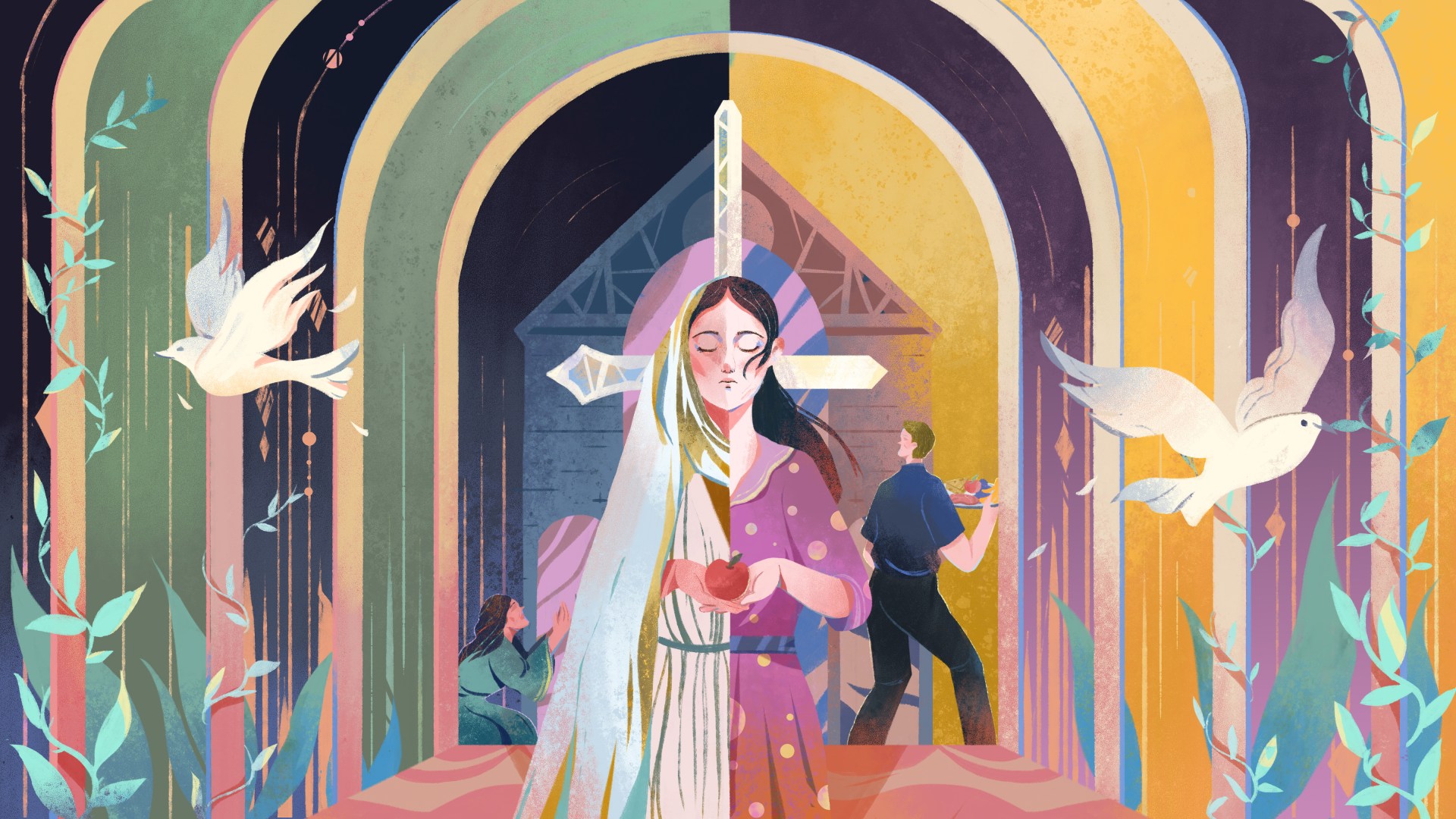
illustration by rick szuecs / Source images: Levi Meir Clancy / Julie Ricard / Unsplash / Pressmaster / Envato

A 23-year-old refugee from Syria was surprised when an aid worker told her that he had a special fund to help her. The Jordanian Christian said he could provide her with more than the mattress, coat, cookstove, and gas bottles that the others got from the local Christian and Missionary Alliance church. Maybe a washing machine. Or even a flat-screen TV.

When he came to her home after midnight with a special delivery, she understood the man wanted something in return.

“He touched my hand and tried to kiss me,” the woman said in an Arabic statement obtained by Christianity Today. “I pulled back. … After that, there was no help from the church.”

The Jordanian church’s refugee aid program was given hundreds of thousands of dollars a year for seven years by more than half a dozen international Christian aid agencies and scores of North American churches. Neither the churches nor the aid organizations appear to have ever checked to see whether their local partner had any policies to protect vulnerable women against sexual exploitation. The church did not have a reporting mechanism for abuse complaints, unless refugees wanted to go to the pastor of the church, who is the brother of the accused man.

“Leaders at the church had been hearing this for years. Pastors did nothing for years,” an American Christian woman who has worked in the area for more than a decade told CT. She spoke on the condition that her identity be concealed because she works for a Christian organization that hopes to continue partnering with the church.

“It got to be common knowledge amongst the Syrians. They would say, ‘If you want help from the church, send your young, pretty girls,’” she said. “There wasn’t one witness. There were like 99 witnesses.”

Christian aid organizations have increasingly worked through local churches and ministries in recent decades. Instead of assisting refugees or others in crisis directly, they have funneled funding to those who are already on the ground. The use of “implementing partners” is considered a best practice for aid distribution. It can lower overhead costs and puts more decision-making authority into the communities actually receiving assistance. But adding links to the humanitarian supply chain also adds gaps in accountability.

“There is probably guilt over imperialism and Orientalism, and there are good reasons for that,” said Kahlil Sayegh, a Christian who has accused another church leader, who receives international funds to distribute aid in Palestine, of sexually abusing eight women. “But there are universal moral values that are objective, and we have to hold to them everywhere.”

In Jordan, refugees from Syria started arriving in 2011. The local congregation began providing necessities to about 10 families per week. Then, with funding from Samaritan’s Purse, the Christian and Missionary Alliance’s Compassion and Mercy Associates (CAMA), Mercy Corps, World Relief Germany, Dorcas, and others, the Jordanian church was able to buy more supplies, hire more workers, and distribute more goods. It ultimately served as many as 150 refugee families per week.

But with more than 20,000 refugees needing help, there was pressure to deliver goods as quickly as possible.

“It was not even a drop in the bucket,” said a local Christian involved in distribution, who spoke on the condition that his name not be published because he feared the Christian community would ostracize his extended family. He said sometimes deliveries continued late into the night, until there were complaints it was inappropriate for men to be bringing items into people’s homes—especially the homes of single or widowed women—hours after sunset.

Rules were put in place, but some people stretched the rules, and some broke them. The local Christian aid worker confronted the director of aid distribution about going to pretty women’s homes after midnight and then reported the violation to the pastor. He was thanked and told not to worry about it.

He did not bring it up again. The man continued to make late-night visits.

The church, at the same time, started receiving funds directly from congregations in North America as short-term volunteers established independent relationships. The money came with no oversight and no strings attached.

This has become very common, according to Allison Schnable, a sociologist at Indiana University whose work focuses on nonprofit aid organizations.

“There’s a reliance on a personal relationship,” she said. “There is this desire to cut the red tape. They resent the red tape and the expense. But what we forget is that the red tape does protect certain people.”

The United Nations found ways to increase safeguards protecting refugees from aid workers in 2004, after a scandal in West Africa. One key reform was more people—especially women—monitoring distribution. Another was requiring local partners to have policies and reporting mechanisms that allow abused women to make allegations. That has became the standard for government aid, though not for religious organizations.

Of course, such policies are not always effective. “A lot of organizations have wonderful policies, but the reality on the ground is a far cry from what you would expect,” said Ben Nicholson, a former international Christian aid worker and a victims’ advocate. “There are often too many funds tied up in a relationship, and the need is too great. The calculations shift, and things are very likely to be covered up.”

With or without a policy on sexual abuse, reporting often doesn’t happen unless there is an individual willing to fight for accountability. That person has to be unwilling to let things go and unashamed of causing disruption.

In Jordan, that person was Jeannette Roldan, an American Catholic who was working on community development programs while enrolled in an online social work degree program. In 2019, she did an assignment comparing the National Association of Social Workers’ Code of Ethics with the standards of the local church helping refugees and two supporting organizations: Samaritan’s Purse and CAMA. She found the church did not have any written policies against sexual exploitation and neither international organization seemed to require that as a condition of partnership.

According to Samaritan’s Purse, this is not true. The organization requires partners to subscribe to its “Christian Code of Conduct” and adhere to its safeguarding and reporting policies.

“We serve in the name of Jesus Christ,” president and CEO Franklin Graham told CT in an email. “Any reports of misconduct are thoroughly investigated and anyone who violates our policies faces disciplinary action, including the immediate termination of their relationship with us.”

The code of conduct is not available online, however, and the form to report misconduct is only available in English. The local aid distribution worker told CT he was not aware that he could report allegations to Samaritan’s Purse.

According to the Christian and Missionary Alliance, CAMA had policies for its own staff, but nothing mandating safeguards for local partners. Spokesman Peter Burgo said CAMA has urged partners to develop policies and tried to set a good example.

Neither organization had heard the allegations against the local church’s director of aid distribution, though the allegations were well known locally.

When Roldan contacted the two organizations with a 30-page report on policies against sexual exploitation and extensive recommendations for how to change, Samaritan’s Purse told her its partnership with the local church had already concluded. CAMA officials accepted her report and told her they would review it but that they hold no authority to investigate specific allegations. As she kept writing, giving them more information and asking for updates, they expressed annoyance that she would not stop.

Roldan, frustrated that nothing seemed like it was being done, visited the Syrian refugee woman with another female aid worker, and they took a statement. The woman said she knew three or four refugees the Jordanian Christian tried to kiss or touch in exchange for special help.

“It was like a test to see how you would respond, whether you would go along,” she said. “He never forced himself on any girl. But if you went along, the assistance would continue. The moment you pulled away, all attention and assistance would stop.”

The report prompted one partnering organization to reach out to national leaders of Jordan’s Christian and Missionary Alliance and demand an investigation. The investigation began in March 2021. A report was given to an executive committee at the end of the summer.

CAMA, in the meantime, has drafted new rules to require local partners to have policies to prevent sexual exploitation and abuse. The rules could be in place by the fall for the relief organization’s 24 ongoing international projects.

Most international aid to the church in Jordan has now stopped. This fall, the church will require volunteers to sign a code of conduct and set up an email address for anonymous reports of abuse.

“I don’t know how it’s going to wash out in the end,” said the American woman who works with an international Christian organization in Jordan. “But as far as the kingdom is concerned, shouldn’t there be rules to protect vulnerable people?”

Daniel Silliman is news editor for Christianity Today.

—–

After publication, the Jordanian Evangelical Council (JEC) contacted CT to dispute the impression that local churches are unconcerned about safeguarding aid recipients, stating that the majority of churches have risen to meet the need without incident.

“Christian churches in Jordan have been inundated with both the need and the offers to help. They have tried hard to deal with the issue with sensitivity, compassion, and professionalism. Naturally, this has meant hiring people and putting them to work at times with little time for proper training and supervision,” said the JEC, noting how a million refugees have entered the relatively poor and small nation. “Rigid safeguards, while absolutely necessary, have at times been lacking but certainly not because of lack of interest but more because of the overwhelming nature of the problem.”

The JEC also complained that CT gave too much credence to whistleblower Jeannette Roldan and that the Jordanian pastor was not given a chance to respond. The pastor was contacted, but did not return CT’s email requesting comment. Another pastor of the church confirmed some details for CT and said the church would institute new safeguarding policies this fall. All of Roldan’s specific allegations were confirmed to CT by three or four other sources.

“Were enough safeguards done? Perhaps not. Should local churches do more to ensure a policy of zero tolerance to even the hint of harassment? For sure,” stated the JEC. “But does that mean that the Christian community and local churches are oblivious to the problem? The answer, based on conversations with the key church leaders, is no.”

News

Remembering ‘Prof’ Andrew Walls, Founder of the Study of World Christianity

(UPDATED) Dozens of scholars praise the Scottish historian of missions for his groundbreaking research re-centering Christianity from West to South and for his personal support.

Andrew Walls

Andrew Walls

Christianity Today August 17, 2021
Dan Nicholas

Below is a selection of tributes for Andrew Walls from scholars of global Christianity in Africa, Asia, Europe, and the Americas, many of whom are former students of the Scottish historian of missions they knew and admired as “Prof.”

Brian Stanley, professor of World Christianity, University of Edinburgh School of Divinity, Scotland:

It is impossible to capture the extraordinary richness of Andrew’s long life—a life that was devoted to Africa, the world church, to his many graduate students, and to his collaborators in his multiple scholarly enterprises in the history of missions and world Christianity. There are many of us who can testify that it was Andrew who first gave us our vision for the work of chronicling, documenting, and interpreting the transformation of Christianity from its apparent status as a European-dominated religion to a faith that now finds its most vibrant expressions in the global south and in migrant churches in the northern hemisphere.

He will be especially missed by those who studied under him in Aberdeen, Edinburgh, Liverpool, Princeton, at the Akrofi-Christaller Institute in Ghana, elsewhere in Africa, and also at the Overseas Ministries Study Center in its then home in New Haven. We will remember him for those amazing lectures, rich in thematic texture and biographical detail, latterly read with considerable difficulty as Andrew’s sight deteriorated. We will remember him for his penetrating articles, covering a vast range of topics from every continent and strand of Christian tradition. We will remember him for his deep Christian faith, expressed through a life-long attachment to Methodism, but with sympathies that extended to those of every denomination and none. Above all, we have lost a companion on the journey, and a friend, faithful, modest, and witty.

This is a very sad day, but I would suggest also a day for great thanksgiving that Andrew was preserved for us for so long. Thanks be to God for a faithful servant.

Femi B. Adeleye, executive director, Institute for Christian Impact, Aburi, Ghana:

“Prof” Andrew Walls has been my teacher, mentor, and friend for at least 28 years. We began correspondence in 1986 when Uncle John Stott encouraged me to consider studying at his feet at the University of Aberdeen where he then was. When we eventually met in 1993 at the start of my studies at the Centre for the Study of Christianity in the Non-Western World at New College in Edinburgh, I found him so personable, with his vast knowledge of Christian history and mission concealed in a gentle and caring demeanor. He would later supervise my doctoral studies at the Akrofi-Christaller Institute, where he was professor emeritus.

Long before I read of it anywhere else, Prof was the first to articulate the significance of the rapid expansion of Christianity in the non-Western world with his now widely acknowledged prophetic declaration on “the passing of the Christian Centre of gravity from the west to the south.” He emphasized that “more than half of the world’s Christians live in Africa, Asia, Latin America or the Pacific, and that the proportion doing so grows annually.” Having lived and taught in various parts of West Africa including long residence in Sierra Leone and Nigeria, he not only recognized that “departments of Religious Studies as we now know them in Britain were born in West Africa, the product of a plural society where religion is a massive, unignorable, fact of life,” but also affirmed that “the missionary movement is a connecting terminal between Western Christianity and Christianity in the non-Western world.”

Besides the demographics of Christian growth and mission is the sheer pleasure of sitting at his feet to understand and appreciate scholarship as a spiritual discipline. It is an understatement that a huge vacuum has been created by his departure. Prof was as much an African at heart as he was a global missiologist with the whole world being his parish as demonstrated by his global mileage. As recently as a month before his departure, Prof in a conversation with us expressed his desire to return to Ghana soon. Sadly, this is not to be on this side of eternity. Fare thee well gentle teacher, mentor, and friend, until we meet again!

Dana L. Robert, director of the Center for Global Christianity and Mission, Boston University School of Theology:

In 1982, I was writing my doctoral dissertation. My advisor pointed out a man working in the Day Missions Library at Yale Divinity School: “See him? That is Andrew Walls, the greatest living historian of Christian missions. You need to meet him.” And so I gathered my courage and invited him out for dinner, to Lender’s Bagels. The dinner between two introverts was punctuated by long silences. But it was the beginning of a long friendship. Often when we met at conferences over the years, we joked that I had introduced him to the bagel.

More than any other person, Andrew Walls founded the contemporary field of World Christianity. In 1989, a group of scholars gathered to consider how to mainstream mission studies into the broader academic world. I will never forget Andrew’s talk, “Structural Problems in Mission Studies.” He made the profound argument that the cross-cultural diffusion of the gospel was the foundation of scholarship on Christianity as a worldwide, multicultural religion—a fact not yet appreciated by Western scholars. Walls’ dynamic vision launched a 10-year research program to move the study of Christianity beyond the captivity of Western frameworks. Eventually the term “World Christianity” was used to describe the realities he named.

As I say farewell to my beloved friend and scholarly inspiration, I must quote Charles Wesley, founder of the Methodist faith that we shared: “Finish, then, thy new creation; true and spotless let us be … Changed from glory into glory, till in heav’n we take our place, till we cast our crowns before thee, lost in wonder, love, and praise.”

Gillian Mary Bediako, deputy rector, Akrofi-Christaller Institute of Theology, Mission, and Culture, Akropong, Ghana:

With the passing this past week of our beloved friend, inspirer, mentor, and advocate, we have all lost one of the great prophets of our time. For back in the early 1970s, through his deep, meticulous scholarship, combined with an equally profound evangelical spirituality and heart for mission, Andrew Walls read the signs of the times in what was happening to Christianity around the world and saw, before anyone else, that the heartlands of the faith were changing.

Kwame [my late husband] and I first met Andrew Walls in 1975, as the keynote speaker at a mission conference at London School of Theology (then London Bible College). He blew our minds with his picture of the shifts in the centre of gravity of world Christianity, charting out what that would entail for emerging scholars and church leaders in the non-Western world. For his aim was not self-promotion in the presentation of new ideas, but to stir up those, like Kwame, searching out their calling into Christian service, toward the new paths in mission and ministry demanded by these realities. In the CT interview of 2007, the article described him as “probably the most important person you don’t know.” It captures well the tenor of his gracious, servant spirit.

From then on, he was an inspirer at almost every turning point in our life’s path. He pointed Kwame in the direction of the Apologists of the second century, as a way forward in answering the question of the nature of Christian identity in relation to African cultures, thereby securing for Kwame’s PhD research a historical perspective that set his quest in the mainstream of Christian tradition. He did likewise for me. He was always there as we worked to build Akrofi-Christaller Institute, as enthusiastic promoter, sounding board, advocate, and as mentor to the next generation of students who came along. I’m sure this resonates with the experience of countless others wherever his travels took him.

When at ACI, he was an unassuming yet wise presence, and a friend to all, whether support staff, office staff, or faculty. We all here mourn his passing and pray for family, especially his widow, Ingrid, whom he first met at ACI, for God’s comfort and support.

J. Kwabena Asamoah-Gyadu, president of Trinity Theological Seminary in Legon, Ghana:

“We cannot talk about Africa without Christianity and Christianity without Africa.” I heard variations of this statement from the late Prof. Andrew F. Walls on different occasions as he held students and other listeners spellbound with his incisive and engaging sense of the place of Africa in global Christianity. We cannot be wrong in calling Prof. Walls the doyen of the academic study of “World Christianity.”

I first knew Prof. Walls as a mentor to one of my own academic and spiritual mentors, the late Kwame Bediako. World Christianity was for Prof. Walls not simply an exercise in the academic study of history, but a journey in the constant unveiling and understanding of what God was about in the world. In the history of world Christianity, Prof. Walls taught that Africa has moved from the margins to the center in fulfillment of the words of the Apostle Paul: “But God chose the foolish things of the world to shame the wise; God chose the weak things of the world to shame the strong” (1 Cor. 1:27).

Prof. Walls’ commitment to the study of world Christianity with Africa at the center of it means that for years to come, it would be impossible to study that discipline, from whichever perspective—theology, mission, history, pastoral care and counseling, or ecumenism—without encountering the work and influence of Andrew Walls. He has left us an impressive heritage in faith and scholarship that will remain truly global and unparalleled for generations.

Cathy Ross, head of Pioneer Mission Leadership Training, Church Mission Society, Oxford:

Andrew Walls is a taonga. This is a Maori word from Aotearoa/New Zealand which literally means treasure but it is richer than that . It is a word associated with wisdom, with something or someone precious and cherished; an heirloom perhaps, land in the family for generations, a beautiful garment, a valued piece of jewellery, an elder or grandparent. To call something or someone a taonga is a tribute of the highest order.

I first met Andrew shortly after we moved to Oxford to work with the Church Mission Society in 2005. Andrew was a great friend to CMS—very generous with his time he spent with us. He was a marvellous storyteller. Perhaps he picked up this gift of storytelling from his own roots or from his time in Africa. This was often how he communicated his great learning and scholarship. I remember him weaving a wonderful story about the desert fathers and their importance for mission and holding our staff entranced in a way I have not seen before or since!

It was a privilege and honor for me to edit Mission in the 21st Century with him. I learned so much about mission and made so many new friends as a result of that collaboration. What I will treasure about Andrew is his understated learning and scholarship. He was a man of great humility, had a wicked twinkle in his eye and a lovely sense of humor. He radiated the gentle presence of God. He is truly a cherished and precious taonga.

Allen Yeh, associate professor of Intercultural Studies and Missiology, Cook School of Intercultural Studies at Biola University, California:

Although I knew this day would come eventually, it almost seemed unlikely given Prof. Andrew Walls’ indefatigability. The countless miles he logged (he really seemed to be everywhere globally at once), the penetratingly incisive lectures he gave (never did I sit under his instruction without coming away with some mind-blowingly fresh revolutionary insights), he was a giant from an age of legends. And yet so humble and gentle! Christianity Today called him “the most important person you don’t know,” so I always felt like I was a keeper of a great secret treasure, knowing him and his worth.

From my earliest days in grad school, I have followed him: not just his scholarship (The Missionary Movement in Christian History is a masterpiece, particularly Chapter One), but quite literally to studying toward a masters degree at Edinburgh, and then choosing to read for a doctorate of philosophy at Exeter College, Oxford (Walls’ own alma mater). I could not drink enough from his well of knowledge and he, more than anyone else, inspired me to go into the fields of History of Missions and World Christianity. He was the founding father of this area of study, and with his departure he leaves a huge hole which can never be filled in such a way again.

At the second annual Ralph D. Winter Memorial Lectureship series at the US Center for World Mission in Pasadena in 2011, Andrew Walls was the keynote speaker and I was the respondent to his talk. I was so nervous as a young scholar to be engaging with this venerated scholar, but he was so gracious to me. As a frequent attender of the Yale-Edinburgh conference of which he was a cofounder, I am glad that I got to hear and see his final closing remarks less than two months ago. The world church owes him a great debt for highlighting—to slightly misquote Shakespeare—the “undiscovered countries” as he now heads off to his own “undiscovered country.”

Daniel Jeyaraj, director of the Andrew Walls Centre for the Study of African and Asian Christianity, Liverpool Hope University, England:

Professor Andrew Walls was the professor of History of Missions at Liverpool Hope University in England and also the chief supporter of the Andrew Walls Centre for the Study of African and Asian Christianity. In July 2012, Liverpool Hope University conferred on him an honorary Doctor of Divinity degree. We at Liverpool Hope University are sad to lose a worthy benefactor; at the same time, we are glad to have a major portion of his legacy.

He came to Hope with much experience in cross-cultural contexts and intercultural learning. He told me how his love for God’s mission took him to Fourah Bay College in Sierra Leone. There he began understanding the importance of World Christianity of the Early Church through the brief text entitled Apostolic Tradition by Hippolytus (c. 215 CE). It formed the basis of Walls’ thesis at Oxford. It was originally written in Greek in Rome; soon it was translated into Egyptian, Ethiopian, Syriac, Gothic, and Latin languages. Though the Greek original was lost, Walls tried to reconstruct it via Latin, which itself was then an African dialect; this Latin text itself was based on the Gothic. Professor Walls’ profound realisation that Christians in and outside of the Roman Empire read this text formed the first turning point of his life and work.

Secondly, he shared with me how his mother inspired him to develop his eloquent style of writing prose texts with well-considered words. We at Hope shall continue his legacy. An African proverb reads: “When an old man dies, a library burns down to the ground.” By contrast, Prof. Andrew Walls has not only contributed to the establishment of libraries in many places, but also entrusted his principles of exemplary Christian scholarship to the minds and hearts of his students in nearly every country. Now, we all together are the stewards of these principles.

Emma Wild-Wood, codirector of the Centre for the Study of World Christianity, University of Edinburgh, Scotland:

In 1987, Andrew Walls brought his study center from Aberdeen to the University of Edinburgh, complete with its expanding library and archive of grey materials that evidenced the growth of Christianity in the non-Western world. The center was a place where students from across the globe could study, meet one another, and share ideas. It was intended to educate the Western academy about vibrant Christian movements outside the West, and the theologies and spiritualities developed in response to different cultural and religious contexts that he had experienced first-hand in West Africa.

Andrew always gave the utmost attention to his students. In 2018, the Yale-Edinburgh group conference, which he established with Lamin Sanneh, celebrated his 90th birthday. Tributes and photographs poured in from all over the world from the hundreds of people to whom he was a dear mentor, teacher, supervisor, and friend.

Andrew’s great love of the African continent and his peoples, his ability to rejoice in fresh expressions of Christianity across the globe, his historical perspicacity, and his attention to primary sources are a matter of public record. Less well known, however, is his dwelling in the stories, songs, and poetry of Britain and his Aberdeenshire. For those who might appreciate it, there was often a Doric (the dialect of Aberdeenshire) turn of phrase on his tongue. This enabled him to hear the rhythm and music of cultures that had been marginalized in the modern era and to see them as central to the Christian movement in the 21st century.

Alexander Chow, codirector of the Centre for the Study of World Christianity, University of Edinburgh, Scotland:

Professor Andrew Walls once told me that, when he was still a university student, he had hoped to become a missionary to China. Those plans were dashed with the rise of the Chinese communist revolution and, in 1957, he went to teach in Sierra Leone and then Nigeria. This gave me, a scholar of Chinese Christianity, a few moments to imagine how differently the field of “World Christianity” would be today had one of its most significant architects worked in China as initially planned.

Prior to taking up my post in the center he founded, I encountered few of Professor Walls’ writings. After arriving in Edinburgh, I read his works and heard his lectures on African Christianity, Kwame Bediako, and the relationship between the gospel and culture. I realized I had been studying Christianity, especially Chinese Christianity, in a myopic manner. I didn’t have what he calls a “World Christian consciousness”—a way of looking at Christianity and the church mindful of its manifold expressions around the globe and throughout time.

He was trained as a scholar of the early church. This equipped him to see how the contemporary African church was asking questions that echoed the concerns of the second-century church, as described by Justin and Clement, and the conversion stories recorded in the seventh and eighth centuries by Gregory of Tours and Bede. This training did not limit his incredible fascination with the global movements and adaptations of Christianity in the last 500 years. He is known for recognizing the 20th century gravitational shift in the world Christian population, from Western to non-Western peoples. However, for Professor Walls, this didn’t simply have recent numerical significance. History testifies that the worldwide nature of Christianity has always been core to the religion, and should shape the way we understand it. World Christianity is normative Christianity.

Professor Andrew Walls had a deep faith, an enormous vision, and a passion to communicate both to the world church. His impact on Christian scholarship will be felt for generations to come. His immense generosity and charming wit will be sorely missed by the many students and friends who knew him personally.

Afe Adogame, professor of Religion and Society, Princeton Theological Seminary, New Jersey:

The world has just lost one of the most important interpreters of Christianity and its missionary role in our time. This is very sad and painful indeed. Prof. Andrew F. Walls was a pioneering figure, intellectual giant, and erudite scholar who contributed immensely to the “making” and “shaping” of the interdisciplinary field of World Christianity.

His encyclopedic knowledge, grasp, and “thick description” of the church’s transformation from Christendom to world Christianity transcends disciplinary boundaries of religious studies, history, theology, mission studies, biblical exegesis, and runs deep into the life and DNA of the church. Walls’ life, work, and mission in Africa is the background for understanding his unique contributions to the church and academy. The body of work that Walls has developed adumbrates a journey of humble listening and quest for empathetic understanding. He shows us a myriad of reasons why we live in a moment for the church that is filled with immense opportunity, challenges, and promises for witness and mission.

Walls embodies genuine, ground-breaking scholarship, just as his generosity of spirit, time, intellectual energy, theatrical gifts, appreciation for literary works, and his sense of humor is robustly contagious. He touched numerous lives and I am a living testimony. Innumerable Christians of many traditions and all continents have much cause to be grateful to God for Walls. If you are looking for a model of a committed life, of scholarship in service of the church, then Walls is “an exemplar for roads we have yet to travel or paths to tread.” Unequivocally, Andrew Walls earns the esteemed status of Ancestor because he lived a good life, died a good death, and will be accorded a well-deserved, befitting transition into the other life. Sleep well Andrew!

Joel A. Carpenter, senior research fellow, Nagel Institute, Calvin University, Grand Rapids, Michigan:

Andrew Walls once called a book of his essays a “ragbag” of old mission stories. But by retelling them with new depth, Walls rewrote the history of the church and challenged many of the basic assumptions of Western theology.

In the late 1950s, fresh from Oxford, Walls accepted a post at Fourah Bay College in Sierra Leone. While he was teaching about second-century Christianity, he said, his students were reenacting it. His excitement about Africans’ embrace of the gospel lasted the rest of his life.

Since the 1970s, Walls has taught that the heartlands of Christianity have shifted, making Christianity a predominantly non-Western religion. Humanists and social scientists have been working to understand what this shift means, but theologians still see Western theology as central and normative. Walls strove to change that. A typical lecture he gave this past year: “Overseas Ministries and the Subversion of Theological Education.”

Walls was a master at shedding new light on large themes. A few examples: Missions were marginal to the Western church and were staffed by religious radicals; God used these earthen vessels to catalyze the greatest ever expansion of Christianity; Post-Enlightenment worldview Western theologians are too narrow to meet the spiritual needs of the world’s peoples; The Great Commission is for the conversion of cultures as well as individuals; Evangelicalism? “A religion of protest against a Christian society that is not Christian enough.”

Tributes pour in from around the world, praising Walls and mourning his passing. What this humble man would prefer is for more fellow Christians to engage his ideas.

Thomas Hastings, director of the Overseas Ministries Study Center at Princeton Theological Seminary, New Jersey, and editor of the International Bulletin of Mission Research:

I first met Professor Walls here in the fall semester of 2000 at Princeton Seminary when I returned after teaching at Tokyo Union Theological Seminary. It was a memorable semester in so many ways, but more than all other gains, I came to realize that Prof. Walls’ carefully considered insights, which he delivered in his lilting Scottish brogue with eloquence and good humor, came out of his own crosscultural experience of teaching ordinands in Africa. I believe it was his love for and dedication to his students that led him to wonder about how to best understand and interpret post-colonial Christianity in sub-Saharan Africa.

Prof. Walls’ brilliant lectures resonated deeply with my experience of teaching seminarians in the Japanese language while working with congregations of the United Church of Christ in Japan. Andrew is that rare scholar who has kept the church and academy as his twin audiences, never sacrificing one on behalf of the other. I still find his writing a breath of fresh air. Some may not know it, but under another name, Andrew is also a poet and playwright of some renown.

When it came time to write my own dissertation in practical theology, Andrew’s “Chalcedonian” imagination, which joins together the so-called “indigenizing” and “pilgrim” principles in a beautiful dance, helped me present a thick case study of the work of a creative Japanese pastor and religious educator in Meiji, Japan. That pastor was Tamura Naoomi, the first Japanese graduate of Princeton Theological Seminary (class of 1886), and Andrew’s work helped me immensely. Without overlooking the many failings of Western missionaries, Andrew has shown that Christians of other cultures are not passive recipients of the gospel message. Rather, like the recipients of the Letter to the Ephesians, they are equal “citizens with the saints and also members of the household of God.”

That basic, humanizing, and, yes, theological insight helped launch the interdisciplinary field of World Christianity. This key insight, which was shared by Andrew and his late colleague and collaborator, Professor Lamin Sanneh, still has not been understood or heeded by many in the Western theological academy. I know Andrew is enthusiastic about continued growth in the field, but he is rightly concerned to see that World Christianity contributes something of significance and perhaps even transformative to the theological curriculum.

Sam George, director of the Global Diaspora Institute, Wheaton College Billy Graham Center, and Lausanne Movement catalyst for diasporas:

Upon hearing the sad news of the demise of Prof. Andrew F. Walls, many memories flooded my mind. From the lecture halls, libraries, and cafeterias of Princeton, New Haven, Edinburgh, and Liverpool, not to mention the numerous conferences in Asia, Africa, US, and UK where I have met him.

Professor Walls was an exemplar teacher who made his students to see the world, themselves, and the Christian faith in a new light. A class at Princeton Seminary in 1999 totally changed the trajectory of my life and ministry. His teaching is like putting on a new pair of glasses that bring everything into focus that you have been missing or never seen before. He links numerous facts and figures of the Bible, history, and theology together in ways that you could have never imagined. His ability to discern across centuries and continents in a truly polycentric global manner is unparalleled. Prof modeled before us his deep devotion to the Lord as well as simplicity and humility in life. His teaching was so refreshing that students were emboldened in their faith and vocational callings.

In June 2019, at the Lausanne Diaspora Consultation held in partnership with the Andrew Walls Center at Liverpool Hope University, I had the distinguished honor to present a Lifetime Kingdom Impact Award to my guruji (respected teacher) Professor Andrew Walls on behalf of the Lausanne Movement for his outstanding ministry of scholarship, teaching, mentoring, and modeling the gospel and mission of our Lord Jesus Christ to Christian leaders worldwide. His insights, passion, and legacy will live on. Rest in Peace.

K. C. Wendell Tan, adjunct lecturer, Biblical Graduate School of Theology, Singapore:

In Till We have Faces, C. S. Lewis says through Orual: “I saw well why the gods do not speak to us openly, nor let us answer. Till that word can be dug out of us, why should they hear the babble that we think we mean? How can they meet us face to face till we have faces?” Inasmuch Orual will eventually discover the importance and beauty to live a life not hiding behind a veil or mask, we Christians must not hide behind a facade. We need to have “our faces” in Christ.

This is the legacy of Professor Walls. His message of the Word made flesh, Christ tabernacling in every culture, ethnicity, and people group, has given us—the African, the Indian, the Chinese Christians, or perhaps more specifically the Nigerian, the Tanzanian, the Singaporean Chinese Christians and the like—a face and a voice. In the footsteps of Christ, he has set scores of Christians free, to confidently walk in the indigenizing-pilgrim dialectics of their translated faith. Humbly and generously, Professor Walls poured his life equipping, encouraging, and empowering multitudes of little-known Christians like us to reclaim our heritage and Christian identity. This is not an impulse of postmodern individualism but a juggernaut into the Ephesian Moment.

The prophet Micah says: And what does the Lord require of you? To act justly and to love mercy and to walk humbly with your God. (6:8). This is the Andrew Walls whom we know, honor, and remember.

Emmanuel A. S. Egbunu, Bishop of Lokoja (Anglican Communion), Nigeria:

Prof Walls’ exit from this sphere fills one with a great sense of loss, and yet thankfulness for his highly impactful life. I had first heard about him from my professor of church history in the late 1990s, who himself had been his student decades earlier. The article, “The Gospel as Prisoner and Liberator of Culture,”was assigned early. With a background in literature where strong opinions about decolonization of literature were being expressed, that article was illuminating.

Then a few years later, I finally met him as a visiting professor at the University of Jos, Nigeria. His vast knowledge was clearly intimidating, but he combined that with such simplicity, grace, and generosity of spirit that was never lacking in all the many other meetings with him over the years. He encouraged and supported my participation at the summer lectures and conferences at Liverpool Hope, which also exposed me to a wider and warm fellowship with senior and budding scholars.

His ability to listen patiently to what could easily be considered the ramblings of an inexperienced mind, even with his own personal struggles, was astonishing. He inspired confidence without compromising his passion for thoroughness. Thanks be to God for the gift of such a broad-minded Christian who saw scholarship as a calling and gave valid identity to Christianity beyond the West. I shall treasure the autograph of his magisterial books on the missionary movement and the recorded lectures which have set him apart as a trustworthy pathfinder in World Christianity.

J. Nelson Jennings, editor, Global Missiology; mission pastor, Onnuri Church, Seoul, Korea:

The news of Andrew Walls’ passing was a heart stab like no other, because “Prof” has been a mentor like no other. Thanks be to God for the sure and comforting hope of our final resurrection in Jesus Christ. The historical sensibilities Prof Walls cultivated in so many no doubt will continue to reverberate over coming generations. Here are just some of my anecdotal, heart-warming memories:

  • Prof took over an hour away from his precious research time in the YDS Day Missions Library to listen to and advise (in mind-bending 500-year periods) this unknown, babbling, aspiring PhD student 30 years ago.
  • During those weekly afternoon seminars at the Edinburgh CSCNWW, how did Prof always wake up from his obvious dozing and help guest presenters who groped for a name, date, or event?
  • Prof was a model mentor in how he patiently and attentively listened to my own groping students and acquaintances during his treasured visits to St. Louis, New Haven, Korea, and elsewhere.
  • Prof’s lectures were always stimulating, and his Q&A comments were even better.

Prof, rest well even as you groan with that host of fellow departed servants for the final resurrection. We are grateful beyond words for your kind, penetrating, and life-changing service. May we faithfully emulate you and our common Master as we carry on in your wide wake.

Edward L. Smither, dean of the College of Intercultural Studies and professor of Intercultural Studies and History of Global Christianity, Columbia International University, South Carolina:

Since I first read Andrew Walls assert that the gospel could be at home in every culture (indigenous) and pilgrim to every people (transformational), my theology of mission was wrecked for the better and I’ve been trying to sort it out ever since. Professor Walls modeled for me the wonder of reading Scripture in the context of a beautiful, broken, and complicated world where the “Word became flesh and made his dwelling among us” (John 1:14). From the storehouse of mission and church history, he brought further insights on people and theological developments, helping us make sense of world Christianity. Not a word was wasted in his lectures, papers, or published works. And he taught with kindness and humility. As I remember Andrew Walls’ work as a missionary scholar, I consider the outcome of his way of life and long to imitate his faith (Heb. 13:7).

Samuel Cueva, Latin American missiologist, scholar, and promoter of two-way mission bridges:

I first met Professor Andrew Walls during the 25th anniversary of the Oxford Center for Mission Studies in June 2007. We have lost a giant of mission history of world Christianity. He had an historical approach to make a missiological application to the context in order to unveil the reality of a Christian world that has changed by the influence of non-Western Christianity. He invented the idea of “the new paradigm shift” and the “new center of the gravity for world Christianity.”

When he began teaching in Sierra Leone in 1957, he began to see the need for the creation of new spaces of theological and missiological thinking to bring in non-Western world perspectives to challenge the existing mission activity. His love, passion, admiration, and research for the African church began in Sierra Leone. He learned that the gospel is translatable from one culture to another. Professor Walls’ biggest contribution would be the challenge he made to the Western church to accept the paradigm shift in mission that the center of gravity has moved from the Western church to the non-Western church.

I met Professor Walls again in 2019 at Liverpool Hope University, when together with other scholars we discussed the issues of diaspora mission theology. I have a deep admiration for this man who took into his heart the need to revitalize mission in Africa with a contextual approach to sharing the gospel.

Rudolf Gaisie, director of the Centre for Early African Christianity at the Akrofi-Christaller Institute, Ghana:

When I first saw the message of the passing of Professor Andrew Finlay Walls, it was somewhat a “joyful sadness” for a moment and my mind recalled the words of Hebrews 13:7. A week earlier, I had taught a class on Gospel and Culture and his article on the “Gospel as Prisoner and Liberator of Culture” was discussed. I knew he had been unwell, and I had hoped to ask him a question following the class discussions.

I owe my sense of vocational path largely to the late Professor Kwame Bediako and Professor Walls. I remember sharing with him in the year 2008 at the Akrofi-Christaller Institute my struggles as I was processing my transition from prospects in a computing career to the discipline of theology. After sharing with me his own journey into academia as a Christian, he remarked, in his typical encouraging tone, “well I did not have to make such a switch you are having to make.”

Professor Walls’ ideas on the process of conversion shaped the direction of my doctoral thesis and he encouraged and challenged me, after reading my submitted proposal, “to prove” the point that he saw in my thesis. Professor Walls graciously offered to write an endorsement for the published thesis. I had the privilege to discuss with him and Dr. Ingrid plans and ideas about ACI’s Centre for the Study of Early African Christianity, established through his encouragement, at various times via video calls. I am grateful to God for the opportunity to meet and learn from Professor Walls.

Dyron B. Daughrity, professor of Religion, Pepperdine University, California:

I will never forget the first time I encountered the writing of Andrew Walls. It was early in my PhD program and I was doing research at Bishop’s College in Kolkata. The librarian there, Amlan Mondal, kindly gave me two books as gifts: The Missionary Movement in Christian History, and The Cross-Cultural Process in Christian History. I was hooked. It speaks volumes that Christians in the Global South were onto the profoundness of Walls before many in the West were.

I was amazed at Andrew Walls’ ability to think so Christianly about world religions and the history of missions, most importantly his “Ephesian Moment” idea which made the New Testament come alive for me in powerful ways. He was a trailblazer, and I was deeply thankful to meet him and hear him speak at Yale Edinburgh conferences. He had an unforgettable quality about him. I was in full agreement with Christianity Today’s 2007 article that referred to Walls as “ahead of his time” and “the most important person you don’t know.”

I am truly grateful for those two gifts of Andrew Walls’ books. I pray his family, friends, and students will find solace in the fact that his ideas have now been disseminated far and wide. Let us preserve his memory.

Joshua Robert Barron, Africa Inland Church, Kenya:

I am one of the many former mentees and students (PhD in World Christianity program at Africa International University in Nairobi) of Prof. Andrew Walls. My own masters thesis advisor had already served as president of the American Patristic Society before meeting Prof Andrew; it changed his life and, consequently, mine, when my advisor introduced me to Walls’ writings. Had I immediately proceeded to doctoral work after my MDiv, no program other than Prof Andrew’s at Edinburgh would have done. Instead, after many years of field work in South Africa and then Kenya, during which I was privileged to meet him two or three times, I became his student at the Centre for World Christianity here in Nairobi. The two week intensive PhD seminar he taught in March 2018 remains a vocational highlight, as well as the high water mark of my formal education.

A colleague of mine, Wakakuholesanga Chisola, a Zambian currently enrolled in the masters program at Akrofi-Christaller Insititute in Ghana where Prof was so deeply involved, was up late chatting about this news the night of the 12th; Ingrid had of course sent a text message almost immediately to Prof. Gillian Mary Bediako, and so those of us with connections to ACI were among the first to know. My colleague mentioned Prof’s great strength that always seemed stronger than the frailty of his age these last years, and concluded, “But even Baobabs fall.”

That helped me to articulate, the next day, the depth of my grief; I was too sorrowful to sleep until well after 2 a.m. that night. So the poem I’ve included is my tribute to the best of teachers and mentors I have ever had (note that Mosi-oa-Tunya is the local indigenous African name of Victoria Falls):

The Baobab Has Fallen

the Baobab is mighty

the Baobab is strong

the Baobab, well-rooted,

reaches to the sky,

giving shade and fruit and wisdom

to all us passers-by

the Baobab was mighty

the Baobab was strong

the Baobab, well-rooted,

branches far and wide,

shared his wealth of Christly wisdom

to all, yes, even I

but Baobab has fallen

and we are are now bereft

our thoughts are now uprooted

Teacher, Mentor, Friend !

tears like Mosi-oa-Tunya

cry our lamentation

Prof Andrew well did teach us

of agency and hope

from Africa to Scotland

falcon-swift he flew —

tears like Mosi-oa-Tunya

flow from hearts now rended

Prof Andrew well did lead us

challenging for truth

through polycentric story

into faith’s true girth

thus from Accra to Nairobi

with academic mirth

Prof Andrew Walls has left us

and we are now bereft

yet he will rise eternal

and we can rejoice

he won his race and fought his fight

his sorrow will now end

Prof Andrew Walls has left us

strong branches wide and fair

in life he pointed upward

now he upward flies

asking who will foster forests

new Baobabs to tend?

Prof Andrew Walls was mighty

Prof Andrew Walls was strong

Prof Andrew Walls, well-rooted,

pointed past the sky

giving wealth of Christly wisdom

to all us passers-by

News

How to Pray for Haiti After Another Deadly Earthquake

(UPDATED) Christian leaders in Haiti share what is different for believers between 2010 and now, as death toll passes 1,900.

A man walks past a church destroyed during an earthquake in Les Anglais, Haiti, on August 14.

A man walks past a church destroyed during an earthquake in Les Anglais, Haiti, on August 14.

Christianity Today August 16, 2021
Reginald Louissaint Jr. / AFP / Getty Images

Last month, Haitian president Jovenel Moïse was assassinated. On Saturday, a 7.2-magnitude earthquake struck the Caribbean country, leaving more than 1,900 people dead and thousands more injured and displaced from their homes.

Christian humanitarian groups are trying to balance the need to urgently supply the disaster zone while keeping an eye on tropical storm Grace, staying mindful of Haiti’s COVID-19 situation, and navigating its grave security concerns.

World Vision noted it was working with the local government and police to protect families from being robbed and looted in the aftermath of the earthquake. While the Christian humanitarian organization had immediate supplies for 6,000 people, it—and other groups such as Operation Blessing and the Seventh-day Adventist’s ADRA International—were in the process of mobilizing staff and supplies to Les Cayes, where the quake originated. Samaritan’s Purse deployed its DC-8 aircraft on Sunday carrying 31 tons of relief while also staging a Level 2 mobile trauma unit. On Tuesday they announced that opened a 36-bed field hospital.

The earthquake drew comparisons to the 7.0-magnitude tremor that hit the island in 2010, killing more than 300,000 people according to the Haitian government and injuring nearly as many. In its wake, Haitian theologian Dieumeme Noelliste told CT in 2010 he didn’t expect that crisis would lead his people to forsake their faith:

This is not the first time that disaster has come to us. This may be the most brutal, but two years ago we had four devastating hurricanes and even then the people didn’t turn against God. They’ve suffered many things at the hands of fellow Haitians and remained fast to God. Even during slavery, Haitians were treated brutally but open to the version of Christianity that the slave owners were preaching. The slaves were even asking for more! I see the church continuing to grow. In these situations people tend to turn to God. This is their only hope.

More than a decade after the first earthquake, what has changed for Haitian Christians now facing the aftermath of a second devastating tremor? Amid such hardships, have they kept the faith, and how?

CT asked Haitian church leaders and missionaries to share what they’re seeing on the ground, including:

  • Edner Jeanty, executive director, Barnabas Christian Leadership Center
  • Lesly Jules, apologist and author, Objections Rejetées: L'Approche Apologétique Classique
  • Dieumeme Noelliste, professor of theological ethics, Denver Seminary
  • Luke Perkins, assistant to the president, Séminaire de Théologie Évangélique de Port-au-Prince
  • Magda Victor, general secretary of the Haitian Bible Society

Is the church better prepared to process this earthquake vs. the last? What have Haitian Christians learned about theodicy, or ministry and witness?

Jeanty: In terms of response to the crisis, the church is better prepared today in that it has the living memories of previous experiences. I had called a meeting among various groups doing interventions during the relief effort for Hurricane Matthew and we identified some best practices and errors to avoid. This document is being shared to various groups as we consider interventions for this new crisis.

On theodicy, probably less people are saying that this is a divine judgement because of a so-called pact with Satan that our forefathers would have taken. This is either from pressure from society or because we are no longer convinced of a simplistic explanation for evil in our society. Fortunately, people are still calling on the Lord and they believe that, despite the natural disasters, He is still the good God.

On ministry and witness, one of the lessons from the previous earthquake and from the COVID confinement is that church ministry is not restricted to the four walls of the church. For example, ministry can be done online and meetings can be strategic in homes. Unfortunately, for the most part, churches continue to do ministry the same old way, reaching the same people, using the same methods, and being blinded to the same opportunities and challenges. There is, however, a greater aspiration for Christian leaders to gain national political positions. But there needs to be a widespread teaching on civic engagement so that the evangelical community does not continue to be naïve about the reality of politics.

To a lesser extent, there are new initiatives to promote economic development. In our time and age, the level of poverty among the Haitian Christian movement is a significant limitation to the witness of the church, while the Christian community has a great opportunity to leverage the trust among brothers and sisters in the faith, the Christian values we share, the leading of the Holy Spirit, the Haitian entrepreneurship spirit, and the number of leaders who are available for coaching. I believe that jobs and doing business with a Christian ethic is the sustainable way to a vibrant discipleship and a more abundant life in this country.

Jules: Unfortunately, since the past earthquake, the construction codes has not been enforced by the Haitian government. Churches have not emphasized the need to use wisdom when it comes to building. The literal understanding of the parable of the fool who built his house on the sand was not perceived in relation to an earthquake.

The theodicy has not evolved much. Many Christians still believe that natural disasters are punishment from God who is angry because of our sins. In this context, one shouldn’t be surprised that natural disasters continue to claim lives in Haiti. The idea of stewarding the creation as a mandate from God needs to be taught and applied if we are to address effectively natural disasters.

Noelliste: Speaking broadly, the Haitian church should be more conscious of its responsibility this time than 11 years ago. Following the 2010 earthquake, several prominent church leaders came together and formed an organization that was tasked to mobilize and prepare the Haitian church for the exercise of its prophetic role in Haitian society. The movement produced a series of theological reflections on key values that are deemed essential for a quality life in any society: integrity, justice, good governance, and environmental care. Seminars and symposia were held throughout the country to propagate the findings of these studies. Even preaching materials were developed on these themes to supply the Haitian pulpit in an effort to make the preaching more pertinent to the Haitian context.

The purpose of that effort was to drive home the point that the task of building a decent nation is not God’s alone. People in general—and the people of God in particular—have an important role to play in this. In that project, moral character is an asset that is irreplaceable. If a people are not prepared and willing to make this contribution, God cannot be held responsible for the calamities that befall them.

Perkins: After the 2010 earthquake, our seminary saw an uptick in new applicants. People came to the seminary saying “God was gracious to spare me, so I want to be prepared to better serve him.”

Victor: Both earthquakes―the last one that hit Haiti in 2010 and the one only three days old―took everybody by surprise but for different reasons. The January 12 earthquake in 2010 surprised us because Haitians had become unaccustomed to the idea of earthquakes. Before 2010, the last major earthquake that hit Haiti dated back to 1842. People had forgotten what an earthquake looked like. That alone caused many to perish in the 2010 earthquake.

The recent earthquake surprised us in a different way: No one expected the country to get hit again within such a short time. At a time when the nation is licking its wounds―wounds inflicted by the emergence of the Delta variant of COVID-19, by the political uncertainty in which the nation has been plunged by the recent assassination of President Jovenel Moïse, by all sorts of social and political unrest―an earthquake within 11 years of the 2010 devastating earthquake was the last thing that we expected to befall Haiti!

But we Haitians are very resilient. Despite everything that happens to us, the average Haitian remains steadfast in his belief that “Bondye bon” (“God is good”). That makes it relatively easy for the church to maintain the fact that God is perfectly good, almighty, and all-knowing while at the same time allowing evil and suffering in the world.

But the church is aware of the truth of this saying: “People don’t care how much you know until they know how much you care.” Hence the emphasis the church puts on ministering to the Haitian people in the midst of the direst disasters that hit the country. Even people who are most hostile to the church acknowledge her positive impact on Haitian society, especially during times of national catastrophe.

How are responses different for the church and society when a disaster is natural vs. manmade?

Jeanty: In a natural disaster:

  • No one is to blame
  • There is no discrimination among victims
  • The solution is relief and rebuilding
  • There are calls for compassion
  • There is global human interest in helping
  • Politics is not the primary concern

In a manmade disaster:

  • Blame is passed to various groups
  • Usually victims are targeted
  • The solution includes social intervention (negotiation, etc.)
  • There are calls for justice
  • There is limited foreign interest in helping
  • Political interests are at stake

Jules: Haitian society is animistic. Whatever the situation we face, the responsibility is attributed to God or the devil. Any good thing that happens is the work of the Lord. Any bad thing that happens is the outworking of the devil. With such a mindset, it is difficult to envision human responsibility or the role of the church when it comes to addressing moral evil and natural evil in society.

Thus, it has been difficult for some people to understand that it wasn’t the earthquake that killed the people but rather our refusal to enforce the construction codes. The general understanding is that God has a plan for Haiti. In due time, He will make Haiti the pearl of the Caribbean as it used to be called. Whether God has a plan for Haiti or not must not deprive us of our stewardship responsibility.

Noelliste: Both moral and natural disasters cause pain and suffering to people. Both cause us to lament. In the case of Haiti, both cause us to exclaim, “How long, oh Lord! How long!” But beside lament, when disaster strikes, our minds turn to the question: “Why?” Our tendency is to locate the cause of moral disaster in humans, and to resort to mystery when it comes to an explanation of natural disaster. Some time we call them “acts of God.”

On deeper reflection, I have come to believe that a great deal of natural disasters can also be laid at our feet. A number of things support this position. For one thing, the fall had an adverse effect on the creation. The earth was cursed as a consequence of it, and to this day, the creation is in a state of frustration, awaiting the time of its deliverance. But the fall was a human problem, not a natural mishap. More than that, it is now established that our behavior is having a deleterious effect of the creation. Our use, or misuse, of the earth is impacting it adversely. Here too, the fault is ours. Lastly, the effects of natural disasters such as earthquake and hurricane depend on the way we manage the environment. The effects of the earthquakes and the hurricanes that hit Haiti would be much less severe and disastrous if the Haitian landscape were not as fragile. The same disasters occur in other countries with far less damage, destruction, and loss of life.

Perkins: The past three years have been especially difficult because it’s hard to know who/what is the cause. Is it the government, or the opposition, or the oligarchs, or some combination? If you ask 10 people, you’ll get 10 opinions. But with a quake, or a hurricane, the enemy is easy to identify, and there is nothing you can do about it. So folks come together and work to help each other. For the church, the response is the same either way: keep your eyes on Jesus, and love your neighbor.

Victor: Natural disasters are sudden. The extent of devastation they bring about is overwhelming and shocking. However, they tend to bring people together and bring out the best in us. Video footage that came to us from the places hit by the earthquake made us cry and brought comfort to us when we saw the efforts made by the population to rescue people that are trapped under the rubble with their bare hands. And those are not necessarily family members or friends, but, in most cases, neighbors and perfect strangers who felt obligated to help save others. Such spontaneous displays of compassion and heroism brought comfort and hope to your heart.

Manmade disasters are harder to cope with. In this category are murders, massacres, political violence, social violence, coups d’état, and other calamities brought on a nation by enemies foreign or domestic. Haiti suffers from both kinds of disasters. Our history is rife with political chaos, violence (massacres, assassinations, senseless killings, etc.) with no hope that the perpetrators will ever be brought to justice. Much of the population feels betrayed and abandoned by the “friends of Haiti” in the international community who support political leaders who only perpetuate the plight of the Haitian people.

How should the global church be praying for you all in Haiti during this time?

Jeanty: Please pray for:

  • Safe transportation of humanitarian relief and equitable distribution of help to all the victims.
  • Powerful witness of Christian compassion during the crisis.
  • Generous contributions to arrive in a timely fashion for rebuilding, including for damaged churches.
  • Limited greed and misuse of funds and relief materials.
  • Vision and political will for local authorities so they seek primarily the welfare of the people.
  • Political breakthrough and stability through meaningful negotiations among political groups and civil society so that the nation can go forward after the assassination of the president.
  • That credible and experienced citizens in-country and in the diaspora are raised and find visibility as potential political leaders for the nation.
  • Protection from rain and tropical storm that are expected this week.

Please offer thanksgiving for:

  • Lives spared because the earthquake happened during daytime.
  • Communications networks did not go down and information was able reach the outside world quickly.
  • Major Christians organizations like Compassion, World Vision, MAF, Federation of Protestant Churches, and the Haiti Evangelical Fellowship of Churches.

Noelliste: This disaster could not have hit Haiti at a more critical moment. The assassination of president Jovenel Moïse created a leadership vacuum that the country is scrambling to fill. The vacuum is made more acute by the fact that the country is facing a real a constitutional crisis. No one, including the interim president, has a constitutionally sanctioned mandate to assume power and exercise authority. No one satisfies the terms of the provision made in the current constitution to assume power.

An urgent prayer request is for a breakthrough in the search for a way out of the constitutional crisis. The country desperately needs a leadership that has legitimacy and authority to lead. A commission consisting of people drawn from civil society, the church, and the political parties has been established to find a way out of the impasse, but they don’t seem able to come to an agreement on the approach to take to the task assigned to them.

Beside the leadership vacuum, the country has been facing a serious security problem. In various parts of Port au Prince, gangs rule unopposed. The main artery of the city of Port au Prince, (Route National #2) that runs through the city and connects the southern part of the country to the northern part, has been rendered impassable because of violence caused by competing gangs. Law and order have collapsed. People cannot go to work because of fear for their lives. Major institutions have to be relocated to safer areas leaving behind establishments they occupied for years. Just recently, a pregnant woman who attempted to go through that dangerous thoroughfare was shot dead along with the baby in her stomach! Urgent prayer is needed for the return of a modicum of security so that people can go on with their lives.

After Moïse’s assassination, a noted Haitian constitutional scholar wrote an article analyzing the situation the country found itself in. He concluded that there was no constitutional solution. But he went on to suggest that the only solution is a moral one. By that he meant that the only way out is for an entity with sufficient moral authority and moral standing to rise and lead the way at this critical hour of the country’s history. This is a role that the church should play. But alas, it is doubtful that the church has the moral gravitas and credibility necessary to provide such a vital service. The church seems to be running for cover. One of the three persons implicated in the plot to murder the president is a pastor who has been put in jail for his alleged participation in the heinous act!

Please pray for the strength of the witness of the Haitian church. The country is in desperate need of a church which will fulfill the role of salt and light. And according to weather reports, a hurricane is growing in the Caribbean Sea at this time and seems to be heading straight to Haiti. The country cannot withstand another such blow. Please pray that it will be spared a direct hit by that storm.

Perkins: There are real concerns about getting aid to the affected area. The only road that connects the area to the rest of the country requires you to pass through Martissant, a small area just west of the capital, Port-au-Prince, that has remained under gang control for months. [Editor’s note: In light of this violence, the UN and Haitian government have called for the establishment of a “humanitarian coorridor.”] As recently as a few days ago, these gangs have opened fire on vehicles trying to pass through. This same gang, by the way, took control of our seminary campus late last year.

Pray that God clears a passageway through this so aid can flow freely. A partner organization, Missionary Flights International, is flying a plane down from Florida this week to assist MAF and help provide an “air bridge” shuttling aid to the area. This will help, but that road is eventually going to need to be cleared.

Also, Haitians are exhausted. Since July 2018, the country has been experiencing the worst political unrest in a generation. At various points, folks have been afraid to leave their homes for fear of either getting caught in unrest or getting kidnapped. This is the crisis that led to the assassination of the president, and remains unresolved. Folks were worn out already—and now there’s the added trauma of a natural disaster.

Victor: Our nation is in dire need of prayer at this critical time of its existence. We need justice, peace, and national unity without which nothing can be achieved: “A house divided against itself cannot stand” (Matt. 12:25). Please pray for these things to materialize in the life of our nation.

Pray also for our nation to repent in order for God to fulfill his promise in 2 Chronicles 7:14 to “heal our land” from all its ills. Pray for the victims of the earthquake. The Haitian authorities put the death toll above 1,400; the injured at 1,800; many are unaccounted for, and many more have become homeless. Pray that God continue to show his mercy and compassion to us. For without the Lord’s great love, we would have already been consumed. Despite all the calamities that have befallen our nation, we can say, “So far the Lord has helped us. His compassions have not failed us” (1 Sam. 7:12; Lam. 3:22).

News

New IVP Head Wants to Help More Diverse Readers Believe

Publishing veteran Terumi Echols named the next president of the 75-year-old evangelical book publisher.

Christianity Today August 16, 2021
Courtesy of IVP Press / Edits by CT

Terumi Echols has been named the new president and publisher of InterVarsity Press, bringing decades of experience in evangelical publishing as she becomes the first person of color to lead IVP and its first woman president in over 35 years.

Echols—who is multiethnic, African American and Japanese American—succeeds former publisher Jeff Crosby. Crosby recently became president and chief executive officer of the Evangelical Christian Publishers Association (ECPA), the trade association of Christian publishing.

Following the announcement on Monday, IVP colleagues applauded her passion and entrepreneurial spirit. Associate director of strategic partnerships Helen Lee called Echols a “delight and a change agent.” Her predecessor Crosby said she was “a key contributor and visionary to many, if not most, of the advances InterVarsity Press made during my time as its publisher.”

Before coming to IVP—the 75-year-old publisher that first established itself with titles like Basic Christianity by John Stott, The God Who Is There by Francis Schaeffer, and Knowing God by J. I. Packer—Echols worked for nearly 20 years at Christianity Today International, including as chief publishing officer and publisher of Christianity Today.

https://twitter.com/HelenLeeBooks/status/1427327574452195329

During her tenure with CT, Echols was one of the highest-ranking people of color to work for the ministry. She was part of CT’s 2013 redesign of both its print publication and website and oversaw efforts including the magazine’s Her.meneutics blog, Today’s Christian Woman, and Behemoth.

Echols sees her selection as another example of IVP’s culture of being the first in the Christian publishing industry to break barriers; in 1984, Linda Doll became InterVarsity’s first female director. “It speaks well to the Christian marketplace as a whole that women have arrived,” said Echols. “We have a great deal to contribute.”

Her appointment also comes amid growing calls and efforts for diversity across evangelical publishing. Echols most recently served as IVP’s director of finance, fulfillment, and operations, and in that role, she was part of the team that launched IVP’s Every Voice Now initiative in 2020. The effort focuses on recruiting diverse professionals and developing, marketing, and selling books by authors of color such as IVP bestseller Esau McCaulley.

She said she is excited about “thinking through serving minority audiences better. How do we do that better in a way that actually honors them?”

In his new role with ECPA, Crosby sees publishers pursuing people of color more now than in years past. By consistently posting jobs with historically black colleges and universities, targeting more prospective employees of color through sites like Indeed, and offering minority-focused internship programs, Christian publishing houses are trying to welcome people of color into their ranks.

The result is increasing diversity among the staff of Christian publishers, though Crosby acknowledges the industry still has a long way to go.

Jevon Bolden, a literary agent on the ECPA’s newly formed diversity and inclusion committee, has been encouraged by the number of conversations she’s having with industry professionals about hiring diverse authors and staff, but she says the industry does not have hard data on trends in how many people of color have their writing published by major publishers. And without data, she says, it’s hard to know for sure if the trends are moving in the right direction.

A 2020 report by Publishers Weekly found that InterVarsity had the most ethnically diverse staff of any major Christian publisher. Of the company’s 90 employees, 22 were people of color (24%), putting the company on par with the publishing industry at large, which is 76 percent white, according to a survey by Lee and Low Books.

In 2020 IVP responded to renewed calls for racial justice with the Resources for Faithful Justice campaign, offering readers the chance to download one of 25 e-books for free. Response to the campaign broke the IVP server and led to more than 33,000 book downloads, according to Justin Paul Lawrence, IVP’s senior director of sales and marketing.

“To see a woman of color take the lead at a Christian publisher who has led in having one of the most diverse publishing programs in all of Christian publishing is a really beautiful thing,” Bolden said. “It proves their commitment to the growing needs of their diverse and global audience.”

Echols also sees the significance of coming into this role during a time when the church is “painfully divided and spiritually hurting” and hopes to build on IVP’s legacy of offering meaningful and formative resources for Christian readers.

In the announcement for her appointment, Echols referenced a quote where J. I. Packer said, “Some publishers tell you what to believe and other publishers tell you what you already believe, but IVP helps you to believe.”

“I intend to invest so that a more globally, generationally, and ethnically diverse group of readers are helped to believe,” she said.

News

Headed Back to College, Evangelical Students Are Eager to Talk about Race—and Listen

InterVarsity study of Christians at secular schools shows most feel welcome and want to “pursue the common good together.”

Christianity Today August 16, 2021
MediaNews Group / Longmont Times-Call via Getty Images / Contributor

Christian college students heading back to school this fall are expecting to talk to their nonevangelical classmates about race, racism, and racial justice. According to a recent InterVarsity Christian Fellowship survey of 316 evangelical students enrolled at 127 secular colleges and universities, they’re ready.

The Christian students rank racism and inequality as a top social concern. Asked to name the three most important issues today, nearly 40 percent said racial justice, about 40 percent said poverty, and another 29 percent named the environment. Caring for children in need (28%) and reducing abortion (26%) followed.

Jessica Pafumi, area director of InterVarsity’s greater Springfield, Massachusetts, area, said she expects conversations about race to pick up where they left off in the spring.

“Racial justice has come up a lot this past year,” she said. “I think it’s prevalent for the environment that they are in, but I also think it’s prevalent for their personal experience.

Pafumi and other InterVarsity leaders say this is part of a broader change they see with the next generation of evangelicals. Gen Z Christians are eager to listen, they want to connect with people on a personal level, and they share social concerns with their peers.

“Students don’t draw hard borders—sort of thick lines, boundaries between one another,” Tom Lin, president and CEO of InterVarsity, told CT. “They are willing to cross them, to interact with each other, to do things together.”

Aneida Molina, a Hispanic, third-year student at American International College (AIC), said she regularly talks with evangelical friends in InterVarsity—some of whom attend other nearby colleges — and nonevangelical friends at AIC about race and racism.

A lot of her conversations at AIC are with other people of color—“We have experienced that brokenness, that racial injustice,” she said—but through InterVarsity she interacts with a more diverse group of people talking about racism, which she appreciates.

Molina said that with her InterVarsity friends, she is also able to explore the intersection of her faith and racial identity.

Molina said her faith is a source of comfort even though she has personally experienced prejudice and she sees others experiencing it too. Molina said, “I find a lot of the fullness in Jesus and being able to know that there is hope in something that this world can’t provide.”

However, because Molina is able to connect with nonevangelical friends about their personal experiences as people of color, she said, “that kind of opens the door to have the conversation about faith.”

Like Molina, other students in InterVarsity’s survey said they felt welcomed by their peers.

Though most of the students surveyed are religious—95 percent say church involvement is important to them—many don’t feel a lot of tension or conflict with their secular schools. Seventy-five percent said their campus welcomes and supports evangelicals.

Even as evangelical groups have sometimes had to fight for their right to govern themselves according to their own rules—InterVarsity won a case against the University of Iowa in July—students don’t feel personally targeted.

Evangelical students at nonevangelical institutions feel “there’s a lot of opportunity to pursue the common good together,” Lin said, “with the Christian students having their faith be the foundation of their conviction, but they are also very comfortable working with, serving with people that come from a different background.”

InterVarsity chapter directors say that has been especially true in ongoing conversations about racism. Jenn Krauss Salgado, who oversees the program at San Diego State University, said white Christians, in particular, are thinking through these issues—reflecting on their racial identities and how they should relate to the Black Lives Matter movement, critical race theory, and ongoing debates about the causes of and solutions to racism.

“We’re willing to process that with them, where they might not know where to process those conversations,” she said.

Krauss Salgado held a Zoom event last summer for students about racial justice and equality, which she posted about on the Instagram page for the local InterVarsity chapter. After seeing the post about the event, a student reached out on Instagram and said, “Wow, I didn’t even know that Christians cared or talked about this stuff,” Krauss Salgado recalled. “‘I was trying to reconcile my faith with all the racial tensions and wondering how the heck do I care for my friends, how do I care for those that are hurting.’”

Krauss Salgado said racial equality is not a brand-new conversation among college-aged evangelicals, but Gen Z Christians are especially eager to get into the topic.

“They have already been primed,” she said. “A lot of students who are in high school coming into college are already thinking about it, versus it coming up in college.”

But racial justice isn’t the only social issue that is coming up in conversation with students. Both Pafumi and Krauss Salgado said the two others that come up regularly are LGBT identities and abortion, both of which InterVarsity takes a traditional stand on.

But even with hot “culture war” issues, younger evangelicals take a different tone than some in previous generations may have taken.

“One thing they are good at is caring for their neighbor,” Krauss Salgado said. “They are going to try really hard to not say anything that would offend people. To listen well.”

InterVarsity leaders note the change may concern some who worry the younger generation is ready to contend for important issues in the public square. But there’s another way of looking at it and something in the spirit of Gen Z Christians that ought to be celebrated.

“This should be very inspiring and encouraging news for us,” Lin said. “This generation of Christians is not just concerned about loving God but concerned about loving their neighbors too.”

Theology

Where the Great Commission Meets Deportation

For millions of immigrants, removal from the United States is the heartbreaking end of a dream. For these two, it was also the birth of a ministry.

Rafael Avila

Rafael Avila

Brian Frank

Rafael Avila was born in Mexico but for most of his life had been living legally in the United States as a permanent resident. He was, for the most part, a bilingual kid from Tennessee.

But troubles with “every law agency imaginable,” as he put it, left him at risk of deportation. He was addicted to opiates. It started with painkillers and, as it does for many, progressed to heroin. His run-ins with the law were frequent.

Avila’s drug use eventually steered him back to Mexico. In 1996, Congress expanded the grounds for deportation to include minor nonviolent offenses, such as drug convictions. The law is retroactive, meaning that immigrants can be deported for convictions predating the legislation. After conviction, many are given “final orders of removal,” which put them on record as deportable and unable to reenter the US if they leave for any reason. Final orders of removal are not immediate deportation orders, but in recent years, Immigration and Customs Enforcement (ICE) has conducted nationwide sweeps of those with final orders.

So in 2014, knowing that he was headed to deportation, withdrawal in jail, or death by overdose, Avila and his English-speaking wife and daughter moved from Tennessee to Ciudad Juárez, across the border from El Paso. He did so knowing he would never be allowed back into the US. It wasn’t a great choice, he explained. It was his only choice.

“For the good of ‘y’all the people,’” Avila said with a wry chuckle, “it was fantastic that I left.”

With its pervasive presence of drug cartels, Juárez might seem like an odd choice for a man fleeing the dangers of drug addiction. Many deported addicts end up buying from and eventually working for the cartels, according to Avila. But securing the proper identification to work legitimately in Mexico can be difficult for deportees who never built lives there, especially those with criminal records. Casting your vocational lot with the cartels can be the most lucrative option available and can open doors to helpful connections.

“Most of us come from hustling,” Avila said.

For him, the risk of putting down roots in Juárez was preferable to the alternative. “I didn’t think I was going to live another month if I stayed” in the US, he said.

Plus, the commute across the bridge into El Paso made it possible for Avila’s wife and daughter to work and go to school in the US.

Avila did not get clean right away. He had a near-fatal overdose after their move to Mexico. His father, a Baptist pastor, came from the US to help him get back on his feet.

Eventually, Avila felt something change.

“It was like being born again, literally,” he said. “In one of the most dangerous cities in the world, I found peace for the first time.”

But Avila was lonely, a common feeling among deportees forced by circumstance and consequence into communities that are not their own. His wife, who spoke only English, was afraid to go to the grocery store during the family’s first two years in Juárez. They had begun homeschooling their daughter to spend more time together as a family and to avoid the commute to El Paso schools across the bridge, which can stretch up to four hours a day.

He and his family knew they needed to find some Christian fellowship to help bear the burden of living in this new place.

As self-deportees, Rafael Avila and his family struggled to find community in Ciudad Juárez, Mexico, until they stumbled upon a church called Algo Más.Brian Frank
As self-deportees, Rafael Avila and his family struggled to find community in Ciudad Juárez, Mexico, until they stumbled upon a church called Algo Más.

A growing number of churches in Mexican border cities cater to the increasingly diverse communities of migrants whose journeys north stall at the threshold of the United States, often permanently.

Outreach efforts to Brazilian, Haitian, and West African immigrants have cropped up in Tijuana in recent years alongside churches already serving Central Americans drawn there. Migrant demographics in places like Mexicali and Juárez are beginning to diversify as well, as hopeful border crossers seek new points of entry and easier places to bide their time.

But tending to the spiritual health of deportees who may have lived much of their lives in the US is an altogether different challenge.

“Deportees are rejected by both sides,” explained Stan J. H. Lee, director of Relevant to Cross Ministries in Tijuana. “First by the US side where they are deported from, and for the second time by [the Mexican] side, who don’t welcome or don’t know what to do with them.”

The first recorded deportations from the United States took place in 1892, numbering 2,801. The figure has waxed and waned over the decades with policy changes and global economic shifts. But it rose rapidly beginning in the 1990s, in large part because of changes to US immigration law that paved the way for aggressive enforcement efforts under both Republican and Democratic presidential administrations. (Removals have dropped significantly during the COVID-19 pandemic, in part because of health protocols at the US border and in part because of policy changes under the Biden administration.)

On the outskirts of Juárez’s Anapra neighborhood, the Pan de Vida shelter offers lodging and safety for deportees and asylum seekers awaiting hearings in the US. They are easy prey for local criminals, and some rarely venture outside the protection of the shelter.Brian Frank
On the outskirts of Juárez’s Anapra neighborhood, the Pan de Vida shelter offers lodging and safety for deportees and asylum seekers awaiting hearings in the US. They are easy prey for local criminals, and some rarely venture outside the protection of the shelter.
Brian Frank
Brian Frank

Between 2008 and 2019, ICE deported nearly four million people. Many of them arrived in border communities, speaking limited or no Spanish. And they arrived with a stigma. In cities where bullets can befall those guilty by association or those simply in the wrong place at the wrong time, neighbors keep their distance, uncertain what company newcomers keep and whether the offense that jettisoned them from America was a traffic stop or something more nefarious.

Lee’s ministry targets church planting and outreach efforts toward deportees, including helping plant a church roughly a hundred steps away from one of the main border crossings in Tijuana, where an unceasing stream of deportees trickles out after being processed by the Department of Homeland Security and Mexican immigration authorities. Including his own, Lee can list off a handful of churches with bilingual services in Tijuana and can name only two that he knows of tailoring their efforts to English-speaking deportees.

In Juárez, 600 miles to the east, Avila helped start one.

In 2018, he stumbled across a group of gringos setting up for a worship service in Anapra, a suburb on the west side of Ciudad Juárez near the New Mexico border. They were missionaries planting a church called Algo Más. Avila was drawn to their thick North Carolina accents, which sounded like home. He spent the day attending their Spanish-language worship service and lingering afterward to ask questions.

His family soon jumped in. The church began offering an English-language service, a welcome change for Avila’s wife. Algo Más also began to grow its ministry among the city’s community of deportees, with Avila and his family close to the core.

“Our whole concept of building relationships has been changed,” said David Godzisz, the lead pastor of Algo Más and a self-described “hippie from the mountains.” Deportees are “used to being let down,” he said—by fixers, by lawyers, by relatives who promised to help. “The culture we’re working in is a culture that doesn’t trust each other.”

Algo Más church meets in a former bar on the outskirts of Cuidad Juárez.Brian Frank
Algo Más church meets in a former bar on the outskirts of Cuidad Juárez.
Cofounder Michelle Godzisz (in orange, second row, bottom) had to scour blood from the floor, left there by an earlier mass murder, before occupying the site.Brian Frank
Cofounder Michelle Godzisz (in orange, second row, bottom) had to scour blood from the floor, left there by an earlier mass murder, before occupying the site.

Avila and his family have been part of helping the church navigate that culture. He also launched his own ministry on the side called Lágrimas de Gozo, a street festival outreach that mixed testimonies, worship, food, and games.

All the while, though, Avila has had to learn and relearn lessons of trust himself. In 2019, the family added a second child, a baby boy. Then came the coronavirus pandemic.

Out of respect for government safety requests, Avila stopped hosting street ministry events. While bringing a box of facemasks across the border, his wife’s car was impounded for being over the mask import limit. Shortly after, his car was stolen at gunpoint.

“Man, it’s just one thing after the next,” Avila remembered thinking to himself. He began to have those low feelings again; living in Juárez is not easy.

Then he got a call. Someone his father knew in Dallas was looking to donate a car. God’s provision “amazed me every time like it was the first time,” he said.

Partway into the pandemic, Avila got a job with Preemptive Love, a humanitarian nonprofit working with people in conflict, crisis, and war zones. He is now a program officer for Mexico, Venezuela, and Colombia, which gives him access to visit facilities serving asylum seekers who are stranded at the border and awaiting immigration hearings. US policies requiring asylum seekers to remain in Mexico while their cases are processed have led to crowded shelters and tent camps all along the border.

Avila is all too familiar with the risks they face from cartel recruiters and human traffickers, with the risk of COVID-19 outbreaks now layered on top.

With Preemptive Love, Avila has worked with churches to get infant kits and food to the asylum seekers. It has encouraged him to know that churches were helping in Juárez, that his faith community has not abandoned the border migrant community.

“They were the ones that completely changed our minds about what churches were doing with migrants,” Avila said.

Avila still misses Tennessee. He especially thinks of the opiate addicts he knew there and wishes he could somehow go back and help them, help the church reach out to them. “I wish I was the me I am here,” he said. “But over there.”

On his good days, however, Avila sees a purpose for being in Ciudad Juárez, plenty of reason to be thankful. Not only had the decision to return to Mexico saved his own life, but it put him in a unique position to offer lifesaving aid and hope to communities on the side of the border that will probably forever be his home.

“I get to minister to people who not everybody can reach,” he said. “I’m beyond grateful to get to be here.”

Days at the Pan de Vida shelter are spartan and monotonous, as asylum seekers kill time waiting for hearings with US immigration officials.Brian Frank
Days at the Pan de Vida shelter are spartan and monotonous, as asylum seekers kill time waiting for hearings with US immigration officials.
Donated toys and other goods, often designated for women and children, offer distraction from the tedium.Brian Frank
Donated toys and other goods, often designated for women and children, offer distraction from the tedium.
Brian Frank

The Cross and the Freezer

Jessica Margarita Menjivar’s story doesn’t have a happy ending, at least not in the way immigration stories in America are usually told. Fleeing violence in El Salvador, she did not find safety. Apprehended at the US-Mexico border, she waited in detention for eight months and was deported.

But to summarize her heartbreak is to miss what God was doing in the midst of it. If there is a redeeming silver lining, it’s hidden in the details.

Leaving El Salvador was the hardest decision Menjivar had ever made up to that point in her 39 years. A gang controlled her neighborhood in San Salvador, Soyapango, and had set up a “watch station” on her roof. Among other things, the gang dictated when she should turn her lights on and off. They kept a close eye on her and her two teenage daughters. And she knew it was only a matter of time before the girls were enlisted as “girlfriends,” serving the sexual appetites of gang members as assigned.

Menjivar had always envisioned herself as a missionary, sharing the gospel in other countries. She never imagined these would be the circumstances that would propel her out.

She sent her girls ahead, planning for the day they would be reunited, and she set out not long after. Along the way, she had to pause for an emergency oral surgery.

Nearing what she thought would be the end of a three-month journey, Menjivar was feeling hopeful as she neared the US border. Just across it, she was apprehended by Border Patrol agents at San Ysidro, California.

“I told God, ‘Why you didn’t let me die if you knew that now they were going to arrest me?’” she said.

A man detained in the Border Patrol station whispered encouragements, telling her God had a plan for her. Exhausted and aching everywhere, Menjivar didn’t buy it. She remembers lying on the crowded floor of the detention center near a toilet, studying the underside of the bowl.

“I didn’t even have the strength to talk to God,” she said.

After days in “the freezer”—what detainees and workers call the cold rooms where migrants often spend their first nights in some detention centers—Menjivar heard two women praying over some others. It reminded her of a dream she’d had years earlier.

“I saw myself preaching about [Jesus] and praying for women just as they were in that room,” Menjivar said.

She got off the floor and joined the women, beginning a prayer ministry that she then brought with her to a detention facility in Tacoma, Washington, where she waited for eight months for a judge to hear her asylum case.

There were moments she was tempted to despair, thinking of being separated forever from her daughters, who had made it to the US. But her informal ministry gave her a sense of purpose.

While in detention, Menjivar met Jose-Luis Bonilla, a volunteer coordinator with World Relief, who encouraged her to lean into her ministry. She led two prayer services per day and several Bible studies. “I was busy teaching about Jesus,” Menjivar said.

In the most unexpected way, she realized, the dream of becoming a missionary she’d had since age eight had come true. “I met many women from different countries and taught them about Jesus,” Menjivar said. “My wish took 32 years, but God heard it.”

At the time when Menjivar was detained, a Trump administration policy had made it nearly impossible for Central Americans to win asylum on the grounds of escaping gangs or domestic violence. The Biden administration reversed that decision in June, opening the doors for thousands of men and women in identical situations to Menjivar’s to be considered for asylum.

But the change came too late for her.

After eight months in detention in Tacoma, Menjivar was flown back to El Salvador in handcuffs on October 28, 2018.

“I felt a lot of shame,” she said. “In my country I have never had a problem with the authorities.”

Menjivar’s connection to her church community is helping her overcome the stigma she sometimes feels she carries as a deportee. She continues her own prayer ministry in El Salvador in a sister church to the one she grew up in. She works with children and continues to keep in touch with women she met in detention, encouraging and praying for them.

She fears returning to her old home and facing the gangs there that she fled. For now, she sleeps on the floor of her sister’s house, talking to her daughters over WhatsApp.

In May of 2020, her oldest daughter graduated from high school and enrolled in college. Seeing the future ahead for her daughter, Menjivar feels a victory, even as she struggles with poverty and ill health at home. She needs knee surgery, but she’ll have to wait for a spot to open up at a national hospital because she cannot afford to have the procedure at a private one. The pain has gotten so bad, Menjivar said, that she cannot walk.

In the midst of her pain, she reminds herself constantly of the promise that God works all things for the good of those who love him. “Every day, Romans 8:28 becomes more real to me,” she said.

Bekah McNeel is a journalist based in San Antonio.

Christianity Today’s New Hit Podcast, ‘The Rise and Fall of Mars Hill,’ Stirs Evangelical Soul-Searching

Audiences are absorbed by its thoughtful, exhaustively reported account of power and celebrity in megachurch culture.

August 13, 2021 (CAROL STREAM, Illinois). A new podcast from Christianity Today has quickly become a media phenomenon. With over 2.5 million downloads, a #1 ranking on Apple’s religion podcasts, and breaking into Apple’s top three podcasts, The Rise and Fall of Mars Hill is generating interest from all corners of Christianity. The podcast, one of CT’s first forays into long-form audio storytelling, recounts the saga of an influential megachurch, its controversial pastor, and the cultural shifts that made them possible.

Founded in 1996, Seattle’s Mars Hill Church was poised to be an undeniable force in evangelicalism—that is until its spiraling collapse in 2014. The church and its charismatic founder, Mark Driscoll, had a promising start. But the perils of power, conflict, and Christian celebrity eroded and eventually shipwrecked both the preacher and his multimillion-dollar platform.

This compelling human story is resonating with both critics and audiences, with each successive episode drawing greater numbers. Based on downloads and social media engagement, it’s clear that The Rise and Fall of Mars Hill has struck a chord.

The product of months of research and dozens of interviews by the director of CT podcasts, Mike Cosper, the 12-episode series takes you inside Mars Hill, from its founding as part of one of the largest church-planting movements in American history to its very public dissolution and the aftermath that followed. The issues that plague Mars Hill—money, celebrity, sexism, scandal, and power—aren’t unique, and only by looking closely at what happened in Seattle will we be able to see ourselves.

“Nothing will change some of the amazing things that happened at Mars Hill,” said Tim Smith, a former pastor and 16-year veteran of the church. “And nothing can change the pain and hurt and devastation that also happened at Mars Hill.”

The podcast is “an important listen for any Christian leader or leader in the making,” says prominent evangelical speaker and author Beth Moore. Christian poet and hip-hop artist Jackie Hill Perry agrees: “What Mike Cosper unveils is way bigger than Mark Driscoll. He wants us to think about the culture we all participate in that exalts ability over character.”

Christianity Today is an acclaimed and award-winning media ministry that elevates the storytellers and sages of the global Church. Each month, across a variety of digital and print media, the ministry carries the most important stories and ideas of the kingdom of God to over 4.5 million people all around the planet.

For more information, or to request an interview with Rise and Fall series creator Mike Cosper, contact:

Joy Beth Smith
email: jbsmith@christianitytoday.com

Culture

mewithoutYou Does Not Exist (But Is Kicking Off Its Final Shows)

The band reflects on 20 years of wrestling with spirituality and faith and making music.

Christianity Today August 13, 2021
David A. Smith / Getty Images

There has never been a Christian band like mewithoutYou. Then again, there’s no such thing as a Christian band, and mewithoutYou doesn’t actually exist.

I mean, yes, there’s a group of men who have been playing music under this name for the last 20 years, who recently announced their intention to disband, and who will play the first two of a hoped-for series of farewell shows this weekend. Both live shows sold out in Philadelphia, their hometown, but are available via livestream on the web.

Ask the band’s singer, Aaron Weiss (whom critics are legally required to refer to as “enigmatic”) what the end of mewithoutYou means to him, and he’ll tell you, “We aren’t breaking up. We never were really a band. That’s not a real thing. We never existed to begin with, and yet we will continue to exist in another respect after our last show has been played.”

To him, “‘2001 to 2020, 21, 22’—it’s all totally arbitrary. To me it feels very artificial,” he said in an interview. “I don’t begrudge anyone if they would like to have a kind of a tombstone to give it a lifespan, but it’s a very arbitrary way of looking at whatever it is that we are.”

mewithoutYou came to prominence in the mid-2000s during what some call the golden age of Tooth and Nail records, the Seattle-based indie record label most closely associated with Christian independent rock for the last thirty years.

At first glance, the band was seemingly peers with other rising stars in the Christian screamo scene, like the bands Emery and Underoath, though its particular brand of fractured post-punk fronted by Weiss’s unhinged, spoken/screamed poetry made the band unique.

Its first album, the angular and aggressive [A->B] Life (2002), was a breakup album tinged with faith. And unlike many albums of its ilk, it often sidestepped the now-cliché “is this about God or a girl?” question by describing searching for God due to being in the depths of unrequited romantic despair.

mewithoutYou didn’t really feel like an evangelical band at this point, though simply releasing records on Tooth and Nail usually pins that label to a group regardless of their intentions.

While the long trotted-out debate of what exactly makes a band Christian may have been put to bed long ago—the writer Keaton Lamle once pinpointed it as the time Jon Foreman of Switchfoot told a journalist his band was “Christian by faith, not by genre”—it’s a label that’s never sat well with many of the bands who have been involved in what tends to be known as “Christian rock.”

In the twenty-plus years I’ve been writing about the bands who have been tagged with this appellation, I’ve never known one that reveled in its ambiguity as much as mewithoutYou.

When I asked the band’s bassist, Greg Jehanian, what it had been like to be associated with the Christian music scene despite most of the band’s members seemingly not identifying as evangelicals themselves, he called the notion of a band being Christian “a bizarre concept.”

Jehanian, who not long ago graduated from George Fox University’s Portland Seminary, also described being comfortable with a certain uncertainty: “I didn’t mind that those expectations were there; as long as there was a healthy dialogue, I didn’t mind having those conversations. That was even part of my drive to go to seminary.”

In the end, he called mewithoutYou “a band who loves to make music. We have a chemistry; we have a familial bond; that’s what we do. And because Aaron is a person who wrestles and seeks when it comes to spirituality and faith, that’s certainly a prominent theme in our band, but I don’t think we’ve ever taken the stance that we’re doing this thing from an evangelical standpoint.”

Part of the reason people may have mistakenly seen the band as having an “evangelical standpoint” is a period during which Weiss was a well-known figure at Cornerstone, an independent Christian rock festival organized by Jesus People USA.

His Q&A “sermons,” in which he somewhat humbly—but seriously and loquaciously—engaged the audience with questions about what it means to be a follower of Jesus, were well attended and are still available on YouTube.

“I wanted to be a poet; I wanted to be a prophet; I wanted to be a Messiah,” Weiss said. “I wanted to be all these things as a frontman of a band singing about my ideas about God and souls and things like that.”

The band’s albums at that time, too, began to burn with a deeply passionate faith, arguably influenced by Weiss’s time living in intentional Christian communities like the Simple Way and Bruderhof. Catch for Us the Foxes (2004) opens with the stirring anthem “Torches Together,” a paean to Christian community. (“Tell all the stones we’re gonna make a building!” is one of its many rousing calls to solidarity.)

And if you ask at least some of the band members, their 2006 album Brother, Sister may be the peak of both the band’s creative output and their fervor for living in a countercultural and, perhaps more explicitly, “religious” way. (During one show this weekend, they’ll play the album in its entirety in honor of its 15th anniversary.)

“That time felt really special,” said Jehanian. “The energy around creating that record is really memorable to me, and I feel like we were tapping into our chemistry together in this really special way. At that time, a few of us were living in community together, so we were tapping into the spirit of that. It felt like there was a lot of integration between what was happening in our life at home and on the road and creatively.”

Weiss was a bit more circumspect, explaining that he doesn’t like to think of certain periods of the band’s career or his life as better or worse than others. But he cited similar memories, calling the mid-2000s period one when “we were more of one mind, and we did prayers together before practice, and we had a liturgy service that we did on some tours, and we had a potluck practice where people would come to the show and bring food, and then people from the crowd would come play an instrument on stage.”

Whatever the reason , Brother, Sister is clearly an album made by a band at the top of its game—it’s punishingly beautiful, introspective, and self-effacing while reveling in a blissful spirit of, well, worship, though not in, like, the Hillsong sense: choruses of Arabic prayers, plaintive guest vocals from Sunny Day Real Estate’s Jeremy Enigk intoning “That Light is God!,” simple devotional couplets like “Open wide my door, my door, my Lord / To whatever makes me love You more,” and a final, transcendent coda proclaiming “I do not exist / Only You exist.”

If this makes the band sound like they might have been a bunch of spiritually inclined hippies, their final record for Tooth and Nail, It’s All Crazy! It’s All False! It’s All a Dream! It’s Alright (2009) might appear to confirm this. The record almost wholly abandons the aggressive guitar attack and desperately screamed emotional lyrics in favor of simple, acoustic, fable-like folk songs, many about animals or vegetables or both.

There’s a touch of the religious savant to the record, a childlike faith akin to the spirit of bands like Neutral Milk Hotel (not a “Christian band,” but who can forget Jeff Mangum’s raw “I loooooove you, Jesus Chriiiiiiist” on In the Aeroplane over the Sea?) or the Danielson Famile (whose leader, Daniel Smith, coproduced the album). It’s All Crazy! may have been the time the band’s evangelical fans began to chafe at the way faith was addressed; the album features a song called “Allah, Allah, Allah,” and most of the record is inspired by the teachings of the Sri Lankan Sufi spiritual leader Bawa Muhaiyaddeen.

Though the band initially came to prominence in Christian circles, Weiss has never been shy about his multireligious spirituality. He and his brother Michael (the band’s guitarist) were raised by a Jewish father and Christian mother who both converted to Sufism.

In Weiss’s 2016 doctoral dissertation, he writes that he has “identified at different points with Judaism, Christianity, and Islam” and that his “central concerns in life are informed by values shared by all three traditions—love, compassion, gratitude, humility, kindness, mercy—and have taken from each a firm faith in the goodness, oneness, and unrepresentability of reality, i.e., of that which is called YHWH, G-d, Allah.”

When I asked Weiss whether he felt any tensions at having been associated with evangelicalism given his more eclectic faith, I half expected some of the cynicism of other bands I’ve heard talk about that scene, which some describe as narrow-minded and insular, but this was not the case for him.

“I have fond memories, and my heart is filled with a sense of love for those who I met during that time,” Weiss said of playing churches and Christian festivals. “You know, there’s ways that these things get interpreted and spun that can be divisive, and then you could say”—(here he puts on a self-consciously superior, sarcastic voice)—“‘Well, I’m not an evangelical, those people are evangelicals, and I see I through all that because that’s obviously bogus.’ And I don’t see it that way. At least not in my deepest heart of hearts.”

After moving on from It’s All Crazy! (which Michael Weiss once told Vice magazine was “an experiment that went wrong”), mewithoutYou seem to have found their feet in their second decade, reclaiming the punk energy of Brother, Sister tempered by a more melodic indie-rock sensibility.

Ten Stories (2012) is a concept album inspired, Weiss said, by “the story of a tiger from a circus staying in the cage after a train was derailed, because it was institutionalized and had formed the habit of being in a cage,” which he read in William James’s Principles of Psychology in a grad school course.

It’s a sprawling and ambitious record, set in a quasi-magical historical-fictional world, and most of the songs are sung by “animals telling different stories, messing with free will and determinism,” according to Weiss. (The animals are conflicted about many of these things; at one point the existential lyric “By now I think it’s pretty obvious that there’s no God / And there’s definitely a God” is attributed to a bear.)

Pale Horses (2015) is comparatively understated, a record haunted by the death of Weiss’s father and a sort of apocalyptic paranoia about the state of global affairs. Jehanian recalled that during the recording, the band had some “conflict interpersonally, but that actually fed the creative flames,” making the album “something that reflects that tension but was actually cathartic too.”

On what would become the band’s final album, [Untitled] (2018), the band sounds perhaps the most like themselves that they could, if such a thing is possible. It’s blisteringly loud in places—if you think one of the tracks is going to be straight-ahead tuneful rock all the way down, give it a few minutes and you’ll be hit full in the face with a throat-shredding scream—but there are also moments of sublime, fragile, melodic songcraft. (“New Wine, New Skins” is especially pretty.)

The penultimate track (“Michael, Row Your Boat Ashore”) showcases both and feels like a microcosm of the band’s whole oeuvre: Sufi chants, Christian spirituals, and existential dread mix over a spacey, reverb-y groove, and snatches of far-off-sounding dialogue seem to mimic the drifting apart of the band itself (Weiss having left Philadelphia for Idaho to start a family and perhaps pursue an academic career).

AnAnd so this weekend marks what has been dubbed “the Beginning of the End” for the band. Even if the group will soon no longer play together, mewithoutYou—Christian or not—has helped do what the author David Dark calls “expanding the space of the talkabout-able” for twenty years.

Weiss's summing up of his experience in mewithoutYou likely echoes that of many of its fans: “My God, how rich our journey has been,” he said. "How wonderful it's been, really, how beautiful it's been, how many lessons there have been, how many rich and subtle mysteries.”

These are things that will continue to linger for many listeners, including a large evangelical contingent, long after mewithoutYou longer exist. If they ever did.

Joel Heng Hartse is a lecturer in the faculty of education at Simon Fraser University in British Columbia. He is the author of several books including the forthcoming Dancing about Architecture is a Reasonable Thing to Do (Cascade).

News

Gen Z Wants to Talk about Faith

Barna study shows Christians age 13 to 18 are skeptical of evangelism, but they’re having deep and personal peer-to-peer conversations.

Christianity Today August 13, 2021
Brooke Cagle / Unsplash

Treyson West doesn’t have a name for it, but if you want to call it evangelism, that’s fine.

He doesn’t think he has a strategy or model for trying to change people’s beliefs, though. He’s just interested in friendship and reliance on the Holy Spirit.

“The big thing is showing somebody what their identity could be through Christ,” says the 19-year-old high school graduate in the suburbs of Dallas. “Everybody is pushing you to be polarized. And ultimately that just pushes you deeper into a sense of not belonging, and Gen Z digs deeper into loneliness.”

That’s why, when West wants to tell a teenager about Jesus, he doesn’t tell them. He listens, and asks questions to get to know them, showing that he cares. And when God becomes real to one of his friends, he likes to point that out.

Recently, West was sitting with a friend in a car in front of the friend’s house, and the friend was talking about his life and struggles and whether he could believe in God. West asked him how he felt right at that moment, talking about God in the car.

“My heart feels, like, warm,” the friend said.

“Dude, that’s the Holy Spirit,” West said. “That’s God, right there.”

The friend accepted Jesus before he got out of the car.

A new Barna Group study, set to be announced on Monday, says that West’s approach isn’t unusual for younger Christians. Gen Z believers want to share about Jesus, and they are having deep, personal conversations about their faith with their friends. But they have reservations about the idea of evangelism and are skeptical of evangelistic strategies.

According to Reviving Evangelism in the Next Generation, produced in partnership with Alpha USA, 82 percent of Christians between the ages of 13 and 18 say that it’s important to them to share their faith. And nearly 80 percent say they have had a conversation about faith with someone at least once in the past year.

The study is based on an online survey of more than 1,300 teenagers between March and April of 2021. The parents were selected by random sampling, and the teenagers’ responses were weighted by demographic data, including gender, ethnicity, and geographic region, to ensure Barna was looking at a representative sample. Barna says the numbers have about a 3 point margin of error.

Seventy percent of the sample identified as Christian, according to Barna, and the next largest group, about 12 percent, identified as “nothing in particular.” Seven percent identified as “spiritually open,” while 3 percent said they were atheist and 3 percent, agnostic.

Gen Z is generally considered to be anyone born after 1996. The oldest of them are now 25. They were 12 when the housing market collapsed and Barack Obama was elected president. Barna chose to focus on the group of young people who are in high school right now—people who were born roughly between the introduction of the first widely available cellphone with a camera and the release of the first iPhone.

The 13- to 18-year-olds who identify as Christian “have strong feelings against specific evangelistic language and persuasive practices,” the study found, but they “are talking about their faith with non-Christians” and believe that “relational, neutral spiritual conversations with non-Christians strengthen their faith.”

Most Gen Z Christians do not think it’s important to have all the answers to questions about faith. They are skeptical of arguments that aim to change someone’s mind. Almost none think it’s a good idea to be quick to point out inconsistencies in others’ perspectives, which has been a key component of some approaches to apologetics.

Instead, 66 percent say they want to be someone who listens without judgment, 62 percent say they want to be confident sharing their own perspective, and 54 say it’s important to ask good questions.

Gen Z Christians “seem to be hyper-considerate conversation partners,” according to the report, “driven to listen and learn from others and preferring to ‘prove’ their faith in their actions, not their words.”

Despite their long exposure to social media—or perhaps because of it—Gen Z Christians are not big advocates for digital evangelism. The Barna study found that less than a third think that posting something to social media or sharing online content should be considered evangelism.

Jordan Whitmer, the 22-year-old founder of a Gen Z evangelistic organization called the HowToLife Movement, said there are young Christians proclaiming the gospel on social media, especially the video-sharing site TikTok. He sees that mode as something important.

“If Billy Graham was 25 years old today, he would be on TikTok. Or Louis Palau or D. L. Moody. They could spot an evangelistic opportunity a mile away, and that’s where it is,” said Whitmer, whose grandfather Ron Hutchcraft is an evangelist who worked with Youth for Christ and the Billy Graham Evangelistic Association.

But today’s TikTok evangelists are aware of the drawbacks and dangers of social media. It’s not their first choice for talking about important things.

“I don’t know any of my friends who make TikToks or social media content or any Gen Zer who would say, ‘I love social media,’” Whitmer said. “You would never see that on a T-shirt. It’s a blessing and a curse, and 90 percent of the time it’s a curse, but you try to focus on the 10 percent.”

HowToLife primarily focuses on in-person evangelistic events. They have done more than 100 so far, organized by young Christians in a church or a high school with support from the national organization.

In some ways the events are as traditional as Graham’s crusades or old-fashioned tent revivals. But since they’re put on by Gen Z for Gen Z, there are also notable differences, Whitmer said. The 102 events the group has supported so far tend to elevate storytelling, panel discussions, and Q&A sessions, along with lots of music.

Occasionally a young person will preach. Whitmer has also been known to conclude an event with an altar call, which he calls “a straight-up, come-forward, Billy Graham–style invitation.” But more often than not, the events end with small groups of friends just talking.

Jordan Biere, the national director for Alpha USA’s youth division, said connection is incredibly important to young people today. That need has only heightened during the pandemic.

“They’re fiercely relational,” said Biere, who is 34. “They need to be present with one another, and physical presence matters to them.”

Alpha, which started in the Anglican Church in Great Britain, offers a 10-week course introducing people to the basics of Christian faith. The sessions are centered on discussion, and framed as “an opportunity to explore the meaning of life.”

Many of them are held in churches in the US, but Biere says he increasingly sees high school students who run their own groups, often in their homes. For them, Alpha groups facilitate relationships and deepen friendships.

“Faith conversation is actually a point of deep connection for Gen Z,” he said. “They have a deep longing for belonging, and faith conversation is a connection point.”

That’s what Graham Varnell was thinking when he started an Alpha group in his Baptist church in Richardson, Texas, a few years ago, after he graduated high school. The church, he said, had always emphasized evangelism, but when he’d tried to witness to one of his peers, it hurt their friendship.

The friend said no one wants to be a project. Varnell was hurt by the implication, but he also thought his friend was right: he had been looking at him as a project.

With Alpha, he decided to take a different approach and really focus on listening, hospitality, and friendships. The first few weeks, he mostly ended up with extra pizza, but soon there was a regular group, including Treyson West, and there were friendships, conversations, and then conversions.

“Friendship is absolutely paramount, that’s what I’ve seen,” he said. “Friends will bring friends and then we’ll just invite the Holy Spirit to come, and the Spirit comes with power.”

Recently, because Varnell and West have been talking so much about listening, they’ve started to change the way they pray, so that they listen to God more than they talk. The result, according to Varnell, has been “something of a charismatic outbreak,” though he hastens to add he’s not sure that’s the right term.

“You put your hands on someone and ask the Holy Spirit to come and wait like three minutes or four minutes,” he said. “It just turns into this space where there’s not a structure, or there’s a loose structure. … What I see with students most is they cry. They cry and cry until they’re happy, and they get fired up about God and they go and pray for each other.”

Varnell doesn’t know whether this is evangelism proper. But his friends and his friends’ friends are experiencing the love of God, and they’re talking and sharing about faith and Jesus. To Varnell, and a lot of other Gen Z Christians, that seems more important than whatever you call it.

News

New Prayer Tool for Facebook Groups Draws Praise and Doubts

Early reactions from evangelical, mainline, Catholic, Muslim, and Jewish leaders.

This image provided by Facebook in August 2021 shows a simulation of the social media company's prayer request feature.

This image provided by Facebook in August 2021 shows a simulation of the social media company's prayer request feature.

Christianity Today August 12, 2021
Envato Elements / Facebook via AP

Facebook already asks for your thoughts. Now it wants your prayers.

The social media giant has rolled out a new prayer request feature, a tool embraced by some religious leaders as a cutting-edge way to engage the faithful online. Others are eyeing it warily as they weigh its usefulness against the privacy and security concerns they have with Facebook.

In Facebook Groups employing the feature, members can use it to rally prayer power for upcoming job interviews, illnesses, and other personal challenges big and small. After they create a post, other users can tap an “I prayed” button, respond with a “like” or other reaction, leave a comment, or send a direct message.

Facebook began testing it in the US in December as part of an ongoing effort to support faith communities, according to a statement attributed to a company spokesperson.

“During the COVID-19 pandemic we’ve seen many faith and spirituality communities using our services to connect, so we’re starting to explore new tools to support them,” it said.

Robert Jeffress of First Baptist Church in Dallas, a Southern Baptist megachurch, was among the pastors enthusiastically welcoming of the prayer feature.

“Facebook and other social media platforms continue to be tremendous tools to spread the Gospel of Christ and connect believers with one another—especially during this pandemic,” he said. “While any tool can be misused, I support any effort like this that encourages people to turn to the one true God in our time of need.”

Adeel Zeb, a Muslim chaplain at The Claremont Colleges in California, also was upbeat.

“As long as these companies initiate proper precautions and protocols to ensure the safety of religiously marginalized communities, people of faith should jump on board supporting this vital initiative,” he said.

Under its data policy, Facebook uses the information it gathers in a variety of ways, including to personalize advertisements. But the company says advertisers are not able to use a person’s prayer posts to target ads.

Bob Stec, pastor of St. Ambrose Catholic Parish in Brunswick, Ohio, said via email that on one hand, he sees the new feature as a positive affirmation of people’s need for an “authentic community” of prayer, support, and worship.

But “even while this is a ‘good thing,’ it is not necessary the deeply authentic community that we need,” he said. “We need to join our voices and hands in prayer. We need to stand shoulder to shoulder with each other and walk through great moments and challenges together.”

Stec also worried about privacy concerns surrounding the sharing of deeply personal traumas.

“Is it wise to post everything about everyone for the whole world to see?” he said. “On a good day we would all be reflective and make wise choices. When we are under stress or distress or in a difficult moment, it’s almost too easy to reach out on Facebook to everyone.”

However, Jacki King, the minister to women at Second Baptist Conway, a Southern Baptist congregation in Conway, Arkansas, sees a potential benefit for people who are isolated amid the pandemic and struggling with mental health, finances, and other issues.

“They’re much more likely to get on and make a comment than they are to walk into a church right now,” King said. “It opens a line of communication.”

Bishop Paul Egensteiner of the Evangelical Lutheran Church in America’s Metropolitan New York Synod said he has been dismayed by some aspects of Facebook but welcomes the feature, which bears similarities to a digital prayer request already used by the synod’s churches.

“I hope this is a genuine effort from Facebook to help religious organizations advance their mission,” Egensteiner said. “I also pray that Facebook will continue improving its practices to stop misinformation on social media, which is also affecting our religious communities and efforts.”

Thomas McKenzie, who leads Church of the Redeemer, an Anglican congregation in Nashville, Tennessee, said he wanted to hate the feature. He views Facebook as willing to exploit anything for money, even people’s faith.

But he thinks it could be encouraging to those willing to use it: “Facebook’s evil motivations might have actually provided a tool that can be for good.”

His chief concern with any internet technology, he added, is that it can encourage people to stay physically apart even when it is unnecessary.

“You cannot participate fully in the body of Christ online. It’s not possible,” McKenzie said. “But these tools may give people the impression that it’s possible.”

Rabbi Rick Jacobs, president of the Union of Reform Judaism, said he understood why some people would view the initiative skeptically.

“But in the moment we’re in, I don’t know many people who don’t have a big part of their prayer life online,” he said. “We’ve all been using the chat function for something like this—sharing who we are praying for.”

Crossroads Community Church, a nondenominational congregation in Vancouver, Washington, saw the function go live about 10 weeks ago in its Facebook group, which has roughly 2,500 members.

About 20 to 30 prayer requests are posted each day, eliciting 30 to 40 responses apiece, according to Gabe Moreno, executive pastor of ministries. Each time someone responds, the initial poster gets a notification.

Deniece Flippen, a moderator for the group, turns off the alerts for her posts, knowing that when she checks back she will be greeted with a flood of support.

Flippen said that unlike with in-person group prayer, she doesn’t feel the Holy Spirit or the physical manifestations she calls the “holy goosebumps.” But the virtual experience is fulfilling nonetheless.

“It’s comforting to see that they’re always there for me and we’re always there for each other,” Flippen said.

Members are asked on Fridays to share which requests got answered, and some get shoutouts in the Sunday morning livestreamed services.

Moreno said he knows Facebook is not acting out of purely selfless motivation, since it wants more user engagement with the platform. But his church’s approach to it is theologically based, and they are trying to follow Jesus’ example.

“We should go where the people are,” Moreno said. “The people are on Facebook. So we’re going to go there.”

AP video journalist Emily Leshner contributed.

addApple PodcastsDown ArrowDown ArrowDown Arrowarrow_left_altLeft ArrowLeft ArrowRight ArrowRight ArrowRight Arrowarrow_up_altUp ArrowUp ArrowAvailable at Amazoncaret-downCloseCloseellipseEmailEmailExpandExpandExternalExternalFacebookfacebook-squarefolderGiftGiftGooglegoogleGoogle KeephamburgerInstagraminstagram-squareLinkLinklinkedin-squareListenListenListenChristianity TodayCT Creative Studio Logologo_orgMegaphoneMenuMenupausePinterestPlayPlayPocketPodcastprintremoveRSSRSSSaveSavesaveSearchSearchsearchSpotifyStitcherTelegramTable of ContentsTable of Contentstwitter-squareWhatsAppXYouTubeYouTube