News

Sri Lanka Mulls Banning Burqas and Closing 1,000 Madrassas

Local evangelical alliance favors religious freedom for Muslim women in majority-Buddhist island nation.

A burqa-clad Sri Lankan Muslim woman walks in Colombo, Sri Lanka, on March 13.

A burqa-clad Sri Lankan Muslim woman walks in Colombo, Sri Lanka, on March 13.

Christianity Today March 18, 2021
Eranga Jayawardena / AP

COLOMBO — Sri Lanka’s government said Tuesday it would take time to consider a proposed ban on the wearing of burqas, which a top security official called a sign of religious extremism.

The minister of public security, Sarath Weerasekara, said Saturday he was seeking approval from the Cabinet of Ministers to ban the outer garment worn by some Muslim women covering the body and face.

“The burqa has a direct impact on national security,” he told a ceremony at a Buddhist temple, without elaborating.

“In our early days, we had a lot of Muslim friends, but Muslim women and girls never wore the burqa,” Weerasekara said, according to video footage sent by his ministry. “It is a sign of religious extremism that came about recently. We will definitely ban it.”

However, government spokesman Keheliya Rambukwella said a ban was a serious decision requiring consultation and consensus.

“It will be done in consultation. So, it requires time,” he said without elaborating, at the weekly media briefing held to announce the cabinet decisions.

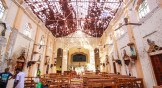
The wearing of burqas in Sri Lanka was temporarily banned in 2019 soon after the Easter Sunday bomb attacks on churches and hotels that killed more than 260 people in the Indian Ocean island nation. Two local Muslim groups that had pledged allegiance to the Islamic State group were blamed for the attacks at six locations: two Roman Catholic churches, one Protestant church, and three top hotels.
Earlier, a Pakistani diplomat and a UN expert expressed concern about the possible ban, with Pakistani Ambassador Saad Khattak tweeting a ban would only injure the feelings of Muslims. The United Nations’ special rapporteur on freedom of religion or belief, Ahmed Shaheed, tweeted that a ban was incompatible with international law and the rights of free religious expression.

Separately Tuesday, Sri Lanka’s Foreign Ministry said the government would take the time to consult with all parties concerned and reach a consensus.

Sri Lanka also has plans to close more than 1,000 Islamic schools known as madrassas because they are unregistered and accused of not following national education policy.

The proposal to ban burqas and madrassas is the latest move affecting the Indian Ocean island nation’s minority Muslims.

Muslims make up about 9 percent of the 22 million people in Sri Lanka, where Buddhists account for more than 70 percent of the population. Ethnic minority Tamils, who are mainly Hindus, comprise about 15 percent of the population.

Regarding the proposals, the National Christian Evangelical Alliance of Sri Lanka (NCEASL) told CT the group favors freedom of religion or belief.

“We believe it is a woman’s right to decide what she wears,” said Godfrey Yogarajah, NCEASL general secretary. “Also, if she has grown up wearing the burqa for religious reasons, then for the state to try and regulate is a violation of religious freedom.”

Regarding security concerns, Yogarajah—also the World Evangelical Alliance’s ambassador for religious freedom—noted that the suicide bombers in Sri Lanka have all been men “dressed in normal attire.” He also noted how Sri Lankans are currently required to wear face masks as they go about daily life.

“In this context, to propose a ban on Muslim women wearing burqas is not prudent,” he said, “and discriminatory.”

Additional reporting by Jeremy Weber of CT.

Dead Sea Scrolls Discovery Reveals New Details About the Bible’s Earliest Translations

Tiny fragments of the Minor Prophets in Greek show that scribes adapted texts in similar ways to our contemporary versions.
Christianity Today March 18, 2021
Sebastian Scheiner / AP Images

Israeli researchers and archaeologists unveiled this week several groundbreaking discoveries, including dozens of biblical scroll fragments that represent the first newly uncovered Dead Sea Scrolls in more than half a century.

The Dead Sea Scrolls contain some of the earliest known Jewish religious documents, including biblical texts, dated from the third century B.C. to the second century A.D. The manuscripts were first unearthed in the immediate aftermath of World War II in the caves near Qumran and the Judean Desert.

Even an initial review of the new fragments—which will be analyzed and scrutinized for years to come—offers some exciting findings about how the earliest biblical texts were translated and adapted in ways like our own.

The discovery comes at a time when demand for antiquities has skyrocketed, spurring looting and forgeries over the past several years as wealthy collectors hope to acquire any remaining scraps of the priceless scrolls.

Starting around 2002, a number of widely publicized “Dead Sea Scroll” fragments emerged with questionable origin stories. After a series of illegal attempts to acquire artifacts and scrolls, Israeli Antiquities Authority conducted a series of archaeological surveys to reexamine the interiors of the caves along the cliffs of the Judean Desert.

Beginning in 2017, its researchers uncovered two dozen scroll pieces, each measuring only a few centimeters across, from the so-called Cave of Horror near the western shore of the Dead Sea. It’s a site where insurgents were believed to have hidden during the uprising led by Simon bar Kokhba against the Roman empire in A.D. 133–136. It gets its name from the discovery of 40 bodies during initial excavations decades before.

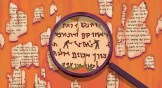
Unlike most of the Dead Sea Scrolls, which were written in Hebrew and Aramaic, the fragments from the Cave of Horror contain Greek letters. Scholars determined they came from a Greek translation of the Book of the Twelve in Hebrew, what many Christians call the Minor Prophets.

The job of reconstructing the original document is akin to trying to assemble a thousand-piece jigsaw puzzle with only a handful of pieces. The largest fragment contains portions of Zechariah 8:16–17, and some smaller bits are identified as Nahum 1:5–6. These pieces appear to be connected to other previously discovered fragments from the same cave along the ancient gorge of Nahal Hever and were part of a single large scroll including all of the minor prophets.

The text comes from the oldest physical scroll of the Greek Bible we have, but it likely represents a development or revision of the standard Greek translation—often referred to as the Septuagint, LXX, or Old Greek.

Two characteristics found for the first time in this ancient Greek translation correspond in remarkable ways to our modern English Bibles.

First, the newly discovered pieces show a special treatment for the four letters of God’s name, the Tetragrammaton (see Exodus 3:14–15). Instead of rendering the name in typical fashion with the Greek word Kyrios, the name of God is represented in Hebrew letters written right to left. It would be similar to us using the Hebrew letters יהוה (YHWH) or possibly the Latin DOMINUS in the middle of an English sentence.

This representation is significant because using specialized characters for the divine name has carried through to our modern Bibles. Most English Bibles represent the name as “the LORD” with small capital letters, rather than representing its supposed pronunciation Yahweh, as many scholars suggest. This substitution follows the ancient tradition of reading Adonai, a Hebrew word meaning “Lord,” or even HaShem “The Name,” in place of representing God’s name according to its sound.

Moreover, the lettering for God’s name is not typical of most of the other Dead Sea Scroll Hebrew manuscripts. It is an even older script, sometimes called paleo-Hebrew, which was mostly abandoned in everyday writing during the second temple period. Think of it as the difference between our modern Latin lettering and the calligraphic Fraktur or Gothic script, or possibly even like Greek letters. Putting these representations into a translated text provides both a foreignness to the writing and a type of reverence for the name’s uniqueness.

The second correlation we find in the new fragments is evidence of changing words to try to improve a new translation. The Minor Prophets scroll represents a revision of an older Greek translation of the Hebrew Bible. The original version was used widely by Greek-speaking Jews in the first century throughout the Mediterranean world, but at some point, a new translation became warranted.

For Zechariah 8:17, the Old Greek translated the first word in the Hebrew text (אִישׁ) as a distributive term meaning “each other, another,” which put at the end, similar to every major English version. For example, the NIV reads, “Do not plot evil against each other.”

In the new fragment, the same term is translated by a different Greek word at the beginning. Using an interlinear approach—finding a corresponding word without accounting for the context of its use—the verse starts by representing the same Hebrew word as “man.” It forms an overliteral translation: “As for a man, do not plot evil against his neighbor in your heart.”

It would seem that the efforts to render the Bible accurately into common languages date back to our earliest textual evidence of the Scriptures. Yet this difference anticipates the various modern opinions about how best to represent God’s word in our vernaculars.

These texts will undoubtably launch an array of research in years to come, with other features possibly revealed through multispectral imaging and digital magnification. As a biblical scholar, I can imagine these ancient readers striving to translate the Hebrew Scriptures that we read today and then carrying these meaningful texts into the darkest moments of their history to help them better understand God and their world.

Our connection to these people through this ancient text—now brought forward in tiny pieces, bit by bit—demonstrates the profound human desire to seek God especially in our moments of greatest trial and uncertainty.

Chip Hardy is associate professor of Old Testament and Semitic Languages at Southeastern Baptist Theological Seminary and the author of Exegetical Gems from Biblical Hebrew: A Refreshing Guide to Grammar and Interpretation.

News

Many Adventists in Asia and Africa Believe You Must Be Vegan to Be Saved

(UPDATED) As the church’s global growth continues, leaders must disentangle its “health message” from views on salvation.

Christianity Today March 18, 2021
Illustration by Rick Szuecs / Source images: Pcess609 / Getty / Envato

While Seventh-day Adventists around the world have heeded their co-founder’s teachings on eating a plant-based diet, many adherents in parts of Asia and Africa have raised veganism to a place next to godliness.

Denominational researchers found that many members in South Asia believe salvation is ensured two ways: through Jesus Christ (92%), and through giving up meat, animal products, alcohol, and tobacco (80%). Within the denomination’s East-Central Africa Division—which has the second-most vegan or vegetarian members (42%)—three-quarters of members (74%) maintain that dietary choices contribute to salvation. Globally, 47 percent of Adventists agreed that the health message “ensures salvation.”

“While it is possible to interpret this statement as meaning that practicing the ‘health message’ is an outgrowth of salvation, this interpretation is less likely when the item is read in the context of strict interpretations of Christian perfectionism that are historically and currently present in the Adventist Church,” wrote Andrews University sociologist Duane McBride, lead author on a recent paper in the Review of Religious Research.

“The data suggest that Adventist Church leadership needs to engage in further member education to differentiate and avoid confusion between the benefits of adhering to the Adventist Health Message and the Church’s belief that the actual source of salvation is through Jesus Christ alone,” wrote McBride.

Overall, 95 percent of Adventists globally held to salvation “through Christ alone,” and adherents in North America and Europe were far less likely to believe their healthy lifestyle contributes to salvation. While over half of Adventists in North American are vegetarian or vegan—more than any other region of the church—just 4 percent see the diet as necessary for salvation.

Globally, most Seventh-day Adventists see the benefits of giving up meat and animal products, alcohol, and tobacco. Over 80 percent agreed the practice promotes spiritual growth and longevity, following the prophecy of co-founder Ellen G. White.

She taught that “those who are seeking to become pure, refined, and holy” should not continue to eat “flesh foods” or “anything that has so harmful an effect on soul and body.” White cited health reasons for avoiding meat and dairy as well as spiritual reasons; the denomination’s veganism was part of efforts to set the church apart as a “remnant.”

Some Adventists do not practice veganism or vegetarianism, with many reducing meat (32%) or choosing a pescatarian lifestyle (11%) as an alternative. About 1 in 10 Adventists surveyed said they eat meat most days. A vast majority do not drink alcohol or use tobacco, but only the use of substances is subject to church discipline.

Today’s church doctrine calls for healthy living to glorify God but does not view dietary practice as a requirement for salvation: “…because our bodies are the temples of the Holy Spirit, we are to care for them intelligently. Along with adequate exercise and rest, we are to adopt the most healthful diet possible and abstain from the unclean foods identified in the Scriptures.”

The recent findings come from research conducted by teams at Adventist universities in 13 regions around the world to measure global church members’ perception of the “health message,” as it’s called within the denomination. More than 63,700 members across 60 languages were given the survey, mainly at church services in 2017 and 2018.

Researchers wondered whether the drastic difference between North America and other parts of the world is due to younger churches abroad. According to data from the denomination, the Seventh-day Adventist Church is among the fastest growing around the world as well as one of the biggest Christian communions, with over 21.4 million reported adherents.

While North American Adventists have in the past made moves toward mainstream evangelicalism, the denomination has held on to its separatist identity.

Among Christians more broadly, believers have adopted plant-based diets as a form of fasting, including during Lent, or as a form of environmental stewardship.

Editor’s note: This research blog has been updated to clarify how Adventist researchers discovered and examined why many survey respondents both agreed to “salvation through Christ alone” and agreed that the health message “ensures salvation.”

News

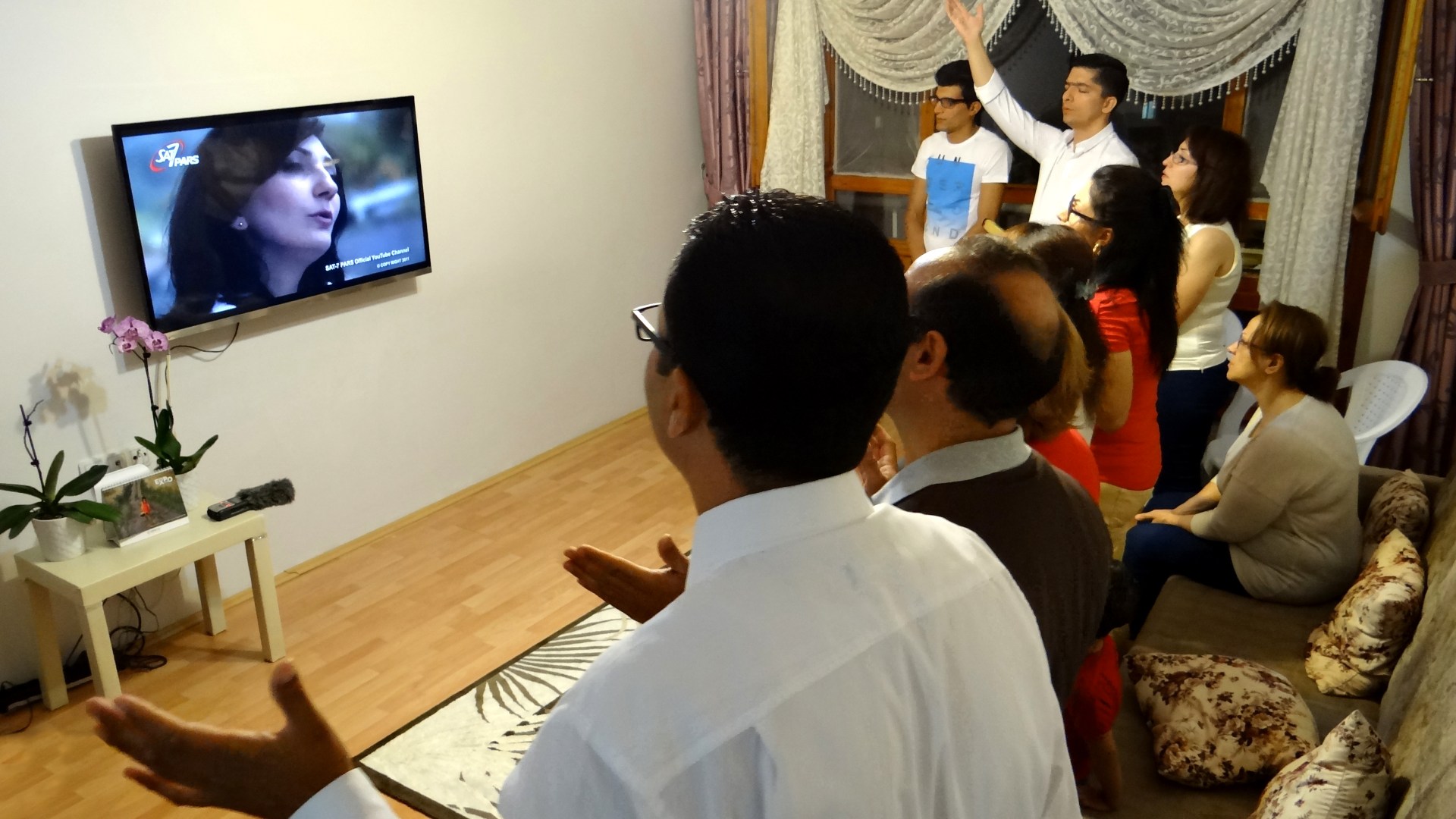
Streaming in the Desert: Middle East Discipleship On-Demand

Christian broadcaster SAT-7 tries to balance security and isolation in letting the Arab world binge watch programs of hope.

Christianity Today March 18, 2021
Courtesy of SAT7 International Office

Growing up in civil war–era Lebanon, Rita El-Mounayer’s family often had to hook up the television to a car battery.

Last month, her ministry launched the first Christian on-demand streaming service in the Middle East.

“Television was our only refuge during the war, and was a communal activity,” said the international CEO of SAT-7. “This is what we will miss with , but we have to be where the technology leads.”

SAT-7 is a pioneer in the field. Beaming Christian satellite TV programming into the Arab world since 1996, it now hosts channels specializing also in Turkish and Farsi.

In 2007, it launched a dedicated kids channel. Ten years later, a separate academy brand was created to provide schooling to Syrian refugees and later to assist with at-home COVID-19 education.

Each is now available at SAT-7 PLUS, through web and mobile apps accessible via Android or iOS. Approximately 20 percent of the broadcaster’s 25 years of content can be streamed, along with all current live programming.

“In Morocco, it used to be that viewers had to wait for days until the Christian teaching program was scheduled,” El-Mounayer said.

“Now, they can binge watch.”

While the advantages for the ministry are obvious, the drawback lies in contributing to a culture of isolation. But Arab youth today are comfortable alone, El-Mounayer said, and Christians must find ways to reach them.

The media giants certainly are.

The Middle East was relatively slow in adopting on-demand video. In 2014, a mere 1 percent of households subscribed to a streaming service. Showtime’s local affiliate launched the service in 2008, and Netflix established a regional presence in 2016. Amazon, Apple, and Starz are also available.

By 2019, an estimated 30 percent of households were streaming online. By 2025, they are expected to outpace cable subscriptions.

And youth are especially addicted. SAT-7 research finds that 66 percent watch content primarily on smart devices. And gaming is especially popular for all ages, with Egypt on top at 68 percent.

But only 14 percent in the Nile River nation play on a traditional console.

These numbers are reflected in Christian media also, boosted by COVID-19.

SAT-7 reported a 16 percent rise in audience engagements in 2020, and a 70 percent rise for its children’s channel. With 50 million views on Facebook and 45 million on YouTube, it was a banner year for the once-satellite-only ministry.

More engagements lead to more opportunities to share the gospel.

Miracle Connect reported a 375 percent increase in audience connections, resulting in 5,000 presentations of the Good News. Heart4Iran, meanwhile, reported a 10fold increase in decisions for Christ in 2020. And 90 percent of its 12,000 decisions in the first four months of COVID-19 lockdown originated through the internet, reflecting the increasing millennial trends in the region.

Half of the population in the Middle East and North Africa is under 24 years old, according to UNICEF.

And for these, the largest increase was practical. SAT-7 reported a 335 percent increase through its academy channel, with hundreds of daily engagements.

It was a lifeline for many.

Even prior to the pandemic, 15 million children were out of school due to armed conflicts in Syria, Iraq, and Yemen. And the Beirut port explosion last year damaged or destroyed 120 schools, resulting in another 55,000 children deprived of education.

“The first thing 19th-century Christian missionaries did when they went to a new country was to open schools and build hospitals,” said George Makeen, SAT-7’s programming director.

“With modern technology, social media, and the power of satellite television, [we] have the ability to reach beyond previous boundaries, and help millions of children.”

And now, streaming services are the latest tool in the toolbox to reach their audience, said Febe Armanios, professor of history at Middlebury College. From handwritten letters to dedicated call centers to texting apps, on-demand video is the next step in creating intimate connections with viewers.

“In a crowded mediascape, Christian satellite ministries are continually distinguishing themselves and their brand from one another,” said Armanios, author of the forthcoming book Satellite Ministries: The Rise of Christian Television in the Middle East.

“But I don’t expect it to fully displace satellite TV any time soon.”

Neither does SAT-7.

“This is a means of communication for those who can,” said Antoine Karam, SAT-7’s information technology and broadcast director, speaking directly to the question of security. “Our audience is vulnerable, but the newest generations are already aware of the risks.”

Many in restricted societies are already competent in VPN technology, he said. But to protect them further from snooping governments or malevolent hackers, SAT-7 has minimized data collection from online users. Anyone can watch content without registration, and full platform access requires only one’s first name, email, and age range.

SSL certification is built into the system, with opt-in multiple-factor authentication and geoblocking.

But while individual users—especially those of a Muslim background—must always weigh carefully their privacy concerns, El-Mounayer does not expect any pushback in the region. SAT-7’s board of directors has members representing the respected traditional churches of the Middle East, and maintains a strict policy to never criticize another faith.

In a region torn by sectarian division, it is a welcomed stance.

But recalling her youth, El-Mounayer finds the challenges today to be different. So while SAT-7 PLUS may accommodate the spirit of isolated binge watching, it will not surrender to the oft-resulting escapism.

The risk is acknowledged but considered to be minor. SAT-7 will monitor user patterns as closely as possible but doesn’t play the commercial game of cliff hangers at the end of every episode. Instead, the ministry focuses on discipleship.

Past episodes are chosen not only according to their HD quality, but also their educational value. SAT-7’s music, teaching, and dramas have always aimed to build up the church.

Now, they also address the need of the region.

“The biggest problem in the Middle East is not war or poverty, but hopelessness,” El-Mounayer said.

“So with every program we make, we convey a message of hope—spoken by fellow Middle Eastern people, who have put their faith in Jesus Christ.”

Books
Excerpt

Russell Moore: Real Christian Courage Looks like Elijah at His Most Pathetic

My caution to those who “stand for truth” by calling down “fire from heaven” upon its enemies.

Christianity Today March 18, 2021
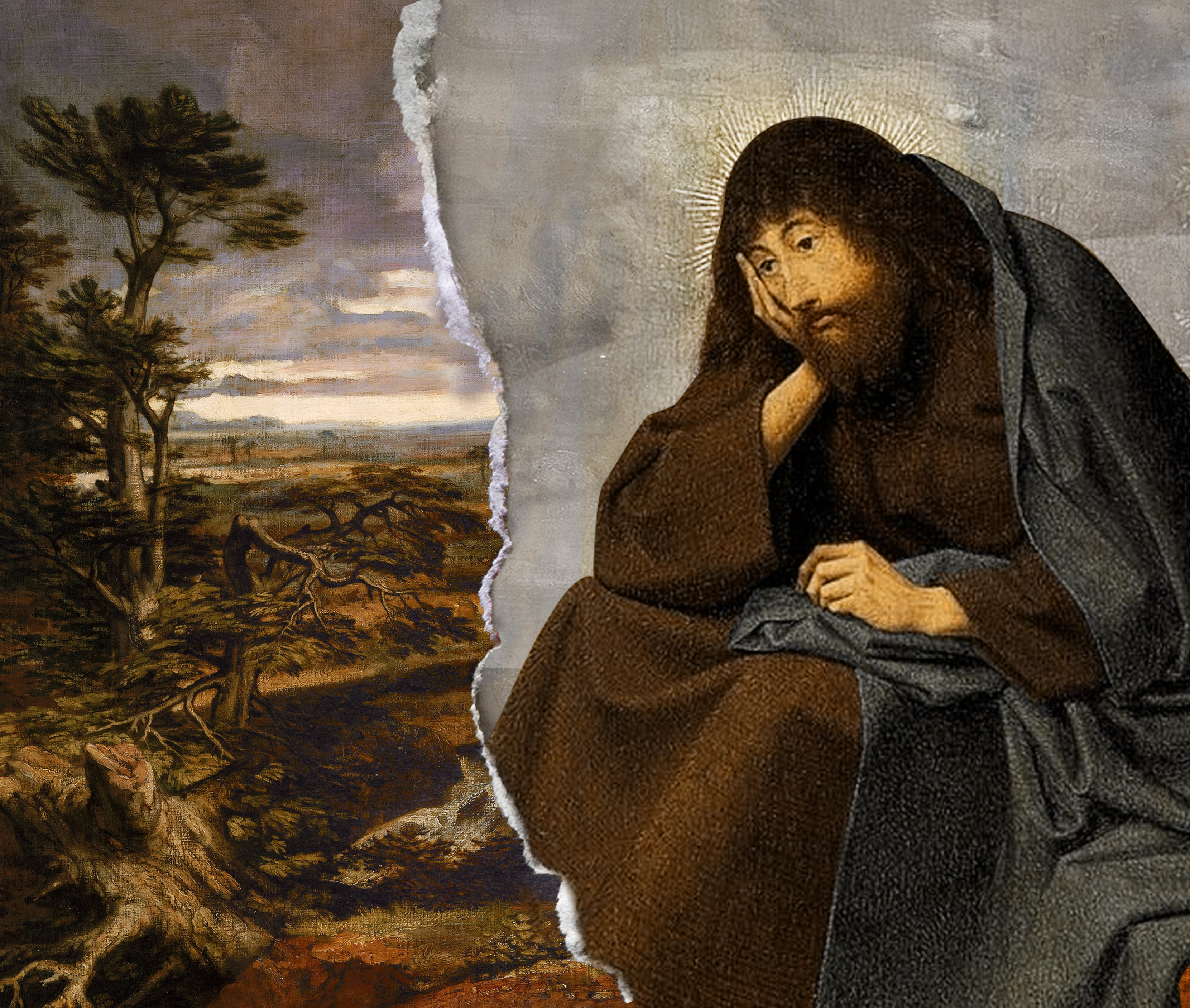
WikiMedia Commons / Edits by Christianity Today

At the moments in life when I’m feeling especially scared, I’ve noticed that Elijah is the last person I want to see.

The Courage to Stand: Facing Your Fear without Losing Your Soul

The Courage to Stand: Facing Your Fear without Losing Your Soul

B&H Books

304 pages

$13.01

During one dark period, without any conscious decision, I remember altering my daily Bible reading of the Old Testament ever so slightly. I had been reading through 1 and 2 Samuel, then on into 1 Kings through the life of Solomon, when suddenly I veered over to the Psalms. As I thought about it, I became convinced I was avoiding that middle section of 1 and 2 Kings because I knew who was there: a prophet called Elijah. I wanted to avoid him the same way a laid-off person wants to avoid her “Employee of the Month” neighbor or the way an obese person wants to avoid his marathon-running brother-in-law. The comparison only highlights one’s inadequacies, whether real or perceived.

When we think of Elijah, we think of steely determination, the willingness to defy gods and kings, in scorn of the consequences. If you asked me as a child in Sunday school to draw a picture of Elijah, I would have drawn the scene on Mount Carmel, where he calls down fire from heaven. In that moment, Elijah is everything I want to be. He verbally spars with his opponents—sarcastically mocking their impotent god. He confidently pours water on his own sacrifice, he cries out to the skies, and then, with a bolt of incandescence, the fire falls.

That is strong; that is “prophetic.” And so, in moments when courage is lacking, I just want to do an end run around that hair-suited seer. But that’s harder than it may appear. Try to avoid Elijah in moving through the Bible, and one will find, much as King Ahab and Queen Jezebel did, that he has the annoying habit of showing up persistently, often when he is least expected.

That’s somewhat surprising because, at least in terms of space devoted to him, Elijah is not a major biblical figure. As a matter of fact, he is a kind of mayfly in the sunset of the Scriptures; one moment we see him, and the next he is gone in a literal blaze of glory. But Elijah’s absence is felt all over the rest of the Bible, even as his mantle and his spirit move on through the line of prophets. Indeed, the very last words of the Old Testament are about Elijah. As God told the prophet Malachi, “Behold, I will send you Elijah the prophet before the great and awesome day of the Lord comes” (Mal. 4:5, ESV throughout). And then there’s silence for 400 years.

When the story resumes in the New Testament, Elijah is everywhere, in hints and allusions and images. John the Baptist carried out the motif of the wild man of the woods with a word of impending judgment. And Jesus identified this baptizer—his own cousin—with the prophecies of the return of Elijah. At the same time, in his inaugural explanation of his ministry, Jesus pointed to Elijah and his successor Elisha as demonstrating that the good news of God’s kingdom was always meant to overwhelm national and ethnic boundaries (Luke 4:25–27). And, in the Gospels, many aspects of Jesus’ calling evoke scenes from the life of Elijah—from the raising of a widow’s son from death to miraculous provision of food to a visible ascent into heaven.

The real climax point

The Elijah narrative is certainly about courage, but not in the way that I always assumed. That’s because I, like many of us, often misunderstand both the definition of courage and the meaning of Elijah. Much of what I admired about Elijah is not actually the point of the story. I aspire to the sort of fearlessness that could respond right back to Ahab that the king, not the prophet, was the “troubler of Israel” (1 Kings 18:17–18). The same sort of sass and swagger seems present when Elijah threatens drought, holding back rain by his word, and when he challenges the prophets of Baal to their contest on Mount Carmel. He doesn’t just defeat them; he humiliates them. Though they screamed and cut themselves, trying get the attention of Baal, “there was no voice. No one answered; no one paid attention” (v. 29).

Elijah needs no such theatrics. He simply calls for fire, and the fire falls. He was vindicated, uncontestably, as the one who bears real prophetic power.

When it comes to bold and unflinching courage, Mount Carmel is not the hinge point of the Elijah story but a prelude to something else. Right after this moment of triumph, Jezebel—the murderous wife of Ahab—vows to see Elijah dead by the next day. The Bible states, “Then he was afraid, and he arose and ran for his life” (19:3). The story only goes downward from there, as Elijah treks out into the wilderness to flee from this threat.

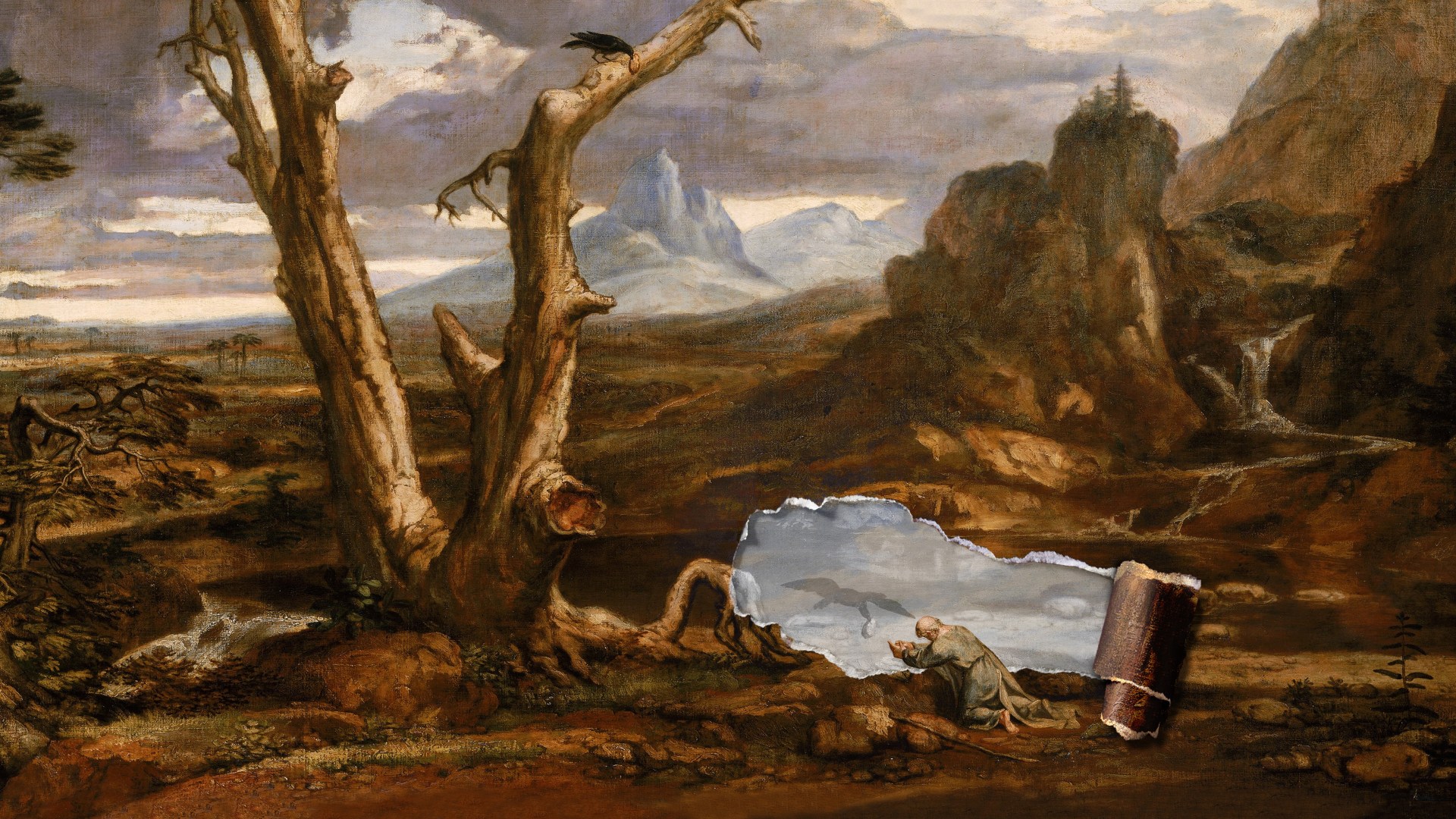
Far from the flannelgraph Spartacus I have expected since Sunday school, the picture of Elijah in the wilderness is almost pathetic. He is afraid. He is weak to the point of collapse. He is lonely and exhausted. He is questioning his own calling and mission. He seems depressed to the point of, at best, whining and, at worst, self-harm. And even when the crisis is resolved, God speaks to him not of his own bright future but of what God will do through others, rendering Elijah seemingly irrelevant.

Most often, when I have heard this account taught or preached, the focus has been on Elijah facing some form of “burnout.” The application is that human beings must protect ourselves from overextension. We hear practical recommendations drawn from God’s provision for Elijah—proper nutrition, adequate sleep, and time for prayer and reflection. This seems immediately relevant, of course, because many people find themselves in a place of exhaustion, caring for small children, elderly parents, or disabled spouses. Or perhaps they have invested all their identity in a career only to come to midlife and find numbness and disillusion.

But what Elijah was facing in the wilderness was no mere burnout, it seems to me, but something more comprehensive: a breakdown. In the wilderness, God was doing for Elijah what Elijah had done on the mountain—removing the Baals, this time from the prophet’s own heart.

The way of courage, as defined by the gospel, is not the pagan virtue of steeliness and fearlessness, much less our ambient culture’s picture of winning and displaying or strength and swagger. If we misunderstand the true climax point of the Elijah story, we will follow him somewhere other than where he ultimately was led: to the crucified glory of Jesus Christ. We will conclude, mistakenly, that Elijah was the picture of courage we think we need: the ideal celebrated in everything from ancient Greek legends to modern action films to the cavalier confidence we feign in ourselves.

Elijah is not a picture of courage through triumph but of courage through crucifixion. His life was a dramatic enactment, ahead of time, of the Cross—just as your life is a dramatic enactment, after the fact, of that same Cross. That’s why he’s the model we need.

Starkly vulnerable

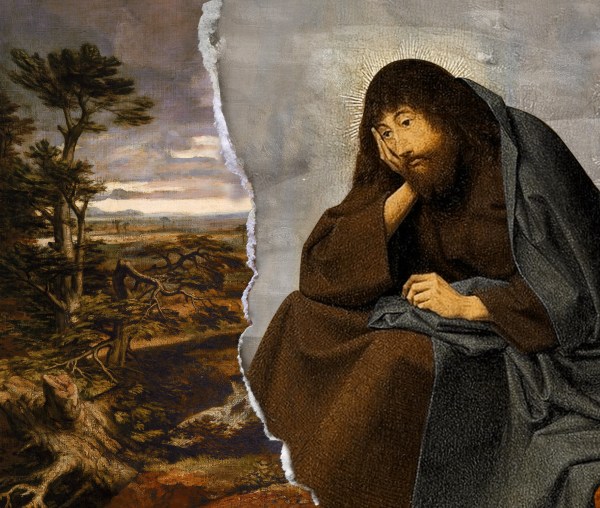
Consider the way Jesus identifies the “spirit of Elijah” in the life of his cousin, John the baptizer. Like Elijah, John’s ministry is not all boldness and bluster. Yes, John, like Elijah, calls a rebellious people away from their idols to a living God. And yes, like Elijah, he delivers a word of rebuke to a wicked ruler.

John the Baptist in the WildernessWikiMedia Commons / Illustration by Mallory Rentsch
John the Baptist in the Wilderness

But John is no untouchable hero. Even after baptizing Jesus and hearing God pronounce the Nazarene his beloved Son, John feared he was wrong. From his jail cell, he sent messengers to ask Jesus, “Are you the one who is to come, or shall we look for another?” (Matt. 11:3). A narcissistic cult leader or political guru would be offended by this wobbliness, but Jesus was not. He commended John as the greatest of all the prophets up until that time.

For Jesus, John’s continuity with Elijah was not, as assumed, in his power and confidence but in this weakness and fear. “From the days of John the Baptist until now the kingdom of heaven has suffered violence, and the violent take it by force,” Jesus said. “For all the Prophets and the Law prophesied until John, and if you are willing to accept it, he is Elijah who is to come” (vv. 12–14).

Later, after Elijah appeared on a mountain with Jesus before his disciples, Jesus said that his followers misunderstood what they should expect from Elijah. They were perplexed that, after manifesting briefly, Elijah would go away, leaving Jesus alone—and on his way to crucifixion. They asked why the teachers of the Scripture said that Elijah must return first, before the restoring of all things. Jesus pointed them not to Elijah’s winning argumentation or his miraculous scenes but to his humiliation and suffering. “Elijah does come first to restore all things. And how is it written of the Son of Man that he should suffer many things and be treated with contempt?” Jesus taught. “But I tell you that Elijah has come, and they did to him whatever they pleased, as it is written of him” (Mark 9:12–13).

Indeed, Scripture presents John from start to finish as starkly vulnerable. Even when we do find the fiery prophet we expect, he is essentially exiled from his home and community, eating an unpalatable diet and preaching an even more unpalatable message. Ultimately, of course, we see him as a head on a silver platter. None of this is a deviation from the way of Elijah. It is the way of Elijah. That’s why Jesus, soon after identifying himself with Elijah, was exiled from his community and in danger of an angry hometown crowd throwing him from the precipice of the mountain overlooking his village (Luke 4:28–30).

We can see, then, how the “fire from heaven” Elijah is explained by the “lost in the wilderness” Elijah, not the other way around—just as Christ’s glory is revealed in his crucifixion. The Cross is not a momentary deviation from glory but where we find a glory different from that of the world, different from what we would create for ourselves.

Elijah encounters God at the moment of crisis and collapse. And that’s where he, and we, can find the courage to stand. But even that language of “standing” can deceive us. We talk about standing for what we believe, and by that we typically mean a pose of confidence, like leadership coaches who tell their clients to project strength through body language. What it means to stand for Christ is not, it turns out, to rid ourselves of all fear or to humiliate our enemies with incontrovertible “winning” but instead to live out in our very lives the drama of the Cross. Courage comes not from matching the world’s power and wisdom with more of our own but by being led, like Elijah, where we do not want to go (John 21:18).

The crucifiable self

This sort of courage is formed not only in crisis but also amid the little turning points in life that shape, over time, who we are, what we love, what we fear, and how we stand. These are the moments where things could go one way or the other, and they usually aren’t dramatic and cinematic. Thus, the chief need in every era is not what first leaps to mind when we think of courage—physical bravery—but instead what might be called “moral courage.” Mark Twain once wrote, “It is curious—curious that physical courage should be so common in the world, and moral courage so rare.” Twain was reflecting on a moment of unwillingness to take an unpopular public stance for fear of “saying the disagreeable thing” and being out of step with his peers. That sort of fear, he said, is part of human nature, and he didn’t see it changing.

Scripture gives insight into why moral cowardice is so universal among human beings. Jesus did many signs before the crowds, the apostle John wrote, and yet most of the people did not believe. Quoting the prophetic writings, John said, “Isaiah said these things because he saw his glory and spoke of him,” and yet: “Nevertheless, many even of the authorities believed in him, but for fear of the Pharisees they did not confess it, so that they would not be put out of the synagogue; for they loved the glory that comes from man more than the glory that comes from God” (John 12:41–43).

This is hardly unique to these first-century Jewish people. Everyone, no matter whom or where or when, has similar “Pharisees”—gatekeepers of who is “in” and who is “out.” Everyone fears being cast out of some sort of “synagogue.” For some, it’s a political tribe, a religious group, a generational cohort, or just a sense of being “normal” in the world. We want, if not applause, then at least not rejection and insecurity.

The problem is that much of what Scripture defines as courage—kindness, humility, the bridling of the passions—our culture sees as timidity. Meanwhile, many who feel themselves courageous because they “tell it like it is” are really just playing to their protective tribes. They may believe they “stand” for something, but this is not courage, if courage is defined by Christ. Following him isn’t a matter of taking the correct side of issues and doctrines. It’s about walking alongside him, even when, like Christ’s first followers, we can’t see what’s ahead.

Your courage will not be found in triumphant Mount Carmel moments, when you scatter your enemies, real and imagined. It will be forged, instead, when you cannot stand on your own at all, when you are collapsed in the wild places, maybe even begging for death. Elijah thought he was walking to Mount Sinai, but he was really walking toward Mount Calvary. And so are you. Only the crucifiable self can find the courage to stand.

Russell Moore is president of the Ethics and Religious Liberty Commission of the Southern Baptist Convention. This article is adapted, with permission from the publisher, from his book The Courage to Stand: Facing Your Fear without Losing Your Soul (B&H).

News

Is COVID-19 God’s Punishment? African Christians Debate as Their Presidents Die

The deaths of Tanzania’s John Magufuli, announced today, and Burundi’s Pierre Nkurunziza last summer feed discussion over God’s approach to corporate sin and repentance.

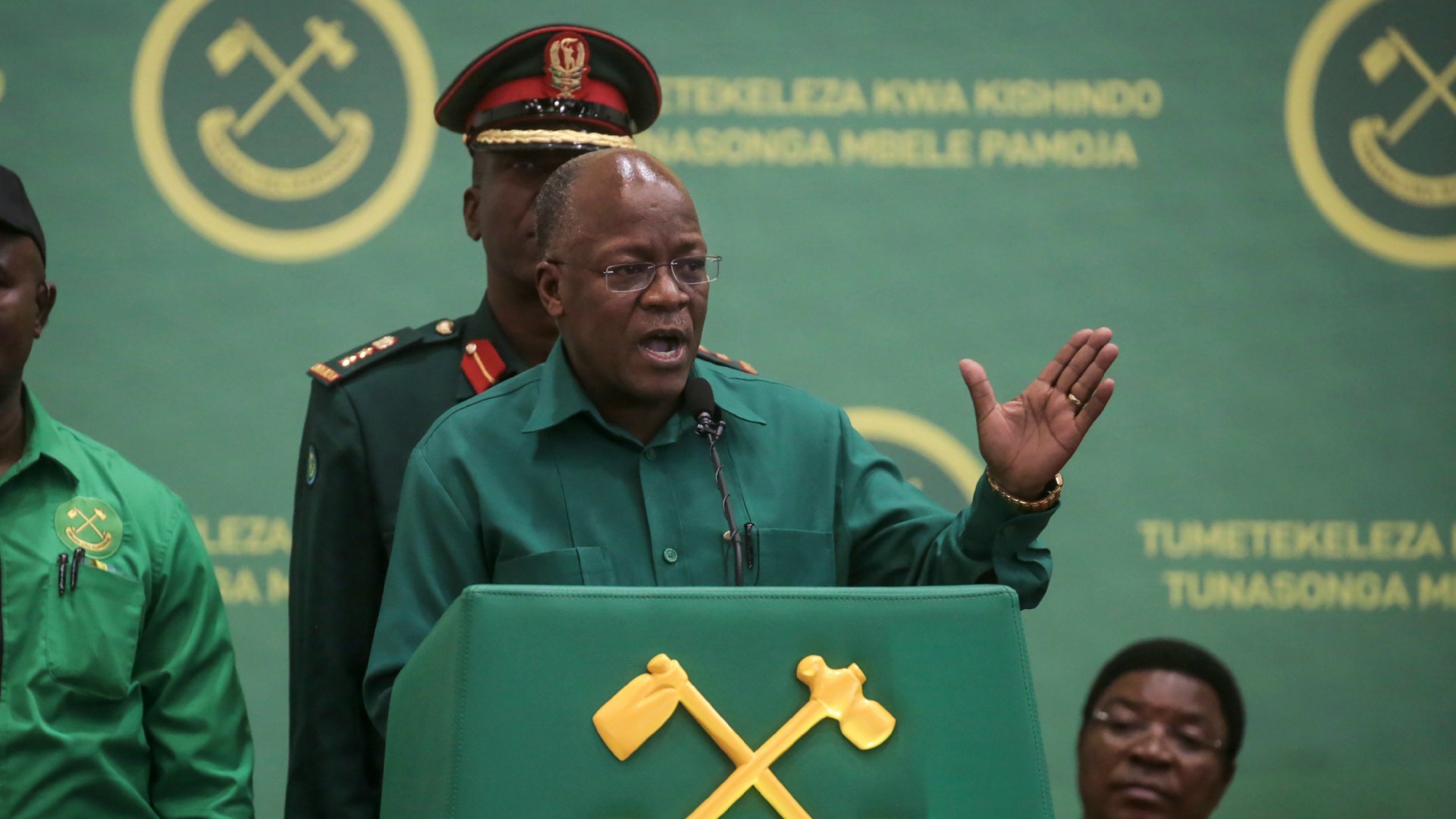
Tanzania's President John Magufuli speaks at the national congress of his ruling Chama cha Mapinduzi party in Dodoma, Tanzania, on July 11, 2020.

Tanzania's President John Magufuli speaks at the national congress of his ruling Chama cha Mapinduzi party in Dodoma, Tanzania, on July 11, 2020.

Christianity Today March 17, 2021
AP Photo

The Tanzanian government confirmed today that President John Magufuli has died.

“It is sad news. Our beloved president passed on at 6 p.m. this evening,” said Vice President Samia Suluhu Hassan, who per the East African nation’s constitution will now become its first female president. “We have lost our courageous leader. All flags will be flown at half mast for 14 days.”

What officials did not confirm was weeks of speculation by opposition leaders and regional media that the 62-year-old had contracted COVID-19. The official cause of death: heart complications.

However, the situation echoed the chatter in neighboring Burundi last June, when President Pierre Nkurunziza died of COVID-19 at age 55, as both leaders drew criticism for their approach to the pandemic.

During a recent prayer service at Rugombo Pentecostal Church in the Cibitoke area of Burundi’s capital, Bujumbura, more than 100 worshipers followed pastor Joseph Ndayizeye as he led them in prayer.

He addressed the ongoing pandemic, stating that God is punishing human beings for their sins.

“It is not normal for the virus to invade the country and even kill the president,” prayed Ndayizeye, referring to Nkurunziza. “God punished us with the coronavirus pandemic because of our sins. Let us repent our sins and ask God for forgiveness and our prayers will be heard.”

His prayer is mirrored across the country of almost 12 million people. Many religious leaders in Burundi are reminding their congregants that God is angry with mankind for constantly sinning without repenting.

Ndayizeye noted that Burundian authorities have continued to commit serious human rights abuses against civilians and detainees with impunity.

“You cannot kill innocent people and promote evil like same-sex marriage and go unpunished,” he warned. “But our God is merciful. When we pray to him, there’s nothing impossible. He will defeat the coronavirus and we will be free.”

Burundi has recorded about 2,500 coronavirus cases, with 3 fatalities. In response, many citizens have intensified prayers and sought divine intervention in the fight against the deadly virus.

Although the landlocked country has closed its borders as new measures against the pandemic, officials said they have no plans to accept COVID-19 vaccines after the health minister, Thaddee Ndikumana, expressed reservations.

“Since more than 95 percent of patients are recovering, we estimate that the vaccines are not yet necessary,” said Ndikumana, noting the nation will focus on prevention measures.

Pascal Nyabenda, a politician who served as president of the National Assembly of Burundi from 2015 to 2020, has claimed that the virus was brought by God to punish the nation for its sins and urges churches to continue praying so that citizens will be safe from the pandemic.

“Only God can save this nation as we continue to observe the health protocols laid down by the ministry of health. Let us pray and ask for forgiveness from God,” he recently said at a Pentecostal church in northern Burundi.

However, pastor John Bigirimana has warned religious leaders and government officials about misquoting Bible verses and using them out of context to misinform the public about the pandemic. He said being born again does not mean that people should stop thinking and act brainwashed as in a cult. Instead, he urged Burundians to protect themselves from the virus and to embrace vaccines, saying Christians should have faith in both science and God.

“People should realize that COVID-19 is alive and seek medication and even get vaccinated,” said the pastor of Buterere Pentecostal Church in Bujumbura. “There’s nowhere in the scriptures where God commands Christians not to seek medical assistance. This is a pandemic all over the world. It’s not only to Burundians. Let’s not be cheated, unless we all want to die.”

Across the border, Magufuli on several occasions insisted that his country of 60 million, with a population roughly two-thirds Christian and one-third Muslim, had long defeated the virus through prayers. Before he was hospitalized, the president urged Tanzanians to pray for three days to defeat the new coronavirus variants amid warnings that the nation was seeing a deadly resurgence in COVID-19 infections.

“Maybe we have wronged God somewhere. Let us all repent,” Magufuli, who was a Catholic, told mourners at a funeral for his chief secretary, John Kijazi, on February 19. “God has never forsaken this nation. Let’s pray and fast for three days, I am sure we will win. We won last year, we will win this year and years to come.”

The Tanzanian president never locked down his nation to prevent the spread of the virus. Markets, churches, sport events, bars, and restaurants have remained open since the country confirmed its first case of COVID-19 a year ago. Authorities stopped updating virus cases last year when there were 509 cases and 21 deaths.

Magufuli also rejected COVID-19 vaccines for being promoted by foreign companies and countries, and had refused to embrace face masks and social distancing measures.

But the latest surge in COVID-19 deaths has left religious leaders and residents who initially believed in the power of prayer worried and concerned about their safety. Tanzania lost 10 other prominent citizens to coronavirus-like symptoms in recent weeks. Among them was Seif Sharif Hamad, the vice president of the semi-autonomous island region of Zanzibar, whose infection with COVID-19 had been announced by his political party.

Tanzanian pastor Joseph Mayala Mitinje said that although God heals virtually every known disease, it was time for Christians to understand that God often uses medicine to accomplish his healing.

“I don’t believe that there’s any disease that God cannot heal. He has given us the authority to cast out evil spirits and to heal every kind of disease and illness,” said Mitinje, an evangelical pastor who ministers at Africa Inland Church Tanzania in Arusha. “But God has filled men and women with the spirit of healing. Some go through medical college, and others God just fills them with the spirit of intelligence, knowledge, skills, and understanding like Bezalel and Oholiab [Exodus 31].”

“We should all understand that healing comes from God either through prayers or medical knowledge, because that’s a gift from God for the benefit of the public,” he said. “Jesus has healed a lot of people with coronavirus, but it’s not being reported because not everyone with COVID-19 is dying.”

Earlier this month, Tanzania’s Catholic church publicly acknowledged the reality that the virus was spreading. The leaders announced that the church had lost 60 nuns and 25 priests in the past two months who had shown symptoms.

“Priests are dying and sisters are dying, but this number within two months has shocked us especially considering the government has strengthened better health systems," said Father Charles Kitima, secretary of the Tanzania Episcopal Conference, in a statement in Dar es Salaam. “Please continue taking precautions against this disease by following the instructions of the Ministry of Health.”

As COVID-19 continues to ravage the globe, with about 121 million confirmed cases and more than 2.6 million related deaths, the debate among East African Christians over the role of faith and prayer in fighting the disease continues to escalate.

“Can God heal a person from coronavirus? The answer is both yes and no,” said Erick Onzere, a Pentecostal pastor with the Assemblies of God in Kenya. “To those who believe in the name of the Son of God will obviously receive any kind of healing because there is power in the name of Jesus. But it’s difficult to receive healing or anything from Christ if we don’t believe he can give it to us. God heals in response to faith.”

However, Damaris Parsitau, a senior lecturer at the department of philosophy, history, and religious studies at Egerton University in Kenya, said no amount of prayers or faith can cure the virus. She believes only science and medicine are a reliable solution to the pandemic.

“African Christians have been praying for a cure for AIDS/HIV and Ebola for decades, but not a single person has certainly been cured of these dangerous viruses. The same logic should apply to COVID-19,” she wrote in an article for The Elephant.

“Faith and science should not be in contradiction with each other. Each plays important and significant roles in our lives,” she wrote. “Faith and prayers hold us together in hope and community while science tackles the virus in scientific and practical ways.”

Meanwhile, back in Burundi’s capital, Ndayizeye said even countries that have strictly followed health protocols laid down by the government have lost thousands of people to the virus. The Pentecostal pastor urged his congregation to repent and turn to God—citing the example of the Israelites begging Moses for help receiving forgiveness—to avoid imminent deaths.

“We have no choice right now but to trust God,” he said. “Repentance would bring healing.”

Additional reporting by Religion News Service

News
Wire Story

Black Pastors Push for Compromise Rather than Equality Act

Dozens of leaders are advocating for the Fairness for All proposal, which would match LGBT protections with religious exemptions.

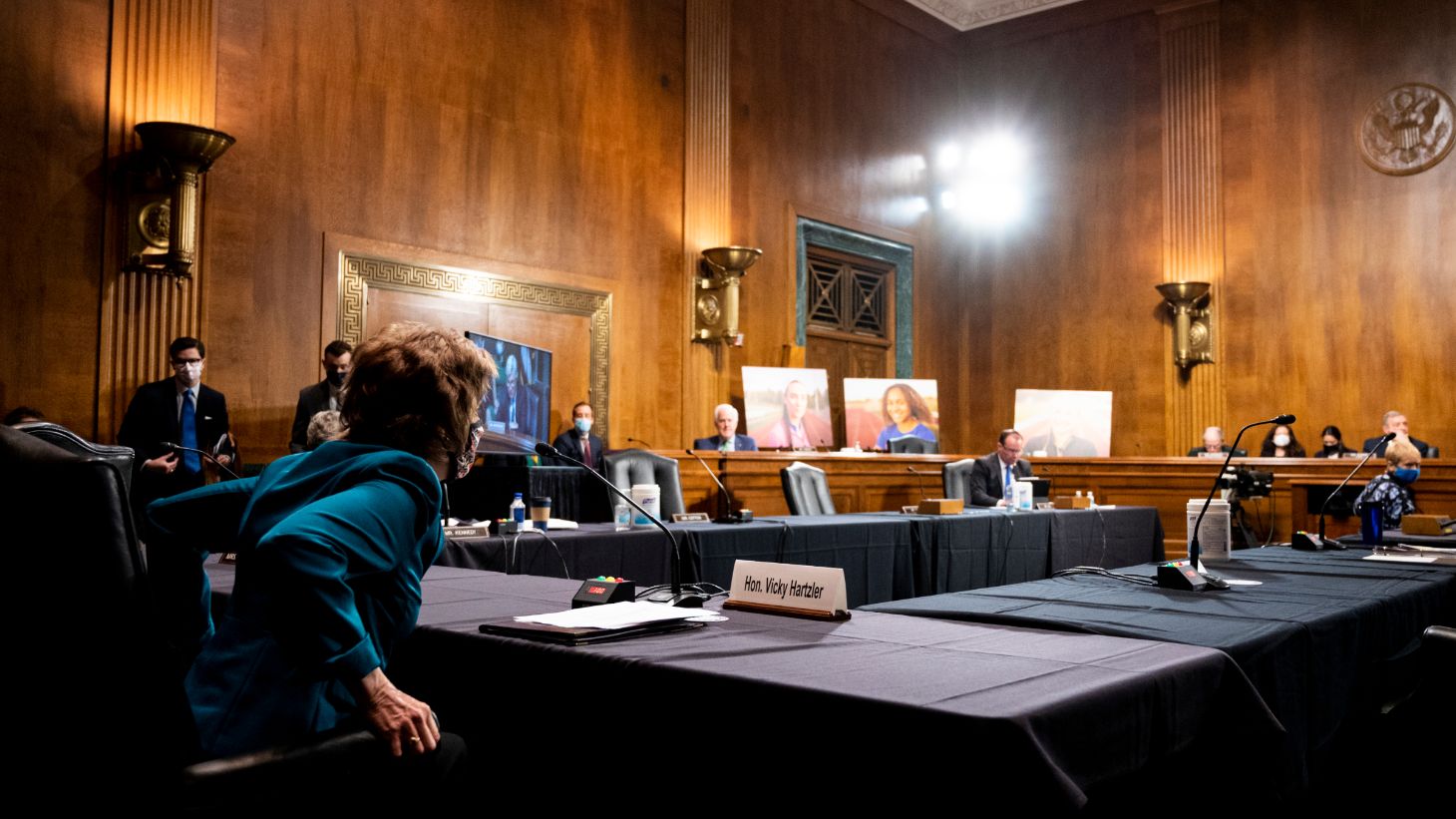
Senate Judiciary Committee meeting Wednesday.

Senate Judiciary Committee meeting Wednesday.

Christianity Today March 17, 2021
Bill Clark / CQ Roll Call via AP Images

Fifty-seven Black Christian leaders have written a letter to members of the US Senate’s Judiciary Committee expressing support for sweeping LGBT rights but asking for a new bill that includes religious exemptions.

The signers, including representatives of the major black Christian denominations, said passage of the Equality Act would deny federal funding for faith-based programs that profess a traditional view of sexuality. For example, it would end free and reduced-cost lunch programs for children who attend religious schools and revoke federal loan eligibility for tens of thousands of students who attend hundreds of religious colleges.

“…We want to clearly state our support for federal protections for LGBT persons in employment, housing and the like,” the letter states. “We’re committed to embracing and advocating for those safeguards. Unfortunately, the collaborative process and substance of the Equality Act fall well beneath the standard necessary to cultivate a healthy pluralistic society.”

The Equality Act, which passed the Democratic-controlled US House of Representatives on February 25, would amend the Civil Rights Act to ban discrimination based on sexual orientation and gender identity. It does not include exemptions for religious groups, and it would override the Religious Freedom Restoration Act, which prohibits the federal government from “substantially burdening” individuals’ exercise of religion unless there’s a compelling government interest.

The Senate’s Judiciary Committee held a hearing on the Equality Act on Wednesday. Despite broad Democratic Party support, in its current form the bill probably has no chance in the Senate, given it will need 10 Senate Republican votes in order to beat back a GOP filibuster.

The faith leaders are advocating for a rival bill called Fairness for All, which would provide broad protections for LGBTQ people and, at the same time, provide exemptions for religious institutions that uphold traditional beliefs about marriage and sexuality. That bill was introduced in the US House last month and is modeled on the “Utah Compromise,” a 2015 state law that strengthened religious freedom and protected LGBTQ people from discrimination.

The letter was written as part of the And Campaign, a Christian advocacy group committed to bringing conviction and compassion into the public square. The group is led by Justin Giboney, an Atlanta lawyer and political strategist who was a delegate to the 2012 and 2016 Democratic National Convention.

“We want to be clear that we want to embrace and advocate for LGBTQ rights,” Giboney told Religion News Service. “But we have to do it in a more thoughtful manner than the Equality Act does. Religious liberty and LGBTQ rights are not necessarily in conflict. The Utah Compromise and Fairness for All has shown us that.”

The letter is noteworthy because many evangelical and conservative Christians, such as the Southern Baptist Convention and the US Conference of Catholic Bishops, oppose the idea of adding sexual orientation and gender identity as protected classes.

Among the signatories are A. R. Bernard, pastor of a Brooklyn megachurch and onetime evangelical adviser to former President Donald Trump (Bernard stepped down from that unofficial board in 2017); the Rev. Suzan Johnson-Cook, who served as ambassador-at-large for international religious freedom under former President Barack Obama; and the Rev. Barbara Williams-Skinner, a former executive director of the Congressional Black Caucus.

The signers said that the Equality Act was not the result of a collaborative process and that it excluded the voices of faith leaders. (Several faith groups on the political left advocated for it.)

“The Equality Act is a reflection of our broken system, not an example of the civic spirit and good faith measures necessary to heal it,” the signers said.

In addition to threatening free lunch programs and Pell grants to religious institutions, the pastors said the bill would convert houses of worship and other religious properties into public accommodations. That means churches might be compelled to rent out their facilities for same-sex weddings, for example, despite objecting to the practice.

Church Life

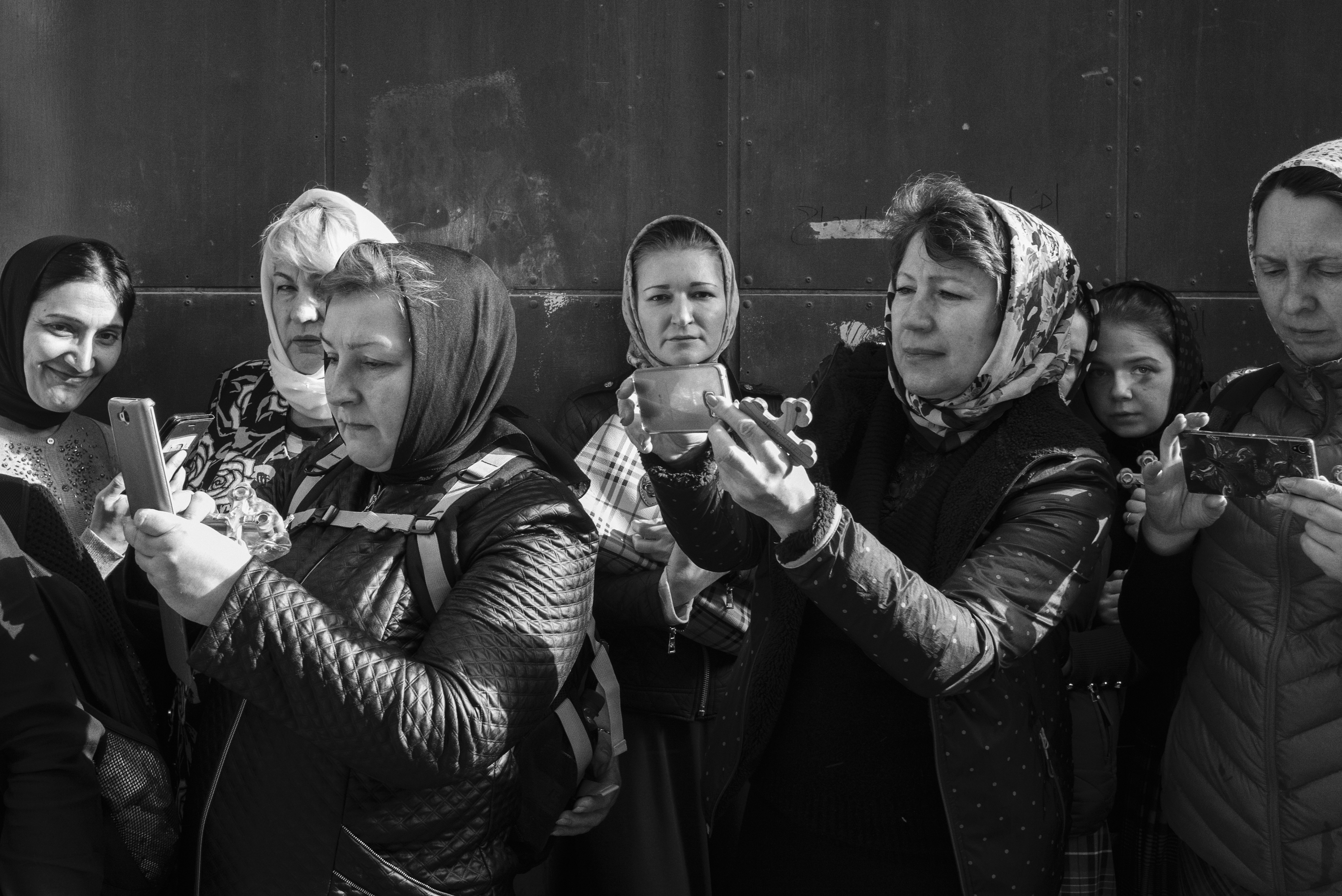
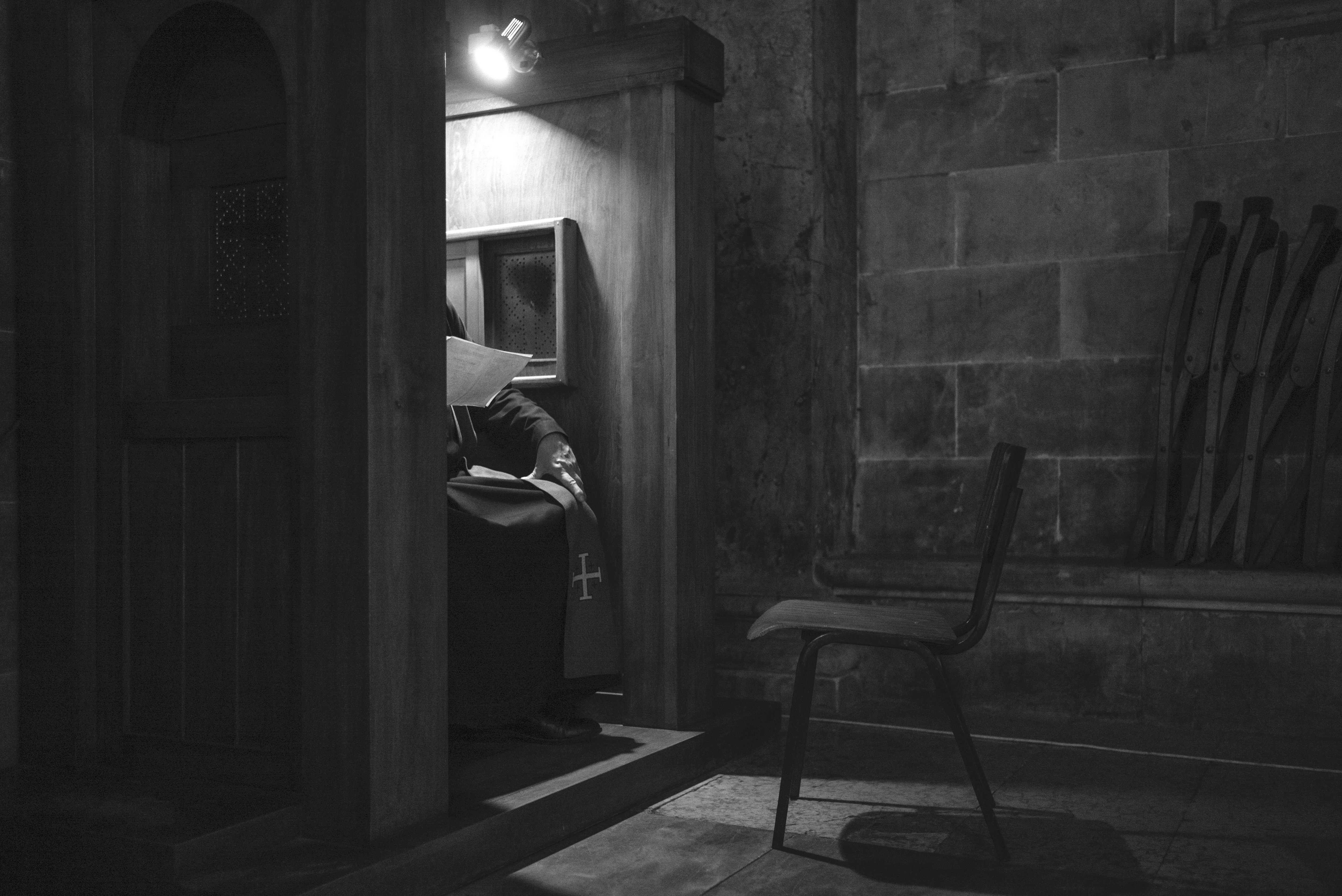
Capturing the Transcendent Heartbeat of Jerusalem’s Christians

Local photographer Ofir Barak documents the worship of the city’s religious stewards.

Capturing the Transcendent Heartbeat of Jerusalem’s Christians

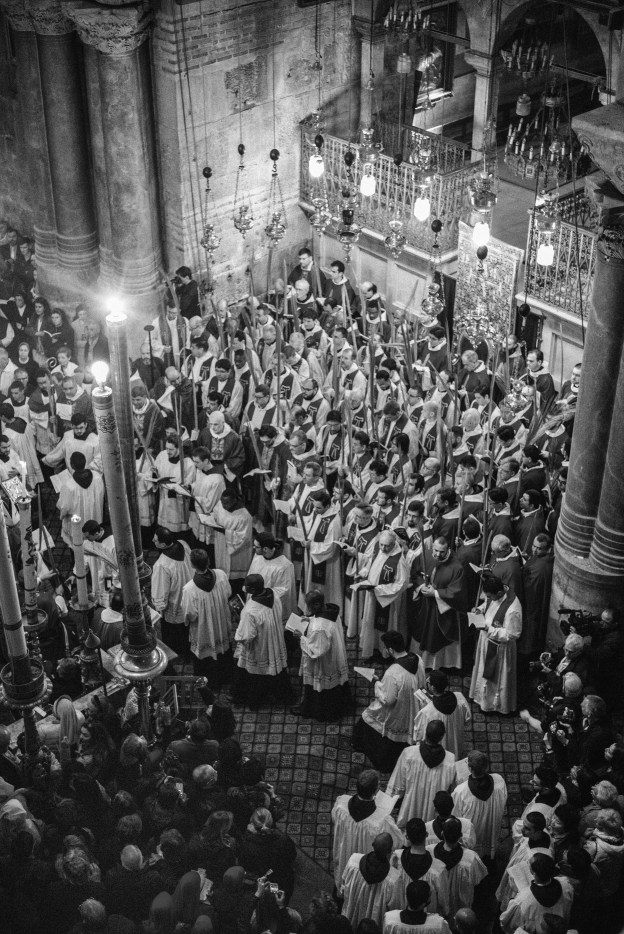
Palm Sunday | Church of the Holy Sepulchre

1 of 11

Palm Sunday | Church of the Holy Sepulchre

Ofir Barak

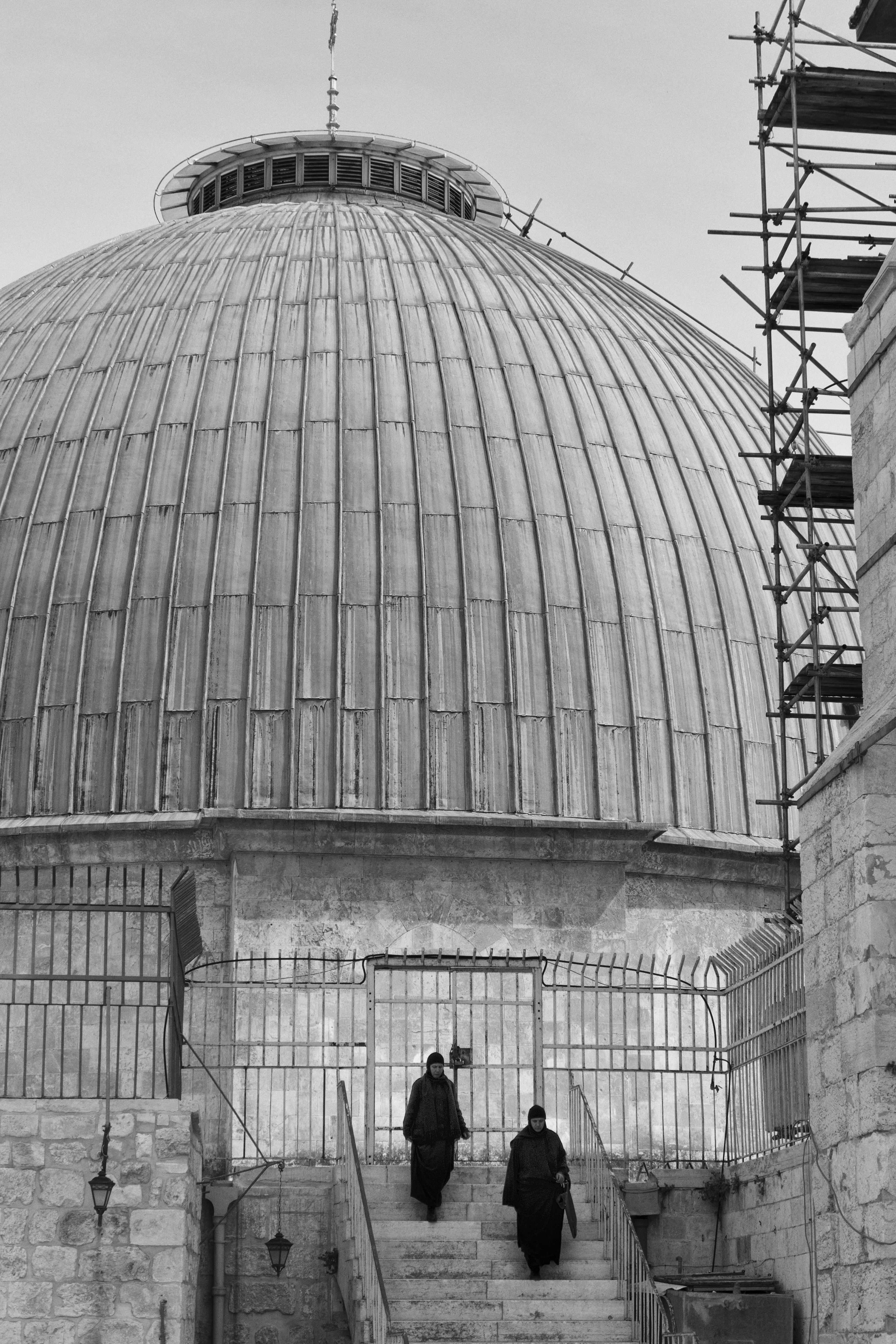
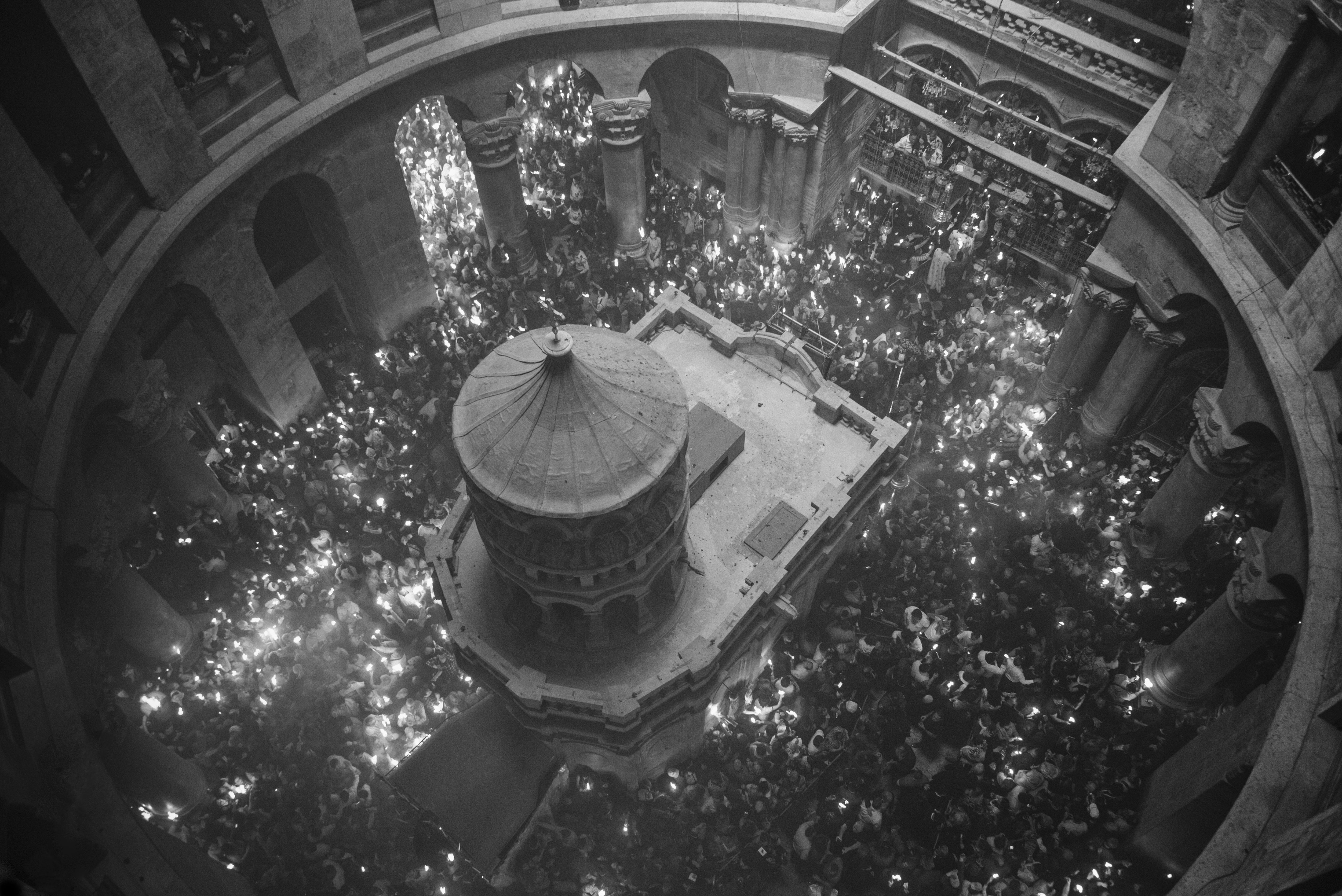
Dome | Church of the Holy Sepulchre, traditional site of Christ’s burial and resurrection

2 of 11

Dome | Church of the Holy Sepulchre, traditional site of Christ’s burial and resurrection

Ofir Barak

Confession Booth | Church of All Nations in Gethsemane, Roman Catholic basilica that houses what is said to be the stone where Jesus prayed before his arrest

3 of 11

Confession Booth | Church of All Nations in Gethsemane, Roman Catholic basilica that houses what is said to be the stone where Jesus prayed before his arrest

Ofir Barak

Church of the Holy Sepulchre

4 of 11

Church of the Holy Sepulchre

Ofir Barak

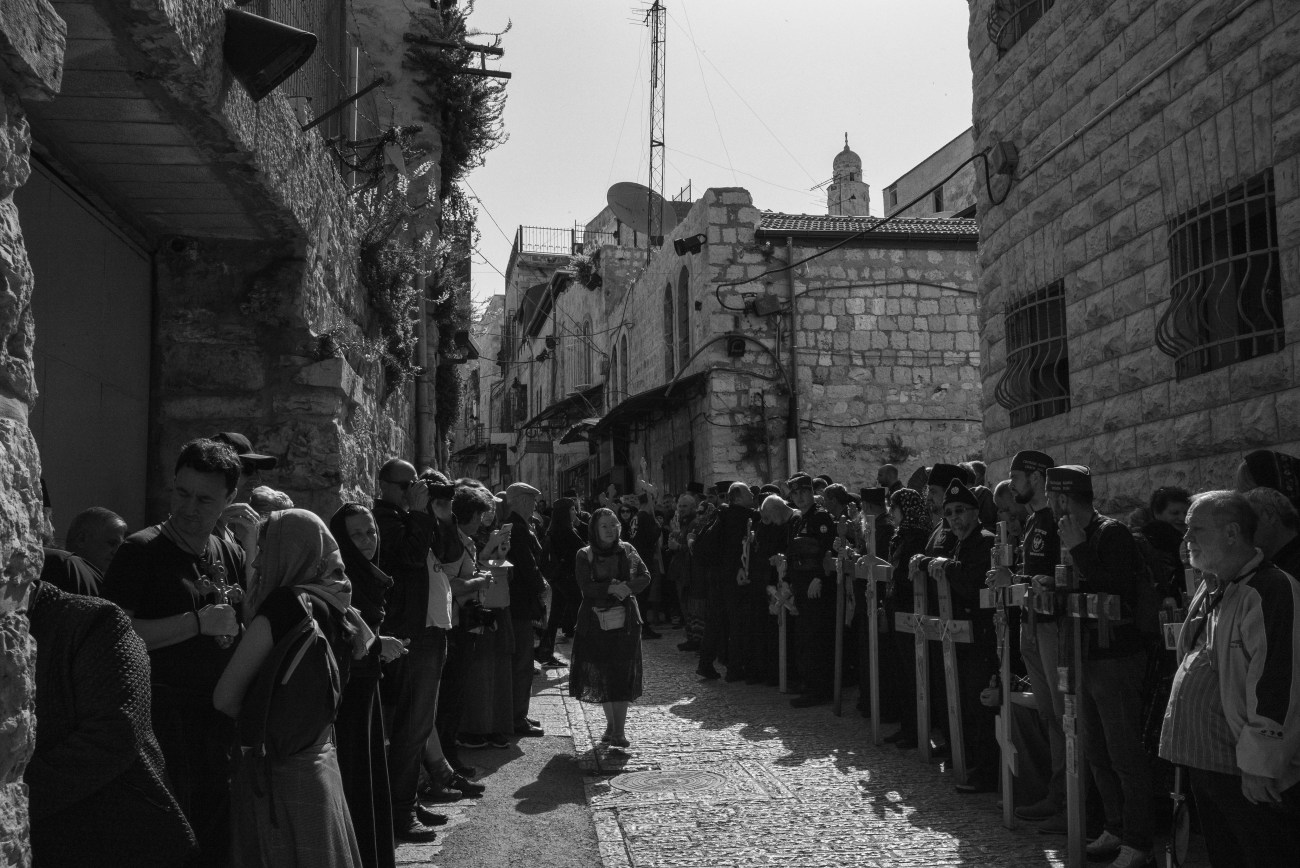
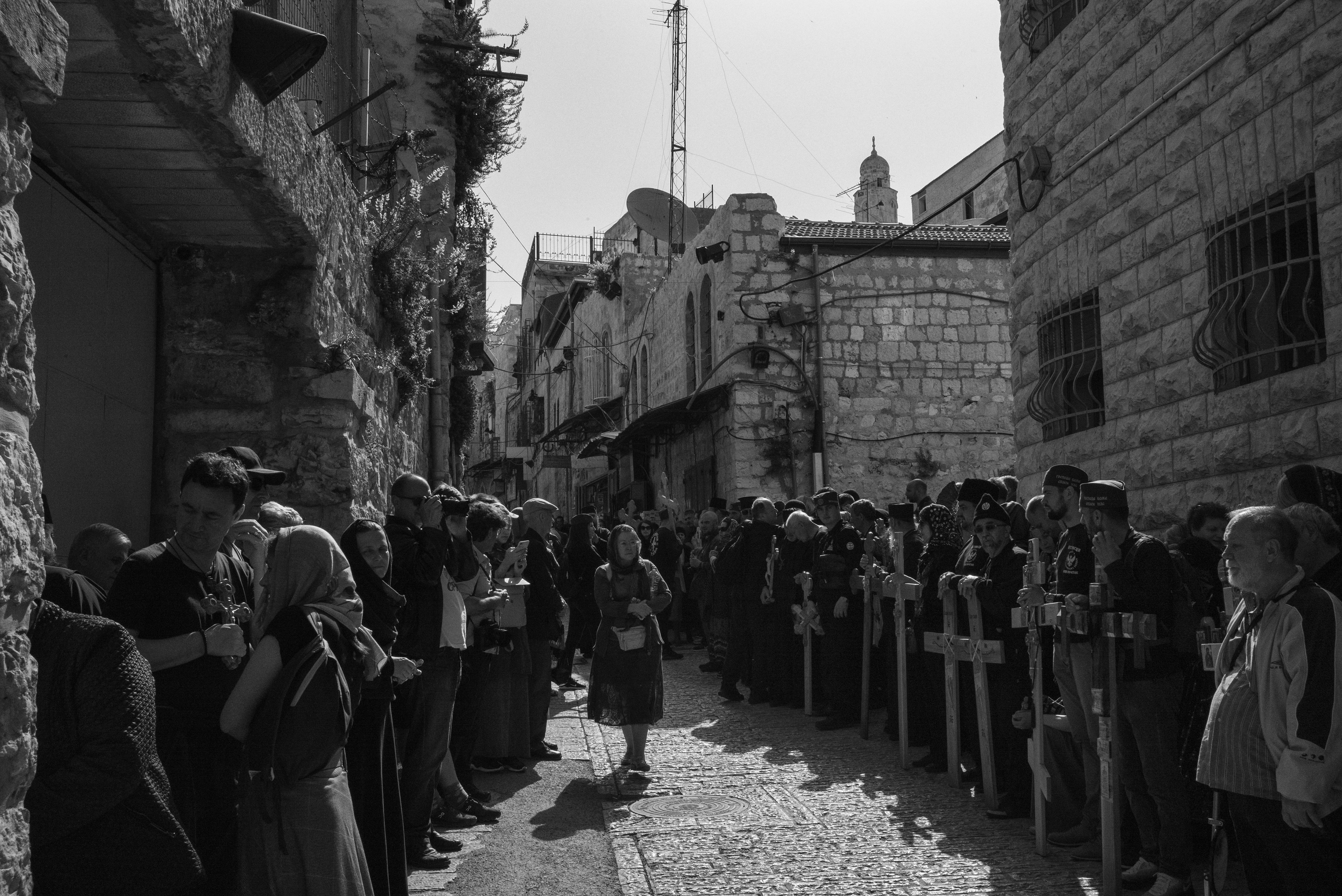
Good Friday | Onlookers at the Via Dolorosa processional route

5 of 11

Good Friday | Onlookers at the Via Dolorosa processional route

Ofir Barak

Good Friday | Onlookers at the Via Dolorosa processional route

6 of 11

Good Friday | Onlookers at the Via Dolorosa processional route

Ofir Barak

Stone of Anointing | Traditional location where Christ’s body was laid after the Crucifixion, housed at the Church of the Holy Sepulchre

7 of 11

Stone of Anointing | Traditional location where Christ’s body was laid after the Crucifixion, housed at the Church of the Holy Sepulchre

Ofir Barak

Stone of Anointing | Traditional location where Christ’s body was laid after the Crucifixion, housed at the Church of the Holy Sepulchre

8 of 11

Stone of Anointing | Traditional location where Christ’s body was laid after the Crucifixion, housed at the Church of the Holy Sepulchre

Ofir Barak

Holy Fire Ceremony | Orthodox tradition of passing the “miraculous” flame in the Church of the Holy Sepulchre

9 of 11

Holy Fire Ceremony | Orthodox tradition of passing the “miraculous” flame in the Church of the Holy Sepulchre

Ofir Barak

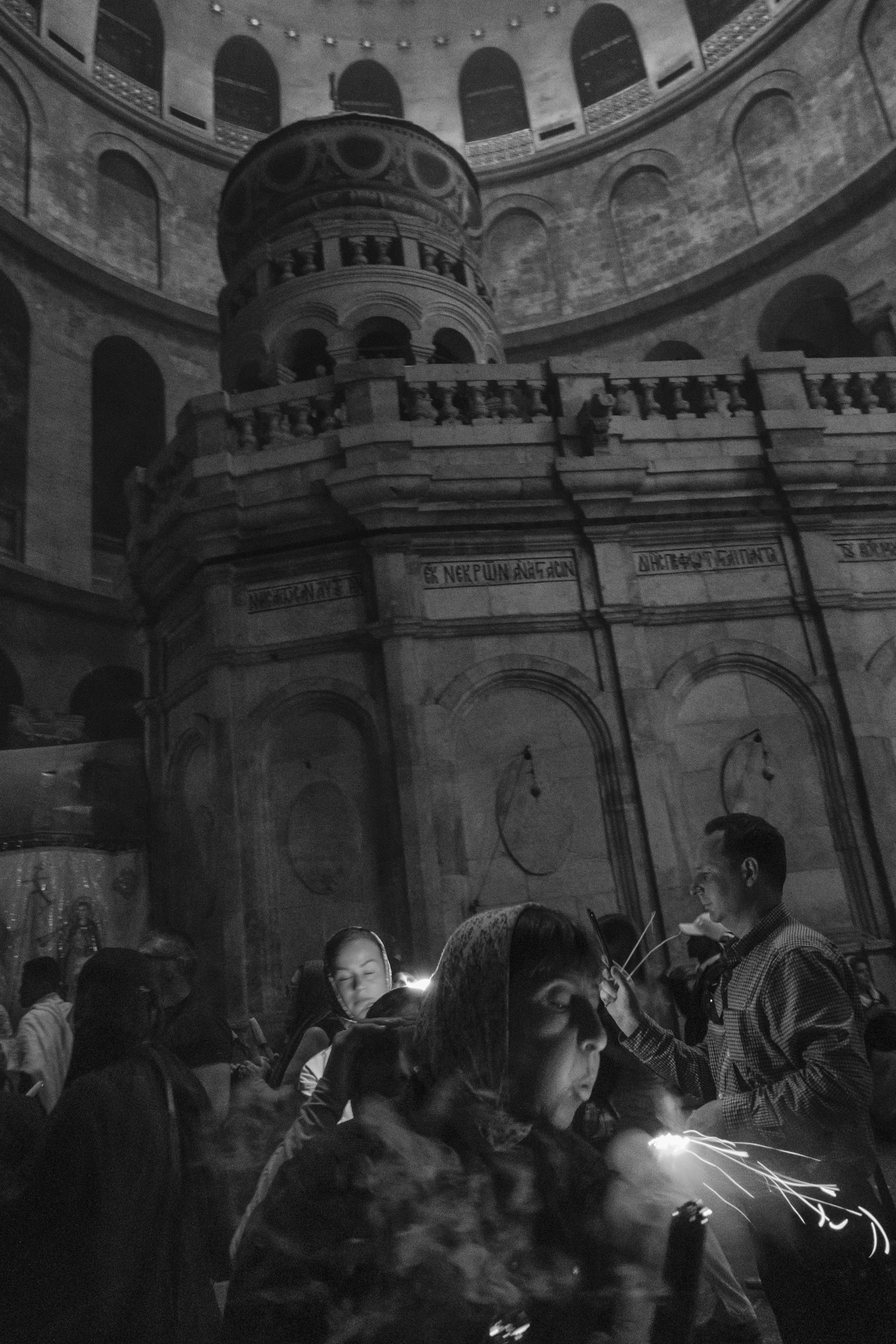
Pilgrims near the Aedicule at the Church of the Holy Sepulchre

10 of 11

Pilgrims near the Aedicule at the Church of the Holy Sepulchre

Ofir Barak

Jordan River Baptism | Qasr al-Yahud, traditional location of Jesus’ baptism

11 of 11

Jordan River Baptism | Qasr al-Yahud, traditional location of Jesus’ baptism

Ofir Barak

Log in or subscribe to view the slideshow.

Israel leads most other nations in vaccinating against COVID-19. But foreign tourism to the Holy Land remains largely shut down, and Jerusalem this Easter will again be defined by much emptier streets, hotels, and restaurants than usual.

In the run-up to Holy Week last year, media producers released a slate of products to help homebound pilgrims experience the city virtually. Filmmakers debuted a documentary about the Church of the Holy Sepulchre, the traditional site of Jesus’ death, entombment, and resurrection. Museums and travel promoters released virtual reality tours of many of the spots on Christian visitors’ must-see lists.

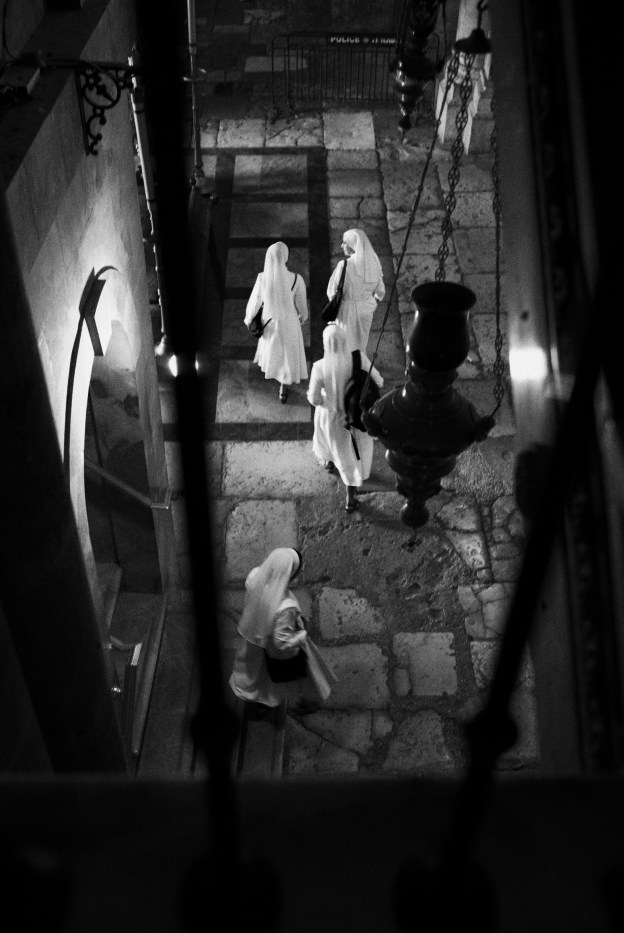
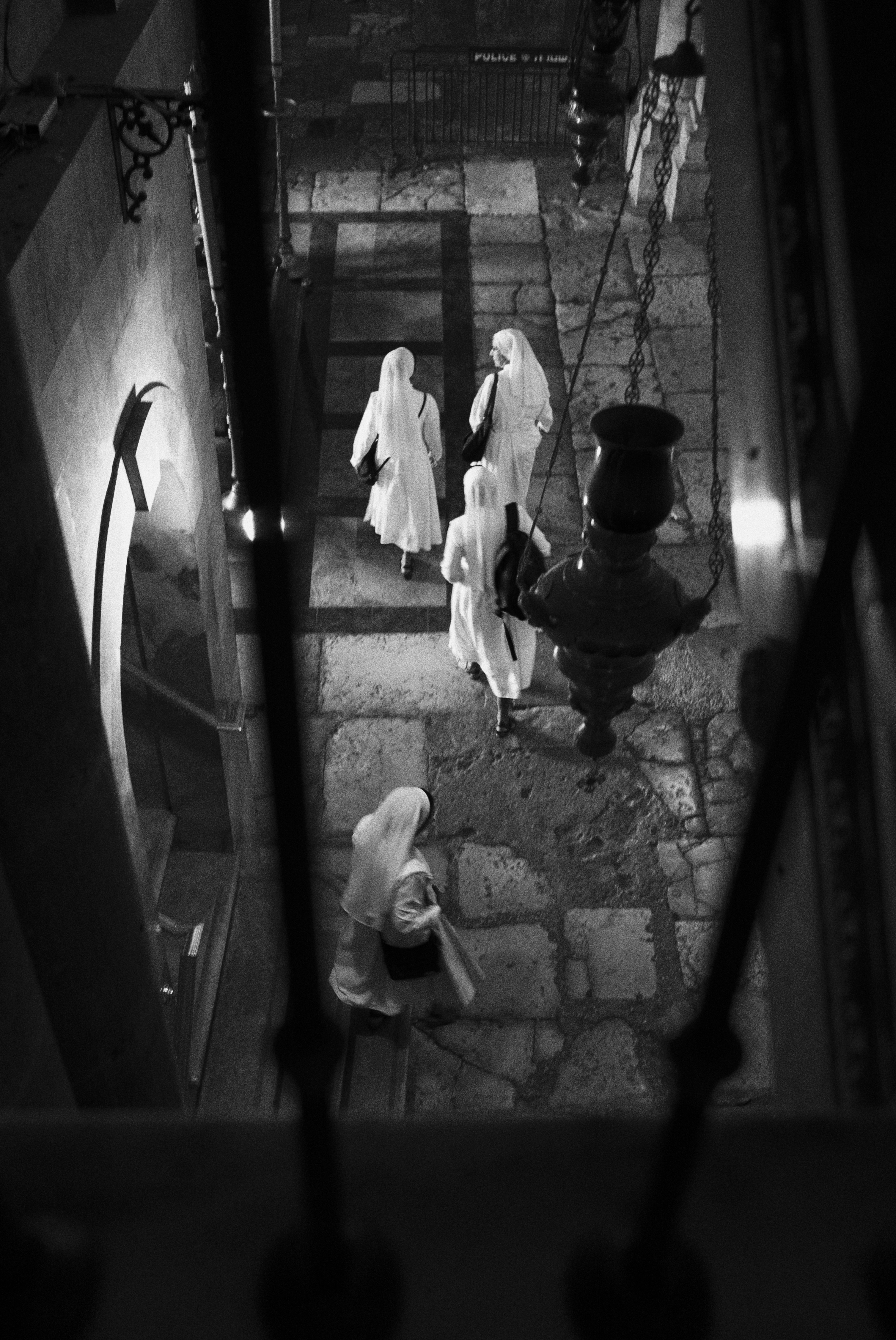
Jerusalem, however, has always been more than a destination. It is an ancient city with a transcendent heartbeat, the cradle of Judaism and Christianity, the center of both interfaith and intra-faith conflicts. “It is a place,” says photographer Ofir Barak, “where kings, prophets, and pilgrims have all stood through the ages.”

For years, Barak has documented local worshipers through whom those deep roots run. His images here, taken between 2016 and 2020, were included in his self-published book Stones and Bones. They center on the people who have been discipled in the shadows of the Old City, even as believers from abroad mingle among them.

The local Orthodox, Catholic, and Protestant Christians steward strains of faith that predate jet travel. In ways that a 360-degree digital walkthrough cannot, Barak’s choice of black-and-white imagery challenges the presumptiveness of our passport-acquired experiences. As enlightening as real-life and even virtual visits can be, they are but temporal glimpses of eternal realities. —CT editors

Books

5 Books That Help Believers Persevere Through Doubt

Chosen by A. J. Swoboda, author of “After Doubt: How to Question Your Faith without Losing It.”

Cavan Images / Getty

A Change of Heart: A Personal and Theological Memoir

Thomas Oden

As a young man in the 1950s, Oden was a budding progressive theologian who was transfixed by the social revolutions of his time. But an encounter with the writings of the early church fathers brought about a return to historic Christianity—to Jesus. Oden’s memoir, A Change of Heart, tells the story of one who underwent the deconstruction journey and came away with a stronger, more orthodox faith.

Sacred Fire: A Vision for a Deeper Human and Christian Maturity

Ronald Rolheiser

Rolheiser is a Catholic theologian whose spiritual writings appeal to increasing numbers of Protestants. Sacred Fire offers a fresh vision of Christian formation and discipleship. While evangelical readers may differ at points, Rolheiser’s vision of oneness with Christ is at times breathtaking. For those experiencing doubt and deconstruction, there is often a desire for answers. But Rolheiser invites us to something deeper: an experience of the love and mercy of Christ’s presence.

The Road Trip that Changed the World: The Unlikely Theory that will Change How You View Culture, the Church, and, Most Importantly, Yourself

Mark Sayers

Australian pastor and cultural critic Mark Sayers is gifted at helping Christians reframe the pursuit of Jesus in a post-Christian context. Here, he gives a fascinating look at a book that changed a generation—Jack Kerouac’s On the Road. Sayers’s cultural insights are shrewd, but what impresses most is his invitation to faith in Jesus in an age of cynicism. The goal of Christian spirituality, he shows, is finding, not endless seeking.

A Prayer Journal

Flannery O’Connor

O’Connor, the acclaimed Southern writer who endured a nearly lifelong battle with illness, is something of a patron saint for those who doubt. Few writers have so profoundly put to pen the experience of someone struggling with faith. O’Connor’s intimate prayer journals don’t offer all the answers—they offer the words of a friend sharing the same pain.

For the Life of the World: Theology That Makes a Difference

Miroslav Volf and Matthew Croasmun

While not dealing head-on with the topic of doubt, this book sets a helpful framework for faith and theology in an age of radical skepticism. Volf and Croasmun contend that theological self-critique can be healthy, but only as it furthers repentance, grace, justice, and mercy. As the authors write, “We need an ‘I have a dream’ speech, not an ‘I have a complaint’ speech.”

New & Noteworthy Fiction

Chosen by Susan Meissner, author of “The Nature of Fragile Things” and “The Last Year of the War.”

The Midnight Library

Matt Haig (Viking)

Who of us hasn’t wondered how different our lives would be if we’d made different choices? If we’d gone to College A instead of College B? If we’d married Person C instead of Person D? And if we could have a do-over, would we want one? The Midnight Library depicts a magical place, in between the life we’ve lived and the lives we could have lived, where we can enter—in progress—what seems like the better life. Much like the film It’s a Wonderful Life, the novel shows us how choosing a different existence would change not just our own life trajectories but also those of others—perhaps in terrible ways.

The Invisible Life of Addie LaRue

V. E. Schwab (Tor Books)

It’s the early 1700s, and Addie LaRue, desperate to escape an arranged marriage, makes a bargain with a dark deity, selling her soul for what she perceives as unfettered freedom. But she realizes the tragic consequences of her choice when she discovers that her “reward” is an immortal life where no one can remember her. The novel contains some adult language and also a few bedroom scenes, albeit nothing gratuitous. But Schwab is a masterful writer—her prose is hauntingly beautiful and evocative—and although Addie makes some chilling choices, her story builds toward an ending as perfectly satisfying as an ending can be.

The Mystery of Mrs. Christie

Marie Benedict (Sourcebooks Landmark)

If you’re in the mood for pure entertainment, and especially if you’re a devotee of the queen of mysteries, Agatha Christie, I highly recommend The Mystery of Mrs. Christie. Benedict imagines what really happened in 1926 during those 11 days when the famous writer went missing. The disappearance—which was never explained, although Christie claimed amnesia—allowed Benedict to put herself in the shoes of a mystery writer and concoct an explanation. The result is a thoroughly satisfying whodunit and welcome escape for our troubled times.

Apple PodcastsDown ArrowDown ArrowDown Arrowarrow_left_altLeft ArrowLeft ArrowRight ArrowRight ArrowRight Arrowarrow_up_altUp ArrowUp ArrowAvailable at Amazoncaret-downCloseCloseEmailEmailExpandExpandExternalExternalFacebookfacebook-squareGiftGiftGooglegoogleGoogle KeephamburgerInstagraminstagram-squareLinkLinklinkedin-squareListenListenListenChristianity TodayCT Creative Studio Logologo_orgMegaphoneMenuMenupausePinterestPlayPlayPocketPodcastRSSRSSSaveSaveSaveSearchSearchsearchSpotifyStitcherTelegramTable of ContentsTable of Contentstwitter-squareWhatsAppXYouTubeYouTube