News
Wire Story

The Latest Biblical Attraction: The Tower of Babel

Answers in Genesis plans a three-year expansion at its Ark Encounter site in Kentucky.

Ark Encounter park in Northern Kentucky

Ark Encounter park in Northern Kentucky

Christianity Today July 11, 2021
Aaron P. Bernstein / Getty Image

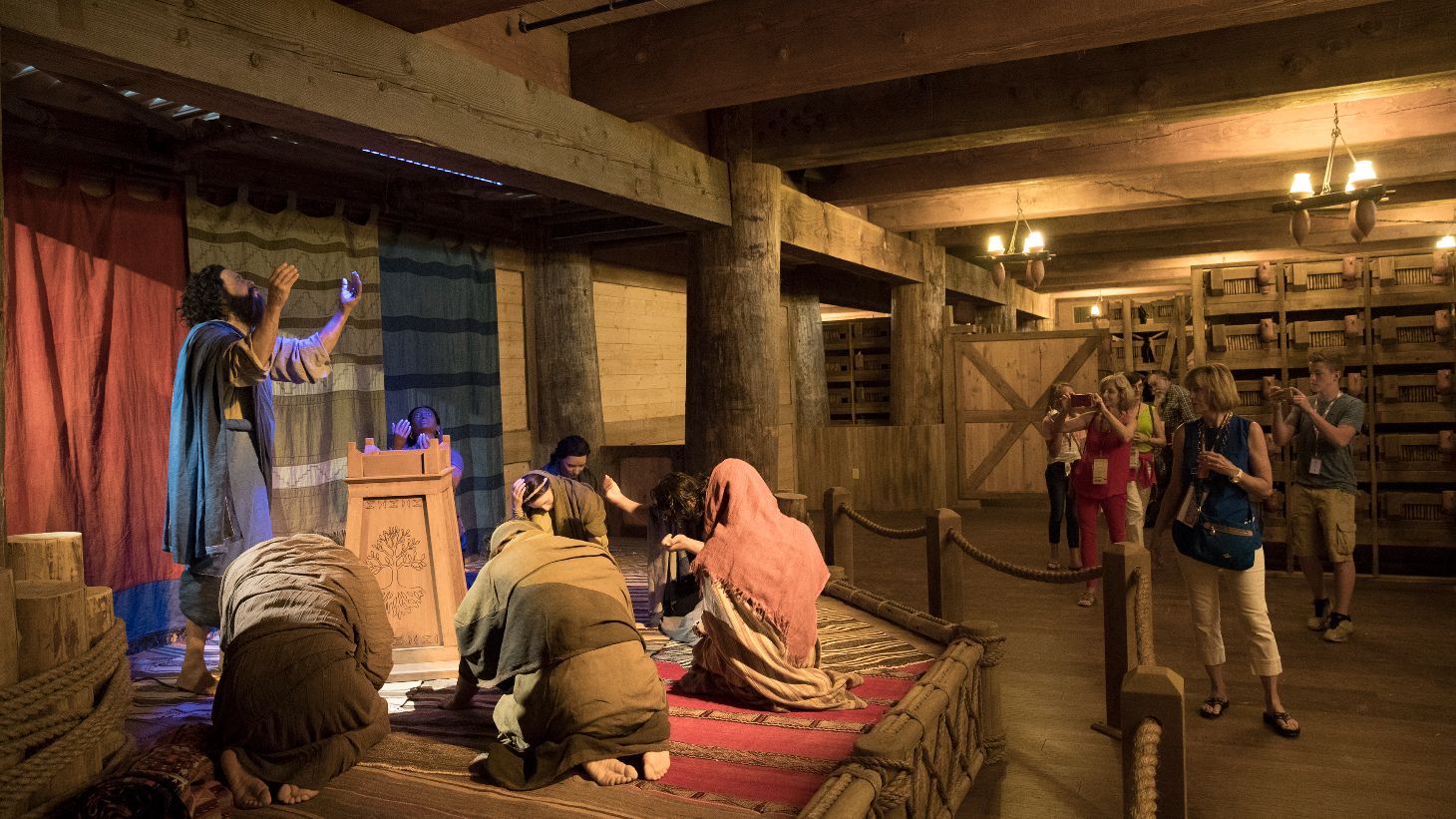
The Ark Encounter, a Bible-themed attraction in Kentucky that features a 510-foot-long wooden Noah’s ark, is planning to begin fundraising for an expansion.

The Ark Encounter said Wednesday that it would take about three years to research, plan and build a “Tower of Babel” attraction on the park’s grounds in northern Kentucky.

A release from the Ark Encounter said the new attraction will “tackle the racism issue” by helping visitors “understand how genetics research and the Bible confirm the origin of all people groups around the world.”

No other details were given on the Babel attraction or what it might look like. “I can assure you: it will be a fascinating, eye-opening attraction,” said Ken Ham, CEO of Answers in Genesis.

The Tower of Babel has been on the list of planned expansions since the park opened. Answers in Genesis, the ministry behind the ark and the Creation Museum, raised private funds to construct and open the massive wooden attraction in 2016.

Unlike Noah’s giant vessel, there is no biblical template or physical description for the dimensions of the Tower of Babel from Genesis 11, but according to Answers in Genesis, “Studying the oldest buildings from the area, archaeologists assume the Tower at Babel looked like a ziggurat.”

In the biblical account, people unite to build a brick tower as high as the heavens to “make a name for ourselves” (11:4). The Lord responds by confusing their language and scattering the people across the world. Prior to this, the Bible says, everyone on earth had been “of one language and of one speech” (Gen. 11:1).

A depiction at the Creation Museum shows a squat, unfinished structure since God interrupted plans to build it.

The Ark Encounter’s expansion plans also include an indoor model of “what Jerusalem may have looked like in the time of Christ.”

The Ark Encounter said attendance is picking up after the pandemic lull in 2020, with up to 7,000 visitors on Saturdays, according to the news release.

Additional reporting by CT.

Good Stories Can Change The World

Shirin Taber helps expand religious freedom worldwide by helping women tell their stories.

Good Stories Can Change The World
Photo Courtesy of Visual Story Network

“Research shows that storytelling is one of the fastest ways to impart knowledge and change attitudes,” says Shirin Taber. “You can convey a subject matter that may be uncomfortable, but it becomes easier to digest when in the format of a story.”

Christianity Today and Shirin Taber share the belief that good storytelling can change the world. It’s the central focus of both the work that Christianity Today does, and the work Shirin does with her organization Empower Women Media.

“Christianity Today brings awareness that the church around the world is very fragile right now, especially after Covid,” said Taber while reflecting on CT’s global storytelling impact. “In America it is easy to live an insular life and assume everything is okay because you’re okay. CT gives people in the west an exposure to the reality of how people are suffering in the world and how we can make an impact. They tell the stories of people who are doing great things and those stories compel people to get involved and make a difference.”

Shirin’s own life story has had an impact on thousands of people.

Shirin grew up the daughter of an Iranian Muslim father and an American Christian mother. Her childhood included a diverse array of cultural interactions, which she enjoyed. Growing up bi-culturally, Shirin felt at home and accepted in both her mother’s Catholic community and with her father’s Iranian friends and family.

When it came to her faith Shirin claims, “My father gave me the greatest gift I’ve ever received—the ability to choose for myself which faith to follow.” This decision laid the groundwork for Shirin’s future where she would work to further religious freedom among Muslims, especially Muslim women.

For most people middle school is a formative and tumultuous time, but for Shirin it was even more so. The Iranian revolution started around this time, and with it a shift in the United States perception of Iran and its people. And then, in an even more tragic turn of events Shirin’s mother passed away.

During this time Shirin’s neighbor cared for her grieving family. Through their growing relationship this neighbor was also able to share her faith. “She led me to consider my relationship with God,” retells Shirin. “I made the decision to follow Christ for myself, rather than just take the faith my mother had passed on to me.”

Shirin attributes her diverse upbringing and personal struggles as the catalysts for founding Empower Women Media (EWM) in 2015, which works to help women become world-class leaders by creating media for their mission. They focus on issues such as gender equity, freedom of religion and belief, peace building, trauma healing, and business as mission. Empower Women Media equips women to tell stories by providing media training, networking opportunities, mentoring, and more.

“Our media strategies, film festival and eCourses help educate people of the benefits of religious freedom,” says Shirin. “The right to have or change or adopt a different religion is absolute.”

Portionsa recent Empower Women Media film, is making a strategic impact in the world right now. The short film follows a young woman named Talia who is out to eat at a fancy restaurant with two peers. Talia appears uncomfortable and out of place at the restaurant. When she sees another woman, who clearly looks out of place, led out a back door Talia begins to wonder what more fruitful options might be available to her.

Portions was the recent focus of a CT article about how to further religious freedom among Muslims. In the article, Shirin shares how she believes storytelling, and especially film, can make an incredible difference in advancing religious freedom in the Muslim world.

“Short films can shift hearts, and after only a few minutes, rigid opinions begin to thaw,” says Shirin in the CT article. “Sharing our personal story is the best way to hook an audience.”

Shirin’s story has hooked an audience. After Christianity Today shared her story, Empower Women Media and Shirin’s work saw a large increase in visibility worldwide.

“Within a few hours a representative with the Religious Freedom Institute who focuses on the Middle East wanted to translate one of our courses into Arabic,” proclaimed Shirin. “It was amazing to get that offer. They also asked us to train their media producers. We conducted an online media production webinar and trained several media producers to create a film. The following month they submitted that film to our annual film competition.”

EWM co-hosts an annual International Film Competition with the Religious Freedom & Business Foundation. The film contest focuses on women who explore the impact of freedom of religion and belief through films. Last year’s winner was Mariya Goodbrake for her film Long Road to Freedom which shares about her nonprofit Global FC and the work they do mentoring children who came to the United States as refugees.

This year the focus of the film competition will be on “Live What You Believe”. Before entering the competition, women are required to take the Live What You Believe: Human Rights & Religious Freedom Training with EWM to help viewers gain a better understanding of religious freedom and why it is important.

“It’s important to follow the religious freedom trends and events, and keep reporting on them, and this is something I believe Christianity Today does well,” said Shirin. “Americans need to realize that restrictions are growing, and people are trying to take away more freedoms. If religious freedom is taken away, that is the cornerstone for many other human rights and the work we do.”

As Shirin continues to share with Christians around the world she is thankful for the way Christianity Today has supported her work and given her opportunities to share with an even wider audience.

“Christianity Today is a source you can trust. I feel good about the reporting and can share it with others, even non-Christians. I can share CT articles with my Muslim friends and people who live in the Arab world.”

Caitlin Edwards is marketing and communications strategist at Christianity Today.

News

New Museum Stakes Claim for the Bible in US History—Right Next to the Liberty Bell

Faith and Liberty Discovery Center traces Scripture’s presence at America’s founding and reminds visitors that “faith guides liberty toward justice.”

Christianity Today July 9, 2021
Douglas Nottage / American Bible Society

America’s “most historic square mile” got a new resident on the Fourth of July weekend. Joining the Liberty Bell and Independence Hall in Philadelphia, the American Bible Society has opened a $60 million museum to highlight the role of Scripture in the founding of the United States.

“We are leveraging history to advocate for the Bible,” said Alan Crippen, chief of exhibits at the Faith and Liberty Discovery Center (FLDC). “The American story of liberty is unintelligible without knowledge of the Bible, and how it impacted our leaders.”

The new museum gives special space to William Penn and his “holy experiment” of Pennsylvania.

Alongside his Bible, the museum displays an original copy of Penn’s 1683 pamphlet, The Great Case of Liberty of Conscience Once More Briefly Debated and Defended. Informing Penn’s vision for governance, the charter of Pennsylvania guaranteed religious freedom and sought peace with the local Lenni-Lenape Native American tribe.

The FLDC’s six exhibits are more than a storehouse of artifacts, though. Interactive exhibits present six foundational American values: faith, liberty, justice, hope, unity, and love. An electronic “lamp” allows visitors to activate additional material, and store memories for retrieval at home.

The exhibits pose additional questions for contemplation or group discussion. The First Amendment section prompts: Do you agree that a just society requires freedom of religion and dissent? Another follows George Whitefield and asks: Do you agree that people can have a direct and personal relationship with God?

“Exhibits are meant to be immersive, but not to proselytize,” said Crippen. “This question is meant to pull the viewer into the logic of the Great Awakening.”

The museum makes it clear, though, that the Bible played a pivotal role in the development of democratic ideals. After the faith section of the museum, the liberty section starts with a pillar of scripture verses and expands concentrically with the stories of 21 “change makers.”

One is Jeremiah Evarts, a 19th century missionary and advocate for Native American rights. Others featured in the exhibit are abolitionist Sojourner Truth and the Catholic labor leader Cesar Chavez.

But it is the “Justice” exhibit that fully draws out the biblical tension in American history. A burnt wood display and jagged edges communicate disorientation and point to the fact the Bible has been claimed and appropriated by all sides in the unfinished task of liberty.

Slavery, women’s emancipation, and American exceptionalism are featured examples, though current social and political controversies are not addressed.

As videos of historical figures weigh in on biblical themes, however, they are interspersed with visitor contributions. All are invited to record their reflections in a private booth, which will later vetted and included in the display—no matter the political opinion.

“We did not build this center for Christian people,” said Crippen. “But we want people to appreciate the Bible and its role in cultivating the virtues necessary to sustain US democracy.”

For too many Americans, he said, liberty is libertarianism. And for many justice has lost its biblical clarity, replaced by anger, violence, and ideology.

The Bible used to be called “the Good Book,” he explained, but today it is frequently seen as a text full of fanciful stories and outdated morals—even hate. The ABS, founded in 1816, says there are 10 million more skeptics than Bible-engaged people in the US.

The issue has been a major focus of ABS since they moved to Philadelphia in 2015. The museum is massive investment to address the Bible’s “branding problem.”

It was designed by the same firm that spearheaded New York City’s 9/11 Memorial and Museum and exhibits aim to appeal to people who are more comfortable scrolling TikTok than reading a book.

Throughout the museum, a key phrase is repeated. It was coined by Crippen’s team: “Faith guides liberty toward justice.”

It is not simply a spiritual message.

The center is informed by 30 historians, religious experts, and legal scholars representing a range of ideological positions, to ensure accuracy of the exhibits.

“One would expect they tend to think that the Bible has had a valuable, if contested, role in American history,” said Thomas Kidd of Baylor University, one of the endorsing scholars. “But unlike some scholarly groups, this one seeks to be diverse.”

Many of their writings are for sale alongside typical mementos in the gift shop. The shop also sells Faith and Liberty Bible, an ABS study guide with 810 articles and quotations to illustrate 400 years of American connection to Scripture.

“There are many ways to read the Bible,” it states. The Bible can be seen as a civic text, ancient history, literature, and moral science. But the ABS study guide also includes an invitation: “Discover how the Bible can transform your own life.”

The “Hope” exhibit in the museum provides examples.

Moving from history to sociology, individual screens tell the stories of struggling marriages, wounded veterans, and Sudanese refugees. Artifacts in this section include Helen Keller’s Braille Bible, a child’s crutch from CURE International, and Shabbat candlesticks brought to the US by Jewish immigrants from Ukraine in 1913.

As visitors complete the tour, they exit with a highlighted view of Mikveh Israel, the oldest synagogue in the United States, dating to 1740. Albert Gabbai, a rabbi at the synagogue, called the FDLC a “wonderful, non-judgmental, and enriching” way to explore the Bible.

Other neighbors agreed.

“We don’t have to shy away from discussing the biblical influences on the Founding Fathers,” said Jeffrey Rosen, president of the National Constitution Center. “Starting with Thomas Jefferson, all the framers believed people were born with certain inherent rights that came from God or nature, rather than government.”

The president of the Independence Visitor Center is similarly positive.

“The compelling story of the Bible’s influence shows its integral relation with the birth of American democracy,” Jim Cuorato said. “It is an added value to the Philadelphia experience.”

A five minute walk west of the museum, visitors can see the engraved words on the Liberty Bell, taken from Leviticus: “Proclaim liberty throughout all the land, unto all the inhabitants thereof.” Without biblical literacy, many are unaware of the verse’s connection to the Year of Jubilee and its radical vision of freed slaves and economic liberation.

But the FLDC is clear: Copious scriptural references have fallen short, and have been misused throughout American history.

“Why did oppressors use the Bible? Because it was culturally useful,” said Crippen. “But who stood up to them? The ones who were using it rightly.”

The final exhibit—"Liberty’s Light”—returns to William Penn. Its circular theater tells his story, with visitors’ lamps opening eight chapters to delve more deeply into Philadelphia’s moral struggle, including women’s rights, racial emancipation, and religious liberty for all.

“We hope that as you step into this journey of exploration,” said Patrick Murdock, FLDC executive director, “you will discover that these stories of great Americans—and the values they embraced—remain the values that unite us today.

“And we hope these values are an inseparable part of your story, too.”

News

The 9 Nations Where It’s Hardest to Be a Baptist

New index finds 1 in 4 worshipers and 1 in 5 churches in Baptist World Alliance are very vulnerable to persecution and poverty.

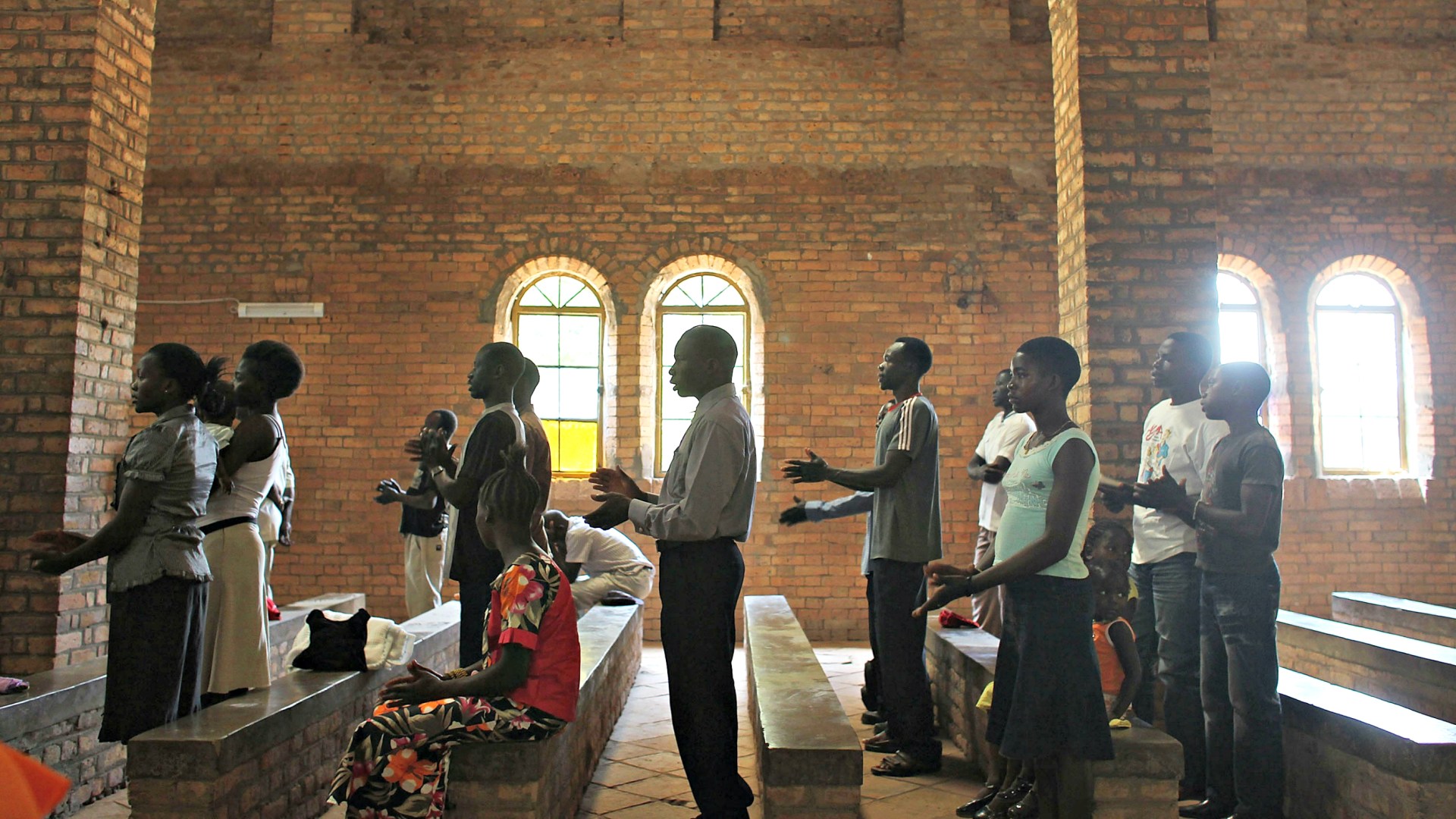
A Sunday church service near the borders of South Sudan, DR Congo, and the Central African Republic. A study ranks all three among the nine nations where Baptists are most vulnerable.

A Sunday church service near the borders of South Sudan, DR Congo, and the Central African Republic. A study ranks all three among the nine nations where Baptists are most vulnerable.

Christianity Today July 8, 2021
Spencer Platt / Getty Images

As thousands of Baptists from almost 150 countries gather online this week to celebrate their global family, a recent study finds 36,000 Baptist churches and 13 million Baptists in nine countries face significant challenges related to their faith and their daily lives.

This represents 1 in 5 churches and 1 in 4 worshipers affiliated with the Baptist World Alliance (BWA), which has member bodies in 126 countries and territories.

Thus it was fitting that the 22nd Baptist World Congress, held every five years and originally scheduled for 2020 in Brazil, opened yesterday with a pre-conference focused on the persecuted church. The event was made all the more poignant by Monday’s mass kidnapping at a Baptist high school in Kaduna, Nigeria, where 121 students remain missing.

The inaugural Baptist Vulnerability Index is an effort by BWA leaders to “bring attention” to the “challenging realities” of its members and to help Baptists “stand together in intentional solidarity.” More than 4,000 people from 146 nations registered for the congress, the largest and most diverse attendance in the 115-year history of the gathering. (Billy Graham spoke at many.)

The report identifies the top nine countries where it is now hardest to be a Baptist:

  1. Central African Republic (CAR)
  2. Nigeria
  3. Sudan
  4. Syria
  5. Ethiopia
  6. India
  7. Chad
  8. Democratic Republic of Congo (DRC)
  9. South Sudan

All scored between 6 and 9 on the index’s 10-point scale [see chart below].

“Our concern is for the Baptists, but not only for the Baptists,” Elijah Brown, BWA general secretary and CEO, told CT. “We share concern for all of the citizens in the country who may be struggling.”

The most Baptists at risk reside in No. 2 Nigeria with about 7 million Baptists across more than 13,300 BWA churches. Next is No. 8 DRC with about 3.3 million Baptists across more than 6,200 churches, followed by No. 6 India with more than 2.5 million Baptists across more than 14,300 churches.

By comparison, No. 4 Syria has only 800 Baptists across 11 BWA churches, and No. 7 Chad has only 121 Baptists across 5 churches.

https://datawrapper.dwcdn.net/053aY

The BWA index measures four factors:

  1. Hunger (based on the Global Hunger Index)
  2. Livelihood (based on the UN Human Development Index)
  3. Violent conflict (based on the Global Peace Index)
  4. Religious freedom (based on the Pew Research Center)

Then BWA regional leaders assess “the degree to which Baptists directly experience these challenges.”

Beyond its focus on Baptists, the report’s inclusion of hunger and livelihood challenges make its rankings stand out from the country rankings produced by longstanding assessments of Christian persecution, such as the Open Doors (OD) annual World Watch List, or of religious freedom violations in general, such as the Pew Research Center’s annual indexes of government restrictions and social hostilities.

André Simão, a senior fellow with 21Wilberforce and vice chair of BWA’s religious freedom commission, told CT this is due to “the BWA approach, which also encompasses aid (through BWAid), and because many of those problems may intersect and demand an integrated response.”

Only two of the countries on OD’s top 10 persecutors list—No. 9 Nigeria and No. 10 India—also appear on BWA’s list. The reason is simple, according to Simão: the BWA does not have any affiliates in the worst eight nations. Then, among OD’s fuller list of the top 50 countries where Christians face the most persecution, another five nations—No. 12 Syria, No. 13 Sudan, No. 35 CAR, No. 36 Ethiopia, and No. 40 DRC—also appear on the Baptist index.

Overall, BWA has affiliates in only 23 of the 50 countries on OD’s watch list. Chad and South Sudan appear on BWA’s list but not on OD’s list.

The United States resettled 34,580 Baptist refugees from 42 countries between 2002 and October 2020 (the US State Department removed such data from public view on October 9 last year).

Only 1,759 of these Baptists fled from the nine nations on the BWA index, including 1,563 from DRC, 127 from CAR, 60 from Ethiopia, and 9 from Sudan.

Meanwhile, the largest share of Baptist refugees in the US have come from Ukraine, with 11,610 resettled, followed by 6,883 from Myanmar (Burma), 5,367 from Moldova, and 3,893 from Russia.

Brown said the index is being used to focus Baptist advocacy at the UN and to encourage more direct aid and partnerships between member bodies. The BWA counts 241 member bodies in 126 countries, representing 47 million Baptists across 169,000 churches.

“Our concern is not just about protecting or strengthening the local Baptist community—though we are certainly working toward that end—but also recognizing that they are ministering in very vulnerable contexts and have a heart and passion for living out the gospel well in their community,” said Brown. “We also want to stand with them and help empower them as they engage in sharing the gospel, serving with compassion, and standing for justice.”

News

How Thousands of Sermons Addressed the Crises of 2020

Pew analyzes how pastors across traditions preached on COVID-19, the election, and racism.

Christianity Today July 8, 2021
Pearl / Lightstock

The stories that shaped Americans’ lives in 2020—the pandemic, the presidential election, and the reckoning over racial violence—also made their way into a majority of sermons last fall, according to Pew Research Center analysis of 12,832 messages posted on church websites.

But whether your pastor preached about praying for the president or registering to vote, or the sermon referred to “racial tensions” or “white supremacy,” depended on the kind of church you attended.

Overall, Protestants were significantly more likely than Catholics to address current events from the pulpit. And the spiritual framing differed between evangelical Protestants and Protestants from historically Black traditions, though the majority of Black Protestants share evangelical beliefs.

Over 80 percent of evangelical and Black Protestant churches heard sermons around COVID-19, while 71 percent of evangelical and 63 percent of Black Protestant churches addressed the election, and 41 percent of evangelical and 52 percent of Black Protestant pastors preached on racism.

Like many pastors across the country, R. Derrick Parks at Epiphany Church in Wilmington, Delaware, spent 15 months delivering his Sunday messages to a camera while his 100-person church paused in-person services during the pandemic.

An African American and the executive coordinator of Acts 29’s urban church planting, Parks said that during this time, he heard responses from congregants who were “encouraged when we directly spoke to issues of justice”—a regular theme in his preaching and in Scripture.

Months after the deaths of Ahmaud Arbery, Breonna Taylor, and George Floyd stirred protests in major cities, racism continued to come up in 44 percent of the sermons analyzed by Pew in a roughly two-month period last fall.

In a rare gesture by an American president, Ronald Reagan has authored a ten-page essay for the spring issue of Human Life Review in which he urges Americans to oppose abortion on demand. In his essay, Reagan emphasizes the value of human life. He writes, “Abortion concerns not just the unborn child, it concerns every one of us.”Citing the Dred Scott decision of 1857, which denied full humanity to black Americans, Reagan draws a parallel between pro-abortion mentality and racial discrimination.Reagan’s avid belief in legislation to overturn the 1973 Roe v. Wade decision, which legalized abortion, is well known, and his essay repeats his support of all the proposed solutions in Congress. At the same time, perhaps to a greater degree than before, he emphasizes the medical evidence that indicates unborn life is truly human, and he calls for a return to a “sanctity of human life” ethic rather than the “quality of life” ethic now in vogue.“We must all educate ourselves to the reality of the horrors taking place. Doctors today know that unborn children can feel a touch within the womb and that they respond to pain. But how many Americans are aware that abortion techniques are allowed today in all 50 states that burn the skin of a baby with a salt solution, in an agonizing death that can last for hours?”Reagan praises the work of Christian groups that have developed alternatives to abortion and have given care to unwed mothers. He suggests adoption as a major alternative.His essay has provided a welcome boost to a prolife movement whose legislative endeavors are receiving scant attention in Congress and the media. The editor of the Review, J. P. McFadden, said it is the most significant essay his eight-year-old quarterly journal has ever published. The Review is published by the Human Life Foundation, a nonprofit organization that financially supports efforts to protect and care for infants who would otherwise have been aborted.McFadden floated the idea of a presidential essay among Washington prolife advocates last year. After the January 22 March for Life, the suggestion was passed along to Reagan during a meeting with prolife leaders. “A week or so later, I heard he had approved the idea,” McFadden said. By the end of March, the manuscript arrived. The article was actually a team effort of White House staff people, with personal contributions from the President.Entitled “Abortion and the Conscience of the Nation,” the article ends with a reference to Abraham Lincoln’s statement that America would not be truly free as long as slave owning persisted. “Likewise,” Reagan writes, “we cannot survive as a free nation when some men decide that others are not fit to live and should be abandoned to abortion or infanticide.”

Black Protestant churches were more likely than any other tradition to preach on racism. Both in sermons addressing race and addressing the election, they were also more likely to address voting rights.

Sermons from Black Protestants in the Pew analysis were twice as likely to encouraging voting when talking about the election (43% vs. 20% overall), while evangelicals were more likely than other traditions to speak on issues, candidates, or parties (48%).

“I just see it as a Christian responsibility for us to engage the needs of our communities. It’s always been about the community as a whole. Churches exist to proclaim the name of Jesus to those who are lost and at the same time to leave his imprint in whatever community they end up in,” said Parks. “The Black church has been a beacon of that. If that meant we’re going to rally people to a voting booth, we’re going to do that.”

Previous research from Pew found that Black Protestants and evangelicals are the only major religious traditions that want their churches to “express their views” on social and political issues. The majority of Black Protestants want to see faith have a greater influence on politics, but different churches have different approaches.

“African American Protestant churches have varied orientations towards politics in the pulpit,” said Lerone A. Martin, associate professor in religion and politics at Washington University in St. Louis. “Some are very politically engaged while others, especially those in the holiness and Pentecostal traditions often stay away from politics, instead choosing to focus on individual holiness and piety.”

“The blatant racism of the Trump administration was the final straw for some Black Christians,” Martin said, “pushing some Black faith committed towards more explicit political engagement and even departing majority white denominations and churches.”

Preparing for a decision next November on a homosexual church’s eligibility for membership in the National Council of Churches, the council’s 260-member governing board aired sharply divergent views during a four-day meeting in San Francisco last month.The membership in question was that of the Universal Fellowship of Metropolitan Community Churches (UFMCC), a 27,000-member denomination founded in 1968 by homosexuals as a haven for gay Christians. Oscar McCloud, a United Presbyterian official who chairs the NCC’S constituent membership committee, called the discussion “the most serious theological debate” that the governing board has engaged in in his 11 years with the council.United Methodist Bishop James Armstrong, NCC president, said the study engaged in by the council since the fellowship’s initial application in September 1981 has been “a responsible process.” Paul Fries, a Reformed Church in America theologian, indicated that a study by the Faith and Order Commission found no agreement on whether on ecclesiological and theological grounds the UFMCC qualifies for membership. Some members, he said, “do not believe it is a church; others believe it meets the council’s criteria; still others said, ‘until we have lived longer with them, we cannot know whether it is a church.’ ”The NCC’S Faith and Order Commission earlier recommended that each church decide the issue on the basis of its own ecclesiology (doctrine of the nature of the church). Barbara Brown Zikmund, a church historian ordained in the United Church of Christ, said that as a woman associated with a liberal interdenominational seminary, she had initially been concerned with the UFMCC application as a “justice issue” but had come to “believe that it must be looked at in a deeper way.”The UFMCC, said Zikmund, “is challenging the church’s basic understanding of human nature, unquestioned for centuries”—that is, its ideas about how the image of God is reflected in its wholeness only through humanity in male and female gender expressed in heterosexual bonding. Zikmund said the UFMCC’s application raised the question of “the limits of legitimate diversity.… The authority of the Bible and tradition in the church is not just pragmatic,” she said. “What authority do we rely on to determine the perimeters of our membership?”The Reverend Alexander Doumouras of the Greek Orthodox Archidiocese declared that “the Orthodox could not find it possible to enter into ecclesial fellowship with the Metropolitan Community Churches” if the group became a member of the NCC. “For the Orthodox it could not even be a debatable issue,” he added. “The Orthodox church cannot accept the UFMCC as a church on the basis it has been formed.”A Methodist view came from Roy Sano, a faculty member at Pacific School of Religion, who cited the “Wesley Quadrilateral” of Scripture, tradition, reason, and experience recommended by Methodism’s eighteenth-century founder, John Wesley, as a basis for decision making. Sano contended that governing board members needed “personal interaction” with a UFMCC congregation in order to answer the question of whether it is a church. He suggested that if NCC members experience the question of UFMCC eligibility “as a problem and are not captivated by the potential for deepening unity, I respectfully raise questions about the state of your souls.”But a black Methodist—the Reverend Cecil Murray, pastor of an African Methodist Episcopal church in Los Angeles—had an opposing view. Declaring that he represented a consensus of his church, the oldest black denomination in North America, Murray said, “Our church is not against homosexual persons, but is against homosexual practices.” He said he has been asked whether, as a member of an oppressed minority, he should not stand in solidarity with homosexuals. “We do not think the experience of homosexuality can be effectively compared with that of being black.” Further, he said, “We view homosexuality as another force militating against black families. Any attack on the black family is an attack on the very survival of our posterity.… To embrace a philosophy of homosexuality would simply be a luxury we could not afford.”“Is the UFMCC a biblically valid church body?” asked the Reverend Mark Heim of the American Baptist Churches. He said that is the question as far as American Baptists are concerned. “The vast majority of American Baptists believe that the practice of homosexuality is against Scripture.” Although the congregational ecclesiology of the American Baptist Churches precludes arriving at a consensus on the question, he said that the “main body of opinion” would find the UFMCC basing its existence on “a biblically invalid position.”The next action on the application of the gay church is expected in November, when NCC board members will vote on whether the UFMCC is eligible for membership. If the board determines it is eligible, NCC member churches will vote on the application next year.

Protestants at historically Black churches were seven times more likely to hear a sermon reference voter suppression, early voting, and registering to vote, according to Pew.

Evangelical churches, by contrast, spoke more regularly of prayer for the election and for the president. The Pew report noted, “evangelical pastors tended to employ language related to evil and punishment at a greater rate, using words and phrases such as ‘Satan’ or ‘hell’ at least twice as often as other clergy did.”

When addressing racism, evangelical pastors were more likely to refer to “racial tension” or mention the role of the police, while Black and mainline Christians spoke more often of “white supremacy.”

Other surveys found that Protestant pastors overall became more reluctant to preach on race in recent years. Lifeway Research reported earlier this year that while the majority of pastors are open to preaching on racial reconciliation and had done so in the past two years, higher numbers have received significant pushback for their messages on race.

For years, pastors have sensed a growing expectation that they address current events from the pulpit, especially as certain news stories dominate social media feeds.

Most pastors see the purpose of their preaching as proclamation of the gospel above all, but also recognize the opportunity to equip their flock to think biblically about the world around them.

“A faithful preacher is always addressing events that are current. They’re always seeking to speak in manner that allows the Word of God to apply to people’s everyday lives,” said Delaware pastor R. Derrick Parks.

“I believe that in moments of crisis you should respond and not react… We responded to the issue of justice with thoughtful care and used the one tool that is the primary tool for us, and that’s the Word of God.”

News

Evangelicals Ask Pope Francis to Help Save Lebanon

Visiting the Vatican for a Christian summit, leaders explain why the problems of sectarian politics have become unbearable.

Pope Francis and Lebanon's Christian leaders arrive to pray in St. Peter's Basilica on July 1 during a Vatican meeting to discuss the current crisis.

Pope Francis and Lebanon's Christian leaders arrive to pray in St. Peter's Basilica on July 1 during a Vatican meeting to discuss the current crisis.

Christianity Today July 8, 2021
Gregorio Borgia / AP Photo

Pope Francis has a message to consider from Lebanon’s evangelicals.

“We are not comfortable in our sectarian system, and thank God that we are not a part of the politics that led the country to collapse,” said Joseph Kassab, president of the Supreme Council of the Evangelical Community in Syria and Lebanon.

“We are not benefiting, and it hurts us like the vast majority of the Lebanese people.”

Last week the Catholic pontiff invited Lebanon’s Christian denominations to the Vatican for a time of prayer and reflection. Ten patriarchs, bishops, and church leaders gathered, as Francis encouraged them to speak with one voice to the politicians of their nation.

Lebanon has been unable to form a new government since its prior one resigned 11 months ago, following the massive explosion at Beirut’s port. As its Christian, Sunni, Shiite, and Druze political parties wrangle over representation, more than half the population now falls below the poverty line.

Following a default on national debt, personal bank accounts have been largely frozen as the Lebanese lira has lost over 90 percent of its value. The World Bank estimates the economic collapse to be among the world’s three worst in the last 150 years.

“We blame and condemn our Christian and Muslim political leaders equally,” said Kassab.

“We have to say this loudly.”

Pope Francis (left) attends a prayer with Lebanon’s Christian leaders in St. Peter’s Basilica on July 1, hosting them at the Vatican for a day of prayer amid fears that the country’s descent into financial and economic chaos is further imperiling the Christian presence in the country.

The nation’s longstanding sectarian system, however, works to recycle these leaders. Lebanon’s president must be a Maronite Christian, its prime minister a Sunni Muslim, and its speaker of parliament a Shiite Muslim.

The 128 parliament seats are divided evenly between Muslims and Christians, with one reserved for Protestants. But confessional distribution extends into ministerial and civil service positions, including the army, police, and intelligence services.

Each community seeks to maximize its interests, while being careful not to upset the sectarian balance.

“Positions are distributed by religious identity, not qualification,” said Kassab. “Francis called us to push our politicians toward the common good, but we are imprisoned in this system.”

Closed door discussions were frank, he said, but conducted with a brotherly spirit. There is no Lebanese consensus on solutions, let alone among Christians.

The Maronite patriarch has repeatedly called for an international conference to compel a political solution, as well as to ensure Lebanese regional neutrality. But AsiaNews reported that the Greek and Syrian Orthodox leaders have reservations, likely due to headquarters in Damascus.

Consequently, the pope sought to find the common denominator between the churches. This was identified as the urgent necessity for a government, and social assistance to keep Christians in Lebanon.

Currently “50 to 60 percent of our young people live abroad,” stated Samir Mazloum, the Maronite patriarchal vicar. “There are only old people and children left.”

The Vatican released no official statement, but Pope Francis’ closing homily served as an indication.

“Lebanon cannot be left prey to the course of events or to those who pursue their own unscrupulous interests,” he said. “It is a small yet great country, but even more, it is a universal message of peace and fraternity arising from the Middle East.”

Francis’ earlier visits with the Grand Imam of Egypt’s al-Azhar, a Sunni, and the Grand Ayatollah in Iraq, a Shiite, represent his attempt to secure good relations across the Muslim world. In Lebanon, however, there was some unease about the nature of last week’s Christian-only dialogue.

To assuage them, John X, patriarch of the Greek Orthodox Church of Antioch, met with the heads of the Sunni, Shiite, and Druze communities in advance of the gathering. This initiative, Kassab said, was roundly appreciated by the pope and Lebanese Christian leaders.

“We need to be a church that serves the Muslims,” he added. “We cannot exclude our partners in the nation.”

Despite the economic troubles, this sentiment is holding firm.

Lebanese dismiss the possibility of a return to civil war, which tore the country apart from 1975 to 1990. But those wounds were never healed, stated Bishop Michel Aoun of the Maronite church, with no confession of wrong. International pressure may help force a government, but the political system—adjusted after the war—failed to instill a sense of Lebanese unity.

So Francis prayed for it.

“We have seen our own lack of clarity and the mistakes we have made,” the pope stated during his closing homily. “For all this we ask forgiveness, and with contrite hearts we pray: Lord, have mercy.”

And specifically, he mentioned a failure “to bear consistent witness to the Gospel,” including missed opportunities for reconciliation.

The daylong gathering began at Casa Santa Marta, where Lebanese leaders joined the pope at his simple residence. He walked with them to St. Peter’s Basilica, where they recited the Lord’s Prayer. After about five minutes of silent meditation, the heads of denominations descended into the crypt, where they each lit a candle in front of an ornate Bible.

Left above was Charlie Costa, head of Lebanon’s Baptist convention, invited by Kassab as part of the evangelical delegation. Awed by the sense of history at the Vatican, he remarked that this cathedral was built with the indulgences that triggered the Reformation. Yet it also preserved Western Christianity throughout the ages.

Francis listened intensely during the sessions, speaking little, he said. And he received the Protestants respectfully, engaging them as an equal component of Lebanese society, along with the Catholic and Orthodox delegations.

“He is an amazing man,” said Costa. “Christians in Lebanon, evangelicals included, can learn from his humility.”

There was a consensus among the Lebanese leaders that they must.

“We forgot for a while about our differences,” said Kassab. “But if we leave the situation as it is, Lebanon is going to die.”

The evangelical report handed to Francis emphasized the necessity of freedom of conscience and belief, while maintaining good relations with the traditional churches and Muslim community.

Lebanese evangelicals would welcome the Vatican taking a leading role in international efforts to rescue Lebanon. Francis announced no concrete steps, but delegation members anticipate he will lead the charge to preserve the diverse, multi-confessional nation.

Will it remain sectarian in its political system? No one knows the details.

“Lebanon will be different,” said Kassab.

“We as Christians have to be prepared for that future.”

Yes, Jesus Told Us to Pray in Secret. But He Also Prayed with His Friends.

Interceding in community is vital to the Christian life.

Christianity Today July 8, 2021
WikiArt / Edits by CT

A young Chinese woman with a rare chronic disease spent most of her days in darkness in the early 20th century. As Christiana Tsai lay in her dark bedroom, month after month, then year after year, she learned to pray. The story of her prayer journey, Queen of the Dark Chamber, profoundly shaped my faith as a young adult. From Christiana I learned about perseverance and passion in prayer. I learned that prayer shows love and support for people when we cannot be with them. I saw prayer as a high and joyful calling.

Christiana Tsai inspired me deeply, but her model was limited to only one setting for prayer—in isolation, away from life’s distractions and responsibilities. Ben Patterson describes the emphasis we often place on this kind of prayer: “I was raised in a tradition that believed the man alone on his knees in the closet is the pinnacle of great prayer—one person one-on-one with the Almighty.”

A closet sounds like a strange place to pray unless one is familiar with Matthew 6:6. Jesus instructs his disciples to go to an inner room—literally a storage closet—shut the door, and “pray to your Father in private” (NLT).

Prayer alone is certainly one model of prayer in the Bible, but if we read the Bible only through the lens of praying in a closet, we miss much of the rich diversity possible in prayer.

Jesus’ words on prayer in Matthew 6, part of the Sermon on the Mount, are preceded by teaching about giving money and followed by instructions about fasting. For all three of these topics, Jesus mentions doing them “in secret” or “in private.” In our teaching and preaching about prayer, we have often elevated praying in secret above all other forms of prayer. As a result, we may have missed the benefits and power that come from praying with others, and we may not see the many biblical stories where people pray communally.

I began to see the language in Matthew 6 about financial giving, prayer, and fasting in a new light when I did interviews for my book, Fasting: Spiritual Freedom Beyond Our Appetites. I interviewed dozens of people who fast, and I asked them for referrals to others who fast. Most of my American interviewees cited Matthew 6:16–18 as a foundational passage, and they talked about fasting alone in secret. Very few of the Americans I talked to had fasted with others. Two or three fasted with their small group, and one had fasted with family members to pray for a relative with cancer.

I reached out to Christians in Hong Kong, Colombia, and Uganda, and I had long email exchanges with all of them. All of them told me they fast with their congregations. None of them, in fact, fast alone. I brought up Matthew 6, and all of them said that the point of the passage isn’t to emphasize fasting alone. The main point, they said, can be found in Matthew 6:1, the introduction to the material on generosity, prayer and fasting: “Be careful not to practice your righteousness in front of others to be seen by them. If you do, you will have no reward from your Father in heaven.” Don’t give money, pray, or fast, these interviewees said, for the purpose of impressing others.

All of them said that fasting alone is difficult. They were sure God had intended that we support each other as we fast and pray. One of them said, “Fasting alone is so hard. God doesn’t want us to have to work that hard to draw near to him.”

I have come to believe that their words apply to prayer just as much as to fasting. In many instances, praying with others is much easier than praying alone. When we pray with others, we pray longer. We pray for a wider variety of needs as our companions bring up new issues or perspectives. We can pray thankfulness prayers much longer with others because they see God’s beauty in places we haven’t observed, so we find ourselves seeing more of God’s gifts. We may feel led to confess our sins in new areas when we hear others confess.

The needs of the world—and the needs among my family members and friends—sometimes seem so overwhelming. When we pray intercessory or lament prayers with others, we’re not alone in the sadness we feel. As we pray with others, together we affirm that God is good, Jesus walks with us in our sorrow, and the Holy Spirit is guiding and encouraging us.

Scripture presents a variety of models for prayer. While praying and fasting alone, Jesus confronts Satan in the wilderness (Matt. 4:1–11). Jesus slips out early in the morning to spend time with his Father (Mark 1:35–39). While many teachers point to these examples of prayer, we may forget that Jesus prays his eloquent prayer in John 17 in the presence of his disciples. In the Garden of Gethsemane, Jesus wrestles with his destiny alone in prayer, but only after he asks for the companionship of his friends (Matt. 26:36–46). Jesus, the Son of God, asks for the support of his friends in an intense time of prayer.

Numerous additional instances in the Bible show groups of people praying together. David and his men mourn together after the death of Jonathan (2 Sam. 1:11–27). Solomon prays a long prayer in the presence of the people of Israel when the temple was dedicated (1 Kings 8:22–61). When Daniel is asked to interpret the king’s dream, he goes home to his three friends and asks them “plead for mercy from the God of heaven” to help him accurately interpret the king’s dream (Daniel 2:17–18).

One of my favorite stories about the balance of communal prayer and taking action comes in Nehemiah 4. The people of Israel, newly returned from exile, are facing obstacles in rebuilding the wall around Jerusalem. Nehemiah reports, “We prayed to our God and posted a guard day and night to meet this threat” (v. 9). Nehemiah’s use of “we” implies that, like guarding the city, the prayer effort was communal.

Acts 13:1–3 describes a gathering of Jesus followers in Antioch who were worshiping and fasting when the Holy Spirit directed them to commission Paul and Barnabas to bring the gospel to the Gentiles. The Christians in Antioch prayed together for this new mission for their friends, a mission that would shape the church for generations to come. Acts describes at least 11 other instances when Christians prayed together in pairs or groups. See Acts 4:24–30; 12:12; and 16:25 for particularly vivid examples.

I have been in a prayer support group for more than 20 years. During the pandemic, our bi-weekly meetings shifted to Zoom, but our pattern remains the same. After sharing what’s on our mind, both praises and needs, the five of us begin our time with thanksgiving prayers. Mostly we thank God for the good things happening in each other’s lives, and I experience such joy as I express gratitude for God’s gifts to these friends. Our thankfulness prayers go on much longer than any thankfulness prayer time I have ever experienced alone.

In the group, our intercessory prayers focus mostly on each other’s needs. I am often fascinated when I hear the components of each urgent situation that other members of the group choose to pray for.

New groups praying for racial justice and other societal needs have sprung up in the tumultuous months of 2020 and 2021. Zoom prayer meetings for missionaries and ministries to people in need have continued yearslong traditions of praying together for Christian participation in God’s work in our world. God puts us in communities of believers because all of us find following Jesus on our own challenging in one way or another.

Throughout history, the Psalms have been used in corporate worship settings as well as in prayer alone. The Psalms, often called “the prayer book of the Bible,” are one more indicator that God calls us to pray in many diverse ways. Some of that prayer will be in our “prayer closets” or dark bedrooms, and some prayer will be with others in pairs or groups. Praise God that we are invited to draw near with all we are and all we have.

Lynne M. Baab is the author of numerous books and Bible study guides, including Sabbath Keeping and Fasting: Spiritual Freedom Beyond our Appetites.

News

NDAs Kept These Christians Silent. Now They’re Speaking Out Against Them.

A wave of activists across countries and denominations is calling for the end to non-disclosure and confidentiality clauses.

Christianity Today July 7, 2021
Wera Rodsawang / Getty Images

A growing number of ministers, missionaries, Christian workers, abuse victims, and victims’ advocates are publicly objecting to the non-disclosure agreements and confidentiality clauses used by major religious organizations. They say the legal tools that were designed to protect tech industry “trade secrets” are widely misused to conceal abuse, preserve secrets, and protect powerful reputations without regard for the human cost.

On Wednesday, an international group of them launched a campaign to end “the misuse of non-disclosure agreements,” called NDAs, with a website and the hashtag #NDAfree.

“It’s time to set people free,” said Lee Furney, one of the organizers of #NDAfree and a British expat who lives in Malawi and works to support churches there. Furney played a key role in exposing the sexual abuse of evangelical Anglican leader Jonathan Fletcher, and has become an advocate for abuse survivors.

“In some ways, an NDA can look reasonable,” he told CT. “But find for me the perfect NDA, and it’s still not perfect. There’s no transparency. No accountability. You can’t track them or how they’re used. And they’re binding the conscience for the future, saying I can’t change my mind, regardless of the situation.”

Non-disclosure agreements and confidentiality clauses are often quite expansive, with broad and sometimes open-ended definition of confidential. One agreement reviewed by CT included the names of anyone the person had ever worked with in the parachurch organization, any information that could be deemed damaging or disparaging, and any “information regarding ministries.”

Most NDAs include prohibitions against disclosing the non-disclosure agreement, cloaking even the secrecy in secrecy.

“It’s suffocating,” said John Sather, who signed an NDA with Cru in 2019, when he left the ministry formerly known as Campus Crusade for Christ after 45 years on staff. Sather had a bitter dispute with leadership that left him in severe mental anguish, seeking therapy and any possible exit from the parachurch organization.

At the time he signed, Sather and his wife, Chris, saw the agreement as their only way out of Cru. They said they didn’t think too much about the consequences of a contract that committed them to silence in perpetuity.

“According to what we signed, If I say anything, that’s covered by the NDA,” Sather said. “I’ve learned in therapy how important it is to speak, but an NDA is this suffocating thing, when the very thing you so desperately want to do is tell your story.”

The Sathers, who both worked for Cru, have asked the ministry to release them from their agreements. The request has been rejected, so they have decided to speak out against NDAs.

They’re not alone. The #NDAfree website will attempt to raise awareness about the problems with confidentiality clauses, which are now frequently included in employment contracts, severance agreements, and legal settlements. The campaign will also seek to give people who have a signed NDAs a few tools to help them pressure Christian organizations to stop using NDAs. The website includes sample templates of letters asking for release, an #NDAfree pledge, and questions that organizations can ask as they evaluate the use of confidentiality clauses.

The Christian Reformed Church, the Church of England, and the Southern Baptist Convention are all currently reconsidering their use of NDAs.

Brad Patterson, lead pastor of the First Baptist Church in Lavon, Texas, called for a study of Southern Baptist NDAs at the convention’s annual meeting in June. His motion asked that the Executive Committee, the six Southern Baptist seminaries, the International Missions Board, and the other convention entities give a report on confidentiality agreements next year, paying “particular attention to what is the biblical justification, how many have been signed or agreed to in the last five years, and utilized for what specific purpose.”

The resolution was referred to the Executive Committee for consideration. Patterson told CT he is “not accusing anybody of anything” but is concerned about the lack of trust in leadership and ongoing issues with transparency.

“We will not be able to know the things we need to fix if we’re not able to know about them,” he said. “There have been a lot of changes made in a lot of entities in the last five years, and transparency is important.”

The Christian organizations using NDAs agree there can be issues with transparency and abuse, but they argue that confidentiality is not always a sign of a cover-up.

Not intended to silence survivors

All Souls Langham Place, a conservative evangelical Anglican Church in central London, is named on the #NDAfree website as one church that has misused confidentiality agreements. A spokesman for the church said that’s not true.

“All Souls has on very rare occasions used confidentiality clauses in employment settlement agreements, and not to prevent the disclosure of abuse,” the church said in an official statement. “We condemn any action, including the use of Non Disclosure Agreements (NDAs), intended to silence survivors.”

NDAs make it possible to resolve disputes with settlements that allow both parties to move on. As a legal tool, they are now standard practice almost everywhere.

“There’s a general expectation of confidentiality that we ask staff to abide by, which is kind of normal for most organizations,” said Steve Sellers, president of Cru. “We’re not overrun by trade secrets or anything, but we want to protect the location of staff, especially in hostile countries, the privacy of donors, and the privacy of other employees. It’s not designed to silence anyone, but confidentiality is important.”

The use of NDAs and similar legal tools is not confined to major denominations and the largest parachurch organizations. Many ministries have NDAs in their employee handbook, to be signed along with the statement of faith. Some churches, large and small, even require volunteers to sign confidentiality agreements.

It is not clear when churches started using these legal tools. In the US, NDAs were developed by the tech industry when legislatures started cracking down on the abuse of non-compete clauses and courts began limiting the definition of trade secret.

In 1978, an Illinois company sued a computer programmer who quit and went to work for a competitor. The company claimed that the legal protection of trade secrets should include everything the programmer did at his job, including basic programing methodology. The court rejected that argument, and the tech industry started including broader and broader confidentiality clauses in contracts.

These were soon added to the contracts of top executives in the tech industry and beyond. Today, according to one study, nearly 90 percent of CEOs in the US have an NDA with their company. Most of these do not define what is confidential, and many last in perpetuity.

By the 1980s, “contracts of silence” also became a regular feature of legal settlements. Lawsuits were taken out of court “for an undisclosed sum of money,” and corporations could reassure their stakeholders that they weren’t admitting to any wrongdoing or accepting liability. Since the large payouts were secret, they also wouldn’t prompt more lawsuits.

The first public information about a Christian organization using an NDA is in the settlement of sexual abuse allegations. A Catholic family whose three sons had been abused by a priest in Louisiana accepted a settlement of several hundred thousand dollars and signed an agreement that included a confidentiality clause.

They regretted that, later, when they met other children victimized by the priest and learned their bishop had reassigned the serial predator to another congregation.

The bishop “used the excuse that he made a vow to protect the church,” the father of the family later told journalists. “He made it very plain that the church came first.”

Protecting reputations instead of people

Lucy Hefford, a graduate student and administrative assistant who says she was raped by a work supervisor at the Oxford Centre for Missions Studies (OCMS), had a very similar experience. When she signed an agreement with a non-disclosure clause, she thought the organization was acknowledging the truth of what happened to her and giving her a way to shut the door on an ugly and painful period in her life. She later learned her abuser was allowed to continue supervising graduate students, none of whom were told that the Christian leader they trusted to direct their academic studies had violently forced himself on a former supervisee.

Hefford said that when she protested, she was reminded of the confidentiality clause in her agreement.

“That’s when I went, ’Oh Lucy, you’ve been so stupid. You thought they believed you, but they just wanted you to go away,’” she told CT. “They were putting reputational damage over me as a person and that was excruciating.”

Hefford does not know what legal risks she’s running by speaking out about her abuse, but she has decided she cannot abide by the terms of the NDA.

“It’s evil,” she said. “I am at risk, huge financial risk, but I just have to trust God that if I’m walking in the truth—I don’t want to over-spiritualize, but whatever will be will be.”

David Cranston, chair of OCMS’s board of trustees, said he could not comment on individual matters, but the organization does use confidentiality agreements.

“OCMS considers that it is ethical and legitimate to use confidentiality clauses as part of a wider settlement agreement where the intention is to safeguard the interests of both the employee and employer and the wording does not preclude whistleblowing,” he said in an email to CT. “The wording of the clause would always be considered carefully to ensure it was appropriate and ethical for the particular situation.”

NDAs have been used by the organizations associated with many prominent evangelical leaders accused of spiritual, sexual, or other kinds of abuse, including Ravi Zacharias, Dave Ramsey, Steve Timmis, Bill Hybels, and Mark Driscoll.

But organizations that use NDAs say that getting rid of the legal tool that protects confidentiality is not the only way or even the best way to prevent abuse from happening.

Other ways to prevent abuse

At Cru, Sellers said that while the ministry places a high value on protecting privacy, it also has confidential phone lines that allow staff to report abuse or misconduct to human resources and a whistleblower policy that bypasses management, allowing people to make complaints to the board. He said every claim is investigated.

“I think you should tell the truth all the time, but that doesn’t mean you tell everything to everybody,” Sellers said. “In the worst forms of abuse, there’s a moral and legal responsibility to disclose things like that. But you also have to do it in a way that maintains the privacy of the person—there’s a victim involved, you don’t want to just broadcast their information to everyone.”

The way confidentiality clauses can silence victims came to public attention when several women who said they had been sexually abused by movie mogul Harvey Weinstein came forward in 2017, launching the #MeToo movement. Some victims said they had been afraid to speak up because of what it would have done to their careers. Others pointed to the settlement agreements they had signed, with ubiquitous NDAs.

Christians opposed to confidentiality agreements say they create a similar problem in ministry. Even though there are certainly some things that should be kept confidential, the broad legal agreements conceal abuse and limit accountability.

Ben Nicholson, a British man who led the Zimbabwe arm of the international Christian charity Tearfund, left the organization in a dispute about visa status after reporting on the mismanagement of a sexual assault report. He believed he had done his duty as a whistleblower and accepted a severance, which included a confidentiality clause.

Later, he came to the conclusion that because he signed an NDA, Tearfund could bury the report he’d hoped would bring a broader reckoning.

“I’m not against settlement as a process,” said Nicholson, another organizer of the #NDAfree campaign. “But using payment and NDAs as a way to not investigate something, that’s totally unacceptable.”

Tearfund disputes the allegation. In an official statement to CT, the charity said that “We have never used a confidentiality clause to cover up wrongdoing and our settlement agreements make clear that they do not in any way prevent the individual from raising any concerns with relevant regulatory bodies.”

Nicholson used his settlement money from Tearfund to earn a master’s degree, writing his thesis critiquing Christians’ use of non-disclosure agreements. He argues that there are legitimate uses for NDAs but the way they’re currently used in most ministries does not comport with Christian values.

Rolling back the use of confidentiality clauses

In April, Tearfund announced that it “will no longer use confidentiality clauses … in settlement agreements.” It will maintain NDAs in “very exceptional circumstances,” where necessary to protect the identity of a victim or someone who is vulnerable. But Tearfund agrees “to mutually lift existing confidentiality clauses from anyone who has signed one with us as part of a settlement agreement.”

The hope, for the organizers of #NDAfree, is that this is just the start and more organizations will roll back their use of confidentiality agreements. But even if Christian organizations don’t release people from their NDAs, the campaign aims to warn people about the high cost of silence.

Chris Sather thinks about what difference an awareness campaign might have made to her and her husband when they sat in a private conference room with a workman’s compensation rep, looking at paperwork that promised them a way out of a bad situation.

In that moment, she said, they didn’t realize an NDA would mean living with the knowledge that the abuse they suffered could happen again and again, and they wouldn’t be allowed to say anything.

“There’s no healing, no repentance, if you don’t talk about it. It’s just going to get swept under the rug,” she said. “It’s really wicked. I think it’s wicked.”

Ideas

Why We Don’t Dump Friends Who Disagree

Staff Editor

Affection can keep us together, even if ideas don’t.

Christianity Today July 7, 2021
Illustration by Mallory Rentsch / Source Images: Josue Escoto / Unsplash / Khoa Vo / Pexels / MirageC / Getty Images

My husband and I were barely more than newlyweds when we moved to Minnesota, where we had precisely zero friends. That took a while to change. My seminary classes didn’t begin immediately, and we both worked from home, so there were no coworkers or classmates to take pity on us. It was a lonely few months. I’m naturally reserved, and “Minnesota Nice” should not be mistaken for “Minnesota Actually Wants to Form a Close Friendship with You.”

Then we found our church and, through it, more good friends than we knew what to do with. These friends have shoveled our sidewalks, knitted sweaters for our children, and thrown us feasts.

They’re also friends with whom we have big disagreements on theology and politics alike, disagreements we have aired at length, sometimes in anger, sometimes in tears. “On paper, we’re far apart,” as one friend observed during our litany of going-away events. Yet we bought homes in the same neighborhood so we could be near each other all the time.

I don’t mention these friendships to boast. After all, I was only on one side of them. But there is something to celebrate here. Relationships in our era too often live or die according to what the paper says. Friendship is always voluntary, but we Americans increasingly tend to treat our friendships like ideological alliances, bonds that are very much contingent, spaces of mutual affirmation of choices and thinking alike, and opportunities for self-benefit.

A controversial New York Times article last month, for example, provided an approving explainer of how to “shed unsatisfying and unfulfilling relationships” and spend the most effort on friends who “make you feel better about the world and about yourself.”

More starkly, anticluttering guru Marie Kondo offers a guide on her website for “tidying” relationships. If, after introspection, “you determine that [another] person’s values are fundamentally different or in conflict with your own, you should consider letting the relationship go,” it advises.

American individualism is nothing new, yet for decades our circles have become ever smaller. Households are shrinking; local organizations are on a long decline. Social life is contracting to just me and those few with whom I choose, for now, to spend my time. And it may only be “for now” if the alliance ceases to be mutually beneficial.

Friendship in this model is a thin thing, a thing that might be jettisoned if it becomes more trouble than it’s worth, tossed overboard like Jonah to calm the storm. If your friend does or professes the wrong thing, something you think is wrong or rude or harmful or frustrating—particularly if anything of real moral weight, anything theological or political, is involved—you should probably chuck ’em, maybe even denounce their ignorance or malfeasance or mistake in some public space so everyone else knows you aren’t like that and don’t condone that behavior. Not coincidentally, more than a quarter of Americans report estrangement from a close family member.

I understand this mindset. Relationships that contain serious differences about weighty matters are often strained, while it can be a wonderful thing to have a friend who agrees with you on big questions of what the world is like and what should be done about it. The simplicity of agreeable pairs—where you needn’t wonder if you’ve left unfulfilled some duty to be your friend’s keeper—is restful and needful.

But having a friend who doesn’t agree with you on big things can be wonderful too, as you help each other mature (Prov. 27:17). Sometimes it may also be difficult and morally messy. But if we preclude that type of friendship in our rush for political allies, where do we end up?

Probably about where we are now. Our society’s loneliness epidemic is widely recognized, and we struggle to have meaningful conversations about important topics. Around four in five Americans report they have had few to no conversations about faith in the past year, and many cite a desire to avoid “tension or arguments” and/or fears around giving offense as a reason not to engage.

We’re similarly guarded with other conversations of substance, like politics: “The average American has just four close social contacts,” write Nicholas A. Christakis and James H. Fowler in their 2011 book, Connected. “Sadly, 12 percent of Americans report no one with whom they could discuss important matters or spend free time. At the other extreme, five percent of Americans report eight such people.” (By that standard, I guess I’m extreme.)

This reticence makes sense if your aim is to avoid being rejected, but it isn’t how friendship—particularly Christian friendship—should be. The bond should be more durable (Ecc. 4:9–12), able to withstand the strain of disagreement, even argument or offense (1 Pet. 4:8–10).

I recently revisited C. S. Lewis’s famous reflections on friendship in The Four Loves. Friendship, he acknowledges, is indeed voluntary and unbound by the obligation other close relationships entail. “I have no duty to be anyone’s Friend and no man in the world has a duty to be mine,” Lewis writes. “Friendship is unnecessary, like philosophy, like art, like the universe itself (for God did not need to create). It has no survival value; rather it is one of those things which give value to survival.”

But then I turned to what he writes about another type of love, which Lewis dubs “affection.” This love, he says, is about familiarity. It is not particularly chosen and tends to be taken for granted. Yet it “can enter into the other loves and color them all through and become the very medium in which from day to day they operate. They would not perhaps wear very well without it,” he writes. “To make a friend is not the same as to become affectionate. But when your friend has become an old friend, all those things about him which had originally nothing to do with the friendship become familiar and dear with familiarity.”

Affection, I’ve begun to suspect, is what too many of our relationships are missing. Its absence is why they aren’t wearing very well, why they struggle to bear up under the pressure of political polarization, theological divide, or other ideological difference. Perhaps we’re missing affection in this transient, testy, isolating age because we won’t hold still long enough for it to accumulate. There’s always another person, place, or post vying for our attention.

That context is what has me so thankful for the affection we’ve been able to build in Minnesota as we now prepare to leave. I think it is built solid enough that when we talk of our “old friends,” we won’t mean “former” but “familiar.”

News
Wire Story

Liberty’s Former Diversity Officer Sues for $8M

The acting president considered hiring the former NFL player as “among his predecessor’s mistakes.”

Christianity Today July 7, 2021
Kipp Teague / Flickr Creative Commons

A former NFL player who served as a diversity officer at Liberty University has sued the Christian school for $8 million, claiming his firing violated the Civil Rights Act and the Virginia Human Rights Act.

In a complaint filed Friday in federal court for the Western District of Virginia, Kelvin Edwards, a former executive vice president of management efficiencies and diversity, alleges that he was fired because Liberty’s acting president, Jerry Prevo, does not value diversity.

Edwards was hired in the summer of 2020, according to the complaint, to take a leadership role in the Office of Equity and Inclusion, which seeks to keep the school “free from unbiblical and unlawful discrimination.”

The job offer included a $275,000 salary, a $1,500 monthly car allowance, scholarships for Edwards and his family, and a new home, according to the complaint. To take the job, Edwards states that his wife life left a teaching job and he left a job at a car dealership in Texas, where the family formerly lived.

The complaint alleges that the school committed to Edwards for 10 years during the recruiting process.

A former Liberty University football star who went on to play for the Dallas Cowboys and New Orleans Saints, Edwards cited his close ties to the Falwell family in a news release announcing his return to the school.

The hiring of Edwards and football coach Turner Gill at Liberty was touted as part of the school’s “ongoing efforts in diversity,” according to the news release, dated Aug. 4, 2020.

“I warmly refer to Liberty’s founder, the late Dr. Jerry Falwell, Sr., as my ‘father’ not only because of the intimate relationship and mentorship between us, but also because current President Jerry Falwell and I formed a fast and easy brotherhood as college dorm mates,” Edwards said. “My wife, Tiawna, and I are excited to continue our relationship with Liberty University and to uphold the charge of building Champions for Christ.”

Jerry Falwell Jr. resigned as president of Liberty three weeks after Edwards was hired.

Not long afterward, the complaint alleges, Liberty’s acting president, Prevo, told Edwards there was “confusion” about his role.

“It became clear that Prevo did not believe in diversity efforts based at Liberty,” the complaint alleges. “In fact, during that same time frame, Mr. Edwards heard Prevo comment there were ‘too many people’ in diversity and inclusion.”

The complaint also claims that only two of 28 executives and senior leaders at Liberty are African American.

In a statement Monday to a local television station, the school said that “Liberty University rejects the claims of Kelvin Edwards and will prove them false through the legal process.” The statement also said Prevo had determined that hiring Edwards was “among his predecessor’s mistakes” but claimed the school had tried to find him another job with the institution.

The school said that it is committed to diversity and that Prevo has increased the budget for diversity efforts. “The University and its president are fully committed to racial and ethnic inclusion and diversity throughout Liberty, including on its faculty, in its student body and staff, and on its executive team,” the statement read.

According to the complaint, Edwards was terminated from his role in October 2020.

Liberty sued Jerry Falwell Jr. in April, seeking millions for breach of contract. That suit was filed in state court.

addApple PodcastsDown ArrowDown ArrowDown Arrowarrow_left_altLeft ArrowLeft ArrowRight ArrowRight ArrowRight Arrowarrow_up_altUp ArrowUp ArrowAvailable at Amazoncaret-downCloseCloseellipseEmailEmailExpandExpandExternalExternalFacebookfacebook-squarefolderGiftGiftGooglegoogleGoogle KeephamburgerInstagraminstagram-squareLinkLinklinkedin-squareListenListenListenChristianity TodayCT Creative Studio Logologo_orgMegaphoneMenuMenupausePinterestPlayPlayPocketPodcastprintremoveRSSRSSSaveSavesaveSearchSearchsearchSpotifyStitcherTelegramTable of ContentsTable of Contentstwitter-squareWhatsAppXYouTubeYouTube