News

Evangelicals Ask Pope Francis to Help Save Lebanon

Visiting the Vatican for a Christian summit, leaders explain why the problems of sectarian politics have become unbearable.

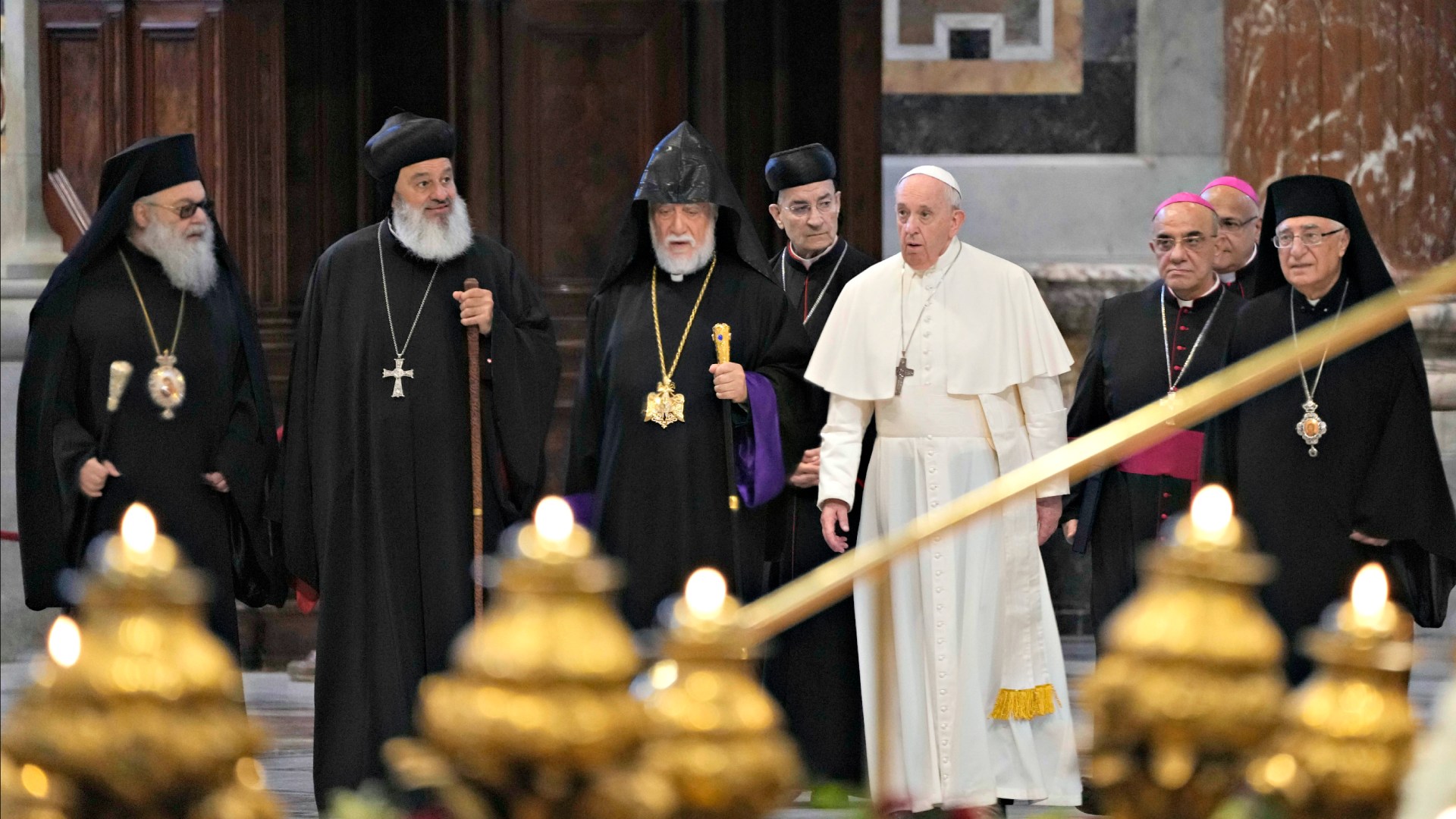
Pope Francis and Lebanon's Christian leaders arrive to pray in St. Peter's Basilica on July 1 during a Vatican meeting to discuss the current crisis.

Pope Francis and Lebanon's Christian leaders arrive to pray in St. Peter's Basilica on July 1 during a Vatican meeting to discuss the current crisis.

Christianity Today July 8, 2021
Gregorio Borgia / AP Photo

Pope Francis has a message to consider from Lebanon’s evangelicals.

“We are not comfortable in our sectarian system, and thank God that we are not a part of the politics that led the country to collapse,” said Joseph Kassab, president of the Supreme Council of the Evangelical Community in Syria and Lebanon.

“We are not benefiting, and it hurts us like the vast majority of the Lebanese people.”

Last week the Catholic pontiff invited Lebanon’s Christian denominations to the Vatican for a time of prayer and reflection. Ten patriarchs, bishops, and church leaders gathered, as Francis encouraged them to speak with one voice to the politicians of their nation.

Lebanon has been unable to form a new government since its prior one resigned 11 months ago, following the massive explosion at Beirut’s port. As its Christian, Sunni, Shiite, and Druze political parties wrangle over representation, more than half the population now falls below the poverty line.

Following a default on national debt, personal bank accounts have been largely frozen as the Lebanese lira has lost over 90 percent of its value. The World Bank estimates the economic collapse to be among the world’s three worst in the last 150 years.

“We blame and condemn our Christian and Muslim political leaders equally,” said Kassab.

“We have to say this loudly.”
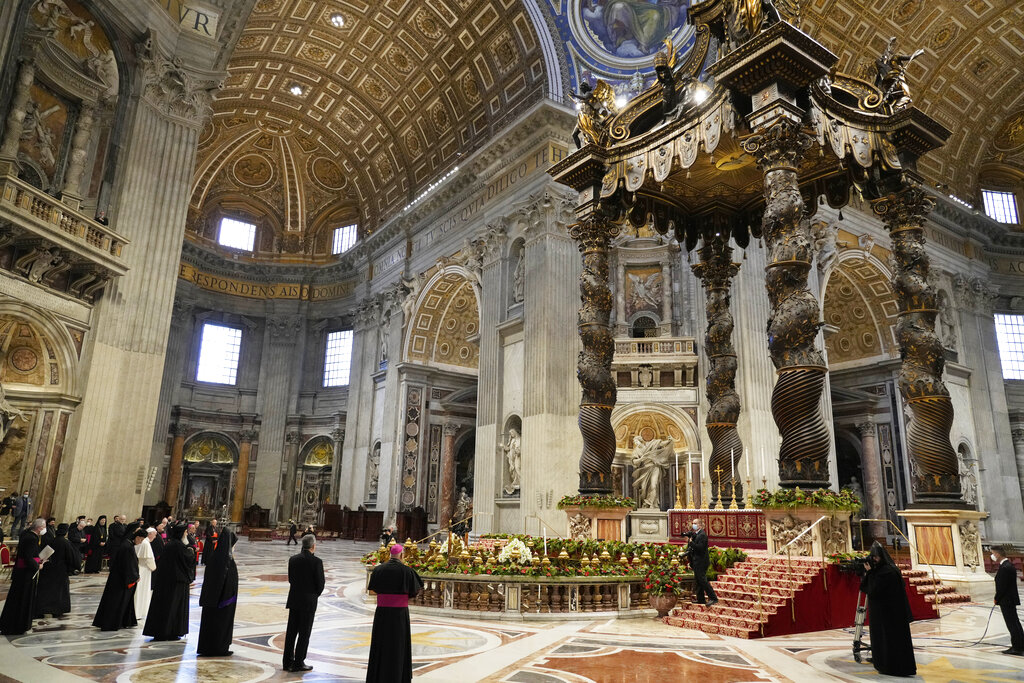
Pope Francis (left) attends a prayer with Lebanon’s Christian leaders in St. Peter’s Basilica on July 1, hosting them at the Vatican for a day of prayer amid fears that the country’s descent into financial and economic chaos is further imperiling the Christian presence in the country.

The nation’s longstanding sectarian system, however, works to recycle these leaders. Lebanon’s president must be a Maronite Christian, its prime minister a Sunni Muslim, and its speaker of parliament a Shiite Muslim.

The 128 parliament seats are divided evenly between Muslims and Christians, with one reserved for Protestants. But confessional distribution extends into ministerial and civil service positions, including the army, police, and intelligence services.

Each community seeks to maximize its interests, while being careful not to upset the sectarian balance.

“Positions are distributed by religious identity, not qualification,” said Kassab. “Francis called us to push our politicians toward the common good, but we are imprisoned in this system.”

Closed door discussions were frank, he said, but conducted with a brotherly spirit. There is no Lebanese consensus on solutions, let alone among Christians.

The Maronite patriarch has repeatedly called for an international conference to compel a political solution, as well as to ensure Lebanese regional neutrality. But AsiaNews reported that the Greek and Syrian Orthodox leaders have reservations, likely due to headquarters in Damascus.

Consequently, the pope sought to find the common denominator between the churches. This was identified as the urgent necessity for a government, and social assistance to keep Christians in Lebanon.

Currently “50 to 60 percent of our young people live abroad,” stated Samir Mazloum, the Maronite patriarchal vicar. “There are only old people and children left.”

The Vatican released no official statement, but Pope Francis’ closing homily served as an indication.

“Lebanon cannot be left prey to the course of events or to those who pursue their own unscrupulous interests,” he said. “It is a small yet great country, but even more, it is a universal message of peace and fraternity arising from the Middle East.”

Francis’ earlier visits with the Grand Imam of Egypt’s al-Azhar, a Sunni, and the Grand Ayatollah in Iraq, a Shiite, represent his attempt to secure good relations across the Muslim world. In Lebanon, however, there was some unease about the nature of last week’s Christian-only dialogue.

To assuage them, John X, patriarch of the Greek Orthodox Church of Antioch, met with the heads of the Sunni, Shiite, and Druze communities in advance of the gathering. This initiative, Kassab said, was roundly appreciated by the pope and Lebanese Christian leaders.

“We need to be a church that serves the Muslims,” he added. “We cannot exclude our partners in the nation.”

Despite the economic troubles, this sentiment is holding firm.

Lebanese dismiss the possibility of a return to civil war, which tore the country apart from 1975 to 1990. But those wounds were never healed, stated Bishop Michel Aoun of the Maronite church, with no confession of wrong. International pressure may help force a government, but the political system—adjusted after the war—failed to instill a sense of Lebanese unity.

So Francis prayed for it.

“We have seen our own lack of clarity and the mistakes we have made,” the pope stated during his closing homily. “For all this we ask forgiveness, and with contrite hearts we pray: Lord, have mercy.”

And specifically, he mentioned a failure “to bear consistent witness to the Gospel,” including missed opportunities for reconciliation.

The daylong gathering began at Casa Santa Marta, where Lebanese leaders joined the pope at his simple residence. He walked with them to St. Peter’s Basilica, where they recited the Lord’s Prayer. After about five minutes of silent meditation, the heads of denominations descended into the crypt, where they each lit a candle in front of an ornate Bible.

Left above was Charlie Costa, head of Lebanon’s Baptist convention, invited by Kassab as part of the evangelical delegation. Awed by the sense of history at the Vatican, he remarked that this cathedral was built with the indulgences that triggered the Reformation. Yet it also preserved Western Christianity throughout the ages.

Francis listened intensely during the sessions, speaking little, he said. And he received the Protestants respectfully, engaging them as an equal component of Lebanese society, along with the Catholic and Orthodox delegations.

“He is an amazing man,” said Costa. “Christians in Lebanon, evangelicals included, can learn from his humility.”

There was a consensus among the Lebanese leaders that they must.

“We forgot for a while about our differences,” said Kassab. “But if we leave the situation as it is, Lebanon is going to die.”

The evangelical report handed to Francis emphasized the necessity of freedom of conscience and belief, while maintaining good relations with the traditional churches and Muslim community.

Lebanese evangelicals would welcome the Vatican taking a leading role in international efforts to rescue Lebanon. Francis announced no concrete steps, but delegation members anticipate he will lead the charge to preserve the diverse, multi-confessional nation.

Will it remain sectarian in its political system? No one knows the details.

“Lebanon will be different,” said Kassab.

“We as Christians have to be prepared for that future.”

Yes, Jesus Told Us to Pray in Secret. But He Also Prayed with His Friends.

Interceding in community is vital to the Christian life.

Christianity Today July 8, 2021
WikiArt / Edits by CT

A young Chinese woman with a rare chronic disease spent most of her days in darkness in the early 20th century. As Christiana Tsai lay in her dark bedroom, month after month, then year after year, she learned to pray. The story of her prayer journey, Queen of the Dark Chamber, profoundly shaped my faith as a young adult. From Christiana I learned about perseverance and passion in prayer. I learned that prayer shows love and support for people when we cannot be with them. I saw prayer as a high and joyful calling.

Christiana Tsai inspired me deeply, but her model was limited to only one setting for prayer—in isolation, away from life’s distractions and responsibilities. Ben Patterson describes the emphasis we often place on this kind of prayer: “I was raised in a tradition that believed the man alone on his knees in the closet is the pinnacle of great prayer—one person one-on-one with the Almighty.”

A closet sounds like a strange place to pray unless one is familiar with Matthew 6:6. Jesus instructs his disciples to go to an inner room—literally a storage closet—shut the door, and “pray to your Father in private” (NLT).

Prayer alone is certainly one model of prayer in the Bible, but if we read the Bible only through the lens of praying in a closet, we miss much of the rich diversity possible in prayer.

Jesus’ words on prayer in Matthew 6, part of the Sermon on the Mount, are preceded by teaching about giving money and followed by instructions about fasting. For all three of these topics, Jesus mentions doing them “in secret” or “in private.” In our teaching and preaching about prayer, we have often elevated praying in secret above all other forms of prayer. As a result, we may have missed the benefits and power that come from praying with others, and we may not see the many biblical stories where people pray communally.

I began to see the language in Matthew 6 about financial giving, prayer, and fasting in a new light when I did interviews for my book, Fasting: Spiritual Freedom Beyond Our Appetites. I interviewed dozens of people who fast, and I asked them for referrals to others who fast. Most of my American interviewees cited Matthew 6:16–18 as a foundational passage, and they talked about fasting alone in secret. Very few of the Americans I talked to had fasted with others. Two or three fasted with their small group, and one had fasted with family members to pray for a relative with cancer.

I reached out to Christians in Hong Kong, Colombia, and Uganda, and I had long email exchanges with all of them. All of them told me they fast with their congregations. None of them, in fact, fast alone. I brought up Matthew 6, and all of them said that the point of the passage isn’t to emphasize fasting alone. The main point, they said, can be found in Matthew 6:1, the introduction to the material on generosity, prayer and fasting: “Be careful not to practice your righteousness in front of others to be seen by them. If you do, you will have no reward from your Father in heaven.” Don’t give money, pray, or fast, these interviewees said, for the purpose of impressing others.

All of them said that fasting alone is difficult. They were sure God had intended that we support each other as we fast and pray. One of them said, “Fasting alone is so hard. God doesn’t want us to have to work that hard to draw near to him.”

I have come to believe that their words apply to prayer just as much as to fasting. In many instances, praying with others is much easier than praying alone. When we pray with others, we pray longer. We pray for a wider variety of needs as our companions bring up new issues or perspectives. We can pray thankfulness prayers much longer with others because they see God’s beauty in places we haven’t observed, so we find ourselves seeing more of God’s gifts. We may feel led to confess our sins in new areas when we hear others confess.

The needs of the world—and the needs among my family members and friends—sometimes seem so overwhelming. When we pray intercessory or lament prayers with others, we’re not alone in the sadness we feel. As we pray with others, together we affirm that God is good, Jesus walks with us in our sorrow, and the Holy Spirit is guiding and encouraging us.

Scripture presents a variety of models for prayer. While praying and fasting alone, Jesus confronts Satan in the wilderness (Matt. 4:1–11). Jesus slips out early in the morning to spend time with his Father (Mark 1:35–39). While many teachers point to these examples of prayer, we may forget that Jesus prays his eloquent prayer in John 17 in the presence of his disciples. In the Garden of Gethsemane, Jesus wrestles with his destiny alone in prayer, but only after he asks for the companionship of his friends (Matt. 26:36–46). Jesus, the Son of God, asks for the support of his friends in an intense time of prayer.

Numerous additional instances in the Bible show groups of people praying together. David and his men mourn together after the death of Jonathan (2 Sam. 1:11–27). Solomon prays a long prayer in the presence of the people of Israel when the temple was dedicated (1 Kings 8:22–61). When Daniel is asked to interpret the king’s dream, he goes home to his three friends and asks them “plead for mercy from the God of heaven” to help him accurately interpret the king’s dream (Daniel 2:17–18).

One of my favorite stories about the balance of communal prayer and taking action comes in Nehemiah 4. The people of Israel, newly returned from exile, are facing obstacles in rebuilding the wall around Jerusalem. Nehemiah reports, “We prayed to our God and posted a guard day and night to meet this threat” (v. 9). Nehemiah’s use of “we” implies that, like guarding the city, the prayer effort was communal.

Acts 13:1–3 describes a gathering of Jesus followers in Antioch who were worshiping and fasting when the Holy Spirit directed them to commission Paul and Barnabas to bring the gospel to the Gentiles. The Christians in Antioch prayed together for this new mission for their friends, a mission that would shape the church for generations to come. Acts describes at least 11 other instances when Christians prayed together in pairs or groups. See Acts 4:24–30; 12:12; and 16:25 for particularly vivid examples.

I have been in a prayer support group for more than 20 years. During the pandemic, our bi-weekly meetings shifted to Zoom, but our pattern remains the same. After sharing what’s on our mind, both praises and needs, the five of us begin our time with thanksgiving prayers. Mostly we thank God for the good things happening in each other’s lives, and I experience such joy as I express gratitude for God’s gifts to these friends. Our thankfulness prayers go on much longer than any thankfulness prayer time I have ever experienced alone.

In the group, our intercessory prayers focus mostly on each other’s needs. I am often fascinated when I hear the components of each urgent situation that other members of the group choose to pray for.

New groups praying for racial justice and other societal needs have sprung up in the tumultuous months of 2020 and 2021. Zoom prayer meetings for missionaries and ministries to people in need have continued yearslong traditions of praying together for Christian participation in God’s work in our world. God puts us in communities of believers because all of us find following Jesus on our own challenging in one way or another.

Throughout history, the Psalms have been used in corporate worship settings as well as in prayer alone. The Psalms, often called “the prayer book of the Bible,” are one more indicator that God calls us to pray in many diverse ways. Some of that prayer will be in our “prayer closets” or dark bedrooms, and some prayer will be with others in pairs or groups. Praise God that we are invited to draw near with all we are and all we have.

Lynne M. Baab is the author of numerous books and Bible study guides, including Sabbath Keeping and Fasting: Spiritual Freedom Beyond our Appetites.

News

NDAs Kept These Christians Silent. Now They’re Speaking Out Against Them.

A wave of activists across countries and denominations is calling for the end to non-disclosure and confidentiality clauses.

Christianity Today July 7, 2021
Wera Rodsawang / Getty Images

A growing number of ministers, missionaries, Christian workers, abuse victims, and victims’ advocates are publicly objecting to the non-disclosure agreements and confidentiality clauses used by major religious organizations. They say the legal tools that were designed to protect tech industry “trade secrets” are widely misused to conceal abuse, preserve secrets, and protect powerful reputations without regard for the human cost.

On Wednesday, an international group of them launched a campaign to end “the misuse of non-disclosure agreements,” called NDAs, with a website and the hashtag #NDAfree.

“It’s time to set people free,” said Lee Furney, one of the organizers of #NDAfree and a British expat who lives in Malawi and works to support churches there. Furney played a key role in exposing the sexual abuse of evangelical Anglican leader Jonathan Fletcher, and has become an advocate for abuse survivors.

“In some ways, an NDA can look reasonable,” he told CT. “But find for me the perfect NDA, and it’s still not perfect. There’s no transparency. No accountability. You can’t track them or how they’re used. And they’re binding the conscience for the future, saying I can’t change my mind, regardless of the situation.”

Non-disclosure agreements and confidentiality clauses are often quite expansive, with broad and sometimes open-ended definition of confidential. One agreement reviewed by CT included the names of anyone the person had ever worked with in the parachurch organization, any information that could be deemed damaging or disparaging, and any “information regarding ministries.”

Most NDAs include prohibitions against disclosing the non-disclosure agreement, cloaking even the secrecy in secrecy.

“It’s suffocating,” said John Sather, who signed an NDA with Cru in 2019, when he left the ministry formerly known as Campus Crusade for Christ after 45 years on staff. Sather had a bitter dispute with leadership that left him in severe mental anguish, seeking therapy and any possible exit from the parachurch organization.

At the time he signed, Sather and his wife, Chris, saw the agreement as their only way out of Cru. They said they didn’t think too much about the consequences of a contract that committed them to silence in perpetuity.

“According to what we signed, If I say anything, that’s covered by the NDA,” Sather said. “I’ve learned in therapy how important it is to speak, but an NDA is this suffocating thing, when the very thing you so desperately want to do is tell your story.”

The Sathers, who both worked for Cru, have asked the ministry to release them from their agreements. The request has been rejected, so they have decided to speak out against NDAs.

They’re not alone. The #NDAfree website will attempt to raise awareness about the problems with confidentiality clauses, which are now frequently included in employment contracts, severance agreements, and legal settlements. The campaign will also seek to give people who have a signed NDAs a few tools to help them pressure Christian organizations to stop using NDAs. The website includes sample templates of letters asking for release, an #NDAfree pledge, and questions that organizations can ask as they evaluate the use of confidentiality clauses.

The Christian Reformed Church, the Church of England, and the Southern Baptist Convention are all currently reconsidering their use of NDAs.

Brad Patterson, lead pastor of the First Baptist Church in Lavon, Texas, called for a study of Southern Baptist NDAs at the convention’s annual meeting in June. His motion asked that the Executive Committee, the six Southern Baptist seminaries, the International Missions Board, and the other convention entities give a report on confidentiality agreements next year, paying “particular attention to what is the biblical justification, how many have been signed or agreed to in the last five years, and utilized for what specific purpose.”

The resolution was referred to the Executive Committee for consideration. Patterson told CT he is “not accusing anybody of anything” but is concerned about the lack of trust in leadership and ongoing issues with transparency.

“We will not be able to know the things we need to fix if we’re not able to know about them,” he said. “There have been a lot of changes made in a lot of entities in the last five years, and transparency is important.”

The Christian organizations using NDAs agree there can be issues with transparency and abuse, but they argue that confidentiality is not always a sign of a cover-up.

Not intended to silence survivors

All Souls Langham Place, a conservative evangelical Anglican Church in central London, is named on the #NDAfree website as one church that has misused confidentiality agreements. A spokesman for the church said that’s not true.

“All Souls has on very rare occasions used confidentiality clauses in employment settlement agreements, and not to prevent the disclosure of abuse,” the church said in an official statement. “We condemn any action, including the use of Non Disclosure Agreements (NDAs), intended to silence survivors.”

NDAs make it possible to resolve disputes with settlements that allow both parties to move on. As a legal tool, they are now standard practice almost everywhere.

“There’s a general expectation of confidentiality that we ask staff to abide by, which is kind of normal for most organizations,” said Steve Sellers, president of Cru. “We’re not overrun by trade secrets or anything, but we want to protect the location of staff, especially in hostile countries, the privacy of donors, and the privacy of other employees. It’s not designed to silence anyone, but confidentiality is important.”

The use of NDAs and similar legal tools is not confined to major denominations and the largest parachurch organizations. Many ministries have NDAs in their employee handbook, to be signed along with the statement of faith. Some churches, large and small, even require volunteers to sign confidentiality agreements.

It is not clear when churches started using these legal tools. In the US, NDAs were developed by the tech industry when legislatures started cracking down on the abuse of non-compete clauses and courts began limiting the definition of trade secret.

In 1978, an Illinois company sued a computer programmer who quit and went to work for a competitor. The company claimed that the legal protection of trade secrets should include everything the programmer did at his job, including basic programing methodology. The court rejected that argument, and the tech industry started including broader and broader confidentiality clauses in contracts.

These were soon added to the contracts of top executives in the tech industry and beyond. Today, according to one study, nearly 90 percent of CEOs in the US have an NDA with their company. Most of these do not define what is confidential, and many last in perpetuity.

By the 1980s, “contracts of silence” also became a regular feature of legal settlements. Lawsuits were taken out of court “for an undisclosed sum of money,” and corporations could reassure their stakeholders that they weren’t admitting to any wrongdoing or accepting liability. Since the large payouts were secret, they also wouldn’t prompt more lawsuits.

The first public information about a Christian organization using an NDA is in the settlement of sexual abuse allegations. A Catholic family whose three sons had been abused by a priest in Louisiana accepted a settlement of several hundred thousand dollars and signed an agreement that included a confidentiality clause.

They regretted that, later, when they met other children victimized by the priest and learned their bishop had reassigned the serial predator to another congregation.

The bishop “used the excuse that he made a vow to protect the church,” the father of the family later told journalists. “He made it very plain that the church came first.”

Protecting reputations instead of people

Lucy Hefford, a graduate student and administrative assistant who says she was raped by a work supervisor at the Oxford Centre for Missions Studies (OCMS), had a very similar experience. When she signed an agreement with a non-disclosure clause, she thought the organization was acknowledging the truth of what happened to her and giving her a way to shut the door on an ugly and painful period in her life. She later learned her abuser was allowed to continue supervising graduate students, none of whom were told that the Christian leader they trusted to direct their academic studies had violently forced himself on a former supervisee.

Hefford said that when she protested, she was reminded of the confidentiality clause in her agreement.

“That’s when I went, ’Oh Lucy, you’ve been so stupid. You thought they believed you, but they just wanted you to go away,’” she told CT. “They were putting reputational damage over me as a person and that was excruciating.”

Hefford does not know what legal risks she’s running by speaking out about her abuse, but she has decided she cannot abide by the terms of the NDA.

“It’s evil,” she said. “I am at risk, huge financial risk, but I just have to trust God that if I’m walking in the truth—I don’t want to over-spiritualize, but whatever will be will be.”

David Cranston, chair of OCMS’s board of trustees, said he could not comment on individual matters, but the organization does use confidentiality agreements.

“OCMS considers that it is ethical and legitimate to use confidentiality clauses as part of a wider settlement agreement where the intention is to safeguard the interests of both the employee and employer and the wording does not preclude whistleblowing,” he said in an email to CT. “The wording of the clause would always be considered carefully to ensure it was appropriate and ethical for the particular situation.”

NDAs have been used by the organizations associated with many prominent evangelical leaders accused of spiritual, sexual, or other kinds of abuse, including Ravi Zacharias, Dave Ramsey, Steve Timmis, Bill Hybels, and Mark Driscoll.

But organizations that use NDAs say that getting rid of the legal tool that protects confidentiality is not the only way or even the best way to prevent abuse from happening.

Other ways to prevent abuse

At Cru, Sellers said that while the ministry places a high value on protecting privacy, it also has confidential phone lines that allow staff to report abuse or misconduct to human resources and a whistleblower policy that bypasses management, allowing people to make complaints to the board. He said every claim is investigated.

“I think you should tell the truth all the time, but that doesn’t mean you tell everything to everybody,” Sellers said. “In the worst forms of abuse, there’s a moral and legal responsibility to disclose things like that. But you also have to do it in a way that maintains the privacy of the person—there’s a victim involved, you don’t want to just broadcast their information to everyone.”

The way confidentiality clauses can silence victims came to public attention when several women who said they had been sexually abused by movie mogul Harvey Weinstein came forward in 2017, launching the #MeToo movement. Some victims said they had been afraid to speak up because of what it would have done to their careers. Others pointed to the settlement agreements they had signed, with ubiquitous NDAs.

Christians opposed to confidentiality agreements say they create a similar problem in ministry. Even though there are certainly some things that should be kept confidential, the broad legal agreements conceal abuse and limit accountability.

Ben Nicholson, a British man who led the Zimbabwe arm of the international Christian charity Tearfund, left the organization in a dispute about visa status after reporting on the mismanagement of a sexual assault report. He believed he had done his duty as a whistleblower and accepted a severance, which included a confidentiality clause.

Later, he came to the conclusion that because he signed an NDA, Tearfund could bury the report he’d hoped would bring a broader reckoning.

“I’m not against settlement as a process,” said Nicholson, another organizer of the #NDAfree campaign. “But using payment and NDAs as a way to not investigate something, that’s totally unacceptable.”

Tearfund disputes the allegation. In an official statement to CT, the charity said that “We have never used a confidentiality clause to cover up wrongdoing and our settlement agreements make clear that they do not in any way prevent the individual from raising any concerns with relevant regulatory bodies.”

Nicholson used his settlement money from Tearfund to earn a master’s degree, writing his thesis critiquing Christians’ use of non-disclosure agreements. He argues that there are legitimate uses for NDAs but the way they’re currently used in most ministries does not comport with Christian values.

Rolling back the use of confidentiality clauses

In April, Tearfund announced that it “will no longer use confidentiality clauses … in settlement agreements.” It will maintain NDAs in “very exceptional circumstances,” where necessary to protect the identity of a victim or someone who is vulnerable. But Tearfund agrees “to mutually lift existing confidentiality clauses from anyone who has signed one with us as part of a settlement agreement.”

The hope, for the organizers of #NDAfree, is that this is just the start and more organizations will roll back their use of confidentiality agreements. But even if Christian organizations don’t release people from their NDAs, the campaign aims to warn people about the high cost of silence.

Chris Sather thinks about what difference an awareness campaign might have made to her and her husband when they sat in a private conference room with a workman’s compensation rep, looking at paperwork that promised them a way out of a bad situation.

In that moment, she said, they didn’t realize an NDA would mean living with the knowledge that the abuse they suffered could happen again and again, and they wouldn’t be allowed to say anything.

“There’s no healing, no repentance, if you don’t talk about it. It’s just going to get swept under the rug,” she said. “It’s really wicked. I think it’s wicked.”

Ideas

Why We Don’t Dump Friends Who Disagree

Staff Editor

Affection can keep us together, even if ideas don’t.

Christianity Today July 7, 2021
Illustration by Mallory Rentsch / Source Images: Josue Escoto / Unsplash / Khoa Vo / Pexels / MirageC / Getty Images

My husband and I were barely more than newlyweds when we moved to Minnesota, where we had precisely zero friends. That took a while to change. My seminary classes didn’t begin immediately, and we both worked from home, so there were no coworkers or classmates to take pity on us. It was a lonely few months. I’m naturally reserved, and “Minnesota Nice” should not be mistaken for “Minnesota Actually Wants to Form a Close Friendship with You.”

Then we found our church and, through it, more good friends than we knew what to do with. These friends have shoveled our sidewalks, knitted sweaters for our children, and thrown us feasts.

They’re also friends with whom we have big disagreements on theology and politics alike, disagreements we have aired at length, sometimes in anger, sometimes in tears. “On paper, we’re far apart,” as one friend observed during our litany of going-away events. Yet we bought homes in the same neighborhood so we could be near each other all the time.

I don’t mention these friendships to boast. After all, I was only on one side of them. But there is something to celebrate here. Relationships in our era too often live or die according to what the paper says. Friendship is always voluntary, but we Americans increasingly tend to treat our friendships like ideological alliances, bonds that are very much contingent, spaces of mutual affirmation of choices and thinking alike, and opportunities for self-benefit.

A controversial New York Times article last month, for example, provided an approving explainer of how to “shed unsatisfying and unfulfilling relationships” and spend the most effort on friends who “make you feel better about the world and about yourself.”

More starkly, anticluttering guru Marie Kondo offers a guide on her website for “tidying” relationships. If, after introspection, “you determine that [another] person’s values are fundamentally different or in conflict with your own, you should consider letting the relationship go,” it advises.

American individualism is nothing new, yet for decades our circles have become ever smaller. Households are shrinking; local organizations are on a long decline. Social life is contracting to just me and those few with whom I choose, for now, to spend my time. And it may only be “for now” if the alliance ceases to be mutually beneficial.

Friendship in this model is a thin thing, a thing that might be jettisoned if it becomes more trouble than it’s worth, tossed overboard like Jonah to calm the storm. If your friend does or professes the wrong thing, something you think is wrong or rude or harmful or frustrating—particularly if anything of real moral weight, anything theological or political, is involved—you should probably chuck ’em, maybe even denounce their ignorance or malfeasance or mistake in some public space so everyone else knows you aren’t like that and don’t condone that behavior. Not coincidentally, more than a quarter of Americans report estrangement from a close family member.

I understand this mindset. Relationships that contain serious differences about weighty matters are often strained, while it can be a wonderful thing to have a friend who agrees with you on big questions of what the world is like and what should be done about it. The simplicity of agreeable pairs—where you needn’t wonder if you’ve left unfulfilled some duty to be your friend’s keeper—is restful and needful.

But having a friend who doesn’t agree with you on big things can be wonderful too, as you help each other mature (Prov. 27:17). Sometimes it may also be difficult and morally messy. But if we preclude that type of friendship in our rush for political allies, where do we end up?

Probably about where we are now. Our society’s loneliness epidemic is widely recognized, and we struggle to have meaningful conversations about important topics. Around four in five Americans report they have had few to no conversations about faith in the past year, and many cite a desire to avoid “tension or arguments” and/or fears around giving offense as a reason not to engage.

We’re similarly guarded with other conversations of substance, like politics: “The average American has just four close social contacts,” write Nicholas A. Christakis and James H. Fowler in their 2011 book, Connected. “Sadly, 12 percent of Americans report no one with whom they could discuss important matters or spend free time. At the other extreme, five percent of Americans report eight such people.” (By that standard, I guess I’m extreme.)

This reticence makes sense if your aim is to avoid being rejected, but it isn’t how friendship—particularly Christian friendship—should be. The bond should be more durable (Ecc. 4:9–12), able to withstand the strain of disagreement, even argument or offense (1 Pet. 4:8–10).

I recently revisited C. S. Lewis’s famous reflections on friendship in The Four Loves. Friendship, he acknowledges, is indeed voluntary and unbound by the obligation other close relationships entail. “I have no duty to be anyone’s Friend and no man in the world has a duty to be mine,” Lewis writes. “Friendship is unnecessary, like philosophy, like art, like the universe itself (for God did not need to create). It has no survival value; rather it is one of those things which give value to survival.”

But then I turned to what he writes about another type of love, which Lewis dubs “affection.” This love, he says, is about familiarity. It is not particularly chosen and tends to be taken for granted. Yet it “can enter into the other loves and color them all through and become the very medium in which from day to day they operate. They would not perhaps wear very well without it,” he writes. “To make a friend is not the same as to become affectionate. But when your friend has become an old friend, all those things about him which had originally nothing to do with the friendship become familiar and dear with familiarity.”

Affection, I’ve begun to suspect, is what too many of our relationships are missing. Its absence is why they aren’t wearing very well, why they struggle to bear up under the pressure of political polarization, theological divide, or other ideological difference. Perhaps we’re missing affection in this transient, testy, isolating age because we won’t hold still long enough for it to accumulate. There’s always another person, place, or post vying for our attention.

That context is what has me so thankful for the affection we’ve been able to build in Minnesota as we now prepare to leave. I think it is built solid enough that when we talk of our “old friends,” we won’t mean “former” but “familiar.”

News
Wire Story

Liberty’s Former Diversity Officer Sues for $8M

The acting president considered hiring the former NFL player as “among his predecessor’s mistakes.”

Christianity Today July 7, 2021
Kipp Teague / Flickr Creative Commons

A former NFL player who served as a diversity officer at Liberty University has sued the Christian school for $8 million, claiming his firing violated the Civil Rights Act and the Virginia Human Rights Act.

In a complaint filed Friday in federal court for the Western District of Virginia, Kelvin Edwards, a former executive vice president of management efficiencies and diversity, alleges that he was fired because Liberty’s acting president, Jerry Prevo, does not value diversity.

Edwards was hired in the summer of 2020, according to the complaint, to take a leadership role in the Office of Equity and Inclusion, which seeks to keep the school “free from unbiblical and unlawful discrimination.”

The job offer included a $275,000 salary, a $1,500 monthly car allowance, scholarships for Edwards and his family, and a new home, according to the complaint. To take the job, Edwards states that his wife life left a teaching job and he left a job at a car dealership in Texas, where the family formerly lived.

The complaint alleges that the school committed to Edwards for 10 years during the recruiting process.

A former Liberty University football star who went on to play for the Dallas Cowboys and New Orleans Saints, Edwards cited his close ties to the Falwell family in a news release announcing his return to the school.

The hiring of Edwards and football coach Turner Gill at Liberty was touted as part of the school’s “ongoing efforts in diversity,” according to the news release, dated Aug. 4, 2020.

“I warmly refer to Liberty’s founder, the late Dr. Jerry Falwell, Sr., as my ‘father’ not only because of the intimate relationship and mentorship between us, but also because current President Jerry Falwell and I formed a fast and easy brotherhood as college dorm mates,” Edwards said. “My wife, Tiawna, and I are excited to continue our relationship with Liberty University and to uphold the charge of building Champions for Christ.”

Jerry Falwell Jr. resigned as president of Liberty three weeks after Edwards was hired.

Not long afterward, the complaint alleges, Liberty’s acting president, Prevo, told Edwards there was “confusion” about his role.

“It became clear that Prevo did not believe in diversity efforts based at Liberty,” the complaint alleges. “In fact, during that same time frame, Mr. Edwards heard Prevo comment there were ‘too many people’ in diversity and inclusion.”

The complaint also claims that only two of 28 executives and senior leaders at Liberty are African American.

In a statement Monday to a local television station, the school said that “Liberty University rejects the claims of Kelvin Edwards and will prove them false through the legal process.” The statement also said Prevo had determined that hiring Edwards was “among his predecessor’s mistakes” but claimed the school had tried to find him another job with the institution.

The school said that it is committed to diversity and that Prevo has increased the budget for diversity efforts. “The University and its president are fully committed to racial and ethnic inclusion and diversity throughout Liberty, including on its faculty, in its student body and staff, and on its executive team,” the statement read.

According to the complaint, Edwards was terminated from his role in October 2020.

Liberty sued Jerry Falwell Jr. in April, seeking millions for breach of contract. That suit was filed in state court.

Church Life

Promise Keepers President: It’s Unacceptable If My Black Brother Is Suffering

Ken Harrison says new men’s movement will continue pursuing racial reconciliation.

Christianity Today July 7, 2021
Courtesy of Promise Keepers / Edits by CT

Racism and racial division remain a priority for Promise Keepers.

The newest iteration of the men’s movement is led by Ken Harrison, a former Los Angeles police officer and the CEO of the donor-advised fund WaterStone. Harrison told CT that in some ways, Promise Keepers will be different from the men’s movement that many may remember from stadium events in the 1990s. There will be more efforts, for example, to get men involved in local churches and men’s groups after events are over.

But in other ways, the mission is unchanged. Promise Keepers will gather men into stadiums “for worship that strengthens the soul, brotherhood that lasts a lifetime, and tools that empower you to be the man Christ intended you to be.”

The first in-person event for the relaunched organization will be held at AT&T Stadium in Arlington, Texas, July 16–17. Speakers include pastors A. R. Bernard, Donald Burgs, and Robert Morris; Dallas Cowboys chaplain Jonathan Evans; Christian psychologist Les Parrott; and retired US Army general Jerry Boykin. Eighty thousand men are expected to attend.

Harrison spoke to CT about why the men’s movement continues to pursue racial reconciliation.

How important is racial reconciliation in the DNA of Promise Keepers?

It’s a core part of who we are. Promise Keepers really started racial reconciliation. I think they may have even coined the term, and yet they never get any credit for it. I don’t think it fits a lot of people’s narrative. Christians reaching out on race and reaching out for oneness, I don’t think that fits the narrative of a lot of people who don’t love Jesus, and they’ve tried to write that out of who we are.

What role does racial reconciliation play in the current mission of Promise Keepers?

I see it playing every bit as much of the same role as it did in the ’90s. I feel like we’re more divided on race than ever, as a people, and I feel like we’re divided on many other issues as well, and we really need to reach out on race but also on denominational issues and really start seeing people through the eyes of Christ, as Jesus sees them.

We’re working with Miles McPherson—he’s a close friend—who talks about the “third option,” which is, “Let’s concentrate on our similarities, because there are so many, rather than our differences, which are so few.”

We want to be unified in Christ. But if we’re all unified around who we are in Christ, and the fact that we’re all beggars telling other beggars where we found bread, then it becomes much easier to see everyone as my brother, and it’s unacceptable if my Black brother is suffering. It’s unacceptable if my brother doesn’t have the same opportunities that I do. It’s unacceptable if my brother’s kids get pulled over by police more often than my kids. What am I going to do about it?

We don’t want you to just feel sorry for your brother or to just apologize to your brother. We want you to be passionate to solve his issues.

Do you think that white Christians are more open or less open now to talking about racism in America?

I think that there is an openness. I think there’s a yearning in people to come together—more than there was in the ’90s. In the ’90s it was a new message, it was “Oh golly, I’ve never thought about racism before,” where now it’s dominating the news. And people are looking for godly leadership: What would God say about these things, what does Scripture say, and as a child of Christ, how should I behave in this context?

What we want to do is call people from apathy to being proactive, saying, “Well, what can I do?”

A lot of Christian men have had the ability to ignore the issue and think, Well there’s some problem for somebody somewhere but it doesn’t affect me. So I don’t care. Our message is, for men of Christ, we need to be proactive. So now you ask yourself, “What can I do? What can I do to create unity?”

Do you also see more pushback or backlash from white Christians who don’t want to talk about racism? There seem to be a lot of Christian men who think the real problem is critical race theory and talking about race is a trick to divide us, rather than a necessary step toward addressing systems that result in injustice.

There may be Christians who are saying, “It’s critical race theory so I’m not going to get involved,” but just because the world has a certain way of seeing things, it doesn’t mean it’s wrong. It may be the right issue, but the solution is wrong, because the solution is always Christ.

Part of the problem of the failure of the church is we often focus on cleaning up the outside or behaving by the correct set of rules so that they’re acceptable to us, rather than cleaning up the inside through repentance and the grace of Jesus Christ. I think if we try to solve this problem the world’s way, and try to make this problem go away in some other way that changing the hearts of people, then it will never last.

The new iteration of Promise Keepers is putting less emphasis on big catalytic events and more on small groups and continued discipleship. How will that impact the work on racial unity?

We want to have a strong emphasis on discipleship and partnerships with the local church. It’s one thing to have a nice talk and have people leave with really good intentions about getting involved in solving the issues of my community around race, but it’s a much different thing when you get together in small groups with people of a different race and start having real conversations.

I’ve had a lot of people talk to me about their experience with Promise Keepers. One of the guys who talked to me told me of an experience he had when he went to a Promise Keepers event in Chicago and it changed his life. He was hugging white men and he was so overjoyed to actually have real conversations. And he went again next year. Then again next year, and he started to realize, you know, I come from my community, which is Black, and these guys come from their communities, which are white. We have this great moment. And then we all go back to our communities and don’t talk to each other.”

What we want to do is effect real change this time, by really challenging men to go out and reach out to people who are different—different races, different denominations, different education, different classes.

It seems to me that in the 1990s, there might have been a tendency for white men to have that emotional moment at a Promise Keepers and then feel like they were done, they solved racism, at least for themselves. But that doesn’t translate into caring about policing policy, which is complicated and local, or decisions about where I live and where my kids go to school, or the other concrete, real-world places where inequality happens.

You’re dead on. We have to define what love is, and love isn’t warm fuzzy feelings and giving a guy a hug. Love is saying, “I will do what it takes to pour my life out to make your life better and bring you closer to Christ.”

It’s like it says in James, if someone comes to you in need and you say, “Go and be well fed and have a nice day,” what have you done?

I think Promise Keepers was really effective at what it did, but we’re excited for men to take that next step and ask what they can do.

In July, this will be your first Promise Keepers event?

Yeah! Isn’t that funny? I’ve never been. I’m excited to see what Promise Keepers is like.

What do you want people to know about this event?

I hope that what will come through is that everything we’re doing is about leading men to Christ. We’re saying to men, repent of your sins, throw yourself on the grace of Jesus Christ, become a son of his, identify as his, and then stand for what is right. You can’t tell men to be bold for Christ while they watch people be oppressed and do nothing. That’s true if we’re talking about the oppression of Black people or the scourge of abortion. If your stand for Christ happens to help the Democrats or Republicans—whatever. I’m going to stand with Christ.

Testimony

My Six-Month Experiment with Christianity Turned into 12 Months, Then 24 …

How the son of a Hindu priest gradually made his peace with the “unfairness” of the Cross.

Christianity Today July 7, 2021
Courtesy of Chris Goswami

Even at the distance of over 40 years, I still remember having my fingerprints documented for my criminal record. It was the first time in my life I had felt ashamed about anything.

The young police constable was pleasant enough as he gently guided me through the process of fingers, thumbs, and ink pads. He was sensitive to the sense of grief originating from a single sound in the room: the uncontrollable weeping of my distraught mother sitting a few feet away, as my father tried quietly calming her.

As recent immigrants to the UK from India, they were confused and shocked. They had wrenched themselves from established lives as schoolteachers. They had traveled to England by sea, working in a shoe factory and selling bus tickets so that my brother and I could go to school. For families immigrating from the Indian subcontinent, providing an education for their children was (and still is) the driving priority. So when my parents discovered that their teenage son had spent years secretly engaging in arson and shoplifting just “for fun,” they could barely comprehend it.

Sometimes it takes the tears of a loved one to stop us in our tracks and focus our minds on where we’ve gone wrong. But what exactly was I ashamed of? My mother’s grief had brought sudden clarity about the damage I had caused to my family—shameful, lasting damage. It dawned on me that there really is a moral law in the universe, and I had overstepped it. Actions had consequences, just as my family had taught me. The Hindu idea of karma, I had learned, is that you get what you deserve. Here was karma, spectacularly demonstrated.

Debating Christianity

I am the son of a Hindu priest who was himself the son of a Hindu priest. In the working-class English town where I grew up, life revolved around our close-knit Indian community. We regularly met in temples or public halls to celebrate religious festivals and holidays. I never once heard the gospel in my first 18 years. My understanding had always been that “Christian” meant you were white and British, and no one ever suggested otherwise.

But then I left home for university and—by some divinely orchestrated coincidence—got to know a bunch of Christians. To me, they were do-gooders: nice enough people who just didn’t have their heads screwed on straight when it came to being rational. They would take me along to meetings where someone would present a Christian message or testimony. Afterwards, we would debate what seemed (to me) like the many holes in their arguments. Despite my skepticism, these good Christian students adopted me as some kind of “project.” I didn’t share their faith, but their friendship and concern moved me.

You see, there was always one roadblock on my journey to understanding Christianity, one concept that, in my view, was immoral and unacceptable: the idea of grace. The notion of someone else suffering shame and pain for the wrongs I had chalked up was absurd and repugnant. To me, grace and karma were complete opposites. Karma is logical; it feels right. It’s fair. Karma is what happened in the police station that day.

This attitude persisted for some time, until one of my friends, Alex, commented thoughtfully, “Chris, you can argue forever about the unfairness of the Cross. In many ways you’re absolutely right. Or, you can accept that this man Jesus died because he loves you. It’s up to you.”

Still carrying my doubts, I worked out a way to give this Christian thing a try: Make the commitment, say the prayer, and see what happens over the next six months. I reckoned I would know in that time if it was true or not. What was there to lose?

The six months became 12, and then 24 (mainly because I continued to enjoy the social life of church). I graduated in engineering and began studying toward a PhD. But I was a lazy Christian. I barely picked up a Bible, prayer was an annoying afterthought, and I only went to church if I felt like it, which wasn’t often.

One day, my Anglican minister, David, made a suggestion. He said I should get baptized. I was appalled at the thought. Genuinely horrified. The exact words in my head were: “Baptism is something you Brits do to your babies—why are you talking to me about this?” I had seen infant baptisms on TV—was this fellow seriously suggesting wrapping me up in a white gown and dunking my head in a bowl?

Despite my recoiling, David persisted, and he showed me in Scripture where the baptism of adults took place. I was still unnerved by the whole thing. It sounded crazy. But David gently advised that I should make a decision: Accept the faith, all of it, or reject it. Eventually, I consented. And so, one quiet evening in March 1984, I found myself at the first baptism service I ever attended—my own. I still recall my bewilderment as I noticed the sprinkling of water falling from my head onto the pages of the service book in my hands and wondered, for a second, if I might get into trouble. I didn’t! And God honored that small act of obedience.

The wilderness year

Within days, even hours, of my baptism, I felt a restless urge to quit studying and “do something different.” (Only much later would I come to understand what it means to experience a baptism of the Holy Spirit.) After a few unsuccessful applications for jobs in Zambia and Kenya, I got a position lecturing at an engineering college in India.

I had grand ideas—mainly based on English college life—of what my sojourn in India would look like. However, it was nothing like that. The school, only partially built, was located in a remote part of the country. I was told to teach computing with no computers, and for several months I had a “laboratory” with nothing in it—just a bare room. Meanwhile, I lived in a small village outside the college town, in a humble dwelling with intermittent power, no running water, and scary wildlife—including “snakes and scorpions” (Luke 10:19)—wandering around outside.

Worst of all, I felt suddenly and terribly alone. Though eventually I made some truly great friends, those first few weeks were unbearably lonely. There was no church, and there were no other Christians. In short, I hated it. In the evenings, I could just see airplanes flying into the horizon toward distant lands. I dearly wished I was on board. There were frequent tears—I couldn’t understand what I was doing.

Later in my faith journey, I could see that this was a “wilderness” experience of the sort many other Christians have shared. It’s a model we receive from Jesus himself. Sometimes it’s exactly what God needs to break through a hard heart.

After some weeks, I discovered a small fellowship that met in another town. Every Sunday morning, I would ride a jam-packed bus to get there, which involved struggling mightily just to climb aboard. This was hard but encouraging all at once. I remember distinctly hearing God say, “Chris, when your fellowship was a short walk down the road in England, you couldn’t be bothered to go. Now you will fight to go.” I was broken, but I was also being remade.

Those surprised and wonderful Indian Christians welcomed me from the day they set eyes on me. Every Sunday became an entire day at their house, complete with meals, conversations, love, and support. During those months, with their help, I grew enormously in faith. I began devouring Scripture—sometimes for hours in a day—and I discovered a God who wanted me to depend on him, a God who knew me and spoke to me. A God who wasn’t a six-month experiment.

That year included another unexpected blessing: a chance to travel north overnight and meet my previously unknown set of cousins, aunts, and uncles. They are Christian. (My mother had actually given up her nominal Christian faith when she married my Hindu father.) And they were able to introduce me to a much wider range of Indian church experiences.

At the end of that year, on my return to the UK, folks in that small Anglican church (who had also supported me through the year with letters and recordings) barely recognized me. You’ve completely changed!” they would invariably say.

Incomprehensible grace

Since then, I have married my lovely Christian wife, Alison (I think she also adopted me as a project). We now have three wonderful daughters in their 20s. Around 10 years ago, while working in the telecommunications industry, I began training as a Baptist minister. Today, I help lead a small English church while keeping a part-time role in the tech world.

God has answered many prayers over the years, while leaving many others unanswered. We have endured our share of family crises, but in Christ I have an anchor in those storms. If you’re looking for an easy ticket through life, the Christian faith isn’t it. But if you want purpose, meaning, and direction, here is a narrative, a grand story, in which you have your own essential part to play. And most importantly, you get the incomparable privilege of intimately knowing the author.

I should say that my mother’s driving ambition was also fulfilled. I ended up with a bunch of university degrees—I really hope it makes up for that day in the police station! But she got more than she bargained for, becoming a Christian during her own life crisis, after my father left us in my teens amid considerable family sadness. She passed away a few years ago as part of a loving, faithful congregation in that same small town where we grew up.

I don’t understand grace, even now. The Cross is appallingly unfair. I suspect I’ll never have it entirely figured out, at least in this lifetime. But I’m thankful that because of God’s grace, I can love him and commit my life to him even as he and his grace lie outside my capacity to fathom.

Chris Goswami is associate pastor at Lymm Baptist Church in Lymm, England. He is also vice president of communications for Enea Openwave, originally a Silicon Valley startup. His writing appears on his website, 7minutes.net.

News

How COVID-19 Reshaped Campus Ministry

As students report high levels of anxiety and isolation in a new InterVarsity survey, ministry leaders look to small groups to provide community for Gen Z.

Christianity Today July 6, 2021
Sean Rayford / Getty Images

Even as many colleges lift COVID-19 restrictions and anticipate more-active campus life in the fall, ministry leaders expect that pandemic will continue to shape how they gather and have lingering effects on students’ mental health and social lives.

A survey commissioned by InterVarsity Christian Fellowship and released today is the latest in a string of research indicating that college students suffered higher levels of stress and anxiety as their lives inside and outside the classroom grew more remote and isolated.

The ministry found that by the end of the school year in May 2021, over a year after the pandemic began, around half of InterVarsity students said their mental and emotional health had been negatively impacted. Of those, the majority said the biggest challenge contributing to their mental state was loneliness and isolation.

At the University of South Carolina, campus minister Lizzie Keegan saw the suffering firsthand, especially among freshmen students, who faced the challenge of making friends their first year of college in the midst of campus rules designed to keep students apart.

While doing Instagram outreach to connect with new students, Keegan noticed one freshman who admitted she hadn’t made friends at UofSC and was asking students to direct message her if they wanted to be her friend. “I thought if she’s willing to do that, how many more students feel like that but wouldn’t put themselves out there,” Keegan said.

The freshman ended up coming to InterVarsity gatherings once her schedule allowed mid-year. “She was like, ‘Oh my gosh. I can’t believe this is a room of people—yes, in masks—who want to be friends, who enjoy each other, who laugh together, and then study Scripture together,’” Keegan said. By the end of the year, the student had rediscovered both friendship and faith; she recommitted her life to Christ.

For the leaders of the UofSC InterVarsity chapter, her story underscored the desire for community so many students have, especially after missing out on the typical social opportunities of college life.

“There’s a huge opportunity of people who are desperate for hope and a desperate for community, perhaps more than we’ve ever seen in history because of the pandemic,” said Tom Lin, president of InterVarsity. “Our role needs to be on developing these witnessing communities in the face of this isolation that Gen Z is feeling, and our focus has to be leading them toward hope in the midst of the hopelessness they feel.”

Even before the pandemic, Christian outreach had recognized these areas of need among the next generation. With an uptick in anxiety disorders, depression, and teen suicide happening alongside young people’s social media use, more youth pastors and youth ministries rely on mental health resources and see professional counselors as partners in the work they do.

“In certain ways, it just accentuated and accelerated the concerns that we already had about Gen Z. This generation generally has been shaped by higher rates of mental health concerns, anxiety and such,” said Lin. “Even though Gen Z is so connected, they’re all about digital connectivity, the figure that struck me was 71 percent of those who had a negative experience during the pandemic attributed it towards isolation, toward lack of community, toward lack of social interactions.”

Keegan at UofSC is known among her students for regularly recommending they turn off their phones and spend more time in silence and sabbath. Even as her chapter relied more on social media for recruiting and making connections last year, their goal was to move those conversations to face-to-face—well, mask-to-mask—as soon as possible.

It wasn’t just the pandemic that stirred students’ anxieties. Across the country, more than half of InterVarsity participants are students of color, many of whom felt the racial trauma around the highly publicized deaths of George Floyd and other Black victims last year. Racial justice ranked as the most important social issue for students in the recent survey.


1. Racial justice
2. Climate change
3. Foster care, adoption, or orphan care
4. Reducing abortion
5. Religious tolerance / freedom
6. Police reform / criminal justice reform
7. Global poverty
8. Health care
9. Poverty in America
10. Economic inequality

At UofSC—located in Columbia, South Carolina—there has been a significant shift among the student body around racial issues. Christian students of color have always been interested in the links between Jesus’ teachings and racial justice, but now the vast majority of white students are eager to learn and discuss the topic too.

At the University of Virginia in Charlottesville, digital gatherings during COVID-19 shutdowns in 2020 meant the InterVarsity chapter could continue to connect with students over the summer. As protests took place across the country, they held virtual sessions to discuss biblical reconciliation and justice.

Lin said several chapters across the country saw levels of online participation they would have never reached with in-person events, particularly around faculty involvement. An event hosted by Northwestern University’s chapter, themed around “God and the Human Mind,” drew more than 1,000 faculty from across the country, while another on racial justice brought together around 350 participants.

While Zoom and online formats allowed them to keep gathering when campus restrictions didn’t allow for big events, ministry leaders said the most significant connections happened on the small-group level. At UVA, the chapter was known for its fun campus outreach programs, like a massive Christmas party, scavenger hunts, and trivia nights. “We lost all of those. Suddenly, we weren’t meeting people naturally,” said Emily Isler, InterVarsity campus staff at UVA. “They weren’t just wandering into our large groups on grounds. It was only relational; the only way we were going to meet people was by personal invite.”

As a result, the small-group setup—where around 100 total students meet weekly with those of their same year and gender—shifted to become the central focus of InterVarsity at UVA. And it took on more significance in students’ lives.

“People weren’t like, ‘Oh, this is another thing that’s part of my busy schedule.’ Instead, they said, ‘This is actually my community, and I want to invite my other friends into this,’” Isler said.

Students completed Bible reading programs together, went on prayer walks, and held small group meetings outside with folding chairs and hot coffees.

Isler has already booked rooms for the fall semester, where they can finally return to in-person large group gatherings with student-led worship and speakers. As excited as she is about getting to see the whole chapter again for the first time in 18 months, she knows there will be a reentry period.

“I think there’s going to be more adjustment than students think there will be,” Isler said. “Ruth Haley Barton has talked about the collective trauma we’ve undergone, and we don’t just bounce back from that. We’re going to carry something with us.”

But the lingering effects from 2020 might not be as troubling as we expect. Psychologists commissioned by the medical journal The Lancet found that, despite the losses and suffering of the pandemic, people adapted relatively well. In an article out Sunday in The Atlantic, they celebrated “the astonishing resilience that most people have exhibited in the face of the sudden changes.”

“Resilience” was also how Keegan described what her Gen Z students learned during the pandemic.

“People with underlying mental health conditions like depression and anxiety were certainly worse during the global pandemic, but they knew that we were all going through this,” she said. “Obviously there’s a lot of cost to the pandemic, but I have hope that for this generation, it’s going to also give them that resilience as well.”

News

Died: Joel Edwards, the First Black Evangelical Alliance UK Head

The British church leader could confidently preach the gospel on BBC and challenge his fellow Christians in the fight against injustice.

Christianity Today July 6, 2021
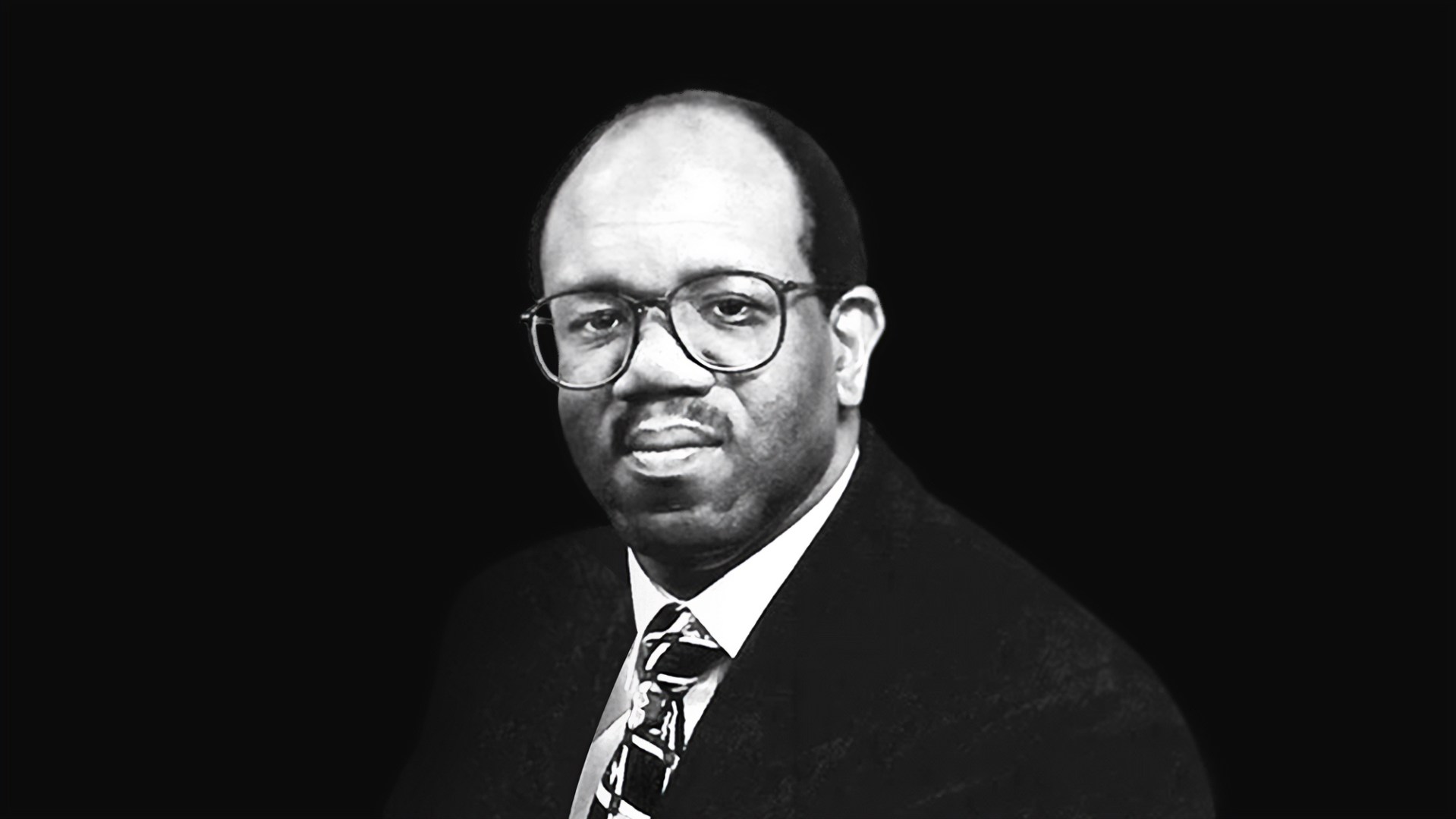
Portrait Courtesy of Evangelical Alliance / Edits by CT

When eight-year-old Joel Edwards arrived in London from Jamaica in 1960, he was on his guard against British Christians. Only the Black Pentecostals, he thought, could be true believers.

“We thought Baptists were maybe OK because they baptise like we did, and so perhaps they stood a chance of being real Christians,” he later wrote in Turning the Tables on Mission: Stories of Christians from the Global South in the UK. “Methodists confused us; we couldn’t work out if they were Anglicans or Baptists. Anglicans had no chance and Catholics were the antichrist! We didn’t even really trust white Pentecostals! They didn’t preach for as long, didn’t sweat, didn’t jump or shout much and didn’t sound Pentecostal!”

In the years that followed, Edwards not only overcame his suspicion; he devoted his life to bringing Christians together. The first Black leader of the Evangelical Alliance UK (EAUK), Edwards served as the spokesperson of thousands of UK evangelicals who did not always see eye to eye on theology, politics, or culture. He was known as a leader who could confidently preach the gospel on BBC and fight against injustice. Last week, Edwards died of cancer at age 70.

“Joel developed a multilingual ministry based on the liberating empowerment of the gospel of Christ that spoke in the languages of many differences,” said Joe Aldred of the National Church Leaders Forum. “Like the apostles on the day of Pentecost, people heard him speak of the limitless transcending power of God that transcend race and culture and religion, in their own tongue.”

Finding an identity

Most Caribbean Christians and members of the Windrush generation—the millions of West Indian and West African immigrants who came to the UK over three decades—arrived with a combination of economic pragmatism and patriotic idealism. But Edwards’s community believed they had something to spiritually offer their new home.

Edwards heard his elders ponder Esther 4:14 over and over again: “Who knows, but that God has called us to the Kingdom for such a time as this.”

“That was a cardinal text in the hearts and minds of the Caribbean Christians as we came and implanted between the early 1960s and ’80s. Here was a huge issue of identity: what does it mean to be a Christian, and what is our mission task here in Britain?” he wrote. “Who are we? How do we do what God has called us to do, and how do we understand outreach and mission in Britain in relation to who we are?”

Edwards was ordained in the New Testament Church of God, a prominent British Caribbean denomination, and led a congregation in East London.

Despite his immigrant identity, Edwards believed he had assimilated into British identity, until he arrived at London Bible College (now London School of Theology). A classmate looked at his books and noticed A Peculiar Institution, a history of a slavery, and Stokely Carmichael’s Black Power, sitting among the more common theology titles.

“Aha! Will the real Joel Edwards step forward,” said his classmate, Edwards recalled.

The comment caught him off guard.

“That day I actually understood for the first time that others do not perceive you as you perceive yourself,” he said. “And I was learning that this was also true for church life and missions.”

https://twitter.com/JohnSentamu/status/1410297544362676235

He nevertheless made his home among evangelicals, working and collaborating with the broader UK movement. His first connection to the Evangelical Alliance came when he first became the general secretary of the African and Caribbean Evangelical Alliance in 1988. In 1992, he became the UK director.

Five years later, Edwards became the general secretary of the Evangelical Alliance and soon became the consistent evangelical voice Brits encountered as a regular contributor to BBC’s Thought for the Day.

“Joel was a person who was fully alive living in the richness of his calling and loved seeing others live in the same way. He embodied joy and hope and inspired even the cynic to believe that the world could be changed,” said Selina Stone, a theologian mentored by Edwards. “Joel believed that the good news of Jesus could change the world and longed to see churches living out the beauty of the gospel in ways which brought light and hope to the world.”

https://twitter.com/GavCalver/status/1410228544878354434

Even as the voice for British evangelicals, he said he sometimes hesitated to claim the word.

“I’m an evangelical with a capital E,” he once said. “I hesitate to make such a confession, for I am painfully aware of the baggage the label carries. Without wanting to blame Americans for all the problems of the world, it is, well, largely their fault.”

As the first Black leader of the EAUK, he made a priority of racial injustice and critiqued Christians’ past silence.

During his tenure as EAUK director, Edwards was also named a member of the Equality and Human Rights Commission, the UK body charged with enforcing legislation guaranteeing equality without regard to of age, ethnicity, disability, gender, or sexual orientation. The appointment drew criticism from LGBT activists because of Edwards’s conservative stance on sexuality. But Edwards believed he belonged there.

“As a Christian leader, I believe one of my primary responsibilities will be to ensure that the values of faith communities—our concerns for important issues such as respect and tolerance—play an effective role in this commission,” he said. “But I think equally it is going to be a huge challenge for Christians and people of faith as we learn how to present our faith distinctives within a liberal democracy, where morals and values cannot be dictated by Christian faith alone.”

https://twitter.com/JustinWelby/status/1410242709621723149

The Windrush legacy

Through his personal actions and public work, Edwards affirmed the faith and ministry of the Windrush generation and their descendants.

“I have looked up to Joel as one of those who carved out the way for younger generations of Black Christian voices to be heard in public life,” said Chine McDonald, the head of public engagement at Christian Aid.

https://twitter.com/agu_irukwu/status/1410291744705482752

Edwards often compared the experiences of the Windrush generation with those of the Israelites who struggled understanding their culture, responsibility, and place after ending up in Babylon. At a service at Westminster Abbey commemorating the 70th anniversary of the landing of the HMT Empire Windrush, he reminded the community of their obligation to seek the welfare of their community.

Like the people in exile, the Windrush generation was faced with a new dilemma. In the words of a popular psalm, “By the rivers of Babylon, we sat down and there we wept when we remembered Zion. How can we sing the Lord’s song in a strange land?”

Or to put it another way: how can you be yourself in the place where you weren’t born?

However, 70 years in Babylon produced Daniel the prime minister, senior civil servants and Queen Esther. In captivity, they rediscovered themselves, their history and their understanding of God.

Edwards also realized his responsibility in raising up the next generation of Black British Christian leaders.

“He gently affirmed my ministerial vocation and demonstrated through his action and attitude how a Black person could survive and thrive within settings not designed with them in mind or heart,” said Azariah France-Williams, the vicar of Ascension Church Hulme in the Diocese of Manchester, who noted that Edwards was one of his ordination sponsors. “He and I were not always of the same mind on issues of the day, but our hearts were aligned, for his friendship and support I am deeply grateful and count myself blessed to have had such an amazing big brother who lived a Jesus-shaped life and created a more solid world on which we can all stand and dance.”

Edwards is survived by his wife, Carol, and two children.

News

Ethiopian Christians Take Sides Over Tigray Crisis

As the humanitarian issues escalate in the largely Orthodox north, the conflict tests evangelicals’ loyalty and theology.

Christianity Today July 6, 2021
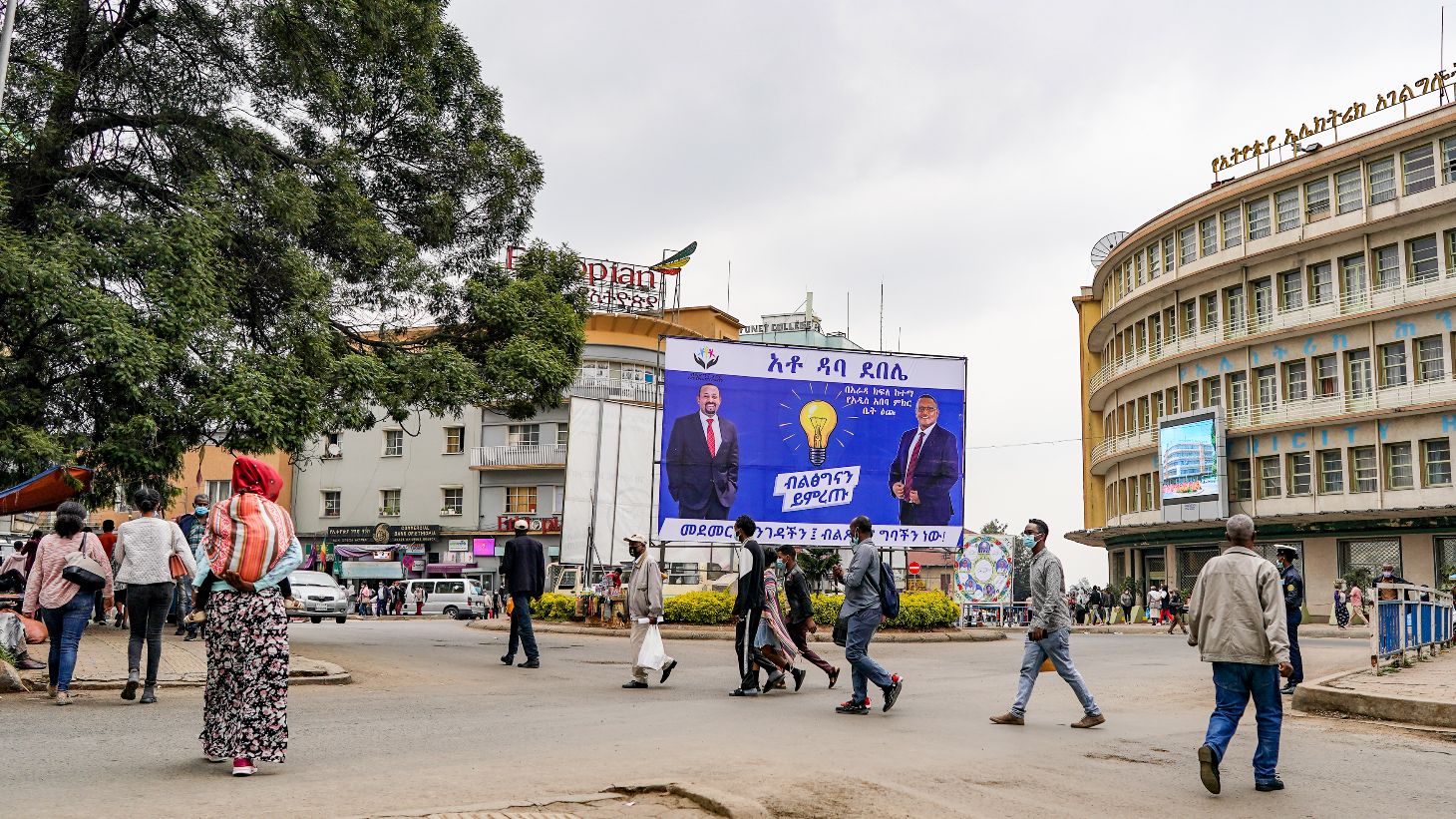
Jemal Countess / Getty Images

There’s one thing that all evangelical Christians in Ethiopia can agree on: Three years ago, when Prime Minister Abiy Ahmed came to power, their country was transformed.

The transition to an ethnically Oromo leader marked a break from 27 years of rule by the Tigrayan People’s Liberation Front (TPLF). And in a country historically dominated by Orthodox and Muslim believers, Abiy became the first openly evangelical head of government Ethiopia ever had.

But since a bitter and violent conflict broke out between Abiy’s government and the formerly ruling TPLF in the northern Tigray region in November 2020, evangelicals—who make up just over 18 percent of the population—have been divided over how to respond.

The majority, according to Christian Ethiopians and ministry workers in Ethiopia that I interviewed, support the military operation. Their support has held strong even as reports of civilian deaths, ethnic cleansing, horrific human rights abuses, and widespread hunger inflicted on the Tigrayan population rise in scale and urgency.

Earlier this month, the UN announced that more than 350,000 people in the Tigray region are already living in famine conditions, with another 1.7 million approaching famine. While the national government this week unilaterally declared a ceasefire after Tigrayans recaptured their regional capital, the TPLF is vowing to continue the fight.

Mazaa (a pseudonym), a 44-year-old who runs a K­­–8 school with her husband outside of Addis Ababa, has tried to share her concerns about the grave suffering of Tigrayans with fellow evangelicals. She asked not to be named out of fear of retribution against her students’ families.

Her school near the capital city serves a number of Tigrayan families; she has seen firsthand how the fathers of her students have been “disappeared,” and then how the surviving widows and children are isolated socially and economically. Her friends’ response? “These people brought it on themselves. It’s not without cause.”

“I don’t care what the cause is,” Mazaa told me. “Jesus says we have to love one another. Love doesn’t take any conditions. The love we offer and give has to be without any condition.”

She also believes the war is unnecessary. The dispute between Abiy and the TPLF “should have been resolved another way. Fighting could have been avoided, if there was dialogue or reconciliation or willingness on their part to go through a lot of steps.”

But Mazaa is in a relatively small minority. Among non-Tigrayan evangelicals, the justification for the war extends decades back. Under the TPLF, Protestantism was treated like a second-class religion. Muslims and Orthodox Christians were given preference in myriad ways, from political access to venue options for worship services. That’s on top of the large-scale oppression perpetrated by the Ethiopian People’s Revolutionary Democratic Front (EPRDF), the ruling coalition dominated by the TPLF, which regularly jailed dissidents, censored the internet and media, and limited individual freedoms.

Before the TPLF, when Ethiopia was under imperial and then Communist rule, the oppression against evangelical Christians was even worse, with regular executions and imprisonments. But all that changed with Abiy’s unexpected rise to power. He freed thousands of political prisoners, unblocked hundreds of websites, facilitated the end of a schism within the Orthodox church—and promoted long-awaited equity for evangelical Christians.

In Ethiopia, the term “Pente,” which began as a nickname for Pentecostals, has come to refer to evangelicals and most Christians outside the Orthodox Church. The prime minister attends a Pente church whose denomination is part of the Evangelical Churches Fellowship of Ethiopia.

“Right now, the evangelical Christian is getting more attention, is getting rights, is getting more opportunities to be part of the political movement because we’re being led by an openly evangelical Christian,” explains Eshe (a pseudonym), who works for two evangelical ministries and attends a Mennonite-affiliated church in Addis Ababa.

She does not support how Abiy is handling the conflict, and she expressed concern that her views could get her labeled as part of the “opposition.” But for many other evangelicals, Abiy is a gift from God, an anointed leader, and even a prophet.

Abiy’s many political and social reforms have been widely celebrated across Ethiopia—and the world. Up until last year, Abiy was best known as the man who made peace with longtime foe and neighbor Eritrea, which resulted in the 2019 Nobel Peace Prize.

But the evangelicals’ gain has been the Tigrayans’ loss, including evangelicals living in the Tigray region, which is home to a higher concentration of Orthodox Ethiopians and their holy sites. According to a recent statement from the Evangelical Churches Fellowship of Tigray Region:

Tigray has been ravaged by a war of revenge, destruction, and death. The damage to the people of Tigray is immeasurable, and the enormity of the need of millions of people is great and pressing.

One of the unforeseen and unexpected experiences of the current conflict has been the fact that the leadership of the Ethiopian Evangelical church has supported this evil war against the population of Tigray. The Ethiopian Evangelical church has lent its financial and unwavering spiritual support to the Ethiopian government through false prophecy of guidance and praying for the success of the military mission against the people of Tigray.

That evangelical support seems to be rooted in a particular interpretation of what God is doing in the current conflict. Many evangelical Christians see the events in Tigray as the judgment of God. Several of the Ethiopian Christians I interviewed said their friends and family readily declare that the Tigrayans “deserve what they get.”

Biruktawit Tsegaye, a 27-year-old volunteer with an evangelical college ministry, believes the TPLF laid the groundwork for the current conflict.

“TPLF corrupted the nation, the people, based on ethnicity. TPLF sowed a bad seed based on ethnicity, so the nation is divided. TPLF is based on differentiating and dividing the nation in the past 20 years,” she explained to me. “After that, with the new government coming in, they refuse to participate and accept the new change. That is the main reason for the division and the war.”

Her friend Desalajn Assefa Alamayhu, an evangelist who is Tigrayan himself, agrees. And he accuses Christians in Tigray of being active contributors to the conflict.

“Tigray Christians participate in evil things with TPLF. They participate completely with TPLF. They said, ‘In [the] Bible, we can oppose federal government because we need freedom.’” In contrast, he contends, “most Christians in Ethiopia agree with the federal government because Dr. Abiy teaches and preaches from the Word of God.”

But to Eshe, a just response to past offenses and the current insubordination of the TPLF should not have been a large-scale conflict.

“It was just between two political parties. The leaders are the ones in conflict,” she explains. Eshe believes that the previous TPLF leaders who committed serious crimes number less than a hundred. Abiy’s government should have simply gone after those individuals instead of “taking war as a solution.”

The question that many evangelical Ethiopians seem to be wrestling with is this: With whom would Jesus side—the charismatic evangelical leader determined to defeat his enemies, or the primarily nonevangelical Tigrayans who are suffering immensely?

Where they ultimately land is complicated by the fact that media reports and even interpersonal communications coming out of Tigray have been tightly controlled; misinformation and propaganda abound. And under a government that has shown itself increasingly willing to punish dissidents, there is the real threat that vocal opponents of the war could be jailed—or worse.

For Kofi (a pseudonym), where his loyalty lies is clear.

“For me, as a Christian, our allegiance is with God first. The Bible says we have to ally with those who are hurt,” said the 26-year-old, who declined to be named to protect his missions agency, which partners with churches and evangelizes in Tigray.

“That’s one of the things that Christ says to the disciples: Cry with those who are crying, share with those who don’t have nothing. We have to be with those who are suffering. No matter the political explanation, I don’t care. That’s not the primary need. There are many who are suffering and in need of our prayers and help.”

Editor’s note: A citation of theologian Paulos Fekadu has been removed from this article due to his claim that the linked publication mistranslated his position.

addApple PodcastsDown ArrowDown ArrowDown Arrowarrow_left_altLeft ArrowLeft ArrowRight ArrowRight ArrowRight Arrowarrow_up_altUp ArrowUp ArrowAvailable at Amazoncaret-downCloseCloseellipseEmailEmailExpandExpandExternalExternalFacebookfacebook-squarefolderGiftGiftGooglegoogleGoogle KeephamburgerInstagraminstagram-squareLinkLinklinkedin-squareListenListenListenChristianity TodayCT Creative Studio Logologo_orgMegaphoneMenuMenupausePinterestPlayPlayPocketPodcastprintremoveRSSRSSSaveSavesaveSearchSearchsearchSpotifyStitcherTelegramTable of ContentsTable of Contentstwitter-squareWhatsAppXYouTubeYouTube