News
Wire Story

Kenyan Christians Traveling for Christmas Fear al-Shabaab Bus Attacks

Christian and Muslim leaders have condemned the violence, which has turned deadly as neighboring Somalia broke diplomatic ties.

Christianity Today December 17, 2020
Oli Scarff / Getty Images

Christians traveling on buses for Christmas holiday close to the border with Somalia have recently become targets of the Somalian militant group, al-Shabaab.

According to Christians in the region, traveling has become a risky endeavor, as the militants have seized buses on remote roads. Locals in the mostly Muslim communities in the area have been accused of aiding the attacks, some of which have been fatal.

Kenyans are bracing for further attacks by al-Shabaab as the United States carries out plans to withdraw its troops from Somalia, which broke off diplomatic relations with Kenya on Tuesday, saying Kenya was meddling in its elections.

In response to the attacks, Christian and Muslim leaders have stepped up interfaith dialogue in hopes of reining in the bus attacks and other threats to the border region’s small Christian community.

“We continue to pray and talk. The interfaith dialogue has brought a great change in this region,” Nicholas Mutua, a Catholic priest in Garissa, told Religion News Service. “The buses are moving. All is fine, but we have to be on alert. The militants are very unpredictable.”

Al-Shabaab, the al-Qaida affiliate in East Africa, has posed a threat to regions along the border for almost a decade, staging attacks on security forces and government outposts in Mandera, Wajir, Garissa, and Lamu counties. Improvised explosive devices have been used to strike security forces, police posts and telecommunication masts along roadways.

Many of the non-Muslims caught in the recent bus attacks have been teachers traveling to other parts of Kenya for Christmas celebrations. Some church leaders have also been killed in the attacks.

“The target is the Christians and for their faith,” said Grace Kuthea, a teacher who has worked in the region for several years. “They usually take time for the people to forget, before they strike again.”

But the recent attacks on Christmas season travelers and some places of worship have motivated the faith leaders. “The Muslims are not against Christians in the region,” said Josiah Joab, a Pentecostal pastor who had worked in Garissa until March this year.

This isn’t the first time that al-Shabaab has come across the border to assault civilian transportation. In November 2014, militants hijacked a bus traveling from the northern Kenya town of Mandera and killed 28 non-Muslims, separating the passengers according to who could recite the Islamic creed.

A second bus attack in the Christmas season in December 2015 failed after Muslim passengers refused to identify the Christians among them to the attackers.

Sarah Farah, a teacher who later died while protecting Christians, was later honored. A short film, Watu Wote (“all of us”), based on the incident was later nominated for an Academy Award.

Mutua believes that faith leaders’ stand against the violence then saved lives. “I think the interfaith dialogue we have been having contributed to the teacher’s action,” he said.

Shaykh Hassan Ole Naado, the acting national chairman of the Supreme Council of Kenya Muslims, said solidarity with Christians was part of the effort by all Kenyans to counter al-Shabaab.

“Kenyans have teamed together to raise their voices. It cuts across the faiths,” said Ole Naado. “Mosques and churches are playing their roles, preaching peace.”

“All of us (Kenyans) are victims of a foreign problem in Kenya,” said Ole Naado.
Books
Review

Writing as a Christian Means Joining a Banquet, Not a Battle

How we can use our words to feed each other rather than destroy each other.

Christianity Today December 17, 2020
Illustration by Mallory Rentsch / Source Images: MikeyGen73 / Julio Embun / EyeEm / CSA Images / Getty Images

How do you write a review for a book titled Charitable Writing? Charitably, of course. Which means your words must embody what the book’s authors call “the distinctive Christian understanding of love, which used to go by the name ‘charity’ in English.” Fortunately, while love covers a multitude of sins, I don’t need an extra measure of charity to respond enthusiastically to this artful volume by Richard Hughes Gibson and James Edward Beitler III, both professors of English at Wheaton College.

Charitable Writing: Cultivating Virtue Through Our Words

Charitable Writing: Cultivating Virtue Through Our Words

IVP Academic

248 pages

$15.19

Though the book has a clear target audience—professors and students of writing within academia—its message is vital in an uncivil world where argument often means war, public and private discourse divides, and words are wielded as weapons. How do Christians reclaim language and writing in such a world? As people of faith, called to love God and neighbor, might we write according to another rhetoric, another syntax, another grammar—the “grammar of faith”? If so, how might that happen inside the walls of academia and in the dreaded and much-maligned college composition class?

Three Core Concepts

Here is my main complaint: Where was this book when I first needed it 35 years ago? (But that is uncharitable and selfish.) Within the first chapter, I was transported back to the University of Oregon and teaching my first freshman comp class, where I stood before my skeptical students, sweaty hands behind my back. I wasn’t clueless: I’d completed a yearlong apprenticeship that included cutting-edge readings in composition and educational theory. I had written papers, student-taught, and questioned my professors. I was intellectually prepared. As a Christian, though, I was on shakier ground. What did the Christian faith have to say about the teaching and study of writing in a setting rocked by protests and deconstructed through postmodernism? I knew of no resources and no such conversation.

As the lone person of faith in my cohort, I devised an answer: In a culture immersed in the paradox of subjectivity as the only objective truth, I saw myself as a truth-warrior, a missionary for critical thinking. My greatest concern, in teaching, was my students’ intellectual formation. But even then, I knew something was missing.

My own limitations weren’t the only challenge. My students didn’t share my passion. Their primary concern was their grade. The biggest hurdle I faced that semester and all the years that followed—indeed, it’s one all writing professors face—is a tendency to devalue composition. For most, the course is a hoop-jumping throwaway class groaningly endured for the sake of raising scores on college papers—even at Christian colleges. (My son, currently a college freshman who just completed this course, assured me this is still the case.) Sadly, sometimes instructors feel the same way.

Yet the need for Christians inside and outside of academia to reclaim language and argument has never been greater. Which makes the publication of Charitable Writing especially welcome, as this much-needed resource restores writing and the teaching of writing to its rightful place: as an occasion to grow in virtue.

The book is built around three core concepts: humble listening, loving argument, and hopeful timekeeping. The notion of humble listening relies heavily on the work of Augustine and contemporary scholar Alan Jacobs. Both ask, what does it look like to love our neighbor as we read and write? It means being hospitable to other writers, making space to quietly listen rather than jumping to an offensive or defensive response.

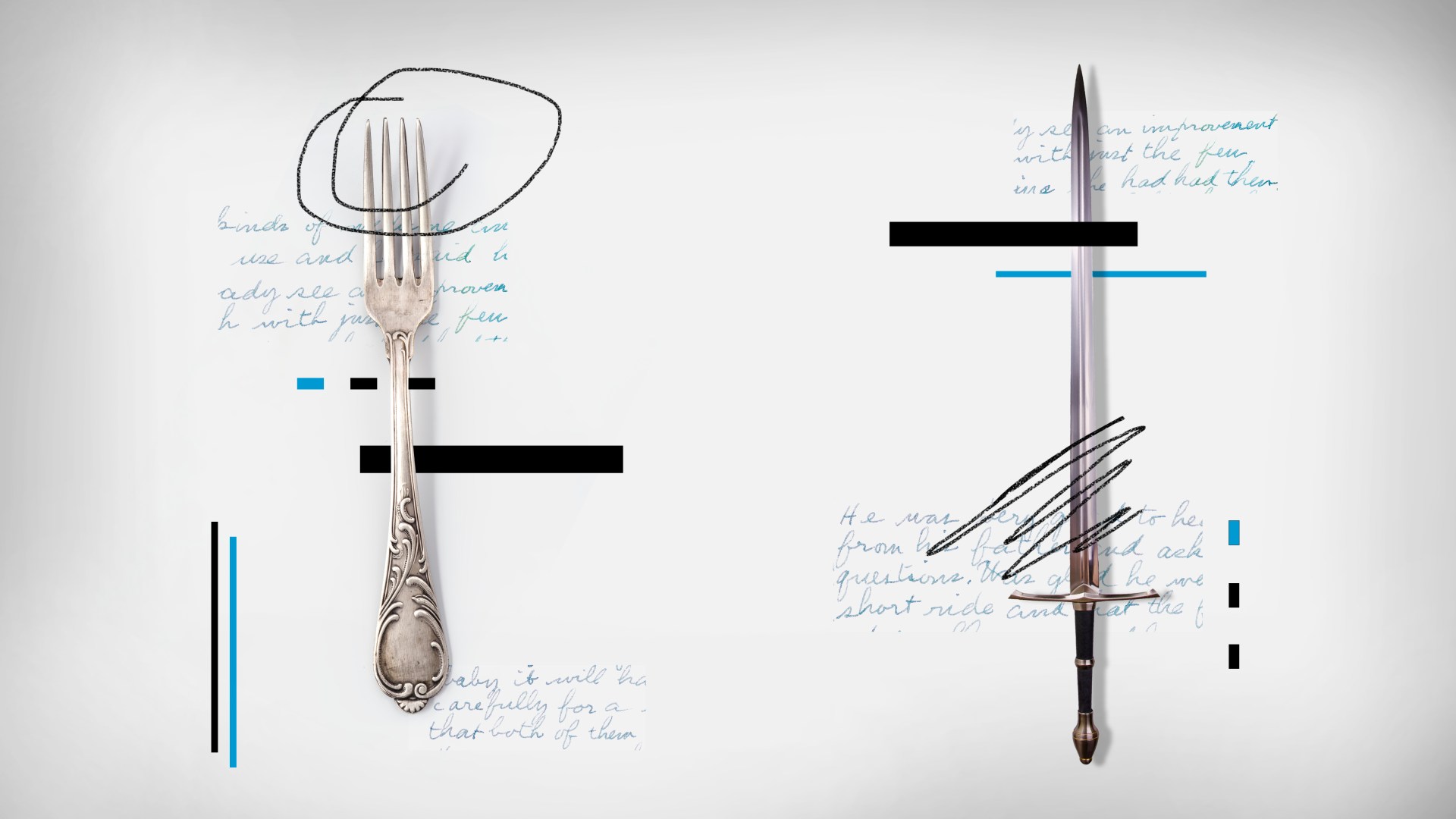
What about “loving argument,” which is surely an oxymoron? Argument is not only the cornerstone of most composition classes but also the dominant rhetorical strategy in the media today. Is rescuing argument simply a matter of learning to sharpen our swords? Hardly. Argument, the authors posit, has too long been cast in metaphors of violence and war, necessitating winners and losers. What metaphors might resurrect a fuller, more charitable understanding? The authors borrow from the medieval mystic Bernard of Clairvaux and other historical luminaries who present argument as a banquet rather than a battle. Banquets are for feasting, for conversation, for companionship. Writers, bent over their papers, do not write alone. They are guests at a long table laden with many other dishes. But they are hosts as well. As they write, they invite readers to partake of their own offerings on the table. There are no winners or losers, only guests and hosts who are fed by each other.

The final “threshold concept,” hopeful timekeeping, is an even more ambitious challenge for beleaguered writers and students: How might we see the painful and seemingly endless process of revision through the lens of love? The banquet metaphor again serves well. If we’re to feed our readers, we’ll need to figure out their tastes, gather our ingredients, and learn how to prepare a meal they will ingest, enjoy, and grow from. Writing, then, from the first draft to the last, can be undertaken as an act of charity, as a noble pursuit.

I don’t know how I would have responded to such content as an 18-year-old college freshman, but I’d like to think it would have made me a convert. Writing papers is a noble endeavor? I’m communing with saints across the ages? I can love others fully and humbly even as I disagree with them? As a writing instructor, I would have responded even more enthusiastically, setting this modest book atop all my other writing resources.

A Thoughtful Feast

I expect and hope Charitable Writing will become required reading for both writing teachers and students at Christian colleges and universities. Its scholarship dazzles, brilliantly integrating not only faith and knowledge from scholars across centuries and continents but other art forms as well. The book opens and closes in an art gallery, teaching a wider form of textual “reading.” In all of its artistic and literary range, Charitable Writing exemplifies its own metaphor of writing as a celebratory banquet.

But I cannot finish without noting an empty corner of my plate and a bit of wishful thinking. The authors rightly address our need to communicate from first to last with humility, speaking “the truth in love.” Our entire culture, awash in conflicting news sources and conspiracies, is equally challenged in discerning error and ascertaining reliability and truth. I would argue humbly, then, for one more chapter that emphasizes discovering and then speaking “the truth in love.” Despite this omission, all who care about language and rhetoric will relish this thoughtful feast.

Leslie Leyland Fields is the author of Your Story Matters: Finding, Writing, and Living the Truth of Your Life. She lives on Kodiak Island, Alaska.

A Vaccine Could Save Prisoners’ Lives. Christians Can Help.

Advocating for prisoner vaccinations is a political issue, but it doesn’t have to be a partisan one.

Christianity Today December 17, 2020
Illustration by Mallory Rentsch / Source Images: Motortion / Getty Images / Call Me Fred / Markus Spiske / Unsplash

As states begin to roll out their plans for COVID-19 vaccination, the limited number of doses have prompted tough public conversations about how to prioritize vulnerable populations. Most states agree that health care workers, nursing home residents, and people with high-risk comorbidities should be at the top of the list. But another vulnerable population has proved more controversial: incarcerated people.

Medical and public health experts, including the American Medical Association, agree that incarcerated people face tremendous danger from the virus, given that social distancing in America’s overcrowded prisons is impossible. Prisoners also face inadequate testing, a shortage of soap and masks, and substandard health care. As a result, the virus has already spread widely in prisons. The Marshall Project reported that, as of December 8, at least 249,883 people in American prisons had tested positive, a 10 percent increase over the past week, including 1,657 fatalities. Contracting COVID-19 while incarcerated has proven deadly, with rates of prison cases and deaths at 3.7 and two times national levels, respectively. As incarcerated writer Christopher Blackwell wrote for the Washington Post, “we are sitting ducks.”

The response of many facilities has been to go on lockdown, restricting important programs and keeping residents inside cells. Some prisons have even used solitary confinement as a method of quarantining. These practices have alarmed reform advocates and have made life all the more difficult for those inside prison walls. Byron Johnson, a Baylor University sociologist and leading scholar of faith-based correctional programs, told me that the past nine months have been “devastating” for the prison initiatives that depend on volunteer efforts: “The pandemic has essentially killed many educational, vocational, and religious programs.”

The spread among prison populations also has put correctional officers and their families at high risk (with more than 62,171 prison staff testing positive, and 108 deaths reported). And these infections of staff present ongoing danger to the communities where prisons are located.

Despite experts’ warnings about the dangers of COVID-19 in confinement, many Americans resist the idea that prisoners should be at the top of the vaccination lists. According to analysis from the COVID Prison Project, 24 states have listed prisoners in the second tier of priority for the vaccine. Twelve states did not even mention prisoners in their plans. And many states, as the Prison Policy Initiative has pointed out, have put forward plans for vaccination that are “unclear and unspecific” regarding incarcerated people, or have neglected to detail plans for county jails alongside state prisons.

Prioritization—or even mention—of concern for prisoner health is a political liability. Colorado, for example, had previously announced plans to include prisoners among the top priority vaccine recipients. But after one Colorado Republican district attorney blasted the state’s draft plan as prioritizing “murderers, rapists, and child molesters” over law-abiding citizens who need the vaccine, Democratic Governor Jared Polis walked back the proposal, saying, “There’s no way it’s going to go to prisoners before it goes to people who haven’t committed any crime.” The new Colorado plan, released this past Wednesday, moved prisoners down the priority list, despite continued deadly outbreaks in the state’s facilities.

Reluctance to prioritize the health and well-being of incarcerated people has a long history in this country. Many Americans have seen mass incarceration as an acceptable policy outcome despite its disproportionate impact on the poor and people of color. Our political and cultural consensus has also fostered complacency concerning the poor conditions of prisons. Incarcerated people are routinely forced into inhumane living environments and face the threat of violence. COVID-19’s ravaging of prison populations is but a symptom of this deeper disease.

Priority vaccination for prisoners is an opportunity to challenge the punitive status quo. Karen Swanson, director of Wheaton College’s Institute for Prison Ministries, believes Christians should be at the forefront of advocating for prisoners’ right to the vaccine. She references Proverbs 31:8: “Speak up for those who cannot speak for themselves, for the rights of all who are destitute.”
The vast majority of American Christians believe that prison conditions should be “safe and humane.” My own research has also shown how evangelicals have historically exhibited a great deal of concern for incarcerated people, even as they have struggled to resist the pull of law-and-order politics. The question of prioritizing prisoner vaccinations is a clear opportunity for Christians, whatever our political persuasions or views of criminal justice, to practice what we preach.

This is undoubtedly a political issue, but it does not have to be a partisan one. Republican and Democratic politicians alike have fallen prey to the temptation of punitive politics, and leaders of both conservative and liberal persuasions have maintained our nation’s carceral state. Christians, therefore, have a unique opportunity in this moment for public witness above the partisan fray.

We can write and call elected leaders in our states on behalf of prisoners, asking them to prioritize prisoners’ early vaccination alongside other vulnerable populations in congregate settings, such as nursing homes and homeless shelters. For states that have already pledged prioritization of prisoners for vaccination, Christians can communicate their support to policymakers, who will likely receive pushback for this decision.

The National Association of Evangelicals (NAE) has already been advocating on behalf of prisoners during the pandemic, urging Congress to expand eligibility of compassionate release of federal prisoners. On the matter of vaccination, Galen Carey, the NAE vice president of government relations, told me that the organization believes that “those who remain behind bars, and the staff who serve them, should be among priority populations in the distribution of coronavirus vaccines.”

The public health stakes are high, but so are those of faithful Christian discipleship. For Carey, “Jesus said that those who do not care for the needy and the imprisoned demonstrate by such lack of action that they are not his followers.”

If our leaders and fellow citizens throughout the nation hear Christians speak boldly on this issue, we might begin rebuilding the public trust lost over the past few years amid political rancor. But more importantly, by advocating for priority vaccination for those who are most at risk, we might save the lives of our fellow citizens and fellow bearers of the image of God.

Aaron Griffith is a history professor at Sattler College and the author of God’s Law and Order.

News

$500K Medical Missions Award Goes to OB-GYN Nun in Uganda

Her call to serve the “least of these” led her to maternal care at a rural hospital.

Christianity Today December 16, 2020
Courtesy of African Mission Healthcare

Dr. Priscilla Busingye has a God-given passion to improve maternal health across Uganda, particularly in rural places where women often can’t get specialized care and dignified treatment.

For years, Busingye would wake up before 6 a.m. for morning devotions and mass before heading to work at the maternity ward. As a nun and a physician at a rural hospital, her work was both rewarding and rigorous. She would set alarms on her phone to remind herself to pray for strength and energy throughout the day.

Now, as the president of the Association of Obstetricians and Gynecologists of Uganda, Busingye is training up the next generation of specialists in the Ugandan capital of Kampala.

When she learned last month she won a $500,000 medical missions prize, she saw God was finally answering her decades-long prayer to expand access to lasting maternal care. Busingye, a consecrated nun with the Catholic Banyatereza Sisters of Uganda, is the first woman and first African physician to win African Mission Healthcare’s annual L’Chaim Prize. For nearly two decades, Busingye served at the Rwibaale Health Center, about four hours west of Kampala. She had been the hospital’s only OB-GYN specialist, as well as its medical director and administrator. Now, with the prize money, Busingye intends to transform the facility into a dedicated maternal care center.

Busingye’s goal is ambitious yet attainable: She wants to build a place where women have access to safe and affordable gynecological services, including surgical procedures for pregnancy, delivery and birth trauma, or injuries.

Women’s health is often neglected in national budgets for hospitals in Uganda, where the cost of giving birth in a hospital is too high for the rural poor. Some would have to pay up to a year’s worth of income to cover the cost of a C-section. As a result, most can’t or won’t seek out the medical help they need—or they wait until it’s too late.

Uganda still has one of the highest maternal mortality rates in the world. Studies show that 1 out of every 49 women will die from childbirth complications. Busingye hopes this health care center, slated to break ground in 2021, will be a place of refuge—where women from all levels of society are put first and where their bodies are treated with dignity and respect.

Busingye felt called to work with the poor and needy since she was a young girl. Taken under the wings of the Banyatereza Sisters of Uganda as a child, Busingye remembers being in sixth grade when she prayed before a statue of Mary, the mother of Jesus, and vowed to devote her life to serving God and ministering to the sick and the suffering.

Over the years, God shaped that calling by leading her to the medical field to help women who would not otherwise have the means to receive dignified clinical care. “That is a witness, that’s building the kingdom of God in people's hearts,” the 55-year-old said.

Citing Matthew 25:40, where Jesus said that “whatever you did for one of the least of these brothers and sisters of mine, you did for me,” Busingye says that behind the face of each woman she treats is another face—the holy face of God in the suffering of Christ as he hung on the cross.

Busingye’s project at Rwibaale is exactly what the leaders of African Mission Healthcare had in mind when they created the L’Chaim Initiative, which is named after the Hebrew toast “to life.”

Founder Mark Gerson, a Jewish philanthropist, and chief executive Jon Fielder, an evangelical physician, enlist top medical missionaries to select a winner for the prize each year. They set out to support projects that will have the greatest life-saving impact.

“When you look at the rates of maternal death, when you look at the rates of children lost to childbirth,” Gerson said, “the numbers are and continue to be staggering.”

“Uganda’s maternal and newborn health metrics are some of the worst in the world,” said Fielder. “The country as a whole is in the bottom 30—and it’s worse in southwestern Uganda, outside the capital of Kampala, where there’s fewer resources.”

Busingye sees women as the backbone of society and the economy in rural Uganda. They’re the ones who produce most of the food and transport it to sell in the markets. They oversee the children’s education, instilling values and imparting faith. And while they faithfully care for their families, these women often put their own needs last, if they can afford to think of themselves at all.

So when the woman of the family gets sick or dies, the whole household suffers. An investment in their health care needs not only serves the lives of individual women and babies—it also improves the livelihood of extended family members and raises the quality of life in her village, church, and community.

Mission hospitals like the Rwibaale Health Center, where Busingye will build the maternal center, hope to become a model for other medical facilities in the country. Over time, the team plans to train hundreds more young medical students and residents. Their vision is to elevate the level of health care, and specifically maternal care, across the continent.

African Mission Healthcare was founded in 2010 in response to the growing lack of funding and resources being funneled toward medical missions, especially in Africa—where 1 in 3 hospitals is said to have been founded by a Christian ministry or missions organization.

As the church landscape shifted in the US, many overseas missions hospitals saw their financial support depleted. Gerson aims to help build up sustainable institutions by investing in direct doctor-to-patient clinical care as well as medical training and infrastructure.

African Mission Healthcare had already been partnering with Busingye and her order for nearly a decade before she applied for the L’Chaim prize. The organization has funded and facilitated the nursing training of nearly 50 nuns in the region, several of whom have since gone on to medical school to become doctors or specialists, or were equipped to train other nurses.

Many of these women will continue to work alongside Busingye, while some were sent to serve at mission hospitals in other rural areas.

“From the beginning, you could just see her pure heart and her desire to serve,” Fielder, who served in medical missions in Africa, said of Busingye. “We knew that she and her group of nuns would be a really great partner.”

Even with the partnership and financial backing, Busingye knows that her prayer—to build one of the first maternal health care centers of its kind—will be a monumental endeavor.

“There are times I have shed tears, feeling the heaviness of what is coming ahead,” Busingye says. “But whenever I feel like that, I say no—forgive me, Lord. It's not my effort, I don't want it to be me. Please just take it, it’s your award.”

Theology

Advent Week 4: A Savior Is Born

Advent devotional readings from Christianity Today.

Christianity Today December 16, 2020
Image: Illustration by Jared Boggess

In this series

Jump to the daily reading: Sunday | Monday | Tuesday | Wednesday | Thursday | Friday.

Want to print these devotionals or read them in PDF format? Purchase this entire Advent devotional, plus additional Bible studies and Bible reading guide with our Advent 2020 digital bundle.

Sunday: Lying in a Feeding Trough

Today’s Reading: Luke 2:8–20

The fullness of time had come. For thousands upon thousands of years, God’s people waited for the coming of the greater son of David, the Messiah-King of Israel. The promised Prince of Peace. And now, their prophets’ wildest, God-wrought dreams finally materialized as angel choirs announced, The King is here! Born this very day.

In the Messiah’s arrival, we marvel at—but expect—an angel of the Lord to proclaim it. We gape at—but expect—a whole army of angels to burst into praise. We might even expect this proclamation to ring through royal halls or in the temple—anywhere other than some obscure field near Bethlehem … to shepherds.

Their garments’ animal stench, their ignoble social position, and the dirt lodged beneath their fingernails didn’t disqualify these shepherds from receiving the word of the Lord. After all, this good news of great joy was for “all the people” (Luke 2:10) and, we read later, especially for “the poor” (4:18).

And what did the angel say would be the sign of this exceedingly good news? Look for Messiah’s poverty: He’ll be lying in a manger. A feeding trough. He’ll smell like you, blessed shepherds. In humble circumstances. Pushed to the margins. Indeed, “blessed are you who are poor, for yours is the kingdom of God” (6:20).

And blessed are we too when, like the shepherds, we receive this good news and hurry to meet Jesus for ourselves. Isn’t that how we began with Christ? We didn’t understand all he is, all he’s done, and how all of that is meant to radically transform us. We just knew we needed to see him, to meet him. And when we did, how could we keep from proclaiming the good news, “glorifying and praising God,” for all we had heard and seen (v. 20)?

This rhythm—hear the gospel, hurry to meet with Jesus, then proclaim the gospel and praise God—isn’t this also how we continue in the faith? Isn’t this the recipe for worship that fuels our endurance? Isn’t this the soil where hope blooms?

The kingdom of God is filled with stories like these: lowly shepherds become esteemed heralds of salvation; tax collectors and prostitutes become friends of God; the foolish and weak shame the wise and strong. Even our Hope himself—“the Messiah, the Lord” (2:11)—once laid in a feeding trough.

—Quina Aragon

Meditate on

Luke 2:8–20.

What does the humble audience chosen for this angelic announcement emphasize about Christ and his purpose? How are you challenged by the shepherds’ response to Christ?

Monday: Joy of Our Desires

Today’s Reading: Luke 2:22–38

It was in the twilight of Simeon’s and Anna’s lives, when most others might have thought the ship of their hopes and dreams had long ago set sail, that God made his most spectacular appearance. It was in that sort of moment, when from a human standpoint all hope seemed lost, that Mary and Joseph gently placed newborn baby Jesus—the Messiah, their hopes and dreams made manifest—into their arms. God is like that. Over and over again, God shows up in history and in our lives, when all bets are off.

Maybe, like Simeon, we’ve joyfully served and adored God our entire lives. And perhaps, too, we’ve sensed God saying that what we are experiencing now is not the end—that there is something more.

It could be that, like the prophet Anna, we’ve spent our whole lives on God’s heels and as close to his people as possible. We’ve been where God is—sacrificing for and loving people—yet we’ve had our share of pain and suffering along the way. Maybe each morning we wake with great expectations, only to be continually disappointed. Perhaps days pass by and nothing changes. Life may even feel like a disappointment. We may question whether or not we really did hear from God.

For Simeon and Anna, on an ordinary day that started off like all others, suddenly everything changed. Mary and Joseph went to the temple to fulfill the Mosaic Law by offering their firstborn son, Jesus, up to God. In that ripe kairos moment, the Holy Spirit nudged Simeon and then Anna in the holy family’s direction. Though each of them was on the brink of death—their sagging skin brandishing age spots, their bodies stooped, their movement slower and more measured—God showed up fresh-faced, as alive as could be, with twinkling eyes and ever-so-soft skin, as a newborn baby. Unpredictable and unexpected indeed.

The witness of Simeon and Anna speaks to us, reminding us that God keeps showing up in our lives, often unexpectedly. He breaks in, bringing unimaginable joy to our ordinary days.

And not just in this life but also in the life to come—when our hopes and dreams will be ultimately realized in God himself.

So with Simeon and Anna, may we exclaim the sentiment of the great hymn, “Jesu, joy of our desiring!” Our hope and dreams are—and will continually be—made manifest in Christ, now and forevermore.

—Marlena Graves

Read Luke 2:22–38.

Consider Simeon’s and Anna’s experiences on this day and in the many years leading up to it. How do their stories challenge you? How does their witness inspire you?

Tuesday: A Disruptive Joy

Today’s Reading: Matthew 2:1–12

God’s great story of redemption is filled with irony. Even as Matthew emphasizes that Jesus is the promised Messiah by virtue of his Scripture-fulfilling birthplace, he also introduces his Jewish audience to a mysterious group of foreigners: Magi from the East. Look at the Christ child already causing the nations to “rally to him” (Isa. 11:10; 60:1–6)!

This migrant caravan of Gentiles enters the Holy City—the center of Jewish religious life and the residence of Herod, the so-called “king of the Jews”—intending to find and worship the true “king of the Jews” (Matt. 2:2). The irony here almost provokes laughter, until we notice the chief priests and scribes’ seeming indifference to Christ’s birth. And until we see Herod’s faux worship result in the slaughter of infants.

More than entertaining, the irony is convicting. The Magi’s ambition contrasts starkly with Herod’s. Though both were informed by the Scriptures and both inquired of Christ’s whereabouts, Herod resorted to closed-door schemes to try to eliminate this threat while the Magi simply followed the star to their exceeding joy.

We also see a critical contrast between the Magi’s response of worship and the apparent inaction of the chief priests and scribes. Clearly, proximity to the truth is not enough. Was it embarrassing for these Messiah specialists not to recognize his advent before these pagans did? Why didn’t their theological expertise rouse a readiness in them like we see in the watchful Magi? Was their spiritual responsiveness dulled by a hunger for power and thirst for privilege as they allied themselves with a tyrannical king?

“Blessed are those who hunger and thirst for righteousness, for they will be filled,” Scripture tells us (5:6). This is the reality we see embodied by the Gentile Magi. Their joy overflowed into worship when they saw that shining sign of hope rest over the home of Hope himself (see Num. 24:17). They traveled from afar to gladly bend the knee to the “king of the Jews” who, it turns out, is also the “King of the nations” (Rev. 15:2–4).

The love of God is a scandal—too full to contain, too shocking to predict. It makes Christ-worshipers out of pagans, faith heroes out of foreigners. Are we willing to learn from these unlikely leaders and their generous, humble worship? If we are, perhaps we too will embody a beautiful irony—a disruptive joy, a bright hope, piercing through the darkness of our times.

—Quina Aragon

Reflect on Matthew 2:1–12.

(Optionally, also read Isaiah 11:10 and 60:1–10.) What stands out to you in the Magi’s response to Christ’s birth? How does the Magi’s joyful worship emphasize Christ’s purpose?

Wednesday: Christmas Warfare

Today’s Reading: Matthew 2:1–18; 1 John 3:8

Up until this point in the birth narrative of Jesus, it has been all singing and rejoicing. It has been angelic choirs, hurrying shepherds, and wise men seeking to worship him. But here, in Matthew 2:16–18, we have the brutal and blunt reminder of why Jesus came into the world in the first place. “When Herod realized that he had been outwitted by the Magi, he was furious, and he gave orders to kill all the boys in Bethlehem and its vicinity who were two years old and under, in accordance with the time he had learned from the Magi” (v. 16).

In this passage, we are faced with a disturbing and stark reality: There are evil and wickedness in this world. There is the terror of sin that rules and reigns in the hearts of men and women. Left to our own devices and under the influence of the Evil One, humans can be given over to murderous lies and to deceit. We see it clearly in Herod’s actions; it couldn’t get any more evil. Right here, in the Nativity story, while we’re still listening to the angels singing, Satan and his minions kill countless numbers of babies.

The frustration of Herod gives way to fury, and he unleashes this unholy rage. We can only imagine the horror that gripped Bethlehem as Herod sent his death squads through, killing baby boys. This is the brutal, monstrous act of a sadistic ruler under the influence of Satan. This atrocity in the Christmas story is a stark and sober reminder to us, in the midst of our singing, that the reason Jesus came is to do battle. There’s a war, and Jesus came to conquer our sin.

Christmas is not about ribbons and tags. It’s not about packages or boxes or bags. It is about spiritual warfare. First John 3:8 tells us that it is about the Son of God being born to conquer our sin and to destroy the works of the devil.

May we celebrate the peace and beauty of Christmas. May we celebrate as we sing, “Joy to the world! The Lord is come.” But let us also remember this dark event in the Christmas story, because the slaughter of Bethlehem’s babies reminds us of why Jesus was born. Christ came into the world to conquer our sin and to destroy the works of the Evil One.

—Anthony Carter

This article is adapted from a sermon Anthony Carter preached on December 24, 2017. Used by permission.

Consider Matthew 2:1–18 and 1 John 3:8.

In your view, how does the disturbing end to the story of Herod and the Magi emphasize Christ’s purpose or point toward the gospel? How can it deepen our understanding of hope?

Thursday: Advent Anew

Today’s Reading: John 1:1–18

The Word—the source of Creation, the true light—entered humanity as a helpless babe born in humble circumstances. From a human perspective, Jesus’ birth is quite shocking. Why didn’t he, the God-man, first appear as a strapping young man flexing his divine muscles with spectacular feats for all to see? Angels could have trumpeted his coming throughout the whole world! But they didn’t; an angel choir lit the night sky for only a few isolated shepherds.

Contrast Jesus’ advent with first-century Roman generals arriving in town with fanfare and flourish after a military victory. They wanted to see and be seen, aiming to impress as they displayed power and demanded homage. Jesus came quietly and unobtrusively, demanding nothing.

Jesus’ mode of arrival, his life among Jewish peasants, and his eventual execution as a criminal certainly seem like a counterintuitive plan for persuading the world that he’s the Messiah. Yet John asserts: “The Word became flesh and made his dwelling among us. We have seen his glory, the glory of the one and only Son, who came from the Father, full of grace and truth” (1:14).

The glory John testifies to doesn’t comport with our human conceptions of glory and power. While the disciples witnessed many miraculous examples of Christ’s power, in John’s gospel the greatest demonstration of Jesus’ glory is the Cross. Jesus himself makes this plain: “‘The hour has come for the Son of Man to be glorified. … And I, when I am lifted up from the earth, will draw all people to myself.’ He said this to show the kind of death he was going to die” (12:23, 32–33).

The shocking humility of the manger points us toward the humiliation of the Cross. This is our strange and otherworldly hope: The Word who was born as a helpless infant is the Savior who came to die a criminal’s death—for us. When we receive him, John says, we enter into his light and life.

Sometimes I find myself among Jesus’ followers who still wrestle with questions (e.g., Matt. 28:17; Mark 9:24; John 20:24–29). When I do, I turn back to John 1:14. The disciples had seen and been with Jesus. They’d eaten with him, traveled with him, fished with him, laughed with him, grieved with him—with God, face to face. In his life, death, and resurrection, Jesus so profoundly transformed them that they were willing to abandon everything to suffer and even die for Jesus. That reality quells my doubts.

I also think about the miracle we celebrate this Christmas Eve: Jesus, the babe in the manger who was “in very nature God” yet “made himself nothing” for us (Phil. 2:6–7). I think of the Christ child who grew up to die and rise again for my sins, offer me true hope, and make all things new. In those moments, Jesus, Faithful and True, the Way, the Truth, and the Life, appears to me afresh (Rev. 19:11; John 14:6). Advent anew.

—Marlena Graves

Contemplate John 1:1–18.

(Optionally, also read John 12:23–36 and Philippians 2:6–11). Ponder the mystery and glory of the Incarnation. What spiritual responses—like worship, trust, hope—are stirred up in you?

Friday: The Last Christmas

Today’s Reading: Isaiah 9:6–7; Luke 2:4–7; 1 Peter 1:3–5, 13

Herod and the Devil tried to keep Christmas from coming—because the coming of he who is King of Kings is a frightful thought. But Christmas came anyway. Satan couldn’t stop God’s plans, which have been established forever. He couldn’t stop Christ from being born. He couldn’t stop Jesus from dying on the cross. He couldn’t stop Christ from rising from the dead. He couldn’t stop Christ from building his church. He couldn’t stop Christ from saving you. And Satan can’t stop Christ from getting you home. You place your trust in the King who not only came but will one day come again.

This Christmas Day, as we celebrate Christ’s birth, we focus on why he came. And we also remember that there is another Christmas coming. The Lord our God is not finished yet.

Despite what the naysayers say, Jesus is coming again. Despite what the doubters doubt, Jesus is coming again. Despite what the skeptics say, Christ will come again. As Scripture tells us, “Behold, he is coming with the clouds, and every eye will see him” (Rev. 1:7, ESV).

Beloved, let us remember: Every Christmas is one Christmas closer to that last Christmas when the Lord himself shall descend from heaven with a shout and with the voices of the angels and the trumpets of God (1 Thess. 4:16). If you think it was loud and glorious when the angels announced his birth to the shepherds, just wait until his Second Advent comes!

For those who do not believe, the coming of Christ will be frightful. But for those who trust in Christ, the Lord’s coming is delightful. We say, “Come, Lord!” Maranatha! (1 Cor. 16:22). Even though we don’t know when or how he will come, we pray, Come Lord Jesus, come. We, your people, are waiting for you. We want to be found faithful. We want to persevere. Come, Lord Jesus.

This Christmas Day, we celebrate the miracle of the Incarnation. We join the shepherds who hurried to see the babe in the manger, glorifying and praising God. We worship with the wise men who knelt before the Christ child. We rejoice in the Good News of grace for which Jesus came, died, and rose again. We live in hope. And we remember that this Christmas is just one more Christmas closer to that glorious last Christmas we await. With everything we’ve got, we sing, “Come, Lord Jesus, come.”

—Anthony Carter

This article is adapted from a sermon Anthony Carter preached on December 24, 2017. Used by permission.

Revisit Isaiah 9:6–7; Luke 2:4–7; and 1 Peter 1:3–5, 13

. Ponder Isaiah’s prophesy in light of Christ’s first coming and the Second Advent we await. How does your hope in Christ’s return and eternal reign deepen your understanding of his birth? How can it enrich your celebration of Christmas?

Contributors:

Photos courtesy of contributors

Quina Aragon is an author and spoken word artist. Her children’s books include Love Made and, forthcoming, Love Gave (February 2021).

Anthony Carter is lead pastor of East Point Church in East Point, Georgia. His books include Running from Mercy and Black and Reformed.

Marlena Graves is a writer and adjunct professor. She is the author of The Way Up Is Down and A Beautiful Disaster.

Want to print these devotionals or read them in PDF format? Purchase this entire Advent devotional, plus additional Bible studies and Bible reading guide with our Advent 2020 digital bundle.

Pastors

10 Things We Learned about Medicine and Illness in Bible Times

Insights for Covidtide from “The Dictionary of Daily Life in Biblical and Post-Biblical Antiquity.”

Freepik / Envato

The Dictionary of Daily Life in Biblical and Post-Biblical Antiquity , released as a 1,818-page behemoth in 2017, is one of those books you get lost in for hours in “does this still count as sermon prep?” mode. In Covidtide, we’ve been popping into R. K. Harrison and Edwin Yamauchi’s entry on “Medicine and Physicians.” Here’s some cool stuff we learned:

  1. The Old Testament doesn’t include a single reference to a doctor or medicine healing the sick.
  2. By contrast, references to physicians in the Mishnah and Talmud are very positive. (Well, there is the line that “The best among physicians is destined for Gehenna” and the listing of physician among “the trades of robbers.”)
  3. Rabbis counted 248 “limbs” in the human body and 365 “sinews,” corresponding to the 248 positive commandments and 365 negative ones.
  4. Paul calls Luke “the beloved physician” (Col. 4:14), but the writer doesn’t use any special medical vocabulary in his gospel or in Acts, despite their many healing stories.
  5. When Jesus was born, the Roman medical world was being upended, going from rejecting Greek ideas about medicine to adopting them.
  6. Frankincense and myrrh were among the most common medicines in Jesus’ day.
  7. Egypt had an internationally famous medical system, with dentists, “doctors of the eyes,” “doctors of the abdomen,” and “doctors of the anus.” But they didn’t care about the brain, which they thought of as “merely stuffing for the head.”
  8. When Revelation’s son of man tells the church in Laodicea to “buy from me … salve to put on your eyes, so you can see” (3:18), it’s a reference to the city’s fame for ophthalmologists and eye ointments.
  9. The earliest Christian theologians were so enthralled by the Great Physician that they were critical of other physicians. “Medicine and everything included in it is an invention,” wrote Tatian around A.D. 160–180.
  10. Christians became pro-medicine by the 200s, as physicians were listed among the church’s most famous martyrs. Those who “accepted no silver in payment” were praised. By the late 300s, creating hospitals was a core part of a Christian leader’s work, like founding monasteries.

Compiled by Ted Olsen, editorial director of Christianity Today.

Ideas

How to Be Pro-Life in Our Real Lives

The Christian call to care for the vulnerable starts with facing the heightened needs in our own communities.

Christianity Today December 16, 2020
Illustration by Mallory Rentsch / Source Images: Janko Ferlič / Unsplash / SanyaSM / Nicola Torrisi / EyeEm / Getty Images

This year gives Christians an important opportunity to consider and grapple with what it means to be pro-life—to be a full advocate for the sanctity and dignity of human persons—in a politically fraught, death-filled time.

While fixation on social media and national politics has skewed our focus to what happens in Washington, DC, our pro-life convictions direct us to the local work that must be done and expand our moral imagination beyond partisan boxes.

In his book Resisting Throwaway Culture, professor and author Charles C. Camosy writes that our culture and economy tend to reduce “everything—including people—into mere things whose worth consists only in being bought, sold, or used.” In a throwaway culture, exploitation and oppression often become subconscious and systemic. Abortion is an obvious example of this, and Camosy writes that during the pandemic, we have seen how our elderly have been treated in a similar fashion.

Our opposition to throwaway culture should prompt Christians to vote in a way that backs their principles, to give money in support of causes they care about, and to use platforms like Facebook to raise awareness. But we must also, Camosy suggests, go beyond such things, “get our hands dirty, and move ourselves out of our safe spaces to the peripheries where we can encounter the excluded and the marginalized.”

Fighting throwaway culture is impossible when we are at a distance from each other. We will always be tempted to objectify and discard those we only encounter through screens and pixels. True love, empathy, and service happen in real presence: as we see and appreciate the entirety of the complexity and beauty before us and submit ourselves to real, physical needs. Thus, the diverse cries and needs represented by a full “whole-life” cause will also—necessarily—be specific, serving local cries and needs.

True love, empathy, and service happen in real presence.

As the year comes to an end, we could keep fixating on the latest Twitter controversy or cable news headline. We could push into the partisan politics that threaten to break our churches and communities apart. Or we could engage in the sort of loving local action that refuses to fit the political boxes we’ve been given and instead is willing to transcend the brokenness and bitterness of 2020.

The hungry and homeless

This is sure to be a hard winter for many: COVID-19 cases are on the rise. Many have struggled with unemployment and job insecurity, and food insecurity has increased as a result. Vox reports that approximately 4 million more Americans were in poverty by September 2020 than were at the beginning of the year. Families are feeling the mental health strain imposed by the combination of financial, educational, and societal stresses. How can we affirm and protect the sanctity and dignity of human life in such a season?

Throughout spring and summer, a local food provision ministry in my town saw demand for free meals double. In Idaho, where I grew up, food bank distribution services increased 49 percent this year—enough that the Idaho Foodbank spent over $2 million out of pocket to meet demand. Due to COVID-19, Feed the Children estimates that one in four children is food insecure.

Many state and federal programs that provide emergency funds to food assistance programs are coming to an end, and that could have a marked impact on hungry families. Serving our neighbors this winter could involve volunteering with a soup kitchen, food bank, or service like Meals on Wheels. It might also involve being more attentive to our own neighbors, dropping off a meal or offering to pick up groceries.

Homeless shelters are dealing with increased care needs and limited capacities due to COVID-19 regulations and precautions. The homeless are often very susceptible to the virus and likely to have severe symptoms or complications. Many shelters are worried about needs compounding if a polar vortex or other disastrous weather hits.

But here, too, the church could play a significant role: In Fairfax County, Virginia, houses of worship have traditionally volunteered to serve as overflow sites for the homeless through a local hypothermia prevention program. Due to the virus’s social distancing needs, more shelter space is needed this year—both to provide safe distance, and to also potentially serve as isolation or quarantine sites for those who’ve been exposed to or tested positive for COVID-19.

In an email, Camosy suggested looking for other efforts specifically aimed at helping the economically vulnerable and the homeless through hard winter months: diaper banks, coat drives, heating bill help, meals, toiletries, cleaning supplies, and more. Many care homes currently need help setting up monitors, televisions, and tablets, Camosy said, so that they can better connect with family and friends. Where visits are impossible, letters or care packages might help serve as a source of encouragement.

At-risk women and COVID moms

Domestic violence has increased already during the pandemic, and so it will be all the more important to consider ways to care for at-risk women and children through the winter—by raising awareness in local communities and churches or volunteering at shelters, for instance.

As Camosy recently noted on Jon Ward’s podcast The Long Game, domestic violence and abuse often play a large role in convincing women to get abortions. Donating to local women’s shelters can help them move needy mothers and children into safe housing and help purchase cleaning and medical supplies. Many of these safe spaces will confront the same challenge regarding cleaning regulations and capacity experienced by other shelters through the winter.

According to CareNet CEO Roland Warren, there’s some evidence that abortion clinics saw less traffic during the pandemic, and pregnancy centers (including CareNet affiliates) served a greater number of clients. The greater demand will call for greater support: Warren noted that while there are about 3,000 pregnancy centers throughout the United States, there are over 400,000 churches. Pregnancy centers are always in need of volunteers, material support (such as strollers, diapers, and clothing donations), and financial support.

The added stresses and isolation created by the pandemic, meanwhile, can have a significant impact on mothers—especially new and expectant mothers. Early studies indicate that postpartum depression and anxiety are up this year, as many women receive less postpartum care and community support.

Prior to the pandemic, most women who gave birth without complications would receive approximately 48 hours of postpartum care in the hospital—but some are being discharged as early as 12 to 24 hours after giving birth. The sorts of support networks that traditionally help with baby care, lactation support, and postpartum depression are far more tenuous and fragmented this year—accessible oftentimes virtually, but not in person. Guidelines around physical distancing can add to mothers’ anxiety and depression.

This is the sort of quiet epidemic that might easily impact those closest to us—friends, church members, next-door neighbors. Addressing it, and thus helping fight for the health and wholeness of both mother and child, could be as simple as dropping off groceries or a hot meal, or calling and texting on a regular basis to provide emotional support. Perhaps offering to watch older children outdoors while a new baby sleeps will give a mother some time for quiet and self-care. Those who have experience as midwives, doulas, or lactation consultants can serve their community members by offering free services or advice to those who may not be able to afford help otherwise.

The list of potential needs goes on—how are the health care providers, nurses, and doctors in our neighborhoods faring? Could they benefit from a grocery delivery service, some free meals, or a phone call? Blood donations are desperately needed at present, and that need will likely continue for months to come.

A call to local civic action can’t answer important questions regarding abortion policy. But it can bolster the pro-life, whole-life witness.

Shouldering the volunteer ‘burden’

Like the elderly and the unborn, prisoners are part of that vulnerable group of Americans who are often most hurt by our “throwaway culture.” Their demands for dignity and love are often inconvenient to our own comfort, and their mistreatment is deeply baked into our institutions. Incarcerated people are five times more likely than the general public to contract COVID-19. Local prison ministries can offer tangible ideas for supporting and praying for the incarcerated, as well as volunteer opportunities.

These needs are especially important for young Christians to consider. The elderly are often most willing to step up to the plate and volunteer in their local communities—but they are also at the greatest risk of infection and serious illness due to COVID-19.

At one of the most involved local Christian ministries in my community, I would estimate that about three-quarters of the volunteers are elderly. But this year, many of those older Christians have had to be more cautious. Others had to step up to fill their shoes and protect their health. Sure, adults between the ages of 20 and 50 may still have children living at home, full-time jobs, college classes, and other commitments. But surely some of us can relieve the burden of care that often rests on the shoulders of our elders in this season. Someone needs to.

A call to local civic action, love, and empathy can’t answer important questions regarding national abortion policy or health care laws. But it can bolster and grow the pro-life, whole-life witness. It can show non-Christian and Christian alike that we mean what we say—no matter who becomes president, no matter what unexpected crises rock our country.

“There is political power,” Warren noted in an email. “There is cultural power. And then there is Jesus’ power, and no one can take that away from us. The current environment gives Christians an enormous opportunity to show Christ’s love and compassion.”

As Christians, we are called to attentiveness: to a life in which we are members, beholden to and servants of each other. This is not a state of isolation, but one of radical integration. Thus, no matter how much we might like to, we cannot “tune out” amid the fractious discord of this year. The important question, of course, becomes what we will choose to tune into.

The hymnodist Robert Robertson suggests in the lyrics of “Come Thou Fount” that we ought to “tune our hearts” to give God praise. And the words that have rung in my ears this year, as I have thought about what that tuning might require, are these:

Is not this the fast that I choose: to loose the bonds of wickedness, to undo the straps of the yoke, to let the oppressed go free, and to break every yoke? Is it not to share your bread with the hungry and bring the homeless poor into your house; when you see the naked, to cover him, and not to hide yourself from your own flesh? …

If you take away the yoke from your midst, the pointing of the finger, and speaking wickedness, if you pour yourself out for the hungry and satisfy the desire of the afflicted, then shall your light rise in the darkness and your gloom be as the noonday. (Isa. 58:6–10)

We live in a perilous time, in a broken world. But the hungry still need food. The elderly and immunocompromised still need support. The imprisoned still need care. Tuning, a musician might tell you, is a form of stretching, as the instrument’s strings are wound tight to the proper tone. It can be painful, or at least uncomfortable. But we were never promised an easy path, nor a “safe” Savior.

Rather, we are called to follow in the footsteps a wounded healer who laid down his life for his enemies to care for the ones who demeaned and mistreated him. This is the glorious gospel, the radical love, that we need at the end of 2020. May God give us the grace and strength to proclaim it.

Gracy Olmstead is a journalist whose writing has appeared in The American Conservative, The Week, The New York Times, and The Washington Post, among others. Her book Uprooted: Recovering the Legacy of the Places We’ve Left Behind will be released on March 16, 2021.

News

Biblical Archaeology’s Top 10 Discoveries of 2020

Evidence of idol worship, evil kings, and Christian churches add to our understanding of the world of the Bible.

Christianity Today December 15, 2020
Courtesy of Yoli Schwartz, Israel Antiquities Authority.

There was no shortage of biblical archaeology news in 2020, despite COVID-19 restrictions that canceled almost all of Israel’s scheduled excavations. Some limited digs still took place in Israel and surrounding countries, and research on previous excavations continued, resulting in some major announcements.

Here are 2020’s biggest stories about archaeology connecting us with the biblical world:

10. Assyrian god carvings

Italian and Kurdish archaeologists uncovered 15-foot rock carvings depicting an Assyrian king and seven Assyrian gods standing on the backs of sacred animals. The artwork was carved in relief in a cliff along a canal in the northern Kurdistan region of Iraq. The king is believed to be Sargon II, who ruled from 722 to 705 B.C. and conquered the northern kingdom of Israel (2 Kings 17:6). It is possible that the canal where the relief was found was dug by Israelites enslaved by Sargon II.

9. Church built on a solid rock

A dig in Banias in northern Israel has revealed the remains of a fourth-century church built, as was a common practice, atop a shrine to another god. Banias was a cultic center of worship of the god Pan, and the shrine was likely for worship of the Greek deity associated with sex and spring.

Christians in the fourth century, however, would have recognized the location as the biblical Caesarea Philippi, near the location where Peter told Jesus, “You are the Christ” and Jesus replied, “On this rock, I will build my church” (Matt. 16:13–19). One stone in the ruin is marked with cross etchings left by pilgrims who visited the church shortly after Christianity became the official religion of the Roman Empire.

8. Fort allied with King David

Archaeologists uncovered a fortified building in the Golan Heights dated to the time of David’s rule, about 1,000 B.C. A large basalt stone in the fortress is engraved with two horned figures with outstretched arms.

Archaeologists believe this building was an outpost of the kingdom of Geshur, an ally of King David. David’s wife Maacah, the mother of Absalom, was the daughter of the king of Geshur.

7. Holy smoke residue

A new test on organic remains on the burned surface of an eighth century B.C. altar revealed a residue of marijuana. This is the first evidence cannabis was associated with any form of worship in ancient Israel and the oldest known ritual use of marijuana to date. The altar was dedicated to the worship of the God of Abraham, Isaac, and Jacob.

The worship center at the desert stronghold of Arad was first excavated in the 1960s. Tests done half a century ago came back inconclusive. New tests were done using improved equipment and techniques. A second altar at the site carried traces of frankincense.

6. A temple to rival Jerusalem

Tel Aviv University archaeologists calculate that a temple, discovered during reconstruction of Israel’s Highway 1, near Jerusalem, was built around 900 B.C. The Motza temple is estimated to be similar in size to the temple built by Solomon a half-century earlier and just five miles to the east. The rival temple was likely used to worship the God who brought the Israelites out of Egypt—and other gods too.

The discovery was startling but fits well with the Old Testament narrative of national disputes over where, how, and who to worship. Scholars think some key Scriptural texts were composed as defenses of Jerusalem-based worship, and 1 Kings recounts how, during the same century, the northern kingdom of Israel constructed worship centers at Dan and Bethel.

5. Smiting gods of Canaan

Israeli archaeologist Yosef Garfinkel uncovered the ruins of a Canaanite temple from the 12th century B.C. The excavation site, located in Lachish, one of the most important Old Testament cities in the region, has yielded a trove of artifacts used in Canaanite worship, including jewelry, daggers, and two four-inch-tall bronze figurines of “smiting gods.”

Perhaps the most significant discovery at the temple is a bronze scepter coated with silver. Garfinkel believes it was held by a human-sized statue of the Canaanite god Baal. The statue itself was not found, but large statues of ancient Canaanite gods are rare.

4. Well-preserved palace

Archaeologists working on a road project in the Jezreel Valley outside the modern city of Afula discovered a royal complex that served Israelite kings such as Omri and Ahab. The complex is located just a half dozen miles from Tel Jezreel, site of another palace of King Ahab. A large pillared building they uncovered was described as “the best preserved building of the House of Omri ever found in Israel.” Storage jars found at the site reveal what appears to have been a centralized system of food distribution.

3. Church in a house at Laodicea

Turkish archaeologist Celal Şimşek discovered sacred items used in Christian worship while excavating a house in Laodicea. The peristyle house—built around a central garden or courtyard—was located next to a theater and was likely owned by wealthy people. The apostle Paul sent an epistle to the church at Laodicea, which is mentioned in Colossians but appears to have been lost. The church is also mentioned in Revelation, when Jesus condemns the Christians for saying, “I am rich; I have acquired wealth and do not need a thing,” when actually they are “wretched, pitiful, poor, blind, and naked” (Rev. 3:17).

Şimşek has not the detailed the religious items he unearthed, but concluded the house with a church will add to scholars’ understanding of “how Christianity spread in Laodicea since the middle of the first century.”

2. “Replica” is real; fragments are fake

One ongoing problem for biblical archaeologists is determining the authenticity of artifacts they don’t personally excavate—the items sold on the antiquities market. This year saw several major examples of how cutting-edge technology can help: A clay seal impression, once believed to be a forgery, was shown to be authentic, while fragments of the Dead Sea Scrolls, once believed real, were uncovered as fakes.

Ben Gurion University professor Yuval Goren and his team determined that a “bulla,” or clay seal, depicting a roaring lion, dates to the reign of Jeroboam II, who ruled from 788-748 B.C. It was purchased at a Bedouin market for a small sum a few decades ago.

At the same time, a firm that specializes in detecting art forgery discovered that 16 fragments of the Dead Sea Scrolls in the collection of the Museum of the Bible were all modern forgeries. The museum won praise for its thorough investigation and is now displaying the fakes with an exhibit focused on the problem of forgery. There are more than 70 other possibly faked fragments that have been offered to evangelical collectors since 2002.

1. Remains of Manasseh’s reign

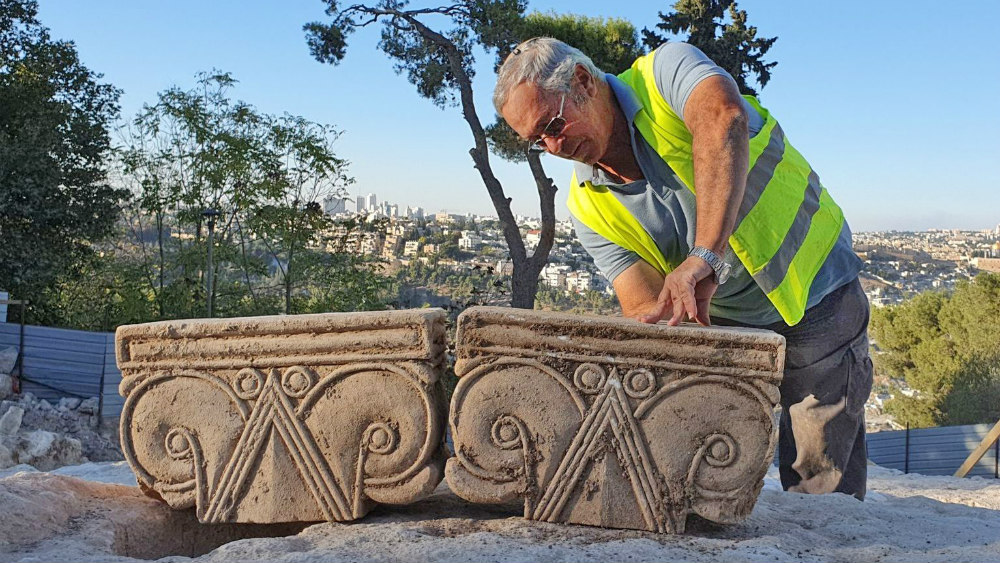
The discovery of the remains of a palace possibly belonging to King Manasseh, the ruler in 2 Kings 21 who “did much evil in the eyes of the Lord, provoking him to anger” and led the people to “do more evil than the nations had done that the Lord destroyed before the people of Israel,” dramatically expands archaeologists’ understanding of the reign of the later kings of Judah.

The ruins are located on the Armon Hanatziv promenade, a site that overlooks the Temple Mount and the Old City of Jerusalem from the south. The “proto-Aeolian” stonework is associated with royal buildings in the first temple period. The structure dates to the 55-year rulership of Manasseh, who took over the southern kingdom from his father King Hezekiah.

A few blocks away, near the newly constructed US embassy, archaeologists also found the remains of a large warehouse. It is believed to be a centralized food distribution facility and perhaps also served as storage for agricultural surplus. It dates from the same period.

A decade ago, archaeologists uncovered the remains of a palace and administrative center nearby in Ramat Rachel. This year’s publication of the report of the excavation, combined with the new digs, shows scholars that this area along the road to Bethlehem was a major center of activity for the later rulers of the kingdom of Judah.

Gordon Govier is editor of

Artifax

, a quarterly biblical archaeology news magazine, and host of the weekly radio program

The Book & The Spade

.

News

Pornhub Removes Majority of Videos in a Victory for Exodus Cry

But the fight against exploitation continues with new momentum from a Nicholas Kristof investigation.

Christianity Today December 14, 2020
Ethan Miller /Getty Images

The anti-trafficking ministry Exodus Cry is celebrating significant progress in its fight to take down the world’s largest porn site, Pornhub, which announced Monday that it had pulled millions of unverified videos. It said the move could represent “one of the most significant actions ever taken against criminal porn.”

Exodus Cry’s long campaign against Pornhub recently got a major boost from a December 4 investigation by New York Times columnist Nicholas Kristof, which has spurred political and economic fallout for the site.

Kristof’s exposé detailed what the ministry’s director of abolition, Laila Mickelwait, had been saying through its Traffickinghub campaign for years: Videos of assault involving underage girls, rape, and other exploitative content continue to be posted and reposted on the user-generated porn site, and the company is not doing enough to stop it.

The story led to new scrutiny by politicians in the US and Canada, where Pornhub’s parent company, MindGeek, is based. Pornhub executives have been called to testify in Parliament in Ottawa, and Christian senators Josh Hawley and Ben Sasse introduced a bill last week giving victims more legal ground to fight back against sites like Pornhub when clips and images are distributed online without their consent.

Sasse has also called for a Justice Department investigation, telling National Review last Thursday, “Just the other day Pornhub was insisting that it didn’t have a problem with rape and assault videos and that its ‘vast team of human moderators’ was magically working around the clock to review the 2.8 hours of video that were uploaded to the site every minute. Today, they’re doing a complete 180 by changing their policies. These new changes underscore the need for a full DOJ investigation.”

Discover, Visa, and Mastercard announced last week that they would no longer process payments from the site due to the unlawful material uploaded. Pornhub’s decision to remove and ban unverified uploads applies to an estimated two-thirds of the videos hosted on its site, with the site’s own search tally dropping from 13.5 million to 4.7 million overnight, according to Vice.

https://twitter.com/LailaMickelwait/status/1338500084934221824

An announcement on Pornhub claims it has better policies than other platforms and blames Exodus Cry and the National Center on Sexual Exploitation for targeting the site.“These are organizations dedicated to abolishing pornography, banning material they claim is obscene, and shutting down commercial sex work.”

Exodus Cry has framed its efforts around a fight around the scriptural call to “set the captives free,” seeing pornography and prostitution as an issue of exploitation and abuse of power, not just sexual sin.

Founder and CEO Benjamin Nolot was a former member of the International House of Prayer (IHOP) in Kansas City, and the ministry grew out of IHOP in 2008. As World reported last month, Exodus Cry’s perceived evangelical and political ties recently cost them a pledge from actress Melissa McCarthy.

Its Traffickinghub campaign, though, is branded as a “non-religious, non-partisan effort.” Traffickinghub creates videos with stats about Pornhub content and shares stories of teenage victims who fought to get their rapes removed from the site. The campaign is pushing for apologies and restitution for the girls and women who have been traumatized.

“Justice for your victims will not be denied Pornhub,” Mickelwait tweeted Monday. “Hitting the delete button to scrub the crime scene videos from your site doesn’t absolve you of the decade of harm you caused to countless victims whose trauma you immortalized for your own profit. This is a reckoning.”

Mickelwait has repeatedly praised Kristof for his article as well as the companies and officials who have responded, but the work of Traffickinghub and Exodus Cry continues.

“I’m so inspired, more than I ever have been, but it’s not enough,” she said. “Justice means shutting this site down and holding its executives criminally accountable for what they have done, and we will stop at nothing less.”

Books
Excerpt

The Cross Is God’s Answer to Black Rage

How Christ’s death and resurrection speak to the particular suffering of African Americans.

An excerpt from CT’s Beautiful Orthodoxy Book of the Year. Here is the full list of CT’s 2021 Book Award winners.

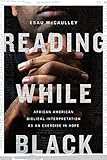
Reading While Black: African American Biblical Interpretation as an Exercise in Hope

I was eight years old the first time someone called me a nigger. It happened in elementary school one morning when I started to feel sick. I was in bad enough shape to call my mother at her factory job at Chrysler.

I dutifully went to the school office, where they dialed the number on the emergency contact card and handed me the phone. Nervously, I asked to speak with Laurie McCaulley, but the man on the other line said I had the wrong number and abruptly hung up. We tried calling a second time, but the same man replied with something like, “I told you that you have the wrong number. . . . Can’t you niggers even use the phone?”

I was aware of my blackness before that phone call, but it was wrapped in the soothing warmth of normalcy. My church was black; my school was black, and my sports teams were black. When we cleaned our home, black soul music played in the background. On the phone that morning, I experienced my blackness as the object of derision. I recall the rage building alongside my awareness of powerlessness. I had been emotionally assaulted, but there was no way to respond.

Black children collect these slights as they navigate the cities and towns, the highways and back roads of these United States. The anger grows, and we often have no place to put it, so we turn to the closest thing at hand. We harm each other and violently demand the respect of our black friends and neighbors because we are hounded by disrespect in white spaces. I grew up around black men who hit black women, and I was helpless to stop it. The rage grew. I was mad at white people. I was mad at my own people. I was infuriated by my own helplessness.

The history of black people in this country is a litany of suffering. As far back into America’s story as we want to go, we will see the heavy boot of white supremacy stepping on the backs of black women and men. What can we do with our anger, our pain? How does Christianity speak to it? What does the cross have to say, not simply to human suffering but to the particular suffering of African Americans?

The Cross Breaks the Wheel

Let me be clear: The cross of Jesus Christ is not an intellectual apologetic that explains away the whip and chain as instruments of God’s larger purposes. We do not believe that our slavery was intended for America’s salvation. We do not hold to some broken and distorted application of Joseph’s story (Gen. 50:19–21). No, what happened to the enslaved and their descendants was and remains an unmitigated evil.

But how does God respond to our cries? Not with facile appeals to free will—that some people will abuse it and do evil things like slavery. Nor does he respond as he did to Job, merely by revealing his sovereign glory and silencing our questions and complaints.

What is God’s first answer to black suffering (and the wider human suffering and the rage that comes alongside it)? It is to enter it alongside us as a friend and redeemer. The answer to black rage is the calming words of the Word made flesh. The Incarnation that comes all the way down, even unto death, has been enough for us to say yes, God, we trust you.

We trust God because he knows what it means to be at the mercy of a corrupt state that knows little of human rights. Rome and the antebellum South may not be twins, but they are definitely close relatives. On the cross we meet a God who experienced injustice in the flesh, and who knows the plight of innocent sufferers around the world.

But what reaches out and grabs the heart of the black Christian is not simply that Christ was innocent of the charges levied against him. If that were the full message of the Cross, Jesus would merely be another in a long line of martyrs. Jesus stands out as the truly innocent sufferer who had done nothing wrong.

We are not slave owners. Nonetheless, we have participated in the harm of others, in ways large and small. The results have come back from the analysis of the human condition, and the data is clear: We are all sinners. Jesus is not. The Christian tradition says that the innocent one suffered for us individually and corporately to bring us to God (Gal. 2:20; Rom. 4:25). It is only by looking at our enemies through the lens of the Cross that we can begin to imagine the forgiveness necessary for community. What do black Christians do with the rage we rightly feel? We send it to the cross of Christ.

If you dig deep enough into the past of any person or group, you will find wrong. As Paul expressed it: “All have sinned and fall short of the glory of God” (Rom. 3:23). It is only by remembering that God’s forgiveness costs him something that I find the divinely given power to pay the cost of forgiveness instead of revenge. The sword gives birth to the sword, but the cross breaks the wheel.

This dynamic is not unique to the African American context; is it also the story of first-century Israel. Jesus came into a world in which his fellow Jews had every reason to be angry at Rome. They were an occupied country—overtaxed, exploited, and subject to all the indignities of colonial rule. Nonetheless, these early Jewish Christians, who had all the historical ammunition needed to seek the ruin of their Gentile oppressors, made it their mission to convert a largely hostile Roman world.

This call to transform rage into love and forgiveness can be misheard as justifying continued abuse and acquiescing to mistreatment. But the theological energy of the Bible is toward liberation. The Exodus speaks of freedom from slavery, and the New Testament speaks of freedom from sin. God does not intend for his people to remain in bondage forever.

Further, the New Testament calls on believers to help those who are suffering. According to James, a “pure and faultless” religion “is this: to look after orphans and widows in their distress and to keep oneself from being polluted by the world. (1:27). How could we offer victims of abuse anything less than the end of their suffering when we have the power to grant it? James does not say, “Tell the orphans and the widows to put up with suffering.” He says to the Christian, “Help them!”

The Final Vindication

It would be dishonest to say that the Cross’s answer to evil is always emotionally satisfying. Looking at the present and the historic suffering of my people, there are times I feel closer to Psalm 137 (“Happy is the one who repays you according to what you have done to us”) than Luke 23:34 (“Father, forgive them”).

It is precisely when anger reigns in my heart that I must remember the Resurrection. Without it, the forgiveness embedded in the cross is the wistful dream of a pious fool. But I am convinced that the Messiah has defeated death. I can forgive my enemies because I believe the Resurrection happened. I am convinced the God who had the power to judge me did not. Instead he invited me into communion with his Son, and through that union I discover the resources to love that I did not possess before.

But more than that, the Resurrection is the final vindication of all black hopes and dreams. If black anger arises from the disregard of black bodies, then resurrected black bodies are God’s ultimate affirmation of our value. When God finally calls the dead to life, he calls them to life with their ethnic identity intact (Rev. 7:9).

One day, God will judge all wickedness. This is both comforting and terrifying. It makes me long for everyone to take advantage of God’s offer of forgiveness in Christ. Christian eschatology breeds compassion. Many years into my Christian life I still feel the anger, but the Cross and the reality of God’s power have changed me. I want the oppressor to repent and find healing. I want him or her to be free as well.

Adapted from Reading While Black by Esau McCaulley. Copyright © 2020 by Esau McCaulley. Used by permission of InterVarsity Press, P.O. Box 1400, Downers Grove, IL 60515-1426. www.ivpress.com

Apple PodcastsDown ArrowDown ArrowDown Arrowarrow_left_altLeft ArrowLeft ArrowRight ArrowRight ArrowRight Arrowarrow_up_altUp ArrowUp ArrowAvailable at Amazoncaret-downCloseCloseEmailEmailExpandExpandExternalExternalFacebookfacebook-squareGiftGiftGooglegoogleGoogle KeephamburgerInstagraminstagram-squareLinkLinklinkedin-squareListenListenListenChristianity TodayCT Creative Studio Logologo_orgMegaphoneMenuMenupausePinterestPlayPlayPocketPodcastRSSRSSSaveSaveSaveSearchSearchsearchSpotifyStitcherTelegramTable of ContentsTable of Contentstwitter-squareWhatsAppXYouTubeYouTube