Ideas

Healing Is a Foretaste of Resurrection

Vaccines feel like a miracle. How much more the real miracle of eternal life?

Illustration by Kumé Pather

The news has been relentlessly grim since last Easter. Any glimmers of light were quickly vanquished amid rising pandemic deaths, the social depression of distancing, racial violence, political discord, and even polar vortexes. With all we’ve suffered, who dares risk delight?

In a New York Times interview, noted sociologist and columnist Zeynep Tufekci attributed our current collective pessimism in part to the media’s and public health officials’ failure to sound the pandemic alarm early on. Ambiguous news from Wuhan, reiterated by the World Health Organization, intimated no human-to-human transmission of the coronavirus, despite evidence to the contrary. The inclination was to avoid overreacting so as not to incite panic. The lingering sting of that failure has fueled continued gloom and a more recent downplay of positive findings, whether in the decline of infection rates or the marvel of vaccine development.

Early predictions had any vaccine taking at least 12 to 18 months to emerge, with a modest goal of 50 percent efficacy against infection. Here at Lent’s end, we’ve achieved not one but as many as four vaccines, pushing 95 percent efficacy, an undertaking unprecedented in the history of medicine. This Easter dawns bearing much brighter light. Most churches won’t yet fully gather to worship, but the assuredness of vaccinations and eventual herd immunity mean coming back together is now an imaginable reality.

Rather than celebrating humanity’s remarkable accomplishment, however, Tufekci noted that the media and public health officials were wary of misinforming again. So they focused their reporting on the threat of variants, the need for continued mask wearing, and concerns about things unknown, despite the amazing fact we do know: The COVID-19 vaccines are an almost perfect defense against dying from the disease.

Of course, we all eventually die, but here is where the amazing news of Easter should not be downplayed. “I am the resurrection and the life,” Jesus said. “The one who believes in me will live, even though they die; and whoever lives by believing in me will never die” (John 11:25–26). The Message inserts an “ultimately” in this verse to make clear that Jesus didn’t mean we don’t die on earth. But eternal life need not be reserved solely for heaven. Paul made clear that we walk in newness of life now (Rom. 6:4; Gal. 2:20).

Jesus’ disciples happily believed this good news until things turned awful. His arrest and conviction caused panic, and they fled for their own lives. Huddled in hiding even after his resurrection, the disciples downplayed the women’s report of an empty tomb, dismissing it as “nonsense” (Luke 24:11). Unbelievably, their disbelief persisted even when the risen Jesus showed up in person (vv. 36–37). Resignation and despair at least coincide with grim reality. We humans will downplay good news as a means of hedging ourselves against disappointment.

According to Pew Research, 3 in 10 Americans (28%) reported stronger personal faith in January because of the pandemic. The report did not delineate between religions, nor did it indicate how many Americans have a personal faith to strengthen. But if current studies are any indication, upwards of 70 percent of Americans say they are Christians, meaning there are plenty whose faith did not grow stronger because of the pandemic.

Strength amid adversity is a hallmark of Christian discipleship, yet persistent adversity and its increasing severity can threaten faith, too. The disciple Thomas, having missed out on the risen Jesus’ debut, famously refused to believe unless he could see for himself. Jesus complied with an encore but then said, as a summons to the rest of us, “Blessed are those who have not seen and yet have believed” (John 20:24–29).

Knowing his disciples would still struggle, and by extension the rest of us too, Jesus breathed into them the Holy Spirit (v. 22). It is the Holy Spirit who testifies with our spirit that we are the children of God (Rom. 8:16) and that “our present sufferings are not worth comparing with the glory that will be revealed in us” (v. 18).

As a hospice volunteer, I received my vaccination at the beginning of Lent. I lined up with scores of others who eagerly anticipated a return to life lost. I walked out the clinic doors with not only immunity, but a certain feeling of lightness and courage. I was not only determined to retrieve lost life, but I felt strength to love and to serve and delight in new life, regardless of whatever trouble comes.

If such is the case with mere vaccinations, how much more with the Holy Spirit who ensures us eternal life?

Daniel Harrell is editor in chief of Christianity Today.
Ideas

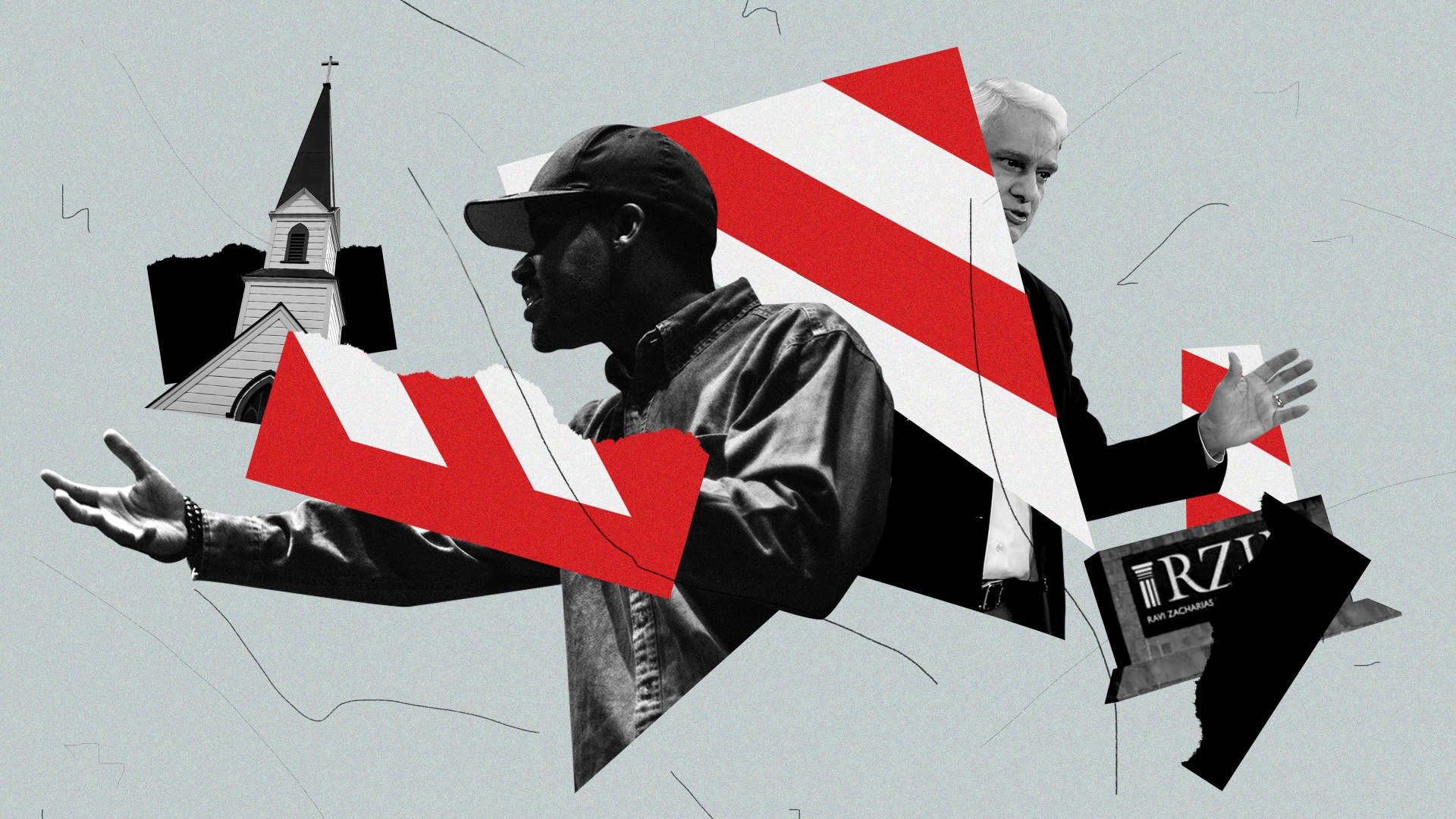
Apologetics Can Flourish After RZIM. But Only With ‘Lowercase Leaders’ and the Local Church.

To detractors, Ravi Zacharias’s fall means the end of a movement. But his demise reminds us to deepen our core commitments to gospel work.

Christianity Today March 15, 2021
Illustration by Mallory Rentsch / Source Images: Barry Daly / Lightstock / Courtesty of RZIM / Google Maps

When RZIM confirmed the reports that Ravi Zacharias was guilty of calculated, serial sexual abuse, I was gutted. I remember listening to Ravi’s program on the radio when I was in high school and hearing him hold a packed auditorium spellbound in college. I devoured as much of his content as I could. He seemed to me a modern-day C. S. Lewis, marrying reason and imagination, satisfying heart and mind, moving effortlessly between Malcolm Muggeridge and the Moody Blues.

Upon reflection, I realize that part of the pride I felt in hearing Ravi had to do with him looking like me. As a Filipino American who grew up in predominantly white spaces, Ravi, an India-born Canadian American, seemed to represent a best-case scenario of what I could become. Among other things, he gave me hope of being accepted by mainstream culture, a culture that could be conquered through education, erudition, and eloquence.

I recall Ravi once answering a questioner by quoting Francis Thompson’s poem, “In No Strange Land,” which imagines Jesus walking on the Thames River in London. He ended with a mic-drop moment: “He’ll meet you where you are!” But these years later, I’m devastated to learn where Ravi really was and what he was doing. It is equally crushing to learn how he had been insulated from accountability by an inner circle overwhelmed in part by his charisma and in part by outright intimidation.

As a pastor-professor who cares about the revitalization of apologetics for the sake of the gospel, the RZIM story sobers me a great deal as I look to the future of the broader movement. There is no question that Ravi’s depravity has irreparably damaged his legacy and the ministry that is changing its name and retiring from apologetics.

As CT reported recently, what was once the largest apologetics organization in the world will now downsize significantly and shift its resources toward repairing some of the damage by funding organizations that care for victims of sexual abuse.

To some observers, there is a troubling connection between the contemporary practice of apologetics and the potential for abuse. Our image of an apologist tends to be one of a sage on a stage—a rhetorician who is prepared for all possible objections. But lionizing oratorical brilliance may allow us to content ourselves with mastery of arguments while remaining unmastered by the Spirit. To detractors, Ravi’s fall is the final nail in the coffin of traditional apologetic practice.

Has Ravi’s fall revealed the folly and failure of popular apologetics? What effect, if any, will it have on the apologetics community more broadly?

Traditional apologetics, which is concerned with responding to objections to Christian belief, continues to have wide purchase within evangelical circles. Classic and contemporary works enjoy strong sales, worldview camps abound for students transitioning to college, and new voices are flourishing in online platforms like YouTube.

Most contemporary texts on the topic include a defense of apologetics against its cultured despisers. These authors maintain the problems are not so much with apologetics itself but rather with its poor execution. Some want to turn away from an over-reliance on rationality toward more revelational, relational, or imaginative resources. Others have advocated for approaches characterized by cruciform virtue: humility, gentleness, patience, and love.

But there are growing misgivings about the discipline, especially among younger evangelicals. Not long ago, I taught a class on apologetics at an evangelical seminary and was surprised by the number of students who sought an apology for the class. My students had some sharp questions: Isn’t it impossible to argue someone into faith? Isn’t apologetics only effective for the already convinced? Isn’t apologetics a poor substitute for relational evangelism and discipleship?

Ravi’s fall has brought new force to the criticisms of traditional models. It should humble us. As with the fall of other celebrity leaders, this story represents not just an individual failure but an institutional one.

Ravi’s former ministry is in the process of repentance and reparation. But as Christian thought leaders and members of the global church, how can we heal the culture of the larger apologetics community? How can we keep from perpetuating cycles of celebrity, complicity, and abuse? As we grieve and seek to be better, what lessons should we take to heart?

As I have listened to the conversations taking place among apologetics practitioners, four themes have emerged.

1. Demonstrate a commitment to truth even when the consequences hurt.

Apologists have traditionally presented themselves as fearless pursuers of the truth. But when questions were raised about Ravi’s personal character and conduct, some truth was off limits. And yet, as the late Dallas Willard used to say, reality is “what we run into when we are wrong, a collision in which we always lose.”

In a time of tribalism and political polarization, we’re tempted to seek out truth only insofar as it legitimizes our side as being right. If our only goal is to win, truth can become instrumental or even unnecessary to that aim. “Owning the other side” does not require our transformation, nor does it require truth’s two sisters, goodness and beauty.

“In a post-Christian West, which increasingly rejects the goodness and beauty of Christianity, we should own the fact that too often the empirical evidence supports this case,” Joshua Chatraw, director of the Center for Public Christianity, told me. “But perhaps this is also an opportunity. In a culture of spin, where most are flailing for the resources that would motivate sincere repentance, practicing public repentance is our first step to begin to make our case again.”

2. Distinguish (but don’t divide) the message from the messenger.

After Ravi’s fall, voices in the apologetics community processed feelings of grief and betrayal on their public platforms. A consistent chorus has emerged: Look to Jesus. Trust Jesus, who was never guilty of abuse of any kind. As Alissa Childers told the followers of her popular channel: “Don’t put your faith in your favorite YouTube apologist.”

Apologists are at their best when they point people to Jesus. Paul told the Corinthians that “what we preach is not ourselves, but Jesus Christ as Lord” (2 Cor. 4:5). There is a difference, however, in making this distinction before and after a scandal has been exposed.

When leaders fall, it’s tempting to separate message from messenger for the sake of image management, but distinguishing the two cannot be a public relations maneuver. The message is always embodied in the life of a person (or a community) who makes that idea believable. If we’re part of an organization or a church where darkness is uncovered, distancing ourselves from an abusive public figure doesn’t let us off the hook. Character counts. For this reason, leaders should be removed from office and their toxic institutional culture exposed.

And yet, for those who wonder about the help they received from disgraced leaders, the distinction matters. Students of church history will remember the Donatists, who argued that the value of pastoral acts depended on the purity of the one performing them. An unworthy minister would invalidate the grace that came through the sacraments. The question was clear: How good is grace when it comes through the hands of fallen ministers?

In response, the church rejected the Donatist line of thinking and took the position that grace is not dependent on the worthiness of the minister but on the God who works through the weak and unworthy. Moral failure may invalidate a minister, but it can never invalidate God’s grace, which comes to us through Christ.

As the church recovers from the fall of Zacharias and of RZIM, leaders who care about the Christian apologetics movement can carry it forward by clinging to this truth: We do not commend the faith because we have found all the answers but because we find ourselves in desperate need of the Savior that we commend.

3. Reclaim faith as a community project rather than an individual achievement.

Questions about apologetics are worth raising, not just for those who speak from a stage but also for those who address multitudes through screens. Indeed, what sort of character formation is required for the online apologist? A medium that privileges views and virality tempts leaders to develop an increasingly wide split between their public and private personas.

Yet any content creator will tell you that building an audience has as much to do with dedicated engagement as it does with production value. To the degree that real community can be cultivated in online spaces, online apologists can remain organically connected to those they seek to serve.

But even this is no substitute for embodied fellowship in a local congregation. In his recent book, After Doubt, A. J. Swoboda pleads with doubters not to replace the local church with disembodied voices.

“Order your pizzas and books online,” he writes, “but don’t take your deepest doubts and questions there. Bring them to us, God’s people on the ground. Please don’t replace us. Question the assumption that a PhD is the same as being wise, or the assumption that ‘most viewed’ or ‘viral’ has anything to do with veracity.”

In other words, Christian persuasion must be grounded in the thickness and concreteness of the Christian community. As church leaders and lay leaders, we often underestimate how important it is for our own faith to be intertwined with the faith of our communities. They can hold on to us when we have difficulty holding on for ourselves. But danger comes when we’re content to exchange our concrete rootedness in a local believing community for the seemingly unassailable faith of a strongman. We allow an authoritative public figure to do our thinking and believing for us.

By contrast, the best place for belief to become believable is in local, embodied fellowship. The sage on the stage (or screen) can supplement and prepare the way but must not replace the guides at our side.

4. Support both “uppercase” and “lowercase” apologists in context of the local church.

About ten years ago, the third Lausanne Congress on World Evangelization in Cape Town, South Africa brought together 4,200 evangelical leaders from 198 countries and produced the Cape Town Commitment, which included a call to “the hard work of robust apologetics.” Part of the invitation was to equip and pray for those “who can engage at the highest intellectual and public level.” I’ll call those “uppercase apologists.”

Uppercase apologists come equipped with answers, philosophical proofs, and compelling insights into difficult questions. Though sometimes despised, they play an important role in the wider world and often clear the road of intellectual barriers so that a person can move further along in faith or faith exploration. For example, I am thankful for the ministry of people like William Lane Craig, who has served the church in this space for years.

But on the whole, taking the uppercase apologist as the preferred model of Christian persuasion sets a dangerous precedent. If everyday practitioners have the potential to become addicted to “having all the answers,” then we can imagine the danger for those who offer answers professionally.

“Ravi was on the road often 200, 250 days a year; he wasn’t a member of a church,” said Sam Allberry, a well-known speaker for RZIM. The strain of being untethered and always on the move is risky for any leader, but especially so when you’re a public spokesperson for belief. Managing an aura of invincibility too easily becomes part of the job description.

In that way, uppercase practitioners need prayer and accountability. They need friends and colleagues who know them well enough not to be impressed by them—people who love them enough to tell them the truth. Individual apologists must be rooted in and under the authority of local congregations precisely because apologetics and faith are essentially communal endeavors.

The Cape Town Commitment included a second component in their apologetic commitment: “to equip all believers with the courage and the tools to relate the truth with prophetic relevance to everyday public conversation, and so to engage every aspect of the culture we live in.”

Mercifully, most of us are not and should not strive to become uppercase apologists. Rather, we seek to be lowercase apologists who are engaged in everyday conversations. We seek to bring the questions, hopes, and griefs of our neighbors—together with our own—before the Savior who calls us to follow him.

Justin Ariel Bailey is assistant professor of theology at Dordt University and the the author of Reimagining Apologetics (IVP Academic, 2020). He is also an ordained minister in the Christian Reformed Church and has served as a pastor in Filipino-American, Korean-American, and Caucasian-American settings. Speaking Out is Christianity Today’s guest opinion column and (unlike an editorial) does not necessarily represent the opinion of the publication.

Ideas

A Crack in the System: How Unfair Drug Sentencing Laws Disrupt Racial Justice

In the push for prison reform, Christians can stand against penalties that disproportionately affect minorities.

Christianity Today March 15, 2021
Illustration by Mallory Rentsch / Source Images: itakdalee / CAHKT / MirageC / Getty Images

The last few years have sounded the alarm for racial justice in America. We’ve seen the brutality of discrimination in our streets, our schools, and especially our courtrooms. Some of the most insidious forms of systemic injustice stem from unequal drug sentencing laws that disproportionally penalize blacks.

Although crack and powder cocaine are chemically almost identical and one is not more physically harmful than the other, nonetheless federal penalties for the two are calculated quite differently. Today it takes 18 times more powder cocaine than crack to earn the same sentence in federal prison. This 18-1 sentencing disparity is not arbitrary, since crack is more accessible in marginalized communities of color.

In 2019, 81 percent of federal defendants with crack cocaine charges were black. As a result, the federal crack-powder disparity has contributed to the overincarceration of black Americans. Their lives have been devastated by it.

As Christian ministry leaders who are involved with justice reform, we are hoping that Congress and President Joe Biden will pass and sign the recently introduced EQUAL Act (not to be confused with the Equality act) to end this sentencing disparity for good. Proverbs tells us that “the Lord detests dishonest scales, but accurate weights find favor with him” (11:1). We believe this significant piece of legislation will help bring balance.

Unjust sentencing has extended a long history of racial imbalances in the justice system. Though rates of drug use and trafficking are similar across all races, black males often face harsher-than-average sentences and fewer opportunities for reduced sentences, reduced charges, or plea agreements. This discrimination has harmed black communities and black families for far too long.

One story in particular illustrates the point. Matthew Charles spent years enduring firsthand the systemic disparities borne by black men. His story grabbed the nation’s attention: Arrested for selling crack in 1995, Matthew received a hefty 35-year sentence for his nonviolent crime. He became a Christian and a productive citizen while behind bars. After 16 years, he was released, but the US Department of Justice cited an error and reversed the decision, sending him back for two more years.

Nearly 140,000 people rallied to Matthew’s cause by signing a petition to support his release, and in 2019, he finally walked free for good. He was one of the first people released under the FIRST STEP Act, which allowed him to petition the court for a sentence consistent with the current 18-to-1 disparity for crack offenses. (It was an egregious 100 to 1 at the time he was sentenced.)

When Christians “remember those in prison,” as it says in Hebrews 13:3, we must evaluate the system that puts people behind bars (and for how long) and also speak up to the powers that be. Pursuing justice that reflects God’s heart is not optional. It’s central to the Christian life. God sees the downtrodden and the oppressed, and he cares about justice for all his children.

Every person dealing drugs, every person in addiction, and those who are affected by crime are all equally valuable in God’s sight. Christ followers are compelled to flee complacency and seek a restorative approach to justice. Jesus wouldn’t look the other way. Neither should we.

Heather Rice-Minus is the senior vice president of advocacy and church mobilization at Prison Fellowship. Justin E. Giboney is an attorney, political strategist, and president of the And Campaign.

They both serve as leaders within the Prayer & Action Justice Initiative, a diverse coalition of Christian organizations and leaders advocating for racial justice and nonpartisan criminal justice reform. Speaking Out is Christianity Today’s guest opinion column and (unlike an editorial) does not necessarily represent the opinion of the publication.

News

Why a Shiite Martyr’s Funeral Was Surprisingly Christian

A month after Lokman Slim’s murder, his family awaits answers in a story exemplifying the history of Middle East Protestants and the intrigue of Lebanon.

The funeral of Lokman Slim

The funeral of Lokman Slim

Christianity Today March 15, 2021
Diego Ibarra Sanchez / Stringer / Getty Images

A Protestant mother. A Shiite son. A plea for vengeance on his killers.

But unlike many responses to political martyrdoms in Lebanese history, she yields it to God.

Last month in the Hezbollah-controlled south of Lebanon, unknown gunmen shot Lokman Slim in the head. It was a targeted assassination of a man dedicated to the hope that his small Middle Eastern nation might overcome sectarian divisions.

He was his mother’s son.

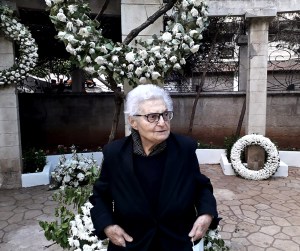
“I will not go and kill them, but ask God to avenge him,” said the grieving 80-year-old, Selma Merchak. “This comes from my faith in God as the great authority.”

But her next response reflects the family’s—and Lebanon’s—complex religious identity.

“And as it says in Islam: Warn the killer he will be killed, though it tarries.”

Born in Egypt, Selma’s Protestant lineage traces back to her grandfather in Syria, who found Christ through the preaching of the first wave of Scottish missionaries to the Middle East. As a child, she attended the American School for Girls—now Ramses College—founded in 1908 by American Presbyterians.

The family attended Qasr el-Dobara Church, located in Cairo’s Tahrir Square. And Selma continued in the Protestant educational heritage, graduating with a degree in journalism from the American University in Cairo, which by then had become a secular institution.

The Merchak family mixed freely in an Egyptian upper class that was open to all religions, vacationing often in Lebanon’s mountains. But in the chaos of Gamal Abdel Nasser’s nationalizing of the Suez Canal, in 1957 Newsweek relocated its regional headquarters to Beirut, and Selma went with it.

Selma Merchak, at her son Lokman Slim's funeral
Selma Merchak, at her son Lokman Slim’s funeral

She reconnected with Muhsin Slim, her childhood friend from the family vacations. The Slims were an influential Shiite family known for its good relations with the Lebanese Christian elite. Muhsin’s father served as a member of parliament in the 1960s, and during the civil war advocated against the use of Lebanon as a staging ground for the Palestinian armed struggle against Israel.

Now a lawyer, Muhsin married Selma shortly after her arrival in Lebanon. Her Egyptian accent was the toast of the town, aiding the political career of her parliamentary husband.

While Muhsin would only “pray in his heart,” Selma said, she worshiped on-and-off at the National Evangelical Church in Beirut, the oldest indigenous Protestant congregation in the Middle East.

Lokman, their second of three children, was born in 1962. Registered as Shiites within Lebanon’s sectarian system, Muhsin and Selma raised them to be moral, but to make up their own minds about religion.

Statues of Buddha were part of the décor of their 150-year-old home. On property located in what was once known as “The Plain of the Christians,” Muhsin’s grandfather raised silkworms and exported their product to France.

“The absence of a formal faith was a challenge for us,” said Lokman’s younger sister Rasha, who described a childhood hurt when queried about her sect. “Were we Muslims, Christians, or Buddhists? I wanted to know what we believed about God.”

Lokman, however, was more at ease with an amorphous spirituality. The children attended a French Catholic school, and in 1982 he left Lebanon to study at the Sorbonne in Paris. Two years after graduation, in 1990 Lokman founded Dar al-Jadeed publishing house with Rasha, introducing new and controversial works to society, including the books of Iran’s reformist president Mohammad Khatami.

By then, however, the neighborhood had transformed into a plain of Shiites, as the war years forced many from the south and Bekaa Valley into Beirut. Villa Slim, as their home was known, became an oasis of green as surrounding farmlands were sold and turned into cramped, lower-income apartments.

Hezbollah gained political control.

Lokman, meanwhile, stayed true to his upbringing. In 2004, he and his German wife, Monika Borgmann, filmed the award-winning Massaker documentary, about the 1982 slaughter of Palestinians in Beirut’s Sabra and Chatilla refugee camps.

Researching the film led to the discovery that Lebanon did not have a national archive, from which it could build a shared history among its periodically at-war sects.

So they built one themselves—in the family home.

One of the central exhibits of the Umam (peoples in Arabic) Documentation and Research Center is a collection of photographs of Lebanese who went missing during the civil war. Presumably killed or carted off to Syrian prisons, the pain of their families is now known—in truth, re-experienced—by Selma.

“If Lokman had died an old man like Muhsin, we could accept it as God’s will,” she said, as she did when her husband passed away after 46 years of marriage.

“This pain is different, and criminal.”

But it is not unfamiliar. One of Muhsin’s clients was Kamal Mrou, founder of the al-Hayat and Daily Star newspapers. A family friend, Mrou was assassinated in 1966 due to his opposition to Nasser-led Arab nationalism.

Lokman is one more victim, in a long line.

Selma hopes the courts will achieve justice.

Immediate suspicion for his killing fell on Hezbollah, which denied responsibility and condemned his murder. Indeed, Lokman’s archiving work was an implicit critique of all of Lebanon’s leaders. In 2005 he made it explicit, leading the Hayya Bina [Arabic for Let’s Go] movement to mobilize greater nonsectarian participation in elections.

Even so, Lokman was unusual as an outspoken Shiite critic of the Iran-backed entity. In 2019, during a massive popular uprising against the entire political class, Villa Slim was covered in graffiti labeling him a traitor.

“‘Do you scare me with death?’” Rasha recalled her brother saying, comforting her with the saying of Hussein, the seventh-century grandson of Muhammad and an extolled Shiite martyr.

“Lokman was not afraid of death.”

At the funeral, Selma, Monika, Rasha, and the rest of the family held aloft black signs with white Arabic lettering: No fear.

Others, however, are at least nervous.

“Hezbollah may not be the killer, but they created the environment,” said a Shiite professor at a Lebanese university, who requested anonymity.

“All Shiite activists have felt the hunch they could be a target. But you have to learn to live with it.”

Hezbollah emerged in 1982, fighting the Israeli occupation in southern Lebanon during the civil war until its withdrawal in 2000. In 2005, the militia entered politics, allying with Michel Aoun, the Maronite Catholic general—now the nation’s president—who leads the Free Patriotic Movement (FPM), the largest Christian party.

Hezbollah has been pragmatic in politics. But the professor was critical of its overall mentality of “us versus them, good versus evil.”

In contrast, he praised Selma’s continued faith as something “remarkable.” Today, he said, the norm is that a Muslim man will ask a Christian wife to convert to Islam.

But with Lokman, both faiths were embedded in him, sincerely.

Sheikh Mohamed al-Amili, a Shiite, agreed—speaking from a safe house in the Sunni Muslim mountainous region of the Chouf. In 2013, Lokman helped him establish Godly Without Borders, a group to move interfaith dialogue toward greater practical benefit to society.

“Some people want to paint Lokman as an atheist or nonbeliever,” he said. “But what interested him was the spirituality of religion, not its appearances.”

Frustrated by Lebanon’s sectarianism, some activists have turned against religion entirely. But this can fuel accusations by opponents that their colleagues have also denied God.

Amili, however, highlighted the saying of Muhammad that a Muslim is one “from which the people are safe, from his tongue and hand.” This fully characterized Lokman, and clearly not his opponents.

Their interfaith message resonated during meetings in cosmopolitan Beirut, Sunni-dominated Tripoli, and the heterodox Druze Muslim communities of the Chouf, Amili said.

But their group found no foothold in Hezbollah’s southern regions.

“We want people to have a pure faith in God,” said Amili, “not just a religion that is related to politics.”

In sectarian Lebanon, this is a difficult proposition.

For years, Shiite Lebanese were marginalized politically and economically. They bore the brunt of Israeli occupation. Even if they do not share Hezbollah’s ideology, many Shiites appreciate the strength given to their community.

By contrast, Christians and Sunni Muslims are internally divided. Those who blame Hezbollah for Lokman’s murder say that as Shiites also grow frustrated with the ruling political class, the assassination is a warning against dissent.

Others label it a warning to the United States, as the nation jockeys with Iran over the nuclear deal and fallout from the killing of Qassem Soleimani. The Iranian commander’s picture is plastered everywhere on the road to the airport through Shiite neighborhoods of Beirut. One superimposes his image over a torn US flag.

“We are called ‘Shiites of the [US] Embassy,’” said Amili.

At the funeral, the American ambassador to Lebanon came to Villa Slim to pay her respects.

“We all were robbed of a great man,” said Dorothy Shea, pledging to continue the partnership with his organizations.

“[Lokman] was tireless and relentless in his pursuit to reconcile Lebanon’s people, and to promote freedom and inclusion.

“So, like him, let us not be deterred.”

Rasha appreciates these words. But Shea was only one of several ambassadors present.

“I refuse the propaganda of the killers who accuse him of working for the embassy,” she said. “Lokman was respected by everyone as an analyst, while Hezbollah is the first to declare their coverage by Iran.”

But this was not the only controversial element of the funeral.

“This house has given much to Lebanon, and today offers and sacrifices its blood for its promotion,” said Amili in his remarks.

A fellow Shiite, Sheikh Ali al-Khalil, led the Muslim prayers. But after receiving fierce social media criticism for attending, he apologized, saying his political orientation [implying Hezbollah] was well known.

Meanwhile, the Christian component of the service included the chanting of “The Mother of Sorrows,” a Maronite hymn to the Virgin Mary. Traditionally sung only on Good Friday, its use at a funeral was met by strong criticism, including by the bishop of Beirut and by supporters of FPM.

Selma, however, had the most poignant testimony.

“If you want a homeland, you must cling to the principles for which Lokman was martyred,” she said.

“The burden will weigh heavy on you. [But] stay away from weapons; those have taken away my son.”

The funeral arrangements placed a picture of Lokman in the family garden, surrounded by wreaths laid in his honor. Every detail was planned meticulously by his loved ones.

“Some people want us to be atheists, others were offended by our interfaith service,” Rasha said. “But do not put walls between your God, and ours.”

Could this be a message also to Lebanon’s Protestants?

It was not intended to be—but might apply.

“Many evangelicals would leave their sectarian areas to preach Christ or open new house churches,” said Nabil Habibi, a pastor in the Nazarene church, who was invited to participate in the funeral.

“But many might not come here, not wanting to die for a political cause.”

He himself was nervous. Hezbollah would be watching, but he felt his clerical collar would protect him.

And it was important to take a stand against “the forces of darkness.” His presence at the funeral would join in the message that it is not right to kill those you disagree with.

It was also a message of national unity. All of Lebanon’s sects were invited, and Habibi wanted to ensure that Protestants were present.

Habibi was asked to offer a prayer, but in the end only the Shiite and Maronite invocations were spoken. He would have commended Lokman’s bravery.

“God, we have come here seeking justice, because your ears are not closed to the cries of the oppressed,” Habibi had prepared.

“Help this family in their grief. Forgive those who killed him.

“Show them your mercy, and bring them out of darkness.”

Martin Accad, associate professor of Islamic Studies at Arab Baptist Theological Seminary in Beirut, also attended the funeral. He did not know Lokman personally, and expected a secular event.

He was surprised it was so religious—but sensed this was how his family remembered him.

“Selma evidently has a faith commitment, and raised a son who valued truth and reconciliation,” he said. “It reflects her mainline Protestant ethic, which it seems Lokman fully embraced.”

A quiet but clear distinction exists between the two wings of the Supreme Council of the Evangelical Community in Syria and Lebanon. Though there is overlap, Presbyterians and Congregationalists tend toward ecumenical engagement, while Baptists and Pentecostals seek out converts. Yet both are engaged in social work, with friendly personal relations.

But Accad cautioned the evangelicals who might be wary of participating in such an interfaith event. Jealous for the gospel, they risk mirroring the same reactions as the Shiites and Maronites who spoke their offense.

And where mixed communities are the reality in society, evangelicals face the choice of staying in their corner—or joining with others to contribute positively.

Too few have reached out to the Shiites.

Imam Musa al-Sadr, Accad recalled, said that the voice of Jesus could be heard in the call of the minaret. The civil war leader’s “Movement of the Deprived” sought Shiite equality in Lebanon.

But after Sadr’s disappearance in 1978, the movement increasingly went militant. And later, its secular character gave way to Hezbollah’s religious ideology.

“The murder of Lokman is a picture of lethal sectarianism,” Accad said. “But Selma’s story illustrates the influence of evangelicals, in a multifaith society.”

Her Christian commitment helped shape Lokman for Lebanon.

The family, meanwhile, is both reeling and resolute.

“I want to believe in a just God,” said Rasha, who regularly reads from the Bible. “But all I see is injustice among the religions.”

“My mother says, ‘Pray.’

“I said, ‘You pray.’

“Lokman’s death is an eclipse of God, and I don’t have any answers.”

But one answer is clear.

“This project will never be silent,” said his widow, Monika. “They can kill Lokman, but they will not kill his ideas.”

And the family home, Selma reminds her neighbors, is older than Hezbollah.

“I will never close these doors and stop receiving people,” she said.

“If they want to kill us, let them tell their God that they are killers.”

Correction: An earlier version of this article misattributed a funeral quote (“This house has given much to Lebanon…”) to Sheikh Ali al-Khalil. It was Sheikh Mohammed al-Amili who gave that remark.

Blessed Are the Canceled? Finding Redemption in ‘The Bachelor’ Controversy

For those who choose to listen, there is a godly grief that leads to repentance.

Christianity Today March 15, 2021
© 2021 Disney General Entertainment Content. All rights reserved.

Reality television’s iconic host of The Bachelor, Chris Harrison, won’t be hosting the “After the Final Rose” episode on Monday night, or the next season of The Bachelorette. The 20-year veteran of the show announced he would step away for an unspecified period of time after a conversation between Harrison and former bachelorette and TV personality Rachel Lindsay on her entertainment show. During the 13-minute interview, Harrison addressed a controversy around Rachael Kirkconnell, one of bachelor Matt James’s final picks.

While the show was airing, Reddit users found social media posts by Kirkconnell that included racially insensitive Native American costumes and alleged support for conspiracy theories. But the controversy came to a head when photos surfaced of Kirkconnell at an “Old South” themed fraternity party in 2018.

When Lindsay, the first black lead of a Bachelor franchise show, asked Harrison in the interview about Kirkconnell’s social media posts, he railed against “cancel culture” and “the woke police.” “We all need to have a little grace, a little compassion, a little understanding because I’ve seen some stuff online,” he said. “Again, this judge-jury-executioner thing where people are just tearing this girl’s life apart … it’s unbelievably alarming to watch.”

Lindsay pushed back that a picture at the 2018 antebellum party was “not a good look,” to which Harrison quipped: “Well, Rachel, is it a good look in 2018? Or is it not a good look in 2021? Because there’s a big difference.” Lindsay responded: “It’s not a good look ever.”

Instead of hearing the criticisms leveled against Kirkconnell as a call for accountability for her harmful actions, Harrison leaned into a familiar refrain of those who get caught up in “call out culture”: Do not focus on the past. Give us grace, compassion, and understanding.

Of course, there are many insidious forms of cancel culture driven by self-righteousness or hatred rather than by wise judgment and correction. But at its very best, what if being “canceled” is a form of grace? What if the most compassionate thing a person in the wrong could receive is correction? What if they have to show humble understanding after receiving criticism and correction? Public confrontation is not a new phenomenon, and there is grace for those who face it.

Godly repentance and holy correction is a means of grace—whether we like the means or not. While many view cancel culture as solely de-platforming a leader or public shaming, the best of cancel culture happens in a context where people hold the well-being of others in mind and call for accountability in a spirit of loving correction.

When a celebrity or social media personality is rightly confronted for harmful actions, the means of the confrontation should not be dehumanization, violence, or abuse. Harassment and spiteful responses are not the same kind of “cancellation” as corrective grace. Done well, the goal of public rebuke should be that the person would step back, learn from the hurt they caused, and change for the better.

Consider the prophets of the Old Testament—men who were called to denounce the wrongs of those in power, regardless of their own safety or comfort. Before the infamous showdown with the prophets of Baal in 1 Kings, King Ahab had a familiarly dismissive tone toward the judgment of the prophet Elijah: “Is that you, you troubler of Israel?” (1 Kings 18:17). For the king, Elijah’s judgment was problematic, even though he came in the name of the Lord.

Elijah’s response was direct and corrective: “I have not troubled Israel, but you have, and your father’s house, because you have abandoned the commandments of the Lord and followed the Baals” (1 Kings 18:18, ESV). Elijah continued to call out the king and his supporters, because his ultimate goal was to convey God’s heart and will for his people.

After Ahab and Jezebel had a man murdered over a vineyard, God pronounced gruesome judgment over them through Elijah. But instead of doubling down, this time Ahab repented. And because of that, he receives mercy from the Lord: “Have you noticed how Ahab has humbled himself before me?” the Lord says to Elijah. “Because he has humbled himself, I will not bring this disaster in his day, but I will bring it on his house in the days of his son” (1 Kings 21:29).

It is human nature to reject correction, even if it comes from rightful authorities in our lives. In our defensiveness and pride, we hate to be called out for negative behavior. It’s uncomfortable, and the consequences can be inconvenient and unpredictable. Many fans believed that Harrison and Kirkconnell have been treated unfairly. Harrison’s announcement of stepping down caused some of the show’s fans to lash back at those who publicly criticized and “canceled” Harrison. Rachel Lindsay received so much negative backlash that she temporarily deactivated her Instagram account.

In the same way that we are prone to defensiveness when we are on the receiving end of cancel culture, self-righteousness runs rampant when there is someone to call out. Instead of wanting their repentance, we lean into a self-righteous response that calls for their ruin. But as Christians, our responses should mimic what Jesus said to the woman accused of adultery by the mob that was out for her blood: “Let any one of you who is without sin be the first to throw a stone at her” (John 8:7). We aren’t called to pile on any more than the men who wanted to cast stones.

The goal of public rebuke should be that the person would step back, learn from the hurt they caused, and change for the better.

The apostle Paul reminds the Corinthian church of the results of correction in those who accept it: alertness, earnestness, zeal, concern, and a desire to seek justice (2 Cor. 7:11). In other words, when we call out the wrongs of one another, we have a chance to restore virtues like empathy, justice, wisdom, and humility in our culture.

Since the Harrison-Lindsay interview, both Harrison and Kirkconnell have apologized, and many contestants have come forward with statements denouncing racist behavior and standing with Lindsay. The franchise tapped former NFL linebacker, sports analyst, and bestselling author Emmanuel Acho to host the “After the Final Rose” special on March 15. Acho’s web series about confronting racial prejudice and book, both titled Uncomfortable Conversations with a Black Man, make him a timely choice.

In a world of “I’m sorry you were offended” apologies, Kirkconnell’s is a rare display of leaning into her faults instead of providing excuses for her behavior: “I deserve to be held accountable for my actions. I will never grow unless I recognize what I have done wrong. I don’t think one apology means that I deserve your forgiveness, but rather I hope I can earn your forgiveness through my future actions.”

Kirkconnell’s apology reads like one from a person who has accepted and been moved to action by the critiques leveled at her. With all grace, it’s the choice of the receiver to accept it and the consequences that follow­ or reject it. A true apology is followed by corrective actions (repentance) that come from a contrite heart (Ps. 51:17). Amid all of the Instagram statements, one line from former bachelorette Jillian Harris stood out: “Being held accountable is LOVE; it allows us to grow, learn, and ultimately become better people.”

As Christians, we are called to offer one other grace and mercy. Excusing someone’s offensive actions is not grace. Being restored without taking the time to grow is not a triumph. And in our age of social media, public sin sometimes calls for public confrontation and public repentance.

Christians can strive to do so in a way that stands apart from the vitriol of the Twitter mob or Facebook trolls. For those who aim to offer corrective grace, we should remember that none of us is without sin. We shouldn’t call out with the intent to wound or destroy. We should correct out of the grace we’ve received. Godliness calls for contrition that leads to life-giving repentance (2 Cor. 7:10), but when we fan the flames of destruction and harassment, we stray from God’s desire in correction.

As believers, we are called to speak truth to one another in love (Eph. 4:15). And for the wrongdoer: “Whoever conceals their sins does not prosper,” says Proverbs 28:13, “but the one who confesses and renounces them finds mercy.”

Patnacia Goodman is an acquisitions editor at Baker Books, a division of Baker Publishing Group.

News

Women’s Conference Funds $1 Million Bible Translation in 5 Hours

IF: Gathering kicks off crowdfunding campaign where donors sponsor a verse a month toward global Scripture access by 2033.

The IF: Gathering campaign is on its way to funding a second full translation.

The IF: Gathering campaign is on its way to funding a second full translation.

Christianity Today March 12, 2021
12VC

The Bible translation alliance IllumiNations has a goal of making God’s Word accessible to all people by 2033, and it’s inviting partners to support its work one verse at a time.

Through IllumiNations’ 12 Verse Challenge (12VC), donors can cover translation costs for 12 verses of Scripture at $35 a month for a year. The challenge kicked off at this month’s virtual women’s conference IF: Gathering, where attendees pledged over $1.5 million toward the effort— enough to sponsor translating the entire Bible for an unreached people group and make significant progress on a second one.

As thousands of women tuned into the March 6 event, the display on the 12VC site scrolled through the chapters and verses their pledges had sponsored. More than 750 views signed up for the challenge within the first five minutes.

“We’re going to be Christians that know this book, love this book, believe this book, and give this book away,” said IF: Gathering founder Jennie Allen.

Allen watched alongside pastor David Platt, a speaker at the event, as the campaign met the cost of its first full Bible translation—just over $1 million—in a span of five hours, and the donations kept rolling in. “This is our most important work to date,” she said.

Translators estimate that nearly 1 billion people have little or no access to Scripture in a language they can understand (they call it “Bible poverty”).

IllumiNations, a collaboration among 10 top translating ministries, has been able to accelerate the timeline for all people to have access to the Bible from 2150 to 2033—as long as the funding comes through to back the translators already in the field. IllumiNations currently tallies 307 current projects on their website, each with a bar indicating how much more money is needed to complete the translation.

The translation funded by IF through the 12 Verse Challenge will go to people in western Ethiopia. “Because of you, we're able to help the Konta, Oyda, and Melo people groups of Ethiopia have the Bible in their language,” IllumiNations wrote in an Instagram post.

According to the Joshua Project, a combined 235,000 people speak Oyda, Melo, and Konta. Though Christianity is considered their primary religion, and they all have portions of the New Testament, none of these groups has a full Old Testament translation.

Allen said the funds raised will also help a translation project in a restricted country where churches must meet in secret. As of March 12, more than 6,300 women had pledged.

IllumiNations has a goal that by 2033:


95% of the global population would have access to a full Bible

99.9% would have access to a New Testament

100% would have access to at least some portion of Scripture

2 viable Bible translations would be available in the world’s largest 100 languages, including key revisions completed in 26 major languages of the world

The IF fundraising campaign is the launch of the new 12 Verse Challenge model, and churches can now sign up to host a challenge themselves. IllumiNations says, “If just one percent of the Christians in America alone would fund the translation of 12 verses at $35 per verse, this task would be completed.”

This isn’t the first time IF: Gathering has highlighted Bible translation. The 2017 the event featured a Seed Company translator, and 650 women committed to monthly sponsorships to fund verse-by-verse translation.

Framing unreached people groups as living in Bible poverty makes the broad challenge of Bible access seem tangible and personal, like sponsoring a child in poverty. And during a time when many ministry connections have gone digital, it allows women participate in global missions without having to leave their ZIP codes.

https://www.instagram.com/p/CMDv0mHL1Lz/

Incremental faithfulness leading to global impact is baked into the DNA of IF: Gathering, founded in 2014. Its website says that if 4,000 women each disciple two women each year, and those two women then disciple two more each year, the chain reaction will lead to 4 million women discipled in a decade.

Historically, Christian women have been a driving force in Bible translation work. “If it hadn’t been for single women over the 70-year history of Wycliffe, half of the translations wouldn’t have been completed,” Russ Hersman, Wycliff Bible Translators’ former chief operations officer, told Christianity Today in 2017. At the time, women made up 85 percent of Wycliffe’s translation force.

“I cannot imagine a more powerful force on earth than these women in their places coming together to change things,” Allen said. “They are a tremendous force for good and change.”

News

Aftershocks: What the Japanese Church Has Learned 10 Years After Fukushima

The 2011 triple disaster devastated the Tohoku region of northeast Japan and dramatically disrupted Christian ministry—for the better.

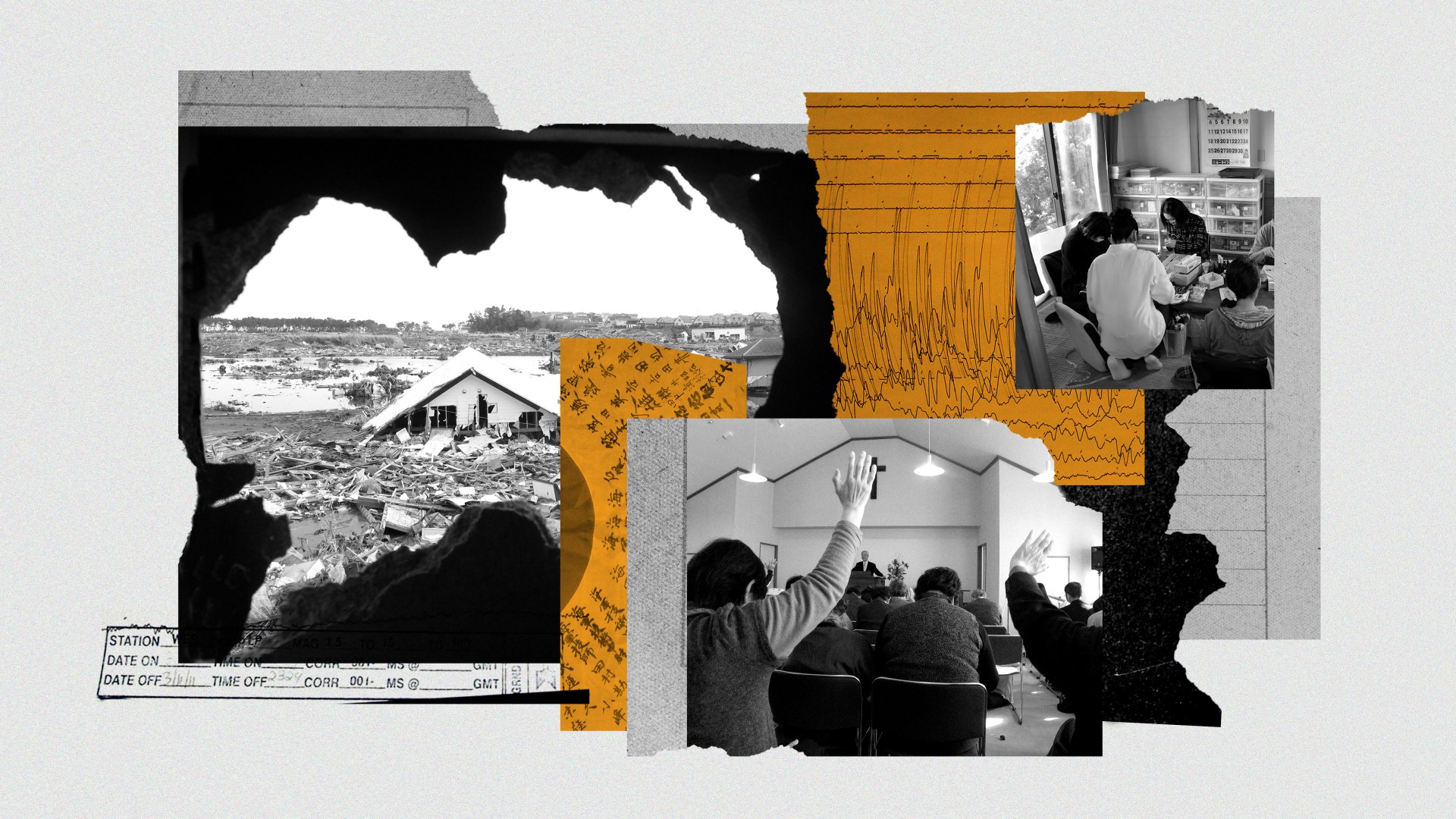
Japanese Christians in Tohoku and other areas affected by the 2011 triple disaster in Fukushima.

Japanese Christians in Tohoku and other areas affected by the 2011 triple disaster in Fukushima.

Christianity Today March 12, 2021
Illustration by Mallory Rentsch / Source Images: Courtesy of Asian Access / WikiMedia Commons

On February 13, almost 10 years to the date after the infamous March 11 triple disaster that struck northeast Japan, a 7.3-magnitude earthquake shook the same region.

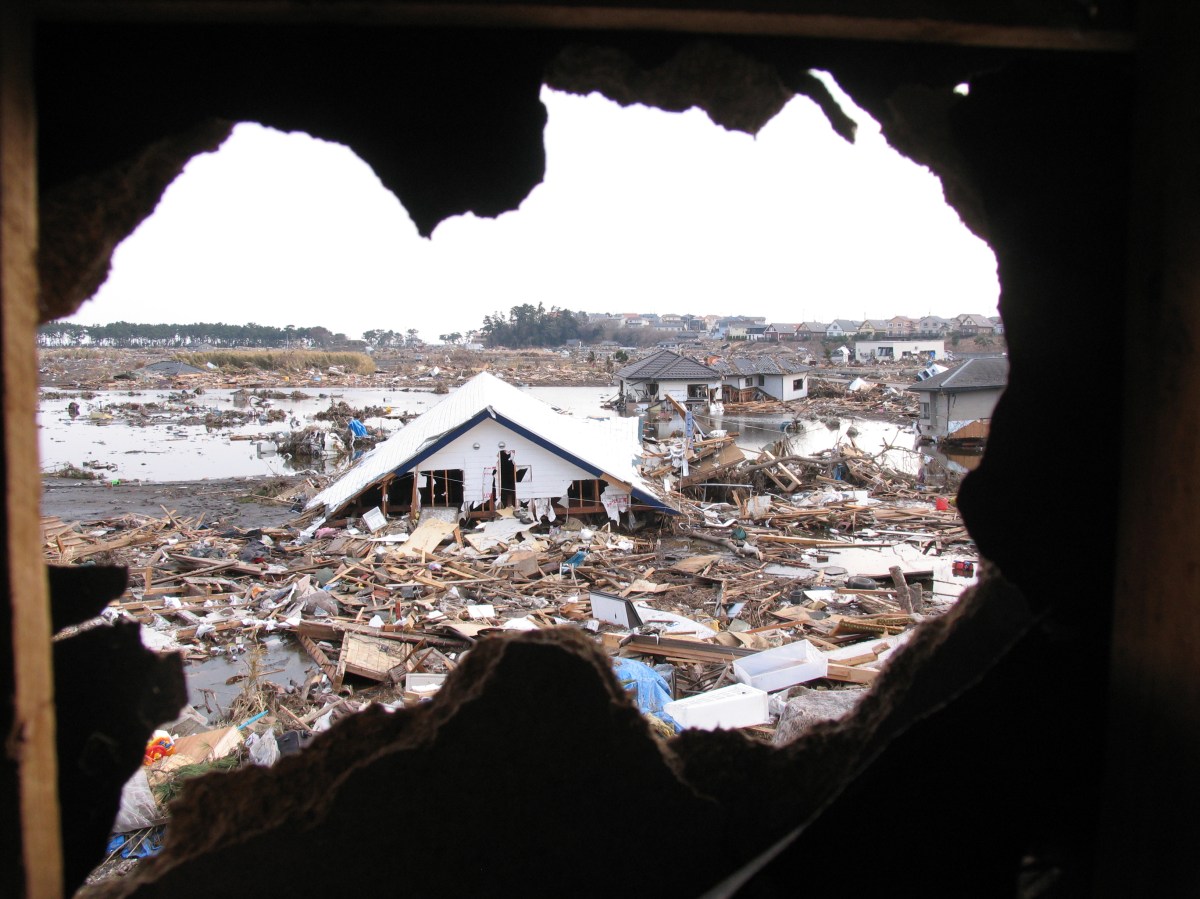
Like a strobe light, memories and emotions that had been dimming for a decade returned. However, the aftershock was not just a reminder of the devastation and 20,000 deaths from 2011’s 9.0-magnitude earthquake in the Tohoku region and resulting 45-foot tsunami and nuclear disaster in Fukushima. It also prompted the Japanese church to call to mind all that God has done since.

Pastors and ministry leaders in Japan told CT of how the disaster has shaped the Japanese church and where they are headed next, providing a perspective of hope and urgency for churches worldwide amid the trials of the pandemic and current conflicts.

Shaken and Stirred into Action

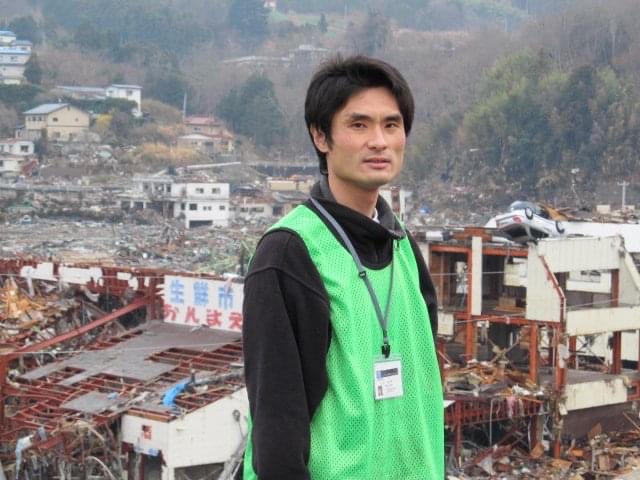
For Yoshiya Hari, the triple disaster marked an almost immediate career and life change. Within days, the pastor of Saikyo Nozomi Chapel was assigned to help run CRASH (Christian Relief Assistance Support and Hope), organizing and allocating the masses of donated material and volunteers that were suddenly flooding into Tohoku from Taiwan, Singapore, the Philippines, the United States, and other nations.

“I was so overwhelmed. I was just a local church pastor and suddenly I was here,” said Hari, also Asian Access’s national director for Japan since 2011. “The news was broadcasting shocking scenes: the tsunami, the nuclear reactor explosion in Fukushima. There was so much fear and it felt like trials were hitting us like waves that keep coming and coming. Japan seemed almost at its end.

“But we realized that people all over the world were praying and sending support and we were encouraged,” he told CT. Organizations like CRASH helped mobilize relief efforts in Tohoku and, more importantly, established support networks of pastors and ministers across Japan that have continued for the past decade.

“Relief has its time limits,” said Hari. “But the local church has an eternal commitment.”

Pastor Yoshiya Hari in Onagawa, Miyagi, after the 2011 Tohoku triple disaster.

Japanese pastors agree that in many ways the disaster in Japan has been a catalyst for positive change.

“The spiritual atmosphere has changed and people are more open to the gospel,” said Nobuyoshi Nagai, lead pastor of Tohoku Central Church and Japan’s national director for Alpha. “Churches from all over Japan and the world now have a desire to come to Tohoku to evangelize and plant churches. Many people have accepted Christ and many churches have been planted since the disaster.”

“Small communities in the northeastern disaster area that had been notorious for limited receptivity to the gospel before 2011 have now recognized the presence and importance of the church,” said Takeshi Takazawa, a church planting veteran who currently serves as Asian Access’s vice president for innovative initiatives.

“We’ve also seen more connections within Asia,” he said. “For example, the Love Singapore movement has embraced Love Japan, and the Filipino church has a strong relationship with Japanese churches.”

Churches in Japan also now feel better prepared to address new disasters and social issues. When a large earthquake struck Kumamoto in 2016, Christians from Tohoku immediately connected with leaders there to share about their experiences and advise the response.

Prepared for Pandemic

COVID-19 has brought about challenges for the recovery effort in Japan, including drawing government and media attention away from any tsunami recovery efforts in the northeast. But the church has been able to use wisdom gained after the disaster to offer help during this new crisis.

Support methods such as pastor networks and crisis management plans that were created in relief efforts have been reactivated nationwide this year to support those in need. Establishing networks and building local community trust were necessary in addressing both the 2011 disaster and the 2021 pandemic.

“Networks we had set up in 2011 allowed us to share ideas and wisdom in the midst of the pandemic, and since we had built trust with the community and local government after the tsunami, people sought help from churches during the pandemic,” said Yukimasa Otomo, pastor of Shiogama Bible Baptist church in a small fishing town between the large cities of Sendai and Matsushima. For example, his church provides food for those who have lost their jobs or working hours amid public health measures.

Destruction in Sendai

“All Japanese were impacted in some way by the disasters in 2011. For some, it may be just a superficial change, but for others, including pastors and churches, it has caused deep and significant changes,” said Hari. “I pray that the pandemic causes similar deep changes in us—including myself.”

“Japanese Christians are once again re-examining what it is to be a disciple of Jesus Christ because of the pandemic,” said Takazawa. “The church has moved out of the ‘come in’ mindset to be more missional.”

The increased sensitivity to outsiders and commitment to holistic care prompted several churches to reach out to internationals who came to Ishinomaki for fishing jobs and were stranded with limited options or made to work harder to make up for factories losing workers because of COVID-19.

Let the Walls Fall Down

Many people came into contact with Christians for the first time through their presence after the 2011 disaster. The Japanese church consequently learned to go beyond its walls and to serve people physically and emotionally as well as spiritually.

“They learned that its task is not only to proclaim and persuade, but to communicate the gospel through acts and to meet the social needs in front of them,” said Takazawa.

This holistic approach to the gospel in Japan is an exciting development growing from the seeds of disaster, sources told CT.

“We’re starting to sense a greater awareness of the needs of those ‘on the outside’ who often remain invisible or do not have as much of a voice at the table, like women, those with disabilities, foster and adopted children, and immigrants,” said Sue Takamoto. She and her husband Eric serve with Asian Access on a team in Ishinomaki, one of the worst-hit areas, and have created a community with other international Christian workers from a variety of organizations. They moved into a rural area where there was no local church to try to live out the gospel there, and ended up helping to plant a new church.

At the very least, pastors agree that the massive disaster brought issues to light and challenged the church in Japan.

“Some people realized how out of touch their churches were with their communities, others that they did not have the proper vocabulary to explain the gospel to rural Japanese people with no Christian background,” said Makito Matsuda. Born in Miyagi Prefecture, where more than 10,000 people lost their lives in the 2011 earthquake, the pastor hosted 15,000 volunteers from all over the world at Oasis Chapel Rifu, providing much-needed relief in the tsunami-affected areas around his church.

“Some, like myself, realized that serving in unity with Christians from other parts of the world with different languages and cultures can have a great impact on the community,” said Matsuda. “Prompted by these realizations, we gradually began to change.”

A common opinion among pastors is that the post-disaster networking has caused the Japanese church to be more unified than ever.

“I have seen churches across denominations coming together for training, but it was not until after 2011 that I saw such a unified effort for the sake of the suffering and those in need,” Takamoto said. “While the immediacy has lessened in recent years, I don’t think this desire for unity has dissipated.”

Denominational divides were a huge issue prior to the disaster, and although the walls between churches and communities have been torn down, there is still much work to be done in bridging the gaps.

“Networks are beautiful, but hard to maintain,” said Otomo.

“We need to cultivate a better kingdom mindset and develop appreciation for diversity within the body of Christ for the mission to accelerate,” said Nagai.

A church service at Shiogama Bible Baptist Church in Sendai in 2012.

Hope Beyond Relief

Neighborhoods remain lost, scattered, or neglected even 10 years after the tsunami, so current ministry has shifted from immediate relief to building relationships and community. Many leaders have taken to creative, entrepreneurial community-building solutions.

For example, The Nozomi Project emerged from the disaster to provide a space for women to find dignity, employment, and hope as they created beautiful jewelry out of broken shards of pottery. “Amid setbacks and challenges of keeping a business afloat, I have realized that when God breathes into projects, they can become much bigger than ourselves,” said Takamoto, who directs the project which has now sent more than 60,000 “pieces of hope” to more than 45 countries.

For the past two years, Nozomi has also been serving a group of vulnerable women in Cambodia. “It’s been one of the most amazing experiences of my life to see former tsunami victims reaching beyond themselves to bring hope to women in Cambodia with needs greater than their own,” said Takamoto. “Whether they recognize it yet or not, this is the gospel, and it is beautiful.”

Beyond survival and recovery, church networks discovered a need to refocus on reaching the unreached. The tsunami destroyed five Tohoku churches, which was a small statistic in comparison to the $250–$500 billion worth of damage wreaked on Japan. But it was a wake-up call for Japanese pastors. It proved how few churches had been planted along the coast.

“We had to repent once we realized it,” said Hari. “It was not intentional, but those people were abandoned. These were, for the most part, unchurched areas that had slid out of our sight.”

Today, Asian Access estimates that 75 congregations, including 33 house churches started by a single pastor in Miyagi, have been planted in the area since the disaster.

There is social division between Fukushima and the rest of Japan, and even within Fukushima due to the radiation and the scattering of communities caused by the power plant meltdown. The government may take more than 50 years to fully decommission the reactor, and although radiation levels are much safer, hardship and stigma linger.

“I’m really concerned about Fukushima, especially the next generation that has to deal with the same issues,” said Hari. “After the disaster, hundreds of missionaries flocked to Miyagi and other areas affected by the tsunami, but very few to Fukushima. We know there was risk, but we hope people can overcome the fear and the stigma and come. That is where there is a huge need.”

From Tohoku to the World

In addition to reflecting on their post-disaster church, the network of Japanese pastors provided advice for their brothers and sisters around the world on preparing for and responding to disasters as leaders.

Matsuda admitted that his team felt overwhelmed, overworked, and anxious at first. “What gave me life again was to return to a rhythm of sitting at the Lord’s feet, listening to his word, and obeying it. I now believe that a steady commitment to this way of life is the only way to prepare for unexpected disasters and survive in the midst of chaos.”

Nagai urged leaders to “be open to being changed. Whether COVID-19 or a tsunami, no one is exempt from change in a crisis. God is constantly looking for his ‘new wine skin’ to work with, and he sometimes uses a disaster or trial to form us into that vessel.”

“Church leaders should all consider responding to a disaster now,” said Otomo. “It is too late to think about it after the disaster. If your church has a clear vision on this matter, you will be ready to respond. If not, it will be difficult to maintain good works when times like this come. Once you’ve decided it is important, building your local church network is the first step.”

“We must see disaster and crisis as normal and not as something that catches us by surprise,” Takazawa said. “Leaders tend to see the period of time without crisis or disaster as normal, so crisis becomes something to just get through or something outside of God’s control. But God is always working in the crisis and Jesus warned that they will even intensify.

“It is also important to listen to the people who were there from before the crisis and who will still be there when it has gone,” he said. “God has already placed leadership within that community, so if you are going to help as an outsider, listen to, support, and serve local leadership.”

The Next 10 Years

On the 10th anniversary of the triple disaster, Japanese churches continue allowing themselves to be shaken into action rather than growing complacent. They are able to look back with thankfulness at God’s transformational work this decade, but maintain a holy discontent with the state of the church even after such recovery and change.

“I hope to see more churches standing up for their own communities and serving in the name of Jesus Christ with wisdom and skills born out of the experience of disaster,” said Otomo.

“God saw even before the disaster that there were sheep without a shepherd on the coast. The country has recovered but is still in spiritual poverty in these areas,” said Hari, noting that a third of municipal areas in Japan are unchurched. Today he works with hundreds of leaders across Japan to grow networks and inspire a church multiplication movement.

“I dream of mobilizing the Japanese church to those areas and having a church with the heart to respond to physical disaster but also spiritual disaster,” he said. “Two or three people gathered in Christ’s name is the beginning of a church. I dream of seeing a local church in every municipality in Japan.”

“Even—especially—in a time that seemed hopeless, we were reminded that our help was on the way,” said Nagai. “So today we have confidence that God has prepared a better and brighter future for us.”

News

Died: Larry Walker, NIV Translator Who Loved Bible Details

Commitment to accuracy and inerrancy carried him through controversy.

Christianity Today March 12, 2021
Courtesy of the Walker family / Edits by Mallory Rentsch

Larry Walker, the last living translator of the original team of scholars who produced the New International Version of the Bible, died on March 8 at age 88.

Walker was a Hebrew scholar and a Semitic languages specialist who used his skills in the extinct Amorite language of Ugaritic to shed light on the Old Testament, illuminating the details of everything from the “trading ships” of Isaiah 2:16 to the “darkest valley” of Psalm 23:4. He cared deeply about accuracy and specifics and believed a commitment to the doctrine of inerrancy could serve as the basis for the highest quality of scholarship.

Walker served on the International Council of Biblical Inerrancy and was one of the original signers of the “Chicago Statement on Biblical Inerrancy” in 1978. When he and other translators were accused of turning the NIV into a “unisex Bible” and subverting the Scripture with a secret feminist agenda in the late 1990s, Walker reiterated that his commitment was to inerrancy, accuracy, and the hard work of translation.

“Accuracy. That’s what mattered. The accuracy,” Walker’s son Daniel Walker told CT. “He could just drill down, drill down, drill down into the Word. He said unless you were a scholar, you just wouldn’t understand all the reasons they have done what they’ve done because there was so much behind a specific word.”

Walker taught Hebrew and Old Testament to an estimated 4,000 seminary students over his career. He was a professor at Southwestern Baptist Theological Seminary in Fort Worth from 1965 to 1980; Criswell Bible Institute in Dallas from 1970 to 1980; and Mid-America Baptist Theological Seminary in Memphis from 1980 to 1997. After 1997, he held visiting positions at Golden Gate Baptist Theological Seminary, Beeson Divinity School, Southern Baptist Theological Seminary, Southeastern Baptist Theological Seminary, Trinity Evangelical Divinity School, and Tyndale Theological Seminary in the Netherlands.

One of his students at Southwestern, Al Jackson, now a Baptist pastor in Auburn, Alabama, recalled Walker as a “valiant defender of the veracity and trustworthiness of the Old Testament.”

John D. Massey, dean of the Roy J. Fish School of Evangelism and Missions at Southwestern, said Walker “had a profound influence on my life as a young seminarian in his Hebrew classes at Mid-American Seminary in the early 1990s. He had a deep love for God’s Word and passed that along to his students.”

Walker was born to Gilbert and Eleanora Walker in Fort Wayne, Indiana, in July 1932, in the home his Norwegian grandfather built when he immigrated to the US. Walker was raised a Mennonite, according to his son, and committed his life to Christ at a young age. As a teenager, he rededicated his life during a Baptist revival and became passionate about Scripture.

He went to Bob Jones University to study the Bible in 1955 and met a nursing student named Becky Brown who played saxophone in the university band. They married two years later. Walker went on to earn another degree at Northern Baptist Theological Seminary in 1958, a master’s from Wheaton College in 1959, and a doctorate from Dropsie College for Hebrew and Cognate Learning in Philadelphia in 1967.

As he studied Hebrew and other Semitic languages—Aramaic, Akkadian, and Ugaritic—Walker became more convinced of the doctrine of biblical inerrancy. He strongly rejected the dominant scholarly approach of higher criticism, noting it was held up as “scientific” but hadn’t changed since the 18th century, despite the discoveries of massive amounts of new linguistic and archaeological information.

“Armchair speculation of higher criticism has been repeatedly overturned by continuing discoveries from the lands of the Bible,” Walker wrote. “The founders of higher criticism were totally ignorant of such important ancient cognate languages as Ugaritic and Akkadian—not to mention such non-Semitic languages as Egyptian, Hittite, Hurrian, [and] Sumerian. … Words once claimed to be ‘late’ (and therefore betraying a ‘late’ document) are now attested in the early Canaanite source materials from Ugarit; syntactical features of Hebrew poetry once labeled incorrect are now attested in the poetry of Ugaritic.”

The year he earned his PhD, Walker was recruited to join the core committee of 15 scholars who would oversee the translation of a new, evangelical version of the Bible. The committee was started in 1965, but one of the members, E. Leslie Carlson of Southwestern Baptist Theological Seminary, died before the work began. Walker was brought on as his replacement.

He spent the next decade working on the first edition of the NIV while simultaneously teaching at Southwestern.

“He had a full-time job at the seminary, as a seminary professor,” Daniel Walker recalled. “And then he’d come home at night and he’d work all night on the NIV. He spent his whole life in the Word. This is just what he did.”

The NIV was published by Zondervan in November 1978. The initial press run of 1.2 million copies sold in advance. According to historian Peter Thuesen, “the NIV lived up to its billing as a more ‘evangelical’ Bible” than the Revised Standard Version, but also drew on recent scholarship and received “generally positive” reviews from academics.

One point of academic contention was an area Walker worked on: The NIV’s use of capital letters for Christological terms in the Old Testament. In Psalm 2, for example, the NIV capitalized Anointed One, One, King, and Son, since Christians have traditionally understood those as proper nouns referring prophetically to Jesus. Since Hebrew doesn’t have capital letters and English does, capitalization is an interpretive choice based on theological commitments and style preferences. Thuesen describes the fight as “more symbolic than substantive,” writing that the disagreement may “have been more about Protestant party politics than about Hebrew and Greek philology.”

Walker faced a bigger controversy while working on NIV revisions in the 1990s. Hodder and Stoughton published an NIV update branded as an “inclusive language” version in the United Kingdom in 1995 and there were reports of plans for a similar update in the US in the early 2000s.

World magazine published an exposé in March of 1997, claiming this would be a “unisex” Bible, and a “feminist seduction” that was “likely to transform understandings of how God views the sexes he created.” The piece said Zondervan was forcing the Bible translators to make the changes for financial reasons and prominently quoted Walker, making him the face of the reluctant scholar pressured into “evolving” views.

“When it first came up, no one was for [unisex language]. Now at the present time, almost everyone is for it,” World quoted Walker. “The language is shifting underneath our feet.”

World was later criticized by the Evangelical Publishers Association, which deemed the reporting distorted, incomplete, and inflammatory. Walker, for his part, insisted there were scholarly reasons for the changes. He didn’t have a political agenda and certainly wasn’t part of a subversive feminist effort to undermine Scripture. He was committed to accurately translating the text, based on the best scholarly understanding, into a contemporary idiom that could be widely understood by modern English speakers.

“There’s so much behind the translation and what’s behind the words,” Daniel Walker said. “He could tell you the history of the English word, and the Hebrew word behind it, the other languages that were used in biblical times, how they were all different, and then talk about gender in the German translation too.”

After the World report, however, Mid-America asked Walker to disassociate himself from the NIV. When he refused, he was pressed into retirement, according to CT reporting at the time.

Walker went on to teach at six other seminaries and harbored no resentment over the controversy, according to his son.

“He just took as it what it was,” Daniel Walker said. “He knew he was right and it was done.”

The lifelong Bible scholar also continued to work on revisions to the NIV, and was involved with the “gender inclusive” Today’s New International Version in 2002. Bible scholars at Wheaton and Dallas Theological Seminary told CT that the changes in it were not particularly radical and were faithful to the original biblical texts.

Walker was personally less interested in the debate over the gender questions than details like the best translation for the “valley of the shadow of death” in Psalm 23—an odd and debated word found only once in the Bible—and tracking down the correct identities of animals in the Old Testament. Based on his linguistic sleuthing, Walker argued that the greyhound found in the King James Version of Proverbs 30:31 is actually a rooster, the turtle in Song of Songs 2:12 is actually a turtle dove, and the unicorn in Deuteronomy 33:17 is actually a wild ox.

Walker spent the last years of his life in Gray, Tennessee, regaling his neighbors with Bible knowledge and working on a book about his work on the NIV, his scholarship, and his philosophy of translation. It was near completion at the time of his death, his son said.

Walker was proceeded in death by his wife, Rebecca Elizabeth, in 2018 and their son Craig in 2010. He is survived by children David, Daniel, Linda Enzor, and Melissa, as well as ten grandchildren. A small memorial service will be held at Mid-America Baptist Theological Seminary on Saturday.

How Prayer Can Prepare Us For Death

The author of Rabbit Room’s “Every Moment Holy” liturgies on what he has learned about grief and hope in 2020.

Christianity Today March 12, 2021
Photo by House on a Hill Photography

Douglas McKelvey has been writing short prayers for years. Formerly a lyricist for artist Charlie Peacock and other Christian bands, McKelvey was also involved in the early work of Art House America, a self-described “artistic hub” and nonprofit founded by Peacock and led by Christian creatives such as Sara Groves.

In 2017, McKelvey published a book of daily liturgies called Every Moment Holy, Vol. 1 through a creative collective called Rabbit Room founded by singer-songwriter Andrew Peterson. McKelvey’s recently published second volume is filled with liturgies for grief, death, and dying, released 12 months after the coronavirus pandemic swept the United States and killed hundreds of thousands. CT interviewed McKelvey about how his latest volume and the past year’s events shaped his beliefs on death and dying.

What was your inspiration for Every Moment Holy?

I was working on a science fiction novel but kind of felt like I was spinning my wheels. A lot of days I just wasn’t making any progress. And at a certain point, I thought, I really need a prayer that I could pray when I sit down in the morning to work—to write something that would reorient me in terms of my relationship to my Creator and my relationship to my craft and whatever gifts I’m a steward of. So, I wrote this prayer and called it a liturgy for fiction writers.

Douglas McKelveyPhoto by Lancia E. Smith
Douglas McKelvey

That was a couple of months before a conference where I was speaking with Andrew Peterson and author Heidi Johnston. I emailed that prayer for fiction writers to Andrew, and he responded pretty quickly and said, “Hey, this is great, but man, I wish I had a liturgy for beekeeping” and a couple of other things.

That was the immediate moment where the lightbulb just turned on and I realized there’s actually something here that might really be of service to the body of Christ—to create a collection of prayers that that would help people to unpack moment by moment in their lives what it might mean that God is present and active in this moment. It’s his pleasure to work in and through us as our hearts are yielded to that process moment by moment. To look at different moments of our lives in light of Scripture and say, okay, if we’re changing a diaper, how does that touch on eternity? How is that tied to the advancing kingdom of God, to the coming new creation?

What would you say is the value specifically in the Every Moment Holy liturgies?

I find that it is helpful to define terms because people can mean very different things when they use the word liturgy because there is the overarching meaning of the word, which is just the order and content of a worship service. Then there’s the sense of the word that means those rhythms of our lives, those repeated practices that have the power to shape our hearts into something that better reflects the image of Christ or to misshape them away from that. So there are negative liturgies as well as positive liturgies.

An example that I’ve used before is that, if I am habitually posting dozens of selfies every day, there’s nothing in and of itself that’s inherently wrong with posting selfies. But if that becomes this repeated rhythm in my life, then it’s likely that it could begin to shape me, to shape my heart, or misshape my heart toward caring an awful lot about what other people think of me.

And that could be an overriding and consuming and shaping factor in my life as opposed to if I have the regular practice of taking walks in the woods and taking time to pause and consider the creation and the beauty that God has created there. Well, there’s nothing that is inherently righteous about taking a walk in the woods, but that practice is going to be much more likely to draw my heart to the beauty of my Creator.

With the Every Moment Holy project, my hope has been that these will be liturgical in the sense that individuals or families or small groups or churches would be able to find a number of the prayers in these books that they could incorporate naturally into the rhythm of their lives. There’s a liturgy for the first hearth fire of the season, or if a family incorporates the daily meal prayers and liturgies, that the theological truths that are contained in those would be things that over time would shape and frame the thinking and theology for children and adults.

The second volume is coming out during Lent and after a really hard year that reminded us of our mortality in a lot of ways.

Yeah, it took two years to write volume two. It predated COVID. Through most of 2020, I was continuing to write, and the events that were happening were continuing to shape the content of it. I think one of those was a liturgy for a time of widespread suffering. Even more than current events shaping these there was the absolutely necessary involvement of probably at least 150 people that I corresponded with during that time who either were navigating grief or were facing their own mortality during that season.

For the believer, hope is that is the common theme that runs through all of the death, the dying, the suffering and the grief.

There was a woman who had just lost her husband and her seven- and nine-year-old daughters. A mutual acquaintance contacted me to ask if I had anything that might be appropriate for the memorial service. So I sent them a couple of things, and then this woman contacted me within the next couple of weeks to thank me for that. And then we just began this correspondence where she would look at prayers I had written and would give me her honest feedback on what was accurately articulating what was on her heart and what I might be missing on some of those things or things I was completely clueless to. There were a number of heavier topics that it was just so crucial to have this community of grieving people weighing in and ultimately signing off.

Based on the dedication to Jay Swartzendruber, it sounds like you also had some personal experience with grief this year.

Well, yeah, Jay has been a friend for many years. The afternoon that I was finishing the final edits on this book, I got a phone call from another friend giving me the news that Jay had just died unexpectedly earlier that day. So for the next couple of hours, I continued to work on the manuscript, but it was through tears. But it was also with such an assurance of the reality of the things I had just spent two years writing about. And knowing that it was okay to live in that tension of feeling great grief, but also having a real sense of celebration and hope at the same time. And those things don’t contradict each other for a follower of Christ. Those things are completely interwoven and intermingled, and we should allow ourselves to feel both fully at the same time.

That’s powerful. Do you have a specific liturgy in volume 2 that is most meaningful to you?

Yeah. In volume 1 the book closes with the liturgy of praise to the King of creation. It’s this exuberant worshipful song of a prayer just praising Christ. The final prayer [in volume 2] is a liturgy of praise to Christ who conquered death. I think that’s become one of the most meaningful ones for me. I was saving it for the end because I recognized it as something that I needed after having spent two years wrestling through these topics of death and mortality and grieving.

I wanted to end the experience of writing the book with letting all of that be summed up in an expression of the great hope that we have and turn all of that into worship of Christ. Because he is the one who has conquered death, who has given us this hope that is so powerful that it undercuts, transcends, and ultimately transforms our dying and the grief that we do encounter in this life. That’s one that definitely comes to mind as a contender for the one that’s most meaningful to me.

There’s a prayer in the new book giving voice to the costly confession. When everything is going well for us, it doesn’t really ask much of us to give thanks to God or to declare his worthiness. But in those times when life is a struggle or in the most extreme scenario when we are facing our own imminent death, what does it mean at that point to say to God, “Even so, you are worthy of all glory, all praise whether I live or die”? The collective suffering that we’ve experienced over the last year does put us in a place where it’s more sobering and it’s more costly to make those kinds of declarations.

Speaking of formation, how has your view on death and dying grief been formed? And what is your hope for this specific volume coming out in 2021?

The answer to both of those questions is probably the same answer. I did a lot of reading of books written by people chronicling their own grief process or theological works about death and dying and grief. I began to realize through all of that was that the church, at least in the West, no longer has a robust theology of dying based on Scripture. And there are a number of reasons for that. One of them, I think, has to do with medical advances and the fact that we no longer find ourselves in a time and place when most of us have experienced a number of deaths firsthand growing up.

So often our experiences around death and grief are awkward because we’re not prepared. We don’t know how to really serve those who are dying. We don’t know how to mourn with those who are mourning. And we don’t know how to navigate our own dying when each of us reaches that season. Part of my hope for what volume 2 might do—in addition to serving individuals who are walking through these seasons—is to be a catalyst for churches to begin to have these conversations and to develop a more robust theology of dying.

Part of what I think we’ve lost is an understanding of how we are crucified with Christ. At the moment we begin the journey as followers of Jesus, we are learning to die to ourselves. We’re baptized into his death. Baptism is the symbol of us who we were dying, of laying down our own desires. And then as we follow him throughout the rest of our lives, it’s this ongoing process of sanctification, of becoming more and more like him. So much of that has to do with continuing to lay down our own dreams, our own desires.

Our last crossing of the valley of the shadow of death is an expected and final part of that journey. It’s the point where we at last will willingly or unwillingly lay down all of those final things that we’ve still been carrying and fully embrace the life that we have in him. That’s not to say that death is not unnatural and an enemy. Scripture tells us that it’s the last enemy that will be destroyed, but it will be destroyed. And that’s great cause for rejoicing. That’s one element of that theology of dying that I hope that the church in the West can reclaim in a more holistic way that’s not just relegated to a funeral service.

For the believer, hope is that is the common theme that runs through all of the death, the dying, the suffering and the grief. And of those three—death, grief, and hope—hope is the only one that is eternal. Its fulfillment is eternal.

Theology

Pandemic and Penitence: COVID-19 Has Re-Ordered What Matters Most

This Lent to forget will make us remember where our first loves reside.

Christianity Today March 12, 2021

Depending on your perspective, Lenten fasts can seem trivial. What’s the point, exactly, of giving up dessert or alcohol for six weeks? (Is your real goal to lose weight?) Forgoing Facebook or Twitter for Lent may seem worthwhile—but if you return after Easter, what is the lasting impact? Besides, aren’t these fasts supposed to be spiritual disciplines? How do they honor God?

Proponents of the liturgical year point out that there are other ways to mark the Lenten season. Christians can “add in” disciplines as easily as they can take them out. The traditional Lenten disciplines of prayer, fasting, and almsgiving rightly orient our relationship to God (in prayer), ourselves (through fasting), and our neighbor (by serving the poor). While such disciplines should hardly be reserved solely for Lent, the season’s self-denial invites a period of focused self-examination, a chance to, in some small ways, restructure our daily routines.

Normally, Lenten disciplines come with a time stamp. We count down the approximately 40 days from Ash Wednesday to Easter knowing that, surely, we can grit our teeth and bear going without caffeine or Instagram for six weeks.

The pandemic feels like a never-ending penitential season, with forced fasting, imposed self-denial, and plenty of unanswered prayers.

The pandemic, however, feels like a never-ending penitential season, with forced fasting, imposed self-denial, and plenty of unanswered prayers. We’ve had to give up meeting together as believers in person, we’ve given up the easy fellowship of a lunch with friends, or coffee with coworkers, or date-night dinners out. Many have had to tighten their belts because of a job loss. At-risk individuals have forgone almost all physical contact in order to stay safe. We’ve waited in line to get into stores and gone online for everything else. The hope offered by vaccines has been tempered by concern over new viral strains and a growing awareness that COVID-19 will stay with us, like the seasonal flu.

So what are we to do with the interminable Lent that is this pandemic? It may be advisable to renounce our traditional renouncing this year, instead devoting this Lent to self-examination. The things whose loss we mourn—hugs and shared meals, going to school, easy trips to get groceries—are all good things (indeed, their goodness is even more apparent now that we’ve experienced their absence). What does our longing for their return reveal about our attachment to them?

A few days into Lent, I often wonder whether anyone cares if I skip lunch or eschew coffee. No one else is affected by my choice, and unless I confess, no one will know if I cheated. More pressing is the sense that these mundane decisions make no difference to my spiritual well-being. It is likely a sign of my implicit dualism that I so easily regard the physical disciplines of Lent as less meaningful (to myself or to God) than more recognizably “spiritual” practices.

But choosing to deny my fairly basic bodily desires, even for a few weeks, is part of a much greater discipline that all Christians must practice—the ordo caritatis, or “ordering one’s loves.” At its core, ordering our loves is simply the work of rooting out idolatry, of realizing where we give primacy of place to things other than God. Because of the imprecision around the word love in English (where I can say I love my husband and I love burritos in the same breath), I find desire to be a more useful term. By ordering our desires, we examine in a more a nuanced way what it is we want and how our habits may be impacting the health of our souls.

Embedded in the ordo caritatis is the idea that we desire many things that are good, and the desire for good things is not inherently sinful. Our desires become sin when we mis-order them; when we love the good gifts more than the Giver, or when our unexamined desires end up determining our decisions. Giving something up for Lent—whether it’s chocolate, or alcohol, or watching TV—does not deny the goodness of these things. But such Lenten fasts do require us to practice intentionality, to examine our habits, and to practice disciplining desires of all kinds. To choose what to give up or take on for Lent is to choose how to spend our time and attention, and to notice what desires we unthinkingly and regularly feed. Such self-reflection leads to making more intentional decisions (at least for six weeks!), rather than letting ourselves be governed by our habits.

Any love of good things—community, romance, stability, wealth, beauty, status, achievements of all kinds—can easily become a substitute for better things, namely deeper submission to the God “in whose service is perfect freedom,” (as the Book of Common Prayer puts it). Our desires easily intertwine; we eat or drink when we are lonely, or turn to fiction (whether on TV or in the pages of a book) as a way of escaping the difficult work of reality. The very physicality of Lenten disciplines—their connection to our bodies and to our habits, can be useful places to practice self-awareness and self-discipline. These fasts are not abstract exercises in self-reflection, but very real explorations of how much I value my nightly social media scroll, how incredibly difficult it might be to resist turning on the TV, or how grumpy I am when denied something I typically have on a daily basis.

In this ongoing pandemic, our losses have helped us to see our own needs more clearly.

In this ongoing pandemic, some of our losses have helped us to see our own needs more clearly. We’ve grown to cherish the importance of meeting together as the body of Christ. We understand intuitively that community mediated through a screen is not the same as being together in person. But with other losses (might we call them fasts this Lent?) we can see the ways we have mis-ordered our lives and routines, directing our desires toward unholy ends. We have desired our own security and comfort rather than trusting in the Lord. We have found our purpose in friendships, in to-do lists, and in busy days instead of in Christ’s love for us. We have sought instant gratification rather than the slow-growing fruit of the Spirit.

We can use this pandemic-driven Lent to examine our own desires in light of what we have lost. Remember that in Christ our losses become our gains (Luke 9:25; Phil. 3:7–8). All we have comes from the Lord. If some good gifts have been taken away in this season, what might our grief reveal about our mis-ordered desires? And can we find ways to practice gratitude for what remains?

Kerilyn Harkaway-Krieger is assistant professor of English and director of First-Year Writing at Gordon College, Wenham, MA.

addApple PodcastsDown ArrowDown ArrowDown Arrowarrow_left_altLeft ArrowLeft ArrowRight ArrowRight ArrowRight Arrowarrow_up_altUp ArrowUp ArrowAvailable at Amazoncaret-downCloseCloseellipseEmailEmailExpandExpandExternalExternalFacebookfacebook-squarefolderGiftGiftGooglegoogleGoogle KeephamburgerInstagraminstagram-squareLinkLinklinkedin-squareListenListenListenChristianity TodayCT Creative Studio Logologo_orgMegaphoneMenuMenupausePinterestPlayPlayPocketPodcastprintremoveRSSRSSSaveSavesaveSearchSearchsearchSpotifyStitcherTelegramTable of ContentsTable of Contentstwitter-squareWhatsAppXYouTubeYouTube