News

How Luis Palau Shaped the Faith of Lee Strobel, Luis Bush, and Many More

12 evangelical leaders on what they’ll remember most about the mass evangelist.

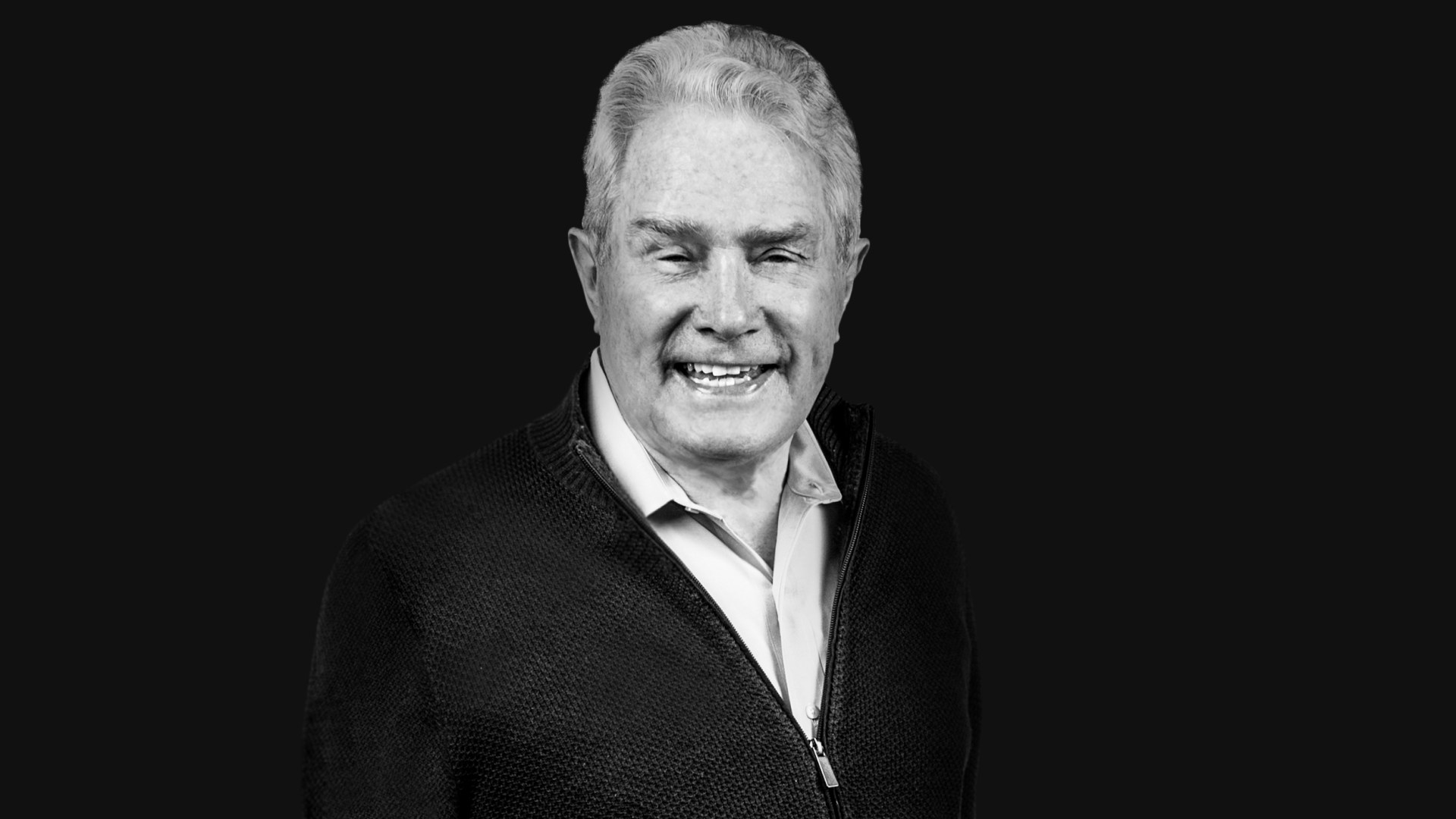
Luis Palau

Luis Palau

Christianity Today March 11, 2021
Courtesy of Luis Palau Association

CT asked Christian leaders who knew Luis Palau, who died today at 86, about his theological impact on the evangelical world, what set him apart from his peers, and meaningful conversations they shared with the beloved evangelist:

Lee Strobel, apologetics author and speaker:

Luis Palau was my friend and hero. I marveled at his authenticity, his passion for the gospel, his fidelity to Scripture, and his warm and encouraging personality.

I recently interviewed him for a book I’m writing. We talked about heaven. Frankly, he was ready—even anxious—to get there. He actually gave me his handwritten preaching notes for a sermon he had written about heaven—a treasure I will always cherish.

But his main concern was to make sure the gospel was clearly articulated in my book. He wanted the focus to be on Jesus, not on himself. That was very much like the Luis I have known for decades.

Seize every opportunity, he would urge me, to tell others about the hope they can find in Christ. I loved that about Luis! In fact, I loved everything about Luis—and I long to reunite with him someday in heaven.

Luis Bush, missions strategist, originator of 10/40 Window movement:

Luis Palau reminded the evangelical world that at the core of what we believe is the forgiveness of sins, the resurrection of the body, and life eternal. Luis elucidated the biblical truth that a committed Christian is called to share the gospel of Jesus Christ. He shared the conviction that “the heart of the king is in the hand of the Lord. Like rivers of water, he moves it whichever way he wishes” (Prov. 21:1).

One meaningful conversation I had with Palau took place in 1977 while completing my Master of Theology at Dallas Theological Seminary. He invited me to join him on his Welsh Crusade to reach out to rugby friends from my past school days in Great Britain. I took time out from my studies to visit with several old schoolboy friends. One of them, who had been the Welsh national under-18 rugby team captain, received Christ.

To God be the glory for the life and ministry of Luis Palau.

Franklin Graham, president and CEO of the Billy Graham Evangelistic Association and Samaritan’s Purse:

Luis was a passionate evangelist who faithfully preached the gospel of Jesus Christ: his birth, his sacrificial death on the cross, his burial, and his resurrection. Millions have heard this truth, and untold men and women have trusted Christ, as a result of Luis Palau’s ministry. I thank God for his life and the example he set.

Luis was a close friend of my father Billy Graham throughout the years, and he was my friend as well. His voice will be greatly missed, but his life should inspire each of us to focus even more intensely on warning people of the consequences of dying without repenting of their sins and turning to Christ in faith.

Norberto Saracco, director of Facultad Internacional de Educacion Teologica, Buenos Aires, Argentina:

A big part of Luis Palau’s legacy is unity. In 1977, Palau was invited to Buenos Aires by a group of church leaders. When Palau learned that the organizers had marginalized Pentecostals, Palau confronted them and preached from 1 John 3 where the writer reminds his readers that “Anyone who hates his brother is a murderer.” It was a harsh call to repentance.

In 1979, the organizers decided to have a similar event and reached out to Palau. While visiting nearby Uruguay, Palau asked for a meeting with Argentine pastors to respond to their invitation. There he told them, “I reject your invitation because you have not learned the lesson and you have once again left out the Pentecostals. I will never again have a campaign if the whole body of Christ is not there.”

The church in Argentina has a special debt of gratitude to Palau for his work to bring the church there together. For many years, the Luis Palau Association allowed its staff to make themselves available to the work of unity. To this day, the president of Argentina’s evangelical alliance (ACIERA) shares his ministry with the Luis Palau Association, where he is also its director of festivals and Hispanic Ministries. This has strengthened ACIERA and helped it become one of the strongest and most developed alliances on the continent today.

Palau’s calls for unity also extended beyond fellow evangelicals. Remarkably, he evangelized in Latin America without ever preaching against the Catholic Church and was able to generate respectful and mutually appreciated relations with Catholic leaders on the continent, including the current Pope Francis. At times, this attitude caused problems with evangelicals who did not agree with his focus on dialogue. To his critics Palau used to say, “I have atheist friends and but I’m not an atheist; I have communist friends but I’m not a communist; I have Catholic friends and I’m not a Catholic.”

Bill Taylor, writer, mentor, longtime member of World Evangelical Alliance Mission Commission:

I first met Luis in Guatemala in the early ’70s. His Guatemala crusades were unique to the nation. I think he was discovering himself, his “voice” and what “worked” in Latin America. He challenged evangelicals across the then-main divide (non-charismatics and charismatics) to come together before he would continue cooperating with them. I belonged to one of the intransigent anti-charismatic groups, but I thank God for Luis’s standards. He had similar problems in Chicago.

His radio programs became required listening for both evangelicals and Catholics. He honestly answered questions. In 1982, he participated in the 100th Anniversary of Evangelicals in Guatemala, and nobody could have been a better gospel champion. Across Latin America he forged relationships with political and military leaders—which constantly got him in hot water. But his apologetic for those steps was close to the Apostle Paul.

This Argentine-born never lost his Latin American roots nor friends, but he became a global voice for the gospel, and creatively adjusted the methodology to the times. He became one of Latin America’s greatest gifts to the entire world.

Howard Dahl, businessman and board member, Luis Palau Association:

It has been a privilege to watch Luis Palau up close for 30 years, including being a board member in recent years. I believe glorifying God means to make God look good by the way you live. I could write an essay on how Luis reflected each quality of the fruit of the Spirit. Luis was so loving, making you feel special while he gave you his full attention. He was one of the most joyous Christians I have ever met, with a singular sense of self-deprecating humor, a manifestation of humility.

I would like to focus on his kindness. Luke 6 says that our Father in heaven is kind to the wicked and the ungrateful. In our world ripped apart in so many ways, Luis won the hearts of so many, including a liberal gay mayor in his city of Portland. Any city that he went to for an event brought people together. I observed in one city an African American pastor stand up and point at Luis and say: “Before you came to our city, I had never prayed with a white pastor before. God has raised you up to bring people together.”

As I read John 17 and the prayer of Jesus for his followers to be one, so that the world might believe by seeing genuine, loving, unified believers, I put Luis at the top of my list of leaders who have been faithful to this task.

Francis Chan, preacher, author, and missionary:

I don’t think there was ever a time that I met with Luis and didn’t leave deeply encouraged. Many leaders are eager to share their opinions and accomplishments, but Luis was eager to bless.

I had the honor of serving alongside Luis on several occasions. While I was impressed by his graciousness and charisma on the stage, I was far more impacted by the kindness he exuded in everyday life. He was warm, which ought to be true of those filled with light but often is not the case. What I remember most was the way that he shared with our taxi driver on the way to our venue. I kept thinking, “He’s so likable and winsome.” The gospel flowed so naturally from his lips. It wasn’t forced or spoken out of obligation. I thank God for his grace upon Luis, that he could faithfully preach the gospel for so many years—on large platforms and taxi rides.

What set Luis apart was that he showed signs of being Spirit-filled. Ephesians 5:18–21 describes a Spirit-filled person as “singing and making melody to the Lord” in his heart and “giving thanks always and for everything.” I’ve always thought that a person who could live that out would be a person that would bring life to every situation.

This is what I will always remember of Luis: He was filled with the joy of the Lord. Sadly, we don’t see much of this from Christian leaders. The struggles in ministry tend to squeeze the life out of many ministers, but Luis maintained a joy that made him so likable.

Paul Pastor, author of Palau: A Life on Fire:

Luis’s impact on the global evangelical movement is considerable. But in my opinion, one of his significant legacies has been his impact as a Bible teacher. His simple, memorable Bible teachings, often heard daily over radio stations worldwide, will be remembered by many, especially in Latin America. This grounding in practical and positive messages from Scripture—and more, the feeling that the Bible was accessible for anyone—has had enormous impact on millions of listeners over the decades.

Evangelism—especially mass evangelism at the scale and pace in which Luis specialized—has a patchwork history. On the one hand, it has a remarkable tradition, including some of the great open-air preachers of history, and has been responsible for great social movements in recent centuries. But on the other hand, it is difficult to think of another ministry (until the rise of the “celebrity pastor”) so prone to gaudy glitz, “puff,” and in extreme cases, the full range of charlatanry and abuse of which religion is capable. In this world, Luis stood apart.

His lifestyle remained comfortable but with a monkishly simple streak in a small suburb of Portland, Oregon. His library was surprisingly wide-ranging, flowing from his belief that a teacher of the Bible should never stop learning. For all his fire and persistent stubborn streak, he had spent a lifetime building a team of genuine partners rather than yes-men. Few living preachers had more to boast of than he did. I venture that few were more terrified of such boasting.

Luis lived in genuine dread of being perceived as something that he was not. He was fully aware of the tendency to elevate preachers to superhuman status. Several times before we began, he started to back out of the memoir-writing process, concerned it would encourage hagiography. (His Latin fire would show: “Last thing the world needs is more stupid Palau!”) Eventually he was persuaded to go forward with the work because of the suggestion to make each chapter focus on some person who’d been instrumental in his journey: his parents, mentors, wife, children, teammates, friends.

He was honest about the blend of faith and doubt that was assailing him in his journey through terminal lung cancer. He was very clear that while preaching to crowds in the tens of thousands was not such a big deal, he felt butterflies every time he shared “the good news” with someone one on one. He was tender, weeping openly as we discussed memories of the past. In short, he was human, full of all the little beauties and shortcomings we all carry in various measures, and never did I see him try to hide that humanity. This example of raw and simple faith informed his work and teaching, and has become one of his great gifts to me.

Matt Redman, worship leader and songwriter, United Kingdom:

I will never forget the moment I heard Luis Palau preach the gospel. I was 10 years old and had been brought along to “Mission to London” in Queens Park Rangers soccer stadium. Tens of thousands of us were gathered there that night in the UK’s capital city to hear this Argentinian evangelist convey the gospel message. He spoke of Christ’s saving love on the cross, and of the perfect Father heart of God. Having lost my own dad just a few years before, that part of the preaching was particularly meaningful to me—and I found myself surrendering to Jesus, a new-born Christian.

My next connection with Luis was maybe 15 years or so later. By then I was a full-time songwriter and worship leader, and had been invited to minister as part of a mission in the north of England—of which the Palau organization were also a part. It was a wonderful night in Manchester Cathedral, and I took note of how Luis had lost none of his fire. He preached the good news of Jesus Christ just as passionately as he had done so all those years before in London. Indeed, that passion and fire was the mark of the man. Luis always sounded enthralled with the love of Christ and overwhelmed to the core by the powerful grace of the gospel. Whether a one-on-one conversation— or preaching Christ on a factory floor, from a church pulpit, or on a stadium stage—Luis always invested his heart and soul into the moment.

Just over a year ago was the last time I heard Luis preach. This time his body was battling cancer. And yet that very same fervour for the good news of Jesus shone through. He spoke of heaven and all the glories that lie in store for those who choose to worship Christ. I am so heartened that he is now experiencing those glories he spoke of that day—and that he is face to face his beloved Savior.

I have heard it said, “Never meet your heroes,” but I am so glad that I did.

TobyMac, Christian hip hop recording artist:

I’ve had the honor of calling Dr. Luis Palau “Papa Palau” for many years now, as I am related to him through my wife’s sister Wendy and her husband Andrew Palau. I called him Papa because it always felt that way to me. A warm-hearted soul with a deep well of wisdom and spiritual maturity. He offered it freely, and I counted it a privilege to spend time with him.

Papa Palau had a love for the Bible and its principles, as much as any man I have ever met. And he was always the same—the same man at his home or on vacation as the man that stood on the platform in front of millions and millions. That test of character is the toughest to pass, but he lived it well. It has inspired me to try and live with that kind of consistency.

We will miss him, his smile, his grand enthusiastic personality. And his desire for everyone to hear the good news! And I will miss him. I will miss knowing he’s there, and I will miss the subtle reinforcement he offers that I am on the right path.

Diane Comer, author and cofounder of Intentional Parents International:

I had the privilege of knowing Luis Palau as more than the world-famous evangelist he most certainly was. I knew him as a spiritual father, a wise counselor, an occasional mentor—and even more, as a man whose life patterned for me who and how I wanted to be.

The Luis I knew and now grieve was a humble man. A man who carried his confidence in God to such lengths that it permeated his entire being. Everything for Luis was about a world that needed Jesus. Yes, he was an evangelist to hundreds of thousands, even millions, yet he saw those crowds as real people.

I know, because when I was in my late 20s and Luis heard that I was losing my hearing, his compassion brought healing to my grief. How did he even remember me—the wife of his sometimes worship leader? Yet over years and decades his concern never wavered. He prayed for me. He cared.

His impact on my life—on the life of our entire family—is immeasurable. Luis showed us what it looked like to live every day wholly devoted to God’s calling with absolute, complete dedication. And maybe even more important, Luis showed us that faithfulness over a lifetime is, in the end, the best possible way to bring honor to the name of Jesus.

Rick McKinley, lead pastor of Imago Dei Community in Portland:

The first time I heard Luis, he was speaking at a chapel at Multnomah University in 1989. I was a very new Christian, less than a year into my faith, with a huge desire to see others come to know the Jesus that was changing my life. I was struggling, though. I had a dramatic conversion and was consumed with the drama of Jesus and his kingdom as I read through the New Testament. The struggle I was having was acclimating to the church. It seemed that the dramatic encounter I had and had read about was … well, it was less than dramatic inside the church.

Luis passionately preached (from John 14), “Dream big dreams, pray big prayers, and attempt great things.” Not only did he preach it, he believed it with every vibrating atom in his body. When Jesus said, “You will do even greater things than these because I am going to the Father,” most of us move right past it, but Luis took Jesus at his word. As I sat there, the drama that had captured my heart when Jesus saved me was rekindled by Luis that day. God used Luis to fan the flame of big faith and big dreams for our big God.

Over the years, I have had the privilege of working with Luis and encouraging local pastors, not only in Portland, but in other cities as well. One of the most incredible testimonies, in my opinion, is that in every city in America and throughout the world, local pastors have great trust, respect, and admiration for Luis Palau. After years of ministry, his integrity to the gospel and love for Jesus have created spiritual favor from local pastors around the globe in a way that we may never see again in our lifetimes. Luis was an encouragement to pastors, had appreciation for what they did, and honored the local church. Luis was not about Luis, he was about Christ and others.

Over three years ago, when Luis was first diagnosed with cancer, many of us prayed that God would heal him. The doctors at the time had been talking in terms of months to live, not years. Our Lord gave Luis three more years to do what Jesus made him for: to share the message of our Savior’s love. I think of the people who have come to faith hearing Luis preach over these last few years. How God preserved his life that others might know the Lord. Luis didn’t waste much time during those last years, and he went about preaching as often as his body would allow him, and ministering to local pastors. It was no longer about doing ministry, Luis’s life was a ministry. He simply had to be himself, and people were blessed.

As a pastor, when I think of Luis Palau, I am grateful for how he modeled to so many of us what it means to finish well. Today, most ministry leaders don’t finish well. It’s a harsh reality and one that we need to reckon with. For many of us, ministry can be an idol, and when we get older and need to release our ministries to others, we find we have lost our identity. Many leaders pick up some other idol and put it in the place ministry once sat. We might start out running well but never finish the race set before us. But Luis never quit. The ministry wasn’t an idol for him. Luis ran all the way to the tape. The reason I think he finished well is because Jesus was always the point of everything for Luis. The ministry was a means to an end, getting the gospel out to the world. Ministry was never an end to itself. Luis finished well because Jesus was his goal.

News

Died: Luis Palau, Who Preached the Gospel from Portland to Latin America and Beyond

The Argentine-born evangelist rose from Billy Graham translator to lead millions from more than 80 countries to make decisions to follow Jesus.

Luis Palau

Luis Palau

Christianity Today March 11, 2021
Courtesy of Luis Palaus Association / Edits by Rick Szuecs

Evangelist Luis Palau has died at age 86 of lung cancer. An immigrant from Argentina who made his home in the United States, Palau became one of Billy Graham’s most prominent successors and shared the gospel in more than 80 countries around the world. His ministry led millions of individuals to make personal decisions to follow Jesus.

Palau preached the gospel to heads of state in Latin America and as the Iron Curtain fell in the USSR, his crusades bringing together a diverse array of Christians, including Protestants, Orthodox, and Catholics. As a young man, Palau interpreted for Graham, who later helped fund Palau’s evangelism organization when it officially started in 1978.

Palau began evangelizing during a historic moment for Latin American evangelicalism. Pentecostalism had first arrived in the region in the early 1900s. By the 1960s and ’70s, Ecuador’s Rene Padilla and Peru’s Samuel Escobar began arguing for misión integral (comprehensive mission), challenging an evangelicalism that they believed too narrowly focused on individual personal salvation at the expense of larger social concerns. Palau did not follow this trajectory. His writings in Spanish critiqued liberation theology, and his ministry focused on conversions. Much of his later work, however, sought to actively engage the community, especially in his home city of Portland, Oregon.

“Palau had a great way of preaching the gospel in an accessible manner and planting spiritual priorities aimed toward personal salvation in Christ, but he also had a certain social awareness,” said Notre Dame history professor Darren Dochuk. “If not a full-fledged social gospel, a message nevertheless that was aware of social concerns.”

In the 1990s, Palau’s global ministry began intentionally focusing on the US. Under the influence of his sons, who took active leadership roles in the ministry, his evangelistic events increasingly became marked by rock concerts and community service projects. In 1999, The New York Times asked who might succeed Graham. Palau was the first candidate.

Despite living out his adult life in the US, Palau remained connected to Latin America largely through the radio—the same medium through which he first heard Graham preach as a teenager, an event which inspired his evangelism. He often bought simultaneous primetime coverage to televise his crusades. Outside his public preaching, he also appeared on the region’s local television, taking viewer questions and leading locals to the Lord.

Palau grew up in Ingeniero Maschwitz, a small town about 30 miles outside Buenos Aires. He was born in 1934, the only boy in a family of seven children, in a bilingual family to a father whose parents immigrated from Spain after World War I and a mother with Scottish and French family. Palau’s parents, Luis Palau Sr. and Matilde Balfour de Palau, became Christians after Edward Rogers, a high-ranking British oil executive, gave Palau’s mother a Bible. Rogers served as a key spiritual influence on Palau during his childhood, and when Palau’s father unexpectedly died, Rogers financially helped the family out.

Palau’s own conversion experience happened while he was at summer camp in 1947, when a camp counselor led him to Christ.

“You don’t have to have a jaw-dropping story of how you received Jesus. It just must be yours,” Palau later wrote in a memoir. “Some have the light falling from heaven, the Damascus road experience that takes them from the ‘chief of sinners’ into the arms of Jesus. Some of us are kids just starting to learn what sin means, and the light from heaven looks like a shaky flashlight beam on the page of a Bible as chilly rain falls around. All that is important in our conversion is the reality of it.”

Palau first learned English from a young age through his parents, who were bilingual. Much of his education was also in English, first at a British boarding school and later at a prestigious academy associated with Cambridge University.

After finishing school and finding work at a Bank of London branch, Palau first encountered Graham’s voice over the radio as a teenager in Argentina. Within several years, Palau himself had petitioned his local radio to allow him to give sermons. Having initially aspired to become a lawyer, Palau now began dreaming of ministry with the global scale and mass evangelism that marked Graham’s crusades. Around the same time, he attended a Bible study led by visiting American pastor and writer Ray Stedman, who over the next couple months urged the Argentine to move to the US to train for ministry.

When he arrived in California’s San Francisco Bay Area, Palau lived with Stedman, who was also simultaneously mentoring a young Chuck Swindoll. Stedman’s mentorship extended beyond assigning books or imposing advice. He brought Palau with him to congregant counseling sessions, teased him about his legalistic background, and regaled him with his surprisingly frank and seemingly taboo-broaching stories. Stedman encouraged Palau to attend Dallas Theological Seminary, but Palau felt daunted by the four-year commitment and opted for a one-year program at Multnomah School of the Bible (now Multnomah University).

At Multnomah, Palau met his wife, Patricia, an Oregon resident who had her own dreams of global evangelism. After they married, the couple moved to Detroit before spending time in Costa Rica, Colombia, and Mexico with Overseas Crusades mission agency. As they expanded their family—they ultimately had four boys—the Palaus decided to raise their children in Oregon. Palau continued to travel while Pat stayed at home. He once calculated, 57 years into their marriage, that they had spent a cumulative 15 years apart because of his traveling.

“Never was it lost on me that many of the most precious moments, the treasures of my sons’ lives, came and went without me,” later wrote Palau. “I don’t regret the choice. I do mourn the many memories that had to be made without me there.”

Palau had briefly met Graham when the latter visited Argentina, but their paths crossed again as Palau approached 30. Palau looked up to Graham, emulating his city-centered strategy, naming successful businessmen to his ministry board, populating his sermons with current events, tapping prominent athletes to give testimonies at his events, and not attempting a crusade unless a diverse coalition of churches invited him. At the beginning of his ministry, he translated for Graham, and over the course of their decades’ long ministries, they partnered together at various times.

Palau’s crusades often followed decades of ministry by local churches and Bible societies, many of them Pentecostal. Beyond addressing the crowds, Palau and his evangelistic team sought meetings with the region’s leaders. “A scheduled twelve-minute conversation with President Carlos Arana Osorio of Guatemala lasted an hour; the president accepted a Bible from Palau, stating he wanted to study it,” reported CT in 1974.

Perhaps Palau’s most notorious friend was Guatemalan dictator Efraín Ríos Montt (who counted a number of evangelical leaders as pals), who was later convicted of genocide. (The verdict was overturned.) “It’s great to have a Christian president as a model,” Palau told CT in 1983. “The hand of God appears to be on him.”

Despite his international ministry and the political upheaval that Latin America endured in the second half of the 20th century, Palau gained a reputation as one who rarely commented on politics.

“Those who are called to enter the political arena should take it as a ministry from the Lord. I don’t care if he or she is left wing, right wing, an atheist, or a religious leader; I always tell politicians, ‘Your position is a delegated authority from God, and you are a minister of God,’” said Palau in 1996. “So I encourage them to think of justice and righteousness, and to defend the poor and the needy. That’s the role of a politician.”

Beyond his connections with political leaders, Palau was also longtime friends with the man who would become the most famous Argentine in the world: Jorge Bergoglio. When that friend became Pope Francis in 2013, Palau cheered the appointment.

“It was exciting because of Argentina, because of his personality, and because of his openness toward evangelical Christians,” he told CT in 2013. “I got kind of emotional, simply having known him.”

This spirit of ecumenical partnership also marked Palau’s crusades, which often reflected months of on-the-ground partnership with local churches and trust building between long-estranged Christians. Routinely, these collaborations extended beyond reaching out to Protestant congregations. In countries like Egypt and Russia, where evangelicals and Orthodox Christians had long been at odds, the crusades served as catalysts for partnership. In Central America, Catholics and charismatics attended his events.

This camaraderie did not necessarily extend to his adopted country. In 1976, Palau canceled a Chicago crusade targeted toward Hispanic Christians over division between Pentecostal and non-Pentecostal Christians.

“Interestingly enough, America is the toughest country in the world to get denominations to work together. America talks up the ‘one nation under God’ theme, but it’s pure theory,” Palau told CT in 1996. “The major work in a citywide crusade is not touching the nonconverted. It is bringing the churches together to touch the unconverted.”

Despite his Argentine heritage, when he left South America, Palau’s theological training, relationships, and ministry structure meant that much of the world regarded him as an American.

“He adopts the Billy Graham model. He has this great organization behind him that provides accountability, managerial expertise, fundraising, legitimacy,” said Daniel Ramirez, associate professor of religion at Claremont Graduate University. “That comes from the US. That doesn’t come from Latin America.”

Over time, Palau’s US presence became stronger—and began to differentiate itself from the model that many of his international events had taken. His sons convinced him to drop the word crusade for festival—a suggestion he at first fought. He, like many of his contemporaries, began swapping venues from sports arenas to downtown city parks. Many events also began to include community service projects. Over one spring break, he broadcasted at dozens of churches via satellite, with the congregations encouraged to reach college students through beach parties with local bands, speakers, and local sports.

“He was clearly orthodox and simultaneously not obnoxious,” said Ed Stetzer, executive director of the Wheaton College Billy Graham Center. “That’s something not everyone pulls off on a national stage. He did.”

Several years later, his Portland-area based ministry also drew attention for building intentional relationships with the mayor at the time, who was openly gay, and for collaborating with a city that boasted a secular and progressive reputation. At times, Palau felt concern that the ministry’s growing focus on serving the community might overshadow the evangelism he felt called to.

“We run the risk of going full circle and becoming like the liberals,” he told CT in 2008. “We mustn’t water down the gospel because we are having lunch with politicians. I’m committed to preach the blood of Jesus and the cross of Jesus.”

Through his American festivals, he also sought intentional relationships with the Latino community.

“Latinos are in the best position to get the gospel message out to this country because of our high commitment to the family and because Hispanics have a sense of abandon to the gospel,” Palau said. “I just mention a Bible verse and they break into applause!” At University of Illinois–Chicago Pavilion rallies, Palau threw out the first part of a Bible verse and the audience roared back the rest of it.

Palau also believed Latinos could bridge polarized white and black communities. “We have not isolated ourselves like the whites have from the city’s problems, and we don’t have the same historical hurts that the African-American community has,” he stated.

“The Latino surge into evangelicalism will also change the evangelical church itself,” said Palau. “The mainstream evangelical church has become too comfortable in this culture. It has lost its fire, its sense of conviction of right and wrong.”

Despite the polemic political situation in many of the countries in which Palau traveled, he largely avoided offense, with some exceptions. In 1977, Palau spoke to more than 60,000 people in Wales over the course of the month. But in 2005, the city of Cardiff canceled a reception for Palau over his “extreme evangelical beliefs.” That same year, Palau urged Chinese house churches to officially register their churches in order to “receive greater freedom and blessings from the government.” His remarks drew sharp pushback from religious freedom advocates.

Even as his ministry expanded in the US, Palau lamented the West’s lack of passion for evangelism.

“In North America and Europe, however, I find that while there is much discussion about evangelism, real evangelism is hard to detect,” he told CT in 1998. “The evangelical Christians of North America cheerfully pay any amount to go to a concert. They fill the civic center for worship sessions and even intercessory spiritual warfare conventions. But when it comes to face-to-face warfare, which is talking to people kindly but directly about their need for Christ, suddenly the numbers diminish. In too many churches the response to the challenge to proclaim the gospel to their city is, ‘Why should we be doing this?’ and ‘This is expensive.’”

More than 15 years later, Palau doubled down on his convictions.

“We Christians—and especially Anglo-Saxons—have this notion that we know what the other guy is thinking before we even begin to talk to him. We really don’t,” said Palau. “The Holy Spirit said he would convict the world of sin, righteousness, and judgment. Do you believe that? I believe it.”

Palau is survived by his wife, four sons, and many grandchildren.

News

At Mosul Church, Pope Asks Iraq’s Christians to Forgive ISIS and Rebuild

Francis’ personal visit to damaged churches in Nineveh Plains caps historic trip.

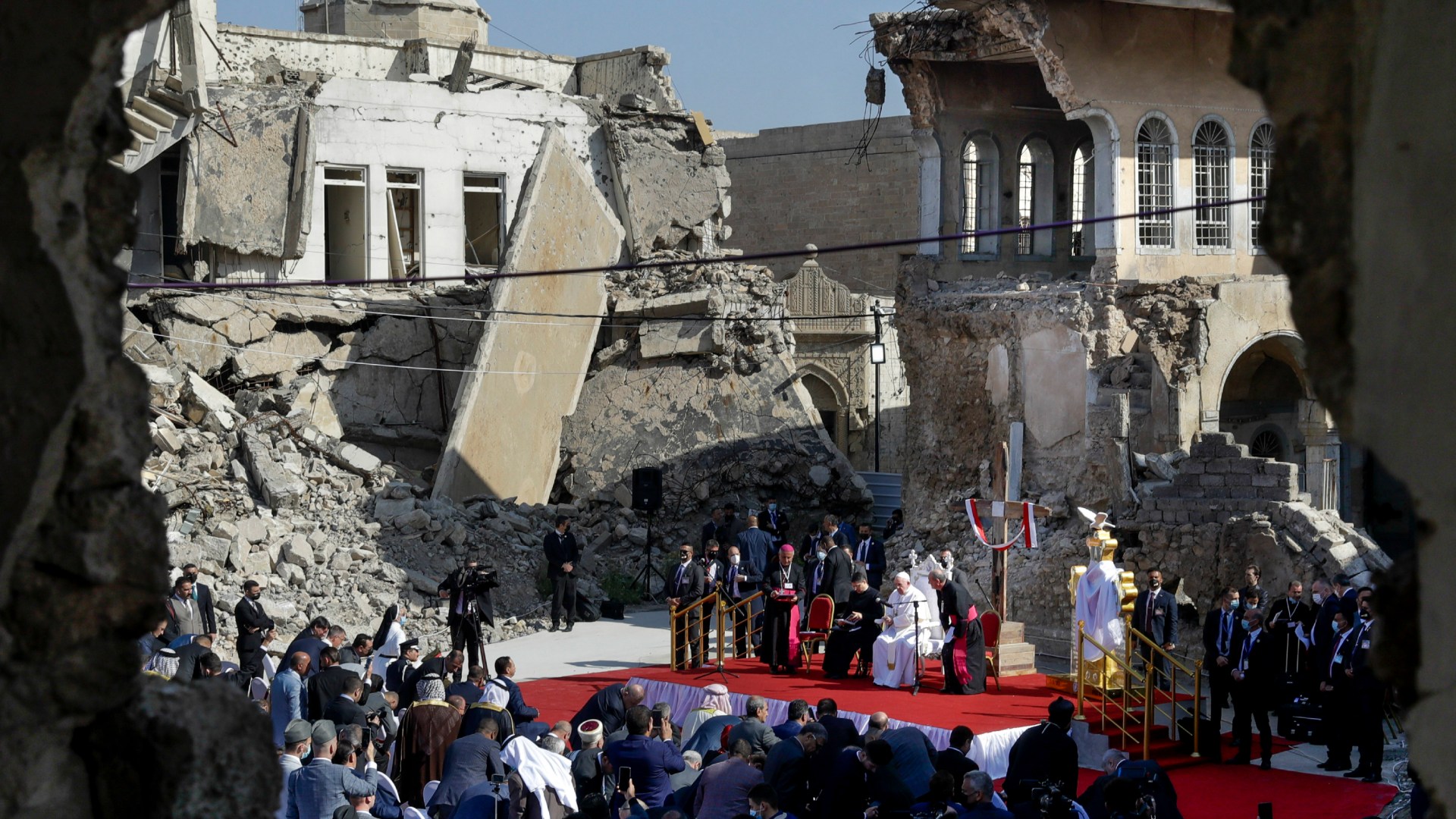
Pope Francis, surrounded by shells of destroyed churches, leads a prayer for the victims of war at Hosh al-Bieaa Church Square in Mosul, Iraq, once the de-facto capital of ISIS, on March 7, 2021.

Pope Francis, surrounded by shells of destroyed churches, leads a prayer for the victims of war at Hosh al-Bieaa Church Square in Mosul, Iraq, once the de-facto capital of ISIS, on March 7, 2021.

Christianity Today March 11, 2021
Andrew Medichini / AP

QARAQOSH, Iraq — Pope Francis urged Iraq’s Christians this past Sunday to forgive the injustices against them by Muslim extremists and to rebuild as he visited the wrecked shells of churches and met ecstatic crowds in the community’s historic heartland, which was nearly erased by the Islamic State group’s horrific reign.

“Fraternity is more durable than fratricide, hope is more powerful than hatred, peace more powerful than war,” the pontiff said during prayers for the dead in the city of Mosul, with the call for tolerance that has been the central message of his four-day visit to Iraq.

At each stop in northern Iraq, the remnants of its Christian population turned out, jubilant, ululating, and decked out in colorful dress. Heavy security prevented Francis from plunging into the crowd as he would normally. Nonetheless, they simply seemed overjoyed that he had come and that they had not been forgotten.

It was a sign of the desperation for support among an ancient community uncertain whether it can hold on. The traditionally Christian towns dotting the Nineveh Plains of the north emptied out in 2014 as Christians—as well as many Muslims—fled the Islamic State group’s onslaught. Only a few have returned to their homes since the defeat of ISIS in Iraq was declared four years ago, and the rest remain scattered elsewhere in Iraq or abroad.

“It is almost as if we have more churches than people,” Ashur Eskrya, president of Assyrian Aid Society–Iraq, told CT.

“This is our chance to show what is happening, and to stop the bleeding.”

Bells rang out for the pope’s arrival in the town of Qaraqosh.

“The road to a full recovery may still be long, but I ask you, please, not to grow discouraged,” Francis told a packed Church of the Immaculate Conception. “What is needed is the ability to forgive, but also the courage not to give up.”

The Qaraqosh church has been extensively renovated after being vandalized by ISIS militants during their takeover of the town, making it a symbol of recovery efforts.

Iraq’s Christian population, which has existed here since the time of Christ, has dwindled from around 1.5 million before the 2003 US-led invasion that plunged the country into chaos to just a few hundred thousand today.

Francis’s visit this past weekend aimed to encourage them to stay, rebuild, and restore what he called Iraq’s “intricately designed carpet” of faiths and ethnic groups.

Dressed in white, Francis took to a red carpeted stage in Mosul on his first stop of the day, surrounded by the grey hollowed-out shells of four churches—Syriac Catholic, Armenian Orthodox, Syriac Orthodox and Chaldean—nearly destroyed in the war to oust ISIS fighters from the city.

It was a scene that would have been unimaginable years earlier. Mosul, Iraq’s second largest city, was at the heart of the ISIS so-called “caliphate” and witnessed the worst of the group’s rule inflicted on Muslims, Christians, and others, including beheadings and mass killings.

He deviated from his prepared speech to emphasize the plight of Iraq’s Yazidi minority, which was subjected to mass killings, abductions, and sexual slavery at the hands of ISIS.

“How cruel it is that this country, the cradle of civilization, should have been afflicted by so barbarous a blow,” Francis said, “with ancient places of worship destroyed and many thousands of people—Muslims, Christians, Yazidis—who were cruelly annihilated by terrorism and others forcibly displaced or killed.”

In advance of his visit, the Iraqi parliament approved the long-awaited Yazidi Women Survivors Law, establishing a mechanism for justice and rehabilitation.

But 46 Iraqi and international civil society organizations—including Christian Solidarity Worldwide, Middle East Concern, and the Religious Freedom Institute—called for reparations and support for all survivors.

ISIS inflicted atrocities against all communities, including Muslims, during its three-year rule across much of northern and western Iraq. But the Christian minority was hit especially hard. The militants forced them to choose among conversion, death, or the payment of a special tax for non-Muslims. Thousands fled, leaving homes and churches that were destroyed or commandeered by the extremists.

Mosul, Iraq’s second largest city, became ISIS’s bureaucratic and financial backbone. It took a ferocious nine-month battle to finally free the city in July 2017. Between 9,000 and 11,000 civilians were killed, according to an AP investigation at the time, and the war left a swath of destruction. Many Iraqis have had to rebuild on their own amid a years-long financial crisis.

Priest Raed Kallo was among the few Christians who returned to Mosul after ISIS was defeated. “My Muslim brothers received me after the liberation of the city with great hospitality and love,” he said on stage before the pontiff.

Before ISIS, he had a parish of 500 Christian families. Now only 70 families remain, he said. “But today I live among 2 million Muslims who call me their Father Raed,” he said.

Gutayba Aagha, the Muslim head of the Independent Social and Cultural Council for the Families of Mosul, invited “all our Christian brothers to return to this, their city, their properties, and their businesses.”

Throughout his four-day visit, Francis has delivered a message of interreligious tolerance to Muslim leaders, including in a historic meeting Saturday with Iraq’s top Shiite cleric, Grand Ayatollah Ali al-Sistani.

But Christians say it will take real changes on the ground for them to be able to return and stay, saying they face discrimination and intimidation from Shiite militias on top of the economic hardships suffered by all Iraqis.

Long-term solutions are needed, Nadine Maenza of the US Commission on International Religious Freedom, told CT. So while Qaraqosh is the success story, only 5 miles south the traditionally Christian city of Bartallah is threatened with demographic change. It maintains the harshest militia presence, she said, some of which have been sanctioned by the US government.

“I want to be optimistic,” Maenza said. “But it is hard to imagine that only one visit will change anything.”

Qaraqosh resident Martin Auffee, however, said he was overjoyed by the pope’s visit and appreciated that he showed he was with Christians as he urged them to endure. But the 27-year-old said many of the young in his area have grown weary of lack of opportunity.

“We don’t know for how long they can cling onto hope and continue to stay in Iraq because there’s a lot of pain, unemployment, and uncertainty,” he said. “My whole life has been filled with pain, misery, war, persecution, and displacement. Things are difficult for those living here.”

At Qaraqosh, Francis urged its residents to continue to dream, and forgive.

“Forgiveness is necessary to remain in love, to remain Christian,” he said.

One resident, Doha Sabah Abdallah, told him how her son and two other young people were killed in a mortar strike August 6, 2014, as ISIS neared the town. “The martyrdom of these three angels” alerted the other residents to flee, she said. “The deaths of three saved the entire city.”

She said now it was for the survivors to “try to forgive the aggressor.”

Francis wrapped up the day—and his visit—with a Mass at the stadium in Irbil, in the semi-autonomous northern Kurdish region. An estimated 10,000 people erupted in ululating cheers when he arrived and did a lap around the track in his open-sided popemobile, the first and only time he has used it on this trip due to security concerns.

On the makeshift altar for the Mass was a statue of the Virgin Mary from the Mar Adday Church in the town of Keramlis, which was restored after ISIS militants chopped off its head and hands.

“Religion is love, grace, forgiveness,” said Louis Sako, patriarch of the Chaldean Catholic Church, in advance of the visit. “Religion is a message, and humanity is its core.

“[And] as for us, we are staying until the end.”

But perhaps some Iraq Christians have a vision for even more.

“This is a time of healing for our country,” Farouk Hammo, pastor of Baghdad Presbyterian Church, told CT.

“But we are still praying for a visitation by the Lord Jesus—a revival—and it will happen.”

Kullab reported from Baghdad. AP Religion Correspondent Mariam Fam contributed. Additional reporting by Jayson Casper of CT.

News

Switzerland’s New ‘Burqa Ban’ Divides Voters, Including Evangelicals

Officially neutral, Swiss Evangelical Alliance says “relationship to Muslims and support for religious freedom” is now more important than “restrictions to ensure our peaceful coexistence.”

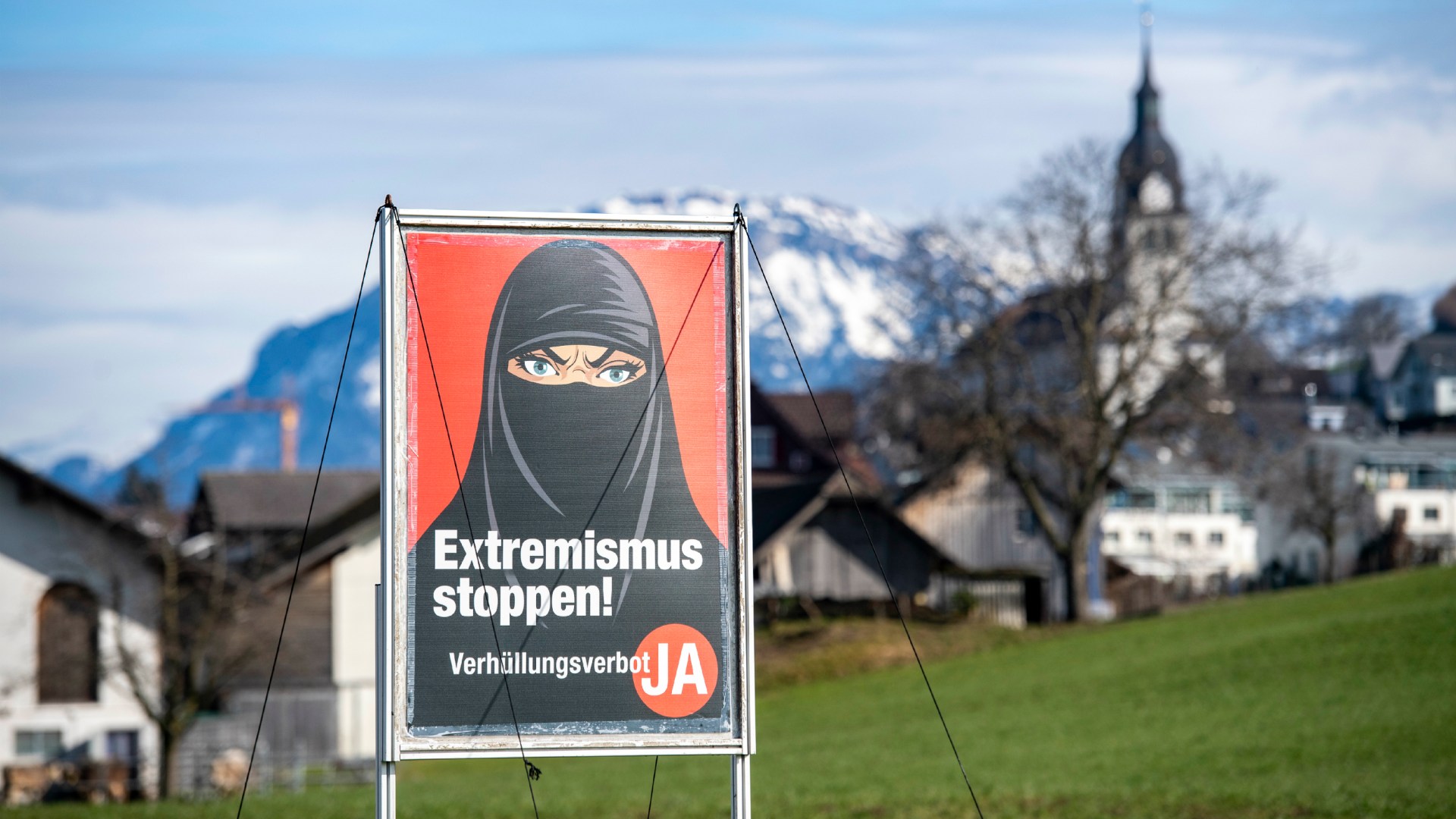
A poster supporting the initiative "Yes to a ban on covering the face" is displayed in Buochs, Switzerland, on February 16, 2021.

A poster supporting the initiative "Yes to a ban on covering the face" is displayed in Buochs, Switzerland, on February 16, 2021.

Christianity Today March 11, 2021
Urs Flueeler / Keystone / AP

In a vote that divided Switzerland’s evangelical community, voters narrowly approved on Sunday a referendum to ban face coverings. The new law includes both the niqabs and burqas worn by a few Muslim women in the country, and the ski masks and bandanas used by protesters.

One of two political parties with ties to the Swiss evangelical community supported the Yes vote. The other took no position. The state-affiliated Swiss Reformed and Roman Catholic churches supported the No vote.

After initially supporting the measure, the Swiss Evangelical Alliance (SEA), which represents about 250,000 believers across 650 churches and 230 member organizations, instead issued an orientation paper outlining both the pro and con positions.

“Showing each other our faces … promotes trust and security,” the alliance stated. “But there are legitimate questions if prohibition would restrict religious freedom.”

The measure will outlaw covering one’s face in public places such as restaurants, sports stadiums, public transport, or simply walking in the street. It foresees exceptions at religious sites and for security or health reasons, such as face masks people are wearing now to protect against COVID-19, as well as for traditional Carnival celebrations. Authorities have two years to draw up detailed legislation.

Two Swiss cantons, or states, Ticino and St. Gallen, already have similar legislation that foresees fines for transgressions. National legislation will put Switzerland in line with countries such as Belgium and France that have already enacted similar measures.

The Swiss government had opposed the measure as excessive, arguing that full-face coverings are a “marginal phenomenon.” It argued that the ban could harm tourism—most Muslim women who wear such veils in Switzerland are visitors from well-heeled Persian Gulf states, who are often drawn to Swiss lakeside cities.

Experts estimate that at most a few dozen Muslim women wear full-face coverings in the country of 8.5 million people.

Supporters of the proposal, which came to a vote five years after it was launched, argued that the full-face coverings symbolize the repression of women and said the measure is needed to uphold a basic principle that faces should be shown in a free society like Switzerland’s.

Similarly, the SEA paper stated that “veiling does not generally fit our culture.” But it also warned about the risk to greater integration, as Muslim women may withdraw from public life.

In the end, 51.2 percent of voters supported the plan. There were majorities against it in six of Switzerland’s 26 cantons—among them those that include the country’s three biggest cities, Zurich, Geneva, and Basel, and the capital, Bern. SRF public television reported that voters in several popular tourist destinations including Interlaken, Lucerne, and Zermatt rejected it.

Backers included the nationalist Swiss People’s Party, which is the strongest in parliament. (The two evangelical-related parties hold only a combined 4 of 200 seats.) The committee that launched the proposal is led by a lawmaker from the party, Walter Wobmann, and also initiated a ban on the construction of new minarets that voters approved in 2009.

A coalition of left-leaning parties that opposes the proposal put up signs ahead of the referendum that read: “Absurd. Useless. Islamophobic.”

Wobmann told SRF that the initiative addressed both “a symbol of a completely different system of values … extremely radical Islam” and security against “hooligans.” He said that “this has nothing to do with symbolic politics.”

Marc Jost, general secretary for the SEA, told CT he believes the majority of evangelicals voted Yes. He noted that Swiss Muslims were also divided on the issue.

He trusts the law will not hurt Christian witness.

“Our relationship to Muslims and support for religious freedom have a high priority,” Jost said.

“Much more important than restrictions to ensure our peaceful coexistence.”

Geir Moulson reported for The Associated Press. Additional reporting by Jayson Casper for CT.

Books
Excerpt

Without Henrietta Mears, Evangelicalism as We Know It Probably Wouldn’t Exist

Meet the woman who mentored the leaders and fostered the institutions that fueled its 20th-century transformation.

Christianity Today March 11, 2021
Courtesy of Arlin C. Migliazzo / Edits by Mallory Rentsch

In the late summer of 1949, a troubled Billy Graham left his home in Minneapolis for Southern California to keep a promise made in more optimistic times to Henrietta Mears, the director of Christian education at the First Presbyterian Church of Hollywood.

Mother of Modern Evangelicalism: The Life and Legacy of Henrietta Mears (Library of Religious Biography (LRB))

Mother of Modern Evangelicalism: The Life and Legacy of Henrietta Mears (Library of Religious Biography (LRB))

Wm. B. Eerdmans

320 pages

Unfortunately, in the months since the Youth for Christ evangelist accepted Mears’s invitation to address a convention of college and university students at her conference center, life seemed to crash in on him. Not only had his recent search for the right graduate program proved futile, but his June revival campaign in Altoona, Pennsylvania, endured a series of problems and ended in disarray.

The core of Graham’s distress, however, proceeded from his growing unease regarding the accuracy and authority of Scripture. Nonetheless, during the last week of August, the despondent 30-year-old found himself a mile high in the San Bernardino Mountains as the featured morning speaker at Forest Home for the third annual College Briefing Conference.

Although his messages appeared to be well received, Graham could often be found praying with Mears, seeking counsel regarding his way forward, which appeared increasingly charged with difficulties. Her grasp of biblical truths, awareness of modern scholarship, and unwavering commitment to the veracity of Scripture deeply impressed him, and he absorbed every insight she could provide.

Finally, one evening late in the week, Graham directly confronted his most sincere doubts and greatest fears, thereby opening the door to a powerful renewal of faith that immediately transformed his ministry.

Just a few days after his life-changing experience at the conference, Graham drafted a letter to Mears, which expressed in no uncertain terms his appreciation for all that the week meant to him: “It was really terrific! I have never been in anything like it. There was a deeper, more sincere and genuine moving of the Spirit of God than I have ever witnessed. God has indeed given you a tremendous ministry. You shall be in our daily prayers that He might continue to use you for His glory. … I shall always treasure those hours in my memory as hours spent with the Lord.” Although he could not yet imagine how formative his relationship with her would be for the future of Protestant Christianity, he seemed to sense instinctively that his relationship with her had just begun.

A new brand of ecumenical Protestantism

Less than a month later, Graham began the landmark Los Angeles Crusade, which vaulted him to national prominence. The young evangelist would become the most recognizable figure among a cadre of Christians credited with rejuvenating theologically conservative Protestantism in the wake of the Second World War.

The great irony in its postwar resurgence, however, lay in the debt that nearly every notable leader of that movement owed to the precedents set and relationships nurtured by Mears, the diminutive, physically impaired former midwestern science teacher on whom Graham leaned so heavily during his week of greatest trial. In the half century between 1913 and 1963, she either founded, significantly inspired, or actively participated in a formidable array of church-related organizations and trained two generations of believers who would remake theologically conservative Christianity.

Her birth on October 23, 1890, in Fargo, North Dakota, completed the family of Elisha and Margaret Mears. The youngest of seven children, Henrietta grew to maturity in a loving family environment simultaneously permeated by piety across four generations. Her father, born in Poultney, Vermont, came from a family that sank its roots deep in the civic and religious life of the young republic, while her mother inherited a Christian faith that valued both personal spiritual growth and active social service to the greater Chicago community.

Although her family started out among the upper midwestern privileged class, by the time Henrietta began her formal education, it was facing a series of financial reverses. The Mears family ultimately relocated to Minneapolis, finding a church home at the city’s First Baptist Church, which was led by noted fundamentalist William Bell Riley.

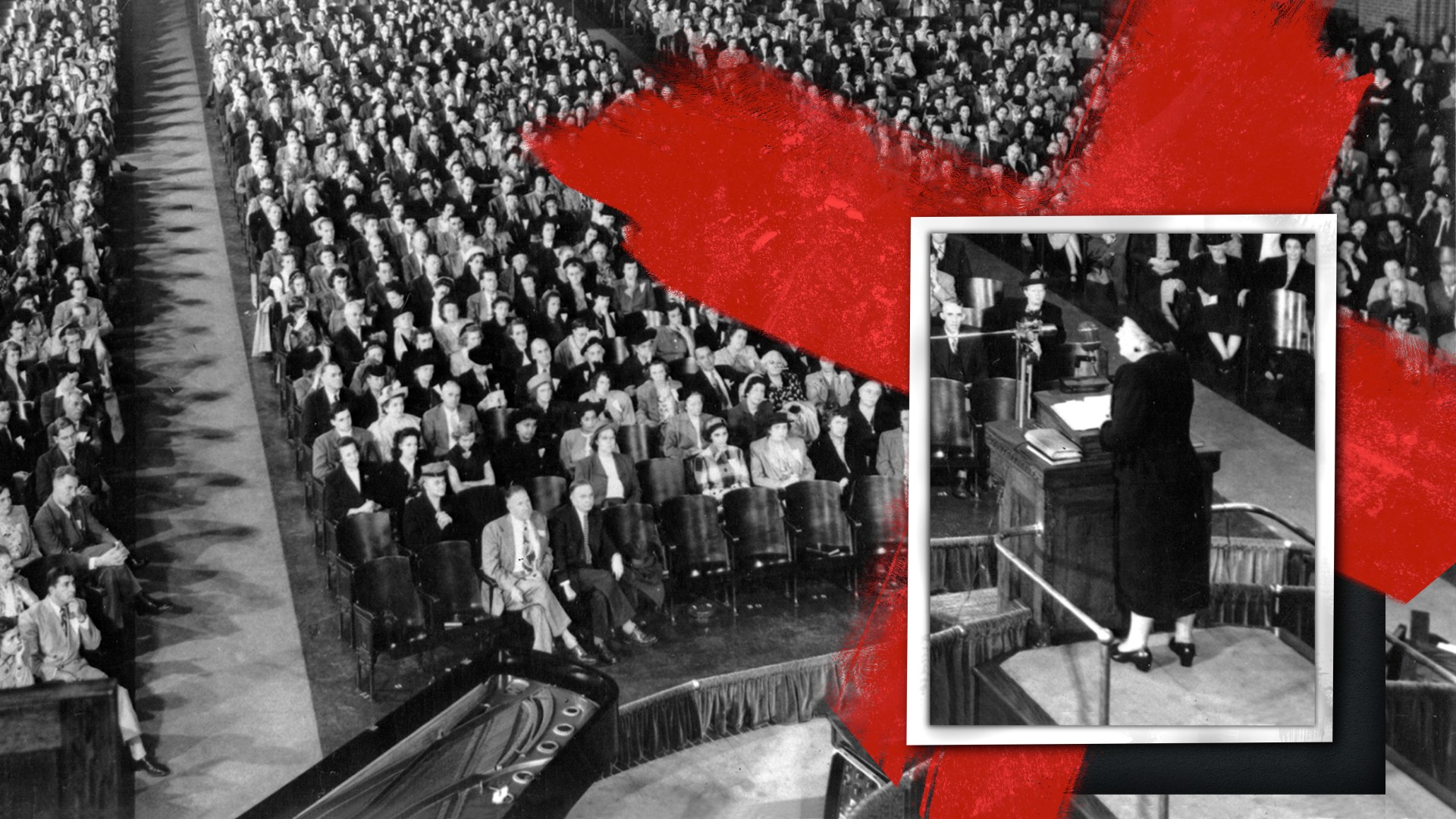
Henrietta grew to young womanhood under Riley’s powerful influence. She graduated from the University of Minnesota in 1913 and embarked on a career in public education, serving two rural school districts before returning to Minneapolis and First Baptist in 1917. For the next decade she taught science and mathematics while building a Sunday school class of less than 20 college-age women into the largest class in Riley’s church. Well before she left Minneapolis for Hollywood in 1928, the enrolled membership of over 500 had prompted the church’s leadership to build an entire auditorium to house her Fidelis class.

During this pivotal period, Mears moved away from Riley’s confrontational, anti-intellectual fundamentalism by recasting the relationship between faith and culture. Her remarkable articulation of that relationship would thoroughly reform theological conservatism over the course of her 35-year tenure at Hollywood’s First Presbyterian.

Mears was firmly committed to central doctrines of historic Protestantism, including the consequences of universal human sinfulness; the unmerited favor of God demonstrated toward humanity through the life, death, and resurrection of Christ; and the absolute authority of the Bible—all hallmarks of early 20th-century fundamentalism. Nevertheless, she emerged as a commanding presence at the forefront of a new brand of ecumenical Protestantism that championed thoughtful engagement with the churched, the unchurched, and secular culture in groundbreaking, sometimes stunning, ways.

Her aptitude for stepping across long-standing religious boundaries with skill and grace generated new prospects for Protestant Christians. In so doing, she invented modern evangelicalism and modeled it decades before the outbreak of WWII in September 1939. Her innovative practices provided a template readily emulated by the corps of leaders that came into its own under her tutelage.

Courtesy of Arlin C. Migliazzo / Edits by Mallory Rentsch

Mears motivated young women from her Fidelis Sunday school class in Minneapolis to live out their faith fearlessly in the world. They and hundreds of others trained by her (or by her protégés) became an integral part of the renewal of theological conservatism that formed in the wake of the fundamentalist-modernist controversy of the 1910s and 1920s, grew to prominence in the 1940s and 1950s, and continues to affect American culture in the 21st century. Her predominant role in the revitalization of evangelical Christianity helped transform the lives of thousands and opened a new direction for Christian orthodoxy that remains viable today, six decades after her death. And she did all this with a generosity of spirit worthy of imitation.

Influential relationships

Mears forged close relationships with celebrities such as film stars Roy Rogers, Dale Evans, Jane Russell, and Colleen Townsend and recording artists like Tim Spencer, Redd Harper, and Connie Haines. She directly or indirectly influenced Protestant icons such as Stuart Hamblen, James Oliver Buswell Jr., Harold John Ockenga, Harold Lindsell, Dawson Trotman, and Roberta Hestenes. She collaborated with major organization leaders, including Cameron Townsend, founder of Wycliffe Bible Translators, and Bob Pierce, an architect of World Vision and creator of Samaritan’s Purse. And she counted West Coast governors Arthur Langlie (Washington), Mark Hatfield (Oregon), and Goodwin Knight (California) among her supporters.

Excluding his mother and wife, Billy Graham called Mears the greatest female influence on his life and one of the greatest Christians he ever knew. Bill Bright, founder of the international ministry of Campus Crusade for Christ, patterned his lifework on principles he gleaned from her. Jim Rayburn, the visionary behind the Young Life Campaign, fashioned his ministry to high school students around what he learned from Mears, remarking that “she was my teacher long before she ever heard of me … I tried my best to do things the way she would want them done.” Wilbur Smith, who cofounded Fuller Theological Seminary and taught an “English Bible” course there and at Trinity Evangelical Divinity School, called her “the most inspiring woman leader in Christian causes that I have ever known.” His colleague at Fuller, professor of homiletics Clarence Roddy, branded Mears the greatest preacher in Southern California. Leaders of two of the most influential postwar ministries to athletes—the Fellowship of Christian Athletes and Athletes in Action—came from her college-age Sunday school class at First Presbyterian.

In addition to her work there, Mears embarked upon many other major ventures. She founded Gospel Light Publications, which grew into one of the country’s largest independent religious publishing houses. She negotiated the purchase of a Southern California resort, which under her steady hand became a major interdenominational conference center that today hosts upward of 60,000 participants annually at multiple sites. She authored Sunday-school curricula used by thousands of churches around the world and helped launch the first organized ministry to the entertainment industry. She administered deputation service programs developed initially for Christian youth to help underserved populations in Southern California but eventually expanded to encompass other areas of need, including war-ravaged Europe and Asia. She was an early leader of the National Association of Evangelicals—serving as a charter member of the association’s Commission on International Relations—and a seminal force behind the formation of the National Sunday School Association. She created a nonprofit foundation to strengthen Christian education programs worldwide and train indigenous leaders using their own languages.

A sought-after speaker, Mears regularly addressed audiences across the country and overseas on topics ranging from Christian youth work and leadership to church growth and evangelism. She carved only enough time out of her hectic schedule to author short articles, but her collected lesson materials and related notes have been in print since their release in book form. More than four million copies of her most popular volume, What the Bible Is All About, circulate today in at least four different editions. Wheaton College and Fuller Theological Seminary each invited her to teach Christian education, even though she had no formal training in biblical studies or theology—and no graduate study in any subject.

Nearly 400 students from Mears’s renowned “Hollywood Pres” College Department went into full-time Christian ministry, and hundreds more emerged as important civic and business leaders who served local churches as active laypeople. Because she prompted such an enthusiastic following over three and a half decades, many of her evangelical perspectives reproduced themselves in Presbyterian pulpits and ministries up and down the West Coast. She had sent so many evangelicals to Princeton Theological Seminary by the mid-1950s that they were perceived as a breed apart and tagged “West Coast Presbyterians.” So pervasive was their presence that at least until the late 20th century, the seminary’s student directory was better known colloquially as the “fundy finder.”

Generosity of spirit

Looking at Mears’s era as compared to today, it’s only natural to draw certain parallels. Although her life spanned a volatile and rancorous period in American history—one not that dissimilar to our own—she modeled an unusual degree of charity and grace. Between the 1910s and 1960s she remained on the frontline of Protestant Christians willing to engage secular American culture in ways that set her apart from those who advocated a bellicose separatism between true Christians and everyone else. She veered off the path taken by her iconoclastic contemporaries toward a gentler but no less orthodox expression of Christianity.

Rather than erect barriers, Mears fashioned bridges to connect in innovative, sometimes startling ways, and she did so with a generosity of spirit often absent from theologically conservative American Protestants. In so doing, she championed evangelical orthodoxy while simultaneously defending the necessity of intellectual vitality, embracing domestic and international social service, eschewing inflammatory rhetoric, and forging alliances with those quite different from herself. Twenty-first-century Americans, whether people of faith or not, could do worse than to emulate her uncommon grace in dangerous and uncertain times.

Arlin C. Migliazzo is emeritus professor of history at Whitworth University in Spokane, Washington. This article is adapted from his book Mother of Modern Evangelicalism: The Life and Legacy of Henrietta Mears (Eerdmans) ©2020. Reprinted by permission of the publisher.

News

Beth Moore Inspired Scores of Southern Baptist Women. They Don’t Blame Her for Leaving.

Fellow female SBC leaders pray her departure leads to some soul-searching within the divided denomination.

Christianity Today March 10, 2021
Courtesy of Baptist Press

A generation of female Bible teachers, authors, and ministry leaders saw a place for themselves in the Southern Baptist Convention (SBC) because of the example set by Beth Moore.

Now that Moore no longer sees a place for herself in the denomination, they are continuing to stand for the convictions she helped stir within them and are hoping for a wakeup call.

As one Southern Baptist women’s ministry leader tweeted on Wednesday, “Pastors, I hope you are watching women in the SBC and their response to Beth Moore …”

Moore was in many ways an exemplary figure in the Southern Baptist realm—a household name among Christians, her Bible studies reached 21 million women over her first 20 years of ministry. But she was also personable enough to stand for hugs and selfies with followers at events and would reply on Twitter to offer condolences when someone’s grandmother died or advice on how to care for a cast-iron pan.

Many fellow Southern Baptist women were sad but not surprised that she decided to leave the SBC. The women who followed in her high-heeled footsteps know the tensions Moore walked through too well, dismayed at how issues like abuse, racism, Christian nationalism, and the Trump presidency were dividing the denomination rather than deepening its gospel witness—all issues that came up in a recent Religion News Service story about her decision.

Followers in Southern Baptist churches watched as Moore, now 63, grew from a best-selling Bible study author to an outspoken advocate for victims of sexism and abuse over the past five years, opening up about the misogyny she had faced in evangelical circles.

In addition to taking issue with her role speaking and teaching in churches, critics saw Moore's outspokenness on current issues as divisive. They believe she wrongly maligned the church in recent years when she decried pastors who defended Donald Trump or called out white supremacy in the church.

Christine Hoover, a Bible teacher and SBC pastor’s wife, remembers asking herself, “If Beth is treated so disdainfully in public arenas, what is being said privately, and what does that say about how, in practice, the SBC values the contribution of women to the kingdom?”

“I can’t overstate how much of an impact Beth has had on women in our churches,” Hoover said. “I was in rooms in those years with SBC female leaders from all corners of the convention who said they, too, were paying close attention, most of us wondering if we as women actually have an honored place in the SBC.”

The president of the Southern Baptist Ethics and Religious Liberty Commission, Russell Moore—no relation to Beth, though he often joked they were family—once said, “A Southern Baptist Convention that doesn’t have a place for Beth Moore doesn’t have a place for a lot of us.”

The remark came two years ago, when Moore had been targeted during yet another spat over women’s roles, spurred by a tweet that referenced giving a Mother’s Day message at church.

These recurring debates are another pressure point. Women like Moore, who don’t aspire for a pulpit and share the SBC’s complementarian convictions, worry that the back-and-forth over whether women can preach or pastor detracts from efforts to uplift women in a range of other ministry roles.

The news of Moore’s departure has stirred tributes from women inside and outside the SBC who credit her with leading them into ministry or thank her for speaking up when they feared leaders had gone silent on issues around abuse.

https://twitter.com/trillianewbell/status/1369370297313460226
https://twitter.com/jenniferwilkin/status/1369510567036280832
https://twitter.com/megannlively/status/1369413367346176000

Jacki King, who serves on the steering committee of the SBC Women’s Leadership Network, said Moore blazed a trail for women to lead in the SBC and, despite the current infighting in the denomination, she sees a lot to celebrate. Record numbers of women are enrolling in SBC seminaries and being appointed to serve on denominational committees, in addition to their faithful involvement in missions and local churches.

King points to the upcoming annual meeting in Nashville in June as an opportunity for women who share Moore’s concerns to elect officers that will stand by their beliefs and champion the role of women.

“We need women who are leading and serving in the local church to become messengers, become familiar with the presidential nominees, and vote for the one they believe will lead our convention in both humility and unity,” said King, a women’s ministry leader and pastor’s wife at an SBC church in Arkansas.

https://twitter.com/jackicking/status/1369652165489360897

Outgoing SBC president J. D. Greear said in a statement that his prayer was that Moore’s departure would cause Southern Baptist leaders to lament and pray ahead of the June meeting. “I am grieved anytime someone who believes in the inerrant Scripture, shares our values and desires to cooperate says that they do not feel at home in our convention,” said Greear, who commended Moore’s ministry and encouragement.

Just last month, Greear preached against the secondary divisions driving Southern Baptist apart, telling its Executive Committee, “Every lie weakens our resolve in getting the gospel to the nations, and every moment I engage in a silly argument or spend time debunking untruths is a moment I am not focused on the Great Commission.”

Women worry that Moore’s decision to leave represents yet another detraction from the SBC’s gospel witness.

“In losing Beth, we’ve lost a great gift to our convention,” Hoover said. “I pray that her decision, along with the departure of some of our most revered black pastors, causes soul-searching within the leaders and pastors of the SBC. We seem to always be fighting to keep perceived liberalism out, but I'm afraid our methods are pushing some of our best people out.”

News

RZIM Will No Longer Do Apologetics

(UPDATE): Days after releasing a call for victims and plans for a name change, Ravi Zacharias’s organization announces plans for a dramatic shift in ministry.

Christianity Today March 10, 2021
Courtesy of RZIM

Update (March 10): Once the largest apologetics ministry in the world, Ravi Zacharias International Ministries (RZIM) will stop doing apologetics work this year.

CEO Sarah Davis announced to staff Wednesday morning that over the next six months, the downsized ministry will remake itself as a grant-making charity. It plans to give money to organizations fulfilling its original purpose of defending the truth of the gospel as well as organizations that care for victims of sexual abuse.

“RZIM cannot and should not continue to operate as an organization in its present form. Nor do we believe we can only rename the organization and move forward with ‘business as usual,’” said Davis, who is Zacharias’s daughter and has led the ministry since his death in May 2020.

RZIM’s speakers have had invitations rescinded since allegations against Zacharias were reported in September. Over the past several months, donations slowed to the $35 million–$40 million ministry as it investigated and ultimately confirmed abuse by its late founder.

The investigation found “guilt beyond anything that we could have imagined,” Davis acknowledged on Wednesday.

“The ministry of RZIM has been on a journey almost unlike anything we can think of in modern evangelical history,” Davis said. “We, as a ministry, have been processing a wide range of emotions, including intense grief for victims of abuse, abhorrence at Ravi’s actions, disillusionment, dismay, anger, and uncertainty about the future of the ministry we love and serve.”

The ministry is currently undergoing a broad review of culture and structure by the consulting firm Guidepost Solutions. Davis told staff that they can expect layoffs of about 60 percent of staff, starting immediately, as well as leadership changes when the review is finished in four to six months.

In the meantime, staff in each department are being instructed to “focus their gifts, skills, and resources” on “repentance, restitution, learning, and serving.”

—–

Original post (March 8): Ravi Zacharias International Ministries, in the midst of an outside review of its corporate culture and past handling of abuse allegations, has announced it will change its name. It also is calling for additional victims to come forward and report sexual abuse and harassment by its late world-famous founder.

Last month’s investigative report confirmed allegations against the apologist dating back to 2004 and uncovered additional evidence of abuse continuing up until a few months before his death in May 2020. But while the investigation was conclusive, it was not comprehensive.

In a statement released over the weekend, Ravi Zacharias International Ministries (RZIM) acknowledged there may be many more victims. This is the first time RZIM has directly asked victims to come forward.

The consulting firm Guidepost Solutions will field reports by phone and email as part of its comprehensive review of RZIM, while victims’ advocate Rachael Denhollander will serve as a confidential liaison with survivors. Phone lines have been set up in English, Spanish, and French.

“We continue to grieve deeply for the victims who have been treated in ways that are completely antithetical to the gospel,” wrote CEO Sarah Davis, who is also Zacharias’s daughter, in the official statement. “We also painfully and increasingly recognize organizational failures that have occurred and the repentance that needs to take place in both heart and action.”

Davis said the review is comprehensive and is expected to take months. Layoffs are expected soon.

The ministry also announced it is removing Zacharias’s teaching from its website and social media. The 12 international branches of RZIM are independently evaluating their own ministry cultures and future plans.

Ministry knew about previous allegation

Top RZIM leaders in the US and Asia have known about allegations against Zacharias since at least 2008, when an Indian team member reported to the head of the Singapore board that Zacharias had been seen with a woman he wasn’t related to in a Singapore hotel. Zacharias was holding her hand and appeared to be intimate with her. Zacharias dismissed it as a misunderstanding, and the ministry did not investigate, according to internal documents obtained by CT.

The team member raised the issue again in 2012, along with questions about Zacharias’s solo trips to Thailand, where Zacharias owned two apartments—one for himself and one for a massage therapist. The ministry didn’t investigate then either. The Singapore board instead launched a full inquiry into whether the team member was spreading rumors about Zacharias.

“Directors agreed that derogative remarks of any kind by any of the parties must cease immediately as they do not glorify the Lord,” the Singapore board chair wrote in a 2012 email obtained by CT. “We are of the same conviction that brothers should reconcile where there have been misunderstandings. … The work of RZIM is making great impact on unbelievers and any public dispute will bring irreparable damage to parties concerned and the organization.”

Similar arguments were made at RZIM’s other international offices. Team members in India, the US, the UK, and Canada told CT that when they raised concerns, they were dismissed. Leadership pointed to Zacharias’s reputation. He was considered above reproach and beyond question.

RZIM spokeswoman Ruth Malhotra, in a 26-page letter to the US board about corporate complicity in Zacharias’s abuse, wrote that the leadership’s strategic response to allegations was to “delay, deny, defy, defame.” According to Malhotra, she raised questions in 2017, when Zacharias denied soliciting explicit sexual images from a woman in Canada. Instead of trying to answer her questions, a senior leader demanded to know, “Whose side are you on?”

After the investigation in 2021, the US board acknowledged mistakes and promised a review of the culture and leadership of the ministry.

“Our trust in Ravi’s denial of moral wrongdoing and in his deceptive explanations of emails and other records that became public was severely misplaced,” the statement said. “We also recognize that in situations of prolonged abuse, there often exist significant structural, policy, and cultural problems. It is imperative that where these things exist in our organization, we take focused steps to ensure they are properly diagnosed and addressed.”

The US board is anonymous, and the statement was not signed by individual members. It is not clear who wrote the statement or whether board members agreed with it unanimously.

International reckoning

RZIM’s 12 international offices are also evaluating their own culture and making decisions about the future. Leadership in the respective countries have to decide whether to shut down or continue, whether to remain affiliated with the US ministry or separate, and whether to keep the Zacharias name or abandon it.

The UK ministry and the Latin American ministry have each announced their intentions to separate and establish independent apologetics organizations. The Latin American board shut down its website after making its statement.

RZIM Spain is evaluating “next steps” but said it has received “many expressions of encouragement” to continue doing apologetics and evangelism in Spain.

The German-language branch of RZIM, operating in Germany, Austria, and Switzerland, has announced team training on abuse and a review of its own organizational structure and culture.

“Looking back, we realize that we as the institute were positively biased towards Ravi Zacharias and that we also trusted the control mechanisms within RZIM too much,” the ministry said in an official statement. “We are extremely sorry for these failures.”

RZIM Canada is closing down. “We recognize the ongoing need for an apologetics-based approach to evangelism,” the Canadian board said. “Regrettably, we are of the conviction that it is not possible for RZIM Canada to fulfill this mandate within the current environment.”

RZIM Hong Kong, which serves Southeast Asia and Oceania, stated it is considering “all possible paths that would honour our Lord and Saviour Jesus Christ” and also said, “We apologise unreservedly for the hurt we have caused others through our misplaced trust in Ravi.”

The RZIM officers in India and Turkey have translated the US board’s apology and publicized the information about the investigation, but have not made individual public statements about the future of those ministries. RZIM Middle East does not appear to have made any public statements.

RZIM Romania and RZIM Singapore announced times of prayer and re-evaluation.

The Romanian ministry said it is praying “that God will heal any wound caused by the actions of Ravi Zacharias and any disappointment caused by this news. We put all our hope in His grace and continue to remain committed to searching and presenting #Truth.”

RZIM Africa said its top priority is to “Pray for, listen to and learn from victims and victim advocates, seek their forgiveness where appropriate, and take steps that emerge.”

Two African leaders personally reached out to one victim to apologize. The ministry is also encouraging others to come forward.

“Given the extent of Ravi’s deception and abuse,” the statement said, “we recognize that there may be many others who have suffered, and whose stories have not yet been told.”

Ideas

The Church Can Stand in the Breach Against Chaos

Staff Editor

Society is increasingly fragile. We need the best of Christian progressiveness and conservatism working together to strengthen it.

Christianity Today March 10, 2021
Illustration by Rick Szuecs / Source images: Joshua Eckstein / Unsplash / Jon Cherry / Stringer / Getty

When the COVID-19 pandemic began to spread in earnest in the United States a year ago, we made lots of jokes about the end of the world. Who would have predicted toilet paper to be the currency of our post-apocalyptic hellscape? we quipped. In a cinematic turn of phrase evoking crumbled civilization, we dubbed everything preceding March 2020 the “before times.”

Underneath those jokes was truth: not only that the pandemic was to be taken seriously but also that its disruption revealed how fragile our society really is. In normal times, this fragility can be difficult to see. We’re enthralled by normalcy bias—the common human assumption that the basic structure of our lives will go on and not really vary. Even changes brought by new technology prove less dramatic than anticipated. Our minds are prepared for a life of cumulative tweaks. We’re not ready for revolutions.

Yet revolutions happen, and not always for the better. The social order we take for granted is by no means guaranteed. “Every human institution is, in its way, built on sand,” Wall Street Journal columnist Peggy Noonan wrote in January, the day after the sedition at the Capitol. “It’s all so frail.” The veil “between civilization and chaos” is thin, she said, and “we have to go through every day, each in our way, trying to make the veil thicker.”

Noonan pointed to conservatives—as in temperamental conservatives, those concerned with tradition, prudence, and finitude—as the longstanding heralds of this fragility. “True conservatives tend to have a particular understanding” of it, she argued. They see the thinness of the veil. This is the classic tension between conservatism and progressivism: The progressive is optimistic about what change can bring and so pushes forward in hope, feeling a certain comfort with risk and exploration. The conservative responds with caution, pointing to the merits of what we already have and the limits of our own wisdom and ability to innovate.

Done right, this interplay of progress and conservation produces a very healthy tension we see in Scripture.

Done right, this interplay of progress and conservation produces a very healthy tension we see in Scripture too. On the one hand, many biblical stories demonstrate the fragility of human institutions, relationships, and lives. The book of Judges—often horrifically chaotic (Judges 19–21) and repeatedly naming itself a tale of when “everyone did as they saw fit” (Judges 17:6; 21:25)—might alone be enough to instill a care for social order in anyone.

Psalm 103 uses our frailty as a contrast to explain God’s enduring love. “The life of mortals is like grass,” the psalmist says, “they flourish like a flower of the field; the wind blows over it and it is gone, and its place remembers it no more. But from everlasting to everlasting the Lord’s love is with those who fear him, and his righteousness with their children’s children” (vv. 15–17). The prophet Isaiah uses this metaphor to praise the eternity of God’s word (Isa. 40:7–8), and the apostle Peter picks up the theme to call Christians to lives of truth, holiness, and love (1 Pet. 1:13–2:3). So much of what humanity is and does right now is fleeting, Peter says, so Christians should set our sights and hopes on the durable, reliable “grace to be brought to [us] when Jesus Christ is revealed at his coming” (1:13).

The progressive theme appears more often in passages involving the second coming. As Christians, we participate in and prefigure God’s renewal of all creation (Rom. 8:18–25; 1 Cor. 15). In Christ we have victory over death itself, Paul writes in 1 Corinthians, so we should “always give [ourselves] fully to the work of the Lord, because [we] know that [our] labor in the Lord is not in vain” (15:58). What we do now, though in one sense fleeting, nevertheless possesses eternal significance.

The “present bodily life is not valueless just because it will die,” argues Anglican theologian N. T. Wright, reflecting on 1 Corinthians 15 in Surprised by Hope. “What you do in the present,” he continues, “will last into God’s future. These activities are not simply ways of making the present life a little less beastly, a little more bearable, until the day when we leave it behind altogether. … They are part of what we may call building for God’s kingdom.” The “new earth” at the end of the Christian apocalypse (Rev. 21:1–5)—unlike the gloomy apocalyptic visions of pop culture—is this earth renewed and made well, Wright explains. The old is not discarded but restored.

But we’re not there yet. God has not yet made “everything new” (Rev. 21:5). The last year has felt more like the chaos of Judges than the triumphant end of Revelation. It has me thinking: What happens to a society that doesn’t understand its present fragility? What happens when it’s not conservatism as I’ve described it in tension with progressivism, but rather an angry, tribal urge to “own the libs”? What if no one is trying to thicken the veil?

This is Noonan’s worry, and she took to task those self-styled conservatives who spread the lie that fueled the violence at the Capitol, apparently unconcerned by its potential to remove the barrier to chaos. “They are like people who know the value of nothing,” Noonan wrote, “who see no frailty around them, who inherited a great deal—an estate built by the work and wealth of others—and feel no responsibility for maintaining the foundation because pop gave them a strong house, right?”

Recent months have made clear the inherited house isn’t so strong. It needs active care, and Christians, more than anyone, should be conscientious caretakers.

I say this in a secular sociological sense. Places with robust institutions of civil society, the church being one, tend to be less fragile. But I also say this as a Christian. Thickening this veil between civilization and chaos is part of what it means to prefigure God’s kingdom.

The kingdom is not a place of malice, fear, violence, and chaos, for “God is not a God of disorder but of peace” (1 Cor. 14:33) and “perfect love drives out fear” (1 John 4:18). Our labor in the Lord is progressive and conservative at once: It looks forward to Christ’s return and final victory over evil, but it also carefully stewards the original goodness of God’s creation, of which peaceful, orderly human society is part.

Bonnie Kristian is a columnist at Christianity Today.

News

Malaysian Christians Can Call God ‘Allah,’ Rules High Court

Decision ends a 35-year-old government ban on the usage of four Arabic words by Christian publications.

In this May 2019 file photo, a worshiper arrives at a mosque for Iftar during Ramadan in Kuala Lumpur, Malaysia.

In this May 2019 file photo, a worshiper arrives at a mosque for Iftar during Ramadan in Kuala Lumpur, Malaysia.

Christianity Today March 10, 2021
Annice Lyn / AP Photo

KUALA LUMPUR — A Malaysian court ruled Wednesday that non-Muslims can use the word Allah to refer to God, in a major decision in a divisive issue for religious freedom in the Muslim-majority country.

The High Court decision squashed a 35-year-old government ban on the usage of Allah and three other Arabic words by Christian publications, deeming the ban unconstitutional, said the plaintiff's lawyer, Annou Xavier.

The government has previously said Allah should be reserved exclusively for Muslims to avoid confusion that could lead them to convert to other religions, a stance that is unique to Malaysia and hasn’t been an issue in other Muslim-majority nations with sizeable Christian minorities.

Christian leaders in Malaysia say the ban is unreasonable because Christians who speak the Malay language have long used Allah, a Malay word derived from Arabic, in their Bibles, prayers, and songs.

The high court ruling appeared to contradict an earlier decision by the country’s Federal Court in 2014 that upheld the government ban following a legal challenge by the Roman Catholic Church, which had used the word Allah in its Malay-language newsletter.

“The court has now said the word Allah can be used by all Malaysians,” Xavier said. “Today’s decision entrenches the fundamental freedom of religious rights for non-Muslims in Malaysia” enshrined in the constitution, he added.

Muslims account for about two-thirds of Malaysia’s 32 million people, with large ethnic Chinese and Indian minorities. Christians comprise about 10 percent of the population.

Most Christians in Malaysia worship in English, Tamil, or various Chinese dialects, and refer to God in those languages, but some Malay-speaking people on the island of Borneo have no other word for God but Allah.

Three other words—kaabah or Islam’s holiest shrine in Mecca, baitullah or house of God, and solat or prayer—were also banned in the 1986 government directive.

Government counsel Shamsul Bolhassan was quoted by The Star newspaper as saying that the four words can be used in Christian materials according to the court’s ruling, as long as there is a disclaimer saying it is intended for Christians only and a symbol of a cross is displayed.

The ruling was a result of a long legal challenge by a Christian woman whose religious materials containing the word Allah were seized by authorities at the airport when she returned home from Indonesia in 2008.

The controversy over the usage of Allah has provoked violence in Malaysia. Anger over a lower court ruling against the government ban in 2009 led to a string of arson attacks and vandalism at churches and other places of worship. That ruling was subsequently overturned by higher courts.

Editor’s note: CT has regularly covered the Allah ban in Malaysia, including:

News

Not All Christian Professors Are Ministers, Mass. Court Rules

Gordon College loses fight over “ministerial exception” to employment law, but may appeal.

Christianity Today March 10, 2021
Google Maps / D.A. Garrett

Some professors at evangelical colleges may be ministers. But they are not all ministers and they’re not ministers just because they teach at a Christian school, the Massachusetts Supreme Court decided last week.

The court ruled against Gordon College in a case that could have far-reaching consequences for evangelical colleges and universities and the faculty and staff who work at those schools.

The court said that Margaret DeWeese-Boyd, a social work professor who was denied promotion, may sue the school, alleging discrimination. Gordon argued that because it is a Christian school and professors are required to integrate their faith into the classroom, DeWeese-Boyd was a minister and is not protected by the federal government’s prohibitions on workplace discrimination.

In 2016, Gordon revised its faculty handbook to say that all professors are ministers. President D. Michael Lindsay (who is also on CT’s board of directors), testified that “there are no non-sacred disciplines” at Gordon, and said he tells junior faculty that joining Gordon is like joining a religious order.

The US Supreme Court has found there is a “ministerial exception” to employee protections, since the First Amendment to the US Constitution limits government interference into religious institutions. The Massachusetts court acknowledged Gordon is a religious institution, but decided the “ministerial exception” is limited.

“While it may be true that Gordon employs Christians, and ‘Christians have an undeniable call to minister to others,’” Justice Scott Kafker wrote, “this line of argument appears to oversimplify the Supreme Court test, suggesting that all Christians teaching at all Christian schools and colleges are necessarily ministers.”

The court said Gordon’s argument might even stretch the ministerial exception beyond professors, implying that “coaches, food service workers, or transportation providers” are also ministers, because their faith is important in their daily life and they contribute to the mission of the school, which is religious.

“The breadth of this expansion of the ministerial exception and its eclipsing and elimination of civil law protection against discrimination would be enormous,” Kafker said.

Gordon’s attorney, Becket vice president Eric Baxter, tried to reassure the court during oral argument that this case wouldn’t open the door for Christian colleges to just ignore large chunks of federal law. The case was about one professor, he said, who was denied promotion not for religious reasons but because of a lack of scholarship and who shouldn’t be allowed to sue, because she performed an important religious function for the school.

“There’s no question that plaintiff was teaching in a devotional manner and she herself acknowledged that,” Baxter told the court in early January. “We’re just asking [the court to find] that this plaintiff had an important ministerial role that triggers the ministerial exception.”

Baxter told CT that there may be “edge cases” where it’s hard to decide if a professor of math or computer science is teaching religion, but there’s no question DeWeese-Boyd’s work should fall under the ministerial exception.

“The phrase ministerial exception is perhaps unfortunate,” Baxter said. “The ministerial exception does not require you to be a minister. It applies to anyone doing an important religious function. I think maybe a better term would have been ‘important religious function.’”

Gordon expected DeWeese-Boyd to integrate her faith into her discipline and teach students how to apply Christian truths to social work. Baxter said the evidence shows DeWeese-Boyd “taught in a devotional manner,” and her classes deepened and strengthened students’ faith.

The judges in the case pushed Baxter for a fuller definition of a minister. He was asked several times if social work classes were “teaching religion” because of the value content, or if any class, taught by a Christian, is teaching religion.

“You don’t have a rigid test. I don’t know how they use these words, but it’s not a rigid test,” Justice David Lowry said during oral argument. “Where do we look to for a doctrine? How do we grab onto something here?”

DeWeese-Boyd’s attorney Hillary Schwab, appealing to the details in the Supreme Court’s previous cases involving the ministerial exemption, said there were “19 or 20” things that make a professor a minister. If the social work professor had led her students in prayer, taught them religious doctrine, or taken then to chapel, for example, she should be thought of as a minister.

“The ministerial exemption is not boundless. It is tailored,” Schwab said. “When applied, the ministerial exception has incredible breadth and allows an employer to discriminate openly for any reason—for reasons of race, gender, disability. It allows [them] carte blanche to violate the anti-discrimination laws. And that’s why it’s so important, as the Supreme Court said, the ministerial exception is applied in a tailored and focused way.”

The Massachusetts judges decided to do a side-by-side comparison between DeWeese-Boyd and the teachers in the previous cases decided by the Supreme Court. The Lutheran teacher at the center of Hosanna-TaborEvangelical Lutheran Church and School v. Equal Employment Opportunity Commission was commissioned by a church to teach, led students in prayers, and took the minister’s housing allowance on her taxes. The Catholic teachers in Our Lady of Guadalupe v. Morrissey-Berru taught Catholic doctrine and took students to chapel.

The court found DeWeese-Boyd did none of those things. She was a Christian teacher at an evangelical school, but not a minister.

According to the Massachusetts court, this ruling doesn’t clarify whether other Christian college professors in the country or even in the state are protected by federal employment laws or not.

“Unfortunately, the parameters of the exception—that is to say, who is covered by the ministerial exception—remain somewhat unclear,” Kafker wrote.

Gordon has not yet decided whether to appeal the ruling. If the school does appeal, the case will go to a federal court. If not, DeWeese-Boyd’s lawsuit against Gordon will continue, and a statue court will examine evidence the school discriminated against the social work professor when it denied her tenure.

Baxter said that whatever Gordon decides to do, the question of whether professors at Christian colleges are ministers is sure to come up again in the courts.

“There are a lot of religious schools where a core part of their mission is to form young adults in the faith or students in the faith,” he said. “I think the issue will come up again. This is one state supreme court and there are 49 other states and 11 federal court districts.”

addApple PodcastsDown ArrowDown ArrowDown Arrowarrow_left_altLeft ArrowLeft ArrowRight ArrowRight ArrowRight Arrowarrow_up_altUp ArrowUp ArrowAvailable at Amazoncaret-downCloseCloseellipseEmailEmailExpandExpandExternalExternalFacebookfacebook-squarefolderGiftGiftGooglegoogleGoogle KeephamburgerInstagraminstagram-squareLinkLinklinkedin-squareListenListenListenChristianity TodayCT Creative Studio Logologo_orgMegaphoneMenuMenupausePinterestPlayPlayPocketPodcastprintremoveRSSRSSSaveSavesaveSearchSearchsearchSpotifyStitcherTelegramTable of ContentsTable of Contentstwitter-squareWhatsAppXYouTubeYouTube