An Indian Christian Doctor Sees COVID-19’s Silver Linings

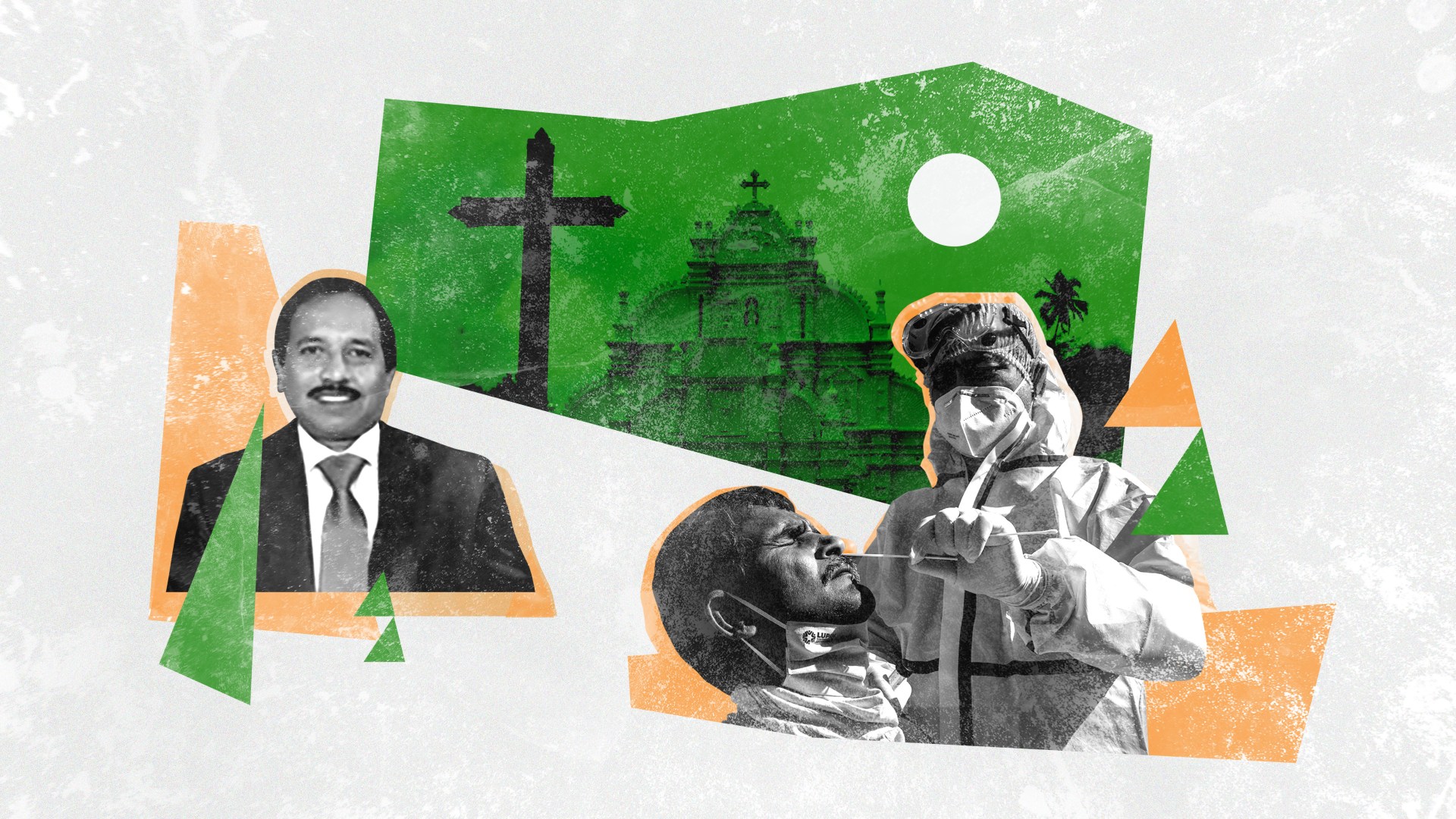
Johnrose Austin Jayalal, president of the Indian Medical Association, says the pandemic stirred the church to action.

Christianity Today March 30, 2021
Illustration by Mallory Rentsch / Source Images: Yawar Nazir / Stringer / Getty Images

(Updated): For many Western Christians, an enduring memory of the pandemic will be the division it exposed in local churches as believers found themselves on opposite sides over Sunday service reopenings, mask policies, and vaccinations.

That’s not the picture Johnrose Austin Jayalal, president of the Indian Medical Association, paints of the Indian church. The Christian doctor has observed churches supporting members suffering from poverty, church hospitals serving the community at large, and fellow Christian physicians volunteering to serve in some of the places hardest hit by the coronavirus.

“I am able to see, even amid persecution, even amid difficulties, even amid the control by the government, even among the restrictions we face in openly proclaiming the message of love, by various means and ways, God Almighty is present,” he told CT.

India has reported 11.9 million cases of COVID-19 and 161,000 official deaths (compared to the US reporting 30.2 million cases and almost 550,000 official deaths), while only 58 million people (4.2% of the population) have received at least their first vaccine dose.

Jayalal recently spoke with Christianity Today about the pandemic’s silver linings for Indian Christians and what Western Christians can learn; tensions with the government over modern and alternative medicine; and how his faith has affected his leadership of one of his nation’s largest professional councils of health care workers.

What has the pandemic looked like in India?

The majority of people who got sick were from the middle or top socioeconomic statuses. The people on the lower level—yes, it was a problem, but most of the time it’s really the churches who were taking care of them. Because the churches were able to actively support the congregations, these people somehow managed. With the grace of God Almighty, I think that the crisis has now turned over. The mortality is also less among the people from the low socioeconomic status. People here have already been exposed to various kinds of other diseases, and their immunity was built up.

How has the church cared for people during this time?

This was during lockdown, so the churches were closed for six or seven months. Church leadership identified the families that needed support and offered financial and material support and counselling to the church members who were below the poverty line.

Only in the last two or three months have churches begun to meet. There are restrictions, but they can meet with less people. For instance, instead of one service, now we are having two services.

How did people worship during those months that churches were closed?

The congregational churches and independent churches were doing two things: social media and mass media support. Two main groups, Jesus Calls and Jesus Redeems, were systematically conducting services at particular times. In fact, people were able to spend a lot of time on religious activities.

I personally think that during this time, people have prayed and worshiped more than ever. People have also been able to spend their time with their family. We have seen how much time people will spend in front of the televisions and in front of the computers. But during the pandemic, families have come together, listening to the Word and participating in the prayers. That is a very good thing to happen.

I feel personally it was not a time of real difficulty for the Christians at that moment. We were able to worship and carry on our special assignments and duties. The only thing we were not able to do was meet as a congregation.

A Delhi megachurch pastor predicted in CT last year that the pandemic lockdowns would spur revival because Indian churches were turning unity efforts that started from persecution into service to community that extended beyond their church buildings on Sundays.

That was exactly true. Many times, people had put their faith in materialistic things. But through the pandemic, they were really able to realize that our protection is only through the grace of God Almighty. We have seen members of parliament and ministers of the states succumbing to the disease. Whatever amount of money or power they had, it wasn’t enough to protect them.

It’s only the grace of God Almighty that helps us to get over the crisis and stay safe, and it was his grace that protected us. Through night-time prayers, family prayers, Christians began shifting from the materialistic things to the blessings in heaven. They began to concentrate more on that.

How have Christians helped others, whether it’s the Hindu population or the Muslim population, during the pandemic?

Not all doctors were willing to come forward and serve in the ICUs or areas where the most casualties were coming from. Many committed doctors did come and serve in those areas and helped.

Most church hospitals don’t just serve Christians. They serve anyone from a low socioeconomic status. In the small, local areas, Christians offered health care not only for the members of the congregation but also to the other downtrodden people in the area, including in tribal and rural areas.

What do you make of the disparity between the West and India with regard to the severity of COVID-19?

The UK and the US technologically are advanced countries. But the number of people getting infected and the number of people dying is very high. India has certain limitations in different parts of the country, but we have been affected far less than the US. There are various reasons for that.

In India, we are exposed to so many types of bacteria, and so our immunity has been built up. Our people who live in rural areas are exposed to all types of unsanitized water and environmental problems. But most of the time in the UK and US, you are not exposed to those kinds of bacteria and viruses. You have a protected environment, and the resistance power is less with you. So when you are exposed to it, you are more likely to succumb to it.

You also have a very fragmented medical system. If someone wants to give some medicine to you, it is very difficult. But here in India it is very easy to get any medicine. Most of the time we mix many kinds of medicines. You have drugs which have been proven efficacy and unproven efficacy. But all can be used.

People here were able to get a lot of treatment, more than what people were able to get in Western countries. I know people in countries where they had a fever but they still were asked to stay home and could not come to the hospital. Here anyone can walk in. You don’t have to go to your specialist from your family physician. Here if you want to go to a superspecialist, you can automatically go. So that kind of system is there. The health care infrastructure and manpower had clearly helped us in this coronavirus pandemic.

The third reason is that one of the vaccinations that we have used is an anti-tuberculosis. It’s called a BCG vaccination. That is, as soon as a baby is born, the baby is given the BCG vaccination—everyone has received it. And these vaccinations also have played a major role in making people not susceptible to infection.

I personally feel God must have been distracted with the US and now he is focusing on India, and he is having some grace on us in India [laughing]. So we want to proclaim the message that it is the grace of God, and it is not by our power, not by our might, but by the grace of God along with the good health care delivery system, that we are getting that positive response.

What can Western Christians learn from Indian Christians?

The change in mindset from the materialistic perspective to the heavenly perspective. We now realize that we are powerless in front of this pandemic, and we are not able to predict what is going to happen for this, and we need to be pressed upon the almighty God to come to help us. After this lockdown, may God’s grace cultivate more people to look into the church as the place of blessings for them.

The pandemic is an opportunity for us to show to the world we can care for each other and share the burden of each other. That was able to be exemplified and amplified due to this pandemic. Indian churches were able to take care of the needs of others, not only taking care of their personal needs. They were able to realize the importance of the family as a unit, and they would also take part in the difficult areas and show the compassion of Christ. Indian Christians can practice the message of the goodness of God Almighty and the hope of salvation in their life.

Tell me about your work as head of the Indian Medical Association.

As a Christian, one opportunity which I was able to include in the medical association is the concept of family medicine. It is slowly vanishing from India. India is moving to a culture of the specialty-oriented health care system. We are trying to reintroduce the family medicine concept and make comprehensive, community-oriented care a priority concern for the association.

I feel this is a good opportunity to lead the country with an example of Christianity under the principles of servant leadership. Though Christians make up less than 2.5 to 3 percent of the population in this country, as a Christian doctor, I have the privilege to lead this organization. I pray to God Almighty to give me the wisdom, knowledge, and courage to lead this country in the medical profession.

You’ve been quoted about concerns over how the current government views modern medicine. What did you mean?

The most common system is modern medicine based on the scientific evidence. The government of India, because of their cultural value and traditional belief believes in a system called Ayurveda. It is an ancient system of Medicine been practiced for a long time. Now as per the New Educational policy you will have to study modern medicine alongside Ayurveda, Unani, Siddha, homeopathy, yoga, and naturopathy. The government wants to make it one nation, one system of medicine. We the modern medicine people, is not against any other system but do not want the mixing one system with another. We are carrying on various means to impress this upon the government.

As the leader of the Indian Medical Association, I need to continue fighting against the government on this issue. We have organized various demonstrations and protests. In the last 14 days, I have organized a hunger strike across the country, and most of our modern medical doctors have participated. I am also seeking the wisdom and guidance of God Almighty about what further I will do in this difficult time.

So would you say that you are not actually fighting against this type of medicine in particular, but you’re fighting against it becoming the only system of medicine in the country?

Yes. We are not against any system. Each system has basic principles that are different, and when you are mixing the two systems of medicine, it will lose the specialty and the purity of the profession. And that will only produce the quackery of the system that cannot be good for the profession or good for the community. But I am sure and confident that God Almighty will strengthen us and sustain us and ensure this medicine, which just comes out of a lot of dedication and research, will definitely continue to grow.

Say more about the hunger strike that you organized.

Usually, any protest from our organization might end in shutting down the hospital. But I personally feel that by closing down the hospital, we are only harming the common man, and that is not our purpose. We are not against the common man; we are against the principles. So I thought it is the doctors who should take the pain on themselves and fast. I believe in the power of fasting, and fasting takes you to a spiritual area.

It was not a usual practice of our association, so I was very happy that it was well accepted across the country. Now we are waiting for the response from the government, and we are also fighting the case in the Supreme Court that this mixing of the systems is not good for the country.

What is the Christian community’s relationship with other nationalists?

Most of the people are soft minded. There are fewer hardcore people, apart from excluding the people who are in power. Often people are more understanding; people are more tolerant; people are more able to go along with them.

One of the things we must always remember is that Hinduism or Hindutva is different from other religions because of polytheism. They accept different gods. They have no difficulty in accepting or proclaiming that Jesus is one of the gods or Muhammad is one of the gods. So religious restrictions are less when comparing them with systems of other countries. I personally feel that it is healthy in India.

What are specific ways where you see a link between your convictions as a Christian and how you live out your faith at work?

I firmly believe that wherever you are or whatever position you are, you can be a Christian doctor as it is a way of life. Normally in the medical profession we talk about the physical curing. I believe we are not here just here to physically cure, but God Almighty has called us to give holistic healing, which includes the spiritual healing, the mental healing, and the social healing. The World Heath Organization also defines health as not mere absence of disease, but a positive state of physical ,mental and social well being.

My primary concern when I work as a Christian doctor is to ensure that I have time to talk about the mental well-being and wholistic healing of the person. We need more Christian doctors to work more in secular institutions, mission institutions, and medical colleges. I am working as a professor of surgery in a medical college, so it is also a good opportunity for me to carry on the principles of wholistic healing there. I also have the privilege of mentoring graduates and the interns.

There’s this idea that if you want to be a serious Christian, you need to be a pastor or a minister or work in a church.

You can be a Christian police officer or work in the revenue department. The place does not decide how you are going to be a Christian. It is your relationship with God Almighty. When we have a relationship with the Father above, we know who we are and who is our master.

The opportunity in front of every Christian is splendid. It is not solely the responsibility of the pastor; it is that every Christian who is born again and who has experienced the love and affection of God Almighty will respond to the calling to go and preach the good news of love. I am able to see, even amid persecution, even amid difficulties, even amid the control by the government, even among the restrictions we face in openly proclaiming the message, of love by various means and ways, God Almighty is present.

[Editor’s note: This interview has been edited for clarity.]
News
Wire Story

Gallup: Fewer Than Half of Americans Belong to a Church

Coupled with the rise of religious nones, even people of faith are less likely to join a house of worship.

Christianity Today March 29, 2021
Luis Alvarez / DigitalVision / Getty

Ask Americans if they believe in God and most will say yes. But a growing number have lost faith in organized religion.

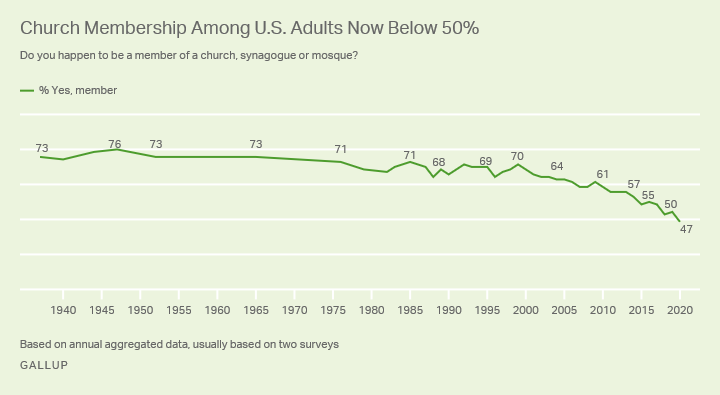
For the first time since the late 1930s, fewer than half of Americans say they belong to a church, synagogue, or mosque, according to a new report from Gallup.

Forty-seven percent of Americans now say they belong to a house of worship, down from 70 percent in the mid-1990s and 50 percent in 2019. The decline is part of a continued drop in membership over the past 20 years, according to Gallup data.

The polling giant has been measuring church membership since 1937 when nearly three-quarters of the population (73%) reported membership in a house of worship.

For much of that time, membership remained at about 70 percent but began to decline after 1999. By the late 2000s, membership had dropped to about 62 percent and has continued to fall.

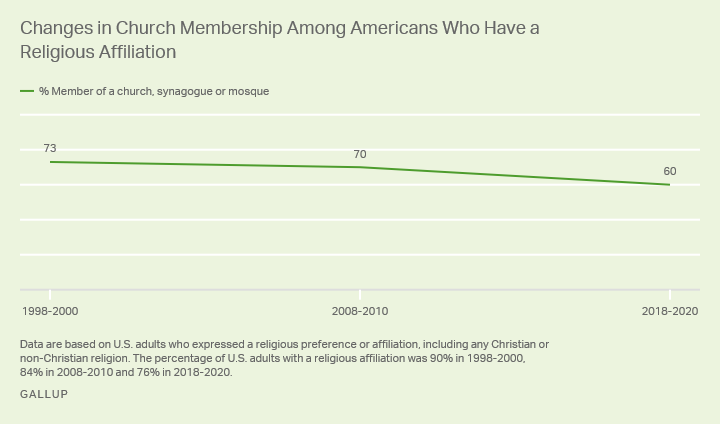
Pollsters at Gallup looked at survey data from more than 6,000 Americans and compared data from 2018 to 2020 with two other time frames: 2008 to 2020 and 1998 to 2000.

The decline in membership coincides with the rise of the so-called “nones”—those who claim no religious affiliation. Gallup reports about one in five Americans (21%) is a none—making them as large a group as evangelicals or Catholics. Other polls put the number at closer to 30 percent.

Few nones belong to a house of worship, Gallup found.

“As would be expected, Americans without a religious preference are highly unlikely to belong to a church, synagogue or mosque, although a small proportion—4 percent in the 2018–2020 (survey)—say they do,” the report from Gallup states. “That figure is down from 10 percent between 1998 and 2000.”

Gallup also found a decline in membership at churches, synagogues, and mosques among religious Americans, who make up about 76 percent of the population. In the time frame from 1998 to 2000, about three-quarters (73%) of religious Americans were members of a house of worship. That number has fallen to 60 percent.

Church membership is down across religious groups, but Catholics saw a bigger drop (76% to 58%) than Protestants (73% to 64%).

Younger Americans are increasingly disconnected from organized religion, according to the report from Gallup. But the number of older Americans who are members of a house of worship has also declined in recent years.

In the time from 2008 to 2010, 73 percent of Americans born before 1945 were church members. That number has dropped to 66 percent in 2018 to 2020. Membership among Baby Boomers dropped from 63 percent to 58 percent during that same time frame, as did membership among Generation X (57% to 50%) and millennials (51% to 36%).

The gap between those who believe in a specific religion and those who participate in the life of a specific congregation is likely to prove a challenge for houses of worship. And the decline in church membership is likely to continue, according to Gallup.

“Churches are only as strong as their membership and are dependent on their members for financial support and service to keep operating,” said the report. “Because it is unlikely that people who do not have a religious preference will become church members, the challenge for church leaders is to encourage those who do affiliate with a specific faith to become formal, and active, church members.”

Measuring church membership and religious affiliation remains a challenge for researchers. From 1850 to 1950, the US Census Bureau collected data on religious congregations in the United States and from 1906 to 1936 published a “Census of Religious Bodies.”

“The Census of Religious Bodies was conducted every 10 years until 1946,” Pew Research noted in a 2010 article on religion and the Census. “The 1936 Census of Religious Bodies was the last one published, however, because the US Congress failed to appropriate money either to tabulate or to publish the information collected in the 1946 census. By 1956, Congress had discontinued the funding for this census altogether.”

Statisticians from more than 230 religious denominations and other religious bodies also compiled membership statistics for the 2010 US Religion Census: Religious Congregations & Membership Study.

That study, which includes county by county data, found religious organizations claimed just under half (48.7) of the United States population as adherents. Similar reports have been compiled every 10 years since 1980.

Books
Excerpt

Hide It Under a Bushel? Maybe.

Take it from the “secret disciples” who buried Jesus: Sometimes it’s prudent to stay mum about your faith.

Christianity Today March 29, 2021
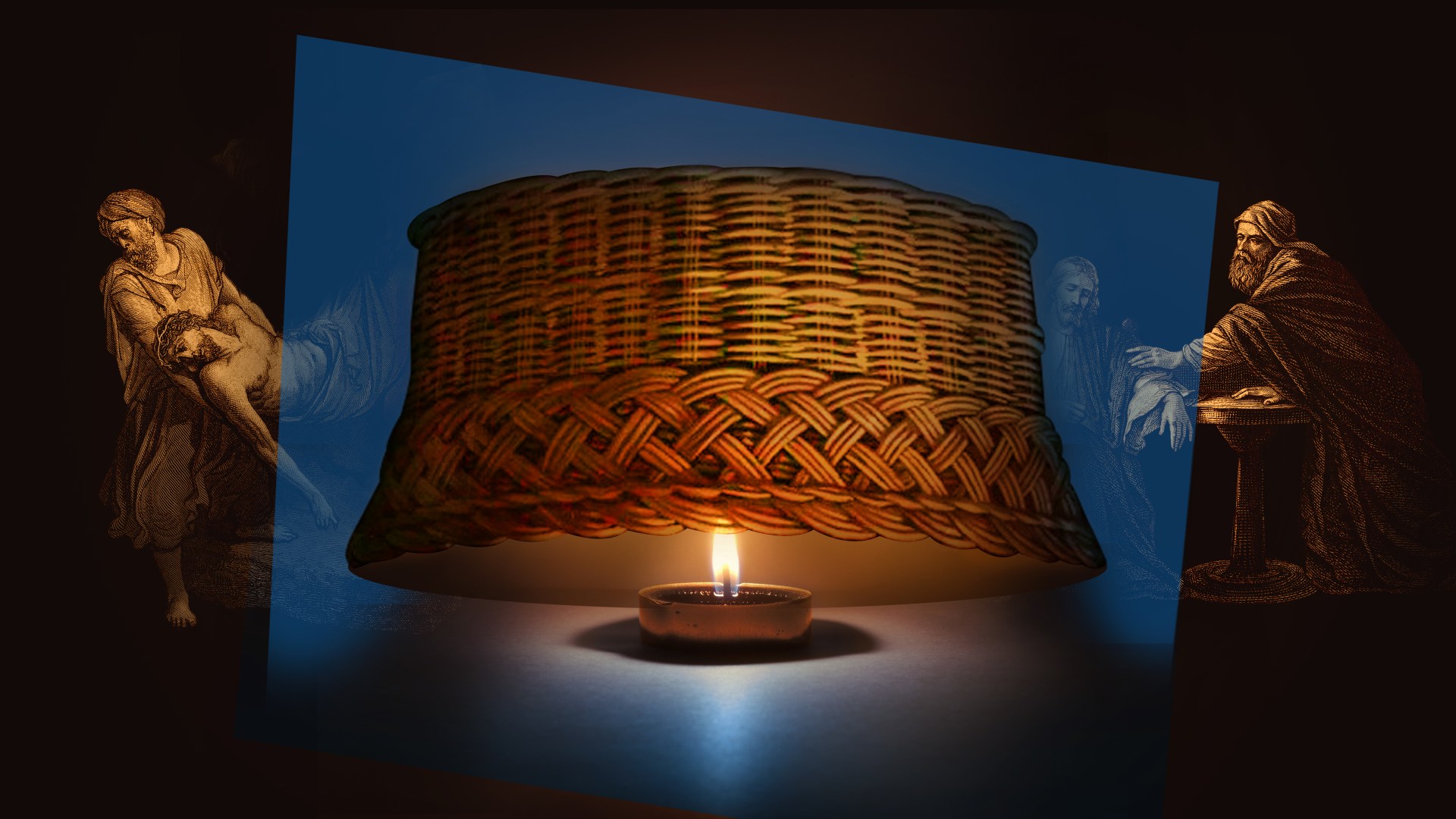
Illustration by Mallory Rentsch / Source Images: Wynnter / Ivan-96 / Getty Images / WikiArt

He prayed fervently every time his car approached a border guarded by antagonistic Soviet soldiers as he sought to enter a closed country, Bibles stashed in his belongings. “Lord, in my luggage I have Scripture I want to take to Your children. Do not let the guards see those things You do not want them to see.”

The Characters of Easter: The Villains, Heroes, Cowards, and Crooks Who Witnessed History's Biggest Miracle

The Characters of Easter: The Villains, Heroes, Cowards, and Crooks Who Witnessed History's Biggest Miracle

Moody Publishers

208 pages

Brother Andrew, known as “God’s Smuggler,” was responsible for sneaking millions of copies of the Word of God behind the Iron Curtain during the Cold War and helping plant the seeds of hope in places bereft of gospel witness, places ruled by Communist governments that restricted Christianity and persecuted Christians. His ministry, Open Doors, has a presence in 60 countries around the world and continues to advocate for persecuted followers of Christ.

Today in the West, we enjoy the precious gift of religious freedom. In some places it is even popular to be called a Christian. It can get you an audience, a job, and book contracts. Politicians even claim Christianity in order to win votes. So it can be difficult to grasp what it means to have to keep our faith a secret. But let us meet two characters in the Easter story in whom secret disciples around the world might find inspiration. Nicodemus and Joseph of Arimathea were marginalized believers in a different sort of way. They enjoyed power and prestige among the religious elite—but had to keep their love for Jesus quiet.

Smoldering wicks

We know from the Gospels that Jesus’ ministry provoked mostly widespread opposition from religious leaders, both the Sadducees and the Pharisees. But the Bible also shows specific examples of religious leaders who earnestly sought to understand Jesus and eventually became followers of Christ. Of these, Nicodemus is perhaps the most prominent. Nicodemus was a Pharisee but held a seat on the Sanhedrin, the prestigious, 70-member ruling body dominated by Sadducees. We first meet him in the pages of John’s gospel as he seeks out a secret meeting with Jesus at night and probes the itinerant teacher with a series of questions.

It’s easy to question why Nicodemus came to Jesus at night, away from the crowds. Those of us who have never faced any opposition for our Christian faith, who probably have more fish stickers on our cars than we do unbelieving friends, might not get what it is like to live as a Christian in a desperately hostile environment, but we would be foolish to consider Nicodemus a coward in this moment.

Even to meet with Jesus at night was an act of courage, a willingness to obey that small voice of faith. To be seen with Jesus carried enormous risk for such a prestigious religious leader. The Pharisees would soon cast off anyone from their synagogue if they professed faith in Jesus (John 9:22), something Jesus would later warn his disciples of in his Upper Room Discourse (16:2).

Jesus never rebuked Nicodemus for his slow, secret quest. R. C. Sproul says this is in keeping “with our Lord’s refusal to put out a faith that, being mingled with fear, seems to be a smoldering wick (Isa. 42:3).”

We should be thankful for this smoldering wick, for Nicodemus’s probing questions of Jesus inspired perhaps the most beautiful words in all of Scripture: Jesus’ declaration of his mission, words the Spirit of God has blown into the hearts of so many in the millennia since this fateful encounter. “For God so loved the world that he gave his one and only Son, that whoever believes in him shall not perish but have eternal life” (John 3:16). By these words, many smoldering wicks, many Nicodemuses, have met Jesus in their own dark nights of the soul and have emerged as children of the light.

We don’t know if Nicodemus converted that night, but he shows up again in John’s gospel (John 7:50–51), defending Jesus in what seems to be a private discussion among religious leaders. The Pharisees were angry that Jesus had declared himself to be “living water” at the Feast of Tabernacles, a sacred rite that commemorated God’s faithfulness in the desert (Lev. 23:42–43). Jesus invited the Jewish pilgrims in Jerusalem that day to believe in him and find “streams of living water” (John 7:38, CSB), a fulfillment of the prediction by the prophets of the coming of the Holy Spirit (Isa. 55:1; Joel 2:28). His claims of deity caused some to believe but also enraged many Pharisees at what they considered blasphemy. Nicodemus urged them to resist a rush to judgment on Jesus’ deity, reminding them that the law required doing due diligence.

Again, we don’t really know the state of Nicodemus’s faith at this point. Was he still a seeker just pleading for a full hearing for Jesus? Was he speaking of his own journey, of his own personal investigation of the claims of Christ? We cannot say. But he shows courage in standing up to the crowd. Months later, Jesus would not get a fair hearing from the very ruling body, the Sanhedrin, that Nicodemus served with such distinction.

Integrity and wealth

In the Christmas story, we meet an unknown man named Joseph who helped care for Jesus in his birth. In the Easter story, we meet another unknown man named Joseph who helps care for Jesus in his death.

Joseph of Arimathea shows up in every gospel account of Jesus’ death. He is described by Matthew as a “rich man” and a “disciple of Jesus” (Matt. 27:57–60). Mark describes him as a “prominent member” of the Sanhedrin and someone who was “waiting for the kingdom of God” (Mark 15:42–46). Luke calls Joseph “a good and upright man,” a “member of the Council” who didn’t agree with their decision to seek Jesus’ death (Luke 23:50–51). John calls him a “disciple of Jesus” who kept his faith secret due to fear of his fellow religious leaders (John 19:38).

Joseph’s hometown was the Judean village of Arimathea, a town in the hilly region of Ephraim, 20 miles northwest of Jerusalem. Some scholars think this was also the hometown of Samuel, Israel’s celebrated prophet and priest.

The gospel writers are clear that Joseph, like Job, was known for both his integrity and his wealth. This is a good reminder that riches and righteousness are not always mutually exclusive. God often calls the poor and ignoble of this world, but that doesn’t preclude him from calling wealthy Christians to use their means for the kingdom of God. Joseph was one of those men.

Like every faithful Pharisee, he was looking for the kingdom of God, but Mark’s gospel tells us that while many of his peers found that “kingdom” in obedience to the law and personal piety, Joseph saw the fulfillment of those kingdom promises in Jesus. But as a Sanhedrin member, he had to keep his allegiance a secret.

Unlikely allies

The lives of Nicodemus and Joseph converged as they became unlikely actors in God’s redemptive drama. These two had a lot in common as Pharisees on a Sadducee-dominated Sanhedrin. Pharisees were minorities among Israel’s elite leadership, even as they were the majority sect among the people.

We can imagine how Nicodemus, Joseph, and other Pharisees on the council must have winced at the elitism of their peers and fought for the voice of the people among the corruption and self-dealings of the leadership class. Pharisees resisted the worldliness of the Greco-Roman culture and loathed their Roman occupiers. They wanted Israel to live up to its calling by God to be a distinct people. They eagerly awaited the kingdom of God and the resurrection at the end of the age. The Sadducees were much more sophisticated, preferring accommodation with the Romans, even purchasing power through corruption and backroom deals. They held the seats of power, including the chief priest roles. And they rejected belief in miracles and the afterlife.

But it was Jesus, even more than the Sanhedrin, who would bring Nicodemus and Joseph close. To believe in this itinerant rabbi and his claims to be the Son of God put them at odds even with their Pharisee brethren. We can’t imagine the wrestling in their souls as they straddled their identity as proud Pharisees and the tug of the Spirit on their hearts as they investigated the claims of Jesus. These two men, strong in integrity and righteousness, could not escape the conclusion that would put them at odds with their synagogue, their families, and their community.

But how providential of God to have Nicodemus and Joseph find each other. We can imagine the hallway conversations and the late-night sessions discussing Jesus. And we can then imagine the terrible discomfort each would feel as Jesus was arrested and stood trial before their august body. Did they push back among other members of the Sanhedrin? Did they reiterate Nicodemus’s plea that his fellow religious leaders resist the rush to judgment and give Jesus a fair hearing? Luke tells us Joseph disagreed with the decision, but how strongly did they voice that dissent, and were they silenced?

How powerless these two powerful men must have felt! Yet what they couldn’t know and didn’t yet understand was that Jesus’ march to the cross was not really the work of the Sanhedrin.

Going public

Somewhere between the trial before the Sanhedrin and Jesus’ crucifixion, Joseph of Arimathea and Nicodemus made a decision to take their private faith public with an extraordinary gesture. Perhaps exhausted by the long days, disillusioned by their fellow Pharisees’ embrace of injustice, or grieving the loss of the one upon whom they’d rested their messianic hopes, they decided to give Jesus in his death what Israel had refused him in his life: acknowledgment as King. He would be buried not in an empty field but in a rich man’s tomb, fulfilling the words of the prophet Isaiah (Isa. 53:9).

So Joseph requested permission from Pilate, the Roman governor, to take Jesus’ body off the cross. The request caught Pilate by surprise. Typically, a criminal would be dumped into an empty grave or pauper’s field, buried ignominiously under a pile of rocks. So this was highly unusual. Perhaps Pilate was relieved that this Jesus problem was finally taken care of. But more than that, he was probably surprised to see a member of the Sanhedrin standing before him, willing to risk position and reputation to give an enemy of the state, one convicted of treason and insurrection, a king’s burial.

There were many important considerations for Joseph and Nicodemus and for the women who accompanied them to the burial of Jesus. It was important not only to get the body off the cross but also to bury it quickly before sundown and the start of Sabbath on Passover week, when work had to cease. Joseph’s tomb made sense as a burial spot, likely near Golgotha, where Jesus was crucified, but outside the city walls.

Both Joseph and Nicodemus made great sacrifices—Joseph in giving up his tomb and Nicodemus in paying for costly burial spices and ointments. John 19:39 says it was 75 pounds, an extraordinary amount, reminiscent of Mary’s extravagant display of washing Jesus’ feet with expensive perfume (12:3).

Peeling Jesus’ bloody body off the cross and carrying him the distance to the tomb was a difficult task. He had to be carefully wrapped in bandages and anointed with both myrrh as a preservative and aloes and perfumes to minimize the stench of decomposition. This was an act of love for Joseph and Nicodemus: two high-ranking religious officials stooping low and exhausting themselves to honor their Lord. You imagine their friends, their families, wondering why these two men of stature would take such care for a rejected Messiah, a despised enemy of Rome.

We can’t know exactly what they were thinking as they performed this thankless task—whether, for instance, fear and doubt were creeping into their hearts. But we know that their private faith, the secret they whispered to each other in the halls of Jerusalem, would now be public.

Quiet shouts

It’s easy to wonder why Nicodemus and Joseph of Arimathea were so quiet about their faith. But I think this perspective is unfair and shortsighted. Courage looks different on different people and in different situations.

At times Jesus did not speak or move about openly, knowing his enemies were seeking him but that his time had not yet come. There are situations where prudence is the best witness: Think of Christians in closed countries, working to slowly plant seeds of gospel witness. Or Christians in prominent leadership roles who must weigh their words in order to steward their influence. This isn’t always cowardice. Sometimes we need a Dietrich Bonhoeffer faith, willing to suffer death for our convictions. But other times we need a Brother Andrew faith, stealthily working underground to advance God’s mission.

This is hard to comprehend in an age when we think every thought has to be expressed all the time on every medium. Public proclamation is important, but so is the need to “make it your ambition to lead a quiet life” (1 Thess. 4:11) and to be “quick to listen, slow to speak and slow to become angry” (James 1:19).

Nicodemus and Joseph showed courage when it mattered, and not a moment too soon. Their inclusion in the Easter story shows us how God works in mysterious ways to accomplish his purposes in the world; it shows the gospel’s power to work in the most surprising places. The Sanhedrin seemed the last place to find disciples of Jesus. Even as the kingdom of God was moving among the poor and the outcast, it was also moving among the powerful, in the very councils that wrote his death sentence, flashing pinpricks of light into a dark world.

Some of the most important evidence for Jesus’ resurrection would be gathered by members of the very body that sent him to the cross. Nicodemus and Joseph both saw him physically dead, a lifeless corpse leaking blood and water. And they buried him in a prominent place where nobody could mistake the miracle, so much so that Jesus’ enemies had to bribe the Roman soldiers assigned to guard Jesus to lie about it (Matt. 28:11–15).

God used Nicodemus and Joseph in creating the most important apologetic of the Christian faith. Without the empty tomb, we are, to quote Paul, “of all men most miserable” (1 Cor. 15:19, KJV). The secret disciples, by their quiet acts of faithfulness, shouted the good news of God’s redemptive love to the world.

Daniel Darling is senior vice president of communications for the National Religious Broadcasters and a teaching pastor at Green Hill Church in Mt. Juliet, Tennessee. This article is adapted from his book The Characters of Easter: The Villains, Heroes, Cowards, and Crooks Who Witnessed History’s Biggest Miracle (© 2021). Published by Moody Publishers. Used with permission.

Ideas

Is Religious Liberty Really a Dance With the Devil?

Staff Editor

Tertullian, Roger Williams, and John MacArthur debate the perils of freedom.

Christianity Today March 29, 2021
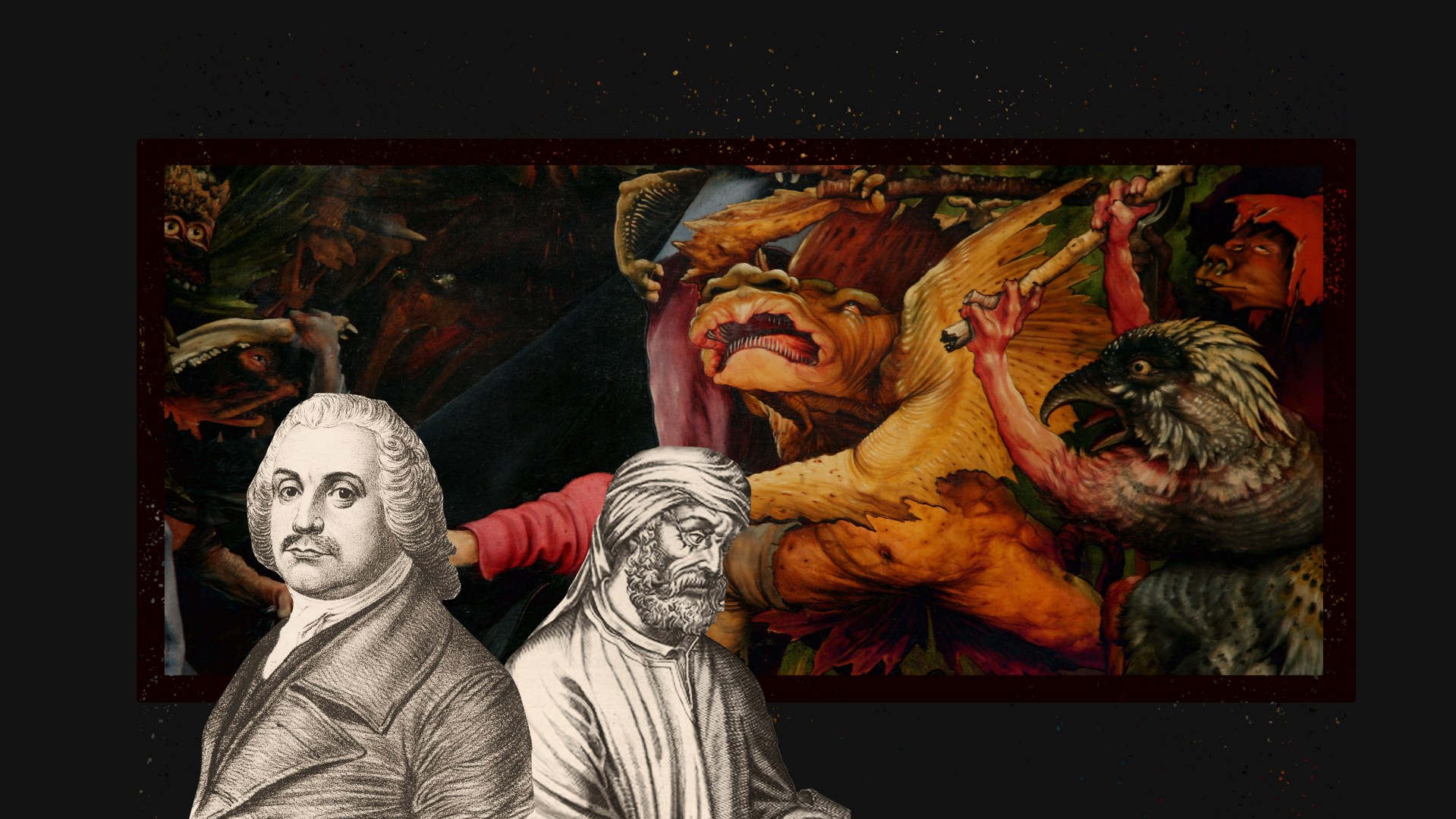
Illustration by Rick Szuecs / Source images: Archive Photos / Stringer / Vincent Desjardins / PXHere / Wikimedia Commons

Until recently I would’ve been surprised to see that question raised at CT. We might disagree about what religious liberty entails or how it should be acquired or used, but the value of free religious exercise has long been assumed across political lines in American evangelicalism and the United States as a whole.

But a series of recent comments from pastor and theologian John MacArthur reject that value in vehement terms. It’s an about-face for MacArthur personally, but the more pressing question to me is whether his new perspective will spread. The view he outlines includes some truth, but it recklessly jettisons longstanding and important Christian convictions.

Last summer, when lawsuits proliferated over California’s unusually strict pandemic limits on in-person worship, MacArthur and his Grace Community Church (GCC) in Los Angeles were all about religious liberty. An August statement from Jenna Ellis, an attorney defending GCC, decried LA County’s “[clear defiance of] the Constitution’s mandate to protect religious liberty.” MacArthur himself cited the First Amendment in an interview on Fox News. And a July statement from GCC elders, though explicitly declining to make the constitutional argument, still embraced religious liberty and argued any church closure order is an “illegitimate intrusion of state authority.”

Half a year later, MacArthur was adamantly opposing religious freedom from the pulpit. His first sermon to include this theme came on January 17:

I don’t even support religious freedom. Religious freedom is what sends people to hell. To say I support religious freedom is to say, “I support idolatry.” It’s to say, “I support lies; I support hell; I support the kingdom of darkness.” You can’t say that. No Christian with half a brain would say, ‘We support religious freedom.’ We support the truth!

MacArthur continued on January 24:

Now I told you last week that I do not believe as a Christian that I can support strongly freedom of religion, because that would be to violate the first commandment, right? “Have no other gods.” You say, “Well, doesn’t the church need freedom of religion to move forward?” No. In no way does any political law aid or hinder the church of Jesus Christ. We are a separate kingdom.

He returned to the topic again on February 28:

I said I couldn’t fight for religious freedom because that would be fighting for Satan to be successful, because every single religion in the world except the truth of Christianity is a lie from hell. You say, “Well, isn’t religious freedom important for Christianity?” No, it’s meaningless.

And in a “State of the Church” address on March 3, MacArthur said defending religious liberty is “fight[ing] for idolatry” and “looking for alliances with Satan.”

I’ve quoted MacArthur at length here because this is strange, new territory for an evangelical figure of his influence. There’s been a debate among political conservatives for several years about the value of religious liberty and classical liberalism more broadly. Participating evangelicals, like writer and attorney David French, are typically pro-freedom, arguing that for all its flaws, it’s the best we’ve got.

Christians “don’t need the government to expedite the gospel.”

MacArthur now seems to disagree. Some of what he’s said is quite right, of course: The kingdom of God is distinct from the kingdoms of the world, and legal favor isn’t necessary to spread the gospel and grow the church (though it can certainly help). As an Anabaptist, I wholeheartedly endorse MacArthur’s assertion that Christians “don’t need the government to expedite the gospel.”

MacArthur’s also correct in his repeated contention that the Bible “doesn’t advocate democracy.” Indeed, the wide difference between our governance and that of the ancient Near East is a big reason it can be so difficult to define faithful Christian interaction with the state millennia later. Nevertheless, there’s a long Christian tradition of supporting religious liberty, particularly in contexts like ours where the government solicits our opinion and purports to reflect our will.

In the third century, the Christian theologian Tertullian argued for religious freedom to an official in Carthage. “We are worshippers of one God,” he wrote. “You think that others, too, are gods, whom we know to be devils. However, it is a fundamental human right, a privilege of nature, that every man should worship according to his own convictions. … It is assuredly no part of religion to compel religion—to which free will and not force should lead us.”

Religious liberty received fresh attention after the Protestant Reformation, when new denominations were persecuted by fellow Christians. Roger Williams, the founder of Rhode Island as well as the first Baptist church in what is now the United States, took up the cause after he was banished from the Massachusetts Bay Colony for his “strange opinions.”

“An enforced uniformity of religion,” Williams argued in 1644, “confounds the civil and religious, denies the principles of Christianity and civility, and that Jesus Christ is come in the flesh.” Moreover, Williams added in a prudential note, curtailing religious liberty backfires: “Sooner or later” it occasions civil strife, he warned, and “ravishing of conscience,” persecution, hypocrisy, and lost opportunities for the gospel. Freedom of religion must be universal, he insisted, even—to borrow MacArthur’s phrase—for the Devil’s lies. Baptists like Russell Moore still echo Williams’s thinking today, insisting Christ’s kingdom is built “not through government power but by the ‘open proclamation of the truth’” (2 Cor. 4:2, NASB).

MacArthur was unclear about what he thinks would happen without religious liberty. At one point he said laws have “no effect on the kingdom of God.” At another he said that without religious freedom, “the only religion that’ll be punished” is Christianity. Elsewhere, he said, “the more supportive” our government is of religious liberty, the more “persecution will be ramped up” for Christians. Meanwhile, his claim that religious freedom “sends people to hell” suggests he envisions Christianity enshrined as bland state religion in a post-liberal United States.

That confusion is why I’ve chosen these two examples from church history, penned as they were in very different contexts: Tertullian was a Christian in a persecuted church appealing to an official hostile to Christianity; Williams was speaking to Christians wielding the sword against siblings in Christ. My own view is that we’re moving from a situation more like Williams’s to one more like Tertullian’s. An irreligious majority is coming—or is already here, depending on how you measure it. Religious liberty is increasingly viewed with suspicion, seen as a ploy for special privileges or a way to deprive others of their rights.

That perception makes judicious, irenic defense of religious liberty a needful and urgent work. It would be incredibly foolish to abandon the cause of religious freedom, especially now. MacArthur is right that God’s kingdom doesn’t require that freedom to grow. But what pitiful kingdom he must imagine if he thinks “Satan [will] be successful” if people can worship as they choose.

Bonnie Kristian is a columnist at Christianity Today.

Four Reasons for a Pandemic Funeral

Don’t distance from mourning. You need the power of worship to usher your loved ones to glory.

Christianity Today March 29, 2021
Illustration by Mallory Rentsch / Source Images: Omar Marques / Stringer / Getty / Unsplash

When my husband, Rob, asked me to marry him, I seriously entertained the idea of elopement. Young, penniless, and impatient, I reasoned, “Who needs a big church service to express our commitment to each other?” A short legal ceremony and a picture on the courthouse steps would allow us to eschew the pomp and circumstance (and cost) of a wedding and jump right into the thing we wanted most—a life spent together.

As our engagement progressed, Rob convinced me that we should opt for a traditional Christian ceremony. “Later, you’ll wish you did it,” he told me. So we rented a church, invited our friends and family, and hired the organist. When it was all over, I had to agree that Rob was right. We needed to start our life together with worship as the context for our marriage.

Waiting to marry, waiting to bury

For the past year, state restrictions have prohibited large gatherings in most states across the US, a burden felt particularly by those who hoped to wed. But starry-eyed lovers aren’t the only ones who’ve had to give up ceremonies; grieving people have too. Restrictions on large gatherings have required families to re-envision their early days of bereavement as church services switched online and funerals were delayed. For many, the waiting further complicates their grief.

With all of the challenges of grief in a pandemic, many bereaved families have chosen to delay or omit funeral worship. Behavioral health and hospice organizations have worked hard to help people find alternative, meaningful ways to say goodbye, but for Christians, none can replace funeral worship amid the gathered congregation. Death-defying worship defines the Christian life. As it should mark the beginning of covenanted married life, so it should mark the end of our earthly journey, too.

As vaccinations proliferate, transmission ebbs, and state restrictions lift, we should invite grieving families to enact their loss in funeral worship—even if months or a year has passed since their loved one’s death. It’s never too late to mark a loss. State restrictions may still require creativity and the unconventional. However we enact it, though, funeral worship should be preserved, and here’s why.

1. Funeral worship offers space to sorrow.

“We live in a culture that runs from true death,” writes Courtney Reissig. Suffering and grief aren’t socially acceptable in the workplace, and it’s often hard to find space for them in the church either. To grieving people, the only ones welcome in the office or the pew are the happy. To grieve is to be excluded with no place to go.

Funeral worship offers that first formal space to sorrow. In worship, we can lay ourselves bare before God, offering the full range of emotions grief elicits. We need not run from death or sorrow. Instead, we wrap our deceased loved one in the burial shroud of gospel truth. We lament the world’s real brokenness. We create space for intimate, personal sorrow in all of its pain and emotional depth.

2. Funeral worship offers physical rituals to process loss.

In prior centuries, physical rituals guided the bereaved through their first months and years of mourning. Special clothes gave loved ones a way to embody their sorrow. Ritual washing of a loved one’s dead body, or preparing it for burial, gave mourners opportunities to enact their heartbreak with tenderness and intimacy. Churchyards provided gravestones as specific locations dedicated to bereavement.

Modern mourning rituals come with few of these tactile experiences, but there are contemporary alternatives. Pallbearing. Placing a casket in the nave of the sanctuary for viewing. Walking forward to light a candle or place a rose. An empty chair. Even lifting our hands in worship. These physical acts enact our loss. In funeral worship, we gather as the body of Christ, even if at a distance, to bear witness to very physical, earthly sorrow.

3. Funeral worship connects death with resurrection.

Each Sunday in church sanctuaries, our bodies intersect with our faith. We baptize our children and marry our lovers. We eat and drink at the Lord’s Table. We sing praise. We hear stories and imagine ourselves in them. With funerals, we return our dead to their Maker. What other single room encompasses such a wholistic narrative? The arc of God’s redemption does not occur in nature or a funeral home as much as the sanctuary.

In funeral worship, we lament the brokenness of our bodies and of the world. We praise God for his sovereign love and awesome power. We revel in the gospel’s truth and long for its fulfillment. We rehearse the great drama of the gospel and avoid preaching a truncated message of future glory without real, present pain. We baptize believers “unto death" and marry believers “until death do you part.” In funeral worship, we usher these same believers beyond death unto eternal life.

4. Funeral worship connects the congregation.

Funeral worship provides tangible support to the bereaved. The grieving stand in a sanctuary surrounded by a congregation who assures them they are not alone on this hard journey. Funeral worship bears one another’s burdens (Gal. 6:2), to comfort with the comfort we’ve received (2 Cor. 1:5–6), and to encourage each other as we see the day approaching (Heb. 10:25).

Noah Livingston writes, “It is the memory and hope of the Resurrection that makes the Christian funeral one of the most potent services of Christian worship. The Christian funeral is uniquely positioned to help those far from death attend to it, so they need not obsess over it when it is near.” Funeral worship benefits more than the bereft. It gives perspective, chastening, and hope to the whole church. Grieving people need their congregation, and the congregation needs them. Especially in these times when relationships grow thin because of social distancing, the funeral reaffirms those ties that bind us and help and heal in the hard months and years to come.

In a conversation I now consider a gift from God, my late husband Rob insisted, “Someday when I die, you need to have a funeral. You need to grieve and worship.” If I skipped the funeral, he believed, later, I’d wish I hadn’t. Funeral worship will look different in this season, but pandemic, like death itself, cannot thwart the ultimate intentions of God. When the sorrows of life press in, worship lifts our gaze together to the Healer and Restorer who holds our loved ones in everlasting arms.

Clarissa Moll (MA, Trinity Evangelical Divinity School) is the young widow of author Rob Moll and the mother of their four children. She writes on grief and offers support to others in the new CT podcast Surprised by Grief with CT editor in chief Daniel Harrell. Find her on Instagram and Twitter.

News

Kanakuk Kamps Abuse Reexamined In New Report

Eleven years later, an investigation by David and Nancy French plus a site for victims try to grasp the extent of predatory behavior by a longtime camp director.

Christianity Today March 28, 2021
Chris Mainland / Lightstock

Former Kanakuk director Pete Newman has been in prison since 2010 for abusing boys from the popular Christian summer camp, but a recent report and petition say the public still doesn’t know the extent of the child sex abuse that went on there.

While 19 victims were identified in the initial investigation against Newman, a civil complaint tallied at least 57, and a prosecutor in the case estimates there could be hundreds over Newman’s 15 years at the Missouri camp, according to a report published Sunday by David French and Nancy French through the conservative outlet The Dispatch.

The Frenches’ investigation noted how the number of Kanakuk victims who have come forward over the years remains unknown. Many have been settled complaints with non-disclosure agreements, which do not permit victims to speak out about what happened to them. A twelfth anonymous victim (John Doe XII) filed a lawsuit this year.

This weekend, a new website, FactsAboutKanakuk.com, launched with a petition calling on the camp to release victims from NDAs so more stories of abuse at the camp can come to light.

“The nondisclosure agreements prevent victims and their families from seeking healing by connecting with other victims and sharing their stories, whether in private or in public,” organizers said. The site lists five men affiliated with Kanakuk who have been convicted of sexual crimes against children.

The Dispatch detailed Newman’s behavior as a “superpredator” at the camp. Newman was known to play sports and ride four-wheelers naked with campers, conduct “hot tub Bible studies,” and hold one-on-one sleepovers, according to the report, which includes extensive testimony from victims. He groomed children by talking about sexual topics from a Christian perspective before abusing them.

Newman’s inappropriate and abusive camp activities came up in local media stories around his arrest and subsequent lawsuits, but hadn’t been collected by a national outlet. One parent of a victim, who began a blog in 2013 when her son disclosed that he too had been abused, posted for the first time in years in response to the Frenches’ coverage: “At last, the story is being told.”

Kanakuk continues to rank among the best-known Christian camps in the country and serves over 20,000 kids a summer. The press page on its website now leads with a link to a 322-word statement on abuse, which describes the Newman case without mentioning his name and apologizes to victims and their families. The response twice references Newman’s deception and features Kanakuk’s new child protection plan.

Though Newman was sentenced to two consecutive life sentences plus 30 years in prison more than a decade ago, Kanakuk families are still facing the lasting trauma of his abuse—sadly, one victim died by suicide in 2019—and grappling with the lack of accountability from camp leadership, particularly founder Joe White, the Frenches wrote.

In legal filings, victims’ families claimed that what should have been warning signs—his deep connections with boys, including continuing to text, write, and visit them, and hanging out with them rather than with fellow counselors—were celebrated as Christian relationship-building. The camp continued to promote Newman despite reports from parents of inappropriate and concerning behavior, including in the nude, dating back to 1999.

Kanakuk says in a statement on its site, “… no one at Kanakuk knew that any criminal activity was being committed, and no charges for failure to report were ever filed against any Kanakuk staff.”

The advocates behind Facts About Kanakuk say the same leaders who failed to address abuse remain at the helm “without repentance, without accountability, and without transparency,” and that the scandals “never received the attention needed to bring about real change. Non-disclosure agreements (NDAs) and significant financial settlements have concealed the truth in order to preserve a ministry brand and economic engine.”

When asked why they were looking into the Kanakuk case, the Frenches said:

The response is simple. There is no statute of limitations on truth. While there are limitations on legal processes, there are not statutes of limitation for individual and institutional accountability. A false narrative has circulated about Kanakuk for a decade, and parents have sent children to the camp without knowledge of its history or access to material facts.

Nobody resigned as a result of the failure to stop a decade of abuse. There was no disciplinary action against any of Newman’s supervisors, and Joe White is still the head of the camp today.

Kanakuk is not a member of the Evangelical Council for Financial Accountability, and White’s family along with the camp’s president make up a majority of its seven-member board, Ministry Watch reported.

In a handful of states, camps aren’t required to comply with the same regulatory standards as schools and daycares. Kanakuk set out to become an industry leader on the issue of abuse when it launched its own child protection program after Newman’s case.

It has since put on child protection training seminars for leaders from more than 450 fellow Christian camps and ministry organizations. Rich Brashler, the longtime risk management coordinator at Kanakuk, continues to speak at events around preventing and responding to abuse at summer camp.

Kanakuk now lists detailed guidelines on the types of contact, interaction, and conversations staff members can have with campers. Among them: no lap-sitting, sexual jokes, innuendoes, remarks about a camper’s physique, individual secrets, or bathroom humor. “All one-on-one interactions with kampers must be done in a public place with others visible,” the guidelines state. “Private one-on-one interactions or meetings are not allowed. A third person is always encouraged in these settings.”

Statistics show children who suffer sexual abuse are more likely to do so at the hands of someone they know, such as a neighbor, coach, teacher, and doctor. Christian organizations are becoming more aware of how predators may target their churches and ministries because of the system of trust and access to children.

Young Christians are more likely to identify bad behavior as abuse and less likely to condone it; Lifeway Research found that churchgoers under 35 are twice as likely as older generations to leave a church because they felt sexual misconduct was not taken seriously.

Still, it can take years or decades for a victim to disclose abuse they experience as a child, if they come forward at all.

“Only 23% to 33% of victims disclose their sexual abuse during childhood, and only 6% to 15% of victims ever disclose those assaults to law enforcement. Males are more reluctant and take longer to make full disclosures,” wrote the Facts About Kanakuk site, citing statistics from the National Think Tank for Child Protection. “The extent of damage done to campers who attended Kanakuk Kamps and its programs will likely not be known for many years.”

News

Terrorists Target Palm Sunday Church Service in Indonesia

(UPDATED) Suicide bomb attack on Catholic Mass in Makassar, South Sulawesi, injures 20. Authorities blame local ISIS affiliate.

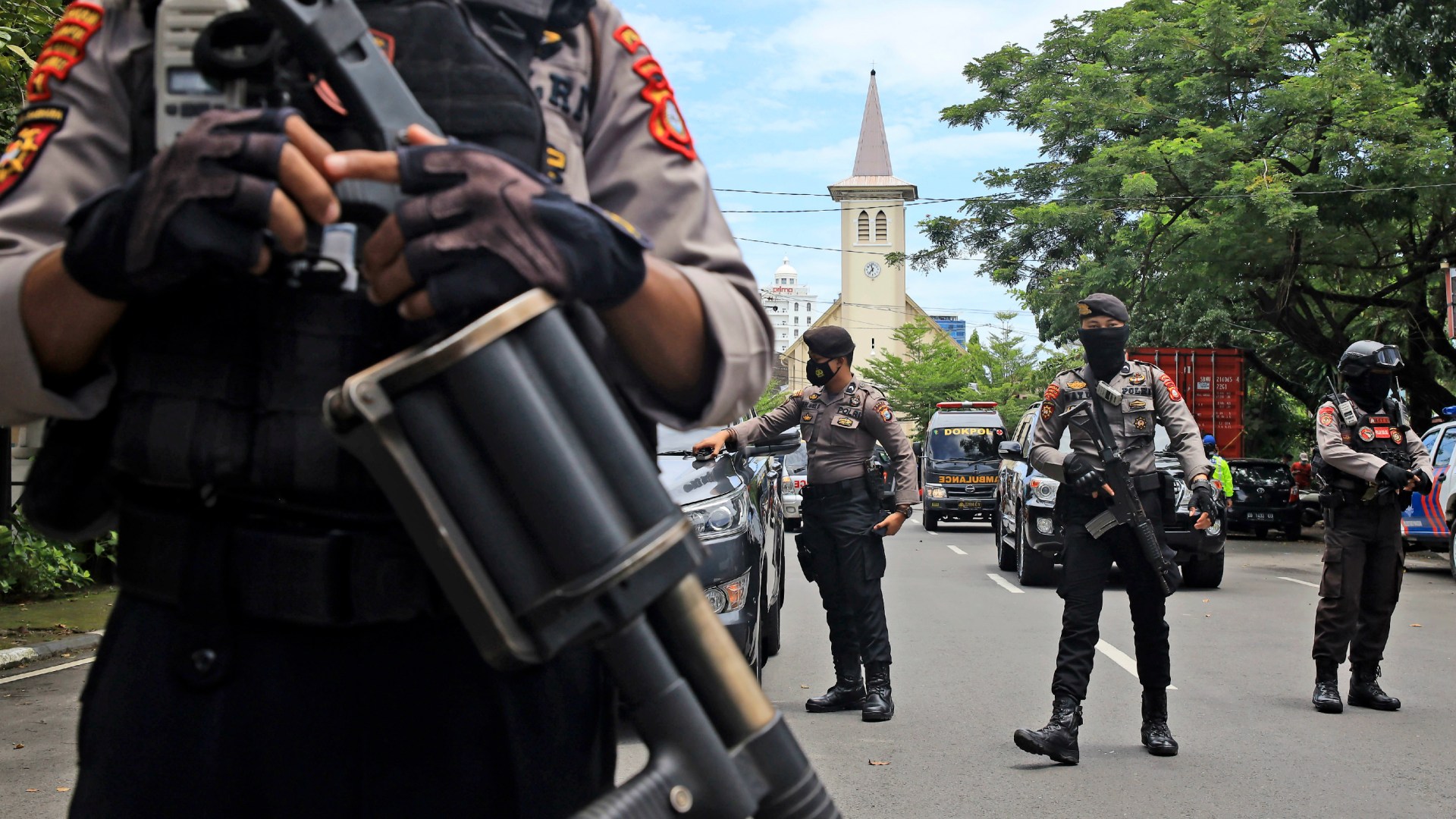
Indonesian police officers in Makassar stand guard near a Catholic church where an explosion went off on Palm Sunday in South Sulawesi on March 28, 2021.

Indonesian police officers in Makassar stand guard near a Catholic church where an explosion went off on Palm Sunday in South Sulawesi on March 28, 2021.

Christianity Today March 28, 2021
Yusuf Wahil / AP

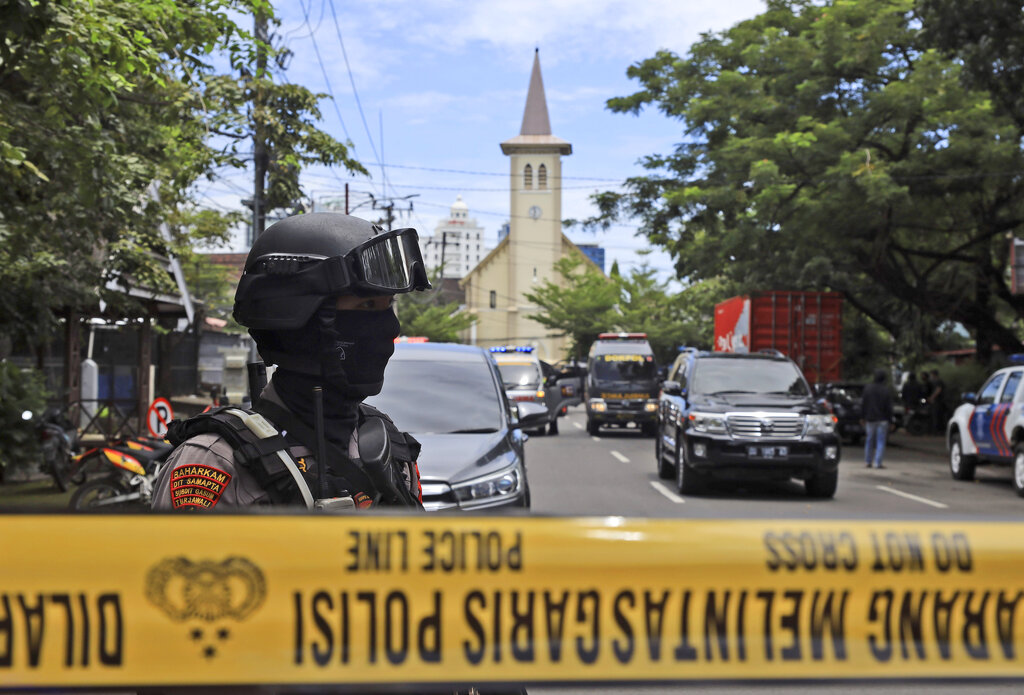
MAKASSAR, Indonesia (AP) — Two attackers believed to be members of a militant network that pledged allegiance to the Islamic State group blew themselves up outside a packed Roman Catholic cathedral during a Palm Sunday Mass on Indonesia’s Sulawesi island, wounding at least 20 people, police said.

A video obtained by The Associated Press showed body parts scattered near a burning motorbike at the gates of the Sacred Heart of Jesus Cathedral in Makassar, the capital of South Sulawesi province.

Wilhelmus Tulak, a priest at the church, said he had just finished celebrating Palm Sunday Mass when a loud bang shocked his congregation. He said the blast went off at about 10:30 a.m. as a first batch of churchgoers was walking out of the church and another group was coming in.

He said security guards at the church were suspicious of two men on a motorcycle who wanted to enter the building and when they went to confront them, one of the men detonated his explosives.

Police later said both attackers were killed instantly and evidence collected at the scene indicated one of the two was a woman. The wounded included four guards and several churchgoers, police said.

National Police Chief Gen. Listyo Sigit Prabowo told reporters when he visited the crime scene late Sunday that the two attackers are believed to have been members of the militant group Jemaah Anshorut Daulah, which has pledged allegiance to the Islamic State group and was responsible for deadly suicide bombings on Indonesian churches in 2018.

He said one of the attackers was believed to have links to a church bombing in the Philippines.

The attack a week before Easter in the world’s most populous Muslim-majority nation came as the country was on high alert following December’s arrest of the leader of a Southeast Asian militant group, Jemaah Islamiyah, which has been designated a terror group by many nations.

The Fellowship of Indonesian Evangelical Churches and Institutions (FIECI) condemned the attack, requesting prayer for victims and more respect for religious freedom. The group also called on Indonesian Christians to remain calm, “handing over the investigation to government officials while reflecting on the love, sacrifice, and redemptive work of Jesus Christ” during Holy Week.

An Indonesian police officer stands guard near the Sacred Heart of Jesus Cathedral in Makassar, South Sulawesi, where an explosion went off on Palm Sunday.

Indonesia has been battling militants since bombings on the resort island of Bali in 2002 killed 202 people, mostly foreign tourists. Attacks aimed at foreigners have been largely replaced in recent years by smaller, less deadly strikes targeting the government, police and anti-terrorism forces, and people militants consider as infidels.

Police have identified one of Sunday's attackers only by his initial, L, who they believe was connected to a 2019 suicide attack that killed 23 people at Our Lady of Mount Carmel Cathedral in the Philippine province of Sulu, Prabowo said.

He said the two attackers were linked to a group of suspected militants arrested in Makassar on January 6, when a police counterterrorism squad shot and killed two suspected militants and arrested 19 others. Members of the squad were initially supposed to arrest the two slain men for their alleged role in the Philippine suicide bombing.

He said on Sunday police arrested four suspected militants believed to have links with the attackers in a raid in Bima, a city on Sumbawa island in East Nusa Tenggara province.

“We are still searching other members of the group and I have ordered the Densus 88 to pursue their movement,” Prabowo said, referring to Indonesia’s elite police counterterrorism squad.

President Joko Widodo condemned Sunday’s attack and said it has nothing to do with any religion as all religions would not tolerate any kind of terrorism.

“I call on people to remain calm while worshiping because the state guarantees you can worship without fear,” Widodo said in a televised address.

He offered his prayers to those injured and said the government would cover all costs of medical treatment. He said he had ordered the national police chief to investigate the attack and crack down on any militant network that may be involved.

At the end of Palm Sunday Mass in St. Peter’s Basilica, which opened Holy Week ceremonies at the Vatican, Pope Francis invited prayers for the victims of violence. He cited in particular “those of the attack that took place this morning in Indonesia, in front of the Cathedral of Makassar.’’

At least 20 people were wounded in the attack and had been admitted to hospitals for treatment, said Mohammad Mahfud, the coordinating minister for political, legal, and security affairs.

Indonesia has been on high alert since police in December arrested Jemaah Islamiyah leader Aris Sumarsono, also known as Zulkarnaen. Over the past month, the country's counterterrorism squad has arrested about 64 suspects, including 19 in Makassar, following a tipoff about possible attacks against police and places of worship.

Jemaah Islamiyah was once considered the preeminent terror network in Southeast Asia, but has been weakened over the past decade by a sustained crackdown. In recent years, however, a new threat has emerged in militants who fought with the Islamic State group in Iraq and Syria and returned to Indonesia or those inspired by the group’s attacks abroad.

Indonesia's last major attack was in May 2018, when two families carried out a series of suicide bombings on three churches in the second-largest city of Surabaya, killing a dozen people including two young girls whose parents had involved them in one of the attacks. Police said the father was the leader of Jemaah Anshorut Daulah.

Days later in Washington, US Vice President Mike Pence met with the leader of Indonesia’s Nahdlatul Ulama, the world’s largest Muslim organization, to discuss religious freedom and extremism.

Nahdlatul Ulama (NU) convened about 300 Muslim scholars from 30 countries in 2016 to denounce extremism, promote the protection of Christians and other religious minorities, and uphold Indonesia as a model. Last year, the World Evangelical Alliance (WEA) partnered with the humanitarian Islam group on an initiative to counter religious extremism, explained by WEA senior theological advisor Thomas K. Johnson last year.

“Though the Nahdlatul Ulama has taken a decisive theological step by saying that Muslims must no longer describe non-Muslims as infidels, substituting the term citizens for non-Muslims, some extremists have not gotten the message,” Johnson, who has written a book on the WEA-NU partnership, told CT. “More such work is needed to fully remove the religious grounds for violence.”

In 2017, religious freedom scholar Paul Marshall, a senior fellow at the Leimena Institute in Jakarta, explained for CT:

If the third-largest democracy on the planet succumbs to Islamic radicalism, then the future of the Muslim world and the rest of us looks dire. The major center of Muslim moderation—and the major counter to ISIS and similar ideologies—will be undercut. This will affect us all.

Open Doors ranks Indonesia No. 47 out of the 50 countries where it’s hardest to be a Christian today.

Terrorism at churches during Holy Week is tragically common. Christians in Egypt suffered one of the worst Palm Sunday attacks in 2017, when dozens were killed at two churches. Meanwhile, Christians in Sri Lanka are preparing to commemorate the second anniversary of the Easter Sunday bombings that killed hundreds at three churches (and other locations) in 2019.

That year, Colombo theologian Ajith Fernando offered six biblical responses for when Islamist extremists attack churches.

Yusuf Wahil reported from Makassar and Niniek Karmini reported from Jakarta for The Associated Press. Additional reporting by Jeremy Weber for CT.

Theology

The Body Keeps the Faith

Theologian says spiritual life continues despite disorientation of dementia.

Christianity Today March 26, 2021
Courtesy of Tricia Williams / Edits by Rick Szuecs

Testimony is important for many Christians. So what happens when you can’t remember how you came to know Jesus as your Savior or recall the things God has done in your life? Psalm 77:11 says, “I will remember the deeds of the Lord; yes, I will remember your miracles of long ago.” What happens to our faith when we can’t remember?

Theologian ‘Tricia Williams asked evangelical believers with dementia that question for her new book, What Happens to Faith When Christians Get Dementia? Their answer was that memories fade, but faith does not.

Williams, a longtime editor for Scripture Union, began focusing on pastoral care for people with dementia after prompting from a colleague who wanted to help his wife. First, she developed Bible reading and prayer resources. Then Williams went on to complete her PhD at the University of Aberdeen in Scotland under John Swinton, a leading scholar on the theology of dementia.

Her work is “always with a pastoral purpose,” she said. With this new book, she wants to help Christians provide better care for believers with dementia and see how the insights of those believers can apply to everyone’s faith journeys. While her current book is aimed at scholars, she’s working on a second book based on the research for a general audience.

Williams spoke to CT about her findings and how to walk with people with dementia.

First, what are some of the symptoms of dementia? How do these symptoms raise worries for evangelical Christians?

Dementia is an umbrella term. Within that, there are a group of illnesses which often have similar symptoms, particularly initially. In my research, my participants had a mixture of Alzheimer’s and vascular dementia. There are other kinds as well.

The person who is living with someone who is developing dementia will notice concentration becoming more difficult and short-term memory loss. Then as dementia progresses, and that might take several years, they will notice memory becoming even more difficult, social habits being more difficult to monitor.

At a workshop I was doing with a church, there was lots of patient, pastoral, kind concern. Then, toward the end of the meeting, a lady who’d been silent, obviously could stay silent no longer, just shouted out, “That’s all fine, but actually I find this incredibly embarrassing because I am not sure how my father is going to behave when we go to church.”

Some of the key questions people have are: Who am I? If your relational capacity is gone, and you can’t think in a straight line anymore, is personhood still there? What is it that makes me human? Then, there’s the question for a believer: So, what happens to my faith? If I can’t remember anymore, if I can’t confess my sins, is my salvation still safe? Then some people might say: Can you come to faith when you have dementia?

You interviewed eight people in early-to-moderate stages of dementia. Can you describe them?

They could still talk to me. Some were just discovering what it meant to live with dementia. One or two others were really fragile, and it was a real struggle for them to try to communicate.

They were all people who at that point knew that they had dementia and could imagine what that might mean. They were all aware of the stereotypical images which society brings to dementia and were all feeling a sense of God’s call in talking with me.

Here’s a couple of them: Rosemary and Ron. These are pseudonyms to protect their privacy and their families.

Rosemary had been an English teacher. She was full of bubbly energy and desperately wanted to talk to me. Her conversation just rattled along. She said, “The main thing is that I want this thing to be to the glory of God.” She hardly seemed to a take breath when she talked to me until she said “Amen” at the end, and she did say “Amen” at the end.

Ron was someone who was much frailer. He went to Rhodesia (now Zimbabwe) and was “born again” at a Billy Graham crusade. He said: “I haven’t got a memory, but I have.” What he meant by that was: Even though lots of everyday things have gone, he will never forget the presence of God with him.

How did you conduct the interviews? Was it hard for people to remember what the question was?

Yes. It was. For some people, it was difficult from them to remember why this stranger was in their homes talking with them. People did forget where we were going. Sometimes people told me an awful lot that I didn’t really want to know because they went on all sorts of tangents. And that was fine. I’d just gently and respectfully bring it back.

Someone told me, “I can still drive at 70 miles per hour down the motorway.” In my head I’m thinking, “Hmm, but should you be?” But the person was telling me that, so I’d think, “Why did they want to tell me that?” They want to say, “I am in control. I don’t need special concern. I’m functioning just the same as anyone else, thank you very much.” So, when something is said off-script, I would still dig to hear why they said that.

I was constantly prompting and bringing back to center. In my head, my framework was: What has been your experience of faith, what is your experience of faith now, and what do you think it will be like in the future?

What did dementia mean for these people’s faith?

Some think once dementia comes, the faith journey is over, whereas actually my research disclosed that faith is alive and well. In fact, people said to me it’s stronger. Alice said to me, “I used to think I was quite clever.” (She was a doctor.) “Now I know I don’t know very much. But I feel [that] though there’s less of me, there’s more of God.”

I’ve also talked about growing in faith, and that might seem really strange. Yet it’s there. From the disorientation, from the confusion that dementia brings into our lives, they were finding a reorientation.

Alice said, “How do I serve God? He’s given me this gift, and I will do what I can with the loaves and fishes he’s given me.” She has this deep concern and deep understanding of some of the horrors of people who go into dementia without faith and is continuing to minster to them out of her own experience.

What lessons can we learn from people with dementia?

One area is memory. We tend to think of that as an autobiographical, linear memory. Memory is not just something that is about facts connected by neurons in the brain. It’s connected to the whole of our bodies. So, I write quite a lot about our embodied memory. A really classic example is Marcel Proust’s memory of a madeleine biscuit. He talks about how just the taste of the biscuit suddenly brings back the memory of his aunt.

That kind of memory is seen in people with dementia too. I can think of all sorts of examples: the way someone dresses. The way they speak to you. Their past histories are written in their bodies. Their manners, their politeness (or not). Their understanding of faith and songs and hymns. It’s all there, deeply within memory.

It sounds like you’re saying that we misunderstand memory, thinking it’s merely mental cognition?

We miss out, in fact. We are whole people. It’s not just that neurons stop working, and therefore the whole person is gone. No. The whole person is there and is valuable. They may be shut off from us, and it may take more patience and more care to communicate. But we can prompt and begin to find that this person, like me, is a Christian, loves God, and is perhaps learning more about God and has more trust in God than I do.

Naomi Feil, a social worker, developed the validation theory for communicating with people with advanced dementia. She just patiently, patiently works with a woman until (in one example) they were singing together, “Jesus loves me; this I know.” Deep, deep in us, there are truths.

My grandmother had dementia, and I remember people singing hymns with her to the end.

My research participants kept quoting references to Scripture and references to song. The words have become their language. Those things are deeply, deeply embedded. Sometimes you might just need to prompt someone to help them and to enter the moment. Just taking a bit of time, you find there is a whole wealth of spiritual experience and story there. They probably aren’t going to get up in front of you and give a coherent sermon, but the life of God is there and is a gift to us. Maybe we have things to learn if we would be patient enough to receive the gifts that this person brings to us.

How can Christians care for those with dementia?

Accompany people with dementia. Some highlighted this. One of the issues is that for people who were not married, going to church or participating in church activities was much more difficult. Rosemary—my ebullient, never-stop-talking lady—she was wanting to still go to church and finding that very difficult. She remembers going up for Communion, but then she panicked because she didn’t remember where she was sitting. She talked about her embarrassment that people were thinking, “That silly women doesn’t know where she’s come from.”

Practically, that’s quite an easy thing to do something about. If people in church are aware, somebody can decide I’m going to take on being your friend and guiding you through the service if you need it.

Also, for family members with people with dementia: Let other people share the burden with you. Maybe both the person living through dementia and their caregiver stop being seen at church and we can forget them. They may feel you won’t understand, and therefore they’re getting worn down by the care. But both the family member and the person with dementia need other people from the body of Christ, sharing that burden.

Culture
Review

Netflix’s Christian Camp Musical Nails Its ’90s CCM Soundtrack

‘A Week Away’ captures the look and sounds of summer camp but misses out on the beliefs beneath its catchy songs.

Christianity Today March 26, 2021
Courtesy of Netflix

When a charming-but-troubled teen learns that his latest mischief could land him in a juvenile detention center and his only way out is to spend a week at church camp, he processes the scenario in a song and dance number to the ’90s CCM anthem “The Great Adventure” by Steven Curtis Chapman.

If this idea makes you smile even a little, you’ll probably enjoy A Week Away, Netflix’s new faith-friendly musical.

A Week Away offers heaps of nostalgia for parents who grew up listening to Christian acts like Chapman, Amy Grant, Michael W. Smith, and Audio Adrenaline. CCM hits from the ’90s get the musical theater treatment at Camp Aweegaway. In the youth pastor–inflected pun from enthusiastic camp director David (David Koechner—yes, Todd Packer from The Office), “Every once in a while, somebody finds out that they ’re just a week away from an experience that changed everything for them.”

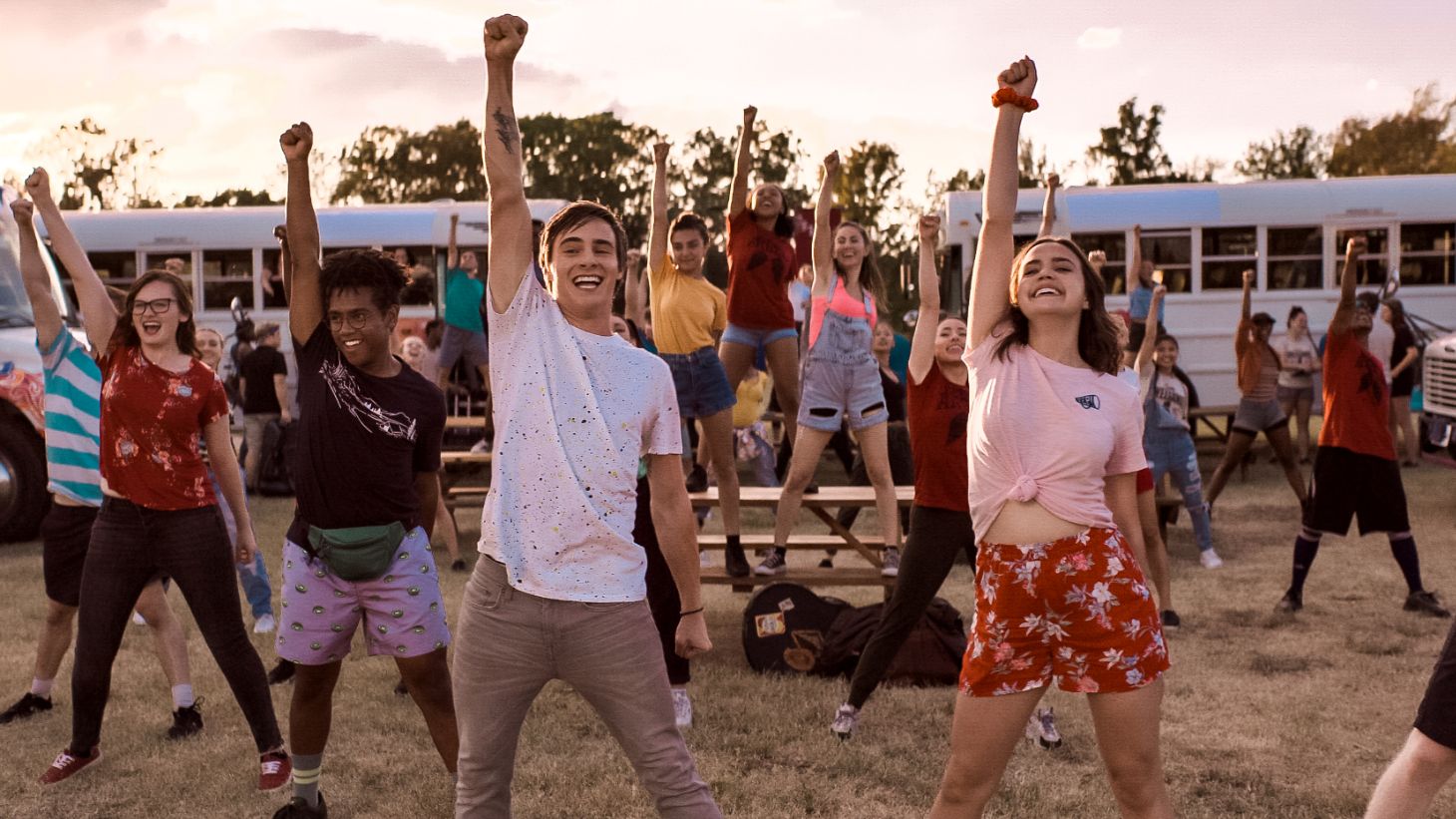
The movie follows Will Hawkins, played by Disney star Kevin Quinn, as he adjusts to Christian camp culture, tries to fit in, and gains the trust of David’s beautiful daughter Avery, played by Bailee Madison. Initially resisting the fun and the friendship of his cabinmate George (Jahbril Cook), Will must decide if these “Jesus freaks” are people he can trust with the painful parts of his life or if he is better off on his own.

As someone who spends the entire summer at a Christian camp where my husband is director, I get the appeal of setting a musical in the nostalgic cabins and woods where so many of us played, made friends, and grew in our faith.

For the staff, summer camp can feel like an elaborate production. It takes energy and a tiny bit of acting to get campers excited about activities that are outside their comfort zones. Without the right welcome, newcomers can feel like they’ve been tossed into a choreographed dance that no one bothers to teach them, like Will upon arriving at Camp Aweegaway.

The Christian Camping and Conference Association advised the producers of A Week Away, and it shows. Filmed at two camps in Nashville, the camp scenes are an authentic glimpse at the kinds of activities many Christians spent their summers doing.

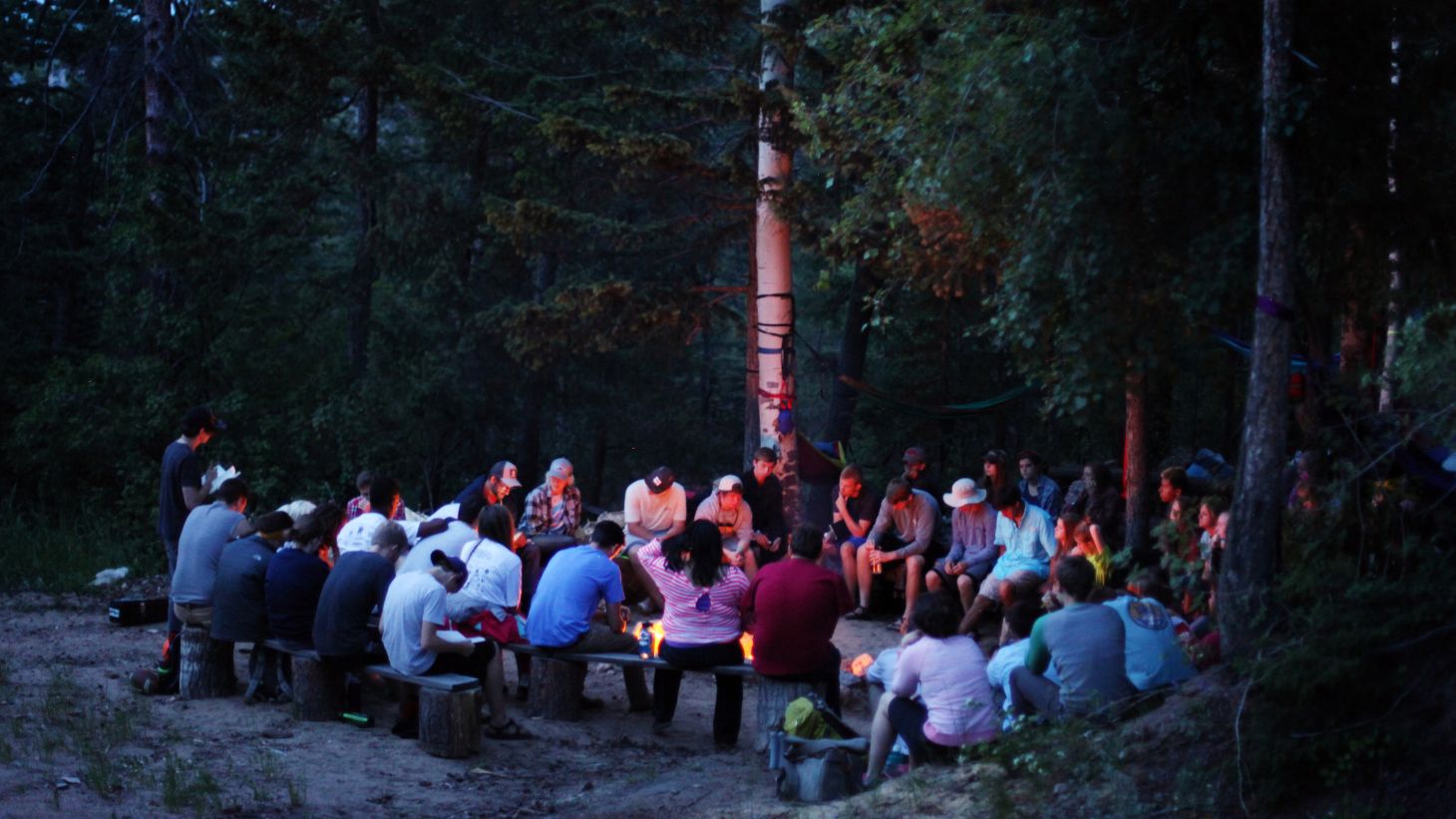
There’s a sorting ceremony where new campers are assigned into competing tribes (with hokey names like the “Crimson Angels” and “Azure Apostles”), competitions among the tribes (trying to maintain a veneer of good sportsmanship but desperate for the bragging rights), acapella worship around a campfire at night, and campers standing up to share testimonies of what they’ve learned during their week at camp.

A Week Away gets a lot of the details of the Christian camp experience right—except for the most important one. Though the film is certainly family friendly, there’s not much that’s explicitly Christian at Camp Aweegaway apart from the soundtrack.

The few references to God’s love for all his children don’t add up to more than the old VeggieTales theme (another ’90s Christian culture staple): God made you special, and he loves you very much. When Will and Avery encourage their pals George and Presley to have more confidence by singing “God made you how you should be—good enough,” the crescendo falls flat.

Some of the central characters have experienced devastating trauma. Will hammers Avery with hard questions about why God would take away both of his parents, and Avery, who continues to grieve her own mother’s death, doesn’t have much of a response. This scene left me wondering why the writers would introduce Job-sized questions without the room for substantial answers. Don’t get me wrong: Life has lots of unanswered questions. But when characters ask hard questions and get insubstantial responses, the joyful resolution feels contrived.

The plot also puts a lot of pressure on individual characters and the camp setting itself. Even though I love camp, I know that a single summer experience—no matter how good and godly—is not enough to heal such deep losses. These struggles require professional help and support over the long term, such as through Christian counseling and regular church community.

But while not explicitly stated, there is grace on display. Sean, the camp’s jealous Pharisee, believes he’s earned God’s favor through his impressive works like praying and saving narwhals in the Arctic. When he tells campers about Will’s rap sheet, campers are far angrier at Sean’s smug self-righteousness than they are scandalized by Will’s past.

The few adults in A Week Away, mainly just David the director and George’s mother, Kristin, played by Sherri Shepherd, are not the oblivious, uncaring, or bumbling caricatures we’re used to seeing in teen movies. They are caring and wise; they know Will’s past, but it doesn’t stop them from loving him.

There is a lovely worship scene where the camp breaks into an acapella rendition of “Awesome God” around the campfire. Avery shares Jeremiah 29:11 with the campers (without context, of course), but it’s clear she’s struggling to believe the words herself. When “Awesome God” faded to the background in order to foreground Avery and Will’s insecurities and fears (set to For King and Country’s “God Only Knows”), I thought it was an interesting mashup but still felt frustrated. No one at Camp Aweegaway seems to know how God’s awesomeness makes a difference in everyday life.

Though the film goes flat on some of the more serious themes, it hits all the high notes when it comes to fun. This is no high school musical: The actors turn in solid performances, and the dancing is stellar. Anyone who has ever sung “Big House” with the accompanying hand motions will enjoy seeing the professionals run wild with the choreography during the credit reel. Two brief cameos by CCM legends had me laughing out loud. The modern twists on CCM classics and upbeat original songs by Adam Watts make for a fun soundtrack that is now in heavy rotation on my children’s playlists.

Despite what David tells Will, a week away cannot change everything, but the week at camp does put Will’s life on a different trajectory. He isn’t quite a new person, but his new friendships give him a chance to be the seed in the Mark 4 parable that falls on fertile ground, rather than the seed on rocky ground that sprouts and is scorched by the sun because it has no roots.

Summer camp is such an integral part of my life that it can sometimes feel routine. A Week Away reminded me how much fun is at the heart of summer camp. And it made me grateful for the camps that give kids a safe place to struggle.

We might not nail the tune or the choreo as well as the crew at Camp Aweegaway, but our camps offer the real thing: meaningful relationships and a setting that points kids to the love of God demonstrated in Jesus.

Megan Fowler is a contributing writer for CT. She spends her summers at Seneca Hills Bible Camp and Retreat Center in Pennsylvania, where her husband serves as executive director.

Church Life

ORU Basketball Fans Know to ‘Expect a Miracle’

The team behind this year’s most impressive March Madness upset carries on Oral Roberts’s legacy of embracing sports as Christian witness.

Christianity Today March 26, 2021
Maddie Meyer / Getty Images

When Oral Roberts toppled Florida last Sunday, the charismatic Christian school entered rare company as the second 15-seed in the history of the men’s NCAA basketball tournament to make it to the Sweet Sixteen. Yet if there’s a miraculous element surrounding the small school from Tulsa, there’s also familiarity. There are five other Christian schools joining ORU in the Sweet Sixteen this year. What’s more, ORU has been here before—in fact, it’s gone even further.

While the school’s particular brand of Christianity might make it an oddity in major college sports, its involvement in basketball is part of a much longer story of Christian engagement with the game.

That story can be traced all the way back to 1891 when James Naismith invented the sport at a Christian college: the YMCA International Training School. Those origins, along with Naismith’s description of the task of a YMCA physical director—“to win men for the Master through the gym”—are often cited by Christian basketball fans as evidence of the evangelistic roots of the sport.

Naismith, though, aligned his life’s work less with saving souls and more with character formation. His basic goal was to “do good to men and serve God” and “leave the world a little better than I found it.” The sport quickly developed a life of its own, taking root in communities that crossed boundaries of race, region, religion, gender, and nationality.

Still, Christian affinities remained strong, particularly among Christian colleges. While football was the unquestioned king of college sports, the resources needed to thrive on the gridiron made it cost prohibitive for many smaller schools. By the 1940s and 1950s, urban Catholic colleges, Bible colleges, and Protestant schools embraced basketball, with Oral Roberts University joining the tradition as a new school in 1965.

The school’s namesake was a key figure in the entrance of Pentecostalism into mainstream American religious life. With ORU, Roberts hoped to establish an institution that could educate, train, and serve as a symbol of respectability for the Spirit-filled Christians of the charismatic movement.

He also hoped to provide what he called a “whole man” education, training mind, body, and spirit—the very language used by James Naismith and the YMCA. But while Naismith saw spiritual formation as a gradual process of character development, Roberts emphasized its supernatural aspects, with the indwelling Holy Spirit working in believers in a miraculous way to produce the abundant life.

Joining Roberts’s focus on the Holy Spirit was an emphasis on physical discipline. All students, athletes or not, were expected to be physically fit, a key part of ORU’s “honor code.” Sports were part of Roberts’s plans too. The basketball team was his chance to demonstrate the benefit of the honor code on a national level, while proclaiming the gospel and gaining respectability for both ORU and the charismatic movement as a whole.

By 1970, his plan seemed on track. Sports Illustrated published a short piece that year on the “hard-driving small-college basketball team that, if Roberts has his way, is on its way to becoming major.” Roberts had hired Middle Tennessee State University coach Ken Trickey and challenged him to win a national championship by 1975. Adopting an up-tempo style he dubbed WRAG—“we run and gun”—Trickey’s teams started to win games and attention.

Sports Illustrated also took note of the true secret behind ORU’s surprising success: the presence of talented black players. Four of ORU’s five starting players were black, a rarity for predominantly white southern schools at the time, some of which had not yet integrated. Trickey’s willingness to recruit and play black players, unrestricted by quotas, allowed him to bring in quality players that his competitors weren’t recruiting.

Roberts supported these developments. While he was certainly not on the front lines when it came to racial integration, by the 1960s he had started to talk more about his Cherokee heritage, and he became more vocal in his support for civil rights. Black players, Roberts told Sports Illustrated, were “a part of us.” The testimony of ORU’s black athletes seem to support this view. Carl Hardaway, team captain, said in 1970 that players were given a “real fair shake here.” Star player Richard Fuqua was even more effusive. “For a black man,” he said in 1972, “it’s the freest place in America.”

Along with Trickey, Fuqua was the man who made ORU basketball go. Averaging 36 points per game, Fuqua led the 1971–72 team to 26 wins, an NCAA-high average of 105 points per game, and a trip to the quarterfinals in the NIT tournament. His long-range shooting ability, coming before the three-point line existed in college basketball, earned him the nickname “Mad Bomber,” as well as a magazine profile in Sport titled “Praise the Lord and Pass the Ball to Fuqua.”

The team also received positive attention in national publications like the Los Angeles Times, New York Times, Washington Post, and Newsweek. This success only confirmed Roberts’s belief in the value of basketball—“Athletics is a part of our Christian witness,” he said—and his championship expectations.

As it turned out, the team got closer to a championship than anyone but Roberts and Trickey could have believed. In 1974, ORU made the NCAA tournament and upset Louisville in the second round before losing in overtime to Kansas, one game away from the Final Four. The loss to Kansas marked the end of Trickey’s first stint at ORU, a decision he’d made earlier in the year, and the beginning of the end of ORU’s brief run at the top of big-time college basketball.

To be sure, Roberts continued to invest in the sport. He told a reporter in 1975 that basketball was the “perfect pulpit” because it matched his ministry’s “idealism.” With 40 million men reading the sports page every day, he said, “basketball is one way to get our message across to them.”

Subsequent years, however, generally brought more negative publicity than positive. Later in the 1970s, the university faced a lawsuit over its “Pounds Off Program.” Then came an NCAA investigation into the basketball team, which resulted in a year of probation.

The team eventually rebounded enough to return to the big dance during the 1984 NCAA tournament, losing to Memphis State in the first round. But any hopes that ORU might win a national championship were fading fast, along with the respectability Roberts had built up in the 1970s.

Starting with his claim in 1980 that he had spoken with a 900-foot Jesus, Roberts made ever-increasing demands on his supporters to send money as he moved from one financial crisis to another. While he did not get wrapped up in sexual scandals like Jim Bakker and Jimmy Swaggart, his controversies aided and abetted the broader critique and mockery of prosperity gospel evangelists in the 1980s.

Roberts’s problems reached a point of no return in 1987, when he infamously told supporters that God was going to “call him home” if he didn’t raise $4.5 million. Though he received the money and claimed that the media had deliberately misinterpreted his words, the damage was done. By 1989, Robert’s ministry had accumulated a total debt of $25 million.

The school and its basketball program survived the tumult of the 1980s, albeit in chastened form, with the basketball team dropping down to NAIA (National Association of Intercollegiate Athletics) competition for several years.

In 1997, under the leadership of Bill Self (now head coach at Kansas), ORU returned to postseason play with a trip to the NIT. A decade later, they made the NCAA tournament for three consecutive seasons (2006–08) losing in the first round each year. Now in 2021, ORU is in the third round of the NCAA tournament for the first time since Ken Trickey’s tenure in the 1970s.

Despite this year’s surprising success, Roberts’s original vision of winning national titles and cultural respectability through basketball remains elusive. In many ways it’s even further from being realized than it was 50 years ago. As a member of the mid-major Summit League, ORU lacks the resources to compete with the elite teams. And the school’s honor code is not only a target of ridicule; it’s also now a target of activism. One columnist has argued that the team should be shunned for what she describes as the “deeply bigoted anti-LGBTQ+ policies.”

On the other hand, there are continuities between the 2021 ORU team and the story of Christian college basketball. The team’s run is cultivating school pride and providing a platform for players and coaches to talk about their faith.

Head coach Paul Mills even linked his desire to coach all the way back to basketball’s founder, telling The Gospel Coalition that he wanted “to win men for the Master through the gym” like Naismith. In that sense, ORU stands as one more example of the much larger story of Christian schools involved in basketball.

At the same time, ORU’s charismatic distinctives, its openness to the supernatural, remain strong. How could they not during March Madness?

“Expect a miracle,” Oral Roberts liked to say. For an underdog school competing in March, that’s precisely what most fans will do.

Paul Emory Putz is a historian studying sports and Christianity and serves as the assistant director of the Faith & Sports Institute at Baylor University’s Truett Seminary.

Jonathan Root is an independent scholar who received his PhD in history from the University of Missouri. He is writing a religious biography of Oral Roberts for Eerdmans.

addApple PodcastsDown ArrowDown ArrowDown Arrowarrow_left_altLeft ArrowLeft ArrowRight ArrowRight ArrowRight Arrowarrow_up_altUp ArrowUp ArrowAvailable at Amazoncaret-downCloseCloseellipseEmailEmailExpandExpandExternalExternalFacebookfacebook-squarefolderGiftGiftGooglegoogleGoogle KeephamburgerInstagraminstagram-squareLinkLinklinkedin-squareListenListenListenChristianity TodayCT Creative Studio Logologo_orgMegaphoneMenuMenupausePinterestPlayPlayPocketPodcastprintremoveRSSRSSSaveSavesaveSearchSearchsearchSpotifyStitcherTelegramTable of ContentsTable of Contentstwitter-squareWhatsAppXYouTubeYouTube