Books
Excerpt

Russell Moore: Real Christian Courage Looks like Elijah at His Most Pathetic

My caution to those who “stand for truth” by calling down “fire from heaven” upon its enemies.

Christianity Today March 18, 2021
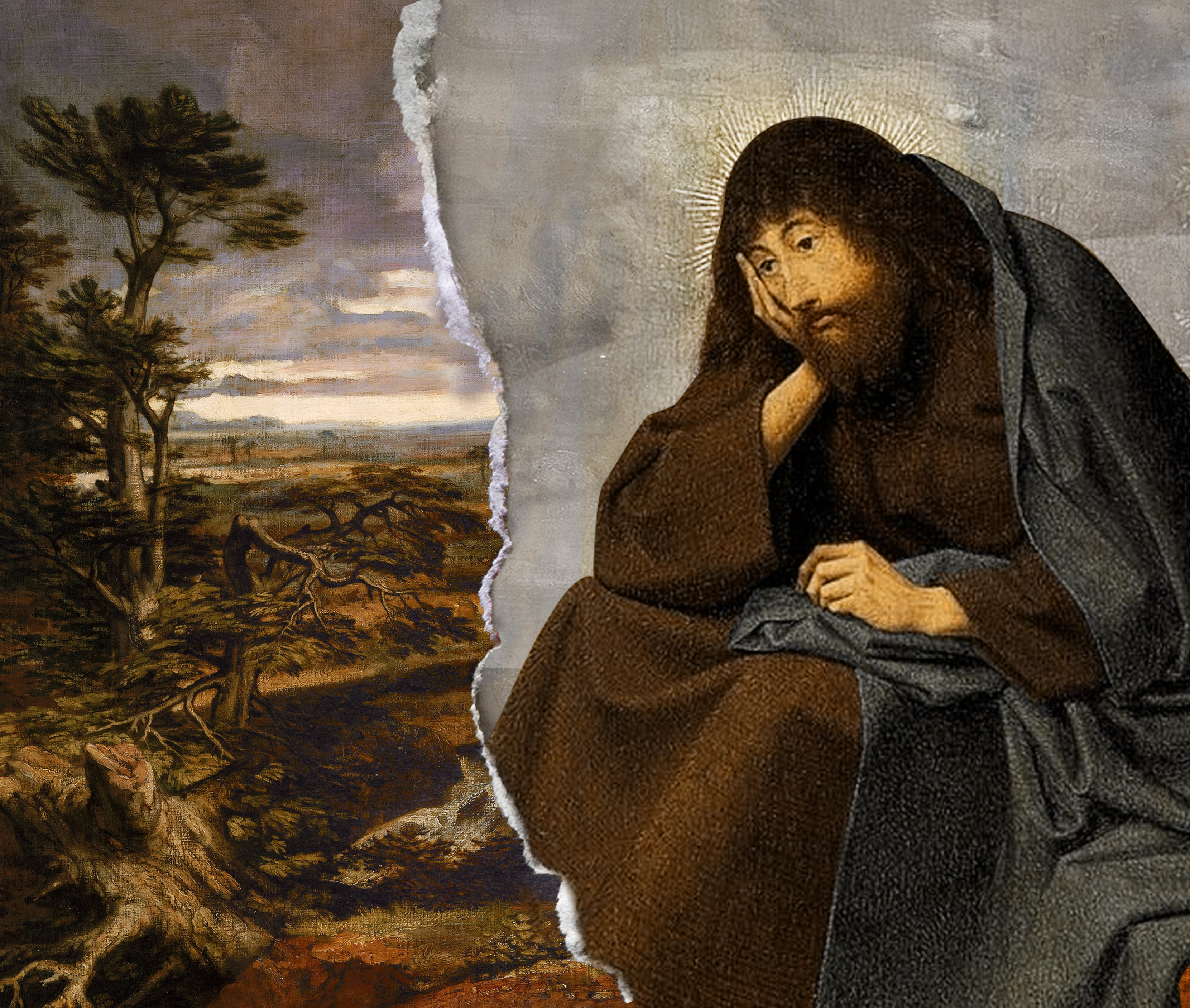
WikiMedia Commons / Edits by Christianity Today

At the moments in life when I’m feeling especially scared, I’ve noticed that Elijah is the last person I want to see.

The Courage to Stand: Facing Your Fear without Losing Your Soul

The Courage to Stand: Facing Your Fear without Losing Your Soul

B&H Books

304 pages

During one dark period, without any conscious decision, I remember altering my daily Bible reading of the Old Testament ever so slightly. I had been reading through 1 and 2 Samuel, then on into 1 Kings through the life of Solomon, when suddenly I veered over to the Psalms. As I thought about it, I became convinced I was avoiding that middle section of 1 and 2 Kings because I knew who was there: a prophet called Elijah. I wanted to avoid him the same way a laid-off person wants to avoid her “Employee of the Month” neighbor or the way an obese person wants to avoid his marathon-running brother-in-law. The comparison only highlights one’s inadequacies, whether real or perceived.

When we think of Elijah, we think of steely determination, the willingness to defy gods and kings, in scorn of the consequences. If you asked me as a child in Sunday school to draw a picture of Elijah, I would have drawn the scene on Mount Carmel, where he calls down fire from heaven. In that moment, Elijah is everything I want to be. He verbally spars with his opponents—sarcastically mocking their impotent god. He confidently pours water on his own sacrifice, he cries out to the skies, and then, with a bolt of incandescence, the fire falls.

That is strong; that is “prophetic.” And so, in moments when courage is lacking, I just want to do an end run around that hair-suited seer. But that’s harder than it may appear. Try to avoid Elijah in moving through the Bible, and one will find, much as King Ahab and Queen Jezebel did, that he has the annoying habit of showing up persistently, often when he is least expected.

That’s somewhat surprising because, at least in terms of space devoted to him, Elijah is not a major biblical figure. As a matter of fact, he is a kind of mayfly in the sunset of the Scriptures; one moment we see him, and the next he is gone in a literal blaze of glory. But Elijah’s absence is felt all over the rest of the Bible, even as his mantle and his spirit move on through the line of prophets. Indeed, the very last words of the Old Testament are about Elijah. As God told the prophet Malachi, “Behold, I will send you Elijah the prophet before the great and awesome day of the Lord comes” (Mal. 4:5, ESV throughout). And then there’s silence for 400 years.

When the story resumes in the New Testament, Elijah is everywhere, in hints and allusions and images. John the Baptist carried out the motif of the wild man of the woods with a word of impending judgment. And Jesus identified this baptizer—his own cousin—with the prophecies of the return of Elijah. At the same time, in his inaugural explanation of his ministry, Jesus pointed to Elijah and his successor Elisha as demonstrating that the good news of God’s kingdom was always meant to overwhelm national and ethnic boundaries (Luke 4:25–27). And, in the Gospels, many aspects of Jesus’ calling evoke scenes from the life of Elijah—from the raising of a widow’s son from death to miraculous provision of food to a visible ascent into heaven.

The real climax point

The Elijah narrative is certainly about courage, but not in the way that I always assumed. That’s because I, like many of us, often misunderstand both the definition of courage and the meaning of Elijah. Much of what I admired about Elijah is not actually the point of the story. I aspire to the sort of fearlessness that could respond right back to Ahab that the king, not the prophet, was the “troubler of Israel” (1 Kings 18:17–18). The same sort of sass and swagger seems present when Elijah threatens drought, holding back rain by his word, and when he challenges the prophets of Baal to their contest on Mount Carmel. He doesn’t just defeat them; he humiliates them. Though they screamed and cut themselves, trying get the attention of Baal, “there was no voice. No one answered; no one paid attention” (v. 29).

Elijah needs no such theatrics. He simply calls for fire, and the fire falls. He was vindicated, uncontestably, as the one who bears real prophetic power.

When it comes to bold and unflinching courage, Mount Carmel is not the hinge point of the Elijah story but a prelude to something else. Right after this moment of triumph, Jezebel—the murderous wife of Ahab—vows to see Elijah dead by the next day. The Bible states, “Then he was afraid, and he arose and ran for his life” (19:3). The story only goes downward from there, as Elijah treks out into the wilderness to flee from this threat.

Far from the flannelgraph Spartacus I have expected since Sunday school, the picture of Elijah in the wilderness is almost pathetic. He is afraid. He is weak to the point of collapse. He is lonely and exhausted. He is questioning his own calling and mission. He seems depressed to the point of, at best, whining and, at worst, self-harm. And even when the crisis is resolved, God speaks to him not of his own bright future but of what God will do through others, rendering Elijah seemingly irrelevant.

Most often, when I have heard this account taught or preached, the focus has been on Elijah facing some form of “burnout.” The application is that human beings must protect ourselves from overextension. We hear practical recommendations drawn from God’s provision for Elijah—proper nutrition, adequate sleep, and time for prayer and reflection. This seems immediately relevant, of course, because many people find themselves in a place of exhaustion, caring for small children, elderly parents, or disabled spouses. Or perhaps they have invested all their identity in a career only to come to midlife and find numbness and disillusion.

But what Elijah was facing in the wilderness was no mere burnout, it seems to me, but something more comprehensive: a breakdown. In the wilderness, God was doing for Elijah what Elijah had done on the mountain—removing the Baals, this time from the prophet’s own heart.

The way of courage, as defined by the gospel, is not the pagan virtue of steeliness and fearlessness, much less our ambient culture’s picture of winning and displaying or strength and swagger. If we misunderstand the true climax point of the Elijah story, we will follow him somewhere other than where he ultimately was led: to the crucified glory of Jesus Christ. We will conclude, mistakenly, that Elijah was the picture of courage we think we need: the ideal celebrated in everything from ancient Greek legends to modern action films to the cavalier confidence we feign in ourselves.

Elijah is not a picture of courage through triumph but of courage through crucifixion. His life was a dramatic enactment, ahead of time, of the Cross—just as your life is a dramatic enactment, after the fact, of that same Cross. That’s why he’s the model we need.

Starkly vulnerable

Consider the way Jesus identifies the “spirit of Elijah” in the life of his cousin, John the baptizer. Like Elijah, John’s ministry is not all boldness and bluster. Yes, John, like Elijah, calls a rebellious people away from their idols to a living God. And yes, like Elijah, he delivers a word of rebuke to a wicked ruler.

John the Baptist in the WildernessWikiMedia Commons / Illustration by Mallory Rentsch
John the Baptist in the Wilderness

But John is no untouchable hero. Even after baptizing Jesus and hearing God pronounce the Nazarene his beloved Son, John feared he was wrong. From his jail cell, he sent messengers to ask Jesus, “Are you the one who is to come, or shall we look for another?” (Matt. 11:3). A narcissistic cult leader or political guru would be offended by this wobbliness, but Jesus was not. He commended John as the greatest of all the prophets up until that time.

For Jesus, John’s continuity with Elijah was not, as assumed, in his power and confidence but in this weakness and fear. “From the days of John the Baptist until now the kingdom of heaven has suffered violence, and the violent take it by force,” Jesus said. “For all the Prophets and the Law prophesied until John, and if you are willing to accept it, he is Elijah who is to come” (vv. 12–14).

Later, after Elijah appeared on a mountain with Jesus before his disciples, Jesus said that his followers misunderstood what they should expect from Elijah. They were perplexed that, after manifesting briefly, Elijah would go away, leaving Jesus alone—and on his way to crucifixion. They asked why the teachers of the Scripture said that Elijah must return first, before the restoring of all things. Jesus pointed them not to Elijah’s winning argumentation or his miraculous scenes but to his humiliation and suffering. “Elijah does come first to restore all things. And how is it written of the Son of Man that he should suffer many things and be treated with contempt?” Jesus taught. “But I tell you that Elijah has come, and they did to him whatever they pleased, as it is written of him” (Mark 9:12–13).

Indeed, Scripture presents John from start to finish as starkly vulnerable. Even when we do find the fiery prophet we expect, he is essentially exiled from his home and community, eating an unpalatable diet and preaching an even more unpalatable message. Ultimately, of course, we see him as a head on a silver platter. None of this is a deviation from the way of Elijah. It is the way of Elijah. That’s why Jesus, soon after identifying himself with Elijah, was exiled from his community and in danger of an angry hometown crowd throwing him from the precipice of the mountain overlooking his village (Luke 4:28–30).

We can see, then, how the “fire from heaven” Elijah is explained by the “lost in the wilderness” Elijah, not the other way around—just as Christ’s glory is revealed in his crucifixion. The Cross is not a momentary deviation from glory but where we find a glory different from that of the world, different from what we would create for ourselves.

Elijah encounters God at the moment of crisis and collapse. And that’s where he, and we, can find the courage to stand. But even that language of “standing” can deceive us. We talk about standing for what we believe, and by that we typically mean a pose of confidence, like leadership coaches who tell their clients to project strength through body language. What it means to stand for Christ is not, it turns out, to rid ourselves of all fear or to humiliate our enemies with incontrovertible “winning” but instead to live out in our very lives the drama of the Cross. Courage comes not from matching the world’s power and wisdom with more of our own but by being led, like Elijah, where we do not want to go (John 21:18).

The crucifiable self

This sort of courage is formed not only in crisis but also amid the little turning points in life that shape, over time, who we are, what we love, what we fear, and how we stand. These are the moments where things could go one way or the other, and they usually aren’t dramatic and cinematic. Thus, the chief need in every era is not what first leaps to mind when we think of courage—physical bravery—but instead what might be called “moral courage.” Mark Twain once wrote, “It is curious—curious that physical courage should be so common in the world, and moral courage so rare.” Twain was reflecting on a moment of unwillingness to take an unpopular public stance for fear of “saying the disagreeable thing” and being out of step with his peers. That sort of fear, he said, is part of human nature, and he didn’t see it changing.

Scripture gives insight into why moral cowardice is so universal among human beings. Jesus did many signs before the crowds, the apostle John wrote, and yet most of the people did not believe. Quoting the prophetic writings, John said, “Isaiah said these things because he saw his glory and spoke of him,” and yet: “Nevertheless, many even of the authorities believed in him, but for fear of the Pharisees they did not confess it, so that they would not be put out of the synagogue; for they loved the glory that comes from man more than the glory that comes from God” (John 12:41–43).

This is hardly unique to these first-century Jewish people. Everyone, no matter whom or where or when, has similar “Pharisees”—gatekeepers of who is “in” and who is “out.” Everyone fears being cast out of some sort of “synagogue.” For some, it’s a political tribe, a religious group, a generational cohort, or just a sense of being “normal” in the world. We want, if not applause, then at least not rejection and insecurity.

The problem is that much of what Scripture defines as courage—kindness, humility, the bridling of the passions—our culture sees as timidity. Meanwhile, many who feel themselves courageous because they “tell it like it is” are really just playing to their protective tribes. They may believe they “stand” for something, but this is not courage, if courage is defined by Christ. Following him isn’t a matter of taking the correct side of issues and doctrines. It’s about walking alongside him, even when, like Christ’s first followers, we can’t see what’s ahead.

Your courage will not be found in triumphant Mount Carmel moments, when you scatter your enemies, real and imagined. It will be forged, instead, when you cannot stand on your own at all, when you are collapsed in the wild places, maybe even begging for death. Elijah thought he was walking to Mount Sinai, but he was really walking toward Mount Calvary. And so are you. Only the crucifiable self can find the courage to stand.

Russell Moore is president of the Ethics and Religious Liberty Commission of the Southern Baptist Convention. This article is adapted, with permission from the publisher, from his book The Courage to Stand: Facing Your Fear without Losing Your Soul (B&H).

News

Is COVID-19 God’s Punishment? African Christians Debate as Their Presidents Die

The deaths of Tanzania’s John Magufuli, announced today, and Burundi’s Pierre Nkurunziza last summer feed discussion over God’s approach to corporate sin and repentance.

Tanzania's President John Magufuli speaks at the national congress of his ruling Chama cha Mapinduzi party in Dodoma, Tanzania, on July 11, 2020.

Tanzania's President John Magufuli speaks at the national congress of his ruling Chama cha Mapinduzi party in Dodoma, Tanzania, on July 11, 2020.

Christianity Today March 17, 2021
AP Photo

The Tanzanian government confirmed today that President John Magufuli has died.

“It is sad news. Our beloved president passed on at 6 p.m. this evening,” said Vice President Samia Suluhu Hassan, who per the East African nation’s constitution will now become its first female president. “We have lost our courageous leader. All flags will be flown at half mast for 14 days.”

What officials did not confirm was weeks of speculation by opposition leaders and regional media that the 62-year-old had contracted COVID-19. The official cause of death: heart complications.

However, the situation echoed the chatter in neighboring Burundi last June, when President Pierre Nkurunziza died of COVID-19 at age 55, as both leaders drew criticism for their approach to the pandemic.

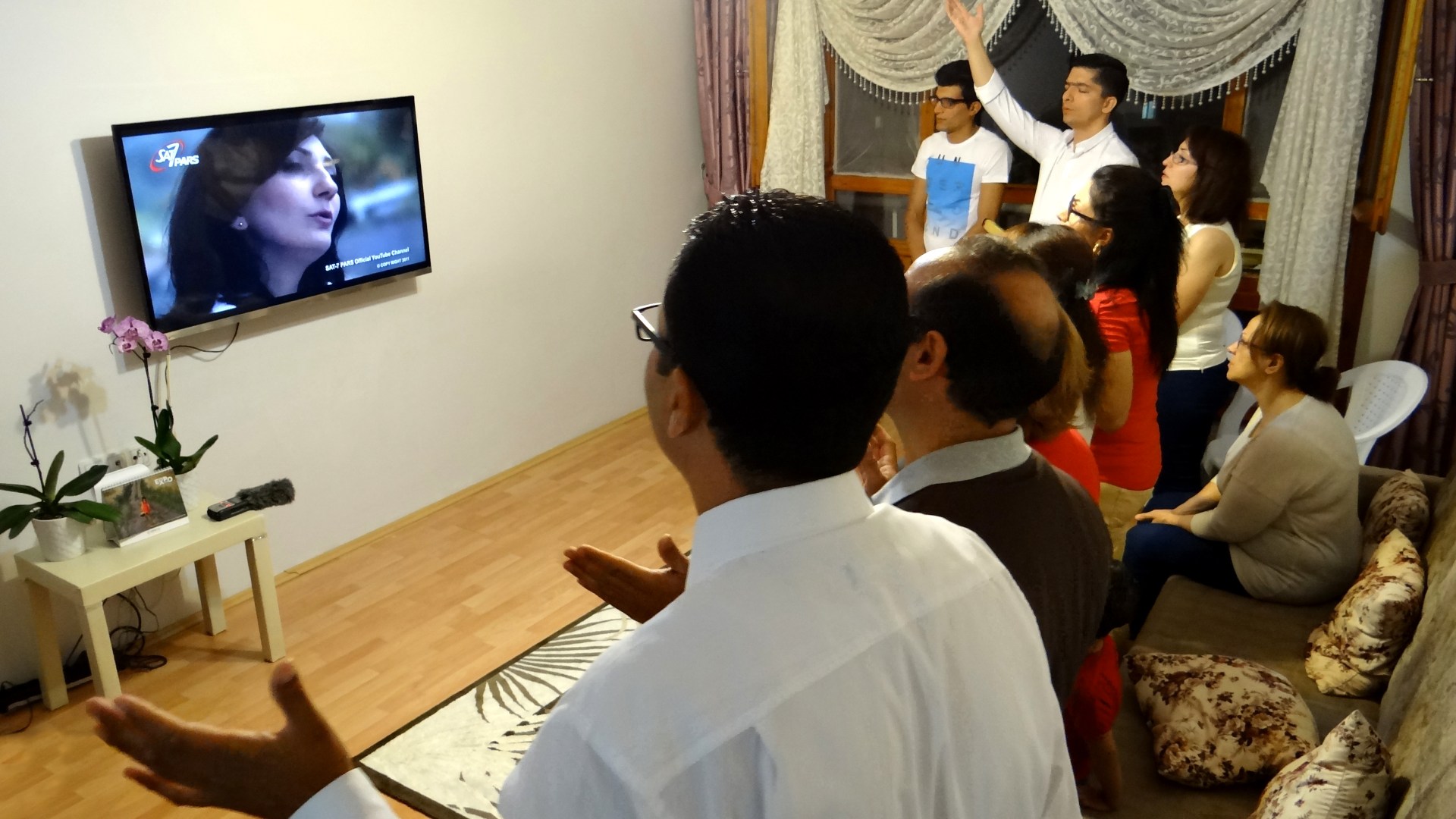
During a recent prayer service at Rugombo Pentecostal Church in the Cibitoke area of Burundi’s capital, Bujumbura, more than 100 worshipers followed pastor Joseph Ndayizeye as he led them in prayer.

He addressed the ongoing pandemic, stating that God is punishing human beings for their sins.

“It is not normal for the virus to invade the country and even kill the president,” prayed Ndayizeye, referring to Nkurunziza. “God punished us with the coronavirus pandemic because of our sins. Let us repent our sins and ask God for forgiveness and our prayers will be heard.”

His prayer is mirrored across the country of almost 12 million people. Many religious leaders in Burundi are reminding their congregants that God is angry with mankind for constantly sinning without repenting.

Ndayizeye noted that Burundian authorities have continued to commit serious human rights abuses against civilians and detainees with impunity.

“You cannot kill innocent people and promote evil like same-sex marriage and go unpunished,” he warned. “But our God is merciful. When we pray to him, there’s nothing impossible. He will defeat the coronavirus and we will be free.”

Burundi has recorded about 2,500 coronavirus cases, with 3 fatalities. In response, many citizens have intensified prayers and sought divine intervention in the fight against the deadly virus.

Although the landlocked country has closed its borders as new measures against the pandemic, officials said they have no plans to accept COVID-19 vaccines after the health minister, Thaddee Ndikumana, expressed reservations.

“Since more than 95 percent of patients are recovering, we estimate that the vaccines are not yet necessary,” said Ndikumana, noting the nation will focus on prevention measures.

Pascal Nyabenda, a politician who served as president of the National Assembly of Burundi from 2015 to 2020, has claimed that the virus was brought by God to punish the nation for its sins and urges churches to continue praying so that citizens will be safe from the pandemic.

“Only God can save this nation as we continue to observe the health protocols laid down by the ministry of health. Let us pray and ask for forgiveness from God,” he recently said at a Pentecostal church in northern Burundi.

However, pastor John Bigirimana has warned religious leaders and government officials about misquoting Bible verses and using them out of context to misinform the public about the pandemic. He said being born again does not mean that people should stop thinking and act brainwashed as in a cult. Instead, he urged Burundians to protect themselves from the virus and to embrace vaccines, saying Christians should have faith in both science and God.

“People should realize that COVID-19 is alive and seek medication and even get vaccinated,” said the pastor of Buterere Pentecostal Church in Bujumbura. “There’s nowhere in the scriptures where God commands Christians not to seek medical assistance. This is a pandemic all over the world. It’s not only to Burundians. Let’s not be cheated, unless we all want to die.”

Across the border, Magufuli on several occasions insisted that his country of 60 million, with a population roughly two-thirds Christian and one-third Muslim, had long defeated the virus through prayers. Before he was hospitalized, the president urged Tanzanians to pray for three days to defeat the new coronavirus variants amid warnings that the nation was seeing a deadly resurgence in COVID-19 infections.

“Maybe we have wronged God somewhere. Let us all repent,” Magufuli, who was a Catholic, told mourners at a funeral for his chief secretary, John Kijazi, on February 19. “God has never forsaken this nation. Let’s pray and fast for three days, I am sure we will win. We won last year, we will win this year and years to come.”

The Tanzanian president never locked down his nation to prevent the spread of the virus. Markets, churches, sport events, bars, and restaurants have remained open since the country confirmed its first case of COVID-19 a year ago. Authorities stopped updating virus cases last year when there were 509 cases and 21 deaths.

Magufuli also rejected COVID-19 vaccines for being promoted by foreign companies and countries, and had refused to embrace face masks and social distancing measures.

But the latest surge in COVID-19 deaths has left religious leaders and residents who initially believed in the power of prayer worried and concerned about their safety. Tanzania lost 10 other prominent citizens to coronavirus-like symptoms in recent weeks. Among them was Seif Sharif Hamad, the vice president of the semi-autonomous island region of Zanzibar, whose infection with COVID-19 had been announced by his political party.

Tanzanian pastor Joseph Mayala Mitinje said that although God heals virtually every known disease, it was time for Christians to understand that God often uses medicine to accomplish his healing.

“I don’t believe that there’s any disease that God cannot heal. He has given us the authority to cast out evil spirits and to heal every kind of disease and illness,” said Mitinje, an evangelical pastor who ministers at Africa Inland Church Tanzania in Arusha. “But God has filled men and women with the spirit of healing. Some go through medical college, and others God just fills them with the spirit of intelligence, knowledge, skills, and understanding like Bezalel and Oholiab [Exodus 31].”

“We should all understand that healing comes from God either through prayers or medical knowledge, because that’s a gift from God for the benefit of the public,” he said. “Jesus has healed a lot of people with coronavirus, but it’s not being reported because not everyone with COVID-19 is dying.”

Earlier this month, Tanzania’s Catholic church publicly acknowledged the reality that the virus was spreading. The leaders announced that the church had lost 60 nuns and 25 priests in the past two months who had shown symptoms.

“Priests are dying and sisters are dying, but this number within two months has shocked us especially considering the government has strengthened better health systems," said Father Charles Kitima, secretary of the Tanzania Episcopal Conference, in a statement in Dar es Salaam. “Please continue taking precautions against this disease by following the instructions of the Ministry of Health.”

As COVID-19 continues to ravage the globe, with about 121 million confirmed cases and more than 2.6 million related deaths, the debate among East African Christians over the role of faith and prayer in fighting the disease continues to escalate.

“Can God heal a person from coronavirus? The answer is both yes and no,” said Erick Onzere, a Pentecostal pastor with the Assemblies of God in Kenya. “To those who believe in the name of the Son of God will obviously receive any kind of healing because there is power in the name of Jesus. But it’s difficult to receive healing or anything from Christ if we don’t believe he can give it to us. God heals in response to faith.”

However, Damaris Parsitau, a senior lecturer at the department of philosophy, history, and religious studies at Egerton University in Kenya, said no amount of prayers or faith can cure the virus. She believes only science and medicine are a reliable solution to the pandemic.

“African Christians have been praying for a cure for AIDS/HIV and Ebola for decades, but not a single person has certainly been cured of these dangerous viruses. The same logic should apply to COVID-19,” she wrote in an article for The Elephant.

“Faith and science should not be in contradiction with each other. Each plays important and significant roles in our lives,” she wrote. “Faith and prayers hold us together in hope and community while science tackles the virus in scientific and practical ways.”

Meanwhile, back in Burundi’s capital, Ndayizeye said even countries that have strictly followed health protocols laid down by the government have lost thousands of people to the virus. The Pentecostal pastor urged his congregation to repent and turn to God—citing the example of the Israelites begging Moses for help receiving forgiveness—to avoid imminent deaths.

“We have no choice right now but to trust God,” he said. “Repentance would bring healing.”

Additional reporting by Religion News Service

News
Wire Story

Black Pastors Push for Compromise Rather than Equality Act

Dozens of leaders are advocating for the Fairness for All proposal, which would match LGBT protections with religious exemptions.

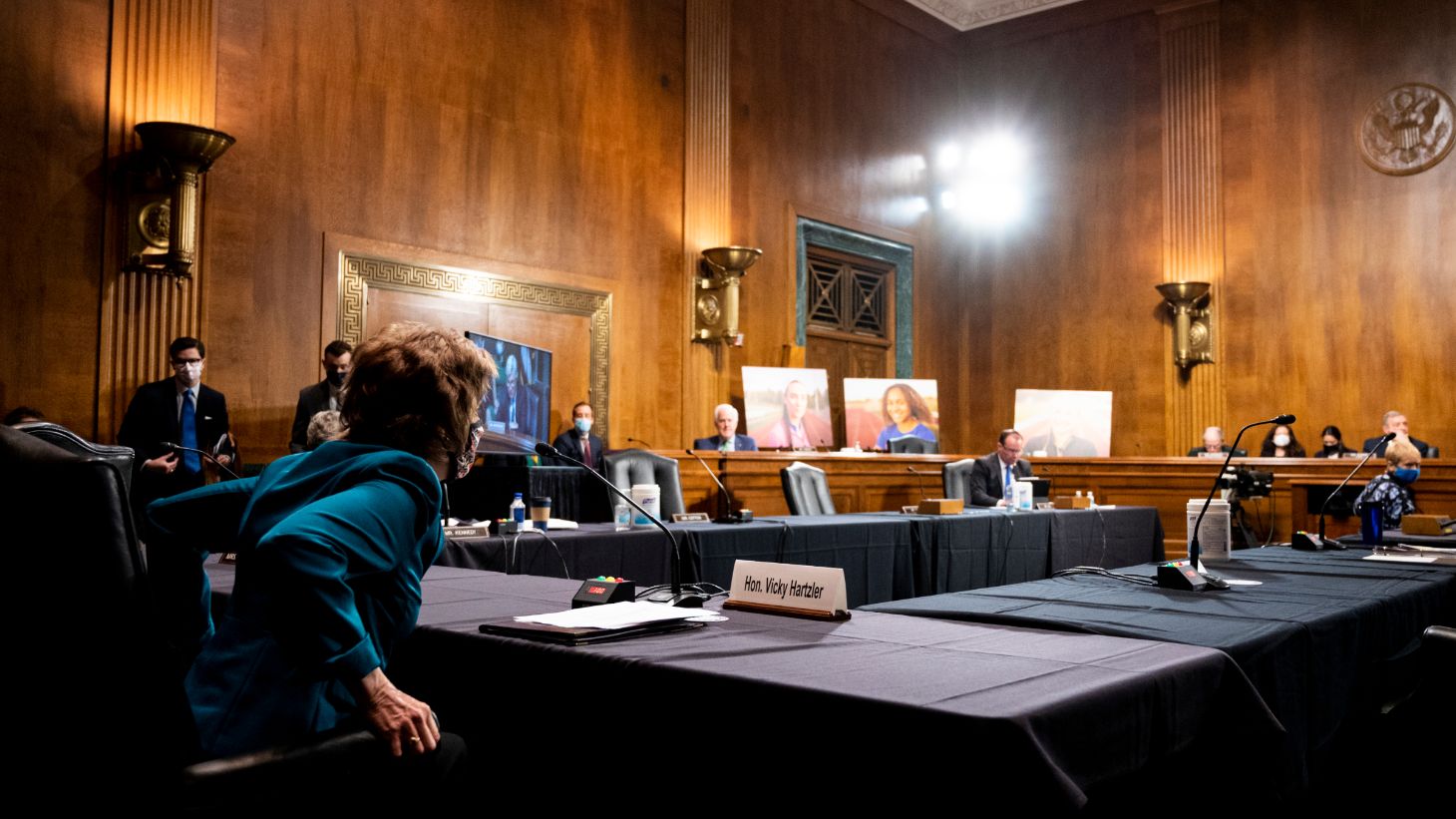
Senate Judiciary Committee meeting Wednesday.

Senate Judiciary Committee meeting Wednesday.

Christianity Today March 17, 2021
Bill Clark / CQ Roll Call via AP Images

Fifty-seven Black Christian leaders have written a letter to members of the US Senate’s Judiciary Committee expressing support for sweeping LGBT rights but asking for a new bill that includes religious exemptions.

The signers, including representatives of the major black Christian denominations, said passage of the Equality Act would deny federal funding for faith-based programs that profess a traditional view of sexuality. For example, it would end free and reduced-cost lunch programs for children who attend religious schools and revoke federal loan eligibility for tens of thousands of students who attend hundreds of religious colleges.

“…We want to clearly state our support for federal protections for LGBT persons in employment, housing and the like,” the letter states. “We’re committed to embracing and advocating for those safeguards. Unfortunately, the collaborative process and substance of the Equality Act fall well beneath the standard necessary to cultivate a healthy pluralistic society.”

The Equality Act, which passed the Democratic-controlled US House of Representatives on February 25, would amend the Civil Rights Act to ban discrimination based on sexual orientation and gender identity. It does not include exemptions for religious groups, and it would override the Religious Freedom Restoration Act, which prohibits the federal government from “substantially burdening” individuals’ exercise of religion unless there’s a compelling government interest.

The Senate’s Judiciary Committee held a hearing on the Equality Act on Wednesday. Despite broad Democratic Party support, in its current form the bill probably has no chance in the Senate, given it will need 10 Senate Republican votes in order to beat back a GOP filibuster.

The faith leaders are advocating for a rival bill called Fairness for All, which would provide broad protections for LGBTQ people and, at the same time, provide exemptions for religious institutions that uphold traditional beliefs about marriage and sexuality. That bill was introduced in the US House last month and is modeled on the “Utah Compromise,” a 2015 state law that strengthened religious freedom and protected LGBTQ people from discrimination.

The letter was written as part of the And Campaign, a Christian advocacy group committed to bringing conviction and compassion into the public square. The group is led by Justin Giboney, an Atlanta lawyer and political strategist who was a delegate to the 2012 and 2016 Democratic National Convention.

“We want to be clear that we want to embrace and advocate for LGBTQ rights,” Giboney told Religion News Service. “But we have to do it in a more thoughtful manner than the Equality Act does. Religious liberty and LGBTQ rights are not necessarily in conflict. The Utah Compromise and Fairness for All has shown us that.”

The letter is noteworthy because many evangelical and conservative Christians, such as the Southern Baptist Convention and the US Conference of Catholic Bishops, oppose the idea of adding sexual orientation and gender identity as protected classes.

Among the signatories are A. R. Bernard, pastor of a Brooklyn megachurch and onetime evangelical adviser to former President Donald Trump (Bernard stepped down from that unofficial board in 2017); the Rev. Suzan Johnson-Cook, who served as ambassador-at-large for international religious freedom under former President Barack Obama; and the Rev. Barbara Williams-Skinner, a former executive director of the Congressional Black Caucus.

The signers said that the Equality Act was not the result of a collaborative process and that it excluded the voices of faith leaders. (Several faith groups on the political left advocated for it.)

“The Equality Act is a reflection of our broken system, not an example of the civic spirit and good faith measures necessary to heal it,” the signers said.

In addition to threatening free lunch programs and Pell grants to religious institutions, the pastors said the bill would convert houses of worship and other religious properties into public accommodations. That means churches might be compelled to rent out their facilities for same-sex weddings, for example, despite objecting to the practice.

Church Life

Capturing the Transcendent Heartbeat of Jerusalem’s Christians

Local photographer Ofir Barak documents the worship of the city’s religious stewards.

Capturing the Transcendent Heartbeat of Jerusalem’s Christians

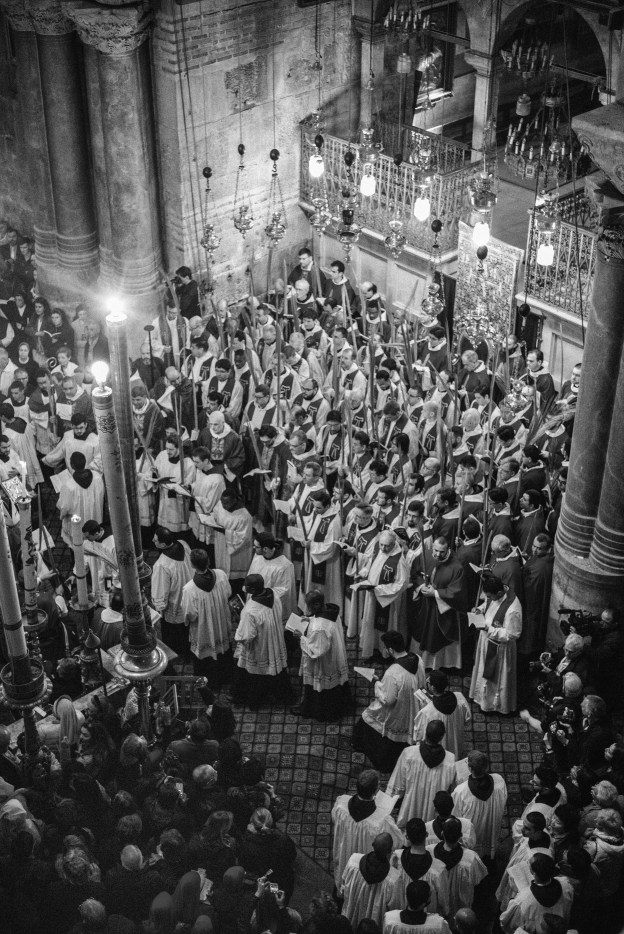
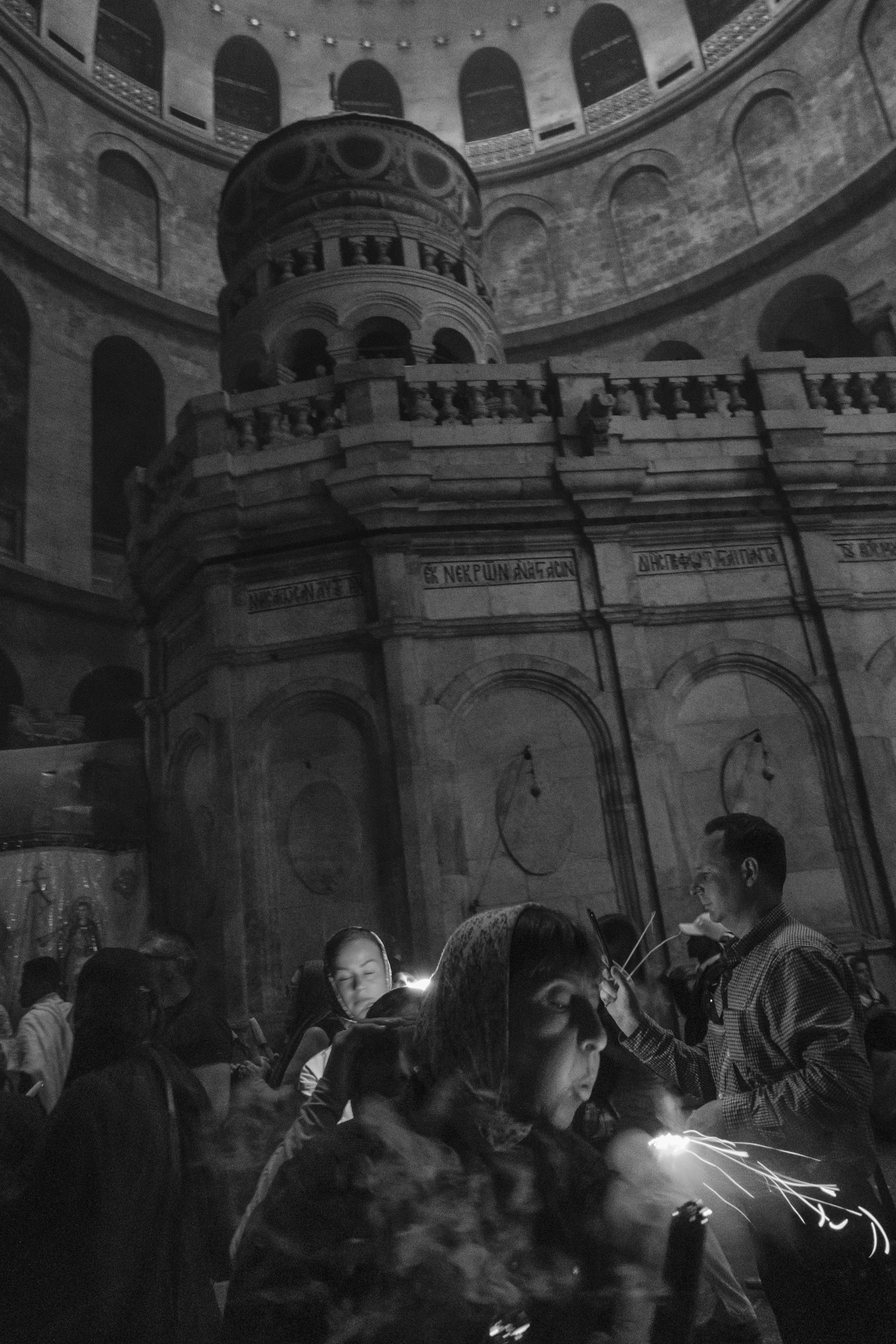
Palm Sunday | Church of the Holy Sepulchre

1 of 11

Palm Sunday | Church of the Holy Sepulchre

Ofir Barak

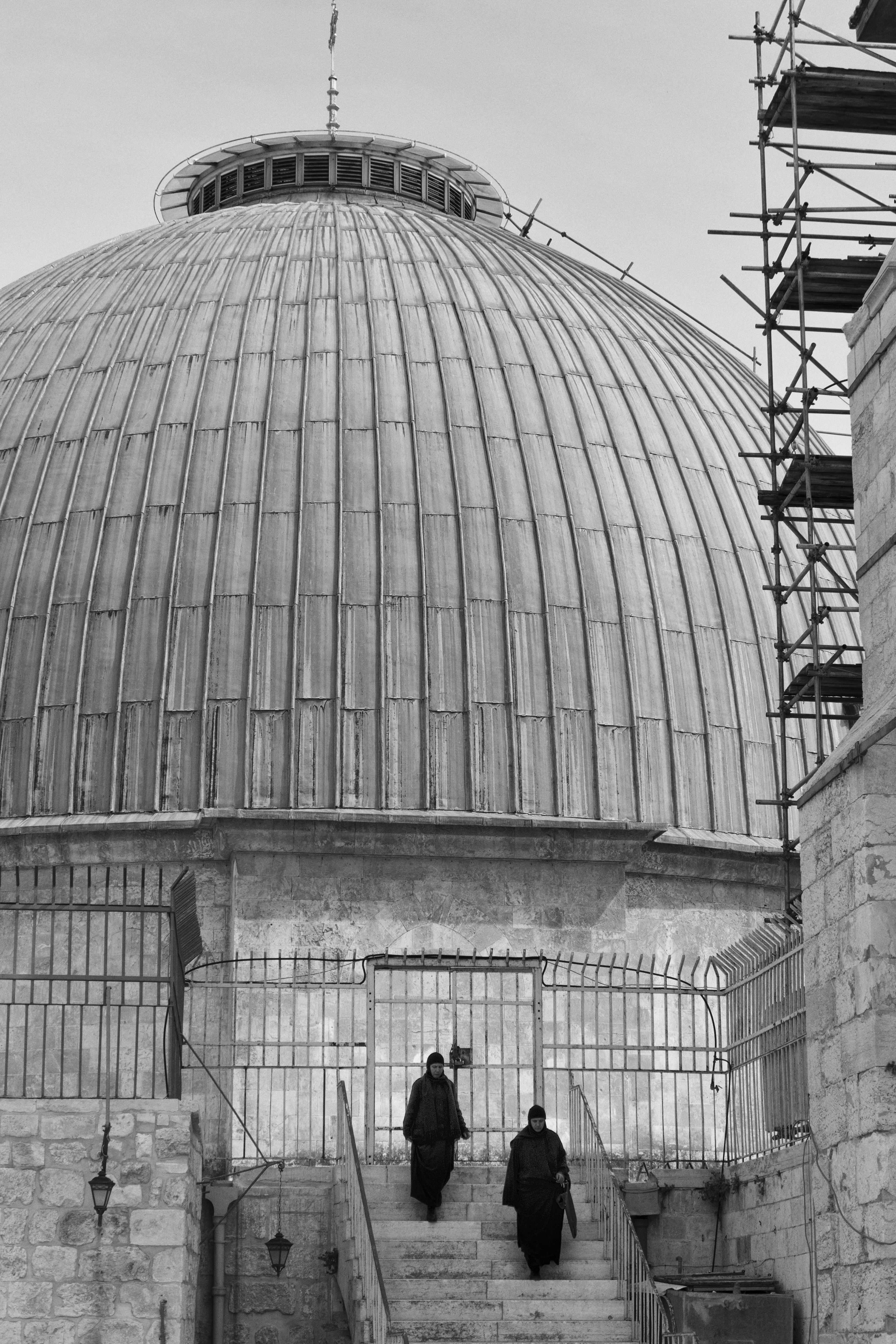
Dome | Church of the Holy Sepulchre, traditional site of Christ’s burial and resurrection

2 of 11

Dome | Church of the Holy Sepulchre, traditional site of Christ’s burial and resurrection

Ofir Barak

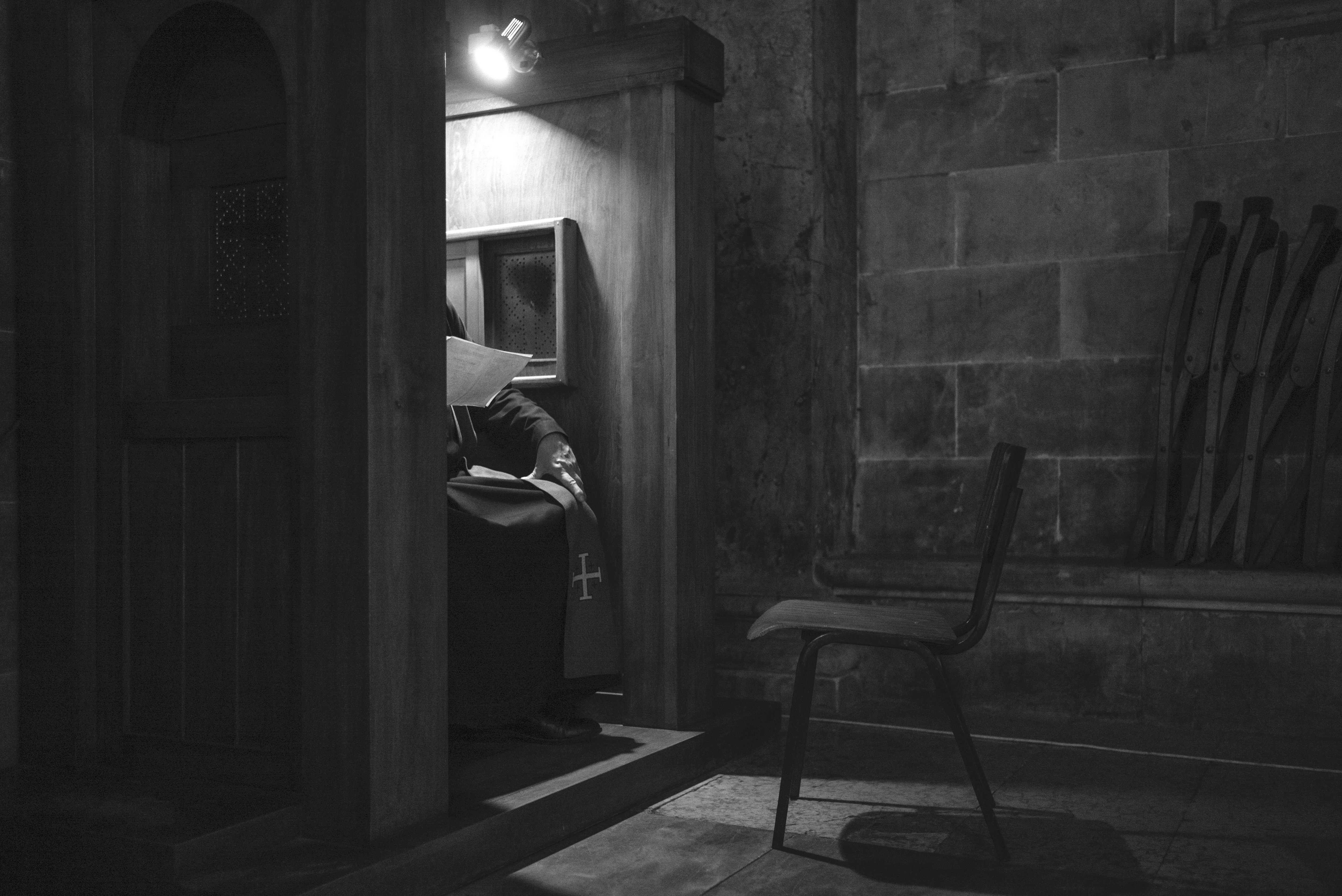
Confession Booth | Church of All Nations in Gethsemane, Roman Catholic basilica that houses what is said to be the stone where Jesus prayed before his arrest

3 of 11

Confession Booth | Church of All Nations in Gethsemane, Roman Catholic basilica that houses what is said to be the stone where Jesus prayed before his arrest

Ofir Barak

Church of the Holy Sepulchre

4 of 11

Church of the Holy Sepulchre

Ofir Barak

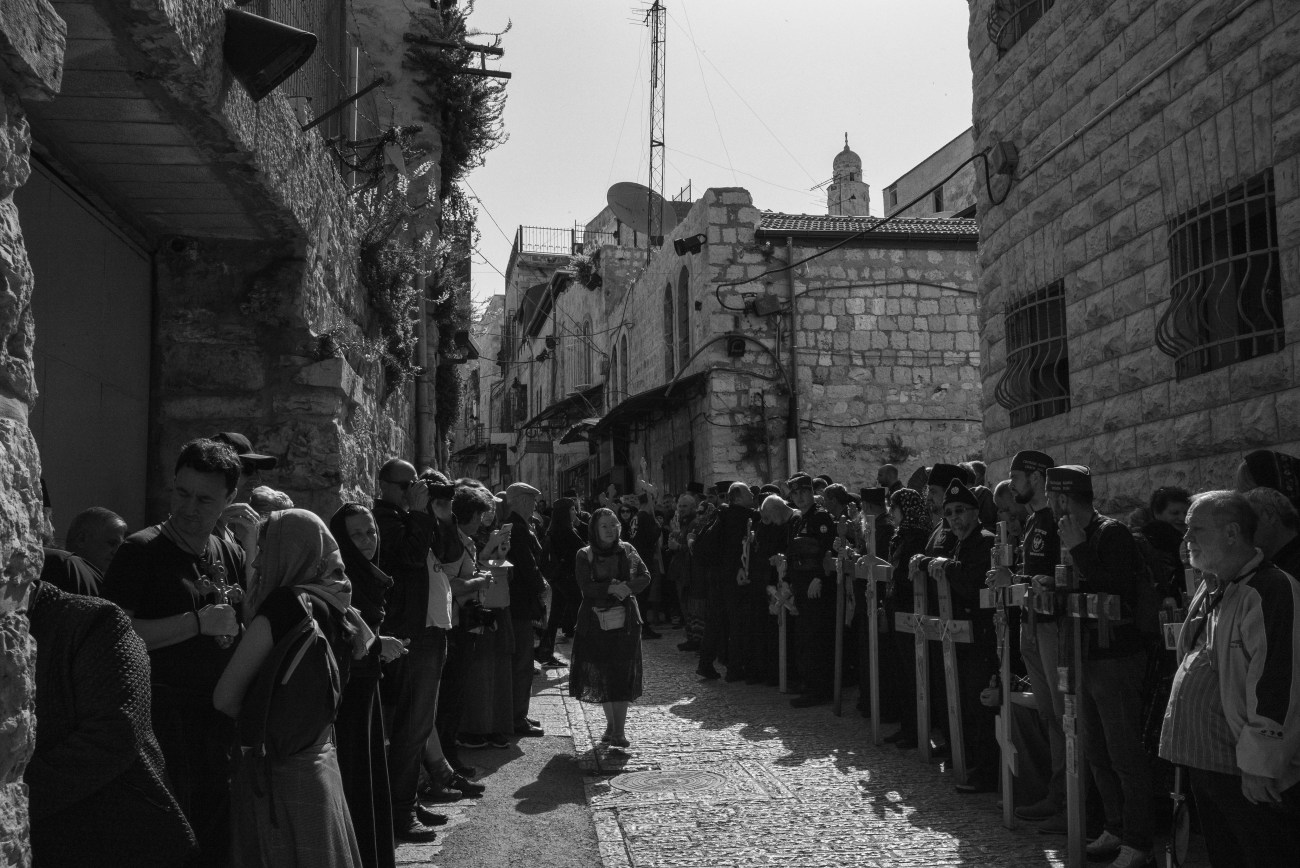
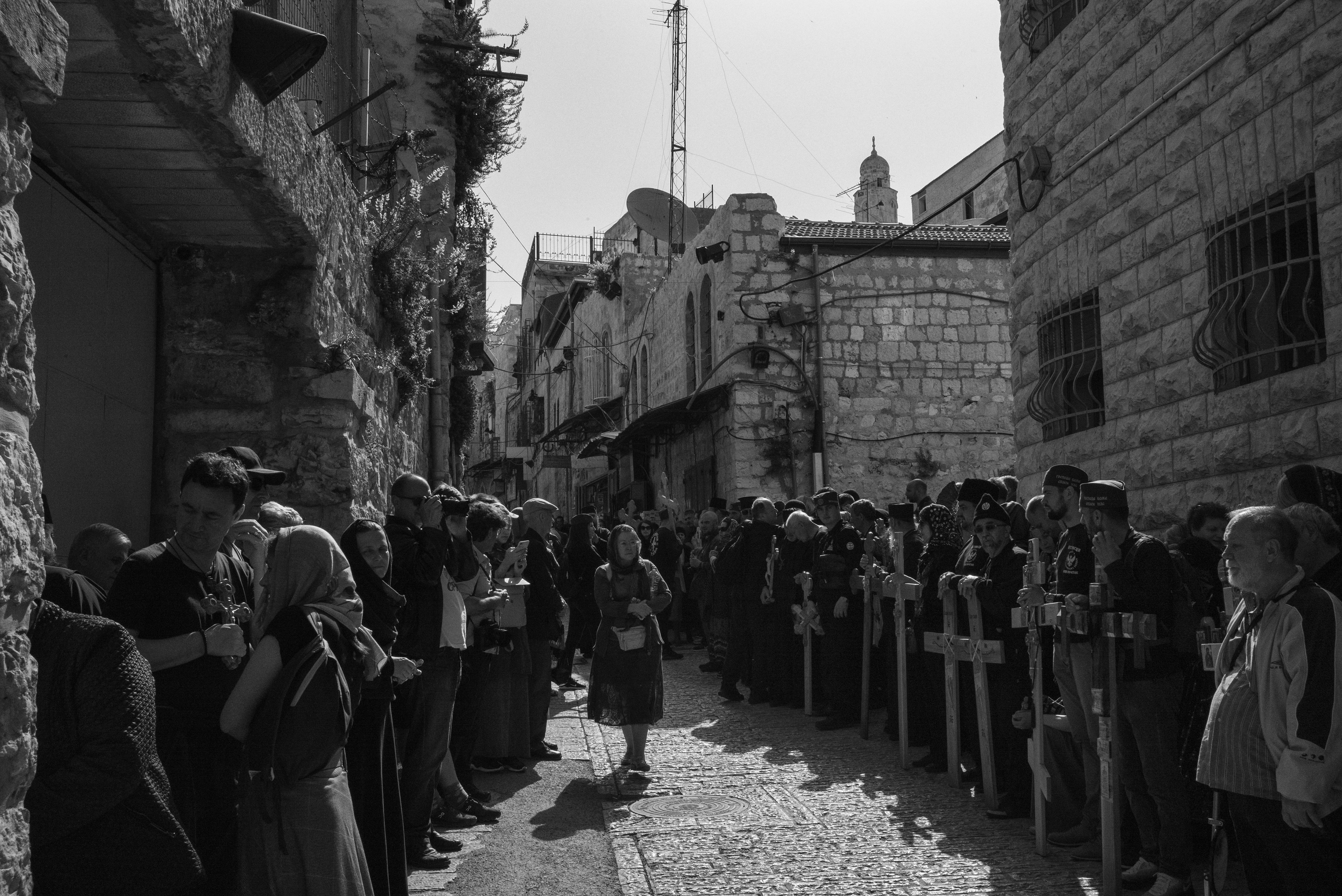
Good Friday | Onlookers at the Via Dolorosa processional route

5 of 11

Good Friday | Onlookers at the Via Dolorosa processional route

Ofir Barak

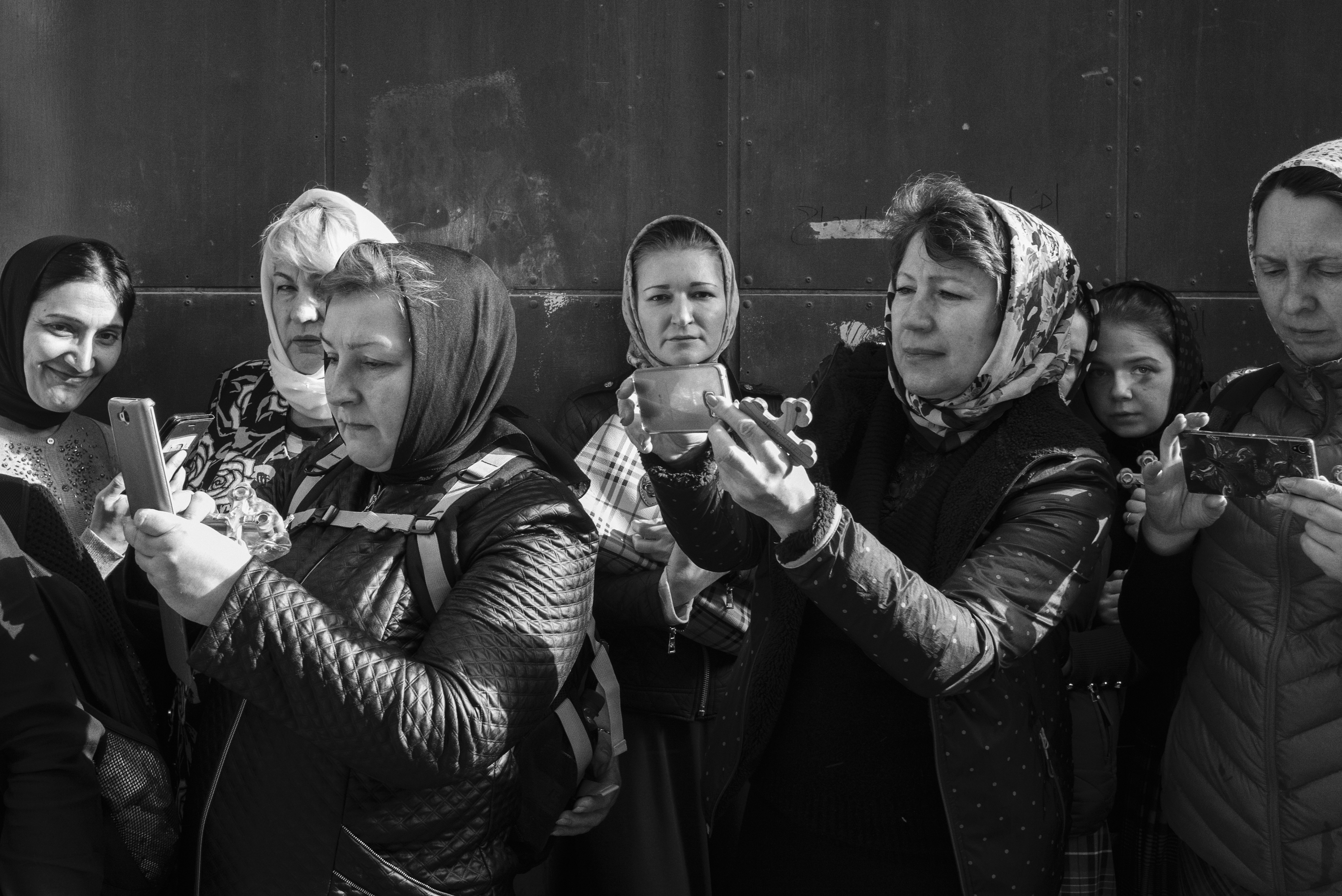
Good Friday | Onlookers at the Via Dolorosa processional route

6 of 11

Good Friday | Onlookers at the Via Dolorosa processional route

Ofir Barak

Stone of Anointing | Traditional location where Christ’s body was laid after the Crucifixion, housed at the Church of the Holy Sepulchre

7 of 11

Stone of Anointing | Traditional location where Christ’s body was laid after the Crucifixion, housed at the Church of the Holy Sepulchre

Ofir Barak

Stone of Anointing | Traditional location where Christ’s body was laid after the Crucifixion, housed at the Church of the Holy Sepulchre

8 of 11

Stone of Anointing | Traditional location where Christ’s body was laid after the Crucifixion, housed at the Church of the Holy Sepulchre

Ofir Barak

Holy Fire Ceremony | Orthodox tradition of passing the “miraculous” flame in the Church of the Holy Sepulchre

9 of 11

Holy Fire Ceremony | Orthodox tradition of passing the “miraculous” flame in the Church of the Holy Sepulchre

Ofir Barak

Pilgrims near the Aedicule at the Church of the Holy Sepulchre

10 of 11

Pilgrims near the Aedicule at the Church of the Holy Sepulchre

Ofir Barak

Jordan River Baptism | Qasr al-Yahud, traditional location of Jesus’ baptism

11 of 11

Jordan River Baptism | Qasr al-Yahud, traditional location of Jesus’ baptism

Ofir Barak

Log in or subscribe to view the slideshow.

Israel leads most other nations in vaccinating against COVID-19. But foreign tourism to the Holy Land remains largely shut down, and Jerusalem this Easter will again be defined by much emptier streets, hotels, and restaurants than usual.

In the run-up to Holy Week last year, media producers released a slate of products to help homebound pilgrims experience the city virtually. Filmmakers debuted a documentary about the Church of the Holy Sepulchre, the traditional site of Jesus’ death, entombment, and resurrection. Museums and travel promoters released virtual reality tours of many of the spots on Christian visitors’ must-see lists.

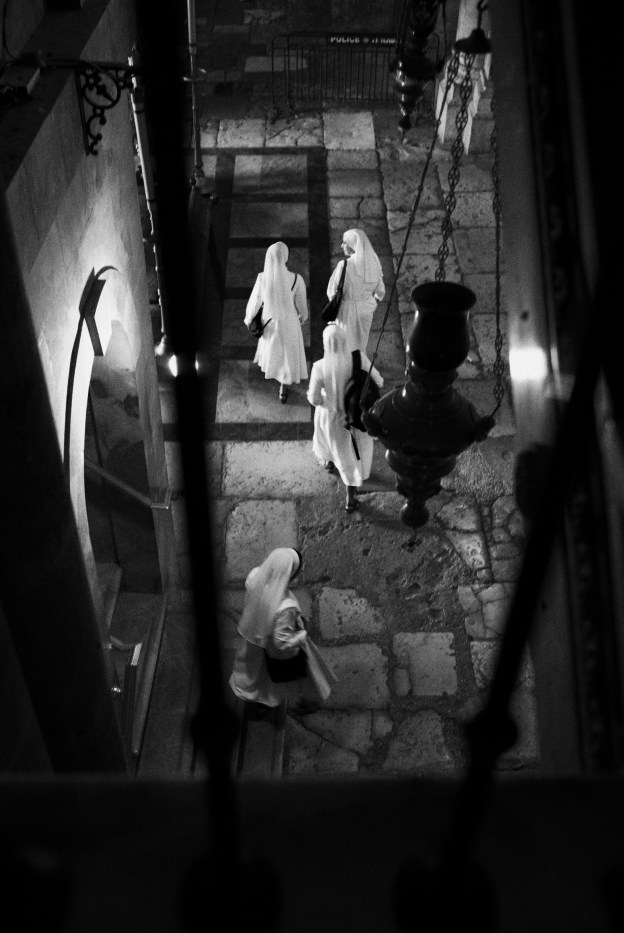
Jerusalem, however, has always been more than a destination. It is an ancient city with a transcendent heartbeat, the cradle of Judaism and Christianity, the center of both interfaith and intra-faith conflicts. “It is a place,” says photographer Ofir Barak, “where kings, prophets, and pilgrims have all stood through the ages.”

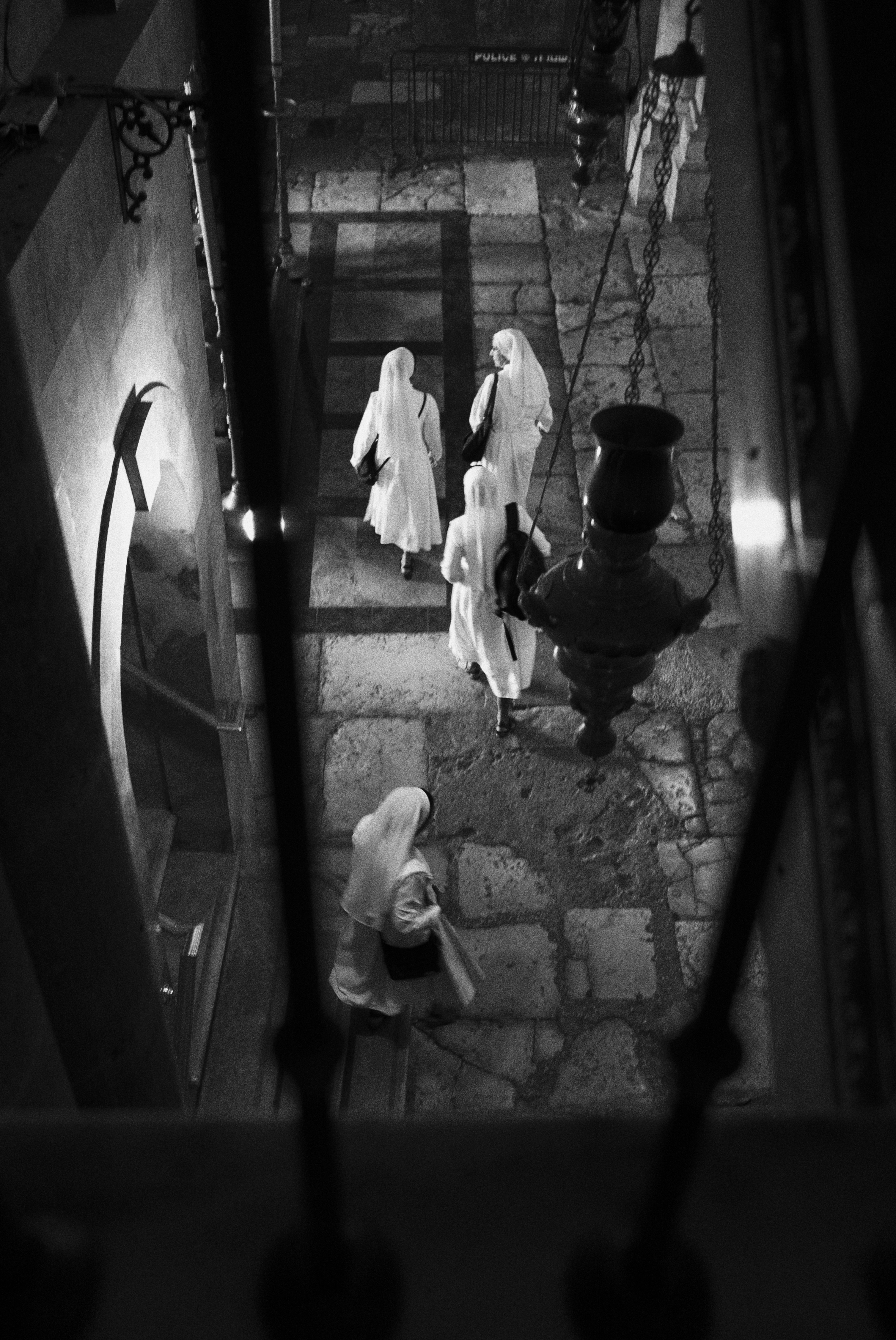
For years, Barak has documented local worshipers through whom those deep roots run. His images here, taken between 2016 and 2020, were included in his self-published book Stones and Bones. They center on the people who have been discipled in the shadows of the Old City, even as believers from abroad mingle among them.

The local Orthodox, Catholic, and Protestant Christians steward strains of faith that predate jet travel. In ways that a 360-degree digital walkthrough cannot, Barak’s choice of black-and-white imagery challenges the presumptiveness of our passport-acquired experiences. As enlightening as real-life and even virtual visits can be, they are but temporal glimpses of eternal realities. —CT editors

Books

5 Books That Help Believers Persevere Through Doubt

Chosen by A. J. Swoboda, author of “After Doubt: How to Question Your Faith without Losing It.”

Cavan Images / Getty

A Change of Heart: A Personal and Theological Memoir

Thomas Oden

As a young man in the 1950s, Oden was a budding progressive theologian who was transfixed by the social revolutions of his time. But an encounter with the writings of the early church fathers brought about a return to historic Christianity—to Jesus. Oden’s memoir, A Change of Heart, tells the story of one who underwent the deconstruction journey and came away with a stronger, more orthodox faith.

Sacred Fire: A Vision for a Deeper Human and Christian Maturity

Ronald Rolheiser

Rolheiser is a Catholic theologian whose spiritual writings appeal to increasing numbers of Protestants. Sacred Fire offers a fresh vision of Christian formation and discipleship. While evangelical readers may differ at points, Rolheiser’s vision of oneness with Christ is at times breathtaking. For those experiencing doubt and deconstruction, there is often a desire for answers. But Rolheiser invites us to something deeper: an experience of the love and mercy of Christ’s presence.

The Road Trip that Changed the World: The Unlikely Theory that will Change How You View Culture, the Church, and, Most Importantly, Yourself

Mark Sayers

Australian pastor and cultural critic Mark Sayers is gifted at helping Christians reframe the pursuit of Jesus in a post-Christian context. Here, he gives a fascinating look at a book that changed a generation—Jack Kerouac’s On the Road. Sayers’s cultural insights are shrewd, but what impresses most is his invitation to faith in Jesus in an age of cynicism. The goal of Christian spirituality, he shows, is finding, not endless seeking.

A Prayer Journal

Flannery O’Connor

O’Connor, the acclaimed Southern writer who endured a nearly lifelong battle with illness, is something of a patron saint for those who doubt. Few writers have so profoundly put to pen the experience of someone struggling with faith. O’Connor’s intimate prayer journals don’t offer all the answers—they offer the words of a friend sharing the same pain.

For the Life of the World: Theology That Makes a Difference

Miroslav Volf and Matthew Croasmun

While not dealing head-on with the topic of doubt, this book sets a helpful framework for faith and theology in an age of radical skepticism. Volf and Croasmun contend that theological self-critique can be healthy, but only as it furthers repentance, grace, justice, and mercy. As the authors write, “We need an ‘I have a dream’ speech, not an ‘I have a complaint’ speech.”

New & Noteworthy Fiction

Chosen by Susan Meissner, author of “The Nature of Fragile Things” and “The Last Year of the War.”

The Midnight Library

Matt Haig (Viking)

Who of us hasn’t wondered how different our lives would be if we’d made different choices? If we’d gone to College A instead of College B? If we’d married Person C instead of Person D? And if we could have a do-over, would we want one? The Midnight Library depicts a magical place, in between the life we’ve lived and the lives we could have lived, where we can enter—in progress—what seems like the better life. Much like the film It’s a Wonderful Life, the novel shows us how choosing a different existence would change not just our own life trajectories but also those of others—perhaps in terrible ways.

The Invisible Life of Addie LaRue

V. E. Schwab (Tor Books)

It’s the early 1700s, and Addie LaRue, desperate to escape an arranged marriage, makes a bargain with a dark deity, selling her soul for what she perceives as unfettered freedom. But she realizes the tragic consequences of her choice when she discovers that her “reward” is an immortal life where no one can remember her. The novel contains some adult language and also a few bedroom scenes, albeit nothing gratuitous. But Schwab is a masterful writer—her prose is hauntingly beautiful and evocative—and although Addie makes some chilling choices, her story builds toward an ending as perfectly satisfying as an ending can be.

The Mystery of Mrs. Christie

Marie Benedict (Sourcebooks Landmark)

If you’re in the mood for pure entertainment, and especially if you’re a devotee of the queen of mysteries, Agatha Christie, I highly recommend The Mystery of Mrs. Christie. Benedict imagines what really happened in 1926 during those 11 days when the famous writer went missing. The disappearance—which was never explained, although Christie claimed amnesia—allowed Benedict to put herself in the shoes of a mystery writer and concoct an explanation. The result is a thoroughly satisfying whodunit and welcome escape for our troubled times.

Books

Gender-Identity Conversations Don’t Have to Be Scary

Preston Sprinkle gives guidance on thinking biblically and listening in love.

Illustration by Rick Szuecs

Of the many books concerning Christianity and LGBT topics, most have addressed the front end of the acronym, leaving the back end woefully neglected. Yet questions of gender identity are growing in volume and urgency, both within and outside the church. In his latest book, Embodied: Transgender Identities, the Church, and What the Bible Has to Say, Preston Sprinkle, president of the Center for Faith, Sexuality & Gender, provides guidance on addressing these questions constructively and lovingly. Author and Cru leader Rachel Gilson spoke with Sprinkle about his book.

Embodied: Transgender Identities, the Church, and What the Bible Has to Say

Why this book, and why now?

There are two emphases woven together in the book: a people strand and a conceptual strand. I’m focused, in other words, on loving people well while also thinking biblically, logically, and scientifically on all the topics that gender-identity conversations stir up: male and female sexual embodiment, relationships between body and soul, and gender stereotypes surrounding masculinity and femininity. We can’t just do one without the other. Thinking carefully without loving well leads to damage just as surely as loving well without thinking carefully.

Did any of your views change while researching and writing?

I certainly gained a stronger appreciation for some of the finer nuances of these conversations. For example: One common question is whether someone can be born in the “wrong” body. My hunch going in was: no. Having wrestled with that question from several angles, I haven’t changed my mind. But I can better understand why some make this claim.

How much of your personhood is due to your brain, and how much to your body? That’s a complex question! It brings in neuroscience, philosophy, theological anthropology, and other perspectives on human nature. There are more complexities than our culture-war framework acknowledges.

In conversations about gender, intersex people often get used as mascots. Sometimes they’re lumped in with the trans populations, and on other occasions they’re ignored entirely. How can we care well for people whose bodies aren’t fully male or female in a conventional sense?

Intersex people are often like the kid caught in a divorce, pulled in different directions and utilized in service of one argument or another. As several intersex people have pointed out, this feels dehumanizing.

If we’re going to discuss the subject of intersex conditions, let’s make sure we’re not doing so in passing, as a stepping stone toward something else. There are important questions, in their own right, about newborns whose sex is ambiguous: Should they be operated on right away? And who gets to determine which sex is the preferred outcome? These are big concerns within the intersex community. There are overlaps, of course, with conversations on transgender identity, but the point remains that we can’t just employ intersex conditions in service of a broader ideological argument about gender and sexuality.

For those who don’t identify as trans or intersex, how do we enter into this conversation? What are some dos and don’ts?

First, listen to actual trans people—especially if you’re coming from a more conservative Christian environment. Sometimes that environment can harden our hearts toward those who have been marginalized, shamed, or shunned by the church, and the trans population often fits that description. To shave off the harsh edges of our posture, we need to maintain genuine relationships with trans people.

Second, we need to learn the right language—understanding, for instance, the difference between sex and gender, what gender identity means, and why words like “transgenderism” can be a turnoff. As one of my trans friends told me, “‘trangenderism’ feels like a nameless, faceless concept that people can vilify.” To many people, it can sound uncomfortably like a disease. Certain words convey certain unintended meanings, and that’s important to get clear.

Many people use sex and gender interchangeably. What is the difference?

It’s beyond dispute that humans are sexually dimorphic: We reproduce only when a male impregnates a female, and these categories are basic to our humanity. Scripture attests to this, stating that God created human beings as male and female (Gen. 1:27).

Gender, by contrast, deals with our psychological and social response to biological sex. Under that umbrella, you can identify three categories. Gender identity is our internal sense of who we are—whether we resonate with being male or female. Gender expression is how we manifest inward identity, typically with clothing or mannerisms that suggest masculinity or femininity. And gender roles refer to societal expectations for males and females. These concepts are related but still distinct.

Some Christians might hear your answer above and think, “That sounds reasonable, but the Bible doesn’t speak in those categories. What am I supposed to do with them?”

While the Bible doesn’t have a term like gender that’s used in distinction to sex, I think it does speak to the differences those words signify. It recognizes, of course, that humans are created male and female. And it does depict behavior that we might consider masculine or feminine.

In the Greco-Roman world, there were certain expectations that came with being male or female. You might be a biological male, but if you were kind to the marginalized, say, or washed people’s feet, you might be stigmatized as unmanly. While the Bible celebrates sex difference, it also challenges certain cultural stereotypes. Take someone like King David: He was a great warrior and cut the head off Goliath, but he wrote poetry, played the harp, and cried a lot. Or take the Book of Judges, where women like Deborah or Jael play crucial roles in military battles. Scripture has a more expansive vision, then, for what it means to live out our male and female identities.

We both have friends who identify as trans or nonbinary Christians. What would you say to believers who are suspicious about those labels?

Terms like trans or transgender can mean different things to different people. I have a biologically male friend, for instance, who calls himself transgender because he identifies as a woman. That’s the kind of usage that comes to mind most commonly. Another friend of mine is biologically female, and believes she’s female, but calls herself trans because she experiences gender dysphoria. So while some people use these terms to speak about their fundamental personhood, others use them mainly to describe their subjective experience.

Sometimes, it’s as simple as feeling like you don’t match a particular set of gender stereotypes. Often enough, that’s all nonbinary means—not that you don’t believe you’re biologically male or female, but that you don’t completely resonate with either masculinity or femininity. In the end, the only way to avoid confusion is getting to know the people themselves—and learning why they use the words they use.

What should trans readers take away from your book? And what about non-trans readers?

For my trans readers, I want them to feel seen and understood. I would never presume to tell them about their own lived experiences, but conceptually, I hope they find greater clarity about what science and Scripture do and don’t say. After all, many trans friends will remind me that they aren’t experts on these matters. They don’t necessarily have an airtight grasp of a biblical theology of gender—or even gender dysphoria itself.

As I say in my preface, however, my primary audience is non-trans people. I hope they’ll come away no longer scared of this conversation. Because if you’re scared of this conversation, you’ll likely be scared of trans people themselves. And that’s not a posture any Christian leader should have.

Church Life

The Cohabitation Dilemma Comes for America’s Pastors

More evangelicals are living together before marriage. Church leaders struggle to respond.

illustration by Matt Chinworth

In early 2019, the internet was aglow with news about Chris Pratt and his fiancée, Katherine Schwarzenegger, moving in together. Media outlets cited the couple’s evangelical Christian faith as the reason they did not cohabit until they were engaged. Few suggested there was any contradiction between Pratt’s cohabitation and his status as a “devout Christian,” a “folksy, popular evangelical” who urged “living boldly in faith.”

This may seem odd to those who recognize that Scripture forbids all sexual activity outside marriage. But the choice that Pratt and Schwarzenegger made isn’t contained to Hollywood—it’s the new norm among young, professing evangelicals across America.

While speaking to a large gathering of evangelical pastors in late 2019 in Pennsylvania, I asked how many of them regularly faced cohabitation in their churches. Most raised their hands. One told me that he had stopped conducting weddings because so many of his engaged couples were cohabiting and got angry when he addressed it. Another suffered bitter criticism from church members when he dismissed a church employee who refused to leave a cohabiting arrangement.

What I have seen for years in large national surveys and learned in interviews with a spectrum of pastors in 2019 corresponds with these anecdotes: Evangelicals, especially those under 40, increasingly see cohabitation as morally acceptable. Most young evangelicals have engaged in it or expect to.

Simply put, living together is far more common and accepted than Christians realize. American pastors are grappling with how to navigate wedding policies and premarital counseling among cohabiting congregants. But one thing is certain: If the church is to preserve and protect marriage, something about its approach has to change.

A habit of cohabiting

Evangelicals are much less likely than Americans overall to approve of cohabitation. Still, a Pew Research survey in 2019 found that 58 percent of white evangelicals and 70 percent of black Protestants believe cohabiting is acceptable if a couple plans to marry. The youngest Americans are far more liberal on cohabitation, with less than 10 percent finding it morally problematic.

This age difference is clear among evangelicals as well. In 2012, only 4 in 10 evangelicals ages 18 to 29 told the General Social Survey they disagreed with the statement: “It is alright for a couple to live together without intending to get married.”

The idea of waiting until marriage comes across as even more antiquated in other studies. The most recent National Survey of Family Growth, done by the Centers for Disease Control and Prevention and completed in 2019, has found that 43 percent of evangelical Protestants ages 15 to 22 said they definitely or probably would cohabit in the future.

Only 24 percent said they definitely would not. Over two-thirds of those ages 29 to 49 had cohabited at least once. And 53 percent of evangelical Protestants currently in their first marriage cohabited with each other prior to being legally wed.

Evangelicals, especially those under 40, increasingly see cohabitation as morally acceptable. Most young evangelicals have engaged in it or expect to.

The coronavirus pandemic also seems to be increasing cohabitation, according to the Population Research Institute. As more couples than ever are likely to delay marriage, many are opting to move in together rather than be physically separated under the force of COVID-19 restrictions. There is no reason to believe that these pressures are not affecting evangelical singles.

Bill Henry is senior associate rector of St. Stephen’s Anglican Church, a fairly affluent congregation in Sewickley, Pennsylvania. He has counseled at least 75 engaged couples, many of whom “choose to live together and/or sleep together before they are married and do not know they are sinning or choose to ignore the fact,” he said.

Henry estimated that roughly half of the teens and young adults in his church are comfortable with cohabitation and that more than a third of older adult attendees feel this way.

Pastors’ experiences confronting cohabitation vary depending on the size and location of their churches, the strictness of their church’s membership and marriage requirements, and the degree to which they conduct weddings and premarital counseling for nonmembers. But all of the pastors I’ve interviewed on the subject agree that cohabitation has become normalized among evangelicals.

In his 20 years of ministry, Rich Herbster of Mt. Pleasant Church, a congregation outside of Pittsburgh in the Evangelical Presbyterian Church, has witnessed what social scientists have long seen as parallel trends: exploding cohabitation and declining marriage.

“In a time when our congregation has more than doubled in size, I receive only a quarter the wedding requests,” Herbster said. “Our millennials are simply not getting married at the same rate that was true a generation ago.”

There is some reason for hope. The cohabiting habit is less acute among those who are theologically conservative and attend church weekly. Even with shifting cultural attitudes, the studies show that evangelicals who attend church regularly or who regard their faith as very important to their daily lives are much less likely to plan on cohabiting or to actually do so. Church attendance and personal faith commitment make a huge difference.

Nate Devlin, senior pastor of Beverly Heights Presbyterian Church near Pittsburgh, notes that those who grew up at his church and marry there are usually not living together. “However,” he said, “friends and distant relatives of those from the congregation and those loosely associated with the church who inquire about being married at Beverly Heights are more often cohabitating prior to marriage.”

But even among evangelicals who believe cohabitation is wrong, few can articulate why. Gerald Dodds, pastor of Bethel Evangelical Presbyterian Church in Enon Valley, Pennsylvania, believes the majority of teens in his rural congregation would not be able to explain from Scripture why living together before marriage is wrong, despite his clear, conservative biblical teaching. “It just doesn’t seem to get through sometimes,” he said.

Erie First Assembly of God senior pastor Nichole Schreiber has counseled four evangelical couples in the past year alone who were engaged and cohabiting. Many no longer see cohabitation as being at odds with their faith, which she believes is due to a “lack of understanding” about why it’s a poor decision in light of biblical principles.

Robert Hall recently retired as co-pastor of The Bronx Household of Faith, a small Conservative Congregational church in New York City. He said that while few of the church’s young people would publicly break with its traditional stance on sex within the bounds of marriage, those who feel differently simply opt out of membership. In the South Bronx, cohabitation has long been the norm, and liberal beliefs about it regularly arise in the church’s outreach.

The church’s newest pastor, Jordan Roberts, grew up in the tight-knit congregation. “I would say that cohabitation among young adults actively participating in the life of the church has either been nil or kept very quiet,” he said. Yet for his peers who were raised in the church and made a break with it, cohabitation is fairly common, particularly when childrearing is involved.

Jay Slocum has ministered in Episcopalian and Anglican churches over the past 20 years, most recently at Jonah’s Call Anglican Church of Pittsburgh but also in Northern Virginia. Among teens and young adults, he’s observed that the majority of new Christians and “cultural” Christians—those he says were raised in the church but may attend infrequently—believe cohabitation is acceptable.

In his experience, even perhaps a third of Christians he would consider “committed” are cohabiting. Many of “these believers have a strong sense of the sinfulness of cohabitation but may be tempted to give in to the practical benefits of living together, especially in urban settings or when they are in entry-level jobs, since economics is a definite factor in all of this,” Slocum said.

For richer, for poorer

Practical considerations, expedience, and economic factors consistently arise as justifications for cohabitation. Henry, the pastor in Sewickley, interviewed eight premarital couples—three of whom were cohabiting—as part of research for his Doctor of Ministry degree. When he asked them why young people in their generation choose to live together, the term “convenience” was used seven times. But finances was by far the most common rationale, mentioned twice as much.
Churches must be sensitive that economic and practical pressures can make it genuinely difficult for cohabiting couples to separate until marriage. When I was an elder, my church encountered a situation where a repentant cohabiting couple were not only poor, but were raising children together. While willing to marry, they did not see how they could live apart until their premarital counseling and wedding were completed.

And such pressures aren’t limited to young couples. Dodds pointed out that many widowed and elderly people today want to be married but are afraid that “getting married would hurt their government benefits.” They see living together as their only alternative to being alone.

Jack Roberts also pastors at The Bronx House of Faith and has witnessed the threats that poorly designed social policies and high costs of living pose for older believers wishing to marry. A new attendee was interested in joining the church, but she had been living with a man for 15 years—even helping raise his grandchildren.

“Everyone considered them married,” Roberts said. The church told them they would need to be legally married to join the church. She was willing; her partner was not. “They were both receiving disability, and if they told Social Security they were now married, he feared their disability checks would decrease. Consequently, they did not get married, she did not become a member of the church, and in fact, stopped coming.”

To be sure, practical pressures can also push couples away from moving in together, rather than toward it. Some of Henry’s interviewees noted that they did not want to give up their independence, or that convenience and financial incentives led them to remain in separate domiciles. Family disapproval also mattered.

But for believers, issues of doctrine and commitment appear to take center stage. As one of Henry’s interviewees said about young people today who refrain from cohabitation, “I think the biggest reason why people would wait is because of their faith and their belief that that’s the right thing to do.”

Premarital preoccupations

What approach should churches take when cohabiting couples seek premarital counseling or want to book the sanctuary for their wedding ceremony? It’s a quandary for many pastors made messier by the fact that most cohabitation among evangelicals is not even “premarital” in the strict sense of the word.

Among evangelicals who had ever cohabited, only 47 percent of first cohabitations had resulted in marriage at the time surveys were conducted. Among evangelicals who were currently cohabiting, only 14 percent were engaged, and another 21 percent had definite plans to marry when they moved in together.

Of the 12 pastors I interviewed, only four were willing to proceed with premarital counseling and officiation for cohabiting couples who did not separate prior to marriage.

Henry’s church, while open to marrying non–church members, will not conduct weddings for cohabiting couples who, following counsel and instruction, do not separate and cease sexual activity until they are wed.

Their position on cohabitation is clearly stated. “We ask the question at the opening of the pre-marriage process, so unless they lie (which has happened), we know who lives together,” Henry said. He is comfortable with refusing marriage services when necessary even though this means that some choose to walk away from his church or from having him officiate at the wedding.

“I present the idea of ‘leave, cleave, one flesh’ as a guideline and God’s best,” he said. “That means move out, if they live together, until marriage, and stop sleeping together, if they’ve started to, until marriage.”

Devlin’s Pittsburgh-area church also insists that those living together must separate and stop having sex until they are married. He offers to help the couple manage their temporary separation and often encourages them to “greatly expedite the wedding date.”

Slocum recounts that one church he was involved with developed a premarital course and premarital covenant where the couple would agree to either move into separate rooms and not have sex, or to move into different housing.

“The benefit of this was that we had a concentrated number of couples go through a discipleship process where I literally taught them a pattern that included: chastity, then marriage, then buy a house, then make babies while loving the city through your vocational calling,” he said. “The average age of our church kept going down because couples kept getting married and having babies!”

Illustration by Matt Chinworth

Other pastors I interviewed ministered to couples and addressed cohabitation without requiring that they cease cohabiting.

Herbster, for example, recognizes that, despite the common preference among couples to “test” a relationship by living together before committing to marriage, there is no research suggesting premarital cohabitation reduces the risk of divorce. He tells couples there are plenty of “secular studies” that suggest the opposite. National Survey of Family Growth data, for one, shows that when evangelicals were interviewed, 45 percent of marriages that resulted from first cohabitations had already dissolved. But for evangelicals who had never cohabited, 79 percent of first marriages were still intact.

“If I decide to proceed with the marriage,” he told me, “I try to establish a relationship with the couple, guide them toward the best path toward their marriage, and hope to prayerfully work with them toward embracing a biblical vision for their life together.”

Churches that require cohabiting congregants to separate until marriage should consider the financial hardship that may ensue in such cases, especially if children are involved, or where elderly people would lose necessary income by legally marrying. This may mean speeding up the wedding date or helping one of the partners with temporary housing.

In situations that call for it, some evangelical pastors have even suggested offering a church wedding and vows but forgoing a legal marriage certificate. In the future, I am certain many evangelical churches will begin seriously looking at church marriages and wedding vows as solemnly binding as any, without any expectation of a state marriage license.

Pastors can also approach these dilemmas proactively. First, congregations cannot take for granted that worshipers—young or old—know and understand biblical teaching on sex outside of wedlock. Christians often hold to myths that help justify cohabitation, such as the need for a couple to “practice” living together to be successful.

Churches need to equip and train people not only regarding Christian doctrine, but also by passing on real experience and practical wisdom. This could look as simple as This is what God teaches about cohabitation and sex outside marriage morally and theologically, and here is the evidence that his way really is the best path to a happy, stable, vibrant marriage.

Real compassion lies in the path of empathetic truthfulness, not sympathetic lies.

Many of the pastors I interviewed practiced this by preaching through Scripture and not avoiding culturally difficult texts on sexuality. Others may use topical sermons, Sunday school classes, youth groups, or guest speakers.

Second, we need to approach each other with humility and integrity. Far more people in the pews have cohabited or engaged in premarital sex than we realize or care to admit. Maybe it’s time to be honest about it and help younger believers learn from our failures.

Younger generations are not more sinful than their parents’ or grandparents’ generations; they are simply facing different opportunities and pressures to self-gratify and self-justify. We should approach discipleship on sexuality laterally—coming alongside our brothers and sisters with encouragement and empathy, sinners helping other sinners to love and serve the Lord.

Third, as the data and my pastor interviewees made clear, believers who regularly join in worship and fellowship with the visible church do a lot better than casual attenders. Nutrients don’t reach organs that are cut off from the body’s blood supply. Similarly, when Christians by God’s grace choose to be deeply committed to their faith, they are more likely to “hear … and obey” God’s truth (Luke 11:28).

Most pastors and other church leaders already encourage daily exercise of the Christian faith and weekly church attendance, but many others are negligent to follow up with church members who become sporadic in their involvement. In cohabitation, as with every other area of sinful temptation, the basic disciplines of the Christian faith are necessary for growth.

Fourth, couples heading toward marriage often cohabit while saving money for a large wedding. I have seen this in my own extended family. This prioritizes a wedding celebration over the sanctity of marriage and obedience to God. There is no reason that couples cannot simply marry before moving in together and then save up for a larger marriage celebration later.

In a time in which same-sex marriage and gender identity have become the dominant sexuality issues dividing professing believers, it might seem like cohabitation is something evangelical pastors could afford to downplay, if not ignore, as at least one of my pastor interviewees suggested.

However, our God is not only merciful, long-suffering, and compassionate, but he is a just and holy God whose Word is perfect. We do not honor him by setting aside what we may view as “lesser sins.”

And for those experiencing gender confusion or same-sex attraction, ignoring certain sexual sins or temptations from the pulpit does not appear wise or kind; it appears hypocritical. If we ignore one, we have no grounds to denounce the other. If we call one to holiness, we must call the other. Real compassion lies in the path of empathetic truthfulness, not sympathetic lies.

How we approach cohabitation among believers in our pews can be a matter of healthy difference among those who agree on what the Bible teaches about sex and marriage. But we must address it. With compassion and wisdom, we can teach and apply God’s truth that only marriage is a legitimate ground for sexual union between a man and a woman, whether they live together or not.

David J. Ayers is professor of sociology at Grove City College. He is the author of the upcoming book Beyond the Revolution: Sex and the Single Evangelical (Lexham Press, 2021) and Christian Marriage: A Comprehensive Introduction (2019).

Reply All

Responses to our January/February issue.

Source Image: Garakta-Studio / Envato

When A Word Is Worth A Thousand Complaints (and When It Isn’t)

Thank you for being honest enough to look at the Bible through a lens of accuracy rather than inerrancy. Our Bible comes to us with a beautiful complexity that speaks of God’s power to use the tools of language, culture, and literature to speak to us and lead us to Jesus. We trivialize his great work when we do not embrace the alternatives and insights scholars bring to the reading of the Word. God’s Word was made to be meditated on, to be seen more deeply and richly with each reading and each new perspective.

Nancy LaChance Talking Rock, GA

Excavating Black Church History

One of my former students wrote a short essay for our local newspaper’s Black History Month Essay Contest about an early pastor from the Revolutionary War period, the Rev. Andrew Bryan, from his church, Silver Bluff Baptist Church in Silver Bluff, South Carolina. Several churches claim the distinction of being the first African American church in North America. Two are located in the Augusta, Georgia, area.

Julia Key Augusta, GA

Complementary Questions

I am a 94-year-old Christian woman and have been discouraged by the attitude that only men are qualified for many positions in the church. Our country church was started by neighborhood ladies in 1933 under the American Sunday School Union and was primarily served by women! Once we got a full-time pastor, suddenly we became incapable of things being done before.

Catherine Dunlap Corbett, OR

It did not go without notice that the Wayne Grudem who co-created the Danvers Statement is the very same man who edited the ESV Study Bible notes submitted by synoptic Gospel scholars to change their meaning. To Jo Dee I say, the sooner you find a congregation who treats women the way Jesus treated them, the better.

Kristen Pollock Muskegon, MI

The Pro-Life Project Has a Playbook: Racial Justice History

The BLM movement does offer some valuable insights on how to make life matter. The problem for the pro-life movement is that their victims are unborn and unnamed. Pro-lifers are left shaming people who are often caught in the crossfire of poverty, women’s rights, and social inequality. Abortion is never a good idea. Mainstream society seems to get this intuitively as rates are dropping. But what responsibility does society have to those who will try it anyway? Jesus told the lady caught in adultery, “Go and sin no more.” He was working at a more fundamental level so we could choose to surrender our hearts to him.

Anne Stairs Knowlton, Quebec

Are the 81 Percent Evangelicals?

I tire of being lumped into a “bloc” as a Trump supporter when in fact my vote is “pro-life,” “pro-constitution,” and the platform values of the Republican party. The fact that Donald Trump is the “figurehead” of that vote and party distresses me but does not change my vote to support those values and oppose the radical Democratic party platform.

Terry Major Martinsburg, WV

As a school subject, grammar won very few popularity contests. Equally unpopular is correcting a person’s grammar. But not with the word evangelical, where a small grammatical change makes a world of difference. As a Bible-believing follower of Christ, I’m fine with being known as an evangelical (adjective) Christian. But as an evangelical (noun)? Never! Bonnie Kristian deals primarily with the noun form, a label with both present and past political identity, to which many evangelical Christians are unwilling to connect.

Doug Snyder Hamilton, MT

Can We Do Better than the Enneagram?

Scientific support or discovery does not determine validity. I, too, was at first skeptical about the Enneagram until further study of the system revealed its uncanny ability to expose aspects of my personal identity that I had found difficult to articulate to myself and others. Perhaps the system does not lend itself to scientific deconstruction in the conventional methods of Freud and Jung precisely because it is relational and complex, a reflection of the fractals of human beings made in the imago Dei.

Mary Martinez-Tuttle Miami, FL

As a model of individual differences, the enneagram doesn’t merely lack supporting evidence; the available evidence disconfirms it. One therapist who uses an enneagram assessment described the model to me as “a useful fiction, just like any theory.” That struck me as a creative rationalization, because all theories are not created equal. They must always be judged on how well they are supported by evidence; that’s the most basic principle of science, one of God’s essential gifts for seekers of truth not directly addressed in Scripture.

Bryan J. Dik Fort Collins, CO

Our Attraction to Idols Remains the Same, Even When the Names Change

Indeed, Christians can stand on solid biblical grounds for choosing to both pray for and against practices and policies of those in the political arena.

Doug Bennett Charlotte, NC

Theology

How a Mother’s Love Built a School that Can Transform Hearts and Brains

Jacob’s Ladder challenges special education norms thanks to Amy O’Dell’s relentless belief in her son.

Photo by Mathew Odom

What happens when the best of science is sandwiched by the best of love?

This is the question that Jacob’s Ladder school has been answering for 27 years as it has helped guide more than 4,000 children with neurobiological disorders toward hope and a future.

Amy O’Dell founded the school in Roswell, Georgia, as a way of making a better life for her youngest child. Jacob had been “born with such a sweet and beautiful spirit, but such a broken body and mind,” she says. Pervasive developmental delay was the diagnosis, a life sentence handed down with piles of documents at once condemning and disaggregated.

“I was told to adjust to the reality of the disability and to try to get pregnant again and hope for a ‘better child,’” she recalled. “It’s still really painful to remember those words.” Where medical experts declared little hope for any kind of change in her son, Amy saw a soul fighting to be seen.

“There was something in his eyes,” she says. “I couldn’t let it go.”

Amy had learned in the years before Jacob’s birth never to give up on a person deemed a lost cause by the accepted systems. She had worked in both adolescent and adult psychiatric care at Woodridge Hospital in Clayton, Georgia, using her degrees in activity therapy and counseling.

But home life was becoming a struggle, as her husband’s job was bringing in an annual income of just $3,000, and she, only able to work part time, wasn’t adding much more. They were borrowing more and more from Amy’s parents while credit card debt compounded. Meanwhile, Jacob’s needs were demanding more attention, and rural Appalachia didn’t have the infrastructure she felt he needed.

Things came to a head one day when Amy dropped off 15-month-old Jacob at a daycare center. As she paused outside the window, she watched as he struggled to hold himself upright. Each time Jacob turned his head upon being released by a caregiver, he toppled over.

Something twisted inside Amy. She watched as the workers moved on and Jacob ceased crying. Perhaps, she suspected, Jacob had decided that if his mother was leaving him, and the cry didn’t work, he was going to sit and be quiet until she came back. “He’d gone into a shell,” she says, shuddering at the memory.

She turned around and picked Jacob up then and there. Placing him on her hip and leaving, Amy drove to Woodridge and quit her job. She then dedicated herself to figuring out how to care for Jacob—pursuing certification in neurodevelopmental growth and intervention, studying programs around the country, working with Jacob eight hours a day, and reading all she could about brain injury and rehabilitation.
When Jacob was five, Amy and her husband decided they could no longer keep their marriage together, and with that finality, she moved with Jacob and his younger sister to Atlanta. Amy knew no one in the big city; she just sensed that hope for her son could be built here.

“I just remember waking up one day and saying, ‘No more. No more information. It’s not going to be information that changes my son’s life. It’s going to be me picking a path and then giving myself to it fully.’”
Amy with her son, JacobPhoto by Mathew Odom
Amy with her son, Jacob

Love is a method

“Who was I to do a seminar on anything?” Amy says, chuckling at the memory of her early chutzpah as a stranger in Atlanta. “But I hung up some flyers, and people came.”

Amy had decided to offer free seminars at night for families who had kids with special needs. One of the first parents who attended was a wealthy real estate investor. After asking Amy if she could work with his daughter, he gave her an empty nail salon at a shopping center and helped her re-furnish the space. She continued offering the free seminars, but as more families participated, she decided to start charging for evaluations.

These evaluations were novel at the time, pairing an intensive interview with a quantitative electroencephalogram (qEEG) brain scan. Using a noninvasive cap on the patient’s head, the scan maps the brain by measuring electrical activity in the form of brainwave patterns associated with impulsivity, cognitive inflexibility, anxiety, and other symptoms. Using this data, Amy could design custom programming.
Each case was unique. One family thought their son was blind and deaf, only to learn through Amy’s evaluation that he was dealing with a cortical deficiency, which the brain could be trained to overcome. Other kids would come in wheelchairs, unable to walk. Amy would focus heavily on mobility, encouraging at least six hours a day out of the wheelchair, and for many, a new mental map would form.

“In the early years,” Amy says, “no scientist thought I should be running something like this.” Amy didn’t have the right credentials or a PhD. She hadn’t prepped her hands-on work by spending years in a lab. “The common refrain from the experts was, ‘Wait, you?’”

It was the 1990s, and the reigning neuroscience was cautious about the capacity of compromised brains to grow new pathways. Attachment theory—the idea that a secure relationship with a loving authority figure was the necessary basis for healthy development and eventual individuation—was just beginning to be explored as not only psychological in orientation, but possibly physical too.

Amy wanted to explore the possibility that love might not simply be a posture but could define an entire methodology. When paired with recent discoveries in neuroplasticity—the ability of brains to form and reorganize synaptic connections after a traumatic experience or physical injury—could love make the difference between surviving and thriving?

Parents found something hopeful in a leader who believed their children had the capacity to change. Word began spreading that Amy was a different kind of neurodevelopmental clinician, and soon a few children became dozens, and dozens became hundreds.

Amy’s fees became her salary, with a growing surplus that enabled her to hire her first three employees. Jacob’s Ladder hung up its sign in 1999.

When paired with recent discoveries in neuroplasticity, could love make the difference between surviving and thriving?

“We do two trainings for staff at Jacob’s Ladder,” Amy says. “Training in the hope, truth, and love methodology, and training in the science methodology. When you apply both, and you do so very consistently, the brain responds and stretches into new terrain.”

The name Jacob’s Ladder reflects this philosophy. While it honors the inspiration of her son, as well as Amy’s identification with the story of Jacob wrestling with God, there is also a notion of steps, of linkages built one on the next to heal neural connections in the brain. Amy doesn’t believe in dead ends, not for children, not for the human brain.

“Our ethos has always been, ‘Let’s just meet each child where he or she is at, right here, right now, and not worry about 20 years in the future,’” Amy says. “When the child gains that momentum, and covers that ground, [our task is] to be acutely aware of the next step.”

The interpersonal whole-brain approach

With a curriculum customized to each child and a 1.6-to-1 teacher-to-student ratio, Jacob’s Ladder welcomes those with conditions as varied as autism, Down syndrome, attention deficit disorder, anxiety disorder, oppositional defiant disorder, traumatic brain injury, cerebral palsy, and bipolar disorders, among others.

“We promise families that their child will have a very specialized approach to their learning and developmental needs,” Amy says. “But each carefully designed day will be wrapped within the constants of heavy psychological safety, security, relationship, compassion, and unconditional positive regard, no matter how difficult someone’s behavior becomes.”

Kids arrive to teachers wearing “Choose Love” shirts and are ushered into one of three learning environments: the Ladder, which serves students needing intensive one-on-one care; The Hope School for students with emotional, behavioral, and relational challenges; or COMPASS, which works with young adults in need of job training and community-based instruction. Bolstering the three pods are various licensed specialists: occupational, physical, speech, and mental health counselors, as well as a consulting clinical psychologist who specializes in neurofeedback and brain mapping.

“We don’t waste a moment of a child’s day,” Amy says. “We take every opportunity we can to integrate each lesson with one another—from their language base to their relational skills to their conflict resolution skills to their self-regulation skills when stress hits them. It may look like this fast-moving river to the visitor, but it’s all very intentional.” Children are taught to be growers and nurturers, tending to gardens, raising goats. Outdoor play happens daily.

“I was skeptical at first,” says Rachel Pereira, “and then I saw the school.” Her son had been physically abused to the point of suffocation by a teacher in kindergarten. As he would lose self-restraint and increasingly lash out in violence as he grew, his elementary school years were, in Rachel’s words, “a nightmare.” She and her husband felt they had no choice but to confine him at home.

At their wits’ end when their son was ten, the couple was told about an “oasis of angels” not four miles from their house.

“You feel the love as soon as you walk on campus,” Rachel says of what is now a 13-acre property complete with butterflies, birds, walking paths, and gardens. “My son wanted to be a normal kid, but he simply couldn’t. Amy told me that Jacob’s Ladder was never going to give up on him, and I decided to believe her.”

After a first few tough months, Rachel’s son ceased having fits and breakouts. Amy’s own son Jacob—then 26 and a teacher at the school—built a trusted bond with him. “It’s a miracle,” Rachel says. “The school is a godsend.”

An invisible yet fierce circle of norms protects the Jacob’s Ladder experience. Phones and iPads are nowhere to be seen. Staff work to leave behind their life stresses on their commutes in.

“We expect our staff to learn what it means to be a vessel and pour into another human being, whatever the self-sacrifice,” Amy says. “We may not hit it every day all day, but just trying to do it daily makes a difference.”

Students are respected as those who pick up on the smallest signals of mental presence or absence. Regardless of neural condition, Amy believes, human beings intuitively know when they are treasured and when they are a burden.

“In the early years,” Amy says, “when I was working with Jacob, it quickly became clear that as much as I gave of my own thought and energy to the moment, that’s the amount he received. If I was trying to teach him to read the alphabet, he would learn the letters if I was 100 percent with him. But if I got distracted and would start thinking about my grocery shopping list … I could be physically right there, turned towards him, same everything on the outside, but he would falter.”

The school’s success with each student depends on many factors: the severity of the child’s condition, the child’s age, and the family’s degree of support toward the efforts. For some parents, a child just learning to use a hand that couldn’t be used before could be a giant gift of hope.

“When you undertake this work diligently, consistently, and with integrity, you will always see growth and change,” Amy says. “It could be slow and in very small ways for one child, and quick and dramatic for another.”

Amy O'Dell and Ross MasonPhoto by Mathew Odom
Amy O’Dell and Ross Mason

The power of naming

Chris Hatcher and his wife had tried everything for their son: public school, private school, therapeutic programs, homeschooling. The boy had also experienced trauma early in his elementary education, and he now dealt with ADHD, emotional dysregulation issues, dyslexia, and more. He was breaking pencils, dumping desks over, threatening other students, and in one fourth-grade year was restrained 27 times.

A consulting firm mentioned The Hope School at Jacob’s Ladder. Chris looked at the website and read, “kids with complex problems … conduct disorder … high-functioning autism …” “It described our kid,” Chris says. He took the 11-year-old in for an assessment.

“From the brain scan, we learned that the fear center was all lit up in his brain, shutting down the speech center,” Chris says. “We learned that when he’s under a lot of stress, he goes quiet and can’t communicate.” Rife fear, it turns out, was drowning out the healthy development of other neural pathways.

This identification was a comfort all on its own. “Then Amy and her colleagues went through a very thorough set of questions to find out who at the school would be the right people for [him], customizing a program specifically to him,” Chris says. They learned that he liked to work with his hands, so they assigned him to help with maintenance on campus.

Two years after entering the program at a first-grade reading level, he’s catapulted to a seventh-grade level. He’s also in better control of his emotions when stresses occur. “We have seen his toolbox grow greatly for how he can deal with things,” Chris says. “Particularly the emotional dysregulation—the stuff that used to be explosive is just not there anymore.”

“I think other schools had an understanding of what we were going through,” Chris says, “but they still had their program, their way of doing things. And the one thing we always came back to was that they couldn’t handle the behavior. Jacob’s Ladder can handle the behavior.” All staff who work with kids with severe track records are trained and certified in crisis intervention, and the school keeps strict safety protocols.

But equally noteworthy? “Amy always tells us, ‘You’re the parents, you understand your child better than anyone,’” Chris says. “That is something that you rarely hear.”

Can love scale?

As success stories have multiplied and Amy’s public credibility has grown, so has demand from parents outside Atlanta to take the methodology global. As happened to many, the COVID-19 pandemic forced Amy to experiment with different ways of packaging the methodology for national—even international—use.

“Growth is always painful. I’m needing to learn how to delegate and how to trust others in new ways,” Amy says. “But the call is clear: I need to take 27 years of work and create a training platform.”

But can something so high-touch and communal in nature go global without losing its distinctive magic?

One figure in the Atlanta health tech scene thinks so.

Ross Mason has been a serial entrepreneur, a civic leader, and a triathlete. In 2007, he had a vision to make Atlanta the Silicon Valley of health, to inject market excellence and incentives into a system he thought was too self-satisfied. He founded HINRI (the High Impact Network of Responsible Innovators), a venture philanthropy group that “mirrors how angel investors help entrepreneurs build companies that can scale effectively and reduce risk for investors and donors,” according to its website.

Around this time, Ross and Amy met up for lunch. They had gone to Sunday school together while growing up in Madison, Georgia. Ross found in Amy exactly the sort of social entrepreneur HINRI existed to help. The two of them pledged to collaborate when, just weeks later, Ross’s life took a dramatic turn.

He was biking his normal training route when a bee snuck inside his helmet. As he tried to swat it out, he swerved sharply. He crashed, breaking his neck and enduring a C6 spinal cord injury.

Amy visited Ross many times in the hospital, praying with him and accompanying him through terrain she knew from her own journey. Their friendship blossomed, and in 2010, Ross began to approach foundations to launch the first capital campaign for Jacob’s Ladder. He put together a formal board of directors that he would chair.

Ross’s experience convinced him that health care experts exclude all but a narrow range of credentials tied to industry and prestige. Amy, by contrast, embodies qualities Ross believes could turn American health care around: personalism, holistic paradigms, praxis before theory, no shortcuts.

“Amy is focused on ‘What does this child need?’ Not, ‘How do you fit into the research paper that I just wrote?’” Ross says. “She’s the kindest person you’ll ever meet, but she threatens the status quo.”

Ross is challenging Amy to put her methodology online and make it open source. He wants to turn the center in Roswell into “a mothership training center”—like a demonstration city—which would spawn replicas in Geneva, Jerusalem, San Francisco, and elsewhere. He wants, in short, to change the way the world treats human potential.

Eternity begins in the proximate

“As truth is revealed in the day-to-day moments of life,” Amy says, “and in the interchanges and relationships that surround me, I’m always awestruck at how the grace of God works.”

This attitude is not for lack of suffering.

“One of the greatest gifts about having Jacob was that it completely crushed the illusion that I have control in my life. … I was completely brought to my knees in the midst of that fear to see that, for me and my life personally, it was an opening to knowing there is a power much greater than myself that I can rely on. So rather than seeing my fear, I put the fear into action, and the action is called love.”

That love has worked itself out through steps, one at a time, in brains, hearts, and households. “Families will come in so despairing,” Amy says, “and by the time they leave, they are just so thankful that someone is believing in their child.” She coaches parents in principles of truth-telling, choosing joy, focusing on a child’s strengths, and, to borrow from Eugene Peterson, a long obedience in the same direction.

“This is the story God gave me,” Amy says. “He authored it, and I’ve done my best to walk it out.”

Anne Snyder is the editor in chief of Comment, the founding editor of Breaking Ground, and host of the podcast The Whole Person Revolution.

addApple PodcastsDown ArrowDown ArrowDown Arrowarrow_left_altLeft ArrowLeft ArrowRight ArrowRight ArrowRight Arrowarrow_up_altUp ArrowUp ArrowAvailable at Amazoncaret-downCloseCloseellipseEmailEmailExpandExpandExternalExternalFacebookfacebook-squarefolderGiftGiftGooglegoogleGoogle KeephamburgerInstagraminstagram-squareLinkLinklinkedin-squareListenListenListenChristianity TodayCT Creative Studio Logologo_orgMegaphoneMenuMenupausePinterestPlayPlayPocketPodcastprintremoveRSSRSSSaveSavesaveSearchSearchsearchSpotifyStitcherTelegramTable of ContentsTable of Contentstwitter-squareWhatsAppXYouTubeYouTube