News

Died: Juan Stam, Missionary Who Defended ‘Radical Evangelicalism’

The seminary professor taught Latin American Christians to apply the Bible to social and political contexts.

Christianity Today October 26, 2020
Portrait Courtesy of Rebeca Stam / Edits by Mallory Rentsch

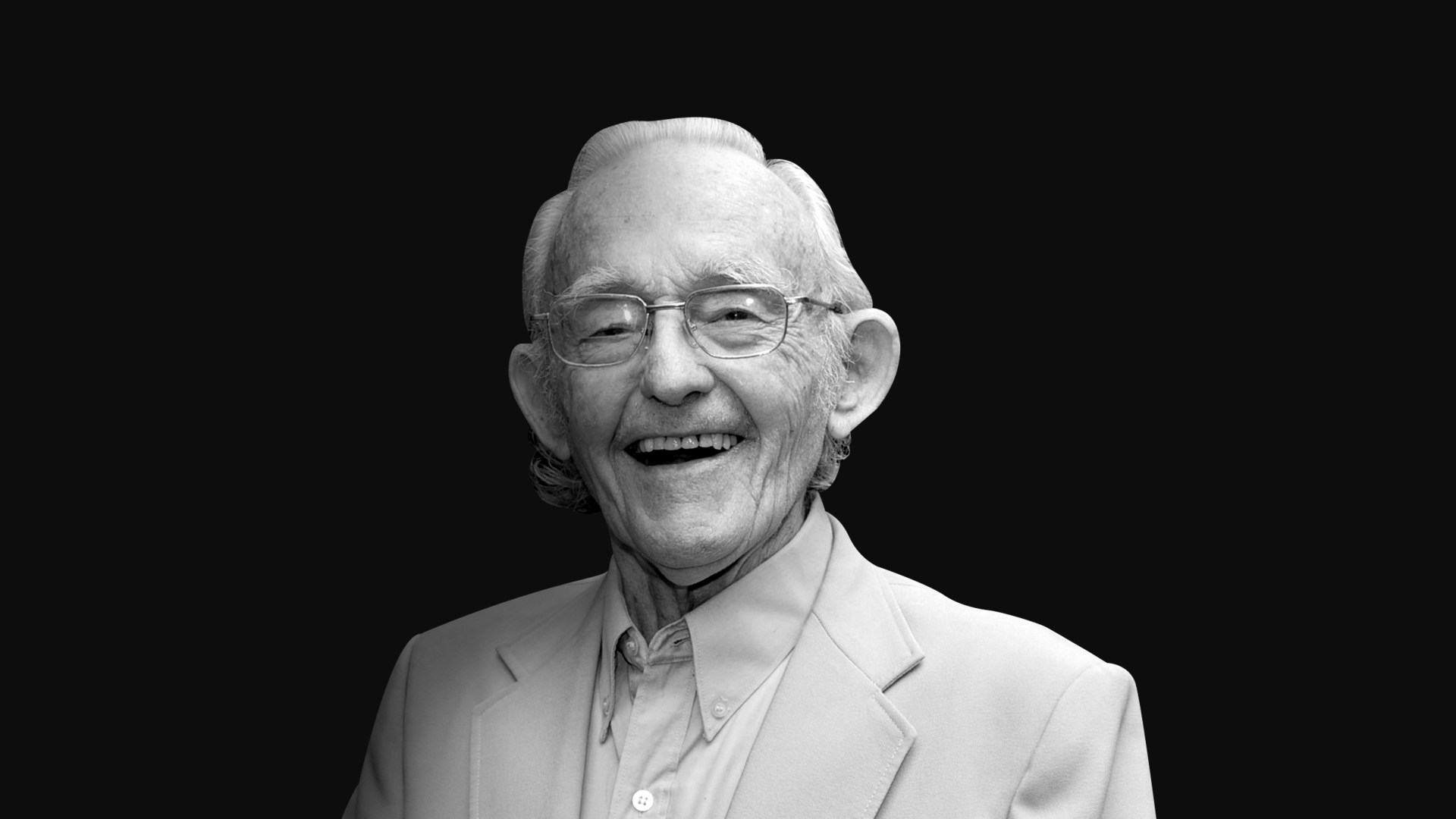
Juan Stam, a theologian who advocated for radical evangelicalism in Latin America, has died at the age of 92. A missionary to Costa Rica who once taught Communist revolutionary Fidel Castro about the Christian idea of apocalypse, Stam devoted his life to teaching the Bible, challenging both legalism and liberalism, and raising up and empowering local leaders.

Stam’s ministry—whether teaching theology at the Latin American Biblical Seminary, ministering to Marxist revolutionaries and refugees, or defending the biblical idea that God intervenes into history—was always grounded in three convictions: a personal commitment to Christ as Lord, an incarnational model for life and mission, and a love of the Bible and “radical seriousness in its interpretation.”

“His faithfulness to theological reflection, firmly anchored in solid Bible reading, and in interpretation very well placed in the historical and social coordinates, is an example worth imitating in Latin America,” wrote Mexican theologian Leopoldo Cervantes-Ortiz. “His memory will go on as a constant encouragement for the life and witness of Christianity in this part of the world.”

Jaime Adrián Prieto Valladares, a Costa Rican theologian, said that Stam “taught me to love the Word that comes from God with a passion, and to turn it into a live commitment to the poor” and “always challenged us to follow Jesus radically!”

https://twitter.com/Veldugo01/status/1317457862952685570

Stam was born in Paterson, New Jersey, in 1928, part of a Dutch Christian family that embraced the end times teachings and biblical devotion of D. L. Moody’s ministry. Stam joked that he was born with the Bible in his hands, but it was the Scofield Reference Bible that laid out dispensationalist theology and open to the book of Revelation.

Then known as John, he attended Wheaton College with plans to become a history professor. He changed his mind while reading Augustine for a term paper. Stam fell in love with theology and pivoted to focusing on full-time ministry. After graduating, Stam spent two years at Wheaton’s grad school and then two more years at Fuller Seminary. He learned, he later said, “to always strive to be truly ‘evangelical,’ neither fundamentalist, on the one hand, nor liberal (à la Schleiermacher or Fosdick), on the other.”

Stam went on to earn a doctorate in Switzerland at the University of Basel, studying under theologian Karl Barth, among others. His theology differed from Barth’s, but he learned how to think theologically while never abandoning the core simplicity of the message. “He was thankful to have studied under the most important theologians of the 20th century, whether or not he agreed with their specific theological views,” remembered his daughter Rebecca.

Stam and his wife, Doris, moved to Costa Rica as missionaries in 1954. They landed in rural Santa Cruz, where they could work on their language skills, learn to live in Latin America, and gain experience in a local church before moving to teach at the seminary in San José. During their 15 months in the area, the Stams also worked with the many Nicaraguan refugees fleeing the violence of the US-backed military dictatorship led by Anastasio Somoza Debayle. Listening to the local farmers, the indigenous people, and the refugees challenged their previous view of the world.

“Though it was painful to hear criticisms of our country of birth, we soon realized how little we understood Latin American reality and how much we could learn by listening to the nationals as equals (or better, superiors),” Stam later wrote. “Our contacts with these refugees radically changed our political perspectives and converted us into lifelong activists for justice.”

https://twitter.com/PonceOsmundo/status/1317568599901560832

In 1957, Stam took a position teaching systematic theology at the Latin American Biblical Seminary. At the time, it was the only accredited evangelical seminary in Latin America. Despite its name, the school’s leadership and culture were North American, influenced by the many US missionaries who had worked there. Stam, committed to contextualizing theological truths and embodying the Incarnation in his ministry, was interested in changing that.

“John and Doris are not part of the typical litter of missionaries in Latin America. They truly incarnated within the context. They became citizens of Costa Rica,” said Otto Kladensky, an Ecuadorian-born church leader who now serves in Costa Rica. “They bought a house instead of renting.”

The first policy Stam took on was a prohibition on student dating. After numerous debates and memos, the faculty changed the policy so that students with passing grades and up-to-date homework could date. When Stam introduced the policy, he informed students that if they did not comply with the 10 p.m. curfew or other restrictions, they would be punished for two weeks and allowed to leave their rooms only for meals, classes, and chapel.

To Stam’s surprise, the students were offended and responded with anger. One student informed him that he was “offending their dignity” by announcing the punishments in advance and that predetermining punishments was not acceptable.

“I will always be grateful for this example of what missionaries can (and should) learn from our Latin American brothers and sisters,” Stam later wrote.

Next, against the wishes of the school’s more conservative faculty, Stam began looking for ways to hand over authority to locals. His solution, ultimately adopted by the school, was to allow the seminary’s brightest students to begin teaching classes. Within a decade, the seminary had its first national rector and had begun to attract a number of Latin American faculty.

By the 1960s, Stam was accepting invitations to speak across Latin America, frequently on the topic of “Christ and Marx,” where he surveyed the ways contemporary theologians addressed social justice issues. As he traveled to Venezuela, Colombia, and Peru, he grew frustrated at how many Christians were not concerned about issues of justice and also incredibly anxious about appearing too sympathetic to Marxist complaints about injustice. In one community, he learned about a Christian couple who had been forced to feed breakfast to some guerrilla soldiers and then put in prison for their “support” for the revolution. He suggested the Christians visit them in prison—only to be told that would be a bad testimony. In another Christian community, people debated whether women should wear lipstick.

“With all due respect for evangelism and church planting,” Stam said, the urgent need in Latin America was “turning fundamentalists into evangelicals.”

At about this time, Stam began to march alongside workers and to participate in Éxodo, a social justice movement led by Methodist bishop Federico Pagura. In one seminary class, he had students write papers on the political, socioeconomic, and religious situation of their countries. For some students, just the idea that pastors should care about the political and economic conditions of their countries was a revelation.

“Juan was more than a brilliant mind; he was, above all, a sensitive human being, with a happy smile (often laughing) committed to the social causes of Latin America,” said the Colombian-born faith and development director for World Vision Latin America and the Caribbean, Harold Segura, who has lived in Costa Rica for 20 years. “Every May 1, as long as he was able to do so, he joined the workers' marches in solidarity with their causes. It was his way of confirming his commitments of faith.”

As the years went on, though, Stam found a number of younger faculty rejected the church for politics and started arguing that the theology of God’s grace was a tool of oppression, since it convinced people to be passive. They said that God cannot intervene into human history and the hope of humanity is the revolution of the proletariat. When that faction took over the seminary in 1980, Stam resigned.

Separated from any institution, Stam became a regular speaker at churches and universities across Latin America, developing especially close connections with a number of youth movements. In the process, he became a kind of freelance theologian, widely respected by Spanish-speaking evangelicals.

https://twitter.com/pjacomeh/status/1317472399642734598

Stam also began ministering to the Sandinistas—Marxist rebels attempting to overthrow Nicaragua’s military dictatorship. Beyond immediate relief for refugees, Stam also began serving at safe houses for the fighters, offering weekly meditation and teaching the Bible.

The Marxist rebels asked Stam to teach them about the book of Revelation. They had heard about—but were unclear on—the revolutionary concepts of “the millennium,” the “pretribulation rapture,” and “Gog and Magog.” Stam started teaching workshops on the book and eventually wrote a four-part, 1,600-page study of John’s visions.

In 2002, he was invited to explain Revelation to Communist Party leaders in Cuba and was unexpectedly pulled in to a late-night conversation with Fidel Castro. The revolutionary leader had questions about Revelation and began interrogating Stam and the other gathered evangelicals about the book.

Stam told him the dark visions of the prophet were calls to repentance and that the word apocalypse is frequently misunderstood. It doesn’t mean catastrophe or disaster, but unveiling or manifestation of hope in Christ.

Castro excused himself at 2 a.m. for another meeting, but before he left, he asked the ministers to explain evangelicalism to him. “Explain what that means,” he said. “Who knows, I might be one without knowing it.” They explained the gospel and then prayed for him.

In his later years, Stam was not able to travel as much but continued to have an outsized influence in Latin America and inspire “radical evangelicals.”

“What distinguished Stam was the reliability and honesty with which he carried out his task as a theological educator and interpreter of the Word of God,” wrote Peruvian theologian Samuel Escobar.

Stam is survived by Doris, three children, five grandchildren, and one great-grandchild.

Theology

Authors and Parents Are Rethinking Ways to Foster Kids’ Love for Scripture

What comes after storybook Bibles?

Illustration by Sarah Gordon / Source Photos by Jose Girarte / iStock / Design Pics / Don Hammond / Getty

A Christian parent’s greatest hope is echoed in 3 John: “I have no greater joy than to hear that my children are walking in the truth” (v. 4). Throughout each generation, mothers and fathers have looked for ways to point their children to the Bible as the ultimate source of truth, wisdom, and spiritual transformation. Adults may recall how, in their formative years, they were taught to recite the books of the Bible, learn characters and plotlines of important stories, or memorize key verses, with an emphasis on the godly thinking and behaviors that develop as a result.

While a focus on Bible knowledge and upright living remains essential, several emerging authors are taking a fresh look at how contemporary parents can introduce children to Scripture in ways that cultivate an authentic relationship with God and a committed affection for his Word. Their approach prioritizes the role the Bible can play in children’s spiritual formation, helping kids connect God’s Word with their own deepest longings. They emphasize viewing all of Scripture as a connected text that shines a light on our need for Christ. And they believe that teaching kids to treasure Scripture begins with moms and dads nurturing their own spiritual lives.

Develop Conversational Rhythms

“I think some of us were raised to think that Bible knowledge is something our kids get through church or a program, and we just hope someone smart or holy enough will give them this knowledge,” said author and artist Ruth Chou Simons. “But the reality is, the entirety of how we are told to share the story of God’s faithfulness was set in the context of relationship.”

Simons cites the Old Testament instruction parents were given in Deuteronomy 6:4–9 to continually discuss the ways of God with their children throughout the rhythms of their everyday lives: “Talk about them when you sit at home and when you walk along the road, when you lie down and when you get up. Tie them as symbols on your hands and bind them on your foreheads. Write them on the doorframes of your houses and on your gates” (vv. 7–9). This passage is at the center of Ruth and her husband Troy’s parenting philosophy.

“We’re told to recount and retell the stories, repeating and reminding each other of what is true when we wake up, when we’re walking, when things are hard or when we’re exhausted, or when we go on our way,” Simons said. When it comes to teaching her own six boys about the Bible, “It all happens within the context of our relationship as we live out the gospel with one another. How else will kids ever find that the gospel is actually beautiful and worthy of their entire lives if we treat it like an academic subject versus something that frames our purpose and reason for living?”

Simons says her own love for Scripture was born out of her participation in lay counseling—because she needed to see change in herself, her marriage, and her family. “I learned the importance of believing rightly when you’re looking at how to change, reconcile, or see transformation,” she said. “If you want to find how to live rightly, you’ve got to start with right believing. Theology means believing rightly and knowing the truth about God’s Word—about who he is and what he says.” This is the idea behind Foundations: 12 Biblical Truths to Shape a Family, Ruth and Troy’s recent illustrated devotional book. Simons describes the project as resolutions to rule the heart. The book emphasizes core biblical tenets in a conversational style fitting for parents and families.

She and her husband view Bible learning and discipleship as an ongoing invitation they extend to their children. “We invite them into the relationship we have with almighty God,” she said. Key to their approach is modeling love for Scripture and habits of open conversation about how God’s Word connects to every aspect of life. For example, just about every morning, the boys come downstairs to witness their dad reading the Bible over a cup of coffee. When it’s time for him to tackle lackluster passages from books such as Lamentations, he may comment that he’s ready for something more exciting, Simons says. But ultimately this demonstrates his belief that every word from God has the ability to change him, so he’s willing to stick with studying all of Scripture.

Another way they’ve learned to invite their boys into their relationship with God is moving beyond attempts at behavior modification when sibling fights arise in order to place the situation within the biblical framework of their need for redemption. Simons said, “I’m learning it’s normal and good to say, ‘This argument we’re having is revealing the very reason we need Jesus, because, left to ourselves, we’re constantly going to fight for what we want. … So let’s apologize for trying to find our happiness in trying to control or change each other. Let’s go to Scripture together and learn how Jesus came to transform us.’ ”

Cultivate Reading and Study Habits

Parents who regularly read the Bible in plain sight of their children while also offering to share what they are learning communicate two important truths. The first, according to Barna’s 2018 Guiding Children report, is that parents are modeling lifelong, humble learning, which helps kids grasp why they need to read God’s Word. Second, it demonstrates that followers of Christ never stop needing Scripture, even as they grow older, says Alison Mitchell, author and senior editor for The Good Book Company, which produces Christian children’s books and resources for families. “It’s about making it clear to them this isn’t something you just do because you’re a child,” Mitchell said.

Mitchell emphasizes the importance of children seeing their parents individually and regularly reading a hard copy of the Bible—rather than reading it on their phone, tablet, or other device. While it may not feel as efficient, it leaves no room for doubt that Mom or Dad is reading Scripture instead of checking the news or weather. “I think children can catch the habit of Bible reading by seeing their parents do it,” Mitchell said. “They learn it’s important.”

Mitchell advocates for a multilayered approach in helping children connect with Scripture. Prioritizing family times of reading, studying, or worshiping communally is essential. “That’s the key to how a child learns to engage with the Bible for herself—when families are doing it together,” she said.

Teaching kids to study Scripture—not just read it—can begin at a young age. Quina Aragon, a spoken word artist and author of the children’s Bible story picture book Love Made, takes a simple, age-appropriate approach with her four-year-old daughter. Aragon says she’ll often begin a brief time of Bible study by asking her little girl to repeat a few phrases she learned from Bible Study Fellowship’s children’s program. “I’ll say, ‘The Bible is … ’ and then my daughter will shout, ‘God’s Word!’ Then I’ll say, ‘And all God’s words are … ’ and she’ll shout, ‘True!’ And then I’ll say, “And the whole Bible is about … ’ and she’ll shout, ‘Jesus!’ ”

Aragon focuses on just a little bit of Scripture at a time. “Lately we’ve been discussing a few verses from the book of Mark,” Aragon said. “I’ll open my Bible and point to the letter M because my daughter has begun learning the alphabet. I’ll say, ‘M is for Mark.’ Then I explain how the numbers represent chapters and verses. We’ll read three or four verses, and I’ll share one concept or point from the passage that she can repeat back to me. Then I’ll pray and give her a chance to pray.”

Mitchell suggests another idea for studying Scripture with children of multiple ages: Create a visual prompt using a large poster with the question “What is God like?” written on it. “Every time you read a story in the Bible that tells you something about God’s character, write or draw it on the paper,” Mitchell said. “You’ll see how he’s good, loving, merciful, and what his grace looks like. It will build and build.” This is one way for children to learn about the attributes of God and begin processing life experiences through the lens of knowing and trusting his character, Mitchell explained.

Wonder and Ponder Together

How parents choose to talk about the Bible and its stories is just as important as setting out to do so in the first place, says author Lacy Finn Borgo, who recently wrote the book Spiritual Conversations with Children and also works as a spiritual director for kids and adolescents. “In an information-filled society, it can be tempting to primarily present the Bible to children as information, rather than as a way to encounter God,” Borgo said. “However, this doesn’t lead to a lifelong sustaining relationship with God—which is the point of Scripture.”

Beyond teaching information, Borgo suggests that parents focus on their child’s spiritual formation when imparting Bible knowledge. She encourages parents to view Scripture as a conversational partner or as an opportunity to help their kids encounter God in the stories of the biblical characters who’ve experienced God throughout the ages. When reading a Bible passage, Borgo recommends parents pose a few key exploratory questions. “They can ask, ‘What is it that you wonder about this story? What is it you wish would have happened or not have happened?’ ” she said.

This kind of thought process opens the door for children to more deeply ponder Scripture and ultimately identify their own desires and longings, Borgo says, and that gives them a place to meet and experience God. “It’s in learning to hear their own heart longings that they come to eventually realize their very deepest longing, which is for God himself.”

Establish a Vibrant Theological Foundation

After starting a family, Danielle Hitchen went searching for board books for babies, toddlers, and preschoolers that introduce early theological concepts. Her own love of theology began in her college years when she participated in a great books program. “We started with Homer and worked our way to C. S. Lewis,” she said. “I read a lot of theology as part of that, and it was so formative to my own faith.”

Hitchen was hoping to find something similar to the BabyLit primers, which reformat classic literature into books for young children. “I thought, ‘Surely someone has done this with theology.’ So I started looking around. I couldn’t find anything.”

So Hitchen began writing herself and has since published seven theology-focused board books for babies and toddlers. Some introduce vocabulary that connects a word’s meaning to how it’s used in a Scripture passage. One correlates numbers with biblical concepts such as the Pentateuch (for 5), the “I Ams” of Jesus (for 7), the Beatitudes (for 8), and the fruit of the Spirit (for 9). Hitchen’s latest book, We Believe, is an alphabet primer that highlights the meaning of words such as Ascension, Eucharist, Incarnation, and Kyrie Eleison.

“The hope is to start building a child’s faith vocabulary,” Hitchen said. “The foundational building block to learning any subject matter is to first learn the vocabulary of the subject. I think teaching kids these truths will help them love truth over time.” She believes equipping even very young children with the theological and doctrinal concepts behind beloved Bible stories will help deepen their faith and give them a lifelong foundation upon which their faith can grow.

In a similar vein, Aragon’s picture book, Love Made, weaves in theology as it explores the beauty of the Trinity through its telling of the creation account. Not only does the book define the Trinity for kids, but it also outlines the emotive forces of love and joy that propelled the Father, Son, and Spirit into collectively fashioning the world into being. “The joy God had with himself was so big he let it spill over into what we call creation,” Aragon writes. Love Made builds upon this idea to also discuss the creation of new life in human families, saying that a child is formed as “someone who reminds us of God’s delight in us,” just as the members of the Trinity delight in one another.

Mitchell’s body of work emphasizes theological concepts by prompting children to see the Bible not as a compilation of isolated stories but as a unified text that tells one continual story. Her recent picture book Jesus and the Lions’ Den (which received a CT book award) highlights “Jesus moments,” using illustrative prompts to help readers recognize when someone in the story is a little like Jesus. In this case, Daniel was unjustly imprisoned and sentenced to die, just as Jesus was. Daniel was rescued from a den of death; God brought his Son out of death.

In her books, Mitchell hopes to help children understand how many central Bible figures are shadows of Jesus, pointing toward the fulfillment Christ brought as the ultimate and perfected version of each of these characters. Her approach aims to help kids see the Bible as an expansive text that communicates one thematic truth: Our need for salvation and renewal is found in the person of Christ.

“When children realize the Old Testament is a bit like a puzzle book, and they can work out the puzzles to learn things about Jesus, they enjoy that,” Mitchell said. “They also begin to see the big picture of what God is doing. That’s important, because the more children can grasp the character of God, the more they can cope with anything the world throws at them. They’ve seen his power and goodness throughout all of the Bible. They can trust in him.”

Love Scripture

Beyond establishing conversational rhythms, modeling reading habits, asking exploratory questions, and introducing theological concepts, perhaps parents’ most meaningful way of teaching their kids to love the Bible is by deeply loving it themselves. Parents transmit that value most powerfully through their own daily discipleship and the tone in which they discuss God’s Word. “There’s value in knowing that if you don’t seem thrilled about the Lord, your kids aren’t going to be thrilled either,” Aragon said. “They might see spiritual practices [like study] as a duty or as something that will please their parents, but until they see that Jesus is sweet to you, I don’t see there being a huge or lasting motivation for them to really know God for themselves.”

A hunger for God’s Word is more caught than taught. As parents, Aragon said, “We’re learning the importance of our daughter seeing our own love for God.” It’s not just in discussing Scripture with her, but also “in the way we sing about him, in the way we bring him up in conversations, in the things we’re creating, and the way we’re using our gifts.”

Corrie Cutrer lives in the Nashville area with her family. A former editor at Today’s Christian Woman, she has received several Evangelical Press Association awards.

This article is part of “Why Women Love the Bible,” CT’s special issue spotlighting women’s voices on the topic of Scripture engagement. You can download a free pdf of the issue or order print copies for yourself at MoreCT.com/special-issue.

Books

Fighting the Pandemic with Our Hearts and Our Smarts

A development economist and a disaster-relief expert show how to approach COVID-19 as “Shrewd Samaritans.”

Christianity Today October 23, 2020
Illustration by Rick Szuecs / Source image: Amriphoto / Getty / Envato

Particularly in this time of global pandemic, we want to know how to care for our local and global neighbors in ways that are meaningful and effective. We want to follow the example of the Good Samaritan in loving our neighbors as ourselves. But we also want to make sure we’re reaching out to those in need with both our hearts and our smarts.

Shrewd Samaritan: Faith, Economics, and the Road to Loving Our Global Neighbor

In other words, Christians should approach COVID-19 not just as Good Samaritans but also as what we—writing as a development economist (Bruce) and an expert on humanitarian disaster intervention (Kent)—like to call Shrewd Samaritans. And what are the distinguishing marks of a Shrewd Samaritan? Perhaps the best place to begin is with a visit to the dentist I (Bruce) have been seeing for years.

Thinking Like an Economist

Dr. David Yee’s modest office is located on the street level below his house, near the corner of 31st Avenue and Clement Street, a few miles from my office at the University of San Francisco. Most people avoid going to the dentist. I never avoid going to the dentist because I get to talk to Dr. Yee. Even during the unfortunate visit when oral excavation is required, his calming face, hovering above my open mouth like a smiling moon, has for 20 years offered reassurance during tense episodes of drilling and repair.

Upon learning during my early visits that I was a development economist, Dr. Yee would ask me if I had been to any “crazy new countries” lately. After sharing a few stories about recent travels and research projects, I asked him if he had ever done one of those overseas dental missions. “No, afraid I’m a bit of a homebody,” he would say. “The city is plenty for me.”

And so the conversation looped for some years.

But as he was ushering me into the dental chair before a routine cleaning in 2011, he turned to me and announced proudly, “I went on a dental mission last month.”

The dental mission to Jamaica had gone well, just not as anticipated. Dr. Yee had envisioned preparing a vast equipment bag with cleaning instruments: tooth pickers, plaque scrapers, spit suckers, polishers, and bags of brushes and floss.

“You won’t be needing all that,” the missionary dentist had explained. “All we do here are extractions.”

He had arrived in the capital city of Kingston and walked down the steps of the plane onto the tarmac, where the missionary dentist greeted him. “Did you bring your forceps?” Yes, they were somewhere in the suitcase. “Excellent. How many extractions can you do in a day?”

Dr. Yee had never pondered this statistic, much less tested its frontiers on his upper-middle-class San Francisco patients. “Maybe eight?” He paused nervously. “How many do I need to do?”

“Yesterday I did 140.”

Dr. Yee considered this spectacular figure. It sounded inhumane. He imagined something like an assembly line for tooth extraction with dentists wrenching rotten molars out of cringing patients with blood-splattered dental bibs, tossing them out of the chair, and then yelling to the front of the line: “Next!”

But what he learned in Jamaica was quite the opposite. In a place where infections are rampant and immune systems are weak, infected teeth can be deadly. If an upper tooth is infected, bacteria can spread from the alveolar bone through the maxillary sinus, resulting in a sepsis of the brain. If the infection is in a lower tooth, it can spread to the jaw, where an infection in a rear molar may cause severe swelling that blocks airflow through the trachea, resulting in suffocation. The missionary dentist explained that time spent on cosmetic issues, or even maintaining the lofty standards of Western medical care, carries a high opportunity cost in the world of rural missionary dentistry.

As I listened to Dr. Yee, I was impressed with the missionary dentist because she sounded like an economist. She understood the cost of allowing our fuzzy feelings to dictate our actions to people in need rather than a concern for their health and well-being.

Dr. Yee’s foray into missionary dentistry did not end with the trip to Jamaica. A few years later, as I rose up out of the dental chair, Dr. Yee ushered me toward a corkboard in his office to see pictures of some of his patients grouped by the different countries he had visited. The dental mission trips had clearly transformed him. From them he had developed a deep compassion for those without access to health care. Moreover, joining his new heart for others was a new head for others. He had begun to learn the art of triage, operating with the skill of a MASH medic, prioritizing patients that were likely to receive the greatest benefit from an extraction and treating them as efficiently as possible. He also began to emphasize dental health during his visits. When possible, it was about loving others by preventing pain and suffering in the first place.

Beyond Good Intentions

My dentist was becoming a Shrewd Samaritan. But how is a Shrewd Samaritan different from others with good intentions toward the needy?

If we want to genuinely help people living in poverty—and a world in the middle of a global pandemic—rather than just feeling good about believing we have helped, we are not merely to be Good Samaritans, like the man commended in the famous parable in Luke 10. We should also be Shrewd Samaritans—shrewd like the manager in the less-famous parable in Luke 16, whom Jesus also points to as an example.

In the original Greek, the word for the manager in the parable is oikonómon, which literally means “Econo-Man.” We must be people with big hearts like the Good Samaritan but with minds like the Econo-Man. This means learning to love our global neighbors wisely, one might say even “shrewdly,” by making the best use of our resources—our time, talents, and money—on behalf of those who are victims of injustice, disease, violence, and poverty.

Shrewd Samaritans have made progress through what I call the seven I’s. They have moved past ignorance, indifference, and idealism and toward investigation, introspection, and impact. They have even come to identify with those they seek to serve.

Shrewd Samaritans understand the underlying causes of poverty and need. They can identify interventions that are likely to be effective in different contexts. Their motivation is fueled by the Christian call to love our neighbors, but their means are influenced by an understanding of cause and effect and even by good science. Shrewd Samaritans are wedded to a biblical view of humanity and informed by a desire for human flourishing in all respects: physical, psychological, social, and spiritual. They have discerned their own role in extending a hand to the needy at home and abroad and have learned to identify themselves with the poor.

From Ignorance to Idealism

So, what does it mean to be a Shrewd Samaritan during the current global pandemic? As I (Kent) consider our varying responses, I find that it helps to consider them through the lens of the seven I’s. As the global situation continues to evolve, let’s consider how we can learn to love our neighbors in more meaningful and effective ways.

At the outset of the pandemic, ignorance reigned among the vast majority of people in the United States. In December and January, COVID-19 was certainly an issue, but an issue on the other side of the world, barely mentioned in American news coverage. By now, of course, most people have moved well past the ignorance stage. And yet we can still fall into the habit of closing our eyes to the devastation the virus is causing beyond our own circles and beyond our own shores.

In my book Slow Kingdom Coming, I talk about how practice of justice starts with attention. We awaken to the various needs and injustices around the world, and we allow the Holy Spirit to focus our attention on the needs we’re being called to address. In the months since the pandemic has hit the United States, COVID-19 has provided a wake-up call.

By February, ignorance had largely given way to indifference. Most of us had heard of COVID-19, but it still felt like something for China, Italy, and Iran to deal with rather than a disease that might truly spread across the globe. The prevailing mindset was that it, like the SARS virus preceding it, would mostly go away before hitting our shores.

While this was months ago, many Americans, including some Christians, still take this approach, believing COVID-19 is out there but won’t affect them personally. One way this is clearly illustrated is in the issue of wearing masks. Although the CDC repeatedly advises the public to wear masks and backs its reasoning with research, many people still don’t. As listed on the CDC website, the main reason to wear a mask is not to keep from getting the virus but to keep ourselves from spreading it to others. Quite simply, wearing a mask during the pandemic is a way to move beyond indifference toward loving our neighbors.

In March, COVID-19 became a serious domestic issue. We could no longer be ignorant, and it was much harder to be indifferent. The predominant mentality had shifted toward idealism, which occurs when we move out of indifference but try to solve a complex problem with overly simple solutions. We’re aware of a problem but don’t really understand it. (Think of a short-term mission team that goes to another country to “solve” someone else’s problems, which they don’t really understand, in just one week.) Then we operate by rules of thumb guided by our feelings and instincts. We compartmentalize people and responses into general categories. We’re responding but not necessarily responding well.

As COVID-19 spread throughout the US and the world, the responses came in two general varieties. Some gravitated toward defiance and downplaying: They weren’t indifferent about the virus, but they tended to assume that it wouldn’t touch them personally. The virus is not much worse than ordinary flu, they might say, and people are overreacting. Among those with this mindset, mask wearing and social distancing were often viewed as infringements on personal liberty and American rights.

On the other end of the spectrum came calls for complete lockdown. This way of thinking held that the virus is very bad, but science is going to tell us the right thing to do and eventually solve the problem. And in the meantime, the only responsible thing to do is shelter in place until we come up with a vaccine. For some lockdown proponents, any attempt to balance this view with the importance of maintaining human contact—or minimizing the awful economic toll—could be chalked up either to ignorance or to outright malice.

Both of these responses fall prey to a kind of naïve idealism, assuming either that the virus can be defeated without sacrifice or inconvenience or that the lockdowns will deliver us to safety without exacting any great toll of their own.

From Investigation to Impact

So how do we move beyond habits of ignorance, indifference, and idealism for the sake of thinking and acting as Shrewd Samaritans? This is where the fourth I, investigation, comes into play. Investigation involves humility. When we move into the investigation stage, we’re preparing to move beyond our gut instincts.

In the case of COVID-19, Christians must ask, “What does the best evidence say about how I can help slow the infection rate of the virus as well as help others persevere through it?” We inform our responses with the best available information. We seek the advice of qualified experts. We take the heart of the Good Samaritan and pair it with the head of the Shrewd Manager. At Wheaton College’s Humanitarian Disaster Institute (where I serve as director of humanitarian and disaster leadership), we’re helping churches, individuals, and families do just this. (Another excellent source of both information and inspiration is the Salt & Light Project, a website dedicated to showing how Christians are following Jesus during the pandemic.)

While it’s important to study the most effective ways we can respond, we also need to reflect and pray, asking God how he would have us respond individually. This leads to the fifth I, introspection.

Simply put, investigation allows us to understand how we could help. But introspection involves asking, “What should I do?” We’ve taken the time to understand COVID-19 as well as the needs of those around us. And at this point, we reflect on how we can love and care for our local and global neighbors, asking questions like these: What gifts do you embody? What resources are at your disposal? How do these match up with the needs in your community and in the world? We must ask ourselves, “What can I do in my community during this time to keep me from getting and transmitting the virus—but also to help my neighbor through it?”

Ideally, a process of careful investigation and introspection will lead to the sixth I, meaningful impact. After we’ve done the work of understanding the need, learning effective interventions, thinking through our own abilities and resources, we’re poised to make a genuine difference. I’m encouraged by the way I see this happening within the church in so many ways.

Sometimes this takes the form of supporting local organizations working on the frontlines of pandemic relief. With so many millions of Americans unemployed due to the pandemic, their efforts could hardly be more urgent. One of my humanitarian and disaster leadership students at Wheaton is the director of a local nonprofit that helps refugee women make and sell items like purses and earrings. But once the virus began spreading, the organization quickly pivoted toward having the refugee women produce thousands of facemasks, which kept them employed while meeting a tangible local and national need.

Helping can also take the form of giving to organizations involved in global relief efforts. While the pandemic has hit wealthiest countries hardest at this point, the World Food Programme has warned that the number of people in the developing world living with “acute” hunger could double to 265 million people this year. There are a number of ways we can support our global neighbors, including direct cash transfers through organizations like Give Directly (where about 85 percent of your gift goes directly to a needy family), donations to World Vision and its extensive global emergency-response network, and child sponsorship through groups like Compassion International.

Where financial support isn’t possible, you can always volunteer your time. Food pantries need help packing and distributing food. Elderly people who can’t venture out need social interaction. Give them a call. Offer to get groceries for those who can’t go themselves.

Some of the most important efforts take place within the local church, whether the impact comes through implementing wise precautions for gradual reopenings or ministering to material needs within the body. While some in our churches have lost their jobs, others have seen their income remain steady. Special benevolence funds allowing church members to transfer some of their income to those less fortunate are just one way of embodying an Acts 2 vision of believers sharing with and caring for one another.

Resources and Talents

Lastly, we come to the final I, identification. This pandemic has hit the whole world, and though it might sound like a cliché, it’s really true that we’re all in this together. As believers, this means we choose to identify as one person who is part of the global church that is responding as the hands and feet of Christ to those hit hardest. We choose to identify with those who are mourning the loss of a job or a loved one by mourning with them. We choose to identify with others hit hardest by the virus because it could have been me, or perhaps even because it has been me.

God is not a stranger to crisis, and God is not a stranger to us in crisis. God provides us with Good Samaritans and gives us opportunities to be one to others. God gives us resources and research to shrewdly and effectively steward that which has been given to us. Living as Shrewd Samaritans, we can match our resources and talents to love our local and global neighbors in Christ’s name.

Bruce Wydick is professor of economics at the University of San Francisco and the author of Shrewd Samaritan: Faith, Economics, and the Road to Loving Our Global Neighbor, from which parts of this article are adapted. (Thomas Nelson Publishing, 2020. All rights reserved.) Kent Annan is director of humanitarian and disaster leadership at Wheaton College and the author of Slow Kingdom Coming and You Welcomed Me. Dana Krol of Wheaton College contributed significant ideas and edits to this article.

Did Bobby Get Suspended Because He Was Black?

Concerns for racial justice must address disparities in education and school discipline.

Christianity Today October 23, 2020
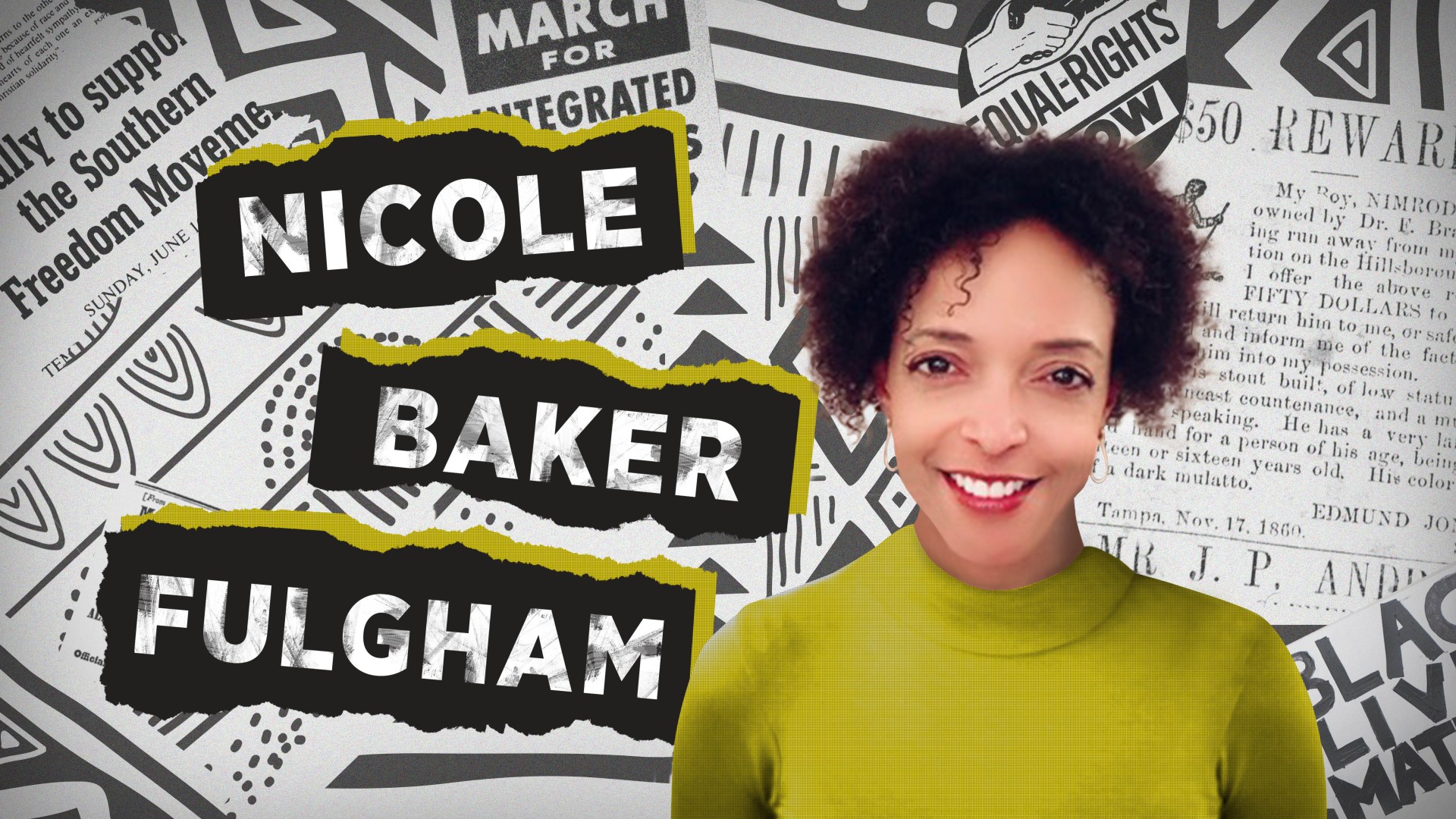
Illustration by Mallory Rentsch / Portrait: Courtesy of Nicole Baker Fulgham / Background Images: WikiMedia / Unsplash / New York Public Library

“He was suspended for three days,” relayed the black mother who shared her story with me last year. The education organization I lead, The Expectations Project, was in the midst of a campaign to eliminate racial disparities in school punishments. This mom recounted the circumstances that led to her seven-year old, whom I’ll call Bobby, being suspended from school. A white female student in his class had a crush on him and gave him a classic ‘I like you’ hit on the arm aboard the school bus. Bobby, being an ordinary kid, hit her back. An investigation ensued. The little girl and her parents even came to Bobby’s defense, saying that she’d started it and if anyone should get punished, it should be her. He was suspended for three days and she was not. Bobby’s mom said, “This happens so much. I don’t know how we fight it. So many people just look at our black kids and see criminals.”

This story is not an isolated incident. Black students nationwide are 3.9 times more likely to get suspended than white students. And they are often punished more harshly for the same infraction. How are we to make sense of this inequality? How can the church be a force for change? And what are the connections to broader racial unrest we’ve experienced over the past several months?

This summer brought the all-too-familiar heartbreaking stories of black people dying at the hands of police officers. Somehow this season of racial injustice feels different. Perhaps the COVID-19 pandemic had already heightened our senses to seemingly invisible threats, providing the necessary catalyst to spark nationwide protests after Breonna Taylor and George Floyd’s deaths. Previously silent communities marched in surprising solidarity with black and brown brothers and sisters.

I am encouraged by the ever-widening array of potential allies, which must further mobilize to address the school-to-prison pipeline. Students who are suspended or expelled from school are four times as likely to interact with the justice system as teens and adults. We cannot fix the schools and not fix the justice system. School disciplinary tactics often mirror the same race-based assumptions we see in policing. The two are inextricably linked.

Biblical Restorative Justice

Confronted with the overwhelming pattern of black students being suspended and expelled more often than white students, it’s tempting to assume it’s the result of individual behavior problems rather than institutional or systemic bias. Are we, as Christians, to believe black children and teens are born with a greater capacity for malevolence than children of other races? Let that sink it for a moment. Say it out loud. I hope it makes you uncomfortable, because it should. How can you reconcile our ‘made in the image of God’ theology with the idea that an entire race is born with a stronger disposition for misbehavior? You can’t.

Once we concede these patterns don’t rest solely on student behavior, we are open to understanding ways in which singular or system-wide bias inadvertently impacts our educational system. Christians should speak out boldly to demand change within systems that have disparate outcomes based on the color of a child’s skin.

The arc of the entire biblical narrative, from Genesis to Revelation, is about God’s grace. He runs after us to restore us to himself. He sent Jesus to die on the cross and save us from our sins, even though we did nothing to earn it. He wants us to be in relationship with him, not separated from his love. If we are called to help God’s kingdom to be revealed on earth—in every system and structure—how can we stand for a public school system that provides more restoration and grace for white students than it does for black students? And, even more importantly, why wouldn’t we want to give children the same second (and third, fourth, and fifth) opportunities for restoration that God gives us?

Restorative School Discipline

Christians have the opportunity to be at the forefront of the movement for restorative school discipline. Restorative discipline is a mindset shift. It moves from thinking about discipline as punishment and retribution to discipline as an opportunity for transformation and embrace. This does not mean we forgo consequences for misbehavior. But we can advocate for practices such as in-school spaces where learning continues despite a misbehaving child being removed temporarily from the classroom. If a child’s misbehavior stems from some type of emotional trauma or mental health challenges, we secure resources to help the student and their family get needed healing rather than simply suspending them.

When I think about the transformational impact Christians have had on adult prison reform by championing organizations like Prison Fellowship, I easily imagine what we can do for teens and little children. How can we not want the same for seven-year-old Bobby and the youngest among us?

Practically, I encourage Christians to take the following steps:

  1. Seek to understand: How are discipline issues handled in your local school district? To what extent are there different rates of suspensions and expulsions for different racial groups of students? Why do teachers, administrators, parents, and students think that is happening?
  2. Educate others: Share what you learn with your church and groups of friends.
  3. Advocate for change: Speak out to ensure your local schools have adequate school counselors and restorative discipline practices and policies.

On a personal note, I feel this injustice very deeply. As the mother of a 14-year-old black daughter, I pray every day that teachers, store clerks, and police officers do not view her as a sassy threat or an angry black woman. What tragedy might occur if they allow any unconscious bias to unfairly escalate their interactions with her? We pray they instead see her beautiful humanity made in God’s image. What I want for my daughter I want for all of God’s children in our nation’s schools.

Nicole Baker Fulgham is the founder and president of The Expectations Project, which is the nation's largest network of faith-motivated education equity advocates. A former public school teacher, education policy analyst, and teacher trainer, Nicole writes and speaks on the intersection of faith, education, equality, and race.

News

Died: Luci Swindoll, Who Believed in God’s Grace and Being Herself

Woman of Faith speaker celebrated life of singleness.

Christianity Today October 22, 2020
New Life Ministries / Edits by Mallory Rentsch

Luci Swindoll, a devotional author and popular speaker known for her celebration of life and commitment to being herself, died this week after contracting COVID-19. She was 88.

Swindoll wrote a popular book on Christian singleness in the 1980s and became one of the first Women of Faith speakers in the 1990s when the organization launched as a counterpart to the men’s ministry Promise Keepers. Swindoll, the older sister of prominent preacher Chuck Swindoll, had a message about God’s grace.

“Legalism is the worst thing that ever happened to the church,” she said. “When I realized that God deals in grace … it set me free to be who I really am.”

It was a theme she returned to frequently as she urged Christian women to find joy and be who God wants them to be, not who others expect them to be. She told jokes and laughed a lot, which she said was a witness to the work of Christ in her life.

“Everything changed because of grace,” Swindoll said. “Now all we have to do is know him, trust him, see what he does with our lives, and love people into the kingdom. I don’t think it’s our place to tell people how to live. … We can’t make people believe, but if they see in the believer love and fun and joy and just the thrill of being alive, they say, ‘What is it they have that I don't have? I want it.’”

https://twitter.com/erikagreene/status/1318747233521684481
https://twitter.com/BethMooreLPM/status/1318902166438948865
https://twitter.com/EdgarSandovalSr/status/1319030649739636737

Swindoll was born in 1932 in El Campo, Texas, the middle child and only daughter of Earl and Lovell Swindoll. The three kids were Orville, Lucille, and Charles but known by everyone, including themselves, as Bubba, Tutta, and Babe. They grew up in Houston, in a middle-class home of music lessons, elocution, performances, and competition.

As an adult, Swindoll recalled she was jealous of Orville because he excelled at piano and jealous of Chuck because he wowed adults with recitations of memorized poetry. And “everybody liked Babe,” she said.

But her father encouraged her to pursue her own dreams.

“You can go anywhere you want to go, achieve anything you like,” he told her, according to her 2002 memoir I Married Adventure. “You just have to line up your desires with the Lord’s and go.”

At about age 12, Swindoll decided she wouldn’t get married. “Settling down,” as her mother described it, felt like cutting herself off from a world of interesting things, thoughts, and experiences. At the time, she had never met an adult woman who wasn’t married, and not getting married wasn’t presented as an option, but she felt—with her father’s encouragement—that she could make that choice.

Swindoll recalled that her father told her she would never be alone because God was with her, and she took that to heart.

The rest of the world was not so understanding, though, and in high school Swindoll experienced a tremendous amount of pressure from her peers and her mother to be in a relationship. She watched as other girls graduated, got married, and started having children. She wanted to go to college.

Swindoll compromised. She got engaged to a young man in 1950, at the age of 18, and went to Mary Hardin-Baylor College, a Baptist women’s school, with a ring. Within just a few months on campus in Belton, Texas, Swindoll realized she’d made a mistake. The world was an enormous place, and she didn’t want to settle down. She ended the engagement, to the great disappointment of her mother.

“I learned it was okay to be myself and like myself—and survive—in spite of my mother’s strong disapproval. She had no category for me because I thwarted her domestic dreams for her only daughter. What was to become of me if I ended up without a husband?” Swindoll wrote.

At Mary Hardin-Baylor, she studied art and opera and learned to sing in Italian, French, and German. Her teacher, Florence Bergendahl, was the first unmarried woman she knew, and Swindoll was thrilled to see a woman with a life and home full of art, music, and souvenirs of world travels.

Swindoll moved home after college and found her parents attending a new church with a pastor who had a degree from Dallas Theological Seminary. His sermons were clear and interesting—and filled with grace.

“We had attended a church that taught little more than that there was a rule for everything, defensible by Scripture,” she recalled. “We knew little to nothing of the grace of God, freedom in Christ, or theology that endorsed individuality and liberty. In my circle of relationships, everyone told everyone else how to live, what to think, and where to enlist.”

Swindoll saw her mother soften and found herself falling in love with Jesus. She took Bible classes at the church four nights a week, deepening her faith. She said she learned the core truth that Jesus did not only want people to have eternal life, but abundant life.

“I am saying that once God’s incorruptible truth became the protoplasm of my soul, I knew without a doubt that he would make a way for me to be truly myself,” Swindoll said.

At 25, Swindoll moved away from home and got a job as a cartographer for Mobil Oil in Dallas. She worked there for 30 years, retiring as the manager of the Right of Ways and Claims Department for Exxon Mobil.

She also performed in the Dallas Civic Opera, taking a role in 34 operas from 1959 to 1973. Her favorite was Lucia di Lammermoor, which tells the tragic story of a woman caught between feuding families. Swindoll saved $25 per week for five years to travel to Milan to see the opera there and loved the experience so much she started traveling regularly.

She felt that God told her, “I have given you life, Luci. It’s a gift. Now, I want you to live that life by embracing the whole world.”

Swindoll wrote a book about grace, joy, singleness, and “embracing the whole world” in 1982, after her brother Chuck introduced her to an editor from Multnomah Books who asked her if she liked being single. The book was called Wide My World, Narrow My Bed. She went on to write more than half a dozen other titles, including Notes to a Working Woman; After You’ve Dressed for Success; You Bring the Confetti, God Brings the Joy; and Life! Celebrate It.

In 1996, Swindoll joined her close friend Mary Graham and four other Christian women—Patsy Clairmont, Thelma Wells, Sheila Walsh, and Marilyn Meberg—for a speaking tour with a new group called Women of Faith. The six sat on a stage like it was their front porch, and talked openly and humorously about life, struggles, and the healing love of God.

The first events drew about 2,000 women, but then the crowds quickly grew to 4,000, 6,000, and then 10,000 and 20,000. Swindoll, who often told funny stories at the Women of Faith events, was initially surprised to see the response. In her mind, they were “just stories.” Then she saw they were responding to the message of grace.

“There's nothing legalistic about it,” she said. “They feel like they can be themselves, they can dress comfortably, and everybody is sort of revived.”

The Women of Faith events continued until 2016. Some people wanted it to keep going, but Swindoll said everything needs to come to an end. She believed if you were fully yourself and did what you wanted to do, you could be happy when you were finished—an approach she also took to her own life.

“When I’m with the Lord face to face,” Swindoll said, “it is my own life that I lay down and not the prefabrication of one who always tried to be somebody else.”

News

Three Evangelical Colleges Cut Tuition Prices

Seattle Pacific, Houghton, and Gordon want prospective students to see Christian liberal arts colleges as an affordable option.

Christianity Today October 22, 2020
Illustration by Mallory Rentsch / Source Images: WikiMedia Commons / Justin Lewis / CSA Images / Getty Images

Three Christian colleges are reducing tuition in hopes of attracting more students. The sticker price of an education will go down 25 percent at Seattle Pacific University this fall, 33 percent at Gordon College in Massachusetts, and 53 percent at Houghton College in New York.

Declining college enrollments have created a crisis for evangelical schools, where financial viability is more dependent on tuition payments than on donors or endowments. For members of the Council for Christian Colleges and Universities (CCCU), tuition typically accounts for about 80 percent of revenue.

“Tuition resets” are one bold option to attract more students.

“We wanted to be very clear that a private, deeply Christian high-quality education is an option, even in New York State,” said Houghton president Shirley Mullen.

The cost of one year, starting next fall, will be $15,900, down by about $18,000. At Gordon, the cost will be $25,250, down by $12,310.

“We know from our own research that our price has been a consistent barrier to initial interest in Gordon, something students and families who were very interested in Gordon—but chose to go elsewhere, even after depositing—have been telling us for the last several years,” said spokesman Rick Sweeney.

At Seattle Pacific, tuition will be $35,100, down by about $11,600. The new price tag is a little less than the out-of-state tuition at the nearby University of Washington. Jordan Grant, assistant vice president for enrollment operations and student financial services, said prospective students would prefer a Christian liberal arts education but are concerned about affordability.

Seattle Pacific will also be offering two new scholarships. One will match state tuition for high-achieving students, and another will halve tuition for graduates of private Christian high schools.

A reset helps a college avoid the “table sweep,” said Dan Nelson, chief institutional data and research officer at Bethel University in Minnesota, who researches the influence cost has on prospective students’ decisions about where to go to college. Teenagers and their parents will put college brochures on the kitchen table, making different piles based on annual tuition costs. “Then, with a sweep of their arm, they push all the high-priced brochures off the table,” Nelson said.

Resetting tuition costs helps schools stay on the table.

At the same time, students may actually pay less, Nelson said. Most schools in the United States set high tuition prices but then offer steep discounts. The average discount rate at private nonprofit colleges is a little more than 50 percent, according to the most recent National Association of College and University Business Officers study. The strategy allows admissions departments to offer the discounts that the parents of college-bound seniors have come to expect.

With the tuition reset, the three evangelical schools are also changing their discount rates. Seattle Pacific will reduce its rate by about 10 points, from 60 percent to 50 percent. Gordon will set its new rate below 50 percent. Houghton College is making a more dramatic adjustment, dropping the rate from 56 percent to 15.

Tuition resets may lower costs for individual students, but they’re also an adjustment of the asking price, “so that what the consumer sees is much closer” to the final price, Nelson said. With the rising costs of higher education, growing debt burdens, and ongoing economic concerns, prospective students and their parents may be less interested in discounts and more interested in low prices up front.

Eight additional current or former CCCU members and other universities have cut tuition prices since 2015: Cornerstone University in Michigan; Eastern Nazarene College in Massachusetts; Grace College in Indiana; Lincoln Christian University in Illinois; The Master’s University in California; University of Sioux Falls in South Dakota; and Warner Pacific University in Oregon. As schools weigh tough choices with budget shortfalls, many don’t consider cutting tuition, though.

“There are a lot of the CCCU institutions that are just not in the financial position to do this,” said John Hawthorne, a recently retired Christian college sociology professor and former chief academic officer.

Gordon decided on a reset after receiving a $75.5 million donation in 2019 that nearly doubled its endowment, which is currently valued at $83 million, according to a school press release. Seattle Pacific grew its endowment by $40.5 million between 2014 and 2018. The school’s endowment was about $110 million in 2018, according to the most recent tax records. Large endowments are unusual at CCCU-affiliated schools. Houghton’s recent fundraising campaign totaled $70 million, of which $41 million went to “access and affordability” funding, a press release said.

Tim Fuller, a Christian college enrollment consultant, said schools need a “healthy accumulated surplus” before they can safely try to cut tuition prices.

“You have some cushion to cover you if it doesn’t work,” he said. “Most resets don’t accomplish the desired goal of strengthening enrollment and net tuition revenue over the long term. … The typical pattern is the first year (fall 2021 in this case) yields an increase in enrollment, but it isn’t sustained, and the college then begins to increase tuition and discounting again.”

Houghton, Gordon, and Seattle Pacific know the risks but see this as an opportunity to attract more students and also make a statement about the cost of Christian education.

“The public challenge of affordability,” Mullen said, “has really underscored for Christian college presidents why it’s so important that we do anything we can to make the affordability of our institutions more obvious.”

Books
Review

In the Bible, ‘Individualism’ and ‘Collectivism’ Aren’t Neat and Tidy Categories

Characters in Scripture don’t “follow their dreams.” But some do stand out from the crowd.

Christianity Today October 22, 2020
Keith Lance / Getty / Edits by Rick Szuecs

I love watching Bollywood movies. What could be better than three hours of delightful singing and dancing, colorful settings and costumes, sappy romance, and a dash of slapstick humor? Every Indian knows you watch these films for the music and dancing, not the plot. Most of the time, the plots are the same: A guy falls in love with the girl from the wrong side of town (or vice versa) and can’t marry her because his parents arranged for him to marry someone in his social class. Somehow, the story eventually gets to a happy ending, but however that happens, the guy always has to reconcile with his parents.

Misreading Scripture with Individualist Eyes: Patronage, Honor, and Shame in the Biblical World

Misreading Scripture with Individualist Eyes: Patronage, Honor, and Shame in the Biblical World

IVP Academic

304 pages

$20.10

Why? Because family comes first—before love, before business, before “following your dreams.” Indians (and Indian Americans like me) get this, but some of my white American friends wonder what all the fuss is about. Be yourself! Listen to your heart! Follow your dreams!

E. Randolph Richards and Richard James have written Misreading Scripture with Individualist Eyes to help educate modern Western Bible readers about the collectivist value system of the biblical world. The underlying assumption behind this book is that many moderns interpret the world through a lens that centers on the desires, needs, and values of the individual. (Richards and James insightfully quote A. A. Milne’s Piglet in his distinctive dialect: “The thinks that make me different are the thinks that make me ME.”) Whereas collectivist societies in antiquity and around the world today orient their values around the family and the people group.

Collectivist Dynamics

Richards and James lay the foundation for understanding collectivist cultures by emphasizing how these cultures use honor and shame as tools for reinforcing social values. Honor involves cultivating a positive reputation in the eyes of your social group. Alternatively, when a person’s reputation suffers in the view of that group, he or she is “shamed.” Suffice it to say, honor and shame were world-shaping dynamics in the biblical world.

And Richards and James also spend a good bit of time talking about the importance of family and kinship as part of the social structure of the ancient Mediterranean world. Many readers will already know or understand this material from general experiences in their own culture or from observing collectivist cultures. Where we see some more concrete payoff from the authors’ cross-cultural insight is in their attention to specific collectivist mechanisms like patronage and brokerage—networks of giving and receiving, where favors are exchanged and reciprocity is expected. “Patrons” had power and status and helped out needy “clients” (with, for example, money or access to power). In exchange, clients owed favors to the patrons. Often enough this would involve boosting the patron’s reputation, talking him or her up, and adding to the patron’s entourage. (Think of Gaston and LeFou from Disney’s Beauty and the Beast.)

Richards is a well-respected biblical scholar, bringing reliable insight and interpretation to the study of individual texts. And James (“Richard James” is a pseudonym) has been involved in church-planting ministry in the Middle East. As a team, they deftly weave in modern cross-cultural stories to demonstrate worldview factors and social values of collectivist people. And they cycle back and forth between stories and passages from the Old and New Testaments.

I appreciated the book’s repeated emphasis that we are not meant to judge collectivists as inherently “good” or “right” and individualists as inherently “wrong.” The authors treat these two systems as apples and oranges—they’re just different. This book is not designed to help us mimic ancient Mediterranean cultures. Rather, it is all about better understanding the social and cultural dynamics playing out, often invisibly, in the background of biblical texts.

For example, we might think that the point of the David-and-Goliath story is highlighting David’s individual bravery. But from a collectivist perspective, the emphasis would be on David’s standing up for the honor of the God of Israel, whose name and reputation were being dragged through the mud by the Philistines. Time and again, Richards and James interpret these texts adroitly and illustrate the relevant social values insightfully. I wish I had been given a handbook like this 15 years ago when I was first learning how to read the Bible well. It’s one thing to study historical events, like the destruction of the Jerusalem temple in A.D. 70, or geographic details, like the interesting urban features of Roman Philippi. But here, Richards and James pack the main elements of navigating collectivist cultures into a relatively short book to help the biblical reader avoid many common interpretive mistakes.

It is important to recognize, though, that not all collectivists are the same. Nor is collectivism a rigid cultural phenomenon. Richards and James acknowledge this, and they have a great little line in the book: “Generalizations are always wrong and usually helpful.” What collectivists have in common is this natural gravitation toward putting the group above self-interest, honor above personal gain, and group benefit above personal choice and freedom. But what exactly is an individualist? Are individualists selfish? Does collectivism preclude self-interest?

Let’s go back to my Bollywood movies. While honoring one’s family and parents is often the moral of the story—and Indians strongly resonate with this—the plots also tend to revolve around “falling in love” or “following your personal dreams,” which is what gets the protagonist into hot water in the first place!

Strains of Individualism

Recently, my family watched the live-action Disney film Mulan. Set in ancient China, the movie features a young woman just wanting to be herself—a tough and talented warrior with a remarkable abundance of divinely bestowed life energy, or Qi (pronounced “chee”). Her desire to be her true self is chastened by the cultural expectations that she is meant to be married and serve as a good wife and mother of the empire, not a warrior (a profile and pathway marked out only for men).

In the story, Mulan’s aged and frail father is conscripted into the army to fight a hostile enemy, but she secretly takes his place and pretends to be a man out of love and respect for her father. On one level, her independent action is individualistic—she wanted to embrace her natural talents and passions. But her intentions are also oriented toward family honor and imperial honor.

We can expect a happy ending from Disney, so perhaps it’s no spoiler to reveal that Mulan gets everything she wants in the end. While the empire could have executed her for hiding her female identity, she is ultimately rewarded for putting family first and thus fulfilling a cornerstone value of the empire’s cultural heritage. In the end, then, “individualism” and “collectivism” aren’t such neat and tidy categories.

This makes me wonder, too, about how focusing on collectivism in the Bible can perhaps obscure important strains of individualism. Think about Abraham leaving family, land, and clan to wander around following the voice of a new deity. Or Moses fleeing from the only two people groups he ever knew—Egyptians and Israelites—to live in the wilderness as he pondered his identity and life direction. Or Jesus offending most of the people in Nazareth (“No prophet is accepted in his hometown”—Luke 4:24) and traveling around with a new message but no place to lay his head (Luke 9:58). Or Paul shunned by his own family for following Jesus and regularly stoned, beaten, and imprisoned.

Now, surely none of these figures qualify as modern-day individualists, but they all seem to break with stereotypes of collectivist thinking and behavior. And they weren’t alone in their time, which makes their examples all the more worth pondering as we try to read the Bible carefully and wisely.

A central assumption of this book is the idea that we all read Scripture through our own cultural lenses or “eyes.” That is not necessarily bad. We have two eyes but only one perspective. Many modern Western readers of the Bible see the world differently than the biblical writers and the many characters in our Holy Book. I am thankful that Richards and James wrote this crash course in collectivism versus individualism to help us avoid many faux pas and pitfalls.

Nijay K. Gupta is professor of New Testament at Northern Seminary in Lisle, Illinois. He is the author of Paul and the Language of Faith.

Church Life

As a Mixed-Race Christian, I Used to Think Diversity Was Enough

How I came to see the value and beauty of gatherings exclusively for people of color.

Christianity Today October 22, 2020
Illustration by Mallory Rentsch / Portrait by Chris Ridgeway / Courtesy of Morgan Lee / Source Images: Thomas Barwick / Ishii Koji / Joanna McCarthy / Getty Images

My mixed-race identity is so much a part of me that when asked to bring an object that represented me to a group interview icebreaker, I came in with a blender.

Perhaps my own disparate ancestries—my father is Chinese and Hawaiian, and my mother is Caucasian—make me more curious to know and connect and mix with others from all sorts of backgrounds. I love hosting parties, I flit around networking events, and I somehow always find ways to connect with strangers.

My social personality, as well as my Bay Area upbringing, meant that I felt comfortable in different settings, from my majority-minority Catholic high school to my largely white Christian college. But there, I began to notice that fellow students of color mostly just hung out with each other, and the school’s programming seemed to reinforce this enclave.

Raised in white evangelicalism, I had the vocabulary and references to get along with white classmates at college. Because I was so comfortable there—and could largely pass as white, as I realized when someone asked if my last name was “Lee, like Robert E. Lee”I didn’t recognize how draining it would have been for other minorities to socialize, live, and learn in this setting.

Despite being three hours from New York City and two hours from Philadelphia, a surprising number of my white classmates had spent little time in the city. When I traveled home to visit their communities over Thanksgiving and Easter holidays, I noticed few lived in racially diverse communities, attended multiethnic churches, or had friends outside their race. I grew up with a handful of childhood friends whose parents were also white and Asian, but I didn’t meet a single other person in college who shared my background.

In retrospect, I’m not surprised that the students of color often congregated together.

The limits of multiethnic gatherings

In recent years, the kind of self-segregation I noticed in college has taken on a more deliberate structure in the American evangelical world, with a growing number of organizations offering sessions and events especially and exclusively for people of color.

Two years in a row, the Christian Community Development Association held post-conference retreats entirely for women of color. The Gospel Coalition women’s conference had an event for women of color; IF: Gathering has previously done the same. Last year, I attended Entrusted Women, an online community turned retreat for Christian female creatives of color, and earlier this year, Someday is Here, for Asian American Christian women.

College me would have scratched my head at their existence, confused about the inadequacy of multiracial or multiethnic spaces. And plenty of people still do. Fellow evangelicals ask, “Aren’t we supposed to be one church, undivided?” They bring up how the Great Commission, Acts, and Revelation describe “all nations” being called to worship God as one church and how Christ overcomes our ethnic divisions, for in him “there is neither Jew nor Gentile” (Gal. 3:28).

But I have grown to see firsthand how events, organizations, and ministries for ethnic minorities play a crucial role in individual believers’ spiritual lives and bless the church as a whole.

The move toward putting on Christian gatherings for people of color or a single ethnic group might seem at odds with the growth in multiethnic churches and ministries. In the United States, nearly a quarter of evangelical churches now qualify as multiethnic, meaning no single racial group makes up more than 80 percent of the congregation, according to new research published last week in the Journal for the Scientific Study of Religion.

But sociologists found—as they have in the past—that diverse congregations don’t necessarily result in shifting understanding around issues like racial justice. Most multiethnic churches are white-led, white-majority congregations that pursue diversity in ways that won’t “challenge white congregants’ views and practices.”

I’ve seen a similar phenomenon play out at parachurch ministry events and conferences. Despite efforts to diversify these gatherings, the cultural default too often remains that of the majority. Even when well-intentioned organizers expand speaker lineups and topics, those in the minority are usually still put in a position where they give up on their cultural preferences for the sake of broader appeal. On a global scale, I attended a Christian event in 2019 with attendees from more than 90 countries. Though held outside the US, the entire event was in English and nearly every worship song, a Western one.

I’ve also heard from fellow Christians of color for several years about why they feel out of place in evangelical spaces. Their candor has challenged me to consider how those of us in the church can affirm people in their faith and their culture. I realized that because I work toward showing hospitality to those in the majority culture, my “performance” puts them so at ease that they are less likely to do the work toward understanding my cultural background and preferences as a mixed-race person.

In the past year, a coworker and I have organized events for people of color who work for Christian ministries in the Chicago area. Not surprisingly, the biggest topic of conversation is about the struggle that can come with occupying a workplace that was not built with us in mind. Our meetings have allowed folks to release some of the frustrations and misunderstandings that come up in the workplace. And because people attend these spaces for relief, the caliber of conversation is often richer, deeper, and a catalyst toward deep friendships once we leave the room.

A couple years ago, I started a storytelling community for people of East Asian American descent. (I told you—I’m a networker!) I rightfully received questions about its narrow focus and tried to explain that narrowing the group to people of Japanese, Chinese, and Korean descent enabled us to explore these identities in a much more nuanced and layered way.

Although from the outside it could seem narrower or more homogenous, the longer you spend in ethnic-affinity groups, the more you’re able to see how much richer the diversity is. To that end, within our group, we have had conversations about the tensions of straddling Taiwanese and Chinese identity, discussed the complexities of Korean Christianity, heard from people whose parents were in Beijing the night of Tiananmen Square, and considered the legacy of Japanese internment camps decades later.

A different cultural default

Fellow Christians have also questioned the formation of gatherings restricted to people of color or a single racial or ethnic group. Author Jemar Tisby spoke to the pushback over black Christian spaces, asking, “How do you say, ‘This is not for you,’ without being perceived as anti-white? If you publicize your intent to only gather with black people, that only brings more questions and condemnation from those who don’t understand the need for black solidarity.”

Some Christians may genuinely wonder why not simply diversify broader gatherings, as I was inclined to advocate for in my younger years, or they may pointedly ask, “Why can other ethnic groups form their own gatherings but not white people?”

At times, we all need places where we do not have to explain ourselves, our references are understood, and our fears and frustrations are shared. These spaces can also serve as sanctuary from the racism and cultural ignorance that too many people of color confront in majority white spaces. That level of familiarity can foster deeper fellowship and discipleship. But, as the sociologists have shown, existing churches and ministries provide those settings for white Christians; as the majority, their cultural cues are the standard, even when nonwhite minorities are around.

I’ve learned not to underestimate the significance of affinity groups as a reset to our cultural default. Rather than having to translate, contextualize, or skip over your family’s favorite songs, TV shows, or household rituals, there’s a sense of solidarity from talking with people who share your background. We obviously grow from spending time with people whom we must explain ourselves to—indeed Christ calls us to that kind of boundary-crossing friendship—but we also benefit from being around those who know enough to grieve with us, comfort us, and hold us accountable.

White Christians in the US may not see their preferences as specific to their culture, but trends show they share the same impulse. White churchgoers rarely place themselves in a position of being a cultural minority; the recent research described the growing diversity in American churches as “one-way traffic” to majority white churches, with white people “unwilling as ever” to attend black churches.

Being hapa and Christian

Perhaps the most meaningful group I’ve ever been a part of was when I went to InterVarsity Christian Fellowship’s Urbana several years ago and attended their breakout group for Polynesian students. Surrounded by Hawaiian Christians, even though I didn’t know all the songs or inside jokes, the small local knowledge I had via my father resonated with others.

What’s more, the setting offered a space that validated both my Christian and Hawaiian identity—and a vision that a closer relationship with one could occur alongside the other. This promise of integration between faith and cultural identity has stayed with me and is one reason why I am planning to travel to Hawaii by the end of this year.

The Hawaiian language has a word for mixed people, hapa, which my dad taught me as a girl. The term has been a gift over the years—a single, whole word to sum up what can seem like multiple, fragmented identities.

This reconciliation of dissimilar cultural identities is part of the handiwork of a God who does not ask us to be one thing at the expense of another. He transcends the blender metaphor I used for my icebreaker. He knows us in all our cultures and backgrounds, all our commonalities and differences, invites us into his kingdom, and calls us good.

Morgan Pomaika’i Lee is CT’s global media manager and the cohost of Quick to Listen. She is on Twitter at @mepaynl.

Ideas

The Early Church Saw Itself as a Political Body. We Can Too.

Contributor

A Christian vision of the public square starts with being a different kind of people.

Christianity Today October 22, 2020
Illustration by Mallory Rentsch / Source Images: Tetra Images / MirageC / Getty Images

In the days after the 2016 election, one statistic became the story: the notorious 81 percent. Though this data has been debated and the reasons behind it are murky, it’s clear that a vast majority of white evangelicals voted for Trump.

Cards on the table, I think this is one of the most damaging events for the mission of the American church in the last few decades.

In his article “Young Evangelicals Are Defying their Elders’ Politics,” Kyle Meyaard-Schaap writes, “Because no political party can completely capture the fullness of the values [an evangelical] was taught, her community’s embrace of partisan politics creates in her dissonance and disillusionment.”

I bear witness to this disillusionment daily. I regularly hear from younger Christians wondering aloud how the good news of Jesus can be true if the church is marred by racism, injustice, partisanship, and pettiness. Many of us who work among these disillusioned young people find ourselves holding our breath till November. We are anxious to see if this election shows a more complex and less partisan engagement among evangelicals—one that better reflects a surprising group of people who love the weak, care for creation, honor life from conception to death, attend to justice, and seek the welfare of our neighbors.

But as important as this election is, focusing on it alone is foolish.

Public activism has long been part of evangelical identity, motivating our leadership in abolition, women’s suffrage, and the labor movement. Over time, however, we have seen a slow disintegration of faith and politics. Most of us now aren’t sure how theology should influence our public life. Therefore, whatever we profess to believe, Christian voting patterns are determined less by Scripture or Christian practice than by race, income, and consumer subculture—whether we live in the suburbs or the city, shop at Whole Foods or Bass Pro, listen to NPR or watch Fox News. This yields a political engagement largely driven by fear and antipathy.

We have an impoverished and inadequate political theology. It took us generations to get here, and this one election, regardless of the results, will not undo that. So before we know who wins or loses, we as a church must begin to reexamine how the good news of Jesus shapes us politically.

The early church aids us in this task. Early Christians used the word ekklesia—a term used for the assembly governing Greek city-states—to describe their own gatherings. This terminology highlights how the early church understood itself as a political body. But this strange, new, Christian assembly proclaimed that they were citizens of a different kingdom with a different king. It wasn’t just a pious idea. It shaped them into a people who, in the words of Peter Leithart, embodied an “unprecedented social and political form” that “burst the bonds of all prior political categories.”

In one third-century text, an early Christian describes followers of Jesus as those who

dwell in their own countries, but simply as sojourners. As citizens, they share in all things with others, and yet endure all things as if foreigners. … They have a common table, but not a common bed. … They obey the prescribed laws, and at the same time surpass the laws by their lives. They love all men, and are persecuted by all. They … are reviled, and bless; they are insulted, and repay the insult with honor.

To be a political alternative, we like the early church must confuse calcified cultural categories. Those early Christians were cultural misfits: radically pro-life, sexually chaste, committed to the poor and marginalized, and devoted to racial and ethnic justice and reconciliation. We are called to the same. These convictions don’t place us neatly in one political party. But our current emaciated political theology has formed us into what Tim Keller calls red evangelicals or blue evangelicals who ignore or denigrate parts of Scripture and tradition that don’t fit into our prior partisan commitments.

Yet the reconstruction of a Christian vision of politics is more comprehensive than merely holding nonpartisan political views. A robustly Christian political theology requires that Christians become a different kind of people whose lives bear witness to Jesus in ways that the world finds astonishing, perplexing, and unrecognizable. In order to begin this work, we need postures and practices.

We need postures of humility, truthfulness, joy, kindness, and love for our enemies—postures profoundly lacking on both sides of the aisle. The deepest divide in American politics is not between Right or Left but between those who are committed to these postures in word and deed and those who are not.

We form these postures through practices. “To be of any use to the world in these times,” wrote Andy Crouch shortly after the 2016 election, “we have to practice the spiritual disciplines that make us different from the world.”

Regardless of who is elected next month, today we can begin the slow work of reforming Christian politics by taking up practices of solitude, silence, fasting, and prayer. These are not pious acts of quietude. They are inherently political acts that form us into a people who, in Crouch’s words, might be of some use to the world.

The church’s task, then, is to begin the baby steps of relearning how to be an alternative polis—a different kind of community that embodies a different kind of politics. Drawing from the early church and from the Scriptures, we can reconstruct a truer, more faithful, and more beautiful political theology from the ground up. This work of reconstruction will take decades, so we’d better get going. The state of the church’s mission in America will be determined less by what happens in this one election and more by who we become over the coming decades.

Tish Harrison Warren is a priest in the Anglican Church in North America and the author of Liturgy of the Ordinary and Prayer in the Night (IVP, 2021).

Ideas

Teaching Politics at Belmont Has Me Worried About the State of Debate

Long before coming to campus, President Trump has shaped our class discussions, for better and worse.

Christianity Today October 22, 2020
Justin Sullivan / Getty Images

As a political science professor at Belmont University, I have been privileged to watch two presidential debates come on our campus. In 2008, Senators Barack Obama and John McCain took the stage as candidates, and this week, President Donald Trump and former Vice President Joe Biden are in town for the final match of the campaign.

Both debates energized our university, with students getting the chance to interact with political and media luminaries and taking an active interest in engaging with the pressing issues of the day. Even with fewer in-person events due to COVID-19, students are as excited as they were in 2008.

My political science colleagues and I chuckle about a “Trump bump” in our enrollments. But the truth is that colorful politicians draw interest to our discipline in ways that are not easy to quantify. Love him or hate him, Trump is endlessly fascinating as a political figure, and my class discussions keep gravitating to him. This is both a blessing and a curse.

On the plus side, students are paying attention. When I approach the classroom, I know I had better be prepared to handle a number of issues connected to Trump’s latest tweet, as well as the Democratic response to it. Some of our conversations, like democracy itself, can get messy and chaotic, but they can usually be refined in ways that are academically productive. I find that my classic readings about presidential spectacle, executive power, and political rhetoric are infused with new life.

Additionally, comparatively newer topics, like the role of social media in campaigns, take on new intellectual wrinkles and meanings in a Trump era. Make no mistake about it—our students are bringing the intellectual heat from all corners of the internet, and this 51-year-old professor has to stay nimble if he wants to have critical conversations about memes, conspiracy theories, and online campaigns (think Gamergate, QAnon, #WalkAway). These are movements and ideas that many in my generation barely knew existed but that my undergraduates have been grappling with for months.

The downside is that our classrooms have not escaped the tribal nature of our politics. Conversations are often strident, and it is a challenge to rein in disputes before they turn into full-fledged shouting matches. Students find it harder to come to grips with what Jonathan Haidt labels the “moral matrices” that underpin our political commitments and are hesitant to recognize the sacred values that “bind and blind” political choices, both ours and those of our opponents. The same sources that spur these novel conversations can create inflexible ideological camps.

Friends often ask where my Christian students are on the political spectrum. I suspect that the broader data sets indicating that young evangelicals are gravitating leftward are accurate. Twenty years ago, I could pinpoint a student’s issue positions by referencing his or her religious denomination. It’s not so simple today. More and more of my evangelical students indicate an interest in “social justice,” and that term functions in the same manner as “pro-family values” did two decades ago—as an ideological identifier and catchall label for a number of political positions.

A clear majority of my students exhibit a visceral, reflexive dislike of President Trump, whom they view as immoral and unstable. It’s so pronounced that I find Trump’s student supporters to be quiet, apprehensive, and even apologetic. Whether this energy morphs into a broader indictment of conservatism or Republicanism remains to be seen.

How you see the student drift toward a social justice ethos depends on your ideological predisposition. Liberals will celebrate, and conservatives will despair. There is, however, a larger issue that I find worrisome and that Christian academics of all political stripes should be concerned with if they value liberal arts education. The generational replacement of students on the Christian Right by those on the Social Justice Left has not resulted in more reasonable, open-minded discourses. In fact, the opposite has occurred.

The political claims made by my left-leaning students exhibit a militancy and infallibility that would make a fundamental Baptist blush. Most troubling is when students conflate violence with legitimate political rhetoric or behavior. A recent editorial in our student newspaper made the case that Trump’s appearance on campus would jeopardize student safety. More and more of my undergraduates recite faddish phrases like “White silence is violence” or “Voting for Trump is an anti-LGBT act of violence” in our discussions without bothering to unpack the implications of their rhetoric.

Again, as a politics professor, I am excited to see my students eschew political apathy and take such a strong interest in the issues of the day. Politics means something to them, and they are aware that the decisions made in the White House and legislative halls do impact them. This is certainly better than the resigned fatalism that I have witnessed in some settings. But in the classroom, students are increasingly reluctant or unable to defend their positions or to explore broader data points that might conflict with their lived experiences.

Assignments that I have used for two decades are now suspect. One student expressed that she was “filled with fear” by having to read Breitbart as part of a paper dealing with hyperpartisan media. Another student chastised me in a paper for suggesting that women do not belong in Congress. Of course, I argued for nothing of the sort. I simply asked students to write about the significance of descriptive representation and to decide for themselves whether partisanship may outweigh gender in their own voting decisions. Academic nuance is lost among these activists.

I recently asked my students if they believed Trump supporters are racist, and a majority offered approving nods. I then inquired what academic measures might social scientists employ to detect this racism and was met with blank stares, puzzled looks, and an uncomfortable silence. This message was clear : Everyone knows this. Isn’t it enough that we declare it? Let’s move on.

These are not healthy developments. Secular universities have largely given in to these illiberal impulses, creating surveillance cultures and bias response teams. Instead of engaging with professors about perceived slights or insults, students are encouraged to report them. This will, of course, create a far more cramped space for discussion; only foolhardy faculty will tackle the sensitive and layered issues that compose our current events. This may not be a problem in organic chemistry, but it is disastrous for the social sciences.

Some of my colleagues at secular universities—politically progressive by any reasonable standard—have indicated they are fearful they won’t be politically “pure” enough for the leftists that dominate campus life. These emotions are especially pronounced among the untenured, who will be unlikely to introduce conversations that might land them on an administrator’s radar.

Where should Christian educators go from here? I would recommend that we theists follow the advice of self-defined “apatheist” Jonathan Rauch. In his wonderful book Kindly Inquisitors, Rauch advised that “we should all take seriously the idea that we might be wrong. That means we must place no one, including ourselves, beyond the reach of criticism (no final say); it means that we must allow people to err, even where the error offends and upsets, as if often will.”

Thankfully, Belmont has largely followed the logic of Rauch’s advice. But if a coalition of illiberal students and sympathetic faculty allies reach a critical mass on campus, all bets are off. What a mistake it would be to celebrate the arrival of a national debate at our university and then to diminish those conversations in our classrooms after the candidates have exited our buildings.

Vaughn May is the political science department chair at Belmont University in Nashville.

Speaking Out is Christianity Today’s guest opinion column and (unlike an editorial) does not necessarily represent the opinion of the publication.

Apple PodcastsDown ArrowDown ArrowDown Arrowarrow_left_altLeft ArrowLeft ArrowRight ArrowRight ArrowRight Arrowarrow_up_altUp ArrowUp ArrowAvailable at Amazoncaret-downCloseCloseEmailEmailExpandExpandExternalExternalFacebookfacebook-squareGiftGiftGooglegoogleGoogle KeephamburgerInstagraminstagram-squareLinkLinklinkedin-squareListenListenListenChristianity TodayCT Creative Studio Logologo_orgMegaphoneMenuMenupausePinterestPlayPlayPocketPodcastRSSRSSSaveSaveSaveSearchSearchsearchSpotifyStitcherTelegramTable of ContentsTable of Contentstwitter-squareWhatsAppXYouTubeYouTube