Ideas

True Love Waits to Regather

This Valentine’s Day, the church’s greatest act of affection for others is following health guidelines.

Christianity Today February 12, 2021
Neely Wang / Lightstock

I lived my teenage years at the height of the True Love Waits movement. While purity culture missed the mark in some ways, I was—and still am—grateful for the lessons it provided on two particular virtues: first, the wisdom to slow down long enough to make good decisions, particularly in the face of strong emotion; second, the love to care for my neighbors by seeking their good and not just my own pleasure.

Many of the same institutions that taught me that “true love waits” are failing to speak wisely or lovingly to the current moment. They rush to big gatherings, ignore scientific consensus, and eschew public health guidelines as symbols of government overreach. The tune has changed from “stay home, save lives,” to “well, we’ve waited long enough.”

As someone who was shaped and formed by these church leaders, I feel deeply disheartened watching them prioritize personal freedom over love of neighbor. But while these libertarians have been loud and their lawsuits prevalent, I’ve seen a quieter and perhaps sadder cause of noncompliance at play as well: that of despair.

If COVID-19 might always be with us, the logic goes, what are we waiting for? With all the uncertainty around variants and vaccine effectiveness, why be patient when the thing we wait and hope for may never arrive?

I recognize that despair as something I saw and heard from my ex-evangelical friends who grew jaded with the True Love Waits movement. Many of them threw out the pearls of slow wisdom and love of neighbor in the midst of their eagerness to reject its admitted foibles, failings, and cultural excesses.

I see a similar sentiment lurking in many believers these days: “Why be patient? What are we waiting for? It might all be for nothing anyway.”

As a pastor in California, I know firsthand what it feels like to face intense pressure from church members who want me to cave in to demands for more indoor activity. Among my ministry colleagues, I haven’t spoken to a single one who doesn’t hate preaching sermons to an iPhone, a tablet, or a camera. I pastor from home the vast majority of the time and I, too, abhor preaching to my iPhone. (In late summer our congregation added outdoor services with required masks, social distancing, and capacity limits, but the bulk of our congregants and pastors continue to worship from home.)

In the midst of this malaise and loneliness, where might we look to stem the tide of despair? How can we press on to embrace wisdom and love in this next pandemic season?

First, the majority of scientists point to the hope that we will at some point see the other side of this pandemic (and maybe not too far in the future), but even if these respected epidemiologists are wrong, the church is still be right to wait.

By way of illustration: Nowhere in my True Love Waits curriculum was I promised a spouse. It was implied but never assured. We studied Paul’s invitation to singles in 1 Corinthians, and we talked about the fact that many figures in Scripture—Jesus included—never wed. Waiting for sexual intimacy wasn’t to assure good sex later. It was to follow Jesus in chaste faithfulness now. Obedience and love of neighbor are their own reward.

Second, although the waiting aches, it also forms us. The crucible of painful perseverance molds us and will mold our people if we can help them through it. “The waiting itself is beneficial to us,” writes Charles Spurgeon. “It tries faith, exercises patience, trains submission, and endears the blessing when it comes.”

The church has a unique opportunity to practice and model the quiet, transformative virtues of patience and perseverance. We look to Christ’s suffering “so that [we] will not grow weary and lose heart” (Heb. 12:3).

This pandemic Valentine’s Day and every day after, our greatest act of affection for each other is following health guidelines. In doing so, we express deep care for our Christian brothers and sisters, and we also witness to our unbelieving neighbors.

Last summer, I spoke with a couple of atheist doctor friends alongside my husband, Daryl, who is also a pastor.

“What is your church doing?” one asked, itching for a fight.

“We’re online only,” Daryl said.

Tears sprang to her eyes. “Thank you,” she whispered.

Let this be our message to a watching world—that God loves them so much and we love them so much that we’re willing to wait.

Courtney Ellis is an associate pastor at Presbyterian Church of the Master, a speaker, and an author, most recently of Happy Now: Let Playfulness Lift Your Load and Renew Your Spirit (Rose Publishing). Speaking Out is Christianity Today’s guest opinion column and (unlike an editorial) does not necessarily represent the opinion of the publication.

Theology

Twitterpated: How Christians Find Love on a Divisive Site

It’s hard to meet people at church these days. Can social media help fill the gap?

Christianity Today February 12, 2021
Illustration by Mallory Rentsch / Source Images: Ian Kiragu / theroyakash / Aidan Hancock / Unsplash

“Are you an Introvert or an Extrovert? What’s your Enneagram and/or Myers Briggs?” Rachel Welcher tweeted on June 24, 2020, with the hashtag #ChristianSinglesMixer. She received dozens of replies. This question was one of many in a series that Rachel and her husband, Evan, threw out on their second Twitter mixer.

“Our notifications were out of control,” Rachel said of their first digital event. “We did it for one night, but it lasted a week.”

In a year when social media has increasingly become a place of political grandstanding and polemical echo chambers, Evan and Rachel Welcher bring levity, light, and happiness to the space by trying to set up their Christian followers. They’re passionate about this specific use of social media because they too started their relationship online.

“We met each other on Twitter, through reading each other’s writing—notably about grief,” Evan said.

As the world increasingly gravitates online, pushed there in part by a pandemic that makes it hard to meet others in person, finding a prospective partner on an app or a social media site is increasingly common among evangelicals.

Traditional online dating is often geographically constrained, but social media offers Christians the chance to meet long distance when their options are limited in a small town—like Evan and Rachel did—or when compatible companions are hard to find in a big city. Like dating apps, social media’s algorithms can help you find likeminded community. But whereas dating apps make it easy for a person to paint a false image, social media can give a somewhat more realistic picture. On Twitter, for example, it’s easier to spot how a potential partner interacts with others, navigates political differences, and talks about controversial theological ideas.

In 2019, Pew found that about a third of US adults used online dating. Christian-friendly dating apps, from eHarmony to Christian Mingle to a startup like Upward, have tried to entice evangelicals. But historically, many of them have not seen online dating as an option. The Barna Group found that 75 percent of evangelicals surveyed in 2016 said they would never use online dating, and only 10 percent had used it before. (Still, in 2011—which is centuries ago in internet years—CT showcased the ongoing debate on whether Christians should date online.)

This past year, online dating spiked as singles sought to connect with potential partners during the COVID-19 pandemic. Regardless of current circumstances, many Christian singles are not necessarily meeting at church, Rachel Welcher said. (Other factors, as Mark Regnerus points out, include uneven women-to-men ratios in congregations.)

Now poetry editor at Fathom Magazine and author of Talking Back to Purity Culture, Rachel Welcher, 34, started publishing her writing in order to process a painful divorce from her husband of five years. Evan, a pastor and also a writer, took notice. After his late wife died of lymphoma and leukemia, he processed much of his sorrow through poetry.

“I had read some of the things [Evan] had written about losing [his wife], and he had read some of mine about walking through divorce as a Christian,” added Rachel. “We were observing each other through our writing. I was like, this guy gets it. He understands what it means to live with a broken heart.”

Six months after meeting online, Evan flew from Iowa to California to visit her. “Once I met him, I was ready to marry him,” she said. After countless calls and letters and messages—but only about four weeks physically together—Evan proposed. The couple married on October 21, 2017.

The Welchers are not the only Christians on the amateur, digital “matchmaking ministry” scene.

“I love love,” said Heather Thompson Day, a professor of communication at Colorado Christian University (CCU) and an active Twitter user with 40,000 Twitter followers. She tweets primarily about student life at CCU and also her own marriage. Until recently, Thompson Day was a self-proclaimed Twitter matchmaker whose social media feed was sprinkled with mini dating profile posts. She had garnered enough trust among her followers that dozens were tweeting at her with a short bio and photo for her to blast out to the Twittersphere.

For Thompson Day, Twitter matchmaking was simply an online translation of her real life. She’s been matchmaking for her friends since seventh grade—even going up to strangers at church to ask if she could connect them with her friends. Two of her paired couples married, and she knows two or three other couples who have been together for a while. As a professor, she doesn’t matchmake her students, but she does connect them as new friends, for example, by giving two of them cash to get lunch together.

“We’d all be better off if we said, ‘Who do I know?’ or went through our contacts to help our single friends find each other,” said Thompson Day, who stopped matching her followers in December. From her perspective, matchmaking among Christian singles is filling a hole in the dating world. “If there wasn’t a need, it wouldn’t be so well-received.”

Now, in place of Twitter matchmaking, she points her followers to her friend’s online speed dating website.

Kelly Stamps, a Christian blogger, has been matchmaking people online since 2010. While it started on her blog as a lighthearted experiment, in recent years, she’s turned to Instagram, posting thousands of curated profiles on @kellyskornersingles. She met her husband of 20 years on a blind date and wants to help singles interested in marriage meet each other. So far, 29 couples have married through her efforts.

“Dating apps can be kind of scary and crazy because you don’t know who’s on there. This feels a little safer, maybe, because it’s coming through a Christian mom blogger,” Stamps said. A decade ago, online dating was new and somewhat stigmatized, she said, but 2020 solidified the growing acceptance of the trend.

“This year, you have no ways to meet someone. Why not take a chance? You just never know unless you try,” she said. “God can bring you someone anywhere. He is a creative God, if he wants to use an Instagram account to bring you someone, he can.”

Beyond Awkward Side Hugs author Bronwyn Lea argues that there is a case to make for online matchmaking being “fundamentally Christian” by extending hospitality and building community. And doing so creatively online during a pandemic year “speaks to our longing for community and relationships,” she said.

“The question ‘I know someone you might really get along with, would you like to be introduced?’ could be a welcome and respectful upgrade from the painful ‘So, are you seeing anyone?’ probe,” Lea wrote recently for CT. “And as we practice the generosity and hospitality of introducing people to God (through evangelism) and to one another (in community), we do more than help couples explore marriage—we build the church.”

Matthew Rumsey and Allison Reed, both 30, unexpectedly benefited from the Welchers’ online matchmaking endeavor. They connected through the singles mixer this summer. “It’s a pandemic; I have nothing else to do,” said Reed of her thought process at the time. “I’ll throw my hat in the ring in this weird thing of a Christian singles mixer.”

Tweets turned to private messages and then to texting and eventually became weekly four-hour video chats. In February, the two had started visiting each other in person more regularly.

Reed, who works in college ministry in Indianapolis, says that there are lots of singles at her church, but it’s rare for them to ask each other out. So many have turned to online dating, only to face the challenge of discovering whether a match holds their same faith or values.

It’s hard to find someone on the “same spiritual wavelength,” said Rumsey, a mortgage loans servicer who lives in Oklahoma City. But “there’s a certain level of commonality” to dating someone through Christian Twitter, he said.

If social media matchmaking has unique strengths, it also has unique weaknesses. The so-called “social media generation” is, perhaps counterintuitively, one of the loneliest. And like the 2020 film The Social Dilemma aimed to prove, its algorithms can steer people toward echo chambers. While many social media users find community and commonality online, it’s not the ideal medium to scope out a lifelong partnership, at least compared to an in-person meet-cute. And social media still makes it possible to present a curated or “false” self for the internet.

Setting friends up will work best if it’s between people the matchmaker truly knows, said Thompson Day. But digital matchmaking is still valuable, regardless of the medium.

“Take the risk,” is Thompson Day’s advice to singles. “We’re afraid to open ourselves up and afraid of rejection. Fear often prevents us from connection. I think it’s a mistake because connection is why we are here.”

For writers like the Welchers, online communication worked well. “If that’s how you excel at communication, that’s a great way to know each other,” Evan said.

In both 2019 and 2020, their singles mixer—where users would follow along with a hashtag and answer questions over the span of a couple of hours—was a hit. “We believe that singleness has value, but we know a lot of singles who want to be married,” Rachel said. “We want to love singles, whatever that looks like.”

Kara Bettis is an associate features editor with Christianity Today.

News

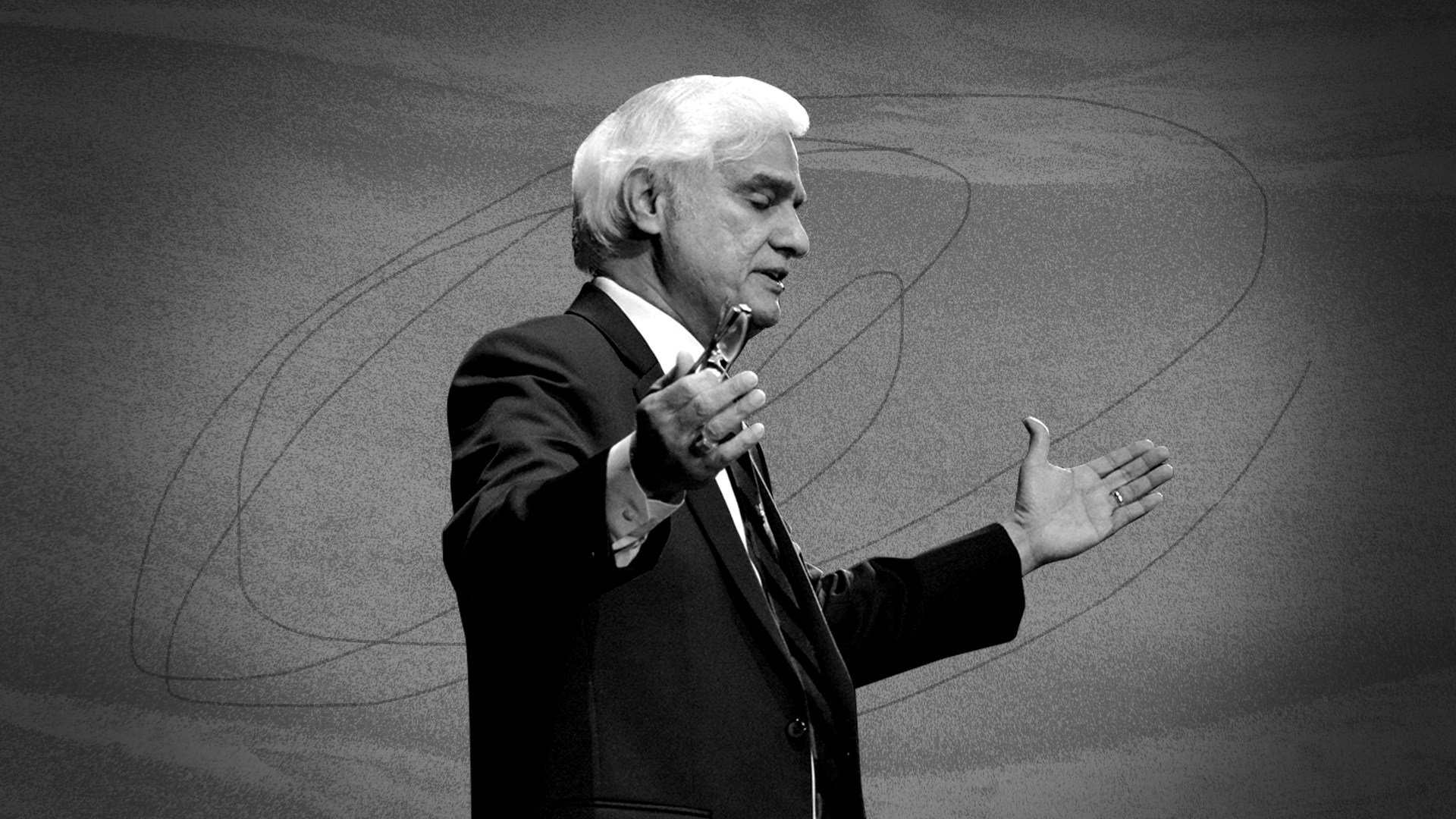
Ravi Zacharias Hid Hundreds of Pictures of Women, Abuse During Massages, and a Rape Allegation

His ministry, preparing to downsize in the wake of a new investigation, expresses regret for “misplaced trust” in a leader who used his esteem to conceal his sexual misconduct.

Christianity Today February 11, 2021
Illustration by Mallory Rentsch / Source Image: Courtesy of RZIM

A four-month investigation found the late Ravi Zacharias leveraged his reputation as a world-famous Christian apologist to abuse massage therapists in the United States and abroad over more than a decade while the ministry led by his family members and loyal allies failed to hold him accountable.

He used his need for massage and frequent overseas travel to hide his abusive behavior, luring victims by building trust through spiritual conversations and offering funds straight from his ministry.

A 12-page report released Thursday by Ravi Zacharias International Ministries (RZIM) confirms abuse by Zacharias at day spas he owned in Atlanta and uncovers five additional victims in the US, as well as evidence of sexual abuse in Thailand, India, and Malaysia.

Even a limited review of Zacharias’s old devices revealed contacts for more than 200 massage therapists in the US and Asia and hundreds of images of young women, including some that showed the women naked. Zacharias solicited and received photos until a few months before his death in May 2020 at age 74.

Zacharias used tens of thousands of dollars of ministry funds dedicated to a “humanitarian effort” to pay four massage therapists, providing them housing, schooling, and monthly support for extended periods of time, according to investigators.

One woman told the investigators that “after he arranged for the ministry to provide her with financial support, he required sex from her.” She called it rape.

She said Zacharias “made her pray with him to thank God for the ‘opportunity’ they both received” and, as with other victims, “called her his ‘reward’ for living a life of service to God,” the report says. Zacharias warned the woman—a fellow believer—if she ever spoke out against him, she would be responsible for millions of souls lost when his reputation was damaged.

The findings, alongside details revealed over months of internal reckoning at RZIM, challenge the picture many have had of Zacharias.

When he died in May, he was praised for his faithful witness, his commitment to the truth, and his personal integrity. Now it is clear that, offstage, the man so long admired by Christians around the world abused numerous women and manipulated those around him to turn a blind eye.

Miller & Martin attorneys Lynsey Barron and William Eiselstein, hired by RZIM to investigate, interviewed 50 witnesses and examined phones Zacharias used from 2014 to 2018. In the end, the lawyers said “we are confident that we uncovered sufficient evidence to conclude that Mr. Zacharias engaged in sexual misconduct,” though the investigation was not exhaustive.

The RZIM board released a statement alongside the investigation expressing regret and taking some responsibility:

“Ravi engaged in a series of extensive measures to conceal his behavior from his family, colleagues, and friends. However, we also recognize that in situations of prolonged abuse, there often exist significant structural, policy, and cultural problems. … We were trusted by our staff, our donors, and the public to mentor, oversee, and ensure the accountability of Ravi Zacharias, and in this we have failed.”

RZIM hired Miller & Martin after a September 2020 Christianity Today report on allegations of abuse by three women who worked at Zacharias’s spas. Initially, the ministry leadership stated it did not believe the women. Today that has changed.

“We believe not only the women who made their allegations public but also additional women who had not previously made public allegations against Ravi but whose identities and stories were uncovered during the investigation,” the statement said.

In a span of eight months, RZIM has gone from having to reimagine the work of its global ministry following the death of its renowned namesake to having to restructure entirely, as Christians inside and outside the organization lost trust in its longtime leader.

Multiple speakers and RZIM staff members left the ministry during the course of the investigation, concerned about top officials’ initial response to the allegations. RZIM’s Canadian branch suspended fundraising efforts and donation collection through April, while the UK-based Zacharias Trust is threatening to split if RZIM does not apologize to victims and institute major reforms. (Update: The day after the report was released the UK board voted unanimously to separate from RZIM and choose a new name.)

Even before the report’s release on Thursday evening, RZIM leadership had shifted to reduce the involvement of the Zacharias family. Margie Zacharias, Ravi’s widow, resigned from the board and the ministry in January, while her daughter Sarah Davis stepped down as board chair but remains CEO.

Staff members inside RZIM say the ministry—the largest apologetics organization in the world—plans to dramatically downsize to as few as 10 US apologists and a few international speakers, supported by a small staff.

Investigation limited by NDA

In addition to confirming previous reports of abuse at Zacharias’s spas, the new report corroborated four-year-old allegations by Lori Anne Thompson, the Canadian woman who says Zacharias manipulated her into sending him sexually explicit texts and photos. Her case was the first sexual scandal related to Zacharias to go public, and it inspired other victims to come forward.

Zacharias had sued Thompson in 2017, claiming that her lawyer’s letter to the RZIM board alleging sexual abuse was actually an elaborate attempt at extortion. The board wrote on Thursday that “we believe Lori Anne Thompson has told the truth about the nature of her relationship with Ravi Zacharias.”

Investigators interviewed other witnesses who “recounted similar conduct” as Thompson’s allegations and found a six-year-long pattern of text messaging with other women before and after her.

Yet Thompson and her husband, Brad, were unable to participate in the recent investigation themselves. The late apologist’s estate refused investigators’ requests to lift a nondisclosure agreement (NDA) to allow the Thompsons to speak about what happened. Their attorney, Basyle Tchividjian, told investigators that with everything that has come to light, the fact that the Thompsons are still bound by an NDA is “reprehensible.”

Davis wrote in a ministry-wide email that RZIM “asked for a modification to the NDA for the purpose of the investigation,” but the organization has no authority over the estate, which is controlled by her mother, Margie Zacharias. The estate also refused to have Zacharias’s personal attorneys hand over any evidence collected from his devices at the time, leaving a gap in the record examined by Miller & Martin.

According to the investigative report, however, Zacharias continued soliciting sexual images of women as he settled the case with the Thompsons, defended himself publicly, and assured the RZIM leadership and staff he did nothing wrong and there was no need to investigate.

“While he told his staff that his real mistake in the Thompson matter was not alerting someone that he was receiving photographs of another woman, we have no indication that he ever went to RZIM management or its Board on the more than 200 occasions he received photographs of women during and after the Thompson matter,” the report says.

In fact, one day after Zacharias publicly stated in 2017 that he had learned a “difficult and painful lesson” over his communication with Lori Anne Thompson, he received more photographs from another woman, investigators found. That woman went on to send him nude pictures as well.

One thing did change, though. After the Thompson case, the investigators noticed that Zacharias did a better job of deleting his messages in ways that could not be detected or uncovered.

In its statement released with the report, the RZIM board acknowledged the failure and apologized to Lori Anne Thompson.

“We were wrong,” the statement says. “It is with profound grief that we recognize that because we did not believe the Thompsons and both privately and publicly perpetuated a false narrative, they were slandered for years and their suffering was greatly prolonged and intensified. This leaves us heartbroken and ashamed.”

‘He was able to hide his misconduct in plain sight’

Much of the abuse uncovered by investigators took place around massage, which Zacharias relied on to treat a chronic back injury. He regularly traveled with a personal masseuse and criticized a fellow RZIM staff member who questioned the “appearance of impropriety” for doing so.

While the report did not interview sources abroad, investigators uncovered evidence that Zacharias routinely met massage therapists when he traveled.

“He would often arrange for massage treatments in his hotel room when he was likely alone,” the report said. “According to his text messages, at times he would meet the therapists in the hotel lobby and at other times he would direct them to come straight to his room.”

In Bangkok, he owned two apartments in the early 2010s, sharing a building with one of his massage therapists, the investigators found. The notes app on his phone included Thai and Mandarin translations of phrases like “I’d like to have a beautiful memory with you,” “little bit further,” and “your lips are especially beautiful.”

The massage therapists and the women pictured in Zacharias’s phone albums were decades younger than him, many in their 20s.

The investigation did not find any evidence that RZIM leadership or staff knew about Zacharias’s sexual misconduct. It also shows the ministry provided little to no accountability for its namesake and founder.

“Because his need for massage treatments was well known and accepted, he was able to hide his misconduct in plain sight,” the report says.

Zacharias spoke about the importance of “physical safeguards” to “protect my integrity,” but the Miller & Martin report notes that “As the architect of those ‘physical safeguards,’ Mr. Zacharias well knew how to elude them.”

The investigation confirmed that Zacharias lied about not being alone with a woman other than his wife or daughters. He also maintained multiple phones at all times, kept them on a different wireless plan than RZIM, and never used the wireless network at the office. Zacharias said this was for security, but it ensured his communication could not be monitored.

The RZIM board’s statement acknowledges that it has “fallen gravely short” and expresses regret “that we allowed our misplaced trust in Ravi to result in him having less oversight and accountability than would have been wise and loving.”

Each example in the report contrasts with the public witness of a leader—and a ministry—known for preaching integrity and truth.

“Those of you who have seen me in public have no idea what I’m like in private,” Zacharias told his supporters in a talk he gave about a year before he died, in a recording shared with CT. “God does. God does. And I encourage you today to make that commitment and say, ‘I’m going to be the man in private who will receive the divine accolade, “Well done, thou good and faithful servant.’”

Many who looked up to Zacharias as a mentor, model, and spiritual father have been trying to grapple with the new information, their feelings of betrayal, and questions about their own responsibility.

“I feel disappointed in myself and others who could have pushed harder against the tides of submissive loyalty to demand better answers earlier, as there is no part of the evangelical creed that honours cowardice or sacrifices conscience,” Dan Paterson, the former head of RZIM in Australia, wrote on Facebook Wednesday night.

“I feel a profound sense of the fear of the Lord, knowing that one day I too will give an account, where like the RZ report, everything done under the shroud of darkness will be made known. Jesus comes to restore justice through judgment. Oh, how I wish Ravi repented here!”

Changes coming to RZIM

The board (whose names are not publicly available) and leadership have been planning for a reckoning since investigators’ interim report in December prepared RZIM to expect the worst.

Going into the process in September 2020, the ministry’s official stance was that the allegations couldn’t be true but that it would conduct an investigation to clear Zacharias’s name. At first, RZIM hired the firm of one of the lawyers who sued the Thompsons. Several people inside the ministry said vice president Abdu Murray suggested enlisting a “rough” ex-cop to track down the accusers and uncover information the ministry could use to discredit them.

RZIM changed course and hired Miller & Martin in early October, after several speakers said they found the allegations credible and demanded the ministry do a real and reputable investigation.

“I believe each of us bear a degree of responsibility for what we’ve all been blind to, what we’ve unwittingly enabled, what we’ve not spoken against, and what we’ve allowed to go on and continue,” Sam Allberry, one of the speakers, told colleagues in the UK.

As CT previously reported, fights over complicity and accountability roiled the ministry for months as the investigation continued. At the start of the new year, RZIM was bracing for a split.

Davis informed staff that some global offices may decide to separate from RZIM and become independent, national organizations. Currently, each office has its own articles of incorporation or national charter as a charity and is associated with the US-based ministry through an “affiliate agreement.” This has allowed RZIM to function as a single global ministry.

“We have been able to operate as one organization in practice for over 35 years, however, in a time of crisis such as ours, this has caused some of our boards to need to exercise decisions separate from the HQ and International Board in order to make what they feel are the best decisions for their entity,” Davis wrote.

Some senior apologists in RZIM think national separation is the only way to preserve parts of the ministry that are doing good work.

John Lennox, a Northern Irish mathematician and apologist who famously debated Richard Dawkins, Christopher Hitchens, and other “new atheists,” has urged the UK branch of RZIM to separate. Lennox withdrew from all association with RZIM the day after CT reported the spa allegations, but told British apologists he would happily work with them if they were to form an independent organization.

“The current allegations are of such a serious nature that I cannot be involved in any ongoing activity in the name of RZIM,” Lennox wrote in a statement to the UK and US boards. “In my view, a renaming of the organisation and fundamental restructuring of the organisation and board needs to be done and done very quickly, if the potential of the marvelous young team of apologists is to be retained in any collective sense.”

Other national boards are also in the process of disentangling themselves from the US headquarters, according to multiple sources inside the ministry. The Canadian board said in a statement that “It is clear that this ministry cannot be built on previous structures” but “must be built on new approaches and relationships.”

The Canadian apologetics ministry also laid off four team members, including Daniel Gilman, a speaker who decided he believed the women who accused Zacharias of sexual abuse and vocally challenged RZIM leadership to acknowledge complicity. Gilman told CT he was deeply concerned the ministry he loved would choose to rebrand but not repent.

Gilman’s severance package included an NDA, which would bar him from “any action that could reasonably be anticipated to cause harm to the reputation” of or “negatively reflect” on RZIM. Gilman protested and the NDA was replaced with an agreement to keep donor information confidential.

Many more layoffs are expected soon. RZIM employees told CT that they expect the international ministry, which once boasted 100 speakers and 250 staff members nationwide, will be reduced to a fraction of that. Davis told staff that layoffs will be announced in the weeks after the Miller & Martin report is released.

“This is a very difficult decision necessary only because of the situation we find ourselves in,” she wrote. “We are profoundly sorry for this.”

After the staff reductions and national splits, the team that remains will likely be some of the speakers who were closest to Zacharias and have well-established relationships with major donors. People inside RZIM expect the core to include speakers Michael Ramsden, Abdu Murray, and Vince Vitale, led by Davis.

Davis stepped down as chair of the board, handing the reins over to Chris Blattner, a retired energy company executive and major donor from Minnesota. During the crisis, however, Davis has taken on more of the day-to-day management of RZIM, personally putting her name to all internal and external communication.

The RZIM board stated Thursday that “In light of the findings of the investigation and the ongoing evaluation, we are seeking the Lord’s will regarding the future of this ministry … We will be spending focused time praying and fasting as we discern how God is leading, and we will speak to this in the near future.”

RZIM announced it is bringing in victims advocate Rachael Denhollander to educate the board and leadership on sexual abuse and advise them on best practices going forward. The ministry has also hired a management consulting firm to evaluate “structures, culture, policies, processes, finances, and practices” and propose reforms.

Answered prayer

The secret of Zacharias’s abuse started to unravel the day of his funeral in May 2020. One of the massage therapists he groped, masturbated in front of, and asked for sexually explicit images watched in shock as the apologist was honored and celebrated on a livestream. Famous people, including Vice President Mike Pence and Christian football star Tim Tebow, spoke of Zacharias in glowing terms.

Has no one come forward? she thought. No one?

She worried about other women who might be out there, hurting. She prayed that something would happen.

The woman googled “Ravi Zacharias sex scandal” and found the blog RaviWatch, run by Steve Baughman, an atheist who had been tracking and reporting on Zacharias’s “fishy claims” since 2015. Baughman blogged on Zacharias’s false statements about academic credentials, the sexting allegations, and the subsequent lawsuit. When the woman read about what happened to Lori Anne Thompson, she recognized what had happened to that woman was what had happened to her.

As far as she could tell, this atheist blogger was the only one who cared that Zacharias had sexually abused people and gotten away with it. She reached out to Baughman and then eventually spoke to CT about Zacharias’s spas, the women who worked there, and the abuse that happened behind closed doors.

The woman from the spas told CT she didn’t expect anything from RZIM. Not an acknowledgement. Certainly not an apology. A multimillion-dollar ministry built in one man’s name and on his reputation would never admit the truth of his secrets, she thought.

She only spoke out because she wanted other women—women hurt by Zacharias, and women victimized by other famous and celebrated Christians—to know the truth. She wanted them to know that they weren’t alone.

This week, she believes God answered her prayer.

“I think it happened in God’s perfect time,” she said. “It’s in his time; it’s in his way. The Lord is doing this, and what will be left over is what God wants to be left over.”

News
Wire Story

QAnon Conspiracies Sway Faith Groups, Including 1 in 4 White Evangelicals

Survey examines belief in election fraud, the Deep State, and other theories on American politics.

Christianity Today February 11, 2021
Al Drago / Getty Images

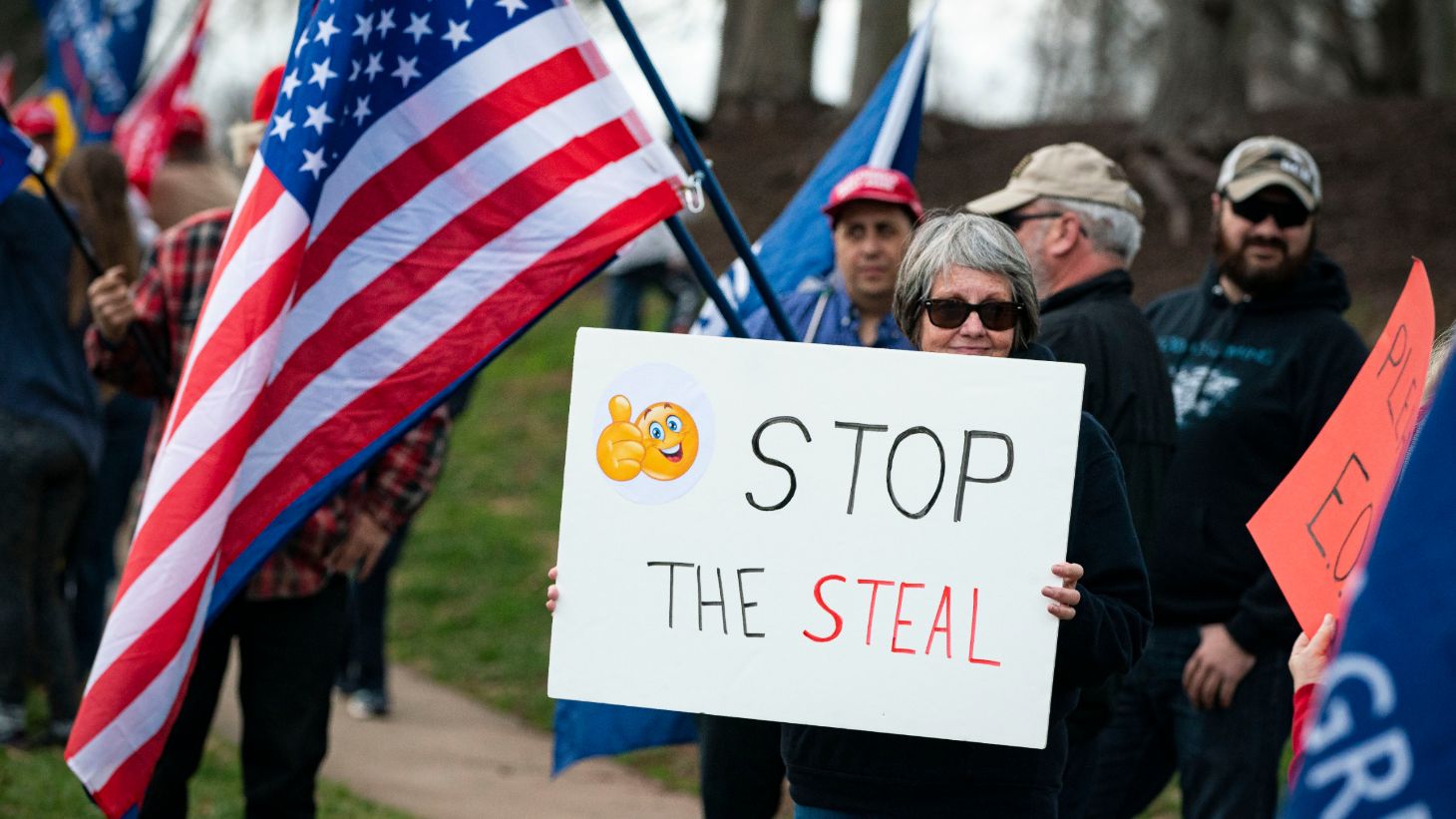
A new survey reports more than a quarter of white evangelical Protestants believe a QAnon conspiracy theory that purports former President Donald Trump is secretly battling a cabal of pedophile Democrats, and roughly half express support for the debunked claim that antifa was responsible for the recent insurrection at the US Capitol.

Experts say the data point to a widening ideological divide not only between white evangelicals and other religious groups in the country, but also between white evangelical Republicans and other members of their own party.

The survey, which was conducted in late January by the conservative American Enterprise Institute, reported 29 percent of Republicans and 27 percent of white evangelicals—the most of any religious group—believe the widely debunked QAnon conspiracy theory is completely or mostly accurate.

QAnon has infiltrated other faith groups as well, with 15 percent of white mainline Protestants, 18 percent of white Catholics, 12 percent of non-Christians, 11 percent of Hispanic Catholics and 7 percent of black Protestants saying they believe it.

In addition, large subsets of each group—ranging from 37 percent of non-Christians to 50 percent of Hispanic Catholics—said they “weren’t sure” whether the theory was true.

https://datawrapper.dwcdn.net/z60L8

According to Daniel Cox, director of AEI’s Survey Center on American Life, the report suggests conspiracy theories enjoy a surprising amount of support in general, but white evangelicals appear to be particularly primed to embrace them.

“There’s this really dramatic fissure,” he said.

There was also significant support among white evangelicals for the claim that members of antifa, or anti-fascist activists, were “mostly responsible” for the attack on the US Capitol—a discredited claim repeated by former Trump lawyer Rudy Giuliani and Franklin Graham. FBI officials have said there is “no indication” antifa played a role in the insurrection.

Even so, the story has had staying power in the minds of many Americans, including 49 percent of white evangelical Protestants who said the antifa claim was completely or mostly true. So did 36 percent of white Catholics, 35 percent of Hispanic Catholics, 33 percent of white mainline Protestants, 25 percent of Black Protestants and 19 percent of non-Christians.

Among the religiously unaffiliated, 22 percent also expressed belief in the theory.

Asked to explain why white evangelicals appear disproportionately likely to embrace conspiracy theories, Cox noted that, as a group, they do not fit a stereotype of conspiracy theorists as people disconnected from social interaction. Instead, most retain strong connections to various social groups.

But white evangelicals stand out in a different way: The vast majority say some or a lot of their family members (81%) or friends (82%) voted for Trump in the 2020 election—more than any other religious group.

“People who do strongly believe in these things are not more disconnected—they are more politically segregated,” Cox said.

The resulting social echo chamber, he argued, allows conspiracy theories to spread unchecked.

“That kind of environment is really important when it comes to embracing this kind of thinking,” he said. “You’re seeing people embrace this sort of conspiratorial thinking, and everyone in their social circle is like, ‘Yeah, that sounds right to me,’ versus someone saying, ‘You know, we should look at this credulously.’”

White evangelicals express robust support for other conspiracy theories as well. Close to two-thirds (62%) believe there was widespread voter fraud in the 2020 election—despite numerous experts and courts at all levels refuting such claims—and roughly the same percentage (63%) believe President Joe Biden’s victory was “not legitimate.”

A majority (55%) also said they believed it was mostly or completely accurate to say “a group of unelected government officials in Washington, D.C., referred to as the ‘Deep State’ (has) been working to undermine the Trump administration.”

Cox said forthcoming data will highlight the ideological distinctiveness of white evangelicals even among people who identify as Republicans or who lean toward the party, signaling an “increasingly important divide in the GOP among people who identify as evangelical Christian and those who do not.”

“If you’re a Republican but identify as an evangelical Christian, you’re far more likely to believe in voter fraud in 2020 election,” he said. “You’re far more likely to believe that Biden’s win was not legitimate. You’re more likely to believe in the QAnon conspiracy. You’re more likely to believe in the ‘Deep State.’”

White evangelicals also stood apart from other religious groups when asked about the potential for violent action: 41 percent completely or somewhat agreed with the statement “if elected leaders will not protect America, the people must do it themselves even if it requires taking violent actions.”

News

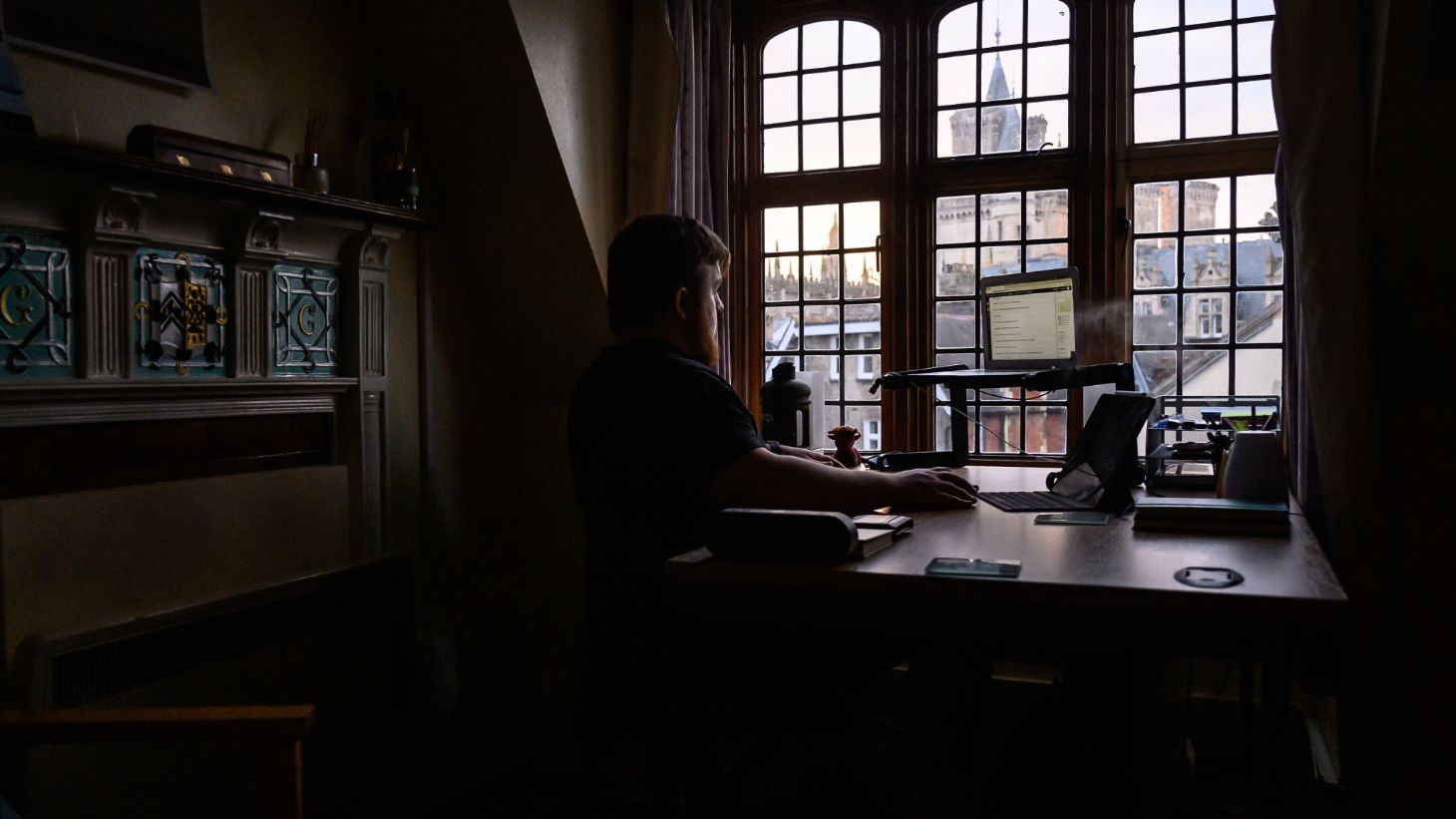
Evangelical Colleges Consider the Future of Online Education After COVID-19

The pandemic accelerated the push for remote options but also left students longing for in-person community.

Christianity Today February 11, 2021
Leon Neal / Getty Images

In the fall of 2019, not every instructor at Samford University used Canvas, an online learning management system where they can post assignments and videos of lectures.

By the following year, things were different. “It’s not optional,” said Betsy Holloway, vice president for marketing and communications. “One hundred percent are in Canvas.”

The change, of course, is due to COVID-19. But once the pandemic ends, what elements of the new technology will remain a part of the higher ed landscape? Nearly a year in, administrators at Christian colleges are pausing to assess the real-world experiment with online education.

Recently, a number of schools affiliated with the Council for Christian Colleges & Universities (CCCU) have signed on to work with CampusEDU, a new ed tech company partly owned by the CCCU, which aspires to usher in the next generation of online classes.

Abilene Christian University, Gordon College, Houghton College, Indiana Wesleyan University, John Brown University, Lipscomb University, Ohio Christian University, Oklahoma Christian University, and two institutions affiliated with the Association for Biblical Higher Education (ABHE) have partnered with CampusEDU so far.

Darren Campbell, CEO of CampusEDU, compared most online education to “the Model T,” believing there’s a long way to go to build on the basics. “It’s very text heavy,” he said. “We believe the future of online education is more graphical.”

The company works with institutions to create MasterClass-esque content with highly produced videos of lectures. Current offerings include a New Testament survey taught by Jim Lo at Indiana Wesleyan; Latin I, taught by Ian Drummond at Gordon; and Intro to Computing, taught by Ted Song at John Brown University. Students at participating schools can take courses taught by professors from a partner institution at no additional cost.

“COVID-19 is changing the higher education landscape, and we’re seeing that the flexibility of blending in-person and online education is proving to be an effective model for many of our campuses,” said CCCU president Shirley Hoogstra, announcing the partnership. “It has become clear that we need to provide extraordinary in-person and extraordinary online courses.”

Another for-profit online learning tool, Acadeum, also has a course-sharing consortium, with more than 50 CCCU institutions participating. Through the platform, schools can approve and enroll students in classes developed by other institutions, and then share the data and money for cross-registration.

Rick Ostrander, Acadeum’s vice president for academic partnerships, said the technology gives students increased flexibility, allows institutions to add courses to their current offerings, and helps schools get online more quickly than if they did it on their own.

Ostrander and Campbell said COVID-19 has been a blessing and a curse. Some institutions have expressed interest in signing up, while others have been busy with day-to-day management.

“In some cases, COVID-19 has really kept institutions from thinking about long-term strategic growth initiatives,” Ostrander said.

Schools had been slowly building and testing remote-learning infrastructure for years, with traditional undergraduate enrollment declining and growing interest from adult learners taking classes part-time, high school students in dual enrollment, and transfer students requiring greater flexibility with instruction.

By 2013, about 13 percent of all students at CCCU schools were exclusively enrolled in distance education, according to data provided by the CCCU. By 2018, the most recent year available, that had climbed to 19 percent.

Some schools have sought to create a niche for themselves by developing extensive online offerings. Indiana Wesleyan University launched its first online course in 1996. Today IWU National & Global, a separate school for graduate and online degree programs, serves about 9,000 students.

Matt Lucas, chancellor of IWU National & Global, said schools trying to do more online education may find it is more difficult than they expect. It’s one thing to provide instruction through a learning management system or Zoom to provide instruction. It’s another to offset declining enrollments by recruiting students into web courses, competing with all the other colleges and universities doing the same thing.

“It is really hard to have gravitas in this space,” Lucas said. “Because it is a red ocean. It is a dog eat dog. It has become a commodity to drive down the price of tuition as much as possible.”

Colleges will have to stand out to be competitive in the online education market, said education-technology blogger Michael Feldstein in a piece titled “Online Learning Student Experience is the New Climbing Wall.”

He writes that schools “will have to create distinctive and valuable experiences (online) that are just as meaningful and just as easy as bumping into your professor at the coffee shop or meeting your classmates for pizza at the dining hall.”

At the same time, Christian administrators and experts told CT they think COVID-19 will make prospective students value in-person education more in the coming years.

That’s the bet that Palm Beach Atlantic University is making. While the Christian school has been growing its online-only degree programs—it had five programs in 2017 and will be up to 17 this fall—it’s also doubling-down on traditional, in-person learning, described Melanie Jackson, Palm Beach Atlantic ’s eLearning director.

In response to the pandemic, the school still offered entirely in-person instruction on campus this academic year, with careful quarantine procedures for students who were exposed to the coronavirus. Also, some students received medical exemptions if they wanted to take classes from home.

“It was not entered into lightly,” Jackson said. “We truly feel like the mission of our university is transformation—to aid students to become strong Christian leaders in their communities and in their fields. For many students and for many programs, that transformation for students takes place in the classroom.”

Palm Beach Atlantic installed acrylic plastic shields around each student’s desk and each teacher’s podium, making the classrooms look oddly futuristic. Faculty still need to be familiar with remote-learning tools for students not in the classroom. Professors stream every lecture on Zoom and post assignments on Canvas.

At Samford, where every professor is required to use Canvas, administrators are also thinking about the value of old-fashioned college, in which a few people engage with each other in a decidedly non-virtual room.

“CCCU schools, Samford included, should be able to deliver on that core value proposition,” Holloway said. “A small class that is highly relational, experiential learning. I think there is going to be an acute desire for that.”

Church Life

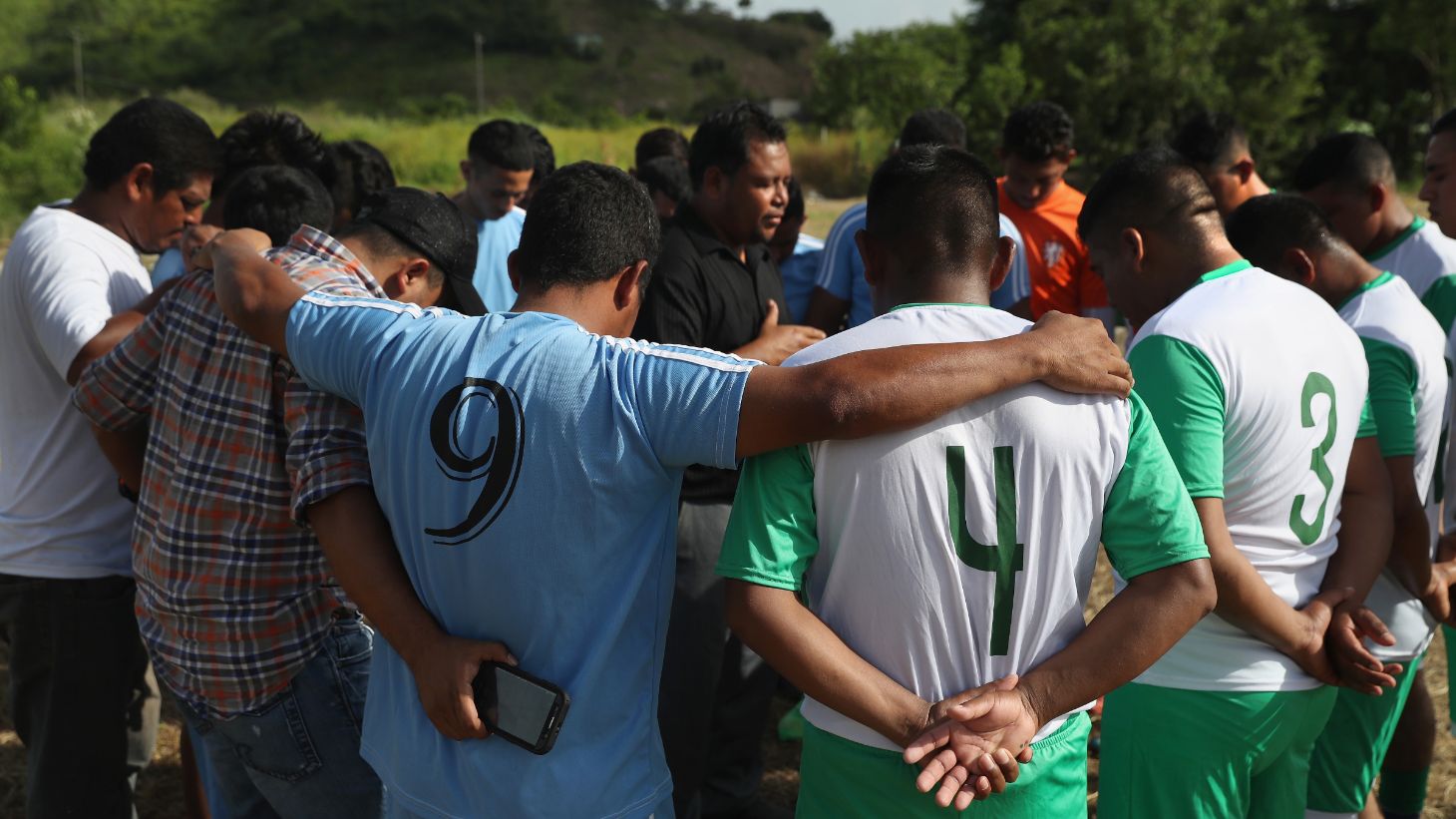
Pentecostals Lead the World in Conversions, But Not in US Missions

Study: Just a tenth of American missions agencies affiliate with the world’s fastest-growing Christian movement.

Christianity Today February 11, 2021
John Moore / Getty Images

Pentecostalism’s global impact outsizes its organizational footprint, according to a recent study parsing the reach of American Protestant mission organizations.

Pentecostals and charismatics—it’s often difficult to name such a broad and diverse group—comprise 26 percent of all Christians worldwide, according to the Center for the Study of Global Christianity’s 2020 report, and they have a growing presence in the developing world.

Yet only about 10 percent of US missions agencies serving abroad over the past 40 years were affiliated with the popular movement, sociologist Jared Bok found.

“Global Pentecostalism saw its roots historically in the US. Yet despite its growth around the world, in the US itself, it’s evangelical Protestantism that is more dominant,” said Bok, adding that American evangelicalism “doesn’t always affiliate with and sometimes even dissociates with Pentecostalism or charismatic forms of Christianity.”

Bok, inspired by his family’s interactions with US missionaries in Southeast Asia, said he has wondered how big of a role US missions agencies are playing in the growth of the faith around the world.

In a study published last year in the Review of Religious Research, the researcher analyzed a sample of 799 agencies from the North American Mission Handbook, a directory of North American missions organizations, alongside United Nations data on development and Protestant identity. His analysis begins in 1972—the first year that the questionnaire sent out by Mission Handbook included the word “evangelical”— and differentiates between organizations that identify as evangelicals, Pentecostals, both, or neither.

https://datawrapper.dwcdn.net/PIH1C
https://datawrapper.dwcdn.net/XO6Wf

Bok reported that evangelical agencies rose from around 100 in the 1970s to a peak of over 300 in the 1990s, around the time Pentecostal agencies spiked to around 70. (Groups that were neither numbered somewhere in between evangelicals and Pentecostals.)

Pentecostals and charismatics have been more likely to engage in evangelism and publishing abroad, while evangelical agencies are more likely to evangelize over TV and radio.

Generally, sociological research sorts Protestants into subgroups: mainline, evangelical, and black Protestant. But recently scholars have also suggested the importance of differences within evangelicalism between Pentecostals/charismatics, evangelicals, and fundamentalists as key categories.

“Any contribution sociologists can make in breaking apart stereotypes and highlighting the diversity within seemingly monolithic groups is useful,” said Bok, who is an assistant professor at the University of Reno.

“The differences … between evangelical and Pentecostal/Charismatic agencies in terms of what they do and where they operate may have implications for the survivability of their international ministries in the near future.”

In certain countries, government regulations around religious activities can target foreign workers and agencies, in some cases forcing Christians to conclude their work, leave, or find new ways to evangelize. (Bok’s forthcoming research focuses on factors that prompt organizational changes at missions agencies.)

Although both Pentecostals and evangelicals tend to minister in countries where Protestants are underrepresented, Bok found, as he suspected, that evangelical agencies operate more frequently in countries with unreached people. He tentatively concluded that Pentecostal and charismatic agencies have seen more success in deepening the faith of active Protestants or igniting a new practice in those who were Christian in name only.

Bok clarifies that this doesn’t mean Pentecostal mission workers don’t evangelize nonbelievers, but that social networks play a significant role in spreading the faith.

Bok recounts Tulane University sociologist David Smilde’s research in Latin America, which found that “a lot of conversions, especially from Catholicism to Pentecostal/Charismatic Protestantism, happen through social networks—people know family members who are Pentecostal, make friends or meet people in a different town”—meaning not directly through the operations of an American mission organization. Bok suggests that organizations should be studied more with ethnographies or analysis of mission agencies’ materials to provide a fuller picture of reach.

Geographically, the new research adds to understanding of the greater share of global Christians who belong to Pentecostal or charismatic churches. In Latin America, Pentecostal and charismatic mission agencies had a larger presence, while in sub-Saharan Africa, organizations that identified as neither Pentecostal nor evangelical had a larger presence. Few American agencies had a presence in North African/Middle Eastern and former Soviet countries.

Overall, Bok found “less sweeping and more selective” differences between Pentecostal and evangelical missions than he anticipated.

“There is far more that binds these two types of mission agencies together, especially compared to other Protestant agencies (such as mainline Protestant), than divides them,” said Bok.

For example, Bok hypothesized that Pentecostal/charismatic agencies would tend to do less ministry as development increased for countries over time—other scholars have promoted the assumption that Pentecostalism is uniquely appealing to those experiencing poverty. (Others have also documented the popularity of Pentecostalism among the middle class.)

The data did not support the idea that Pentecostal agencies were more interested in low-income countries. But the answer could be beyond the scope of his examination of organizations—Bok again suggests that more personal, community-level evangelism among those in poverty may be at play in those countries.

His study also found the role of denominations in US missions work abroad has shifted.

In the 1970s, over 70 percent of Pentecostal agencies were denominationally affiliated, while evangelical organizations were mostly not denominationally affiliated. By the 21st century, Pentecostals resembled evangelicals in that regard, and only about 25 percent of Pentecostal mission agencies were denominationally affiliated.

The change suggests some agencies began to emerge from independent congregations, said Bok. It also reflects rapid growth in nondenominational Christianity.

One advantage denominational agencies have over their nondenominational counterparts: a more robust missional scope.

“Denominations may indeed provide the networks and scope of mission to allow their agencies to reach wider audiences,” Bok said. “They may not be as prolific in number as nondenominational agencies, but they certainly are making up for it with more ministries per agency.”

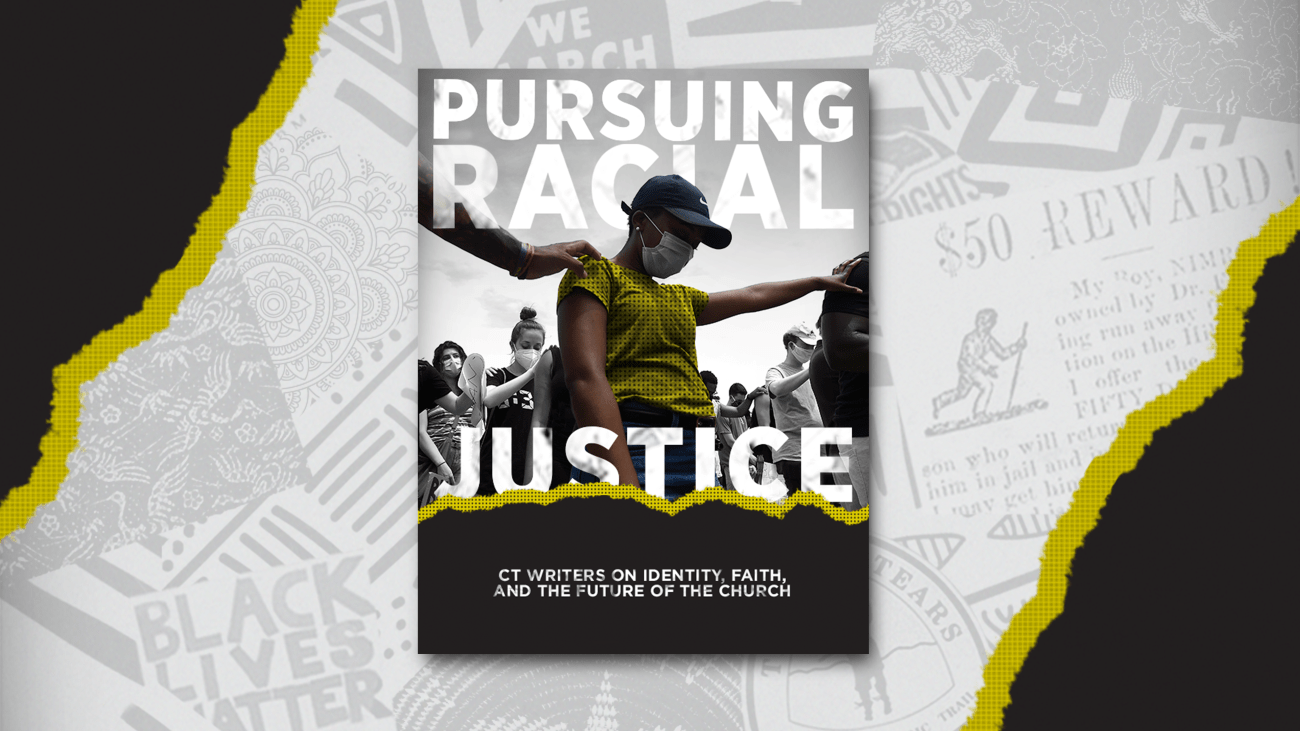
What ‘Christianity Today’ Wanted the (White) Church to Hear After George Floyd Died

For 20 weeks, writers of color addressed issues of faith and racial injustice in an online series. Now this work is an e-book.

What ‘Christianity Today’ Wanted the (White) Church to Hear After George Floyd Died

“Can a follower of Christ claim salvation in His cross and at the same time give consent to the suffering racial injustice imposes on others without contradiction?”

That’s what Cheryl J. Sanders, a senior pastor at a church in Washington D.C., challenged readers with last fall. Her essay was the final installment of Christianity Today’s “Race Set Before Us” project, a series that ran for 20 weeks in the aftermath of George Floyd’s killing that focused on the (white) church’s need to address racial injustice. Its authors, which included the And Campaign’s Justin Giboney, the Asian American Christian Collective’s Michelle Reyes, and the Expectation’s Project’s Nicole Baker Fulgham, explored a broad range of topics including disparities in education and school discipline, the ineffectiveness of a colorblind approach to race, and white evangelicalism’s failure to lead and take action for racial reconciliation.

Spearheaded by editor in chief Daniel Harrell, Wheaton College theology professor Vince Bacote also played a key role in bringing the series to life, finding writers and reading through drafts. In the essay launching the series he explained its purpose:

This series will not participate in the politics of guilt, but it will provide a “politics of reckoning.” To reckon is to take up and read, to ask God for eyes to see and ears to hear (Mark 4:23), to understand what the Lord would have happen in our hearts and have us do in the world. To reckon is also to acknowledge that righteousness under God must be done. Justice and peace go hand in hand (Ps. 85:10). Such divine reckoning elicits understanding and empathy, provides vindication and exposes guilt. The politics of reckoning evokes many emotions, but these need not be mere sentiments. Instead, these feelings present opportunities for the Holy Spirit to transform us more and more into disciples who do justice, love mercy and walk humbly with God (Mic. 6:8).

Bacote earned his first CT byline in 1999. Last year, in addition to his work on the series, Harrell also tapped him as one of CT’s three theology advisers, contributed three essays to the Advent devotional, and discussed why Christians stopped talking about the Second Coming on the Quick to Listen podcast.

“I think one of these reasons why it’s so important is that evangelicals have talked about race. You can go back and look through the annals of CT and see that there’s been articles about race at various points in its history,” said Bacote in a webcast about the series over the summer. “But the kind of sustained attention that is needed to get leadership in evangelicalism on this question hasn’t happened. We are in a right time to give leadership on this question and to show evangelicals they can be good news about this issue.”

Among the pieces from the series that stood out to Bacote was an essay by Rachel Kang which argued that “black men and women offer immeasurably more than stories of suffering and struggle, more than mere resources on racism to relevantly revisit our nation’s painful past.”

“Believers’ bookshelves should portray the kingdom of heaven we so passionately preach,” she wrote. “If we long for the seats in our churches to be filled with black bodies and brown bodies and white bodies together, we can start with our shelves and surround ourselves with stories reflecting a love for others without boundaries experienced through reading others’ books.”

“It’s easy to think that certain crisis dimensions of a topic are the only dimensions of a topic that are going to be talked about,” he said. “But there’s other things to talk about besides crisis. There’s everyday life.”

Bacote also called out an essay from Southern Baptist Theological Seminary professor Jarvis Williams, “Black Lives Matter in the Bible.”

“As a black Christian pastor of Asian, black, brown, and white people, I thank God that Genesis 1:26–27 clearly states God created all humans in his image and bestows upon us God-given dignity, and that he promises to redeem us, to reconcile us, and to restore the entire creation through Christ,” wrote Williams. “When black lives are dehumanized and treated as though they don’t matter simply because they’re black, Christians everywhere should be able to stand up and assert without hesitation and with their Bibles open that black lives certainly matter, have dignity, worth, and value, just as non-black lives certainly matter, have worth, dignity, and value.”

“I think that it was really important that we start with Williams making it clear that there’s a way to talk about Black Lives Matter that emerges straight out of scripture,” said Bacote. “There’s probably a certain constituency that thinks, ‘Is this really biblical?’ and they don’t see how the Bible directly connects to questions of race and I think Jarvis’ article was really helpful for that.”

The series gave readers many points to ponder.

“Thank you @CTmagazine for advancing this crucial conversation about racism,” tweeted one reader. “White Christians like me have a lot of self examination to do supported by grace and in hope of redemption.

“Excellent article and scripturally solid. Thank you,” wrote another. “Most helpful to this old white guy.”

One reader even had the chance to connect with one of the authors.

“I had the genuine honor & pleasure of conversing with @GaiusCharles on a panel last night,” she tweeted. “He recently authored a must-read essay in @CTmagazine about white evangelicalism & racial reconciliation. He is on FIRE for the Lord and for justice!”

Convincing of the church to fight for racial justice has not been easy for Bacote but he has persisted in the work.

“If the church is our family, do I just say I’m done with my family because my family still needs to grow up? I’m not leaving my family over that,” he said. “I’m not saying everyone has to invest their energy in evangelical institutions but for those of us called to this, I think it’s important to invest in wisely having these conversations.”

Ed Gilbreath, who was named Christianity Today’s vice president of strategic partnerships last fall, has compiled the essays, plus three new ones more, for a free e-book. Pursuing Racial Justice. The book was recently released (and is available here) and was accompanied by a book launch webinar featuring Bacote and several others.

“Our hope is that this thought-provoking collection of essays on race, faith, and the church will provide individuals and small groups with a dynamic resource for engaging on a crucial topic that continues to challenge us in our churches, our politics, and our everyday relationships,” said Gilbreath.

Morgan Lee is global media manager at CT.

Why Christianity Today is a Welcoming Space for a Third-Culture Christian

As an American who lived in Japan for more than 40 years, Sarah Zosel kept up with the American Church by reading Christianity Today.

Why Christianity Today is a Welcoming Space for a Third-Culture Christian
Photo Courtesy of Sarah Zosel

Growing up and living in Japan for most of her life, Sarah Zosel always felt like, what she describes as, a “third culture kid.” Merriam-Webster defines a third culture kid as, “a child who grows up in a culture different from the one in which his or her parents grew up.” Sarah struggles, like most missionaries do, with (in her case) not feeling Japanese enough when in Japan, but also not feeling American enough when in America. But over the years, one thing she believes helped her keep a pulse on American Christianity while in Japan, and even after moving back to the States, was reading Christianity Today.

Only six months after Sarah was born her family packed up and moved to Japan to become missionaries in Tokyo. Her father was part of the occupation of Japan in World War 2 and was on one of the first ships into Tokyo. He was influenced by some of the other GIs in his unit, and after the war when those GIs wanted to return to Japan in order to minister to the Japanese people, Sarah’s father joined them. The group he was a part of would later form Send International.

Sarah was immersed in Japanese culture from the beginning, but her family balanced that with a strong focus on their faith. When Sarah went into first grade she started attending boarding school during the week. “I remember having a conversation with my mom and accepting Christ very young, probably around four years-old. My parents wanted to make sure they had taught us the gospel and we had accepted Jesus into our hearts before we went away to school. They wanted us to have our faith to lean on during those times away,” recalled Sarah.

Sarah’s faith grew and became her own when she was in high school. She became involved in a group call Hi-BA, which was like a youth group but very serious about prayer and Bible reading. “We were held accountable for our spiritual growth and asked what we had learned in our Bible reading each week when we met,” explained Sarah. The group also did outreach to Japanese students at a local train station once a month. These experiences grew Sarah’s faith. “That was when I really started thinking for myself and making my own decisions,” said Sarah. “I made personal decisions about my faith and I started to see what God was calling me to do with my life moving forward. I had a high school English teacher who really had an impact on my life and I knew I wanted to teach too.”

After getting her English degree from Bethel University, Sarah felt her own call to move back to Japan. In 1972 Sarah and her husband moved to Okinawa, Japan and she started teaching at an international school. The school opened their doors to people other than just missionary children. That meant Sarah had the opportunity to teach and share her faith with kids who weren’t from Christian families, but local Japanese families and other third culture kids as well.

Sarah and her family lived in Okinawa for 28 years. Both of her daughters were born and raised there. Over the years Sarah had grown to believe she would live the rest of her life in Japan, but in 2000 when Sarah’s husband began to struggle with depression and anxiety, they decided to move back to the United States so he could work a less stressful job.

During this transition Sarah was thrown into culture shock yet again. “I hadn’t been planning to move back to the United States and it was a really hard transition for me–even just driving on a freeway, which I hadn’t done for years,” recalled Sarah. “Our first year transitioning back was tough, but when I found the charter school where I ended up teaching it was really helpful for me because so many of my students were Asian. It made me feel more at home.”

Sarah taught at her charter school another 16 years before retiring in 2020. The school was started by a Christian, and while the school wasn’t a Christian school, Sarah was able to teach biblical values to her students in her classroom. Most the students she taught were Hmong and had recently immigrated to the United States, so Sarah could identify with their stories and helped them learn their new culture as she continued to relearn it herself.

“One thing I enjoyed doing here in the states was finding books related to the culture and background of my students,” said Sarah. One book she loved to teach her students was Farewell to Manzanar. The story is about a Japanese student’s experience of adjusting to a southern California high school after spending time in an Internment camp during World War 2. While most of the students she taught in Minneapolis were Hmong, and not Japanese, they were still able to relate to the feelings of the young girl in the book.

After retiring Sarah realized she had more time on her hands for things she loved to do, but had put off because of her focus on teaching. One of these things is reading. Sarah started to pick up various copies of Christianity Today, both old and new to read each day. “I recently decided to read the back issues of Christianity Today that were in various places around the house. I feel like I have been on a spiritual retreat. God has spoken to me through articles about ministry to Muslims; how to help people who are struggling; ideas on strengthening our small group; helping pass on our faith to children,” Sarah said. “I could go on, but in every issue that I have picked up, I have found encouragement for my spiritual life and practical ideas to help the connections that I have.”

Sarah also loves to read books. “I’m keeping Amazon in business,” she joked. She finds a lot of the books she decides to read in the pages of Christianity Today. Recently she’s been reading Richard Foster, Eugene Peterson, James K. A. Smith, and Dallas Willard–and she always keeps an eye out for the books featured in Christianity Today for new titles.

As someone who identities as being “third culture,” Christianity Today helps Sarah understand American Christianity better, but her favorite articles are the ones that relate back to missions. “My favorite CT article of all time is The Surprising Discovery About Those Colonialist, Proselytizing Missionaries by Andrea Palpant Dilley,” said Sarah. “I really like it because of course missionaries are not ‘politically correct.’ It made me think a lot. I was in a book group and read Poisonwood Bible by Barbara Kingsolver. In our book group people were laughing at the missionary who thought he was saying one thing, but saying something else. But having grown up on the mission field I knew missionaries aren’t really like that. This article talks about how sociology shows how places where Christianity was brought by missionaries have become better over the years.”

Sarah recently became a donor to Christianity Today. When asked why she donated Sarah said, “I’m just really thankful. There are so many great articles. CT has helped me through the years, and now that I have more money than I did as a missionary, I feel like I have more to give.”

Caitlin Edwards is marketing and communications strategist at Christianity Today.

News

Hundreds of Churches Threatened by France’s Plan to End Muslim Separatism

As official demands assent that “the law of the Republic is superior to the law of God,” French evangelicals warn attempts to end Islamist terrorism will also harm freedom of religion.

Christianity Today February 9, 2021
Abaca Press / AP Images

(Updated Feb. 12 with CNEF webinar on new comments by France’s interior minister)

Frustrated by years of terrorism inflicted by radical Islamists, France’s parliament is debating a law to end Muslim separatism.

French evangelicals fear their churches will become collateral damage.

“This is the first time, as president of the Protestant Federation of France, that I find myself in the position of defending freedom of worship,” said François Clavairoly.

“I never imagined that in my own country something like this could happen.”

Officially named “the Law to Uphold Republican Principles,” the 459-page bill has been the subject of fierce debate this month, receiving over 1,700 proposed amendments.

The aim, interior minister Gerald Darmanin told parliament, is to stop “an Islamist hostile takeover targeting Muslims” that “like gangrene [is] infecting our national unity.” With Muslims often crowded into the many impoverished banlieues of France’s major cities, officials fear imported extremist ideologies are leading the religious minority to avoid national integration.

In addition, recent terrorist attacks have rallied popular demand for increased security measures. In the last six years, France has suffered 25 deadly jihadist attacks, killing 263 people. Including:

  • In January 2015, 17 people were killed in the Charlie Hebdo attack.
  • In November 2015, 131 people were killed in an attack at the Bataclan music venue.
  • In July 2016, 86 people were killed when a truck drove through crowds celebrating Bastille Day.
  • In December 2018, 5 people were killed in an attack at a Christmas market.
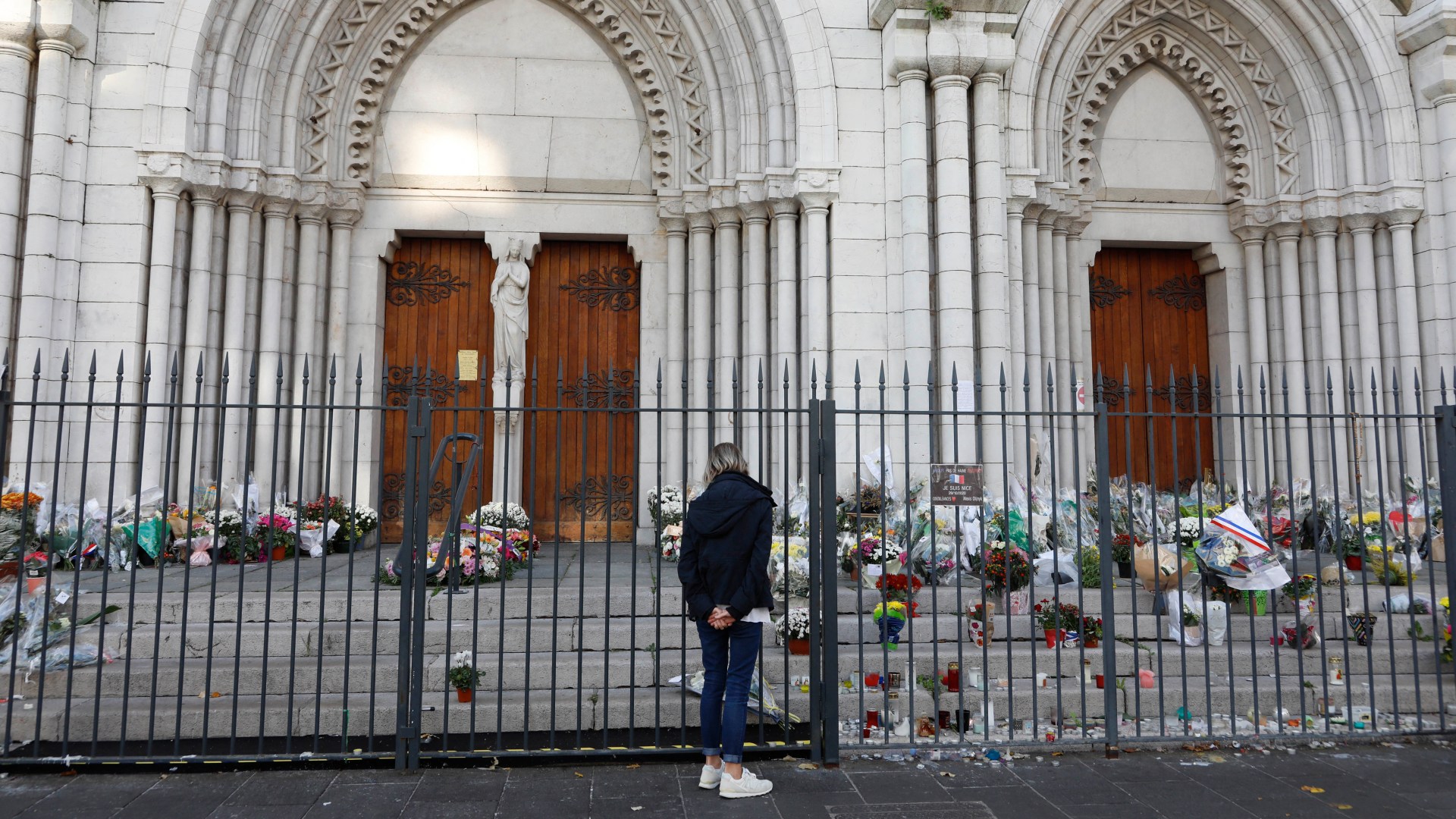
  • In October 2020, 3 people were killed while stabbed at prayer in the Nice cathedral.

In 2018, the European Union’s anti-terrorism chief estimated a total of 17,000 radicalized Muslims in France.

Among the key provisions of the bill are greater monitoring of religious associations. Many mosques have ties to the Muslim world, with imams raised and educated in nations without a heritage of human rights and religious freedom. According to the French Institute for Demographic Studies, nearly 82 percent of Muslim citizens hail from the North African nations of Algeria, Morocco, and Tunisia, where France once ruled as a colonial power. An additional 8 percent come from Turkey.

The bill will prevent non-French citizens from taking control of an association, which will be required to sign a “contract of Republican commitment” ensuring its members honor French values. Foreign funding over $12,000 must be reported to the authorities.

Furthermore, it criminalizes polygamy, forced marriage, and the issuance of “virginity certificates” that Muslims sometimes require of a prospective bride.

The bill seeks to combat the separatist impulse that results in a “counter society,” according to President Emmanuel Macron, who promised such a new law last October. To do so, children starting at age 3 must be educated in the official school system.

And to prevent copycat attacks after the beheading of a school teacher who had discussed the offensive Muhammad cartoons that same month, the “Samuel Paty law” will make it a hate crime to share personal details online.

The proposed law is “useful and necessary,” said the head of the official French Council of the Muslim Faith (FCMF). It is “unjust, but necessary,” said the head of the secular Foundation of Islam.

France already has laws that penalize religious associations for extremist activity. Since 2018, 159 institutions have been closed down, including 13 mosques. And the display of religious markers—such as hijabs and crosses—are illegal in public institutions.

But even prior to this bill, France was expanding the scope of legal monitoring. Last month, a new law allowed authorities to collect information about the religious and political opinions of individuals suspected as a threat to national security. Beforehand, only their activities could be monitored.

“In France, we’ve never before known this strong a push for control,” said Franck Meyer, president of the Evangelical Protestant Committee for Human Dignity (EPCDH).

“It is worrisome for all who defend human rights.”

The measures risk violating France’s founding 1789 Declaration of the Rights of Man, which is given equal weight with the French constitution. But the new bill aims to amend two other historical documents that defined France’s laïcité, establishing its approach to religion especially in its fight against a dominant Catholic church.

In fact, it was Protestants who championed that cause.

Sometimes translated as secularism, laïcité more closely correlates with the American notion of “separation of church and state.”

In 1901, France passed a law to regulate associations, which may be religious.

In 1905, another law governed associations dedicated to religious worship—i.e., churches—providing them with tax exemptions.

(A 1907 law regulated the Catholic church specifically, tasking the state with the upkeep of its historic buildings, and requiring formal state approval of its bishops. This law is not under review in the current bill.)

Together, these statutes established laïcité: the neutrality of the state, the freedom of religious expression, and the relation of registration with the government.

Among its promoters was Francis de Pressensé, a leader of the League of Human Rights and the son of a prominent evangelical pastor.

But today, the National Council of Evangelicals in France (CNEF) is sounding the alarm.

“It’s definitely a serious situation,” said Clément Diedrichs, general director of CNEF. “Laïcité should protect the free organization of religious groups, but this law will allow the prevention of religious expression in society.”

Diedrichs has consulted with Muslims, Jews, Buddhists, and other Christian representatives through the Conference of Religious Leaders in France.

“We have a unanimous position that recognizes the potential risks this law represents for religious liberty,” he said. “No one is content with this law.”

Except, perhaps, the secular voting public. About a third of French citizens consider themselves nonbelievers or atheists.

“The vast majority of French people see the proposed law as no big deal,” said Cheryl Cloyd, an American missionary residing in France for 26 years. “Or even that it is a good, because they want the terrorists to be dealt with.”

As a result, lawmakers are hesitant, said Diedrichs.

“Some who would perhaps agree with us are opting for the security of the country,” he said. “Especially in electoral terms, this choice pays better dividends.”

The Free Will Baptists of France highlighted five aspects of the proposed bill:

  • Churches will have to reregister every five years.
  • Officials will monitor sermons for hate speech.
  • Homeschooling will not be permitted for religious reasons.
  • Declarations of foreign funding will include missionary staff.
  • Religious leaders cannot be educated outside of France.

“Can we speak in France today of zombie laïcité?” asked Jean-Raymond Stauffacher, president of the Union of Evangelical Reformed Churches.

“Everyone agrees to kill radical Islam in the bud, but this law, as it is formulated, is disconnected from its avowed aim.”

Frédéric Baudin, author and pastor of the Evangelical Free Church of Aix-en-Provence, highlighted other concerns. Funding restrictions may make it difficult for some smaller churches to construct their buildings. And nearly all church treasurers are volunteers. Increased reporting will strain them further.

He wondered if the new law would push some to avoid founding an official association, and do things illegally instead.

Baudin said that some in France are “laïcistes” (adding the equivalent of the -ist suffix to the French equivalent of secular, giving it a negative connotation).

“There is an excessive laïcité that takes an anti-religious form,” he said. “True laïcité, on the contrary, is to guarantee diversity of opinion.

“It is a positive neutrality.”

French evangelicals—who overwhelmingly fund their own churches, abide by the law, and practice charity at twice the rate of the average French citizen—say they are not just being paranoid. As officials have discussed the bill’s provisions, they have recently singled out Protestant believers.

“Evangelicals are a very important problem,” said Darmanin, the interior minister, last week. “Obviously not [a problem] of the same nature than the Islamism that makes terrorist attacks and deaths.”

But in another interview, he lumped them together.

“We cannot discuss with people who refuse to write on paper,” he said, “that the law of the Republic is superior to the law of God.”

Marlène Schiappa, the minister of citizenship, even accused French evangelicals of requesting virginity certificates, imitating a supposed American evangelical trend.

“France will win nothing in its fight against Islamic separatism by equating Christianity and Islamism,” said Romain Choisnet, CNEF communication director.

“The first has shaped this nation that the Republic has inherited. The second wants to replace it.”

The interior ministry has since walked back Darmanin’s comments. In a Zoom call with more than 1,500 participants, Diedrichs explained the position of CNEF and related the government official’s promise that “this bad experience will not happen again.”

He also conveyed the government’s reaffirmation of Darmanin’s comments last year—on the occasion of CNEF’s 10-year anniversary—in which the interior minister noted that “being a believer often allows a person to be a good citizen.”

This sort of access is relatively new for evangelicals, made possible by a decade of patient engagement.

But Josias Sarda, an elder in the Protestant Evangelical Church of Pau, in southwestern France, explained that the bill still misses its target completely. According to CNEF, 90 percent of the 2,500 evangelical churches are registered according to the 1905 law that is now subject to amendment.

Muslims, meanwhile, are almost entirely registered according to the 1901 law, including the FCFM established in 2003.

The disconnect is so severe, Sarda wonders if it comes from a spiritual attack. Evangelicals have been growing rapidly in France, and now number 1 million. The nation’s Muslim population, meanwhile, is estimated between 3.3 million and 5 million.

He has proposed creating a new French term: évangéliquophobie.

But radical Islam is a severe threat to France, said Meyer, the EPCDH president, who is also mayor of a small village in Normandy.

He fears the bill may hinder him from taking a Christian stand even in his private capacity—on same-sex marriage, for example.

But while some parts of the bill are justified, Meyer said, from practical experience he knows some provisions are not.

As mayor, he is responsible to monitor every homeschooling family. If there is a problem with extremism, he will know it.

“We believe that the state is taking advantage of this anti-separatism bill to point the finger at the wrong culprits,” Meyer said. “It says that parents who educate their children at home represent a danger to the Republic.”

But while there are 50,000 homeschooled children in France, many more are suspected to be hidden away in “clandestine schools” and indoctrinated into Islamist ideology.

The best form of laïcité, according to Florent Varak, allows evangelicals to reach them. Nearly 4 in 10 Muslims have reported suffering religious discrimination. And while anti-Christian religious freedom violations held steady at a higher level in 2019 (1,052 incidents), anti-Muslim violations rose 54 percent (154 incidents).

“Ours is a good model that allows for atheists and Muslims and Christians to coexist, disagree, and discuss issues together,” said the French pastor and mission director with Encompass World Partners.

“We can leave the issue of integration at the feet of the state and focus on loving our Muslim neighbor, sharing the gospel without fear or pressure.”

So despite the challenge this possible law creates for the church, evangelicals must keep their eyes on Christ, reminds Diedrichs, the CNEF official.

Now is a time for prayer, not grumbling.

“We pray a lot in France for the persecuted church, but when a little problem hits us in France, we wail over our great pain,” he said.

“But maybe now it’s our turn to go through difficulties and to persevere.

“It is normal to disagree with the state. But let us be Christians who, first of all, are proud of our Lord.”

Additional reporting by Kami Rice and Morgan Lee.

Editor’s note: CT now offers dozens of our best articles translated into French.

News

After Military Coup, It’s ‘Time to Shout’ for Myanmar Evangelicals

Despite becoming more vulnerable and disconnected following last week’s military takeover, the country’s Christian minority steps out in prayer and protest.

Christianity Today February 9, 2021
Getty Images

Evangelical pastors in Myanmar have taken to the streets alongside their Buddhist neighbors in the week since a military takeover, believing that God is on the people’s side and praying desperately for him to bring justice.

Amid nationwide internet and phone shutdowns, some churches gathering online due to the pandemic couldn’t connect to worship together last weekend, the first Sunday since the coup in the Southeast Asian nation formerly known as Burma. Hundreds of displaced Christians have been physically blocked out of their towns due to travel restrictions and roadblocks.

Ministries are scrambling to adapt so they can keep encouraging one another and ensure evangelism efforts don’t let up during another dark chapter in their country’s history.

“Our friends and relatives are unreachable, but they will not succeed in suppressing our voices,” said Michael Koko Maung, who leads a national network of church planters.

“On the ground, our brothers and sisters [believers] will continue their movement of peaceful civil disobedience, the drumming of pots and pans, peaceful mass marching demonstrations, and the chants of condemnation to the military. Abroad, we will let the world know that we are fighting back.”

Pastors in his network, Nehemiah Ministries, shared masked selfies of themselves crowded onto overpasses and holding signs at intersections as mass protests continued for a third straight day on Monday.

The unrest began a week before, on February 1, when the military detained civilian leader Aung San Suu Kyi, cut off communication and news networks, and put a commander in charge of the country. The move harkened back to decades of military rule and Suu Kyi’s historic fight as a pro-democracy activist.

The takeover exaggerates existing vulnerabilities for Myanmar’s Christian minority, according to Open Doors. In the past, the military government has upheld Buddhist culture and tradition to the extent that churches become subject to restrictions, one local pastor told the ministry.

Evangelicals make up just under 5 percent of the country’s population and are its largest religious minority. Despite the risk of retribution, some Christian institutions and individual pastors have spoken out. The Myanmar Evangelical Christian Alliance as well as an interdenominational Christian group in Mandalay, the second-largest city in the country, recently issued statements condemning the coup.

“The leaders in high positions in the church have the most to lose. If they are vocal, they and their denominations could be targeted for prison/house arrest, or the military could use deadly force as they have in the past and in many of the former leaders’ memories,” said Ellis Craft, Southeast Asia ministry director for the US-based missions organization Reach A Village.

“The churches that are growing the fastest in Myanmar like Nehemiah Ministries are nearest to the ground and are active in the communities,” said Craft. “It makes sense that they are the ones out there standing up to injustice.”

Maung shared with CT over Facebook Messenger that a small group of leaders were able to meet in his office in Yangon Monday to coordinate ministry activities. Since the coup, they have had to figure out how to get funds to pastors in the field while money transfer apps are down and make plans for continuing house worship in cell groups. (COVID-19 restrictions allow gatherings of fewer than 30 to continue to meet.)

Day by day, more of the network’s pastors have joined the protests. But more than anything, they continue to pray together. “Christians in Myanmar are not timid and coward, but Christians might fight with [their] greatest weapon, prayer and Jesus himself,” Maung wrote. “We also request all of you who sympathise [with] us, pray for us in this fight to overcome sin and Satan’s schemes.”

The recent unrest threatens internally displaced minorities within the country, such as “more than 500 believers, including missionaries, trapped in Kyaukkyi, in the Bago Region” without the aid they need, another local Christian reported to Open Doors. In Chin state, a part of Myanmar bordering India and Bangladesh, believers worry about possible human rights abuses as the military presence increases.

The coup compounds the suffering the citizens of Myanmar have known all their lives, leaders say. Christians, though, continue standing on the promises of God and the hope that he will hear their unceasing prayer just as the government hears the protesters filling the streets.

There’s been “time to pray, time to wait, time to keep silent,” said Maung. “But it’s time to shout.”

addApple PodcastsDown ArrowDown ArrowDown Arrowarrow_left_altLeft ArrowLeft ArrowRight ArrowRight ArrowRight Arrowarrow_up_altUp ArrowUp ArrowAvailable at Amazoncaret-downCloseCloseellipseEmailEmailExpandExpandExternalExternalFacebookfacebook-squarefolderGiftGiftGooglegoogleGoogle KeephamburgerInstagraminstagram-squareLinkLinklinkedin-squareListenListenListenChristianity TodayCT Creative Studio Logologo_orgMegaphoneMenuMenupausePinterestPlayPlayPocketPodcastprintremoveRSSRSSSaveSavesaveSearchSearchsearchSpotifyStitcherTelegramTable of ContentsTable of Contentstwitter-squareWhatsAppXYouTubeYouTube