News

Biden’s Big Bible Is Heavy with History, Symbolism

Experts say the second Catholic president is pointing to American tradition and deep personal roots.

Carolyn Kaster-Pool/Getty Images
Christianity Today January 19, 2021
Carolyn Kaster-Pool/Getty Images

Donald Trump once claimed that Joe Biden would “hurt the Bible” if he became president, but the copy of the Scripture that Biden is bringing to the inauguration looks like it might hurt you if you tried to lift it.

The book is more than five inches thick, with a sturdy leather cover, and solid metal clasps holding it closed. When Jill Biden raises the book up for her husband to take his oath of office on Wednesday, she will have to use both hands.

“Why is your Bible bigger than mine? Do you have more Jesus in there?” said Stephen Colbert, the Catholic host of The Late Show with Stephen Colbert, in an interview with president-elect Biden in December.

“I don’t think so,” said Biden, who is also Catholic. “It’s just been a family heirloom in the Biden side of the family, and every important date is there. Every time I’ve been sworn in for anything, the date has been in that. It’s inscribed in the Bible.”

The Biden Bible carries 127 years of family history, but experts say it’s also a significant symbol for the new president. The choice to take the oath of office on this specific text says something about what Biden believes about the United States, the presidency, Catholics in this country, and the work ahead of him as he attempts to fulfill his promise to “restore the soul of America.”

“He’s not only undergirding his oath of office with the Bible but saying it reflects the essence of who he is, and his family heritage, and his own faith,” said Robert Briggs, president and CEO of the American Bible Society.

Presidents are not required to take the oath of office on a Bible—and some haven’t. Lyndon Johnson swore to “faithfully execute the Office of the United States” and “preserve, protect, and defend the Constitution” on a Catholic prayer book. The missal was the most holy text his aides could find on the airplane back to Washington DC, after John F. Kennedy was assassinated in Dallas in 1963.

But almost all the US presidents have taken their oath on a Bible, and frequently they have chosen historically significant copies. Kamala Harris will be sworn in as vice president on the Bible owned by Thurgood Marshall, the first black justice on the US Supreme Court. Trump was sworn in on Lincoln’s Bible and Obama used Lincoln and Martin Luther King Jr.’s Bibles.

Biden likely had his choice of historical Bibles, ranging from the one used by Kennedy, the first Catholic elected president, to the one owned by Harriet Tubman, the abolitionist leader who risked re-enslavement more than a dozen times to lead scores of people to freedom. One popular choice among American presidents has been George Washington’s copy of the Scripture. Briggs said when presidents choose that, they’re creating a connection with the country’s founding and renewing a commitment to the principles of the Bible.

“The oath of office links us all together as Americans. And it represents the reality that we are drawing together, by way of the president, as one nation under God, on principles of pursuing justice, proclaiming liberty, and loving your neighbor,” he said.

The choice of a family Bible points to another kind of connection, according to Paul Gutjahr, professor of English at Indiana University and author of An American Bible.

“Biden strikes me as a guy who is very interested in underlining the communities that were formational for him,” he said. “Family. Church. The towns he’s lived in. The continuity seems really important to him. He wants to show the longevity of his rootedness.”

When Biden’s great-grandparents bought the Bible in 1893, they may well have been trying to show their longevity and rootedness too, according to Gutjahr. For Catholics in the 19th century, purchasing a big family Bible was a way of declaring their middle-class status and making an investment in the records of future births and deaths and the family tree. And owning the Bible was a statement of Catholic identity.

The Douay–Rheims translation was approved for English-speaking Catholics in the 1600s. Unlike Protestant versions, the Catholic Bible is translated from the Latin and includes the books of the Apocrypha, as well as study notes from church authorities.

There weren’t very many of these Catholic Bibles available in the United States until the 1850s, when the number printed increased dramatically and the size of the Bibles started to get a lot bigger. Many weighed around 14 pounds and a top-of-the-line Catholic Bible could weigh as much as 19 or 20. Gutjahr said publishers added illustrations; maps; explanations of theological terms; explanations of how the Catholic Bible was different than Protestant versions; an injunction not to read the text without the guidance and instruction of a Catholic priest; and pages for family records.

“It’s also just nice to have a big impressive Bible and they become a marker for religiosity,” Gutjahr said. “They know they’re going to keep it around and pass it down from generation to generation.”

Some Catholics may have also seen their large Bibles as a rebuttal of Protestant prejudice. Many Anti-Catholic polemicists claimed Catholics didn’t read the Bible for themselves, but just accepted the authority of the church, and so weren’t suitable citizens for a democracy.

Catholic leaders such as Cardinal James Gibbons and politicians such as Al Smith and Kennedy said this wasn’t true. They paved the way for president-elect Biden to hold up his family Bible as a symbol of a country that can become better over time, as it learns to live up to the founding promises of universal liberty, justice, and equality.

According to Biden’s 2007 autobiography, he first learned about the Bible from the nuns at his Catholic grammar school. They also taught him that public service was a sacred calling.

“They took as a starting point the biblical exhortation that man has no greater love than to lay down his life for another man,” Biden wrote. “In school we were about 10 clicks back from that. You didn’t give your life, but it was noble to help a lady across the street. It was noble to offer a hand up to somebody who had less. It was noble to step in when a bully was picking on someone. It was noble to intervene.”

Biden is aware of the political dangers of overusing the symbolism of the sacred text, though. He writes that he once warned President Jimmy Carter about seeming too sanctimonious and holier-than-thou. He said that if Carter, a Baptist, thumped the Bible one more time, even loyal Democrats wouldn’t vote for him.

The American Bible Society also encourages people watching the inauguration to see the Bible as more than a symbol.

“We always hope it will lead to the president opening the Bible, looking at its contents, and being informed by what it says,” Briggs said. “We know Biden has a deep faith. We will look for opportunities to encourage him and pray for him and help promote the use of the Bible in his life and in the lives of the Americans he will be governing.”

News

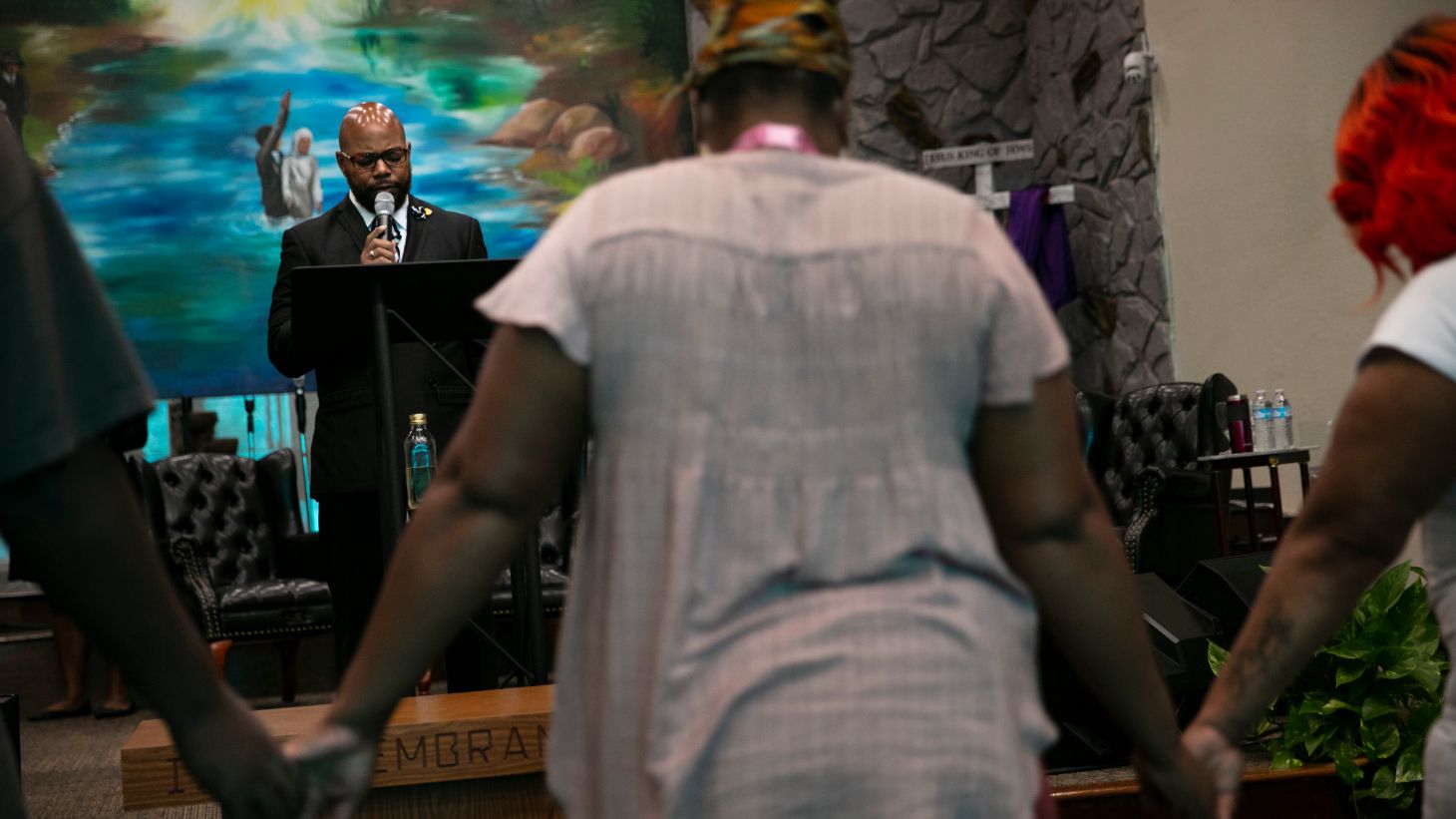
Survey: Black Churches Become a Greater Refuge Amid Political Powerlessness

In 2020, black churchgoers felt more disempowered than black Americans overall, Barna Group reports.

Christianity Today January 18, 2021
Jae C. Hong / AP

A new survey from Barna Group confirmed what many faithful African American believers have known all their lives: Despite changes in society and politics, the black church holds steady as a refuge.

While African American leaders say the black church plays a different role in today’s racial justice movement than it did when Martin Luther King Jr. led the charge during the civil rights era of the 1960s, black Americans increasingly see the church as a source of comfort as their sense of political disempowerment grows.

Over the past 15 years, black adults have become more disillusioned with American politics, and those in the church skew slightly more pessimistic. Barna found that 70 percent of black adults and 75 percent of those who attend black churches agreed they generally feel powerless when it comes to politics, compared to 61 percent of black adults in 1996.

Yet researchers also saw a greater appreciation for the black church. In 2020, two-thirds of black adults and 80 percent of black adults who attend black churches saw the black church as a source of comfort because it’s a place “where black people have control over their lives.” Back in 1996, only half of black Americans agreed.

“Given the coinciding increase in a broader sense of powerlessness, present attendees in Black churches may see their congregations as autonomous spaces to reclaim agency and be a part of worship communities influenced by the vision and hopes of Black people,” the researchers wrote.

Though released today, this Barna report comes from surveys taken in April and May 2020, months before the election and weeks before George Floyd’s death spurred a reckoning over racial injustice. The data is part of the State of the Black Church project, scheduled to be released in full this summer.

Brooke Hempell, Barna’s senior vice president of research, pointed to the ongoing work of black Christian networks like The Witness and Black Church Empowered making the black church more central in black American’s lives.

“Many of these efforts have been led by younger Christian leaders who feel strongly about the prophetic witness of the Black Church,” she said in a response to CT.

“Additionally, many of these leaders have made the ‘boomerang’ journey—having grown up in traditional Black churches, then moved into multiethnic or predominantly white churches in early adulthood, then returned to the Black Church, motivated to build upon the rich history of the Church and expand its influence and relevance for the next generation.”

Strong majorities of both black Americans (71%) and those who attend black churches (79%) see both spiritual and social issues as the church’s priorities today.

“During the Civil Rights movement, the Black Church was the organizational center and brainchild of movement activity,” said Kendra King Momon, lead pastor of Victory Midtown in Atlanta and an expert in African American politics and the legacy of Martin Luther King.

“Today, we are witnessing a needed pivot away from simply ‘preaching the gospel’ to the collective Black Church being the gospel.” Momon sees the church claiming its place by speaking up against injustice and social issues.

Maina Mwaura, a minister and writer covering the black church, said he recognized “a sense of powerlessness and maybe even a lack of hope” among black Americans, but also saw them “rising up and finding their voice” during the recent election season.

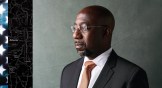
Vice president-elect Kamala Harris became the first black woman elected to the White House, and Atlanta pastor Raphael Warnock’s highly watched runoff win helped flip the US Senate. Barna found that black churchgoers—those who identify their church as a “black church” and say the pastor and the majority of the congregation are black—are more likely to consider themselves Democrats than the black population overall (76% to 67%).

A. R. Bernard, founding pastor of the Christian Cultural Center megachurch in Brooklyn, sees a sense of momentum in the current movement compared to the “deferral of hope” the stirred black social activists like him in the ’60s.

“Here we are dealing with some of the same issues, but in a different way,” he told Barna, saying the country is not as divided over race as it was then. “We have for the first time in American history, a national consensus of moral outrage. … We now have this momentum for change within American culture that is being fueled by that consensus.”

Books
Review

‘Paul and the Gift’ Is the Gift That Keeps on Giving

Theologian John Barclay distills and updates his game-changing study of God’s “incongruous” grace in Christ.

Christianity Today January 18, 2021
Illustration by Mallory Rentsch / Source Images: WikiMedia Commons / Simon Sergi / Unsplash

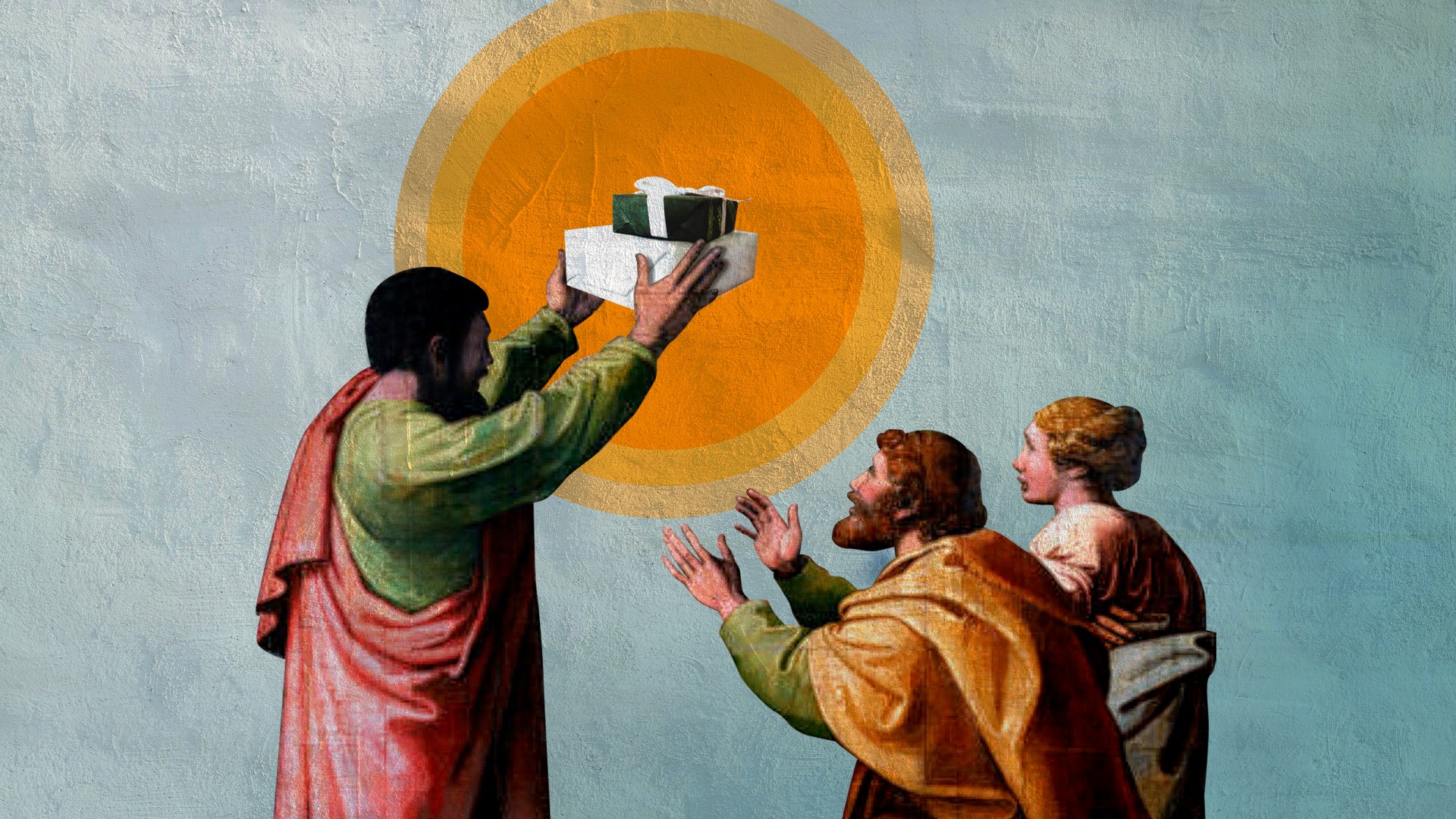
In an early episode of NBC’s sitcom The Office, corporate America boss-extraordinaire Michael Scott hosts a Secret Santa party for his employees. Each person is supposed to bring a gift of not more than to exchange with another. But Michael, wanting to add some spice to the evening, brings a 0 video iPod (remember those?). Wearing a lopsided Santa hat, Michael explains his rationale: “[A gift… it’s] like this tangible thing that you can point to and say, ‘Hey man, I love you this many dollars’ worth.’”

Paul and the Power of Grace

Paul and the Power of Grace

Wm. B. Eerdmans

202 pages

I often use that illustration with my students when I try to help them reflect on the complications of gift giving. Is it any wonder, I ask them, that a gift like Michael’s caused his Secret Santa party to descend into chaos? (You’ll have to watch the “Christmas Party” episode to see the sad, hilarious debacle.) At one level, it’s just a gift and shouldn’t be expected to surprise anyone, least of all at a Christmas party. We all know the choreography of exchanging presents. And yet, by giving a gift out of all proportion with the rules of the game, Michael not only disrupts the social equilibrium of the office he manages but also raises questions for us, the viewers, about what counts as an appropriate gift—and what criteria we might use to warrant our answer.

A Long-Running Conversation

We sitcom viewers are hardly the first ones in history to wonder about best practices when it comes to giving and receiving gifts. Throughout antiquity, philosophers, dramatists, orators, and others were engaged in a lively conversation about gifts.

The early first-century Stoic philosopher Seneca, to choose just one exemplar, dispensed definite opinions on the subject. Sounding a note that would have seemed entirely uncontroversial in his day, Seneca insists that “the one who receives a gift, no matter how graciously he has received it, has not yet completed all his duty; for it still needs to be returned.” Gifts are social glue, according to Seneca, inviting reciprocation and thereby solidifying and propelling relationships between patrons and beneficiaries. Nineteen centuries after Seneca, the French philosopher Jacques Derrida explored the allure of the “pure gift”—a gift given with no strings attached—but for him it remained an unachievable ideal, a haunting possibility never to be realized.

John Barclay, the Lightfoot Professor of Divinity at Durham University in the UK, asserts that the apostle Paul is part of this same long-running conversation about gifts and reciprocity. In his landmark book Paul and the Gift, published in 2015, Barclay argued that Paul depicts God as the ultimate gift giver—the word most English versions of Paul’s letters translate as “grace” is the same word first-century Greek speakers used for ordinary gift exchanges—and Jesus Christ as God’s definitive, climactic gift to humanity.

The Christ-gift, however, flouted the usual conventions of gift giving. God gave Christ—his own Son—to people who weren’t appropriate or fitting recipients, to “the ungodly” (Rom. 5:6), to “sinners” (5:8). And God thereby permanently disrupted the social order, ensuring that no one—regardless of class, gender, race, or achievement—could understand himself to be worse or better off than anyone else when it came to receiving the gift.

This self-understanding, in turn, became the seedbed for radical social experiments in Paul’s churches. To take just one instance: if slaves shared in the same grace of God as their masters, then the honor due to masters would have to be given in both directions (see Ephesians 6:5, 9), establishing a reciprocity that would eventually upend the hierarchies that were then—and now—taken for granted.

A Scholarly Breakthrough

Barclay’s book was celebrated for how it charted a way beyond what many scholars viewed as a permanent impasse in the study of Paul. On the one hand, Martin Luther and his many fellow devotees of Paul have understood Paul’s basic message to be one of free grace to those who cannot fulfill the requirement of the law, bringing reconciliation with God and the forgiveness of sins. On the other side, since the late 1970s, many scholars have argued that Paul wasn’t writing primarily about a vertical relationship with God—on that matter, they say, he simply agreed with Judaism that it was “by grace”—so much as he was fighting for horizontal reconciliation between estranged people groups, chiefly Jews and Gentiles. This latter position, the self-styled “new perspective on Paul,” tarred the older interpretation as inherently anti-Judaic, as though Paul found some defect in the covenant itself and wanted to found a new religion.

Barclay cuts through this tangled debate by insisting, with the “new perspective,” that Paul wasn’t attacking Judaism per se. After all, many Jewish texts of Paul’s day insisted that salvation was by grace. But, to Barclay, Paul did redefine grace, stretching it into a shape most Jews—and Gentiles, for that matter—wouldn’t have recognized as plausible. Thus Luther’s understanding became almost an inevitable outworking, in his very different medieval context, of Paul’s basic insight. Because God gave Christ indiscriminately to uncircumcised Gentiles as well as law-observing Jews, as Paul came to see firsthand on his missionary journeys, grace must be understood as incongruous, disclosing a mismatch between its staggering promise and its recipients’ status, whether their worth is pinned to ethnicity, social status, or moral achievement.

Anyone who read Paul and the Gift when it appeared was immediately struck by two things. The first was that this was a once-in-a-generation study of Paul, a feat of careful exegetical research and truly creative theological problem solving that all future serious study of Paul would have to reckon with. The second was that the book, especially in its later, commentary-style chapters, sounded inspiringly like a sermon, with a proclamatory force worthy of Luther and an existential urgency reminiscent of Karl Barth.

It was no surprise that the book ended up not only being debated on panels at the Society of Biblical Literature but also finding its way into sermons and Bible studies, despite its unwieldly scholarly apparatus. It quickly became clear that many working pastors and seminary professors needed a distillation of Barclay’s insights that they could pass along to students and studious congregants who weren’t looking to engage the full academic dimensions of Barclay’s argument.

Extending the Gift

At the prompting of many, then, Barclay has now written such a distillation, titled Paul and the Power of Grace. At roughly 200 pages, it’s less than a third of the length of Paul and the Gift yet somehow manages to keep all the highlights and even adds new material that teases out some of the practical implications left unspecified in the previous book.

The first three chapters set the scene by insisting that grace is a malleable term, capable of being extended—or “perfected,” as Barclay prefers—in multiple directions. Grace can be described, for example, as God’s giving exercised toward us prior to any of our movements toward God. Or, not necessarily alternatively but differently, grace can be understood as God’s giving in such a way that he prompts some action or response on our part—grace as “efficacious,” in theological jargon. Turning to Jewish texts with which Paul was likely familiar, Barclay argues that many of them perfect grace in various, not just singular, ways: “Grace is everywhere in Second Temple Judaism, but not everywhere the same.”

The ensuing chapters offer close readings of Galatians and Romans, arguing that Paul departs from dominant understandings of grace insofar as he perfects it in the direction of incongruity: Because of how Christ died and for whom he died, grace must be permanently understood as unconditioned by anything resident in us. Instead, it is a gift prompted wholly on God’s side, creating, rather than finding, worth in its recipients.

The final part of the book explores new territory. Rather than connect Paul’s message directly to contemporary hostilities between ethnic and other people groups, as many contemporary Pauline scholars do for understandable reasons, Barclay zeroes in on how the category of worth seems to shape the contemporary sensibilities of everyone from social media users to the beneficiaries of charity. He considers how Paul’s vision has the capacity to reframe the way we understand what constitutes worth: “In Paul’s good news,” he writes, “human worth is founded on the grace of God, which is not dependent on any form of symbolic capital, ascribed or achieved. No one can, and no one needs to, make themselves ‘worth it’ in the most important arena of all.”

I regularly teach Paul’s letters to future priests and other ministers, and I plan on thrusting this book into the hands of them all in every course on Paul I teach from here on. Paul’s unique understanding that the Christ-gift is a gift of incongruous grace has been the salutary firebomb for multiple generations of readers, from Augustine to John Wesley to Karl Barth, who have found it burning away all self-reliance and rooting them firmly in a hope anchored outside their own failures and private triumphs. Barclay’s books—and especially, perhaps, this newest one—have the potential to unleash that transformative fire in our generation. I’m doing my part to herald their gift far and wide.

Wesley Hill is associate professor of New Testament at Trinity School for Ministry in Ambridge, Pennsylvania, and an assisting priest at Trinity Episcopal Cathedral, Pittsburgh. His books include Paul and the Trinity: Persons, Relations, and the Pauline Letters and The Lord’s Prayer: A Guide to Praying to Our Father.

Theology

It’s Not Enough to Preach Racial Justice. We Need to Champion Policy Change.

The legacy of Martin Luther King Jr. reminds us to push past tweetable quotes and ‘big talk’ to practice true Christlike love.

Christianity Today January 17, 2021
Robert W. Kelley / Getty Images

For a black boy growing up in Alabama trying to make sense of himself in a hostile world, Martin Luther King Jr. was my hero. Alongside a startingly pale Jesus, a picture of Martin hung beside photographs of my family. I knew Martin by sight. I could recognize the tenor of his voice.

The mental architecture of my young black imagination was formed by grainy videos of mass church meetings and marches and by the hymns and spirituals that threatened to shake the United States to its foundations. I knew about Selma, Birmingham, and Montgomery before I could find them on a map of my state. I do not remember not remembering Martin.

By contrast, the King that I see online on Martin Luther King Jr. Day is a stranger to me. This beloved figure is in part the construction of a society that never fully loved him or the cause he represented. King died an unpopular man. In 1968, the year of his death, 75 percent of Americans disapproved of his views and activities. That was up from 50 percent in 1963.

Today, his approval rating nears 90 percent. Some might suggest that with hindsight, Americans have come to appreciate King in a way that was impossible during the racist era in which he lived. But things are not that simple. If social media is any indication, a large portion of America still hasn’t wrestled with the King of 1968. A USA Today study of the most tweeted MLK lines are startling in their vagueness:

“The time is always right to do what is right.”

“Darkness cannot drive out darkness; only light can do that. Hate cannot drive out hate; only love can do that.”

“Injustice anywhere is a threat to justice everywhere.”

These were not the quotes that stuck to my ribs as a kid. I remember King talking about the need for black people to develop a sense of “somebodiness” that pushed back on the negative portrayals of blackness. I remember reading about the need to reach into the depths of our own souls and write our own emancipation proclamation.

To be for black people in a world of antiblackness, to declare us beautiful when the world said that we were ugly, was a shout of defiance. To call us children of God when we were deemed sons of Ham was part of a long tradition of revolutionary but God-honoring exegesis. To declare that our history of slavery was not a source of shame for us but a story of triumph over impossible odds was a way of rewriting the American story and putting the disinherited peoples of the world on center stage.

As the American public today reckons with enduring racism, it costs very little to be notionally against injustice in the abstract. The audacity of King and the civil rights movement is not lauded. It remains terrifying to the status quo. Many approve of King because, despite the holiday, they know little about his thought.

King was never popular, but what exactly led to his drop in popularity as the 1960s wore on? Two main reasons: He continued to be a truth teller about racism, and he focused on the economic enfranchisement of black Americans. With both, he pushed past big, easy-to-like notions of justice to advocate instead for particular change and particular policies.

Despite the gains of the civil rights movement, King maintained that America remained structurally racist. “The majority of white Americans consider themselves sincerely committed to justice for the Negro,” he said. “They believe that American society is essentially hospitable to fair play and steady growth toward a middle-class Utopia embodying racial harmony. But unfortunately this is a fantasy of self-deception and comfortable vanity.”

With those words, King highlighted a tendency that still persists today: the temptation to set the standards for black flourishing by past mistreatment of African Americans. When compared to the Jim Crow era of the 1920s, 1968 may have seemed like a utopia. But King had the audacity to judge America by objective standards of justice, not by previous terror.

We see the same criticism levied at black leaders now. We are told that America is better than it was in the 1960s, and therefore African Americans should not complain. Ironically, the same America that King was criticized for being unsatisfied with is the basis for modern pushback on the desire for a more just society. If remembering King means anything, it involves a sanctified dissatisfaction with the status quo.

The King of 1968 also pushed white America to move beyond protesting our dehumanization to actually assisting with the construction of a black life. He wrote:

White America was ready to demand that the Negro should be spared the lash of brutality and coarse degradation, but it had never been truly committed to helping him out of poverty, exploitation or all forms of discrimination. The outraged white citizen had been sincere when he snatched the whips from the Southern sheriffs and forbade them more cruelties.

But when this was to a degree accomplished, the emotions that had momentarily inflamed him melted away. White Americans left the Negro on the ground and in devastating numbers walked off with the aggressor.

Those words will not be tweeted or Instagrammed today, but they are troublingly relevant. This last year, the nation surged in outrage at the deaths of George Floyd, Breonna Taylor, Ahmaud Arbery, and others. But it was the sensational nature of these deaths that troubled the country. When it came time to wrestle with the concrete reforms needed to bring change, much of America moved on to other things.

Even now, there has been no sustained national conversation about policy change in light of this summer’s tragedies. Today, as in King’s time, justice is at the mercy of the shifting emotions of an often-apathetic majority.

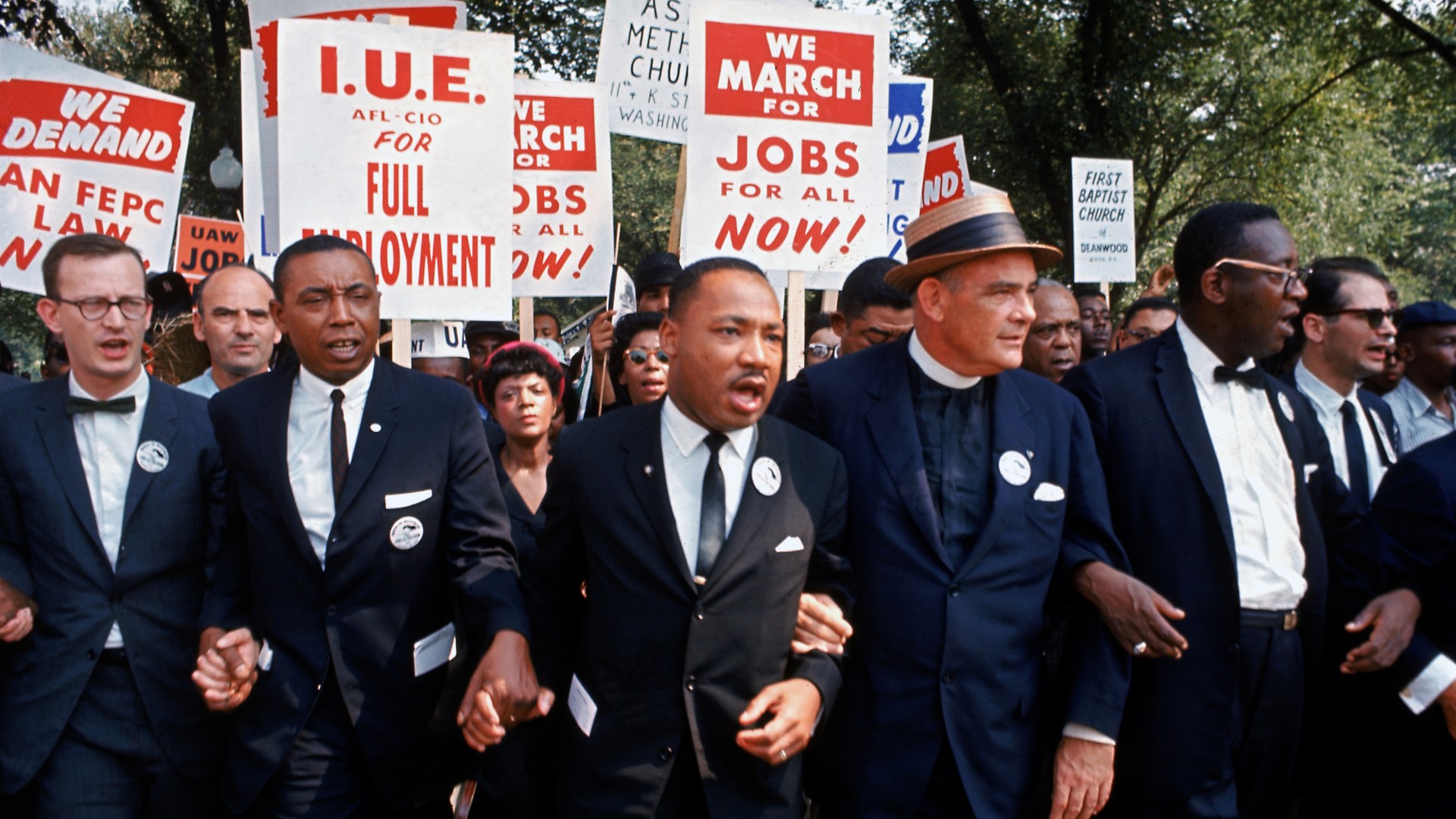
As the civil rights movement progressed, King’s vision moved the problem of economic injustice to the center stage. The last march that he led was not about integration. It was not about the ability to sit at a lunch counter or ride a bus. It was not about the right to drink from the same water fountain or use the same restroom as white Americans.

Of course, King continued to care passionately about these things from one end of his ministry to the other. But what brought Martin to Memphis was the fight for fair wages and employee safety. He was murdered while in the midst of an economic protest.

His last march supported 1,300 black sanitation workers who were not receiving a living wage and were being forced to labor under unsafe conditions. That project was a part of a larger shift in focus that marked the last years of King’s life. He moved from the violent but also cosmetic forms of injustice to the concrete injustice of economic disempowerment. He knew that it was one thing to say African Americans did not deserve the fire hose. It was another thing altogether to demand a fair wage and explicit policies that provided a path toward economic flourishing.

That was the King the public disdained—the one who fought for economic transformation. The King who had a 75 percent disapproval rating was the King who had the courage to speak plainly about the racism that he saw. It was the King who pushed for specific changes in public policy and corporate practice.

But it was also this King who made space for hope. His hope for the future did not arise from a failure to see or acknowledge racism and white supremacy. His last book names and explores white supremacy at length. What made King special was an unshakeable faith, rooted in his belief in God’s purposes, that racism did not have to be the final sentence in the book of the American story. He believed that “the value in pulling racism out of its obscurity and stripping it of its rationalizations lies in the confidence that it can be changed.”

As pastors, teachers, and Christian leaders who participate in America’s public square, we don’t remember King rightly by pulling a few disconnected words about justice out of context and plastering them all over social media. We remember him rightly by taking an honest assessment of ourselves as a country. This involves both lauding the progress and looking toward the future. And it involves a robust commitment to understanding the link between injustice and economic disenfranchisement.

King didn’t see his economic advocacy as a move toward partisanship. He saw it as the most Christian of activities, a manifestation of love for neighbor. His truth telling was not a mere venting of frustrations. He was doing work similar to the biblical prophets of old. He was holding up a mirror to American culture so that it could see what it had become in light of God’s vision for a just society.

When we pretend we can live above the fray and not get into the rough and tumble of people’s lived experiences, we are becoming less Christian. We are squandering our chance to be witnesses to what is possible. And we are forfeiting our God-given right to dream.

We are blessed that Martin never did.

Esau McCaulley is a priest in the Anglican Church in North America, an assistant professor of New Testament at Wheaton College, and the author of Reading While Black: African American Biblical Interpretation as an Exercise in Hope.

News

March for Life Plans Disrupted by DC Security Concerns

The annual event is asking participants to “stay home” for the first time since Roe v. Wade.

Christianity Today January 15, 2021
Alex Wong / Getty Images

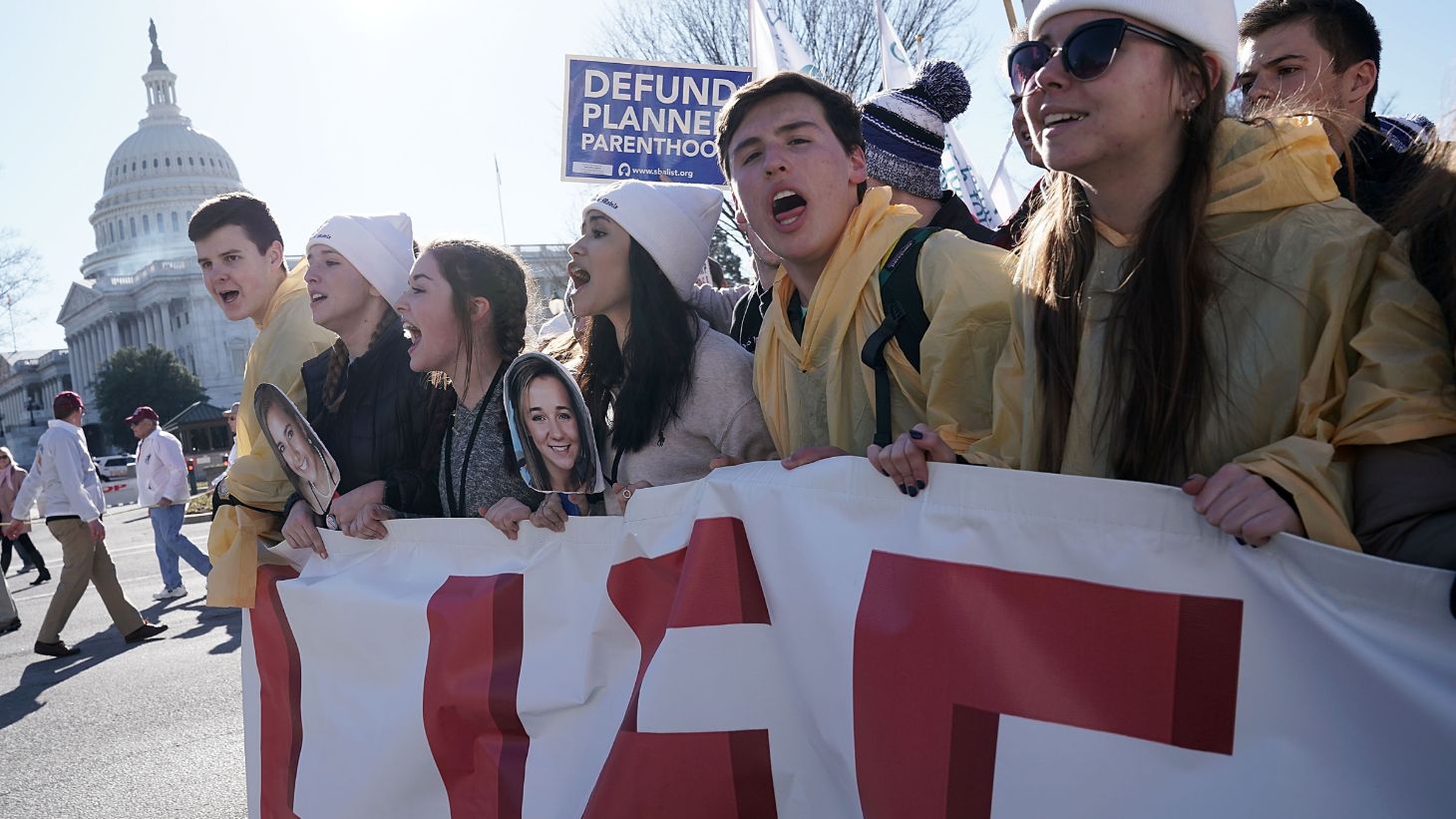
The National March for Life, the biggest pro-life rally in the country, has asked hundreds of thousands of supporters to stay home for the January 29 event, citing the pandemic and security concerns around the Capitol.

It’s the first January since the 1973 Roe v. Wade decision that pro-lifers won’t be gathering in DC to march to the Supreme Court to signal their opposition to abortion. In 2016, the march went on despite DC shutting down before a blizzard that brought nearly two feet of snow.

March for Life organizers shared the change in plans on Friday, inviting participants to a virtual event instead. The National Park Service had announced that the National Mall will be closed through at least January 21, the day after the inauguration, and DC is also under a state of emergency until then.

“The protection of all of those who participate in the annual March, as well as the many law enforcement personnel and others who work tirelessly each year to ensure a safe and peaceful event, is a top priority of the March for Life,” said March for Life president Jeanne Mancini.

While Catholics traditionally took the lead in organizing and attending the rally, the Protestant cohort has grown over the years, including the addition of a corresponding Evangelicals for Life conference five years ago. This year’s speaker lineup included prominent evangelical leaders Jim Daly, Focus on the Family president, and J. D. Greear, the first Southern Baptist president to address the event.

Organizers plan to have a small group of Christian leaders still march in-person to represent the larger group that typically descends on DC for the march, Mancini’s announcement said. As of Friday, Daly was still planning on attending the event in person, according to a Focus on the Family spokesperson. Tim Tebow is scheduled to offer a keynote at a virtual gala following the march.

Attendance was already expected to be down at the event due to the coronavirus. Organizers had planned to require face masks, display signs about social distancing, and urge those with symptoms not to come.

Some state and local marches—including in Arkansas, Hawaii, and Oregon—recently opted to cancel or postpone this year’s in-person gatherings due to “political unrest and the continuing COVID-19 pandemic.”

Ideas

Only Biblical Peacemaking Resolves Racial and Political Injustice

Contributor

No other group is better situated to bring healing to this land than the church.

Christianity Today January 15, 2021
Illustration by Rick Szuecs / Source images: Jacobs Stock Photography Ltd / Getty / twenty20photos / ThemeFire / Envato

Faith, race, and politics were front and center in Georgia’s US Senate runoff. Raphael Warnock, the current pastor of Martin Luther King Jr.’s home church, won a historic election, during which his sermons and social activism were called into question. White evangelicals were appalled by Warnock’s pulpit rebukes of police brutality and militarism. Senator Marsha Blackburn tweeted a snippet of a sermon and said, “Warnock’s radical, anti-American views are disqualifying” and that he should withdraw from the race. Conversely, while many black Christians wouldn’t defend his pro-choice platform (among other secular progressive stances), a lot of us certainly agreed with the assertion that the Bible has something to say about racial injustice. In his book Reading While Black, Esau McCaulley says the “call for individual and societal transformation” is the mainstream black ecclesial tradition. Consequently, the election highlighted the sociopolitical divide between white evangelicals and the black church.

These two groups share the Great Commission but couldn’t be further apart socially. The American church may never agree on partisan affiliation, but what must we agree on in regard to racial justice? The Bible doesn’t make burrowing further into our ideological nests or putting our faith in politicians an option (John 13:34–35). Biblically speaking, what should be our tone and actions when it comes to race and politics?

In 2020, the pandemic forced Americans to distance ourselves physically. Our politics, identities, and worldviews forced us further apart too. We watch the same occurrences and walk away not only with different opinions, but with a different set of facts. And yet, through social media, we’ve bridged our divides just enough to antagonize one another. We make an extra effort to remind those who voted differently that they’re never right and they’re responsible for every wrong. As a new Pew Research Center study revealed, we see little common ground or common cause—even when faced by a deadly virus that does not discriminate.

Not satisfied with giving up on each other, America’s ideological tribes are resolved to punish each other at every intersection. Winning isn’t enough. We must rob every semblance of joy and worth. Even some Christians, abandoning the virtue of charity, choose to believe everything the other side does is meant to harm, deceive, or control them. Civil dialogue and political compromise are left to the naïve. But in this time of great division and belligerence, the church must choose the opposite reaction. We must be peacemakers, especially when it comes to race and politics. But what exactly is peace, and how do we make it?

Some assume peacemaking requires inactivity or silence in the face of disorder and injustice. But true peace is not passive quiet or the absence of action or the silence of indifference. Biblical peace is shalom, meaning completeness, well-being, and right relationship with God and each other. Silence or inaction amid grave partiality and inequality is not peace. When we mute the poor or rob the victim of voice, we deny peace. Gaslighting or shushing the suffering perverts the wholeness and fulfillment Christianity demands.

If black people would just stop talking about America’s past and move on there would be peace. But that confuses peace with personal comfort.

Others suggest that if black people would just stop talking about America’s past and move on there would be peace. But that confuses peace with personal comfort. There have always been those who found comfort amid injustice or whose comfort was built on injustice. The slaveholder who slept cozily on cotton sheets and tithed with his ill-gotten gains was in no rush to have his rest disturbed by the abolitionist’s prophetic witness. Peace defined by such a comfort is of no value in the economy of God.

Neither the warmonger nor the pious bystander is a peacemaker. Those too heavenly or high-minded to soil their ceremonial garb by touching common ground and advocating for their neighbors aren’t peacemakers. Moreover, those who exploit prayer as a copout to neglect the issues God has placed in their sphere of influence aren’t peacemakers either. Their silence condones a conflicted state of affairs and makes them keepers of a riotous status quo.

Peacemakers will engage the conflicts necessary to achieve racial justice, but they won’t be carried away by the moment. In the tensest times, they’ll watch their words, acknowledge their opponent’s human dignity, and guard their hearts from tribalism. They’ll address today’s bleak situation with tenacity and moral imagination, rather than cynicism. This means peacemakers will seek out approaches that transcend the inadequate options offered by ideological conservatives and progressives. They won’t run from reality, but they’ll attempt to reach higher ground rather than settling for the base terrain immediately available.

If majority Christians sincerely want to be peacemakers, they need to reckon with America’s history, realize with humility how it continues to harm people of color, and reform. Due to historical misdeeds and resource inequities, the majority church bears a larger peacemaking burden here, but all of us are obligated. Peacemaking takes work to bring about the harmony a Christian understanding of peace entails (Eph. 4:3).

Acknowledging America’s racial divide, recognizing its historical causes, detailing its present consequences, and demanding justice isn’t divisive. Racism is divisive and responsible for a great number of our society’s ills, but creating storylines where it’s the cause of every problem blinds us to other sins that afflict us. We should be cautious of talking about race in a way that’s more aimed at inflicting pain than persuading. Sometimes speaking the truth about racial injustice with blunt rhetorical force is necessary to drive the point home. But in many cases, being artful, strategic, and shrewd is more productive. Seasoning piercing words with salt often takes more effort but opens the door to peacemaking.

Christians can’t be peacemakers in this polarized age by committing sins of omission. We must unify around the authority of Scripture, which compels us to make peace by dismantling iniquity and treating each other with dignity. We can be bold and passionate when we pursue justice, and we won’t all express ourselves the same way. However, we can’t be vengeful or resigned to permanently separating ourselves from other believers, no matter who they voted for.

Unfortunately, not everyone will have the will or fortitude to endure the sacrifices that come with peacemaking. The unwilling—those more worried about race theories than actual racism—can no longer be allowed to hamper the process. Placating Christians who have no intention of earnestly addressing race or who are too prideful to be corrected is a dead end. Similarly, those who embrace secular theories on race without a solid biblical critique will also stunt peacemaking. In our pain, some of us have run from orthodoxy into the arms of secular prescriptions. Those voices cannot lead this journey toward renewal. Peacemakers must combine orthodoxy and orthopraxy, biblical conviction and social action.

No other group is better situated to bring healing to this land than the church. There are Bible-believing Christians on both sides of the political spectrum, and outside of politics we have a lot in common. We’re stuck with one another for good. We need each other. It’s time to set our partisan hang-ups aside, make peace, and do justice.

Justin E. Giboney is an attorney, political strategist, president of the AND Campaign, and coauthor of Compassion (&) Conviction: The AND Campaign’s Guide to Faithful Civic Engagement.

Books
Review

Herman Bavinck’s Balancing Act, and Ours

As a new biography shows, the Dutch Reformed theologian was adept at navigating perennial tensions of Christ and culture.

Christianity Today January 15, 2021
WikiMedia Commons / Mitchell Luo / Unsplash

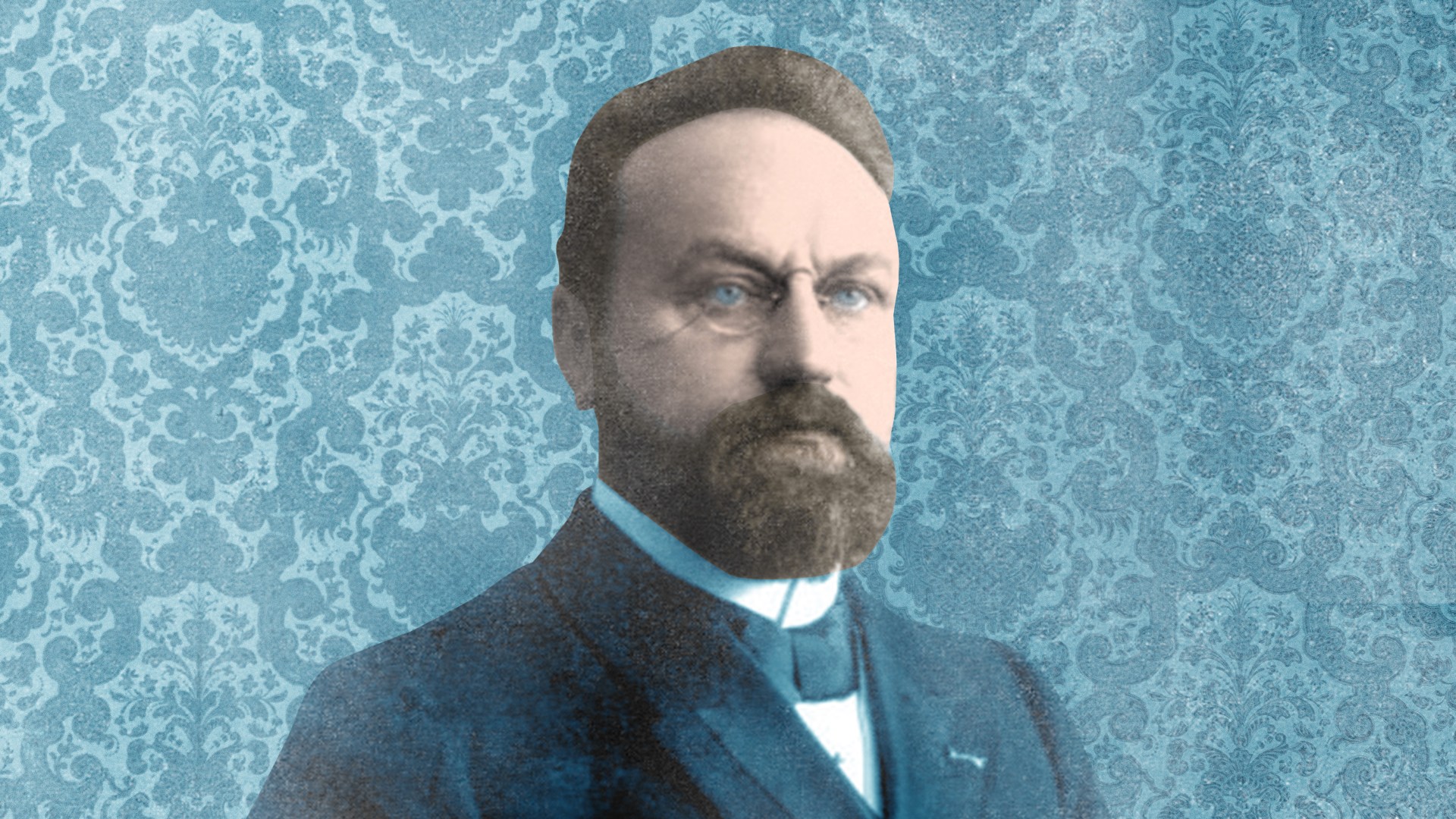
Who is Herman Bavinck, and why should contemporary Christians care about him? James Eglinton’s penetrating new study, Bavinck: A Critical Biography, goes a long way toward answering these questions.

Bavinck: A Critical Biography

Bavinck: A Critical Biography

Baker Academic

480 pages

Eglinton, who teaches Reformed theology at the University of Edinburgh, has produced a magisterial work that figures to become the leading biography of the great Dutch Reformed theologian (1854–1921). Along with Abraham Kuyper, Bavinck was an important figure in the neo-Calvinist movement in the Netherlands in the late-19th and early-20th centuries. A theological giant in his own right, Bavinck has received increased attention in the English-speaking world, especially following the translation of his four-volume Reformed Dogmatics, but is still too little known (especially outside the Dogmatics).

Eglinton’s biography provides a welcome correction, surpassing previous accounts of Bavinck’s work in several ways. It is impressively researched, drawing from a wide array of unpublished and frequently overlooked material. Related to this, it provides generally better-informed interpretations of Bavinck’s life and thought, identifying reasons to depart from previous scholarship on a variety of issues. It is also well written and clearly organized, guiding the reader through varied subjects without a sense of wasted space or meandering.

The book’s great theme is that Bavinck, as a theologian, was both orthodox and modern. In the introduction, Eglinton sets up the biography as an extension of his earlier book, Trinity and Organism, which had argued against the tendency to separate these two aspects of Bavinck’s thought. Rejecting what he terms the “two Bavincks” approach (or the “Jekyll and Hyde” Bavinck), Eglinton aims to portray his subject as a man of unified theological vision—a man who was thoroughly immersed in the concerns of the modern world without leaving off the orthodox commitments of his Dutch Reformed heritage.

Holiness and Activism

Eglinton effectively shows how Bavinck aspired to meet the challenges of modernity with neither retreat nor compromise. For me, the fact that Bavinck navigated this tension in an earlier and different phase of modernity (a century ago and in Europe) makes him an especially interesting thinker to engage. Bavinck had a pious upbringing, with his father serving as a pastor in the “Seceder” church (the Christian Reformed Church) that had separated from the state church (the Dutch Reformed Church). It is endearing to read the earnest prayers recorded throughout his youthful journals or to observe how Bavinck came to love his flock even while struggling during his year in pastoral ministry.

At the same time, throughout his theological career he found himself increasingly drawn into engagement with the concerns of the modern world, particularly around the turn of the 20th century. While he never rejected his Seceder background, his circles and interests kept expanding. In his final decades he devoted considerable energy to engaging Nietzsche, World War I, and female suffrage. This tension between unchanging theology and ever-changing culture, as well as between distinctness from the world and engagement with the world, is a challenge that has marked evangelicalism from its outset and continues to the present moment. Exploring how Bavinck balanced these concerns is instructive and inspiring.

Consider, for instance, how expansive Bavinck’s social and cultural vision was, together with that of Kuyper and the neo-Calvinists more generally. Bavinck was active in politics and served as a Dutch parliamentarian for several years. He had global interests and warned of the dangers of colonialism. He frequently spoke and wrote about education policy. After World War I, he spent a great deal of energy addressing the dangers of war. In his later years, Bavinck was an ardent advocate for female suffrage and for valuing the role of women in society. He spoke often to women’s societies around the Netherlands. Earlier he had called upon the Free University of Amsterdam to admit women as theological students.

During his visit to America, Bavinck became deeply concerned about racism, warning about its future consequences. He studied and wrote on all kinds of subjects, especially psychology. (He even wrote about topics like art, travel, and raising teenagers.) He believed the church had a responsibility to care for the poor, and like the English church leader John Stott, he insisted that the gospel included a social dimension, over and against others in the Seceder church who defined it mainly in terms of personal sin and salvation.

What is striking from these facts is how far Bavinck was from being a fundamentalist, despite standing squarely within a relatively conservative theological framework. Bavinck was eloquent in his criticisms of the modernist theology he had experienced as a student at Leiden and elsewhere. Opposing the assumption that Christianity had to be modernized to have a future, Bavinck countered (in Eglinton’s words) that “to have a future, modern culture had to be Christianized.” Thus, for Bavinck, holistic societal engagement was not a departure from his Reformed heritage but its proper expression. In particular, he was sympathetic to Kuyper’s vision of Calvinism as a social force, a dynamic power that must work itself into every layer of society.

All told, Bavinck described his theological outlook as a balancing act that sought to maintain both holiness and activism. When leaving the Seceder school in Kampen to teach at the Free University of Amsterdam in 1902, Bavinck described two different poles within the church of his upbringing: one that emphasized personal holiness and another that emphasized engagement in the world:

There was the idea that we need to leave the world to its own fate, but precisely because I come from the circles that I do, I felt obliged to seek out an education at a university, because that church was in great danger of losing its catholicity in order to hold on to holiness of life. And then the thought arose in me: Is it possible to reconcile these? … My goal is to hold tightly to both, and not to let go of either.

This reference to catholicity brings up another intriguing quality of Bavinck’s Calvinism: namely, its generous posture to non-Calvinists. He was as deeply committed to the Reformed heritage as nearly anyone; it was Bavinck who wrote the foreword to B. B. Warfield’s Calvin as a Theologian and Calvinism Today, a book that ended with the line, “Calvinism is nothing more, and nothing less, than the hope of the world.”

At the same time, Bavinck was not sectarian: He described the spirit of his Calvinism as “cosmopolitan,” and he was dismayed at the failure of various Seceder churches to unite. In response to the threat of Nietzsche, he spoke of a “theistic coalition,” seeking to make Christianity itself, not Calvinism, visible to the culture. Eglinton notes comparisons drawn between Bavinck’s 1906 essay “The Essence of Christianity” and C. S. Lewis’ Mere Christianity a century later, stating that “Bavinck was now balancing an increasingly specific neo-Calvinism in the revised Reformed Dogmatics and a generalized notion of Christianity in the public domain.” Later, he observes that from the time Bavinck delivered the Stone Lectures at Princeton in 1908, he held these two goals equally in view: “For every book on neo-Calvinism, it seems, a Mere Christianity would also be needed.”

A Multifaceted Legacy

Bavinck’s legacy for contemporary Christians is thus rich and multifaceted. To speak personally, before reading this book I had appreciated and used Bavinck mainly for his theological stature. He was an intellect of nearly unparalleled range, one of the theological titans of the modern era—comparable to Karl Barth, perhaps, but less theologically erratic (from my perspective). From Eglinton’s biography I now have a greater sense of Bavinck the man and his broader relevance to the perennial tensions of Christ and culture.

My simple remark to contemporary Christians navigating that tension is this: Bavinck is both more theologically profound and more socially aware than most of us. On both fronts, and especially on the challenge of holding them together, we would do well to learn from his efforts.

Gavin Ortlund is senior pastor of First Baptist Church of Ojai, California. He is the author of Finding the Right Hills to Die On: The Case for Theological Triage.

Culture

‘Soul’ and the Purpose-Driven Generation

Disney Pixar’s latest film reminds us that life is meaningful beyond achieving our goals or saving the world.

Christianity Today January 15, 2021
© 2020 Disney/Pixar. All Rights Reserved.

Joe Gardner has always felt like he was “born to play” jazz piano. When he fulfills his dream of playing with famous saxophonist Dorothea Williams, he asks her, “So, what happens next?” She responds: “We come back tomorrow night and do it all again.” Despondently, Joe confesses, “I’ve been waiting on this day for my entire life. I thought I’d feel different.”

Disney Pixar’s Soul offers a surprisingly heady philosophical message to a distressed generation that is trying to find purpose through meaningful work. The film’s main insight is something Christians already know: There’s more to life than our accomplishments. In fact, this realization is what inspired the film’s concept, according to director Pete Docter. After completing the popular Pixar film Inside Out, he was left wondering what was next. “I realized that as wonderful as these projects are, there’s more to living than a singular passion,” Docter said. “Sometimes the small insignificant things are what it’s really about.”

Docter’s message is embodied in the character of Joe Gardner (Jamie Foxx), a part-time music teacher who has greater aspirations to perform professionally as a jazz pianist. His whole life is encumbered with reaching this one goal, but when he finally gets his break with Dorothea Williams (Angela Bassett), Joe takes an unfortunate fall that nearly destroys his dream—casting him into the afterlife.

The afterlife consists of two parts: the Great Before and the Great Beyond. Joe finds himself in the Great Before—a place where new souls find their personalities and their “spark”—activities or experiences that captivate the imagination. There, he meets a disembodied soul named 22 (Tina Fey). She has no interest in life on earth or what seems to give life meaning, from work to sports to knowledge. For 22, life is purposeless if there isn’t one magnificently wondrous reason for living. The two set out on a mission to find 22’s “spark.”

In recent decades, young adult Christians have set out on similar expeditions for a “spark,” searching for that one big thing to accomplish for our faith. We too are subjected to feelings of purposelessness if we aren’t becoming or doing grandiose things “for the sake of the gospel” (1 Cor. 9:23). Popular books like Rick Warren’s The Purpose Driven Life (2002), John Piper’s Don’t Waste Your Life (2003), and Alex and Brett Harris’s Do Hard Things (2008) challenged us to live missionally and jump out of our comfort zones to accomplish great things. But they were inadequate guides for the mundane parts of life. As many millennials found themselves working a 9-to-5 to keep food on the table and the lights on, some asked themselves whether their routine lives testified in any grand way about the gospel of Jesus Christ.

Such questions are compounded in a loaded year of a pandemic, ongoing racial and social injustice, and political strife unlike our generation has seen. Our souls have been conditioned to do something so extraordinarily impressive and effectual that a year of quarantining, distancing, and being still feels like a betrayal to our Christian witness. But when we apply a capitalistic “can do-ism” to our work for God, we are in danger of denying the very grace we claim we depend on.

Searching for meaning in our abilities and dreams rather than a humble reliance on Christ can leave us falling prey to the idolatrous spell of self-worship. The results of such an exchange can prove detrimental to our physical, mental, and spiritual health.

Joe Gardner witnesses firsthand the consequences of idolizing our life’s purpose. While attempting to return to his body on earth, sailing along the Astral Plane (a mental construct between the physical and spiritual planes), he observes “lost souls” aimlessly searching for something. Moonwind (Graham Norton), a member of the Mystics Without Borders is “devoted to helping the lost souls of Earth find their way.” He explains to Joe that these souls are individuals who at one time or another found themselves “in the zone,” blissfully given to the excellency and enjoyments of their craft. But at some point, they were unable to “let go of their own anxieties and obsessions, leaving them lost and disconnected from life,” and became unrecognizable and empty versions of themselves.

Our work and aspirations can never fulfill us in the ways we were designed to be fulfilled. Author Cleo Wade recently echoed the message of Soul, encouraging anyone susceptible to this subtle idolatry to “let go of trying to identify yourself by one idea or goal. Instead, commit yourself to bringing purpose and passion into each conversation, workspace and home space you are a part of.”

The Christian, however, takes it a step further. We commit ourselves to bringing the passion of Christ into every area of our mundane lives. In doing so, we experience what it means to be alive and be human in ways God designed us to be. “If we bear in mind that our daily doings can ‘aim our love and desire toward God,’ our labor ceases being drudgery,” wrote Jamie Hughes.

When we’re living big lives, sprinting from task to task while focusing on nothing in particular, tea is little more than a shot of caffeine. But if we’re in tune with God and living at the slower pace required for worship, teatime takes on added dimensions, becoming a “wonder of hot water and dried leaves” that provides sanctuary.

Jesus exemplified this for us. Jesus “came to show us how to be human,” said pastor Zach Lambert. “How to love God and our neighbor. How to depend on the Spirit and see its fruit manifest in our lives. How to care for the hurting and needy among us. How to fight for justice and against oppression.”

But for someone who’s constantly seeking to find meaning in the next big thing for her life, everything will continually feel meaningless. We can miss out on the life God has put before us. Like Joe, we too can overstress the idea we were “born to do” something. But the truth is that we weren’t born to do anything but abide in Christ. We live in Jesus (Acts 17:28). It’s possible we define our worth by our purpose and subsequently blind ourselves to the greatest blessings and wonder of being defined by our identity in Christ (Col. 3:3–4).

Hopefully, 2020 reminded us to appreciate the wonderful gift of abiding. And if not , Soul prompts us to devalue the ceaseless chase of a singular purpose and find meaning in ordinary life, because God is the one who provides the meaning for us.

Timothy Thomas is a high school teacher and contributor for Christ and Pop Culture.

News

Houston Megachurch Pastor Sentenced to Prison Over $3.5M Fraud Scheme

Church leaders believe entrepreneurial pastor Kirbyjon Caldwell already accounted for the wrong by apologizing and repaying investors.

Kirbyjon Caldwell

Kirbyjon Caldwell

Christianity Today January 14, 2021
David J. Phillip / AP

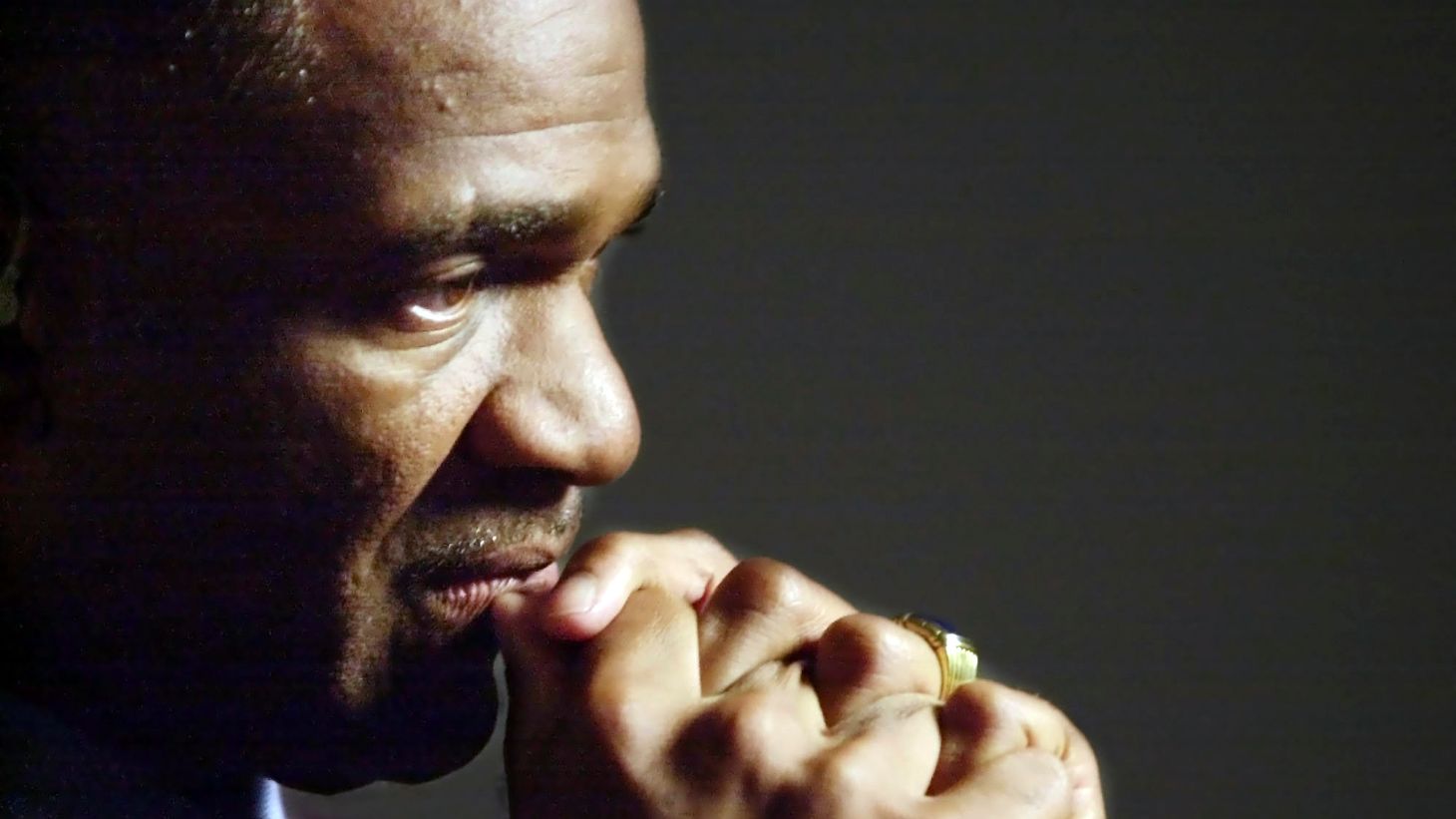
A Houston megachurch has sided with its longtime pastor, Kirbyjon Caldwell, and expressed disappointment in a recent sentence that will send him behind bars for six years for his role in a fraudulent investment scheme.

After Wednesday’s sentencing in federal court in Shreveport, Louisiana, the leaders of Windsor United Methodist Church defended Caldwell, who has served the church for 38 years but gave up his title as senior pastor when he pled guilty in the faulty Chinese bonds case last year.

“We’re very disappointed that Caldwell’s contributions to society and his extraordinary efforts to make every victim whole resulted in [this] sentence,” said Floyd J. LeBlanc, chairman of the church’s personnel committee. “We look to God because we believe God has a final answer in everything.”

Caldwell, a spiritual adviser to President George W. Bush, was known for his entrepreneurship and philanthropy. Through the predominantly African American church and his own projects, he invested millions into community development and job creation in southwest Houston.

The fraudulent scheme, which totaled $3.5 millions of bonds targeting elderly investors, has led to him and his Louisiana-based investment adviser being charged with conspiracy to commit wire fraud; both pleaded guilty.

In a video on behalf of the church staff, LeBlanc blamed the adviser and emphasized that Caldwell was also a victim in the scheme, having first invested in the Chinese bonds himself. The church believes that his generosity and desire to pay back victims had already accounted for the wrong he’d done.

UM News reported that before his sentencing, the 67-year-old pastor told the judge, “This experience has brought me to the valley of disgrace and dishonor. I’m ashamed of my actions.”

Caldwell said he has repaid his victims more than $4 million, including over $1 million prior to the 2018 indictment.

According to UM News, Caldwell’s lawyers “pleaded for him to be confined to his home, rather than going to prison, citing his ongoing treatment for prostate cancer, as well his hypertension and the threat COVID-19 poses for those incarcerated with underlying conditions.” The judge deferred his report date to June.

The 16,000-member church is currently led by pastor Suzette Caldwell, Kirbyjon’s wife. Both have been outspoken and involved in ministry throughout the pandemic, including each preaching the last two weekends.

United Methodist Bishop Scott Jones offered his prayers in a statement after sentencing and acknowledged the pastor’s “sincere expression of remorse.”

The church’s statement concluded by saying, “The Lord will see our Church Family through this season. Let’s continue to have faith and pray together. Be encouraged by Psalm 30:5, which promises that joy will follow sorrow.”

News

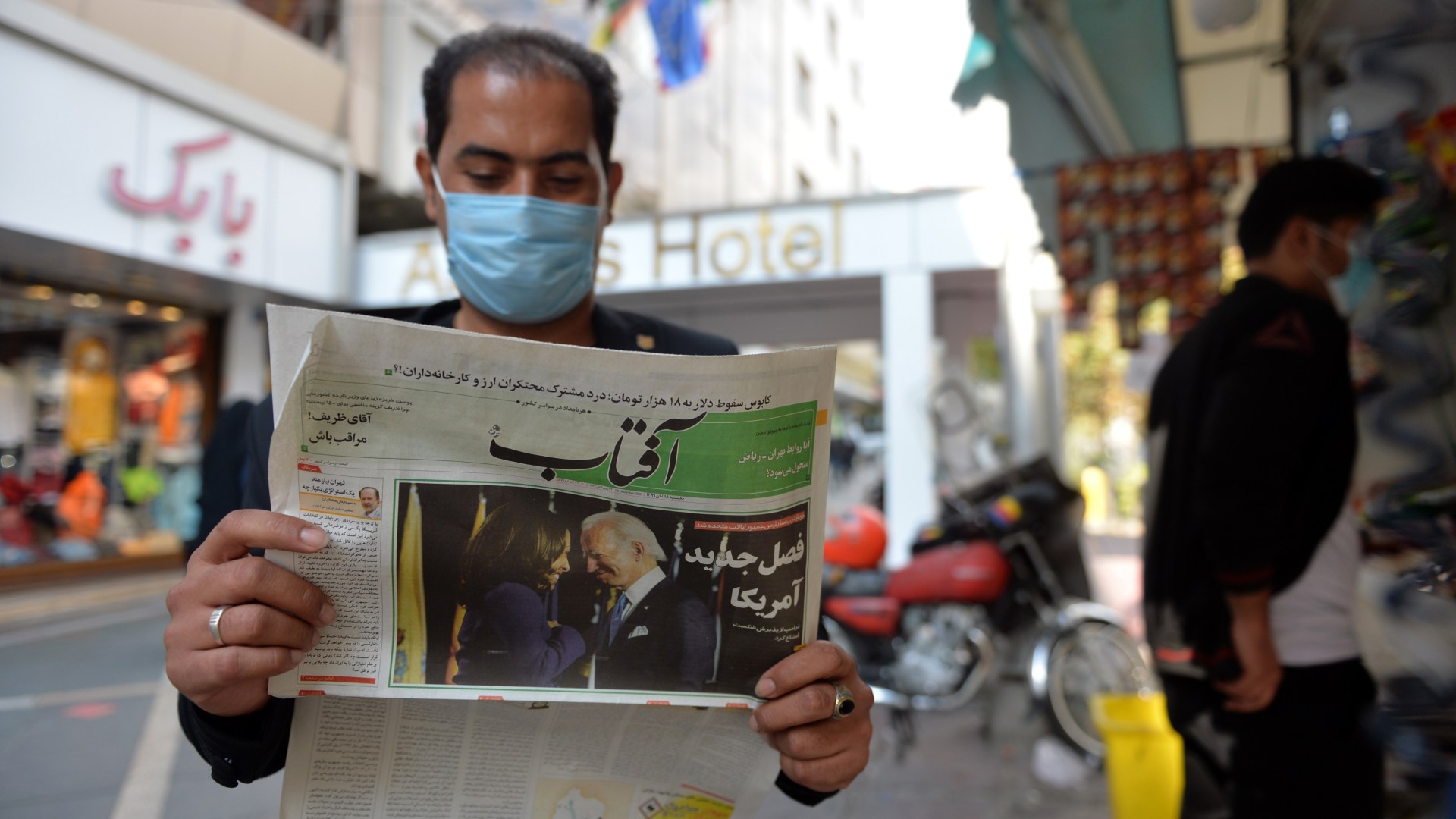
Trump and Biden Disagree on Sanctions. So Do Evangelicals Outside the US.

Longstanding foreign policy tool impacts national economies. But evangelicals from US to Syria and Iran differ on who deserves blame.

Christianity Today January 14, 2021
Anadolu Agency / Getty Images

If President-elect Joe Biden makes good on his campaign rhetoric, his sanctions policy will meet the approval of the World Evangelical Alliance (WEA).

Back in April, as even the strongest nations reeled from COVID-19, then-candidate Biden petitioned the Trump administration for sanctions relief on the hardest-hit nations—including Iran and Syria.

“In times of global crisis, America should lead,” he said.

“We should be the first to offer help to people who are hurting or in danger. That’s who we are. That’s who we’ve always been.”

In September, the WEA joined Caritas, the World Council of Churches, and others to similarly petition the United Nations’s Human Rights Council.

“We are deeply concerned about the negative economic, social, and humanitarian consequences of unilateral sanctions,” read their statement, ostensibly singling out the United States and its European allies.

“It is a legal and moral imperative to allow humanitarian aid to reach those in need, without delay or impediment.”

One month later at the UN, China led 26 nations—including sanctions-hit Cuba, North Korea, Iran, Russia, Syria, and Venezuela—to assert that the economic impact impedes pandemic response and undermines the right to health.

This is “disinformation,” said Johnnie Moore, appointed by President Donald Trump to serve on the independent, bipartisan US Commission on International Religious Freedom (USCIRF).

He called the WEA statement “almost indefensible.”

“Sanctions against countries that imperil their citizens and the world is good policy,” Moore said. “It has proven to be an effective alternative to save lives, alongside diplomatic channels to coerce long-term positive behavior.”

Western nations had already issued fact sheets to undermine China’s claim.

Detailing food, medical, and humanitarian exemptions, the US and European Union (EU) demonstrated that sanctions target regimes and their supporters, not the general population.

Christian Solidarity International, however, cited a Lancet study that found sanctions were among the biggest causes of sufferings in Syria. And it examined the “dense, legalistic detail” in the EU’s explainer, noting that exemptions required negotiation with all 27 member nations.

Representatives of the Syriac Orthodox, Greek Melkite, Armenian evangelical, and Presbyterian churches in Syria have all called for relief.

“Sanctions don’t succeed in overthrowing anti-Western regimes,” said Joseph Kassab, secretary general of the Supreme Council of the Evangelical Community in Syria and Lebanon, citing Saddam Hussein in Iraq and Hugo Chavez in Venezuela, among others.

“These examples prove that sanctions are a joke for regimes, and misery for civilians.”

Fuel costs have increased 50 percent in Syria, he said, and bread lines have formed throughout the country. And testing for COVID-19 is only available in Damascus.

First leveled against Syria in 2011, US sanctions responded to President Bashar al-Assad’s violence against peaceful protests. Four years later, the US associated them with UN resolution 2254, to compel a political transition. There has been little progress toward the stated goal.

Last June, the US increased pressure with the Caesar Act—secondary sanctions against outside parties cooperating with the regime. It paralyzed Syria’s banking and construction sectors.

Confessing the internal roots of the ongoing war, Kassab sees also the manipulation of regional and international powers. There are natural gas and oil interests at stake, amid bids to normalize with Israel. Until the US and Russia work out an agreement, the people are made to suffer.

“Unfortunately, we still need to wait,” said Kassab.

“Yet with hope, trusting that God is the Lord of heaven and earth.”

Wissam al-Saliby, the Geneva-based advocacy officer for the WEA, took his responsibility seriously. He reached out to both evangelical and secular aid organizations working in Syria, and conferred with Christian ministries working with Iranians.

And he also reviewed WEA history.

“We are not against sanctions as such, in order to put an end to gross violations of human rights, war crimes, and crimes against humanity,” Saliby said, recalling a 2007 statement in favor of unilateral US sanctions on Sudan.

“But how can anyone support these sanctions, when the exemptions are not working?”

Large organizations may be able to decipher the legal steps necessary, he said. But churches and smaller Christian aid groups do not have the resources to do so.

Caritas, a large Catholic charity, led the statement to the UN due to its ministry difficulties. The “chilling effect” of sanctions makes banks unwilling to work with almost any activity in Syria.

Kassab added that even when humanitarian channels are engaged, money is legally transferred at the official rate of exchange, not its true market value. As an example, the funds raised to rebuild the two-story Presbyterian church in Aleppo, destroyed in the war, were only sufficient for the ground floor.

The complications also spill over the border, Saliby said. Foreign banks have refused transfers to Lebanon when told the money will be used by churches in Syria. And resident Syrians involved in church-based refugee work have been denied opening a Lebanese bank account.

Instead of blanket sanctions, many human rights advocates have championed an individual approach. In 2016, the US Congress passed the Global Magnitsky Human Rights Accountability Act, allowing targeted sanctions against violating officials and institutions in order to avoid impact on the general population.

For example, Hong Kong official Carrie Lam, implementer of the security law placing the island democracy deeper under the control of China’s mainland government, is now reduced to cash transactions. She publicly complained how her US status as a “specially designated national” has forced her out of the banking system entirely.

China, Iran, and others “cynically tried to exploit the pandemic,” said Moore. And given that China and Russia have veto power at the UN, he said the WEA makes a mistake to encourage the US to “outsource” its human rights policy to the review of such serial abusers.

“We are not America,” said Saliby. “We are a global body that listens to our constituency all over the world.

“Our role is to see the church be missional—especially in service to the poor and suffering.”

But independent of the WEA, Saliby is also a Lebanese citizen.

Designed also to punish corruption, Magnitsky sanctions were recently applied with mixed reaction in his home country.

Hezbollah, a Shiite militia and political party designated a terrorist entity by the US government, had long been subject to US sanctions. But in November, Magnitsky sanctions were applied to Hezbollah ally Gebran Bassil, head of Lebanon’s largest Christian party.

As a government minister, the US said Bassil steered contracts to favored individuals. But his designation “builds on” previous counterterrorism sanctions.

Alberto Fernandez, president of the US-funded Middle East Broadcasting Networks, lauded the move as it expanded American pressure against more than one entity. Bassil previously played a “double game” with America, seeking support for Lebanon’s Christians while siding politically with Iran-backed Hezbollah.

But others were concerned by American politics.

“When all you have is one arrow, you run into problems,” said Edward Gabriel, president of the American Task Force for Lebanon.

“Sanctions will not scare Hezbollah away. They are part of the Lebanese fabric, and must be dealt with deftly.”

Saliby noted that all Lebanese politicians are understood to be corrupt. But if the US is going to specifically accuse only certain individuals, it plays into the accusations of political interference.

Gabriel agreed.

“This seems like an attack on [one Lebanese political alliance]; will there be sanctioning of [the other]?” he said.

“And if you won’t prove it publicly, don’t do it.”

Similarly, diaspora-based Iranian Christian leaders were torn.

“There is no doubt the sanctions will impact average Iranian citizens negatively,” said Mike Ansari, president of Heart4Iran Ministries. “But many Iranians who contact our TV channel identify poverty as a result of the Iranian regime’s systematic corruption and plundering.”

He expressed “surprise,” however, that some callers welcome the sanctions, hoping it will bring down the government.

So far, Ansari said, the result is to drive Iran further into the embrace of China.

For Hormoz Shariat, president of Iran Alive Ministries, Iranians have nowhere else to go.

President Barack Obama unfroze billions of dollars in Iranian assets to secure a nuclear deal. But that money was spent on corruption and foreign proxies, Shariat said, not on the people. And now that Trump’s renewed sanctions are crippling the government, the US should not let up.

“Life cannot get much worse than it is,” Shariat said. “And if the sanctions are removed, it will only help the government survive, and oppress its people longer.”

But traditional sanctions theory does not hold, he said.

Sanctions do not change regime behavior. They do not drive the people to revolt.

What Shariat hopes for instead is government infighting. As resources dry up, his gut feeling is that the vaunted Revolutionary Guard will overthrow the ruling mullahs—and install a secular system.

“I believe the days of the Islamic government are numbered,” he said. “The change will be sudden, and we Christians must be ready.”

While this may be in line with Trump’s policy goals, Biden’s use of sanctions remains to be seen. The president-elect has many foreign policy concerns—and different constituencies to please.

Will WEA-aligned evangelicals be one of them? Or USCIRF’s Moore?

“My peacemaking friends [in the WEA] ought to have signed on to exactly the opposite statement,” Moore said, expecting Biden will keep existing sanctions in place.

“They should encourage countries to partner together to use sanctions as a tool to avoid war, within the vision of a more just and peaceful world.”

Saliby, however, does his best to balance—but with conviction.

“In any given conflict, we bridge between evangelicals with different views, and it is a privilege to play this role,” he said.

“But what is certain is the grave humanitarian consequences of sanctions, especially in a time of a global pandemic.”

addApple PodcastsDown ArrowDown ArrowDown Arrowarrow_left_altLeft ArrowLeft ArrowRight ArrowRight ArrowRight Arrowarrow_up_altUp ArrowUp ArrowAvailable at Amazoncaret-downCloseCloseellipseEmailEmailExpandExpandExternalExternalFacebookfacebook-squarefolderGiftGiftGooglegoogleGoogle KeephamburgerInstagraminstagram-squareLinkLinklinkedin-squareListenListenListenChristianity TodayCT Creative Studio Logologo_orgMegaphoneMenuMenupausePinterestPlayPlayPocketPodcastprintremoveRSSRSSSaveSavesaveSearchSearchsearchSpotifyStitcherTelegramTable of ContentsTable of Contentstwitter-squareWhatsAppXYouTubeYouTube