What Is Christian Nationalism?

An explainer on how the belief differs from other forms of nationalism, patriotism, and Christianity.

Christianity Today February 3, 2021
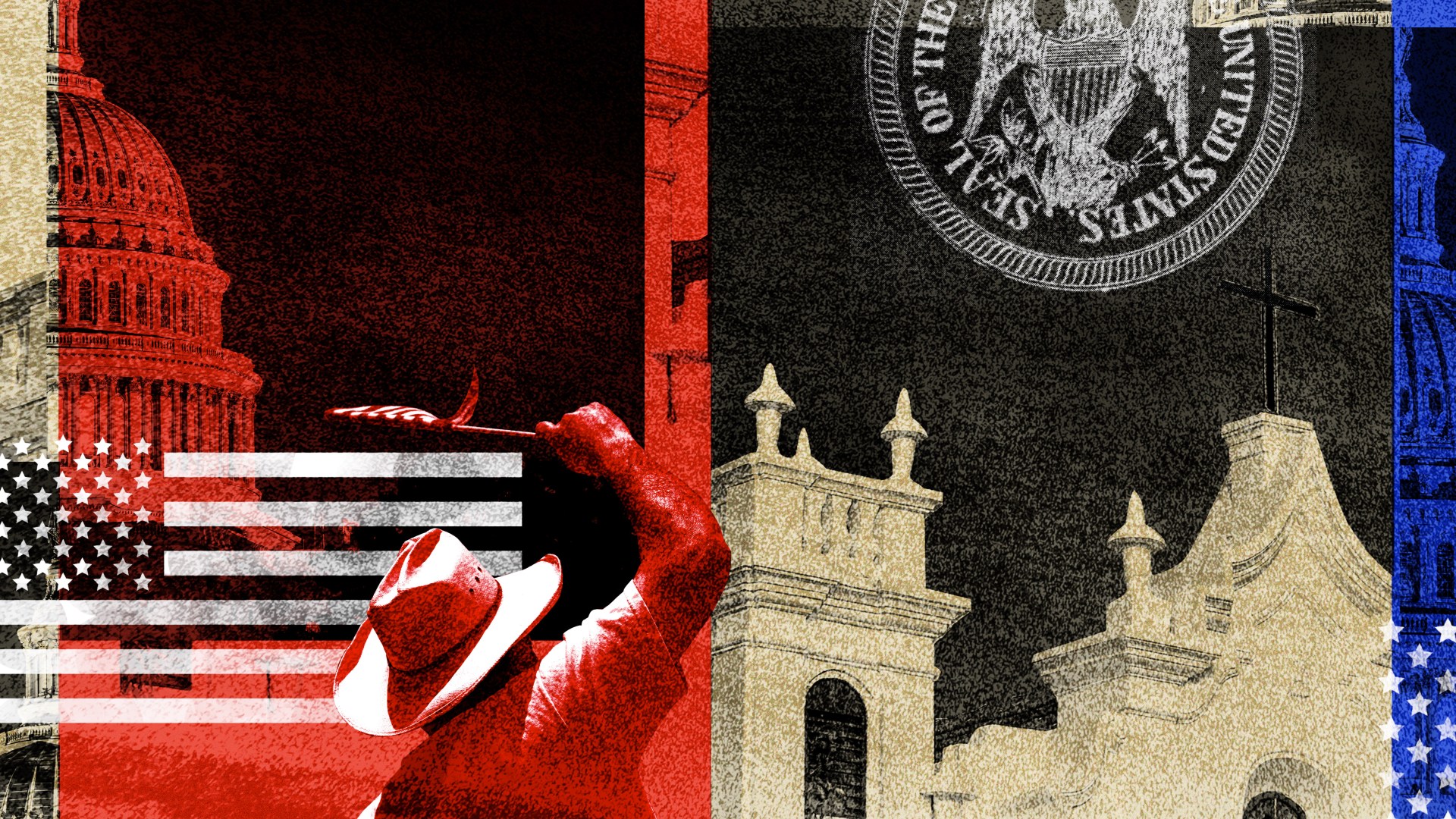
Illustration by Mallory Rentsch / Source Images: Cameron Smith / Mohammad Aqhib / Unsplash / Reza Estakhrian / Getty Images

You’ve probably seen headlines recently about the evils of Christian nationalism, especially since December’s Jericho March in Washington, DC, and since a mob of Trump supporters—many sporting Christian signs, slogans, or symbols—rioted and stormed the US Capitol building on January 6.

What is Christian nationalism, and how is it different from Christianity? How is it different from patriotism? How should Christians think about nations, especially about the United States? If nationalism is bad, does that mean we should reject nationality and national loyalty altogether?

What is patriotism, and is it good?

Patriotism is the love of country. It is different from nationalism, which is an argument about how to define our country. Christians should recognize that patriotism is good because all of God’s creation is good and patriotism helps us appreciate our particular place in it. Our affection and loyalty to a specific part of God’s creation helps us do the good work of cultivating and improving the part we happen to live in. As Christians, we can and should love the United States—which also means working to improve our country by holding it up for critique and working for justice when it errs.

What is nationalism?

There are many definitions of nationalism and an active debate about how best to define it. I reviewed the standard academic literature on nationalism and found several recurring themes. Most scholars agree that nationalism starts with the belief that humanity is divisible into mutually distinct, internally coherent cultural groups defined by shared traits like language, religion, ethnicity, or culture. From there, scholars say, nationalists believe that these groups should each have their own governments; that governments should promote and protect a nation’s cultural identity; and that sovereign national groups provide meaning and purpose for human beings.

What is Christian nationalism?

Christian nationalism is the belief that the American nation is defined by Christianity, and that the government should take active steps to keep it that way. Popularly, Christian nationalists assert that America is and must remain a “Christian nation”—not merely as an observation about American history, but as a prescriptive program for what America must continue to be in the future. Scholars like Samuel Huntington have made a similar argument: that America is defined by its “Anglo-Protestant” past and that we will lose our identity and our freedom if we do not preserve our cultural inheritance.

Christian nationalists do not reject the First Amendment and do not advocate for theocracy, but they do believe that Christianity should enjoy a privileged position in the public square. The term “Christian nationalism,” is relatively new, and its advocates generally do not use it of themselves, but it accurately describes American nationalists who believe American identity is inextricable from Christianity.

What is the problem with nationalism?

Humanity is not easily divisible into mutually distinct cultural units. Cultures overlap and their borders are fuzzy. Since cultural units are fuzzy, they make a poor fit as the foundation for political order. Cultural identities are fluid and hard to draw boundaries around, but political boundaries are hard and semipermanent. Attempting to found political legitimacy on cultural likeness means political order will constantly be in danger of being felt as illegitimate by some group or other. Cultural pluralism is essentially inevitable in every nation.

Is that really a problem, or just an abstract worry?

It is a serious problem. When nationalists go about constructing their nation, they have to define who is, and who is not, part of the nation. But there are always dissidents and minorities who do not or cannot conform to the nationalists’ preferred cultural template. In the absence of moral authority, nationalists can only establish themselves by force. Scholars are almost unanimous that nationalist governments tend to become authoritarian and oppressive in practice. For example, in past generations, to the extent that the United States had a quasi-established official religion of Protestantism, it did not respect true religious freedom. Worse, the United States and many individual states used Christianity as a prop to support slavery and segregation.

What do Christian nationalists want that is different from normal Christian engagement in politics?

Christian nationalists want to define America as a Christian nation and they want the government to promote a specific cultural template as the official culture of the country. Some have advocated for an amendment to the Constitution to recognize America’s Christian heritage, others to reinstitute prayer in public schools. Some work to enshrine a Christian nationalist interpretation of American history in school curricula, including that America has a special relationship with God or has been “chosen” by him to carry out a special mission on earth. Others advocate for immigration restrictions specifically to prevent a change to American religious and ethnic demographics or a change to American culture. Some want to empower the government to take stronger action to circumscribe immoral behavior.

Some—again, like the scholar Samuel Huntington—have argued that the United States government must defend and enshrine its predominant “Anglo-Protestant” culture to ensure the survival of American democracy. And sometimes Christian nationalism is most evident not in its political agenda, but in the sort of attitude with which it is held: an unstated presumption that Christians are entitled to primacy of place in the public square because they are heirs of the true or essential heritage of American culture, that Christians have a presumptive right to define the meaning of the American experiment because they see themselves as America’s architects, first citizens, and guardians.

How is this dangerous for America?

Christian nationalism tends to treat other Americans as second-class citizens. If it were fully implemented, it would not respect the full religious liberty of all Americans. Empowering the state through “morals legislation” to regulate conduct always carries the risk of overreaching, setting a bad precedent, and creating governing powers that could be used later be used against Christians. Additionally, Christian nationalism is an ideology held overwhelmingly by white Americans, and it thus tends to exacerbate racial and ethnic cleavages. In recent years, the movement has grown increasingly characterized by fear and by a belief that Christians are victims of persecution. Some are beginning to argue that American Christians need to prepare to fight, physically, to preserve America’s identity, an argument that played into the January 6 riot.

How is Christian nationalism dangerous to the church?

Christian nationalism takes the name of Christ for a worldly political agenda, proclaiming that its program is the political program for every true believer. That is wrong in principle, no matter what the agenda is, because only the church is authorized to proclaim the name of Jesus and carry his standard into the world. It is even worse with a political movement that champions some causes that are unjust, which is the case with Christian nationalism and its attendant illiberalism. In that case, Christian nationalism is calling evil good and good evil; it is taking the name of Christ as a fig leaf to cover its political program, treating the message of Jesus as a tool of political propaganda and the church as the handmaiden and cheerleader of the state.

How is Christianity different from Christian nationalism?

Christianity is a religion focused on the person and work of Jesus Christ as defined by the Christian Bible and the Apostles’ and Nicene Creeds. It is the gathering of people “from every nation and tribe and people and language,” who worship Jesus (Rev. 7:9), a faith that unites Jews and Greeks, Americans and non-Americans together. Christianity is political, in the sense that its adherents have always understood their faith to challenge, affect, and transcend their worldly loyalties—but there is no single view on what political implications flow from Christian faith other than that we should “fear God, honor the king” (1 Pet. 2:17, NASB), pay our taxes, love our neighbors, and seek justice.

Christian nationalism is, by contrast, a political ideology focused on the national identity of the United States. It includes a specific understanding of American history and American government that are, obviously, extrabiblical—an understanding that is contested by many historians and political scientists. Most importantly, Christian nationalism includes specific policy prescriptions that it claims are biblical but are, at best, extrapolations from biblical principles and, at worst, contradictory to them.

Can Christians be politically engaged without being Christian nationalists?

Yes. American Christians in the past were exemplary in helping establish the American experiment, and many American Christians worked to end slavery and segregation and other evils. They did so because they believed Christianity required them to work for justice. But they worked to advance Christian principles, not Christian power or Christian culture, which is the key distinction between normal Christian political engagement and Christian nationalism. Normal Christian political engagement is humble, loving, and sacrificial; it rejects the idea that Christians are entitled to primacy of place in the public square or that Christians have a presumptive right to continue their historical predominance in American culture. Today, Christians should seek to love their neighbors by pursuing justice in the public square, including by working against abortion, promoting religious liberty, fostering racial justice, protecting the rule of law, and honoring constitutional processes. That agenda is different from promoting Christian culture, Western heritage, or Anglo-Protestant values.

Paul D. Miller is a professor of the practice of international affairs at Georgetown University and a research fellow with the Ethics and Religious Liberty Commission.


News
Wire Story

Rick Warren Apologizes for Saddleback Clip With ‘Demeaning’ Asian Caricature

Asian American Christian leaders reiterate concerns over using stereotypes as punchlines in Sunday school curricula.

Christianity Today February 2, 2021
Paul Kagame / Flickr

Saddleback Church pastor Rick Warren has apologized for a children’s Sunday school curriculum video that used Asian culture stereotypes to teach kids about the Bible.

The video has been removed, but Michelle Ami Reyes, vice president for the Asian American Christian Collaborative, on Twitter described it as using Asian culture “as a prop for slapstick humor.” The video, she said, blurs and dishonors “distinctions and categories of Asian culture.”

In it, she said, a pastor wears a Chinese shirt, makes Kung Fu sounds and pretends to make sushi that he then spits out.

“There are layers to the problematic appropriation and use of Asian culture elements for slapstick humor here. This kind of humor only works because it’s deprecating. But you cannot appropriate and deprecate on someone else’s culture for your own personal comedy,” she tweeted.

Warren, in a statement issued Sunday, apologized and said he was upset and embarrassed by the racially offensive content of the video. It was immediately taken down, he said.

“My instant fear was that the thousands of Asian American children who are a part of our church family would feel made fun of and that their families and so many others would rightfully be offended,” Warren said in the statement.

Warren said the video showed a former Saddleback Church kids’ pastor dressed as an Asian martial arts sensei “in an attempt to teach Bible truth.”

Although the video was posted this weekend, Warren said it was created four years ago.

“This is the very kind of cultural and racial insensitivity that we’re trying to eradicate in our church family,” he said. “It’s unchristlike, demeaning, and it’s never appropriate to use a stereotype to teach.”

https://twitter.com/Saddleback/status/1356068599505424386

Some have responded well to Warren’s apology on Twitter, saying his words were genuine and thoughtful. Others were reminded of a photo he posted on Facebook in 2013 that depicted a Red Guard during China’s Cultural Revolution.

“The typical attitude of Saddleback Staff as they start work each day,” the caption read. Several Asian American Christians found that post distasteful, including writer Sam Tsang who took the issue to his blog.

Warren initially said people missed the irony, saying in a Facebook comment: “It’s a joke people! If you take this seriously, you really shouldn’t be following me!” He later took the photo down and apologized on the comments section of Tsang’s blog.

This also isn’t the first time children’s ministry material has been called out for its use of cultural stereotypes.

Vacation Bible school curricula have often used themes based in foreign countries, but these programs have been facing heavier scrutiny as awareness and sensitivity around cultural appropriation increases.

In 2013, former president of Lifeway Christian Resources Thom Rainer apologized for a 10-year-old Asian-themed vacation Bible school curriculum, dubbed “Far Out Rickshaw Rally — Racing Towards the Son,” that was criticized for promoting racial stereotypes, according to the Baptist Standard.

The curriculum package, the Baptist Standard detailed, “came in a tin shaped like a Chinese-food take-out box, and the chorus to its theme song alluded to a scene in the 1984 movie The Karate Kid.”

In 2019, Christian publisher Group Publishing faced pushback for its Africa-themed children’s Bible school curriculum that, according to Faithfully Magazine, had children pretending to be Israelite slaves and mimicking an African dialect with “clicking” sounds. Group Publishing revised and apologized for the curriculum.

Warren, in his statement, said the church has put a process in place “to ensure that any curriculum that might be insensitive, hurtful, or demeaning never sees the light of day.”

Meanwhile, Reyes advised churches to hire sensitivity readers and consultants for church resources.

“Better yet, don’t include segments that make fun of other people’s cultures at all in your teaching materials. It’s disrespectful and dishonoring,” she said.

Church Life

How American Politics Complicates Evangelicalism in the UK

Facing Brexit fallout and COVID, the head of the country’s Evangelical Alliance is eager to shift attention back to their mission.

Christianity Today February 2, 2021
Leon Neal / Getty Images

For the past four years, the leader of the United Kingdom’s Evangelical Alliance faced several major national challenges: Brexit divides, religious liberty concerns, dramatic demographic shifts, a pandemic, and political baggage that made its way across the pond.

Since white American evangelicals became known as some of former US President Donald Trump’s biggest supporters, Gavin Calver saw media in his own country conflate them with the Christians his organization represents. Calver had to work even harder to educate others about the broad array of evangelicals in the UK, who don’t fully align with any single party or politician.

“I can find myself tweeting about a food bank serving in Bradford, only for someone on the other side of the world to lambast me for being a Trump supporter,” Calver wrote in a reflection that ran on Inauguration Day in The Times of London. “How did it come to this? How has the word evangelical been so politicised?”

The end of Trump’s presidency last month means Calver’s job can again focus on the mission of evangelicals in the UK—currently under its third coronavirus lockdown—without having to untangle their message from American political associations.

“I can’t pretend it’s not easier now to say ‘I’m Gavin, I’m an evangelical Christian,’ and for that to not immediately link me to politics of a nation I’ve never lived in, I’ve never voted in, and I have no plans to move to,” the Evangelical Alliance CEO said in a recent interview with Christianity Today. “People were desperate to get back to an evangelicalism that is liberated from bondage to other things, and actually focuses on the main thing, which is making Jesus known together.”

Calver has close ties to the United States. Until recently, his parents were pastors there, and his father, Clive Calver, once led World Relief, the humanitarian arm of the US National Association of Evangelicals. But he has seen how the political approaches by evangelicals in the two countries have clashed for decades; while the Religious Right made way for American evangelicals’ steady Republican support, British evangelicals have more representation across the three major parties and focus on issues over affiliation, according to Calver.

Misunderstandings over the evangelical term got exaggerated as UK media attention turned to the American president, but some of the confusion has been there all along; the faith is not as “mainstream” as in the US, he said.

Last week, Gavin Calver spoke with CT about the shared history between the evangelical communities in the UK and the US, how Trump has affected their close relationship, promising opportunities amid another COVID-19 lockdown, and what Brexit means for the unity of the British church.

How would you describe the historical relationship between US and UK evangelicals?

Our two nations have a special relationship on so many levels, and the church shares that too. Personally, the one that most comes to mind was when the late great Billy Graham came over for a couple of tours. My grandpa at the time was the chairman of a couple of his European tours. I remember as a little boy being at Crystal Palace or Wembley Stadium and seeing loads of people come to the front to give their lives to Jesus.

The ministries of Rick Warren or Tim Keller have had profound impacts in this nation, and the ministry of someone like the great late John Stott would have had a huge impact in the US. Ministries like Alpha that have worked really well in the UK worked well in the US, and the Purpose Driven Life stuff that came out of Saddleback a while ago worked well in the UK as well.

How did American evangelical support of Trump affect evangelicals’ reputation in the UK?

The problem was this word evangelical was connected to something that we had very little influence over and no control upon. In the media, they would talk about evangelical Christians doing X, Y, and Z as in the US. That by association made it look like we were the same people with the same ideology and the same everything.

Now, don’t get me wrong. We’re brothers and sisters. That’s important that we hold to that, but we’re a million miles away politically at times. It was a struggle to lead something here in the UK that was seen in the light of Trump. What Trump stood for by association the media caricatured us as standing for and, with the greatest respect, that often was not the case.

Would you say Trump’s presence and the American evangelical support for Trump tested this historically strong relationship between the two communities?

It created that awkward moment at a family dinner party where there’s something you can’t talk about because it’s just going to lead to a complete disagreement. I know that from my own experiences of visiting the US and having family there that it causes a tension in families that we don’t really understand here. Politics are important, but they’re not at any point some kind of demigods in our society here in the United Kingdom. The absolute wedding of politics and faith was not helpful when trying to have rational conversations.

Back in 2019, Franklin Graham planned a number of crusades in the UK. Multiple entertainment arenas canceled them after LGBT activists organized against his coming. How have you made sense of this situation?

The issue for us in the United Kingdom is the religious liberty issue of the “cancel culture,” that you’re not allowed to hold that kind of event in a venue. But the church was very much divided as to whether it supported or didn’t support Franklin coming. The pandemic led to an outcome in which he couldn’t come. But now it will be interesting to see what happens in some of the legal cases around freedom of religion that are going to be taking place with those venues that wouldn’t have them.

Franklin Graham’s relentless support of Trump certainly didn’t help in the UK lens. But once the venues were canceled and COVID stopped it from happening, the issue now is: What are the religious liberty consequences, if any, going forward here? That’s significant to every evangelist that wants to speak about Jesus in any public setting in the UK.

How has the UK church responded to the pandemic?

We’ve got a change in spiritual temperature. For years the church has been answering questions the world wasn’t asking, but since the pandemic, 25 percent of the population of the UK has to been to church online at least once. Normally only 5 percent of the population goes to church. We’re calling it mortality salience, which is an awareness of your own fragility. You might die one day, so you start asking the big questions.

There’s been a change in style. We’ve gone from not thinking we could do online church to doing it amazingly. There’s been a changing cultural narrative. In my role at the EA before the pandemic, I’d be asked my views on abortion or same-sex marriage or something else to try to caricature you as what the media wanted to see you as. Since the start of the pandemic we’re asked, “How are you going to help rebuild the society socially and spiritually?”

Have any churches been able to meet in person in the UK during the pandemic?

On and off. We’re in our third lockdown now. In the first lockdown churches couldn’t meet. In the second some could. In this one, you can within certain limitations, so some are. We’ve got a different situation here too than in much of the US. It’s much stricter here. We’re very much obeying the rules we’re given, and masks are not controversial here. You wear a mask because you love your neighbor and you want your neighbor to live for longer.

I’ve preached more times than ever before in my life, but I’ve seen less of people. When I have preached in a building, it’s been slightly odd; you have to wear a mask; you can’t sing in church. The church has never closed; we’ve just changed our style.

How has Brexit already begun to change how evangelicals do ministry, both domestically and in Europe overall?

It’s too early to talk about how it’s particularly changed, seeing as Brexit only fully happened about four weeks ago. The challenge for the UK evangelicals is not to become an island. You could ask, how could we evangelicals vote on Brexit? Probably as the nation voted, which is 52 percent in favor and 48 percent against.

Nationalism doesn’t really have a place in evangelicalism for me. We’re citizens of the kingdom of heaven; therefore, we need to make sure we look outwards to Europe and also look inwards to make sure that we’re being open. The church is the only organization in the United Kingdom and in Europe and in the USA that can potentially get everyone in the same place on the same team, loving one another and reaching out.

My church did men’s curry nights. We had 15 men at the curry nights, 14 nationalities. The guy who runs the curry house system said, “What on earth are you?” I said, “What you think we are?” He says, “I think you’re the church. No other group in this community can get this diverse group of people around the same table, eating together, laughing together, and being together.” The church can do something the world can’t do.”

In this season, when Britain and the United Kingdom could become like a little UK again, looking inwards, let’s look outwards. There’s no British people in heaven, just brothers and sisters celebrating for eternity.

Last year, Northern Ireland legalized abortion and same-sex marriage. Was this something that you anticipated?

We knew these challenges were coming. Obviously, we disagree with both of those decisions by the government there. We put up a good fight, but, in the end, the secular tsunami won out. However, it doesn’t mean that we don’t continue to advocate for what Scripture says and don’t continue to work with the powers that be on issues that are important like this.

The United Kingdom is a challenging landscape. It is an increasingly secular one. Whatever happens that’s really wonderful between now and the end of time, whatever happens that’s really horrible and difficult between now and the end of time, we know, at the end of the story, Jesus wins. Therefore, in the middle, we hold firm. We stand firmly on his word, and we do what we can to make him known.

What type of impact are African and West Indian believers having on the UK church in recent decades?

Absolutely huge. A quarter of UK evangelicals are not white. If you go into London, which is the place in the United Kingdom where the church has been growing by far the fastest, half of those who go to church in London aren’t white. For many years, United Kingdom sent missionaries all over the world. I’m just so grateful that many have been sent back in reverse mission.

We are grateful for it. One of the perhaps potential differences in the UK is the way that ethnicities and nationalities and different groupings of people all live together in such harmony and togetherness and unity.

Can you elaborate?

One of the most important works of the Evangelical Alliance is our One People commission led by my friend and brother Yemi Adedeji. The One People commission exists to celebrate our unity across ethnic diversity. We are used to, in this nation, very much living together. Churches are often multicultural and we are doing fairly well in that space, but there’s still a lot more work to be done. At the Evangelical Alliance, one of our main things to make sure is that we’re calling for unity, we are working our relationships together, and that brother- and sisterhood goes beyond human divides.

Certainly, in the light of the murder of George Floyd and the Black Lives Matter marches in the US, the reaction in the UK was significant and necessary, but it did feel like we were starting from a different place as well. Let’s not be naïve or foolish enough to think that the UK church in the UK itself don’t have problems with racism. They do. But it feels like on this issue that we are further down the track towards working out what it really means to be a united society that’s fair for all. But we still have a long way to go.

What are the types of issues that pose a challenge to church unity in the UK?

Brexit’s been an issue. if you said to me, 10 years ago, “Is the UK’s involvement in Europe a potentially divisive issue for the church?” I would have said, “That’s so silly. How could it be?” Then suddenly you’ve got a referendum, and you realize the church is as split as the nation. We’ve got our own wounds to recover from, and we’re trying to do that and we’re trying to say that what unites us in Christ is so much more important than what divides us.

At the Evangelical Alliance, we're saying this is our family, and it's important we bring them together.

We also want to be involved in wider acts of Christian unity as well, but the tribe that I’m part of is the evangelical one.

News

The Coming African American Missions Movement

A surge of interest among young black churchgoers could signal a change for sending agencies, but hurdles remain. 

Christianity Today February 1, 2021
Courtesy of Ron and Star Nelson

Patrice Hunt knows people wonder why she is working at Wycliffe Bible Translators, a black woman surrounded by white people. She’s asked God that question herself.

“Why did you make me black,” she said, praying in the mirror one morning, “if you’re just going to have me around white people?”

It doesn’t always happen this way, but she got an immediate answer. She felt God say, “There are things I need you to learn from them that your community can’t teach you.”

As the senior director of human resources in Wycliffe’s Florida office, Hunt has learned a lot of things. One, she told CT, is that God has equipped her and other African Americans for mission work.

Some experts say that less than 1 percent of American missionaries are black. In many missions organizations, that actually seems like an overestimate. According to a 2020 report, the Southern Baptist Convention’s International Missions Board—the largest sending agency in the world—has 3,700 career missionaries and only 0.35 percent are African Americans.

The reasons are varied. Many African Americans who are called to ministry have prioritized the needs in their own communities, focusing on preaching the gospel or pursing justice locally. Global travel and exposure are a privilege and less accessible to racial minorities. The historic relationship between missions and colonialism is complicated, and missionaries, for many, are associated with the idea of a “white savior,” not a black Christian. Black churches have different traditions of giving, making the most common models of fundraising more difficult for African American Christians. And most missionary institutions and sending agencies are predominantly white and can be uncomfortable spaces for black people.

But young African American Christians are increasingly interested in international mission work, according to a recent Barna survey. Sixty-one percent of black churchgoers between the ages of 18 and 35 say they could become a missionary, depending on their sense of calling, whether or not they would be helpful, and the tasks they’d do on the field. By comparison, less than half of young white Christians who regularly go to church say the same.

“They’re becoming more missions and globally minded,” said Sherry Thomas, an African American missionary who has served for 22 years in African countries, most recently Nigeria. For many years, she said, the only missionaries she met were white, but now there seems to be a generational shift.

It could create an unprecedented opportunity, according to African American missionaries currently at work around the world.

“What has intensified is our voice,” said Ron Nelson, founder of Sowing Seeds of Joy, an organization that mobilizes and trains African Americans for overseas mission work. “Our voice has become more significant. Our voice has become more needed. That’s what has changed.”

‘We can connect like the others don’t’

Nelson notes that many African American Christians remain skeptical of missions. He remembers a black pastor telling him and his wife, Star Nelson, “I love what you’re doing, but missions is not our thing.” In fact, the Barna study shows that about half of young black churchgoers agree with the statement that “Christian mission is tainted by its association with colonialism,” and 40 percent agree with the statement that missions work has been unethical in the past.

But some say that because of the history of colonialism, slavery, and white oppression, black missionaries can be more effective than their white counterparts. Star Nelson said that in Haiti, there were people who were willing to listen to her talk about Jesus because she is black.

“Most people know our African American story,” she said. “So, we can connect like the others don’t. Sometimes we connect in a way that is exactly what they need.”

The past generation of African American missionaries was mobilized with the phrase “blessed to be a blessing”—a call to use their relative wealth, education, and privilege to serve those in under-resourced areas. But today, black missionaries say that one of the important gifts they can bring to the world is an understanding of trauma, suffering, and loss.

“So many of our images of missions [show] the white person of middle-class status taking care of an Indian widow,” said Lily Field, executive director of Ambassadors Fellowship, an African American sending agency, at the recent virtual conference of the National African American Missions Council (NAAMC).

“I don’t relate to being the savior in this picture,” she said. “I relate to the sufferer in this picture.”

That can be a powerful point of connection, Thomas said. She has worked as a trauma healer in Mali prisons and recently started working with pastors in Nigeria to establish a trauma healing center there. Her skin color has been an advantage in the work, both because she personally knows the trauma that racism can bring and because she doesn’t have to deal with the additional distance that white people sometimes can’t overcome.

Diversity consultants assessing institutions

Some sending agencies, recognizing the value of African American missionaries and noticing their own lack of diversity, have started recruiting more black Christians to the mission field. The Southern Baptist missionary organization hired Jason Thomas to specifically engage with African American Baptist churches.

“This first year has been about building relationships and establishing trust in black and minority church-led communities,” he said. “There is no secret that we have had many setbacks this year with the pandemic, racial tension, and the last presidential election. But there has been amazing support from leadership at IMB and colleagues that all want to see a mission force that could make our Savior proud.”

Others, like Wycliffe, have hired outside consultants to assess the diversity, equity, and inclusion of the institutional culture, and examine the structures and systems that have made it harder for black people to thrive in their organizations. The NAAMC has started offering resources, coaching, and diversity training to help. The council’s 2020 conference drew a record number of attendees, both black and white.

Adrian Reeves, director of the council, said he is encouraged by the number of sending agencies that are pursuing diversity training and working to recruit more minorities into missions. But he also thinks it’s important that African American organizations, like the Nelsons’ group Sowing Seeds of Joy, rise up independently.

“It is great to see that African American churches are reaching out to an organization that looks like them and talks like them and is able to present missions,” he said.

Visions of reform

Many in the next generation of African American missionaries will likely seek to reform how missions are done. Whether they join new organizations started by African Americans or fill the ranks of white institutions, there is an interest in changing the status quo and developing new missionary narratives.

Mekdes Haddis, an African missiologist who created the online community Just Missions, said one thing a younger generation of missionaries might rethink is their approach to poverty. Growing up in Ethiopia, she understood poverty to mean a lack of community or exposure to abuse. But Western missionaries often seemed fixated on material goods and couldn’t see the local community resources that addressed physical needs, like the Orthodox Church steps where children were given food or coins.

African American missionaries have the potential to break from “missions as usual,” but first they have to wrestle with seeing themselves as potential missionaries, said Haddis, who is now based in South Carolina.

“A lot of African Americans or people of color don't end up on the mission field,” she said. “It doesn't fit us, you know? It's so white-centric culturally and financially. Like, ‘I can't raise funds to live off of.’”

Funding is seen as a major issue in recruiting more African Americans to missions. There are major differences in generational wealth between black and white Americans. African American pastors say their churches and members just don’t have as much money to give, and many black families see mission work as a luxury they can’t afford.

“Even in the world of missions, we’re trying to play catch-up,” Ron Nelson said.

The Holy Spirit moves

At Wycliffe, Hunt said it can be frustrating how slow change is in coming and how hard it is to build bridges in the midst of division.

“It’s work,” she said. “And it’s movement from everybody. If we would move closer to Christ, we would get closer to each other.”

She often goes walking on the beach to remind herself how big God is. And sometimes she remembers that the Holy Spirit can just move people.

“God literally plucked me out of my community,” she said, “and plopped me in a white community.”

If the next decades see a flourishing African American mission movement, there will be a lot more stories like that.

Ideas

In the GameStop Frenzy, What If We’re All the 1 Percent?

Jesus’ economic justice doesn’t mean beating the rich at their own game.

Christianity Today January 29, 2021
Michael M. Santiago / Getty Images

Everybody loves a David and Goliath story. In recent days, millions of aspiring Davids took on one of society’s least favorite Goliaths: Wall Street.

It all started with a Reddit page called WallStreetBets. Many of the 3 million amateur investors involved in the chat room decided to come together to coordinate the purchase of stocks in a handful of companies. By doing so, they generated a massive increase in the value of those companies’ stock. GameStop’s market value, for instance, went from $2 billion to $24 billion in just a few days. While this created an enormous profit margin for individual investors, it also nearly bankrupted a hedge fund that had bet against GameStop by short selling their shares.

By all accounts, many folks involved celebrated both outcomes. “You stand for everything that I hated during [the financial crisis],” one user wrote in an open letter to the hedge funds. “You are a firm who makes money off of exploiting a company and manipulating markets and media to your advantage.” One evangelical pastor even drew on Jesus’ parable about the rich fool (Luke 12:13–21) who used his profits to build a bigger barn to describe what was happening. “Since 2008, it feels like Wall Street has had an overabundant harvest, financed by public money, and rather than share the billions with the less fortunate, they’ve built bigger and bigger barns for themselves.”

I certainly see what he means, especially when we consider the likely economic realities behind the parable. When the rich man tears down his barns to build bigger ones, he probably isn’t creating an enormous rainy-day savings fund. He’s more likely opening the first-century equivalent of a one-man hedge fund. But focusing on the way the parable puts financial Goliaths in the crosshairs may cause us to miss another group targeted by Jesus’ strange story: us.

While the vast majority of farmers in Jesus’ day would have been engaged in some form of subsistence agriculture, large landowners were increasingly profiting off grain speculation. Those who had enough of an agricultural surplus could afford to keep their grain off the market while prices were low. Then, when grain was scarce and people were hungry, they could sell their surplus at a massive profit. Such speculation wreaked havoc on the local economy while allowing the opportunist to profit both financially and socially from the chaos he helped create.

Against this background, Jesus condemns at least two aspects of the rich man’s greed. Not only does the rich man fail to share from his abundance, but he apparently plans to use the economic power his abundance affords him to gain further riches for himself at the expense of his neighbors.

Jesus’ parable offers a warning to those who made ludicrous profits while creating a crisis that devastated the global economy. It’s hard to imagine that the Jesus who characterized a first-century agro-entrepreneur as a malicious fool would overlook the way bank CEOs claimed multimillion-dollar Wall Street bonuses while Main Street burned. Surely the Jesus who sniffed out the money-loving Pharisees’ hypocrisy (Luke 12:1) would have something to say about modern-day financial market manipulation.

But notice why Jesus tells the parable in the first place. A man from the crowd asks Jesus to help him get a share of his inheritance. While we don’t know anything certain about this man’s economic status, we do know that the vast majority of Jesus’ audience faced brutal poverty, the likes of which hardly any American can imagine. Carol Wilson argues that a quarter of the population of Palestine in Jesus’ day was so destitute they were “slowly starving to death,” while another 30 percent hovered “precariously near the edge of subsistence.” Only an elite 3 percent of the population was secure against economic poverty. It’s likely, then, that the man asking for help with his inheritance faced serious economic hardship. It’s certain that most of Jesus’ audience did.

It is this primarily poor audience that Jesus warns about the need to “guard themselves against all kinds of greed.” Jesus’ anti-greed parable wasn’t only a warning for the super-rich. It was also a warning about the kind of financial insatiability that Jesus believed even the poor could get caught up in.

As best I can tell, the WallStreetBets folks got involved because they wanted to make money quickly. One of the most popular trading platforms, Robinhood, advertised their services as allowing “people like us” to trade “just like the big guys.” So while these investors’ actions put the squeeze on a hedge fund, their market manipulation also sought to create quick, substantial profits for themselves.

Jesus doesn’t tell his flock to beat the rich fool at his own game. He invites them to live an economic life free from greed or fear, storing up treasure in heaven by giving generously to the poor (Luke 12:33).

I’m not sure that’s all necessarily sinful. But when we wield the parable of the rich fool as a weapon against the super-rich, we risk missing the way Jesus offered it as a challenge to folks like us.

The danger here is much bigger than this week’s stock market story. The danger is that in the face of a deeply dysfunctional economic system and corruption by the super-rich, middle-class American Christians forget that in global and historical terms, we are the 1 percent.

Every single investor in GameStop lives a life of unimaginable comfort and wealth compared to the vast majority of those Jesus warned about their greed. Most of us are richer than the fictitious rich fool in terms of life expectancy, health, and luxury items. Economically speaking, compared to the typical first-century Jesus-follower, we are kings and pharaohs living lives of unimaginable security and ease. Yet middle-class Christians consistently read Jesus’ warning about the wealthy as applying to somebody else. We, the richest people who have ever lived, read ourselves in the role of the peasant and find somebody further up the economic ladder to play the part of the fool.

We all do this. We talk about being “poor college students” while attending schools that cost enough to feed entire villages in the global south. Pastors and professors like me regularly remind people “we sure don’t do it for the money,” even though the money gives us some of the highest standards of living experienced in human history.

As that Robinhood advertisement makes clear, we often criticize the large-scale behavior of the “big guys” while imitating it in our own economic practices. For years, Christian economist Bob Goudzwaard has warned about the ways that financial markets have gotten out of hand, with devastating effects on the “real economy” at home and abroad. While I wouldn’t claim that all hedge funds are intrinsically immoral, aspects of our contemporary financial markets, like aspects of the grain market in Jesus’ day, demand prophetic confrontation.

But we shouldn’t confuse fighting for a better seat at the blackjack table with confronting an economy addicted to gambling. That’s especially true when either gambler’s loss can wreak havoc on the lives of others. After all, it’s not just Wall Street financiers who invest in hedge funds; pension funds, like the ones that fund the retirements of school teachers and firefighters, do too. We ignore the ways we are the rich fools at our own moral and spiritual peril and at our neighbors’ expense.

Jesus doesn’t tell his flock to beat the rich fool at his own game. He invites them to live an economic life free from greed or fear, storing up treasure in heaven by giving generously to the poor (Luke 12:33).

Such kingdom investments include charity to the destitute, but, as Brian Fikkert, Robby Holt, and I argue in Practicing the King’s Economy, it also includes orienting the whole of one’s economic life toward love of God and love of neighbor.

If we want to invest in Jesus’ kingdom, I suspect there are better ways than squeezing hedge funds. We could invest in black and brown business with the help of lending platforms like WeFunder and Kiva. We could invest our money and social connections in organizations that help the economically poor build wealth through education or homeownership. We could creatively protest some of the dysfunctions of our economic system while remembering that Jesus’ parable is a warning for us as much as it is for financial professionals.

Michael J. Rhodes is an Old Testament lecturer at Carey Baptist College and co-author of Practicing the King’s Economy: Honoring Jesus in How We Work, Earn, Spend, Save, and Give.

Speaking Out is Christianity Today’s guest opinion column and (unlike an editorial) does not necessarily represent the opinion of the publication.

News

Meet the Republican Congressman Who Says His Faith Led Him to Vote for Impeachment

Adam Kinzinger wants to see a commitment to truth reorient his party and recover the witness of the American church.

Christianity Today January 29, 2021
Tom Williams / CQ Roll Call via AP Images

From his office in the Capitol, US Rep. Adam Kinzinger could see a little bit of the crowd on the lawn on January 6. He heard the flash-bangs go off on the steps as rioters made their way inside. And he could feel the spiritual weight of what was unfolding.

“I’m not one of these people that senses evil all the time or anything. It’s probably only happened maybe twice in my life,” the Illinois congressman said. “But I just felt a real darkness over this place, like a real evil.”

Kinzinger, a nondenominational Protestant, doesn’t talk much about his faith in public and is wary of conflating the mission of the church with the work of politics. But he saw serious implications for both in the wake of the Capitol breach and felt convicted to speak out.

“Although I’m not great at citing verse and chapter, I know the Bible speaks quite a bit about conspiracies and about allowing that darkness into your heart, about the importance of truth, the importance of being a light in dark places, of being truth,” he said on a call with CT and other news outlets this week.

“I’m not a Christian leader. I’m not a pastor. But I am a person who shares the faith and who looks at what that’s done to the political system in this country, and I decided to speak out.”

In the days after the attack, Kinzinger called on Christian leaders “to lead the flock back into the truth.” He opposed President Donald Trump for continuing to tout claims that the election had been stolen and was one of ten House Republicans who voted in favor of impeachment.

The backlash was swift, coming from Kinzinger’s district in northern Illinois, where a majority of Republicans disagreed, and from his fellow believers, with many white evangelicals continuing to support Trump even as his false claims encouraged rioters at the Capitol.

Franklin Graham condemned Kinzinger and the other Republicans who voted for impeachment for turning their back on the president despite the good he had done on issues like abortion, foreign affairs, and religious freedom. “It makes you wonder what the thirty pieces of silver were that Speaker Pelosi promised for this betrayal,” the evangelist remarked.

A relative sent the congressman a certified letter accusing him of “doing the Devil’s work.”

Kinzinger said that despite the opposition, the stance was the easiest of his career. Political analysts say it will likely cost him politically, though, and will at minimum isolate him from his party ahead of the impeachment trial set to begin the week of February 8.

At 42, Kinzinger has served in Congress for a decade and has been part of the church all his life; he was raised Baptist and now attends Village Christian Church in Minooka, Illinois. He has a conservative voting record and is outspoken in his stance against abortion, recently urging congressional leaders to preserve the Hyde Amendment, which bars the use of federal funds to pay for abortions.

But unlike most Republicans in Congress, Kinzinger has been openly critical about conspiracies spreading baseless claims that the election was stolen from Trump.

Last year, before Marjorie Taylor Greene controversially became the first open QAnon adherent elected to the US House, he said the conspiracy was a “fabrication” and had “no place in Congress.” Prior to the election being called for Joe Biden, Kinzinger urged people to stop using “debunked misinformation” to claim fraud and refused to challenge state results without solid evidence in court.

Kinzinger said Christians in Congress may, in good faith, take opposite stances, but he also sees them holding a unique responsibility to consider the spiritual implications of their decisions. He’s calling for fellow Republicans to join him to #RestoreOurGOP and had discussed concerns with friends in the party, such as Jaime Herrera Beutler. The Washington Republican, another churchgoing evangelical, joined him in voting for impeachment. “I’m not choosing sides,” she said. “I’m choosing truth."

Other evangelicals in the party, like Cathy McMorris Rodgers of Washington, voted no on impeachment, saying Trump’s words did not constitute an incitement of violence, but still reckoned with the deeper undercurrents of what happened on January 6. She acknowledged a “complete lack of leadership” and a “crisis of contempt in America” and asked Trump supporters like herself to take responsibility for enabling bullying behavior for the sake of favorable policies.

But Kinzinger said it’s not enough for members of Congress to have these kinds of tough conversations. He wants to see the church take the lead.

https://twitter.com/RepKinzinger/status/1349031304680103936

While those who have been convinced of QAnon theories and election fraud may represent a minority in the America church, it’s enough to worry Kinzinger about Christians’ regard for absolute truth and more broadly, their commitment to Christ above all.

A Lifeway Research survey conducted in the fall found half of pastors in the US said they frequently hear members of their congregation sharing conspiracy theories. “I think there are scales on their eyes,” said Kinzinger.

He believes the spread of lies among Christians is part of a much more serious battle than political races, citing Ephesians 6:12’s reminder that “we wrestle not against flesh and blood, but against principalities, against powers, against the rulers of the darkness of this world” (KJV). He said too many Christians have been co-opted into prizing political victories over spiritual ones.

“If you think about the Devil’s ultimate trick for Christianity, really, he doesn’t care what the tax rates are. It doesn’t matter. What he cares about is embarrassing the church, and it feels like it’s been successful,” the congressman said. “But I also think this is an opportunity for the church to have a massive rediscovery of what our mission and our role in this world is.”

During his inauguration, Biden referenced Augustine’s line from City of God about a people being defined by their common loves. What he left out was Augustine’s teaching that love must be rightly ordered, with love of God above all, scholar Han-luen Kantzer Komline noted.

Kinzinger lamented what he saw as Americans’ disordered priorities—how they’ve allowed allegiances to the country, the economy, the president, or their political identities to distract from their primary identity as citizens of heaven.

“We get wrapped up on thinking that every little political victory we do, which has an impact on an election, is actually fighting for God and the truth. I think to an extent some of that is true. The Supreme Court now is very conservative. I like that. I think that is good for Christianity,” he said. “But I think we need to go a level above that … and say, What is our role as Christians? Truthfully, it’s to make disciples, to love the Lord your God, and love your neighbor.”

For Kinzinger, his faith offers an eternal perspective on his day-to-day work as a congressman. While he aims to fight for life, truth, and freedom, he believes following Christ trumps any political outcome. Right now, it means he can “accept his fate” among the minority of GOP lawmakers backing impeachment.

In the long-run, the debates over policies or political alliances are “not really going to matter,” he said this week. “But what does matter is what we did with this time on earth, how we talked about the Lord, how we stood up for truth.”

News

How to Fix the Asian American Female Pastor Dilemma

New “PastoraLab” equips women in ministry who feel torn between their culture’s churches and their calling to lead.

Young Lee Hertig, ISAAC cofounder and executive director.

Young Lee Hertig, ISAAC cofounder and executive director.

Christianity Today January 29, 2021
Image Courtesty of Innovative Space for Asian American Christianity / Edits by Christianity Today

When Janette Ok was growing up in Michigan, her family’s Korean church hired a woman to lead its English-speaking ministries. Seeing pastor Mary Paik administer the sacraments and send her congregation off with a benediction each week offered Ok “tangible evidence that despite what people said, women could and should preach and pastor.”

“It was this image that I really clung to during the drought of exposure to Asian American female preachers that I experienced for years afterwards,” said Ok, now a pastor and New Testament professor at Fuller Theological Seminary. “I did not see another one for years after we moved to California.”

Whether in California—home to the largest Asian American population in the country—or elsewhere in the US, few churchgoers see Asian American women behind the pulpit; less than 5 percent of American churches are led by women of color, according to the 2018 National Congregations Study. And even fewer see Asian American women pastors in predominantly Asian congregations.

Ok is one of the organizers of a new program aiming to change that. She wants to see more women like her lead in Asian American church contexts, especially if they didn’t have a role model like she did growing up.

The PastoraLab for Asian American Women Ministers, a partnership between Innovative Space for Asian American Christianity (ISAAC) and Fuller’s Center for Asian American Theology and Ministry, officially launches in March thanks to a $1 million grant from the Lilly Endowment.

The two-year cohort, designed to support Asian American women who have been called to the pulpit in Asian American spaces, was conceptualized by ISAAC cofounder and executive director Young Lee Hertig.

The project will also conduct research to get a more detailed picture of Asian American church affiliations, since the group spans evangelical, mainline, and historically monoethnic denominations.

In traditions like the Southern Baptist Convention—which many Chinese American churches belong to—or the Presbyterian Church in America—popular among Korean Americans—denominational convictions generally keep women from senior pastor or preaching roles. But there are also sizeable Asian American populations in the United Methodist Church, Presbyterian Church (USA), Evangelical Covenant Church, and the Vineyard, whose stances allow women in all leadership roles.

In churches where women are permitted to preach and pastor, the denomination’s position is “just the beginning,” said Daniel Lee, academic dean of the Center for Asian American Theology and Ministry at Fuller. “It can be quite challenging to receive a call to be on a pastoral team or to be a senior pastor as a woman. This is the hard reality for all women, but for Asian American women, it’s even more challenging, given the Asian cultural heritage of patriarchy, as well as race-gender intersections.”

Lee Hertig, who struggled with the “patriarchal Christianity” in the Presbyterian church in Seoul where she grew up, went on to become ordained in the PC (USA) and has dedicated her ministry to advocating for and mentoring fellow Asian American women.

Back in 1992, Lee Hertig became Fuller’s first female faculty member of color; the school invited her to apply as students began to push for multicultural curriculum in the aftermath of the LA riots.

Over her career as a professor and minister, she often found herself one of the only Asian Americans and the only Asian American woman on staff. Though she was nominated for faculty of the year in her first year, the work was isolating and exhausting. She was stretched thin serving on different committees and meeting with students. At one point, a colleague suggested Lee Hertig work at the "B level" in teaching and focus on publishing.

“I told him, ‘I cannot turn away all these women and women of color students knocking on my door. You have a luxury of delegating to other white male faculty, but I cannot,’” she recalled.

Lee Hertig, who also taught at United Theological Seminary in Ohio, could relate to the female students who came to her feeling “church homeless”—like they could either choose to remain in an Asian church tradition that represented their culture or move to a white church tradition that supported women in pastoral leadership.

“In the context of Asian American churches, especially evangelical churches, women have been discipled their entire lives into faithful service to God and others and yet are rarely given the opportunity to lead, pastor, and preach,” said Ok.

As a result, many Asian American female seminary students pursuing ordained ministry have gone on to serve in predominantly white or multiethnic congregations.

“We felt we had to choose between gender equality or ethnicity,” said Lee Hertig, who has worked for years to dismantle what she believes is a false binary. In 2017, she and three others launched A More Equal Pulpit Project, a program designed bring gender parity to pastoral spaces in Asian American and Hispanic churches.

Beyond the lack of role models, girls growing up in Asian American churches can encounter narrowly gendered calls to pursue “servant leadership,” which might mean exclusively working with children or in a behind-the-scenes role.

“Christ’s life exemplifies service, of course, but when you’re talking to young Asian girls, you also have to empower them to speak up and be visible,” said Ok.

The PastoraLab program puts participants in a setting where they can process their callings, ministry, and personal lives alongside women who have faced some of the same challenges and expectations. The program will launch with three cohorts of 8–10 leaders, all based in Southern California. Together, they will study the biblical hermeneutics behind gender equality and engage in a preaching lab.

Right now, PastoraLab’s core leadership team is predominantly Korean American, but Lee Hertig is working to expand their diversity to reflect the applicant pool, which invites East Asian, Southeast Asian, South Asian, and adoptee and mixed-race Asian American women to take part.

Before they’ve even begun, organizers have already seen a glimpse of the range of backgrounds in the incoming cohorts. One participant is a Korean American woman who pursued a career in ministry after escaping a cult. Another is a Taiwanese American accountant in her 60s who felt the call while incarcerated and now leads a church in a parking lot for the homeless community in Skid Row.

Lee Hertig plans to also have the cohorts learn from the prophetic preaching model set by female black preachers (she cited Bishop McKenzi Vashti as a personal inspiration) and to engage male allies who can help women navigate male-dominated church spaces.

One question has circled both Lee Hertig and Ok’s churches for years: If women are so passionate about the gospel and so invested in theological education, why aren’t there more opportunities for them?

Right now, Ok is watching her own nondenominational, Asian American church—Ekko Church in Orange County—offer more chances for women to preach and pastor. The congregation’s pastoral team currently includes three men and three women. Over the course of Lent they will have three laywomen, known as “ministers in training,” preach sermons for the first time.

“But this didn’t just happen. We made it happen with the Spirit at work among us,” said Ok. “What I mean is that it required (and still requires) us to be intentional, to duke things out, to de-center male authority and voices as dominant, reimagine a more equal pulpit, and disrupt former patterns where women were treated as inferior members.”

Books

Our Attraction to Idols Remains the Same, Even When the Names Change

How false worship today resembles false worship in the Old Testament.

Illustration by Rick Szuecs / Source images: Tuned_In / Getty / Envato Elements

As modern evangelicals, it is tempting to treat idolatry as a relic from the ancient past. Who, after all, bows down before golden calves or worships images of Nebuchadnezzar anymore? In “Here Are Your Gods”: Faithful Discipleship in Idolatrous Times, Bible scholar and Langham Partnership international director Christopher J. H. Wright stresses that idolatry is alive and well, even if it often operates outside our conscious awareness. Freelance writer and editor of The Worldview Bulletin Christopher Reese spoke with Wright about idolatry in the Old Testament and resisting its lure today.

"Here Are Your Gods": Faithful Discipleship in Idolatrous Times

"Here Are Your Gods": Faithful Discipleship in Idolatrous Times

IVP Academic

176 pages

How did the authors of Scripture understand pagan gods and idols? Did they believe other deities existed?

In one sense, the answer is clearly no. Compared with Yahweh, the only true and living God, all other so-called gods are actually “not-gods.” That is the clear teaching of Isaiah 40–55 and some psalms. And yet, for all who worshiped them (whether pagans or Israelites themselves), those other “gods” clearly affected the whole world of personal, social, economic, and political life. So yes, they exist—but not as God, only as human constructs to which people attribute power and authority.

You trace all human idolatry back to the events of Genesis 3. Can you elaborate on that connection?

Genesis 3 portrays a moment when human beings choose to distrust God’s goodness, disbelieve his warnings, and disobey his instructions, instead defining for themselves what counts as good and evil. Having dethroned God, they end up submitting to entities, either material or spiritual, within the created order—or else they assert their own moral autonomy.

And it all ends in tears, as Paul makes clear in Romans 1. The personal and societal mess he describes is not so much God’s judgment on our sin as the symptoms of God’s judgment already at work in a world where he gives us over to the idols we have chosen. Paul derives all human sin and disorder from this fundamental wrong turn.

Are the temptations to idolatry faced by God’s people in the Old Testament the same ones Christians encounter today?

Obviously, we give the idols different names. But as you analyze Baal worship in the Old Testament, comparisons aren’t hard to find.

Baal was the god of fertility, of both women and the land itself—the things on which one’s wealth and social significance depended. And Baal worship involved ritualized sexual prostitution to ensure such fertility. Of course, it also produced babies, but you could sacrifice them for added benefit. The sacralizing of sex and the sacrificing of babies led to a civilization so debauched that God “vomited” out its inhabitants (Lev. 18:25). These sins remain very much with us today, even if they tend to take different forms.

Baal was also the god of business deals, the kind a greedy king like Ahab and his Baal-worshiping wife Jezebel could invoke to bypass the land laws that protected Israel’s ordinary farmers. It is hard not to see their land-grabbing example reflected in the idolatry of greed and excessive wealth accumulation today, alongside growing inequality and dispossession of the poor.

The Old Testament exposes idolatries of greed, sex, arrogance, and abuse of political and economic power, and there is much that gets replicated right up to modern times. From the Book of Judges onward, it points out the consequences of idolatry with painful repetition—as if God were saying, “Don’t you get the message yet?”

Are there idols that evangelicals are particularly prone to embracing?

Idolatry often involves the perversion of something good in itself, like family, work, beauty, or sex. There are even many good things about evangelical history and identity that can easily turn nasty. Take, for instance, the individual conscience. Luther was right to champion the individual’s right to stand by his or her own conscientious understanding of Scripture, even against the tradition of the church. But this easily degenerates into the kind of denominational tribalism that has blighted Protestantism or a form of “rugged individualism” that rejects all legitimate authority.

Or consider the authority of the Bible. This was a Reformation watchword, and it must be affirmed. But it easily degenerates into an idolatry of my interpretation of the Bible (or that of my denomination, or my favorite church leader or blogger). The Bible itself can be weaponized for an agenda at odds with its own intended message.

Then there’s the importance of true doctrine. We of course need to defend gospel truth against false teaching. But doctrinal systems can become idolatrous shibboleths or slogans. Even the truth can be used as a shelter for apostate and idolatrous behavior, as when the people of Jerusalem kept proclaiming “the temple of the Lord,” believing this kept them safe in spite of their gross unrighteousness (Jer. 7). It is sadly common for some evangelicals to claim true doctrine while living un-Christlike lives.

You contend that many Western nations will likely face God’s judgment due to histories of violence, increasing poverty, and inequality, and other transgressions. Should we also give the West credit for its positive contributions, like the rule of law, human rights, freedom of conscience, and upward mobility?

We should certainly thank God for everything you mention. But should credit go to “the West,” per se? In one sense, yes, because many of those accomplishments happened during the centuries of the rise and global expansion of European peoples. But the forerunner to that was a steady permeation of the continent by the Christian faith—not always in its purest form—which fueled the development of these positive ideals. The irony is that many Western secularists now stridently critique Christianity on the basis of these very ideals, unaware of how they emerged from a distinctly Christian worldview.

In the end, this double list is hardly surprising. All people are simultaneously God’s image-bearers and fallen sinners. All cultures therefore reflect the same duality. Every major civilization has great achievements that bear witness to the dignity of human creativity, rooted in our Creator God. But they also bear the fingerprints of Satan and human rebellion.

You talk about praying both for political leaders and against them. What principles guide you in deciding which way to pray?

The principle for the first kind of prayer is Paul’s command, in 1 Timothy 2:1–4, to pray for those in authority. Political leaders are human beings, sinners like the rest of us. We long for their salvation as much as anyone else’s (v. 4). And whether or not that happens in God’s providence, we long for them to rule in a way that fosters a stable society in which Christians can live in peace (v. 2).

The principles for the second kind are woven throughout the Psalms and the books of the Prophets. When the prophets saw politically, economically, or religiously powerful people being unjust, corrupt, or excessively violent, they prayed and spoke out in protest. They saw governments passing laws that increased poverty (Isa. 10:1–2). They saw courts stuffed with crooked judges (Amos 5:10, 12). They saw priests and prophets who provided no moral check on wicked rulers (Jer. 6:13–15; Ezek. 22:26–29). They saw the wealthy exploiting and trampling on the poor (Amos 2:6–7; Mic. 3:1–3). And they pleaded with God to restrain such evil, for the sake of his own righteousness.

When it comes to wicked leaders, we pray for their repentance and salvation, but against their policies and practices. The Bible gives us every encouragement to do both.

Theology

What Another Year of Routine Teaches Us about God

As G. K. Chesterton reminds us, the Lord is “strong enough to exult in monotony.”

Christianity Today January 29, 2021
Catherine Falls Commercial / Getty Images

Last year was a year of again. Each day in 2020 dawned and we got to work again, fed and homeschooled our children again, watched COVID-19 numbers rise again, wondered “When will this be over?” again. Despite the arrival of the vaccine and the hope of a new year, we awoke on January 1 to a long wait for the vaccine, half-hearted resolutions, and the new virus strain making its American debut. We are left staring down the winter months of dogged monotony at home. But perhaps these unyielding months of the pandemic have revealed something we have not wanted to address: Our lives are full of monotony and repetition, and they always will be.

Trying to evade a life marked by repetition is misguided—repetition is a fundamental reality of being human, and the pandemic has only heightened our awareness of it. We are creatures of again; we are made for again. So why does repetition feel like a curse instead of a blessing?

The Christian story explains this seeming dissonance. God has made all of creation to exist and flourish in a repetitive pattern (Gen. 1–2). The heavens declare his glory, the sun runs its course with joy (Ps. 19:1–6), the rivers clap their hands, and mountains sing his praises (Ps. 98:8); creation glorifies God through its constancy—including humans, God’s most treasured creatures. Not only do our bodies require daily food and rest; we are also made to find purpose in knowing and glorifying God again and again.

But the Fall has made us bitter and unfeeling, stealing our joy in repetition rather than giving it. We find ourselves looking for a way out, grasping at any hope that promises relief from our tedious lives. We must learn to participate with our faithful and imaginative God to rediscover the delight of repetition for which we are made.

In his book Orthodoxy, G. K. Chesterton chastises adults for our disconnected view of reality, arguing that children understand the heart of God better than adults. Like children who beg for an adult to “do it again!” and see another opportunity for delight, so the Creator delights to knit together another human, grow a new tree, or tirelessly craft a field of daisies. “For grown-up people are not strong enough to exult in monotony,” Chesterton writes. “But perhaps God is strong enough to exult in monotony … for we have sinned and grown old, and our Father is younger than we.”

The Gospels reveal a man who was not bothered by being asked to heal again, teach again, explain who he was again.

My children’s world is completely oriented around the basic truth that I will provide for them, and because they trust me, they inhabit their world with free hearts. The free spirit that children possess is not naivete; it is an accurate trust that grows out of a trustworthy relationship, the same kind of relationship that God invites us into day after day.

Though part of growing up is navigating the brokenness of our world, Jesus exhorts us to retain a childlike heart—a heart that trusts in the provision of the Father (Matt. 6:25–34). He has made us to participate with him, presenting our needs, desiring intimacy, and delighting when he provides again. This is how we retain a childlike heart, a fierce and free spirit that trusts in the Lord and delights in his invitation to trust him again.

Adulthood often strips us of something that we were meant to be—creative beings who see a world of sameness through imaginative eyes. In losing the joy of routine, we diminish our capacity for knowing and reflecting our God, who reveals himself in the small rhythms of daily life. Again is the place of transformation where he chooses to meet with us, grow us, and offer us new mercies every morning (Lam. 3:23). We are made for repetition.

Though the tedium of daily life can feel soul-crushing for most of us, Chesterton argues that God is strong enough to exult in monotony because he delights in sustaining sameness while also creating newness. The whole of Scripture testifies that God delights in providing for his people again. We see it in his covenants, his willingness to remove our transgressions (Ps. 103:12), his prophets who speak difficult words out of love (Jer. 35:15), the manna on the ground each morning (Ex. 16:4). The culmination of our Father’s desire to provide is in Christ.

Jesus spent the majority of his life as a carpenter building tables and chairs, preparing wood, and making measurements. He was familiar with the mundane, and perhaps this is why the Gospels reveal a man who was not bothered by being asked to heal again, teach again, explain who he was again. Rather we encounter an infinitely creative teacher and healer who weaves parables, displays his power through different signs, and heals in ways that are tailored to each individual’s needs.

In Matthew 13, Jesus tells seven different parables, all but one of which begin with the kingdom of heaven is like—a mustard seed, yeast for baking, a hidden treasure. Each illustration teaches the same lesson from a new angle so that listeners might hear and understand. When Jesus heals the blind man in Mark 8, he spits into the man’s eyes, puts his hands on them, and, when the healing is incomplete, repeats the laying on of hands. Our creative God sees each healing as an opportunity for his kingdom to come in a new way.

Jesus participates in the repetition of human life so that he might heal our broken relationship with it. Through his patient and consistent love of sinful people, Jesus models for us how to find joy and freedom in the midst of lives that could be monotonous. He is the bread of life eager to nourish when he feeds the 5,000 (Matt. 14), the 4,000 (Matt. 15), or his friends in the upper room (Matt. 26:26). By his Spirit that indwells us today, we too are empowered to approach our work, families, and circumstances with enlivened imaginations.

Though my husband and I grow weary of our daughters’ cries of again, our Father does not. He is not annoyed when we confess the same sins or pray the same prayers. He knows that we are frustrated with spending day after day pent up inside, worrying about finances and health.

After denying Jesus, Peter is not condemned for his faithlessness; he is restored. Jesus asks him “Do you love me?” three times over (John 21:16–17). Repeat, Peter, who do you love? Jesus wants to hear it again, and so does our Father. Even though we have done it before, he wants us to come to him, to delight in his goodness, to cry out for help, and to have our imaginations set ablaze with the hope of the gospel—again and again.

Anne Kerhoulas lives in Asheville, North Carolina, with her husband and twin daughters and writes at Daily Discipleship.

Church Life

For Churchgoing Families, More Kids Aren’t a Burden

Researchers find big families don’t deter child outcomes, but our theology defines flourishing differently.

Christianity Today January 29, 2021
Bethany Klebes / Lightstock

The more children you have, the less you can give each one, and the worse they do. Right? Parents in pandemic isolation without the usual supports from schools, churches, and extended family will certainly resonate with the idea that their time, energy, and attention are split into ever-smaller slices with each child.

It’s also the tradeoff anthropologists and economists have assumed when studying modern fertility patterns. But when John Shaver came across projections during his graduate studies that Hispanic Catholics and Muslims were on track to surpass white Christian subgroups and Jews, respectively, by the midcentury, he was perplexed.

“It struck me as a puzzle,” said Shaver, who now teaches anthropology and religion at the University of Otago in New Zealand. “These groups may be growing rapidly, but if there’s not something there to mitigate the negative effects of large family size, these could be populations where the children in these groups are not functioning as well.”

But when Shaver investigated himself, he found that when families had support from religious communities, like churches, this negative scenario didn’t always play out.

Shaver and his colleagues recently published a paper exploring the effects of religious support on fertility and child development. They used ten years of data from the Avon Longitudinal Study of Parents and Children, which recruited over 14,000 pregnant women in England in the early 1990s to track ever since—on measures such as children’s lead exposure to number of illnesses to developmental ups and downs. From this data they tested how church attendance and social support affected family size and child development.

Unsurprisingly, they found that religious families had more children. They also found that, on the whole, the more siblings a child had, the shorter the child was and the lower his scores on state standardized achievement tests. This “tradeoff” falls in line with previous studies showing that larger family sizes dilute parental resources and affect child outcomes. But the finding didn’t hold for families with support from religious communities. In fact, Shaver and his colleagues found that religious support sometimes correlated with higher test scores.

These findings, Shaver wrote, suggest that religious communities overcome the tradeoffs between number of children and child success by sharing resources, a practice anthropologists call “alloparenting.” While the term is erudite, it’s something humans have done throughout history. Only in recent decades, as social and family connections have frayed, has it become less common.

The practice of alloparenting dovetails with the mission of the church, said Emily McGowin, a scholar who studies the theology of large families. The fact that our faith could aid reproductive success and human survival by encouraging cooperation fits with her understanding that the gospel is for human flourishing. “If we’re claiming, as we do, that Jesus is alive and teaches us what it means to be human and how to live a fully human life now in the kingdom of God,” said McGowin, a Wheaton College theologian, “then there should be signs of that life now.” However, she added, sometimes that means challenging what human flourishing is.

Measures of child “success,” McGowin noted, are often more about performance than character. Test scores, college attendance, jobs, and salary may be part of the standard American definition of success, she said, but shouldn’t top the list of the church’s concerns. “If there is some sort of socioeconomic tradeoff for larger families, I’m not sure if that should be the first or even the most significant factor in how you determine the number of children to have.”

Cara Wall-Scheffler, an evolutionary biologist at Seattle Pacific University, notes that the whole question of a “tradeoff” is also culturally constrained. Data from Western societies may show such a phenomenon, “but it’s unusual in the world to see the issue in this way. Having more children increases the number of people who can help in a community, regardless of whether it is foraging or agricultural, and these children receive multiple levels of interactions from both adults and peers,” she said.

While we have always depended on those outside our immediate family, as we have become more mobile—uprooting for career opportunities—those ties we used to rely on have weakened. Shaver wonders whether it was social cooperation and cohesion that enabled previous generations to maintain larger family sizes, which also would explain why in recent decades fertility rates have steadily decreased, even among evangelicals. He suspects that in modern societies churches may fill a role that extended family did before—as sources of kinship, connection, and support.

“Church communities have the power to become the alloparenting community so integral to other cultures,” Wall-Scheffler said. “It is a consistent, chosen community with shared beliefs and a shared identity,” one that usually remains steady even if a family moves houses and as children grow out of different clubs and sports communities.

That is the power of religious communities beyond providing practical support—their meaning-making, identity-shaping ability. Shaver’s research found that mothers who received social support from nonreligious contexts, such as a running group or a community center, didn’t experience the same positive effects on child outcomes as mothers who received religious support.

Celeste Jones, a child psychologist at George Fox University, studies how adverse events for parents impact their children’s development downstream. How parents handle stress, Jones argued, may be more of a determining factor in child well-being than the number of children they have. If families can handle the stresses of their larger numbers well—and often religious communities help because they give meaning to hardship—then they can do just as well as families with fewer pressures.

While Christians may see the work of parenting as deeply meaningful (Genesis 1:28, anyone?), our churches don’t always bear this out in practice. Lorena Vidaurre, director of Biola University’s early childhood education program, has served for decades in churches where the paradigm of children’s ministry has been “babysitting” rather than making disciples. She calls for churches to see the work of discipling children as equally important as discipling adults—which might mean bringing children from rooms where they aren’t seen at all during a service into the heart of the congregation.

McGowin studied “Quiverfull” families, evangelical families defined by the practices of male headship, homeschooling, and having as many children as possible. She noted that those large families who were doing well were part of churches with other large families, while those that were more stressed and isolated felt such because they weren’t part of supportive churches.

Wealth also played a role in McGowin’s research. Poorer mothers, she noted, had less joy. They worried more and had more trouble coping than mothers with more resources. Her observations highlight the double standard among conservatives pushing for the renewal of the nuclear family. As columnist David Brooks states, “Affluent conservatives often pat themselves on the back for having stable nuclear families. They preach that everybody else should build stable families too. But then they ignore one of the main reasons their own families are stable: They can afford to purchase the support that extended family used to provide—and that the people they preach at, further down the income scale, cannot.”

If we care about the family, then, our actions must go beyond our own families or even our congregations. This is something that perplexed McGowin as she studied Quiverfull families. “As radical as they thought they were being, I didn’t think they were radical enough,” she said. They were focused on individual households, not pushing the questions about how we value children in the broader world. “Are there ways we do life in the church or neighborhood that would be more welcoming, life-giving to families, regardless of number of children?”

Wall-Scheffler notes that asking how Christians can serve neighborhood families doesn’t mean the church has to provide all the tutoring or childcare. But the church can serve as a point of connection where families can go when they need help. She added, “Churches don’t typically do a great job of understanding what people do outside of the church. What if a church actually has a bunch of educators and sociologists and social workers in their membership? Could they create a team of people who can figure out how to meet the needs of their specific community?”

Vidaurre is one of these support professionals already embedded in the church. She taught for a decade in a parent coaching program in the Los Angeles Unified School District. Parents in the disadvantaged Hispanic community she served were required to attend and resented it at first. But by the end of ten weeks of classes, parents insisted on continuing for a year. “Parents learned from each other,” Vidaurre said. “Their children made academic gains. The parents were empowered to use assets they already had to advocate and lead. It became a support group and a safety net.”

As evangelicals continue to emphasize the importance of family as society’s most basic institution—a value we model in our churches—it’s worth asking how we can influence wider policies that affect families’ ability to thrive, suggests author Katelyn Beaty. “Christian communities are well equipped to protect children and advocate in the public square for their flourishing, including addressing economic forces that deprive children of food, shelter, rest, and education and taking into account extended family separation due to parents’ work,” wrote Beaty, who coauthored a 2018 study for the Center for Public Justice on the need for pro-family workplace policies.

Beaty’s advocacy for paid family leave is one example of how Christians are living out a pro-family theology on all levels, not just at the household. Brooks, who has been deeply influenced by Christian thought, mentions other broad-level strategies in his Atlantic article: child tax credits, expanded parental leave, subsidized early education, and parent coaching programs.

In these pandemic days, our networks have shrunk. We know full well now that we were not made to live in isolated, nuclear family households. But the pause in our communal life may be a chance to rethink the possibilities. What has brought life into our families and communities? What hasn’t? Where do families really need support? If Vidaurre and the parents she coached were able to weave such deep, impactful bonds in one year, in a school-sponsored program, imagine what could happen through our churches.

Liuan Huska is a writer living in the Chicago area. Her new book on chronic illness, Hurting Yet Whole, released in December 2020 with InterVarsity Press.

addApple PodcastsDown ArrowDown ArrowDown Arrowarrow_left_altLeft ArrowLeft ArrowRight ArrowRight ArrowRight Arrowarrow_up_altUp ArrowUp ArrowAvailable at Amazoncaret-downCloseCloseellipseEmailEmailExpandExpandExternalExternalFacebookfacebook-squarefolderGiftGiftGooglegoogleGoogle KeephamburgerInstagraminstagram-squareLinkLinklinkedin-squareListenListenListenChristianity TodayCT Creative Studio Logologo_orgMegaphoneMenuMenupausePinterestPlayPlayPocketPodcastprintremoveRSSRSSSaveSavesaveSearchSearchsearchSpotifyStitcherTelegramTable of ContentsTable of Contentstwitter-squareWhatsAppXYouTubeYouTube