Books

Politics Has a Strong Grip on Our Hearts. The Gospel’s Grip Should Be Stronger.

How the church can shape public policy without losing its soul.

Source Image: Jeremyiswild / Getty

All political action tells a story. These stories teach us something about what is good or evil, what is heroic or cowardly, and which ideas—or even people—deserve a public hearing. Immersion in these stories is deeply formative, and that formation, when it goes unnoticed, can subvert our imitation of Christ. How are our politics molding us? And what does it mean to pursue habits of spiritual maturity with politics in mind? Kaitlyn Schiess, an author and seminarian whose formative years in American evangelicalism culminated with graduation from Liberty University in 2016, explores these questions in The Liturgy of Politics: Spiritual Formation for the Sake of Our Neighbor. CT columnist Bonnie Kristian spoke with Schiess about her book.

The Liturgy of Politics: Spiritual Formation for the Sake of Our Neighbor

The Liturgy of Politics: Spiritual Formation for the Sake of Our Neighbor

IVP

216 pages

$10.44

The Liturgy of Politics begins by looking at the intersection of Christianity and politics in America over the past half century. How would you characterize the problem you see, and what’s the new way forward you’re proposing?

The book’s thesis is that our political formation shapes us in spiritual ways—but also that our spiritual formation should shape us in political ways. We have not sufficiently examined the state of our hearts and the power of the political stories we have taken for granted. We don’t recognize, necessarily, the ways we are shaped on a lower register by the political media we consume and the political habits we practice. That shaping is not content to stay in the political realm; inevitably, it will influence us spiritually.

My goal in the book, then, is to look at that problem and say: Maybe the answer we need is not a new answer. Maybe the answer we need is to return to the historic practices of the church that have always been intended to form us, not only internally but also outwardly as we go about our lives and engage in political action.

When you use words like political or politics, you have something broader in mind than what those words tend to mean in everyday usage. What does politics mean to you?

I define politics as anything that deals with our common life together. But I also want to help Christians consider political engagement in a narrower sense, as it relates to statecraft and specific policies. In neither sense does politics have to be a dirty word.

Part of the goal of the book was showing how the mechanics of our government affect us in broader ways than we typically realize. They shape every dimension of our common life: our work, our education, our family life, our neighborhoods. We are affected by policies and politicians in ways we wouldn’t necessarily categorize as “political,” and this narrow perspective is often a product of privilege and of failing to love our neighbors consistently enough to care about how government actions affect them.

In the foreword to your book, Michael Wear asks readers to imagine what could happen if “a growing number of Christians decided their faith had implications for their politics.” I suspect most American Christians would say they’ve already done that. How do you respond to someone who says, “My faith absolutely shapes my politics; you just don’t like the results”?

It’s important, of course, to ask how our faith commitments should translate into political behavior. But too often, we don’t give enough attention to how that translation changes us. The formative power of the practices and habits of the church is greater—or at least should be greater—than the formative power of our political loyalties. The gospel should be a story that captures our whole lives, and there shouldn’t be a divide between my church life and the way I live outside church walls—between the way I serve people in my community and the way I vote.

It’s not just a question of “How do I take propositional truths from Scripture and apply them to debates about specific policies or politicians?” Inevitably, we’re going to disagree about that, and while those conversations are important to have, the heart of the book is about looking at our loves, loyalties, desires, fears—our underlying story about what the world is and how it should be and our role within it. This is what we have to get straight before considering which policies to support or which politicians to vote for.

You use the phrase “political education” to argue that politics is part of “the life of the whole person that must be nurtured and guided by the church.” Does your vision include church education on the specifics of public policy?

I want to see churches become places where we can have conversations about policy. Part of the reason I stay focused, in the book, on sacraments and spiritual disciplines is that I want to avoid reducing politics to an extracurricular activity for people who happen to find it interesting. More generally, I’d like to see churches host classes on political theology, which offers valuable insight on the history of Christians in very different times and places who have already thought about our relationship with government.

I’m not sure that pastors should make a point of saying which policies we should support or which politicians we should vote for. I do, however, believe the pastor’s role includes examining the loves, loyalties, and desires that undergird our politics and not being afraid to say when we have a disordered relationship with ideals like security or prosperity—or even America itself. The church can help us see where idolatry has warped our political thinking, but how that influences our decisions in the voting booth is probably best left to our own consciences in the sight of God.

Our country is grappling with police brutality and racial inequality, past and present. How would you advise congregations wanting to address these issues?

We have to think about racism—and white supremacy in particular—as a disordered form of worship. So not only are we dealing with how the church should respond to political questions raised by racism, like how to address real problems in policing—on a deeper level, we’re dealing with a failure of discipleship. This is one of many reasons I tell people my book is ultimately about the church rather than politics. If we had a stronger sense of the church’s global and historic character, and if we valued loyalty to the body of Christ above loyalty to any political community or movement, then we would feel a stronger obligation to fight politically for all our brothers and sisters in Christ, no matter their race.

In a very strange election year, what would you say to Christians trying their best to remain faithful?

No one vote should have to bear the symbolic weight of representing the whole of our political witness in the world. One of the goals I have in my own church is to constantly remember that our political life is larger than our decisions in any single election. We have local opportunities to seek flourishing in our community. We have elections that are less complicated—for judges, sheriffs, and school board members. We have forms of civic service that aren’t about voting.

I think it’s helpful for congregations that are fairly united in their political views to find some diversity in the way they serve their communities locally. And the reverse principle goes for communities with more political diversity: Try to find some common ground in your approach to local political work. The more we can get away from treating presidential votes as preeminent, the more we can find freedom to come together and seek political flourishing for our neighbors.
News

Controversial Religion Law Tips Montenegro Election

Serbian Orthodox Church called for votes against 30-year ruling party. Evangelicals “cried for justice … now we have to pray hard for this country.”

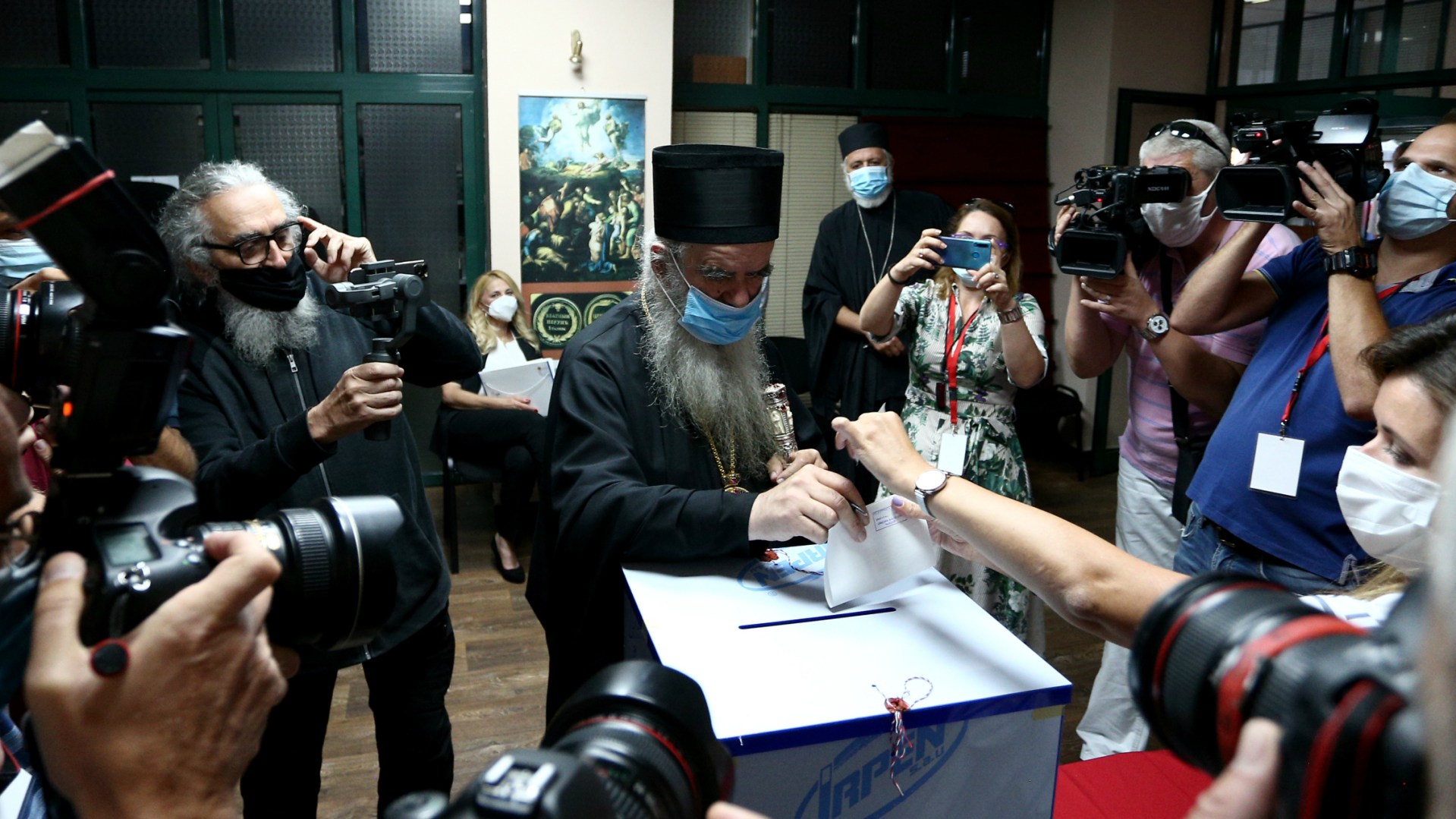
Metropolitan Amfilohije Radovic of the Serbian Orthodox Church in Montenegro votes on August 30.

Metropolitan Amfilohije Radovic of the Serbian Orthodox Church in Montenegro votes on August 30.

Christianity Today September 3, 2020
Filip Filipovic / Getty Images

For the first time in his life, 82-year-old Bishop Amfilohije voted in an election.

His example led record numbers of citizens in Montenegro to do the same this past Sunday.

Spurred by what he perceived as government attacks on his beloved Serbian Orthodox Church, he launched an “anybody but them” campaign against the ruling Democratic Party of Socialists (DPS), which held power in the Eastern European country for the last 30 years.

“[Vote] for the saints, and against the lawless,” said Amfilohije one week before the August 30 election, according to Balkan Insight. Montenegrin President Milo Djukanovic is accused of running a corrupt government.

Preliminary results indicate a razor-thin victory for the bishop.

The opposition coalition won 41 out of 81 seats in parliament.

The DPS claimed the largest solo share with 30, but will find itself out of power for the first time in Montenegro’s 14-year history if all coalitions hold.

“This is the freedom that so many have long been longing for,” pastor Sinisa Nadazdin told CT. His Gospel of Jesus Christ Church is located in the capital city of Podgorica, and is one of the nation’s five registered evangelical churches.

“The myth of Djukanovic’s invincibility is finally broken.”

Montenegro is the sixth-least evangelical country in Europe, according to the Joshua Project. Believers were not united behind any particular party, but many welcomed the democratic message.

“This is an opportunity to get some new blood into the system, to decrease corruption and cronyism,” said Stanisa Surbatovich, pastor of a small church in the nation’s second-largest city of Niksic.

“I personally do not consider the results a victory or loss,” he told CT.

But many Serbian Orthodox Christians are celebrating.

Turnout was 77 percent, with many motivated to vote by the same controversial “religious freedom” law that primarily animated the bishop.

CT reported last February how Montenegro’s parliament passed a bill guaranteeing the right to change one’s religion. But it also required churches to provide evidence of ownership for all churches and monasteries built prior to 1918, lest they be constituted as part of the state-owned cultural heritage.

Orthodox roots run deep in the Balkan nation roughly the size of Connecticut. Its first diocese in what is now modern-day Montenegro was established in 1219.

Three-quarters of the country’s population of 620,000 identify as Orthodox Christians; 70 percent of these belong to the traditional Serbian church.

The government has repeatedly denied an intention to seize church property, but Amfilohije fears politicians will remove Serbian Orthodox jurisdiction in favor of the recently created Montenegrin Orthodox Church, which claims 30 percent of local Orthodox believers.

But within Montenegro’s population, roughly equal to that of Vermont, only 3 in 10 are ethnic Serbs. And when parliament passed the religion law by a tally of 45–0, lawmakers in the Serb-led Democratic Front boycotted the vote.

“The church does not have its own electoral list,” Amfilohije said, “but rejoices in those who are against this lawless law.”

Since February, Serbian Orthodox church leaders have led massive protests, stopped only by the COVID-19 pandemic. But they resumed in advance of elections, drawing the ire of politicians.

“The Serbian Orthodox Church is not a religious but a para-political organization,” said DPS official Caslav Vesovic, according to Balkan Insight. “The church is interfering in the electoral process as it told believers how to vote.”

Prime Minister Dusko Markovic raised the stakes, predicting an election victory.

“After elections, the church and its priests will return to churches,” he said. “They will no longer be at political rallies, where they curse our forefathers, us, and our children.”

But President Djukanovic called it an existential crisis.

A former Yugoslav communist official prior to Montenegrin independence in 2006, he is currently serving his eighth term in office. But he now seeks the nation’s membership in the European Union (EU), having joined NATO in 2017.

“These elections are the most important in the history of Montenegro,” Djukanovic said.

“We must choose whether Montenegro should continue its EU integration, or become a theocratic state.”

Djukanovic intended the religion law to cement the nation’s unique civic and cultural identity. United with Yugoslavia and then Serbia for 88 years, many Montenegrins simply considered themselves Orthodox Slavs.

The president accuses church leaders, including Amfilohije, of undermining national independence, in favor of Serbian and Russian alignment.

Although Bartholomew I, the Ecumenical Patriarch of Constantinople, was willing to recently grant the Ukrainian Orthodox Church a tomos (decree) of spiritual independence from Moscow, he does not recognize the Montenegrin split from its Serbian patriarchate. Any church seizures would be illegitimate expropriation.

“Through hundreds of years of Ottoman (Muslim Turkish) occupation, the Serbian Orthodox Church—and its Metropolitanate of Montenegro—kept the flame of Christianity alive in the Western Balkans,” Vladimir Leposavic, the Montenegrin church’s legal counsel, told CT.

“This inheritance, and our identity, should not be sacrificed to satisfy a president’s desire for a national church.”

But some evangelicals believe that the local Serbian Orthodox church is sacrificing Montenegrin identity.

The ethnic Montenegrin Orthodox church believes it was independent during the Ottoman Empire, said Surbatovich, the only ethnic Montenegrin evangelical pastor in the nation.

He believes the president aims to treat all churches equally. But the Serbian Orthodox want a privileged position, even though so few regularly practice their faith.

In Niksic’s population of 35,000, he estimates his 25-member congregation represents 10 percent of Sunday worshipers.

“It is not appropriate for the church to be political,” Surbatovich said. “I would love for them to speak of the gospel, and not of politics.”

But while Nadazdin, the evangelical pastor in the capital, is pleased, he would like the majority Orthodox church to rally the faithful beyond elections.

“They should have been far more vocal about family matters, abortion, and other social issues that the churches all over the world get mobilized about,” he said.

“My objection to the church’s behavior is that it should be more active in social matters, not less.”

Surbatovich hopes the evangelical community can move in this direction—especially against the idea that “secular is good.”

Nothing hinders the church from speaking in the public square, he said, except limited resources.

For now, believers will watch as the coalitions come together. Surbatovich notes that in order to govern, the Serb-led parties will need to include pro-Montenegrin and pro-European parties. There is not likely to be a “radical departure” from the overall course of the nation.

The winners have called for reconciliation, to join hands with the DPS. Djukanovic pledged to respect the election results.

But Nadazdin is not so sure. Rumors suggest radical elements in the ruling party may try to provoke violence and undermine the winning coalition.

Either way, both evangelical leaders in Montenegro offer the same advice.

“We cried for justice,” said Nadazdin. “Now we have to pray hard for this country.”

News
Wire Story

Latin American Pastors Kept Ministering During COVID-19. Now More Than 100 Have Died.

With mixed messages from leaders, evangelicals in Nicaragua and Bolivia have been especially hard-hit by the pandemic.

Christianity Today September 3, 2020
Alfredo Zuniga / AP

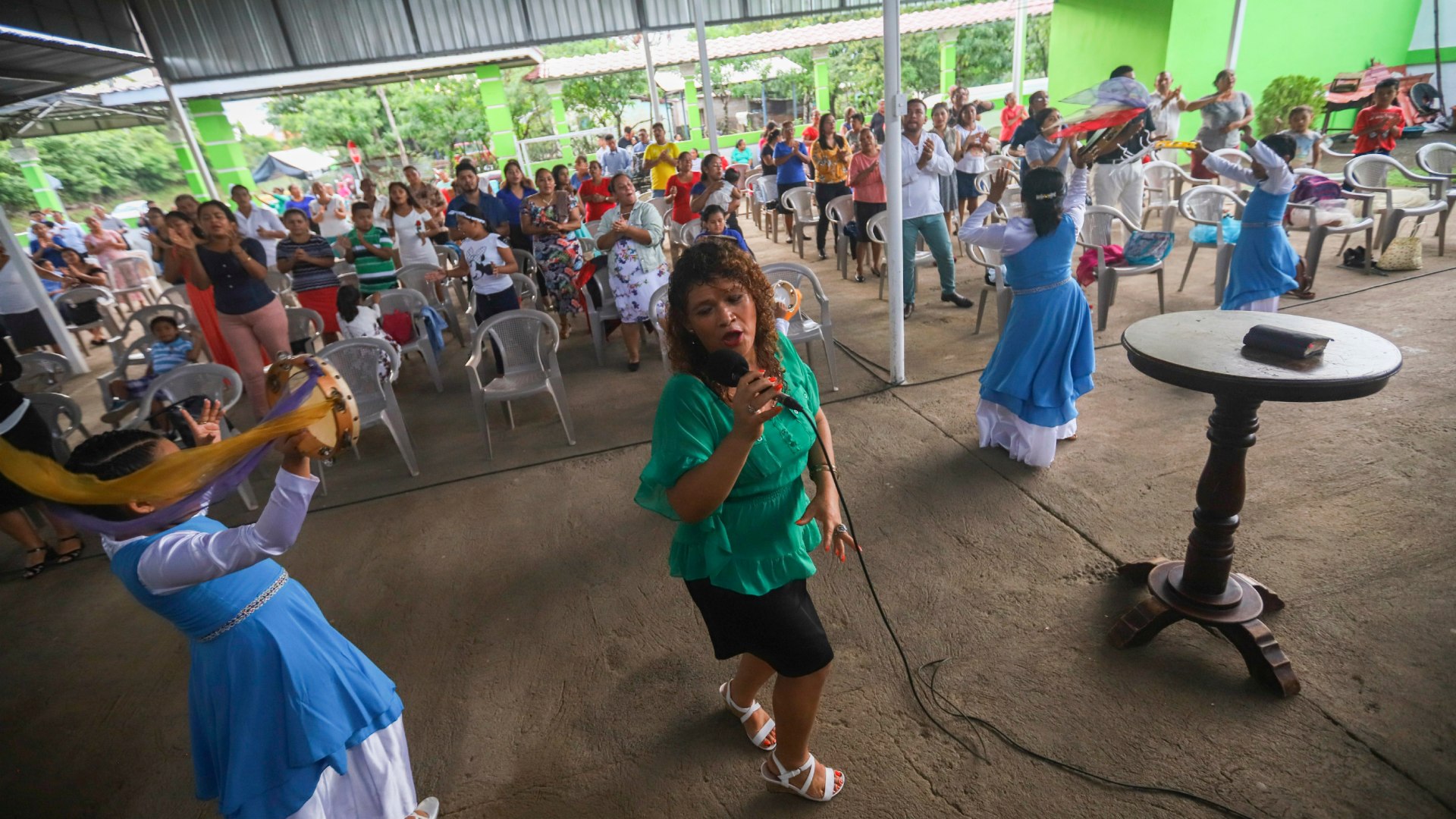
Some 400 men and women spaced themselves across a sprawling worship hall, praying through face masks with arms raised for the health of friends and family suffering from the coronavirus.

The congregation of Managua’s Bethel Restoration church knew the pandemic’s wrath: Two of its pastors were among the more than 40 evangelical leaders who have died in Nicaragua since March.

Throughout Latin America, a traditionally Catholic region with a surging evangelical presence in nearly every country, evangelical churches have kept spreading the gospel despite government measures meant to slow the spread of the coronavirus. In many countries, evangelical churches have flouted public health guidelines by holding in-person services, or have personally ministered to church members in homes and other settings.

In at least two countries, evangelical pastors have died in alarming numbers during the pandemic.

In Bolivia, where some 100 evangelical pastors have died, they have maintained close contact with their congregations, ministering, and providing support to the sick even though churches were closed early by government decree.

In Nicaragua, where the government has played down the epidemic and avoided imposing restrictions, evangelical services continued at some churches even as the more hierarchical Roman Catholic churches stopped holding in-person Mass.

“There was too much misinformation,” said Raúl Valladares, who took over Bethel’s congregation after his father and another pastor died June 5. “Just in our denomination, some 20 pastors have died. And at Bethel we have a pastor, my father, and some 25 brothers (members) who died from COVID-19,” though he said the church had tracked the cases and didn’t believe they stemmed from services.

In Brazil, the Catholic bishop’s conference halted Masses and indoor celebrations after the pandemic hit the country in mid-March, but most Protestants kept holding services. Authorities began relaxing restrictions in June and some Catholic churches reopened, with extra precautions.

Meanwhile, some neo-Pentecostal leaders in Brazil have advocated for miraculous cures or called the disease a plague that kills those of little faith and vowed to continue services. They have been strongly backed by President Jair Bolsonaro, who counts many among his most fervent supporters. The president declared in March that religious activities were essential during the pandemic, allowing churches to open and religious workers to move around. But some states have enforced their own restrictions.

Long after the virus appeared in Nicaragua in March, the government of President Daniel Ortega continued holding and promoting mass events. Schools remained open, the baseball season continued. Ortega, like Bolsonaro, said that the country couldn’t afford to stop working.

In Nicaragua, evangelical churches large and small stayed open too—at least at first.

Bethel stayed open until the Assemblies of God Nicaragua Conference, to which Bethel belongs, told the majority of its churches to close immediately May 12 until June 1 due to the pandemic’s spread. After June 1, church leaders were allowed to decide when to reopen.

Ovidio Valladares, the family patriarch and director of Bethel’s Radio Restoration, was hospitalized May 26 and never recovered.

Bethel remained closed until Aug. 2, when it reopened with masks required, hand sanitizer at the entrances, and spacing between chairs in a large worship hall holding a fraction of its previous capacity of 1,500.

According to the Nicaraguan Evangelical Alliance, which includes most of the more than 100 Christian denominations in the country, at least 44 pastors have died since March. Not all of those deaths were confirmed as COVID-19 because of a lack of testing.

Evangelical pastors in Bolivia tried to keep in contact with parishioners even though churches in most part of the country remained closed.

“They went to pray, to visit the sick; in that work they died,” said pastor Luis Aruquipa of the National Christian Council, who said more than than 100 evangelical pastors have died in the pandemic.

Among them was Roberto Arismendi, founder of the Evangelical Churches of Bolivia. The 79-year-old Aymara pastor died July 20 from complications related to COVID-19, said his son Javier Arismendi.

“My father never stopped helping people, he was always close to his congregation, giving them faith, but also food and peace,” said the younger Arismendi, who has taken over the church since his father’s death. “We don’t know in what moment he got infected, but he brought the virus to the whole family.” Eight family members fell ill, but all recovered.

The church, in a working-class La Paz neighborhood, saw its congregation hit hard. “Thirty percent of our congregation of almost 100 people were affected,” he said.

Overall, the country of about 11.5 million people has seen more than 108,000 reported infections and nearly 5,000 government-confirmed deaths.

Back in Nicaragua, many evangelical churches have reopened, some with health precautions, like Bethel where congregants are asked to bring their own hand sanitizer. The measures were recommended by the senior Valladares before he died.

But other churches carry on as normal.

At the Oasis of Peace church in Masaya, south of the capital, about 70 congregants without masks packed together under an open-sided pavilion singing and shouting while a Christian rock band played behind the pastor. There was a thermos of water at the entrance for handwashing, but no one appeared to use it.

“We’re living in difficult times, times in which not only our country is being lashed, but on a global level,” said worshiper Maynor Campos. “It is time to seek the presence of God.”

News

Researchers Find Christians in Iran Approaching 1 Million

Secular survey may succeed where Christian advocates have failed to convince the world of widespread conversions in the Islamic republic.

Christianity Today September 3, 2020
Source Image: Olivia ZZ / Getty Images

Missiologists have long spoken of the explosive growth of the church in Iran.

Now they have data to back up their claims—from secular research.

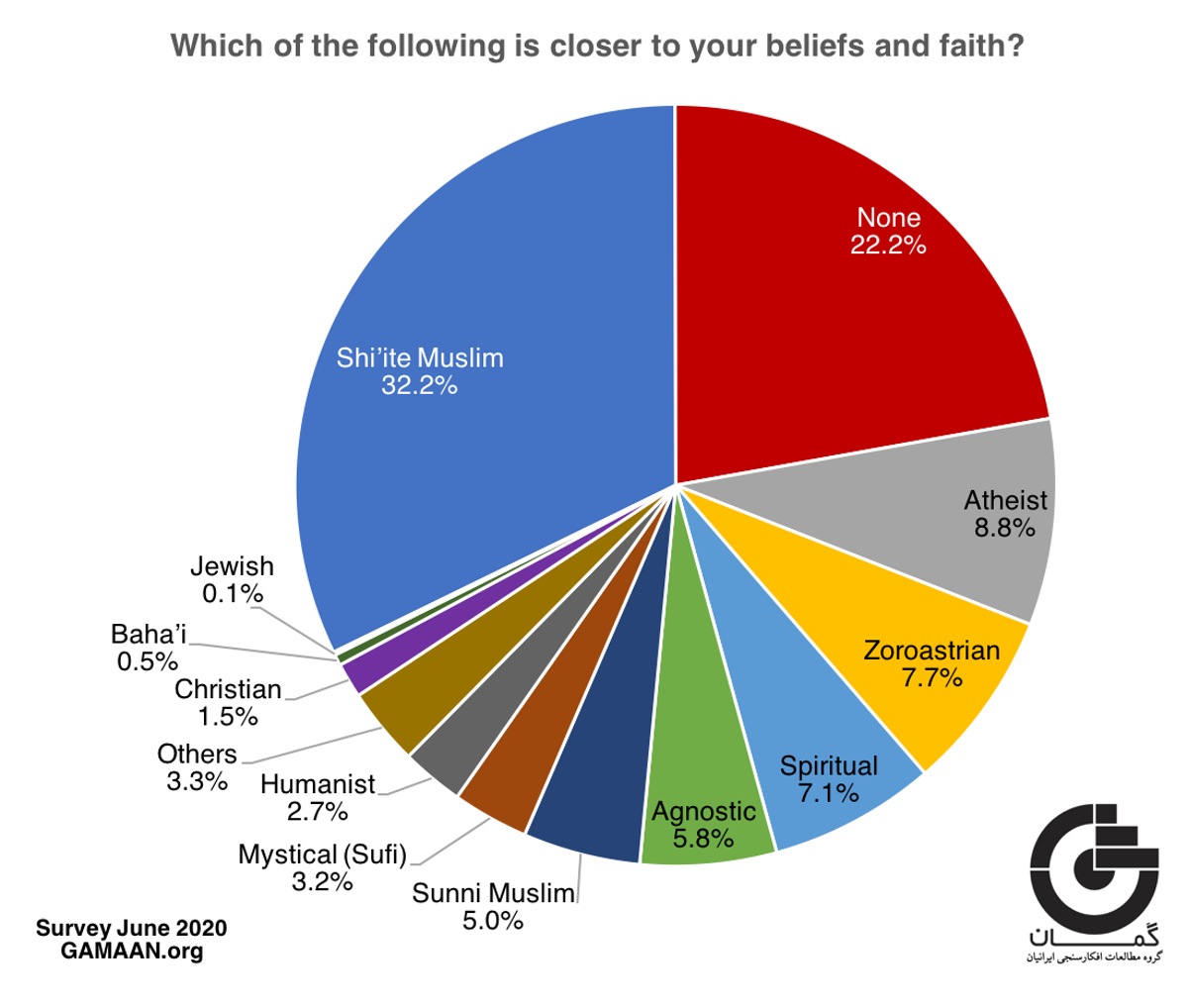
According to a new survey of 50,000 Iranians—90 percent residing in Iran—by GAMAAN, a Netherlands-based research group, 1.5 percent identified as Christian.

Extrapolating over Iran’s population of approximately 50 million literate adults (the sample surveyed) yields at least 750,000 believers. According to GAMAAN, the number of Christians in Iran is “without doubt in the order of magnitude of several hundreds of thousands and growing beyond a million.”

The traditional Armenian and Assyrian Christians in Iran number 117,700, according to the latest government statistics.

Christian experts surveyed by CT expressed little surprise. But it may make a significant difference for the Iranian church.

“With the lack of proper data, most international advocacy groups expressed a degree of doubt on how widespread the conversion phenomenon is in Iran,” said Mansour Borji, research and advocacy director for Article 18, a UK-based organization dedicated to the protection and promotion of religious freedom in Iran.

“It is pleasing to see—for the first time—a secular organization adding its weight to these claims.”

The research, which asked 23 questions about an individuals’ “attitude toward religion” and demographics, was run by professors associated with the respected Dutch universities of Tilburg and Utrecht.

The general presumption of doubt risked influencing asylum applications by Iranians seeking resettlement in Europe or elsewhere.

“We do not regard it as remotely plausible that there are as many as 1 million people secretly practicing Christianity in Iran today,” wrote a UK judge in a March ruling establishing best practice guidelines, following a case that ultimately denied asylum to an Iranian convert.

“The huge numbers of converts claimed by various evangelical missions must be viewed in light of the fact that … the more converts they can claim, the greater the incentive for co-religionists to donate.”

Yet despite the widespread skepticism, research conducted by Christian advocacy organizations has begun to produce results.

In 2005, the United Nations created the Geneva-based Universal Periodic Review to evaluate the human rights status of every nation every 4.5 years. During its review session in February, for the first time recommendations for Iran included its treatment of “Christian converts,” issued by Norway and the Netherlands.

“We try to build relations with diplomats as much as they allow,” said Wissam al-Saliby, advocacy director for the World Evangelical Alliance.

“Without such reporting, news of Christian persecution will not filter into Geneva circles, and nations will not feel any pressure.

“It is important for Iran to hear the distinction between its traditional Christian communities, and its converts to the Christian faith.”

But according to the GAMAAN survey, there is another distinction Iran must make.

“The real news is not the number of Christians,” said Johannes de Jong, director of the Sallux (“Salt-Light” in Latin) think tank, affiliated with the European Christian Political Movement.

“It is the massive secularization of Iranian society as a whole.”

Only 32 percent of those surveyed identified themselves as Shiite Muslim. Officially, Iran puts their number at 95 percent.

“The Islam in Iran is a political system, not a faith embraced by any majority,” said de Jong, who has worked with Iranian asylum seekers and opposition politicians over the last 20 years.

“A free Iran would see an implosion of Islam, and a very significant rise of Christianity, Zoroastrism, and atheism.”

The survey already bears this out.

Atheists poll at 9 percent of the population (and nones, or no religious affiliation, overall at 22%); Zoroastrians at 7 percent. The 2011 census numbered Zoroastrians at only 25,000. Extrapolating the percentage from this survey, which GAMAAN stated is 95 percent accurate, that would now be 5.6 million. (Sources said this may indicate a non-Islamic Persian nationalism rather than a true system of belief.)

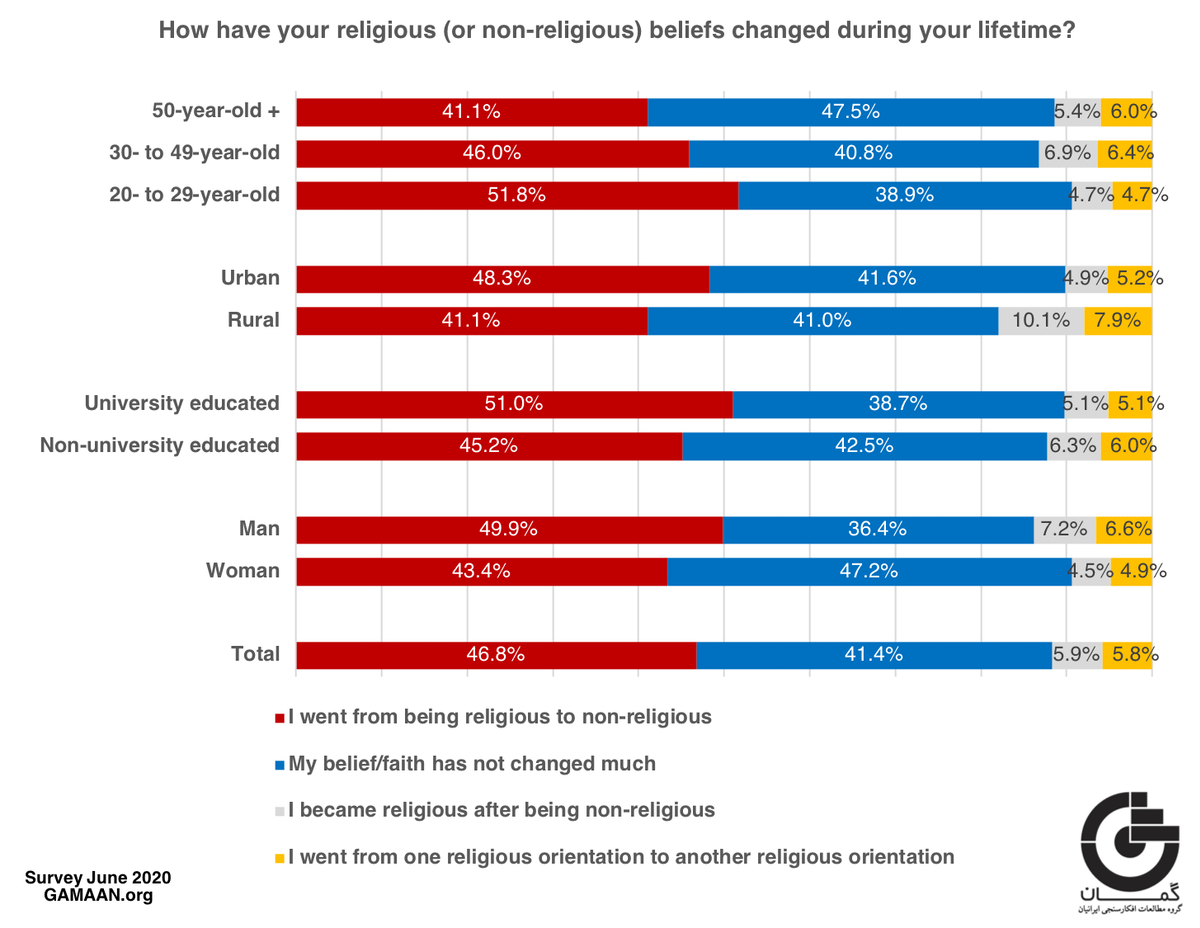
Nearly half (47%) said they used to be religious but are no longer.

Only 6 in 10 Iranians surveyed said they were born into a religious family. But 6 in 10 also do not say their daily prayers. And 7 in 10 do not want legislation based on religion (68%); state-funded religious institutions (71%); or mandatory head covering (73%). A majority (58%) do not believe in wearing the hijab at all.

And according to a 2019 survey by GAMAAN, 79 percent of the population would vote against an Islamic republic.

While this might seem a fertile field for Christian witness, David Yeghnazar of Elam Ministries warns against the “clay feet” of secularism. For example, almost 4 in 10 Iranians (37%) drink alcohol—which is forbidden in Islam.

“Iranians are attracted to Christianity because they think it is part and parcel of the free, secular, and democratic West,” he said. “It is important for Christian agencies to pry Christianity away from that mould.”

He was also cautious about endorsing the survey statistics as a true estimate of the body of Christ. In a secular survey, “Christian” can imply anything from a “vague attraction” to a “genuine love of Christ and a growing knowledge of the Scriptures.”

Yeghnazar believes the house churches’ lack of governing structure will harm the growing movement. False teaching, financial irregularity, and pastoral dictatorship may begin to plague them.

Borji agrees.

“There is a very real risk that church growth is outpacing discipleship,” he said. “But the problem is exasperated by the fact that many leaders are now in prison, or have been forced out of the country.”

The impact, said Mike Ansari, president of Heart4Iran, is that the church is “highly marginalized, scattered, and segmented.”

Ansari believes personal evangelism is the most effective method for spreading the gospel and the reason behind much of Christianity’s growth in Iran. But given that it is “extremely risky,” satellite television has become the leading factor.

Ansari’s Mohabat TV noticed a surge in conversions during COVID-19. Whereas the channel was informed of 324 conversions through its ministry in March 2019, there was a tenfold increase one year later, with 3,088 new believers.

And if the exponential growth of house churches fails to keep up with conversions, satellite TV must fill in the gap.

Mohabat TV does its best. Elam Ministries’ Safar [Farsi for “journey”] program also helps.

Is it enough?

“Without meaningful face-to-face fellowship and discipleship, the future of the Iranian Church remains uncertain,” Ansari said.

“Isolation is the biggest enemy of church growth.”

It may prove a more effective foe than the Iranian government.

Wybo Nicolai of Open Doors International, based in Holland, noted that rapid church growth began in 2004, when the state put pressure on officially registered churches ministering through the Farsi language. (Iran’s traditional Christian communities use the Armenian and Assyrian languages of their ethnic communities.)

Consequently, ministry was forced underground where it “spread like wildfire” through cell groups and house churches.

“The Iranian authorities lost oversight of it,” said Nicolai. “There was nothing they could do to stop the spread of the gospel.”

They tried, and are trying still. Contrary to official accusations of Christians being Zionist agents and a threat to national security, an Iranian official recently told clerics in the holy city of Qom that “these converts are ordinary people, whose jobs are selling sandwiches or similar things.”

He complained that conversion is “happening right before our eyes.”

But the evidence of Iran’s failure as a theocracy to protect Islam is seen far beyond the Christian tally in the GAMAAN survey. If its overall statistics are valid, only 1 in 3 Iranians claim their national religion. And 4 in 10 believe every religion should be free to propagate its beliefs.

“The hearts and minds of the Iranian people have been plowed and made ready by Iranian government behavior over the last 40 years,” said Borji.

“The people’s resistance to the gospel has been neutralized.”

Editor’s note: You can follow CT on Telegram and WhatsApp as part of CT Global, now offering 200+ translations. If interested in seeing CT in Farsi, contact us!

News

Redeeming Condos, Presbyterians Buy NYC Building for $30 Million

The church Tim Keller founded is part of a hidden trend turning real estate into worship space.

Christianity Today September 3, 2020
Google Maps

In New York City, you can find a church building that has been changed into a pizzeria. You can find a church remade as a bar. One Episcopal structure was turned into a cultural center, and then a rehab clinic, a dance club, a shopping center, and now a gym with a French bistro. You can find lots of churches converted into condos. High-end housing in former worship spaces has been the hot trend in New York for the past five or 10 years, with churches from Brooklyn to Greenwich Village to Harlem repurposed for upscale luxury living.

But Redeemer Presbyterian Church, founded by Tim Keller, is going in the other direction. The church announced it has bought a 45,000-square-foot condo building in the city and converting the former housing space into a church. The building cost $29.5 million, according to real estate news outlets, and will undergo a two-year renovation to become the new home of Redeemer’s Upper East Side congregation.

The purchase is “an important part of God’s long-term vision for our church,” said James Herring, elder and chair of a Redeemer building committee, in an announcement video posted August 14. Plans for the new building are still being developed, but Herring hopes to see a sanctuary seating 600, a fellowship hall seating 300, and space for “all the things we have only dreamed about having space for in the past.”

The church has been looking for new property since 2016 and considered more than 500 properties in four years. The committee pursued 22 properties and made offers on five, according to Herring.

The location they settled on, 150 East 91st St., is only 16 blocks from Redeemer’s current Upper East Side meeting place, the Temple Israel at 112 East 75th St. Church leaders like that the new site is nestled into the neighborhood that the East Side congregation is committed to serving.

They also hope it will open up new partnership opportunities with neighboring cultural institutions—such as the the 92nd Street Y and the Guggenheim Museum—as well as nonprofits such as City to City, a church-planting ministry that grew out of Redeemer and is currently led by Keller.

Purchasing the property was the next step in a long-term plan the church has been working on since 2006, according to Cregan Cooke, senior director of communications and media for Redeemer and a long-time Upper East Side parishioner. On the other side of Central Park, Redeemer’s Upper West Side congregation purchased and converted a parking garage into a space that’s used for ministry, events, and a public art gallery. The goal is to have a similar facility that serves the community on the East Side.

“We never wanted to be a megachurch, but a movement of multiple churches for the good of the city,” Cooke said. “We want to be rooted in the neighborhood, for the neighborhood.”

Now that the building has been purchased, the church will start collecting information from the Upper East Side residents who live close to the property to identify their needs.

It’s a bold and expensive move for the church, but also part of a less noted trend, according to Taylor Hartson at Calvin University’s Calvin Center for Social Research. Hartson has been looking at developments in sacred real estate with sociology professor Roman Williams, also at Calvin, for a visual sociology project called “Converted Structures.”

In a study of 22 US cites—including Grand Rapids, Detroit, Minneapolis, San Francisco, and Seattle—Hartson and Williams looked at mailing list data to identify addresses that were labeled as churches in 2003 but not in 2018. They identified approximately 200 church buildings that had been flipped for commercial or residential use.

In the same cities, in the same 15 years, they found about 2,000 commercial spaces that had been turned into houses of worship. While there are many sacred spaces becoming secular, it seems more are converting the other way.

“Based on the data that we’ve been working with, we’ve seen this trend toward taking more commercial spaces and transforming them into sacred spaces for worship,” Hartman said.

The change doesn’t seem to be driven by theology or a shift in how churches are thinking of their buildings, but practical financial concerns combined with changing technological needs. According to Hartson, “congregations may feel like they are being better stewards,” when they convert commercial buildings into churches.

Renovating an existing structure to meet modern building codes can prove more affordable than the long-term costs of maintaining a more traditional church building. In the age of Bluetooth speakers, a building created to maximize acoustics isn’t so important, and high ceilings equal big electricity bills.

Commercial buildings are also more flexible for many congregations, accommodating different kinds of ministry to serve a community and also adjusting to the needs of growing or shrinking congregations. Many commercial spaces can be easily expanded or contracted without feeling crowded or looking empty. Traditional sanctuaries don’t have this functionality.

New religious design trends are also making nontraditional buildings more appealing to those who might have resisted them in the past. While adaptable, multi-use buildings may not have instantly recognizable religious features, such as a soaring bell tower or a white steeple, that doesn’t mean they can’t move people to worship. High ceilings, muted colors, and quiet, recessed lighting can be used by skilled architects to draw hearts to attention in the same ways that classical cathedral architecture always has.

Redeemer’s purchase is larger and more splashy than a lot of churches buying real estate, but it did not strike Hartson as notably different. The trend isn’t limited to places like New York, where property is extraordinarily expensive, either. According to Hartson, rural and suburban congregations can just as easily end up feeling the financial crunch of paying to maintain a building. Many congregations are looking for more ways to use their space and they think about how different structures create different kinds of ministry opportunities.

This certainly motivated the move at Redeemer, Herring told the Upper East Side church.

“Most importantly, this is space that for the first time in our history, we would have available 24/7 for our congregation and its ministries,” he said. “This will provide regular access to space for our families, meetings, cultural events, community ministry opportunities, and all of the things we have only dreamed of having the space for in the past.”

For real estate developers, turning a church into condos is an investment opportunity. For a congregation, turning condos into a church is a sign of hope in the never-ending ability of the church to innovate, adapt, and proclaim the gospel in new ways.

Redeemer hopes to be in its new building in 2023.

What Happens at Liberty Doesn’t Stay at Liberty

The Falwell investigation has far-reaching consequences for local churches in Virginia and beyond.

Christianity Today September 2, 2020
Illustration by Rick Szuecs / Source images: Chip Somodevilla / Alex Wong / Staff / Getty

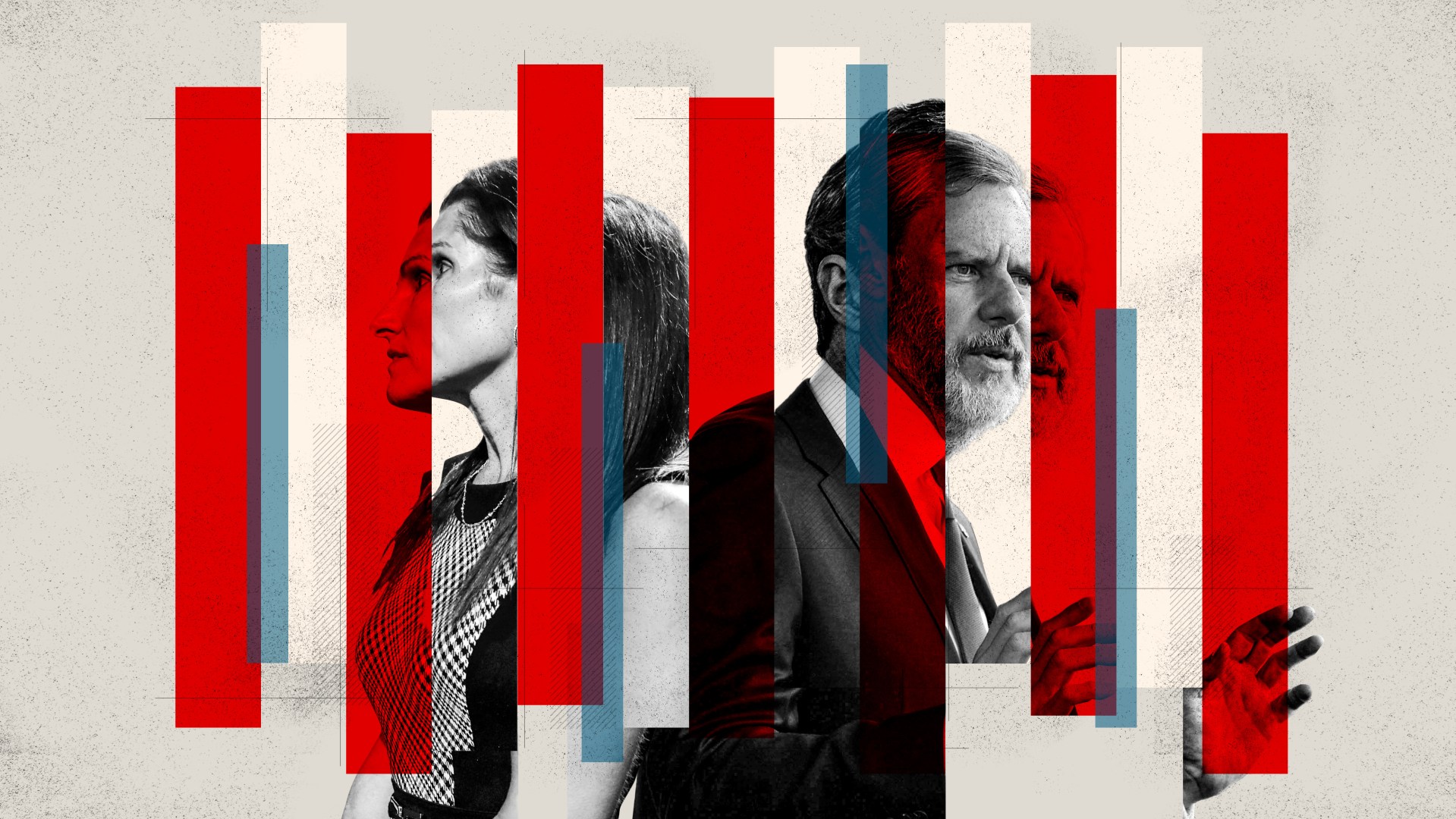
The Associated Press recently reported that Liberty University is launching an independent investigation into the conduct of former president Jerry Falwell Jr. and his wife, Becki. For some evangelicals, the scandal elicits nothing more than a shrug for the isolated actions of a few bad apples. For others, these significant misdeeds will be swept away quickly in the tides of history. Historian Grant Wacker makes this argument in a recent Washington Post piece titled “Jerry Falwell Jr.’s downfall won’t change anything for evangelicals.”

If you take a bird’s eye view of time, then he’s likely right. But for those of us who inhabit space inside Liberty University’s large sphere of influence, the truth is quite the opposite. This scandal and its ensuing investigation have far-reaching consequences, not only for parachurch practice but also for local church polity. Put another way, the cautionary tale of the Falwells carries implications for how believers here and elsewhere think about the intricate bonds between the local body of Christ and adjacent parachurch institutions.

My first glimpse into Liberty’s regional influence happened roughly 20 years ago, when I came to visit the man who would later become my husband. He’d lived his whole life in rural southwest Virginia, where the primary force in his spiritual formation was a small Baptist church that still sits atop a knoll just off the Blue Ridge Parkway. Driving through the countryside those years ago, I was entranced by the passing forests and hills dotted with small farms and rock churches. I also remember the moment when I rounded a corner and came face-to-face with a billboard for a local university. One of the few on the route, it advertised a world-class Christian education just two hours away in Lynchburg, Virginia. A decade later, my husband and I moved back to work in local church ministry an hour west of Lynchburg. During the ensuing years, Liberty expanded in both size and prominence. It is by now a powerhouse of online learning that has made Christian education accessible not only for young people but for countless working adults. This is especially significant in a region with the lowest college graduation rate in the state.

It’s hard to understate the role that Liberty University plays around here, both because of its institutional sway and because of the shape of local church culture. Churches in this region—including the one that my husband grew up in—tend to eschew denominational hierarchy. They prefer to govern themselves. Because they lack outside infrastructure, these churches form partnerships where and when they can, often led by the relational networks of pastoral staff.

For example, when church members want to pursue Christian education, it’s not uncommon for pastors to recommend their own alma maters. And if that school is fairly local, all the better. (You may know Liberty University as one of the world’s largest Christian universities, but we know it as the closest.)

These bonds are also reinforced through ministry partnerships, as Liberty offers resources, training, and opportunities that surrounding churches cannot offer themselves. When the church my husband pastored wanted to update its constitution to reflect a belief in traditional marriage, the staff used wording provided by the legal minds at Liberty.

These stories are common. When a church in the region can’t afford full-time staff for music or youth ministry, they look to students from Liberty to step in and fill the gap. Add to that church outings to Flames football games, men and women’s weekend retreats hosted on campus, and free pastors’ conferences offered by the school, and the picture is clear: Liberty University is inexorably tied to the ministry of local churches in the region.

The bond between this independent university and the local church means that when trouble hits the school, it also hits the broader Christian community. The impact is deep and wide. In this context, Liberty’s practices as a parachurch organization carry significant weight, and the response of the university’s board of trustees sets precedent far beyond the boardroom and into the pews. The old adage is true: Attitudes are caught, not taught.

In a recent New York Times op-ed, Liberty graduate Kaitlyn Schiess describes a similar experience as a student. “At Liberty,” she writes, “our minds may have been receiving correct content, but our hearts were being trained to love wrongly: to love political power, physical security, and economic prosperity as higher goods than they are.”

Schiess is describing the power of culture formation—how small signals and modeling from trusted sources nudge us in certain directions, both as individuals and as communities. (This phenomenon also sheds light on the significance of Jerry Falwell Jr.’s endorsement of then-presidential candidate Donald Trump during the Republican primary in 2016, when Trump’s support seemed to be flagging among evangelicals.)

For local churches, this formation cuts both ways. As I look around, I am dismayed by how the Falwells’ morally corrupt influence has distorted the health and well-being of the community I love. By contrast, cultural formation at its best, guided by Scripture, gives me hope. For that reason, I am cautiously optimistic about the board’s recent decision to open an independent investigation. The board has decided not only to study the case but also to set up a system of spiritual accountability for those in leadership.

“The school is considering a separate move to reorient it toward its ‘spiritual mission’ by establishing a post in the university leadership dedicated to spiritual guidance for other leaders,” write Sarah Rankin and Elana Schor for the Associated Press, “ensuring they ‘live out the Christian walk expected of each and every one of us at Liberty.’”

Arguably, these steps are the very least the board is responsible to do, and thinkers like Wacker might rightly doubt that these actions will have much effect on evangelicalism as a whole. But from where I sit, I see this as a teachable moment—not just for Liberty but for the multitude of churches and ministries under its influence.

Insofar as the investigation is truly independent, the board of Liberty University has the opportunity to do three key things: Normalize standards of accountability and transparency; show local church boards that they too must faithfully protect the Lord’s work from abusive leaders; and remind leaders themselves that the kingdom of God is not their private enterprise.

We see this calling laid out clearly in Scripture. In Luke 12, Jesus tells a parable about an estate manager who begins to abuse those under him while the master is away. But then suddenly, like a “thief in the night,” the master returns and catches the manager unaware. Punishment is swift, decisive, and severe. When the disciples ask who the parable is meant for, Jesus directs their attention to the relationship between privilege and responsibility, intimating that those who have the benefit of his teaching are the ones most responsible to follow it. The parable is for the disciples themselves. He then justifies the master’s harsh punishment of the unfaithful manager, saying that to “everyone who has been given much, much will be demanded; and from the one who has been entrusted with much, much more will be asked” (Luke 12:48). In this moment, the Liberty University board is shaping cultural norms in local churches and the ministries in their orbit. It is not a question of whether their decisions will influence these ministries but of how. Will they follow through and set standards of transparency and accountability? Will future leaders be chosen on the basis of spiritual maturity, or their ability to dominate others? Will they fulfill their own stewardship to represent the master until he returns? For the sake of the local church and the cause of Christ, may they be found faithful to the task.

Hannah Anderson is the author of Made for More and Humble Roots: How Humility Grounds and Nourishes Your Soul. You can find more of her writing at sometimesalight.com and hear her on the weekly podcast Persuasion. Speaking Out is Christianity Today’s guest opinion column and (unlike an editorial) does not necessarily represent the opinion of the publication.

Ideas

On Matters of Race and Justice, Listening Isn’t a One-Way Street

Why we shouldn’t divide the church into those who “get it” and those who don’t.

Illustration by Nicole Xu

In early June, with protests erupting around the country and George Floyd’s dying words still hauntingly fresh, The Washington Post published a column with a pointed headline that surely spoke for many who were fed up with seeing racism denied or minimized: “The best white statement to make right now may be to shut up and listen.”

Glaring episodes of racial injustice often inspire renewed appeals for white people to humble themselves, tamp down the defensiveness, and be open to what their black neighbors are saying. Indeed, it’s hard to imagine a more reasonable, unobjectionable request. Listening well is the barest requirement of basic human kindness, especially when those around you are hurting. When black people volunteer their personal experiences of prejudice, their perspectives on structural racism, or their raw fear of a loved one being gunned down by police, they deserve far more than stony indifference or mulish combativeness.

For Christians, the call to listen carries added force, not least when it comes from brothers and sisters in Christ. After all, biblical people are nothing if not listening people. As James instructs us, “Everyone should be quick to listen, slow to speak and slow to become angry” (1:19). Proverbs abounds with warnings against running one’s mouth while closing one’s mind and ears. “Fools find no pleasure in understanding,” according to Proverbs 18:2, “but delight in airing their own opinions.” By contrast, Scripture commends those who embrace a righteous rebuke: “Whoever loves discipline loves knowledge, but whoever hates correction is stupid” (Prov. 12:1).

Seen this way, cries of “It’s time to listen” are firmly rooted in biblical soil. Yet they also lay a subtle snare for the church. Even when they aren’t advanced in a militant or domineering spirit (“Shut up and listen!”), they can easily discourage any disagreement on matters of racism as unwelcome and counterproductive. At worst, they can introduce an informal hierarchy of the Enlightened and the Unenlightened—a hierarchy that sits uneasily with the Bible’s picture of brothers and sisters who worship and congregate on equal footing.

This is especially troubling when one considers the contested shape of so many current conversations on race. It’s one thing to affirm that racism is incompatible with the gospel or that too many white churches were (and are) shamefully irresolute in resisting it. But other issues aren’t so cut-and-dried. What, for instance, are the definitional boundaries of “whiteness” or “white supremacy”? Should Christians endorse every last stance taken by Black Lives Matter? What should we make of campaigns for reparations? Or statistics on bias in policing? Or the claims of critical race theory? Are white believers guilty of “white fragility” for even wondering?

Questions like these can’t be resolved by explicit recourse to Scripture. And black believers are hardly of one voice in how to answer them. All of which underscores the fact that listening can’t be a one-way street. If those in Christ are truly brothers and sisters, then believers of all colors and political persuasions should enjoy the freedom to share sincere, good-faith opinions without standing accused of silencing black voices or negating black suffering.

Our familial bond, of course, doesn’t erase the painful particularities of history or social location. Hopefully, any Christian who hasn’t experienced racism would acknowledge a weightier burden of listening relative to those who’ve endured its lash or witnessed its sinister workings firsthand. Just as the New Testament recognizes the presence of spiritual “infants” among the fellowship of believers (Eph. 4:14; Heb. 5:13; 1 Cor. 13:11), some members of today’s church face a steep racial learning curve.

But this is a far cry from dividing the church into a teaching class that “gets it” and a listening class condemned to remedial education, with membership determined by little more than skin color and fluency in the lingo of anti-racist activists. To the extent that “listening” precludes thinking and speaking against the grain on complex matters of race and justice, it represents a moral and intellectual power play unworthy of the body of Christ.

Ecclesiastes juxtaposes “a time to be silent and a time to speak” (3:7). As the church seeks this balance in a time of racial reckoning, we should ask whether white Christians have done too little of the former and too much of the latter. We should ask, as well, whether black Christian voices are truly being heard rather than reflexively dismissed or branded as dangerously “political.” But we shouldn’t confuse the ideal of listening with a forum where the microphone never changes hands.

Matt Reynolds is books editor for Christianity Today.

Theology

The Roots of the Black Prophetic Voice

Why the Exodus must remain central to the African American church.

Illustration by Matt Chinworth

This is the last in a six-part series of essays from a cross section of leading scholars revisiting the place of the “First Testament” in contemporary Christian faith. —The editors

I was 11 when I watched a documentary about Martin Luther King Jr. and the civil rights movement called Eyes on the Prize. Images of black women knocked to the ground by fire hoses in Birmingham flashed before my eyes. Police dogs charged after people. Angry white faces screamed racial slurs at black children seeking to enter a desegregated school.

Growing up in the Hatchie Street Church of Christ, a small black church in southwest Tennessee, I heard sermons and studied Sunday school lessons about Israelite slavery in Egypt. After watching Eyes on the Prize, it became clear to me that black people’s lot in America was the same as that of the Israelites in Egypt. This realization inspired me to follow in the tradition of Moses, the Old Testament prophets, and the judges (whom we might call “freedom fighters”), as well as in the legacy of Martin Luther King Jr. The Old Testament speaks against the suffering and oppression black people in America experience today, and the black church—increasingly tempted toward a gospel of prosperity and middle-class comforts—needs to remain rooted in this legacy.

The Power of Exodus

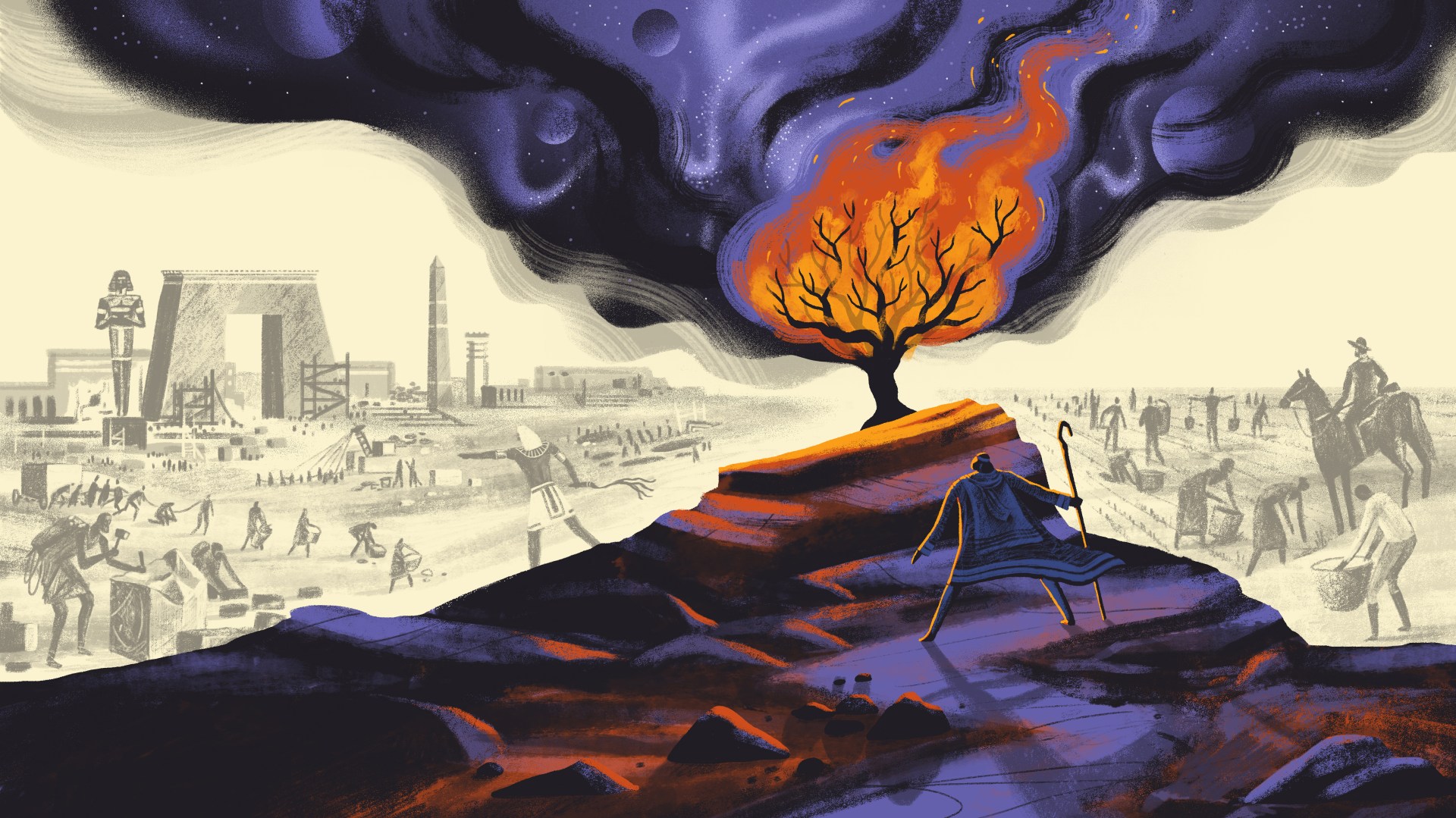
The story of the exodus has had staying power in the African American church because the narrative speaks so readily to the troubles faced by its congregants. African Americans through the generations found in Exodus a God who attends to the oppressed who cry out to him:

I have indeed seen the misery of my people in Egypt. I have heard them crying out because of their slave drivers, and I am concerned about their suffering. So I have come down to rescue them from the hand of the Egyptians and to bring them up out of that land into a good and spacious land, a land flowing with milk and honey. (Ex. 3:7–8)

African Americans read of a God who opposes the powerful who dehumanize God’s children. They came to believe that God heard their prayers just as he heard the prayers of the Israelites: “I have indeed seen the misery of my people in Egypt.” This is the language of election and indicates that the oppressed are God’s possession. This is God in history, who not only knows the location of the elect but knows the quality of their existence and sees their slavery as a divine illegality.

African American congregations note that God not only sees the misery of his elect; he also hears the people’s cry: “I have heard their cry on account of their taskmasters.” Seeing and hearing leads God to act: “I have come down to deliver them.” The Book of Exodus reminds us that liberating action is God’s natural response when the oppressed suffer. Because God knows the pain of the Israelite slaves, God comes down to judge the oppressors and deliver the oppressed. The importance of the Old Testament—and particularly the Book of Exodus—for the African American church is its affirmation that our God is a God who sees, hears, and acts on behalf of the afflicted.

Of course, slave owners in the antebellum era understood that slaves who knew the Exodus story would find a powerful theological resource for imagining their own emancipation as a divine right. Consequently, in addition to keeping many slaves from receiving education, Christian masters who took an interest in converting their slaves used the so-called “Slave Bible” titled Parts of the Holy Bible, selected for the use of the Negro Slaves, in the British West-India Islands. This Bible excluded nearly 50 percent of the New Testament and 90 percent of the Old Testament. Not surprisingly, nearly the whole Book of Exodus was removed. After all, it was not much of a leap to cast plantation owners in the role of Pharaoh, while African American slaves could easily identify with the Jews enslaved in Egypt. White slave masters understood what a powerful book this could be—and proved to be—among African American congregations.

A Liberation Legacy

King, whom many African Americans viewed as the black Moses, definitely knew the suffering and misery of black people. He never let his exceptional education within a white supremacist educational system blind him to black misery. Like Moses, King’s genuine encounter with the God of liberation moved him to take action to deliver his people from their kneeling posture before the intimidating throne of white Southern brutality.

In Never to Leave Us Alone: The Prayer Life of Martin Luther King Jr., Lewis Baldwin notes the Old Testament’s influence on King, who believed that the psalmists and prophets embodied the biblical ideal of bold action undergirded by persistent prayer. Baldwin writes, “The civil rights leader apparently had a biblically informed conception of prayer, and he found in these and other Hebrew Bible sources insights into the essence of prayer and support for his view of prayer as a daily conversation and walk with God.” As Baldwin later puts it, “For King the imperative to pray came not only from a sense of personal finitude before God but also from a deep consciousness grounded in the African American religious experience, especially the traditions of the black church.”

King’s deep immersion in the Old Testament prophetic tradition keenly trained his eye to see the masses of poor African Americans who were being allowed to drown in the ocean of white wealth. Instead of his middle-class education in white institutions anesthetizing him to the plight of those trapped in the misery of poverty, King used his education to unleash the power of his mind and the spirit of the prophets to unleash his tongue in defense of the exploited.

This same sensitivity to the suffering of the disinherited was profoundly present in King’s mentor and confidante, Howard Thurman. In Jesus and the Disinherited, Thurman tells a story about the night, as a small boy, that his mother awakened him to see Halley’s Comet. Speechless in their backyard, they watched the great fan of light spreading across the sky. When Howard expressed fear that the comet might hit the earth, his mother broke their silence and said, “Nothing will happen to us, Howard; God will take care of us.” He goes on to write, “Many things have I seen since that night. Times without number I have learned that life is hard, as hard as crucible steel; but as the years have unfolded, the majestic power of my mother’s glowing words has come back again and again, beating out its rhythmic chant in my own spirit. Here are the faith and the awareness that overcome fear and transform it into the power to strive, to achieve…and not to yield.”

This profound conviction Thurman inherited from his mother and grandmother was a conviction deeply rooted in the Exodus and the prophetic tradition. The oppressed had no other source of power to appeal to in the midst of their suffering. This posture of looking up is an implicit expectation that the God of liberation will come down to address the misery of the disinherited.

From Egyptians to White Christians

Of course, the exodus story does not just help African American Christians interpret their history and experience of oppression. It also helps them interpret their white oppressors, many of whom identify as Christians. Often, white Christians tell African Americans that they cannot understand the black experience. White Christians cannot understand black suffering because they have not experienced perpetual servitude and exploitation. If white Christians are to understand the experience of black oppression, there must be an intentional desire to do so.

Exodus tells the black church that their white Christian sisters and brothers are like Moses while he lived in Pharaoh’s house as an heir of privilege. The exodus narrative gives little indication that Moses took interest in the deliverance of his fellow Israelites before his mysterious encounter with God. Certainly, the education of an Egyptian prince did not include learning to care about the slaves who built Egypt’s palaces and pyramids. Just as Moses was conditioned to ignore the sufferings of his own people, many white Christians have been conditioned to ignore the history of oppression of African Americans. Even white education at its best often produces people claiming to be “colorblind,” which is the equivalent of being historically blind to the long history of the oppression of black people.

What African Americans learn from Exodus (and the Prophets, exilic works, and post-exilic literature) is that God is not colorblind. God hears the cries of the oppressed, sees people’s oppression, and acts. When Moses comes to know the suffering of his people, he acts decisively for their salvation. True compassion leads people to act on behalf of the oppressed even to the point of putting their own life at risk. Perhaps white Christians have willfully ignored the suffering of their black sisters and brothers because they do not want to put their own bodies at risk, or even risk the loss of affection, acceptance, and love from other white people.

Returning to Exodus Roots

White Christians’ dissociation from black suffering made it difficult for them to comprehend the black church, steeped in this Old Testament narrative, struggling for freedom throughout the civil rights movement. The Exodus was the single most influential story that whetted the appetite for liberty in the midst of black oppression. However, when the civil rights movement lost its spiritual leader in King, the next generation began to seek political entrance into the very systems of oppression still under the control of white domination. King operated like a prophet at the fringes of the system of oppression. But after King’s death, the black church became less prophetically oriented.

Instead of continuing to lead the black church to the promised land, many of King’s disciples led the black church backwards, back inside Pharaoh’s palace of secure politics, albeit with upgraded status. The pure pursuit of political power and material wealth compromised the black church’s full connection to the divine spiritual power that inspired King and the Old Testament prophets to risk their lives resisting political systems of oppression. Black preachers found it more attractive to function as politicians than as prophets speaking bold truth to the dominating systems of political control.

These prophets-turned-politicians failed to realize that white power had no compassion or concern to alleviate black suffering. Many leaders in the black church discovered that operating as politicians rather than prophets garnered them the help of good white folks. Potential black prophetic voices were accepted into white seminaries on minority scholarships worth 30 pieces of silver that eventually tamed the prophetic spirit that gave birth to the civil rights movement. The prophetic preaching tradition that once provided courageous leadership to the black church became whitewashed.

Many blacks ascended to black middle-class churches led by pastors trained in white middle-class academic institutions. Some middle-class black churches began selecting preachers who would refrain from offending black middle-class sentiments. All the while, the black middle-class church became less connected to the black underclass. Gradually, the black middle-class church had less prophetic critique of the white power structure and became more beholden to the agenda of white supremacy in religious disguise.

Nevertheless, other middle-class black Christians used their positions of influence for the liberation of the impoverished black masses. Not surprisingly, sermons in these churches were rooted in the vast expanse of Old Testament stories of God’s deliverance of the oppressed from bondage. Little black girls and boys heard sermons about Moses, Esther, Joshua, Samson, Deborah, Daniel, Nehemiah, David, Vashti, Gideon, Ruth, Isaiah, Jeremiah, Amos, and Micah—heroic figures fighting against oppressive systems enslaving their people.

The black church, once rooted in a rich tradition of preaching and praying the Old Testament, shows signs of being stretched in a tug of war between the black middle class and the black underclass. As the PBS special “The Two Nations of Black America” made clear more than two decades ago, we have both the largest black middle class in history and the largest black underclass in history. African Americans must now pay attention to the other side of white racism, which is black classism.

Marvin McMickle, in his book Preaching to the Black Middle Class, sees this division between the black middle class and the underclass as perhaps the biggest challenge to the preacher in the black church. Some black middle-class churches have been more committed to staying connected to the white wealth system than connecting to the black underclass. “Woe to those who are at ease in Zion,” McMickle writes, quoting Amos 6:1. For the black middle-class church to have credibility in the streets, the black pulpit must once again address the needs of the black masses.

King was, of course, unafraid to use the pulpit wherever he found it and to draw on images from the books of Exodus and Isaiah and Amos. With a history of preachers like King and his forebears, the question today is: Will the black middle-class church rededicate itself to seeing the misery of the oppressed black underclass? Will the middle class hear the cries of the oppressed and develop strategies for delivering their suffering sisters and brothers?

The Old Testament compels us to be moved today with divine compassion as we look upon the suffering masses of black people in this nation. The black middle-class church must reclaim its prophetic speaking voice and return to places of bondage, declaring freedom to the captives. God is a God of freedom, and he still enters into oppressive systems and brings out the victims of oppression, whom he calls his people. As we go forth, may we let our liberated minds express through our liberated mouths the words that will shake the foundations of tyranny and make right the systems built on the back of human suffering. The black church must maintain its inherited legacy of the Old Testament as a liberating influence with a divine agenda if it is to once again function as a liberating institution within unjust human systems that still seek to enslave.

Jerry Taylor is associate professor of Bible, missions, and ministry and is the founding director of the Carl Spain Center on Race Studies and Spiritual Action at Abilene Christian University.

Pastors

The Shaping Power of Shame

Godly shame opens our hearts to the formative work of the Spirit.

CT Pastors September 1, 2020
Illustration by Rick Szuecs / Source images: Kushal Medhi / Unsplash

Brené Brown, appearing on Oprah Winfrey’s Super Soul Sunday, announced, “I think shame is lethal, I think shame is destructive. And I think we are swimming in it deep.” Her TED talk “Listening to Shame” received more than 14 million views. In it, she warns how shame is the gremlin that laughs and plays two tape recordings in our mind: “Never good enough” or “Who do you think you are?”

This metaphor presents shame as a repetitive trap: Recurring experiences of shame destroy our self-esteem, and low self-esteem predisposes us to experience shame. This vicious cycle eventually spirals out of control, leading to addictive and destructive patterns of behavior. For Brown, shame is a pernicious emotion that serves no constructive purpose; we must therefore renounce its use and develop resilience to all forms of shame.

The desire to eliminate shame from our everyday experience seems reasonable, but to do so cripples our capacity to be moral people. Moral emotions tightly enmesh together; they do not exist piecemeal. Therefore, as Krista Thomason writes, we “cannot get rid of an emotion [such as shame] without ‘disfiguring’ the rest.”

Furthermore, eliminating shame mostly fosters shamelessness. As Daniel Henninger wrote in The Wall Street Journal shortly after allegations against Harvey Weinstein, Charlie Rose, and Al Franken, “Their acts reveal a collapse of self-restraint. That in turn suggests a broader evaporation of conscience, the sense that doing something is wrong…. So when one asks how these men could behave so boorishly and monstrously, one answer is that they … have … no … shame.”

Henninger warns against deluding ourselves by thinking these men are outliers or anomalies. Rather, they are the product of a “culture that has eliminated shame and behavioral boundaries.” Scripture also affirms the necessity of shame and speaks out against shamelessness. The prophets castigate Israel for their spiritual numbness and inability to blush for their detestable conduct (Jer. 3:3; 6:15; Zeph. 3:5). Paul likewise shames the Corinthians for their moral apathy and failure to grieve over their sin (1 Cor. 5:2; 15:34).

To be sure, shame can be toxic, but not necessarily so. We must make a distinction between worldly and godly shame. With godly shame, our consciences get seared by values calibrated to God’s standard rather than the world’s. Godly shame fundamentally relates to right and wrong from God’s perspective; it is tethered to God’s beauty and holiness. Godly shame guides our future choices, constraining us from doing anything that might bring dishonor to God, to the church, to others, and to ourselves.

It reminds us of our responsibility to welcome those in the faith as brothers and sisters, regardless of their socioeconomic, immigration, or racial background; for the walls that divide us have been destroyed by the blood of Jesus Christ (Eph. 2:14; Phm. 1:16). It presses us to respect the dignity of all people, for we are all created in the image of God (Gen. 1:26–27).

Godly shame also evaluates our past thoughts, actions, and inactions with a mind not conformed to the world but transformed by the gospel (Rom. 12:1–2). It chastises our self-absorption and indifference toward persecution and suffering endured by others, for every part of the body of Christ suffers when one part suffers (1 Cor. 12:26). Godly shame reproves our hesitation to join the lament of those who suffer racial injustice, calling us to “weep with those who weep” (Rom 12:15). It chides our willingness to humiliate others online when our scathing tweets signal our own “virtue” rather than seeking the genuine good of others.

The rebuke of godly shame is unsettling and painful; nonetheless, it yields the fruit of righteousness for those who submit to its training (Heb. 12:11). The rebuke of godly shame undermines misplaced self-esteem for the sake of Christian maturity.

Worldly shame destroys, but godly shame restores. Godly shame shows we have grieved the Holy Spirit, but it also assures us of grace.

Worldly shame destroys, but godly shame restores. Godly shame shows we have grieved the Holy Spirit, but it also assures us of grace (Heb. 4:16). Godly shame arises out of a true knowledge of God’s demand and mercy. In response to “Never good enough,” godly shame agrees we are never good enough in ourselves, but we are more than sufficient because of Christ (2 Cor. 5:21).

In response to “Who do you think you are?” godly shame indicts us as sinners, but then confirms we are children and heirs of God because of our union with Christ (Rom. 8:17). Godly shame does not contradict the honor God desires for his children. As with the prodigal son when he came to his senses (Luke 15:17), godly shame chastens, chides toward contrition, repentance, and humility; and then compels a return to the gracious embrace of our Father—our forgiveness sure, our selves reformed, our relationships restored, our right honor regained. Godly shame is the shame we need in order to walk worthy of our calling as God’s children.

Te-Li Lau is an associate professor at Trinity Evangelical Divinity School and the author of Defending Shame: Its Formative Power in Paul’s Letters.

News

On the Front Lines, Some Pro-Life Activists Think Twice About Supporting Trump

National leaders back re-election. For others, the 2020 choice is not so clear.

Courtesy of Heartbeat International

A pro-life spokeswoman quit her job rather than endorse Donald Trump for another term in the White House.

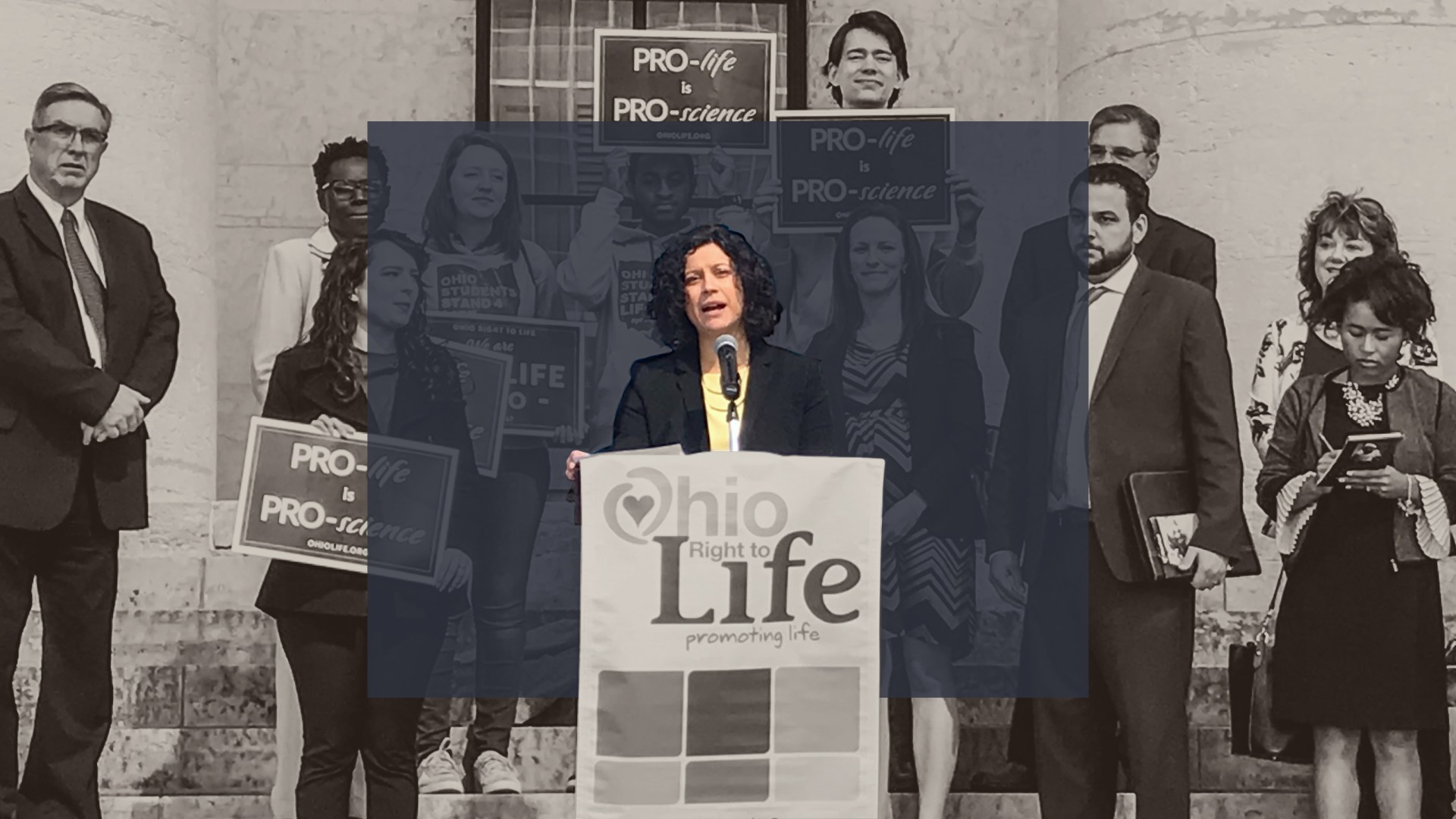
Trump has called himself the most pro-life president in history. But Stephanie Ranade Krider, executive director for Ohio Right to Life, decided she couldn’t support him and couldn’t keep working for the prominent pro-life group as it prepared to help him win re-election.

She resigned June 30. The next morning, she woke up and felt like she could finally breathe again.

“You learn to hold certain things in tension, and for me it came to a point where I couldn’t anymore,” Krider said. “I’ve been grateful for the things Trump has accomplished and skeptical of his pro-life views.

“Always, there has been this undercurrent where he just does not respect women and he does not like black and brown people. I can’t look at any of his behavior and see evidence of the Holy Spirit in his life. Nothing about his words or actions are kind or gentle or faithful or full of self-control.”

It wasn’t an easy decision to quit. Krider started working at Ohio Right to Life in 2009. She can still remember how thrilled she was. As a 26-year-old evangelical with a passion for politics, she was ready to advocate for the unborn. She was ready to fight the people who could look at an ultrasound and say, “That’s just a blob of tissue.” She imagined herself bringing together pro-life Republicans and Democrats with bold moral arguments and how she would say, “Women deserve better than abortion.”

She still believes that. She’s still passionate about protecting the unborn. But Krider thinks the politics of abortion in 2020 would require her to compromise some of her beliefs about the value and dignity of human life. To support Trump and be the face of a pro-life advocacy group working for his re-election, she thinks she would have to act as if some lives didn’t matter.

“I believe God suffers with us all,” said Krider, who belongs to a Vineyard church in Columbus. “God suffers with the unborn child being pulled from the womb. God suffers with the immigrant child pulled away from his family at the border. God suffers with George Floyd when he breathes his last. All of those people matter to God. My greatest fear is that in the pro-life movement and the evangelical church, we’ve become so tied to the Republican Party and President Trump, they don’t all matter to us.”

Across the United States, pro-life Christians are deciding how they will vote in November. For many, it is clear. The Republicans are opposed to abortion, and the Democrats are committed to defending it as a woman’s right. Trump has appointed pro-life judges to federal courts, and he spoke at the March for Life, the first president to do so. Joe Biden, the Democratic nominee, once said that the Supreme Court went too far with Roe v. Wade but has since abandoned any attempt at a middle-ground position and has been endorsed by Planned Parenthood.

At the highest levels of the pro-life movement, national leaders are supporting Trump and urging pro-life Christians to vote for him. Marjorie Dannenfelser, president of the Susan B. Anthony List, heads an advisory committee for his campaign. The List touts more than a dozen pro-life wins in the past four years, including the appointment of more than 100 judges to federal appeals courts and district courts.

Carol Tobias, president of National Right to Life, said without hesitation that “the administration has done a fantastic job.” In addition to the appointments of lower court judges, Trump has “sent a clear message, not just to the country but to the entire world, that this administration is going to fight for the rights of the unborn,” Tobias said. “This is more than symbolism from the administration. They’re working hard and they’re doing what they can. . . . But I think the symbolism is important too, and it’s helping.”

For some people like Krider, though, the politics are not so clear. While caring for pregnant women, marching for life, listening to candidates, and lobbying for new laws, they feel a tension. They wonder if maybe something is missing or off with the agenda of the pro-life movement.

Amy Ford, president and co-founder of Embrace Grace, a ministry that cares for pregnant mothers, attended the March for Life in Washington, DC, in 2020. She said everyone was so excited about the symbolism of the presence of the president. But it left her feeling a little ambivalent.

“It’s great, but it’s not the most important thing,” Ford said. “Rallies can be good. And I go to the march every year. But you have to have more than a rally. Isn’t the question really ‘How do we help these women?’ ”

Ford worries that even the term “pro-life” has become too polarizing and the broader movement too focused on political victories. And legal triumphs might not change the world as much as everyone thinks.

An academic study published in 2019 in the reproductive health journal Contraception found that overturning Roe would reduce abortions by about 13 percent nationwide. In some parts of the country, particularly Southern states with “trigger laws” that would take effect if Roe is overturned, abortion would be essentially outlawed. The total number would drop by about 100,000 per year. Yet in many states, it would remain legal. Nothing would change, and 87 percent of abortions would continue.

“We can’t just vote pro-life and think that takes care of it,” Ford said. “We need to make abortion seem unnecessary. We need to make the church the first place a girl is going to run to, instead of away from because of guilt and shame. . . . Every reason a woman has an abortion—usually it’s fear. We want to, as the body of Christ, help eliminate that fear. We want to help women feel empowered and brave.”

Some pro-lifers say politics can narrow people’s sense of what they can do. Citizenship is reduced to voting. Voting is focused on the presidency to the exclusion of state and local races.

Evangelicals should show they care about their communities and reject the idea that the only thing that matters is who is president, according to Chelsea Patterson Sobolik, policy director for the Southern Baptist Convention’s Ethics and Religious Liberty Commission.

“You can still effect change, regardless of who is in the White House,” Sobolik said. “You hear folks say all the time, ‘This is the most important election of our lifetime,’ and while elections certainly bring important issues to the forefront, Christians need to remember that they’re not powerless during off years or during midterms.”

Laws clearly matter, Sobolik said. She has held babies who weren’t aborted thanks to government policies that gave women other options. But she has also seen cultural transformation come from Christians getting involved in foster care and pregnancy centers that provide robust social support for women in need.

Abortion rates are at record lows, according to the Centers for Disease Control and Prevention and the Guttmacher Institute. The downward trend started in the 1990s and has continued through the presidencies of Bill Clinton, George W. Bush, Barack Obama, and Donald Trump. There’s a lot of debate about the cause of the decline, but no one thinks it’s politics alone.

“It’s politics, it’s elections, it’s policies, and it’s pregnancy centers,” said Clarke Forsythe, senior counsel at Americans United for Life and author of Abuse of Discretion: The Inside Story of Roe v. Wade. “It’s the church. It’s prayer. It’s determined people persevering. It’s lots of different things.”

At the same time, elections force decisions. They push people to confront the tensions they’re living with and make tough choices. Sobolik calls it “staring down the barrel of an election.” Forsythe describes it as the struggle for prudence. Pro-life Christians, according to Forsythe, have to weigh the competing candidates’ records, their proposed policies and priorities, and also their character. Voters have to figure out how to promote the common good while recognizing the realities of a fallen world and sinful, human candidates.

For Christians like Krider, who’ve spent a decade on the frontlines of pro-life battles but who also deeply dislike Trump, it’s not obvious what prudence and her Christian witness demand.

“If Joe Biden would just concede that abortion is wrong, and that restrictions on it are warranted and reasonable, that would make my life a lot easier,” Krider said.

Democrats for Life has declined to endorse Biden. His position on abortion is unacceptable, according to executive director Kristen Day, even though he has also endorsed policies on health care, housing, job training, and providing diapers to low-income families that would help women who decide to carry their pregnancies to term. During the primaries, pro-life Democrats struggled to get presidential candidates to even say they wanted the group’s votes and that there was a place for them in the party.

Krider doesn’t know what she is going to do, except she is not going to vote for Trump and she will keep praying.

“Yesterday I woke up feeling free, and I felt free for about a day,” she said. “There’s more to life than politics, but I’m an activist at heart, so it’s hard for me to sit with that.”

After a decade of pursuing political power on behalf of the movement, she thinks it might be good to sit with this new tension for a little while. But November isn’t that far away.

Daniel Silliman is news editor for Christianity Today.

Have something to add? See something we missed? Share your feedback here.

Apple PodcastsDown ArrowDown ArrowDown Arrowarrow_left_altLeft ArrowLeft ArrowRight ArrowRight ArrowRight Arrowarrow_up_altUp ArrowUp ArrowAvailable at Amazoncaret-downCloseCloseEmailEmailExpandExpandExternalExternalFacebookfacebook-squareGiftGiftGooglegoogleGoogle KeephamburgerInstagraminstagram-squareLinkLinklinkedin-squareListenListenListenChristianity TodayCT Creative Studio Logologo_orgMegaphoneMenuMenupausePinterestPlayPlayPocketPodcastRSSRSSSaveSaveSaveSearchSearchsearchSpotifyStitcherTelegramTable of ContentsTable of Contentstwitter-squareWhatsAppXYouTubeYouTube